EP2975400A1 - Method of measuring insulin resistance with fatty acid combustion, and composition used herein - Google Patents
Method of measuring insulin resistance with fatty acid combustion, and composition used herein Download PDFInfo
- Publication number
- EP2975400A1 EP2975400A1 EP14763271.5A EP14763271A EP2975400A1 EP 2975400 A1 EP2975400 A1 EP 2975400A1 EP 14763271 A EP14763271 A EP 14763271A EP 2975400 A1 EP2975400 A1 EP 2975400A1
- Authority
- EP
- European Patent Office
- Prior art keywords
- labeled
- test subject
- fatty acid
- expired air
- amount
- Prior art date
- Legal status (The legal status is an assumption and is not a legal conclusion. Google has not performed a legal analysis and makes no representation as to the accuracy of the status listed.)
- Granted
Links
- 239000000194 fatty acid Substances 0.000 title claims abstract description 202
- 238000000034 method Methods 0.000 title claims abstract description 140
- 206010022489 Insulin Resistance Diseases 0.000 title claims abstract description 133
- 208000001072 type 2 diabetes mellitus Diseases 0.000 title claims abstract description 126
- 235000014113 dietary fatty acids Nutrition 0.000 title claims abstract description 94
- 229930195729 fatty acid Natural products 0.000 title claims abstract description 94
- 150000004665 fatty acids Chemical class 0.000 title claims abstract description 94
- 239000000203 mixture Substances 0.000 title claims abstract description 67
- 238000002485 combustion reaction Methods 0.000 title claims description 46
- 238000012360 testing method Methods 0.000 claims abstract description 294
- CURLTUGMZLYLDI-UHFFFAOYSA-N Carbon dioxide Chemical compound O=C=O CURLTUGMZLYLDI-UHFFFAOYSA-N 0.000 claims abstract description 187
- 229910002092 carbon dioxide Inorganic materials 0.000 claims abstract description 174
- 239000001569 carbon dioxide Substances 0.000 claims abstract description 122
- 239000004480 active ingredient Substances 0.000 claims abstract description 23
- 239000008103 glucose Substances 0.000 claims description 204
- NOESYZHRGYRDHS-UHFFFAOYSA-N insulin Chemical compound N1C(=O)C(NC(=O)C(CCC(N)=O)NC(=O)C(CCC(O)=O)NC(=O)C(C(C)C)NC(=O)C(NC(=O)CN)C(C)CC)CSSCC(C(NC(CO)C(=O)NC(CC(C)C)C(=O)NC(CC=2C=CC(O)=CC=2)C(=O)NC(CCC(N)=O)C(=O)NC(CC(C)C)C(=O)NC(CCC(O)=O)C(=O)NC(CC(N)=O)C(=O)NC(CC=2C=CC(O)=CC=2)C(=O)NC(CSSCC(NC(=O)C(C(C)C)NC(=O)C(CC(C)C)NC(=O)C(CC=2C=CC(O)=CC=2)NC(=O)C(CC(C)C)NC(=O)C(C)NC(=O)C(CCC(O)=O)NC(=O)C(C(C)C)NC(=O)C(CC(C)C)NC(=O)C(CC=2NC=NC=2)NC(=O)C(CO)NC(=O)CNC2=O)C(=O)NCC(=O)NC(CCC(O)=O)C(=O)NC(CCCNC(N)=N)C(=O)NCC(=O)NC(CC=3C=CC=CC=3)C(=O)NC(CC=3C=CC=CC=3)C(=O)NC(CC=3C=CC(O)=CC=3)C(=O)NC(C(C)O)C(=O)N3C(CCC3)C(=O)NC(CCCCN)C(=O)NC(C)C(O)=O)C(=O)NC(CC(N)=O)C(O)=O)=O)NC(=O)C(C(C)CC)NC(=O)C(CO)NC(=O)C(C(C)O)NC(=O)C1CSSCC2NC(=O)C(CC(C)C)NC(=O)C(NC(=O)C(CCC(N)=O)NC(=O)C(CC(N)=O)NC(=O)C(NC(=O)C(N)CC=1C=CC=CC=1)C(C)C)CC1=CN=CN1 NOESYZHRGYRDHS-UHFFFAOYSA-N 0.000 claims description 178
- WQZGKKKJIJFFOK-GASJEMHNSA-N Glucose Natural products OC[C@H]1OC(O)[C@H](O)[C@@H](O)[C@@H]1O WQZGKKKJIJFFOK-GASJEMHNSA-N 0.000 claims description 139
- 239000008280 blood Substances 0.000 claims description 107
- 210000004369 blood Anatomy 0.000 claims description 107
- 102000004877 Insulin Human genes 0.000 claims description 89
- 108090001061 Insulin Proteins 0.000 claims description 89
- 229940125396 insulin Drugs 0.000 claims description 89
- 206010060378 Hyperinsulinaemia Diseases 0.000 claims description 50
- 201000008980 hyperinsulinism Diseases 0.000 claims description 50
- 230000003451 hyperinsulinaemic effect Effects 0.000 claims description 49
- IPCSVZSSVZVIGE-UHFFFAOYSA-N hexadecanoic acid Chemical compound CCCCCCCCCCCCCCCC(O)=O IPCSVZSSVZVIGE-UHFFFAOYSA-N 0.000 claims description 31
- WQEPLUUGTLDZJY-UHFFFAOYSA-N pentadecanoic acid Chemical compound CCCCCCCCCCCCCCC(O)=O WQEPLUUGTLDZJY-UHFFFAOYSA-N 0.000 claims description 24
- 239000005642 Oleic acid Substances 0.000 claims description 21
- 230000003247 decreasing effect Effects 0.000 claims description 21
- 150000003839 salts Chemical class 0.000 claims description 20
- 206010018429 Glucose tolerance impaired Diseases 0.000 claims description 19
- 230000004153 glucose metabolism Effects 0.000 claims description 19
- 239000005639 Lauric acid Substances 0.000 claims description 18
- 235000021314 Palmitic acid Nutrition 0.000 claims description 14
- 201000009104 prediabetes syndrome Diseases 0.000 claims description 14
- POULHZVOKOAJMA-UHFFFAOYSA-N dodecanoic acid Chemical compound CCCCCCCCCCCC(O)=O POULHZVOKOAJMA-UHFFFAOYSA-N 0.000 claims description 13
- 208000008338 non-alcoholic fatty liver disease Diseases 0.000 claims description 12
- 208000019425 cirrhosis of liver Diseases 0.000 claims description 11
- 239000002552 dosage form Substances 0.000 claims description 11
- ZQPPMHVWECSIRJ-KTKRTIGZSA-N oleic acid Chemical compound CCCCCCCC\C=C/CCCCCCCC(O)=O ZQPPMHVWECSIRJ-KTKRTIGZSA-N 0.000 claims description 10
- 239000008117 stearic acid Substances 0.000 claims description 10
- WRIDQFICGBMAFQ-UHFFFAOYSA-N (E)-8-Octadecenoic acid Natural products CCCCCCCCCC=CCCCCCCC(O)=O WRIDQFICGBMAFQ-UHFFFAOYSA-N 0.000 claims description 9
- LQJBNNIYVWPHFW-UHFFFAOYSA-N 20:1omega9c fatty acid Natural products CCCCCCCCCCC=CCCCCCCCC(O)=O LQJBNNIYVWPHFW-UHFFFAOYSA-N 0.000 claims description 9
- QSBYPNXLFMSGKH-UHFFFAOYSA-N 9-Heptadecensaeure Natural products CCCCCCCC=CCCCCCCCC(O)=O QSBYPNXLFMSGKH-UHFFFAOYSA-N 0.000 claims description 9
- ZQPPMHVWECSIRJ-UHFFFAOYSA-N Oleic acid Natural products CCCCCCCCC=CCCCCCCCC(O)=O ZQPPMHVWECSIRJ-UHFFFAOYSA-N 0.000 claims description 9
- QXJSBBXBKPUZAA-UHFFFAOYSA-N isooleic acid Natural products CCCCCCCC=CCCCCCCCCC(O)=O QXJSBBXBKPUZAA-UHFFFAOYSA-N 0.000 claims description 9
- QIQXTHQIDYTFRH-UHFFFAOYSA-N octadecanoic acid Chemical compound CCCCCCCCCCCCCCCCCC(O)=O QIQXTHQIDYTFRH-UHFFFAOYSA-N 0.000 claims description 9
- 235000021355 Stearic acid Nutrition 0.000 claims description 7
- OQCDKBAXFALNLD-UHFFFAOYSA-N octadecanoic acid Natural products CCCCCCCC(C)CCCCCCCCC(O)=O OQCDKBAXFALNLD-UHFFFAOYSA-N 0.000 claims description 7
- 238000000691 measurement method Methods 0.000 claims description 6
- 206010053219 non-alcoholic steatohepatitis Diseases 0.000 claims description 6
- 235000021122 unsaturated fatty acids Nutrition 0.000 claims description 6
- 150000004670 unsaturated fatty acids Chemical class 0.000 claims description 6
- 150000004668 long chain fatty acids Chemical class 0.000 claims description 5
- 150000004667 medium chain fatty acids Chemical class 0.000 claims description 5
- 235000021313 oleic acid Nutrition 0.000 claims description 4
- 150000004671 saturated fatty acids Chemical class 0.000 claims description 4
- TUNFSRHWOTWDNC-HKGQFRNVSA-N tetradecanoic acid Chemical compound CCCCCCCCCCCCC[14C](O)=O TUNFSRHWOTWDNC-HKGQFRNVSA-N 0.000 claims description 4
- 150000004669 very long chain fatty acids Chemical class 0.000 claims description 4
- 241000700159 Rattus Species 0.000 description 102
- 239000000243 solution Substances 0.000 description 101
- 229940045870 sodium palmitate Drugs 0.000 description 74
- 206010012601 diabetes mellitus Diseases 0.000 description 53
- 230000007704 transition Effects 0.000 description 45
- 238000013293 zucker diabetic fatty rat Methods 0.000 description 41
- 238000001990 intravenous administration Methods 0.000 description 28
- 238000005259 measurement Methods 0.000 description 28
- 230000000241 respiratory effect Effects 0.000 description 28
- 229910052799 carbon Inorganic materials 0.000 description 27
- 125000004429 atom Chemical group 0.000 description 26
- 230000035945 sensitivity Effects 0.000 description 24
- 150000001720 carbohydrates Chemical class 0.000 description 19
- 230000004129 fatty acid metabolism Effects 0.000 description 19
- 241001465754 Metazoa Species 0.000 description 16
- 238000010253 intravenous injection Methods 0.000 description 15
- 208000019423 liver disease Diseases 0.000 description 15
- 238000002474 experimental method Methods 0.000 description 13
- 235000020937 fasting conditions Nutrition 0.000 description 13
- LFQSCWFLJHTTHZ-UHFFFAOYSA-N Ethanol Chemical compound CCO LFQSCWFLJHTTHZ-UHFFFAOYSA-N 0.000 description 12
- 125000004432 carbon atom Chemical group C* 0.000 description 11
- 239000003153 chemical reaction reagent Substances 0.000 description 11
- WQZGKKKJIJFFOK-UKLRSMCWSA-N dextrose-2-13c Chemical compound OC[C@H]1OC(O)[13C@H](O)[C@@H](O)[C@@H]1O WQZGKKKJIJFFOK-UKLRSMCWSA-N 0.000 description 11
- 230000037356 lipid metabolism Effects 0.000 description 11
- 241000282412 Homo Species 0.000 description 9
- 150000001875 compounds Chemical class 0.000 description 9
- 150000002632 lipids Chemical class 0.000 description 9
- 239000001632 sodium acetate Substances 0.000 description 9
- 239000000654 additive Substances 0.000 description 8
- 239000007789 gas Substances 0.000 description 8
- 239000011259 mixed solution Substances 0.000 description 8
- 230000002285 radioactive effect Effects 0.000 description 8
- 241000124008 Mammalia Species 0.000 description 7
- -1 alkali metal salt Chemical class 0.000 description 7
- 238000004458 analytical method Methods 0.000 description 7
- 230000007423 decrease Effects 0.000 description 7
- 239000000839 emulsion Substances 0.000 description 7
- 239000007788 liquid Substances 0.000 description 7
- 238000002360 preparation method Methods 0.000 description 7
- XLYOFNOQVPJJNP-UHFFFAOYSA-N water Chemical compound O XLYOFNOQVPJJNP-UHFFFAOYSA-N 0.000 description 7
- OKTJSMMVPCPJKN-UHFFFAOYSA-N Carbon Chemical compound [C] OKTJSMMVPCPJKN-UHFFFAOYSA-N 0.000 description 6
- HEMHJVSKTPXQMS-UHFFFAOYSA-M Sodium hydroxide Chemical compound [OH-].[Na+] HEMHJVSKTPXQMS-UHFFFAOYSA-M 0.000 description 6
- 238000005085 air analysis Methods 0.000 description 6
- 238000010171 animal model Methods 0.000 description 6
- 238000003745 diagnosis Methods 0.000 description 6
- 238000004364 calculation method Methods 0.000 description 5
- 150000001721 carbon Chemical group 0.000 description 5
- 230000000694 effects Effects 0.000 description 5
- 238000011156 evaluation Methods 0.000 description 5
- 238000007446 glucose tolerance test Methods 0.000 description 5
- 238000002347 injection Methods 0.000 description 5
- 239000007924 injection Substances 0.000 description 5
- 239000006207 intravenous dosage form Substances 0.000 description 5
- 238000007410 oral glucose tolerance test Methods 0.000 description 5
- 239000000725 suspension Substances 0.000 description 5
- PEDCQBHIVMGVHV-UHFFFAOYSA-N Glycerine Chemical compound OCC(O)CO PEDCQBHIVMGVHV-UHFFFAOYSA-N 0.000 description 4
- VEXZGXHMUGYJMC-UHFFFAOYSA-N Hydrochloric acid Chemical compound Cl VEXZGXHMUGYJMC-UHFFFAOYSA-N 0.000 description 4
- FAPWRFPIFSIZLT-UHFFFAOYSA-M Sodium chloride Chemical compound [Na+].[Cl-] FAPWRFPIFSIZLT-UHFFFAOYSA-M 0.000 description 4
- QVGXLLKOCUKJST-UHFFFAOYSA-N atomic oxygen Chemical compound [O] QVGXLLKOCUKJST-UHFFFAOYSA-N 0.000 description 4
- 201000010099 disease Diseases 0.000 description 4
- 208000037265 diseases, disorders, signs and symptoms Diseases 0.000 description 4
- 238000002372 labelling Methods 0.000 description 4
- 239000006186 oral dosage form Substances 0.000 description 4
- 229910052760 oxygen Inorganic materials 0.000 description 4
- 239000001301 oxygen Substances 0.000 description 4
- QTBSBXVTEAMEQO-UHFFFAOYSA-N Acetic acid Chemical compound CC(O)=O QTBSBXVTEAMEQO-UHFFFAOYSA-N 0.000 description 3
- 208000004930 Fatty Liver Diseases 0.000 description 3
- 206010019708 Hepatic steatosis Diseases 0.000 description 3
- 208000002720 Malnutrition Diseases 0.000 description 3
- 208000008589 Obesity Diseases 0.000 description 3
- 208000003286 Protein-Energy Malnutrition Diseases 0.000 description 3
- 230000002411 adverse Effects 0.000 description 3
- YZXBAPSDXZZRGB-DOFZRALJSA-N arachidonic acid Chemical compound CCCCC\C=C/C\C=C/C\C=C/C\C=C/CCCC(O)=O YZXBAPSDXZZRGB-DOFZRALJSA-N 0.000 description 3
- 230000029142 excretion Effects 0.000 description 3
- 208000010706 fatty liver disease Diseases 0.000 description 3
- 208000018914 glucose metabolism disease Diseases 0.000 description 3
- 235000003642 hunger Nutrition 0.000 description 3
- 201000007270 liver cancer Diseases 0.000 description 3
- 208000014018 liver neoplasm Diseases 0.000 description 3
- 230000037353 metabolic pathway Effects 0.000 description 3
- 235000020824 obesity Nutrition 0.000 description 3
- 239000002504 physiological saline solution Substances 0.000 description 3
- 235000020826 protein-energy malnutrition Nutrition 0.000 description 3
- 231100000240 steatosis hepatitis Toxicity 0.000 description 3
- 210000002700 urine Anatomy 0.000 description 3
- GWHCXVQVJPWHRF-KTKRTIGZSA-N (15Z)-tetracosenoic acid Chemical compound CCCCCCCC\C=C/CCCCCCCCCCCCCC(O)=O GWHCXVQVJPWHRF-KTKRTIGZSA-N 0.000 description 2
- 241000282472 Canis lupus familiaris Species 0.000 description 2
- 241000700198 Cavia Species 0.000 description 2
- 241000282693 Cercopithecidae Species 0.000 description 2
- 208000002249 Diabetes Complications Diseases 0.000 description 2
- 108010050375 Glucose 1-Dehydrogenase Proteins 0.000 description 2
- 102000001554 Hemoglobins Human genes 0.000 description 2
- 108010054147 Hemoglobins Proteins 0.000 description 2
- 238000004566 IR spectroscopy Methods 0.000 description 2
- 241000699670 Mus sp. Species 0.000 description 2
- 241000283973 Oryctolagus cuniculus Species 0.000 description 2
- 229920002125 Sokalan® Polymers 0.000 description 2
- 241000244317 Tillandsia usneoides Species 0.000 description 2
- 229910052783 alkali metal Inorganic materials 0.000 description 2
- 229960000686 benzalkonium chloride Drugs 0.000 description 2
- CADWTSSKOVRVJC-UHFFFAOYSA-N benzyl(dimethyl)azanium;chloride Chemical compound [Cl-].C[NH+](C)CC1=CC=CC=C1 CADWTSSKOVRVJC-UHFFFAOYSA-N 0.000 description 2
- KGBXLFKZBHKPEV-UHFFFAOYSA-N boric acid Chemical compound OB(O)O KGBXLFKZBHKPEV-UHFFFAOYSA-N 0.000 description 2
- 239000004327 boric acid Substances 0.000 description 2
- 239000000872 buffer Substances 0.000 description 2
- 239000000969 carrier Substances 0.000 description 2
- 239000003795 chemical substances by application Substances 0.000 description 2
- BNIILDVGGAEEIG-UHFFFAOYSA-L disodium hydrogen phosphate Chemical compound [Na+].[Na+].OP([O-])([O-])=O BNIILDVGGAEEIG-UHFFFAOYSA-L 0.000 description 2
- 239000012153 distilled water Substances 0.000 description 2
- 239000003814 drug Substances 0.000 description 2
- 239000003937 drug carrier Substances 0.000 description 2
- 235000019197 fats Nutrition 0.000 description 2
- IXZISFNWUWKBOM-ARQDHWQXSA-N fructosamine Chemical compound NC[C@@]1(O)OC[C@@H](O)[C@@H](O)[C@@H]1O IXZISFNWUWKBOM-ARQDHWQXSA-N 0.000 description 2
- 208000004104 gestational diabetes Diseases 0.000 description 2
- 235000011187 glycerol Nutrition 0.000 description 2
- VKOBVWXKNCXXDE-UHFFFAOYSA-N icosanoic acid Chemical compound CCCCCCCCCCCCCCCCCCCC(O)=O VKOBVWXKNCXXDE-UHFFFAOYSA-N 0.000 description 2
- 230000003908 liver function Effects 0.000 description 2
- 238000004949 mass spectrometry Methods 0.000 description 2
- 230000004060 metabolic process Effects 0.000 description 2
- 229910000403 monosodium phosphate Inorganic materials 0.000 description 2
- 235000019799 monosodium phosphate Nutrition 0.000 description 2
- 235000020925 non fasting Nutrition 0.000 description 2
- SECPZKHBENQXJG-FPLPWBNLSA-N palmitoleic acid Chemical compound CCCCCC\C=C/CCCCCCCC(O)=O SECPZKHBENQXJG-FPLPWBNLSA-N 0.000 description 2
- 230000001575 pathological effect Effects 0.000 description 2
- 239000003755 preservative agent Substances 0.000 description 2
- 238000004393 prognosis Methods 0.000 description 2
- 239000008213 purified water Substances 0.000 description 2
- 235000003441 saturated fatty acids Nutrition 0.000 description 2
- 239000011780 sodium chloride Substances 0.000 description 2
- AJPJDKMHJJGVTQ-UHFFFAOYSA-M sodium dihydrogen phosphate Chemical compound [Na+].OP(O)([O-])=O AJPJDKMHJJGVTQ-UHFFFAOYSA-M 0.000 description 2
- 239000007787 solid Substances 0.000 description 2
- 239000002562 thickening agent Substances 0.000 description 2
- 238000011680 zucker rat Methods 0.000 description 2
- JQWAHKMIYCERGA-UHFFFAOYSA-N (2-nonanoyloxy-3-octadeca-9,12-dienoyloxypropoxy)-[2-(trimethylazaniumyl)ethyl]phosphinate Chemical compound CCCCCCCCC(=O)OC(COP([O-])(=O)CC[N+](C)(C)C)COC(=O)CCCCCCCC=CCC=CCCCCC JQWAHKMIYCERGA-UHFFFAOYSA-N 0.000 description 1
- TWJNQYPJQDRXPH-UHFFFAOYSA-N 2-cyanobenzohydrazide Chemical compound NNC(=O)C1=CC=CC=C1C#N TWJNQYPJQDRXPH-UHFFFAOYSA-N 0.000 description 1
- XUJWOMMOEOHPFP-OKLKQMLOSA-N 8,11-Eicosadienoic acid Chemical compound CCCCCCCC\C=C\C\C=C\CCCCCCC(O)=O XUJWOMMOEOHPFP-OKLKQMLOSA-N 0.000 description 1
- 206010003210 Arteriosclerosis Diseases 0.000 description 1
- 241000283690 Bos taurus Species 0.000 description 1
- OYPRJOBELJOOCE-UHFFFAOYSA-N Calcium Chemical compound [Ca] OYPRJOBELJOOCE-UHFFFAOYSA-N 0.000 description 1
- OKTJSMMVPCPJKN-IGMARMGPSA-N Carbon-12 Chemical compound [12C] OKTJSMMVPCPJKN-IGMARMGPSA-N 0.000 description 1
- OKTJSMMVPCPJKN-OUBTZVSYSA-N Carbon-13 Chemical compound [13C] OKTJSMMVPCPJKN-OUBTZVSYSA-N 0.000 description 1
- 108090000790 Enzymes Proteins 0.000 description 1
- 102000004190 Enzymes Human genes 0.000 description 1
- 241000283086 Equidae Species 0.000 description 1
- 241000282326 Felis catus Species 0.000 description 1
- DGAQECJNVWCQMB-PUAWFVPOSA-M Ilexoside XXIX Chemical compound C[C@@H]1CC[C@@]2(CC[C@@]3(C(=CC[C@H]4[C@]3(CC[C@@H]5[C@@]4(CC[C@@H](C5(C)C)OS(=O)(=O)[O-])C)C)[C@@H]2[C@]1(C)O)C)C(=O)O[C@H]6[C@@H]([C@H]([C@@H]([C@H](O6)CO)O)O)O.[Na+] DGAQECJNVWCQMB-PUAWFVPOSA-M 0.000 description 1
- 235000019738 Limestone Nutrition 0.000 description 1
- OYHQOLUKZRVURQ-HZJYTTRNSA-N Linoleic acid Chemical compound CCCCC\C=C/C\C=C/CCCCCCCC(O)=O OYHQOLUKZRVURQ-HZJYTTRNSA-N 0.000 description 1
- FYYHWMGAXLPEAU-UHFFFAOYSA-N Magnesium Chemical compound [Mg] FYYHWMGAXLPEAU-UHFFFAOYSA-N 0.000 description 1
- 235000021360 Myristic acid Nutrition 0.000 description 1
- TUNFSRHWOTWDNC-UHFFFAOYSA-N Myristic acid Natural products CCCCCCCCCCCCCC(O)=O TUNFSRHWOTWDNC-UHFFFAOYSA-N 0.000 description 1
- XJXROGWVRIJYMO-SJDLZYGOSA-N Nervonic acid Natural products O=C(O)[C@@H](/C=C/CCCCCCCC)CCCCCCCCCCCC XJXROGWVRIJYMO-SJDLZYGOSA-N 0.000 description 1
- 235000021319 Palmitoleic acid Nutrition 0.000 description 1
- ZLMJMSJWJFRBEC-UHFFFAOYSA-N Potassium Chemical compound [K] ZLMJMSJWJFRBEC-UHFFFAOYSA-N 0.000 description 1
- 208000001280 Prediabetic State Diseases 0.000 description 1
- 241000282887 Suidae Species 0.000 description 1
- 206010067584 Type 1 diabetes mellitus Diseases 0.000 description 1
- 235000021322 Vaccenic acid Nutrition 0.000 description 1
- UWHZIFQPPBDJPM-FPLPWBNLSA-M Vaccenic acid Natural products CCCCCC\C=C/CCCCCCCCCC([O-])=O UWHZIFQPPBDJPM-FPLPWBNLSA-M 0.000 description 1
- 230000002159 abnormal effect Effects 0.000 description 1
- 230000005856 abnormality Effects 0.000 description 1
- 229910052784 alkaline earth metal Inorganic materials 0.000 description 1
- DTOSIQBPPRVQHS-PDBXOOCHSA-N alpha-linolenic acid Chemical compound CC\C=C/C\C=C/C\C=C/CCCCCCCC(O)=O DTOSIQBPPRVQHS-PDBXOOCHSA-N 0.000 description 1
- 235000020661 alpha-linolenic acid Nutrition 0.000 description 1
- 229940114079 arachidonic acid Drugs 0.000 description 1
- 235000021342 arachidonic acid Nutrition 0.000 description 1
- 208000011775 arteriosclerosis disease Diseases 0.000 description 1
- WQZGKKKJIJFFOK-VFUOTHLCSA-N beta-D-glucose Chemical compound OC[C@H]1O[C@@H](O)[C@H](O)[C@@H](O)[C@@H]1O WQZGKKKJIJFFOK-VFUOTHLCSA-N 0.000 description 1
- 229910052791 calcium Inorganic materials 0.000 description 1
- 239000011575 calcium Substances 0.000 description 1
- 238000007707 calorimetry Methods 0.000 description 1
- 239000002775 capsule Substances 0.000 description 1
- 238000006243 chemical reaction Methods 0.000 description 1
- 239000007910 chewable tablet Substances 0.000 description 1
- SECPZKHBENQXJG-UHFFFAOYSA-N cis-palmitoleic acid Natural products CCCCCCC=CCCCCCCCC(O)=O SECPZKHBENQXJG-UHFFFAOYSA-N 0.000 description 1
- GWHCXVQVJPWHRF-UHFFFAOYSA-N cis-tetracosenoic acid Natural products CCCCCCCCC=CCCCCCCCCCCCCCC(O)=O GWHCXVQVJPWHRF-UHFFFAOYSA-N 0.000 description 1
- 238000003759 clinical diagnosis Methods 0.000 description 1
- 239000011248 coating agent Substances 0.000 description 1
- 238000000576 coating method Methods 0.000 description 1
- 238000001514 detection method Methods 0.000 description 1
- 235000005911 diet Nutrition 0.000 description 1
- 230000037213 diet Effects 0.000 description 1
- 238000004090 dissolution Methods 0.000 description 1
- 229940079593 drug Drugs 0.000 description 1
- 239000010419 fine particle Substances 0.000 description 1
- 239000012530 fluid Substances 0.000 description 1
- 235000013305 food Nutrition 0.000 description 1
- 230000006870 function Effects 0.000 description 1
- 230000002068 genetic effect Effects 0.000 description 1
- 125000002791 glucosyl group Chemical group C1([C@H](O)[C@@H](O)[C@H](O)[C@H](O1)CO)* 0.000 description 1
- 239000008187 granular material Substances 0.000 description 1
- 238000001427 incoherent neutron scattering Methods 0.000 description 1
- 230000003914 insulin secretion Effects 0.000 description 1
- 230000000155 isotopic effect Effects 0.000 description 1
- 239000006028 limestone Substances 0.000 description 1
- 235000020778 linoleic acid Nutrition 0.000 description 1
- OYHQOLUKZRVURQ-IXWMQOLASA-N linoleic acid Natural products CCCCC\C=C/C\C=C\CCCCCCCC(O)=O OYHQOLUKZRVURQ-IXWMQOLASA-N 0.000 description 1
- 229960004488 linolenic acid Drugs 0.000 description 1
- KQQKGWQCNNTQJW-UHFFFAOYSA-N linolenic acid Natural products CC=CCCC=CCC=CCCCCCCCC(O)=O KQQKGWQCNNTQJW-UHFFFAOYSA-N 0.000 description 1
- 235000021056 liquid food Nutrition 0.000 description 1
- 230000005976 liver dysfunction Effects 0.000 description 1
- 229910052749 magnesium Inorganic materials 0.000 description 1
- 239000011777 magnesium Substances 0.000 description 1
- 230000003340 mental effect Effects 0.000 description 1
- 238000012544 monitoring process Methods 0.000 description 1
- 235000016709 nutrition Nutrition 0.000 description 1
- 235000003715 nutritional status Nutrition 0.000 description 1
- 239000000825 pharmaceutical preparation Substances 0.000 description 1
- 239000006187 pill Substances 0.000 description 1
- 229920003023 plastic Polymers 0.000 description 1
- 239000004033 plastic Substances 0.000 description 1
- 229910052700 potassium Inorganic materials 0.000 description 1
- 239000011591 potassium Substances 0.000 description 1
- 239000000843 powder Substances 0.000 description 1
- 230000003449 preventive effect Effects 0.000 description 1
- 238000011002 quantification Methods 0.000 description 1
- 238000011160 research Methods 0.000 description 1
- 238000012216 screening Methods 0.000 description 1
- 238000004088 simulation Methods 0.000 description 1
- 229910052708 sodium Inorganic materials 0.000 description 1
- 239000011734 sodium Substances 0.000 description 1
- 159000000000 sodium salts Chemical class 0.000 description 1
- 235000021055 solid food Nutrition 0.000 description 1
- 235000012424 soybean oil Nutrition 0.000 description 1
- 239000003549 soybean oil Substances 0.000 description 1
- 238000001228 spectrum Methods 0.000 description 1
- 238000010561 standard procedure Methods 0.000 description 1
- 210000002784 stomach Anatomy 0.000 description 1
- 239000000126 substance Substances 0.000 description 1
- 239000006188 syrup Substances 0.000 description 1
- 235000020357 syrup Nutrition 0.000 description 1
- 239000003826 tablet Substances 0.000 description 1
- UWHZIFQPPBDJPM-BQYQJAHWSA-N trans-vaccenic acid Chemical compound CCCCCC\C=C\CCCCCCCCCC(O)=O UWHZIFQPPBDJPM-BQYQJAHWSA-N 0.000 description 1
- 239000008215 water for injection Substances 0.000 description 1
Images




Classifications
-
- G—PHYSICS
- G01—MEASURING; TESTING
- G01N—INVESTIGATING OR ANALYSING MATERIALS BY DETERMINING THEIR CHEMICAL OR PHYSICAL PROPERTIES
- G01N33/00—Investigating or analysing materials by specific methods not covered by groups G01N1/00 - G01N31/00
- G01N33/48—Biological material, e.g. blood, urine; Haemocytometers
- G01N33/50—Chemical analysis of biological material, e.g. blood, urine; Testing involving biospecific ligand binding methods; Immunological testing
- G01N33/5005—Chemical analysis of biological material, e.g. blood, urine; Testing involving biospecific ligand binding methods; Immunological testing involving human or animal cells
- G01N33/5008—Chemical analysis of biological material, e.g. blood, urine; Testing involving biospecific ligand binding methods; Immunological testing involving human or animal cells for testing or evaluating the effect of chemical or biological compounds, e.g. drugs, cosmetics
- G01N33/5082—Supracellular entities, e.g. tissue, organisms
- G01N33/5088—Supracellular entities, e.g. tissue, organisms of vertebrates
-
- A—HUMAN NECESSITIES
- A61—MEDICAL OR VETERINARY SCIENCE; HYGIENE
- A61B—DIAGNOSIS; SURGERY; IDENTIFICATION
- A61B5/00—Measuring for diagnostic purposes; Identification of persons
- A61B5/08—Measuring devices for evaluating the respiratory organs
- A61B5/083—Measuring rate of metabolism by using breath test, e.g. measuring rate of oxygen consumption
- A61B5/0836—Measuring rate of CO2 production
-
- G—PHYSICS
- G01—MEASURING; TESTING
- G01N—INVESTIGATING OR ANALYSING MATERIALS BY DETERMINING THEIR CHEMICAL OR PHYSICAL PROPERTIES
- G01N33/00—Investigating or analysing materials by specific methods not covered by groups G01N1/00 - G01N31/00
- G01N33/48—Biological material, e.g. blood, urine; Haemocytometers
- G01N33/483—Physical analysis of biological material
- G01N33/497—Physical analysis of biological material of gaseous biological material, e.g. breath
-
- G—PHYSICS
- G01—MEASURING; TESTING
- G01N—INVESTIGATING OR ANALYSING MATERIALS BY DETERMINING THEIR CHEMICAL OR PHYSICAL PROPERTIES
- G01N33/00—Investigating or analysing materials by specific methods not covered by groups G01N1/00 - G01N31/00
- G01N33/48—Biological material, e.g. blood, urine; Haemocytometers
- G01N33/50—Chemical analysis of biological material, e.g. blood, urine; Testing involving biospecific ligand binding methods; Immunological testing
-
- G—PHYSICS
- G01—MEASURING; TESTING
- G01N—INVESTIGATING OR ANALYSING MATERIALS BY DETERMINING THEIR CHEMICAL OR PHYSICAL PROPERTIES
- G01N2458/00—Labels used in chemical analysis of biological material
- G01N2458/15—Non-radioactive isotope labels, e.g. for detection by mass spectrometry
-
- G—PHYSICS
- G01—MEASURING; TESTING
- G01N—INVESTIGATING OR ANALYSING MATERIALS BY DETERMINING THEIR CHEMICAL OR PHYSICAL PROPERTIES
- G01N2560/00—Chemical aspects of mass spectrometric analysis of biological material
Definitions
- the present invention relates to a method for measuring the presence or absence of insulin resistance in a test subject, and a composition suitably used for the method. More specifically, the present invention relates to a method for measuring and monitoring the presence or absence of insulin resistance in a test subject based on the fatty acid combustion of the test subject by performing a breath test using labeled carbon such as 13 C etc.; and a composition suitably used for the method.
- the aforementioned "method for measuring the presence or absence of insulin resistance in a test subject” includes a method for determining whether a hyperinsulinemia test subject has insulin resistance or not.
- the former case enables the test subject to be determined as “insulin-resistant,” and the latter case enables the test subject to be determined to have “hyperinsulinemia without insulin resistance” (hereinafter may also be referred to as “insulin-nonresistant hyperinsulinemia”).
- the present invention relates to a method for measuring a sugar/fatty acid combustion ratio in a test subject using a labeled C-breath test, and a composition suitably used for the method.
- Abnormal glucose tolerance generally designates a state where the fasting blood glucose level is in a range of 110 mg/dl to less than 126 mg/dl, or a state where the 2-hour value in an oral glucose tolerance test is 140 mg/dl to 199 mg/dl, and is also called borderline diabetes.
- borderline diabetes Although the patients of borderline diabetes have abnormal blood glucose levels, they are not exactly considered to have diabetes; however, if the patients leave the condition untreated, they are highly likely to become diabetic. The condition is thus called prediabetes. Further, arteriosclerosis is known to advance at this stage. Therefore, in terms of preventive medicine as well, it is important to detect patients in a prediabetic stage.
- Patent Document 1 a method of intravenously administering acetic acid, oleic acid, or palmitic acid labeled with 13 C, and measuring the increasing rate of 13 C concentration in the CO 2 in the expired air with a breath test, thereby diagnosing insulin hyposecretion-type diabetes.
- this method is capable of diagnosing a condition even before borderline diabetes (a condition having insulin resistance or hyperinsulinemia without insulin resistance).
- liver diseases examples include liver diseases.
- liver cirrhosis patients have a nutritionally typical pathological condition of protein-energy malnutrition (PEM).
- PEM protein-energy malnutrition
- a significant percentage of the liver cirrhosis patients also have comorbid insulin resistance.
- a method for diagnosing comorbid insulin resistance in liver cirrhosis patients has not been established.
- indirect calorimetry for detecting saccharide/lipid combustion ratio has been used for the diagnosis of PEM degree. The saccharide/lipid combustion ratio can be calculated as a respiratory quotient.
- Non-patent Document 1 Non-patent Document 1
- Patent Documents 2 to 4 disclose a method for diagnosing the presence or absence of diabetes as well as the type of diabetes (type I diabetes or type II diabetes) by performing a breath test using glucose wherein the carbon at a specific position is replaced by 13 C, and determining the degree of increase in 13 CO 2 concentration excreted in expired air.
- Patent Documents 3 and 4 disclose performing a breath test using 13 C-labeled glucose as in Patent Document 2 and diagnosing a diabetic patient or an insulin-resistant patient based on an index such that the ratio of 13 C to 12 C ( 13 C/ 12 C) in expired air that is lower than the ratio of a healthy subject, the ratio being calculated from the concentration of 13 CO 2 excreted in the expired air.
- Still another object of the present invention is to provide a method for detecting a sugar/fatty acid combustion ratio and insulin resistance in a test subject with high accuracy by combining a result of a labeled C-breath test using isotope-labeled C 12-38 fatty acid with a result of a labeled C-breath test using isotope-labeled glucose or a blood glucose level.
- the present inventors conducted extensive research to achieve the above objects, and found that insulin resistance in a test subject can be measured rapidly and with high accuracy based on the behavior of the amount of the isotope-labeled carbon dioxide (CO 2 ) excreted in the expired air after oral administration of isotope-labeled C 12-38 fatty acid and the behavior of the abundance of the carbon dioxide contained in the expired air (the ratio of labeled CO 2 amount to unlabeled CO 2 amount, or the ratio of labeled CO 2 amount to total CO 2 amount), the abundance being calculated from the amount of isotope-labeled carbon dioxide (CO 2 ) excreted in the expired air.
- the present inventors further found that it is possible to perform a judgment as to whether a test subject has insulin resistance or hyperinsulinemia without insulin resistance, based on the measurement results obtained from the test subject.
- the present inventors also confirmed that the sugar/fatty acid combustion ratio in a test subject can be measured with high accuracy by combining a result of a breath test using isotope-labeled C 12-38 fatty acid with the result of a breath test using isotope-label glucose or a blood glucose level, and that insulin resistance in a test subject can also be measured from the sugar/fatty acid combustion ratio with high accuracy.
- the present invention has been accomplished based on these findings, and includes the following embodiments:
- step (b) can be performed by determining, for example, ⁇ % 13 C (amount of change in 13 C concentration: atom%) or ⁇ 13 C value (amount of change in ⁇ 13 C value: ⁇ ).
- the method of the present invention makes it possible to measure and evaluate insulin resistance in a test subject rapidly and with high accuracy. The accuracy and rapidity can be further improved by performing the method of the present invention on a test subject under feeding conditions. Further, the method of the present invention makes it possible to measure and evaluate low sensitivity to insulin (insulin resistance) of a test subject in a short period of time, i.e., within 60 minutes, preferably within 30 minutes, more preferably within 15 minutes. Therefore, the method of the present invention makes it unnecessary to restrain a test subject for a long period of time, thereby eliminating the test subject's physical or mental burden when measuring the insulin resistance of the test subject.
- the method of the present invention makes it possible to measure the presence or absence of insulin resistance in a hyperinsulinemia test subject, and enable discrimination between insulin-resistant hyperinsulinemia and insulin-nonresistant hyperinsulinemia.
- the insulin-nonresistant hyperinsulinemia is a pre-insulin-resistant (low sensitivity to insulin) state; thus, a test subject determined to be in an insulin-nonresistant hyperinsulinemia state can be prevented from developing an insulin-resistant condition through diet and exercise.
- the present invention makes it possible to not only measure the insulin resistance of hyperinsulinemia patients such as borderline diabetes or type II diabetes patients, but also measure the insulin resistance of liver disease (liver cirrhosis, NASH (non-alcoholic steatohepatitis), NAFLD (non-alcoholic fatty liver disease), etc.) patients.
- liver disease liver cirrhosis, NASH (non-alcoholic steatohepatitis), NAFLD (non-alcoholic fatty liver disease), etc.
- the method for measuring insulin resistance and sugar/fatty acid combustion ratio of the present invention is based on using a labeled C-breath test, such as a 13 C-breath test.
- a labeled C-breath test such as a 13 C-breath test.
- 13 C is described as an example of "Isotope C" used in the present invention.
- R isotopic ratio
- ⁇ 13 C value ( ⁇ ) means a value ( ⁇ 13 C) obtained by subtracting the ⁇ 13 C value before administration of a reagent (i.e., naturally occurring 5 value of 13 C) as a background from the ⁇ 13 C value after administration of the reagent, as shown in the following formula.
- ⁇ C 13 ⁇ C 13 t - ⁇ C 13 0
- the amount of change in 13 C concentration (% 13 C) in expired air ( ⁇ % 13 C) is determined by subtracting the 13 C concentration 0 hr. before administration [(% 1 3C) 0 ] from the 13 C concentration t hr. after administration [(% 13 C) t ].
- ⁇ % C 13 % C 13 t - % C 13 0
- the natural abundance (R) of 13 C is about 0.011, and even when a labeled reagent is administered, the increased amount in expired air is only about +0.001 to 0.002.
- R the natural abundance
- R SAM is determined by (Formula 2), which defines ⁇ 13 C, substituted into R in the above formula, and rearranged.
- % C 13 ⁇ C 13 / 1000 + 1 ⁇ R PDB ⁇ 100
- ⁇ % 13 C can be calculated from ⁇ 13 C, as shown in (Formula 8) below.
- R PDB ⁇ 100 ⁇ C 13 ⁇ R PDB / 10
- the composition for measuring insulin resistance of the present invention comprises, as an active ingredient, a C 12-38 fatty acid or a salt thereof labeled with at least one isotope of C, wherein the C 12-38 fatty acid or a salt thereof is converted in the body into labeled CO 2 gas that is excreted in expired air.
- the labeled C-fatty acid or a salt thereof used in the present invention has a feature such that, after being administered to a test subject, the labeled C-fatty acid or a salt thereof is metabolized according to lipid metabolism ability in the body and excreted in expired air in the form of carbon dioxide containing labeled C, which reflects the degree of lipid metabolism ability of the test subject.
- examples of fatty acid used in the present invention include C 12-38 fatty acids.
- examples of such fatty acids include medium-chain fatty acids having 12 to less than 18 carbon atoms, long-chain fatty acids having 18 to less than 24 carbon atoms, very-long-chain fatty acids having 24 to 28 carbon atoms, and ultra-long-chain fatty acids having 30 to 38 carbon atoms.
- the fatty acid is C 12-28 medium-, long-, or very-long-chain fatty acid, more preferably medium- or long-chain fatty acid having 12 to less than 24 carbon atoms.
- examples include lauric acid (C12), myristic acid (C14), pentadecylic acid (C15), palmitic acid (C16), stearic acid (C18), arachidic acid and like saturated fatty acids; palmitoleic acid (C16), oleic acid (C18), vaccenic acid (C18), nervonic acid (C24) and like unsaturated fatty acids having one double bond; linoleic acid (C18), 8,11-icosadienoic acid and like unsaturated fatty acids having two double bonds; linolenic acid (C18), arachidonic acid (C20) and like unsaturated fatty acids having three or more double bonds.
- Preferable examples include saturated fatty acids and unsaturated fatty acids having one double bond; among them, lauric acid (C12:0), stearic acid (C18:0), palmitic acid (C16:0), and oleic acid (C18:1) are preferable. Stearic acid (C18) and palmitic acid (C16) are more preferable.
- isotopes used in labeling carbon atoms of fatty acid there is no particular limitation on isotopes used in labeling carbon atoms of fatty acid, and specific examples include 13 C, and 14 C. Such isotopes may be radioactive or non-radioactive; however, from the standpoint of safety, non-radioactive isotopes are preferable. For example, 13 C is desirable for use as such an isotope.
- the isotope-labeled fatty acid is labeled in such a manner that at least a portion of the CO 2 formed through the lipid metabolic pathway (fatty acid metabolic pathway) is isotope-labeled.
- isotope-labeled fatty acid include compounds in which the carbon atom at the 1-position of fatty acid is labeled with an isotope.
- Specific examples include 1- 13 C-labeled fatty acid.
- Fatty acid in which at least the carbon atom at the 1-position is isotope-labeled may be used; that is, in addition to the carbon atom at the 1-position, one or more of other carbon atoms or all of the carbon atoms may be isotope-labeled.
- isotope-labeled compounds particularly 1- 13 C-labeled-lauric acid, 1- 13 C-labeled-palmitic acid, 1- 13 C-labeled-stearic acid, 1- 13 C-labeled-oleic acid, and salts thereof described in the Examples, are commercially available as conveniently usable commercial products.
- the salts of C 12-38 fatty acid may be any pharmaceutically acceptable salts that can be administered to living organisms. Examples thereof include sodium, potassium, or like alkali metal salt; and magnesium, calcium, or like alkaline-earth metal salt. Alkali metal salts are preferable. Sodium salt is particularly preferable.
- composition of the present invention in terms of its form, components other than the labeled C-fatty acid, proportion of each component, preparation method of the composition, etc., as long as the labeled C-fatty acid is absorbed in the body after administration, and excreted in expired air in the form of labeled carbon dioxide after metabolism.
- the dosage forms are preferably injectable dosage forms, in particular, intravenous dosage forms from the standpoint of ensuring rapid rise of " ⁇ 13 C( ⁇ )," i.e., high-speed excretion in the expired air as 13 CO 2 after C-labeled fatty acid administration.
- injectable dosage forms include injections and drops (in liquid, suspension, or emulsion form).
- composition of the present invention may substantially consist of the labeled C-fatty acid, which is an active ingredient; however, as long as the functions and the effects of the present invention are not adversely affected, any pharmaceutically acceptable carriers and/or additives that are generally used in this field may be added as other components according to the pharmaceutical form (dosage form).
- amount of the labeled C-fatty acid contained as an active ingredient there is no particular limitation on the amount of the labeled C-fatty acid contained as an active ingredient.
- the amount of the labeled C-fatty acid is in the range of 1 to 99 wt% based on the total weight (100 wt%) of the composition, and is suitably controlled within this range.
- additives include additives commonly used, such as tonicity-adjusting agents (e.g., sodium chloride etc.), pH adjusters (e.g., hydrochloric acid, sodium hydroxide, etc.), buffers (e.g., boric acid, sodium monohydrogen phosphate, sodium dihydrogen phosphate, etc.), preservatives (e.g., benzalkonium chloride etc.), and thickeners (e.g., carboxyvinyl polymers etc.).
- tonicity-adjusting agents e.g., sodium chloride etc.
- pH adjusters e.g., hydrochloric acid, sodium hydroxide, etc.
- buffers e.g., boric acid, sodium monohydrogen phosphate, sodium dihydrogen phosphate, etc.
- preservatives e.g., benzalkonium chloride etc.
- thickeners e.g., carboxyvinyl polymers etc.
- composition of the present invention can be made into an injectable form when used, it may have a solid form, such as a freeze-dried preparation or a spray-dried preparation, that is to be dissolved in distilled water for injection or the like when used.
- the composition of the present invention is used as an administration sample (test sample) to be administered to a test subject. More specifically, the composition of the present invention is used as a test sample to be administered to a test subject to measure insulin resistance in the test subject, or as a test sample to be administered to a test subject to measure a sugar/fatty acid combustion ratio in the test subject.
- All of these measurement methods are performed by intravenously administering the composition of the present invention to a test subject (including a human and an animal), collecting expired air, measuring the abundance of carbon dioxide contained in the expired air (the ratio of labeled CO 2 amount to unlabeled CO 2 amount or the ratio of labeled CO 2 amount to total CO 2 amount), and using the abundance as an index.
- a test subject including a human and an animal
- measuring the abundance of carbon dioxide contained in the expired air the ratio of labeled CO 2 amount to unlabeled CO 2 amount or the ratio of labeled CO 2 amount to total CO 2 amount
- the amount of the labeled C-fatty acid (active ingredient) contained in the composition for measuring insulin resistance of the present invention may be suitably selected according to each case. More specifically, the dose may be adjusted so that the amount of the labeled C-fatty acid (active ingredient) per dose is in the range of 5 mg/body to 50 g/body, and preferably 10 mg/body to 25 g/body.
- composition for measuring insulin resistance of the present invention enables measurement of low sensitivity to insulin (insulin resistance) in a test subject (a human, or a mammal other than humans).
- the measurement of insulin resistance can basically be performed through the step of administering the above composition, which comprises the labeled C-fatty acid as an active ingredient, to a mammal including a human (test subject), and collecting expired air ([step (a)] of the method of the present invention), and the step of measuring the abundance of carbon dioxide contained in the expired air (the ratio of labeled CO 2 amount to unlabeled CO 2 amount or the ratio of labeled CO 2 amount to total CO 2 amount) ([step (b)] of the method of the present invention).
- Step (a) The step of administering a composition to a test subject and collecting expired air, the composition
- a C 12-38 fatty acid or a salt thereof labeled with at least one isotope of C wherein the C 12-38 fatty acid or a salt thereof is converted in the body into labeled carbon dioxide that is excreted in expired air (hereunder such fatty acid and a salt thereof are collectively referred to as a "labeled C-fatty acid” unless otherwise specified);
- the labeled C-fatty acid used in the present invention has a feature such that, after being intravenously administered to a test subject, the labeled C-fatty acid is metabolized according to fatty acid metabolism ability of the test subject and excreted in expired air in the form of "carbon dioxide containing labeled C," which reflects the degree of the fatty acid metabolism ability.
- composition of the present invention which comprises the labeled C-fatty acid as an active ingredient, is preferably performed through intravenous administration in terms of high accuracy.
- the amount of the labeled C-fatty acid (active ingredient) contained in the composition for measuring insulin resistance of the present invention may be suitably selected according to each case (individual difference of test subject, condition of the test subject such as whether the test subject is in a fasting state or a feeding state, etc.).
- the dose of one intravenous administration is adjusted so that the amount of the labeled C-fatty acid (active ingredient) therein is in the range of 5 mg/body to 50 g/body, and preferably 10 mg/body to 25 g/body.
- the target test subjects of the present invention are humans, or mammals other than humans.
- mammals other than humans include mice, rats, guinea pigs, rabbits, dogs, cats, monkeys, pigs, cattle, horses, and the like.
- the mammals other than humans are preferably test animals such as mice, rats, guinea pigs, rabbits, dogs, and monkeys.
- the test subject may be in a fasting state or feeding state before being subjected to step (a).
- a test subject in a feeding state rather than a test subject in a fasting state, is subjected to step (a)
- "the ratio of labeled CO 2 amount to unlabeled CO 2 amount or the ratio of labeled CO 2 amount to total CO 2 amount” can be measured in step (b) with high accuracy for a short period of time.
- a test subject in a feeding state is preferable.
- the 13 C concentration (atom %) in total carbon contained in expired air [ 13 C concentration (% 13 C) in expired air (% 13 C)] is determined; further, the 13 C concentration (atom%) before administration of the 13 C-labeled compound [(% 13 C) 0 ] is subtracted according to Formula 6, thereby obtaining the amount of change in the 13 C concentration ( ⁇ % 13 C).
- the amount of change in the 13 C concentration ( ⁇ % 13 C) may be converted into ⁇ 13 C value ( ⁇ ) [amount of change in ⁇ 13 C value ( ⁇ ) or DOB( ⁇ )] based on Formula 5 and Formula 3.
- % C 13 ⁇ C 13 / 1000 + 1 ⁇ R PDB ⁇ 100 / ⁇ C 13 / 1000 + 1 ⁇ R PDB + 1
- the concentration of labeled C excreted in expired air after the composition for measuring insulin resistance which comprises the labeled C-fatty acid as an active ingredient, is administered, or the corresponding ⁇ % 13 C (atom%) or ⁇ 13 C value ( ⁇ ) reflect insulin resistance in a test subject, as indicated in the Experimental Examples described later.
- the method of the present invention which uses the composition, allows insulin resistance in a test subject to be measured rapidly and with high accuracy.
- the measurement and analysis of the labeled carbon dioxide contained in the expired air sample vary depending on whether the isotope used is radioactive or non-radioactive. However, the measurement and analysis may be performed by a commonly used analysis method, such as the liquid scintillation counter method, mass spectrometry, infrared spectroscopy, emission spectrometry, or the magnetic resonance spectrum method. From the viewpoint of measurement accuracy, infrared spectroscopy and mass spectrometry are preferable.
- Insulin resistance in a test subject can be determined by the following method, using, as an index, "the ratio of labeled CO 2 amount to unlabeled CO 2 amount contained in the expired air or the ratio of labeled CO 2 amount to total CO 2 amount contained in the expired air" ( ⁇ % 13 C(atom%) or ⁇ 13 C value( ⁇ )) obtained in step (b) described above.
- step (c-1) "The ratio of labeled CO 2 amount to unlabeled CO 2 amount contained in the expired air or the ratio of labeled CO 2 amount to total CO 2 amount contained in the expired air" ( ⁇ % 13 C(atom%)) or ⁇ 13 C value( ⁇ )) obtained in the test subject in step (b) (test subject value) is compared with "the corresponding ratio of labeled CO 2 amount to unlabeled CO 2 amount contained in the expired air or the corresponding ratio of labeled CO 2 amount to total CO 2 amount contained in the expired air" ( ⁇ % 13 C(atom%) or ⁇ 13 C value( ⁇ )) of a healthy subject (control value).
- test subject value when the test subject value is higher than the control value, it is determined that the sensitivity to insulin of the test subject is decreased, more specifically, that the test subject is "insulin-resistant.” If the test subject value is equal to or lower than the control value, it is determined that the sensitivity to insulin of the test subject is normal or not decreased.
- the healthy subject means a subject with healthy (normal) sensitivity to insulin. More specifically, the healthy subject does not have any abnormality in insulin secretion, and does not have glucose metabolic disorder (including hyperinsulinemia) such as diabetes (including type II diabetes and gestational diabetes), borderline diabetes, or liver disease (liver cirrhosis, NASH, NAFLD, etc.).
- glucose metabolic disorder including hyperinsulinemia
- diabetes including type II diabetes and gestational diabetes
- borderline diabetes borderline diabetes
- liver disease liver cirrhosis, NASH, NAFLD, etc.
- blood glucose level measurement such as a 75 g glucose tolerance test, insulin resistance test, hemoglobin A1c, etc.
- blood glucose level measurement such as a 75 g glucose tolerance test, insulin resistance test, hemoglobin A1c, etc.
- glucose metabolism ability is determined to be normal when the blood glucose level on an empty stomach is less than 110 mg/dl, and the blood glucose level two hours after glucose was loaded is less than 140 mg/dl.
- step (b) "the ratio of labeled CO 2 amount to unlabeled CO 2 amount contained in the expired air or the ratio of labeled CO 2 amount to total CO 2 amount contained in the expired air" ( ⁇ % 13 C(atom%) or ⁇ 13 C value( ⁇ ))(test subject value) determined in step (b) is generally higher (increased) both in the fasting state and the feeding state than "the ratio of labeled CO 2 amount to unlabeled CO 2 amount contained in the expired air or the ratio of labeled CO 2 amount to total CO 2 amount contained in the expired air" ( ⁇ % 13 C(atom%) or ⁇ 13 C value( ⁇ )) in a healthy subject (control value) ( Fig.
- OLETF rat is a Type II diabetes model animal that develops diabetes accompanied by obesity or/and fatty liver, and diabetes complication.
- the difference in rise (increase) in ⁇ % 13 C(atom%) or ⁇ 13 C value( ⁇ ) of the insulin-resistant test subject with respect to the healthy subject is more significant in the feeding state (see Experimental Example 3, comparison between Fig. 8(A) and 8(B) , and comparison between Fig. 9(A) and 9(B) ).
- the method of the present invention makes it possible to indirectly measure insulin resistance in a test subject from fatty acid metabolism ability of the test subject. As is evident from Figs.
- this method of the present invention is characterized in the clear difference between the value ( ⁇ % 13 C (atom%) or ⁇ 13 C value ( ⁇ )) obtained from a test subject with low insulin sensitivity and the control value obtained from a healthy subject, and the highly accurate results that can be obtained shortly after the expired air collection (within 1 to 30 minutes, preferably within 1 to 15 minutes).
- step (b) "the ratio of labeled CO 2 amount to unlabeled CO 2 amount contained in the expired air or the ratio of labeled CO 2 amount to total CO 2 amount contained in the expired air" ( ⁇ % 13 C(atom%) or ⁇ 13 C value( ⁇ )) (test subject value) obtained in step (b) is lower (decreased) than "the ratio of labeled CO 2 amount to unlabeled CO 2 amount contained in the expired air or the ratio of labeled CO 2 amount to total CO 2 amount contained in the expired air" ( ⁇ % 13 C(atom%) or ⁇ 13 C value ( ⁇ )) obtained from a healthy subject (control value) ( Fig.
- Measurement of glucose metabolism ability known or conventional in this field may be performed in parallel with the method of the present invention, which uses a breath test.
- the method of the present invention uses a breath test.
- measurement of glucose metabolism ability it is possible to further judge and determine whether the test subject, who has been determined to be insulin-resistant by the method of the present invention, has borderline diabetes or diabetes (type II diabetes, gestational diabetes) accompanied by insulin resistance.
- measurement of liver disease/liver function known or conventional in this field may be performed in parallel with the method of the present invention, which uses a breath test.
- the method of the present invention also makes it possible to judge and determine whether a test subject, who has been determined to be insulin-resistant by the method of the present invention, has liver disease (liver cirrhosis, NASH, NAFLD) accompanied by insulin resistance.
- liver disease liver cirrhosis, NASH, NAFLD
- test subject of the method of the present invention examples include humans or mammals other than humans who have the above diseases (borderline diabetes, diabetes, liver disease, liver dysfunction, etc., accompanied by insulin resistance), or may have these diseases.
- the method of the present invention may be widely applied to humans or mammals other than humans for the purpose of detecting the presence or absence of insulin resistance, or for the purpose of detecting acquirement of those diseases together with the presence or absence of insulin resistance. With its high accuracy, the method of the present invention can be effectively used to judge and determine whether a test subject, who is not regarded as normal but does not have diabetes or borderline diabetes, has a state of low insulin sensitivity; and whether a test subject, who is not regarded as normal but does not have low insulin sensitivity, has hyperinsulinemia.
- the test subject is diagnosed as "borderline diabetes" either when the fasting blood glucose level is 100 mg/dl to less than 126 mg/dl, preferably 110 mg/dl to less than 126 mg/dl, or when the 2-hour value of the oral glucose tolerance test (75 g OGTT) is 140 mg/dl to 199 mg/dl.
- borderline diabetes either when the fasting blood glucose level is 100 mg/dl to less than 126 mg/dl, preferably 110 mg/dl to less than 126 mg/dl, or when the 2-hour value of the oral glucose tolerance test (75 g OGTT) is 140 mg/dl to 199 mg/dl.
- test subject is diagnosed as "diabetic" either when (1) the fasting blood glucose level is 126 mg/dl or more, when (2) the 2-hour value of the oral glucose tolerance test (75 g OGTT) is 200 mg/dl or more, when (3) the random blood glucose level is 200 mg/dl or more, or when (4) hemoglobin A1c is 6.5% or more.
- the sugar/lipid metabolism combustion ratio in the body may be evaluated from respiratory quotient that is generally calculated from the oxygen amount and the carbon dioxide amount excreted in expired air according to the formula below.
- Respiratory Quotient RQ carbon dioxide excretion amount per unit time / oxygen intake amount per unit time
- the method for measuring sugar/fatty acid combustion ratio of the present invention is a method for measuring a combustion ratio between sugar and fatty acid (sugar/fatty acid combustion ratio) in the body.
- This method of the present invention is useful since the method is capable of determining a desired sugar/fatty acid combustion ratio of a test subject in place of the hitherto-known respiratory quotient, and with higher accuracy than that of the known respiratory quotient.
- the method for measuring sugar/fatty acid combustion ratio of the present invention can be roughly classified into the following three methods.
- AUC t [labeled C-fatty acid] means [an area under the ⁇ -labeled C( ⁇ )-expired air collection time t curve] (AUC t ) obtained in the aforementioned breath test with labeled C-fatty acid administration of the present invention.
- the "area under the ⁇ -labeled C( ⁇ )-expired air collection time t curve" (AUC t ) may be obtained from a graph showing changes over time of ⁇ -labeled C( ⁇ ) obtained by the breath test with labeled C-fatty acid administration of the present invention.
- the "area under the ⁇ -labeled C( ⁇ )-expired air collection time t curve" (AUC t ) may be obtained by calculating the area under the curve (AUC t ) of a graph in which the ⁇ 13 C( ⁇ ) obtained by the breath test with labeled C-fatty acid administration of the present invention is plotted on the ordinate axis, and the lapse of time after labeled C-fatty acid administration (expired air collection time: t) (min) is plotted on the abscissa axis.
- the expired air collection time (t) is an arbitrary time point within 1 to 60 minutes after labeled C-fatty acid administration, and any time point may be selected within this range.
- the expired air collection time (t) is preferably within 1 to 30 minutes, more preferably within 1 to 15 minutes, after labeled C-fatty acid administration.
- AUC t [labeled C-glucose] means [an area under the ⁇ -labeled C( ⁇ )-expired air collection time t curve](AUC t ) that is obtained by a breath test with labeled C-glucose administration.
- the "area under the ⁇ -labeled C( ⁇ )-expired air collection time L curve" (AUC t ) may be obtained from a graph showing changes over time of ⁇ -labeled C( ⁇ ) obtained by administering labeled C-glucose instead of labeled C-fatty acid in the aforementioned breath test of the present invention.
- the "area under the ⁇ -labeled C( ⁇ )-expired air collection time t curve" may be obtained by calculating the area under the curve of a graph in which the ⁇ 13 C( ⁇ ) obtained by the breath test with labeled C-glucose administration is plotted on the ordinate axis, and the lapse of time after labeled C-glucose administration (expired air collection time: t) (min) is plotted on the abscissa axis.
- the expired air collection time (t) is an arbitrary time point within 1 to 120 minutes after labeled C-glucose administration, and any time point may be selected within this range.
- the expired air collection time (t) is preferably within 1 to 60 minutes, more preferably within 1 to 30 minutes, after labeled C-glucose administration.
- AUC t [labeled C-glucose]/AUC t [labeled C-fatty acid] the same expired air collection time (t) as that used in the calculation of AUC t [labeled C-fatty acid] is used.
- the labeled C-glucose may be any glucose labeled with at least one isotope of C, wherein the glucose is converted in the body into labeled CO 2 gas that is excreted in expired air.
- the labeled C-glucose has a feature such that, after being administered to a test subject, the labeled C-glucose is metabolized according to glucose metabolism ability in the body and excreted in expired air in the form of carbon dioxide containing labeled C, which reflects the degree of glucose metabolism ability of the test subject.
- isotopes used in labeling carbon atoms of glucose and specific examples include 13 C and 14 C.
- Such isotopes may be radioactive or non-radioactive; however, from the standpoint of safety, non-radioactive isotopes are preferable.
- 13 C is desirable for use as such an isotope.
- the isotope-labeled glucose is labeled in such a manner that at least a portion of the CO 2 formed through the glucose metabolic pathway is isotope-labeled.
- examples of such glucose include compounds in which the carbon atom at at least one of the 1-position or the 6-position, the 2-position or the 5-position, and the 3-position or the 4-position of glucose is labeled with an isotope.
- Specific examples include 1- 13 C-labeled glucose, 2- 13 C-labeled glucose, and 3- 13 C-labeled glucose.
- Glucose in which all of the carbon atoms at the 1-, 2-, 3-, 4-, 5-, and 6-positions are isotope-labeled may be used.
- Glucose in which the carbon atom at the 3-position or the 4-position is isotope-labeled e.g., 3- 13 C-labeled glucose and 4- 13 C-labeled glucose
- glucose in which all of the carbon atoms at the 1-, 2-, 3-, 4-, 5-, and 6-positions are isotope-labeled are preferable.
- a composition containing labeled C-glucose may be administered as a test sample to a test subject.
- the composition of the present invention in terms of its form, components other than the labeled C-glucose, proportion of each component, preparation method of the composition, etc., as long as the labeled C-glucose is absorbed in the body after administration, and excreted in expired air in the form of labeled carbon dioxide after metabolism.
- the form of the composition may be an oral dosage form or an intravenous dosage form.
- oral dosage forms include any oral dosage forms, such as solutions (including syrup), suspensions, emulsions and like liquids; tablets (with and without coating), chewable tablets, capsules, pills, pulvis (powders), fine particles, granules, and like solids.
- intravenous dosage forms include any intravenous dosage forms, such as injections and drops (in liquid, suspension, or emulsion form). Oral dosage forms are preferable because they are non-invasive measurement methods; however, from the standpoint of obtaining high measurement accuracy, intravenous dosage forms are preferable.
- additives include additives commonly used, such as tonicity-adjusting agents (e.g., sodium chloride etc.), pH adjusters (e.g., hydrochloric acid, sodium hydroxide, etc.), buffers (e.g., boric acid, sodium monohydrogen phosphate, sodium dihydrogen phosphate, etc.), preservatives (e.g., benzalkonium chloride etc.), and thickeners (e.g., carboxyvinyl polymers etc.).
- tonicity-adjusting agents e.g., sodium chloride etc.
- pH adjusters e.g., hydrochloric acid, sodium hydroxide, etc.
- buffers e.g., boric acid, sodium monohydrogen phosphate, sodium dihydrogen phosphate, etc.
- preservatives e.g., benzalkonium chloride etc.
- thickeners e.g., carboxyvinyl polymers etc.
- the form of the composition is not limited to a pharmaceutical preparation, as long as the composition contains the labeled C-glucose and does not adversely affect the effects of the present invention.
- the labeled C-glucose may be combined with any foodstuff and formed into solid food, fluid food, or liquid food.
- the composition of the present invention may substantially consist only of the labeled C-glucose, which is an active ingredient; however, as long as the effects of the present invention are not adversely affected, any pharmaceutically acceptable carriers and/or additives that are generally used in this field may be added as other components according to a pharmaceutical form (dosage form).
- the amount of the labeled C-glucose contained as an active ingredient is in the range of 1 to 95 wt% based on the total weight (100 wt%) of the composition, and is suitably controlled within this range.
- the dose of the labeled C-glucose may be suitably adjusted for each case; for example, the amount of the labeled C-glucose per dose is, for example, in the range of 5 mg/body to 50 g/body, and preferably 10 mg/body to 25 g/body.
- a sugar/fatty acid combustion ratio of a test subject may be measured from the ratio of AUC t [labeled C-glucose] to AUC t [labeled C-fatty acid] (AUC t [labeled C-glucose]/AUC t [labeled C-fatty acid]) obtained above.
- Fig. 13 of Experimental Example 5 shows the results of comparison between a ratio of AUC t [labeled C-glucose] to AUC t [labeled C-fatty acid] (AUC t [labeled C-glucose]/AUC t [labeled C-fatty acid]) of a diabetes test subject animal (ZDF Fatty rat) having glucose metabolic disorder (insulin resistance) obtained by the above method and a ratio (AUC t [labeled C-glucose]/AUC t [labeled C-fatty acid]) of a healthy subject animal (ZDF Lean rat) having normal glucose metabolism ability (sensitivity to insulin) obtained by the above method; the comparison was performed in a fasting state and a feeding state.
- the ratio "AUC t [labeled C-glucose]/AUC t [labeled C-fatty acid]" obtained from the diabetes test subject (ZDF Fatty rat) was significantly lower than that of the healthy subject (ZDF Lean rat) both in the fasting state and the feeding state; the difference between them is very clear. This revealed that the glucose metabolism ability (sensitivity to insulin) of the diabetes test subject is lower than the healthy subject, or that the lipid metabolism ability (fatty acid metabolism ability) of the diabetes test subject is increased so as to compensate the decrease.
- the blood glucose level of a test subject may be determined according to the standard method. More specifically, blood glucose level of a test subject may be measured by an enzyme electrode method device (Life Check Sensor: Gunze Limited) using glucose dehydrogenase (GDH).
- GDH glucose dehydrogenase
- [1/blood glucose level] can be obtained from the reciprocal of the blood glucose level thus obtained above.
- a sugar/fatty acid combustion ratio of a test subject may be measured from the ratio of [1/blood glucose level] to AUC t [labeled C-fatty acid] ([1/blood glucose level]/AUC t [labeled C-fatty acid]) obtained above.
- Fig. 14 of Experimental Example 5 shows the results of comparison between a ratio of [1/blood glucose level] to AUC t [labeled C-fatty acid] ([1/blood glucose level]/AUC t [labeled C-fatty acid]) of a diabetes test subject animal (ZDF Fatty rat) having glucose metabolic disorder (insulin resistance) obtained by the above method and a ratio ([1/blood glucose level]/AUC t [labeled C-fatty acid]) of a healthy subject animal (ZDF Lean rat) having normal glucose metabolism ability (sensitivity to insulin) obtained by the above method; the comparison was performed in a fasting state and a feeding state.
- the ratio "[1/blood glucose level]/AUC t [labeled C-fatty acid]” obtained from the diabetes test subject (ZDF Fatty rat) was significantly lower than that of the healthy subject (ZDF Lean rat) both in the fasting state and the feeding state; the difference between them is very clear. This revealed that the glucose metabolism ability (sensitivity to insulin) of the diabetes test subject is lower than that of the healthy subject, or that the lipid metabolism ability (fatty acid metabolism ability) of the diabetes test subject is increased so as to compensate for the decrease.
- the expired air collection time (t) is not limited, and may be any time point insofar as it is at least one time point between 1 to 30 minutes after the labeled C-fatty acid administration.
- the expired air collection time (t) is preferably at least one time point within 1 to 15 minutes, more preferably within 1 to 10 minutes after labeled C-glucose administration.
- a graph showing changes over time of ⁇ -labeled C( ⁇ ) obtained in the breath test with labeled C-fatty acid administration of the present invention can be used.
- 1- 13 C-sodium palmitate was dissolved in hydrous ethanol at about 80°C at a concentration of 500 ⁇ mol/mL. The resulting solution was added to 20% BSA that had been heated to 37°C and stirred and dissolved so that the 1- 13 C-sodium palmitate concentration was 20 ⁇ mol/2ml, thereby preparing a 1- 13 C-sodium palmitate solution (the same procedure is used in the Experimental Examples below).
- Rats Male, Zucker rat were used as experimental animals.
- Expired air was collected at each time point (t minutes) from a time point before administration (0 minutes) to a time point 180 minutes after the administration, and ⁇ 13 C( ⁇ ) was determined from the concentration of 13 CO 2 in the expired air using an expired air analysis mass spectrometer (ABCA: product of SerCon).
- the value of ⁇ 13 C( ⁇ ) was determined by measuring a concentration ratio 13 CO 2 / 12 CO 2 in the expired air ( ⁇ 13 C value) at each time point (t minutes) from a time point before the 1- 13 C-sodium palmitate administration (0 minutes) to a time point after the administration, and calculating the ⁇ 13 C( ⁇ ) value from the difference between the ⁇ 13 C value ( ⁇ 13 Ct) at each point (t) and the ⁇ 13 C value before the administration ( ⁇ 13 C 0 ) ( ⁇ 13 Ct- ⁇ 13 C 0 ) (the same calculation is used in the Experimental Examples below).
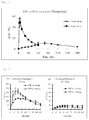
- Fig. 1 shows transition of ⁇ 13 C( ⁇ ) in the expired air measured after oral administration (po) or intravenous administration (iv) of 1- 13 C-sodium palmitate solution.
- the ordinate axis denotes ⁇ 13 C( ⁇ ) in the expired air
- the abscissa axis denotes expired air collection time (t minutes) after 1- 13 C-sodium palmitate administration.
- U- 13 C-glucose was dissolved in physiological saline at a concentration of 50 ⁇ mol/mL, thereby preparing a U- 13 C-glucose solution.
- 1- 13 C-sodium acetate was dissolved in physiological saline at a concentration of 50 ⁇ mol/mL, thereby preparing a 1- 13 C-sodium acetate solution.
- 1- 13 C-sodium octanoate was dissolved in physiological saline at a concentration of 50 ⁇ mol/mL, thereby preparing a 1- 13 C-sodium octanoate solution.
- 1- 13 C-lauric acid was dissolved in hydrous ethanol at about 80°C at a concentration of 500 ⁇ mol/mL. The resulting solution was added to 20% BSA that had been heated to 37°C, and stirred and dissolved so that the 1- 13 C-lauric acid concentration was 20 ⁇ mol/2 ml, thereby preparing a 1- 13 C-lauric acid solution.
- 1- 13 C-sodium palmitate was dissolved in hydrous ethanol at a concentration of 20 ⁇ mol/2 ml, thereby preparing a 1- 13 C-sodium palmitate solution.
- a glycerin solution (24.7 mg/mL) was added in an amount of 0.5 mL at a time until the mixture was emulsified. After obtaining an emulsion of about 9 mL, the emulsion was filtrated with a 1,2 ⁇ m filter, and diluted with water in a measuring cylinder to 10 mL total.
- the oleic acid content of the liquid was measured, and diluted with a glycerin solution (22 mg/mL), thereby obtaining a 5.65 mg/mL (20 ⁇ mol/mL) solution.
- the animals (A) and (B) below were used as experimental animals.
- ZDF Fatty rat is an insulin-resistant test subject animal that has a low sensitivity to insulin, and develops a pathological condition similar to human adult type II diabetes and diabetes complication.
- ZDF Lean rat is a healthy subject animal having normal blood glucose level and normal sensitivity to insulin.
- Lean and Fatty rats (A) were divided into a fasting group in which the rats were fasted from the previous day, and a feeding group.
- Expired air was obtained at time points (t minutes) from a time point before the administration of solutions (a) to (f) (0 minutes) to a time point 60 minutes after the administration, and ⁇ 13 C( ⁇ ) was determined from 13 CO 2 concentration in the expired air using an expired air analysis mass spectrometer (ABCA: product of SerCon).
- Fig. 2 shows transition of ⁇ 13 C( ⁇ ) in the expired air measured after intravenous administration of U- 13 C-glucose solution to ZDF rats (Lean and Fatty).
- Fig. 2(A) shows the results of Lean rats
- Fig. 2(B) shows the results of Fatty rats.
- the ordinate axis denotes ⁇ 13 C( ⁇ ) in the expired air
- the abscissa axis denotes expired air collection time (t minutes) after U- 13 C-glucose solution administration.
- Fig. 3 shows transition of ⁇ 13 C( ⁇ ) in the expired air measured after intravenous administration of 1- 13 C-sodium acetate solution to ZDF rats (Lean and Fatty).
- Fig. 3(A) shows the results of Lean rats and
- Fig. 3(B) shows the results of Fatty rats.
- the ordinate axis denotes ⁇ 13 C( ⁇ ) in the expired air
- the abscissa axis denotes expired air collection time (t minutes) after U- 13 C-sodium acetate solution administration.
- the transition of ⁇ 13 C( ⁇ ) was almost the same in each group.
- Fig. 4 shows transition of ⁇ 13 C( ⁇ ) in the expired air measured after intravenous administration of 1- 13 C-sodium octanoate solution to ZDF rats (Lean and Fatty).
- Fig. 4 (A) shows the results of Lean rats
- Fig. 4(B) shows the results of Fatty rats.
- the ordinate axis denotes ⁇ 13 C( ⁇ ) in the expired air
- the abscissa axis denotes expired air collection time (t minutes) after U- 13 C-sodium octanoate solution administration.
- the transition of ⁇ 13 C( ⁇ ) was almost the same in each group.
- Fig. 5 shows transition of ⁇ 13 C( ⁇ ) in the expired air measured after intravenous administration of 1- 13 C-lauric acid solution to ZDF rats (Lean and Fatty).
- the ordinate axis denotes ⁇ 13 C( ⁇ ) in the expired air
- the abscissa axis denotes expired air collection time (t minutes) after 1- 13 C-lauric acid solution administration.
- Fig. 5(A) shows the results of Lean rats
- Fig. 5(B) shows the results of Fatty rats. As shown in Fig.
- Fig. 6 shows transition of ⁇ 13 C( ⁇ ) in the expired air measured after intravenous administration of a 1- 13 C-sodium palmitate solution to ZDF rats (Lean and Fatty).
- Fig. 6(A) shows the results of Lean rats
- Fig. 6(B) shows the results of Fatty rats.
- the ordinate axis denotes ⁇ 13 C( ⁇ ) in the expired air
- the abscissa axis denotes expired air collection time (t minutes) after 1- 13 C-sodium palmitate solution administration.
- Fig. 7 shows transition of ⁇ 13 C( ⁇ ) in the expired air measured after intravenous administration of a 1- 13 C-oleic acid solution to ZDF rats (Lean and Fatty).
- Fig. 7(A) shows the results of Lean rats
- Fig. 7(B) shows the results of Fatty rats.
- the ordinate axis denotes ⁇ 13 C( ⁇ ) in the expired air
- the abscissa axis denotes expired air collection time (t minutes) after administration of 1- 13 C-oleic acid solution.
- LETO rats Male (25 weeks, blood glucose level and insulin value under a fasting condition: 80 mg/dL and 1.4 ng/mL; blood glucose level and insulin value under a feeding condition: 105 mg/dL and 3.2 ng/mL) and OLETF rats (male) (25 weeks, blood glucose level and insulin value under a fasting condition: 101 mg/dL and 1.1 ng/mL; blood glucose level and insulin value under a feeding condition: 198 mg/dL and 14.4 ng/mL) were used as experimental animals.
- OLETF rats are type II diabetes test subject animal with obesity or/and fatty liver, and LETO rats serve as a control thereof (healthy subjects).
- OLETF rats had normal blood glucose under fasting conditions; however, they had hyperinsulinemia and high blood glucose under feeding conditions. This shows that they are in a state of hidden diabetes. The results revealed that OLETF rats are hyperinsulinemia rats having low sensitivity to insulin, and that they are therefore regarded as insulin-resistant test subject animals.
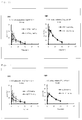
- Fig. 8 shows the transition of ⁇ 13 C( ⁇ ) in the expired air measured after intravenous administration of 1- 13 C-sodium palmitate solution to each group (fasting group and feeding group) of LETO rats as healthy subjects and OLETF rats as insulin-resistant test subjects.
- A denotes the results of LETO rats
- B denotes the results of OLETF rats.
- the ordinate axis denotes ⁇ 13 C( ⁇ ) in the expired air
- the abscissa axis denotes expired air collection time (t minutes) after the 1- 13 C-sodium palmitate solution administration.
- a comparison between healthy subjects (LETO) and insulin-resistant test subjects (OLETF) having liver disease revealed that their difference was significant in the transition of 13 C( ⁇ ) both in the fasting group and the feeding group, in particular, during a period until 15 minutes after the intravenous administration, showing a tendency that 13 C( ⁇ ) of the insulin-resistant test subjects (OLETF) having liver disease was higher than that of the healthy subjects (LETO).
- Figs. 9(A) and 9(B) respectively show the transitions of 13 C( ⁇ ) after intravenous administration of 1- 13 C-sodium palmitate to ZDF rats (male, Lean and Fatty) in a fasting state and a feeding state.
- Figs. 10(A) and 10(B) respectively show the transitions of 13 C( ⁇ ) after intravenous administration of 1- 13 C-sodium palmitate to LETO rats as healthy subject and OLETF rats as insulin-resistant test subject having liver disease in a fasting state and a feeding state. As shown in Figs.
- OLETF rats 11 weeks, blood glucose level and insulin value under a fasting condition: 104 mg/dL and 0.6 ng/mL; blood glucose level and insulin value under a feeding condition: 124 mg/dL and 2.7 ng/mL
- ZDF Fatty rats 11 weeks, blood glucose level and insulin value under a fasting condition: 91 mg/dL and 3.4 ng/mL; blood glucose level and insulin value under a feeding condition: 116 mg/dL and 19.0 ng/mL were used.
- LETO rats 11 weeks, blood glucose level and insulin value under a fasting condition: 57 mg/dL and 0.3 ng/mL; blood glucose level and insulin value under a feeding condition: 98 mg/dL and 1.4 ng/mL
- ZDF Lean rats 11 weeks, blood glucose level and insulin value under a fasting condition: 72 mg/dL and 0.3 ng/mL; blood glucose level and insulin value under a feeding condition: 113 mg/dL and 1.7 ng/mL
- the blood glucose levels of these animals at a stage of pre-onset of insulin resistance (OLETF rats and ZDF Fatty rats) were within a normal range; however, the animals had hyperinsulinemia. Therefore, these animals are referred to as test subjects having hyperinsulinemia not accompanied by insulin resistance, simply as "insulin-nonresistant hyperinsulinemia test subjects”.
- Fig. 11 shows transition of ⁇ 13 C( ⁇ ) in the expired air measured after intravenous administration of a 1- 13 C-sodium palmitate solution to each group of ZDF rats (male, Lean and Fatty) (feeding group, fasting group).
- Fig. 11 (A) shows the results of the feeding group and
- Fig. 11(B) shows the results of the fasting group.
- the ordinate axis denotes ⁇ 13 C( ⁇ ) in the expired air
- the abscissa axis denotes expired air collection time (t minutes) after the 1- 13 C-sodium palmitate solution administration.
- Fig. 12 shows respective transitions of 13 C( ⁇ ) of LETO rats and OLETF rats after intravenous administration of 1- 13 C-sodium palmitate solution in a feeding state and a fasting state.
- Fig. 12(A) shows the results of the feeding group and
- Fig. 12(B) shows the results of the fasting group.
- This pattern is opposite the pattern shown in Experimental Example 2 with regard to the insulin-resistant test subject who has developed diabetes, and the pattern shown in Experimental Example 3 with regard to the insulin-resistant test subject with hidden diabetes accompanied by liver disease (the pattern in which the transition of 13 C( ⁇ ) after 1- 13 C-sodium palmitate solution administration is significantly higher in the insulin-resistant test subject than in a healthy subject) ( Figs. 7 to 10 ).
- This revealed that the presence or absence of insulin resistance in hyperinsulinemia patients can be determined by using, as an index, the presence or the absence of increase and decrease in fatty acid metabolism.
- the hyperinsulinemia patient when the fatty acid metabolism in a hyperinsulinemia patient is determined to be higher than that of a healthy subject in a breath test using a labeled C-fatty acid, the hyperinsulinemia patient is determined to have low sensitivity to insulin (insulin resistance is present, insulin resistant hyperinsulinemia); in contrast, when the fatty acid metabolism in a hyperinsulinemia patient is lower than that of a healthy subject in the same breath test, it is determined that the sensitivity to insulin of the hyperinsulinemia patient is not decreased (no insulin resistance, insulin-nonresistant hyperinsulinemia).
- rats male, ZDF rats, Lean and Fatty
- the fasting group was fasted from the previous day of the experiment.
- Fig. 13 shows the respiratory quotient average value ⁇ SD measured for ZDF rats (Lean and Fatty).
- the sugar/fatty acid combustion ratio was calculated using the results of (a) U- 13 C-glucose solution administration and the results of (e)1- 13 C-sodium palmitate solution administration obtained in Experimental Example 2.
- Fig. 14 shows a comparison between a fasting state and a feeding state with regard to a ratio (AUC[ 13 -C-glucose]/AUC[1- 13 C-sodium palmitate]) of AUC (120 minutes) of ⁇ 13 C( ⁇ ) obtained by (a) U- 13 C-glucose solution administration (fasting state, feeding state) to AUC (60 minutes) of ⁇ 13 C( ⁇ ) obtained by (e)1- 13 C-sodium palmitate solution administration (fasting state, feeding state) obtained in Experimental Example 2 using ZDF rats (Lean and Fatty).
- This ratio (AUC[ 13 C-glucose]/AUC[1- 13 C-sodium palmitate]) represents a sugar/fatty acid combustion ratio.
- the difference between the healthy subjects (Lean) and the insulin-resistant test subjects (Fatty) who have developed diabetes is clear both in the fasting state and the feeding state. This reveals that it is possible, both in the fasting state and the feeding state, to accurately measure which of saccharide and fatty acid is used as the energy source in the test subject. More specifically, the above method makes it possible to measure which of saccharide and fatty acid is used as the energy source, in place of and more sensitively than respiratory quotient.
- the difference in "AUC[U- 13 C-glucose]/AUC[1- 13 C-fatty acid]" of the insulin-resistant test subjects (Fatty) who have developed diabetes between the fasting state and the feeding state is significantly smaller than that of the healthy subjects (Lean). Therefore, by measuring the difference in "AUC[U- 13 C-glucose]/AUC[1- 13 C-fatty acid]" of a test subject between the fasting state and the feeding state, it is possible to measure decrease in insulin sensitivity (insulin resistance) of the test subject with higher accuracy.
- Fig. 15 shows a comparison between a fasting state and a feeding state with regard to a ratio ([1/blood glucose level]/AUC[1- 13 C-sodium palmitate]) of reciprocal of blood glucose level (fasting state, feeding state) to AUC (60 minutes) of ⁇ 13 C( ⁇ ) obtained by (e) 1- 13 C-sodium palmitate solution administration (fasting state, feeding state) in Experimental Example 2 using ZDF rats (Lean and Fatty).
- the ratio ([1/blood glucose level]/AUC[1- 13 C-sodium palmitate]) represents a sugar/fatty acid combustion ratio.
- Fig. 14 it is possible to determine which of saccharide and fatty acid is used as the energy source in the healthy subjects (Lean) and in the insulin-resistant test subjects (Fatty) who have developed diabetes both in the fasting state and the feeding state. This reveals that simply performing measurement using 1- 13 C-sodium palmitate serves as a substitute for respiratory quotient, and that, further, the measurement is more sensitive than respiratory quotient.
- the difference in "[1/blood glucose level]/AUC[1- 13 C-fatty acid]" of the insulin-resistant test subjects (Fatty) who have developed diabetes between the fasting state and the feeding state is significantly smaller than that of the healthy subjects (Lean). Therefore, by measuring the difference in "[1/blood glucose level]/AUC[1- 13 C-fatty acid]" of a test subject between the fasting state and the feeding state, it is possible to measure insulin-resistant glucose tolerance of the test subject with higher accuracy.
- Fig. 15 shows a comparison between a fasting state and a feeding state with regard to a ratio ([1/blood glucose level]/Ct [1- 13 C-sodium palmitate]) of reciprocal of blood glucose level (fasting state, feeding state) to Ct of ⁇ 13 C( ⁇ ) obtained by (e)1- 13 C-sodium palmitate solution administration (fasting state, feeding state) obtained in Experimental Example 2 using ZDF rats (Lean and Fatty).
- the time point where the ⁇ 13 C( ⁇ ) value is maximum was used as expired air collection time (t).
- This ratio ([1/blood glucose level]/Ct) represents a sugar/fatty acid combustion ratio.
- Fig. 16 it is possible to determine which of saccharide and fatty acid is used as the energy source in the healthy subjects (Lean) and in the diabetes test subject (Fatty) both in a fasting state and a feeding state, as in Figs. 14 and 15 .
- This reveals that simply performing measurement using 1- 13 C-sodium palmitate at only one time point between 1 minute to 30 minutes after the 1- 13 C-sodium palmitate administration serves as a substitute for respiratory quotient, and that the measurement is more sensitive than respiratory quotient.
- 1- 13 C-sodium palmitate was dissolved in hydrous ethanol at about 80°C at a concentration of 500 ⁇ mol/mL. The resulting solution was added to 20% BSA that had been heated to 37°C, and stirred. A 3- 13 C-glucose solution was further added thereto, thereby preparing a mixed solution of 3- 13 C-glucose (50 ⁇ mol/2 mL) and 1- 13 C-sodium palmitate (20 ⁇ mol/2 mL) (hereinafter referred to as a "glucose/palmitic acid mixed solution").
- Rats male LETO and male OLETF were used as experimental animals.
- OLETF rats are diabetes test subjects with obesity and fatty liver, i.e., insulin-resistant test subjects, and LETO rats serve as a control (healthy subjects).
- expired air was collected at a time point before the intravenous administration of glucose/palmitic acid mixed solution (0 minutes) and time points after the administration (t minutes), and ⁇ 13 C( ⁇ ) was determined from the 13 CO 2 concentration in the expired air using an expired air analysis mass spectrometer (ABCA: product of SerCon).
- Fig. 17 shows the results.
- Fig. 17 shows the transitions of ⁇ 13 C( ⁇ ) calculated from the 13 CO 2 concentrations measured by the breath test after intravenously administering the glucose/palmitic acid mixed solution to, from left to right, the control group (blood glucose level under feeding conditions: 108 mg/dL), the mild diabetes group (blood glucose level under feeding conditions: 166 mg/dL), and the severe diabetes group (blood glucose level under feeding conditions: 281 mg/dL).
- the ordinate axis denotes ⁇ 13 C( ⁇ ) in the expired air
- the abscissa axis denotes expired air collection time (t minutes) after the intravenous administration.
- the measured values shown in Fig. 17 are well matched with the simulation results (not shown), thereby showing that the degree of progression of diabetes (control ⁇ mild diabetes ⁇ severe diabetes), i.e., the degree of progression of low sensitivity to insulin (increase in insulin resistance), can be monitored based on the transition of ⁇ 13 C( ⁇ ) of the measured values. Further, by performing model analysis (pharmacokinetics), it is also possible to divide the measured values obtained from the administration of glucose/palmitic acid mixed solution into individual expired air reactions of glucose and palmitic acid.
Landscapes
- Health & Medical Sciences (AREA)
- Life Sciences & Earth Sciences (AREA)
- Engineering & Computer Science (AREA)
- Biomedical Technology (AREA)
- Molecular Biology (AREA)
- Physics & Mathematics (AREA)
- Chemical & Material Sciences (AREA)
- Immunology (AREA)
- Pathology (AREA)
- General Health & Medical Sciences (AREA)
- Hematology (AREA)
- Urology & Nephrology (AREA)
- Biophysics (AREA)
- General Physics & Mathematics (AREA)
- Biochemistry (AREA)
- Analytical Chemistry (AREA)
- Medicinal Chemistry (AREA)
- Food Science & Technology (AREA)
- Cell Biology (AREA)
- Animal Behavior & Ethology (AREA)
- Pulmonology (AREA)
- Obesity (AREA)
- Public Health (AREA)
- Surgery (AREA)
- Physiology (AREA)
- Medical Informatics (AREA)
- Heart & Thoracic Surgery (AREA)
- Emergency Medicine (AREA)
- Veterinary Medicine (AREA)
- Biotechnology (AREA)
- Microbiology (AREA)
- Bioinformatics & Cheminformatics (AREA)
- Toxicology (AREA)
- Tropical Medicine & Parasitology (AREA)
- Medicines Containing Antibodies Or Antigens For Use As Internal Diagnostic Agents (AREA)
- Investigating Or Analysing Biological Materials (AREA)
- Other Investigation Or Analysis Of Materials By Electrical Means (AREA)
Abstract
(a) intravenously administering the composition to a test subject and collecting expired air; and
(b) determining the ratio of labeled CO2 amount to unlabeled CO2 amount contained in the expired air or the ratio of labeled CO2 amount to total CO2 amount contained in the expired air.
Description
- The present invention relates to a method for measuring the presence or absence of insulin resistance in a test subject, and a composition suitably used for the method. More specifically, the present invention relates to a method for measuring and monitoring the presence or absence of insulin resistance in a test subject based on the fatty acid combustion of the test subject by performing a breath test using labeled carbon such as 13C etc.; and a composition suitably used for the method. The aforementioned "method for measuring the presence or absence of insulin resistance in a test subject" includes a method for determining whether a hyperinsulinemia test subject has insulin resistance or not. The former case enables the test subject to be determined as "insulin-resistant," and the latter case enables the test subject to be determined to have "hyperinsulinemia without insulin resistance" (hereinafter may also be referred to as "insulin-nonresistant hyperinsulinemia").
- Further, the present invention relates to a method for measuring a sugar/fatty acid combustion ratio in a test subject using a labeled C-breath test, and a composition suitably used for the method.
- Abnormal glucose tolerance generally designates a state where the fasting blood glucose level is in a range of 110 mg/dl to less than 126 mg/dl, or a state where the 2-hour value in an oral glucose tolerance test is 140 mg/dl to 199 mg/dl, and is also called borderline diabetes. Although the patients of borderline diabetes have abnormal blood glucose levels, they are not exactly considered to have diabetes; however, if the patients leave the condition untreated, they are highly likely to become diabetic. The condition is thus called prediabetes. Further, arteriosclerosis is known to advance at this stage. Therefore, in terms of preventive medicine as well, it is important to detect patients in a prediabetic stage.
- In the diagnosis of diabetes, primary screening is generally conducted first with a urine glucose test or a fasting blood glucose level test, and, if such tests are positive, a glucose tolerance test is performed to make a definite diagnosis. In recent years, HbA1C or fructosamine in the blood may also be tested before a glucose tolerance test using glucose.
- However, side effects caused by administration of a large amount of glucose have been indicated with regard to the glucose tolerance test using glucose. Further, the test requires test subjects to be restrained for several hours, and for blood to be repeatedly collected. Because this therefore imposes a great physical burden on test subjects, the test can only actually be carried out on a limited number of test subjects. Further, the results of HbA1C or fructosamine cannot be known until the next hospital visit, thus posing the drawback of insufficient rapidity. The tests performed before these tests, such as the urine glucose test or fasting blood glucose level test, have problematic low sensitivity since they often show negative results of urine glucose or normal results of blood glucose levels even though the test subjects are diabetic; thereby, they miss many cases of diabetic patients. Accordingly, these known methods for diagnosing diabetes are incapable of determining a prediabetic stage in which diabetes has not yet been developed, such as borderline diabetes, or a condition even before borderline diabetes (a condition having insulin resistance or hyperinsulinemia without insulin resistance).
- In recent years, as a diabetes diagnosis method, a method of intravenously administering acetic acid, oleic acid, or palmitic acid labeled with 13C, and measuring the increasing rate of 13C concentration in the CO2 in the expired air with a breath test, thereby diagnosing insulin hyposecretion-type diabetes has been suggested (Patent Document 1). However, it is unknown whether this method is capable of diagnosing a condition even before borderline diabetes (a condition having insulin resistance or hyperinsulinemia without insulin resistance).
- Examples of underlying diseases showing insulin resistance include liver diseases. In particular, liver cirrhosis patients have a nutritionally typical pathological condition of protein-energy malnutrition (PEM). Moreover, a significant percentage of the liver cirrhosis patients also have comorbid insulin resistance. Thus, a correlation between comorbid insulin resistance and liver cancer has also been reported. However, a method for diagnosing comorbid insulin resistance in liver cirrhosis patients has not been established. For the diagnosis of PEM degree, indirect calorimetry for detecting saccharide/lipid combustion ratio has been used. The saccharide/lipid combustion ratio can be calculated as a respiratory quotient. It has been reported that the prognosis of liver cirrhosis or liver cancer worsens when the respiratory quotient is decreased to 0.85 or less by a decrease in saccharide combustion and/or an increase in fat combustion. Further, it has also been reported that the respiratory quotient significantly decreases with the increase in severity of liver cirrhosis (Non-patent Document 1). More specifically, by measuring the saccharide/lipid combustion ratio, it is possible to determine the prognosis or severity of liver cirrhosis, liver cancer, etc. However, known methods using calculation of respiratory quotient have little practicability, and it is considered impossible to easily grasp the nutritional status objectively.
- Meanwhile, applying so-called a labeled C-breath test, which is a method of measuring 13CO2 excreted in expired air as carbon dioxide after administration of 13C-labeled glucose, to the diagnosis of diabetes has been proposed (
Patent Documents 2 to 4). More specifically,Patent Document 2 discloses a method for diagnosing the presence or absence of diabetes as well as the type of diabetes (type I diabetes or type II diabetes) by performing a breath test using glucose wherein the carbon at a specific position is replaced by 13C, and determining the degree of increase in 13CO2 concentration excreted in expired air. Further, Patent Documents 3 and 4 disclose performing a breath test using 13C-labeled glucose as inPatent Document 2 and diagnosing a diabetic patient or an insulin-resistant patient based on an index such that the ratio of 13C to 12C (13C/12C) in expired air that is lower than the ratio of a healthy subject, the ratio being calculated from the concentration of 13CO2 excreted in the expired air. - However, these documents nowhere disclose or suggest combining a labeled C-breath test using glucose with a labeled C-breath test using fatty acid, thereby enabling highly accurate detection of a saccharide/lipid combustion ratio that can replace respiratory quotient.
- Patent Documents
-
- Patent Document 1:
JPH11-124343A - Patent Document 2:
JPH10-67689A - Patent Document 3:
JP2002-513911A - Patent Document 4:
JP2008-292506A -
- Non-patent Document 1: " Eiyo: Hyoka to Chiryo" Japanese Journal of Nutritional Assessment, vol. 29, No. 1, page 37-40
- An object of the present invention is to provide a method for detecting insulin resistance in a test subject rapidly and with high accuracy with a labeled C-breath test using isotope-labeled C12-38 fatty acid. Another object of the present invention is to provide a composition to be used for insulin resistance measurement in the above method.
- Still another object of the present invention is to provide a method for detecting a sugar/fatty acid combustion ratio and insulin resistance in a test subject with high accuracy by combining a result of a labeled C-breath test using isotope-labeled C12-38 fatty acid with a result of a labeled C-breath test using isotope-labeled glucose or a blood glucose level.
- The present inventors conducted extensive research to achieve the above objects, and found that insulin resistance in a test subject can be measured rapidly and with high accuracy based on the behavior of the amount of the isotope-labeled carbon dioxide (CO2) excreted in the expired air after oral administration of isotope-labeled C12-38 fatty acid and the behavior of the abundance of the carbon dioxide contained in the expired air (the ratio of labeled CO2 amount to unlabeled CO2 amount, or the ratio of labeled CO2 amount to total CO2 amount), the abundance being calculated from the amount of isotope-labeled carbon dioxide (CO2) excreted in the expired air. The present inventors further found that it is possible to perform a judgment as to whether a test subject has insulin resistance or hyperinsulinemia without insulin resistance, based on the measurement results obtained from the test subject.
- The present inventors also confirmed that the sugar/fatty acid combustion ratio in a test subject can be measured with high accuracy by combining a result of a breath test using isotope-labeled C12-38 fatty acid with the result of a breath test using isotope-label glucose or a blood glucose level, and that insulin resistance in a test subject can also be measured from the sugar/fatty acid combustion ratio with high accuracy.
- The present invention has been accomplished based on these findings, and includes the following embodiments:
-
- (1-1) A method for measuring insulin resistance of a test subject, comprising steps (a) and (b) below:
- (a) intravenously administering a composition to a test subject and collecting expired air, the composition comprising, as an active ingredient, a C12-38 fatty acid or a salt thereof labeled with at least one isotope of C, wherein the C12-38 fatty acid or a salt thereof is converted in the body into labeled carbon dioxide that is excreted in expired air; and
- (b) determining the ratio of labeled CO2 amount to unlabeled CO2 amount contained in the expired air or the ratio of labeled CO2 amount to total CO2 amount contained in the expired air.
- As described below, step (b) can be performed by determining, for example, Δ%13C (amount of change in 13C concentration: atom%) or Δ13C value (amount of change in δ13 C value: ‰).
-
- (1-2) The method for measuring insulin resistance according to (1-1), further comprising step (c) below:
- (c) comparing "the ratio of labeled CO2 amount to unlabeled CO2 amount contained in the expired air or the ratio of labeled CO2 amount to total CO2 amount contained in the expired air" obtained from the test subject in step (b) (test subject value) with "the ratio of labeled CO2 amount to unlabeled CO2 amount contained in the expired air or the ratio of labeled CO2 amount to total CO2 amount contained in the expired air" of a healthy subject (control value), and determining that the insulin sensitivity of the test subject is decreased (insulin resistance) when the test subject value is higher than the control value, and that the insulin sensitivity of the test subject is normal or not decreased when the test subject value is equivalent to or lower than the control value.
-
- (1-3) The method for measuring insulin resistance according to (1-1), wherein the test subject is a hyperinsulinemia patient, the method further comprising step (d) below:
- (d) comparing "the ratio of labeled CO2 amount to unlabeled CO2 amount contained in the expired air or the ratio of labeled CO2 amount to total CO2 amount contained in the expired air" obtained from the test subject in step (b) (test subject value) with "the ratio of labeled CO2 amount to unlabeled CO2 amount contained in the expired air or the ratio of labeled CO2 amount to total CO2 amount contained in the expired air" of a healthy subject (control value), and determining that the test subject has "insulin-nonresistant hyperinsulinemia" in which the insulin sensitivity is normal or not decreased when the test subject value is lower than the control value.
-
- (1-4) The method for measuring insulin resistance according to (1-1), wherein the test subject is a hyperinsulinemia patient, the method further comprising step (e) below:
- (e) comparing "the ratio of labeled CO2 amount to unlabeled CO2 amount contained in the expired air or the ratio of labeled CO2 amount to total CO2 amount contained in the expired air" obtained from the test subject in step (b) (test subject value) with "the ratio of labeled CO2 amount to unlabeled CO2 amount contained in the expired air or the ratio of labeled CO2 amount to total CO2 amount contained in the expired air" of a healthy subject (control value), and determining that the insulin sensitivity of the test subject is decreased, in other words, the test subject has "insulin resistance" or "insulin-resistant hyperinsulinemia" when the test subject value is higher than the control value, and determining that the insulin sensitivity of the test subject is normal or not decreased, in other words, the test subject has "insulin-nonresistant hyperinsulinemia" when the test subject value is lower than the control value.
-
- (1-5) The method for measuring insulin resistance according to any one of (1-1) to (1-4), wherein the isotope is 13C.
- (1-6) The method for measuring insulin resistance according to any one of (1-1) to (1-5), wherein the C12-38 fatty acid is a C12-28 medium-chain, long-chain, or very-long-chain fatty acid.
- (1-7) The method for measuring insulin resistance according to any one of (1-1) to (1-6), wherein the C12-38 fatty acid is at least one member selected from the group consisting of lauric acid, myristic acid, pentadecylic acid, stearic acid, oleic acid, and palmitic acid.
- (1-8) The method for measuring insulin resistance according to any one of (1-1) to (1-7), wherein the C12-38 fatty acid labeled with at least one Isotope C is 1-13C-palmitic acid, 1-13C-stearic acid, or 1-13C-oleic acid wherein the carbon at the 1-position is labeled with 13C.
- (1-9) The method for measuring insulin resistance according to any one of (1-1) to (1-8), wherein step (a) is performed with a test subject in a feeding state (non-fasting state) .
- (1-10) The method for measuring insulin resistance according to any one of (1-1) to (1-9), wherein the method detects the presence or absence of insulin resistance of a hyperinsulinemia test subject.
- (1-11) The method for measuring insulin resistance according to any one of (1-1) to (1-10), wherein the test subject has at least one condition selected from the group consisting of borderline diabetes, type II diabetes, and liver disease (liver cirrhosis, NASH, NAFLD).
-
- (2-1) A method for measuring a sugar/fatty acid combustion ratio in a test subject, using, as an index, a value (AUCt[labeled C-glucose]/AUCt[labeled C-fatty acid]) determined by dividing [an area under the Δ-labeled C(‰)-expired air collection time t curve] obtained by a glucose metabolism ability measurement method having steps (i) and (ii) below (hereinafter referred to as "AUCt[labeled C-glucose]") by [an area under the Δ-labeled C(‰)-expired air collection time t curve] obtained by the method for measuring insulin resistance according to any one of (1-1) to (1-11) (hereinafter referred to as "AUCt[labeled C-fatty acid]"):
- (i) intravenously administering a composition to a test subject and collecting expired air, the composition comprising, as an active ingredient, glucose labeled with at least one isotope of C, wherein the glucose is converted in the body into labeled carbon dioxide that is excreted in expired air; and
- (ii) determining the ratio of labeled CO2 amount to unlabeled CO2 amount contained in the expired air or the ratio of labeled CO2 amount to total CO2 amount contained in the expired air.
- (2-2) A method for measuring a sugar/fatty acid combustion ratio in a test subject body, using, as an index, a value (1/blood glucose level/ AUCt[labeled C-fatty acid]) determined by dividing the reciprocal of a blood glucose level (1/blood glucose level) of the test subject by [an area under the Δ-labeled C(‰)-expired air collection time t curve] obtained by the method for measuring insulin resistance according to any one of (1-1) to (1-11) (hereinafter referred to as "AUCt[labeled C-fatty acid]").
- (2-3) A method for measuring a sugar/fatty acid combustion ratio in a test subject body using a value ([1/blood glucose level]/Ct[labeled C-fatty acid] (t=1-30min)) determined by dividing the reciprocal of a blood glucose level (1/blood glucose level) of the test subject by Ct[labeled C-fatty acid](t=1-30min) of Δ-labeled C(‰) obtained by the method for measuring insulin resistance according to any one of (1-1) to (1-11).
- (2-4) The method for measuring a sugar/fatty acid combustion ratio according to any one of (2-1) to (2-3), wherein the test subject is in a fasting state or a feeding state (non-fasting state).
-
- (3-1) A composition in an injectable dosage form for measuring insulin resistance, the composition comprising, as an active ingredient, a C12-38 fatty acid or a salt thereof labeled with at least one isotope of C, wherein the C12-38 fatty acid or a salt thereof is converted in the body into labeled carbon dioxide that is excreted in expired air.
- (3-2) The composition for measuring insulin resistance according to (3-1), wherein the isotope is 13C.
- (3-3) The composition for measuring insulin resistance according to (3-1) or (3-2), wherein the C12-38 fatty acid is a C12-18 saturated fatty acid or a C18 unsaturated fatty acid.
- (3-4) The composition for measuring insulin resistance according to any one of (3-1) to (3-3), wherein the C12-38 fatty acid is at least one member selected from the group consisting of lauric acid, myristic acid, pentadecylic acid, stearic acid, oleic acid, and palmitic acid.
- (3-5) The composition for measuring insulin resistance according to any one of (3-1) to (3-4), wherein the C12-38 fatty acid labeled with at least one Isotope C is 1-13C-palmitic acid, 1-13C-stearic acid, or 1-13C-oleic acid wherein the carbon at the 1-position is labeled with 13C.
-
- (4-1) Use of a composition in an injectable dosage form for a breath test for measuring insulin resistance, the composition comprising, as an active ingredient, a C12-38 fatty acid labeled with at least one isotope of C, wherein the C12-38 fatty acid is converted in the body into labeled carbon dioxide that is excreted in expired air.
- (4-2) The use of (4-1), wherein the composition is the composition for measuring insulin resistance according to any one of (3-1) to (3-5).
- (4-3) Use of a composition in an injectable dosage form for a breath test for measuring a sugar/fatty acid combustion ratio, the composition comprising, as an active ingredient, a C12-38 fatty acid labeled with at least one isotope of C, wherein the C12-38 fatty acid is converted in the body into labeled carbon dioxide that is excreted in expired air
- (4-4) The use according to (4-3), wherein the composition is the composition for measuring glucose tolerance according to any one of (3-1) to (3-5).
- The method of the present invention makes it possible to measure and evaluate insulin resistance in a test subject rapidly and with high accuracy. The accuracy and rapidity can be further improved by performing the method of the present invention on a test subject under feeding conditions. Further, the method of the present invention makes it possible to measure and evaluate low sensitivity to insulin (insulin resistance) of a test subject in a short period of time, i.e., within 60 minutes, preferably within 30 minutes, more preferably within 15 minutes. Therefore, the method of the present invention makes it unnecessary to restrain a test subject for a long period of time, thereby eliminating the test subject's physical or mental burden when measuring the insulin resistance of the test subject.
- Further, the method of the present invention makes it possible to measure the presence or absence of insulin resistance in a hyperinsulinemia test subject, and enable discrimination between insulin-resistant hyperinsulinemia and insulin-nonresistant hyperinsulinemia. The insulin-nonresistant hyperinsulinemia is a pre-insulin-resistant (low sensitivity to insulin) state; thus, a test subject determined to be in an insulin-nonresistant hyperinsulinemia state can be prevented from developing an insulin-resistant condition through diet and exercise.
- Further, the present invention makes it possible to not only measure the insulin resistance of hyperinsulinemia patients such as borderline diabetes or type II diabetes patients, but also measure the insulin resistance of liver disease (liver cirrhosis, NASH (non-alcoholic steatohepatitis), NAFLD (non-alcoholic fatty liver disease), etc.) patients.
- Further, by combining a breath test using an isotope-labeled C12-38 fatty acid and a breath test using isotope-labeled glucose, it is possible to measure sugar/fatty acid combustion ratio in a test subject. This method enables measurement as to whether the test subject uses sugar or fatty acid as the energy source in place of, and more sensitively than, respiratory quotient. Further, the insulin resistance in a test subject can also be evaluated with high accuracy from the "sugar/fatty acid combustion ratio" obtained by the method of the present invention.
-
-
Fig. 1 shows transition of Δ13C(‰) in the expired air measured after oral administration (po) (-◊-) or intravenous injection (iv) (-■-) of a 1-13C-sodium palmitate solution into fasted Zucker rats. The ordinate axis denotes Δ13C(‰) in the expired air, and the abscissa axis denotes measurement time (t minutes) after the administration of 1-13C-sodium palmitate (Experimental Example 1). -
Fig. 2 shows transition of Δ13C(‰) in the expired air measured after intravenous injection of a U-13C-glucose solution to ZDF rats in a fasting or feeding state (Lean and Fatty).Fig. 2(A) shows the results of Lean rats (fasting: -◆-, feeding: -◊-), andFig. 2(B) shows the results of Fatty rats (fasting: -■-, feeding: -□-). The ordinate axis denotes Δ13C(‰) in the expired air, and the abscissa axis denotes expired air collection time (t minutes) after the administration of U-13C-glucose solution (Experimental Example 2). -
Fig. 3 shows transition of Δ13C(‰) in the expired air measured after intravenous injection of a 1-13C-sodium acetate solution to ZDF rats in a fasting or feeding state (Lean and Fatty).Fig. 3(A) shows the results of Lean rats (fasting: -◆-, feeding: -◊-), and Fig.'3(B) shows the results of Fatty rats (fasting: -■-, feeding: -□-). The ordinate axis denotes Δ13C(‰) in the expired air, and the abscissa axis denotes expired air collection time (t minutes) after the administration of 1-13C-sodium acetate solution (Experimental Example 2). -
Fig. 4 shows transition of Δ13C(‰) in the expired air measured after intravenous injection of a 1-13C-sodium octanoate solution to ZDF rats in a fasting or feeding state (Lean and Fatty).Fig. 4(A) shows the results of Lean rats (fasting: -◆-, feeding: -◊-), andFig. 4(B) shows the results of Fatty rats (fasting: -■-, feeding: -□-). The ordinate axis denotes Δ13C(‰) in the expired air, and the abscissa axis denotes expired air collection time (t minutes) after the administration of 1-13C-sodium octanoate solution (Experimental Example 2). -
Fig. 5 shows transition of Δ13C(‰) in the expired air measured after intravenous injection of a 1-13C-lauric acid solution to ZDF rats in a fasting or feeding state (Lean and Fatty).Fig. 5(A) shows the results of Lean rats (fasting: -1-, feeding: -◊-), andFig. 5(B) shows the results of Fatty rats (fasting: -■-, feeding: -□-). The ordinate axis denotes Δ13C(‰) in the expired air, and the abscissa axis denotes expired air collection time (t minutes) after the administration of 1-13C-lauric acid solution (Experimental Example 2). -
Fig. 6 shows transition of Δ13C(‰) in the expired air measured after intravenous injection of a 1-13C-sodium palmitate solution to ZDF rats in a fasting or feeding state (Lean and Fatty).Fig. 6(A) shows the results of Lean rats (fasting: -◆-, feeding: -◊-), andFig. 6(B) shows the results of Fatty rats (fasting: -■-, feeding: -□-). The ordinate axis denotes Δ13C(‰) in the expired air, and the abscissa axis denotes expired air collection time (t minutes) after the administration of 1-13C-sodium palmitate solution (Experimental Example 2). -
Fig. 7 shows transition of Δ13C(‰) in the expired air measured after intravenous injection of a 1-13C-oleic acid solution to ZDF rats in a fasting or feeding state (Lean and Fatty).Fig. 7(A) shows the results of Lean rats (fasting: -◆-, feeding: -◊-), andFig. 7(B) shows the results of Fatty rats (fasting: -■-, feeding: -□-). The ordinate axis denotes Δ13C(‰) in the expired air, and the abscissa axis denotes expired air collection time (t minutes) after the administration of 1-13C-oleic acid solution (Experimental Example 2). -
Fig. 8 shows transition of Δ13C(‰) in the expired air measured after intravenous administration of a 1-13C-sodium palmitate solution to each group (fasting and feeding groups) of LETO and OLETF rats.Fig. 8(A) denotes the results of LETO rats (fasting: -◆-, feeding: -◊-), andFig. 8(B) denotes the results of OLETF rats (fasting: -■-, feeding: -□-). The ordinate axis denotes Δ13C(‰) in the expired air, and the abscissa axis denotes expired air collection time (t minutes) after the administration of 1-13C-sodium palmitate solution (Experimental Example 3). -
Fig. 9(A) shows transition of Δ13C(‰) in the expired air measured after intravenous injection of a 1-13C-sodium palmitate solution to ZDF rats in a fasting state (Lean: -◆-, Fatty:-■-).Fig. 9(B) shows transition of Δ13C(‰) in the expired air measured after intravenous injection of a 1-13C-sodium palmitate solution to ZDF rats in a feeding state (Lean:-◊-, Fatty:-□-). InFigs. 9(A) and 9(B) , the ordinate axis denotes Δ13C(‰) in the expired air, and the abscissa axis denotes expired air collection time (t minutes) after the administration of 1-13C-sodium palmitate solution (Experimental Example 3). -
Fig. 10(A) shows transition of Δ13C(‰) in the expired air measured after intravenous injection of a 1-13C-sodium palmitate solution to LETO rats (-◆-) and OLETF rats (-■-) in a fasting state.Fig. 10(B) shows transition of Δ13C(‰) in the expired air measured after intravenous injection of a 1-13C-sodium palmitate solution to LETO rats (-◊-) and OLETF rat (-□-) in a fasting state. InFigs. 10(A) and 10(B) , the ordinate axis denotes Δ13C(‰) in the expired air, and the abscissa axis denotes expired air collection time (t minutes) after the administration of 1-13C-sodium palmitate solution (Experimental Example 3). -
Fig. 11 (A) shows transition of Δ13C(‰) in the expired air measured after intravenous injection of a 1-13C-sodium palmitate solution to ZDF rats in a feeding state (Lean:-◊-, Fatty:—□—).Fig. 11(B) shows transition of Δ13C(‰) in the expired air measured after intravenous injection of a 1-13C-sodium palmitate solution to ZDF rats in a fasting state (Lean: -◆-, Fatty:-■-). InFigs. 11(A) and 11(B) , the ordinate axis denotes Δ13C(‰) in the expired air, and the abscissa axis denotes expired air collection time (t minutes) after the administration of 1-13C-sodium palmitate solution (Experimental Example 4). -
Fig. 12(A) shows transition of Δ13C(‰) in the expired air measured after intravenous injection of a 1-13C-sodium palmitate solution to LETO rats (-◊-) and OLETF rats (-□-) in a feeding state.Fig. 12(B) shows transition of Δ13C(‰) in the expired air measured after intravenous injection of a 1-13C-sodium palmitate solution to LETO rats (-◆-) and OLETF rats (-■-) in a fasting state. InFigs. 12(A) and 12(B) , the ordinate axis denotes Δ13C(‰) in the expired air, and the abscissa axis denotes expired air collection time (t minutes) after the administration of 1-13C-sodium palmitate solution (Experimental Example 4). -
Fig. 13 shows measured average value ±SD of respiratory quotient (RQ) of ZDF rats in fasting and feeding states (Lean: -◆-, Fatty:-□-) (Experimental Example 4). -
Fig. 14 shows a comparison between a fasting state and a feeding state with regard to a ratio (AUC[U-13C-glucose]/AUC[1-13C-sodium palmitate]) of Δ13C(‰)AUC (120 minutes) obtained by (a) U-13C-glucose solution administration (fasting state, feeding state) to Δ13C(‰)AUC (60 minutes) obtained by (f) 1-13C-sodium palmitate solution administration (fasting state, feeding state) obtained in Experimental Example 2 using ZDF rats (Lean and Fatty). -
Fig. 15 shows a comparison between a fasting state and a feeding state with regard to a ratio ([1/blood glucose level]/AUC[1-13C-sodium palmitate]) of reciprocal of blood glucose level (fasting state, feeding state) to Δ13C(‰)AUC (60 minutes) obtained by (f) 1-13C-sodium palmitate solution administration (fasting state, feeding state) in Experimental Example 2 using ZDF rats (Lean and Fatty). -
Fig. 16 shows a comparison between a fasting state and a feeding state with regard to a ratio ([1/blood glucose level]/Cmax [1-13C-sodium palmitate]) of reciprocal of blood glucose level (fasting state, feeding state) to Δ13C(‰)Cmax obtained by (f) 1-13C-sodium palmitate solution administration (fasting state, feeding state) in Experimental Example 2 using ZDF rats (Lean and Fatty). -
Fig. 17 shows the transitions of Δ13C(‰) calculated from the 3CO2 concentrations measured by the breath test after intravenously administering a mixed solution of 3-13C glucose and 1-13C-sodium palmitate to, from left to right, a control group (blood glucose level under feeding conditions: 108 mg/dL), a mild diabetes group (blood glucose level under feeding conditions: 166 mg/dL), and a severe diabetes group (blood glucose level under feeding conditions: 281 mg/dL). - The method for measuring insulin resistance and sugar/fatty acid combustion ratio of the present invention is based on using a labeled C-breath test, such as a 13C-breath test. Thus, before description of the present invention, terms and analysis methods thereof relating to a labeled C-breath test are described.
- Here, 13C is described as an example of "Isotope C" used in the present invention.
- Abundances of isotopes are expressed in terms of isotopic ratio (R) in which the most abundant isotope of the same element is used as the denominator. Thus, with respect to carbon 13 (13C), R value is expressed by the following formula in which carbon 12 (12C) is used as the denominator.

- Since R is a very small numerical value, it is difficult to directly measure. When a mass spectrometer is used for more accurate quantification, comparison with a standard substance is always performed. The measurement result is represented by δ value defined by the following formula.

- δ13C: δ13C value (‰)
- RSAM: abundance of 13C in sample gas
- RSTD: abundance of 13C in standard gas
- When carbon dioxide derived from limestone (PDB) is used as standard gas, RSTD is RPDB= 0.0112372.
- "Δ13C value (‰)" means a value (Δ13C) obtained by subtracting the δ13C value before administration of a reagent (i.e., naturally occurring 5 value of 13C) as a background from the δ13C value after administration of the reagent, as shown in the following formula.

- Δ13C: amount of change in δ13C value (‰)
- (δ13C)t: δ13C value t hr. after reagent administration (‰)
- (δ13C)0: δ13C value 0 hr. before reagent administration (‰)
- The 13C concentration in expired air (%13C: atom%) is defined by the following formula.

- To convert the relative value δ13C defined in (1) into the 13C concentration (%) in the total carbon, which is a common concept of concentration, the following method can be used.
- First, the numerator and denominator on the right side of the above formula are divided by 12C, and converted into R based on (Formula 1). The following formula is thus obtained.

- If RSAM obtained in (Formula 2) is substituted into R above and rearranged, the following formula is obtained. The 13C concentration (%13C) can be expressed by using the Δ13C value.

- %13C: 13C concentration (atom%)
- δ13C: δ13C value (%)
- RPDB: abundance of 13C in PDB standard gas = 0.0112372
- As defined in the following formula, the amount of change in 13C concentration (%13C) in expired air (Δ%13C) is determined by subtracting the 13
C concentration 0 hr. before administration [(%13C)0] from the 13C concentration t hr. after administration [(%13C)t].
- Δ%13C: amount of change in 13C concentration (atom%)
- (%13C)t: 13C concentration t hr. after reagent administration (atom%)
- (%13C)0: 13
C concentration 0 hr. before reagent administration (atom%) - The natural abundance (R) of 13C is about 0.011, and even when a labeled reagent is administered, the increased amount in expired air is only about +0.001 to 0.002. Thus, the natural abundance can be regarded as R→0, and (Formula 4), which expresses %13C by using R, can be approximated by the following formula.

- Using this approximate expression, an approximation that determines the 13C concentration (Formula 7) can be obtained as follows: first, RSAM is determined by (Formula 2), which defines δ13C, substituted into R in the above formula, and rearranged.

- When this is substituted into (Formula 6), Δ%13C can be calculated from Δ13C, as shown in (Formula 8) below.

- Δ%13C: amount of change in 13C concentration (atom%)
- Δ13C: amount of change in δ13C value (‰)
- RPDB: abundance of 13C in PDB standard gas = 0.0112372
- The composition for measuring insulin resistance of the present invention comprises, as an active ingredient, a C12-38 fatty acid or a salt thereof labeled with at least one isotope of C, wherein the C12-38 fatty acid or a salt thereof is converted in the body into labeled CO2 gas that is excreted in expired air. The labeled C-fatty acid or a salt thereof used in the present invention has a feature such that, after being administered to a test subject, the labeled C-fatty acid or a salt thereof is metabolized according to lipid metabolism ability in the body and excreted in expired air in the form of carbon dioxide containing labeled C, which reflects the degree of lipid metabolism ability of the test subject.
- As mentioned above, examples of fatty acid used in the present invention include C12-38 fatty acids. Examples of such fatty acids include medium-chain fatty acids having 12 to less than 18 carbon atoms, long-chain fatty acids having 18 to less than 24 carbon atoms, very-long-chain fatty acids having 24 to 28 carbon atoms, and ultra-long-chain fatty acids having 30 to 38 carbon atoms. Preferably, the fatty acid is C12-28 medium-, long-, or very-long-chain fatty acid, more preferably medium- or long-chain fatty acid having 12 to less than 24 carbon atoms. More specifically, examples include lauric acid (C12), myristic acid (C14), pentadecylic acid (C15), palmitic acid (C16), stearic acid (C18), arachidic acid and like saturated fatty acids; palmitoleic acid (C16), oleic acid (C18), vaccenic acid (C18), nervonic acid (C24) and like unsaturated fatty acids having one double bond; linoleic acid (C18), 8,11-icosadienoic acid and like unsaturated fatty acids having two double bonds; linolenic acid (C18), arachidonic acid (C20) and like unsaturated fatty acids having three or more double bonds. Preferable examples include saturated fatty acids and unsaturated fatty acids having one double bond; among them, lauric acid (C12:0), stearic acid (C18:0), palmitic acid (C16:0), and oleic acid (C18:1) are preferable. Stearic acid (C18) and palmitic acid (C16) are more preferable.
- There is no particular limitation on isotopes used in labeling carbon atoms of fatty acid, and specific examples include 13C, and 14C. Such isotopes may be radioactive or non-radioactive; however, from the standpoint of safety, non-radioactive isotopes are preferable. For example, 13C is desirable for use as such an isotope.
- The isotope-labeled fatty acid is labeled in such a manner that at least a portion of the CO2 formed through the lipid metabolic pathway (fatty acid metabolic pathway) is isotope-labeled. Examples of such isotope-labeled fatty acid include compounds in which the carbon atom at the 1-position of fatty acid is labeled with an isotope. Specific examples include 1-13C-labeled fatty acid. Fatty acid in which at least the carbon atom at the 1-position is isotope-labeled may be used; that is, in addition to the carbon atom at the 1-position, one or more of other carbon atoms or all of the carbon atoms may be isotope-labeled. There is no particular limitation on the method for labeling compounds such as fatty acid with isotopes such as 13C or 14C, and a wide variety of commonly used methods may be employed (Sasaki, "5.1 Antei Doitai no Rinsho Shindan heno Oyo [5.1 Application of Stable Isotopes in Clinical Diagnosis]": Kagaku no Ryoiki [Journal of Japanese Chemistry] 107, " Antei Doitai no I/Yakugaku Seibutsugaku heno Oyo [Application of Stable Isotopes in Medicine, Pharmacy, and Biology]," pp. 149-163 (1975), Nankodo: Kajiwara, RADIOISOTOPES, 41, 45-48 (1992), etc.). Such isotope-labeled compounds, particularly 1-13C-labeled-lauric acid, 1-13C-labeled-palmitic acid, 1-13C-labeled-stearic acid, 1-13C-labeled-oleic acid, and salts thereof described in the Examples, are commercially available as conveniently usable commercial products.
- The salts of C12-38 fatty acid may be any pharmaceutically acceptable salts that can be administered to living organisms. Examples thereof include sodium, potassium, or like alkali metal salt; and magnesium, calcium, or like alkaline-earth metal salt. Alkali metal salts are preferable. Sodium salt is particularly preferable.
- There is no particular limitation on the composition of the present invention in terms of its form, components other than the labeled C-fatty acid, proportion of each component, preparation method of the composition, etc., as long as the labeled C-fatty acid is absorbed in the body after administration, and excreted in expired air in the form of labeled carbon dioxide after metabolism.
- As indicated in Experimental Example 1 described later, the dosage forms are preferably injectable dosage forms, in particular, intravenous dosage forms from the standpoint of ensuring rapid rise of "Δ13C(‰)," i.e., high-speed excretion in the expired air as 13CO2 after C-labeled fatty acid administration. Examples of injectable dosage forms include injections and drops (in liquid, suspension, or emulsion form).
- The composition of the present invention may substantially consist of the labeled C-fatty acid, which is an active ingredient; however, as long as the functions and the effects of the present invention are not adversely affected, any pharmaceutically acceptable carriers and/or additives that are generally used in this field may be added as other components according to the pharmaceutical form (dosage form). In this case, there is no particular limitation on the amount of the labeled C-fatty acid contained as an active ingredient. For example, the amount of the labeled C-fatty acid is in the range of 1 to 99 wt% based on the total weight (100 wt%) of the composition, and is suitably controlled within this range.
- More specifically, when the composition of the present invention is prepared into an injectable form such as liquid, suspension, or emulsion, for example, various carriers and/or additives suitable to such forms may be used in addition to purified water or distilled water for injection. Examples of additives include additives commonly used, such as tonicity-adjusting agents (e.g., sodium chloride etc.), pH adjusters (e.g., hydrochloric acid, sodium hydroxide, etc.), buffers (e.g., boric acid, sodium monohydrogen phosphate, sodium dihydrogen phosphate, etc.), preservatives (e.g., benzalkonium chloride etc.), and thickeners (e.g., carboxyvinyl polymers etc.). Insofar as the composition of the present invention can be made into an injectable form when used, it may have a solid form, such as a freeze-dried preparation or a spray-dried preparation, that is to be dissolved in distilled water for injection or the like when used.
- In the measurement method described later, the composition of the present invention is used as an administration sample (test sample) to be administered to a test subject. More specifically, the composition of the present invention is used as a test sample to be administered to a test subject to measure insulin resistance in the test subject, or as a test sample to be administered to a test subject to measure a sugar/fatty acid combustion ratio in the test subject.
- All of these measurement methods are performed by intravenously administering the composition of the present invention to a test subject (including a human and an animal), collecting expired air, measuring the abundance of carbon dioxide contained in the expired air (the ratio of labeled CO2 amount to unlabeled CO2 amount or the ratio of labeled CO2 amount to total CO2 amount), and using the abundance as an index. The details are described in (III) below.
- The amount of the labeled C-fatty acid (active ingredient) contained in the composition for measuring insulin resistance of the present invention may be suitably selected according to each case. More specifically, the dose may be adjusted so that the amount of the labeled C-fatty acid (active ingredient) per dose is in the range of 5 mg/body to 50 g/body, and preferably 10 mg/body to 25 g/body.
- Use of the above-described composition for measuring insulin resistance of the present invention enables measurement of low sensitivity to insulin (insulin resistance) in a test subject (a human, or a mammal other than humans).
- As described below, the measurement of insulin resistance can basically be performed through the step of administering the above composition, which comprises the labeled C-fatty acid as an active ingredient, to a mammal including a human (test subject), and collecting expired air ([step (a)] of the method of the present invention), and the step of measuring the abundance of carbon dioxide contained in the expired air (the ratio of labeled CO2 amount to unlabeled CO2 amount or the ratio of labeled CO2 amount to total CO2 amount) ([step (b)] of the method of the present invention).
- comprising, as an active ingredient, a C12-38 fatty acid or a salt thereof labeled with at least one isotope of C, wherein the C12-38 fatty acid or a salt thereof is converted in the body into labeled carbon dioxide that is excreted in expired air (hereunder such fatty acid and a salt thereof are collectively referred to as a "labeled C-fatty acid" unless otherwise specified); and
- As described above, the labeled C-fatty acid used in the present invention has a feature such that, after being intravenously administered to a test subject, the labeled C-fatty acid is metabolized according to fatty acid metabolism ability of the test subject and excreted in expired air in the form of "carbon dioxide containing labeled C," which reflects the degree of the fatty acid metabolism ability.
- As indicated in Experimental Example 1, administration of the composition of the present invention, which comprises the labeled C-fatty acid as an active ingredient, is preferably performed through intravenous administration in terms of high accuracy.
- The amount of the labeled C-fatty acid (active ingredient) contained in the composition for measuring insulin resistance of the present invention may be suitably selected according to each case (individual difference of test subject, condition of the test subject such as whether the test subject is in a fasting state or a feeding state, etc.). The dose of one intravenous administration is adjusted so that the amount of the labeled C-fatty acid (active ingredient) therein is in the range of 5 mg/body to 50 g/body, and preferably 10 mg/body to 25 g/body.
- As described above, the target test subjects of the present invention are humans, or mammals other than humans. Examples of mammals other than humans include mice, rats, guinea pigs, rabbits, dogs, cats, monkeys, pigs, cattle, horses, and the like. The mammals other than humans are preferably test animals such as mice, rats, guinea pigs, rabbits, dogs, and monkeys.
- The test subject may be in a fasting state or feeding state before being subjected to step (a). As indicated in Experimental Example 2 described later, when a test subject in a feeding state, rather than a test subject in a fasting state, is subjected to step (a), "the ratio of labeled CO2 amount to unlabeled CO2 amount or the ratio of labeled CO2 amount to total CO2 amount" can be measured in step (b) with high accuracy for a short period of time. Thus, a test subject in a feeding state is preferable.
- The case in which a composition comprising 13C-labeled fatty acid as an active ingredient is used (i.e., the case in which the labeled CO2 measured is 13CO2) is described below as an example of the method for measuring insulin resistance of a test subject based on the abundance of carbon dioxide contained in expired air (the ratio of labeled CO2 amount to unlabeled CO2 amount or the ratio of labeled CO2 amount to total CO2 amount) determined in step (b) using the expired air collected in step (a).
-
- (1) The abundance of carbon dioxide contained in the collected expired air (the ratio of 13CO2 amount to total CO2 amount) is calculated according to the below-described method as the amount of change in 13C concentration (Δ%13C), which is obtained by subtracting the 13C concentration (atom%) [(%13C)0] before administration of 13C-labeled fatty acid.
- The 13C concentration (atom %) in total carbon contained in expired air [13C concentration (%13C) in expired air (%13C)] is determined; further, the 13C concentration (atom%) before administration of the 13C-labeled compound [(%13C)0] is subtracted according to Formula 6, thereby obtaining the amount of change in the 13C concentration (Δ%13C).


- Δ%13C: amount of change in 13C concentration (atom%)
- (%13C)t: 13C concentration t hr. after reagent administration (atom%)
- (%13C)0: 13
C concentration 0 hr. before reagent administration (atom%) - (2) If necessary, the amount of change in the 13C concentration (Δ%13C) may be converted into Δ13C value (‰) [amount of change in δ13C value (‰) or DOB(‰)] based on
Formula 5 and Formula 3.
- %13C: 13C concentration (atom%)
- δ13C: δ13 C value (‰)
- RPDB: abundance of 13C in PDB standard gas = 0.0112372
- Δ13C(‰) : amount of change in δ13C value (‰)
- (δ13C)t: δ13 C value t hr. after reagent administration (‰)
- (δ13C)0: δ13 C
value 0 hr. before reagent administration (‰) - The concentration of labeled C excreted in expired air after the composition for measuring insulin resistance, which comprises the labeled C-fatty acid as an active ingredient, is administered, or the corresponding Δ%13C (atom%) or Δ13C value (‰) reflect insulin resistance in a test subject, as indicated in the Experimental Examples described later. The method of the present invention, which uses the composition, allows insulin resistance in a test subject to be measured rapidly and with high accuracy.
- The measurement and analysis of the labeled carbon dioxide contained in the expired air sample vary depending on whether the isotope used is radioactive or non-radioactive. However, the measurement and analysis may be performed by a commonly used analysis method, such as the liquid scintillation counter method, mass spectrometry, infrared spectroscopy, emission spectrometry, or the magnetic resonance spectrum method. From the viewpoint of measurement accuracy, infrared spectroscopy and mass spectrometry are preferable.
- Insulin resistance in a test subject can be determined by the following method, using, as an index, "the ratio of labeled CO2 amount to unlabeled CO2 amount contained in the expired air or the ratio of labeled CO2 amount to total CO2 amount contained in the expired air" (Δ%13C(atom%) or Δ13C value(‰)) obtained in step (b) described above.
- (c-1) "The ratio of labeled CO2 amount to unlabeled CO2 amount contained in the expired air or the ratio of labeled CO2 amount to total CO2 amount contained in the expired air" (Δ%13C(atom%)) or Δ13C value(‰)) obtained in the test subject in step (b) (test subject value) is compared with "the corresponding ratio of labeled CO2 amount to unlabeled CO2 amount contained in the expired air or the corresponding ratio of labeled CO2 amount to total CO2 amount contained in the expired air" (Δ%13C(atom%) or Δ13C value(‰)) of a healthy subject (control value).
- (c-2) As a result of the comparison, when the test subject value is higher than the control value, it is determined that the sensitivity to insulin of the test subject is decreased, more specifically, that the test subject is "insulin-resistant." If the test subject value is equal to or lower than the control value, it is determined that the sensitivity to insulin of the test subject is normal or not decreased.
- Here, the healthy subject means a subject with healthy (normal) sensitivity to insulin. More specifically, the healthy subject does not have any abnormality in insulin secretion, and does not have glucose metabolic disorder (including hyperinsulinemia) such as diabetes (including type II diabetes and gestational diabetes), borderline diabetes, or liver disease (liver cirrhosis, NASH, NAFLD, etc.).
- Using known or conventional diagnosis methods (blood glucose level measurement such as a 75 g glucose tolerance test, insulin resistance test, hemoglobin A1c, etc.) in the field, it is possible to determine whether the test subject is a healthy subject or not. For example, in the 75 g glucose tolerance test, glucose metabolism ability is determined to be normal when the blood glucose level on an empty stomach is less than 110 mg/dl, and the blood glucose level two hours after glucose was loaded is less than 140 mg/dl.
- As shown in Experimental Example 2 (
Fig. 2 ), the glucose metabolism ability of a test subject model (insulin-resistant test subject) (ZDF Fatty inFig. 2 ) who has developed diabetes or in a prediabetic stage is lower than that of a healthy subject (ZDF Lean inFig. 2 ). By administering labeled C-fatty acid to the test subject model and performing step (b), as shown inFig. 6(B) (a figure concerning ZDF Fatty), "the ratio of labeled CO2 amount to unlabeled CO2 amount contained in the expired air or the ratio of labeled CO2 amount to total CO2 amount contained in the expired air" (Δ%13C(atom%) or Δ13C value(‰))(test subject value) determined in step (b) is generally higher (increased) both in the fasting state and the feeding state than "the ratio of labeled CO2 amount to unlabeled CO2 amount contained in the expired air or the ratio of labeled CO2 amount to total CO2 amount contained in the expired air" (Δ%13C(atom%) or Δ13C value(‰)) in a healthy subject (control value) (Fig. 6(A) (a figure regarding ZDF Lean)) (Experimental Example 2). Similar results were obtained in an experiment using OLETF rats as experimental animals instead of ZDF Fatty rats (see Experimental Example 3,Fig. 7 ). OLETF rat is a Type II diabetes model animal that develops diabetes accompanied by obesity or/and fatty liver, and diabetes complication. The difference in rise (increase) in Δ%13C(atom%) or Δ13C value(‰) of the insulin-resistant test subject with respect to the healthy subject is more significant in the feeding state (see Experimental Example 3, comparison betweenFig. 8(A) and 8(B) , and comparison betweenFig. 9(A) and 9(B) ). This shows that the fatty acid metabolism ability of a test subject (insulin-resistant test subject), who developed diabetes or is in a prediabetic stage and has low insulin sensitivity, is higher (increased) than that of a healthy subject. Therefore, the method of the present invention makes it possible to indirectly measure insulin resistance in a test subject from fatty acid metabolism ability of the test subject. As is evident fromFigs. 8(B) and9(B) showing experiment results in a feeding state, this method of the present invention is characterized in the clear difference between the value (Δ%13C (atom%) or Δ13C value (‰)) obtained from a test subject with low insulin sensitivity and the control value obtained from a healthy subject, and the highly accurate results that can be obtained shortly after the expired air collection (within 1 to 30 minutes, preferably within 1 to 15 minutes). - Further, as shown in Experimental Example 4 (
Figs. 10 and11 ), the fatty acid metabolism ability is decreased in a test subject model having "insulin-nonresistant hyperinsulinemia" (Fig. 10 : ZDF Fatty rat,Fig. 11 : OLETF rat) in which sensitivity to insulin is not decreased despite the hyperinsulinemia, compared with a healthy subject (Fig. 10 : ZDF Lean rat,Fig. 11 : LETO rat). By administering labeled C-fatty acid to the "insulin-nonresistant hyperinsulinemia" test subject preferably in a feeding state, and performing step (b), as shown inFigs. 10(A) and11(A) (Fig. 10 : graph of ZDF Fatty rat,Fig. 11 : graph of OLETF rat), "the ratio of labeled CO2 amount to unlabeled CO2 amount contained in the expired air or the ratio of labeled CO2 amount to total CO2 amount contained in the expired air" (Δ%13C(atom%) or Δ13C value(‰)) (test subject value) obtained in step (b) is lower (decreased) than "the ratio of labeled CO2 amount to unlabeled CO2 amount contained in the expired air or the ratio of labeled CO2 amount to total CO2 amount contained in the expired air" (Δ%13C(atom%) or Δ13C value (‰)) obtained from a healthy subject (control value) (Fig. 10 : ZDF Lean rat,Fig. 11 : LETO rat) (Experimental Example 4). This reveals that the fatty acid metabolism in a test subject having hyperinsulinemia without insulin resistance (insulin-nonresistant hyperinsulinemia) is lower than that of a healthy subject. More specifically, the method of the present invention makes it possible to indirectly measure the presence or absence of insulin resistance in a hyperinsulinemia test subject from the fatty acid metabolism ability of the test subject, thereby discriminating between "insulin-nonresistant hyperinsulinemia" and "insulin resistant hyperinsulinemia." This method is also characterized in the highly accurate results that can be obtained shortly after the expired air collection (within 1 to 30 minutes, preferably within 1 to 15 minutes), as evident inFigs. 10 and11 showing the results of Experimental Example 4, in particular,Figs. 10(A) and11(A) showing the results in a feeding state. - Measurement of glucose metabolism ability known or conventional in this field (such as measurement of blood glucose level, insulin resistance test, and measurement of HbA1c) may be performed in parallel with the method of the present invention, which uses a breath test. By also performing measurement of glucose metabolism ability, it is possible to further judge and determine whether the test subject, who has been determined to be insulin-resistant by the method of the present invention, has borderline diabetes or diabetes (type II diabetes, gestational diabetes) accompanied by insulin resistance. Further, measurement of liver disease/liver function known or conventional in this field may be performed in parallel with the method of the present invention, which uses a breath test. By also using the measurement results regarding liver disease and/or liver function, the method of the present invention also makes it possible to judge and determine whether a test subject, who has been determined to be insulin-resistant by the method of the present invention, has liver disease (liver cirrhosis, NASH, NAFLD) accompanied by insulin resistance.
- In this case, examples of test subject of the method of the present invention include humans or mammals other than humans who have the above diseases (borderline diabetes, diabetes, liver disease, liver dysfunction, etc., accompanied by insulin resistance), or may have these diseases. Further, the method of the present invention may be widely applied to humans or mammals other than humans for the purpose of detecting the presence or absence of insulin resistance, or for the purpose of detecting acquirement of those diseases together with the presence or absence of insulin resistance. With its high accuracy, the method of the present invention can be effectively used to judge and determine whether a test subject, who is not regarded as normal but does not have diabetes or borderline diabetes, has a state of low insulin sensitivity; and whether a test subject, who is not regarded as normal but does not have low insulin sensitivity, has hyperinsulinemia.
- Based on a measurement value of a different index (blood glucose level), the test subject is diagnosed as "borderline diabetes" either when the fasting blood glucose level is 100 mg/dl to less than 126 mg/dl, preferably 110 mg/dl to less than 126 mg/dl, or when the 2-hour value of the oral glucose tolerance test (75 g OGTT) is 140 mg/dl to 199 mg/dl. Further, the test subject is diagnosed as "diabetic" either when (1) the fasting blood glucose level is 126 mg/dl or more, when (2) the 2-hour value of the oral glucose tolerance test (75 g OGTT) is 200 mg/dl or more, when (3) the random blood glucose level is 200 mg/dl or more, or when (4) hemoglobin A1c is 6.5% or more.
- The sugar/lipid metabolism combustion ratio in the body may be evaluated from respiratory quotient that is generally calculated from the oxygen amount and the carbon dioxide amount excreted in expired air according to the formula below.

- More specifically, the respiratory quotient upon intake of saccharide is RQ=1.0, and the respiratory quotient upon intake of lipid is RQ=0.7. Using these values of respiratory quotient, it is possible to determine which of sugar and lipid is used in the body in what proportion (combustion ratio).
- The method for measuring sugar/fatty acid combustion ratio of the present invention (sugar/fatty acid combustion ratio measurement method) is a method for measuring a combustion ratio between sugar and fatty acid (sugar/fatty acid combustion ratio) in the body. This method of the present invention is useful since the method is capable of determining a desired sugar/fatty acid combustion ratio of a test subject in place of the hitherto-known respiratory quotient, and with higher accuracy than that of the known respiratory quotient.
- The method for measuring sugar/fatty acid combustion ratio of the present invention can be roughly classified into the following three methods.
- (1) A method of determining a ratio AUCt[labeled C-glucose]/AUCt[labeled C-fatty acid], which is a ratio of AUC(t) of Δ-labeled C(‰) in a test subject obtained in a breath test after labeled C-glucose administration to AUC(t) of Δ-labeled C(‰) of the test subject obtained in a breath test after labeled C-fatty acid administration (t represents an expired air collection time, i.e., a time from the administration of labeled C-fatty acid to the collection of expired air; the same hereinafter).
- (2) A method of determining a ratio [1/blood glucose level]/AUCt[labeled C-fatty acid], which is a ratio of the reciprocal of blood glucose level (1/blood glucose level) of a test subject to AUC(t) of Δ-labeled C(‰) of the test subject obtained in a breath test after labeled C-fatty acid administration.
- (3) A method of determining a ratio [1/blood glucose level]/Cmax[labeled C-fatty acid], which is a ratio of the reciprocal of blood glucose level (1/blood glucose level) of a test subject to the maximum value (Ct)(t=1 to 30 min) of Δ-labeled C(‰) of the test subject obtained in a breath test after labeled C-fatty acid administration.
- These three methods are described below.
- In this method, AUCt[labeled C-fatty acid] means [an area under the Δ-labeled C(‰)-expired air collection time t curve] (AUCt) obtained in the aforementioned breath test with labeled C-fatty acid administration of the present invention.
- The "area under the Δ-labeled C(‰)-expired air collection time t curve" (AUCt) may be obtained from a graph showing changes over time of Δ-labeled C(‰) obtained by the breath test with labeled C-fatty acid administration of the present invention. More specifically, the "area under the Δ-labeled C(‰)-expired air collection time t curve" (AUCt) may be obtained by calculating the area under the curve (AUCt) of a graph in which the Δ13C(‰) obtained by the breath test with labeled C-fatty acid administration of the present invention is plotted on the ordinate axis, and the lapse of time after labeled C-fatty acid administration (expired air collection time: t) (min) is plotted on the abscissa axis.
- The labeled C-fatty acid, dosage forms and administration methods of labeled C-fatty acid, and the calculation method of Δ-labeled C(‰) are as explained above in (III); the above descriptions can also be applied herein.
- The expired air collection time (t) is an arbitrary time point within 1 to 60 minutes after labeled C-fatty acid administration, and any time point may be selected within this range. The expired air collection time (t) is preferably within 1 to 30 minutes, more preferably within 1 to 15 minutes, after labeled C-fatty acid administration.
- Further, in this method, AUCt[labeled C-glucose] means [an area under the Δ-labeled C(‰)-expired air collection time t curve](AUCt) that is obtained by a breath test with labeled C-glucose administration. The "area under the Δ-labeled C(‰)-expired air collection time L curve" (AUCt) may be obtained from a graph showing changes over time of Δ-labeled C(‰) obtained by administering labeled C-glucose instead of labeled C-fatty acid in the aforementioned breath test of the present invention. More specifically, the "area under the Δ-labeled C(‰)-expired air collection time t curve" (AUCt) may be obtained by calculating the area under the curve of a graph in which the Δ13C(‰) obtained by the breath test with labeled C-glucose administration is plotted on the ordinate axis, and the lapse of time after labeled C-glucose administration (expired air collection time: t) (min) is plotted on the abscissa axis.
- The expired air collection time (t) is an arbitrary time point within 1 to 120 minutes after labeled C-glucose administration, and any time point may be selected within this range. The expired air collection time (t) is preferably within 1 to 60 minutes, more preferably within 1 to 30 minutes, after labeled C-glucose administration. However, to determine "AUCt [labeled C-glucose]/AUCt[labeled C-fatty acid]," the same expired air collection time (t) as that used in the calculation of AUCt [labeled C-fatty acid] is used.
- The labeled C-glucose may be any glucose labeled with at least one isotope of C, wherein the glucose is converted in the body into labeled CO2 gas that is excreted in expired air. The labeled C-glucose has a feature such that, after being administered to a test subject, the labeled C-glucose is metabolized according to glucose metabolism ability in the body and excreted in expired air in the form of carbon dioxide containing labeled C, which reflects the degree of glucose metabolism ability of the test subject. There is no particular limitation on isotopes used in labeling carbon atoms of glucose, and specific examples include 13C and 14C. Such isotopes may be radioactive or non-radioactive; however, from the standpoint of safety, non-radioactive isotopes are preferable. For example, 13C is desirable for use as such an isotope.
- The isotope-labeled glucose is labeled in such a manner that at least a portion of the CO2 formed through the glucose metabolic pathway is isotope-labeled. Examples of such glucose include compounds in which the carbon atom at at least one of the 1-position or the 6-position, the 2-position or the 5-position, and the 3-position or the 4-position of glucose is labeled with an isotope. Specific examples include 1-13C-labeled glucose, 2-13C-labeled glucose, and 3-13C-labeled glucose. Glucose in which all of the carbon atoms at the 1-, 2-, 3-, 4-, 5-, and 6-positions are isotope-labeled may be used. Glucose in which the carbon atom at the 3-position or the 4-position is isotope-labeled (e.g., 3-13C-labeled glucose and 4-13C-labeled glucose) and glucose in which all of the carbon atoms at the 1-, 2-, 3-, 4-, 5-, and 6-positions are isotope-labeled are preferable.
- There is no particular limitation on the method for labeling compounds such as glucose with isotopes such as 13C or 14C, and a wide variety of commonly used methods may be employed. Such isotope-labeled compounds, particularly 13C-labeled glucose described in the Example 2, are commercially available as conveniently usable commercial products.
- In the breath test, a composition containing labeled C-glucose may be administered as a test sample to a test subject. There is no particular limitation on the composition of the present invention in terms of its form, components other than the labeled C-glucose, proportion of each component, preparation method of the composition, etc., as long as the labeled C-glucose is absorbed in the body after administration, and excreted in expired air in the form of labeled carbon dioxide after metabolism. For example, the form of the composition may be an oral dosage form or an intravenous dosage form. Examples of oral dosage forms include any oral dosage forms, such as solutions (including syrup), suspensions, emulsions and like liquids; tablets (with and without coating), chewable tablets, capsules, pills, pulvis (powders), fine particles, granules, and like solids. Examples of intravenous dosage forms include any intravenous dosage forms, such as injections and drops (in liquid, suspension, or emulsion form). Oral dosage forms are preferable because they are non-invasive measurement methods; however, from the standpoint of obtaining high measurement accuracy, intravenous dosage forms are preferable. In this case, when the composition of the present invention is prepared in liquid, suspension, or emulsion form, for example, drops or injections, various carriers and/or additives suitable to such forms may be used in addition to purified water or water for injection. Examples of additives include additives commonly used, such as tonicity-adjusting agents (e.g., sodium chloride etc.), pH adjusters (e.g., hydrochloric acid, sodium hydroxide, etc.), buffers (e.g., boric acid, sodium monohydrogen phosphate, sodium dihydrogen phosphate, etc.), preservatives (e.g., benzalkonium chloride etc.), and thickeners (e.g., carboxyvinyl polymers etc.).
- The form of the composition is not limited to a pharmaceutical preparation, as long as the composition contains the labeled C-glucose and does not adversely affect the effects of the present invention. The labeled C-glucose may be combined with any foodstuff and formed into solid food, fluid food, or liquid food. The composition of the present invention may substantially consist only of the labeled C-glucose, which is an active ingredient; however, as long as the effects of the present invention are not adversely affected, any pharmaceutically acceptable carriers and/or additives that are generally used in this field may be added as other components according to a pharmaceutical form (dosage form). In this case, there is no particular limitation on the amount of the labeled C-glucose contained as an active ingredient. For example, the amount of the labeled C-glucose is in the range of 1 to 95 wt% based on the total weight (100 wt%) of the composition, and is suitably controlled within this range.
- The dose of the labeled C-glucose may be suitably adjusted for each case; for example, the amount of the labeled C-glucose per dose is, for example, in the range of 5 mg/body to 50 g/body, and preferably 10 mg/body to 25 g/body.
- A sugar/fatty acid combustion ratio of a test subject may be measured from the ratio of AUCt[labeled C-glucose] to AUCt[labeled C-fatty acid] (AUCt[labeled C-glucose]/AUCt[labeled C-fatty acid]) obtained above.
- For example, in comparison of "AUCt[labeled C-glucose]/AUCt[labeled C-fatty acid]" of a test subject with "AUCt[labeled C-glucose]/AUCt[labeled C-fatty acid]" of a healthy subject having normal glucose metabolism ability and normal lipid metabolism ability (fatty acid metabolism ability), if "AUCt[labeled C-glucose]/AUCt[labeled C-fatty acid]" of the test subject is lower, it may be determined that the glucose metabolism ability of the test subject is decreased, or that the lipid metabolism ability (fatty acid metabolism ability) of the test subject is increased.
- The measurement is more specifically described below based on
Fig. 13 showing the results of Experimental Example 5 described later. -
Fig. 13 of Experimental Example 5 shows the results of comparison between a ratio of AUCt[labeled C-glucose] to AUCt[labeled C-fatty acid] (AUCt[labeled C-glucose]/AUCt[labeled C-fatty acid]) of a diabetes test subject animal (ZDF Fatty rat) having glucose metabolic disorder (insulin resistance) obtained by the above method and a ratio (AUCt[labeled C-glucose]/AUCt[labeled C-fatty acid]) of a healthy subject animal (ZDF Lean rat) having normal glucose metabolism ability (sensitivity to insulin) obtained by the above method; the comparison was performed in a fasting state and a feeding state. - As shown in
Fig. 13 , the ratio "AUCt[labeled C-glucose]/AUCt[labeled C-fatty acid]" obtained from the diabetes test subject (ZDF Fatty rat) was significantly lower than that of the healthy subject (ZDF Lean rat) both in the fasting state and the feeding state; the difference between them is very clear. This revealed that the glucose metabolism ability (sensitivity to insulin) of the diabetes test subject is lower than the healthy subject, or that the lipid metabolism ability (fatty acid metabolism ability) of the diabetes test subject is increased so as to compensate the decrease. - The method for determining AUCt[labeled C-fatty acid] is as described above; the above descriptions of the method can also be applied herein.
- The blood glucose level of a test subject may be determined according to the standard method. More specifically, blood glucose level of a test subject may be measured by an enzyme electrode method device (Life Check Sensor: Gunze Limited) using glucose dehydrogenase (GDH).
- [1/blood glucose level] can be obtained from the reciprocal of the blood glucose level thus obtained above.
- A sugar/fatty acid combustion ratio of a test subject may be measured from the ratio of [1/blood glucose level] to AUCt[labeled C-fatty acid] ([1/blood glucose level]/AUCt[labeled C-fatty acid]) obtained above.
- For example, in comparison of "[1/blood glucose level]/AUCt[labeled C-fatty acid]" of a test subject with "[1/blood glucose level]/AUCt[labeled C-fatty acid]" of a healthy subject having normal glucose metabolism ability (sensitivity to insulin) and normal lipid metabolism ability (fatty acid metabolism ability), if "[1/blood glucose level]/AUCt[labeled C-fatty acid]" of the test subject is lower, it may be determined that the glucose metabolism ability (sensitivity to insulin) of the test subject is decreased, or that the lipid metabolism ability (fatty acid metabolism ability) of the test subject is increased.
- The measurement is more specifically described below based on
Fig. 14 showing the results of Experimental Example 5 described later. -
Fig. 14 of Experimental Example 5 shows the results of comparison between a ratio of [1/blood glucose level] to AUC t [labeled C-fatty acid] ([1/blood glucose level]/AUCt[labeled C-fatty acid]) of a diabetes test subject animal (ZDF Fatty rat) having glucose metabolic disorder (insulin resistance) obtained by the above method and a ratio ([1/blood glucose level]/AUCt[labeled C-fatty acid]) of a healthy subject animal (ZDF Lean rat) having normal glucose metabolism ability (sensitivity to insulin) obtained by the above method; the comparison was performed in a fasting state and a feeding state. - As shown in
Fig. 13 , the ratio "[1/blood glucose level]/AUCt[labeled C-fatty acid]" obtained from the diabetes test subject (ZDF Fatty rat) was significantly lower than that of the healthy subject (ZDF Lean rat) both in the fasting state and the feeding state; the difference between them is very clear. This revealed that the glucose metabolism ability (sensitivity to insulin) of the diabetes test subject is lower than that of the healthy subject, or that the lipid metabolism ability (fatty acid metabolism ability) of the diabetes test subject is increased so as to compensate for the decrease. - The method for determining [1/blood glucose level] is as described above; the above descriptions of the method can also be applied herein.
- In this method, Ct[labeled C-fatty acid](t=1-30 min) means the value (Ct) of Δ-labeled C(‰) at an arbitrary expired air collection time (t), which is within 1 to 30 minutes from the labeled C-fatty acid administration and is obtained by the aforementioned breath test with labeled C-fatty acid administration of the present invention. The expired air collection time (t) is not limited, and may be any time point insofar as it is at least one time point between 1 to 30 minutes after the labeled C-fatty acid administration. The expired air collection time (t) is preferably at least one time point within 1 to 15 minutes, more preferably within 1 to 10 minutes after labeled C-glucose administration. The Ct[labeled C-fatty acid](t=1-30min) includes the maximum value (Cmax) of Δ-labeled C(‰).
- The Ct[labeled C-fatty acid](t=1-30min) may be determined by calculating Δ-labeled C(‰) using expired air obtained within 1 to 30 minutes, preferably 1 to 15 minutes, more preferably 1 to 10 minutes from the labeled C-fatty acid administration in the breath test with labeled C-fatty acid administration of the present invention.
- Further, to determine the maximum value (Cmax) of Δ-labeled C(‰) as one embodiment of Ct[labeled C-fatty acid](t=1-30min), a graph showing changes over time of Δ-labeled C(‰) obtained in the breath test with labeled C-fatty acid administration of the present invention can be used. More specifically, based on a graph in which the Δ13C(‰) obtained by the breath test with labeled C-fatty acid administration of the present invention is plotted on the ordinate axis, and the lapse of time after labeled C-fatty acid administration (expired air collection time: t, wherein t=1-30 (min)) is plotted on the abscissa axis, the maximum value of Δ13C(‰) peak is determined as Cmax[labeled C-fatty acid].
- The labeled C-fatty acid, dosage forms and administration methods of labeled C-fatty acid, and the calculation method of Δ-labeled C(‰) are as explained above in (III); the above descriptions can also be applied herein.
- A sugar/fatty acid combustion ratio of a test subject can be determined from the ratio of [1/blood glucose level] to Ct[labeled C-fatty acid](t=1-30 min) ([1/blood glucose level]/Ct[labeled C-fatty acid](t=1-30 min)) obtained above.
- For example, in comparison of "[1/blood glucose level]/Ct[labeled C-fatty acid](t=1-30 min)" of a test subject with "[1/blood glucose level]/Ct[labeled C-fatty acid](t=1-30 min)" of a healthy subject having normal glucose metabolism ability (sensitivity to insulin) and normal lipid metabolism ability (fatty acid metabolism ability), if "[1/blood glucose level]/Ct[labeled C-fatty acid](t=1-30 min)" of the test subject is lower, it may be determined that the glucose metabolism ability (sensitivity to insulin) of the test subject is decreased, or that the lipid metabolism ability (fatty acid metabolism ability) of the test subject is increased.
- Examples and Experimental Examples are described below to further clarify the present invention. However, the present invention is not limited to these Examples etc.
- 1-13C-sodium palmitate was dissolved in hydrous ethanol at about 80°C at a concentration of 500 µmol/mL. The resulting solution was added to 20% BSA that had been heated to 37°C and stirred and dissolved so that the 1-13C-sodium palmitate concentration was 20 µmol/2ml, thereby preparing a 1-13C-sodium palmitate solution (the same procedure is used in the Experimental Examples below).
- Rats (male, Zucker rat) were used as experimental animals. The rats that were fasted from the previous day of the test were divided into two groups: oral administration group and intravenous administration group (each group, n=3), and the 1-13C-sodium palmitate solution (20 µmol/2 mL) prepared in (1) was orally and intravenously administered at a dosage of 2 mL/kg. Expired air was collected at each time point (t minutes) from a time point before administration (0 minutes) to a
time point 180 minutes after the administration, and Δ13C(‰) was determined from the concentration of 13CO2 in the expired air using an expired air analysis mass spectrometer (ABCA: product of SerCon). - The value of Δ13C(‰) was determined by measuring a concentration ratio 13CO2/12CO2 in the expired air (δ13C value) at each time point (t minutes) from a time point before the 1-13C-sodium palmitate administration (0 minutes) to a time point after the administration, and calculating the Δ13C(‰) value from the difference between the δ13C value (δ13Ct) at each point (t) and the δ13C value before the administration (δ13C0) (δ13Ct-δ13C0) (the same calculation is used in the Experimental Examples below).
-
Fig. 1 shows transition of Δ13C(‰) in the expired air measured after oral administration (po) or intravenous administration (iv) of 1-13C-sodium palmitate solution. In the figure, the ordinate axis denotes Δ13C(‰) in the expired air, and the abscissa axis denotes expired air collection time (t minutes) after 1-13C-sodium palmitate administration. - As shown in
Fig. 1 , in the oral administration group (-◊-), the measurement value of Δ13C(‰) had little variation among respective measurement times; however, in the intravenous administration group (-■-), Δ13C(‰) peak was observed in a relatively early time point (within 10 minutes after the administration). - The results revealed that 1-13C-sodium palmitate is excreted in expired air as 13CO2. The results also revealed that the fat combustion under fasting conditions can be determined by intravenously administering 1-13C-sodium palmitate solution, i.e., not by orally administering 1-13C-sodium palmitate solution.
- U-13C-glucose was dissolved in physiological saline at a concentration of 50 µmol/mL, thereby preparing a U-13C-glucose solution.
- 1-13C-sodium acetate was dissolved in physiological saline at a concentration of 50 µmol/mL, thereby preparing a 1-13C-sodium acetate solution.
- 1-13C-sodium octanoate was dissolved in physiological saline at a concentration of 50 µmol/mL, thereby preparing a 1-13C-sodium octanoate solution.
- 1-13C-lauric acid was dissolved in hydrous ethanol at about 80°C at a concentration of 500 µmol/mL. The resulting solution was added to 20% BSA that had been heated to 37°C, and stirred and dissolved so that the 1-13C-lauric acid concentration was 20 µmol/2 ml, thereby preparing a 1-13C-lauric acid solution.
- Using the same method as in Experimental Example 1, 1-13C-sodium palmitate was dissolved in hydrous ethanol at a concentration of 20 µmol/2 ml, thereby preparing a 1-13C-sodium palmitate solution.
- 0.5 g of oleic acid, 0.5 g of soybean oil, and 0.12 g of purified egg-yolk lecithin were placed in a plastic tube. After dissolution, a glycerin solution (24.7 mg/mL) was added in an amount of 0.5 mL at a time until the mixture was emulsified. After obtaining an emulsion of about 9 mL, the emulsion was filtrated with a 1,2 µm filter, and diluted with water in a measuring cylinder to 10 mL total.
- The oleic acid content of the liquid was measured, and diluted with a glycerin solution (22 mg/mL), thereby obtaining a 5.65 mg/mL (20 µmol/mL) solution.
- The animals (A) and (B) below were used as experimental animals.
- (A) ZDF rat (male, Lean (18 weeks, blood glucose level and insulin value under a fasting condition were 73 mg/dL and 1.0 ng/mL, respectively, blood glucose level and insulin value under a feeding condition were 98 mg/dL and 3.9 ng/mL, respectively), and Fatty (18 weeks, blood glucose level and insulin value under a fasting condition were 369 mg/dL and 1.7 ng/mL, respectively, and blood glucose level and insulin value under a feeding condition were 474 mg/dL and 13.6 ng/mL, respectively)).
- (B) ZDF rat (male, Lean (13 weeks, blood glucose level and insulin value under a fasting condition were 63.8 mg/dL and 0.21ng/mL, respectively, and blood glucose level and insulin value under a feeding condition were 111.5 mg/dL and 2.26 ng/mL, respectively), and Fatty (13 weeks, blood glucose level and insulin value under a fasting condition were 240.3 mg/dL and 1.97 ng/mL, respectively, and blood glucose level and insulin value under a feeding condition were 595.8 mg/dL and 2.77 ng/mL, respectively)).
- ZDF Fatty rat is an insulin-resistant test subject animal that has a low sensitivity to insulin, and develops a pathological condition similar to human adult type II diabetes and diabetes complication. In contrast, ZDF Lean rat is a healthy subject animal having normal blood glucose level and normal sensitivity to insulin. Lean and Fatty rats (A) were divided into a fasting group in which the rats were fasted from the previous day, and a feeding group. Each group was further divided into 5 groups, and (a) U-13C-glucose solution, (b) 1-13C-sodium acetate solution, (c) 1-13C-sodium octanoate solution, (f) 1-13C-oleic acid solution (all 1 ml/kg each), (d) 1-13C-lauric acid solution, or (e) 1-13C-sodium palmitate solution (2 ml/kg each) prepared above was intravenously administered. For (a) to (e), expired air was collected from rats (A), and for (f), expired air was collected and rats (B) (each group, n=3).
- Expired air was obtained at time points (t minutes) from a time point before the administration of solutions (a) to (f) (0 minutes) to a
time point 60 minutes after the administration, and Δ13C(‰) was determined from 13CO2 concentration in the expired air using an expired air analysis mass spectrometer (ABCA: product of SerCon). -
Fig. 2 shows transition of Δ13C(‰) in the expired air measured after intravenous administration of U-13C-glucose solution to ZDF rats (Lean and Fatty).Fig. 2(A) shows the results of Lean rats, andFig. 2(B) shows the results of Fatty rats. In the figure, the ordinate axis denotes Δ13C(‰) in the expired air, and the abscissa axis denotes expired air collection time (t minutes) after U-13C-glucose solution administration. - As shown in the results of
Fig. 2 , since Lean rats are healthy subjects, they use saccharide in the feed as an energy source under feeding conditions. Therefore, the value of Δ13C(‰) is higher than that under fasting conditions. In contrast, since Fatty rats are insulin-resistant test subjects and cannot use saccharide for genetic reasons, there was little difference in the transition of Δ13C(‰) between the fasting state and the feeding state, i.e., the transition was almost the same. -
Fig. 3 shows transition of Δ13C(‰) in the expired air measured after intravenous administration of 1-13C-sodium acetate solution to ZDF rats (Lean and Fatty).Fig. 3(A) shows the results of Lean rats andFig. 3(B) shows the results of Fatty rats. In the figure, the ordinate axis denotes Δ13C(‰) in the expired air, and the abscissa axis denotes expired air collection time (t minutes) after U-13C-sodium acetate solution administration. As shown in the results ofFig. 3 , there was little difference between the results of Lean rats and the results of Fatty rats, i.e., the transition of Δ13C(‰) was almost the same in each group. -
Fig. 4 shows transition of Δ13C(‰) in the expired air measured after intravenous administration of 1-13C-sodium octanoate solution to ZDF rats (Lean and Fatty).Fig. 4 (A) shows the results of Lean rats, andFig. 4(B) shows the results of Fatty rats. In the figure, the ordinate axis denotes Δ13C(‰) in the expired air, and the abscissa axis denotes expired air collection time (t minutes) after U-13C-sodium octanoate solution administration. As shown in the results ofFig. 4 , there was little difference between the results of Lean rats and the results of Fatty rats, i.e., the transition of Δ13C(‰) was almost the same in each group. -
Fig. 5 shows transition of Δ13C(‰) in the expired air measured after intravenous administration of 1-13C-lauric acid solution to ZDF rats (Lean and Fatty). In the figure, the ordinate axis denotes Δ13C(‰) in the expired air, and the abscissa axis denotes expired air collection time (t minutes) after 1-13C-lauric acid solution administration.Fig. 5(A) shows the results of Lean rats, andFig. 5(B) shows the results of Fatty rats. As shown inFig. 5 , although transition of 13C(‰) was different between the fasting group and the feeding group of the healthy subjects (Lean) after intravenous administration of 1-13C-lauric acid, in particular, during a period until 10 minutes after the intravenous administration, there was no difference between the fasting group and the feeding group of insulin-resistant test subjects (Fatty). In comparison between healthy subjects (Lean) and insulin-resistant test subjects (Fatty), their difference was particularly significant in the transition of 13C(‰) in the feeding group, in particular, during a period until 15 minutes after the intravenous administration, showing a tendency that Δ13C(‰) of the insulin-resistant test subjects (Fatty) was higher than that of the healthy subjects (Lean). -
Fig. 6 shows transition of Δ13C(‰) in the expired air measured after intravenous administration of a 1-13C-sodium palmitate solution to ZDF rats (Lean and Fatty).Fig. 6(A) shows the results of Lean rats, andFig. 6(B) shows the results of Fatty rats. In the figure, the ordinate axis denotes Δ13C(‰) in the expired air, and the abscissa axis denotes expired air collection time (t minutes) after 1-13C-sodium palmitate solution administration. -
Fig. 7 shows transition of Δ13C(‰) in the expired air measured after intravenous administration of a 1-13C-oleic acid solution to ZDF rats (Lean and Fatty).Fig. 7(A) shows the results of Lean rats, andFig. 7(B) shows the results of Fatty rats. In the figure, the ordinate axis denotes Δ13C(‰) in the expired air, and the abscissa axis denotes expired air collection time (t minutes) after administration of 1-13C-oleic acid solution. - As shown in
Fig. 6 , regarding the transition of 13C(‰) after the intravenous administration of 1-13C-sodium palmitate, the 13C(‰) values of healthy subjects (Lean) and the insulin-resistant test subjects (Fatty) were both higher in the fasting (hunger) state than in the feeding state. It was thus revealed that there is a difference in energy use in the body between the feeding state and the fasting state. A comparison between healthy subjects (Lean) and insulin-resistant test subjects (Fatty) revealed that their difference was particularly significant in the transition of 13C(‰) in the feeding group, in particular, during a period until 15 minutes after the intravenous administration, showing a tendency that 13C(‰) of the insulin-resistant test subjects (Fatty) was higher than that of the healthy subjects (Lean). - As shown in
Fig. 7 , regarding the transition of 13C(‰) after the intravenous administration of 1-13C-oleic acid, the 13C(‰) values of healthy subjects (Lean) and the insulin-resistant test subjects (Fatty) were both higher in the fasting (hunger) state than in the feeding state. It was thus revealed that there is a difference in energy use in the body between the feeding state and the fasting state. In comparison between healthy subjects (Lean) and insulin-resistant test subjects (Fatty), their difference was particularly significant in the transition of 13C(‰) in the feeding group, in particular, during a period until 30 minutes after the intravenous administration, showing a tendency that 13C(‰) of the insulin-resistant test subjects (Fatty) was higher than that of the healthy subjects (Lean). - Further, the difference in energy use in the body between the fasting state and the feeding state is clearer than the case of administering a U-13C-glucose solution in (2-2-1). Thus, switching of energy source can be more precisely monitored. These results revealed that by intravenously administering 1-13C-palmitic acid or a salt thereof, or 1-13C-oleic acid or a salt thereof in a fasting state and a feeding state, preferably in a feeding state, and performing a breath test, it is possible to determine the presence or absence of insulin resistance.
- LETO rats (male) (25 weeks, blood glucose level and insulin value under a fasting condition: 80 mg/dL and 1.4 ng/mL; blood glucose level and insulin value under a feeding condition: 105 mg/dL and 3.2 ng/mL) and OLETF rats (male) (25 weeks, blood glucose level and insulin value under a fasting condition: 101 mg/dL and 1.1 ng/mL; blood glucose level and insulin value under a feeding condition: 198 mg/dL and 14.4 ng/mL) were used as experimental animals. OLETF rats are type II diabetes test subject animal with obesity or/and fatty liver, and LETO rats serve as a control thereof (healthy subjects). OLETF rats had normal blood glucose under fasting conditions; however, they had hyperinsulinemia and high blood glucose under feeding conditions. This shows that they are in a state of hidden diabetes. The results revealed that OLETF rats are hyperinsulinemia rats having low sensitivity to insulin, and that they are therefore regarded as insulin-resistant test subject animals.
- These rats were divided into a fasting group in which the rats were fasted from the previous day, and a feeding group. 1-13C-sodium palmitate solution prepared in Experimental Example 2 was intravenously administered (2 ml/kg) to each group (each group, n=3). Expired air was collected at time points (t minutes) from a time point before the 1-13C-sodium palmitate solution administration (0 minutes) to a
time point 60 minutes after the administration, and Δ13C(‰) was determined from the 13CO2 concentration in the expired air using an expired air analysis mass spectrometer (ABCA: product of SerCon). -
Fig. 8 shows the transition of Δ13C(‰) in the expired air measured after intravenous administration of 1-13C-sodium palmitate solution to each group (fasting group and feeding group) of LETO rats as healthy subjects and OLETF rats as insulin-resistant test subjects. (A) denotes the results of LETO rats, and (B) denotes the results of OLETF rats. In the figure, the ordinate axis denotes Δ13C(‰) in the expired air, and the abscissa axis denotes expired air collection time (t minutes) after the 1-13C-sodium palmitate solution administration. - As shown in
Fig. 8 , regarding the transition of 13C(‰) after the intravenous administration of 1-13C-sodium palmitate, the 13C(‰) values of LETO rats and OLETF rats were both higher in the fasting (hunger) state than in the feeding state, as in the results of Experimental Example 2(2)(2-2-5). It was thus revealed that there is a difference in energy use in the body between the feeding state and the fasting state. A comparison between healthy subjects (LETO) and insulin-resistant test subjects (OLETF) having liver disease revealed that their difference was significant in the transition of 13C(‰) both in the fasting group and the feeding group, in particular, during a period until 15 minutes after the intravenous administration, showing a tendency that 13C(‰) of the insulin-resistant test subjects (OLETF) having liver disease was higher than that of the healthy subjects (LETO). - The results demonstrated that the breath test using 1-13C-palmitic acid makes it possible to sensitively monitor insulin resistances of not only insulin-resistant test subjects who have developed diabetes, but also test subjects having hidden diabetes accompanied by liver disease.
-
Figs. 9(A) and 9(B) respectively show the transitions of 13C(‰) after intravenous administration of 1-13C-sodium palmitate to ZDF rats (male, Lean and Fatty) in a fasting state and a feeding state.Figs. 10(A) and 10(B) respectively show the transitions of 13C(‰) after intravenous administration of 1-13C-sodium palmitate to LETO rats as healthy subject and OLETF rats as insulin-resistant test subject having liver disease in a fasting state and a feeding state. As shown inFigs. 9(A) and10(A) , although the difference in glucose metabolism ability (sensitivity to insulin) can be determined between the healthy subjects and insulin-resistant test subjects having liver disease also in the fasting state, their difference can be determined based on a further greater difference by performing the measurement in a feeding state, as shown inFigs. 9(B) and10(B) . - As animals at a stage of pre-onset of insulin resistance (low sensitivity to insulin), OLETF rats (11 weeks, blood glucose level and insulin value under a fasting condition: 104 mg/dL and 0.6 ng/mL; blood glucose level and insulin value under a feeding condition: 124 mg/dL and 2.7 ng/mL), and ZDF Fatty rats (11 weeks, blood glucose level and insulin value under a fasting condition: 91 mg/dL and 3.4 ng/mL; blood glucose level and insulin value under a feeding condition: 116 mg/dL and 19.0 ng/mL) were used. Further, as the control (healthy subjects), LETO rats (11 weeks, blood glucose level and insulin value under a fasting condition: 57 mg/dL and 0.3 ng/mL; blood glucose level and insulin value under a feeding condition: 98 mg/dL and 1.4 ng/mL) and ZDF Lean rats (11 weeks, blood glucose level and insulin value under a fasting condition: 72 mg/dL and 0.3 ng/mL; blood glucose level and insulin value under a feeding condition: 113 mg/dL and 1.7 ng/mL) were used. The blood glucose levels of these animals at a stage of pre-onset of insulin resistance (OLETF rats and ZDF Fatty rats) were within a normal range; however, the animals had hyperinsulinemia. Therefore, these animals are referred to as test subjects having hyperinsulinemia not accompanied by insulin resistance, simply as "insulin-nonresistant hyperinsulinemia test subjects".
- These rats were divided into a fasting group in which the rats were fasted from the previous day, and a feeding group. 1-13C-sodium palmitate solution prepared in Experimental Example 2 was intravenously administered (2 ml/kg) to each group (each group, n=3). Expired air was collected at time points (t minutes) from a time point before the 1-13C-sodium palmitate solution administration (0 minutes) to a
time point 30 minutes after the administration, and Δ13C(‰) was determined from the 13CO2 concentration in the expired air using an expired air analysis mass spectrometer (ABCA: product of SerCon). -
Fig. 11 shows transition of Δ13C(‰) in the expired air measured after intravenous administration of a 1-13C-sodium palmitate solution to each group of ZDF rats (male, Lean and Fatty) (feeding group, fasting group).Fig. 11 (A) shows the results of the feeding group andFig. 11(B) shows the results of the fasting group. In the figure, the ordinate axis denotes Δ13C(‰) in the expired air, and the abscissa axis denotes expired air collection time (t minutes) after the 1-13C-sodium palmitate solution administration. -
Fig. 12 shows respective transitions of 13C(‰) of LETO rats and OLETF rats after intravenous administration of 1-13C-sodium palmitate solution in a feeding state and a fasting state.Fig. 12(A) shows the results of the feeding group andFig. 12(B) shows the results of the fasting group. - As shown in
Figs. 11(B) and 12(B) , at the stage of pre-onset of insulin resistance, little difference in transition of 13C(‰) was observed between the healthy subject and the insulin-nonresistant hyperinsulinemia test subject in the fasting state. However, as shown inFigs. 11(A) and 12(A) , it was confirmed that the 13C(‰) value of the insulin-nonresistant hyperinsulinemia test subject is significantly lower than that of the healthy subject in the feeding state. This pattern is opposite the pattern shown in Experimental Example 2 with regard to the insulin-resistant test subject who has developed diabetes, and the pattern shown in Experimental Example 3 with regard to the insulin-resistant test subject with hidden diabetes accompanied by liver disease (the pattern in which the transition of 13C(‰) after 1-13C-sodium palmitate solution administration is significantly higher in the insulin-resistant test subject than in a healthy subject) (Figs. 7 to 10 ). This revealed that the fatty acid metabolism of the insulin-nonresistant hyperinsulinemia patients is decreased, in contrast to the insulin-resistant patients. This revealed that the presence or absence of insulin resistance in hyperinsulinemia patients can be determined by using, as an index, the presence or the absence of increase and decrease in fatty acid metabolism. More specifically, when the fatty acid metabolism in a hyperinsulinemia patient is determined to be higher than that of a healthy subject in a breath test using a labeled C-fatty acid, the hyperinsulinemia patient is determined to have low sensitivity to insulin (insulin resistance is present, insulin resistant hyperinsulinemia); in contrast, when the fatty acid metabolism in a hyperinsulinemia patient is lower than that of a healthy subject in the same breath test, it is determined that the sensitivity to insulin of the hyperinsulinemia patient is not decreased (no insulin resistance, insulin-nonresistant hyperinsulinemia). - As experimental animals, rats (male, ZDF rats, Lean and Fatty) were divided into two groups (fasting group and oral administration group). The fasting group was fasted from the previous day of the experiment. The oral administration group was placed in an expired air analysis chamber; than, after 40 minutes, they received glucose dissolved in water (2 g/4 mL) by oral administration at a dose of 4 mL/kg (n=1).
- The respiratory quotient was calculated from the oxygen amount and the carbon dioxide amount excreted in expired air in each group according to the formula below using a biogas analysis mass spectrometer (ARCO-2000: Arco System Inc.).

- The respiratory quotient of saccharide is RQ=1.0, and the respiratory quotient of lipid is RQ=0.7. Therefore, based on the respiratory quotient obtained by the above formula, it is possible to measure which of sugar and lipid is used in the body in what proportion.
-
Fig. 13 shows the respiratory quotient average value ±SD measured for ZDF rats (Lean and Fatty). - The results revealed that the healthy subjects (Lean) use saccharide as an energy source in the feeding state, whereas the insulin-resistant test subjects (Fatty) who have developed diabetes do not use saccharide. The results also showed that there is little difference between these two groups in the fasting state.
- The sugar/fatty acid combustion ratio was calculated using the results of (a) U-13C-glucose solution administration and the results of (e)1-13C-sodium palmitate solution administration obtained in Experimental Example 2.
-
Fig. 14 shows a comparison between a fasting state and a feeding state with regard to a ratio (AUC[13-C-glucose]/AUC[1-13C-sodium palmitate]) of AUC (120 minutes) of Δ13C(‰) obtained by (a) U-13C-glucose solution administration (fasting state, feeding state) to AUC (60 minutes) of Δ13C(‰) obtained by (e)1-13C-sodium palmitate solution administration (fasting state, feeding state) obtained in Experimental Example 2 using ZDF rats (Lean and Fatty). This ratio (AUC[13C-glucose]/AUC[1-13C-sodium palmitate]) represents a sugar/fatty acid combustion ratio. - Since U-13C-glucose has 6 carbons, 1/6 AUC120 minutes value was used. Since the administration amount of 1-13C-sodium palmitate was 20 µmol/kg, AUC60 minutes value was multiplied by 2.5 to be consistent with the
administration amount 50 µmol/kg of U-13C-glucose. - As shown in
Fig. 14 , for the respiratory quotient (RQ), the difference between healthy subjects (Lean) and the insulin-resistant test subjects (Fatty) who have developed diabetes was not clear in the fasting state. This reveals that the respiratory quotient (RQ) is incapable of accurately determine which of saccharide and fatty acid is used in the test subject as the energy source in the fasting state. In contrast, according to the "AUC[U-13C-glucose]/AUC[1-13C-fatty acid]" calculated from the results of the breath test using labeled C-glucose and the breath test using labeled C-fatty acid, as shown inFig. 14 , the difference between the healthy subjects (Lean) and the insulin-resistant test subjects (Fatty) who have developed diabetes is clear both in the fasting state and the feeding state. This reveals that it is possible, both in the fasting state and the feeding state, to accurately measure which of saccharide and fatty acid is used as the energy source in the test subject. More specifically, the above method makes it possible to measure which of saccharide and fatty acid is used as the energy source, in place of and more sensitively than respiratory quotient. - Further, as shown in
Fig. 14 , the difference in "AUC[U-13C-glucose]/AUC[1-13C-fatty acid]" of the insulin-resistant test subjects (Fatty) who have developed diabetes between the fasting state and the feeding state is significantly smaller than that of the healthy subjects (Lean). Therefore, by measuring the difference in "AUC[U-13C-glucose]/AUC[1-13C-fatty acid]" of a test subject between the fasting state and the feeding state, it is possible to measure decrease in insulin sensitivity (insulin resistance) of the test subject with higher accuracy. -
Fig. 15 shows a comparison between a fasting state and a feeding state with regard to a ratio ([1/blood glucose level]/AUC[1-13C-sodium palmitate]) of reciprocal of blood glucose level (fasting state, feeding state) to AUC (60 minutes) of Δ13C(‰) obtained by (e) 1-13C-sodium palmitate solution administration (fasting state, feeding state) in Experimental Example 2 using ZDF rats (Lean and Fatty). The ratio ([1/blood glucose level]/AUC[1-13C-sodium palmitate]) represents a sugar/fatty acid combustion ratio. - As in
Fig. 14 , it is possible to determine which of saccharide and fatty acid is used as the energy source in the healthy subjects (Lean) and in the insulin-resistant test subjects (Fatty) who have developed diabetes both in the fasting state and the feeding state. This reveals that simply performing measurement using 1-13C-sodium palmitate serves as a substitute for respiratory quotient, and that, further, the measurement is more sensitive than respiratory quotient. - Further, as shown in
Fig. 15 , the difference in "[1/blood glucose level]/AUC[1-13C-fatty acid]" of the insulin-resistant test subjects (Fatty) who have developed diabetes between the fasting state and the feeding state is significantly smaller than that of the healthy subjects (Lean). Therefore, by measuring the difference in "[1/blood glucose level]/AUC[1-13C-fatty acid]" of a test subject between the fasting state and the feeding state, it is possible to measure insulin-resistant glucose tolerance of the test subject with higher accuracy. -
Fig. 15 shows a comparison between a fasting state and a feeding state with regard to a ratio ([1/blood glucose level]/Ct [1-13C-sodium palmitate]) of reciprocal of blood glucose level (fasting state, feeding state) to Ct of Δ13C(‰) obtained by (e)1-13C-sodium palmitate solution administration (fasting state, feeding state) obtained in Experimental Example 2 using ZDF rats (Lean and Fatty). Herein, the time point where the Δ13C(‰) value is maximum was used as expired air collection time (t). More specifically, the conditions t=2 minutes and t=5 minutes were respectively used for the healthy subjects (Lean) in a fasting state and a feeding state, and the conditions t=2 minutes and t=5 minutes were respectively used for the diabetes test subjects (Fatty) in a fasting state and a feeding state. - This ratio ([1/blood glucose level]/Ct) represents a sugar/fatty acid combustion ratio.
- As shown in
Fig. 16 , it is possible to determine which of saccharide and fatty acid is used as the energy source in the healthy subjects (Lean) and in the diabetes test subject (Fatty) both in a fasting state and a feeding state, as inFigs. 14 and15 . This reveals that simply performing measurement using 1-13C-sodium palmitate at only one time point between 1 minute to 30 minutes after the 1-13C-sodium palmitate administration serves as a substitute for respiratory quotient, and that the measurement is more sensitive than respiratory quotient. - Further, as shown in
Fig. 16 , the difference in "[1/blood glucose level]/Ct [1-13C-fatty acid](t=1-30 min)" of the diabetes test subjects (Fatty) between the fasting state and the feeding state is significantly smaller than that of the healthy subjects (Lean). Therefore, by measuring the difference in "[1/blood glucose level]/Cmax [1-13C-fatty acid](t=1-30 min)" of a test subject between the fasting state and the feeding state, it is possible to measure decrease in insulin sensitivity (insulin resistance) of the test subject with higher accuracy. - 1-13C-sodium palmitate was dissolved in hydrous ethanol at about 80°C at a concentration of 500 µmol/mL. The resulting solution was added to 20% BSA that had been heated to 37°C, and stirred. A 3-13C-glucose solution was further added thereto, thereby preparing a mixed solution of 3-13C-glucose (50 µmol/2 mL) and 1-13C-sodium palmitate (20 µmol/2 mL) (hereinafter referred to as a "glucose/palmitic acid mixed solution").
- Rats (male LETO and male OLETF) were used as experimental animals. OLETF rats are diabetes test subjects with obesity and fatty liver, i.e., insulin-resistant test subjects, and LETO rats serve as a control (healthy subjects). The rats were divided into a control group (blood glucose level under feeding conditions: 108 mg/dL), a mild diabetes group (blood glucose level under feeding conditions: 166 mg/dL), and a severe diabetes group (blood glucose level under feeding conditions: 281 mg/dL), and the glucose/palmitic acid mixed solution prepared in (1) was intravenously administered to each group under feeding conditions at a dosage of 2 ml/kg (n=1).
- Afterward, expired air was collected at a time point before the intravenous administration of glucose/palmitic acid mixed solution (0 minutes) and time points after the administration (t minutes), and Δ13C(‰) was determined from the 13CO2 concentration in the expired air using an expired air analysis mass spectrometer (ABCA: product of SerCon).
-
Fig. 17 shows the results.Fig. 17 shows the transitions of Δ13C(‰) calculated from the 13CO2 concentrations measured by the breath test after intravenously administering the glucose/palmitic acid mixed solution to, from left to right, the control group (blood glucose level under feeding conditions: 108 mg/dL), the mild diabetes group (blood glucose level under feeding conditions: 166 mg/dL), and the severe diabetes group (blood glucose level under feeding conditions: 281 mg/dL). In the figure, the ordinate axis denotes Δ13C(‰) in the expired air, and the abscissa axis denotes expired air collection time (t minutes) after the intravenous administration. - The measured values shown in
Fig. 17 are well matched with the simulation results (not shown), thereby showing that the degree of progression of diabetes (control→mild diabetes→severe diabetes), i.e., the degree of progression of low sensitivity to insulin (increase in insulin resistance), can be monitored based on the transition of Δ13C(‰) of the measured values. Further, by performing model analysis (pharmacokinetics), it is also possible to divide the measured values obtained from the administration of glucose/palmitic acid mixed solution into individual expired air reactions of glucose and palmitic acid.

Claims (15)
- A method for measuring insulin resistance of a test subject, comprising steps (a) and (b) below:(a) intravenously administering a composition to a test subject and collecting expired air, the composition comprising, as an active ingredient, a C12-38 fatty acid or a salt thereof labeled with at least one isotope of C, wherein the C12-38 fatty acid or a salt thereof is converted in the body into labeled carbon dioxide that is excreted in expired air; and(b) determining the ratio of labeled CO2 amount to unlabeled CO2 amount contained in expired air or the ratio of labeled CO2 amount to total CO2 amount contained in expired air.
- The method for measuring insulin resistance according to claim 1, further comprising step (c) below:(c) comparing "the ratio of labeled CO2 amount to unlabeled CO2 amount contained in expired air or the ratio of labeled CO2 amount to total CO2 amount contained in expired air" obtained in the test subject in step (b) (test subject value) with "the ratio of labeled CO2 amount to unlabeled CO2 amount contained in expired air or the ratio of labeled CO2 amount to total CO2 amount contained in expired air" of a healthy subject (control value), and determining that the insulin sensitivity of the test subject is decreased (insulin resistance) when the test subject value is higher than the control value, and that the insulin sensitivity of the test subject is normal or not decreased when the test subject value is equivalent to or lower than the control value.
- The method for measuring insulin resistance according to claim 1, wherein the test subject is a hyperinsulinemia patient, the method further comprising step (d) below:(d) comparing "the ratio of labeled CO2 amount to unlabeled CO2 amount contained in expired air or the ratio of labeled CO2 amount to total CO2 amount contained in expired air" obtained in the test subject in step (b) (test subject value) with "the ratio of labeled CO2 amount to unlabeled CO2 amount contained in expired air or the ratio of labeled CO2 amount to total CO2 amount contained in expired air" of a healthy subject (control value), and determining that the test subject has "insulin-nonresistant hyperinsulinemia" in which the insulin sensitivity is normal or not decreased when the test subject value is lower than the control value.
- The method for measuring insulin resistance according to claim 1, wherein the test subject is a hyperinsulinemia patient, the method further comprising step (e) below:(e) comparing "the ratio of labeled CO2 amount to unlabeled CO2 amount contained in expired air or the ratio of labeled CO2 amount to total CO2 amount contained in expired air" obtained in the test subject in step (b) (test subject value) with "the ratio of labeled CO2 amount to unlabeled CO2 amount contained in expired air or the ratio of labeled CO2 amount to total CO2 amount contained in expired air" of a healthy subject (control value), and determining that the insulin sensitivity of the test subject is decreased, in other words, the test subject has "insulin resistance" or "insulin-resistant hyperinsulinemia" when the test subject value is higher than the control value, and determining that the insulin sensitivity of the test subject is normal or not decreased, in other words, the test subject has "insulin-nonresistant hyperinsulinemia" when the test subject value is lower than the control value.
- The method for measuring insulin resistance according to any one of claims 1 to 4, wherein the isotope is 13C.
- The method for measuring insulin resistance according to any one of claims 1 to 5, wherein the C12-38 fatty acid is a C12-28 medium-chain, long-chain or very-long-chain fatty acid.
- The method for measuring insulin resistance according to any one of claims 1 to 6, wherein the C12-38 fatty acid is at least one member selected from the group consisting of lauric acid, myristic acid, pentadecylic acid, stearic acid, oleic acid, and palmitic acid.
- The method for measuring insulin resistance according to any one of claims 1 to 7, wherein the test subject has at least one condition selected from the group consisting of borderline diabetes, type II diabetes, liver cirrhosis, non-alcoholic steatohepatitis, and non-alcoholic fatty liver disease.
- A method for measuring a sugar/fatty acid combustion ratio in a test subject, using, as an index, a value (AUCt[labeled C-glucose]/AUCt[labeled C-fatty acid]) determined by dividing [an area under a Δ-labeled C(‰)-expired air collection time t curve] obtained by a glucose metabolism ability measurement method having steps (i) and (ii) below (hereinafter referred to as "AUCt[labeled C-glucose]") by [an area under a Δ-labeled C(‰)-expired air collection time t curve] obtained by the method for measuring insulin resistance according to any one of claims 1 to 8 (hereinafter referred to as "AUCt[labeled C-fatty acid]") :(i) intravenously administering a composition to a test subject and collecting expired air, the composition comprising, as an active ingredient, glucose labeled with at least one isotope of C, wherein the glucose is converted in the body into labeled carbon dioxide that is excreted in expired air; and(ii) determining the ratio of labeled CO2 amount to unlabeled CO2 amount contained in expired air or the ratio of labeled CO2 amount to total CO2 amount contained in expired air.
- A method for measuring a sugar/fatty acid combustion ratio in a test subject, using, as an index, a value (1/blood glucose level/AUCt[labeled C-fatty acid]) determined by dividing the reciprocal of a blood glucose level (1/blood glucose level) of the test subject by [an area under a Δ-labeled C(‰)-expired air collection time t curve] obtained by the method for measuring insulin resistance according to any one of claims 1 to 8 (herein referred to as "AUCt[labeled C-fatty acid]").
- A method for measuring a sugar/fatty acid combustion ratio in a test subject using a value ([1/blood glucose level]/Ct[labeled C-fatty acid](t=1-30 min)) determined by dividing the reciprocal of a blood glucose level (1/blood glucose level) of the test subject by Ct[labeled C-fatty acid](t=1-30 min) of Δ-labeled C(‰) obtained by the method for measuring insulin resistance according to any one of claims 1 to 8.
- A composition in an injectable dosage form for measuring insulin resistance, the composition comprising, as an active ingredient, a C12-38 fatty acid or a salt thereof labeled with at least one isotope of C, wherein the C12-38 fatty acid or a salt thereof is converted in the body into labeled carbon dioxide that is excreted in expired air.
- The composition for measuring insulin resistance according to claim 12, wherein the isotope is 13C.
- The composition for measuring insulin resistance according to claim 12 or 13, wherein the C12-38 fatty acid is a C12-18 saturated fatty acid or a C18 unsaturated fatty acid.
- The composition for measuring insulin resistance according to any one of claims 12 to 14, wherein the C12-38 fatty acid is at least one member selected from the group consisting of lauric acid, myristic acid, pentadecylic acid, stearic acid, oleic acid, and palmitic acid.
Applications Claiming Priority (2)
| Application Number | Priority Date | Filing Date | Title |
|---|---|---|---|
| JP2013053979 | 2013-03-15 | ||
| PCT/JP2014/056699 WO2014142248A1 (en) | 2013-03-15 | 2014-03-13 | Method of measuring insulin resistance with fatty acid combustion, and composition used herein |
Publications (3)
| Publication Number | Publication Date |
|---|---|
| EP2975400A1 true EP2975400A1 (en) | 2016-01-20 |
| EP2975400A4 EP2975400A4 (en) | 2016-11-09 |
| EP2975400B1 EP2975400B1 (en) | 2019-09-04 |
Family
ID=51536897
Family Applications (1)
| Application Number | Title | Priority Date | Filing Date |
|---|---|---|---|
| EP14763271.5A Active EP2975400B1 (en) | 2013-03-15 | 2014-03-13 | Composition for use in a method for measuring sugar/fatty acid combustion ratio |
Country Status (8)
| Country | Link |
|---|---|
| US (1) | US10444229B2 (en) |
| EP (1) | EP2975400B1 (en) |
| JP (1) | JP6305392B2 (en) |
| KR (2) | KR20150132301A (en) |
| CN (1) | CN105051533B (en) |
| CA (1) | CA2906423A1 (en) |
| ES (1) | ES2754246T3 (en) |
| WO (1) | WO2014142248A1 (en) |
Families Citing this family (4)
| Publication number | Priority date | Publication date | Assignee | Title |
|---|---|---|---|---|
| WO2015057315A1 (en) * | 2013-09-04 | 2015-04-23 | Kelly Joseph Michael Lawless | Methods and systems for the detection of disease |
| JP6146872B2 (en) * | 2014-06-16 | 2017-06-14 | 日本電信電話株式会社 | Method for analyzing natural stable carbon isotope ratio in acetone and method for monitoring lipid metabolism |
| US10393730B2 (en) * | 2014-07-09 | 2019-08-27 | Otsuka Pharmaceutical Co., Ltd. | Energy malnutrition evaluation for liver disease test subject |
| JPWO2018097222A1 (en) | 2016-11-25 | 2019-10-17 | 大塚製薬株式会社 | Nutritional status assessment method |
Family Cites Families (75)
| Publication number | Priority date | Publication date | Assignee | Title |
|---|---|---|---|---|
| US4328229A (en) | 1978-03-29 | 1982-05-04 | Taiho Pharmaceutical Company Limited | Anti-cancer composition for delivering 5-fluorouracil to cancer tissues |
| US4451260A (en) | 1982-03-26 | 1984-05-29 | Minnesota Mining And Manufacturing Company | Sustained release oral medicinal delivery device |
| US4830010A (en) | 1986-04-04 | 1989-05-16 | Marshall Barry J | Methods for the diagnosis of gastrointestinal disorders |
| JPS637653A (en) | 1986-06-27 | 1988-01-13 | Sumitomo Electric Ind Ltd | Hermetically sealed metal package for semiconductors |
| US4790327A (en) | 1987-07-27 | 1988-12-13 | George Despotis | Endotracheal intubation device |
| JPS6461647A (en) | 1987-09-02 | 1989-03-08 | Ishikawajima Harima Heavy Ind | Bending test method for metallic pipe |
| HU200926B (en) | 1988-10-28 | 1990-09-28 | Egyt Gyogyszervegyeszeti Gyar | Pharmaceutical composition comprising piroxicam and lactose for use in making tablets or capsules |
| JP2642486B2 (en) | 1989-08-04 | 1997-08-20 | 田辺製薬株式会社 | Ultrafine particle method for poorly soluble drugs |
| US5164308A (en) | 1990-05-21 | 1992-11-17 | Martek Corporation | Preparation of labelled triglyceride oils by cultivation of microorganisms |
| US5233997A (en) | 1991-04-04 | 1993-08-10 | Baylor College Of Medicine | Non-invasive measure of intestinal transit time and uses thereof |
| JP2858295B2 (en) | 1994-04-29 | 1999-02-17 | 明 鳥居 | Gastric emptying function test agent |
| US20020107211A1 (en) | 1995-06-07 | 2002-08-08 | The Rockefeller University | Modulators of body weight, corresponding nucleic acids and proteins, and diagnostic and therapeutic uses thereof |
| JP2768559B2 (en) | 1994-11-02 | 1998-06-25 | ダイアバクト・エイ・ビー | Diagnostic preparation for detection of Helicobacter Pylori |
| SE504902C2 (en) | 1994-11-02 | 1997-05-26 | Diabact Ab | Preparation for detection of Helicobacter pylori in the stomach |
| WO1996036330A2 (en) | 1995-05-17 | 1996-11-21 | Cedars-Sinai Medical Center | Compositions containing fatty acids for improving digestion and absorption in the small intestine |
| US5670331A (en) | 1995-06-22 | 1997-09-23 | The University Of Alabama Research Foundation | Methods for optimizing fluoropyrimidine cancer therapy |
| AU724821B2 (en) | 1995-06-30 | 2000-09-28 | Ceapro Inc. | Solid oral diagnostic test meal and methods of use thereof |
| US5707602A (en) | 1996-03-25 | 1998-01-13 | Meretek Diagnostics | Measurement of gastric emptying |
| SE9601659D0 (en) | 1996-04-30 | 1996-04-30 | Diabact Ab | Diagnostic drug preparation |
| US20010016582A1 (en) * | 1997-04-28 | 2001-08-23 | Anthony H. Cincotta | Method and composition for the treatment of lipid and glucose metabolism disorders |
| US8071128B2 (en) | 1996-06-14 | 2011-12-06 | Kyowa Hakko Kirin Co., Ltd. | Intrabuccally rapidly disintegrating tablet and a production method of the tablets |
| ES2145624T3 (en) | 1996-08-13 | 2000-07-01 | Kyowa Hakko Kogyo Kk | UREA BASED TABLETS MARKED WITH ISOTOPES. |
| JPH1067689A (en) | 1996-08-27 | 1998-03-10 | Tokyo Gas Co Ltd | Diabetes diagnostics |
| DE69716838T2 (en) | 1996-08-27 | 2003-04-10 | Tokyo Gas Co. Ltd., Tokio/Tokyo | Diagnostic agent for diabetes |
| US5785949A (en) | 1996-09-05 | 1998-07-28 | Meretek Diagnostics | Measurement of liquid phase gastric emptying |
| US5944670A (en) | 1996-12-02 | 1999-08-31 | Oridion Medical Ltd. | Breath test for the diagnosis of bacterial infection |
| WO1998036095A1 (en) | 1997-02-14 | 1998-08-20 | George Washington University | An assay for the measurement of dna synthesis rates |
| US6186958B1 (en) | 1997-02-26 | 2001-02-13 | Oridion Medical | Breath test analyzer |
| IT1302026B1 (en) | 1997-08-22 | 2000-07-20 | Hoffmann La Roche | IMMUNOLOGICAL MATERIALS AND METHODS FOR THE DETECTION OF DIHYDROPYRIMIDINADEIDROGENASI. |
| JP4007653B2 (en) | 1997-10-21 | 2007-11-14 | 東京瓦斯株式会社 | Diabetes diagnostic agent |
| CA2250485C (en) | 1997-10-21 | 2008-04-29 | Tokyo Gas Co., Ltd. | Diagnostic agent for diabetes |
| EP1075286A2 (en) | 1998-05-06 | 2001-02-14 | Isotechnika, Inc. | 13c glucose breath test for the diagnosis of diabetes |
| KR100536783B1 (en) | 1998-07-28 | 2005-12-14 | 다케다 야쿠힌 고교 가부시키가이샤 | Rapidly disintegrable solid preparation |
| US6740305B1 (en) | 1999-04-09 | 2004-05-25 | Xanthus Life Scienes, Inc. | Assessment of gastric emptying disorders |
| WO2000061197A1 (en) | 1999-04-09 | 2000-10-19 | Phenome Sciences Inc. | Assessment of gastric emptying disorders |
| KR100360827B1 (en) | 1999-08-14 | 2002-11-18 | 주식회사 삼양사 | Polymeric composition for solubilizing poorly water soluble drugs and process for the preparation thereof |
| US20010021499A1 (en) * | 1999-12-30 | 2001-09-13 | Antek Wielburski | Method for preparing a model system for cellular insulin resistance and device for use with the model system |
| AU2001252559B2 (en) | 2000-05-02 | 2005-09-15 | Otsuka Pharmaceutical Co., Ltd. | Preparations for evaluating eliminative ability of stomach |
| AU7458501A (en) | 2000-06-21 | 2002-01-02 | Otsuka Pharma Co Ltd | Preparations for measruing gastric ph value and method of measuring gastric ph value by using the same |
| US6432382B1 (en) | 2000-10-20 | 2002-08-13 | The Nemours Foundation | Measurement of gastric emptying using stable isotopes |
| US7488466B2 (en) | 2001-03-13 | 2009-02-10 | Otsuka Pharmaceutical Co., Ltd. | Preparation for determining pyrimidine metabolic capacity |
| US6797256B2 (en) | 2001-03-13 | 2004-09-28 | Otsuka Pharmaceutical Co. Ltd. | Composition for determining pyrimidine metabolizing activity |
| US20070248540A1 (en) * | 2002-09-16 | 2007-10-25 | The Regents Of The University Of California | Biochemical methods for measuring metabolic fitness of tissues or whole organisms |
| WO2004042360A2 (en) * | 2002-11-04 | 2004-05-21 | The Regents Of The Univeristy Of California | Deuterated glucose or fat tolerance tests for high-throughput measurement of the metabolism of sugars or fatty acids in the body |
| WO2004087146A1 (en) | 2003-03-31 | 2004-10-14 | Kyowa Hakko Kogyo Co., Ltd. | Processes for production of fine particle mixtures |
| JPWO2005018341A1 (en) | 2003-08-21 | 2006-11-02 | 優 原納 | Food for testing lifestyle-related diseases |
| TW200538738A (en) * | 2004-02-20 | 2005-12-01 | Univ California | Molecular flux rates through critical pathways measured by stable isotope labeling in vivo, as biomarkers of drug action and disease activity |
| US20060188444A1 (en) | 2005-02-23 | 2006-08-24 | Otsuka Pharmaceutical Co., Ltd. | Method for monitoring patient or subject compliance with medical prescriptions, and formulation for use in the method |
| US20090085492A1 (en) | 2005-04-14 | 2009-04-02 | Patent-Treuhand-Gesellschaft Fur Elektrische Gluhlampen Mbh | Device for operating or starting a high-pressure discharge lamp lamp socket and illumination system wtih such a device and method for operation of a high-pressure discharge lamp |
| WO2006112513A1 (en) | 2005-04-16 | 2006-10-26 | Otsuka Pharmaceutical Co., Ltd. | Method and composition to evaluate cytochrome p450 2d6 isoenzyme activity using a breath test |
| US20060263296A1 (en) | 2005-05-18 | 2006-11-23 | David Kinniburgh | Diagnostic kit for the measurement of glucose metabolism, method of use, and method for the manufacture thereof |
| TW200711660A (en) | 2005-06-10 | 2007-04-01 | Univ California | Monitoring two dimensions of diabetes pathogenesis separately or concurrently (insulin sensitivity and beta-cell sufficiency): uses in diagnosis, prognosis, assessment of disease risk, and drug development |
| JP2009515139A (en) | 2005-07-12 | 2009-04-09 | ザ リーズ ティーチング ホスピタルズ エヌエイチエス トラスト | Measurement of gastric acid secretion |
| CN101232905B (en) | 2005-07-25 | 2013-01-09 | 大塚制药株式会社 | Oral preparation useful in measuring capacity to metabolize pyridine |
| US8512258B2 (en) * | 2005-11-11 | 2013-08-20 | Exalenz Bioscience Ltd. | Breath test device and method |
| CA2649262A1 (en) | 2006-04-13 | 2007-10-25 | Otsuka Pharmaceutical Co., Ltd. | Test agent for diagnosing dyspepsia |
| JP2008044889A (en) | 2006-08-16 | 2008-02-28 | Otsuka Pharmaceut Co Ltd | Method for evaluating or measuring energy consumption using 13c-expiration test |
| JP5441698B2 (en) | 2006-09-01 | 2014-03-12 | アニール エス. モダック | Method and composition for assessing cytochrome P4502C19 isozyme activity using breath test |
| CN101260086B (en) * | 2007-03-06 | 2011-08-10 | 中国科学院上海药物研究所 | Protein-tyrosine-phosphatase 1B inhibitor and its preparation method and use |
| AU2008234408B2 (en) * | 2007-03-30 | 2013-06-13 | Baker Medical Research Institute | Treatment of obesity |
| US20110028554A1 (en) | 2007-05-16 | 2011-02-03 | Universite Joseph Fourier | pharmaceutical compositions comprising diiodothyronine and their therapeutic use |
| CN101493467A (en) * | 2008-01-25 | 2009-07-29 | 上海伊思柏生物科技有限公司 | Quantitative determination method for saccharified protein |
| WO2010001584A1 (en) * | 2008-06-30 | 2010-01-07 | シスメックス株式会社 | Supporting system for insulin resistance evaluation, method for supporting insulin resistance evaluation and computer program |
| WO2010028336A2 (en) * | 2008-09-08 | 2010-03-11 | President And Fellows Of Harvard College | Fatty acid c16:1n7-palmitoleate a lipokine and biomarker for metabolic status |
| WO2010051483A1 (en) * | 2008-10-31 | 2010-05-06 | Cedars-Sinai Medical Center | Methods of diagnosing insulin resistance and sensitivity |
| US20120003335A1 (en) * | 2008-11-18 | 2012-01-05 | University Of Pittsburgh-Of The Commonwealth System Of Higher Education | Constitutive androstane receptor (car) as a therapeutic target for obesity and type two diabetes |
| CN102421454A (en) * | 2009-05-04 | 2012-04-18 | 华盛顿大学 | Pet radiotracers for imaging fatty acid metablolism and storage |
| JP2011106846A (en) | 2009-11-13 | 2011-06-02 | Hamamatsu Univ School Of Medicine | New nsaid ulcer risk determininig method |
| JP5770997B2 (en) | 2009-12-09 | 2015-08-26 | 大塚製薬株式会社 | Method for measuring metabolic function of CYP3A4 |
| CN103069274B (en) | 2010-08-19 | 2015-04-22 | 大塚制药株式会社 | Quantitative measurement method of gastric acidity using 13C carbonate |
| WO2013036885A1 (en) * | 2011-09-08 | 2013-03-14 | The Regents Of The University Of California | Metabolic flux measurement, imaging and microscopy |
| US20150031068A1 (en) * | 2012-03-19 | 2015-01-29 | Lycera Corporation | Methods and compositions for detecting immune system activation |
| KR102105354B1 (en) | 2012-08-20 | 2020-04-29 | 오츠카 세이야쿠 가부시키가이샤 | Method for measuring carbohydrate metabolism ability, and composition for use in said method |
| US8906640B2 (en) * | 2012-09-20 | 2014-12-09 | Nicolaas E Deutz | Methods of measuring protein and/or fat digestibility and uses thereof |
| US20140135359A1 (en) * | 2012-11-12 | 2014-05-15 | Louis C. Martineau | Methods of designing, preparing, and using novel protonophores |
-
2014
- 2014-03-13 ES ES14763271T patent/ES2754246T3/en active Active
- 2014-03-13 US US14/776,543 patent/US10444229B2/en not_active Expired - Fee Related
- 2014-03-13 KR KR1020157028557A patent/KR20150132301A/en not_active Ceased
- 2014-03-13 JP JP2015505554A patent/JP6305392B2/en not_active Expired - Fee Related
- 2014-03-13 EP EP14763271.5A patent/EP2975400B1/en active Active
- 2014-03-13 KR KR1020217002759A patent/KR20210014204A/en not_active Abandoned
- 2014-03-13 WO PCT/JP2014/056699 patent/WO2014142248A1/en not_active Ceased
- 2014-03-13 CN CN201480016082.7A patent/CN105051533B/en not_active Expired - Fee Related
- 2014-03-13 CA CA2906423A patent/CA2906423A1/en not_active Abandoned
Also Published As
| Publication number | Publication date |
|---|---|
| EP2975400B1 (en) | 2019-09-04 |
| WO2014142248A1 (en) | 2014-09-18 |
| CA2906423A1 (en) | 2014-09-18 |
| KR20150132301A (en) | 2015-11-25 |
| US20160146791A1 (en) | 2016-05-26 |
| KR20210014204A (en) | 2021-02-08 |
| JPWO2014142248A1 (en) | 2017-02-16 |
| ES2754246T3 (en) | 2020-04-16 |
| CN105051533B (en) | 2019-03-26 |
| EP2975400A4 (en) | 2016-11-09 |
| JP6305392B2 (en) | 2018-04-04 |
| CN105051533A (en) | 2015-11-11 |
| US10444229B2 (en) | 2019-10-15 |
Similar Documents
| Publication | Publication Date | Title |
|---|---|---|
| Chung et al. | Increased gluconeogenesis in youth with newly diagnosed type 2 diabetes | |
| US20200096500A1 (en) | Method for measuring carbohydrate metabolism ability, and composition for use in said method | |
| EP2975400B1 (en) | Composition for use in a method for measuring sugar/fatty acid combustion ratio | |
| EP1370875A2 (en) | Liver function test | |
| Crofton et al. | Zinc absorption in celiac disease and dermatitis herpetiformis: a test of small intestinal function | |
| US10393730B2 (en) | Energy malnutrition evaluation for liver disease test subject | |
| EP2618145B1 (en) | Method for quantitative measurement of gastric acidity using 13c carbonate salt | |
| JP2016526669A (en) | Method for determining whole body skeletal muscle mass | |
| EP3540439B1 (en) | Method for assessing sugar uptake ability of liver | |
| EP3546936A1 (en) | Nutritional state evaluation method | |
| JP2010506177A (en) | Biomarkers of mitochondrial toxicity associated with phospholipidosis | |
| US20170181686A1 (en) | Breath test for assessing liver disease | |
| WO2021256506A1 (en) | Method for measuring sucrase activity and method for diagnosing sucrase-related disease | |
| Coughlin | Laboratory Evaluations in Inherited Metabolic Diseases | |
| Kısmet et al. | Clinical Manifestation of A Cat With Acute Acetaminophen Toxicity | |
| US20150050744A1 (en) | Diagnostic agent and diagnostic method for irritable bowel syndrome induced by abnormal proliferation of enterobacteria |
Legal Events
| Date | Code | Title | Description |
|---|---|---|---|
| PUAI | Public reference made under article 153(3) epc to a published international application that has entered the european phase |
Free format text: ORIGINAL CODE: 0009012 |
|
| 17P | Request for examination filed |
Effective date: 20150925 |
|
| AK | Designated contracting states |
Kind code of ref document: A1 Designated state(s): AL AT BE BG CH CY CZ DE DK EE ES FI FR GB GR HR HU IE IS IT LI LT LU LV MC MK MT NL NO PL PT RO RS SE SI SK SM TR |
|
| AX | Request for extension of the european patent |
Extension state: BA ME |
|
| DAX | Request for extension of the european patent (deleted) | ||
| A4 | Supplementary search report drawn up and despatched |
Effective date: 20161007 |
|
| RIC1 | Information provided on ipc code assigned before grant |
Ipc: A61B 5/08 20060101ALI20161003BHEP Ipc: G01N 33/50 20060101ALI20161003BHEP Ipc: G01N 33/497 20060101AFI20161003BHEP |
|
| RIN1 | Information on inventor provided before grant (corrected) |
Inventor name: MOTONARI, HIROSHI Inventor name: KUNIZAKI, JUN-ICHI Inventor name: SATO, TETSUYA Inventor name: TOBITA, KAZUKI Inventor name: INADA, MAKOTO |
|
| STAA | Information on the status of an ep patent application or granted ep patent |
Free format text: STATUS: EXAMINATION IS IN PROGRESS |
|
| 17Q | First examination report despatched |
Effective date: 20170929 |
|
| GRAP | Despatch of communication of intention to grant a patent |
Free format text: ORIGINAL CODE: EPIDOSNIGR1 |
|
| STAA | Information on the status of an ep patent application or granted ep patent |
Free format text: STATUS: GRANT OF PATENT IS INTENDED |
|
| INTG | Intention to grant announced |
Effective date: 20190320 |
|
| GRAS | Grant fee paid |
Free format text: ORIGINAL CODE: EPIDOSNIGR3 |
|
| GRAA | (expected) grant |
Free format text: ORIGINAL CODE: 0009210 |
|
| STAA | Information on the status of an ep patent application or granted ep patent |
Free format text: STATUS: THE PATENT HAS BEEN GRANTED |
|
| AK | Designated contracting states |
Kind code of ref document: B1 Designated state(s): AL AT BE BG CH CY CZ DE DK EE ES FI FR GB GR HR HU IE IS IT LI LT LU LV MC MK MT NL NO PL PT RO RS SE SI SK SM TR |
|
| REG | Reference to a national code |
Ref country code: GB Ref legal event code: FG4D |
|
| REG | Reference to a national code |
Ref country code: CH Ref legal event code: EP |
|
| REG | Reference to a national code |
Ref country code: AT Ref legal event code: REF Ref document number: 1176083 Country of ref document: AT Kind code of ref document: T Effective date: 20190915 |
|
| REG | Reference to a national code |
Ref country code: DE Ref legal event code: R096 Ref document number: 602014053007 Country of ref document: DE |
|
| REG | Reference to a national code |
Ref country code: IE Ref legal event code: FG4D |
|
| REG | Reference to a national code |
Ref country code: NL Ref legal event code: MP Effective date: 20190904 |
|
| REG | Reference to a national code |
Ref country code: LT Ref legal event code: MG4D |
|
| PG25 | Lapsed in a contracting state [announced via postgrant information from national office to epo] |
Ref country code: HR Free format text: LAPSE BECAUSE OF FAILURE TO SUBMIT A TRANSLATION OF THE DESCRIPTION OR TO PAY THE FEE WITHIN THE PRESCRIBED TIME-LIMIT Effective date: 20190904 Ref country code: SE Free format text: LAPSE BECAUSE OF FAILURE TO SUBMIT A TRANSLATION OF THE DESCRIPTION OR TO PAY THE FEE WITHIN THE PRESCRIBED TIME-LIMIT Effective date: 20190904 Ref country code: BG Free format text: LAPSE BECAUSE OF FAILURE TO SUBMIT A TRANSLATION OF THE DESCRIPTION OR TO PAY THE FEE WITHIN THE PRESCRIBED TIME-LIMIT Effective date: 20191204 Ref country code: LT Free format text: LAPSE BECAUSE OF FAILURE TO SUBMIT A TRANSLATION OF THE DESCRIPTION OR TO PAY THE FEE WITHIN THE PRESCRIBED TIME-LIMIT Effective date: 20190904 Ref country code: NO Free format text: LAPSE BECAUSE OF FAILURE TO SUBMIT A TRANSLATION OF THE DESCRIPTION OR TO PAY THE FEE WITHIN THE PRESCRIBED TIME-LIMIT Effective date: 20191204 Ref country code: FI Free format text: LAPSE BECAUSE OF FAILURE TO SUBMIT A TRANSLATION OF THE DESCRIPTION OR TO PAY THE FEE WITHIN THE PRESCRIBED TIME-LIMIT Effective date: 20190904 |
|
| PG25 | Lapsed in a contracting state [announced via postgrant information from national office to epo] |
Ref country code: LV Free format text: LAPSE BECAUSE OF FAILURE TO SUBMIT A TRANSLATION OF THE DESCRIPTION OR TO PAY THE FEE WITHIN THE PRESCRIBED TIME-LIMIT Effective date: 20190904 Ref country code: AL Free format text: LAPSE BECAUSE OF FAILURE TO SUBMIT A TRANSLATION OF THE DESCRIPTION OR TO PAY THE FEE WITHIN THE PRESCRIBED TIME-LIMIT Effective date: 20190904 Ref country code: GR Free format text: LAPSE BECAUSE OF FAILURE TO SUBMIT A TRANSLATION OF THE DESCRIPTION OR TO PAY THE FEE WITHIN THE PRESCRIBED TIME-LIMIT Effective date: 20191205 Ref country code: RS Free format text: LAPSE BECAUSE OF FAILURE TO SUBMIT A TRANSLATION OF THE DESCRIPTION OR TO PAY THE FEE WITHIN THE PRESCRIBED TIME-LIMIT Effective date: 20190904 |
|
| REG | Reference to a national code |
Ref country code: AT Ref legal event code: MK05 Ref document number: 1176083 Country of ref document: AT Kind code of ref document: T Effective date: 20190904 |
|
| REG | Reference to a national code |
Ref country code: ES Ref legal event code: FG2A Ref document number: 2754246 Country of ref document: ES Kind code of ref document: T3 Effective date: 20200416 |
|
| PG25 | Lapsed in a contracting state [announced via postgrant information from national office to epo] |
Ref country code: AT Free format text: LAPSE BECAUSE OF FAILURE TO SUBMIT A TRANSLATION OF THE DESCRIPTION OR TO PAY THE FEE WITHIN THE PRESCRIBED TIME-LIMIT Effective date: 20190904 Ref country code: EE Free format text: LAPSE BECAUSE OF FAILURE TO SUBMIT A TRANSLATION OF THE DESCRIPTION OR TO PAY THE FEE WITHIN THE PRESCRIBED TIME-LIMIT Effective date: 20190904 Ref country code: PL Free format text: LAPSE BECAUSE OF FAILURE TO SUBMIT A TRANSLATION OF THE DESCRIPTION OR TO PAY THE FEE WITHIN THE PRESCRIBED TIME-LIMIT Effective date: 20190904 Ref country code: PT Free format text: LAPSE BECAUSE OF FAILURE TO SUBMIT A TRANSLATION OF THE DESCRIPTION OR TO PAY THE FEE WITHIN THE PRESCRIBED TIME-LIMIT Effective date: 20200106 Ref country code: NL Free format text: LAPSE BECAUSE OF FAILURE TO SUBMIT A TRANSLATION OF THE DESCRIPTION OR TO PAY THE FEE WITHIN THE PRESCRIBED TIME-LIMIT Effective date: 20190904 Ref country code: RO Free format text: LAPSE BECAUSE OF FAILURE TO SUBMIT A TRANSLATION OF THE DESCRIPTION OR TO PAY THE FEE WITHIN THE PRESCRIBED TIME-LIMIT Effective date: 20190904 |
|
| PG25 | Lapsed in a contracting state [announced via postgrant information from national office to epo] |
Ref country code: CZ Free format text: LAPSE BECAUSE OF FAILURE TO SUBMIT A TRANSLATION OF THE DESCRIPTION OR TO PAY THE FEE WITHIN THE PRESCRIBED TIME-LIMIT Effective date: 20190904 Ref country code: SK Free format text: LAPSE BECAUSE OF FAILURE TO SUBMIT A TRANSLATION OF THE DESCRIPTION OR TO PAY THE FEE WITHIN THE PRESCRIBED TIME-LIMIT Effective date: 20190904 Ref country code: SM Free format text: LAPSE BECAUSE OF FAILURE TO SUBMIT A TRANSLATION OF THE DESCRIPTION OR TO PAY THE FEE WITHIN THE PRESCRIBED TIME-LIMIT Effective date: 20190904 Ref country code: IS Free format text: LAPSE BECAUSE OF FAILURE TO SUBMIT A TRANSLATION OF THE DESCRIPTION OR TO PAY THE FEE WITHIN THE PRESCRIBED TIME-LIMIT Effective date: 20200224 |
|
| REG | Reference to a national code |
Ref country code: DE Ref legal event code: R097 Ref document number: 602014053007 Country of ref document: DE |
|
| PLBE | No opposition filed within time limit |
Free format text: ORIGINAL CODE: 0009261 |
|
| STAA | Information on the status of an ep patent application or granted ep patent |
Free format text: STATUS: NO OPPOSITION FILED WITHIN TIME LIMIT |
|
| PG2D | Information on lapse in contracting state deleted |
Ref country code: IS |
|
| PG25 | Lapsed in a contracting state [announced via postgrant information from national office to epo] |
Ref country code: DK Free format text: LAPSE BECAUSE OF FAILURE TO SUBMIT A TRANSLATION OF THE DESCRIPTION OR TO PAY THE FEE WITHIN THE PRESCRIBED TIME-LIMIT Effective date: 20190904 Ref country code: IS Free format text: LAPSE BECAUSE OF FAILURE TO SUBMIT A TRANSLATION OF THE DESCRIPTION OR TO PAY THE FEE WITHIN THE PRESCRIBED TIME-LIMIT Effective date: 20200105 |
|
| 26N | No opposition filed |
Effective date: 20200605 |
|
| PG25 | Lapsed in a contracting state [announced via postgrant information from national office to epo] |
Ref country code: SI Free format text: LAPSE BECAUSE OF FAILURE TO SUBMIT A TRANSLATION OF THE DESCRIPTION OR TO PAY THE FEE WITHIN THE PRESCRIBED TIME-LIMIT Effective date: 20190904 |
|
| PG25 | Lapsed in a contracting state [announced via postgrant information from national office to epo] |
Ref country code: MC Free format text: LAPSE BECAUSE OF FAILURE TO SUBMIT A TRANSLATION OF THE DESCRIPTION OR TO PAY THE FEE WITHIN THE PRESCRIBED TIME-LIMIT Effective date: 20190904 |
|
| REG | Reference to a national code |
Ref country code: CH Ref legal event code: PL |
|
| REG | Reference to a national code |
Ref country code: BE Ref legal event code: MM Effective date: 20200331 |
|
| PG25 | Lapsed in a contracting state [announced via postgrant information from national office to epo] |
Ref country code: LU Free format text: LAPSE BECAUSE OF NON-PAYMENT OF DUE FEES Effective date: 20200313 |
|
| PG25 | Lapsed in a contracting state [announced via postgrant information from national office to epo] |
Ref country code: LI Free format text: LAPSE BECAUSE OF NON-PAYMENT OF DUE FEES Effective date: 20200331 Ref country code: CH Free format text: LAPSE BECAUSE OF NON-PAYMENT OF DUE FEES Effective date: 20200331 Ref country code: IE Free format text: LAPSE BECAUSE OF NON-PAYMENT OF DUE FEES Effective date: 20200313 |
|
| PG25 | Lapsed in a contracting state [announced via postgrant information from national office to epo] |
Ref country code: BE Free format text: LAPSE BECAUSE OF NON-PAYMENT OF DUE FEES Effective date: 20200331 |
|
| PGFP | Annual fee paid to national office [announced via postgrant information from national office to epo] |
Ref country code: FR Payment date: 20210210 Year of fee payment: 8 Ref country code: IT Payment date: 20210211 Year of fee payment: 8 |
|
| PGFP | Annual fee paid to national office [announced via postgrant information from national office to epo] |
Ref country code: DE Payment date: 20210302 Year of fee payment: 8 Ref country code: GB Payment date: 20210308 Year of fee payment: 8 |
|
| PGFP | Annual fee paid to national office [announced via postgrant information from national office to epo] |
Ref country code: ES Payment date: 20210407 Year of fee payment: 8 |
|
| PG25 | Lapsed in a contracting state [announced via postgrant information from national office to epo] |
Ref country code: TR Free format text: LAPSE BECAUSE OF FAILURE TO SUBMIT A TRANSLATION OF THE DESCRIPTION OR TO PAY THE FEE WITHIN THE PRESCRIBED TIME-LIMIT Effective date: 20190904 Ref country code: MT Free format text: LAPSE BECAUSE OF FAILURE TO SUBMIT A TRANSLATION OF THE DESCRIPTION OR TO PAY THE FEE WITHIN THE PRESCRIBED TIME-LIMIT Effective date: 20190904 Ref country code: CY Free format text: LAPSE BECAUSE OF FAILURE TO SUBMIT A TRANSLATION OF THE DESCRIPTION OR TO PAY THE FEE WITHIN THE PRESCRIBED TIME-LIMIT Effective date: 20190904 |
|
| PG25 | Lapsed in a contracting state [announced via postgrant information from national office to epo] |
Ref country code: MK Free format text: LAPSE BECAUSE OF FAILURE TO SUBMIT A TRANSLATION OF THE DESCRIPTION OR TO PAY THE FEE WITHIN THE PRESCRIBED TIME-LIMIT Effective date: 20190904 |
|
| REG | Reference to a national code |
Ref country code: DE Ref legal event code: R119 Ref document number: 602014053007 Country of ref document: DE |
|
| GBPC | Gb: european patent ceased through non-payment of renewal fee |
Effective date: 20220313 |
|
| PG25 | Lapsed in a contracting state [announced via postgrant information from national office to epo] |
Ref country code: GB Free format text: LAPSE BECAUSE OF NON-PAYMENT OF DUE FEES Effective date: 20220313 Ref country code: FR Free format text: LAPSE BECAUSE OF NON-PAYMENT OF DUE FEES Effective date: 20220331 Ref country code: DE Free format text: LAPSE BECAUSE OF NON-PAYMENT OF DUE FEES Effective date: 20221001 |
|
| REG | Reference to a national code |
Ref country code: ES Ref legal event code: FD2A Effective date: 20230529 |
|
| PG25 | Lapsed in a contracting state [announced via postgrant information from national office to epo] |
Ref country code: IT Free format text: LAPSE BECAUSE OF NON-PAYMENT OF DUE FEES Effective date: 20220313 |
|
| PG25 | Lapsed in a contracting state [announced via postgrant information from national office to epo] |
Ref country code: ES Free format text: LAPSE BECAUSE OF NON-PAYMENT OF DUE FEES Effective date: 20220314 |