EP2974129B1 - Nicht-abstreitbarkeit von elektronischen transaktionen - Google Patents
Nicht-abstreitbarkeit von elektronischen transaktionen Download PDFInfo
- Publication number
- EP2974129B1 EP2974129B1 EP14771614.6A EP14771614A EP2974129B1 EP 2974129 B1 EP2974129 B1 EP 2974129B1 EP 14771614 A EP14771614 A EP 14771614A EP 2974129 B1 EP2974129 B1 EP 2974129B1
- Authority
- EP
- European Patent Office
- Prior art keywords
- message
- sender
- receiver
- secret
- signature
- Prior art date
- Legal status (The legal status is an assumption and is not a legal conclusion. Google has not performed a legal analysis and makes no representation as to the accuracy of the status listed.)
- Active
Links
- 238000000034 method Methods 0.000 claims description 23
- 230000004044 response Effects 0.000 claims description 7
- 230000008859 change Effects 0.000 claims description 3
- 230000006870 function Effects 0.000 description 26
- 238000010586 diagram Methods 0.000 description 9
- 238000012545 processing Methods 0.000 description 7
- 230000007246 mechanism Effects 0.000 description 3
- 238000012360 testing method Methods 0.000 description 3
- 238000004891 communication Methods 0.000 description 2
- 230000001010 compromised effect Effects 0.000 description 2
- 238000012795 verification Methods 0.000 description 2
- 241000122205 Chamaeleonidae Species 0.000 description 1
- 230000004913 activation Effects 0.000 description 1
- 230000005540 biological transmission Effects 0.000 description 1
- 230000001413 cellular effect Effects 0.000 description 1
- 230000001419 dependent effect Effects 0.000 description 1
- 238000013461 design Methods 0.000 description 1
- 238000005516 engineering process Methods 0.000 description 1
- 230000002452 interceptive effect Effects 0.000 description 1
- 230000002085 persistent effect Effects 0.000 description 1
Images

Classifications
-
- H—ELECTRICITY
- H04—ELECTRIC COMMUNICATION TECHNIQUE
- H04L—TRANSMISSION OF DIGITAL INFORMATION, e.g. TELEGRAPHIC COMMUNICATION
- H04L9/00—Cryptographic mechanisms or cryptographic arrangements for secret or secure communications; Network security protocols
- H04L9/32—Cryptographic mechanisms or cryptographic arrangements for secret or secure communications; Network security protocols including means for verifying the identity or authority of a user of the system or for message authentication, e.g. authorization, entity authentication, data integrity or data verification, non-repudiation, key authentication or verification of credentials
- H04L9/3247—Cryptographic mechanisms or cryptographic arrangements for secret or secure communications; Network security protocols including means for verifying the identity or authority of a user of the system or for message authentication, e.g. authorization, entity authentication, data integrity or data verification, non-repudiation, key authentication or verification of credentials involving digital signatures
-
- H—ELECTRICITY
- H04—ELECTRIC COMMUNICATION TECHNIQUE
- H04L—TRANSMISSION OF DIGITAL INFORMATION, e.g. TELEGRAPHIC COMMUNICATION
- H04L63/00—Network architectures or network communication protocols for network security
- H04L63/06—Network architectures or network communication protocols for network security for supporting key management in a packet data network
- H04L63/061—Network architectures or network communication protocols for network security for supporting key management in a packet data network for key exchange, e.g. in peer-to-peer networks
-
- H—ELECTRICITY
- H04—ELECTRIC COMMUNICATION TECHNIQUE
- H04L—TRANSMISSION OF DIGITAL INFORMATION, e.g. TELEGRAPHIC COMMUNICATION
- H04L63/00—Network architectures or network communication protocols for network security
- H04L63/12—Applying verification of the received information
- H04L63/123—Applying verification of the received information received data contents, e.g. message integrity
-
- H—ELECTRICITY
- H04—ELECTRIC COMMUNICATION TECHNIQUE
- H04L—TRANSMISSION OF DIGITAL INFORMATION, e.g. TELEGRAPHIC COMMUNICATION
- H04L9/00—Cryptographic mechanisms or cryptographic arrangements for secret or secure communications; Network security protocols
- H04L9/32—Cryptographic mechanisms or cryptographic arrangements for secret or secure communications; Network security protocols including means for verifying the identity or authority of a user of the system or for message authentication, e.g. authorization, entity authentication, data integrity or data verification, non-repudiation, key authentication or verification of credentials
- H04L9/3271—Cryptographic mechanisms or cryptographic arrangements for secret or secure communications; Network security protocols including means for verifying the identity or authority of a user of the system or for message authentication, e.g. authorization, entity authentication, data integrity or data verification, non-repudiation, key authentication or verification of credentials using challenge-response
Definitions
- This application relates to the field of electronic transactions and, more particularly, to the field of reliable non-repudiation of electronic transactions.
- non-repudiation is provided by digitally signing data using a secret key known only to one of the participants (and perhaps an issuer of the key, who is trusted not to misuse the key).
- a secret key known only to one of the participants (and perhaps an issuer of the key, who is trusted not to misuse the key).
- the secret key has not been compromised, the entity that uses the secret key for digitally signing instructions for a transaction cannot later repudiate the transaction.
- US6898707 discloses a digital signature service that integrates digital signature functions on data, for storage in a database.
- the digital signature service is integrated within a remote database management system ("RDBMS").
- RDBMS remote database management system
- a database client generates a command to the RDBMS to execute a stored procedure or stored function that digitally signs the data and that saves the data in a persistent datastore.
- the RDBMS using a digital certificate for the user, generates a signature from the data.
- the RDBMS uses a digital certificate for the user, generates a signature from the data.
- the RDBMS generates a digital signature object for the data that includes the data, certificate and signature.
- the digital signature object is stored in the database.
- the digital signature service verifies digital signatures through execution of a query command.
- the digital signature service also implements business logic to retrieve data based on digital signature criteria, and implements filter functions to filter the storage and retrieval of data based on verification and authentication of digital signatures.
- US6578144 discloses a method and apparatus which provides a solution to the problem of constructing efficient and secure digital signature schemes. It presents a signature scheme that can be proven to be existentially unforgeable under a chosen message attack, assuming a variant of the RSA conjecture. This scheme is not based on "signature trees", but instead it uses a "hash-and-sign” paradigm, while maintaining provable security. The security proof is based on well-defined and reasonable assumptions made on the cryptographic hash function in use. In particular, it does not model this function as a random oracle.
- the signature scheme which is described is efficient. Further, it is “stateless”, in the sense that the signer does not need to keep any state, other than the secret key, for the purpose of generating signatures.
- US2006179319 discloses a method (and structure) of exchange between two parties interconnected by a device or network.
- the signer obtains the value X, and the signer has a private key b and a public key B.
- F3 comprises a third predetermined function having at least three arguments: the value y, the private key b, and the value X being three arguments of the at least three arguments of F3.
- F4(x,Y,B) to calculate a value s', F4 having at least three arguments: the value x, the value Y, and the public key B being three arguments of the at least three arguments of F4, but the value s is not an argument of F4.
- the verifier can consider the values s and s' as valid authenticators if value s' is determined to be related in a predetermined manner to value s.
- US6108783 discloses a method for providing a digital signature, "chameleon signatures", which provide the signer of a digital signature exclusive control to disclose the contents of the signed information to third parties.
- the signatures are closely related to "undeniable signatures", but allow for simpler and more efficient realizations.
- the method is essentially non-interactive requiring no communication between sender and receiver and do not involve the design and complexity of zero knowledge proofs on which traditional undeniable signatures are based.
- the method employs a combination of standard digital signing methods with a unique hash functions. These hash functions are characterized by the non-standard property of being collision resistant for the signer but collision tractable for the recipient.
- the present invention relates to a method of providing an electronic message according to claim 1. Further advantages are provided by the features of the dependent claims.
- providing an electronic message includes constructing a first digital signature of the message and a personal secret, constructing a second digital signature of the first digital signature and the message, and sending to a receiver the message, the first digital signature, and the second digital signature.
- the personal secret may be initially generated by the sender and known only to the sender.
- the personal secret may be a pseudo-random number.
- the receiver may archive the message, the first signature, and the second signature.
- the message and the first and second signatures sent with the message may be compared using first and second signatures reconstructed by the sender.
- the message may be repudiated.
- Repudiating the message may include confirming that the sender did not change the personal secret by examining a signature of a known message.
- the known message may be generated in connection with an enrollment of the sender.
- the message may be validated.
- the sender may be a cell phone.
- the present invention further concerns computer software, provided in a non-transitory computer-readable medium, that provides an electronic message, the software including executable code that implements the above mentioned method.
- a system 100 includes a network 102 coupled to a sender 104 and a receiver 106.
- the sender 104 and the receiver 106 are in communication via the network 102 so that the sender 104 can send information to the receiver 106.
- the network 102 may be any network capable of facilitating the transmission of data between entities.
- the network 102 may be a public network, a private network, or a combination of public and private network portions.
- the network 102 is provided, at least in part, by the World Wide Web.
- the sender 104 and the receiver 106 represent any entities capable of sending and receiving data and capable of providing other functionality described elsewhere herein.
- the sender 104 is provided by a personal computer used by a bank customer and the receiver 106 is provided by a computer used by a bank for bank transactions.
- the bank customer uses the sender 104 to send messages to the receiver 106 to initiate and facilitate bank transactions for the customer.
- the sender 104 and receiver 106 may be other types of devices, such as tablet(s), smart phone(s), etc. and may send and receive data other than bank transaction related data.
- the sender 104 may also be implemented using a token, smart card, etc. that provides some of the functionality illustrated herein in connection with a computing device, such as a laptop.
- the sender 104 and the receiver 106 share a single secret shared key that can be used by the sender 104 to digitally sign and possibly encrypt messages that are sent to the receiver 106 and used by the receiver 106 to verify that received messages were sent by the sender 104 and not another entity.
- the sender 104 uses the secret shared key and a one-way function, such as a hash function, to computer a digital signature of a sent message.
- a one-way function is a function where, given the output value(s), it is nearly impossible (i.e., extremely difficult and impractical) to determine the input value(s).
- the sender 104 can also use the secret shared key (or possibly another mechanism) to encrypt the message to prevent third parties from intercepting and reading the message when the message is transmitted over the network 102.
- the sender 104 sends the (possibly encrypted) message and the digital signature over the network 102 to the receiver 106.
- the receiver uses the shared secret key to decrypt the message (if the message was encrypted) and regenerates the digital signature using the one-way function, the message, and the secret shared key. If the regenerated digital signature equals the digital signature received by the receiver 106 (presumable from the sender 104), then the source if the message is verified as the sender 104 (assuming that the shared secret key is not otherwise compromised). If the regenerated digital signature does not equal the digital signature received by the receiver 106, then the sender 104 is not the source of the message.
- the sender 104 generates a second secret value, a personal secret, that is known only to the sender 104.
- the personal secret may be generated randomly, pseudo-randomly, or by using any appropriate technique for generating a value that is known only to the sender 104.
- the personal secret can be anything that is known to the sender 104 but not known to the receiver 106 and may be generated by or on behalf of the sender 104.
- the personal secret is generated at the time of activation (e.g., of a token used by the sender 104) using an embedded algorithm.
- the personal secret may be used by the sender to repudiate or confirm messages sent from the sender 104 to the receiver 106 via the network 102.
- the sender 104 may escrow or otherwise cause the personal secret to be saved in a way that protects against the personal secret being lost or eliminated by the sender 104.
- reference to the personal secret being known only to the sender 104 is understood to exclude any incidental knowledge by escrow agents or similar entities.
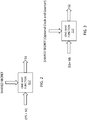
- a diagram illustrates using a one-way function 112 to generate a first signature, S1.
- the one-way function 112 uses the shared secret to digitally sign a concatenation of the personal secret (PS) and the message (M), which is illustrated in FIG. 2 as (PS + M).
- PS personal secret
- M message
- the one-way function 112 is such that, given S1, the message and the shared secret, all of which are known by the receiver 106, it is nearly impossible (i.e., extremely difficult and impractical) to determine the personal secret.
- the one-way function 112 is such that, given the message and the shared secret, it is nearly impossible (i.e., extremely difficult and impractical) to generate S1 without also knowing the shared secret.
- FIG. 3 a diagram illustrates the one-way function 112 being used to generate a second signature, S2, using the shared secret, S1, and the message.
- S2 is used by the receiver 106 to confirm that S1 and the message were sent by the sender 104 and not some other entity. Assuming that the shared secret is known only to the sender 104 and the receiver 106 (and possibly an issuer, agent(s) of the issuer, escrow agent(s), etc.), then the receiver 106 receiving S2 confirms to the receiver 106 that only the sender 104 could have sent the message and S1.
- FIG. 3 also illustrates that, optionally, a clock (time) value and a counter may be included with the message and S1 prior to digitally signing. That is, S2 may correspond to a signed concatenation of the message, S1, the clock value, and the counter. The clock and the counter may be added to systems that require one or both for compliance with a relevant standard and/or specification.
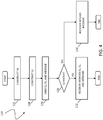
- a flow diagram 120 illustrates steps performed in connection with sending a message from the sender 104 to the receiver 106. Processing begins at a first step 122 where the sender 104 constructs S1, which is described in more detail elsewhere herein. Following the step 122 is a step 124 where he sender 104 constructs S2, as described in more detail elsewhere herein. Following the step 124 is a step 126 where the sender 104 sends the message (possibly encrypted) along with S1 and S2 to the receiver 106 via the network 102. Following the step 126 is a test step 128 where it is determined if S2 provided by the sender 104 matches S2 independently calculated by the receiver 106.
- both the sender 104 and the receiver 106 can independently calculate S2 based on the message, S1, and the shared secret. If the sender 104 and the receiver 106 do not calculate the same value for S2, then either the information received by the receiver 106 was not from the sender 104 or the information was altered in transit (i.e., the message was changed). If it is determined at the step 128 that the values of S2 are the same, then control transfers from the step 128 to a step 132 where the receiver 106 archives the message, S1, and S2. Archiving is useful if the sender 104 attempts to repudiate the message, as described in more detail elsewhere herein. Following the step 128, processing is complete.
- Refusing the message at the step 134 can include requesting a retransmission from the sender 104. Following the step 134, processing is complete.
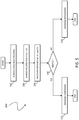
- a flow diagram 140 illustrates steps performed in connection with the sender 104 attempting to repudiate a message that the receiver 106 attributed to the sender 104.
- repudiating a message includes the sender 104 denying ever sending a message or, possibly, indicating the message that was sent does not match the message purportedly received.
- Processing begins at the first step 142 where the sender 104 challenges the authenticity of the message.
- a step 144 where the sender 104 reconstructs S1 and S2 using the one-way function 112 (described above), the shared secret, the message, and the personal secret.
- the receiver 106 presents S1, S2, and the message.
- a test step 148 where the values of the message, S1, and S2 presented by the receiver 106 are compared with the values reconstructed by the sender 104 at the step 144.
- step 148 If it is determined at the test step 148 that the values match, then processing transfers from the step 148 to a step 152 where the message is confirmed.
- the values matching, especially the first signature S1 indicates that the message was sent by the sender 104 and so the sender 104 cannot repudiate the message. Following the step 152, processing is complete.
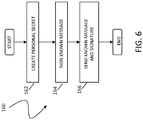
- a flow diagram 106 illustrates creating and enrolling a personal secret by the sender 104.
- Processing begins at the first step 162 where the sender initially creates a personal secret, as described in more detail elsewhere herein.
- a step 164 where the sender 104 uses the personal secret to digitally sign a message known to both the sender 104 and the receiver 106.
- the known message can be anything so long as it is known to both the sender 104 and the receiver 106.
- a step 166 where the message and the digital signature thereof are sent to the receiver 106.
- the receiver 106 cannot verify the digital signature of the known message since the receiver does not know the personal secret. However, in the event that the sender 104 repudiates a message, the receiver 106 can challenge the repudiation using the known message and the digital signature thereof provided at the step 164. If the receiver 106 suspects that the receiver 104 has changed the personal secret after the values of S1 do not match at the step 148, described above, the receiver 106 may request the personal secret from the sender 104 and confirm whether the personal secret generates S1 when applied to the refuted message and whether the personal secret generates the signature provided at the step 164 when applied to the known message.
- the sender 104 and/or the receiver 106 may be implemented using a mobile device, such as a cell phone.
- the mobile device may interface with the network 102 using a cellular network and/or using some other technology such as Bluetooth or Wi-fi.
- the mobile device may use any appropriate Operating System.
- the receiver 106 may be a door controller.
- the computer readable storage medium may include a computer hard drive, ROM, RAM, flash memory, portable computer storage media such as a CD-ROM, a DVD-ROM, a flash drive and/or other drive with, for example, a universal serial bus (USB) interface, and/or any other appropriate tangible storage medium or computer memory on which executable code may be stored and executed by a processor.
- ROM read only memory
- RAM random access memory
- flash memory read-only memory
- portable computer storage media such as a CD-ROM, a DVD-ROM, a flash drive and/or other drive with, for example, a universal serial bus (USB) interface, and/or any other appropriate tangible storage medium or computer memory on which executable code may be stored and executed by a processor.
- USB universal serial bus
Landscapes
- Engineering & Computer Science (AREA)
- Computer Security & Cryptography (AREA)
- Computer Networks & Wireless Communication (AREA)
- Signal Processing (AREA)
- Computer Hardware Design (AREA)
- Computing Systems (AREA)
- General Engineering & Computer Science (AREA)
- Mobile Radio Communication Systems (AREA)
- Telephonic Communication Services (AREA)
- Two-Way Televisions, Distribution Of Moving Picture Or The Like (AREA)
Claims (11)
- Verfahren zum Bereitstellen einer elektronischen Nachricht, wobei das Verfahren seitens eines Absenders (104) einer Nachricht umfasst:- Erstellen (122) einer ersten digitalen Signatur (S1) der Nachricht (M) und eines persönlichen Geheimnisses (PS) unter Verwendung eines gemeinsamen Geheimnisses;- Erstellen (124) einer zweiten digitalen Signatur (S2) der ersten digitalen Signatur (S1) und der Nachricht (M) unter Verwendung des gemeinsamen Geheimnisses; und- Senden (126) der Nachricht (M), der ersten digitalen Signatur (S1) und der zweiten digitalen Signatur (S2) an einen Empfänger (106);- wobei das persönliche Geheimnis (PS) anfangs dem Absender, aber nicht dem Empfänger bekannt ist, und das gemeinsame Geheimnis dem Absender und dem Empfänger bekannt ist.
- Verfahren nach Anspruch 1, wobei das persönliche Geheimnis (PS) anfangs vom Absender (104) der Nachricht erzeugt wird.
- Verfahren nach Anspruch 2, wobei das persönliche Geheimnis (PS) eine Pseudozufallszahl ist.
- Verfahren nach Anspruch 1, wobei der Empfänger (106) die Nachricht (M), die erste Signatur (S1) und die zweite Signatur (S2) archiviert.
- Verfahren nach Anspruch 1, wobei als Antwort auf eine Anfrage die Nachricht (M) und die zusammen mit der Nachricht (M) gesendete erste und zweite Signatur unter Verwendung einer vom Absender (104) der Nachricht rekonstruierten ersten und zweiten Signatur verglichen werden.
- Verfahren nach Anspruch 5, wobei als Antwort darauf, dass die Nachricht und/oder die erste Signatur nicht übereinstimmen, die Nachricht (M) zurückgewiesen wird.
- Verfahren nach Anspruch 6, wobei die Zurückweisung der Nachricht (M) eine Bestätigung einschließt, dass der Absender (104) der Nachricht das persönliche Geheimnis (PS) nicht geändert hat, indem eine Signatur einer bekannten Nachricht untersucht wird.
- Verfahren nach Anspruch 7, wobei die bekannte Nachricht in Zusammenhang mit einer Anmeldung des Absenders (104) erzeugt wird.
- Verfahren nach Anspruch 5, wobei als Antwort darauf, dass die Nachricht (M) und die erste Signatur (S1) übereinstimmen, die Nachricht (M) für gültig erklärt wird.
- Verfahren nach Anspruch 1, wobei ein Mobiltelefon zum Versenden der Nachricht verwendet wird.
- Computersoftware, die in einem nichtflüchtigen, computerlesbaren Medium bereitgestellt ist, das eine elektronische Nachricht liefert, wobei die Software aufweist:
ausführbaren Code, der das Verfahren nach einem der vorstehenden Ansprüche umsetzt.
Applications Claiming Priority (2)
| Application Number | Priority Date | Filing Date | Title |
|---|---|---|---|
| US201361794187P | 2013-03-15 | 2013-03-15 | |
| PCT/IB2014/001581 WO2014181189A2 (en) | 2013-03-15 | 2014-03-13 | Non-repudiation of electronic transactions |
Publications (2)
| Publication Number | Publication Date |
|---|---|
| EP2974129A2 EP2974129A2 (de) | 2016-01-20 |
| EP2974129B1 true EP2974129B1 (de) | 2020-03-11 |
Family
ID=51585132
Family Applications (1)
| Application Number | Title | Priority Date | Filing Date |
|---|---|---|---|
| EP14771614.6A Active EP2974129B1 (de) | 2013-03-15 | 2014-03-13 | Nicht-abstreitbarkeit von elektronischen transaktionen |
Country Status (3)
| Country | Link |
|---|---|
| US (1) | US10454687B2 (de) |
| EP (1) | EP2974129B1 (de) |
| WO (1) | WO2014181189A2 (de) |
Families Citing this family (2)
| Publication number | Priority date | Publication date | Assignee | Title |
|---|---|---|---|---|
| EP2974129B1 (de) | 2013-03-15 | 2020-03-11 | Assa Abloy AB | Nicht-abstreitbarkeit von elektronischen transaktionen |
| EP3026841A1 (de) * | 2014-11-26 | 2016-06-01 | Gemalto Sa | Implementierung der Berechnung digitaler Signaturen eines Vorrückweisungsmerkmals |
Citations (1)
| Publication number | Priority date | Publication date | Assignee | Title |
|---|---|---|---|---|
| US20080109657A1 (en) * | 2006-11-06 | 2008-05-08 | Siddharth Bajaj | Web site authentication |
Family Cites Families (7)
| Publication number | Priority date | Publication date | Assignee | Title |
|---|---|---|---|---|
| US6108783A (en) * | 1998-02-11 | 2000-08-22 | International Business Machines Corporation | Chameleon hashing and signatures |
| US6578144B1 (en) * | 1999-03-23 | 2003-06-10 | International Business Machines Corporation | Secure hash-and-sign signatures |
| US6898707B1 (en) * | 1999-11-30 | 2005-05-24 | Accela, Inc. | Integrating a digital signature service into a database |
| US9544297B2 (en) * | 2002-03-08 | 2017-01-10 | Algorithmic Research Ltd. | Method for secured data processing |
| TWI235303B (en) * | 2003-07-22 | 2005-07-01 | Yuen Foong Paper Co Ltd | Digital content management system, method and application method thereof |
| US7747865B2 (en) * | 2005-02-10 | 2010-06-29 | International Business Machines Corporation | Method and structure for challenge-response signatures and high-performance secure Diffie-Hellman protocols |
| EP2974129B1 (de) | 2013-03-15 | 2020-03-11 | Assa Abloy AB | Nicht-abstreitbarkeit von elektronischen transaktionen |
-
2014
- 2014-03-13 EP EP14771614.6A patent/EP2974129B1/de active Active
- 2014-03-13 US US14/776,130 patent/US10454687B2/en not_active Expired - Fee Related
- 2014-03-13 WO PCT/IB2014/001581 patent/WO2014181189A2/en not_active Ceased
Patent Citations (1)
| Publication number | Priority date | Publication date | Assignee | Title |
|---|---|---|---|---|
| US20080109657A1 (en) * | 2006-11-06 | 2008-05-08 | Siddharth Bajaj | Web site authentication |
Non-Patent Citations (1)
| Title |
|---|
| JINYUAN SUN ET AL: "An ID-based Framework Achieving Privacy and Non-Repudiation in Vehicular Ad Hoc Networks", MILITARY COMMUNICATIONS CONFERENCE, 2007. MILCOM 2007. IEEE, IEEE, PISCATAWAY, NJ, USA, 29 October 2007 (2007-10-29), pages 1 - 7, XP031232472, ISBN: 978-1-4244-1512-0 * |
Also Published As
| Publication number | Publication date |
|---|---|
| US10454687B2 (en) | 2019-10-22 |
| EP2974129A2 (de) | 2016-01-20 |
| WO2014181189A2 (en) | 2014-11-13 |
| WO2014181189A3 (en) | 2015-02-19 |
| US20160036592A1 (en) | 2016-02-04 |
Similar Documents
| Publication | Publication Date | Title |
|---|---|---|
| EP3619884B1 (de) | Sicheres dynamisches schwellensignaturschema unter verwendung von vertrauenswürdiger hardware | |
| CN107483212B (zh) | 一种双方协作生成数字签名的方法 | |
| US8533482B2 (en) | Method for generating a key pair and transmitting a public key or request file of a certificate in security | |
| CN108768652B (zh) | 一种可抗量子攻击的联盟区块链底层加密方法 | |
| CN110519046B (zh) | 基于一次性非对称密钥对和qkd的量子通信服务站密钥协商方法和系统 | |
| CN105900375A (zh) | 用于在认证交易中保护身份的高效方法 | |
| EP3529948B1 (de) | Zusammengesetzte digitale signaturen | |
| CN109104271B (zh) | 一种数字签名的方法、装置和系统 | |
| KR101833323B1 (ko) | 익명성 보장 및 시빌 공격 방지가 가능한, 블록 체인을 이용한 의사 표시 확인 방법 | |
| CN104012036B (zh) | 组合式数字证书 | |
| CN103152178B (zh) | 云计算验证方法和系统 | |
| CN104660412A (zh) | 一种移动设备无密码安全认证方法及系统 | |
| CN110098925B (zh) | 基于非对称密钥池对和随机数的量子通信服务站密钥协商方法和系统 | |
| KR101253683B1 (ko) | 연쇄 해시에 의한 전자서명 시스템 및 방법 | |
| CN110690969B (zh) | 一种多方协同完成双向ssl/tls认证的方法和系统 | |
| JP2025156351A (ja) | 一群の特定目的用ローカルデバイスに基づくデジタル署名システム | |
| CN116506134B (zh) | 数字证书管理方法、装置、设备、系统及可读存储介质 | |
| KR100635280B1 (ko) | 전자 서명을 이용한 보안 방법 | |
| CN110572257B (zh) | 基于身份的数据来源鉴别方法和系统 | |
| CN110519222B (zh) | 基于一次性非对称密钥对和密钥卡的外网接入身份认证方法和系统 | |
| CN108833104A (zh) | 一种文件的签署方法、验证方法及装置 | |
| EP2974129B1 (de) | Nicht-abstreitbarkeit von elektronischen transaktionen | |
| KR20210075076A (ko) | 공개 원장용의 단일 목적 공개 키를 위한 방법 및 시스템 | |
| CN108242997B (zh) | 安全通信的方法与设备 | |
| US20150236858A1 (en) | Method for Creating a Derived Entity of an Original Data Carrier |
Legal Events
| Date | Code | Title | Description |
|---|---|---|---|
| PUAI | Public reference made under article 153(3) epc to a published international application that has entered the european phase |
Free format text: ORIGINAL CODE: 0009012 |
|
| 17P | Request for examination filed |
Effective date: 20151014 |
|
| AK | Designated contracting states |
Kind code of ref document: A2 Designated state(s): AL AT BE BG CH CY CZ DE DK EE ES FI FR GB GR HR HU IE IS IT LI LT LU LV MC MK MT NL NO PL PT RO RS SE SI SK SM TR |
|
| AX | Request for extension of the european patent |
Extension state: BA ME |
|
| DAX | Request for extension of the european patent (deleted) | ||
| 17Q | First examination report despatched |
Effective date: 20160623 |
|
| STAA | Information on the status of an ep patent application or granted ep patent |
Free format text: STATUS: EXAMINATION IS IN PROGRESS |
|
| GRAP | Despatch of communication of intention to grant a patent |
Free format text: ORIGINAL CODE: EPIDOSNIGR1 |
|
| STAA | Information on the status of an ep patent application or granted ep patent |
Free format text: STATUS: GRANT OF PATENT IS INTENDED |
|
| INTG | Intention to grant announced |
Effective date: 20191121 |
|
| GRAS | Grant fee paid |
Free format text: ORIGINAL CODE: EPIDOSNIGR3 |
|
| GRAA | (expected) grant |
Free format text: ORIGINAL CODE: 0009210 |
|
| STAA | Information on the status of an ep patent application or granted ep patent |
Free format text: STATUS: THE PATENT HAS BEEN GRANTED |
|
| AK | Designated contracting states |
Kind code of ref document: B1 Designated state(s): AL AT BE BG CH CY CZ DE DK EE ES FI FR GB GR HR HU IE IS IT LI LT LU LV MC MK MT NL NO PL PT RO RS SE SI SK SM TR |
|
| REG | Reference to a national code |
Ref country code: GB Ref legal event code: FG4D |
|
| REG | Reference to a national code |
Ref country code: CH Ref legal event code: EP |
|
| REG | Reference to a national code |
Ref country code: AT Ref legal event code: REF Ref document number: 1244513 Country of ref document: AT Kind code of ref document: T Effective date: 20200315 |
|
| REG | Reference to a national code |
Ref country code: IE Ref legal event code: FG4D |
|
| REG | Reference to a national code |
Ref country code: DE Ref legal event code: R096 Ref document number: 602014062209 Country of ref document: DE |
|
| PG25 | Lapsed in a contracting state [announced via postgrant information from national office to epo] |
Ref country code: RS Free format text: LAPSE BECAUSE OF FAILURE TO SUBMIT A TRANSLATION OF THE DESCRIPTION OR TO PAY THE FEE WITHIN THE PRESCRIBED TIME-LIMIT Effective date: 20200311 Ref country code: FI Free format text: LAPSE BECAUSE OF FAILURE TO SUBMIT A TRANSLATION OF THE DESCRIPTION OR TO PAY THE FEE WITHIN THE PRESCRIBED TIME-LIMIT Effective date: 20200311 Ref country code: NO Free format text: LAPSE BECAUSE OF FAILURE TO SUBMIT A TRANSLATION OF THE DESCRIPTION OR TO PAY THE FEE WITHIN THE PRESCRIBED TIME-LIMIT Effective date: 20200611 |
|
| PGFP | Annual fee paid to national office [announced via postgrant information from national office to epo] |
Ref country code: NL Payment date: 20200526 Year of fee payment: 7 |
|
| REG | Reference to a national code |
Ref country code: NL Ref legal event code: MP Effective date: 20200311 |
|
| PG25 | Lapsed in a contracting state [announced via postgrant information from national office to epo] |
Ref country code: HR Free format text: LAPSE BECAUSE OF FAILURE TO SUBMIT A TRANSLATION OF THE DESCRIPTION OR TO PAY THE FEE WITHIN THE PRESCRIBED TIME-LIMIT Effective date: 20200311 Ref country code: SE Free format text: LAPSE BECAUSE OF FAILURE TO SUBMIT A TRANSLATION OF THE DESCRIPTION OR TO PAY THE FEE WITHIN THE PRESCRIBED TIME-LIMIT Effective date: 20200311 Ref country code: LV Free format text: LAPSE BECAUSE OF FAILURE TO SUBMIT A TRANSLATION OF THE DESCRIPTION OR TO PAY THE FEE WITHIN THE PRESCRIBED TIME-LIMIT Effective date: 20200311 Ref country code: BG Free format text: LAPSE BECAUSE OF FAILURE TO SUBMIT A TRANSLATION OF THE DESCRIPTION OR TO PAY THE FEE WITHIN THE PRESCRIBED TIME-LIMIT Effective date: 20200611 Ref country code: GR Free format text: LAPSE BECAUSE OF FAILURE TO SUBMIT A TRANSLATION OF THE DESCRIPTION OR TO PAY THE FEE WITHIN THE PRESCRIBED TIME-LIMIT Effective date: 20200612 |
|
| RAP2 | Party data changed (patent owner data changed or rights of a patent transferred) |
Owner name: ASSA ABLOY AB |
|
| REG | Reference to a national code |
Ref country code: LT Ref legal event code: MG4D |
|
| PG25 | Lapsed in a contracting state [announced via postgrant information from national office to epo] |
Ref country code: NL Free format text: LAPSE BECAUSE OF FAILURE TO SUBMIT A TRANSLATION OF THE DESCRIPTION OR TO PAY THE FEE WITHIN THE PRESCRIBED TIME-LIMIT Effective date: 20200311 |
|
| PG25 | Lapsed in a contracting state [announced via postgrant information from national office to epo] |
Ref country code: RO Free format text: LAPSE BECAUSE OF FAILURE TO SUBMIT A TRANSLATION OF THE DESCRIPTION OR TO PAY THE FEE WITHIN THE PRESCRIBED TIME-LIMIT Effective date: 20200311 Ref country code: EE Free format text: LAPSE BECAUSE OF FAILURE TO SUBMIT A TRANSLATION OF THE DESCRIPTION OR TO PAY THE FEE WITHIN THE PRESCRIBED TIME-LIMIT Effective date: 20200311 Ref country code: CZ Free format text: LAPSE BECAUSE OF FAILURE TO SUBMIT A TRANSLATION OF THE DESCRIPTION OR TO PAY THE FEE WITHIN THE PRESCRIBED TIME-LIMIT Effective date: 20200311 Ref country code: SM Free format text: LAPSE BECAUSE OF FAILURE TO SUBMIT A TRANSLATION OF THE DESCRIPTION OR TO PAY THE FEE WITHIN THE PRESCRIBED TIME-LIMIT Effective date: 20200311 Ref country code: LT Free format text: LAPSE BECAUSE OF FAILURE TO SUBMIT A TRANSLATION OF THE DESCRIPTION OR TO PAY THE FEE WITHIN THE PRESCRIBED TIME-LIMIT Effective date: 20200311 Ref country code: SK Free format text: LAPSE BECAUSE OF FAILURE TO SUBMIT A TRANSLATION OF THE DESCRIPTION OR TO PAY THE FEE WITHIN THE PRESCRIBED TIME-LIMIT Effective date: 20200311 Ref country code: PT Free format text: LAPSE BECAUSE OF FAILURE TO SUBMIT A TRANSLATION OF THE DESCRIPTION OR TO PAY THE FEE WITHIN THE PRESCRIBED TIME-LIMIT Effective date: 20200805 Ref country code: IS Free format text: LAPSE BECAUSE OF FAILURE TO SUBMIT A TRANSLATION OF THE DESCRIPTION OR TO PAY THE FEE WITHIN THE PRESCRIBED TIME-LIMIT Effective date: 20200711 |
|
| REG | Reference to a national code |
Ref country code: CH Ref legal event code: PL |
|
| REG | Reference to a national code |
Ref country code: AT Ref legal event code: MK05 Ref document number: 1244513 Country of ref document: AT Kind code of ref document: T Effective date: 20200311 |
|
| REG | Reference to a national code |
Ref country code: DE Ref legal event code: R097 Ref document number: 602014062209 Country of ref document: DE |
|
| REG | Reference to a national code |
Ref country code: BE Ref legal event code: MM Effective date: 20200331 |
|
| PG25 | Lapsed in a contracting state [announced via postgrant information from national office to epo] |
Ref country code: MC Free format text: LAPSE BECAUSE OF FAILURE TO SUBMIT A TRANSLATION OF THE DESCRIPTION OR TO PAY THE FEE WITHIN THE PRESCRIBED TIME-LIMIT Effective date: 20200311 Ref country code: LU Free format text: LAPSE BECAUSE OF NON-PAYMENT OF DUE FEES Effective date: 20200313 |
|
| PLBE | No opposition filed within time limit |
Free format text: ORIGINAL CODE: 0009261 |
|
| STAA | Information on the status of an ep patent application or granted ep patent |
Free format text: STATUS: NO OPPOSITION FILED WITHIN TIME LIMIT |
|
| PG25 | Lapsed in a contracting state [announced via postgrant information from national office to epo] |
Ref country code: AT Free format text: LAPSE BECAUSE OF FAILURE TO SUBMIT A TRANSLATION OF THE DESCRIPTION OR TO PAY THE FEE WITHIN THE PRESCRIBED TIME-LIMIT Effective date: 20200311 Ref country code: DK Free format text: LAPSE BECAUSE OF FAILURE TO SUBMIT A TRANSLATION OF THE DESCRIPTION OR TO PAY THE FEE WITHIN THE PRESCRIBED TIME-LIMIT Effective date: 20200311 Ref country code: ES Free format text: LAPSE BECAUSE OF FAILURE TO SUBMIT A TRANSLATION OF THE DESCRIPTION OR TO PAY THE FEE WITHIN THE PRESCRIBED TIME-LIMIT Effective date: 20200311 Ref country code: CH Free format text: LAPSE BECAUSE OF NON-PAYMENT OF DUE FEES Effective date: 20200331 Ref country code: IE Free format text: LAPSE BECAUSE OF NON-PAYMENT OF DUE FEES Effective date: 20200313 Ref country code: IT Free format text: LAPSE BECAUSE OF FAILURE TO SUBMIT A TRANSLATION OF THE DESCRIPTION OR TO PAY THE FEE WITHIN THE PRESCRIBED TIME-LIMIT Effective date: 20200311 Ref country code: LI Free format text: LAPSE BECAUSE OF NON-PAYMENT OF DUE FEES Effective date: 20200331 |
|
| 26N | No opposition filed |
Effective date: 20201214 |
|
| PG25 | Lapsed in a contracting state [announced via postgrant information from national office to epo] |
Ref country code: SI Free format text: LAPSE BECAUSE OF FAILURE TO SUBMIT A TRANSLATION OF THE DESCRIPTION OR TO PAY THE FEE WITHIN THE PRESCRIBED TIME-LIMIT Effective date: 20200311 Ref country code: PL Free format text: LAPSE BECAUSE OF FAILURE TO SUBMIT A TRANSLATION OF THE DESCRIPTION OR TO PAY THE FEE WITHIN THE PRESCRIBED TIME-LIMIT Effective date: 20200311 Ref country code: BE Free format text: LAPSE BECAUSE OF NON-PAYMENT OF DUE FEES Effective date: 20200331 |
|
| PG25 | Lapsed in a contracting state [announced via postgrant information from national office to epo] |
Ref country code: TR Free format text: LAPSE BECAUSE OF FAILURE TO SUBMIT A TRANSLATION OF THE DESCRIPTION OR TO PAY THE FEE WITHIN THE PRESCRIBED TIME-LIMIT Effective date: 20200311 Ref country code: MT Free format text: LAPSE BECAUSE OF FAILURE TO SUBMIT A TRANSLATION OF THE DESCRIPTION OR TO PAY THE FEE WITHIN THE PRESCRIBED TIME-LIMIT Effective date: 20200311 Ref country code: CY Free format text: LAPSE BECAUSE OF FAILURE TO SUBMIT A TRANSLATION OF THE DESCRIPTION OR TO PAY THE FEE WITHIN THE PRESCRIBED TIME-LIMIT Effective date: 20200311 |
|
| PG25 | Lapsed in a contracting state [announced via postgrant information from national office to epo] |
Ref country code: MK Free format text: LAPSE BECAUSE OF FAILURE TO SUBMIT A TRANSLATION OF THE DESCRIPTION OR TO PAY THE FEE WITHIN THE PRESCRIBED TIME-LIMIT Effective date: 20200311 Ref country code: AL Free format text: LAPSE BECAUSE OF FAILURE TO SUBMIT A TRANSLATION OF THE DESCRIPTION OR TO PAY THE FEE WITHIN THE PRESCRIBED TIME-LIMIT Effective date: 20200311 |
|
| PGFP | Annual fee paid to national office [announced via postgrant information from national office to epo] |
Ref country code: DE Payment date: 20250214 Year of fee payment: 12 |
|
| PGFP | Annual fee paid to national office [announced via postgrant information from national office to epo] |
Ref country code: FR Payment date: 20250224 Year of fee payment: 12 |
|
| PGFP | Annual fee paid to national office [announced via postgrant information from national office to epo] |
Ref country code: GB Payment date: 20250213 Year of fee payment: 12 |