EP2970090B1 - Novel anti-neurodegenerative natural compounds isolated from alpiniae oxyphyllae fructus and total synthesis thereof - Google Patents
Novel anti-neurodegenerative natural compounds isolated from alpiniae oxyphyllae fructus and total synthesis thereof Download PDFInfo
- Publication number
- EP2970090B1 EP2970090B1 EP14764257.3A EP14764257A EP2970090B1 EP 2970090 B1 EP2970090 B1 EP 2970090B1 EP 14764257 A EP14764257 A EP 14764257A EP 2970090 B1 EP2970090 B1 EP 2970090B1
- Authority
- EP
- European Patent Office
- Prior art keywords
- methylphenyl
- compound
- methyloxy
- methylhexanoic acid
- hydroxy
- Prior art date
- Legal status (The legal status is an assumption and is not a legal conclusion. Google has not performed a legal analysis and makes no representation as to the accuracy of the status listed.)
- Active
Links
Images


Classifications
-
- C—CHEMISTRY; METALLURGY
- C07—ORGANIC CHEMISTRY
- C07C—ACYCLIC OR CARBOCYCLIC COMPOUNDS
- C07C59/00—Compounds having carboxyl groups bound to acyclic carbon atoms and containing any of the groups OH, O—metal, —CHO, keto, ether, groups, groups, or groups
- C07C59/40—Unsaturated compounds
- C07C59/42—Unsaturated compounds containing hydroxy or O-metal groups
- C07C59/52—Unsaturated compounds containing hydroxy or O-metal groups a hydroxy or O-metal group being bound to a carbon atom of a six-membered aromatic ring
-
- A—HUMAN NECESSITIES
- A61—MEDICAL OR VETERINARY SCIENCE; HYGIENE
- A61K—PREPARATIONS FOR MEDICAL, DENTAL OR TOILETRY PURPOSES
- A61K31/00—Medicinal preparations containing organic active ingredients
- A61K31/185—Acids; Anhydrides, halides or salts thereof, e.g. sulfur acids, imidic, hydrazonic or hydroximic acids
- A61K31/19—Carboxylic acids, e.g. valproic acid
- A61K31/192—Carboxylic acids, e.g. valproic acid having aromatic groups, e.g. sulindac, 2-aryl-propionic acids, ethacrynic acid
-
- A—HUMAN NECESSITIES
- A61—MEDICAL OR VETERINARY SCIENCE; HYGIENE
- A61P—SPECIFIC THERAPEUTIC ACTIVITY OF CHEMICAL COMPOUNDS OR MEDICINAL PREPARATIONS
- A61P25/00—Drugs for disorders of the nervous system
-
- A—HUMAN NECESSITIES
- A61—MEDICAL OR VETERINARY SCIENCE; HYGIENE
- A61P—SPECIFIC THERAPEUTIC ACTIVITY OF CHEMICAL COMPOUNDS OR MEDICINAL PREPARATIONS
- A61P25/00—Drugs for disorders of the nervous system
- A61P25/14—Drugs for disorders of the nervous system for treating abnormal movements, e.g. chorea, dyskinesia
- A61P25/16—Anti-Parkinson drugs
-
- C—CHEMISTRY; METALLURGY
- C07—ORGANIC CHEMISTRY
- C07C—ACYCLIC OR CARBOCYCLIC COMPOUNDS
- C07C51/00—Preparation of carboxylic acids or their salts, halides or anhydrides
- C07C51/347—Preparation of carboxylic acids or their salts, halides or anhydrides by reactions not involving formation of carboxyl groups
-
- C—CHEMISTRY; METALLURGY
- C07—ORGANIC CHEMISTRY
- C07C—ACYCLIC OR CARBOCYCLIC COMPOUNDS
- C07C51/00—Preparation of carboxylic acids or their salts, halides or anhydrides
- C07C51/42—Separation; Purification; Stabilisation; Use of additives
- C07C51/47—Separation; Purification; Stabilisation; Use of additives by solid-liquid treatment; by chemisorption
-
- C—CHEMISTRY; METALLURGY
- C07—ORGANIC CHEMISTRY
- C07C—ACYCLIC OR CARBOCYCLIC COMPOUNDS
- C07C59/00—Compounds having carboxyl groups bound to acyclic carbon atoms and containing any of the groups OH, O—metal, —CHO, keto, ether, groups, groups, or groups
- C07C59/40—Unsaturated compounds
- C07C59/42—Unsaturated compounds containing hydroxy or O-metal groups
- C07C59/54—Unsaturated compounds containing hydroxy or O-metal groups containing six-membered aromatic rings and other rings
-
- C—CHEMISTRY; METALLURGY
- C07—ORGANIC CHEMISTRY
- C07C—ACYCLIC OR CARBOCYCLIC COMPOUNDS
- C07C59/00—Compounds having carboxyl groups bound to acyclic carbon atoms and containing any of the groups OH, O—metal, —CHO, keto, ether, groups, groups, or groups
- C07C59/40—Unsaturated compounds
- C07C59/76—Unsaturated compounds containing keto groups
- C07C59/90—Unsaturated compounds containing keto groups containing singly bound oxygen-containing groups
-
- A—HUMAN NECESSITIES
- A61—MEDICAL OR VETERINARY SCIENCE; HYGIENE
- A61K—PREPARATIONS FOR MEDICAL, DENTAL OR TOILETRY PURPOSES
- A61K2300/00—Mixtures or combinations of active ingredients, wherein at least one active ingredient is fully defined in groups A61K31/00 - A61K41/00
Definitions
- the present invention relates to novel compounds for treatment of neurodegenerative diseases.
- the present invention relates to isolated and synthesized compounds, methods of isolating or preparing the compounds, and compounds for use in a method of treating neurodegenerative diseases.
- Parkinson's disease is the second most common neurodegenerative disease with physiological manifestations including tremors, bradykinesia, abnormal postural reflexes, rigidity and akinesia. It results primarily from the death of dopaminergic (DA) neurons in the substantia nigra.
- Current therapies for PD mainly provide symptomatic improvement by replacing neurotransmitters or controlling their metabolism to restore their imbalance. Since these therapies are not altering the underlying disease process, they usually have little or no impact on disease progression.
- the present invention in one aspect, provides a compound with Formula I :
- R 1 and R 3 are independently unsubstituted or substituted (C1-C3) alkyl; and R 2 and R 4 are H.
- the compound with Formula I is an isolated and purified ((R)-4-(2-hydroxy-5-methylphenyl)-5-methylhexanoic acid).
- the compound ((R)-4-(2-hydroxy-5-methylphenyl)-5-methylhexanoic acid) is represented as the following formula (compound 1 ).
- the compound with Formula I is ((S)-4-(2-hydroxy-5-methylphenyl)-5-methylhexanoic acid) or (4-(2-hydroxy-5-methylphenyl)-5-methylhexanoic acid).
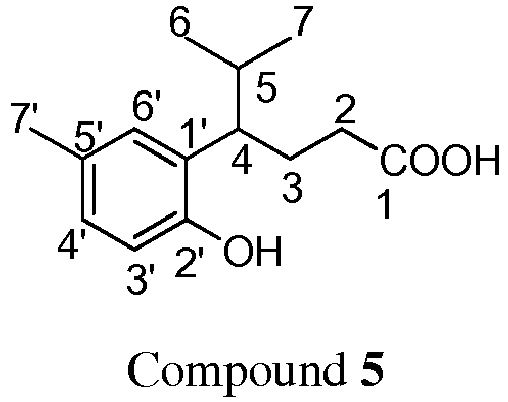
- the compounds ((S)-4-(2-hydroxy-5-methylphenyl)-5-methylhexanoic acid) (compound 4 ) and (4-(2-hydroxy-5-methylphenyl)-5-methylhexanoic acid) (compound 5 ) are represented as the below formulae, respectively.
- the present invention provides a composition comprising the compound with Formula I and a pharmaceutically acceptable salt or carrier.
- Another aspect of the present invention provides the compound of formula I for use in a method for protection against neural damage.
- Another aspect of the present invention provides the compound of formula I for use in a method for treatment of neurodegenerative disease.
- the neurodegenerative disease is Parkinson's disease.
- Another aspect of the present invention provides a compound for use in a method of treating Parkinson's disease, or protecting against neural damage or neural cells loss, comprising the step of administering the compound with Formula I to a subject in need.
- Another aspect of the present invention provides a compound for use in a method of treating neurodegenerative disease in a human patient comprising administrating to the patient a therapeutically effective amount of the compound with Formula I and chrysin, wherein the compound exhibits a synergistic effect with chrysin for neuroprotective effect.
- R 1 and R 3 are independently selected from the group consisting of H, unsubstituted or substituted alkyl, cycloalkyl, alkenly, alkynyl, aryl, heteroaryl, carboxy, alkyloxy, hydroxyl, amino, nitro, alkylthio, acyl, cyano, acylamino, halo and ester; and R 2 and R 4 are independently selected from the group consisting of H, unsubstituted or substituted alkyl, cycloalkyl, aryl, heteroaryl, alkyoxy, acyl, acylamino and halo.
- R 1 and R 3 are independently unsubstituted or substituted (C1-C3) alkyl; and R 2 and R 4 are H.
- the compound with Formula II is an isolated and purified ((4S)-4-(3-hydroxy-3-methyl-6-oxocyclohex-1-enyl)-5-methylhexanoic acid) or ((4R)-4-(3-hydroxy-3-methyl-6-oxocyclohex-1-enyl)-5-methylhexanoic acid).
- composition comprising the compound with Formula II and a pharmaceutically acceptable salt or carrier.
- the neurodegenerative disease is Parkinson's disease.
- Another aspect of the present invention provides a method for preparing an isolated and purified compound from A . oxyphyllae fructus, comprising the steps of:
- step (f) further comprises purifying the first bioactive fraction of step (e) by preparative high performance liquid chromatography with isocratic elution to obtain the compound ((4S)-4-(3-hydroxy-3-methyl-6-oxocyclohex-1-enyl)-5-methylhexanoic acid) and the compound ((4R)-4-(3-hydroxy-3-methyl-6-oxocyclohex-1-enyl)-5-methylhexanoic acid).
- Fractions A-M normal-phase silica gel column chromatography with chloroform mixed with increasing amount of methanol from 0% to 20% to yield 13 fractions (Fractions A-M). Bioassay showed that fraction G is the most bioactive.
- Fraction G was fractionated by silica gel column chromatography eluting chloroform mixed with increasing amount of methanol from 0% to 2% to yield five major sub-fractions GS1, GS2, GS3, GS4 and GS5.
- Sub-fraction GS2 was further fractionated by sephadex LH-20 and compound 1 was obtained from an elution using 100% methanol. The purity of compound 1 was monitored by thin layer chromatography with iodine as indicator.
- the most active fraction G was fractionated by preparative high performance liquid chromatography and compounds 2 and 3 were obtained by an elution with 25% acetonitrile. The purity of compounds 2 and 3 was monitored by UV at 254nm.
- the present invention provides evidences to support the use of compounds 1 , 2 and 3 as reference chemical markers for controlling the quality of A . oxyphyllae fructus.
- H 2 O 2 (32.0 g, 282 mmol, 1.5 eq, 30% in H 2 O) was added dropwise to a suspension of compound g (43.5 g, 188 mmol, 1.0 eq) and K 2 CO 3 (10.4 g, 75.2 mmol, 0.4 eq) in DMSO (220 mL) at room temperature, the solution was then stirred at room temperature for 3 hrs. Additional H 2 O 2 (32.0 g, 282 mmol, 1.5 eq, 30% in H 2 O) was added dropwise at room temperature for 1 hr.
- HBr (235 mL, 33% in AcOH) solution was added to a solution of compound i (47.1 g, 188 mmol) in AcOH (235 mL) dropwise at room temperature, then refluxed overnight.
- the mixture was diluted with EtOAc and H 2 O.
- the organic layer was washed with H 2 O and saturated aqueous NaCl, and subsequently concentrated.
- the residue was diluted with EtOH (400 ml) and H 2 O (40 mL) with LiOH.H 2 O (31.6 g, 752 mmol) added; the mixture was stirred for 1.5 hours at room temperature and then concentrated.
- the residue was diluted, and acidified with 1N HCl to pH 2-3.
- N-methyl-4-phenyl-1,2,3,6-tetrahydropyridine is the precursor of 1-methyl-4-phenylpyridinium (MPP + ), a mitochondrial electron-transport chain (ETC) complex I inhibitor generated from MPTP by the dopaminergic catabolic enzyme monoamine oxidase B.
- ETC mitochondrial electron-transport chain
- MPP + 1-methyl-4-phenylpyridinium
- ETC mitochondrial electron-transport chain
- CGNs Primary cerebellar granule neurons
- Figure 1 shows that compounds 1-5 prevented MPP + -induced CGNs damage.
- Compound 1 shows neuroprotective effect on MPP + -induced primary SD rat CGNs damage in a dose-dependent manner with E max at the concentration of 50 ⁇ M.
- Compound 2 has neuroprotective effect on MPP + -induced primary SD rat CGNs damage with E max at the concentration of 50 ⁇ M.
- Compound 3 has neuroprotective effect on MPP + -induced primary SD rat CGNs damage with E max at the concentration of 25 ⁇ M.
- Compound 4 has neuroprotective effect on MPP + -induced primary SD rat CGNs damage with E max at the concentration of 12 ⁇ M.
- Compound 5 has neuroprotective effect on MPP + -induced primary SD rat CGNs damage in a dose-dependent manner with E max at the concentration of 50 ⁇ M.
- Figure 1 shows that compounds 1-5 can protect against neural damage induced by MPP + , and be used to treat neurodegenerative diseases.
- PC12 Rat pheochromocytoma cells
- Rat pheochromocytoma cells were seeded in ⁇ 100 cm dishes at a density of 1.5 ⁇ 2 ⁇ 10 6 cells/dish. After culturing in a medium with a low serum level (F-12K medium with 0.5% FBS) for 24 hours, the cells were pretreated with serial concentrations of compound 1 from 6 ⁇ M to 50 ⁇ M for 12 hours. The cells were then exposed to 1 mM 6-OHDA for 2 hours. Cell viability of cells was assessed similarly as described in Example 5. As shown in Figure 2A , PC12 cells pretreated with compound 1 did not exhibit any cytotoxicity at all tested concentrations.
- 6-OHDA was cytotoxic to PC12 cells but compound 1 could alleviate the cytotoxic effect in a dose-dependent manner as shown in Figure 2B .
- Compound 1 exhibited a significant and maximum neuroprotective effect to 6-OHDA treated PC12 at 50 ⁇ M.
- Baicalein one of the main flavonoids extracted from the root of Scutellaria baicalensis Georgi (SBG), has been demonstrated to prevent against neuronal damage induced by 6-OHDA or MPTP in both in vitro and in vivo models of Parkinson's disease (Im, Joo et al. 2005; Lee, Noh et al. 2005; Cheng, He et al. 2008; Mu, He et al. 2009; Mu, He et al. 2011).
- baicalein was used as a positive control, which at the concentration of 100 ⁇ M obviously protected PC12 cells against 6-OHDA-induced neuronal damage.
- Figures 2A and 2B show that compound 1 can have neroprotective effect to 6-OHDA treated PC12. Further, compound 1 has neuroprotective effect on 6-OHDA-induced PC12 cell damage in a dose-dependent manner with maximum efficacy (Emax) at the concentration of 50 ⁇ M.
- Emax maximum efficacy
- Zebrafish embryo was dechorinated at 1 day post fertilization (dpf) and was cultured under co-treatment of 200 ⁇ M MPTP and various concentrations of compound 1 for 48 hours. Afterwards, zebrafish was fixed in 4% paraformaldehyde in PBS for 5 hours, rinsed and stored at -20 °C in 100% EtOH. Whole-mount immunostaining was done by standard methods (Bitzur, Kam et al. 1994) . Compound 1 attenuated MPTP-induced DA neuron injury in a dose-dependent manner as shown in Figures 3D-F .
- compound 1 can protect MPTP-induced dopaminergic neuron loss in zebrafish in a dose-dependent manner with E max at the concentration of 5 ⁇ M as shown in Figure 3G in which the results were expressed quantitatively as percentages of area of TH-positive cells in comparison to untreated control group.
- Figure 3G shows that compound 1 can protect against TH-positive cells loss.
- the 3dpf zebrafish larvae were co-treated with 200 ⁇ M MPTP and various concentrations of compound 1 for 4 days.
- the total distance the larvae traveled was recorded using a 96-well plate (with 1 fish/well and 12 larvae per group) filled with 200 ⁇ l embryo medium. Larvae were allowed to accommodate in the system for an hour before data acquisition.
- the swimming pattern of each larva was recorded for 10 min in 3 times, with each record session separated by 10 min.
- the total distance traveled was estimated as the distance (in mm) that the larva had moved during one session (10 min).
- compound 1 attenuated MPTP-induced reduction of total distance traveled of the larvae in a dose dependent manner.
- CGNs Primary cerebellar granule neurons
- both compound 1 and chrysin protected MPP + -induced cell damage in CGNs in a dose-dependent manner.
- the cell viability was significantly enhanced when the cells were treated with 25 and 50 ⁇ M of compound 1 as well as with 12 and 25 ⁇ M of chrysin as compared with the control group treated with MPP + alone (p ⁇ 0.05).
- CGNs were also co-treated with compound 1 and chrysin to explore the pharmacological interaction between two compounds. It is found that at higher concentrations such as 25 and 50 ⁇ M, the co-treatment did not exert any neuroprotective effect but imposed toxicity on the CGNs (data not shown).
- compound 1 and chrysin showed significant synergistic neuroprotective effect as compared with cells treated with MPP + alone, MPP + /compound 1 and MPP + /chrysin.
- mice Eight-10 weeks of age, 18-22 g were used in this study. The animals were maintained in 12/12 h light/dark cycle and allowed access to food and water ad libitum. They were allowed to acclimate for 7 days before treatment. As shown in Figure 6 , all the animals were conducted behavioral training (pole climbing, rotarod running and foot printing) for total 4 days before MPTP injection. Then the mice were injected intraperitoneally (i.p.) with 20 mg/kg MPTP hydrochloride (Sigma Aldrich, St. Louis, MO), at 2 h internal for total 4 injections. Normal control group were received saline (0.1 mL/10 g) by i.p..
- compound 1 (5, 10 and 20 mg/kg), rasagiline (1 mg/kg) and equal volume of vehicle (olive oil, 0.1 mL/10 g) were administrated by i.g.. Then, compound 1 , rasagiline or vehicle was given by i.g. once per day for total 7 days (day 1-7). Each of six groups was comprised of 10 mice.
- mice Twenty-four hours after administration of the last dose of drugs (on the day 8 as shown in Figure 6 ), mice were observed for neurobehavioral changes by pole test, rotarod test and footprint test. All the tests were done between 9 am and 2 pm under normal animal room lighting.
- the pole test was performed to detect impairment of limb movement.
- a table tennis ball (5 cm diameter) was equipped on the top of a vertical pole (55 cm length and 1 cm diameter).
- the pole was wrapped with a double layer of gauze to avoid slipping.
- the animal was placed head upward on the table tennis ball. The time the animal took to climb down to the floor was used to indicate performance. Three-time repeated testes were carried out for each animal and the mean values were used for statistical analysis.
- the rotarod test could reveal motor coordination ability.
- a Rotarod system (YLS-4C, Academy of Medical Sciences of Shandongzhou, China) was set at an accelerating program with a starting speed of 5 rpm to a final speed of 40 rpm. Mice were allowed to adjust their posture in order to maintain their balance on a rotating rod during speed accelerating. Infrared beams are used to detect when a mouse has fallen onto the base grid beneath the rotarod. The system logs the fall as the end of the experiment for that mouse, and the total time on the rotarod was recorded. For testing, 5 mice were tested at the same time. The average retention time on the rod was calculated.
- mice with their forepaws and hind paws colored with red ink were trained to walk through a 5 cm-wide, 100-cm-long corridor. Their footsteps were recorded on a white absorbing paper.
- mice were sacrificed for tissue preparation on the day 9 as described in Figure 6 .
- Mice in each group were anesthetized and perfused intracardially with 0.9% sodium chloride containing heparin, and then fixed with 4% paraformaldehyde (PFA).
- PFA paraformaldehyde
- Each brain was removed, dehydrated with graded alcohol and embedded in paraffin wax, coronally sectioned for 5 ⁇ M.
- the rostral and caudal part of the brain was divided for immunohistochemistry of substantia nigra pars compacta (SNpc).
- Sections were then incubated for 1 h at room temperature with a rabbit anti-mouse TH polyclonal antibody (1:1000; Millipore, USA) diluted in Immunol Staining Primary Antibody Dilution Buffer. Then the sections were incubated with a biotinylated HRP-conjugated secondary antibody for 30 min at room temperature. TH-positive neurons were then visualized using a DAB Kit according to the manufacturer's instructions (Shanghai, Gene Company, China). The peroxidase reaction was stopped after 3 min. Finally, sections were cover slipped with neutral balsam. The results were analyzed by counting the numbers of TH-positive cells at ⁇ 10 magnifications on a stereomicroscope (BX51, Olympus Corp. Japan). TH-positive cells in 8 position-matched sections of each mouse were counted manually by operator who was blinded to the drug treatment. The average number of TH-positive cells per section was used to represent dopaminergic neuron livability.
- Compound 1 ameliorated the movement impairments of MPTP-treated mice
- the present invention provides three isolated and purified compounds: 1 ((R)-4-(2-hydroxy-5-methylphenyl)-5-methylhexanoic acid), 2 ((4S)-4-(3-hydroxy-3-methyl-6-oxocyclohex-1-enyl)-5-methylhexanoic acid) and 3 ((4R)-4-(3-hydroxy-3-methyl-6-oxocyclohex-1-enyl)-5-methylhexanoic acid), isolated from A .
- oxyphyllae fructus with neuroprotective effect as shown in the above examples; and two synthesized compounds: 4 ((S)-4-(2-hydroxy-5-methylphenyl)-5-methylhexanoic acid) and 5 (4-(2-hydroxy-5-methylphenyl)-5-methylhexanoic acid) with neuroprotective effect.
- These five lead compounds have neuroprotective effects which could be developed into therapeutic agent for neurodegenerative diseases (e.g. Parkinson's disease).
- the present invention provides a simple and easy method for extraction and purification of these three novel compounds 1-3 from A . oxyphyllae fructus and an elaborated procedure for synthesizing compounds 1 , 4 and 5 .
- In vitro neuroprotective activity on CGNs of compounds 1-5 is also presented.
- this invention shows that compound 1 possesses in vivo and in vitro neuroprotective activities on PC12 cells and zebrafish.
Landscapes
- Chemical & Material Sciences (AREA)
- Organic Chemistry (AREA)
- Health & Medical Sciences (AREA)
- Engineering & Computer Science (AREA)
- Veterinary Medicine (AREA)
- Animal Behavior & Ethology (AREA)
- Public Health (AREA)
- General Health & Medical Sciences (AREA)
- Life Sciences & Earth Sciences (AREA)
- Pharmacology & Pharmacy (AREA)
- Medicinal Chemistry (AREA)
- Oil, Petroleum & Natural Gas (AREA)
- Chemical Kinetics & Catalysis (AREA)
- Bioinformatics & Cheminformatics (AREA)
- Biomedical Technology (AREA)
- Neurosurgery (AREA)
- Neurology (AREA)
- Epidemiology (AREA)
- General Chemical & Material Sciences (AREA)
- Nuclear Medicine, Radiotherapy & Molecular Imaging (AREA)
- Psychology (AREA)
- Acyclic And Carbocyclic Compounds In Medicinal Compositions (AREA)
- Organic Low-Molecular-Weight Compounds And Preparation Thereof (AREA)
- Medicines Containing Plant Substances (AREA)
- Low-Molecular Organic Synthesis Reactions Using Catalysts (AREA)
Description
- The present invention relates to novel compounds for treatment of neurodegenerative diseases. In particular, the present invention relates to isolated and synthesized compounds, methods of isolating or preparing the compounds, and compounds for use in a method of treating neurodegenerative diseases.
- Neurodegenerative disease is directed to a range of conditions which primarily affect the neurons in the human brain. Parkinson's disease (PD) is the second most common neurodegenerative disease with physiological manifestations including tremors, bradykinesia, abnormal postural reflexes, rigidity and akinesia. It results primarily from the death of dopaminergic (DA) neurons in the substantia nigra. Current therapies for PD mainly provide symptomatic improvement by replacing neurotransmitters or controlling their metabolism to restore their imbalance. Since these therapies are not altering the underlying disease process, they usually have little or no impact on disease progression. In addition, Ho-Sang Moon, et al., (Structural requirements for the neuroprotective effects of aspirin analogues against N-methyl-D-aspartate and zinc ion neurotoxicity, 2002, Journal of Pharmacy and Pharmacology JPP, p935-944) discusses the neuroprotective effects of derivatives of acetylsalicylic acid.
- It is therefore an object of the present invention to provide novel compounds for the treatment of neurodegenerative diseases, methods of preparing the compounds, their compositions and compounds for use in a method.
- Accordingly, the present invention, in one aspect, provides a compound with Formula I:

- In an exemplary embodiment, for the compound with Formula I, R1 and R3 are independently unsubstituted or substituted (C1-C3) alkyl; and R2 and R4 are H.
- In another exemplary embodiment, the compound with Formula I is an isolated and purified ((R)-4-(2-hydroxy-5-methylphenyl)-5-methylhexanoic acid). The compound ((R)-4-(2-hydroxy-5-methylphenyl)-5-methylhexanoic acid) is represented as the following formula (compound 1).

- In a further exemplary embodiment, the compound with Formula I is ((S)-4-(2-hydroxy-5-methylphenyl)-5-methylhexanoic acid) or (4-(2-hydroxy-5-methylphenyl)-5-methylhexanoic acid). The compounds ((S)-4-(2-hydroxy-5-methylphenyl)-5-methylhexanoic acid) (compound 4) and (4-(2-hydroxy-5-methylphenyl)-5-methylhexanoic acid) (compound 5) are represented as the below formulae, respectively.

- In yet another aspect, the present invention provides a composition comprising the compound with Formula I and a pharmaceutically acceptable salt or carrier.
- Another aspect of the present invention provides the compound of formula I for use in a method for protection against neural damage.
- Another aspect of the present invention provides the compound of formula I for use in a method for treatment of neurodegenerative disease.
- In an exemplary embodiment, the neurodegenerative disease is Parkinson's disease.
- Another aspect of the present invention provides a compound for use in a method of treating Parkinson's disease, or protecting against neural damage or neural cells loss, comprising the step of administering the compound with Formula I to a subject in need.
- Another aspect of the present invention provides a compound for use in a method of treating neurodegenerative disease in a human patient comprising administrating to the patient a therapeutically effective amount of the compound with Formula I and chrysin, wherein the compound exhibits a synergistic effect with chrysin for neuroprotective effect.
- Also described herein, although not part of the present invention, is a compound with Formula II:
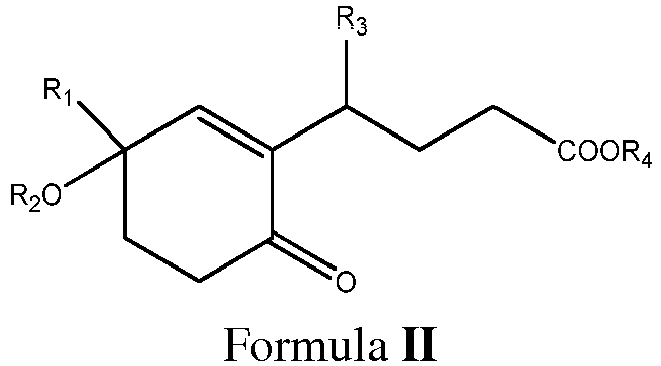
- wherein R1 and R3 are independently selected from the group consisting of H, unsubstituted or substituted alkyl, cycloalkyl, alkenly, alkynyl, aryl, heteroaryl, carboxy, alkyloxy, hydroxyl, amino, nitro, alkylthio, acyl, cyano, acylamino, halo and ester; and R2 and R4 are independently selected from the group consisting of H, unsubstituted or substituted alkyl, cycloalkyl, aryl, heteroaryl, alkyoxy, acyl, acylamino and halo.
- In an exemplary embodiment, for the compound with Formula II, R1 and R3 are independently unsubstituted or substituted (C1-C3) alkyl; and R2 and R4 are H.
- In a further exemplary embodiment, the compound with Formula II is an isolated and purified ((4S)-4-(3-hydroxy-3-methyl-6-oxocyclohex-1-enyl)-5-methylhexanoic acid) or ((4R)-4-(3-hydroxy-3-methyl-6-oxocyclohex-1-enyl)-5-methylhexanoic acid). The compounds ((4S)-4-(3-hydroxy-3-methyl-6-oxocyclohex-1-enyl)-5-methylhexanoic acid) (compound 2) and ((4R)-4-(3-hydroxy-3-methyl-6-oxocyclohex-1-enyl)-5-methylhexanoic acid) (compound 3) are represented as the following formulae, respectively.

- Also described herein, although not part of the present invention, is a composition comprising the compound with Formula II and a pharmaceutically acceptable salt or carrier.
- Also described herein, although not part of the present invention, is the use of the compound with Formula II for protection against neural damage.
- Also described herein, although not part of the present invention, is the use of the compound with Formula II for treatment of neurodegenerative disease.
- In an exemplary embodiment, the neurodegenerative disease is Parkinson's disease.
- Also described herein, although not part of the present invention, is a method of treating Parkinson's disease, or protecting against neural damage or neural cells loss, comprising the step of administering the compound with Formula II to a subject in need.
- Another aspect of the present invention provides a method for preparing an isolated and purified compound from A. oxyphyllae fructus, comprising the steps of:
- a) extracting samples of A. oxyphyllae fructus with aqueous alcohol solution under low pressure hot reflux and removing the solvent to obtain a crude extract;
- b) reconstituting the crude extract in step (a) with ethanol to obtain ethanol extract solution;
- c) absorbing the ethanol extract solution into silica gel and removing ethanol to obtain silica gel extract;
- d) extracting the silica gel extract with organic solvents successively under normal pressure hot reflux to obtain bioactive parts;
- e) fractionating the bioactive parts and eluting with solvent mixture with increasing polarity to obtain a first bioactive fraction
- f) purifying the first bioactive fraction of step (e) to obtain the compound;
wherein the compound is selected from the group consisting of ((R)-4-(2-hydroxy-5-methylphenyl)-5-methylhexanoic acid), ((4S)-4-(3-hydroxy-3-methyl-6-oxocyclohex-1-enyl)-5-methylhexanoic acid) and ((4R)-4-(3-hydroxy-3-methyl-6-oxocyclohex-1-enyl)-5-methylhexanoic acid).
In an exemplary embodiment, the step (f) further comprises - g) fractioning the first bioactive fraction of step (e) and eluting with solvent mixture with increasing polarity to obtain a second bioactive portion
- h) purifying the second bioactive portion with isocratic elution to obtain the compound ((R)-4-(2-hydroxy-5-methylphenyl)-5-methylhexanoic acid).
- In an exemplary embodiment, the step (f) further comprises purifying the first bioactive fraction of step (e) by preparative high performance liquid chromatography with isocratic elution to obtain the compound ((4S)-4-(3-hydroxy-3-methyl-6-oxocyclohex-1-enyl)-5-methylhexanoic acid) and the compound ((4R)-4-(3-hydroxy-3-methyl-6-oxocyclohex-1-enyl)-5-methylhexanoic acid).
-
-
Figure 1 shows the neuroprotective effects of compounds 1-5 on MPP+-induced primary CGNs damage. * p<0.05 compared with MPP+ treatment alone group. -
Figures 2A and 2B show the effects ofcompound 1 on 6-OHDA-induced PC12 cells damage. ## p<0.01 versus control group; **p <0.01 versus vehicle group. -
Figures 3A-3G show the effects ofcompound 1 on protecting zebrafish from MPTP-induced dopaminergic neuron loss. ## p<0.01 versus control group; *p <0.05 versus vehicle group; **p <0.01 versus vehicle group. -
Figures 4A and 4B showcompound 1 reversed decrease of total distance traveled induced by MPTP in the zebrafish. ## p< 0.01 versus control group (without MPTP treatment); *p < 0.05 versus MPTP-treated group. -
Figure 5 shows the synergistic neuroprotective effects ofcompound 1 and chrysin on MPP+-induced primary CGNs damage. * p<0.05 compared with MPP+ treatment alone group; #p<0.05 compared with 3 µM chrysin plus MPP+ treatment group; $ p<0.05 compared with 6 µM chrysin plus MPP+ treatment group. -
Figure 6 shows workflow of drug treatments and behavioral testing. -
Figures 7A-7D showcompound 1 ameliorated the movement impairment of MPTP-injected mice. (A) Pole test; (B) Duration of foot printing test; (C) Rotarod test; (D) Stride length of foot printing test. Results were presented as mean ± S.E.M (n=8) of three repeated tests. #p<0.05 and ###p<0.001 compared with control (Ctrl) group; *p<0.05, **p<0.01 and ***p<0.001 compared with vehicle (Veh) treatment group. Rasa, rasagiline. -
Figures 8A-8C showcompound 1 protected TH-positive dopaminergic neuron loss in the MPTP-injected mice. (A) TH immunostaining of representative midbrain sections from rostral to caudal. (B) The graph showed TH-positive cell counts ± S.E.M (n=8) for the 8 matched adjacent sections. (C) Statistic analysis of average of the data of sections for different treatment groups. Results were presented as mean ± S.E.M (n=8). #p<0.05 compared with control (Ctrl) group; *p<0.05 compared with vehicle (Veh) treatment group. Rasa, rasagiline. - As used herein and in the claims, "comprising" means including the following elements but not excluding others.
- The following examples are given by way of illustration of the present invention but should not be considered to limit the scope of the invention. Reasonable variations, such as those understood by reasonable artisans, can be made without departing from the scope of the attached claims.
-

- Physical description: White powder
- Specific rotation: [α]D 26.2 = -11.3 (c 3.0, MeOH), [α]D 25.0 = -19.4 (c 0.72, CH2Cl2).
- UV (methanol) λ max: 222 nm, 282 nm
- 1H NMR spectrum (600 MHz, CDCl3, δTMS = 0.00 ppm): δ (ppm) 2.18, 2.11 (2H, m, H-2α, 2(β), 1.80, 2.17 (2H, m, H-3α, 3β), 2.67 (1H, m, H-4), 1.85 (1H, m, H-5), 1.01 (3H, d, J = 6.58 Hz, H-6), 0.74 (3H, d, J = 6.65 Hz, H-7), 6.66 (1H, d, J = 8.52 Hz, H-3'), 6.85 (1H, d, J = 8.52 Hz, H-4'), 6.85 (1H, s, H-6'), 2.27 (3H, s, H-7')
- 13 C NMR spectrum (125 MHz, CDCl3, δ TMS = 0.00 ppm): δ (ppm) 178.2 (C-1), 31.7 (C-2), 27.6 (C-3), 44.1 (C-4), 32.7 (C-5), 20.8 (C-6), 21.1 (C-7), 130.1 (C-1'), 151.9 (C-2'), 115.4 (C-3'), 127.4 (C-4'), 129.5 (C-5'), 128.2 (C-6'), 20.6 (C-7')
- Mass spectrum (HR-ESI-MS): m/z 235.1369 [M-H]- (calcd for C14H19O3, 235.1339)
-

- Physical description: yellow oil
- Specific rotation: [α]D 26.2 = -22.5 (c 3.0, MeOH)
- UV (methanol) λ max: 238 nm
- 1H NMR spectrum (600 MHz, CDCl3, δTMS = 0.00 ppm): δ (ppm) 2.18, 2.16 (2H, m, H-2), 1.97, 1.74 (2H, m, H-3α, 3β), 2.25 (1H, m, H-4), 1.79 (1H, m, H-5), 0.76 (3H, d, J = 6.68 Hz, H-6), 0.89 (3H, d, J = 6.65 Hz, H-7), 6.40 (1H, s, H-2'), 2.65, 2.64 (2H, m, H-4'α, 4'β), 2.09 (2H, m, H-5'), 1.45 (3H, s, H-7')
- 13 C NMR spectrum (125 MHz, CDCl3, δTMS= 0.00 ppm): δ (ppm) 178.3 (C-1), 45.5 (C-2), 25.6 (C-3), 45.3 (C-4), 31.2 (C-5), 20.4 (C-6), 21.0 (C-7), 139.0 (C-1'), 150.6 (C-2'), 69.0 (C-3'), 35.4 (C-4'), 37.1 (C-5'), 198.6 (C-6'), 27.6 (C-7')
- Mass spectrum (HR-ESI-MS): m/z 253.1468 [M-H]- (calcd for C14H21O4, 253.1445)
-

- Physical description: yellow oil
- Specific rotation: [α]D 26.2 = -31.5 (c 3.0, MeOH)
- UV (methanol) λ max: 238 nm
- 1H NMR spectrum (600 MHz, CDCl3, δ TMS = 0.00 ppm): δ (ppm) 2.16 (2H, m, H-2), 1.95, 1.65 (2H, m, H-3α, 3β), 2.53 (1H, m, H-4), 1.79 (1H, m, H-5), 0.77 (3H, d, J = 6.68 Hz, H-6), 0.86 (3H, d, J = 6.65 Hz, H-7), 6.44 (1H, s, H-2'), 2.66, 2.44 (2H, m, H-4'α, 4'β), 2.10 (2H, m, H-5'), 1.46 (3H, s, H-7')
- 13 C NMR spectrum (125 MHz, CDCl3, δ TMS = 0.00 ppm): δ (ppm) 178.2 (C-1), 32.1 (C-2), 25.7 (C-3), 42.1 (C-4), 31.9 (C-5), 20.4 (C-6), 20.4 (C-7), 139.1 (C-1'), 149.6 (C-2'), 69.1 (C-3'), 37.0 (C-4'), 35.2 (C-5'), 198.7 (C-6'), 27.5 (C-7')
- Mass spectrum (HR-ESI-MS): m/z 253.1480 [M-H]- (calcd for C14H21O4, 253.1445)
-

- Physical description: White powder
- Specific rotation: [α]D 25.0 = +20.0 (c, 0.72, CH2Cl2)
- 1H NMR spectrum (600 MHz, CDCl3, δTMS = 0.00 ppm): δ (ppm) 2.20, 2.13 (2H, m, H-2α, 2(β), 1.81, 2.18 (2H, m, H-3α, 3β), 2.67 (1H, m, H-4), 1.86 (1H, m, H-5), 1.02 (3H, d, J = 6.5 Hz, H-6), 0.74 (3H, d, J = 6.5 Hz, H-7), 6.65 (1H, d, J = 8.5 Hz, H-3'), 6.84 (2H, d, J = 8.5 Hz, H-4'), 6.84 (1H, s, H-6'), 2.24 (3H, s, H-7')
- 13 C NMR spectrum (125 MHz, CDCl3, δTMS= 0.00 ppm): δ (ppm) 180.2 (C-1), 32.2 (C-2), 27.6 (C-3), 44.3 (C-4), 32.9 (C-5), 20.9 (C-6), 21.3 (C-7), 130.1 (C-1'), 151.8 (C-2'), 115.6 (C-3'), 127.4 (C-4'), 129.4 (C-5'), 128.6 (C-6'), 20.8 (C-7')
- Mass spectrum (HR-ESI-MS): m/z 235.1358 [M-H]- (calcd for C14H19O3, 235.1339)
-
- Physical description: White powder
- 1H NMR spectrum (600 MHz, CDCl3, δTMS = 0.00 ppm): δ (ppm) 2.20, 2.13 (2H, m, H-2α, 2(β), 1.82, 2.18 (2H, m, H-3α, 3β), 2.66 (1H, m, H-4), 1.87 (1H, m, H-5), 1.02 (3H, d, J = 6.5 Hz, H-6), 0.74 (3H, d, J = 6.5 Hz, H-7), 6.65 (1H, d, J = 8.5 Hz, H-3'), 6.85 (1H, d, J = 8.5 Hz, H-4'), 6.85 (1H, s, H-6'), 2.24 (3H, s, H-7')
- 13 C NMR spectrum (125 MHz, CDCl3, δTMS = 0.00 ppm): δ (ppm) 180.2 (C-1), 32.2 (C-2), 27.6 (C-3), 44.3 (C-4), 32.9 (C-5), 20.7 (C-6), 21.3 (C-7), 130.1 (C-1'), 151.8 (C-2'), 115.6 (C-3'), 127.4 (C-4'), 129.4 (C-5'), 128.6 (C-6'), 20.9 (C-7')
- After coarsely pulverized, air-dried fruits of A. oxyphyllae fructus were extracted with 95% aqueous alcohol solution under reflux for three times, the extract solution was dried by rotary evaporator in a water bath. The dried crude extracts of A. oxyphyllae fructus were then suspended in ethanol and absorbed into the silica gel. After removal of ethanol, the dried silica gel was successively extracted with petroleum ether, ethyl acetate and ethanol to yield petroleum ether part, ethyl acetate part and ethanol part respectively. Bioassay showed that the ethyl acetate part is the most bioactive and thus selected for further analysis. The ethyl acetate part was subjected for further separation by normal-phase silica gel column chromatography with chloroform mixed with increasing amount of methanol from 0% to 20% to yield 13 fractions (Fractions A-M). Bioassay showed that fraction G is the most bioactive. Fraction G was fractionated by silica gel column chromatography eluting chloroform mixed with increasing amount of methanol from 0% to 2% to yield five major sub-fractions GS1, GS2, GS3, GS4 and GS5. Sub-fraction GS2 was further fractionated by sephadex LH-20 and
compound 1 was obtained from an elution using 100% methanol. The purity ofcompound 1 was monitored by thin layer chromatography with iodine as indicator. - As presented in example 2, the most active fraction G was fractionated by preparative high performance liquid chromatography and compounds 2 and 3 were obtained by an elution with 25% acetonitrile. The purity of
compounds - The present invention provides evidences to support the use of
compounds -
Compound 1 together with itschiral isomer compound 4 andracemic compound 5 were synthesized as scheme (I) shows:
- Compound a, 4-Methylanisole, (76.4 g, 625 mmol, 1.0 eq) was added in drops to a solution of AlCl3 (100 g, 750 mmol, 1.2 eq) in DCM (1000 mL) at 0 °C, then isoburyryl chloride (80.0 g, 750 mmol, 1.2 eq) was added dropwise to the solution while keeping temperature below 5 °C. The mixture was stirred at room temperature for overnight. The mixture was then poured into crush ice (2.0 kg); the organic layer was washed by with H2O and saturated aqueous NaCl, dried over Na2SO4, filtered, and finally dried to give compound b (110 g, 92%) as brown oil.
1H NMR (400 MHz, CDCl3): δ 1.14 (d, J = 6.8 Hz, 6H), 2.05 (s, 3H), 3.44-3.51 (m, 1H), 3.85 (s, 3H), 6.85 (d, J = 8.4 Hz, 1H), 7.22 (d, J = 8.4 Hz, 1H), 7.31 (s, 1H). - To a suspension of NaH (34.3 g, 858 mmol, 1.5 eq, 60% in mineral oil) in THF (1000 mL) triethyl phosphonoacetate (192 g, 858 mmol, 1.5 eq) was added dropwise while keeping temperature below 10 °C for 40 mins, the solution was then stirred at 0 °C for 30 mins. Compound b (110 g, 572 mmol, 1.0 eq) was added drop by drop while keeping temperature below 10 °C for 20 mins. The mixture was refluxed overnight. The reaction was quenched by aqueous NH4Cl, the organic layer obtained was washed by with H2O and saturated aqueous NaCl; dried over Na2SO4, filtered, and evaporated, the residue was purified by column chromatography on silica gel (PE/EtOAc = 100/1 -30/1) to give crude compound c (150 g) as a colorless oil, which contained compound b and compound c.
1H NMR (400 MHz, CDCl3): δ 0.81-1.18 (m, 9H), 2.20 (s, 3H), 2.53-2.59 (m, 1H), 3.67 (s, 3H), 3.89 (q, J = 7.2 Hz, 2H), 5.83 (s, 1H), 6.67 (s, 1H), 6.71 (d, J = 8.4 Hz, 1H), 6.98 (d, J = 8.4 Hz, 1H). - A mixture of compound c (150 g, crude) and Pd/C (15 g, 10%) in EtOH (500 mL) was stirred overnight at room temperature under H2 atmosphere and then filtered. The filtrate was evaporated to give crude compound d (110 g, 61% yield for 2 steps) as a colorless oil, which contained compound d (84%, w/w) and compound b (16%, w/w).
1H NMR (400 MHz, CDCl3): δ 0.76 (d, J = 6.8 Hz, 3H), 0.79 (d, J = 6.8 Hz, 3H), 1.06 (t, J = 7.2 Hz, 3H), 1.92-1.97 (m, 1H), 2.25 (s, 3H), 2.61-2.75 (m, 2H), 3.22-3.28 (m, 1H), 3.77 (s, 3H), 3.95 (q, J = 7.2 Hz, 2H), 6.72 (d, J = 8.4 Hz, 1H), 6.88 (s, 1H), 6.94 (d, J = 8.4 Hz, 1H). - Compound d (80.0 g, 255 mmol, 1.0 eq, 84% w/w) was added dropwise to a suspension of LAH (13.8 g, 363 mmol, 1.43 eq) in THF (500 mL) at 0 °C over 30 mins and then stirred at room temperature for 1.5 hrs. The reaction was successively quenched by H2O (13.8 g), aqueous NaOH (13.8 mL, 15%) and H2O (41.4 g), then filtered via celite and concentrated. The residue was purified by column chromatography on silica gel (PE/EtOAc = 50/1 ∼ 20/1) to give compound e (41.4 g, 73%) as a colorless oil.
1H NMR (300 MHz, CDCl3): δ 0.73 (d, J = 6.6 Hz, 3H), 1.03 (d, J = 6.6 Hz, 3H), 1.27-1.65 (m, 1H), 1.87-1.94 (m, 2H), 2.10-2.17 (m, 1H), 2.29 (s, 3H), 2.86-2.93 (m, 1H), 3.21-3.24 (m, 1H), 3.26-3.50 (m, 1H), 3.80 (s, 3H), 6.78 (d, J = 8.1 Hz, 1H), 6.93 (s, 1H), 6.97 (d, J = 8.1 Hz, 1H). - MsCl (42.6 g, 558 mmol, 2.0 eq) was added in drops to a solution of compound e (41.4 g, 186 mmol, 1.0 eq) and TEA (56.5 g, 558 mmol, 3.0 eq) in DCM (750 mL) at 0 °C and the solution was stirred for 2 hrs at room temperature. After 2 hrs, the mixture was washed with H2O and then aqueous NaCl, dried over Na2SO4, filtered, and evaporated to give compound f (55.8 g, 100%) as a brown oil.
1H NMR (400 MHz, CDCl3): δ 0.72 (d, J = 6.4 Hz, 3H), 0.97 (d, J = 6.4 Hz, 3H), 1.84-1.91 (m, 1H), 1.97-2.06 (m, 1H), 2.18-2.26 (m, 4H), 2.83-3.14 (m, 4H), 3.75 (s, 3H), 3.88-3.94 (m, 1H), 4.00-4.05 (m, 1H), 6.74 (d, J = 8.4 Hz, 1H), 6.86 (s, 1H), 6.96 (d, J = 8.4 Hz, 1H). - A mixture of compound f (55.8 g, 186 mmol, 1.0 eq) and NaCN (18.2 g, 372 mmol, 2.0 eq) in DMF (300 mL) was stirred at 75 °C overnight and distributed into EtOAc and H2O. The organic layer was washed with H2O and saturated aqueous NaCl, dried over Na2SO4, filtered, and evaporated to give compound g (38.5 g, 90%) as a colorless oil.
1H NMR (400 MHz, CDCl3): δ 0.71 (d, J = 6.8 Hz, 3H), 0.99 (d, J = 6.8 Hz, 3H), 1.85-2.17 (m, 5H), 2.28 (s, 3H), 2.75-2.81 (m, 1H), 3.76 (s, 3H), 6.75 (d, J = 8.4 Hz, 1H), 6.84 (s, 1H), 6.98 (d, J = 8.4 Hz, 1H). - H2O2 (32.0 g, 282 mmol, 1.5 eq, 30% in H2O) was added dropwise to a suspension of compound g (43.5 g, 188 mmol, 1.0 eq) and K2CO3 (10.4 g, 75.2 mmol, 0.4 eq) in DMSO (220 mL) at room temperature, the solution was then stirred at room temperature for 3 hrs. Additional H2O2 (32.0 g, 282 mmol, 1.5 eq, 30% in H2O) was added dropwise at room temperature for 1 hr. The mixture was separated between EtOAc and H2O, the organic layer was washed with H2O and then saturated aqueous NaCl, dried over Na2SO4, filtered, and evaporated to give compound h (46.9 g, 100%) as a white solid.
1H NMR (300 MHz, CDCl3): δ 0.72 (d, J = 6.6 Hz, 3H), 1.00 (d, J = 6.6 Hz, 3H), 1.73-2.21 (m, 5H), 2.28 (s, 3H), 2.79-2.84 (m, 1H), 3.79 (s, 3H), 5.38 (brs, 2H), 6.76 (d, J = 8.4 Hz, 1H), 6.85 (s, 1H), 6.97 (d, J = 8.4 Hz, 1H). - A mixture of compound h (46.9 g, 188 mmol, 1.0 eq), NaOH (30.1 g, 752 mmol, 4.0 eq) and H2O (100 mL) in EtOH (400 mL) was refluxed overnight and concentrated. pH of the residue was adjusted with 1N HCl to 2, the residue was then extracted with EtOAc. The organic layer was washed with aqueous NaCl, dried over Na2SO4, filtered, and evaporated to give compound i (47.1 g, 100%) as a brown oil.
1H NMR (300 MHz, CDCl3): δ 0.74 (d, J = 6.6 Hz, 3H), 1.01 (d, J = 6.6 Hz, 3H), 1.78-1.94 (m, 2H), 2.04-2.20 (m, 3H), 2.28 (s, 3H), 2.76-2.82 (m, 1H), 3.76 (s, 3H), 6.76 (d, J = 8.4 Hz, 1H), 6.89 (s, 1H), 6.97 (d, J = 8.4 Hz, 1H). - HBr (235 mL, 33% in AcOH) solution was added to a solution of compound i (47.1 g, 188 mmol) in AcOH (235 mL) dropwise at room temperature, then refluxed overnight. The mixture was diluted with EtOAc and H2O. The organic layer was washed with H2O and saturated aqueous NaCl, and subsequently concentrated. The residue was diluted with EtOH (400 ml) and H2O (40 mL) with LiOH.H2O (31.6 g, 752 mmol) added; the mixture was stirred for 1.5 hours at room temperature and then concentrated. The residue was diluted, and acidified with 1N HCl to pH 2-3. The organic layer was washed by H2O, and then aqueous NaCl, dried over Na2SO4, filtered, and evaporated. The residue was purified by column chromatography on silica gel (PE/EtOAc = 100/1 to 10/1) to give compound 5 (22.2 g, 50%) as a white solid. 11.0 g of 5 was separated by Chiral Prep-HPLC to give 4.5 g of
compound 1 and 3.8 g ofcompound 4. - Compound 1: 1H NMR (400 MHz, DMSO-d6) : δ 0.68 (d, J = 6.4 Hz, 3H), 0.92 (d, J = 6.4 Hz, 3H), 1.68-1.97 (m, 5H), 2.17 (s, 3H), 2.65-2.68 (m, 1H), 6.66 (d, J = 7.6 Hz, 1H), 6.76-6.79 (m, 2H), 8.83 (s, 1H), 11.84 (s, 1H); 1H NMR (600 MHz, CDCl3, δTMS = 0.00 ppm): δ 6.66 (d, J = 8.52 Hz, 2H), 6.85 (d, J = 8.52 Hz, 2H), 6.85 (s, 1H), 2.67 (m, 1H), 1.80, 2.17 (m, 2H), 2.18, 2.11 (m, 2H), 1.85 (m, 1H), 1.01 (d, J = 6.58 Hz, 3H), 0.74 (d, J = 6.65 Hz, 3H), 2.27 (s, 3H); LCMS [mobile phase: from 95% water (0.01% NH4Ac) and 5% CH3CN to 5% water (0.01% NH4Ac) and 95% CH3CN in 6 min, finally under these conditions for 0.5 min.] purity is >95%, Rt = 3.847 min; MS Calcd.: 236; MS Found: 237 ([M+H]+); Chiral HPLC (Chiralcel OJ-H column): Rt = 7.16 min (Hex/t-ButOH/TFA = 95:5:0.3), ee = 100%; [α]D 25 = -19.4 (c 0.72, CH2Cl2).
- Compound 4: 1H NMR (400 MHz, DMSO-d6): δ 0.68 (d, J = 6.4 Hz, 3H), 0.92 (d, J = 6.4 Hz, 3H), 1.66-2.01 (m, 5H), 2.17 (s, 3H), 2.65-2.67 (m, 1H), 6.66 (d, J = 8.4 Hz, 1H), 6.76-6.79 (m, 2H), 8.79-8.84 (brs, 1H), 11.79-11.86 (brs, 1H); 1H NMR (600 MHz, CDCl3, δTMS = 0.00 ppm): δ 6.65 (d, J = 8.5 Hz, 2H), 6.84 (d, J = 8.5 Hz, 2H), 6.84 (1H, s, H-5), 2.67 (m, 1H), 1.81, 2.18 (m, 2H), 2.20, 2.13 (m, 2H), 1.86 (m, 1H), 1.02 (d, J = 6.5 Hz, 3H), 0.74 (d, J = 6.5 Hz, 3H), 2.24 (s, 3H); LCMS [mobile phase: from 95% water (0.01% NH4Ac) and 5% CH3CN to 5% water (0.01% NH4Ac) and 95% CH3CN in 6 min, finally under these conditions for 0.5 min.] purity is >95%, Rt = 3.849 min; MS Calcd.: 236; MS Found: 237 ([M+H]+); Chiral HPLC (Chiralcel OJ-H column): rt = 10.24 min (Hex/t-ButOH/TFA = 95:5:0.3; enantiomer: Rt = 7.31 min), ee = 98%; [α]D 25 = +20.0 (c 0.72, CH2Cl2)
- Compound 5: 1H NMR spectrum (600 MHz, CDCl3, δTMS = 0.00 ppm): δ 6.65 (d, J = 8.5 Hz, 2H), 6.85 (d, J = 8.5 Hz, 2H), 6.85 (s, 1H), 2.66 (m, 1H), 1.82, 2.18 (m, 2H), 2.20, 2.13 (m, 2H), 1.87 (m, 1H), 1.02 (d, J = 6.5 Hz, 3H), 0.74 (d, J = 6.5 Hz, 3H), 2.24 (s, 3H)
- N-methyl-4-phenyl-1,2,3,6-tetrahydropyridine (MPTP) is the precursor of 1-methyl-4-phenylpyridinium (MPP+), a mitochondrial electron-transport chain (ETC) complex I inhibitor generated from MPTP by the dopaminergic catabolic enzyme monoamine oxidase B. Accumulation of MPP+ in dopaminergic neurons results in ATP deficiency, collapse of the mitochondrial membrane potential, opening of the mitochondrial permeability transition pore (mPTP), and production of ROS, leading to apoptosis. MPTP/MPP+ has been widely used in in vitro and in vivo neuronal damage to model dopaminergic neurodegeneration characteristic of Parkinson's disease.
- Primary cerebellar granule neurons (CGNs) were prepared from 8 days old Sprague-Dawley rats, as described in a previous publication (Du, Bales et al. 1997). CGNs cultured in vitro for 7 days were pre-treated with serial concentrations of compounds 1-5 from 6 µM to 50 µM respectively for 2 hours, vehicle group was incubated with 0.1% DMSO. The cells were then exposed to 150 µM MPP+ for 36 hours. For assessment of the cell viability, 15 µl of 5 mg/ml MTT solution was added to each well containing cell in 100 µl of medium, and the plates were incubated for 4 hours in a humidified incubator at 37 °C. After incubation, 100 µl of absolute DMSO was added and incubated for 10 min. Absorbance at 570 nm of each well was measured with a microplate reader.
-
Figure 1 shows that compounds 1-5 prevented MPP+-induced CGNs damage.Compound 1 shows neuroprotective effect on MPP+-induced primary SD rat CGNs damage in a dose-dependent manner with Emax at the concentration of 50µM.Compound 2 has neuroprotective effect on MPP+-induced primary SD rat CGNs damage with Emax at the concentration of 50 µM.Compound 3 has neuroprotective effect on MPP+-induced primary SD rat CGNs damage with Emax at the concentration of 25 µM.Compound 4 has neuroprotective effect on MPP+-induced primary SD rat CGNs damage with Emax at the concentration of 12 µM.Compound 5 has neuroprotective effect on MPP+-induced primary SD rat CGNs damage in a dose-dependent manner with E max at the concentration of 50 µM. - As presented in
Figure 1 , cell viability of CGNs has been significantly increased upon pretreating with different concentrations of compounds 1-5. Thus,Figure 1 shows that compounds 1-5 can protect against neural damage induced by MPP+, and be used to treat neurodegenerative diseases. - Rat pheochromocytoma cells (PC12) cells were seeded in ¢100 cm dishes at a density of 1.5∼2×10⁶ cells/dish. After culturing in a medium with a low serum level (F-12K medium with 0.5% FBS) for 24 hours, the cells were pretreated with serial concentrations of
compound 1 from 6 µM to 50 µM for 12 hours. The cells were then exposed to 1 mM 6-OHDA for 2 hours. Cell viability of cells was assessed similarly as described in Example 5. As shown inFigure 2A , PC12 cells pretreated withcompound 1 did not exhibit any cytotoxicity at all tested concentrations. 6-OHDA was cytotoxic to PC12 cells butcompound 1 could alleviate the cytotoxic effect in a dose-dependent manner as shown inFigure 2B .Compound 1 exhibited a significant and maximum neuroprotective effect to 6-OHDA treated PC12 at 50 µM. Baicalein, one of the main flavonoids extracted from the root of Scutellaria baicalensis Georgi (SBG), has been demonstrated to prevent against neuronal damage induced by 6-OHDA or MPTP in both in vitro and in vivo models of Parkinson's disease (Im, Joo et al. 2005; Lee, Noh et al. 2005; Cheng, He et al. 2008; Mu, He et al. 2009; Mu, He et al. 2011). Here baicalein was used as a positive control, which at the concentration of 100 µM obviously protected PC12 cells against 6-OHDA-induced neuronal damage. - Thus,
Figures 2A and 2B show thatcompound 1 can have neroprotective effect to 6-OHDA treated PC12. Further,compound 1 has neuroprotective effect on 6-OHDA-induced PC12 cell damage in a dose-dependent manner with maximum efficacy (Emax) at the concentration of 50 µM. - Zebrafish embryo was dechorinated at 1 day post fertilization (dpf) and was cultured under co-treatment of 200 µM MPTP and various concentrations of
compound 1 for 48 hours. Afterwards, zebrafish was fixed in 4% paraformaldehyde in PBS for 5 hours, rinsed and stored at -20 °C in 100% EtOH. Whole-mount immunostaining was done by standard methods (Bitzur, Kam et al. 1994) .Compound 1 attenuated MPTP-induced DA neuron injury in a dose-dependent manner as shown inFigures 3D-F . Further,compound 1 can protect MPTP-induced dopaminergic neuron loss in zebrafish in a dose-dependent manner with Emax at the concentration of 5 µM as shown inFigure 3G in which the results were expressed quantitatively as percentages of area of TH-positive cells in comparison to untreated control group. ThusFigure 3G shows thatcompound 1 can protect against TH-positive cells loss. - The 3dpf zebrafish larvae were co-treated with 200 µM MPTP and various concentrations of
compound 1 for 4 days. At 7 dpf, the total distance the larvae traveled was recorded using a 96-well plate (with 1 fish/well and 12 larvae per group) filled with 200 µl embryo medium. Larvae were allowed to accommodate in the system for an hour before data acquisition. The swimming pattern of each larva was recorded for 10 min in 3 times, with each record session separated by 10 min. The total distance traveled was estimated as the distance (in mm) that the larva had moved during one session (10 min). As shown inFigures 4A and 4B ,compound 1 attenuated MPTP-induced reduction of total distance traveled of the larvae in a dose dependent manner. - Primary cerebellar granule neurons (CGNs) were prepared from 8 days old Sprague-Dawley rats as described (Zhang et al., 2012). CGNs that have been cultured in vitro for 7 days were pre-treated with serial concentrations of
compound 1 from 3 µg/ml to 50 µg/ml for 2 hours or with 0.1% DMSO (vehicle group). The cell viability was estimated similarly as in Example 5. - As shown in
Figure 5 , bothcompound 1 and chrysin protected MPP+-induced cell damage in CGNs in a dose-dependent manner. The cell viability was significantly enhanced when the cells were treated with 25 and 50 µM ofcompound 1 as well as with 12 and 25 µM of chrysin as compared with the control group treated with MPP+ alone (p<0.05). CGNs were also co-treated withcompound 1 and chrysin to explore the pharmacological interaction between two compounds. It is found that at higher concentrations such as 25 and 50 µM, the co-treatment did not exert any neuroprotective effect but imposed toxicity on the CGNs (data not shown). Conversely, at lower concentrations of 3 and 6 µM,compound 1 and chrysin showed significant synergistic neuroprotective effect as compared with cells treated with MPP+ alone, MPP+/compound 1 and MPP+/chrysin. - Adult male C57BL/6J mice (8-10 weeks of age, 18-22 g) were used in this study. The animals were maintained in 12/12 h light/dark cycle and allowed access to food and water ad libitum. They were allowed to acclimate for 7 days before treatment. As shown in
Figure 6 , all the animals were conducted behavioral training (pole climbing, rotarod running and foot printing) fortotal 4 days before MPTP injection. Then the mice were injected intraperitoneally (i.p.) with 20 mg/kg MPTP hydrochloride (Sigma Aldrich, St. Louis, MO), at 2 h internal fortotal 4 injections. Normal control group were received saline (0.1 mL/10 g) by i.p.. One hour prior each MPTP injection, compound 1 (5, 10 and 20 mg/kg), rasagiline (1 mg/kg) and equal volume of vehicle (olive oil, 0.1 mL/10 g) were administrated by i.g.. Then,compound 1, rasagiline or vehicle was given by i.g. once per day fortotal 7 days (day 1-7). Each of six groups was comprised of 10 mice. - Twenty-four hours after administration of the last dose of drugs (on the
day 8 as shown inFigure 6 ), mice were observed for neurobehavioral changes by pole test, rotarod test and footprint test. All the tests were done between 9 am and 2 pm under normal animal room lighting. - The pole test was performed to detect impairment of limb movement. A table tennis ball (5 cm diameter) was equipped on the top of a vertical pole (55 cm length and 1 cm diameter). The pole was wrapped with a double layer of gauze to avoid slipping. The animal was placed head upward on the table tennis ball. The time the animal took to climb down to the floor was used to indicate performance. Three-time repeated testes were carried out for each animal and the mean values were used for statistical analysis.
- The rotarod test could reveal motor coordination ability. A Rotarod system (YLS-4C, Academy of Medical Sciences of Shandong Province, China) was set at an accelerating program with a starting speed of 5 rpm to a final speed of 40 rpm. Mice were allowed to adjust their posture in order to maintain their balance on a rotating rod during speed accelerating. Infrared beams are used to detect when a mouse has fallen onto the base grid beneath the rotarod. The system logs the fall as the end of the experiment for that mouse, and the total time on the rotarod was recorded. For testing, 5 mice were tested at the same time. The average retention time on the rod was calculated.
- In the footprint test, mice with their forepaws and hind paws colored with red ink were trained to walk through a 5 cm-wide, 100-cm-long corridor. Their footsteps were recorded on a white absorbing paper.
- Mice were sacrificed for tissue preparation on the
day 9 as described inFigure 6 . Mice in each group were anesthetized and perfused intracardially with 0.9% sodium chloride containing heparin, and then fixed with 4% paraformaldehyde (PFA). Each brain was removed, dehydrated with graded alcohol and embedded in paraffin wax, coronally sectioned for 5 µM. The rostral and caudal part of the brain was divided for immunohistochemistry of substantia nigra pars compacta (SNpc). - The immunohistochemistry was conducted as previously described (Lee, Kim et al. 2011; Levites, Weinreb et al, 2001). Briefly, sections were deparaffinized in xylene and rehydrated in a graded ethanol series. Sections were incubated with 3% hydrogen peroxide (H2O2) for 10 min at room temperature to inactive endogenous peroxidase activity followed by antigen retrieval in citrate buffer for 15 min in a microwave oven at 95 °C. Non-specific protein binding was blocked with 10% bovine serum in PBS (0.01 M, pH 7.4). Between each treatment, the slides were washed at least three times with deionized water for 5 min. Sections were then incubated for 1 h at room temperature with a rabbit anti-mouse TH polyclonal antibody (1:1000; Millipore, USA) diluted in Immunol Staining Primary Antibody Dilution Buffer. Then the sections were incubated with a biotinylated HRP-conjugated secondary antibody for 30 min at room temperature. TH-positive neurons were then visualized using a DAB Kit according to the manufacturer's instructions (Shanghai, Gene Company, China). The peroxidase reaction was stopped after 3 min. Finally, sections were cover slipped with neutral balsam. The results were analyzed by counting the numbers of TH-positive cells at ×10 magnifications on a stereomicroscope (BX51, Olympus Corp. Japan). TH-positive cells in 8 position-matched sections of each mouse were counted manually by operator who was blinded to the drug treatment. The average number of TH-positive cells per section was used to represent dopaminergic neuron livability.
- Loss of SNpc DA neurons contributes to the movement abnormalities observed in PD. The movement of mice following MPTP injection was assessed.
Figures 7A to 7D showed that MPTP significantly increased the time climbing down from the pole (Figure 7A ), delayed the time of crossing the corridor (Figure 7B ), reduced the time of mice on rotating rotor rod (Figure 7C ) and caused mice to lose their normal gait, shortening stride length (Figure 7D ). As such,Figures 7A to 7D show that compound 1 treatment largely corrected the movement abnormalities in a dose-dependent manner. - Injection of MPTP (20 mg/kg) every 2 h for a total of four doses over an 8 h period in 1 d caused about 40% TH-positive DA neurons loss in the SNpc at 7 days post injection, and the loss of TH-positive cells appeared somewhat more marked in the middle than in the rostral and the caudal part (
Figure 8 A andB ). Pre- and post-treatment withcompound 1 significantly reduced the MPTP-induced TH-positive cell body loss in a dose-dependent manner (Figures 8A to 8C ). The same schedule was used for rasagiline, a selective MAO-B inhibitor approved for treatment of PD patients, also prevented against the MPTP-induced TH-positive cell body loss. - The present invention provides three isolated and purified compounds: 1 ((R)-4-(2-hydroxy-5-methylphenyl)-5-methylhexanoic acid), 2 ((4S)-4-(3-hydroxy-3-methyl-6-oxocyclohex-1-enyl)-5-methylhexanoic acid) and 3 ((4R)-4-(3-hydroxy-3-methyl-6-oxocyclohex-1-enyl)-5-methylhexanoic acid), isolated from A. oxyphyllae fructus, with neuroprotective effect as shown in the above examples; and two synthesized compounds: 4 ((S)-4-(2-hydroxy-5-methylphenyl)-5-methylhexanoic acid) and 5 (4-(2-hydroxy-5-methylphenyl)-5-methylhexanoic acid) with neuroprotective effect. These five lead compounds have neuroprotective effects which could be developed into therapeutic agent for neurodegenerative diseases (e.g. Parkinson's disease). Further, the present invention provides a simple and easy method for extraction and purification of these three novel compounds 1-3 from A. oxyphyllae fructus and an elaborated procedure for synthesizing
compounds compound 1 possesses in vivo and in vitro neuroprotective activities on PC12 cells and zebrafish. - Data presented herein show that, on MPP+ induced primary cultured cerebral granular neurons (CGNs) damage, compounds 1-5 showed concentration dependent neuroprotective effect at concentration of 6-50 µM. Moreover,
compound 1 could prevent PC12 cells against 6-OHDA-indcued neurotoxicity; protect zebrafish from MPTP-induced dopaminergic neuron loss; and improve the impairment of swimming behavior induced by MPTP in zebrafish.Compound 1 could also ameliorate the movement impairments of MPTP-treated mice and reduce the MPTP-induced TH-positive cell body loss. In addition,compound 1 and chrysin (another known flavonoid compound isolated from A. oxyphyllae fructus) showed synergistic neuroprotective effects on MPP+-induced CGNs damage. These results suggest that compounds 1-5 alone or their combination with other neuroactive compounds can be used as a drug for treating neurodegenerative diseases such as Parkinson's disease. - In addition to the single compound method of treatment described above, the combination of
compound 1 and chrysin show synergistic effect. One skilled in the art in the course of developing a treatment regime will be able to determine the optimal therapeutic dose to administer to a patient either using one of the above compounds or in combination without undue experimentation. - The exemplary embodiments of the present invention are thus fully described. Although the description referred to particular embodiments, it will be clear to one skilled in the art that the present invention may be practiced with variation of these specific details. Hence this invention should not be construed as limited to the embodiments set forth herein.
- Unless defined otherwise, all technical and scientific terms used herein have the same meaning as commonly understood by one of ordinary skill in the art to which this invention belongs. Although any methods and materials similar or equivalent to those described herein can be used in the practice or testing of the invention, the preferred methods and materials are now described. The practice of the invention is exemplified in the following nonlimiting examples. The scope of the invention is defined solely by the appended claims, which are in no way limited by the content or scope of the examples.
-
- An, L., S. Guan, et al. (2006). "Protocatechuic acid from Alpinia oxyphylla against MPP+-induced neurotoxicity in PC12 cells." Food and chemical toxicology 44(3): 436-443.
- Bitzur, S., Z. Kam, et al. (1994). "Structure and distribution of N-cadherin in developing zebrafish embryos: morphogenetic effects of ectopic over-expression." Dev Dyn 201(2): 121-136.
- Cheng, Y., G. He, et al. (2008). "Neuroprotective effect of baicalein against MPTP neurotoxicity: behavioral, biochemical and immunohistochemical profile." Neurosci Lett 441(1): 16-20.
- Du, Y., K. R. Bales, et al. (1997). "Activation of a caspase 3-related cysteine protease is required for glutamate-mediated apoptosis of cultured cerebellar granule neurons." Proceedings of the National Academy of Sciences 94(21): 11657-11662.
- Graziose, R., M. A. Lila, et al. (2010). "Merging traditional Chinese medicine with modern drug discovery technologies to find novel drugs and functional foods." Curr Drug Discov Technol 7(1): 2-12.
- Im, H. I., W. S. Joo, et al. (2005). "Baicalein prevents 6-hydroxydopamine-induced dopaminergic dysfunction and lipid peroxidation in mice." J Pharmacol Sci 98(2): 185-189.
- Lee, D. H., C. S. Kim, et al. (2011) Astaxanthin protects against MPTP/MPP + -induced mitochondrial dysfunction and ROS production in vivo and in vitro. Food Chem Toxicol 49(1):271-280.
- Lee, H. J., Y. H. Noh, et al. (2005). "Baicalein attenuates 6-hydroxydopamine-induced neurotoxicity in SH-SY5Y cells." Eur J Cell Biol 84(11): 897-905.
- Levites Y., O. Weinreb, et al. (2001) Green tea polyphenol (-)-epigallocatechin-3-gallate prevents N-methyl-4-phenyl-1,2,3,6-tetrahydropyridine-induced dopaminergic neurodegeneration. J Neurochem 78(5):1073-1082.
- Li, W., M. Mak, et al. (2009). "Novel anti-Alzheimer's dimer Bis(7)-cognitin: cellular and molecular mechanisms of neuroprotection through multiple targets." Neurotherapeutics 6(1): 187-201.
- Lin, M. T. and M. F. Beal (2006). "Mitochondrial dysfunction and oxidative stress in neurodegenerative diseases." Nature 443(7113): 787-795.
- Mandel, S., T. Amit, et al. (2007). "Iron dysregulation in Alzheimer's disease: multimodal brain permeable iron chelating drugs, possessing neuroprotective-neurorescue and amyloid precursor protein-processing regulatory activities as therapeutic agents." Prog Neurobiol 82(6): 348-360.
- Mu, X., G. He, et al. (2009). "Baicalein exerts neuroprotective effects in 6-hydroxydopamine-induced experimental parkinsonism in vivo and in vitro." Pharmacol Biochem Behav 92(4): 642-648.
- Mu, X., G. R. He, et al. (2011). "Baicalein protects the brain against neuron impairments induced by MPTP in C57BL/6 mice." Pharmacol Biochem Behav 98(2): 286-291.
- Yang, M., J. Sun, et al. (2009). "Phytochemical analysis of traditional Chinese medicine using liquid chromatography coupled with mass spectrometry." Journal of Chromatography A 1216(11): 2045-2062.
- Zhang, X., G. F. Shi, et al. (2011). "Anti-ageing effects of protocatechuic acid from Alpinia on spleen and liver antioxidative system of senescent mice." Cell Biochemistry and Function 29(4): 342-347.
- Zhang, Z. J., L. C. V. Cheang, et al. (2012). "Ethanolic Extract of Fructus Alpinia oxyphylla Protects Against 6-Hydroxydopamine-Induced Damage of PC12 Cells In Vitro and Dopaminergic Neurons in Zebrafish." Cellular and molecular neurobiology 32(1): 27-40.
Claims (8)
- A compound with Formula I:
 wherein R1 and R3 are independently unsubstituted or substituted (C1-C3) alkyl; andR2 and R4 are H.
 - The compound of claim 1, wherein said compound is an isolated and purified ((R)-4-(2-hydroxy-5-methylphenyl)-5-methylhexanoic acid).
- The compound of claim 1, wherein said compound is ((S)-4-(2-hydroxy-5-methylphenyl)-5-methylhexanoic acid) or (4-(2-hydroxy-5-methylphenyl)-5-methylhexanoic acid).
- A composition comprising said compound of any one of claims 1-3 and a pharmaceutically acceptable salt or carrier.
- A compound of any one of claims 1-3 for use in a method for the protection against neural damage or neural cells loss, or the treatment of neurodegenerative disease.
- The compound for use according to claim 5, wherein said neurodegenerative disease is Parkinson's disease.
- The compound for us according to claim 5, wherein said compound is applied in combination with chrysin, and said compound exhibits a synergistic effect with said chrysin for neuroprotective effect.
- A method of preparing (4-(2-hydroxy-5-methylphenyl)-5-methylhexanoic acid) and stereoisomers thereof, comprising the steps ofa) reacting 4-methylanisole with isoburyryl chloride to obtain 1-(2-metboxy-5-methylphenyl)-2-methypropan-1-one;b) reacting said 1-(2-methoxy-5-methylphenyl)-2-methypropan-1-one with triethyl phosphonoacetate to obtain ethyl-(2E)-3-(2-methyloxy-5-methylphenyl)-4-methypent-2-enoate;c) reacting ethyl-(2E)-3-(2-methyloxy-5-methylphenyl)-4-methypent-2-enoate with Pd/C in ethanol under H2 atmosphere to obtain ethyl 3-(2-methyloxy-5-methylphenyl)-4-methypentanoate;d) reacting ethyl 3-(2-methyloxy-5-methylphenyl)-4-methypentanoate with LAH in THF to obtain 3-(2-methyloxy-5-methylphenyl)-4-methylpentan-1-ol;e) reacting 3-(2-methyloxy-5-methylphenyl)-4-methylpentan-1-ol with MsCl to obtain 3-(2-methyloxy-5-methylphenyl)-4-methypentyl methylsulfonate;f) reacting 3-(2-methyloxy-5-methylphenyl)-4-methypentyl methylsulfonate with NaCN in DMF to obtain 4-(2-methyloxy-5-methylphenyl)-5-methylhexanenitrile;g) reacting H2O2 with a suspension of 4-(2-methyloxy-5-methylphenyl)-5-methylhexanenitrile and K2CO3 in DMSO to obtain 4-(2-methyloxy-5-methylphenyl)-5-methylhexanamide;h) reacting 4-(2-methyloxy-5-methylphenyl)-5-methylhexanamide with NaOH to obtain 4-(2-methyloxy-5-methylphenyl)-5-methylhexanoic acid;i) obtaining said (4-(2-hydroxy-5-methylphenyl)-5-methylhexanoic acid) by reacting 4-(2-methyloxy-5-methylphenyl)-5-methylhexanoic acid with HBr;j) seperating said (4-(2-hydroxy-5-methylphenyl)-5-methylhexanoic acid) by Chiral Prep-HPLC to obtain said stereoisomers;wherein said stereoisomer is ((S)-4-(2-hydroxy-5-methylphenyl)-5-methylhexanoic acid) or ((R)-4-(2-hydroxy-5-methylphenyl)-5-methylhexanoic acid).
Applications Claiming Priority (2)
| Application Number | Priority Date | Filing Date | Title |
|---|---|---|---|
| US201361782870P | 2013-03-14 | 2013-03-14 | |
| PCT/IB2014/059791 WO2014141169A2 (en) | 2013-03-14 | 2014-03-14 | Novel anti-neurodegenerative natural compounds isolated from alpiniae oxyphyllae fructus and their total synthesis |
Publications (3)
| Publication Number | Publication Date |
|---|---|
| EP2970090A2 EP2970090A2 (en) | 2016-01-20 |
| EP2970090A4 EP2970090A4 (en) | 2016-11-23 |
| EP2970090B1 true EP2970090B1 (en) | 2019-05-08 |
Family
ID=51530010
Family Applications (1)
| Application Number | Title | Priority Date | Filing Date |
|---|---|---|---|
| EP14764257.3A Active EP2970090B1 (en) | 2013-03-14 | 2014-03-14 | Novel anti-neurodegenerative natural compounds isolated from alpiniae oxyphyllae fructus and total synthesis thereof |
Country Status (7)
| Country | Link |
|---|---|
| US (3) | US9475749B2 (en) |
| EP (1) | EP2970090B1 (en) |
| JP (1) | JP6422452B2 (en) |
| CN (1) | CN105431405B (en) |
| CA (1) | CA2905622A1 (en) |
| ES (1) | ES2736599T3 (en) |
| WO (1) | WO2014141169A2 (en) |
Families Citing this family (4)
| Publication number | Priority date | Publication date | Assignee | Title |
|---|---|---|---|---|
| JP6422452B2 (en) * | 2013-03-14 | 2018-11-14 | ユニバーシティ オブ マカオUniversity Of Macau | Yakuchi (Alpiniaephyphyllaefructus) and a novel anti-neurodegenerative natural compound isolated from its total synthesis |
| CN107382698A (en) * | 2016-05-14 | 2017-11-24 | 深圳瀜新生物科技有限公司 | A kind of preparation method of the compound as neuroprotective agent |
| CN109748786A (en) * | 2018-12-30 | 2019-05-14 | 深圳瀜新生物科技有限公司 | A kind of synthetic method of the compound as neuroprotective agent |
| CN111505138B (en) * | 2020-04-24 | 2022-07-05 | 广东一方制药有限公司 | Characteristic spectrum construction method and quality detection method of fructus alpiniae oxyphyllae formula granules |
Family Cites Families (10)
| Publication number | Priority date | Publication date | Assignee | Title |
|---|---|---|---|---|
| US2720542A (en) * | 1954-08-24 | 1955-10-11 | Merck & Co Inc | 1-hydroxy-4-methoxy-7-keto-13-methyl-5, 6, 7, 9, 10, 13-hexahydrophenanthrene and processes of preparing the same |
| GB1265800A (en) * | 1968-11-05 | 1972-03-08 | ||
| US4022791A (en) * | 1975-06-03 | 1977-05-10 | Pfizer Inc. | 2-Aminomethyl-3,4-dihydronaphthalenes |
| JPH03261759A (en) * | 1990-03-09 | 1991-11-21 | Meiji Seika Kaisha Ltd | Nanaomycin a intermediate and synthesis thereof |
| US5273999A (en) * | 1991-09-10 | 1993-12-28 | Hoffmann-La Roche Inc. | Carboxylic acid leukotriene B4 antagonists |
| KR100340273B1 (en) * | 1997-10-14 | 2002-06-14 | 야마모토 카즈모토 | Biphenyl-5-Alkanoic Acid Derivatives and Use thereof |
| US6307107B1 (en) * | 1999-09-20 | 2001-10-23 | E.I. Du Pont De Nemours And Company | Hydroformylation of acyclic monoethylenically unsaturated compounds to corresponding terminal aldehydes |
| US20090131384A1 (en) * | 2006-03-22 | 2009-05-21 | Syndexa Pharmaceuticals Corporation | Compounds and methods for treatment of disorders associated with er stress |
| EP2086318A4 (en) * | 2006-10-10 | 2009-12-23 | Burnham Inst Medical Research | NEUROPROTECTIVE COMPOSITIONS AND CORRESPONDING METHODS |
| JP6422452B2 (en) * | 2013-03-14 | 2018-11-14 | ユニバーシティ オブ マカオUniversity Of Macau | Yakuchi (Alpiniaephyphyllaefructus) and a novel anti-neurodegenerative natural compound isolated from its total synthesis |
-
2014
- 2014-03-14 JP JP2015562522A patent/JP6422452B2/en active Active
- 2014-03-14 CN CN201480026023.8A patent/CN105431405B/en active Active
- 2014-03-14 CA CA2905622A patent/CA2905622A1/en not_active Abandoned
- 2014-03-14 WO PCT/IB2014/059791 patent/WO2014141169A2/en not_active Ceased
- 2014-03-14 EP EP14764257.3A patent/EP2970090B1/en active Active
- 2014-03-14 ES ES14764257T patent/ES2736599T3/en active Active
- 2014-03-14 US US14/210,467 patent/US9475749B2/en active Active
-
2016
- 2016-09-09 US US15/260,336 patent/US20160376216A1/en not_active Abandoned
-
2017
- 2017-10-09 US US15/727,638 patent/US10011555B2/en active Active
Non-Patent Citations (1)
| Title |
|---|
| None * |
Also Published As
| Publication number | Publication date |
|---|---|
| CN105431405A (en) | 2016-03-23 |
| WO2014141169A2 (en) | 2014-09-18 |
| US20180065912A1 (en) | 2018-03-08 |
| ES2736599T3 (en) | 2020-01-03 |
| US9475749B2 (en) | 2016-10-25 |
| JP6422452B2 (en) | 2018-11-14 |
| US20140275236A1 (en) | 2014-09-18 |
| CN105431405B (en) | 2018-06-01 |
| JP2016511282A (en) | 2016-04-14 |
| CA2905622A1 (en) | 2014-09-18 |
| US20160376216A1 (en) | 2016-12-29 |
| EP2970090A2 (en) | 2016-01-20 |
| US10011555B2 (en) | 2018-07-03 |
| WO2014141169A3 (en) | 2015-04-09 |
| EP2970090A4 (en) | 2016-11-23 |
Similar Documents
| Publication | Publication Date | Title |
|---|---|---|
| US12403150B2 (en) | Tryptamine compositions for enhancing neurite outgrowth | |
| Rahnama et al. | Anti-amnesic activity of Citrus aurantium flowers extract against scopolamine-induced memory impairments in rats | |
| Abdelhalim et al. | Antidepressant, anxiolytic and antinociceptive activities of constituents from Rosmarinus officinalis | |
| US10011555B2 (en) | Methods of treating Parkinson's disease | |
| Pranakhon et al. | Effects of iriflophenone 3-C-β-glucoside on fasting blood glucose level and glucose uptake | |
| Kadhim et al. | Determination of bioactive compounds of methanolic extract of vitis vinifera using GC-MS | |
| Saha et al. | Evaluation of antinociceptive and anti-inflammatory activities of extract and fractions of Eugenia jambolana root bark and isolation of phytoconstituents | |
| EP2262518A1 (en) | Extract from oil palm leaves comprising phenolic acids | |
| KR20010071822A (en) | Hypericin and Hypericum Extract : Specific T-type Calcium Channel Blocker, and Their Use as T-type Calcium Channel Targeted Therapeutics | |
| JP2005526053A (en) | Isolation, purification, and structural identification of bioactive components of water-soluble extracts of plant species to promote the process of warm-blooded animal immunity, anti-inflammatory, anti-tumor, and DNA repair | |
| CN102115429B (en) | (E)-1-(3,5-dimethoxyphenyl)-2-(3,5-dihydroxy-4-methoxyphenyl)ethylene, and preparation method and application thereof | |
| KR20130128677A (en) | Composition made of the compounds extracted from morus alba for prevention and treatment of cerebropathia | |
| EP2705047B1 (en) | Bioactive fractions and compounds from dalbergia sissoo for the prevention or treatment of osteo-health related disorders | |
| AU2019218153A1 (en) | Therapeutic drug for neurodegenerative disease and application thereof | |
| CA2909280C (en) | Chromone alkaloid dysoline for the treatment of cancer and inflammatory disorders | |
| CN115073463B (en) | Matrine type dimer alkaloid compound, pharmaceutical composition and application thereof | |
| JPH04275285A (en) | Chroman derivative and pge2 production suppressing agent and ngf production inducing agent containing the derivative as active component | |
| Ptitsyn et al. | The 1, 4-naphthoquinone derivative from Pyrola rotundifolia activates AMPK phosphorylation in C2C12 myotubes | |
| EP1843759A1 (en) | Therapeutic compounds isolated form calomeria amarnthoides | |
| JP2008044940A (en) | Novel compound isolated from fruit body of Antrodiacamphorata and pharmaceutical composition thereof | |
| WO2012014216A1 (en) | 7-hydroxyfrullanolide and its analogs for prevention, control and treatment of metabolic disorders | |
| WO2025049333A2 (en) | Therapeutic compounds and methods | |
| RU2799454C2 (en) | Therapeutic drug for the treatment of neurodegenerative diseases and its use | |
| KR100805745B1 (en) | Composition for the prevention or treatment of obesity or type 2 diabetes | |
| KR20050111256A (en) | Pharmaceutical composition for degenerative central nervous system disease prevention |
Legal Events
| Date | Code | Title | Description |
|---|---|---|---|
| PUAI | Public reference made under article 153(3) epc to a published international application that has entered the european phase |
Free format text: ORIGINAL CODE: 0009012 |
|
| 17P | Request for examination filed |
Effective date: 20151014 |
|
| AK | Designated contracting states |
Kind code of ref document: A2 Designated state(s): AL AT BE BG CH CY CZ DE DK EE ES FI FR GB GR HR HU IE IS IT LI LT LU LV MC MK MT NL NO PL PT RO RS SE SI SK SM TR |
|
| AX | Request for extension of the european patent |
Extension state: BA ME |
|
| RIN1 | Information on inventor provided before grant (corrected) |
Inventor name: LI, GUOHUI Inventor name: LEE, MING YUEN Inventor name: ZHANG, ZAIJUN |
|
| DAX | Request for extension of the european patent (deleted) | ||
| REG | Reference to a national code |
Ref country code: DE Ref legal event code: R079 Ref document number: 602014046364 Country of ref document: DE Free format text: PREVIOUS MAIN CLASS: C07C0059540000 Ipc: C07C0051347000 |
|
| A4 | Supplementary search report drawn up and despatched |
Effective date: 20161026 |
|
| RIC1 | Information provided on ipc code assigned before grant |
Ipc: A61K 31/192 20060101ALI20161020BHEP Ipc: A61P 25/00 20060101ALI20161020BHEP Ipc: C07C 51/347 20060101AFI20161020BHEP Ipc: C07C 59/90 20060101ALI20161020BHEP Ipc: C07C 59/52 20060101ALI20161020BHEP Ipc: C07C 51/47 20060101ALI20161020BHEP Ipc: A61P 25/16 20060101ALI20161020BHEP |
|
| STAA | Information on the status of an ep patent application or granted ep patent |
Free format text: STATUS: EXAMINATION IS IN PROGRESS |
|
| 17Q | First examination report despatched |
Effective date: 20180130 |
|
| GRAP | Despatch of communication of intention to grant a patent |
Free format text: ORIGINAL CODE: EPIDOSNIGR1 |
|
| STAA | Information on the status of an ep patent application or granted ep patent |
Free format text: STATUS: GRANT OF PATENT IS INTENDED |
|
| INTG | Intention to grant announced |
Effective date: 20181010 |
|
| GRAS | Grant fee paid |
Free format text: ORIGINAL CODE: EPIDOSNIGR3 |
|
| GRAJ | Information related to disapproval of communication of intention to grant by the applicant or resumption of examination proceedings by the epo deleted |
Free format text: ORIGINAL CODE: EPIDOSDIGR1 |
|
| GRAL | Information related to payment of fee for publishing/printing deleted |
Free format text: ORIGINAL CODE: EPIDOSDIGR3 |
|
| STAA | Information on the status of an ep patent application or granted ep patent |
Free format text: STATUS: EXAMINATION IS IN PROGRESS |
|
| GRAR | Information related to intention to grant a patent recorded |
Free format text: ORIGINAL CODE: EPIDOSNIGR71 |
|
| STAA | Information on the status of an ep patent application or granted ep patent |
Free format text: STATUS: GRANT OF PATENT IS INTENDED |
|
| INTC | Intention to grant announced (deleted) | ||
| INTG | Intention to grant announced |
Effective date: 20190222 |
|
| GRAA | (expected) grant |
Free format text: ORIGINAL CODE: 0009210 |
|
| STAA | Information on the status of an ep patent application or granted ep patent |
Free format text: STATUS: THE PATENT HAS BEEN GRANTED |
|
| AK | Designated contracting states |
Kind code of ref document: B1 Designated state(s): AL AT BE BG CH CY CZ DE DK EE ES FI FR GB GR HR HU IE IS IT LI LT LU LV MC MK MT NL NO PL PT RO RS SE SI SK SM TR |
|
| REG | Reference to a national code |
Ref country code: GB Ref legal event code: FG4D |
|
| REG | Reference to a national code |
Ref country code: CH Ref legal event code: EP Ref country code: AT Ref legal event code: REF Ref document number: 1129921 Country of ref document: AT Kind code of ref document: T Effective date: 20190515 |
|
| REG | Reference to a national code |
Ref country code: IE Ref legal event code: FG4D |
|
| REG | Reference to a national code |
Ref country code: DE Ref legal event code: R096 Ref document number: 602014046364 Country of ref document: DE |
|
| REG | Reference to a national code |
Ref country code: NL Ref legal event code: MP Effective date: 20190508 |
|
| REG | Reference to a national code |
Ref country code: LT Ref legal event code: MG4D |
|
| PG25 | Lapsed in a contracting state [announced via postgrant information from national office to epo] |
Ref country code: SE Free format text: LAPSE BECAUSE OF FAILURE TO SUBMIT A TRANSLATION OF THE DESCRIPTION OR TO PAY THE FEE WITHIN THE PRESCRIBED TIME-LIMIT Effective date: 20190508 Ref country code: HR Free format text: LAPSE BECAUSE OF FAILURE TO SUBMIT A TRANSLATION OF THE DESCRIPTION OR TO PAY THE FEE WITHIN THE PRESCRIBED TIME-LIMIT Effective date: 20190508 Ref country code: LT Free format text: LAPSE BECAUSE OF FAILURE TO SUBMIT A TRANSLATION OF THE DESCRIPTION OR TO PAY THE FEE WITHIN THE PRESCRIBED TIME-LIMIT Effective date: 20190508 Ref country code: NL Free format text: LAPSE BECAUSE OF FAILURE TO SUBMIT A TRANSLATION OF THE DESCRIPTION OR TO PAY THE FEE WITHIN THE PRESCRIBED TIME-LIMIT Effective date: 20190508 Ref country code: PT Free format text: LAPSE BECAUSE OF FAILURE TO SUBMIT A TRANSLATION OF THE DESCRIPTION OR TO PAY THE FEE WITHIN THE PRESCRIBED TIME-LIMIT Effective date: 20190908 Ref country code: FI Free format text: LAPSE BECAUSE OF FAILURE TO SUBMIT A TRANSLATION OF THE DESCRIPTION OR TO PAY THE FEE WITHIN THE PRESCRIBED TIME-LIMIT Effective date: 20190508 Ref country code: NO Free format text: LAPSE BECAUSE OF FAILURE TO SUBMIT A TRANSLATION OF THE DESCRIPTION OR TO PAY THE FEE WITHIN THE PRESCRIBED TIME-LIMIT Effective date: 20190808 Ref country code: AL Free format text: LAPSE BECAUSE OF FAILURE TO SUBMIT A TRANSLATION OF THE DESCRIPTION OR TO PAY THE FEE WITHIN THE PRESCRIBED TIME-LIMIT Effective date: 20190508 |
|
| PG25 | Lapsed in a contracting state [announced via postgrant information from national office to epo] |
Ref country code: GR Free format text: LAPSE BECAUSE OF FAILURE TO SUBMIT A TRANSLATION OF THE DESCRIPTION OR TO PAY THE FEE WITHIN THE PRESCRIBED TIME-LIMIT Effective date: 20190809 Ref country code: LV Free format text: LAPSE BECAUSE OF FAILURE TO SUBMIT A TRANSLATION OF THE DESCRIPTION OR TO PAY THE FEE WITHIN THE PRESCRIBED TIME-LIMIT Effective date: 20190508 Ref country code: RS Free format text: LAPSE BECAUSE OF FAILURE TO SUBMIT A TRANSLATION OF THE DESCRIPTION OR TO PAY THE FEE WITHIN THE PRESCRIBED TIME-LIMIT Effective date: 20190508 Ref country code: BG Free format text: LAPSE BECAUSE OF FAILURE TO SUBMIT A TRANSLATION OF THE DESCRIPTION OR TO PAY THE FEE WITHIN THE PRESCRIBED TIME-LIMIT Effective date: 20190808 |
|
| REG | Reference to a national code |
Ref country code: AT Ref legal event code: MK05 Ref document number: 1129921 Country of ref document: AT Kind code of ref document: T Effective date: 20190508 |
|
| REG | Reference to a national code |
Ref country code: ES Ref legal event code: FG2A Ref document number: 2736599 Country of ref document: ES Kind code of ref document: T3 Effective date: 20200103 |
|
| PG25 | Lapsed in a contracting state [announced via postgrant information from national office to epo] |
Ref country code: DK Free format text: LAPSE BECAUSE OF FAILURE TO SUBMIT A TRANSLATION OF THE DESCRIPTION OR TO PAY THE FEE WITHIN THE PRESCRIBED TIME-LIMIT Effective date: 20190508 Ref country code: AT Free format text: LAPSE BECAUSE OF FAILURE TO SUBMIT A TRANSLATION OF THE DESCRIPTION OR TO PAY THE FEE WITHIN THE PRESCRIBED TIME-LIMIT Effective date: 20190508 Ref country code: EE Free format text: LAPSE BECAUSE OF FAILURE TO SUBMIT A TRANSLATION OF THE DESCRIPTION OR TO PAY THE FEE WITHIN THE PRESCRIBED TIME-LIMIT Effective date: 20190508 Ref country code: RO Free format text: LAPSE BECAUSE OF FAILURE TO SUBMIT A TRANSLATION OF THE DESCRIPTION OR TO PAY THE FEE WITHIN THE PRESCRIBED TIME-LIMIT Effective date: 20190508 Ref country code: CZ Free format text: LAPSE BECAUSE OF FAILURE TO SUBMIT A TRANSLATION OF THE DESCRIPTION OR TO PAY THE FEE WITHIN THE PRESCRIBED TIME-LIMIT Effective date: 20190508 Ref country code: SK Free format text: LAPSE BECAUSE OF FAILURE TO SUBMIT A TRANSLATION OF THE DESCRIPTION OR TO PAY THE FEE WITHIN THE PRESCRIBED TIME-LIMIT Effective date: 20190508 |
|
| REG | Reference to a national code |
Ref country code: DE Ref legal event code: R097 Ref document number: 602014046364 Country of ref document: DE |
|
| PG25 | Lapsed in a contracting state [announced via postgrant information from national office to epo] |
Ref country code: SM Free format text: LAPSE BECAUSE OF FAILURE TO SUBMIT A TRANSLATION OF THE DESCRIPTION OR TO PAY THE FEE WITHIN THE PRESCRIBED TIME-LIMIT Effective date: 20190508 |
|
| PLBE | No opposition filed within time limit |
Free format text: ORIGINAL CODE: 0009261 |
|
| STAA | Information on the status of an ep patent application or granted ep patent |
Free format text: STATUS: NO OPPOSITION FILED WITHIN TIME LIMIT |
|
| PG25 | Lapsed in a contracting state [announced via postgrant information from national office to epo] |
Ref country code: TR Free format text: LAPSE BECAUSE OF FAILURE TO SUBMIT A TRANSLATION OF THE DESCRIPTION OR TO PAY THE FEE WITHIN THE PRESCRIBED TIME-LIMIT Effective date: 20190508 |
|
| 26N | No opposition filed |
Effective date: 20200211 |
|
| PG25 | Lapsed in a contracting state [announced via postgrant information from national office to epo] |
Ref country code: PL Free format text: LAPSE BECAUSE OF FAILURE TO SUBMIT A TRANSLATION OF THE DESCRIPTION OR TO PAY THE FEE WITHIN THE PRESCRIBED TIME-LIMIT Effective date: 20190508 |
|
| PG25 | Lapsed in a contracting state [announced via postgrant information from national office to epo] |
Ref country code: SI Free format text: LAPSE BECAUSE OF FAILURE TO SUBMIT A TRANSLATION OF THE DESCRIPTION OR TO PAY THE FEE WITHIN THE PRESCRIBED TIME-LIMIT Effective date: 20190508 |
|
| PG25 | Lapsed in a contracting state [announced via postgrant information from national office to epo] |
Ref country code: MC Free format text: LAPSE BECAUSE OF FAILURE TO SUBMIT A TRANSLATION OF THE DESCRIPTION OR TO PAY THE FEE WITHIN THE PRESCRIBED TIME-LIMIT Effective date: 20190508 |
|
| REG | Reference to a national code |
Ref country code: CH Ref legal event code: PL |
|
| REG | Reference to a national code |
Ref country code: BE Ref legal event code: MM Effective date: 20200331 |
|
| PG25 | Lapsed in a contracting state [announced via postgrant information from national office to epo] |
Ref country code: LU Free format text: LAPSE BECAUSE OF NON-PAYMENT OF DUE FEES Effective date: 20200314 |
|
| PG25 | Lapsed in a contracting state [announced via postgrant information from national office to epo] |
Ref country code: CH Free format text: LAPSE BECAUSE OF NON-PAYMENT OF DUE FEES Effective date: 20200331 Ref country code: IE Free format text: LAPSE BECAUSE OF NON-PAYMENT OF DUE FEES Effective date: 20200314 Ref country code: LI Free format text: LAPSE BECAUSE OF NON-PAYMENT OF DUE FEES Effective date: 20200331 |
|
| PG25 | Lapsed in a contracting state [announced via postgrant information from national office to epo] |
Ref country code: BE Free format text: LAPSE BECAUSE OF NON-PAYMENT OF DUE FEES Effective date: 20200331 |
|
| PG25 | Lapsed in a contracting state [announced via postgrant information from national office to epo] |
Ref country code: MT Free format text: LAPSE BECAUSE OF FAILURE TO SUBMIT A TRANSLATION OF THE DESCRIPTION OR TO PAY THE FEE WITHIN THE PRESCRIBED TIME-LIMIT Effective date: 20190508 Ref country code: CY Free format text: LAPSE BECAUSE OF FAILURE TO SUBMIT A TRANSLATION OF THE DESCRIPTION OR TO PAY THE FEE WITHIN THE PRESCRIBED TIME-LIMIT Effective date: 20190508 |
|
| PG25 | Lapsed in a contracting state [announced via postgrant information from national office to epo] |
Ref country code: MK Free format text: LAPSE BECAUSE OF FAILURE TO SUBMIT A TRANSLATION OF THE DESCRIPTION OR TO PAY THE FEE WITHIN THE PRESCRIBED TIME-LIMIT Effective date: 20190508 Ref country code: IS Free format text: LAPSE BECAUSE OF FAILURE TO SUBMIT A TRANSLATION OF THE DESCRIPTION OR TO PAY THE FEE WITHIN THE PRESCRIBED TIME-LIMIT Effective date: 20190908 |
|
| P01 | Opt-out of the competence of the unified patent court (upc) registered |
Effective date: 20230524 |
|
| PGFP | Annual fee paid to national office [announced via postgrant information from national office to epo] |
Ref country code: ES Payment date: 20250410 Year of fee payment: 12 |
|
| PGFP | Annual fee paid to national office [announced via postgrant information from national office to epo] |
Ref country code: FR Payment date: 20251231 Year of fee payment: 13 |
|
| PGFP | Annual fee paid to national office [announced via postgrant information from national office to epo] |
Ref country code: GB Payment date: 20260105 Year of fee payment: 13 |
|
| PGFP | Annual fee paid to national office [announced via postgrant information from national office to epo] |
Ref country code: DE Payment date: 20251231 Year of fee payment: 13 |
|
| PGFP | Annual fee paid to national office [announced via postgrant information from national office to epo] |
Ref country code: IT Payment date: 20251231 Year of fee payment: 13 |