EP2962991B1 - Method for producing carbon material - Google Patents
Method for producing carbon material Download PDFInfo
- Publication number
- EP2962991B1 EP2962991B1 EP14757216.8A EP14757216A EP2962991B1 EP 2962991 B1 EP2962991 B1 EP 2962991B1 EP 14757216 A EP14757216 A EP 14757216A EP 2962991 B1 EP2962991 B1 EP 2962991B1
- Authority
- EP
- European Patent Office
- Prior art keywords
- carbon material
- amine
- producing
- salt
- carbon
- Prior art date
- Legal status (The legal status is an assumption and is not a legal conclusion. Google has not performed a legal analysis and makes no representation as to the accuracy of the status listed.)
- Active
Links
Images



Classifications
-
- H—ELECTRICITY
- H01—ELECTRIC ELEMENTS
- H01M—PROCESSES OR MEANS, e.g. BATTERIES, FOR THE DIRECT CONVERSION OF CHEMICAL ENERGY INTO ELECTRICAL ENERGY
- H01M4/00—Electrodes
- H01M4/86—Inert electrodes with catalytic activity, e.g. for fuel cells
- H01M4/8663—Selection of inactive substances as ingredients for catalytic active masses, e.g. binders, fillers
-
- C—CHEMISTRY; METALLURGY
- C07—ORGANIC CHEMISTRY
- C07D—HETEROCYCLIC COMPOUNDS
- C07D471/00—Heterocyclic compounds containing nitrogen atoms as the only ring hetero atoms in the condensed system, at least one ring being a six-membered ring with one nitrogen atom, not provided for by groups C07D451/00 - C07D463/00
- C07D471/22—Heterocyclic compounds containing nitrogen atoms as the only ring hetero atoms in the condensed system, at least one ring being a six-membered ring with one nitrogen atom, not provided for by groups C07D451/00 - C07D463/00 in which the condensed systems contains four or more hetero rings
-
- H—ELECTRICITY
- H01—ELECTRIC ELEMENTS
- H01G—CAPACITORS; CAPACITORS, RECTIFIERS, DETECTORS, SWITCHING DEVICES, LIGHT-SENSITIVE OR TEMPERATURE-SENSITIVE DEVICES OF THE ELECTROLYTIC TYPE
- H01G11/00—Hybrid capacitors, i.e. capacitors having different positive and negative electrodes; Electric double-layer [EDL] capacitors; Processes for the manufacture thereof or of parts thereof
- H01G11/22—Electrodes
- H01G11/24—Electrodes characterised by structural features of the materials making up or comprised in the electrodes, e.g. form, surface area or porosity; characterised by the structural features of powders or particles used therefor
-
- H—ELECTRICITY
- H01—ELECTRIC ELEMENTS
- H01G—CAPACITORS; CAPACITORS, RECTIFIERS, DETECTORS, SWITCHING DEVICES, LIGHT-SENSITIVE OR TEMPERATURE-SENSITIVE DEVICES OF THE ELECTROLYTIC TYPE
- H01G11/00—Hybrid capacitors, i.e. capacitors having different positive and negative electrodes; Electric double-layer [EDL] capacitors; Processes for the manufacture thereof or of parts thereof
- H01G11/22—Electrodes
- H01G11/30—Electrodes characterised by their material
- H01G11/32—Carbon-based
- H01G11/34—Carbon-based characterised by carbonisation or activation of carbon
-
- H—ELECTRICITY
- H01—ELECTRIC ELEMENTS
- H01M—PROCESSES OR MEANS, e.g. BATTERIES, FOR THE DIRECT CONVERSION OF CHEMICAL ENERGY INTO ELECTRICAL ENERGY
- H01M4/00—Electrodes
- H01M4/86—Inert electrodes with catalytic activity, e.g. for fuel cells
- H01M4/96—Carbon-based electrodes
-
- Y—GENERAL TAGGING OF NEW TECHNOLOGICAL DEVELOPMENTS; GENERAL TAGGING OF CROSS-SECTIONAL TECHNOLOGIES SPANNING OVER SEVERAL SECTIONS OF THE IPC; TECHNICAL SUBJECTS COVERED BY FORMER USPC CROSS-REFERENCE ART COLLECTIONS [XRACs] AND DIGESTS
- Y02—TECHNOLOGIES OR APPLICATIONS FOR MITIGATION OR ADAPTATION AGAINST CLIMATE CHANGE
- Y02C—CAPTURE, STORAGE, SEQUESTRATION OR DISPOSAL OF GREENHOUSE GASES [GHG]
- Y02C20/00—Capture or disposal of greenhouse gases
- Y02C20/40—Capture or disposal of greenhouse gases of CO2
-
- Y—GENERAL TAGGING OF NEW TECHNOLOGICAL DEVELOPMENTS; GENERAL TAGGING OF CROSS-SECTIONAL TECHNOLOGIES SPANNING OVER SEVERAL SECTIONS OF THE IPC; TECHNICAL SUBJECTS COVERED BY FORMER USPC CROSS-REFERENCE ART COLLECTIONS [XRACs] AND DIGESTS
- Y02—TECHNOLOGIES OR APPLICATIONS FOR MITIGATION OR ADAPTATION AGAINST CLIMATE CHANGE
- Y02E—REDUCTION OF GREENHOUSE GAS [GHG] EMISSIONS, RELATED TO ENERGY GENERATION, TRANSMISSION OR DISTRIBUTION
- Y02E60/00—Enabling technologies; Technologies with a potential or indirect contribution to GHG emissions mitigation
- Y02E60/13—Energy storage using capacitors
-
- Y—GENERAL TAGGING OF NEW TECHNOLOGICAL DEVELOPMENTS; GENERAL TAGGING OF CROSS-SECTIONAL TECHNOLOGIES SPANNING OVER SEVERAL SECTIONS OF THE IPC; TECHNICAL SUBJECTS COVERED BY FORMER USPC CROSS-REFERENCE ART COLLECTIONS [XRACs] AND DIGESTS
- Y02—TECHNOLOGIES OR APPLICATIONS FOR MITIGATION OR ADAPTATION AGAINST CLIMATE CHANGE
- Y02E—REDUCTION OF GREENHOUSE GAS [GHG] EMISSIONS, RELATED TO ENERGY GENERATION, TRANSMISSION OR DISTRIBUTION
- Y02E60/00—Enabling technologies; Technologies with a potential or indirect contribution to GHG emissions mitigation
- Y02E60/30—Hydrogen technology
- Y02E60/50—Fuel cells
Definitions
- An aprotic ionic liquid containing nitrogen is, however, extremely expensive (for example, $1000/g) because multiple steps are necessary for synthesis.
- a salt (a precursor) is synthesized.
- Sulfuric acid and an amine alone may be mixed, or a solvent may be used for the mixing.
- a solvent deionized water, methanol, ethanol, acetone or the like can be used depending upon the type of amine. This neutralization reaction is completed in an extremely short period of time.
- the carbon material of the present embodiment can be used as a catalyst support, an electrode material for energy conversion/storage, a conductive material, a hydrogen storage material, an adsorbent, a carbon dioxide selective adsorbent, a deodorant and the like.
- Fig. 1 illustrates structures of the following amines used in methods for producing a carbon material of Examples and Comparative Examples.
- the thus synthesized salt was in the form of a liquid or a solid (powder).
- a salt synthesized from an amine not illustrated in Fig. 1 and sulfuric acid was also subjected, separately, to the salt synthesis/carbonization under the same conditions as in Examples to obtain a carbon material.
- Some of the salts were subjected to the carbonization step also at a low temperature (600°C to 800°C) .
- the yields of the carbon materials of Comparative Examples 2 to 7, in which (c) nitric acid, (d) dodecylbenzenesulfonic acid, (e) bis(trifluoromethanesulfonyl)amide acid, and (f) hydrochloric acid were respectively used as the acid for the neutralization reaction with aniline were 0 to 13.3%, which were lower than the yield of the carbon material of Example 5.
- the carbon material (KOH) of Example 6A increased in the specific surface area by the alkali treatment (adsorbed/desorbed) 3.57 mM/L of carbon dioxide.
- the carbon material of Example can be suitably used as a fuel cell using an acidic electrolyte.
Landscapes
- Chemical & Material Sciences (AREA)
- Engineering & Computer Science (AREA)
- Power Engineering (AREA)
- Organic Chemistry (AREA)
- Materials Engineering (AREA)
- Microelectronics & Electronic Packaging (AREA)
- General Chemical & Material Sciences (AREA)
- Electrochemistry (AREA)
- Chemical Kinetics & Catalysis (AREA)
- Carbon And Carbon Compounds (AREA)
- Electric Double-Layer Capacitors Or The Like (AREA)
- Catalysts (AREA)
- Inert Electrodes (AREA)
- Separation Of Gases By Adsorption (AREA)
- Solid-Sorbent Or Filter-Aiding Compositions (AREA)
Description
- The present invention relates to a method for producing a carbon material.
- A carbon material has a high electron conductivity and a low weight. Besides, a porous carbon material having a large surface area is now being examined for application to an electrode of a fuel cell, or the like. In particular, a nitrogen-containing carbon (N-doped carbon) has a high electron conductivity and shows graphite-like properties, and hence is attracting attentions.
- International Publication No.
2010-135389 pamphlet (Japanese Patent Application Laid-Open Publication No.2012-527397 - Besides,
U.S. Patent Application Publication No. 2011/0229401 discloses that a nitrogen-containing carbon film having a high specific surface area is produced by subjecting, as a precursor, an aprotic ionic liquid containing nitrogen to a heat treatment under a non-oxidizing atmosphere. An aprotic ionic liquid containing nitrogen refers to an ionic liquid that does not have a hydrogen atom directly bonded to a nitrogen atom and in which a proton is not ionized. - An aprotic ionic liquid containing nitrogen is, however, extremely expensive (for example, $1000/g) because multiple steps are necessary for synthesis.
-
WO 2012/070013 A1 discloses a process for the preparation of a carbon based material. - An object of the present invention is to provide a method for producing a carbon material.
- The present invention concerns a method for producing a carbon material, comprising: a salt synthesis step of synthesizing a protonic salt in the form of a solid from sulfuric acid and a primary to tertiary amine selected from the group consisting of: cyanomethylamine, allylamine, vinylimidazole, phenylenediamine, aniline, carbazol, triphenylamine, benzimidazole, diphenylamine, cyanoaniline, 5-phenyltetrazole, trimethyl hexahydrotriazine, triazole; 1-(2-cyanoethyl)-2-phenylimidazole (3-(2-phenyl-1H-imidazol-1-yl)propanenitrile, triphenylphosphine, 1,2,4-triazole, 2,4,5,6-tetraaminopyrimidine (pyrimidinetetramine), 3-cyanopyridine, 4-cyanopyridine, 2,2'-bipyridine, 1,10-phenanthroline, 1,3-diphenylguanidine, 2,4-diamino-6-phenyl-1,3,5-triazine, DL-phenylalanine (2-amino-3-phenylpropanoic acid), tributylamine (N,N-dibutyl-1-butanamine), 2-aminopyrazine, 5-aminotetrazole, hexamethylenetetramine, hexahydro-1,3,5-triphenyl-1,3,5-triazine, pyrazine, 1,1,3,3-tetraaminoguanidine; and a carbonization step of subjecting the protonic salt to a heat treatment at 600°C or more and 1200°C or less under an inert atmosphere.
-
-
Fig. 1 is a diagram illustrating structures of amines used in production of a carbon material; -
Fig. 2 is a diagram illustrating a nitrogen adsorption isotherm of a carbon material; -
Fig. 3 is a diagram illustrating a pore size distribution of a carbon material; -
Fig. 4 is a diagram illustrating results of XPS analysis of the carbon material; -
Fig. 5 is a diagram illustrating a structure of the carbon material; -
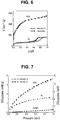
Fig. 6 is a diagram illustrating nitrogen adsorption isotherms, obtained before and after a sodium hydroxide treatment, of a carbon material; -
Fig. 7 is a diagram illustrating carbon dioxide adsorption/desorption, obtained before and after the sodium hydroxide treatment, of the carbon material; -
Fig. 8 is a diagram illustrating an oxygen reduction catalyst characteristic (CV) of a carbon material; and -
Fig. 9 is a diagram illustrating an oxygen reduction catalyst characteristic (RDE) of the carbon material. - A carbon material is produced by a carbonization treatment of a protonic salt (a precursor) containing a nitrogen atom and easily synthesized through a reaction between a general and inexpensive (for example, $1/g or less) amine and sulfuric acid, and contains nitrogen and sulfur. A protonic salt containing a nitrogen atom refers to a salt that contains a hydrogen atom directly bonded to a nitrogen atom and releases (ionizes) a hydrogen atom as a proton.
- The amines useful in the present invention are set forth in the claims.
- When sulfuric acid and an amine are mixed in a stoichiometric ratio to cause a neutralization reaction, a salt (a precursor) is synthesized. Sulfuric acid and an amine alone may be mixed, or a solvent may be used for the mixing. As the solvent, deionized water, methanol, ethanol, acetone or the like can be used depending upon the type of amine. This neutralization reaction is completed in an extremely short period of time.
- The carbonization treatment is a heat treatment conducted under an inert atmosphere at 600°C or more and 1200°C or less. In the heat treatment, a temperature is increased to a prescribed temperature at a temperature increasing rate of 1 to 20°C/min, preferably a temperature increasing rate of 1 to 10°C/min, the prescribed temperature is retained for a prescribed period of time (of, for example, 0 to 3 hours), and then the temperature is lowered. The inert atmosphere is an Ar atmosphere, a nitrogen atmosphere or the like.
- The carbon material of the present embodiment can be used as a catalyst support, an electrode material for energy conversion/storage, a conductive material, a hydrogen storage material, an adsorbent, a carbon dioxide selective adsorbent, a deodorant and the like.
-
Fig. 1 illustrates structures of the following amines used in methods for producing a carbon material of Examples and Comparative Examples. - (A) Cyanomethylamine: Aan
- (B) Allylamine: Ally-NH2
- (C) 1-Vinylimidazole: VIm
- (D) p-Phenylenediamine: pPDA
- (E) Aniline: phNH2
- (F) Carbazole: Carbazole
- (G) Triphenylamine: Tpa
- (H) Benzimidazole: BeIm
- (I) Diphenylamine: Dpa
- (J) 2-Cyanoaniline: phCNNH2
- (K) 5-Phenyltetrazole: 5-phtz
- (L) Trimethyl hexahydrotriazine: Me3N3C3
- (M) 1,2,4-Triazole: Triazole
- In the method for producing a carbon material of each Example, (a) sulfuric acid: H2SO4 was used as an acid, and for comparison, the following acids were also used:
- (b) Trifluoromethanesulfonic acid: TfOH
- (c) Nitric acid: HNO3
- (d) Dodecylbenzenesulfonic acid: C12phSO3H
- (e) Bis(trifluoromethanesulfonyl)amide acid: HNTf2
- (f) Hydrochloric acid: HCl
- A protonic salt was synthesized by stoichiometrically neutralizing any one of the amines (A) to (M) and any one of the acids (a) to (f) under a nitrogen atmosphere for avoiding oxidation of the amine. Note that a part of a system was reacted in a solvent, followed by drying by a rotary evaporator and heating under vacuum at 80°C for 24 hours for removing the solvent.
- The thus synthesized salt was in the form of a liquid or a solid (powder).
- Next, the synthesized salt (about 2 g) was heated in a tube furnace at a temperature increasing rate of 10°C/min under an Ar stream at 100 mL/min, and was retained at 1000°C for 2 hours, and thus, a carbon material (Examples 1 to 12 and Comparative Examples 1 to 7) was obtained.
- Incidentally, a salt synthesized from an amine not illustrated in
Fig. 1 and sulfuric acid was also subjected, separately, to the salt synthesis/carbonization under the same conditions as in Examples to obtain a carbon material. Some of the salts were subjected to the carbonization step also at a low temperature (600°C to 800°C) . - A yield of the carbon material was calculated by a gravimetric method. A nitrogen content (wt%) was measured by using a CHN elemental analysis device (Vario-ELIII). A composition (at%) and a chemical bonding state (a content of a graphitic nitrogen) were measured by using an X-ray electron spectroscopic apparatus (XPS) (PHI Quantera SXM).
- Besides, a specific surface area (a BET value: SBET) was calculated by measuring a nitrogen adsorption isotherm by using a nitrogen adsorption measuring device by a Brunauer-Emmett-Teller (BET) method.
- The evaluation results of Examples and Comparative Examples are shown in Table 1.

- As shown in Table 1, all of the carbon materials of the embodiment included 2% by mass or more and 15% by mass or less of nitrogen and 0.3% by mass or more and 2.5% by mass or less of sulfur. The carbon materials containing nitrogen in the above-described range exhibited a desired electrical conductivity, for example, an electrical conductivity of 500 S/m or more. The sulfur is a component derived from the sulfuric acid used in the salt synthesis, and conversely, the carbon material containing sulfur in the above-described range can be regarded to be produced with a sulfate used as a precursor.
- The yield of the carbon material of Example 5, in which (a) sulfuric acid was used as the acid for the neutralization reaction with aniline was 18.2%. On the contrary, the yields of the carbon materials of Comparative Examples 2 to 7, in which (c) nitric acid, (d) dodecylbenzenesulfonic acid, (e) bis(trifluoromethanesulfonyl)amide acid, and (f) hydrochloric acid were respectively used as the acid for the neutralization reaction with aniline were 0 to 13.3%, which were lower than the yield of the carbon material of Example 5.
- In other words, although a protonic salt is synthesized from an acid different from sulfuric acid and an amine, a yield attained in the carbonization treatment is higher in using sulfuric acid. The cause of the high yield is not clear, but it is presumed that a dehydration/carbonization action peculiar to sulfuric acid leads to an excellent result.
- Note that a yield of the carbon material of Comparative Example 7 in which the amine had a C/N ratio less than 1 was 0%, namely, a carbon material could not be obtained although a sulfate was a precursor. On the contrary, if a C/N ratio of the amine was 1 or more, a carbon material could be obtained by the carbonization treatment. Besides, the yields of the carbon materials of Examples were liable to be higher as the C/N ratio of the amine was higher. In order to attain a yield of 10% or more, the C/N ratio of the amine is preferably 3 or more.
- Next, with respect to a specific surface area (a BET value) of each carbon material, even if the same amine (benzimidazole) was used, the carbon material of Comparative Example 1 using trifluoromethanesulfonic acid as the acid had a BET value of 54 m2/g, which was lower than a BET value of 168 m2/g of the carbon material of Example 8 using sulfuric acid. Besides, even if the same amine of aniline was used, the carbon material of Comparative Example 3 using dodecylbenzenesulfonic acid as the acid had a BET value of 3 m2/g, which was lower than a BET value of 427 m2/g of the carbon material of Example 5 using sulfuric acid.
- In other words, if sulfuric acid is used for the neutralization reaction of an amine, a carbon material having a high BET value can be produced in a high yield.
- For example, the BET values of the carbon materials of Examples 1 to 12 using sulfuric acid for the salt synthesis were all 100 m2/g or more. In particular, if the amine was (A) cyanomethylamine, (B) allylamine, (C) vinylimidazole or (D) phenylenediamine (Examples 1 to 4), the BET values were all 500 m2/g or more.
- Here, the protonic salt (the precursor) easily synthesized through the reaction between the amine and sulfuric acid is particularly preferably in the form of a solid. This is because, if the precursor is in the form of a liquid, such as an ionic liquid, heating irregularities easily occur in the carbonization treatment and hence it is not easy to synthesize a carbon material in a large amount efficiently. In other words, if the precursor is in the form of a liquid, the carbonization reaction easily proceeds in the vicinity of the liquid surface but the carbonization reaction is difficult to proceed in the vicinity of a bottom of the liquid. On the contrary, if the precursor is in the form of a solid, more specifically, a solid powder, uniform heating is easily performed even if a large amount of the precursor is simultaneously subjected to the carbonization treatment, and hence, a carbon material can be efficiently mass-produced.
- For example, protonic salts produced from the following amines and sulfuric acid are in the form of a solid, and can be used for efficiently producing a carbon material by the carbonization treatment in the same manner.
- 1-(2-Cyanoethyl)-2-phenylimidazole (3-(2-phenyl-1H-imidazol-1-yl)propanenitrile
Triphenylphosphine
1,2,4-Triazole
2,4,5,6-Tetraaminopyrimidine (pyrimidinetetramine) 3-Cyanopyridine
4-Cyanopyridine
2,2'-Bipyridine
1,10-Phenanthroline
1,3-Diphenylguanidine
2,4-Diamino-6-phenyl-1,3,5-triazine DL-phenylalanine (2-amino-3-phenylpropanoic acid) Tributylamine (N,N-dibutyl-1-butanamine) 2-Aminopyrazine
5-Aminotetrazole
Hexamethylenetetramine
Hexahydro-1,3,5-triphenyl-1,3,5-triazine
Pyrazine
1,1,3,3-Tetramethylguanidine - On the contrary, protonic salts produced from the following amines and sulfuric acid were in the form of a liquid.
- N-methyl pyrrole
Diallylmethylamine (methyldiallylamine)
Triallylamine (N,N-bis(prop-2-enyl)prop-2-en-1-amine)
1-Vinylimidazole (1-ethenylimidazole) Diethylmethylamine
1-(2-Cyanoethyl)-2-methylimidazole (3-(2-methyl-1H-imidazol-1-yl)propanenitrile)
1,8-Diazabicyclo undec-7-ene (2,3,4,6,7,8,9,10-octahydropyrimido[1,2-a]azepine)
Pyridine
1-Methylimidazole - In consideration of all these results, the carbon material of Example 4, produced by subjecting a protonic salt in the form of a solid powder synthesized from (D) phenylenediamine and (a) sulfuric acid is the most preferable carbon material of the present embodiment.
- Here,
Fig. 2 illustrates an example of nitrogen adsorption isotherms of the carbon materials of Examples. Then, as illustrated inFig. 3 , the carbon material of Example 4 has, according to calculation from the nitrogen adsorption isotherm, a mesoporous structure having a peak value of pore sizes of 2 nm or more and 50 nm or less. Besides, all the carbon materials of the embodiment having a BET value of 100 m2/g or more were mesoporous carbon materials having a pore size distribution similar to that of Example 4. - As described later, a mesoporous carbon material has excellent characteristics as a catalyst support, an electrode material for energy conversion/storage, a conductive material, a hydrogen storage material, an adsorbent, a carbon dioxide selective adsorbent, a deodorant and the like.
- Here, as illustrated in
Figs. 4 and 5 , thecarbon material 1 of Example 4 contained three types of nitrogens (a graphitic nitrogen, a pyridinic nitrogen and a nitrogen oxide) respectively having different chemical bonding states. Note that a ratio of the graphitic nitrogen in the nitrogen is preferably 40 at% or more because the graphitic nitrogen is involved in electrical conduction. If the ratio falls in the aforementioned range, a conductivity of, for example, 500 S/m or more is assured. Note that the upper limit of the ratio of the graphitic nitrogen is, for example, 90 at% in the carbon material of the present embodiment because of technical limits. - Incidentally, a carbon material resulting from the carbonization can be further subjected to an activation treatment with an alkaline solution for increasing the BET value. The activation treatment refers to a treatment for immersing a carbon material in a strong alkaline solution, such as 5 M/L to 20 M/L of NaOH or KOH, at 50°C or more and 100°C or less for 10 minutes or more and 3 hours or less.
- For example, as illustrated in
Fig. 6 , a carbon material (As) of Example 6A obtained by subjecting the same salt as that used for the carbon material of Example 6 to the carbonization treatment at 800°C attained a BET value of 3573 m2/g when immersed in a 10 M/L KOH aqueous solution at 80°C for 1 hour (KOH). Incidentally, if the activation treatment is performed, a BET value is more easily increased by performing the carbonization treatment at a temperature lower than that of the activation treatment, for example, at 600°C or more and 900°C or less. - The nitrogen-containing carbon material of the present embodiment is a mesoporous conductive material, and hence can be used as an electrode of a fuel cell, and an adsorbent of a carbon dioxide adsorbing device.
- For use as an electrode material or the like, a carbon material in the form of a powder is compression molded together with, for example, a PEFT powder.
- As illustrated in
Fig. 7 , the carbon material (As: before subjecting to the alkali treatment) of Example 6 (adsorbs/desorbs) 1.6 mM/g of carbon dioxide, but an amount of (adsorbed/desorbed) nitrogen (As (N2)) is merely 0.2 mM/g. Therefore, a carbon dioxide adsorbing device using the carbon material of Example 6A as an adsorbent can selectively recover carbon dioxide discharged from, for example, a plant. - Besides, as illustrated in
Fig. 7 , the carbon material (KOH) of Example 6A increased in the specific surface area by the alkali treatment (adsorbed/desorbed) 3.57 mM/L of carbon dioxide. - Note that the carbon materials of Examples 1, 3 and 12 respectively (adsorb/desorb) 1.63 mM/g, 2.58 mM/g and 2.44 mM/g of carbon dioxide.
- Incidentally, when a carbon material having substantially the same structure as the carbon material of Example 6 but not containing nitrogen was evaluated for comparison, an amount of adsorbed carbon dioxide was much smaller than that of the carbon material of Example 6. This revealed that it is extremely significant for a carbon material to be used as a carbon dioxide adsorbent to contain 2% by mass or more of nitrogen.
- Besides,
Fig. 8 illustrates polarization curves (CV: 100 mV/s), obtained by using a general electrochemical cell, of a carbon material electrode of Example 1 and a generally used Pt/C electrode in an acidic solution (a 0.5 M sulfuric acid aqueous solution), andFig. 9 illustrates stationary polarization curves (10 mV/s) obtained by using a rotary electrode device (RDE, rotational speed: 1600 rpm). - In both the polarization curve of the Pt/C electrode (platinum-supporting carbon electrode) shown with a broken line in
Fig. 8 and the polarization curve of the carbon material electrode of Example 1 shown with a solid line, peaks derived from an oxygen reduction reaction can be observed. Since the carbon material electrode of Example 1 has a larger specific surface area than the Pt/C electrode, a current is larger. - On the other hand, in the stationary polarization curves illustrated in
Fig. 9 , the oxygen reduction reaction proceeds from a higher potential in the Pt/C electrode. On the contrary, the carbon material electrode of Example 1 also shows a comparatively good oxygen reduction activity. Incidentally, since the carbon of the carbon material electrode of Example 1 contains no transition metal ions, the oxygen reduction catalyst activity is an original physical property of the carbon material. - In other words, the carbon material of Example 1 shows an oxygen reduction catalytic activity substantially equivalent to that of an expensive Pt electrode.
- Accordingly, the carbon material of Example can be suitably used as a fuel cell using an acidic electrolyte.
Claims (4)
- A method for producing a carbon material, comprising:
a salt synthesis step of synthesizing a protonic salt in the form of a solid from sulfuric acid and a primary to tertiary amine selected from the group consisting of:cyanomethylamine, allylamine, vinylimidazole, phenylenediamine, aniline, carbazol, triphenylamine, benzimidazole, diphenylamine, cyanoaniline, 5-phenyltetrazole, trimethyl hexahydrotriazine, triazole;1-(2-cyanoethyl)-2-phenylimidazole (3-(2-phenyl-1H-imidazol-1-yl)propanenitrile, triphenylphosphine, 1,2,4-triazole, 2,4,5,6-tetraaminopyrimidine (pyrimidinetetramine), 3-cyanopyridine, 4-cyanopyridine, 2,2'-bipyridine, 1,10-phenanthroline, 1,3-diphenylguanidine, 2,4-diamino-6-phenyl-1,3,5-triazine, DL-phenylalanine (2-amino-3-phenylpropanoic acid), tributylamine (N,N-dibutyl-1-butanamine), 2-aminopyrazine, 5-aminotetrazole, hexamethylenetetramine, hexahydro-1,3,5-triphenyl-1,3,5-triazine, pyrazine, 1,1,3,3-tetraaminoguanidine; anda carbonization step of subjecting the protonic salt to a heat treatment at 600°C or more and 1200°C or less under an inert atmosphere. - The method for producing a carbon material according to claim 1, further comprising, after the carbonization step, an alkaline solution immersion step.
- The method for producing a carbon material according to claim 1 or 2, wherein the amine is cyanomethylamine, allylamine, vinylimidazole or phenylenediamine.
- The method for producing a carbon material according to claim 3, wherein the amine is phenylenediamine, and a specific surface area of the carbon material is 500 or more.
Applications Claiming Priority (2)
| Application Number | Priority Date | Filing Date | Title |
|---|---|---|---|
| JP2013036840 | 2013-02-27 | ||
| PCT/JP2014/053879 WO2014132853A1 (en) | 2013-02-27 | 2014-02-19 | Carbon material, fuel cell, electrical double-layer capacitor, carbon dioxide adsorption device, and carbon material production method |
Publications (3)
| Publication Number | Publication Date |
|---|---|
| EP2962991A1 EP2962991A1 (en) | 2016-01-06 |
| EP2962991A4 EP2962991A4 (en) | 2016-08-10 |
| EP2962991B1 true EP2962991B1 (en) | 2019-09-18 |
Family
ID=51428124
Family Applications (1)
| Application Number | Title | Priority Date | Filing Date |
|---|---|---|---|
| EP14757216.8A Active EP2962991B1 (en) | 2013-02-27 | 2014-02-19 | Method for producing carbon material |
Country Status (5)
| Country | Link |
|---|---|
| US (1) | US10211463B2 (en) |
| EP (1) | EP2962991B1 (en) |
| JP (1) | JP6315613B2 (en) |
| CA (1) | CA2902401C (en) |
| WO (1) | WO2014132853A1 (en) |
Families Citing this family (3)
| Publication number | Priority date | Publication date | Assignee | Title |
|---|---|---|---|---|
| CN108950683B (en) * | 2017-05-24 | 2020-09-29 | 北京大学 | A kind of high mobility nitrogen-doped large single crystal graphene film and preparation method thereof |
| KR101979097B1 (en) * | 2017-08-01 | 2019-05-15 | 서강대학교산학협력단 | Activated three dimentional carbon network structure, method for fabricating the same and electrode comprising the same |
| WO2026009866A1 (en) * | 2024-07-05 | 2026-01-08 | 株式会社クラレ | Carbon dioxide adsorption battery and charge/discharge device |
Family Cites Families (5)
| Publication number | Priority date | Publication date | Assignee | Title |
|---|---|---|---|---|
| US8114510B2 (en) | 2009-05-20 | 2012-02-14 | The United States Of America As Represented By The United States Department Of Energy | Mesoporous carbon materials |
| US8574534B2 (en) | 2010-03-18 | 2013-11-05 | Ut-Battelle, Llc | Carbon films produced from ionic liquid carbon precursors |
| JP5682026B2 (en) * | 2010-11-09 | 2015-03-11 | 東海カーボン株式会社 | Epitaxial growth substrate and method for manufacturing epitaxial growth substrate |
| EP2643840A4 (en) | 2010-11-26 | 2014-05-28 | Basf Se | PROCESS FOR THE MANUFACTURE OF POROUS CARBONACEOUS MATERIAL CONTAINING NITROGEN |
| JP5696941B2 (en) | 2011-08-08 | 2015-04-08 | 住友電気工業株式会社 | Measuring method of critical current |
-
2014
- 2014-02-19 EP EP14757216.8A patent/EP2962991B1/en active Active
- 2014-02-19 CA CA2902401A patent/CA2902401C/en active Active
- 2014-02-19 WO PCT/JP2014/053879 patent/WO2014132853A1/en not_active Ceased
- 2014-02-19 JP JP2015502879A patent/JP6315613B2/en active Active
-
2015
- 2015-08-24 US US14/834,082 patent/US10211463B2/en active Active
Non-Patent Citations (1)
| Title |
|---|
| None * |
Also Published As
| Publication number | Publication date |
|---|---|
| EP2962991A4 (en) | 2016-08-10 |
| US20150364770A1 (en) | 2015-12-17 |
| US10211463B2 (en) | 2019-02-19 |
| CA2902401C (en) | 2021-03-09 |
| WO2014132853A1 (en) | 2014-09-04 |
| CA2902401A1 (en) | 2014-09-04 |
| JP6315613B2 (en) | 2018-04-25 |
| JPWO2014132853A1 (en) | 2017-02-02 |
| EP2962991A1 (en) | 2016-01-06 |
Similar Documents
| Publication | Publication Date | Title |
|---|---|---|
| Zhuang et al. | ZIF-67/COF-derived highly dispersed Co3O4/N-doped porous carbon with excellent performance for oxygen evolution reaction and Li-ion batteries | |
| Zhu et al. | Aqueous electrocatalytic N 2 reduction for ambient NH 3 synthesis: recent advances in catalyst development and performance improvement | |
| JP5697749B2 (en) | Carbon dioxide enrichment device | |
| CA3017676C (en) | Metal-doped tin oxide for electrocatalysis applications | |
| CA2866650A1 (en) | Aerogel based on doped graphene | |
| KR20190030357A (en) | Manufacuring method of graphene composite and graphene composite using the same | |
| EP3174141A1 (en) | Use of tungsten-containing material | |
| JP2011195351A (en) | Nitrogen-containing carbon alloy, and carbon catalyst using the same | |
| US10211463B2 (en) | Carbon material, fuel cell, and method for producing carbon material | |
| He et al. | Development of g-C3N4 activated hollow carbon spheres with good performance for oxygen reduction and selective capture of acid gases | |
| JP4609829B2 (en) | Electrode material and capacitor | |
| Aggarwal et al. | Review of ordered pores in nanomaterials for energy applications ranging from energy storage to catalysis | |
| Park et al. | Hierarchically designed Co4Fe3@ N-doped graphitic carbon as an electrocatalyst for oxygen evolution in anion-exchange-membrane water electrolysis | |
| KR20210044721A (en) | Functionalized cathode active material, and method of fabricating of the same | |
| CN112940268A (en) | A metal-organic framework material grown in situ at the interface and its preparation method and application | |
| JP6483477B2 (en) | Method for producing calcium salt and method for producing porous carbon | |
| JP4096351B2 (en) | Nitrogen-containing carbon material | |
| JP5817286B2 (en) | Method for producing carbon material for electric double layer capacitor | |
| JP2019081667A (en) | Nitrogen-containing carbon material, production method thereof, and fuel cell electrode using the same | |
| JP2011111335A (en) | Nitrogen-containing carbon porous body and method for producing the same | |
| CN116575056B (en) | Preparation methods and applications of RuSe2-CoTe/NC heterostructure electrocatalysts | |
| JP2003239028A (en) | Method for producing porous Ni body having nanopore structure | |
| Kossmann | Controlled condensation to functional materials–synergetic effect of nitrogen content and pore structure | |
| Yu et al. | Engineering Porous Organic Cages and Their Nanocluster Composites for Energy Storage and Conversion | |
| Kumar et al. | Electrochemical NRR with noble metals-based |
Legal Events
| Date | Code | Title | Description |
|---|---|---|---|
| PUAI | Public reference made under article 153(3) epc to a published international application that has entered the european phase |
Free format text: ORIGINAL CODE: 0009012 |
|
| 17P | Request for examination filed |
Effective date: 20150826 |
|
| AK | Designated contracting states |
Kind code of ref document: A1 Designated state(s): AL AT BE BG CH CY CZ DE DK EE ES FI FR GB GR HR HU IE IS IT LI LT LU LV MC MK MT NL NO PL PT RO RS SE SI SK SM TR |
|
| AX | Request for extension of the european patent |
Extension state: BA ME |
|
| DAX | Request for extension of the european patent (deleted) | ||
| A4 | Supplementary search report drawn up and despatched |
Effective date: 20160708 |
|
| RIC1 | Information provided on ipc code assigned before grant |
Ipc: C01B 31/02 20060101AFI20160704BHEP |
|
| STAA | Information on the status of an ep patent application or granted ep patent |
Free format text: STATUS: EXAMINATION IS IN PROGRESS |
|
| 17Q | First examination report despatched |
Effective date: 20170725 |
|
| REG | Reference to a national code |
Ref country code: DE Ref legal event code: R079 Ref document number: 602014053880 Country of ref document: DE Free format text: PREVIOUS MAIN CLASS: C01B0031020000 Ipc: C01B0032050000 |
|
| RIC1 | Information provided on ipc code assigned before grant |
Ipc: C01B 32/05 20170101AFI20180709BHEP |
|
| GRAP | Despatch of communication of intention to grant a patent |
Free format text: ORIGINAL CODE: EPIDOSNIGR1 |
|
| STAA | Information on the status of an ep patent application or granted ep patent |
Free format text: STATUS: GRANT OF PATENT IS INTENDED |
|
| GRAJ | Information related to disapproval of communication of intention to grant by the applicant or resumption of examination proceedings by the epo deleted |
Free format text: ORIGINAL CODE: EPIDOSDIGR1 |
|
| STAA | Information on the status of an ep patent application or granted ep patent |
Free format text: STATUS: EXAMINATION IS IN PROGRESS |
|
| INTG | Intention to grant announced |
Effective date: 20181130 |
|
| GRAP | Despatch of communication of intention to grant a patent |
Free format text: ORIGINAL CODE: EPIDOSNIGR1 |
|
| STAA | Information on the status of an ep patent application or granted ep patent |
Free format text: STATUS: GRANT OF PATENT IS INTENDED |
|
| INTC | Intention to grant announced (deleted) | ||
| INTG | Intention to grant announced |
Effective date: 20190116 |
|
| RIC1 | Information provided on ipc code assigned before grant |
Ipc: C01B 32/05 20170101AFI20180709BHEP |
|
| GRAS | Grant fee paid |
Free format text: ORIGINAL CODE: EPIDOSNIGR3 |
|
| GRAA | (expected) grant |
Free format text: ORIGINAL CODE: 0009210 |
|
| STAA | Information on the status of an ep patent application or granted ep patent |
Free format text: STATUS: THE PATENT HAS BEEN GRANTED |
|
| AK | Designated contracting states |
Kind code of ref document: B1 Designated state(s): AL AT BE BG CH CY CZ DE DK EE ES FI FR GB GR HR HU IE IS IT LI LT LU LV MC MK MT NL NO PL PT RO RS SE SI SK SM TR |
|
| REG | Reference to a national code |
Ref country code: GB Ref legal event code: FG4D |
|
| REG | Reference to a national code |
Ref country code: CH Ref legal event code: EP |
|
| REG | Reference to a national code |
Ref country code: DE Ref legal event code: R096 Ref document number: 602014053880 Country of ref document: DE |
|
| REG | Reference to a national code |
Ref country code: AT Ref legal event code: REF Ref document number: 1181081 Country of ref document: AT Kind code of ref document: T Effective date: 20191015 |
|
| REG | Reference to a national code |
Ref country code: IE Ref legal event code: FG4D |
|
| REG | Reference to a national code |
Ref country code: NL Ref legal event code: MP Effective date: 20190918 |
|
| PG25 | Lapsed in a contracting state [announced via postgrant information from national office to epo] |
Ref country code: NO Free format text: LAPSE BECAUSE OF FAILURE TO SUBMIT A TRANSLATION OF THE DESCRIPTION OR TO PAY THE FEE WITHIN THE PRESCRIBED TIME-LIMIT Effective date: 20191218 Ref country code: BG Free format text: LAPSE BECAUSE OF FAILURE TO SUBMIT A TRANSLATION OF THE DESCRIPTION OR TO PAY THE FEE WITHIN THE PRESCRIBED TIME-LIMIT Effective date: 20191218 Ref country code: LT Free format text: LAPSE BECAUSE OF FAILURE TO SUBMIT A TRANSLATION OF THE DESCRIPTION OR TO PAY THE FEE WITHIN THE PRESCRIBED TIME-LIMIT Effective date: 20190918 Ref country code: HR Free format text: LAPSE BECAUSE OF FAILURE TO SUBMIT A TRANSLATION OF THE DESCRIPTION OR TO PAY THE FEE WITHIN THE PRESCRIBED TIME-LIMIT Effective date: 20190918 Ref country code: SE Free format text: LAPSE BECAUSE OF FAILURE TO SUBMIT A TRANSLATION OF THE DESCRIPTION OR TO PAY THE FEE WITHIN THE PRESCRIBED TIME-LIMIT Effective date: 20190918 Ref country code: FI Free format text: LAPSE BECAUSE OF FAILURE TO SUBMIT A TRANSLATION OF THE DESCRIPTION OR TO PAY THE FEE WITHIN THE PRESCRIBED TIME-LIMIT Effective date: 20190918 |
|
| REG | Reference to a national code |
Ref country code: LT Ref legal event code: MG4D |
|
| PG25 | Lapsed in a contracting state [announced via postgrant information from national office to epo] |
Ref country code: AL Free format text: LAPSE BECAUSE OF FAILURE TO SUBMIT A TRANSLATION OF THE DESCRIPTION OR TO PAY THE FEE WITHIN THE PRESCRIBED TIME-LIMIT Effective date: 20190918 Ref country code: GR Free format text: LAPSE BECAUSE OF FAILURE TO SUBMIT A TRANSLATION OF THE DESCRIPTION OR TO PAY THE FEE WITHIN THE PRESCRIBED TIME-LIMIT Effective date: 20191219 Ref country code: RS Free format text: LAPSE BECAUSE OF FAILURE TO SUBMIT A TRANSLATION OF THE DESCRIPTION OR TO PAY THE FEE WITHIN THE PRESCRIBED TIME-LIMIT Effective date: 20190918 Ref country code: LV Free format text: LAPSE BECAUSE OF FAILURE TO SUBMIT A TRANSLATION OF THE DESCRIPTION OR TO PAY THE FEE WITHIN THE PRESCRIBED TIME-LIMIT Effective date: 20190918 |
|
| REG | Reference to a national code |
Ref country code: AT Ref legal event code: MK05 Ref document number: 1181081 Country of ref document: AT Kind code of ref document: T Effective date: 20190918 |
|
| PG25 | Lapsed in a contracting state [announced via postgrant information from national office to epo] |
Ref country code: RO Free format text: LAPSE BECAUSE OF FAILURE TO SUBMIT A TRANSLATION OF THE DESCRIPTION OR TO PAY THE FEE WITHIN THE PRESCRIBED TIME-LIMIT Effective date: 20190918 Ref country code: AT Free format text: LAPSE BECAUSE OF FAILURE TO SUBMIT A TRANSLATION OF THE DESCRIPTION OR TO PAY THE FEE WITHIN THE PRESCRIBED TIME-LIMIT Effective date: 20190918 Ref country code: IT Free format text: LAPSE BECAUSE OF FAILURE TO SUBMIT A TRANSLATION OF THE DESCRIPTION OR TO PAY THE FEE WITHIN THE PRESCRIBED TIME-LIMIT Effective date: 20190918 Ref country code: PL Free format text: LAPSE BECAUSE OF FAILURE TO SUBMIT A TRANSLATION OF THE DESCRIPTION OR TO PAY THE FEE WITHIN THE PRESCRIBED TIME-LIMIT Effective date: 20190918 Ref country code: EE Free format text: LAPSE BECAUSE OF FAILURE TO SUBMIT A TRANSLATION OF THE DESCRIPTION OR TO PAY THE FEE WITHIN THE PRESCRIBED TIME-LIMIT Effective date: 20190918 Ref country code: PT Free format text: LAPSE BECAUSE OF FAILURE TO SUBMIT A TRANSLATION OF THE DESCRIPTION OR TO PAY THE FEE WITHIN THE PRESCRIBED TIME-LIMIT Effective date: 20200120 Ref country code: NL Free format text: LAPSE BECAUSE OF FAILURE TO SUBMIT A TRANSLATION OF THE DESCRIPTION OR TO PAY THE FEE WITHIN THE PRESCRIBED TIME-LIMIT Effective date: 20190918 Ref country code: ES Free format text: LAPSE BECAUSE OF FAILURE TO SUBMIT A TRANSLATION OF THE DESCRIPTION OR TO PAY THE FEE WITHIN THE PRESCRIBED TIME-LIMIT Effective date: 20190918 |
|
| PG25 | Lapsed in a contracting state [announced via postgrant information from national office to epo] |
Ref country code: IS Free format text: LAPSE BECAUSE OF FAILURE TO SUBMIT A TRANSLATION OF THE DESCRIPTION OR TO PAY THE FEE WITHIN THE PRESCRIBED TIME-LIMIT Effective date: 20200224 Ref country code: SK Free format text: LAPSE BECAUSE OF FAILURE TO SUBMIT A TRANSLATION OF THE DESCRIPTION OR TO PAY THE FEE WITHIN THE PRESCRIBED TIME-LIMIT Effective date: 20190918 Ref country code: SM Free format text: LAPSE BECAUSE OF FAILURE TO SUBMIT A TRANSLATION OF THE DESCRIPTION OR TO PAY THE FEE WITHIN THE PRESCRIBED TIME-LIMIT Effective date: 20190918 Ref country code: CZ Free format text: LAPSE BECAUSE OF FAILURE TO SUBMIT A TRANSLATION OF THE DESCRIPTION OR TO PAY THE FEE WITHIN THE PRESCRIBED TIME-LIMIT Effective date: 20190918 |
|
| REG | Reference to a national code |
Ref country code: DE Ref legal event code: R097 Ref document number: 602014053880 Country of ref document: DE |
|
| PLBE | No opposition filed within time limit |
Free format text: ORIGINAL CODE: 0009261 |
|
| STAA | Information on the status of an ep patent application or granted ep patent |
Free format text: STATUS: NO OPPOSITION FILED WITHIN TIME LIMIT |
|
| PG2D | Information on lapse in contracting state deleted |
Ref country code: IS |
|
| PG25 | Lapsed in a contracting state [announced via postgrant information from national office to epo] |
Ref country code: DK Free format text: LAPSE BECAUSE OF FAILURE TO SUBMIT A TRANSLATION OF THE DESCRIPTION OR TO PAY THE FEE WITHIN THE PRESCRIBED TIME-LIMIT Effective date: 20190918 Ref country code: IS Free format text: LAPSE BECAUSE OF FAILURE TO SUBMIT A TRANSLATION OF THE DESCRIPTION OR TO PAY THE FEE WITHIN THE PRESCRIBED TIME-LIMIT Effective date: 20200119 |
|
| 26N | No opposition filed |
Effective date: 20200619 |
|
| PG25 | Lapsed in a contracting state [announced via postgrant information from national office to epo] |
Ref country code: SI Free format text: LAPSE BECAUSE OF FAILURE TO SUBMIT A TRANSLATION OF THE DESCRIPTION OR TO PAY THE FEE WITHIN THE PRESCRIBED TIME-LIMIT Effective date: 20190918 |
|
| REG | Reference to a national code |
Ref country code: CH Ref legal event code: PL |
|
| GBPC | Gb: european patent ceased through non-payment of renewal fee |
Effective date: 20200219 |
|
| REG | Reference to a national code |
Ref country code: BE Ref legal event code: MM Effective date: 20200229 |
|
| PG25 | Lapsed in a contracting state [announced via postgrant information from national office to epo] |
Ref country code: LU Free format text: LAPSE BECAUSE OF NON-PAYMENT OF DUE FEES Effective date: 20200219 Ref country code: MC Free format text: LAPSE BECAUSE OF FAILURE TO SUBMIT A TRANSLATION OF THE DESCRIPTION OR TO PAY THE FEE WITHIN THE PRESCRIBED TIME-LIMIT Effective date: 20190918 |
|
| PG25 | Lapsed in a contracting state [announced via postgrant information from national office to epo] |
Ref country code: LI Free format text: LAPSE BECAUSE OF NON-PAYMENT OF DUE FEES Effective date: 20200229 Ref country code: CH Free format text: LAPSE BECAUSE OF NON-PAYMENT OF DUE FEES Effective date: 20200229 |
|
| PG25 | Lapsed in a contracting state [announced via postgrant information from national office to epo] |
Ref country code: GB Free format text: LAPSE BECAUSE OF NON-PAYMENT OF DUE FEES Effective date: 20200219 Ref country code: FR Free format text: LAPSE BECAUSE OF NON-PAYMENT OF DUE FEES Effective date: 20200229 Ref country code: IE Free format text: LAPSE BECAUSE OF NON-PAYMENT OF DUE FEES Effective date: 20200219 |
|
| PG25 | Lapsed in a contracting state [announced via postgrant information from national office to epo] |
Ref country code: BE Free format text: LAPSE BECAUSE OF NON-PAYMENT OF DUE FEES Effective date: 20200229 |
|
| PG25 | Lapsed in a contracting state [announced via postgrant information from national office to epo] |
Ref country code: TR Free format text: LAPSE BECAUSE OF FAILURE TO SUBMIT A TRANSLATION OF THE DESCRIPTION OR TO PAY THE FEE WITHIN THE PRESCRIBED TIME-LIMIT Effective date: 20190918 Ref country code: MT Free format text: LAPSE BECAUSE OF FAILURE TO SUBMIT A TRANSLATION OF THE DESCRIPTION OR TO PAY THE FEE WITHIN THE PRESCRIBED TIME-LIMIT Effective date: 20190918 Ref country code: CY Free format text: LAPSE BECAUSE OF FAILURE TO SUBMIT A TRANSLATION OF THE DESCRIPTION OR TO PAY THE FEE WITHIN THE PRESCRIBED TIME-LIMIT Effective date: 20190918 |
|
| PG25 | Lapsed in a contracting state [announced via postgrant information from national office to epo] |
Ref country code: MK Free format text: LAPSE BECAUSE OF FAILURE TO SUBMIT A TRANSLATION OF THE DESCRIPTION OR TO PAY THE FEE WITHIN THE PRESCRIBED TIME-LIMIT Effective date: 20190918 |
|
| PGFP | Annual fee paid to national office [announced via postgrant information from national office to epo] |
Ref country code: DE Payment date: 20241231 Year of fee payment: 12 |