EP2962692A1 - Agent for preventing and/or treating ocular inflammatory disease - Google Patents
Agent for preventing and/or treating ocular inflammatory disease Download PDFInfo
- Publication number
- EP2962692A1 EP2962692A1 EP14757271.3A EP14757271A EP2962692A1 EP 2962692 A1 EP2962692 A1 EP 2962692A1 EP 14757271 A EP14757271 A EP 14757271A EP 2962692 A1 EP2962692 A1 EP 2962692A1
- Authority
- EP
- European Patent Office
- Prior art keywords
- substituent
- optionally
- heterocyclic group
- lower alkyl
- prophylactic
- Prior art date
- Legal status (The legal status is an assumption and is not a legal conclusion. Google has not performed a legal analysis and makes no representation as to the accuracy of the status listed.)
- Withdrawn
Links
- 208000027866 inflammatory disease Diseases 0.000 title claims abstract description 55
- 125000004435 hydrogen atom Chemical group [H]* 0.000 claims abstract description 100
- -1 pyrazolopyrimidine compound Chemical class 0.000 claims abstract description 100
- 125000003118 aryl group Chemical group 0.000 claims abstract description 89
- 239000003814 drug Substances 0.000 claims abstract description 79
- 229940124597 therapeutic agent Drugs 0.000 claims abstract description 78
- 230000000069 prophylactic effect Effects 0.000 claims abstract description 77
- 150000003839 salts Chemical class 0.000 claims abstract description 48
- 125000003545 alkoxy group Chemical group 0.000 claims abstract description 43
- 229910052736 halogen Inorganic materials 0.000 claims abstract description 43
- 150000002367 halogens Chemical class 0.000 claims abstract description 42
- 239000004480 active ingredient Substances 0.000 claims abstract description 21
- 125000001424 substituent group Chemical group 0.000 claims description 640
- 125000000217 alkyl group Chemical group 0.000 claims description 139
- 150000001875 compounds Chemical class 0.000 claims description 103
- 208000002205 allergic conjunctivitis Diseases 0.000 claims description 69
- 125000000623 heterocyclic group Chemical group 0.000 claims description 68
- 125000001931 aliphatic group Chemical group 0.000 claims description 64
- 125000006615 aromatic heterocyclic group Chemical group 0.000 claims description 64
- 125000000753 cycloalkyl group Chemical group 0.000 claims description 56
- 208000024998 atopic conjunctivitis Diseases 0.000 claims description 55
- 206010010744 Conjunctivitis allergic Diseases 0.000 claims description 54
- 125000003710 aryl alkyl group Chemical group 0.000 claims description 54
- 125000003282 alkyl amino group Chemical group 0.000 claims description 43
- 125000001997 phenyl group Chemical group [H]C1=C([H])C([H])=C(*)C([H])=C1[H] 0.000 claims description 39
- 206010010741 Conjunctivitis Diseases 0.000 claims description 38
- 229910052757 nitrogen Inorganic materials 0.000 claims description 30
- 125000004433 nitrogen atom Chemical group N* 0.000 claims description 30
- 201000010099 disease Diseases 0.000 claims description 25
- 208000037265 diseases, disorders, signs and symptoms Diseases 0.000 claims description 25
- 208000016134 Conjunctival disease Diseases 0.000 claims description 24
- 230000000172 allergic effect Effects 0.000 claims description 24
- 208000010668 atopic eczema Diseases 0.000 claims description 24
- 125000004432 carbon atom Chemical group C* 0.000 claims description 23
- 125000002887 hydroxy group Chemical group [H]O* 0.000 claims description 23
- 125000001589 carboacyl group Chemical group 0.000 claims description 22
- 238000000034 method Methods 0.000 claims description 19
- 206010039705 Scleritis Diseases 0.000 claims description 16
- 125000004453 alkoxycarbonyl group Chemical group 0.000 claims description 16
- 206010023332 keratitis Diseases 0.000 claims description 15
- 206010018258 Giant papillary conjunctivitis Diseases 0.000 claims description 14
- QJGQUHMNIGDVPM-UHFFFAOYSA-N nitrogen group Chemical group [N] QJGQUHMNIGDVPM-UHFFFAOYSA-N 0.000 claims description 14
- 230000001932 seasonal effect Effects 0.000 claims description 14
- 238000011282 treatment Methods 0.000 claims description 14
- 208000018464 vernal keratoconjunctivitis Diseases 0.000 claims description 14
- 201000004624 Dermatitis Diseases 0.000 claims description 13
- 206010069664 atopic keratoconjunctivitis Diseases 0.000 claims description 13
- 210000000744 eyelid Anatomy 0.000 claims description 13
- 201000010666 keratoconjunctivitis Diseases 0.000 claims description 13
- 229910052717 sulfur Inorganic materials 0.000 claims description 11
- 208000025865 Ulcer Diseases 0.000 claims description 10
- 238000011321 prophylaxis Methods 0.000 claims description 10
- 231100000397 ulcer Toxicity 0.000 claims description 10
- 206010015150 Erythema Diseases 0.000 claims description 9
- 206010030113 Oedema Diseases 0.000 claims description 9
- 208000003251 Pruritus Diseases 0.000 claims description 9
- 125000002947 alkylene group Chemical group 0.000 claims description 9
- 229910052731 fluorine Inorganic materials 0.000 claims description 9
- 230000007803 itching Effects 0.000 claims description 9
- 208000024891 symptom Diseases 0.000 claims description 9
- 125000001153 fluoro group Chemical group F* 0.000 claims description 8
- 229910052801 chlorine Inorganic materials 0.000 claims description 6
- 238000004519 manufacturing process Methods 0.000 claims description 6
- 125000002496 methyl group Chemical group [H]C([H])([H])* 0.000 claims description 6
- 125000003178 carboxy group Chemical group [H]OC(*)=O 0.000 claims description 5
- 125000001309 chloro group Chemical group Cl* 0.000 claims description 5
- 125000004178 (C1-C4) alkyl group Chemical group 0.000 claims description 4
- 229910052799 carbon Inorganic materials 0.000 claims description 4
- 125000002915 carbonyl group Chemical group [*:2]C([*:1])=O 0.000 claims description 4
- 125000004093 cyano group Chemical group *C#N 0.000 claims description 4
- 229910052760 oxygen Inorganic materials 0.000 claims description 3
- 125000000229 (C1-C4)alkoxy group Chemical group 0.000 claims description 2
- ZOTVYZSJWXIRPW-UHFFFAOYSA-N 1-[7-(2-chloro-5-methylanilino)-6-(spiro[1h-2-benzofuran-3,4'-piperidine]-1'-carbonyl)pyrazolo[1,5-a]pyrimidin-3-yl]sulfonyl-3-ethylurea Chemical compound C1CC2(C3=CC=CC=C3CO2)CCN1C(=O)C=1C=NC2=C(S(=O)(=O)NC(=O)NCC)C=NN2C=1NC1=CC(C)=CC=C1Cl ZOTVYZSJWXIRPW-UHFFFAOYSA-N 0.000 claims description 2
- SLPKOJIFSYDSPG-UHFFFAOYSA-N 1-[7-(2-chloro-5-methylanilino)-6-[4-(4-fluorophenyl)piperidine-1-carbonyl]pyrazolo[1,5-a]pyrimidin-3-yl]sulfonyl-3-ethylurea Chemical compound C1CC(C=2C=CC(F)=CC=2)CCN1C(=O)C=1C=NC2=C(S(=O)(=O)NC(=O)NCC)C=NN2C=1NC1=CC(C)=CC=C1Cl SLPKOJIFSYDSPG-UHFFFAOYSA-N 0.000 claims description 2
- LDZGYCKYPVBQQZ-UHFFFAOYSA-N 1-[7-(5-chloro-2-fluoroanilino)-6-[4-(4-fluorophenyl)piperidine-1-carbonyl]pyrazolo[1,5-a]pyrimidin-3-yl]sulfonyl-3-ethylurea Chemical compound C1CC(C=2C=CC(F)=CC=2)CCN1C(=O)C=1C=NC2=C(S(=O)(=O)NC(=O)NCC)C=NN2C=1NC1=CC(Cl)=CC=C1F LDZGYCKYPVBQQZ-UHFFFAOYSA-N 0.000 claims description 2
- 125000000325 methylidene group Chemical group [H]C([H])=* 0.000 claims description 2
- IREOMVANQSRQLX-UHFFFAOYSA-N n-[7-(2,5-dichloroanilino)-6-[4-(4-fluorophenyl)piperidine-1-carbonyl]pyrazolo[1,5-a]pyrimidin-3-yl]sulfonylpropanamide Chemical compound C1CC(C=2C=CC(F)=CC=2)CCN1C(=O)C=1C=NC2=C(S(=O)(=O)NC(=O)CC)C=NN2C=1NC1=CC(Cl)=CC=C1Cl IREOMVANQSRQLX-UHFFFAOYSA-N 0.000 claims description 2
- HNJDWVGCHDOSAQ-UHFFFAOYSA-N n-[7-(2,5-difluoroanilino)-6-[4-(4-fluorophenyl)piperidine-1-carbonyl]pyrazolo[1,5-a]pyrimidin-3-yl]sulfonylacetamide Chemical compound C1CC(C=2C=CC(F)=CC=2)CCN1C(=O)C=1C=NC2=C(S(=O)(=O)NC(=O)C)C=NN2C=1NC1=CC(F)=CC=C1F HNJDWVGCHDOSAQ-UHFFFAOYSA-N 0.000 claims description 2
- VDQMXPVLIDBUOC-UHFFFAOYSA-N n-[7-(5-chloro-2-fluoroanilino)-6-[4-(4-fluorophenyl)piperidine-1-carbonyl]pyrazolo[1,5-a]pyrimidin-3-yl]sulfonylacetamide Chemical compound C1CC(C=2C=CC(F)=CC=2)CCN1C(=O)C=1C=NC2=C(S(=O)(=O)NC(=O)C)C=NN2C=1NC1=CC(Cl)=CC=C1F VDQMXPVLIDBUOC-UHFFFAOYSA-N 0.000 claims description 2
- RADHNVBNWCLJNH-UHFFFAOYSA-N n-ethylsulfonyl-7-(2-fluoro-5-methylanilino)-6-[4-(4-fluorophenyl)piperidine-1-carbonyl]pyrazolo[1,5-a]pyrimidine-3-carboxamide Chemical compound C1CC(C=2C=CC(F)=CC=2)CCN1C(=O)C=1C=NC2=C(C(=O)NS(=O)(=O)CC)C=NN2C=1NC1=CC(C)=CC=C1F RADHNVBNWCLJNH-UHFFFAOYSA-N 0.000 claims description 2
- 125000005843 halogen group Chemical group 0.000 claims 2
- BNUGYYRWBSZKCZ-UHFFFAOYSA-N 7-(2,5-dichloroanilino)-6-[4-(4-fluorophenyl)piperidine-1-carbonyl]-n-methoxypyrazolo[1,5-a]pyrimidine-3-sulfonamide Chemical compound C1CC(C=2C=CC(F)=CC=2)CCN1C(=O)C=1C=NC2=C(S(=O)(=O)NOC)C=NN2C=1NC1=CC(Cl)=CC=C1Cl BNUGYYRWBSZKCZ-UHFFFAOYSA-N 0.000 claims 1
- WTKZEGDFNFYCGP-UHFFFAOYSA-N Pyrazole Chemical compound C=1C=NNC=1 WTKZEGDFNFYCGP-UHFFFAOYSA-N 0.000 claims 1
- AXDQAVJUMBBBPX-UHFFFAOYSA-N n-ethylsulfonyl-7-(4-fluoro-2-methylanilino)-6-(4-phenylpiperidine-1-carbonyl)pyrazolo[1,5-a]pyrimidine-3-carboxamide Chemical compound C1CC(C=2C=CC=CC=2)CCN1C(=O)C=1C=NC2=C(C(=O)NS(=O)(=O)CC)C=NN2C=1NC1=CC=C(F)C=C1C AXDQAVJUMBBBPX-UHFFFAOYSA-N 0.000 claims 1
- 239000000203 mixture Substances 0.000 description 50
- HEMHJVSKTPXQMS-UHFFFAOYSA-M Sodium hydroxide Chemical compound [OH-].[Na+] HEMHJVSKTPXQMS-UHFFFAOYSA-M 0.000 description 36
- 239000000243 solution Substances 0.000 description 33
- 239000007924 injection Substances 0.000 description 29
- 238000002347 injection Methods 0.000 description 29
- VEXZGXHMUGYJMC-UHFFFAOYSA-N Hydrochloric acid Chemical compound Cl VEXZGXHMUGYJMC-UHFFFAOYSA-N 0.000 description 25
- 0 CCC(C)(CC(C)(C)C*(C)C)N Chemical compound CCC(C)(CC(C)(C)C*(C)C)N 0.000 description 22
- XLYOFNOQVPJJNP-UHFFFAOYSA-N water Substances O XLYOFNOQVPJJNP-UHFFFAOYSA-N 0.000 description 21
- 239000012153 distilled water Substances 0.000 description 18
- 238000009472 formulation Methods 0.000 description 18
- 210000003979 eosinophil Anatomy 0.000 description 16
- 125000000008 (C1-C10) alkyl group Chemical group 0.000 description 15
- FAPWRFPIFSIZLT-UHFFFAOYSA-M Sodium chloride Chemical compound [Na+].[Cl-] FAPWRFPIFSIZLT-UHFFFAOYSA-M 0.000 description 15
- HQKMJHAJHXVSDF-UHFFFAOYSA-L magnesium stearate Chemical compound [Mg+2].CCCCCCCCCCCCCCCCCC([O-])=O.CCCCCCCCCCCCCCCCCC([O-])=O HQKMJHAJHXVSDF-UHFFFAOYSA-L 0.000 description 14
- 125000004429 atom Chemical group 0.000 description 13
- FBPFZTCFMRRESA-KVTDHHQDSA-N D-Mannitol Chemical compound OC[C@@H](O)[C@@H](O)[C@H](O)[C@H](O)CO FBPFZTCFMRRESA-KVTDHHQDSA-N 0.000 description 12
- 241000699666 Mus <mouse, genus> Species 0.000 description 12
- 239000000427 antigen Substances 0.000 description 12
- 102000036639 antigens Human genes 0.000 description 12
- 108091007433 antigens Proteins 0.000 description 12
- 238000007796 conventional method Methods 0.000 description 12
- 239000009342 ragweed pollen Substances 0.000 description 12
- 239000003889 eye drop Substances 0.000 description 11
- 125000006552 (C3-C8) cycloalkyl group Chemical group 0.000 description 9
- 125000005915 C6-C14 aryl group Chemical group 0.000 description 9
- 206010070834 Sensitisation Diseases 0.000 description 8
- 125000005115 alkyl carbamoyl group Chemical group 0.000 description 8
- 230000000694 effects Effects 0.000 description 8
- 230000008595 infiltration Effects 0.000 description 8
- 238000001764 infiltration Methods 0.000 description 8
- 239000007788 liquid Substances 0.000 description 8
- 125000004430 oxygen atom Chemical group O* 0.000 description 8
- 230000008313 sensitization Effects 0.000 description 8
- 239000011780 sodium chloride Substances 0.000 description 8
- 125000004434 sulfur atom Chemical group 0.000 description 8
- 229920002153 Hydroxypropyl cellulose Polymers 0.000 description 7
- GUBGYTABKSRVRQ-QKKXKWKRSA-N Lactose Natural products OC[C@H]1O[C@@H](O[C@H]2[C@H](O)[C@@H](O)C(O)O[C@@H]2CO)[C@H](O)[C@@H](O)[C@H]1O GUBGYTABKSRVRQ-QKKXKWKRSA-N 0.000 description 7
- 239000001863 hydroxypropyl cellulose Substances 0.000 description 7
- 235000010977 hydroxypropyl cellulose Nutrition 0.000 description 7
- 239000008101 lactose Substances 0.000 description 7
- 235000019359 magnesium stearate Nutrition 0.000 description 7
- 125000006564 (C4-C8) cycloalkyl group Chemical group 0.000 description 6
- 208000035285 Allergic Seasonal Rhinitis Diseases 0.000 description 6
- 206010048908 Seasonal allergy Diseases 0.000 description 6
- 125000004390 alkyl sulfonyl group Chemical group 0.000 description 6
- 210000000795 conjunctiva Anatomy 0.000 description 6
- LOKCTEFSRHRXRJ-UHFFFAOYSA-I dipotassium trisodium dihydrogen phosphate hydrogen phosphate dichloride Chemical compound P(=O)(O)(O)[O-].[K+].P(=O)(O)([O-])[O-].[Na+].[Na+].[Cl-].[K+].[Cl-].[Na+] LOKCTEFSRHRXRJ-UHFFFAOYSA-I 0.000 description 6
- 235000010355 mannitol Nutrition 0.000 description 6
- 239000002953 phosphate buffered saline Substances 0.000 description 6
- 229920001592 potato starch Polymers 0.000 description 6
- 239000000651 prodrug Substances 0.000 description 6
- 229940002612 prodrug Drugs 0.000 description 6
- 125000000027 (C1-C10) alkoxy group Chemical group 0.000 description 5
- 125000003435 aroyl group Chemical group 0.000 description 5
- 125000004391 aryl sulfonyl group Chemical group 0.000 description 5
- 239000000126 substance Substances 0.000 description 5
- 238000012360 testing method Methods 0.000 description 5
- IAZDPXIOMUYVGZ-UHFFFAOYSA-N Dimethylsulphoxide Chemical compound CS(C)=O IAZDPXIOMUYVGZ-UHFFFAOYSA-N 0.000 description 4
- WSFSSNUMVMOOMR-UHFFFAOYSA-N Formaldehyde Chemical compound O=C WSFSSNUMVMOOMR-UHFFFAOYSA-N 0.000 description 4
- 208000003435 Optic Neuritis Diseases 0.000 description 4
- 210000003128 head Anatomy 0.000 description 4
- 229920000609 methyl cellulose Polymers 0.000 description 4
- 239000001923 methylcellulose Substances 0.000 description 4
- 238000010172 mouse model Methods 0.000 description 4
- 239000000825 pharmaceutical preparation Substances 0.000 description 4
- 125000006636 (C3-C8) cycloalkylcarbonyl group Chemical group 0.000 description 3
- UHOVQNZJYSORNB-UHFFFAOYSA-N Benzene Chemical group C1=CC=CC=C1 UHOVQNZJYSORNB-UHFFFAOYSA-N 0.000 description 3
- 125000005914 C6-C14 aryloxy group Chemical group 0.000 description 3
- 206010061218 Inflammation Diseases 0.000 description 3
- 241001465754 Metazoa Species 0.000 description 3
- 229910019142 PO4 Inorganic materials 0.000 description 3
- 239000002253 acid Substances 0.000 description 3
- 150000003863 ammonium salts Chemical class 0.000 description 3
- 125000005098 aryl alkoxy carbonyl group Chemical group 0.000 description 3
- 125000005163 aryl sulfanyl group Chemical group 0.000 description 3
- 125000002619 bicyclic group Chemical group 0.000 description 3
- 125000000723 dihydrobenzofuranyl group Chemical group O1C(CC2=C1C=CC=C2)* 0.000 description 3
- 239000011521 glass Substances 0.000 description 3
- 239000008187 granular material Substances 0.000 description 3
- 125000003392 indanyl group Chemical group C1(CCC2=CC=CC=C12)* 0.000 description 3
- 230000004054 inflammatory process Effects 0.000 description 3
- 230000003287 optical effect Effects 0.000 description 3
- NBIIXXVUZAFLBC-UHFFFAOYSA-K phosphate Chemical compound [O-]P([O-])([O-])=O NBIIXXVUZAFLBC-UHFFFAOYSA-K 0.000 description 3
- 239000010452 phosphate Substances 0.000 description 3
- 239000002904 solvent Substances 0.000 description 3
- 125000002023 trifluoromethyl group Chemical group FC(F)(F)* 0.000 description 3
- HBEDSQVIWPRPAY-UHFFFAOYSA-N 2,3-dihydrobenzofuran Chemical compound C1=CC=C2OCCC2=C1 HBEDSQVIWPRPAY-UHFFFAOYSA-N 0.000 description 2
- 206010002091 Anaesthesia Diseases 0.000 description 2
- 238000011725 BALB/c mouse Methods 0.000 description 2
- WGNNILPYHCKCFF-UHFFFAOYSA-N CNc(cccc1)c1Cl Chemical compound CNc(cccc1)c1Cl WGNNILPYHCKCFF-UHFFFAOYSA-N 0.000 description 2
- 241000725101 Clea Species 0.000 description 2
- 206010011715 Cyclitis Diseases 0.000 description 2
- 206010015084 Episcleritis Diseases 0.000 description 2
- 206010015719 Exsanguination Diseases 0.000 description 2
- WQZGKKKJIJFFOK-GASJEMHNSA-N Glucose Natural products OC[C@H]1OC(O)[C@H](O)[C@@H](O)[C@@H]1O WQZGKKKJIJFFOK-GASJEMHNSA-N 0.000 description 2
- DHMQDGOQFOQNFH-UHFFFAOYSA-N Glycine Chemical class NCC(O)=O DHMQDGOQFOQNFH-UHFFFAOYSA-N 0.000 description 2
- 208000010496 Heart Arrest Diseases 0.000 description 2
- 206010020751 Hypersensitivity Diseases 0.000 description 2
- YNAVUWVOSKDBBP-UHFFFAOYSA-N Morpholine Chemical class C1COCCN1 YNAVUWVOSKDBBP-UHFFFAOYSA-N 0.000 description 2
- 208000022873 Ocular disease Diseases 0.000 description 2
- QGMRQYFBGABWDR-UHFFFAOYSA-M Pentobarbital sodium Chemical compound [Na+].CCCC(C)C1(CC)C(=O)NC(=O)[N-]C1=O QGMRQYFBGABWDR-UHFFFAOYSA-M 0.000 description 2
- NQRYJNQNLNOLGT-UHFFFAOYSA-N Piperidine Chemical class C1CCNCC1 NQRYJNQNLNOLGT-UHFFFAOYSA-N 0.000 description 2
- 206010064996 Ulcerative keratitis Diseases 0.000 description 2
- 206010046851 Uveitis Diseases 0.000 description 2
- 210000001015 abdomen Anatomy 0.000 description 2
- 230000005856 abnormality Effects 0.000 description 2
- 125000004423 acyloxy group Chemical group 0.000 description 2
- 125000005278 alkyl sulfonyloxy group Chemical group 0.000 description 2
- 125000004414 alkyl thio group Chemical group 0.000 description 2
- 208000026935 allergic disease Diseases 0.000 description 2
- 230000007815 allergy Effects 0.000 description 2
- 229940024546 aluminum hydroxide gel Drugs 0.000 description 2
- SMYKVLBUSSNXMV-UHFFFAOYSA-K aluminum;trihydroxide;hydrate Chemical compound O.[OH-].[OH-].[OH-].[Al+3] SMYKVLBUSSNXMV-UHFFFAOYSA-K 0.000 description 2
- 150000001412 amines Chemical class 0.000 description 2
- 230000006229 amino acid addition Effects 0.000 description 2
- 125000003277 amino group Chemical group 0.000 description 2
- 230000037005 anaesthesia Effects 0.000 description 2
- 238000010171 animal model Methods 0.000 description 2
- 125000005333 aroyloxy group Chemical group 0.000 description 2
- 125000002102 aryl alkyloxo group Chemical group 0.000 description 2
- 125000001769 aryl amino group Chemical group 0.000 description 2
- 125000005116 aryl carbamoyl group Chemical group 0.000 description 2
- 125000005161 aryl oxy carbonyl group Chemical group 0.000 description 2
- 125000005279 aryl sulfonyloxy group Chemical group 0.000 description 2
- 125000002393 azetidinyl group Chemical group 0.000 description 2
- 125000004069 aziridinyl group Chemical group 0.000 description 2
- 125000003785 benzimidazolyl group Chemical group N1=C(NC2=C1C=CC=C2)* 0.000 description 2
- 125000003354 benzotriazolyl group Chemical group N1N=NC2=C1C=CC=C2* 0.000 description 2
- 208000010217 blepharitis Diseases 0.000 description 2
- 230000037396 body weight Effects 0.000 description 2
- 125000003016 chromanyl group Chemical group O1C(CCC2=CC=CC=C12)* 0.000 description 2
- 238000012790 confirmation Methods 0.000 description 2
- IQFVPQOLBLOTPF-HKXUKFGYSA-L congo red Chemical compound [Na+].[Na+].C1=CC=CC2=C(N)C(/N=N/C3=CC=C(C=C3)C3=CC=C(C=C3)/N=N/C3=C(C4=CC=CC=C4C(=C3)S([O-])(=O)=O)N)=CC(S([O-])(=O)=O)=C21 IQFVPQOLBLOTPF-HKXUKFGYSA-L 0.000 description 2
- 201000007717 corneal ulcer Diseases 0.000 description 2
- 125000000000 cycloalkoxy group Chemical group 0.000 description 2
- 238000003745 diagnosis Methods 0.000 description 2
- 125000004459 dihydrobenzooxazolyl group Chemical group O1C(NC2=C1C=CC=C2)* 0.000 description 2
- 125000001070 dihydroindolyl group Chemical group N1(CCC2=CC=CC=C12)* 0.000 description 2
- 125000004611 dihydroisoindolyl group Chemical group C1(NCC2=CC=CC=C12)* 0.000 description 2
- 239000003085 diluting agent Substances 0.000 description 2
- 230000002444 effect on eosinophils Effects 0.000 description 2
- 238000005516 engineering process Methods 0.000 description 2
- 230000003203 everyday effect Effects 0.000 description 2
- 125000002485 formyl group Chemical group [H]C(*)=O 0.000 description 2
- 239000008103 glucose Substances 0.000 description 2
- 125000002632 imidazolidinyl group Chemical group 0.000 description 2
- 125000002883 imidazolyl group Chemical group 0.000 description 2
- 125000004857 imidazopyridinyl group Chemical group N1C(=NC2=C1C=CC=N2)* 0.000 description 2
- 125000003453 indazolyl group Chemical group N1N=C(C2=C1C=CC=C2)* 0.000 description 2
- 125000003387 indolinyl group Chemical group N1(CCC2=CC=CC=C12)* 0.000 description 2
- 125000001041 indolyl group Chemical group 0.000 description 2
- 238000007912 intraperitoneal administration Methods 0.000 description 2
- 125000003384 isochromanyl group Chemical group C1(OCCC2=CC=CC=C12)* 0.000 description 2
- 125000004594 isoindolinyl group Chemical group C1(NCC2=CC=CC=C12)* 0.000 description 2
- 125000000904 isoindolyl group Chemical group C=1(NC=C2C=CC=CC12)* 0.000 description 2
- 229910052751 metal Inorganic materials 0.000 description 2
- 239000002184 metal Chemical class 0.000 description 2
- 125000002911 monocyclic heterocycle group Chemical group 0.000 description 2
- 125000000449 nitro group Chemical group [O-][N+](*)=O 0.000 description 2
- 125000001715 oxadiazolyl group Chemical group 0.000 description 2
- 125000000160 oxazolidinyl group Chemical group 0.000 description 2
- 239000012188 paraffin wax Substances 0.000 description 2
- 230000007170 pathology Effects 0.000 description 2
- 229960001412 pentobarbital Drugs 0.000 description 2
- 239000000546 pharmaceutical excipient Substances 0.000 description 2
- 125000004193 piperazinyl group Chemical group 0.000 description 2
- 125000000561 purinyl group Chemical group N1=C(N=C2N=CNC2=C1)* 0.000 description 2
- 125000003072 pyrazolidinyl group Chemical group 0.000 description 2
- 125000002755 pyrazolinyl group Chemical group 0.000 description 2
- 125000003226 pyrazolyl group Chemical group 0.000 description 2
- 125000000719 pyrrolidinyl group Chemical group 0.000 description 2
- 125000000168 pyrrolyl group Chemical group 0.000 description 2
- 210000003625 skull Anatomy 0.000 description 2
- 238000003756 stirring Methods 0.000 description 2
- 210000002784 stomach Anatomy 0.000 description 2
- 125000003396 thiol group Chemical group [H]S* 0.000 description 2
- VZCYOOQTPOCHFL-UHFFFAOYSA-N trans-butenedioic acid Natural products OC(=O)C=CC(O)=O VZCYOOQTPOCHFL-UHFFFAOYSA-N 0.000 description 2
- 239000008215 water for injection Substances 0.000 description 2
- YBYIRNPNPLQARY-UHFFFAOYSA-N 1H-indene Natural products C1=CC=C2CC=CC2=C1 YBYIRNPNPLQARY-UHFFFAOYSA-N 0.000 description 1
- XREDBMQNKAWFGA-UHFFFAOYSA-N 2,3,3a,4-tetrahydro-1h-isoindole Chemical compound C1=CCC2CNCC2=C1 XREDBMQNKAWFGA-UHFFFAOYSA-N 0.000 description 1
- FTAHXMZRJCZXDL-UHFFFAOYSA-N 3-piperideine Chemical compound C1CC=CCN1 FTAHXMZRJCZXDL-UHFFFAOYSA-N 0.000 description 1
- 229940090248 4-hydroxybenzoic acid Drugs 0.000 description 1
- UICUGKLETICVLT-UHFFFAOYSA-N 7-(2,5-dichloroanilino)-6-[4-(4-fluorophenyl)piperidine-1-carbonyl]-N-methoxypyrazolo[1,5-a]pyrimidine-5-sulfonamide Chemical compound ClC1=C(C=C(C=C1)Cl)NC1=C(C(=NC=2N1N=CC=2)S(=O)(=O)NOC)C(=O)N1CCC(CC1)C1=CC=C(C=C1)F UICUGKLETICVLT-UHFFFAOYSA-N 0.000 description 1
- ZCYVEMRRCGMTRW-UHFFFAOYSA-N 7553-56-2 Chemical compound [I] ZCYVEMRRCGMTRW-UHFFFAOYSA-N 0.000 description 1
- QTBSBXVTEAMEQO-UHFFFAOYSA-M Acetate Chemical compound CC([O-])=O QTBSBXVTEAMEQO-UHFFFAOYSA-M 0.000 description 1
- BTBUEUYNUDRHOZ-UHFFFAOYSA-N Borate Chemical compound [O-]B([O-])[O-] BTBUEUYNUDRHOZ-UHFFFAOYSA-N 0.000 description 1
- WKBOTKDWSSQWDR-UHFFFAOYSA-N Bromine atom Chemical compound [Br] WKBOTKDWSSQWDR-UHFFFAOYSA-N 0.000 description 1
- PKMOAILXFZSDNC-QRLRYFCNSA-N C/C(/C(/F)=C(\C)/N=C=C)=C/C=C Chemical compound C/C(/C(/F)=C(\C)/N=C=C)=C/C=C PKMOAILXFZSDNC-QRLRYFCNSA-N 0.000 description 1
- KMHLGVTVACLEJE-UHFFFAOYSA-N Cc(cc(cc1)F)c1N Chemical compound Cc(cc(cc1)F)c1N KMHLGVTVACLEJE-UHFFFAOYSA-N 0.000 description 1
- JWQUBAUGVPTBAE-UHFFFAOYSA-N Cc(cc(cc1)F)c1NC Chemical compound Cc(cc(cc1)F)c1NC JWQUBAUGVPTBAE-UHFFFAOYSA-N 0.000 description 1
- UMCVVMVUPUNYNW-UHFFFAOYSA-N Cc(cc1F)ccc1NS Chemical compound Cc(cc1F)ccc1NS UMCVVMVUPUNYNW-UHFFFAOYSA-N 0.000 description 1
- 102000009410 Chemokine receptor Human genes 0.000 description 1
- 108050000299 Chemokine receptor Proteins 0.000 description 1
- ZAMOUSCENKQFHK-UHFFFAOYSA-N Chlorine atom Chemical compound [Cl] ZAMOUSCENKQFHK-UHFFFAOYSA-N 0.000 description 1
- KRKNYBCHXYNGOX-UHFFFAOYSA-K Citrate Chemical compound [O-]C(=O)CC(O)(CC([O-])=O)C([O-])=O KRKNYBCHXYNGOX-UHFFFAOYSA-K 0.000 description 1
- 206010010736 Conjunctival ulcer Diseases 0.000 description 1
- 206010010755 Conjunctivitis viral Diseases 0.000 description 1
- 102000004190 Enzymes Human genes 0.000 description 1
- 108090000790 Enzymes Proteins 0.000 description 1
- 102000056703 Eosinophil Major Basic Human genes 0.000 description 1
- 108700016651 Eosinophil Major Basic Proteins 0.000 description 1
- PXGOKWXKJXAPGV-UHFFFAOYSA-N Fluorine Chemical compound FF PXGOKWXKJXAPGV-UHFFFAOYSA-N 0.000 description 1
- VZCYOOQTPOCHFL-OWOJBTEDSA-N Fumaric acid Chemical compound OC(=O)\C=C\C(O)=O VZCYOOQTPOCHFL-OWOJBTEDSA-N 0.000 description 1
- WHUUTDBJXJRKMK-UHFFFAOYSA-N Glutamic acid Chemical class OC(=O)C(N)CCC(O)=O WHUUTDBJXJRKMK-UHFFFAOYSA-N 0.000 description 1
- 239000004471 Glycine Chemical class 0.000 description 1
- CPELXLSAUQHCOX-UHFFFAOYSA-N Hydrogen bromide Chemical compound Br CPELXLSAUQHCOX-UHFFFAOYSA-N 0.000 description 1
- CKLJMWTZIZZHCS-REOHCLBHSA-N L-aspartic acid Chemical class OC(=O)[C@@H](N)CC(O)=O CKLJMWTZIZZHCS-REOHCLBHSA-N 0.000 description 1
- WHUUTDBJXJRKMK-VKHMYHEASA-N L-glutamic acid Chemical class OC(=O)[C@@H](N)CCC(O)=O WHUUTDBJXJRKMK-VKHMYHEASA-N 0.000 description 1
- KDXKERNSBIXSRK-YFKPBYRVSA-N L-lysine Chemical class NCCCC[C@H](N)C(O)=O KDXKERNSBIXSRK-YFKPBYRVSA-N 0.000 description 1
- COLNVLDHVKWLRT-QMMMGPOBSA-N L-phenylalanine Chemical class OC(=O)[C@@H](N)CC1=CC=CC=C1 COLNVLDHVKWLRT-QMMMGPOBSA-N 0.000 description 1
- KDXKERNSBIXSRK-UHFFFAOYSA-N Lysine Natural products NCCCCC(N)C(O)=O KDXKERNSBIXSRK-UHFFFAOYSA-N 0.000 description 1
- 239000004472 Lysine Substances 0.000 description 1
- AFVFQIVMOAPDHO-UHFFFAOYSA-N Methanesulfonic acid Chemical compound CS(O)(=O)=O AFVFQIVMOAPDHO-UHFFFAOYSA-N 0.000 description 1
- AIMMVWOEOZMVMS-UHFFFAOYSA-N NC(C1CC1)=O Chemical compound NC(C1CC1)=O AIMMVWOEOZMVMS-UHFFFAOYSA-N 0.000 description 1
- 229910002651 NO3 Inorganic materials 0.000 description 1
- NHNBFGGVMKEFGY-UHFFFAOYSA-N Nitrate Chemical compound [O-][N+]([O-])=O NHNBFGGVMKEFGY-UHFFFAOYSA-N 0.000 description 1
- MUBZPKHOEPUJKR-UHFFFAOYSA-N Oxalic acid Chemical compound OC(=O)C(O)=O MUBZPKHOEPUJKR-UHFFFAOYSA-N 0.000 description 1
- 208000002193 Pain Diseases 0.000 description 1
- 229920002472 Starch Polymers 0.000 description 1
- QAOWNCQODCNURD-UHFFFAOYSA-L Sulfate Chemical compound [O-]S([O-])(=O)=O QAOWNCQODCNURD-UHFFFAOYSA-L 0.000 description 1
- DHXVGJBLRPWPCS-UHFFFAOYSA-N Tetrahydropyran Chemical compound C1CCOCC1 DHXVGJBLRPWPCS-UHFFFAOYSA-N 0.000 description 1
- 208000005914 Viral Conjunctivitis Diseases 0.000 description 1
- 125000005957 acrydinyl group Chemical group 0.000 description 1
- AZDRQVAHHNSJOQ-UHFFFAOYSA-N alumane Chemical class [AlH3] AZDRQVAHHNSJOQ-UHFFFAOYSA-N 0.000 description 1
- 125000005428 anthryl group Chemical group [H]C1=C([H])C([H])=C2C([H])=C3C(*)=C([H])C([H])=C([H])C3=C([H])C2=C1[H] 0.000 description 1
- 239000000043 antiallergic agent Substances 0.000 description 1
- 235000003704 aspartic acid Nutrition 0.000 description 1
- 125000003725 azepanyl group Chemical group 0.000 description 1
- 125000002785 azepinyl group Chemical group 0.000 description 1
- 125000003828 azulenyl group Chemical group 0.000 description 1
- 201000007032 bacterial conjunctivitis Diseases 0.000 description 1
- 229960000686 benzalkonium chloride Drugs 0.000 description 1
- 125000003310 benzodiazepinyl group Chemical group N1N=C(C=CC2=C1C=CC=C2)* 0.000 description 1
- 125000000499 benzofuranyl group Chemical group O1C(=CC2=C1C=CC=C2)* 0.000 description 1
- 125000004601 benzofurazanyl group Chemical group N1=C2C(=NO1)C(=CC=C2)* 0.000 description 1
- WPYMKLBDIGXBTP-UHFFFAOYSA-N benzoic acid Chemical compound OC(=O)C1=CC=CC=C1 WPYMKLBDIGXBTP-UHFFFAOYSA-N 0.000 description 1
- 125000001164 benzothiazolyl group Chemical group S1C(=NC2=C1C=CC=C2)* 0.000 description 1
- 125000004196 benzothienyl group Chemical group S1C(=CC2=C1C=CC=C2)* 0.000 description 1
- 125000004541 benzoxazolyl group Chemical group O1C(=NC2=C1C=CC=C2)* 0.000 description 1
- CADWTSSKOVRVJC-UHFFFAOYSA-N benzyl(dimethyl)azanium;chloride Chemical compound [Cl-].C[NH+](C)CC1=CC=CC=C1 CADWTSSKOVRVJC-UHFFFAOYSA-N 0.000 description 1
- WQZGKKKJIJFFOK-VFUOTHLCSA-N beta-D-glucose Chemical compound OC[C@H]1O[C@@H](O)[C@H](O)[C@@H](O)[C@@H]1O WQZGKKKJIJFFOK-VFUOTHLCSA-N 0.000 description 1
- OQFSQFPPLPISGP-UHFFFAOYSA-N beta-carboxyaspartic acid Chemical class OC(=O)C(N)C(C(O)=O)C(O)=O OQFSQFPPLPISGP-UHFFFAOYSA-N 0.000 description 1
- 239000011230 binding agent Substances 0.000 description 1
- 125000002529 biphenylenyl group Chemical group C1(=CC=CC=2C3=CC=CC=C3C12)* 0.000 description 1
- GDTBXPJZTBHREO-UHFFFAOYSA-N bromine Substances BrBr GDTBXPJZTBHREO-UHFFFAOYSA-N 0.000 description 1
- 229910052794 bromium Inorganic materials 0.000 description 1
- 239000000872 buffer Substances 0.000 description 1
- 239000006172 buffering agent Substances 0.000 description 1
- 125000000484 butyl group Chemical group [H]C([*])([H])C([H])([H])C([H])([H])C([H])([H])[H] 0.000 description 1
- 159000000007 calcium salts Chemical class 0.000 description 1
- 125000003917 carbamoyl group Chemical group [H]N([H])C(*)=O 0.000 description 1
- 125000000609 carbazolyl group Chemical group C1(=CC=CC=2C3=CC=CC=C3NC12)* 0.000 description 1
- 239000003795 chemical substances by application Substances 0.000 description 1
- 239000000460 chlorine Substances 0.000 description 1
- 125000004230 chromenyl group Chemical group O1C(C=CC2=CC=CC=C12)* 0.000 description 1
- 125000000259 cinnolinyl group Chemical group N1=NC(=CC2=CC=CC=C12)* 0.000 description 1
- 125000001995 cyclobutyl group Chemical group [H]C1([H])C([H])([H])C([H])(*)C1([H])[H] 0.000 description 1
- 125000000582 cycloheptyl group Chemical group [H]C1([H])C([H])([H])C([H])([H])C([H])([H])C([H])(*)C([H])([H])C1([H])[H] 0.000 description 1
- 125000000113 cyclohexyl group Chemical group [H]C1([H])C([H])([H])C([H])([H])C([H])(*)C([H])([H])C1([H])[H] 0.000 description 1
- 125000000640 cyclooctyl group Chemical group [H]C1([H])C([H])([H])C([H])([H])C([H])([H])C([H])(*)C([H])([H])C([H])([H])C1([H])[H] 0.000 description 1
- 125000001511 cyclopentyl group Chemical group [H]C1([H])C([H])([H])C([H])([H])C([H])(*)C1([H])[H] 0.000 description 1
- 125000001559 cyclopropyl group Chemical group [H]C1([H])C([H])([H])C1([H])* 0.000 description 1
- 125000002704 decyl group Chemical group [H]C([H])([H])C([H])([H])C([H])([H])C([H])([H])C([H])([H])C([H])([H])C([H])([H])C([H])([H])C([H])([H])C([H])([H])* 0.000 description 1
- 229910052805 deuterium Inorganic materials 0.000 description 1
- 125000004431 deuterium atom Chemical group 0.000 description 1
- 125000002576 diazepinyl group Chemical group N1N=C(C=CC=C1)* 0.000 description 1
- 125000005509 dibenzothiophenyl group Chemical group 0.000 description 1
- 230000009266 disease activity Effects 0.000 description 1
- 239000007884 disintegrant Substances 0.000 description 1
- 239000003937 drug carrier Substances 0.000 description 1
- 239000013583 drug formulation Substances 0.000 description 1
- RSOJSFYJLQADDM-UHFFFAOYSA-N ethanesulfonamide Chemical compound [CH2]CS(N)(=O)=O RSOJSFYJLQADDM-UHFFFAOYSA-N 0.000 description 1
- 125000001495 ethyl group Chemical group [H]C([H])([H])C([H])([H])* 0.000 description 1
- 239000011737 fluorine Substances 0.000 description 1
- 125000003838 furazanyl group Chemical group 0.000 description 1
- 125000002541 furyl group Chemical group 0.000 description 1
- 210000004211 gastric acid Anatomy 0.000 description 1
- 235000013922 glutamic acid Nutrition 0.000 description 1
- 239000004220 glutamic acid Chemical class 0.000 description 1
- 125000003187 heptyl group Chemical group [H]C([*])([H])C([H])([H])C([H])([H])C([H])([H])C([H])([H])C([H])([H])C([H])([H])[H] 0.000 description 1
- 125000004051 hexyl group Chemical group [H]C([H])([H])C([H])([H])C([H])([H])C([H])([H])C([H])([H])C([H])([H])* 0.000 description 1
- 229960003444 immunosuppressant agent Drugs 0.000 description 1
- 239000003018 immunosuppressive agent Substances 0.000 description 1
- 125000003454 indenyl group Chemical group C1(C=CC2=CC=CC=C12)* 0.000 description 1
- 125000003406 indolizinyl group Chemical group C=1(C=CN2C=CC=CC12)* 0.000 description 1
- 230000002757 inflammatory effect Effects 0.000 description 1
- 208000014674 injury Diseases 0.000 description 1
- 238000001990 intravenous administration Methods 0.000 description 1
- 229910052740 iodine Inorganic materials 0.000 description 1
- 239000011630 iodine Substances 0.000 description 1
- 125000001977 isobenzofuranyl group Chemical group C=1(OC=C2C=CC=CC12)* 0.000 description 1
- 125000000959 isobutyl group Chemical group [H]C([H])([H])C([H])(C([H])([H])[H])C([H])([H])* 0.000 description 1
- 125000001972 isopentyl group Chemical group [H]C([H])([H])C([H])(C([H])([H])[H])C([H])([H])C([H])([H])* 0.000 description 1
- 125000001449 isopropyl group Chemical group [H]C([H])([H])C([H])(*)C([H])([H])[H] 0.000 description 1
- 125000002183 isoquinolinyl group Chemical group C1(=NC=CC2=CC=CC=C12)* 0.000 description 1
- 125000001786 isothiazolyl group Chemical group 0.000 description 1
- 239000007951 isotonicity adjuster Substances 0.000 description 1
- 125000000842 isoxazolyl group Chemical group 0.000 description 1
- 239000000314 lubricant Substances 0.000 description 1
- 159000000003 magnesium salts Chemical class 0.000 description 1
- VZCYOOQTPOCHFL-UPHRSURJSA-N maleic acid Chemical compound OC(=O)\C=C/C(O)=O VZCYOOQTPOCHFL-UPHRSURJSA-N 0.000 description 1
- 125000002950 monocyclic group Chemical group 0.000 description 1
- HODMHLAEHNOZNK-UHFFFAOYSA-N n-ethylsulfonyl-7-(4-fluoro-2-methylanilino)-6-[4-(4-fluorophenyl)piperidine-1-carbonyl]pyrazolo[1,5-a]pyrimidine-3-carboxamide Chemical compound C1CC(C=2C=CC(F)=CC=2)CCN1C(=O)C=1C=NC2=C(C(=O)NS(=O)(=O)CC)C=NN2C=1NC1=CC=C(F)C=C1C HODMHLAEHNOZNK-UHFFFAOYSA-N 0.000 description 1
- 125000001624 naphthyl group Chemical group 0.000 description 1
- 125000004593 naphthyridinyl group Chemical group N1=C(C=CC2=CC=CN=C12)* 0.000 description 1
- 125000001971 neopentyl group Chemical group [H]C([*])([H])C(C([H])([H])[H])(C([H])([H])[H])C([H])([H])[H] 0.000 description 1
- 239000000041 non-steroidal anti-inflammatory agent Substances 0.000 description 1
- 229940021182 non-steroidal anti-inflammatory drug Drugs 0.000 description 1
- 125000001400 nonyl group Chemical group [H]C([*])([H])C([H])([H])C([H])([H])C([H])([H])C([H])([H])C([H])([H])C([H])([H])C([H])([H])C([H])([H])[H] 0.000 description 1
- 125000002347 octyl group Chemical group [H]C([*])([H])C([H])([H])C([H])([H])C([H])([H])C([H])([H])C([H])([H])C([H])([H])C([H])([H])[H] 0.000 description 1
- 125000002971 oxazolyl group Chemical group 0.000 description 1
- 125000003585 oxepinyl group Chemical group 0.000 description 1
- 125000003566 oxetanyl group Chemical group 0.000 description 1
- 125000000466 oxiranyl group Chemical group 0.000 description 1
- 125000004043 oxo group Chemical group O=* 0.000 description 1
- 230000036407 pain Effects 0.000 description 1
- FJKROLUGYXJWQN-UHFFFAOYSA-N papa-hydroxy-benzoic acid Natural products OC(=O)C1=CC=C(O)C=C1 FJKROLUGYXJWQN-UHFFFAOYSA-N 0.000 description 1
- 238000007911 parenteral administration Methods 0.000 description 1
- 125000001147 pentyl group Chemical group C(CCCC)* 0.000 description 1
- 125000005327 perimidinyl group Chemical group N1C(=NC2=CC=CC3=CC=CC1=C23)* 0.000 description 1
- 230000000144 pharmacologic effect Effects 0.000 description 1
- 125000004934 phenanthridinyl group Chemical group C1(=CC=CC2=NC=C3C=CC=CC3=C12)* 0.000 description 1
- 125000004625 phenanthrolinyl group Chemical group N1=C(C=CC2=CC=C3C=CC=NC3=C12)* 0.000 description 1
- 125000001791 phenazinyl group Chemical group C1(=CC=CC2=NC3=CC=CC=C3N=C12)* 0.000 description 1
- 125000001484 phenothiazinyl group Chemical group C1(=CC=CC=2SC3=CC=CC=C3NC12)* 0.000 description 1
- 125000004932 phenoxathinyl group Chemical group 0.000 description 1
- 125000001644 phenoxazinyl group Chemical group C1(=CC=CC=2OC3=CC=CC=C3NC12)* 0.000 description 1
- COLNVLDHVKWLRT-UHFFFAOYSA-N phenylalanine Chemical class OC(=O)C(N)CC1=CC=CC=C1 COLNVLDHVKWLRT-UHFFFAOYSA-N 0.000 description 1
- 235000008729 phenylalanine Nutrition 0.000 description 1
- 239000008363 phosphate buffer Substances 0.000 description 1
- 125000004592 phthalazinyl group Chemical group C1(=NN=CC2=CC=CC=C12)* 0.000 description 1
- XAEFZNCEHLXOMS-UHFFFAOYSA-M potassium benzoate Chemical compound [K+].[O-]C(=O)C1=CC=CC=C1 XAEFZNCEHLXOMS-UHFFFAOYSA-M 0.000 description 1
- 239000003755 preservative agent Substances 0.000 description 1
- 230000002265 prevention Effects 0.000 description 1
- 125000001436 propyl group Chemical group [H]C([*])([H])C([H])([H])C([H])([H])[H] 0.000 description 1
- 125000001042 pteridinyl group Chemical group N1=C(N=CC2=NC=CN=C12)* 0.000 description 1
- 125000004309 pyranyl group Chemical group O1C(C=CC=C1)* 0.000 description 1
- 125000003373 pyrazinyl group Chemical group 0.000 description 1
- 125000002098 pyridazinyl group Chemical group 0.000 description 1
- 125000004076 pyridyl group Chemical group 0.000 description 1
- 125000000714 pyrimidinyl group Chemical group 0.000 description 1
- 125000002294 quinazolinyl group Chemical group N1=C(N=CC2=CC=CC=C12)* 0.000 description 1
- 125000002943 quinolinyl group Chemical group N1=C(C=CC2=CC=CC=C12)* 0.000 description 1
- 125000001567 quinoxalinyl group Chemical group N1=C(C=NC2=CC=CC=C12)* 0.000 description 1
- 239000012266 salt solution Substances 0.000 description 1
- 125000002914 sec-butyl group Chemical group [H]C([H])([H])C([H])([H])C([H])(*)C([H])([H])[H] 0.000 description 1
- 208000017520 skin disease Diseases 0.000 description 1
- 159000000000 sodium salts Chemical class 0.000 description 1
- 239000012453 solvate Substances 0.000 description 1
- 239000008107 starch Substances 0.000 description 1
- 235000019698 starch Nutrition 0.000 description 1
- 150000003431 steroids Chemical class 0.000 description 1
- 238000001356 surgical procedure Methods 0.000 description 1
- 239000003826 tablet Substances 0.000 description 1
- 125000000999 tert-butyl group Chemical group [H]C([H])([H])C(*)(C([H])([H])[H])C([H])([H])[H] 0.000 description 1
- 125000003718 tetrahydrofuranyl group Chemical group 0.000 description 1
- QEMXHQIAXOOASZ-UHFFFAOYSA-N tetramethylammonium Chemical class C[N+](C)(C)C QEMXHQIAXOOASZ-UHFFFAOYSA-N 0.000 description 1
- 125000003831 tetrazolyl group Chemical group 0.000 description 1
- 125000004525 thiadiazinyl group Chemical group S1NN=C(C=C1)* 0.000 description 1
- 125000001113 thiadiazolyl group Chemical group 0.000 description 1
- 125000004627 thianthrenyl group Chemical group C1(=CC=CC=2SC3=CC=CC=C3SC12)* 0.000 description 1
- 125000005308 thiazepinyl group Chemical group S1N=C(C=CC=C1)* 0.000 description 1
- 125000004305 thiazinyl group Chemical group S1NC(=CC=C1)* 0.000 description 1
- 125000000335 thiazolyl group Chemical group 0.000 description 1
- 125000001544 thienyl group Chemical group 0.000 description 1
- 125000003777 thiepinyl group Chemical group 0.000 description 1
- 125000004568 thiomorpholinyl group Chemical group 0.000 description 1
- 230000008733 trauma Effects 0.000 description 1
- 125000004306 triazinyl group Chemical group 0.000 description 1
- 125000001425 triazolyl group Chemical group 0.000 description 1
- 125000005951 trifluoromethanesulfonyloxy group Chemical group 0.000 description 1
- 125000001889 triflyl group Chemical group FC(F)(F)S(*)(=O)=O 0.000 description 1
- 230000000007 visual effect Effects 0.000 description 1
- 125000001834 xanthenyl group Chemical group C1=CC=CC=2OC3=CC=CC=C3C(C12)* 0.000 description 1
- 150000003751 zinc Chemical class 0.000 description 1
- 125000004933 β-carbolinyl group Chemical group C1(=NC=CC=2C3=CC=CC=C3NC12)* 0.000 description 1
Classifications
-
- A—HUMAN NECESSITIES
- A61—MEDICAL OR VETERINARY SCIENCE; HYGIENE
- A61K—PREPARATIONS FOR MEDICAL, DENTAL OR TOILETRY PURPOSES
- A61K31/00—Medicinal preparations containing organic active ingredients
- A61K31/33—Heterocyclic compounds
- A61K31/395—Heterocyclic compounds having nitrogen as a ring hetero atom, e.g. guanethidine or rifamycins
- A61K31/495—Heterocyclic compounds having nitrogen as a ring hetero atom, e.g. guanethidine or rifamycins having six-membered rings with two or more nitrogen atoms as the only ring heteroatoms, e.g. piperazine or tetrazines
- A61K31/505—Pyrimidines; Hydrogenated pyrimidines, e.g. trimethoprim
- A61K31/519—Pyrimidines; Hydrogenated pyrimidines, e.g. trimethoprim ortho- or peri-condensed with heterocyclic rings
-
- A—HUMAN NECESSITIES
- A61—MEDICAL OR VETERINARY SCIENCE; HYGIENE
- A61P—SPECIFIC THERAPEUTIC ACTIVITY OF CHEMICAL COMPOUNDS OR MEDICINAL PREPARATIONS
- A61P27/00—Drugs for disorders of the senses
- A61P27/02—Ophthalmic agents
-
- A—HUMAN NECESSITIES
- A61—MEDICAL OR VETERINARY SCIENCE; HYGIENE
- A61P—SPECIFIC THERAPEUTIC ACTIVITY OF CHEMICAL COMPOUNDS OR MEDICINAL PREPARATIONS
- A61P27/00—Drugs for disorders of the senses
- A61P27/02—Ophthalmic agents
- A61P27/14—Decongestants or antiallergics
-
- A—HUMAN NECESSITIES
- A61—MEDICAL OR VETERINARY SCIENCE; HYGIENE
- A61P—SPECIFIC THERAPEUTIC ACTIVITY OF CHEMICAL COMPOUNDS OR MEDICINAL PREPARATIONS
- A61P29/00—Non-central analgesic, antipyretic or antiinflammatory agents, e.g. antirheumatic agents; Non-steroidal antiinflammatory drugs [NSAID]
-
- A—HUMAN NECESSITIES
- A61—MEDICAL OR VETERINARY SCIENCE; HYGIENE
- A61P—SPECIFIC THERAPEUTIC ACTIVITY OF CHEMICAL COMPOUNDS OR MEDICINAL PREPARATIONS
- A61P37/00—Drugs for immunological or allergic disorders
- A61P37/08—Antiallergic agents
-
- C—CHEMISTRY; METALLURGY
- C07—ORGANIC CHEMISTRY
- C07D—HETEROCYCLIC COMPOUNDS
- C07D487/00—Heterocyclic compounds containing nitrogen atoms as the only ring hetero atoms in the condensed system, not provided for by groups C07D451/00 - C07D477/00
- C07D487/02—Heterocyclic compounds containing nitrogen atoms as the only ring hetero atoms in the condensed system, not provided for by groups C07D451/00 - C07D477/00 in which the condensed system contains two hetero rings
- C07D487/04—Ortho-condensed systems
Definitions
- the present invention relates to a prophylactic and/or therapeutic agent for ocular inflammatory diseases, comprising a pyrazolopyrimidine compound or a pharmaceutically acceptable salt thereof as an active ingredient, and the like.
- Ocular inflammatory diseases are in the forms of many ocular disorders accompanying various pains depending on the site of inflammation.
- examples of the ocular inflammatory disease include uveitis, conjunctivitis, cyclitis, scleritis, episcleritis, optic neuritis, retrobulbar optic neuritis, keratitis, blepharitis, corneal ulcer, conjunctiva ulcer and the like ( visual ophthalmologic definitive diagnosis, handbook of diagnosis and treatment, the first and second volumes, Medical Review Co., Ltd., 1990 ).
- Ocular inflammatory diseases result from various ocular disorders, eye surgery or physical trauma to the eye.
- the symptom of ocular inflammatory disease includes itching, redness, edema, ulcer and the like.
- ocular inflammatory disease accounts for the majority of patients with ophthalmic disease, and a medicament having an anti-ocular inflammatory action plays an important role in clinical practice.
- steroids non-steroidal antiinflammatory agents or immunosuppressants are used.
- antiallergic agents are used in addition to them [ Allergology International, 2011, vol. 60, pages 191 - 203 ].
- chemokine receptor activity modulator comprising a pyrazolopyrimidine compound as an active ingredient is known (patent document 3)
- An object of the present invention is to provide a prophylactic and/or therapeutic agent for ocular inflammatory diseases (for example, eyelid dermatitis, keratoconjunctivitis, scleritis, conjunctivitis ⁇ for example, allergic conjunctival diseases [for example, atopic keratoconjunctivitis, spring catarrh, giant papillary conjunctivitis, allergic conjunctivitis (for example, seasonal allergic conjunctivitis such as pollinosis and the like, perennial allergic conjunctivitis and the like) and the like] and the like ⁇ and the like) and the like.
- ocular inflammatory diseases for example, eyelid dermatitis, keratoconjunctivitis, scleritis, conjunctivitis ⁇ for example, allergic conjunctival diseases [for example, atopic keratoconjunctivitis, spring catarrh, giant papillary conjunctivitis, allergic con
- the present invention relates to the following (1) - (54).
- a prophylactic and/or therapeutic agent for ocular inflammatory diseases and the like comprising a pyrazolopyrimidine compound represented by the formula (I) or (IA) or a pharmaceutically acceptable salt thereof as an active ingredient are provided.
- the prophylactic and/or therapeutic agent for ocular inflammatory diseases to be provided by the present invention is useful for the treatment and/or prophylaxis of ocular inflammatory diseases (for example, eyelid dermatitis, keratoconjunctivitis, scleritis, conjunctivitis ⁇ for example, allergic conjunctival diseases [for example, atopic keratoconjunctivitis, spring catarrh, giant papillary conjunctivitis, allergic conjunctivitis (for example, seasonal allergic conjunctivitis such as pollinosis and the like, perennial allergic conjunctivitis and the like) and the like] and the like ⁇ and the like).
- ocular inflammatory diseases for example, eyelid dermatitis, keratoconjunctivitis, scleritis, conjunctivitis ⁇ for example, allergic conjunctival diseases [for example, atopic keratoconjunctivitis, spring catarrh,
- examples of the lower alkyl, and the lower alkyl moiety of the lower alkoxy, the lower alkoxycarbonyl, the lower alkanoyl, the N,N-di-lower alkylaminomethyleneamino, the N-mono-lower alkylamino and the N,N-di-lower alkylamino include linear or branched alkyl having 1 - 10 carbon atoms, and more specific examples thereof include methyl, ethyl, propyl, isopropyl, butyl, isobutyl, sec-butyl, tert-butyl, pentyl, isopentyl, neopentyl, hexyl, heptyl, octyl, nonyl, decyl and the like.
- Alkylene has the same meaning as the group formed by removing one hydrogen atom from the aforementioned lower alkyl.
- Examples of the cycloalkyl, and the cycloalkyl moiety of the N-cycloalkylamino include cycloalkyl having 3 - 8 carbon atoms, and more specific examples thereof include cyclopropyl, cyclobutyl, cyclopentyl, cyclohexyl, cycloheptyl, cyclooctyl and the like.
- Examples of the aryl, and the aryl moiety of the N-mono-arylamino and the N,N-di-arylamino include aryl having 6 - 14 carbon atoms, and more specific examples thereof include phenyl, naphthyl, azulenyl, anthryl, pentalenyl, indenyl, biphenylenyl and the like.
- the two aryl moieties of the N,N-di-arylamino may be the same or different.
- alkylene moiety of aralkyl has the same meaning as the group formed by removing one hydrogen atom from the aforementioned lower alkyl, and the aryl moiety is as defined for the aforementioned aryl.
- aliphatic heterocyclic group examples include a 3-to 7-membered monocyclic aliphatic heterocyclic group containing at least one atom selected from a nitrogen atom, an oxygen atom and a sulfur atom, a bicyclic or tricyclic fused aliphatic heterocyclic group containing at least one atom selected from a nitrogen atom, an oxygen atom and a sulfur atom, wherein 3- to 8-membered rings are fused, and the like, and more specific examples thereof include aziridinyl, azetidinyl, pyrrolidinyl, piperidino, piperidinyl, azepanyl, 1,2,5,6-tetrahydropyridyl, imidazolidinyl, pyrazolidinyl, piperazinyl, homopiperazinyl, pyrazolinyl, oxiranyl, tetrahydrofuranyl, tetrahydro-2H-pyranyl, 5,6-di
- aromatic heterocyclic group examples include a 5-membered or 6-membered monocyclic aromatic heterocyclic group containing at least one atom selected from a nitrogen atom, an oxygen atom and a sulfur atom, a bicyclic or tricyclic fused aromatic heterocyclic group containing at least one atom selected from a nitrogen atom, an oxygen atom and a sulfur atom, wherein 3- to 8-membered rings are fused, and the like, and more specific examples thereof include furyl, thienyl, pyrrolyl, imidazolyl, pyrazolyl, oxazolyl, isoxazolyl, oxadiazolyl, thiazolyl, isothiazolyl, thiadiazolyl, triazolyl, tetrazolyl, pyridyl, pyridazinyl, pyrimidinyl, pyrazinyl, triazinyl, benzofuranyl, benzothiophenyl, benzox
- Examples of the nitrogen-containing heterocyclic group formed together with the adjacent nitrogen atom thereto include a 5-membered or 6-membered monocyclic heterocyclic group containing at least one nitrogen atom (said monocyclic heterocyclic group may contain other nitrogen atom, oxygen atom or sulfur atom), a bicyclic or tricyclic fused heterocyclic group containing at least one nitrogen atom (said fused heterocyclic group may contain other nitrogen atom, oxygen atom or sulfur atom), wherein 3- to 8-membered rings are fused, and the like, and more specific examples thereof include aziridinyl, azetidinyl, pyrrolidinyl, piperidino, azepanyl, pyrrolyl, imidazolidinyl, imidazolyl, pyrazolidinyl, pyrazolinyl, pyrazolyl, piperazinyl, homopiperazinyl, oxazolidinyl, 2H-oxazolyl, thio
- aliphatic ring examples include aliphatic rings respectively corresponding to the aforementioned cycloalkyl and aliphatic heterocyclic group.
- Examples of the aliphatic ring having at least one double bond include those having one or more double bonds from among the aforementioned aliphatic rings. Examples thereof include 1,2,5,6-tetrahydropyridine, tetrahydro-2H-pyran, 2H-oxazoline, 2H-thioxazoline, dihydroindoline, dihydroisoindoline, dihydrobenzofuran, dihydrobenzooxazoline, dihydrobenzothioxazoline, dihydro-2H-chromane, dihydro-1H-chromane, dihydro-2H-thiochromane, dihydro-1H-thiochromane, dihydrobenzodioxane and the like.
- aromatic ring examples include those respectively corresponding to the aforementioned aryl and aromatic heterocyclic group.
- Halogen means each atom of fluorine, chlorine, bromine or iodine.
- the substituents (substituent group-1) in the lower alkyl optionally having substituent(s), the lower alkoxy optionally having substituent(s), the N-mono-lower alkylamino optionally having substituent(s), the N,N-di-lower alkylamino optionally having substituent(s), the lower alkoxycarbonyl optionally having substituent(s) and the lower alkanoyl optionally having substituent(s) are the same or different and examples thereof include 1 to 3 substituents selected from the group consisting of halogen; sulfanyl; nitro; cyano; C 3-8 cycloalkyl optionally having 1 to 3 substituents selected from the following substituent group C; an aliphatic heterocyclic group optionally having 1 to 3 substituents selected from the following substituent group C; an aromatic heterocyclic group optionally having 1 to 3 substituents selected from the following substituent group B; C 1-10 alkylsulfanyl optionally having 1 to 3 substituents
- the substituent in the lower alkoxy optionally having substituent(s), the lower alkoxycarbonyl optionally having substituent(s) and the lower alkanoyl optionally having substituent(s) may be C 6-14 aryl optionally having 1 to 3 substituents selected from the following substituent group B in addition to the aforementioned substituent group-1.
- the substituents in the aryl optionally having substituent(s), the N-mono-arylamino optionally having substituent(s), the N,N-di-arylamino optionally having substituent(s), the phenyl optionally having substituent(s), the aralkyl optionally having substituent(s), the aromatic heterocyclic group optionally having substituent(s), the aromatic ring optionally having substituent(s) and the benzene ring optionally having substituent(s) are the same or different and examples thereof include 1 to 3 substituents selected from the group consisting of C 1-10 alkyl optionally having 1 to 3 substituents selected from the following substituent group A, C 6-14 aryl optionally having 1 to 3 substituents selected from the following substituent group B and the substituents recited as the aforementioned substituent group-1.
- the substituent in the aryl optionally having substituent(s) also includes, in addition to the above, a ring wherein the aryl moiety is fused with a C 4-8 cycloalkyl ring optionally having 1 to 3 substituents selected from the following substituent group C or an aliphatic heterocycle optionally having 1 to 3 substituents selected from the following substituent group C.
- the substituent in the phenyl optionally having substituent(s) also includes, in addition to the above, a ring wherein the phenyl moiety is fused with a C 4-8 cycloalkyl ring optionally having 1 to 3 substituents selected from the following substituent group C or an aliphatic heterocycle optionally having 1 to 3 substituents selected from the following substituent group C.
- the substituent in the aryl moiety of aralkyl optionally having substituent(s) also includes, in addition to the above, a ring wherein the aryl moiety of aralkyl is fused with a C 4-8 cycloalkyl ring optionally having 1 to 3 substituents selected from the following substituent group C or an aliphatic heterocycle optionally having 1 to 3 substituents selected from the following substituent group C.
- the substituents in the cycloalkyl optionally having substituent(s), the N-cycloalkylamino optionally having substituent(s), the aliphatic heterocyclic group optionally having substituent(s), the aliphatic ring having at least one double bond and optionally having substituent(s), the nitrogen-containing heterocyclic group optionally having substituent(s), which is formed together with the adjacent nitrogen atom, and the aliphatic ring optionally having substituent(s) are the same or different and examples thereof include 1 to 3 substituents selected from the group consisting of oxo, C 1-10 alkyl optionally having 1 to 3 substituents selected from the following substituent group A, C 6-14 aryl optionally having 1 to 3 substituents selected from the following substituent group B and the substituents recited as the aforementioned substituent group-1.
- the substituent in the cycloalkyl optionally having substituent(s) also includes, in addition to the above, a ring wherein the cycloalkyl moiety is fused with a benzene ring optionally having 1 to 3 substituents selected from the following substituent group B.
- Substituent group A means a group consisting of halogen; hydroxy; sulfanyl; nitro; cyano; carboxy; carbamoyl; C 3-8 cycloalkyl; C 6-14 aryl optionally having 1 to 3 substituents selected from the group consisting of halogen, hydroxy, amino, nitro, carboxy, C 1-10 alkoxycarbonyl, C 1-10 alkoxy and trifluoromethyl (substituent group a); aliphatic heterocyclic group; aromatic heterocyclic group; C 1-10 alkoxy optionally having 1 to 3 substituents selected from the group consisting of halogen, hydroxy, amino, carboxy, C 1-10 alkoxy, C 1-10 alkylamino, di-C 1-10 alkylamino and C 1-10 alkoxycarbonyl (substituent group b); C 3-8 cycloalkoxy; C 6-14 aryloxy optionally having 1 to 3 substituents selected from the aforementioned substituent group
- Substituent group B means a group consisting of C 1-10 alkyl, trifluoromethyl and the substituents recited as the aforementioned substituent group A.
- Substituent group C means a group consisting of oxo, C 1-10 alkyl, trifluoromethyl and the substituents recited as the aforementioned substituent group A.
- the C 1-10 alkyl, and the C 1-10 alkyl moiety of the C 1-10 alkoxy, the C 2-11 alkanoyloxy, the C 1-10 alkylsulfonyl, the C 2-11 alkanoyl, the C 1-10 alkoxycarbonyl, the C 1-10 alkylcarbamoyl, the di-C 1-10 alkylcarbamoyl, the C 1-10 alkylsulfonyl, the C 1-10 alkylsulfonyloxy, the C 1-10 alkylamino and the di-C 1-10 alkylamino shown here is exemplified by, for example, the groups recited as the aforementioned lower alkyl.
- Two C 1-10 alkyl moieties of di-C 1-10 alkylcarbamoyl and di-C 1-10 alkylamino may be the same or different.
- the C 3-8 cycloalkyl, and the C 3-8 cycloalkyl moiety of the C 3-8 cycloalkoxy and the C 3-8 cycloalkylcarbonyl is exemplified by, for example, the groups recited as the aforementioned cycloalkyl.
- Examples of the aryl fused with a C 4-8 cycloalkyl ring and the moiety formed by removing the alkylene moiety from the aralkyl of which the aryl moiety is fused with a C 4-8 cycloalkyl ring include a cycloalkyl-fused aryl having 8 to 16 carbon atoms, and more specific examples include indanyl, 1,2,3,4-tetrahydronaphthalenyl and the like.
- Examples of the phenyl fused with a C 4-8 cycloalkyl ring include a cycloalkyl-fused phenyl having 8 to 12 carbon atoms, and more specific examples include indanyl, 1,2,3,4-tetrahydronaphthalenyl and the like.
- Examples of the cycloalkyl fused with a benzene ring include a benzene ring-fused cycloalkyl having 8 to 12 carbon atoms, and more specific examples include indanyl, 1,2,3,4-tetrahydronaphthalenyl and the like.
- Examples of the C 6-14 aryl and the aryl moiety of the C 6-14 aryloxy, the C 6-14 arylamino, the C 6-14 arylsulfanyl, the C 7-15 aroyl, the C 7-15 aroyloxy, the C 6-14 aryloxycarbonyl, the C 6-14 arylsulfonyl, the C 6-14 arylsulfonyloxy and the C 6-14 arylcarbamoyl include the groups exemplified as the aforementioned aryl.
- Examples of the aryl moiety of the C 7-16 aralkyloxy, the C 7-16 aralkyl and the C 7-16 aralkyloxycarbonyl include the groups exemplified as the aforementioned aryl, and examples of the alkylene moiety include C 1-10 alkylene and the like, more specifically, the group formed by removing one hydrogen atom from the group exemplified as the aforementioned lower alkyl, and the like.
- Examples of the aliphatic heterocyclic group and the aliphatic heterocyclic group moiety of the aliphatic heterocyclylcarbonyl include the groups exemplified as the aforementioned aliphatic heterocyclic group.
- aromatic heterocyclic group and the aromatic heterocyclic group moiety of the aromatic heterocyclylcarbanyl include the groups exemplified as the aforementioned aromatic heterocyclic group.
- Examples of the aryl fused with an aliphatic heterocycle and the moiety formed by removing the alkylene moiety from the aralkyl of which the aryl moiety is fused with an aliphatic heterocycle include aryl fused with a 4- to 7-membered monocyclic aliphatic heterocyclic group containing at least one atom selected from a nitrogen atom, an oxygen atom and a sulfur atom, and more specific examples include dihydrobenzofuranyl, dihydroisobenzofuranyl, indolinyl, isoindolinyl, chromanyl, isochromanyl and the like.
- phenyl fused with an aliphatic heterocycle examples include phenyl fused with a 4- to 7-membered monocyclic aliphatic heterocyclic group containing at least one atom selected from a nitrogen atom, an oxygen atom and a sulfur atom, and more specific examples include dihydrobenzofuranyl, dihydroisobenzofuranyl, indolinyl, isoindolinyl, chromanyl, isochromanyl and the like.
- halogen examples include the atoms exemplified as the aforementioned halogen.
- R 1 is preferably NR 1a R 1b (wherein R 1a and R 1b are each as defined above), more preferably one of R 1a and R 1b is a hydrogen atom, and the other is lower alkyl optionally having substituent(s), cycloalkyl optionally having substituent(s), aralkyl optionally having substituent(s), aryl optionally having substituent(s), an aromatic heterocyclic group optionally having substituent(s) or an aliphatic heterocyclic group optionally having substituent(s), and more preferably, one of R 1a and R 1b is a hydrogen atom and the other is aralkyl optionally having substituent(s) or aryl optionally having substituent(s) (wherein the substituent(s) in the aralkyl optionally having substituent(s) or the aryl optionally having substituent(s) is preferably lower alkyl or halogen and the number thereof is preferably 2 or 3). More preferred is when one of
- R 5 is preferably lower alkyl optionally having substituent(s), more preferably lower alkyl.
- R 6 is preferably aryl optionally having substituent(s) or an aromatic heterocyclic group optionally having substituent(s), more preferably aryl optionally having substituent(s), further preferably phenyl optionally having substituent(s).
- R 7 is preferably a hydrogen atom or lower alkyl.
- X is preferably a nitrogen atom or CR 8a (wherein R 8a represents a hydrogen atom, halogen or lower alkyl), more preferably CR 8a (wherein R 8a is as defined above).
- L is preferably a single bond.
- n and m are each preferably 1.
- n is preferably 0 or 1, more preferably 0.
- R 5a is preferably lower alkyl optionally having substituent(s), more preferably lower alkyl.
- R 9a and R 9b preferably form, together with the respectively adjacent carbon atoms, an aromatic ring optionally having substituent(s), more preferably form, together with the respectively adjacent carbon atoms, a benzene ring optionally having substituent(s).
- ka and ma are each preferably 1.
- na is preferably 0 or 1, more preferably 0.
- R Z is aryl optionally having substituent(s) or an aromatic heterocyclic group optionally having substituent(s), more preferably aryl optionally having substituent(s), further preferably phenyl optionally having substituent(s).
- R 5b and R 7b are the same or different and each is preferably halogen, hydroxy or lower alkyl optionally having substituent(s), more preferably halogen or lower alkyl optionally having substituent(s), further preferably lower alkyl optionally having substituent(s).
- nb is preferably 0, and nc is preferably 0.
- R 3 is preferably the following (A) or (B).
- R 4 is preferably a hydrogen atom.
- R 1A is preferably aryl optionally having substituent(s) or an aromatic heterocyclic group optionally having substituent(s), more preferably aryl optionally having substituent(s), further preferably phenyl optionally having substituent(s) (wherein the substituent(s) in the aryl optionally having substituent(s) or the phenyl optionally having substituent(s) is preferably lower alkyl or halogen and the number thereof is preferably 2 or 3).
- An aromatic heterocyclic group optionally having substituent(s) is also a more preferable embodiment.
- L 1 is preferably a single bond.
- R 5A is preferably lower alkyl.
- R 6A is preferably aryl optionally having substituent(s) or an aromatic heterocyclic group optionally having substituent(s), more preferably aryl optionally having substituent(s), further preferably phenyl optionally having substituent(s).
- L A is preferably a bond.
- R 7A is preferably a hydrogen atom or lower alkyl.
- X A is preferably a nitrogen atom or -CR 8Aa (wherein R 8Aa represents a hydrogen atom, halogen or lower alkyl), more preferably -CR 8Aa (wherein R 8Aa is as defined above).
- mA and kA are each preferably 1.
- nA is preferably 0 or 1, more preferably 0
- R 5aA is preferably lower alkyl.
- kaA and maA are each preferably 1.
- R 9aA and R 9bA preferably form, together with the respectively adjacent carbon atoms, a benzene ring optionally having substituent(s).
- naA is preferably 0 or 1, more preferably 0.
- R zA is preferably aryl optionally having substituent(s) or an aromatic heterocyclic group optionally having substituent(s), more preferably aryl optionally having substituent(s), further preferably phenyl optionally having substituent(s).
- R 5bA and R 7bA are the same or different and each is preferably halogen, hydroxy, lower alkyl optionally having substituent(s), more preferably halogen or lower alkyl optionally having substituent(s), further preferably lower alkyl optionally having substituent(s).
- nbA is preferably 0, and ncA is preferably 0.
- R 13A is preferably a hydrogen atom or lower alkyl optionally having substituent(s), more preferably a hydrogen atom.
- R 13B is preferably lower alkyl optionally having substituent(s), lower alkoxy optionally having substituent(s) or COR 13e1 (wherein R 13e1 is as defined above), more preferably lower alkyl, halogen-substituted lower alkyl (wherein the halogen moiety of the halogen-substituted lower alkyl means the same as the aforementioned halogen, lower alkyl moiety means the same as the aforementioned alkylene), or COR 13e2 (wherein R 13e2 represents lower alkyl optionally having substituent(s), cycloalkyl optionally having substituent(s), N-mono-lower alkylamino optionally having substituent(s) or N-mono-arylamino optionally having substituent(s), from the definition of R 13e1 ).
- R 4A is preferably a hydrogen atom.
- compound (IA) a compound, wherein one or more of the aforementioned preferable substituent embodiments are combined, is preferable. Furthermore, compound (IA) described in (3) - (16) recited in the "Means of Solving the Problems", which is limited by preferable substituent embodiments mentioned above, is preferable. Compound (IA) described in (3) - (16) recited in the "Means of Solving the Problems", which is limited by a combination of one or more preferable substituent embodiments mentioned above, is also more preferable.
- a pyrazolopyrimidine compound represented by the following formula (IB) is preferable (wherein R 1AA and R 1BB are the same or different and each represents a hydrogen atom, halogen or C 1-10 alkyl, preferably fluorine atom, chlorine atom or methyl, R 6AA represents a hydrogen atom or halogen, preferably a hydrogen atom or a fluorine atom, and R 13BB represents C 1-10 alkyl, C 1-10 alkoxy-substituted C 1-10 alkyl, halogen-substituted C 1-10 alkyl, C 3-8 cycloalkyl, C 2-11 alkanoyl, C 1-10 alkoxycarbonyl, C 3-8 cycloalkylcarbonyl, C 1-10 alkylcarbamoyl or C 3-8 cycloalkylcarbamoyl, preferably C 1-10 alkylcarbamoyl or C 3-8 cycloalkylcarbamoyl, preferably C
- the pharmaceutically acceptable salt of compounds (I), (IA) and (IB) includes, for example, pharmaceutically acceptable acid addition salts, metal salts, ammonium salts, organic amine addition salts, amino acid addition salts and the like.
- pharmaceutically acceptable acid addition salt of compounds (I), (IA) and (IB) include inorganic acid salts such as hydrochloride, hydrobromide, nitrate, sulfate, phosphate or the like, organic acid salts such as acetate, oxalate, maleate, fumarate, citrate, benzoate, methanesulfonate or the like, or the like.
- Examples of the pharmaceutically acceptable metal salts include sodium salt, potassium salt, magnesium salt, calcium salt, aluminum salt, zinc salt or the like.
- Examples of the pharmaceutically acceptable ammonium salt include salts such as ammonium salt, tetramethylammonium salt or the like.
- Examples of the pharmaceutically acceptable organic amine addition salt include addition salts of morpholine, piperidine or the like.
- Examples of the pharmaceutically acceptable amino acid addition salt include addition salts of lysine, glycine, phenylalanine, aspartic acid, glutamic acid or the like.
- the pharmaceutically acceptable salts of compounds (I), (IA) and (IB) are not limited to these examples.
- the ocular inflammatory diseases refer to inflammatory diseases observed in the eye.
- specific examples include, but are not limited to, conjunctivitis (for example, including viral conjunctivitis, allergic conjunctival disease, bacterial conjunctivitis and the like), uveitis, keratoconjunctivitis, eyelid dermatitis, cyclitis, scleritis, episcleritis, optic neuritis, retrobulbar optic neuritis, keratitis, blepharitis, corneal ulcer, conjunctival ulcer and the like.
- conjunctivitis for example, including viral conjunctivitis, allergic conjunctival disease, bacterial conjunctivitis and the like
- uveitis uveitis
- keratoconjunctivitis eyelid dermatitis
- cyclitis scleritis
- episcleritis episcleritis
- optic neuritis retrobulbar optic neuritis
- the allergic conjunctival disease includes, for example, allergic conjunctivitis, atopic keratoconjunctivitis, spring catarrh, giant papillary conjunctivitis and the like, the allergic conjunctival disease in the present invention is not limited thereto.
- the allergic conjunctivitis includes, for example, seasonal allergic conjunctivitis such as pollinosis and the like, perennial allergic conjunctivitis and the like, the allergic conjunctivitis in the present invention is not limited thereto.
- Compounds (I), (IA) and (IB) used in the present invention also encompasses a prodrug thereof.
- the prodrug of compound (I), (IA) and (IB) is a compound that is converted to compound (I), (IA) or (IB) by a reaction with enzyme, gastric acid and the like in the body.
- Many kinds of prodrugs are known, and can be synthesized by selecting a suitable prodrug based on a known literature ( Iyakuhin no Kaihatsu, Hirokawa Shoten, 1990, vol.7, p.163 ) and using a known method.
- compound (I), (IA) and (IB) As a prodrug of compound (I), (IA) and (IB), for example, when compound (I), (IA) and (IB) have an amino group, compounds wherein the amino group is acylated, alkylated or phosphorylated can be mentioned; when compound (I), (IA) and (IB) have a hydroxy group, compounds wherein the hydroxy group is acylated, alkylated, phosphorylated or borated can be mentioned; when compound (I), (IA) and (IB) have a carboxyl group, compounds wherein the carboxyl group is esterified or amidated and the like can be mentioned.
- the prodrug of compound (I), (IA) and (IB) may be any of hydrate, non-hydrate and solvate, and may form a salt with a pharmaceutically acceptable acid or a base, in the same manner as in the case of compounds (I), (IA) and (IB).
- Some of the compounds (I), (IA) and (IB) used in the present invention can exist as a stereoisomer such as geometric isomer, optical isomer and the like, tautomer and the like.
- the compound to be used in the present invention encompasses all possible isomers and mixtures thereof including these, and the mixing ratio thereof may be any ratio.
- Compounds (I), (IA) and (IB), and pharmaceutically acceptable salts thereof to be used in the present invention may be present as adducts with water or various solvents. Such adducts are also used in the present invention.
- the atoms in the compounds (I), (IA) and (IB) used in the present invention may be partially or entirely replaced by the respective corresponding isotope atom(s), and such compounds replaced by isotope atom(s) can be used in the present invention.
- hydrogen atoms in compound (I), (IA) and (IB) may be a hydrogen atom having an atomic weight of 2 (deuterium atom).
- a compound wherein the atoms in the compounds (I), (IA) and (IB) are partially or entirely replaced by the respective corresponding isotope atom(s) can be produced using a commercially available building block and in the same manner as in each production method described in, for example, WO 2011/108689 .
- Compounds (I), (IA) and (IB) can be produced in the same manner as in each production method described in, for example, WO 2011/108689 , WO 2009/041663 .
- Tables 1 - 13 Specific examples of the compounds (I), (IA) and (IB) used in the present invention are shown in Tables 1 - 13. However, the compounds to be used in the present invention are not limited to them.
- Table 1 Compound No. a-1 a-2 a-3 a-4 a-5 a-6 a-7 a-8 a-9 a-10
- Table 2 Compound No. a-11 a-12 a-13 a-14 a-15 a-16 a-17 a-18 a-19 a-20
- Table 3 Table 3
- Table 3 Compound No. a-21 a-22 a-23 a-24 a-25 a-26 a-27 a-28 a-29 a-30
- Table 4 Compound No.
- Table 9 Compound No. a - 62 a - 63 a-64 a - 65 a - 66 a - 67 a - 68 a - 69 a-70 [Table 10] Table 10 (continued from Table 9) Compound No. a - 71 a - 72 a - 73 a - 74 a-75 a - 76 a - 77 a - 78 a - 79 a - 80 [Table 11] Table 11 (continued from Table 9) Compound No.
- a mouse model of ragweed pollen-induced conjunctivitis which is an animal model of allergic conjunctivitis pathology [ Allergy, 2003, vol.58, pages 1101 - 1013 ] was used. Eosinophil infiltration into conjunctiva was evaluated as an index of a late phase reaction of the conjunctivitis model. The suppressive effect on eosinophil infiltration was examined by administering compound a-14 orally or ophthalmically. Compound a-14 used in this test was synthesized by reference to the method described in Example 14 of WO 2011/108689 .
- mice Male BALB/c mice (CLEA Japan, Inc., 6-week-old) were stocked, and conjunctivitis models were prepared using individuals that showed no abnormality after quarantine and acclimation for 1 week.
- One group contained 10 animals, and 3 groups of a control group (oral administration and ophthalmic administration of medium), an a-14 oral administration group (oral administration of a-14, ophthalmic administration of medium), and an a-14 ophthalmic administration group (oral administration of medium, ophthalmic administration of a-14) were set.
- An antigen solution for sensitization was prepared by adding ragweed pollen (Polysciences, Inc., 10 mg) to aluminum hydroxide gel (13 mg/mL, Sigma-Aldrich, 10 mL), and stirring the mixture for not less than 1 hr (ragweed pollen concentration: 1 mg/mL).
- An eliciting antigen solution was prepared by adding ragweed pollen (100 mg) to phosphate buffered saline (PBS) (Life Technologies Corporation, 1 mL) (ragweed pollen concentration 100 mg/mL).
- PBS phosphate buffered saline
- the antigen solution for sensitization was subcutaneously administered to the foot plantar of both feet of the mouse by 100 ⁇ L each on day 0.
- the antigen solution for sensitization 200 ⁇ L was intraperitoneally administered to the mouse abdomen on day 8.
- the eliciting antigen solution was ophthalmically administered to the both eyes (5 ⁇ L for each eye) of the mouse to perform the first elicitation.
- the eliciting antigen solution was ophthalmically administered to the both eyes (5 ⁇ L for each eye) of the mouse to perform the second elicitation. Grouping was performed based on the body weight on day 8.
- Methylcellulose 400 (Wako Pure Chemical Industries, Ltd.) was measured, and dissolved in the Japanese Pharmacopoeia, water for injection (Otsuka Pharmaceutical Factory, Inc.) to a concentration of 0.5 w/v% to give 0.5 w/v% methylcellulose 400 solution, which was used as an oral medium.
- Compound a-14 was suspended in the oral medium to a concentration of 1 mg/mL to give a compound liquid for oral administration.
- PBS was used as an ophthalmic medium.
- Compound a-14 was suspended in the ophthalmic medium to a concentration of 1 mg/mL to prepare a compound liquid for ophthalmic administration.
- Oral administration was performed for 17 days from before the first elicitation on day 17 to after the second elicitation on day 33, twice every day at 7:00 - 7:59 and 18:00 - 18:59. However, it was performed only once on day 33 at 7:00 - 7:59.
- the compound liquid for oral administration or oral medium was orally administered using a 1 mL syringe and a stomach tube at 0.3 mL per mouse.
- Ophthalmic administration was performed for 6 days on days 17, 18, 19, 31, 32 and 33.
- the administration was performed 5 times per day on one day before elicitation (days 17 and 31) and the elicitation day (days 18 and 32), in the time periods of 7:00 - 7:59, 10:00 - 10:59, 13:00 - 13:59, 16:00 - 16:59 and 19:00 - 19:59 of one day before elicitation (days 17 and 31) and 7:00 - 7:59, 9:00 - 9:59, 11:00 - 11:59, 13:00 - 13:59 and 16:00 - 16:59 of the elicitation day (days 18 and 32).
- the administration was performed only once in 7:00 - 7:59 of one day after the first and the second elicitation (days 19 and 33).
- the compound liquid for ophthalmic administration or ophthalmic medium was instilled to the both eyes by 5 ⁇ L each eye by using a micropipette (10 ⁇ L per mouse).
- the sections were Congo red stained, and the number of eosinophils in the upper and lower palpebral conjunctiva (per individual specimen) of the both eyes was counted under an optical microscope. The effect of the compound on eosinophil infiltration was evaluated based on of the number of eosinophils per individual specimen.
- Table 14 The results of eosinophil cell count are shown in Table 14. [Table 14] Table 14 Group constitution dose n number of eosinophils Control group - 10 95.5 ⁇ 15.5 a-14 oral administration group 0.3 mg/body 10 64.8 ⁇ 6.2 a-14 ophthalmic administration group 10 ⁇ g/eyes 10 70.4 ⁇ 16.4
- the number of eosinophils of each group is shown in mean ⁇ standard error.
- a mouse model of ragweed pollen-induced conjunctivitis which is an animal model of allergic conjunctivitis pathology [ Allergy, 2003, vol.58, pages 1101 - 1013 ] was used. Eosinophil infiltration into conjunctiva was evaluated as an index of a late phase reaction of the conjunctivitis model. The suppressive action on eosinophil infiltration was examined by administering the compound orally or ophthalmically.
- mice Male BALB/c mice (CLEA Japan, Inc., 6-week-old) were stocked, and conjunctivitis models were prepared using individuals that showed no abnormality after quarantine and acclimation for 1 week.
- One group contained 10 animals, and groups of a control group (oral administration and ophthalmic administration of medium), a compound oral administration group (oral administration of compound, ophthalmic administration of medium), and a compound ophthalmic administration group (oral administration of medium, ophthalmic administration of compound) were set.
- An antigen solution for sensitization was prepared by adding ragweed pollen (Polysciences, Inc., 10 mg) to aluminum hydroxide gel (13 mg/mL, Sigma-Aldrich, 10 mL), and stirring the mixture for not less than 1 hr (ragweed pollen concentration: 1 mg/mL).
- An eliciting antigen solution was prepared by adding ragweed pollen (100 mg) to phosphate buffered saline (PBS) (Life Technologies Corporation, 1 mL) (ragweed pollen concentration 100 mg/mL).
- PBS phosphate buffered saline
- the antigen solution for sensitization was subcutaneously administered to the foot plantar of both feet of the mouse by 100 ⁇ L each on day 0.
- the antigen solution for sensitization 200 ⁇ L was intraperitoneally administered to the mouse abdomen on day 8.
- the eliciting antigen solution was ophthalmically administered to the both eyes (5 ⁇ L for each eye) of the mouse to perform the first elicitation.
- the eliciting antigen solution was ophthalmically administered to the both eyes (5 ⁇ L for each eye) of the mouse to perform the second elicitation. Grouping was performed based on the body weight on day 8.
- Methylcellulose 400 (Wako Pure Chemical Industries, Ltd.) was measured, and dissolved in the Japanese Pharmacopoeia, water for injection (Otsuka Pharmaceutical Factory, Inc.) to a concentration of 0.5 w/v% to give 0.5 w/v% methylcellulose 400 solution, which was used as an oral medium. The compound was suspended in the oral medium to a concentration of 1 mg/mL to give a compound liquid for oral administration.
- PBS containing 5 w/v% dimethyl sulfoxide (DMSO) (Wako Pure Chemical Industries, Ltd.) was used as an ophthalmic medium.
- the compound was suspended in the ophthalmic medium to a concentration of 1 mg/mL to prepare a compound liquid for ophthalmic administration.
- DMSO dimethyl sulfoxide
- Oral administration was performed for 17 days from before the first elicitation on day 17 to after the second elicitation on day 33, twice every day at 7:00 - 7:59 and 18:00 - 18:59. However, it was performed only once on day 33 at 7:00 - 7:59.
- the compound liquid for oral administration or oral medium was orally administered using a 1 mL syringe and a stomach tube at 0.3 mL per mouse.
- Ophthalmic administration was performed for 6 days on days 17, 18, 19, 31, 32 and 33.
- the administration was performed 5 times per day on one day before elicitation (days 17 and 31) and the elicitation day (days 18 and 32), in the time periods of 7:00 - 7:59, 10:00 - 10:59, 13:00 - 13:59, 16:00 - 16:59 and 19:00 - 19:59 of one day before elicitation (days 17 and 31) and 7:00 - 7:59, 9:00 - 9:59, 11:00 - 11:59, 13:00 - 13:59 and 16:00 - 16:59 of the elicitation day (days 18 and 32).
- the administration was performed only once in 7:00 - 7:59 of one day after the first and the second elicitation (says 19 and 33).
- the ophthalmic administration compound liquid or Ophthalmic medium was instilled to the both eyes by 5 ⁇ L each eye by using a micropipette (10 ⁇ L per mouse).
- the sections were Congo red stained, and the number of eosinophils in the upper and lower palpebral conjunctiva (per individual specimen) of the both eyes was counted under an optical microscope. The effect of the compound on eosinophil infiltration was evaluated based on of the number of eosinophils per individual specimen.
- Table 15 The results of eosinophil cell counts are shown in Table 15. [Table 15] Table 15 Group constitution Dose population number of eosinophils Control group - 10 205 ⁇ 39 a-22 oral administration group 0.3 mg/body 10 53 ⁇ 12 a-22 ophthalmic administration group 10 ⁇ g/eyes 10 64 ⁇ 21 a-27 oral administration group 0.3 mg/body 10 39 ⁇ 5 a-33 ophthalmic administration group 10 ⁇ g/eyes 10 83 ⁇ 19 a-34 ophthalmic administration group 10 ⁇ g/eyes 10 50 ⁇ 10 a-35 ophthalmic administration group 10 ⁇ g/eyes 10 84 ⁇ 18 a-44 oral administration group 0.3 mg/body 10 75 ⁇ 24 a-79 ophthalmic administration group 10 ⁇ g/eyes 10 52 ⁇ 11 a-90 oral administration group 0.3 mg/body 10 44 ⁇ 7 a-93 oral administration group 0.3 mg/body 10 35 ⁇ 8
- the number of eosinophils of each group is shown in mean ⁇ standard error.
- test compounds showed a suppressive effect on eosinophil infiltration into the conjunctiva by both the oral administration and the ophthalmic administration.
- the eosinophil infiltration or the concentration of eosinophil basic protein is known to correlate with the disease activity of allergic conjunctivitis (for example, seasonal allergic conjunctivitis such as pollinosis and the like, perennial allergic conjunctivitis and the like), spring catarrh, atopic conjunctivitis, or giant papillary conjunctivitis [ British Journal of Ophthalmology, 1966, vol. 80, pages 556 - 560 ] [ British Journal of Ophthalmology, 2004, vol.88, pages 1504 - 1505 ].
- allergic conjunctivitis for example, seasonal allergic conjunctivitis such as pollinosis and the like, perennial allergic conjunctivitis and the like
- spring catarrh atopic conjunctivitis
- giant papillary conjunctivitis or giant papillary conjunctivitis
- compounds (I), (IA) and (IB) are suggested to be useful as a prophylactic and/or therapeutic agent for ocular inflammatory diseases such as eyelid dermatitis, keratoconjunctivitis, scleritis, conjunctivitis ⁇ for example, allergic conjunctival diseases [for example, atopic keratoconjunctivitis, spring catarrh, giant papillary conjunctivitis, allergic conjunctivitis (for example, seasonal allergic conjunctivitis such as pollinosis and the like, perennial allergic conjunctivitis and the like) and the like] and the like ⁇ and the like.
- allergic conjunctival diseases for example, atopic keratoconjunctivitis, spring catarrh, giant papillary conjunctivitis, allergic conjunctivitis (for example, seasonal allergic conjunctivitis such as pollinosis and the like, perennial allergic conjunctivitis and the like) and the
- compounds (I), (IA) and (IB), and pharmaceutically acceptable salts thereof to be used in the present invention can be directly administered singly, generally, they are desirably provided as various pharmaceutical preparations. Also, such pharmaceutical preparations are used for animals and humans.
- the pharmaceutical preparation of the present invention can contain, as an active ingredient, compound (I), (IA) or (IB), or a pharmaceutically acceptable salt thereof singly or as a mixture with any other active ingredient for treatment. Also, such pharmaceutical preparation is produced by any method well known in the technical field of drug formulation study, by mixing the active ingredient with one or more kinds of pharmaceutically acceptable carriers (for example, diluent, solvent, excipient and the like).
- pharmaceutically acceptable carriers for example, diluent, solvent, excipient and the like.
- one most effective for the treatment is desirably employed, which may be oral or parenteral such as intravenous administration, instillation or the like.
- Examples of the administration form include tablet, injection, eye drop and the like.
- Tablet and the like which are suitable for oral administration can be produced using excipients such as lactose and the like, disintegrants such as starch and the like, lubricants such as magnesium stearate and the like, binders such as hydroxypropylcellulose and the like, and the like.
- excipients such as lactose and the like, disintegrants such as starch and the like, lubricants such as magnesium stearate and the like, binders such as hydroxypropylcellulose and the like, and the like.
- Injection and the like which are suitable for parenteral administration can be produced using diluent, solvent and the like, such as a salt solution, a glucose solution, a mixture of saline and glucose solution, and the like.
- Eye drop can be produced using buffering agents such as phosphate buffer, borate buffer and the like, isotonic agents such as sodium chloride and the like, preservatives such as benzalkonium chloride, p-hydroxybenzoic acid ester and the like, and the like.
- buffering agents such as phosphate buffer, borate buffer and the like
- isotonic agents such as sodium chloride and the like
- preservatives such as benzalkonium chloride, p-hydroxybenzoic acid ester and the like, and the like.
- a tablet having the following composition is prepared by a conventional method.
- Compound a-14 40 g
- lactose (286.8 g) and potato starch 60 g
- a 10% aqueous hydroxypropylcellulose solution 120 g
- the mixture is kneaded, granulated, dried, and sieved to give granules for tableting by a conventional method.
- Magnesium stearate 1.2 g
- the mixture is tableted by a tableting machine (RT-15 manufactured by Kikusui Seisakusho Ltd.) with a 8 mm diameter punch to give a tablet (containing 20 mg of active ingredient per tablet).
- An injection having the following composition is prepared by a conventional method.
- Compound a-14 (1 g) and D-mannitol (5 g) are added to distilled water for injection and mixed.
- Hydrochloric acid and aqueous sodium hydroxide solution are further added to adjust the mixture to pH 6, and distilled water for injection is added to the total amount of 1000 mL.
- the obtained mixture is aseptically filled in a glass vial by 2 mL to give an injection (containing 2 mg of active ingredient per vial).
- An eye drop having the following composition is prepared by a conventional method.
- Compound a-14 (1 g) and sodium chloride (9 g) are added to distilled water for injection and mixed.
- Hydrochloric acid and aqueous sodium hydroxide solution are further added to adjust the mixture to pH 7, and distilled water for injection is added to the total amount of 1000 mL.
- the obtained mixture is aseptically filled in an instillation container by 1 mL to give an eye drop (containing 1 mg of active ingredient per container).
- a tablet having the following composition is prepared by a conventional method.
- Compound a-22 (40 g), lactose (286.8 g) and potato starch (60 g) are mixed, and a 10% aqueous hydroxypropylcellulose solution (120 g) is added thereto.
- the mixture is kneaded, granulated, dried, and sieved to give granules for tableting by a conventional method.
- Magnesium stearate (1.2 g) is added and mixed, and the mixture is tableted by a tableting machine (RT-15 manufactured by Kikusui Seisakusho Ltd.) with a 8 mm diameter punch to give a tablet (containing 20 mg of active ingredient per tablet).
- An injection having the following composition is prepared by a conventional method.
- Compound a-22 (1 g) and D-mannitol (5 g) are added to distilled water for injection and mixed.
- Hydrochloric acid and aqueous sodium hydroxide solution are further added to adjust the mixture to pH 6, and distilled water for injection is added to the total amount of 1000 mL.
- the obtained mixture is aseptically filled in a glass vial by 2 mL to give an injection (containing 2 mg of active ingredient per vial).
- An eye drop having the following composition is prepared by a conventional method.
- Compound a-22 (1 g) and sodium chloride (9 g) are added to distilled water for injection and mixed.
- Hydrochloric acid and aqueous sodium hydroxide solution are further added to adjust the mixture to pH 7, and distilled water for injection is added to the total amount of 1000 mL.
- the obtained mixture is aseptically filled in an instillation container by 1 mL to give an eye drop (containing 1 mg of active ingredient per container).
- a tablet having the following composition is prepared by a conventional method.
- Compound a-93 (40 g), lactose (286.8 g) and potato starch (60 g) are mixed, and a 10% aqueous hydroxypropylcellulose solution (120 g) is added thereto.
- the mixture is kneaded, granulated, dried, and sieved to give granules for tableting by a conventional method.
- Magnesium stearate (1.2 g) is added and mixed, and the mixture is tableted by a tableting machine (RT-15 manufactured by Kikusui Seisakusho Ltd.) with a 8 mm diameter punch to give a tablet (containing 20 mg of active ingredient per tablet).
- An injection having the following composition is prepared by a conventional method.
- Compound a-93 (1 g) and D-mannitol (5 g) are added to distilled water for injection and mixed.
- Hydrochloric acid and aqueous sodium hydroxide solution are further added to adjust the mixture to pH 6, and distilled water for injection is added to the total amount of 1000 mL.
- the obtained mixture is aseptically filled in a glass vial by 2 mL to give an injection (containing 2 mg of active ingredient per vial).
- An eye drop having the following composition is prepared by a conventional method.
- Compound a-93 (1 g) and sodium chloride (9 g) are added to distilled water for injection and mixed.
- Hydrochloric acid and aqueous sodium hydroxide solution are further added to adjust the mixture to pH 7, and distilled water for injection is added to the total amount of 1000 mL.
- the obtained mixture is aseptically filled in an instillation container by 1 mL to give an eye drop (containing 1 mg of active ingredient per container).
- a therapeutic agent for ocular inflammation and the like comprising a pyrazolopyrimidine compound or a pharmaceutically acceptable salt thereof as an active ingredient is provided.
- the prophylactic and/or therapeutic agent for ocular inflammatory diseases to be provided by the present invention can be used for the treatment and/or prophylaxis of ocular inflammatory diseases (for example, eyelid dermatitis, keratoconjunctivitis, scleritis, conjunctivitis ⁇ for example, allergic conjunctival diseases [for example, atopic keratoconjunctivitis, spring catarrh, giant papillary conjunctivitis, allergic conjunctivitis (for example, seasonal allergic conjunctivitis such as pollinosis and the like, perennial allergic conjunctivitis and the like) and the like] and the like ⁇ and the like).
- ocular inflammatory diseases for example, eyelid dermatitis, keratoconjunctivitis, scleritis, conjunctivitis ⁇ for example, allergic conjunctival diseases [for example, atopic keratoconjunctivitis, spring catarrh
Landscapes
- Health & Medical Sciences (AREA)
- Chemical & Material Sciences (AREA)
- Organic Chemistry (AREA)
- Animal Behavior & Ethology (AREA)
- Veterinary Medicine (AREA)
- Pharmacology & Pharmacy (AREA)
- General Health & Medical Sciences (AREA)
- Public Health (AREA)
- Medicinal Chemistry (AREA)
- Life Sciences & Earth Sciences (AREA)
- Nuclear Medicine, Radiotherapy & Molecular Imaging (AREA)
- General Chemical & Material Sciences (AREA)
- Chemical Kinetics & Catalysis (AREA)
- Engineering & Computer Science (AREA)
- Bioinformatics & Cheminformatics (AREA)
- Epidemiology (AREA)
- Ophthalmology & Optometry (AREA)
- Pharmaceuticals Containing Other Organic And Inorganic Compounds (AREA)
- Pulmonology (AREA)
- Pain & Pain Management (AREA)
- Rheumatology (AREA)
- Immunology (AREA)
- Nitrogen Condensed Heterocyclic Rings (AREA)
Abstract
The present invention provides a prophylactic and/or therapeutic agent and the like for ocular inflammatory diseases, comprising a pyrazolopyrimidine compound represented by the following formula (I)
{wherein R 1 represents -NR 1a R 1b (wherein R 1a and R 1b are the same or different and each represents a hydrogen atom and the like), and the like,
R 2 represents the following formula (R 2 -1) [wherein k and m represent each an integer of 0 - 2, n represents an integer of 0 - 2, L represents a single bond and the like, R 5 represents a halogen and the like, R 6 represents aryl and the like, X represents -CR 8 (wherein R 8 represents a hydrogen atom and the like), and the like, R 7 represents a hydrogen atom and the like, and the like,
R 3 represents -SO 2 R 13 (wherein R 13 represents lower alkoxy and the like), and the like,
R 4 represents a hydrogen atom and the like} or a pharmaceutically acceptable salt thereof, as an active ingredient.
Description
- The present invention relates to a prophylactic and/or therapeutic agent for ocular inflammatory diseases, comprising a pyrazolopyrimidine compound or a pharmaceutically acceptable salt thereof as an active ingredient, and the like.
- Ocular inflammatory diseases are in the forms of many ocular disorders accompanying various pains depending on the site of inflammation. Examples of the ocular inflammatory disease include uveitis, conjunctivitis, cyclitis, scleritis, episcleritis, optic neuritis, retrobulbar optic neuritis, keratitis, blepharitis, corneal ulcer, conjunctiva ulcer and the like (visual ophthalmologic definitive diagnosis, handbook of diagnosis and treatment, the first and second volumes, Medical Review Co., Ltd., 1990). Ocular inflammatory diseases result from various ocular disorders, eye surgery or physical trauma to the eye. Also, the symptom of ocular inflammatory disease includes itching, redness, edema, ulcer and the like. Patients with ocular inflammatory disease account for the majority of patients with ophthalmic disease, and a medicament having an anti-ocular inflammatory action plays an important role in clinical practice. Currently, to suppress inflammation in ocular inflammatory diseases, steroids, non-steroidal antiinflammatory agents or immunosuppressants are used. Also, for allergic conjunctival diseases, antiallergic agents are used in addition to them [Allergology International, 2011, vol. 60, pages 191 - 203].
- In the meantime, a pyrazolopyrimidine compound useful as an agent for the prevention and/or treatment of skin diseases is known (patent documents 1 and 2).
- Also, a chemokine receptor activity modulator comprising a pyrazolopyrimidine compound as an active ingredient is known (patent document 3)
-
- patent document 1:
WO 2011/108689 - patent document 2:
WO 2009/041663 - patent document 3:
WO 2013/031931 - An object of the present invention is to provide a prophylactic and/or therapeutic agent for ocular inflammatory diseases (for example, eyelid dermatitis, keratoconjunctivitis, scleritis, conjunctivitis {for example, allergic conjunctival diseases [for example, atopic keratoconjunctivitis, spring catarrh, giant papillary conjunctivitis, allergic conjunctivitis (for example, seasonal allergic conjunctivitis such as pollinosis and the like, perennial allergic conjunctivitis and the like) and the like] and the like} and the like) and the like.
- The present invention relates to the following (1) - (54).
- (1) A prophylactic and/or therapeutic agent for ocular inflammatory diseases, comprising a pyrazolopyrimidine compound represented by the formula (I)


- [wherein k and m each represents an integer of 0 - 2 (wherein the total of k and m is not more than 3),
- n represents an integer of 0 - 4, and when n is 2, 3 or 4, respective R5 may be the same or different,
- L represents a single bond, alkylene, C(=O) or SO2,
- R5 represents halogen, hydroxy, lower alkyl optionally having substituent(s) or lower alkoxy optionally having substituent(s),
- R6 represents lower alkyl optionally having substituent(s), cycloalkyl optionally having substituent(s), aryl optionally having substituent(s), an aromatic heterocyclic group optionally having substituent(s) or an aliphatic heterocyclic group optionally having substituent(s),
- X represents a nitrogen atom or -CR8 (wherein R8 represents a hydrogen atom, halogen, hydroxy, cyano, lower alkyl optionally having substituent(s) or lower alkoxy optionally having substituent(s), or forms a bond together with R7), and R7 forms a bond together with R8, or represents a hydrogen atom, halogen, hydroxy, lower alkyl optionally having substituent(s) or lower alkoxy optionally having substituent(s)],

- {wherein ka, ma and na are as defined for the aforementioned k, m and n, respectively,
- R5a is as defined for the aforementioned R5,
- --- represents a single bond or a double bond,
- R9a and R9b are the same or different and each represents a hydrogen atom or lower alkyl optionally having substituent(s), or R9a and R9b form, together with the respectively adjacent carbon atoms, an aliphatic ring optionally having substituent(s) or an aromatic ring optionally having substituent(s),
- Y represents -CHR10a-CHR10b- (wherein R10a and R10b are the same or different and each represents a hydrogen atom, hydroxy, lower alkyl optionally having substituent(s) or lower alkoxy optionally having substituent(s), or R10a and R10b form, together with the respectively adjacent carbon atoms, an aliphatic ring optionally having substituent (s)), -CR10c=CR10d- (wherein R10c and R10d are the same or different and each represents a hydrogen atom or lower alkyl optionally having substituent(s), or R10c and R10d form, together with the respectively adjacent carbon atoms, an aliphatic ring having at least one double bond and optionally having substituent(s) or an aromatic ring optionally having substituent(s)), -Za -CR11aR11b- [wherein R11a and R11b are the same or different and each represents a hydrogen atom or lower alkyl optionally having substituent(s), or R11a and R11b form carbonyl together with the adjacent carbon atom, and Za represents C(=O), 0, S, SO, SO2 or NR12 (wherein R12 represents a hydrogen atom, lower alkyl optionally having substituent(s), lower alkanoyl optionally having substituent(s), lower alkoxycarbonyl optionally having substituent(s) or aralkyl optionally having substituent(s))], or -CR11cR11d-Zb- (wherein R11c, R11d and Zb are as defined for the aforementioned R11a, R11b and Za, respectively)}, or

- (2) The prophylactic and/or therapeutic agent according to the aforementioned (1), wherein R3 is -S(O)2R13a [wherein R13a represents hydroxy, lower alkoxy optionally having substituent(s), -NR13bR13c (wherein R13b and R13c are the same or different and each represents a hydrogen atom, lower alkyl optionally having substituent(s), lower alkoxy optionally having substituent(s), cycloalkyl optionally having substituent(s), aralkyl optionally having substituent(s), aryl optionally having substituent(s), an aromatic heterocyclic group optionally having substituent(s) or an aliphatic heterocyclic group optionally having substituent(s), or R13b and R13c form, together with the adjacent nitrogen atom, a nitrogen-containing heterocyclic group optionally having substituent(s)), -NR13dC(=O)R13e (wherein R13d represents a hydrogen atom, lower alkyl optionally having substituent(s), cycloalkyl optionally having substituent(s), aralkyl optionally having substituent(s), aryl optionally having substituent(s), an aromatic heterocyclic group optionally having substituent(s) or an aliphatic heterocyclic group optionally having substituent(s), and R13e represents a hydrogen atom, lower alkyl optionally having substituent(s), cycloalkyl optionally having substituent(s), aralkyl optionally having substituent(s), lower alkoxy optionally having substituent(s), N-mono-lower alkylamino optionally having substituent(s), N,N-di-lower alkylamino optionally having substituent(s), N-cycloalkylamino optionally having substituent(s), N-mono-arylamino optionally having substituent(s), N,N-di-arylamino optionally having substituent(s), aryl optionally having substituent(s), an aromatic heterocyclic group optionally having substituent(s) or an aliphatic heterocyclic group optionally having substituent(s)), -NR13fC (=S) R13g (wherein R13f and R13g are as defined for the aforementioned R13d and R13e, respectively), or-NR13hS(O)2R14 (wherein R13h is as defined for the aforementioned R13d, and R14 represents lower alkyl optionally having substituent(s), cycloalkyl optionally having substituent(s), N-mono-lower alkylamino optionally having substituent(s), N,N-di-lower alkylamino optionally having substituent(s), aryl optionally having substituent(s), aralkyl optionally having substituent(s), an aromatic heterocyclic group optionally having substituent(s) or an aliphatic heterocyclic group optionally having substituent(s))].
- (3) A prophylactic and/or therapeutic agent for ocular inflammatory diseases, comprising a pyrazolopyrimidine compound represented by the formula (IA)

- L1 represents a single bond or methylene,
- R1a represents lower alkyl optionally having substituent(s), aralkyl optionally having substituent(s), cycloalkyl optionally having substituent(s), aryl optionally having substituent(s), an aromatic heterocyclic group optionally having substituent(s) or an aliphatic heterocyclic group optionally having substituent(s),
- R2A represents

- [wherein nA represents an integer of 0 - 2, and when nA is 2, respective R5As may be the same or different,
- kA, mA and LA are as defined for the aforementioned k, m and L, respectively,
- R5A represents halogen or lower alkyl,
- R6A represents cycloalkyl optionally having substituent(s), aryl optionally having substituent(s), an aromatic heterocyclic group optionally having substituent(s) or an aliphatic heterocyclic group optionally having substituent(s), XA is a nitrogen atom or -CR8A (wherein R8A represents a hydrogen atom, halogen or lower alkyl, or forms a bond together with R7A), and
- R7A forms a bond together with R8A, or represents a hydrogen atom, halogen or lower alkyl],

- {wherein naA and R5aA are as defined for the aforementioned nA and R5A, respectively,
- maA and kaA are as defined for the aforementioned ma and ka, respectively,
- R9aA and R9bA form, together with the respectively adjacent carbon atoms, an aromatic ring optionally having substituent(s), YA represents -CHR10aA-CHR10bA- (wherein R10aA and R10bA are the same or different and each represents a hydrogen atom, hydroxy, lower alkyl optionally having substituent(s) or lower alkoxy optionally having substituent (s)), -CR10cA=CR10dA- (wherein R10cA and R10dA are the same or different and each represents a hydrogen atom or lower alkyl optionally having substituent(s)), -ZaA-CR11aAR11bA- [wherein R11aA and R11bA are the same or different and each represents a hydrogen atom or lower alkyl optionally having substituent(s), or R11aA and R111bA form carbonyl together with the adjacent carbon atom, and ZaA represents C(=O), O, S, SO, SO2 or NR12A (wherein R12A represents a hydrogen atom, lower alkyl optionally having substituent(s), lower alkanoyl optionally having substituent(s), lower alkoxycarbonyl optionally having substituent(s) or aralkyl optionally having substituent(s))], or -CR11cAR11dA-ZbA- (wherein R11cA, R11dA and ZbA are as defined for the aforementioned R11aA, R11bA and ZaA, respectively)}, or

R13A represents a hydrogen atom, lower alkyl optionally having substituent(s), cycloalkyl optionally having substituent(s), aralkyl optionally having substituent(s), aryl optionally having substituent(s), an aromatic heterocyclic group optionally having substituent(s) or an aliphatic heterocyclic group optionally having substituent(s),
R13B represents a hydrogen atom, lower alkyl optionally having substituent(s), lower alkoxy optionally having substituent(s), cycloalkyl optionally having substituent(s), aralkyl optionally having substituent(s), aryl optionally having substituent(s), an aromatic heterocyclic group optionally having substituent(s), an aliphatic heterocyclic group optionally having substituent(s) or COR13e1 (wherein R13e1 is as defined for the aforementioned R13e), or R13B and R13A form, together with the adjacent nitrogen atom, a nitrogen-containing heterocyclic group optionally having substituent(s),
R4A represents a hydrogen atom or lower alkyl optionally having substituent(s)) or a pharmaceutically acceptable salt thereof, as an active ingredient.
- (4) The prophylactic and/or therapeutic agent according to the aforementioned (3), wherein L1 is a single bond.
- (5) The prophylactic and/or therapeutic agent according to the aforementioned (3) or (4), wherein R1A is aryl optionally having substituent(s).
- (6) The prophylactic and/or therapeutic agent according to the aforementioned (3) or (4), wherein R1A is phenyl optionally having substituent(s).
- (7) The prophylactic and/or therapeutic agent according to any of the aforementioned (3) - (6), wherein R4A is a hydrogen atom.
- (8) The prophylactic and/or therapeutic agent according to any of the aforementioned (3) - (7), wherein R13A is a hydrogen atom, and R13B is lower alkyl optionally having substituent(s).
- (9) The prophylactic and/or therapeutic agent according to any of the aforementioned (3) - (7), wherein R13A is a hydrogen atom, and R13B is COR13e1 (wherein R13e1 is as defined above) .
- (10) The prophylactic and/or therapeutic agent according to the aforementioned (9), wherein R13e1 is lower alkyl optionally having substituent(s), cycloalkyl optionally having substituent(s), N-mono-lower alkylamino optionally having substituent(s) or N-mono-arylamino optionally having substituent(s).
- (11) The prophylactic and/or therapeutic agent according to any of the aforementioned (3) - (10), wherein R2A is

- (12) The prophylactic and/or therapeutic agent according to the aforementioned (11), wherein R6A is phenyl optionally having substituent(s).
- (13) The prophylactic and/or therapeutic agent according to the aforementioned (12), wherein nA is 0, kA and mA are each 1, R7A is a hydrogen atom, LA is a single bond, and XA is CH.
- (14) The prophylactic and/or therapeutic agent according to any of the aforementioned (3) - (10), wherein R2A is
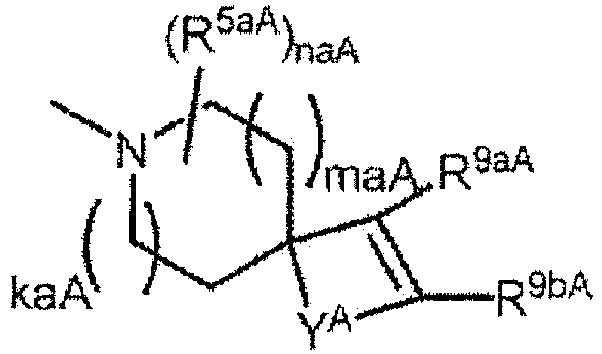
- (15) The prophylactic and/or therapeutic agent according to the aforementioned (14), wherein R9aA and R9bA form, together with the respectively adjacent carbon atoms, a benzene ring optionally having substituent(s), YA is -CHR10aA-CHR10bA- (wherein R10aA and R10bA are each as defined above, respectively),-CR10cA=CR10dA- (wherein R10cA and R10dA are each as defined above, respectively), -O-CR11aAR11bA- (wherein R11aA and R11bA are each as defined above, respectively), or -CR11cAR11dA-O- (wherein R11cA and R11dA are each as defined above, respectively).
- (16) The prophylactic and/or therapeutic agent according to any of the aforementioned (3) - (10), wherein R2A is

- (17) The prophylactic and/or therapeutic agent according to the aforementioned (16), wherein RzA is phenyl optionally having substituent(s).
- (18) The prophylactic and/or therapeutic agent according to the aforementioned (1), wherein R1 is -NHR1b, said R1b is phenyl optionally having substituent(s) selected from the group consisting of halogen and lower alkyl,
R2 is

R3 is -S(O)2R13a or -C (=O) NH-S(O)2-R24, said R13a is -NHR13c or-NHC(=O)R13e, said R13c is lower alkoxy, said R13e is lower alkyl or N-mono-lower alkylamino, and said R24 is lower alkyl. - (19) The prophylactic and/or therapeutic agent according to the aforementioned (18), wherein R1b is phenyl optionally having substituent(s) selected from the group consisting of a fluorine atom, a chlorine atom and methyl.
- (20) The prophylactic and/or therapeutic agent according to the aforementioned (18), wherein R1b is phenyl having two substituents selected from the group consisting of a fluorine atom, a chlorine atom and methyl.
- (21) The prophylactic and/or therapeutic agent according to any of the aforementioned (18) - (21), wherein R2 is

- (22) The prophylactic and/or therapeutic agent according to the aforementioned (21), wherein R6 is phenyl optionally having a fluorine atom.
- (23) The prophylactic and/or therapeutic agent according to any of the aforementioned (18) - (22), wherein R3 is -S(O)2R13a, said R13a is -NHR13c or -NHC(=O)R13e, said R13c is lower alkoxy, and said R13e is lower alkyl or N-mono-lower alkylamino.
- (24) The prophylactic and/or therapeutic agent according to the aforementioned (23), wherein R13c is C1-4 alkoxy, and R13e is C1-4 alkyl or N-mono-C1-4 alkylamino.
- (25) The prophylactic and/or therapeutic agent according to any of the aforementioned (18) - (22), wherein R3 is -C(=O)NH-S(O)2-R24, and said R24 is lower alkyl.
- (26) The prophylactic and/or therapeutic agent according to the aforementioned (25), wherein R24 is C1-4 alkyl.
- (27) The prophylactic and/or therapeutic agent according to the aforementioned (18), wherein the pyrazolopyrimidine compound is a compound selected from the group consisting of
7-(2-chloro-5-methylphenylamino)-N-(ethylcarbamoyl)-6-[4-(4-fluorophenyl)piperidine-1-carbonyl]pyrazolo[1,5-a]pyrimidine-3-sulfonamide,
N-{7-(2,5-dichlorophenylamino)-6-[4-(4-fluorophenyl)piperidine-1-carbonyl]pyrazolo[1,5-a]pyrimidin-3-ylsulfonyl}propionamide,
7-(2,5-dichlorophenylamino)-6-[4-(4-fluorophenyl)piperidine-1-carbonyl]-N-methoxypyrazolo[1,5-a]pyrimidine-5-sulfonamide,
N-{7-(5-chloro-2-fluorophenylamino)-6-[4-(4-fluorophenyl)piperidine-1-carbonyl]pyrazolo[1,5-a]pyrimidin-3-ylsulfonyl}acetamide,
7-(5-chloro-2-fluorophenylamino)-N-(ethylcarbamoyl)-6-[4-(4-fluorophenyl)piperidine-1-carbonyl]pyrazolo[1,5-a]pyrimidine-3-sulfonamide,
N-{7-(2,5-difluorophenylamino)-6-[4-(4-fluorophenyl)piperidine-1-carbonyl]pyrazolo[1,5-a]pyrimidin-3-ylsulfonyl}acetamide,
7-(2-chloro-5-methylphenylamino)-N-(ethylcarbamoyl)-6-(3H-spiro[isobenzofuran-1,4'-piperidin]-1'-yl carbonyl)pyrazolo[1,5-a]pyrimidine-3-sulfonamide,
N-[7-(4-fluoro-2-methylphenylamino)-6-(4-phenylpiperidine-1-carbonyl)pyrazolo[1,5-alpyrimidine-3-carbonyl]ethanesulfonamide,
N-{7-(2-fluoro-5-methylphenylamino)-6-[4-(4-fluorophenyl)piperidine-1-carbonyl]pyrazolo[1,5-a]pyrimidine-3-carbonyl}ethanesulfonamide, and
N-{7-(4-fluoro-2-methylphenylamino)-6-[4-(4-fluorophenyl)piperidine-1-carbonyl]pyrazolo[1,5-a]pyrimidine-3-carbonyl}ethanesulfonamide. - (28) The prophylactic and/or therapeutic agent according to any of the aforementioned (1) - (27), wherein the ocular inflammatory disease is a disease selected from conjunctivitis, eyelid dermatitis, keratoconjunctivitis and scleritis.
- (29) The prophylactic and/or therapeutic agent of any according to the aforementioned (1) - (27), wherein the ocular inflammatory disease is conjunctivitis.
- (30) The prophylactic and/or therapeutic agent according to the aforementioned (29), wherein the conjunctivitis is an allergic conjunctival disease.
- (31) The prophylactic and/or therapeutic agent according to the aforementioned (30), wherein the allergic conjunctival disease is a disease selected from allergic conjunctivitis, atopic keratoconjunctivitis, spring catarrh and giant papillary conjunctivitis.
- (32) The prophylactic and/or therapeutic agent according to the aforementioned (31), wherein the allergic conjunctivitis is a disease selected from seasonal allergic conjunctivitis and perennial allergic conjunctivitis.
- (33) The prophylactic and/or therapeutic agent according to any of the aforementioned (1) - (27), which is used for itching, redness, edema and ulcer occurring as symptoms of ocular inflammatory diseases.
- (34) A method for the prophylaxis and/or treatment of an ocular inflammatory disease, comprising a step of administering an effective amount of the pyrazolopyrimidine compound according to any of the aforementioned (1) - (27) or a pharmaceutically acceptable salt thereof.
- (35) The method according to the aforementioned (34), wherein the ocular inflammatory diseases is a disease selected from conjunctivitis, eyelid dermatitis, keratoconjunctivitis and scleritis.
- (36) The method according to the aforementioned (35), wherein the ocular inflammatory disease is conjunctivitis.
- (37) The method according to the aforementioned (36), wherein the conjunctivitis is an allergic conjunctival disease.
- (38) The method according to the aforementioned (37), wherein the allergic conjunctival disease is a disease selected from allergic conjunctivitis, atopic keratoconjunctivitis, spring catarrh and giant papillary conjunctivitis.
- (39) The method according to the aforementioned (38), wherein the allergic conjunctivitis is a disease selected from seasonal allergic conjunctivitis and perennial allergic conjunctivitis.
- (40) A method for the prophylaxis and/or treatment of itching, redness, edema and ulcer occurring as symptoms of ocular inflammatory diseases, comprising a step of administering an effective amount of the pyrazolopyrimidine compound according to any of the aforementioned (1) - (27) or a pharmaceutically acceptable salt thereof.
- (41) The pyrazolopyrimidine compound according to any of the aforementioned (1) - (27) or a pharmaceutically acceptable salt thereof for use in the prophylaxis and/or treatment of ocular inflammatory diseases.
- (42) The pyrazolopyrimidine compound according to the aforementioned (41) or a pharmaceutically acceptable salt thereof, wherein the ocular inflammatory diseases is a disease selected from conjunctivitis, eyelid dermatitis, keratoconjunctivitis and scleritis.
- (43) The pyrazolopyrimidine compound according to the aforementioned (41) or a pharmaceutically acceptable salt thereof, wherein the ocular inflammatory diseases is conjunctivitis.
- (44) The pyrazolopyrimidine compound according to the aforementioned (43) or a pharmaceutically acceptable salt thereof, wherein the conjunctivitis is an allergic conjunctival disease.
- (45) The pyrazolopyrimidine compound according to the aforementioned (44) or a pharmaceutically acceptable salt thereof, wherein the allergic conjunctival disease is a disease selected from allergic conjunctivitis, atopic keratoconjunctivitis, spring catarrh and giant papillary conjunctivitis.
- (46) The pyrazolopyrimidine compound according to the aforementioned (45) or a pharmaceutically acceptable salt thereof, wherein the allergic conjunctivitis is a disease selected from seasonal allergic conjunctivitis and perennial allergic conjunctivitis.
- (47) The pyrazolopyrimidine compound according to any of the aforementioned (1) - (27) or a pharmaceutically acceptable salt thereof for use in the prophylaxis and/or treatment of itching, redness, edema and ulcer occurring as symptoms of ocular inflammatory diseases.
- (48) Use of the pyrazolopyrimidine compound according to any of the aforementioned (1) - (27) or a pharmaceutically acceptable salt thereof for the manufacture of a prophylactic and/or therapeutic agent for ocular inflammatory diseases.
- (49) The use according to the aforementioned (48), wherein the ocular inflammatory disease is a disease selected from conjunctivitis, eyelid dermatitis, keratoconjunctivitis and scleritis.
- (50) The use according to the aforementioned (48), wherein the ocular inflammatory disease is conjunctivitis.
- (51) The use according to the aforementioned (50), wherein the conjunctivitis is an allergic conjunctival disease.
- (52) The use according to the aforementioned (51), wherein the allergic conjunctival disease is a disease selected from allergic conjunctivitis, atopic keratoconjunctivitis, spring catarrh and giant papillary conjunctivitis.
- (53) The use according to the aforementioned (52), wherein the allergic conjunctivitis is a disease selected from seasonal allergic conjunctivitis and perennial allergic conjunctivitis.
- (54) Use of the pyrazolopyrimidine compound according to any of the aforementioned (1) - (27) or a pharmaceutically acceptable salt thereof for the manufacture of a prophylactic and/or therapeutic agent for itching, redness, edema and ulcer occurring as symptoms of ocular inflammatory diseases.
- According to the present invention, a prophylactic and/or therapeutic agent for ocular inflammatory diseases and the like comprising a pyrazolopyrimidine compound represented by the formula (I) or (IA) or a pharmaceutically acceptable salt thereof as an active ingredient are provided.
- The prophylactic and/or therapeutic agent for ocular inflammatory diseases to be provided by the present invention is useful for the treatment and/or prophylaxis of ocular inflammatory diseases (for example, eyelid dermatitis, keratoconjunctivitis, scleritis, conjunctivitis {for example, allergic conjunctival diseases [for example, atopic keratoconjunctivitis, spring catarrh, giant papillary conjunctivitis, allergic conjunctivitis (for example, seasonal allergic conjunctivitis such as pollinosis and the like, perennial allergic conjunctivitis and the like) and the like] and the like} and the like).
- In the present specification, compounds represented by the formula (I) and the formula (IA) are referred to as compound (I) and compound (IA), respectively. This also applies to compounds having other formula numbers.
- In the definition of each group in the formulas (I) and (IA),
examples of the lower alkyl, and the lower alkyl moiety of the lower alkoxy, the lower alkoxycarbonyl, the lower alkanoyl, the N,N-di-lower alkylaminomethyleneamino, the N-mono-lower alkylamino and the N,N-di-lower alkylamino include linear or branched alkyl having 1 - 10 carbon atoms, and more specific examples thereof include methyl, ethyl, propyl, isopropyl, butyl, isobutyl, sec-butyl, tert-butyl, pentyl, isopentyl, neopentyl, hexyl, heptyl, octyl, nonyl, decyl and the like. The two lower alkyl moieties of the N,N-di-lower alkylamino and the N,N-di-lower alkylaminomethyleneamino may be the same or different. - Alkylene has the same meaning as the group formed by removing one hydrogen atom from the aforementioned lower alkyl.
- Examples of the cycloalkyl, and the cycloalkyl moiety of the N-cycloalkylamino include cycloalkyl having 3 - 8 carbon atoms, and more specific examples thereof include cyclopropyl, cyclobutyl, cyclopentyl, cyclohexyl, cycloheptyl, cyclooctyl and the like.
- Examples of the aryl, and the aryl moiety of the N-mono-arylamino and the N,N-di-arylamino include aryl having 6 - 14 carbon atoms, and more specific examples thereof include phenyl, naphthyl, azulenyl, anthryl, pentalenyl, indenyl, biphenylenyl and the like. The two aryl moieties of the N,N-di-arylamino may be the same or different.
- The alkylene moiety of aralkyl has the same meaning as the group formed by removing one hydrogen atom from the aforementioned lower alkyl, and the aryl moiety is as defined for the aforementioned aryl.
- Examples of the aliphatic heterocyclic group include a 3-to 7-membered monocyclic aliphatic heterocyclic group containing at least one atom selected from a nitrogen atom, an oxygen atom and a sulfur atom, a bicyclic or tricyclic fused aliphatic heterocyclic group containing at least one atom selected from a nitrogen atom, an oxygen atom and a sulfur atom, wherein 3- to 8-membered rings are fused, and the like, and more specific examples thereof include aziridinyl, azetidinyl, pyrrolidinyl, piperidino, piperidinyl, azepanyl, 1,2,5,6-tetrahydropyridyl, imidazolidinyl, pyrazolidinyl, piperazinyl, homopiperazinyl, pyrazolinyl, oxiranyl, tetrahydrofuranyl, tetrahydro-2H-pyranyl, 5,6-dihydro-2H-pyranyl, oxazolidinyl, morpholino, morpholinyl, thioxazolidinyl, thiomorpholinyl, 2H-oxazolyl, 2H-thioxazolyl, dihydroindolyl, dihydroisoindolyl, dihydrobenzofuranyl, benzimidazolidinyl, dihydrobenzooxazolyl, dihydrobenzothioxazolyl, benzodioxolinyl, tetrahydroquinolyl, tetrahydroisoquinolyl, dihydro-2H-chromanyl, dihydro-1H-chromanyl, dihydro-2H-thiochromanyl, dihydro-1H-thiochromanyl, tetrahydroquinoxalinyl, tetrahydroquinazolinyl, dihydrobenzodioxanyl, oxetanyl and the like.
- Examples of the aromatic heterocyclic group include a 5-membered or 6-membered monocyclic aromatic heterocyclic group containing at least one atom selected from a nitrogen atom, an oxygen atom and a sulfur atom, a bicyclic or tricyclic fused aromatic heterocyclic group containing at least one atom selected from a nitrogen atom, an oxygen atom and a sulfur atom, wherein 3- to 8-membered rings are fused, and the like, and more specific examples thereof include furyl, thienyl, pyrrolyl, imidazolyl, pyrazolyl, oxazolyl, isoxazolyl, oxadiazolyl, thiazolyl, isothiazolyl, thiadiazolyl, triazolyl, tetrazolyl, pyridyl, pyridazinyl, pyrimidinyl, pyrazinyl, triazinyl, benzofuranyl, benzothiophenyl, benzoxazolyl, benzothiazolyl, isoindolyl, indolyl, indazolyl, benzimidazolyl, benzotriazolyl, oxazolopyrimidinyl, thiazolopyrimidinyl, pyrrolopyridinyl, pyrrolopyrimidinyl, imidazopyridinyl, purinyl, quinolinyl, isoquinolinyl, cinnolinyl, phthalazinyl, quinazolinyl, quinoxalinyl, naphthyridinyl, azepinyl, diazepinyl, pyranyl, oxepinyl, thiopyranyl, thiepinyl, furazanyl, oxadiazolyl, oxazinyl, oxadiazinyl, oxazepinyl, oxadiazepinyl, thiazinyl, thiadiazinyl, thiazepinyl, thiadiazepinyl, indolizinyl, isobenzofuranyl, isobenzothiophenyl, dithianaphthalenyl, quinolizinyl, pteridinyl, benzoxazolidinyl, chromenyl, benzooxepinyl, benzooxadiazepinyl, benzothiepinyl, benzothiazepinyl, benzothiadiazepinyl, benzothiepinyl, benzothiazepinyl, benzoazepinyl, benzodiazepinyl, benzofurazanyl, benzothiadiazolinyl, carbazolyl, β-carbolinyl, acrydinyl, phenazinyl, dibenzofuranyl, xanthenyl, dibenzothiophenyl, phenothiazinyl, phenoxazinyl, phenoxathinyl, thianthrenyl, phenanthridinyl, phenanthrolinyl, perimidinyl and the like.
- Examples of the nitrogen-containing heterocyclic group formed together with the adjacent nitrogen atom thereto include a 5-membered or 6-membered monocyclic heterocyclic group containing at least one nitrogen atom (said monocyclic heterocyclic group may contain other nitrogen atom, oxygen atom or sulfur atom), a bicyclic or tricyclic fused heterocyclic group containing at least one nitrogen atom (said fused heterocyclic group may contain other nitrogen atom, oxygen atom or sulfur atom), wherein 3- to 8-membered rings are fused, and the like, and more specific examples thereof include aziridinyl, azetidinyl, pyrrolidinyl, piperidino, azepanyl, pyrrolyl, imidazolidinyl, imidazolyl, pyrazolidinyl, pyrazolinyl, pyrazolyl, piperazinyl, homopiperazinyl, oxazolidinyl, 2H-oxazolyl, thioxazolidinyl, 2H-thioxazolyl, morpholino, thiomorpholinyl, dihydroindolyl, dihydroisoindolyl, indolyl, isoindolyl, tetrahydroquinolyl, tetrahydroisoquinolyl, dihydrobenzooxazolyl, dihydrobenzothioxazolyl, benzimidazolidinyl, benzimidazolyl, dihydroindazolyl, indazolyl, benzotriazolyl, pyrrolopyridinyl, pyrrolopyrimidinyl, imidazopyridinyl, purinyl and the like.
- Examples of the aliphatic ring include aliphatic rings respectively corresponding to the aforementioned cycloalkyl and aliphatic heterocyclic group.
- Examples of the aliphatic ring having at least one double bond include those having one or more double bonds from among the aforementioned aliphatic rings. Examples thereof include 1,2,5,6-tetrahydropyridine, tetrahydro-2H-pyran, 2H-oxazoline, 2H-thioxazoline, dihydroindoline, dihydroisoindoline, dihydrobenzofuran, dihydrobenzooxazoline, dihydrobenzothioxazoline, dihydro-2H-chromane, dihydro-1H-chromane, dihydro-2H-thiochromane, dihydro-1H-thiochromane, dihydrobenzodioxane and the like.
- Examples of the aromatic ring include those respectively corresponding to the aforementioned aryl and aromatic heterocyclic group.
- Halogen means each atom of fluorine, chlorine, bromine or iodine.
- The substituents (substituent group-1) in the lower alkyl optionally having substituent(s), the lower alkoxy optionally having substituent(s), the N-mono-lower alkylamino optionally having substituent(s), the N,N-di-lower alkylamino optionally having substituent(s), the lower alkoxycarbonyl optionally having substituent(s) and the lower alkanoyl optionally having substituent(s) are the same or different and examples thereof include 1 to 3 substituents selected from the group consisting of halogen; sulfanyl; nitro; cyano; C3-8 cycloalkyl optionally having 1 to 3 substituents selected from the following substituent group C; an aliphatic heterocyclic group optionally having 1 to 3 substituents selected from the following substituent group C; an aromatic heterocyclic group optionally having 1 to 3 substituents selected from the following substituent group B; C1-10 alkylsulfanyl optionally having 1 to 3 substituents selected from the following substituent group A; C6-14 arylsulfanyl optionally having 1 to 3 substituents selected from the following substituent group B; C1-10 alkylsulfonyl optionally having 1 to 3 substituents selected from the following substituent group A; C6-14 arylsulfonyl optionally having 1 to 3 substituents selected from the following substituent group B; OR16a (wherein R16a is a hydrogen atom, C1-10 alkyl optionally having 1 to 3 substituents selected from the following substituent group A, C3-8 cycloalkyl optionally having 1 to 3 substituents selected from the following substituent group C, C6-14 aryl optionally having 1 to 3 substituents selected from the following substituent group B, C7-16 aralkyl optionally having 1 to 3 substituents selected from the following substituent group B, an aromatic heterocyclic group optionally having 1 to 3 substituents selected from the following substituent group B, C2-11 alkanoyl optionally having 1 to 3 substituents selected from the following substituent group A, C7-15 aroyl optionally having 1 to 3 substituents selected from the following substituent group B, C1-10 alkylsulfonyl optionally having 1 to 3 substituents selected from the following substituent group A or C6-14 arylsulfonyl optionally having 1 to 3 substituents selected from the following substituent group B); C(=O)R17a (wherein R17a is amino, hydroxy, C1-10 alkyl optionally having 1 to 3 substituents selected from the following substituent group A, C3-8 cycloalkyl optionally having 1 to 3 substituents selected from the following substituent group C, C6-14 aryl optionally having 1 to 3 substituents selected from the following substituent group B, an aliphatic heterocyclic group optionally having 1 to 3 substituents selected from the following substituent group C, an aromatic heterocyclic group optionally having 1 to 3 substituents selected from the following substituent group B, C1-10 alkoxy optionally having 1 to 3 substituents selected from the following substituent group A, C6-14 aryloxy optionally having 1 to 3 substituents selected from the following substituent group B, C1-10 alkylamino optionally having 1 to 3 substituents selected from the following substituent group A, di-C1-10 alkylamino optionally having 1 to 3 substituents selected from the following substituent group A or C6-14 arylamino optionally having 1 to 3 substituents selected from the following substituent group B); and -NR18aR18b (wherein R18a and R18b are the same or different and each is a hydrogen atom, formyl, C1-10 alkyl optionally having 1 to 3 substituents selected from the following substituent group A, C3-8 cycloalkyl optionally having 1 to 3 substituents selected from the following substituent group C, C6-14 aryl optionally having 1 to 3 substituents selected from the following substituent group B, an aliphatic heterocyclic group optionally having 1 to 3 substituents selected from the following substituent group C, an aromatic heterocyclic group optionally having 1 to 3 substituents selected from the following substituent group B, C2-11 alkanoyl optionally having 1 to 3 substituents selected from the following substituent group A, C7-15 aroyl optionally having 1 to 3 substituents selected from the following substituent group B, C1-10 alkoxycarbonyl optionally having 1 to 3 substituents selected from the following substituent group A, C1-10 alkylsulfonyl optionally having 1 to 3 substituents selected from the following substituent group A or C6-14 arylsulfonyl optionally having 1 to 3 substituents selected from the following substituent group B). The substituent in the lower alkoxy optionally having substituent(s), the lower alkoxycarbonyl optionally having substituent(s) and the lower alkanoyl optionally having substituent(s) may be C6-14 aryl optionally having 1 to 3 substituents selected from the following substituent group B in addition to the aforementioned substituent group-1.
- The substituents in the aryl optionally having substituent(s), the N-mono-arylamino optionally having substituent(s), the N,N-di-arylamino optionally having substituent(s), the phenyl optionally having substituent(s), the aralkyl optionally having substituent(s), the aromatic heterocyclic group optionally having substituent(s), the aromatic ring optionally having substituent(s) and the benzene ring optionally having substituent(s) are the same or different and examples thereof include 1 to 3 substituents selected from the group consisting of C1-10 alkyl optionally having 1 to 3 substituents selected from the following substituent group A, C6-14 aryl optionally having 1 to 3 substituents selected from the following substituent group B and the substituents recited as the aforementioned substituent group-1. The substituent in the aryl optionally having substituent(s) also includes, in addition to the above, a ring wherein the aryl moiety is fused with a C4-8 cycloalkyl ring optionally having 1 to 3 substituents selected from the following substituent group C or an aliphatic heterocycle optionally having 1 to 3 substituents selected from the following substituent group C. The substituent in the phenyl optionally having substituent(s) also includes, in addition to the above, a ring wherein the phenyl moiety is fused with a C4-8 cycloalkyl ring optionally having 1 to 3 substituents selected from the following substituent group C or an aliphatic heterocycle optionally having 1 to 3 substituents selected from the following substituent group C. The substituent in the aryl moiety of aralkyl optionally having substituent(s) also includes, in addition to the above, a ring wherein the aryl moiety of aralkyl is fused with a C4-8 cycloalkyl ring optionally having 1 to 3 substituents selected from the following substituent group C or an aliphatic heterocycle optionally having 1 to 3 substituents selected from the following substituent group C.
- The substituents in the cycloalkyl optionally having substituent(s), the N-cycloalkylamino optionally having substituent(s), the aliphatic heterocyclic group optionally having substituent(s), the aliphatic ring having at least one double bond and optionally having substituent(s), the nitrogen-containing heterocyclic group optionally having substituent(s), which is formed together with the adjacent nitrogen atom, and the aliphatic ring optionally having substituent(s) are the same or different and examples thereof include 1 to 3 substituents selected from the group consisting of oxo, C1-10 alkyl optionally having 1 to 3 substituents selected from the following substituent group A, C6-14 aryl optionally having 1 to 3 substituents selected from the following substituent group B and the substituents recited as the aforementioned substituent group-1. The substituent in the cycloalkyl optionally having substituent(s) also includes, in addition to the above, a ring wherein the cycloalkyl moiety is fused with a benzene ring optionally having 1 to 3 substituents selected from the following substituent group B.
- Substituent group A means a group consisting of halogen; hydroxy; sulfanyl; nitro; cyano; carboxy; carbamoyl; C3-8 cycloalkyl; C6-14 aryl optionally having 1 to 3 substituents selected from the group consisting of halogen, hydroxy, amino, nitro, carboxy, C1-10 alkoxycarbonyl, C1-10 alkoxy and trifluoromethyl (substituent group a); aliphatic heterocyclic group; aromatic heterocyclic group; C1-10 alkoxy optionally having 1 to 3 substituents selected from the group consisting of halogen, hydroxy, amino, carboxy, C1-10 alkoxy, C1-10 alkylamino, di-C1-10 alkylamino and C1-10 alkoxycarbonyl (substituent group b); C3-8 cycloalkoxy; C6-14 aryloxy optionally having 1 to 3 substituents selected from the aforementioned substituent group a; C7-16 aralkyloxy optionally having 1 to 3 substituents selected from the aforementioned substituent group a; C2-11 alkanoyloxy; C7-15 aroyloxy; C1-10 alkylsulfonyloxy; trifluoromethanesulfonyloxy; C6-14 arylsulfonyloxy; p-toluenesulfonyloxy; C1-10 alkylsulfanyl; C6-14 arylsulfanyl;-NR19aR19b (wherein R19a and R19b are the same or different and each is a hydrogen atom, formyl, C1-10 alkyl optionally having 1 to 3 substituents selected from the aforementioned substituent group b, C3-8 cycloalkyl, C6-14 aryl optionally having 1 to 3 substituents selected from the aforementioned substituent group a, aromatic heterocyclic group, C7-16 aralkyl optionally having 1 to 3 substituents selected from the aforementioned substituent group a, C2-11 alkanoyl, C7-15 aroyl, C1-10 alkoxycarbonyl, C7-16 aralkyloxycarbonyl, C1-10 alkylsulfonyl, trifluoromethanesulfonyl, C6-14 arylsulfonyl or p-toluenesulfonyl) ; C2-11 alkanoyl; C3-8 cycloalkylcarbonyl; C7-15 aroyl; aliphatic heterocyclylcarbonyl; aromatic heterocyclylcarbonyl; C1-10 alkoxycarbonyl; C6-14 aryloxycarbonyl; C7-16 aralkyloxycarbonyl; C1-10 alkylcarbamoyl; di-C1-10 alkylcarbamoyl and C6-14 arylcarbamoyl.
- Substituent group B means a group consisting of C1-10 alkyl, trifluoromethyl and the substituents recited as the aforementioned substituent group A.
- Substituent group C means a group consisting of oxo, C1-10 alkyl, trifluoromethyl and the substituents recited as the aforementioned substituent group A.
- The C1-10 alkyl, and the C1-10 alkyl moiety of the C1-10 alkoxy, the C2-11 alkanoyloxy, the C1-10 alkylsulfonyl, the C2-11 alkanoyl, the C1-10 alkoxycarbonyl, the C1-10 alkylcarbamoyl, the di-C1-10 alkylcarbamoyl, the C1-10 alkylsulfonyl, the C1-10 alkylsulfonyloxy, the C1-10 alkylamino and the di-C1-10 alkylamino shown here is exemplified by, for example, the groups recited as the aforementioned lower alkyl. Two C1-10 alkyl moieties of di-C1-10 alkylcarbamoyl and di-C1-10 alkylamino may be the same or different.
- The C3-8 cycloalkyl, and the C3-8 cycloalkyl moiety of the C3-8 cycloalkoxy and the C3-8 cycloalkylcarbonyl is exemplified by, for example, the groups recited as the aforementioned cycloalkyl.
- Examples of the aryl fused with a C4-8 cycloalkyl ring and the moiety formed by removing the alkylene moiety from the aralkyl of which the aryl moiety is fused with a C4-8 cycloalkyl ring include a cycloalkyl-fused aryl having 8 to 16 carbon atoms, and more specific examples include indanyl, 1,2,3,4-tetrahydronaphthalenyl and the like.
- Examples of the phenyl fused with a C4-8 cycloalkyl ring include a cycloalkyl-fused phenyl having 8 to 12 carbon atoms, and more specific examples include indanyl, 1,2,3,4-tetrahydronaphthalenyl and the like.
- Examples of the cycloalkyl fused with a benzene ring include a benzene ring-fused cycloalkyl having 8 to 12 carbon atoms, and more specific examples include indanyl, 1,2,3,4-tetrahydronaphthalenyl and the like.
- Examples of the C6-14 aryl and the aryl moiety of the C6-14 aryloxy, the C6-14 arylamino, the C6-14 arylsulfanyl, the C7-15 aroyl, the C7-15 aroyloxy, the C6-14 aryloxycarbonyl, the C6-14 arylsulfonyl, the C6-14 arylsulfonyloxy and the C6-14 arylcarbamoyl include the groups exemplified as the aforementioned aryl.
- Examples of the aryl moiety of the C7-16 aralkyloxy, the C7-16 aralkyl and the C7-16 aralkyloxycarbonyl include the groups exemplified as the aforementioned aryl, and examples of the alkylene moiety include C1-10 alkylene and the like, more specifically, the group formed by removing one hydrogen atom from the group exemplified as the aforementioned lower alkyl, and the like.
- Examples of the aliphatic heterocyclic group and the aliphatic heterocyclic group moiety of the aliphatic heterocyclylcarbonyl include the groups exemplified as the aforementioned aliphatic heterocyclic group.
- Examples of the aromatic heterocyclic group and the aromatic heterocyclic group moiety of the aromatic heterocyclylcarbanyl include the groups exemplified as the aforementioned aromatic heterocyclic group.
- Examples of the aryl fused with an aliphatic heterocycle and the moiety formed by removing the alkylene moiety from the aralkyl of which the aryl moiety is fused with an aliphatic heterocycle include aryl fused with a 4- to 7-membered monocyclic aliphatic heterocyclic group containing at least one atom selected from a nitrogen atom, an oxygen atom and a sulfur atom, and more specific examples include dihydrobenzofuranyl, dihydroisobenzofuranyl, indolinyl, isoindolinyl, chromanyl, isochromanyl and the like.
- Examples of the phenyl fused with an aliphatic heterocycle include phenyl fused with a 4- to 7-membered monocyclic aliphatic heterocyclic group containing at least one atom selected from a nitrogen atom, an oxygen atom and a sulfur atom, and more specific examples include dihydrobenzofuranyl, dihydroisobenzofuranyl, indolinyl, isoindolinyl, chromanyl, isochromanyl and the like.
- Examples of halogen include the atoms exemplified as the aforementioned halogen.
- In each group of compound (I),
R1 is preferably NR1aR1b (wherein R1a and R1b are each as defined above), more preferably one of R1a and R1b is a hydrogen atom, and the other is lower alkyl optionally having substituent(s), cycloalkyl optionally having substituent(s), aralkyl optionally having substituent(s), aryl optionally having substituent(s), an aromatic heterocyclic group optionally having substituent(s) or an aliphatic heterocyclic group optionally having substituent(s), and more preferably, one of R1a and R1b is a hydrogen atom and the other is aralkyl optionally having substituent(s) or aryl optionally having substituent(s) (wherein the substituent(s) in the aralkyl optionally having substituent(s) or the aryl optionally having substituent(s) is preferably lower alkyl or halogen and the number thereof is preferably 2 or 3). More preferred is when one of R1a and R1b is a hydrogen atom and the other is an aromatic heterocyclic group optionally having substituent(s). - When R2 is

- R5 is preferably lower alkyl optionally having substituent(s), more preferably lower alkyl.
- R6 is preferably aryl optionally having substituent(s) or an aromatic heterocyclic group optionally having substituent(s), more preferably aryl optionally having substituent(s), further preferably phenyl optionally having substituent(s).
- R7 is preferably a hydrogen atom or lower alkyl.
- X is preferably a nitrogen atom or CR8a (wherein R8a represents a hydrogen atom, halogen or lower alkyl), more preferably CR8a (wherein R8a is as defined above).
- L is preferably a single bond.
- k and m are each preferably 1.
n is preferably 0 or 1, more preferably 0. - When R2 is

- R5a is preferably lower alkyl optionally having substituent(s), more preferably lower alkyl.
- R9a and R9b preferably form, together with the respectively adjacent carbon atoms, an aromatic ring optionally having substituent(s), more preferably form, together with the respectively adjacent carbon atoms, a benzene ring optionally having substituent(s).
- Y is preferably -CHR10a-CHR10b- (wherein R10a and R10b are each as defined above), -CR10e=CR10d- (wherein R10c and R10d are each as defined above), -O-CR1aR11b- (wherein R11a and R11b are each as defined above), or -CR11cR11d-O- (wherein R11c and R11d are each as defined above), more preferably -CHR10aa-CHR10ba-(wherein R10aa and R10ba are the same or different and each represents a hydrogen atom or lower alkyl), -CR10ca=CR10da-(wherein R10ca and R10da are the same or different and each represents a hydrogen atom or lower alkyl), -O-CR11aR11ba-(wherein R11aa and R11ba are the same or different and each represents a hydrogen atom or lower alkyl), -CR11caR11da-O-(wherein R11ca and R11da are the same or different and each represents a hydrogen atom or lower alkyl).
- ka and ma are each preferably 1.
na is preferably 0 or 1, more preferably 0. - When R2 is

- RZ is aryl optionally having substituent(s) or an aromatic heterocyclic group optionally having substituent(s), more preferably aryl optionally having substituent(s), further preferably phenyl optionally having substituent(s).
- R5b and R7b are the same or different and each is preferably halogen, hydroxy or lower alkyl optionally having substituent(s), more preferably halogen or lower alkyl optionally having substituent(s), further preferably lower alkyl optionally having substituent(s).
- nb is preferably 0, and nc is preferably 0.
- R3 is preferably the following (A) or (B).
- (A) S(O)2NR13bR13c (wherein R13b and R13c are each as defined above), more preferably, R13d is a hydrogen atom, and R13c is lower alkyl optionally having substituent(s), lower alkoxy optionally having substituent(s) or cycloalkyl optionally having substituent(s)
- (B) S(O)2NR13dC(=O)R13e (wherein R13d and R13e are each as defined above), more preferably R13d is a hydrogen atom, and R13e is lower alkyl optionally having substituent(s), cycloalkyl optionally having substituent(s), lower alkoxy optionally having substituent(s), N-mono-lower alkylamino optionally having substituent(s), N,N-di-lower alkylamino optionally having substituent(s), N-cycloalkylamino optionally having substituent(s), N-mono-arylamino optionally having substituent(s) or N,N-di-arylamino optionally having substituent(s).
- R4 is preferably a hydrogen atom.
- As compound (I), a compound, wherein one or more of the aforementioned preferable substituent embodiments are combined, is preferable.
- In each group of compound (IA),
- R1A is preferably aryl optionally having substituent(s) or an aromatic heterocyclic group optionally having substituent(s), more preferably aryl optionally having substituent(s), further preferably phenyl optionally having substituent(s) (wherein the substituent(s) in the aryl optionally having substituent(s) or the phenyl optionally having substituent(s) is preferably lower alkyl or halogen and the number thereof is preferably 2 or 3). An aromatic heterocyclic group optionally having substituent(s) is also a more preferable embodiment.
- L1 is preferably a single bond.
- When R2A is

- R5A is preferably lower alkyl.
- R6A is preferably aryl optionally having substituent(s) or an aromatic heterocyclic group optionally having substituent(s), more preferably aryl optionally having substituent(s), further preferably phenyl optionally having substituent(s).
- LA is preferably a bond.
- R7A is preferably a hydrogen atom or lower alkyl.
- XA is preferably a nitrogen atom or -CR8Aa (wherein R8Aa represents a hydrogen atom, halogen or lower alkyl), more preferably -CR8Aa (wherein R8Aa is as defined above).
- mA and kA are each preferably 1.
- nA is preferably 0 or 1, more preferably 0
- When R2A is
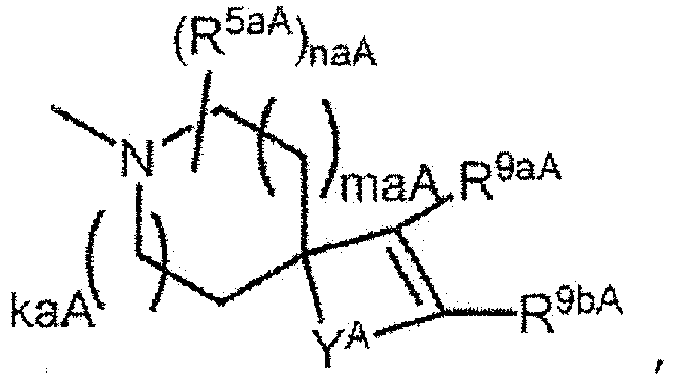
- R5aA is preferably lower alkyl.
- kaA and maA are each preferably 1.
- R9aA and R9bA preferably form, together with the respectively adjacent carbon atoms, a benzene ring optionally having substituent(s).
- YA is preferably -CHR10aA-CHR10bA- (wherein R10aA and R10bA are each as defined above), -CR10cA=CR10dA- (wherein R10cA and R10dA are each as defined above), -O-CR11aAR11bA- (wherein R11aA and R11bA are each as defined above), or -CR11cAR11dA-O- (wherein R11cA and R11dA are each as defined above), more preferably -CHR10aAa-CHR10bAa- (wherein R10aAa and R10bAa are the same or different and each represents a hydrogen atom or lower alkyl), -CR10cAa=CR10dA-(wherein R10cAa and R10dAa are the same or different and each represents a hydrogen atom or lower alkyl), -O-CR11aAaR11bAa-(wherein R11aAa and R11bAa are the same or different and each represents a hydrogen atom or lower alkyl), or -CR11cAaR11dAa-O-(wherein R11cAa and R11dAa are the same or different and each represents a hydrogen atom or lower alkyl).
- naA is preferably 0 or 1, more preferably 0.
- When R2A is

- RzA is preferably aryl optionally having substituent(s) or an aromatic heterocyclic group optionally having substituent(s), more preferably aryl optionally having substituent(s), further preferably phenyl optionally having substituent(s).
- R5bA and R7bA are the same or different and each is preferably halogen, hydroxy, lower alkyl optionally having substituent(s), more preferably halogen or lower alkyl optionally having substituent(s), further preferably lower alkyl optionally having substituent(s).
- nbA is preferably 0, and ncA is preferably 0.
- R13A is preferably a hydrogen atom or lower alkyl optionally having substituent(s), more preferably a hydrogen atom.
- R13B is preferably lower alkyl optionally having substituent(s), lower alkoxy optionally having substituent(s) or COR13e1 (wherein R13e1 is as defined above), more preferably lower alkyl, halogen-substituted lower alkyl (wherein the halogen moiety of the halogen-substituted lower alkyl means the same as the aforementioned halogen, lower alkyl moiety means the same as the aforementioned alkylene), or COR13e2 (wherein R13e2 represents lower alkyl optionally having substituent(s), cycloalkyl optionally having substituent(s), N-mono-lower alkylamino optionally having substituent(s) or N-mono-arylamino optionally having substituent(s), from the definition of R13e1).
- R4A is preferably a hydrogen atom.
- As compound (IA), a compound, wherein one or more of the aforementioned preferable substituent embodiments are combined, is preferable. Furthermore, compound (IA) described in (3) - (16) recited in the "Means of Solving the Problems", which is limited by preferable substituent embodiments mentioned above, is preferable. Compound (IA) described in (3) - (16) recited in the "Means of Solving the Problems", which is limited by a combination of one or more preferable substituent embodiments mentioned above, is also more preferable.
- Particularly, for the ocular inflammatory diseases in the present invention, a pyrazolopyrimidine compound represented by the following formula (IB) is preferable

(wherein R1AA and R1BB are the same or different and each represents a hydrogen atom, halogen or C1-10 alkyl, preferably fluorine atom, chlorine atom or methyl,
R6AA represents a hydrogen atom or halogen, preferably a hydrogen atom or a fluorine atom, and
R13BB represents C1-10 alkyl, C1-10 alkoxy-substituted C1-10 alkyl, halogen-substituted C1-10 alkyl, C3-8 cycloalkyl, C2-11 alkanoyl, C1-10 alkoxycarbonyl, C3-8 cycloalkylcarbonyl, C1-10 alkylcarbamoyl or C3-8 cycloalkylcarbamoyl, preferably C1-10 alkylcarbamoyl or C3-8 cycloalkylcarbamoyl), or a pharmaceutically acceptable salt thereof, especially, a compound wherein R13BB is C2-5 alkanoyl or C1-4 alkylcarbamoyl is preferable. - The pharmaceutically acceptable salt of compounds (I), (IA) and (IB) includes, for example, pharmaceutically acceptable acid addition salts, metal salts, ammonium salts, organic amine addition salts, amino acid addition salts and the like. Examples of the pharmaceutically acceptable acid addition salt of compounds (I), (IA) and (IB) include inorganic acid salts such as hydrochloride, hydrobromide, nitrate, sulfate, phosphate or the like, organic acid salts such as acetate, oxalate, maleate, fumarate, citrate, benzoate, methanesulfonate or the like, or the like. Examples of the pharmaceutically acceptable metal salts include sodium salt, potassium salt, magnesium salt, calcium salt, aluminum salt, zinc salt or the like. Examples of the pharmaceutically acceptable ammonium salt include salts such as ammonium salt, tetramethylammonium salt or the like. Examples of the pharmaceutically acceptable organic amine addition salt include addition salts of morpholine, piperidine or the like. Examples of the pharmaceutically acceptable amino acid addition salt include addition salts of lysine, glycine, phenylalanine, aspartic acid, glutamic acid or the like. The pharmaceutically acceptable salts of compounds (I), (IA) and (IB) are not limited to these examples.
- The ocular inflammatory diseases refer to inflammatory diseases observed in the eye. Specific examples include, but are not limited to, conjunctivitis (for example, including viral conjunctivitis, allergic conjunctival disease, bacterial conjunctivitis and the like), uveitis, keratoconjunctivitis, eyelid dermatitis, cyclitis, scleritis, episcleritis, optic neuritis, retrobulbar optic neuritis, keratitis, blepharitis, corneal ulcer, conjunctival ulcer and the like.
- While the allergic conjunctival disease includes, for example, allergic conjunctivitis, atopic keratoconjunctivitis, spring catarrh, giant papillary conjunctivitis and the like, the allergic conjunctival disease in the present invention is not limited thereto.
- Furthermore, while the allergic conjunctivitis includes, for example, seasonal allergic conjunctivitis such as pollinosis and the like, perennial allergic conjunctivitis and the like, the allergic conjunctivitis in the present invention is not limited thereto.
- Compounds (I), (IA) and (IB) used in the present invention also encompasses a prodrug thereof. The prodrug of compound (I), (IA) and (IB) is a compound that is converted to compound (I), (IA) or (IB) by a reaction with enzyme, gastric acid and the like in the body. Many kinds of prodrugs are known, and can be synthesized by selecting a suitable prodrug based on a known literature (Iyakuhin no Kaihatsu, Hirokawa Shoten, 1990, vol.7, p.163) and using a known method. As a prodrug of compound (I), (IA) and (IB), for example, when compound (I), (IA) and (IB) have an amino group, compounds wherein the amino group is acylated, alkylated or phosphorylated can be mentioned; when compound (I), (IA) and (IB) have a hydroxy group, compounds wherein the hydroxy group is acylated, alkylated, phosphorylated or borated can be mentioned; when compound (I), (IA) and (IB) have a carboxyl group, compounds wherein the carboxyl group is esterified or amidated and the like can be mentioned. Also, the prodrug of compound (I), (IA) and (IB) may be any of hydrate, non-hydrate and solvate, and may form a salt with a pharmaceutically acceptable acid or a base, in the same manner as in the case of compounds (I), (IA) and (IB).
- Some of the compounds (I), (IA) and (IB) used in the present invention can exist as a stereoisomer such as geometric isomer, optical isomer and the like, tautomer and the like. The compound to be used in the present invention encompasses all possible isomers and mixtures thereof including these, and the mixing ratio thereof may be any ratio.
- Compounds (I), (IA) and (IB), and pharmaceutically acceptable salts thereof to be used in the present invention may be present as adducts with water or various solvents. Such adducts are also used in the present invention.
- The atoms in the compounds (I), (IA) and (IB) used in the present invention may be partially or entirely replaced by the respective corresponding isotope atom(s), and such compounds replaced by isotope atom(s) can be used in the present invention. For example, hydrogen atoms in compound (I), (IA) and (IB) may be a hydrogen atom having an atomic weight of 2 (deuterium atom).
- A compound wherein the atoms in the compounds (I), (IA) and (IB) are partially or entirely replaced by the respective corresponding isotope atom(s) can be produced using a commercially available building block and in the same manner as in each production method described in, for example,
WO 2011/108689 . - Compounds (I), (IA) and (IB) can be produced in the same manner as in each production method described in, for example,
WO 2011/108689 ,WO 2009/041663 . - Specific examples of the compounds (I), (IA) and (IB) used in the present invention are shown in Tables 1 - 13. However, the compounds to be used in the present invention are not limited to them.
[Table 1] Table 1 
Compound No. 
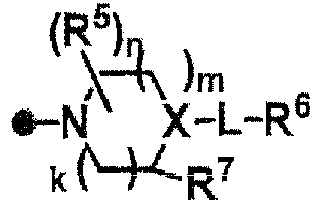


a-1 


a-2 


a-3 


a-4 


a-5 


a-6 


a-7 


a-8 


a-9 


a-10 


[Table 2] Table 2 
Compound No. 


a-11 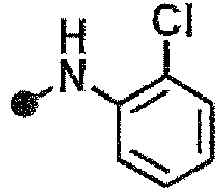


a-12 


a-13 


a-14 
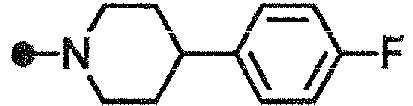


a-15 


a-16 


a-17 


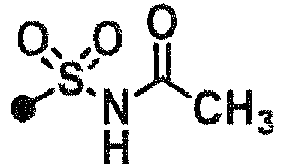
a-18 


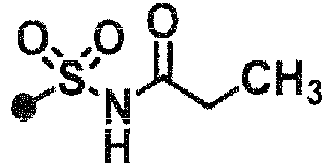
a-19 


a-20 


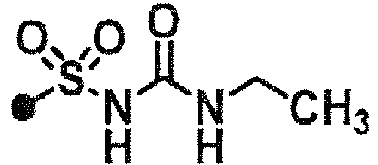
[Table 3] Table 3 
Compound No. 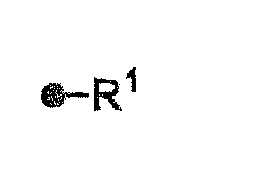


a-21 


a-22 
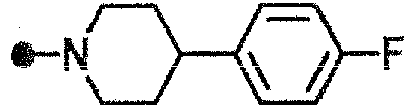


a-23 


a-24 


a-25 


a-26 


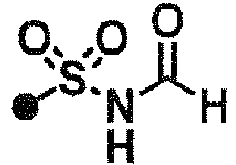
a-27 


a-28 

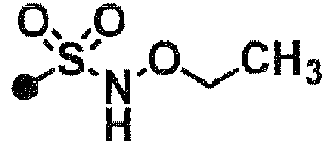
a-29 


a-30 


[Table 4] Table 4 
Compound No. 
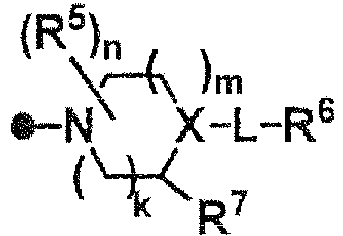


a-31 
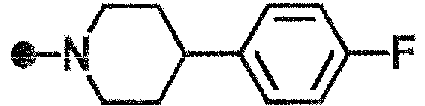


a-32 


a-33 


a-34 


a-35 


a-36 


a-37 


a-38 


a-39 


[Table 5] Table 5 
Compound No. 
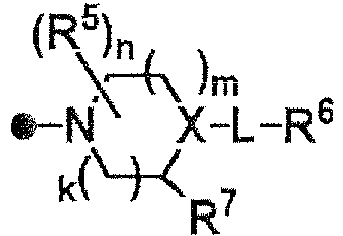


a-40 


a-41 
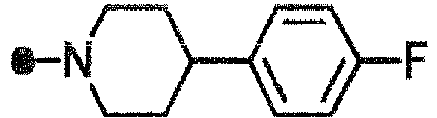


a-42 


[Table 6] Table 6 
Compound No. 


a-43 


a-44 


a-45 


a-46 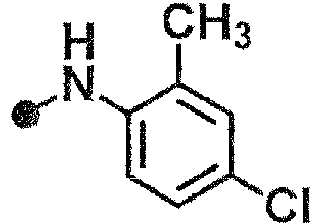


a-47 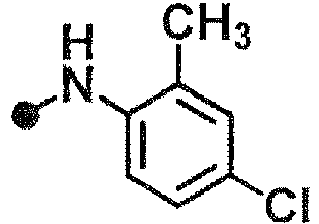


a-48 


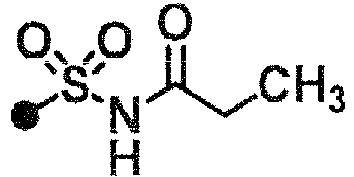
a-49 


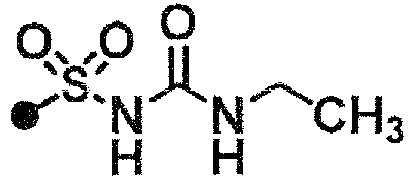
a-50 


[Table 7] Table 7 
Compound No. 



a-51 


a-52 
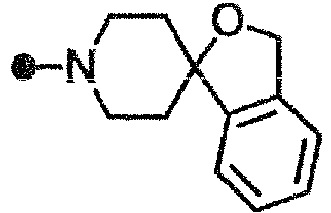


a-53 


a-54 


a-55 


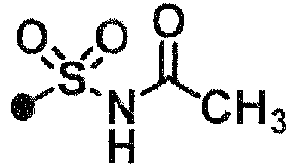
a-56 


a-57 


a-58 
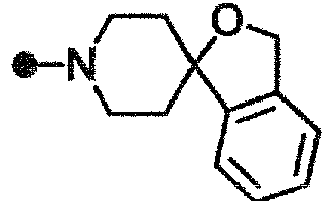


a-59 


[Table 8] Table 8 
Compound No. 
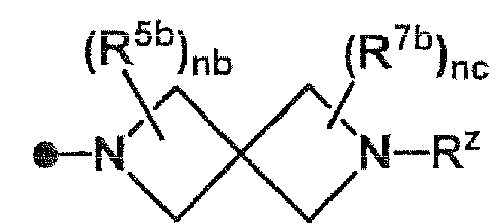


a-60 


a-61 


[Table 9] Table 9 
Compound No. 
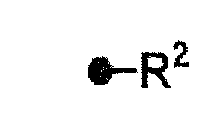

a-62 


a-63 


a-64 


a-65 


a-66 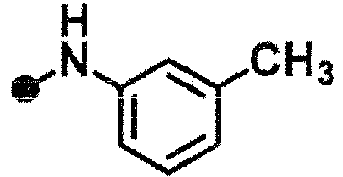


a-67 
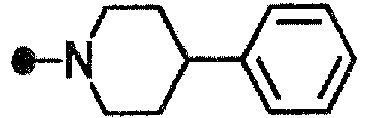

a-68 


a-69 


a-70 


Table 10 (continued from Table 9) Compound No. 


a-71 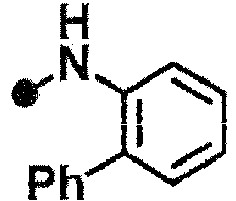


a-72 


a-73 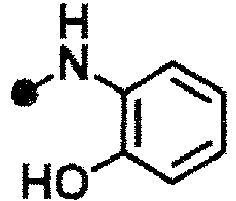


a-74 


a-75 


a-76 


a-77 


a-78 


a-79 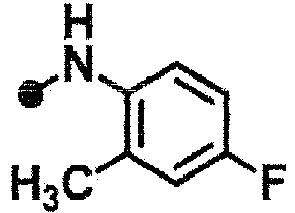

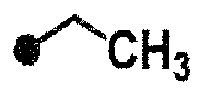
a-80 


Table 11 (continued from Table 9) Compound No. ●-R1 ●-R2 ●-R24 a-81 
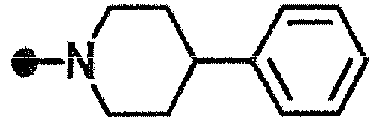

a-82 


a-83 


a-84 


a-85 


a-86 


a-87 


a-88 


a-89 

a-90 


Table 12 (continued from Table 9) Compound No. ●-R1 ●-R2 ●-R 24 a-91 


a-92 


a-93 


a-94 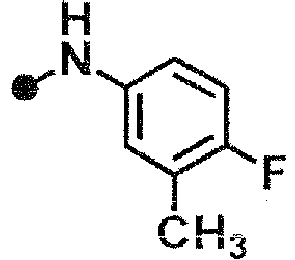


a-95 


a-96 


a-97 


a-98 


a-99 


a-100 

Table 13 (continued from Table 9) Compound No. ●-R1 ●-R2 ●-R24 a-101 

a-102 


a-103 


a-104 


a-105 


a-106 


a-107 


a-108 


a-109 


- Next, the pharmacological effect of the representative compounds is specifically explained by Experimental Examples. [Experimental Example 1] Effect on late phase reaction in mouse model of ragweed pollen-induced conjunctivitis
- To examine effect of the compound on ocular inflammatory diseases, a mouse model of ragweed pollen-induced conjunctivitis which is an animal model of allergic conjunctivitis pathology [Allergy, 2003, vol.58, pages 1101 - 1013] was used. Eosinophil infiltration into conjunctiva was evaluated as an index of a late phase reaction of the conjunctivitis model. The suppressive effect on eosinophil infiltration was examined by administering compound a-14 orally or ophthalmically. Compound a-14 used in this test was synthesized by reference to the method described in Example 14 of
WO 2011/108689 . - Male BALB/c mice (CLEA Japan, Inc., 6-week-old) were stocked, and conjunctivitis models were prepared using individuals that showed no abnormality after quarantine and acclimation for 1 week.
- One group contained 10 animals, and 3 groups of a control group (oral administration and ophthalmic administration of medium), an a-14 oral administration group (oral administration of a-14, ophthalmic administration of medium), and an a-14 ophthalmic administration group (oral administration of medium, ophthalmic administration of a-14) were set.
- An antigen solution for sensitization was prepared by adding ragweed pollen (Polysciences, Inc., 10 mg) to aluminum hydroxide gel (13 mg/mL, Sigma-Aldrich, 10 mL), and stirring the mixture for not less than 1 hr (ragweed pollen concentration: 1 mg/mL). An eliciting antigen solution was prepared by adding ragweed pollen (100 mg) to phosphate buffered saline (PBS) (Life Technologies Corporation, 1 mL) (ragweed pollen concentration 100 mg/mL).
- The initial sensitization date being day 0, the antigen solution for sensitization was subcutaneously administered to the foot plantar of both feet of the mouse by 100 µL each on day 0. For booster, the antigen solution for sensitization (200 µL) was intraperitoneally administered to the mouse abdomen on day 8. On day 18, the eliciting antigen solution was ophthalmically administered to the both eyes (5 µL for each eye) of the mouse to perform the first elicitation. On day 32, the eliciting antigen solution was ophthalmically administered to the both eyes (5 µL for each eye) of the mouse to perform the second elicitation. Grouping was performed based on the body weight on day 8.
- Methylcellulose 400 (Wako Pure Chemical Industries, Ltd.) was measured, and dissolved in the Japanese Pharmacopoeia, water for injection (Otsuka Pharmaceutical Factory, Inc.) to a concentration of 0.5 w/v% to give 0.5 w/v% methylcellulose 400 solution, which was used as an oral medium. Compound a-14 was suspended in the oral medium to a concentration of 1 mg/mL to give a compound liquid for oral administration.
- PBS was used as an ophthalmic medium. Compound a-14 was suspended in the ophthalmic medium to a concentration of 1 mg/mL to prepare a compound liquid for ophthalmic administration.
- Oral administration was performed for 17 days from before the first elicitation on day 17 to after the second elicitation on day 33, twice every day at 7:00 - 7:59 and 18:00 - 18:59. However, it was performed only once on day 33 at 7:00 - 7:59. The compound liquid for oral administration or oral medium was orally administered using a 1 mL syringe and a stomach tube at 0.3 mL per mouse.
- Ophthalmic administration was performed for 6 days on days 17, 18, 19, 31, 32 and 33. The administration was performed 5 times per day on one day before elicitation (days 17 and 31) and the elicitation day (days 18 and 32), in the time periods of 7:00 - 7:59, 10:00 - 10:59, 13:00 - 13:59, 16:00 - 16:59 and 19:00 - 19:59 of one day before elicitation (days 17 and 31) and 7:00 - 7:59, 9:00 - 9:59, 11:00 - 11:59, 13:00 - 13:59 and 16:00 - 16:59 of the elicitation day (days 18 and 32). The administration was performed only once in 7:00 - 7:59 of one day after the first and the second elicitation (days 19 and 33). The compound liquid for ophthalmic administration or ophthalmic medium was instilled to the both eyes by 5 µL each eye by using a micropipette (10 µL per mouse).
- About 24 hr after the second elicitation on day 32, all individuals were laparotomized under sodium pentobarbital anesthesia (about 50 mg/kg, intraperitoneal administration), and allowed to die from exsanguination. After confirmation of cardiac arrest, they were decapitated and the head was preserved in 10% phosphate buffered formalin solution (Wako Pure Chemical Industries, Ltd.). The decapitated head was decalcified including the skull and embedded in paraffin, which was sliced to give serial sections.
- The sections were Congo red stained, and the number of eosinophils in the upper and lower palpebral conjunctiva (per individual specimen) of the both eyes was counted under an optical microscope. The effect of the compound on eosinophil infiltration was evaluated based on of the number of eosinophils per individual specimen.
- The results of eosinophil cell count are shown in Table 14.
[Table 14]Table 14 Group constitution dose n number of eosinophils Control group - 10 95.5 ± 15.5 a-14 oral administration group 0.3 mg/body 10 64.8 ± 6.2 a-14 ophthalmic administration group 10 µg/eyes 10 70.4 ± 16.4 - The number of eosinophils of each group is shown in mean±standard error.
- To examine effect of the compound on ocular inflammatory diseases, a mouse model of ragweed pollen-induced conjunctivitis which is an animal model of allergic conjunctivitis pathology [Allergy, 2003, vol.58, pages 1101 - 1013] was used. Eosinophil infiltration into conjunctiva was evaluated as an index of a late phase reaction of the conjunctivitis model. The suppressive action on eosinophil infiltration was examined by administering the compound orally or ophthalmically. Compounds a-22, a-27, a-33, a-34, a-35 and a-44 used in this test were each synthesized by reference to the methods described in Examples 22, 27, 33, 34, 35 and 44 of
WO 2011/108689 , and compounds a-79, a-90 and a-93 used in this test were each synthesized by reference to the methods described in Examples 57, 81 and 84 ofWO 2009/041663 . - Male BALB/c mice (CLEA Japan, Inc., 6-week-old) were stocked, and conjunctivitis models were prepared using individuals that showed no abnormality after quarantine and acclimation for 1 week.
- One group contained 10 animals, and groups of a control group (oral administration and ophthalmic administration of medium), a compound oral administration group (oral administration of compound, ophthalmic administration of medium), and a compound ophthalmic administration group (oral administration of medium, ophthalmic administration of compound) were set.
- An antigen solution for sensitization was prepared by adding ragweed pollen (Polysciences, Inc., 10 mg) to aluminum hydroxide gel (13 mg/mL, Sigma-Aldrich, 10 mL), and stirring the mixture for not less than 1 hr (ragweed pollen concentration: 1 mg/mL). An eliciting antigen solution was prepared by adding ragweed pollen (100 mg) to phosphate buffered saline (PBS) (Life Technologies Corporation, 1 mL) (ragweed pollen concentration 100 mg/mL).
- The initial sensitization date being day 0, the antigen solution for sensitization was subcutaneously administered to the foot plantar of both feet of the mouse by 100 µL each on day 0. For booster, the antigen solution for sensitization (200 µL) was intraperitoneally administered to the mouse abdomen on day 8. On day 18, the eliciting antigen solution was ophthalmically administered to the both eyes (5 µL for each eye) of the mouse to perform the first elicitation. On day 32, the eliciting antigen solution was ophthalmically administered to the both eyes (5 µL for each eye) of the mouse to perform the second elicitation. Grouping was performed based on the body weight on day 8.
- Methylcellulose 400 (Wako Pure Chemical Industries, Ltd.) was measured, and dissolved in the Japanese Pharmacopoeia, water for injection (Otsuka Pharmaceutical Factory, Inc.) to a concentration of 0.5 w/v% to give 0.5 w/v% methylcellulose 400 solution, which was used as an oral medium. The compound was suspended in the oral medium to a concentration of 1 mg/mL to give a compound liquid for oral administration.
- PBS containing 5 w/v% dimethyl sulfoxide (DMSO) (Wako Pure Chemical Industries, Ltd.) was used as an ophthalmic medium. The compound was suspended in the ophthalmic medium to a concentration of 1 mg/mL to prepare a compound liquid for ophthalmic administration.
- Oral administration was performed for 17 days from before the first elicitation on day 17 to after the second elicitation on day 33, twice every day at 7:00 - 7:59 and 18:00 - 18:59. However, it was performed only once on day 33 at 7:00 - 7:59. The compound liquid for oral administration or oral medium was orally administered using a 1 mL syringe and a stomach tube at 0.3 mL per mouse.
- Ophthalmic administration was performed for 6 days on days 17, 18, 19, 31, 32 and 33. The administration was performed 5 times per day on one day before elicitation (days 17 and 31) and the elicitation day (days 18 and 32), in the time periods of 7:00 - 7:59, 10:00 - 10:59, 13:00 - 13:59, 16:00 - 16:59 and 19:00 - 19:59 of one day before elicitation (days 17 and 31) and 7:00 - 7:59, 9:00 - 9:59, 11:00 - 11:59, 13:00 - 13:59 and 16:00 - 16:59 of the elicitation day (days 18 and 32). The administration was performed only once in 7:00 - 7:59 of one day after the first and the second elicitation (says 19 and 33). The ophthalmic administration compound liquid or Ophthalmic medium was instilled to the both eyes by 5 µL each eye by using a micropipette (10 µL per mouse).
- About 24 - 27 hr after the second elicitation on day 32, all individuals were laparotomized under sodium pentobarbital anesthesia (about 50 mg/kg, intraperitoneal administration), and allowed to die from exsanguination. After confirmation of cardiac arrest, they were decapitated and the head was preserved in 10% phosphate buffered formalin solution (Wako Pure Chemical Industries, Ltd.). The decapitated head was decalcified including the skull and embedded in paraffin, which was sliced to give serial sections.
- The sections were Congo red stained, and the number of eosinophils in the upper and lower palpebral conjunctiva (per individual specimen) of the both eyes was counted under an optical microscope. The effect of the compound on eosinophil infiltration was evaluated based on of the number of eosinophils per individual specimen.
- The results of eosinophil cell counts are shown in Table 15.
[Table 15]Table 15 Group constitution Dose population number of eosinophils Control group - 10 205 ± 39 a-22 oral administration group 0.3 mg/body 10 53 ± 12 a-22 ophthalmic administration group 10 µg/eyes 10 64 ± 21 a-27 oral administration group 0.3 mg/body 10 39 ± 5 a-33 ophthalmic administration group 10 µg/eyes 10 83 ± 19 a-34 ophthalmic administration group 10 µg/eyes 10 50 ± 10 a-35 ophthalmic administration group 10 µg/eyes 10 84 ± 18 a-44 oral administration group 0.3 mg/body 10 75 ± 24 a-79 ophthalmic administration group 10 µg/eyes 10 52 ± 11 a-90 oral administration group 0.3 mg/body 10 44 ± 7 a-93 oral administration group 0.3 mg/body 10 35 ± 8 - The number of eosinophils of each group is shown in mean ± standard error.
- From the above test results, the above-mentioned test compounds showed a suppressive effect on eosinophil infiltration into the conjunctiva by both the oral administration and the ophthalmic administration.
- The eosinophil infiltration or the concentration of eosinophil basic protein is known to correlate with the disease activity of allergic conjunctivitis (for example, seasonal allergic conjunctivitis such as pollinosis and the like, perennial allergic conjunctivitis and the like), spring catarrh, atopic conjunctivitis, or giant papillary conjunctivitis [British Journal of Ophthalmology, 1966, vol. 80, pages 556 - 560] [British Journal of Ophthalmology, 2004, vol.88, pages 1504 - 1505].
- From the above, compounds (I), (IA) and (IB) are suggested to be useful as a prophylactic and/or therapeutic agent for ocular inflammatory diseases such as eyelid dermatitis, keratoconjunctivitis, scleritis, conjunctivitis {for example, allergic conjunctival diseases [for example, atopic keratoconjunctivitis, spring catarrh, giant papillary conjunctivitis, allergic conjunctivitis (for example, seasonal allergic conjunctivitis such as pollinosis and the like, perennial allergic conjunctivitis and the like) and the like] and the like} and the like.
- While compounds (I), (IA) and (IB), and pharmaceutically acceptable salts thereof to be used in the present invention can be directly administered singly, generally, they are desirably provided as various pharmaceutical preparations. Also, such pharmaceutical preparations are used for animals and humans.
- The pharmaceutical preparation of the present invention can contain, as an active ingredient, compound (I), (IA) or (IB), or a pharmaceutically acceptable salt thereof singly or as a mixture with any other active ingredient for treatment. Also, such pharmaceutical preparation is produced by any method well known in the technical field of drug formulation study, by mixing the active ingredient with one or more kinds of pharmaceutically acceptable carriers (for example, diluent, solvent, excipient and the like).
- As the administration route, one most effective for the treatment is desirably employed, which may be oral or parenteral such as intravenous administration, instillation or the like.
- Examples of the administration form include tablet, injection, eye drop and the like.
- Tablet and the like which are suitable for oral administration can be produced using excipients such as lactose and the like, disintegrants such as starch and the like, lubricants such as magnesium stearate and the like, binders such as hydroxypropylcellulose and the like, and the like.
- Injection and the like which are suitable for parenteral administration can be produced using diluent, solvent and the like, such as a salt solution, a glucose solution, a mixture of saline and glucose solution, and the like.
- Eye drop can be produced using buffering agents such as phosphate buffer, borate buffer and the like, isotonic agents such as sodium chloride and the like, preservatives such as benzalkonium chloride, p-hydroxybenzoic acid ester and the like, and the like.
- The present invention is explained in more detail in the following by referring to Examples, which are not to be construed as limitative.
- A tablet having the following composition is prepared by a conventional method. Compound a-14 (40 g), lactose (286.8 g) and potato starch (60 g) are mixed, and a 10% aqueous hydroxypropylcellulose solution (120 g) is added thereto. The mixture is kneaded, granulated, dried, and sieved to give granules for tableting by a conventional method. Magnesium stearate (1.2 g) is added and mixed, and the mixture is tableted by a tableting machine (RT-15 manufactured by Kikusui Seisakusho Ltd.) with a 8 mm diameter punch to give a tablet (containing 20 mg of active ingredient per tablet).
[Table 16] Formulation compound a-14 20 mg lactose 143.4 mg potato starch 30 mg hydroxypropylcellulose 6 mg magnesium stearate 0.6 mg 200 mg - An injection having the following composition is prepared by a conventional method. Compound a-14 (1 g) and D-mannitol (5 g) are added to distilled water for injection and mixed. Hydrochloric acid and aqueous sodium hydroxide solution are further added to adjust the mixture to pH 6, and distilled water for injection is added to the total amount of 1000 mL. The obtained mixture is aseptically filled in a glass vial by 2 mL to give an injection (containing 2 mg of active ingredient per vial).
[Table 17] Formulation compound a-14 2 mg D-mannitol 10 mg hydrochloric acid q.s. aqueous sodium hydroxide solution q.s. distilled water for injection q.s. 2.00 mL - An eye drop having the following composition is prepared by a conventional method. Compound a-14 (1 g) and sodium chloride (9 g) are added to distilled water for injection and mixed. Hydrochloric acid and aqueous sodium hydroxide solution are further added to adjust the mixture to pH 7, and distilled water for injection is added to the total amount of 1000 mL. The obtained mixture is aseptically filled in an instillation container by 1 mL to give an eye drop (containing 1 mg of active ingredient per container).
[Table 18] Formulation compound a-14 1 mg sodium chloride 9 mg hydrochloric acid q.s. aqueous sodium hydroxide solution q.s. distilled water for injection q.s. 1.00 mL - A tablet having the following composition is prepared by a conventional method. Compound a-22 (40 g), lactose (286.8 g) and potato starch (60 g) are mixed, and a 10% aqueous hydroxypropylcellulose solution (120 g) is added thereto. The mixture is kneaded, granulated, dried, and sieved to give granules for tableting by a conventional method. Magnesium stearate (1.2 g) is added and mixed, and the mixture is tableted by a tableting machine (RT-15 manufactured by Kikusui Seisakusho Ltd.) with a 8 mm diameter punch to give a tablet (containing 20 mg of active ingredient per tablet).
[Table 19] Formulation compound a-22 20 mg lactose 143.4 mg potato starch 30 mg hydroxypropylcellulose 6 mg magnesium stearate 0.6 mg 200 mg - An injection having the following composition is prepared by a conventional method. Compound a-22 (1 g) and D-mannitol (5 g) are added to distilled water for injection and mixed. Hydrochloric acid and aqueous sodium hydroxide solution are further added to adjust the mixture to pH 6, and distilled water for injection is added to the total amount of 1000 mL. The obtained mixture is aseptically filled in a glass vial by 2 mL to give an injection (containing 2 mg of active ingredient per vial).
[Table 20] Formulation compound a-22 2 mg D-mannitol 10 mg hydrochloric acid q.s. aqueous sodium hydroxide solution q.s. distilled water for injection q. s. 2.00 mL - An eye drop having the following composition is prepared by a conventional method. Compound a-22 (1 g) and sodium chloride (9 g) are added to distilled water for injection and mixed. Hydrochloric acid and aqueous sodium hydroxide solution are further added to adjust the mixture to pH 7, and distilled water for injection is added to the total amount of 1000 mL. The obtained mixture is aseptically filled in an instillation container by 1 mL to give an eye drop (containing 1 mg of active ingredient per container).
[Table 21] Formulation compound a-22 1 mg sodium chloride 9 mg hydrochloric acid q.s. aqueous sodium hydroxide solution q.s. distilled water for injection q.s. 1.00 mL - A tablet having the following composition is prepared by a conventional method. Compound a-93 (40 g), lactose (286.8 g) and potato starch (60 g) are mixed, and a 10% aqueous hydroxypropylcellulose solution (120 g) is added thereto. The mixture is kneaded, granulated, dried, and sieved to give granules for tableting by a conventional method. Magnesium stearate (1.2 g) is added and mixed, and the mixture is tableted by a tableting machine (RT-15 manufactured by Kikusui Seisakusho Ltd.) with a 8 mm diameter punch to give a tablet (containing 20 mg of active ingredient per tablet).
[Table 22] Formulation compound a-93 20 mg lactose 143.4 mg potato starch 30 mg hydroxypropylcellulose 6 mg magnesium stearate 0.6 mg 200 mg - An injection having the following composition is prepared by a conventional method. Compound a-93 (1 g) and D-mannitol (5 g) are added to distilled water for injection and mixed. Hydrochloric acid and aqueous sodium hydroxide solution are further added to adjust the mixture to pH 6, and distilled water for injection is added to the total amount of 1000 mL. The obtained mixture is aseptically filled in a glass vial by 2 mL to give an injection (containing 2 mg of active ingredient per vial).
[Table 23] Formulation compound a-93 2 mg D-mannitol 10 mg hydrochloric acid q.s. aqueous sodium hydroxide solution q.s. distilled water for injection q.s. 2.00 mL - An eye drop having the following composition is prepared by a conventional method. Compound a-93 (1 g) and sodium chloride (9 g) are added to distilled water for injection and mixed. Hydrochloric acid and aqueous sodium hydroxide solution are further added to adjust the mixture to pH 7, and distilled water for injection is added to the total amount of 1000 mL. The obtained mixture is aseptically filled in an instillation container by 1 mL to give an eye drop (containing 1 mg of active ingredient per container).
[Table 24] Formulation compound a-93 1 mg sodium chloride 9 mg hydrochloric acid q.s. aqueous sodium hydroxide solution q.s. distilled water for injection q.s. 1.00 mL - According to the present invention, a therapeutic agent for ocular inflammation and the like comprising a pyrazolopyrimidine compound or a pharmaceutically acceptable salt thereof as an active ingredient is provided.
- The prophylactic and/or therapeutic agent for ocular inflammatory diseases to be provided by the present invention can be used for the treatment and/or prophylaxis of ocular inflammatory diseases (for example, eyelid dermatitis, keratoconjunctivitis, scleritis, conjunctivitis {for example, allergic conjunctival diseases [for example, atopic keratoconjunctivitis, spring catarrh, giant papillary conjunctivitis, allergic conjunctivitis (for example, seasonal allergic conjunctivitis such as pollinosis and the like, perennial allergic conjunctivitis and the like) and the like] and the like} and the like).
Claims (54)
- A prophylactic and/or therapeutic agent for ocular inflammatory diseases, comprising a pyrazolopyrimidine compound represented by the formula (I)

R2 represents
n represents an integer of 0 - 4, and when n is 2, 3 or 4, respective R5 may be the same or different,
L represents a single bond, alkylene, C(=O) or SO2,
R5 represents halogen, hydroxy, lower alkyl optionally having substituent(s) or lower alkoxy optionally having substituent(s),
R6 represents lower alkyl optionally having substituent(s), cycloalkyl optionally having substituent(s), aryl optionally having substituent(s), an aromatic heterocyclic group optionally having substituent(s) or an aliphatic heterocyclic group optionally having substituent(s),
X represents a nitrogen atom or -CR8 (wherein R8 represents a hydrogen atom, halogen, hydroxy, cyano, lower alkyl optionally having substituent(s) or lower alkoxy optionally having substituent(s), or forms a bond together with R7), and
R7 forms a bond together with R8, or represents a hydrogen atom, halogen, hydroxy, lower alkyl optionally having substituent(s) or lower alkoxy optionally having substituent(s)],
R5a represents as defined for the aforementioned R5,
--- is a single bond or a double bond,
R9a and R9b are the same or different and each represents a hydrogen atom or lower alkyl optionally having substituent(s), or R9a and R9b form, together with the respectively adjacent carbon atoms, an aliphatic ring optionally having substituent(s) or an aromatic ring optionally having substituent(s),
Y represents -CHR10a-CHR10b- (wherein R10a and R10b are the same or different and each represents a hydrogen atom, hydroxy, lower alkyl optionally having substituent(s) or lower alkoxy optionally having substituent(s), or R10a and R10b form, together with the respectively adjacent carbon atoms, an aliphatic ring optionally having substituent(s)), -CR10e=CR10d- (wherein R10c and R10d are the same or different and each represents a hydrogen atom or lower alkyl optionally having substituent(s), or R10c and R10d form, together with the respectively adjacent carbon atoms, an aliphatic ring having at least one double bond and optionally having substituent(s) or an aromatic ring optionally having substituent (s)), -Za-CR11aR11b- [wherein R11a and R11b are the same or different and each represents a hydrogen atom or lower alkyl optionally having substituent(s), or R11a and R11b form carbonyl together with the adjacent carbon atom, and Za represents C(=O), O, S, SO, SO2 or NR12 (wherein R12 represents a hydrogen atom, lower alkyl optionally having substituent(s), lower alkanoyl optionally having substituent(s), lower alkoxycarbonyl optionally having substituent(s) or aralkyl optionally having substituent(s))], or -CR11cR11d-Zb- (wherein R11c, R11d and Zb are as defined for the aforementioned R11a, R11b and Za, respectively)}, or
R5b and R7b are the same or different and each represents halogen, hydroxy, lower alkyl optionally having substituent(s) or lower alkoxy optionally having substituent(s),
nb represents an integer of 0 - 2, nc represents an integer of 0 - 2, when nb is 2, respective R5bs are the same or different, when nc is 2, respective R7bs are the same or different,
R3 represents -S(O)2R13a [wherein R13a represents hydroxy, lower alkoxy optionally having substituent(s), -NR13bR13c (wherein R13b and R13c are the same or different and each represents a hydrogen atom, lower alkyl optionally having substituent(s), lower alkoxy optionally having substituent(s), cycloalkyl optionally having substituent(s), aralkyl optionally having substituent(s), aryl optionally having substituent(s), an aromatic heterocyclic group optionally having substituent(s) or an aliphatic heterocyclic group optionally having substituent(s), or R13b and R13c form, together with the adjacent nitrogen atom, a nitrogen-containing heterocyclic group optionally having substituent(s)), -NR13dC(=O)R13e (wherein R13d represents a hydrogen atom, lower alkyl optionally having substituent(s), cycloalkyl optionally having substituent(s), aralkyl optionally having substituent(s), aryl optionally having substituent(s), an aromatic heterocyclic group optionally having substituent(s) or an aliphatic heterocyclic group optionally having substituent(s), and R13e represents a hydrogen atom, lower alkyl optionally having substituent(s), cycloalkyl optionally having substituent(s), aralkyl optionally having substituent(s), lower alkoxy optionally having substituent(s), N-mono-lower alkylamino optionally having substituent(s), N,N-di-lower alkylamino optionally having substituent(s), N-cycloalkylamino optionally having substituent(s), N-mono-arylamino optionally having substituent(s), N,N-di-arylamino optionally having substituent(s), aryl optionally having substituent(s), an aromatic heterocyclic group optionally having substituent(s) or an aliphatic heterocyclic group optionally having substituent(s)), -NR13fC(=S)R13g (wherein R13f and R13g are each as defined for R13d and R13e above, respectively), or -NR13hS(O)2R14 (wherein R13h is as defined for R13d above, and R14 represents lower alkyl optionally having substituent(s), cycloalkyl optionally having substituent(s), N-mono-lower alkylamino optionally having substituent(s), N,N-di-lower alkylamino optionally having substituent(s), aryl optionally having substituent(s), aralkyl optionally having substituent(s), an aromatic heterocyclic group optionally having substituent(s) or an aliphatic heterocyclic group optionally having substituent(s))],
carboxy, lower alkoxycarbonyl optionally having substituent(s), lower alkyl optionally having substituent(s), lower alkanoyl optionally having substituent(s), aralkyl optionally having substituent(s), an aromatic heterocyclic group optionally having substituent(s), -C(=O)NR23aR23b [wherein R23a and R23b are the same or different and each represents a hydrogen atom, lower alkyl optionally having substituent(s), lower alkanoyl optionally having substituent(s), aralkyl optionally having substituent (s) or -S(O)2R24 (wherein R24 represents lower alkyl optionally having substituent(s), cycloalkyl optionally having substituent(s), N-mono-lower alkylamino optionally having substituent(s), N,N-di-lower alkylamino optionally having substituent(s), aryl optionally having substituent(s), aralkyl optionally having substituent(s), an aromatic heterocyclic group optionally having substituent(s) or an aliphatic heterocyclic group optionally having substituent(s)), or R23a and R23b form, together with the adjacent nitrogen atom, a nitrogen-containing heterocyclic group optionally having substituent(s)], or -NR23cR23d (wherein R23c and R23d are each as defined for R23a and R23b above, respectively),
R4 represents a hydrogen atom, halogen, lower alkyl optionally having substituent(s), aralkyl optionally having substituent(s), -NR15aR15b (wherein R15a and R15b are the same or different and each represents a hydrogen atom, lower alkyl optionally having substituent(s), cycloalkyl optionally having substituent(s), lower alkoxy optionally having substituent(s), lower alkanoyl optionally having substituent(s), aryl optionally having substituent(s), aralkyl optionally having substituent(s), an aromatic heterocyclic group optionally having substituent(s) or an aliphatic heterocyclic group optionally having substituent(s), or R15a and R15b form, together with the adjacent nitrogen atom, a nitrogen-containing heterocyclic group optionally having substituent(s)), -OR15c (wherein R15c represents a hydrogen atom, lower alkyl optionally having substituent(s), cycloalkyl optionally having substituent(s), aryl optionally having substituent(s), aralkyl optionally having substituent(s), an aromatic heterocyclic group optionally having substituent(s) or an aliphatic heterocyclic group optionally having substituent(s)), or -SR15d (wherein R15d is as defined for R15c above)) or a pharmaceutically acceptable salt thereof, as an active ingredient. - The prophylactic and/or therapeutic agent according to claim 1, wherein R3 is -S (O)2R13a [wherein R13a represents hydroxy, lower alkoxy optionally having substituent(s), -NR13bR13c (wherein R13b and R13c are the same or different and each represents a hydrogen atom, lower alkyl optionally having substituent(s), lower alkoxy optionally having substituent(s), cycloalkyl optionally having substituent(s), aralkyl optionally having substituent(s), aryl optionally having substituent(s), an aromatic heterocyclic group optionally having substituent(s) or an aliphatic heterocyclic group optionally having substituent(s), or R13b and R13c form, together with the adjacent nitrogen atom, a nitrogen-containing heterocyclic group optionally having substituent(s)), -NR13dC (=O)R13e (wherein R13d represents a hydrogen atom, lower alkyl optionally having substituent(s), cycloalkyl optionally having substituent(s), aralkyl optionally having substituent(s), aryl optionally having substituent(s), an aromatic heterocyclic group optionally having substituent(s) or an aliphatic heterocyclic group optionally having substituent(s), and R13e represents a hydrogen atom, lower alkyl optionally having substituent(s), cycloalkyl optionally having substituent(s), aralkyl optionally having substituent(s), lower alkoxy optionally having substituent(s), N-mono-lower alkylamino optionally having substituent(s), N,N-di-lower alkylamino optionally having substituent(s), N-cycloalkylamino optionally having substituent(s), N-mono-arylamino optionally having substituent(s), N,N-di-arylamino optionally having substituent(s), aryl optionally having substituent(s), an aromatic heterocyclic group optionally having substituent(s) or an aliphatic heterocyclic group optionally having substituent(s)), -NR13fC (=S) R13g (wherein R13f and R13g are as defined for R13d and R13e above, respectively), or -NR13hS(O)2R14 (wherein R13h is as defined for R13d above, and R14 represents lower alkyl optionally having substituent(s), cycloalkyl optionally having substituent(s), N-mono-lower alkylamino optionally having substituent(s), N,N-di-lower alkylamino optionally having substituent(s), aryl optionally having substituent(s), aralkyl optionally having substituent(s), an aromatic heterocyclic group optionally having substituent(s) or an aliphatic heterocyclic group optionally having substituent(s))].
- A prophylactic and/or therapeutic agent for ocular inflammatory diseases, comprising a pyrazolopyrimidine compound represented by the formula (IA)

L1 represents a single bond or methylene,
R1A represents lower alkyl optionally having substituent(s), aralkyl optionally having substituent(s), cycloalkyl optionally having substituent(s), aryl optionally having substituent(s), an aromatic heterocyclic group optionally having substituent(s) or an aliphatic heterocyclic group optionally having substituent(s),
R2A represents
kA, mA and LA are as defined for k, m and L above, respectively, R5A represents halogen or lower alkyl,
R6A represents cycloalkyl optionally having substituent(s),
aryl optionally having substituent(s), an aromatic heterocyclic group optionally having substituent(s) or an aliphatic heterocyclic group optionally having substituent(s),
XA is a nitrogen atom or -CR8A (wherein R8A represents a hydrogen atom, halogen or lower alkyl, or forms a bond together with R7A), and
R7A forms a bond together with R8A, or represents a hydrogen atom, halogen or lower alkyl],
maA and kaA are as defined for ma and ka above, respectively,
R9aA and R9bA form, together with the respectively adjacent carbon atoms, an aromatic ring optionally having substituent(s), YA represents -CHR10aA-CHR10bA- (wherein R10aA and R10bA are the same or different and each represents a hydrogen atom, hydroxy, lower alkyl optionally having substituent(s) or lower alkoxy optionally having substituent (s)), -CR10cA=CR10dA- (wherein R10cA and R10dA are the same or different and each represents a hydrogen atom or lower alkyl optionally having substituent(s)), -ZaA-CR11aAR11bA- [wherein R11aA and R11bA are the same or different and each represents a hydrogen atom or lower alkyl optionally having substituent(s), or R11aA and R11bA form carbonyl together with the adjacent carbon atom, and ZaA represents C(=O), O, S, SO, SO2 or NR12A (wherein R12A represents a hydrogen atom, lower alkyl optionally having substituent(s), lower alkanoyl optionally having substituent(s), lower alkoxycarbonyl optionally having substituent(s) or aralkyl optionally having substituent(s))], or -CR11cAR11dA-ZbA- (wherein R11cA, R11dA and ZbA are as defined for R11aA, R11bA and ZaA above, respectively)}, or
R5bA and R7bA are the same or different and each represents halogen, hydroxy, lower alkyl optionally having substituent(s) or lower alkoxy optionally having substituent(s),
nbA represents an integer of 0 - 2, ncA represents an integer of 0 - 2, when nbA is 2, respective R5bAs are the same or different and when ncA is 2, respective R7bAs are the same or different),
R13A represents a hydrogen atom, lower alkyl optionally having substituent(s), cycloalkyl optionally having substituent(s), aralkyl optionally having substituent(s), aryl optionally having substituent(s), an aromatic heterocyclic group optionally having substituent(s) or an aliphatic heterocyclic group optionally having substituent(s),
R13B represents a hydrogen atom, lower alkyl optionally having substituent(s), lower alkoxy optionally having substituent(s), cycloalkyl optionally having substituent(s), aralkyl optionally having substituent(s), aryl optionally having substituent(s), an aromatic heterocyclic group optionally having substituent(s), an aliphatic heterocyclic group optionally having substituent (s) or COR13e1 (wherein R13e1 is as defined for R13e above), or R13B and R13A form, together with the adjacent nitrogen atom, a nitrogen-containing heterocyclic group optionally having substituent(s),
R4A represents a hydrogen atom or lower alkyl optionally having substituent(s)) or a pharmaceutically acceptable salt thereof, as an active ingredient. - The prophylactic and/or therapeutic agent according to claim 3, wherein L1 is a single bond.
- The prophylactic and/or therapeutic agent according to claim 3 or 4, wherein R1A is aryl optionally having substituent(s).
- The prophylactic and/or therapeutic agent according to claim 3 or 4, wherein R1A is phenyl optionally having substituent(s).
- The prophylactic and/or therapeutic agent according to any of claims 3 to 6, wherein R4A is a hydrogen atom.
- The prophylactic and/or therapeutic agent according to any of claims 3 to 7, wherein R13A is a hydrogen atom, and R13B is lower alkyl optionally having substituent(s).
- The prophylactic and/or therapeutic agent according to any of claims 3 to 7, wherein R13A is a hydrogen atom, and R13B is COR13e1 (wherein R13e1 is as defined above).
- The prophylactic and/or therapeutic agent according to claim 9, wherein R13e1 is lower alkyl optionally having substituent(s), cycloalkyl optionally having substituent(s), N-mono-lower alkylamino optionally having substituent(s) or N-mono-arylamino optionally having substituent(s).
- The prophylactic and/or therapeutic agent according to any of claims 3 to 10, wherein R2A is

- The prophylactic and/or therapeutic agent according to claim 11, wherein R6A is phenyl optionally having substituent(s).
- The prophylactic and/or therapeutic agent according to claim 12, wherein nA is 0, kA and mA are each 1, R7A is a hydrogen atom, LA is a single bond, and XA is CH.
- The prophylactic and/or therapeutic agent according to any of claims 3 to 10, wherein R2A is

- The prophylactic and/or therapeutic agent according to claim 14, wherein R9aA and R9bA form, together with the respectively adjacent carbon atoms, a benzene ring optionally having substituent(s), YA is -CHR10aA-CHR10bA- (wherein R10aA and R10bA are each as defined above, respectively), -CR10cA=CR10dA-(wherein R10cA and R10dA are each as defined above, respectively), -O-CR11aAR11bA- (wherein R11aA and R11bA are each as defined above, respectively), or -CR11cAR11dA-O- (wherein R11cA and R11dA are each as defined above, respectively).
- The prophylactic and/or therapeutic agent according to any of claims 3 to 10, wherein R2A is

- The prophylactic and/or therapeutic agent according to claim 16, wherein RzA is phenyl optionally having substituent(s).
- The prophylactic and/or therapeutic agent according to claim 1, wherein R1 is -NHR1b, said R1b is phenyl optionally having substituent(s) selected from the group consisting of halogen and lower alkyl,
R2 is

R3 is -S(O)2R13a or -C(=O)NH-S(O)2-R24, said R13a is -NHR13c or - NHC(=O)R13e, said R13c is lower alkoxy, said R13e is lower alkyl or N-mono-lower alkylamino, and said R24 is lower alkyl. - The prophylactic and/or therapeutic agent according to claim 18, wherein R1b is phenyl optionally having substituent(s) selected from the group consisting of a fluorine atom, a chlorine atom and methyl.
- The prophylactic and/or therapeutic agent according to claim 18, wherein R1b is phenyl having two substituents selected from the group consisting of a fluorine atom, a chlorine atom and methyl.
- The prophylactic and/or therapeutic agent according to any of claims 18 to 21, wherein R2 is

- The prophylactic and/or therapeutic agent according to claim 21, wherein R6 is phenyl optionally having a fluorine atom.
- The prophylactic and/or therapeutic agent according to any of claims 18 to 22, wherein R3 is -S(O)2R13a, said R13a is -NHR13c or -NHC(=O)R13e, said R13c is lower alkoxy, and said R13e is lower alkyl or N-mono-lower alkylamino.
- The prophylactic and/or therapeutic agent according to claim 23, wherein R13c is C1-4 alkoxy, and R13e is C1-4 alkyl or N-mono-C1-4 alkylamino.
- The prophylactic and/or therapeutic agent according to any of claims 18 to 22, wherein R3 is -C(=O)NH-S(O)2-R24, and said R24 is lower alkyl.
- The prophylactic and/or therapeutic agent according to claim 25, wherein R24 is C1-4 alkyl.
- The prophylactic and/or therapeutic agent according to claim 18, wherein the pyrazolopyrimidine compound is a compound selected from the group consisting of
7-(2-chloro-5-methylphenylamino)-N-(ethylcarbamoyl)-6-[4-(4-fluorophenyl)piperidine-1-carbonyl]pyrazolo[1,5-a]pyrimidine-3-sulfonamide,
N-{7-(2,5-dichlorophenylamino)-6-[4-(4-fluorophenyl)piperidine-1-carbonyl]pyrazolo[1,5-a]pyrimidin-3-ylsulfonyl}propionamide,
7-(2,5-dichlorophenylamino)-6-[4-(4-fluorophenyl)piperidine-1-carbonyl]-N-methoxypyrazolo[1,5-a]pyrimidine-3-sulfonamide,
N-{7-(5-chloro-2-fluorophenylamino)-6-[4-(4-fluorophenyl)piperidine-1-carbonyl]pyrazolo[1,5-a]pyrimidin-3-ylsulfonyl}acetamide,
7-(5-chloro-2-fluorophenylamino)-N-(ethylcarbamoyl)-6-[4-(4-fluorophenyl)piperidine-1-carbonyl]pyrazolo[1,5-a]pyrimidine-3-sulfonamide,
N-{7-(2,5-difluorophenylamino)-6-[4-(4-fluorophenyl)piperidine-1-carbonyl]pyrazolo[1,5-a]pyrimidin-3-ylsulfonyl}acetamide,
7-(2-chloro-5-methylphenylamino)-N-(ethylcarbamoyl)-6-(3H-spiro[isobenzofuran-1,4'-piperidin]-1'-yl carbonyl)pyrazolo[1,5-a]pyrimidine-3-sulfonamide,
N-[7-(4-fluoro-2-methylphenylamino)-6-(4-phenylpiperidine-1-carbonyl)pyrazolo[1,5-a]pyrimidine-3-carbonyl]ethanesulfonamide,
N-{7-(2-fluoro-5-methylphenylamino)-6-[4-(4-fluorophenyl)piperidine-1-carbonyl]pyrazolo[1,5-a]pyrimidine-3-carbonyl}ethanesulfonamide, and
N-{7-(4-fluoro-2-methylphenylamino)-6-[4-(4-fluorophenyl)piperidine-1-carbonyl]pyrazole[1,5-a]pyrimidine-3-carbonyl}ethanesulfonamide. - The prophylactic and/or therapeutic agent according to any of claims 1 to 27, wherein the ocular inflammatory disease is a disease selected from conjunctivitis, eyelid dermatitis, keratoconjunctivitis and scleritis.
- The prophylactic and/or therapeutic agent according to any of claims 1 to 27, wherein the ocular inflammatory disease is conjunctivitis.
- The prophylactic and/or therapeutic agent according to claim 29, wherein the conjunctivitis is an allergic conjunctival disease.
- The prophylactic and/or therapeutic agent according to claim 30, wherein the allergic conjunctival disease is a disease selected from allergic conjunctivitis, atopic keratoconjunctivitis, spring catarrh and giant papillary conjunctivitis.
- The prophylactic and/or therapeutic agent according to claim 31, wherein the allergic conjunctivitis is a disease selected from seasonal allergic conjunctivitis and perennial allergic conjunctivitis.
- The prophylactic and/or therapeutic agent according to any of claims 1 to 27, which is used for itching, redness, edema and ulcer occurring as symptoms of ocular inflammatory diseases.
- A method for the prophylaxis and/or treatment of an ocular inflammatory disease, comprising a step of administering an effective amount of the pyrazolopyrimidine compound according to any of claims 1 to 27 or a pharmaceutically acceptable salt thereof.
- The method according to claim 34, wherein the ocular inflammatory diseases is a disease selected from conjunctivitis, eyelid dermatitis, keratoconjunctivitis and scleritis.
- The method according to claim 35, wherein the ocular inflammatory disease is conjunctivitis.
- The method according to claim 36, wherein the conjunctivitis is an allergic conjunctival disease.
- The method according to claim 37, wherein the allergic conjunctival disease is a disease selected from allergic conjunctivitis, atopic keratoconjunctivitis, spring catarrh and giant papillary conjunctivitis.
- The method according to claim 38, wherein the allergic conjunctivitis is a disease selected from seasonal allergic conjunctivitis and perennial allergic conjunctivitis.
- A method for the prophylaxis and/or treatment of itching, redness, edema and ulcer occurring as symptoms of ocular inflammatory diseases, comprising a step of administering an effective amount of the pyrazolopyrimidine compound according to any of claims 1 to 27 or a pharmaceutically acceptable salt thereof.
- The pyrazolopyrimidine compound according to any of claims 1 to 27 or a pharmaceutically acceptable salt thereof for use in the prophylaxis and/or treatment of ocular inflammatory diseases.
- The pyrazolopyrimidine compound according to claim 41 or a pharmaceutically acceptable salt thereof, wherein the ocular inflammatory diseases is a disease selected from conjunctivitis, eyelid dermatitis, keratoconjunctivitis and scleritis.
- The pyrazolopyrimidine compound according to claim 41 or a pharmaceutically acceptable salt thereof, wherein the ocular inflammatory diseases is conjunctivitis.
- The pyrazolopyrimidine compound according to claim 43 or a pharmaceutically acceptable salt thereof, wherein the conjunctivitis is an allergic conjunctival disease.
- The pyrazolopyrimidine compound according to claim 44 or a pharmaceutically acceptable salt thereof, wherein the allergic conjunctival disease is a disease selected from allergic conjunctivitis, atopic keratoconjunctivitis, spring catarrh and giant papillary conjunctivitis.
- The pyrazolopyrimidine compound according to claim 45 or a pharmaceutically acceptable salt thereof, wherein the allergic conjunctivitis is a disease selected from seasonal allergic conjunctivitis and perennial allergic conjunctivitis.
- The pyrazolopyrimidine compound according to any of claims 1 to 27 or a pharmaceutically acceptable salt thereof for use in the prophylaxis and/or treatment of itching, redness, edema and ulcer occurring as symptoms of ocular inflammatory diseases.
- Use of the pyrazolopyrimidine compound according to any of claims 1 to 27 or a pharmaceutically acceptable salt thereof for the manufacture of a prophylactic and/or therapeutic agent for ocular inflammatory diseases.
- The use according to claim 48, wherein the ocular inflammatory disease is a disease selected from conjunctivitis, eyelid dermatitis, keratoconjunctivitis and scleritis.
- The use according to claim 48, wherein the ocular inflammatory disease is conjunctivitis.
- The use according to claim 50, wherein the conjunctivitis is an allergic conjunctival disease.
- The use according to claim 51, wherein the allergic conjunctival disease is a disease selected from allergic conjunctivitis, atopic keratoconjunctivitis, spring catarrh and giant papillary conjunctivitis.
- The use according to claim 52, wherein the allergic conjunctivitis is a disease selected from seasonal allergic conjunctivitis and perennial allergic conjunctivitis.
- Use of the pyrazolopyrimidine compound describen in any of claims 1 to 27 or a pharmaceutically acceptable salt thereof for the manufacture of a prophylactic and/or therapeutic agent for itching, redness, edema and ulcer occurring as symptoms of ocular inflammatory diseases.
Applications Claiming Priority (2)
| Application Number | Priority Date | Filing Date | Title |
|---|---|---|---|
| JP2013040245 | 2013-03-01 | ||
| PCT/JP2014/055263 WO2014133182A1 (en) | 2013-03-01 | 2014-03-03 | Agent for preventing and/or treating ocular inflammatory disease |
Publications (1)
| Publication Number | Publication Date |
|---|---|
| EP2962692A1 true EP2962692A1 (en) | 2016-01-06 |
Family
ID=51428438
Family Applications (1)
| Application Number | Title | Priority Date | Filing Date |
|---|---|---|---|
| EP14757271.3A Withdrawn EP2962692A1 (en) | 2013-03-01 | 2014-03-03 | Agent for preventing and/or treating ocular inflammatory disease |
Country Status (5)
| Country | Link |
|---|---|
| US (1) | US20160008362A1 (en) |
| EP (1) | EP2962692A1 (en) |
| JP (1) | JPWO2014133182A1 (en) |
| TW (1) | TW201501713A (en) |
| WO (1) | WO2014133182A1 (en) |
Cited By (14)
| Publication number | Priority date | Publication date | Assignee | Title |
|---|---|---|---|---|
| KR20160147037A (en) * | 2014-04-30 | 2016-12-21 | 더 트러스티이스 오브 콜롬비아 유니버시티 인 더 시티 오브 뉴욕 | Substituted 4-phenylpiperidines, their preparation and use |
| US10421720B2 (en) | 2013-03-14 | 2019-09-24 | The Trustees Of Columbia University In The City Of New York | Octahydrocyclopentapyrroles, their preparation and use |
| US10538487B2 (en) | 2015-02-16 | 2020-01-21 | The University Of Queensland | Sulfonylureas and related compounds and use of same |
| US10570148B2 (en) | 2013-03-14 | 2020-02-25 | The Trustees Of Columbia University In The City Of New York | N-alkyl-2-phenoxyethanamines, their preparation and use |
| US10787453B2 (en) | 2013-03-14 | 2020-09-29 | The Trustees Of Columbia University In The City Of New York | Octahydropyrrolopyrroles their preparation and use |
| US11028098B2 (en) | 2013-03-14 | 2021-06-08 | The Trustees Of Columbia University In The City Of New York | 4-phenylpiperidines, their preparation and use |
| US11465992B2 (en) | 2017-07-07 | 2022-10-11 | Inflazome Limited | Sulfonamide carboxamide compounds |
| US11542255B2 (en) | 2017-08-15 | 2023-01-03 | Inflazome Limited | Sulfonylureas and sulfonylthioureas as NLRP3 inhibitors |
| US11613542B2 (en) | 2017-08-15 | 2023-03-28 | Inflazome Limited | Sulfonylureas and sulfonylthioureas as NLRP3 inhibitors |
| US11840543B2 (en) | 2017-05-24 | 2023-12-12 | The University Of Queensland | Compounds and uses |
| US11905252B2 (en) | 2018-03-02 | 2024-02-20 | Inflazome Limited | Compounds |
| US11926600B2 (en) | 2017-08-15 | 2024-03-12 | Inflazome Limited | Sulfonylureas and sulfonylthioureas as NLRP3 inhibitors |
| US12012392B2 (en) | 2017-11-09 | 2024-06-18 | Inflazome Limited | Sulfonamide carboxamide compounds |
| US12221434B2 (en) | 2017-11-09 | 2025-02-11 | Inflazome Limited | Sulfonamide carboxamide compounds |
Family Cites Families (6)
| Publication number | Priority date | Publication date | Assignee | Title |
|---|---|---|---|---|
| JP2004277337A (en) * | 2003-03-14 | 2004-10-07 | Sumitomo Pharmaceut Co Ltd | Pyrazolo [1,5-a] pyrimidine derivatives |
| ES2354824T3 (en) * | 2004-11-04 | 2011-03-18 | Vertex Pharmaceuticals, Inc. | PIRAZOLO [1,5-A] USEFUL PYRIMIDINS AS INHIBITORS OF KINASE PROTEINS. |
| MX2009002995A (en) * | 2006-09-28 | 2009-04-01 | Novartis Ag | Pyrazolo [1, 5-a] pyrimidine derivatives and their therapeutic use. |
| US8729264B2 (en) | 2007-09-28 | 2014-05-20 | Kyowa Hakko Kirin Co., Ltd. | Agent for prevention and/or treatment of skin diseases |
| ES2585287T3 (en) | 2010-03-05 | 2016-10-04 | Kyowa Hakko Kirin Co., Ltd. | Pyrazolopyrimidine derivative |
| EP2781216A4 (en) | 2011-09-02 | 2015-05-27 | Kyowa Hakko Kirin Co Ltd | Chemokine receptor activity regulator |
-
2014
- 2014-02-25 TW TW103106238A patent/TW201501713A/en unknown
- 2014-03-03 EP EP14757271.3A patent/EP2962692A1/en not_active Withdrawn
- 2014-03-03 US US14/770,744 patent/US20160008362A1/en not_active Abandoned
- 2014-03-03 WO PCT/JP2014/055263 patent/WO2014133182A1/en not_active Ceased
- 2014-03-03 JP JP2015503078A patent/JPWO2014133182A1/en active Pending
Non-Patent Citations (1)
| Title |
|---|
| See references of WO2014133182A1 * |
Cited By (25)
| Publication number | Priority date | Publication date | Assignee | Title |
|---|---|---|---|---|
| US10787453B2 (en) | 2013-03-14 | 2020-09-29 | The Trustees Of Columbia University In The City Of New York | Octahydropyrrolopyrroles their preparation and use |
| US11919913B2 (en) | 2013-03-14 | 2024-03-05 | The Trustees Of Columbia University In The City Of New York | 4-phenylpiperidines, their preparation and use |
| US12473302B2 (en) | 2013-03-14 | 2025-11-18 | The Trustees Of Columbia University In The City Of New York | 4-phenylpiperidines, their preparation and use |
| US10421720B2 (en) | 2013-03-14 | 2019-09-24 | The Trustees Of Columbia University In The City Of New York | Octahydrocyclopentapyrroles, their preparation and use |
| US11028098B2 (en) | 2013-03-14 | 2021-06-08 | The Trustees Of Columbia University In The City Of New York | 4-phenylpiperidines, their preparation and use |
| US10570148B2 (en) | 2013-03-14 | 2020-02-25 | The Trustees Of Columbia University In The City Of New York | N-alkyl-2-phenoxyethanamines, their preparation and use |
| KR20160147037A (en) * | 2014-04-30 | 2016-12-21 | 더 트러스티이스 오브 콜롬비아 유니버시티 인 더 시티 오브 뉴욕 | Substituted 4-phenylpiperidines, their preparation and use |
| US10913746B2 (en) | 2014-04-30 | 2021-02-09 | The Trustees Of Columbia University In The City Of New York | Substituted 4-phenylpiperidines, their preparation and use |
| EP4036094A1 (en) * | 2014-04-30 | 2022-08-03 | The Trustees of Columbia University in the City of New York | Substituted 4-phenylpiperidines, their preparation and use |
| EP4691465A3 (en) * | 2014-04-30 | 2026-03-25 | The Trustees of Columbia University in the City of New York | Substituted 4-phenylpiperidines, their preparation and use |
| US11649240B2 (en) | 2014-04-30 | 2023-05-16 | The Trustees Of Columbia University In The City Of New York | Substituted 4-phenylpiperidines, their preparation and use |
| US10407433B2 (en) | 2014-04-30 | 2019-09-10 | The Trustees Of Columbia University In The City Of New York | Substituted 4-phenylpiperidines, their preparation and use |
| EP3137168A4 (en) * | 2014-04-30 | 2017-12-20 | The Trustees of Columbia University in the City of New York | Substituted 4-phenylpiperidines, their preparation and use |
| US12404277B2 (en) | 2014-04-30 | 2025-09-02 | The Trustees Of Columbia University In The City Of New York | Substituted 4-phenylpiperidines, their preparation and use |
| US10538487B2 (en) | 2015-02-16 | 2020-01-21 | The University Of Queensland | Sulfonylureas and related compounds and use of same |
| US11130731B2 (en) | 2015-02-16 | 2021-09-28 | The Provost, Fellows, Foundation Scholars, And The Other Members Of Board, Of The College Of The Holy And Undivided Trinity Of Queen Elizabeth Near Dublin | Sulfonylureas and related compounds and use of same |
| US11840543B2 (en) | 2017-05-24 | 2023-12-12 | The University Of Queensland | Compounds and uses |
| US11465992B2 (en) | 2017-07-07 | 2022-10-11 | Inflazome Limited | Sulfonamide carboxamide compounds |
| US11981667B2 (en) | 2017-07-07 | 2024-05-14 | Inflazome Limited | Sulfonamide carboxamide compounds |
| US11542255B2 (en) | 2017-08-15 | 2023-01-03 | Inflazome Limited | Sulfonylureas and sulfonylthioureas as NLRP3 inhibitors |
| US11926600B2 (en) | 2017-08-15 | 2024-03-12 | Inflazome Limited | Sulfonylureas and sulfonylthioureas as NLRP3 inhibitors |
| US11613542B2 (en) | 2017-08-15 | 2023-03-28 | Inflazome Limited | Sulfonylureas and sulfonylthioureas as NLRP3 inhibitors |
| US12012392B2 (en) | 2017-11-09 | 2024-06-18 | Inflazome Limited | Sulfonamide carboxamide compounds |
| US12221434B2 (en) | 2017-11-09 | 2025-02-11 | Inflazome Limited | Sulfonamide carboxamide compounds |
| US11905252B2 (en) | 2018-03-02 | 2024-02-20 | Inflazome Limited | Compounds |
Also Published As
| Publication number | Publication date |
|---|---|
| US20160008362A1 (en) | 2016-01-14 |
| WO2014133182A1 (en) | 2014-09-04 |
| JPWO2014133182A1 (en) | 2017-02-09 |
| TW201501713A (en) | 2015-01-16 |
Similar Documents
| Publication | Publication Date | Title |
|---|---|---|
| US20160008362A1 (en) | Agent for preventing and/or treating ocular inflammatory disease | |
| JP7757284B2 (en) | Isoindolinone and indazole compounds for degradation of EGFR | |
| JP7012534B2 (en) | Optimized combination therapies and their use to treat cancer and autoimmune diseases | |
| CA2738520C (en) | Janus kinase inhibitors for treatment of dry eye and other eye related diseases | |
| KR102849047B1 (en) | Pyrrolopyrimidine ITK inhibitors | |
| CA2945151C (en) | Treatment of b-cell malignancies by a combination jak and pi3k inhibitors | |
| JP2025526302A (en) | Heteroaryl compounds as ligand-directed degraders of IRAK4 | |
| WO2019040706A1 (en) | Compositions and methods for treatment of vitiligo | |
| CN107108637A (en) | Triazolopyrimidine compound and application thereof | |
| EP2206714B1 (en) | Agent for prevention and/or treatment of skin diseases | |
| EP3806958B1 (en) | 6-aminopyridin-3-yl pyrazoles as modulators of roryt | |
| WO2024140824A1 (en) | Pyridazine nlrp3 inhibitor compound, pharmaceutical composition, and preparation method therefor and use thereof | |
| CN109906224A (en) | Triazole pyridine compounds and their applications | |
| WO2021060453A1 (en) | Crosslinked optically active secondary amine derivative | |
| US20240158418A1 (en) | EGFR Degraders to Treat Cancer Metastasis to the Brain or CNS | |
| CA2932870C (en) | [1,2,4]triazolo[1,5-a]pyrimidine derivatives as protozoan proteasome inhibitors for the treatment of parasitic diseases such as leishmaniasis | |
| CN112739420A (en) | Phenoxy-pyridyl-pyrimidine compounds and methods of use | |
| CA3189206A1 (en) | Trpv4 inhibitor as therapeutic agent for ocular disease | |
| JP2015529248A (en) | Dihydropyrrolidinopyrimidines as kinase inhibitors | |
| US10464904B2 (en) | Dextrorphan-derivatives with suppressed central nervous activity | |
| JP2022550539A (en) | Substitutional 1,6-naphthyridine inhibitors of CDK5 | |
| CN108658976B (en) | Novel pyrazolo [4,3-c ] pyridine-4 (5) -ketone Bruton kinase inhibitor | |
| JP2018104412A (en) | Therapeutic and/or preventive agent of eye disease | |
| KR20220099825A (en) | Compounds for inhibiting Bruton's tyrosine kinase and medical uses thereof | |
| EP2561866A1 (en) | Morphinan-derivatives for treating diabetes and related disorders |
Legal Events
| Date | Code | Title | Description |
|---|---|---|---|
| PUAI | Public reference made under article 153(3) epc to a published international application that has entered the european phase |
Free format text: ORIGINAL CODE: 0009012 |
|
| 17P | Request for examination filed |
Effective date: 20150928 |
|
| AK | Designated contracting states |
Kind code of ref document: A1 Designated state(s): AL AT BE BG CH CY CZ DE DK EE ES FI FR GB GR HR HU IE IS IT LI LT LU LV MC MK MT NL NO PL PT RO RS SE SI SK SM TR |
|
| AX | Request for extension of the european patent |
Extension state: BA ME |
|
| STAA | Information on the status of an ep patent application or granted ep patent |
Free format text: STATUS: THE APPLICATION HAS BEEN WITHDRAWN |
|
| DAX | Request for extension of the european patent (deleted) | ||
| 18W | Application withdrawn |
Effective date: 20160518 |