EP2962687B1 - Tau aggregation inhibitor - Google Patents
Tau aggregation inhibitor Download PDFInfo
- Publication number
- EP2962687B1 EP2962687B1 EP14779014.1A EP14779014A EP2962687B1 EP 2962687 B1 EP2962687 B1 EP 2962687B1 EP 14779014 A EP14779014 A EP 14779014A EP 2962687 B1 EP2962687 B1 EP 2962687B1
- Authority
- EP
- European Patent Office
- Prior art keywords
- group
- tau
- catechol
- tau aggregation
- aggregation inhibitor
- Prior art date
- Legal status (The legal status is an assumption and is not a legal conclusion. Google has not performed a legal analysis and makes no representation as to the accuracy of the status listed.)
- Active
Links
- JXLYWWAHSMCRIU-UHFFFAOYSA-N CC(C)CCNC(C1)C=CC(O)=C1O Chemical compound CC(C)CCNC(C1)C=CC(O)=C1O JXLYWWAHSMCRIU-UHFFFAOYSA-N 0.000 description 1
- FMEVAQARAVDUNY-UHFFFAOYSA-N NCCc(cccc1)c1O Chemical compound NCCc(cccc1)c1O FMEVAQARAVDUNY-UHFFFAOYSA-N 0.000 description 1
- HVKNLAFYYPVMQL-UHFFFAOYSA-N [O-][N+](C(CC1)=CC(O)=C1O)=O Chemical compound [O-][N+](C(CC1)=CC(O)=C1O)=O HVKNLAFYYPVMQL-UHFFFAOYSA-N 0.000 description 1
Images






Classifications
-
- A—HUMAN NECESSITIES
- A61—MEDICAL OR VETERINARY SCIENCE; HYGIENE
- A61K—PREPARATIONS FOR MEDICAL, DENTAL OR TOILETRY PURPOSES
- A61K31/00—Medicinal preparations containing organic active ingredients
- A61K31/33—Heterocyclic compounds
- A61K31/395—Heterocyclic compounds having nitrogen as a ring hetero atom, e.g. guanethidine or rifamycins
- A61K31/535—Heterocyclic compounds having nitrogen as a ring hetero atom, e.g. guanethidine or rifamycins having six-membered rings with at least one nitrogen and one oxygen as the ring hetero atoms, e.g. 1,2-oxazines
- A61K31/5375—1,4-Oxazines, e.g. morpholine
-
- A—HUMAN NECESSITIES
- A61—MEDICAL OR VETERINARY SCIENCE; HYGIENE
- A61K—PREPARATIONS FOR MEDICAL, DENTAL OR TOILETRY PURPOSES
- A61K31/00—Medicinal preparations containing organic active ingredients
- A61K31/045—Hydroxy compounds, e.g. alcohols; Salts thereof, e.g. alcoholates
- A61K31/05—Phenols
-
- A—HUMAN NECESSITIES
- A61—MEDICAL OR VETERINARY SCIENCE; HYGIENE
- A61K—PREPARATIONS FOR MEDICAL, DENTAL OR TOILETRY PURPOSES
- A61K31/00—Medicinal preparations containing organic active ingredients
- A61K31/045—Hydroxy compounds, e.g. alcohols; Salts thereof, e.g. alcoholates
- A61K31/05—Phenols
- A61K31/055—Phenols the aromatic ring being substituted by halogen
-
- A—HUMAN NECESSITIES
- A61—MEDICAL OR VETERINARY SCIENCE; HYGIENE
- A61K—PREPARATIONS FOR MEDICAL, DENTAL OR TOILETRY PURPOSES
- A61K31/00—Medicinal preparations containing organic active ingredients
- A61K31/075—Ethers or acetals
- A61K31/085—Ethers or acetals having an ether linkage to aromatic ring nuclear carbon
-
- A—HUMAN NECESSITIES
- A61—MEDICAL OR VETERINARY SCIENCE; HYGIENE
- A61K—PREPARATIONS FOR MEDICAL, DENTAL OR TOILETRY PURPOSES
- A61K31/00—Medicinal preparations containing organic active ingredients
- A61K31/11—Aldehydes
-
- A—HUMAN NECESSITIES
- A61—MEDICAL OR VETERINARY SCIENCE; HYGIENE
- A61K—PREPARATIONS FOR MEDICAL, DENTAL OR TOILETRY PURPOSES
- A61K31/00—Medicinal preparations containing organic active ingredients
- A61K31/12—Ketones
-
- A—HUMAN NECESSITIES
- A61—MEDICAL OR VETERINARY SCIENCE; HYGIENE
- A61K—PREPARATIONS FOR MEDICAL, DENTAL OR TOILETRY PURPOSES
- A61K31/00—Medicinal preparations containing organic active ingredients
- A61K31/13—Amines
- A61K31/135—Amines having aromatic rings, e.g. ketamine, nortriptyline
- A61K31/136—Amines having aromatic rings, e.g. ketamine, nortriptyline having the amino group directly attached to the aromatic ring, e.g. benzeneamine
-
- A—HUMAN NECESSITIES
- A61—MEDICAL OR VETERINARY SCIENCE; HYGIENE
- A61K—PREPARATIONS FOR MEDICAL, DENTAL OR TOILETRY PURPOSES
- A61K31/00—Medicinal preparations containing organic active ingredients
- A61K31/13—Amines
- A61K31/135—Amines having aromatic rings, e.g. ketamine, nortriptyline
- A61K31/137—Arylalkylamines, e.g. amphetamine, epinephrine, salbutamol, ephedrine or methadone
-
- A—HUMAN NECESSITIES
- A61—MEDICAL OR VETERINARY SCIENCE; HYGIENE
- A61P—SPECIFIC THERAPEUTIC ACTIVITY OF CHEMICAL COMPOUNDS OR MEDICINAL PREPARATIONS
- A61P25/00—Drugs for disorders of the nervous system
-
- A—HUMAN NECESSITIES
- A61—MEDICAL OR VETERINARY SCIENCE; HYGIENE
- A61P—SPECIFIC THERAPEUTIC ACTIVITY OF CHEMICAL COMPOUNDS OR MEDICINAL PREPARATIONS
- A61P25/00—Drugs for disorders of the nervous system
- A61P25/28—Drugs for disorders of the nervous system for treating neurodegenerative disorders of the central nervous system, e.g. nootropic agents, cognition enhancers, drugs for treating Alzheimer's disease or other forms of dementia
-
- A—HUMAN NECESSITIES
- A61—MEDICAL OR VETERINARY SCIENCE; HYGIENE
- A61P—SPECIFIC THERAPEUTIC ACTIVITY OF CHEMICAL COMPOUNDS OR MEDICINAL PREPARATIONS
- A61P43/00—Drugs for specific purposes, not provided for in groups A61P1/00-A61P41/00
Definitions
- the present invention relates to a tau aggregation inhibitor for inhibiting the formation of a tau aggregate which would cause a neurologic deficit and synapse elimination.
- AD Alzheimer's disease
- Dementia is a common disease by which approximately 25% of Japanese elderly people of age 85 or older are affected, and AD accounts for about 50% of all kinds of dementia.
- Japan has approximately 1.6-1.8 million AD patients, the number of which should go on rising as the elderly people account for an increasing percentage of the world population in the future. This is a particularly serious problem for Japan, in which the number of children per household has been falling while the number of elderly people has been rising recently.
- An acetylcholinesterase inhibitor which is believed to be most effective in preventing and treating AD, is in fact only partially effective for patients with a mild or moderate degree of disease, and its effectiveness for patients with an advanced degree of disease is denied by a lot of people.
- AD is actually characterized by senile plaque of ⁇ amyloid and by Neurofibrillary Tangles (NFT) formed by abnormal tau protein polymerization
- NFT Neurofibrillary Tangles
- the dementia symptom expresses itself due the formation of NFTs promoted by the mutation of a tau gene, and abnormality is caused in nerve cells just by aggregation and accumulation of the tau protein in the brain.
- FTDP familial frontotemporal dementia
- the tau protein is a kind of protein which is present in profusion in central nerve cells and which is indispensable for the neuroaxis that forms a neural network in the brain to function properly. However, once the tau protein formed an insoluble aggregate in cells, the axonal transport would no longer work fine to cause the death of nerve cells.
- Japanese Unexamined Patent Application Publication (Translation of PCT Application) No. 2004-534854 discloses a drug which includes, as its main ingredient, a naphtho quinone compound that inhibits the tau aggregation in order to alleviate the symptom of AD.
- a naphtho quinone compound that inhibits the tau aggregation in order to alleviate the symptom of AD.
- US2011/144124A1 describes compounds that bear two catechol rings used for modulating tau aggregation and alleviating tauopathies.
- EP2764863A1 describes the following compounds isoprenaline, dopamine, dobutamine, levodopa, levodopa/carbidopa, hexoprenaline, methyldopa, droxidopa, as tau aggregation inhibitors.
- the tau aggregation inhibitor described above cannot sufficiently inhibit the tau aggregation in cells, and cannot be regarded as contributing to treating various tauopathies such as AD properly.
- a tau aggregation inhibitor according to an embodiment includes: 4-substituted catechol structure compound having, at position 4 of its catechol ring, an electron-donating substituent R other than a hydrocarbon group; or a salt of any of these compounds.
- the tau aggregation is sufficiently suppressed in cells, thus allowing for remedying patients with AD and other tauopathies, against which there have been no effective cures so far, and eventually making a lot of contributions to the forthcoming aging society by improving the living standards of the elderly, lightening the burden of long-term care, and cutting down the medical expenses.
- a compound including: a 4-substituted catechol structure compound having, at position 4 of its catechol ring, an electron-donating substituent R which is any one of: an amino group NHR' wherein R' is a hydrogen atom, an alkyl group, a cycloalkyl group, an aryl group, an aralkyl group or a heterocyclic group; a hydroxyl group and an alkoxy group would work effectively in preventing and treating a tauopathy. Based on this finding, the present inventors perfected our invention.
- catechol structure compound refers herein to a compound having a catechol structure in its structural formula.
- catechol structure refers herein to the structure of a catechol that is a compound in which two of the substituents of its benzene ring are hydroxyl groups that are located at ortho positions.
- the "electron-donating substituent R other than a hydrocarbon group” is obtained herein by excluding a hydrocarbon group from all substituents and by further selecting an electron-donating substituent.
- hydrocarbon groups include an alkyl group, a group derived from alkene, and an aromatic hydrocarbon group.
- the alkyl group is not limited to any particular group, but is preferably one of C1 to C6 alkyl groups with one to six carbon atoms.
- the C1 to C6 alkyl group may be a straight chain alkyl group or a branched chain alkyl group, for example.
- C1 to C6 alkyl groups include a methyl group, an ethyl group, an n-propyl group, an isopropyl group, an n-butyl group, an isobutyl group, a tert-butyl group, a sec-butyl group, an n-pentyl group, a neopentyl group, an n-hexyl group, an isohexyl group, and a 3-methylpentyl group.
- Those alkyl groups may include an alkyl group derivative such as an aminoalkyl group.
- the "electron-donating substituent R" is selected from the group consisting of an amino group, a hydroxyl group and an alkoxy group.
- the amino group is -NHR'.
- R' indicates a hydrogen atom, an alkyl group, a cycloalkyl group, an aryl group, an aralkyl group or a heterocyclic group.
- the alkyl group as R' is preferably a straight chain or branched chain alkyl group with a carbon number of one to six, and is more preferably a straight chain or branched chain alkyl group with a carbon number of one to five.
- the aralkyl group as R' is preferably an aralkyl group with a carbon number of seven to eleven, and may be a benzyl group, a phenyl ethyl group, a phenyl propyl group, a phenyl butyl group, or a naphthyl methyl group, for example.
- one or more of the carbon atoms that form the alkyl chain of the alkyl and aralkyl groups may be replaced with an unsaturated bond, an ether bond or an ester bond, and R and R' may be bonded together to form a ring.
- the cycloalkyl group as R' is preferably a cycloalkyl group with a carbon number of three to eight, and is more preferably a cycloalkyl group with a carbon number of three to six.
- the aryl group as R' may be a phenyl group, a naphthyl group, an anthracenyl group, a triphenylenyl group, a pyrenyl group, or a fluorenyl group, for example.
- the heterocyclic group as R' may be a five- to seven-membered aromatic heterocyclic ring, saturated heterocyclic ring, or unsaturated heterocyclic ring including not only carbon atoms but also one to four hetero atoms selected from the group consisting of nitrogen, oxygen and sulfur atoms, or a condensed heterocyclic ring in which these heterocyclic rings and a benzene ring are condensed together.
- heterocyclic groups examples include a 2-furyl group, a 3-furyl group, a 2-thienyl group, a 3-thienyl group, a 2-oxazolyl group, a 2-oxazolinyl group, a 3-isooxazolyl group, a 4-isooxazolyl group, a 5-isooxazolyl group, a 3-isooxazolinyl group, a 2-thiazolyl group, a 2-thiazolinyl group, a 3-isothiazolyl group, a 3-isothiazolinyl group, a 2-pyranyl group, a 4-tetrahydropyranyl group, a 1-azetidinyl group, a 2-azetidinyl group, a 3-azetidinyl group, a 2-pyrrolyl group, a 2-pyrrolidinyl group, a 2-imidazolyl group, a 3-pyrrazolyl group,
- the alkoxy group refers herein to a group in which an alkyl group R is directly bonded to an oxygen atom (O).
- alkyl groups indicated by R include a methyl group, an ethyl group, an n-propyl group, an isopropyl group, an n-butyl group, an isobutyl group, a sec-butyl group, a tert-butyl group, pentyl groups, hexyl groups, octyl groups, decyl groups, a cyclopentyl group, and a cyclohexyl group.
- the alkoxy group refers herein to a straight chain or branched chain alkoxy group such as methoxy, ethoxy, n-propoxy, isopropoxy, n-butoxy, isobutoxy, sec-butoxy, tert-butoxy, pentyloxy, hexyloxy, heptyloxy and octyloxy.
- the 4-substituted catechol structure compound is particularly preferably either 4-aminocatechol or 1,2,4-benzenetriol.
- the 4-substituted catechol structure compound may also be 4-(isopentylamino) catechol or 4-methoxycatechol.
- a tau aggregation inhibitor according to this embodiment may use any of these catechol structure compounds either by itself or in combination.
- a tau aggregation inhibitor according to this embodiment further includes their salts, which are pharmacologically acceptable salts.
- those salts include: alkali metal salts (such as potassium salts and sodium salts), alkaline earth metal salts (such as magnesium salts and calcium salts) and other metal salts; alkali carbonate metals (such as lithium carbonate, potassium carbonate, sodium carbonate, and cesium carbonate), alkali hydrogen carbonate metals (such as lithium hydrogen carbonate, sodium hydrogen carbonate, and potassium hydrogen carbonate), alkali metal hydroxides (such as sodium hydroxide and potassium hydroxide) and other salts of inorganic bases; trialkylamine (such as trimethylamine and triethylamine), pyridine, quinoline, piperidine, imidazole, picoline, dimethylaminopyridine, dimethylaniline, N-alkyl-morpholine, DBN, DBU and other salts of organic bases; hydrochlorides, hydrobromides, hydroiodides, s
- a tau aggregation inhibitor according to this embodiment may share its effective dose with a pharmaceutically acceptable carrier.
- a carrier a solid such as an excipient or a liquid such as a diluent may be used.
- specific carriers include magnesium stearate, lactose, starch, gelatin, agar, talc, pectin, acacia, olive oil, sesame oil, cacao butter, ethylene glycol, and distilled water.
- tauopathy refers herein to a neurodegenerative disease characterized in that accumulation of phosphorylated tau is seen in nerve cells and glial cells.
- tauopathies include AD, Down's syndrome, frontotemporal dementia, cotricobasal degeneration (CBD) and progressive supranuclear palsy (PSP).
- to prevent a tauopathy means herein preventing a tauopathy disorder from occurring
- to treat a tauopathy means herein either preventing a tauopathy disorder from advancing, or alleviating or relieving the tauopathy disorder.
- a tau aggregation inhibitor according to this embodiment may include, as appropriate, one or more additives selected from the group consisting of a tonicity agent, a buffer agent, a solubilizing agent, an antiseptic agent, and a pH adjusting agent that are pharmaceutically acceptable.
- tonicity agents examples include potassium chloride, sodium chloride, boric acid, mannitol, glycerin, propylene glycol, polyethylene glycol, maltose, sucrose, sorbitol, and glucose.
- buffer agents examples include organic acids such as amino acid and succinic acid, inorganic acids such as boric acid and phosphoric acid, and other medicinally acceptable salts.
- solubilizing agents include: polyethylene glycol, polyvinyl pyrrolidone, polyvinyl alcohol, hydroxypropylmethyl cellulose and other polymers; polysorbate, polyoxyethylene hydrogenated castor oil, polyoxyethylene, polyoxypropylene and other surfactants; propylene glycol and other polyhydric alcohols; benzoic acid, sorbic acid and other organic acids; aspartic acid, histidine, glycine, lysine and other amino acids.
- antiseptic agents examples include: benzethonium, benzalkonium, benzododecinium and other quaternary ammonium salts; chlorhexidine and other salts of cationic compounds; methyl parahydroxybenzoate, propyl parahydroxybenzoate and other parahydroxybenzoate esters; and chlorobutanol, benzyl alcohol and other alcohol compounds.
- pH adjusting agents examples include sulfuric acid, hydrochloric acid, acetic acid, lactic acid, calcium hydroxide, potassium hydroxide, sodium hydroxide, magnesium hydroxide, monoethanol amine, triethanol amine, diisopropanol amine, and triisopropanol amine.
- the dosage of a tau aggregation inhibitor according to this embodiment is not particularly limited as long as intended effects are produced, and is determined appropriately with the degree of symptom, sex, age and other factors of the patient, to which the inhibitor is going to be administered, taken into consideration.
- the dosage of the tau aggregation inhibitor administered to an adult person per day may be in the range of 0.0001 to 1000 mg, for example. This dosage per day may be administered at a time in one day but may also be divided into a few dosages to be separately administered multiple times in one day.
- a tau aggregation inhibitor according to this embodiment may be prepared into any appropriate form of medicine according to the mode of administration.
- the medicine may be administered orally in a solid form such as granule, pill, tablet, capsule, or powder, or in a liquid form.
- the medicine may also be administered non-orally by injection such as intravenous or intramuscular injection.
- tau molecules When phosphorylated, tau molecules are associated with each other to form a tau oligomer. As this tau oligomer grows to have a ⁇ sheet structure, a spherical granular tau aggregate is formed. The granular tau aggregate would be comprised of approximately 40 tau molecules. These granular tau aggregates are combined together to form a tau fiber called "paired helical filament (PHF)" through NFTs.
- PHF paired helical filament
- a tau aggregation inhibitor according to this embodiment inhibits the tau aggregation not only during a process in which the PHF is formed by allowing the granular tau aggregates to combine with each other but also during a process in which spherical granular tau aggregates are formed.
- the nerve cells of the brain are denatured due to not only accumulation of mutated tau protein but also accumulation of normal tau protein as well.
- a tau aggregation inhibitor according to the present invention also inhibits the aggregation of the normal tau protein, and therefore, may be used to prevent or treat AD and any other tauopathy symptoms.
- a plasmid expressing human-type tau 0N4R isoform (383 amino acid) was introduced into E. coli BL21(DE3) strain to purify a recombinant tau.
- the purification was carried out by modifying the method of Taniguchi et al. (see Taniguchi et al., 2008, JBC, 280, 7614 ).
- a soluble fraction was prepared based on E. coli in which tau expression had been induced with isopropyl- ⁇ -thiogalactopyranoside, and then fractionation was carried out with a phosphocellulose column (e.g., P11 column produced by Whatman).
- the fraction eluted at an NaCl concentration of 0.1 to 0.3 M was recovered to perform precipitation and concentration using ammonium sulfate.
- the precipitate thus obtained was dissolved in a buffer containing 0.5 M of NaCl and 2% of 2-mercaptoethanol and then heated to 100°C for five minutes. Then, the reactant was subjected to a centrifugation at 15,000 xg for 15 minutes. The supernatant thus obtained was recovered and then subjected to precipitation and concentration with ammonium sulfate.
- the precipitate thus obtained was dissolved in a solution containing 20% of acetonitrile and 0.1% of formic acid so as to be purified using reversed phase HPLC (with a Cosmosil protein-R column produced by Nacalai Tesque). Fractions including full-length recombinant tau were mixed together and then the mixture thus obtained was dried with a freeze dryer to obtain a dried and purified recombinant tau sample. The yield and concentration of the tau thus obtained were analyzed by Coomassie Brilliant Blue (CBB) staining after the product was subjected to electrophoresis using 10% polyacrylamide gel.
- CBB Coomassie Brilliant Blue
- the dried and purified recombinant tau sample was dissolved in purified water at a concentration of 0.9 mg/ml. Then, this solution was diluted so that thioflavin T with a final concentration of 10 ⁇ M, 0.1 M NaCl, 0.45 mg/ml recombinant tau, 10 mM HEPES pH7.4 and various compounds would have target concentrations. Next, their fluorescence value (under excitation light at 360 nm and fluorescent light at 465 nm) was measured with a fluorescent plate reader (infinit F200 produced by TECAN).
- heparin was added so that the concentration would be 60 ⁇ g/ml and then incubation was carried out at 37°C in a moisture retention box to measure a variation in fluorescence value with time. The incubation was carried out for 168 hours, the fluorescence value was measured, and then the reacted solution was recovered to prepare a sarcosyl insoluble fraction.
- the sarcosyl insoluble fraction was made to have a final concentration of 1% by adding an aqueous solution of 10% (one-tenth quantity of) sodium N-lauroylsarcosinate to the reacted solution recovered.
- the solution was subjected to incubation at 4 °C for 30 minutes and then subjected to a centrifugation at 100,000 xg for 20 minutes to separate the supernatant and the precipitate from each other.
- the yield of tau was analyzed by electrophoresis using 10% polyacrylamide gel.
- part of the reacted solution was fractionated by sucrose density-gradient centrifugation using the method of Maeda et al. (see Maeda et al., 2007, Biochemistry, 46, 3856 ). After the centrifugation, the reactant was fractioned into 1 to 6 according to density and the tau yield was analyzed by 10% polyacrylamide gel electrophoresis and Western blotting.
- the tau aggregation inhibition experiment described above was carried out by either purchasing or synthesizing a compound in which the structure of isoproterenol was divided into the four parts of: (A) two hydroxyl groups with a catechol skeleton; (B) a benzene ring with the catechol skeleton; (C) an ⁇ -hydroxyl group; and (D) an isopropylamide group and their structures were partially modified.
- concentration of the compound was supposed to be 1 ⁇ M and compared to the effect achieved by 1 ⁇ M of isoproterenol under the same incubation condition.
- FIGS. 1 and 2 show the respective thio flavin T activities of various kinds of compounds (out of the scope of the invention. As shown in FIGS.
- catechol indicated by CC and represented by the following Chemical Formula (1)
- catechol is a compound having as high tau polymerization inhibitory activity as isoproterenol, but no effects were produced by any of 2-methoxyphenol (indicated by 2-MP and represented by the following Chemical Formula (2)), 2-aminophenol (indicated by 2-AP and represented by the following Chemical Formula (3)), resorcinol (represented by the following Chemical Formula (4)), salicylic alcohol (represented by the following Chemical Formula (5)), and salicylic acid (represented by the following Chemical Formula (6)), each of which had been obtained by transforming any hydroxyl group.
- 2-methoxyphenol indicated by 2-MP and represented by the following Chemical Formula (2)
- 2-aminophenol indicated by 2-AP and represented by the following Chemical Formula (3)
- resorcinol represented by the following Chemical Formula (4)
- salicylic alcohol represented by the following Chemical Formula (5)
- salicylic acid represented by the following Chemical Formula (6)
- (S)-(+)-Norepinephrine (D-Nor) and thioflavin T activities were compared to each other with respect to various kinds of compounds.
- No tau polymerization inhibitory activities were achieved by 2-amino-1-phenylethanol (indicated by 2-A-1PE and represented by the following Chemical Formula (7)) or 2-amino-1-(3,4-dichlorophenyl) ethanol (indicated by 2-A-1-DCPE and represented by the following Chemical Formula (8)).
- the present inventors tried to change the catechol nucleus itself.
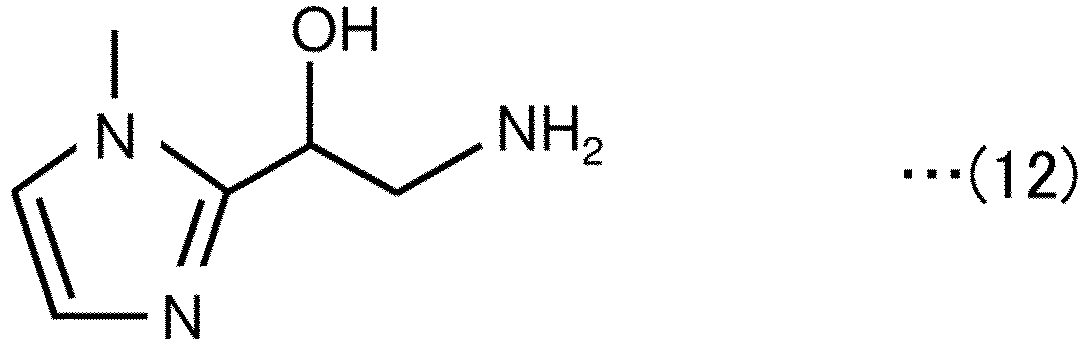
- the present inventors studied the tau polymerization inhibitory activities of the following compounds (out of the scope of the invention), of which the catechol nuclei were replaced with a furan ring, 1-methylimidazole ring, a pyridine ring, a nitrophenyl ring, a chlorophenyl ring, an aminophenyl ring, a dimethylphenyl ring, and a hydroxyphenyl ring, respectively: namely, 2-amino-1-(furan-2-yl) ethanol (indicated by 2-A-1F-2-E and represented by the following Chemical Formula (11)), 2-amino-1-(1-methyl-1H-imidazol-2-yl) ethanol (indicated by 2-A-1H1-E and represented by the following Chemical Formula (12)), 2-amino-1-(pyridine-3-yl) ethanol (indicated by 2-A-1-P-3E and represented by the following Chemical Formula (13)),
- the present inventors regarded the catechol skeleton and two adjacent phenolic hydroxyl groups as indispensable ones to achieve the tau polymerization inhibitory activity.
- the present inventors studied the influence of the substituent located at position 4 of the catechol nucleus.
- the substituent is 2-isopropylamino-1-hydroxyethyl group, which was replaced with an aminomethyl group, a tert-butyl group, a chloro group, and a ketone group.
- FIGS. 4 and 5 show the thioflavin T activities of various kinds of compounds. As shown in Figure 1, 2 , 4, 5 , these compounds (out of the scope of the invention) exhibited as high tau polymerization inhibitory activity as isoproterenol and catechol.
- FIG. 6 shows the thioflavin T activity of 4-aminocatechol.
- FIG. 7 shows the thioflavin T activity of 1,2,4-benzenetriol.
- the solid circles ⁇ indicate the thioflavin T activity measured in the absence of any of these compounds
- the open circles ⁇ indicate the thioflavin T activity measured in the presence of 1 ⁇ M of each compound
- the open diamonds ⁇ indicate the thioflavin T activity measured under the same condition and in the presence of 1 ⁇ M of isoproterenol.
- FIG. 8 shows the thioflavin T activities of various kinds of compounds, out of the scope of the invention, wherein: FIG. 8A shows that of catechol; FIG. 8B shows that of 2,3-dihydroxybenzaldehyde; FIG. 8C shows that of 3-methoxycatechol; FIG. 8D shows that of 4-tert-butylcatechol; FIG. 8E shows that of 3,4-dihydroxybenzylamine; FIG. 8F shows that of 3-chloroacetylcatechol; FIG. 8G shows that of 1-(3,4-dihydroxyphenyl)-2-morpholinoethanol; FIG. 8H shows that ofpyrogallol; FIG. 8I shows that of 3,4-dihydroxyacetophenon; FIG. 8J shows that of 4-chlorocatechol; and FIG. 8K shows that of 3-(3,4-dihydroxyphenyl)-3-hydroxy-2-(isopropylamino) propionate.
- FIG. 8A shows that of catechol
- FIG. 8B shows that
- the solid circles ⁇ indicate the thioflavin T activity measured in the absence of any of these compounds
- the open circles ⁇ indicate the thioflavin T activity measured in the presence of 1 ⁇ M of each compound
- the open diamonds ⁇ indicate the thioflavin T activity measured under the same condition and in the presence of 1 ⁇ M of isoproterenol.
- these compounds turned out to have tau aggregation inhibitory activity.
- the present inventors discovered that compounds including an amino group and a hydroxyl group at position 4 of the catechol nucleus functioning as a tau polymerization inhibitor inhibited the tau polymerization strongly.
- FIG. 9 shows the thioflavin T activity of 3-aminocatechol (represented by the following Chemical Formula (33), and out of the scope of the invention).
- the solid circles ⁇ indicate the thioflavin T activity measured in the absence of any of these compounds
- the open circles ⁇ indicate the thioflavin T activity measured in the presence of 1 ⁇ M of 3-aminocatechol
- the open diamonds ⁇ indicate the thioflavin T activity measured under the same condition and in the presence of 1 ⁇ M of isoproterenol
- the solid diamonds + indicate the thioflavin T activity measured under the same condition and in the presence of 1 ⁇ M of 4-aminocatechol.
- the present inventors discovered that such a compound including an amino group at position 3 of the catechol nucleus (out of the scope of the invention) inhibited the tau polymerization as strongly as 4-aminocatechol did.
- the present inventors studied the influence to be caused by adding a side chain to the amino group in 4-aminocatechol.
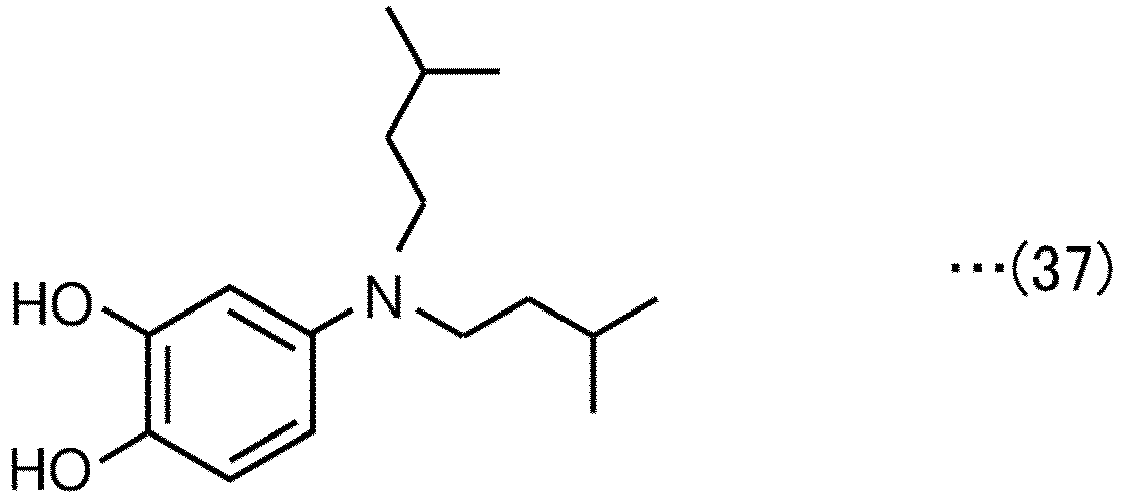
- the compounds examined were 4-(isopentylamino) catechol (represented by the following Chemical Formula (34) and in accordance with the invention), 4-(morpholinocarbonylamino) catechol (represented by the following Chemical Formula (35) and out of the scope of the invention), 4-(4-aminobutanoylamino) catechol (represented by the following Chemical Formula (36) and out of the scope of the invention), and 4-(diisopentylamino) catechol (represented by the following Chemical Formula (37) and out of the scope of the invention).
- FIG. 10 shows the thioflavin T activities of various kinds of compounds, wherein: FIG. 10A shows that of 4-(isopentylamino) catechol in accordance with the invention; FIG. 10B shows that of N-(3,4-dihydroxyphenyl)morpholine-4-carboxyamide (out of the scope of the invention); FIG. 10C shows that of 4-(4-aminobutanoylamino) catechol (out of the scope of the invention); and FIG. 10D shows that of 4-(diisopentylamino) catechol (out of the scope of the invention).
- FIG. 10A shows that of 4-(isopentylamino) catechol in accordance with the invention
- FIG. 10B shows that of N-(3,4-dihydroxyphenyl)morpholine-4-carboxyamide (out of the scope of the invention)
- FIG. 10C shows that of 4-(4-aminobutanoylamino) catechol (out of the scope of the invention)
- the solid circles ⁇ indicate the thioflavin T activity measured in the absence of any of these compounds
- the open circles ⁇ indicate the thioflavin T activity measured in the presence of 1 ⁇ M of each of these compounds
- the open diamonds ⁇ indicate the thioflavin T activity measured under the same condition and in the presence of 1 ⁇ M of isoproterenol
- the solid diamonds ⁇ indicate the thioflavin T activity measured under the same condition and in the presence of 1 ⁇ M of 4-aminocatechol.
- the present inventors discovered that as for 4-aminocatechol, in particular, a mono alkylated derivative of the amino group at position 4 had significant tau aggregation inhibitory effect. Meanwhile, the present inventors also discovered that addition of an electron-withdrawing side chain to the amino group at position 4 and dialkylation thereof affected the tau aggregation inhibitory effect.
- FIG. 11 shows the thioflavin T activity of 4-methoxycatechol (represented by the following Chemical Formula (38)) in which the hydroxyl group at position 4 of 1,2,4-benzenetriol was replaced with a methoxyl group.
- the solid circles ⁇ indicate the thioflavin T activity measured in the absence of any compound
- the open circles ⁇ indicate the thioflavin T activity measured in the presence of 1 ⁇ M of 4-methoxycatechol
- the open diamonds ⁇ indicate the thioflavin T activity measured under the same condition and in the presence of 1 ⁇ M of isoproterenol
- the solid diamonds + indicate the thioflavin T activity measured under the same condition and in the presence of 1 ⁇ M of 4-aminocatechol.
- alkylation of the hydroxyl group at position 4 of 1,2,4-benzenetriol did not affect 1,2,4-benzenetriol's intense tau polymerization inhibitory activity.
- 4-aminocatechol was further compared to methylene blue and isoproterenol, which are compounds that are known to have tau polymerization inhibitory activity.
- FIG. 12 shows the thioflavin T activities of various kinds of compounds, wherein: FIG. 12A shows that of methylene blue; FIG. 12B shows that of isoproterenol; FIG. 12C shows that of 4-aminocatechol; and FIG. 12D shows, in comparison, those of methylene blue, isoproterenol and 4-aminocatechol.
- These compounds were prepared to have concentrations of 0.1, 1, 10 and 100 ⁇ M, respectively, to examine their tau polymerization inhibitory activity.
- FIG. 12 when the thioflavin T activity was used as an index, inhibition of the activity was indicated more significantly than isoproterenol at every concentration equal to or greater than 1 ⁇ M.
- methylene blue was considered a reference, because methylene blue is a highly colored compound.
- FIG. 13 shows the results of electrophoresis carried out on sarcosyl soluble tau and sarcosyl insoluble tau
- FIGS. 13A, 13B and 13C show the results of electrophoresis carried out on methylene blue, isoproterenol, and 4-aminocatechol, respectively.
- each drug inhibited the tau polymerization depending on the concentration. Specifically, at as low a concentration as 1 ⁇ M, 4-aminocatechol reduced sarcosyl insoluble tau polymers more significantly than methylene blue and isoproterenol did.
- FIGS. 14B, 14C and 14D show the results of electrophoresis carried out on methylene blue, isoproterenol, and 4-aminocatechol, respectively.
- FIGS. 14B to 14D in the presence of 10 ⁇ M of methylene blue or isoproterenol, the quantity of the tau recovered in Fractions 4 and 5, which would contribute to forming tau fibers, was seen to decrease significantly, and the quantity of the tau recovered in Fraction 3, corresponding to oligomer tau, was also seen to decrease.
- 10 ⁇ M of 4-aminocatechol both the fibrosed tau and the oligomer tau were eliminated almost completely.
- 4-aminocatechol reduced the polymerization of tau and formation of oligomer at a lower concentration than an existent tau polymerization inhibitor.
- a compound including: catechol; and a 4-substituted catechol structure compound having, at position 4 of its catechol ring, an electron-donating substituent R other than a hydrocarbon group; or a 3-substituted catechol structure compound having, at position 3 of its catechol ring, an electron-donating substituent R; or a salt of any of these compounds has a catechol nucleus with intense tau polymerization inhibitory activity. Comparing its tau polymerization inhibitory activity to those of isoproterenol and catechol, it can be seen that the activity would be enhanced significantly (e.g., approximately five to tenfold) by adding an electron-donating side chain such as 4-aminocatechol.
- the compound such as 4-aminocatechol or 1,2,4-benzenetriol obtained by the present invention may turn into a tau polymerization inhibitor exhibiting effectiveness at lower concentrations than previous compounds, and therefore, can be a far more effective dementia remedy for treating Alzheimer's disease and all the other kinds of tauopathies.
- the drug needs to be absorbed into the patient's body and transferred into his or her brain, a certain in-brain concentration needs to be maintained for a long time, and it is difficult for the dementia patients to comply with the medication schedule exactly, it can be said that such a compound exhibiting high effectiveness at lower concentrations is advantageous.
- such a compound according to the present invention, of which the basic skeleton is 4-aminocatechol or 1,2,4-benzenetriol would be used as not only an effective dementia remedy but also an effective tau research tool as well.
- the present invention is useful for treating tauopathies.
Landscapes
- Health & Medical Sciences (AREA)
- General Health & Medical Sciences (AREA)
- Pharmacology & Pharmacy (AREA)
- Chemical & Material Sciences (AREA)
- Animal Behavior & Ethology (AREA)
- Medicinal Chemistry (AREA)
- Veterinary Medicine (AREA)
- Public Health (AREA)
- Life Sciences & Earth Sciences (AREA)
- Epidemiology (AREA)
- Engineering & Computer Science (AREA)
- Bioinformatics & Cheminformatics (AREA)
- Neurology (AREA)
- Biomedical Technology (AREA)
- Neurosurgery (AREA)
- Organic Chemistry (AREA)
- Nuclear Medicine, Radiotherapy & Molecular Imaging (AREA)
- General Chemical & Material Sciences (AREA)
- Chemical Kinetics & Catalysis (AREA)
- Emergency Medicine (AREA)
- Hospice & Palliative Care (AREA)
- Psychiatry (AREA)
- Acyclic And Carbocyclic Compounds In Medicinal Compositions (AREA)
- Pharmaceuticals Containing Other Organic And Inorganic Compounds (AREA)
Description
- The present invention relates to a tau aggregation inhibitor for inhibiting the formation of a tau aggregate which would cause a neurologic deficit and synapse elimination.
- Alzheimer's disease (AD) is a kind of dementia, of which the major symptoms include a cognitive decline and a personality change. Dementia is a common disease by which approximately 25% of Japanese elderly people of age 85 or older are affected, and AD accounts for about 50% of all kinds of dementia. As of 2011, Japan has approximately 1.6-1.8 million AD patients, the number of which should go on rising as the elderly people account for an increasing percentage of the world population in the future. This is a particularly serious problem for Japan, in which the number of children per household has been falling while the number of elderly people has been rising recently.
- An acetylcholinesterase inhibitor, which is believed to be most effective in preventing and treating AD, is in fact only partially effective for patients with a mild or moderate degree of disease, and its effectiveness for patients with an advanced degree of disease is denied by a lot of people.
- Although AD is actually characterized by senile plaque of β amyloid and by Neurofibrillary Tangles (NFT) formed by abnormal tau protein polymerization, recent neuropathological comments about AD patients indicate that the current mainstream AD research is based on an amyloid β hypothesis that an abnormal amyloid β peptide triggers the AD symptom.
- However, it has recently been found that in the familial frontotemporal dementia (FTDP), the dementia symptom expresses itself due the formation of NFTs promoted by the mutation of a tau gene, and abnormality is caused in nerve cells just by aggregation and accumulation of the tau protein in the brain. Thus, people have recently been paying a lot of attention to the correlation between the tau aggregation and the onset of AD.
- The tau protein is a kind of protein which is present in profusion in central nerve cells and which is indispensable for the neuroaxis that forms a neural network in the brain to function properly. However, once the tau protein formed an insoluble aggregate in cells, the axonal transport would no longer work fine to cause the death of nerve cells.
- Japanese Unexamined Patent Application Publication
(Translation of PCT Application) No. 2004-534854 -
US2011/144124A1 describes compounds that bear two catechol rings used for modulating tau aggregation and alleviating tauopathies. - A. Dacchache et al., Neurochemistry International, Vol. 58, Issue 6 (2011) 700-707 describes hydroxytyrosol obtained from olives as tau aggregation inhibitor.
-
EP2764863A1 describes the following compounds isoprenaline, dopamine, dobutamine, levodopa, levodopa/carbidopa, hexoprenaline, methyldopa, droxidopa, as tau aggregation inhibitors. - The tau aggregation inhibitor described above, however, cannot sufficiently inhibit the tau aggregation in cells, and cannot be regarded as contributing to treating various tauopathies such as AD properly.
- In view of the foregoing background, it is therefore an object of the present invention to provide a tau aggregation inhibitor which can sufficiently inhibit the tau aggregation in cells.
- A tau aggregation inhibitor according to an embodiment includes: 4-substituted catechol structure compound having, at
position 4 of its catechol ring, an electron-donating substituent R other than a hydrocarbon group; or a salt of any of these compounds. - According to the present invention, the tau aggregation is sufficiently suppressed in cells, thus allowing for remedying patients with AD and other tauopathies, against which there have been no effective cures so far, and eventually making a lot of contributions to the forthcoming aging society by improving the living standards of the elderly, lightening the burden of long-term care, and cutting down the medical expenses.
-
-
FIG. 1 shows the thioflavin T activities of eleven different kinds of compounds out of the scope of the invention. -
FIG. 2 shows the thioflavin T activities of fourteen different kinds of compounds out of the scope of the invention. -
FIG. 3 shows the thioflavin T activities of three different kinds of compounds out of the scope of the invention. -
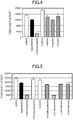
FIG. 4 shows the thioflavin T activities of six different kinds of compounds out of the scope of the invention. -
FIG. 5 shows the thio flavin T activities of eight different kinds of compounds out of the scope of the invention. -
FIG. 6 shows the thio flavin T activity of 4-aminocatechol. -
FIG. 7 shows the thio flavin T activity of 1,2,4-benzenetriol. -
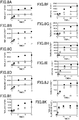
FIG. 8 shows the thioflavin T activities of various kinds of compounds out of the scope of the invention, wherein:FIG. 8A shows that of catechol;FIG. 8B shows that of 2,3-dihydroxybenzaldehyde;FIG. 8C shows that of3-methoxycatechol;FIG. 8D shows that of 4-tert-butylcatechol;FIG. 8E shows that of 3,4-dihydroxybenzylamine;FIG. 8F shows that of 3-chloroacetylcatechol;FIG. 8G shows that of 1-(3,4-dihydroxyphenyl)-2-morpholino ethanol;FIG. 8H shows that ofpyrogallol;FIG. 8I shows that of 3,4-dihydroxyacetophenon;FIG. 8J shows that of 4-chlorocatechol; andFIG. 8K shows that of 3-(3,4-dihydroxyphenyl)-3-hydroxy-2-(isopropylamino) propionate. -
FIG. 9 shows the thioflavin T activity of aminocatechol. -
FIG. 10 shows the thioflavin T activities of various kinds of compounds, wherein:FIG. 10A shows that of 4-(isopentylamino) catechol according to the invention;FIG. 10B shows that of 4-(morpholino carbonylamino) catechol out of the scope of the invention;FIG. 10C shows that of 4-(4-aminobutanoylamino) catechol out of the scope of the invention; andFIG. 10D shows that of 4-(diisopentylamino) catechol out of the scope of the invention. -
FIG. 11 shows the thioflavin T activity of 4-methoxycatechol. -
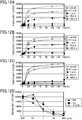
FIG. 12 shows the thioflavin T activities of various kinds of compounds, wherein:FIG. 12A shows that of methylene blue;FIG. 12B shows that of isoproterenol;FIG. 12C shows that of 4-aminocatechol in accordance with the invention; andFIG. 12D shows, in comparison, those of methylene blue, isoproterenol and 4-aminocatechol. -
FIG. 13 shows the results of electrophoresis carried out on sarcosyl soluble tau and sarcosyl insoluble tau, whereinFIGS. 13A, 13B and 13C show the results of electrophoresis carried out on methylene blue, isoproterenol, and 4-aminocatechol, respectively. -
FIG. 14A illustrates how the polymerized tau's densities were fractionated by sucrose density-gradient centrifugation, andFIGS. 14B, 14C and 14D show the results of electrophoresis carried out on methylene blue, isoproterenol, and 4-aminocatechol, respectively. - Embodiments of the present invention will now be described in detail with reference to the accompanying drawings. Note that those embodiments will be described just for the sake of allowing the reader to understand more easily the principle of the present invention. Other embodiments that would be readily created by those skilled in the art by appropriately modifying the configuration of the embodiment to be described below also fall within the scope of the present invention.
- As a result of intensive researches, the present inventors newly discovered that a compound including: a 4-substituted catechol structure compound having, at
position 4 of its catechol ring, an electron-donating substituent R which is any one of:
an amino group NHR' wherein R' is a hydrogen atom, an alkyl group, a cycloalkyl group, an aryl group, an aralkyl group or a heterocyclic group; a hydroxyl group and an alkoxy group would work effectively in preventing and treating a tauopathy. Based on this finding, the present inventors perfected our invention. - In this description, the "catechol structure compound" refers herein to a compound having a catechol structure in its structural formula. The "catechol structure" refers herein to the structure of a catechol that is a compound in which two of the substituents of its benzene ring are hydroxyl groups that are located at ortho positions.
- Also, the "electron-donating substituent R other than a hydrocarbon group" is obtained herein by excluding a hydrocarbon group from all substituents and by further selecting an electron-donating substituent. Examples of the "hydrocarbon groups" include an alkyl group, a group derived from alkene, and an aromatic hydrocarbon group.
- The alkyl group is not limited to any particular group, but is preferably one of C1 to C6 alkyl groups with one to six carbon atoms. The C1 to C6 alkyl group may be a straight chain alkyl group or a branched chain alkyl group, for example. More specific examples of C1 to C6 alkyl groups include a methyl group, an ethyl group, an n-propyl group, an isopropyl group, an n-butyl group, an isobutyl group, a tert-butyl group, a sec-butyl group, an n-pentyl group, a neopentyl group, an n-hexyl group, an isohexyl group, and a 3-methylpentyl group. Those alkyl groups may include an alkyl group derivative such as an aminoalkyl group.
- The "electron-donating substituent R" is selected from the group consisting of an amino group, a hydroxyl group and an alkoxy group.
- The amino group is -NHR'. R' indicates a hydrogen atom, an alkyl group, a cycloalkyl group, an aryl group, an aralkyl group or a heterocyclic group.
- The alkyl group as R' is preferably a straight chain or branched chain alkyl group with a carbon number of one to six, and is more preferably a straight chain or branched chain alkyl group with a carbon number of one to five. The aralkyl group as R' is preferably an aralkyl group with a carbon number of seven to eleven, and may be a benzyl group, a phenyl ethyl group, a phenyl propyl group, a phenyl butyl group, or a naphthyl methyl group, for example. Optionally, one or more of the carbon atoms that form the alkyl chain of the alkyl and aralkyl groups may be replaced with an unsaturated bond, an ether bond or an ester bond, and R and R' may be bonded together to form a ring.
- The cycloalkyl group as R' is preferably a cycloalkyl group with a carbon number of three to eight, and is more preferably a cycloalkyl group with a carbon number of three to six.
- The aryl group as R' may be a phenyl group, a naphthyl group, an anthracenyl group, a triphenylenyl group, a pyrenyl group, or a fluorenyl group, for example.
- The heterocyclic group as R' may be a five- to seven-membered aromatic heterocyclic ring, saturated heterocyclic ring, or unsaturated heterocyclic ring including not only carbon atoms but also one to four hetero atoms selected from the group consisting of nitrogen, oxygen and sulfur atoms, or a condensed heterocyclic ring in which these heterocyclic rings and a benzene ring are condensed together. Examples of preferred heterocyclic groups include a 2-furyl group, a 3-furyl group, a 2-thienyl group, a 3-thienyl group, a 2-oxazolyl group, a 2-oxazolinyl group, a 3-isooxazolyl group, a 4-isooxazolyl group, a 5-isooxazolyl group, a 3-isooxazolinyl group, a 2-thiazolyl group, a 2-thiazolinyl group, a 3-isothiazolyl group, a 3-isothiazolinyl group, a 2-pyranyl group, a 4-tetrahydropyranyl group, a 1-azetidinyl group, a 2-azetidinyl group, a 3-azetidinyl group, a 2-pyrrolyl group, a 2-pyrrolidinyl group, a 2-imidazolyl group, a 3-pyrrazolyl group, a 2-imidazolinyl group, a 2-pyrridyl group, a 3-pyrridyl group, a 4-pyrridyl group, a 2-piperidyl group, a piperidino group, a 2-morpholinyl group, a morpholino group, a 2-piperazinyl group, a 2-pyrimidinyl group, a 3-pyridazinyl group, and a 2-pyrazinyl group.
- The alkoxy group refers herein to a group in which an alkyl group R is directly bonded to an oxygen atom (O). Examples of the alkyl groups indicated by R include a methyl group, an ethyl group, an n-propyl group, an isopropyl group, an n-butyl group, an isobutyl group, a sec-butyl group, a tert-butyl group, pentyl groups, hexyl groups, octyl groups, decyl groups, a cyclopentyl group, and a cyclohexyl group. The alkoxy group refers herein to a straight chain or branched chain alkoxy group such as methoxy, ethoxy, n-propoxy, isopropoxy, n-butoxy, isobutoxy, sec-butoxy, tert-butoxy, pentyloxy, hexyloxy, heptyloxy and octyloxy.
- The 4-substituted catechol structure compound is particularly preferably either 4-aminocatechol or 1,2,4-benzenetriol.
- Alternatively, the 4-substituted catechol structure compound may also be 4-(isopentylamino) catechol or 4-methoxycatechol.
- A tau aggregation inhibitor according to this embodiment may use any of these catechol structure compounds either by itself or in combination.
- A tau aggregation inhibitor according to this embodiment further includes their salts, which are pharmacologically acceptable salts. Examples of those salts include: alkali metal salts (such as potassium salts and sodium salts), alkaline earth metal salts (such as magnesium salts and calcium salts) and other metal salts; alkali carbonate metals (such as lithium carbonate, potassium carbonate, sodium carbonate, and cesium carbonate), alkali hydrogen carbonate metals (such as lithium hydrogen carbonate, sodium hydrogen carbonate, and potassium hydrogen carbonate), alkali metal hydroxides (such as sodium hydroxide and potassium hydroxide) and other salts of inorganic bases; trialkylamine (such as trimethylamine and triethylamine), pyridine, quinoline, piperidine, imidazole, picoline, dimethylaminopyridine, dimethylaniline, N-alkyl-morpholine, DBN, DBU and other salts of organic bases; hydrochlorides, hydrobromides, hydroiodides, sulfates, nitrates, phosphates and other salts of inorganic acids; formates, acetates, propionates, oxalates, malonates, succinates, fumarates, maleates, lactates, malates, citrates, tartrates, carbonates, picrates, methanesulfonates, glutamates and other salts of organic acids.
- Optionally, a tau aggregation inhibitor according to this embodiment may share its effective dose with a pharmaceutically acceptable carrier. As the carrier, a solid such as an excipient or a liquid such as a diluent may be used. Examples of specific carriers include magnesium stearate, lactose, starch, gelatin, agar, talc, pectin, acacia, olive oil, sesame oil, cacao butter, ethylene glycol, and distilled water.
- The "tauopathy" refers herein to a neurodegenerative disease characterized in that accumulation of phosphorylated tau is seen in nerve cells and glial cells. Examples of the tauopathies include AD, Down's syndrome, frontotemporal dementia, cotricobasal degeneration (CBD) and progressive supranuclear palsy (PSP).
- In this description, "to prevent a tauopathy" means herein preventing a tauopathy disorder from occurring, and "to treat a tauopathy" means herein either preventing a tauopathy disorder from advancing, or alleviating or relieving the tauopathy disorder.
- A tau aggregation inhibitor according to this embodiment may include, as appropriate, one or more additives selected from the group consisting of a tonicity agent, a buffer agent, a solubilizing agent, an antiseptic agent, and a pH adjusting agent that are pharmaceutically acceptable.
- Examples of the tonicity agents include potassium chloride, sodium chloride, boric acid, mannitol, glycerin, propylene glycol, polyethylene glycol, maltose, sucrose, sorbitol, and glucose.
- Examples of the buffer agents include organic acids such as amino acid and succinic acid, inorganic acids such as boric acid and phosphoric acid, and other medicinally acceptable salts.
- Examples of the solubilizing agents include: polyethylene glycol, polyvinyl pyrrolidone, polyvinyl alcohol, hydroxypropylmethyl cellulose and other polymers; polysorbate, polyoxyethylene hydrogenated castor oil, polyoxyethylene, polyoxypropylene and other surfactants; propylene glycol and other polyhydric alcohols; benzoic acid, sorbic acid and other organic acids; aspartic acid, histidine, glycine, lysine and other amino acids.
- Examples of the antiseptic agents include: benzethonium, benzalkonium, benzododecinium and other quaternary ammonium salts; chlorhexidine and other salts of cationic compounds; methyl parahydroxybenzoate, propyl parahydroxybenzoate and other parahydroxybenzoate esters; and chlorobutanol, benzyl alcohol and other alcohol compounds.
- Examples of the pH adjusting agents include sulfuric acid, hydrochloric acid, acetic acid, lactic acid, calcium hydroxide, potassium hydroxide, sodium hydroxide, magnesium hydroxide, monoethanol amine, triethanol amine, diisopropanol amine, and triisopropanol amine.
- The dosage of a tau aggregation inhibitor according to this embodiment is not particularly limited as long as intended effects are produced, and is determined appropriately with the degree of symptom, sex, age and other factors of the patient, to which the inhibitor is going to be administered, taken into consideration. The dosage of the tau aggregation inhibitor administered to an adult person per day may be in the range of 0.0001 to 1000 mg, for example. This dosage per day may be administered at a time in one day but may also be divided into a few dosages to be separately administered multiple times in one day.
- A tau aggregation inhibitor according to this embodiment may be prepared into any appropriate form of medicine according to the mode of administration. The medicine may be administered orally in a solid form such as granule, pill, tablet, capsule, or powder, or in a liquid form. On the other hand, the medicine may also be administered non-orally by injection such as intravenous or intramuscular injection.
- When phosphorylated, tau molecules are associated with each other to form a tau oligomer. As this tau oligomer grows to have a β sheet structure, a spherical granular tau aggregate is formed. The granular tau aggregate would be comprised of approximately 40 tau molecules. These granular tau aggregates are combined together to form a tau fiber called "paired helical filament (PHF)" through NFTs. A recent study using a mouse model revealed that if the overexpression of tau was suppressed at a timing when NFTs were formed, the mice's memory learning skills improved, but NFTs continued being formed. This result suggests that a decline in nerve function was not caused by NFTs themselves but had rather been caused while those NFTs were being formed. The NFTs themselves would not have toxicity, but the neurotoxicity would have been caused mostly by the aggregation process to form the NFTs. A tau aggregation inhibitor according to this embodiment inhibits the tau aggregation not only during a process in which the PHF is formed by allowing the granular tau aggregates to combine with each other but also during a process in which spherical granular tau aggregates are formed. The nerve cells of the brain are denatured due to not only accumulation of mutated tau protein but also accumulation of normal tau protein as well. A tau aggregation inhibitor according to the present invention also inhibits the aggregation of the normal tau protein, and therefore, may be used to prevent or treat AD and any other tauopathy symptoms.
- First of all, a plasmid expressing human-type tau 0N4R isoform (383 amino acid) was introduced into E. coli BL21(DE3) strain to purify a recombinant tau. The purification was carried out by modifying the method of Taniguchi et al. (see Taniguchi et al., 2008, JBC, 280, 7614). A soluble fraction was prepared based on E. coli in which tau expression had been induced with isopropyl-β-thiogalactopyranoside, and then fractionation was carried out with a phosphocellulose column (e.g., P11 column produced by Whatman). The fraction eluted at an NaCl concentration of 0.1 to 0.3 M was recovered to perform precipitation and concentration using ammonium sulfate. The precipitate thus obtained was dissolved in a buffer containing 0.5 M of NaCl and 2% of 2-mercaptoethanol and then heated to 100°C for five minutes. Then, the reactant was subjected to a centrifugation at 15,000 xg for 15 minutes. The supernatant thus obtained was recovered and then subjected to precipitation and concentration with ammonium sulfate. The precipitate thus obtained was dissolved in a solution containing 20% of acetonitrile and 0.1% of formic acid so as to be purified using reversed phase HPLC (with a Cosmosil protein-R column produced by Nacalai Tesque). Fractions including full-length recombinant tau were mixed together and then the mixture thus obtained was dried with a freeze dryer to obtain a dried and purified recombinant tau sample. The yield and concentration of the tau thus obtained were analyzed by Coomassie Brilliant Blue (CBB) staining after the product was subjected to electrophoresis using 10% polyacrylamide gel.
- The dried and purified recombinant tau sample was dissolved in purified water at a concentration of 0.9 mg/ml. Then, this solution was diluted so that thioflavin T with a final concentration of 10 µM, 0.1 M NaCl, 0.45 mg/ml recombinant tau, 10 mM HEPES pH7.4 and various compounds would have target concentrations. Next, their fluorescence value (under excitation light at 360 nm and fluorescent light at 465 nm) was measured with a fluorescent plate reader (infinit F200 produced by TECAN). Thereafter, heparin was added so that the concentration would be 60 µg/ml and then incubation was carried out at 37°C in a moisture retention box to measure a variation in fluorescence value with time. The incubation was carried out for 168 hours, the fluorescence value was measured, and then the reacted solution was recovered to prepare a sarcosyl insoluble fraction. The sarcosyl insoluble fraction was made to have a final concentration of 1% by adding an aqueous solution of 10% (one-tenth quantity of) sodium N-lauroylsarcosinate to the reacted solution recovered. The solution was subjected to incubation at 4 °C for 30 minutes and then subjected to a centrifugation at 100,000 xg for 20 minutes to separate the supernatant and the precipitate from each other. With the supernatant fraction and the precipitate regarded as a soluble tau fraction and a sarcosyl insoluble fraction, respectively, the yield of tau was analyzed by electrophoresis using 10% polyacrylamide gel. Also, part of the reacted solution was fractionated by sucrose density-gradient centrifugation using the method of Maeda et al. (see Maeda et al., 2007, Biochemistry, 46, 3856). After the centrifugation, the reactant was fractioned into 1 to 6 according to density and the tau yield was analyzed by 10% polyacrylamide gel electrophoresis and Western blotting.
- As for structural development, the tau aggregation inhibition experiment described above was carried out by either purchasing or synthesizing a compound in which the structure of isoproterenol was divided into the four parts of: (A) two hydroxyl groups with a catechol skeleton; (B) a benzene ring with the catechol skeleton; (C) an α-hydroxyl group; and (D) an isopropylamide group and their structures were partially modified. During screening, the concentration of the compound was supposed to be 1 µM and compared to the effect achieved by 1 µM of isoproterenol under the same incubation condition.
- First of all, to verify the effect achieved by the catechol skeleton itself, the structure-activity correlation of (A) was studied.
FIGS. 1 and 2 show the respective thio flavin T activities of various kinds of compounds (out of the scope of the invention. As shown inFIGS. 1 and 2 , catechol (indicated by CC and represented by the following Chemical Formula (1)) is a compound having as high tau polymerization inhibitory activity as isoproterenol, but no effects were produced by any of 2-methoxyphenol (indicated by 2-MP and represented by the following Chemical Formula (2)), 2-aminophenol (indicated by 2-AP and represented by the following Chemical Formula (3)), resorcinol (represented by the following Chemical Formula (4)), salicylic alcohol (represented by the following Chemical Formula (5)), and salicylic acid (represented by the following Chemical Formula (6)), each of which had been obtained by transforming any hydroxyl group.


- Also, as shown in
FIGS. 1 and 2 , (S)-(+)-Norepinephrine (D-Nor) and thioflavin T activities were compared to each other with respect to various kinds of compounds. No tau polymerization inhibitory activities were achieved by 2-amino-1-phenylethanol (indicated by 2-A-1PE and represented by the following Chemical Formula (7)) or 2-amino-1-(3,4-dichlorophenyl) ethanol (indicated by 2-A-1-DCPE and represented by the following Chemical Formula (8)). Neither homoveratylamine (indicated by HV and represented by the following Chemical Formula (9)) nor 2-(3,4-dimethoxy)ethylamine (indicated by 3,4-DMPT and represented by the following Chemical Formula (10)) exhibited any tau polymerization inhibitory activity.


- Next, the present inventors tried to change the catechol nucleus itself. The present inventors studied the tau polymerization inhibitory activities of the following compounds (out of the scope of the invention), of which the catechol nuclei were replaced with a furan ring, 1-methylimidazole ring, a pyridine ring, a nitrophenyl ring, a chlorophenyl ring, an aminophenyl ring, a dimethylphenyl ring, and a hydroxyphenyl ring, respectively: namely, 2-amino-1-(furan-2-yl) ethanol (indicated by 2-A-1F-2-E and represented by the following Chemical Formula (11)), 2-amino-1-(1-methyl-1H-imidazol-2-yl) ethanol (indicated by 2-A-1H1-E and represented by the following Chemical Formula (12)), 2-amino-1-(pyridine-3-yl) ethanol (indicated by 2-A-1-P-3E and represented by the following Chemical Formula (13)), 2-amino-1- (4-nitrophenyl) ethanol (indicated by 2-A-1-NPE and represented by the following Chemical Formula (14)), 1-(3,4-dimethylphenyl) ethylamine (indicated by 34DMPT and represented by the following Chemical Formula (15)), and 1-(2-hydroxyphenyl) ethylamine (indicated by 2-HPEA and represented by the following Chemical Formula (16)).
FIG. 3 shows the thioflavin T activities of various kinds of compounds. As shown inFIGS. 2 and 3 , none of these compounds exhibited the tau polymerization inhibitory activity.

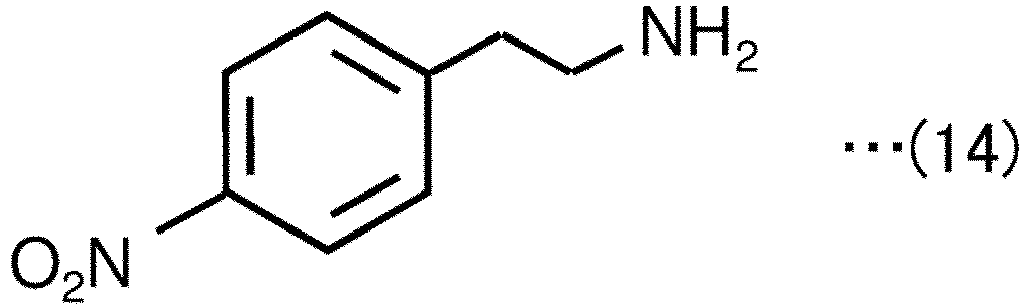
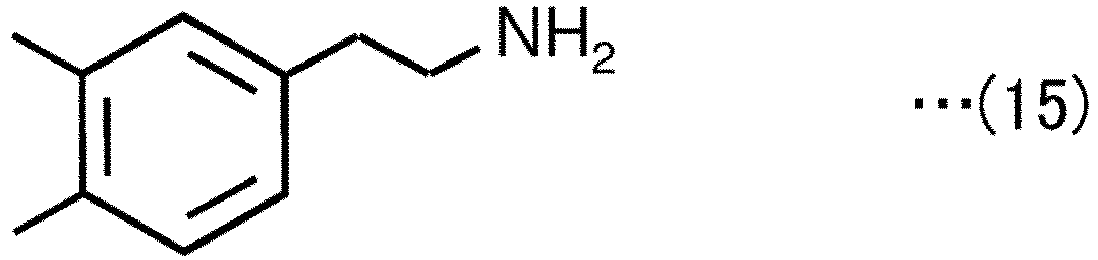
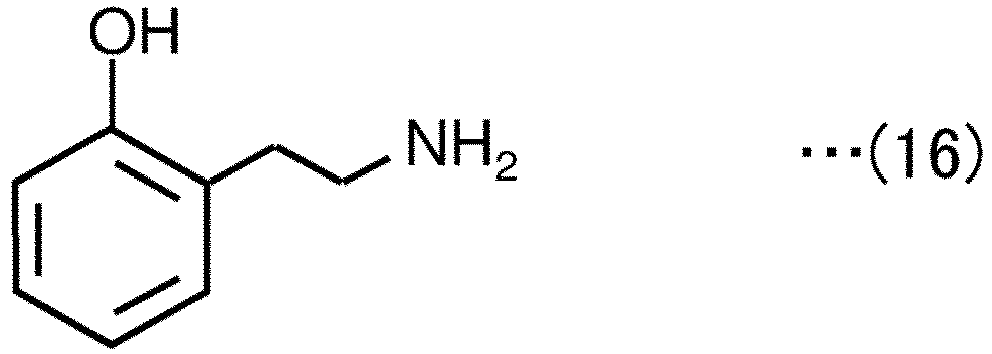
- Taking these results into consideration, the present inventors regarded the catechol skeleton and two adjacent phenolic hydroxyl groups as indispensable ones to achieve the tau polymerization inhibitory activity.
- Next, the present inventors studied the influence of the substituent located at
position 4 of the catechol nucleus. In isoproterenol, the substituent is 2-isopropylamino-1-hydroxyethyl group, which was replaced with an aminomethyl group, a tert-butyl group, a chloro group, and a ketone group. That is to say, the present inventors examined the tau polymerization inhibitory activities of the following compounds (out of the scope of the invention) 3,4-dihydroxybenzylamine (represented by the following Chemical Formula (17)), 4-tert-butylcatechol (indicated by 4TBC and represented by the following Chemical Formula (18)), 4-chlorocatechol (represented by the following Chemical Formula (19)), and 3,4-dihydroxyacetophenone (indicated by 34-DAP and represented by the following Chemical Formula (20)).FIGS. 4 and 5 show the thioflavin T activities of various kinds of compounds. As shown inFigure 1, 2 ,4, 5 , these compounds (out of the scope of the invention) exhibited as high tau polymerization inhibitory activity as isoproterenol and catechol.

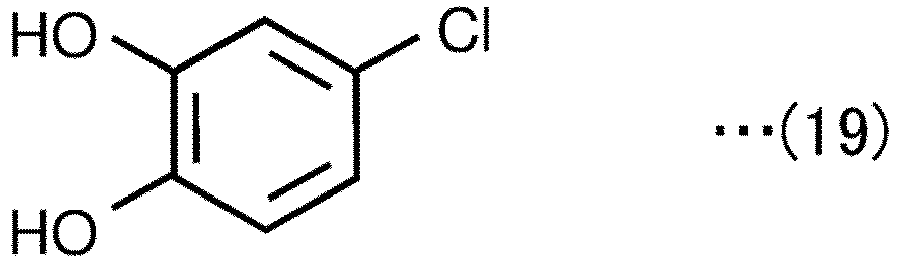

- Also, as shown in
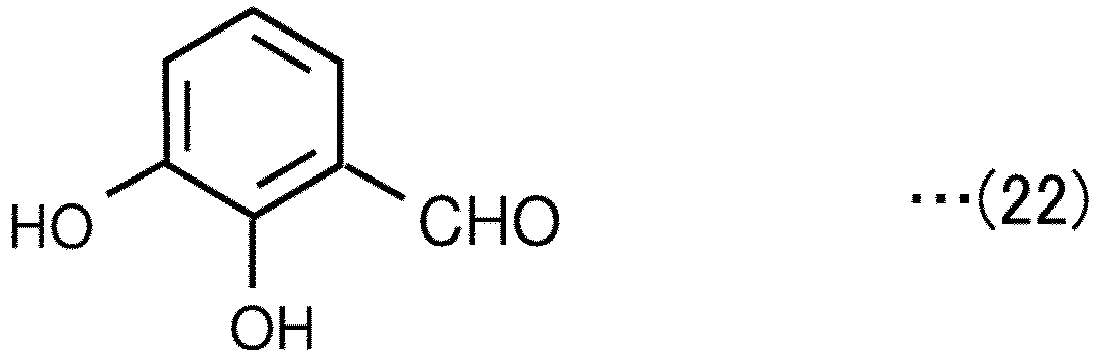
FIG. 1 , the present inventors confirmed that 3-methoxycatechol (indicated by 3MOC and represented by the following Chemical Formula (21)) and 2,3-dihydroxybenzaldehyde (indicated by 23 DHB and represented by the following Chemical Formula (22)), both out of the scope of the invention, also exhibited as high tau polymerization inhibitory activity.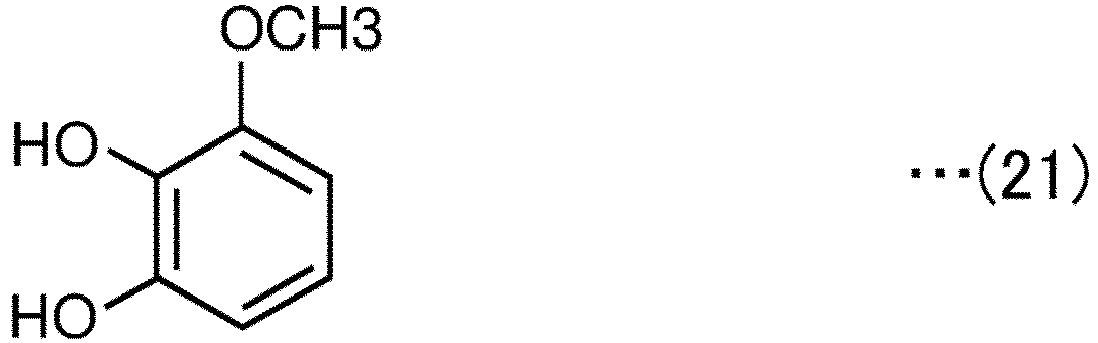
- On the other hand, as shown in
FIG. 1 , the present inventors discovered that 3,4-dihydroxybenzaldehyde (indicated by 34 DHB and represented by the following Chemical Formula (23)) andethyl 3,4-dihydroxybenzoic acid (indicated by EDHB and represented by the following Chemical Formula (24)), of which the substituent atposition 4 was replaced with an aldehyde group and an ethoxycarbonyl group, respectively, both out of the scope of the invention, exhibited no tau polymerization inhibitory activity.

- On the other hand, as shown in
FIG. 2 , 4-chloroacetylcatechol (indicated by 4-CAC and represented by the following Chemical Formula (25)) and 1-(3,4-dihydroxyphenyl)-2-morpholinoethanol (indicated by 1-D-2-ME and represented by the following Chemical Formula (26)), both out of the scope of the invention, exhibited somewhat higher tau polymerization inhibitory activity than isoproterenol and catechol.

- Based on the results of these experiments, the present inventors discovered that a compound, of which the substituent for
position 4 of catechol was a carbon chain, exhibited as high tau polymerization inhibitory activity as isoproterenol and catechol did and that the effects diminished when the substituent was aldehyde, carboxylic acid or a nitro group, for example. - In vivo, most natural product derived catechol derivatives will have a side chain comprised of carbon chains at their
position 4. Meanwhile, according to the present invention, a side chain comprised of elements other than carbon chains was newly studied.FIG. 6 shows the thioflavin T activity of 4-aminocatechol.FIG. 7 shows the thioflavin T activity of 1,2,4-benzenetriol. InFIGS. 6 and 7 , the solid circles ● indicate the thioflavin T activity measured in the absence of any of these compounds, the open circles ○ indicate the thioflavin T activity measured in the presence of 1 µM of each compound, and the open diamonds ◊ indicate the thioflavin T activity measured under the same condition and in the presence of 1 µM of isoproterenol. - As shown in
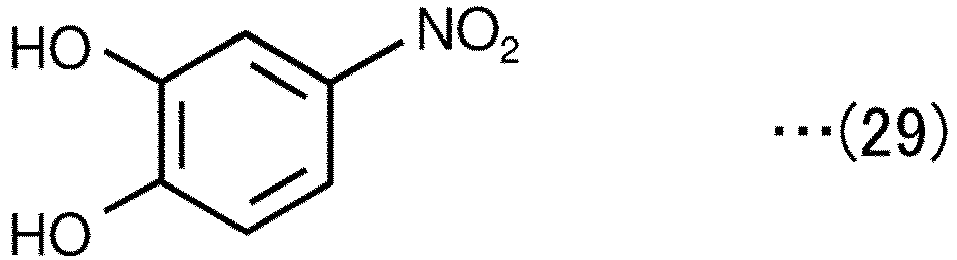
FIGS. 6 and 7 , 4-aminocatechol (represented by the following Chemical Formula (27)) and 1,2,4-benzenetriol (represented by the following Chemical Formula (28)), which are compounds of the invention including an amino group and a hydroxyl group, inhibited the tau polymerization more strongly at a concentration of 1 µM than isoproterenol and catechol did. On the other hand, as shown inFIG. 5 , no tau polymerization inhibitory activity was observed in 4-Nitropyrocatechol (represented by the following Chemical Formula (29)) in which a nitro group was substituted for theposition 4. - Structural development was further carried out on 4-aminocatechol. As a result, as shown in
FIG. 5 , regarding the following compounds out of the scope of the invention, 4-aminophenol (represented by the following Chemical Formula (30)) and 3-aminophenol (represented by the following Chemical Formula (31)), from both of which one hydroxyl group had been removed, produced only diminished effects, and 3,4-(methylenedioxy) aniline (indicated by 3,4-MDA and represented by the following Chemical Formula (32)) had lost its tau polymerization inhibitory activity, in which two hydroxyl groups were replaced.



-
FIG. 8 shows the thioflavin T activities of various kinds of compounds, out of the scope of the invention, wherein:FIG. 8A shows that of catechol;FIG. 8B shows that of 2,3-dihydroxybenzaldehyde;FIG. 8C shows that of 3-methoxycatechol;FIG. 8D shows that of 4-tert-butylcatechol;FIG. 8E shows that of 3,4-dihydroxybenzylamine;FIG. 8F shows that of 3-chloroacetylcatechol;FIG. 8G shows that of 1-(3,4-dihydroxyphenyl)-2-morpholinoethanol;FIG. 8H shows that ofpyrogallol;FIG. 8I shows that of 3,4-dihydroxyacetophenon;FIG. 8J shows that of 4-chlorocatechol; andFIG. 8K shows that of 3-(3,4-dihydroxyphenyl)-3-hydroxy-2-(isopropylamino) propionate. - In
FIG. 8 , the solid circles ● indicate the thioflavin T activity measured in the absence of any of these compounds, the open circles ○ indicate the thioflavin T activity measured in the presence of 1 µM of each compound, and the open diamonds ◊ indicate the thioflavin T activity measured under the same condition and in the presence of 1 µM of isoproterenol. As shown inFIG. 8 , these compounds turned out to have tau aggregation inhibitory activity. Also, as shown inFIGS. 6 and 7 referred to above, the present inventors discovered that compounds including an amino group and a hydroxyl group atposition 4 of the catechol nucleus functioning as a tau polymerization inhibitor inhibited the tau polymerization strongly. - A site-by-site difference caused by amino substitution for the catechol nucleus was further examined.
FIG. 9 shows the thioflavin T activity of 3-aminocatechol (represented by the following Chemical Formula (33), and out of the scope of the invention).
- In
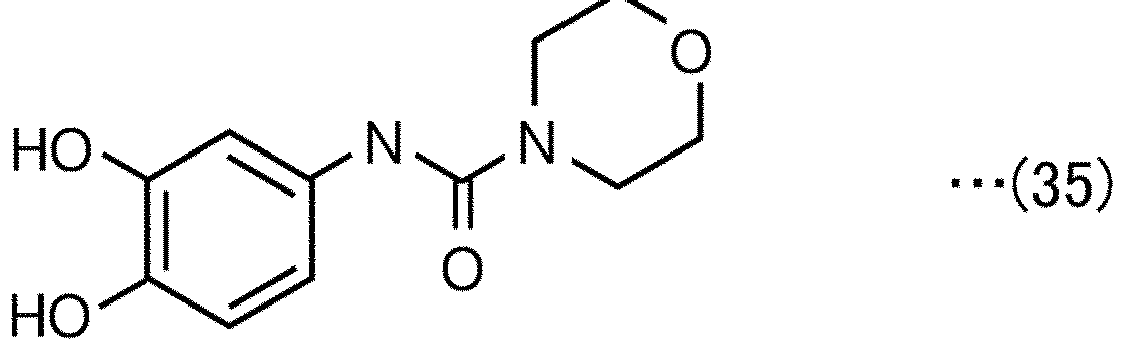
FIG. 9 , the solid circles ● indicate the thioflavin T activity measured in the absence of any of these compounds, the open circles ○ indicate the thioflavin T activity measured in the presence of 1 µM of 3-aminocatechol, the open diamonds ◊ indicate the thioflavin T activity measured under the same condition and in the presence of 1 µM of isoproterenol, and the solid diamonds + indicate the thioflavin T activity measured under the same condition and in the presence of 1 µM of 4-aminocatechol. The present inventors discovered that such a compound including an amino group atposition 3 of the catechol nucleus (out of the scope of the invention) inhibited the tau polymerization as strongly as 4-aminocatechol did. - Next, the present inventors studied the influence to be caused by adding a side chain to the amino group in 4-aminocatechol. The compounds examined were 4-(isopentylamino) catechol (represented by the following Chemical Formula (34) and in accordance with the invention), 4-(morpholinocarbonylamino) catechol (represented by the following Chemical Formula (35) and out of the scope of the invention), 4-(4-aminobutanoylamino) catechol (represented by the following Chemical Formula (36) and out of the scope of the invention), and 4-(diisopentylamino) catechol (represented by the following Chemical Formula (37) and out of the scope of the invention).


-
FIG. 10 shows the thioflavin T activities of various kinds of compounds, wherein:FIG. 10A shows that of 4-(isopentylamino) catechol in accordance with the invention;FIG. 10B shows that of N-(3,4-dihydroxyphenyl)morpholine-4-carboxyamide (out of the scope of the invention);FIG. 10C shows that of 4-(4-aminobutanoylamino) catechol (out of the scope of the invention); andFIG. 10D shows that of 4-(diisopentylamino) catechol (out of the scope of the invention). InFIG. 10 , the solid circles ● indicate the thioflavin T activity measured in the absence of any of these compounds, the open circles ○ indicate the thioflavin T activity measured in the presence of 1 µM of each of these compounds, the open diamonds ◊ indicate the thioflavin T activity measured under the same condition and in the presence of 1 µM of isoproterenol, and the solid diamonds ◆ indicate the thioflavin T activity measured under the same condition and in the presence of 1 µM of 4-aminocatechol. - As shown in
FIG. 10A , even if the 4-amino group was partially replaced with isopentyl, 4-aminocatechol's intense tau polymerization inhibitory activity did not change. On the other hand, as shown inFIG. 10B , if the 4-amino group was partially replaced with morpholine 4-carboxyamide, 4-aminocatechol's intense tau polymerization inhibitory activity slightly decreased. In contrast, as shown inFIGS. 10C and 10D , if the 4-amino group was partially replaced with 4-aminobutaneamide and diisopentyl, respectively, 4-aminocatechol's intense tau polymerization inhibitory activity decreased significantly to almost the same level as isoproterenol's. Thus, the present inventors discovered that as for 4-aminocatechol, in particular, a mono alkylated derivative of the amino group atposition 4 had significant tau aggregation inhibitory effect. Meanwhile, the present inventors also discovered that addition of an electron-withdrawing side chain to the amino group atposition 4 and dialkylation thereof affected the tau aggregation inhibitory effect. - Next, the present inventors studied the influence to be caused by adding a side chain to the hydroxyl group at
position 4 of 1,2,4-benzenetriol.FIG. 11 shows the thioflavin T activity of 4-methoxycatechol (represented by the following Chemical Formula (38)) in which the hydroxyl group atposition 4 of 1,2,4-benzenetriol was replaced with a methoxyl group.
- In
FIG. 11 , the solid circles ● indicate the thioflavin T activity measured in the absence of any compound, the open circles ○ indicate the thioflavin T activity measured in the presence of 1 µM of 4-methoxycatechol, the open diamonds ◊ indicate the thioflavin T activity measured under the same condition and in the presence of 1 µM of isoproterenol, and the solid diamonds + indicate the thioflavin T activity measured under the same condition and in the presence of 1 µM of 4-aminocatechol. As shown inFIG. 11 , alkylation of the hydroxyl group atposition 4 of 1,2,4-benzenetriol did not affect 1,2,4-benzenetriol's intense tau polymerization inhibitory activity. - Furthermore, 4-aminocatechol was further compared to methylene blue and isoproterenol, which are compounds that are known to have tau polymerization inhibitory activity.
-
FIG. 12 shows the thioflavin T activities of various kinds of compounds, wherein:FIG. 12A shows that of methylene blue;FIG. 12B shows that of isoproterenol;FIG. 12C shows that of 4-aminocatechol; andFIG. 12D shows, in comparison, those of methylene blue, isoproterenol and 4-aminocatechol. These compounds were prepared to have concentrations of 0.1, 1, 10 and 100 µM, respectively, to examine their tau polymerization inhibitory activity. As shown inFIG. 12 , when the thioflavin T activity was used as an index, inhibition of the activity was indicated more significantly than isoproterenol at every concentration equal to or greater than 1 µM. In this case, methylene blue was considered a reference, because methylene blue is a highly colored compound. - Next, samples that had been subjected to incubation for 168 hours were recovered to measure the quantity of sarcosyl insoluble tau.
FIG. 13 shows the results of electrophoresis carried out on sarcosyl soluble tau and sarcosyl insoluble tau, whereinFIGS. 13A, 13B and 13C show the results of electrophoresis carried out on methylene blue, isoproterenol, and 4-aminocatechol, respectively. As shown inFIG. 13 , each drug inhibited the tau polymerization depending on the concentration. Specifically, at as low a concentration as 1 µM, 4-aminocatechol reduced sarcosyl insoluble tau polymers more significantly than methylene blue and isoproterenol did. - Next, to examine the tau polymerization inhibition mechanism, polymerized tau's densities were fractionated by sucrose density-gradient centrifugation. As shown in
FIG. 14A , most of the soluble tau is recovered inFraction 1 and only a part of the tau is recovered inFraction 2. However, it is known that due to polymerization through heparin, fibrosed tau is recovered inFractions Fraction 3. -
FIGS. 14B, 14C and 14D show the results of electrophoresis carried out on methylene blue, isoproterenol, and 4-aminocatechol, respectively. As shown inFIGS. 14B to 14D , in the presence of 10 µM of methylene blue or isoproterenol, the quantity of the tau recovered inFractions Fraction 3, corresponding to oligomer tau, was also seen to decrease. On the other hand, in the presence of 10 µM of 4-aminocatechol, both the fibrosed tau and the oligomer tau were eliminated almost completely. Thus, the present inventors discovered that 4-aminocatechol reduced the polymerization of tau and formation of oligomer at a lower concentration than an existent tau polymerization inhibitor. - The results of these experiments revealed that a compound including: catechol; and a 4-substituted catechol structure compound having, at
position 4 of its catechol ring, an electron-donating substituent R other than a hydrocarbon group; or a 3-substituted catechol structure compound having, atposition 3 of its catechol ring, an electron-donating substituent R; or a salt of any of these compounds has a catechol nucleus with intense tau polymerization inhibitory activity. Comparing its tau polymerization inhibitory activity to those of isoproterenol and catechol, it can be seen that the activity would be enhanced significantly (e.g., approximately five to tenfold) by adding an electron-donating side chain such as 4-aminocatechol. By either being used as it is or going through an appropriate structural development, the compound such as 4-aminocatechol or 1,2,4-benzenetriol obtained by the present invention may turn into a tau polymerization inhibitor exhibiting effectiveness at lower concentrations than previous compounds, and therefore, can be a far more effective dementia remedy for treating Alzheimer's disease and all the other kinds of tauopathies. Particularly, considering the facts that dementia patients are the elderly, long-term administration is expected, the drug needs to be absorbed into the patient's body and transferred into his or her brain, a certain in-brain concentration needs to be maintained for a long time, and it is difficult for the dementia patients to comply with the medication schedule exactly, it can be said that such a compound exhibiting high effectiveness at lower concentrations is advantageous. In addition, such a compound according to the present invention, of which the basic skeleton is 4-aminocatechol or 1,2,4-benzenetriol, would be used as not only an effective dementia remedy but also an effective tau research tool as well. - The present invention is useful for treating tauopathies.
Claims (7)
- A tau aggregation inhibitor for use to prevent and/or treat a tauopathy, the inhibitor comprising:a 4-substituted catechol structure compound having, at position 4 of its catechol ring, substituent R which is any one of:an amino group NHR' wherein R' is a hydrogen atom, an alkyl group, a cycloalkyl group, an aryl group, an aralkyl group or a heterocyclic group;a hydroxyl groupand an alkoxy group;or a salt of this compound.
- The tau aggregation inhibitor for use according to claim 1, wherein
the 4-substituted catechol structure compound is 4-aminocatechol. - The tau aggregation inhibitor for use according to claim 1, wherein
the 4-substituted catechol structure compound is 1,2,4-benzenetriol. - The tau aggregation inhibitor for use according to claim 1, wherein
the 4-substituted catechol structure compound is either 4-(isopentylamino) catechol or 4-methoxycatechol. - The tau aggregation inhibitor for use according to any one of claims 1 to 4, wherein
the tauopathy is AD, Down's syndrome, frontotemporal dementia, cotricobasal degeneration (CBD) or progressive supranuclear palsy (PSP). - The tau aggregation inhibitor for use according to any one of claims 1 to 5, further comprising one or more additives selected from the group consisting of a tonicity agent, a buffer agent, a solubilizing agent, an antiseptic agent, and a pH adjusting agent that are pharmaceutically acceptable.
- A tau aggregation inhibitor for use according to any one of claims 1 to 6, the inhibitor comprising:a 4-substituted catechol structure compound having, at position 4 of its catechol ring, a substituent which is any one of an amino group NHR', a hydroxyl group and an alkoxy group ; ora salt of any of these compounds, whereinin NHR', R' is either hydrogen atom or a straight chain or branched chain alkyl group with a carbon number of one to six, andin alkoxy group, the alkyl group is a methyl group, an ethyl group, an n-propyl group, an isopropyl group, an n-butyl group, an isobutyl group, a sec-butyl group, a tert-butyl group, a pentyl group, a hexyl group, an octyl group, a decyl group, a cyclopentyl group, or a cyclohexyl group.
Applications Claiming Priority (2)
| Application Number | Priority Date | Filing Date | Title |
|---|---|---|---|
| JP2013076614 | 2013-04-02 | ||
| PCT/JP2014/001919 WO2014162737A1 (en) | 2013-04-02 | 2014-04-02 | Tau aggregation inhibitor |
Publications (3)
| Publication Number | Publication Date |
|---|---|
| EP2962687A1 EP2962687A1 (en) | 2016-01-06 |
| EP2962687A4 EP2962687A4 (en) | 2016-09-28 |
| EP2962687B1 true EP2962687B1 (en) | 2019-06-05 |
Family
ID=51658045
Family Applications (1)
| Application Number | Title | Priority Date | Filing Date |
|---|---|---|---|
| EP14779014.1A Active EP2962687B1 (en) | 2013-04-02 | 2014-04-02 | Tau aggregation inhibitor |
Country Status (4)
| Country | Link |
|---|---|
| US (1) | US9907799B2 (en) |
| EP (1) | EP2962687B1 (en) |
| JP (1) | JP6313750B2 (en) |
| WO (1) | WO2014162737A1 (en) |
Families Citing this family (2)
| Publication number | Priority date | Publication date | Assignee | Title |
|---|---|---|---|---|
| JP6126531B2 (en) * | 2011-10-03 | 2017-05-10 | 国立研究開発法人国立長寿医療研究センター | Tau aggregation inhibitor |
| JP2023127890A (en) * | 2022-03-02 | 2023-09-14 | 株式会社ナリス化粧品 | Nitrotyrosine reducing agent and its use, agent for improving skin yellowness, and agent for improving skin elasticity |
Family Cites Families (15)
| Publication number | Priority date | Publication date | Assignee | Title |
|---|---|---|---|---|
| GB1144905A (en) | 1965-03-25 | 1969-03-12 | Fisons Pharmaceuticals Ltd | Substituted bis-(2-carboxy-chromonyl-oxy) derivatives and preparation and pharmaceutical compositions thereof |
| JPS62106015A (en) | 1985-10-31 | 1987-05-16 | Sumitomo Pharmaceut Co Ltd | Anti-demential agent |
| US20010047032A1 (en) | 1999-12-30 | 2001-11-29 | Castillo Gerardo M. | Polyhydroxylated aromatic compounds for the treatment of amyloidosis and alpha-synuclein fibril diseases |
| EP1328261A2 (en) | 2000-04-12 | 2003-07-23 | Minerva Biotechnologies Corporation | Treatment of neurodegenerative disease |
| US20020161002A1 (en) | 2001-01-02 | 2002-10-31 | Mel Epstein | Use of catecholamine reuptake inhibitors to enhance memory |
| GB0117326D0 (en) | 2001-07-16 | 2001-09-05 | Univ Aberdeen | Napthoquinone-type inhibitors of protein aggregation |
| EP1420772A2 (en) | 2001-08-29 | 2004-05-26 | Eucro European Contract Research GmbH & Co. KG | Use of beta-adrenoceptor agonists for the treatment of neurodegenerative diseases |
| CA2467802A1 (en) | 2001-12-11 | 2003-06-19 | Eli Lilly And Company | Use of norepinephrine reuptake inhibitors for the treatment of cognitive failure |
| US8455687B2 (en) * | 2002-05-31 | 2013-06-04 | Proteotech, Inc. | Compounds and compositions for use as modulators of tau aggregation and alleviation of tauopathies |
| WO2008121412A1 (en) * | 2007-03-30 | 2008-10-09 | The Regents Of The University Of California | Proanthocyanidins from cinnamon and its water soluble extract inhibit tau aggregation |
| US20110111014A1 (en) | 2007-06-26 | 2011-05-12 | Parkinson's Institute | Methods and compositions for treatment of neurological disorders |
| WO2010008486A2 (en) | 2008-06-24 | 2010-01-21 | Parkinsons Institute | Pluripotent cell lines and methods of use thereof |
| CA2745451A1 (en) | 2008-11-14 | 2010-05-20 | Parkinson's Institute | Compositions and methods for the treatment of altered a-synuclein function |
| WO2011071920A2 (en) | 2009-12-07 | 2011-06-16 | Board Of Regents, The University Of Texas System | Promoting cycling of apoe4 isoform |
| JP6126531B2 (en) * | 2011-10-03 | 2017-05-10 | 国立研究開発法人国立長寿医療研究センター | Tau aggregation inhibitor |
-
2014
- 2014-04-02 US US14/781,897 patent/US9907799B2/en not_active Expired - Fee Related
- 2014-04-02 EP EP14779014.1A patent/EP2962687B1/en active Active
- 2014-04-02 WO PCT/JP2014/001919 patent/WO2014162737A1/en not_active Ceased
- 2014-04-02 JP JP2015509918A patent/JP6313750B2/en not_active Expired - Fee Related
Non-Patent Citations (1)
| Title |
|---|
| None * |
Also Published As
| Publication number | Publication date |
|---|---|
| JP6313750B2 (en) | 2018-04-18 |
| EP2962687A1 (en) | 2016-01-06 |
| US20160030437A1 (en) | 2016-02-04 |
| WO2014162737A1 (en) | 2014-10-09 |
| JPWO2014162737A1 (en) | 2017-02-16 |
| EP2962687A4 (en) | 2016-09-28 |
| US9907799B2 (en) | 2018-03-06 |
Similar Documents
| Publication | Publication Date | Title |
|---|---|---|
| KR102536408B1 (en) | Biphenyl amides with modified ether groups as hsp90 inhibitors and hsp70 inducers | |
| Sun et al. | Deregulated Cdk5 promotes oxidative stress and mitochondrial dysfunction | |
| RU2431634C2 (en) | Flavonoid compounds and use thereof | |
| FR2558162A1 (en) | NOVEL XANTHIN DERIVATIVES, PROCESSES FOR PREPARING THEM AND PHARMACEUTICAL COMPOSITIONS COMPRISING SAME | |
| Puksasook et al. | Semisynthesis and biological evaluation of prenylated resveratrol derivatives as multi-targeted agents for Alzheimer’s disease | |
| BR9912969A (en) | Compound, pharmaceutical composition, method for the treatment of neurological disorders associated with the production of b-amyloid, method for the treatment of alzheimer's disease associated with the production of b-amyloid, method for the treatment of neurological disorders associated with the production of b-amyloid and method to inhibit y-secretase activity | |
| Camins et al. | Potential mechanisms involved in the prevention of neurodegenerative diseases by lithium | |
| BR112023023726A2 (en) | SUBSTITUTED HETEROCYCLIC COMPOUNDS | |
| US6232314B1 (en) | Arylalkylpiperazine compounds as antioxidants | |
| KR101064258B1 (en) | Benzoarylureido compound, and composition for preventing or treating degenerative brain disease containing the same | |
| WO2016051799A1 (en) | 2-aminohydroquinone derivative and tau aggregation inhibitor | |
| AU2015241177B2 (en) | Histone acetyltransferase activators and uses thereof | |
| US10590100B2 (en) | Benzofuran derivatives for the treatment of CNS and other disorders | |
| US20250368608A1 (en) | Selective hdac6 inhibitor | |
| US9907799B2 (en) | Tau aggregation inhibitor | |
| US20250214993A1 (en) | Aromatic ring compound and use thereof | |
| Kumari et al. | Connecting dots: Preclinical foundations to clinical realities of PDE4 inhibitors in Alzheimer's disease | |
| Zhang et al. | Design, synthesis and biological evaluation of novel osthole-based derivatives as potential neuroprotective agents | |
| EP3854401A1 (en) | Cdc7-inhibiting purine derivatives and their use for the treatment of neurological conditions | |
| SI9011223A (en) | Indenoindole compounds | |
| EP2764863B1 (en) | Tau aggregation inhibitor | |
| US10383844B2 (en) | Methods for treating pulmonary fibrosis using chromenone derivatives | |
| TWI857698B (en) | 1,3,4-oxadiazole triazole compounds as histone deacetylase 6 inhibitor, and pharmaceutical composition comprising the same | |
| HUP0303828A2 (en) | Cdc25 phosphatase inhibitors, process for their preparation and their use for preparation of pharmaceutical compositions | |
| EA032129B1 (en) | Prodrug of 1,1'-(1,6-dioxo-1,6-hexanediyl)bis-d-proline |
Legal Events
| Date | Code | Title | Description |
|---|---|---|---|
| PUAI | Public reference made under article 153(3) epc to a published international application that has entered the european phase |
Free format text: ORIGINAL CODE: 0009012 |
|
| 17P | Request for examination filed |
Effective date: 20151001 |
|
| AK | Designated contracting states |
Kind code of ref document: A1 Designated state(s): AL AT BE BG CH CY CZ DE DK EE ES FI FR GB GR HR HU IE IS IT LI LT LU LV MC MK MT NL NO PL PT RO RS SE SI SK SM TR |
|
| AX | Request for extension of the european patent |
Extension state: BA ME |
|
| RIC1 | Information provided on ipc code assigned before grant |
Ipc: A61K 31/085 20060101ALI20160427BHEP Ipc: A61K 31/11 20060101ALI20160427BHEP Ipc: A61K 31/5375 20060101ALI20160427BHEP Ipc: A61K 31/12 20060101ALI20160427BHEP Ipc: A61P 25/28 20060101ALI20160427BHEP Ipc: A61K 31/05 20060101AFI20160427BHEP Ipc: A61K 31/137 20060101ALI20160427BHEP Ipc: A61K 31/136 20060101ALI20160427BHEP Ipc: A61K 31/055 20060101ALI20160427BHEP |
|
| DAX | Request for extension of the european patent (deleted) | ||
| A4 | Supplementary search report drawn up and despatched |
Effective date: 20160825 |
|
| RIC1 | Information provided on ipc code assigned before grant |
Ipc: A61K 31/136 20060101ALI20160819BHEP Ipc: A61K 31/055 20060101ALI20160819BHEP Ipc: A61K 31/5375 20060101ALI20160819BHEP Ipc: A61P 25/28 20060101ALI20160819BHEP Ipc: A61K 31/137 20060101ALI20160819BHEP Ipc: A61K 31/12 20060101ALI20160819BHEP Ipc: A61K 31/11 20060101ALI20160819BHEP Ipc: A61K 31/05 20060101AFI20160819BHEP Ipc: A61K 31/085 20060101ALI20160819BHEP |
|
| STAA | Information on the status of an ep patent application or granted ep patent |
Free format text: STATUS: EXAMINATION IS IN PROGRESS |
|
| 17Q | First examination report despatched |
Effective date: 20170629 |
|
| GRAP | Despatch of communication of intention to grant a patent |
Free format text: ORIGINAL CODE: EPIDOSNIGR1 |
|
| STAA | Information on the status of an ep patent application or granted ep patent |
Free format text: STATUS: GRANT OF PATENT IS INTENDED |
|
| INTG | Intention to grant announced |
Effective date: 20181106 |
|
| GRAS | Grant fee paid |
Free format text: ORIGINAL CODE: EPIDOSNIGR3 |
|
| GRAA | (expected) grant |
Free format text: ORIGINAL CODE: 0009210 |
|
| STAA | Information on the status of an ep patent application or granted ep patent |
Free format text: STATUS: THE PATENT HAS BEEN GRANTED |
|
| AK | Designated contracting states |
Kind code of ref document: B1 Designated state(s): AL AT BE BG CH CY CZ DE DK EE ES FI FR GB GR HR HU IE IS IT LI LT LU LV MC MK MT NL NO PL PT RO RS SE SI SK SM TR |
|
| REG | Reference to a national code |
Ref country code: GB Ref legal event code: FG4D |
|
| REG | Reference to a national code |
Ref country code: CH Ref legal event code: EP |
|
| REG | Reference to a national code |
Ref country code: AT Ref legal event code: REF Ref document number: 1139283 Country of ref document: AT Kind code of ref document: T Effective date: 20190615 |
|
| REG | Reference to a national code |
Ref country code: IE Ref legal event code: FG4D |
|
| REG | Reference to a national code |
Ref country code: DE Ref legal event code: R096 Ref document number: 602014047886 Country of ref document: DE |
|
| REG | Reference to a national code |
Ref country code: NL Ref legal event code: MP Effective date: 20190605 |
|
| REG | Reference to a national code |
Ref country code: LT Ref legal event code: MG4D |
|
| PG25 | Lapsed in a contracting state [announced via postgrant information from national office to epo] |
Ref country code: HR Free format text: LAPSE BECAUSE OF FAILURE TO SUBMIT A TRANSLATION OF THE DESCRIPTION OR TO PAY THE FEE WITHIN THE PRESCRIBED TIME-LIMIT Effective date: 20190605 Ref country code: SE Free format text: LAPSE BECAUSE OF FAILURE TO SUBMIT A TRANSLATION OF THE DESCRIPTION OR TO PAY THE FEE WITHIN THE PRESCRIBED TIME-LIMIT Effective date: 20190605 Ref country code: NO Free format text: LAPSE BECAUSE OF FAILURE TO SUBMIT A TRANSLATION OF THE DESCRIPTION OR TO PAY THE FEE WITHIN THE PRESCRIBED TIME-LIMIT Effective date: 20190905 Ref country code: AL Free format text: LAPSE BECAUSE OF FAILURE TO SUBMIT A TRANSLATION OF THE DESCRIPTION OR TO PAY THE FEE WITHIN THE PRESCRIBED TIME-LIMIT Effective date: 20190605 Ref country code: FI Free format text: LAPSE BECAUSE OF FAILURE TO SUBMIT A TRANSLATION OF THE DESCRIPTION OR TO PAY THE FEE WITHIN THE PRESCRIBED TIME-LIMIT Effective date: 20190605 Ref country code: LT Free format text: LAPSE BECAUSE OF FAILURE TO SUBMIT A TRANSLATION OF THE DESCRIPTION OR TO PAY THE FEE WITHIN THE PRESCRIBED TIME-LIMIT Effective date: 20190605 Ref country code: ES Free format text: LAPSE BECAUSE OF FAILURE TO SUBMIT A TRANSLATION OF THE DESCRIPTION OR TO PAY THE FEE WITHIN THE PRESCRIBED TIME-LIMIT Effective date: 20190605 |
|
| PG25 | Lapsed in a contracting state [announced via postgrant information from national office to epo] |
Ref country code: BG Free format text: LAPSE BECAUSE OF FAILURE TO SUBMIT A TRANSLATION OF THE DESCRIPTION OR TO PAY THE FEE WITHIN THE PRESCRIBED TIME-LIMIT Effective date: 20190905 Ref country code: LV Free format text: LAPSE BECAUSE OF FAILURE TO SUBMIT A TRANSLATION OF THE DESCRIPTION OR TO PAY THE FEE WITHIN THE PRESCRIBED TIME-LIMIT Effective date: 20190605 Ref country code: RS Free format text: LAPSE BECAUSE OF FAILURE TO SUBMIT A TRANSLATION OF THE DESCRIPTION OR TO PAY THE FEE WITHIN THE PRESCRIBED TIME-LIMIT Effective date: 20190605 Ref country code: GR Free format text: LAPSE BECAUSE OF FAILURE TO SUBMIT A TRANSLATION OF THE DESCRIPTION OR TO PAY THE FEE WITHIN THE PRESCRIBED TIME-LIMIT Effective date: 20190906 |
|
| REG | Reference to a national code |
Ref country code: AT Ref legal event code: MK05 Ref document number: 1139283 Country of ref document: AT Kind code of ref document: T Effective date: 20190605 |
|
| PG25 | Lapsed in a contracting state [announced via postgrant information from national office to epo] |
Ref country code: NL Free format text: LAPSE BECAUSE OF FAILURE TO SUBMIT A TRANSLATION OF THE DESCRIPTION OR TO PAY THE FEE WITHIN THE PRESCRIBED TIME-LIMIT Effective date: 20190605 Ref country code: RO Free format text: LAPSE BECAUSE OF FAILURE TO SUBMIT A TRANSLATION OF THE DESCRIPTION OR TO PAY THE FEE WITHIN THE PRESCRIBED TIME-LIMIT Effective date: 20190605 Ref country code: AT Free format text: LAPSE BECAUSE OF FAILURE TO SUBMIT A TRANSLATION OF THE DESCRIPTION OR TO PAY THE FEE WITHIN THE PRESCRIBED TIME-LIMIT Effective date: 20190605 Ref country code: EE Free format text: LAPSE BECAUSE OF FAILURE TO SUBMIT A TRANSLATION OF THE DESCRIPTION OR TO PAY THE FEE WITHIN THE PRESCRIBED TIME-LIMIT Effective date: 20190605 Ref country code: CZ Free format text: LAPSE BECAUSE OF FAILURE TO SUBMIT A TRANSLATION OF THE DESCRIPTION OR TO PAY THE FEE WITHIN THE PRESCRIBED TIME-LIMIT Effective date: 20190605 Ref country code: SK Free format text: LAPSE BECAUSE OF FAILURE TO SUBMIT A TRANSLATION OF THE DESCRIPTION OR TO PAY THE FEE WITHIN THE PRESCRIBED TIME-LIMIT Effective date: 20190605 Ref country code: PT Free format text: LAPSE BECAUSE OF FAILURE TO SUBMIT A TRANSLATION OF THE DESCRIPTION OR TO PAY THE FEE WITHIN THE PRESCRIBED TIME-LIMIT Effective date: 20191007 |
|
| PG25 | Lapsed in a contracting state [announced via postgrant information from national office to epo] |
Ref country code: IS Free format text: LAPSE BECAUSE OF FAILURE TO SUBMIT A TRANSLATION OF THE DESCRIPTION OR TO PAY THE FEE WITHIN THE PRESCRIBED TIME-LIMIT Effective date: 20191005 Ref country code: SM Free format text: LAPSE BECAUSE OF FAILURE TO SUBMIT A TRANSLATION OF THE DESCRIPTION OR TO PAY THE FEE WITHIN THE PRESCRIBED TIME-LIMIT Effective date: 20190605 Ref country code: IT Free format text: LAPSE BECAUSE OF FAILURE TO SUBMIT A TRANSLATION OF THE DESCRIPTION OR TO PAY THE FEE WITHIN THE PRESCRIBED TIME-LIMIT Effective date: 20190605 |
|
| REG | Reference to a national code |
Ref country code: DE Ref legal event code: R097 Ref document number: 602014047886 Country of ref document: DE |
|
| PG25 | Lapsed in a contracting state [announced via postgrant information from national office to epo] |
Ref country code: TR Free format text: LAPSE BECAUSE OF FAILURE TO SUBMIT A TRANSLATION OF THE DESCRIPTION OR TO PAY THE FEE WITHIN THE PRESCRIBED TIME-LIMIT Effective date: 20190605 |
|
| PLBE | No opposition filed within time limit |
Free format text: ORIGINAL CODE: 0009261 |
|
| STAA | Information on the status of an ep patent application or granted ep patent |
Free format text: STATUS: NO OPPOSITION FILED WITHIN TIME LIMIT |
|
| PG25 | Lapsed in a contracting state [announced via postgrant information from national office to epo] |
Ref country code: DK Free format text: LAPSE BECAUSE OF FAILURE TO SUBMIT A TRANSLATION OF THE DESCRIPTION OR TO PAY THE FEE WITHIN THE PRESCRIBED TIME-LIMIT Effective date: 20190605 Ref country code: PL Free format text: LAPSE BECAUSE OF FAILURE TO SUBMIT A TRANSLATION OF THE DESCRIPTION OR TO PAY THE FEE WITHIN THE PRESCRIBED TIME-LIMIT Effective date: 20190605 |
|
| 26N | No opposition filed |
Effective date: 20200306 |
|
| PG25 | Lapsed in a contracting state [announced via postgrant information from national office to epo] |
Ref country code: SI Free format text: LAPSE BECAUSE OF FAILURE TO SUBMIT A TRANSLATION OF THE DESCRIPTION OR TO PAY THE FEE WITHIN THE PRESCRIBED TIME-LIMIT Effective date: 20190605 |
|
| PG25 | Lapsed in a contracting state [announced via postgrant information from national office to epo] |
Ref country code: MC Free format text: LAPSE BECAUSE OF FAILURE TO SUBMIT A TRANSLATION OF THE DESCRIPTION OR TO PAY THE FEE WITHIN THE PRESCRIBED TIME-LIMIT Effective date: 20190605 |
|
| REG | Reference to a national code |
Ref country code: CH Ref legal event code: PL |
|
| PG25 | Lapsed in a contracting state [announced via postgrant information from national office to epo] |
Ref country code: LU Free format text: LAPSE BECAUSE OF NON-PAYMENT OF DUE FEES Effective date: 20200402 Ref country code: CH Free format text: LAPSE BECAUSE OF NON-PAYMENT OF DUE FEES Effective date: 20200430 Ref country code: LI Free format text: LAPSE BECAUSE OF NON-PAYMENT OF DUE FEES Effective date: 20200430 Ref country code: FR Free format text: LAPSE BECAUSE OF NON-PAYMENT OF DUE FEES Effective date: 20200430 |
|
| REG | Reference to a national code |
Ref country code: BE Ref legal event code: MM Effective date: 20200430 |
|
| PG25 | Lapsed in a contracting state [announced via postgrant information from national office to epo] |
Ref country code: BE Free format text: LAPSE BECAUSE OF NON-PAYMENT OF DUE FEES Effective date: 20200430 |
|
| PG25 | Lapsed in a contracting state [announced via postgrant information from national office to epo] |
Ref country code: IE Free format text: LAPSE BECAUSE OF NON-PAYMENT OF DUE FEES Effective date: 20200402 |
|
| PG25 | Lapsed in a contracting state [announced via postgrant information from national office to epo] |
Ref country code: MT Free format text: LAPSE BECAUSE OF FAILURE TO SUBMIT A TRANSLATION OF THE DESCRIPTION OR TO PAY THE FEE WITHIN THE PRESCRIBED TIME-LIMIT Effective date: 20190605 Ref country code: CY Free format text: LAPSE BECAUSE OF FAILURE TO SUBMIT A TRANSLATION OF THE DESCRIPTION OR TO PAY THE FEE WITHIN THE PRESCRIBED TIME-LIMIT Effective date: 20190605 |
|
| PG25 | Lapsed in a contracting state [announced via postgrant information from national office to epo] |
Ref country code: MK Free format text: LAPSE BECAUSE OF FAILURE TO SUBMIT A TRANSLATION OF THE DESCRIPTION OR TO PAY THE FEE WITHIN THE PRESCRIBED TIME-LIMIT Effective date: 20190605 |
|
| PGFP | Annual fee paid to national office [announced via postgrant information from national office to epo] |
Ref country code: GB Payment date: 20220425 Year of fee payment: 9 Ref country code: DE Payment date: 20220420 Year of fee payment: 9 |
|
| REG | Reference to a national code |
Ref country code: DE Ref legal event code: R119 Ref document number: 602014047886 Country of ref document: DE |
|
| GBPC | Gb: european patent ceased through non-payment of renewal fee |
Effective date: 20230402 |
|
| PG25 | Lapsed in a contracting state [announced via postgrant information from national office to epo] |
Ref country code: GB Free format text: LAPSE BECAUSE OF NON-PAYMENT OF DUE FEES Effective date: 20230402 |
|
| PG25 | Lapsed in a contracting state [announced via postgrant information from national office to epo] |
Ref country code: GB Free format text: LAPSE BECAUSE OF NON-PAYMENT OF DUE FEES Effective date: 20230402 Ref country code: DE Free format text: LAPSE BECAUSE OF NON-PAYMENT OF DUE FEES Effective date: 20231103 |