EP2960337B1 - Enzymatic production method for glycerol phosphate - Google Patents
Enzymatic production method for glycerol phosphate Download PDFInfo
- Publication number
- EP2960337B1 EP2960337B1 EP14754590.9A EP14754590A EP2960337B1 EP 2960337 B1 EP2960337 B1 EP 2960337B1 EP 14754590 A EP14754590 A EP 14754590A EP 2960337 B1 EP2960337 B1 EP 2960337B1
- Authority
- EP
- European Patent Office
- Prior art keywords
- amino acid
- seq
- acid sequence
- glycerol
- set forth
- Prior art date
- Legal status (The legal status is an assumption and is not a legal conclusion. Google has not performed a legal analysis and makes no representation as to the accuracy of the status listed.)
- Active
Links
Images



Classifications
-
- C—CHEMISTRY; METALLURGY
- C12—BIOCHEMISTRY; BEER; SPIRITS; WINE; VINEGAR; MICROBIOLOGY; ENZYMOLOGY; MUTATION OR GENETIC ENGINEERING
- C12Y—ENZYMES
- C12Y301/00—Hydrolases acting on ester bonds (3.1)
- C12Y301/03—Phosphoric monoester hydrolases (3.1.3)
- C12Y301/03002—Acid phosphatase (3.1.3.2)
-
- C—CHEMISTRY; METALLURGY
- C12—BIOCHEMISTRY; BEER; SPIRITS; WINE; VINEGAR; MICROBIOLOGY; ENZYMOLOGY; MUTATION OR GENETIC ENGINEERING
- C12P—FERMENTATION OR ENZYME-USING PROCESSES TO SYNTHESISE A DESIRED CHEMICAL COMPOUND OR COMPOSITION OR TO SEPARATE OPTICAL ISOMERS FROM A RACEMIC MIXTURE
- C12P9/00—Preparation of organic compounds containing a metal or atom other than H, N, C, O, S or halogen
-
- C—CHEMISTRY; METALLURGY
- C12—BIOCHEMISTRY; BEER; SPIRITS; WINE; VINEGAR; MICROBIOLOGY; ENZYMOLOGY; MUTATION OR GENETIC ENGINEERING
- C12P—FERMENTATION OR ENZYME-USING PROCESSES TO SYNTHESISE A DESIRED CHEMICAL COMPOUND OR COMPOSITION OR TO SEPARATE OPTICAL ISOMERS FROM A RACEMIC MIXTURE
- C12P7/00—Preparation of oxygen-containing organic compounds
- C12P7/02—Preparation of oxygen-containing organic compounds containing a hydroxy group
- C12P7/04—Preparation of oxygen-containing organic compounds containing a hydroxy group acyclic
- C12P7/18—Preparation of oxygen-containing organic compounds containing a hydroxy group acyclic polyhydric
- C12P7/20—Glycerol
Definitions
- phosphorylated glycerol is highly useful, for example, as raw materials for cosmetics and as intermediates for producing pharmaceuticals, methods have been investigated in which a phosphorylated glycerol can be obtained with high efficiency.
- a method for achieving efficient phosphorylation is, for example, one involving the use of a phosphorylating enzyme that catalyzes the phosphorylation of glycerol.
- Many types of phosphorylating enzymes have been known until now, and there have been found those derived from many different species (Non-Patent Document 1). However, even though any of these many phosphorylating enzymes which exist is employed, the improvement in the efficiency of the phosphorylation reaction is not always accomplished.
- Non-Patent Document 3 A class A acidic phosphatase derived from Shigella flexneri has been used to produce glycerophosphoric acid from glycerol using pyrophosphate as the phosphate donor (Non-Patent Document 3).
- the active centre of this phosphatase can be represented by sequence GSYPSGHT (Non-Patent Documents 4-6).
- the present invention has a main purpose of providing a method for the phosphorylation of glycerol in which a high efficiency of phosphorylation can be achieved.
- the inventors have made intensive studies to solve the above problem, with the result that it has been found that the efficiency of the phosphorylation of glycerol is significantly improved by using a phosphorylating enzyme derived from a particular microorganism. In addition, it has been found that by using this enzyme, a phosphorylated glycerol is efficiently obtained even when the phosphorylation reaction is performed using an inexpensive phosphate group donor like a polyphosphoric acid. Further, the inventors have identified the amino acid sequence responsible for the activity of the phosphorylating enzyme obtained from the particular microorganism. The present invention has been completed as a result of further improvements based on these findings.
- the present invention provides methods for phosphorylation according to the embodiments described below:
- the present invention provides a method for the production of a phosphorylated glycerol.
- the method is characterized by allowing a given phosphorylating enzyme to act on glycerol in the presence of a phosphate group donor.
- a method for the production of a phosphorylated glycerol according to the present invention is sometimes referred to simply as "a method of the present invention.”
- the glycerol to be phosphorylated in the present invention is represented by C 3 H 8 O 3 and is also referred to as 1,2,3-trihydroxypropane or glycerin.
- the method of the present invention uses as the phosphorylating enzyme a class A acid phosphatase, which catalyzes a glycerol phosphorylating reaction, thereby to obtain a phosphorylated glycerol.
- an acid phosphatase is a phosphomonoesterase having a function of attaching free phosphate groups from other molecules.
- class A is a classification of acid phosphatases and indicates that enzymes of class A belong to a group of enzymes having the property that the enzymatic activity is not inhibited by EDTA and by inorganic phosphates.
- a class A acid phosphatase is defined as a generic term for enzymes having an amino acid sequence of KX 6 RP-(X 12-54 )-PSGH-(X 31-54 )-SRX 5 HX 3 D wherein each X independently denotes any amino acid ( The EMBO Journal, Vol 19, No.11, pp 2412-2423 ).
- the phosphorylating enzyme which is used in the method of the present invention is:
- amino acid sequence set forth in SEQ ID NO: 2 and amino acid sequences having 1 to 3 amino acids substituted, deleted, inserted, or added in the amino acid sequence set forth in SEQ ID NO: 2 are a partial amino acid sequence that is located on the N-terminal side of the active center in the amino acid sequence of the phosphorylating enzyme.
- amino acid sequence of the phosphorylating enzyme it is suitable that the amino acid sequence set forth in SEQ ID NO: 2 is located on the N-terminal side of the active center, including, in particular, embodiments in which the first amino acid residue in the amino acid sequence set forth in SEQ ID NO: 2 is located between positions 5 and 40, preferably between positions 8 and 35, further preferably between positions 10 and 30, from the N-terminus of the amino acid sequence of the phosphorylating enzyme.
- the amino acid sequence of the active center is any amino acid sequence that is not limited in particular, with the proviso that it can serve as the active center of a class A acid phosphatase, and preferably is the amino acid sequence represented by the sequence (1) as described above.
- polypeptides as defined in (i) and (ii) above wherein the polypeptide comprises as the active center the amino acid sequence represented by the sequence (1)
- the amino acid sequence set forth in SEQ ID NO: 2 and a stretch of the amino acid sequence coding for the active center represented by the sequence (1) may be joined directly.
- they may be joined, for example, via 70 to 130 amino acids, preferably via 80 to 110 amino acids, further preferably via 90 to 110 amino acids, as long as the activity of the polypeptide to catalyze the glycerol phosphorylating reaction is not disturbed.
- polypeptides as defined in (i) and (ii) above may have any amino acid sequence, for example, of 5 to 50 amino acids, preferably of 8 to 40 amino acids, further preferably of 10 to 30 amino acids, on the N-terminal side of the amino acid sequence set forth in SEQ ID NO: 2, as long as the activity of the polypeptide to catalyze the glycerol phosphorylating reaction is not disturbed.
- polypeptides as defined in (i) and (ii) above may have any amino acid sequence, for example, of 60 to 120 amino acids, preferably of 70 to 110 amino acids, further preferably of 80 to 100 amino acids, on the C-terminal side of a stretch of the amino acid sequence coding for the active center, as long as the activity of the polypeptide to catalyze the glycerol phosphorylating reaction is not disturbed.
- the amino acid sequence on the C-terminal side of the active center may be similar to that on the C-terminal side of the active center of a class A acid phosphatase.
- a specific embodiment of the phosphorylating enzyme which can be used in the method of the present invention is an enzyme in which X 1 , X 2 , and X 4 in the sequence (1) are any of (A1) to (A8) below:
- the embodiment (A1) is preferable from the viewpoint that the phosphorylation of glycerol is performed with higher efficiency.
- a more specific embodiment of the phosphorylating enzyme which can be used in the method of the present invention is an enzyme in which X 1 , X 2 , and X 4 in the sequence (1) are any of (B1) to (B11) below:
- the embodiment (B1) is preferable from the viewpoint that the phosphorylation of glycerol is performed with higher efficiency.
- the active center represented by the sequence (1) is located on the N-terminal side of these two active centers.
- the other of these two active centers which is the active center located on the C-terminal side, usually has an amino acid sequence of RX 5 HX 2 S wherein each X independently denotes any amino acid, and is joined to the active center represented by sequence (1), usually via 20 to 50 amino acids, preferably via 30 to 40 amino acids, from the C-terminal end of the active center represented by the sequence (1).
- amino acid sequence of a class A acid phosphatase the amino acid sequences on both the N-terminal and C-terminal sides of the active center represented by the sequence (1) are known; thus those skilled in the art would be able to determine the amino acid sequence located outside the active center represented by the sequence (1), as appropriate in the amino acid sequence of a phosphorylating enzyme to be used in the present invention.
- the position of the active center represented by the sequence (1) in the entire amino acid sequence of a phosphorylating enzyme according to the present invention is not limited in particular, as long as the enzyme has an activity to catalyze the phosphorylation of glycerol.
- the active center represented by the sequence (1) is placed at such a position that the histidine (His) residue at the 7-th position in the amino acid sequence represented by the sequence (1) is located between positions 120 and 160, preferably between positions 125 and 155, further preferably between positions 130 and 150, from the N-terminus of the polypeptide employed as the phosphorylating enzyme (class A acid phosphatase).
- the phosphorylating enzyme which is used in the method for producing a phosphorylated glycerol according to the present invention may have, besides the active center represented by the sequence (1), a histidine residue as a second active center at such a position that the histidine residue is located between positions 160 and 200, preferably between positions 165 and 195, further preferably between positions 170 and 190, from the N-terminus of the polypeptide employed as the phosphorylating enzyme.
- amino acid sequence set forth in SEQ ID NO: 2 specifically is: PDERLVLAPPPAPGSAAQ (SEQ ID NO: 2) [0025]
- the amino acid sequence set forth in SEQ ID NO: 2 may be joined directly to a stretch of the amino acid sequence coding for the active center represented by the sequence (1).
- the amino acid sequence set forth in SEQ ID NO: 2 may be joined to a stretch of the amino acid sequence coding for the active center represented by the sequence (1), for example, via 70 to 130 amino acids, preferably via 80 to 120 amino acids, further preferably via 90 to 110 amino acids, as long as the activity of the enzyme to catalyze the glycerol phosphorylating reaction is not disturbed.
- the phosphorylating enzyme according to the present invention may comprise any amino acid sequence, for example, of 5 to 50 amino acids, preferably of 8 to 40 amino acids, further preferably of 10 to 30 amino acids, on the N-terminal side of the amino acid sequence set forth in SEQ ID NO: 2, as long as the activity of the enzyme to catalyze the glycerol phosphorylating reaction is not disturbed.
- the phosphorylating enzyme according to the present invention may comprise any amino acid sequence, for example, of 60 to 120 amino acids, preferably of 70 to 110 amino acids, further preferably of 80 to 100 amino acids, on the C-terminal side of a stretch of the amino acid sequence coding for the active center represented by the sequence (1), as long as the activity of the enzyme to catalyze the glycerol phosphorylating reaction is not disturbed.
- the position of the amino acid sequence set forth in SEQ ID NO: 2 is not limited in particular, as long as the enzyme has an activity to catalyze the phosphorylation of glycerol.
- the amino acid sequence set forth in SEQ ID NO: 2 is placed at such a position that the first amino acid residue in the amino acid sequence set forth in SEQ ID NO: 2 is located between positions 5 and 40, preferably between positions 8 and 35, further preferably between positions 10 and 30, from the N-terminus of the polypeptide employed as the phosphorylating enzyme according to the present invention.
- the number of amino acids that are substituted, deleted, inserted, or added in the amino acid sequence set forth in SEQ ID NO: 2 is limited, with the proviso that the polypeptide has an activity to catalyze the glycerol phosphorylating reaction which is comparable or superior to that of the corresponding parent polypeptide.
- the amino acid sequence set forth in SEQ ID NO: 2 has 1 to 3 amino acids, or preferably 1 or 2 amino acids substituted, deleted, inserted, or added therein. Methods for obtaining mutants that have an amino acid(s) substituted, deleted, inserted, or added will be described in detail below in the section entitled "2. Preparation of phosphorylating enzymes.”
- the number of amino acids to be added is from 1 to 10, more preferably from 1 to 8, further preferably from 1 to 5, particularly preferably from 1 to 3, or 1 or 2.
- a sequence for protein purification such as His tag, may optionally added at the C-terminus of the modified amino acid sequences.
- the number of amino acids to be deleted is from 1 to 10, more preferably from 1 to 8, further preferably from 1 to 5, particularly preferably from 1 to 3, or 1 or 2.
- the number of amino acids to be inserted is from 1 to 10, more preferably from 1 to 8, further preferably from 1 to 5, particularly preferably from 1 to 3, or 1 or 2.
- a conservative substitution can be made based on properties of the side-chain functional groups of amino acids.
- a non-conservative substitution may be made in which the property of an amino acid residue before the substitution is different from that of an amino acid residue after the substitution, as long as the resulting polypeptide has an activity to catalyze the glycerol phosphorylating reaction which is comparable or superior to that of the corresponding parent polypeptide.
- Natural amino acids are classified, based on their side-chain functional groups, into categories of non-polar amino acids, of non-charged amino acids, of acidic amino acids, and of basic amino acids.
- a conservative substitution refers to a substitution having an amino acid residue that belongs to the same category into which the parent amino acid residue and the substituted amino acid residue are classified.
- a “non-polar amino acid” specifically includes alanine, valine, leucine, isoleucine, proline, methionine, phenylalanine, and tryptophan
- a “non-charged amino acid” specifically includes glycine, serine, threonine, cysteine, tyrosine, asparagine, and glutamine
- an "acidic amino acid” specifically includes aspartic acid and glutamic acid
- a “basic amino acid” specifically includes lysine, arginine, and histidine.
- a phosphorylating enzyme according to the present invention may further comprise at least one of the amino acid sequences as defined in (iii) to (vi) below:
- SEQ ID NO: 40 corresponds to the amino acid sequence in SEQ ID NO: 9 that is located on the N-terminal side of the amino acid sequence corresponding to SEQ ID NO: 2.
- SEQ ID NO: 41 corresponds to the amino acid sequence in SEQ ID NO: 9 that is located on the C-terminal side of the amino acid sequence corresponding to SEQ ID NO: 2. The specific amino acid sequences of these are as indicated below.
- polypeptides as defined in (ii) applies to polypeptides as defined in (iv) or (vi) above, for the number of amino acids to be substituted, deleted, inserted, or added, the type of amino acid to be substituted, and the like.
- a phosphorylating enzyme according to the present invention includes more specifically one including a polypeptide as defined in (vii) or (viii) below:
- polypeptides as defined in (ii) applies to polypeptides as defined in (iv) or (vi) above, for the number of amino acids to be substituted, deleted, inserted, or added, the type of amino acid to be substituted, and the like.
- An embodiment of the phosphorylating enzyme according to the present invention is a class A acid phosphatase that comprises the active center including an amino acid sequence represented by the sequence (1) (SEQ ID NO: 1) and a polypeptide as defined in (I) or (III) as indicated below and has an activity to catalyze the glycerol phosphorylating reaction: -X 1 -X 2 -X 3 -Pro-Ser-Gly-His-X 4 - (1) wherein,
- X 2 in the sequence (1) may be any amino acid and preferably is an uncharged amino acid, a non-polar amino acid, or an acidic amino acid, further preferably serine, alanine, or aspartic acid, with serine being particularly preferable.
- Another embodiment of the phosphorylating enzyme which can be used in the present invention and which comprises SEQ ID NO: 2 as defined in claim 1 includes any of the polypeptides as defined in (III) to (VI) below:
- SEQ ID NOs: 26 to 32, 106, and 107 correspond to the amino acid sequences on the N-terminal side of the active center represented by sequence (1), in SEQ ID NOs: 3 to 9, 104, and 105, respectively.
- the specific amino acid sequences set forth in SEQ ID NOs: 26 to 32, 106, and 107 are as indicated below.
- SEQ ID NOs: 108 to 110 correspond to the amino acid sequences on the N-terminal side of the active center, in SEQ ID NOs: 10 to 12 representing the amino acid sequences of class A acid phosphatases.
- the specific amino acid sequences set forth in SEQ ID NOs: 108 to 110 are as indicated below.
- SEQ ID NOs: 33 to 39, 111, and 112 correspond to the amino acid sequences on the C-terminal side of the active center represented by sequence (1), in SEQ ID NOs: 3 to 9, 104, and 105, respectively.
- the specific amino acid sequences set forth in SEQ ID NOs: 33 to 39, 111, and 112 are as indicated below.
- SEQ ID NOs: 113 to 115 correspond to the amino acid sequences on the C-terminal side of the active center, in SEQ ID NOs: 10 to 12 representing the amino acid sequences of class A acid phosphatases.
- the specific amino acid sequences set forth in SEQ ID NOs: 113 to 115 are as indicated below.
- a phosphorylating enzyme may comprise a combination of the sequence (1), the N-terminal sequence (SEQ ID NO: 32), and one selected from the C-terminal sequences (SEQ ID NOs: 33 to 39 and 111 to 115), as long as the activity of the enzyme to catalyze the glycerol phosphorylating reaction is not disturbed.
- polypeptides as defined in (ii) applies to polypeptides as defined in (IV) or (VI), for the number of amino acids to be substituted, deleted, inserted, or added, the type of amino acid to be substituted, and the like.
- a phosphorylating enzyme according to the present invention includes more specifically one including a polypeptide as defined in (VII) or (VIII) below:
- polypeptides as defined in (VIII) for the number of amino acids to be substituted, deleted, inserted, or added, the type of amino acid to be substituted, and the like.
- an amino acid sequence in which one of these polypeptides is composed comprises a sequence corresponding to the amino acid sequence set forth in SEQ ID NO: 2, it is preferable that a mutation is introduced into a region outside of such a sequence.
- the phosphorylating enzyme may be used alone by selecting one phosphorylating enzyme from among phosphorylating enzymes of one type, or alternatively in combination of two or more phosphorylating enzymes.
- An enzyme as described above having a catalytic activity in a glycerol phosphorylating reaction can be obtained, for example, from a culture of a microorganism that possesses such an enzyme.
- an enzyme as described above having a catalytic activity in a glycerol phosphorylating reaction can be prepared as a recombinant protein in accordance with conventionally known methods, by obtaining a base sequence encoding such a phosphorylating enzyme of interest from a microorganism possessing the enzyme.
- a phosphorylating enzyme including one of the amino acid sequences set forth in SEQ ID NOs: 3 to 9, 104, and 105 can be obtained from particular microorganisms as described below, respectively.
- a phosphorylating enzyme including the amino acid sequence set forth in SEQ ID NO: 3 is available from Gluconacetobacter hansenii.
- a phosphorylating enzyme including the amino acid sequence set forth in SEQ ID NO: 4 is available from Xanthomonas oryzae ;
- a phosphorylating enzyme including the amino acid sequence set forth in SEQ ID NO: 5 is available from Brevundimonas diminuta ;
- a phosphorylating enzyme including the amino acid sequence set forth in SEQ ID NO: 6 is available from Sphingomonas trueperi ;
- a phosphorylating enzyme including the amino acid sequence set forth in SEQ ID NO: 7 is available from Zymomonas mobilis ;
- a phosphorylating enzyme including the amino acid sequence set forth in SEQ ID NO: 8 is available from Desulfovibrio magneticus ;
- a phosphorylating enzyme including the amino acid sequence set forth in SEQ ID NO: 9 is available from Gluconobacter oxydans
- a phosphorylating enzyme including the amino acid sequence set forth in SEQ ID NO: 104 is available from Serratia plymutica.
- a phosphorylating enzyme including the amino acid sequence set forth in SEQ ID NO: 105 is available from Rahnella aquatilis.
- a phosphorylating enzyme including one of the amino acid sequences set forth in SEQ ID NOs: 3 to 9, 104, and 105 can be obtained by culturing the corresponding microorganism and treating cultured cells. To this end, more specifically, the methods described below are illustrated.
- culture conditions can be set as appropriate from culture methods known for this microorganism, for example, including aerobic conditions at a culture temperature of 30°C in a medium containing 1% polypeptone, 0.2% dry yeast extract, and 0.1% magnesium sulfate.
- culture conditions can be set as appropriate from culture methods known for this microorganism, for example, including aerobic conditions at a culture temperature of 30°C in a medium containing 1% polypeptone, 0.2% dry yeast extract, and 0.1% magnesium sulfate.
- culture conditions can be set as appropriate from culture methods known for this microorganism, for example, including aerobic conditions at a culture temperature of 30°C in a medium containing 1% polypeptone, 0.2% dry yeast extract, and 0.1% magnesium sulfate.
- culture conditions can be set as appropriate from culture methods known for this microorganism, for example, including aerobic conditions at a culture temperature of 26°C in a medium containing 5% peptone and 3% beef extract.
- culture conditions can be set as appropriate from culture methods known for this microorganism, for example, including aerobic conditions at a culture temperature of 30°C in a medium containing 0.5% dry yeast extract and 2% glucose.
- culture conditions can be set as appropriate from culture methods known for this microorganism, for example, including anaerobic conditions at a culture temperature of 30°C in a medium containing 0.02% potassium dihydrogenphosphate, 60 ppm ammonium chloride, 50 ppm cysteine, 0.058% sodium fumarate, 0.044% sodium pyruvate, 0.2% iron quinate solution, 0.4% Wolfe's vitamin solution, and 0.2% Wolfe's mineral solution.
- culture conditions can be set as appropriate from culture methods known for this microorganism, for example, including aerobic conditions at a culture temperature of 30°C in a medium containing 0.5% polypeptone, 0.5% dry yeast extract, 0.5% glucose, and 0.1% magnesium sulfate.
- culture conditions can be set as appropriate from culture methods known for this microorganism, for example, including aerobic conditions at a culture temperature of 37°C in a medium containing 1% polypeptone, 0.2% dry yeast extract, and 0.1% magnesium sulfate.
- culture conditions can be set as appropriate from culture methods known for this microorganism, for example, including aerobic conditions at a culture temperature of 30°C in a medium containing 1% polypeptone, 0.2% dry yeast extract, and 0.1% magnesium sulfate.
- enzyme isolation can be employed to collect the phosphorylating enzyme from the culture.
- Methods for enzyme isolation include, for example, those in which cultured cells are disrupted by sonication to prepare a cell extract solution, followed by known methods for enzyme purification, such as ammonium sulfate fractionation, ion exchange, chromatofocusing, gel filtration, and the like.
- a cultured broth containing an enzyme secreted outside the cells may be used as an enzyme solution.
- a phosphorylating enzyme including one of the amino acid sequences set forth in SEQ ID NOs: 3 to 9, 104, and 105 can be prepared as a recombinant protein, which then can be used in the method of the present invention as long as it falls under claim 1.
- the preparation of the recombinant protein can be performed based on known genetic engineering procedures.
- a phosphorylating enzyme can be produced as a recombinant protein by inserting a polynucleotide (DNA fragment) encoding the amino acid sequence of a given phosphorylating enzyme into a vector, introducing the vector into a host cell to obtain a transformant, and culturing the transformant.
- the polynucleotide sequences that encodes phosphorylating enzymes including the amino acid sequences set forth in SEQ ID NOs: 3 to 9, 104, and 105 are represented by SEQ ID NOs: 94 to 100, 122, and 123, respectively.
- a sequence derived from the vector which is described below, may be incorporated into the polynucleotide, with the proviso that the sequence does not disturb the activity of the phosphorylating enzyme.
- the polynucleotide encoding the phosphorylating enzyme may be optimized so that the codon usage is adapted to that of the host cell to be used.
- a vector use can be made of any vector that allows the expression of the gene encoded by the DNA fragment in an appropriate host cell.
- a vector includes, for example, a plasmid vector, a phage vector, a cosmid vector, a shuttle vector, and the like.
- a vector may comprise a regulatory element(s) that is/are operably linked to a polynucleotide (DNA fragment) encoding an enzyme mutant as described above, for example, a promoter, for example, a functional promoter such as a T7 promoter, a lacUV5 promoter, a trp promoter, a trc promoter, a tac promoter, an lpp promoter, a tufB promoter, a recA promoter, and a pL promoter; a transcriptional element, for example, an enhancer, a CCAAT box, a TATA box, and an SPI site; a signal sequence, particularly a nuclear localization signal, an endoplasmic reticulum localization signal, PTS1 (Peroxisomal targeting signal 1), and PTS2; and others.
- a promoter for example, a functional promoter such as a T7 promoter, a lacUV5 promoter, a trp promoter, a
- a vector to be used in the present invention can be selected as appropriate from among vectors commonly used in the art and can be used. Examples of such a vector includes, more specifically, pET22b(+), pET39b(+), and others.
- Host cells are not limited in particular, as long as they can be transformed with an expression vector comprising a polynucleotide (DNA fragment) encoding an above-mentioned phosphorylating enzyme and allow the expression of the phosphorylating enzyme encoded by the polynucleotide.
- host cells include, more specifically, microorganisms, for example, bacteria of the genera Escherichia, Bacillus, Pseudomonas, Serratia, Brevibacterium, Corynebacterium, Streptococcus, Lactobacillus and the like; actinomycetes of the genera Rhodococcus, Streptomyces, and the like; yeasts of the genera Saccharomyces, Kluyveromyces, Schizosaccharomyces, Zygosaccharomyces, Yarrowia, Trichosporon, Rhodosporidium, Pichia, Candida, and the like; fungi of the genera Neurospora, Aspergillus, Cephalosporium, Trichoderma, and the like; and the others.
- bacteria is preferred from the viewpoint of the efficiency of introduction of genes into host cells and of gene expression.
- Cells of Escherichia coli, a bacterium of the genus Escherichia are preferable.
- Methods for transformation are known and can be selected as appropriate, depending on the type of host cell to be transformed and others. Examples of methods for transformation specifically include methods using competent cells, electroporation, heat shock, or the like.
- Transformants can be cultured, based on conventionally known culture conditions, depending on the type of cell used as host cell.
- culture conditions can be a culture temperature of 20 to 40°C, a culture period of 6 to 24 hours, and a pH of the culture medium of 5 to 8 under aerobic conditions, for example, by shaking culture or aeration culture.
- a culture medium that is to be used in the present invention is not limited in particular, as long as it allows the host cell to grow and to produce an enzyme mutant of the present invention.
- Use can be made of media usually employed in the art which contain required amounts of a carbon source, a nitrogen source, inorganic substances, amino acids, nucleic acids, vitamins, and others.
- an antibiotic such as ampicillin or tetracycline may be added to the medium as necessary, during the culturing period.
- Methods for collecting the phosphorylating enzyme of interest after the culturing is completed may follow the procedures for collecting the phosphorylating enzyme from cultured cells as previously described.
- Methods for introducing an amino acid mutation include, for example, site-directed mutagenesis, which can be performed by using Inverse PCR-based procedures or commercially available kits, such as QuikChange II Kit (manufactured by Stratagene). These approaches make it possible to obtain a polynucleotide encoding a phosphorylating enzyme having a desired mutation, based on the base sequences set forth in SEQ ID NOs: 94 to 100, 122, and 123.
- a phosphorylating enzyme mutant can be prepared as a recombinant protein by using the resulting polynucleotide and following known genetic engineering procedures similar to the above.
- a phosphorylating enzyme that includes a polypeptide having a mutation as described above includes one in which the amino acid sequence identity of such a polypeptide to the corresponding polypeptide before the mutation is introduced is 20% or higher, preferably 30% or higher, further preferably 40% or higher and which is capable of catalyzing the glycerol phosphorylating reaction at a level comparable or superior to that of the phosphorylating enzyme including the corresponding polypeptide before the mutation is introduced.
- sequence identity between two polypeptides is expressed as a numerical value obtained by optimally aligning the two polypeptide to be compared, dividing the number of positions at which amino acids are identical in both sequences by the total number of the amino acids compared, and multiplying the quotient by 100.
- sequence identity between two polypeptide can be determined by using a Maximum matching program, "GENETYX Ver. 10" (GENETYX CORPORATION).
- the phosphorylation reaction can be carried out by adding glycerol, a phosphate group donor, and an above-described phosphorylating enzyme to a solvent to prepare a reaction composition.
- the phosphorylation of glycerol may be performed by allowing a culture of an above-described microorganism or transformant that is capable of producing an above-described phosphorylating enzyme to act on glycerol in the presence of a phosphate group donor.
- a culture means a cultured broth containing cells, a cultured cell mass, or a treated material thereof.
- a treated material thereof means, for example, a cell-free extract, a freeze-dried cell preparation, an acetone-dried cell preparation, or a disrupted material of these cell preparations.
- Such cultures can also be used as an immobilized enzyme or cell preparation. Immobilization can be performed using methods well known to those skilled in the art, for example, covalent bonding, physical adsorption, entrapment, and the like.
- a phosphate group donor is not limited in particular, as long as it functions as a source of the phosphate for an enzyme mutant of the present invention, whereby a phosphorylated glycerol is yielded, and includes, for example, a polyphosphoric acid represented by formula (1): H n+2 P n O 3n+1 , wherein n ⁇ 2.
- the degree of polymerization of the polyphosphoric acid is not limited in particular, and preferably 2 to 10000 structural units described above are polymerized, further preferably 2 to 1000 structural units described above are polymerized.
- polyphosphoric acids in which 5 or more phosphoric acid groups are polymerized are suitably used as a phosphate group donor.
- a mixture of two or more of these polyphosphoric acids with different degrees of polymerization may be used as a phosphate group donor.
- esters for polyphosphoric acids
- ADP adenosine diphosphate
- ATP adenosine triphosphate
- salts of polyphosphoric acids specifically include sodium pyrophosphate (Na 4 P 2 O 7 ), sodium tripolyphosphate (Na 5 P 3 O 10 ), potassium tripolyphosphate (K 5 P 3 O 10 ), sodium tetrapolyphosphate (Na 6 P 4 O 13 ), sodium hexametaphosphate, ammonium pyrophosphate salt, ammonium tripolyphosphate salt, and others.
- a phosphate group donor includes para-nitrophenyl phosphate, acetyl phosphate, and the like, in addition to the polyphosphoric acid described above.
- the phosphate group donor preferably includes polyphosphoric acids, such as diphosphoric acid, triphosphoric acid, and tetraphosphoric acid; esters of polyphosphoric acids, such as adenosine diphosphate (ADP) and adenosine triphosphate (ATP); alkali metal salts of polyphosphoric acids, such as sodium pyrophosphate, sodium tripolyphosphate, potassium tripolyphosphate, sodium tetrapolyphosphate, and sodium hexametaphosphate; para-nitrophenyl phosphate and acetyl phosphate. More preferably, the phosphate group donor includes polyphosphoric acids, and esters and alkali metal salts thereof. Further preferably, the phosphate group donor includes polyphosphoric acids and alkali metal salts thereof, with polyphosphoric acids being preferable from the viewpoint that they are available at low cost. These phosphate group donors may be used alone or in combination of two or more.
- concentration at which a phosphorylating enzyme is used in the reaction examples include 0.0001 % to 5% by weight, preferably 0.001% to 1% by weight, further preferably 0.001% to 0.5% by weight, in the reaction composition.
- concentration of a phosphate group donor examples include 0.5% to 20% by weight, preferably 1% to 15% by weight, further preferably 2% to 10% by weight.
- concentration of glycerol examples include 0.1% to 80% by weight, preferably 1% to 60% by weight, further preferably 5% to 50% by weight.
- Examples of the addition ratio of a phosphate group donor per part by weight of a phosphorylating enzyme (polypeptide) include 100 to 30000 parts by weight, preferably 250 to 20000 parts by weight, further preferably 500 to 15000 parts by weight.
- Examples of the addition ratio of glycerol per part by weight of a phosphorylating enzyme (polypeptide) include 100 to 100000 parts by weight, preferably 500 to 70000 parts by weight, further preferably 1000 to 50000 parts by weight.
- reaction temperature at which the phosphorylation reaction is carried out examples include 10 to 60°C, preferably 20 to 50°C, further preferably 30 to 40°C.
- Examples of the optimal pH of the reaction solution when the phosphorylation reaction is carried out include pH 2 to 7, preferably pH 4 to 6, more preferably pH 3 to 5, further preferably pH 4 to 5.
- the pH of the reaction solution can be adjusted using hydrochloric acid, citric acid, gluconic acid, succinic acid, acetic acid, tartaric acid, sorbic acid, lactic acid, maleic acid, sulfuric acid, phosphoric acid, malic acid, arginine, aqueous ammonia, diisopropanolamine, diethanolamine, triisopropanolamine, triethanolamine, monoethanolamine, potassium hydroxide, calcium hydroxide, sodium hydroxide, and buffering agents such as salts thereof, and conventionally known buffering agents.
- the reaction period when the phosphorylation reaction is carried out is not limited in particular, as long as a phosphorylated glycerol can be produced, and for example, is 1 to 50 hours, preferably 5 to 40 hours, further preferably 10 to 30 hours.
- an aqueous solvent such as ion-exchanged water, distilled water, and ultrapure water can be used in usual cases.
- an aqueous solvent may contain an organic solvent such as methanol, trimethylamine, triethylamine, and dimethyl sulfoxide (DMSO), or a non-ionic surfactant such as polyoxyethylene lauryl ether, polyoxyethylene dodecyl ether, polyethylene glycol p-octylphenyl ether (whose trade name is Triton X-100), and polyoxyethylene sorbitan monolaurate (whose trade name is Tween 20), in a range in which advantageous effects of the present invention are not inhibited.
- an organic solvent such as methanol, trimethylamine, triethylamine, and dimethyl sulfoxide (DMSO)
- DMSO dimethyl sulfoxide
- a non-ionic surfactant such as polyoxyethylene lauryl ether, polyoxyethylene dodecyl
- Examples of amounts of an organic solvent added are usually 0.1% to 50% by weight, preferably 1% to 30% by weight, further preferably 5% to 20% by weight.
- Examples of amounts of a non-ionic surfactant added are usually 0.0001% to 0.1% by weight, preferably 0.0005% to 0.05% by weight, further preferably 0.001% to 0.01% by weight.
- Methods for collecting a phosphorylated glycerol yielded in the above-described reaction can be, for example, methods using various types of column chromatography, such as ion-exchange chromatography, affinity chromatography, adsorption column chromatography, gel filtration chromatography, and reverse phase chromatography, and methods by which the phosphorylated glycerol is precipitated by the addition of an organic solvent such as ethanol or acetonitrile.
- the phosphorylating enzyme (polypeptide) used is, for example, one including the amino acid sequence set forth in SEQ ID NO: 9.
- the phosphorylating enzyme (polypeptide) used includes, for example, a phosphorylating enzyme including the amino acid sequence set forth in SEQ ID NO: 9.
- the phosphorylating enzyme (polypeptide) used includes, for example, a phosphorylating enzyme including the amino acid sequence set forth in SEQ ID NO: 9.
- the hydroxyl group position at which the phosphate group is attached is not limited in particular, as long as glycerol is phosphorylated.
- a specific example of the phosphorylated glycerol yielded in the method of the present invention is glycerol-3-phosphate (also referred to as glycerophosphate).
- Glycerophosphate occurs in the ⁇ and ⁇ forms; the glycerophosphate obtained by method of the present invention can include either of these forms.
- the method of the present invention yields glycerophosphate in the ⁇ form. In examples described below, it has been found that glycerol-3-phosphate in the ⁇ form (also referred to as ⁇ -glycerophosphate) is predominantly produced.
- Genomic DNA was prepared from each strain of the microorganism indicated below in Table 1 and a gene for a phosphorylating enzyme was amplified by PCR method using primers corresponding to the respective strains of the microorganisms.
- SEQ ID NO: of the amino acid sequence of the phosphoryl ating enzyme SEQ ID NO: of the base sequence of a gene encoding the phosphorylating enzyme Derived from Primer SEQ ID NO: Primer sequence (5' to 3') 3 94 Gluconacetobacter hansenii 42 FW T GCACCCATGGACGCAGGGTATCTAACACCTGCGAC 43 RV C AATAAGCTTGAGCGGAGAATGGGCCGCAGCATCATG 4 95 Xanthomonas oryzae 44 FW G ATCGCCAT G GACGCGCATGGATACCTGGAAAAG 45 RV T TCCAAGCTTCATCACACCAGGCAACACCGTCTTC 5 96 Brevundimonas diminuta 46 FW A GCTTCCATGGATCATCCGC
- the resultant PCR product was digested with restriction enzymes ( Nco I and Hind III), and ligated into a pET22b(+) vector (Novagen) treated with Nco I/ Hind III restriction enzymes to obtain a vector for expression of the encoded phosphorylating enzyme.
- the resultant PCR product was digested with restriction enzymes ( Bam HI and Hind III), and ligated into a pET22b(+) vector (Novagen) treated with Bam HI/ Hind III restriction enzymes to obtain a vector for expression of the encoded phosphorylating enzyme.
- These vectors further carry, besides a region encoding the phosphorylating enzyme, a T7 promoter, a pelB signal for transport of the expressed protein into the periplasm, a His-tag gene for protein purification, and an ampicillin resistance gene for selection with a drug.
- the vector obtained by the above-described procedures was transformed into cells of an Escherichia coli ( E. coli ) BL21(DE3) strain (Novagen) by heat shock method.
- Culturing of transformant cells of an E. coli BL21(DE3) strain carrying the vector for expression of the encoded phosphorylating enzyme was performed by incubating them at a culture temperature of 27°C in an LB medium (manufactured by Nacalai Tesque, Inc. and having a composition of 1% by weight of tryptone, 0.5% by weight of dry yeast extract, 0.5% by weight of sodium chloride) containing 0.2% by weight of glucose, 0.5% by weight of casamino acid, and 0.1 mg/mL of ampicillin.
- LB medium manufactured by Nacalai Tesque, Inc. and having a composition of 1% by weight of tryptone, 0.5% by weight of dry yeast extract, 0.5% by weight of sodium chloride
- isopropyl- ⁇ -thiogalactopyranoside was added to a concentration of 0.1 mM and additional culturing was performed at a culture temperature of 27°C for a period of 16 to 24 hours.
- microorganism-derived phosphorylating enzymes obtained as described above (which are represented by SEQ ID NOs: 3 to 12, 104, and 105) were used to phosphorylate glycerol. Conditions for and results of the glycerol phosphorylating reaction are indicated below.
- glycerol 4 M or 0.5 M
- a polyphosphoric acid as a phosphate group donor 44% by weight; manufactured by Nacalai Tesque, Inc. under a trade name of polyphosphoric acid
- Triton X-100 0.1% by weight
- the phosphorylating enzyme including one of the amino acid sequences set forth in SEQ ID NOs: 3 to 12, 104, and 105 was added to the reaction mixture solution to make a final concentration of 20 ⁇ g/mL.
- the reaction solution was subjected to reaction in a temperature-controlled air incubator at 37°C overnight. After that, a 0.1-mL sample of the reaction solution was taken and diluted 50 to 500 times in 50 mM PIPES buffer (pH 7.0). The concentration of glycerol-3-phosphate in the sample was detected by an enzymatic method using glycerol-3-phosphate dehydrogenase under the conditions described below.
- Glycerol-3-phosphate dehydrogenase and potassium ferricyanide were mixed with 50 mM PIPES buffer (pH 7.0) to make final concentrations of 10 U/mL and 2 mM, respectively.
- PIPES buffer pH 7.0
- To 0.9 mL of this measurement solution was added a 0.1-mL sample of the reaction solution after the phosphorylation reaction, to prepare a reaction mixture, which then was subjected to measurement of the rate of decrease in the absorbance at 420 nm, for 3 minutes at 37°C.
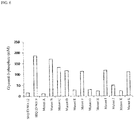
- a standard curve was prepared from the rates of decrease in the absorbance obtained by using known concentrations of glycerol-3-phosphate, and used to calculate the concentration of glycerol-3-phosphate produced. The results are shown in Fig. 1 . In Fig.
- graph (i) shows the results when the reaction was carried out using 4 M glycerol and at a pH of 5.0
- graph (ii) shows the results when using 4 M glycerol and at a pH of 4.0
- graph (iii) shows the results when using 0.5 M glycerol and at a pH of 4.5
- the absorbance of 50 mM PIPES buffer (pH 7.0) was measured as a control (indicated as "Buffer” in the figure).
- the efficiency of the phosphorylation of glycerol by phosphorylating enzymes was examined by changing the type of phosphate group donor.
- a phosphate group donor use was made of sodium pyrophosphate, sodium tripolyphosphate, sodium tetrapolyphosphate, potassium tripolyphosphate, sodium hexametaphosphate, or polyphosphoric acid.
- the polyphosphoric acid used was a polyphosphoric acid manufactured by Nacalai Tesque, Inc.
- the concentration of a phosphate group donor was set to be 0.2 M, except that the polyphosphoric acid was set to be at 7.5% by weight.
- a phosphorylating enzyme (phosphorylating enzyme set forth in SEQ ID NO: 3 to 6 or 8; 0.02 mg/mL each), a substrate (glycerol; at a concentration of 1 M), and a phosphate group donor were added to ultrapure water to prepare a reaction solution.
- the pH of the reaction solution was adjusted to a pH of 5.0 with potassium hydroxide or acetic acid.
- the reaction was carried out at 37°C for 24 hours.
- the amount of glycerol-3-phosphate produced was measured by an enzymatic method using glycerol-3-phosphate dehydrogenase as in Experimental Example 1. The results are shown in Fig. 2 .
- the phosphorylated glycerol was obtained when any of the phosphate group donors was used.
- the phosphorylating enzyme set forth in SEQ ID NO: 3 allowed the production of the phosphorylated product with higher efficiency by using sodium tripolyphosphate, sodium tetrapolyphosphate, potassium tripolyphosphate, sodium hexametaphosphate, or polyphosphoric acid as the phosphate group donor.
- the phosphorylating enzyme set forth in SEQ ID NO: 4 allowed the production of the phosphorylated product with higher efficiency by using sodium hexametaphosphate or polyphosphoric acid as the phosphate group donor.
- the phosphorylating enzyme set forth in SEQ ID NO: 5 allowed the production of the phosphorylated product with higher efficiency by using sodium tripolyphosphate, potassium tripolyphosphate, or polyphosphoric acid as the phosphate group donor.
- the phosphorylating enzyme set forth in SEQ ID NO: 6 allowed the production of the phosphorylated product with higher efficiency by using sodium tripolyphosphate, sodium tetrapolyphosphate, potassium tripolyphosphate, sodium hexametaphosphate, or polyphosphoric acid as the phosphate group donor.
- the phosphorylating enzyme set forth in SEQ ID NO: 8 allowed the production of the phosphorylated product with higher efficiency by using sodium tripolyphosphate, potassium tripolyphosphate, or polyphosphoric acid as the phosphate group donor.
- Mutations were introduced into a phosphorylating enzyme including the amino acid sequence set forth in SEQ ID NO: 11 that did not have any detectable activity to phosphorylate glycerol, to generate an enzyme mutant, Mutant a.
- the generation procedure is indicated below.
- PCR reactions were performed using as a template a base sequence encoding the amino acid sequence set forth in SEQ ID NO: 11, and combinations of the primers indicated in Table 3.
- the resulting PCR product was digested with the restriction enzymes described corresponding to the column of Mutant in Table 3.
- Ligation was performed between a pET22b(+) vector (Novagen) treated with the same restriction enzymes as those with which the PCR product had been treated and the restriction enzyme-treated PCR product, to obtain a vector for expression of the encoded glycerol-phosphorylating enzyme.
- the vector further carry, besides the base sequence encoding Mutant a, a T7 promoter, a pel B signal for transport of the expressed protein into the periplasm, a His-tag gene for protein purification, and an ampicillin resistance gene for selection with a drug.
- the vector obtained by the above-described procedures was transformed into cells of an Escherichia coli ( E. coli ) BL21(DE3) strain (Novagen) by heat shock method.
- the primer sets and restriction enzyme sites used for the generation of Mutant a and the base sequences of the primers are indicated in Tables 3 and 4, respectively.
- "F144G/A151T" in Mutant a indicates that the phenylalanine residue at position 144 in SEQ ID NO: 11 was replaced with a glycine residue and the alanine residue at position 151 was replaced with a threonine residue.
- Culturing of transformant cells of an E. coli BL21(DE3) strain carrying the vector for expression of the encoded glycerol-phosphorylating enzyme was performed by incubating them at a culture temperature of 27°C in an LB medium (manufactured by Nacalai Tesque, Inc. and having a composition of 1% by weight of tryptone, 0.5% by weight of dry yeast extract, 0.5% by weight of sodium chloride) containing 0.2% by weight of glucose, 0.5% by weight of casamino acid, and 0.1 mg/mL of ampicillin.
- LB medium manufactured by Nacalai Tesque, Inc. and having a composition of 1% by weight of tryptone, 0.5% by weight of dry yeast extract, 0.5% by weight of sodium chloride
- isopropyl- ⁇ -thiogalactopyranoside was added to be 0.1 mM and additional culturing was performed at a culture temperature of 27°C for a period of 16 to 24 hours.
- the precipitate after the ammonium sulfate fractionation was suspended in 20 mM Tris-HCl buffer (pH 7.5), and then dialyzed against 20 mM Tris-HCl buffer (pH 7.5) containing 50 mM sodium chloride. After the dialysis was completed, affinity purification was carried out using a His-Trap HP column. Fractions containing the glycerol-phosphorylating enzyme were collected, and then subjected to dialysis against 20 mM Tris-HCl buffer (pH 7.5) to obtain the glycerol-phosphorylating enzyme mutant.
- amino acid sequences of the active center of the phosphorylating enzyme including the amino acid sequence set forth in SEQ ID NO: 11 and the enzyme mutant, Mutant a, are indicated in Table 5.
- Amino acid sequence of the active center SEQ ID NO: 11 Phe Ser Tyr Pro Ser Gly His Ala Mutant a (F144G/A151T) Gly Ser Tyr Pro Ser Gly His Thr
- the glycerol phosphorylating reaction was performed using Mutant a, which is the glycerol-phosphorylating enzyme obtained as described above.
- Mutant a is the glycerol-phosphorylating enzyme obtained as described above.
- To ultrapure water were added glycerol (4 M) and a polyphosphoric acid as a phosphate group donor (7.5% by weight; manufactured by Nacalai Tesque, Inc. under a trade name of polyphosphoric acid), to prepare a reaction mixture solution.
- the pH of the reaction solution was adjusted to a pH of 5.0 with KOH.
- the phosphorylating enzyme, Mutant a was added to the reaction mixture solution to make a final concentration of 50 ⁇ g/mL.
- the reaction solution was subjected to reaction in a temperature-controlled air incubator at 37°C for 24 hours.
- the concentration of glycerol-3-phosphate in the sample was detected by an enzymatic method using glycerol-3-phosphate dehydrogenase.
- the phosphorylation of glycerol and detection of glycerol-3-phosphate were carried out as in Experimental Example 1. The results are shown in Fig. 3 .
- Mutations were introduced into a phosphorylating enzyme including the amino acid sequence set forth in SEQ ID NO: 11 that did not have any detectable activity to phosphorylate glycerol, to generate enzyme mutants, Mutants b to g.
- Generation procedures for Mutants b to g were as described above in (3-1), except for using as a template a base sequence (set forth in SEQ ID NO: 128) in which a (wild-type) base sequence encoding the amino acid sequence set forth in SEQ ID NO: 11 was codon optimized for expression in E. coli and using the primers indicated in Tables 6 and 7.
- amino acid sequences of the active center of the phosphorylating enzyme including the amino acid sequence set forth in SEQ ID NO: 11 and the enzyme mutants, Mutants b to g, are indicated in Table 8.
- Amino acid sequence of the active center SEQ ID NO: 11 Phe Ser Tyr Pro Ser Gly His Ala Mutant b (F144A) Ala Ser Tyr Pro Ser Gly His Ala Mutant c (F144G) Gly Ser Tyr Pro Ser Gly His Ala Mutant d (A151D) Phe Ser Tyr Pro Ser Gly His Asp Mutant e (A151T) Phe Ser Tyr Pro Ser Gly His Thr Mutant f (A151S) Phe Ser Tyr Pro Ser Gly His Ser Mutant g (F144G/A151 S) Gly Ser Tyr Pro Ser Gly His Ser Gly His Ser
- Mutants A to L were generated in which an N-terminal portion of the amino acid sequence set forth in SEQ ID NO: 12 was replaced with a partial sequence comprised of the amino acid sequence set forth in SEQ ID NO: 9, by means of using as a template a DNA sequence encoding the amino acid sequence set forth in SEQ ID NO: 12.
- Generation procedures were as in Mutants a to d described above in (3-1), and PCR products were obtained using the primer sets and template indicated below in Table 9.
- the PCR product was treated with restriction enzymes corresponding to the restriction enzyme sites described for the respective mutants in Table 9, and inserted into a vector.
- the structures of Mutants A to L are shown in Fig. 5(i) and (ii) .
- the glycerol phosphorylating reaction was performed using the resulting Mutants A to L.
- the phosphorylation of glycerol was carried out as described above for Mutants a to g, and the detection of glycerol-3-phosphate was carried out as in Experimental Example 1. The results are shown in Fig. 6 .
- the glycerol phosphorylating reactions in which Mutants A to L were used resulted in an increased amount of produced glycerol-3-phosphate for Mutants B, C, and D. Based on these results, it was revealed that the amino acid sequence of the amino acids at positions 1 to 70 from the N terminus of the amino acid sequence set forth in SEQ ID NO: 9 is responsible for the activity of the glycerol-phosphorylating enzyme. In addition, it was found that the glycerol phosphorylating reactions in which Mutants F to L were used resulted in an improvement in the activity of the phosphorylating enzyme for Mutants F, I, and L.
- Mutants G, H, J, and K did not result in a great improvement in the activity of the phosphorylating enzyme, as compared to Mutants F and I. Based on these results, it was revealed that the amino acid sequence of from the proline residue at position 18 to the glutamine residue at position 35 from the N terminus of the amino acid sequence set forth in SEQ ID NO: 9 is responsible for the activity of the glycerol-phosphorylating enzyme.
- amino acid sequence set forth in SEQ ID NO: 2, PDERLVLAPPPAPGSAAQ is important for the expression of the enzyme activity of the above-described enzymes catalyzing the glycerol phosphorylating reaction.
Landscapes
- Organic Chemistry (AREA)
- Chemical & Material Sciences (AREA)
- Engineering & Computer Science (AREA)
- Life Sciences & Earth Sciences (AREA)
- Zoology (AREA)
- Wood Science & Technology (AREA)
- Bioinformatics & Cheminformatics (AREA)
- Health & Medical Sciences (AREA)
- Biochemistry (AREA)
- General Engineering & Computer Science (AREA)
- General Health & Medical Sciences (AREA)
- Genetics & Genomics (AREA)
- Microbiology (AREA)
- General Chemical & Material Sciences (AREA)
- Chemical Kinetics & Catalysis (AREA)
- Biotechnology (AREA)
- Preparation Of Compounds By Using Micro-Organisms (AREA)
- Enzymes And Modification Thereof (AREA)
Description
- The present invention relates to a method for the production of a phosphorylated glycerol (= glycerol phosphate) with high efficiency.
- Since phosphorylated glycerol is highly useful, for example, as raw materials for cosmetics and as intermediates for producing pharmaceuticals, methods have been investigated in which a phosphorylated glycerol can be obtained with high efficiency. A method for achieving efficient phosphorylation is, for example, one involving the use of a phosphorylating enzyme that catalyzes the phosphorylation of glycerol. Many types of phosphorylating enzymes have been known until now, and there have been found those derived from many different species (Non-Patent Document 1). However, even though any of these many phosphorylating enzymes which exist is employed, the improvement in the efficiency of the phosphorylation reaction is not always accomplished. In addition, it is necessary that in reactions for obtaining a phosphorylated glycerol, a phosphorylating enzyme and glycerol are reacted in the presence of a phosphate group donor. Phosphorylating enzymes that have been used in the past, however, have a problem that expensive ATP (adenosine triphosphate) is required as a phosphate group donor in the reaction, thereby increasing production costs. Polyphosphoric acids, on the other hand, are mentioned as an example of an inexpensive phosphate group donor, but there have not been known any enzymes that use a polyphosphoric acid to catalyze the glycerol phosphorylating reaction (see, for example, Non-Patent Document 2). Because of these backgrounds, these is a great need for a method by which a phosphorylated glycerol of great industrial usefulness is produced with high efficiency and at low cost.
- A class A acidic phosphatase derived from Shigella flexneri has been used to produce glycerophosphoric acid from glycerol using pyrophosphate as the phosphate donor (Non-Patent Document 3). The active centre of this phosphatase can be represented by sequence GSYPSGHT (Non-Patent Documents 4-6).
-
- Non-Patent Document 1: Cell Mol Life Sci., 1998 Aug; 54(8): 833-50.
- Non-Patent Document 2: Protein Eng., 1998 Dec; 11(12): 1219-27.
- Non-Patent Document 3: Adv Synth Catal., 2005 Jun; 347: 1155-1162.
- Non-Patent Document 4: J Bacteriol., 1996 Aug; 178(8): 4548-4554.
- Non-Patent Document 5: T. Van Herk, PhD Thesis, Van't Hoff Institute for Molecular Sciences, 2008, .
- Non-Patent Document 6: J Bacteriol., 1999 Nov; 181(22): 7107-7114.
- The present invention has a main purpose of providing a method for the phosphorylation of glycerol in which a high efficiency of phosphorylation can be achieved.
- The inventors have made intensive studies to solve the above problem, with the result that it has been found that the efficiency of the phosphorylation of glycerol is significantly improved by using a phosphorylating enzyme derived from a particular microorganism. In addition, it has been found that by using this enzyme, a phosphorylated glycerol is efficiently obtained even when the phosphorylation reaction is performed using an inexpensive phosphate group donor like a polyphosphoric acid. Further, the inventors have identified the amino acid sequence responsible for the activity of the phosphorylating enzyme obtained from the particular microorganism. The present invention has been completed as a result of further improvements based on these findings.
- Thus, the present invention provides methods for phosphorylation according to the embodiments described below:
- Embodiment 1: a method for production of a phosphorylated glycerol, comprising a step of allowing a phosphorylating enzyme to act on glycerol in the presence of a phosphate group donor,
wherein the phosphorylating enzyme is a class A acid phosphatase and includes:- a polypeptide as defined in (i) or (ii) below:
- (i) a polypeptide that has the amino acid sequence set forth in SEQ ID NO: 2 and has an activity to catalyze the glycerol phosphorylating reaction, or
- (ii) a polypeptide that has an amino acid sequence having 1 to 3 amino acids substituted, deleted, inserted, or added in the amino acid sequence set forth in SEQ ID NO: 2 and has an activity to catalyze the glycerol phosphorylating reaction which is comparable or superior to that of the polypeptide as defined in (i); and
- a polypeptide having, on the C-terminal side of the amino acid sequence set forth in SEQ ID NO: 2, an amino acid sequence represented by the sequence (1):
-X1-X2-X3-Pro-Ser-Gly-His-X4- (1)
wherein,- X1 denotes glycine, alanine, or phenylalanine;
- X2 denotes any amino acid;
- X3 denotes tyrosine or tryptophan; and
- X4 denotes threonine, serine, or alanine;
- a polypeptide as defined in (i) or (ii) below:
- Embodiment 2: the method for production according to
embodiment 1, wherein the amino acid residue at the first position in the amino acid sequence set forth in SEQ ID NO: 2 is located betweenpositions - Embodiment 3: the method for production according to
embodiment 1 or 2, wherein X1 and X4 in the sequence (1) are any of (A1) to (A8) below:- (A1) X1 is glycine and X4 is threonine;
- (A2) X1 is glycine and X4 is serine;
- (A3) X1 is alanine and X4 is serine;
- (A4) X1 is alanine and X4 is threonine;
- (A5) X1 is alanine and X4 is alanine;
- (A6) X1 is glycine and X4 is alanine;
- (A7) X1 is phenylalanine and X4 is threonine; and
- (A8) X1 is phenylalanine and X4 is serine.
- Embodiment 4: the method for production according to
embodiments 1 to 3, wherein in the sequence (1), X2 is serine, alanine, or aspartic acid. - Embodiment 5: the method for production according to any of
embodiments 1 to 4, wherein X1, X2, X3, and X4 in the sequence (1) are any of (B1) to (B11) below:- (B1) X1 is glycine, X2 is serine, X3 is tyrosine, and X4 is threonine;
- (B2) X1 is glycine, X2 is alanine, X3 is tyrosine, and X4 is threonine;
- (B3) X1 is glycine, X2 is serine, X3 is tyrosine, and X4 is serine;
- (B4) X1 is glycine, X2 is aspartic acid, X3 is tyrosine, and X4 is threonine;
- (B5) X1 is alanine, X2 is serine, X3 is tyrosine, and X4 is serine;
- (B6) X1 is alanine, X2 is serine, X3 is tyrosine, and X4 is threonine;
- (B7) X1 is alanine, X2 is serine, X3 is tyrosine, and X4 is alanine;
- (B8) X1 is glycine, X2 is serine, X3 is tyrosine, and X4 is alanine;
- (B9) X1 is phenylalanine, X2 is serine, X3 is tyrosine, and X4 is threonine;
- (B10) X1 is phenylalanine, X2 is serine, X3 is tyrosine, and X4 is serine; and
- (B11) X1 is glycine, X2 is serine, X3 is tryptophan, and X4 is serine.
- Embodiment 6: the method for production according to any of
embodiments 1 to 5, wherein the histidine (His) residue at the 7-th position in the amino acid sequence represented by the sequence (1) is located betweenpositions - Embodiment 7: the method for production according to any of
embodiments 1 to 6, wherein the phosphorylating enzyme further comprises at least one of the amino acid sequences as defined in (iii) to (vi) below:- (iii) a polypeptide that has, on the N-terminal side of the amino acid sequence set forth in SEQ ID NO: 2, the amino acid sequence set forth in SEQ ID NO: 40 and has an activity to catalyze the glycerol phosphorylating reaction;
- (iv) a polypeptide that has, on the N-terminal side of the amino acid sequence set forth in SEQ ID NO: 2, an amino acid sequence having 1 to 3 amino acids substituted, deleted, inserted, or added in the amino acid sequence set forth in SEQ ID NO: 40 and has an activity to catalyze the glycerol phosphorylating reaction which is comparable or superior to that of the polypeptide as defined in (iii);
- (v) a polypeptide that has, on the C-terminal side of the amino acid sequence set forth in SEQ ID NO: 2, the amino acid sequence set forth in SEQ ID NO: 41 and has an activity to catalyze the glycerol phosphorylating reaction; and
- (vi) a polypeptide that has, on the C-terminal side of the amino acid sequence set forth in SEQ ID NO: 2, an amino acid sequence having 1 to 10 amino acids substituted, deleted, inserted, or added in the amino acid sequence set forth in SEQ ID NO: 41 and has an activity to catalyze the glycerol phosphorylating reaction which is comparable or superior to that of the polypeptide as defined in (v).
- Embodiment 8: the method for production according to any of
embodiments 1 to 7, wherein the phosphorylating enzyme includes a polypeptide as defined in (vii) or (viii) below:- (vii) a polypeptide that has the amino acid sequence set forth in any of SEQ ID NOs: 9, 15 to 17, 19, 22, and 25; or
- (viii) a polypeptide that includes an amino acid sequence having, in the amino acid sequence set forth in any of SEQ ID NOs: 9, 15 to 17, 19, 22, and 25, 1 to 10 amino acids substituted, deleted, inserted, or added in a region outside the amino acid sequence set forth in SEQ ID NO: 2 and has an activity to catalyze the glycerol phosphorylating reaction which is comparable or superior to that of the polypeptide as defined in (vii).
- Embodiment 9: the method for production according to any of
embodiments 1 to 6, wherein the phosphorylating enzyme further includes any of the polypeptides as defined in (III) to (VI) below:- (III) a polypeptide that has the amino acid sequence set forth in SEQ ID NO: 32, on the N-terminal side of the amino acid sequence represented by the sequence (1);
- (IV) a polypeptide that has, on the N-terminal side of the amino acid sequence represented by the sequence (1), an amino acid sequence having 1 to 10 amino acids substituted, deleted, inserted, or added in the amino acid sequence set forth in SEQ ID NO: 32 and has an activity to catalyze the glycerol phosphorylating reaction which is
comparable or superior to that of its corresponding polypeptide as defined in (III); - (V)) a polypeptide that has the amino acid sequence set forth in any of SEQ ID NOs: 33 to 39 and 111 to 115, on the C-terminal side of the amino acid sequence represented by the sequence (1); and
- (VI) a polypeptide that has, on the C-terminal side of the amino acid sequence represented by the sequence (1), an amino acid sequence having 1 to 10 amino acids substituted, deleted, inserted, or added in the amino acid sequence set forth in any of SEQ ID NOs: 33 to 39 and 111 to 115 and has an activity to catalyze the glycerol phosphorylating reaction which is comparable or superior to that of its corresponding polypeptide as defined in (V).
- Embodiment 10: the method for production according to any of
embodiments 1 to 6 and 9, wherein the phosphorylating enzyme includes a polypeptide as defined in (VII) or (VIII) below:- (VII) a polypeptide that has the amino acid sequence set forth in SEQ ID NO: 9, or
- (VIII) a polypeptide that includes an amino acid sequence having, in the amino acid sequence set forth in SEQ ID NO: 9, 1 to 10 amino acids substituted, deleted, inserted, or added in a region outside the active center including the amino acid sequence represented by the sequence (1) and has an activity to catalyze the glycerol phosphorylating reaction which is comparable or superior to that of its corresponding polypeptide as defined in (VII).
- Embodiment 11: the method for production according to any of
embodiments 1 to 10, wherein the phosphate group donor is a polyphosphoric acid. - Embodiment 12: the method for production according to any of
embodiments 1 to 11, wherein the phosphorylated glycerol is α-glycerophosphate. - Embodiment 13: the method for production according to any of
embodiments 1 to 12, wherein the pH of the reaction solution is from 4 to 5 in the step of allowing the phosphorylating enzyme to act on the glycerol in the presence of the phosphate group donor. - Embodiment 14: the method for production according to any of
embodiments 1 to 13, wherein the glycerol is added in an amount of 1000 to 50000 parts by weight per part by weight of the phosphorylating enzyme, in the step of allowing the phosphorylating enzyme to act on the glycerol in the presence of the phosphate group donor. - Embodiment 15: the method for production according to any of
embodiments 1 to 14, wherein the concentration of the phosphate group donor in the reaction solution is from 2% to 10% by weight in the step of allowing the phosphorylating enzyme to act on the glycerol in the presence of the phosphate group donor. - According to the methods for phosphorylation according to the present invention, it is possible to significantly enhance the efficiency of the phosphorylation of glycerol. In addition, it is possible to use an inexpensive polyphosphoric acid as a phosphate group donor, thereby to allow reducing production costs.
-
-
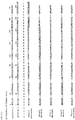
Fig. 1 represents graphs showing the results of the phosphorylation of glycerol in which phosphorylating enzymes derived from various microorganisms were used. InFig. 1 , graph (i) shows the results when the reaction was carried out using 4 M of glycerol and at a pH of 5.0, graph (ii) shows the results when using 4 M of glycerol and at a pH of 4.0, and graph (iii) shows the results when using 0.5 M of glycerol and at a pH of 4.5. -
Fig. 2 represents graphs showing the results of glycerol phosphorylating reactions in which the type of phosphate group donor was changed. -
Fig. 3 represents a graph showing the amount of the resulting glycerol-3-phosphate in which the glycerol phosphorylating reaction was performed using Mutant a. -
Fig. 4 represents a graph showing the amount of the resulting glycerol-3-phosphate in which the glycerol phosphorylating reaction was performed using Mutants b to g. -
Figs. 5(i) and(ii) show the structures of phosphorylating enzyme mutants A to L inFig. 3 . InFigs. 3 (i) and (ii) , the mutated portion in the amino acid sequences of these mutants is underlined. -
Fig. 6 represents a graph showing the amount of the resulting glycerol-3-phosphate in which the glycerol phosphorylating reaction was performed using Mutants A to L. - The present invention provides a method for the production of a phosphorylated glycerol. The method is characterized by allowing a given phosphorylating enzyme to act on glycerol in the presence of a phosphate group donor. Hereinafter, a method for the production of a phosphorylated glycerol according to the present invention is sometimes referred to simply as "a method of the present invention."
- The glycerol to be phosphorylated in the present invention is represented by C3H8O3 and is also referred to as 1,2,3-trihydroxypropane or glycerin.
- The method of the present invention uses as the phosphorylating enzyme a class A acid phosphatase, which catalyzes a glycerol phosphorylating reaction, thereby to obtain a phosphorylated glycerol. Here, an acid phosphatase is a phosphomonoesterase having a function of attaching free phosphate groups from other molecules. In addition, class A is a classification of acid phosphatases and indicates that enzymes of class A belong to a group of enzymes having the property that the enzymatic activity is not inhibited by EDTA and by inorganic phosphates. Further, a class A acid phosphatase is defined as a generic term for enzymes having an amino acid sequence of KX6RP-(X12-54)-PSGH-(X31-54)-SRX5HX3D wherein each X independently denotes any amino acid (The EMBO Journal, Vol 19, No.11, pp 2412-2423).
- The phosphorylating enzyme which is used in the method of the present invention is:
- a polypeptide as defined in (i) or (ii) below:
- (i) a polypeptide that has the amino acid sequence set forth in SEQ ID NO: 2 and has an activity to catalyse the glycerol phosphorylating reaction, or
- (ii) a polypeptide that has an amino acid sequence having 1 to 3 amino acids substituted, deleted, inserted, or added in the amino acid sequence set forth in SEQ ID NO: 2 and has an activity to catalyze the glycerol phosphorylating reaction which is comparable or superior to that of the polypeptide as defined in (i); and
- a polypeptide having, on the C-terminal side of the amino acid sequence set forth in SEQ ID NO: 2, an amino acid sequence represented by the sequence (1):
-X1-X2-X3-Pro-Ser-Gly-His-X4- (1)
wherein,- X1 denotes glycine, alanine, or phenylalanine;
- X2 denotes any amino acid;
- X3 denotes tyrosine or tryptophan; and
- X4 denotes threonine, serine, or alanine;
- The amino acid sequence set forth in SEQ ID NO: 2, and amino acid sequences having 1 to 3 amino acids substituted, deleted, inserted, or added in the amino acid sequence set forth in SEQ ID NO: 2 are a partial amino acid sequence that is located on the N-terminal side of the active center in the amino acid sequence of the phosphorylating enzyme. In the amino acid sequence of the phosphorylating enzyme according to the present invention, it is suitable that the amino acid sequence set forth in
SEQ ID NO: 2 is located on the N-terminal side of the active center, including, in particular, embodiments in which the first amino acid residue in the amino acid sequence set forth in SEQ ID NO: 2 is located betweenpositions positions 8 and 35, further preferably betweenpositions - In polypeptides as defined in (i) and (ii) above, the amino acid sequence of the active center is any amino acid sequence that is not limited in particular, with the proviso that it can serve as the active center of a class A acid phosphatase, and preferably is the amino acid sequence represented by the sequence (1) as described above.
- In polypeptides as defined in (i) and (ii) above, wherein the polypeptide comprises as the active center the amino acid sequence represented by the sequence (1), the amino acid sequence set forth in SEQ ID NO: 2 and a stretch of the amino acid sequence coding for the active center represented by the sequence (1) may be joined directly. Alternatively, they may be joined, for example, via 70 to 130 amino acids, preferably via 80 to 110 amino acids, further preferably via 90 to 110 amino acids, as long as the activity of the polypeptide to catalyze the glycerol phosphorylating reaction is not disturbed. In addition, polypeptides as defined in (i) and (ii) above may have any amino acid sequence, for example, of 5 to 50 amino acids, preferably of 8 to 40 amino acids, further preferably of 10 to 30 amino acids, on the N-terminal side of the amino acid sequence set forth in SEQ ID NO: 2, as long as the activity of the polypeptide to catalyze the glycerol phosphorylating reaction is not disturbed.
- Further, polypeptides as defined in (i) and (ii) above may have any amino acid sequence, for example, of 60 to 120 amino acids, preferably of 70 to 110 amino acids, further preferably of 80 to 100 amino acids, on the C-terminal side of a stretch of the amino acid sequence coding for the active center, as long as the activity of the polypeptide to catalyze the glycerol phosphorylating reaction is not disturbed. In polypeptides as defined in (i) and (ii) above, the amino acid sequence on the C-terminal side of the active center may be similar to that on the C-terminal side of the active center of a class A acid phosphatase.
- A specific embodiment of the phosphorylating enzyme which can be used in the method of the present invention is an enzyme in which X1, X2, and X4 in the sequence (1) are any of (A1) to (A8) below:
- (A1) X1 being glycine and X4 being threonine; preferably X1 being glycine, X2 being serine, alanine, or aspartic acid, and X4 being threonine; further preferably X1 being glycine, X2 being alanine, and X4 being threonine;
- (A2) X1 being glycine and X4 being serine; preferably X1 being glycine, X2 being serine, and X4 being serine;
- (A3) X1 being alanine and X4 being serine; preferably X1 being alanine, X2 being serine, and X4 being serine;
- (A4) X1 being alanine and X4 being threonine; preferably X1 being alanine, X2 being serine, and X4 being threonine;
- (A5) X1 being alanine and X4 being alanine; preferably X1 being alanine, X2 being serine, and X4 being alanine;
- (A6) X1 being glycine and X4 being alanine; preferably X1 being glycine, X2 being serine, and X4 being alanine;
- (A7) X1 being phenylalanine and X4 being threonine; preferably X1 being phenylalanine, X2 being serine, and X4 being threonine; and
- (A8) X1 being phenylalanine and X4 being serine; preferably X1 being phenylalanine, X2 being serine, and X4 being serine.
- Among these embodiments (A1) to (A8), the embodiment (A1) is preferable from the viewpoint that the phosphorylation of glycerol is performed with higher efficiency.
- A more specific embodiment of the phosphorylating enzyme which can be used in the method of the present invention is an enzyme in which X1, X2, and X4 in the sequence (1) are any of (B1) to (B11) below:
- (B1) X1 being glycine, X2 being serine, X3 being tyrosine, and X4 being threonine;
- (B2) X1 being glycine, X2 being alanine, X3 being tyrosine, and X4 being threonine;
- (B3) X1 being glycine, X2 being serine, X3 being tyrosine, and X4 being serine;
- (B4) X1 being glycine, X2 being aspartic acid, X3 being tyrosine, and X4 being threonine;
- (B5) X1 being alanine, X2 being serine, X3 being tyrosine, and X4 being serine;
- (B6) X1 being alanine, X2 being serine, X3 being tyrosine, and X4 being threonine;
- (B7) X1 being alanine, X2 being serine, X3 being tyrosine, and X4 being alanine;
- (B8) X1 being glycine, X2 being serine, X3 being tyrosine, and X4 being alanine;
- (B9) X1 being phenylalanine, X2 being serine, X3 being tyrosine, and X4 being threonine;
- (B10) X1 being phenylalanine, X2 being serine, X3 being tyrosine, and X4 being serine; and
- (B11) X1 being glycine, X2 being serine, X3 being tryptophan, and X4 being serine.
- Among these embodiments (B1) to (B11), the embodiment (B1) is preferable from the viewpoint that the phosphorylation of glycerol is performed with higher efficiency.
- In the amino acid sequence of a class A acid phosphatase, the position where the active center is positioned is known; thus those skilled in the art would be able to determine where to place the active center represented by the sequence (1), as appropriate in the amino acid sequence of a phosphorylating enzyme to be used in the present invention.
- Additionally, in the amino acid sequence of a class A acid phosphatase, it is known that two active centers are present; the active center represented by the sequence (1) is located on the N-terminal side of these two active centers. The other of these two active centers, which is the active center located on the C-terminal side, usually has an amino acid sequence of RX5HX2S wherein each X independently denotes any amino acid, and is joined to the active center represented by sequence (1), usually via 20 to 50 amino acids, preferably via 30 to 40 amino acids, from the C-terminal end of the active center represented by the sequence (1).
- Also in the amino acid sequence of a class A acid phosphatase, the amino acid sequences on both the N-terminal and C-terminal sides of the active center represented by the sequence (1) are known; thus those skilled in the art would be able to determine the amino acid sequence located outside the active center represented by the sequence (1), as appropriate in the amino acid sequence of a phosphorylating enzyme to be used in the present invention.
- The position of the active center represented by the sequence (1) in the entire amino acid sequence of a phosphorylating enzyme according to the present invention is not limited in particular, as long as the enzyme has an activity to catalyze the phosphorylation of glycerol. For example, the active center represented by the sequence (1) is placed at such a position that the histidine (His) residue at the 7-th position in the amino acid sequence represented by the sequence (1) is located between
positions positions positions - The amino acid sequence set forth in SEQ ID NO: 2 specifically is: PDERLVLAPPPAPGSAAQ (SEQ ID NO: 2) [0025]
- The amino acid sequence set forth in SEQ ID NO: 2 may be joined directly to a stretch of the amino acid sequence coding for the active center represented by the sequence (1). Alternatively, the amino acid sequence set forth in SEQ ID NO: 2 may be joined to a stretch of the amino acid sequence coding for the active center represented by the sequence (1), for example, via 70 to 130 amino acids, preferably via 80 to 120 amino acids, further preferably via 90 to 110 amino acids, as long as the activity of the enzyme to catalyze the glycerol phosphorylating reaction is not disturbed. In addition, the phosphorylating enzyme according to the present invention may comprise any amino acid sequence, for example, of 5 to 50 amino acids, preferably of 8 to 40 amino acids, further preferably of 10 to 30 amino acids, on the N-terminal side of the amino acid sequence set forth in SEQ ID NO: 2, as long as the activity of the enzyme to catalyze the glycerol phosphorylating reaction is not disturbed. Further, the phosphorylating enzyme according to the present invention may comprise any amino acid sequence, for example, of 60 to 120 amino acids, preferably of 70 to 110 amino acids, further preferably of 80 to 100 amino acids, on the C-terminal side of a stretch of the amino acid sequence coding for the active center represented by the sequence (1), as long as the activity of the enzyme to catalyze the glycerol phosphorylating reaction is not disturbed.
- In the amino acid sequence in which a phosphorylating enzyme according to the present invention is composed, the position of the amino acid sequence set forth in SEQ ID NO: 2 is not limited in particular, as long as the enzyme has an activity to catalyze the phosphorylation of glycerol. For example, the amino acid sequence set forth in SEQ ID NO: 2 is placed at such a position that the first amino acid residue in the amino acid sequence set forth in SEQ ID NO: 2 is located between
positions positions 8 and 35, further preferably betweenpositions - In addition, in a polypeptide as defined in (ii) above, the number of amino acids that are substituted, deleted, inserted, or added in the amino acid sequence set forth in SEQ ID NO: 2 is limited, with the proviso that the polypeptide has an activity to catalyze the glycerol phosphorylating reaction which is comparable or superior to that of the corresponding parent polypeptide. The amino acid sequence set forth in SEQ ID NO: 2 has 1 to 3 amino acids, or preferably 1 or 2 amino acids substituted, deleted, inserted, or added therein. Methods for obtaining mutants that have an amino acid(s) substituted, deleted, inserted, or added will be described in detail below in the section entitled "2. Preparation of phosphorylating enzymes."
- In cases of adding an amino acid to a given amino acid sequence, the number of amino acids to be added is from 1 to 10, more preferably from 1 to 8, further preferably from 1 to 5, particularly preferably from 1 to 3, or 1 or 2. Furthermore, in addition to the added amino acid(s), a sequence for protein purification, such as His tag, may optionally added at the C-terminus of the modified amino acid sequences.
- In cases of deleting an amino acid from a given amino acid sequence, the number of amino acids to be deleted is from 1 to 10, more preferably from 1 to 8, further preferably from 1 to 5, particularly preferably from 1 to 3, or 1 or 2.
- In cases of inserting an amino acid into a given amino acid sequence, the number of amino acids to be inserted is from 1 to 10, more preferably from 1 to 8, further preferably from 1 to 5, particularly preferably from 1 to 3, or 1 or 2.
- In cases of substituting an amino acid in a given amino acid, a conservative substitution can be made based on properties of the side-chain functional groups of amino acids. In addition, a non-conservative substitution may be made in which the property of an amino acid residue before the substitution is different from that of an amino acid residue after the substitution, as long as the resulting polypeptide has an activity to catalyze the glycerol phosphorylating reaction which is comparable or superior to that of the corresponding parent polypeptide. Natural amino acids are classified, based on their side-chain functional groups, into categories of non-polar amino acids, of non-charged amino acids, of acidic amino acids, and of basic amino acids. A conservative substitution refers to a substitution having an amino acid residue that belongs to the same category into which the parent amino acid residue and the substituted amino acid residue are classified. Here, a "non-polar amino acid" specifically includes alanine, valine, leucine, isoleucine, proline, methionine, phenylalanine, and tryptophan; a "non-charged amino acid" specifically includes
glycine, serine, threonine, cysteine, tyrosine, asparagine, and glutamine; an "acidic amino acid" specifically includes aspartic acid and glutamic acid; and a "basic amino acid" specifically includes lysine, arginine, and histidine. - A phosphorylating enzyme according to the present invention may further comprise at least one of the amino acid sequences as defined in (iii) to (vi) below:
- (iii) a polypeptide that has, on the N-terminal side of the amino acid sequence set forth in SEQ ID NO: 2, the amino acid sequence set forth in SEQ ID NO: 40 and has an activity to catalyze the glycerol phosphorylating reaction;
- (iv) a polypeptide that has, on the N-terminal side of the amino acid sequence set forth in SEQ ID NO: 2, an amino acid sequence having 1 to 3 amino acids substituted, deleted, inserted, or added in the amino acid sequence set forth in SEQ ID NO: 40 and has an activity to catalyze the glycerol phosphorylating reaction which is comparable or superior to that of the polypeptide as defined in (iii);
- (v) a polypeptide that has, on the C-terminal side of the amino acid sequence set forth in SEQ ID NO: 2, the amino acid sequence set forth in SEQ ID NO: 41 and has an activity to catalyze the glycerol phosphorylating reaction; and
- (vi) a polypeptide that has, on the C-terminal side of the amino acid sequence set forth in SEQ ID NO: 2, an amino acid sequence having 1 to 10 amino acids substituted, deleted, inserted, or added in the amino acid sequence set forth in SEQ ID NO: 41 and has an activity to catalyze the glycerol phosphorylating reaction which is comparable or superior to that of the polypeptide as defined in (v).
- SEQ ID NO: 40 corresponds to the amino acid sequence in SEQ ID NO: 9 that is located on the N-terminal side of the amino acid sequence corresponding to SEQ ID NO: 2. SEQ ID NO: 41 corresponds to the amino acid sequence in SEQ ID NO: 9 that is located on the C-terminal side of the amino acid sequence corresponding to SEQ ID NO: 2. The specific amino acid sequences of these are as indicated below.
SEQ ID NO: 40:
MDTSATAQGGILPDSAA
- The same as in the above-described polypeptides as defined in (ii) applies to polypeptides as defined in (iv) or (vi) above, for the number of amino acids to be substituted, deleted, inserted, or added, the type of amino acid to be substituted, and the like.
- A phosphorylating enzyme according to the present invention includes more specifically one including a polypeptide as defined in (vii) or (viii) below:
- (vii) a polypeptide that has the amino acid sequence set forth in any of SEQ ID NOs: 9, 15 to 17, 19, 22, and 25; or
- (viii) a polypeptide that includes an amino acid sequence having, in the amino acid sequence set forth in any of SEQ ID NOs: 9, 15 to 17, 19, 22, and 25, 1 to 10 amino acids substituted, deleted, inserted, or added in a region outside the amino acid sequence set forth in SEQ ID NO: 2 and has an activity to catalyze the glycerol phosphorylating reaction which is comparable or superior to that of the polypeptide as defined in (vii).
- The same as in the above-described polypeptides as defined in (ii) applies to polypeptides as defined in (iv) or (vi) above, for the number of amino acids to be substituted, deleted, inserted, or added, the type of amino acid to be substituted, and the like.
- An embodiment of the phosphorylating enzyme according to the present invention is a class A acid phosphatase that comprises the active center including an amino acid sequence represented by the sequence (1) (SEQ ID NO: 1) and a polypeptide as defined in (I) or (III) as indicated below and has an activity to catalyze the glycerol phosphorylating reaction:
-X1-X2-X3-Pro-Ser-Gly-His-X4- (1)
wherein, - X1 denotes glycine, alanine, or phenylalanine;
- X2 denotes any amino acid;
- X3 denotes tyrosine or tryptophan; and
- X4 denotes threonine, serine, or alanine;
- with the proviso that when X1 is phenylalanine, X4 is threonine or serine, and
- (I) a polypeptide that has the amino acid sequence set forth in SEQ ID NO: 2, on the N-terminal side of the active center represented by the sequence (1), or
- (II) a polypeptide that comprises, on the N-terminal side of the active center represented by the sequence (1), an amino acid sequence having 1 to 3 amino acids substituted, deleted, inserted, or added in the amino acid sequence set forth in SEQ ID NO: 2 and has an activity to catalyze the glycerol phosphorylating reaction which is comparable or superior to that of the polypeptide as defined in (I).
- X2 in the sequence (1) may be any amino acid and preferably is an uncharged amino acid, a non-polar amino acid, or an acidic amino acid, further preferably serine, alanine, or aspartic acid, with serine being particularly preferable.
- Further, another embodiment of the phosphorylating enzyme which can be used in the present invention and which comprises SEQ ID NO: 2 as defined in
claim 1 includes any of the polypeptides as defined in (III) to (VI) below: - (III) a polypeptide that has the amino acid sequence set forth in SEQ ID NO: 32, on the N-terminal side of the amino acid sequence represented by the sequence (1);
- (IV) a polypeptide that has, on the N-terminal side of the amino acid sequence represented by the sequence (1), an amino acid sequence having 1 to 10 amino acids substituted, deleted, inserted, or added in the amino acid sequence set forth in SEQ ID NO: 32 and has an activity to catalyze the glycerol phosphorylating reaction which is comparable or superior to that of its corresponding polypeptide as defined in (III);
- (V) a polypeptide that has the amino acid sequence set forth in any of SEQ ID NOs: 33 to 39 and 111 to 115, on the C-terminal side of the amino acid sequence represented by the sequence (1); and
- (VI) a polypeptide that has, on the C-terminal side of the amino acid sequence represented by the sequence (1), an amino acid sequence having 1 to 10 amino acids substituted, deleted, inserted, or added in the amino acid sequence set forth in any of SEQ ID NOs: 33 to 39 and 111 to 115 and has an activity to catalyze the glycerol phosphorylating reaction which is comparable or superior to that of its corresponding polypeptide as defined in (V).
- SEQ ID NOs: 26 to 32, 106, and 107 correspond to the amino acid sequences on the N-terminal side of the active center represented by sequence (1), in SEQ ID NOs: 3 to 9, 104, and 105, respectively. The specific amino acid sequences set forth in SEQ ID NOs: 26 to 32, 106, and 107 are as indicated below.


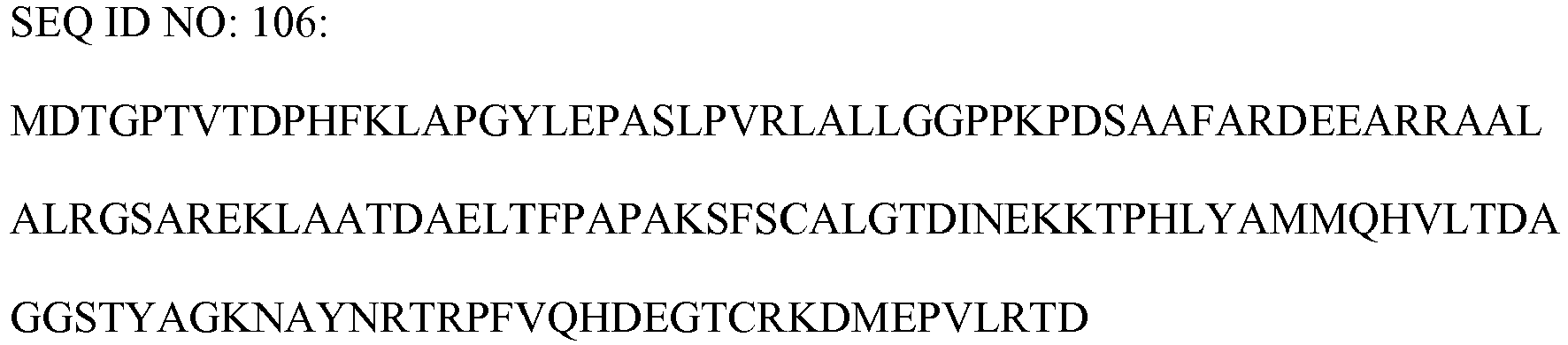

- SEQ ID NOs: 108 to 110 correspond to the amino acid sequences on the N-terminal side of the active center, in SEQ ID NOs: 10 to 12 representing the amino acid sequences of class A acid phosphatases. The specific amino acid sequences set forth in SEQ ID NOs: 108 to 110 are as indicated below.


- SEQ ID NOs: 33 to 39, 111, and 112 correspond to the amino acid sequences on the C-terminal side of the active center represented by sequence (1), in SEQ ID NOs: 3 to 9, 104, and 105, respectively. The specific amino acid sequences set forth in SEQ ID NOs: 33 to 39, 111, and 112 are as indicated below.


- SEQ ID NOs: 113 to 115 correspond to the amino acid sequences on the C-terminal side of the active center, in SEQ ID NOs: 10 to 12 representing the amino acid sequences of class A acid phosphatases. The specific amino acid sequences set forth in SEQ ID NOs: 113 to 115 are as indicated below.



- In the present invention, a phosphorylating enzyme may comprise a combination of the sequence (1), the N-terminal sequence (SEQ ID NO: 32), and one selected from the C-terminal sequences (SEQ ID NOs: 33 to 39 and 111 to 115), as long as the activity of the enzyme to catalyze the glycerol phosphorylating reaction is not disturbed.
- The same as in the above-described polypeptides as defined in (ii) applies to polypeptides as defined in (IV) or (VI), for the number of amino acids to be substituted, deleted, inserted, or added, the type of amino acid to be substituted, and the like.
- A phosphorylating enzyme according to the present invention includes more specifically one including a polypeptide as defined in (VII) or (VIII) below:
- (VII) a polypeptide that has the amino acid sequence set forth in SEQ ID NO: 9, or
- (VIII) a polypeptide that includes an amino acid sequence having, in the amino acid sequence set forth in SEQ ID NO: 9, 1 to 10 amino acids substituted, deleted, inserted, or added in a region outside the active center including the amino acid sequence represented by the sequence (1) and has an activity to catalyze the glycerol phosphorylating reaction which is comparable or superior to that of its corresponding polypeptide as defined in (VII).
- The same as in the above-described polypeptides as defined in (ii) applies to polypeptides as defined in (VIII), for the number of amino acids to be substituted, deleted, inserted, or added, the type of amino acid to be substituted, and the like. In addition, when an amino acid sequence in which one of these polypeptides is composed comprises a sequence corresponding to the amino acid sequence set forth in SEQ ID NO: 2, it is preferable that a mutation is introduced into a region outside of such a sequence.
- In a method for producing a phosphorylated glycerol according to the present invention, the phosphorylating enzyme may be used alone by selecting one phosphorylating enzyme from among phosphorylating enzymes of one type, or alternatively in combination of two or more phosphorylating enzymes.
- An enzyme as described above having a catalytic activity in a glycerol phosphorylating reaction can be obtained, for example, from a culture of a microorganism that possesses such an enzyme. Alternatively, an enzyme as described above having a catalytic activity in a glycerol phosphorylating reaction can be prepared as a recombinant protein in accordance with conventionally known methods, by obtaining a base sequence encoding such a phosphorylating enzyme of interest from a microorganism possessing the enzyme.
- A phosphorylating enzyme including one of the amino acid sequences set forth in SEQ ID NOs: 3 to 9, 104, and 105 can be obtained from particular microorganisms as described below, respectively.
- Accordingly, a phosphorylating enzyme including the amino acid sequence set forth in SEQ ID NO: 3 is available from Gluconacetobacter hansenii. A phosphorylating enzyme including the amino acid sequence set forth in SEQ ID NO: 4 is available from Xanthomonas oryzae; a phosphorylating enzyme including the amino acid sequence set forth in SEQ ID NO: 5 is available from Brevundimonas diminuta; a phosphorylating enzyme including the amino acid sequence set forth in SEQ ID NO: 6 is available from Sphingomonas trueperi; a phosphorylating enzyme including the amino acid sequence set forth in SEQ ID NO: 7 is available from Zymomonas mobilis; a phosphorylating enzyme including the amino acid sequence set forth in SEQ ID NO: 8 is available from Desulfovibrio magneticus; a phosphorylating enzyme including the amino acid sequence set forth in SEQ ID NO: 9 is available from Gluconobacter oxydans. A phosphorylating enzyme including the amino acid sequence set forth in SEQ ID NO: 104 is available from Serratia plymutica. A phosphorylating enzyme including the amino acid sequence set forth in SEQ ID NO: 105 is available from Rahnella aquatilis.
- A phosphorylating enzyme including one of the amino acid sequences set forth in SEQ ID NOs: 3 to 9, 104, and 105 can be obtained by culturing the corresponding microorganism and treating cultured cells. To this end, more specifically, the methods described below are illustrated.
- In cases when a phosphorylating enzyme including the amino acid sequence set forth in SEQ ID NO: 3 is obtained from cultured cells of Gluconacetobacter hansenii, culture conditions can be set as appropriate from culture methods known for this microorganism, for example, including aerobic conditions at a culture temperature of 30°C in a medium containing 1% polypeptone, 0.2% dry yeast extract, and 0.1% magnesium sulfate.
- In cases when a phosphorylating enzyme including the amino acid sequence set forth in SEQ ID NO: 4 is obtained from cultured cells of Xanthomonas oryzae, culture conditions can be set as appropriate from culture methods known for this microorganism, for example, including aerobic conditions at a culture temperature of 30°C in a medium containing 1% polypeptone, 0.2% dry yeast extract, and 0.1% magnesium sulfate.
- In cases when a phosphorylating enzyme including the amino acid sequence set forth in SEQ ID NO: 5 is obtained from cultured cells of Brevundimonas diminuta, culture conditions can be set as appropriate from culture methods known for this microorganism, for example, including aerobic conditions at a culture temperature of 30°C in a medium containing 1% polypeptone, 0.2% dry yeast extract, and 0.1% magnesium sulfate.
- In cases when a phosphorylating enzyme including the amino acid sequence set forth in SEQ ID NO: 6 is obtained from cultured cells of Sphingomonas trueperi, culture conditions can be set as appropriate from culture methods known for this microorganism, for example, including aerobic conditions at a culture temperature of 26°C in a medium containing 5% peptone and 3% beef extract.
- In cases when a phosphorylating enzyme including the amino acid sequence set forth in SEQ ID NO: 7 is obtained from cultured cells of Zymomonas mobilis, culture conditions can be set as appropriate from culture methods known for this microorganism, for example, including aerobic conditions at a culture temperature of 30°C in a medium containing 0.5% dry yeast extract and 2% glucose.
- In cases when a phosphorylating enzyme including the amino acid sequence set forth in SEQ ID NO: 8 is obtained from cultured cells of Desulfovibrio magneticus, culture conditions can be set as appropriate from culture methods known for this microorganism, for example, including anaerobic conditions at a culture temperature of 30°C in a medium containing 0.02% potassium dihydrogenphosphate, 60 ppm ammonium chloride, 50 ppm cysteine, 0.058% sodium fumarate, 0.044% sodium pyruvate, 0.2% iron quinate solution, 0.4% Wolfe's vitamin solution, and 0.2% Wolfe's mineral solution.
- In cases when a phosphorylating enzyme including the amino acid sequence set forth in SEQ ID NO: 9 is obtained from cultured cells of Gluconobacter oxydans, culture conditions can be set as appropriate from culture methods known for this microorganism, for example, including aerobic conditions at a culture temperature of 30°C in a medium containing 0.5% polypeptone, 0.5% dry yeast extract, 0.5% glucose, and 0.1% magnesium sulfate.
- In cases when a phosphorylating enzyme including the amino acid sequence set forth in SEQ ID NO: 104 is obtained from cultured cells of Serratia plymutica, culture conditions can be set as appropriate from culture methods known for this microorganism, for example, including aerobic conditions at a culture temperature of 37°C in a medium containing 1% polypeptone, 0.2% dry yeast extract, and 0.1% magnesium sulfate.
- In cases when a phosphorylating enzyme including the amino acid sequence set forth in SEQ ID NO: 105 is obtained from cultured cells of Rahnella aquatilis, culture conditions can be set as appropriate from culture methods known for this microorganism, for example, including aerobic conditions at a culture temperature of 30°C in a medium containing 1% polypeptone, 0.2% dry yeast extract, and 0.1% magnesium sulfate.
- After the culturing is completed, usual methods for enzyme isolation can be employed to collect the phosphorylating enzyme from the culture. Methods for enzyme isolation include, for example, those in which cultured cells are disrupted by sonication to prepare a cell extract solution, followed by known methods for enzyme purification, such as ammonium sulfate fractionation, ion exchange, chromatofocusing, gel filtration, and the like. In addition, a cultured broth containing an enzyme secreted outside the cells may be used as an enzyme solution.
- Also, a phosphorylating enzyme including one of the amino acid sequences set forth in SEQ ID NOs: 3 to 9, 104, and 105 can be prepared as a recombinant protein, which then can be used in the method of the present invention as long as it falls under
claim 1. In cases when the phosphorylating enzyme is obtained as a recombinant protein, the preparation of the recombinant protein can be performed based on known genetic engineering procedures. In usual cases, a phosphorylating enzyme can be produced as a recombinant protein by inserting a polynucleotide (DNA fragment) encoding the amino acid sequence of a given phosphorylating enzyme into a vector, introducing the vector into a host cell to obtain a transformant, and culturing the transformant. The polynucleotide sequences that encodes phosphorylating enzymes including the amino acid sequences set forth in SEQ ID NOs: 3 to 9, 104, and 105 are represented by SEQ ID NOs: 94 to 100, 122, and 123, respectively. In such cases, a sequence derived from the vector, which is described below, may be incorporated into the polynucleotide, with the proviso that the sequence does not disturb the activity of the phosphorylating enzyme. In addition, the polynucleotide encoding the phosphorylating enzyme may be optimized so that the codon usage is adapted to that of the host cell to be used. - As a vector, use can be made of any vector that allows the expression of the gene encoded by the DNA fragment in an appropriate host cell. Such a vector includes, for example, a plasmid vector, a phage vector, a cosmid vector, a shuttle vector, and the like.
- In the present invention, a vector may comprise a regulatory element(s) that is/are operably linked to a polynucleotide (DNA fragment) encoding an enzyme mutant as described above, for example, a promoter, for example, a functional promoter such as a T7 promoter, a lacUV5 promoter, a trp promoter, a trc promoter, a tac promoter, an lpp promoter, a tufB promoter, a recA promoter, and a pL promoter; a transcriptional element, for example, an enhancer, a CCAAT box, a TATA box, and an SPI site; a signal sequence, particularly a nuclear localization signal, an endoplasmic reticulum localization signal, PTS1 (Peroxisomal targeting signal 1), and PTS2; and others. Here, by operably linked, it is meant that various regulatory
elements such as a promoter and an enhancer that regulate the expression of a gene, and a given gene are linked in a state where they are allowed to operate within the host cell. - A vector to be used in the present invention can be selected as appropriate from among vectors commonly used in the art and can be used. Examples of such a vector includes, more specifically, pET22b(+), pET39b(+), and others.
- Host cells are not limited in particular, as long as they can be transformed with an expression vector comprising a polynucleotide (DNA fragment) encoding an above-mentioned phosphorylating enzyme and allow the expression of the phosphorylating enzyme encoded by the polynucleotide.
- Examples of such host cells include, more specifically, microorganisms, for example, bacteria of the genera Escherichia, Bacillus, Pseudomonas, Serratia, Brevibacterium, Corynebacterium, Streptococcus, Lactobacillus and the like; actinomycetes of the genera Rhodococcus, Streptomyces, and the like; yeasts of the genera Saccharomyces, Kluyveromyces, Schizosaccharomyces, Zygosaccharomyces, Yarrowia, Trichosporon, Rhodosporidium, Pichia, Candida, and the like; fungi of the genera Neurospora, Aspergillus, Cephalosporium, Trichoderma, and the like; and the others. Among these, bacteria is preferred from the viewpoint of the efficiency of introduction of genes into host cells and of gene expression. Cells of Escherichia coli, a bacterium of the genus Escherichia, are preferable.
- Methods for transformation are known and can be selected as appropriate, depending on the type of host cell to be transformed and others. Examples of methods for transformation specifically include methods using competent cells, electroporation, heat shock, or the like.
- Transformants can be cultured, based on conventionally known culture conditions, depending on the type of cell used as host cell. In cases when Escherichia coli cells are used as host cell, for example, culture conditions can be a culture temperature of 20 to 40°C, a culture period of 6 to 24 hours, and a pH of the culture medium of 5 to 8 under aerobic conditions, for example, by shaking culture or aeration culture.
- A culture medium that is to be used in the present invention is not limited in particular, as long as it allows the host cell to grow and to produce an enzyme mutant of the present invention. Use can be made of media usually employed in the art which contain required amounts of a carbon source, a nitrogen source, inorganic substances, amino acids, nucleic acids, vitamins, and others. In addition, an antibiotic such as ampicillin or tetracycline may be added to the medium as necessary, during the culturing period.
- Methods for collecting the phosphorylating enzyme of interest after the culturing is completed may follow the procedures for collecting the phosphorylating enzyme from cultured cells as previously described.
- Introduction of a mutation (substitution, deletion, insertion, and/or addition) into a given amino acid sequence can be carried out according to conventionally known methods.
- Methods for introducing an amino acid mutation include, for example, site-directed mutagenesis, which can be performed by using Inverse PCR-based procedures or commercially available kits, such as QuikChange II Kit (manufactured by Stratagene). These approaches make it possible to obtain a polynucleotide encoding a phosphorylating enzyme having a desired mutation, based on the base sequences set forth in SEQ ID NOs: 94 to 100, 122, and 123. A phosphorylating enzyme mutant can be prepared as a recombinant protein by using the resulting polynucleotide and following known genetic engineering procedures similar to the above.
- A phosphorylating enzyme that includes a polypeptide having a mutation as described above includes one in which the amino acid sequence identity of such a polypeptide to the corresponding polypeptide before the mutation is introduced is 20% or higher, preferably 30% or higher, further preferably 40% or higher and which is capable of catalyzing the glycerol phosphorylating reaction at a level comparable or superior to that of the phosphorylating enzyme including the corresponding polypeptide before the mutation is introduced.
- The sequence identity between two polypeptides is expressed as a numerical value obtained by optimally aligning the two polypeptide to be compared, dividing the number of positions at which amino acids are identical in both sequences by the total number of the amino acids compared, and multiplying the quotient by 100.
Specifically, the sequence identity between two polypeptide can be determined by using a Maximum matching program, "GENETYX Ver. 10" (GENETYX CORPORATION). - In a method for phosphorylating glycerol according to the present invention, the phosphorylation reaction can be carried out by adding glycerol, a phosphate group donor, and an above-described phosphorylating enzyme to a solvent to prepare a reaction composition. Alternatively, the phosphorylation of glycerol may be performed by allowing a culture of an above-described microorganism or transformant that is capable of producing an above-described phosphorylating enzyme to act on glycerol in the presence of a phosphate group donor.
- In the method of the present invention, a culture means a cultured broth containing cells, a cultured cell mass, or a treated material thereof. Here, a treated material thereof means, for example, a cell-free extract, a freeze-dried cell preparation, an acetone-dried cell preparation, or a disrupted material of these cell preparations. Such cultures can also be used as an immobilized enzyme or cell preparation. Immobilization can be performed using methods well known to those skilled in the art, for example, covalent bonding, physical adsorption, entrapment, and the like.
- A phosphate group donor is not limited in particular, as long as it functions as a source of the phosphate for an enzyme mutant of the present invention, whereby a phosphorylated glycerol is yielded, and includes, for example, a polyphosphoric acid represented by formula (1): Hn+2PnO3n+1, wherein n ≥ 2. The degree of polymerization of the polyphosphoric acid is not limited in particular, and preferably 2 to 10000 structural units described above are polymerized, further preferably 2 to 1000 structural units described above are polymerized. Examples of a polyphosphoric acid specifically include diphosphoric acid (n = 2; pyrophosphoric acid), triphosphoric acid (n = 3), tetraphosphoric acid (n = 4), and the like. It is also possible that in the formula (1), polyphosphoric acids in which 5 or more phosphoric acid groups are polymerized (n = 5 or more) are suitably used as a phosphate group donor. A mixture of two or more of these polyphosphoric acids with different degrees of polymerization may be used as a phosphate group donor.
- Further, as a phosphate group donor which can be used in the present invention, use can also be made of esters, salts with alkali metals such as sodium and potassium, salts with alkaline earth metals such as calcium, and ammonium salts of the polyphosphoric acid described above. Examples of esters of polyphosphoric acids specifically include adenosine diphosphate (ADP), adenosine triphosphate (ATP), and others. Examples of salts of polyphosphoric acids specifically include sodium pyrophosphate (Na4P2O7), sodium tripolyphosphate (Na5P3O10), potassium tripolyphosphate (K5P3O10), sodium tetrapolyphosphate (Na6P4O13), sodium hexametaphosphate, ammonium pyrophosphate salt, ammonium tripolyphosphate salt, and others. Moreover, a phosphate group donor includes para-nitrophenyl phosphate, acetyl phosphate, and the like, in addition to the polyphosphoric acid described above.
- In the method of the invention, the phosphate group donor preferably includes polyphosphoric acids, such as diphosphoric acid, triphosphoric acid, and tetraphosphoric acid; esters of polyphosphoric acids, such as adenosine diphosphate (ADP) and adenosine triphosphate (ATP); alkali metal salts of polyphosphoric acids, such as sodium pyrophosphate, sodium tripolyphosphate, potassium tripolyphosphate, sodium tetrapolyphosphate, and sodium hexametaphosphate; para-nitrophenyl phosphate and acetyl phosphate. More preferably, the phosphate group donor includes polyphosphoric acids, and esters and alkali metal salts thereof. Further preferably, the phosphate group donor includes polyphosphoric acids and alkali metal salts thereof, with polyphosphoric acids being preferable from the viewpoint that they are available at low cost. These phosphate group donors may be used alone or in combination of two or more.
- Examples of the concentration at which a phosphorylating enzyme is used in the reaction include 0.0001 % to 5% by weight, preferably 0.001% to 1% by weight, further preferably 0.001% to 0.5% by weight, in the reaction composition. Examples of the concentration of a phosphate group donor include 0.5% to 20% by weight, preferably 1% to 15% by weight, further preferably 2% to 10% by weight. Examples of the concentration of glycerol include 0.1% to 80% by weight, preferably 1% to 60% by weight, further preferably 5% to 50% by weight.
- Examples of the addition ratio of a phosphate group donor per part by weight of a phosphorylating enzyme (polypeptide) include 100 to 30000 parts by weight, preferably 250 to 20000 parts by weight, further preferably 500 to 15000 parts by weight. Examples of the addition ratio of glycerol per part by weight of a phosphorylating enzyme (polypeptide) include 100 to 100000 parts by weight, preferably 500 to 70000 parts by weight, further preferably 1000 to 50000 parts by weight.
- Examples of the reaction temperature at which the phosphorylation reaction is carried out include 10 to 60°C, preferably 20 to 50°C, further preferably 30 to 40°C.
- Examples of the optimal pH of the reaction solution when the phosphorylation reaction is carried out include pH 2 to 7, preferably
pH 4 to 6, more preferablypH 3 to 5, further preferablypH 4 to 5. The pH of the reaction solution can be adjusted using hydrochloric acid, citric acid, gluconic acid, succinic acid, acetic acid, tartaric acid, sorbic acid, lactic acid, maleic acid, sulfuric acid, phosphoric acid, malic acid, arginine, aqueous ammonia, diisopropanolamine, diethanolamine, triisopropanolamine, triethanolamine, monoethanolamine, potassium hydroxide, calcium hydroxide, sodium hydroxide, and buffering agents such as salts thereof, and conventionally known buffering agents. - The reaction period when the phosphorylation reaction is carried out is not limited in particular, as long as a phosphorylated glycerol can be produced, and for example, is 1 to 50 hours, preferably 5 to 40 hours, further preferably 10 to 30 hours.
- As a reaction solvent, an aqueous solvent, such as ion-exchanged water, distilled water, and ultrapure water can be used in usual cases. In addition, an aqueous solvent may contain an organic solvent such as methanol, trimethylamine, triethylamine, and dimethyl sulfoxide (DMSO), or a non-ionic surfactant such as polyoxyethylene lauryl ether, polyoxyethylene dodecyl ether, polyethylene glycol p-octylphenyl ether (whose trade name is Triton X-100), and polyoxyethylene sorbitan monolaurate (whose trade name is Tween 20), in a range in which advantageous effects of the present invention are not inhibited.
- Examples of amounts of an organic solvent added are usually 0.1% to 50% by weight, preferably 1% to 30% by weight, further preferably 5% to 20% by weight. Examples of amounts of a non-ionic surfactant added are usually 0.0001% to 0.1% by weight, preferably 0.0005% to 0.05% by weight, further preferably 0.001% to 0.01% by weight.
- Methods for collecting a phosphorylated glycerol yielded in the above-described reaction can be, for example, methods using various types of column chromatography, such as ion-exchange chromatography, affinity chromatography, adsorption column chromatography, gel filtration chromatography, and reverse phase chromatography, and methods by which the phosphorylated glycerol is precipitated by the addition of an organic solvent such as ethanol or acetonitrile.
- In cases when the glycerol phosphorylating reaction is performed under conditions in amounts of 5000 to 50000 parts by weight of glycerol per part by weight of a phosphorylating enzyme (polypeptide) and at a pH of 4 to 6, the phosphorylating enzyme (polypeptide) used is, for example, one including the amino acid sequence set forth in SEQ ID NO: 9.
- In a method for producing a phosphorylated glycerol according to the present invention, it is possible to achieve a further higher efficiency of the phosphorylation by adjusting conditions for the phosphorylation reaction and selecting an appropriate phosphorylating enzyme. For example, when the glycerol phosphorylating reaction is performed under conditions in amounts of 5000 to 50000 parts by weight of glycerol per part by weight of a phosphorylating enzyme (polypeptide) and at a pH of 3 to 5, the phosphorylating enzyme (polypeptide) used includes, for example, a phosphorylating enzyme including the amino acid sequence set forth in SEQ ID NO: 9.
- Further, when the glycerol phosphorylating reaction is performed under conditions in amounts of 2000 to 10000 parts by weight of glycerol per part by weight of a phosphorylating enzyme (polypeptide) and at a pH of 4 to 5, the phosphorylating enzyme (polypeptide) used includes, for example, a phosphorylating enzyme including the amino acid sequence set forth in SEQ ID NO: 9.
- In the method of the present invention, the hydroxyl group position at which the phosphate group is attached is not limited in particular, as long as glycerol is phosphorylated. A specific example of the phosphorylated glycerol yielded in the method of the present invention is glycerol-3-phosphate (also referred to as glycerophosphate). Glycerophosphate occurs in the α and β forms; the glycerophosphate obtained by method of the present invention can include either of these forms. Preferably, the method of the present invention yields glycerophosphate in the α form. In examples described below, it has been found that glycerol-3-phosphate in the α form (also referred to as α-glycerophosphate) is predominantly produced.
- Genomic DNA was prepared from each strain of the microorganism indicated below in Table 1 and a gene for a phosphorylating enzyme was amplified by PCR method using primers corresponding to the respective strains of the microorganisms.
[Table 1] SEQ ID NO: of the amino acid sequence of the phosphoryl ating enzyme SEQ ID NO: of the base sequence of a gene encoding the phosphorylating enzyme Derived from Primer SEQ ID NO: Primer sequence (5' to 3') 3 94 Gluconacetobacter hansenii 42 FW TGCACCCATGGACGCAGGGTATCTAACACCTGCGAC 43 RV CAATAAGCTTGAGCGGAGAATGGGCCGCAGCATCATG 4 95 Xanthomonas oryzae 44 FW GATCGCCATGGACGCGCATGGATACCTGGAAAAG 45 RV TTCCAAGCTTCATCACACCAGGCAACACCGTCTTC 5 96 Brevundimonas diminuta 46 FW AGCTTCCATGGATCATCCGCACGGCTATCTGACCGCC 47 RV ATCAAAGCTTCTGACGCGCCAGCGAGGCGGGGCAGG 6 97 Sphingomonas trueperi 48 FW TCAGGCCATGGACACGGCGCCGTACCTCGCCG 49 RV AAGAAAGCTTGGGGCGGACGCGAAGGGCCTCCGC 7 98 Zymomonas mobilis 50 FW TCTGGCCATGGATCTTTCTCAAAGCGTTTCAGCT 51 RV TATGAAGCTTGCGAGCGCTTTGTTCAATCTTGC 8 99 Desulfovibrio magneticus 52 FW TATGGATCCGCAGCTGGCCTGGTCCGAAACGCAGTTC 53 RV CCTCAAGCTTCTGGGCCAGACCCAGGGCGCTGCGGACTT 9 100 Gluconobacter oxydans 54 FW TAACGCCCATGGATACGTCCGCTACCGCCCAAGGCGGC 55 RV AACAAAGCTTTTCGCTGAGCAGGGAATGGATCGCGGC 10 101 Flavobacterium johnsoniae 56 FW CTTAGACCATGGATGCATTGCTGGATGGATATTTG 57 RV CCATAAGCTTAGCTCCTGCCATTTCTTTTTTAACCT 11 102 Methylobacterium ectorquens 58 FW TACGTTCCATGGATTCCGCCCCCTCGCTCGAGAAGGA 59 RV ATCCAAGCTTGAGCAGGGGCTGGCGCGCGGCCGCAT 12 103 Acetobacter pasteurianus 60 FW CTTAGACCATGGATAGCAGCCTTTTTGGATATACC 61 RV AAGTAAGCTTAAAAGCGTCTTGCGCAGCCTGCTGTTC 104 122 Serratia plymutica 124 FW GCTGCCACCATGGATACCGGGCCGACGGTAACGGAC 125 RV GATCAAGCTTGTGCATACTCAAAGAGAGTGCAAC 105 123 Rahnella aquatilis 126 FW GTTCAGGCCATGGAAGAAGCCAAACCCTTTATCACC 127 RV ACGAAAGCTTTTTCAGGCCAGATTGGGCGCGAAG - For SEQ ID NOs: 3 to 7, 9 to 12, 104, and 105, the resultant PCR product was digested with restriction enzymes (NcoI and HindIII), and ligated into a pET22b(+) vector (Novagen) treated with NcoI/HindIII restriction enzymes to obtain a vector for expression of the encoded phosphorylating enzyme. For SEQ ID NO: 8, the resultant PCR product was digested with restriction enzymes (BamHI and HindIII), and ligated into a pET22b(+) vector (Novagen) treated with BamHI/HindIII restriction enzymes to obtain a vector for expression of the encoded phosphorylating enzyme. These vectors further carry, besides a region encoding the phosphorylating enzyme, a T7 promoter, a pelB signal for transport of the expressed protein into the periplasm, a His-tag gene for protein purification, and an ampicillin resistance gene for selection with a drug. The vector obtained by the above-described procedures was transformed into cells of an Escherichia coli (E. coli) BL21(DE3) strain (Novagen) by heat shock method.
- Culturing of transformant cells of an E. coli BL21(DE3) strain carrying the vector for expression of the encoded phosphorylating enzyme was performed by incubating them at a culture temperature of 27°C in an LB medium (manufactured by Nacalai Tesque, Inc. and having a composition of 1% by weight of tryptone, 0.5% by weight of dry yeast extract, 0.5% by weight of sodium chloride) containing 0.2% by weight of glucose, 0.5% by weight of casamino acid, and 0.1 mg/mL of ampicillin. When the optical density of the culture at 600 nm reached 0.5, isopropyl-β-thiogalactopyranoside was added to a concentration of 0.1 mM and additional culturing was performed at a culture temperature of 27°C for a period of 16 to 24 hours.
- After the culture was completed, 15 g of wet cells was suspended in 20 mM Tris-HCl buffer (pH 8.0) containing 150 mM sodium chloride, and then subjected to an ultrasonic homogenizer (TOMY UD201) to obtain a cell extract solution. The cell extract solution was subjected to centrifugation at 20,000 × g for 20 minutes to collect the supernatant fraction. To the supernatant, ammonium sulfate was added to a saturation of 60%, followed by centrifugation at 20,000 × g for 20 minutes to collect a precipitate. The precipitate after the ammonium sulfate fractionation was suspended in 20 mM Tris-HCl buffer (pH 7.5), and then dialyzed against 20 mM Tris-HCl buffer (pH 7.5) containing 50 mM sodium chloride. After the dialysis was completed, affinity purification was carried out using a His-Trap HP column. Fractions containing the phosphorylating enzyme were collected, and then subjected to dialysis against 20 mM Tris-HCl buffer (pH 7.5) to obtain the phosphorylating enzyme. Conditions for the affinity purification were as follows.
-
- Column: His-Trap HP (manufactured by GE healthcare)
- Equilibration buffer: 20 mM Tris-HCl (pH 7.5), 50 mM sodium chloride
- Elution buffer: 20 mM Tris-HCl (pH 7.5), 50 mM sodium chloride, 1 M imidazole
- (elution in a gradient of the elution buffer from 0 to 50%)
- Flow rate: 5.0 mL/min
- Purification equipment: AKTA prime plus (GE healthcare)
- The amino acid sequence and position of the active center of the phosphorylating enzymes obtained are indicated in Table 2.
[Table 2] Amino acid sequence of the phosphorylating enzyme Amino acid sequence of the active center Position of the active center SEQ ID NO: 3 Gly Ala Tyr Pro Ser Gly His Thr Positions 130 to 137 in SEQ ID NO: 3 SEQ ID NO: 4 Gly Ser Tyr Pro Ser Gly His Thr Positions 131 to 138 in SEQ ID NO: 4 SEQ ID NO: 5 Gly Ser Tyr Pro Ser Gly Ilis Ser Positions 131 to 138 in SEQ ID NO: 5 SEQ ID NO: 6 Gly Asp Tyr Pro Ser Gly His Thr Positions 125 to 132 in SEQ ID NO: 6 SEQ ID NO: 7 Gly Ser Tyr Pro Ser Gly His Thr Positions 142 to 149 in SEQ ID NO: 7 SEQ ID NO: 8 Ala Ser Tyr Pro Ser Gly His Ser Positions 134 to 141 in SEQ ID NO: 8 SEQ ID NO: 9 Ala Ser Tyr Pro Ser Gly His Thr Positions 134 to 141 in SEQ ID NO: 9 SEQ ID NO: 10 Gly Ser Phe Pro Ser Gly His Ala Positions 133 to 140 in SEQ ID NO: 10 SEQ ID NO: 11 Phe Ser Tyr Pro Ser Gly His Ala Positions 144 to 151 in SEQ ID NO: 11 SEQ ID NO: 12 Tyr Ala Tyr Pro Ser Gly His Thr Positions 135 to 142 in SEQ ID NO: 12 SEQ ID NO: 104 Gly Ser Trp Pro Ser Gl y His Ser Positions 143 to 150 in SEQ ID NO: 104 SEQ ID NO: 105 Gly Ser Trp Pro Ser Gly His Ser Positions 123 to 130 in SEQ ID NO: 105 - The microorganism-derived phosphorylating enzymes obtained as described above (which are represented by SEQ ID NOs: 3 to 12, 104, and 105) were used to phosphorylate glycerol. Conditions for and results of the glycerol phosphorylating reaction are indicated below.
- To ultrapure water were added glycerol (4 M or 0.5 M), a polyphosphoric acid as a phosphate group donor (4% by weight; manufactured by Nacalai Tesque, Inc. under a trade name of polyphosphoric acid), and Triton X-100 (0.1% by weight), to prepare a reaction mixture solution. When glycerol was used at a concentration of 4 M, the pH of the solution was adjusted to pH 4.0 or 5.0 with KOH; and when glycerol was used at a concentration of 0.5 M, the pH of the solution was adjusted to pH 4.5 with KOH. Further, the phosphorylating enzyme including one of the amino acid sequences set forth in SEQ ID NOs: 3 to 12, 104, and 105 was added to the reaction mixture solution to make a final concentration of 20 µg/mL. The reaction solution was subjected to reaction in a temperature-controlled air incubator at 37°C overnight. After that, a 0.1-mL sample of the reaction solution was taken and diluted 50 to 500 times in 50 mM PIPES buffer (pH 7.0). The concentration of glycerol-3-phosphate in the sample was detected by an enzymatic method using glycerol-3-phosphate dehydrogenase under the conditions described below.
- Glycerol-3-phosphate dehydrogenase and potassium ferricyanide were mixed with 50 mM PIPES buffer (pH 7.0) to make final concentrations of 10 U/mL and 2 mM, respectively. To 0.9 mL of this measurement solution was added a 0.1-mL sample of the reaction solution after the phosphorylation reaction, to prepare a reaction mixture, which then was subjected to measurement of the rate of decrease in the absorbance at 420 nm, for 3 minutes at 37°C. A standard curve was prepared from the rates of decrease in the absorbance obtained by using known concentrations of glycerol-3-phosphate, and used to calculate the concentration of glycerol-3-phosphate produced. The results are shown in
Fig. 1 . InFig. 1 , graph (i) shows the results when the reaction was carried out using 4 M glycerol and at a pH of 5.0, graph (ii) shows the results when using 4 M glycerol and at a pH of 4.0, and graph (iii) shows the results when using 0.5 M glycerol and at a pH of 4.5. The absorbance of 50 mM PIPES buffer (pH 7.0) was measured as a control (indicated as "Buffer" in the figure). - From
Fig. 1(i) , it was found that when the reaction was carried out using 4 M glycerol and at a pH of 5.0, the phosphorylation of glycerol using the phosphorylating enzymes including the respective amino acid sequences set forth in SEQ ID NOs: 3 to 9, 104, and 105 resulted in a significantly high phosphorylation efficiency, relative to the other phosphorylating enzymes. It was also found that among these phosphorylating enzymes, the phosphorylating enzyme including the amino acid sequence set forth in SEQ ID NO: 4 produced a particularly high amount of glycerol-3-phosphate and has an enhanced phosphorylation action on glycerol under these conditions. From these results, it turned out that a class A acid phosphatase having as the active center an amino acid sequence represented by the sequence (1) as described above can be utilized as a glycerol-phosphorylating enzyme. - From
Fig. 1(ii) , it was found that when the reaction was carried out using 4 M glycerol and at a pH of 4.0, the phosphorylation of glycerol using the phosphorylating enzyme including the amino acid sequence set forth in SEQ ID NO: 3, 4, 8, or 9, resulted in a significantly high phosphorylation efficiency, relative to the other phosphorylating enzymes. It was also found that among these phosphorylating enzymes, the phosphorylating enzyme including the amino acid sequence set forth in SEQ ID NO: 4 produced a particularly high amount of glycerol-3-phosphate and has an enhanced phosphorylation action on glycerol under these conditions. - From
Fig. 1(iii) , it was found that when the reaction was carried out using 0.5 M glycerol and at a pH of 4.5, the phosphorylation of glycerol using the phosphorylating enzyme including the amino acid sequence set forth in SEQ ID NO: 3, 5, or 9, resulted in a high phosphorylation efficiency, relative to the other phosphorylating enzymes. It was found that in particular, the phosphorylation of glycerol using the phosphorylating enzyme including the amino acid sequence set forth in SEQ ID NO: 3 resulted in a significantly high phosphorylation efficiency. - The efficiency of the phosphorylation of glycerol by phosphorylating enzymes (SEQ ID NOs: 3 to 6 and 8) was examined by changing the type of phosphate group donor. As a phosphate group donor, use was made of sodium pyrophosphate, sodium tripolyphosphate, sodium tetrapolyphosphate, potassium tripolyphosphate, sodium hexametaphosphate, or polyphosphoric acid. The polyphosphoric acid used was a polyphosphoric acid manufactured by Nacalai Tesque, Inc. The concentration of a phosphate group donor was set to be 0.2 M, except that the polyphosphoric acid was set to be at 7.5% by weight. A phosphorylating enzyme (phosphorylating enzyme set forth in SEQ ID NO: 3 to 6 or 8; 0.02 mg/mL each), a substrate (glycerol; at a concentration of 1 M), and a phosphate group donor were added to ultrapure water to prepare a reaction solution. The pH of the reaction solution was adjusted to a pH of 5.0 with potassium hydroxide or acetic acid. The reaction was carried out at 37°C for 24 hours. After the reaction was completed, the amount of glycerol-3-phosphate produced was measured by an enzymatic method using glycerol-3-phosphate dehydrogenase as in Experimental Example 1. The results are shown in
Fig. 2 . - As shown in
Fig. 2 , it was found that the phosphorylated glycerol was obtained when any of the phosphate group donors was used. Particularly, the phosphorylating enzyme set forth in SEQ ID NO: 3 allowed the production of the phosphorylated product with higher efficiency by using sodium tripolyphosphate, sodium tetrapolyphosphate, potassium tripolyphosphate, sodium hexametaphosphate, or polyphosphoric acid as the phosphate group donor. - The phosphorylating enzyme set forth in SEQ ID NO: 4 allowed the production of the phosphorylated product with higher efficiency by using sodium hexametaphosphate or polyphosphoric acid as the phosphate group donor.
- The phosphorylating enzyme set forth in SEQ ID NO: 5 allowed the production of the phosphorylated product with higher efficiency by using sodium tripolyphosphate, potassium tripolyphosphate, or polyphosphoric acid as the phosphate group donor.
- The phosphorylating enzyme set forth in SEQ ID NO: 6 allowed the production of the phosphorylated product with higher efficiency by using sodium tripolyphosphate, sodium tetrapolyphosphate, potassium tripolyphosphate, sodium hexametaphosphate, or polyphosphoric acid as the phosphate group donor.
- The phosphorylating enzyme set forth in SEQ ID NO: 8 allowed the production of the phosphorylated product with higher efficiency by using sodium tripolyphosphate, potassium tripolyphosphate, or polyphosphoric acid as the phosphate group donor.
- Mutations were introduced into a phosphorylating enzyme including the amino acid sequence set forth in SEQ ID NO: 11 that did not have any detectable activity to phosphorylate glycerol, to generate an enzyme mutant, Mutant a. The generation procedure is indicated below.
- To obtain Mutant a, PCR reactions were performed using as a template a base sequence encoding the amino acid sequence set forth in SEQ ID NO: 11, and combinations of the primers indicated in Table 3. The resulting PCR product was digested with the restriction enzymes described corresponding to the column of Mutant in Table 3. Ligation was performed between a pET22b(+) vector (Novagen) treated with the same restriction enzymes as those with which the PCR product had been treated and the restriction enzyme-treated PCR product, to obtain a vector for expression of the encoded glycerol-phosphorylating enzyme. The vector further carry, besides the base sequence encoding Mutant a, a T7 promoter, a pelB signal for transport of the expressed protein into the periplasm, a His-tag gene for protein purification, and an ampicillin resistance gene for selection with a drug. The vector obtained by the above-described procedures was transformed into cells of an Escherichia coli (E. coli) BL21(DE3) strain (Novagen) by heat shock method.
- The primer sets and restriction enzyme sites used for the generation of Mutant a, and the base sequences of the primers are indicated in Tables 3 and 4, respectively. In Table 3, "F144G/A151T" in Mutant a, in the column of Mutant, indicates that the phenylalanine residue at position 144 in SEQ ID NO: 11 was replaced with a glycine residue and the alanine residue at position 151 was replaced with a threonine residue.
[Table 3] SEQ ID NO: of (the whole amino acid sequence of) mutant Mutant Primer set Restriction enzyme site 13 a (F144G/A151T) Primers (1) and (4); NcoI and BamHI; Primers (3) and (2) BamHI and HindIII [Table 4] Primer SEQ ID NO: Primer No. Sequence (5' to 3') 62 (1) TACGTTCCATGGATTCCGCCCCCTCGCTCGAGAAGGA 63 (2) ATCCAAGCTTGAGCAGGGGCTGGCGCGCGGCCGCAT 64 (3) AGCGGATCCTATCCCTCCGGTCATACTAGCCAGGGG 65 (4) ATAGGATCCGCTGTCCGCGAGTTCGGCCGTGCG * In Table 4, the underlined sequences indicate a restriction enzyme cleavage site. - Culturing of transformant cells of an E. coli BL21(DE3) strain carrying the vector for expression of the encoded glycerol-phosphorylating enzyme was performed by incubating them at a culture temperature of 27°C in an LB medium (manufactured by Nacalai Tesque, Inc. and having a composition of 1% by weight of tryptone, 0.5% by weight of dry yeast extract, 0.5% by weight of sodium chloride) containing 0.2% by weight of glucose, 0.5% by weight of casamino acid, and 0.1 mg/mL of ampicillin. When the optical density of the culture at 600 nm reached 0.5, isopropyl-β-thiogalactopyranoside was added to be 0.1 mM and additional culturing was performed at a culture temperature of 27°C for a period of 16 to 24 hours.
- After the culture was completed, 15 g of wet cells was suspended in 20 mM Tris-HCl buffer (pH 8.0) containing 150 mM sodium chloride, and then subjected to an ultrasonic homogenizer (TOMY UD201) to obtain a cell extract solution. The cell extract solution was subjected to centrifugation at 20,000 × g for 20 minutes to collect the supernatant fraction. To the supernatant, ammonium sulfate was added to a saturation of 60%, followed by centrifugation at 20,000 × g for 20 minutes to collect a precipitate. The precipitate after the ammonium sulfate fractionation was suspended in 20 mM Tris-HCl buffer (pH 7.5), and then dialyzed against 20 mM Tris-HCl buffer (pH 7.5) containing 50 mM sodium chloride. After the dialysis was completed, affinity purification was carried out using a His-Trap HP column. Fractions containing the glycerol-phosphorylating enzyme were collected, and then subjected to dialysis against 20 mM Tris-HCl buffer (pH 7.5) to obtain the glycerol-phosphorylating enzyme mutant. The amino acid sequences of the active center of the phosphorylating enzyme including the amino acid sequence set forth in SEQ ID NO: 11 and the enzyme mutant, Mutant a, are indicated in Table 5.
[Table 5] Amino acid sequence of the active center SEQ ID NO: 11 Phe Ser Tyr Pro Ser Gly His Ala Mutant a (F144G/A151T) Gly Ser Tyr Pro Ser Gly His Thr - Conditions for the affinity purification were as follows.
- Column: His-Trap HP (manufactured by GE healthcare)
- Equilibration buffer: 20 mM Tris-HCl (pH 7.5), 50 mM sodium chloride
- Elution buffer: 20 mM Tris-HCl (pH 7.5), 50 mM sodium chloride, 1 M imidazole
- (elution in a gradient of the elution buffer from 0 to 50%)
- Flow rate: 5.0 mL/min
- Purification equipment: AKTA prime plus (GE healthcare)
- The glycerol phosphorylating reaction was performed using Mutant a, which is the glycerol-phosphorylating enzyme obtained as described above. To ultrapure water were added glycerol (4 M) and a polyphosphoric acid as a phosphate group donor (7.5% by weight; manufactured by Nacalai Tesque, Inc. under a trade name of polyphosphoric acid), to prepare a reaction mixture solution. The pH of the reaction solution was adjusted to a pH of 5.0 with KOH. The phosphorylating enzyme, Mutant a, was added to the reaction mixture solution to make a final concentration of 50 µg/mL. The reaction solution was subjected to reaction in a temperature-controlled air incubator at 37°C for 24 hours. The concentration of glycerol-3-phosphate in the sample was detected by an enzymatic method using glycerol-3-phosphate dehydrogenase. The phosphorylation of glycerol and detection of glycerol-3-phosphate were carried out as in Experimental Example 1. The results are shown in
Fig. 3 . - As shown in
Fig. 3 , it was observed that Mutant a having F144G/A151T mutations introduced in the phosphorylating enzyme set forth in SEQ ID NO: 11 that had an extremely low level of phosphorylating enzyme activity resulted in a significant improvement in the enzyme activity. - Mutations were introduced into a phosphorylating enzyme including the amino acid sequence set forth in SEQ ID NO: 11 that did not have any detectable activity to phosphorylate glycerol, to generate enzyme mutants, Mutants b to g. Generation procedures for Mutants b to g were as described above in (3-1), except for using as a template a base sequence (set forth in SEQ ID NO: 128) in which a (wild-type) base sequence encoding the amino acid sequence set forth in SEQ ID NO: 11 was codon optimized for expression in E. coli and using the primers indicated in Tables 6 and 7.
[Table 6] SEQ ID NO: of (the whole amino acid sequence of) mutant Mutant Primer set Restriction enzyme site 116 b (F144A) Primers (5) and (7); NcoI and NheI; Primers (8) and (6) NheI and HindIII 117 c (F144G) Primers (5) and (9); NcoI and BamHI; Primers (10) and (6) BamHI and HindIII 118 d (A151D) Primers (5) and (11); NcoI and NdeI; Primers (12) and (6) NdeI and HindIII 119 e (A151T) Primers (5) and (13); NcoI and NdeI; Primers (11) and (6) NdeI and HindIII 120 f (A151S) Primers (5) and (14); NcoI and NdeI; Primers (15) and (6) NdeI and HindIII 121 g (F144G/A151S) Primers (5) and (9); NcoI and BamHI; Primers (15) and (6) BamHI and HindIII [Table 7] Primer SEQ ID NO: Primer No. Sequence (5' to 3') 129 (5) GGCGATGGCCATGGACAGTGCCCCGAGTCTGGAA 130 (6) TAAAGAAGCTTCAGCAGCGGTTGACGGGCAGC 131 (7) ACTCGGATAGCTAGCGCTGTCCGCCAGTTCAGC 132 (8) GCGGACAGCGCTAGCTATCCGAGTGGTCATGCGTCCCAG 133 (9) AATAGGATCCGCTGTCCGCCAGTTCAGCGGT 134 (10) GACAGAGGATCCTATCCGAGTGGTCATGCGTCCCAGGGT 135 (11) GATCAGACCATATGCCCAACCCTGGGAGTCATGACCACT 136 (12) CAGGGTTGGGCATATGGTCTGATCATGGCAAAC 137 (13) GATCAGACCATATGCCCAACCCTGGGACGTATGACCACT 138 (14) GATCAGACCATATGCCCAACCCTGGGAGCTATGACCACT 139 (15) GACAGAGGATCCTATCCGAGTGGTCATTCGTCCCAGGGT - The amino acid sequences of the active center of the phosphorylating enzyme including the amino acid sequence set forth in SEQ ID NO: 11 and the enzyme mutants, Mutants b to g, are indicated in Table 8.
[Table 8] Amino acid sequence of the active center SEQ ID NO: 11 Phe Ser Tyr Pro Ser Gly His Ala Mutant b (F144A) Ala Ser Tyr Pro Ser Gly His Ala Mutant c (F144G) Gly Ser Tyr Pro Ser Gly His Ala Mutant d (A151D) Phe Ser Tyr Pro Ser Gly His Asp Mutant e (A151T) Phe Ser Tyr Pro Ser Gly His Thr Mutant f (A151S) Phe Ser Tyr Pro Ser Gly His Ser Mutant g (F144G/A151 S) Gly Ser Tyr Pro Ser Gly His Ser - Culturing of transformants, obtaining of glycerol-phosphorylating enzyme mutants, and phosphorylation of glycerol were performed in the same conditions as those described above in (3-1).
- The results obtained are shown in
Fig. 4 . From these results, it was observed that Mutant d had little detectable activity to phosphorylate glycerol, while Mutants b, c, and e to g exhibited a superior activity to phosphorylate glycerol. Also from these results, it turned out that a class A acid phosphatase having as the active center an amino acid sequence represented by the sequence (1) as described above can be utilized as a glycerol-phosphorylating enzyme. - Mutants A to L were generated in which an N-terminal portion of the amino acid sequence set forth in SEQ ID NO: 12 was replaced with a partial sequence comprised of the amino acid sequence set forth in SEQ ID NO: 9, by means of using as a template a DNA sequence encoding the amino acid sequence set forth in SEQ ID NO: 12. Generation procedures were as in Mutants a to d described above in (3-1), and PCR products were obtained using the primer sets and template indicated below in Table 9. The PCR product was treated with restriction enzymes corresponding to the restriction enzyme sites described for the respective mutants in Table 9, and inserted into a vector. The structures of Mutants A to L are shown in
Fig. 5(i) and(ii) . - Combinations of the primer sets, restriction enzyme sites, and templates used for the generation of Mutants A to L having mutations introduced in an N-terminal portion are shown in Table 9, and the base sequences of the primers are shown in Table 10. In Table 9, the description "A143-E244" in Mutant A, for example, in the column of Mutant, indicates that the amino acid sequence corresponding to positions 144 to 242 in SEQ ID NO: 12 was replaced with the corresponding amino acid sequence of from the alanine at position 143 to the glutamic acid at position 244 in SEQ ID NO: 9.
[Table 9] SEQ ID NO: of mutant Mutant Primer set Restriction enzyme site Template used 14 A (A143-E244) Primers (1) and (6); NcoI and PstI; a plasmid encoding SEQ ID NO: 12; Primers (5) and (4) PstI and HindIII a plasmid encoding SEQ ID NO: 9 15 B (M1-A143) Primers (3) and (8); NcoI and PstI; a plasmid encoding SEQ ID NO: 9; Primers (7) and (2) PstI and HindIII a plasmid encoding SEQ ID NO: 12 16 C (M1-P122) Primers (3) and (10); NcoI and NheI; a plasmid encoding SEQ ID NO: 9; Primers (9) and (2) NheI and HindIII a plasmid encoding SEQ ID NO: 12 17 D (M1-R70) Primers (3) and (12); NcoI and SalI; a plasmid encoding SEQ ID NO: 9; Primers (11) and (2) XhoI and HindIII a plasmid encoding SEQ ID NO: 12 18 E (S126-A143) Primers (1) and (14); NcoI and SpeI; a plasmid encoding SEQ ID NO: 9; Primers (13) and (2) SpeI and HindIII a plasmid encoding SEQ ID NO: 12 19 F (P18-R70) Primers (1) and (16); NcoI and SpeI; a plasmid encoding SEQ ID NO: 9; Primers (15) and (2) SpeI and HindIII a plasmid encoding Mutant D 20 G (A29-R70) Primers (1) and (18); NcoI and PstI; a plasmid encoding SEQ ID NO: 9; Primers (17) and (2) PstI and HindIII a plasmid encoding Mutant D 21 H (R53-R70) Primers (1) and (20); NcoI and NheI; a plasmid encoding SEQ ID NO: 9; Primers (19) and (2) NheI and HindIII a plasmid encoding Mutant D 22 I (M1-P52) Primers (3) and (22); NcoI and NheI; a plasmid encoding SEQ ID NO: 9; Primers (21) and (2) NheI and HindIII a plasmid encoding SEQ ID NO: 12 23 J (M1-A25) Primers (3) and (24); NcoI and NheI; a plasmid encoding SEQ ID NO: 9; Primers (23) and (2) NheI and HindIII a plasmid encoding SEQ ID NO: 12 24 K (M1-A17) Primers (3) and (26); NcoI and PstI; a plasmid encoding SEQ ID NO: 9; Primers (25) and (2) PstI and HindIII a plasmid encoding SEQ ID NO: 12 25 L (M1-Q35) Primers (3) and (28); NcoI and PstI; a plasmid encoding SEQ ID NO: 9; Primers (27) and (2) PstI and HindIII a plasmid encoding SEQ ID NO: 12 [Table 10] Primer SEQ ID NO: Primer No. Sequence (5' to 3') 66 1 CTTAGACCATGGATAGCAGCCTTTTTGGATATACC 67 2 AAGTAAGCTTAAAAGCGTCTTGCGCAGCCTGCTGTTC 68 3 TAACGCCCATGGATACGTCCGCTACCGCCCAAGGCGGC 67 4 AACAAAGCTTTTCGCTGAGCAGGGAATGGATCGCGGC 70 5 GACTGCAGGCTACGGGATGGCGCTGCTCCTG 71 6 ATCCTGCAGTTGTATGGCCAGAGGGATA 72 7 CAACTGCAGGATGGCTCACGGCATCCATT 73 8 TCCTGCAGTCGTATGACCCGACGGATAGGACGC 74 9 AATAAACACATATGCACAGCACATTCAGATGGGCTT 75 10 GAGAGCTGCATATGGGCAGGTTCGTACCCACGAACG 76 11 TTTAATGTCGACCCAGAAAAACTTCCCGCAATG 77 12 GCCAGCTCGAGATTGAACCCGCCGCACAGGAGAA 78 13 ACACTAGTCCGGAAGGTCTTGGTCTCAACGCTTCCTATCCCTCT 79 14 GGACTAGTGCAGATGTCTTTATTTGTGCCGAC 80 15 CGACTAGTTCTGGCTCCGCCGCCGGCG 81 16 AAACTAGTCGTTCATCAGGTAGGGTAAACTG 82 17 GGAACTGCAGCGCAGAGTGATGACGACCGGGTG 83 18 AGTGCTGCAGATCCGGGCGCTGGTGGCGGGGGCAAAA 84 19 CGCTGGAAGCTAGCGCAGAGCGATGCGGATCTG 85 20 ATTCTGTAGCTAGCTTCCAGCGCGCCTTATCTTTTAA 86 21 CGCTGGAAGCTAGCCCAGAATGACGCCAACCTT 87 22 GCTCTGAGCTAGCTTCCAGCGCGGCGTGTCCTTCAG 88 23 GACTTCAGCTAGCACCGCCACCACAGGCAGAAGAACCC 89 24 CGGCGGAGCTAGCACGAGACGCTCGTCCGGAGCCGC 90 25 CAGTCTGCAGCACCTGATGGACGTGCATTTTTG 91 26 GGAGCTGCAGAGTCCGGCAGGATGCCGCCTTG 92 27 AACCTGCAGCACAACAGGCAGACTTGCGGGCT 93 28 CTGCTGCAGATCCGGGCGCCGGCGGCGGAGC - The glycerol phosphorylating reaction was performed using the resulting Mutants A to L. The phosphorylation of glycerol was carried out as described above for Mutants a to g, and the detection of glycerol-3-phosphate was carried out as in Experimental Example 1. The results are shown in
Fig. 6 . - As shown in
Fig. 5 , the glycerol phosphorylating reactions in which Mutants A to L were used resulted in an increased amount of produced glycerol-3-phosphate for Mutants B, C, and D. Based on these results, it was revealed that the amino acid sequence of the amino acids atpositions 1 to 70 from the N terminus of the amino acid sequence set forth in SEQ ID NO: 9 is responsible for the activity of the glycerol-phosphorylating enzyme. In addition, it was found that the glycerol phosphorylating reactions in which Mutants F to L were used resulted in an improvement in the activity of the phosphorylating enzyme for Mutants F, I, and L. The other Mutants G, H, J, and K, on the other hand, did not result in a great improvement in the activity of the phosphorylating enzyme, as compared to Mutants F and I. Based on these results, it was revealed that the amino acid sequence of from the proline residue at position 18 to the glutamine residue at position 35 from the N terminus of the amino acid sequence set forth in SEQ ID NO: 9 is responsible for the activity of the glycerol-phosphorylating enzyme. - Therefore, it was revealed that the amino acid sequence set forth in SEQ ID NO: 2, PDERLVLAPPPAPGSAAQ, is important for the expression of the enzyme activity of the above-described enzymes catalyzing the glycerol phosphorylating reaction.
-
- SEQ ID NO: 1 represents the amino acid sequence represented by sequence (1).
- SEQ ID NO: 2 represents the amino acid sequence of the N-terminal essential region of the phosphorylating enzyme.
- SEQ ID NO: 13 represents the amino acid sequence of Mutant a (F144G/A151T).
- SEQ ID NO: 14 represents the amino acid sequence of Mutant A (A143-E244).
- SEQ ID NO: 15 represents the amino acid sequence of Mutant B (M1-A143).
- SEQ ID NO: 16 represents the amino acid sequence of Mutant C (M1-P122).
- SEQ ID NO: 17 represents the amino acid sequence of Mutant D (M1-R70).
- SEQ ID NO: 18 represents the amino acid sequence of Mutant E (S126-A143).
- SEQ ID NO: 19 represents the amino acid sequence of Mutant F (P18-R70).
- SEQ ID NO: 20 represents the amino acid sequence of Mutant G (A29-R70).
- SEQ ID NO: 21 represents the amino acid sequence of Mutant H (R53-R70).
- SEQ ID NO: 22 represents the amino acid sequence of Mutant I (M1-P52).
- SEQ ID NO: 23 represents the amino acid sequence of Mutant J (M1-A25).
- SEQ ID NO: 24 represents the amino acid sequence of Mutant K (M1-A17).
- SEQ ID NO: 25 represents the amino acid sequence of Mutant L (M1-Q35).
- SEQ ID NO: 42 represents a forward primer for the phosphorylating enzyme set forth in
amino acid sequence 3. - SEQ ID NO: 43 represents a reverse primer for the phosphorylating enzyme set forth in
amino acid sequence 3. - SEQ ID NO: 44 represents a forward primer for the phosphorylating enzyme set forth in
amino acid sequence 4. - SEQ ID NO: 45 represents a reverse primer for the phosphorylating enzyme set forth in
amino acid sequence 4. - SEQ ID NO: 46 represents a forward primer for the phosphorylating enzyme set forth in
amino acid sequence 5. - SEQ ID NO: 47 represents a reverse primer for the phosphorylating enzyme set forth in
amino acid sequence 5. - SEQ ID NO: 48 represents a forward primer for the phosphorylating enzyme set forth in
amino acid sequence 6. - SEQ ID NO: 49 represents a reverse primer for the phosphorylating enzyme set forth in
amino acid sequence 6. - SEQ ID NO: 50 represents a forward primer for the phosphorylating enzyme set forth in amino acid sequence 7.
- SEQ ID NO: 51 represents a reverse primer for the phosphorylating enzyme set forth in amino acid sequence 7.
- SEQ ID NO: 52 represents a forward primer for the phosphorylating enzyme set forth in
amino acid sequence 8. - SEQ ID NO: 53 represents a reverse primer for the phosphorylating enzyme set forth in
amino acid sequence 8. - SEQ ID NO: 54 represents a forward primer for the phosphorylating enzyme set forth in
amino acid sequence 9. - SEQ ID NO: 55 represents a reverse primer for the phosphorylating enzyme set forth in
amino acid sequence 9. - SEQ ID NO: 56 represents a forward primer for the phosphorylating enzyme set forth in
amino acid sequence 10. - SEQ ID NO: 57 represents a reverse primer for the phosphorylating enzyme set forth in
amino acid sequence 10. - SEQ ID NO: 58 represents a forward primer for the phosphorylating enzyme set forth in
amino acid sequence 11. - SEQ ID NO: 59 represents a reverse primer for the phosphorylating enzyme set forth in
amino acid sequence 11. - SEQ ID NO: 60 represents a forward primer for the phosphorylating enzyme set forth in
amino acid sequence 12. - SEQ ID NO: 61 represents a reverse primer for the phosphorylating enzyme set forth in
amino acid sequence 12. - SEQ ID NO: 62 represents the base sequence of primer number (1).
- SEQ ID NO: 63 represents the base sequence of primer number (2).
- SEQ ID NO: 64 represents the base sequence of primer number (3).
- SEQ ID NO: 65 represents the base sequence of primer number (4).
- SEQ ID NO: 66 represents the base sequence of
primer number 1. - SEQ ID NO: 67 represents the base sequence of primer number 2.
- SEQ ID NO: 68 represents the base sequence of
primer number 3. - SEQ ID NO: 69 represents the base sequence of
primer number 4. - SEQ ID NO: 70 represents the base sequence of
primer number 5. - SEQ ID NO: 71 represents the base sequence of
primer number 6. - SEQ ID NO: 72 represents the base sequence of primer number 7.
- SEQ ID NO: 73 represents the base sequence of
primer number 8. - SEQ ID NO: 74 represents the base sequence of
primer number 9. - SEQ ID NO: 75 represents the base sequence of
primer number 10. - SEQ ID NO: 76 represents the base sequence of
primer number 11. - SEQ ID NO: 77 represents the base sequence of
primer number 12. - SEQ ID NO: 78 represents the base sequence of primer number 13.
- SEQ ID NO: 79 represents the base sequence of primer number 14.
- SEQ ID NO: 80 represents the base sequence of primer number 15.
- SEQ ID NO: 81 represents the base sequence of primer number 16.
- SEQ ID NO: 82 represents the base sequence of primer number 17.
- SEQ ID NO: 83 represents the base sequence of primer number 18.
- SEQ ID NO: 84 represents the base sequence of primer number 19.
- SEQ ID NO: 85 represents the base sequence of
primer number 20. - SEQ ID NO: 86 represents the base sequence of primer number 21.
- SEQ ID NO: 87 represents the base sequence of primer number 22.
- SEQ ID NO: 88 represents the base sequence of primer number 23.
- SEQ ID NO: 89 represents the base sequence of primer number 24.
- SEQ ID NO: 90 represents the base sequence of primer number 25.
- SEQ ID NO: 91 represents the base sequence of primer number 26.
- SEQ ID NO: 92 represents the base sequence of primer number 27.
- SEQ ID NO: 93 represents the base sequence of primer number 28.
- SEQ ID NO: 116 represents the amino acid sequence of Mutant b (F144A).
- SEQ ID NO: 117 represents the amino acid sequence of Mutant c (F144G).
- SEQ ID NO: 118 represents the amino acid sequence of Mutant d (A151D).
- SEQ ID NO: 119 represents the amino acid sequence of Mutant e (A151T).
- SEQ ID NO: 120 represents the amino acid sequence of Mutant f (A151S).
- SEQ ID NO: 121 represents the amino acid sequence of Mutant g (F144G/A151S).
- SEQ ID NO: 124 represents a forward primer for the phosphorylating enzyme set forth in amino acid sequence 104.
- SEQ ID NO: 125 represents a reverse primer for the phosphorylating enzyme set forth in amino acid sequence 104.
- SEQ ID NO: 126 represents a forward primer for the phosphorylating enzyme set forth in amino acid sequence 105.
- SEQ ID NO: 127 represents a reverse primer for the phosphorylating enzyme set forth in amino acid sequence 105.
- SEQ ID NO: 128 represents a base sequence in which a gene encoding the phosphorylating enzyme set forth in SEQ ID NO: 11 was codon optimized for expression in Escherichia coli.
- SEQ ID NO: 129 represents the base sequence of primer number (5).
- SEQ ID NO: 130 represents the base sequence of primer number (6).
- SEQ ID NO: 131 represents the base sequence of primer number (7).
- SEQ ID NO: 132 represents the base sequence of primer number (8).
- SEQ ID NO: 133 represents the base sequence of primer number (9).
- SEQ ID NO: 134 represents the base sequence of primer number (10).
- SEQ ID NO: 135 represents the base sequence of primer number (11).
- SEQ ID NO: 136 represents the base sequence of primer number (12).
- SEQ ID NO: 137 represents the base sequence of primer number (13).
- SEQ ID NO: 138 represents the base sequence of primer number (14).
- SEQ ID NO: 139 represents the base sequence of primer number (15).
-
- <110> Thermostable Enzyme Laboratory Co.,Ltd
- <120> Method for Phosphorylating Glycerol
- <130> 14009WO
- <150>
JP 2013-29701
<151> 2013-02-19 - <160> 139
- <170> PatentIn version 3.5
- <210> 1
<211> 8
<212> PRT
<213> artificial sequence - <220>
<223> amino acid sequence for active site. - <220>
<221> MISC_FEATURE
<222> (1)..(1)
<223> Gly Ala or Phe - <220>
<221> MISC_FEATURE
<222> (2)..(2)
<223> Asp, Ser, or Ala. - <220>
<221> MISC_FEATURE
<222> (3)..(3)
<223> Tyr or Trp - <220>
<221> MISC_FEATURE
<222> (8)..(8)
<223> Thr or Ser - <220>
<221> MISC_FEATURE
<222> (8)..(8)
<223> Thr, Ser, or Ala - <400> 1

- <210> 2
<211> 18
<212> PRT
<213> Gluconobacter oxydans - <400> 2


- <210> 3
<211> 238
<212> PRT
<213> Gluconacetobacter hansenii - <400> 3


- <210> 4
<211> 243
<212> PRT
<213> Xanthomonas oryzae - <400> 4


- <210> 5
<211> 233
<212> PRT
<213> Brevundimonas diminuta - <400> 5


- <210> 6
<211> 232
<212> PRT
<213> Sphingomonas trueperi - <400> 6


- <210> 7
<211> 245
<212> PRT
<213> Zymomonas mobilis - <400> 7


- <210> 8
<211> 223
<212> PRT
<213> Desulfovibrio magneticus - <400> 8


- <210> 9
<211> 244
<212> PRT
<213> Gluconobacter oxydans - <400> 9


- <210> 10
<211> 217
<212> PRT
<213> Flavobacterium johnsoniae - <400> 10


- <210> 11
<211> 253
<212> PRT
<213> Methylobacterium ectorquens - <400> 11


- <210> 12
<211> 242
<212> PRT
<213> Acetobacter pasteurianus - <400> 12


- <210> 13
<211> 253
<212> PRT
<213> artificial sequence - <220>
<223> variant a - <400> 13


- <210> 14
<211> 245
<212> PRT
<213> artificial sequence - <220>
<223> variant A - <400> 14


- <210> 15
<211> 241
<212> PRT
<213> artificial sequence - <220>
<223> variant B - <400> 15


- <210> 16
<211> 242
<212> PRT
<213> artificial sequence - <220>
<223> variant C - <400> 16


- <210> 17
<211> 242
<212> PRT
<213> artificial sequence - <220>
<223> variant D - <400> 17


- <210> 18
<211> 241
<212> PRT
<213> artificial sequence - <220>
<223> variant E - <400> 18


- <210> 19
<211> 242
<212> PRT
<213> artificial sequence - <220>
<223> variant F - <400> 19


- <210> 20
<211> 242
<212> PRT
<213> artificial sequence - <220>
<223> variant G - <400> 20


- <210> 21
<211> 242
<212> PRT
<213> artificial sequence - <220>
<223> variant H - <400> 21


- <210> 22
<211> 242
<212> PRT
<213> artificial sequence - <220>
<223> variant I - <400> 22


- <210> 23
<211> 242
<212> PRT
<213> artificial sequence - <220>
<223> variant J - <400> 23


- <210> 24
<211> 242
<212> PRT
<213> artificial sequence - <220>
<223> variant K - <400> 24

- <210> 25
<211> 242
<212> PRT
<213> artificial sequence - <220>
<223> variant L - <400> 25


- <210> 26
<211> 129
<212> PRT
<213> Gluconacetobacter hansenii - <400> 26

- <210> 27
<211> 130
<212> PRT
<213> Xanthomonas oryzae - <400> 27
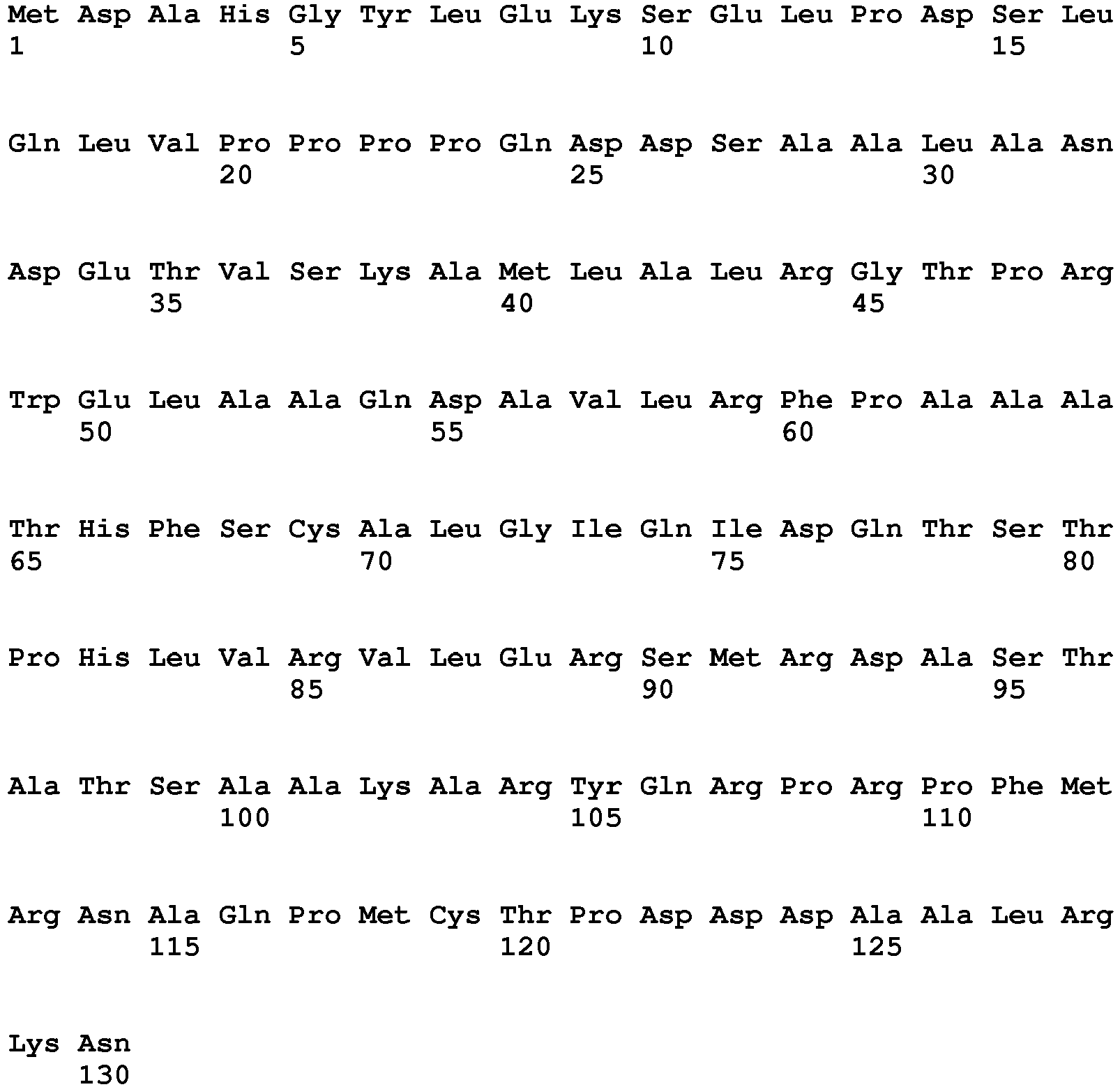
- <210> 28
<211> 130
<212> PRT
<213> Brevundimonas diminuta - <400> 28


- <210> 29
<211> 124
<212> PRT
<213> Sphingomonas trueperi - <400> 29

- <210> 30
<211> 141
<212> PRT
<213> Zymomonas mobilis - <400> 30


- <210> 31
<211> 133
<212> PRT
<213> Desulfovibrio magneticus - <400> 31


- <210> 32
<211> 133
<212> PRT
<213> Gluconobacter oxydans - <400> 32

- <210> 33
<211> 101
<212> PRT
<213> Gluconacetobacter hansenii - <400> 33

- <210> 34
<211> 105
<212> PRT
<213> Xanthomonas oryzae - <400> 34

- <210> 35
<211> 95
<212> PRT
<213> Brevundimonas diminuta - <400> 35

- <210> 36
<211> 100
<212> PRT
<213> Sphingomonas trueperi - <400> 36


- <210> 37
<211> 96
<212> PRT
<213> Zymomonas mobilis - <400> 37

- <210> 38
<211> 82
<212> PRT
<213> Desulfovibrio magneticus - <400> 38


- <210> 39
<211> 103
<212> PRT
<213> Gluconobacter oxydans - <400> 39

- <210> 40
<211> 17
<212> PRT
<213> Gluconacetobacter hansenii - <400> 40

- <210> 41
<211> 209
<212> PRT
<213> Gluconacetobacter hansenii - <400> 41


- <210> 42
<211> 36
<212> DNA
<213> artificial sequence - <220>
<223> Primer 45 - <400> 42
tgcacccatg gacgcagggt atctaacacc tgcgac 36 - <210> 43
<211> 37
<212> DNA
<213> artificial sequence - <220>
<223> primer 46 - <400> 43
caataagctt gagcggagaa tgggccgcag catcatg 37 - <210> 44
<211> 34
<212> DNA
<213> artificial sequence - <220>
<223> primer 47 - <400> 44
gatcgccatg gacgcgcatg gatacctgga aaag 34 - <210> 45
<211> 35
<212> DNA
<213> artificial sequence - <220>
<223> primer 48 - <400> 45
ttccaagctt catcacacca ggcaacaccg tcttc 35 - <210> 46
<211> 37
<212> DNA
<213> artificial sequence - <220>
<223> primer 49 - <400> 46
agcttccatg gatcatccgc acggctatct gaccgcc 37 - <210> 47
<211> 36
<212> DNA
<213> artificial sequence - <220>
<223>primer 50 - <400> 47
atcaaagctt ctgacgcgcc agcgaggcgg ggcagg 36 - <210> 48
<211> 32
<212> DNA
<213> artificial sequence - <220>
<223> primer 51 - <400> 48
tcaggccatg gacacggcgc cgtacctcgc cg 32 - <210> 49
<211> 34
<212> DNA
<213> artificial sequence - <220>
<223> primer 52 - <400> 49
aagaaagctt ggggcggacg cgaagggcct ccgc 34 - <210> 50
<211> 34
<212> DNA
<213> artificial sequence - <220>
<223> primer 53 - <400> 50
tctggccatg gatctttctc aaagcgtttc agct 34 - <210> 51
<211> 33
<212> DNA
<213> artificial sequence - <220>
<223> primer 54 - <400> 51
tatgaagctt gcgagcgctt tgttcaatct tgc 33 - <210> 52
<211> 37
<212> DNA
<213> artificial sequence - <220>
<223> primer 55 - <400> 52
tatggatccg cagctggcct ggtccgaaac gcagttc 37 - <210> 53
<211> 39
<212> DNA
<213> artificial sequence - <220>
<223> primer 56 - <400> 53
cctcaagctt ctgggccaga cccagggcgc tgcggactt 39 - <210> 54
<211> 38
<212> DNA
<213> artificial sequence - <220>
<223> primer 57 - <400> 54
taacgcccat ggatacgtcc gctaccgccc aaggcggc 38 - <210> 55
<211> 37
<212> DNA
<213> artificial sequence - <220>
<223> primner 58 - <400> 55
aacaaagctt ttcgctgagc agggaatgga tcgcggc 37 - <210> 56
<211> 35
<212> DNA
<213> artificial sequence - <220>
<223> primer 59 - <400> 56
cttagaccat ggatgcattg ctggatggat atttg 35 - <210> 57
<211> 36
<212> DNA
<213> artificial sequence - <220>
<223>primer 60 - <400> 57
ccataagctt agctcctgcc atttcttttt taacct 36 - <210> 58
<211> 37
<212> DNA
<213> artificial sequence - <220>
<223> primer 61 - <400> 58
tacgttccat ggattccgcc ccctcgctcg agaagga 37 - <210> 59
<211> 36
<212> DNA
<213> artificial seuqence - <220>
<223> primer 62 - <400> 59
atccaagctt gagcaggggc tggcgcgcgg ccgcat 36 - <210> 60
<211> 35
<212> DNA
<213> artificial sequence - <220>
<223> primer 63 - <400> 60
cttagaccat ggatagcagc ctttttggat atacc 35 - <210> 61
<211> 37
<212> DNA
<213> artificial sequence - <220>
<223> primer 64 - <400> 61
aagtaagctt aaaagcgtct tgcgcagcct gctgttc 37 - <210> 62
<211> 37
<212> DNA
<213> artificial sequence - <220>
<223> primer (3) - <400> 62
tacgttccat ggattccgcc ccctcgctcg agaagga 37 - <210> 63
<211> 36
<212> DNA
<213> artificial sequence - <220>
<223> primer (4) - <400> 63
atccaagctt gagcaggggc tggcgcgcgg ccgcat 36 - <210> 64
<211> 36
<212> DNA
<213> artificial sequence - <220>
<223> primer (11) - <400> 64
agcggatcct atccctccgg tcatactagc cagggg 36 - <210> 65
<211> 33
<212> DNA
<213> artificial sequence - <220>
<223> primer (12) - <400> 65
ataggatccg ctgtccgcga gttcggccgt gcg 33 - <210> 66
<211> 35
<212> DNA
<213> artificial sequence - <220>
<223>primer 1 - <400> 66
cttagaccat ggatagcagc ctttttggat atacc 35 - <210> 67
<211> 37
<212> DNA
<213> artificial sequence - <220>
<223> primer 2 - <400> 67
aagtaagctt aaaagcgtct tgcgcagcct gctgttc 37 - <210> 68
<211> 38
<212> DNA
<213> artificial sequence - <220>
<223>primer 3 - <400> 68
taacgcccat ggatacgtcc gctaccgccc aaggcggc 38 - <210> 69
<211> 37
<212> DNA
<213> artificial sequence - <220>
<223>primer 4 - <400> 69
aacaaagctt ttcgctgagc agggaatgga tcgcggc 37 - <210> 70
<211> 31
<212> DNA
<213> artificial sequence - <220>
<223>primer 5 - <400> 70
gactgcaggc tacgggatgg cgctgctcct g 31 - <210> 71
<211> 28
<212> DNA
<213> artificial sequence - <220>
<223>primer 6 - <400> 71
atcctgcagt tgtatggcca gagggata 28 - <210> 72
<211> 29
<212> DNA
<213> artificial sequence - <220>
<223> primer 7 - <400> 72
caactgcagg atggctcacg gcatccatt 29 - <210> 73
<211> 33
<212> DNA
<213> artificial sequence - <220>
<223>primer 8 - <400> 73
tcctgcagtc gtatgacccg acggatagga cgc 33 - <210> 74
<211> 36
<212> DNA
<213> artificial sequence - <220>
<223>primer 9 - <400> 74
aataaacaca tatgcacagc acattcagat gggctt 36 - <210> 75
<211> 36
<212> DNA
<213> artificial sequence - <220>
<223>primer 10 - <400> 75
gagagctgca tatgggcagg ttcgtaccca cgaacg 36 - <210> 76
<211> 33
<212> DNA
<213> artificial sequence - <220>
<223>primer 11 - <400> 76
tttaatgtcg acccagaaaa acttcccgca atg 33 - <210> 77
<211> 35
<212> DNA
<213> artificial sequence - <220>
<223>primer 12 - <400> 77
gccagctcga gattgaaacc cgccgcacag gagaa 35 - <210> 78
<211> 44
<212> DNA
<213> artificial sequence - <220>
<223> primer 13 - <400> 78
acactagtcc ggaaggtctt ggtctcaacg cttcctatcc ctct 44 - <210> 79
<211> 32
<212> DNA
<213> artificial sequence - <220>
<223> primer 14 - <400> 79
ggactagtgc agatgtcttt atttgtgccg ac 32 - <210> 80
<211> 27
<212> DNA
<213> artificial sequence - <220>
<223> primer 15 - <400> 80
cgactagttc tggctccgcc gccggcg 27 - <210> 81
<211> 31
<212> DNA
<213> artificial sequence - <220>
<223> primer 16 - <400> 81
aaactagtcg ttcatcaggt agggtaaact g 31 - <210> 82
<211> 33
<212> DNA
<213> artificial sequence - <220>
<223> primer 17 - <400> 82
ggaactgcag cgcagagtga tgacgaccgg gtg 33 - <210> 83
<211> 37
<212> DNA
<213> artificial sequence - <220>
<223> primer 18 - <400> 83
agtgctgcag atccgggcgc tggtggcggg ggcaaaa 37 - <210> 84
<211> 33
<212> DNA
<213> artificial sequence - <220>
<223> primer 19 - <400> 84
cgctggaagc tagcgcagag cgatgcggat ctg 33 - <210> 85
<211> 37
<212> DNA
<213> artificial sequence - <220>
<223>primer 20 - <400> 85
attctgtagc tagcttccag cgcgccttat cttttaa 37 - <210> 86
<211> 33
<212> DNA
<213> artificial sequence - <220>
<223> primer 21 - <400> 86
cgctggaagc tagcccagaa tgacgccaac ctt 33 - <210> 87
<211> 36
<212> DNA
<213> artificial sequence - <220>
<223> primer 22 - <400> 87
gctctgagct agcttccagc gcggcgtgtc cttcag 36 - <210> 88
<211> 38
<212> DNA
<213> artificial sequence - <220>
<223> primer 23 - <400> 88
gacttcagct agcaccgcca ccacaggcag aagaaccc 38 - <210> 89
<211> 36
<212> DNA
<213> artificial sequence - <220>
<223> primer 24 - <400> 89
cggcggagct agcacgagac gctcgtccgg agccgc 36 - <210> 90
<211> 33
<212> DNA
<213> artificial sequence - <220>
<223> primer 25 - <400> 90
cagtctgcag cacctgatgg acgtgcattt ttg 33 - <210> 91
<211> 32
<212> DNA
<213> artificial sequence - <220>
<223> primer 26 - <400> 91
ggagctgcag agtccggcag gatgccgcct tg 32 - <210> 92
<211> 32
<212> DNA
<213> artificial sequence - <220>
<223> primer 27 - <400> 92
aacctgcagc acaacaggca gacttgcggg ct 32 - <210> 93
<211> 31
<212> DNA
<213> artificial sequence - <220>
<223> primer 28 - <400> 93
ctgctgcaga tccgggcgcc ggcggcggag c 31 - <210> 94
<211> 714
<212> DNA
<213> Gluconacetobacter hansenii - <400> 94


- <210> 95
<211> 729
<212> DNA
<213> Xanthomonas oryzae - <400> 95

- <210> 96
<211> 699
<212> DNA
<213> Brevundimonas diminuta - <400> 96


- <210> 97
<211> 696
<212> DNA
<213> Sphingomonas trueperi - <400> 97

- <210> 98
<211> 735
<212> DNA
<213> Zymomonas mobilis - <400> 98


- <210> 99
<211> 645
<212> DNA
<213> Desulfovibrio magneticus - <400> 99

- <210> 100
<211> 732
<212> DNA
<213> Gluconobacter oxydans - <400> 100


- <210> 101
<211> 651
<212> DNA
<213> Flavobacterium johnsoniae - <400> 101

- <210> 102
<211> 759
<212> DNA
<213> Methylobacterium ectorquens - <400> 102


- <210> 103
<211> 726
<212> DNA
<213> Acetobacter pasteurianus - <400> 103

- <210> 104
<211> 250
<212> PRT
<213> Serratia plymutica\201@ - <400> 104


- <210> 105
<211> 211
<212> PRT
<213> Rahnella aquatilis - <400> 105

- <210> 106
<211> 142
<212> PRT
<213> Serratia plymutica - <400> 106

- <210> 107
<211> 122
<212> PRT
<213> Rahnella aquatilis - <400> 107


- <210> 108
<211> 132
<212> PRT
<213> Flavobacterium johnsoniae - <400> 108

- <210> 109
<211> 143
<212> PRT
<213> Methylobacterium ectorquens - <400> 109

- <210> 110
<211> 134
<212> PRT
<213> Acetobacter pasteurianus - <400> 110
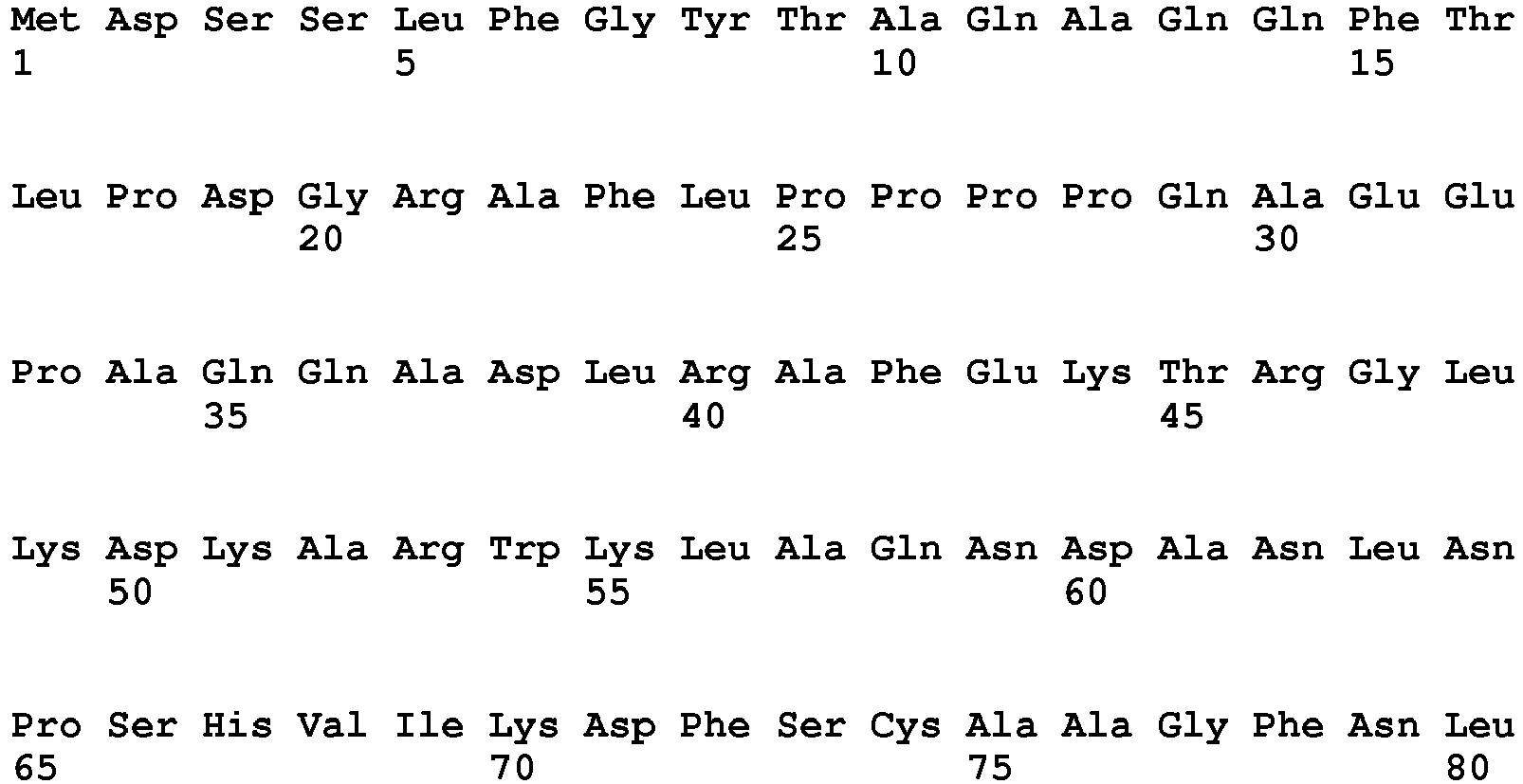
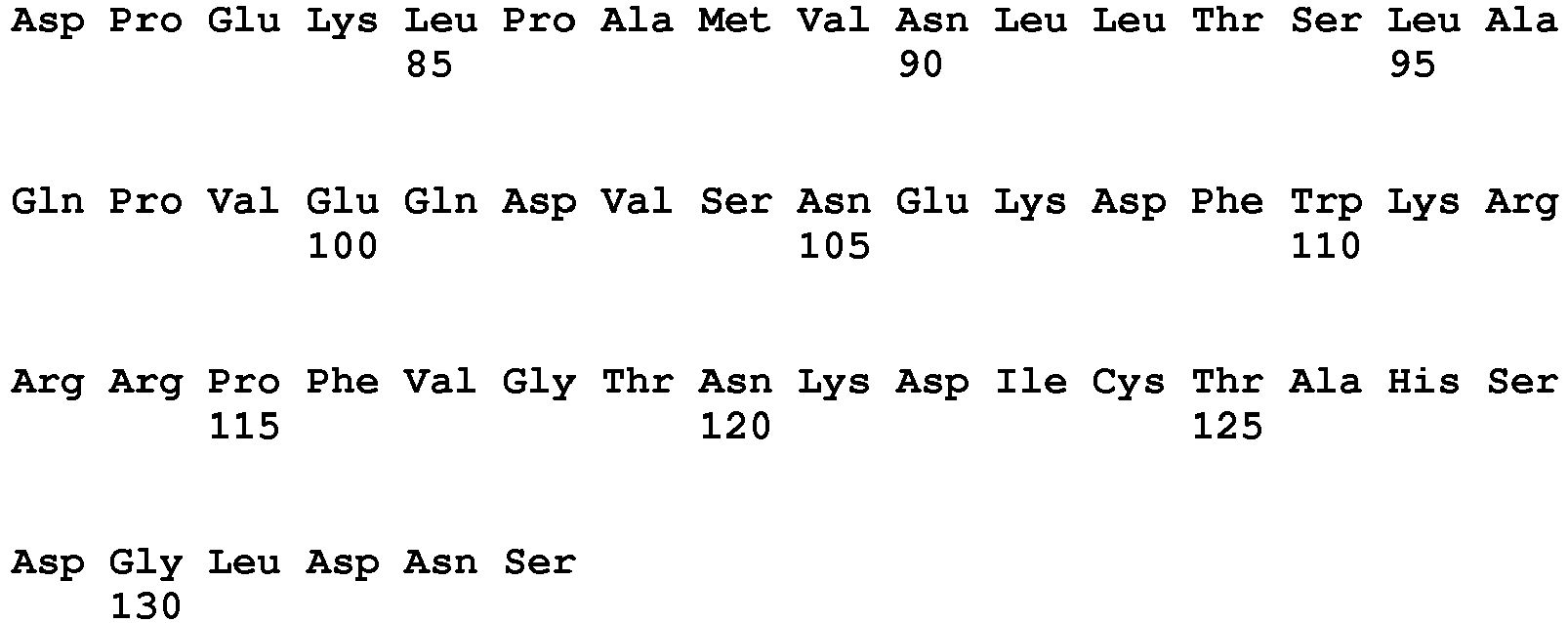
- <210> 111
<211> 101
<212> PRT
<213> Serratia plymutica - <400> 111

- <210> 112
<211> 82
<212> PRT
<213> Rahnella aquatilis - <400> 112

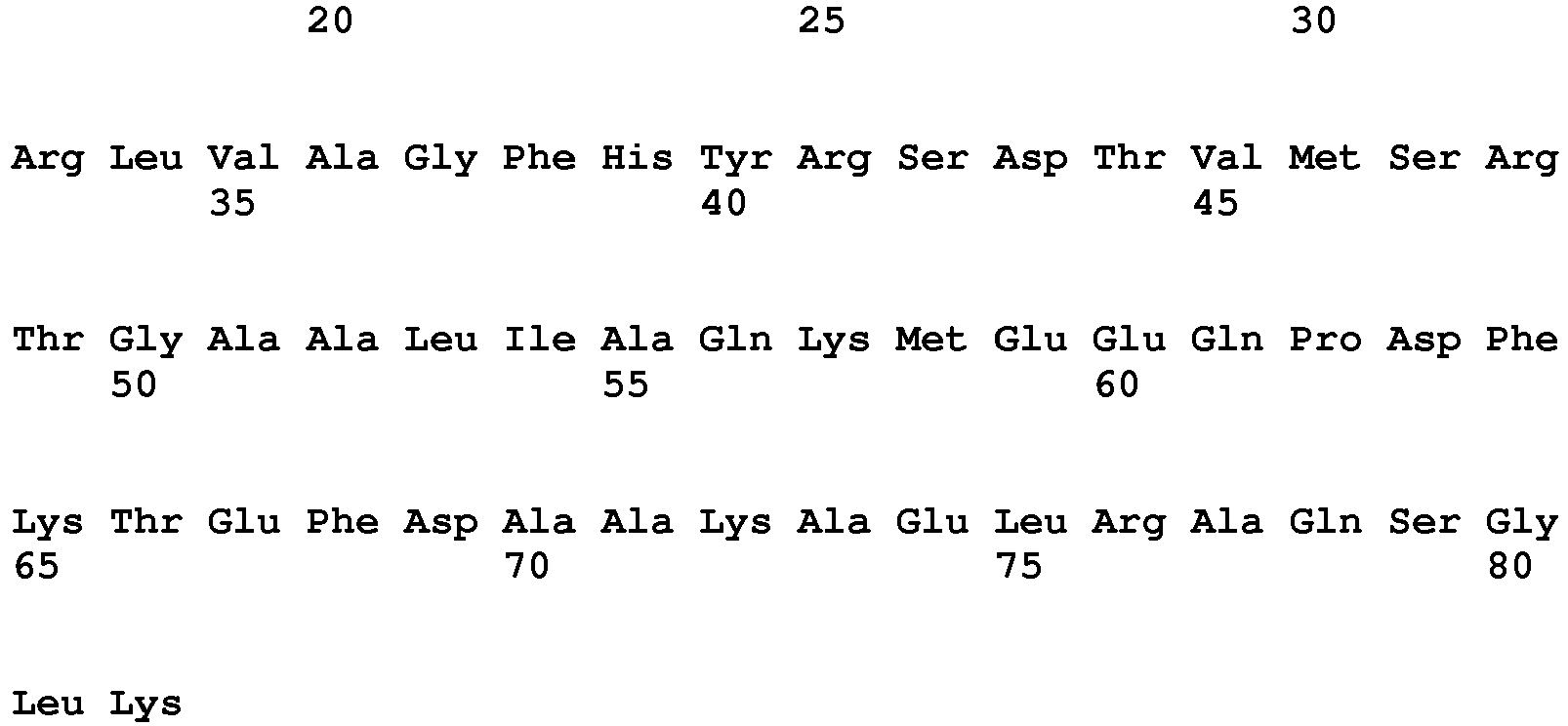
- <210> 113
<211> 77
<212> PRT
<213> Flavobacterium johnsoniae - <400> 113

- <210> 114
<211> 102
<212> PRT
<213> Methylobacterium ectorquens - <400> 114


- <210> 115
<211> 98
<212> PRT
<213> Acetobacter pasteurianus - <400> 115

- <210> 116
<211> 253
<212> PRT
<213> Artificial Sequence - <220>
<223> variant b - <400> 116

- <210> 117
<211> 253
<212> PRT
<213> Artificial Sequence - <220>
<223> variant c - <400> 117


- <210> 118
<211> 253
<212> PRT
<213> Artificial Sequence - <220>
<223> variant d - <400> 118


- <210> 119
<211> 253
<212> PRT
<213> Artificial Sequence - <220>
<223> variant e - <400> 119
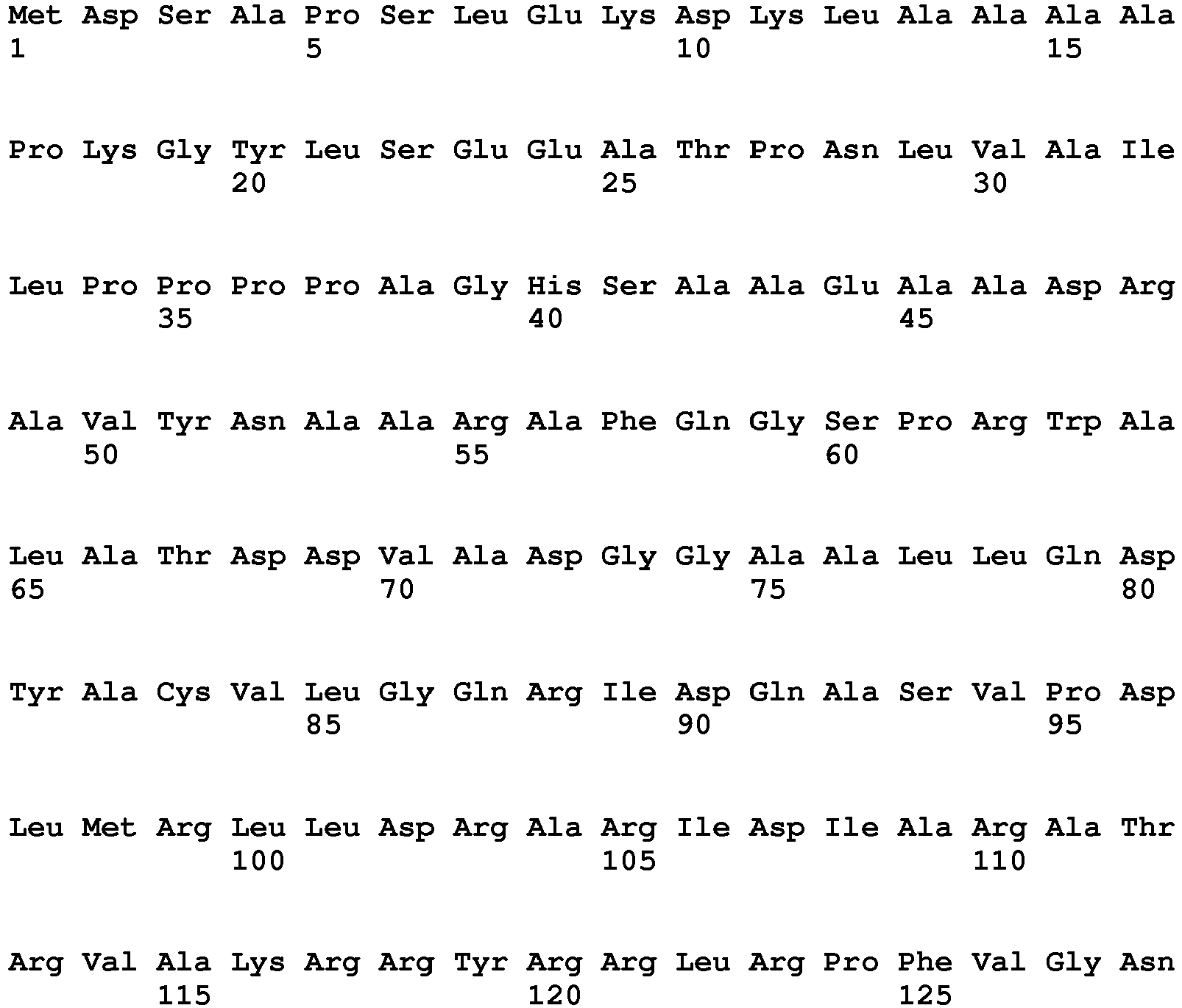

- <210> 120
<211> 253
<212> PRT
<213> Artificial Sequence - <220>
<223> variant f - <400> 120


- <210> 121
<211> 253
<212> PRT
<213> Artificial Sequence - <220>
<223> variant g - <400> 121


- <210> 122
<211> 750
<212> DNA
<213> Serratia plymutica - <400> 122


- <210> 123
<211> 633
<212> DNA
<213> Rahnella aquatilis - <400> 123

- <210> 124
<211> 36
<212> DNA
<213> Artificial Sequence - <220>
<223> primer124 - <400> 124
gctgccacca tggataccgg gccgacggta acggac 36 - <210> 125
<211> 34
<212> DNA
<213> Artificial Sequence - <220>
<223> primer125 - <400> 125
gatcaagctt gtgcatactc aaagagagtg caac 34 - <210> 126
<211> 36
<212> DNA
<213> Artificial Sequence - <220>
<223> primer126 - <400> 126
gttcaggcca tggaagaagc caaacccttt atcacc 36 - <210> 127
<211> 34
<212> DNA
<213> Artificial Sequence - <220>
<223> primer 127 - <400> 127
acgaaagctt tttcaggcca gattgggcgc gaag 34 - <210> 128
<211> 759
<212> DNA
<213> Artificial Sequence - <220>
<223> DNA coding phosphatase - <400> 128


- <210> 129
<211> 34
<212> DNA
<213> Artificial Sequence - <220>
<223> primer(5) - <400> 129
ggcgatggcc atggacagtg ccccgagtct ggaa 34 - <210> 130
<211> 32
<212> DNA
<213> Artificial Sequence - <220>
<223> primer(6) - <400> 130
taaagaagct tcagcagcgg ttgacgggca gc 32 - <210> 131
<211> 33
<212> DNA
<213> Artificial Sequence - <220>
<223> primer(7) - <400> 131
actcggatag ctagcgctgt ccgccagttc agc 33 - <210> 132
<211> 39
<212> DNA
<213> Artificial Sequence - <220>
<223> primer(8) - <400> 132
gcggacagcg ctagctatcc gagtggtcat gcgtcccag 39 - <210> 133
<211> 31
<212> DNA
<213> Artificial Sequence - <220>
<223> primer(9) - <400> 133
aataggatcc gctgtccgcc agttcagcgg t 31 - <210> 134
<211> 39
<212> DNA
<213> Artificial Sequence - <220>
<223> primer(10) - <400> 134
gacagaggat cctatccgag tggtcatgcg tcccagggt 39 - <210> 135
<211> 39
<212> DNA
<213> Artificial Sequence - <220>
<223> primer(11) - <400> 135
gatcagacca tatgcccaac cctgggagtc atgaccact 39 - <210> 136
<211> 33
<212> DNA
<213> Artificial Sequence - <220>
<223> primer(12) - <400> 136
cagggttggg catatggtct gatcatggca aac 33 - <210> 137
<211> 39
<212> DNA
<213> Artificial Sequence - <220>
<223> primer(13) - <400> 137
gatcagacca tatgcccaac cctgggacgt atgaccact 39 - <210> 138
<211> 39
<212> DNA
<213> Artificial Sequence - <220>
<223> primer(14) - <400> 138
gatcagacca tatgcccaac cctgggagct atgaccact 39 - <210> 139
<211> 39
<212> DNA
<213> Artificial Sequence - <220>
<223> primer(15) - <400> 139
gacagaggat cctatccgag tggtcattcg tcccagggt 39
Claims (15)
- A method for production of a phosphorylated glycerol (= glycerol phosphate), comprising a step of allowing a phosphorylating enzyme to act on glycerol in the presence of a phosphate group donor,
wherein the phosphorylating enzyme is a class A acid phosphatase and comprises:- a polypeptide as defined in (i) or (ii) below:(i) a polypeptide that has the amino acid sequence set forth in SEQ ID NO: 2 and has an activity to catalyze the glycerol phosphorylating reaction, or(ii) a polypeptide that has an amino acid sequence having 1 to 3 amino acids substituted, deleted, inserted, or added in the amino acid sequence set forth in SEQ ID NO: 2 and has an activity to catalyze the glycerol phosphorylating reaction which is comparable or superior to that of the polypeptide as defined in (i); and, as an active center,- a polypeptide having, on the C-terminal side of the amino acid sequence set forth in SEQ ID NO: 2, an amino acid sequence represented by the sequence (1):
-X1-X2-X3-Pro-Ser-Gly-HiS-X4- (1)
wherein,X1 denotes glycine, alanine, or phenylalanine;X2 denotes any amino acid;X3 denotes tyrosine or tryptophan; andX4 denotes threonine, serine, or alanine;with the proviso that when X1 is phenylalanine, X4 is threonine or serine. - The method for production according to claim 1, wherein the amino acid residue at the first position in the amino acid sequence set forth in SEQ ID NO: 2 is located between positions 5 and 40 from the N-terminus of the phosphorylating enzyme.
- The method for production according to claim 1 or 2, wherein X1 and X4 in the sequence (1) are any of (A1) to (A8) below:(A1) X1 is glycine and X4 is threonine;(A2) X1 is glycine and X4 is serine;(A3) X1 is alanine and X4 is serine;(A4) X1 is alanine and X4 is threonine;(A5) X1 is alanine and X4 is alanine;(A6) X1 is glycine and X4 is alanine;(A7) X1 is phenylalanine and X4 is threonine; and(A8) X1 is phenylalanine and X4 is serine.
- The method for production according to any of claims 1 to 3, wherein in the sequence (1), X2 is serine, alanine, or aspartic acid.
- The method for production according to any of claims 1 to 4, wherein X1, X2, X3, and X4 in the sequence (1) are any of (B1) to (B11) below:(B1) X1 is glycine, X2 is serine, X3 is tyrosine, and X4 is threonine;(B2) X1 is glycine, X2 is alanine, X3 is tyrosine, and X4 is threonine;(B3) X1 is glycine, X2 is serine, X3 is tyrosine, and X4 is serine;(B4) X1 is glycine, X2 is aspartic acid, X3 is tyrosine, and X4 is threonine;(B5) X1 is alanine, X2 is serine, X3 is tyrosine, and X4 is serine;(B6) X1 is alanine, X2 is serine, X3 is tyrosine, and X4 is threonine;(B7) X1 is alanine, X2 is serine, X3 is tyrosine, and X4 is alanine;(B8) X1 is glycine, X2 is serine, X3 is tyrosine, and X4 is alanine;(B9) X1 is phenylalanine, X2 is serine, X3 is tyrosine, and X4 is threonine;(B10) X1 is phenylalanine, X2 is serine, X3 is tyrosine, and X4 is serine; and(B11) X1 is glycine, X2 is serine, X3 is tryptophan, and X4 is serine.
- The method for production according to any of claims 1 to 5, wherein the histidine (His) residue at the 7-th position in the amino acid sequence represented by the sequence (1) is located between positions 120 and 160 from the N-terminus of the phosphorylating enzyme.
- The method for production according to any of claims 1 to 6, wherein the phosphorylating enzyme further comprises at least one of the amino acid sequences as defined in (iii) to (vi) below:(iii) a polypeptide that has, on the N-terminal side of the amino acid sequence set forth in SEQ ID NO: 2, the amino acid sequence set forth in SEQ ID NO: 40 and has an activity to catalyze the glycerol phosphorylating reaction;(iv) a polypeptide that has, on the N-terminal side of the amino acid sequence set forth in SEQ ID NO: 2, an amino acid sequence having 1 to 3 amino acids substituted, deleted, inserted, or added in the amino acid sequence set forth in SEQ ID NO: 40 and has an activity to catalyze the glycerol phosphorylating reaction which is comparable or superior to that of the polypeptide as defined in (iii);(v) a polypeptide that has, on the C-terminal side of the amino acid sequence set forth in SEQ ID NO: 2, the amino acid sequence set forth in SEQ ID NO: 41 and has an activity to catalyze the glycerol phosphorylating reaction; and(vi) a polypeptide that has, on the C-terminal side of the amino acid sequence set forth in SEQ ID NO: 2, an amino acid sequence having 1 to 10 amino acids substituted, deleted, inserted, or added in the amino acid sequence set forth in SEQ ID NO: 41 and has an activity to catalyze the glycerol phosphorylating reaction which is comparable or superior to that of the polypeptide as defined in (v).
- The method for production according to any of claims 1 to 7, wherein the phosphorylating enzyme comprises a polypeptide as defined in (vii) or (viii) below:(vii) a polypeptide that has the amino acid sequence set forth in any of SEQ ID NOs: 9, 15 to 17, 19, 22, and 25; or(viii) a polypeptide that comprises an amino acid sequence having, in the amino acid sequence set forth in any of SEQ ID NOs: 9, 15 to 17, 19, 22, and 25, 1 to 10 amino acids substituted, deleted, inserted, or added in a region outside the amino acid sequence set forth in SEQ ID NO: 2 and has an activity to catalyze the glycerol phosphorylating reaction which is comparable or superior to that of the polypeptide as defined in (vii).
- The method for production according to any of claims 1 to 6, wherein the phosphorylating enzyme further comprises any of the polypeptides as defined in (III) to (VI) below:(III) a polypeptide that has the amino acid sequence set forth in SEQ ID NO: 32, on the N-terminal side of the amino acid sequence represented by the sequence (1);(IV) a polypeptide that has, on the N-terminal side of the amino acid sequence represented by the sequence (1), an amino acid sequence having 1 to 10 amino acids substituted, deleted, inserted, or added in the amino acid sequence set forth in SEQ ID NO: 32 and has an activity to catalyze the glycerol phosphorylating reaction which is comparable or superior to that of its corresponding polypeptide as defined in (III);(V) a polypeptide that has the amino acid sequence set forth in any of SEQ ID NOs: 33 to 39 and 111 to 115, on the C-terminal side of the amino acid sequence represented by the sequence (1); and(VI) a polypeptide that has, on the C-terminal side of the amino acid sequence represented by the sequence (1), an amino acid sequence having 1 to 10 amino acids substituted, deleted, inserted, or added in the amino acid sequence set forth in any of SEQ ID NOs: 33 to 39 and 111 to 115 and has an activity to catalyze the glycerol phosphorylating reaction which is comparable or superior to that of its corresponding polypeptide as defined in (V).
- The method for production according to any of claims 1 to 6 and 9, wherein the phosphorylating enzyme comprises a polypeptide as defined in (VII) or (VIII) below:(VII) a polypeptide that has the amino acid sequence set forth in SEQ ID NO: 9, or(VIII) a polypeptide that comprises an amino acid sequence having, in the amino acid sequence set forth in SEQ ID NO: 9, 1 to 10 amino acids substituted, deleted, inserted, or added in a region outside the active center comprising the amino acid sequence represented by the sequence (1) and has an activity to catalyze the glycerol phosphorylating reaction which is comparable or superior to that of its corresponding polypeptide as defined in (VII).
- The method for production according to any of claims 1 to 10, wherein the phosphate group donor is a polyphosphoric acid.
- The method for production according to any of claims 1 to 11, wherein the phosphorylated glycerol is α-glycerophosphate.
- The method for production according to any of claims 1 to 12, wherein the pH of the reaction solution is from 4 to 5 in the step of allowing the phosphorylating enzyme to act on the glycerol in the presence of the phosphate group donor.
- The method for production according to any of claims 1 to 13, wherein the glycerol is added in an amount of 1000 to 50000 parts by weight per part by weight of the phosphorylating enzyme, in the step of allowing the phosphorylating enzyme to act on the glycerol in the presence of the phosphate group donor.
- The method for production according to any of claims 1 to 14, wherein the concentration of the phosphate group donor in the reaction solution is from 2% to 10% by weight in the step of allowing the phosphorylating enzyme to act on the glycerol in the presence of the phosphate group donor.
Applications Claiming Priority (2)
| Application Number | Priority Date | Filing Date | Title |
|---|---|---|---|
| JP2013029701 | 2013-02-19 | ||
| PCT/JP2014/053888 WO2014129492A1 (en) | 2013-02-19 | 2014-02-19 | Production method for glycerol phosphate |
Publications (3)
| Publication Number | Publication Date |
|---|---|
| EP2960337A1 EP2960337A1 (en) | 2015-12-30 |
| EP2960337A4 EP2960337A4 (en) | 2016-09-07 |
| EP2960337B1 true EP2960337B1 (en) | 2019-09-25 |
Family
ID=51391278
Family Applications (1)
| Application Number | Title | Priority Date | Filing Date |
|---|---|---|---|
| EP14754590.9A Active EP2960337B1 (en) | 2013-02-19 | 2014-02-19 | Enzymatic production method for glycerol phosphate |
Country Status (5)
| Country | Link |
|---|---|
| US (1) | US20160194673A1 (en) |
| EP (1) | EP2960337B1 (en) |
| JP (1) | JP6534612B2 (en) |
| CN (1) | CN105026571A (en) |
| WO (1) | WO2014129492A1 (en) |
Families Citing this family (1)
| Publication number | Priority date | Publication date | Assignee | Title |
|---|---|---|---|---|
| JP7225153B2 (en) * | 2020-03-13 | 2023-02-20 | 株式会社東芝 | Charge/discharge control method, battery-equipped device, management system, charge/discharge control program, management method, management server, and management program |
Family Cites Families (1)
| Publication number | Priority date | Publication date | Assignee | Title |
|---|---|---|---|---|
| JP3122663B2 (en) * | 1990-06-21 | 2001-01-09 | 協和醗酵工業株式会社 | Method for producing ascorbic acid-2-phosphate |
-
2014
- 2014-02-19 CN CN201480009361.0A patent/CN105026571A/en active Pending
- 2014-02-19 WO PCT/JP2014/053888 patent/WO2014129492A1/en not_active Ceased
- 2014-02-19 US US14/769,012 patent/US20160194673A1/en not_active Abandoned
- 2014-02-19 EP EP14754590.9A patent/EP2960337B1/en active Active
- 2014-02-19 JP JP2015501474A patent/JP6534612B2/en active Active
Non-Patent Citations (1)
| Title |
|---|
| None * |
Also Published As
| Publication number | Publication date |
|---|---|
| US20160194673A1 (en) | 2016-07-07 |
| EP2960337A4 (en) | 2016-09-07 |
| CN105026571A (en) | 2015-11-04 |
| JPWO2014129492A1 (en) | 2017-02-02 |
| JP6534612B2 (en) | 2019-06-26 |
| EP2960337A1 (en) | 2015-12-30 |
| WO2014129492A1 (en) | 2014-08-28 |
Similar Documents
| Publication | Publication Date | Title |
|---|---|---|
| EP2527436B1 (en) | Nadh oxidase mutant having improved stability and use thereof | |
| KR102324118B1 (en) | A mutant nitrile hydratase, a nucleic acid encoding the mutant nitrile hydratase, an expression vector and transformant containing the nucleic acid, a method for producing the mutant nitrile hydratase, and production of an amide compound Way | |
| CN111748537B (en) | Uridine phosphatase mutant and application thereof | |
| CN115786296B (en) | Meso-diaminopimelate dehydrogenase mutant and production method thereof | |
| EP0579360A2 (en) | Hyperthermophiles alpha-amylase gene | |
| Vidal et al. | Recombinant production of serine hydroxymethyl transferase from Streptococcus thermophilus and its preliminary evaluation as a biocatalyst | |
| EP2100956A1 (en) | Method of enzymatically synthesizing 3'-phosphoadenosine-5'-phophosulfate | |
| KR102722561B1 (en) | Novel promoter variant for constitutive expression and use of the same | |
| EP3115453A1 (en) | L-arabinose isomerase variant having improved conversion activity and method for producing d-tagatose using same | |
| EP2843046B1 (en) | Practical method for enzymatically synthesizing cyclic di-gmp | |
| EP2960337A1 (en) | Production method for glycerol phosphate | |
| EP1223213B1 (en) | Gene for thermostable glucokinase, recombinant vector containing the same, transformant containing the recombinant vector and process for producing thermostable glucokinase using the transformant | |
| CN115927273B (en) | A salt-tolerant glutaminase with improved stability | |
| JP7534550B2 (en) | Novel promoter variants for constitutive expression and uses thereof | |
| RU2126450C1 (en) | Method of producing s-(+)-2,2-dimethylcyclopropane carboxamide, dna fragment encoding r-(-)-2,2-dimethylcyclopropane- -carboxamide hydrolase of comamonas, recombinant plasmid dna (variants), strain of bacterium escherichia coli (variants) | |
| Wang et al. | Heterologous expression and characterization of recombinant glycerol dehydratase from Klebsiella pneumoniae in Escherichia coli | |
| JP4880859B2 (en) | Novel carbonyl reductase, its gene, and its use | |
| KR101778878B1 (en) | Highly active GABA-producing glutamate decarboxylase from Bacteroides sp. and use thereof | |
| JP6088176B2 (en) | Ascorbate kinase variant | |
| Hatanaka et al. | Alteration of catalytic function of 6-aminohexanoate-dimer hydrolase by site-directed mutagenesis | |
| KR102699320B1 (en) | Reductase variant of soluble methane monooxygenase and method for producing hydrocarbon oxide using the same | |
| KR102316549B1 (en) | Novel genes responsible for isobutanol tolerance and use thereof | |
| JP4415247B2 (en) | Novel glycerol kinase, gene and method for producing glycerol kinase using the gene | |
| JP2024142249A (en) | Enzyme useful for producing heterodisaccharides and method for producing heterodisaccharides using the same | |
| KR20220050773A (en) | Biosynthetic system for 2-keto-4-hydroxybutyrate |
Legal Events
| Date | Code | Title | Description |
|---|---|---|---|
| PUAI | Public reference made under article 153(3) epc to a published international application that has entered the european phase |
Free format text: ORIGINAL CODE: 0009012 |
|
| 17P | Request for examination filed |
Effective date: 20150916 |
|
| AK | Designated contracting states |
Kind code of ref document: A1 Designated state(s): AL AT BE BG CH CY CZ DE DK EE ES FI FR GB GR HR HU IE IS IT LI LT LU LV MC MK MT NL NO PL PT RO RS SE SI SK SM TR |
|
| AX | Request for extension of the european patent |
Extension state: BA ME |
|
| DAX | Request for extension of the european patent (deleted) | ||
| RIC1 | Information provided on ipc code assigned before grant |
Ipc: C12P 7/00 20060101AFI20160727BHEP Ipc: C12P 9/00 20060101ALI20160727BHEP |
|
| A4 | Supplementary search report drawn up and despatched |
Effective date: 20160808 |
|
| STAA | Information on the status of an ep patent application or granted ep patent |
Free format text: STATUS: EXAMINATION IS IN PROGRESS |
|
| 17Q | First examination report despatched |
Effective date: 20170322 |
|
| REG | Reference to a national code |
Ref country code: DE Ref legal event code: R079 Ref document number: 602014054234 Country of ref document: DE Free format text: PREVIOUS MAIN CLASS: C12P0009000000 Ipc: C12P0007000000 |
|
| GRAP | Despatch of communication of intention to grant a patent |
Free format text: ORIGINAL CODE: EPIDOSNIGR1 |
|
| STAA | Information on the status of an ep patent application or granted ep patent |
Free format text: STATUS: GRANT OF PATENT IS INTENDED |
|
| RIC1 | Information provided on ipc code assigned before grant |
Ipc: C12P 7/00 20060101AFI20190314BHEP Ipc: C12P 9/00 20060101ALI20190314BHEP Ipc: C12P 7/20 20060101ALI20190314BHEP |
|
| INTG | Intention to grant announced |
Effective date: 20190411 |
|
| GRAJ | Information related to disapproval of communication of intention to grant by the applicant or resumption of examination proceedings by the epo deleted |
Free format text: ORIGINAL CODE: EPIDOSDIGR1 |
|
| STAA | Information on the status of an ep patent application or granted ep patent |
Free format text: STATUS: EXAMINATION IS IN PROGRESS |
|
| GRAR | Information related to intention to grant a patent recorded |
Free format text: ORIGINAL CODE: EPIDOSNIGR71 |
|
| GRAS | Grant fee paid |
Free format text: ORIGINAL CODE: EPIDOSNIGR3 |
|
| STAA | Information on the status of an ep patent application or granted ep patent |
Free format text: STATUS: GRANT OF PATENT IS INTENDED |
|
| GRAA | (expected) grant |
Free format text: ORIGINAL CODE: 0009210 |
|
| STAA | Information on the status of an ep patent application or granted ep patent |
Free format text: STATUS: THE PATENT HAS BEEN GRANTED |
|
| INTC | Intention to grant announced (deleted) | ||
| INTG | Intention to grant announced |
Effective date: 20190815 |
|
| AK | Designated contracting states |
Kind code of ref document: B1 Designated state(s): AL AT BE BG CH CY CZ DE DK EE ES FI FR GB GR HR HU IE IS IT LI LT LU LV MC MK MT NL NO PL PT RO RS SE SI SK SM TR |
|
| REG | Reference to a national code |
Ref country code: GB Ref legal event code: FG4D |
|
| REG | Reference to a national code |
Ref country code: CH Ref legal event code: EP |
|
| REG | Reference to a national code |
Ref country code: AT Ref legal event code: REF Ref document number: 1183872 Country of ref document: AT Kind code of ref document: T Effective date: 20191015 |
|
| REG | Reference to a national code |
Ref country code: IE Ref legal event code: FG4D |
|
| REG | Reference to a national code |
Ref country code: DE Ref legal event code: R096 Ref document number: 602014054234 Country of ref document: DE |
|
| REG | Reference to a national code |
Ref country code: NL Ref legal event code: MP Effective date: 20190925 |
|
| PG25 | Lapsed in a contracting state [announced via postgrant information from national office to epo] |
Ref country code: SE Free format text: LAPSE BECAUSE OF FAILURE TO SUBMIT A TRANSLATION OF THE DESCRIPTION OR TO PAY THE FEE WITHIN THE PRESCRIBED TIME-LIMIT Effective date: 20190925 Ref country code: BG Free format text: LAPSE BECAUSE OF FAILURE TO SUBMIT A TRANSLATION OF THE DESCRIPTION OR TO PAY THE FEE WITHIN THE PRESCRIBED TIME-LIMIT Effective date: 20191225 Ref country code: LT Free format text: LAPSE BECAUSE OF FAILURE TO SUBMIT A TRANSLATION OF THE DESCRIPTION OR TO PAY THE FEE WITHIN THE PRESCRIBED TIME-LIMIT Effective date: 20190925 Ref country code: NO Free format text: LAPSE BECAUSE OF FAILURE TO SUBMIT A TRANSLATION OF THE DESCRIPTION OR TO PAY THE FEE WITHIN THE PRESCRIBED TIME-LIMIT Effective date: 20191225 Ref country code: FI Free format text: LAPSE BECAUSE OF FAILURE TO SUBMIT A TRANSLATION OF THE DESCRIPTION OR TO PAY THE FEE WITHIN THE PRESCRIBED TIME-LIMIT Effective date: 20190925 Ref country code: HR Free format text: LAPSE BECAUSE OF FAILURE TO SUBMIT A TRANSLATION OF THE DESCRIPTION OR TO PAY THE FEE WITHIN THE PRESCRIBED TIME-LIMIT Effective date: 20190925 |
|
| REG | Reference to a national code |
Ref country code: LT Ref legal event code: MG4D |
|
| PG25 | Lapsed in a contracting state [announced via postgrant information from national office to epo] |
Ref country code: LV Free format text: LAPSE BECAUSE OF FAILURE TO SUBMIT A TRANSLATION OF THE DESCRIPTION OR TO PAY THE FEE WITHIN THE PRESCRIBED TIME-LIMIT Effective date: 20190925 Ref country code: RS Free format text: LAPSE BECAUSE OF FAILURE TO SUBMIT A TRANSLATION OF THE DESCRIPTION OR TO PAY THE FEE WITHIN THE PRESCRIBED TIME-LIMIT Effective date: 20190925 Ref country code: GR Free format text: LAPSE BECAUSE OF FAILURE TO SUBMIT A TRANSLATION OF THE DESCRIPTION OR TO PAY THE FEE WITHIN THE PRESCRIBED TIME-LIMIT Effective date: 20191226 |
|
| REG | Reference to a national code |
Ref country code: AT Ref legal event code: MK05 Ref document number: 1183872 Country of ref document: AT Kind code of ref document: T Effective date: 20190925 |
|
| PG25 | Lapsed in a contracting state [announced via postgrant information from national office to epo] |
Ref country code: ES Free format text: LAPSE BECAUSE OF FAILURE TO SUBMIT A TRANSLATION OF THE DESCRIPTION OR TO PAY THE FEE WITHIN THE PRESCRIBED TIME-LIMIT Effective date: 20190925 Ref country code: AT Free format text: LAPSE BECAUSE OF FAILURE TO SUBMIT A TRANSLATION OF THE DESCRIPTION OR TO PAY THE FEE WITHIN THE PRESCRIBED TIME-LIMIT Effective date: 20190925 Ref country code: AL Free format text: LAPSE BECAUSE OF FAILURE TO SUBMIT A TRANSLATION OF THE DESCRIPTION OR TO PAY THE FEE WITHIN THE PRESCRIBED TIME-LIMIT Effective date: 20190925 Ref country code: IT Free format text: LAPSE BECAUSE OF FAILURE TO SUBMIT A TRANSLATION OF THE DESCRIPTION OR TO PAY THE FEE WITHIN THE PRESCRIBED TIME-LIMIT Effective date: 20190925 Ref country code: PL Free format text: LAPSE BECAUSE OF FAILURE TO SUBMIT A TRANSLATION OF THE DESCRIPTION OR TO PAY THE FEE WITHIN THE PRESCRIBED TIME-LIMIT Effective date: 20190925 Ref country code: EE Free format text: LAPSE BECAUSE OF FAILURE TO SUBMIT A TRANSLATION OF THE DESCRIPTION OR TO PAY THE FEE WITHIN THE PRESCRIBED TIME-LIMIT Effective date: 20190925 Ref country code: PT Free format text: LAPSE BECAUSE OF FAILURE TO SUBMIT A TRANSLATION OF THE DESCRIPTION OR TO PAY THE FEE WITHIN THE PRESCRIBED TIME-LIMIT Effective date: 20200127 Ref country code: NL Free format text: LAPSE BECAUSE OF FAILURE TO SUBMIT A TRANSLATION OF THE DESCRIPTION OR TO PAY THE FEE WITHIN THE PRESCRIBED TIME-LIMIT Effective date: 20190925 Ref country code: RO Free format text: LAPSE BECAUSE OF FAILURE TO SUBMIT A TRANSLATION OF THE DESCRIPTION OR TO PAY THE FEE WITHIN THE PRESCRIBED TIME-LIMIT Effective date: 20190925 |
|
| PG25 | Lapsed in a contracting state [announced via postgrant information from national office to epo] |
Ref country code: CZ Free format text: LAPSE BECAUSE OF FAILURE TO SUBMIT A TRANSLATION OF THE DESCRIPTION OR TO PAY THE FEE WITHIN THE PRESCRIBED TIME-LIMIT Effective date: 20190925 Ref country code: IS Free format text: LAPSE BECAUSE OF FAILURE TO SUBMIT A TRANSLATION OF THE DESCRIPTION OR TO PAY THE FEE WITHIN THE PRESCRIBED TIME-LIMIT Effective date: 20200224 Ref country code: SK Free format text: LAPSE BECAUSE OF FAILURE TO SUBMIT A TRANSLATION OF THE DESCRIPTION OR TO PAY THE FEE WITHIN THE PRESCRIBED TIME-LIMIT Effective date: 20190925 Ref country code: SM Free format text: LAPSE BECAUSE OF FAILURE TO SUBMIT A TRANSLATION OF THE DESCRIPTION OR TO PAY THE FEE WITHIN THE PRESCRIBED TIME-LIMIT Effective date: 20190925 |
|
| REG | Reference to a national code |
Ref country code: DE Ref legal event code: R097 Ref document number: 602014054234 Country of ref document: DE |
|
| PG2D | Information on lapse in contracting state deleted |
Ref country code: IS |
|
| PG25 | Lapsed in a contracting state [announced via postgrant information from national office to epo] |
Ref country code: DK Free format text: LAPSE BECAUSE OF FAILURE TO SUBMIT A TRANSLATION OF THE DESCRIPTION OR TO PAY THE FEE WITHIN THE PRESCRIBED TIME-LIMIT Effective date: 20190925 Ref country code: IS Free format text: LAPSE BECAUSE OF FAILURE TO SUBMIT A TRANSLATION OF THE DESCRIPTION OR TO PAY THE FEE WITHIN THE PRESCRIBED TIME-LIMIT Effective date: 20200126 |
|
| PLBE | No opposition filed within time limit |
Free format text: ORIGINAL CODE: 0009261 |
|
| STAA | Information on the status of an ep patent application or granted ep patent |
Free format text: STATUS: NO OPPOSITION FILED WITHIN TIME LIMIT |
|
| 26N | No opposition filed |
Effective date: 20200626 |
|
| REG | Reference to a national code |
Ref country code: CH Ref legal event code: PL |
|
| REG | Reference to a national code |
Ref country code: BE Ref legal event code: MM Effective date: 20200229 |
|
| PG25 | Lapsed in a contracting state [announced via postgrant information from national office to epo] |
Ref country code: MC Free format text: LAPSE BECAUSE OF FAILURE TO SUBMIT A TRANSLATION OF THE DESCRIPTION OR TO PAY THE FEE WITHIN THE PRESCRIBED TIME-LIMIT Effective date: 20190925 Ref country code: LU Free format text: LAPSE BECAUSE OF NON-PAYMENT OF DUE FEES Effective date: 20200219 |
|
| PG25 | Lapsed in a contracting state [announced via postgrant information from national office to epo] |
Ref country code: LI Free format text: LAPSE BECAUSE OF NON-PAYMENT OF DUE FEES Effective date: 20200229 Ref country code: CH Free format text: LAPSE BECAUSE OF NON-PAYMENT OF DUE FEES Effective date: 20200229 Ref country code: SI Free format text: LAPSE BECAUSE OF FAILURE TO SUBMIT A TRANSLATION OF THE DESCRIPTION OR TO PAY THE FEE WITHIN THE PRESCRIBED TIME-LIMIT Effective date: 20190925 |
|
| PG25 | Lapsed in a contracting state [announced via postgrant information from national office to epo] |
Ref country code: IE Free format text: LAPSE BECAUSE OF NON-PAYMENT OF DUE FEES Effective date: 20200219 |
|
| PG25 | Lapsed in a contracting state [announced via postgrant information from national office to epo] |
Ref country code: BE Free format text: LAPSE BECAUSE OF NON-PAYMENT OF DUE FEES Effective date: 20200229 |
|
| PG25 | Lapsed in a contracting state [announced via postgrant information from national office to epo] |
Ref country code: TR Free format text: LAPSE BECAUSE OF FAILURE TO SUBMIT A TRANSLATION OF THE DESCRIPTION OR TO PAY THE FEE WITHIN THE PRESCRIBED TIME-LIMIT Effective date: 20190925 Ref country code: MT Free format text: LAPSE BECAUSE OF FAILURE TO SUBMIT A TRANSLATION OF THE DESCRIPTION OR TO PAY THE FEE WITHIN THE PRESCRIBED TIME-LIMIT Effective date: 20190925 Ref country code: CY Free format text: LAPSE BECAUSE OF FAILURE TO SUBMIT A TRANSLATION OF THE DESCRIPTION OR TO PAY THE FEE WITHIN THE PRESCRIBED TIME-LIMIT Effective date: 20190925 |
|
| PG25 | Lapsed in a contracting state [announced via postgrant information from national office to epo] |
Ref country code: MK Free format text: LAPSE BECAUSE OF FAILURE TO SUBMIT A TRANSLATION OF THE DESCRIPTION OR TO PAY THE FEE WITHIN THE PRESCRIBED TIME-LIMIT Effective date: 20190925 |
|
| PGFP | Annual fee paid to national office [announced via postgrant information from national office to epo] |
Ref country code: GB Payment date: 20260224 Year of fee payment: 13 |
|
| PGFP | Annual fee paid to national office [announced via postgrant information from national office to epo] |
Ref country code: DE Payment date: 20260223 Year of fee payment: 13 |
|
| PGFP | Annual fee paid to national office [announced via postgrant information from national office to epo] |
Ref country code: FR Payment date: 20260223 Year of fee payment: 13 |