EP2958361A1 - A key server utilized in analyzing signaling messages of a wireless network - Google Patents
A key server utilized in analyzing signaling messages of a wireless network Download PDFInfo
- Publication number
- EP2958361A1 EP2958361A1 EP14172963.2A EP14172963A EP2958361A1 EP 2958361 A1 EP2958361 A1 EP 2958361A1 EP 14172963 A EP14172963 A EP 14172963A EP 2958361 A1 EP2958361 A1 EP 2958361A1
- Authority
- EP
- European Patent Office
- Prior art keywords
- identities
- key server
- traffic analyzer
- interfaces
- signaling messages
- Prior art date
- Legal status (The legal status is an assumption and is not a legal conclusion. Google has not performed a legal analysis and makes no representation as to the accuracy of the status listed.)
- Withdrawn
Links
- 230000011664 signaling Effects 0.000 title claims abstract description 56
- 238000005259 measurement Methods 0.000 claims abstract description 61
- 238000012805 post-processing Methods 0.000 claims abstract description 38
- 238000012360 testing method Methods 0.000 claims abstract description 23
- 238000000034 method Methods 0.000 claims abstract description 18
- 238000004891 communication Methods 0.000 claims abstract description 15
- 238000004458 analytical method Methods 0.000 claims description 15
- 230000008676 import Effects 0.000 claims description 9
- 238000004846 x-ray emission Methods 0.000 claims description 2
- 230000008569 process Effects 0.000 abstract description 7
- 238000013507 mapping Methods 0.000 abstract description 3
- 238000000691 measurement method Methods 0.000 abstract 1
- 230000008901 benefit Effects 0.000 description 9
- 230000006870 function Effects 0.000 description 7
- 230000002123 temporal effect Effects 0.000 description 5
- 238000012545 processing Methods 0.000 description 3
- 230000000694 effects Effects 0.000 description 2
- 230000007774 longterm Effects 0.000 description 2
- 238000012544 monitoring process Methods 0.000 description 2
- 238000012546 transfer Methods 0.000 description 2
- 238000003491 array Methods 0.000 description 1
- 238000013475 authorization Methods 0.000 description 1
- 230000005540 biological transmission Effects 0.000 description 1
- 230000002708 enhancing effect Effects 0.000 description 1
- 238000012986 modification Methods 0.000 description 1
- 230000004048 modification Effects 0.000 description 1
- 230000004044 response Effects 0.000 description 1
- 230000001360 synchronised effect Effects 0.000 description 1
Images


Classifications
-
- H—ELECTRICITY
- H04—ELECTRIC COMMUNICATION TECHNIQUE
- H04W—WIRELESS COMMUNICATION NETWORKS
- H04W76/00—Connection management
- H04W76/20—Manipulation of established connections
- H04W76/25—Maintenance of established connections
-
- H—ELECTRICITY
- H04—ELECTRIC COMMUNICATION TECHNIQUE
- H04W—WIRELESS COMMUNICATION NETWORKS
- H04W24/00—Supervisory, monitoring or testing arrangements
- H04W24/08—Testing, supervising or monitoring using real traffic
-
- H—ELECTRICITY
- H04—ELECTRIC COMMUNICATION TECHNIQUE
- H04L—TRANSMISSION OF DIGITAL INFORMATION, e.g. TELEGRAPHIC COMMUNICATION
- H04L63/00—Network architectures or network communication protocols for network security
- H04L63/30—Network architectures or network communication protocols for network security for supporting lawful interception, monitoring or retaining of communications or communication related information
- H04L63/306—Network architectures or network communication protocols for network security for supporting lawful interception, monitoring or retaining of communications or communication related information intercepting packet switched data communications, e.g. Web, Internet or IMS communications
-
- H—ELECTRICITY
- H04—ELECTRIC COMMUNICATION TECHNIQUE
- H04W—WIRELESS COMMUNICATION NETWORKS
- H04W12/00—Security arrangements; Authentication; Protecting privacy or anonymity
- H04W12/03—Protecting confidentiality, e.g. by encryption
- H04W12/037—Protecting confidentiality, e.g. by encryption of the control plane, e.g. signalling traffic
-
- H—ELECTRICITY
- H04—ELECTRIC COMMUNICATION TECHNIQUE
- H04W—WIRELESS COMMUNICATION NETWORKS
- H04W24/00—Supervisory, monitoring or testing arrangements
- H04W24/02—Arrangements for optimising operational condition
-
- H—ELECTRICITY
- H04—ELECTRIC COMMUNICATION TECHNIQUE
- H04W—WIRELESS COMMUNICATION NETWORKS
- H04W12/00—Security arrangements; Authentication; Protecting privacy or anonymity
- H04W12/04—Key management, e.g. using generic bootstrapping architecture [GBA]
-
- H—ELECTRICITY
- H04—ELECTRIC COMMUNICATION TECHNIQUE
- H04W—WIRELESS COMMUNICATION NETWORKS
- H04W12/00—Security arrangements; Authentication; Protecting privacy or anonymity
- H04W12/60—Context-dependent security
- H04W12/69—Identity-dependent
- H04W12/71—Hardware identity
-
- H—ELECTRICITY
- H04—ELECTRIC COMMUNICATION TECHNIQUE
- H04W—WIRELESS COMMUNICATION NETWORKS
- H04W12/00—Security arrangements; Authentication; Protecting privacy or anonymity
- H04W12/60—Context-dependent security
- H04W12/69—Identity-dependent
- H04W12/72—Subscriber identity
Definitions
- the invention relates to a key server connected to a wireless network.
- the key server records temporal subscriber identities and utilized ciphering keys that are utilized in a traffic analyzer for post processing signaling messages transmitted in the wireless communications network.
- the invention also relates to a method where the key server data is utilized in a traffic analyzer for accomplishing a post processing of the recorded signaling messages.
- GTI Globally Unique Temporary ID
- LTE Long Term Evolution
- One possible way of solving the above-mentioned problem is to capture in real time ciphering keys from AAA key exchange signaling (Authentication, Authorization and Accounting) and to follow at the same time all utilized temporary subscriber identities and map these to real subscriber identities. This kind of operation requires that monitoring of the interfaces under test is continuous.
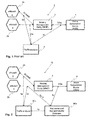
- FIG. 1 An example of this kind of a situation is shown in Figure 1 .
- a traffic analyzer 5 captures (references 5a and 5b) signaling messages that have been transmitted through an S1-MME interface.
- the captured signaling messages include temporal subscriber identities and ciphered Non Access Stratum (NAS) signaling messages.
- the interface exists between the Mobility Management Entity (MME) and eNodeB "X” or eNodeB "Y" (references 2a and 2b).
- MME Mobility Management Entity
- eNodeB "X" or eNodeB "Y" references 2a and 2b.
- the traffic analyzer 5 has to capture (reference 5c) subscriber true identity information and utilized ciphering keys via an interface S6a that exists between Mobility Management Entity 3 and Home Subscription Server (HSS) 4 and temporary subscriber identity information from S1-MME interface and map temporary identities to subscriber true identities.
- HSS Home Subscription Server
- the traffic analyzer 5 has to record the whole signaling traffic; i.e. the traffic between any two parties that are connected to elements under test in the wireless network. This means that a huge amount of signaling data has to be recorded already in a short time period after the measurement has been started.
- the traffic analyzer 5 known in the art has a capability to save the captured signaling data for about three days. In some cases the attainable measurement time of the prior traffic analyzer may be too short to find the network entity that causes problems in the wireless network.
- the post processing analysis is possible only in cases where the true identity of the subscriber appears in signaling messages during the analysis session. That is the case when a mobile station has been rebooted, for example. In that case the traffic analyzer 5 can get the utilized ciphering keys from the AAA interface.
- An object of the invention is to provide a new, secure and cost effective post processing arrangement and post processing method for solving subscriber problems that has been detected in a wireless communications network.
- a special key server captures and time stamps, temporary and true subscriber identities and corresponding ciphering keys comprising key tuple key access security management entity (K-ASME), authentication token (AUTN), expected response (XRES) and random number (RAND) as specified in 3GPP TS 33.401 and saves the formed identity and key records (71) to a key and identity database according to the invention.
- K-ASME key tuple key access security management entity
- AUTN authentication token
- XRES expected response
- RAND random number
- An advantage of the invention is that the ciphering keys, temporal and true subscriber identity mappings are known during the post processing phase. This makes it possible that the post processing of the network element under test can be performed without problems also in networks that utilize ciphering and temporal subscriber identities.
- Another advantage of the invention is that the recording time of the traffic analyzer can be extended to tens of days because during the signaling message capturing only the recorded signaling messages are saved to the memory of the traffic analyzer.
- Another advantage of the invention is that the ciphering keys will not be lost during a service break of the traffic analyzer.
- a further advantage of the invention is that it provides a secure and automatic access to ciphering keys, temporary and real subscriber identities for accomplishing a post processing.
- a further advantage of the invention is that the processing in the key server during measurement is easier because what is required is only to find the utilized ciphering keys, temporary and true subscriber identities and to save them to a key and identity database.
- a further advantage of the invention is that the overall system costs are lower because there is no need to provide online call and session analysis for all the utilized network interfaces during the measurement time.
- a further advantage of the invention is that a connection is not needed between the traffic analyzer and the key server when the traffic analyzer captures signaling messages. This makes it possible to analyze successfully also remote locations more easily.
- a further advantage of the invention is that a good analyzing performance is achieved during the post processing phase by utilizing locally accessible data of the ciphering keys, temporary and true subscriber identities of a time period that is defined to be analyzed in the traffic analyzer. Therefore, the traffic analyzer does not need to make queries over the serving network during the post processing phase.
- Yet another advantage of the invention is that after post processing analysis the locally captured cipher keys, real and temporary subscriber identities can be reported back to the key server database for enhancing the coverage of the possible other analyses.
- the key server according to the invention is characterised in that during a measurement period the processor unit and the memory unit are configured at least to capture and time stamp ciphering keys, temporary subscriber identities, true subscriber identities, and actual terminal identities from the S1-MME and S6a interfaces of an LTE network.
- the measurement arrangement according to the invention for resolving by post processing connection problems of a user of a wireless communications network is characterised in that the measurement arrangement comprises a key server configured to capture and time stamp ciphering keys, temporary subscriber identities, true subscriber identities (IMSI) and actual terminal identities (IMEI) from utilized interfaces of the wireless communications network during a measurement period.
- a key server configured to capture and time stamp ciphering keys, temporary subscriber identities, true subscriber identities (IMSI) and actual terminal identities (IMEI) from utilized interfaces of the wireless communications network during a measurement period.
- a distinct key server monitors continuously exchanges of the ciphering keys and temporary identity to true identity mappings that happen in the devices under test of the wireless communications network.
- the key server saves the captured and time stamped ciphering keys, temporary subscriber identities, true subscriber identities, and terminal identities to a key and identity database according to the invention. From the key and identity database the ciphering keys, temporary subscriber identities, true subscriber identities, and terminal identities can afterwards be extracted to a traffic analyzer in an off-line post processing phase.
- the traffic analyzer captures and saves to its memory ciphered signaling messages from the interfaces of the network devices that are under test.
- the traffic analyzer does not try to decipher the signaling messages during capturing of the signaling messages.
- the traffic analyzer automatically discovers the key server, and imports time stamped ciphering keys and identities from the key and identity database.
- the traffic analyzer After post processing the traffic analyzer synchronizes the locally found subscriber identities and keys automatically or manually to the key and identity database of the key server.
- Figure 2 depicts an exemplary measurement configuration 10 according to the invention that makes it possible to utilize a post processing phase in analyzing functioning of the network components under test (references 3, 2a, or 2b) of an LTE network, for example.
- a traffic analyzer configuration 50a needs only to capture (references 5a and 5b) the ciphered signaling messages that have been transmitted through an S1-MME interface which exists between the Mobility Management Entity 3 and eNodeB "X" (reference 2a) or eNodeB "Y” (reference 2b).
- the key server configuration 60a captures and time stamps (reference 6a, 6b, 6c) globally unique temporary identity (GUTI) and true subscriber identity (IMSI) information and actual terminal identity (IMEI) and utilized ciphering keys from S1-MME and S6a interfaces that exists between Mobility Management Entity 3 and Home Subscription Server 4.
- GUI globally unique temporary identity
- IMSI true subscriber identity
- IMEI actual terminal identity
- the key server configuration 60a needs to store in most cases only the changing ciphering keys and temporary subscriber identities that are utilized in signaling traffic between the network elements 2a, 2b, and 3 under test.
- the measurement configuration 10 makes it possible that the amount of data to be captured and stored is smaller both in the tarffic analyzer configuration 50a and key server configuration 60a compared to data needed to be stored in a measurement configuration known in the art ( Fig. 1 ) during the same measurement period.
- the traffic analyzer configuration 50 has a capability to capture and save ciphered signaling data for a lot longer period than in the prior art case because of being able to perform problem solving by storing signaling messages from subset of network interfaces.
- the resources of the key server configuration 60a can be focused on capturing and saving ciphering keys and temporary and true subscriber identities. Therefore the measurement configuration 10 according to the invention enables a long measurement time and that makes it possible to find out with a high probability also such network errors that happen only now and then in the network elements under test.
- the traffic analyzer configuration 50a establishes a secure connection 70 to the key server configuration 60a.
- the traffic analyzer configuration 50a imports time stamped ciphering keys, and temporary subscriber identities from the key and identity database of the key server configuration 60a. If needed, the traffic analyzer configuration 50a may also import true subscriber identities and actual terminal identities (IMEI).
- IMEI true subscriber identities and actual terminal identities
- the traffic analyzer configuration 50a deciphers signaling messages directed to or from the problematic subscriber device or network element.
- the deciphered signaling messages can be used to find out the reason that causes the detected subscriber problem.
- Figure 3 shows as an example what functions the measurement apparatuses according to the invention advantageously comprise that enable the post processing of signaling messages also in situations where ciphering keys and temporary subscriber identities are utilized in the LTE network.
- the key server configuration 60a may comprise a distinct key server or key server function 61.
- the key server 61 has advantageously fixed connections at least to the S1 and S6a interfaces of the network elements under test.
- the key server configuration 60a advantageously comprises also key and identity database 62 which may be integrated to the key server 61. During a measurement period the key server 61 saves the ciphering keys, temporary subscriber identities and all their time stamps to the key and identity database 62.
- the key server 61 and key and identity database 62 may be distinct devices that have fixed connection between each other at least during a measurement period.
- the key server configuration 60a according to the invention and its sub-functions may be integrated to a network element of the communications network under test.
- the traffic analyzer configuration 50a may comprise a distinct traffic analyzer 51, capture file storage 53 and a local key and identity database 52.
- the traffic analyzer 51 comprises advantageously signaling capture and post processing functions or means.
- the traffic analyzer 51 has advantageously fixed connections at least to the S1 interfaces of the network elements under test.
- the traffic analyzer 51 saves ciphered signaling messages as such to its capture file storage 53.
- the traffic analyzer 51 automatically establishes a two-way secure connection 70 to the key server configuration 60a and there to the key and identity database 62.
- the key server 61 and traffic analyzer 51 advantageously encrypt all transmissions between each other by utilizing public key infrastructure (PKI).
- PKI public key infrastructure
- the traffic analyzer 51 imports to the local key and identity database 52 advantageously ciphering keys and temporary subscriber identities that are utilized in the measurement time of interest in the devices under test. If needed, also true subscriber identities (IMSI) and terminal identities (IMEI) may be imported.
- the imported data 71 may also comprise for example time stamps of temporary subscriber identities (GUTI) and ciphering keys telling validity time for the temporary identities and ciphering keys. Ciphering keys and temporary identities are valid only after the capture time until replaced by new ciphering keys and identities.
- time is synchronized in both of them by utilizing well known means for time synchronization, for instance GPS time synchronization.
- the traffic analyzer 51 deciphers imported ciphered signaling messages by utilizing the now known ciphering keys.
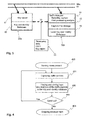
- Figure 4 shows as an exemplary flow chart the main steps of the process that is executed in the key server configuration 60a or the key server 61 according to the invention during a measurement period. In the following description only functions of the key server 61 are depicted.
- the measurement starts in phase 400.
- the key server 61 is connected to interfaces of the devices under test (references 6a, 6b, and 6c).
- Some examples of the possible utilized interfaces are S1 and S6a interfaces of the network elements of an LTE network.
- the utilized interfaces are the S6a interface between MME 3 and HSS 4 and advantageously also the S1-MME interfaces between MME 3 and two exemplary eNodeBs 2a and 2b.
- the key server 61 needs advantageously to be connected only to those device interfaces where connection problems have been detected.
- the key server 61 When connections to the network element interfaces are ready, the key server 61 starts to capture and time stamp ciphering keys and temporary and true subscriber identities in phase 401. The key server 61 does not itself try to use the ciphering keys and subscriber identities for analyzing work.
- the key server 61 saves captured and time stamped ciphering keys and temporary and true subscriber identities to the key and identity database 62 as such.
- the key server 61 checks if the measurement should be continued. If the measurement should be continued (alternative Yes), in that case the process returns to phase 401.
- the process steps 401 and 402 are repeated and new ciphering keys and temporary and true subscriber identities of new signaling messages will be captured.
- the key server 61 stops capturing the ciphering keys and subscriber identities in step 404.
- a technical effect of the measurement configuration 10 according to the invention is that the key server 61 needs not to have processing and storage capabilities for saving signalling messages for future analysis.
- FIG. 5 shows as an exemplary flow chart the main steps of the process that is executed in the traffic analyzer configuration 50a or traffic analyzer 51 according to the invention during a signaling message capture period and in a latter off-line post processing period. In the following description only functions of the traffic analyzer 51 are depicted.
- the measurement starts in phase 500.
- the traffic analyzer 51 is connected to interfaces of the devices under test ( Fig. 2 , references 5a and 5b).
- Some examples of possible utilized interfaces are the S1 and S6a interfaces of the network elements of an LTE network.
- the interfaces are S1-MME interfaces between MME 3 and two exemplary eNodeBs 2a and 2b.
- the traffic analyzer 51 When connections to the network element interfaces under test are ready, the traffic analyzer 51 starts to capture ciphered signaling messages in phase 501. The traffic analyzer 51 does not try to decipher the captured signaling messages. The tarffic analyzer 51 saves the captured ciphered signaling messages to its local capture file storage 53. To each captured signaling message the traffic analyzer 51 advantageously adds a time stamp.
- the traffic analyzer 51 checks from time to time in phase 502 if the capturing of signaling messages should be continued. If the measurement should be continued (alternative Yes), in that case the process returns to phase 501. The process steps 501 and 502 are repeated and new ciphered signaling messages will be captured.
- the traffic analyzer 51 stops capturing the signaling messages in step 503.
- a technical effect of the measurement configuration 10 according to the invention is that also the traffic analyzer 51 does not need to decipher all captured signaling messages and save on the fly them for future analysis.
- the unused resources of the traffic analyzer 51 can be utilized to prolong the possible capturing time from a couple of days to tens of days.
- the traffic analyzer 51 may be disconnected from the network elements under test.
- the traffic analyzer 51 can now be utilized in the post processing.
- the off-line post processing is started in phase 510.
- the traffic analyzer 51 is connected to the key server 61 advantageously via a secure two-way connection 71.
- the connection may be a wired fixed connection or a wireless connection.
- the parties utilize advantageously public key infrastructure for securing the data transfer between each other and preventing an illegal access to the captured user information.
- phase 511 a starting and ending time of the analysis period is defined in the traffic analyzer 61.
- phase 512 captured ciphering keys and temporary subscriber identities for the defined analysis period are imported from the key and identity database 62 to the local key and identity database 52 of the traffic analyzer 51.
- the true subscriber identities (IMSI) and terminal identities (IMEI) are exported from key and identity database 62 to the local identity database 52.
- Time stamps included to key records (71) are used to determine the records to be exported.
- the traffic analyzer 51 deciphers signaling messages captured during the measurement period by utilizing the imported ciphering keys. Also the temporary subscriber identities are converted into a true subscriber identity by the imported temporary and true subscriber identity data. The deciphered signaling messages of a problematic subscriber connection may now be saved in the local database and utilized in resolving the problems of the subscriber connection.
- the post processing ends in phase 520 when all captured and deciphered signaling messages of the problematic subscriber connection have been utilized in the problem analysis. After the analysis the results are advantageously saved in the local key and identity database 52.
- any of the steps described or illustrated in Figures 4 and 5 may be implemented using executable instructions in a general-purpose or special-purpose processor and stored on a computer-readable storage medium (e.g., disk, memory, or the like) to be executed by such a processor.
- a computer-readable storage medium e.g., disk, memory, or the like
- references to computer-readable storage medium and computer should be understood to encompass specialized circuits such as field-programmable gate arrays, application-specific integrated circuits (ASICs), USB flash drives, signal processing devices, and other devices.
- FIG. 6 shows the operational main parts of the key server 61 according to the invention that are utilized in the implementation of the measurement arrangement according to the invention.
- the key server 61 comprises a processor or processor means 621, which advantageously comprise an arithmetic logic unit, a number of different registers and control circuits.
- a data storing arrangement 622 such as memory unit or memory means, whereon computer-readable information, programs or user data can be stored, has been connected to the processor means 621.
- the memory means 622 typically contain memory units which allow both reading and writing functions (Random Access Memory, RAM), and memory units containing non-volatile memory, from which data can only be read (Read Only Memory, ROM).
- the key server 61 also comprises an interface element 624 which comprises an input or input means 626 for receiving measurement data from the interfaces of the devices under test.
- the signaling message measurement data received with the input means 626 is advantageously transferred to be processed by the processor means 621 of the key server 61.
- the interface element 624 of the key server 61 also comprises an output or output means 625 with which data is transferred from the processor means of the key server 60 via a data transfer connection to the database key and identity database device and to the traffic analyzer 50.
- the key server 61 advantageously also comprises a user interface 623 which comprises means for receiving data and/or control commands from the user of the key server 61.
- the user interface 623 can for example comprise a keyboard and a touch screen.
- the processor means 621, the memory means 622, the interface element 624, and the user interface 623 are electrically connected together to systematically execute received and/or stored data or information in accordance with predetermined and substantially pre-programmed operational sequences.
- Such operational sequences also include the operational sequences described in connection with Figure 4 , which implement the functions of the key server according to the invention.
Landscapes
- Engineering & Computer Science (AREA)
- Computer Networks & Wireless Communication (AREA)
- Signal Processing (AREA)
- Computer Security & Cryptography (AREA)
- Technology Law (AREA)
- Computer Hardware Design (AREA)
- Computing Systems (AREA)
- General Engineering & Computer Science (AREA)
- Mobile Radio Communication Systems (AREA)
Abstract
The invention relates to a key server (61) according to the invention that monitors and captures exchanges of the cipher keys and temporary identity mappings that happen in the devices under test in a wireless communications network. The invention relates also to a measurement arrangement and measurement method where the key server (61) is utilized. At the same time a traffic analyzer (51) captures ciphered signaling messages from the interfaces of the network devices that are under test. The traffic analyzer does not try to decipher captured signaling messages on the fly. The traffic analyzer (51) deciphers the captured signaling messages as an off-line process as post processing.
Description
- The invention relates to a key server connected to a wireless network. The key server records temporal subscriber identities and utilized ciphering keys that are utilized in a traffic analyzer for post processing signaling messages transmitted in the wireless communications network. The invention also relates to a method where the key server data is utilized in a traffic analyzer for accomplishing a post processing of the recorded signaling messages.
- In wireless networks it sometimes happens that a user has problems either with phone call or data connections. For solving the problem the user traffic between a serving base station of the mobile device and elements of the core network has to be analyzed. In the analyzing work are utilized all kinds of signaling messages that have been transmitted in the wireless network.
- However, in wireless telecommunication networks ciphering of signals and temporal subscriber identities like Globally Unique Temporary ID (GUTI) of LTE (Long Term Evolution) may be utilized to protect confidentiality and identity of the mobile network subscribers. Due to the utilized ciphering it is impossible to analyze calls and sessions in a wireless telecommunication network by monitoring network interface(s) if the network is protected.
- One possible way of solving the above-mentioned problem is to capture in real time ciphering keys from AAA key exchange signaling (Authentication, Authorization and Accounting) and to follow at the same time all utilized temporary subscriber identities and map these to real subscriber identities. This kind of operation requires that monitoring of the interfaces under test is continuous.
- An example of this kind of a situation is shown in
Figure 1 . In the depictedexemplary measurement configuration 1 in an LTE communications network atraffic analyzer 5 captures (references references traffic analyzer 5 has to capture (reference 5c) subscriber true identity information and utilized ciphering keys via an interface S6a that exists between Mobility Management Entity 3 and Home Subscription Server (HSS) 4 and temporary subscriber identity information from S1-MME interface and map temporary identities to subscriber true identities. In practice this means that thetraffic analyzer 5 has to record the whole signaling traffic; i.e. the traffic between any two parties that are connected to elements under test in the wireless network. This means that a huge amount of signaling data has to be recorded already in a short time period after the measurement has been started. In the best case thetraffic analyzer 5 known in the art has a capability to save the captured signaling data for about three days. In some cases the attainable measurement time of the prior traffic analyzer may be too short to find the network entity that causes problems in the wireless network. - In a case where continuous key capture or subscriber true and temporary identity follow up is not accessible, phone call and session analysis is not possible due to inability to decipher the captured signaling traffic in the utilized traffic analyzer. For example post processing analysis of the calls and sessions captured from the S1 interface of LTE (Long Term Evolution) is in most cases impossible.
- The post processing analysis is possible only in cases where the true identity of the subscriber appears in signaling messages during the analysis session. That is the case when a mobile station has been rebooted, for example. In that case the
traffic analyzer 5 can get the utilized ciphering keys from the AAA interface. - An object of the invention is to provide a new, secure and cost effective post processing arrangement and post processing method for solving subscriber problems that has been detected in a wireless communications network.
- The objects of the invention are achieved by a method and a network arrangement, where a special key server captures and time stamps, temporary and true subscriber identities and corresponding ciphering keys comprising key tuple key access security management entity (K-ASME), authentication token (AUTN), expected response (XRES) and random number (RAND) as specified in 3GPP TS 33.401 and saves the formed identity and key records (71) to a key and identity database according to the invention. At the same time a traffic analyzer records signaling messages to its database. In the post processing phase the traffic analyzer imports the time stamped temporary and true subscriber identities and ciphering keys for deciphering the recorded signaling messages.
- An advantage of the invention is that the ciphering keys, temporal and true subscriber identity mappings are known during the post processing phase. This makes it possible that the post processing of the network element under test can be performed without problems also in networks that utilize ciphering and temporal subscriber identities.
- Another advantage of the invention is that the recording time of the traffic analyzer can be extended to tens of days because during the signaling message capturing only the recorded signaling messages are saved to the memory of the traffic analyzer.
- Another advantage of the invention is that the ciphering keys will not be lost during a service break of the traffic analyzer.
- A further advantage of the invention is that it provides a secure and automatic access to ciphering keys, temporary and real subscriber identities for accomplishing a post processing.
- A further advantage of the invention is that the processing in the key server during measurement is easier because what is required is only to find the utilized ciphering keys, temporary and true subscriber identities and to save them to a key and identity database.
- A further advantage of the invention is that the overall system costs are lower because there is no need to provide online call and session analysis for all the utilized network interfaces during the measurement time.
- A further advantage of the invention is that a connection is not needed between the traffic analyzer and the key server when the traffic analyzer captures signaling messages. This makes it possible to analyze successfully also remote locations more easily.
- A further advantage of the invention is that a good analyzing performance is achieved during the post processing phase by utilizing locally accessible data of the ciphering keys, temporary and true subscriber identities of a time period that is defined to be analyzed in the traffic analyzer. Therefore, the traffic analyzer does not need to make queries over the serving network during the post processing phase.
- Yet another advantage of the invention is that after post processing analysis the locally captured cipher keys, real and temporary subscriber identities can be reported back to the key server database for enhancing the coverage of the possible other analyses.
- The method according to the invention for resolving problems of a user connection of a wireless communications network is characterised in that during a measurement period from the interfaces of the wireless communications network:
- a traffic analyzer captures ciphered signaling messages from interfaces of the devices under test,
- a distinct key server captures and time stamps ciphering keys, temporary subscriber identities, true subscriber identities and terminal identities from interfaces of a mobility management entity, and
- by utilizing the captured information, the traffic analyzer resolves the problems of the user connection in post processing.
- The key server according to the invention is characterised in that during a measurement period the processor unit and the memory unit are configured at least to capture and time stamp ciphering keys, temporary subscriber identities, true subscriber identities, and actual terminal identities from the S1-MME and S6a interfaces of an LTE network.
- The measurement arrangement according to the invention for resolving by post processing connection problems of a user of a wireless communications network, is characterised in that the measurement arrangement comprises a key server configured to capture and time stamp ciphering keys, temporary subscriber identities, true subscriber identities (IMSI) and actual terminal identities (IMEI) from utilized interfaces of the wireless communications network during a measurement period.
- The idea of the invention is basically as follows: A distinct key server according to the invention monitors continuously exchanges of the ciphering keys and temporary identity to true identity mappings that happen in the devices under test of the wireless communications network. The key server saves the captured and time stamped ciphering keys, temporary subscriber identities, true subscriber identities, and terminal identities to a key and identity database according to the invention. From the key and identity database the ciphering keys, temporary subscriber identities, true subscriber identities, and terminal identities can afterwards be extracted to a traffic analyzer in an off-line post processing phase.
- At the same time the traffic analyzer captures and saves to its memory ciphered signaling messages from the interfaces of the network devices that are under test. In the measurement system according to the invention the traffic analyzer does not try to decipher the signaling messages during capturing of the signaling messages.
- In the beginning of the post processing phase the traffic analyzer automatically discovers the key server, and imports time stamped ciphering keys and identities from the key and identity database.
- After post processing the traffic analyzer synchronizes the locally found subscriber identities and keys automatically or manually to the key and identity database of the key server.
- Further scope of applicability of the present invention will become apparent from the detailed description given hereafter. However, it should be understood that the detailed description and specific examples, while indicating preferred embodiments of the invention, are given by way of illustration only, since various changes and modifications within the spirit and scope of the invention will become apparent to those skilled in the art from this detailed description.
- The invention is described in detail below. Reference is made to the accompanying drawings in which
- Fig. 1
- shows a schematical representation of a measurement arrangement of a wireless communications network utilized in prior art;
- Fig. 2
- shows an embodiment of the measurement arrangement according to the invention where the key server and traffic analyzer are separately connected to interfaces of the devices under test in an LTE network;
- Fig. 3
- shows as an example a measurement post processing arrangement according to the invention,
- Fig. 4
- shows as an exemplary a flow chart the main steps of the process that are executed in the key server during a measurement period;
- Fig. 5
- shows as an exemplary flow chart the main steps of a method needed for analysing signaling messages as a post processing process; and
- Fig. 6
- shows as an example the components utilized in the key server according to the invention.
- In the following description, the considered embodiments are merely exemplary, and one skilled in the art may find other ways to implement the invention. Although the specification may refer to "an", "one" or "some" embodiment(s) in several locations, this does not necessarily mean that each such reference is made to the same embodiment(s), or that the feature only applies to a single embodiment or all embodiments. Single features of different embodiments may also be combined to provide other embodiments.
-
Figure 1 was discussed in conjunction with the description of the prior art. -
Figure 2 depicts anexemplary measurement configuration 10 according to the invention that makes it possible to utilize a post processing phase in analyzing functioning of the network components under test (references - In the
exemplary measurement configuration 10 according to the invention atraffic analyzer configuration 50a needs only to capture (references reference 2a) or eNodeB "Y" (reference 2b). - At the same time the
key server configuration 60a according to the invention captures and time stamps (reference Home Subscription Server 4. In practice in themeasurement configuration 10 thekey server configuration 60a needs to store in most cases only the changing ciphering keys and temporary subscriber identities that are utilized in signaling traffic between thenetwork elements - The
measurement configuration 10 according to the invention makes it possible that the amount of data to be captured and stored is smaller both in thetarffic analyzer configuration 50a andkey server configuration 60a compared to data needed to be stored in a measurement configuration known in the art (Fig. 1 ) during the same measurement period. - In the
measurement configuration 10 according to the invention thetraffic analyzer configuration 50 has a capability to capture and save ciphered signaling data for a lot longer period than in the prior art case because of being able to perform problem solving by storing signaling messages from subset of network interfaces. Also the resources of thekey server configuration 60a can be focused on capturing and saving ciphering keys and temporary and true subscriber identities. Therefore themeasurement configuration 10 according to the invention enables a long measurement time and that makes it possible to find out with a high probability also such network errors that happen only now and then in the network elements under test. - In the beginning of the off-line post processing phase the
traffic analyzer configuration 50a establishes asecure connection 70 to thekey server configuration 60a. Thetraffic analyzer configuration 50a imports time stamped ciphering keys, and temporary subscriber identities from the key and identity database of thekey server configuration 60a. If needed, thetraffic analyzer configuration 50a may also import true subscriber identities and actual terminal identities (IMEI). The time period is chosen so that it is known to include at least one connection problem of a particular subscriber device or network element of the LTE network. - The
traffic analyzer configuration 50a deciphers signaling messages directed to or from the problematic subscriber device or network element. The deciphered signaling messages can be used to find out the reason that causes the detected subscriber problem. -
Figure 3 shows as an example what functions the measurement apparatuses according to the invention advantageously comprise that enable the post processing of signaling messages also in situations where ciphering keys and temporary subscriber identities are utilized in the LTE network. - The
key server configuration 60a according to the invention may comprise a distinct key server orkey server function 61. During a measurement period, thekey server 61 has advantageously fixed connections at least to the S1 and S6a interfaces of the network elements under test. - The
key server configuration 60a advantageously comprises also key andidentity database 62 which may be integrated to thekey server 61. During a measurement period thekey server 61 saves the ciphering keys, temporary subscriber identities and all their time stamps to the key andidentity database 62. - In one advantageous embodiment of the invention the
key server 61 and key andidentity database 62 may be distinct devices that have fixed connection between each other at least during a measurement period. - In one advantageous embodiment the
key server configuration 60a according to the invention and its sub-functions may be integrated to a network element of the communications network under test. - The
traffic analyzer configuration 50a according to the invention may comprise adistinct traffic analyzer 51,capture file storage 53 and a local key andidentity database 52. Thetraffic analyzer 51 comprises advantageously signaling capture and post processing functions or means. During a measurement period, thetraffic analyzer 51 has advantageously fixed connections at least to the S1 interfaces of the network elements under test. During the measurement period thetraffic analyzer 51 saves ciphered signaling messages as such to itscapture file storage 53. - When an off-line post processing phase begins, the
traffic analyzer 51 automatically establishes a two-waysecure connection 70 to thekey server configuration 60a and there to the key andidentity database 62. Thekey server 61 andtraffic analyzer 51 advantageously encrypt all transmissions between each other by utilizing public key infrastructure (PKI). - By the established connection the
traffic analyzer 51 imports to the local key andidentity database 52 advantageously ciphering keys and temporary subscriber identities that are utilized in the measurement time of interest in the devices under test. If needed, also true subscriber identities (IMSI) and terminal identities (IMEI) may be imported. The importeddata 71 may also comprise for example time stamps of temporary subscriber identities (GUTI) and ciphering keys telling validity time for the temporary identities and ciphering keys. Ciphering keys and temporary identities are valid only after the capture time until replaced by new ciphering keys and identities. - Due to the importance of correct time in the
key server 61 and thetraffic analyzer 51, time is synchronized in both of them by utilizing well known means for time synchronization, for instance GPS time synchronization. - In the post processing phase the
traffic analyzer 51 deciphers imported ciphered signaling messages by utilizing the now known ciphering keys. -
Figure 4 shows as an exemplary flow chart the main steps of the process that is executed in thekey server configuration 60a or thekey server 61 according to the invention during a measurement period. In the following description only functions of thekey server 61 are depicted. - The measurement starts in
phase 400. Thekey server 61 is connected to interfaces of the devices under test (references Figure 2 the utilized interfaces are the S6a interface between MME 3 andHSS 4 and advantageously also the S1-MME interfaces between MME 3 and twoexemplary eNodeBs measurement configuration 10 according to the invention thekey server 61 needs advantageously to be connected only to those device interfaces where connection problems have been detected. - When connections to the network element interfaces are ready, the
key server 61 starts to capture and time stamp ciphering keys and temporary and true subscriber identities inphase 401. Thekey server 61 does not itself try to use the ciphering keys and subscriber identities for analyzing work. - In
phase 402 thekey server 61 saves captured and time stamped ciphering keys and temporary and true subscriber identities to the key andidentity database 62 as such. - From time to time in
phase 403 thekey server 61 checks if the measurement should be continued. If the measurement should be continued (alternative Yes), in that case the process returns to phase 401. The process steps 401 and 402 are repeated and new ciphering keys and temporary and true subscriber identities of new signaling messages will be captured. - If the decision in
phase 403 is "No", the measurement should be stopped either because the measurement time is over or for some other reason. In that case, thekey server 61 stops capturing the ciphering keys and subscriber identities instep 404. - A technical effect of the
measurement configuration 10 according to the invention is that thekey server 61 needs not to have processing and storage capabilities for saving signalling messages for future analysis. -
Figure 5 shows as an exemplary flow chart the main steps of the process that is executed in thetraffic analyzer configuration 50a ortraffic analyzer 51 according to the invention during a signaling message capture period and in a latter off-line post processing period. In the following description only functions of thetraffic analyzer 51 are depicted. - The measurement starts in
phase 500. Thetraffic analyzer 51 is connected to interfaces of the devices under test (Fig. 2 , references 5a and 5b). Some examples of possible utilized interfaces are the S1 and S6a interfaces of the network elements of an LTE network. In the example ofFigure 2 the interfaces are S1-MME interfaces between MME 3 and twoexemplary eNodeBs - When connections to the network element interfaces under test are ready, the
traffic analyzer 51 starts to capture ciphered signaling messages inphase 501. Thetraffic analyzer 51 does not try to decipher the captured signaling messages. Thetarffic analyzer 51 saves the captured ciphered signaling messages to its localcapture file storage 53. To each captured signaling message thetraffic analyzer 51 advantageously adds a time stamp. - The
traffic analyzer 51 checks from time to time inphase 502 if the capturing of signaling messages should be continued. If the measurement should be continued (alternative Yes), in that case the process returns to phase 501. The process steps 501 and 502 are repeated and new ciphered signaling messages will be captured. - If the decision in
phase 502 is "No", the measurement should be stopped either because the measurement time is over or for some other reason. In this case thetraffic analyzer 51 stops capturing the signaling messages instep 503. - A technical effect of the
measurement configuration 10 according to the invention is that also thetraffic analyzer 51 does not need to decipher all captured signaling messages and save on the fly them for future analysis. The unused resources of thetraffic analyzer 51 can be utilized to prolong the possible capturing time from a couple of days to tens of days. - After
step 503 thetraffic analyzer 51 may be disconnected from the network elements under test. Thetraffic analyzer 51 can now be utilized in the post processing. - The off-line post processing is started in
phase 510. In that phase thetraffic analyzer 51 is connected to thekey server 61 advantageously via a secure two-way connection 71. The connection may be a wired fixed connection or a wireless connection. In either case the parties utilize advantageously public key infrastructure for securing the data transfer between each other and preventing an illegal access to the captured user information. - In phase 511 a starting and ending time of the analysis period is defined in the
traffic analyzer 61. - In
phase 512 captured ciphering keys and temporary subscriber identities for the defined analysis period are imported from the key andidentity database 62 to the local key andidentity database 52 of thetraffic analyzer 51. Advantageously also the true subscriber identities (IMSI) and terminal identities (IMEI) are exported from key andidentity database 62 to thelocal identity database 52. Time stamps included to key records (71) are used to determine the records to be exported. - In
phase 513 thetraffic analyzer 51 deciphers signaling messages captured during the measurement period by utilizing the imported ciphering keys. Also the temporary subscriber identities are converted into a true subscriber identity by the imported temporary and true subscriber identity data. The deciphered signaling messages of a problematic subscriber connection may now be saved in the local database and utilized in resolving the problems of the subscriber connection. - The post processing ends in
phase 520 when all captured and deciphered signaling messages of the problematic subscriber connection have been utilized in the problem analysis. After the analysis the results are advantageously saved in the local key andidentity database 52. - Any of the steps described or illustrated in
Figures 4 and5 may be implemented using executable instructions in a general-purpose or special-purpose processor and stored on a computer-readable storage medium (e.g., disk, memory, or the like) to be executed by such a processor. References to computer-readable storage medium and computer should be understood to encompass specialized circuits such as field-programmable gate arrays, application-specific integrated circuits (ASICs), USB flash drives, signal processing devices, and other devices. -
Figure 6 shows the operational main parts of thekey server 61 according to the invention that are utilized in the implementation of the measurement arrangement according to the invention. Thekey server 61 comprises a processor or processor means 621, which advantageously comprise an arithmetic logic unit, a number of different registers and control circuits. Adata storing arrangement 622, such as memory unit or memory means, whereon computer-readable information, programs or user data can be stored, has been connected to the processor means 621. The memory means 622 typically contain memory units which allow both reading and writing functions (Random Access Memory, RAM), and memory units containing non-volatile memory, from which data can only be read (Read Only Memory, ROM). - The
key server 61 also comprises an interface element 624 which comprises an input or input means 626 for receiving measurement data from the interfaces of the devices under test. The signaling message measurement data received with the input means 626 is advantageously transferred to be processed by the processor means 621 of thekey server 61. - The interface element 624 of the
key server 61 also comprises an output or output means 625 with which data is transferred from the processor means of the key server 60 via a data transfer connection to the database key and identity database device and to thetraffic analyzer 50. - The
key server 61 advantageously also comprises auser interface 623 which comprises means for receiving data and/or control commands from the user of thekey server 61. Theuser interface 623 can for example comprise a keyboard and a touch screen. - The processor means 621, the memory means 622, the interface element 624, and the
user interface 623 are electrically connected together to systematically execute received and/or stored data or information in accordance with predetermined and substantially pre-programmed operational sequences. Such operational sequences also include the operational sequences described in connection withFigure 4 , which implement the functions of the key server according to the invention. - The detailed implementation of the logical units of the server in
Figure 6 is prior art to someone skilled in the art. - Some advantageous embodiments according to the invention were described above. The invention is not limited to the embodiments described. The inventive idea can be applied in numerous ways within the scope defined by the claims attached hereto.
Claims (13)
- A method for resolving problems of a subscriber connection of a wireless communications network, characterised in that during a measurement period (400-404, 500-503) from interfaces of the wireless communications network- a traffic analyzer (51) captures ciphered signaling messages from interfaces of the devices under test- a distinct key server (61) captures (400-404) and time stamps ciphering keys, temporary subscriber identities, true subscriber identities (IMSI) and actual terminal identities (IMEI) from the interfaces of a mobility management entity (3), and- by utilizing the captured information, the traffic analyzer (51) resolves the problems of the user connection in post processing (510-520).
- The method according to claim 1, characterised in that during the post processing (510-520):- the traffic analyzer (51)- establishes (510) a connection (70) to the key server (61)- defines (511) a starting and ending time of a period to be analyzed- imports (512) from a key and identity database (62) of the key server (61) time stamped ciphering keys and temporary subscriber identities (71) for the defined time period- deciphers (513) ciphered signaling messages of the subscriber for a problem analysis.
- The method according to claim 2, characterised in that during the post processing (510-520) the tarffic analyzer (51) imports also the true subscriber identities (IMSI) and terminal identities (IMEI).
- The method according to claims 1 to 3, characterised in that ciphering keys comprises K-ASME, AUTN, XRES and RAND.
- A key server (61) comprising- a processor unit (623)- a memory unit (622)- input and output means (625, 626), and- a user interface (623),characterised in that during a measurement period (400-404) the processor unit (623) and the memory unit (622) are configured at least to capture and time stamp ciphering keys, temporary subscriber identities, true subscriber identities (IMSI), and actual terminal identities (IMEI) from the S1-MME and S6a interfaces of an LTE network.
- The key server (61) according to claim 5, characterised in that during post processing, it is further configured to- receive (510) a connection request from a traffic analyzer (51)- establish (510) the requested connection (70) to traffic analyzer (51)- export (512) from a key and identity database (62) of the key server (61) time stamped ciphering keys and temporary subscriber identities (71) for a defined time period to the traffic analyzer (51).
- The key server (61) according to claim 7, characterised in that during post processing (510-520) it is configured to export to the tarffic analyzer (51) also the true subscriber identities (IMSI) and terminal identities (IMEI).
- A measurement arrangement (10) for resolving by post processing connection problems of a subscriber of a wireless communications network, the measurement arrangement (10) comprising- a telecommunications network- a home subscription server (4)- a mobility management entity (3)- base stations (2a, 2b), and- a traffic analyzer (51, 50a),characterised in that the measurement arrangement (10) further comprises a key server (61, 60a) configured to capture and time stamp ciphering keys, temporary subscriber identities, true subscriber identities (IMSI), and the actual terminal identities (IMEI) from utilized interfaces of the wireless communications network during a measurement period (400-404).
- The measurement arrangement (10) according to claim 8, characterised in that the ciphering keys, the temporary subscriber identities, the true subscriber identities (IMSI) and the actual terminal identities (IMEI) are captured from an S6a and S1-MME interfaces of the mobility management entity (3) or of a home subscription server (4).
- The measurement arrangement (10) according to claim 8, characterised in that during a measurement period (500-503) the traffic analyzer (51, 50a) is configured to capture ciphered signaling messages from the interfaces of the devices under test (3, 2a, 2b).
- The measurement arrangement (10) according to claim 10, characterised in that the ciphered signaling messages are captured from the S1-MME interfaces of the mobility management entity (3) or the base stations (2a, 2b) of the wireless network.
- The measurement arrangement (10) according to claim 8, characterised in that during post processing, the traffic analyzer (51, 50a) is configured to- establish (510) a connection (70) to the key server (61, 60a)- define (511) a starting and ending time of an analyzing period- import (512) from a key and identity database (62) of the key server (61, 60a) time stamped ciphering keys and temporary subscriber identities (71) for the defined time period- decipher (513) ciphered signaling messages of the user for a problem analysis.
- The measurement arrangement (10) according to claim 12, characterised in that the traffic analyzer (51, 50a) is configured to import to the traffic analyzer (51) also the true subscriber identities (IMSI) and actual terminal identities (IMEI).
Priority Applications (2)
| Application Number | Priority Date | Filing Date | Title |
|---|---|---|---|
| EP14172963.2A EP2958361A1 (en) | 2014-06-18 | 2014-06-18 | A key server utilized in analyzing signaling messages of a wireless network |
| US14/735,715 US20150373773A1 (en) | 2014-06-18 | 2015-06-10 | Key Server Utilized in Analyzing Signaling Messages of a Wireless Network |
Applications Claiming Priority (1)
| Application Number | Priority Date | Filing Date | Title |
|---|---|---|---|
| EP14172963.2A EP2958361A1 (en) | 2014-06-18 | 2014-06-18 | A key server utilized in analyzing signaling messages of a wireless network |
Publications (1)
| Publication Number | Publication Date |
|---|---|
| EP2958361A1 true EP2958361A1 (en) | 2015-12-23 |
Family
ID=50980172
Family Applications (1)
| Application Number | Title | Priority Date | Filing Date |
|---|---|---|---|
| EP14172963.2A Withdrawn EP2958361A1 (en) | 2014-06-18 | 2014-06-18 | A key server utilized in analyzing signaling messages of a wireless network |
Country Status (2)
| Country | Link |
|---|---|
| US (1) | US20150373773A1 (en) |
| EP (1) | EP2958361A1 (en) |
Cited By (1)
| Publication number | Priority date | Publication date | Assignee | Title |
|---|---|---|---|---|
| US20180302809A1 (en) * | 2017-04-17 | 2018-10-18 | Netscout Systems, Inc | Monitoring deciphered s1 packets on unified serving nodes |
Families Citing this family (3)
| Publication number | Priority date | Publication date | Assignee | Title |
|---|---|---|---|---|
| US9686675B2 (en) * | 2015-03-30 | 2017-06-20 | Netscout Systems Texas, Llc | Systems, methods and devices for deriving subscriber and device identifiers in a communication network |
| US9961588B2 (en) * | 2016-02-24 | 2018-05-01 | Keysight Technologies Singapore (Holdings) Pte. Ltd. | Methods, systems, and computer readable media for distributing monitored network traffic |
| CA3077838C (en) * | 2020-04-03 | 2024-06-04 | Telus Communications Inc. | System and method for managing visitor location register (vlr) records by removing duplicate records |
Citations (3)
| Publication number | Priority date | Publication date | Assignee | Title |
|---|---|---|---|---|
| US20060262742A1 (en) * | 2005-05-17 | 2006-11-23 | Tektronix, Inc. | System and method for correlation of mobile subscriber activity across multiple interfaces in a GPRS network |
| US20070070969A1 (en) * | 2003-09-30 | 2007-03-29 | Szabolcs Malomsoky | Performance management of cellular mobile packet data networks |
| US20120159151A1 (en) * | 2010-12-21 | 2012-06-21 | Tektronix, Inc. | Evolved Packet System Non Access Stratum Deciphering Using Real-Time LTE Monitoring |
-
2014
- 2014-06-18 EP EP14172963.2A patent/EP2958361A1/en not_active Withdrawn
-
2015
- 2015-06-10 US US14/735,715 patent/US20150373773A1/en not_active Abandoned
Patent Citations (3)
| Publication number | Priority date | Publication date | Assignee | Title |
|---|---|---|---|---|
| US20070070969A1 (en) * | 2003-09-30 | 2007-03-29 | Szabolcs Malomsoky | Performance management of cellular mobile packet data networks |
| US20060262742A1 (en) * | 2005-05-17 | 2006-11-23 | Tektronix, Inc. | System and method for correlation of mobile subscriber activity across multiple interfaces in a GPRS network |
| US20120159151A1 (en) * | 2010-12-21 | 2012-06-21 | Tektronix, Inc. | Evolved Packet System Non Access Stratum Deciphering Using Real-Time LTE Monitoring |
Cited By (3)
| Publication number | Priority date | Publication date | Assignee | Title |
|---|---|---|---|---|
| US20180302809A1 (en) * | 2017-04-17 | 2018-10-18 | Netscout Systems, Inc | Monitoring deciphered s1 packets on unified serving nodes |
| EP3393101A1 (en) * | 2017-04-17 | 2018-10-24 | Netscout Systems, Inc. | Monitoring deciphered s1 packets on unified serving nodes |
| US10631182B2 (en) * | 2017-04-17 | 2020-04-21 | Netscout Systems, Inc. | Monitoring deciphered S1 packets on unified serving nodes |
Also Published As
| Publication number | Publication date |
|---|---|
| US20150373773A1 (en) | 2015-12-24 |
Similar Documents
| Publication | Publication Date | Title |
|---|---|---|
| Jover | LTE security, protocol exploits and location tracking experimentation with low-cost software radio | |
| US9439094B2 (en) | Monitoring probe for identifying a user plane identifier of a user device | |
| US11432139B2 (en) | System and method for combined network-side and off-air monitoring of wireless networks | |
| US8811289B2 (en) | S1-MME and LTE-Uu interface correlation in long term evolution networks | |
| Dabrowski et al. | The messenger shoots back: Network operator based IMSI catcher detection | |
| US9948628B2 (en) | Method for enabling lawful interception by providing security information | |
| EP3393101B1 (en) | Monitoring deciphered s1 packets on unified serving nodes | |
| US8254573B2 (en) | System and method for ciphering key forwarding and RRC packet deciphering in a UMTS monitoring system | |
| US20210360402A1 (en) | Applying Shaken Procedures to Legacy Protocols | |
| US20150373773A1 (en) | Key Server Utilized in Analyzing Signaling Messages of a Wireless Network | |
| WO2017020748A1 (en) | Method and device for processing signalling tracking task | |
| CN107995616B (en) | User behavior data processing method and device | |
| US20090323965A1 (en) | Systems and Methods for Monitoring Performance of a Communication System | |
| US9942767B2 (en) | Reducing fraudulent activity associated with mobile networks | |
| CN113453215A (en) | Method and device for acquiring terminal identification | |
| EP2566126A1 (en) | Secure storage of provisioning data on network for control of lawful intercept | |
| CN113973293B (en) | Interception method and device | |
| EP4335137B1 (en) | Detection of false base stations | |
| EP3657752A1 (en) | A method and apparatuses for authenticating a group of wireless communication devices | |
| CN111263359B (en) | A mobile air interface detection and control platform system | |
| KR101253615B1 (en) | Security system on 3g wcdma networks | |
| Xenakis et al. | (U) SimMonitor: A mobile application for security evaluation of cellular networks | |
| WO2016188022A1 (en) | Roaming method, roaming server, mobile terminal and system | |
| US20180027484A1 (en) | Reducing fraudulent activity associated with mobile networks | |
| Al Zaabi | Android forensics: investigating social networking cybercrimes against man-in-the-middle attacks |
Legal Events
| Date | Code | Title | Description |
|---|---|---|---|
| PUAI | Public reference made under article 153(3) epc to a published international application that has entered the european phase |
Free format text: ORIGINAL CODE: 0009012 |
|
| AK | Designated contracting states |
Kind code of ref document: A1 Designated state(s): AL AT BE BG CH CY CZ DE DK EE ES FI FR GB GR HR HU IE IS IT LI LT LU LV MC MK MT NL NO PL PT RO RS SE SI SK SM TR |
|
| AX | Request for extension of the european patent |
Extension state: BA ME |
|
| STAA | Information on the status of an ep patent application or granted ep patent |
Free format text: STATUS: THE APPLICATION IS DEEMED TO BE WITHDRAWN |
|
| 18D | Application deemed to be withdrawn |
Effective date: 20160624 |