EP2950090A1 - Electrochemical gas sensor - Google Patents
Electrochemical gas sensor Download PDFInfo
- Publication number
- EP2950090A1 EP2950090A1 EP15167776.2A EP15167776A EP2950090A1 EP 2950090 A1 EP2950090 A1 EP 2950090A1 EP 15167776 A EP15167776 A EP 15167776A EP 2950090 A1 EP2950090 A1 EP 2950090A1
- Authority
- EP
- European Patent Office
- Prior art keywords
- slurry
- substrate
- catalyst
- sensor
- housing
- Prior art date
- Legal status (The legal status is an assumption and is not a legal conclusion. Google has not performed a legal analysis and makes no representation as to the accuracy of the status listed.)
- Granted
Links
Images


Classifications
-
- G—PHYSICS
- G01—MEASURING; TESTING
- G01N—INVESTIGATING OR ANALYSING MATERIALS BY DETERMINING THEIR CHEMICAL OR PHYSICAL PROPERTIES
- G01N27/00—Investigating or analysing materials by the use of electric, electrochemical, or magnetic means
- G01N27/26—Investigating or analysing materials by the use of electric, electrochemical, or magnetic means by investigating electrochemical variables; by using electrolysis or electrophoresis
- G01N27/403—Cells and electrode assemblies
-
- C—CHEMISTRY; METALLURGY
- C23—COATING METALLIC MATERIAL; COATING MATERIAL WITH METALLIC MATERIAL; CHEMICAL SURFACE TREATMENT; DIFFUSION TREATMENT OF METALLIC MATERIAL; COATING BY VACUUM EVAPORATION, BY SPUTTERING, BY ION IMPLANTATION OR BY CHEMICAL VAPOUR DEPOSITION, IN GENERAL; INHIBITING CORROSION OF METALLIC MATERIAL OR INCRUSTATION IN GENERAL
- C23C—COATING METALLIC MATERIAL; COATING MATERIAL WITH METALLIC MATERIAL; SURFACE TREATMENT OF METALLIC MATERIAL BY DIFFUSION INTO THE SURFACE, BY CHEMICAL CONVERSION OR SUBSTITUTION; COATING BY VACUUM EVAPORATION, BY SPUTTERING, BY ION IMPLANTATION OR BY CHEMICAL VAPOUR DEPOSITION, IN GENERAL
- C23C30/00—Coating with metallic material characterised only by the composition of the metallic material, i.e. not characterised by the coating process
-
- G—PHYSICS
- G01—MEASURING; TESTING
- G01N—INVESTIGATING OR ANALYSING MATERIALS BY DETERMINING THEIR CHEMICAL OR PHYSICAL PROPERTIES
- G01N27/00—Investigating or analysing materials by the use of electric, electrochemical, or magnetic means
- G01N27/26—Investigating or analysing materials by the use of electric, electrochemical, or magnetic means by investigating electrochemical variables; by using electrolysis or electrophoresis
- G01N27/403—Cells and electrode assemblies
- G01N27/404—Cells with anode, cathode and cell electrolyte on the same side of a permeable membrane which separates them from the sample fluid, e.g. Clark-type oxygen sensors
-
- G—PHYSICS
- G01—MEASURING; TESTING
- G01N—INVESTIGATING OR ANALYSING MATERIALS BY DETERMINING THEIR CHEMICAL OR PHYSICAL PROPERTIES
- G01N27/00—Investigating or analysing materials by the use of electric, electrochemical, or magnetic means
- G01N27/26—Investigating or analysing materials by the use of electric, electrochemical, or magnetic means by investigating electrochemical variables; by using electrolysis or electrophoresis
- G01N27/403—Cells and electrode assemblies
- G01N27/404—Cells with anode, cathode and cell electrolyte on the same side of a permeable membrane which separates them from the sample fluid, e.g. Clark-type oxygen sensors
- G01N27/4045—Cells with anode, cathode and cell electrolyte on the same side of a permeable membrane which separates them from the sample fluid, e.g. Clark-type oxygen sensors for gases other than oxygen
-
- H—ELECTRICITY
- H01—ELECTRIC ELEMENTS
- H01M—PROCESSES OR MEANS, e.g. BATTERIES, FOR THE DIRECT CONVERSION OF CHEMICAL ENERGY INTO ELECTRICAL ENERGY
- H01M4/00—Electrodes
- H01M4/86—Inert electrodes with catalytic activity, e.g. for fuel cells
- H01M4/88—Processes of manufacture
- H01M4/8803—Supports for the deposition of the catalytic active composition
- H01M4/8807—Gas diffusion layers
-
- H—ELECTRICITY
- H01—ELECTRIC ELEMENTS
- H01M—PROCESSES OR MEANS, e.g. BATTERIES, FOR THE DIRECT CONVERSION OF CHEMICAL ENERGY INTO ELECTRICAL ENERGY
- H01M4/00—Electrodes
- H01M4/86—Inert electrodes with catalytic activity, e.g. for fuel cells
- H01M4/88—Processes of manufacture
- H01M4/8825—Methods for deposition of the catalytic active composition
- H01M4/8828—Coating with slurry or ink
- H01M4/8832—Ink jet printing
-
- H—ELECTRICITY
- H01—ELECTRIC ELEMENTS
- H01M—PROCESSES OR MEANS, e.g. BATTERIES, FOR THE DIRECT CONVERSION OF CHEMICAL ENERGY INTO ELECTRICAL ENERGY
- H01M4/00—Electrodes
- H01M4/86—Inert electrodes with catalytic activity, e.g. for fuel cells
- H01M4/88—Processes of manufacture
- H01M4/8878—Treatment steps after deposition of the catalytic active composition or after shaping of the electrode being free-standing body
- H01M4/8882—Heat treatment, e.g. drying, baking
-
- B—PERFORMING OPERATIONS; TRANSPORTING
- B05—SPRAYING OR ATOMISING IN GENERAL; APPLYING FLUENT MATERIALS TO SURFACES, IN GENERAL
- B05D—PROCESSES FOR APPLYING FLUENT MATERIALS TO SURFACES, IN GENERAL
- B05D1/00—Processes for applying liquids or other fluent materials
- B05D1/26—Processes for applying liquids or other fluent materials performed by applying the liquid or other fluent material from an outlet device in contact with, or almost in contact with, the surface
-
- B—PERFORMING OPERATIONS; TRANSPORTING
- B05—SPRAYING OR ATOMISING IN GENERAL; APPLYING FLUENT MATERIALS TO SURFACES, IN GENERAL
- B05D—PROCESSES FOR APPLYING FLUENT MATERIALS TO SURFACES, IN GENERAL
- B05D1/00—Processes for applying liquids or other fluent materials
- B05D1/28—Processes for applying liquids or other fluent materials performed by transfer from the surfaces of elements carrying the liquid or other fluent material, e.g. brushes, pads, rollers
-
- B—PERFORMING OPERATIONS; TRANSPORTING
- B05—SPRAYING OR ATOMISING IN GENERAL; APPLYING FLUENT MATERIALS TO SURFACES, IN GENERAL
- B05D—PROCESSES FOR APPLYING FLUENT MATERIALS TO SURFACES, IN GENERAL
- B05D3/00—Pretreatment of surfaces to which liquids or other fluent materials are to be applied; After-treatment of applied coatings, e.g. intermediate treating of an applied coating preparatory to subsequent applications of liquids or other fluent materials
- B05D3/02—Pretreatment of surfaces to which liquids or other fluent materials are to be applied; After-treatment of applied coatings, e.g. intermediate treating of an applied coating preparatory to subsequent applications of liquids or other fluent materials by baking
-
- B—PERFORMING OPERATIONS; TRANSPORTING
- B05—SPRAYING OR ATOMISING IN GENERAL; APPLYING FLUENT MATERIALS TO SURFACES, IN GENERAL
- B05D—PROCESSES FOR APPLYING FLUENT MATERIALS TO SURFACES, IN GENERAL
- B05D5/00—Processes for applying liquids or other fluent materials to surfaces to obtain special surface effects, finishes or structures
- B05D5/12—Processes for applying liquids or other fluent materials to surfaces to obtain special surface effects, finishes or structures to obtain a coating with specific electrical properties
-
- H—ELECTRICITY
- H01—ELECTRIC ELEMENTS
- H01M—PROCESSES OR MEANS, e.g. BATTERIES, FOR THE DIRECT CONVERSION OF CHEMICAL ENERGY INTO ELECTRICAL ENERGY
- H01M4/00—Electrodes
- H01M4/86—Inert electrodes with catalytic activity, e.g. for fuel cells
- H01M4/8663—Selection of inactive substances as ingredients for catalytic active masses, e.g. binders, fillers
- H01M4/8668—Binders
-
- H—ELECTRICITY
- H01—ELECTRIC ELEMENTS
- H01M—PROCESSES OR MEANS, e.g. BATTERIES, FOR THE DIRECT CONVERSION OF CHEMICAL ENERGY INTO ELECTRICAL ENERGY
- H01M4/00—Electrodes
- H01M4/86—Inert electrodes with catalytic activity, e.g. for fuel cells
- H01M4/88—Processes of manufacture
- H01M4/8825—Methods for deposition of the catalytic active composition
- H01M4/8828—Coating with slurry or ink
-
- H—ELECTRICITY
- H01—ELECTRIC ELEMENTS
- H01M—PROCESSES OR MEANS, e.g. BATTERIES, FOR THE DIRECT CONVERSION OF CHEMICAL ENERGY INTO ELECTRICAL ENERGY
- H01M4/00—Electrodes
- H01M4/86—Inert electrodes with catalytic activity, e.g. for fuel cells
- H01M4/90—Selection of catalytic material
-
- H—ELECTRICITY
- H05—ELECTRIC TECHNIQUES NOT OTHERWISE PROVIDED FOR
- H05K—PRINTED CIRCUITS; CASINGS OR CONSTRUCTIONAL DETAILS OF ELECTRIC APPARATUS; MANUFACTURE OF ASSEMBLAGES OF ELECTRICAL COMPONENTS
- H05K3/00—Apparatus or processes for manufacturing printed circuits
- H05K3/10—Apparatus or processes for manufacturing printed circuits in which conductive material is applied to the insulating support in such a manner as to form the desired conductive pattern
- H05K3/12—Apparatus or processes for manufacturing printed circuits in which conductive material is applied to the insulating support in such a manner as to form the desired conductive pattern using thick film techniques, e.g. printing techniques to apply the conductive material or similar techniques for applying conductive paste or ink patterns
-
- H—ELECTRICITY
- H05—ELECTRIC TECHNIQUES NOT OTHERWISE PROVIDED FOR
- H05K—PRINTED CIRCUITS; CASINGS OR CONSTRUCTIONAL DETAILS OF ELECTRIC APPARATUS; MANUFACTURE OF ASSEMBLAGES OF ELECTRICAL COMPONENTS
- H05K3/00—Apparatus or processes for manufacturing printed circuits
- H05K3/10—Apparatus or processes for manufacturing printed circuits in which conductive material is applied to the insulating support in such a manner as to form the desired conductive pattern
- H05K3/12—Apparatus or processes for manufacturing printed circuits in which conductive material is applied to the insulating support in such a manner as to form the desired conductive pattern using thick film techniques, e.g. printing techniques to apply the conductive material or similar techniques for applying conductive paste or ink patterns
- H05K3/1241—Apparatus or processes for manufacturing printed circuits in which conductive material is applied to the insulating support in such a manner as to form the desired conductive pattern using thick film techniques, e.g. printing techniques to apply the conductive material or similar techniques for applying conductive paste or ink patterns by ink-jet printing or drawing by dispensing
- H05K3/125—Apparatus or processes for manufacturing printed circuits in which conductive material is applied to the insulating support in such a manner as to form the desired conductive pattern using thick film techniques, e.g. printing techniques to apply the conductive material or similar techniques for applying conductive paste or ink patterns by ink-jet printing or drawing by dispensing by ink-jet printing
-
- H—ELECTRICITY
- H05—ELECTRIC TECHNIQUES NOT OTHERWISE PROVIDED FOR
- H05K—PRINTED CIRCUITS; CASINGS OR CONSTRUCTIONAL DETAILS OF ELECTRIC APPARATUS; MANUFACTURE OF ASSEMBLAGES OF ELECTRICAL COMPONENTS
- H05K3/00—Apparatus or processes for manufacturing printed circuits
- H05K3/22—Secondary treatment of printed circuits
- H05K3/227—Drying of printed circuits
-
- Y—GENERAL TAGGING OF NEW TECHNOLOGICAL DEVELOPMENTS; GENERAL TAGGING OF CROSS-SECTIONAL TECHNOLOGIES SPANNING OVER SEVERAL SECTIONS OF THE IPC; TECHNICAL SUBJECTS COVERED BY FORMER USPC CROSS-REFERENCE ART COLLECTIONS [XRACs] AND DIGESTS
- Y02—TECHNOLOGIES OR APPLICATIONS FOR MITIGATION OR ADAPTATION AGAINST CLIMATE CHANGE
- Y02E—REDUCTION OF GREENHOUSE GAS [GHG] EMISSIONS, RELATED TO ENERGY GENERATION, TRANSMISSION OR DISTRIBUTION
- Y02E60/00—Enabling technologies; Technologies with a potential or indirect contribution to GHG emissions mitigation
- Y02E60/30—Hydrogen technology
- Y02E60/50—Fuel cells
Definitions
- the application pertains to electrochemical gas sensors and gas detectors which incorporate such sensors. More particularly, the application pertains to such sensors which can be formed in part by printing.
- Electrochemical gas sensors are well known for detecting and quantifying toxic gases such as carbon monoxide, oxygen and the like. Such sensors can be implemented using electrochemical cells. Such cells operate in an amperometric mode providing a current output which is related to the concentration of the particular analyte gas.
- Such sensors usually include a sensing electrode.
- Known electrodes are made by a solution based method.
- a catalyst is initially ultrasonically dispersed in an aqueous solution to form a suspension.
- Polytetrafluoroethylene (PTFE) is added to the suspension for form a flocculate mixture.
- the flocculate mixture is then transferred onto a substrate, which is sintered at an elevated temperature.
- the sintered mixture is then transferred onto a microporous PTFE membrane, then pressed.
- the ratio of PTFE in the electrode not only affects gas diffusion parameters in the sensor, it also supports the electrocatalyst and maximizes the interfaces between catalyst, gas and electrolyte at which the key electrochemical processes occur.
- an electrochemical gas sensors having improved productivity can advantageously be implemented by using screen printing technology.
- a catalyst slurry, or recipe can be screen printed or halftone printed on an electrode membrane by a printer, then sintered.
- the printed element can then be used as an electrode of an electrochemical sensor.
- exemplary types of sensors include 02 sensors or CO sensors.
- alternative types of sensors in accordance herewith include, without limitation, oxygen pumps and toxic gas sensors.
- the slurry can be made simply and quickly without any need for complicated equipment.
- the slurry can include a catalyst, binder, and diluents. Unlike known processes, the screen printing method, in accordance herewith, has fewer steps.
- the catalyst can be platinum, platinum black, a mixture of graphite and platinum, a mixture of carbon and platinum black, a noble metal, mixtures thereof.
- a solution of perfluorinated ion electrolyte solution (GEFC-IES the copolymer of perfluorosulfonic acid and PTFE) commercially available from Golden Energy Fuel Cell Co.,Ltd. or Nafion® (copolymer of tetrafluoroethylene (Teflon()) and perfluoro-3,6-dioxa-4-methyl-7-octene-sulfonic acid) commercially available from DupontTM, can be used as a binder.
- Glycol or other similar chemicals can be used as a diluent to form a catalyst slurry, recipe or catalyst system, which can be printed on a PTFE membrane by a printer. The printed element is sintered at an elevated temperature to form an electrode which can be used in an electrochemical sensor such as 02 sensor or CO sensor.
- GEFC-IES's or Nafion®'s function is that of a binder. Its ratio in the electrode not only affects gas diffusion parameters in the sensor whilst supporting the electrocatalyst and maximizing the interfaces between catalyst, gas and electrolyte at which the key electrochemical processes occur.
- the slurry made from GEFC-IES or Nafion® is suitable for use in halftone screen printing.
- an exemplary oxygen sensor 10 can be carried in a housing 12 and include, a gas diffusion sensing or working electrode 14, a reference electrode 16 and a counter electrode 18.
- a gas diffusion sensing or working electrode 14 can be carried in a housing 12 and include, a gas diffusion sensing or working electrode 14, a reference electrode 16 and a counter electrode 18.
- One or more of the electrodes can be formed by a printing process as described below in detail. The electrodes need not be identical.
- Electrodes formed by the present printing based process can be incorporated into gas detectors, such as detector 30.
- Detector 30 can include a housing 34 which carries the sensor 10, as well as electrodes 14-18 manufactured as described herein.
- Control circuits 36 can be coupled to the electrodes to make gas concentration determinations.
- An audio and/visual output device 38 can be provided to alert users to a current, sensed gas concentration.
- Fig. 2 illustrates aspects of a method 100 in accordance herewith.
- a slurry, including a platinum catalyst along with glycol and a solution of GEFC is mixed together to get a uniform mixture as at 102.
- the slurry is then heated, to a certain volume, as at 104.
- the screen printable catalyst is then halftone printed on a PTFE sheet using a printer, as at 106.
- the printed element or shape is then sintered at a predetermined temperature, as at 108, to obtain an electrode which can be used as a sensing, reference, or counter electrode, as at 110.
- the electrode catalysts can be made from 80% weight Platinum black and 20% weight of GEFC-IES binder.
- the binder in the slurry not only affects gas diffusion parameters in the sensor it also supports the platinum electrocatalyst and maximizes the interfaces between catalyst, gas and electrolyte at which the key electrochemical processes occur.
- sensor 10 can be implemented as a 0 2 sensor or CO sensor using the electrode created by the above described process 100.
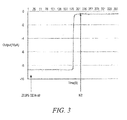
- FIG.3 illustrates a graph of the response of an 02 sensor with time to 20.9%02 in air and N2 with respect to the above described catalyst material.
- the CO is oxidized: CO+H 2 0 ⁇ CO 2 21-1 ⁇ +4e - (3)
- FIG.4 illustrates a graph of the response with time to air and 5Oppm carbon monoxide using a mixture of GEFC-IES and Platinum as a sensing electrode formed by screen printing.
- a predetermined ratio of platinum and graphite is mixed together with glycol and a solution of GEFC-IES to get a uniform mixture. Then the slurry is heated to a predetermined volume. The catalyst is then halftone printed on a PTFE sheet using a printer. After printing, the printed element is then sintered at a predetermined temperature to obtain the electrode which can be used as a sensing, reference, or counter electrode for an 02 sensor.
- the electrode catalyst in this second example is made from 75% weight Platinum black, 10% weight graphite and 15% weight GEFC-IES binder.
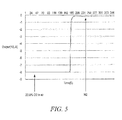
- FIG. 5 illustrates a graph of the response to 02 sensor with time in air and N2 with respect to the second catalyst material.
- the above disclosed electrode manufacturing process using screen printing method has fewer steps than known processes.
- a catalyst e.g. Platinum Black or mixture of Carbon and Platinum Black or other noble metal catalyst
- Glycol is then added to form a slurry by stirring.
- An electrode form can then be screen printed on a PTFE membrane and sintered at an elevated temperature. Platinum electrodes usable in both sensors and CO sensors can be formed using this screen printing process.
Landscapes
- Chemical & Material Sciences (AREA)
- Chemical Kinetics & Catalysis (AREA)
- Electrochemistry (AREA)
- Health & Medical Sciences (AREA)
- Life Sciences & Earth Sciences (AREA)
- Physics & Mathematics (AREA)
- Engineering & Computer Science (AREA)
- General Chemical & Material Sciences (AREA)
- Manufacturing & Machinery (AREA)
- General Physics & Mathematics (AREA)
- Molecular Biology (AREA)
- Analytical Chemistry (AREA)
- Biochemistry (AREA)
- General Health & Medical Sciences (AREA)
- Immunology (AREA)
- Pathology (AREA)
- Thermal Sciences (AREA)
- Mechanical Engineering (AREA)
- Materials Engineering (AREA)
- Organic Chemistry (AREA)
- Metallurgy (AREA)
- Measuring Oxygen Concentration In Cells (AREA)
Abstract
Description
- This application claims priority to
U.S. Patent Application Serial No. 14/289,222 - The application pertains to electrochemical gas sensors and gas detectors which incorporate such sensors. More particularly, the application pertains to such sensors which can be formed in part by printing.
- Electrochemical gas sensors are well known for detecting and quantifying toxic gases such as carbon monoxide, oxygen and the like. Such sensors can be implemented using electrochemical cells. Such cells operate in an amperometric mode providing a current output which is related to the concentration of the particular analyte gas.
- Such sensors usually include a sensing electrode. Known electrodes are made by a solution based method.
- In such solution-based methods, a catalyst is initially ultrasonically dispersed in an aqueous solution to form a suspension. Polytetrafluoroethylene (PTFE) is added to the suspension for form a flocculate mixture. The flocculate mixture is then transferred onto a substrate, which is sintered at an elevated temperature. The sintered mixture is then transferred onto a microporous PTFE membrane, then pressed. The ratio of PTFE in the electrode not only affects gas diffusion parameters in the sensor, it also supports the electrocatalyst and maximizes the interfaces between catalyst, gas and electrolyte at which the key electrochemical processes occur.
- As is apparent, many steps are needed in this solution-based method to manufacture an electrode. The consequences include high manufacturing costs, material costs and labor costs.
-
-
Fig. 1 illustrates a gas detector in accordance herewith; -
Fig. 2 is a flow chart illustrating aspects of a method in accordance herewith; -
Fig. 3 is a graph illustrating response time to 02 in air for an electrode including a mixture of GEFC-IES and platinum; -
Fig. 4 is a graph illustrating response time to CO in air for an electrode including a mixture of GEFC-IES and platinum; and -
Fig. 5 is a graph illustrating response time to 02 in air for an electrode including a mixture of GEFC-IES, platinum and graphit - While disclosed embodiments can take many different forms, specific embodiments hereof are shown in the drawings and will be described herein in detail with the understanding that the present disclosure is to be considered as an exemplification of the principles hereof, as well as the best mode of practicing same, and is not intended to limit the claims hereof to the specific embodiment illustrated
- In one aspect, an electrochemical gas sensors having improved productivity can advantageously be implemented by using screen printing technology. A catalyst slurry, or recipe, can be screen printed or halftone printed on an electrode membrane by a printer, then sintered.
- The printed element can then be used as an electrode of an electrochemical sensor. Exemplary types of sensors include 02 sensors or CO sensors. In another aspect, alternative types of sensors in accordance herewith include, without limitation, oxygen pumps and toxic gas sensors.
- The slurry can be made simply and quickly without any need for complicated equipment. The slurry can include a catalyst, binder, and diluents. Unlike known processes, the screen printing method, in accordance herewith, has fewer steps.
- The catalyst can be platinum, platinum black, a mixture of graphite and platinum, a mixture of carbon and platinum black, a noble metal, mixtures thereof.
- A solution of perfluorinated ion electrolyte solution (GEFC-IES the copolymer of perfluorosulfonic acid and PTFE) commercially available from Golden Energy Fuel Cell Co.,Ltd. or Nafion® (copolymer of tetrafluoroethylene (Teflon()) and perfluoro-3,6-dioxa-4-methyl-7-octene-sulfonic acid) commercially available from Dupont™, can be used as a binder. Glycol or other similar chemicals can be used as a diluent to form a catalyst slurry, recipe or catalyst system, which can be printed on a PTFE membrane by a printer. The printed element is sintered at an elevated temperature to form an electrode which can be used in an electrochemical sensor such as 02 sensor or CO sensor.
- GEFC-IES's or Nafion®'s function is that of a binder. Its ratio in the electrode not only affects gas diffusion parameters in the sensor whilst supporting the electrocatalyst and maximizing the interfaces between catalyst, gas and electrolyte at which the key electrochemical processes occur. The slurry made from GEFC-IES or Nafion® is suitable for use in halftone screen printing.
- As illustrated in
Fig. 1 , anexemplary oxygen sensor 10 can be carried in ahousing 12 and include, a gas diffusion sensing or workingelectrode 14, areference electrode 16 and acounter electrode 18. One or more of the electrodes can be formed by a printing process as described below in detail. The electrodes need not be identical. - As would be understood by those of skill in the art, electrodes formed by the present printing based process can be incorporated into gas detectors, such as
detector 30.Detector 30 can include ahousing 34 which carries thesensor 10, as well as electrodes 14-18 manufactured as described herein.Control circuits 36 can be coupled to the electrodes to make gas concentration determinations. An audio and/visual output device 38 can be provided to alert users to a current, sensed gas concentration. -
Fig. 2 illustrates aspects of amethod 100 in accordance herewith. A slurry, including a platinum catalyst along with glycol and a solution of GEFC is mixed together to get a uniform mixture as at 102. The slurry is then heated, to a certain volume, as at 104. - The screen printable catalyst is then halftone printed on a PTFE sheet using a printer, as at 106. The printed element or shape is then sintered at a predetermined temperature, as at 108, to obtain an electrode which can be used as a sensing, reference, or counter electrode, as at 110.
- In accordance herewith, the electrode catalysts can be made from 80% weight Platinum black and 20% weight of GEFC-IES binder. The binder in the slurry not only affects gas diffusion parameters in the sensor it also supports the platinum electrocatalyst and maximizes the interfaces between catalyst, gas and electrolyte at which the key electrochemical processes occur.
- Relative to
FIG.1 ,sensor 10 can be implemented as a 02 sensor or CO sensor using the electrode created by the above describedprocess 100. - Operationally, at the sensing electrode for an 02 sensor the 02 is reduced:
02+4H++4e" 2H20 (1)
- At the counter electrode there is a counter balancing oxidation:
- 2H20 → 4H++02+4e- (2)
-
FIG.3 illustrates a graph of the response of an 02 sensor with time to 20.9%02 in air and N2 with respect to the above described catalyst material. At a sensing electrode for a CO sensor the CO is oxidized:
CO+H20→CO221-1÷+4e- (3)
- At the counter electrode there is a counter balancing reduction:
02+4H++4e- → 2H20 (4)
-
FIG.4 illustrates a graph of the response with time to air and 5Oppm carbon monoxide using a mixture of GEFC-IES and Platinum as a sensing electrode formed by screen printing. - In another example a predetermined ratio of platinum and graphite is mixed together with glycol and a solution of GEFC-IES to get a uniform mixture. Then the slurry is heated to a predetermined volume. The catalyst is then halftone printed on a PTFE sheet using a printer. After printing, the printed element is then sintered at a predetermined temperature to obtain the electrode which can be used as a sensing, reference, or counter electrode for an 02 sensor.
- The electrode catalyst in this second example is made from 75% weight Platinum black, 10% weight graphite and 15% weight GEFC-IES binder.
FIG. 5 illustrates a graph of the response to 02 sensor with time in air and N2 with respect to the second catalyst material. - In summary, the above disclosed electrode manufacturing process using screen printing method has fewer steps than known processes. First, a catalyst (e.g. Platinum Black or mixture of Carbon and Platinum Black or other noble metal catalyst) is mixed with GEFC-IES or Nafion® or a mixture of GEFC-IES and Nafion®. Glycol is then added to form a slurry by stirring.
- An electrode form can then be screen printed on a PTFE membrane and sintered at an elevated temperature. Platinum electrodes usable in both sensors and CO sensors can be formed using this screen printing process.
- Those of skill will also understand that the graphs of
Fig. 3-5 are illustrative only and not limitations hereof. Variations in electrode structures may lead to differing response times without departing from the spirit and scope hereof. - From the foregoing, it will be observed that numerous variations and modifications may be effected without departing from the spirit and scope of the invention. It is to be understood that no limitation with respect to the specific apparatus illustrated herein is intended or should be inferred. It is, of course, intended to cover by the appended claims all such modifications as fall within the scope of the claims.
- Further, logic flows depicted in the figures do not require the particular order shown, or sequential order, to achieve desirable results. Other steps may be provided, or steps may be eliminated, from the described flows, and other components may be add to, or removed from the described embodiments.
Claims (15)
- An apparatus comprising:a housing 12; andan electrochemical gas sensor 10 carried by the housing 12, wherein the electrochemical gas sensor 10 comprises a plurality of electrodes 14-18, and wherein at least one of the plurality of electrodes 14-18 comprises a printed portion, wherein the printed portion comprises a slurry printed on a substrate.
- An apparatus as in claim 1, wherein the substrate is a porous membrane.
- An apparatus as in claim 1, wherein the slurry comprises a selected catalyst.
- An apparatus as in claim 3, wherein the slurry comprises at least a selected binder.
- An apparatus as in claim 4, wherein the slurry is sintered to the substrate.
- An apparatus as in claim 1, wherein the slurry comprises at least a platinum catalyst and a binder.
- An apparatus as in claim 1, wherein the slurry is halftone printed on the substrate.
- An apparatus as in claim 1, wherein the electrochemical gas sensor 10 comprises an electrolyte in contact with the at least one of the plurality of electrodes 14-18, wherein the binder, at least in part, provides an interface between a catalyst in the slurry, a gas in contact with the substrate in the sensor, and the electrolyte.
- An apparatus as in claim 8, further comprising: a second housing 34, wherein the second housing 34 carries the housing 12, the sensor 10, and control circuits 36 coupled to the electrodes 14-18 to establish an ambient gas concentration.
- An apparatus as in claim 9, further comprising an audible or visual output device 38, wherein the audible or visual output device 38 is carried by the second housing 34 and coupled to the control circuits 36 to provide a gas concentration indicator.
- A method comprising:providing a slurry comprising at least a catalyst and a binder;printing the slurry in a selected shape onto a porous substrate; andsintering the printed shape and associated substrate.
- A method as in claim 11, further comprising: incorporating the sintered shape and the associated substrate as an electrode into an electrochemical sensor.
- A method as in claim 11, wherein the slurry further comprises a diluent.
- A method as in claim 11, further comprising: heating the slurry prior to printing the slurry.
- A method as in claim 11, wherein the catalyst comprises at least one of: platinum, platinum black, a mixture of graphite and platinum, a mixture of carbon and platinum black, a noble metal, or mixtures thereof, and wherein the binder comprises at least one of a perfluorinated ion electrolyte solution or a copolymer of tetrafluoroethylene and a sulfonic acid.
Applications Claiming Priority (1)
| Application Number | Priority Date | Filing Date | Title |
|---|---|---|---|
| US14/289,222 US10119932B2 (en) | 2014-05-28 | 2014-05-28 | Electrochemical gas sensor |
Publications (2)
| Publication Number | Publication Date |
|---|---|
| EP2950090A1 true EP2950090A1 (en) | 2015-12-02 |
| EP2950090B1 EP2950090B1 (en) | 2019-02-20 |
Family
ID=53177221
Family Applications (1)
| Application Number | Title | Priority Date | Filing Date |
|---|---|---|---|
| EP15167776.2A Active EP2950090B1 (en) | 2014-05-28 | 2015-05-14 | Electrochemical gas sensor |
Country Status (3)
| Country | Link |
|---|---|
| US (3) | US10119932B2 (en) |
| EP (1) | EP2950090B1 (en) |
| CN (2) | CN113504286A (en) |
Cited By (2)
| Publication number | Priority date | Publication date | Assignee | Title |
|---|---|---|---|---|
| US10119932B2 (en) | 2014-05-28 | 2018-11-06 | Honeywell International Inc. | Electrochemical gas sensor |
| EP3561498B1 (en) * | 2018-04-13 | 2025-02-12 | Honeywell International Inc. | Method for a printed electrochemical gas sensor |
Families Citing this family (5)
| Publication number | Priority date | Publication date | Assignee | Title |
|---|---|---|---|---|
| KR20170093569A (en) * | 2016-02-05 | 2017-08-16 | 울산과학기술원 | Method and apparatus for providing combined monitoring system |
| WO2018000327A1 (en) * | 2016-06-30 | 2018-01-04 | Honeywell International Inc. | Using a biased electrochemical sensor for acrylonitrile detection |
| CN110114665B (en) * | 2016-09-30 | 2022-05-31 | 霍尼韦尔国际公司 | Method and apparatus for electrolyte concentration measurement |
| CN113552194B (en) * | 2021-07-20 | 2024-05-28 | 上海松柏传感技术有限公司 | Preparation method of electrochemical gas sensor electrode and electrochemical gas sensor |
| CN117147648A (en) * | 2023-09-01 | 2023-12-01 | 上海松柏传感技术有限公司 | A fast and stable lead-free oxygen sensor with bias voltage |
Citations (4)
| Publication number | Priority date | Publication date | Assignee | Title |
|---|---|---|---|---|
| EP0902281A2 (en) * | 1997-09-11 | 1999-03-17 | Senco Sensors Inc. | Three-electrode electrochemical gas sensor |
| EP0911632A1 (en) * | 1997-09-11 | 1999-04-28 | Senco Sensors Inc. | Electrochemical gas sensor |
| WO1999024826A1 (en) * | 1997-11-10 | 1999-05-20 | Central Research Laboratories Limited | A gas sensor |
| US20130175168A1 (en) * | 2009-08-04 | 2013-07-11 | Gentex Corporation | Microelectrode Assemblies and Associated Electrochemical Sensors for Use in Gas and or Fire Detection Devices |
Family Cites Families (35)
| Publication number | Priority date | Publication date | Assignee | Title |
|---|---|---|---|---|
| JPS5693265A (en) * | 1979-12-26 | 1981-07-28 | Sanyo Electric Co Ltd | Gas difusion electrode for fuel cell |
| US20020197456A1 (en) * | 1993-06-30 | 2002-12-26 | Pope Edward J. A. | Integrated electro-luminescent biochip |
| GB9504713D0 (en) * | 1995-03-09 | 1995-04-26 | Johnson Matthey Plc | Improved electrocatalytic material |
| WO1999019900A2 (en) * | 1997-10-14 | 1999-04-22 | Patterning Technologies Limited | Method of forming an electronic device |
| GB9919906D0 (en) * | 1999-08-24 | 1999-10-27 | Central Research Lab Ltd | Gas sensor and method of manufacture |
| US6627058B1 (en) | 2001-01-17 | 2003-09-30 | E. I. Du Pont De Nemours And Company | Thick film conductor composition for use in biosensors |
| US6627035B2 (en) * | 2001-01-24 | 2003-09-30 | Gas Technology Institute | Gas diffusion electrode manufacture and MEA fabrication |
| JP4390397B2 (en) * | 2001-02-28 | 2009-12-24 | 三洋電機株式会社 | Method for producing alkaline storage battery electrode |
| EP1341250B1 (en) * | 2002-02-28 | 2011-05-11 | Umicore AG & Co. KG | Process for manufacturing of catalyst coated membranes and membrane electrode units for fuel cells |
| US7279081B2 (en) * | 2002-09-27 | 2007-10-09 | Nemoto & Co., Ltd. | Electrochemical sensor |
| TWI225316B (en) * | 2003-07-29 | 2004-12-11 | Nanodynamics Inc | Laminated piezoelectric actuator and its manufacturing method |
| US7189341B2 (en) * | 2003-08-15 | 2007-03-13 | Animas Technologies, Llc | Electrochemical sensor ink compositions, electrodes, and uses thereof |
| JP2005276746A (en) * | 2004-03-26 | 2005-10-06 | Hitachi Ltd | Fuel cell and membrane electrode assembly |
| US20090152113A1 (en) | 2004-05-04 | 2009-06-18 | Kuo-Chuang Chiu | Gas detection system |
| US20080020253A1 (en) * | 2004-07-09 | 2008-01-24 | Ingo Neubert | Method for Producing a Membrane-Electrode Unit |
| US20060102494A1 (en) * | 2004-11-17 | 2006-05-18 | Industrial Technology Research Institute | Gas sensor with nanowires of zinc oxide or indium/zinc mixed oxides and method of detecting NOx gas |
| TW200634304A (en) * | 2005-03-25 | 2006-10-01 | Forward Electronics Co Ltd | Dewing sensor and the method of making the same |
| US7722749B2 (en) * | 2005-09-01 | 2010-05-25 | Delphi Technologies, Inc. | Gas sensor and method for forming same |
| US7918977B2 (en) * | 2005-11-08 | 2011-04-05 | Synkera Technologies, Inc. | Solid state electrochemical gas sensor and method for fabricating same |
| US20070125664A1 (en) * | 2005-12-05 | 2007-06-07 | Labarge William J | Gas sensor element and methods of making and using the same |
| GB0700556D0 (en) * | 2007-01-11 | 2007-02-21 | Honeywell Int Inc | Electrochemical gas sensor |
| US8540899B2 (en) * | 2007-02-07 | 2013-09-24 | Esionic Es, Inc. | Liquid composite compositions using non-volatile liquids and nanoparticles and uses thereof |
| US7967965B2 (en) * | 2007-05-11 | 2011-06-28 | Honeywell International Inc. | Gas sensor |
| US8739604B2 (en) * | 2007-12-20 | 2014-06-03 | Amphenol Thermometrics, Inc. | Gas sensor and method of making |
| JP5196988B2 (en) * | 2007-12-21 | 2013-05-15 | スリーエム イノベイティブ プロパティズ カンパニー | Ink composition, method for producing the same, electrode catalyst layer formed using the ink composition, and uses thereof |
| US20090183999A1 (en) * | 2008-01-18 | 2009-07-23 | Alfredo Ibarra | Gas sensor element and method |
| JP5556081B2 (en) * | 2009-08-03 | 2014-07-23 | ソニー株式会社 | Ion conductive composite electrolyte membrane and fuel cell using the same |
| CN102870259A (en) * | 2010-01-25 | 2013-01-09 | 雷蒙特亚特特拉维夫大学有限公司 | Catalysts and electrodes for fuel cells |
| US8974657B2 (en) * | 2010-09-03 | 2015-03-10 | Nextech Materials Ltd. | Amperometric electrochemical cells and sensors |
| US20120125772A1 (en) * | 2010-11-24 | 2012-05-24 | Kwj Engineering Inc. | Printed Gas Sensor |
| JP5804048B2 (en) * | 2011-02-25 | 2015-11-04 | 日本ゼオン株式会社 | Porous membrane for secondary battery, slurry for secondary battery porous membrane, and secondary battery |
| US9410919B2 (en) * | 2012-05-31 | 2016-08-09 | Honeywell International Inc. | Electrochemical gas detector with carbon element |
| CN202814910U (en) * | 2012-06-26 | 2013-03-20 | 郑州炜盛电子科技有限公司 | Electrochemical CO gas sensor |
| CN103424456B (en) | 2013-07-23 | 2018-08-10 | 华瑞科学仪器(上海)有限公司 | A kind of three-electrode electrochemical sensor |
| US10119932B2 (en) * | 2014-05-28 | 2018-11-06 | Honeywell International Inc. | Electrochemical gas sensor |
-
2014
- 2014-05-28 US US14/289,222 patent/US10119932B2/en active Active
-
2015
- 2015-05-14 EP EP15167776.2A patent/EP2950090B1/en active Active
- 2015-05-27 CN CN202110803377.0A patent/CN113504286A/en active Pending
- 2015-05-27 CN CN201510276809.1A patent/CN105277599A/en active Pending
-
2018
- 2018-09-28 US US16/146,476 patent/US10908115B2/en active Active
-
2020
- 2020-12-21 US US17/128,726 patent/US20210116411A1/en not_active Abandoned
Patent Citations (4)
| Publication number | Priority date | Publication date | Assignee | Title |
|---|---|---|---|---|
| EP0902281A2 (en) * | 1997-09-11 | 1999-03-17 | Senco Sensors Inc. | Three-electrode electrochemical gas sensor |
| EP0911632A1 (en) * | 1997-09-11 | 1999-04-28 | Senco Sensors Inc. | Electrochemical gas sensor |
| WO1999024826A1 (en) * | 1997-11-10 | 1999-05-20 | Central Research Laboratories Limited | A gas sensor |
| US20130175168A1 (en) * | 2009-08-04 | 2013-07-11 | Gentex Corporation | Microelectrode Assemblies and Associated Electrochemical Sensors for Use in Gas and or Fire Detection Devices |
Non-Patent Citations (1)
| Title |
|---|
| LLOYD W J ET AL: "INK JET PRINTING", 1 January 1987, OUTPUT HARDCOPY DEVICES, BOSTON, ACADEMIC PRESS, US, PAGE(S) 311 - 370, XP000955170 * |
Cited By (3)
| Publication number | Priority date | Publication date | Assignee | Title |
|---|---|---|---|---|
| US10119932B2 (en) | 2014-05-28 | 2018-11-06 | Honeywell International Inc. | Electrochemical gas sensor |
| US10908115B2 (en) | 2014-05-28 | 2021-02-02 | Honeywell International Inc. | Method of forming electrochemical gas sensor |
| EP3561498B1 (en) * | 2018-04-13 | 2025-02-12 | Honeywell International Inc. | Method for a printed electrochemical gas sensor |
Also Published As
| Publication number | Publication date |
|---|---|
| CN105277599A (en) | 2016-01-27 |
| US10908115B2 (en) | 2021-02-02 |
| US10119932B2 (en) | 2018-11-06 |
| US20190094171A1 (en) | 2019-03-28 |
| US20210116411A1 (en) | 2021-04-22 |
| CN113504286A (en) | 2021-10-15 |
| US20150346135A1 (en) | 2015-12-03 |
| EP2950090B1 (en) | 2019-02-20 |
Similar Documents
| Publication | Publication Date | Title |
|---|---|---|
| US10908115B2 (en) | Method of forming electrochemical gas sensor | |
| Kneer et al. | A semi-empirical catalyst degradation model based on voltage cycling under automotive operating conditions in PEM fuel cells | |
| Harzer et al. | Cathode loading impact on voltage cycling induced PEMFC degradation: a voltage loss analysis | |
| EP3403081B1 (en) | Electrochemical sensor | |
| US11740216B2 (en) | Method and apparatus for measuring humidity using an electrochemical gas sensor | |
| US12535453B2 (en) | Electrochemical gas sensor assembly | |
| Munichandraiah et al. | A potentiometric method of monitoring methanol crossover through polymer electrolyte membranes of direct methanol fuel cells | |
| Chiou et al. | Amperometric sulfur dioxide sensors using the gold deposited gas‐diffusion electrode | |
| Gebauer et al. | On the role of the support in Pt anode catalyst degradation under simulated H2 fuel starvation conditions | |
| JP5996140B1 (en) | Constant potential electrolytic gas sensor | |
| JP3881540B2 (en) | Constant potential electrolysis gas sensor and gas detector | |
| Kiros et al. | Determination of the thicknesses of the active layer and cathode limiting currents in AFC | |
| Korotcenkov et al. | Electrochemical gas sensors: fundamentals, fabrication, and parameters | |
| CN109270146B (en) | Electrochemical chlorine sensor | |
| JP2006234561A (en) | Separator for working electrode of electrochemical gas sensor | |
| Sgroi et al. | Study of an electrochemical alcohol concentration sensor: Optimization of the anode structure | |
| JPWO2016185953A1 (en) | Metal-air battery and manufacturing method thereof | |
| Nguyen et al. | Zeolite Imidazole Framework-ZIF-8: Synthesis and Voltammetric Determination of Lead Ion Using Modified Electrode Based on ZIF-8 |
Legal Events
| Date | Code | Title | Description |
|---|---|---|---|
| 17P | Request for examination filed |
Effective date: 20150514 |
|
| AK | Designated contracting states |
Kind code of ref document: A1 Designated state(s): AL AT BE BG CH CY CZ DE DK EE ES FI FR GB GR HR HU IE IS IT LI LT LU LV MC MK MT NL NO PL PT RO RS SE SI SK SM TR |
|
| AX | Request for extension of the european patent |
Extension state: BA ME |
|
| PUAI | Public reference made under article 153(3) epc to a published international application that has entered the european phase |
Free format text: ORIGINAL CODE: 0009012 |
|
| RAP1 | Party data changed (applicant data changed or rights of an application transferred) |
Owner name: HONEYWELL INTERNATIONAL INC. |
|
| GRAP | Despatch of communication of intention to grant a patent |
Free format text: ORIGINAL CODE: EPIDOSNIGR1 |
|
| STAA | Information on the status of an ep patent application or granted ep patent |
Free format text: STATUS: GRANT OF PATENT IS INTENDED |
|
| RIC1 | Information provided on ipc code assigned before grant |
Ipc: G01N 27/404 20060101AFI20180906BHEP Ipc: H01M 4/86 20060101ALI20180906BHEP |
|
| INTG | Intention to grant announced |
Effective date: 20180924 |
|
| RIN1 | Information on inventor provided before grant (corrected) |
Inventor name: ZHANG, YAN Inventor name: LIU, LING Inventor name: ZHENG, QIAN |
|
| GRAS | Grant fee paid |
Free format text: ORIGINAL CODE: EPIDOSNIGR3 |
|
| GRAA | (expected) grant |
Free format text: ORIGINAL CODE: 0009210 |
|
| STAA | Information on the status of an ep patent application or granted ep patent |
Free format text: STATUS: THE PATENT HAS BEEN GRANTED |
|
| AK | Designated contracting states |
Kind code of ref document: B1 Designated state(s): AL AT BE BG CH CY CZ DE DK EE ES FI FR GB GR HR HU IE IS IT LI LT LU LV MC MK MT NL NO PL PT RO RS SE SI SK SM TR |
|
| REG | Reference to a national code |
Ref country code: GB Ref legal event code: FG4D |
|
| REG | Reference to a national code |
Ref country code: CH Ref legal event code: EP |
|
| REG | Reference to a national code |
Ref country code: AT Ref legal event code: REF Ref document number: 1098871 Country of ref document: AT Kind code of ref document: T Effective date: 20190315 |
|
| REG | Reference to a national code |
Ref country code: IE Ref legal event code: FG4D |
|
| REG | Reference to a national code |
Ref country code: DE Ref legal event code: R096 Ref document number: 602015024738 Country of ref document: DE |
|
| REG | Reference to a national code |
Ref country code: NL Ref legal event code: MP Effective date: 20190220 |
|
| REG | Reference to a national code |
Ref country code: LT Ref legal event code: MG4D |
|
| PG25 | Lapsed in a contracting state [announced via postgrant information from national office to epo] |
Ref country code: NL Free format text: LAPSE BECAUSE OF FAILURE TO SUBMIT A TRANSLATION OF THE DESCRIPTION OR TO PAY THE FEE WITHIN THE PRESCRIBED TIME-LIMIT Effective date: 20190220 Ref country code: LT Free format text: LAPSE BECAUSE OF FAILURE TO SUBMIT A TRANSLATION OF THE DESCRIPTION OR TO PAY THE FEE WITHIN THE PRESCRIBED TIME-LIMIT Effective date: 20190220 Ref country code: NO Free format text: LAPSE BECAUSE OF FAILURE TO SUBMIT A TRANSLATION OF THE DESCRIPTION OR TO PAY THE FEE WITHIN THE PRESCRIBED TIME-LIMIT Effective date: 20190520 Ref country code: FI Free format text: LAPSE BECAUSE OF FAILURE TO SUBMIT A TRANSLATION OF THE DESCRIPTION OR TO PAY THE FEE WITHIN THE PRESCRIBED TIME-LIMIT Effective date: 20190220 Ref country code: PT Free format text: LAPSE BECAUSE OF FAILURE TO SUBMIT A TRANSLATION OF THE DESCRIPTION OR TO PAY THE FEE WITHIN THE PRESCRIBED TIME-LIMIT Effective date: 20190620 Ref country code: SE Free format text: LAPSE BECAUSE OF FAILURE TO SUBMIT A TRANSLATION OF THE DESCRIPTION OR TO PAY THE FEE WITHIN THE PRESCRIBED TIME-LIMIT Effective date: 20190220 |
|
| PG25 | Lapsed in a contracting state [announced via postgrant information from national office to epo] |
Ref country code: GR Free format text: LAPSE BECAUSE OF FAILURE TO SUBMIT A TRANSLATION OF THE DESCRIPTION OR TO PAY THE FEE WITHIN THE PRESCRIBED TIME-LIMIT Effective date: 20190521 Ref country code: IS Free format text: LAPSE BECAUSE OF FAILURE TO SUBMIT A TRANSLATION OF THE DESCRIPTION OR TO PAY THE FEE WITHIN THE PRESCRIBED TIME-LIMIT Effective date: 20190620 Ref country code: LV Free format text: LAPSE BECAUSE OF FAILURE TO SUBMIT A TRANSLATION OF THE DESCRIPTION OR TO PAY THE FEE WITHIN THE PRESCRIBED TIME-LIMIT Effective date: 20190220 Ref country code: HR Free format text: LAPSE BECAUSE OF FAILURE TO SUBMIT A TRANSLATION OF THE DESCRIPTION OR TO PAY THE FEE WITHIN THE PRESCRIBED TIME-LIMIT Effective date: 20190220 Ref country code: RS Free format text: LAPSE BECAUSE OF FAILURE TO SUBMIT A TRANSLATION OF THE DESCRIPTION OR TO PAY THE FEE WITHIN THE PRESCRIBED TIME-LIMIT Effective date: 20190220 Ref country code: BG Free format text: LAPSE BECAUSE OF FAILURE TO SUBMIT A TRANSLATION OF THE DESCRIPTION OR TO PAY THE FEE WITHIN THE PRESCRIBED TIME-LIMIT Effective date: 20190520 |
|
| REG | Reference to a national code |
Ref country code: AT Ref legal event code: MK05 Ref document number: 1098871 Country of ref document: AT Kind code of ref document: T Effective date: 20190220 |
|
| PG25 | Lapsed in a contracting state [announced via postgrant information from national office to epo] |
Ref country code: AL Free format text: LAPSE BECAUSE OF FAILURE TO SUBMIT A TRANSLATION OF THE DESCRIPTION OR TO PAY THE FEE WITHIN THE PRESCRIBED TIME-LIMIT Effective date: 20190220 Ref country code: RO Free format text: LAPSE BECAUSE OF FAILURE TO SUBMIT A TRANSLATION OF THE DESCRIPTION OR TO PAY THE FEE WITHIN THE PRESCRIBED TIME-LIMIT Effective date: 20190220 Ref country code: CZ Free format text: LAPSE BECAUSE OF FAILURE TO SUBMIT A TRANSLATION OF THE DESCRIPTION OR TO PAY THE FEE WITHIN THE PRESCRIBED TIME-LIMIT Effective date: 20190220 Ref country code: ES Free format text: LAPSE BECAUSE OF FAILURE TO SUBMIT A TRANSLATION OF THE DESCRIPTION OR TO PAY THE FEE WITHIN THE PRESCRIBED TIME-LIMIT Effective date: 20190220 Ref country code: EE Free format text: LAPSE BECAUSE OF FAILURE TO SUBMIT A TRANSLATION OF THE DESCRIPTION OR TO PAY THE FEE WITHIN THE PRESCRIBED TIME-LIMIT Effective date: 20190220 Ref country code: SK Free format text: LAPSE BECAUSE OF FAILURE TO SUBMIT A TRANSLATION OF THE DESCRIPTION OR TO PAY THE FEE WITHIN THE PRESCRIBED TIME-LIMIT Effective date: 20190220 Ref country code: IT Free format text: LAPSE BECAUSE OF FAILURE TO SUBMIT A TRANSLATION OF THE DESCRIPTION OR TO PAY THE FEE WITHIN THE PRESCRIBED TIME-LIMIT Effective date: 20190220 Ref country code: DK Free format text: LAPSE BECAUSE OF FAILURE TO SUBMIT A TRANSLATION OF THE DESCRIPTION OR TO PAY THE FEE WITHIN THE PRESCRIBED TIME-LIMIT Effective date: 20190220 |
|
| REG | Reference to a national code |
Ref country code: DE Ref legal event code: R097 Ref document number: 602015024738 Country of ref document: DE |
|
| PG25 | Lapsed in a contracting state [announced via postgrant information from national office to epo] |
Ref country code: PL Free format text: LAPSE BECAUSE OF FAILURE TO SUBMIT A TRANSLATION OF THE DESCRIPTION OR TO PAY THE FEE WITHIN THE PRESCRIBED TIME-LIMIT Effective date: 20190220 Ref country code: SM Free format text: LAPSE BECAUSE OF FAILURE TO SUBMIT A TRANSLATION OF THE DESCRIPTION OR TO PAY THE FEE WITHIN THE PRESCRIBED TIME-LIMIT Effective date: 20190220 |
|
| PLBE | No opposition filed within time limit |
Free format text: ORIGINAL CODE: 0009261 |
|
| STAA | Information on the status of an ep patent application or granted ep patent |
Free format text: STATUS: NO OPPOSITION FILED WITHIN TIME LIMIT |
|
| REG | Reference to a national code |
Ref country code: CH Ref legal event code: PL |
|
| PG25 | Lapsed in a contracting state [announced via postgrant information from national office to epo] |
Ref country code: AT Free format text: LAPSE BECAUSE OF FAILURE TO SUBMIT A TRANSLATION OF THE DESCRIPTION OR TO PAY THE FEE WITHIN THE PRESCRIBED TIME-LIMIT Effective date: 20190220 |
|
| 26N | No opposition filed |
Effective date: 20191121 |
|
| PG25 | Lapsed in a contracting state [announced via postgrant information from national office to epo] |
Ref country code: MC Free format text: LAPSE BECAUSE OF FAILURE TO SUBMIT A TRANSLATION OF THE DESCRIPTION OR TO PAY THE FEE WITHIN THE PRESCRIBED TIME-LIMIT Effective date: 20190220 Ref country code: LI Free format text: LAPSE BECAUSE OF NON-PAYMENT OF DUE FEES Effective date: 20190531 Ref country code: CH Free format text: LAPSE BECAUSE OF NON-PAYMENT OF DUE FEES Effective date: 20190531 |
|
| REG | Reference to a national code |
Ref country code: BE Ref legal event code: MM Effective date: 20190531 |
|
| PG25 | Lapsed in a contracting state [announced via postgrant information from national office to epo] |
Ref country code: LU Free format text: LAPSE BECAUSE OF NON-PAYMENT OF DUE FEES Effective date: 20190514 Ref country code: SI Free format text: LAPSE BECAUSE OF FAILURE TO SUBMIT A TRANSLATION OF THE DESCRIPTION OR TO PAY THE FEE WITHIN THE PRESCRIBED TIME-LIMIT Effective date: 20190220 |
|
| PG25 | Lapsed in a contracting state [announced via postgrant information from national office to epo] |
Ref country code: TR Free format text: LAPSE BECAUSE OF FAILURE TO SUBMIT A TRANSLATION OF THE DESCRIPTION OR TO PAY THE FEE WITHIN THE PRESCRIBED TIME-LIMIT Effective date: 20190220 |
|
| PG25 | Lapsed in a contracting state [announced via postgrant information from national office to epo] |
Ref country code: IE Free format text: LAPSE BECAUSE OF NON-PAYMENT OF DUE FEES Effective date: 20190514 |
|
| PG25 | Lapsed in a contracting state [announced via postgrant information from national office to epo] |
Ref country code: BE Free format text: LAPSE BECAUSE OF NON-PAYMENT OF DUE FEES Effective date: 20190531 |
|
| PG25 | Lapsed in a contracting state [announced via postgrant information from national office to epo] |
Ref country code: CY Free format text: LAPSE BECAUSE OF FAILURE TO SUBMIT A TRANSLATION OF THE DESCRIPTION OR TO PAY THE FEE WITHIN THE PRESCRIBED TIME-LIMIT Effective date: 20190220 |
|
| PG25 | Lapsed in a contracting state [announced via postgrant information from national office to epo] |
Ref country code: MT Free format text: LAPSE BECAUSE OF FAILURE TO SUBMIT A TRANSLATION OF THE DESCRIPTION OR TO PAY THE FEE WITHIN THE PRESCRIBED TIME-LIMIT Effective date: 20190220 Ref country code: HU Free format text: LAPSE BECAUSE OF FAILURE TO SUBMIT A TRANSLATION OF THE DESCRIPTION OR TO PAY THE FEE WITHIN THE PRESCRIBED TIME-LIMIT; INVALID AB INITIO Effective date: 20150514 |
|
| PG25 | Lapsed in a contracting state [announced via postgrant information from national office to epo] |
Ref country code: MK Free format text: LAPSE BECAUSE OF FAILURE TO SUBMIT A TRANSLATION OF THE DESCRIPTION OR TO PAY THE FEE WITHIN THE PRESCRIBED TIME-LIMIT Effective date: 20190220 |
|
| PGFP | Annual fee paid to national office [announced via postgrant information from national office to epo] |
Ref country code: DE Payment date: 20250528 Year of fee payment: 11 |
|
| PGFP | Annual fee paid to national office [announced via postgrant information from national office to epo] |
Ref country code: GB Payment date: 20250520 Year of fee payment: 11 |
|
| PGFP | Annual fee paid to national office [announced via postgrant information from national office to epo] |
Ref country code: FR Payment date: 20250526 Year of fee payment: 11 |