EP2947995B2 - Process for preparing strained fermented dairy product - Google Patents
Process for preparing strained fermented dairy product Download PDFInfo
- Publication number
- EP2947995B2 EP2947995B2 EP13713956.4A EP13713956A EP2947995B2 EP 2947995 B2 EP2947995 B2 EP 2947995B2 EP 13713956 A EP13713956 A EP 13713956A EP 2947995 B2 EP2947995 B2 EP 2947995B2
- Authority
- EP
- European Patent Office
- Prior art keywords
- temperature
- fermented dairy
- strained fermented
- weight
- product
- Prior art date
- Legal status (The legal status is an assumption and is not a legal conclusion. Google has not performed a legal analysis and makes no representation as to the accuracy of the status listed.)
- Active
Links
Images
Classifications
-
- A—HUMAN NECESSITIES
- A23—FOODS OR FOODSTUFFS; TREATMENT THEREOF, NOT COVERED BY OTHER CLASSES
- A23C—DAIRY PRODUCTS, e.g. MILK, BUTTER OR CHEESE; MILK OR CHEESE SUBSTITUTES; PREPARATION THEREOF
- A23C9/00—Milk preparations; Milk powder or milk powder preparations
- A23C9/12—Fermented milk preparations; Treatment using microorganisms or enzymes
- A23C9/123—Fermented milk preparations; Treatment using microorganisms or enzymes using only microorganisms of the genus lactobacteriaceae; Yoghurt
-
- A—HUMAN NECESSITIES
- A23—FOODS OR FOODSTUFFS; TREATMENT THEREOF, NOT COVERED BY OTHER CLASSES
- A23C—DAIRY PRODUCTS, e.g. MILK, BUTTER OR CHEESE; MILK OR CHEESE SUBSTITUTES; PREPARATION THEREOF
- A23C9/00—Milk preparations; Milk powder or milk powder preparations
- A23C9/12—Fermented milk preparations; Treatment using microorganisms or enzymes
- A23C9/123—Fermented milk preparations; Treatment using microorganisms or enzymes using only microorganisms of the genus lactobacteriaceae; Yoghurt
- A23C9/1234—Fermented milk preparations; Treatment using microorganisms or enzymes using only microorganisms of the genus lactobacteriaceae; Yoghurt characterised by using a Lactobacillus sp. other than Lactobacillus Bulgaricus, including Bificlobacterium sp.
-
- A—HUMAN NECESSITIES
- A23—FOODS OR FOODSTUFFS; TREATMENT THEREOF, NOT COVERED BY OTHER CLASSES
- A23C—DAIRY PRODUCTS, e.g. MILK, BUTTER OR CHEESE; MILK OR CHEESE SUBSTITUTES; PREPARATION THEREOF
- A23C9/00—Milk preparations; Milk powder or milk powder preparations
- A23C9/12—Fermented milk preparations; Treatment using microorganisms or enzymes
- A23C9/123—Fermented milk preparations; Treatment using microorganisms or enzymes using only microorganisms of the genus lactobacteriaceae; Yoghurt
- A23C9/1238—Fermented milk preparations; Treatment using microorganisms or enzymes using only microorganisms of the genus lactobacteriaceae; Yoghurt using specific L. bulgaricus or S. thermophilus microorganisms; using entrapped or encapsulated yoghurt bacteria; Physical or chemical treatment of L. bulgaricus or S. thermophilus cultures; Fermentation only with L. bulgaricus or only with S. thermophilus
-
- A—HUMAN NECESSITIES
- A23—FOODS OR FOODSTUFFS; TREATMENT THEREOF, NOT COVERED BY OTHER CLASSES
- A23C—DAIRY PRODUCTS, e.g. MILK, BUTTER OR CHEESE; MILK OR CHEESE SUBSTITUTES; PREPARATION THEREOF
- A23C9/00—Milk preparations; Milk powder or milk powder preparations
- A23C9/12—Fermented milk preparations; Treatment using microorganisms or enzymes
- A23C9/13—Fermented milk preparations; Treatment using microorganisms or enzymes using additives
-
- A—HUMAN NECESSITIES
- A23—FOODS OR FOODSTUFFS; TREATMENT THEREOF, NOT COVERED BY OTHER CLASSES
- A23C—DAIRY PRODUCTS, e.g. MILK, BUTTER OR CHEESE; MILK OR CHEESE SUBSTITUTES; PREPARATION THEREOF
- A23C9/00—Milk preparations; Milk powder or milk powder preparations
- A23C9/12—Fermented milk preparations; Treatment using microorganisms or enzymes
- A23C9/13—Fermented milk preparations; Treatment using microorganisms or enzymes using additives
- A23C9/133—Fruit or vegetables
-
- A—HUMAN NECESSITIES
- A23—FOODS OR FOODSTUFFS; TREATMENT THEREOF, NOT COVERED BY OTHER CLASSES
- A23C—DAIRY PRODUCTS, e.g. MILK, BUTTER OR CHEESE; MILK OR CHEESE SUBSTITUTES; PREPARATION THEREOF
- A23C2210/00—Physical treatment of dairy products
- A23C2210/15—High pressure treatment
-
- A—HUMAN NECESSITIES
- A23—FOODS OR FOODSTUFFS; TREATMENT THEREOF, NOT COVERED BY OTHER CLASSES
- A23C—DAIRY PRODUCTS, e.g. MILK, BUTTER OR CHEESE; MILK OR CHEESE SUBSTITUTES; PREPARATION THEREOF
- A23C2260/00—Particular aspects or types of dairy products
- A23C2260/05—Concentrated yoghurt products, e.g. labneh, yoghurt cheese, non-dried non-frozen solid or semi-solid yoghurt products other than spreads; Strained yoghurt; Removal of whey from yoghurt
-
- A—HUMAN NECESSITIES
- A23—FOODS OR FOODSTUFFS; TREATMENT THEREOF, NOT COVERED BY OTHER CLASSES
- A23V—INDEXING SCHEME RELATING TO FOODS, FOODSTUFFS OR NON-ALCOHOLIC BEVERAGES AND LACTIC OR PROPIONIC ACID BACTERIA USED IN FOODSTUFFS OR FOOD PREPARATION
- A23V2300/00—Processes
- A23V2300/21—Genetic modification
-
- A—HUMAN NECESSITIES
- A23—FOODS OR FOODSTUFFS; TREATMENT THEREOF, NOT COVERED BY OTHER CLASSES
- A23V—INDEXING SCHEME RELATING TO FOODS, FOODSTUFFS OR NON-ALCOHOLIC BEVERAGES AND LACTIC OR PROPIONIC ACID BACTERIA USED IN FOODSTUFFS OR FOOD PREPARATION
- A23V2300/00—Processes
- A23V2300/24—Heat, thermal treatment
-
- A—HUMAN NECESSITIES
- A23—FOODS OR FOODSTUFFS; TREATMENT THEREOF, NOT COVERED BY OTHER CLASSES
- A23V—INDEXING SCHEME RELATING TO FOODS, FOODSTUFFS OR NON-ALCOHOLIC BEVERAGES AND LACTIC OR PROPIONIC ACID BACTERIA USED IN FOODSTUFFS OR FOOD PREPARATION
- A23V2300/00—Processes
- A23V2300/38—Multiple-step
-
- A—HUMAN NECESSITIES
- A23—FOODS OR FOODSTUFFS; TREATMENT THEREOF, NOT COVERED BY OTHER CLASSES
- A23V—INDEXING SCHEME RELATING TO FOODS, FOODSTUFFS OR NON-ALCOHOLIC BEVERAGES AND LACTIC OR PROPIONIC ACID BACTERIA USED IN FOODSTUFFS OR FOOD PREPARATION
- A23V2400/00—Lactic or propionic acid bacteria
- A23V2400/11—Lactobacillus
- A23V2400/137—Delbrueckii
-
- A—HUMAN NECESSITIES
- A23—FOODS OR FOODSTUFFS; TREATMENT THEREOF, NOT COVERED BY OTHER CLASSES
- A23V—INDEXING SCHEME RELATING TO FOODS, FOODSTUFFS OR NON-ALCOHOLIC BEVERAGES AND LACTIC OR PROPIONIC ACID BACTERIA USED IN FOODSTUFFS OR FOOD PREPARATION
- A23V2400/00—Lactic or propionic acid bacteria
- A23V2400/21—Streptococcus, lactococcus
- A23V2400/249—Thermophilus
Definitions
- the present invention relates to the field of strained/concentrated fermented dairy product and its process of preparation.
- the invention further relates to a process for the preparation of strained fermented dairy products with improved texture.
- the strained fermented dairy products are well known, in particular in Europe under the name of the Greek style yogurt or "thick" yogurt. Generally, these products have a high fat content (around 10g/100g) and they are placed in the category of greedy products with a creamy flavor. It is a pervasive goal in the human diet to consume less fat; and the relative high fat content of a typical Greek style yogurt is not helpful in achieving this goal. Countless attempts have been made to make a low fat Greek style yogurt, but the resulting products on the market are not satisfactory in term of taste, appearance and texture. Different methods can be used for the manufacture of strained fermented dairy products.
- strained yogurt in large volume
- cloth bag or the "berge” system cloth bag or the "berge” system
- mechanical separators and ultrafiltration.
- Greek style yogurts are manufactured from only pasteurized milk and lactic acid bacteria cultures.
- the milk may be concentrated by ultrafiltration to remove a portion of the water before addition of lactic acid bacteria.
- the product may be centrifuged or membrane-filtered to remove whey.
- yogurt may be subjected to an ultrafiltration process to increase the solids as required in certain types of yogurt such as Greek-style yogurt. This technology was borrowed from the cheese technology.
- WO9827825 describes a method for preparing fresh cheese with a smooth texture and more than 13% of dry matter, which consists in: fermenting milk with at least a strain of thermophilic lactic bacterium, until a pH less than 4.9 is reached for obtaining a curd, and removing the resulting whey by continuous centrifugation.
- the obtained strained fermented dairy products have an improved texture and excellent organoleptic properties.
- the strained fermented dairy products according to the invention are complex, because they need to have in combination: a low fat content, a high protein content, a higher viscosity than standard yogurts, a weak post acidification in the end of the shelf life, a good lactic acid bacteria count until the end of the shelf life and excellent organoleptic properties.
- Excellent organoleptic properties consist in a creamy, a low acid and low astringent taste (the acidity in the mouth is considerably reduced) even with a low fat content and a good texture in spoon and in mouth.
- the present invention provides a process for the manufacture of a strained fermented dairy product, comprising at least the following steps:
- the dairy material has a fat content of from 0 to 2%, in particular from 0,05 to 1 %. more particularly from 0,1 to 0,3% by weight and a protein content of from 3 to 4.6 %, in particular from 3,1 to 4%, more from 3,2 to 3,6% by weight.
- the expression “dairy material” refers to milk, milk derivate or mixtures thereof.
- the milk is selected from skimmed milk, semi-skimmed milk, and mixtures thereof.
- the milk derivate is selected from skimmed milk powder, milk proteins, milk protein concentrate, concentrated milk, and mixtures thereof.
- the dairy material to be used in the method of the invention can derive from any milk such as cow's milk, sheep's milk, goat's milk. In a preferred embodiment of the process of the invention, the dairy material comes from cow's milk.
- the high pressure homogenization precedes the heat treatment step.
- the high pressure homogenization step is typically performed in an equipment appropriate which can be selected by the skilled in the art.
- the high pressure homogenization step is performed by compressing at a high pressure a stream of material in a chamber, then by decreasing instantaneously the pressure by letting the stream of material going through a small gap between a cylinder and a valve. This applies a high shearing on the material.
- This process is continuous and applied by a large variety of equipments called high pressure homogenizers.
- the homogenization step seems to make it possible to improve the separation step. It was noted in the invention, that the protein concentration (the rate of protein enrichment) in the step of separation is improved when the homogenization step is performed, according to the invention.
- the fermentation step is done with yogurt bacteria, Streptococcus thermophilus and Lactobacillus delbrueckii subsp. bulgaricus.
- the fermentation step also includes the addition of other lactic acid bacteria, such as Bifidobacterium and/or Lactobacillus acidophilus and/or Lactobacillus casei and/or Lactobacillus rhamnosus and/or Lactobacillus reuteri and/or Lactobacillus johnsonii and/ or Lactobacillus plantarum and/or Lactobacillus helveticus and /or Lactobacillus fermentum and/or Lactobaciluus amylovorus and/or Lactoccocus lactis and/or Leuconostoc mesenteroides.
- other lactic acid bacteria such as Bifidobacterium and/or Lactobacillus acidophilus and/or Lactobacillus casei and/or Lactobacillus rhamnosus and/or
- the process according to the present invention makes it possible to produce a strained fermented dairy product having better taste (low acidic off notes, high creamy note%) without using other lactic acid bacteria such as Bifidobacterium, Lactobacillus acidophilus, Lactobacillus casei, Lactobacillus rhamnosus or mesophilic lactic acid bacteria such as Lactoccocus lactis known to improve the flavor of the product.
- lactic acid bacteria such as Bifidobacterium, Lactobacillus acidophilus, Lactobacillus casei, Lactobacillus rhamnosus or mesophilic lactic acid bacteria such as Lactoccocus lactis known to improve the flavor of the product.
- the separation step describes a step of concentration of the solids of the product, in particular proteins to a desired solids or protein content (% by weight).
- the term "separator” designates a device selected among the group of equipments applying the following operation: reverse osmosis, ultrafiltration, centrifugal separation, and any device allowing to withdraw a part of the water or whey from the product.
- the total protein content means the total amount of milk proteins contained in the product.
- the separation step is performed to obtain a total protein content at the end of this step between 6 and 14 g/100g of product, in particular 8 and 11 g/100g of product. It has been noted by the inventors that the process according to the invention makes it possible to produce a strained fermented dairy product with a good viscosity and texture related to the presence of a protein content in the range above mentioned.
- the separation step is performed until a rate of protein enrichment of 2 to 3 times the protein content of the dairy material.
- the "rate of protein enrichment" means that the protein content of the initial dairy material is increased by 2 to 3 times. The skilled in the art can perfectly determine the protein content of the dairy material used and the protein content of the product obtained in (c).
- the smoothing step is done by a rotor stator mixer.
- rotor stator mixer means an equipment in which the product goes through cogged rings, a part of the rings being static, the remaining part being in rotation at a set speed.
- This system of cogged rings partly static or in rotation applies a defined shearing to the product.
- the rotor stator mixer comprises a ring shaped rotor and a ring shaped stator, each ring of the rotor and the stator being provided with radial slots having a given width, comprising adjusting the rotational speed of the rotor to adjust the peripheral velocity.
- the rotor may be operated so that the peripheral velocity is between 2 m/s and 13 m/s, in particular between 3 m/s and 5 m/s and more particularly between 3.6 m/s and 4 m/s.
- the process according to the invention comprises a heat treatment of the product obtained in the fermentation step at a temperature of from 50 to 65°C during from 1 to 10 min, in particular at a temperature of 58°C during 2,5 min.
- the process according to the invention comprises after the smoothing step, a cooling step of the product obtained in the smoothing step at a temperature of from 15 to 20°C.
- the process according to the invention comprises after the smoothing step and optionally after the cooling step, a step of addition of a cream material and/or a fruit preparation.
- the "cream material” is selected among the group of: cream, mixture of milk and cream.
- the "fruit preparation” is selected among the group: fruit pieces in a matrix, fruit puree in a matrix, fruit puree, concentrated fruit puree, fruit compote, fruit juice, dried fruits.
- the fruit are selected from the group consisting of strawberry, blackberry, apricot, peach, raspberry, blueberry, pineapple, mango, banana, papaya, passion fruit, plum, pomelo, orange, kiwi, lemon, cherry, pear and apple.
- the cream material has a fat content of from 20 to 50 % by weight, in particular from 23 to 40 % by weight.
- the cream material is prepared by at least the following steps:
- the present invention also concerns a strained fermented dairy product obtainable by the process according to the invention, comprising by weight of final product:
- the strained fermented dairy product according to the invention presents a low fat content, a high protein content, a higher viscosity than standard yogurts, a weak post acidification in the end of the shelf life, a good lactic acid bacteria count until the end of the shelf life and excellent organoleptic properties.
- Excellent organoleptic properties consists in a creamy, a low acid and low astringent taste (the acidity in the mouth is considerably reduced) even with a low fat content and a good texture in spoon and in mouth.
- the strained fermented dairy product according to the invention comprises a white mass content of from 75 to 99,99 % by weight.
- white mass is meant dairy material.
- the strained fermented dairy product according to the invention comprises a acid bacteria culture content of from 0,001 to 0,5 % by weight.
- the strained fermented dairy product according to the invention comprises a fruit preparation, wherein the fruits are selected from the group of cherry, strawberry, peach, blueberry, pineapple, raspberry, apricot, coconut, passion fruit, apple or a mixture.
- the strained fermented dairy product according to the invention can have from 0 to 25 % by weight of fruit preparation.
- the strained fermented dairy product according to the invention comprises a cream material with a fat content of from 20 to 50 % by weight, in particular from 23 to 40% by weight.
- the strained fermented dairy product according to the invention has fat globules with an average diameter in the range from 0.05 to 10 ⁇ m, in particular from 1 ⁇ m to 2,5 ⁇ m.
- the strained fermented dairy product further comprises at least one additive chosen among sweeteners, flavors, flavor enhancers, sugar, preservatives and combinations thereof.
- the strained fermented dairy product is packaged in format size from 100 to 500g.
- Strained fermented dairy products were prepared according to the process of the invention.
- the products had the following characteristics.
- the viscosity has been measured with a Rheomat RM 200 at a shear rate of 64 s-1 and at 10 °C.
- the pH has been measured at 10°C with a classical laboratory equipment.
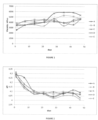
- the dornic acidity has been measured at 10°C with add of NaOH 0,1N until pH 8,35. The results are illustrated by figures 1 and 2 .
- the count of bacteria has been done on a strained fermented dairy product prepared with a step of heat treatment (at a temperature of 58°C during 2,5 minutes) after the step of fermentation.
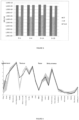
- the results are shown in figure 3 .
- the strained fermented dairy product of the invention (X) and commercial strained fermented dairy products (Y) were analysis.
Landscapes
- Life Sciences & Earth Sciences (AREA)
- Microbiology (AREA)
- Chemical & Material Sciences (AREA)
- Engineering & Computer Science (AREA)
- Food Science & Technology (AREA)
- Polymers & Plastics (AREA)
- Dairy Products (AREA)
Description
- The present invention relates to the field of strained/concentrated fermented dairy product and its process of preparation. The invention further relates to a process for the preparation of strained fermented dairy products with improved texture.
- The strained fermented dairy products are well known, in particular in Europe under the name of the Greek style yogurt or "thick" yogurt. Generally, these products have a high fat content (around 10g/100g) and they are placed in the category of greedy products with a creamy flavor. It is a pervasive goal in the human diet to consume less fat; and the relative high fat content of a typical Greek style yogurt is not helpful in achieving this goal. Countless attempts have been made to make a low fat Greek style yogurt, but the resulting products on the market are not satisfactory in term of taste, appearance and texture. Different methods can be used for the manufacture of strained fermented dairy products. The different methods available to manufacture strained yogurt in large volume are as follows: cloth bag or the "berge" system, mechanical separators and ultrafiltration. Generally, Greek style yogurts are manufactured from only pasteurized milk and lactic acid bacteria cultures. The milk may be concentrated by ultrafiltration to remove a portion of the water before addition of lactic acid bacteria. After fermentation, the product may be centrifuged or membrane-filtered to remove whey. It is known from literature that yogurt may be subjected to an ultrafiltration process to increase the solids as required in certain types of yogurt such as Greek-style yogurt. This technology was borrowed from the cheese technology. For example,
WO9827825 - However, surprisingly with the complete combined process developed and described in this invention, whose parameters have been clearly defined, the obtained strained fermented dairy products have an improved texture and excellent organoleptic properties.
- Today, there is a need for a strained fermented dairy product combining a low fat content, a high protein content, a low acid taste, a good texture and a good stability in the time. In other words, the strained fermented dairy products according to the invention are complex, because they need to have in combination: a low fat content, a high protein content, a higher viscosity than standard yogurts, a weak post acidification in the end of the shelf life, a good lactic acid bacteria count until the end of the shelf life and excellent organoleptic properties. Excellent organoleptic properties consist in a creamy, a low acid and low astringent taste (the acidity in the mouth is considerably reduced) even with a low fat content and a good texture in spoon and in mouth.
- The present invention provides a process for the manufacture of a strained fermented dairy product, comprising at least the following steps:
- a pre-heat treatment step at a temperature of from 75 to 95 °C of a dairy material having a fat content of from 0 to 2% by weight,
- a homogenization step at a pressure of from 25 bars to 300 bars of the said dairy material,
- a heat treatment step at a temperature of from 90 to 95 °C for 2 to 7 min,
- a fermentation step with at least Streptococcus thermophilus and Lactobacillus delbrueckii subsp. bulgaricus at a temperature of from 35 to 44 °C, during 4 to 7 hours,
- a heat treatment step at a temperature of from 50 to 65 °C during from 1 to 10 min,
- a separation step wherein said separation step is performed by a separator at a temperature of from 30 to 45°C, to obtain a strained fermented dairy product wherein the total content of protein is between 6 and 14 g/100g of product,
- a smoothing step performed by a rotor stator mixer,
- a cooling step to a temperature of from 15 to 20°C.
- The dairy material has a fat content of from 0 to 2%, in particular from 0,05 to 1 %. more particularly from 0,1 to 0,3% by weight and a protein content of from 3 to 4.6 %, in particular from 3,1 to 4%, more from 3,2 to 3,6% by weight.
- In the context of the invention, the expression "dairy material" refers to milk, milk derivate or mixtures thereof. The milk is selected from skimmed milk, semi-skimmed milk, and mixtures thereof. The milk derivate is selected from skimmed milk powder, milk proteins, milk protein concentrate, concentrated milk, and mixtures thereof. The dairy material to be used in the method of the invention can derive from any milk such as cow's milk, sheep's milk, goat's milk. In a preferred embodiment of the process of the invention, the dairy material comes from cow's milk.
- The high pressure homogenization precedes the heat treatment step. The high pressure homogenization step is typically performed in an equipment appropriate which can be selected by the skilled in the art. Preferably, the high pressure homogenization step is performed by compressing at a high pressure a stream of material in a chamber, then by decreasing instantaneously the pressure by letting the stream of material going through a small gap between a cylinder and a valve. This applies a high shearing on the material. This process is continuous and applied by a large variety of equipments called high pressure homogenizers. The homogenization step, according to the invention, seems to make it possible to improve the separation step. It was noted in the invention, that the protein concentration (the rate of protein enrichment) in the step of separation is improved when the homogenization step is performed, according to the invention.
- The fermentation step is done with yogurt bacteria, Streptococcus thermophilus and Lactobacillus delbrueckii subsp. bulgaricus. Optionally, the fermentation step also includes the addition of other lactic acid bacteria, such as Bifidobacterium and/or Lactobacillus acidophilus and/or Lactobacillus casei and/or Lactobacillus rhamnosus and/or Lactobacillus reuteri and/or Lactobacillus johnsonii and/ or Lactobacillus plantarum and/or Lactobacillus helveticus and /or Lactobacillus fermentum and/or Lactobaciluus amylovorus and/or Lactoccocus lactis and/or Leuconostoc mesenteroides. After inoculation of the dairy material, fermentation is conducted under the usual conditions suitable for growth of the inoculated bacteria. The fermentation is stopped when the fermentation medium reaches the desired target pH, in particular from 4 to 4,8, preferably 4,6. It is well known in the literature that starter cultures are primarily responsible for the production of the flavor compounds which contribute to the aroma of yoghurt. There is a general agreement that the aroma of flavor of yoghurt is basically due to the production of acetaldehyde and other unidentifiable compounds. Some other strains like the ones mentioned above can improve the organoleptic properties of yoghurt. In particular, Lactococcus lactis subsp. lactis produces diacetyl known to bring a creamy flavor in product. It was surprisingly found that the process according to the present invention makes it possible to produce a strained fermented dairy product having better taste (low acidic off notes, high creamy note...) without using other lactic acid bacteria such as Bifidobacterium, Lactobacillus acidophilus, Lactobacillus casei, Lactobacillus rhamnosus or mesophilic lactic acid bacteria such as Lactoccocus lactis known to improve the flavor of the product.
- The separation step, according to the invention, describes a step of concentration of the solids of the product, in particular proteins to a desired solids or protein content (% by weight). The term "separator" designates a device selected among the group of equipments applying the following operation: reverse osmosis, ultrafiltration, centrifugal separation, and any device allowing to withdraw a part of the water or whey from the product.
- In the context of the present invention, the "total protein content" means the total amount of milk proteins contained in the product. In particular, the separation step is performed to obtain a total protein content at the end of this step between 6 and 14 g/100g of product, in particular 8 and 11 g/100g of product. It has been noted by the inventors that the process according to the invention makes it possible to produce a strained fermented dairy product with a good viscosity and texture related to the presence of a protein content in the range above mentioned.
- In a preferred embodiment, the separation step is performed until a rate of protein enrichment of 2 to 3 times the protein content of the dairy material. In the context of the present invention, the "rate of protein enrichment" means that the protein content of the initial dairy material is increased by 2 to 3 times. The skilled in the art can perfectly determine the protein content of the dairy material used and the protein content of the product obtained in (c).
- In the present invention, the smoothing step is done by a rotor stator mixer. An example of description of this equipment is done in the patent application
WO2007/095969 . In the context of the invention, "rotor stator mixer" means an equipment in which the product goes through cogged rings, a part of the rings being static, the remaining part being in rotation at a set speed. This system of cogged rings partly static or in rotation applies a defined shearing to the product. Preferably, the rotor stator mixer comprises a ring shaped rotor and a ring shaped stator, each ring of the rotor and the stator being provided with radial slots having a given width, comprising adjusting the rotational speed of the rotor to adjust the peripheral velocity. The rotor may be operated so that the peripheral velocity is between 2 m/s and 13 m/s, in particular between 3 m/s and 5 m/s and more particularly between 3.6 m/s and 4 m/s. - The process according to the invention comprises a heat treatment of the product obtained in the fermentation step at a temperature of from 50 to 65°C during from 1 to 10 min, in particular at a temperature of 58°C during 2,5 min.
- The process according to the invention comprises after the smoothing step, a cooling step of the product obtained in the smoothing step at a temperature of from 15 to 20°C.
- In a particular embodiment, the process according to the invention comprises after the smoothing step and optionally after the cooling step, a step of addition of a cream material and/or a fruit preparation.
- In the context of the invention, the "cream material" is selected among the group of: cream, mixture of milk and cream. In the context of the invention, the "fruit preparation" is selected among the group: fruit pieces in a matrix, fruit puree in a matrix, fruit puree, concentrated fruit puree, fruit compote, fruit juice, dried fruits. The fruit are selected from the group consisting of strawberry, blackberry, apricot, peach, raspberry, blueberry, pineapple, mango, banana, papaya, passion fruit, plum, pomelo, orange, kiwi, lemon, cherry, pear and apple.
- In a particular embodiment, the cream material has a fat content of from 20 to 50 % by weight, in particular from 23 to 40 % by weight.
- In a preferred embodiment, the cream material is prepared by at least the following steps:
- pre-heating at a temperature of 75 to 95°C, preferably of 75°C to 90 °C,
- homogenization of the pre-heated material obtained, in a single step at a pressure of 150 bars,
- heat treatment at 75 to 142°C for 10 sec to 6 min,
- cooling at 4 to 10°C.
- The process according to the invention, comprises at least the following steps:
- a pre-heat treatment step at a temperature of from 75 to 95 °C of a dairy material, having a fat content of from 0 to 2% by weight,
- a homogenization step at a pressure of from 20 bars to 300 bars, in particular from 25 bars to 300 bars, in particular from 50 bars to 250 bars, of the said dairy material,
- a heat treatment step at a temperature of from 90 to 95 °C for 2 to 7 min,
- a fermentation step with at least Streptococcus thermophilus and Lactobacillus delbrueckii subsp. bulgaricus at a temperature of from 35 to 44°C, preferably of from 36 to 42°C, during 4 to 7 hours,
- a heat treatment step at a temperature of from 50 to 65 °C during from 1 to 10 min, in particular at a temperature of 58°C during 2,5 min,
- a separation step wherein said separation step is performed by a separator at a temperature of from 30 to 45°C, to obtain a strained fermented dairy product wherein the total content of protein is between 6 and 14 g/100g of product, in particular 8 and 11 g/100g of product,
- a smoothing step performed by a rotor stator mixer, in particular at a temperature of from 30°C to 45°C,
- a cooling step to a temperature of from 15 to 20°C.
- The present invention also concerns a strained fermented dairy product obtainable by the process according to the invention, comprising by weight of final product:
- from 0 to 5 % of fat, in particular from 2 to 3,5 % of fat, more particularly 2,9% of fat, and
- from 6 to 12% of proteins, in particular from 7 to 10 % of proteins, more particularly 9% of proteins,
- has from 1.105 to 3.106 cfu/ml of Lactobacillus delbrueckii subsp. bulgaricus and from 1.108 to 3. 109 cfu/ml of Streptococcus thermophilus during all the shelf life, in particular during 28 days
- has a pH of from 3,9 to 4,4 , in particular of from 3,95 to 4,3, more particularly of from 4 to 4,2,
- has a viscosity from 2000 to 7000 mPa.s-1, in particular from 2200 to 6500 mPa.s-1, more particularly from 2500 to 6000 mPa.s-1, measured with a Rheomat RM 200 at a temperature of 10°C and at a shear of 64 s-1.
- It has been noted by the inventors that the strained dairy product already disclosed or available to date have an acidity too high to be suitable for the taste of Westerns consumers, in particular European consumers. Consequently, the inventors sought to develop formulas with a sufficient viscosity and a less acid and more pleasant taste, for the consumer. In this context, they found that the acidity taste can be mitigated under certain specific conditions of formulas and process. The strained fermented dairy product according to the invention presents a low fat content, a high protein content, a higher viscosity than standard yogurts, a weak post acidification in the end of the shelf life, a good lactic acid bacteria count until the end of the shelf life and excellent organoleptic properties. Excellent organoleptic properties consists in a creamy, a low acid and low astringent taste (the acidity in the mouth is considerably reduced) even with a low fat content and a good texture in spoon and in mouth.
- In a preferred embodiment, the strained fermented dairy product according to the invention comprises a white mass content of from 75 to 99,99 % by weight. By "white mass" is meant dairy material.
- In a more preferred embodiment, the strained fermented dairy product according to the invention comprises a acid bacteria culture content of from 0,001 to 0,5 % by weight.
- In a particular embodiment, the strained fermented dairy product according to the invention comprises a fruit preparation, wherein the fruits are selected from the group of cherry, strawberry, peach, blueberry, pineapple, raspberry, apricot, coconut, passion fruit, apple or a mixture.
- The strained fermented dairy product according to the invention can have from 0 to 25 % by weight of fruit preparation. In a more particular embodiment, the strained fermented dairy product according to the invention comprises a cream material with a fat content of from 20 to 50 % by weight, in particular from 23 to 40% by weight.
- In an even more particular embodiment, the strained fermented dairy product according to the invention has fat globules with an average diameter in the range from 0.05 to 10 µm, in particular from 1 µm to 2,5 µm.
- Preferably, the strained fermented dairy product further comprises at least one additive chosen among sweeteners, flavors, flavor enhancers, sugar, preservatives and combinations thereof.
- More preferably, the strained fermented dairy product is packaged in format size from 100 to 500g.
- This invention is illustrated by the following figures:
-
Figure 1: Figure 1 represents the kinetics of viscosity of the products A, B, C, D and E. The ordinate corresponds to the viscosity (mPa.s-1) and the abscissa corresponds to the time (in days). -
Figure 2: Figure 2 represents the kinetics of pH of the products A, B, C, D and E. The ordinate corresponds to the pH and the abscissa corresponds to the time (in days). -
Figure 3: Figure 3 represents the count of bacteria in a strained fermented dairy product, inoculated with Streptococcus thermophilus (ST) and Lactobacillus delbrueckii subsp. bulgaricus (LB). The ordinate corresponds to the count (cfu/ml) and the abscissa corresponds to the time (in days). The black histogram is the count of Streptococcus thermophilus. The gray histogram is the count of Lactobacillus delbrueckii subsp. bulgaricus. The dark gray histogram is the total count of bacteria. -
Figure 4: Figure 4 represents the sensory profile of a strained fermented dairy product according to the invention (fat content 3,5 %) and several commercial strained fermented dairy products (fat content 5%). The black line corresponds to the sensory profile of the product according to the invention. The gray zone corresponds to the sensory space of several commercial strained fermented dairy products. - Various embodiments of the present invention are illustrated in the following examples, which are intended to illustrate, without in any way limiting, the object and the scope of the invention.
- Strained fermented dairy products were prepared according to the process of the invention. The products had the following characteristics.
-
Product A Product B Product C Product D Product E Protein content (% by weight of final product) 9,8 % 9,4 % 9,4 % 9,4 % 9,4 % Fat content (% by weight of final product) 0 % 2 % 2 % 2 % 2 % Flavors - - Vanilla Strawberry Blueberry Viscosity after 1 day (mPas.s) 2625 2632 3408 3332 3563 Viscosity after 50 days (mPas.s) 5600 3228 4639 5816 5033 pH Day 14,28 4,30 4,29 4,26 4,27 pH Day 504,08 3,94 4,07 4,04 4,01 Dornic acidity after 1 Day 146 129 - - - Dornic acidity after 45 Days 170 142 - - - - The viscosity has been measured with a Rheomat RM 200 at a shear rate of 64 s-1 and at 10 °C.
The pH has been measured at 10°C with a classical laboratory equipment.
The dornic acidity has been measured at 10°C with add ofNaOH 0,1N untilpH 8,35.
The results are illustrated byfigures 1 and 2 . - The count of bacteria has been done on a strained fermented dairy product prepared with a step of heat treatment (at a temperature of 58°C during 2,5 minutes) after the step of fermentation. The results are shown in
figure 3 . - The strained fermented dairy product of the invention (X) and commercial strained fermented dairy products (Y) were analysis.
- Product (X) : 3,5 % of fat content
- Product (Y): 5 % of fat content
- Analysis criteria: appearance, texture, taste, dairy aroma. For each criteria, characteristics are quantified (for example: smooth, sticky, acidic taste, cream note ....)
- The results are shown in
figure 4 .
In an additional embodiment, the process according to the invention is characterized by an addition step of a cream material and/or a fruit preparation. In this context, the strained fermented dairy product obtained has a fat content of from 0,5 to 5 % by weight, in particular from 2 to 2,9 % by weight.
Claims (12)
- A process for the manufacture of a strained fermented dairy product, comprising at least the following steps:- a pre-heat treatment step at a temperature of from 75 to 95 °C of a dairy material having a fat content of from 0 to 2% by weight,- a homogenization step at a pressure of from 25 bars to 300 bars of the said dairy material,- a heat treatment step at a temperature of from 90 to 95 °C for 2 to 7 min,- a fermentation step with at least Streptococcus thermophilus and Lactobacillus delbrueckii subsp. bulgaricus at a temperature of from 35 to 44 °C, during 4 to 7 hours,- a heat treatment step at a temperature of from 50 to 65 °C during from 1 to 10 min,- a separation step wherein said separation step is performed by a separator at a temperature of from 30 to 45°C, to obtain a strained fermented dairy product wherein the total content of protein is between 6 and 14 g/100g of product,- a smoothing step performed by a rotor stator mixer,- a cooling step to a temperature of from 15 to 20°C.
- Process according to claim 1, wherein the dairy material has a fat content of from 0,05 to 1%, more particularly from 0,1 to 0,3% by weight.
- Process according to claims 1 or 2, wherein the dairy material has a protein content of from 3 to 4.6 %, in particular from 3,1 to 4%, more from 3,2 to 3,6 % by weight.
- Process according to any one of the preceding claims, characterized in that it comprises after the smoothing step (d) and optionally after the cooling step, a step of addition of a cream material and/or a fruit preparation.
- Process according to any one of the preceding claims, wherein the cream material has a fat content of from 20 to 50 % by weight, in particular from 23 to 40 % by weight.
- The process according to any one of the preceding claims, wherein the cream material is prepared by at least the following steps:- pre-heating at a temperature of 75 to 95°C,- homogenization of the pre-heated material obtained, in a single step at a pressure of 150 bars,- heat treatment at 75 to 142°C for 10 sec to 6 min,- cooling at 4 to 10°C.
- The process according to any one of the preceding claims, comprising at least the following steps:- a pre-heat treatment step at a temperature of from 75 to 95 °C of a dairy material,- a homogenization step at a pressure of from 50 bars to 250 bars, of the said dairy material,- a heat treatment step at a temperature of from 90 to 95 °C for 2 to 7 min,- a fermentation step with at least Streptococcus thermophilus and Lactobacillus delbrueckii subsp. bulgaricus at a temperature of from 36 to 42 °C, during 4 to 7 hours,- a heat treatment step at a temperature of of 58°C during 2,5 min,- a separation step wherein said separation step is performed by a separator at a temperature of from 30 to 45°C, to obtain a strained fermented dairy product wherein the total content of protein is between 8 and 11 g/100g of product,- a smoothing step performed by a rotor stator mixer at a temperature of from 30°C to 45°C,- a cooling step to a temperature of from 15 to 20°C.
- Strained fermented dairy product obtainable by the process according to any one of claims 1 to 7, comprising, by weight of final product:- from 0 to 5 % of fat, in particular from 2 to 3,5 % of fat, more particularly 2,9% of fat, and- from 6 to 12% of proteins, in particular from 7 to 10 % of proteins, more particularly 9% of proteins,wherein said strained fermented dairy product:- has from 1.105 to 3.106 cfu/ml of Lactobacillus delbrueckii subsp. bulgaricus and from 1.108 to 3.109 cfu/ml of Streptococcus thermophilus during all the shelf life, in particular during 28 days- has a pH of from 3,9 to 4,4 , in particular of from 3,95 to 4,3, more particularly of from 4 to 4,2,- has a viscosity from 2000 to 7000 mPa.s-1, in particular from 2200 to 6500 mPa.s-1, more particularly from 2500 to 6000 mPa.s-1, measured with a Rheomat RM 200 at a temperature of 10°C and at a shear of 64 s-1.
- Strained fermented dairy product according to claim 8, having a white mass content of from 75 to 99,99 % by weight.
- Strained fermented dairy product according to claims 8 or 9, having a lactic acid bacteria culture content of from 0,001 to 0,5 % by weight.
- Strained fermented dairy product according to any one of claims 8 to 10, comprising a fruit preparation, wherein the fruits are selected from the group of cherry, strawberry, peach, blueberry, pineapple, raspberry, apricot, coconut, passion fruit, apple or a mixture.
- Strained fermented dairy product according to any one of claims 8 to 11, having fat globules with an average diameter in the range from 0.05 to 10 µm, in particular from 1 µm to 2,5 µm.
Priority Applications (1)
| Application Number | Priority Date | Filing Date | Title |
|---|---|---|---|
| PL13713956.4T PL2947995T5 (en) | 2013-01-25 | 2013-01-25 | PROCESS OF PREPARING A STRAINED FERMENTED DAIRY PRODUCT |
Applications Claiming Priority (1)
| Application Number | Priority Date | Filing Date | Title |
|---|---|---|---|
| PCT/IB2013/000162 WO2014114970A1 (en) | 2013-01-25 | 2013-01-25 | Process for preparing strained fermented dairy product |
Publications (3)
| Publication Number | Publication Date |
|---|---|
| EP2947995A1 EP2947995A1 (en) | 2015-12-02 |
| EP2947995B1 EP2947995B1 (en) | 2017-05-31 |
| EP2947995B2 true EP2947995B2 (en) | 2025-05-07 |
Family
ID=48045593
Family Applications (1)
| Application Number | Title | Priority Date | Filing Date |
|---|---|---|---|
| EP13713956.4A Active EP2947995B2 (en) | 2013-01-25 | 2013-01-25 | Process for preparing strained fermented dairy product |
Country Status (15)
| Country | Link |
|---|---|
| US (2) | US20150320061A1 (en) |
| EP (1) | EP2947995B2 (en) |
| JP (1) | JP2016505275A (en) |
| KR (2) | KR20200140937A (en) |
| CN (1) | CN105007745A (en) |
| AR (1) | AR094582A1 (en) |
| AU (1) | AU2013375156B2 (en) |
| BR (1) | BR112015017806B1 (en) |
| CA (1) | CA2898690C (en) |
| ES (1) | ES2638334T5 (en) |
| IL (1) | IL240054B (en) |
| MX (1) | MX366422B (en) |
| PL (1) | PL2947995T5 (en) |
| RU (1) | RU2640257C2 (en) |
| WO (1) | WO2014114970A1 (en) |
Families Citing this family (22)
| Publication number | Priority date | Publication date | Assignee | Title |
|---|---|---|---|---|
| US10912316B2 (en) | 2014-10-21 | 2021-02-09 | Sodima | Cavitated fermented dairy product |
| MA40670B2 (en) * | 2014-12-11 | 2021-10-29 | Gervais Danone Sa | Process for packaging a highly textured dairy product |
| HUP1500011A2 (en) * | 2015-01-15 | 2016-07-28 | Attila Rakosi | Solid state, fresh yogurt cheese with live and active cultures and chocolate covered yogurt dessert prepared by yogurt cheese, and process for their preparation |
| CA2973199A1 (en) | 2015-01-27 | 2016-08-04 | Dupont Nutrition Biosciences Aps | A method of making a fermented dairy product |
| WO2016177698A1 (en) * | 2015-05-07 | 2016-11-10 | Compagnie Gervais Danone | Manufacture of strained fermented dairy products |
| ES2784506T3 (en) | 2015-12-24 | 2020-09-28 | Gervais Danone Sa | Use of a lactase to improve the preparation of a strained fermented milk product |
| WO2017112876A1 (en) | 2015-12-24 | 2017-06-29 | The Dannon Company, Inc. | Sweetened strained fermented dairy product comprising steviol glycosides and further additives |
| CN105558091B (en) * | 2016-01-06 | 2019-05-28 | 生合生物科技(扬州)有限公司 | A kind of preparation method of the whey fermentation liquid of clear |
| JP6709683B2 (en) * | 2016-05-30 | 2020-06-17 | 森永乳業株式会社 | Method for producing concentrated fermented milk |
| WO2018028765A1 (en) * | 2016-08-08 | 2018-02-15 | Compagnie Gervais Danone | Process for producing infant formula products and dairy products |
| WO2018028764A1 (en) * | 2016-08-08 | 2018-02-15 | Compagnie Gervais Danone | Process for producing infant formula products and acidic dairy products |
| WO2019032365A1 (en) | 2017-08-10 | 2019-02-14 | Fairlife, Llc | Methods for making high-protein greek yogurt using membrame systems before and after fermentation |
| CN109892390A (en) * | 2017-12-08 | 2019-06-18 | 广州市朴诚乳业有限公司 | A kind of brown fermented milk-containing drink preparation method of the high lactic bacteria activity of low sugar |
| CN107980904A (en) * | 2017-12-22 | 2018-05-04 | 光明乳业股份有限公司 | A kind of fatty high protein fermentation breast and its production method |
| CN107996704A (en) * | 2017-12-22 | 2018-05-08 | 光明乳业股份有限公司 | A kind of method for preparing Greek style Yoghourt and the Greek style Yoghourt prepared |
| US11191289B2 (en) | 2018-04-30 | 2021-12-07 | Kraft Foods Group Brands Llc | Spoonable smoothie and methods of production thereof |
| CN108887381B (en) * | 2018-07-19 | 2022-04-12 | 新希望乳业股份有限公司 | a high protein yogurt |
| CN110959678A (en) * | 2018-09-30 | 2020-04-07 | 新希望乳业股份有限公司 | Greece fermented yoghourt and preparation method thereof |
| CA3059315C (en) | 2018-10-19 | 2024-01-09 | Compagnie Gervais Danone | Reduced carbohydrate dairy products |
| CN110178895A (en) * | 2019-06-06 | 2019-08-30 | 云南农业大学 | A kind of demulsification fresh breeze flavoring cream and its production method |
| US11918005B1 (en) | 2021-04-06 | 2024-03-05 | Chobani Llc | Dairy-based zero sugar food product and associated method |
| CN117243256B (en) * | 2023-09-15 | 2024-05-17 | 东莞理工学院 | Passion fruit peel polysaccharide low-fat yogurt and preparation method thereof |
Family Cites Families (19)
| Publication number | Priority date | Publication date | Assignee | Title |
|---|---|---|---|---|
| JPH0797963B2 (en) * | 1988-03-16 | 1995-10-25 | 雪印乳業株式会社 | Method for producing stirred yogurt |
| IT1244691B (en) * | 1991-01-29 | 1994-08-08 | Sitia Yomo Spa | MILK MOUSSE, ITS USE FOR PREPARING DESSERTS AND DESSERTS SO OBTAINED |
| CA2167020A1 (en) | 1996-01-11 | 1997-07-12 | Roland Karg | Process for making an improved yogurt |
| EP0949870B1 (en) * | 1996-12-23 | 2002-05-29 | Societe Des Produits Nestle S.A. | Fresh cheese |
| NZ502923A (en) * | 1997-08-28 | 2001-09-28 | Nestle Sa | Cream-based food composition and process for the manufacture thereof |
| RU2113129C1 (en) * | 1997-10-16 | 1998-06-20 | Леонид Андреевич Компаниец | Method for preparing curd product |
| WO2009059267A1 (en) * | 2007-11-02 | 2009-05-07 | Select Milk Producers, Inc. | Yogurt compositions and methods of making |
| FR2850534B1 (en) * | 2003-02-03 | 2007-04-20 | Gervais Danone Sa | YOGHURT WITH BIMODAL STRUCTURE AND PREPARATION METHOD |
| KR20060010361A (en) * | 2004-07-28 | 2006-02-02 | 엘지전자 주식회사 | Turbidity sensor mounting structure of the dishwasher |
| WO2006057265A1 (en) * | 2004-11-25 | 2006-06-01 | Meiji Dairies Corporation | Fermented milk and process for producing the same |
| JP2006296374A (en) * | 2005-04-25 | 2006-11-02 | Best Ecology:Kk | Food material having raw cream-like taste and method for producing the same |
| FR2888468B1 (en) * | 2005-07-13 | 2010-08-27 | Gervais Danone Sa | FERMENTED FOOD PRODUCTS CONTAINING PROBIOTIC STRAINS, AND PROCESS FOR THEIR PREPARATION |
| US9259697B2 (en) | 2006-02-22 | 2016-02-16 | Compagnie Gervais Danone | Process for manufacturing a fermented milk |
| JP2009254353A (en) * | 2008-03-19 | 2009-11-05 | Kaneka Corp | New fresh cream and method for producing the same |
| US8217028B2 (en) * | 2008-06-20 | 2012-07-10 | Glaxo Group Limited | 1,2,4-oxadiazole indole compounds |
| JP5341990B2 (en) * | 2008-06-30 | 2013-11-13 | ダウ グローバル テクノロジーズ エルエルシー | Method for producing monomer emulsion for continuous polymerization |
| WO2011078107A1 (en) * | 2009-12-21 | 2011-06-30 | サントリーホールディングス株式会社 | Process for producing thick yoghurt |
| EP2696696A1 (en) * | 2011-04-12 | 2014-02-19 | Danone, S.A. | Method for obtaining a fermented dairy product |
| KR101673684B1 (en) * | 2014-10-28 | 2016-11-07 | 현대자동차주식회사 | Occupant detection apparatus and method for vehicle, and air conditining control method for vehicle using the same |
-
2013
- 2013-01-25 CN CN201380071366.1A patent/CN105007745A/en active Pending
- 2013-01-25 JP JP2015554256A patent/JP2016505275A/en active Pending
- 2013-01-25 BR BR112015017806-5A patent/BR112015017806B1/en active IP Right Grant
- 2013-01-25 MX MX2015009613A patent/MX366422B/en active IP Right Grant
- 2013-01-25 KR KR1020207035320A patent/KR20200140937A/en not_active Ceased
- 2013-01-25 PL PL13713956.4T patent/PL2947995T5/en unknown
- 2013-01-25 WO PCT/IB2013/000162 patent/WO2014114970A1/en not_active Ceased
- 2013-01-25 RU RU2015135517A patent/RU2640257C2/en active
- 2013-01-25 US US14/763,030 patent/US20150320061A1/en not_active Abandoned
- 2013-01-25 ES ES13713956T patent/ES2638334T5/en active Active
- 2013-01-25 EP EP13713956.4A patent/EP2947995B2/en active Active
- 2013-01-25 CA CA2898690A patent/CA2898690C/en active Active
- 2013-01-25 KR KR1020157022980A patent/KR20160050008A/en not_active Ceased
- 2013-01-25 AU AU2013375156A patent/AU2013375156B2/en active Active
-
2014
- 2014-01-24 AR ARP140100227A patent/AR094582A1/en active IP Right Grant
-
2015
- 2015-07-21 IL IL240054A patent/IL240054B/en active IP Right Grant
-
2024
- 2024-07-08 US US18/766,257 patent/US20250176576A1/en active Pending
Also Published As
| Publication number | Publication date |
|---|---|
| AR094582A1 (en) | 2015-08-12 |
| US20250176576A1 (en) | 2025-06-05 |
| JP2016505275A (en) | 2016-02-25 |
| MX366422B (en) | 2019-07-08 |
| EP2947995B1 (en) | 2017-05-31 |
| RU2015135517A (en) | 2017-03-02 |
| MX2015009613A (en) | 2016-05-26 |
| WO2014114970A1 (en) | 2014-07-31 |
| IL240054A0 (en) | 2015-09-24 |
| BR112015017806A2 (en) | 2017-07-11 |
| CA2898690A1 (en) | 2014-07-31 |
| PL2947995T5 (en) | 2025-09-22 |
| PL2947995T3 (en) | 2018-03-30 |
| US20150320061A1 (en) | 2015-11-12 |
| AU2013375156A1 (en) | 2015-08-06 |
| AU2013375156B2 (en) | 2017-09-14 |
| CA2898690C (en) | 2020-12-29 |
| ES2638334T5 (en) | 2025-09-16 |
| EP2947995A1 (en) | 2015-12-02 |
| KR20200140937A (en) | 2020-12-16 |
| ES2638334T3 (en) | 2017-10-19 |
| RU2640257C2 (en) | 2017-12-27 |
| CN105007745A (en) | 2015-10-28 |
| BR112015017806B1 (en) | 2020-12-29 |
| KR20160050008A (en) | 2016-05-10 |
| IL240054B (en) | 2018-11-29 |
Similar Documents
| Publication | Publication Date | Title |
|---|---|---|
| US20250176576A1 (en) | Process for preparing strained fermented dairy product | |
| US20240358034A1 (en) | Use of lactase in the preparation of a strained fermented dairy product | |
| WO2017109532A1 (en) | Use of a lactase for improving the preparation of a strained fermented dairy product | |
| EP3209136B1 (en) | Method of forming a cavitated fermented dairy product | |
| IL266594B2 (en) | Streptococcus thermophilus for use in preparation of fermented products | |
| CA2984466A1 (en) | Manufacture of strained fermented dairy products | |
| CA3059315C (en) | Reduced carbohydrate dairy products | |
| CA3085084A1 (en) | Fermented dairy compositions and methods of preparing the same | |
| WO2014173978A1 (en) | Fermented dairy products suitable for fruit taste enhancement | |
| EP1755403A1 (en) | Dairy product with at least one characteristic of a dairy product mixture | |
| EP3442348B1 (en) | Lactobacillus rhamnosus for use in preparation of fermented products | |
| WO2014173983A1 (en) | Fruit flavor enhancement in fermented dairy products |
Legal Events
| Date | Code | Title | Description |
|---|---|---|---|
| PUAI | Public reference made under article 153(3) epc to a published international application that has entered the european phase |
Free format text: ORIGINAL CODE: 0009012 |
|
| 17P | Request for examination filed |
Effective date: 20150814 |
|
| AK | Designated contracting states |
Kind code of ref document: A1 Designated state(s): AL AT BE BG CH CY CZ DE DK EE ES FI FR GB GR HR HU IE IS IT LI LT LU LV MC MK MT NL NO PL PT RO RS SE SI SK SM TR |
|
| AX | Request for extension of the european patent |
Extension state: BA ME |
|
| DAX | Request for extension of the european patent (deleted) | ||
| GRAP | Despatch of communication of intention to grant a patent |
Free format text: ORIGINAL CODE: EPIDOSNIGR1 |
|
| STAA | Information on the status of an ep patent application or granted ep patent |
Free format text: STATUS: GRANT OF PATENT IS INTENDED |
|
| INTG | Intention to grant announced |
Effective date: 20161223 |
|
| RIN1 | Information on inventor provided before grant (corrected) |
Inventor name: CORRET, FRANCOIS Inventor name: MARCHAL, LAURENT Inventor name: CREPEL, PASCAL Inventor name: PAQUET, DENIS Inventor name: WARIN, FRANCOISE Inventor name: BILBAO, ALMUDENA Inventor name: FLABBI, PAOLA |
|
| GRAS | Grant fee paid |
Free format text: ORIGINAL CODE: EPIDOSNIGR3 |
|
| GRAA | (expected) grant |
Free format text: ORIGINAL CODE: 0009210 |
|
| STAA | Information on the status of an ep patent application or granted ep patent |
Free format text: STATUS: THE PATENT HAS BEEN GRANTED |
|
| AK | Designated contracting states |
Kind code of ref document: B1 Designated state(s): AL AT BE BG CH CY CZ DE DK EE ES FI FR GB GR HR HU IE IS IT LI LT LU LV MC MK MT NL NO PL PT RO RS SE SI SK SM TR |
|
| REG | Reference to a national code |
Ref country code: CH Ref legal event code: EP Ref country code: GB Ref legal event code: FG4D |
|
| REG | Reference to a national code |
Ref country code: AT Ref legal event code: REF Ref document number: 896625 Country of ref document: AT Kind code of ref document: T Effective date: 20170615 |
|
| REG | Reference to a national code |
Ref country code: IE Ref legal event code: FG4D |
|
| REG | Reference to a national code |
Ref country code: DE Ref legal event code: R096 Ref document number: 602013021677 Country of ref document: DE |
|
| REG | Reference to a national code |
Ref country code: NL Ref legal event code: FP |
|
| REG | Reference to a national code |
Ref country code: LT Ref legal event code: MG4D |
|
| REG | Reference to a national code |
Ref country code: AT Ref legal event code: MK05 Ref document number: 896625 Country of ref document: AT Kind code of ref document: T Effective date: 20170531 |
|
| REG | Reference to a national code |
Ref country code: ES Ref legal event code: FG2A Ref document number: 2638334 Country of ref document: ES Kind code of ref document: T3 Effective date: 20171019 |
|
| PG25 | Lapsed in a contracting state [announced via postgrant information from national office to epo] |
Ref country code: AT Free format text: LAPSE BECAUSE OF FAILURE TO SUBMIT A TRANSLATION OF THE DESCRIPTION OR TO PAY THE FEE WITHIN THE PRESCRIBED TIME-LIMIT Effective date: 20170531 Ref country code: FI Free format text: LAPSE BECAUSE OF FAILURE TO SUBMIT A TRANSLATION OF THE DESCRIPTION OR TO PAY THE FEE WITHIN THE PRESCRIBED TIME-LIMIT Effective date: 20170531 Ref country code: LT Free format text: LAPSE BECAUSE OF FAILURE TO SUBMIT A TRANSLATION OF THE DESCRIPTION OR TO PAY THE FEE WITHIN THE PRESCRIBED TIME-LIMIT Effective date: 20170531 Ref country code: HR Free format text: LAPSE BECAUSE OF FAILURE TO SUBMIT A TRANSLATION OF THE DESCRIPTION OR TO PAY THE FEE WITHIN THE PRESCRIBED TIME-LIMIT Effective date: 20170531 Ref country code: NO Free format text: LAPSE BECAUSE OF FAILURE TO SUBMIT A TRANSLATION OF THE DESCRIPTION OR TO PAY THE FEE WITHIN THE PRESCRIBED TIME-LIMIT Effective date: 20170831 |
|
| PG25 | Lapsed in a contracting state [announced via postgrant information from national office to epo] |
Ref country code: RS Free format text: LAPSE BECAUSE OF FAILURE TO SUBMIT A TRANSLATION OF THE DESCRIPTION OR TO PAY THE FEE WITHIN THE PRESCRIBED TIME-LIMIT Effective date: 20170531 Ref country code: BG Free format text: LAPSE BECAUSE OF FAILURE TO SUBMIT A TRANSLATION OF THE DESCRIPTION OR TO PAY THE FEE WITHIN THE PRESCRIBED TIME-LIMIT Effective date: 20170831 Ref country code: IS Free format text: LAPSE BECAUSE OF FAILURE TO SUBMIT A TRANSLATION OF THE DESCRIPTION OR TO PAY THE FEE WITHIN THE PRESCRIBED TIME-LIMIT Effective date: 20170930 Ref country code: LV Free format text: LAPSE BECAUSE OF FAILURE TO SUBMIT A TRANSLATION OF THE DESCRIPTION OR TO PAY THE FEE WITHIN THE PRESCRIBED TIME-LIMIT Effective date: 20170531 Ref country code: SE Free format text: LAPSE BECAUSE OF FAILURE TO SUBMIT A TRANSLATION OF THE DESCRIPTION OR TO PAY THE FEE WITHIN THE PRESCRIBED TIME-LIMIT Effective date: 20170531 |
|
| REG | Reference to a national code |
Ref country code: FR Ref legal event code: PLFP Year of fee payment: 6 |
|
| PG25 | Lapsed in a contracting state [announced via postgrant information from national office to epo] |
Ref country code: DK Free format text: LAPSE BECAUSE OF FAILURE TO SUBMIT A TRANSLATION OF THE DESCRIPTION OR TO PAY THE FEE WITHIN THE PRESCRIBED TIME-LIMIT Effective date: 20170531 Ref country code: CZ Free format text: LAPSE BECAUSE OF FAILURE TO SUBMIT A TRANSLATION OF THE DESCRIPTION OR TO PAY THE FEE WITHIN THE PRESCRIBED TIME-LIMIT Effective date: 20170531 Ref country code: SK Free format text: LAPSE BECAUSE OF FAILURE TO SUBMIT A TRANSLATION OF THE DESCRIPTION OR TO PAY THE FEE WITHIN THE PRESCRIBED TIME-LIMIT Effective date: 20170531 Ref country code: RO Free format text: LAPSE BECAUSE OF FAILURE TO SUBMIT A TRANSLATION OF THE DESCRIPTION OR TO PAY THE FEE WITHIN THE PRESCRIBED TIME-LIMIT Effective date: 20170531 Ref country code: EE Free format text: LAPSE BECAUSE OF FAILURE TO SUBMIT A TRANSLATION OF THE DESCRIPTION OR TO PAY THE FEE WITHIN THE PRESCRIBED TIME-LIMIT Effective date: 20170531 |
|
| REG | Reference to a national code |
Ref country code: DE Ref legal event code: R026 Ref document number: 602013021677 Country of ref document: DE |
|
| PLBI | Opposition filed |
Free format text: ORIGINAL CODE: 0009260 |
|
| PG25 | Lapsed in a contracting state [announced via postgrant information from national office to epo] |
Ref country code: SM Free format text: LAPSE BECAUSE OF FAILURE TO SUBMIT A TRANSLATION OF THE DESCRIPTION OR TO PAY THE FEE WITHIN THE PRESCRIBED TIME-LIMIT Effective date: 20170531 |
|
| PLAX | Notice of opposition and request to file observation + time limit sent |
Free format text: ORIGINAL CODE: EPIDOSNOBS2 |
|
| 26 | Opposition filed |
Opponent name: FRIESLANDCAMPINA NEDERLAND B.V. Effective date: 20180213 |
|
| PG25 | Lapsed in a contracting state [announced via postgrant information from national office to epo] |
Ref country code: SI Free format text: LAPSE BECAUSE OF FAILURE TO SUBMIT A TRANSLATION OF THE DESCRIPTION OR TO PAY THE FEE WITHIN THE PRESCRIBED TIME-LIMIT Effective date: 20170531 |
|
| PLBB | Reply of patent proprietor to notice(s) of opposition received |
Free format text: ORIGINAL CODE: EPIDOSNOBS3 |
|
| REG | Reference to a national code |
Ref country code: CH Ref legal event code: PL |
|
| PG25 | Lapsed in a contracting state [announced via postgrant information from national office to epo] |
Ref country code: LU Free format text: LAPSE BECAUSE OF NON-PAYMENT OF DUE FEES Effective date: 20180125 |
|
| REG | Reference to a national code |
Ref country code: IE Ref legal event code: MM4A |
|
| PG25 | Lapsed in a contracting state [announced via postgrant information from national office to epo] |
Ref country code: LI Free format text: LAPSE BECAUSE OF NON-PAYMENT OF DUE FEES Effective date: 20180131 Ref country code: CH Free format text: LAPSE BECAUSE OF NON-PAYMENT OF DUE FEES Effective date: 20180131 |
|
| PG25 | Lapsed in a contracting state [announced via postgrant information from national office to epo] |
Ref country code: IE Free format text: LAPSE BECAUSE OF NON-PAYMENT OF DUE FEES Effective date: 20180125 |
|
| PG25 | Lapsed in a contracting state [announced via postgrant information from national office to epo] |
Ref country code: MC Free format text: LAPSE BECAUSE OF FAILURE TO SUBMIT A TRANSLATION OF THE DESCRIPTION OR TO PAY THE FEE WITHIN THE PRESCRIBED TIME-LIMIT Effective date: 20170531 |
|
| APAH | Appeal reference modified |
Free format text: ORIGINAL CODE: EPIDOSCREFNO |
|
| APBM | Appeal reference recorded |
Free format text: ORIGINAL CODE: EPIDOSNREFNO |
|
| APBP | Date of receipt of notice of appeal recorded |
Free format text: ORIGINAL CODE: EPIDOSNNOA2O |
|
| APBQ | Date of receipt of statement of grounds of appeal recorded |
Free format text: ORIGINAL CODE: EPIDOSNNOA3O |
|
| PG25 | Lapsed in a contracting state [announced via postgrant information from national office to epo] |
Ref country code: MT Free format text: LAPSE BECAUSE OF NON-PAYMENT OF DUE FEES Effective date: 20180125 |
|
| PG25 | Lapsed in a contracting state [announced via postgrant information from national office to epo] |
Ref country code: TR Free format text: LAPSE BECAUSE OF FAILURE TO SUBMIT A TRANSLATION OF THE DESCRIPTION OR TO PAY THE FEE WITHIN THE PRESCRIBED TIME-LIMIT Effective date: 20170531 |
|
| PG25 | Lapsed in a contracting state [announced via postgrant information from national office to epo] |
Ref country code: PT Free format text: LAPSE BECAUSE OF FAILURE TO SUBMIT A TRANSLATION OF THE DESCRIPTION OR TO PAY THE FEE WITHIN THE PRESCRIBED TIME-LIMIT Effective date: 20170531 |
|
| PG25 | Lapsed in a contracting state [announced via postgrant information from national office to epo] |
Ref country code: CY Free format text: LAPSE BECAUSE OF FAILURE TO SUBMIT A TRANSLATION OF THE DESCRIPTION OR TO PAY THE FEE WITHIN THE PRESCRIBED TIME-LIMIT Effective date: 20170531 Ref country code: MK Free format text: LAPSE BECAUSE OF NON-PAYMENT OF DUE FEES Effective date: 20170531 Ref country code: HU Free format text: LAPSE BECAUSE OF FAILURE TO SUBMIT A TRANSLATION OF THE DESCRIPTION OR TO PAY THE FEE WITHIN THE PRESCRIBED TIME-LIMIT; INVALID AB INITIO Effective date: 20130125 Ref country code: GR Free format text: LAPSE BECAUSE OF FAILURE TO SUBMIT A TRANSLATION OF THE DESCRIPTION OR TO PAY THE FEE WITHIN THE PRESCRIBED TIME-LIMIT Effective date: 20170531 |
|
| PG25 | Lapsed in a contracting state [announced via postgrant information from national office to epo] |
Ref country code: AL Free format text: LAPSE BECAUSE OF FAILURE TO SUBMIT A TRANSLATION OF THE DESCRIPTION OR TO PAY THE FEE WITHIN THE PRESCRIBED TIME-LIMIT Effective date: 20170531 |
|
| PLAB | Opposition data, opponent's data or that of the opponent's representative modified |
Free format text: ORIGINAL CODE: 0009299OPPO |
|
| R26 | Opposition filed (corrected) |
Opponent name: FRIESLANDCAMPINA NEDERLAND B.V. Effective date: 20180213 |
|
| PLAB | Opposition data, opponent's data or that of the opponent's representative modified |
Free format text: ORIGINAL CODE: 0009299OPPO |
|
| R26 | Opposition filed (corrected) |
Opponent name: FRIESLANDCAMPINA NEDERLAND B.V. Effective date: 20180213 |
|
| APBU | Appeal procedure closed |
Free format text: ORIGINAL CODE: EPIDOSNNOA9O |
|
| PLAY | Examination report in opposition despatched + time limit |
Free format text: ORIGINAL CODE: EPIDOSNORE2 |
|
| PLBC | Reply to examination report in opposition received |
Free format text: ORIGINAL CODE: EPIDOSNORE3 |
|
| PLAY | Examination report in opposition despatched + time limit |
Free format text: ORIGINAL CODE: EPIDOSNORE2 |
|
| P01 | Opt-out of the competence of the unified patent court (upc) registered |
Effective date: 20230526 |
|
| PLAP | Information related to despatch of examination report in opposition + time limit deleted |
Free format text: ORIGINAL CODE: EPIDOSDORE2 |
|
| PUAH | Patent maintained in amended form |
Free format text: ORIGINAL CODE: 0009272 |
|
| STAA | Information on the status of an ep patent application or granted ep patent |
Free format text: STATUS: PATENT MAINTAINED AS AMENDED |
|
| 27A | Patent maintained in amended form |
Effective date: 20250507 |
|
| AK | Designated contracting states |
Kind code of ref document: B2 Designated state(s): AL AT BE BG CH CY CZ DE DK EE ES FI FR GB GR HR HU IE IS IT LI LT LU LV MC MK MT NL NO PL PT RO RS SE SI SK SM TR |
|
| REG | Reference to a national code |
Ref country code: DE Ref legal event code: R102 Ref document number: 602013021677 Country of ref document: DE |
|
| REG | Reference to a national code |
Ref country code: NL Ref legal event code: FP |
|
| REG | Reference to a national code |
Ref country code: ES Ref legal event code: DC2A Ref document number: 2638334 Country of ref document: ES Kind code of ref document: T5 Effective date: 20250916 |
|
| PGFP | Annual fee paid to national office [announced via postgrant information from national office to epo] |
Ref country code: NL Payment date: 20251230 Year of fee payment: 14 Ref country code: FR Payment date: 20251222 Year of fee payment: 14 |
|
| PGFP | Annual fee paid to national office [announced via postgrant information from national office to epo] |
Ref country code: PL Payment date: 20251223 Year of fee payment: 14 |
|
| PGFP | Annual fee paid to national office [announced via postgrant information from national office to epo] |
Ref country code: GB Payment date: 20260127 Year of fee payment: 14 |
|
| PGFP | Annual fee paid to national office [announced via postgrant information from national office to epo] |
Ref country code: ES Payment date: 20260209 Year of fee payment: 14 |
|
| PGFP | Annual fee paid to national office [announced via postgrant information from national office to epo] |
Ref country code: DE Payment date: 20260114 Year of fee payment: 14 |
|
| PGFP | Annual fee paid to national office [announced via postgrant information from national office to epo] |
Ref country code: BE Payment date: 20260119 Year of fee payment: 14 Ref country code: IT Payment date: 20260108 Year of fee payment: 14 |