EP2947043A1 - Verfahren zur steuerung eines flurförderzeugs - Google Patents
Verfahren zur steuerung eines flurförderzeugs Download PDFInfo
- Publication number
- EP2947043A1 EP2947043A1 EP15166733.4A EP15166733A EP2947043A1 EP 2947043 A1 EP2947043 A1 EP 2947043A1 EP 15166733 A EP15166733 A EP 15166733A EP 2947043 A1 EP2947043 A1 EP 2947043A1
- Authority
- EP
- European Patent Office
- Prior art keywords
- truck
- components
- industrial truck
- vehicle control
- station
- Prior art date
- Legal status (The legal status is an assumption and is not a legal conclusion. Google has not performed a legal analysis and makes no representation as to the accuracy of the status listed.)
- Granted
Links
- 238000000034 method Methods 0.000 title claims abstract description 21
- 230000006978 adaptation Effects 0.000 claims abstract description 8
- 230000008878 coupling Effects 0.000 claims abstract description 4
- 238000010168 coupling process Methods 0.000 claims abstract description 4
- 238000005859 coupling reaction Methods 0.000 claims abstract description 4
- 238000009434 installation Methods 0.000 abstract description 2
- 238000011161 development Methods 0.000 description 2
- 230000018109 developmental process Effects 0.000 description 2
- 230000007306 turnover Effects 0.000 description 2
- 230000009471 action Effects 0.000 description 1
- 239000002800 charge carrier Substances 0.000 description 1
- 230000010354 integration Effects 0.000 description 1
- 238000005457 optimization Methods 0.000 description 1
- 230000008569 process Effects 0.000 description 1
- 230000009467 reduction Effects 0.000 description 1
- 239000000725 suspension Substances 0.000 description 1
Images
Classifications
-
- B—PERFORMING OPERATIONS; TRANSPORTING
- B66—HOISTING; LIFTING; HAULING
- B66F—HOISTING, LIFTING, HAULING OR PUSHING, NOT OTHERWISE PROVIDED FOR, e.g. DEVICES WHICH APPLY A LIFTING OR PUSHING FORCE DIRECTLY TO THE SURFACE OF A LOAD
- B66F9/00—Devices for lifting or lowering bulky or heavy goods for loading or unloading purposes
- B66F9/06—Devices for lifting or lowering bulky or heavy goods for loading or unloading purposes movable, with their loads, on wheels or the like, e.g. fork-lift trucks
- B66F9/063—Automatically guided
-
- B—PERFORMING OPERATIONS; TRANSPORTING
- B66—HOISTING; LIFTING; HAULING
- B66F—HOISTING, LIFTING, HAULING OR PUSHING, NOT OTHERWISE PROVIDED FOR, e.g. DEVICES WHICH APPLY A LIFTING OR PUSHING FORCE DIRECTLY TO THE SURFACE OF A LOAD
- B66F9/00—Devices for lifting or lowering bulky or heavy goods for loading or unloading purposes
- B66F9/06—Devices for lifting or lowering bulky or heavy goods for loading or unloading purposes movable, with their loads, on wheels or the like, e.g. fork-lift trucks
- B66F9/075—Constructional features or details
- B66F9/07513—Details concerning the chassis
- B66F9/07522—Variable length or width chassis
-
- B—PERFORMING OPERATIONS; TRANSPORTING
- B66—HOISTING; LIFTING; HAULING
- B66F—HOISTING, LIFTING, HAULING OR PUSHING, NOT OTHERWISE PROVIDED FOR, e.g. DEVICES WHICH APPLY A LIFTING OR PUSHING FORCE DIRECTLY TO THE SURFACE OF A LOAD
- B66F9/00—Devices for lifting or lowering bulky or heavy goods for loading or unloading purposes
- B66F9/06—Devices for lifting or lowering bulky or heavy goods for loading or unloading purposes movable, with their loads, on wheels or the like, e.g. fork-lift trucks
- B66F9/075—Constructional features or details
- B66F9/07554—Counterweights
-
- B—PERFORMING OPERATIONS; TRANSPORTING
- B66—HOISTING; LIFTING; HAULING
- B66F—HOISTING, LIFTING, HAULING OR PUSHING, NOT OTHERWISE PROVIDED FOR, e.g. DEVICES WHICH APPLY A LIFTING OR PUSHING FORCE DIRECTLY TO THE SURFACE OF A LOAD
- B66F9/00—Devices for lifting or lowering bulky or heavy goods for loading or unloading purposes
- B66F9/06—Devices for lifting or lowering bulky or heavy goods for loading or unloading purposes movable, with their loads, on wheels or the like, e.g. fork-lift trucks
- B66F9/075—Constructional features or details
- B66F9/12—Platforms; Forks; Other load supporting or gripping members
- B66F9/16—Platforms; Forks; Other load supporting or gripping members inclinable relative to mast
- B66F9/165—Foldable forks, i.e. where only the horizontal section moves
-
- B—PERFORMING OPERATIONS; TRANSPORTING
- B66—HOISTING; LIFTING; HAULING
- B66F—HOISTING, LIFTING, HAULING OR PUSHING, NOT OTHERWISE PROVIDED FOR, e.g. DEVICES WHICH APPLY A LIFTING OR PUSHING FORCE DIRECTLY TO THE SURFACE OF A LOAD
- B66F9/00—Devices for lifting or lowering bulky or heavy goods for loading or unloading purposes
- B66F9/06—Devices for lifting or lowering bulky or heavy goods for loading or unloading purposes movable, with their loads, on wheels or the like, e.g. fork-lift trucks
- B66F9/075—Constructional features or details
- B66F9/20—Means for actuating or controlling masts, platforms, or forks
- B66F9/24—Electrical devices or systems
Definitions
- the invention relates to a method for controlling an industrial truck.
- the invention relates to a method of controlling an industrial truck having a plurality of components by which the truck is adaptable to different operating modes, including at least two of the components hinged and height-adjustable fork for operation as a lift truck, extendable load arms for a load suspension on a Initial lift, installation of an additional weight for use as a counterbalanced forklift, coupling of one or more trailers via a trailer hitch.
- a load handling device can be used as a lifting device for loading and unloading loads in shelves.
- a load-receiving device a hinged fork, which is folded up in a pure tractor operation, and is guided vertically movable in height to a lifting device or a mast.
- an additional counterweight can be docked to the truck for this purpose.
- the truck can approach a parked counterweight and record via a connecting device this additional counterweight.
- Such a truck which has a load-receiving means and can accommodate an additional counterweight is in the EP 2 518 007 B1 described.
- Such a combined industrial truck can therefore be used in several modes, each of which corresponds to a conventional truck, such as a tractor, a counterbalance forklift or a reach truck.
- the truck is to be used in a specific function for a specific job, an operator must adjust the truck for this job. For example, by the operators as a driver or by means of a remote control, the truck is driven to a counterweight to accommodate this counterweight. Likewise, for example, a fork can be folded down to accommodate a pallet. For example, if the job consists of picking and assembling goods, it may be necessary to pick up an empty pallet.
- Further examples of such an adaptation to a specific work order are the extension of load arms, when a relatively heavy load, for example standing on a pallet on the ground, is to be picked up by means of the initial lift of the load arms.
- the truck is to be used as a tug of a tugger train and, under the control of the operator, drives one or more trailers to couple them to a tugger truck.
- these adjustments can also be controlled by a server via a data network.
- a disadvantage of this prior art is that in each case an order to adapt the condition of the truck to a control system of the truck must be transmitted. In the case of an autonomous, automatic operation, this must take place within the higher-level system, that is to say via the network in a control computer, and furthermore, the higher-level system must do so Save and manage the status of each individual truck.
- the present invention has for its object to provide a method for controlling an industrial truck, by means of which an optimization of the goods turnover performance is possible in an adaptable to different functions and work orders truck.
- the object is achieved in that in a method for controlling an industrial truck, which has a plurality of components through which the truck for different modes is adaptable, including at least two of the components hinged and vertically movable fork for operation as a lift truck, extendable load arms for a load picking over an initial stroke, mounting an additional weight for operation as a counterbalance forklift, coupling of one or more trailers via a trailer hitch, receives a work order from a vehicle controller and selects the adjustment of the operating mode based on stored data and automatically performs an adjustment of the components.
- the essence of the method is that the truck or vehicle itself is able, without separate manual assignment or without together with the work order transmitted control commands, in the optimal task for the task or the intended operation mode bring.
- the decision and selection of the optimum mode of operation is taken over by the vehicle control itself and uses as a selection basis the data transmitted in an order.
- the order can be from a data network from a central administration program Central system come or be entered via an input and display device in the truck itself by an operator.
- Central system come or be entered via an input and display device in the truck itself by an operator.
- there is an increase in the goods turnover performance since the truck automatically recognizes from a work order, which adjustments are required, and according to the components installed on the truck performs the adjustment. This results in a considerable time savings.
- the vehicle control autonomously drives stations for the adaptation of the components in order to pick up or set down components which are additional elements and are not firmly connected to the industrial truck.
- the vehicle control system is able to recognize this and independently prepare the truck accordingly for the work order.
- a station provides one or more additional counterweights.
- a station can provide transport devices for goods, for example picking containers and / or empty pallets.
- a station may provide trailers, particularly for forming a tugger train.
- the truck independently advance in advance corresponding stations, where it can equip according to the work order.
- the position and equipment of these stations can be programmed in advance and stored.
- these are transmitted in a teach-in process or via a data network to the vehicle control.
- the job can be entered via a data input device of the truck and transmitted to the vehicle control.
- the work order can be transmitted, in particular via a network.
- the automatic adaptation of the truck can be done when a job is entered by an operator in the truck.
- the work order can be transmitted via a network, in particular also a wireless network, from a superordinate central system.
- the stored data for the adaptation of the operating mode can be transmitted via a data network, in particular a radio network, to the vehicle control system and stored by the latter.
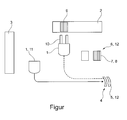
- FIG. 1 shows the sequence of the method according to the invention, when a pallet is to be transported from a point A to B as a transport order. Shown are an industrial truck 1, and a first shelf 2 and a second shelf 3. At a first station 4 additional counterweights 5 can be added as a component 12. At a second station 6 charge carriers 7, for example empty pallets 8, are received as component 12.
- an optimal system state or an optimal mode is the inclusion of a load carrier 7 or a loaded pallet 9 with load arms 10, the be extended for this purpose.
- the load of the male loaded pallet 9 requires the use of an additional counterweight 5.
- the truck From a starting position 11, the truck first moves to the first station 4 and receives an additional counterweight 5 before is received by the additional counterweight 5 in an optimal mode as a "counterbalance truck" the loaded pallet 9 with the load in the first shelf 2 at a greater height.
- the truck 1 In contrast, if, for example, the truck 1 is ordered for pallet picking in an alley between shelves, takes without any action by the operator, the truck 1 in advance an empty pallet 8 at the second station 6 and drives to the picking.
- the truck For a job that requires trailers, the truck equips itself at a station not shown in advance with the required amount of trailers itself.
Landscapes
- Engineering & Computer Science (AREA)
- Transportation (AREA)
- Structural Engineering (AREA)
- Civil Engineering (AREA)
- Life Sciences & Earth Sciences (AREA)
- Geology (AREA)
- Mechanical Engineering (AREA)
- Chemical & Material Sciences (AREA)
- Combustion & Propulsion (AREA)
- Warehouses Or Storage Devices (AREA)
- Forklifts And Lifting Vehicles (AREA)
Abstract
Description
- Die Erfindung betrifft ein Verfahren zur Steuerung eines Flurförderzeugs. Insbesondere betrifft die Erfindung ein Verfahren zur Steuerung eines Flurförderzeugs, das eine Mehrzahl von Komponenten aufweist, durch die das Flurförderzeug für verschiedene Betriebsarten anpassbar ist, darunter mindestens zwei der Komponenten klappbare und höhenbeweglich Lastgabel für einen Betrieb als Hubmaststapler, ausfahrbare Lastarme für eine Lastaufnahme über einen Initialhub, Montage eines Zusatzgewichtes für einen Betrieb als Gegengewichtsgabelstapler, Kupplung von einem oder mehreren Anhängern über eine Anhängerkupplung.
- Es sind im Stand der Technik Flurförderzeuge bekannt, die eine Kombination von Eigenschaften bekannter Typen von Flurförderzeuge aufweisen und die Funktion dieser Typen von Flurförderzeugen überlappend, vollständig oder jeweils zum Teil erfüllen können. Ein solches Flurförderzeug weist beispielsweise eine Anhängerkupplung zum Ziehen von Anhängern, insbesondere eines Anhängerzuges aus mehreren Anhängern als Routenzug auf. Zusätzlich kann eine Lastaufnahmevorrichtung als Hubvorrichtung zum Ein- und Auslagern von Lasten in Regale genutzt werden. Hierfür ist es beispielsweise möglich, als Lastaufnahmevorrichtung eine herabklappbare Lastgabel vorzusehen, die bei einem reinen Schlepperbetrieb nach oben geklappt wird, und an einer Hubvorrichtung oder einem Hubmast höhenbeweglich geführt ist. Abhängig von einem bestimmten Lastgewicht und/oder einer bestimmten überschrittenen Hubhöhe kann hierzu noch ein zusätzliches Gegengewicht an das Flurförderzeug angedockt werden. Dazu kann das Flurförderzeug an ein abgestelltes Gegengewicht heranfahren und über eine Verbindungsvorrichtung dieses zusätzliche Gegengewicht aufnehmen.
- Ein solches Flurförderzeug, das ein Lastaufnahmemittel aufweist und ein zusätzliches Gegengewicht aufnehmen kann, ist in der
EP 2 518 007 B1 beschrieben. - Weiterhin ist es möglich, für schwerere Lasten Lastarme mit zusätzlichen Stützrollen vorzusehen, die ausgefahren werden können und beispielsweise eine Palette mit einem Initialhub anheben können, wobei das Gewicht der Palette bereits über die Stützrollen in diesen Lastarmen zu einem großen Teil abgestützt wird. Ein solches kombiniertes Flurförderzeug kann daher in mehreren Betriebsweisen eingesetzt werden, von denen jede einem herkömmlichen Flurförderzeug, wie etwa einem Schlepper, einem Gegengewichtsgabelstapler oder einem Schubmaststapler entspricht.
- Ein Beispiel eines solchen Flurförderzeugs, das in mehreren Funktionen eingesetzt werden kann und ausfahrbare zusätzliche Lastarme mit Lastrollen sowie klappbare Gabelzinken aufweist, ist in der
EP 2 518 005 B1 der Anmelderin offenbart. - Wenn das Flurförderzeug in einer bestimmten Funktion für einen konkreten Arbeitsauftrag eingesetzt werden soll, so muss eine Bedienperson das Flurförderzeug für diesen Arbeitsauftrag anpassen. Beispielsweise wird durch die Bedienpersonen als Fahrer oder mithilfe einer Fernbedienung das Flurförderzeug zu einem Gegengewicht gefahren, um dieses Gegengewicht aufzunehmen. Ebenso kann beispielsweise eine Lastgabel heruntergeklappt werden, um eine Palette aufzunehmen. Falls der Arbeitsauftrag in einem Kommissionieren und Zusammenstellen von Waren besteht, kann es etwa erforderlich sein, eine leere Palette aufzunehmen. Weitere Beispiele für eine solche Anpassung an einen bestimmten Arbeitsauftrag sind das Ausfahren von Lastarmen, wenn eine relativ schwere Last, beispielsweise auf einer Palette auf dem Boden stehend, mithilfe des Initialhubs der Lastarme aufgenommen werden soll. Schließlich kann noch als Beispiel angeführt werden für eine solche Anpassung, dass das Flurförderzeug als Schlepper eines Routenzuges eingesetzt werden soll und gesteuert von dem Bediener einen oder mehrere Anhänger anfährt, um diese zu einem Routenzug mit dem Flurförderzeug zusammen zu kuppeln.
- Bei autonom und somit ohne Fahrer fahrenden Flurförderzeugen können diese Anpassungen auch gesteuert durch einen Server über ein Datennetzwerk erfolgen.
- Nachteilig an diesem Stand der Technik ist, dass jeweils ein Auftrag zur Anpassung des Zustands des Flurförderzeugs an ein Steuerungssystem des Flurförderzeugs übermittelt werden muss. Bei einem autonomen, automatischen Betrieb muss dies innerhalb des übergeordneten Systems, somit über das Netzwerk in einem Steuerungsrechner erfolgen, und weiterhin muss das übergeordnete System den Zustand jedes einzelnen Flurförderzeugs abspeichern und verwalten.
- Werden zusätzliche Ausstattungskomponenten benötigen, wie etwa Leerpaletten, Anhänger und sonstige erst aufzunehmende oder zu montierende Komponenten, so ist eine selbstständige Anpassung an einen Arbeitsauftrag nicht möglich.
- Der vorliegenden Erfindung liegt die Aufgabe zugrunde, ein Verfahren zur Steuerung eines Flurförderzeugs zur Verfügung zu stellen, durch das bei einem an verschiedene Funktionen und Arbeitsaufträge anpassbaren Flurförderzeug eine Optimierung der Warenumschlagsleistung möglich ist.
- Diese Aufgabe wird durch ein Verfahren zur Steuerung eines Flurförderzeugs mit den Merkmalen des unabhängigen Patentanspruchs 1 gelöst. Vorteilhafte Weiterbildungen der Erfindung sind in den Unteransprüchen angegeben.
- Die Aufgabe wird erfindungsgemäß dadurch gelöst, dass bei einem Verfahren zur Steuerung eines Flurförderzeugs, das eine Mehrzahl von Komponenten aufweist, durch die das Flurförderzeug für verschiedene Betriebsarten anpassbar ist, darunter mindestens zwei der Komponenten klappbare und höhenbeweglich Lastgabel für einen Betrieb als Hubmaststapler, ausfahrbare Lastarme für eine Lastaufnahme über einen Initialhub, Montage eines Zusatzgewichtes für einen Betrieb als Gegengewichtsgabelstapler, Kupplung von einem oder mehreren Anhängern über eine Anhängerkupplung, eine Fahrzeugsteuerung einen Arbeitsauftrag empfängt und anhand von abgespeicherten Daten die Anpassung der Betriebsart auswählt sowie eine Anpassung der Komponenten automatisch durchführt.
- Vorteilhaft erfolgt dadurch eine Selbstanpassung eines autonomen Fahrzeugs an seinen Auftrag. Das Wesentliche an dem Verfahren besteht darin, dass das Flurförderzeug bzw. Fahrzeug selbst in der Lage ist, sich ohne separate manuelle Beauftragung bzw. ohne mit dem Arbeitsauftrag zusammen übertragene Steuerbefehle, in den für die gestellte Aufgabe optimalen Systemzustand bzw. die hierfür vorgesehene Betriebsart zu bringen. Die Entscheidung und Auswahl der optimalen Betriebsart übernimmt die Fahrzeugsteuerung selbst und bedient sich dabei als Auswahlgrundlage der in einem Auftrag übermittelten Daten. Der Auftrag kann dabei beispielsweise aus einem Datennetz von einem zentralen Verwaltungsprogramm bzw. Zentralsystem kommen, oder über eine Eingabe- und Anzeigevorrichtung in dem Flurförderzeug selbst durch eine Bedienperson eingegeben werden. Vorteilhaft ergibt sich eine Erhöhung der Warenumschlagsleistung, da das Flurförderzeug automatisch aus einem Arbeitsauftrag erkennt, welche Anpassungen erforderlich sind, und entsprechend der auf dem Flurförderzeug installierten Komponenten die Anpassung durchführt. Dies ergibt eine erhebliche Zeitersparnis. Da durch die Integration in die Fahrzeugsteuerung eine Erhöhung der "Eigenintelligenz" des den Arbeitsauftrag ausführenden Systems auf dem Flurförderzeug erfolgt, ergibt sich damit zugleich eine vorteilhafte Verringerung der Komplexität übergeordneter Zentralsysteme. So ist keine hoch detaillierte Zustandsverwaltung der Flurförderzeuge in einem übergeordneten Zentralsystem und keine Beauftragung von nur mittelbar notwendigen Fahrten, zum Beispiel zur Aufnahme von Komponenten an Stationen, durch das Zentralsystem erforderlich.
- In einer vorteilhaften Ausbildung des Verfahrens fährt die Fahrzeugsteuerung für die Anpassung der Komponenten autonom Stationen an, um Komponenten aufzunehmen oder abzusetzen, die Zusatzelemente sind und nicht fest mit dem Flurförderzeug verbunden sind.
- Werden weitere Komponenten benötigt, die als Zusatzelemente nicht fest mit dem Flurförderzeug im Regelfall verbunden sind, wie beispielsweise Leerpaletten, Anhänger oder ein Zusatzheckgewicht als Zusatzgegengewicht, so ist das Fahrzeugsteuerungssystem in der Lage, dies zu erkennen und das Flurförderzeug eigenständig entsprechend für den Arbeitsauftrag vorzubereiten.
- Vorteilhaft stellt eine Station ein oder mehrere Zusatzgegengewichte zur Verfügung.
- In einer Weiterbildung des Verfahrens kann eine Station Transportvorrichtungen für Waren, beispielsweise Kommissionierbehälter und/oder Leerpaletten, zur Verfügung stellen.
- Eine Station kann Anhänger, insbesondere zur Bildung eines Routenzuges, zur Verfügung stellen.
- Vorteilhaft kann folglich das Flurförderzeug eigenständig vorab entsprechende Stationen anfahren, an welchen es sich entsprechend des Arbeitsauftrags ausstatten kann. Die Position und Ausstattung dieser Stationen kann vorab einprogrammiert und abgespeichert werden. Ebenso ist es auch möglich, dass diese in einem Teach-in Verfahren oder über ein Datennetz an die Fahrzeugsteuerung übermittelt werden.
- Vorteilhaft kann der Arbeitsauftrag über eine Dateneingabevorrichtung des Flurförderzeugs eingegeben und an die Fahrzeugsteuerung übermittelt werden.
- Der Arbeitsauftrag kann übermittelt werden, insbesondere über ein Netzwerk.
- Die selbsttätige Anpassung des Flurförderzeugs kann erfolgen, wenn ein Arbeitsauftrag von einer Bedienperson in das Flurförderzeug eingegeben wird. Es ist jedoch auch möglich, dass der Arbeitsauftrag über ein Netzwerk, insbesondere auch ein drahtloses Netzwerk von einem übergeordneten Zentralsystem übertragen wird.
- Die abgespeicherten Daten für die Anpassung der Betriebsart können über ein Datennetz, insbesondere ein Funknetz, an die Fahrzeugsteuerung übermittelt und von dieser gespeichert werden.
- Für die Durchführung des Verfahrens ist es erforderlich, dass in der Fahrzeugsteuerung des Flurförderzeugs Information hinterlegt sind, welche Komponenten das Flurförderzeug aufweist, oder mit welchen es an beispielsweise einer Station ausrüstbar ist, wobei zumindest zwei unterschiedliche Komponenten vorhanden sein müssen, um eine Einstellung auf unterschiedliche Betriebsarten durchführen zu können. Dabei ist es vorteilhaft, wenn diese Informationen auf das Flurförderzeug übertragen werden können und diese dort abgespeichert sind. Die gespeichert Informationen müssen dann nicht in jedem Einzelfall übertragen werden, um eine Anpassung der Komponenten durchzuführen, wenn ein einzelner Arbeitsauftrag erteilt wird.
- Es ergibt sich eine ideale Erweiterung des Pick-And-Place Ansatzes fahrerloser Transportsysteme, da die benötigte Anzahl an Fahrzeugen bzw. Flurförderzeugen optimal ausgestattet, z.B. mit Anhängern oder Leerpalette, an einem Kommissionierort erscheinen kann.
- Weitere Vorteile und Einzelheiten der Erfindung werden anhand des in der schematischen Figur dargestellten Ausführungsbeispiels näher erläutert. Hierbei zeigt die Figur den Ablauf des erfindungsgemäßen Verfahrens, wenn als Transportauftrag eine Palette von einem Punkt A nach B transportiert werden soll. Dargestellt sind ein Flurförderzeug 1, sowie ein erstes Regal 2 und ein zweites Regal 3. An einer ersten Station 4 können Zusatzgegengewichte 5 als Komponente 12 aufgenommen werden. An einer zweiten Station 6 Ladungsträger 7, beispielsweise Leerpaletten 8, als Komponente 12 aufgenommen werden.
- Wenn bei einem Arbeitsauftrag eine Auslagerhöhe und eine Einlagerhöhe für eine nicht näher dargestellte Last bei 0 m bzw. auf dem Boden liegt, ist ein optimaler Systemzustand bzw. eine optimale Betriebsart das Aufnehmen eines Ladungsträgers 7 bzw. einer beladenen Palette 9 mit Lastarmen 10, die für diesen Zweck ausgefahren werden.
- Bei einem Arbeitsauftrag mit einem Aufnahme- oder Einlagerort auf größerer Höhe, erfordert die Last der aufzunehmenden beladenen Palette 9 die Verwendung eines Zusatzgegengewichtes 5. Von einer Ausgangsposition 11 fährt hierzu das Flurförderzeug 1 zunächst zu der ersten Station 4 und nimmt ein Zusatzgegengewicht 5 auf, bevor durch das Zusatzgegengewicht 5 in einer optimalen Betriebsart als "Gegengewichtsstapler" die beladene Palette 9 mit der Last in dem ersten Regal 2 in größerer Höhe aufgenommen wird.
- Wenn dagegen beispielsweise das Flurförderzeug 1 zur Paletten-Kommissionierung in eine Gasse zwischen Regale beordert wird, nimmt ohne Zutun des Bedieners das Flurförderzeug 1 vorab eine Leerpalette 8 an der zweiten Station 6 auf und fährt den Kommissionierort an.
- Für einen Arbeitsauftrag, der Anhänger erfordert, stattet sich das Flurförderzeug an einer nicht dargestellten Station vorab mit der benötigten Menge an Anhängern selbst aus.
Claims (8)
- Verfahren zur Steuerung eines Flurförderzeugs (1), insbesondere eines autonomen Flurförderzeugs (1), das eine Mehrzahl von Komponenten (12) aufweist, durch die das Flurförderzeug (1) für verschiedene Betriebsarten anpassbar ist, darunter mindestens zwei der Komponenten (12) klappbare und höhenbeweglich Lastgabel für einen Betrieb als Hubmaststapler, ausfahrbare Lastarme (10) für eine Lastaufnahme über einen Initialhub, Montage eines Zusatzgewichtes (5) für einen Betrieb als Gegengewichtsgabelstapler,
Kupplung von einem oder mehreren Anhängern über eine Anhängerkupplung, dadurch gekennzeichnet,
dass eine Fahrzeugsteuerung einen Arbeitsauftrag empfängt und anhand von abgespeicherten Daten die Anpassung der Betriebsart auswählt sowie eine Anpassung der Komponenten (12) automatisch durchführt. - Verfahren nach Anspruch 1,
dadurch gekennzeichnet,
dass die Fahrzeugsteuerung für die Anpassung der Komponenten (12) autonom Stationen (4,6) anfährt, um Komponenten (12) aufzunehmen oder abzusetzen, die Zusatzelemente sind und nicht fest mit dem Flurförderzeug (1) verbunden. - Verfahren nach Anspruch 2,
dadurch gekennzeichnet,
dass eine Station (4) ein oder mehrere Zusatzgegengewichte (5) zur Verfügung stellt. - Verfahren nach Anspruch 2 oder 3,
dadurch gekennzeichnet,
dass eine Station (6) Transportvorrichtungen für Waren, beispielsweise Kommissionierbehälter und/oder Leerpaletten (8), zur Verfügung stellt. - Verfahren nach einem der Ansprüche 2 bis 4,
dadurch gekennzeichnet,
dass eine Station Anhänger, insbesondere zur Bildung eines Routenzuges, zur Verfügung stellt. - Verfahren nach einem der Ansprüche 1 bis 5,
dadurch gekennzeichnet,
dass der Arbeitsauftrag über eine Dateneingabevorrichtung des Flurförderzeugs (1) eingegeben und an die Fahrzeugsteuerung übermittelt werden kann. - Verfahren nach einem der Ansprüche 1 bis 6,
dadurch gekennzeichnet,
dass der Arbeitsauftrag übermittelt werden kann, insbesondere über ein Netzwerk. - Verfahren nach einem der Ansprüche 1 bis 7,
dadurch gekennzeichnet,
dass die abgespeicherten Daten für die Anpassung der Betriebsart über ein Datennetz, insbesondere ein Funknetz, an die Fahrzeugsteuerung übermittelt und von dieser gespeichert werden.
Applications Claiming Priority (2)
| Application Number | Priority Date | Filing Date | Title |
|---|---|---|---|
| DE102014107067 | 2014-05-19 | ||
| DE102014112405.7A DE102014112405A1 (de) | 2014-05-19 | 2014-08-28 | Verfahren zur Steuerung eines Flurförderzeugs |
Publications (2)
| Publication Number | Publication Date |
|---|---|
| EP2947043A1 true EP2947043A1 (de) | 2015-11-25 |
| EP2947043B1 EP2947043B1 (de) | 2017-08-16 |
Family
ID=53189634
Family Applications (1)
| Application Number | Title | Priority Date | Filing Date |
|---|---|---|---|
| EP15166733.4A Not-in-force EP2947043B1 (de) | 2014-05-19 | 2015-05-07 | Verfahren zur steuerung eines flurförderzeugs |
Country Status (2)
| Country | Link |
|---|---|
| EP (1) | EP2947043B1 (de) |
| DE (1) | DE102014112405A1 (de) |
Families Citing this family (1)
| Publication number | Priority date | Publication date | Assignee | Title |
|---|---|---|---|---|
| EP3511288A1 (de) * | 2018-01-10 | 2019-07-17 | STILL GmbH | Verfahren zur steuerung einer kleinfunktionalität eines flurförderzeugs mittels eines makro-programms und entsprechendes flurförderzeug |
Citations (6)
| Publication number | Priority date | Publication date | Assignee | Title |
|---|---|---|---|---|
| DE102008023531A1 (de) * | 2008-05-07 | 2009-11-12 | Still Sas | Flurförderzeug mit einer Anhängevorrichtung |
| US20120123614A1 (en) * | 2010-11-17 | 2012-05-17 | INRO Technologies Limited | Method and apparatus for virtualizing industrial vehicles to automate task execution in a physical environment |
| EP2514690A1 (de) * | 2011-04-19 | 2012-10-24 | Deutsche Post AG | Lagerführungssystem für Flurförderfahrzeuge |
| EP2518000A1 (de) * | 2011-04-27 | 2012-10-31 | STILL GmbH | Fahrerlos betreibbares Flurförderzeug |
| EP2518005B1 (de) | 2011-04-27 | 2013-09-18 | STILL GmbH | Flurförderzeug |
| EP2518007B1 (de) | 2011-04-27 | 2013-12-18 | STILL GmbH | Flurförderzeug, insbesondere Gegengewichtsgabelstapler |
-
2014
- 2014-08-28 DE DE102014112405.7A patent/DE102014112405A1/de not_active Withdrawn
-
2015
- 2015-05-07 EP EP15166733.4A patent/EP2947043B1/de not_active Not-in-force
Patent Citations (6)
| Publication number | Priority date | Publication date | Assignee | Title |
|---|---|---|---|---|
| DE102008023531A1 (de) * | 2008-05-07 | 2009-11-12 | Still Sas | Flurförderzeug mit einer Anhängevorrichtung |
| US20120123614A1 (en) * | 2010-11-17 | 2012-05-17 | INRO Technologies Limited | Method and apparatus for virtualizing industrial vehicles to automate task execution in a physical environment |
| EP2514690A1 (de) * | 2011-04-19 | 2012-10-24 | Deutsche Post AG | Lagerführungssystem für Flurförderfahrzeuge |
| EP2518000A1 (de) * | 2011-04-27 | 2012-10-31 | STILL GmbH | Fahrerlos betreibbares Flurförderzeug |
| EP2518005B1 (de) | 2011-04-27 | 2013-09-18 | STILL GmbH | Flurförderzeug |
| EP2518007B1 (de) | 2011-04-27 | 2013-12-18 | STILL GmbH | Flurförderzeug, insbesondere Gegengewichtsgabelstapler |
Also Published As
| Publication number | Publication date |
|---|---|
| DE102014112405A1 (de) | 2015-11-19 |
| EP2947043B1 (de) | 2017-08-16 |
Similar Documents
| Publication | Publication Date | Title |
|---|---|---|
| EP2487067B1 (de) | Trailerzuganhänger und Trailerzugsystem | |
| EP2653429B1 (de) | Steuerungsverfahren für Flurförderzeug sowie Flurförderzeug | |
| EP2653430B1 (de) | Steuerverfahren für Lastabsetzung eines Flurförderzeugs sowie Flurförderzeug | |
| DE102009051800A1 (de) | Lageranordnung | |
| DE102005024881A1 (de) | Flurförderzeug mit einer elektrischen Steuerungseinheit | |
| DE102015015127A1 (de) | Vorrichtung und Verfahren zum Kommissionieren von Ladungsträgern | |
| EP2987760A1 (de) | Flurförderzeug | |
| EP1842825A2 (de) | Flurförderzeug mit einer mobilen Bedienungseinrichtung | |
| EP1447374A2 (de) | Stapler | |
| AT519139A2 (de) | Regalbediengerät und Regallagersystem mit verbesserter Zugänglichkeit und Gewichtsverteilung | |
| DE102018112566A1 (de) | Flurförderzeug mit ausfahrbarer Struktur | |
| EP2947043B1 (de) | Verfahren zur steuerung eines flurförderzeugs | |
| WO2020048682A1 (de) | Hubsystem und verfahren zur steuerung des hubsystems sowie steuerungssystem für das hubsystem | |
| EP3020677A1 (de) | Verfahren zur hubhöhenvorwahl bei einem flurförderzeug | |
| WO2022207826A2 (de) | Fts basierendes transportlogistikmodul | |
| EP1803679A2 (de) | Verfahren und Anordnung zum Wenden von Paletten | |
| DE102016123541A1 (de) | Verfahren zur automatischen Ausrichtung eines Flurförderzeugs in einem Warenlager sowie System aus einem Flurförderzeug und einem Warenlager | |
| DE102008049991A1 (de) | Lastaufnahmemittel zur Ein- und Auslagerung von Lasten an bzw. von Lagerplätzen einer Regalanordnung | |
| WO2021190865A1 (de) | Transportsystem zum kommissionieren | |
| EP2088116B1 (de) | Elektronische Durchschubsicherung und Verfahren zum Verhindern eines unbeabsichtigten Durchschiebens oder Herausziehens von Paletten in einem Lagerregal | |
| DE102021120733A1 (de) | Fahrerloses Transportfahrzeug und Logistiksystem | |
| DE102017220591B4 (de) | Konzept zum Betreiben eines Parkroboters | |
| DE102017220587B4 (de) | Konzept zum Bewegen eines Kraftfahrzeugs innerhalb eines Parkplatzes | |
| EP0572846A1 (de) | Anbaugerät für Flurförderzeuge | |
| DE102018133102A1 (de) | Kommissioniersystem zur Kommissionierung von Objekten sowie mobiler Kommissionierroboter und Kommissionier-Fahrzeug-Verband |
Legal Events
| Date | Code | Title | Description |
|---|---|---|---|
| PUAI | Public reference made under article 153(3) epc to a published international application that has entered the european phase |
Free format text: ORIGINAL CODE: 0009012 |
|
| AK | Designated contracting states |
Kind code of ref document: A1 Designated state(s): AL AT BE BG CH CY CZ DE DK EE ES FI FR GB GR HR HU IE IS IT LI LT LU LV MC MK MT NL NO PL PT RO RS SE SI SK SM TR |
|
| AX | Request for extension of the european patent |
Extension state: BA ME |
|
| 17P | Request for examination filed |
Effective date: 20160509 |
|
| RBV | Designated contracting states (corrected) |
Designated state(s): AL AT BE BG CH CY CZ DE DK EE ES FI FR GB GR HR HU IE IS IT LI LT LU LV MC MK MT NL NO PL PT RO RS SE SI SK SM TR |
|
| RIN1 | Information on inventor provided before grant (corrected) |
Inventor name: KRUEGER-BASJMELEH, TINO Inventor name: CARO, SOENKE Inventor name: BAERWOLFF, CHRISTIAN Inventor name: VIERECK, VOLKER Inventor name: WITTMANN, THOMAS Inventor name: KLUG, MATTHIAS |
|
| RIN1 | Information on inventor provided before grant (corrected) |
Inventor name: VIERECK, VOLKER Inventor name: KLUG, MATTHIAS Inventor name: CARO, SOENKE Inventor name: KRUEGER-BASJMELEH, TINO Inventor name: BAERWOLFF, CHRISTIAN Inventor name: WITTMANN, THOMAS |
|
| GRAP | Despatch of communication of intention to grant a patent |
Free format text: ORIGINAL CODE: EPIDOSNIGR1 |
|
| STAA | Information on the status of an ep patent application or granted ep patent |
Free format text: STATUS: GRANT OF PATENT IS INTENDED |
|
| INTG | Intention to grant announced |
Effective date: 20170316 |
|
| RIN1 | Information on inventor provided before grant (corrected) |
Inventor name: CARO, SOENKE Inventor name: VIERECK, VOLKER Inventor name: WITTMANN, THOMAS Inventor name: KLUG, MATTHIAS Inventor name: BAERWOLFF, CHRISTIAN Inventor name: KRUEGER-BASJMELEH, TINO |
|
| GRAS | Grant fee paid |
Free format text: ORIGINAL CODE: EPIDOSNIGR3 |
|
| GRAA | (expected) grant |
Free format text: ORIGINAL CODE: 0009210 |
|
| STAA | Information on the status of an ep patent application or granted ep patent |
Free format text: STATUS: THE PATENT HAS BEEN GRANTED |
|
| AK | Designated contracting states |
Kind code of ref document: B1 Designated state(s): AL AT BE BG CH CY CZ DE DK EE ES FI FR GB GR HR HU IE IS IT LI LT LU LV MC MK MT NL NO PL PT RO RS SE SI SK SM TR |
|
| REG | Reference to a national code |
Ref country code: GB Ref legal event code: FG4D Free format text: NOT ENGLISH |
|
| REG | Reference to a national code |
Ref country code: CH Ref legal event code: EP |
|
| REG | Reference to a national code |
Ref country code: IE Ref legal event code: FG4D Free format text: LANGUAGE OF EP DOCUMENT: GERMAN |
|
| REG | Reference to a national code |
Ref country code: AT Ref legal event code: REF Ref document number: 918837 Country of ref document: AT Kind code of ref document: T Effective date: 20170915 |
|
| REG | Reference to a national code |
Ref country code: DE Ref legal event code: R096 Ref document number: 502015001666 Country of ref document: DE |
|
| REG | Reference to a national code |
Ref country code: NL Ref legal event code: MP Effective date: 20170816 |
|
| REG | Reference to a national code |
Ref country code: LT Ref legal event code: MG4D |
|
| PG25 | Lapsed in a contracting state [announced via postgrant information from national office to epo] |
Ref country code: SE Free format text: LAPSE BECAUSE OF FAILURE TO SUBMIT A TRANSLATION OF THE DESCRIPTION OR TO PAY THE FEE WITHIN THE PRESCRIBED TIME-LIMIT Effective date: 20170816 Ref country code: LT Free format text: LAPSE BECAUSE OF FAILURE TO SUBMIT A TRANSLATION OF THE DESCRIPTION OR TO PAY THE FEE WITHIN THE PRESCRIBED TIME-LIMIT Effective date: 20170816 Ref country code: FI Free format text: LAPSE BECAUSE OF FAILURE TO SUBMIT A TRANSLATION OF THE DESCRIPTION OR TO PAY THE FEE WITHIN THE PRESCRIBED TIME-LIMIT Effective date: 20170816 Ref country code: NO Free format text: LAPSE BECAUSE OF FAILURE TO SUBMIT A TRANSLATION OF THE DESCRIPTION OR TO PAY THE FEE WITHIN THE PRESCRIBED TIME-LIMIT Effective date: 20171116 Ref country code: NL Free format text: LAPSE BECAUSE OF FAILURE TO SUBMIT A TRANSLATION OF THE DESCRIPTION OR TO PAY THE FEE WITHIN THE PRESCRIBED TIME-LIMIT Effective date: 20170816 |
|
| PG25 | Lapsed in a contracting state [announced via postgrant information from national office to epo] |
Ref country code: GR Free format text: LAPSE BECAUSE OF FAILURE TO SUBMIT A TRANSLATION OF THE DESCRIPTION OR TO PAY THE FEE WITHIN THE PRESCRIBED TIME-LIMIT Effective date: 20171117 Ref country code: BG Free format text: LAPSE BECAUSE OF FAILURE TO SUBMIT A TRANSLATION OF THE DESCRIPTION OR TO PAY THE FEE WITHIN THE PRESCRIBED TIME-LIMIT Effective date: 20171116 Ref country code: ES Free format text: LAPSE BECAUSE OF FAILURE TO SUBMIT A TRANSLATION OF THE DESCRIPTION OR TO PAY THE FEE WITHIN THE PRESCRIBED TIME-LIMIT Effective date: 20170816 Ref country code: PL Free format text: LAPSE BECAUSE OF FAILURE TO SUBMIT A TRANSLATION OF THE DESCRIPTION OR TO PAY THE FEE WITHIN THE PRESCRIBED TIME-LIMIT Effective date: 20170816 Ref country code: RS Free format text: LAPSE BECAUSE OF FAILURE TO SUBMIT A TRANSLATION OF THE DESCRIPTION OR TO PAY THE FEE WITHIN THE PRESCRIBED TIME-LIMIT Effective date: 20170816 Ref country code: LV Free format text: LAPSE BECAUSE OF FAILURE TO SUBMIT A TRANSLATION OF THE DESCRIPTION OR TO PAY THE FEE WITHIN THE PRESCRIBED TIME-LIMIT Effective date: 20170816 Ref country code: IS Free format text: LAPSE BECAUSE OF FAILURE TO SUBMIT A TRANSLATION OF THE DESCRIPTION OR TO PAY THE FEE WITHIN THE PRESCRIBED TIME-LIMIT Effective date: 20171216 |
|
| PG25 | Lapsed in a contracting state [announced via postgrant information from national office to epo] |
Ref country code: RO Free format text: LAPSE BECAUSE OF FAILURE TO SUBMIT A TRANSLATION OF THE DESCRIPTION OR TO PAY THE FEE WITHIN THE PRESCRIBED TIME-LIMIT Effective date: 20170816 Ref country code: CZ Free format text: LAPSE BECAUSE OF FAILURE TO SUBMIT A TRANSLATION OF THE DESCRIPTION OR TO PAY THE FEE WITHIN THE PRESCRIBED TIME-LIMIT Effective date: 20170816 Ref country code: DK Free format text: LAPSE BECAUSE OF FAILURE TO SUBMIT A TRANSLATION OF THE DESCRIPTION OR TO PAY THE FEE WITHIN THE PRESCRIBED TIME-LIMIT Effective date: 20170816 |
|
| REG | Reference to a national code |
Ref country code: DE Ref legal event code: R097 Ref document number: 502015001666 Country of ref document: DE |
|
| PG25 | Lapsed in a contracting state [announced via postgrant information from national office to epo] |
Ref country code: IT Free format text: LAPSE BECAUSE OF FAILURE TO SUBMIT A TRANSLATION OF THE DESCRIPTION OR TO PAY THE FEE WITHIN THE PRESCRIBED TIME-LIMIT Effective date: 20170816 Ref country code: SM Free format text: LAPSE BECAUSE OF FAILURE TO SUBMIT A TRANSLATION OF THE DESCRIPTION OR TO PAY THE FEE WITHIN THE PRESCRIBED TIME-LIMIT Effective date: 20170816 Ref country code: EE Free format text: LAPSE BECAUSE OF FAILURE TO SUBMIT A TRANSLATION OF THE DESCRIPTION OR TO PAY THE FEE WITHIN THE PRESCRIBED TIME-LIMIT Effective date: 20170816 Ref country code: SK Free format text: LAPSE BECAUSE OF FAILURE TO SUBMIT A TRANSLATION OF THE DESCRIPTION OR TO PAY THE FEE WITHIN THE PRESCRIBED TIME-LIMIT Effective date: 20170816 |
|
| PLBE | No opposition filed within time limit |
Free format text: ORIGINAL CODE: 0009261 |
|
| STAA | Information on the status of an ep patent application or granted ep patent |
Free format text: STATUS: NO OPPOSITION FILED WITHIN TIME LIMIT |
|
| 26N | No opposition filed |
Effective date: 20180517 |
|
| PG25 | Lapsed in a contracting state [announced via postgrant information from national office to epo] |
Ref country code: SI Free format text: LAPSE BECAUSE OF FAILURE TO SUBMIT A TRANSLATION OF THE DESCRIPTION OR TO PAY THE FEE WITHIN THE PRESCRIBED TIME-LIMIT Effective date: 20170816 |
|
| PG25 | Lapsed in a contracting state [announced via postgrant information from national office to epo] |
Ref country code: MT Free format text: LAPSE BECAUSE OF FAILURE TO SUBMIT A TRANSLATION OF THE DESCRIPTION OR TO PAY THE FEE WITHIN THE PRESCRIBED TIME-LIMIT Effective date: 20170816 |
|
| REG | Reference to a national code |
Ref country code: CH Ref legal event code: PL |
|
| REG | Reference to a national code |
Ref country code: BE Ref legal event code: MM Effective date: 20180531 |
|
| PG25 | Lapsed in a contracting state [announced via postgrant information from national office to epo] |
Ref country code: MC Free format text: LAPSE BECAUSE OF FAILURE TO SUBMIT A TRANSLATION OF THE DESCRIPTION OR TO PAY THE FEE WITHIN THE PRESCRIBED TIME-LIMIT Effective date: 20170816 |
|
| REG | Reference to a national code |
Ref country code: IE Ref legal event code: MM4A |
|
| PG25 | Lapsed in a contracting state [announced via postgrant information from national office to epo] |
Ref country code: CH Free format text: LAPSE BECAUSE OF NON-PAYMENT OF DUE FEES Effective date: 20180531 Ref country code: LI Free format text: LAPSE BECAUSE OF NON-PAYMENT OF DUE FEES Effective date: 20180531 |
|
| PG25 | Lapsed in a contracting state [announced via postgrant information from national office to epo] |
Ref country code: LU Free format text: LAPSE BECAUSE OF NON-PAYMENT OF DUE FEES Effective date: 20180507 |
|
| PG25 | Lapsed in a contracting state [announced via postgrant information from national office to epo] |
Ref country code: FR Free format text: LAPSE BECAUSE OF NON-PAYMENT OF DUE FEES Effective date: 20180531 Ref country code: IE Free format text: LAPSE BECAUSE OF NON-PAYMENT OF DUE FEES Effective date: 20180507 |
|
| PG25 | Lapsed in a contracting state [announced via postgrant information from national office to epo] |
Ref country code: BE Free format text: LAPSE BECAUSE OF NON-PAYMENT OF DUE FEES Effective date: 20180531 |
|
| GBPC | Gb: european patent ceased through non-payment of renewal fee |
Effective date: 20190507 |
|
| PG25 | Lapsed in a contracting state [announced via postgrant information from national office to epo] |
Ref country code: TR Free format text: LAPSE BECAUSE OF FAILURE TO SUBMIT A TRANSLATION OF THE DESCRIPTION OR TO PAY THE FEE WITHIN THE PRESCRIBED TIME-LIMIT Effective date: 20170816 |
|
| PG25 | Lapsed in a contracting state [announced via postgrant information from national office to epo] |
Ref country code: GB Free format text: LAPSE BECAUSE OF NON-PAYMENT OF DUE FEES Effective date: 20190507 |
|
| PG25 | Lapsed in a contracting state [announced via postgrant information from national office to epo] |
Ref country code: PT Free format text: LAPSE BECAUSE OF FAILURE TO SUBMIT A TRANSLATION OF THE DESCRIPTION OR TO PAY THE FEE WITHIN THE PRESCRIBED TIME-LIMIT Effective date: 20170816 |
|
| PG25 | Lapsed in a contracting state [announced via postgrant information from national office to epo] |
Ref country code: MK Free format text: LAPSE BECAUSE OF NON-PAYMENT OF DUE FEES Effective date: 20170816 Ref country code: HU Free format text: LAPSE BECAUSE OF FAILURE TO SUBMIT A TRANSLATION OF THE DESCRIPTION OR TO PAY THE FEE WITHIN THE PRESCRIBED TIME-LIMIT; INVALID AB INITIO Effective date: 20150507 Ref country code: HR Free format text: LAPSE BECAUSE OF FAILURE TO SUBMIT A TRANSLATION OF THE DESCRIPTION OR TO PAY THE FEE WITHIN THE PRESCRIBED TIME-LIMIT Effective date: 20170816 Ref country code: CY Free format text: LAPSE BECAUSE OF FAILURE TO SUBMIT A TRANSLATION OF THE DESCRIPTION OR TO PAY THE FEE WITHIN THE PRESCRIBED TIME-LIMIT Effective date: 20170816 |
|
| PG25 | Lapsed in a contracting state [announced via postgrant information from national office to epo] |
Ref country code: AL Free format text: LAPSE BECAUSE OF FAILURE TO SUBMIT A TRANSLATION OF THE DESCRIPTION OR TO PAY THE FEE WITHIN THE PRESCRIBED TIME-LIMIT Effective date: 20170816 |
|
| REG | Reference to a national code |
Ref country code: AT Ref legal event code: MM01 Ref document number: 918837 Country of ref document: AT Kind code of ref document: T Effective date: 20200507 |
|
| PG25 | Lapsed in a contracting state [announced via postgrant information from national office to epo] |
Ref country code: AT Free format text: LAPSE BECAUSE OF NON-PAYMENT OF DUE FEES Effective date: 20200507 |
|
| PGFP | Annual fee paid to national office [announced via postgrant information from national office to epo] |
Ref country code: DE Payment date: 20220519 Year of fee payment: 8 |
|
| REG | Reference to a national code |
Ref country code: DE Ref legal event code: R119 Ref document number: 502015001666 Country of ref document: DE |
|
| PG25 | Lapsed in a contracting state [announced via postgrant information from national office to epo] |
Ref country code: DE Free format text: LAPSE BECAUSE OF NON-PAYMENT OF DUE FEES Effective date: 20231201 |