EP2946305B1 - System und verfahren für intelligente öffentliche alarme und meldungen - Google Patents
System und verfahren für intelligente öffentliche alarme und meldungen Download PDFInfo
- Publication number
- EP2946305B1 EP2946305B1 EP13872132.9A EP13872132A EP2946305B1 EP 2946305 B1 EP2946305 B1 EP 2946305B1 EP 13872132 A EP13872132 A EP 13872132A EP 2946305 B1 EP2946305 B1 EP 2946305B1
- Authority
- EP
- European Patent Office
- Prior art keywords
- user
- data
- knowledge
- profile
- context
- Prior art date
- Legal status (The legal status is an assumption and is not a legal conclusion. Google has not performed a legal analysis and makes no representation as to the accuracy of the status listed.)
- Active
Links
Images

Classifications
-
- G—PHYSICS
- G06—COMPUTING OR CALCULATING; COUNTING
- G06N—COMPUTING ARRANGEMENTS BASED ON SPECIFIC COMPUTATIONAL MODELS
- G06N5/00—Computing arrangements using knowledge-based models
- G06N5/02—Knowledge representation; Symbolic representation
-
- H—ELECTRICITY
- H04—ELECTRIC COMMUNICATION TECHNIQUE
- H04L—TRANSMISSION OF DIGITAL INFORMATION, e.g. TELEGRAPHIC COMMUNICATION
- H04L67/00—Network arrangements or protocols for supporting network services or applications
- H04L67/2866—Architectures; Arrangements
- H04L67/30—Profiles
- H04L67/306—User profiles
-
- G—PHYSICS
- G06—COMPUTING OR CALCULATING; COUNTING
- G06F—ELECTRIC DIGITAL DATA PROCESSING
- G06F9/00—Arrangements for program control, e.g. control units
- G06F9/06—Arrangements for program control, e.g. control units using stored programs, i.e. using an internal store of processing equipment to receive or retain programs
- G06F9/46—Multiprogramming arrangements
- G06F9/54—Interprogram communication
- G06F9/542—Event management; Broadcasting; Multicasting; Notifications
-
- G—PHYSICS
- G06—COMPUTING OR CALCULATING; COUNTING
- G06Q—INFORMATION AND COMMUNICATION TECHNOLOGY [ICT] SPECIALLY ADAPTED FOR ADMINISTRATIVE, COMMERCIAL, FINANCIAL, MANAGERIAL OR SUPERVISORY PURPOSES; SYSTEMS OR METHODS SPECIALLY ADAPTED FOR ADMINISTRATIVE, COMMERCIAL, FINANCIAL, MANAGERIAL OR SUPERVISORY PURPOSES, NOT OTHERWISE PROVIDED FOR
- G06Q30/00—Commerce
- G06Q30/02—Marketing; Price estimation or determination; Fundraising
-
- H—ELECTRICITY
- H04—ELECTRIC COMMUNICATION TECHNIQUE
- H04L—TRANSMISSION OF DIGITAL INFORMATION, e.g. TELEGRAPHIC COMMUNICATION
- H04L67/00—Network arrangements or protocols for supporting network services or applications
- H04L67/50—Network services
- H04L67/52—Network services specially adapted for the location of the user terminal
-
- H—ELECTRICITY
- H04—ELECTRIC COMMUNICATION TECHNIQUE
- H04L—TRANSMISSION OF DIGITAL INFORMATION, e.g. TELEGRAPHIC COMMUNICATION
- H04L67/00—Network arrangements or protocols for supporting network services or applications
- H04L67/50—Network services
- H04L67/55—Push-based network services
Definitions
- the present subject matter described herein in general, relates to smart public alert systems, and more particularly to smart public alert systems for generating real-time, personalized and contextual alerts.
- a public alert system conveys alerts regarding various events such as traffic disruption, crime, hazard and emergency situations in a city to its citizens.
- Public Alert systems have been in existence for quite long. Earlier the alerts were conveyed through radio and TV, but now with the emergence of Internet and Telecommunication email alerts, SMS and real-time posts on social platform have become the preferred medium of communication in the alert systems. But, to ensure that any city based incident is never missed, the alert system needs to sense every change in environmental conditions in the city. This is made possible as modern cities are gradually getting equipped with various types of sensors that can sense events as and when it happens.
- thermometer and hygrometer give readings based on which a concerned authority can raise weather alerts of high humidity and heat.
- the concerned authority can also raise alerts about traffic disruptions and criminal activities by analyzing live streaming from video surveillance equipment fitted at various locations in a city.
- crowd sensing the data is posted by citizens on social platform based on their personal observation or experience, this data form the basis of alerts.
- alerts are forwarded by the concerned authority to the citizens.
- emergency alerts like flood or high tide that affect a large population are forwarded.
- Some other modern cities in the world have facility to provide more specific subscription based alerts and information services to its citizens.
- a citizen may be flooded with alerts that are irrelevant.
- Some city alert services provide a choice to the subscriber/user to state a set of location preferences on a web portal.
- the citizen's location in a city is dynamic, prior selection of preferred location leads to delivery of irrelevant alerts and some important alerts are missed out. For instance, if a subscriber (who is a citizen of New York) has stated that he stays in Columbus Avenue, but currently he is at Wall Street which is mid-way to office, so an alert about a traffic jam at Columbus Avenue is irrelevant to him at that moment. Similarly if a traffic incident happens in Fulton Street which is his next route segment on way, he will not be alerted as Fulton Street as a location of interest to the user is not stated in his preference.
- One way to achieve such intelligent alerting system is to use the citizen's preferences, social web presence and demographic information to ensure that a citizen receives personalized alerts. Another way is to make the system context-aware such that the system will sense the current context of the user and send relevant alerts. Contextual information such as location of the citizen, time of day, weather conditions, and companion is considered in this approach.
- Another approach by Montanari et al that was presented as a research paper titled "Architecture for an automatic customized warning system. (2007), pp. 32-39 " at IEEE conference on Intelligence and Security Informatics discloses architecture for a policy driven public warning system, wherein the alerts are disseminated based on some pre-set policies.
- the alert topics are represented as triples while the crisis policies are maintained as rules which are fired when corresponding conditions are met (like if an alert is severe, activate all mediums to convey the alert such as radio, TV and city alarms).
- the architecture also introduces an ontology-based context model to characterize the possible situations of a citizen in a city.
- the concept of personalization and context-awareness can be further enhanced if the information gathered from these approaches can be extended.
- a stream reasoning system does reasoning on the fly on streams of knowledge combined with background knowledge to produce meaningful entailments.
- the lifetime of the entailments is short-lived as the facts causing the entailment generation are themselves short-lived due to the dynamic nature of the real-time streams of knowledge.
- the stream reasoner works on a standard data structure such as triple or N-triple format. Considering the amount of information generated through social network, sensor network and changing contextual behavior of users, it is a time consuming process to convert this information into triple and N-triple format.
- the stream reasoner Even if all the knowledge is converted into a standard structure as per the standard requirements of the stream reasoner, the stream reasoner requires a lot of time for loading and unloading this information to find out the relevant alerts associated with a particular citizen.
- the challenge with the stream reasoner is to process the structured knowledge at a faster speed and to enhance the overall performance of the system by reducing memory overhead, achieving scalability and generating efficient results.
- Document US6745193 discloses a system and method is provided for personalizing and refining policies within a general notification platform.
- the system includes a profile definition and selection system that receives contextual information relating to a user state.
- the profile definition and selection system generates and/or relays a set of control parameters based at least partially upon the contextual information, and a notification manager selectively sends a user notification and/or communication based upon the set of control parameters.
- Methods are provided for tuning the notification platform.
- This may include defining one or more context profiles, assigning values to parameters employed in one or more context profiles, determining a current user context, determining which of the one or more user profiles is consistent with the current user context, and utilizing the parameter value associated with the one or more context profiles consistent with the current user context to adjust the notification system.
- Document US2005197775 D2 discloses a system and method for receiving hazard and event information in a mobile unit and using that information to warn a user of an event or future hazard with reference to the mobile unit's location and/or intended direction of travel.
- a hazard location algorithm compares a forecast location of each mobile unit with a forecast hazard and transmits a warning to each mobile unit that is predicted to encounter the hazard. As the mobile unit moves, its actual position is updated in an event center, and a revised warning is transmitted to the mobile unit as applicable. Warnings include audio warnings for playback and/or visual warnings for display on the mobile device.
- Users may also wirelessly report events or hazards to a central server in an event center by sending data to the event center via a wireless communications network. Secondary information may be included, based on the selected event type.
- Document US2006036366 discloses a system and method for generating storm warnings which are precisely tailored automatically for a particular individual or business user's geographic location of interest, which may be provided automatically to the individual user or business.
- the user establishes an individualized user profile, in which the user may define a particular location of interest and a contact address to which a personalized storm warning is to be delivered.
- the user may also establish a storm profile defining attribute characteristics of a storm for which the user desires a storm warning to be provided, and an amount of advanced warning to be provided by the personalized storm warning.
- a detailed and accurate storm track which includes information describing storm characteristics (severe weather conditions) as well as the current location and predicted track of movement of the storm, is generated.
- the storm track may be generated automatically from weather radar data, such as NEXRAD data, either alone, or in combination with local live weather radar information, to provide a more accurate storm track.
- Generated storm tracks are compared to individual user profiles.
- Personalized storm warnings identifying in detail the storm conditions approaching a user location of interest and arrival time information for that location of interest are generated for user profiles defining locations of interest within a predicted storm track, if the storm track characteristics of the storm meet the attribute and advance warning characteristics specified in the storm profile established by the users.
- the personalized storm warnings may be delivered to users via e-mail, cell phone, pager, etc.
- the notification alert is transmitted in a real-time to the user based on pre-processing of events that may affect the user by application of stream reasoning on the profile data, contextual data and the preference information of the user.
- the present subject matter discloses an effective and efficient mechanism for determining the preferences, current and future context, personalized details of the user expressed on various sources, such as social web, profile data stored on websites and a user interface unit of an electronic communication device itself. Background knowledge about the city is maintained that is extended, filtered or pre-processed using reasoning mechanism to retrieve only a few set of knowledge data-sets that is required for a specific application desired by the user.
- the extended, filtered and pre-processed knowledge in a structured form is then fed to a stream reasoning module that enables retrieval of list of alerts that needs to be sent to the user for dynamic events that occur in real-time in context with the user.
- the dynamic events in real-time are converted into a structured form and stream reasoned to determine if they are relevant to the user.
- a traffic alert is transmitted to the user, if the user has subscribed for the traffic alert.
- the background knowledge comprises static knowledge about the city roads and static slowly changing knowledge about the user profile. Further, if it is determined that the user is moving towards the road 'X' having traffic jam, it is inferred as user context which is steam reasoned to indicate that the alert needs to be transmitted to the user.
- the background knowledge about the specific road "X" is only utilized for stream reasoning that reduces the system overhead by concentrating analysis of background knowledge for dynamic event (traffic jam) occurring in the life of the user.
- the preferences and personalized information associated with the user is retrieved and maintained as personal user profile data.
- the personal profile data can be retrieved through the user interface unit of the electronic communication device, social web, and web portals etc.
- the profile data may also include user preferences such as the type of events in which they are interested. For example, a news reporter may be interested in criminal information rather than traffic jam alerts.
- the profile data includes demographics and social information such as family, relatives, frequently performed activities etc.
- the context data associated about the user such as current location of the electronic communication device, and future context such as plan of travel in the upcoming days may be tracked and set as the user context data. This is required for generating the alerts relevant with the context of the user bypassing irrelevant alerts.
- GPS location of the electronic communication device is monitored periodically.
- the current and future context information of the user can also be mined from the social web.
- the user profile data is extended to derive a background knowledge comprising static knowledge about the city and the slowly changing profile about the user. Further, the background knowledge can be extended, pre-processed and filtered to retrieve few background knowledge datasets that are sufficient to derive the list of alerts relevant for user-specified events in which he/she is interested. This helps in reducing the overhead of the stream reasoning mechanism.
- the system enables gathering real-time event feeds in different formats from various sources.
- the event feeds, users' current and future context and the background knowledge datasets retrieved are fed to the stream reasoning module to determine if the specific event feed is relevant to the user. If the event feed is determined relevant, the alert is transmitted to the user interface unit of the electronic communication device carried by the user.
- the smart public alert system 102 provides for dynamic, i.e. on the run creation and transmission of notification alerts based on the static/dynamic profile information associated with the user.
- the smart public alert system 102 determines the profile information of the user based upon user's visits and posts on various social media, as-well-as other web portals and also based upon user's past behaviors.
- the smart public alert system 102 may extend the user profile data to generate a background knowledge associated with the user profile data which can be further pre-processed, filtered and extended on the basis of user-specified preference event types.
- the smart public alert system 102 is adapted to receive plurality of event feeds from the sensor network 104 or the electronic communication devices 106-1, 106-2...106-N, collectively referred to as the electronic communication devices 106.
- the context information (current and future context) of the user is received from the electronic communication device 106. Further, the context associated with each event is received from the event feed.
- the context information of the user, the context associated with each event and the pre-processed, filtered and extended background knowledge is converted in to structured format for stream reasoning.
- the smart public alert system 102 may generate a list of customized, personalized, contextual alerts suitable to the user.
- the customized alert list may keep on changing dynamically as and when the context, profile information, and the preferences in the event type of the user changes.
- the smart public alert system 102 can be hosted on Platform-as-a-Service (PAAS) platforms such as Real-Time Integrated Platform for Services and Analytics (RIPSAC), which has been disclosed in Patent Applications 2651/MUM/2011 and PCT/IN2012/000623 titled "A Computing Platform for Development and Deployment of Sensor Data Based Applications and Services".
- PAAS Platform-as-a-Service
- RIPSAC Real-Time Integrated Platform for Services and Analytics
- the input to the application will be sensor data collected by the Sensor Observation Service in the RIPSAC, while the output can also be used by other applications hosted on the RIPSAC.
- the smart public alert system 102 can be implemented as an Intelligent Transport System (ITS) disclosed in Patent Application PCT/IN2012/000624 titled "A Computing Platform For Development And Deployment Of Sensor-Driven Vehicle Telemetry Applications and Services” configured for transmitting the relevant contextual alerts to the users in the vehicles in transit.
- ITS Intelligent Transport System
- the smart public alert system 102 is implemented on at least one of a variety of computing systems, such as a laptop computer, a desktop computer, a notebook, a workstation, a mainframe computer, a server, a network server, and the like. It will be understood that the public alert system 102 may be accessed by multiple users through the user devices 106. Examples of the electronic communication devices 106 may include, but are not limited to, a portable computer, a personal digital assistant, a handheld device, and a workstation. The electronic communication devices 106 are communicatively coupled to the smart public alert system 102 through a network 108.
- the network 108 may be a wireless network, a wired network or a combination thereof.
- the network 108 can be implemented as one of the different types of networks, such as intranet, local area network (LAN), wide area network (WAN), the internet, and the like.
- the network 108 may either be a dedicated network or a shared network.
- the shared network represents an association of the different types of networks that use a variety of protocols, for example, Hypertext Transfer Protocol (HTTP), Transmission Control Protocol/Internet Protocol (TCP/IP), Wireless Application Protocol (WAP), and the like, to communicate with one another.
- the network 108 may include a variety of network devices, including routers, bridges, servers, computing devices, storage devices, and the like.
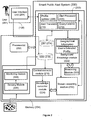
- the smart public alert system 200 may include at least one processor 202, an input/output (I/O) interface (not shown), and a memory 204.
- the at least one processor 202 may be implemented as one or more microprocessors, microcomputers, microcontrollers, digital signal processors, central processing units, state machines, logic circuitries, and/or any devices that manipulate signals based on operational instructions.
- the at least one processor is configured to fetch and execute computer-readable instructions stored in the memory.
- the I/O interface may include a variety of software and hardware interfaces, for example, a web interface, a graphical user interface, and the like.
- the I/O interface may allow the smart public alert system 200 to interact with the user through a user interface unit 204 of the electronic communication device 106. Further, the I/O interface may enable the smart public alert system 200 to communicate with other computing devices, such as web servers and external data servers (not shown).
- the I/O interface can facilitate multiple communications within a wide variety of networks and protocol types, including wired networks, for example, LAN, cable, etc., and wireless networks, such as WLAN, cellular, or satellite.
- the I/O interface may include one or more ports for connecting a number of devices to one another or to another server.
- the memory 204 may include any computer-readable medium known in the art including, for example, volatile memory, such as static random access memory (SRAM) and dynamic random access memory (DRAM), and/or non-volatile memory, such as read only memory (ROM), erasable programmable ROM, flash memories, hard disks, optical disks, and magnetic tapes.
- volatile memory such as static random access memory (SRAM) and dynamic random access memory (DRAM)
- non-volatile memory such as read only memory (ROM), erasable programmable ROM, flash memories, hard disks, optical disks, and magnetic tapes.
- the memory may include different modules.
- the modules include routines, programs, objects, components, and data structures etc., which perform particular tasks or implement particular abstract data types that supplement applications and functions of the smart public alert system 200.
- a user may use the user interface unit 204 of the electronic communication device 106 to access the smart public alert system 200 via the I/O interface.
- the user may register, using the I/O interface in order to use the smart public alert system 200.
- the user 201 is adapted to subscribe to a service that will provide relevant public alerts to him/her specific to an event. That is, the profile data may also include a list of event types for which the user 201 may require alert. Further, the user 201 may specify the format and preferred language in which the alert should be delivered.
- the profile data is mined automatically through a profile database 214 or can be retrieved from the user 201.
- the profile database 214 represents the social web data that can be extracted using social web mining techniques known in the art. Examples of social web may include social networking websites, feedback/review collection websites, and blogs.
- a profile updater module 206 in an application program module 203 of the smart public alert system (200) is adapted to extract the relevant data from the profile database 214.
- the user 201 can manually submit the profile data through the user interface unit 204 of the electronic communication device 106 with the smart public alert system 200.
- the profile data includes information such as age, gender, places of interest, habits, profession, relatives and common activities the user may involve in.
- the profile data can also be retrieved based on a model learnt over time based on the user's behavior and activity using machine learning techniques.
- the profile data may include information such as user-specific event for which alert types is the citizen interested in (ex. a news reporter may be interested in crimes rather than traffic jams), demographics and social information like family and (close) relatives. This will also include the citizen's activity in the city, like locations often visited etc.
- contextual information of the user 201 is desired.
- context information relevant to the user 201 may include information such as time of a day, companion, current activities and environmental conditions etc.
- the context information associated with the user 201 can be sensed through various sensing devices in the sensor network 104 by the sensing module 226.
- the location of the user 201 can be sensed by the GPS device installed either in the electronic communication device 202 or any dedicated GPS device installed in the sensor network 104. Further, such GPS information can be manually posted by the user 201 through at least one GPS application being executed on the user interface unit 204 of the electronic communication device 106.
- the context information of the user 201 can further be retrieved by learning the contextual behavior derived from the personal calendar maintained by the user 201. For example, an event about the user's visit to church each Sunday stored in the calendar can be learnt as the user's contextual behavior. This enables retrieval of frequently visited locations along with that particular time and day of the visit.
- location context from the current location path followed by user, future paths can be predicted. For example, if the user 201 follows path a,b,c under Context 'X' and in learned database, user has followed paths a,b,c,d, e under context X, then the system can add paths d and e to probable future location.
- the contextual behavior can be retrieved from the user manual input, wherein the user 201 might indicate his/her journey details (start point, end point, will be at location X at time T).
- the contextual information about the user 201 can also be derived from the tour guide requested by the user 201 if the user is planning to tour in future. For example, the user 201 may specify his/her interest in receipt of alert about the tour guide for the planned tour. From this request, the current and future context of the user 201 can be derived. Similarly, the user 201 may specify the meeting acquaintances for a specific duration and may subscribe to receive alert about the meeting location and time.
- such contextual information is extracted from these sources using a context extractor module 218.
- the sensing module 226 is further configured for sensing environmental conditions in a city along with other event notification feeds received from various sources.
- Each notification feed is in the form of raw event data and raw context data.
- the event notification feed can be received from various sources comprising private and public agencies, and social web posts etc.
- the events in the social web are sensed by keeping real-time track of human generated content in the social community networks.
- the event notification feeds can also be retrieved by analyzing the news text scrolled on a television news channel or an audio received from the radio sets.
- the News on TV and radio can form major source of information, and relevant information can be extracted from them by OCR or Speech-To-Text techniques on real-time.
- the subject matter of retrieving relevant information from the TV news has been disclosed in the patent applications 1194/MUM/2012, PCT/IN2012/000423 and 3308/MUM/2012 respectively.
- a monitoring module 228 is configured for monitoring of the sensed data such as social web posts, television or radio news and agency alert feeds etc received from heterogeneous sources and to differentiate the raw event data and the raw context data for each feed. Further, the monitoring module 228 is adapted to do a duplicate check by keeping the track on most recently updated data that has been processed.
- the raw event data and the raw context data is then converted into a structured knowledge format that is feasible for analysis conducted by a stream reasoning module 230 using a knowledge converter module 224.
- Any reasoning system needs data in a standard form with compatible syntax format that can be understood by the stream reasoner.
- the data retrieved from varied sources is in unstructured, semi-structured or heterogeneous structured format; so a mechanism is needed to bring this together in a standard uniform form suitable for reasoning purpose.
- Triple or n-triple suits this form (ex. Resource Description Framework (RDF) (source : http : //www.w3.org/RDF/) or Web Ontology Language (OWL)) (source : http : //www.w3.org/TR/owl-features/).
- RDF Resource Description Framework
- OWL Web Ontology Language
- the raw event data can be converted in to structured format such as the RDF or OWL which is a standard way to represent a triple T.
- structured data that follow some open standards like Common Alerting Protocol (CAP), an OASIS Standard (http: //docs.oasis-open.org/emergency/cap/v1.2/CAP-v1.2-os.html), the conversion to knowledge is easy. For semi-structured data, this can be done by relevant keyword based match.
- CAP Common Alerting Protocol
- OASIS Standard http: //docs.oasis-open.org/emergency/cap/v1.2/CAP-v1.2-os.html
- the keywords can be manually tagged or learned over time by analyzing past data.
- unstructured data some training is done at first by tagging what the text conveys.
- Models can be learnt by applying machine learning to classify the texts.
- One way to understand the unstructured data is to use natural language processing and information extraction techniques. For example, in case of unstructured data like real-time blogs (ex. Social web posts) classification needs to be done. Initially, through training on past manually tagged dataset, the system is adapted to learn what keywords (or group) represents the type of event. Then on new data, classification technique will be applied. Knowledge-pattern based sentence conversion to knowledge is another way. The converted data into structured format is loaded on the stream reasoning module 230 for further processing.
- the context extractor module 218 collects current context from the user's device (like GPS) and the monitoring module 228. Mapping relationship of the sensed raw context data is stored in a context mapping database 216. For example, raw GPS locations are mapped to some landmark locations, raw time is mapped to someday part and temperature is mapped to hotness or coldness. The future contexts like planned route of a user or weather forecasts are also gathered.
- the context mapping database 216 therefore acts a context repository for the context extractor module 218 to extract the context of each notification feed. The context data extracted is then converted into the structured format before being forwarded to the stream reasoning module 230.
- a background knowledge module 222 is maintained in the form of knowledge repository that can assist in determining the contextual, personalized and customized alert to the user 201.
- the background knowledge is composed of static knowledge such as geographical location and slowly changing knowledge like user preferences (user's extended profiles).
- the knowledge about the city like streets, points of interest and its nearby locations along with static data about users is stored in the background knowledge module 222.
- the knowledge has to be in a format that the reasoning module 230 understands. This format can be the RDF format which is a standard representation of triples ⁇ subject, predicate, object > for the semantic web.
- An example of a triple ⁇ Joy > ⁇ likes > ⁇ Cricket >.
- Another example is : ⁇ Joy > ⁇ hates > ⁇ Candy >.
- the stream reasoning module 230 is configured for reasoning at a faster speed. Rules are applied on the background knowledge stored in the background knowledge module 222 to extend the knowledge in context with the specific event type requirements. This enables loading only that portion of the knowledge that is needed for a particular application/event type. In certain scenario, the base background knowledge will not be loaded but the derived knowledge will be. For example the information that two locations lies in same neighborhood infer that they are mutually near each other. An application may only need the knowledge about nearness of those two locations, not their neighborhood names. This takes load off from the stream reasoning module 230 that can utilize the extended background knowledge on processing the real-time knowledge streams of context and events received.
- pre-processing and filtering of the background knowledge becomes significant. This is achieved by deriving new knowledge (extended knowledge) by applying rules. Further, filtering of the knowledge is achieved by keeping only the datasets that are needed by the stream reasoning module 230 for processing of the current queries/rules registered by the user. Additionally, the background knowledge can be pre-processed to derive the domain-dependent knowledge by applying rules. Further, an on-demand loading/unloading of knowledge can be implemented according to the processing requirements of the stream reasoning module 230 for new queries/rules registered in the system.
- Stream reasoning module 230 is adapted to execute continuous queries and reasoning on the extended background knowledge to accomplish its task.
- An application program module 203 in the smart public alert system 200 is configured for registering rules and queries with the smart public alert system 200 for retrieval of alerts in context with the application requirements of the user 201.
- the electronic communication device 106 communicates with the application program module 203 to retrieve alerts and also to update the profile data of the user 201.
- the application program module 203 is adapted to listen on the registered continuous queries over the combined knowledge to fetch results, if any.
- the whole logic of reasoning can be embedded in a SPARQL query. For example if the following SPARQL query :
- the continuous queries/rules received from the application program module enable real-time filtration and extension of the background knowledge.
- the filtered, extended knowledge datasets, and the knowledge streams received from the event notification feeds and the context extractor module 218, collectively referred as combined knowledge is then reasoned by the stream reasoning module 230 to determine if the alert is relevant to the user 201.
- the filtered, pre-processed and extended background knowledge helps in reducing the overhead of the stream reasoning. This pre-processing, extending and filtering of background knowledge is explained by way of few examples as below :
- Incoming event triple is ( ⁇ e : event1 > ⁇ e : isOfType > ⁇ a : Robbery >) which is about robbery alert.
- G2 is of no use as this is unutilized by the system, i.e. suppose there are no rules registered in the system to use the facts of form G2.
- the system When loading the background knowledge, the system will search for patterns that exist in the query and rule. In this case the patterns that the system searches (and if found loads the same)
- rule 3 is registered in stream reasoner, while rules 1 and 2 are used to infer the data to be loaded beforehand.
- the application does not care about a specific concept, and then the system can capitalize on this to enhance the performance.
- rule 3 is registered in stream reasoner, while rules 1 and 2 are used to infer the data to be loaded beforehand.
- the current rule is that of:
- the application program module 203 is configured for transmitting the results of the stream reasoning to the user interface unit 204 of the electronic communication device 202 of the user 201. This also forms as a medium by which the profile data is stored and updated in the background knowledge module.
- the application program module 203 comprises a Query Listener module 212 that is adapted to listen for the query results accepted from the stream reasoning module 230.
- An Alert Processor module 208 in the application program module 203 processes the results and sends the alerts to the intended users.
- an Alert Translator module 210 in the application program module 203 translates the alerts to the language of the specific user's choice and formats the alerts customized to user's intended user interface unit 204 and medium of communication.
- the alerts generated can be transmitted to other devices within the vicinity of the smart public alert system.
- a digital signage board or a kiosk can be configured for displaying the alerts about events affecting the mass audience around a particular location in which the digital signage board or the kiosk is located. For instance, if there is a shooting of a film at street 'X', immediately all signage and kiosks located with the proximity of the shooting event shall be displayed with the details about the shooting event.
- the alerts generated can be transmitted in the form of live video, audio, multimedia or images and combinations thereof. For example, if there is a traffic jam at street 'X' and, there is a CCTV camera installed at the street 'X', then the image of live video feed of the traffic jam can be transmitted to the user heading towards the street 'X'.
- standard lightweight image formats can be used to send alerts in MMS or web application formats.
- the alert generated for a specific user can also be transmitted to few other users in close relationship with the users who may also be affected by certain event for which the alert is generated. That is, in one implementation, the smart public alert system 200 can alert similar users or related users based on mutually affecting event. For example, a close relative of a user may be interested in severe alerts about the user. In another case of a meeting, users attending a meeting will be interested in traffic disruption alerts of each other. Further, in another case, wherein quiz event is being scheduled in the city requiring two participants for a team, then, if two users who are annoyed about quizzing and are acquainted with each other are passing close to the event, they both will be alerted about the quiz event.
- the traffic alerts generated using the smart public alert system 200 can be utilized for controlling the traffic signals installed on the roads of the city. For example, if an accident is detected at street 'X', the alert can be generated about the accident at the street 'X', which can be transmitted to the traffic lights in the zone of the street 'X', which on receipt of the alert is intelligently adapted to turn red. This will help in managing the traffic in the zone, wherein accident takes place.
- the smart public alert system 200 can be configured for receiving ad-hoc queries from the user 201 about receipt of alerts for events not previously registered in the system.
- the smart public alert system 200 implements a real-time query mechanism that enables generation of alert about the events specific to ad-hoc queries.
- the user 201 may instantaneously request for receipt of alert about an event such as "mega sale at street X".
- the system 200 accommodates the ad-hoc querying based on specific query forms and accordingly generate the alert to be transmitted to the user in a near real-time.
- the smart public alert system 200 is configured for receiving feedback from the user 201 about the relevancy of alerts received by the user 201. For example, when the user 201 receives a specific alert, the system 200 prompts the user 201 to provide feedback whether the alert received was relevant for him/her. This feedback mechanism enables the system 200 to adaptively learn the failure of execution and accordingly improvise in the future. In case, if the user 201 marks certain alert as irrelevant, the system 200 will stop transmitting those alerts in future. One way of implementing this is to lower the contextual learned behavior data's probability score, in case of negative feedback. On the contrary, on positive feedback the probability score of the contextual learned behavior data will be increased.
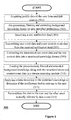
- a method 300 for dynamically generating a customized, personalized and contextual alert based on personalized and contextual information of the user is shown, in accordance with an embodiment of the present subject matter.
- the method 300 may be described in the general context of computer executable instructions.
- computer executable instructions can include routines, programs, objects, components, data structures, procedures, modules, functions, etc., that perform particular functions or implement particular abstract data types.
- the method 300 may also be practiced in a distributed computing environment where functions are performed by remote processing devices that are linked through a communications network.
- computer executable instructions may be located in both local and remote computer storage media, including memory storage devices.
- the method 300 is not intended to be construed as a limitation, and any number of the described method blocks can be combined in any order to implement the method 300 or alternate methods. Furthermore, the method can be implemented in any suitable hardware, software, firmware, or combination thereof. However, for ease of explanation, in the embodiments described below, the method 300 may be considered to be implemented in the above described smart public alert system 102.
- the profile data associated with the user comprising list of event types subscribed for receiving alerts, demographic profile and contextual information (current and future context) is acquired from multiple resources including the profile database 214, the user interface unit 204 and the GPS location of the electronic communication device 202.
- reasoning is applied on background knowledge repository 222 storing geographical information and the profile information related to multiple users to pre-process, filter and to extend the background knowledge in context with the user-specific preference events determined through the profile data associated with the user.
- At block 305 at least one raw event notification feed is received from one or multiple heterogeneous sources.
- raw event data and raw context data is determined from the received raw event notification feed.
- the raw event data and the raw context data is converted into a structured knowledge format.
- the pre-processed, filtered and extended background knowledge along with the converted event data and the context data collectively referred as combined structured knowledge is then loaded in the stream reasoning module 230.
- the loaded combined knowledge is stream reasoned to determine if the event data and the context data associated with the event notification feed is relevant with the current and future context of the user. Further, the stream reasoning enables retrieval of list of users that may be affected with the same event.
- the alert is generated as a result of the stream reasoning which is transmitted to the user and the list of users retrieved.
- the smart public alert system was utilized as suitable solution for deployment in a particular smart city.
- the user interface unit was a web page that needs signing up for the service.
- the user had to enter his/her profile and social details.
- the user was prompted to select his places of interest in the smart city.
- the user had an option to set preferences for alert like type and time of alert.
- the user was enabled to update this information any time. If the user was about to travel, he was enabled to enter his travel route in the system , to get predictions alerts based on his future location.
- the user's mobile device had an app to post GPS locations to the Context Extractor service. System was adapted to monitors alerts from the sources discussed earlier. When a relevant alert was found by the Alert Processor, the same was forwarded to the user in user's preferred language. The reason why the alert was send can also be viewed by the user.
Landscapes
- Engineering & Computer Science (AREA)
- Theoretical Computer Science (AREA)
- Business, Economics & Management (AREA)
- Physics & Mathematics (AREA)
- General Physics & Mathematics (AREA)
- Strategic Management (AREA)
- Finance (AREA)
- Accounting & Taxation (AREA)
- Development Economics (AREA)
- Signal Processing (AREA)
- Computer Networks & Wireless Communication (AREA)
- Software Systems (AREA)
- General Engineering & Computer Science (AREA)
- Entrepreneurship & Innovation (AREA)
- General Business, Economics & Management (AREA)
- Game Theory and Decision Science (AREA)
- Economics (AREA)
- Marketing (AREA)
- Computational Linguistics (AREA)
- Artificial Intelligence (AREA)
- Multimedia (AREA)
- Data Mining & Analysis (AREA)
- Evolutionary Computation (AREA)
- Computing Systems (AREA)
- Mathematical Physics (AREA)
- Information Transfer Between Computers (AREA)
- Information Retrieval, Db Structures And Fs Structures Therefor (AREA)
Claims (16)
- Verfahren zum Übertragen mindestens eines kundenspezifischen Meldungsalarms in Echtzeit an ein elektronisches Kommunikationsgerät mindestens eines Benutzers, indem es einer softwarebasierten Plattform ermöglicht wird, mit dem Benutzer zusammenhängende Profildaten und Kontextdaten zu verarbeiten, um die kundenspezifische Meldung zu generieren, wobei das Verfahren folgende computerimplementierte Schritte umfasst:Erfassen von Profildaten des Benutzers, wobei die Profildaten benutzerspezifische Kontextinformationen, ein demographisches Profil und eine Liste von Ereignisarten umfassen, für die ein Meldungsalarm in einem spezifischen Format gewünscht ist;Vorverarbeiten der Profildaten des Benutzers, um ein verfeinertes Hintergrundwissen, das relevant für die Profildaten des Benutzers ist, auf Grundlage eines Satzes von Regeln abzuleiten, wobei das Hintergrundwissen eine statische Kenntnis des Benutzers und eine Änderung in den Profildaten enthält; Empfangen mindestens einer Rohereigniseinspeisung von einer oder mehreren heterogenen Quelle/n in sortierten Datenformaten auf Grundlage des verfeinerten Hintergrundwissens, das relevant für das Profil des Benutzers ist;Bestimmen von Rohereignisdaten und Rohkontextdaten aus der empfangenen Rohereigniseinspeisung, indem eine Kontext abbildende Datenbank (216) verwendet wird, wobei die Kontext abbildende Datenbank (216) ein Abbildungsverhältnis der Rohkontextdaten und der entsprechenden Rohereignisdaten enthält, Umwandeln der Rohereignisdaten und der Rohkontextdaten in ein strukturiertes Wissensformat, derart, dass die Rohereignisdaten und die Rohkontextdaten in einer Standardform vorliegen;Abrufen des strukturierten Wissens, um zu bestimmen, ob die empfangene Ereigniseinspeisung relevant für die erfassten Profildaten und die benutzerspezifischen Kontextinformationen für den Benutzer ist, und Generieren eines Meldungsalarms; undÜbertragen des Meldungsalarms auf dem elektronischen Kommunikationsgerät des Benutzers in dem spezifizierten Format.
- Verfahren nach Anspruch 1, wobei die benutzerspezifischen Kontextinformationen momentane und zukünftige Kontextdaten über den Benutzer enthalten, die entweder über ein soziales Netz unter Verwendung einer Miningtechnik abgefragt werden oder manuell durch den Benutzer über das elektronische Kommunikationsgerät eingegeben werden oder über ein GPS-Gerät im elektronischen Kommunikationsgerät nachverfolgt werden.
- Verfahren nach Anspruch 1, wobei das demographische Profil automatisch über ein soziales Netz gemeint wird oder durch den Benutzer über das elektronische Kommunikationsgerät manuell eingegeben wird, und wobei das demographische Profil den Namen, das Alter, das Geschlecht, den Ort, die Religion, Familienangaben, das Job-Profil, Plätze von Interesse, Verwandte oder Kombinationen davon enthält.
- Verfahren nach Anspruch 1, wobei die geografischen Informationen das Wissen über einen besonderen Ort wie etwa eine Stadt, Straßen in der Stadt, Punkte von Interesse in der Stadt, naheliegende Orte zur Stadt und Kombinationen davon umfassen, und wobei eine Änderung von Informationen eine dynamische Varianz in den Benutzerpräferenzinformationen und den Benutzerprofildaten umfasst.
- Verfahren nach Anspruch 1, wobei der Vorverarbeitungsschritt umfasst, domainabhängiges Wissen aus dem Hintergrundwissen auszumachen, das den für eine Anwendung benötigten Daten entspricht, um relevante Warnungen für den Benutzer zu generieren.
- Verfahren nach Anspruch 1, wobei der Filterschritt umfasst, mindestens einen Wissensdatensatz aus dem Hintergrundwissen auszuwählen, der für die für eine Anwendung benötigten Daten relevant ist, um relevante Warnungen für den Benutzer zu generieren.
- Verfahren nach Anspruch 1, wobei der Erweiterungsschritt umfasst, mindestens einen relevanten neuen Wissensdatensatz auszumachen, der für die für eine Anwendung benötigten Daten relevant ist, um relevante Warnungen für den Benutzer zu generieren, und im Hintergrundwissen nicht vorhanden ist.
- Verfahren nach Anspruch 1, wobei der Abrufladeschritt umfasst, ein ad-hoc-Wissen, das durch die Streamlogik zur Verarbeitung des Hintergrundwissens erforderlich ist, im Kontext mit den für eine Anwendung benötigten Daten, um relevante Alarme für den Benutzer zu generieren, zu laden, und wobei der Abrufentnahmeschritt umfasst, das Wissen aus dem Hintergrundwissen zu entnehmen, das irrelevant für die für eine Anwendung benötigten Daten ist, um relevante Warnungen für den Benutzer zu generieren.
- Verfahren nach Anspruch 1, wobei die eine oder die mehreren heterogenen Ressourcen aus einer Gruppe ausgewählt sind, die physische Sensoren, Softsensoren, ein soziales Netz, einen persönlichen Kalender, ein historisches Verhaltensmuster, Aktualisierungen von sozialen Medien, RSS-Feeds, Nachrichtenagenturen, dynamisches Ändern von Kontextinformationen wie etwa des GPS-Standorts und Kombinationen davon umfasst.
- Verfahren nach Anspruch 1, wobei die empfangene Ereigniseinspeisung von mindestens einem Datenformat ist, das aus einer Gruppe ausgewählt ist, die Text, Bild, Video, Audio, Multimedia und Kombinationen davon umfasst, und wobei die Rohereignisdaten aus einer Gruppe ausgewählt sind, die Verkehrstaus, Diebstahl, Flut, Klimaaktualisierungen, Verkehrsunfall, Straßenblockade, kriminelle Aktivität, ein gegenseitig betreffendes Ereignis unter mehreren Benutzern und Kombinationen davon umfasst.
- Verfahren nach Anspruch 1, wobei die Rohkontextdaten Informationen umfassen, die sich auf die Ereignisdaten beziehen, die aus einer Gruppe ausgewählt sind, die Zeit, Ort, momentane und zukünftige Aktivität, Umweltbedingungen und Kombinationen davon umfasst.
- Verfahren nach Anspruch 1, wobei die Rohereignisdaten und die Rohkontextdaten in das strukturierte Wissensformat unter Verwendung von Schlüsselwortmusteranpassung, Informationsextraktionstechnologien, Natursprachenverarbeitungs-(NLP)-Algorithmen und Kombinationen davon umgewandelt werden, und wobei es sich bei dem strukturieren Wissensformat um einen Triple, n-Triple, Ressourcenbeschreibungsrahmen, RDF, eine Web-Ontologie-Sprache, OWL oder Kombinationen davon handelt.
- Verfahren nach Anspruch 1, wobei das elektronische Kommunikationsgerät eine kundenspezifische Warnung in mindestens einem Datenformat anzeigen kann, das aus einer Gruppe ausgewählt ist, die Textdaten-, Audiodaten-, Videodaten-, Bilddaten, Multimediadaten-, Live-Multimediadaten-Streaming und Kombinationen davon umfasst.
- System (100) zum Übertragen mindestens eines kundenspezifischen Meldungsarlarms in Echtzeit an mindestens einen Benutzer, wobei das System (100) umfasst:mindestens ein elektronisches Kommunikationsgerät (106),ein Sensornetz (104), das eine oder mehrere Sensorvorrichtung/en umfasst;ein intelligentes öffentliches Warnsystem (102), das über ein Kommunikationsnetz (108) kommunikativ mit dem mindestens einen elektronischen Kommunikationsgerät (106) und dem Sensornetz (104) gekoppelt ist;wobei das mindestens eine elektronische Kommunikationsgerät darüber hinaus eine Benutzeroberflächeneinheit (204) umfasst, die dazu konfiguriert ist, relevante Alarme abzurufen und die Benutzerprofildaten zu aktualisieren;wobei das intelligente öffentliche Warnsystem (102) darüber hinaus umfasst:
mindestens einen Prozessor (202), der elektronisch mit einem Speicher (204) gekoppelt ist, wobei der Speicher mehrere Module umfasst, die durch den mindestens einen Prozessor (202) ausgeführt werden, wobei die Module umfassen:eine Profildatenbank (214), die Profildaten eines sozialen Netzes speichert, die sich auf mehrere Benutzer beziehen;ein Logikmodul (220), das dazu konfiguriert ist, ein Hintergrundwissensmodul (222) logisch dazu zu bewegen, das im Hintergrundwissensmodul gespeicherte Hintergrundwissen vorzuverarbeiten, um ein verfeinertes strukturiertes Hintergrundwissen abzuleiten; und mindestens eine Rohereigniseinspeisung von einer oder mehreren heterogenen Quelle/n in sortierten Datenformaten auf Grundlage des verfeinerten Hintergrundwissens zu empfangen, das für das Profil des Benutzers relevant ist;ein Abtastmodul (226), das dazu konfiguriert ist, die mindestens eine Rohereigniseinspeisung aus der mindestens einen Sensorvorrichtung im Sensornetz (104) oder dem mindestens einen elektronischen Kommunikationsgerät (106) abzutasten;ein Überwachungsmodul (228), das dazu angepasst ist, die abgetasteten Daten zu überwachen und Rohereignisdaten und Rohkontextdaten aus der empfangenen Rohereigniseinspeisung auf Grundlage des verfeinerten Hintergrundwissens zu bestimmen, das für das Profil des Benutzers relevant ist;ein Kontextextraktormodul (218), das dazu konfiguriert ist, einen Kontext aus dem elektronischen Kommunikationsgerät und dem Überwachungsmodul unter Verwendung einer Kontext abbildenden Datenbank (216) zu extrahieren, wobei die Kontext abbildende Datenbank (216) ein Abbildungsverhältnis der Rohkontextdaten und der entsprechenden Rohereignisdaten enthält;ein Wissensumwandlermodul (224), das dazu konfiguriert ist, die Rohereignisdaten und die Rohkontextdaten in ein strukturiertes Wissensformat umzuwandeln;ein Anwendungsprogrammmodul (203), das dazu konfiguriert ist, Alarme zu verarbeiten, die von einem Stream-Logikmodul (230) ausgegeben werden, die Alarme an das elektronische Kommunikationsgerät (106) zu übertragen und Regeln und Anfragen zu registrieren, die über die Benutzeroberflächeneinheit (204) empfangen werden, um die relevanten Alarme zu erhalten; unddas Stream-Logikmodul (230) im Ansprechen auf die Anfragen und Regeln dazu angepasst ist, das verfeinerte strukturierte Hintergrundwissen, die strukturierten Rohereignisdaten und die strukturierten Kontextdaten streamtechnisch zu begründen, um zu bestimmen, ob die Ereigniseinspeisung für die Profildaten und die benutzerspezifischen Kontextinformationen des Benutzers relevant ist, und entsprechend einen Meldungsalarm über das Anwendungsprogrammmodul (203) an die Benutzeroberflächeneinheit (204) in einem spezifizierten Format zu übertragen. - System nach Anspruch 14, wobei das Stream-Logikmodul darüber hinaus eine Speichereinheit umfasst, um das strukturierte Wissen in mindestens einem Format zu speichern, das aus einer Gruppe ausgewählt ist, die einen Triple, n-Triple, Ressourcenbeschreibungsrahmen, RDF, eine Web-Ontologie-Sprache, OWL oder Kombinationen davon umfasst.
- System nach Anspruch 14, wobei das Anwendungsprogrammmodul (203) darüber hinaus umfasst:einen Profilaktualisierer (206), der zum Aktualisieren der Profildaten konfiguriert ist, welche die benutzerspezifischen Kontextinformationen und die demografischen Informationen enthalten, die durch die Profildatenbank (214) geschürft werden;einen Anfragelistenersteller (212), der dazu angepasst ist, die vom Stream-Logikmodul kommenden Anfrageergebnisse zu überwachen;einen Alarmprozessor (208), der dazu angepasst ist, den auf Grundlage einer Verarbeitung von Anfrageausführungsergebnissen generierten Meldungsalarm zu übertragen, undeinen Alarmübersetzer (210), der dazu konfiguriert ist, den generierten Meldungsalarm in ein benutzerspezifisches Format zu übersetzen, bevor der Alarm an das elektronische Kommunikationsgerät übertragen wird.
Applications Claiming Priority (2)
| Application Number | Priority Date | Filing Date | Title |
|---|---|---|---|
| IN148MU2013 | 2013-01-16 | ||
| PCT/IN2013/000748 WO2014111951A2 (en) | 2013-01-16 | 2013-12-05 | A system and method for smart public alerts and notifications |
Publications (3)
| Publication Number | Publication Date |
|---|---|
| EP2946305A2 EP2946305A2 (de) | 2015-11-25 |
| EP2946305A4 EP2946305A4 (de) | 2016-10-26 |
| EP2946305B1 true EP2946305B1 (de) | 2021-02-03 |
Family
ID=51210159
Family Applications (1)
| Application Number | Title | Priority Date | Filing Date |
|---|---|---|---|
| EP13872132.9A Active EP2946305B1 (de) | 2013-01-16 | 2013-12-05 | System und verfahren für intelligente öffentliche alarme und meldungen |
Country Status (3)
| Country | Link |
|---|---|
| US (1) | US10074052B2 (de) |
| EP (1) | EP2946305B1 (de) |
| WO (1) | WO2014111951A2 (de) |
Families Citing this family (30)
| Publication number | Priority date | Publication date | Assignee | Title |
|---|---|---|---|---|
| WO2015136400A1 (en) * | 2014-03-12 | 2015-09-17 | Koninklijke Philips N.V. | City data marketplace |
| US20150309965A1 (en) * | 2014-04-28 | 2015-10-29 | Elwha Llc | Methods, systems, and devices for outcome prediction of text submission to network based on corpora analysis |
| US20160147830A1 (en) | 2014-07-09 | 2016-05-26 | Splunk Inc. | Managing datasets produced by alert-triggering search queries |
| US10142213B1 (en) * | 2014-09-22 | 2018-11-27 | Symantec Corporation | Techniques for providing event driven notifications |
| US10038757B2 (en) * | 2015-04-29 | 2018-07-31 | Microsoft Technology Licensing, Llc | Providing personalized greetings on a digital assistant |
| WO2016176375A1 (en) * | 2015-04-29 | 2016-11-03 | Microsoft Technology Licensing, Llc | Providing personalized greetings on a digital assistant |
| US10298535B2 (en) * | 2015-05-19 | 2019-05-21 | Facebook, Inc. | Civic issues platforms on online social networks |
| DE102015213483A1 (de) * | 2015-07-17 | 2017-01-19 | Robert Bosch Gmbh | Verfahren und Vorrichtung zum Steuern eines Übertragungsverhaltens zum Übertragen einer Warnmeldung für ein Fahrzeug |
| US11570209B2 (en) | 2015-10-28 | 2023-01-31 | Qomplx, Inc. | Detecting and mitigating attacks using forged authentication objects within a domain |
| US20220014555A1 (en) | 2015-10-28 | 2022-01-13 | Qomplx, Inc. | Distributed automated planning and execution platform for designing and running complex processes |
| US10860660B2 (en) | 2015-10-28 | 2020-12-08 | Qomplx, Inc. | Method and apparatus for crowdsourced data gathering, extraction, and compensation |
| US10438123B2 (en) * | 2015-11-19 | 2019-10-08 | International Business Machines Corporation | Cognitive publication subscriber system, method, and recording medium with a firewall |
| US10467888B2 (en) * | 2015-12-18 | 2019-11-05 | International Business Machines Corporation | System and method for dynamically adjusting an emergency coordination simulation system |
| US10187440B2 (en) * | 2016-05-27 | 2019-01-22 | Apple Inc. | Personalization of media streams |
| US20170351832A1 (en) * | 2016-06-01 | 2017-12-07 | International Business Machines Corporation | Personal travel health vulnerability navigator |
| US20170351831A1 (en) * | 2016-06-01 | 2017-12-07 | International Business Machines Corporation | Personal travel health vulnerability navigator |
| US9858790B1 (en) * | 2017-01-19 | 2018-01-02 | International Business Machines Corporation | Intelligent alarm customization |
| US20180314979A1 (en) * | 2017-04-28 | 2018-11-01 | GM Global Technology Operations LLC | Systems and methods for processing radio data system feeds |
| US10244581B2 (en) | 2017-05-19 | 2019-03-26 | At&T Mobility Ii Llc | Public safety analytics gateway |
| US11645552B2 (en) * | 2018-03-11 | 2023-05-09 | International Business Machines Corporation | Travel health optimization simulating health impact of intended user travel using cognitive analytics based on conditions at a geographic location |
| US11044206B2 (en) | 2018-04-20 | 2021-06-22 | International Business Machines Corporation | Live video anomaly detection |
| US11042818B2 (en) * | 2018-05-08 | 2021-06-22 | ANI Technologies Private Limited | Method and system for allocating seats in ride-sharing systems |
| US10680982B2 (en) | 2018-08-29 | 2020-06-09 | International Business Machines Corporation | Providing contextual alerts |
| US11501213B2 (en) * | 2019-05-07 | 2022-11-15 | Cerebri AI Inc. | Predictive, machine-learning, locale-aware computer models suitable for location- and trajectory-aware training sets |
| CA3142621A1 (en) * | 2019-06-07 | 2020-12-10 | Intergraph Corporation | Data sharing control methods and systems |
| US11928615B1 (en) * | 2019-09-25 | 2024-03-12 | U.S. Bank National Association | Systems and methods for providing a predictive itinerary |
| CN111124682B (zh) * | 2019-12-24 | 2021-01-08 | 珠海大横琴科技发展有限公司 | 一种弹性资源分配方法、装置、电子设备和存储介质 |
| US20230169618A1 (en) * | 2021-05-25 | 2023-06-01 | Early Warning Services, Llc | Safety notifications |
| CN113507421B (zh) * | 2021-06-08 | 2024-07-12 | 南京中新赛克科技有限责任公司 | 一种基于应用的高性能精细化分流方法 |
| CN116402137B (zh) * | 2023-06-02 | 2023-09-12 | 中国人民解放军国防科技大学 | 一种基于公开信息的卫星任务挖掘预测方法、系统及装置 |
Family Cites Families (20)
| Publication number | Priority date | Publication date | Assignee | Title |
|---|---|---|---|---|
| US6654689B1 (en) * | 2000-11-06 | 2003-11-25 | Weather Central, Inc. | System and method for providing personalized storm warnings |
| US6745193B1 (en) * | 2001-01-25 | 2004-06-01 | Microsoft Corporation | System and method for defining, refining, and personalizing communications policies in a notification platform |
| US7287056B2 (en) | 2001-09-28 | 2007-10-23 | Microsoft Corporation | Dispatching notification to a device based on the current context of a user with the device |
| US7248159B2 (en) * | 2003-03-01 | 2007-07-24 | User-Centric Ip, Lp | User-centric event reporting |
| US7411493B2 (en) | 2003-03-01 | 2008-08-12 | User-Centric Ip, L.P. | User-centric event reporting |
| US7084775B1 (en) | 2004-07-12 | 2006-08-01 | User-Centric Ip, L.P. | Method and system for generating and sending user-centric weather alerts |
| US20070005654A1 (en) | 2005-05-20 | 2007-01-04 | Avichai Schachar | Systems and methods for analyzing relationships between entities |
| US7301450B2 (en) * | 2006-03-14 | 2007-11-27 | John Carrino | Citizen communication center |
| US8311513B1 (en) | 2007-06-27 | 2012-11-13 | ENORCOM Corporation | Automated mobile system |
| US9430570B2 (en) | 2009-07-01 | 2016-08-30 | Matthew Jeremy Kapp | Systems and methods for determining information and knowledge relevancy, relevant knowledge discovery and interactions, and knowledge creation |
| US8264345B2 (en) * | 2009-11-30 | 2012-09-11 | Baron Services, Inc. | System and method of providing real-time site specific information |
| US9122693B2 (en) * | 2010-11-30 | 2015-09-01 | Nokia Technologies Oy | Method and apparatus for determining contextually relevant geographical locations |
| WO2013046218A2 (en) | 2011-06-17 | 2013-04-04 | Tata Consultancy Services Limited | Method and system for differentiating plurality of scripts of text in broadcast video stream |
| CN103891201B (zh) | 2011-09-19 | 2018-03-30 | 塔塔咨询服务有限公司 | 用于基于传感器数据的应用和服务的开发以及部署的计算平台 |
| JP2015501459A (ja) | 2011-09-19 | 2015-01-15 | タタ コンサルタンシー サービシズ リミテッドTATA Consultancy Services Limited | センサー駆動型車両遠隔計測アプリケーションおよびサービスの開発および配備のための演算プラットフォーム |
| WO2013164849A2 (en) | 2012-04-12 | 2013-11-07 | Tata Consultancy Services Limited | A system and method for detection and segmentation of touching characters for ocr |
| US8996530B2 (en) * | 2012-04-27 | 2015-03-31 | Yahoo! Inc. | User modeling for personalized generalized content recommendations |
| US10163058B2 (en) * | 2012-08-14 | 2018-12-25 | Sri International | Method, system and device for inferring a mobile user's current context and proactively providing assistance |
| US9015099B2 (en) * | 2012-08-14 | 2015-04-21 | Sri International | Method, system and device for inferring a mobile user's current context and proactively providing assistance |
| US9117132B2 (en) | 2012-11-16 | 2015-08-25 | Tata Consultancy Services Limited | System and method facilitating designing of classifier while recognizing characters in a video |
-
2013
- 2013-12-05 EP EP13872132.9A patent/EP2946305B1/de active Active
- 2013-12-05 WO PCT/IN2013/000748 patent/WO2014111951A2/en not_active Ceased
- 2013-12-05 US US14/761,463 patent/US10074052B2/en active Active
Non-Patent Citations (1)
| Title |
|---|
| None * |
Also Published As
| Publication number | Publication date |
|---|---|
| US20150363694A1 (en) | 2015-12-17 |
| EP2946305A2 (de) | 2015-11-25 |
| WO2014111951A3 (en) | 2015-03-26 |
| EP2946305A4 (de) | 2016-10-26 |
| US10074052B2 (en) | 2018-09-11 |
| WO2014111951A2 (en) | 2014-07-24 |
Similar Documents
| Publication | Publication Date | Title |
|---|---|---|
| US10074052B2 (en) | System and method for smart public alerts and notifications | |
| Yao et al. | Towards resilient and smart cities: A real-time urban analytical and geo-visual system for social media streaming data | |
| Adam et al. | Spatial computing and social media in the context of disaster management | |
| CN106845644B (zh) | 一种通过相互关系学习用户及移动应用的联系的异构网络 | |
| JP6791569B2 (ja) | ユーザプロファイル生成方法および端末 | |
| US9820094B2 (en) | Travel recommendations on online social networks | |
| KR101889415B1 (ko) | 위치-기반 서비스를 사용한 모바일 클라이언트의 전력 관리 | |
| Huang et al. | A large-scale empirical study of geotagging behavior on Twitter | |
| US11983186B2 (en) | Predicting potential incident event data structures based on multi-modal analysis | |
| Giatsoglou et al. | CityPulse: A platform prototype for smart city social data mining | |
| US20170046802A1 (en) | Travel Itinerary Generation on Online Social Networks | |
| Trilles et al. | A domain-independent methodology to analyze IoT data streams in real-time. A proof of concept implementation for anomaly detection from environmental data | |
| Suma et al. | Automatic detection and validation of smart city events using hpc and apache spark platforms | |
| Bhuvaneswari et al. | Social IoT-enabled emergency event detection framework using geo-tagged microblogs and crowdsourced photographs | |
| Mazhar Rathore et al. | Advanced computing model for geosocial media using big data analytics | |
| Banerjee et al. | 'What affects me?' a smart public alert system based on stream reasoning | |
| Yousfi et al. | Towards a generic multimodal architecture for batch and streaming big data integration | |
| Laport et al. | A multi-agent architecture for mobile sensing systems | |
| Ahmad et al. | Context-aware services based on spatio-temporal zoning and crowdsourcing | |
| Rehman et al. | Building socially-enabled event-enriched maps | |
| Francalanci et al. | Exploratory spatio-temporal queries in evolving information | |
| Abbasi et al. | Human urban mobility, personal or global? | |
| US20180012135A1 (en) | Query-target refinement in a distributed mobile system | |
| Jones et al. | Real-time traffic event detection using Twitter data | |
| Coppola et al. | AI techniques in a context-aware ubiquitous environment |
Legal Events
| Date | Code | Title | Description |
|---|---|---|---|
| PUAI | Public reference made under article 153(3) epc to a published international application that has entered the european phase |
Free format text: ORIGINAL CODE: 0009012 |
|
| 17P | Request for examination filed |
Effective date: 20150714 |
|
| AK | Designated contracting states |
Kind code of ref document: A2 Designated state(s): AL AT BE BG CH CY CZ DE DK EE ES FI FR GB GR HR HU IE IS IT LI LT LU LV MC MK MT NL NO PL PT RO RS SE SI SK SM TR |
|
| AX | Request for extension of the european patent |
Extension state: BA ME |
|
| DAX | Request for extension of the european patent (deleted) | ||
| A4 | Supplementary search report drawn up and despatched |
Effective date: 20160928 |
|
| RIC1 | Information provided on ipc code assigned before grant |
Ipc: G06F 15/16 20060101AFI20160922BHEP Ipc: G06F 3/048 20060101ALI20160922BHEP |
|
| STAA | Information on the status of an ep patent application or granted ep patent |
Free format text: STATUS: REQUEST FOR EXAMINATION WAS MADE |
|
| GRAP | Despatch of communication of intention to grant a patent |
Free format text: ORIGINAL CODE: EPIDOSNIGR1 |
|
| STAA | Information on the status of an ep patent application or granted ep patent |
Free format text: STATUS: GRANT OF PATENT IS INTENDED |
|
| INTG | Intention to grant announced |
Effective date: 20200717 |
|
| GRAS | Grant fee paid |
Free format text: ORIGINAL CODE: EPIDOSNIGR3 |
|
| GRAA | (expected) grant |
Free format text: ORIGINAL CODE: 0009210 |
|
| STAA | Information on the status of an ep patent application or granted ep patent |
Free format text: STATUS: THE PATENT HAS BEEN GRANTED |
|
| AK | Designated contracting states |
Kind code of ref document: B1 Designated state(s): AL AT BE BG CH CY CZ DE DK EE ES FI FR GB GR HR HU IE IS IT LI LT LU LV MC MK MT NL NO PL PT RO RS SE SI SK SM TR |
|
| REG | Reference to a national code |
Ref country code: GB Ref legal event code: FG4D |
|
| REG | Reference to a national code |
Ref country code: AT Ref legal event code: REF Ref document number: 1359852 Country of ref document: AT Kind code of ref document: T Effective date: 20210215 Ref country code: CH Ref legal event code: EP |
|
| REG | Reference to a national code |
Ref country code: DE Ref legal event code: R096 Ref document number: 602013075595 Country of ref document: DE |
|
| REG | Reference to a national code |
Ref country code: IE Ref legal event code: FG4D |
|
| REG | Reference to a national code |
Ref country code: NL Ref legal event code: FP |
|
| REG | Reference to a national code |
Ref country code: LT Ref legal event code: MG9D |
|
| REG | Reference to a national code |
Ref country code: AT Ref legal event code: MK05 Ref document number: 1359852 Country of ref document: AT Kind code of ref document: T Effective date: 20210203 |
|
| PG25 | Lapsed in a contracting state [announced via postgrant information from national office to epo] |
Ref country code: PT Free format text: LAPSE BECAUSE OF FAILURE TO SUBMIT A TRANSLATION OF THE DESCRIPTION OR TO PAY THE FEE WITHIN THE PRESCRIBED TIME-LIMIT Effective date: 20210604 Ref country code: LT Free format text: LAPSE BECAUSE OF FAILURE TO SUBMIT A TRANSLATION OF THE DESCRIPTION OR TO PAY THE FEE WITHIN THE PRESCRIBED TIME-LIMIT Effective date: 20210203 Ref country code: GR Free format text: LAPSE BECAUSE OF FAILURE TO SUBMIT A TRANSLATION OF THE DESCRIPTION OR TO PAY THE FEE WITHIN THE PRESCRIBED TIME-LIMIT Effective date: 20210504 Ref country code: FI Free format text: LAPSE BECAUSE OF FAILURE TO SUBMIT A TRANSLATION OF THE DESCRIPTION OR TO PAY THE FEE WITHIN THE PRESCRIBED TIME-LIMIT Effective date: 20210203 Ref country code: HR Free format text: LAPSE BECAUSE OF FAILURE TO SUBMIT A TRANSLATION OF THE DESCRIPTION OR TO PAY THE FEE WITHIN THE PRESCRIBED TIME-LIMIT Effective date: 20210203 Ref country code: BG Free format text: LAPSE BECAUSE OF FAILURE TO SUBMIT A TRANSLATION OF THE DESCRIPTION OR TO PAY THE FEE WITHIN THE PRESCRIBED TIME-LIMIT Effective date: 20210503 Ref country code: NO Free format text: LAPSE BECAUSE OF FAILURE TO SUBMIT A TRANSLATION OF THE DESCRIPTION OR TO PAY THE FEE WITHIN THE PRESCRIBED TIME-LIMIT Effective date: 20210503 |
|
| PG25 | Lapsed in a contracting state [announced via postgrant information from national office to epo] |
Ref country code: SE Free format text: LAPSE BECAUSE OF FAILURE TO SUBMIT A TRANSLATION OF THE DESCRIPTION OR TO PAY THE FEE WITHIN THE PRESCRIBED TIME-LIMIT Effective date: 20210203 Ref country code: AT Free format text: LAPSE BECAUSE OF FAILURE TO SUBMIT A TRANSLATION OF THE DESCRIPTION OR TO PAY THE FEE WITHIN THE PRESCRIBED TIME-LIMIT Effective date: 20210203 Ref country code: LV Free format text: LAPSE BECAUSE OF FAILURE TO SUBMIT A TRANSLATION OF THE DESCRIPTION OR TO PAY THE FEE WITHIN THE PRESCRIBED TIME-LIMIT Effective date: 20210203 Ref country code: PL Free format text: LAPSE BECAUSE OF FAILURE TO SUBMIT A TRANSLATION OF THE DESCRIPTION OR TO PAY THE FEE WITHIN THE PRESCRIBED TIME-LIMIT Effective date: 20210203 Ref country code: RS Free format text: LAPSE BECAUSE OF FAILURE TO SUBMIT A TRANSLATION OF THE DESCRIPTION OR TO PAY THE FEE WITHIN THE PRESCRIBED TIME-LIMIT Effective date: 20210203 |
|
| PG25 | Lapsed in a contracting state [announced via postgrant information from national office to epo] |
Ref country code: IS Free format text: LAPSE BECAUSE OF FAILURE TO SUBMIT A TRANSLATION OF THE DESCRIPTION OR TO PAY THE FEE WITHIN THE PRESCRIBED TIME-LIMIT Effective date: 20210603 |
|
| PG25 | Lapsed in a contracting state [announced via postgrant information from national office to epo] |
Ref country code: SM Free format text: LAPSE BECAUSE OF FAILURE TO SUBMIT A TRANSLATION OF THE DESCRIPTION OR TO PAY THE FEE WITHIN THE PRESCRIBED TIME-LIMIT Effective date: 20210203 Ref country code: CZ Free format text: LAPSE BECAUSE OF FAILURE TO SUBMIT A TRANSLATION OF THE DESCRIPTION OR TO PAY THE FEE WITHIN THE PRESCRIBED TIME-LIMIT Effective date: 20210203 Ref country code: EE Free format text: LAPSE BECAUSE OF FAILURE TO SUBMIT A TRANSLATION OF THE DESCRIPTION OR TO PAY THE FEE WITHIN THE PRESCRIBED TIME-LIMIT Effective date: 20210203 |
|
| REG | Reference to a national code |
Ref country code: DE Ref legal event code: R097 Ref document number: 602013075595 Country of ref document: DE |
|
| PG25 | Lapsed in a contracting state [announced via postgrant information from national office to epo] |
Ref country code: SK Free format text: LAPSE BECAUSE OF FAILURE TO SUBMIT A TRANSLATION OF THE DESCRIPTION OR TO PAY THE FEE WITHIN THE PRESCRIBED TIME-LIMIT Effective date: 20210203 Ref country code: RO Free format text: LAPSE BECAUSE OF FAILURE TO SUBMIT A TRANSLATION OF THE DESCRIPTION OR TO PAY THE FEE WITHIN THE PRESCRIBED TIME-LIMIT Effective date: 20210203 Ref country code: ES Free format text: LAPSE BECAUSE OF FAILURE TO SUBMIT A TRANSLATION OF THE DESCRIPTION OR TO PAY THE FEE WITHIN THE PRESCRIBED TIME-LIMIT Effective date: 20210203 Ref country code: DK Free format text: LAPSE BECAUSE OF FAILURE TO SUBMIT A TRANSLATION OF THE DESCRIPTION OR TO PAY THE FEE WITHIN THE PRESCRIBED TIME-LIMIT Effective date: 20210203 |
|
| PLBE | No opposition filed within time limit |
Free format text: ORIGINAL CODE: 0009261 |
|
| STAA | Information on the status of an ep patent application or granted ep patent |
Free format text: STATUS: NO OPPOSITION FILED WITHIN TIME LIMIT |
|
| 26N | No opposition filed |
Effective date: 20211104 |
|
| PG25 | Lapsed in a contracting state [announced via postgrant information from national office to epo] |
Ref country code: AL Free format text: LAPSE BECAUSE OF FAILURE TO SUBMIT A TRANSLATION OF THE DESCRIPTION OR TO PAY THE FEE WITHIN THE PRESCRIBED TIME-LIMIT Effective date: 20210203 |
|
| PG25 | Lapsed in a contracting state [announced via postgrant information from national office to epo] |
Ref country code: SI Free format text: LAPSE BECAUSE OF FAILURE TO SUBMIT A TRANSLATION OF THE DESCRIPTION OR TO PAY THE FEE WITHIN THE PRESCRIBED TIME-LIMIT Effective date: 20210203 |
|
| PG25 | Lapsed in a contracting state [announced via postgrant information from national office to epo] |
Ref country code: IT Free format text: LAPSE BECAUSE OF FAILURE TO SUBMIT A TRANSLATION OF THE DESCRIPTION OR TO PAY THE FEE WITHIN THE PRESCRIBED TIME-LIMIT Effective date: 20210203 |
|
| PG25 | Lapsed in a contracting state [announced via postgrant information from national office to epo] |
Ref country code: IS Free format text: LAPSE BECAUSE OF FAILURE TO SUBMIT A TRANSLATION OF THE DESCRIPTION OR TO PAY THE FEE WITHIN THE PRESCRIBED TIME-LIMIT Effective date: 20210603 |
|
| PG25 | Lapsed in a contracting state [announced via postgrant information from national office to epo] |
Ref country code: MC Free format text: LAPSE BECAUSE OF FAILURE TO SUBMIT A TRANSLATION OF THE DESCRIPTION OR TO PAY THE FEE WITHIN THE PRESCRIBED TIME-LIMIT Effective date: 20210203 |
|
| REG | Reference to a national code |
Ref country code: CH Ref legal event code: PL |
|
| REG | Reference to a national code |
Ref country code: BE Ref legal event code: MM Effective date: 20211231 |
|
| PG25 | Lapsed in a contracting state [announced via postgrant information from national office to epo] |
Ref country code: LU Free format text: LAPSE BECAUSE OF NON-PAYMENT OF DUE FEES Effective date: 20211205 Ref country code: IE Free format text: LAPSE BECAUSE OF NON-PAYMENT OF DUE FEES Effective date: 20211205 |
|
| PG25 | Lapsed in a contracting state [announced via postgrant information from national office to epo] |
Ref country code: BE Free format text: LAPSE BECAUSE OF NON-PAYMENT OF DUE FEES Effective date: 20211231 |
|
| PG25 | Lapsed in a contracting state [announced via postgrant information from national office to epo] |
Ref country code: LI Free format text: LAPSE BECAUSE OF NON-PAYMENT OF DUE FEES Effective date: 20211231 Ref country code: CH Free format text: LAPSE BECAUSE OF NON-PAYMENT OF DUE FEES Effective date: 20211231 |
|
| PG25 | Lapsed in a contracting state [announced via postgrant information from national office to epo] |
Ref country code: HU Free format text: LAPSE BECAUSE OF FAILURE TO SUBMIT A TRANSLATION OF THE DESCRIPTION OR TO PAY THE FEE WITHIN THE PRESCRIBED TIME-LIMIT; INVALID AB INITIO Effective date: 20131205 |
|
| PG25 | Lapsed in a contracting state [announced via postgrant information from national office to epo] |
Ref country code: CY Free format text: LAPSE BECAUSE OF FAILURE TO SUBMIT A TRANSLATION OF THE DESCRIPTION OR TO PAY THE FEE WITHIN THE PRESCRIBED TIME-LIMIT Effective date: 20210203 |
|
| P01 | Opt-out of the competence of the unified patent court (upc) registered |
Effective date: 20230526 |
|
| PG25 | Lapsed in a contracting state [announced via postgrant information from national office to epo] |
Ref country code: MK Free format text: LAPSE BECAUSE OF FAILURE TO SUBMIT A TRANSLATION OF THE DESCRIPTION OR TO PAY THE FEE WITHIN THE PRESCRIBED TIME-LIMIT Effective date: 20210203 Ref country code: CH Free format text: LAPSE BECAUSE OF NON-PAYMENT OF DUE FEES Effective date: 20211231 |
|
| PGRI | Patent reinstated in contracting state [announced from national office to epo] |
Ref country code: CH Effective date: 20240327 |
|
| PG25 | Lapsed in a contracting state [announced via postgrant information from national office to epo] |
Ref country code: TR Free format text: LAPSE BECAUSE OF FAILURE TO SUBMIT A TRANSLATION OF THE DESCRIPTION OR TO PAY THE FEE WITHIN THE PRESCRIBED TIME-LIMIT Effective date: 20210203 |
|
| PG25 | Lapsed in a contracting state [announced via postgrant information from national office to epo] |
Ref country code: MT Free format text: LAPSE BECAUSE OF FAILURE TO SUBMIT A TRANSLATION OF THE DESCRIPTION OR TO PAY THE FEE WITHIN THE PRESCRIBED TIME-LIMIT Effective date: 20210203 |
|
| REG | Reference to a national code |
Ref country code: CH Ref legal event code: U11 Free format text: ST27 STATUS EVENT CODE: U-0-0-U10-U11 (AS PROVIDED BY THE NATIONAL OFFICE) Effective date: 20260227 |
|
| PGFP | Annual fee paid to national office [announced via postgrant information from national office to epo] |
Ref country code: NL Payment date: 20260227 Year of fee payment: 13 |
|
| PGFP | Annual fee paid to national office [announced via postgrant information from national office to epo] |
Ref country code: GB Payment date: 20260227 Year of fee payment: 13 |
|
| PGFP | Annual fee paid to national office [announced via postgrant information from national office to epo] |
Ref country code: DE Payment date: 20260227 Year of fee payment: 13 |
|
| PGFP | Annual fee paid to national office [announced via postgrant information from national office to epo] |
Ref country code: FR Payment date: 20260227 Year of fee payment: 13 |
|
| PGFP | Annual fee paid to national office [announced via postgrant information from national office to epo] |
Ref country code: CH Payment date: 20260227 Year of fee payment: 13 |