EP2945255A1 - Wireless power transmitter - Google Patents
Wireless power transmitter Download PDFInfo
- Publication number
- EP2945255A1 EP2945255A1 EP15167525.3A EP15167525A EP2945255A1 EP 2945255 A1 EP2945255 A1 EP 2945255A1 EP 15167525 A EP15167525 A EP 15167525A EP 2945255 A1 EP2945255 A1 EP 2945255A1
- Authority
- EP
- European Patent Office
- Prior art keywords
- transmitting
- wireless power
- power transmitter
- coil
- transmitting coil
- Prior art date
- Legal status (The legal status is an assumption and is not a legal conclusion. Google has not performed a legal analysis and makes no representation as to the accuracy of the status listed.)
- Granted
Links
Images


Classifications
-
- H—ELECTRICITY
- H02—GENERATION; CONVERSION OR DISTRIBUTION OF ELECTRIC POWER
- H02J—ELECTRIC POWER NETWORKS; CIRCUIT ARRANGEMENTS OR SYSTEMS FOR SUPPLYING OR DISTRIBUTING ELECTRIC POWER; SYSTEMS FOR STORING ELECTRIC ENERGY
- H02J50/00—Circuit arrangements or systems for wireless supply or distribution of electric power
- H02J50/10—Circuit arrangements or systems for wireless supply or distribution of electric power using inductive coupling
- H02J50/12—Circuit arrangements or systems for wireless supply or distribution of electric power using inductive coupling of the resonant type
-
- H—ELECTRICITY
- H01—ELECTRIC ELEMENTS
- H01F—MAGNETS; INDUCTANCES; TRANSFORMERS; SELECTION OF MATERIALS FOR THEIR MAGNETIC PROPERTIES
- H01F27/00—Details of transformers or inductances, in general
- H01F27/34—Special means for preventing or reducing unwanted electric or magnetic effects, e.g. no-load losses, reactive currents, harmonics, oscillations, leakage fields
- H01F27/36—Electric or magnetic shields or screens
-
- H—ELECTRICITY
- H01—ELECTRIC ELEMENTS
- H01F—MAGNETS; INDUCTANCES; TRANSFORMERS; SELECTION OF MATERIALS FOR THEIR MAGNETIC PROPERTIES
- H01F38/00—Adaptations of transformers or inductances for specific applications or functions
- H01F38/14—Inductive couplings
-
- H—ELECTRICITY
- H04—ELECTRIC COMMUNICATION TECHNIQUE
- H04B—TRANSMISSION
- H04B5/00—Near-field transmission systems, e.g. inductive or capacitive transmission systems
- H04B5/20—Near-field transmission systems, e.g. inductive or capacitive transmission systems characterised by the transmission technique; characterised by the transmission medium
- H04B5/24—Inductive coupling
- H04B5/26—Inductive coupling using coils
-
- H—ELECTRICITY
- H04—ELECTRIC COMMUNICATION TECHNIQUE
- H04B—TRANSMISSION
- H04B5/00—Near-field transmission systems, e.g. inductive or capacitive transmission systems
- H04B5/70—Near-field transmission systems, e.g. inductive or capacitive transmission systems specially adapted for specific purposes
- H04B5/79—Near-field transmission systems, e.g. inductive or capacitive transmission systems specially adapted for specific purposes for data transfer in combination with power transfer
-
- H—ELECTRICITY
- H02—GENERATION; CONVERSION OR DISTRIBUTION OF ELECTRIC POWER
- H02J—ELECTRIC POWER NETWORKS; CIRCUIT ARRANGEMENTS OR SYSTEMS FOR SUPPLYING OR DISTRIBUTING ELECTRIC POWER; SYSTEMS FOR STORING ELECTRIC ENERGY
- H02J50/00—Circuit arrangements or systems for wireless supply or distribution of electric power
- H02J50/70—Circuit arrangements or systems for wireless supply or distribution of electric power involving the reduction of electric, magnetic or electromagnetic leakage fields
Definitions
- This application relates to a wireless power transmitter.
- Patent Document 1 Japanese Patent Laid-Open Publication No. 2013-062987
- An exemplary embodiment in the present disclosure may provide a wireless power transmitter capable of efficiently transmitting power wirelessly to various portable devices.
- a wireless power transmitter may includes: a transmitting core; a transmitting coil provided on the transmitting core and transmitting power wirelessly; and a magnetic body provided on the transmitting core and allowing a virtual line which is normal to a surface of the magnetic body to form an acute angle with the transmitting core.
- a wireless power transmitter may include: a transmitting coil transmitting power wirelessly; and a magnetic body disposed in a central portion of the transmitting coil and allowing a virtual line which is normal to a surface of the magnetic body to form an acute angle with the transmitting coil.
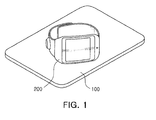
- FIG. 1 is a diagram illustrating an example of an application to which a wireless power transmitter according to an exemplary embodiment in the present disclosure is applied.
- reference numeral 100 indicates a wireless power transmitter and reference numeral 200 indicates a wireless power receiver.
- the wireless power transmitter 100 may wirelessly transmit power using a voltage input from an external power source.
- the wireless power transmitter 100 may include a transmitting coil for transmitting power wirelessly.
- the wireless power receiver 200 may wirelessly receive the power provided from the wireless power transmitter 100.
- the wireless power receiver 200 may include a receiving coil for receiving power wirelessly.
- the wireless power receiver 200 may be mounted in various electronic devices or may be implemented integrally with the electronic devices. Although a case in which the electronic device is a wearable device of a clock shape is illustrated in FIG. 1 , the electronic device may have various shapes such as glasses, and the like.
- the receiving coil of the wireless power receiver 200 may be positioned at various angles with respect to the transmitting coil of the wireless power transmitter 100. According to the related art, charging is smoothly performed only in a state in which the transmitting coil of the wireless power transmitter 100 and the receiving coil of the wireless power receiver 200 are parallel to each other. However, according to an exemplary embodiment in the present disclosure, the power may be smoothly transmitted and received wirelessly even in a case in which the receiving coil of the wireless power receiver 200 and the transmitting coil of the wireless power transmitter 100 are not parallel to each other, for example, in a case in which the receiving coil of the wireless power receiver 200 and the transmitting coil of the wireless power transmitter 100 maintain an angle of 90° as in the illustrated example.
- the power may be wirelessly transmitted and received even at various angles at which the receiving coil of the wireless power receiver 200 and the transmitting coil of the wireless power transmitter 100 are not perpendicular to each other.
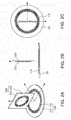
- FIGS. 2A through 2C are a perspective view, a side view, and a plan view of the transmitting coil of the wireless power transmitter 100 and the receiving coil of the wireless power receiver 200 which are disposed to be perpendicular to each other.
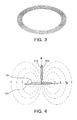
- the wireless power transmitter 100 may include a transmitting coil 110 and a transmitting core 120. Although the transmitting coil 110 is illustrated as one loop in FIG. 2 , the transmitting coil 110 may be provided to be wound several times as illustrated in FIG. 3 . Alternatively, the transmitting coil 110 may also be provided so as to be wound in a plurality of layers as illustrated in FIG. 6 .
- the transmitting core 120 may include a substrate or a magnetic transmitting core.
- the magnetic transmitting core may be formed of a material having a predetermined magnetism.
- the magnetic transmitting core may be formed of a resin material including metal powders.
- the magnetic transmitting core may be formed of a ferrite sheet (which may include NiZnCu/MnZn based metal), a sendust based metal, a permalloy based metal, an amorphous based magnetic body, or a combination thereof.
- the wireless power receiver 200 may also include a receiving coil 210 and a receiving core 220.
- the wireless power receiver 200 may also include the receiving coil 210 having various shapes and the receiving core 220 formed of various materials.
- FIGS. 2A-2C and 4 illustrate examples in which the wireless power receiver 200 is disposed in the center of the wireless power transmitter 100.
- a shown dotted line indicates a magnetic field transmitted from the wireless power transmitter 100, and in the case in which the wireless power receiver 200 is disposed as shown in FIGS. 2A-2C and 4 , the transmitted magnetic field may be parallel to the wireless power receiver 200 or may have a slight gradient with respect to the wireless power receiver 200. Therefore, the transmitted magnetic field may be hardly magnetically coupled or be very weakly coupled to the receiving coil 210 of the wireless power receiver 200.
- FIG. 5 illustrates an example in which the wireless power receiver 200 is disposed on the transmitting coil of the wireless power transmitter 100.
- the magnetic field transmitted from the wireless power transmitter 100 forms a kind of loop
- the magnetic field may pass through the receiving coil 210 of the wireless power receiver 200. Therefore, the transmitting coil 110 of the wireless power transmitter 100 and the receiving coil 210 of the wireless power receiver 200 may be magnetically coupled to each other.
- FIG. 6 is a cross-sectional view of the wireless power transmitter according to an exemplary embodiment in the present disclosure.
- the transmitting coil 110 of the wireless power transmitter 100 may include a plurality of layers.
- the transmitting coil 110 includes the plurality of layers, flux of the magnetic field transmitted from the transmitting coil 110 may become stronger and vertical directivity of the magnetic field may become stronger.
- the magnetic field transmitted from the wireless power transmitter 100 becomes stronger, the magnetic coupling in the receiving coil 210 of the wireless power receiver 200 may be more efficiently performed.
- the wireless power transmitter 100 may wirelessly transmit the power in an electromagnetic resonance mode through the transmitting coil 110.
- the transmitting coil 110 may have a value of about 10 ⁇ H or less at a frequency of 6. 78MHz.
- the transmitting coil 110 may be implemented in a spiral shape or a helical shape, and in the case in which the transmitting coil 110 is implemented in the spiral shape, a size of an internal diameter of the transmitting coil 110 may be larger than 20mm. In a case in which the size of the internal diameter of the transmitting coil 110 is increased, a degree of freedom of an arrangement of the wireless power receiver 200 may be improved.
- a size of an external diameter of the transmitting coil 110 may be larger than 45mm.
- a length of the transmitting core 120 may be equal to the diameter of the transmitting coil 110.
- the transmitting core 120 may be the magnetic transmitting core as described above, and the magnetic transmitting core may attract the magnetic field transmitted from the transmitting coil 110 to provide a stronger magnetic circulation effect.
- the transmitting core 120 may more strongly induce the magnetic field transmitted from the transmitting coil 110 and forming a predetermined loop, magnetic coupling property in the receiving coil 210 may be more improved.
- FIGS. 7 and 8 are cross-sectional views of the wireless power transmitter according to an exemplary embodiment in the present disclosure. As illustrated in FIGS. 7 and 8 , respectively, a length of the transmitting core 120 of the wireless power transmitter 100 according to an exemplary embodiment in the present disclosure may be larger than the diameter of the transmitting coil 110. That is, the transmitting core 120 of the wireless power transmitter 100 may be extended beyond the transmitting coil 110.
- extended distances L1 and L2 of the transmitting core 120 may be determined using the length of the receiving coil 210.
- the extended distance of the transmitting core 120 may be determined so as to be proportional to a length of a radius of the receiving coil 210.
- the transmitting core 120 may have a shortest distance from a magnetic average point of the transmitting coil 110 to the receiving coil 210 as a minimum extended distance of the transmitting core 120.
- the magnetic average point of the transmitting coil 110 is the center point between the two layers. More accurately, since three windings are provided on an upper layer of the transmitting coil 110 and four windings are provided on a lower layer of the transmitting coil 110, the magnetic average point may slightly lean to the lower layer from the center point between the two layers. In a case in which the transmitting coil 110 includes n layers having the winding turns which are vertically symmetrical with each other, the magnetic average point of the transmitting coil 110 may become n/2.
- the extended length L1 of the transmitting core 120 may be determined to correspond to a length at which a virtual line A extended from the magnetic average point of the transmitting coil 110 in a direction parallel to the transmitting core 120 and a virtual line connecting an arbitrary point of the virtual line A and a center point B of the receiving coil 210 form an angle of 45°.
- the receiving coil 210 may be positioned vertically above the transmitting coil 110.
- an end of the transmitting core 120 may be positioned to correspond to an intersection point between the virtual line A extended from the magnetic average point of the transmitting coil 110 in the direction parallel to the transmitting core 120 and a virtual line forming an angle of 45° with the virtual line A while passing through the center point B of the receiving coil wirelessly receiving power.
- the extended length L1 of the transmitting core 120 may be determined to correspond to the length at which the virtual line A extended from the magnetic average point and the virtual line extended from the center point B of the receiving coil 210 form the angle of 45°.
- the extended length L1 of the transmitting core 120 is determined to correspond to the angle formed by the virtual line extended from the center point B of the receiving coil 210 and the virtual line A extended from the magnetic average point, when the angle is increased, the extended length L1 may be decreased, and when the angle is decreased, the extended length L1 may be increased.
- the extended line L2 of the transmitting core 120 may be longer than the extended length L1 illustrated in FIG. 7 .
- the angle ⁇ may be 45° or less.
- Experimental data representing an effect according to the extended length of the transmitting core 120 may be represented by the following Table 1.
- Table 1 Angle ⁇ S21 Passive Low Power Resonator Efficiency 59 -10.9dB 0.081283 53.4 -10.4dB 0.091201 48.5 -10.2dB 0.095499 44.2 -9.8dB 0.104713
- the data in Table 1 is obtained by using a transmitting coil which is wound to form a single layer, wherein a thickness of a wire is 1.2mm.
- the transmitting coil 110 and the transmitting core 120 have the same size as each other as illustrated in FIG. 6 . That is, the extended length of the transmitting core is 0.
- S21 is a value derived from a relationship between an input power and an output power of an antenna. As the value of S21 closes to OdB, this means high performance. It may also be appreciated from data of S21 that as the extended length of the transmitting core 120 is increased, the high performance may be obtained.
- FIG. 9 is a graph illustrating efficiency depending on the angle formed by the virtual line extended from the magnetic average point and the virtual line extended from the center point of the receiving coil 210, corresponding to the data described above.
- the efficiency is high at an angle of 45°. That is, it may be seen that as the extended length of the transmitting core 120 is increased, the effect is also proportionally increased up to the angle of 45°, but the effect is similar in a case in which the transmitting core 120 is extended so that the angle is decreased to about 45° or less.
- the length of the transmitting core 120 may be more advantageous in a case in which it satisfies a condition as short as possible within the limits having a sufficient effect.
- the length of the transmitting core 120 may have a critical meaning as a minimum extended length when the angle is 45°.
- the wireless power transmitter 100 may further include a case 130.
- the case 130 may include a predetermined structure or visual means capable of marking a position of the wireless power receiver 200. That is, the case 130 may include a predetermined groove, mark, sign, or the like at a corresponding position so that the wireless power receiver 200 is held at the corresponding position of the transmitting coil 110.
- the case 130 may include a predetermined intaglio shape which corresponds to a portion of a shape of the corresponding wearable equipment or at which the wearable equipment may be held.
- the wireless power transmitter 100 may further include a magnetic body 140.
- the magnetic body 140 may be positioned inside the transmitting coil 110, so as to amplify flux or adjust directivity of the magnetic field transmitted from the transmitting coil 110.
- FIG. 10 is a diagram illustrating the configuration of a wireless power transmitter 100 according to an exemplary embodiment in the present disclosure, wherein the wireless power transmitter 100 according to an exemplary embodiment in the present disclosure may include the transmitting coil 110, the transmitting core 120, and the magnetic body 140.
- the wireless power transmitter 100 according to an exemplary embodiment in the present disclosure may include the transmitting coil 110, the transmitting core 120, and the magnetic body 140.
- dotted arrows may denote the flux of the magnetic field.
- the transmitting coil 110 may wirelessly transmit power. As described above, the transmitting coil 110 may transmit the power in the electromagnetic resonance mode.
- the transmitting coil 110 may have a value of about 10 ⁇ H or less at a frequency of 6.78MHz.
- the transmitting coil 110 may be implemented in a spiral shape or a helical shape. In the case in which the transmitting coil 110 is implemented in the spiral shape, the size of the internal diameter of the transmitting coil 110 may be larger than 20mm, as described above. In addition, the size of the external diameter of the transmitting coil 110 may be larger than 45mm.
- the transmitting core 120 may include a printed circuit board (PCB), a shielding sheet having an electromagnetic shielding function, a magnetic core, or the like.
- the transmitting coil 110 may be provided on the PCB in a PCB pattern.
- the PCB which is the transmitting core 120, may also include the plurality of layers.
- the magnetic body 140 may be disposed inwardly from the internal diameter of the transmitting coil 110. As shown in FIG. 10 , the magnetic body 140 may have an end surface of a curved shape. That is, the wireless power transmitter according to an exemplary embodiment in the present disclosure shown in FIG. 10 may allow a path of the magnetic field to be formed in a direction of a virtual line which is normal to a surface of the magnetic body 140 of the coil by disposing the magnetic body 140 having the end surface of the curved shape inwardly from the internal diameter of the transmitting coil 100. Therefore, the wireless power transmitter according to an exemplary embodiment in the present disclosure may allow the receiving coil 210 (see FIGS. 6 through 8 ) positioned in a direction perpendicular to a substrate 120 as illustrated in FIG. 6 as well as the receiving coil positioned in a direction parallel to the substrate 120 on which the transmitting coil 110 is disposed to wirelessly receive power.
- the receiving coil 210 see FIGS. 6 through 8
- FIG. 11 is a diagram illustrating the configuration of the wireless power transmitter according to an exemplary embodiment in the present disclosure, wherein the wireless power transmitter according to an exemplary embodiment in the present disclosure may include the transmitting coil 110, the substrate 120, and the magnetic body 141.
- the wireless power transmitter according to an exemplary embodiment in the present disclosure may include the transmitting coil 110, the substrate 120, and the magnetic body 141.
- dotted arrows may denote the flux of the magnetic field.
- the wireless power transmitter according to an exemplary embodiment in the present disclosure illustrated in FIG. 11 is the same as the wireless power transmitter according to an exemplary embodiment in the present disclosure illustrated in FIG. 10 , except that the end surface of the magnetic body 141 has a polygonal shape. Similar to that described in FIG. 10 , the wireless power transmitter according to an exemplary embodiment in the present disclosure may change a direction of the magnetic field by disposing the magnetic body 141 inwardly from the internal diameter of the transmitting coil 110, and may allow the receiving coil positioned in the direction perpendicular to the transmitting core 120 as well as the receiving coil positioned in the direction parallel to the transmitting core 120 to smoothly receive power wirelessly.
- the magnetic body 140 and 141 may be implemented in any shape as long as the virtual line which is normal to the surface of the magnetic body forms an acute angle with the transmitting core 120.
- the wireless power transmitter according to an exemplary embodiment in the present disclosure illustrated in FIGS. 10 and 11 may further include the case 130, similarly to those shown in FIGS. 6 through 8 .
- FIG. 12 illustrates a wireless power transmitter according to an exemplary embodiment in the present disclosure and illustrates a case in which the magnetic body is applied to the wireless power transmitter illustrated in FIGS. 6 through 8 .
- a semispherical magnetic body 140 is illustrated. Since the semispherical magnetic body 140 may induce the magnetic field to be transmitted in a direction which is perpendicular to a semispherical surface, that is, a virtual line direction which is normal to a surface of the magnetic body 140, the magnetic field transmitted from the transmitting coil 110 may further lean in a direction of the receiving coil 210. As described above, the magnetic body 140 may have various shapes such as a polygonal shape.
- FIG. 13 is a diagram showing of some elements of the wireless power transmitter according to an exemplary embodiment in the present disclosure, wherein the wireless power transmitter according to an exemplary embodiment in the present disclosure may include a power source unit 150, an amplifying unit 160, and the transmitting coil 110.
- FIG. 13 illustrates a case in which the transmitting coil 110 includes one coil, the transmitting coil 110 may include two coils, that is, a first coil to which radio frequency (RF) power having high frequency is applied from the amplifying unit 160 and a second coil disposed to be spaced apart from the first coil and transmitting the radio frequency power, which is induced from the first coil in an electromagnetic resonance mode.
- RF radio frequency
- the power source unit 150 may supply power to the amplifying unit 160.
- the power source unit 150 may include an analog-digital (AD) converter that converts alternating current power applied from an external power source into direct current power and a direct current (DC)-to-DC converter that varies magnitude of the direct current power.
- AD analog-digital
- DC direct current
- the amplifying unit 160 may amplify the power supplied from the power source unit 150 and supply the amplified power to the transmitting coil 110.
- the amplifying unit 160 may include a power amplifier, an oscillator, and the like.
- the transmitting coil 110 may wirelessly transmit power.
- the transmitting coil 110 may transmit power in an electromagnetic resonance mode.
- the wireless power transmitter may efficiently transmit the power wirelessly to various portable devices.
- the receiving coil of the electronic device receiving the power wirelessly and/or the transmitting coil of the wireless power transmitter transmitting the power wirelessly may be more freely designed.
Landscapes
- Engineering & Computer Science (AREA)
- Power Engineering (AREA)
- Computer Networks & Wireless Communication (AREA)
- Signal Processing (AREA)
- Charge And Discharge Circuits For Batteries Or The Like (AREA)
- Near-Field Transmission Systems (AREA)
Abstract
Description
- This application claims priority to, and the benefit of, Korean Patent Application Nos.
10-2014-0059266 filed on May 16, 2014 10-2014-0155887 filed on November 11, 2014 - This application relates to a wireless power transmitter.
- In accordance with the development of wireless technology, various applications of the wireless technology range from the transmission of data to the transmission of power. Recently, a type of wireless power transmission technology allowing for the transmission of power to various portable devices in a non-contact manner has come to prominence.
- However, in a wireless power transmission technology according to the related art, there are difficulties in smoothly performing a charging. That is, there are difficulties in wirelessly transmitting and receiving power, such as a limited transmission distance, a restrictive positional relationship between a transmitter and a receiver, and the like. Therefore, wireless power transmissions and receptions may only be enabled if a wireless power receiver is positioned in a specific location or in a specific direction with respect to a wireless power transmitter.
- Meanwhile, a wireless power transmission and reception technology has been applied to various portable devices. Therefore, a demand has increased for the wireless power transmission technology with an enhanced charging efficiency in many different environments.
- (Patent Document 1) Japanese Patent Laid-Open Publication No.
2013-062987 - An exemplary embodiment in the present disclosure may provide a wireless power transmitter capable of efficiently transmitting power wirelessly to various portable devices.
- According to an exemplary embodiment in the present disclosure, a wireless power transmitter may includes: a transmitting core; a transmitting coil provided on the transmitting core and transmitting power wirelessly; and a magnetic body provided on the transmitting core and allowing a virtual line which is normal to a surface of the magnetic body to form an acute angle with the transmitting core.
- According to another exemplary embodiment in the present disclosure, a wireless power transmitter may include: a transmitting coil transmitting power wirelessly; and a magnetic body disposed in a central portion of the transmitting coil and allowing a virtual line which is normal to a surface of the magnetic body to form an acute angle with the transmitting coil.
- The above and other aspects, features and advantages of the present disclosure will be more clearly understood from the following detailed description taken in conjunction with the accompanying drawings, in which:
-
FIG. 1 is a diagram illustrating an example of an application to which a wireless power transmitter according to an exemplary embodiment in the present disclosure is applied; -
FIGS. 2A through 2C are a perspective view, a side view, and a plan view of a transmitting coil of a wireless power transmitter and a receiving coil of a wireless power receiver which are disposed to be perpendicular to each other; -
FIG. 3 is a diagram illustrating an example of a coil used in the wireless power transmitter or the wireless power receiver; -
FIGS. 4 and5 are diagrams illustrating a magnetic coupling depending on positions of the wireless power receiver and the wireless power transmitter; -
FIGS. 6 through 8 are diagrams illustrating the configuration of a wireless power transmitter according to an exemplary embodiment in the present disclosure; -
FIG. 9 is a graph illustrating efficiency depending on an angle formed by a virtual line extended from a magnetic average point and a virtual line extended from a center point of a receiving coil; -
FIGS. 10 through 12 are diagrams illustrating the configuration of a wireless power transmitter according to an exemplary embodiment in the present disclosure; and -
FIG. 13 is a diagram showing some elements of the wireless power transmitter according to an exemplary embodiment in the present disclosure. - Exemplary embodiments in the present disclosure will now be described in detail with reference to the accompanying drawings.
- The disclosure may, however, be embodied in many different forms and should not be construed as being limited to the embodiments set forth herein. Rather, these embodiments are provided so that this disclosure will be thorough and complete, and will fully convey the scope of the disclosure to those skilled in the art.
-
FIG. 1 is a diagram illustrating an example of an application to which a wireless power transmitter according to an exemplary embodiment in the present disclosure is applied. InFIG. 1 ,reference numeral 100 indicates a wireless power transmitter andreference numeral 200 indicates a wireless power receiver. - The
wireless power transmitter 100 may wirelessly transmit power using a voltage input from an external power source. Thewireless power transmitter 100 may include a transmitting coil for transmitting power wirelessly. - The
wireless power receiver 200 may wirelessly receive the power provided from thewireless power transmitter 100. Thewireless power receiver 200 may include a receiving coil for receiving power wirelessly. Thewireless power receiver 200 may be mounted in various electronic devices or may be implemented integrally with the electronic devices. Although a case in which the electronic device is a wearable device of a clock shape is illustrated inFIG. 1 , the electronic device may have various shapes such as glasses, and the like. - The receiving coil of the
wireless power receiver 200 may be positioned at various angles with respect to the transmitting coil of thewireless power transmitter 100. According to the related art, charging is smoothly performed only in a state in which the transmitting coil of thewireless power transmitter 100 and the receiving coil of thewireless power receiver 200 are parallel to each other. However, according to an exemplary embodiment in the present disclosure, the power may be smoothly transmitted and received wirelessly even in a case in which the receiving coil of thewireless power receiver 200 and the transmitting coil of thewireless power transmitter 100 are not parallel to each other, for example, in a case in which the receiving coil of thewireless power receiver 200 and the transmitting coil of thewireless power transmitter 100 maintain an angle of 90° as in the illustrated example. - Hereinafter, a case in which the receiving coil of the
wireless power receiver 200 and the transmitting coil of thewireless power transmitter 100 are disposed to be perpendicular to each other will be described by way of example, but according to exemplary embodiments described below, the power may be wirelessly transmitted and received even at various angles at which the receiving coil of thewireless power receiver 200 and the transmitting coil of thewireless power transmitter 100 are not perpendicular to each other. -
FIGS. 2A through 2C are a perspective view, a side view, and a plan view of the transmitting coil of thewireless power transmitter 100 and the receiving coil of thewireless power receiver 200 which are disposed to be perpendicular to each other. - The
wireless power transmitter 100 may include a transmittingcoil 110 and a transmittingcore 120. Although the transmittingcoil 110 is illustrated as one loop inFIG. 2 , the transmittingcoil 110 may be provided to be wound several times as illustrated inFIG. 3 . Alternatively, the transmittingcoil 110 may also be provided so as to be wound in a plurality of layers as illustrated inFIG. 6 . - The transmitting
core 120 may include a substrate or a magnetic transmitting core. The magnetic transmitting core may be formed of a material having a predetermined magnetism. For example, the magnetic transmitting core may be formed of a resin material including metal powders. As another example, the magnetic transmitting core may be formed of a ferrite sheet (which may include NiZnCu/MnZn based metal), a sendust based metal, a permalloy based metal, an amorphous based magnetic body, or a combination thereof. - The
wireless power receiver 200 may also include areceiving coil 210 and a receivingcore 220. In addition, as described above, thewireless power receiver 200 may also include thereceiving coil 210 having various shapes and thereceiving core 220 formed of various materials. -
FIGS. 2A-2C and4 illustrate examples in which thewireless power receiver 200 is disposed in the center of thewireless power transmitter 100. - A shown dotted line indicates a magnetic field transmitted from the
wireless power transmitter 100, and in the case in which thewireless power receiver 200 is disposed as shown inFIGS. 2A-2C and4 , the transmitted magnetic field may be parallel to thewireless power receiver 200 or may have a slight gradient with respect to thewireless power receiver 200. Therefore, the transmitted magnetic field may be hardly magnetically coupled or be very weakly coupled to the receivingcoil 210 of thewireless power receiver 200. -
FIG. 5 illustrates an example in which thewireless power receiver 200 is disposed on the transmitting coil of thewireless power transmitter 100. - As shown, since the magnetic field transmitted from the
wireless power transmitter 100 forms a kind of loop, the magnetic field may pass through thereceiving coil 210 of thewireless power receiver 200. Therefore, the transmittingcoil 110 of thewireless power transmitter 100 and thereceiving coil 210 of thewireless power receiver 200 may be magnetically coupled to each other. - However, even in the case of the example illustrated in
FIG. 5 , since strength and efficiency of the magnetic coupling are merely in a low state, it is difficult to achieve efficient wireless charging in the case of the example illustrated inFIG. 5 . - Therefore, hereinafter, various exemplary embodiments in the present disclosure will be described with reference to
FIGS. 6 through 13 . -
FIG. 6 is a cross-sectional view of the wireless power transmitter according to an exemplary embodiment in the present disclosure. - As shown in
FIG. 6 , the transmittingcoil 110 of thewireless power transmitter 100 may include a plurality of layers. In the case in which the transmittingcoil 110 includes the plurality of layers, flux of the magnetic field transmitted from the transmittingcoil 110 may become stronger and vertical directivity of the magnetic field may become stronger. - Therefore, since the magnetic field transmitted from the
wireless power transmitter 100 becomes stronger, the magnetic coupling in the receivingcoil 210 of thewireless power receiver 200 may be more efficiently performed. - In this case, the
wireless power transmitter 100 may wirelessly transmit the power in an electromagnetic resonance mode through the transmittingcoil 110. In this case, the transmittingcoil 110 may have a value of about 10µH or less at a frequency of 6. 78MHz. In addition, the transmittingcoil 110 may be implemented in a spiral shape or a helical shape, and in the case in which the transmittingcoil 110 is implemented in the spiral shape, a size of an internal diameter of the transmittingcoil 110 may be larger than 20mm. In a case in which the size of the internal diameter of the transmittingcoil 110 is increased, a degree of freedom of an arrangement of thewireless power receiver 200 may be improved. Alternatively, a size of an external diameter of the transmittingcoil 110 may be larger than 45mm. - As illustrated in
FIG. 6 , in the wireless power transmitter according to an exemplary embodiment in the present disclosure, a length of the transmittingcore 120 may be equal to the diameter of the transmittingcoil 110. The transmittingcore 120 may be the magnetic transmitting core as described above, and the magnetic transmitting core may attract the magnetic field transmitted from the transmittingcoil 110 to provide a stronger magnetic circulation effect. - Meanwhile, in a case in which the transmitting
core 120 is extended to be longer than the transmittingcoil 110, the transmittingcore 120 may more strongly induce the magnetic field transmitted from the transmittingcoil 110 and forming a predetermined loop, magnetic coupling property in the receivingcoil 210 may be more improved. -
FIGS. 7 and 8 are cross-sectional views of the wireless power transmitter according to an exemplary embodiment in the present disclosure. As illustrated inFIGS. 7 and 8 , respectively, a length of the transmittingcore 120 of thewireless power transmitter 100 according to an exemplary embodiment in the present disclosure may be larger than the diameter of the transmittingcoil 110. That is, the transmittingcore 120 of thewireless power transmitter 100 may be extended beyond the transmittingcoil 110. - According to an exemplary embodiment, extended distances L1 and L2 of the transmitting
core 120 may be determined using the length of the receivingcoil 210. For example, in a case in which the receivingcoil 210 is vertically positioned on thewireless power transmitter 100, the extended distance of the transmittingcore 120 may be determined so as to be proportional to a length of a radius of the receivingcoil 210. - According to an exemplary embodiment, the transmitting
core 120 may have a shortest distance from a magnetic average point of the transmittingcoil 110 to the receivingcoil 210 as a minimum extended distance of the transmittingcore 120. - In an illustrated example, since the transmitting
coil 110 includes the two layers, it may be appreciated that the magnetic average point of the transmittingcoil 110 is the center point between the two layers. More accurately, since three windings are provided on an upper layer of the transmittingcoil 110 and four windings are provided on a lower layer of the transmittingcoil 110, the magnetic average point may slightly lean to the lower layer from the center point between the two layers. In a case in which the transmittingcoil 110 includes n layers having the winding turns which are vertically symmetrical with each other, the magnetic average point of the transmittingcoil 110 may become n/2. - As shown in
FIG. 7 , the extended length L1 of the transmittingcore 120 may be determined to correspond to a length at which a virtual line A extended from the magnetic average point of the transmittingcoil 110 in a direction parallel to the transmittingcore 120 and a virtual line connecting an arbitrary point of the virtual line A and a center point B of the receivingcoil 210 form an angle of 45°. In this case, the receivingcoil 210 may be positioned vertically above the transmittingcoil 110. In other words, an end of the transmittingcore 120 may be positioned to correspond to an intersection point between the virtual line A extended from the magnetic average point of the transmittingcoil 110 in the direction parallel to the transmittingcore 120 and a virtual line forming an angle of 45° with the virtual line A while passing through the center point B of the receiving coil wirelessly receiving power. - The extended length L1 of the transmitting
core 120 may be determined to correspond to the length at which the virtual line A extended from the magnetic average point and the virtual line extended from the center point B of the receivingcoil 210 form the angle of 45°. - Since the extended length L1 of the transmitting
core 120 is determined to correspond to the angle formed by the virtual line extended from the center point B of the receivingcoil 210 and the virtual line A extended from the magnetic average point, when the angle is increased, the extended length L1 may be decreased, and when the angle is decreased, the extended length L1 may be increased. - As illustrated in
FIG. 8 , the extended line L2 of the transmittingcore 120 may be longer than the extended length L1 illustrated inFIG. 7 . In a case of an exemplary embodiment illustrated inFIG. 8 , the angle θ may be 45° or less. - Experimental data representing an effect according to the extended length of the transmitting
core 120 may be represented by the following Table 1.[Table 1] Angle θ S21 Passive Low Power Resonator Efficiency 59 -10.9dB 0.081283 53.4 -10.4dB 0.091201 48.5 -10.2dB 0.095499 44.2 -9.8dB 0.104713 - The data in Table 1 is obtained by using a transmitting coil which is wound to form a single layer, wherein a thickness of a wire is 1.2mm.
- In a case in which the angle θ is 59°, the transmitting
coil 110 and the transmittingcore 120 have the same size as each other as illustrated inFIG. 6 . That is, the extended length of the transmitting core is 0. - It may be appreciated from Table 1 that as the angle θ is reduced, the length of the transmitting
core 120 is increased and resonance performance is improved, accordingly. In addition, S21 is a value derived from a relationship between an input power and an output power of an antenna. As the value of S21 closes to OdB, this means high performance. It may also be appreciated from data of S21 that as the extended length of the transmittingcore 120 is increased, the high performance may be obtained. - A graph of
FIG. 9 including the data of Table 1 described above may be obtained.FIG. 9 is a graph illustrating efficiency depending on the angle formed by the virtual line extended from the magnetic average point and the virtual line extended from the center point of the receivingcoil 210, corresponding to the data described above. - As seen from the data, it may be seen that the efficiency is high at an angle of 45°. That is, it may be seen that as the extended length of the transmitting
core 120 is increased, the effect is also proportionally increased up to the angle of 45°, but the effect is similar in a case in which the transmittingcore 120 is extended so that the angle is decreased to about 45° or less. - That is, in a case in which the length of the transmitting
core 120 is excessively long, there is a problem that the size of thewireless power transmitter 100 is inevitably increased. Therefore, the length of the transmittingcore 120 may be more advantageous in a case in which it satisfies a condition as short as possible within the limits having a sufficient effect. Thus, it may be appreciated that the length of the transmittingcore 120 may have a critical meaning as a minimum extended length when the angle is 45°. - According to an exemplary embodiment, the
wireless power transmitter 100 may further include acase 130. - According to an exemplary embodiment, the
case 130 may include a predetermined structure or visual means capable of marking a position of thewireless power receiver 200. That is, thecase 130 may include a predetermined groove, mark, sign, or the like at a corresponding position so that thewireless power receiver 200 is held at the corresponding position of the transmittingcoil 110. For example, in a case in which thewireless power receiver 200 is a wearable equipment of a watch shape, thecase 130 may include a predetermined intaglio shape which corresponds to a portion of a shape of the corresponding wearable equipment or at which the wearable equipment may be held. - As illustrated in
FIGS. 10 through 12 , thewireless power transmitter 100 according to an exemplary embodiment in the present disclosure may further include amagnetic body 140. - The
magnetic body 140 may be positioned inside the transmittingcoil 110, so as to amplify flux or adjust directivity of the magnetic field transmitted from the transmittingcoil 110. -
FIG. 10 is a diagram illustrating the configuration of awireless power transmitter 100 according to an exemplary embodiment in the present disclosure, wherein thewireless power transmitter 100 according to an exemplary embodiment in the present disclosure may include the transmittingcoil 110, the transmittingcore 120, and themagnetic body 140. InFIG. 11 , dotted arrows may denote the flux of the magnetic field. - The transmitting
coil 110 may wirelessly transmit power. As described above, the transmittingcoil 110 may transmit the power in the electromagnetic resonance mode. The transmittingcoil 110 may have a value of about 10µH or less at a frequency of 6.78MHz. In addition, the transmittingcoil 110 may be implemented in a spiral shape or a helical shape. In the case in which the transmittingcoil 110 is implemented in the spiral shape, the size of the internal diameter of the transmittingcoil 110 may be larger than 20mm, as described above. In addition, the size of the external diameter of the transmittingcoil 110 may be larger than 45mm. - The transmitting
core 120 may include a printed circuit board (PCB), a shielding sheet having an electromagnetic shielding function, a magnetic core, or the like. In a case in which the transmittingcore 120 includes the PCB, the transmittingcoil 110 may be provided on the PCB in a PCB pattern. In addition, in order for the transmittingcoil 110 to include a plurality of layers, the PCB, which is the transmittingcore 120, may also include the plurality of layers. - The
magnetic body 140 may be disposed inwardly from the internal diameter of the transmittingcoil 110. As shown inFIG. 10 , themagnetic body 140 may have an end surface of a curved shape. That is, the wireless power transmitter according to an exemplary embodiment in the present disclosure shown inFIG. 10 may allow a path of the magnetic field to be formed in a direction of a virtual line which is normal to a surface of themagnetic body 140 of the coil by disposing themagnetic body 140 having the end surface of the curved shape inwardly from the internal diameter of the transmittingcoil 100. Therefore, the wireless power transmitter according to an exemplary embodiment in the present disclosure may allow the receiving coil 210 (seeFIGS. 6 through 8 ) positioned in a direction perpendicular to asubstrate 120 as illustrated inFIG. 6 as well as the receiving coil positioned in a direction parallel to thesubstrate 120 on which the transmittingcoil 110 is disposed to wirelessly receive power. -
FIG. 11 is a diagram illustrating the configuration of the wireless power transmitter according to an exemplary embodiment in the present disclosure, wherein the wireless power transmitter according to an exemplary embodiment in the present disclosure may include the transmittingcoil 110, thesubstrate 120, and themagnetic body 141. InFIG. 11 , dotted arrows may denote the flux of the magnetic field. - The wireless power transmitter according to an exemplary embodiment in the present disclosure illustrated in
FIG. 11 is the same as the wireless power transmitter according to an exemplary embodiment in the present disclosure illustrated inFIG. 10 , except that the end surface of themagnetic body 141 has a polygonal shape. Similar to that described inFIG. 10 , the wireless power transmitter according to an exemplary embodiment in the present disclosure may change a direction of the magnetic field by disposing themagnetic body 141 inwardly from the internal diameter of the transmittingcoil 110, and may allow the receiving coil positioned in the direction perpendicular to the transmittingcore 120 as well as the receiving coil positioned in the direction parallel to the transmittingcore 120 to smoothly receive power wirelessly. - Although the cases in which the
magnetic bodies FIGS. 10 and11 , the magnetic body may be implemented in any shape as long as the virtual line which is normal to the surface of the magnetic body forms an acute angle with the transmittingcore 120. - In addition, although not illustrated in
FIGS. 10 and11 , the wireless power transmitter according to an exemplary embodiment in the present disclosure illustrated inFIGS. 10 and11 may further include thecase 130, similarly to those shown inFIGS. 6 through 8 . -
FIG. 12 illustrates a wireless power transmitter according to an exemplary embodiment in the present disclosure and illustrates a case in which the magnetic body is applied to the wireless power transmitter illustrated inFIGS. 6 through 8 . - In the illustrated example, a semispherical
magnetic body 140 is illustrated. Since the semisphericalmagnetic body 140 may induce the magnetic field to be transmitted in a direction which is perpendicular to a semispherical surface, that is, a virtual line direction which is normal to a surface of themagnetic body 140, the magnetic field transmitted from the transmittingcoil 110 may further lean in a direction of the receivingcoil 210. As described above, themagnetic body 140 may have various shapes such as a polygonal shape. -
FIG. 13 is a diagram showing of some elements of the wireless power transmitter according to an exemplary embodiment in the present disclosure, wherein the wireless power transmitter according to an exemplary embodiment in the present disclosure may include apower source unit 150, an amplifyingunit 160, and the transmittingcoil 110. AlthoughFIG. 13 illustrates a case in which the transmittingcoil 110 includes one coil, the transmittingcoil 110 may include two coils, that is, a first coil to which radio frequency (RF) power having high frequency is applied from the amplifyingunit 160 and a second coil disposed to be spaced apart from the first coil and transmitting the radio frequency power, which is induced from the first coil in an electromagnetic resonance mode. - The
power source unit 150 may supply power to theamplifying unit 160. Thepower source unit 150 may include an analog-digital (AD) converter that converts alternating current power applied from an external power source into direct current power and a direct current (DC)-to-DC converter that varies magnitude of the direct current power. - The amplifying
unit 160 may amplify the power supplied from thepower source unit 150 and supply the amplified power to the transmittingcoil 110. The amplifyingunit 160 may include a power amplifier, an oscillator, and the like. - The transmitting
coil 110 may wirelessly transmit power. In this case, the transmittingcoil 110 may transmit power in an electromagnetic resonance mode. - As set forth above, according to exemplary embodiments in the present disclosure, the wireless power transmitter may efficiently transmit the power wirelessly to various portable devices. In addition, by using the wireless power transmitter according to an exemplary embodiment in the present disclosure, the receiving coil of the electronic device receiving the power wirelessly and/or the transmitting coil of the wireless power transmitter transmitting the power wirelessly may be more freely designed.
- While exemplary embodiments have been shown and described above, it will be apparent to those skilled in the art that modifications and variations could be made without departing from the scope of the present invention as defined by the appended claims.
Claims (15)
- A wireless power transmitter comprising:a transmitting core;a transmitting coil provided on the transmitting core to transmit power wirelessly; anda magnetic body provided on the transmitting core and allowing a virtual line which is normal to a surface of the magnetic body to form an acute angle with the transmitting core.
- The wireless power transmitter of claim 1, wherein the transmitting core is one of a printed circuit board, a shielding sheet having an electromagnetic field shielding function, and a magnetic core.
- The wireless power transmitter of claim 1, wherein the transmitting coil has a spiral shape or a helical shape.
- The wireless power transmitter of claim 1, wherein the transmitting coil includes a plurality of layers.
- The wireless power transmitter of claim 1, wherein the transmitting coil has inductance of 10µH or less at a frequency of 6.78MHz.
- The wireless power transmitter of claim 1, wherein the magnetic body is disposed in a central portion of the transmitting coil.
- The wireless power transmitter of claim 1, wherein the magnetic body has a semispherical shape or a polygonal shape.
- The wireless power transmitter of claim 1, wherein the transmitting core is extended beyond the transmitting coil.
- The wireless power transmitter of claim 8, wherein an end of the transmitting core is positioned to correspond to an intersection point between a virtual line extended from a magnetic average point of the transmitting coil in a direction parallel to the transmitting core and a virtual line forming an angle of 45° with the virtual line while passing through a center point of the receiving coil wirelessly receiving power.
- The wireless power transmitter of claim 1, further comprising a case disposed on the transmitting coil and the magnetic body.
- The wireless power transmitter of claim 1, further comprising:a power source unit receiving power from an external power source to output supply power; andan amplifying unit amplifying the supply power to supply the amplified power to the transmitting coil.
- The wireless power transmitter of claim 11, wherein the transmitting coil includes:a first coil to which the amplified power is applied; anda second coil disposed to be spaced apart from the first coil and transmitting the amplified power induced from the first coil in an electromagnetic resonance mode.
- A wireless power transmitter comprising:a transmitting coil transmitting power wirelessly; anda magnetic body disposed in a central portion of the transmitting coil and allowing a virtual line which is normal to a surface of the magnetic body to form an acute angle with the transmitting core.
- The wireless power transmitter of claim 13, wherein the transmitting coil has inductance of 10µH or less at a frequency of 6.78MHz.
- The wireless power transmitter of claim 13, wherein the magnetic body has a semispherical shape or a polygonal shape.
Applications Claiming Priority (2)
| Application Number | Priority Date | Filing Date | Title |
|---|---|---|---|
| KR20140059266 | 2014-05-16 | ||
| KR1020140155887A KR101719875B1 (en) | 2014-05-16 | 2014-11-11 | Wireless charging system |
Publications (2)
| Publication Number | Publication Date |
|---|---|
| EP2945255A1 true EP2945255A1 (en) | 2015-11-18 |
| EP2945255B1 EP2945255B1 (en) | 2018-12-05 |
Family
ID=53059023
Family Applications (1)
| Application Number | Title | Priority Date | Filing Date |
|---|---|---|---|
| EP15167525.3A Active EP2945255B1 (en) | 2014-05-16 | 2015-05-13 | Wireless power transmitter |
Country Status (3)
| Country | Link |
|---|---|
| US (1) | US9831685B2 (en) |
| EP (1) | EP2945255B1 (en) |
| CN (1) | CN105099000B (en) |
Cited By (2)
| Publication number | Priority date | Publication date | Assignee | Title |
|---|---|---|---|---|
| WO2017051821A1 (en) * | 2015-09-24 | 2017-03-30 | 日東電工株式会社 | Power reception/feeding device |
| CN116317196A (en) * | 2023-03-23 | 2023-06-23 | 哈尔滨工业大学 | An embedded magnetic coupling mechanism and its power supply system applied to wireless power supply of automobile seat motors |
Families Citing this family (31)
| Publication number | Priority date | Publication date | Assignee | Title |
|---|---|---|---|---|
| JP6607007B2 (en) * | 2015-12-01 | 2019-11-20 | 株式会社Ihi | Coil device |
| DE102016209871A1 (en) | 2016-06-06 | 2017-12-07 | Robert Bosch Gmbh | Punching device and method for punching a lumen and implanting an implant device |
| CN108242329A (en) * | 2016-12-27 | 2018-07-03 | 中国科学院沈阳自动化研究所 | A non-contact charging coil |
| DE102018201030B4 (en) | 2018-01-24 | 2025-10-16 | Kardion Gmbh | Magnetic dome element with magnetic bearing function |
| DE102018206724A1 (en) | 2018-05-02 | 2019-11-07 | Kardion Gmbh | Energy transmission system and method for wireless energy transmission |
| DE102018206727A1 (en) | 2018-05-02 | 2019-11-07 | Kardion Gmbh | Energy transmission system and receiving unit for wireless transcutaneous energy transmission |
| DE102018206731A1 (en) | 2018-05-02 | 2019-11-07 | Kardion Gmbh | Device for inductive energy transmission in a human body and use of the device |
| DE102018206725A1 (en) | 2018-05-02 | 2019-11-07 | Kardion Gmbh | Receiving unit, transmitting unit, energy transmission system and method for wireless energy transmission |
| DE102018206750A1 (en) | 2018-05-02 | 2019-11-07 | Kardion Gmbh | Device for inductive energy transfer into a human body and its use |
| DE102018206754A1 (en) | 2018-05-02 | 2019-11-07 | Kardion Gmbh | Method and device for determining the temperature at a surface and use of the method |
| DE102018208555A1 (en) | 2018-05-30 | 2019-12-05 | Kardion Gmbh | Apparatus for anchoring a cardiac assist system in a blood vessel, method of operation, and method of making a device and cardiac assist system |
| US11239709B2 (en) | 2020-04-30 | 2022-02-01 | Nucurrent, Inc. | Operating frequency based power level altering in extended range wireless power transmitters |
| US11476722B2 (en) | 2020-04-30 | 2022-10-18 | Nucurrent, Inc. | Precision power level control for extended range wireless power transfer |
| US11310934B2 (en) | 2020-04-30 | 2022-04-19 | Nucurrent, Inc. | Multi-channel cooling for extended distance wireless power transmitter |
| US11482890B2 (en) | 2020-04-30 | 2022-10-25 | Nucurrent, Inc. | Surface mountable wireless power transmitter for transmission at extended range |
| US11699551B2 (en) * | 2020-11-05 | 2023-07-11 | Kardion Gmbh | Device for inductive energy transmission in a human body and use of the device |
| US11637459B2 (en) * | 2020-12-23 | 2023-04-25 | Nucurrent, Inc. | Wireless power transmitters for transmitting power at extended separation distances utilizing T-Core shielding |
| US11476711B2 (en) * | 2020-12-23 | 2022-10-18 | Nucurrent, Inc. | Wireless power transmitters and associated base stations for through-structure charging |
| US11757311B2 (en) | 2020-12-23 | 2023-09-12 | Nucurrent, Inc. | Wireless power transmitters and associated base stations for transmitting power at extended separation distances |
| US11387674B1 (en) | 2020-12-23 | 2022-07-12 | Nucurrent, Inc. | Wireless power transmitters for transmitting power at extended separation distances utilizing concave shielding |
| US11387684B1 (en) | 2020-12-23 | 2022-07-12 | Nucurrent, Inc. | Wireless power transmitters and associated base stations for transmitting power at extended separation distances |
| US20220255360A1 (en) * | 2021-02-10 | 2022-08-11 | Energous Corporation | Battery module configured to enable smart rings of various sizes to have radio-frequency wireless charging capabilities, and a wireless charger device to wirelessly deliver power to the smart rings |
| US11539247B2 (en) | 2021-04-30 | 2022-12-27 | Nucurrent, Inc. | Power capability detection in precision power level control systems for wireless power transmission |
| US11942799B2 (en) | 2021-04-30 | 2024-03-26 | Nucurrent, Inc. | False notification suppression in wireless power transfer system |
| US11482891B1 (en) | 2021-04-20 | 2022-10-25 | Nucurrent, Inc. | Timing verification in precision power level control systems for wireless power transmission |
| US11791667B2 (en) | 2021-04-30 | 2023-10-17 | Nucurrent, Inc. | Power capability detection for wireless power transmission based on receiver power request |
| US11532956B2 (en) | 2021-04-30 | 2022-12-20 | Nucurrent, Inc. | Power capability detection with verification load in power level control systems for wireless power transmission |
| US20220352755A1 (en) * | 2021-04-30 | 2022-11-03 | Nucurrent, Inc. | Wirelessly Powered Battery Pack For Retrofit In Battery Powered Devices |
| US12132325B2 (en) | 2021-10-12 | 2024-10-29 | Nucurrent, Inc. | Wireless power transmitter with removable magnetic connector panel |
| US11967830B2 (en) | 2021-10-12 | 2024-04-23 | Nucurrent, Inc. | Wireless power transmitters for transmitting power at extended separation distances with magnetic connectors |
| US11637448B1 (en) | 2021-10-12 | 2023-04-25 | Nucurrent, Inc. | Wireless power transmitter with removable magnetic connector panel for vehicular use |
Citations (5)
| Publication number | Priority date | Publication date | Assignee | Title |
|---|---|---|---|---|
| US20120286584A1 (en) * | 2009-11-04 | 2012-11-15 | Korea Electrotechnology Research Institute | Space-adaptive wireless power transfer system and method using evanescent field resonance |
| WO2013038783A2 (en) * | 2011-09-14 | 2013-03-21 | Kabushiki Kaisha Toshiba | Wireless power transmission device and method thereof |
| JP5286445B1 (en) * | 2012-12-28 | 2013-09-11 | 株式会社日立パワーソリューションズ | Wireless power feeder for electric mobile body |
| WO2013142720A1 (en) * | 2012-03-21 | 2013-09-26 | Mojo Mobility, Inc. | Systems and methods for wireless power transfer |
| US20130328407A1 (en) * | 2012-06-08 | 2013-12-12 | Canon Kabushiki Kaisha | Wireless power transmission apparatus, wireless power transmission system, and wireless communication apparatus |
Family Cites Families (11)
| Publication number | Priority date | Publication date | Assignee | Title |
|---|---|---|---|---|
| JP2002110437A (en) * | 2000-09-29 | 2002-04-12 | Toko Inc | Power supply |
| JP5381011B2 (en) * | 2008-10-20 | 2014-01-08 | トヨタ自動車株式会社 | Power supply system |
| JP5532422B2 (en) * | 2010-07-30 | 2014-06-25 | スミダコーポレーション株式会社 | coil |
| KR101896631B1 (en) * | 2010-12-01 | 2018-09-07 | 파나소닉 주식회사 | Non-contact Charging Module and Non-contact Charging Instrument |
| KR101734564B1 (en) | 2011-04-15 | 2017-05-11 | 현대자동차주식회사 | Wireless power transmission device for vehicle |
| KR20130024757A (en) * | 2011-08-29 | 2013-03-08 | 주식회사 케이더파워 | The wireless charging system with the different charging ways |
| JP5657125B2 (en) | 2011-09-16 | 2015-01-21 | 株式会社アドバンテスト | Electromagnetic radiation device |
| TWI589086B (en) | 2012-03-21 | 2017-06-21 | 莫喬流動公司 | Systems and methods for wireless power transfer |
| JP6089330B2 (en) * | 2012-08-10 | 2017-03-08 | パナソニックIpマネジメント株式会社 | Small electric device and non-contact power transmission device having the same |
| US9362776B2 (en) * | 2012-11-27 | 2016-06-07 | Qualcomm Incorporated | Wireless charging systems and methods |
| KR101477408B1 (en) * | 2013-07-23 | 2014-12-29 | 삼성전기주식회사 | Coil sheet including core and contactless power transmission device including the same |
-
2015
- 2015-05-08 US US14/707,724 patent/US9831685B2/en not_active Expired - Fee Related
- 2015-05-13 EP EP15167525.3A patent/EP2945255B1/en active Active
- 2015-05-18 CN CN201510254260.6A patent/CN105099000B/en not_active Expired - Fee Related
Patent Citations (6)
| Publication number | Priority date | Publication date | Assignee | Title |
|---|---|---|---|---|
| US20120286584A1 (en) * | 2009-11-04 | 2012-11-15 | Korea Electrotechnology Research Institute | Space-adaptive wireless power transfer system and method using evanescent field resonance |
| WO2013038783A2 (en) * | 2011-09-14 | 2013-03-21 | Kabushiki Kaisha Toshiba | Wireless power transmission device and method thereof |
| JP2013062987A (en) | 2011-09-14 | 2013-04-04 | Toshiba Corp | Wireless power transmission device and wireless power transmission method |
| WO2013142720A1 (en) * | 2012-03-21 | 2013-09-26 | Mojo Mobility, Inc. | Systems and methods for wireless power transfer |
| US20130328407A1 (en) * | 2012-06-08 | 2013-12-12 | Canon Kabushiki Kaisha | Wireless power transmission apparatus, wireless power transmission system, and wireless communication apparatus |
| JP5286445B1 (en) * | 2012-12-28 | 2013-09-11 | 株式会社日立パワーソリューションズ | Wireless power feeder for electric mobile body |
Cited By (3)
| Publication number | Priority date | Publication date | Assignee | Title |
|---|---|---|---|---|
| WO2017051821A1 (en) * | 2015-09-24 | 2017-03-30 | 日東電工株式会社 | Power reception/feeding device |
| CN116317196A (en) * | 2023-03-23 | 2023-06-23 | 哈尔滨工业大学 | An embedded magnetic coupling mechanism and its power supply system applied to wireless power supply of automobile seat motors |
| CN116317196B (en) * | 2023-03-23 | 2024-05-17 | 哈尔滨工业大学 | Embedded magnetic coupling mechanism applied to wireless power supply of automobile seat motor and power supply system thereof |
Also Published As
| Publication number | Publication date |
|---|---|
| US9831685B2 (en) | 2017-11-28 |
| CN105099000B (en) | 2018-04-10 |
| CN105099000A (en) | 2015-11-25 |
| US20150333532A1 (en) | 2015-11-19 |
| EP2945255B1 (en) | 2018-12-05 |
Similar Documents
| Publication | Publication Date | Title |
|---|---|---|
| US9831685B2 (en) | Wireless power transmitter | |
| US9762083B2 (en) | Wireless charging transmitter and wireless charging system using the same | |
| CN107980166B (en) | Wireless power receiving module | |
| TWI464964B (en) | Magnetic sheet, antenna module, electronic apparatus, and magnetic sheet manufacturing method | |
| KR102091132B1 (en) | Wireless communication system, antenna module and electronic device | |
| KR101795545B1 (en) | Combo antenna unit for Wireless power receive module and Wireless power receive module including the same | |
| CN207320328U (en) | Antenna device and communication terminal device | |
| CN107646157B (en) | Shielded unit for wireless charging and wireless power transfer module including the same | |
| US20150077206A1 (en) | Devices and methods for pairing inductively-coupled devices | |
| KR101577425B1 (en) | Attractor for a wireless charging receiver module of a PMA wireless charging type, Shielding unit and a wireless charging receiver module having the same | |
| WO2012014939A1 (en) | Antenna device and communications terminal device | |
| TWI646733B (en) | Electronic machine | |
| KR20160082124A (en) | Coil structure for power transmiting, and apparatus for wireless power transmiting using the same | |
| US20160149305A1 (en) | Antenna device and near field communication device including the same | |
| KR102348415B1 (en) | wireless power transfer module | |
| KR20160100786A (en) | Shielding unit for combo antenna and wireless charging module having the same | |
| US20190386388A1 (en) | Antenna device and electronic device | |
| KR101719875B1 (en) | Wireless charging system | |
| JP2012235050A (en) | Antenna, feeding device, and non-contacting power transmission system | |
| KR20170037406A (en) | Apparatus for receiving power wirelessly and power supply apparatus using the same | |
| JP2006101370A (en) | Antenna device | |
| KR101983181B1 (en) | Wireless charging system | |
| KR101751126B1 (en) | Apparatus for receiving power wirelessly and power supply apparatus using the same | |
| CN109792165B (en) | Antenna core for wireless power transmission and wireless power transmission module including same | |
| KR102503650B1 (en) | wireless power transmission module |
Legal Events
| Date | Code | Title | Description |
|---|---|---|---|
| PUAI | Public reference made under article 153(3) epc to a published international application that has entered the european phase |
Free format text: ORIGINAL CODE: 0009012 |
|
| 17P | Request for examination filed |
Effective date: 20150513 |
|
| AK | Designated contracting states |
Kind code of ref document: A1 Designated state(s): AL AT BE BG CH CY CZ DE DK EE ES FI FR GB GR HR HU IE IS IT LI LT LU LV MC MK MT NL NO PL PT RO RS SE SI SK SM TR |
|
| AX | Request for extension of the european patent |
Extension state: BA ME |
|
| REG | Reference to a national code |
Ref country code: DE Ref legal event code: R079 Ref document number: 602015020716 Country of ref document: DE Free format text: PREVIOUS MAIN CLASS: H02J0005000000 Ipc: H01F0038140000 |
|
| RIC1 | Information provided on ipc code assigned before grant |
Ipc: H02J 50/12 20160101ALI20180507BHEP Ipc: H04B 5/00 20060101ALI20180507BHEP Ipc: H02J 50/70 20160101ALI20180507BHEP Ipc: H01F 27/36 20060101ALI20180507BHEP Ipc: H02J 7/02 20160101ALI20180507BHEP Ipc: H02J 5/00 20160101ALI20180507BHEP Ipc: H01F 38/14 20060101AFI20180507BHEP |
|
| GRAP | Despatch of communication of intention to grant a patent |
Free format text: ORIGINAL CODE: EPIDOSNIGR1 |
|
| STAA | Information on the status of an ep patent application or granted ep patent |
Free format text: STATUS: GRANT OF PATENT IS INTENDED |
|
| INTG | Intention to grant announced |
Effective date: 20180625 |
|
| GRAS | Grant fee paid |
Free format text: ORIGINAL CODE: EPIDOSNIGR3 |
|
| GRAA | (expected) grant |
Free format text: ORIGINAL CODE: 0009210 |
|
| GRAA | (expected) grant |
Free format text: ORIGINAL CODE: 0009210 |
|
| STAA | Information on the status of an ep patent application or granted ep patent |
Free format text: STATUS: THE PATENT HAS BEEN GRANTED |
|
| AK | Designated contracting states |
Kind code of ref document: B1 Designated state(s): AL AT BE BG CH CY CZ DE DK EE ES FI FR GB GR HR HU IE IS IT LI LT LU LV MC MK MT NL NO PL PT RO RS SE SI SK SM TR |
|
| REG | Reference to a national code |
Ref country code: GB Ref legal event code: FG4D |
|
| REG | Reference to a national code |
Ref country code: CH Ref legal event code: EP |
|
| REG | Reference to a national code |
Ref country code: AT Ref legal event code: REF Ref document number: 1074084 Country of ref document: AT Kind code of ref document: T Effective date: 20181215 |
|
| REG | Reference to a national code |
Ref country code: IE Ref legal event code: FG4D |
|
| REG | Reference to a national code |
Ref country code: DE Ref legal event code: R096 Ref document number: 602015020716 Country of ref document: DE |
|
| REG | Reference to a national code |
Ref country code: NL Ref legal event code: MP Effective date: 20181205 |
|
| REG | Reference to a national code |
Ref country code: AT Ref legal event code: MK05 Ref document number: 1074084 Country of ref document: AT Kind code of ref document: T Effective date: 20181205 |
|
| REG | Reference to a national code |
Ref country code: LT Ref legal event code: MG4D |
|
| PG25 | Lapsed in a contracting state [announced via postgrant information from national office to epo] |
Ref country code: ES Free format text: LAPSE BECAUSE OF FAILURE TO SUBMIT A TRANSLATION OF THE DESCRIPTION OR TO PAY THE FEE WITHIN THE PRESCRIBED TIME-LIMIT Effective date: 20181205 Ref country code: LT Free format text: LAPSE BECAUSE OF FAILURE TO SUBMIT A TRANSLATION OF THE DESCRIPTION OR TO PAY THE FEE WITHIN THE PRESCRIBED TIME-LIMIT Effective date: 20181205 Ref country code: AT Free format text: LAPSE BECAUSE OF FAILURE TO SUBMIT A TRANSLATION OF THE DESCRIPTION OR TO PAY THE FEE WITHIN THE PRESCRIBED TIME-LIMIT Effective date: 20181205 Ref country code: NO Free format text: LAPSE BECAUSE OF FAILURE TO SUBMIT A TRANSLATION OF THE DESCRIPTION OR TO PAY THE FEE WITHIN THE PRESCRIBED TIME-LIMIT Effective date: 20190305 Ref country code: FI Free format text: LAPSE BECAUSE OF FAILURE TO SUBMIT A TRANSLATION OF THE DESCRIPTION OR TO PAY THE FEE WITHIN THE PRESCRIBED TIME-LIMIT Effective date: 20181205 Ref country code: BG Free format text: LAPSE BECAUSE OF FAILURE TO SUBMIT A TRANSLATION OF THE DESCRIPTION OR TO PAY THE FEE WITHIN THE PRESCRIBED TIME-LIMIT Effective date: 20190305 Ref country code: HR Free format text: LAPSE BECAUSE OF FAILURE TO SUBMIT A TRANSLATION OF THE DESCRIPTION OR TO PAY THE FEE WITHIN THE PRESCRIBED TIME-LIMIT Effective date: 20181205 Ref country code: LV Free format text: LAPSE BECAUSE OF FAILURE TO SUBMIT A TRANSLATION OF THE DESCRIPTION OR TO PAY THE FEE WITHIN THE PRESCRIBED TIME-LIMIT Effective date: 20181205 |
|
| PG25 | Lapsed in a contracting state [announced via postgrant information from national office to epo] |
Ref country code: RS Free format text: LAPSE BECAUSE OF FAILURE TO SUBMIT A TRANSLATION OF THE DESCRIPTION OR TO PAY THE FEE WITHIN THE PRESCRIBED TIME-LIMIT Effective date: 20181205 Ref country code: SE Free format text: LAPSE BECAUSE OF FAILURE TO SUBMIT A TRANSLATION OF THE DESCRIPTION OR TO PAY THE FEE WITHIN THE PRESCRIBED TIME-LIMIT Effective date: 20181205 Ref country code: AL Free format text: LAPSE BECAUSE OF FAILURE TO SUBMIT A TRANSLATION OF THE DESCRIPTION OR TO PAY THE FEE WITHIN THE PRESCRIBED TIME-LIMIT Effective date: 20181205 Ref country code: GR Free format text: LAPSE BECAUSE OF FAILURE TO SUBMIT A TRANSLATION OF THE DESCRIPTION OR TO PAY THE FEE WITHIN THE PRESCRIBED TIME-LIMIT Effective date: 20190306 |
|
| PG25 | Lapsed in a contracting state [announced via postgrant information from national office to epo] |
Ref country code: NL Free format text: LAPSE BECAUSE OF FAILURE TO SUBMIT A TRANSLATION OF THE DESCRIPTION OR TO PAY THE FEE WITHIN THE PRESCRIBED TIME-LIMIT Effective date: 20181205 |
|
| PG25 | Lapsed in a contracting state [announced via postgrant information from national office to epo] |
Ref country code: PL Free format text: LAPSE BECAUSE OF FAILURE TO SUBMIT A TRANSLATION OF THE DESCRIPTION OR TO PAY THE FEE WITHIN THE PRESCRIBED TIME-LIMIT Effective date: 20181205 Ref country code: IT Free format text: LAPSE BECAUSE OF FAILURE TO SUBMIT A TRANSLATION OF THE DESCRIPTION OR TO PAY THE FEE WITHIN THE PRESCRIBED TIME-LIMIT Effective date: 20181205 Ref country code: CZ Free format text: LAPSE BECAUSE OF FAILURE TO SUBMIT A TRANSLATION OF THE DESCRIPTION OR TO PAY THE FEE WITHIN THE PRESCRIBED TIME-LIMIT Effective date: 20181205 Ref country code: PT Free format text: LAPSE BECAUSE OF FAILURE TO SUBMIT A TRANSLATION OF THE DESCRIPTION OR TO PAY THE FEE WITHIN THE PRESCRIBED TIME-LIMIT Effective date: 20190405 |
|
| PG25 | Lapsed in a contracting state [announced via postgrant information from national office to epo] |
Ref country code: RO Free format text: LAPSE BECAUSE OF FAILURE TO SUBMIT A TRANSLATION OF THE DESCRIPTION OR TO PAY THE FEE WITHIN THE PRESCRIBED TIME-LIMIT Effective date: 20181205 Ref country code: SM Free format text: LAPSE BECAUSE OF FAILURE TO SUBMIT A TRANSLATION OF THE DESCRIPTION OR TO PAY THE FEE WITHIN THE PRESCRIBED TIME-LIMIT Effective date: 20181205 Ref country code: EE Free format text: LAPSE BECAUSE OF FAILURE TO SUBMIT A TRANSLATION OF THE DESCRIPTION OR TO PAY THE FEE WITHIN THE PRESCRIBED TIME-LIMIT Effective date: 20181205 Ref country code: IS Free format text: LAPSE BECAUSE OF FAILURE TO SUBMIT A TRANSLATION OF THE DESCRIPTION OR TO PAY THE FEE WITHIN THE PRESCRIBED TIME-LIMIT Effective date: 20190405 Ref country code: SK Free format text: LAPSE BECAUSE OF FAILURE TO SUBMIT A TRANSLATION OF THE DESCRIPTION OR TO PAY THE FEE WITHIN THE PRESCRIBED TIME-LIMIT Effective date: 20181205 |
|
| REG | Reference to a national code |
Ref country code: DE Ref legal event code: R097 Ref document number: 602015020716 Country of ref document: DE |
|
| REG | Reference to a national code |
Ref country code: DE Ref legal event code: R082 Ref document number: 602015020716 Country of ref document: DE Representative=s name: RGTH RICHTER GERBAULET THIELEMANN HOFMANN PATE, DE Ref country code: DE Ref legal event code: R081 Ref document number: 602015020716 Country of ref document: DE Owner name: WITS CO., LTD., YONGIN-SI, KR Free format text: FORMER OWNER: SAMSUNG ELECTRO-MECHANICS CO., LTD., SUWON-SI, GYEONGGI-DO, KR |
|
| PLBE | No opposition filed within time limit |
Free format text: ORIGINAL CODE: 0009261 |
|
| STAA | Information on the status of an ep patent application or granted ep patent |
Free format text: STATUS: NO OPPOSITION FILED WITHIN TIME LIMIT |
|
| PG25 | Lapsed in a contracting state [announced via postgrant information from national office to epo] |
Ref country code: SI Free format text: LAPSE BECAUSE OF FAILURE TO SUBMIT A TRANSLATION OF THE DESCRIPTION OR TO PAY THE FEE WITHIN THE PRESCRIBED TIME-LIMIT Effective date: 20181205 Ref country code: DK Free format text: LAPSE BECAUSE OF FAILURE TO SUBMIT A TRANSLATION OF THE DESCRIPTION OR TO PAY THE FEE WITHIN THE PRESCRIBED TIME-LIMIT Effective date: 20181205 |
|
| 26N | No opposition filed |
Effective date: 20190906 |
|
| REG | Reference to a national code |
Ref country code: CH Ref legal event code: PL |
|
| GBPC | Gb: european patent ceased through non-payment of renewal fee |
Effective date: 20190513 |
|
| PG25 | Lapsed in a contracting state [announced via postgrant information from national office to epo] |
Ref country code: LI Free format text: LAPSE BECAUSE OF NON-PAYMENT OF DUE FEES Effective date: 20190531 Ref country code: CH Free format text: LAPSE BECAUSE OF NON-PAYMENT OF DUE FEES Effective date: 20190531 Ref country code: MC Free format text: LAPSE BECAUSE OF FAILURE TO SUBMIT A TRANSLATION OF THE DESCRIPTION OR TO PAY THE FEE WITHIN THE PRESCRIBED TIME-LIMIT Effective date: 20181205 |
|
| REG | Reference to a national code |
Ref country code: BE Ref legal event code: MM Effective date: 20190531 |
|
| PG25 | Lapsed in a contracting state [announced via postgrant information from national office to epo] |
Ref country code: LU Free format text: LAPSE BECAUSE OF NON-PAYMENT OF DUE FEES Effective date: 20190513 |
|
| PG25 | Lapsed in a contracting state [announced via postgrant information from national office to epo] |
Ref country code: TR Free format text: LAPSE BECAUSE OF FAILURE TO SUBMIT A TRANSLATION OF THE DESCRIPTION OR TO PAY THE FEE WITHIN THE PRESCRIBED TIME-LIMIT Effective date: 20181205 |
|
| PG25 | Lapsed in a contracting state [announced via postgrant information from national office to epo] |
Ref country code: GB Free format text: LAPSE BECAUSE OF NON-PAYMENT OF DUE FEES Effective date: 20190513 Ref country code: IE Free format text: LAPSE BECAUSE OF NON-PAYMENT OF DUE FEES Effective date: 20190513 |
|
| PG25 | Lapsed in a contracting state [announced via postgrant information from national office to epo] |
Ref country code: BE Free format text: LAPSE BECAUSE OF NON-PAYMENT OF DUE FEES Effective date: 20190531 |
|
| PG25 | Lapsed in a contracting state [announced via postgrant information from national office to epo] |
Ref country code: FR Free format text: LAPSE BECAUSE OF NON-PAYMENT OF DUE FEES Effective date: 20190531 |
|
| PG25 | Lapsed in a contracting state [announced via postgrant information from national office to epo] |
Ref country code: CY Free format text: LAPSE BECAUSE OF FAILURE TO SUBMIT A TRANSLATION OF THE DESCRIPTION OR TO PAY THE FEE WITHIN THE PRESCRIBED TIME-LIMIT Effective date: 20181205 |
|
| PG25 | Lapsed in a contracting state [announced via postgrant information from national office to epo] |
Ref country code: MT Free format text: LAPSE BECAUSE OF FAILURE TO SUBMIT A TRANSLATION OF THE DESCRIPTION OR TO PAY THE FEE WITHIN THE PRESCRIBED TIME-LIMIT Effective date: 20181205 Ref country code: HU Free format text: LAPSE BECAUSE OF FAILURE TO SUBMIT A TRANSLATION OF THE DESCRIPTION OR TO PAY THE FEE WITHIN THE PRESCRIBED TIME-LIMIT; INVALID AB INITIO Effective date: 20150513 |
|
| PG25 | Lapsed in a contracting state [announced via postgrant information from national office to epo] |
Ref country code: MK Free format text: LAPSE BECAUSE OF FAILURE TO SUBMIT A TRANSLATION OF THE DESCRIPTION OR TO PAY THE FEE WITHIN THE PRESCRIBED TIME-LIMIT Effective date: 20181205 |
|
| PGFP | Annual fee paid to national office [announced via postgrant information from national office to epo] |
Ref country code: DE Payment date: 20250320 Year of fee payment: 11 |