EP2944961A1 - Markers for cancer prognosis and therapy and methods of use - Google Patents
Markers for cancer prognosis and therapy and methods of use Download PDFInfo
- Publication number
- EP2944961A1 EP2944961A1 EP15172438.2A EP15172438A EP2944961A1 EP 2944961 A1 EP2944961 A1 EP 2944961A1 EP 15172438 A EP15172438 A EP 15172438A EP 2944961 A1 EP2944961 A1 EP 2944961A1
- Authority
- EP
- European Patent Office
- Prior art keywords
- chemotherapy
- tumor
- biomarker
- expression
- biomarkers
- Prior art date
- Legal status (The legal status is an assumption and is not a legal conclusion. Google has not performed a legal analysis and makes no representation as to the accuracy of the status listed.)
- Withdrawn
Links
Images


Classifications
-
- C—CHEMISTRY; METALLURGY
- C12—BIOCHEMISTRY; BEER; SPIRITS; WINE; VINEGAR; MICROBIOLOGY; ENZYMOLOGY; MUTATION OR GENETIC ENGINEERING
- C12Q—MEASURING OR TESTING PROCESSES INVOLVING ENZYMES, NUCLEIC ACIDS OR MICROORGANISMS; COMPOSITIONS OR TEST PAPERS THEREFOR; PROCESSES OF PREPARING SUCH COMPOSITIONS; CONDITION-RESPONSIVE CONTROL IN MICROBIOLOGICAL OR ENZYMOLOGICAL PROCESSES
- C12Q1/00—Measuring or testing processes involving enzymes, nucleic acids or microorganisms; Compositions therefor; Processes of preparing such compositions
- C12Q1/68—Measuring or testing processes involving enzymes, nucleic acids or microorganisms; Compositions therefor; Processes of preparing such compositions involving nucleic acids
- C12Q1/6876—Nucleic acid products used in the analysis of nucleic acids, e.g. primers or probes
- C12Q1/6883—Nucleic acid products used in the analysis of nucleic acids, e.g. primers or probes for diseases caused by alterations of genetic material
- C12Q1/6886—Nucleic acid products used in the analysis of nucleic acids, e.g. primers or probes for diseases caused by alterations of genetic material for cancer
-
- A—HUMAN NECESSITIES
- A61—MEDICAL OR VETERINARY SCIENCE; HYGIENE
- A61P—SPECIFIC THERAPEUTIC ACTIVITY OF CHEMICAL COMPOUNDS OR MEDICINAL PREPARATIONS
- A61P35/00—Antineoplastic agents
-
- G—PHYSICS
- G01—MEASURING; TESTING
- G01N—INVESTIGATING OR ANALYSING MATERIALS BY DETERMINING THEIR CHEMICAL OR PHYSICAL PROPERTIES
- G01N33/00—Investigating or analysing materials by specific methods not covered by groups G01N1/00 - G01N31/00
- G01N33/48—Biological material, e.g. blood, urine; Haemocytometers
- G01N33/50—Chemical analysis of biological material, e.g. blood, urine; Testing involving biospecific ligand binding methods; Immunological testing
- G01N33/53—Immunoassay; Biospecific binding assay; Materials therefor
- G01N33/575—Immunoassay; Biospecific binding assay; Materials therefor for cancer
- G01N33/5758—Immunoassay; Biospecific binding assay; Materials therefor for cancer involving compounds serving as markers for tumours, cancers or neoplasias, e.g. cellular determinants, receptors, heat shock/stress proteins, A-protein, oligosaccharides or metabolites
-
- C—CHEMISTRY; METALLURGY
- C12—BIOCHEMISTRY; BEER; SPIRITS; WINE; VINEGAR; MICROBIOLOGY; ENZYMOLOGY; MUTATION OR GENETIC ENGINEERING
- C12Q—MEASURING OR TESTING PROCESSES INVOLVING ENZYMES, NUCLEIC ACIDS OR MICROORGANISMS; COMPOSITIONS OR TEST PAPERS THEREFOR; PROCESSES OF PREPARING SUCH COMPOSITIONS; CONDITION-RESPONSIVE CONTROL IN MICROBIOLOGICAL OR ENZYMOLOGICAL PROCESSES
- C12Q2600/00—Oligonucleotides characterized by their use
- C12Q2600/106—Pharmacogenomics, i.e. genetic variability in individual responses to drugs and drug metabolism
-
- C—CHEMISTRY; METALLURGY
- C12—BIOCHEMISTRY; BEER; SPIRITS; WINE; VINEGAR; MICROBIOLOGY; ENZYMOLOGY; MUTATION OR GENETIC ENGINEERING
- C12Q—MEASURING OR TESTING PROCESSES INVOLVING ENZYMES, NUCLEIC ACIDS OR MICROORGANISMS; COMPOSITIONS OR TEST PAPERS THEREFOR; PROCESSES OF PREPARING SUCH COMPOSITIONS; CONDITION-RESPONSIVE CONTROL IN MICROBIOLOGICAL OR ENZYMOLOGICAL PROCESSES
- C12Q2600/00—Oligonucleotides characterized by their use
- C12Q2600/158—Expression markers
-
- G—PHYSICS
- G01—MEASURING; TESTING
- G01N—INVESTIGATING OR ANALYSING MATERIALS BY DETERMINING THEIR CHEMICAL OR PHYSICAL PROPERTIES
- G01N2800/00—Detection or diagnosis of diseases
- G01N2800/52—Predicting or monitoring the response to treatment, e.g. for selection of therapy based on assay results in personalised medicine; Prognosis
Definitions
- the invention relates generally to the field of cancer prognosis and treatment. More particularly, the present invention relates to methods and compositions that utilize a particular panel of gene products (“biomarkers”) and their differential expression patterns (“expression signatures”), wherein the expression patterns predict responsiveness, or lack thereof, to chemotherapy treatment.
- biomarkers gene products
- expression signatures differential expression patterns
- the invention is based on the identification of a specific set of biomarkers that are differentially expressed in chemotherapy-treated tumors and which are useful in predicting the likelihood of a therapeutic response, including residual disease persistence and subsequent tumor recurrence in cancer patients receiving chemotherapy.
- the gene panel is also useful in designing specific adjuvant modalities with improved therapeutic efficacy. Also disclosed are methods for characterizing tumors according to expression of the biomarkers described herein.
- TNBC/BLBC Triple-negative/basal-like breast cancer
- pCR pathological complete response
- OS overall survival
- the present invention discloses an original set of tumor biomarkers linked to the activation of the interferon (IFN)/Janus-activated kinase (Jak)/ signal transducer and activator of transcription (Stat) pathway in tumors exposed to chemotherapy in vivo.
- IFN interferon
- Jak Janus-activated kinase
- Stat signal transducer and activator of transcription
- the IFN/Stat signaling pathway and cancer biology are members of the Stat family of transcription factors regulate the expression of a variety of genes involved in proliferation, differentiation, survival, and apoptosis ( Levy DE, Darnell JE. Nat Rev Mol Cell Biol 2002; 3:651- 62 ).
- Many cytokines, growth factors, and hormones can lead to simultaneous activation of two or more Stat factors; however, targeted deletion of specific members has revealed cell type-specific roles with, for example, Stat1 being identified as the major effector of IFN- ⁇ signaling ( Ihle JA. Curr Opin Cell Biol 2001; 13:211-7 ).
- Stat3 and Stat5 have been observed in a variety of tumor types including solid tumors of the breast, prostate, head and neck, as well as many leukemias and lymphomas. Their role in cell growth and survival is underpinned by their diverse gene targets, which include genes encoding inhibitors of apoptosis, such as Bcl-2 family members, proto-oncogenes such as c-Myc, and proliferative markers such as Pim-1. Furthermore, many reports describe how blocking constitutively activated Stat3 or Stat5 leads to apoptotic cell death in tumor cells ( Yu H, Jove R. Nat Rev Cancer 2004; 4:97-105 ).
- Stat1 protein expression has been observed in cancer ( Yu H, Jove R. Nat Rev Cancer 2004; 4:97-105 ).
- the ability of IFN- ⁇ to inhibit the growth of cells in culture is dependent on transcriptionally active Stat1 ( Bromberg JF et al., Proc Natl Acad Sci USA 1996; 93:7673-8 ).
- This phenotype is reflected in the spectrum of its regulated target genes, including proteins involved in death receptor signaling (Fas) and those involved in cell cycle arrest (p21WAF1) ( Ramana CV, Gil MP, Schreiber RD, Stark GR. Trends Immunol 2002; 2:96-101 ).
- Down-regulation of STAT1 has been observed in several tumor types. Therefore, Stat1 has properties of a tumor suppressor protein and not surprisingly has been suggested to antagonize the activities of Stat3 and 5 ( Yu H, Jove R. Nat Rev Cancer 2004; 4:97-105 ).
- Stat1 and cancer therapy are key events in determining tumor growth and survival.
- Activation of Stat1 is generally considered as a pro-apoptotic event.
- doxorubicin potentiates Stat1 activation in response to IFN- ⁇ in vitro, as this combination results in enhanced apoptosis in the MDA-MB435 human breast cancer cell line in a p53-independent manner ( Thomas M et al. Cancer Res. 64: 8357-8364, 2004 ).
- Cellular senescence represents a universal growth arrest program, which can be triggered by diverse stimuli including anticancer drugs.
- drugs capable of inducing premature senescence in normal and cancer cells such as 5-bromo-20-deoxyuridine (BrdU), distamycin A (DMA), aphidicolin and hydroxyurea, persistently activate STAT1 signaling and expression of interferon-stimulated genes (ISGs), such as MX1, OAS, ISG15, STAT1, PML, IRF1 and IRF7, in several human cancer cell lines ( Novakova Z et al. Oncogene 29:273-284, 2010 ).
- ISGs interferon-stimulated genes
- Jak1/Stat-activating ligands interleukin 10 (IL10), IL20, IL24, IFN- ⁇ , IFN- ⁇ and IL6, were also expressed by senescent cells, supporting autocrine/paracrine activation of Jak1/Stat.
- cytokine genes including pro-inflammatory IL1, tumor necrosis factor and transforming growth factor families, were highly expressed. Such cytokine production has been described in many cases of senescence and was called senescence-associated secretory phenotype (SASP).
- Stat1 plays a role in tumor suppression and drug-induced apoptosis or senescence
- several studies have, on the other hand, implicated Stat1 in drug resistance and tumor progression.
- Persistent activation of the IFN/Stat1 pathway was found to be involved in acquisition of resistance to irradiation and IFN- ⁇ in a human head and neck carcinoma cell line selected by repeated rounds of in vivo treatment with ionizing radiation in a xenograft model ( Khodarev N et al. PNAS 101: 1714-1719, 2004 ).
- Stat1 pathway activation was manifested as overexpression of 52 genes, of whom 19 were known components of the IFN inducible pathway, including Stat1 itself.
- IFN-related DNA damage signature The gene expression profile associated with resistance to radiation described in the above study, termed IFN-related DNA damage signature (IRDS), was examined in series of human tumors through unsupervised clustering analysis of microarray datasets. This study revealed that IRDS(+) and IRDS(-) states exist among common human tumors including breast, lung, prostate and glioblastomas ( Weichselbaum R PNAS 105: 18490-18495, 2008 ).
- the present invention relates to methods and compositions that utilize a particular panel of biomarkers and their expression signatures, wherein the expression signatures predict responsiveness, or lack thereof of human tumor cells, to chemotherapy treatment.
- the invention is based on the identification of a specific set of biomarkers that are differentially expressed in chemotherapy-treated tumors and which are useful in predicting the likelihood of a therapeutic response, including tumor regression, residual disease persistence and subsequent tumor recurrence in cancer patients receiving chemotherapy.
- chemo-sensitive tumors a large subset of the genes that are over-expressed in residual tumor cells from treated tumors compared to pretreatment tumor cells correspond to a gene cluster regulated by the IFN/Stat signaling pathway. Accordingly, the present invention provides methods of early prediction of tumor response in patients subjected to chemotherapy.
- the invention is directed to a method of predicting tumor response and patient relapse in a patient subjected to chemotherapy comprising (i) measuring biomarker expression in a sample of cancer cells from a subject and (iii) predicting the likelihood of a response to chemotherapy based on the pattern of biomarker expression.
- the identified differential biomarker expression pattern including those biomarkers regulated by the IFN/Stat signaling pathway, between chemo-sensitive and chemo-resistant tumors provides for early prediction of tumor responsiveness, as well as tumor recurrence, in cancer subjects.
- the methods of the invention rely on measurement of the expression level of one or more predictive RNA transcripts, and/or of their expression products, including their post-translational modification, in a cancer cell obtained from the patient.
- RNA transcripts or their expression products are normalized against the expression level of all or a reference set of RNA transcripts or their expression products, wherein a predictive RNA transcript or its product is the transcript or product of a gene selected from the group consisting of the genes of Table 3, the gene exons of Table 4 and/or the micro-RNAs of Table 5.
- biomarker covers post-translational modifications of gene products related to the activation of the IFN/Stat pathway.
- Another object of the present invention is to provide methods for the selection of an appropriate cancer treatment and predicting the outcome of the same.
- the identified link between high biomarker expression, such as IFN/Stat marker expression, and responsiveness to DNA-damaging drugs will form the basis for a decision to apply a specific regimen for treatment of the subject.
- the present invention provides a method for treatment of a cancer in a subject in need thereof, comprising the steps of: a) measuring the amount and intensity of biomarker expression present in a tumor sample derived from a subject, and determining a sample value corresponding to said measurements; b) comparing the sample value obtained in step a) with a reference value, and depending on the sample/reference ratio obtained (greater than, equal to, or less than 1), c) treating said subject with the appropriate treatment regimen identified for each of the three classes.
- the biomarkers may be those biomarkers regulated by the IFN/Stat signaling pathway, as indicated in Table 3.
- the biomarkers include any combination of part or all of the genes of Table 3, of the exons of Table 4 and/or of the microRNAs of Table 5.
- Marker-positive tumors are predicted to be sensitive to chemotherapy, while marker-negative tumors are predicted to be resistant to chemotherapy, and patients with marker-negative tumors can be spared the adverse side effects of a treatment that is unlikely to be beneficial. When available, alternative treatment can be administered accordingly. Conversely, marker-positive tumors are likely to be responsive to chemotherapy.
- Patients with marker-positive tumors can benefit from the addition of a treatment that targets the oncogenic mechanisms activated in the marker-positive tumors as detailed further below. Tailoring treatment to the patient based on marker status will result in both cost savings and toxicity sparing by eliminating administration of ineffective treatments, and in improved clinical outcome by implementing specific adjuvant treatment based on marker expression.
- a xenograft model system for identifying a biomarker expression signature that is correlated with drug response and clinical outcome.
- the method includes a) developing a xenograft model showing response to therapy followed by tumor relapse, b) identifying genes differentially expressed between the residual and pre-treatment tumor wherein the differentially expressed genes, i.e., biomarkers, form a drug response expression signature, c) determining the drug response expression signature status of tumors from a population of humans, and d) correlating the resistance expression signature status with drug response and clinical outcome.
- the xenograft model is obtained from direct grafting of a fresh human tumor sample onto immunodeficient mice.
- the tumor xenograft tissue used for analysis is processed by laser-capture microdissection of frozen section, in order to isolate tumor cells from surrounding murine stromal components.
- kits for measuring the level of biomarker expression in a sample may include one or more reagents corresponding to the biomarkers described herein, e.g., antibodies that specifically bind the biomarkers, recombinant proteins that bind biomarker specific antibodies, nucleic acid probes or primers that hybridize to the biomarkers, etc.
- the kits may include a plurality of reagents, e.g., on an array, corresponding to the biomarkers described herein.
- the kits may include detection reagents, e.g., reagents that are detectably labeled.
- kits may include written instructions for use of the kit in predicting the likelihood of a therapeutic response in a cancer patient being treated with a chemotherapeutic reagent, and may include other reagents and information such as control or reference standards, wash solutions, analysis software, etc.
- the invention relates to a composition
- a composition comprising (i) a means for detecting one or more biomarkers which are expressed by drug-sensitive human tumor cells during a chemotherapeutic drug treatment or by drug-resistant tumor residual cells found after treatment of a drug-sensitive tumor by at least one chemotherapeutic drug, wherein said biomarker is selected from those differentially expressed biomarkers of Table 3, 4 and/or 5 and (ii) a sample derived from a human tumor cell.
- the chemotherapeutic drug is a chemotherapeutic agent.
- the biomarker is a chemotherapeutic agent.
- the invention also relates to a method of predicting tumor response in a patient subjected to chemotherapy comprising (i) measuring the amount of expression in a sample of cancer cells from a subject of a differentially expressed biomarker wherein said biomarker is selected from those differentially expressed biomarkers of Table 3, 4 and/or 5 and (iii) predicting the likelihood of a response to chemotherapy based on the expression of the biomarker.
- the biomarker :
- the invention also relates to a method for analyzing differential expression of biomarker, comprising the step of: measuring the amount of biomarker expression present in a tumor sample derived from a subject, and determining a sample value corresponding to said amount wherein said biomarker is selected from those differentially expressed biomarkers of Table 3, 4 and/or 5, (ii) comparing the sample value obtained in step (i) with a reference value.
- the biomarker :
- This method can be included in a method for treatment of a cancer in a subject in need thereof, comprising the steps of: (i) measuring the amount of biomarker expression present in a tumor sample derived from a subject, and determining a sample value corresponding to said amount wherein said biomarker is selected from those differentially expressed biomarkers of Table 3, 4 and/or 5; (ii) comparing the sample value obtained in step (i) with a reference value, and depending on the sample/reference ratio obtained (greater than, equal to, or less than 1); (iii) treating said subject with a specific treatment regimen identified for each of the three classes.
- treatment is a drug that is an inhibitor of at least one of the differentially expressed biomarkers of Table 3, 4 and/or 5.
- the treatment can be aimed at activating the IFN/Stat pathway in the cells of a chemotherapy-resistant tumor.
- the invention further relates to a process for identification of an anti-tumoral molecule capable of inhibiting biomarker expression comprising the steps of (i) contacting a cell expressing at least one expressed exon corresponding to one of the biomarkers of Table 4 expressed by residual tumoral cell after treatment at high or lethal dose with a chemotherapeutic drug, with standard diluted concentrations of the anti-tumoral molecule of interest and (ii) measuring the inhibitor effect of the molecule of interest tested on the expressed exon; and (iii) optionally comparing the percentage of inhibition to a non-treated cell with such molecule.
- the invention also concerns a process for identification of an anti-tumoral molecule comprising the step of contacting a candidate anti-tumoral molecule to be tested with at least one expressed biomarker wherein said biomarker is selected from those differentially expressed biomarkers of Table 3, 4 and/or 5, wherein the biomarker is specific for the human residual cells resistant to a lethal dose of a chemotherapeutic drug, said human resistant cells being capable to divide in an animal model, in vivo.
- the invention provides a xenograft animal model comprising human xenograft cells which are resistant to chemotherapeutic drugs, said cells expressing at least one of the differentially expressed biomarkers of Table 3, 4, and/or 5.
- the biomarker :
- the invention also concerns the use of at least one of the differential expressed biomarkers of Table 3, 4, and/or 5 for the detection of residual tumoral cells after treatment of human breast, colon or lung cancer cells by a chemotherapeutic drug at high or lethal dose.
- the biomarker :
- the invention provides a process for detection in vitro of at least one of the differential expressed biomarkers of Table 3, 4, and/or 5 expressed by human tumor cells after treatment by at least one chemotherapeutic drug comprising contacting said human tumor cell with a reagent capable of detecting said biomarker.
- the reagent is a nucleic acid probe that selectively binds to a nucleic acid encoding said biomarker or an antibody molecule that binds selectively to the biomarker.
- the invention also relates to the use of at least one of the differentially expressed biomarkers of Table 3, 4 and/or 5, as a therapeutic target for the adjuvant treatment associated optionally to the chemotherapy.
- the invention provides a treatment of a patient affected by a breast, colon or lung cancer comprising administration of a chemotherapeutic drug in combination with a drug that is an inhibitor of at least one of the differentially expressed biomarkers of Table 3, 4 and/or 5.
- the administration of said treatment follows the early detection of the biomarkers after administration of a chemotherapeutic drug or follows detection of the biomarkers in residual tumor cells surviving chemotherapeutic drug treatment of a breast cancer.
- the invention provides a combination of a chemotherapeutic drug with a drug that is an inhibitor of at least one of the differentially expressed biomarkers of Table 3, 4 and/or 5 for use as a medicament, in particular for the treatment of a breast, colon or lung cancer.
- the chemotherapeutic drug of the treatment is composed of a combination of Adriamycine and Cyclophosphamide.
- one of the drugs used for chemotherapy is a genotoxic agent, such as but not limited to Cyclophosphamide, Etoposide, Ifosfamide, cis-platinum or Irinotecan.
- the inhibitor of the differentially expressed biomarker is a member of the PARP inhibitor group.
- the present invention also relates to:
- the present invention provides a specific set of biomarkers that are differentially expressed in chemotherapy-treated tumors.
- biomarkers as described in detail below, may be used in methods designed to predict the likelihood of a therapeutic response, including tumor regression, residual disease persistence and subsequent recurrence in cancer patients receiving chemotherapy.
- tumor-derived murine xenografts eg. breast, colon, lung, or brain tumor type.
- Several tumor models highly responsive to chemotherapy underwent complete macroscopic tumor regression, followed by tumor recurrence after a period of several weeks. Therefore, while chemotherapy was able to kill the majority of tumor cells, a small population of tumor cells survived chemotherapy and formed the basis of subsequent tumor relapse.
- tumor cells from untreated tumors and post-chemotherapy residual tumor nodules were isolated by laser-capture microdissection of frozen sections from tumor tissue harvested at the tumor graft site. RNA was extracted and used to study global gene expression regulation at gene and exon level as well as microRNA expression.
- Comparison of gene expression levels between pre-treatment and post-chemotherapy residual tumor cells identified a gene expression signature composed of over-expressed and under-expressed genes, common to several tumor models tested (Table 3).
- a large subset of the genes that were over-expressed in residual tumor cells compared to pre-treatment tumor cells corresponded to a gene cluster regulated by the IFN/Stat signaling pathway (Table 3).
- Gene sequences corresponding to each of the listed genes of Table 3, the exons of Table 4 and the micro RNAs of Table 5 are publicly available, for example in Genbank.
- RNA transcript isoforms differentially expressed between untreated and residual tumor cells (Table 4).
- These transcript isoforms reflect alternative splicing events such as: exon skipping (simple cassette exon, multiple cassette exons, mutually exclusive exons), alternative 5'/3' splice sites (e.g. alternative exon-intron and intron-exon sites respectively) and intron retention.
- alternative splicing events may also correspond to alternative promoters and/or terminal exons usage.
- these alternative RNA splicing isoforms may give rise to the translation of corresponding protein isoforms with altered functionalities.
- microRNA expression profiling Another set of tumor biomarkers was provided by microRNA expression profiling, which led to the identification of microRNAs differentially expressed between untreated and residual tumor cells (Table 5).
- MicroRNAs regulate the stability of gene transcripts and their translation into proteins. They constitute an interesting class of biomarkers that can be easily measured in blood and tissues, and also provide potential therapeutic targets.
- qPCR assays were developed for 21 gene transcripts of the identified expression signature.
- the 21-gene list is detailed in Table 1, and they are marked in bold in Table 3, where differential gene expression in early post-treatment (24h to 21 days) and residual tumors versus untreated tumors is listed.
- These genes are: IFI44L, LAMP3, OAS2, PARP9, IFIT1, STAT2, OAS1, IRF9, UBE2L6, BST2, MX1, IFIT3, IFI44, DDX60, IFI6, STAT1, SAMD9, ZNFX1, IFITM1, PARP12, CLDN1. Time-course experiments were performed to analyze their variation in several tumor models upon treatment with chemotherapies.
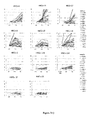
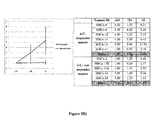
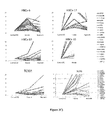
- Results showed that increased expression of several genes could be detected between 24h and 21 days after treatment in tumors that responded to chemotherapy (eg. those forming residual nodules following drug-induced tumor regression). On the other hand, no increased gene expression was detected in tumors not responding to chemotherapy ( Fig.3A-B ).
- Table 6 (a-b) depicts the expression profile of IFN/Stat-related gene expression in tumor xenograft models.
- microRNAs were also found differentially expressed between residual tumor cells from tumors treated with chemotherapy and untreated tumors (Table 5). Expression of two of these micro-RNAs: miR-142-3p and miR-150 was measured by qPCR, which showed an increased expression of these two microRNAs in early post-treatment and residual tumors versus untreated tumors only in tumors responding to chemotherapy ( Fig. 3E and F ). No increased gene/microRNA expression was detected in tumors not responding to chemotherapy.
- the present invention provides methods of early prediction of tumor response in cancer patients subjected to chemotherapy.
- the methods of the invention rely on measurement of the expression level of one or more predictive RNA transcripts, and/or of their expression products, including their post-translational modification, in a cancer cell obtained from a patient subjected to chemotherapy.
- the measurements obtained are normalized against the expression level of all or a reference set of RNA transcripts or their expression products, wherein a predictive RNA transcript or its product is the transcript or the product of a gene belonging to the group of genes and exons listed in Table 3 and Table 4 and/or the microRNAs of Table 5.
- Parp family members several of which belong to the IFN/Stat-regulated genes whose expression is increased following A/C treatment and in residual tumor cells, were targeted using the tumor xenograft model.
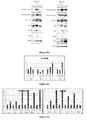
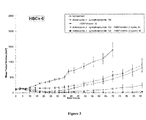
- Results in the HBCx-6 breast cancer xenograft model showed that the combination of A/C with a PARP inhibitor had improved antitumor efficacy compared to A/C treatment alone ( Fig.5 ).
- the present invention provides methods for identifying an expression signature biomarker that is correlated with drug response and clinical outcome.
- the method includes a) developing a xenograft model showing response to therapy followed by tumor relapse, b) identifying genes differentially expressed between the residual and pre-treatment tumor wherein the differentially expressed genes forms a drug response expression signature, c) determining the drug response expression signature status of tumors from a patient population, and d) correlating the resistance expression signature status with drug response and clinical outcome.
- compositions comprising biomarkers, e.g., nucleic acid molecules and expression products thereof, or means for detecting said biomarkers, wherein the biomarkers are found to be differentially expressed tumor cells that are responsive to chemotherapy as compared to tumor cells that are non-responsive to chemotherapy.
- a “biomarker” is a molecular indicator of a specific biological property and as used herein is a nucleic acid molecule (e.g., a gene or gene fragment), an expression product thereof (e.g., a RNA, microRNA, a polypeptide or peptide fragment or variant thereof) or any detectable modification of said products (phosphorylation, acetylation, glycosylation etc.) whose differential detection (presence, absence, over-expression or under-expression relative to a reference) within a cell or tissue indicates the likelihood of a therapeutic response to chemotherapy.
- a nucleic acid molecule e.g., a gene or gene fragment
- an expression product thereof e.g., a RNA, microRNA, a polypeptide or peptide fragment or variant thereof
- any detectable modification of said products phosphorylation, acetylation, glycosylation etc.
- an “expression product” as used herein is a transcribed sense or antisense RNA molecule (e.g., an mRNA), or a translated polypeptide corresponding to or derived from a polynucleotide sequence.
- a “panel” of biomarkers is a selection of two or more combinations of biomarkers.
- Biomarkers for characterizing, or subtyping, the different types of tumors, according to the invention include those listed in Tables 3-5. Such markers include genes that are found to be regulated by the IFN/STAT signaling pathway. One or more of these biomarkers, or up to all of the biomarkers, may be used together in any combination in the methods according to the invention.
- nucleic acid sequences encoding the biomarkers of the invention are publicly available (for example, accessible in GenBank), known to those of skill in the art, and incorporated herein in their entirety. As described in detail below, such nucleic acid sequences may be used to design probes or primers for use in assays for measuring the levels of biomarker expression in a cancer cell.
- Biomarkers according to the invention include substantially identical homologues and variants of the nucleic acid molecules and expression products thereof described herein, for example, a molecule that includes nucleotide sequences encoding polypeptides functionally equivalent to the biomarkers of the invention, e.g, sequences having one or more nucleotide substitutions, additions, or deletions, such as allelic variants or splice variants or species variants or molecules differing from the nucleic acid molecules and polypeptides referred to in the Tables herein due to the degeneracy of the genetic code.
- nucleic acids for use in the practice of the invention include those that have sufficient homology to those described herein to detect expression by use of hybridization techniques. Such polynucleotides preferably have about or 95%, about or 96%, about or 97%, about or 98%, or about or 99% identity with the biomarker sequences as described herein.
- the other polynucleotides for use in the practice of the invention may also be described on the basis of the ability to hybridize to polynucleotides of the invention under stringent conditions of about 30% v/v to about 50% formamide and from about 0.01M to about 0.15M salt for hybridization and from about 0.01M to about 0.15M salt for wash conditions at about 55 to about 65°C, or higher, or conditions equivalent thereto.
- biomarkers While individual biomarkers are useful diagnostics, the combination of biomarkers as proposed herein, enables accurate determination of the likelihood of responding to chemotherapy.
- Determining the expression levels of the biomarkers described herein enables a medical practitioner to determine the appropriate course of action for a subject (e.g, chemotherapy, surgery, no action, etc.) based on the observed expression signature. Detection of the biomarkers described herein may also help determine the prognosis for a given cancer, subtyping of the cancer, evaluation of the efficacy of a therapy for cancer, monitoring a cancer therapy in a subject, or detecting relapse of cancer in a subject who has undergone therapy for cancer and is in remission. In alternative aspects, the biomarkers and reagents prepared using the biomarkers may be used to identify novel cancer therapeutics.
- Expression levels of the markers in a sample may be determined by comparison to a suitable "control" or “reference” sample.
- the relative expression level of markers in a particular tumor may be determined with reference to the expression level of the same markers in a number of tumors of the same general class.
- the expression level of the markers may be determined with reference to the expression level of the same markers in the same tumor prior to treatment. If the expression level of markers is greater or less than that of the reference, e.g. the average expression level of tumors of a particular type or the pre-treatment sample, markers expression may be said to be "increased” or "decreased", respectively. Additionally, it is possible that the expression levels may remain constant between the control or reference and the sample.
- Samples for analysis in such methods can be any organ, tissue, cell, or cell extract isolated from a subject, such as a sample isolated from a mammal having cancer.
- a sample can include, without limitation, cells or tissue (e.g., from a biopsy), blood, serum, tissue or fine needle biopsy samples, or any other specimen, or any extract thereof, obtained from a patient (human or animal), test subject, healthy volunteer, or experimental animal.
- a subject can be a human, rat, mouse, non-human primate, etc.
- a sample may also include sections of tissues such as frozen sections taken for histological purposes.
- a "sample” may also be a cell or cell line created under experimental conditions, that is not directly isolated from a subject.
- the RNA is isolated from a fixed, wax-embedded cancer tissue specimen of the patient.
- the RNA is isolated from core biopsy tissue or fine needle aspirate cells.
- the cancer is breast cancer, small-cell lung cancer or colorectal cancer.
- expression of the biomarkers within a cancer cell may be evaluated by any suitable means.
- expression may be evaluated using DNA microarrays.
- RNA transcripts may be measured using real time PCR, or, when RNA corresponds to a coding gene, protein products (total or post-translationally modified forms) may be detected using suitable antibodies. Methods of determining expression levels of genes by these and other methods are known in the art.
- the markers may be evaluated in tumor tissue obtained from a patient treated with chemotherapy preferably between 24h and 21 days following the start of treatment. Increased expression of the markers is predictive of sensitivity and response to treatment, whereas lack of increase in marker expression is predictive of resistance or lack of response to treatment.
- Biomarkers expression may be evaluated on the residual tumor tissue present in the surgical specimen obtained from a patient that received neoadjuvant chemotherapy Differential expression of the biomarkers may help to predict tumor relapse and to identify specific adjuvant therapy.
- any method known in the art may be utilized.
- expression based on detection of RNA which hybridizes to a "probe” or “primer” specific for the biomarkers described herein is used.
- a “probe” or “primer” is a single-stranded DNA or RNA molecule of defined sequence that can base pair to a second DNA or RNA molecule that contains a complementary sequence (the target).
- the stability of the resulting hybrid molecule depends upon the extent of the base pairing that occurs, and is affected by parameters such as the degree of complementarity between the probe and target molecule, and the degree of stringency of the hybridization conditions.
- the degree of hybridization stringency is affected by parameters such as the temperature, salt concentration, and concentration of organic molecules, such as formamide, and is determined by methods that are known to those skilled in the art.
- Probes or primers specific for the nucleic acid biomarkers described herein, or portions thereof may vary in length by any integer from at least 8 nucleotides to over 500 nucleotides depending on the purpose for which, and conditions under which, the probe or primer is used. Probes or primers specific for the nucleic acid biomarkers described herein may have greater than 20-30% sequence identity, or at least 55-75% sequence identity, or at least 75-85% sequence identity, or at least 85-99% sequence identity, or 100% sequence identity to the nucleic acid biomarkers described herein.
- Probes or primers may be derived from genomic DNA or cDNA, for example, by amplification, or from cloned DNA segments, and may contain either genomic DNA or cDNA sequences representing all or a portion of a single gene from a single individual. Probes or primers may be designed to bind selectively to transcript isoforms reflecting alternative splicing events such as those set forth in Table 4. Probes or primers may be chemically synthesized.
- a probe or primer may hybridize to a nucleic acid biomarker under high stringency conditions as described herein.
- Stringent hybridization conditions mean conditions under which a first nucleic acid sequence (e.g., probe) will hybridize to a second nucleic acid sequence (e.g., target), such as in a complex mixture of nucleic acids. Stringent conditions are sequence-dependent and will be different in different circumstances. Stringent conditions may be selected to be about 5-10°C lower than the thermal melting point (Tm) for the specific sequence at a defined ionic strength and pH.
- the Tm may be the temperature (under defined ionic strength, pH, and nucleic concentration) at which 50% of the probes complementary to the target hybridize to the target sequence at equilibrium (as the target sequences are present in excess, at Tm, 50% of the probes are occupied at equilibrium).
- Stringent conditions may be those in which the salt concentration is less than about 1.0 M sodium ion, such as about 0.01-1.0 M sodium ion concentration (or other salts) at pH 7.0 to 8.3 and the temperature is at least about 30°C for short probes (e.g., about 10-50 nucleotides) and at least about 60° C for long probes (e.g., greater than about 50 nucleotides).
- Stringent conditions may also be achieved with the addition of destabilizing agents such as formamide.
- destabilizing agents such as formamide.
- a positive signal may be at least 2 to 10 times background hybridization.
- Exemplary stringent hybridization conditions include the following: 50% formamide, 5XSSC, and 1% SDS, incubating at 42°C, or, 5XSSC, 1% SDS, incubating at 65°C, with wash in 0.2XSSC, and 0.1% SDS at 65°C.
- Probes or primers can be detectably-labeled, either radioactively or non-radioactively, by methods that are known to those skilled in the art.
- detectably labeled is meant any means for marking and identifying the presence of a molecule, e.g., an oligonucleotide probe or primer, a gene or fragment thereof, or a cDNA molecule.
- Methods for detectably-labeling a molecule include, without limitation, radioactive labeling (e.g., with an isotope such as 32P or 35S) and nonradioactive labeling such as, enzymatic labeling (for example, using horseradish peroxidase or alkaline phosphatase), chemiluminescent labeling, fluorescent labeling (for example, using fluorescein), bioluminescent labeling, or antibody detection of a ligand attached to the probe.
- radioactive labeling e.g., with an isotope such as 32P or 35S
- nonradioactive labeling such as, enzymatic labeling (for example, using horseradish peroxidase or alkaline phosphatase), chemiluminescent labeling, fluorescent labeling (for example, using fluorescein), bioluminescent labeling, or antibody detection of a ligand attached to the probe.
- a molecule that is detectably labeled by an indirect means for example, a molecule that is bound with a first moiety (such as biotin) that is, in turn, bound to a second moiety that may be observed or assayed (such as fluorescein-labeled streptavidin).
- Labels also include digoxigenin, luciferases, and aequorin.
- Probes or primers can be used in biomarker detection methods involving nucleic acid hybridization, such as nucleic acid sequencing, nucleic acid amplification by the polymerase chain reaction (e.g., RT-PCR), single stranded conformational polymorphism (SSCP) analysis, restriction fragment polymorphism (RFLP) analysis, Southern hybridization, northern hybridization, in situ hybridization, electrophoretic mobility shift assay (EMSA), fluorescent in situ hybridization (FISH), and other methods that are known to those skilled in the art.
- nucleic acid hybridization such as nucleic acid sequencing, nucleic acid amplification by the polymerase chain reaction (e.g., RT-PCR), single stranded conformational polymorphism (SSCP) analysis, restriction fragment polymorphism (RFLP) analysis, Southern hybridization, northern hybridization, in situ hybridization, electrophoretic mobility shift assay (EMSA), fluorescent in situ hybridization (FISH), and other methods that are known to those skilled in the art.
- a preferred embodiment using a nucleic acid based assay to determine biomarker expression is by immobilization of one or more biomarker sequences identified herein on a solid support, including, but not limited to, a solid substrate as an array or to beads or bead based technology as known in the art.
- a solid support including, but not limited to, a solid substrate as an array or to beads or bead based technology as known in the art.
- solution based expression assays known in the art may also be used.
- the immobilized sequence(s) may be in the form of polynucleotides as described herein such that the polynucleotide would be capable of hybridizing to a DNA or RNA corresponding to the biomarker sequence(s).
- the immobilized polynucleotide(s) may be used to determine the biomarker expression signature in a sample isolated from a subject having cancer.
- the immobilized polynucleotide(s) need only be sufficient to specifically hybridize to the corresponding nucleic acid molecules derived from the sample (and to the exclusion of detectable or significant hybridization to other nucleic acid molecules).
- the nucleic acid derived from a sample isolated from a subject having cancer may be preferentially amplified by use of appropriate primers such that only the genes to be analyzed are amplified to reduce contaminating background signals from other genes expressed in the cancer cells.
- the nucleic acid from the sample may be globally amplified before hybridization to the immobilized polynucleotides.
- RNA, or the cDNA counterpart thereof may be directly labeled and used, without amplification, by methods known in the art.
- a biochip may be used in the practice of the invention.
- the biochip may comprise a solid substrate comprising an attached probe or plurality of probes described herein.
- the probes may be capable of hybridizing to a target sequence under stringent hybridization conditions.
- the probes may be attached at spatially defined sites on the substrate. More than one probe per target sequence may be used, with either overlapping probes or probes to different sections of a particular target sequence.
- the probes may be capable of hybridizing to target sequences associated with a single disorder appreciated by those in the art.
- the probes may either be synthesized first, with subsequent attachment to the biochip, or may be directly synthesized on the biochip.
- the solid substrate may be a material that may be modified to contain discrete individual sites appropriate for the attachment or association of the probes and is amenable to at least one detection method.
- substrates include glass and modified or functionalized glass, plastics (including acrylics, polystyrene and copolymers of styrene and other materials, polypropylene, polyethylene, polybutylene, polyurethanes, TeflonJ, etc.), polysaccharides, nylon or nitrocellulose, resins, silica or silica-based materials including silicon and modified silicon, carbon, metals, inorganic glasses and plastics.
- the substrates may allow optical detection without appreciably fluorescing.
- Biomarker expression may also be measured based on detection of a presence, increase, or decrease in protein levels or activity may also be used.
- Antibody based detection methods are well known in the art and include sandwich and ELISA assays as well as Western blot and flow cytometry based assays as non-limiting examples.
- Antibodies for use in such methods of detection include polyclonal antibodies and monoclonal antibodies that specifically bind to the biomarkers of Tables 3 and/or 4. Such antibodies, as well as fragments thereof (including but not limited to Fab fragments) function to detect such biomarkers in cancer cells by virtue of their ability to specifically bind to such polypeptides to the exclusion of other polypeptides to produce a detectable signal. Recombinant, synthetic, and hybrid antibodies with the same ability may also be used in the practice of the invention.
- the present invention provides a more objective set of criteria, in the form of gene expression profiles of a discrete set of genes, to discriminate (or delineate) between cancer outcomes.
- the assays are used to discriminate between responders and non-responders to chemotherapy.
- treatment regimen refers to a treatment plan that specifies the type of treatment, dosage, schedule and/or duration of a treatment provided to a subject in need thereof (e.g., a subject diagnosed with cancer).
- the selected treatment regimen can be an aggressive one which is expected to result in the best clinical outcome (e.g., complete cure of the disease) or a more moderate one which may relieve symptoms of the disease yet results in incomplete cure of the disease.
- the type of treatment can include a surgical intervention, administration of a therapeutic drug, an exposure to radiation therapy and/or any combination thereof.
- the dosage, schedule and duration of treatment can vary, depending on the severity of disease and the selected type of treatment, and those of skill in the art are capable of adjusting the type of treatment with the dosage, schedule and duration of treatment.
- the present invention provides a method for treatment of a cancer in a subject in need thereof, comprising the steps of: a) measuring the amount and intensity of biomarker expression present in a tumor sample derived from a subject, and determining a sample value corresponding to said measurements; b) comparing the sample value obtained in step a) with a reference value, and depending on the sample/reference ratio obtained (greater than, equal to, or less than 1), c) treating said subject with the specific treatment regimen identified for each of the three classes, i.e., greater than, equal to, or less than 1.
- Marker-negative tumors during the post-treatment phase are predicted to be resistant to chemotherapy, and patients with marker-negative tumors can be spared the adverse side effects of a treatment that is unlikely to be beneficial. When available, alternative treatment can be administered accordingly.
- marker-positive tumors are likely to be responsive to chemotherapy. Patients with marker-positive tumors can benefit from the addition of a treatment that targets the associated oncogenic/protective mechanisms activated in the marker-positive tumors as detailed further below. Tailoring treatment to the patient based on marker status will likely result in both cost savings and toxicity sparing by eliminating administration of ineffective treatments, and in improved clinical outcome by implementing specific adjuvant treatment based on marker expression.
- the biomarkers to be assayed for expression levels in a cancer cell include those genes regulated in the IFN/Stat signaling pathway. Still further, said cancer cells may be derived from breast tumors, lung tumors, or colorectal tumors, for example.
- the A/C-based chemotherapy can be substituted by potentially more efficient chemotherapeutic regimens, such as but not limited to those containing capecitabine, 5-fluorouracile, taxanes, and/or methotrexate.
- treatment aimed at activating the IFN/Stat signaling pathway as a whole or at activating specifically tumor suppressor components of the IFN/Stat signaling pathway in the tumor can be administered with an expected clinical benefit.
- specific adjuvant therapy targeting specifically oncogenic/protective components of the IFN/Stat signaling pathway can be administered concomitantly or sequentially to ongoing A/C-based chemotherapy, such as Parp inhibitors, resulting in improved therapeutic efficacy.
- the present invention provides a xenograft model system for identifying a biomarker expression signature that is correlated with drug response and clinical outcome.
- the system comprises (i) developing a xenograft model showing response to therapy followed by tumor relapse, (ii) identifying genes differentially expressed between the residual and pre-treatment tumor wherein the differentially expressed genes, i.e., biomarkers, form a drug response expression signature, (iii) determining the drug response expression signature status of tumors from a population of humans, and (iv) correlating the resistance expression signature status with drug response and clinical outcome.
- the xenograft model system of the invention may also be used to identify novel chemotherapeutic compounds that may be used to treat cancer.
- the invention relates to xenograft model system of human cancer, in particular, in mammals which carry transplanted human tumor cells.
- the invention also relates to the use of such xenograft model system in the study of cancer, particularly for evaluating candidates for chemotherapy.
- the invention provides an animal model of cancer, comprising a mammal which is immunodeficient and which carries a tumor xenograft.
- the mammal is a mouse or rat.
- Tumor cell lines which may be used in this model include but are not limited to cells from solid tumors, such as those present in cancer of the colon, breast or lung.
- the tumor is preferably of human origin. It is particularly preferred that the tumors are introduced into the model of the invention by direct subcutaneous grafting of surgical specimen.
- the chemotherapeutic agent is administered to the animal model of the present invention by any means known in the art including topical, oral or systemic.
- the efficacy of the chemotherapeutic agent is determined by determining the drug response expression signature status of biomarkers of tumors before and after drug treatment.
- said biomarkers comprise those biomarkers regulated by the IFN/Stat1 signaling pathway.
- Biomarkers whose expression is predictive of cell-resistance to chemotherapy include the following: DTX3L, CCL5, IFIT1, IFITM1, IRF9, IFI6, IFI44, IFI44L, OAS1, OAS2, LAMP3, MX1, PARP9, PARP12, PARP14, SAMD9, SAMD9L, BST2, DDX60, CLDN1,STAT1, STAT2, UBE2L6, ZNFX1.
- Still another useful set of biomarkers is composed of STAT1, OAS1, LAMP3, IFI44 and CCL5.
- kits may comprise a reagent for detection of a differentially expressed biomarker described herein together with any or all of the following: assay reagents, buffers, probes and/or primers, and sterile saline or another pharmaceutically acceptable emulsion and suspension base.
- the kits may include instructional materials containing directions (e.g., protocols) for the practice of the methods described herein.
- the kit may further comprise a software package for data analysis of expression profiles.
- the kits may include one or more reagents corresponding to the biomarkers described herein, e.g., antibodies that specifically bind the biomarkers or nucleic acid probes or primers that hybridize to the biomarkers, etc.
- the kits may include a plurality of reagents, e.g., on an array, corresponding to the biomarkers described herein.
- the kits may include detection reagents, e.g., reagents that are detectably labeled.
- the kits may include written instructions for use of the kit, and may include other reagents and information such as control or reference standards, wash solutions, analysis software, etc.
- kits and arrays can be used to measure biomarkers according to the invention, to determine the likelihood that a cancer patient will respond to chemotherapy.
- the kits can also be used to monitor a subject's response to cancer therapy, enabling the medical practitioner to modify the treatment based upon the results of the test.
- the kits can also be used to identify and cancer therapeutics, such as small molecules, peptides, etc.
- Tumor xenografts were generated by direct subcutaneous grafting into immunodeficient mice of human tumor surgical samples with informed written consent of the patients and maintained by serial transplantation.
- the tumor xenografts have been studied for histology, cytogenetics, genetic and other biological markers, and for their response to a number of anticancer agents, alone and in combination. These studies have shown that tumor xenografts are biologically similar to the patient's tumors from which they derive, in term of both molecular characteristics and response to therapy.
- Chemotherapeutic drugs were administered by intraperitoneal route according to the following doses and schedules: adriamycin, 2 mg/kg, q3wk (Doxorubicin®, Teva Pharmaceuticals, France) and Cyclophosphamide, 100 mg/kg, q3wk (Endoxan®, Baxter, France). Irinotecan (Campto®, Pfizer Holding France), 50 mg/kg, q4dx4. Etoposide 12 mg/kg, qdx3. Ifosfamide 90 mg/kg, qdx3. bPARP inhibitor (AZD2281, Sequoia Research Products, UK) at 50 mg/kg (ip; qdx14).
- a second treatment cycle was performed with PARP inhibitor at 50 mg/kg (ip qdx5) during the nodule phase.
- Other pharmacological inhibitors are tested and administrated at the nodule phase: JAK1/2 Inhibitor (CP-690550) at 15 mg/kg (po qdx14), Epigallocatechin gallate (ECGC) (Sequoia Research Products, UK) at 30 mg/kg (ip qdx28), HDAC inhibitor (Trichostatine A), Retinoic acid at 50 mg/kg (ip qdx28) (Sigma-Aldrich, France).
- JAK1/2 Inhibitor CP-690550
- ECGC Epigallocatechin gallate
- HDAC inhibitor Trichostatine A
- Retinoic acid at 50 mg/kg (ip qdx28) (Sigma-Aldrich, France).
- Breast tumor xenograft models were transplanted into 5-week old female Swiss nude mice, as described above,
- mice When tumors reached a volume of 60-250 mm3, mice were individually identified and randomly assigned to the control or treated groups (12 to 20 mice per group). Tumor volume was evaluated by measuring two perpendicular diameters of the tumor, with a calliper, biweekly during the treatment period and once a week during the follow-up period.
- the formula TV (mm3) [length (mm) x width (mm)2]/2 was used, where the length and the width were the longest and the shortest diameters of the tumor, respectively. All animals were weighted biweekly during the treatment period and the follow-up period. Mice were ethically sacrificed when the tumor volume reached 2000 mm3.
- Individual tumor growth delays (TGD) is calculated as the time in days required for individual tumors to reach 3- to 5-fold the initial median tumor volume.
- the tumor growth delay index (TGDI) is calculated as the median growth delay in the treated group divided by the median growth delay in the control group.
- the percentage ratio between the mean tumor volume of a treated group (T) and the mean tumor volume of the control group (C) is calculated.
- Tumors or nodules were processed for (1) FFPE (formalin-fixed paraffin-embedded) or for (2) snap frozen samples: samples were cut into 3-4 mm pieces (at least 3 fragments) and snap-frozen in liquid nitrogen, then transferred to -80C° for storage. Samples were allocated for histology, microdissection and RNA analyses.
- AdhesiveCaps with captured samples were assembled with according tubes, provided with 350 ⁇ L Qiazol solution and incubated for 30min. Tubes were rocked over-head at room temperature for lysis and subsequently frozen at -20°C until RNA extraction. Microdissected areas of 4 ⁇ m2 were transferred for RNA extraction using the Qiagen miRNeasy kit according to the manufacturer's instructions (Qiagen). Total RNA extracted was quantitatively and qualitatively assessed with the Bioanalyzer. From each eluate 1 ⁇ L was taken for quality analysis. Prior application onto the BioAnalyzer RNA 6000 PicoChip this aliquot was diluted 1:10 to ensure optimal electrophoresis (avoid overloading).
- Microarray analyses of gene expression and exon splicing Gene expression analysis at gene and exon level from tumor tissue was assessed by using the Affymetrix GeneChip® Human Exon 1.0 ST Array platform. The starting amount of total tumor RNA used for each reaction was 100 ng.
- Microarray hybridization and data normalization were outsourced to GenoSplice Technology, a biotech with expertise in transcriptional profiling. Genosplice Technology provided statistical analysis of the data to detect gene lists and functional gene classes associated with sample comparison. These analyses were repeated and implemented at XenTech by using BRB array tools, a bioinformatic package for microarray analysis.
- miRNA qPCR profiling miRNA biomarker analyses were performed on the miRCURY LNATM Universal RT microRNA PCR platform, outsourced to Exiqon service (Exiqon, Denmark). This system is a microRNA-specific, LNATM-based PCR-based system designed for sensitive and accurate detection of microRNA by qPCR using SYBR® Green. For each RT reaction 40 ng total RNA was used. Three RT replicates per sample were used for real-time amplification on ready-to-use microRNA PCR Human Panel I and II run on a LightCycler-480 real-time PCR system. Analyses were performed for a set of 742 human microRNAs. Average Cq values were normalized to three stably expressed reference genes using the Exiqon GenEx software.
- RNA amount was measured using the Nanodrop (ND1000, ThermoFisher) and RNA quality was assessed with the Agilent 2100 Bioanalyzer onto RNA NanoChip (Agilent Technology, Massy, France).Three samples from each condition were pooled. Two ⁇ g of total RNA were reverse-transcribed with the Transcriptor First strand cDNA synthesis kit (Roche Applied Science, Switzerland) according to manufacturer's instructions. For the priming method, a combination of 3 ⁇ 4 random hexamer primers and 1 ⁇ 4 anchored-oligo(dT)18 primers was used to avoid 3'-prime bias in cDNAs.
- qPCR analyses of gene transcripts was done with 5 ng of RNA for each reaction. Three housekeeping genes were used as references for relative quantification of target genes expression. Oligonucleotides sequences used for PCR amplifications are listed in Table1 (HPRT1, GAPDH, RPL13, BST2, CLDN1, DDX60, IFI6, IFI44, IFI44L, IFIT1, IFITM1, IRF9, LAMP3, MX1, OAS1, OAS2, PARP9, PARP12, SAMD9, SAMD9L, STAT1, STAT2, ZNFX1).
- IFN/Stat protein expression evaluation by western blotting Protein expression was measured from tumor samples lysates extracted in non-denaturing lysis buffer (Tris-HCL 50 mM, pH7.5, Triton X-100 0.1%, NaCL 150 mM, EDTA 1 mM, Hepes 50 mM, NaF 1 mM, Na3VO4 2mM, protease inhibitor cocktail (Roche Diagnostics, Mannheim, Germany) . Quantification of total protein was done in order to load equivalent protein quantity (30 ⁇ g). Samples were boiled in NuPAGE LDS sample loading buffer (Invitrogen, Carlsbad, CA) containing 2-mercaptoethanol 5% (Sigma Chemical Co).
- Lysates were separated by 4 - 12% NuPAGE Novex Bis-Tris Mini Gels (Invitrogen, Carlsbad, CA) and transferred to nitrocellulose membranes (Whatman Inc, Sanford, US). Membranes were blocked for 1 h with 3% bovine serum albumine (BSA, Sigma-Aldrich, St. Louis, MO) in PBS 1X/0.1% Tween20. Then, membranes were probed with primary antibodies against phospho-Stat1 Tyr701, Total Stat1 (1/750-1000; Santa Cruz antibodies, Santa Cruz, CA), phospho-Stat1 Ser727 (1/1000; Merck Millipore, Billerica, MA), Oas1, Ifi44, Ifi27 (1/1000; Sigma-Aldrich, St.
- BSA bovine serum albumine
- High responders in which the treatment induced complete regressions (with minimal tumor palpation after treatment); 2) responders (R) in which T/C was inferior to 42% and TGDI superior to 2 fold, respectively; and 3) non-responders in which the growth parameters were not significantly altered by the treatment (T/C > 42% and TGDI ⁇ 2).
- All breast tumor models had been characterized for their response to chemotherapy. On a total of 17 tumors, eight were highly responders to A/C combination treatment with complete regression, eight responders and nine no responders. These models were used based on their documented high frequency of complete tumor regressions after chemotherapy, followed by tumor recurrence.
- a human breast cancer xenograft, HBCx-6, treated with the combination A/C therapy showed complete tumor regressions in 96% of treated mice after 19 days of treatment, followed by a tumor recurrence (Table 2). Similar profiles of "complete" tumor response, followed by late recurrence were obtained with other breast tumor xenografts treated with A/C combination. Of note, similar tumor regressions were obtained when cyclophosphamide was used as single agent instead of combined with Adriamycin (Table 2). In the same way, other types of tumor xenografts (brain, lung, colon) using a variety of conventional therapeutic agents showed this profile of response. Results based on the assessment of nodules criteria are shown in Table 2.
- the delay of nodule appearance was 14 days (HBCx-6), 18 days (HBCx-8), 28 days (HBCx-10) and 30 days (HBCx-17) after A/C treatment. More than 90% of nodules were obtained in HBCx-6 and HBCx-10 and 30% in HBCx-8 after one cycle of A/C treatment.
- the frequency of nodules increased after two cycles of treatment: 100% in HBCx-6 and HBCx-10; 57% in HBCx-8 and 30% in HBCx-17. Globally, the frequency of nodules and the relapse delay were increased in highly responder compared to responder tumors.
- Residual tumor nodules of three analyzed breast cancer models, HBCx-6, 8 and 17 showed consistent overexpression of several genes belonging to the IFN/Stat pathway, a molecular sensor of intracellular stress inducible by various factors such as viral infection, X-ray irradiation, cytokines and toxic metabolites.
- data from untreated control tumors were pooled and compared to data from their corresponding residual tumor cells in the 3 models.
- the gene list obtained was used to identify pathways significantly deregulated in the two conditions. This analysis revealed a consistent up-regulation of many genes involved in the IFN pathway, as well as a gene cluster related to the pathway, such as the Jak-Stat and Toll-like receptor pathways.
- the lists of biomarkers contain many RNA transcripts and micro-RNA with unknown function or previously undocumented functional relationship with tumor response to chemotherapy.
- IFI6 (G1P3) is interferon-regulated and has been shown to play a role in protection from apoptosis. IFI6/G1P3 has been implicated in resistance to TRAIL-mediated apoptosis in myeloma cells ( Cheriyath V et al. G1P3, an IFN-induced survival factor, antagonizes TRAIL-induced apoptosis in human myeloma cells. J Clin Invest 17: 3107-3117, 2007 ). It probably acts at the mitochondrial level on the release of cytochrome-c, but its mechanism of action is still unknown.
- PARP9 (BAL1) and DTX3L (BBAP) genes are located in a head-to-head orientation and are co-regulated by the same ⁇ -IFN-responsive bidirectional promoter.
- PARP9 belongs to the subfamily of macro-PARPs and is catalytically inactive, while DTX3L is an E3 ligase.
- BBAP and BAL1 are most abundant in a subtype of diffuse large B cell lymphoma (DLBCL) characterized by a prominent inflammatory infiltrate, increased ⁇ -IFN production and an aggressive phenotype.
- DLBCL diffuse large B cell lymphoma
- BBAP BAL1/BBAP protein complex localizes to the nucleus where it participates in the repair of doxorubicin-induced DNA damage ( Yan Q et al. Mol Cell 36: 110-120, 2009 ).
- BBAP together with its partner BAL1 was found to confer protection from doxorubicin-induced DNA damage in the HEK293 human transformed embryonic kidney cell line. DNA damage initiates a cascade of cellular signaling events that culminate in either the repair of DNA breaks or apoptosis.
- PARP14 (BAL2), like PARP9, also belongs to the IFN-regulated macro-PARPs family. While PARP9 is catalytically inactive, PARP14 possesses mono-(ADP-ribosyl)ation activity. In the mouse, PARP14 was found to play a major role in mediating protection against apoptosis in IL4-treated B-cells, including that after DNA damage ( Cho SH et al. Blood 113: 2416-2425, 2010 ). Its mechanism of action is not completely understood, but it has been shown to regulate the expression of pro-survival factors at the transcriptional level.
- CCL5 (RANTES) is an IFN-regulated chemokine whose expression is associated with cancer progression ( Hembruff SL et al. Cancer Ther. 7:254-267, 2009 ). CCL5 mediates many types of tumor-promoting cross-talks between tumor cells and cells of the tumor microenvironment. Together, the overall current information indicates that CCL5 is an inflammatory mediator with pro-malignancy and pro-metastatic activities in breast and other cancers. However, its role in chemo-resistance had not yet been described.
- RNA splicing variants The transcriptional isoforms due to alternative splicing events (cassette exons, alternative promoters or splicing), were analyzed in the same experimental conditions. The purpose was to detect transcriptional isoforms differentially expressed in two different experimental conditions (untreated versus residual tumor) and consequently, provided additional set of potential diagnostic markers.
- the genes listed in Table 4 (including RPL32, UBXD7, IF6, MX1, TP53BP1) showed up-regulation of specific exons in residual tumor cells (Table 4).
- MicroRNA biomarkers By determining the expression of 738 miRNAs, patterns of differentially expressed miRNA could be discerned in untreated versus residual tumors after chemotherapy. Differentially expressed miRNAs provide additional diagnostic markers and potential therapeutic targets for chemoresistant residual disease (Table 5).
- IFIT1, IFITM1, IRF9, IFI6, IFI44, IFI44L, OAS1, OAS2, LAMP3, MX1, PARP9, PARP12, SAMD9, SAMD9L, BST2, DDX60, CLDN1, STAT1, STAT2, UBE2L6, ZNFX1) and two miRNA (miR-142-3p and miR150) was analyzed in responder versus non-responder tumor models.
- a time-course analysis was performed in human breast, colon or small-cell lung cancer xenografts following A/C, CPT-11 or VP16/ifosfamide treatment respectively ( Fig. 3A-C ).
- responder HBCx-6, HBCx-8, HBCx-10, HBCx-14, HBCx-15, HBCx-17, TC301 and SC61
- non-responder HBCx-2, HBCx-12B, HBCx-16, HBCx-24, HBCx13A
- AZD2281 at 50 mg/kg used as single agent demonstrated significant anti-tumor activity in the HBCx-6 model, with only 2 out of 7 tumors showing complete tumor regression.
- the follow-up period revealed a significant difference in term of delay or frequency of tumor regrowth in the A/C-AZD2281 combination group compared to the A/C treatment group.
- tumor relapse was completely prevented in mice receiving a second treatment cycle of PARP inhibitor at the nodule stage.
- Such pharmacological inhibitors include but are not limited to JAK1/2 inhibitors, Epigallocatechin gallate, histone deacetylases inhibitor (Trichostatine), which targets the pro-DNA repair activity of PARP9 and DTX3L, or retinoic acid (RAR ⁇ ).
- JAK1/2 inhibitors Epigallocatechin gallate
- Trichostatine histone deacetylases inhibitor
- RAR ⁇ retinoic acid
- siRNA gene knockout experiments are performed in vitro in tumor-derived primary cell cultures and/or cell lines with an active or induced IFN/STAT pathway.
- Different models are used to test the role of specific gene implicated in chemoresistance in vitro then in vivo: IC20DAN (a primary NSCLC tumor xenograft) which shows high constitutive activation of STAT signaling and cell lines (Hela, MCF7 and MDA MB231) in which STAT1 can be activated by treatment with IFN- ⁇ .
- results show two classes of IFN-induced genes: STAT1-dependent (UBE2L6, IFI44L, OAS2, PARP12, IF44, STAT2, PARP9, BST2) and independent (IFIT1, IFIT3, OAS1, LAMP3, MX1, IFITM1).
- shRNA short hairpin RNAs
- Primer sequences for qPCR Gene F Primer (5'--> 3') R Primer (5'-->3') Hs HPRT1 GCTTTCCTTGGTCAGGCAGTATAAT AAGGGCATATCCTACAACAAACTTG (SEQ ID No. 1) (SEQ ID No. 2) Hs GAPDH CCACATCGCTCAGACACCAT CCCAATACGACCAAATCCGT (SEQ ID No. 3) (SEQ ID No. 4) Hs RPL13 CCCGTCCGGAACGTCTATAA CTAGCGAAGGCTTTGAAATTCTTC (SEQ ID No. 5) (SEQ ID No. 6) Hs IFIT1 AGGTTCCTTGCCCTGAA AAAGCCCTATCTGGTGATGC (SEQ ID No.
- Hs PARP9 TCTCCAGAACCACCACATCA CCTTGCCATTTCCTCCTGTA SEQ ID No. 25
- SEQ ID No. 26 Hs SAMD9 GTGCAAGGATCCCAGACAGT AGCTTTGCTTCCTTGGTGAA
- SEQ ID No. 27 Hs BST2 AGGTGGAGCGACTGAGAAGA GGAATGTTCAAGCGAAAAGC
- SEQ ID No. 29 Hs DDX60 CCCAGGGTCCAGGATTTTAT GAACAGTTGCTGCCACTTGA (SEQ ID No. 31) (SEQ ID No.
Landscapes
- Health & Medical Sciences (AREA)
- Life Sciences & Earth Sciences (AREA)
- Chemical & Material Sciences (AREA)
- Engineering & Computer Science (AREA)
- Immunology (AREA)
- Organic Chemistry (AREA)
- Pathology (AREA)
- Analytical Chemistry (AREA)
- Proteomics, Peptides & Aminoacids (AREA)
- Molecular Biology (AREA)
- General Health & Medical Sciences (AREA)
- Zoology (AREA)
- Biotechnology (AREA)
- Microbiology (AREA)
- Physics & Mathematics (AREA)
- Genetics & Genomics (AREA)
- Wood Science & Technology (AREA)
- Hematology (AREA)
- Biochemistry (AREA)
- Biomedical Technology (AREA)
- Urology & Nephrology (AREA)
- Medicinal Chemistry (AREA)
- Bioinformatics & Cheminformatics (AREA)
- General Physics & Mathematics (AREA)
- Biophysics (AREA)
- Hospice & Palliative Care (AREA)
- Food Science & Technology (AREA)
- General Engineering & Computer Science (AREA)
- Oncology (AREA)
- Cell Biology (AREA)
- General Chemical & Material Sciences (AREA)
- Veterinary Medicine (AREA)
- Public Health (AREA)
- Animal Behavior & Ethology (AREA)
- Pharmacology & Pharmacy (AREA)
- Nuclear Medicine, Radiotherapy & Molecular Imaging (AREA)
- Chemical Kinetics & Catalysis (AREA)
- Measuring Or Testing Involving Enzymes Or Micro-Organisms (AREA)
Abstract
Description
- The invention relates generally to the field of cancer prognosis and treatment. More particularly, the present invention relates to methods and compositions that utilize a particular panel of gene products ("biomarkers") and their differential expression patterns ("expression signatures"), wherein the expression patterns predict responsiveness, or lack thereof, to chemotherapy treatment. The invention is based on the identification of a specific set of biomarkers that are differentially expressed in chemotherapy-treated tumors and which are useful in predicting the likelihood of a therapeutic response, including residual disease persistence and subsequent tumor recurrence in cancer patients receiving chemotherapy. The gene panel is also useful in designing specific adjuvant modalities with improved therapeutic efficacy. Also disclosed are methods for characterizing tumors according to expression of the biomarkers described herein.
- Although progress has been made in the field of cancer treatment, most currently available cancer treatments fail in providing complete tumor eradication. This partial efficacy is largely due to innate or acquired resistance of cancer cells to anticancer drug therapies and is a major factor in disease relapse and treatment failure. Therefore, it is important to investigate the molecular basis of tumor resistance to treatment and identify genes or pathways to be targeted to overcome drug resistance in order to improve the efficacy of therapeutic intervention. The heterogeneous nature of cancer makes this identification very difficult.
- Modem molecular biology and biochemistry have revealed hundreds of genes whose activities influence the behavior of tumor cells, their state of differentiation, and their sensitivity or resistance to certain therapeutic drugs. However, with a few exceptions, the status of these genes has not been exploited for the purpose of routinely making clinical decisions about drug treatments. One notable exception is the use of estrogen receptor (ER) and/or progesterone receptor (PR) protein expression in breast carcinomas to select patients to treatment with anti-estrogen drugs. Another exceptional example is the use of ErbB2 (Her2) protein expression in breast carcinomas to select patients to treatment with the Her2 antagonist drug Herceptin®.
- Triple-negative/basal-like breast cancer (TNBC/BLBC) comprises 15-20% of all breast cancers. They are often more undifferentiated, carry an increased risk of distant metastasis, tend to relapse early and have been associated with a short post-recurrence survival. TNBCs lack hormonal receptors and Her2 overexpression and are therefore not candidate for anti-oestrogen or Herceptin® therapy (Linn SC. and Van't Veer L. Eur. J Cancer 45, Suppl 1: 11-26, 2009). Today's conventional treatment of TNBC patients is thus based on combinations of cytotoxic drugs, including anthracyclins, cyclophosphamide, 5-fluorouracil and taxanes. Within the TNBC subtype, neither prognostic nor predictive factors are currently available to guide the choice of the most effective chemotherapies. One exception concerns a sub-population of TNBC or ovarian tumors with BRCA1 pathway dysfunction, which results into a defect in repair of DNA double strand breaks (DSB) and confers such tumors increased sensitivity to chemotherapeutic agents inducing DNA double-strand breaks (DSB) such as bifunctional alkylators and platinum agents. In addition, BRAC1-deficient tumors are sensitive to blockade of repair of DNA single-strand breaks (SSB) through the inhibition of PARP1 (Linn SC. and Van't Veer L. Eur. J Cancer 45, Suppl 1: 11-26, 2009). Consequently, inappropriate treatment in the adjuvant setting is common for TNBC, and there is an urgent need to develop novel and better targeted therapeutic approaches.
- Breast cancer neoadjuvant chemotherapy and residual disease. Preoperative (neoadjuvant) systemic chemotherapy is generally proposed to patients with advanced/infiltrating breast carcinoma. Following neoadjuvant chemotherapy, pathological complete response (pCR) is defined as no microscopic evidence of residual cancer in the breast and regional lymph nodes at the time of surgical resection. Presently, pCR is the best surrogate marker for favorable long-term outcome in BC patients, corresponding to a 3-year overall survival (OS) of 90-100%. However, a major problem today is that over 70% of patients receiving preoperative chemotherapy do not achieve pCR and have residual disease at the time of surgical resection. This group of patients has a poor outcome, with a 3-year OS of only 60-70% in spite of receiving adjuvant chemotherapy (Linn SC. and Van't Veer L. Eur. J Cancer 45, Suppl 1: 11-26, 2009).
- The presence of residual disease in the majority of cancer patients who have received preoperative chemotherapy indicates the persistence of a sub-population of chemo-resistant cells responsible for treatment failure. Understanding the mechanisms underlying their persistence may lead to the development of novel and more efficient treatment strategies, possibly in conjunction with current treatments.
- However, very few studies have examined the molecular characteristics of residual cancer cells surviving chemotherapy. In a small study with 24 breast cancer patients receiving docetaxel alone as neoadjuvant chemotherapy, of whom 18 (75%) had ER-positive tumors, a gene expression pattern was identified in residual tumors, that included genes involved in cell cycle arrest at G2M and survival pathways involving the PI3K/mTor axis (Chang JC et al. J. Clin. Oncology 23: 1169-1177, 2005). More recently, studies reported an enrichment in breast cancer residual disease in cells with cancer stem cell (CSC) markers, such as cells with a CD44+/CD24-/low antigen profile or with mesenchymal features (Li X. et al. JNCI 100: 672-679, 2008), while other studies failed to confirm these observations (Aulman S. et al. Human Pathol. 41: 574-581, 2010). No obvious treatment strategy could be derived based on these observations.
- Thus, the mechanisms leading to persistence of viable residual cancer cells, and later cancer recurrence, in patients whose tumor initially responds to chemotherapy are still largely unknown. Accordingly, there is currently no available biomarker able to predict if a breast cancer patient will respond to a given chemotherapy regimen, or to estimate the probability of relapse of a breast cancer patient harboring residual disease following neoadjuvant chemotherapy. The present invention discloses an original set of tumor biomarkers linked to the activation of the interferon (IFN)/Janus-activated kinase (Jak)/ signal transducer and activator of transcription (Stat) pathway in tumors exposed to chemotherapy in vivo. Their analysis in tumor tissue provides response predictive markers and novel therapeutic targets, which allows implementing specific adjuvant treatment strategies with improved antitumor efficacy.
- The IFN/Stat signaling pathway and cancer biology. Members of the Stat family of transcription factors regulate the expression of a variety of genes involved in proliferation, differentiation, survival, and apoptosis (Levy DE, Darnell JE. Nat Rev Mol Cell Biol 2002; 3:651- 62). There are seven family members known to date, which are nuclear and cytoplasmic in location and provide a direct link between signals generated at cell surface receptors and regulation of gene expression in the nucleus. Many cytokines, growth factors, and hormones can lead to simultaneous activation of two or more Stat factors; however, targeted deletion of specific members has revealed cell type-specific roles with, for example, Stat1 being identified as the major effector of IFN-γ signaling (Ihle JA. Curr Opin Cell Biol 2001; 13:211-7).
- The molecular events and signaling pathways that lie downstream of activated Stats have been largely determined from studies relevant to development and immune responses; however, recent years have seen the emergence of a role for select Stat family members in cancer (Yu H, Jove R. Nat Rev Cancer 2004; 4:97-105). Normally, Stat activation is a transient and tightly regulated process. However, in cancer, transient regulation is often replaced by constitutive activation.
- Constitutive activation of Stat3 and Stat5 has been observed in a variety of tumor types including solid tumors of the breast, prostate, head and neck, as well as many leukemias and lymphomas. Their role in cell growth and survival is underpinned by their diverse gene targets, which include genes encoding inhibitors of apoptosis, such as Bcl-2 family members, proto-oncogenes such as c-Myc, and proliferative markers such as Pim-1. Furthermore, many reports describe how blocking constitutively activated Stat3 or Stat5 leads to apoptotic cell death in tumor cells (Yu H, Jove R. Nat Rev Cancer 2004; 4:97-105).
- In contrast, loss of Stat1 protein expression has been observed in cancer (Yu H, Jove R. Nat Rev Cancer 2004; 4:97-105). The ability of IFN-γ to inhibit the growth of cells in culture is dependent on transcriptionally active Stat1 (Bromberg JF et al., Proc Natl Acad Sci USA 1996; 93:7673-8). This phenotype is reflected in the spectrum of its regulated target genes, including proteins involved in death receptor signaling (Fas) and those involved in cell cycle arrest (p21WAF1) (Ramana CV, Gil MP, Schreiber RD, Stark GR. Trends Immunol 2002; 2:96-101). Down-regulation of STAT1 has been observed in several tumor types. Therefore, Stat1 has properties of a tumor suppressor protein and not surprisingly has been suggested to antagonize the activities of Stat3 and 5 (Yu H, Jove R. Nat Rev Cancer 2004; 4:97-105).
- Stat1 and cancer therapy. Cell death through apoptosis, senescence and mitotic catastrophe triggered by chemotherapy are key events in determining tumor growth and survival. Activation of Stat1 is generally considered as a pro-apoptotic event. For example, it was reported that doxorubicin potentiates Stat1 activation in response to IFN-γ in vitro, as this combination results in enhanced apoptosis in the MDA-MB435 human breast cancer cell line in a p53-independent manner (Thomas M et al. Cancer Res. 64: 8357-8364, 2004). These data show how Stat1 activation can be the basis of synergistic cell death observed in cells treated with both IFN-γ and doxorubicin. Cellular senescence represents a universal growth arrest program, which can be triggered by diverse stimuli including anticancer drugs. Recently, it was shown that drugs capable of inducing premature senescence in normal and cancer cells, such as 5-bromo-20-deoxyuridine (BrdU), distamycin A (DMA), aphidicolin and hydroxyurea, persistently activate STAT1 signaling and expression of interferon-stimulated genes (ISGs), such as MX1, OAS, ISG15, STAT1, PML, IRF1 and IRF7, in several human cancer cell lines (Novakova Z et al. Oncogene 29:273-284, 2010). Jak1/Stat-activating ligands, interleukin 10 (IL10), IL20, IL24, IFN-γ, IFN-β and IL6, were also expressed by senescent cells, supporting autocrine/paracrine activation of Jak1/Stat. Furthermore, cytokine genes, including pro-inflammatory IL1, tumor necrosis factor and transforming growth factor families, were highly expressed. Such cytokine production has been described in many cases of senescence and was called senescence-associated secretory phenotype (SASP).
- Besides a large body of evidence suggesting that Stat1 plays a role in tumor suppression and drug-induced apoptosis or senescence, several studies have, on the other hand, implicated Stat1 in drug resistance and tumor progression.
- A correlation was reported between high Stat1 expression and resistance to platinum-based chemotherapeutics in a panel of human ovarian carcinoma cell lines (Roberts D et al. B. J. Cancer 92: 1149-1158, 2005), or resistance to doxorubicin and radiation in an in vitro-selected doxorubicin-resistant clone of a human myeloma cell line (Fryknas M et al. Int J Cancer 120: 189-195, 2006). Persistent activation of the IFN/Stat1 pathway was found to be involved in acquisition of resistance to irradiation and IFN-γ in a human head and neck carcinoma cell line selected by repeated rounds of in vivo treatment with ionizing radiation in a xenograft model (Khodarev N et al. PNAS 101: 1714-1719, 2004). Stat1 pathway activation was manifested as overexpression of 52 genes, of whom 19 were known components of the IFN inducible pathway, including Stat1 itself. The results suggested that radio-resistance acquired during radiotherapy treatment, which may account for some treatment failures, is associated with up-regulation of the IFN-related STAT1 signaling pathway. These results have however not been confirmed in the clinical setting.
- The gene expression profile associated with resistance to radiation described in the above study, termed IFN-related DNA damage signature (IRDS), was examined in series of human tumors through unsupervised clustering analysis of microarray datasets. This study revealed that IRDS(+) and IRDS(-) states exist among common human tumors including breast, lung, prostate and glioblastomas (Weichselbaum R PNAS 105: 18490-18495, 2008). Based on this and other studies from the same laboratory, a clinical value for Stat1 in cancer diagnostics has been reported in the patent application
US087964 , where a seven-gene pair classifier extracted from the IRDS is presented as a predictor for the efficacy of adjuvant chemotherapy and for loco-regional control after radiation of breast and other cancers. The IRDS signature is also presented as useful for assessing risk of local-regional failure, survival and metastasis in breast cancer patients. - In another study however, the presence of activated Stat1 in a panel of breast cancers was shown to be a significant indicator of good prognosis, even after adjusting for known prognostic variables (lymph node status, stage of disease, estrogen receptor status, and cathepsin D) (Widschwendter A. et al., Clin Cancer Res 2002; 8:3065-74.).
- In conclusion, numerous studies indicate opposite functions in tumor suppression and response to chemotherapy for the different members of the Stat family. Notably, the relationship between activation of Stat1 signaling and cancer chemotherapy is presently unclear and no methods have been yet developed to exploit this pathway therapeutically.
- The present invention relates to methods and compositions that utilize a particular panel of biomarkers and their expression signatures, wherein the expression signatures predict responsiveness, or lack thereof of human tumor cells, to chemotherapy treatment. The invention is based on the identification of a specific set of biomarkers that are differentially expressed in chemotherapy-treated tumors and which are useful in predicting the likelihood of a therapeutic response, including tumor regression, residual disease persistence and subsequent tumor recurrence in cancer patients receiving chemotherapy. In chemo-sensitive tumors, a large subset of the genes that are over-expressed in residual tumor cells from treated tumors compared to pretreatment tumor cells correspond to a gene cluster regulated by the IFN/Stat signaling pathway. Accordingly, the present invention provides methods of early prediction of tumor response in patients subjected to chemotherapy. The invention is directed to a method of predicting tumor response and patient relapse in a patient subjected to chemotherapy comprising (i) measuring biomarker expression in a sample of cancer cells from a subject and (iii) predicting the likelihood of a response to chemotherapy based on the pattern of biomarker expression. The identified differential biomarker expression pattern, including those biomarkers regulated by the IFN/Stat signaling pathway, between chemo-sensitive and chemo-resistant tumors provides for early prediction of tumor responsiveness, as well as tumor recurrence, in cancer subjects. The methods of the invention rely on measurement of the expression level of one or more predictive RNA transcripts, and/or of their expression products, including their post-translational modification, in a cancer cell obtained from the patient. The measures obtained are normalized against the expression level of all or a reference set of RNA transcripts or their expression products, wherein a predictive RNA transcript or its product is the transcript or product of a gene selected from the group consisting of the genes of Table 3, the gene exons of Table 4 and/or the micro-RNAs of Table 5.
- In a specific embodiment of the invention, the definition of biomarker covers post-translational modifications of gene products related to the activation of the IFN/Stat pathway.
- Another object of the present invention is to provide methods for the selection of an appropriate cancer treatment and predicting the outcome of the same. The identified link between high biomarker expression, such as IFN/Stat marker expression, and responsiveness to DNA-damaging drugs will form the basis for a decision to apply a specific regimen for treatment of the subject. Thus, in this aspect, the present invention provides a method for treatment of a cancer in a subject in need thereof, comprising the steps of: a) measuring the amount and intensity of biomarker expression present in a tumor sample derived from a subject, and determining a sample value corresponding to said measurements; b) comparing the sample value obtained in step a) with a reference value, and depending on the sample/reference ratio obtained (greater than, equal to, or less than 1), c) treating said subject with the appropriate treatment regimen identified for each of the three classes.
- In a specific embodiment of the invention, the biomarkers may be those biomarkers regulated by the IFN/Stat signaling pathway, as indicated in Table 3. In another embodiment of the invention, the biomarkers include any combination of part or all of the genes of Table 3, of the exons of Table 4 and/or of the microRNAs of Table 5. Marker-positive tumors are predicted to be sensitive to chemotherapy, while marker-negative tumors are predicted to be resistant to chemotherapy, and patients with marker-negative tumors can be spared the adverse side effects of a treatment that is unlikely to be beneficial. When available, alternative treatment can be administered accordingly. Conversely, marker-positive tumors are likely to be responsive to chemotherapy. Patients with marker-positive tumors can benefit from the addition of a treatment that targets the oncogenic mechanisms activated in the marker-positive tumors as detailed further below. Tailoring treatment to the patient based on marker status will result in both cost savings and toxicity sparing by eliminating administration of ineffective treatments, and in improved clinical outcome by implementing specific adjuvant treatment based on marker expression.
- In another embodiment of the invention, a xenograft model system is provided for identifying a biomarker expression signature that is correlated with drug response and clinical outcome. The method includes a) developing a xenograft model showing response to therapy followed by tumor relapse, b) identifying genes differentially expressed between the residual and pre-treatment tumor wherein the differentially expressed genes, i.e., biomarkers, form a drug response expression signature, c) determining the drug response expression signature status of tumors from a population of humans, and d) correlating the resistance expression signature status with drug response and clinical outcome.
- In a specific embodiment of the invention, the xenograft model is obtained from direct grafting of a fresh human tumor sample onto immunodeficient mice. In another embodiment of the invention, the tumor xenograft tissue used for analysis is processed by laser-capture microdissection of frozen section, in order to isolate tumor cells from surrounding murine stromal components.
- The invention also provides kits for measuring the level of biomarker expression in a sample. The kits may include one or more reagents corresponding to the biomarkers described herein, e.g., antibodies that specifically bind the biomarkers, recombinant proteins that bind biomarker specific antibodies, nucleic acid probes or primers that hybridize to the biomarkers, etc. In some embodiments, the kits may include a plurality of reagents, e.g., on an array, corresponding to the biomarkers described herein. The kits may include detection reagents, e.g., reagents that are detectably labeled. The kits may include written instructions for use of the kit in predicting the likelihood of a therapeutic response in a cancer patient being treated with a chemotherapeutic reagent, and may include other reagents and information such as control or reference standards, wash solutions, analysis software, etc.
- More particularly, the invention relates to a composition comprising (i) a means for detecting one or more biomarkers which are expressed by drug-sensitive human tumor cells during a chemotherapeutic drug treatment or by drug-resistant tumor residual cells found after treatment of a drug-sensitive tumor by at least one chemotherapeutic drug, wherein said biomarker is selected from those differentially expressed biomarkers of Table 3, 4 and/or 5 and (ii) a sample derived from a human tumor cell.
- In a specific embodiment of the invention, the chemotherapeutic drug is a chemotherapeutic agent. Advantageously, the biomarker:
- is regulated by the IFN/STAT signaling pathway, or
- is one or more of the following biomarkers the expression of which is predictive of tumor sensitivity to a drug used during chemotherapy: DTX3L, CCL5, IFIT1, IFITM1, IRF9, IFI6, IFI44, IFI44L, OAS1, OAS2, LAMP3, MX1, PARP9, PARP12, PARP14, SAMD9, SAMD9L, BST2, DDX60, CLDN1,STAT1, STAT2, UBE2L6, ZNFX1, or
- is a polypeptide, peptide or polynucleotide or nucleotide sequences the expression or post-translational modification of which is predictive of tumor sensitivity to a drug used during chemotherapy, or
- is specific for an early cell response corresponding to a tumor sensitivity to an anti tumoral treatment comprising chemotherapeutic drugs, said biomarker being one or more of the following: DTX3L, CCL5, IFIT1, IFITM1, IRF9, IFI6, IFI44, IFI44L, OAS1, OAS2, LAMP3, MX1, PARP9, PARP12, PARP14, SAMD9, SAMD9L, BST2, DDX60, CLDN1,STAT1, STAT2, UBE2L6, ZNFX1, or
- predicts a tumor's sensitivity to an anti-tumoral treatment comprising chemotherapeutic drugs, said biomarker being one or more of the following: DTX3L, CCL5, IFIT1, IFITM1, IRF9, IFI6, IFI44, IFI44L, OAS1, OAS2, LAMP3, MX1, PARP9, PARP12, PARP14, SAMD9, SAMD9L, BST2, DDX60, CLDN1,STAT1, STAT2, UBE2L6, ZNFX1, or
- predicts sensitivity of a breast cancer tumor to a primary antitumoral therapy with optionally an added adjuvant, said biomarker being one or more of the following: DTX3L, CCL5, IFIT1, IFITM1, IRF9, IFI6, IFI44, IFI44L, OAS1, OAS2, LAMP3, MX1, PARP9, PARP12, PARP14, SAMD9, SAMD9L, BST2, DDX60, CLDN1,STAT1, STAT2, UBE2L6, ZNFX1, or
- is predictive of a tumor cell's sensitivity to anti-tumoral therapy, said biomarker being a modified or mutated exons of Table 4 or a micro-RNA of table 5.
- The invention also relates to a method of predicting tumor response in a patient subjected to chemotherapy comprising (i) measuring the amount of expression in a sample of cancer cells from a subject of a differentially expressed biomarker wherein said biomarker is selected from those differentially expressed biomarkers of Table 3, 4 and/or 5 and (iii) predicting the likelihood of a response to chemotherapy based on the expression of the biomarker. Advantageously, the biomarker:
- is regulated by the IFN/STAT signaling pathway, or
- is one or more of the following biomarkers the expression of which is predictive of tumor sensitivity to a drug used during chemotherapy: DTX3L, CCL5, IFIT1, IFITM1, IRF9, IFI6, IFI44, IFI44L, OAS1, OAS2, LAMP3, MX1, PARP9, PARP12, PARP14, SAMD9, SAMD9L, BST2, DDX60, CLDN1,STAT1, STAT2, UBE2L6, ZNFX1.
- The invention also relates to a method for analyzing differential expression of biomarker, comprising the step of: measuring the amount of biomarker expression present in a tumor sample derived from a subject, and determining a sample value corresponding to said amount wherein said biomarker is selected from those differentially expressed biomarkers of Table 3, 4 and/or 5, (ii) comparing the sample value obtained in step (i) with a reference value. Advantageously, the biomarker:
- is regulated by the IFN/STAT signaling pathway, or
- is one or more of the following biomarkers the expression of which is predictive of tumor sensitivity to a drug used during chemotherapy: DTX3L, CCL5, IFIT1, IFITM1, IRF9, IFI6, IFI44, IFI44L, OAS1, OAS2, LAMP3, MX1, PARP9, PARP12, PARP14, SAMD9, SAMD9L, BST2, DDX60, CLDN1,STAT1, STAT2, UBE2L6, ZNFX1.
- This method can be included in a method for treatment of a cancer in a subject in need thereof, comprising the steps of: (i) measuring the amount of biomarker expression present in a tumor sample derived from a subject, and determining a sample value corresponding to said amount wherein said biomarker is selected from those differentially expressed biomarkers of Table 3, 4 and/or 5; (ii) comparing the sample value obtained in step (i) with a reference value, and depending on the sample/reference ratio obtained (greater than, equal to, or less than 1); (iii) treating said subject with a specific treatment regimen identified for each of the three classes. In a specific embodiment, treatment is a drug that is an inhibitor of at least one of the differentially expressed biomarkers of Table 3, 4 and/or 5. The treatment can be aimed at activating the IFN/Stat pathway in the cells of a chemotherapy-resistant tumor.
- The invention further relates to a process for identification of an anti-tumoral molecule capable of inhibiting biomarker expression comprising the steps of (i) contacting a cell expressing at least one expressed exon corresponding to one of the biomarkers of Table 4 expressed by residual tumoral cell after treatment at high or lethal dose with a chemotherapeutic drug, with standard diluted concentrations of the anti-tumoral molecule of interest and (ii) measuring the inhibitor effect of the molecule of interest tested on the expressed exon; and (iii) optionally comparing the percentage of inhibition to a non-treated cell with such molecule.
- The invention also concerns a process for identification of an anti-tumoral molecule comprising the step of contacting a candidate anti-tumoral molecule to be tested with at least one expressed biomarker wherein said biomarker is selected from those differentially expressed biomarkers of Table 3, 4 and/or 5, wherein the biomarker is specific for the human residual cells resistant to a lethal dose of a chemotherapeutic drug, said human resistant cells being capable to divide in an animal model, in vivo.
- The invention provides a xenograft animal model comprising human xenograft cells which are resistant to chemotherapeutic drugs, said cells expressing at least one of the differentially expressed biomarkers of Table 3, 4, and/or 5. Advantageously, the biomarker:
- is regulated by the IFN/STAT signaling pathway, or
- is one or more of the following biomarkers the expression of which is predictive of tumor sensitivity to a drug used during chemotherapy: DTX3L, CCL5, IFIT1, IFITM1, IRF9, IFI6, IFI44, IFI44L, OAS1, OAS2, LAMP3, MX1, PARP9, PARP12, PARP14, SAMD9, SAMD9L, BST2, DDX60, CLDN1,STAT1, STAT2, UBE2L6, ZNFX1.
- The invention also concerns the use of at least one of the differential expressed biomarkers of Table 3, 4, and/or 5 for the detection of residual tumoral cells after treatment of human breast, colon or lung cancer cells by a chemotherapeutic drug at high or lethal dose. Advantageously, the biomarker:
- is regulated by the IFN/STAT signaling pathway, or
- is one or more of the following biomarkers the expression of which is predictive of tumor sensitivity to a drug used during chemotherapy: DTX3L, CCL5, IFIT1, IFITM1, IRF9, IFI6, IFI44, IFI44L, OAS1, OAS2, LAMP3, MX1, PARP9, PARP12, PARP14, SAMD9, SAMD9L, BST2, DDX60, CLDN1,STAT1, STAT2, UBE2L6, ZNFX1.
- The invention provides a process for detection in vitro of at least one of the differential expressed biomarkers of Table 3, 4, and/or 5 expressed by human tumor cells after treatment by at least one chemotherapeutic drug comprising contacting said human tumor cell with a reagent capable of detecting said biomarker. Advantageously, the reagent is a nucleic acid probe that selectively binds to a nucleic acid encoding said biomarker or an antibody molecule that binds selectively to the biomarker.
- The invention also relates to the use of at least one of the differentially expressed biomarkers of Table 3, 4 and/or 5, as a therapeutic target for the adjuvant treatment associated optionally to the chemotherapy.
- Finally, the invention provides a treatment of a patient affected by a breast, colon or lung cancer comprising administration of a chemotherapeutic drug in combination with a drug that is an inhibitor of at least one of the differentially expressed biomarkers of Table 3, 4 and/or 5. Preferably, the administration of said treatment follows the early detection of the biomarkers after administration of a chemotherapeutic drug or follows detection of the biomarkers in residual tumor cells surviving chemotherapeutic drug treatment of a breast cancer. More particularly, the invention provides a combination of a chemotherapeutic drug with a drug that is an inhibitor of at least one of the differentially expressed biomarkers of Table 3, 4 and/or 5 for use as a medicament, in particular for the treatment of a breast, colon or lung cancer.
- In a specific embodiment, the chemotherapeutic drug of the treatment is composed of a combination of Adriamycine and Cyclophosphamide. Alternatively, one of the drugs used for chemotherapy is a genotoxic agent, such as but not limited to Cyclophosphamide, Etoposide, Ifosfamide, cis-platinum or Irinotecan.
- In another specific embodiment, the inhibitor of the differentially expressed biomarker is a member of the PARP inhibitor group.
- The present invention also relates to:
- 1. A composition comprising (i) a means for detecting one or more biomarkers which are expressed by drug-sensitive human tumor cells during a chemotherapeutic drug treatment or by drug-resistant tumor residual cells found after treatment of a drug-sensitive tumor by at least one chemotherapeutic drug, wherein said biomarker is selected from those differentially expressed biomarkers of Table 3, 4 and/or 5 and (ii) a sample derived from a human tumor cell.
- 2. The composition of 1., wherein the biomarker is one or more of the following biomarkers the expression of which is predictive of tumor sensitivity to a drug used during chemotherapy: DTX3L, CCL5, IFIT1, IFITM1, IRF9, IFI6, IFI44, IFI44L, OAS1, OAS2, LAMP3, MX1, PARP9, PARP12, PARP14, SAMD9, SAMD9L, BST2, DDX60, CLDN1, STAT1, STAT2, UBE2L6, ZNFX1.
- 3. The composition of 1. wherein the biomarker is a polypeptide, peptide or polynucleotide or nucleotide sequences the expression or post-translational modification of which is predictive of tumor sensitivity to a drug used during chemotherapy.
- 4. The composition of 1., wherein the biomarker is predictive of a tumor cell's sensitivity to anti-tumoral therapy, said biomarker being a modified or mutated exons of Table 4 or a micro-RNA of table 5.
- 5. A method of predicting tumor response in a patient subjected to chemotherapy comprising (i) measuring the amount of expression in a sample of cancer cells from a subject of a differentially expressed biomarker wherein said biomarker is selected from those differentially expressed biomarkers of Table 3, 4 and/or 5 and (iii) predicting the likelihood of a response to chemotherapy based on the expression of the biomarker.
- 6. The method of 5., wherein the biomarker is one or more of the following biomarkers the expression of which is predictive of tumor sensitivity to a drug used during chemotherapy: DTX3L, CCL5, IFIT1, IFITM1, IRF9, IFI6, IFI44, IFI44L, OAS1, OAS2, LAMP3, MX1, PARP9, PARP12, PARP14, SAMD9, SAMD9L, BST2, DDX60, CLDN1, STAT1, STAT2, UBE2L6, ZNFX1.
- 7. A method for analyzing differential expression of biomarker comprising the steps of: (i) measuring the amount of biomarker expression present in a tumor sample derived from a subject, and determining a sample value corresponding to said amount wherein said biomarker is selected from those differentially expressed biomarkers of Table 3, 4 and/or 5, (ii) comparing the sample value obtained in step (i) with a reference value.
- 8. The method of 7., wherein the biomarker is one or more of the following biomarkers the expression of which is predictive of tumor sensitivity to a drug used during chemotherapy: DTX3L, CCL5, IFIT1, IFITM1, IRF9, IFI6, IFI44, IFI44L, OAS1, OAS2, LAMP3, MX1, PARP9, PARP12, PARP14, SAMD9, SAMD9L, BST2, DDX60, CLDN1, STAT1, STAT2, UBE2L6, ZNFX1.
- 9. Use of at least one of the differential expressed biomarkers of Table 3, 4, and/or 5 for the detection of residual tumoral cells after treatment of human breast, colon or lung cancer cells by a chemotherapeutic drug at high or lethal dose.
- 10. The use of 9., wherein the biomarker is one or more of the following biomarkers the expression of which is predictive of tumor sensitivity to a drug used during chemotherapy: DTX3L, CCL5, IFIT1, IFITM1, IRF9, IFI6, IFI44, IFI44L, OAS1, OAS2, LAMP3, MX1, PARP9, PARP12, PARP14, SAMD9, SAMD9L, BST2, DDX60, CLDN1, STAT1, STAT2, UBE2L6, ZNFX1.
- 11. A process for detection in vitro of at least one of the differential expressed biomarkers of Table 3, 4, and/or 5 expressed by human tumor cells after treatment by at least one chemotherapeutic drug comprising contacting said human tumor cell with a reagent capable of detecting said biomarker.
- 12. The process of 11., wherein the reagent is a nucleic acid probe that selectively binds to a nucleic acid encoding said biomarker.
- 13. The process of 11., wherein the reagent is an antibody molecule that binds selectively to the biomarker.
- 14. Use of at least one of the differentially expressed biomarkers of Table 3, 4 and/or 5, as a therapeutic target for the adjuvant treatment associated optionally to the chemotherapy.
- 15. Combination of a chemotherapeutic drug with a drug that is an inhibitor of at least one of the differentially expressed biomarkers of Table 3, 4 and/or 5 for use as a medicament.
- 16. Combination of 15., for the treatment of a breast, colon or lung cancer.
-
-
Figure 1 . Tumor recurrence following A/C combination therapy on HBCx-6. A/C was administrated once by intraperitoneal route at 2/100 mg/kg at D0. Complete tumor regressions were observed in 96% of treatedmice 19 days after treatment, followed by tumor recurrence for all tumors. Tumor samples were collected at different steps as follows: 5 "Controls" (= untreated tumors), 5 "Nodules" (= residual tumor cells), 5 "Regrowths" (= tumor relapse). -
Figure 2 . Histology and Microdissection of Residual Tumors after Chemotherapy (x200). Residual tumors after cresyl violet staining of frozen section. (A) HBCx-6; (B) HBCx-8; (C) HBCx-10: (D) HBCx-17: Foci of tumor cells (circled in red) are surrounded by a fine murine stroma composed of fibroblasts and infiltrating inflammatory cells, along with necrotic areas. -
Figure 3 . Quantitative PCR (qPCR) and western blotting analyses of selected genes, microRNAs and proteins in tumors before and after chemotherapy. 3A) Expression profile of a 21-gene signature in untreated control samples (ctrl), and at 72 hours (72h) and 7 days (7d) post- A/C treatment in 6 responder (HBCx-6, HBCx-8 HBCx-10, HBCx-14, HBCx-15, HBCx-17) and 5 non-responder (HBCx-2, HBCx-12B, HBCx-13A, HBCx-16, HBCx-24) breast cancer xenograft models. 3B) Mean relative expression values of 10 genes of the 21-gene signature with best variation coefficient (CV) in untreated control samples (ctrl), and at 72 hours (72h) and 7 days (7d) post- A/C treatment in 6 responder (HBCx-6, HBCx-8 HBCx-10, HBCx-14, HBCx-15, HBCx-17) and 5 non-responder (HBCx-2, HBCx-12B, HBCx-13A, HBCx-16, HBCx-24) breast cancer xenograft models (vertical bars: standard error). 3C) Expression profile of a 21-gene signature at nodule and regrowth phase in various responder tumors: 4 breast cancer xenograft models treated with A/C (HBCx-6, HBCx-10, HBCx-15 and HBCx-17); one small-cell lung cancer xenograft model (SC61) treated with etoposide/ifosfamide/cisplatin combination; one colorectal cancer xenograft model (TC301) treated with irinotecan. 3D) Expression at the nodule and regrowth stage of 5 proteins encoded by 5 genes of the IFN/Stat signature (Stat1, Ifi27, If44, Lcn2, Oasl) and of phosphorylated Stat1 in 2 breast cancer xenograft models responding to A/C treatment (HBCx-5 and HBCx-6). 3E) Expression of miR-142-3p in untreated control samples (ctrl), and at day 3 (D3) and 7 days (D7) post-A/C treatment in two responder (HBCx-6 and HBCx-17) and two non-responder (HBCx-2 and HBCx-12B) breast cancer xenograft models. 3F) Expression of miR-142-3p and miR-150 at the nodule and regrowth stage following A/C treatment in 6 responder breast cancer xenograft models (HBCx-5, HBCx-6, HBCx-8, HBCx-10, HBCx-14, HBCx-15). -
Figure 4 . Stat1 expression in tumorgrafts before and after chemotherapy. 4A) Parallel qPCR and western blotting analyses of Stat1 expression in the same tumor specimens before and after chemotherapy. 4A) Expression of Stat1 in untreated control samples (C), and at 3 days (D3) and 7 days (D7) post- A/C treatment in 4 responder (HBCx-6, HBCx-10 HBCx-14, HBCx-17) and 4 non-responder (HBCx-2, HBCx-12B, HBCx-16, HBCx-24) breast cancer xenograft models. The graphs represent Stat1 gene expression levels determined by qPCR. Western blots show expression levels of either total or Tyr701 and Ser727 phosphorylated Stat1 protein isoforms. 4B) Western blotting analysis of Stat1 expression before and after chemotherapy. The same increase in Stat1 protein amount and phosphorylation level is observed in T330 breast cancer xenograft treated with either cyclophosphamide alone or in combination with adriamycin. -
Figure 5 . Combination of A/C with PARP inhibitor treatments induces sustained tumor regression and prevents tumor recurrence in the human breast tumor xenograft HBCx-6. A/C was administered i.p once at 2/100 mg/kg. PARP1 inhibitor was administered at 50 mg/kg i.p qdx10. All treatments started concurrently at D0. In addition, an additional cohort was sequentially treated with a second cycle of PARP inhibitor at 50 mg/kg (qdx5) during the nodule phase (e.g. between D20 and D30 for most mice). Data are expressed as mean tumor volume (mm3). - The present invention provides a specific set of biomarkers that are differentially expressed in chemotherapy-treated tumors. Such biomarkers, as described in detail below, may be used in methods designed to predict the likelihood of a therapeutic response, including tumor regression, residual disease persistence and subsequent recurrence in cancer patients receiving chemotherapy.
- To study the mechanisms underlying tumor regression, residual cancer disease persistence and tumor recurrence following chemotherapy, a model system was developed based on human patient tumor-derived murine xenografts (eg. breast, colon, lung, or brain tumor type). Several tumor models highly responsive to chemotherapy underwent complete macroscopic tumor regression, followed by tumor recurrence after a period of several weeks. Therefore, while chemotherapy was able to kill the majority of tumor cells, a small population of tumor cells survived chemotherapy and formed the basis of subsequent tumor relapse.
- As described in detail below, tumor cells from untreated tumors and post-chemotherapy residual tumor nodules were isolated by laser-capture microdissection of frozen sections from tumor tissue harvested at the tumor graft site. RNA was extracted and used to study global gene expression regulation at gene and exon level as well as microRNA expression.
- Comparison of gene expression levels between pre-treatment and post-chemotherapy residual tumor cells identified a gene expression signature composed of over-expressed and under-expressed genes, common to several tumor models tested (Table 3). A large subset of the genes that were over-expressed in residual tumor cells compared to pre-treatment tumor cells corresponded to a gene cluster regulated by the IFN/Stat signaling pathway (Table 3). Gene sequences corresponding to each of the listed genes of Table 3, the exons of Table 4 and the micro RNAs of Table 5 are publicly available, for example in Genbank.
- An additional set of tumor biomarkers was provided by analyzing RNA transcript expression at the exon level, which led to the identification of RNA transcript isoforms differentially expressed between untreated and residual tumor cells (Table 4). These transcript isoforms reflect alternative splicing events such as: exon skipping (simple cassette exon, multiple cassette exons, mutually exclusive exons), alternative 5'/3' splice sites (e.g. alternative exon-intron and intron-exon sites respectively) and intron retention. Such alternative splicing events may also correspond to alternative promoters and/or terminal exons usage. Most importantly, these alternative RNA splicing isoforms may give rise to the translation of corresponding protein isoforms with altered functionalities.
- Another set of tumor biomarkers was provided by microRNA expression profiling, which led to the identification of microRNAs differentially expressed between untreated and residual tumor cells (Table 5). MicroRNAs regulate the stability of gene transcripts and their translation into proteins. They constitute an interesting class of biomarkers that can be easily measured in blood and tissues, and also provide potential therapeutic targets.
- qPCR assays were developed for 21 gene transcripts of the identified expression signature. The 21-gene list is detailed in Table 1, and they are marked in bold in Table 3, where differential gene expression in early post-treatment (24h to 21 days) and residual tumors versus untreated tumors is listed. These genes are: IFI44L, LAMP3, OAS2, PARP9, IFIT1, STAT2, OAS1, IRF9, UBE2L6, BST2, MX1, IFIT3, IFI44, DDX60, IFI6, STAT1, SAMD9, ZNFX1, IFITM1, PARP12, CLDN1. Time-course experiments were performed to analyze their variation in several tumor models upon treatment with chemotherapies. Results showed that increased expression of several genes could be detected between 24h and 21 days after treatment in tumors that responded to chemotherapy (eg. those forming residual nodules following drug-induced tumor regression). On the other hand, no increased gene expression was detected in tumors not responding to chemotherapy (
Fig.3A-B ). Table 6 (a-b) depicts the expression profile of IFN/Stat-related gene expression in tumor xenograft models. - Several microRNAs were also found differentially expressed between residual tumor cells from tumors treated with chemotherapy and untreated tumors (Table 5). Expression of two of these micro-RNAs: miR-142-3p and miR-150 was measured by qPCR, which showed an increased expression of these two microRNAs in early post-treatment and residual tumors versus untreated tumors only in tumors responding to chemotherapy (
Fig. 3E and F ). No increased gene/microRNA expression was detected in tumors not responding to chemotherapy. - Western blotting assays with total lysate from the same tumor specimens analyzed by qPCR were performed using antibodies directed against 5 proteins encoded by the genes listed in Table 3, and two phosphorylated forms of Stat1. These proteins are: Stat1, Ifi27, If44, Lcn2 and Oas1. Time-course experiments were performed to analyze their variation in several tumor models upon treatment with chemotherapies. Results showed that increased expression of several proteins and increased phosphorylation of Stat1 could be detected between 24h and 21 days after treatment in tumors that responded to chemotherapy (eg. those forming residual nodules following drug-induced tumor regression). On the other hand, no increase in protein expression or Stat1 phosphorylation level was detected in tumors not responding to chemotherapy (
Fig.3D and4 ) - Accordingly, the present invention provides methods of early prediction of tumor response in cancer patients subjected to chemotherapy. The methods of the invention rely on measurement of the expression level of one or more predictive RNA transcripts, and/or of their expression products, including their post-translational modification, in a cancer cell obtained from a patient subjected to chemotherapy. The measurements obtained are normalized against the expression level of all or a reference set of RNA transcripts or their expression products, wherein a predictive RNA transcript or its product is the transcript or the product of a gene belonging to the group of genes and exons listed in Table 3 and Table 4 and/or the microRNAs of Table 5.
- Moreover, our observation of increased phosphorylation of Stat1, a typical marker of IFN/Stat signaling pathway activation, allows the extension of biomarker definition to all post-translational modifications related to the activation of the IFN/Stat pathway. Evaluation if a biomarker belongs to said pathway is within the ability of one skilled in the art.
- The observation that the IFN/Stat signaling pathway is activated following chemotherapy specifically in responsive tumors points to a contribution of tumor suppressor components of this pathway in the antitumor effect of chemotherapy. On the other hand, several components of this pathway have a potential protective role that could contribute to the selection and survival of residual cancer cells. To test whether the genes or pathways whose expression is increased in residual cancer cells following chemotherapy could contribute to protection of these cells from death or to increase their DNA repair capacity, experimental validations were determined in tumor xenografts that combined conventional chemotherapy and selected drugs to inhibit protective mechanisms that were presumably activated in drug-resistant residual cells. In a specific embodiment of the invention, Parp family members, several of which belong to the IFN/Stat-regulated genes whose expression is increased following A/C treatment and in residual tumor cells, were targeted using the tumor xenograft model. Results in the HBCx-6 breast cancer xenograft model showed that the combination of A/C with a PARP inhibitor had improved antitumor efficacy compared to A/C treatment alone (
Fig.5 ). Combined treatment with A/C and one early cycle of the PARP inhibitor (fromday 0 to day 9) resulted in delayed tumor relapse, while combination of A/C with 2 cycles of PARP inhibitor (early fromday 0 to day 9 and at the nodule phase fromday 20 to day 30) resulted in complete suppression of tumor relapse. These data identify Parp function as a relevant therapeutic target in A/C-treated tumors, whose inhibition is able to prevent or delay tumor relapse when combined with conventional chemotherapy. - Accordingly, the present invention provides methods for identifying an expression signature biomarker that is correlated with drug response and clinical outcome. The method includes a) developing a xenograft model showing response to therapy followed by tumor relapse, b) identifying genes differentially expressed between the residual and pre-treatment tumor wherein the differentially expressed genes forms a drug response expression signature, c) determining the drug response expression signature status of tumors from a patient population, and d) correlating the resistance expression signature status with drug response and clinical outcome.
- The present invention provides compositions comprising biomarkers, e.g., nucleic acid molecules and expression products thereof, or means for detecting said biomarkers, wherein the biomarkers are found to be differentially expressed tumor cells that are responsive to chemotherapy as compared to tumor cells that are non-responsive to chemotherapy.
- As used herein a "biomarker" is a molecular indicator of a specific biological property and as used herein is a nucleic acid molecule (e.g., a gene or gene fragment), an expression product thereof (e.g., a RNA, microRNA, a polypeptide or peptide fragment or variant thereof) or any detectable modification of said products (phosphorylation, acetylation, glycosylation etc.) whose differential detection (presence, absence, over-expression or under-expression relative to a reference) within a cell or tissue indicates the likelihood of a therapeutic response to chemotherapy. An "expression product" as used herein is a transcribed sense or antisense RNA molecule (e.g., an mRNA), or a translated polypeptide corresponding to or derived from a polynucleotide sequence. A "panel" of biomarkers is a selection of two or more combinations of biomarkers.
- Biomarkers for characterizing, or subtyping, the different types of tumors, according to the invention, include those listed in Tables 3-5. Such markers include genes that are found to be regulated by the IFN/STAT signaling pathway. One or more of these biomarkers, or up to all of the biomarkers, may be used together in any combination in the methods according to the invention.
- As indicated above, nucleic acid sequences encoding the biomarkers of the invention, are publicly available (for example, accessible in GenBank), known to those of skill in the art, and incorporated herein in their entirety. As described in detail below, such nucleic acid sequences may be used to design probes or primers for use in assays for measuring the levels of biomarker expression in a cancer cell.
- Biomarkers according to the invention include substantially identical homologues and variants of the nucleic acid molecules and expression products thereof described herein, for example, a molecule that includes nucleotide sequences encoding polypeptides functionally equivalent to the biomarkers of the invention, e.g, sequences having one or more nucleotide substitutions, additions, or deletions, such as allelic variants or splice variants or species variants or molecules differing from the nucleic acid molecules and polypeptides referred to in the Tables herein due to the degeneracy of the genetic code.
- Other nucleic acids for use in the practice of the invention include those that have sufficient homology to those described herein to detect expression by use of hybridization techniques. Such polynucleotides preferably have about or 95%, about or 96%, about or 97%, about or 98%, or about or 99% identity with the biomarker sequences as described herein. The other polynucleotides for use in the practice of the invention may also be described on the basis of the ability to hybridize to polynucleotides of the invention under stringent conditions of about 30% v/v to about 50% formamide and from about 0.01M to about 0.15M salt for hybridization and from about 0.01M to about 0.15M salt for wash conditions at about 55 to about 65°C, or higher, or conditions equivalent thereto.
- While individual biomarkers are useful diagnostics, the combination of biomarkers as proposed herein, enables accurate determination of the likelihood of responding to chemotherapy.
- Determining the expression levels of the biomarkers described herein enables a medical practitioner to determine the appropriate course of action for a subject (e.g, chemotherapy, surgery, no action, etc.) based on the observed expression signature. Detection of the biomarkers described herein may also help determine the prognosis for a given cancer, subtyping of the cancer, evaluation of the efficacy of a therapy for cancer, monitoring a cancer therapy in a subject, or detecting relapse of cancer in a subject who has undergone therapy for cancer and is in remission. In alternative aspects, the biomarkers and reagents prepared using the biomarkers may be used to identify novel cancer therapeutics.
- Expression levels of the markers in a sample may be determined by comparison to a suitable "control" or "reference" sample. For example, the relative expression level of markers in a particular tumor may be determined with reference to the expression level of the same markers in a number of tumors of the same general class. Alternatively, the expression level of the markers may be determined with reference to the expression level of the same markers in the same tumor prior to treatment. If the expression level of markers is greater or less than that of the reference, e.g. the average expression level of tumors of a particular type or the pre-treatment sample, markers expression may be said to be "increased" or "decreased", respectively. Additionally, it is possible that the expression levels may remain constant between the control or reference and the sample.
- Samples for analysis in such methods can be any organ, tissue, cell, or cell extract isolated from a subject, such as a sample isolated from a mammal having cancer. For example, a sample can include, without limitation, cells or tissue (e.g., from a biopsy), blood, serum, tissue or fine needle biopsy samples, or any other specimen, or any extract thereof, obtained from a patient (human or animal), test subject, healthy volunteer, or experimental animal. A subject can be a human, rat, mouse, non-human primate, etc. A sample may also include sections of tissues such as frozen sections taken for histological purposes. A "sample" may also be a cell or cell line created under experimental conditions, that is not directly isolated from a subject.
- In one aspect of this method, the RNA is isolated from a fixed, wax-embedded cancer tissue specimen of the patient. In another embodiment, the RNA is isolated from core biopsy tissue or fine needle aspirate cells. In yet another embodiment, the cancer is breast cancer, small-cell lung cancer or colorectal cancer.
- As described in detail below, expression of the biomarkers within a cancer cell may be evaluated by any suitable means. For example, expression may be evaluated using DNA microarrays. Alternatively, RNA transcripts may be measured using real time PCR, or, when RNA corresponds to a coding gene, protein products (total or post-translationally modified forms) may be detected using suitable antibodies. Methods of determining expression levels of genes by these and other methods are known in the art.
- In the interest of brevity, Applicants are not expressly listing every possible combination of gene products suitable for use in the methods of the invention. Nevertheless, it should be understood that every such combination is contemplated and is within the scope of the invention. It is specifically envisioned that any combination of gene products listed in Tables 3-5 that were found to be differentially expressed between a control or reference, for example the untreated tumors, and the post-treatment tumors, may be particularly useful for analysis.
- In one aspect of the invention, the markers may be evaluated in tumor tissue obtained from a patient treated with chemotherapy preferably between 24h and 21 days following the start of treatment. Increased expression of the markers is predictive of sensitivity and response to treatment, whereas lack of increase in marker expression is predictive of resistance or lack of response to treatment.
- Biomarkers expression may be evaluated on the residual tumor tissue present in the surgical specimen obtained from a patient that received neoadjuvant chemotherapy Differential expression of the biomarkers may help to predict tumor relapse and to identify specific adjuvant therapy.
- To determine the (increased, decreased) expression levels of the above described biomarkers in the practice of the present invention, any method known in the art may be utilized. In one preferred embodiment of the invention, expression based on detection of RNA which hybridizes to a "probe" or "primer" specific for the biomarkers described herein is used. A "probe" or "primer" is a single-stranded DNA or RNA molecule of defined sequence that can base pair to a second DNA or RNA molecule that contains a complementary sequence (the target). The stability of the resulting hybrid molecule depends upon the extent of the base pairing that occurs, and is affected by parameters such as the degree of complementarity between the probe and target molecule, and the degree of stringency of the hybridization conditions. The degree of hybridization stringency is affected by parameters such as the temperature, salt concentration, and concentration of organic molecules, such as formamide, and is determined by methods that are known to those skilled in the art.
- Probes or primers specific for the nucleic acid biomarkers described herein, or portions thereof, may vary in length by any integer from at least 8 nucleotides to over 500 nucleotides depending on the purpose for which, and conditions under which, the probe or primer is used. Probes or primers specific for the nucleic acid biomarkers described herein may have greater than 20-30% sequence identity, or at least 55-75% sequence identity, or at least 75-85% sequence identity, or at least 85-99% sequence identity, or 100% sequence identity to the nucleic acid biomarkers described herein. Probes or primers may be derived from genomic DNA or cDNA, for example, by amplification, or from cloned DNA segments, and may contain either genomic DNA or cDNA sequences representing all or a portion of a single gene from a single individual. Probes or primers may be designed to bind selectively to transcript isoforms reflecting alternative splicing events such as those set forth in Table 4. Probes or primers may be chemically synthesized.
- A probe or primer may hybridize to a nucleic acid biomarker under high stringency conditions as described herein. "Stringent hybridization conditions" as used herein mean conditions under which a first nucleic acid sequence (e.g., probe) will hybridize to a second nucleic acid sequence (e.g., target), such as in a complex mixture of nucleic acids. Stringent conditions are sequence-dependent and will be different in different circumstances. Stringent conditions may be selected to be about 5-10°C lower than the thermal melting point (Tm) for the specific sequence at a defined ionic strength and pH. The Tm may be the temperature (under defined ionic strength, pH, and nucleic concentration) at which 50% of the probes complementary to the target hybridize to the target sequence at equilibrium (as the target sequences are present in excess, at Tm, 50% of the probes are occupied at equilibrium). Stringent conditions may be those in which the salt concentration is less than about 1.0 M sodium ion, such as about 0.01-1.0 M sodium ion concentration (or other salts) at pH 7.0 to 8.3 and the temperature is at least about 30°C for short probes (e.g., about 10-50 nucleotides) and at least about 60° C for long probes (e.g., greater than about 50 nucleotides). Stringent conditions may also be achieved with the addition of destabilizing agents such as formamide. For selective or specific hybridization, a positive signal may be at least 2 to 10 times background hybridization. Exemplary stringent hybridization conditions include the following: 50% formamide, 5XSSC, and 1% SDS, incubating at 42°C, or, 5XSSC, 1% SDS, incubating at 65°C, with wash in 0.2XSSC, and 0.1% SDS at 65°C.
- Probes or primers can be detectably-labeled, either radioactively or non-radioactively, by methods that are known to those skilled in the art. By "detectably labeled" is meant any means for marking and identifying the presence of a molecule, e.g., an oligonucleotide probe or primer, a gene or fragment thereof, or a cDNA molecule. Methods for detectably-labeling a molecule are well known in the art and include, without limitation, radioactive labeling (e.g., with an isotope such as 32P or 35S) and nonradioactive labeling such as, enzymatic labeling (for example, using horseradish peroxidase or alkaline phosphatase), chemiluminescent labeling, fluorescent labeling (for example, using fluorescein), bioluminescent labeling, or antibody detection of a ligand attached to the probe. Also included in this definition is a molecule that is detectably labeled by an indirect means, for example, a molecule that is bound with a first moiety (such as biotin) that is, in turn, bound to a second moiety that may be observed or assayed (such as fluorescein-labeled streptavidin). Labels also include digoxigenin, luciferases, and aequorin.
- Probes or primers can be used in biomarker detection methods involving nucleic acid hybridization, such as nucleic acid sequencing, nucleic acid amplification by the polymerase chain reaction (e.g., RT-PCR), single stranded conformational polymorphism (SSCP) analysis, restriction fragment polymorphism (RFLP) analysis, Southern hybridization, northern hybridization, in situ hybridization, electrophoretic mobility shift assay (EMSA), fluorescent in situ hybridization (FISH), and other methods that are known to those skilled in the art.
- A preferred embodiment using a nucleic acid based assay to determine biomarker expression is by immobilization of one or more biomarker sequences identified herein on a solid support, including, but not limited to, a solid substrate as an array or to beads or bead based technology as known in the art. Alternatively, solution based expression assays known in the art may also be used. The immobilized sequence(s) may be in the form of polynucleotides as described herein such that the polynucleotide would be capable of hybridizing to a DNA or RNA corresponding to the biomarker sequence(s).
- The immobilized polynucleotide(s) may be used to determine the biomarker expression signature in a sample isolated from a subject having cancer. The immobilized polynucleotide(s) need only be sufficient to specifically hybridize to the corresponding nucleic acid molecules derived from the sample (and to the exclusion of detectable or significant hybridization to other nucleic acid molecules).
- In embodiments where only one or a few biomarkers are to be analyzed, the nucleic acid derived from a sample isolated from a subject having cancer may be preferentially amplified by use of appropriate primers such that only the genes to be analyzed are amplified to reduce contaminating background signals from other genes expressed in the cancer cells. Alternatively, and where multiple genes are to be analyzed or where very few cells (or one cell) is used, the nucleic acid from the sample may be globally amplified before hybridization to the immobilized polynucleotides. Of course RNA, or the cDNA counterpart thereof may be directly labeled and used, without amplification, by methods known in the art.
- A biochip may be used in the practice of the invention. The biochip may comprise a solid substrate comprising an attached probe or plurality of probes described herein. The probes may be capable of hybridizing to a target sequence under stringent hybridization conditions. The probes may be attached at spatially defined sites on the substrate. More than one probe per target sequence may be used, with either overlapping probes or probes to different sections of a particular target sequence. The probes may be capable of hybridizing to target sequences associated with a single disorder appreciated by those in the art. The probes may either be synthesized first, with subsequent attachment to the biochip, or may be directly synthesized on the biochip.
- The solid substrate may be a material that may be modified to contain discrete individual sites appropriate for the attachment or association of the probes and is amenable to at least one detection method. Representative examples of substrates include glass and modified or functionalized glass, plastics (including acrylics, polystyrene and copolymers of styrene and other materials, polypropylene, polyethylene, polybutylene, polyurethanes, TeflonJ, etc.), polysaccharides, nylon or nitrocellulose, resins, silica or silica-based materials including silicon and modified silicon, carbon, metals, inorganic glasses and plastics. The substrates may allow optical detection without appreciably fluorescing.
- Biomarker expression may also be measured based on detection of a presence, increase, or decrease in protein levels or activity may also be used. Antibody based detection methods are well known in the art and include sandwich and ELISA assays as well as Western blot and flow cytometry based assays as non-limiting examples. Antibodies for use in such methods of detection include polyclonal antibodies and monoclonal antibodies that specifically bind to the biomarkers of Tables 3 and/or 4. Such antibodies, as well as fragments thereof (including but not limited to Fab fragments) function to detect such biomarkers in cancer cells by virtue of their ability to specifically bind to such polypeptides to the exclusion of other polypeptides to produce a detectable signal. Recombinant, synthetic, and hybrid antibodies with the same ability may also be used in the practice of the invention.
- The present invention provides a more objective set of criteria, in the form of gene expression profiles of a discrete set of genes, to discriminate (or delineate) between cancer outcomes. In particularly preferred embodiments of the invention, the assays are used to discriminate between responders and non-responders to chemotherapy.
- The present invention provides methods for the selection of an appropriate cancer "treatment regimen" and predicting the outcome of the same. As used herein the phrase "treatment regimen" refers to a treatment plan that specifies the type of treatment, dosage, schedule and/or duration of a treatment provided to a subject in need thereof (e.g., a subject diagnosed with cancer). The selected treatment regimen can be an aggressive one which is expected to result in the best clinical outcome (e.g., complete cure of the disease) or a more moderate one which may relieve symptoms of the disease yet results in incomplete cure of the disease. The type of treatment can include a surgical intervention, administration of a therapeutic drug, an exposure to radiation therapy and/or any combination thereof. The dosage, schedule and duration of treatment can vary, depending on the severity of disease and the selected type of treatment, and those of skill in the art are capable of adjusting the type of treatment with the dosage, schedule and duration of treatment.
- The identified drug-induced biomarker expression patterns in early post-treatment (24h to 21 days) and residual tumor cells from tumors of patients treated with chemotherapy may form the basis for a decision to apply a specific regimen for treatment of the subject. Thus, in this aspect, the present invention provides a method for treatment of a cancer in a subject in need thereof, comprising the steps of: a) measuring the amount and intensity of biomarker expression present in a tumor sample derived from a subject, and determining a sample value corresponding to said measurements; b) comparing the sample value obtained in step a) with a reference value, and depending on the sample/reference ratio obtained (greater than, equal to, or less than 1), c) treating said subject with the specific treatment regimen identified for each of the three classes, i.e., greater than, equal to, or less than 1.
- Marker-negative tumors during the post-treatment phase (24h to 21 days) are predicted to be resistant to chemotherapy, and patients with marker-negative tumors can be spared the adverse side effects of a treatment that is unlikely to be beneficial. When available, alternative treatment can be administered accordingly. Conversely, marker-positive tumors are likely to be responsive to chemotherapy. Patients with marker-positive tumors can benefit from the addition of a treatment that targets the associated oncogenic/protective mechanisms activated in the marker-positive tumors as detailed further below. Tailoring treatment to the patient based on marker status will likely result in both cost savings and toxicity sparing by eliminating administration of ineffective treatments, and in improved clinical outcome by implementing specific adjuvant treatment based on marker expression. In a specific embodiment of the invention, the biomarkers to be assayed for expression levels in a cancer cell include those genes regulated in the IFN/Stat signaling pathway. Still further, said cancer cells may be derived from breast tumors, lung tumors, or colorectal tumors, for example.
- In one embodiment, if no activation of the IFN/Stat markers is detected in a breast tumor of a patient receiving adriamycin/cyclophosphamide (A/C)-based chemotherapy, then the A/C-based chemotherapy can be substituted by potentially more efficient chemotherapeutic regimens, such as but not limited to those containing capecitabine, 5-fluorouracile, taxanes, and/or methotrexate. In addition or alternatively, treatment aimed at activating the IFN/Stat signaling pathway as a whole or at activating specifically tumor suppressor components of the IFN/Stat signaling pathway in the tumor can be administered with an expected clinical benefit.
- In another embodiment, if activation of the IFN/Stat markers is detected in a breast tumor of a patient receiving A/C-based chemotherapy, then specific adjuvant therapy targeting specifically oncogenic/protective components of the IFN/Stat signaling pathway can be administered concomitantly or sequentially to ongoing A/C-based chemotherapy, such as Parp inhibitors, resulting in improved therapeutic efficacy.
- In another embodiment, if activation of the IFN/Stat markers is detected in a small-cell lung cancer tumor of a patient receiving chemotherapy based on etoposide, ifosfamide and/or cisplatin, then specific adjuvant therapy targeting specifically oncogenic/protective components of the IFN/Stat signaling pathway can be administered concomitantly or sequentially to ongoing chemotherapy, such as Parp inhibitors, resulting in improved therapeutic efficacy
- In another embodiment, if activation of the IFN/Stat markers is detected in a colorectal tumor of a patient receiving chemotherapy based on irinotecan or platinum salts, then specific adjuvant therapy targeting specifically oncogenic/protective components of the IFN/Stat signaling pathway can be administered concomitantly or sequentially to ongoing chemotherapy, such as Parp inhibitors, resulting in improved therapeutic efficacy
- In yet another embodiment, if activation of the IFN/STAT markers is present in residual tumor tissue obtained from a patient treated with chemotherapy whose tumor has regressed following treatment, then specific adjuvant therapy targeting specifically oncogenic/protective components of the IFN/Stat signaling pathway can be administered, such as PARP inhibitors, resulting in a lower risk of tumor relapse.
- It is envisioned that, in addition to Parp inhibitors, other adjuvant therapeutic approaches may be developed that target other genes whose increased or decreased expression may have a protective role in tumors exposed to chemotherapeutic drugs. It is well within the ability of one skilled in the art, using the teachings provided herein, to identify additional genes and genes products having such properties within the list provided in Tables 3-5. Some examples of genes having such already documented functions are given in the examples below and include: CCL5, PARP9, IFI6, PARP14, PARP12, DTX3L, LCN2, IFITM1, IFIT2, LAMP3, BST3, IFI44, DDX58, SAMHD1, SAMD9, IFI27, MUC15.
- Since our data establish a link between treatment-induced activation of the IFN/Stat pathway in several tumor types (eg. breast, lung, colon) and tumor response to a variety of chemotherapeutic agents with different mechanisms of action, used alone or in combination, it is further envisioned that these markers could be useful to predict response and adapt the treatment of other malignant conditions treated with other chemotherapeutic agents.
- The present invention provides a xenograft model system for identifying a biomarker expression signature that is correlated with drug response and clinical outcome. The system comprises (i) developing a xenograft model showing response to therapy followed by tumor relapse, (ii) identifying genes differentially expressed between the residual and pre-treatment tumor wherein the differentially expressed genes, i.e., biomarkers, form a drug response expression signature, (iii) determining the drug response expression signature status of tumors from a population of humans, and (iv) correlating the resistance expression signature status with drug response and clinical outcome. The xenograft model system of the invention may also be used to identify novel chemotherapeutic compounds that may be used to treat cancer.
- The invention relates to xenograft model system of human cancer, in particular, in mammals which carry transplanted human tumor cells. The invention also relates to the use of such xenograft model system in the study of cancer, particularly for evaluating candidates for chemotherapy. Thus, in one aspect, the invention provides an animal model of cancer, comprising a mammal which is immunodeficient and which carries a tumor xenograft. Preferably, the mammal is a mouse or rat. Tumor cell lines which may be used in this model include but are not limited to cells from solid tumors, such as those present in cancer of the colon, breast or lung. The tumor is preferably of human origin. It is particularly preferred that the tumors are introduced into the model of the invention by direct subcutaneous grafting of surgical specimen.
- In a particular aspect of this embodiment, the chemotherapeutic agent is administered to the animal model of the present invention by any means known in the art including topical, oral or systemic.
- The efficacy of the chemotherapeutic agent is determined by determining the drug response expression signature status of biomarkers of tumors before and after drug treatment. In an embodiment of the invention said biomarkers comprise those biomarkers regulated by the IFN/Stat1 signaling pathway. Biomarkers whose expression is predictive of cell-resistance to chemotherapy include the following: DTX3L, CCL5, IFIT1, IFITM1, IRF9, IFI6, IFI44, IFI44L, OAS1, OAS2, LAMP3, MX1, PARP9, PARP12, PARP14, SAMD9, SAMD9L, BST2, DDX60, CLDN1,STAT1, STAT2, UBE2L6, ZNFX1. Still another useful set of biomarkers is composed of STAT1, OAS1, LAMP3, IFI44 and CCL5.
- A kit is also provided and may comprise a reagent for detection of a differentially expressed biomarker described herein together with any or all of the following: assay reagents, buffers, probes and/or primers, and sterile saline or another pharmaceutically acceptable emulsion and suspension base. In addition, the kits may include instructional materials containing directions (e.g., protocols) for the practice of the methods described herein. The kit may further comprise a software package for data analysis of expression profiles.
- In a specific embodiment of the invention, the kits may include one or more reagents corresponding to the biomarkers described herein, e.g., antibodies that specifically bind the biomarkers or nucleic acid probes or primers that hybridize to the biomarkers, etc. In some embodiments, the kits may include a plurality of reagents, e.g., on an array, corresponding to the biomarkers described herein. The kits may include detection reagents, e.g., reagents that are detectably labeled. The kits may include written instructions for use of the kit, and may include other reagents and information such as control or reference standards, wash solutions, analysis software, etc.
- The kits and arrays can be used to measure biomarkers according to the invention, to determine the likelihood that a cancer patient will respond to chemotherapy. The kits can also be used to monitor a subject's response to cancer therapy, enabling the medical practitioner to modify the treatment based upon the results of the test. The kits can also be used to identify and cancer therapeutics, such as small molecules, peptides, etc.
- This invention will be better understood by reference to the Experimental Details that follow, but those skilled in the art will readily appreciate that these are only illustrative of the invention and should not be construed as limiting the scope of the invention. Additionally, throughout this application, various publications are cited. The disclosure of these publications is hereby incorporated by reference into this application to describe more fully the state of the art to which this invention pertains.
- 6.1.1 Animals and establishment of tumor xenografts. Tumor xenografts were generated by direct subcutaneous grafting into immunodeficient mice of human tumor surgical samples with informed written consent of the patients and maintained by serial transplantation. The tumor xenografts have been studied for histology, cytogenetics, genetic and other biological markers, and for their response to a number of anticancer agents, alone and in combination. These studies have shown that tumor xenografts are biologically similar to the patient's tumors from which they derive, in term of both molecular characteristics and response to therapy. They are thus clinically relevant tumor models, as opposed to xenografts produced from tumor cell lines that have been obtained by in vitro culture and often passaged for many years (Fiebig, H.H. et al. ; Marangoni E., Vincent-Salomon A., Auger N. et al. Clin Cancer Res. 2007 ).
- 6.1.2 In vivo studies. Chemotherapeutic drugs were administered by intraperitoneal route according to the following doses and schedules: adriamycin, 2 mg/kg, q3wk (Doxorubicin®, Teva Pharmaceuticals, France) and Cyclophosphamide, 100 mg/kg, q3wk (Endoxan®, Baxter, France). Irinotecan (Campto®, Pfizer Holding France), 50 mg/kg, q4dx4. Etoposide 12 mg/kg, qdx3.
Ifosfamide 90 mg/kg, qdx3. bPARP inhibitor (AZD2281, Sequoia Research Products, UK) at 50 mg/kg (ip; qdx14). A second treatment cycle was performed with PARP inhibitor at 50 mg/kg (ip qdx5) during the nodule phase. Other pharmacological inhibitors are tested and administrated at the nodule phase: JAK1/2 Inhibitor (CP-690550) at 15 mg/kg (po qdx14), Epigallocatechin gallate (ECGC) (Sequoia Research Products, UK) at 30 mg/kg (ip qdx28), HDAC inhibitor (Trichostatine A), Retinoic acid at 50 mg/kg (ip qdx28) (Sigma-Aldrich, France). Breast tumor xenograft models were transplanted into 5-week old female Swiss nude mice, as described above, one tumor being transplanted into 5-10 recipients. When tumors reached a volume of 60-250 mm3, mice were individually identified and randomly assigned to the control or treated groups (12 to 20 mice per group). Tumor volume was evaluated by measuring two perpendicular diameters of the tumor, with a calliper, biweekly during the treatment period and once a week during the follow-up period. The formula TV (mm3) = [length (mm) x width (mm)2]/2 was used, where the length and the width were the longest and the shortest diameters of the tumor, respectively. All animals were weighted biweekly during the treatment period and the follow-up period. Mice were ethically sacrificed when the tumor volume reached 2000 mm3. Individual tumor growth delays (TGD) is calculated as the time in days required for individual tumors to reach 3- to 5-fold the initial median tumor volume. Median growth delay /group was calculated and reported in the tables. The tumor growth delay index (TGDI) is calculated as the median growth delay in the treated group divided by the median growth delay in the control group. The percentage ratio between the mean tumor volume of a treated group (T) and the mean tumor volume of the control group (C) is calculated. - 6.1.3. Tumor sampling. Tumors were collected from 5 independent mice at different time points: prior to treatment (= controls with volume < 200 mm3); post-treatment residual tumors (= nodules with volume < 32 mm3 until minimal palpation); recurrent tumors (= regrowth with volume > 62.5 mm3). Tumors or nodules were processed for (1) FFPE (formalin-fixed paraffin-embedded) or for (2) snap frozen samples: samples were cut into 3-4 mm pieces (at least 3 fragments) and snap-frozen in liquid nitrogen, then transferred to -80C° for storage. Samples were allocated for histology, microdissection and RNA analyses.
- 6.1.4. Cryosectioning. Blocks were taken out of the deep-freezer (-80°C) individually when needed and transferred into the cryotome (-30°C) without thawing. Each withdrawal was recorded. Multiple 10 µm thick sections were placed onto PALM FrameSlides PET: 2 slides for Laser Capture Microdissection (LCM); 1 slide as backup after Cresyl Violet staining (if necessary) and 2 sections transferred directly into a microfuge tube as internal control (if necessary). Slides were stained with Cresyl Violet according to the PALM protocol. Controls were frozen back at - 80°C, slides for LCM were stored at -20°C until usage or used directly after drying.
- 6.1.5. Laser Capture Microdissection (LCM). The sample FrameSlide was put on a thin glass slide (0,17mm) as support and placed on the microscope stage of a PALM MicroBeam IV system. Appropriate areas (= elements) for LCM were selected in the 5x- and 10x- objective until an area of
2x 4 Mio µm2 was reached. In each AdhesiveCap (opaque 500µl) an area of 4 Mio µm2 was transferred by the RoboLPC function of the MicroBeam. Images were taken automatically before and after the transfer process. Energy and focus were adjusted to the needs of the sample whenever necessary and were recorded within the individual image headers automatically by the system. AdhesiveCaps with captured samples were assembled with according tubes, provided with 350µL Qiazol solution and incubated for 30min. Tubes were rocked over-head at room temperature for lysis and subsequently frozen at -20°C until RNA extraction. Microdissected areas of 4 µm2 were transferred for RNA extraction using the Qiagen miRNeasy kit according to the manufacturer's instructions (Qiagen). Total RNA extracted was quantitatively and qualitatively assessed with the Bioanalyzer. From eacheluate 1 µL was taken for quality analysis. Prior application onto the BioAnalyzer RNA 6000 PicoChip this aliquot was diluted 1:10 to ensure optimal electrophoresis (avoid overloading). - 6.1.6. Histology analysis. The morphology of xenografts' tumor tissues was studied using paraffin-embedded sections and standard protocols. Tumor samples were fixed in 10% formalin for 2 to 5 days, placed in
ethanol 70% and paraffin embedded (FFPE blocks). Paraffin-embedded sections, 4-µm thick, were used for light microscopy examination after haematoxylin-eosin-safran (HES) staining to differentiate the tumoral components and for immunohistochemical studies. - 6.1.7. Microarray analyses of gene expression and exon splicing. Gene expression analysis at gene and exon level from tumor tissue was assessed by using the Affymetrix GeneChip® Human Exon 1.0 ST Array platform. The starting amount of total tumor RNA used for each reaction was 100 ng. Microarray hybridization and data normalization were outsourced to GenoSplice Technology, a biotech with expertise in transcriptional profiling. Genosplice Technology provided statistical analysis of the data to detect gene lists and functional gene classes associated with sample comparison. These analyses were repeated and implemented at XenTech by using BRB array tools, a bioinformatic package for microarray analysis.
- 6.1.8. miRNA qPCR profiling. miRNA biomarker analyses were performed on the miRCURY LNA™ Universal RT microRNA PCR platform, outsourced to Exiqon service (Exiqon, Denmark). This system is a microRNA-specific, LNA™-based PCR-based system designed for sensitive and accurate detection of microRNA by qPCR using SYBR® Green. For each
RT reaction 40 ng total RNA was used. Three RT replicates per sample were used for real-time amplification on ready-to-use microRNA PCR Human Panel I and II run on a LightCycler-480 real-time PCR system. Analyses were performed for a set of 742 human microRNAs. Average Cq values were normalized to three stably expressed reference genes using the Exiqon GenEx software. - 6.1.9. Real-time quantitative RT-PCR. Total RNA amount was measured using the Nanodrop (ND1000, ThermoFisher) and RNA quality was assessed with the Agilent 2100 Bioanalyzer onto RNA NanoChip (Agilent Technology, Massy, France).Three samples from each condition were pooled. Two µg of total RNA were reverse-transcribed with the Transcriptor First strand cDNA synthesis kit (Roche Applied Science, Switzerland) according to manufacturer's instructions. For the priming method, a combination of ¾ random hexamer primers and ¼ anchored-oligo(dT)18 primers was used to avoid 3'-prime bias in cDNAs. qPCR analyses of gene transcripts was done with 5 ng of RNA for each reaction. Three housekeeping genes were used as references for relative quantification of target genes expression. Oligonucleotides sequences used for PCR amplifications are listed in Table1 (HPRT1, GAPDH, RPL13, BST2, CLDN1, DDX60, IFI6, IFI44, IFI44L, IFIT1, IFITM1, IRF9, LAMP3, MX1, OAS1, OAS2, PARP9, PARP12, SAMD9, SAMD9L, STAT1, STAT2, ZNFX1).
- 6.1.10. IFN/Stat protein expression evaluation by western blotting. Protein expression was measured from tumor samples lysates extracted in non-denaturing lysis buffer (Tris-
HCL 50 mM, pH7.5, Triton X-100 0.1%,NaCL 150 mM,EDTA 1 mM,Hepes 50 mM,NaF 1 mM, Na3VO4 2mM, protease inhibitor cocktail (Roche Diagnostics, Mannheim, Germany) . Quantification of total protein was done in order to load equivalent protein quantity (30 □g). Samples were boiled in NuPAGE LDS sample loading buffer (Invitrogen, Carlsbad, CA) containing 2-mercaptoethanol 5% (Sigma Chemical Co). Lysates were separated by 4 - 12% NuPAGE Novex Bis-Tris Mini Gels (Invitrogen, Carlsbad, CA) and transferred to nitrocellulose membranes (Whatman Inc, Sanford, US). Membranes were blocked for 1 h with 3% bovine serum albumine (BSA, Sigma-Aldrich, St. Louis, MO) in PBS 1X/0.1% Tween20. Then, membranes were probed with primary antibodies against phospho-Stat1 Tyr701, Total Stat1 (1/750-1000; Santa Cruz antibodies, Santa Cruz, CA), phospho-Stat1 Ser727 (1/1000; Merck Millipore, Billerica, MA), Oas1, Ifi44, Ifi27 (1/1000; Sigma-Aldrich, St. Louis, MO) or actin (1/1000; Sigma-Aldrich, St. Louis, MO) as a reference, in the same working solution, overnight at 4°C. After washing, membranes were incubated with horseradish-peroxidase-conjugated secondary antibody, directed against the species of primary antibody (Pierce), during 1h at room temperature in 2% nonfat dry milk/PBS 1X/0.1% Tween20. Immunoreactive bands were visualized using supersignal Femto chemiluminescence reagent (Pierce, Rockford, IL). Membranes were scanned using Fx7 camera system (Fusion Molecular Imaging Fx7, Viller Lourmat, France). - 6.2.1 Identification of tumor xenograft models showing tumor relapse following chemotherapy-induced tumor regression - (Drug response profile). To identify tumor xenograft models that showed incomplete tumor eradication, characterized by residual tumor cell foci after chemotherapy treatment, antitumor activity of conventional cytotoxic drugs was tested in a panel of human cancer xenograft models (Table 2). Three categories of responders were defined based on the TGDI and T/C values. 1) High responders (HR) in which the treatment induced complete regressions (with minimal tumor palpation after treatment); 2) responders (R) in which T/C was inferior to 42% and TGDI superior to 2 fold, respectively; and 3) non-responders in which the growth parameters were not significantly altered by the treatment (T/C > 42% and TGDI < 2). All breast tumor models had been characterized for their response to chemotherapy. On a total of 17 tumors, eight were highly responders to A/C combination treatment with complete regression, eight responders and nine no responders. These models were used based on their documented high frequency of complete tumor regressions after chemotherapy, followed by tumor recurrence. Only the eight highly responder models and few responders shared these criteria defined as follows: induction of complete tumor regressions (tumor size < to 32 mm3) in the majority of treated animals; regrowth for 80% of tumors; presence of residual tumor cells after regression validated by histology. Our study focused on HBCx-6 and -10, highly responders to A/C with T/C = 1.31 and 0.55% at D21 and two responders, HBCx-8 and -17 with T/C = 33.86 and 16.42%, respectively (Table 2). An example of in vivo tumor regression-regrowth assay is shown in
Figure 1 . A human breast cancer xenograft, HBCx-6, treated with the combination A/C therapy, showed complete tumor regressions in 96% of treated mice after 19 days of treatment, followed by a tumor recurrence (Table 2). Similar profiles of "complete" tumor response, followed by late recurrence were obtained with other breast tumor xenografts treated with A/C combination. Of note, similar tumor regressions were obtained when cyclophosphamide was used as single agent instead of combined with Adriamycin (Table 2). In the same way, other types of tumor xenografts (brain, lung, colon) using a variety of conventional therapeutic agents showed this profile of response. Results based on the assessment of nodules criteria are shown in Table 2. The delay of nodule appearance was 14 days (HBCx-6), 18 days (HBCx-8), 28 days (HBCx-10) and 30 days (HBCx-17) after A/C treatment. More than 90% of nodules were obtained in HBCx-6 and HBCx-10 and 30% in HBCx-8 after one cycle of A/C treatment. The frequency of nodules increased after two cycles of treatment: 100% in HBCx-6 and HBCx-10; 57% in HBCx-8 and 30% in HBCx-17. Globally, the frequency of nodules and the relapse delay were increased in highly responder compared to responder tumors. - 6.2.2. Histological Characterization of the Residual Tumor Cells Responsible for Chemoresistance. To characterize the residual tumor foci responsible for chemoresistance, histology analysis was performed and showed small foci of tumor cells within a stromal matrix and strong necrotic areas. In some areas, an abundant murine stroma presented fibroblasts with infiltrating inflammatory areas. Tumor cells presented a typical morphology (large cytoplasm with hyperchromatic nucleus). To isolate the human tumor foci from the murine stroma, laser-capture microdissection was performed. All samples (untreated, residual tumor foci and recurrent tumors) were treated in the same conditions. After cresyl violet staining of the sections to differentiate the human tumor components in twelve sets of samples, 3 breast cancer tumor models were micro-dissected for RNA extraction (HBCx-6, 8, 17). All these tumor models allowed transcriptome analysis, exon splicing and miRNA profiling.
- 6.2.3 Investigation of new Diagnostic Markers and Therapeutic Targets linked to Chemoresistance by Genomic Approach. To identify novel diagnostic markers and putative therapeutic targets linked to chemoresistance, parental tumors prior to treatment (A) were compared to residual tumor foci (B). The Exon array technology provided information not only on the overall expression level of every single annotated gene, but also on the transcriptional isoforms preferentially expressed for each gene due to alternative transcription start site or splicing events. The identification of genes differentially expressed between untreated growing tumor and residual tumors was performed in 3 models (Table 3). Residual tumor nodules of three analyzed breast cancer models, HBCx-6, 8 and 17 showed consistent overexpression of several genes belonging to the IFN/Stat pathway, a molecular sensor of intracellular stress inducible by various factors such as viral infection, X-ray irradiation, cytokines and toxic metabolites. In order to confer further robustness to the analysis, data from untreated control tumors were pooled and compared to data from their corresponding residual tumor cells in the 3 models. The gene list obtained was used to identify pathways significantly deregulated in the two conditions. This analysis revealed a consistent up-regulation of many genes involved in the IFN pathway, as well as a gene cluster related to the pathway, such as the Jak-Stat and Toll-like receptor pathways. In addition, the lists of biomarkers contain many RNA transcripts and micro-RNA with unknown function or previously undocumented functional relationship with tumor response to chemotherapy.
- The identification of genes associated with cellular response to stress, survival and senescence in residual tumor cells that survived chemotherapy suggests a role for these pathways in cell resistance to drug-induced cell death. Additional evidence of IFN/Stat pathway activation in residual cells that resist treatment was provided by the observation that a significant fraction of genes overexpressed in the residual tumor foci bear DNA consensus motifs for binding to proteins of the Stat and Irf (interferon-responsive factor) family. It is known from the literature that these transcription factors act as transcriptional activators of target genes in response to activation of the IFN/Stat pathway. Analysis of available functional annotations for the top differentially (up)-regulated genes between the post-treatment residual tumors and the untreated tumors identified several interesting genes/pathways that could be involved in chemoresistance through their anti-apoptotic (survival and senescence mechanisms) or DNA repair function. A few interesting candidates identified in the gene list are listed below:
- IFI6 (G1P3) is interferon-regulated and has been shown to play a role in protection from apoptosis. IFI6/G1P3 has been implicated in resistance to TRAIL-mediated apoptosis in myeloma cells (Cheriyath V et al. G1P3, an IFN-induced survival factor, antagonizes TRAIL-induced apoptosis in human myeloma cells. J Clin Invest 17: 3107-3117, 2007). It probably acts at the mitochondrial level on the release of cytochrome-c, but its mechanism of action is still unknown.
- PARP9 (BAL1) and DTX3L (BBAP) genes are located in a head-to-head orientation and are co-regulated by the same γ-IFN-responsive bidirectional promoter. PARP9 belongs to the subfamily of macro-PARPs and is catalytically inactive, while DTX3L is an E3 ligase. BBAP and BAL1 are most abundant in a subtype of diffuse large B cell lymphoma (DLBCL) characterized by a prominent inflammatory infiltrate, increased γ-IFN production and an aggressive phenotype. Interestingly, it was recently discovered that a BAL1/BBAP protein complex localizes to the nucleus where it participates in the repair of doxorubicin-induced DNA damage (Yan Q et al. Mol Cell 36: 110-120, 2009). BBAP, together with its partner BAL1, was found to confer protection from doxorubicin-induced DNA damage in the HEK293 human transformed embryonic kidney cell line. DNA damage initiates a cascade of cellular signaling events that culminate in either the repair of DNA breaks or apoptosis. This study shows that BBAP/BAL1-induced histone H4 ubiquitylation, together with other histone modifications (methylation and acetylation) plays a key role in this process by regulating the binding of check point mediators such as 53BP1 and BRCA1, which allow DNA repair to take place. Our observation of up-regulation of PARP9 and DTXL3 in breast and lung tumor cells surviving chemotherapy provides an indication that these proteins participate in resistance to chemotherapy of cancer cells by increasing their DNA damage repair capability.
- PARP14 (BAL2), like PARP9, also belongs to the IFN-regulated macro-PARPs family. While PARP9 is catalytically inactive, PARP14 possesses mono-(ADP-ribosyl)ation activity. In the mouse, PARP14 was found to play a major role in mediating protection against apoptosis in IL4-treated B-cells, including that after DNA damage (Cho SH et al. Blood 113: 2416-2425, 2010). Its mechanism of action is not completely understood, but it has been shown to regulate the expression of pro-survival factors at the transcriptional level.
- CCL5 (RANTES) is an IFN-regulated chemokine whose expression is associated with cancer progression (Hembruff SL et al. Cancer Ther. 7:254-267, 2009). CCL5 mediates many types of tumor-promoting cross-talks between tumor cells and cells of the tumor microenvironment. Together, the overall current information indicates that CCL5 is an inflammatory mediator with pro-malignancy and pro-metastatic activities in breast and other cancers. However, its role in chemo-resistance had not yet been described.
- 6.2.4 RNA splicing variants. The transcriptional isoforms due to alternative splicing events (cassette exons, alternative promoters or splicing), were analyzed in the same experimental conditions. The purpose was to detect transcriptional isoforms differentially expressed in two different experimental conditions (untreated versus residual tumor) and consequently, provided additional set of potential diagnostic markers. The genes listed in Table 4 (including RPL32, UBXD7, IF6, MX1, TP53BP1) showed up-regulation of specific exons in residual tumor cells (Table 4).
- 6.2.5. MicroRNA biomarkers. By determining the expression of 738 miRNAs, patterns of differentially expressed miRNA could be discerned in untreated versus residual tumors after chemotherapy. Differentially expressed miRNAs provide additional diagnostic markers and potential therapeutic targets for chemoresistant residual disease (Table 5).
- 6.2.6. Time-course qPCR validation of the gene/microRNA expression signature detected in residual tumor cells and assessment of the gene/microRNA signature in early post-treatment tumor samples. Validation of the microarray gene and microRNA expression data was performed by qPCR using primers specific for human sequences (eg. non-cross-reactive with murine sequences). The effect of chemotherapy on the activation of 21 genes implicated in IFN/Stat pathway (IFIT1, IFITM1, IRF9, IFI6, IFI44, IFI44L, OAS1, OAS2, LAMP3, MX1, PARP9, PARP12, SAMD9, SAMD9L, BST2, DDX60, CLDN1, STAT1, STAT2, UBE2L6, ZNFX1) and two miRNA (miR-142-3p and miR150) was analyzed in responder versus non-responder tumor models. A time-course analysis was performed in human breast, colon or small-cell lung cancer xenografts following A/C, CPT-11 or VP16/ifosfamide treatment respectively (
Fig. 3A-C ). Tumors were collected at the following time points: D0 (pre-treatment = control), D1, D3, D7, at the nodule and regrowth phases. Increased gene expression was observed in responder (HBCx-6, HBCx-8, HBCx-10, HBCx-14, HBCx-15, HBCx-17, TC301 and SC61) but not in non-responder (HBCx-2, HBCx-12B, HBCx-16, HBCx-24, HBCx13A) tumors. The following genes: LAMP3, CLDN1, MX1, IFIT1, DDX60, OAS1, UBE2L6 and STAT1 were significantly overexpressed in responder tumors compared to non-responder tumors. Similarly, gene expression was globally increased in the residual nodules of a colorectal tumor treated with CPT-11 and in a small-cell lung cancer tumor treated with the VP16/ifosfamide combination. In the same way, miR-142-3p expression was increased at day-7 in responder (HBCx-6 and HBCx-17) compared to non-responder tumors (HBCx-2 and HBCx-12B) (Fig.3E ). Globally, these results show that increased expression of IFN/Stat pathway target genes is an early process that occurs specifically in drug-responsive tumors following administration of chemotherapy and can still be detected at the residual nodule stage following drug-induced tumor regression. This observation implies that tumor suppressor components of the IFN/Stat signaling pathway contribute to the antitumor effect of chemotherapy in drug-responsive tumors. - 6.2.7. Time-course analysis of STAT1 expression in early post-treatment tumor cells. Tumors were collected at the following time points: D0 (pre-treatment = control), D3, D7 and analyzed by western blotting for Stat1 expression (
Fig. 3D and4 ). Stat1 has two isoforms activated by IFNs. Stat1 was phosphorylated at both tyrosine 701 and serine 727 residues. The Tyr 701 site is preferentially phosphorylated by JAK1, which promotes the dimerization and the translocation of Stat1 in the nucleus. The Ser727 site is phosphorylated by MAPKp38 and detected in Statla; this site may be required for a maximal induction of Stat1-mediated gene activation. Globally, the amount of phosphorylated and total Stat1 protein was increased in responder (HBCx-6, HBCx-10, HBCx-14, and HBCx-17) but not in non-responder (HBCx-2, HBCx-12B, HBCx-16, HBCx-24) tumors. Expression was highly increased between 3 and/or 7 days after treatment in responder tumors. Expression of the Stat1 gene transcript was positively correlated with STAT1 protein expression and phosphorylation (Fig. 4A ). Treatment with cyclophosphamide alone resulted in a similar increase in total and phosphorylated Statlprotein than treatment with the A/C combination, consistent with their similar antitumor efficacy (Table 2). - 6.2.8. Validation of gene/miRNA/protein expression signature in residual tumor cells. To validate potential markers and putative therapeutic targets linked to tumor relapse, parental tumors prior to treatment (C) were compared to residual tumor foci (N) and regrowths (R) in different xenograft tumor models. Residual tumor foci showed an increase in expression of genes related to the IFN/Stat signaling pathway and in protein expression of at least Stat1, Ifi27, Ifi44, Lcn2 and Oas1 compared to untreated tumors (
Fig.3D ). Micro-RNAs were found differentially expressed between residual tumor cells and untreated tumors. Expression of two miR-142-3p and miR-150 was measured by qPCR and showed increased expression in residual tumor cells compared to untreated tumors (Fig. 3E and F ). Analyses of tumors that regrew following chemotherapy-induced complete regression indicated a decrease in the expression of genes or proteins relative to the residual tumor cells, suggesting that these alterations were transient. - 6.2.9. Functional validation of molecular targets and identification of "druggable" pathways to achieve tumor eradication in xenograft models. Functional studies were performed to examine whether these genes and their corresponding pathways could be used as therapeutic targets to overcome tumor chemo-resistance. An example is given with the HBCx-6 breast cancer xenograft model that combined conventional (A/C) chemotherapy and drugs to selectively inhibit one of the mechanisms presumably activated in A/C-treated tumor cells. In combination groups, A/C was administrated concomitantly with the PARP inhibitor AZD2281at D0 (
Fig. 5 ). A second cycle of treatment was performed at the nodule phase (minimal tumor palpation) with AZD2281. A/C combination (at 2/100 mg/kg) induced strong anti-tumor activity resulting in complete tumor regression in 10 out of 12 tumors (T/C = 12.21% at D21), followed by tumor recurrence in all tumors. AZD2281 at 50 mg/kg used as single agent demonstrated significant anti-tumor activity in the HBCx-6 model, with only 2 out of 7 tumors showing complete tumor regression. However, the combination of A/C with AZD2281 had much improved anti-tumor activity compared to A/C treatment alone (T/C = 7.7% at D21). Moreover, the follow-up period revealed a significant difference in term of delay or frequency of tumor regrowth in the A/C-AZD2281 combination group compared to the A/C treatment group. In particular, tumor relapse was completely prevented in mice receiving a second treatment cycle of PARP inhibitor at the nodule stage. - 6.2.10. Immunohistochemistry and paraffin-Q-PCR. Evaluation of IFN/STAT pathway activation in tumor cells within tumors exposed to chemotherapy is performed by immunohistochemistry. Several candidate biomarkers are tested using commercial antibodies (IFITM1, IFI44, IFI44L, IFI6, IFIT2, IFI27, MX1, OAS1, PARP9, PARP14, BST2, STAT1, phospho-STAT1, CCL5, DTX3L, MUC15, LCN2, SAMD9, SAMD9L). The objective is to establish a robust IHC scoring system in order to facilitate the validation of the xenograft observations in retrospective cohorts of cancer patients for whom FFPE samples are available. As another approach, a method of Q-RT-PCR scoring performed on RNA extracted from FFPE samples is developed.
- 6.2.11. Validation of Tumor Biomarkers in human breast cancer samples. Analyses of clinical tumor specimen collections from patients with documented clinical responses are performed in collaboration with clinical centers. Retrospective analysis of tumor samples from breast cancer patients explores the relationship between the presence of an activated IFN/STAT pathway, bad prognosis and response to chemotherapy. Paired clinical FFPE samples are tested at different steps (before chemotherapy and at the residual disease stage after neoadjuvant treatment) for the expression level of candidate biomarkers.
- 6.2.12. Functional validation of therapeutic targets in tumor xenograft models. This approach combines conventional therapy and selected drugs to inhibit the mechanisms that are activated in residual tumor cells and potentially involved in protection from DNA damage-induced cell death. The IFN/STAT pathway is directly or indirectly inhibited (suppressors of INF/STAT pathway or PARP, HDAC, RARα inhibitors) using pharmacological or genetic siRNA (directed against over-expressed genes of the IFN/STAT pathway, such as those described above) approaches. This results in developing therapies combining specific pharmacological or genetic inhibitors and chemotherapy able to kill tumor cells surviving chemotherapy and responsible for relapses in malignancies. Such pharmacological inhibitors include but are not limited to JAK1/2 inhibitors, Epigallocatechin gallate, histone deacetylases inhibitor (Trichostatine), which targets the pro-DNA repair activity of PARP9 and DTX3L, or retinoic acid (RARα). These drugs are administrated during the tumor regression or nodule phase after chemotherapy treatment in order to increase the antitumor efficacy of chemotherapy, and prevent or delay tumor recurrence in human tumor xenograft models. The role of specific gene products and pathways (e.g. apoptosis, DNA repair) in resistance to chemotherapy is evaluated in vitro in cell culture model systems. siRNA gene knockout experiments are performed in vitro in tumor-derived primary cell cultures and/or cell lines with an active or induced IFN/STAT pathway. Different models are used to test the role of specific gene implicated in chemoresistance in vitro then in vivo: IC20DAN (a primary NSCLC tumor xenograft) which shows high constitutive activation of STAT signaling and cell lines (Hela, MCF7 and MDA MB231) in which STAT1 can be activated by treatment with IFN-γ. Results show two classes of IFN-induced genes: STAT1-dependent (UBE2L6, IFI44L, OAS2, PARP12, IF44, STAT2, PARP9, BST2) and independent (IFIT1, IFIT3, OAS1, LAMP3, MX1, IFITM1). Once specific gene candidates are identified by siRNA gene knock-down experiments in vitro, lentiviral vector carrying short hairpin RNAs (shRNA) are used for target validation in vivo in tumors treated with chemotherapy with tumor regression and relapse as a read-out.
Table 1. Primer sequences for qPCR Gene F Primer (5'--> 3') R Primer (5'-->3') Hs HPRT1 GCTTTCCTTGGTCAGGCAGTATAAT AAGGGCATATCCTACAACAAACTTG (SEQ ID No. 1) (SEQ ID No. 2) Hs GAPDH CCACATCGCTCAGACACCAT CCCAATACGACCAAATCCGT (SEQ ID No. 3) (SEQ ID No. 4) Hs RPL13 CCCGTCCGGAACGTCTATAA CTAGCGAAGGCTTTGAAATTCTTC (SEQ ID No. 5) (SEQ ID No. 6) Hs IFIT1 AGGTTCTCCTTGCCCTGAA AAAGCCCTATCTGGTGATGC (SEQ ID No. 7) (SEQ ID No. 8) Hs IFI44L CATGATGAAACCCCATCTCC CTGTAGCCTCCACCTCCAAG (SEQ ID No. 9) (SEQ ID No. 10) Hs OAS2 ACAGCTGAAAGCCTTTTGGA GCATTAAAGGCAGGAAGCAC (SEQ ID No. 11) (SEQ ID No. 12) Hs IFIT3 ATCAGCGCTACTGCAACCTT TGCAGCAGATCTCCATTCTG (SEQ ID No. 13) (SEQ ID No. 14) Hs OAS1 GAGAAGGCAGCTCACGAAAC AGGAGGTCTCACCAGCAGAA (SEQ ID No. 15) (SEQ ID No. 16) Hs IFI44 AGCCTGTGAGGTCCAAGCTA TTTGCTCAAAAGGCAAATCC (SEQ ID No. 17) (SEQ ID No. 18) Hs IFI6 AGGATGAGGAGTAGCCAGCA TTGGGAGGTTGAGACAGGAG (SEQ ID No. 19) (SEQ ID No. 20) Hs LAMP3 CCCAACAACTCACACACAGC CTGGAAGGGTGGTCTGGTTA (SEQ ID No. 21) (SEQ ID No. 22) Hs MX1 ACCTACAGCTGGCTCCTGAA CGGCTAACGGATAAGCAGAG (SEQ ID No. 23) (SEQ ID No. 24) Hs PARP9 TCTCCAGAACCACCACATCA CCTTGCCATTTCCTCCTGTA (SEQ ID No. 25) (SEQ ID No. 26) Hs SAMD9 GTGCAAGGATCCCAGACAGT AGCTTTGCTTCCTTGGTGAA (SEQ ID No. 27) (SEQ ID No. 28) Hs BST2 AGGTGGAGCGACTGAGAAGA GGAATGTTCAAGCGAAAAGC (SEQ ID No. 29) (SEQ ID No. 30) Hs DDX60 CCCAGGGTCCAGGATTTTAT GAACAGTTGCTGCCACTTGA (SEQ ID No. 31) (SEQ ID No. 32) Hs CLDN1 CCGTTGGCATGAAGTGTATG CCAGTGAAGAGAGCCTGACC (SEQ ID No. 33) (SEQ ID No. 34) Hs IFITM1 CAACACTTCCTTCCCCAAAG CCAGACAGCACCAGTTCAAG (SEQ ID No. 35) (SEQ ID No. 36) Hs STAT1 GCTGCTCCTTTGGTTGAATC TGCTCCCAGTCTTGCTTTTC (SEQ ID No. 37) (SEQ ID No. 38) Hs UBE2L6 ACCCTTCCCACACCCTTTAC CCATCTGTCTCCCACCCATA (SEQ ID No. 39) (SEQ ID No. 40) Hs IRF9 GCCATTCTGTCCCTGGTGTA CAGTGTGTGCGAGGATTTTC (SEQ ID No. 41) (SEQ ID No. 42) Hs PARP12 CCTCCTCTTTTTGTCCCACA CTCCCATTTGCCTCTATCCA (SEQ ID No. 43) (SEQ ID No. 44) Hs STAT2 GAGCACCAGGATGATGACAA GATTCGGGGATAGAGGAAGC (SEQ ID No. 45) (5EQ ID No. 46) Hs ZNFX1 ATGCCCAGGTTGTAGGAATG CCCAATCAAAATGAGGTGCT (SEQ ID No. 47) (SEQ ID No. 48) 
Table 3. List of genes differentially expressed between residual tumor cells (nodules) and untreated tumors. Data were pooled from three experiments (HBCx-6, HBCx-8 and HBCx-17), N/T ratio > 1.5 or < 0.67 ; p < 5x10e-3. Genes listed in Table 1 are in bold. *IFN targets are defined according to the paper published by Khodarev et al, PNAS 101: 1714-1719, 2004. p value FDR Nodules (N) Untreated Tumors (T) N/T ratio Unique id Gene symbol IFN targets* < 1e-07 < 1e-07 178.85 27.18 6.580206 2343473 IFI44L < 1e-07 < 1e-07 80.05 16.03 4.9937617 3257192 IFIT2 1.00E-07 0.000734 403.76 100.68 4.0103298 2707876 LAMP3 + 2.00E-07 0.0011 212.51 33.6 6.3247024 3432514 OAS2 3.00E-07 0.0011 277.61 63.18 4.3939538 2692060 PARP9 3.00E-07 0.0011 240.23 108.53 2.2134894 3753860 CCL5 9.00E-07 0.00283 211.69 29.08 7.2795736 3257246 IFIT1 + 1.30E-06 0.00358 97.22 51.14 1.9010559 3474831 OASL 2.30E-06 0.00563 235.59 142.23 1.6564016 3457752 STAT2 4.80E-06 0.0096 601 1039.61 0.5781014 3114832 SQLE 5.70E-06 0.0105 263.69 54.71 4.819777 3432438 OAS1 + 7.30E-06 0.0124 196.79 110.7 1.7776874 3529701 IRF9 1.10E-05 0.0161 135.9 43.55 3.1205511 2735362 HERC6 1.22E-05 0.0164 422.79 224.49 1.8833356 3373962 UBE2L6 1.42E-05 0.0164 79.96 21.06 3.7967711 3854454 BST2 + 1.52E-05 0.0164 442.99 101.22 4.3765066 3922100 MX1 + 1.53E-05 0.0164 71.53 15.46 4.6267788 3257204 IFIT3 1.56E-05 0.0164 68.48 17.69 3.8711136 2343511 IFI44 + 1.77E-05 0.0172 29.97 11.54 2.5970537 2792800 DDX60 1.82E-05 0.0172 78.21 37.78 2.0701429 2531377 SP100 1.88E-05 0.0172 3473.08 987.69 3.5163665 2403261 IFI6 2.27E-05 0.0192 148.26 93.58 1.5843129 2982319 SOD2 2.36E-05 0.0192 545.25 235.96 2.310773 2592268 STAT1 + 2.44E-05 0.0192 69.7 27.57 2.5281103 2468351 RSAD2 2.68E-05 0.0203 42.01 22.21 1.8914903 3257268 IFIT5 3.10E-05 0.0221 117.25 69.15 1.6955893 3442475 C1R 3.11E-05 0.0221 218.31 85.96 2.5396696 3432467 OAS3 + 3.34E-05 0.023 93.39 168.26 0.5550339 3470272 3.77E-05 0.0251 137.72 39.21 3.5123693 2639054 PARP14 5.80E-05 0.0365 188.48 100.69 1.871884 2699726 PLSCR1 + 6.30E-05 0.0385 17.37 10.59 1.6402266 2754937 TLR3 6.51E-05 0.0387 200.5 71.73 2.7952042 3203086 DDX58 6.77E-05 0.0392 109.76 168.25 0.6523626 3994710 MAMLD1 0.0001084 0.0508 38.02 22.83 1.6653526 2334602 TSPAN1 0.0001248 0.0561 62.68 23.75 2.6391579 3904691 SAMHD1 0.000151 0.0639 394.28 237.34 1.6612455 2437118 MUC1 0.0001587 0.0647 38.12 20.44 1.8649706 3360142 TRIM21 0.0001979 0.0739 185.15 120.14 1.5411187 3820310 C19orf66 0.0002016 0.0739 10.33 15.86 0.6513241 3551774 0.0002115 0.0739 139.45 51.89 2.6874157 2638962 DTX3L 0.0003197 0.101 120.06 28.39 4.2289539 3061438 SAMD9 0.0003941 0.114 45.62 26.09 1.7485627 3218528 ABCA1 0.0004045 0.114 74.64 48.34 1.5440629 2844313 0.0004272 0.118 156.29 89.89 1.7386806 3908831 ZNFX1 0.0004412 0.118 40.47 25.81 1.5679969 3722338 IFI35 + 0.0005033 0.126 1027 680.33 1.5095615 3957679 SELM 0.000573 0.14 165.83 259.71 0.6385199 3676684 0.0006154 0.145 217.85 75.96 2.8679568 3549575 IFI27 + 0.0006971 0.157 2731.27 598.59 4.5628393 3315675 IFITM1 0.0007578 0.162 178.8 60.54 2.9534192 3366903 MUC15 0.0007658 0.162 280.29 155.71 1.8000771 3936550 USP18 0.0007726 0.162 100.08 25.97 3.8536773 3061456 SAMD9L 0.0010201 0.191 37.09 20.55 1.8048662 3725950 0.0011521 0.199 18.08 36.12 0.5005537 3435879 0.0012513 0.203 99.84 57.8 1.7273356 3181193 TDRD7 0.0012551 0.203 324.66 101.85 3.1876289 3848039 C3 0.0012646 0.203 285.67 139.47 2.0482541 3075932 PARP12 0.0012813 0.204 58.13 98.91 0.587706 3740594 0.0014747 0.215 68.5 38.15 1.7955439 2603051 SP110 0.0016479 0.225 18.21 32.96 0.5524879 3470324 0.0016593 0.225 71.48 46.42 1.5398535 2748346 TLR2 0.0016758 0.226 15.61 34.92 0.4470218 3096512 0.0017661 0.231 113.96 53.75 2.120186 2364231 DDR2 0.001827 0.237 179.65 273.68 0.6564236 3831227 0.0019932 0.246 107.16 71.1 1.507173 3458587 DDIT3 0.0024306 0.258 33.36 21.21 1.572843 2735409 HERC5 0.0025868 0.265 431.5 651.41 0.6624092 2318823 0.0026877 0.268 1649.31 2625.12 0.6282799 2947081 HIST1H4L 0.0027085 0.269 26.81 16.58 1.6170084 3403168 C1S 0.0028562 0.278 166.03 258.8 0.6415379 2968317 0.0029163 0.283 35.91 15.65 2.2945687 3318443 TRIM22 0.0030205 0.288 69.23 105.68 0.6550908 2968331 0.0030881 0.291 77.02 38.12 2.0204617 2584207 IFIH1 0.0033792 0.304 680.79 244.76 2.7814594 2710599 CLDN1 0.0037342 0.316 6.44 12.71 0.5066876 3570109 0.0040953 0.333 7.45 11.34 0.6569665 2775508 0.0042056 0.339 424.59 676.96 0.627201 2946268 HIST1H2BC 0.0043472 0.344 877.3 273.99 3.2019417 3592023 B2M 0.0044266 0.344 287.86 160.23 1.7965425 3708858 CD68 0.0045448 0.345 28.25 17.97 1.5720646 3944243 APOL6 0.004861 0.355 382.3 250.73 1.5247477 2901620 HLA-E 0.0049388 0.356 21.6 35.09 0.61556 2841446 Table 4. List of exon splicing and genes differentially expressed between residual nodule cells (N) and untreated tumors (T). Data were pooled from three experiments (HBCx-6, HBCx-8 and HBCx-17). Exon over-expression cut-off is > 1.5; under-expression cut-off is < 0.67, p value cut-off is <5x10e-4. exon Symbol NvsT ratio p value ex e3 RPL32 0.54 4.30E-08 e18 RAB6IP1 0.65 5.51E-08 e21 ARHGAP29 1.36 6.23E-07 e12 RAPGEF6 1.66 7.00E-07 e4 UBXD7 1.72 7.46E-07 e4 MFN2 1.36 9.66E-07 e19 TP53BP1 1.87 1.30E-06 e2 RPL32 0.54 2.26E-06 e4 TAOK2 1.58 4.08E-06 e6 SMURF1 0.63 4.56E-06 e13 KCTD3 0.81 1.56E-05 e2 FAM175B 1.92 1.62E-05 e1 GMPPA 0.48 1.66E-05 e4 RPL32 0.55 2.12E-05 e5 OS9 1.69 2.22E-05 e3 FURIN 0.67 2.29E-05 e13 PARP14 1.50 2.33E-05 e24 RNF31 1.80 2.36E-05 e9 HOOK3 1.66 2.45E-05 e14 UBA1 0.66 3.52E-05 e8 RBCK1 0.83 3.74E-05 e3 SGK1 1.20 3.89E-05 e20 NAV2 1.34 3.92E-05 e11 ANKRD13A 1.51 3.98E-05 e18 MYCBP2 1.30 4.07E-05 e2 MARK2 1.75 4.28E-05 e20 FER1L3 1.25 4.35E-05 e9 CLPTM1 0.66 4.41E-05 e14 REV3L 0.64 5.58E-05 e13 SMC3 1.77 5.74E-05 e7 RBBP8 0.67 5.94E-05 e9 RANGAP1 0.79 5.97E-05 e51 DYNC1H1 0.82 6.47E-05 e17 USP7 0.67 6.49E-05 e36 CHD3 0.67 7.81E-05 e2 COQ9 1.53 7.90E-05 e4 IFI6 0.52 8.03E-05 e2 IQGAP1 1.85 8.11E-05 e4 TRPM7 1.22 8.12E-05 e18 SF3B3 1.52 8.12E-05 e25 SP100 0.69 8.35E-05 e27 PDCD11 1.22 8.45E-05 e8 AAMP 0.57 9.52E-05 e16 MX1 1.43 9.52E-05 e9 IK 0.64 9.56E-05 e13 LMNA 1.53 9.58E-05 e2 RPS21 1.79 9.59E-05 e2 CENPA 1.63 9.73E-05 e3 DKFZp547E087 1.59 9.79E-05 e7 PSMC6 1.22 9.88E-05 e4 EEF2 0.79 1.01E-04 e7 GPX4 1.50 1.01E-04 e7 ZNFX1 0.76 1.01E-04 e9 VARS 0.79 1.05E-04 e10 SFRS11 1.57 1.15E-04 e2 BTBD14B 0.83 1.16E-04 e6 GATC 1.52 1.17E-04 e12 GTF2I 1.76 1.18E-04 e13 MYST2 0.75 1.23E-04 e53 PRKDC 0.72 1.39E-04 e4 MLL5 1.68 1.40E-04 e2 C20orf24 0.79 1.55E-04 e27 SPAG9 1.27 1.56E-04 e14 NCOA3 0.66 1.59E-04 e21 KIDINS220 0.78 1.60E-04 e28 STAG1 0.70 1.60E-04 e13 CMIP 1.52 1.62E-04 e49 TPR 1.64 1.78E-04 e4 C1orf172 1.49 1.84E-04 e6 UCP2 1.75 1.85E-04 e12 PARP14 1.35 1.96E-04 e23 PARP1 1.49 1.96E-04 e15 GOLGB1 0.81 1.98E-04 e29 PLXNB1 1.69 2.15E-04 e1 B2M 0.55 2.19E-04 e6 ITFG1 0.67 2.20E-04 e13 UTP15 0.67 2.22E-04 e6 ILDR1 0.63 2.22E-04 e9 PRKCD 1.32 2.36E-04 e3 KIAA1128 0.65 2.38E-04 e3 FIP1L1 0.64 2.42E-04 e24 ITGA3 0.83 2.42E-04 e7 FAM62A 1.23 2.45E-04 e20 ACTN1 0.81 2.56E-04 e10 MINA 0.68 2.59E-04 e31 PDS5B 0.81 2.64E-04 e5 sept-07 1.50 2.80E-04 e27 BRWD3 1.58 2.80E-04 e35 ZFYVE26 1.29 2.96E-04 e21 SPAG9 0.65 3.03E-04 e4 PGM3 1.33 3.15E-04 e6 GPHN 1.55 3.20E-04 e5 YWHAE 1.55 3.21E-04 e22 ITGA2 0.62 3.21E-04 e3 UBXD7 1.78 3.21E-04 e27 PLCB4 1.69 3.36E-04 e29 MON2 1.57 3.41E-04 e1 DYNLRB1 1.31 3.44E-04 e8 HSPA9 1.24 3.44E-04 e11 REV3L 0.61 3.58E-04 e7 ERMP1 0.61 3.59E-04 e8 MELK 0.79 3.60E-04 e3 STAT1 0.64 3.77E-04 e3 MRPL47 0.64 3.78E-04 e4 GALNT11 1.55 3.79E-04 e19 SEC31A 0.80 3.82E-04 e19 MX1 1.22 3.83E-04 e13 ZDHHC20 1.76 3.85E-04 e2 VAC14 1.61 3.85E-04 e10 GTF2I 1.63 3.98E-04 e55 MYCBP2 1.29 3.98E-04 e6 DHX40 0.65 3.99E-04 e5 STAT2 1.29 4.15E-04 e15 HGS 0.65 4.16E-04 e2 CASC4 0.65 4.17E-04 e2 CCNT2 1.48 4.18E-04 e22 KIAA1033 1.21 4.20E-04 e6 KRT16 0.54 4.20E-04 e3 C5orf32 0.83 4.22E-04 e5 TBCE 0.76 4.40E-04 e15 NBPF11 1.44 4.57E-04 e10 ANKRD13A 1.72 4.58E-04 e20 LRPPRC 1.54 4.62E-04 e44 CENPE 0.74 4.63E-04 e7 RAB6IP1 0.62 4.81E-04 e7 RABGAP1L 0.68 4.99E-04 e5 ABBA-1 1.57 5.00E-04 Table 5. List of microRNAs differentially expressed between residual tumor cells (nodules) and untreated tumors (controls). Data were pooled from four experiments (HBCx-6, HBCx-8, HBCx-10 and HBCx-17). MiRNA intensity values correspond to relative quantification obtained by normalization of miRNA Cp with the average Cp of the assay. a) Supervised analysis of Nodules vs Control samples, data filtered according to negative control threshold. This expression matrix contains raw data found to be at least 5 cross over points (Cps) below the negative controls. Order p value FDR Nodules Controls Fold-change Unique id 1 1,58E-05 0,00929 0,23 0,039 5,79 hsa-miR-150 2 0,0002941 0,0865 0,69 0,19 3,68 hsa-miR-223 3 0,0011967 0,235 0,29 0,14 2,13 hsa-miR-29c 4 0,0026712 0,393 1,06 0,66 1,59 hsa-miR-30b 5 0,0037716 0,444 6,06 2,76 2,2 hsa-miR-21 6 0,0059632 0,479 0,11 0,042 2,62 hsa-miR-140-5p 7 0,0060151 0,479 0,57 0,23 2,46 hsa-miR-140-3p 8 0,006908 0,479 0,064 0,1 0,62 hsa-miR-339-3p 9 0,0088813 0,479 3,08 4,81 0,64 hsa-miR-106a 10 0,00992 0,479 0,08 0,14 0,57 hsa-miR-18a 11 0,0099216 0,479 0,032 0,057 0,55 hsa-miR-505 12 0,0103676 0,479 3,74 5,49 0,68 hsa-miR-20a 13 0,0105936 0,479 0,91 0,48 1,92 hsa-miR-29a 14 0,0127222 0,508 0,037 0,022 1,67 hsa-miR-199b-5p 15 0,0145247 0,508 0,02 0,039 0,51 hsa-miR-299-5p 16 0,0147249 0,508 0,22 0,13 1,67 hsa-miR-101 17 0,0154614 0,508 0,067 0,18 0,37 hsa-miR-138 18 0,0163541 0,508 0,025 0,0094 2,62 hsa-miR-125b-1* 19 0,016422 0,508 0,0066 0,033 0,2 hsa-miR-1179 20 0,0176391 0,519 0,11 0,063 1,8 hsa-miR-29b 21 0,0191238 0,535 0,42 0,65 0,65 hsa-miR-324-5p 22 0,0248398 0,664 0,011 0,035 0,31 hsa-miR-135b* 23 0,0267914 0,685 0,015 0,026 0,58 hsa-miR-29b-2* 24 0,0280763 0,688 0,13 0,21 0,62 hsa-miR-17* 25 0,0309963 0,7 0,016 0,039 0,4 hsa-miR-760 26 0,031452 0,7 0,015 0,023 0,67 hsa-miR-130b 27 0,0321882 0,7 0,18 0,077 2,39 hsa-miR-146a 28 0,0336366 0,7 0,12 0,088 1,39 hsa-miR-328 29 0,0349538 0,7 0,25 0,38 0,66 hsa-miR-18b 30 0,0356964 0,7 0,51 0,32 1,63 hsa-miR-26a 31 0,0395527 0,75 0,11 0,071 1,54 hsa-miR-30a* 32 0,0427107 0,777 0,11 0,068 1,65 hsa-miR-148a 33 0,0473337 0,777 1,7 1.11 1,54 hsa-miR-34a 34 0,0493533 0,777 0,88 1.29 0,69 hsa-miR-196a 35 0,0499126 0,777 0,029 0,064 0,45 hsa-miR-23b* b) Supervised analysis of Nodules vs Control samples, unfiltered data Order p value FDR Nodules Controls Fold-change Unique id 1 2,00E-07 0,00012 7,45 0,8 9,27 hsa-miR-142-3p 2 5,00E-06 0,00151 2,51 0,3 8,51 hsa-miR-150 3 0,0002947 0,0591 7,41 1,9 3,91 hsa-miR-223 4 0,0006501 0,0978 0,045 0,16 0,28 hsa-miR-942 5 0.0009498 0,103 0,12 0,031 3,8 hsa-miR-142-5p 6 0,0010259 0,103 65,31 27,99 2,33 hsa-miR-21 7 0,0023282 0,176 0,22 0,087 2,47 hsa-miR-338-3p 8 0,0025184 0,176 1,18 0,41 2,88 hsa-miR-140-5p 9 0,0026253 0,176 3,13 1,39 2,26 hsa-miR-29c 10 0.0031864 0,192 1,23 0,45 2,72 hsa-miR-29b 11 0,0076857 0,368 6,09 2,34 2,61 hsa-miR-140-3p 12 0,0084924 0,368 0,059 0,14 0,42 hsa-miR-103-as 13 0,0085029 0,368 11,42 6,75 1,69 hsa-miR-30b 14 0,0087703 0,368 2,38 1,35 1,77 hsa-miR-101 15 0,009458 0,368 1,22 0,67 1,83 hsa-miR-148a 16 0,0098907 0,368 0,26 0,08 3,3 hsa-miRPlus-A1031 17 0,0103892 0,368 0,063 0,38 0,17 hsa-miR-217 18 0,0132068 0,442 0,033 0,15 0,22 hsa-miR-885-3p 19 0,0139357 0,442 1,98 0,65 3,06 hsa-miR-146a 20 0,0150017 0,452 0,02 0,12 0,17 hsa-miR-518e 21 0,0183777 0,525 0,2 0,42 0,48 hsa-miR-299-5p 22 0,0197314 0.525 9,85 4,83 2,04 hsa-miR-29a 23 0,0201052 0,525 0,17 0,37 0,47 hsa-let-7f-1* 24 0,0209158 0,525 0,021 0,088 0,24 hsa-miR-548o 25 0,0234088 0,564 0,11 0,047 2,29 hsa-miR-145* 26 0,0259775 0,592 0,092 0,25 0,37 hsa-miR-196b 27 0,0265738 0,592 18,38 11,27 1,63 hsa-miR-34a 28 0,0338924 0,684 5,38 1,9 2,83 hsa-miR-424 29 0,0339199 0,684 0,14 0,25 0,55 hsa-miR-29b-2* 30 0,0341074 0,684 0,027 0,079 0,34 hsa-miRPlus-C1089 31 0,0389448 0,756 0,69 1,11 0,63 hsa-miR-339-3p 32 0,0408184 0,768 0,38 0,22 1,7 hsa-miR-199b-5p 

Claims (25)
- A method of predicting tumor response in a patient subjected to chemotherapy comprising:(i) measuring the amount of expression in a sample of cancer cells from a subject of a differentially expressed biomarker wherein said biomarker is selected from those differentially expressed biomarkers which are regulated by the IFN/STAT signaling pathway,(ii) comparing the amount of expression with those of the same biomarker in the same tumor prior to chemotherapy, and(iii) predicting the likelihood of a response to chemotherapy based on the expression of the biomarker.
- The method of claim 1, wherein the biomarker is evaluated in sample of cancer cells obtained from a patient treated with chemotherapy between 24h and 21 days following the start of the chemotherapy.
- The method of claim 2, wherein increased expression being predictive of sensitivity and response to chemotherapy, whereas lack of increase in expression being predictive of resistance or lack of response to chemotherapy.
- The method of claim 1, wherein the biomarker is evaluated in sample of cancer cells obtained from residual tumor tissue present in the surgical specimen obtained from a patient that received neoadjuvant chemotherapy.
- The method of claim 4, wherein differential expression of the biomarker is associated with cancer relapse following chemotherapy.
- A method for treatment of a cancer in a subject treated with chemotherapy, comprising the steps of:a) measuring the amount and intensity of biomarker expression present in a tumor sample derived from a subject, said biomarker being regulated by the IFN/STAT signaling pathway and determining a sample value corresponding to said measurements;b) comparing the sample value obtained in step a) with a reference value, said reference value being the one of the same biomarker in the same tumor prior to chemotherapy, and depending on the sample/reference ratio obtained,c) treating said subject with the specific treatment regimen.
- The method of claim 6, wherein the specific treatment regimen is as follows:- alternative treatment can be administered to the subject with marker-negative tumor.
- The method of claim 6, wherein the specific treatment regimen is as follows:- additional adjuvant therapy targeting specifically oncogenic/protective components of the IFN/STAT signaling pathway can be administered to the subject with marker-positive tumor.
- The method of claim 8, wherein the additional adjuvant therapy is a PARP inhibitor.
- The method of any of claims 6 to 9, wherein the biomarker is evaluated in tumor tissue obtained from a patient treated with chemotherapy between 24h and 21 days following the start of the treatment.
- The method of claims 6, 8-9, wherein the biomarker is evaluated in a sample of cancer cells obtained from residual tumor tissue present in the surgical specimen obtained from a patient that received neoadjuvant chemotherapy.
- A process for detection in vitro of at least one of the differential expressed biomarkers selected among the group consisting of biomarkers which are regulated by the IFN/STAT signaling pathway, expressed by human tumor cells after treatment by at least one chemotherapeutic drug comprising contacting said human tumor cell with a reagent capable of detecting said biomarker, wherein the differential expression is evaluated on the same tumor, between untreated tumor and post-treated tumor.
- The process of claim 12, wherein the biomarker is evaluated in sample of cancer cells obtained from a patient treated with chemotherapy between 24h and 21 days following the start of the chemotherapy
- The process of claim 13, wherein increased expression being predictive of sensitivity and response to chemotherapy, whereas lack of increase in expression being predictive of resistance or lack of response to chemotherapy.
- The process of claim 12, wherein the biomarker is evaluated in sample of cancer cells obtained from residual tumor tissue present in the surgical specimen obtained from a patient that received neoadjuvant chemotherapy.
- The process of claim 15, wherein differential expression of the biomarker is associated with cancer relapse following chemotherapy.
- The process of any of claims 12 to 16, wherein the reagent is a nucleic acid probe that selectively binds to a nucleic acid encoding said biomarker.
- The process of any of claims 12 to 16, wherein the reagent is an antibody molecule that binds selectively to the biomarker.
- A method for analyzing differential expression of biomarker comprising the steps of: (i) measuring the amount of biomarker expression present in a tumor sample derived from a subject, and determining a sample value corresponding to said amount wherein said biomarker is selected among the group consisting of biomarkers which are regulated by the IFN/STAT signaling pathway, (ii) comparing the sample value obtained in step (i) with a reference value, said reference value being the one of the same biomarker in the same tumor prior to chemotherapy.
- The method of claim 19, wherein the biomarker is evaluated in sample of cancer cells obtained from a patient treated with chemotherapy between 24h and 21 days following the start of the chemotherapy.
- The method of claim 20, wherein increased expression being predictive of sensitivity and response to chemotherapy, whereas lack of increase in expression
- The method of claim 19, wherein the biomarker is evaluated in sample of cancer cells obtained from residual tumor tissue present in the surgical specimen obtained from a patient that received neoadjuvant chemotherapy.
- The method of claim 22, wherein differential expression is associated with cancer relapse following chemotherapy.
- The method of any of claims 1 to 10, 19 to 23 or the process of any of claims 11 to 18, wherein the biomarker is one or more of the following biomarkers the expression of which is predictive of tumor sensitivity to a drug used during chemotherapy: PARP12, IFI44L, IFIT2, LAMP3, OAS2, PARP9, CCL5, IFIT1, OASL, STAT2, OAS1, IRF9, HERC6, UBE2L6, BST2, MX1, IFIT3, IFI44, DDX60, SP100, IFI6, SOD2, STAT1, RSAD2, IFIT5, C1R, OAS3, PARP14, PLSCR1, TLR3, DDX58, SAMHD1, MUC1, TRIM21, DTX3L, SAMD9, ZNFX1, IFI35, IFI27, IFITM1, MUC15, USP18, SAMD9L, TDRD7, C3, SP110, TLR2, DDIT3, HERC5, C1S, TRIM22, IFIH1, B2M, APOL6 and HLA-E.
- The method of any of claims 1 to 10, 19 to 23 or the process of any of claims 11 to 18, wherein the biomarker is one or more of the following biomarkers the expression of which is predictive of tumor sensitivity to a drug used during chemotherapy: PARP12, DTX3L, CCL5, IFIT1, IFITM1, IRF9, IFI6, IFI44, IFI44L, OAS1, OAS2, LAMP3, MX1, PARP9, PARP14, SAMD9, SAMD9L, BST2, DDX60, CLDN1, STAT1, STAT2, UBE2L6, ZNFX1.
Applications Claiming Priority (2)
| Application Number | Priority Date | Filing Date | Title |
|---|---|---|---|
| US201161483410P | 2011-05-06 | 2011-05-06 | |
| EP12727927.1A EP2705370A2 (en) | 2011-05-06 | 2012-05-03 | Markers for cancer prognosis and therapy and methods of use |
Related Parent Applications (1)
| Application Number | Title | Priority Date | Filing Date |
|---|---|---|---|
| EP12727927.1A Division EP2705370A2 (en) | 2011-05-06 | 2012-05-03 | Markers for cancer prognosis and therapy and methods of use |
Publications (1)
| Publication Number | Publication Date |
|---|---|
| EP2944961A1 true EP2944961A1 (en) | 2015-11-18 |
Family
ID=46317449
Family Applications (2)
| Application Number | Title | Priority Date | Filing Date |
|---|---|---|---|
| EP15172438.2A Withdrawn EP2944961A1 (en) | 2011-05-06 | 2012-05-03 | Markers for cancer prognosis and therapy and methods of use |
| EP12727927.1A Withdrawn EP2705370A2 (en) | 2011-05-06 | 2012-05-03 | Markers for cancer prognosis and therapy and methods of use |
Family Applications After (1)
| Application Number | Title | Priority Date | Filing Date |
|---|---|---|---|
| EP12727927.1A Withdrawn EP2705370A2 (en) | 2011-05-06 | 2012-05-03 | Markers for cancer prognosis and therapy and methods of use |
Country Status (4)
| Country | Link |
|---|---|
| US (1) | US20130042333A1 (en) |
| EP (2) | EP2944961A1 (en) |
| CA (1) | CA2835179A1 (en) |
| WO (1) | WO2012153187A2 (en) |
Cited By (2)
| Publication number | Priority date | Publication date | Assignee | Title |
|---|---|---|---|---|
| WO2017178509A1 (en) * | 2016-04-12 | 2017-10-19 | Xentech | Methods for predicting sensibility to treatment with parp inhibitors in cancerous patients |
| JPWO2020122102A1 (en) * | 2018-12-14 | 2021-10-28 | コニカミノルタ株式会社 | How to predict drug arrival in lesioned tissue |
Families Citing this family (73)
| Publication number | Priority date | Publication date | Assignee | Title |
|---|---|---|---|---|
| EP2436387B1 (en) | 2009-05-25 | 2018-07-25 | Celgene Corporation | Pharmaceutical composition comprising crbn for use in treating a disease of the cerebral cortex |
| WO2011120984A1 (en) | 2010-03-31 | 2011-10-06 | Sividon Diagnostics Gmbh | Method for breast cancer recurrence prediction under endocrine treatment |
| EP3096142A3 (en) | 2011-04-29 | 2017-03-08 | Celgene Corporation | Methods for the treatment of cancer and inflammatory diseases using cereblon as a predictor |
| CA2877736C (en) | 2012-06-29 | 2021-12-07 | Celgene Corporation | Methods for determining drug efficacy using cereblon-associated proteins |
| US9587281B2 (en) | 2012-08-14 | 2017-03-07 | Celgene Corporation | Cereblon isoforms and their use as biomarkers for therapeutic treatment |
| ES2921623T3 (en) | 2012-11-26 | 2022-08-30 | Modernatx Inc | terminally modified RNA |
| EP2931319B1 (en) | 2012-12-13 | 2019-08-21 | ModernaTX, Inc. | Modified nucleic acid molecules and uses thereof |
| JP2016504050A (en) | 2013-01-17 | 2016-02-12 | モデルナ セラピューティクス インコーポレイテッドModerna Therapeutics,Inc. | Signal sensor polynucleotide for modification of cell phenotype |
| ES2654469T3 (en) | 2013-02-01 | 2018-02-13 | Sividon Diagnostics Gmbh | Procedure for predicting the benefit of the inclusion of taxane in a chemotherapy regimen in patients with breast cancer |
| WO2014189996A1 (en) * | 2013-05-24 | 2014-11-27 | Nikolai Khodarev | Anti-tumor therapy |
| US10966998B2 (en) | 2013-09-05 | 2021-04-06 | The Johns Hopkins University | Cancer therapy via a combination of epigenetic modulation and immune modulation |
| CA2932120C (en) * | 2013-12-06 | 2023-09-19 | Celgene Corporation | Methods for determining drug efficacy for the treatment of diffuse large b-cell lymphoma, multiple myeloma, and myeloid cancers |
| WO2015114146A1 (en) * | 2014-02-03 | 2015-08-06 | Sividon Diagnostics Gmbh | Method for predicting the response to an anti-her2 containing therapy and/or chemotherapy in patients with breast cancer |
| EP3160486B1 (en) | 2014-06-27 | 2020-11-18 | Celgene Corporation | Compositions and methods for inducing conformational changes in cereblon other e3 ubiquitin ligases |
| WO2016060702A1 (en) * | 2014-10-13 | 2016-04-21 | Celgene Corporaton | Methods for treating solid tumors and the use of biomarkers as a predictor of clinical sensitivity to immunomodulatory therapies |
| WO2016077125A1 (en) | 2014-11-10 | 2016-05-19 | Moderna Therapeutics, Inc. | Alternative nucleic acid molecules containing reduced uracil content and uses thereof |
| GB201512869D0 (en) * | 2015-07-21 | 2015-09-02 | Almac Diagnostics Ltd | Gene signature for minute therapies |
| GB201521357D0 (en) * | 2015-12-03 | 2016-01-20 | Univ Liverpool | Methods for predicting response to anti-TNF therapy |
| US10830762B2 (en) | 2015-12-28 | 2020-11-10 | Celgene Corporation | Compositions and methods for inducing conformational changes in cereblon and other E3 ubiquitin ligases |
| EP3405579A1 (en) | 2016-01-22 | 2018-11-28 | Modernatx, Inc. | Messenger ribonucleic acids for the production of intracellular binding polypeptides and methods of use thereof |
| EP3443001B1 (en) | 2016-04-11 | 2025-04-30 | Obsidian Therapeutics, Inc. | REGULATED BIOS CIRCUIT SYSTEMS |
| DK3458083T5 (en) | 2016-05-18 | 2024-10-21 | Modernatx Inc | POLYNUCLEOTIDES ENCODING INTERLEUKIN-12 (IL12) AND USES THEREOF |
| WO2017218704A1 (en) | 2016-06-14 | 2017-12-21 | Modernatx, Inc. | Stabilized formulations of lipid nanoparticles |
| US11174469B2 (en) | 2016-06-29 | 2021-11-16 | Crispr Therapeutics Ag | Materials and methods for treatment of Amyotrophic Lateral Sclerosis (ALS) and other related disorders |
| US11564997B2 (en) | 2016-06-29 | 2023-01-31 | Crispr Therapeutics Ag | Materials and methods for treatment of friedreich ataxia and other related disorders |
| WO2018002812A1 (en) | 2016-06-29 | 2018-01-04 | Crispr Therapeutics Ag | Materials and methods for treatment of myotonic dystrophy type 1 (dm1) and other related disorders |
| US11459587B2 (en) | 2016-07-06 | 2022-10-04 | Vertex Pharmaceuticals Incorporated | Materials and methods for treatment of pain related disorders |
| CA3029132A1 (en) | 2016-07-06 | 2018-01-11 | Vertex Pharmaceuticals Incorporated | Materials and methods for treatment of pain related disorders |
| WO2018009709A1 (en) * | 2016-07-06 | 2018-01-11 | Youhealth Biotech, Limited | Lung cancer methylation markers and uses thereof |
| EP3532070A1 (en) | 2016-10-26 | 2019-09-04 | Modernatx, Inc. | Messenger ribonucleic acids for enhancing immune responses and methods of use thereof |
| WO2018081454A1 (en) * | 2016-10-26 | 2018-05-03 | Duke Universtiy | Biomarkers and treatments for metastatic cancer |
| US11583504B2 (en) | 2016-11-08 | 2023-02-21 | Modernatx, Inc. | Stabilized formulations of lipid nanoparticles |
| EP3576780A1 (en) | 2017-02-01 | 2019-12-11 | Modernatx, Inc. | Immunomodulatory therapeutic mrna compositions encoding activating oncogene mutation peptides |
| US20200216857A1 (en) | 2017-02-22 | 2020-07-09 | Crispr Therapeutics Ag | Materials and methods for treatment of spinocerebellar ataxia type 2 (sca2) and other spinocerebellar ataxia type 2 protein (atxn2) gene related conditions or disorders |
| EP3585898A1 (en) | 2017-02-22 | 2020-01-01 | CRISPR Therapeutics AG | Materials and methods for treatment of spinocerebellar ataxia type 1 (sca1) and other spinocerebellar ataxia type 1 protein (atxn1) gene related conditions or disorders |
| EP3585807A1 (en) | 2017-02-22 | 2020-01-01 | CRISPR Therapeutics AG | Materials and methods for treatment of early onset parkinson's disease (park1) and other synuclein, alpha (snca) gene related conditions or disorders |
| CN119351474A (en) | 2017-02-22 | 2025-01-24 | 克里斯珀医疗股份公司 | Compositions and methods for gene editing |
| EP3585899A1 (en) | 2017-02-22 | 2020-01-01 | CRISPR Therapeutics AG | Materials and methods for treatment of primary hyperoxaluria type 1 (ph1) and other alanine-glyoxylate aminotransferase (agxt) gene related conditions or disorders |
| US20200131498A1 (en) | 2017-06-14 | 2020-04-30 | Modernatx, Inc. | Polynucleotides encoding methylmalonyl-coa mutase |
| WO2019046809A1 (en) | 2017-08-31 | 2019-03-07 | Modernatx, Inc. | Methods of making lipid nanoparticles |
| WO2019051266A2 (en) | 2017-09-08 | 2019-03-14 | Myriad Genetics, Inc. | Method of using biomarkers and clinical variables for predicting chemotherapy benefit |
| EP3461916A1 (en) | 2017-10-02 | 2019-04-03 | Koninklijke Philips N.V. | Assessment of jak-stat3 cellular signaling pathway activity using mathematical modelling of target gene expression |
| EP3461915A1 (en) | 2017-10-02 | 2019-04-03 | Koninklijke Philips N.V. | Assessment of jak-stat1/2 cellular signaling pathway activity using mathematical modelling of target gene expression |
| WO2019102381A1 (en) | 2017-11-21 | 2019-05-31 | Casebia Therapeutics Llp | Materials and methods for treatment of autosomal dominant retinitis pigmentosa |
| EP3502279A1 (en) | 2017-12-20 | 2019-06-26 | Koninklijke Philips N.V. | Assessment of mapk-ap 1 cellular signaling pathway activity using mathematical modelling of target gene expression |
| EP3728594A1 (en) | 2017-12-21 | 2020-10-28 | CRISPR Therapeutics AG | Materials and methods for treatment of usher syndrome type 2a |
| US20190314291A1 (en) | 2018-01-30 | 2019-10-17 | Modernatx, Inc. | Compositions and methods for delivery of agents to immune cells |
| US12601734B2 (en) | 2018-04-02 | 2026-04-14 | The Johns Hopkins University | Methods and uses of enzymatic labeling of ADP-ribose containing molecules |
| EP3773745A1 (en) | 2018-04-11 | 2021-02-17 | ModernaTX, Inc. | Messenger rna comprising functional rna elements |
| US20220403001A1 (en) | 2018-06-12 | 2022-12-22 | Obsidian Therapeutics, Inc. | Pde5 derived regulatory constructs and methods of use in immunotherapy |
| WO2020061457A1 (en) | 2018-09-20 | 2020-03-26 | Modernatx, Inc. | Preparation of lipid nanoparticles and methods of administration thereof |
| WO2020086742A1 (en) | 2018-10-24 | 2020-04-30 | Obsidian Therapeutics, Inc. | Er tunable protein regulation |
| MX2021009245A (en) | 2019-01-31 | 2021-11-12 | Modernatx Inc | METHODS FOR THE PREPARATION OF LIPID NANOPARTICLES. |
| KR20210149251A (en) | 2019-03-08 | 2021-12-08 | 옵시디안 테라퓨틱스, 인크. | Human carbonic anhydrase 2 compositions and methods for tunable modulation |
| WO2020263883A1 (en) | 2019-06-24 | 2020-12-30 | Modernatx, Inc. | Endonuclease-resistant messenger rna and uses thereof |
| US20220387628A1 (en) | 2019-06-24 | 2022-12-08 | Modernatx, Inc. | Messenger rna comprising functional rna elements and uses thereof |
| WO2021046451A1 (en) | 2019-09-06 | 2021-03-11 | Obsidian Therapeutics, Inc. | Compositions and methods for dhfr tunable protein regulation |
| CN116133652A (en) | 2020-01-31 | 2023-05-16 | 摩登纳特斯有限公司 | Method for preparing lipid nanoparticles |
| CN116710079A (en) | 2020-07-24 | 2023-09-05 | 斯特兰德生物科技公司 | Lipid nanoparticles comprising modified nucleotides |
| TW202220637A (en) | 2020-08-06 | 2022-06-01 | 美商現代公司 | Methods of preparing lipid nanoparticles |
| CN114019164B (en) * | 2020-12-31 | 2023-11-21 | 中国科学院生态环境研究中心 | Methods and kits for screening anti-glioma drugs |
| AU2022205679A1 (en) | 2021-01-08 | 2023-07-06 | Strand Therapeutics Inc. | Expression constructs and uses thereof |
| EP4334446A1 (en) | 2021-05-03 | 2024-03-13 | CureVac SE | Improved nucleic acid sequence for cell type specific expression |
| US12037616B2 (en) | 2022-03-01 | 2024-07-16 | Crispr Therapeutics Ag | Methods and compositions for treating angiopoietin-like 3 (ANGPTL3) related conditions |
| IL316186A (en) | 2022-04-26 | 2024-12-01 | Strand Therapeutics Inc | Lipid nanoparticles comprising venezuelan equine encephalitis (vee) replicon and uses thereof |
| EP4561546A1 (en) | 2022-07-29 | 2025-06-04 | ModernaTX, Inc. | Lipid nanoparticle compositions comprising surface lipid derivatives and related uses |
| WO2024026475A1 (en) | 2022-07-29 | 2024-02-01 | Modernatx, Inc. | Compositions for delivery to hematopoietic stem and progenitor cells (hspcs) and related uses |
| WO2024026487A1 (en) | 2022-07-29 | 2024-02-01 | Modernatx, Inc. | Lipid nanoparticle compositions comprising phospholipid derivatives and related uses |
| KR20260006623A (en) | 2023-04-28 | 2026-01-13 | 센젠 센신 바이오테크놀로지 컴퍼니 리미티드 | Modified delivery carrier and use thereof |
| WO2024259373A1 (en) | 2023-06-14 | 2024-12-19 | Modernatx, Inc. | Compounds and compositions for delivery of therapeutic agents |
| WO2025160381A1 (en) | 2024-01-26 | 2025-07-31 | Modernatx, Inc. | Methods of preparing lipid nanoparticles |
| WO2025166202A1 (en) | 2024-01-31 | 2025-08-07 | Modernatx, Inc. | Lipid nanoparticle compositions comprising sialic acid derivatives and the uses thereof |
| CN119724622B (en) * | 2024-11-25 | 2025-12-12 | 中国人民解放军总医院第五医学中心 | Method, system and equipment for evaluating pancreatic cancer treatment effect of PTT |
Citations (7)
| Publication number | Priority date | Publication date | Assignee | Title |
|---|---|---|---|---|
| US87964A (en) | 1869-03-16 | Improvement in machine for making- cordage | ||
| WO2005100606A2 (en) * | 2004-04-09 | 2005-10-27 | Genomic Health, Inc. | Gene expression markers for predicting response to chemotherapy |
| WO2007067476A2 (en) * | 2005-12-05 | 2007-06-14 | Merck & Co., Inc. | Methods for predicting treatment response based on the expression profiles of protein and transcription biomakers |
| WO2007084992A2 (en) * | 2006-01-19 | 2007-07-26 | The University Of Chicago | Prognosis and therapy predictive markers and methods of use |
| WO2008005281A2 (en) * | 2006-06-30 | 2008-01-10 | Rosetta Inpharmatics Llc | Genes associated with chemotherapy response and uses thereof |
| WO2009083780A1 (en) * | 2007-12-28 | 2009-07-09 | Ipsogen | Breast cancer expresion profiling |
| US20110097423A1 (en) * | 2009-10-22 | 2011-04-28 | Vanderbilt University | Gene Prognosis Predictor Signature for Colorectal Carcinoma |
Family Cites Families (4)
| Publication number | Priority date | Publication date | Assignee | Title |
|---|---|---|---|---|
| US5856094A (en) * | 1995-05-12 | 1999-01-05 | The Johns Hopkins University School Of Medicine | Method of detection of neoplastic cells |
| WO2000052209A1 (en) * | 1999-03-02 | 2000-09-08 | Chiron Corporation | Microarrays for identifying pathway activation or induction |
| US7842769B1 (en) | 2003-06-13 | 2010-11-30 | Underground Solutions Technologies Group, Inc. | Polyvinyl chloride formulations |
| EA201390370A1 (en) * | 2010-09-15 | 2013-07-30 | Олмак Дайэгностикс Лимитед | MOLECULAR DIAGNOSTIC TEST FOR DETERMINATION OF ONCOLOGICAL DISEASE |
-
2012
- 2012-05-03 CA CA2835179A patent/CA2835179A1/en not_active Abandoned
- 2012-05-03 WO PCT/IB2012/001021 patent/WO2012153187A2/en not_active Ceased
- 2012-05-03 EP EP15172438.2A patent/EP2944961A1/en not_active Withdrawn
- 2012-05-03 EP EP12727927.1A patent/EP2705370A2/en not_active Withdrawn
- 2012-05-03 US US13/463,129 patent/US20130042333A1/en not_active Abandoned
Patent Citations (7)
| Publication number | Priority date | Publication date | Assignee | Title |
|---|---|---|---|---|
| US87964A (en) | 1869-03-16 | Improvement in machine for making- cordage | ||
| WO2005100606A2 (en) * | 2004-04-09 | 2005-10-27 | Genomic Health, Inc. | Gene expression markers for predicting response to chemotherapy |
| WO2007067476A2 (en) * | 2005-12-05 | 2007-06-14 | Merck & Co., Inc. | Methods for predicting treatment response based on the expression profiles of protein and transcription biomakers |
| WO2007084992A2 (en) * | 2006-01-19 | 2007-07-26 | The University Of Chicago | Prognosis and therapy predictive markers and methods of use |
| WO2008005281A2 (en) * | 2006-06-30 | 2008-01-10 | Rosetta Inpharmatics Llc | Genes associated with chemotherapy response and uses thereof |
| WO2009083780A1 (en) * | 2007-12-28 | 2009-07-09 | Ipsogen | Breast cancer expresion profiling |
| US20110097423A1 (en) * | 2009-10-22 | 2011-04-28 | Vanderbilt University | Gene Prognosis Predictor Signature for Colorectal Carcinoma |
Non-Patent Citations (26)
| Title |
|---|
| AULMAN S. ET AL., HUMAN PATHOL., vol. 41, 2010, pages 574 - 581 |
| BROMBERG JF ET AL., PROC NATL ACAD SCI USA, vol. 93, 1996, pages 7673 - 8 |
| CHANG JC ET AL., J. CLIN. ONCOLOGY, vol. 23, 2005, pages 1169 - 1177 |
| CHERIYATH V ET AL.: "G1P3, an IFN-induced survival factor, antagonizes TRAIL-induced apoptosis in human myeloma cells", J CLIN INVEST, vol. 17, 2007, pages 3107 - 3117 |
| CHO SH ET AL., BLOOD, vol. 113, 2010, pages 2416 - 2425 |
| FIEBIG, H.H. ET AL., EUR J CANCER, vol. 40, 2004, pages 802 - 820 |
| FRYKNAS M ET AL., INT J CANCER, vol. 120, 2006, pages 189 - 195 |
| HEMBRUFF SL ET AL., CANCER THER., vol. 7, 2009, pages 254 - 267 |
| IHLE JA, CURR OPIN CELL BIOL, vol. 13, 2001, pages 211 - 7 |
| KHODAREV N ET AL., PNAS, vol. 101, 2004, pages 1714 - 1719 |
| LEGRIER ME ET AL: "Potentiation of antitumour activity of docetaxel by combination with trastuzumab in a human prostate cancer xenograft model and underlying mechanisms", BRITISH JOURNAL OF CANCER, vol. 96, no. 2, 29 January 2007 (2007-01-29), pages 269 - 276, XP008156314 * |
| LEVY DE; DARNELL JE, NAT REV MOL CELL BIOL, vol. 3, 2002, pages 651 - 62 |
| LI X. ET AL., JNCI, vol. 100, 2008, pages 672 - 679 |
| LINN SC.; VAN'T VEER L., EUR. J CANCER, vol. 45, no. 1, 2009, pages 11 - 26 |
| LINN SC; VAN'T VEER L., EUR. J CANCER, vol. 45, no. 1, 2009, pages 11 - 26 |
| MARANGONI E.; VINCENT-SALOMON A.; AUGER N. ET AL., CLIN CANCER RES., vol. 13, 1 July 2007 (2007-07-01), pages 3989 - 98 |
| N. N. KHODAREV ET AL: "MUC1-Induced Transcriptional Programs Associated with Tumorigenesis Predict Outcome in Breast and Lung Cancer", CANCER RESEARCH, vol. 69, no. 7, 1 January 2009 (2009-01-01), pages 2833 - 2837, XP055038417, ISSN: 0008-5472, DOI: 10.1158/0008-5472.CAN-08-4513 * |
| NOVAKOVA Z ET AL., ONCOGENE, vol. 29, 2010, pages 273 - 284 |
| RAMANA CV; GIL MP; SCHREIBER RD; STARK GR, TRENDS IMMUNOL, vol. 2, 2002, pages 96 - 101 |
| ROBERTS D ET AL., B. J. CANCER, vol. 92, 2005, pages 1149 - 1158 |
| THOMAS M ET AL., CANCER RES., vol. 64, 2004, pages 8357 - 8364 |
| WEICHSELBAUM R, PNAS, vol. 105, 2008, pages 18490 - 18495 |
| WIDSCHWENDTER A. ET AL., CLIN CANCER RES, vol. 8, 2002, pages 3065 - 74 |
| YAN Q ET AL., MOL CELL, vol. 36, 2009, pages 110 - 120 |
| YU H; JOVE R, NAT REV CANCER, vol. 4, 2004, pages 97 - 105 |
| YU H; JOVE R., NAT REV CANCER, vol. 4, 2004, pages 97 - 105 |
Cited By (3)
| Publication number | Priority date | Publication date | Assignee | Title |
|---|---|---|---|---|
| WO2017178509A1 (en) * | 2016-04-12 | 2017-10-19 | Xentech | Methods for predicting sensibility to treatment with parp inhibitors in cancerous patients |
| JPWO2020122102A1 (en) * | 2018-12-14 | 2021-10-28 | コニカミノルタ株式会社 | How to predict drug arrival in lesioned tissue |
| EP3895733A4 (en) * | 2018-12-14 | 2022-03-02 | Konica Minolta, Inc. | METHOD FOR PREDICTING THE ARRIVAL OF A MEDICINE INSIDE DISEASED TISSUE |
Also Published As
| Publication number | Publication date |
|---|---|
| US20130042333A1 (en) | 2013-02-14 |
| CA2835179A1 (en) | 2012-11-15 |
| WO2012153187A4 (en) | 2013-05-10 |
| WO2012153187A2 (en) | 2012-11-15 |
| EP2705370A2 (en) | 2014-03-12 |
| WO2012153187A3 (en) | 2013-03-14 |
Similar Documents
| Publication | Publication Date | Title |
|---|---|---|
| US20130042333A1 (en) | Markers for cancer prognosis and therapy and methods of use | |
| US9410206B2 (en) | Long noncoding RNA (lncRNA) as a biomarker and therapeutic marker in cancer | |
| US20230146253A1 (en) | Methods related to bronchial premalignant lesion severity and progression | |
| CN102216775B (en) | Susceptibility to HSP90-inhibitors | |
| JP5690588B2 (en) | Method for determining hepatocellular carcinoma subtype and detecting hepatoma stem cells | |
| CN107109494B (en) | Therapeutics and Diagnostics of IL-33-Mediated Diseases | |
| CN105980576B (en) | Methods for prognosis and treatment of bone metastases derived from breast cancer | |
| AU2009240021B2 (en) | Antiviral therapy | |
| EP1824997B1 (en) | Genetic alteration useful for the response prediction of malignant neoplasia to taxane-based medical treatment | |
| CN104603288A (en) | Method for the diagnosis, prognosis and treatment of lung cancer metastasis | |
| JP2019528081A (en) | MicroRNA as a biomarker for endometriosis | |
| KR20080080525A (en) | Effect of Inhibitors of FWFR3 on Gene Transcription | |
| JP2015526078A (en) | Markers associated with human double microchromosome 2 inhibitors | |
| CN101918594A (en) | MicroRNA expression profiling and targeting in peripheral blood in lung cancer | |
| CN104975099A (en) | Biomarkers For Hedgehog Inhibitor Therapy | |
| JP2011505145A (en) | VEGF polymorphism and anti-angiogenic treatment | |
| EP2870261B1 (en) | Biomarkers associated with cdk inhibitors | |
| KR20180028524A (en) | Sensitivity to FGFR expression and FGFR inhibitors | |
| WO2016042114A1 (en) | Cxcl14 as a biomarker of hedgehog pathway activity for the diagnosis, prognosis and treatment of idiopathic pulmonary fibrosis | |
| AU2018422285B2 (en) | Determining cancer responsiveness to treatment | |
| WO2009103061A2 (en) | Methods and compositions for identifying, diagnosing, and treating neuroblastoma | |
| US20110236396A1 (en) | Methods and compositions for diagnosing and treating a colorectal adenocarcinoma | |
| WO2016077347A1 (en) | Mir-214 as a diagnostic and prognostic biomarker specific for ulcerative colitis and a mir-214 inhibitor for treatment of same | |
| EP2732287B1 (en) | Methods of prognosing chronic lymphocytic leukemia | |
| KR20250167054A (en) | Gene transcripts as a signature for TEAD-active cancers |
Legal Events
| Date | Code | Title | Description |
|---|---|---|---|
| PUAI | Public reference made under article 153(3) epc to a published international application that has entered the european phase |
Free format text: ORIGINAL CODE: 0009012 |
|
| AC | Divisional application: reference to earlier application |
Ref document number: 2705370 Country of ref document: EP Kind code of ref document: P |
|
| AK | Designated contracting states |
Kind code of ref document: A1 Designated state(s): AL AT BE BG CH CY CZ DE DK EE ES FI FR GB GR HR HU IE IS IT LI LT LU LV MC MK MT NL NO PL PT RO RS SE SI SK SM TR |
|
| 17P | Request for examination filed |
Effective date: 20160323 |
|
| RBV | Designated contracting states (corrected) |
Designated state(s): AL AT BE BG CH CY CZ DE DK EE ES FI FR GB GR HR HU IE IS IT LI LT LU LV MC MK MT NL NO PL PT RO RS SE SI SK SM TR |
|
| 17Q | First examination report despatched |
Effective date: 20160714 |
|
| STAA | Information on the status of an ep patent application or granted ep patent |
Free format text: STATUS: EXAMINATION IS IN PROGRESS |
|
| GRAP | Despatch of communication of intention to grant a patent |
Free format text: ORIGINAL CODE: EPIDOSNIGR1 |
|
| STAA | Information on the status of an ep patent application or granted ep patent |
Free format text: STATUS: GRANT OF PATENT IS INTENDED |
|
| RIC1 | Information provided on ipc code assigned before grant |
Ipc: C12Q 1/6886 20180101AFI20190220BHEP Ipc: G01N 33/574 20060101ALI20190220BHEP |
|
| INTG | Intention to grant announced |
Effective date: 20190327 |
|
| STAA | Information on the status of an ep patent application or granted ep patent |
Free format text: STATUS: THE APPLICATION IS DEEMED TO BE WITHDRAWN |
|
| 18D | Application deemed to be withdrawn |
Effective date: 20190807 |