EP2944932A1 - Method for measuring temperature of electrical storage device - Google Patents
Method for measuring temperature of electrical storage device Download PDFInfo
- Publication number
- EP2944932A1 EP2944932A1 EP13870565.2A EP13870565A EP2944932A1 EP 2944932 A1 EP2944932 A1 EP 2944932A1 EP 13870565 A EP13870565 A EP 13870565A EP 2944932 A1 EP2944932 A1 EP 2944932A1
- Authority
- EP
- European Patent Office
- Prior art keywords
- electrical storage
- storage device
- temperature
- internal
- alternating
- Prior art date
- Legal status (The legal status is an assumption and is not a legal conclusion. Google has not performed a legal analysis and makes no representation as to the accuracy of the status listed.)
- Granted
Links
- 238000000034 method Methods 0.000 title claims abstract description 57
- 238000001514 detection method Methods 0.000 claims description 51
- 238000007599 discharging Methods 0.000 claims description 7
- 238000005259 measurement Methods 0.000 description 7
- HBBGRARXTFLTSG-UHFFFAOYSA-N Lithium ion Chemical compound [Li+] HBBGRARXTFLTSG-UHFFFAOYSA-N 0.000 description 6
- 238000010586 diagram Methods 0.000 description 6
- 229910001416 lithium ion Inorganic materials 0.000 description 6
- 230000007423 decrease Effects 0.000 description 4
- 239000007773 negative electrode material Substances 0.000 description 4
- LIVNPJMFVYWSIS-UHFFFAOYSA-N silicon monoxide Chemical compound [Si-]#[O+] LIVNPJMFVYWSIS-UHFFFAOYSA-N 0.000 description 4
- 239000003990 capacitor Substances 0.000 description 3
- 230000006866 deterioration Effects 0.000 description 3
- 230000005611 electricity Effects 0.000 description 3
- 239000007774 positive electrode material Substances 0.000 description 3
- OKTJSMMVPCPJKN-UHFFFAOYSA-N Carbon Chemical compound [C] OKTJSMMVPCPJKN-UHFFFAOYSA-N 0.000 description 2
- WHXSMMKQMYFTQS-UHFFFAOYSA-N Lithium Chemical compound [Li] WHXSMMKQMYFTQS-UHFFFAOYSA-N 0.000 description 2
- 239000000956 alloy Substances 0.000 description 2
- 229910045601 alloy Inorganic materials 0.000 description 2
- 239000011230 binding agent Substances 0.000 description 2
- 229910052799 carbon Inorganic materials 0.000 description 2
- 239000010949 copper Substances 0.000 description 2
- 239000003792 electrolyte Substances 0.000 description 2
- 229910052744 lithium Inorganic materials 0.000 description 2
- 229910000625 lithium cobalt oxide Inorganic materials 0.000 description 2
- BFZPBUKRYWOWDV-UHFFFAOYSA-N lithium;oxido(oxo)cobalt Chemical compound [Li+].[O-][Co]=O BFZPBUKRYWOWDV-UHFFFAOYSA-N 0.000 description 2
- 239000000463 material Substances 0.000 description 2
- 230000008054 signal transmission Effects 0.000 description 2
- RYGMFSIKBFXOCR-UHFFFAOYSA-N Copper Chemical compound [Cu] RYGMFSIKBFXOCR-UHFFFAOYSA-N 0.000 description 1
- 229910052493 LiFePO4 Inorganic materials 0.000 description 1
- 229910003005 LiNiO2 Inorganic materials 0.000 description 1
- 229910001290 LiPF6 Inorganic materials 0.000 description 1
- RTAQQCXQSZGOHL-UHFFFAOYSA-N Titanium Chemical compound [Ti] RTAQQCXQSZGOHL-UHFFFAOYSA-N 0.000 description 1
- XAGFODPZIPBFFR-UHFFFAOYSA-N aluminium Chemical compound [Al] XAGFODPZIPBFFR-UHFFFAOYSA-N 0.000 description 1
- 229910052782 aluminium Inorganic materials 0.000 description 1
- 229910052802 copper Inorganic materials 0.000 description 1
- 230000000694 effects Effects 0.000 description 1
- 238000010438 heat treatment Methods 0.000 description 1
- 150000002500 ions Chemical class 0.000 description 1
- 239000005355 lead glass Substances 0.000 description 1
- NPWKAIACYUAHML-UHFFFAOYSA-N lithium nickel(2+) oxygen(2-) Chemical compound [Li+].[O-2].[Ni+2] NPWKAIACYUAHML-UHFFFAOYSA-N 0.000 description 1
- 229910001386 lithium phosphate Inorganic materials 0.000 description 1
- 229910003002 lithium salt Inorganic materials 0.000 description 1
- 159000000002 lithium salts Chemical class 0.000 description 1
- CJYZTOPVWURGAI-UHFFFAOYSA-N lithium;manganese;manganese(3+);oxygen(2-) Chemical compound [Li+].[O-2].[O-2].[O-2].[O-2].[Mn].[Mn+3] CJYZTOPVWURGAI-UHFFFAOYSA-N 0.000 description 1
- 238000000691 measurement method Methods 0.000 description 1
- CWKLZLBVOJRSOM-UHFFFAOYSA-N methyl pyruvate Chemical compound COC(=O)C(C)=O CWKLZLBVOJRSOM-UHFFFAOYSA-N 0.000 description 1
- 239000003960 organic solvent Substances 0.000 description 1
- 239000000126 substance Substances 0.000 description 1
- TWQULNDIKKJZPH-UHFFFAOYSA-K trilithium;phosphate Chemical compound [Li+].[Li+].[Li+].[O-]P([O-])([O-])=O TWQULNDIKKJZPH-UHFFFAOYSA-K 0.000 description 1
Images

Classifications
-
- G—PHYSICS
- G01—MEASURING; TESTING
- G01K—MEASURING TEMPERATURE; MEASURING QUANTITY OF HEAT; THERMALLY-SENSITIVE ELEMENTS NOT OTHERWISE PROVIDED FOR
- G01K13/00—Thermometers specially adapted for specific purposes
-
- G—PHYSICS
- G01—MEASURING; TESTING
- G01K—MEASURING TEMPERATURE; MEASURING QUANTITY OF HEAT; THERMALLY-SENSITIVE ELEMENTS NOT OTHERWISE PROVIDED FOR
- G01K7/00—Measuring temperature based on the use of electric or magnetic elements directly sensitive to heat ; Power supply therefor, e.g. using thermoelectric elements
-
- G—PHYSICS
- G01—MEASURING; TESTING
- G01R—MEASURING ELECTRIC VARIABLES; MEASURING MAGNETIC VARIABLES
- G01R31/00—Arrangements for testing electric properties; Arrangements for locating electric faults; Arrangements for electrical testing characterised by what is being tested not provided for elsewhere
- G01R31/36—Arrangements for testing, measuring or monitoring the electrical condition of accumulators or electric batteries, e.g. capacity or state of charge [SoC]
- G01R31/382—Arrangements for monitoring battery or accumulator variables, e.g. SoC
-
- G—PHYSICS
- G01—MEASURING; TESTING
- G01R—MEASURING ELECTRIC VARIABLES; MEASURING MAGNETIC VARIABLES
- G01R31/00—Arrangements for testing electric properties; Arrangements for locating electric faults; Arrangements for electrical testing characterised by what is being tested not provided for elsewhere
- G01R31/36—Arrangements for testing, measuring or monitoring the electrical condition of accumulators or electric batteries, e.g. capacity or state of charge [SoC]
- G01R31/389—Measuring internal impedance, internal conductance or related variables
-
- H—ELECTRICITY
- H01—ELECTRIC ELEMENTS
- H01M—PROCESSES OR MEANS, e.g. BATTERIES, FOR THE DIRECT CONVERSION OF CHEMICAL ENERGY INTO ELECTRICAL ENERGY
- H01M10/00—Secondary cells; Manufacture thereof
- H01M10/42—Methods or arrangements for servicing or maintenance of secondary cells or secondary half-cells
- H01M10/48—Accumulators combined with arrangements for measuring, testing or indicating the condition of cells, e.g. the level or density of the electrolyte
- H01M10/486—Accumulators combined with arrangements for measuring, testing or indicating the condition of cells, e.g. the level or density of the electrolyte for measuring temperature
-
- Y—GENERAL TAGGING OF NEW TECHNOLOGICAL DEVELOPMENTS; GENERAL TAGGING OF CROSS-SECTIONAL TECHNOLOGIES SPANNING OVER SEVERAL SECTIONS OF THE IPC; TECHNICAL SUBJECTS COVERED BY FORMER USPC CROSS-REFERENCE ART COLLECTIONS [XRACs] AND DIGESTS
- Y02—TECHNOLOGIES OR APPLICATIONS FOR MITIGATION OR ADAPTATION AGAINST CLIMATE CHANGE
- Y02E—REDUCTION OF GREENHOUSE GAS [GHG] EMISSIONS, RELATED TO ENERGY GENERATION, TRANSMISSION OR DISTRIBUTION
- Y02E60/00—Enabling technologies; Technologies with a potential or indirect contribution to GHG emissions mitigation
- Y02E60/10—Energy storage using batteries
Definitions
- the present invention relates to a method of measuring the temperature of an electrical storage device and particularly to an electrical storage device temperature-measuring method for accurately measuring the internal temperature of the electrical storage device.
- Electrical storage devices such as a lithium-ion secondary battery and an electric double-layer capacitor have been used for various purposes and have been widely applied to, for example, battery packs for mobile phones, batteries for PCs, and batteries for vehicles.
- detection of a state of an electrical storage device such as a deterioration state (referred to as SOH; state of health) and a remaining capacity (referred to as SOC; state of charge) is a very important matter.
- SOH deterioration state
- SOC state of charge
- detection of the state of an electrical storage device in a vehicle such as an energy-saving vehicle or a hybrid vehicle, which has a start-stop system, or in an electric vehicle is strongly associated with vehicle travelling and is therefore drawing attention as being very important.
- the voltage, the current, and the temperature of the electrical storage device are measured, and the deterioration state (SOH), the remaining capacity (SOC), or the like of the electrical storage device is measured on the basis of the measurement result.
- SOH deterioration state
- SOC remaining capacity
- the temperature of the electrical storage device is an important measurement parameter since temperature has a great influence on deterioration of the electrical storage device.
- a method is generally known in which a temperature detection element is in contact with or connected to the electrical storage device to directly measure the temperature (see, for example, PTL 1).
- a Zener diode is used as a temperature detection element and connected to the positive terminal of the electrical storage device, such that the heat transmitted from the positive terminal of the electrical storage device can be accurately measured.
- the measurement method of PTL 1 has a problem in that, due to self-heating or the like of an internal resistor of the electrical storage device, a great difference may occur between the temperature of a temperature detection point of the temperature detection element (the positive terminal of the electrical storage device in Known Example 1) and the internal temperature of the electrical storage device, and thus it is difficult to accurately determine the temperature of the electrical storage device.
- a characteristics map representing the relationship of the internal resistance (internal impedance), the remaining capacity (SOC), and the temperature of an electrical storage device is obtained in advance, and the temperature of the electrical storage device is determined by applying, to the characteristics map, the remaining capacity (SOC) and the internal resistance (internal impedance) measured during temperature detection (see, for example, PTL 2).
- the remaining capacity (SOC) of the electrical storage device is independently calculated by adding up the values of the currents flowing through the electrical storage device. After the addition, the temperature of the electrical storage device is obtained on the basis of the calculated remaining capacity (SOC) and the internal resistance defined in the above-described characteristics map. This leads to a problem of complex processing being required for obtaining the temperature of the electrical storage device.
- the present invention has been made in view of the above-described respects and aims to provide a method for measuring the temperature of an electrical storage device, the method enabling accurate measurement of the internal temperature of the electrical storage device without the need for complex computational processing.
- An electrical storage device temperature-measuring method includes: measuring a real part of internal impedance of an electrical storage device by using an alternating-current signal having a frequency band in which the real part of the internal impedance of the electrical storage device does not change according to a remaining capacity (SOC: state of charge) of the electrical storage device; and calculating internal temperature of the electrical storage device from a measured value of the real part of the internal impedance.
- SOC remaining capacity
- the real part of the internal impedance of the electrical storage device is measured by using an alternating-current signal having a frequency band in which the real part of the internal impedance of the electrical storage device does not change.
- This makes it possible to measure the real part of the internal impedance of the electrical storage device, which is likely to depend only on the internal temperature of the electrical storage device, such that the internal temperature of the electrical storage device can be accurately measured.
- the real part of the internal impedance of the electrical storage device is measured by using an alternating-current signal having a frequency at which the real part of the internal impedance of the electrical storage device does not change, the remaining capacity of the electrical storage device does not need to be calculated independently. For this reason, the internal temperature of the electrical storage device can be accurately measured without the need for complex computational processing.
- the real part of the internal impedance of the electrical storage device is measured by using an alternating-current signal having a frequency band between 100 KHz and 1 MHz inclusive, and the internal temperature of the electrical storage device is calculated from a measured value of the real part of the internal impedance.
- the real part of the internal impedance of the electrical storage device is measured by using an alternating-current signal having a frequency of 300 KHz, and the internal temperature of the electrical storage device is calculated from a measured value of the real part of the internal impedance.
- the electrical storage device temperature-measuring method of the present invention includes: measuring internal impedance of an electrical storage device by using an alternating-current signal having a frequency band in which the internal impedance of the electrical storage device does not change according to a remaining capacity (SOC: state of charge) of the electrical storage device; and calculating internal temperature of the electrical storage device from a measured value of the internal impedance.
- SOC remaining capacity
- the internal impedance of the electrical storage device is measured by using an alternating-current signal having a frequency band in which the internal impedance of the electrical storage device does not change.
- This makes it possible to measure the internal impedance of the electrical storage device, which is likely to depend only on the internal temperature of the electrical storage device, such that the internal temperature of the electrical storage device can be accurately measured.
- the internal impedance of the electrical storage device is measured by using an alternating-current signal having a frequency at which the internal impedance of the electrical storage device does not change, the remaining capacity of the electrical storage device does not need to be calculated independently. For this reason, the internal temperature of the electrical storage device can be accurately measured without the need for complex computational processing.
- the internal impedance of the electrical storage device is measured by using an alternating-current signal having a frequency band between 10 KHz and 100 KHz inclusive, and the internal temperature of the electrical storage device is calculated from a measured value of the internal impedance.
- the internal impedance of the electrical storage device is measured by using an alternating-current signal having a frequency of 30 KHz, and the internal temperature of the electrical storage device is calculated from a measured value of the internal impedance.
- the alternating-current signal is superimposed on a direct current to be used for charging or discharging the electrical storage device.
- an alternating-current signal to be used for measuring the internal temperature of the electrical storage device is superimposed on a direct current to be used for charging or discharging the electrical storage device.
- the electrical storage device includes a current detection unit and a voltage detection unit for detecting the alternating-current signal, and at least one of the current detection unit and the voltage detection unit is used for calculation of the remaining capacity of the electrical storage device.
- at least one of the current detection unit and the voltage detection unit for detecting an alternating-current signal to be used for measuring the internal temperature of the electrical storage device is used to calculate the remaining capacity of the electrical storage device.
- the component (the current detection unit or the voltage detection unit) to be used for calculation of the remaining capacity of the electrical storage device is also used for the measurement of the internal temperature of the electrical storage device. This makes it possible to accurately measure the internal temperature of the electrical storage device with a reduced number of components for measuring the internal temperature of the electrical storage device.
- the current detection unit which is a single one, is connected to the plurality of electrical storage devices in series and the voltage detection unit is provided for each of the electrical storage devices.
- the single current detection unit is connected to the plurality of serially connected electrical storage devices. Accordingly, the current detection unit can be used for all of the plurality of electrical storage devices. This makes it possible to accurately measure the internal temperatures of the electrical storage devices with a reduced number of components for measuring the internal temperatures of the electrical storage devices.
- Fig. 1 is a schematic diagram illustrating an example of a configuration of a measuring system to which an electrical storage device temperature-measuring method according to an embodiment of the present invention is applied.
- Fig. 2 is a schematic diagram of a configuration of a lithium-ion secondary battery forming an electrical storage device of the measuring system according to the embodiment.
- the electrical storage device temperature-measuring method according to this embodiment is a method performed by using, for example, a measuring system 100 for measuring the internal temperature of an electrical storage device 101 illustrated in Fig. 1 .
- the measuring system 100 includes an alternating-current signal source unit 102 for providing an alternating-current signal in a predetermined frequency band to the electrical storage device 101, a current detection unit 103 and a voltage detection unit 104 for detecting a current and a voltage responding to the alternating-current signal in the predetermined frequency band, and an internal-temperature calculation unit 105 for calculating the internal temperature of the electrical storage device 101 by using the alternating-current signal in the predetermined frequency band as well as the detected current and voltage.
- an alternating-current signal source unit 102 for providing an alternating-current signal in a predetermined frequency band to the electrical storage device 101
- a current detection unit 103 and a voltage detection unit 104 for detecting a current and a voltage responding to the alternating-current signal in the predetermined frequency band
- an internal-temperature calculation unit 105 for calculating the internal temperature of the electrical storage device 101 by using the alternating-current signal in the predetermined frequency band as well as the detected current and voltage.
- the electrical storage device 101 is, for example, a rechargeable chemical battery such as a lithium-ion secondary battery and also includes a device that can store electrical energy by using ions, such as an electric double-layer capacitor.
- the electrical storage device 101 mainly includes a positive electrode collector A1, a negative electrode collector C1, an electrolyte E1, and a separator S1.
- the electrical storage device 101 includes, in addition to the above components, a positive-electrode active material A51, which is a material for storing electricity on the positive electrode collector A1 side, a negative-electrode active material C51, which is a material for storing electricity on the negative electrode collector C1 side, an electrical conduction assistant D51, which is added in order to make electricity flow easily, and a binding agent, which is a binder, as illustrated in Fig. 2 .
- a positive-electrode active material A51 which is a material for storing electricity on the positive electrode collector A1 side
- a negative-electrode active material C51 which is a material for storing electricity on the negative electrode collector C1 side
- an electrical conduction assistant D51 which is added in order to make electricity flow easily
- a binding agent which is a binder, as illustrated in Fig. 2 .
- the lithium-ion secondary battery L1 mainly aluminum (Al) is used as the positive electrode collector A1
- mainly copper (Cu) is used as the negative electrode collector C1
- mainly a solution composed of an organic solvent (e.g., C4H6O3) and a lithium salt (e.g., LiPF6) is used as the electrolyte E1
- mainly lithium cobalt oxide (LiCoO2) is used as the positive-electrode active material A51
- mainly carbon (C) is used as the negative-electrode active material C51.
- the positive-electrode active material A51 may be composed of nickel lithium oxide (LiNiO2), lithium manganese oxide (LiMn2O4), or olivine-type lithium phosphate (LiFePO4).
- the carbon (C) of the negative-electrode active material C51 layered black lead crystal is used and is characterized by lithium being stored in an ionic state between the layers.
- the negative-electrode active material C51 may be composed of lithium titanate (Li4Ti5Ol2), silicon monoxide (SiO), an alloy of Sn, or an alloy of Si.
- the alternating-current signal source unit 102 serves to generate an alternating-current signal having a frequency band in which the real part of the internal impedance of the electrical storage device 101 does not change according to the remaining capacity (SOC: state of charge) of the electrical storage device 101.
- the alternating-current signal source unit 102 generates an alternating-current signal in the frequency band between 100 KHz and 1 MHz inclusive, for example. More preferably, the alternating-current signal source unit 102 generates an alternating-current signal having a frequency of 300 KHz. Note that a description is given later of the frequency band of the alternating-current signal generated by the alternating-current signal source unit 102.
- the current detection unit 103 is connected in a circuit to which the electrical storage device 101 is connected and a load 106 is applied.
- the current detection unit 103 mainly includes a current sensor for detecting a current and a control circuit for the current sensor and detects a current flowing through the circuit.
- a current sensor for example, a small-size current sensor using a magnetoresistive element can be used.
- the voltage detection unit 104 mainly includes a voltage sensor for detecting a voltage and a control circuit for the voltage sensor, and detects the voltage of the electrical storage device 101.
- the internal-temperature calculation unit 105 measures the real part of the internal impedance (internal resistance) of the electrical storage device 101 by using the alternating-current signal in the predetermined frequency band received from the alternating-current signal source unit 102, and the current and voltage detected by the current detection unit 103 and the voltage detection unit 104.
- the internal-temperature calculation unit 105 calculates the internal temperature of the electrical storage device 101 from the measured value of the real part of the internal impedance.
- the load 106 includes a power converter such as an inverter for converting a direct-current power from the electrical storage device 101 into an alternating-current power or a converter such as a DC-DC converter, for example.
- the internal temperature and the remaining capacity (SOC) of the electrical storage device 101 greatly affect the internal impedance of the electrical storage device 101.
- SOC remaining capacity
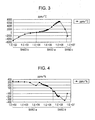
- Fig. 3 is an example of a graph presenting the temperature dependence of the real part of the internal impedance of the electrical storage device 101 in the measuring system 100 according to this embodiment.
- Fig. 4 is an example of a graph presenting the SOC dependence of the real part of the internal impedance of the electrical storage device 101 in the measuring system 100 according to this embodiment.
- the frequency of an alternating-current signal provided to the electrical storage device 101 is plotted on the horizontal axis
- the internal resistance of the electrical storage device 101 is plotted on the vertical axis.
- Fig. 3 presents the coefficient indicating the influence of the internal temperature on the internal resistance of the electrical storage device 101 (temperature coefficient).
- the temperature coefficient indicates that the internal resistance increases as the temperature increases in the case of an alternating-current signal in the frequency band between 10 KHz and 3 MHz inclusive (band a shown in Fig. 3 ) and that the internal resistance decreases as the temperature increases in the case of an alternating-current signal in the frequency band excluding the above (in the frequency band lower than 10 KHz (band b shown in Fig. 3 ) and the frequency band higher than 3 MHz (band c shown in Fig. 3 )).
- the temperature dependence is positive in the former frequency band whereas the temperature dependence is negative in the latter frequency band.
- Fig. 4 presents the coefficient indicating the influence of the SOC on the internal resistance of the electrical storage device 101 (SOC coefficient).
- the SOC coefficient indicates that the internal resistance increases as the SOC increases regarding an alternating-current signal in the frequency band lower than 300 KHz (band a shown in Fig. 4 ) and that the internal resistance decreases as the SOC increases regarding an alternating-current signal in the frequency band higher than 300 KHz (band b shown in Fig. 4 ).
- the SOC dependence is positive in the former frequency band whereas the SOC dependence is negative in the latter frequency band.
- the SOC dependence switches from positive dependence to negative dependence in alternating-current signals each having a frequency of around 300 KHz.
- an alternating-current signal having a frequency of around 300 KHz is close to the state of having no SOC influence on the internal resistance of the electrical storage device 101.
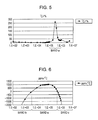
- Fig. 5 is an example of a graph presenting the influence of the internal temperature and the remaining capacity (SOC) of the electrical storage device 101 on the real part of the internal impedance of the electrical storage device 101 in the measuring system 100 according to this embodiment.
- the frequency of an alternating-current signal provided to the electrical storage device 101 is plotted on the horizontal axis, and the value obtained by dividing the influence of the internal temperature of the electrical storage device 101 by the influence of the SOC of the electrical storage device 101 (internal temperature / SOC) is plotted on the vertical axis.
- Fig. 5 presents the coefficient indicating the influence of the internal temperature and the remaining capacity (SOC) on the internal resistance of the electrical storage device 101 (temperature/SOC coefficient).
- the temperature/SOC coefficient has a large value in the case of an alternating-current signal in the frequency band between 100 KHz and 1 MHz inclusive (band a shown in Fig. 5 ) compared with one in the frequency band excluding the above and has the largest value in the case of an alternating-current signal having a frequency of 300 KHz. This is because, as shown in Fig. 4 , an alternating-current signal having a frequency of around 300 KHz is close to the state of having no SOC influence on the internal resistance of the electrical storage device 101.
- such an alternating-current signal having a frequency band in which the alternating-current signal is close to a state of having no SOC influence on the internal resistance of the electrical storage device 101 is defined as an alternating-current signal in a frequency band in which the real part of the internal impedance of the electrical storage device 101 does not change according to the SOC of the electrical storage device 101.
- the real part of the internal impedance of the electrical storage device 101 is measured by using an alternating-current signal in such a frequency band, and the internal temperature of the electrical storage device 101 is calculated from the measured value of the real part of the internal impedance.
- the real part of the internal impedance of the electrical storage device 101 is measured by using an alternating-current signal having a frequency band in which the real part of the internal impedance of the electrical storage device 101 does not change. This makes it possible to measure the real part of the internal impedance of the electrical storage device 101, which is likely to depend only on the internal temperature of the electrical storage device 101, such that the internal temperature of the electrical storage device 101 can be accurately measured.
- the real part of the internal impedance of the electrical storage device 101 is measured by using an alternating-current signal having a frequency at which the real part of the internal impedance of the electrical storage device 101 does not change, the remaining capacity of the electrical storage device 101 does not need to be calculated independently. For this reason, the internal temperature of the electrical storage device 101 can be accurately measured without the need for complex computational processing.
- the real part of the internal impedance of the electrical storage device 101 is measured by using an alternating-current signal in the frequency band between 100 KHz and 1 MHz inclusive, and the internal temperature of the electrical storage device 101 is calculated from the measured value of the real part of the internal impedance.
- the real part of the internal impedance of the electrical storage device 101 is measured by using an alternating-current signal having a frequency of 300 KHz, and the internal temperature of the electrical storage device 101 is calculated from the measured value of the real part of the internal impedance.
- the internal impedance itself instead of the real part of the internal impedance, may be set as a measurement target in the electrical storage device temperature-measuring method according to this embodiment.
- the internal impedance of the electrical storage device 101 is measured by using an alternating-current signal having a frequency band in which the internal impedance of the electrical storage device 101 does not change according to the SOC of the electrical storage device 101, and the internal temperature of the electrical storage device 101 is calculated from the measured value of the internal impedance.
- the measuring system 100 illustrated in Fig. 1 can be used in the electrical storage device temperature-measuring method according to this modified example.
- Fig. 6 is an example of a graph presenting the temperature dependence of the internal impedance of the electrical storage device 101 in the measuring system 100 according to the modified example of this embodiment.
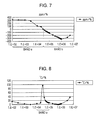
- Fig. 7 is an example of a graph presenting the SOC dependence of the internal impedance of the electrical storage device 101 in the measuring system 100 according to the modified example of this embodiment.
- the frequency of an alternating-current signal provided to the electrical storage device 101 is plotted on the horizontal axis
- the internal impedance of the electrical storage device 101 is plotted on the vertical axis.
- Fig. 6 presents the coefficient indicating the influence of the internal temperature on the internal impedance of the electrical storage device 101 (temperature coefficient).
- the temperature coefficient indicates that the internal impedance increases as the temperature increases in the case of an alternating-current signal in the frequency band between 3 KHz and 500 KHz inclusive (band a shown in Fig. 6 ) and that the internal impedance decreases as the temperature increases in the case of an alternating-current signal in the frequency band excluding the above (in the frequency band lower than 3 KHz (band b shown in Fig. 6 ) and the frequency band higher than 500 KHz (band c shown in Fig. 6 ).
- the temperature dependence is positive in the former frequency band whereas the temperature dependence is negative in the latter frequency band.
- Fig. 7 presents the coefficient indicating the influence of the SOC on the internal impedance of the electrical storage device 101 (SOC coefficient).
- the SOC coefficient indicates that the internal impedance increases as the SOC increases in the case of an alternating-current signal in the frequency band lower than 30 KHz (band a shown in Fig. 7 ) and that the internal impedance decreases as the SOC increases in the case of an alternating-current signal in the frequency band higher than 30 KHz (band b shown in Fig. 7 ).
- the SOC dependence is positive in the former frequency band whereas the SOC dependence is negative in the latter frequency band.
- the SOC dependence switches from positive dependence to negative dependence in alternating-current signals each having a frequency of around 30 KHz.
- an alternating-current signal having a frequency of around 30 KHz is close to the state of having no SOC influence on the internal impedance of the electrical storage device 101.
- Fig. 8 is an example of a graph presenting the influence of the internal temperature and the remaining capacity (SOC) of the electrical storage device 101 on the internal impedance of the electrical storage device 101 in the measuring system 100 according to this embodiment.
- the frequency of an alternating-current signal provided to the electrical storage device 101 is plotted on the horizontal axis, and the value obtained by dividing the influence of the internal temperature of the electrical storage device 101 by the influence of the SOC of the electrical storage device 101 (internal temperature / SOC) is plotted on the vertical axis.
- Fig. 8 presents the coefficient indicating the influence of the internal temperature and the remaining capacity (SOC) on the internal resistance of the electrical storage device 101 (temperature/SOC coefficient).
- the temperature/SOC coefficient has a large value in the case of an alternating-current signal in the frequency band between 10 KHz and 100 KHz inclusive (band a shown in Fig. 8 ) compared with one in the frequency band excluding the above and has the largest value in the case of an alternating-current signal having a frequency of 30 KHz.
- an alternating-current signal having a frequency of around 30 KHz is close to the state of having no SOC influence on the internal impedance of the electrical storage device 101.
- the internal temperature of the electrical storage device 101 can be measured using an alternating-current signal in the frequency band between 10 KHz and 100 KHz inclusive (in particular, an alternating-current signal having a frequency of around 30 KHz).
- such an alternating-current signal in a frequency band in which the alternating-current signal is close to a state of having no SOC influence on the internal impedance of the electrical storage device 101 is defined as an alternating-current signal in a frequency band in which the internal impedance of the electrical storage device 101 does not change according to the SOC of the electrical storage device 101.
- the internal impedance of the electrical storage device 101 is measured by using an alternating-current signal in such a frequency band, and the internal temperature of the electrical storage device 101 is calculated from the measured value of the internal impedance.
- the internal impedance of the electrical storage device 101 is measured by using an alternating-current signal having a frequency band in which the internal impedance of the electrical storage device 101 does not change, as in the above-described embodiment. This makes it possible to measure the internal impedance of the electrical storage device 101, which is likely to depend only on the internal temperature of the electrical storage device 101, such that the internal temperature of the electrical storage device 101 can be accurately measured.
- the internal impedance of the electrical storage device 101 is measured by using an alternating-current signal having a frequency at which the internal impedance of the electrical storage device 101 does not change, the remaining capacity of the electrical storage device 101 does not need to be calculated independently. For this reason, the internal temperature of the electrical storage device 101 can be accurately measured without the need for complex computational processing.
- the internal impedance of the electrical storage device 101 is measured by using an alternating-current signal in the frequency band between 10 KHz and 100 KHz inclusive, and the internal temperature of the electrical storage device 101 is calculated from the measured value of the internal impedance.
- the internal impedance of the electrical storage device 101 is measured by using an alternating-current signal having a frequency of 30 KHz, and the internal temperature of the electrical storage device 101 is calculated from the measured value of the internal impedance.
- the internal impedance of the electrical storage device 101 By measuring the internal impedance of the electrical storage device 101 by using an alternating-current signal having a frequency of 30 KHz, the internal impedance of the electrical storage device 101, which depends only on the internal temperature of the electrical storage device 101, can be accurately measured.
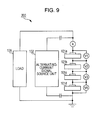
- Fig. 9 is a schematic diagram illustrating an example of a preferable configuration of a measuring system 200 to which the electrical storage device temperature-measuring method according to this embodiment is applied.
- the same components as those in Fig. 1 are denoted by the same numerals, and a detailed description thereof is omitted.
- the current detection unit 103 and the voltage detection unit 104 illustrated in Fig. 1 are denoted by "A" and "V", respectively.
- the internal-temperature calculation unit 105 illustrated in Fig. 1 is omitted.
- FIG. 9 multiple (four in the example illustrated in Fig. 9 ) electrical storage devices 101a to 101d are connected in series in the measuring system 200.
- a current detection unit (current sensor) A is connected in series.
- Voltage detection units (voltage sensors) V1 to V4 are connected respectively to the electrical storage devices 101a to 101d.
- the alternating-current signal transmission source unit 102 is connected in parallel to the load 106 via capacitors.
- the current detection unit A detects a current flowing through the circuit.
- the voltage detection units V1 to V4 detect the voltages of the respective electrical storage devices 101a to 101d.
- the current detection unit A and the voltage detection units V1 to V4 are used to detect an alternating-current signal generated by the alternating-current signal transmission source unit 102.
- at least one of the current detection unit A and the voltage detection unit V is used to calculate the remaining capacities of the electrical storage devices 101a to 101d.
- an alternating-current signal generated by the alternating-current signal source unit 102 is superimposed on a direct current to be used for charging or discharging the electrical storage devices 101a to 101d. Accordingly, an alternating-current signal to be used for measuring the internal temperatures of the electrical storage devices 101a to 101d is superimposed on a direct current to be used for charging or discharging the electrical storage devices 101a to 101d. This makes it possible to measure the internal impedances of the electrical storage devices 101a to 101d by using the above-described alternating-current signal, while charging or discharging the electrical storage devices 101a to 101d.
- At least one of the current detection unit A and the voltage detection unit V (V1 to V4) for detecting an alternating-current signal to be used for measuring the internal temperatures of the electrical storage devices 101a to 101d is used to calculate the remaining quantities (SOCs) of the electrical storage devices 101a to 101d. Accordingly, the components to be used for calculation of the remaining quantities of the electrical storage devices 101a to 101d (the current detection unit A or the voltage detection unit V (V1 to V4)) are also used for measuring the internal temperatures of the electrical storage devices 101a to 101d. This makes it possible to accurately measure the internal temperatures of the electrical storage devices 101a to 101d with a reduced number of components in the electrical storage devices 101a to 101d.
- the single current detection unit A is connected in series to the multiple serially connected electrical storage devices 101a to 101d in the electrical-storage device temperature measuring method to which the measuring system 200 is applied. Accordingly, the current detection unit A can be used for all of the multiple electrical storage devices 101a to 101d. This makes it possible to accurately measure the internal temperatures of the electrical storage devices 101a to 101d with a reduced number of components in the electrical storage devices 101a to 101d.
- the mode to which the measuring system 200 illustrated in Fig. 9 is applied is not limited to this, and the measuring system 200 is also applicable to a mode of measuring the real parts of the internal impedances of the electrical storage devices 101a to 101d as in the above embodiment.
- the measuring system 200 is also applicable to a mode of measuring the real parts of the internal impedances of the electrical storage devices 101a to 101d as in the above embodiment. For example, by adding a lock-in detection circuit and a lock-in amplifier, although not illustrated, phases can be accurately obtained and weak signals can be accurately measured, thereby making further accurate measurement of internal temperatures possible.
- the present invention is not limited to the above embodiment, and various changes can be made to the above embodiment.
- changes can be made to the above embodiment in terms of the connection relationship and sizes of the elements as appropriate as long as the gist of the present invention is not changed.
- the configuration, method, and the like described in the embodiment can be implemented in combination as appropriate.
- the present invention can be implemented by making some changes thereto as appropriate without departing from the scope of the invention.
- the electrical storage device temperature-measuring method of the present invention is useful in obtaining the state of health (SOH) and the remaining capacity (SOC) of an electrical storage device.
Landscapes
- Physics & Mathematics (AREA)
- General Physics & Mathematics (AREA)
- Engineering & Computer Science (AREA)
- Manufacturing & Machinery (AREA)
- Chemical & Material Sciences (AREA)
- Chemical Kinetics & Catalysis (AREA)
- Electrochemistry (AREA)
- General Chemical & Material Sciences (AREA)
- Secondary Cells (AREA)
- Tests Of Electric Status Of Batteries (AREA)
- Charge And Discharge Circuits For Batteries Or The Like (AREA)
Abstract
Description
- The present invention relates to a method of measuring the temperature of an electrical storage device and particularly to an electrical storage device temperature-measuring method for accurately measuring the internal temperature of the electrical storage device.
- Electrical storage devices such as a lithium-ion secondary battery and an electric double-layer capacitor have been used for various purposes and have been widely applied to, for example, battery packs for mobile phones, batteries for PCs, and batteries for vehicles. In such cases, detection of a state of an electrical storage device such as a deterioration state (referred to as SOH; state of health) and a remaining capacity (referred to as SOC; state of charge) is a very important matter. In particular, with regard to vehicles, detection of the state of an electrical storage device in a vehicle such as an energy-saving vehicle or a hybrid vehicle, which has a start-stop system, or in an electric vehicle is strongly associated with vehicle travelling and is therefore drawing attention as being very important.
- In a generally well-known method for detecting the state of such an electrical storage device, the voltage, the current, and the temperature of the electrical storage device are measured, and the deterioration state (SOH), the remaining capacity (SOC), or the like of the electrical storage device is measured on the basis of the measurement result. Among these, the temperature of the electrical storage device is an important measurement parameter since temperature has a great influence on deterioration of the electrical storage device.
- As a known technique for a method of measuring the temperature of an electrical storage device, a method is generally known in which a temperature detection element is in contact with or connected to the electrical storage device to directly measure the temperature (see, for example, PTL 1). In the method of
PTL 1, a Zener diode is used as a temperature detection element and connected to the positive terminal of the electrical storage device, such that the heat transmitted from the positive terminal of the electrical storage device can be accurately measured. However, the measurement method ofPTL 1 has a problem in that, due to self-heating or the like of an internal resistor of the electrical storage device, a great difference may occur between the temperature of a temperature detection point of the temperature detection element (the positive terminal of the electrical storage device in Known Example 1) and the internal temperature of the electrical storage device, and thus it is difficult to accurately determine the temperature of the electrical storage device. - In addition, in a proposed temperature detecting method, a characteristics map representing the relationship of the internal resistance (internal impedance), the remaining capacity (SOC), and the temperature of an electrical storage device is obtained in advance, and the temperature of the electrical storage device is determined by applying, to the characteristics map, the remaining capacity (SOC) and the internal resistance (internal impedance) measured during temperature detection (see, for example, PTL 2).
-
- PTL 1: Japanese Unexamined Patent Application Publication No.
6-260215 - PTL 2: Japanese Unexamined Patent Application Publication No.
2001-85071 - In the temperature detecting method described in PTL 2, however, the remaining capacity (SOC) of the electrical storage device is independently calculated by adding up the values of the currents flowing through the electrical storage device. After the addition, the temperature of the electrical storage device is obtained on the basis of the calculated remaining capacity (SOC) and the internal resistance defined in the above-described characteristics map. This leads to a problem of complex processing being required for obtaining the temperature of the electrical storage device.
- The present invention has been made in view of the above-described respects and aims to provide a method for measuring the temperature of an electrical storage device, the method enabling accurate measurement of the internal temperature of the electrical storage device without the need for complex computational processing.
- An electrical storage device temperature-measuring method according to the present invention includes: measuring a real part of internal impedance of an electrical storage device by using an alternating-current signal having a frequency band in which the real part of the internal impedance of the electrical storage device does not change according to a remaining capacity (SOC: state of charge) of the electrical storage device; and calculating internal temperature of the electrical storage device from a measured value of the real part of the internal impedance.
- According to this method, the real part of the internal impedance of the electrical storage device is measured by using an alternating-current signal having a frequency band in which the real part of the internal impedance of the electrical storage device does not change. This makes it possible to measure the real part of the internal impedance of the electrical storage device, which is likely to depend only on the internal temperature of the electrical storage device, such that the internal temperature of the electrical storage device can be accurately measured. At the same time, since the real part of the internal impedance of the electrical storage device is measured by using an alternating-current signal having a frequency at which the real part of the internal impedance of the electrical storage device does not change, the remaining capacity of the electrical storage device does not need to be calculated independently. For this reason, the internal temperature of the electrical storage device can be accurately measured without the need for complex computational processing.
- In the above electrical storage device temperature-measuring method, preferably, the real part of the internal impedance of the electrical storage device is measured by using an alternating-current signal having a frequency band between 100 KHz and 1 MHz inclusive, and the internal temperature of the electrical storage device is calculated from a measured value of the real part of the internal impedance. By measuring the real part of the internal impedance of the electrical storage device by using an alternating-current signal in the frequency band between 100 KHz and 1 MHz inclusive as described above, the real part of the internal impedance of the electrical storage device, which is likely to depend only on the internal temperature of the electrical storage device, can be measured effectively.
- In the above electrical storage device temperature-measuring method, particularly preferably, the real part of the internal impedance of the electrical storage device is measured by using an alternating-current signal having a frequency of 300 KHz, and the internal temperature of the electrical storage device is calculated from a measured value of the real part of the internal impedance. By measuring the real part of the internal impedance of the electrical storage device by using an alternating-current signal having a frequency of 300 KHz as described above, the real part of the internal impedance of the electrical storage device, which depends only on the internal temperature of the electrical storage device, can be accurately measured.
- The electrical storage device temperature-measuring method of the present invention includes: measuring internal impedance of an electrical storage device by using an alternating-current signal having a frequency band in which the internal impedance of the electrical storage device does not change according to a remaining capacity (SOC: state of charge) of the electrical storage device; and calculating internal temperature of the electrical storage device from a measured value of the internal impedance.
- According to this method, the internal impedance of the electrical storage device is measured by using an alternating-current signal having a frequency band in which the internal impedance of the electrical storage device does not change. This makes it possible to measure the internal impedance of the electrical storage device, which is likely to depend only on the internal temperature of the electrical storage device, such that the internal temperature of the electrical storage device can be accurately measured. At the same time, since the internal impedance of the electrical storage device is measured by using an alternating-current signal having a frequency at which the internal impedance of the electrical storage device does not change, the remaining capacity of the electrical storage device does not need to be calculated independently. For this reason, the internal temperature of the electrical storage device can be accurately measured without the need for complex computational processing.
- In the above electrical storage device temperature-measuring method, preferably the internal impedance of the electrical storage device is measured by using an alternating-current signal having a frequency band between 10 KHz and 100 KHz inclusive, and the internal temperature of the electrical storage device is calculated from a measured value of the internal impedance. By measuring the internal impedance of the electrical storage device by using an alternating-current signal in the frequency band between 10 KHz and 100 KHz inclusive as described above, the internal impedance of the electrical storage device, which is likely to depend only on the internal temperature of the electrical storage device, can be measured effectively.
- In the above electrical storage device temperature-measuring method, particularly preferably, the internal impedance of the electrical storage device is measured by using an alternating-current signal having a frequency of 30 KHz, and the internal temperature of the electrical storage device is calculated from a measured value of the internal impedance. By measuring the internal impedance of the electrical storage device by using an alternating-current signal having a frequency of 30 KHz as described above, the internal impedance of the electrical storage device, which depends only on the internal temperature of the electrical storage device, can be accurately measured.
- In addition, in the above electrical storage device temperature-measuring method, preferably, the alternating-current signal is superimposed on a direct current to be used for charging or discharging the electrical storage device. In this case, an alternating-current signal to be used for measuring the internal temperature of the electrical storage device is superimposed on a direct current to be used for charging or discharging the electrical storage device. This makes it possible to measure the internal impedance or the real part of the internal impedance of the electrical storage device by using the above-described alternating-current signal, while charging or discharging the electrical storage device.
- In addition, in the above electrical storage device temperature-measuring method, preferably, the electrical storage device includes a current detection unit and a voltage detection unit for detecting the alternating-current signal, and at least one of the current detection unit and the voltage detection unit is used for calculation of the remaining capacity of the electrical storage device. In this case, at least one of the current detection unit and the voltage detection unit for detecting an alternating-current signal to be used for measuring the internal temperature of the electrical storage device is used to calculate the remaining capacity of the electrical storage device. Accordingly, the component (the current detection unit or the voltage detection unit) to be used for calculation of the remaining capacity of the electrical storage device is also used for the measurement of the internal temperature of the electrical storage device. This makes it possible to accurately measure the internal temperature of the electrical storage device with a reduced number of components for measuring the internal temperature of the electrical storage device.
- In addition, in the above electrical storage device temperature-measuring method, preferably, a plurality of electrical storage devices each corresponding to the electrical storage device are connected in series, and the current detection unit, which is a single one, is connected to the plurality of electrical storage devices in series and the voltage detection unit is provided for each of the electrical storage devices. In this case, the single current detection unit is connected to the plurality of serially connected electrical storage devices. Accordingly, the current detection unit can be used for all of the plurality of electrical storage devices. This makes it possible to accurately measure the internal temperatures of the electrical storage devices with a reduced number of components for measuring the internal temperatures of the electrical storage devices.
- According to the present invention, it is possible to accurately measure the internal temperature of an electrical storage device without the need for complex computational processing.
-
- [
Fig. 1] Fig. 1 is a schematic diagram illustrating an example of a configuration of a measuring system to which an electrical storage device temperature-measuring method according to an embodiment of the present invention is applied. - [
Fig. 2] Fig. 2 is a schematic diagram of a configuration of a lithium-ion secondary battery forming an electrical storage device of the measuring system according to the embodiment. - [
Fig. 3] Fig. 3 is an example of a graph presenting temperature dependence of the real part of internal impedance of the electrical storage device in the measuring system according to the embodiment. - [
Fig. 4] Fig. 4 is an example of a graph presenting the remaining-capacity (SOC) dependence of the real part of the internal impedance of the electrical storage device in the measuring system according to the embodiment. - [
Fig. 5] Fig. 5 is an example of a graph presenting an influence of the temperature and the remaining capacity (SOC) on the real part of the internal impedance of the electrical storage device in the measuring system according to the embodiment. - [
Fig. 6] Fig. 6 is an example of a graph presenting temperature dependence of internal impedance of the electrical storage device in a measuring system according to a modified example of the embodiment. - [
Fig. 7] Fig. 7 is an example of a graph presenting the dependence of a remaining capacity (SOC) of the internal impedance of the electrical storage device in the measuring system according to the modified example of the embodiment. - [
Fig. 8] Fig. 8 is an example of a graph presenting an influence of the temperature and the remaining capacity (SOC) on the internal impedance of the electrical storage device in the measuring system according to the modified example of the embodiment. - [
Fig. 9] Fig. 9 is a schematic diagram illustrating an example of a preferable configuration of the measuring system to which the electrical storage device temperature-measuring method according to the embodiment is applied. Description of Embodiments -
Fig. 1 is a schematic diagram illustrating an example of a configuration of a measuring system to which an electrical storage device temperature-measuring method according to an embodiment of the present invention is applied.Fig. 2 is a schematic diagram of a configuration of a lithium-ion secondary battery forming an electrical storage device of the measuring system according to the embodiment. The electrical storage device temperature-measuring method according to this embodiment is a method performed by using, for example, ameasuring system 100 for measuring the internal temperature of anelectrical storage device 101 illustrated inFig. 1 . - As illustrated in
Fig. 1 , the measuringsystem 100 includes an alternating-currentsignal source unit 102 for providing an alternating-current signal in a predetermined frequency band to theelectrical storage device 101, acurrent detection unit 103 and avoltage detection unit 104 for detecting a current and a voltage responding to the alternating-current signal in the predetermined frequency band, and an internal-temperature calculation unit 105 for calculating the internal temperature of theelectrical storage device 101 by using the alternating-current signal in the predetermined frequency band as well as the detected current and voltage. - The
electrical storage device 101 is, for example, a rechargeable chemical battery such as a lithium-ion secondary battery and also includes a device that can store electrical energy by using ions, such as an electric double-layer capacitor. In general, theelectrical storage device 101 mainly includes a positive electrode collector A1, a negative electrode collector C1, an electrolyte E1, and a separator S1. For example, in the case of a lithium-ion secondary battery L1, theelectrical storage device 101 includes, in addition to the above components, a positive-electrode active material A51, which is a material for storing electricity on the positive electrode collector A1 side, a negative-electrode active material C51, which is a material for storing electricity on the negative electrode collector C1 side, an electrical conduction assistant D51, which is added in order to make electricity flow easily, and a binding agent, which is a binder, as illustrated inFig. 2 . - In the case of the lithium-ion secondary battery L1, mainly aluminum (Al) is used as the positive electrode collector A1, mainly copper (Cu) is used as the negative electrode collector C1, mainly a solution composed of an organic solvent (e.g., C4H6O3) and a lithium salt (e.g., LiPF6) is used as the electrolyte E1, mainly lithium cobalt oxide (LiCoO2) is used as the positive-electrode active material A51, and mainly carbon (C) is used as the negative-electrode active material C51. Alternatively, the positive-electrode active material A51 may be composed of nickel lithium oxide (LiNiO2), lithium manganese oxide (LiMn2O4), or olivine-type lithium phosphate (LiFePO4). As the carbon (C) of the negative-electrode active material C51, layered black lead crystal is used and is characterized by lithium being stored in an ionic state between the layers. The negative-electrode active material C51 may be composed of lithium titanate (Li4Ti5Ol2), silicon monoxide (SiO), an alloy of Sn, or an alloy of Si.
- The alternating-current
signal source unit 102 serves to generate an alternating-current signal having a frequency band in which the real part of the internal impedance of theelectrical storage device 101 does not change according to the remaining capacity (SOC: state of charge) of theelectrical storage device 101. Preferably, the alternating-currentsignal source unit 102 generates an alternating-current signal in the frequency band between 100 KHz and 1 MHz inclusive, for example. More preferably, the alternating-currentsignal source unit 102 generates an alternating-current signal having a frequency of 300 KHz. Note that a description is given later of the frequency band of the alternating-current signal generated by the alternating-currentsignal source unit 102. - The
current detection unit 103 is connected in a circuit to which theelectrical storage device 101 is connected and aload 106 is applied. Thecurrent detection unit 103 mainly includes a current sensor for detecting a current and a control circuit for the current sensor and detects a current flowing through the circuit. As the current sensor, for example, a small-size current sensor using a magnetoresistive element can be used. Thevoltage detection unit 104 mainly includes a voltage sensor for detecting a voltage and a control circuit for the voltage sensor, and detects the voltage of theelectrical storage device 101. - The internal-
temperature calculation unit 105 measures the real part of the internal impedance (internal resistance) of theelectrical storage device 101 by using the alternating-current signal in the predetermined frequency band received from the alternating-currentsignal source unit 102, and the current and voltage detected by thecurrent detection unit 103 and thevoltage detection unit 104. The internal-temperature calculation unit 105 calculates the internal temperature of theelectrical storage device 101 from the measured value of the real part of the internal impedance. Theload 106 includes a power converter such as an inverter for converting a direct-current power from theelectrical storage device 101 into an alternating-current power or a converter such as a DC-DC converter, for example. - It is well-known that the internal temperature and the remaining capacity (SOC) of the
electrical storage device 101 greatly affect the internal impedance of theelectrical storage device 101. A description is given below of the temperature dependence and the SOC dependence of the internal impedance of theelectrical storage device 101. In the following description, the real part of the internal impedance of theelectrical storage device 101 is referred to as the internal resistance of theelectrical storage device 101 below as appropriate. -
Fig. 3 is an example of a graph presenting the temperature dependence of the real part of the internal impedance of theelectrical storage device 101 in themeasuring system 100 according to this embodiment.Fig. 4 is an example of a graph presenting the SOC dependence of the real part of the internal impedance of theelectrical storage device 101 in themeasuring system 100 according to this embodiment. InFig. 3 and Fig. 4 , the frequency of an alternating-current signal provided to theelectrical storage device 101 is plotted on the horizontal axis, and the internal resistance of theelectrical storage device 101 is plotted on the vertical axis. -
Fig. 3 presents the coefficient indicating the influence of the internal temperature on the internal resistance of the electrical storage device 101 (temperature coefficient). As presented inFig. 3 , the temperature coefficient indicates that the internal resistance increases as the temperature increases in the case of an alternating-current signal in the frequency band between 10 KHz and 3 MHz inclusive (band a shown inFig. 3 ) and that the internal resistance decreases as the temperature increases in the case of an alternating-current signal in the frequency band excluding the above (in the frequency band lower than 10 KHz (band b shown inFig. 3 ) and the frequency band higher than 3 MHz (band c shown inFig. 3 )). In other words, the temperature dependence is positive in the former frequency band whereas the temperature dependence is negative in the latter frequency band. -
Fig. 4 presents the coefficient indicating the influence of the SOC on the internal resistance of the electrical storage device 101 (SOC coefficient). As presented inFig. 4 , the SOC coefficient indicates that the internal resistance increases as the SOC increases regarding an alternating-current signal in the frequency band lower than 300 KHz (band a shown inFig. 4 ) and that the internal resistance decreases as the SOC increases regarding an alternating-current signal in the frequency band higher than 300 KHz (band b shown inFig. 4 ). In other words, the SOC dependence is positive in the former frequency band whereas the SOC dependence is negative in the latter frequency band. In this case, the SOC dependence switches from positive dependence to negative dependence in alternating-current signals each having a frequency of around 300 KHz. In other words, an alternating-current signal having a frequency of around 300 KHz is close to the state of having no SOC influence on the internal resistance of theelectrical storage device 101. -
Fig. 5 is an example of a graph presenting the influence of the internal temperature and the remaining capacity (SOC) of theelectrical storage device 101 on the real part of the internal impedance of theelectrical storage device 101 in themeasuring system 100 according to this embodiment. InFig. 5 , the frequency of an alternating-current signal provided to theelectrical storage device 101 is plotted on the horizontal axis, and the value obtained by dividing the influence of the internal temperature of theelectrical storage device 101 by the influence of the SOC of the electrical storage device 101 (internal temperature / SOC) is plotted on the vertical axis. -
Fig. 5 presents the coefficient indicating the influence of the internal temperature and the remaining capacity (SOC) on the internal resistance of the electrical storage device 101 (temperature/SOC coefficient). As presented inFig. 5 , the temperature/SOC coefficient has a large value in the case of an alternating-current signal in the frequency band between 100 KHz and 1 MHz inclusive (band a shown inFig. 5 ) compared with one in the frequency band excluding the above and has the largest value in the case of an alternating-current signal having a frequency of 300 KHz. This is because, as shown inFig. 4 , an alternating-current signal having a frequency of around 300 KHz is close to the state of having no SOC influence on the internal resistance of theelectrical storage device 101. This indicates that the internal temperature of theelectrical storage device 101 can be measured without having any great influence of the SOC, by using an alternating-current signal in the frequency band between 100 KHz and 1 MHz inclusive (in particular, an alternating-current signal having a frequency of around 300 KHz). - In the electrical storage device temperature-measuring method according to this embodiment, such an alternating-current signal having a frequency band in which the alternating-current signal is close to a state of having no SOC influence on the internal resistance of the
electrical storage device 101 is defined as an alternating-current signal in a frequency band in which the real part of the internal impedance of theelectrical storage device 101 does not change according to the SOC of theelectrical storage device 101. The real part of the internal impedance of theelectrical storage device 101 is measured by using an alternating-current signal in such a frequency band, and the internal temperature of theelectrical storage device 101 is calculated from the measured value of the real part of the internal impedance. - As described above, in the electrical storage device temperature-measuring method according to this embodiment, the real part of the internal impedance of the
electrical storage device 101 is measured by using an alternating-current signal having a frequency band in which the real part of the internal impedance of theelectrical storage device 101 does not change. This makes it possible to measure the real part of the internal impedance of theelectrical storage device 101, which is likely to depend only on the internal temperature of theelectrical storage device 101, such that the internal temperature of theelectrical storage device 101 can be accurately measured. At the same time, since the real part of the internal impedance of theelectrical storage device 101 is measured by using an alternating-current signal having a frequency at which the real part of the internal impedance of theelectrical storage device 101 does not change, the remaining capacity of theelectrical storage device 101 does not need to be calculated independently. For this reason, the internal temperature of theelectrical storage device 101 can be accurately measured without the need for complex computational processing. - More specifically, in the electrical storage device temperature-measuring method according to this embodiment, the real part of the internal impedance of the
electrical storage device 101 is measured by using an alternating-current signal in the frequency band between 100 KHz and 1 MHz inclusive, and the internal temperature of theelectrical storage device 101 is calculated from the measured value of the real part of the internal impedance. By measuring the real part of the internal impedance of theelectrical storage device 101 by using an alternating-current signal in the frequency band between 100 KHz and 1 MHz inclusive, the real part of the internal impedance of the electrical storage device, which is likely to depend only on the internal temperature of the electrical storage device, can be measured effectively. - In particular, in the electrical storage device temperature-measuring method according to this embodiment, the real part of the internal impedance of the
electrical storage device 101 is measured by using an alternating-current signal having a frequency of 300 KHz, and the internal temperature of theelectrical storage device 101 is calculated from the measured value of the real part of the internal impedance. By measuring the real part of the internal impedance of theelectrical storage device 101 by using an alternating-current signal having a frequency of 300 KHz, the real part of the internal impedance of theelectrical storage device 101, which depends only on the internal temperature of theelectrical storage device 101, can be accurately measured. - In the electrical storage device temperature-measuring method according to this embodiment, a description is given of the case where the real part of the internal impedance of the
electrical storage device 101 is measured by using an alternating-current signal having a frequency band in which the real part of the internal impedance of theelectrical storage device 101 does not change according to the SOC of theelectrical storage device 101 and where the internal temperature of theelectrical storage device 101 is calculated from the measured value of the real part of the internal impedance. However, the internal impedance itself, instead of the real part of the internal impedance, may be set as a measurement target in the electrical storage device temperature-measuring method according to this embodiment. - A modified example in which the internal impedance itself is set as a measurement target is described below. In an electrical storage device temperature-measuring method according to the modified example of this embodiment, the internal impedance of the
electrical storage device 101 is measured by using an alternating-current signal having a frequency band in which the internal impedance of theelectrical storage device 101 does not change according to the SOC of theelectrical storage device 101, and the internal temperature of theelectrical storage device 101 is calculated from the measured value of the internal impedance. The measuringsystem 100 illustrated inFig. 1 can be used in the electrical storage device temperature-measuring method according to this modified example. -
Fig. 6 is an example of a graph presenting the temperature dependence of the internal impedance of theelectrical storage device 101 in themeasuring system 100 according to the modified example of this embodiment.Fig. 7 is an example of a graph presenting the SOC dependence of the internal impedance of theelectrical storage device 101 in themeasuring system 100 according to the modified example of this embodiment. InFig. 6 andFig. 7 , the frequency of an alternating-current signal provided to theelectrical storage device 101 is plotted on the horizontal axis, and the internal impedance of theelectrical storage device 101 is plotted on the vertical axis. -
Fig. 6 presents the coefficient indicating the influence of the internal temperature on the internal impedance of the electrical storage device 101 (temperature coefficient). As presented inFig. 6 , the temperature coefficient indicates that the internal impedance increases as the temperature increases in the case of an alternating-current signal in the frequency band between 3 KHz and 500 KHz inclusive (band a shown inFig. 6 ) and that the internal impedance decreases as the temperature increases in the case of an alternating-current signal in the frequency band excluding the above (in the frequency band lower than 3 KHz (band b shown inFig. 6 ) and the frequency band higher than 500 KHz (band c shown inFig. 6 ). In other words, the temperature dependence is positive in the former frequency band whereas the temperature dependence is negative in the latter frequency band. -
Fig. 7 presents the coefficient indicating the influence of the SOC on the internal impedance of the electrical storage device 101 (SOC coefficient). As presented inFig. 7 , the SOC coefficient indicates that the internal impedance increases as the SOC increases in the case of an alternating-current signal in the frequency band lower than 30 KHz (band a shown inFig. 7 ) and that the internal impedance decreases as the SOC increases in the case of an alternating-current signal in the frequency band higher than 30 KHz (band b shown inFig. 7 ). In other words, the SOC dependence is positive in the former frequency band whereas the SOC dependence is negative in the latter frequency band. In this case, the SOC dependence switches from positive dependence to negative dependence in alternating-current signals each having a frequency of around 30 KHz. In other words, an alternating-current signal having a frequency of around 30 KHz is close to the state of having no SOC influence on the internal impedance of theelectrical storage device 101. -
Fig. 8 is an example of a graph presenting the influence of the internal temperature and the remaining capacity (SOC) of theelectrical storage device 101 on the internal impedance of theelectrical storage device 101 in themeasuring system 100 according to this embodiment. InFig. 8 , the frequency of an alternating-current signal provided to theelectrical storage device 101 is plotted on the horizontal axis, and the value obtained by dividing the influence of the internal temperature of theelectrical storage device 101 by the influence of the SOC of the electrical storage device 101 (internal temperature / SOC) is plotted on the vertical axis. -
Fig. 8 presents the coefficient indicating the influence of the internal temperature and the remaining capacity (SOC) on the internal resistance of the electrical storage device 101 (temperature/SOC coefficient). As presented inFig. 8 , the temperature/SOC coefficient has a large value in the case of an alternating-current signal in the frequency band between 10 KHz and 100 KHz inclusive (band a shown inFig. 8 ) compared with one in the frequency band excluding the above and has the largest value in the case of an alternating-current signal having a frequency of 30 KHz. This is because, as shown inFig. 7 , an alternating-current signal having a frequency of around 30 KHz is close to the state of having no SOC influence on the internal impedance of theelectrical storage device 101. This indicates that the internal temperature of theelectrical storage device 101 can be measured using an alternating-current signal in the frequency band between 10 KHz and 100 KHz inclusive (in particular, an alternating-current signal having a frequency of around 30 KHz). - In the electrical storage device temperature-measuring method according to the modified example of this embodiment, such an alternating-current signal in a frequency band in which the alternating-current signal is close to a state of having no SOC influence on the internal impedance of the
electrical storage device 101 is defined as an alternating-current signal in a frequency band in which the internal impedance of theelectrical storage device 101 does not change according to the SOC of theelectrical storage device 101. The internal impedance of theelectrical storage device 101 is measured by using an alternating-current signal in such a frequency band, and the internal temperature of theelectrical storage device 101 is calculated from the measured value of the internal impedance. - As described above, in the electrical storage device temperature-measuring method according to the modified example of this embodiment, the internal impedance of the
electrical storage device 101 is measured by using an alternating-current signal having a frequency band in which the internal impedance of theelectrical storage device 101 does not change, as in the above-described embodiment. This makes it possible to measure the internal impedance of theelectrical storage device 101, which is likely to depend only on the internal temperature of theelectrical storage device 101, such that the internal temperature of theelectrical storage device 101 can be accurately measured. At the same time, since the internal impedance of theelectrical storage device 101 is measured by using an alternating-current signal having a frequency at which the internal impedance of theelectrical storage device 101 does not change, the remaining capacity of theelectrical storage device 101 does not need to be calculated independently. For this reason, the internal temperature of theelectrical storage device 101 can be accurately measured without the need for complex computational processing. - More specifically, in the electrical storage device temperature-measuring method according to the modified example of this embodiment, the internal impedance of the
electrical storage device 101 is measured by using an alternating-current signal in the frequency band between 10 KHz and 100 KHz inclusive, and the internal temperature of theelectrical storage device 101 is calculated from the measured value of the internal impedance. By measuring the internal impedance of theelectrical storage device 101 by using an alternating-current signal in the frequency band between 10 KHz and 100 KHz inclusive, the real part of the internal impedance of theelectrical storage device 101, which is likely to depend only on the internal temperature of theelectrical storage device 101, can be measured effectively. - In particular, in the electrical storage device temperature-measuring method according to the modified example of this embodiment, the internal impedance of the
electrical storage device 101 is measured by using an alternating-current signal having a frequency of 30 KHz, and the internal temperature of theelectrical storage device 101 is calculated from the measured value of the internal impedance. By measuring the internal impedance of theelectrical storage device 101 by using an alternating-current signal having a frequency of 30 KHz, the internal impedance of theelectrical storage device 101, which depends only on the internal temperature of theelectrical storage device 101, can be accurately measured. - An example of a preferable configuration of a measuring system to which the electrical storage device temperature-measuring method according to this embodiment is described below.
Fig. 9 is a schematic diagram illustrating an example of a preferable configuration of ameasuring system 200 to which the electrical storage device temperature-measuring method according to this embodiment is applied. InFig. 9 , the same components as those inFig. 1 are denoted by the same numerals, and a detailed description thereof is omitted. InFig. 9 , thecurrent detection unit 103 and thevoltage detection unit 104 illustrated inFig. 1 are denoted by "A" and "V", respectively. In addition, inFig. 9 , the internal-temperature calculation unit 105 illustrated inFig. 1 is omitted. - As illustrated in
Fig. 9 , multiple (four in the example illustrated inFig. 9 )electrical storage devices 101a to 101d are connected in series in themeasuring system 200. A current detection unit (current sensor) A is connected in series. Voltage detection units (voltage sensors) V1 to V4 are connected respectively to theelectrical storage devices 101a to 101d. In themeasuring system 200, the alternating-current signaltransmission source unit 102 is connected in parallel to theload 106 via capacitors. - The current detection unit A detects a current flowing through the circuit. The voltage detection units V1 to V4 detect the voltages of the respective
electrical storage devices 101a to 101d. In this case, the current detection unit A and the voltage detection units V1 to V4 are used to detect an alternating-current signal generated by the alternating-current signaltransmission source unit 102. At the same time, at least one of the current detection unit A and the voltage detection unit V (V1 to V4) is used to calculate the remaining capacities of theelectrical storage devices 101a to 101d. - In the electrical-storage device temperature measuring method to which the
measuring system 200 illustrated inFig. 9 is applied, an alternating-current signal generated by the alternating-currentsignal source unit 102 is superimposed on a direct current to be used for charging or discharging theelectrical storage devices 101a to 101d. Accordingly, an alternating-current signal to be used for measuring the internal temperatures of theelectrical storage devices 101a to 101d is superimposed on a direct current to be used for charging or discharging theelectrical storage devices 101a to 101d. This makes it possible to measure the internal impedances of theelectrical storage devices 101a to 101d by using the above-described alternating-current signal, while charging or discharging theelectrical storage devices 101a to 101d. - In the electrical-storage device temperature measuring method to which the
measuring system 200 is applied, at least one of the current detection unit A and the voltage detection unit V (V1 to V4) for detecting an alternating-current signal to be used for measuring the internal temperatures of theelectrical storage devices 101a to 101d is used to calculate the remaining quantities (SOCs) of theelectrical storage devices 101a to 101d. Accordingly, the components to be used for calculation of the remaining quantities of theelectrical storage devices 101a to 101d (the current detection unit A or the voltage detection unit V (V1 to V4)) are also used for measuring the internal temperatures of theelectrical storage devices 101a to 101d. This makes it possible to accurately measure the internal temperatures of theelectrical storage devices 101a to 101d with a reduced number of components in theelectrical storage devices 101a to 101d. - In addition, the single current detection unit A is connected in series to the multiple serially connected
electrical storage devices 101a to 101d in the electrical-storage device temperature measuring method to which themeasuring system 200 is applied. Accordingly, the current detection unit A can be used for all of the multipleelectrical storage devices 101a to 101d. This makes it possible to accurately measure the internal temperatures of theelectrical storage devices 101a to 101d with a reduced number of components in theelectrical storage devices 101a to 101d. - A description is given above of the case in which the
measuring system 200 illustrated inFig. 9 is applied to the mode of measuring the internal impedances of theelectrical storage devices 101a to 101d as described in the above embodiment. However, the mode to which themeasuring system 200 illustrated inFig. 9 is applied is not limited to this, and themeasuring system 200 is also applicable to a mode of measuring the real parts of the internal impedances of theelectrical storage devices 101a to 101d as in the above embodiment. For example, by adding a lock-in detection circuit and a lock-in amplifier, although not illustrated, phases can be accurately obtained and weak signals can be accurately measured, thereby making further accurate measurement of internal temperatures possible. - The present invention is not limited to the above embodiment, and various changes can be made to the above embodiment. For example, changes can be made to the above embodiment in terms of the connection relationship and sizes of the elements as appropriate as long as the gist of the present invention is not changed. The configuration, method, and the like described in the embodiment can be implemented in combination as appropriate. In addition, the present invention can be implemented by making some changes thereto as appropriate without departing from the scope of the invention.
- The electrical storage device temperature-measuring method of the present invention is useful in obtaining the state of health (SOH) and the remaining capacity (SOC) of an electrical storage device.
-
- 100, 200
- measuring system
- 101, 101a to 101d
- electrical storage device
- 102
- alternating-current signal source unit
- 103, A
- current detection unit
- 104, V1 to V4
- voltage detection unit
- 105
- internal-temperature calculation unit
- 106
- load
Claims (9)
- An electrical storage device temperature-measuring method comprising:measuring a real part of internal impedance of an electrical storage device by using an alternating-current signal having a frequency band in which the real part of the internal impedance of the electrical storage device does not change according to a remaining capacity (SOC: state of charge) of the electrical storage device; andcalculating internal temperature of the electrical storage device from a measured value of the real part of the internal impedance.
- The electrical storage device temperature-measuring method according to Claim 1,
wherein the real part of the internal impedance of the electrical storage device is measured by using an alternating-current signal having a frequency band between 100 KHz and 1 MHz inclusive, and
wherein the internal temperature of the electrical storage device is calculated from a measured value of the real part of the internal impedance. - The electrical storage device temperature-measuring method according to Claim 1,
wherein the real part of the internal impedance of the electrical storage device is measured by using an alternating-current signal having a frequency of 300 KHz, and
wherein the internal temperature of the electrical storage device is calculated from a measured value of the real part of the internal impedance. - An electrical storage device temperature-measuring method comprising:measuring internal impedance of an electrical storage device by using an alternating-current signal having a frequency band in which the internal impedance of the electrical storage device does not change according to a remaining capacity (SOC: state of charge) of the electrical storage device; andcalculating internal temperature of the electrical storage device from a measured value of the internal impedance.
- The electrical storage device temperature-measuring method according to Claim 4,
wherein the internal impedance of the electrical storage device is measured by using an alternating-current signal having a frequency band between 10 KHz and 100 KHz inclusive, and
wherein the internal temperature of the electrical storage device is calculated from a measured value of the internal impedance. - The electrical storage device temperature-measuring method according to Claim 1,
wherein the internal impedance of the electrical storage device is measured by using an alternating-current signal having a frequency of 30 KHz, and
wherein the internal temperature of the electrical storage device is calculated from a measured value of the internal impedance. - The electrical storage device temperature-measuring method according to any one of Claims 1 to 6, wherein the alternating-current signal is superimposed on a direct current to be used for charging or discharging the electrical storage device.
- The electrical storage device temperature-measuring method according to any one of Claims 1 to 7,
wherein the electrical storage device includes a current detection unit and a voltage detection unit for detecting the alternating-current signal, and
wherein at least one of the current detection unit and the voltage detection unit is used for calculating the remaining capacity of the electrical storage device. - The electrical storage device temperature-measuring method according to Claim 8,
wherein a plurality of electrical storage devices each corresponding to the electrical storage device are connected in series, and
wherein the current detection unit, which is a single one, is connected in series to the plurality of electrical storage devices, and the voltage detection unit is provided for each of the electrical storage devices.
Applications Claiming Priority (2)
| Application Number | Priority Date | Filing Date | Title |
|---|---|---|---|
| JP2013003500 | 2013-01-11 | ||
| PCT/JP2013/007545 WO2014108971A1 (en) | 2013-01-11 | 2013-12-24 | Method for measuring temperature of electrical storage device |
Publications (3)
| Publication Number | Publication Date |
|---|---|
| EP2944932A1 true EP2944932A1 (en) | 2015-11-18 |
| EP2944932A4 EP2944932A4 (en) | 2016-08-17 |
| EP2944932B1 EP2944932B1 (en) | 2017-05-17 |
Family
ID=51166649
Family Applications (1)
| Application Number | Title | Priority Date | Filing Date |
|---|---|---|---|
| EP13870565.2A Not-in-force EP2944932B1 (en) | 2013-01-11 | 2013-12-24 | Method for measuring temperature of electrical storage device |
Country Status (5)
| Country | Link |
|---|---|
| US (1) | US20150253204A1 (en) |
| EP (1) | EP2944932B1 (en) |
| JP (1) | JP6019318B2 (en) |
| CN (1) | CN104937387B (en) |
| WO (1) | WO2014108971A1 (en) |
Cited By (1)
| Publication number | Priority date | Publication date | Assignee | Title |
|---|---|---|---|---|
| DE102016009052A1 (en) | 2016-07-26 | 2017-02-16 | Daimler Ag | Determining a temperature of a connected to a DC voltage intermediate circuit of an electronic system for a motor vehicle electrical unit |
Families Citing this family (12)
| Publication number | Priority date | Publication date | Assignee | Title |
|---|---|---|---|---|
| JP5906491B2 (en) * | 2012-11-12 | 2016-04-20 | アルプス・グリーンデバイス株式会社 | Method for detecting state of power storage device |
| CN105378498B (en) * | 2013-07-10 | 2017-11-14 | 阿尔卑斯电气株式会社 | State Estimation Method for Electric Storage Device |
| JP2017175705A (en) * | 2016-03-22 | 2017-09-28 | Ntn株式会社 | Secondary battery deterioration suppressing device and individual deterioration suppressing device |
| JP6787189B2 (en) * | 2017-03-03 | 2020-11-18 | 住友電気工業株式会社 | Temperature abnormality judgment device, temperature abnormality judgment method and computer program |
| DE102017220134A1 (en) * | 2017-11-13 | 2019-05-16 | Bayerische Motoren Werke Aktiengesellschaft | Device for detecting a deformation of an electrical energy store |
| CN112041695B (en) * | 2018-05-07 | 2023-09-29 | 三菱电机株式会社 | Battery degradation detection device and battery temperature estimation device |
| DE102019127910A1 (en) * | 2019-10-16 | 2021-04-22 | Bayerische Motoren Werke Aktiengesellschaft | METHOD AND DEVICE FOR MONITORING AN ELECTROCHEMICAL ENERGY STORAGE CELL AND VEHICLE |
| CN114730913A (en) * | 2019-11-20 | 2022-07-08 | 日本碍子株式会社 | Lithium secondary battery and method for measuring state of charge thereof |
| JP7314805B2 (en) * | 2020-01-10 | 2023-07-26 | 株式会社デンソー | temperature estimator |
| JP7593089B2 (en) * | 2020-12-17 | 2024-12-03 | 株式会社デンソー | Battery monitoring device and program |
| US20250198958A1 (en) * | 2022-03-29 | 2025-06-19 | Temple University-Of The Commonwealth System Of Higher Education | System and method to detect mechanically damaged energy storage cells using electrical signals |
| US12451538B2 (en) * | 2022-05-03 | 2025-10-21 | GM Global Technology Operations LLC | Closed loop thermal control and estimation of a parameter of a battery assembly |
Family Cites Families (11)
| Publication number | Priority date | Publication date | Assignee | Title |
|---|---|---|---|---|
| JPH06260215A (en) | 1991-08-20 | 1994-09-16 | Japan Storage Battery Co Ltd | Battery charger for automobile battery |
| US6137269A (en) * | 1999-09-01 | 2000-10-24 | Champlin; Keith S. | Method and apparatus for electronically evaluating the internal temperature of an electrochemical cell or battery |
| JP4383597B2 (en) | 1999-09-13 | 2009-12-16 | トヨタ自動車株式会社 | Battery detection device and temperature detection method |
| JP5367604B2 (en) * | 2003-08-22 | 2013-12-11 | 古河電気工業株式会社 | Method and apparatus for measuring internal impedance of secondary battery |
| JP2010243481A (en) * | 2009-03-18 | 2010-10-28 | National Institute Of Advanced Industrial Science & Technology | Method, determination device and determination program for determining state relating to temperature of secondary battery |
| JP2011001649A (en) * | 2009-06-18 | 2011-01-06 | Shimano Inc | Fishing apron |
| JP4807443B2 (en) * | 2009-07-08 | 2011-11-02 | トヨタ自動車株式会社 | Secondary battery temperature estimation device |
| WO2012054473A1 (en) * | 2010-10-18 | 2012-04-26 | Johns Hopkins University | Battery phase meter to determine internal temperatures of lithium-ion rechargeable cells under charge and discharge |
| JP5453232B2 (en) * | 2010-12-24 | 2014-03-26 | 本田技研工業株式会社 | Electric vehicle |
| CN202372273U (en) * | 2011-12-22 | 2012-08-08 | 中国移动通信集团安徽有限公司 | Storage battery temperature monitoring device |
| CN102680904A (en) * | 2012-05-15 | 2012-09-19 | 上海福睿电子科技有限公司 | Battery internal temperature detection circuit and detection method |
-
2013
- 2013-12-24 CN CN201380069986.1A patent/CN104937387B/en not_active Expired - Fee Related
- 2013-12-24 JP JP2014556219A patent/JP6019318B2/en not_active Expired - Fee Related
- 2013-12-24 WO PCT/JP2013/007545 patent/WO2014108971A1/en not_active Ceased
- 2013-12-24 EP EP13870565.2A patent/EP2944932B1/en not_active Not-in-force
-
2015
- 2015-05-21 US US14/718,484 patent/US20150253204A1/en not_active Abandoned
Cited By (1)
| Publication number | Priority date | Publication date | Assignee | Title |
|---|---|---|---|---|
| DE102016009052A1 (en) | 2016-07-26 | 2017-02-16 | Daimler Ag | Determining a temperature of a connected to a DC voltage intermediate circuit of an electronic system for a motor vehicle electrical unit |
Also Published As
| Publication number | Publication date |
|---|---|
| WO2014108971A1 (en) | 2014-07-17 |
| JPWO2014108971A1 (en) | 2017-01-19 |
| EP2944932A4 (en) | 2016-08-17 |
| EP2944932B1 (en) | 2017-05-17 |
| CN104937387A (en) | 2015-09-23 |
| CN104937387B (en) | 2017-02-15 |
| JP6019318B2 (en) | 2016-11-02 |
| US20150253204A1 (en) | 2015-09-10 |
Similar Documents
| Publication | Publication Date | Title |
|---|---|---|
| EP2944932B1 (en) | Method for measuring temperature of electrical storage device | |
| EP2741060B1 (en) | Battery device temperature measurement method | |
| EP3104185B1 (en) | Storage device state detection method | |
| CN105378498B (en) | State Estimation Method for Electric Storage Device | |
| KR101611116B1 (en) | Control device for secondary battery, charging control method, and soc detection method | |
| JP6347212B2 (en) | Control device, power storage module, electric vehicle, power supply system, and control method | |
| US10976370B2 (en) | SOC estimation device of energy storage device, energy storage apparatus, and SOC estimation method of energy storage device | |
| KR20250002849A (en) | Abnormality detection system for secondary cells and abnormality detection method for secondary cells | |
| TW201337300A (en) | Secondary battery control device and SOC detection method | |
| KR102889693B1 (en) | Battery diagnosis device, battery management system, battery pack, electric vehicle, and battery diagnosis method | |
| Xu et al. | LiFePO4 battery state of charge estimation based on the improved Thevenin equivalent circuit model and Kalman filtering | |
| JP6365820B2 (en) | Secondary battery abnormality determination device | |
| Sarker et al. | Series Connected Cell Monitoring System of Li-ion Battery with I2C and Cloud Interfacing |
Legal Events
| Date | Code | Title | Description |
|---|---|---|---|
| PUAI | Public reference made under article 153(3) epc to a published international application that has entered the european phase |
Free format text: ORIGINAL CODE: 0009012 |
|
| 17P | Request for examination filed |
Effective date: 20150716 |
|
| AK | Designated contracting states |
Kind code of ref document: A1 Designated state(s): AL AT BE BG CH CY CZ DE DK EE ES FI FR GB GR HR HU IE IS IT LI LT LU LV MC MK MT NL NO PL PT RO RS SE SI SK SM TR |
|
| AX | Request for extension of the european patent |
Extension state: BA ME |
|
| DAX | Request for extension of the european patent (deleted) | ||
| A4 | Supplementary search report drawn up and despatched |
Effective date: 20160715 |
|
| RIC1 | Information provided on ipc code assigned before grant |
Ipc: H01M 10/48 20060101ALI20160708BHEP Ipc: G01K 7/00 20060101AFI20160708BHEP |
|
| RAP1 | Party data changed (applicant data changed or rights of an application transferred) |
Owner name: ALPS ELECTRIC CO., LTD. |
|
| GRAP | Despatch of communication of intention to grant a patent |
Free format text: ORIGINAL CODE: EPIDOSNIGR1 |
|
| INTG | Intention to grant announced |
Effective date: 20170207 |
|
| GRAS | Grant fee paid |
Free format text: ORIGINAL CODE: EPIDOSNIGR3 |
|
| GRAA | (expected) grant |
Free format text: ORIGINAL CODE: 0009210 |
|
| AK | Designated contracting states |
Kind code of ref document: B1 Designated state(s): AL AT BE BG CH CY CZ DE DK EE ES FI FR GB GR HR HU IE IS IT LI LT LU LV MC MK MT NL NO PL PT RO RS SE SI SK SM TR |
|
| REG | Reference to a national code |
Ref country code: GB Ref legal event code: FG4D |
|
| REG | Reference to a national code |
Ref country code: CH Ref legal event code: EP |
|
| REG | Reference to a national code |
Ref country code: IE Ref legal event code: FG4D |
|
| REG | Reference to a national code |
Ref country code: AT Ref legal event code: REF Ref document number: 894892 Country of ref document: AT Kind code of ref document: T Effective date: 20170615 |
|
| REG | Reference to a national code |
Ref country code: DE Ref legal event code: R096 Ref document number: 602013021444 Country of ref document: DE |
|
| REG | Reference to a national code |
Ref country code: NL Ref legal event code: MP Effective date: 20170517 |
|
| REG | Reference to a national code |
Ref country code: LT Ref legal event code: MG4D |
|
| REG | Reference to a national code |
Ref country code: AT Ref legal event code: MK05 Ref document number: 894892 Country of ref document: AT Kind code of ref document: T Effective date: 20170517 |
|
| PG25 | Lapsed in a contracting state [announced via postgrant information from national office to epo] |
Ref country code: ES Free format text: LAPSE BECAUSE OF FAILURE TO SUBMIT A TRANSLATION OF THE DESCRIPTION OR TO PAY THE FEE WITHIN THE PRESCRIBED TIME-LIMIT Effective date: 20170517 Ref country code: GR Free format text: LAPSE BECAUSE OF FAILURE TO SUBMIT A TRANSLATION OF THE DESCRIPTION OR TO PAY THE FEE WITHIN THE PRESCRIBED TIME-LIMIT Effective date: 20170818 Ref country code: HR Free format text: LAPSE BECAUSE OF FAILURE TO SUBMIT A TRANSLATION OF THE DESCRIPTION OR TO PAY THE FEE WITHIN THE PRESCRIBED TIME-LIMIT Effective date: 20170517 Ref country code: AT Free format text: LAPSE BECAUSE OF FAILURE TO SUBMIT A TRANSLATION OF THE DESCRIPTION OR TO PAY THE FEE WITHIN THE PRESCRIBED TIME-LIMIT Effective date: 20170517 Ref country code: NO Free format text: LAPSE BECAUSE OF FAILURE TO SUBMIT A TRANSLATION OF THE DESCRIPTION OR TO PAY THE FEE WITHIN THE PRESCRIBED TIME-LIMIT Effective date: 20170817 Ref country code: FI Free format text: LAPSE BECAUSE OF FAILURE TO SUBMIT A TRANSLATION OF THE DESCRIPTION OR TO PAY THE FEE WITHIN THE PRESCRIBED TIME-LIMIT Effective date: 20170517 Ref country code: LT Free format text: LAPSE BECAUSE OF FAILURE TO SUBMIT A TRANSLATION OF THE DESCRIPTION OR TO PAY THE FEE WITHIN THE PRESCRIBED TIME-LIMIT Effective date: 20170517 |
|
| PG25 | Lapsed in a contracting state [announced via postgrant information from national office to epo] |
Ref country code: IS Free format text: LAPSE BECAUSE OF FAILURE TO SUBMIT A TRANSLATION OF THE DESCRIPTION OR TO PAY THE FEE WITHIN THE PRESCRIBED TIME-LIMIT Effective date: 20170917 Ref country code: NL Free format text: LAPSE BECAUSE OF FAILURE TO SUBMIT A TRANSLATION OF THE DESCRIPTION OR TO PAY THE FEE WITHIN THE PRESCRIBED TIME-LIMIT Effective date: 20170517 Ref country code: SE Free format text: LAPSE BECAUSE OF FAILURE TO SUBMIT A TRANSLATION OF THE DESCRIPTION OR TO PAY THE FEE WITHIN THE PRESCRIBED TIME-LIMIT Effective date: 20170517 Ref country code: RS Free format text: LAPSE BECAUSE OF FAILURE TO SUBMIT A TRANSLATION OF THE DESCRIPTION OR TO PAY THE FEE WITHIN THE PRESCRIBED TIME-LIMIT Effective date: 20170517 Ref country code: PL Free format text: LAPSE BECAUSE OF FAILURE TO SUBMIT A TRANSLATION OF THE DESCRIPTION OR TO PAY THE FEE WITHIN THE PRESCRIBED TIME-LIMIT Effective date: 20170517 Ref country code: BG Free format text: LAPSE BECAUSE OF FAILURE TO SUBMIT A TRANSLATION OF THE DESCRIPTION OR TO PAY THE FEE WITHIN THE PRESCRIBED TIME-LIMIT Effective date: 20170817 Ref country code: LV Free format text: LAPSE BECAUSE OF FAILURE TO SUBMIT A TRANSLATION OF THE DESCRIPTION OR TO PAY THE FEE WITHIN THE PRESCRIBED TIME-LIMIT Effective date: 20170517 |
|
| REG | Reference to a national code |
Ref country code: FR Ref legal event code: PLFP Year of fee payment: 5 |
|
| PG25 | Lapsed in a contracting state [announced via postgrant information from national office to epo] |
Ref country code: EE Free format text: LAPSE BECAUSE OF FAILURE TO SUBMIT A TRANSLATION OF THE DESCRIPTION OR TO PAY THE FEE WITHIN THE PRESCRIBED TIME-LIMIT Effective date: 20170517 Ref country code: DK Free format text: LAPSE BECAUSE OF FAILURE TO SUBMIT A TRANSLATION OF THE DESCRIPTION OR TO PAY THE FEE WITHIN THE PRESCRIBED TIME-LIMIT Effective date: 20170517 Ref country code: RO Free format text: LAPSE BECAUSE OF FAILURE TO SUBMIT A TRANSLATION OF THE DESCRIPTION OR TO PAY THE FEE WITHIN THE PRESCRIBED TIME-LIMIT Effective date: 20170517 Ref country code: CZ Free format text: LAPSE BECAUSE OF FAILURE TO SUBMIT A TRANSLATION OF THE DESCRIPTION OR TO PAY THE FEE WITHIN THE PRESCRIBED TIME-LIMIT Effective date: 20170517 Ref country code: SK Free format text: LAPSE BECAUSE OF FAILURE TO SUBMIT A TRANSLATION OF THE DESCRIPTION OR TO PAY THE FEE WITHIN THE PRESCRIBED TIME-LIMIT Effective date: 20170517 |
|
| REG | Reference to a national code |
Ref country code: DE Ref legal event code: R097 Ref document number: 602013021444 Country of ref document: DE |
|
| PG25 | Lapsed in a contracting state [announced via postgrant information from national office to epo] |
Ref country code: SM Free format text: LAPSE BECAUSE OF FAILURE TO SUBMIT A TRANSLATION OF THE DESCRIPTION OR TO PAY THE FEE WITHIN THE PRESCRIBED TIME-LIMIT Effective date: 20170517 Ref country code: IT Free format text: LAPSE BECAUSE OF FAILURE TO SUBMIT A TRANSLATION OF THE DESCRIPTION OR TO PAY THE FEE WITHIN THE PRESCRIBED TIME-LIMIT Effective date: 20170517 |
|
| PLBE | No opposition filed within time limit |
Free format text: ORIGINAL CODE: 0009261 |
|
| STAA | Information on the status of an ep patent application or granted ep patent |
Free format text: STATUS: NO OPPOSITION FILED WITHIN TIME LIMIT |
|
| 26N | No opposition filed |
Effective date: 20180220 |
|
| PG25 | Lapsed in a contracting state [announced via postgrant information from national office to epo] |
Ref country code: SI Free format text: LAPSE BECAUSE OF FAILURE TO SUBMIT A TRANSLATION OF THE DESCRIPTION OR TO PAY THE FEE WITHIN THE PRESCRIBED TIME-LIMIT Effective date: 20170517 |
|
| REG | Reference to a national code |
Ref country code: CH Ref legal event code: PL |
|
| REG | Reference to a national code |
Ref country code: IE Ref legal event code: MM4A |
|
| PG25 | Lapsed in a contracting state [announced via postgrant information from national office to epo] |
Ref country code: LU Free format text: LAPSE BECAUSE OF NON-PAYMENT OF DUE FEES Effective date: 20171224 Ref country code: MT Free format text: LAPSE BECAUSE OF NON-PAYMENT OF DUE FEES Effective date: 20171224 |
|
| REG | Reference to a national code |
Ref country code: BE Ref legal event code: MM Effective date: 20171231 |
|
| PG25 | Lapsed in a contracting state [announced via postgrant information from national office to epo] |
Ref country code: IE Free format text: LAPSE BECAUSE OF NON-PAYMENT OF DUE FEES Effective date: 20171224 |
|
| PG25 | Lapsed in a contracting state [announced via postgrant information from national office to epo] |
Ref country code: CH Free format text: LAPSE BECAUSE OF NON-PAYMENT OF DUE FEES Effective date: 20171231 Ref country code: BE Free format text: LAPSE BECAUSE OF NON-PAYMENT OF DUE FEES Effective date: 20171231 Ref country code: LI Free format text: LAPSE BECAUSE OF NON-PAYMENT OF DUE FEES Effective date: 20171231 |
|
| REG | Reference to a national code |
Ref country code: DE Ref legal event code: R082 Ref document number: 602013021444 Country of ref document: DE Representative=s name: SCHMITT-NILSON SCHRAUD WAIBEL WOHLFROM PATENTA, DE Ref country code: DE Ref legal event code: R081 Ref document number: 602013021444 Country of ref document: DE Owner name: ALPS ALPINE CO., LTD., JP Free format text: FORMER OWNER: ALPS ELECTRIC CO., LTD., TOKYO, JP |
|
| PG25 | Lapsed in a contracting state [announced via postgrant information from national office to epo] |
Ref country code: HU Free format text: LAPSE BECAUSE OF FAILURE TO SUBMIT A TRANSLATION OF THE DESCRIPTION OR TO PAY THE FEE WITHIN THE PRESCRIBED TIME-LIMIT; INVALID AB INITIO Effective date: 20131224 Ref country code: MC Free format text: LAPSE BECAUSE OF FAILURE TO SUBMIT A TRANSLATION OF THE DESCRIPTION OR TO PAY THE FEE WITHIN THE PRESCRIBED TIME-LIMIT Effective date: 20170517 |
|
| PG25 | Lapsed in a contracting state [announced via postgrant information from national office to epo] |
Ref country code: CY Free format text: LAPSE BECAUSE OF FAILURE TO SUBMIT A TRANSLATION OF THE DESCRIPTION OR TO PAY THE FEE WITHIN THE PRESCRIBED TIME-LIMIT Effective date: 20170517 |
|
| PG25 | Lapsed in a contracting state [announced via postgrant information from national office to epo] |
Ref country code: MK Free format text: LAPSE BECAUSE OF FAILURE TO SUBMIT A TRANSLATION OF THE DESCRIPTION OR TO PAY THE FEE WITHIN THE PRESCRIBED TIME-LIMIT Effective date: 20170517 |
|
| PGFP | Annual fee paid to national office [announced via postgrant information from national office to epo] |
Ref country code: FR Payment date: 20191220 Year of fee payment: 7 |
|
| PG25 | Lapsed in a contracting state [announced via postgrant information from national office to epo] |
Ref country code: TR Free format text: LAPSE BECAUSE OF FAILURE TO SUBMIT A TRANSLATION OF THE DESCRIPTION OR TO PAY THE FEE WITHIN THE PRESCRIBED TIME-LIMIT Effective date: 20170517 |
|
| PGFP | Annual fee paid to national office [announced via postgrant information from national office to epo] |
Ref country code: GB Payment date: 20191220 Year of fee payment: 7 |
|
| PG25 | Lapsed in a contracting state [announced via postgrant information from national office to epo] |
Ref country code: PT Free format text: LAPSE BECAUSE OF FAILURE TO SUBMIT A TRANSLATION OF THE DESCRIPTION OR TO PAY THE FEE WITHIN THE PRESCRIBED TIME-LIMIT Effective date: 20170517 |
|
| PG25 | Lapsed in a contracting state [announced via postgrant information from national office to epo] |
Ref country code: AL Free format text: LAPSE BECAUSE OF FAILURE TO SUBMIT A TRANSLATION OF THE DESCRIPTION OR TO PAY THE FEE WITHIN THE PRESCRIBED TIME-LIMIT Effective date: 20170517 |
|
| GBPC | Gb: european patent ceased through non-payment of renewal fee |
Effective date: 20201224 |
|
| PG25 | Lapsed in a contracting state [announced via postgrant information from national office to epo] |
Ref country code: FR Free format text: LAPSE BECAUSE OF NON-PAYMENT OF DUE FEES Effective date: 20201231 |
|
| PG25 | Lapsed in a contracting state [announced via postgrant information from national office to epo] |
Ref country code: GB Free format text: LAPSE BECAUSE OF NON-PAYMENT OF DUE FEES Effective date: 20201224 |
|
| PGFP | Annual fee paid to national office [announced via postgrant information from national office to epo] |
Ref country code: DE Payment date: 20211210 Year of fee payment: 9 |
|
| REG | Reference to a national code |
Ref country code: DE Ref legal event code: R119 Ref document number: 602013021444 Country of ref document: DE |
|
| PG25 | Lapsed in a contracting state [announced via postgrant information from national office to epo] |
Ref country code: DE Free format text: LAPSE BECAUSE OF NON-PAYMENT OF DUE FEES Effective date: 20230701 |