EP2942396A1 - Polysaccharides produced by CPSC mutants - Google Patents
Polysaccharides produced by CPSC mutants Download PDFInfo
- Publication number
- EP2942396A1 EP2942396A1 EP14167449.9A EP14167449A EP2942396A1 EP 2942396 A1 EP2942396 A1 EP 2942396A1 EP 14167449 A EP14167449 A EP 14167449A EP 2942396 A1 EP2942396 A1 EP 2942396A1
- Authority
- EP
- European Patent Office
- Prior art keywords
- capsular polysaccharide
- cpsc
- polysaccharide
- molecular weight
- capsular
- Prior art date
- Legal status (The legal status is an assumption and is not a legal conclusion. Google has not performed a legal analysis and makes no representation as to the accuracy of the status listed.)
- Ceased
Links
- 150000004676 glycans Chemical class 0.000 title claims abstract description 105
- 229920001282 polysaccharide Polymers 0.000 title claims abstract description 104
- 239000005017 polysaccharide Substances 0.000 title claims abstract description 104
- 108090000623 proteins and genes Proteins 0.000 claims abstract description 35
- 102000004169 proteins and genes Human genes 0.000 claims abstract description 31
- 230000001580 bacterial effect Effects 0.000 claims abstract description 21
- 241000193985 Streptococcus agalactiae Species 0.000 claims abstract description 17
- 229960005486 vaccine Drugs 0.000 claims abstract description 12
- 238000000034 method Methods 0.000 claims description 42
- LFQSCWFLJHTTHZ-UHFFFAOYSA-N Ethanol Chemical compound CCO LFQSCWFLJHTTHZ-UHFFFAOYSA-N 0.000 claims description 36
- 241000894006 Bacteria Species 0.000 claims description 32
- 239000000203 mixture Substances 0.000 claims description 19
- 238000001556 precipitation Methods 0.000 claims description 19
- 150000001768 cations Chemical class 0.000 claims description 16
- 108020004707 nucleic acids Proteins 0.000 claims description 15
- 102000039446 nucleic acids Human genes 0.000 claims description 15
- 150000007523 nucleic acids Chemical class 0.000 claims description 15
- 108091005461 Nucleic proteins Proteins 0.000 claims description 13
- 239000000463 material Substances 0.000 claims description 10
- 230000001476 alcoholic effect Effects 0.000 claims description 9
- 238000001914 filtration Methods 0.000 claims description 9
- 239000006228 supernatant Substances 0.000 claims description 8
- 238000011026 diafiltration Methods 0.000 claims description 7
- 239000001963 growth medium Substances 0.000 claims description 7
- 229910052751 metal Inorganic materials 0.000 claims description 7
- 239000002184 metal Substances 0.000 claims description 7
- 238000004519 manufacturing process Methods 0.000 claims description 6
- KFZMGEQAYNKOFK-UHFFFAOYSA-N Isopropanol Chemical compound CC(C)O KFZMGEQAYNKOFK-UHFFFAOYSA-N 0.000 claims description 5
- 238000000605 extraction Methods 0.000 claims description 5
- 230000001413 cellular effect Effects 0.000 claims description 4
- 230000002163 immunogen Effects 0.000 claims description 4
- UXVMQQNJUSDDNG-UHFFFAOYSA-L Calcium chloride Chemical compound [Cl-].[Cl-].[Ca+2] UXVMQQNJUSDDNG-UHFFFAOYSA-L 0.000 claims description 3
- 239000001110 calcium chloride Substances 0.000 claims description 3
- 229910001628 calcium chloride Inorganic materials 0.000 claims description 3
- 239000002773 nucleotide Substances 0.000 claims description 3
- 125000003729 nucleotide group Chemical group 0.000 claims description 3
- 239000003153 chemical reaction reagent Substances 0.000 claims description 2
- 238000012258 culturing Methods 0.000 claims description 2
- 208000035895 Guillain-Barré syndrome Diseases 0.000 description 31
- 150000001720 carbohydrates Chemical class 0.000 description 29
- 210000004027 cell Anatomy 0.000 description 21
- 230000037430 deletion Effects 0.000 description 15
- 238000012217 deletion Methods 0.000 description 15
- 150000001413 amino acids Chemical group 0.000 description 12
- 230000035772 mutation Effects 0.000 description 11
- 239000013612 plasmid Substances 0.000 description 11
- SQVRNKJHWKZAKO-UHFFFAOYSA-N beta-N-Acetyl-D-neuraminic acid Natural products CC(=O)NC1C(O)CC(O)(C(O)=O)OC1C(O)C(O)CO SQVRNKJHWKZAKO-UHFFFAOYSA-N 0.000 description 9
- 239000012528 membrane Substances 0.000 description 9
- 238000005119 centrifugation Methods 0.000 description 8
- SQVRNKJHWKZAKO-OQPLDHBCSA-N sialic acid Chemical compound CC(=O)N[C@@H]1[C@@H](O)C[C@@](O)(C(O)=O)OC1[C@H](O)[C@H](O)CO SQVRNKJHWKZAKO-OQPLDHBCSA-N 0.000 description 7
- XLYOFNOQVPJJNP-UHFFFAOYSA-N water Substances O XLYOFNOQVPJJNP-UHFFFAOYSA-N 0.000 description 7
- BHPQYMZQTOCNFJ-UHFFFAOYSA-N Calcium cation Chemical compound [Ca+2] BHPQYMZQTOCNFJ-UHFFFAOYSA-N 0.000 description 6
- 241000588724 Escherichia coli Species 0.000 description 6
- PEDCQBHIVMGVHV-UHFFFAOYSA-N Glycerine Chemical compound OCC(O)CO PEDCQBHIVMGVHV-UHFFFAOYSA-N 0.000 description 6
- HEMHJVSKTPXQMS-UHFFFAOYSA-M Sodium hydroxide Chemical compound [OH-].[Na+] HEMHJVSKTPXQMS-UHFFFAOYSA-M 0.000 description 6
- 239000000427 antigen Substances 0.000 description 6
- 102000036639 antigens Human genes 0.000 description 6
- 108091007433 antigens Proteins 0.000 description 6
- 239000000243 solution Substances 0.000 description 6
- 108020004705 Codon Proteins 0.000 description 5
- 108010060123 Conjugate Vaccines Proteins 0.000 description 5
- 229940031670 conjugate vaccine Drugs 0.000 description 5
- 239000000356 contaminant Substances 0.000 description 5
- 239000000499 gel Substances 0.000 description 5
- 239000002609 medium Substances 0.000 description 5
- 238000002703 mutagenesis Methods 0.000 description 5
- 231100000350 mutagenesis Toxicity 0.000 description 5
- 238000006467 substitution reaction Methods 0.000 description 5
- 108091032973 (ribonucleotides)n+m Proteins 0.000 description 4
- OVRNDRQMDRJTHS-RTRLPJTCSA-N N-acetyl-D-glucosamine Chemical compound CC(=O)N[C@H]1C(O)O[C@H](CO)[C@@H](O)[C@@H]1O OVRNDRQMDRJTHS-RTRLPJTCSA-N 0.000 description 4
- 229910001424 calcium ion Inorganic materials 0.000 description 4
- 239000000969 carrier Substances 0.000 description 4
- 238000005516 engineering process Methods 0.000 description 4
- 239000000284 extract Substances 0.000 description 4
- 230000012010 growth Effects 0.000 description 4
- 208000015181 infectious disease Diseases 0.000 description 4
- 229920000136 polysorbate Polymers 0.000 description 4
- 208000031729 Bacteremia Diseases 0.000 description 3
- 201000009906 Meningitis Diseases 0.000 description 3
- OKKJLVBELUTLKV-UHFFFAOYSA-N Methanol Chemical compound OC OKKJLVBELUTLKV-UHFFFAOYSA-N 0.000 description 3
- OVRNDRQMDRJTHS-UHFFFAOYSA-N N-acelyl-D-glucosamine Natural products CC(=O)NC1C(O)OC(CO)C(O)C1O OVRNDRQMDRJTHS-UHFFFAOYSA-N 0.000 description 3
- MBLBDJOUHNCFQT-LXGUWJNJSA-N N-acetylglucosamine Natural products CC(=O)N[C@@H](C=O)[C@@H](O)[C@H](O)[C@H](O)CO MBLBDJOUHNCFQT-LXGUWJNJSA-N 0.000 description 3
- KWYUFKZDYYNOTN-UHFFFAOYSA-M Potassium hydroxide Chemical compound [OH-].[K+] KWYUFKZDYYNOTN-UHFFFAOYSA-M 0.000 description 3
- 238000011529 RT qPCR Methods 0.000 description 3
- 101100005430 Saccharolobus solfataricus (strain ATCC 35092 / DSM 1617 / JCM 11322 / P2) cpsA1 gene Proteins 0.000 description 3
- 241000193990 Streptococcus sp. 'group B' Species 0.000 description 3
- 230000021615 conjugation Effects 0.000 description 3
- 201000010099 disease Diseases 0.000 description 3
- 208000037265 diseases, disorders, signs and symptoms Diseases 0.000 description 3
- 238000002523 gelfiltration Methods 0.000 description 3
- ZXEKIIBDNHEJCQ-UHFFFAOYSA-N isobutanol Chemical compound CC(C)CO ZXEKIIBDNHEJCQ-UHFFFAOYSA-N 0.000 description 3
- 238000001471 micro-filtration Methods 0.000 description 3
- 108091033319 polynucleotide Proteins 0.000 description 3
- 102000040430 polynucleotide Human genes 0.000 description 3
- 239000002157 polynucleotide Substances 0.000 description 3
- 229920001184 polypeptide Polymers 0.000 description 3
- 108090000765 processed proteins & peptides Proteins 0.000 description 3
- 102000004196 processed proteins & peptides Human genes 0.000 description 3
- 239000000047 product Substances 0.000 description 3
- 238000013207 serial dilution Methods 0.000 description 3
- 150000004043 trisaccharides Chemical group 0.000 description 3
- 238000001262 western blot Methods 0.000 description 3
- 229920001817 Agar Polymers 0.000 description 2
- 241000283707 Capra Species 0.000 description 2
- 108091026890 Coding region Proteins 0.000 description 2
- 102000016911 Deoxyribonucleases Human genes 0.000 description 2
- 108010053770 Deoxyribonucleases Proteins 0.000 description 2
- ULGZDMOVFRHVEP-RWJQBGPGSA-N Erythromycin Chemical compound O([C@@H]1[C@@H](C)C(=O)O[C@@H]([C@@]([C@H](O)[C@@H](C)C(=O)[C@H](C)C[C@@](C)(O)[C@H](O[C@H]2[C@@H]([C@H](C[C@@H](C)O2)N(C)C)O)[C@H]1C)(C)O)CC)[C@H]1C[C@@](C)(OC)[C@@H](O)[C@H](C)O1 ULGZDMOVFRHVEP-RWJQBGPGSA-N 0.000 description 2
- 108091092584 GDNA Proteins 0.000 description 2
- 108010001336 Horseradish Peroxidase Proteins 0.000 description 2
- 208000031942 Late Onset disease Diseases 0.000 description 2
- WMFOQBRAJBCJND-UHFFFAOYSA-M Lithium hydroxide Chemical compound [Li+].[OH-] WMFOQBRAJBCJND-UHFFFAOYSA-M 0.000 description 2
- MSFSPUZXLOGKHJ-UHFFFAOYSA-N Muraminsaeure Natural products OC(=O)C(C)OC1C(N)C(O)OC(CO)C1O MSFSPUZXLOGKHJ-UHFFFAOYSA-N 0.000 description 2
- LRHPLDYGYMQRHN-UHFFFAOYSA-N N-Butanol Chemical compound CCCCO LRHPLDYGYMQRHN-UHFFFAOYSA-N 0.000 description 2
- SQVRNKJHWKZAKO-PFQGKNLYSA-N N-acetyl-beta-neuraminic acid Chemical group CC(=O)N[C@@H]1[C@@H](O)C[C@@](O)(C(O)=O)O[C@H]1[C@H](O)[C@H](O)CO SQVRNKJHWKZAKO-PFQGKNLYSA-N 0.000 description 2
- 239000000020 Nitrocellulose Substances 0.000 description 2
- 108010013639 Peptidoglycan Proteins 0.000 description 2
- 206010035664 Pneumonia Diseases 0.000 description 2
- 239000012506 Sephacryl® Substances 0.000 description 2
- CDBYLPFSWZWCQE-UHFFFAOYSA-L Sodium Carbonate Chemical compound [Na+].[Na+].[O-]C([O-])=O CDBYLPFSWZWCQE-UHFFFAOYSA-L 0.000 description 2
- UIIMBOGNXHQVGW-UHFFFAOYSA-M Sodium bicarbonate Chemical compound [Na+].OC([O-])=O UIIMBOGNXHQVGW-UHFFFAOYSA-M 0.000 description 2
- FAPWRFPIFSIZLT-UHFFFAOYSA-M Sodium chloride Chemical compound [Na+].[Cl-] FAPWRFPIFSIZLT-UHFFFAOYSA-M 0.000 description 2
- WQDUMFSSJAZKTM-UHFFFAOYSA-N Sodium methoxide Chemical compound [Na+].[O-]C WQDUMFSSJAZKTM-UHFFFAOYSA-N 0.000 description 2
- ZMANZCXQSJIPKH-UHFFFAOYSA-N Triethylamine Chemical compound CCN(CC)CC ZMANZCXQSJIPKH-UHFFFAOYSA-N 0.000 description 2
- 238000006640 acetylation reaction Methods 0.000 description 2
- 239000008272 agar Substances 0.000 description 2
- 238000013019 agitation Methods 0.000 description 2
- 150000001298 alcohols Chemical class 0.000 description 2
- 238000000137 annealing Methods 0.000 description 2
- 238000003556 assay Methods 0.000 description 2
- BTANRVKWQNVYAZ-UHFFFAOYSA-N butan-2-ol Chemical compound CCC(C)O BTANRVKWQNVYAZ-UHFFFAOYSA-N 0.000 description 2
- 239000002775 capsule Substances 0.000 description 2
- 238000006243 chemical reaction Methods 0.000 description 2
- 230000002759 chromosomal effect Effects 0.000 description 2
- 239000002299 complementary DNA Substances 0.000 description 2
- 238000010276 construction Methods 0.000 description 2
- 230000001419 dependent effect Effects 0.000 description 2
- 238000011118 depth filtration Methods 0.000 description 2
- 238000001514 detection method Methods 0.000 description 2
- 239000003937 drug carrier Substances 0.000 description 2
- 238000002474 experimental method Methods 0.000 description 2
- 238000002649 immunization Methods 0.000 description 2
- 230000005847 immunogenicity Effects 0.000 description 2
- 239000004615 ingredient Substances 0.000 description 2
- 230000003834 intracellular effect Effects 0.000 description 2
- 238000002156 mixing Methods 0.000 description 2
- 238000012986 modification Methods 0.000 description 2
- 230000004048 modification Effects 0.000 description 2
- 229920001220 nitrocellulos Polymers 0.000 description 2
- 229920001542 oligosaccharide Polymers 0.000 description 2
- 150000002482 oligosaccharides Chemical class 0.000 description 2
- 239000002245 particle Substances 0.000 description 2
- 239000008194 pharmaceutical composition Substances 0.000 description 2
- BWHMMNNQKKPAPP-UHFFFAOYSA-L potassium carbonate Chemical compound [K+].[K+].[O-]C([O-])=O BWHMMNNQKKPAPP-UHFFFAOYSA-L 0.000 description 2
- BDERNNFJNOPAEC-UHFFFAOYSA-N propan-1-ol Chemical compound CCCO BDERNNFJNOPAEC-UHFFFAOYSA-N 0.000 description 2
- 230000001681 protective effect Effects 0.000 description 2
- 238000011002 quantification Methods 0.000 description 2
- GHMLBKRAJCXXBS-UHFFFAOYSA-N resorcinol Chemical compound OC1=CC=CC(O)=C1 GHMLBKRAJCXXBS-UHFFFAOYSA-N 0.000 description 2
- 239000013605 shuttle vector Substances 0.000 description 2
- 235000020183 skimmed milk Nutrition 0.000 description 2
- 238000002791 soaking Methods 0.000 description 2
- 239000011780 sodium chloride Substances 0.000 description 2
- 239000007787 solid Substances 0.000 description 2
- 239000007858 starting material Substances 0.000 description 2
- 239000000126 substance Substances 0.000 description 2
- 239000000758 substrate Substances 0.000 description 2
- 238000013518 transcription Methods 0.000 description 2
- 230000035897 transcription Effects 0.000 description 2
- 238000012546 transfer Methods 0.000 description 2
- GUBGYTABKSRVRQ-XLOQQCSPSA-N Alpha-Lactose Chemical compound O[C@@H]1[C@@H](O)[C@@H](O)[C@@H](CO)O[C@H]1O[C@@H]1[C@@H](CO)O[C@H](O)[C@H](O)[C@H]1O GUBGYTABKSRVRQ-XLOQQCSPSA-N 0.000 description 1
- QGZKDVFQNNGYKY-UHFFFAOYSA-N Ammonia Chemical compound N QGZKDVFQNNGYKY-UHFFFAOYSA-N 0.000 description 1
- 208000035143 Bacterial infection Diseases 0.000 description 1
- 101710150467 Capsular polysaccharide biosynthesis protein CpsC Proteins 0.000 description 1
- 206010010144 Completed suicide Diseases 0.000 description 1
- 108020004414 DNA Proteins 0.000 description 1
- 102000016928 DNA-directed DNA polymerase Human genes 0.000 description 1
- 108010014303 DNA-directed DNA polymerase Proteins 0.000 description 1
- 229920002307 Dextran Polymers 0.000 description 1
- 230000005526 G1 to G0 transition Effects 0.000 description 1
- 241000606768 Haemophilus influenzae Species 0.000 description 1
- 206010061598 Immunodeficiency Diseases 0.000 description 1
- GUBGYTABKSRVRQ-QKKXKWKRSA-N Lactose Natural products OC[C@H]1O[C@@H](O[C@H]2[C@H](O)[C@@H](O)C(O)O[C@@H]2CO)[C@H](O)[C@@H](O)[C@H]1O GUBGYTABKSRVRQ-QKKXKWKRSA-N 0.000 description 1
- 239000007993 MOPS buffer Substances 0.000 description 1
- OVRNDRQMDRJTHS-FMDGEEDCSA-N N-acetyl-beta-D-glucosamine Chemical group CC(=O)N[C@H]1[C@H](O)O[C@H](CO)[C@@H](O)[C@@H]1O OVRNDRQMDRJTHS-FMDGEEDCSA-N 0.000 description 1
- 101150033450 NUF2 gene Proteins 0.000 description 1
- 229920002274 Nalgene Polymers 0.000 description 1
- 241000588650 Neisseria meningitidis Species 0.000 description 1
- 229910019142 PO4 Inorganic materials 0.000 description 1
- ISWSIDIOOBJBQZ-UHFFFAOYSA-N Phenol Chemical compound OC1=CC=CC=C1 ISWSIDIOOBJBQZ-UHFFFAOYSA-N 0.000 description 1
- 229920000954 Polyglycolide Polymers 0.000 description 1
- 102000004022 Protein-Tyrosine Kinases Human genes 0.000 description 1
- 108090000412 Protein-Tyrosine Kinases Proteins 0.000 description 1
- 239000013614 RNA sample Substances 0.000 description 1
- CGNLCCVKSWNSDG-UHFFFAOYSA-N SYBR Green I Chemical compound CN(C)CCCN(CCC)C1=CC(C=C2N(C3=CC=CC=C3S2)C)=C2C=CC=CC2=[N+]1C1=CC=CC=C1 CGNLCCVKSWNSDG-UHFFFAOYSA-N 0.000 description 1
- 206010040047 Sepsis Diseases 0.000 description 1
- 241000194017 Streptococcus Species 0.000 description 1
- 101000874347 Streptococcus agalactiae IgA FC receptor Proteins 0.000 description 1
- 241000193998 Streptococcus pneumoniae Species 0.000 description 1
- 229940100514 Syk tyrosine kinase inhibitor Drugs 0.000 description 1
- DKGAVHZHDRPRBM-UHFFFAOYSA-N Tert-Butanol Chemical compound CC(C)(C)O DKGAVHZHDRPRBM-UHFFFAOYSA-N 0.000 description 1
- 238000002835 absorbance Methods 0.000 description 1
- 239000002253 acid Substances 0.000 description 1
- 238000005903 acid hydrolysis reaction Methods 0.000 description 1
- 238000004458 analytical method Methods 0.000 description 1
- 230000000890 antigenic effect Effects 0.000 description 1
- MGWWWSRHCOVLIU-UHFFFAOYSA-N benzene-1,3-diol;hydrochloride Chemical compound Cl.OC1=CC=CC(O)=C1 MGWWWSRHCOVLIU-UHFFFAOYSA-N 0.000 description 1
- 125000001488 beta-D-galactosyl group Chemical group C1([C@H](O)[C@@H](O)[C@@H](O)[C@H](O1)CO)* 0.000 description 1
- 230000015572 biosynthetic process Effects 0.000 description 1
- OWMVSZAMULFTJU-UHFFFAOYSA-N bis-tris Chemical compound OCCN(CCO)C(CO)(CO)CO OWMVSZAMULFTJU-UHFFFAOYSA-N 0.000 description 1
- 239000008280 blood Substances 0.000 description 1
- 210000004369 blood Anatomy 0.000 description 1
- 210000004556 brain Anatomy 0.000 description 1
- 159000000007 calcium salts Chemical class 0.000 description 1
- 238000005341 cation exchange Methods 0.000 description 1
- 239000003638 chemical reducing agent Substances 0.000 description 1
- 230000002301 combined effect Effects 0.000 description 1
- 230000009918 complex formation Effects 0.000 description 1
- 230000001268 conjugating effect Effects 0.000 description 1
- 238000011109 contamination Methods 0.000 description 1
- 229920001577 copolymer Polymers 0.000 description 1
- 229910000365 copper sulfate Inorganic materials 0.000 description 1
- ARUVKPQLZAKDPS-UHFFFAOYSA-L copper(II) sulfate Chemical compound [Cu+2].[O-][S+2]([O-])([O-])[O-] ARUVKPQLZAKDPS-UHFFFAOYSA-L 0.000 description 1
- 101150091586 cpsC gene Proteins 0.000 description 1
- 101150030402 cpsD gene Proteins 0.000 description 1
- 101150094781 cpsE gene Proteins 0.000 description 1
- 230000009089 cytolysis Effects 0.000 description 1
- 230000003247 decreasing effect Effects 0.000 description 1
- 238000013461 design Methods 0.000 description 1
- 238000011161 development Methods 0.000 description 1
- 230000029087 digestion Effects 0.000 description 1
- 238000007865 diluting Methods 0.000 description 1
- 239000003085 diluting agent Substances 0.000 description 1
- 238000010790 dilution Methods 0.000 description 1
- 239000012895 dilution Substances 0.000 description 1
- 150000002009 diols Chemical class 0.000 description 1
- 150000002016 disaccharides Chemical class 0.000 description 1
- 230000000694 effects Effects 0.000 description 1
- 238000004520 electroporation Methods 0.000 description 1
- 239000003995 emulsifying agent Substances 0.000 description 1
- 230000002708 enhancing effect Effects 0.000 description 1
- 238000006911 enzymatic reaction Methods 0.000 description 1
- 229960003276 erythromycin Drugs 0.000 description 1
- 239000012530 fluid Substances 0.000 description 1
- 239000012634 fragment Substances 0.000 description 1
- 230000004927 fusion Effects 0.000 description 1
- FJEKYHHLGZLYAT-FKUIBCNASA-N galp Chemical compound C([C@@H](C(=O)N[C@@H](CC(C)C)C(=O)N1CCC[C@H]1C(=O)N[C@@H](CCC(N)=O)C(=O)N[C@@H](CCSC)C(=O)NCC(=O)N[C@@H](CC(O)=O)C(=O)N[C@@H](CCC(N)=O)C(=O)N[C@@H](CC(O)=O)C(=O)NCC(=O)N[C@@H](CCCCN)C(=O)N[C@@H](CCCNC(N)=N)C(=O)N[C@@H](CCC(O)=O)C(=O)N[C@H](C(=O)N[C@@H](C)C(=O)N[C@@H](CC(C)C)C(=O)N[C@@H](CCC(O)=O)C(=O)N[C@H](C(=O)N[C@@H](CC(C)C)C(=O)N[C@@H](CC(O)=O)C(=O)N[C@@H](CC(C)C)C(=O)N[C@@H](CC=1C2=CC=CC=C2NC=1)C(=O)N[C@@H](CCCCN)C(=O)N[C@@H](C)C(=O)N[C@@H]([C@@H](C)CC)C(=O)N[C@@H](CC(O)=O)C(=O)NCC(=O)N[C@@H](CC(C)C)C(=O)N1[C@@H](CCC1)C(=O)N[C@@H](CC=1C=CC(O)=CC=1)C(=O)N[C@@H](CO)C(=O)N[C@@H](CC=1N=CNC=1)C(=O)N1[C@@H](CCC1)C(=O)N1[C@@H](CCC1)C(=O)N[C@@H](CCC(N)=O)C(=O)N1[C@@H](CCC1)C(=O)N[C@@H](CO)C(O)=O)[C@@H](C)CC)[C@@H](C)O)NC(=O)[C@H](CC(C)C)NC(=O)[C@@H](NC(=O)[C@H]1N(CCC1)C(=O)CNC(=O)[C@H](CC(C)C)NC(=O)[C@H](CC(C)C)NC(=O)[C@H](CC=1C=CC(O)=CC=1)NC(=O)CNC(=O)[C@H](C)NC(=O)[C@H](CO)NC(=O)[C@H](CC(N)=O)NC(=O)[C@H](CC(C)C)NC(=O)[C@@H](NC(=O)[C@H](CC=1C2=CC=CC=C2NC=1)NC(=O)CNC(=O)CNC(=O)[C@H](CCCNC(N)=N)NC(=O)CNC(=O)[C@H](CCCNC(N)=N)NC(=O)[C@H](CC=1N=CNC=1)NC(=O)[C@H](C)NC(=O)[C@H]1N(CCC1)C(=O)[C@H](C)N)[C@@H](C)O)C(C)C)C1=CNC=N1 FJEKYHHLGZLYAT-FKUIBCNASA-N 0.000 description 1
- 101150070420 gyrA gene Proteins 0.000 description 1
- 229940045808 haemophilus influenzae type b Drugs 0.000 description 1
- 230000036039 immunity Effects 0.000 description 1
- 230000006054 immunological memory Effects 0.000 description 1
- 239000012535 impurity Substances 0.000 description 1
- 238000000338 in vitro Methods 0.000 description 1
- 230000002779 inactivation Effects 0.000 description 1
- 238000002347 injection Methods 0.000 description 1
- 239000007924 injection Substances 0.000 description 1
- 238000003780 insertion Methods 0.000 description 1
- 230000037431 insertion Effects 0.000 description 1
- 230000010354 integration Effects 0.000 description 1
- 238000011835 investigation Methods 0.000 description 1
- SYJRVVFAAIUVDH-UHFFFAOYSA-N ipa isopropanol Chemical compound CC(C)O.CC(C)O SYJRVVFAAIUVDH-UHFFFAOYSA-N 0.000 description 1
- 238000002955 isolation Methods 0.000 description 1
- SBUJHOSQTJFQJX-NOAMYHISSA-N kanamycin Chemical compound O[C@@H]1[C@@H](O)[C@H](O)[C@@H](CN)O[C@@H]1O[C@H]1[C@H](O)[C@@H](O[C@@H]2[C@@H]([C@@H](N)[C@H](O)[C@@H](CO)O2)O)[C@H](N)C[C@@H]1N SBUJHOSQTJFQJX-NOAMYHISSA-N 0.000 description 1
- 229930027917 kanamycin Natural products 0.000 description 1
- 229960000318 kanamycin Drugs 0.000 description 1
- 229930182823 kanamycin A Natural products 0.000 description 1
- 239000008101 lactose Substances 0.000 description 1
- 150000002632 lipids Chemical class 0.000 description 1
- 239000002502 liposome Substances 0.000 description 1
- 210000004072 lung Anatomy 0.000 description 1
- 230000002934 lysing effect Effects 0.000 description 1
- 229920002521 macromolecule Polymers 0.000 description 1
- 239000011159 matrix material Substances 0.000 description 1
- 230000015654 memory Effects 0.000 description 1
- 238000007857 nested PCR Methods 0.000 description 1
- 229960005030 other vaccine in atc Drugs 0.000 description 1
- 230000003647 oxidation Effects 0.000 description 1
- 238000007254 oxidation reaction Methods 0.000 description 1
- 238000005949 ozonolysis reaction Methods 0.000 description 1
- 239000006179 pH buffering agent Substances 0.000 description 1
- NBIIXXVUZAFLBC-UHFFFAOYSA-K phosphate Chemical compound [O-]P([O-])([O-])=O NBIIXXVUZAFLBC-UHFFFAOYSA-K 0.000 description 1
- 239000010452 phosphate Substances 0.000 description 1
- 230000003169 placental effect Effects 0.000 description 1
- 229920000747 poly(lactic acid) Polymers 0.000 description 1
- 150000004804 polysaccharides Polymers 0.000 description 1
- 229910000027 potassium carbonate Inorganic materials 0.000 description 1
- NNFCIKHAZHQZJG-UHFFFAOYSA-N potassium cyanide Chemical compound [K+].N#[C-] NNFCIKHAZHQZJG-UHFFFAOYSA-N 0.000 description 1
- LPNYRYFBWFDTMA-UHFFFAOYSA-N potassium tert-butoxide Chemical compound [K+].CC(C)(C)[O-] LPNYRYFBWFDTMA-UHFFFAOYSA-N 0.000 description 1
- 230000001376 precipitating effect Effects 0.000 description 1
- 238000002360 preparation method Methods 0.000 description 1
- 230000037452 priming Effects 0.000 description 1
- 230000006920 protein precipitation Effects 0.000 description 1
- 238000000746 purification Methods 0.000 description 1
- 238000011160 research Methods 0.000 description 1
- 230000004044 response Effects 0.000 description 1
- 238000010839 reverse transcription Methods 0.000 description 1
- 239000012146 running buffer Substances 0.000 description 1
- 239000000523 sample Substances 0.000 description 1
- 239000012723 sample buffer Substances 0.000 description 1
- 238000012216 screening Methods 0.000 description 1
- 238000012163 sequencing technique Methods 0.000 description 1
- 125000005629 sialic acid group Chemical group 0.000 description 1
- 229910000030 sodium bicarbonate Inorganic materials 0.000 description 1
- 229910000029 sodium carbonate Inorganic materials 0.000 description 1
- QDRKDTQENPPHOJ-UHFFFAOYSA-N sodium ethoxide Chemical compound [Na+].CC[O-] QDRKDTQENPPHOJ-UHFFFAOYSA-N 0.000 description 1
- 239000002904 solvent Substances 0.000 description 1
- 239000011877 solvent mixture Substances 0.000 description 1
- 238000003860 storage Methods 0.000 description 1
- 229940031000 streptococcus pneumoniae Drugs 0.000 description 1
- 239000000725 suspension Substances 0.000 description 1
- 238000003786 synthesis reaction Methods 0.000 description 1
- 230000002123 temporal effect Effects 0.000 description 1
- 230000009466 transformation Effects 0.000 description 1
- 239000001974 tryptic soy broth Substances 0.000 description 1
- 108010050327 trypticase-soy broth Proteins 0.000 description 1
- 238000000108 ultra-filtration Methods 0.000 description 1
- 238000011144 upstream manufacturing Methods 0.000 description 1
- 238000002255 vaccination Methods 0.000 description 1
- 238000001291 vacuum drying Methods 0.000 description 1
- 210000001215 vagina Anatomy 0.000 description 1
- 230000007923 virulence factor Effects 0.000 description 1
- 239000000304 virulence factor Substances 0.000 description 1
- 238000009736 wetting Methods 0.000 description 1
- 239000000080 wetting agent Substances 0.000 description 1
Images


Classifications
-
- C—CHEMISTRY; METALLURGY
- C12—BIOCHEMISTRY; BEER; SPIRITS; WINE; VINEGAR; MICROBIOLOGY; ENZYMOLOGY; MUTATION OR GENETIC ENGINEERING
- C12P—FERMENTATION OR ENZYME-USING PROCESSES TO SYNTHESISE A DESIRED CHEMICAL COMPOUND OR COMPOSITION OR TO SEPARATE OPTICAL ISOMERS FROM A RACEMIC MIXTURE
- C12P19/00—Preparation of compounds containing saccharide radicals
- C12P19/04—Polysaccharides, i.e. compounds containing more than five saccharide radicals attached to each other by glycosidic bonds
-
- A—HUMAN NECESSITIES
- A61—MEDICAL OR VETERINARY SCIENCE; HYGIENE
- A61K—PREPARATIONS FOR MEDICAL, DENTAL OR TOILETRY PURPOSES
- A61K39/00—Medicinal preparations containing antigens or antibodies
- A61K39/02—Bacterial antigens
- A61K39/09—Lactobacillales, e.g. aerococcus, enterococcus, lactobacillus, lactococcus, streptococcus
- A61K39/092—Streptococcus
-
- C—CHEMISTRY; METALLURGY
- C08—ORGANIC MACROMOLECULAR COMPOUNDS; THEIR PREPARATION OR CHEMICAL WORKING-UP; COMPOSITIONS BASED THEREON
- C08B—POLYSACCHARIDES; DERIVATIVES THEREOF
- C08B37/00—Preparation of polysaccharides not provided for in groups C08B1/00 - C08B35/00; Derivatives thereof
- C08B37/006—Heteroglycans, i.e. polysaccharides having more than one sugar residue in the main chain in either alternating or less regular sequence; Gellans; Succinoglycans; Arabinogalactans; Tragacanth or gum tragacanth or traganth from Astragalus; Gum Karaya from Sterculia urens; Gum Ghatti from Anogeissus latifolia; Derivatives thereof
Definitions
- the present invention relates to methods for extracting and isolating capsular polysaccharides (CPS) from bacteria that comprise mutations in the capsular polysaccharide synthesis gene CpsC.
- CPS capsular polysaccharides
- the extracted polysaccharides are useful for producing vaccines comprising the polysaccharides alone or conjugated to proteins.
- conjugate vaccines comprising bacterial capsular polysaccharides (cps) conjugated to protein carriers have been developed.
- Capsular polysaccharides are important immunogens found on the surface of bacteria involved in various bacterial diseases. This feature has led to them being an important component in the design of vaccines.
- saccharides are T-independent antigens, generally cps are poorly immunogenic.
- Conjugation to a carrier can convert T-independent antigens into T-dependent antigens, thereby enhancing memory responses and allowing protective immunity to develop.
- Lancefield identified 13 types of C carbohydrate (designated A to O) that could be serologically differentiated.
- the organisms that most commonly infect humans are found in groups A, B, D, and G.
- group B strains of Streptococcus agalactiae are divided into 10 serotypes (la, Ib, II, III, IV, V, VI, VII, VIII and IX) based on the structure of their polysaccharide capsule.
- Group B Streptococcus agalactiae causes serious disease, bacteremia and meningitis, in immunocompromised individuals and in neonates.
- GBS infection There are two main types of neonatal GBS infection. Early onset disease occurs within 5 days of birth and is manifested by bacteremia (sepsis or infection of the blood) and pneumonia (an infection of the lungs). Late onset disease occurs from the first week of birth up to around three months after birth. Late onset disease is commonly characterized by meningitis (infection of the fluid and lining around the brain) although bacteremia and pneumonia may also occur.
- GBS colonises the vagina of about 25 percent of young women and is contracted vertically as a baby passes through the birth canal. Approximately 1 percent of infants born via a vaginal birth to colonised mothers will become infected with a mortality rate of between 50-70 percent.
- smaller polysaccharides can improve ease of handling, lower production costs and enhance immunogenicity.
- high molecular weight polysaccharides may form insoluble gels when crosslinked. Reducing the chain length of the starting polysaccharide can avoid this problem.
- the inventors have discovered a method for producing shorter oligosaccharides of bacterial capsular polysaccharides that does not rely on the use of chemical or other treatment steps to depolymerise the polysaccharide.
- the method is applicable to capsular polysaccharides of Streptococcus agalactiae that do not comprise GIcNAc residues.
- a method for producing a low molecular weight capsular polysaccharide comprising: culturing a CpsC mutant bacterium in a suitable culture medium and isolating the low molecular weight capsular polysaccharide from the bacterium.
- low molecular weight means that the capsular polysaccharide produced by the mutant bacterium has an average molecular weight which is less than that produced by an equivalent wild-type strain of the same serotype.
- the CpsC mutant bacterium is derived from Streptococcus agalactiae , also known as Group B Streptococcus or GBS.
- Streptococcus agalactiae serotype is selected from the group consisting of la, Ib, II, III, IV, V, VI, VII or VIII, particularly from serotypes la, Ib, II, III or V.
- the capsular polysaccharide produced by wild type Streptococcus agalactiae serotype la has a MW in the range of 150-360 kDa
- Wild-type serotype Ib polysaccharides have a MW in the range of 150-300 kDa
- Wild-type serotype III polysaccharides have a MW in the range of 50-200 kDa.
- Wild-type serotype V polysaccharides have a MW of about 100 kDa. Molecular masses can be easily determined by methods known in the art, for example measuring by gel filtration relative to dextran standards. Thus, CpsC mutant bacteria of Streptococcus agalactiae may produce capsular polysaccharide having molecular weights less than the molecular weight of the above wild-type capsular polysaccharide. For example, less than 300kDa, less than 250kDa, less than 200kDa, less than 150kDa, less than 100kDa, less than 75kDa, less than 70kDa, less than 65kDa, less than 60kDa, less than 55kDa, less than 50kDa.
- Capsular polysaccharide produced by CpsC mutant bacterium according to the invention is shorter than the natural full length capsular polysaccharide found in nature and produced by wild-type bacteria.
- the CpsC mutant bacterium comprises an altered CpsC protein wherein the nucleotide sequence that encodes the CpsC protein (SEQ ID NO:X) is deleted or partially deleted and wherein the CpsC mutant bacterium produces low molecular weight capsular polysaccharide.
- the CpsC mutant bacterium comprises an altered CpsC protein wherein the nucleotide sequence that encodes the extracellular domain of the CpsC protein (SEQ ID NO:X) is deleted or partially deleted and wherein the CpsC mutant bacterium produces low molecular weight capsular polysaccharide.
- Capsular polysaccharide may be extracted or isolated from CpsC mutant bacteria by methods known in the art.
- the step of isolating the capsular polysaccharide from the bacterium comprises (i) providing for extraction isolated bacterial cells, concentrated bacterial supernatants from homogenized bacterial cells or pelleted cells; (ii) extracting the capsular polysaccharide from cellular components, particularly by contacting the isolated bacterial cells, concentrated bacterial supernatants from homogenised bacterial cells or pelleted cells with a base reagent; and (iii) separating the extracted capsular polysaccharide from the cellular components to recover the purified capsular polysaccharides.
- step (iii) may comprise removing contaminating nucleic acids and/or proteins from the capsular polysaccharide in aqueous form by the use of alcoholic precipitation, wherein an alcohol and an aqueous metal cation are used to precipitate the nucleic acids and/or proteins leaving the polysaccharide in solution and, separating the precipitated material from the polysaccharide.
- the method may further comprises one or more steps of diafiltration, for example, after the precipitation of nucleic acids and/or proteins.
- a low molecular weight capsular polysaccharide from Streptococcus agalactiae obtainable by the method of the first aspect.
- an immunogenic composition particularly a vaccine composition, comprising the low molecular weight capsular polysaccharide of the second aspect.
- the present inventors have surprisingly discovered that such bacteria produce capsular polysaccharide that has a shorter length than that produced by wild-type bacteria and/or that has a lower molecular weight than that produced by wild-type bacteria of the same serotype or strain.
- bacterial mutants which comprise a deletion of the extracellular domain of CpsC produce capsular polysaccharide which has a smaller chain length and is of a lower molecular weight than capsular polysaccharides produced by native, wild-type bacteria of the same serotype.
- the mutation comprises or consists of a deletion of the part of polynucleotide sequence that encodes the extracellular domain of CpsC. In certain embodiments, the mutation results in deletion of the entire CpsC polypeptide.
- Particular mutations comprise a deletion of all or part of the domain from an amino acid selected from the group consisting of amino acids 25, 26, 27, 28, 29, 30, 31, 32, 33, 34, 35, 36, 37, 38, 39, 40, 41, 42, 43, 44, 45, 46, 47, 48, 49 and 50 to an amino acid selected from the group consisting of amino acids 178, 179, 180, 181, 182, 183, 184, 185, 186, 187, 188, 189, 190, 191, 192, 193, 194, 195, 196, 197, 198, 199, 200, 202 and 202 numbered according to SEQ ID NO: 1.
- Variants of CpsC from other strains of Streptococcus agalactiae are known and can be easily identified by, for example, use of BLAST searches of the above sequences.
- Variants of CpsC include by way of non-limiting example, Uniprot accession numbers: R4Z8W1, K4PVK0, S9KAC9, W2BNQ3, Q3DHZ2 and the like.
- the invention is also applicable to allelic variants of the disclosed CpsC proteins from Streptococcus agalactiae.
- GBS-related diseases arise primarily from serotypes la, Ib, II, III, IV, V, VI, VII, and VIII, with over 85% being caused by five serotypes: la, Ib, II, III & V.
- the invention preferably relates to a saccharide from one or more of these five serotypes, particularly from one or more of serotypes II and V.
- the saccharide purified according to the invention is shorter than the GBS polysaccharide found in nature or isolated from a wild-type bacterium.
- Capsular polysaccharide may be extracted and purified from CpsC mutants by techniques known in the art, for example, as disclosed in EP2270056 or EP1051506 herein incorporated by reference. For example:
- Alcoholic precipitation and cation exchange The GBS capsular saccharide obtained following cell inactivation/lysis will generally be impure and may be contaminated with bacterial nucleic acids and proteins.
- the process of the invention utilises alcoholic precipitation. Since base extraction is not used, materials will not need to be neutralised prior to the precipitation, again decreasing the length of time taken to purify the capsular polysaccharide.
- the alcohol may be added in pure form or may be added in a form diluted with a miscible solvent (e.g. water).
- a miscible solvent e.g. water
- Preferred solvent mixtures are ethanol:water mixtures, with a preferred ratio of between around 70:30 and around 95:5 (e.g. 75:25, 80:20, 85:15, 90:10).
- the saccharide is also treated with an aqueous metal cation.
- Monovalent and divalent metal cations are preferred, and divalent cations are particularly preferred, such as Mg++, Mn++, Ca++, etc, as they are more efficient at complex formation.
- Calcium ions are particularly useful, and so the alcohol mixture preferably includes soluble calcium ions. These may be added to a saccharide/ alcohol mixture in the form of calcium salts, either added as a solid or in an aqueous form.
- the calcium ions are preferably provided by the use of calcium chloride.
- the alcohol and the cation play different roles (the alcohol is used to precipitate contaminants, whereas the cation stabilises and complexes the saccharide in soluble form) but produce a combined effect.
- the aim is to prepare a mixture of the saccharide, the alcohol and the cation, these three components need not be mixed together simultaneously.
- the alcohol and cation can be used sequentially or simultaneously. Sequential treatment is preferred, and a particularly preferred process involves addition of the cation to the saccharide followed by addition of the alcohol to the cation/saccharide mixture, although the alcohol can be used before the cation if desired.
- the GBS capsular polysaccharide After alcoholic precipitation of contaminating proteins and/or nucleic acids, the GBS capsular polysaccharide is left in solution.
- the precipitated material can be separated from the polysaccharide by any suitable means, such as by centrifugation.
- the supernatant can be subjected to microfiltration, and in particular to dead-end filtration (perpendicular filtration) in order to remove particles that may clog filters in later steps (e.g. precipitated particles with a diameter greater than 0.22 micrometres).
- dead-end filtration perpendicular filtration
- tangential microfiltration can be used.
- Diafiltration The process of the invention may involve a step of filtration, for example, diafiltration after the precipitation of proteins and/or nucleic acids. Tangential flow diafiltration may be used.
- the filtration membrane should thus be one that allows passage of impurities while retaining the capsular polysaccharide. A cut-off in the range 10kDa-30kDa is typical. Smaller cut-off sizes can be used but higher cut-off sizes advantageously allow removal of other contaminants without leading to loss of the capsular saccharide. At least 1 cycle of diafiltration may be performed e.g. 2, 3, 4, 5, 6, 7, 8, 9, 10, 11 or more.
- the precipitated material may be separated from the polysaccharide by filtration and yet more particularly the method may comprise a step of diafiltration after the precipitation of nucleic acids and/or proteins.
- the alcohol is ethanol or isopropanol.
- the aqueous metal cation is CaCl 2 .
- methods of the invention will comprise one or more steps of filtration, for example, ultrafiltration and/or gel filtration.
- gel filtration using Sephacryl ® is performed, for example using Sephacryl ® S-500 gel.
- the polysaccharide may be further treated to remove contaminants. This is particularly important in situations where even minor contamination is not acceptable (e.g. for human vaccine production). For example, further precipitation steps may be used. Where an aqueous re-solubilisation was performed then this precipitation will typically use an alcohol, as described in the preceding section; conversely, where an alcoholic re-solubilisation was performed then this precipitation will typically use an aqueous cation solution, as described in the preceding section.
- the precipitated saccharide can then be separated from any remaining aqueous contaminants e.g. by centrifugation.
- the precipitated material is stable and can be stored for future use. Further rounds of precipitation and filtration can also be performed. Depth filtration can also be used e.g. as an alternative to centrifugation. Depth filtration will typically be used after solubilisation in alcohol.
- the precipitated material may be subjected to vacuum drying. This treatment will typically be used not to stabilise the saccharide for storage, but to dry the saccharide and remove any residual alcohol.
- the purified capsular polysaccharide of the invention can be used as an antigen without further modification e.g. for use in in vitro diagnostic assays, for use in immunisation, etc.
- a carrier molecule such as a protein.
- covalent conjugation of saccharides to carriers enhances the immunogenicity of saccharides as it converts them from T-independent antigens to T-dependent antigens, thus allowing priming for immunological memory. Conjugation is a well known technique.
- the methods of the invention may include the further step of conjugating the purified saccharide to a carrier molecule.
- the invention may also provide processes for preparing pharmaceutical compositions, comprising the steps of mixing (a) a polysaccharide of the invention (optionally in the form of a conjugate) with (b) a pharmaceutically acceptable carrier.
- Typical 'pharmaceutically acceptable carriers' include any carrier that does not itself induce the production of antibodies harmful to the individual receiving the composition.
- Suitable carriers are typically large, slowly metabolised macromolecules such as proteins, polysaccharides, polylactic acids, polyglycolic acids, polymeric amino acids, amino acid copolymers, lactose, and lipid aggregates (such as oil droplets or liposomes). Such carriers are well known to those of ordinary skill in the art.
- the vaccines may also contain diluents, such as water, saline, glycerol, etc. Additionally, auxiliary substances, such as wetting or emulsifying agents, pH buffering substances, and the like, may be present. Sterile pyrogen-free, phosphate-buffered physiologic saline is a typical carrier.
- the pharmaceutical compositions may be packaged into vials or into syringes. The syringes may be supplied with or without needles. A syringe will include a single dose of the composition, whereas a vial may include a single dose or multiple doses.
- Aqueous compositions of saccharides of the invention are suitable for reconstituting other vaccines from a lyophilised form.
- compositions comprising
- consisting encompasses “including” as well as “consisting” e.g. a composition "comprising” X may consist exclusively of X or may include something additional e.g. X + Y.
- consisting essentially of means that the composition, method or structure may include additional ingredients, steps and/or parts, but only if the additional ingredients, steps and/or parts do no materially alter the basic and novel characteristics of the claimed composition, method or structure.
- consisting of is generally taken to mean that the invention as claimed is limited to those elements specifically recited in the claim (and may include their equivalents, insofar as the doctrine of equivalents is applicable).
- substantially does not exclude “completely” e.g. a composition which is “substantially free” from Y may be completely free from Y.
- substantially free from Y can be understood as a composition containing not more than 5% Y, not more than 4% Y, not more than 3% Y, not more than 2% Y, not more than 1% Y, or not more than 0.1 % Y.
- the word “substantially” may be omitted from the definition of the invention.
- mutant refers to a gene or gene product that displays modifications in sequence and/or functional properties (i.e., altered characteristics) when compared to the wild-type gene or gene product.
- the term “recovering” means the isolation of the capsular polysaccharide in different purities, for example between 5% and 100% purity, preferred purities are in the range of 10% and 99%, 20% and 99%, 30% and 99%, 40% and 99%, 50% and 99%, 60% and 99%, 70% and 99%, 80% and 99%, 90% and 99%. Particular purities are greater than 20%, 30%, 40%, 50%, 60%, 70%, 80%, 90%, 95% or 99%. Recovering may also be referred to as extracting or purifying.
- purity takes the general meaning used in the art to refer to the percentage of the in-hand, isolated sample is actually capsular polysaccharide.
- GBS 515 (Wessels, et al. 1993) and its isogenic derivatives were grown in Todd-Hewitt broth (THB medium; Difco Laboratories) at 37°C, 5% CO 2 . Tryptic soy broth (Difco Laboratories), 15 g/L agar (TSA) was used as solid medium. Strains were stored at -80°C in THB medium + 15% glycerol. MAX Efficiency® DH5 ⁇ TM Competent Cells (Invitrogen) and competent HK100 E.coli cells prepared in house were used for transformation, propagation, and preparation of plasmids. E .
- coli was grown at 37°C with agitation (180 rpm) in Luria-Bertani (LB, Difco laboratories) broth, or on 15 g/L agar plates (LBA).
- Erythromycin (Erm) was used for selection of GBS (1 ⁇ g/ml) or E . coli (100 ⁇ g/ml) containing the pJRS233-(Perez-Casal et al. 1993) derived plasmids used for mutagenesis.
- Kanamycin (Kan) was used for selection E . coli (50 ⁇ g/ml) containing the pET24b-derived plasmids (Novagen) used for initial mutagenesis of inserts, prior to transfer into pJRS233.
- Constructs for genes with codon substitutions were prepared using a splicing by overlap extension PCR (SOEing-PCR) strategy. Briefly, the two parts of the gene up- and downstream of the codon substitution were amplified from 515 gDNA using the PfuUltra II Fusion HS DNA Polymerase (Agilent Technologies). 900-1000 bp upstream and downstream the coding sequence of the gene were added to the inserts. Primers used to amplify the two parts of the genes have 15 bp overlapping tails and introduce the codon substitution in the two PCR products that are then joined together by SOEing-PCR. The resulting fragment was ligated into pJRS233 using BamHI and Xhol restriction sites.
- SOEing-PCR overlap extension PCR
- pJRS233-derived plasmids purified from E. coli were used to transform electrocompetent 515 cells by electroporation. Transformants were selected by growth on TSA + Erm at 30°C for 48 hours. Integration was performed by growth of transformants at 37°C (non-permissive temperature for the suicide shuttle vector) with Erm selection. Excision of the integrated plasmid was performed by serial passages in THB at 30°C, and parallel screening for Erm-sensitive colonies on plate. Mutants were verified by PCR sequencing of the loci.
- pJRS233-derived plasmids containing the wild type version of the genes and the flanking 900-1000 bp up-and downstream were purified from E. coli and complementation of the respective mutant strains was performed as described for mutagenesis.
- RNA samples were treated with DNase (Roche) for 2 h at 37°C and further purified using the RNA MiniPrep kit (Qiagen), including a second DNase treatment on the column for 30 min at room temperature (RT), according to the manufacturer's instructions.
- cDNA was prepared using the Reverse Transcription System (Promega) by using 500 ng of RNA per reaction.
- Real time quantitative PCR qRT-PCR was performed on 50 ng of cDNA that was amplified using LightCycler ® 480 DNA SYBR Green I Master, (Roche). Reactions were monitored using a LightCycler ® 480 instrument and software (Roche). Three technical replicates were monitored for each strain/condition analyzed.
- the membrane was then probed with a primary mouse monoclonal anti- serotype la CPS-CRM conjugated antibody (30E9/B11) used at 1:2000, washed 3 times in PBS-Tween 0.05%, and incubated in 1:15000 of secondary goat anti-mouse antibody conjugated to horseradish peroxidase. Detection was performed using Thermo Scientific Pierce ECL Western Blotting Substrate according to the manufacturer's instructions.
Landscapes
- Chemical & Material Sciences (AREA)
- Life Sciences & Earth Sciences (AREA)
- Health & Medical Sciences (AREA)
- Organic Chemistry (AREA)
- General Health & Medical Sciences (AREA)
- Engineering & Computer Science (AREA)
- Microbiology (AREA)
- Zoology (AREA)
- Biochemistry (AREA)
- Wood Science & Technology (AREA)
- Chemical Kinetics & Catalysis (AREA)
- Medicinal Chemistry (AREA)
- Mycology (AREA)
- Veterinary Medicine (AREA)
- Polymers & Plastics (AREA)
- Pharmacology & Pharmacy (AREA)
- Epidemiology (AREA)
- Animal Behavior & Ethology (AREA)
- Public Health (AREA)
- Immunology (AREA)
- Biotechnology (AREA)
- General Chemical & Material Sciences (AREA)
- Materials Engineering (AREA)
- Molecular Biology (AREA)
- Bioinformatics & Cheminformatics (AREA)
- General Engineering & Computer Science (AREA)
- Genetics & Genomics (AREA)
- Medicines Containing Antibodies Or Antigens For Use As Internal Diagnostic Agents (AREA)
Abstract
The invention relates to bacterial mutants, particularly from Streptococcus agalactiae, of CpsC that produce low molecular weight capsular polysaccharides. The polysaccharides are useful for producing vaccines comprising the polysaccharides alone or conjugated to proteins.
Description
- The present invention relates to methods for extracting and isolating capsular polysaccharides (CPS) from bacteria that comprise mutations in the capsular polysaccharide synthesis gene CpsC. The extracted polysaccharides are useful for producing vaccines comprising the polysaccharides alone or conjugated to proteins.
- In the last 25 years, conjugate vaccines, comprising bacterial capsular polysaccharides (cps) conjugated to protein carriers have been developed. Capsular polysaccharides are important immunogens found on the surface of bacteria involved in various bacterial diseases. This feature has led to them being an important component in the design of vaccines. As saccharides are T-independent antigens, generally cps are poorly immunogenic. Conjugation to a carrier can convert T-independent antigens into T-dependent antigens, thereby enhancing memory responses and allowing protective immunity to develop.
- Therefore, the most effective saccharide vaccines are based on glycoconjugates. Examples include, amongst others, the Haemophilus influenzae type b (Hib) conjugate vaccine, conjugate vaccines against Streptococcus pneumoniae and serogroup C Neisseria meningitidis (MenC). Another bacterium for which conjugate vaccines have been described is Streptococcus agalactiae, also known as 'Group B streptococcus', or simply 'GBS'. The 'B' in 'GBS' refers to the Lancefield classification which is based on the antigenicity of a carbohydrate which is soluble in dilute acid and called the C carbohydrate. Lancefield identified 13 types of C carbohydrate (designated A to O) that could be serologically differentiated. The organisms that most commonly infect humans are found in groups A, B, D, and G. Within group B, strains of Streptococcus agalactiae are divided into 10 serotypes (la, Ib, II, III, IV, V, VI, VII, VIII and IX) based on the structure of their polysaccharide capsule.
- Group B Streptococcus agalactiae causes serious disease, bacteremia and meningitis, in immunocompromised individuals and in neonates. There are two main types of neonatal GBS infection. Early onset disease occurs within 5 days of birth and is manifested by bacteremia (sepsis or infection of the blood) and pneumonia (an infection of the lungs). Late onset disease occurs from the first week of birth up to around three months after birth. Late onset disease is commonly characterized by meningitis (infection of the fluid and lining around the brain) although bacteremia and pneumonia may also occur. GBS colonises the vagina of about 25 percent of young women and is contracted vertically as a baby passes through the birth canal. Approximately 1 percent of infants born via a vaginal birth to colonised mothers will become infected with a mortality rate of between 50-70 percent.
- Investigations have been conducted into the development of protein-based and polysaccharide-based vaccines against GBS. Conjugates of each of the capsular polysaccharides vaccines from GBS serotypes la, Ib, II, III, and V have been shown to be safe and immunogenic in humans. For example, vaccination of pregnant women with type III cps has been demonstrated to reduce the incidence of the late onset meningitis - infants acquire protective antibodies via placental transfer and are passively immunised.
- For some applications, smaller polysaccharides can improve ease of handling, lower production costs and enhance immunogenicity. In some circumstances, high molecular weight polysaccharides may form insoluble gels when crosslinked. Reducing the chain length of the starting polysaccharide can avoid this problem.
- Prior methods of depolymerizing polysaccharides have generally relied on enzymatic methods or on acid hydrolysis which may alter the antigenicity of the polysaccharide due to removal of the labile terminal sialic acid groups. For example, as disclosed in
WO98/42718 WO99/18121 WO2013/050300 . - Two further methods (Ozonolysis: Wang Y, Hollingsworth RI, Kasper DL. Proc Natl Acad Sci USA. 1998 Jun 9;95(12):6584-9. Chemical Treatment: Michon F, Uitz C, Sarkar A, D'Ambra AJ, Laude-Sharp M, Moore S, Fusco PC. Clin Vaccine Immunol. 2006 Aug;13(8):936-43) have been used to produce shorter oligosaccharides, of GBS capsular polysaccharides from serotypes II and III. However, these methods are not necessarily applicable to capsular polysaccharides from other GBS serotypes that do not comprise GIcNAc in the backbone.
- Accordingly, there is a need for improved procedures which are effective for producing shorter polysaccharides for use in capsular polysaccharide-protein conjugate vaccines.
- The inventors have discovered a method for producing shorter oligosaccharides of bacterial capsular polysaccharides that does not rely on the use of chemical or other treatment steps to depolymerise the polysaccharide. Advantageously, the method is applicable to capsular polysaccharides of Streptococcus agalactiae that do not comprise GIcNAc residues.
- Thus, in a first aspect of the invention there is provided a method for producing a low molecular weight capsular polysaccharide the method comprising: culturing a CpsC mutant bacterium in a suitable culture medium and isolating the low molecular weight capsular polysaccharide from the bacterium. The term "low molecular weight", as used herein, means that the capsular polysaccharide produced by the mutant bacterium has an average molecular weight which is less than that produced by an equivalent wild-type strain of the same serotype. Preferably the CpsC mutant bacterium is derived from Streptococcus agalactiae, also known as Group B Streptococcus or GBS. Generally the Streptococcus agalactiae serotype is selected from the group consisting of la, Ib, II, III, IV, V, VI, VII or VIII, particularly from serotypes la, Ib, II, III or V. The capsular polysaccharide produced by wild type Streptococcus agalactiae serotype la has a MW in the range of 150-360 kDa, Wild-type serotype Ib polysaccharides have a MW in the range of 150-300 kDa. Wild-type serotype III polysaccharides have a MW in the range of 50-200 kDa. Wild-type serotype V polysaccharides have a MW of about 100 kDa. Molecular masses can be easily determined by methods known in the art, for example measuring by gel filtration relative to dextran standards. Thus, CpsC mutant bacteria of Streptococcus agalactiae may produce capsular polysaccharide having molecular weights less than the molecular weight of the above wild-type capsular polysaccharide. For example, less than 300kDa, less than 250kDa, less than 200kDa, less than 150kDa, less than 100kDa, less than 75kDa, less than 70kDa, less than 65kDa, less than 60kDa, less than 55kDa, less than 50kDa. Particularly between 10kDa and 70kDa, 10kDa and 60kDa, 10kDa and 55kDa or between 10kDa and 50kDa. Capsular polysaccharide produced by CpsC mutant bacterium according to the invention is shorter than the natural full length capsular polysaccharide found in nature and produced by wild-type bacteria.
- In certain embodiments, the CpsC mutant bacterium comprises an altered CpsC protein wherein the nucleotide sequence that encodes the CpsC protein (SEQ ID NO:X) is deleted or partially deleted and wherein the CpsC mutant bacterium produces low molecular weight capsular polysaccharide. Particularly the CpsC mutant bacterium comprises an altered CpsC protein wherein the nucleotide sequence that encodes the extracellular domain of the CpsC protein (SEQ ID NO:X) is deleted or partially deleted and wherein the CpsC mutant bacterium produces low molecular weight capsular polysaccharide.
- Capsular polysaccharide may be extracted or isolated from CpsC mutant bacteria by methods known in the art. In some embodiments the step of isolating the capsular polysaccharide from the bacterium comprises (i) providing for extraction isolated bacterial cells, concentrated bacterial supernatants from homogenized bacterial cells or pelleted cells; (ii) extracting the capsular polysaccharide from cellular components, particularly by contacting the isolated bacterial cells, concentrated bacterial supernatants from homogenised bacterial cells or pelleted cells with a base reagent; and (iii) separating the extracted capsular polysaccharide from the cellular components to recover the purified capsular polysaccharides.
- In particular embodiments step (iii) may comprise removing contaminating nucleic acids and/or proteins from the capsular polysaccharide in aqueous form by the use of alcoholic precipitation, wherein an alcohol and an aqueous metal cation are used to precipitate the nucleic acids and/or proteins leaving the polysaccharide in solution and, separating the precipitated material from the polysaccharide. The method may further comprises one or more steps of diafiltration, for example, after the precipitation of nucleic acids and/or proteins.
- In a second aspect, there is provided a low molecular weight capsular polysaccharide from Streptococcus agalactiae, obtainable by the method of the first aspect.
- In a third aspect, there is provided an immunogenic composition, particularly a vaccine composition, comprising the low molecular weight capsular polysaccharide of the second aspect.
-
-
Figure 1 : Schematic of the CpsC protein (Accession No. R4Z8W1_STRAG) prepared using Protter (Omasits et al., Bioinformatics. 2013 Nov 21). Intracellular domain - top, extracellular domain - bottom. -
Figure 2 : Molecular weight of capsular polysaccharide extracted from (1) Wild-type 515 strain, (2) wild-type 515 strain, (3) ACpsC in 515 background, (4) CpsC AC-term in 515 background and (5) CpsC Δext in 515 background. The MW of mutants inlanes - By introducing mutations into the sequence of the CpsC polynucleotide and/or protein, the present inventors have surprisingly discovered that such bacteria produce capsular polysaccharide that has a shorter length than that produced by wild-type bacteria and/or that has a lower molecular weight than that produced by wild-type bacteria of the same serotype or strain.
- Full length capsular polysaccharide biosynthesis protein CpsC (NCBI Reference Sequence: YP_007968737.1) from Streptococcus has the following amino acid sequence (SEQ ID NO:1)

- The protein, which may also be referred to as "Tyrosine-protein kinase transmembrane modulator EpsC", has the following polynucleotide sequence (SEQ ID NO:2):
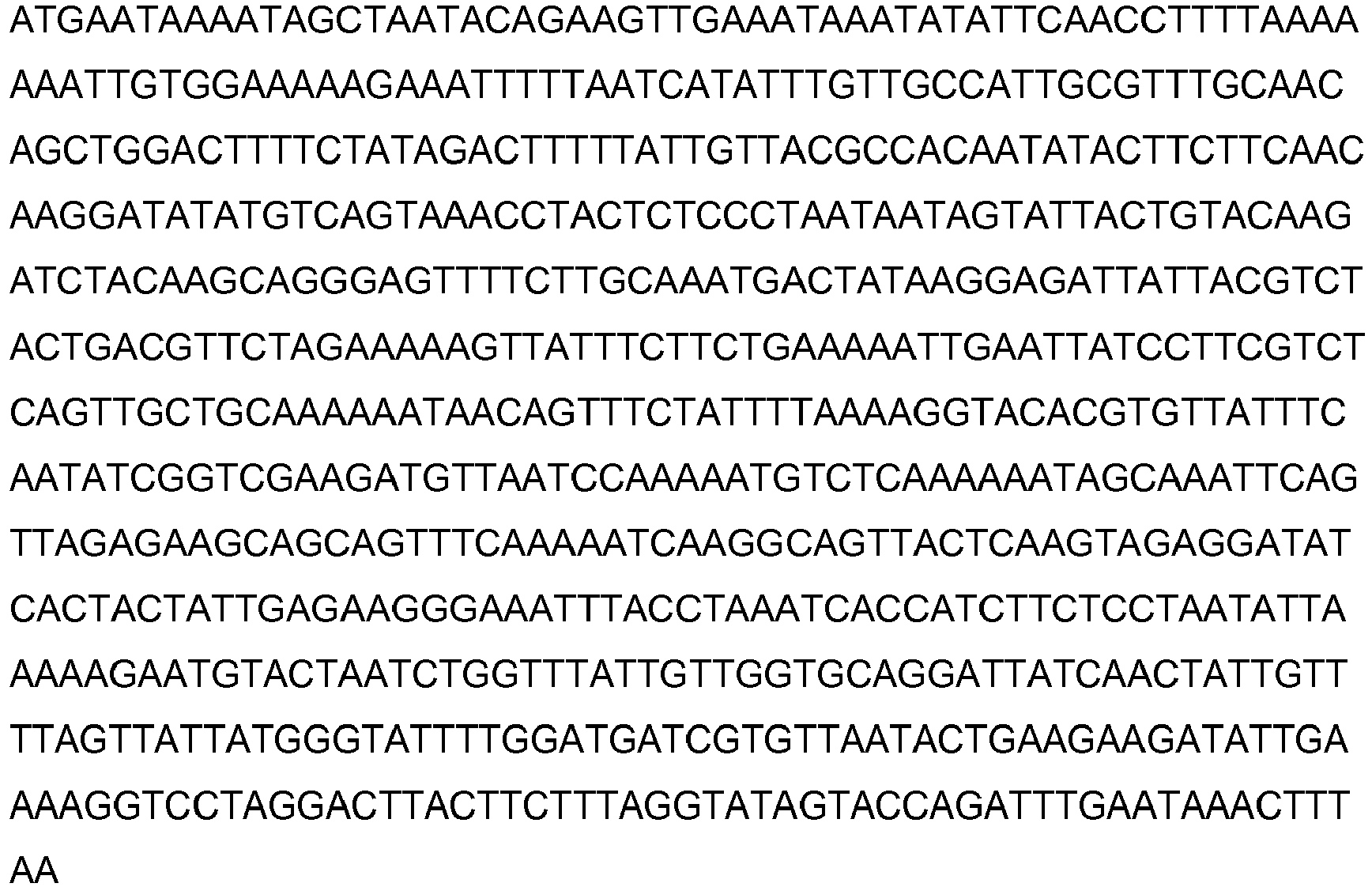
- The inventors have discovered that bacterial mutants which comprise a deletion of the extracellular domain of CpsC produce capsular polysaccharide which has a smaller chain length and is of a lower molecular weight than capsular polysaccharides produced by native, wild-type bacteria of the same serotype.
- In certain embodiments, the mutation comprises or consists of a deletion of the part of polynucleotide sequence that encodes the extracellular domain of CpsC. In certain embodiments, the mutation results in deletion of the entire CpsC polypeptide. Particular mutations comprise a deletion of all or part of the domain from an amino acid selected from the group consisting of amino acids 25, 26, 27, 28, 29, 30, 31, 32, 33, 34, 35, 36, 37, 38, 39, 40, 41, 42, 43, 44, 45, 46, 47, 48, 49 and 50 to an amino acid selected from the group consisting of
amino acids 178, 179, 180, 181, 182, 183, 184, 185, 186, 187, 188, 189, 190, 191, 192, 193, 194, 195, 196, 197, 198, 199, 200, 202 and 202 numbered according to SEQ ID NO: 1. Particular mutations include a deletion of from amino acid 45 to amino acid 181, amino acid 46 to amino acid 180 or amino acid 25 to amino acid 202 numbered according to SEQ ID NO: 1, for example a deletion of SEQ ID NO:3. Other possible mutations include a deletion of one or more parts of the extracellular domain selected from the group consisting of the Wzz motif (SEQ ID NO:8), Nuf2 family motif (SEQ ID NO:9) and DUF59 motif (SEQ ID NO:10). Similar deletions and mutations of CpsC that impact the capsular polysaccharide chain length may be identified, for example having sequence identity with CpsC mutations of the invention of more than 90%, 91%, 92%, 93%, 94%, 95%, 96%, 97%, 98%, 99% or greater. The recombinant Streptococcus agalactiae strains may produce capsular polysaccharide having a molecular weight and/or length that is less than 10%, 15%, 20%, 25%, 30%, 35%, 40%, 45%, 50%, 55%, 60%, 70%, 75%, 80%, 85%, 95% than that of a wild-type cell of the same serotype. - Variants of CpsC from other strains of Streptococcus agalactiae are known and can be easily identified by, for example, use of BLAST searches of the above sequences. Variants of CpsC include by way of non-limiting example, Uniprot accession numbers: R4Z8W1, K4PVK0, S9KAC9, W2BNQ3, Q3DHZ2 and the like. Thus, the invention is also applicable to allelic variants of the disclosed CpsC proteins from Streptococcus agalactiae. In some embodiments, the degree of sequence identity is greater than 80%, 90%, 91%, 92%, 93%, 94%, 95%, 96%, 97%, 97.5%, 98%, 98.5%, 99%, 99.5% or more, particularly 93% or more, yet more particularly 94% or more. These polypeptides include homologs, orthologs, allelic variants and functional mutants. Typically, 50% identity or more between two polypeptides is considered to be an indication of functional equivalence.
- In the context of the present invention, the term "capsular polysaccharide" is intended to mean the capsular polysaccharides of Streptococcus agalactiae In GBS, one of the most important virulence factors is the capsular polysaccharide. To date, ten capsular capsule polysaccharide serotypes have been found: la, Ib, II, III, IV, V, VI, VII, VIII and IX.
- The capsular saccharide of Streptococcus agalactiae is covalently linked to the peptidoglycan backbone of GBS, and is distinct from the group B antigen, which is another saccharide that is attached to the peptidoglycan backbone. The GBS capsular saccharides are chemically related, but are very different from an antigenic standpoint. All GBS capsular polysaccharides share the following trisaccharide core:
- B-D-GlcpNAc(1→3)β-D-Galp(1→4)β-D-Glcp
- The various GBS serotypes differ by the way in which this core is modified. The difference between serotypes la and III, for instance, arises from the use of either the GlcNAc (Ia) or the Gal (III) in this core for linking consecutive trisaccharide cores. Serotypes la and Ib both have a [α D NeupNAc(2→3)β D Galp (1→] disaccharide linked to the GlcNAc in the core, but the linkage is either 1 →4 (Ia) or 1→3 (Ib). GBS-related diseases arise primarily from serotypes la, Ib, II, III, IV, V, VI, VII, and VIII, with over 85% being caused by five serotypes: la, Ib, II, III & V. The invention preferably relates to a saccharide from one or more of these five serotypes, particularly from one or more of serotypes II and V. The capsular saccharides generally include: (a) a terminal N-acetyl-neuraminic acid (NeuNAc) residue (commonly referred to as sialic acid), which in all cases is linked 2→3 to a galactose residue; and (b) a N-acetyl-glucosamine residue (GlcNAc) within the trisaccharide core.
- When the GBS saccharide has been purified by base extraction, then O-acetylation is typically lost. Particularly, capsular polysaccharides extracted by the methods of the invention are fully O-acetylated and/or N-acetylated are not de- acetylated (partially or fully). The effect of de-acetylation etc. can be assessed by routine assays.
- Particularly the degree of sialic acid oxidation of the GBS capsular polysaccharide is not less than 10%, 20%, 30%, 40%, 50%, 60%, 70%, 80%, 85%, 90%, 95% and particularly the N-acetyl-neuraminic acid (NeuNAc or sialic acid) content of the GBS serotype V capsular polysaccharide is greater than 50%, greater than 60%, greater than 70%, greater than 75%, greater than 80%, greater than 85%, greater than 90%, greater than 95%, when compared to native GBS serotype polysaccharide wherein the NeuNAc content is considered to be about 100%. Particularly, the GBS polysaccharide is a fully sialylated or "native polysaccharide". For example, with a sialic acid content of about 100%, 99%, 98%, 97%, 96%, 95%, 94%, 93%, 92%, 91 %, about 90% (or any range between these values) when compared to native GBS polysaccharide.
- The saccharide purified according to the invention is shorter than the GBS polysaccharide found in nature or isolated from a wild-type bacterium.
-
- Starting material: Generally the starting materials for extracting CPS will be bacterial cells, for example, homogenized bacterial cells wherein the cells are comprise a mutation in the CpsC gene. Cells may be separated by centrifugation or microfiltration. In some embodiments the concentrated supernatant, typically 1 0-15 fold, may be used. Preferably the CPS will be present at a concentration of about 5-20 mg/ml.
- Base extraction: Isolated bacterial cells can be contacted with a variety of bases to extract the CPS. Non-limiting examples of bases which may be used according to this invention are NaOH, KOH, LiOH, NaHCO3, Na2CO3, K2CO3, KCN, Et3N, NH3, H2N2H2, NaH, NaOMe, NaOEt or KOtBu.
- Alcoholic precipitation and cation exchange: The GBS capsular saccharide obtained following cell inactivation/lysis will generally be impure and may be contaminated with bacterial nucleic acids and proteins. The process of the invention utilises alcoholic precipitation. Since base extraction is not used, materials will not need to be neutralised prior to the precipitation, again decreasing the length of time taken to purify the capsular polysaccharide.
- The alcohol used to precipitate contaminating nucleic acids and/or proteins is preferably a lower alcohol, such as methanol, ethanol, propan-1-ol, propan-2-ol, butan-1-ol, butan-2-ol, 2-methyl-propan-1-ol, 2-methyl-propan-2-ol, diols, etc. The selection of an appropriate alcohol can be tested empirically, without undue burden, but alcohols such as ethanol and isopropanol (propan-2-ol) are preferred, rather than alcohols such as phenol.
- The alcohol is preferably added to the polysaccharide suspension to give a final alcohol concentration of between 10 percent and 50 percent (e.g. around 30 percent). The most useful concentrations are those which achieve adequate precipitation of contaminants without also precipitating the polysaccharide. The optimum final alcohol concentration may depend on the GBS serotype from which the polysaccharide is obtained, and can be determined by routine experiments without undue burden. Precipitation of polysaccharides as ethanol concentrations>50 percent has been observed.
- The alcohol may be added in pure form or may be added in a form diluted with a miscible solvent (e.g. water). Preferred solvent mixtures are ethanol:water mixtures, with a preferred ratio of between around 70:30 and around 95:5 (e.g. 75:25, 80:20, 85:15, 90:10).
- The saccharide is also treated with an aqueous metal cation. Monovalent and divalent metal cations are preferred, and divalent cations are particularly preferred, such as Mg++, Mn++, Ca++, etc, as they are more efficient at complex formation. Calcium ions are particularly useful, and so the alcohol mixture preferably includes soluble calcium ions. These may be added to a saccharide/ alcohol mixture in the form of calcium salts, either added as a solid or in an aqueous form. The calcium ions are preferably provided by the use of calcium chloride.
- The calcium ions are preferably present at a final concentration of between 10 and 500 mM e.g. about 0.1 M. The optimum final Ca++ concentration may depend on the GBS serotype from which the polysaccharide is obtained, and can be determined by routine experiments without undue burden.
- The alcohol and the cation play different roles (the alcohol is used to precipitate contaminants, whereas the cation stabilises and complexes the saccharide in soluble form) but produce a combined effect. Although the aim is to prepare a mixture of the saccharide, the alcohol and the cation, these three components need not be mixed together simultaneously. Thus the alcohol and cation can be used sequentially or simultaneously. Sequential treatment is preferred, and a particularly preferred process involves addition of the cation to the saccharide followed by addition of the alcohol to the cation/saccharide mixture, although the alcohol can be used before the cation if desired.
- After alcoholic precipitation of contaminating proteins and/or nucleic acids, the GBS capsular polysaccharide is left in solution. The precipitated material can be separated from the polysaccharide by any suitable means, such as by centrifugation. The supernatant can be subjected to microfiltration, and in particular to dead-end filtration (perpendicular filtration) in order to remove particles that may clog filters in later steps (e.g. precipitated particles with a diameter greater than 0.22 micrometres). As an alternative to dead-end filtration, tangential microfiltration can be used.
- Diafiltration: The process of the invention may involve a step of filtration, for example, diafiltration after the precipitation of proteins and/or nucleic acids. Tangential flow diafiltration may be used. The filtration membrane should thus be one that allows passage of impurities while retaining the capsular polysaccharide. A cut-off in the range 10kDa-30kDa is typical. Smaller cut-off sizes can be used but higher cut-off sizes advantageously allow removal of other contaminants without leading to loss of the capsular saccharide. At least 1 cycle of diafiltration may be performed e.g. 2, 3, 4, 5, 6, 7, 8, 9, 10, 11 or more.
- In some embodiments, the method further comprises a step of removing contaminating nucleic acids and/or proteins. Particularly contaminating nucleic acids and/or proteins may be removed by the use of precipitation. Yet more particularly, contaminating nucleic acids and/or proteins may be removed from the capsular polysaccharide in aqueous form by the use of alcoholic precipitation. When a step of alcoholic precipitation is included, an alcohol and an aqueous metal cation may be used to precipitate the nucleic acids and/or proteins leaving the polysaccharide in solution. When a step of alcoholic precipitation is included, the method may include a further step of separating the precipitated material from the polysaccharide. Particularly the precipitated material may be separated from the polysaccharide by filtration and yet more particularly the method may comprise a step of diafiltration after the precipitation of nucleic acids and/or proteins. In some embodiments the alcohol is ethanol or isopropanol. In some embodiments the aqueous metal cation is CaCl2. Particularly, methods of the invention will comprise one or more steps of filtration, for example, ultrafiltration and/or gel filtration. In particular embodiments, gel filtration using Sephacryl ® is performed, for example using Sephacryl ® S-500 gel.
- Further treatment of the capsular polysaccharide: The polysaccharide may be further treated to remove contaminants. This is particularly important in situations where even minor contamination is not acceptable (e.g. for human vaccine production). For example, further precipitation steps may be used. Where an aqueous re-solubilisation was performed then this precipitation will typically use an alcohol, as described in the preceding section; conversely, where an alcoholic re-solubilisation was performed then this precipitation will typically use an aqueous cation solution, as described in the preceding section. The precipitated saccharide can then be separated from any remaining aqueous contaminants e.g. by centrifugation. The precipitated material is stable and can be stored for future use. Further rounds of precipitation and filtration can also be performed. Depth filtration can also be used e.g. as an alternative to centrifugation. Depth filtration will typically be used after solubilisation in alcohol.
- The precipitated material may be subjected to vacuum drying. This treatment will typically be used not to stabilise the saccharide for storage, but to dry the saccharide and remove any residual alcohol.
- The purified capsular polysaccharide of the invention can be used as an antigen without further modification e.g. for use in in vitro diagnostic assays, for use in immunisation, etc. For immunisation purposes, however, it is preferred to conjugate the saccharide to a carrier molecule, such as a protein. In general, covalent conjugation of saccharides to carriers enhances the immunogenicity of saccharides as it converts them from T-independent antigens to T-dependent antigens, thus allowing priming for immunological memory. Conjugation is a well known technique. Thus the methods of the invention may include the further step of conjugating the purified saccharide to a carrier molecule. The invention may also provide processes for preparing pharmaceutical compositions, comprising the steps of mixing (a) a polysaccharide of the invention (optionally in the form of a conjugate) with (b) a pharmaceutically acceptable carrier. Typical 'pharmaceutically acceptable carriers' include any carrier that does not itself induce the production of antibodies harmful to the individual receiving the composition. Suitable carriers are typically large, slowly metabolised macromolecules such as proteins, polysaccharides, polylactic acids, polyglycolic acids, polymeric amino acids, amino acid copolymers, lactose, and lipid aggregates (such as oil droplets or liposomes). Such carriers are well known to those of ordinary skill in the art. The vaccines may also contain diluents, such as water, saline, glycerol, etc. Additionally, auxiliary substances, such as wetting or emulsifying agents, pH buffering substances, and the like, may be present. Sterile pyrogen-free, phosphate-buffered physiologic saline is a typical carrier. The pharmaceutical compositions may be packaged into vials or into syringes. The syringes may be supplied with or without needles. A syringe will include a single dose of the composition, whereas a vial may include a single dose or multiple doses. Aqueous compositions of saccharides of the invention are suitable for reconstituting other vaccines from a lyophilised form. Where a composition of the invention is to be used for such extemporaneous reconstitution, the invention provides a process for reconstituting such a lyophilised vaccine, comprising the step of mixing the lyophilised material with an aqueous composition of the invention. The reconstituted material can be used for injection.
- The term "comprising" encompasses "including" as well as "consisting" e.g. a composition "comprising" X may consist exclusively of X or may include something additional e.g. X + Y. The term "consisting essentially of" means that the composition, method or structure may include additional ingredients, steps and/or parts, but only if the additional ingredients, steps and/or parts do no materially alter the basic and novel characteristics of the claimed composition, method or structure. The term "consisting of" is generally taken to mean that the invention as claimed is limited to those elements specifically recited in the claim (and may include their equivalents, insofar as the doctrine of equivalents is applicable).
- The term "about" as used herein when referring to a measurable value such as an amount, a temporal duration, and the like, is meant to encompass variations of ±20% or ±10%, more preferably ±5%, even more preferably ±1%, and still more preferably ±0.1% from the specified value, as such variations are appropriate to perform the disclosed methods.
- The word "substantially" does not exclude "completely" e.g. a composition which is "substantially free" from Y may be completely free from Y. For example, "substantially free" from Y can be understood as a composition containing not more than 5% Y, not more than 4% Y, not more than 3% Y, not more than 2% Y, not more than 1% Y, or not more than 0.1 % Y. Where necessary, the word "substantially" may be omitted from the definition of the invention.
- As used herein, unless otherwise clear from context the term "or" is understood to be inclusive and can be used interchangeably with the term "and/or".
- The term "mutant" refers to a gene or gene product that displays modifications in sequence and/or functional properties (i.e., altered characteristics) when compared to the wild-type gene or gene product.
- All GenBank Accession numbers provided herein are incorporated by reference in the version available on the date of filing the instant application.
- The term "recovering" means the isolation of the capsular polysaccharide in different purities, for example between 5% and 100% purity, preferred purities are in the range of 10% and 99%, 20% and 99%, 30% and 99%, 40% and 99%, 50% and 99%, 60% and 99%, 70% and 99%, 80% and 99%, 90% and 99%. Particular purities are greater than 20%, 30%, 40%, 50%, 60%, 70%, 80%, 90%, 95% or 99%. Recovering may also be referred to as extracting or purifying. The term "purity" takes the general meaning used in the art to refer to the percentage of the in-hand, isolated sample is actually capsular polysaccharide.
- This invention is further illustrated by the following examples which should not be construed as limiting.
- GBS 515 (Wessels, et al. 1993) and its isogenic derivatives were grown in Todd-Hewitt broth (THB medium; Difco Laboratories) at 37°C, 5% CO2. Tryptic soy broth (Difco Laboratories), 15 g/L agar (TSA) was used as solid medium. Strains were stored at -80°C in THB medium + 15% glycerol. MAX Efficiency® DH5α™ Competent Cells (Invitrogen) and competent HK100 E.coli cells prepared in house were used for transformation, propagation, and preparation of plasmids. E. coli was grown at 37°C with agitation (180 rpm) in Luria-Bertani (LB, Difco laboratories) broth, or on 15 g/L agar plates (LBA). Erythromycin (Erm) was used for selection of GBS (1 µg/ml) or E. coli (100 µg/ml) containing the pJRS233-(Perez-Casal et al. 1993) derived plasmids used for mutagenesis. Kanamycin (Kan) was used for selection E. coli (50 µg/ml) containing the pET24b-derived plasmids (Novagen) used for initial mutagenesis of inserts, prior to transfer into pJRS233.
- To prepare each mutant strain, the shuttle vector pJRS233 (Perez-Casal J, et al. 1993) containing the gene locus with an in-frame deletion or a codon substitution was constructed. Mutant strains developed are described in the Table 1:
Mutant name Description ΔcpsC cpsC deletion CpsC(Δext_domain) deletion of the CpsC extracellular domain CpsC(ΔC-ter,) Deletion of the CpsC intracellular domain - Constructs for genes with codon substitutions were prepared using a splicing by overlap extension PCR (SOEing-PCR) strategy. Briefly, the two parts of the gene up- and downstream of the codon substitution were amplified from 515 gDNA using the PfuUltra II Fusion HS DNA Polymerase (Agilent Technologies). 900-1000 bp upstream and downstream the coding sequence of the gene were added to the inserts. Primers used to amplify the two parts of the genes have 15 bp overlapping tails and introduce the codon substitution in the two PCR products that are then joined together by SOEing-PCR. The resulting fragment was ligated into pJRS233 using BamHI and Xhol restriction sites.
- Constructs for genes with in-frame deletions were prepared using the Polymerase Incomplete Primer Extension (PIPE) method. Briefly, the gene plus 900-1000 bp up- and downstream the coding sequence were amplified from 515 gDNA and cloned into pET24b using Notl and Xhol (cpsA inserts) or BamHI and Xhol (cpsD inserts) restriction sites. In frame deletions of the genes were developed by amplifying the plasmid using primers with 15 bp overlapping tails annealing at the two sides of the region to delete. Linear plasmids were transformed into HK100 competent cells able to re-circularize the plasmid. The resulting inserts were then transferred into pJRS233 plasmid by restriction digestion and ligation.
- Constructs for chromosomal complementation were prepared transferring into pJRS233 the wild type inserts cloned into pET24b.
- An insertion/duplication and excision mutagenesis strategy was used both to obtain the in-frame deletion/codon substitution in the genes and to replace the mutations to obtain the chromosomally complemented strains. Briefly, pJRS233-derived plasmids purified from E. coli were used to transform electrocompetent 515 cells by electroporation. Transformants were selected by growth on TSA + Erm at 30°C for 48 hours. Integration was performed by growth of transformants at 37°C (non-permissive temperature for the suicide shuttle vector) with Erm selection. Excision of the integrated plasmid was performed by serial passages in THB at 30°C, and parallel screening for Erm-sensitive colonies on plate. Mutants were verified by PCR sequencing of the loci.
- To obtain the chromosomally complemented strains, pJRS233-derived plasmids containing the wild type version of the genes and the flanking 900-1000 bp up-and downstream were purified from E. coli and complementation of the respective mutant strains was performed as described for mutagenesis.
- Bacteria were harvested at two time points: at OD600=0.4 (log phase) and OD600=1.7 (early stationary phase). To rapidly arrest transcription, 10 ml of bacteria were cooled on ice and added to 10 ml of frozen THB medium in a 50 ml conical tube. GBS cells were then collected by centrifugation for 15 min at 4000 rpm, 4°C, and resuspended in 800 µl of TRlzol (Invitrogen). Bacteria were disrupted mechanically by agitation with Lysing matrix B in 2 ml tubes (DBA Italy) using a homogenizer (Fastprep-24, Millipore) for 60 sec at 6.5 m/s for two cycles, and kept on ice for 2 min between the cycles. Samples were then centrifuged for 5 min at 8000 x g, 4°C and RNA was extracted with Direct-zol™ RNA MiniPrep kit (Zymo Research) according to the manufacturer's instructions. RNA samples were treated with DNase (Roche) for 2 h at 37°C and further purified using the RNA MiniPrep kit (Qiagen), including a second DNase treatment on the column for 30 min at room temperature (RT), according to the manufacturer's instructions. cDNA was prepared using the Reverse Transcription System (Promega) by using 500 ng of RNA per reaction. Real time quantitative PCR (qRT-PCR) was performed on 50 ng of cDNA that was amplified using LightCycler® 480 DNA SYBR Green I Master, (Roche). Reactions were monitored using a LightCycler® 480 instrument and software (Roche). Three technical replicates were monitored for each strain/condition analyzed. To quantify cps operon transcription level primers annealing on cpsA and cpsE were used respectively for cpsA mutants. The transcript amounts in each condition were standardized to an internal control gene (gyrA) and compared with standardized expression in the wild-type strain (ΔΔCT method).
- An overnight culture was used to inoculate (1:1000) 50 ml of fresh THB and bacteria were grown at 37°C for 8 hours. GBS cells were collected by centrifugation for 15 min at 4000 rpm at 4°C, resuspended in 1.1 ml of PBS + 0.8 M NaOH and incubated at 37°C for 36 hours. Samples were neutralized and pelleted by centrifugation for 10 min at 4000 rpm, 4°C. 850 µl of the supernatant were diluted in 7.15 ml of water, and centrifuged for 10 min at 4000 rpm at 4°C. 7.2 µl of the supernatant were loaded on a Vivaspin 10 tube (Sartorius Stedim Biotech) which was centrifuged at 4000 rpm until most of the solution passed through the membrane. After two washes with 1 ml of water, the CPS extract was recovered from the membrane and resuspended in 1.6 ml of water. The amount of CPS present in the extract was estimated by measuring the sialic acid content using the colorimetric resorcinol-hydrochloric acid method (Svennerholm et al, 1957). Briefly, 120 µl of extract were mixed with 380 µl of water and 500 µl of freshly prepared solution R3 (resorcinol 0.2%, copper sulfate 0.3 mM, HCl 30% in H2O). Samples were boiled for 20 min and then cooled to room temperature before being transferred into 1 ml cuvettes to measure their absorbance at 564 nm. The sialic acid content of the samples was then calculated using a concomitantly prepared standard curve using serial dilutions of purified sialic acid. CPS extracts were prepared three times from independent growths to minimize the biological variability.
- An overnight culture was used to inoculate (1:1000) 10 ml of fresh THB and bacteria were grown at 37°C for 8 hours. GBS cells were pelleted by centrifugation for 15 min at 4000 rpm at 4°C, and the growth medium was collected and filtered using a 0.22 µm Nalgene Syringe Filter (Thermo Scientific). The amount of capsular polysaccharide released in the growth medium was estimated by dot blot. Purified serotype la CPS 10 mg/ml was used as standard. Eight serial dilutions were prepared in a 96-well plate by diluting the standard and the growth media in PBS (dilution ratios 1:2 for media, 1:4 for the standard). 2 µl of each serial dilution were spotted onto a nitrocellulose membrane. The membrane was dried for 20 min and blocked by soaking in 5% (w/v) skim milk in PBS-Tween 0.05%. The membrane was then probed with a primary mouse monoclonal anti- serotype la CPS-CRM conjugated antibody (30E9/B11) used at 1:2000, washed 3 times in PBS-Tween 0.05%, and incubated in 1:15000 of secondary goat anti-mouse antibody conjugated to horseradish peroxidase. Detection was performed using Thermo Scientific Pierce ECL Western Blotting Substrate according to the manufacturer's instructions.
- 20 µl of medium were mixed with 10 µl of 3x NuPAGE® LDS Sample Buffer + Reducing Agent and boiled for 5 min. Then, 20 µl were loaded on a NuPage 4-12% Bis-Tris Gel 1.0 mm, 12 well (Life Technologies) (running buffer: MOPS 1x) and run at 150V until the band corresponding to 28 kDa of the SeeBlue® Plus2 Pre-stained Protein Standard (Life Technologies) reached the bottom of the gel. The samples separated on the gel were transferred to a nitrocellulose membrane using the iBlot® 7-Minute Blotting System (Life Technologies). The membrane was blocked blocked by soaking in 5% (w/v) skim milk in PBS-Tween 0.05%. The membrane was then probed with a primary mouse monoclonal anti- serotype la CPS-CRM conjugated antibody (30E9/B11) used at 1:2000, washed 3 times in PBS-Tween 0.05%, and incubated in 1:15000 of secondary goat anti-mouse antibody conjugated to horseradish peroxidase. Detection was performed using Thermo Scientific Pierce ECL Western Blotting Substrate according to the manufacturer's instructions.
- Those skilled in the art will recognize, or be able to ascertain using no more than routine experimentation, many equivalents to the specific embodiments of the invention described herein. Such equivalents are intended to be encompassed by the following claims.
-
- Wessels, M. R., Paoletti, L. C., Rodewald, A. K., Michon, F., DiFabio, J., Jennings, H. J. & Kasper, D. L. (1993) Infect. Immun. 61, 4760-4766.
- Perez-Casal J, Price JA, Maguin E, Scott JR. (1993) Mol Microbiol 8, 809-819.
- Svennerholm L., (1957) Biochim Biophys Acta. 24(3), 604-611.


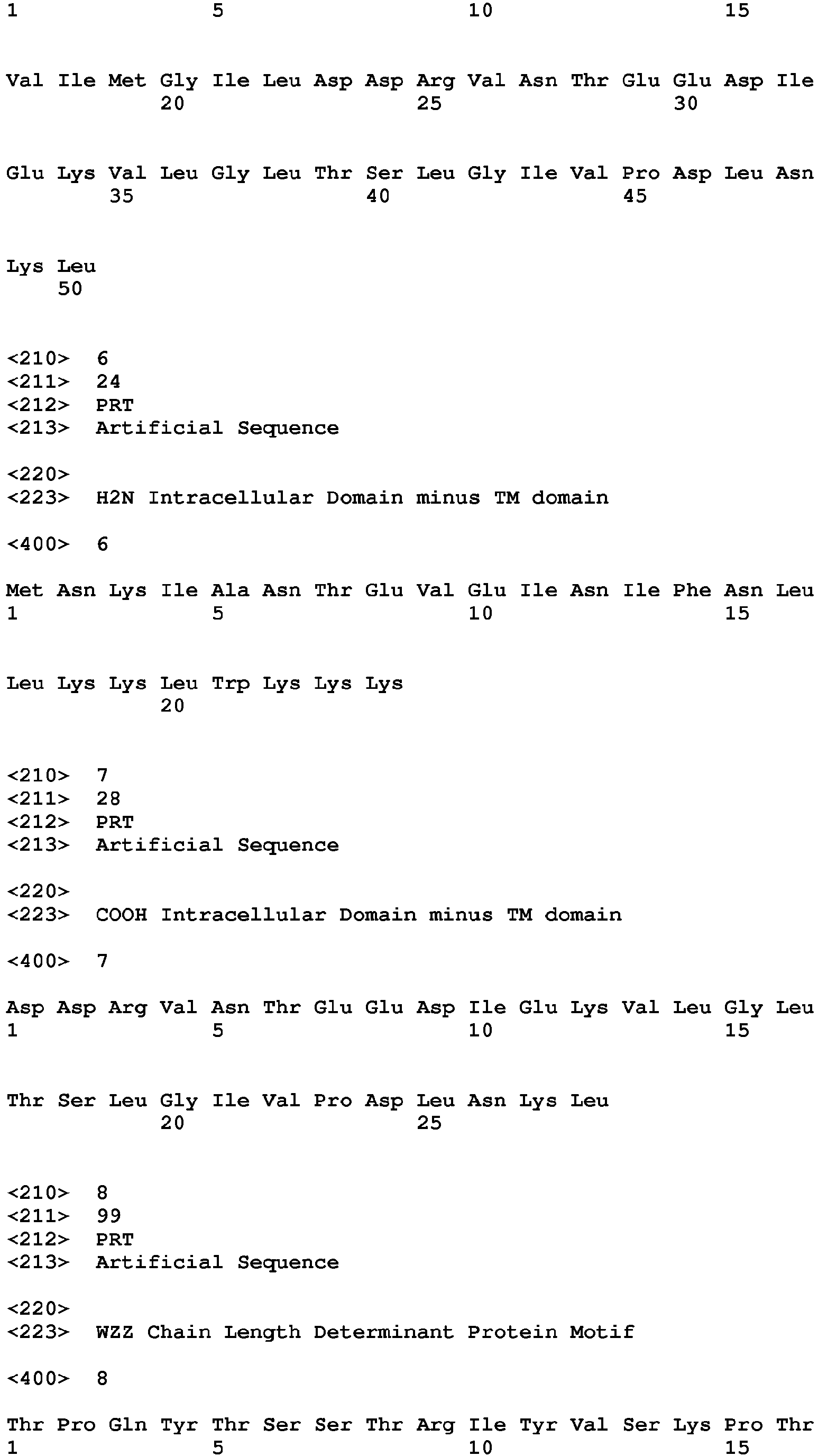


Claims (13)
- A method for producing a low molecular weight capsular polysaccharide comprising: culturing a CpsC mutant bacterium in a suitable culture medium and isolating the capsular polysaccharide from the bacterium.
- The method of claim 1 wherein the CpsC mutant bacterium is derived from Streptococcus agalactiae.
- The method of claim 1 or 2 wherein the CpsC mutant bacterium comprises an altered CpsC protein wherein the nucleotide sequence that encodes the extracellular domain of CpsC protein (SEQ ID NO:1) is deleted or partially deleted and wherein the CpsC mutant bacterium produces low molecular weight capsular polysaccharide.
- The method of claim 3, wherein the capsular polysaccharide is from a Streptococcus agalactiae serotype selected from the group consisting of la, Ib, II, III, IV, V, VI, VII or VII particularly from serotypes la, Ib, II, III or V.
- The method of any preceding claim, wherein the low molecular weight polysaccharide has a molecular weight of between 1 OkDa and 70kDa.
- The method of claim 5 wherein the step of isolating the capsular polysaccharide from the bacterium comprises:(i) providing for extraction isolated bacterial cells, concentrated bacterial supernatants from homogenized bacterial cells or pelleted cells;(ii) extracting the capsular polysaccharide from cellular components, particularly by contacting the isolated bacterial cells, concentrated bacterial supernatants from homogenised bacterial cells or pelleted cells with a base reagent; and(iii) separating the extracted capsular polysaccharide from the cellular components to recover the purified capsular polysaccharides.
- The process of claim 6, wherein step (iii) comprises removing contaminating nucleic acids and/or proteins from the capsular polysaccharide in aqueous form by the use of alcoholic precipitation, wherein an alcohol and an aqueous metal cation are used to precipitate the nucleic acids and/or proteins leaving the polysaccharide in solution and, separating the precipitated material from the polysaccharide.
- The method of claim 7, wherein the process further comprises a step of diafiltration after the precipitation of nucleic acids and/or proteins.
- The method of claim 7 or 8, wherein the alcohol is ethanol or isopropanol.
- The method of any one of claims 7 to 9, wherein the aqueous metal cation is CaCl2.
- The process of any one of claims 7 to 10, further comprising one or more steps of filtration.
- A low molecular weight capsular polysaccharide from Streptococcus agalactiae, obtainable by the method of any preceding claim.
- An immunogenic composition, particularly a vaccine composition, comprising the low molecular weight capsular polysaccharide of claim 12.
Priority Applications (1)
| Application Number | Priority Date | Filing Date | Title |
|---|---|---|---|
| EP14167449.9A EP2942396A1 (en) | 2014-05-07 | 2014-05-07 | Polysaccharides produced by CPSC mutants |
Applications Claiming Priority (1)
| Application Number | Priority Date | Filing Date | Title |
|---|---|---|---|
| EP14167449.9A EP2942396A1 (en) | 2014-05-07 | 2014-05-07 | Polysaccharides produced by CPSC mutants |
Publications (1)
| Publication Number | Publication Date |
|---|---|
| EP2942396A1 true EP2942396A1 (en) | 2015-11-11 |
Family
ID=50679915
Family Applications (1)
| Application Number | Title | Priority Date | Filing Date |
|---|---|---|---|
| EP14167449.9A Ceased EP2942396A1 (en) | 2014-05-07 | 2014-05-07 | Polysaccharides produced by CPSC mutants |
Country Status (1)
| Country | Link |
|---|---|
| EP (1) | EP2942396A1 (en) |
Citations (6)
| Publication number | Priority date | Publication date | Assignee | Title |
|---|---|---|---|---|
| WO1998042718A1 (en) | 1997-03-26 | 1998-10-01 | The Brigham And Women's Hospital, Inc. | Method for generating saccharide fragments |
| WO1999018121A1 (en) | 1997-10-02 | 1999-04-15 | Connaught Laboratories, Inc. | Method for the covalent attachment of polysaccharides to protein molecules |
| EP1051506A1 (en) | 1997-12-23 | 2000-11-15 | North American Vaccine, Inc. | Procedures for the extraction and isolation of bacterial capsular polysaccharides for use as vaccines or linked to proteins as conjugates vaccines |
| WO2006065137A2 (en) * | 2004-12-16 | 2006-06-22 | Stichting Top Institute Food And Nutrition | Novel efficient production process for capsular polysaccharides of pathogenic grampositive bacteria by heterologous expression and secretion of complex polysaccharides in non-pathogenic, non-invasive gram- positive bacteria |
| WO2006082527A2 (en) * | 2005-02-01 | 2006-08-10 | Novartis Vaccines And Diagnostics Srl | Purification of streptococcal capsular polysaccharide |
| WO2013050300A2 (en) | 2011-10-03 | 2013-04-11 | Lamberti Spa | Depolymerisation of polysaccharides and related products |
-
2014
- 2014-05-07 EP EP14167449.9A patent/EP2942396A1/en not_active Ceased
Patent Citations (7)
| Publication number | Priority date | Publication date | Assignee | Title |
|---|---|---|---|---|
| WO1998042718A1 (en) | 1997-03-26 | 1998-10-01 | The Brigham And Women's Hospital, Inc. | Method for generating saccharide fragments |
| WO1999018121A1 (en) | 1997-10-02 | 1999-04-15 | Connaught Laboratories, Inc. | Method for the covalent attachment of polysaccharides to protein molecules |
| EP1051506A1 (en) | 1997-12-23 | 2000-11-15 | North American Vaccine, Inc. | Procedures for the extraction and isolation of bacterial capsular polysaccharides for use as vaccines or linked to proteins as conjugates vaccines |
| WO2006065137A2 (en) * | 2004-12-16 | 2006-06-22 | Stichting Top Institute Food And Nutrition | Novel efficient production process for capsular polysaccharides of pathogenic grampositive bacteria by heterologous expression and secretion of complex polysaccharides in non-pathogenic, non-invasive gram- positive bacteria |
| WO2006082527A2 (en) * | 2005-02-01 | 2006-08-10 | Novartis Vaccines And Diagnostics Srl | Purification of streptococcal capsular polysaccharide |
| EP2270056A2 (en) | 2005-02-01 | 2011-01-05 | Novartis Vaccines and Diagnostics S.r.l. | Purification of streptococcal capsular polysaccharide |
| WO2013050300A2 (en) | 2011-10-03 | 2013-04-11 | Lamberti Spa | Depolymerisation of polysaccharides and related products |
Non-Patent Citations (10)
| Title |
|---|
| BROADBENT J R ET AL: "Biochemistry, genetics, and applications of exopolysaccharide production in Streptococcus thermophilus: a review", JOURNAL OF DAIRY SCIENCE, AMERICAN DAIRY SCIENCE ASSOCIATION, US, vol. 86, no. 2, 1 February 2003 (2003-02-01), pages 407 - 423, XP009018436, ISSN: 0022-0302, DOI: 10.3168/JDS.S0022-0302(03)73619-4 * |
| J. K. MORONA ET AL: "Attachment of capsular polysaccharide to the cell wall of Streptococcus pneumoniae type 2 is required for invasive disease", PROCEEDINGS OF THE NATIONAL ACADEMY OF SCIENCES, vol. 103, no. 22, 30 May 2006 (2006-05-30), pages 8505 - 8510, XP055151038, ISSN: 0027-8424, DOI: 10.1073/pnas.0602148103 * |
| M. J. CIESLEWICZ ET AL: "Functional Analysis in Type Ia Group B Streptococcus of a Cluster of Genes Involved in Extracellular Polysaccharide Production by Diverse Species of Streptococci", JOURNAL OF BIOLOGICAL CHEMISTRY, vol. 276, no. 1, 10 October 2000 (2000-10-10), pages 139 - 146, XP055151156, ISSN: 0021-9258, DOI: 10.1074/jbc.M005702200 * |
| MICHON F; UITZ C; SARKAR A; D'AMBRA AJ; LAUDE-SHARP M; MOORE S; FUSCO PC, CLIN VACCINE IMMUNOL., vol. 13, no. 8, August 2006 (2006-08-01), pages 936 - 43 |
| MORONA J K ET AL: "Tyrosine phosphorylation of CpsD negatively regulates capsular polysaccharide biosynthesis in Streptococcus pneumoniae", MOLECULAR MICROBIOLOGY, WILEY-BLACKWELL PUBLISHING LTD, GB, vol. 35, no. 6, 1 March 2000 (2000-03-01), pages 1431 - 1442, XP002365281, ISSN: 0950-382X, DOI: 10.1046/J.1365-2958.2000.01808.X * |
| OMASITS ET AL., BIOINFORMATICS, 21 November 2013 (2013-11-21) |
| PEREZ-CASAL J; PRICE JA; MAGUIN E; SCOTT JR, MOL MICROBIOL, vol. 8, 1993, pages 809 - 819 |
| SVENNERHOLM L., BIOCHIM BIOPHYS ACTA, vol. 24, no. 3, 1957, pages 604 - 611 |
| WANG Y; HOLLINGSWORTH RI; KASPER DL, PROC NATL ACAD SCI USA., vol. 95, no. 12, 9 June 1998 (1998-06-09), pages 6584 - 9 |
| WESSELS, M. R.; PAOLETTI, L. C.; RODEWALD, A. K.; MICHON, F.; DIFABIO, J.; JENNINGS, H. J.; KASPER, D. L., INFECT. IMMUN., vol. 61, 1993, pages 4760 - 4766 |
Similar Documents
| Publication | Publication Date | Title |
|---|---|---|
| TWI782226B (en) | Escherichia coli compositions and methods thereof | |
| CN102257127B (en) | Method for controlling streptococcus pneumoniae polysaccharide molecular weight using carbon dioxide | |
| US20160108094A1 (en) | Immunogenic bacterial vesicles with outer membrane proteins | |
| US20100063270A1 (en) | Purification of Streptococcal Capsular Polysaccharide | |
| JP2025508749A (en) | Immunogenic compositions comprising conjugated capsular saccharide antigens and uses thereof | |
| EP3140414B1 (en) | Purification of secreted polysaccharides from s. agalactiae | |
| WO2011151841A1 (en) | Fermentation process for streptococcus pneumoniae | |
| CN116744965A (en) | Immunogenic compositions for pneumococcal vaccines | |
| CN117460516A (en) | Methods and compositions for treating Clostridium difficile infection | |
| TWI919324B (en) | Immunogenic compositions comprising conjugated capsular saccharide antigens and uses thereof | |
| EP3233927B1 (en) | Purification of streptococcal capsular polysaccharide | |
| RU2854787C2 (en) | Immunogenic compositions containing conjugated capsular saccharide antigens, and their use | |
| RU2788526C2 (en) | Escherichia coli compositions and methods for their application | |
| HK40049582A (en) | Escherichia coli compositions and methods thereof | |
| HK40112911A (en) | Immunogenic compositions comprising conjugated capsular saccharide antigens and uses thereof | |
| HK40074440B (en) | Immunogenic compositions comprising conjugated capsular saccharide antigens and uses thereof | |
| HK40074022B (en) | Immunogenic compositions comprising conjugated capsular saccharide antigens and uses thereof | |
| HK40090692A (en) | Immunogenic compositions for use in pneumococcal vaccines | |
| HK40021072B (en) | Immunogenic compositions comprising conjugated capsular saccharide antigens and uses thereof | |
| HK40023130B (en) | Immunogenic compositions comprising conjugated capsular saccharide antigens and uses thereof |
Legal Events
| Date | Code | Title | Description |
|---|---|---|---|
| PUAI | Public reference made under article 153(3) epc to a published international application that has entered the european phase |
Free format text: ORIGINAL CODE: 0009012 |
|
| AK | Designated contracting states |
Kind code of ref document: A1 Designated state(s): AL AT BE BG CH CY CZ DE DK EE ES FI FR GB GR HR HU IE IS IT LI LT LU LV MC MK MT NL NO PL PT RO RS SE SI SK SM TR |
|
| AX | Request for extension of the european patent |
Extension state: BA ME |
|
| STAA | Information on the status of an ep patent application or granted ep patent |
Free format text: STATUS: THE APPLICATION HAS BEEN REFUSED |
|
| 18R | Application refused |
Effective date: 20151129 |