EP2940476A1 - Apparatus and method for platelet function and drug response testing based on microfluidic chip - Google Patents
Apparatus and method for platelet function and drug response testing based on microfluidic chip Download PDFInfo
- Publication number
- EP2940476A1 EP2940476A1 EP13866953.6A EP13866953A EP2940476A1 EP 2940476 A1 EP2940476 A1 EP 2940476A1 EP 13866953 A EP13866953 A EP 13866953A EP 2940476 A1 EP2940476 A1 EP 2940476A1
- Authority
- EP
- European Patent Office
- Prior art keywords
- platelet
- measuring
- function
- microfluidic chip
- testing
- Prior art date
- Legal status (The legal status is an assumption and is not a legal conclusion. Google has not performed a legal analysis and makes no representation as to the accuracy of the status listed.)
- Ceased
Links
Images



Classifications
-
- G—PHYSICS
- G01—MEASURING; TESTING
- G01N—INVESTIGATING OR ANALYSING MATERIALS BY DETERMINING THEIR CHEMICAL OR PHYSICAL PROPERTIES
- G01N33/00—Investigating or analysing materials by specific methods not covered by groups G01N1/00 - G01N31/00
- G01N33/48—Biological material, e.g. blood, urine; Haemocytometers
- G01N33/50—Chemical analysis of biological material, e.g. blood, urine; Testing involving biospecific ligand binding methods; Immunological testing
- G01N33/86—Chemical analysis of biological material, e.g. blood, urine; Testing involving biospecific ligand binding methods; Immunological testing involving blood coagulating time or factors, or their receptors
-
- G—PHYSICS
- G01—MEASURING; TESTING
- G01N—INVESTIGATING OR ANALYSING MATERIALS BY DETERMINING THEIR CHEMICAL OR PHYSICAL PROPERTIES
- G01N35/00—Automatic analysis not limited to methods or materials provided for in any single one of groups G01N1/00 - G01N33/00; Handling materials therefor
- G01N35/08—Automatic analysis not limited to methods or materials provided for in any single one of groups G01N1/00 - G01N33/00; Handling materials therefor using a stream of discrete samples flowing along a tube system, e.g. flow injection analysis
-
- B—PERFORMING OPERATIONS; TRANSPORTING
- B01—PHYSICAL OR CHEMICAL PROCESSES OR APPARATUS IN GENERAL
- B01L—CHEMICAL OR PHYSICAL LABORATORY APPARATUS FOR GENERAL USE
- B01L3/00—Containers or dishes for laboratory use, e.g. laboratory glassware; Droppers
- B01L3/50—Containers for the purpose of retaining a material to be analysed, e.g. test tubes
- B01L3/502—Containers for the purpose of retaining a material to be analysed, e.g. test tubes with fluid transport, e.g. in multi-compartment structures
- B01L3/5027—Containers for the purpose of retaining a material to be analysed, e.g. test tubes with fluid transport, e.g. in multi-compartment structures by integrated microfluidic structures, i.e. dimensions of channels and chambers are such that surface tension forces are important, e.g. lab-on-a-chip
- B01L3/50273—Containers for the purpose of retaining a material to be analysed, e.g. test tubes with fluid transport, e.g. in multi-compartment structures by integrated microfluidic structures, i.e. dimensions of channels and chambers are such that surface tension forces are important, e.g. lab-on-a-chip characterised by the means or forces applied to move the fluids
-
- G—PHYSICS
- G01—MEASURING; TESTING
- G01N—INVESTIGATING OR ANALYSING MATERIALS BY DETERMINING THEIR CHEMICAL OR PHYSICAL PROPERTIES
- G01N15/00—Investigating characteristics of particles; Investigating permeability, pore-volume or surface-area of porous materials
- G01N15/06—Investigating concentration of particle suspensions
- G01N15/0606—Investigating concentration of particle suspensions by collecting particles on a support
- G01N15/0612—Optical scan of the deposits
-
- G—PHYSICS
- G01—MEASURING; TESTING
- G01N—INVESTIGATING OR ANALYSING MATERIALS BY DETERMINING THEIR CHEMICAL OR PHYSICAL PROPERTIES
- G01N15/00—Investigating characteristics of particles; Investigating permeability, pore-volume or surface-area of porous materials
- G01N15/10—Investigating individual particles
- G01N15/14—Optical investigation techniques, e.g. flow cytometry
- G01N15/1429—Signal processing
- G01N15/1433—Signal processing using image recognition
-
- G—PHYSICS
- G01—MEASURING; TESTING
- G01N—INVESTIGATING OR ANALYSING MATERIALS BY DETERMINING THEIR CHEMICAL OR PHYSICAL PROPERTIES
- G01N15/00—Investigating characteristics of particles; Investigating permeability, pore-volume or surface-area of porous materials
- G01N15/10—Investigating individual particles
- G01N15/14—Optical investigation techniques, e.g. flow cytometry
- G01N15/1484—Optical investigation techniques, e.g. flow cytometry microstructural devices
-
- G—PHYSICS
- G01—MEASURING; TESTING
- G01N—INVESTIGATING OR ANALYSING MATERIALS BY DETERMINING THEIR CHEMICAL OR PHYSICAL PROPERTIES
- G01N21/00—Investigating or analysing materials by the use of optical means, i.e. using sub-millimetre waves, infrared, visible or ultraviolet light
-
- G—PHYSICS
- G01—MEASURING; TESTING
- G01N—INVESTIGATING OR ANALYSING MATERIALS BY DETERMINING THEIR CHEMICAL OR PHYSICAL PROPERTIES
- G01N27/00—Investigating or analysing materials by the use of electric, electrochemical, or magnetic means
- G01N27/26—Investigating or analysing materials by the use of electric, electrochemical, or magnetic means by investigating electrochemical variables; by using electrolysis or electrophoresis
- G01N27/28—Electrolytic cell components
- G01N27/30—Electrodes, e.g. test electrodes; Half-cells
-
- G—PHYSICS
- G01—MEASURING; TESTING
- G01N—INVESTIGATING OR ANALYSING MATERIALS BY DETERMINING THEIR CHEMICAL OR PHYSICAL PROPERTIES
- G01N33/00—Investigating or analysing materials by specific methods not covered by groups G01N1/00 - G01N31/00
- G01N33/48—Biological material, e.g. blood, urine; Haemocytometers
- G01N33/483—Physical analysis of biological material
- G01N33/487—Physical analysis of biological material of liquid biological material
- G01N33/49—Blood
-
- B—PERFORMING OPERATIONS; TRANSPORTING
- B01—PHYSICAL OR CHEMICAL PROCESSES OR APPARATUS IN GENERAL
- B01L—CHEMICAL OR PHYSICAL LABORATORY APPARATUS FOR GENERAL USE
- B01L2200/00—Solutions for specific problems relating to chemical or physical laboratory apparatus
- B01L2200/10—Integrating sample preparation and analysis in single entity, e.g. lab-on-a-chip concept
-
- B—PERFORMING OPERATIONS; TRANSPORTING
- B01—PHYSICAL OR CHEMICAL PROCESSES OR APPARATUS IN GENERAL
- B01L—CHEMICAL OR PHYSICAL LABORATORY APPARATUS FOR GENERAL USE
- B01L2300/00—Additional constructional details
- B01L2300/06—Auxiliary integrated devices, integrated components
- B01L2300/0627—Sensor or part of a sensor is integrated
-
- B—PERFORMING OPERATIONS; TRANSPORTING
- B01—PHYSICAL OR CHEMICAL PROCESSES OR APPARATUS IN GENERAL
- B01L—CHEMICAL OR PHYSICAL LABORATORY APPARATUS FOR GENERAL USE
- B01L2300/00—Additional constructional details
- B01L2300/06—Auxiliary integrated devices, integrated components
- B01L2300/0627—Sensor or part of a sensor is integrated
- B01L2300/0645—Electrodes
-
- B—PERFORMING OPERATIONS; TRANSPORTING
- B01—PHYSICAL OR CHEMICAL PROCESSES OR APPARATUS IN GENERAL
- B01L—CHEMICAL OR PHYSICAL LABORATORY APPARATUS FOR GENERAL USE
- B01L2300/00—Additional constructional details
- B01L2300/06—Auxiliary integrated devices, integrated components
- B01L2300/0627—Sensor or part of a sensor is integrated
- B01L2300/0654—Lenses; Optical fibres
-
- B—PERFORMING OPERATIONS; TRANSPORTING
- B01—PHYSICAL OR CHEMICAL PROCESSES OR APPARATUS IN GENERAL
- B01L—CHEMICAL OR PHYSICAL LABORATORY APPARATUS FOR GENERAL USE
- B01L2300/00—Additional constructional details
- B01L2300/06—Auxiliary integrated devices, integrated components
- B01L2300/0627—Sensor or part of a sensor is integrated
- B01L2300/0663—Whole sensors
-
- B—PERFORMING OPERATIONS; TRANSPORTING
- B01—PHYSICAL OR CHEMICAL PROCESSES OR APPARATUS IN GENERAL
- B01L—CHEMICAL OR PHYSICAL LABORATORY APPARATUS FOR GENERAL USE
- B01L2400/00—Moving or stopping fluids
- B01L2400/04—Moving fluids with specific forces or mechanical means
- B01L2400/0403—Moving fluids with specific forces or mechanical means specific forces
- B01L2400/0406—Moving fluids with specific forces or mechanical means specific forces capillary forces
-
- B—PERFORMING OPERATIONS; TRANSPORTING
- B01—PHYSICAL OR CHEMICAL PROCESSES OR APPARATUS IN GENERAL
- B01L—CHEMICAL OR PHYSICAL LABORATORY APPARATUS FOR GENERAL USE
- B01L2400/00—Moving or stopping fluids
- B01L2400/04—Moving fluids with specific forces or mechanical means
- B01L2400/0475—Moving fluids with specific forces or mechanical means specific mechanical means and fluid pressure
- B01L2400/0478—Moving fluids with specific forces or mechanical means specific mechanical means and fluid pressure pistons
-
- B—PERFORMING OPERATIONS; TRANSPORTING
- B01—PHYSICAL OR CHEMICAL PROCESSES OR APPARATUS IN GENERAL
- B01L—CHEMICAL OR PHYSICAL LABORATORY APPARATUS FOR GENERAL USE
- B01L2400/00—Moving or stopping fluids
- B01L2400/06—Valves, specific forms thereof
-
- B—PERFORMING OPERATIONS; TRANSPORTING
- B01—PHYSICAL OR CHEMICAL PROCESSES OR APPARATUS IN GENERAL
- B01L—CHEMICAL OR PHYSICAL LABORATORY APPARATUS FOR GENERAL USE
- B01L3/00—Containers or dishes for laboratory use, e.g. laboratory glassware; Droppers
- B01L3/50—Containers for the purpose of retaining a material to be analysed, e.g. test tubes
- B01L3/502—Containers for the purpose of retaining a material to be analysed, e.g. test tubes with fluid transport, e.g. in multi-compartment structures
- B01L3/5027—Containers for the purpose of retaining a material to be analysed, e.g. test tubes with fluid transport, e.g. in multi-compartment structures by integrated microfluidic structures, i.e. dimensions of channels and chambers are such that surface tension forces are important, e.g. lab-on-a-chip
- B01L3/502715—Containers for the purpose of retaining a material to be analysed, e.g. test tubes with fluid transport, e.g. in multi-compartment structures by integrated microfluidic structures, i.e. dimensions of channels and chambers are such that surface tension forces are important, e.g. lab-on-a-chip characterised by interfacing components, e.g. fluidic, electrical, optical or mechanical interfaces
-
- G—PHYSICS
- G01—MEASURING; TESTING
- G01N—INVESTIGATING OR ANALYSING MATERIALS BY DETERMINING THEIR CHEMICAL OR PHYSICAL PROPERTIES
- G01N15/00—Investigating characteristics of particles; Investigating permeability, pore-volume or surface-area of porous materials
- G01N2015/0092—Monitoring flocculation or agglomeration
Definitions
- the invention relates to an apparatus and a method for testing a function and a drug response of a platelet and in particular to an apparatus and a method for testing a function and a drug response of a platelet based on a microfluidic chip such that various test can be carried out automatically with a small amount of blood through the flow in a disposable microchip for early diagnosis of thrombotic ischemia and bleeders' disease.
- Thrombosis is the formation of a hemostasis or a blood clot inside a blood vessel.
- Thrombosis in coronary artery of the heart or cerebrovascular part causes a heart attack or cerebral infarction.
- Thrombosis referred to as silent killer is becoming the main cause of death for our contemporaries.
- the problem is that thrombosis or bleeding disease is not caused by genetic defect only and cause thereof is not discovered clearly.
- thrombosis prevalence rate is fast increasing due to genetic defect and acquired factors. Therefore, an apparatus and method have been required to make a quantitative test for thrombosis or bleeding disease and to carry out an early diagnosis and prognosis decision.
- a platelet function test is an important test to discern bleeding disorders which are caused by a congenital or acquired disorder of platelet function in case of the bleeding disorders having no numerical platelet disorder. Also, this platelet function test is being used to examine an increase of hemorrhage tendency or a drug-tolerance which is caused by antiplatelet agent used for the treatment or prevention of cardiovascular disorders.
- an inner material in the endothelial cells such as collagen is exposed to the blood and a platelet is attached to the material and is activated. Attachment mechanism of platelet has different characteristics depending on blood flow conditions.
- vWF von Willebrand factor
- an attached platelet induces an aggregation by attracting the same kind of platelet and leads to hemostasis. Then, hemostasis is reinforced by fibrin.
- platelet is not always favorable, but can produce adverse effect in a certain flow condition or situation. For example, when the blood vessel wall became narrow locally by artery hardening, a platelet passing through this narrow part is exposed to a high shear ratio and is activated, and then adhesion and aggregation occurs in the rear of the narrow part and leads to thrombosis which blocks the blood vessel.
- a platelet and vWF are activated by the size of a blood flow, i.e., a shear stress due to the flow, thereby leading to the increase of an adhesive property and the generation of hemostasis. It is known that the shear stress required for the activation of a platelet or vWF is at least 8 Pa and the shear rate is at least 5,000 1/s.
- various devices are suggested and developed for an early diagnosis and prognosis test of hemostasis or bleeding disease and they can be divided into an electric method, an optical method, a time measuring method to stop bleeding, etc., based on the measuring sensor.
- a bleeding time (BT) method was developed about 100 years ago which measures a bleeding time and is still being used for a screening test of a platelet function.
- BT bleeding time
- a current platelet function test has problems such as a difficult standardization, a low diagnostic validity and a use of invasive technique and therefore an objectified measuring method to measure a platelet function has been required.
- a platelet function analyzer (e.g.: PFA-100) which is being used to measure a platelet function.
- PFA-100 a platelet function analyzer
- This analyzer uses a feature that a platelet is aggregated by activated vWF in a high shear rate.
- vWF vWF
- a platelet aggregates in an orifice coated by ADP or epinephrine together with collagen and then time by which the orifice is blocked is measure by pressure, flow rate, etc.
- This platelet function test strictly depends on the function of vWF.
- This test has disadvantages that the test depends on hematocrit (Hct) and an antiplatelet test such as a test using aspirin or clopidogrel is not possible. Also, disadvantageously, two step tests are required for the function test of platelet and cost for the test is increasing.
- vWF vWF
- PFA-100 uses a method for making blood flow at high speed in a long capillary tube.
- this method requires a large quantity of blood.
- vWF is not activated at the center of the capillary tube where a shear rate is minimum while vWF is activated near the tube wall where a shear rate is maximum, thereby a repeatability of test results is not guaranteed.
- IMPACT of Diamed Co., Ltd. uses a rotation-type Couette flow in the form of Cone-Plate.
- a uniform shear stress is applied to the blood contained therein and an attachment degree of platelet is measured when a high shear stress is applied.
- this method has a disadvantage that it depends too much on the concentration and function of fibrinogen and vWF.
- Verify-NOW uses a method to measure an aggregation degree of platelet by a turbidity using an optical sensor.
- an agonist is mixed with blood and then a microbead on which collagen is coated is reacted so that a platelet in the blood is aggregated. Then, turbidity is measured over time. The frequency of use this method is being increased recently, but this method still has disadvantages of prior methods to measure a turbidity.
- An object of the present invention is to solve the above problems and the present invention provides an apparatus and method for testing multifunction and drug-response of a platelet based on a microfluidic chip by which it is possible to make a multiple test including early diagnosis and prognosis of bleeding disease and thrombosis with a single test, thereby saving test costs and increasing a repeatability and an accuracy of test.
- Another object of the invention is to provide an apparatus and method for testing multifunction and drug-response of a platelet based on a microfluidic chip by which a closure time of a blood flow can be measured automatically.
- the invention provides an apparatus for testing a function and a drug response of a platelet based on a microfluidic chip comprising: a measuring device containing a blood sample and measuring aggregation and adhesion of a platelet generated by flow of the blood sample; and a fluid driving device which is connected to the measuring device and generates a oscillating shear flow of the blood sample.
- the measuring device comprises: a sample container containing the blood sample therein; a micro channel connected to the sample container and guiding the shear flow of the blood sample; a measuring chamber connected to the micro channel, wherein the aggregation and the adhesion of the platelet is generated in the measuring chamber; and a sensing part measuring the aggregation and the adhesion of the platelet generated in the measuring chamber.
- the fluid driving device comprises: a linear actuator; a piston linearly reciprocating which is driven by the linear actuator; and a cylinder in which the piston is installed such that the piston linearly reciprocates therein.
- a valve is installed between the measuring device and the fluid driving device and controls supply and cut-off of a driving pressure.
- valve may generate a pulsatile flow through periodic open and close.
- the plurality of the micro channel is arranged in parallel.
- reagents which are different from each other are supplied in the measuring chamber connected to the micro channel arranged in parallel.
- the sensing part comprises at least one of an electrode sensor measuring electrical impedance, an optical sensor measuring turbidity, a pressure sensor measuring a fluctuation pressure, and an image sensor measuring a oscillating flow distance of the blood sample.
- the electrode sensor has two electrodes which are installed at both side in the measuring chamber and measures the change of the electrical impedance which is changed by the aggregation and adhesion of the platelet in the measuring chamber.
- the optical sensor is disposed opposite to a light source outside of the measuring chamber and measure the change of the optical turbidity which is changed by the aggregation and adhesion of the platelet in the measuring chamber.
- the pressure sensor is disposed at the valve connecting the measuring device with the fluid driving device or in the sample container, and measures the change of the fluctuation pressure which is changed by the aggregation and adhesion of the platelet in the measuring chamber.
- the image sensor comprises: a light source; and an optical measuring sensor receiving a light which transmits through the blood sample in the micro channel and converting the received light to an electrical signal, such that measuring the oscillating flow distance of the blood sample.
- the light source comprises a light emitting diode (LED), and wherein the optical measuring sensor comprises a charge coupled device (CCE) sensor array.
- LED light emitting diode
- CCE charge coupled device
- the measuring chamber is positioned at the central part of the micro channel, and a rapidly channel-expanding part is formed in the measuring chamber and decreases a flow velocity of the blood sample.
- a plurality of micro-pillars is installed in the measuring chamber and induces the decrease of the flow of the blood sample by promoting the aggregation and the adhesion of the platelet.
- the measuring chamber is equipped with a plurality of beads therein.
- reagents which is selected among Fibrinogen, Arachidonic acid, Collagen, Epinephrine, Adenosine diphosphate (ADP), Prostaglandin E1 (PGE1), Thrombin receptor activating peptide (TRAP), P2Y1 receptor antagonist, and P2Y12 receptor antagonist supplied in the measuring chamber.
- ADP Adenosine diphosphate
- PGE1 Prostaglandin E1
- TRAP Thrombin receptor activating peptide
- P2Y1 receptor antagonist P2Y12 receptor antagonist supplied in the measuring chamber.
- the P2Y1 receptor antagonist comprises one of more type of the drug which is selected among MRS 2179, MRS 2279, MRS 2500, A2P5P, A3P5P, and A3P5PS.
- the P2Y12 receptor antagonist comprises one or more type of the drug which is selected among Clopidogrel, Ticlopidine, Prasugrel, AR-C67085MX, Cangrelor, C1330-7, MRS 2395, and 2-methylthioadenosine-5'-monophosphate.
- the drug is supplied through at least one method of a surface coating and a liquid injection.
- a minimum shear rate in the shear flow generated by the fluid driving device is at least 5000 s -1 ; and a minimum shear stress in the shear flow generated by the fluid driving device is at least 8 Pa.
- the invention provided a method for a platelet function and drug response test based on a microfluidic chip comprising: injecting a blood sample into sample containers which are disposed both sides; generating a oscillating shear flow of the blood sample through a micro channel connected to the sample container; supplying a drug in a measuring chamber which is positioned at the central part of the micro channel, the drug reacts the platelet; and measuring a change which is caused by an aggregation and adhesion of a platelet in the measuring chamber.
- the blood sample can be exposed to a shear oscillating flow more than critical shear stress for enough time in each channel, such that activation of factors such as a platelet and von Willebrand factor (vWF) etc. can be activated uniformly and completely in comparison to once-through flow and a repeatability of the platelet aggregation can be increased.
- vWF von Willebrand factor
- an adhesion and aggregation state of the platelet can be observed through a microscope in real time. Therefore, it is possible to analyze quantitatively by drug.
- elements which will be in contact with blood can be made of disposable and be discarded after use. Therefore, it is easy to use and avoid a blood-borne infection.
- various agonist and antagonist can be injected directly by liquid state or can be coated on a predetermined surface of a flow path. Therefore, it is possible to carry out various pharmacologic tests.
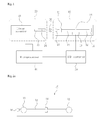
- Fig. 1 shows structure of the apparatus for testing the function and the drug response of the platelet based on the microfluidic chip according to one embodiment
- Figs. 2a and 2b show structure of a measuring device according to one embodiment of the present invention.
- the apparatus for testing the function and the drug response of the platelet based on the microfluidic chip comprises the measuring device 10 containing a blood sample and measuring an aggregation and adhesion of the platelet generated by flow of the blood sample; and a fluid driving device 20 which is connected to the measuring device and generates an oscillating shear flow of the blood sample.
- the measuring device 10 comprises a sample container 11 which contains the blood sample therein. Also a micro channel 12 is connected to one side of the sample container 11. The micro channel 12 is connected for guiding a shear flow of the blood sample, and is connected between the sample soring chambers 11.
- the micro channel 12 may have a polygonal shape such as quadrilateral, a circular shape, or an elliptical shape as cross sectional shape.
- a length of one side may be 1 ⁇ m to 1000 ⁇ m, preferably 10 ⁇ m to 20 ⁇ m, more preferably 20 ⁇ m to 50 ⁇ m.
- a diameter may be the range described above.
- the micro channel 12 may comprise one channel as shown in Fig. 2a , or comprise a plurality of channels which are arranged in parallel as shown in Fig. 2b .
- reagents of different type may be supplied in each measuring chambers 14.
- the measuring chamber 14 for measuring an aggregation and adhesion of a platelet is connected to one side of the micro channel 12.
- the measuring chamber 14 is preferably positioned at the central part of micro channel 12 where the aggregation and adhesion of a platelet is appeared.
- a sealing part 16 for sealing may be installed at the end of the micro channel 12.
- a plurality of micro-pillars 17 may be installed in the measuring chamber 14 and induce the decrease of the flow of the blood sample by promoting the aggregation and the adhesion of the platelet. Ultimately, the micro-pillars 17 ultimately easily stop with the channel for the oscillating flow of the blood sample. Also, the measuring chamber 14 is equipped with a plurality of beads 19 therein.
- a rapidly channel-expanding part (not shown) may be formed in the measuring chamber, and may decrease a flow velocity of the blood sample.
- a drug may be supplied in the measuring chamber 14.
- the drug may be a single drug or combination of two or more reagents which is selected among Fibrinogen, Arachidonic acid, Collagen, Epinephrine, Adenosine diphosphate (ADP), Prostaglandin E1 (PGE1), Thrombin receptor activating peptide (TRAP), P2Y1 receptor antagonist, and P2Y12 receptor antagonist.
- ADP Collagen and Adenosine diphosphate
- PGE1 Prostaglandin E1
- one of Aspirin, P2Y1 antagonist clopidogrel, and Ticlopidine may be supplied in the measuring chamber 14 as an anti-aggregating reagent.
- a method for supplying the drug which is supplied in the measuring chamber 14 may comprise one of a method for coating the drug on the surface of the measuring chamber 14, a method for adding the micro-pillars 17 and/or the beads 19 which is coated with the drug in the measuring chamber 14, and a method for injecting the drug which has the liquid state in the measuring chamber 14. Also, combination of two or more methods among the above mentioned method may be applied as the method for supplying the drug.
- a sensing part 18 which measures the aggregation and the adhesion of the platelet by using various kinds of sensors is disposed at the measuring chamber 14. At least one of an electrode sensor measuring electrical impedance, an optical sensor measuring turbidity, a pressure sensor measuring a fluctuation pressure, and an image sensor measuring an oscillating flow distance of the blood sample may be used as the sensing part 18. Also, the sensing part 18 is connected to an A/D convertor 30 so that the measured signal can be converted.
- the fluid driving device 20 generates a linearly reciprocating motion of the blood sample which flows into the micro channel 12, and comprises a linear actuator 21, a piston 22 linearly reciprocating which is driven by the linear actuator 21, and a cylinder 24 in which the piston 22 is installed such that the piston 22 linearly reciprocates therein.
- valve 26 is connected between the measuring device 10 and the fluid driving device 20.
- the valve 26 is actually connected to the micro channel 12, and performs control of supply and cut-off of a driving pressure. Also, valve 26 may generate a pulsatile flow through open and close for effective transmission of the driving pressure.
- the flow which is generated in the micro channel 12 is designed for providing above a critical shear stress and/or a critical shear rate which is enough to dynamically stimulate and activate elements such as the platelet, von Willebrand factor (vWF), etc. in the blood sample.
- a minimum shear stress is 8 Pa, and a minimum shear rate 5000 s -1 .
- velocity of flow and the micro channel 12 are accurately designed and controlled for supplying the critical shear flow.
- time for the oscillating flow may be controlled accurately for supplying enough time for activating the platelet and the von Willebrand factor (vWF) through the shear flow.
- linear actuator 12 is connected to a microprocessor 40 such that the microprocessor 40 controls the linear actuator 12.
- two electrodes 14a, 14b are installed at both side in the measuring chamber 14 and measure the change of the electrical impedance.
- the surface of the measuring chamber 14 may be coated with at least one of various agonist candidate materials.
- the platelet and the von Willebrand factor (vWF) which are exposed to the high shear stress and the high shear rate are activated. Also, adhesiveness of the platelet and the von Willebrand factor (vWF) increases such that the platelet and the von Willebrand factor (vWF) are adhered to the inner surface of the measuring chamber 14 and are aggregated by degree.
- the blood corpuscles are non-electric conductor, but the blood plasma is a good electric conductor which is a liquid with electrolyte.
- the electrical impedance is increased greatly when the platelet is adhered to the surface of the electrode 14a, 14b, but the electrical impedance is decreased when the platelet is adhered to the measuring chamber 14.
- the electrical impedance is increased or decreased according to an internal structure design of the measuring chamber 14 and a composition of the coating surface.
- Fig. 5a shows that an electric resistance between the electrodes 14a, 14b is increased.
- the time of reaching 95% of a dynamic range is defined as a closure time.
- the measuring chamber 14 is made of transparent material. Also, a light source 15a and on optical sensor 15b are disposed opposite to each other outside of the measuring chamber 14, are disposed upper side and lower side of the measuring chamber 14, respectively, and measure a change of an optical turbidity in the measuring chamber 14.
- the optical signal which is measured by the aggregation and the adhesion of the platelet may be increased or decreased as time passes in accordance with a structural disposition of the coating surface of the agonist between the light source 15a and the optical sensor 15b.
- the optical intensity is decreased as time passes, as shown in Fig. 6b .
- the optical intensity is increased as time passes.
- the time of reaching 95% of the dynamic range may be determined as the closure time in common with the case of the impedance.
- an optical measuring sensor 13b such as a CCD sensor array etc. and a light source 13a such as LED etc. may be disposed upper side and lower side of the micro channel 12 which is connected to both side of the measuring chamber 14, respectively.
- the measuring distance measured by the optical measuring sensor 13b is long and constant.
- the measuring distance of the blood sample is decreased in accordance with the aggregation and the adhesion of the platelet.
- the measuring distance of the blood sample becomes the same as the distance of the micro channel 14, and becomes constant, when the measuring chamber 14 is clogged completely (Referring to Fig 7b ).
- the time of reaching 95% of the dynamic range may be determined as the closure time in common with the case of the impedance.
- a pressure sensor 28 may be disposed to a conduit which is connected to the other side of the valve 26 which is connected the cylinder 24.
- the pressure sensor 28 is means for measuring a fluctuation pressure when the oscillating flow is applied.
- the amplitude of the fluctuation pressure generated by the reciprocating motion of the piston 22 is slightly decreased through the oscillating flow of the blood sample.
- the original fluctuation pressure is recorded because the fluctuation pressure isn't buffered in the clogged channel when the platelet is aggregated with and is adhered to the measuring chamber 14 and the flow channel is finally clogged.
- Fig. 8b shows a graph of the fluctuation pressure which is recorded as time passes.
- the measured fluctuation pressure may be gradually decreased as time passes, as shown in Fig. 8c .
- the microfluidic chip will be made of disposable, because all parts which contact the blood sample are made of plastic, glass, etc. which is quite inexpensive.
- the micro channel 12 may be replaced with a capillary tube for measuring a hematocrit.
- the disposable test kit will be discarded after use. Therefore, it is easy to use and avoid a blood-borne infection.
- the disposable test kit may be made of a transparent material. Therefore, a mobility of the platelet can be measured by the optical measuring sensor 13b. Furthermore, the state of aggregation and adhesion of the platelet can be observed through a microscope.
- the observation through the microscope may be used as means for research which can ordinarily observe and test a pharmacokinetic reaction against various reagents which is injected in or coated on the measuring chamber 14.
- the reagents may comprise an agonist which assists the platelet in adhering, such as Collagen, Adenosine diphosphate (ADP) and Epinephrine, etc.
- the reagents may comprise an antagonist which disturbs and inhibits the aggregation of the platelet, such as Aspirin, P2Y1 receptor antagonist, and P2Y12 receptor antagonist, etc.
- P2Y1 receptor antagonist may be at least one of candidate materials such as MRS 2179, MRS 2279, MRS 2500, A2P5P, A3P5P, and A3P5PS, etc.
- P2Y12 receptor antagonist may be at least one of candidate materials such as Clopidogrel, Ticlopidine, Prasugrel, AR-C67085MX, Cangrelor, C1330-7, MRS 2395, and 2-methylthioadenosine-5'-monophosphate, etc.
- the aggregation function of the platelet and the resistance to the reagents can be measured by the test apparatus according to the invention.
- a predetermined cutoff OD value (550 ARU-aspirin reaction unit) for Aspirin may be determined, and then it is determined as a tolerance drug reaction if a measured value is below the standard, and it is determined as a normal drug reaction if the measured valve is above the standard. Also, in case of Clopidogrel, it is determined as an inhabitation drug tolerance if the measured value is 40% to 60% of the normal, and is determined as the tolerance if the measure value is below 20%.
- the method for injecting the drug comprises the method for coating on the surface of the measuring chamber 14 as the typical method. Also, the surface of the micro-pillars 17 in the measuring chamber 14 may be coated by different kind of reagents, and the liquefied drug may be injected into the measuring chamber 14, directly. Also, the different kind of reagents may be coated on the surface of the micro channel 12.
- the reagents have features of being easily mixed with the blood sample through the oscillating flow mechanism and the structure of the measuring chamber 14 according to the present invention. Therefore, various agonist and antagonist which are liquefied or solid state will be mixed with the blood, such that used as means for researching the reaction.
Landscapes
- Health & Medical Sciences (AREA)
- Chemical & Material Sciences (AREA)
- Life Sciences & Earth Sciences (AREA)
- Engineering & Computer Science (AREA)
- Physics & Mathematics (AREA)
- Analytical Chemistry (AREA)
- General Health & Medical Sciences (AREA)
- Immunology (AREA)
- Biochemistry (AREA)
- General Physics & Mathematics (AREA)
- Pathology (AREA)
- Hematology (AREA)
- Biomedical Technology (AREA)
- Dispersion Chemistry (AREA)
- Molecular Biology (AREA)
- Urology & Nephrology (AREA)
- Food Science & Technology (AREA)
- Medicinal Chemistry (AREA)
- Chemical Kinetics & Catalysis (AREA)
- Ecology (AREA)
- Biophysics (AREA)
- Clinical Laboratory Science (AREA)
- Signal Processing (AREA)
- Cell Biology (AREA)
- Microbiology (AREA)
- Biotechnology (AREA)
- Electrochemistry (AREA)
- Investigating Or Analysing Biological Materials (AREA)
- Investigating Or Analysing Materials By Optical Means (AREA)
- Investigating Or Analyzing Materials By The Use Of Electric Means (AREA)
- Computer Vision & Pattern Recognition (AREA)
Abstract
Description
- The invention relates to an apparatus and a method for testing a function and a drug response of a platelet and in particular to an apparatus and a method for testing a function and a drug response of a platelet based on a microfluidic chip such that various test can be carried out automatically with a small amount of blood through the flow in a disposable microchip for early diagnosis of thrombotic ischemia and bleeders' disease.
- Thrombosis is the formation of a hemostasis or a blood clot inside a blood vessel. Thrombosis in coronary artery of the heart or cerebrovascular part causes a heart attack or cerebral infarction. Thrombosis referred to as silent killer is becoming the main cause of death for our contemporaries. The problem is that thrombosis or bleeding disease is not caused by genetic defect only and cause thereof is not discovered clearly.
- More seriously, thrombosis prevalence rate is fast increasing due to genetic defect and acquired factors. Therefore, an apparatus and method have been required to make a quantitative test for thrombosis or bleeding disease and to carry out an early diagnosis and prognosis decision.
- There are many factors which play roles in hemostasis at vascular injury sites. All of biochemical and biological mechanism of each factor play a critical role and hemostasis of a platelet plays the most crucial role. A platelet is not attached to the arterial walls at no injury sites, but biochemical and biological mechanism is activated at vascular injury sites, thereby hemostasis is achieved regardless of flow conditions.
- Many method and devices have been developed to subdivide and test a platelet function. A platelet function test is an important test to discern bleeding disorders which are caused by a congenital or acquired disorder of platelet function in case of the bleeding disorders having no numerical platelet disorder. Also, this platelet function test is being used to examine an increase of hemorrhage tendency or a drug-tolerance which is caused by antiplatelet agent used for the treatment or prevention of cardiovascular disorders.
- If there is an injury at endothelial cells in the blood vessel, an inner material in the endothelial cells such as collagen is exposed to the blood and a platelet is attached to the material and is activated. Attachment mechanism of platelet has different characteristics depending on blood flow conditions.
- In particular, if a blood flow rate is high in the artery and a shear stress applied to the blood vessel wall is high, platelet is not attached to the inner membrane of the blood vessel easily. In this condition, von Willebrand factor (vWF) is activated and is easily attached to the wall of the blood vessel and a platelet is attached to the wall of the blood vessel by vWF. Of course, it is known that a glycoproteic receptor complex such as GPIb-IX-V which is contained in the platelet cell membrane induces the reaction with vWF, leading to the attachment.
- As such, an attached platelet induces an aggregation by attracting the same kind of platelet and leads to hemostasis. Then, hemostasis is reinforced by fibrin.
- However, the function of platelet is not always favorable, but can produce adverse effect in a certain flow condition or situation. For example, when the blood vessel wall became narrow locally by artery hardening, a platelet passing through this narrow part is exposed to a high shear ratio and is activated, and then adhesion and aggregation occurs in the rear of the narrow part and leads to thrombosis which blocks the blood vessel.
- As explained above, a platelet and vWF are activated by the size of a blood flow, i.e., a shear stress due to the flow, thereby leading to the increase of an adhesive property and the generation of hemostasis. It is known that the shear stress required for the activation of a platelet or vWF is at least 8 Pa and the shear rate is at least 5,000 1/s.
- As such, various devices are suggested and developed for an early diagnosis and prognosis test of hemostasis or bleeding disease and they can be divided into an electric method, an optical method, a time measuring method to stop bleeding, etc., based on the measuring sensor.
- A bleeding time (BT) method was developed about 100 years ago which measures a bleeding time and is still being used for a screening test of a platelet function. However, a current platelet function test has problems such as a difficult standardization, a low diagnostic validity and a use of invasive technique and therefore an objectified measuring method to measure a platelet function has been required.
- To solve the problems, a platelet function analyzer (e.g.: PFA-100) is developed which is being used to measure a platelet function. This analyzer uses a feature that a platelet is aggregated by activated vWF in a high shear rate. To measure this feature, after whole blood flows in a long capillary tube, a platelet aggregates in an orifice coated by ADP or epinephrine together with collagen and then time by which the orifice is blocked is measure by pressure, flow rate, etc.
- This platelet function test strictly depends on the function of vWF. This test has disadvantages that the test depends on hematocrit (Hct) and an antiplatelet test such as a test using aspirin or clopidogrel is not possible. Also, disadvantageously, two step tests are required for the function test of platelet and cost for the test is increasing.
- In particular, to activate vWF, a blood sample must be exposed for a predetermined time with a high shear rate. For this, PFA-100 uses a method for making blood flow at high speed in a long capillary tube. However, disadvantageously, this method requires a large quantity of blood. Also, it is a disadvantage that vWF is not activated at the center of the capillary tube where a shear rate is minimum while vWF is activated near the tube wall where a shear rate is maximum, thereby a repeatability of test results is not guaranteed.
- IMPACT of Diamed Co., Ltd. uses a rotation-type Couette flow in the form of Cone-Plate. In this method, a uniform shear stress is applied to the blood contained therein and an attachment degree of platelet is measured when a high shear stress is applied. Like PFA-100, this method has a disadvantage that it depends too much on the concentration and function of fibrinogen and vWF.
- Verify-NOW (Accumetrics) uses a method to measure an aggregation degree of platelet by a turbidity using an optical sensor. In this method, an agonist is mixed with blood and then a microbead on which collagen is coated is reacted so that a platelet in the blood is aggregated. Then, turbidity is measured over time. The frequency of use this method is being increased recently, but this method still has disadvantages of prior methods to measure a turbidity.
- An object of the present invention is to solve the above problems and the present invention provides an apparatus and method for testing multifunction and drug-response of a platelet based on a microfluidic chip by which it is possible to make a multiple test including early diagnosis and prognosis of bleeding disease and thrombosis with a single test, thereby saving test costs and increasing a repeatability and an accuracy of test.
- Another object of the invention is to provide an apparatus and method for testing multifunction and drug-response of a platelet based on a microfluidic chip by which a closure time of a blood flow can be measured automatically.
- The object of the present invention will not be restricted to the above mentioned objects. A person having ordinary skill in the art to which the invention pertains can clearly understand another object which is not mentioned from an explanation below.
- To achieve the above object, the invention provides an apparatus for testing a function and a drug response of a platelet based on a microfluidic chip comprising: a measuring device containing a blood sample and measuring aggregation and adhesion of a platelet generated by flow of the blood sample; and a fluid driving device which is connected to the measuring device and generates a oscillating shear flow of the blood sample.
- The measuring device comprises: a sample container containing the blood sample therein; a micro channel connected to the sample container and guiding the shear flow of the blood sample; a measuring chamber connected to the micro channel, wherein the aggregation and the adhesion of the platelet is generated in the measuring chamber; and a sensing part measuring the aggregation and the adhesion of the platelet generated in the measuring chamber.
- Further, the fluid driving device comprises: a linear actuator; a piston linearly reciprocating which is driven by the linear actuator; and a cylinder in which the piston is installed such that the piston linearly reciprocates therein.
- Further, a valve is installed between the measuring device and the fluid driving device and controls supply and cut-off of a driving pressure.
- Further, the valve may generate a pulsatile flow through periodic open and close.
- Further, the plurality of the micro channel is arranged in parallel.
- Further, reagents which are different from each other are supplied in the measuring chamber connected to the micro channel arranged in parallel.
- Further, the sensing part comprises at least one of an electrode sensor measuring electrical impedance, an optical sensor measuring turbidity, a pressure sensor measuring a fluctuation pressure, and an image sensor measuring a oscillating flow distance of the blood sample.
- Further, the electrode sensor has two electrodes which are installed at both side in the measuring chamber and measures the change of the electrical impedance which is changed by the aggregation and adhesion of the platelet in the measuring chamber.
- Further, the optical sensor is disposed opposite to a light source outside of the measuring chamber and measure the change of the optical turbidity which is changed by the aggregation and adhesion of the platelet in the measuring chamber.
- Further, the pressure sensor is disposed at the valve connecting the measuring device with the fluid driving device or in the sample container, and measures the change of the fluctuation pressure which is changed by the aggregation and adhesion of the platelet in the measuring chamber.
- Further, the image sensor comprises: a light source; and an optical measuring sensor receiving a light which transmits through the blood sample in the micro channel and converting the received light to an electrical signal, such that measuring the oscillating flow distance of the blood sample.
- Further, the light source comprises a light emitting diode (LED), and wherein the optical measuring sensor comprises a charge coupled device (CCE) sensor array.
- Further, the measuring chamber is positioned at the central part of the micro channel, and a rapidly channel-expanding part is formed in the measuring chamber and decreases a flow velocity of the blood sample.
- Further, a plurality of micro-pillars is installed in the measuring chamber and induces the decrease of the flow of the blood sample by promoting the aggregation and the adhesion of the platelet.
- Further, the measuring chamber is equipped with a plurality of beads therein.
- Further, or more type of the reagents which is selected among Fibrinogen, Arachidonic acid, Collagen, Epinephrine, Adenosine diphosphate (ADP), Prostaglandin E1 (PGE1), Thrombin receptor activating peptide (TRAP), P2Y1 receptor antagonist, and P2Y12 receptor antagonist supplied in the measuring chamber.
- Further, the P2Y1 receptor antagonist comprises one of more type of the drug which is selected among MRS 2179, MRS 2279, MRS 2500, A2P5P, A3P5P, and A3P5PS.
- Further, the P2Y12 receptor antagonist comprises one or more type of the drug which is selected among Clopidogrel, Ticlopidine, Prasugrel, AR-C67085MX, Cangrelor, C1330-7, MRS 2395, and 2-methylthioadenosine-5'-monophosphate.
- Further, the drug is supplied through at least one method of a surface coating and a liquid injection.
- A minimum shear rate in the shear flow generated by the fluid driving device is at least 5000 s-1; and a minimum shear stress in the shear flow generated by the fluid driving device is at least 8 Pa.
- Also, the invention provided a method for a platelet function and drug response test based on a microfluidic chip comprising: injecting a blood sample into sample containers which are disposed both sides; generating a oscillating shear flow of the blood sample through a micro channel connected to the sample container; supplying a drug in a measuring chamber which is positioned at the central part of the micro channel, the drug reacts the platelet; and measuring a change which is caused by an aggregation and adhesion of a platelet in the measuring chamber.
- According to the above features, it is possible to test a blood sample through parallel channels using reagents which are different from each other. Also, with a single test only, it is possible to make a multiple test regarding a complex platelet function by performing a multiple drug tests for a single blood sample in a plurality of channels, thereby saving time and cost for a test.
- Also, the blood sample can be exposed to a shear oscillating flow more than critical shear stress for enough time in each channel, such that activation of factors such as a platelet and von Willebrand factor (vWF) etc. can be activated uniformly and completely in comparison to once-through flow and a repeatability of the platelet aggregation can be increased.
- Further, an adhesion and aggregation state of the platelet can be observed through a microscope in real time. Therefore, it is possible to analyze quantitatively by drug.
- Further, elements which will be in contact with blood can be made of disposable and be discarded after use. Therefore, it is easy to use and avoid a blood-borne infection.
- Further, it is easy to make a bulk test by means of a system having a short measuring time and enabling a simultaneous test on various samples.
- Further, various agonist and antagonist can be injected directly by liquid state or can be coated on a predetermined surface of a flow path. Therefore, it is possible to carry out various pharmacologic tests.
-
-
Fig. 1 shows an apparatus and method for a platelet function and drug response test based on a microfluidic chip according to one embodiment of the present invention. -
Figs. 2a and2b show a measuring device according to one embodiment of the present invention. -
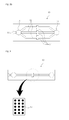
Fig. 3 shows micro-pillars which is disposed in a measuring chamber. -
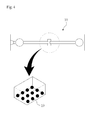
Fig. 4 shows beads which is disposed in the measuring chamber. -
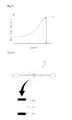
Fig. 5a shows a sensing part which measures based on electrical impedance. -
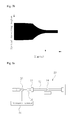
Fig. 5b is a graph which is measured by the sensing part inFig. 5a . -
Fig. 6a shows a sensing part which measures turbidity by an optical sensor. -
Fig. 6b is a graph which is measured by the sensing part inFig. 6a . -
Fig. 7a shows a sensing part which measures a flow distance of the blood sample in micro channel by an image sensor. -
Fig. 7b is a graph which is measured by the sensing part inFig. 7a . -
Fig.8a shows a sensing part which measures a fluctuation pressure. -
Figs. 8b and 8c are graphs which are measured by the sensing part inFig. 8a . - Hereinafter, an apparatus and method for a platelet function and drug response test based on a microfluidic chip according to one embodiment of the present invention will be explained in detail referring to attached drawings.
-
Fig. 1 shows structure of the apparatus for testing the function and the drug response of the platelet based on the microfluidic chip according to one embodiment, andFigs. 2a and2b show structure of a measuring device according to one embodiment of the present invention. - As shown in
Figs. 1, 2a , and2b , the apparatus for testing the function and the drug response of the platelet based on the microfluidic chip according to the present invention comprises the measuringdevice 10 containing a blood sample and measuring an aggregation and adhesion of the platelet generated by flow of the blood sample; and afluid driving device 20 which is connected to the measuring device and generates an oscillating shear flow of the blood sample. - The measuring
device 10 comprises asample container 11 which contains the blood sample therein. Also amicro channel 12 is connected to one side of thesample container 11. Themicro channel 12 is connected for guiding a shear flow of the blood sample, and is connected between thesample soring chambers 11. - The
micro channel 12 may have a polygonal shape such as quadrilateral, a circular shape, or an elliptical shape as cross sectional shape. For example, in case of having a square shape as the cross sectional shape, a length of one side may be 1 µm to 1000 µm, preferably 10 µm to 20 µm, more preferably 20 µm to 50 µm. In case of having the circular shape as the cross sectional shape, a diameter may be the range described above. - The
micro channel 12 may comprise one channel as shown inFig. 2a , or comprise a plurality of channels which are arranged in parallel as shown inFig. 2b . When themicro channels 12 are arranged in parallel, reagents of different type may be supplied in each measuringchambers 14. - Also, the measuring
chamber 14 for measuring an aggregation and adhesion of a platelet is connected to one side of themicro channel 12. The measuringchamber 14 is preferably positioned at the central part ofmicro channel 12 where the aggregation and adhesion of a platelet is appeared. Herein, a sealingpart 16 for sealing may be installed at the end of themicro channel 12. - Referring to
Figs. 3 and4 , a plurality ofmicro-pillars 17 may be installed in the measuringchamber 14 and induce the decrease of the flow of the blood sample by promoting the aggregation and the adhesion of the platelet. Ultimately, the micro-pillars 17 ultimately easily stop with the channel for the oscillating flow of the blood sample. Also, the measuringchamber 14 is equipped with a plurality ofbeads 19 therein. - Also, a rapidly channel-expanding part (not shown) may be formed in the measuring chamber, and may decrease a flow velocity of the blood sample.
- A drug may be supplied in the measuring
chamber 14. The drug may be a single drug or combination of two or more reagents which is selected among Fibrinogen, Arachidonic acid, Collagen, Epinephrine, Adenosine diphosphate (ADP), Prostaglandin E1 (PGE1), Thrombin receptor activating peptide (TRAP), P2Y1 receptor antagonist, and P2Y12 receptor antagonist. - For example, the combination of Fibrinogen and Arachidonic acid, the combination of Collagen and Epinephrine, the combination of Collagen and Adenosine diphosphate (ADP), the combination of Collagen and Arachidonic acid, the combination of Collagen, Adenosine diphosphate (ADP) and Prostaglandin E1 (PGE1) (or P2Y12 assay), the combination of Collagen and MRS 2179, the combination of Collagen and MRS 2395, the combination of Collagen and TRAP, the combination of Collagen and P2Y1 antagonist, or the combination of Collagen and P2Y12 antagonist can be available as the combination of the reagents.
- Also, one of Aspirin, P2Y1 antagonist clopidogrel, and Ticlopidine may be supplied in the measuring
chamber 14 as an anti-aggregating reagent. - Meanwhile, a method for supplying the drug which is supplied in the measuring
chamber 14 may comprise one of a method for coating the drug on the surface of the measuringchamber 14, a method for adding the micro-pillars 17 and/or thebeads 19 which is coated with the drug in the measuringchamber 14, and a method for injecting the drug which has the liquid state in the measuringchamber 14. Also, combination of two or more methods among the above mentioned method may be applied as the method for supplying the drug. - Next, a
sensing part 18 which measures the aggregation and the adhesion of the platelet by using various kinds of sensors is disposed at the measuringchamber 14. At least one of an electrode sensor measuring electrical impedance, an optical sensor measuring turbidity, a pressure sensor measuring a fluctuation pressure, and an image sensor measuring an oscillating flow distance of the blood sample may be used as thesensing part 18. Also, thesensing part 18 is connected to an A/D convertor 30 so that the measured signal can be converted. - Hereinafter, the
fluid driving device 20 is explained referring toFig. 1 before the detailed embodiments of thesensing part 18 are explained. - The
fluid driving device 20 generates a linearly reciprocating motion of the blood sample which flows into themicro channel 12, and comprises alinear actuator 21, apiston 22 linearly reciprocating which is driven by thelinear actuator 21, and acylinder 24 in which thepiston 22 is installed such that thepiston 22 linearly reciprocates therein. - Also, a
valve 26 is connected between the measuringdevice 10 and thefluid driving device 20. Thevalve 26 is actually connected to themicro channel 12, and performs control of supply and cut-off of a driving pressure. Also,valve 26 may generate a pulsatile flow through open and close for effective transmission of the driving pressure. - The flow which is generated in the
micro channel 12 is designed for providing above a critical shear stress and/or a critical shear rate which is enough to dynamically stimulate and activate elements such as the platelet, von Willebrand factor (vWF), etc. in the blood sample. Here, it is preferable that a minimum shear stress is 8 Pa, and a minimum shear rate 5000 s-1. - It requires that velocity of flow and the
micro channel 12 are accurately designed and controlled for supplying the critical shear flow. Also, the time for the oscillating flow may be controlled accurately for supplying enough time for activating the platelet and the von Willebrand factor (vWF) through the shear flow. - Meanwhile, the
linear actuator 12 is connected to amicroprocessor 40 such that themicroprocessor 40 controls thelinear actuator 12. - Hereinafter, the various embodiments of the
sensing part 18 are explained in detail referring toFigs. 5 to 8 . - First, for an electrical measuring method, two
electrodes 14a, 14b are installed at both side in the measuringchamber 14 and measure the change of the electrical impedance. Here, the surface of the measuringchamber 14 may be coated with at least one of various agonist candidate materials. - If the high shear stress and the high shear rate are applied in the blood while the blood sample flows oscillately at high speed in the measuring
chamber 14, the platelet and the von Willebrand factor (vWF) which are exposed to the high shear stress and the high shear rate are activated. Also, adhesiveness of the platelet and the von Willebrand factor (vWF) increases such that the platelet and the von Willebrand factor (vWF) are adhered to the inner surface of the measuringchamber 14 and are aggregated by degree. - Most of blood corpuscles are non-electric conductor, but the blood plasma is a good electric conductor which is a liquid with electrolyte. Thus, the electrical impedance is increased greatly when the platelet is adhered to the surface of the
electrode 14a, 14b, but the electrical impedance is decreased when the platelet is adhered to the measuringchamber 14. - Thus, it may be designed that the electrical impedance is increased or decreased according to an internal structure design of the measuring
chamber 14 and a composition of the coating surface.Fig. 5a shows that an electric resistance between theelectrodes 14a, 14b is increased. - Referring to
Fig. 5b , the electrical impedance asymptotically comes near a maximum value in process of time. At this time, the time of reaching 95% of a dynamic range is defined as a closure time. - With regard to the other measuring method, referring to
Fig. 6a , the measuringchamber 14 is made of transparent material. Also, alight source 15a and onoptical sensor 15b are disposed opposite to each other outside of the measuringchamber 14, are disposed upper side and lower side of the measuringchamber 14, respectively, and measure a change of an optical turbidity in the measuringchamber 14. - The optical signal which is measured by the aggregation and the adhesion of the platelet may be increased or decreased as time passes in accordance with a structural disposition of the coating surface of the agonist between the
light source 15a and theoptical sensor 15b. - When the agonist is coated on the inner surface of the measuring
chamber 14 which is inside the surface to which thelight source 15a and theoptical sensor 15b are disposed, the optical intensity is decreased as time passes, as shown inFig. 6b . However, when the aggregation and the adhesion of the platelet is occurred at another portion of the surface which has minor influence on an optical path or at the micro-pillars 17, the optical intensity is increased as time passes. Also, the time of reaching 95% of the dynamic range may be determined as the closure time in common with the case of the impedance. - With regard to another measuring method, referring to
Fig. 7a , anoptical measuring sensor 13b such as a CCD sensor array etc. and alight source 13a such as LED etc. may be disposed upper side and lower side of themicro channel 12 which is connected to both side of the measuringchamber 14, respectively. - When the non-transparent blood sample flow oscillately, the measuring distance measured by the
optical measuring sensor 13b is long and constant. However, the measuring distance of the blood sample is decreased in accordance with the aggregation and the adhesion of the platelet. Also, the measuring distance of the blood sample becomes the same as the distance of themicro channel 14, and becomes constant, when the measuringchamber 14 is clogged completely (Referring toFig 7b ). Also, the time of reaching 95% of the dynamic range may be determined as the closure time in common with the case of the impedance. - With regard to another measuring method, referring to
Fig. 8a , apressure sensor 28 may be disposed to a conduit which is connected to the other side of thevalve 26 which is connected thecylinder 24. - The
pressure sensor 28 is means for measuring a fluctuation pressure when the oscillating flow is applied. In the initial stages, the amplitude of the fluctuation pressure generated by the reciprocating motion of thepiston 22 is slightly decreased through the oscillating flow of the blood sample. However, the original fluctuation pressure is recorded because the fluctuation pressure isn't buffered in the clogged channel when the platelet is aggregated with and is adhered to the measuringchamber 14 and the flow channel is finally clogged. - According to this embodiment,
Fig. 8b shows a graph of the fluctuation pressure which is recorded as time passes. - However, in case that the conduit which is connected to the
pressure sensor 28 is connected to the upper part of thesample container 11 in which the blood sample is injected, and an inlet is sealed after injecting of the blood sample, the measured fluctuation pressure may be gradually decreased as time passes, as shown inFig. 8c . - In the above mentioned structures, the microfluidic chip will be made of disposable, because all parts which contact the blood sample are made of plastic, glass, etc. which is quite inexpensive. As one embodiment of the present invention, the
micro channel 12 may be replaced with a capillary tube for measuring a hematocrit. Also, the disposable test kit will be discarded after use. Therefore, it is easy to use and avoid a blood-borne infection. - Also, the disposable test kit may be made of a transparent material. Therefore, a mobility of the platelet can be measured by the
optical measuring sensor 13b. Furthermore, the state of aggregation and adhesion of the platelet can be observed through a microscope. - The observation through the microscope may be used as means for research which can ordinarily observe and test a pharmacokinetic reaction against various reagents which is injected in or coated on the measuring
chamber 14. - The reagents may comprise an agonist which assists the platelet in adhering, such as Collagen, Adenosine diphosphate (ADP) and Epinephrine, etc. On the other hand, the reagents may comprise an antagonist which disturbs and inhibits the aggregation of the platelet, such as Aspirin, P2Y1 receptor antagonist, and P2Y12 receptor antagonist, etc.
- P2Y1 receptor antagonist may be at least one of candidate materials such as MRS 2179, MRS 2279, MRS 2500, A2P5P, A3P5P, and A3P5PS, etc. P2Y12 receptor antagonist may be at least one of candidate materials such as Clopidogrel, Ticlopidine, Prasugrel, AR-C67085MX, Cangrelor, C1330-7, MRS 2395, and 2-methylthioadenosine-5'-monophosphate, etc.
- In particular, for a taker who took the above reagents, the aggregation function of the platelet and the resistance to the reagents can be measured by the test apparatus according to the invention.
- For the measurement of the function of a platelet, blood from a normal person or a taker who took Aspirin and Clopidogrel is collected in citrated tubes. Then, 50 to 100 microliter of whole blood is taken and is reacted at 37 °C for 10 to 30 minutes using optimum concentration of Adenosine diphosphate (ADP), Prostaglandin E, Fibrinogen and Arachidonic acid, respectively. After the reaction, blood is migrated by applying the pressure to the microfluidic chip with
micro channel 12. If the function of platelet is normal, the flow path in the measuringchamber 14 is clogged in a short time and then the flow is stopped. On the contrary, if the function of platelet is abnormal, the time for clogging will be lengthened compared to when the function of a platelet is normal. - Regarding the test of a drug tolerance, in particular when Aspirin, Clopidogrel, Ticlopidine, etc. is taken, the aggregation function of the platelet is decreased. Therefore, the flow path in the measuring
chamber 14 is not clogged easily so that the clogging time is increased. Since the normal person reacts to the drug well, the clogging time is short. If the ratio of the clogging time is decreased remarkably compared to the normal person, it is determined to be the drug tolerance to Aspirin and Clopidogrel. Regarding a standard for determination, in case of Verify NOW, a predetermined cutoff OD value (550 ARU-aspirin reaction unit) for Aspirin may be determined, and then it is determined as a tolerance drug reaction if a measured value is below the standard, and it is determined as a normal drug reaction if the measured valve is above the standard. Also, in case of Clopidogrel, it is determined as an inhabitation drug tolerance if the measured value is 40% to 60% of the normal, and is determined as the tolerance if the measure value is below 20%. - The method for injecting the drug comprises the method for coating on the surface of the measuring
chamber 14 as the typical method. Also, the surface of the micro-pillars 17 in the measuringchamber 14 may be coated by different kind of reagents, and the liquefied drug may be injected into the measuringchamber 14, directly. Also, the different kind of reagents may be coated on the surface of themicro channel 12. - The reagents have features of being easily mixed with the blood sample through the oscillating flow mechanism and the structure of the measuring
chamber 14 according to the present invention. Therefore, various agonist and antagonist which are liquefied or solid state will be mixed with the blood, such that used as means for researching the reaction. - The scope of the present invention is not limited to the above described embodiments and is determined by the accompanying claims. It is apparent that various variations or modifications can be made within the scope of the claims by those skilled in the art.
-
- 10 : measuring device
- 11: sample container
- 12: micro channel
- 13a: light source
- 13b: optical measuring sensor
- 14: measuring chamber
- 15a: light source
- 15b: optical sensor
- 16: sealing part
- 18: sensing part
- 20: fluid driving device
- 21: linear actuator
- 22: piston
- 24: cylinder
- 30: A/D converter
- 40: microprocessor
Claims (20)
- An apparatus for testing a function and a drug response of a platelet based on a microfluidic chip comprising:a measuring device containing a blood sample and measuring aggregation and adhesion of a platelet generated by flow of the blood sample; anda fluid driving device which is connected to the measuring device and generates a oscillating shear flow of the blood sample.
- The apparatus for testing the function and the drug response of the platelet based on the microfluidic chip according to Claim 1, wherein the measuring device comprises:a sample container containing the blood sample therein;a micro channel connected to the sample container and guiding the shear flow of the blood sample;a measuring chamber connected to the micro channel, wherein the aggregation and the adhesion of the platelet is generated in the measuring chamber; anda sensing part measuring the aggregation and the adhesion of the platelet generated in the measuring chamber.
- The apparatus for testing the function and the drug response of the platelet based on the microfluidic chip according to Claim 1, wherein the fluid driving device comprises:a linear actuator;a piston linearly reciprocating which is driven by the linear actuator; anda cylinder in which the piston is installed such that the piston linearly reciprocates therein.
- The apparatus for testing the function and the drug response of the platelet based on the microfluidic chip according to Claim 1, wherein a valve is installed between the measuring device and the fluid driving device and controls supply and cut-off of a driving pressure.
- The apparatus for testing the function and the drug response of the platelet based on the microfluidic chip according to Claim 4, wherein the valve generates a pulsatile flow through periodic open and close.
- The apparatus for testing the function and the drug response of the platelet based on the microfluidic chip according to Claim 2, wherein the plurality of the micro channel is arranged in parallel.
- The apparatus for testing the function and the drug response of the platelet based on the microfluidic chip according to Claim 6, wherein reagents which are different from each other are supplied in the measuring chamber connected to the micro channel arranged in parallel.
- The apparatus for testing the function and the drug response of the platelet based on the microfluidic chip according to Claim 2, wherein the sensing part comprises at least one of an electrode sensor measuring electrical impedance, an optical sensor measuring turbidity, a pressure sensor measuring a fluctuation pressure, and an image sensor measuring a oscillating flow distance of the blood sample.
- The apparatus for testing the function and the drug response of the platelet based on the microfluidic chip according to Claim 8, wherein the electrode sensor has two electrodes which are installed at both side in the measuring chamber and measures the change of the electrical impedance which is changed by the aggregation and adhesion of the platelet in the measuring chamber.
- The apparatus for testing the function and the drug response of the platelet based on the microfluidic chip according to Claim 8, wherein the optical sensor is disposed opposite to a light source outside of the measuring chamber and measure the change of the optical turbidity which is changed by the aggregation and adhesion of the platelet in the measuring chamber.
- The apparatus for testing the function and the drug response of the platelet based on the microfluidic chip according to Claim 8, wherein the pressure sensor is disposed at the valve connecting the measuring device with the fluid driving device or in the sample container, and measures the change of the fluctuation pressure which is changed by the aggregation and adhesion of the platelet in the measuring chamber.
- The apparatus for testing the function and the drug response of the platelet based on the microfluidic chip according to Claim 8, wherein the image sensor comprises:a light source; andan optical measuring sensor receiving a light which transmits through the blood sample in the micro channel and converting the received light to an electrical signal, such that measuring the oscillating flow distance of the blood sample.
- The apparatus for testing the function and the drug response of the platelet based on the microfluidic chip according to Claim 8, wherein the light source comprises a light emitting diode (LED), and wherein the optical measuring sensor comprises a charge coupled device (CCD) sensor array.
- The apparatus for testing the function and the drug response of the platelet based on the microfluidic chip according to Claim 2,
wherein the measuring chamber is positioned at the central part of the micro channel, and
wherein a rapidly channel-expanding part is formed in the measuring chamber and decreases a flow velocity of the blood sample. - The apparatus for testing the function and the drug response of the platelet based on the microfluidic chip according to Claim 2, wherein a plurality of micro-pillars are installed in the measuring chamber and induces the decrease of the flow of the blood sample by promoting the aggregation and the adhesion of the platelet.
- The apparatus for testing the function and the drug response of the platelet based on the microfluidic chip according to Claim 2, wherein the measuring chamber is equipped with a plurality of beads therein.
- The apparatus for testing the function and the drug response of the platelet based on the microfluidic chip according to Claim 2, wherein one or more type of the reagents which is selected among Fibrinogen, Arachidonic acid, Collagen, Epinephrine, Adenosine diphosphate (ADP), Prostaglandin E1 (PGE1), Thrombin receptor activating peptide (TRAP), P2Y1 receptor antagonist, and P2Y12 receptor antagonist supplied in the measuring chamber.
- The apparatus for testing the function and the drug response of the platelet based on the microfluidic chip according to Claim 17,
wherein the P2Y1 receptor antagonist comprises one of more type of the drug which is selected among MRS 2179, MRS 2279, MRS 2500, A2P5P, A3P5P, and A3P5PS,
wherein the P2Y12 receptor antagonist comprises one or more type of the drug which is selected among Clopidogrel, Ticlopidine, Prasugrel, AR-C67085MX, Cangrelor, C1330-7, MRS 2395, and 2-methylthioadenosine-5'-monophosphate, and
wherein the drug is supplied through at least one method of a surface coating and a liquid injection. - The apparatus for testing the function and the drug response of the platelet based on the microfluidic chip according to Claim 1,
wherein a minimum shear rate in the shear flow generated by the fluid driving device is at least 5000 s-1; and
wherein a minimum shear stress in the shear flow generated by the fluid driving device is at least 8 Pa. - A method for a platelet function and drug response test based on a microfluidic chip comprising:injecting a blood sample into sample containers which are disposed both sides;generating a oscillating shear flow of the blood sample through a micro channel connected to the sample container;supplying a drug in a measuring chamber which is positioned at the central part of the micro channel, the drug reacts the platelet; andmeasuring a change which is caused by an aggregation and adhesion of a platelet in the measuring chamber.
Applications Claiming Priority (2)
| Application Number | Priority Date | Filing Date | Title |
|---|---|---|---|
| KR20120154057A KR101481240B1 (en) | 2012-12-27 | 2012-12-27 | Apparatus and method for monitoring platelet function and drug response in a microfluidic-chip |
| PCT/KR2013/012223 WO2014104761A1 (en) | 2012-12-27 | 2013-12-26 | Apparatus and method for platelet function and drug response testing based on microfluidic chip |
Publications (2)
| Publication Number | Publication Date |
|---|---|
| EP2940476A1 true EP2940476A1 (en) | 2015-11-04 |
| EP2940476A4 EP2940476A4 (en) | 2016-12-14 |
Family
ID=51021715
Family Applications (1)
| Application Number | Title | Priority Date | Filing Date |
|---|---|---|---|
| EP13866953.6A Ceased EP2940476A4 (en) | 2012-12-27 | 2013-12-26 | APPARATUS AND METHOD FOR PLATFORMARY FUNCTION ANALYSIS AND MEDICAMENT RESPONSE TO MICROFLUIDIC CHIP |
Country Status (6)
| Country | Link |
|---|---|
| US (1) | US9983220B2 (en) |
| EP (1) | EP2940476A4 (en) |
| JP (1) | JP6091648B2 (en) |
| KR (1) | KR101481240B1 (en) |
| CN (1) | CN104903728A (en) |
| WO (1) | WO2014104761A1 (en) |
Families Citing this family (35)
| Publication number | Priority date | Publication date | Assignee | Title |
|---|---|---|---|---|
| US8448499B2 (en) | 2008-12-23 | 2013-05-28 | C A Casyso Ag | Cartridge device for a measuring system for measuring viscoelastic characteristics of a sample liquid, a corresponding measuring system, and a corresponding method |
| US10175225B2 (en) | 2014-09-29 | 2019-01-08 | C A Casyso Ag | Blood testing system and method |
| US10539579B2 (en) | 2014-09-29 | 2020-01-21 | C A Casyso Gmbh | Blood testing system and method |
| US10816559B2 (en) | 2014-09-29 | 2020-10-27 | Ca Casyso Ag | Blood testing system and method |
| US12607641B2 (en) * | 2014-11-14 | 2026-04-21 | Haemonetics Corporation | Apparatus and method to determine stroke subtype |
| AU2015380619B2 (en) * | 2015-01-30 | 2020-05-21 | Hewlett-Packard Development Company, L.P. | Microfluidic chip for coagulation sensing |
| CN104849484B (en) * | 2015-05-27 | 2016-10-26 | 谢俊 | The control system of biochip |
| CN105717263B (en) * | 2016-03-04 | 2018-01-26 | 北京乐普医疗科技有限责任公司 | A reagent card for detecting the curative effect of thienopyridine antiplatelet drugs and its use method and application |
| KR101888239B1 (en) * | 2016-05-06 | 2018-09-06 | 고려대학교 산학협력단 | Apparatus for testing of platelet using blockage phenomenon |
| CN105944774B (en) * | 2016-05-12 | 2018-08-07 | 大连理工大学 | Double layer micro fluidic chip and preparation method for the analysis of hemolysis in vitro bolt effect of drugs |
| CN106248919B (en) * | 2016-07-15 | 2018-11-06 | 重庆鼎润医疗器械有限责任公司 | Method based on blood sample vibration detection coagulation |
| US10473674B2 (en) | 2016-08-31 | 2019-11-12 | C A Casyso Gmbh | Controlled blood delivery to mixing chamber of a blood testing cartridge |
| WO2018085496A2 (en) * | 2016-11-02 | 2018-05-11 | Atantares Corp. | Methods and systems for micro platelet function testing using an integrated miniaturized platelet function analyzer |
| KR101951549B1 (en) * | 2017-04-21 | 2019-02-22 | 고려대학교 산학협력단 | Apparatus and method for isolating micro vesicle |
| JP6863074B2 (en) * | 2017-05-24 | 2021-04-21 | 住友ゴム工業株式会社 | Micro flow path chip |
| US11458470B2 (en) | 2017-06-23 | 2022-10-04 | Arizona Board Of Regents On Behalf Of The University Of Arizona | Systems and methods for analyzing platelet function |
| US10843185B2 (en) | 2017-07-12 | 2020-11-24 | Ca Casyso Gmbh | Autoplatelet cartridge device |
| JP7120558B2 (en) * | 2017-09-27 | 2022-08-17 | 国立大学法人東北大学 | In vitro determination of retention of von Willebrand factor macromolecular multimers under shear stress |
| JP7235235B2 (en) * | 2018-10-11 | 2023-03-08 | 国立大学法人東北大学 | A shear generator that applies quantitative shear stress to blood, blood cells, or coagulation-related factors |
| CN109164253A (en) * | 2018-10-26 | 2019-01-08 | 浙江师范大学 | A kind of tuning fork resonant mode blood platelet shrinks force measuring device and method |
| CN109765269B (en) * | 2018-12-27 | 2020-07-28 | 西安交通大学 | A sound wave driven blood coagulation test system |
| CN110907498B (en) * | 2019-04-08 | 2025-06-27 | 浙江师范大学 | A platelet aggregation detection device based on bioelectrical impedance principle |
| CN113883936B (en) * | 2020-07-03 | 2025-08-19 | 台达电子工业股份有限公司 | Thin type temperature-equalizing plate structure |
| CN112924431B (en) * | 2021-03-16 | 2024-09-06 | 华中科技大学 | A microfluidic chip and platelet function detection device |
| CN115166224B (en) * | 2021-04-06 | 2024-01-02 | 清华大学 | Microfluidic chip, platelet function detection device and method |
| CN113702655A (en) * | 2021-09-28 | 2021-11-26 | 美高怡生生物技术(北京)有限公司 | Platelet function testing device, kit and application thereof |
| KR102893038B1 (en) * | 2022-04-20 | 2025-12-01 | 고려대학교 산학협력단 | Thromboelastography test system and method |
| WO2023204569A1 (en) * | 2022-04-20 | 2023-10-26 | 고려대학교 산학협력단 | Thromboelastography test device and method |
| CN115468895B (en) * | 2022-09-13 | 2025-01-24 | 重庆大学 | A red blood cell quality detection system and method |
| CN115656489B (en) * | 2022-10-25 | 2026-01-13 | 深圳希克生物医疗科技有限公司 | Multiple coagulation time detecting instrument and reagent card |
| CN115728476B (en) * | 2022-11-30 | 2023-07-18 | 北京航空航天大学 | Multi-parameter platelet function analyzer |
| CN116338154A (en) * | 2023-02-22 | 2023-06-27 | 金苹果(宁波)汽车部件有限公司 | Medical Test Kit |
| EP4678263A1 (en) * | 2023-03-06 | 2026-01-14 | ThinkCyte K.K. | Filter |
| CN117696134B (en) * | 2023-05-08 | 2024-11-22 | 上海新势聚芯医疗科技有限公司 | Microfluidic biochip detection device and use method |
| KR20250068116A (en) * | 2023-11-09 | 2025-05-16 | 고려대학교 산학협력단 | Apparatus for testing deformability of red blood cells |
Family Cites Families (22)
| Publication number | Priority date | Publication date | Assignee | Title |
|---|---|---|---|---|
| DE3541057A1 (en) * | 1985-11-19 | 1987-05-21 | Kratzer Michael | METHOD AND DEVICE FOR MEASURING THE AGGREGATION OF BLOOD PLATES OR THE COAGULATION OF THE BLOOD |
| US5380491A (en) * | 1993-01-21 | 1995-01-10 | Cdc Technologies, Inc. | Apparatus for pumping and directing fluids for hematology testing |
| IL106662A (en) * | 1993-08-11 | 1996-10-31 | Yissum Res Dev Co | Flow cell device for monitoring blood or any other cell suspension under flow |
| US5432084A (en) * | 1994-03-22 | 1995-07-11 | Espress Tech, Inc. | Device for in vitro bleeding time determination |
| EP1687626A4 (en) * | 2003-06-23 | 2009-11-25 | Sewon Meditech Inc | Apparatus for measuring blood cell deformability |
| KR20030061746A (en) * | 2003-06-23 | 2003-07-22 | 신세현 | Blood cell rheometer |
| US20090136982A1 (en) * | 2005-01-18 | 2009-05-28 | Biocept, Inc. | Cell separation using microchannel having patterned posts |
| US20060269978A1 (en) * | 2005-04-25 | 2006-11-30 | Haworth William S | Method and device for monitoring platelet function |
| ITUD20050212A1 (en) * | 2005-12-14 | 2007-06-15 | Bortolus Patrizio | APPARATUS AND METHOD FOR DIAGNOSIS, PROGNOSIS AND PHARMACOLOGICAL MONITORING OF THE THROMBOTIC-ISCHEMIC AND HEMORRAGIC PATHOLOGY OF THE CARDIO-VASCULAR APPARATUS |
| WO2008070324A2 (en) * | 2006-10-25 | 2008-06-12 | Placor, Inc. | Methods and devices for monitoring platelet function |
| JP2008122179A (en) * | 2006-11-10 | 2008-05-29 | Konica Minolta Medical & Graphic Inc | Micro-integrated analysis chip and micro-integrated analysis system |
| US20080297169A1 (en) * | 2007-05-31 | 2008-12-04 | Greenquist Alfred C | Particle Fraction Determination of A Sample |
| JP2009068874A (en) * | 2007-09-11 | 2009-04-02 | Tokai Univ | Platelet aggregation evaluation apparatus and method |
| AU2009280612B2 (en) * | 2008-08-11 | 2014-11-13 | Fujimori Kogyo Co., Ltd. | Blood-platelet test method and blood-platelet test device |
| EP2406007A4 (en) * | 2009-03-10 | 2013-03-06 | Univ Monash | PLATELET AGGREGATION USING A MICROFLUIDIC DEVICE |
| AU2010330861B2 (en) * | 2009-12-18 | 2013-09-26 | Entegrion, Inc. | Portable coagulation monitoring device and method of assessing coagulation response |
| KR101722548B1 (en) | 2010-01-29 | 2017-04-03 | 삼성전자주식회사 | Centrifugal Micro-fluidic Device and Method for detecting analytes from liquid specimen |
| US8796031B2 (en) * | 2010-02-10 | 2014-08-05 | Fujimori Kogyo Co., Ltd. | Microchip for platelet examination and platelet examination device using same |
| CN101818117A (en) * | 2010-03-25 | 2010-09-01 | 西北工业大学 | Device for applying oscillatory constant fluid shearing force to anchorage-dependent cells |
| KR101193566B1 (en) * | 2011-08-10 | 2012-10-22 | 고려대학교 산학협력단 | Apparatus of platelet multi-function analysis based on micro-chip |
| CN202351247U (en) * | 2011-12-14 | 2012-07-25 | 天津微纳芯科技有限公司 | Multi-functional multi-index detection integrated chip |
| US10379128B2 (en) * | 2013-04-23 | 2019-08-13 | Medtronic, Inc. | Apparatus and method for analyzing blood clotting |
-
2012
- 2012-12-27 KR KR20120154057A patent/KR101481240B1/en not_active Expired - Fee Related
-
2013
- 2013-12-26 CN CN201380068489.XA patent/CN104903728A/en active Pending
- 2013-12-26 EP EP13866953.6A patent/EP2940476A4/en not_active Ceased
- 2013-12-26 WO PCT/KR2013/012223 patent/WO2014104761A1/en not_active Ceased
- 2013-12-26 JP JP2015547872A patent/JP6091648B2/en active Active
- 2013-12-26 US US14/655,437 patent/US9983220B2/en active Active
Also Published As
| Publication number | Publication date |
|---|---|
| US9983220B2 (en) | 2018-05-29 |
| KR101481240B1 (en) | 2015-01-19 |
| JP6091648B2 (en) | 2017-03-08 |
| JP2016501382A (en) | 2016-01-18 |
| US20150338424A1 (en) | 2015-11-26 |
| WO2014104761A1 (en) | 2014-07-03 |
| KR20140094036A (en) | 2014-07-30 |
| EP2940476A4 (en) | 2016-12-14 |
| CN104903728A (en) | 2015-09-09 |
Similar Documents
| Publication | Publication Date | Title |
|---|---|---|
| US9983220B2 (en) | Apparatus and method for platelet function and drug response testing based on microfluidic chip | |
| KR101652780B1 (en) | Blood-platelet test method and blood-platelet test device | |
| KR101193566B1 (en) | Apparatus of platelet multi-function analysis based on micro-chip | |
| US12117436B2 (en) | Disposable system for analysis of hemostatic function | |
| US9927425B2 (en) | Apparatus and method for testing multi-function and drug response of centrifugal microfluidic-based platelets | |
| US8796031B2 (en) | Microchip for platelet examination and platelet examination device using same | |
| US8772040B2 (en) | Apparatus and method of platelet multi-function analysis, and micro stirring chip | |
| JP5137007B2 (en) | Microchip | |
| CN112924431B (en) | A microfluidic chip and platelet function detection device | |
| Dudek et al. | Development of a fluorescent method for detecting the onset of coagulation in human plasma on microstructured lateral flow platforms | |
| US20200269247A1 (en) | Apparatus for testing of platelet using blockage phenomenon | |
| JP5833716B1 (en) | Blood coagulation test method and flow channel chip for blood coagulation test | |
| Harris et al. | Point of care (POC) blood coagulation monitoring technologies | |
| KR101276179B1 (en) | Apparatus and method of platelet multi-function analysis, and micro stirring chip | |
| KR101881203B1 (en) | Apparatus for analysing platelet |
Legal Events
| Date | Code | Title | Description |
|---|---|---|---|
| PUAI | Public reference made under article 153(3) epc to a published international application that has entered the european phase |
Free format text: ORIGINAL CODE: 0009012 |
|
| 17P | Request for examination filed |
Effective date: 20150727 |
|
| AK | Designated contracting states |
Kind code of ref document: A1 Designated state(s): AL AT BE BG CH CY CZ DE DK EE ES FI FR GB GR HR HU IE IS IT LI LT LU LV MC MK MT NL NO PL PT RO RS SE SI SK SM TR |
|
| AX | Request for extension of the european patent |
Extension state: BA ME |
|
| DAX | Request for extension of the european patent (deleted) | ||
| A4 | Supplementary search report drawn up and despatched |
Effective date: 20161111 |
|
| RIC1 | Information provided on ipc code assigned before grant |
Ipc: B01L 3/00 20060101ALI20161107BHEP Ipc: G01N 15/06 20060101ALI20161107BHEP Ipc: G01N 33/49 20060101AFI20161107BHEP |
|
| STAA | Information on the status of an ep patent application or granted ep patent |
Free format text: STATUS: EXAMINATION IS IN PROGRESS |
|
| 17Q | First examination report despatched |
Effective date: 20190911 |
|
| REG | Reference to a national code |
Ref country code: DE Ref legal event code: R003 |
|
| STAA | Information on the status of an ep patent application or granted ep patent |
Free format text: STATUS: THE APPLICATION HAS BEEN REFUSED |
|
| 18R | Application refused |
Effective date: 20201201 |