EP2940142A1 - Method for improving yield of enzymatic preparation of biodiesel from greases - Google Patents
Method for improving yield of enzymatic preparation of biodiesel from greases Download PDFInfo
- Publication number
- EP2940142A1 EP2940142A1 EP14733064.1A EP14733064A EP2940142A1 EP 2940142 A1 EP2940142 A1 EP 2940142A1 EP 14733064 A EP14733064 A EP 14733064A EP 2940142 A1 EP2940142 A1 EP 2940142A1
- Authority
- EP
- European Patent Office
- Prior art keywords
- reaction
- greases
- enzyme reactor
- oil
- methanol
- Prior art date
- Legal status (The legal status is an assumption and is not a legal conclusion. Google has not performed a legal analysis and makes no representation as to the accuracy of the status listed.)
- Granted
Links
Images
Classifications
-
- C—CHEMISTRY; METALLURGY
- C12—BIOCHEMISTRY; BEER; SPIRITS; WINE; VINEGAR; MICROBIOLOGY; ENZYMOLOGY; MUTATION OR GENETIC ENGINEERING
- C12P—FERMENTATION OR ENZYME-USING PROCESSES TO SYNTHESISE A DESIRED CHEMICAL COMPOUND OR COMPOSITION OR TO SEPARATE OPTICAL ISOMERS FROM A RACEMIC MIXTURE
- C12P7/00—Preparation of oxygen-containing organic compounds
- C12P7/64—Fats; Fatty oils; Ester-type waxes; Higher fatty acids, i.e. having at least seven carbon atoms in an unbroken chain bound to a carboxyl group; Oxidised oils or fats
- C12P7/6436—Fatty acid esters
- C12P7/649—Biodiesel, i.e. fatty acid alkyl esters
-
- C—CHEMISTRY; METALLURGY
- C12—BIOCHEMISTRY; BEER; SPIRITS; WINE; VINEGAR; MICROBIOLOGY; ENZYMOLOGY; MUTATION OR GENETIC ENGINEERING
- C12N—MICROORGANISMS OR ENZYMES; COMPOSITIONS THEREOF; PROPAGATING, PRESERVING, OR MAINTAINING MICROORGANISMS; MUTATION OR GENETIC ENGINEERING; CULTURE MEDIA
- C12N9/00—Enzymes; Proenzymes; Compositions thereof; Processes for preparing, activating, inhibiting, separating or purifying enzymes
- C12N9/14—Hydrolases (3)
- C12N9/16—Hydrolases (3) acting on ester bonds (3.1)
- C12N9/18—Carboxylic ester hydrolases (3.1.1)
- C12N9/20—Triglyceride splitting, e.g. by means of lipase
-
- Y—GENERAL TAGGING OF NEW TECHNOLOGICAL DEVELOPMENTS; GENERAL TAGGING OF CROSS-SECTIONAL TECHNOLOGIES SPANNING OVER SEVERAL SECTIONS OF THE IPC; TECHNICAL SUBJECTS COVERED BY FORMER USPC CROSS-REFERENCE ART COLLECTIONS [XRACs] AND DIGESTS
- Y02—TECHNOLOGIES OR APPLICATIONS FOR MITIGATION OR ADAPTATION AGAINST CLIMATE CHANGE
- Y02E—REDUCTION OF GREENHOUSE GAS [GHG] EMISSIONS, RELATED TO ENERGY GENERATION, TRANSMISSION OR DISTRIBUTION
- Y02E50/00—Technologies for the production of fuel of non-fossil origin
- Y02E50/10—Biofuels, e.g. bio-diesel
Definitions
- the present invention relates to the filed of biochemical engineering, particularly, to a method for improving the yield of enzymatic preparation of biodiesel from greases.
- Biodiesel a new prospect of grease industry, is a long-chain fatty acid ester-based substance produced by biological greases as raw materials through transesterification or esterification, and it is a novel, nonpolluting, renewable energy.
- the biodiesel is superior to the petroleum diesel in the flash point, combustion efficacy, sulphur content, oxygen content, aromatic hydrocarbon content, and oxygen consumption for combustion, and other indexes thereof are considerable to that of petroleum diesel. Suspended particles, CO, sulfides and hydrocarbons in the exhaust from combustion are significantly reduced, and thus environmental friendliness is possessed. The study and use of the biodiesel have been widely concerned.
- the biodiesel is produced mainly by the chemical method, which produces a corresponding fatty acid methyl ester or ethyl ester by transesterification using animal and vegetable greases and some low-carbon alcohols (methanol or ethanol) under the actions of alkaline or acidic catalysts.
- the preparation of biodiesel by the chemical method has the following inevitable drawbacks: (1) the contents of free fatty acids and water in greases as raw materials are strictly required; (2) the saponified matters to be generated easily in the alkaline method increases the viscosity of the reaction system and the difficulty in separation of glycerin, and in the acidic method, the temperature of reaction is higher, and the device is to be easily corroded; (3) in the chemical method, the amount of methanol as used exceeds drastically the molar ratio of the reaction, and the recovery of excessive methanol enhances the energy consumption in the process; (4) a large amount of waste liquids containing waste acids or waste alkalis are generated during the production, which severely pollutes the environment.
- the acid value of biodiesel product is currently required to be less than 0.5 mg KOH/g oil in the standard of biodiesel in America, European Union, and China.
- a complicated process of alkali neutralization is subsequently needed. This subsequent process of reducing the acid value with alkali neutralization will both influence the yield and quality of product, and result in problems such as environmental pollution and the like.
- the object of the present invention is to provide a method for improving the yield of enzymatic preparation of biodiesel from greases and the quality of the product (reducing the acid value of the final product of biodiesel).
- the temperature of reaction is 40 °C to 45 °C in the enzyme reactor.
- the low-temperature absorption tank is a short-chain alcohol absorption tank at 0 °C to 25 °C.
- the enzyme reactor is a one stage enzyme reactor or a multiple stage enzyme reactor.
- the enzyme used in the enzymatic reaction of short-chain alcohols with greases to prepare biodiesel is a lipase derived from Candida antarctica, Thermomyces lanuginosus, Aspergillus niger, Aspergillus oryzae, Rhizomucormiehei, Rhizopus Oryzae, or the like.
- the short-chain alcohol is one or more of methanol, ethanol, propanol, butanol, or the like.
- the greases are biological greases.
- the biological greases are one or more of vegetable greases, animal greases or microbial greases.
- the vegetable greases are one or more of palm oil, soya bean oil, rape-seed oil, curcas oil, jatropha curcasl oil, corn oil, castor oil, peanut oil, cottonseed oil, rice bran oil, shinyleaf yellowhorn oil, or the like;
- the animal greases are one or more of fish oil, beef tallow, lard, mutton tallow or the like;
- the microbial greases are yeast grease, microalgae grease, or the like.
- the greases are waste edible oils or tailings from the refining of greases.
- the waste edible oils are hogwash oil, gutter oil or the like.
- the tailings from the refining of grease are acidified oil or the like.
- the present invention introduces firstly the online dehydration technique during the enzymatic preparation of biodiesel from greases to remove online the water in the greases as raw materials or the water produced by esterification, so as to improve conversion rate of the reaction and quality of the product.
- the online dehydration process may be performed during the preparation of biodiesel by one-step enzymatic reaction ( Fig. 1 ), and may also be performed during partial enzymatic reactions of multi-step reactions ( Fig. 2 ). Particularly, during the reaction, volatile gases in an enzyme reactor are drawn out from the top of the reactor into a low-temperature absorption tank containing short-chain alcohols.
- the moisture inside the reactor will be brought out by the volatile gases, and the moisture which is brought out is to be absorbed by low-temperature short-chain alcohols.
- the dehydrated gases are then pumped into the enzyme reactor via the bottom of the enzyme reactor by an air pump, and a gas-circulation is thus formed so that the moisture in the reaction system can be brought out and absorbed constantly.
- Such an online dehydration process is achieved primarily utilizing the good water absorption property of short-chain alcohols at low temperatures (0 °C - 20 °C).
- the water content in the final reaction system can be controlled to be below 500 ppm, and the acid value of the biodiesel product is lower than 0.5 mg KOH/g oil.
- This online dehydration process using short-chain alcohols simplifies significantly the operation process, and has good economic and environmental benefits.
- ethanol gases at the top of the enzyme reactor were pumped out from the top of the reactor into a low-temperature tank; the water brought out by the gases was absorbed by the low-temperature absorption tank; the dehydrated dry ethanol gases were pumped into the enzyme reactor from the bottom of the enzyme reactor by an air pump.
- the so-formed gas-circulation can constantly bring the moisture inside the enzyme reactor out.
- the reaction was performed at 400 L/H of ventilatory volume for 12 hours, with the conversion rate of the reaction higher than 98%, the water content of the reaction liquid in the enzyme reactor being 500 ppm, and the acid value less than 0.5 mg KOH/g oil.
- methanol gases at the top of the enzyme reactor were pumped out from the top of the reactor into the low-temperature absorption tank; the water brought out by the gases was absorbed by the low-temperature absorption tank; the dehydrated dry methanol gases were pumped into the enzyme reactor from the bottom of the enzyme reactor by an air pump.
- the so-formed gas-circulation can constantly remove the moisture inside the enzyme reaction system and promote the reaction.
- the reaction was performed at 300 L/H of ventilatory volume for 10 hours, with the conversion rate of the reaction higher than 98%, the water content of the reaction liquid in the enzyme reactor reaching 560 ppm, and the acid value less than 0.5 mg KOH/g oil.
- ethanol gases at the top of the enzyme reactor were pumped out from the top of the reactor into the low-temperature absorption tank; the water in the gases was absorbed by the low-temperature ethanol; the dehydrated dry ethanol gases were pumped into the enzyme reactor from the bottom of the enzyme reactor by an air pump.
- the so-formed gas-circulation can constantly remove the moisture inside the reaction liquid, so as to effectively promote the esterification of the fatty acid with ethanol.
- the reaction was performed at 400 L/H of ventilatory volume for 12 hours, with the conversion rate of the reaction higher than 98%, the water content of the reaction liquid in the enzyme reactor reaching 560 ppm, and the acid value less than 0.5 mg KOH/g oil.
- Methanol and soya bean oil with a molar ratio of 4.5:1 were placed into the enzyme reactor, and the system contained 3% of water.
- a liquid lipase derived from Candida Antarctica having 400 standard enzyme activities based on unit grease mass was added, with the temperature controlled at 40 °C.
- the methanol was added over 4 hours at a uniform speed.
- the glycerin and crude biodiesel phase were separated by standing. 335 g crude biodiesel was placed into the enzyme reactor for reaction, and an immobilized lipase derived from Candida Antarctica having 200 standard enzyme activities based on unit grease mass was added, with the temperature of reaction controlled at 25 °C.
- Methanol and microalgae grease with a molar ratio of 4.5:1 were placed into the enzyme reactor, and the system contained 3% of water.
- a liquid lipase derived from Candida Antarctica having 400 standard enzyme activities based on unit grease mass was added, with the temperature controlled at 45 °C.
- the methanol was added over 4 hours at a uniform speed.
- the glycerin and crude biodiesel phase were separated by centrifugation. 335 g crude biodiesel was placed into the enzyme reactor for reaction, and an immobilized lipase derived from Candida Antarctica having 200 standard enzyme activities based on unit grease mass was added, with the temperature of reaction controlled at 25 °C.
- Methanol and yeast grease with a molar ratio of 5:1 were placed into the enzyme reactor, and the system contained 5% of water.
- a liquid lipase derived from Candida Antarctica having 400 standard enzyme activities based on unit grease mass was added, with the temperature controlled at 45 °C.
- the methanol was added over 4 hours at a uniform speed.
- the glycerin and crude biodiesel phase were separated by centrifugation. 335 g crude biodiesel was placed into the enzyme reactor for reaction, and an immobilized lipase derived from Candida Antarctica having 200 standard enzyme activities based on unit grease mass was added, with the temperature controlled at 23 °C.
- Propanol and fish oil with a molar ratio of 4.5:1 were placed into the enzyme reactor, and the system contained 10% of water.
- a liquid lipase derived from Candida Antarctica having 400 standard enzyme activities based on unit grease mass was added, with the temperature controlled at 45 °C.
- the propanol was added over 6 hours at a uniform speed.
- the glycerin and crude biodiesel phase were separated by centrifugation.
- 340 g crude biodiesel was placed into the enzyme reactor for reaction, and an immobilized lipase derived from Candida Antarctica having 200 standard enzyme activities based on unit grease mass was added, with the temperature of reaction controlled at 30 °C.
- Butanol and beef tallow with a molar ratio of 4.5:1 were placed into the enzyme reactor, and the system contained 10% of water.
- a liquid lipase derived from Candida Antarctica having 400 standard enzyme activities based on unit grease mass was added, with the temperature controlled at 45 °C.
- the butanol was added over 6 hours at a uniform speed. After 15 hours of reaction, the glycerin and crude biodiesel phase were separated by centrifugation. 340 g crude biodiesel was placed into the enzyme reactor for reaction, and an immobilized lipase derived from Candida Antarctica having 200 standard enzyme activities based on unit grease mass was added, with the temperature of reaction controlled at 30 °C.
- Methanol and acidified oil with a molar ratio of 4.5:1 were placed into the enzyme reactor, and the system contained 10% of water.
- a liquid lipase derived from Candida Antarctica having 400 standard enzyme activities based on unit grease mass was added, with the temperature controlled at 35 °C.
- the methanol was added over 6 hours at a uniform speed. After 8 hours of reaction, the glycerin and crude biodiesel phase were separated by standing. 340 g crude biodiesel was placed into the enzyme reactor for reaction, and an immobilized lipase derived from Candida Antarctica having 200 standard enzyme activities based on unit grease mass was added, with the temperature of reaction controlled at 25 °C.
- Methanol and corn oil with a molar ratio of 4.5:1 were placed into the enzyme reactor, and the system contained 10% of water.
- a liquid lipase derived from Candida Antarctica having 400 standard enzyme activities based on unit grease mass was added, with the temperature controlled at 45°C.
- the methanol was added over 4 hours at a uniform speed.
- the glycerin and crude biodiesel phase were separated by centrifugation.
- 340 g crude biodiesel was placed into the enzyme reactor for reaction, and an immobilized lipase derived from Candida Antarctica having 200 standard enzyme activities based on unit grease mass was added, with the temperature of reaction controlled at 25 °C.
- Methanol and oleic acid with a molar ratio of 4.5:1 were placed into the enzyme reactor, and the system contained 7.5% of water.
- a liquid lipase derived from Candida Antarctica having 400 standard enzyme activities based on unit grease mass was added, with the temperature controlled at 45 °C.
- the methanol was added over 4 hours at a uniform speed.
- the glycerin and crude biodiesel phase were separated by centrifugation.
- 340 g crude biodiesel was placed into the enzyme reactor for reaction, and an immobilized lipase derived from Candida Antarctica having 200 standard enzyme activities based on unit grease mass was added, with the temperature of reaction controlled at 25 °C.
- Methanol and peanut oil with a molar ratio of 4.5:1 were placed into the enzyme reactor, and the system contained 5% of water.
- a liquid lipase derived from Candida Antarctica having 400 standard enzyme activities based on unit grease mass was added, with the temperature controlled at 45 °C.
- the methanol was added over 4 hours at a uniform speed.
- the glycerin and crude biodiesel phase were separated by centrifugation.
- 340 g crude biodiesel was placed into the enzyme reactor for reaction, and an immobilized lipase derived from Candida Antarctica having 200 standard enzyme activities based on unit grease mass was added, with the temperature of reaction controlled at 25 °C.
- Methanol and shinyleaf yellowhorn oil with a molar ratio of 4.5:1 were placed into the enzyme reactor, and the system contained 5% of water.
- a liquid lipase derived from Candida Antarctica having 400 standard enzyme activities based on unit grease mass was added, with the temperature controlled at 45 °C.
- the methanol was added over 4 hours at a uniform speed.
- the glycerin and crude biodiesel phase were separated by centrifugation.
- 340 g crude biodiesel was placed into the enzyme reactor for reaction, and an immobilized lipase derived from Candida Antarctica having 200 standard enzyme activities based on unit grease mass was added, with the temperature of reaction controlled at 25°C.
- Methanol and rice bran oil with a molar ratio of 4.5:1 were placed into the enzyme reactor, and the system contained 5% of water.
- a liquid lipase derived from Candida Antarctica having 400 standard enzyme activities based on unit grease mass was added, with the temperature controlled at 45 °C.
- the methanol was added over 4 hours at a uniform speed.
- the glycerin and crude biodiesel phase were separated by centrifugation.
- 340 g crude biodiesel was placed into the enzyme reactor for reaction, and an immobilized lipase derived from Candida Antarctica having 200 standard enzyme activities based on unit grease mass was added, with the temperature of reaction controlled at 25 °C.
- Methanol and castor oil with a molar ratio of 4.5:1 were placed into the enzyme reactor, and the system contained 5% of water.
- a liquid lipase derived from Candida Antarctica having 300 standard enzyme activities based on unit grease mass was added, with the temperature controlled at 45 °C.
- the methanol was added over 5 hours at a uniform speed.
- the glycerin and crude biodiesel phase were separated by centrifugation.
- 340 g crude biodiesel was placed into the enzyme reactor for reaction, and an immobilized lipase derived from Candida Antarctica having 200 standard enzyme activities based on unit grease mass was added, with the temperature of reaction controlled at 25 °C.
- Methanol and curcas oil with a molar ratio of 4.5:1 were placed into the enzyme reactor, and the system contained 10% of water.
- a liquid lipase derived from Candida Antarctica having 200 standard enzyme activities based on unit grease mass was added, with the temperature controlled at 45 °C.
- the methanol was added over 6 hours at a uniform speed.
- the glycerin and crude biodiesel phase were separated by centrifugation.
- 340 g crude biodiesel was placed into the enzyme reactor for reaction, and an immobilized lipase derived from Candida Antarctica having 400 standard enzyme activities based on unit grease mass was added, with the temperature of reaction controlled at 25 °C.
- Methanol and gutter oil with a molar ratio of 4.5:1 were placed into the enzyme reactor, and the system contained 10% of water.
- a liquid lipase derived from Candida Antarctica having 200 standard enzyme activities based on unit grease mass was added, with the temperature controlled at 45 °C.
- the methanol was added over 6 hours at a uniform speed.
- the glycerin and crude biodiesel phase were separated by centrifugation.
- 340 g crude biodiesel was placed into the enzyme reactor for reaction, and an immobilized lipase derived from Candida Antarctica having 400 standard enzyme activities based on unit grease mass was added, with the temperature of reaction controlled at 25 °C.
- Methanol and cottonseed oil with a molar ratio of 4.5:1 were placed into the enzyme reactor, and the system contained 3% of water.
- a liquid lipase derived from Candida Antarctica having 200 standard enzyme activities based on unit grease mass was added, with the temperature controlled at 45 °C.
- the methanol was added over 6 hours at a uniform speed.
- the glycerin and crude biodiesel phase were separated by centrifugation.
- 340 g crude biodiesel was placed into the enzyme reactor for reaction, and an immobilized lipase derived from Candida Antarctica having 400 standard enzyme activities based on unit grease mass was added, with the temperature of reaction controlled at 25 °C.
Landscapes
- Chemical & Material Sciences (AREA)
- Organic Chemistry (AREA)
- Zoology (AREA)
- Life Sciences & Earth Sciences (AREA)
- Engineering & Computer Science (AREA)
- Wood Science & Technology (AREA)
- Biotechnology (AREA)
- Microbiology (AREA)
- General Chemical & Material Sciences (AREA)
- Chemical Kinetics & Catalysis (AREA)
- Oil, Petroleum & Natural Gas (AREA)
- Health & Medical Sciences (AREA)
- Biochemistry (AREA)
- Bioinformatics & Cheminformatics (AREA)
- General Engineering & Computer Science (AREA)
- General Health & Medical Sciences (AREA)
- Genetics & Genomics (AREA)
- Preparation Of Compounds By Using Micro-Organisms (AREA)
- Fats And Perfumes (AREA)
Abstract
Description
- The present invention relates to the filed of biochemical engineering, particularly, to a method for improving the yield of enzymatic preparation of biodiesel from greases.
- Biodiesel, a new prospect of grease industry, is a long-chain fatty acid ester-based substance produced by biological greases as raw materials through transesterification or esterification, and it is a novel, nonpolluting, renewable energy. The biodiesel is superior to the petroleum diesel in the flash point, combustion efficacy, sulphur content, oxygen content, aromatic hydrocarbon content, and oxygen consumption for combustion, and other indexes thereof are considerable to that of petroleum diesel. Suspended particles, CO, sulfides and hydrocarbons in the exhaust from combustion are significantly reduced, and thus environmental friendliness is possessed. The study and use of the biodiesel have been widely concerned.
- Recently, the biodiesel is produced mainly by the chemical method, which produces a corresponding fatty acid methyl ester or ethyl ester by transesterification using animal and vegetable greases and some low-carbon alcohols (methanol or ethanol) under the actions of alkaline or acidic catalysts. The preparation of biodiesel by the chemical method has the following inevitable drawbacks: (1) the contents of free fatty acids and water in greases as raw materials are strictly required; (2) the saponified matters to be generated easily in the alkaline method increases the viscosity of the reaction system and the difficulty in separation of glycerin, and in the acidic method, the temperature of reaction is higher, and the device is to be easily corroded; (3) in the chemical method, the amount of methanol as used exceeds drastically the molar ratio of the reaction, and the recovery of excessive methanol enhances the energy consumption in the process; (4) a large amount of waste liquids containing waste acids or waste alkalis are generated during the production, which severely pollutes the environment.
- Synthesis of biodiesel by bio-enzymatic method has the advantages of mild reaction conditions, low energy consumptions for operation, no pollutant discharge, wide applicability to the greases as raw materials, and the like, and accords with the developing direction of green chemistry, and thus it has increasingly drawn people's attention. However, during catalysis of greases by lipase to prepare biodiesel, when the greases as raw materials have water contents of greater than 0.5% or free fatty acid contents of greater than 3%, the water contained in the greases as raw materials and the water produced from the reaction of free fatty acids with acyl receptor, methanol or ethanol, will influence the esterification, resulting in the final acid value of the product greater than 5 mg KOH/g oil. Nevertheless, the acid value of biodiesel product is currently required to be less than 0.5 mg KOH/g oil in the standard of biodiesel in America, European Union, and China. In order to allow the biodiesel product to meet the requirement of the quality of biodiesel in China and the world for the acid value, a complicated process of alkali neutralization is subsequently needed. This subsequent process of reducing the acid value with alkali neutralization will both influence the yield and quality of product, and result in problems such as environmental pollution and the like.
- The object of the present invention is to provide a method for improving the yield of enzymatic preparation of biodiesel from greases and the quality of the product (reducing the acid value of the final product of biodiesel).
- In order to achieve the object of the present invention, in the method for improving the yield of enzymatic preparation of biodiesel from greases in the present invention, during enzymatic reaction of short-chain alcohols with greases to prepare biodiesel, online dehydration steps are introduced, which lead the volatile gases in the enzyme reactor to enter into the low-temperature absorption tank, and the dehydrated gases flow back into the enzyme reactor. The formation of gas-circulation can constantly bring the moisture inside the enzyme reactor out, thereby improving the conversion rate of the reaction.
- In the above method, the temperature of reaction is 40 °C to 45 °C in the enzyme reactor.
- In the above method, the low-temperature absorption tank is a short-chain alcohol absorption tank at 0 °C to 25 °C.
- In the above method, the enzyme reactor is a one stage enzyme reactor or a multiple stage enzyme reactor.
- In the above method, the enzyme used in the enzymatic reaction of short-chain alcohols with greases to prepare biodiesel is a lipase derived from Candida antarctica, Thermomyces lanuginosus, Aspergillus niger, Aspergillus oryzae, Rhizomucormiehei, Rhizopus Oryzae, or the like.
- In the above method, the short-chain alcohol is one or more of methanol, ethanol, propanol, butanol, or the like.
- In the above method, the greases are biological greases. The biological greases are one or more of vegetable greases, animal greases or microbial greases. The vegetable greases are one or more of palm oil, soya bean oil, rape-seed oil, curcas oil, jatropha curcasl oil, corn oil, castor oil, peanut oil, cottonseed oil, rice bran oil, shinyleaf yellowhorn oil, or the like; the animal greases are one or more of fish oil, beef tallow, lard, mutton tallow or the like; and the microbial greases are yeast grease, microalgae grease, or the like.
- In the above method, the greases are waste edible oils or tailings from the refining of greases. The waste edible oils are hogwash oil, gutter oil or the like. The tailings from the refining of grease are acidified oil or the like.
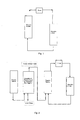
- The present invention introduces firstly the online dehydration technique during the enzymatic preparation of biodiesel from greases to remove online the water in the greases as raw materials or the water produced by esterification, so as to improve conversion rate of the reaction and quality of the product. The online dehydration process may be performed during the preparation of biodiesel by one-step enzymatic reaction (
Fig. 1 ), and may also be performed during partial enzymatic reactions of multi-step reactions (Fig. 2 ). Particularly, during the reaction, volatile gases in an enzyme reactor are drawn out from the top of the reactor into a low-temperature absorption tank containing short-chain alcohols. The moisture inside the reactor will be brought out by the volatile gases, and the moisture which is brought out is to be absorbed by low-temperature short-chain alcohols. The dehydrated gases are then pumped into the enzyme reactor via the bottom of the enzyme reactor by an air pump, and a gas-circulation is thus formed so that the moisture in the reaction system can be brought out and absorbed constantly. Such an online dehydration process is achieved primarily utilizing the good water absorption property of short-chain alcohols at low temperatures (0 °C - 20 °C). After online dehydration, the water content in the final reaction system can be controlled to be below 500 ppm, and the acid value of the biodiesel product is lower than 0.5 mg KOH/g oil. This online dehydration process using short-chain alcohols simplifies significantly the operation process, and has good economic and environmental benefits. -
-
Fig. 1 is a schematic diagram of single stage enzymatic conversion of renewable greases with online dehydration to prepare the biodiesel according to the present invention. -
Fig. 2 is a schematic diagram of multiple stage enzymatic conversion of renewable greases with online dehydration to prepare the biodiesel according to the present invention. - The following Examples are used to describe the present invention, but not to limit the scope of the present invention. Unless indicated otherwise, the technical means used in the Examples are the conventional means well known to the skilled in the art, and all raw materials as used are commercially available.
- 300 g palm oil and the methanol having a molar ratio of 1:1 of alcohol to oil were placed into an enzyme reactor, and the system contained 0.3% of water. An immobilized lipase derived from Candida Antarctica having 200 standard enzyme activities based on unit grease mass was added, with a temperature of reaction controlled at 45 °C. 150 g methanol with a water content of 400 ppm was placed into the short-chain alcohols absorption tank, with the temperature of the absorption tank controlled at 25 °C. During the reaction, the online dehydration as shown in
Fig. 1 was performed: volatile methanol gases in enzyme reactor were pumped out from the top of the reactor into a low-temperature absorption tank containing methanol; after the water brought out by the methanol gases was absorbed by the low-temperature absorption tank, the dehydrated dry methanol gases were pumped out and flowed back into the enzyme reactor from the bottom of the enzyme reactor by an air pump; so-formed gas-circulation can constantly bring the moisture inside the enzyme reactor out. The reaction was performed at 400 L/H of ventilatory volume for 12 hours, with the conversion rate of the reaction higher than 98%, the water content of the reaction liquid in the enzyme reactor being 500 ppm, and the acid value less than 0.5 mg KOH/g oil. - 300 g jatropha curcasl oil and the ethanol having a molar ratio of 1:2 of alcohol to oil were placed into the enzyme reactor, and the system contained 0.8% of water. An immobilized lipase derived from Aspergillus oryzae having 100 standard enzyme activities based on unit grease mass and an immobilized lipase derived from Candida Antarctica having 200 standard enzyme activities based on unit grease mass were added, with the temperature of reaction controlled at 45 °C. 150 g ethanol with a water content of 400 ppm was placed into the short-chain alcohols absorption tank, with the temperature controlled at 20 °C. During the reaction, the online dehydration as shown in
Fig. 1 was performed: ethanol gases at the top of the enzyme reactor were pumped out from the top of the reactor into a low-temperature tank; the water brought out by the gases was absorbed by the low-temperature absorption tank; the dehydrated dry ethanol gases were pumped into the enzyme reactor from the bottom of the enzyme reactor by an air pump. The so-formed gas-circulation can constantly bring the moisture inside the enzyme reactor out. The reaction was performed at 400 L/H of ventilatory volume for 12 hours, with the conversion rate of the reaction higher than 98%, the water content of the reaction liquid in the enzyme reactor being 500 ppm, and the acid value less than 0.5 mg KOH/g oil. - 300 g cottonseed oil and the methanol having a molar ratio of 1:1 of alcohol to oil were placed into the enzyme reactor, and the system contained 1 % of water. An immobilized lipase derived from Rhizomucor miehei having 400 standard enzyme activities based on unit grease mass and an immobilized lipase derived from Rhizopus Oryzae having 100 standard enzyme activities based on unit grease mass were added, with the temperature of reaction controlled at 40 °C. 400 g methanol with a water content of 400 ppm was placed into the short-chain alcohols absorption tank, with the temperature controlled at 15 °C. During the reaction, the online dehydration as shown in
Fig. 1 was performed: methanol gases at the top of the enzyme reactor were pumped out from the top of the reactor into the low-temperature absorption tank; the water brought out by the gases was absorbed by the low-temperature absorption tank; the dehydrated dry methanol gases were pumped into the enzyme reactor from the bottom of the enzyme reactor by an air pump. The so-formed gas-circulation can constantly remove the moisture inside the enzyme reaction system and promote the reaction. The reaction was performed at 300 L/H of ventilatory volume for 10 hours, with the conversion rate of the reaction higher than 98%, the water content of the reaction liquid in the enzyme reactor reaching 560 ppm, and the acid value less than 0.5 mg KOH/g oil. - 300 g jatropha curcasl oil and the ethanol having a molar ratio of 1:0.5 of alcohol to oil were placed into the enzyme reactor, and the system contained 0.3% of water. An immobilized lipase derived from Aspergillus oryzae having 100 standard enzyme activities based on unit grease mass and an immobilized lipase derived from Candida Antarctica having 200 standard enzyme activities based on unit grease mass were added, with the temperature of reaction controlled at 45 °C. 150 g ethanol was placed into the short-chain alcohols absorption tank, with the temperature controlled at 20 °C. During the reaction, the online dehydration as shown in
Fig. 1 was performed: ethanol gases at the top of the enzyme reactor were pumped out from the top of the reactor into the low-temperature absorption tank; the water in the gases was absorbed by the low-temperature ethanol; the dehydrated dry ethanol gases were pumped into the enzyme reactor from the bottom of the enzyme reactor by an air pump. The so-formed gas-circulation can constantly remove the moisture inside the reaction liquid, so as to effectively promote the esterification of the fatty acid with ethanol. The reaction was performed at 400 L/H of ventilatory volume for 12 hours, with the conversion rate of the reaction higher than 98%, the water content of the reaction liquid in the enzyme reactor reaching 560 ppm, and the acid value less than 0.5 mg KOH/g oil. - Methanol and soya bean oil with a molar ratio of 4.5:1 were placed into the enzyme reactor, and the system contained 3% of water. A liquid lipase derived from Candida Antarctica having 400 standard enzyme activities based on unit grease mass was added, with the temperature controlled at 40 °C. The methanol was added over 4 hours at a uniform speed. After 7 hours of reaction, the glycerin and crude biodiesel phase were separated by standing. 335 g crude biodiesel was placed into the enzyme reactor for reaction, and an immobilized lipase derived from Candida Antarctica having 200 standard enzyme activities based on unit grease mass was added, with the temperature of reaction controlled at 25 °C. 400 g methanol with a water content of 0.04% was placed into the short-chain alcohols absorption tank, with the temperature of the methanol controlled at 5 °C. During the reaction, the online dehydration as shown in
Fig. 2 was performed: methanol gases at the top of the enzyme reactor were pumped out from the top of the reactor into the low-temperature absorption tank; the water in the gases was absorbed by the low-temperature methanol; the dehydrated dry methanol gases were pumped into the enzyme reactor from the bottom of the enzyme reactor by an air pump, and fully in contact with the reaction liquid. The so-formed gas-circulation would constantly remove the moisture inside the reaction liquid, and promote the esterification of the fatty acid with methanol. The reaction was performed at 400 L/H of ventilatory volume for 3 hours, with the conversion rate of the reaction higher than 98%, the water content of the reaction liquid in the enzyme reactor reaching 123 ppm, and the acid value reaching 0.24 mg KOH/g oil. - Methanol and microalgae grease with a molar ratio of 4.5:1 were placed into the enzyme reactor, and the system contained 3% of water. A liquid lipase derived from Candida Antarctica having 400 standard enzyme activities based on unit grease mass was added, with the temperature controlled at 45 °C. The methanol was added over 4 hours at a uniform speed. After 7 hours of reaction, the glycerin and crude biodiesel phase were separated by centrifugation. 335 g crude biodiesel was placed into the enzyme reactor for reaction, and an immobilized lipase derived from Candida Antarctica having 200 standard enzyme activities based on unit grease mass was added, with the temperature of reaction controlled at 25 °C. 395 g methanol with a water content of 0.55% was placed into the short-chain alcohols absorption tank, with the temperature of the methanol controlled at 11 °C. During the reaction, the online dehydration as shown in
Fig. 2 was performed: methanol gases at the top of the enzyme reactor were pumped out from the top of the reactor into the low-temperature absorption tank; the water in the gases was absorbed by the low-temperature methanol; the dehydrated dry methanol gases were pumped into the enzyme reactor from the bottom of the enzyme reactor by an air pump. The so-formed gas-circulation would constantly remove the moisture inside the reaction liquid, so as to promote the esterification of the fatty acid with methanol. The reaction was performed at 400 L/H of ventilatory volume for 4 hours, with the conversion rate of the reaction higher than 98%, the water content of the reaction liquid in the enzyme reactor reaching 160 ppm, and the acid value reaching 0.26 mg KOH/g oil. - Methanol and yeast grease with a molar ratio of 5:1 were placed into the enzyme reactor, and the system contained 5% of water. A liquid lipase derived from Candida Antarctica having 400 standard enzyme activities based on unit grease mass was added, with the temperature controlled at 45 °C. The methanol was added over 4 hours at a uniform speed. After 8 hours of reaction, the glycerin and crude biodiesel phase were separated by centrifugation. 335 g crude biodiesel was placed into the enzyme reactor for reaction, and an immobilized lipase derived from Candida Antarctica having 200 standard enzyme activities based on unit grease mass was added, with the temperature controlled at 23 °C. 336 g methanol with a water content of 5.8% was placed into the short-chain alcohols absorption tank, with the temperature of the methanol controlled at 5 °C. During the reaction, the online dehydration as shown in
Fig. 2 was performed: methanol gases at the top of the enzyme reactor were pumped out from the top of the reactor into the low-temperature absorption tank; the water in the gases was absorbed by the low-temperature methanol; the dehydrated dry methanol gases were pumped into the enzyme reactor from the bottom of the enzyme reactor by an air pump. The so-formed gas-circulation would constantly remove the moisture inside the reaction liquid, so as to promote the esterification of the fatty acid with methanol. The reaction was performed at 400 L/H of ventilatory volume for 4 hours, with the conversion rate of the reaction higher than 98%, the water content of the reaction liquid in the enzyme reactor reaching 186 ppm, and the acid value reaching 0.46 mg KOH/g oil. - Propanol and fish oil with a molar ratio of 4.5:1 were placed into the enzyme reactor, and the system contained 10% of water. A liquid lipase derived from Candida Antarctica having 400 standard enzyme activities based on unit grease mass was added, with the temperature controlled at 45 °C. The propanol was added over 6 hours at a uniform speed. After 14 hours of reaction, the glycerin and crude biodiesel phase were separated by centrifugation. 340 g crude biodiesel was placed into the enzyme reactor for reaction, and an immobilized lipase derived from Candida Antarctica having 200 standard enzyme activities based on unit grease mass was added, with the temperature of reaction controlled at 30 °C. 400 g propanol with a water content of 500 ppm was placed into the short-chain alcohols absorption tank, with the temperature of the propanol controlled at 11 °C. During the reaction, the online dehydration as shown in
Fig. 2 was performed: propanol gases at the top of the enzyme reactor were pumped out from the top of the reactor into the low-temperature absorption tank; the water in the gases was absorbed by the low-temperature propanol; the dehydrated dry propanol gases were pumped into the enzyme reactor from the bottom of the enzyme reactor by an air pump. The so-formed gas-circulation would constantly bring the moisture inside the reaction system out, so as to promote the reaction. The reaction was performed at 400 L/H of ventilatory volume for 4 hours, with the conversion rate of the reaction higher than 98%, the water content of the reaction liquid in the enzyme reactor reaching 188 ppm, and the acid value reaching 0.32 mg KOH/g oil. - Butanol and beef tallow with a molar ratio of 4.5:1 were placed into the enzyme reactor, and the system contained 10% of water. A liquid lipase derived from Candida Antarctica having 400 standard enzyme activities based on unit grease mass was added, with the temperature controlled at 45 °C. The butanol was added over 6 hours at a uniform speed. After 15 hours of reaction, the glycerin and crude biodiesel phase were separated by centrifugation. 340 g crude biodiesel was placed into the enzyme reactor for reaction, and an immobilized lipase derived from Candida Antarctica having 200 standard enzyme activities based on unit grease mass was added, with the temperature of reaction controlled at 30 °C. 400 g butanol with a water content of 500 ppm was placed into the short-chain alcohols absorption tank, with the temperature of the butanol controlled at 11 °C. During the reaction, the online dehydration as shown in
Fig. 2 was performed: butanol gases at the top of the enzyme reactor were pumped out from the top of the reactor into the low-temperature absorption tank; the water in the gases was absorbed by the low-temperature butanol; the dehydrated dry butanol gases were pumped into the enzyme reactor from the bottom of the enzyme reactor by an air pump. The so-formed gas-circulation would constantly remove the moisture inside the reaction liquid, so as to promote the reaction. The reaction was performed at 400 L/H of ventilatory volume for 4 hours, with the conversion rate of the reaction higher than 98%, the water content of the reaction liquid in the enzyme reactor reaching 196 ppm, and the acid value reaching 0.30 mg KOH/g oil. - Methanol and acidified oil with a molar ratio of 4.5:1 were placed into the enzyme reactor, and the system contained 10% of water. A liquid lipase derived from Candida Antarctica having 400 standard enzyme activities based on unit grease mass was added, with the temperature controlled at 35 °C. The methanol was added over 6 hours at a uniform speed. After 8 hours of reaction, the glycerin and crude biodiesel phase were separated by standing. 340 g crude biodiesel was placed into the enzyme reactor for reaction, and an immobilized lipase derived from Candida Antarctica having 200 standard enzyme activities based on unit grease mass was added, with the temperature of reaction controlled at 25 °C. 400 g methanol with a water content of 4.1 % was placed into the short-chain alcohols absorption tank, with the temperature of the methanol controlled at 5 °C. During the reaction, the online dehydration as shown in
Fig. 2 was performed: methanol gases at the top of the enzyme reactor were pumped out from the top of the reactor into the low-temperature absorption tank; the water in the gases was absorbed by the low-temperature methanol; the dehydrated dry methanol gases were pumped into the enzyme reactor from the bottom of the enzyme reactor by an air pump. The so-formed gas-circulation would constantly remove the moisture inside the reaction liquid, so as to promote the reaction. The reaction was performed at 400 L/H of ventilatory volume for 4 hours, with the conversion rate of the reaction higher than 98%, the water content of the reaction liquid in the enzyme reactor reaching 120 ppm, and the acid value reaching 0.30 mg KOH/g oil. - Methanol and corn oil with a molar ratio of 4.5:1 were placed into the enzyme reactor, and the system contained 10% of water. A liquid lipase derived from Candida Antarctica having 400 standard enzyme activities based on unit grease mass was added, with the temperature controlled at 45°C. The methanol was added over 4 hours at a uniform speed. After 8 hours of reaction, the glycerin and crude biodiesel phase were separated by centrifugation. 340 g crude biodiesel was placed into the enzyme reactor for reaction, and an immobilized lipase derived from Candida Antarctica having 200 standard enzyme activities based on unit grease mass was added, with the temperature of reaction controlled at 25 °C. 400 g methanol with a water content of 4.55% was placed into the short-chain alcohols absorption tank, with the temperature of the methanol controlled at 5 °C. During the reaction, the online dehydration as shown in
Fig. 2 was performed: methanol gases at the top of the enzyme reactor were pumped out from the top of the reactor into the low-temperature absorption water tank; the water in the gases was absorbed by the low-temperature methanol; the dehydrated dry methanol gases were pumped into the enzyme reactor from the bottom of the enzyme reactor by an air pump. The so-formed gas-circulation would constantly remove the moisture inside the reaction liquid, so as to promote the reaction. The reaction was performed at 400 L/H of ventilatory volume for 4 hours, with the conversion rate of the reaction higher than 98%, the water content of the reaction liquid in the enzyme reactor reaching 146 ppm, and the acid value reaching 0.33 mg KOH/g oil. - Methanol and oleic acid with a molar ratio of 4.5:1 were placed into the enzyme reactor, and the system contained 7.5% of water. A liquid lipase derived from Candida Antarctica having 400 standard enzyme activities based on unit grease mass was added, with the temperature controlled at 45 °C. The methanol was added over 4 hours at a uniform speed. After 8 hours of reaction, the glycerin and crude biodiesel phase were separated by centrifugation. 340 g crude biodiesel was placed into the enzyme reactor for reaction, and an immobilized lipase derived from Candida Antarctica having 200 standard enzyme activities based on unit grease mass was added, with the temperature of reaction controlled at 25 °C. 400 g methanol with a water content of 500 ppm was placed into the short-chain alcohols absorption tank, with the temperature of the methanol controlled at 5 °C. During the reaction, the online dehydration as shown in
Fig. 2 was performed: methanol gases at the top of the enzyme reactor were pumped out from the top of the reactor into the low-temperature absorption tank; the water in the gases was absorbed by the low-temperature methanol; the dehydrated dry methanol gases were pumped into the enzyme reactor from the bottom of the enzyme reactor by an air pump. The so-formed gas-circulation would constantly remove the moisture inside the reaction liquid, so as to promote the reaction. The reaction was performed at 400 L/H of ventilatory volume for 4 hours, with the conversion rate of the reaction higher than 98%, the water content of the reaction liquid in the enzyme reactor reaching 156 ppm, and the acid value reaching 0.30 mg KOH/g oil. - Methanol and peanut oil with a molar ratio of 4.5:1 were placed into the enzyme reactor, and the system contained 5% of water. A liquid lipase derived from Candida Antarctica having 400 standard enzyme activities based on unit grease mass was added, with the temperature controlled at 45 °C. The methanol was added over 4 hours at a uniform speed. After 8 hours of reaction, the glycerin and crude biodiesel phase were separated by centrifugation. 340 g crude biodiesel was placed into the enzyme reactor for reaction, and an immobilized lipase derived from Candida Antarctica having 200 standard enzyme activities based on unit grease mass was added, with the temperature of reaction controlled at 25 °C. 400 g methanol with a water content of 500 ppm was placed into the short-chain alcohols absorption tank, with the temperature of the methanol controlled at 15 °C. During the reaction, the online dehydration as shown in
Fig. 2 was performed: methanol gases at the top of the enzyme reactor were pumped out from the top of the reactor into the low-temperature water absorbing tank; the water in the gases was absorbed by the low-temperature methanol; the dehydrated dry methanol gases were pumped into the enzyme reactor from the bottom of the enzyme reactor by an air pump. The so-formed gas-circulation would constantly remove the moisture inside the reaction liquid, so as to promote the esterification of the fatty acid with methanol. The reaction was performed at 400 L/H of ventilatory volume for 4 hours, with the conversion rate of the reaction higher than 98%, the water content of the reaction liquid in the enzyme reactor reaching 213 ppm, and the acid value reaching 0.28 mg KOH/g oil. - Methanol and shinyleaf yellowhorn oil with a molar ratio of 4.5:1 were placed into the enzyme reactor, and the system contained 5% of water. A liquid lipase derived from Candida Antarctica having 400 standard enzyme activities based on unit grease mass was added, with the temperature controlled at 45 °C. The methanol was added over 4 hours at a uniform speed. After 8 hours of reaction, the glycerin and crude biodiesel phase were separated by centrifugation. 340 g crude biodiesel was placed into the enzyme reactor for reaction, and an immobilized lipase derived from Candida Antarctica having 200 standard enzyme activities based on unit grease mass was added, with the temperature of reaction controlled at 25°C. 400 g methanol with a water content of 500 ppm was placed into the short-chain alcohols absorption tank, with the temperature of the methanol controlled at 15 °C. During the reaction, the online dehydration as shown in
Fig. 2 was performed: methanol gases at the top of the enzyme reactor were pumped out from the top of the reactor into the low-temperature absorption tank; the water in the gases was absorbed by the low-temperature methanol; the dehydrated dry methanol gases were pumped into the enzyme reactor from the bottom of the enzyme reactor by an air pump. The so-formed gas-circulation would constantly remove the moisture inside the reaction liquid, so as to promote the reaction. The reaction was performed at 500 L/H of ventilatory volume for 4 hours, with the conversion rate of the reaction higher than 98%, the water content of the reaction liquid in the enzyme reactor reaching 231 ppm, and the acid value reaching 0.27 mg KOH/g oil. - Methanol and rice bran oil with a molar ratio of 4.5:1 were placed into the enzyme reactor, and the system contained 5% of water. A liquid lipase derived from Candida Antarctica having 400 standard enzyme activities based on unit grease mass was added, with the temperature controlled at 45 °C. The methanol was added over 4 hours at a uniform speed. After 8 hours of reaction, the glycerin and crude biodiesel phase were separated by centrifugation. 340 g crude biodiesel was placed into the enzyme reactor for reaction, and an immobilized lipase derived from Candida Antarctica having 200 standard enzyme activities based on unit grease mass was added, with the temperature of reaction controlled at 25 °C. 400 g methanol with a water content of 500 ppm was placed into the short-chain alcohols absorption tank, with the temperature of the methanol controlled at 15 °C. During the reaction, the online dehydration as shown in
Fig. 2 was performed: methanol gases at the top of the enzyme reactor were pumped out from the top of the reactor into the low-temperature absorption tank; the water in the gases was absorbed by the low-temperature methanol; the dehydrated dry methanol gases were pumped into the enzyme reactor from the bottom of the enzyme reactor by an air pump to form a gas-circulation. The so-formed gas-circulation would constantly remove the moisture inside the reaction liquid, so as to promote the reaction. The reaction was performed at 400 L/H of ventilatory volume for 4 hours, with the conversion rate of the reaction higher than 98%, the water content of the reaction liquid in the enzyme reactor reaching 193 ppm, and the acid value reaching 0.26 mg KOH/g oil. - Methanol and castor oil with a molar ratio of 4.5:1 were placed into the enzyme reactor, and the system contained 5% of water. A liquid lipase derived from Candida Antarctica having 300 standard enzyme activities based on unit grease mass was added, with the temperature controlled at 45 °C. The methanol was added over 5 hours at a uniform speed. After 8 hours of reaction, the glycerin and crude biodiesel phase were separated by centrifugation. 340 g crude biodiesel was placed into the enzyme reactor for reaction, and an immobilized lipase derived from Candida Antarctica having 200 standard enzyme activities based on unit grease mass was added, with the temperature of reaction controlled at 25 °C. 400 g methanol with a water content of 500 ppm was placed into the short-chain alcohols absorption tank, with the temperature of the methanol controlled at 11 °C. During the reaction, the online dehydration as shown in
Fig. 2 was performed: methanol gases at the top of the enzyme reactor were pumped out from the top of the reactor into the low-temperature absorption tank; the water in the gases was absorbed by the low-temperature methanol; the dehydrated dry methanol gases were pumped into the enzyme reactor from the bottom of the enzyme reactor by an air pump to form a gas-circulation, constantly removing the moisture inside the reaction liquid so as to promote the reaction. The reaction was performed at 400 L/H of ventilatory volume for 4 hours, with the conversion rate of the reaction higher than 98%, the water content of the reaction liquid in the enzyme reactor reaching 163 ppm, and the acid value reaching 0.42 mg KOH/g oil. - Methanol and curcas oil with a molar ratio of 4.5:1 were placed into the enzyme reactor, and the system contained 10% of water. A liquid lipase derived from Candida Antarctica having 200 standard enzyme activities based on unit grease mass was added, with the temperature controlled at 45 °C. The methanol was added over 6 hours at a uniform speed. After 8 hours of reaction, the glycerin and crude biodiesel phase were separated by centrifugation. 340 g crude biodiesel was placed into the enzyme reactor for reaction, and an immobilized lipase derived from Candida Antarctica having 400 standard enzyme activities based on unit grease mass was added, with the temperature of reaction controlled at 25 °C. 400 g methanol with a water content of 500 ppm was placed into the short-chain alcohols absorption tank, with the temperature of the methanol controlled at 11 °C. During the reaction, the online dehydration as shown in
Fig. 2 was performed: methanol gases at the top of the enzyme reactor were pumped out from the top of the reactor into the low-temperature absorption tank; the water in the gases was absorbed by the low-temperature methanol; the dehydrated dry methanol gases were pumped into the enzyme reactor from the bottom of the enzyme reactor by an air pump to form a gas-circulation, constantly removing the moisture inside the reaction liquid so as to promote the reaction. The reaction was performed at 400 L/H of ventilatory volume for 2.5 hours, with the conversion rate of the reaction higher than 98%, the water content of the reaction liquid in the enzyme reactor reaching 230 ppm, and the acid value reaching 0.22 mg KOH/g oil. - Methanol and gutter oil with a molar ratio of 4.5:1 were placed into the enzyme reactor, and the system contained 10% of water. A liquid lipase derived from Candida Antarctica having 200 standard enzyme activities based on unit grease mass was added, with the temperature controlled at 45 °C. The methanol was added over 6 hours at a uniform speed. After 8 hours of reaction, the glycerin and crude biodiesel phase were separated by centrifugation. 340 g crude biodiesel was placed into the enzyme reactor for reaction, and an immobilized lipase derived from Candida Antarctica having 400 standard enzyme activities based on unit grease mass was added, with the temperature of reaction controlled at 25 °C. 400 g methanol with a water content of 500 ppm was placed into the short-chain alcohols absorption tank, with the temperature of the methanol controlled at 5 °C. During the reaction, the online dehydration as shown in
Fig. 2 was performed: methanol gases at the top of the enzyme reactor were pumped out from the top of the reactor into the low-temperature absorption tank; the water in the gases was absorbed by the low-temperature methanol; the dehydrated dry methanol gases were pumped into the enzyme reactor from the bottom of the enzyme reactor by an air pump to form a gas-circulation, constantly removing the moisture inside the reaction liquid so as to promote the reaction. The reaction was performed at 400 L/H of ventilatory volume for 3 hours, with the conversion rate of the reaction higher than 98%, the water content of the reaction liquid in the enzyme reactor reaching 170 ppm, and the acid value reaching 0.33 mg KOH/g oil. - Methanol and cottonseed oil with a molar ratio of 4.5:1 were placed into the enzyme reactor, and the system contained 3% of water. A liquid lipase derived from Candida Antarctica having 200 standard enzyme activities based on unit grease mass was added, with the temperature controlled at 45 °C. The methanol was added over 6 hours at a uniform speed. After 8 hours of reaction, the glycerin and crude biodiesel phase were separated by centrifugation. 340 g crude biodiesel was placed into the enzyme reactor for reaction, and an immobilized lipase derived from Candida Antarctica having 400 standard enzyme activities based on unit grease mass was added, with the temperature of reaction controlled at 25 °C. 400 g methanol with a water content of 500 ppm and 40 g metal mesh packing were placed into the short-chain alcohols water absorbing tower, with the temperature of the methanol controlled at 11 °C. During the reaction, the online dehydration as shown in
Fig. 2 was performed: methanol gases at the top of the enzyme reactor were pumped out from the top of the reactor into the low-temperature absorption tank; the water in the gases was absorbed by the low-temperature methanol; the dehydrated dry methanol gases were pumped into the enzyme reactor from the bottom of the enzyme reactor by an air pump. The so-formed gas-circulation would constantly remove the moisture inside the reaction liquid. The reaction was performed at 400 L/H of ventilatory volume for 2.5 hours, with the conversion rate of the reaction higher than 98%, the water content of the reaction liquid in the enzyme reactor reaching 150 ppm, and the acid value reaching 0.21 mg KOH/g oil. - While general descriptions and specific embodiments have been used above to describe the present invention in detail, it is apparent to the skilled in the art that some modifications or improvements may be made to them based on the present invention. Therefore, these modifications or improvements as made without departing from the spirit of the present invention all belong to the scope claimed by the present invention.
- The present invention has advantages in that:
- during the enzymatic preparation of biodiesel from greases by transesterification, one stage enzyme reactor or partial enzyme reactors in a multiple stage enzyme reactors is connected to a low-temperature absorption tank containing short-chain alcohols; volatile gases in an enzyme reactor are drawn out from the top of the reactor into the above low-temperature absorption tank; the dehydrated gases were pumped back into the enzyme reactor via the bottom of the enzyme reactor by an air pump; the so-formed gas-circulation enables the moisture in the enzyme reaction system to be brought out and absorbed constantly so as to achieve the purpose for increasing the conversion rate of the reaction and reducing the acid value of the product. The temperature of the absorption tank containing short-chain alcohols is controlled in the range from 0 °C to 25 °C. After 3 - 12 hours of enzymatic reaction, the conversion rate from greases as raw materials to the biodiesel is greater than 98%, and the acid value of biodiesel as the final product is less than 0.5 mg KOH/g oil.
Claims (10)
- A method for improving the yield of enzymatic preparation of biodiesel from greases, characterized in that: during enzymatic reaction of short-chain alcohols with greases to prepare biodiesel, online dehydration steps are introduced, leading the volatile gases in the enzyme reactor to enter into the low-temperature absorption tank, and the dehydrated gases flow back into the enzyme reactor; the formation of gas-circulation can constantly bring the moisture inside the enzyme reactor out, so as to improve the conversion rate of the reaction.
- The method according to claim 1, characterized in that: the temperature of reaction is 40 °C to 45 °C in the enzyme reactor.
- The method according to claim 1, characterized in that: the low-temperature absorption tank is a short-chain alcohols absorption tank at 0 °C to 25 °C.
- The method according to claim 1, characterized in that: the enzyme reactor is one stage enzyme reactor or multiple stage enzyme reactor.
- The method according to claim 1, characterized in that: the enzyme used in the enzymatic reaction of short-chain alcohols with greases to prepare biodiesel is a lipase derived from Candida antarctica, Thermomyces lanuginosus, Aspergillus niger, Aspergillus oryzae, Rhizomucor miehei, or Rhizopus Oryzae.
- The method according to claim 1, characterized in that: the short-chain alcohols are one or more of methanol, ethanol, propanol, or butanol.
- The method according to claim 1, characterized in that: the greases are biological greases.
- The method according to claim 7, characterized in that: the biological greases are one or more of vegetable greases, animal greases or microbial greases.
- The method according to claim 8, characterized in that: the vegetable greases are one or more of palm oil, soya bean oil, rape-seed oil, curcas oil, jatropha curcasl oil, corn oil, castor oil, peanut oil, cottonseed oil, rice bran oil, or shinyleaf yellowhorn oil; the animal greases are one or more of fish oil, beef tallow, lard, or mutton tallow; and the microbial greases are yeast grease, or microalgae grease.
- The method according to claim 1, characterized in that: the greases are waste edible oils or tailings from the refining of greases.
Applications Claiming Priority (2)
| Application Number | Priority Date | Filing Date | Title |
|---|---|---|---|
| CN201210585171.6A CN103131735B (en) | 2012-12-28 | 2012-12-28 | Method of improving enzymatic oil and fat preparation biodiesel productivity |
| PCT/CN2014/000131 WO2014101902A1 (en) | 2012-12-28 | 2014-01-28 | Method for improving yield of enzymatic preparation of biodiesel from greases |
Publications (3)
| Publication Number | Publication Date |
|---|---|
| EP2940142A1 true EP2940142A1 (en) | 2015-11-04 |
| EP2940142A4 EP2940142A4 (en) | 2016-08-17 |
| EP2940142B1 EP2940142B1 (en) | 2020-12-09 |
Family
ID=48492185
Family Applications (1)
| Application Number | Title | Priority Date | Filing Date |
|---|---|---|---|
| EP14733064.1A Active EP2940142B1 (en) | 2012-12-28 | 2014-01-28 | Method for improving yield of enzymatic preparation of biodiesel from greases |
Country Status (7)
| Country | Link |
|---|---|
| US (1) | US11034984B2 (en) |
| EP (1) | EP2940142B1 (en) |
| CN (1) | CN103131735B (en) |
| AU (1) | AU2014203729B2 (en) |
| MY (1) | MY169120A (en) |
| SG (1) | SG11201505171PA (en) |
| WO (1) | WO2014101902A1 (en) |
Families Citing this family (6)
| Publication number | Priority date | Publication date | Assignee | Title |
|---|---|---|---|---|
| CN105420298B (en) * | 2014-09-18 | 2019-03-01 | 清华大学 | On-line dehydration and acid reduction in the process of enzymatic oil preparation of biodiesel |
| CN106701849A (en) * | 2015-07-13 | 2017-05-24 | 清华大学 | Enrichment method of polyunsaturated fatty acids |
| CN105505587A (en) * | 2016-01-26 | 2016-04-20 | 北京信汇生物能源科技有限公司 | Method and system for enzymatic preparation of biodiesel |
| CN113502280B (en) * | 2021-03-04 | 2024-01-09 | 扬州大学 | Hydrophobic polyion liquid immobilized lipase catalyst, preparation method and application thereof |
| CN115323010B (en) * | 2021-04-26 | 2026-02-10 | 广东清大创新研究院有限公司 | A process for co-producing L-ascorbate palmitate and biodiesel |
| CN114657062A (en) * | 2022-04-25 | 2022-06-24 | 广州市朗坤环境科技有限公司 | Reactor and method for preparing biodiesel by lipase catalysis for deacidification |
Family Cites Families (5)
| Publication number | Priority date | Publication date | Assignee | Title |
|---|---|---|---|---|
| US7790429B2 (en) | 2007-11-28 | 2010-09-07 | Transbiodiesel Ltd. | Robust multi-enzyme preparation for the synthesis of fatty acid alkyl esters |
| CN101358216B (en) * | 2008-08-06 | 2011-11-09 | 清华大学 | Bio diesel oil preparation technique using enzyme method membrane on-line dehydration |
| CN102021207B (en) | 2010-11-04 | 2013-08-14 | 清华大学 | On-line dehydration process for preparing biodiesel from renewable grease through catalysis of lipase |
| EP2670854A1 (en) * | 2011-02-04 | 2013-12-11 | Novozymes A/S | Fatty acid esterification process |
| CN102676304B (en) * | 2011-03-15 | 2013-06-19 | 清华大学 | Preparation method for biodiesel fuel |
-
2012
- 2012-12-28 CN CN201210585171.6A patent/CN103131735B/en active Active
-
2014
- 2014-01-28 SG SG11201505171PA patent/SG11201505171PA/en unknown
- 2014-01-28 EP EP14733064.1A patent/EP2940142B1/en active Active
- 2014-01-28 AU AU2014203729A patent/AU2014203729B2/en active Active
- 2014-01-28 WO PCT/CN2014/000131 patent/WO2014101902A1/en not_active Ceased
- 2014-01-28 US US14/758,123 patent/US11034984B2/en active Active
- 2014-01-28 MY MYPI2015001673A patent/MY169120A/en unknown
Also Published As
| Publication number | Publication date |
|---|---|
| CN103131735A (en) | 2013-06-05 |
| EP2940142B1 (en) | 2020-12-09 |
| AU2014203729A1 (en) | 2015-08-13 |
| US20150353969A1 (en) | 2015-12-10 |
| WO2014101902A1 (en) | 2014-07-03 |
| WO2014101902A8 (en) | 2015-08-13 |
| SG11201505171PA (en) | 2015-08-28 |
| CN103131735B (en) | 2014-09-03 |
| MY169120A (en) | 2019-02-18 |
| US11034984B2 (en) | 2021-06-15 |
| AU2014203729B2 (en) | 2017-09-14 |
| EP2940142A4 (en) | 2016-08-17 |
Similar Documents
| Publication | Publication Date | Title |
|---|---|---|
| Yaakob et al. | Overview of the production of biodiesel from waste cooking oil | |
| US10246644B2 (en) | Method for preparing biodiesel | |
| EP2636747B1 (en) | Process for preparing biodiesel with lipase and separate online dehydration | |
| US11034984B2 (en) | Method for improving yield of enzymatic preparation of biodiesel from greases | |
| Guan et al. | Biodiesel from transesterification at low temperature by AlCl3 catalysis in ethanol and carbon dioxide as cosolvent: Process, mechanism and application | |
| CN101619329A (en) | Technical method for preparing biodiesel by biocatalysis one-pot method | |
| CN105420298B (en) | On-line dehydration and acid reduction in the process of enzymatic oil preparation of biodiesel | |
| Gharabaghi et al. | Biofuels: bioethanol, biodiesel, biogas, biohydrogen from plants and microalgae | |
| CN105001922B (en) | The preparation method of biodiesel | |
| Zheng et al. | Enzymatic synthesis of fatty acid methyl esters from crude rice bran oil with immobilized Candida sp. 99–125 | |
| Topare et al. | Biodiesel from algae oil as an alternative fuel for diesel engine | |
| CN100523131C (en) | Esterification reaction technique of preparing biodiesel by waste oil | |
| CN105950674A (en) | Method for improving quality of biodiesel | |
| CN114989897B (en) | Low acid value biodiesel and preparation method thereof | |
| CN115678928A (en) | Method for preparing biodiesel by enzyme method | |
| Paone et al. | Production of biodiesel from biomass | |
| CN107034243A (en) | The preparation technology of fatty acid short-chain ester | |
| CN101250424A (en) | Enzymatic process to increase biodiesel yield by adding short-chain alcohols in organic medium | |
| Mittelbach | Process technologies for biodiesel production | |
| Kai et al. | Optimization of reaction conditions of two-step batch operation for biodiesel fuel production using KOH catalyst | |
| CN108103116A (en) | Process for preparing biodiesel by enzymatic grease | |
| CN101392182B (en) | A kind of process method of producing biodiesel from Pistacia chinensis oil | |
| CN110607200A (en) | Method for preparing biodiesel by extracting and enzymatically treating microalgae | |
| Sylvester et al. | Catalytic Applications in Biodiesel Production: A Review | |
| Anisha et al. | Strategies for the Transformation of Waste Vegetable Oils into Biofuels |
Legal Events
| Date | Code | Title | Description |
|---|---|---|---|
| PUAI | Public reference made under article 153(3) epc to a published international application that has entered the european phase |
Free format text: ORIGINAL CODE: 0009012 |
|
| 17P | Request for examination filed |
Effective date: 20150727 |
|
| AK | Designated contracting states |
Kind code of ref document: A1 Designated state(s): AL AT BE BG CH CY CZ DE DK EE ES FI FR GB GR HR HU IE IS IT LI LT LU LV MC MK MT NL NO PL PT RO RS SE SI SK SM TR |
|
| AX | Request for extension of the european patent |
Extension state: BA ME |
|
| XX | Miscellaneous (additional remarks) |
Free format text: RESTORATION REQUEST ACCEPTED UNDER DUE CARE CRITERION DURING INTERNATIONAL PHASE, NO REVIEW NEEDED. |
|
| DAX | Request for extension of the european patent (deleted) | ||
| A4 | Supplementary search report drawn up and despatched |
Effective date: 20160715 |
|
| RIC1 | Information provided on ipc code assigned before grant |
Ipc: C12P 7/64 20060101AFI20160712BHEP |
|
| STAA | Information on the status of an ep patent application or granted ep patent |
Free format text: STATUS: EXAMINATION IS IN PROGRESS |
|
| 17Q | First examination report despatched |
Effective date: 20171219 |
|
| GRAP | Despatch of communication of intention to grant a patent |
Free format text: ORIGINAL CODE: EPIDOSNIGR1 |
|
| STAA | Information on the status of an ep patent application or granted ep patent |
Free format text: STATUS: GRANT OF PATENT IS INTENDED |
|
| INTG | Intention to grant announced |
Effective date: 20200625 |
|
| GRAS | Grant fee paid |
Free format text: ORIGINAL CODE: EPIDOSNIGR3 |
|
| GRAA | (expected) grant |
Free format text: ORIGINAL CODE: 0009210 |
|
| STAA | Information on the status of an ep patent application or granted ep patent |
Free format text: STATUS: THE PATENT HAS BEEN GRANTED |
|
| AK | Designated contracting states |
Kind code of ref document: B1 Designated state(s): AL AT BE BG CH CY CZ DE DK EE ES FI FR GB GR HR HU IE IS IT LI LT LU LV MC MK MT NL NO PL PT RO RS SE SI SK SM TR |
|
| REG | Reference to a national code |
Ref country code: GB Ref legal event code: FG4D |
|
| XX | Miscellaneous (additional remarks) |
Free format text: RESTORATION REQUEST ACCEPTED UNDER DUE CARE CRITERION DURING INTERNATIONAL PHASE, NO REVIEW NEEDED. |
|
| REG | Reference to a national code |
Ref country code: AT Ref legal event code: REF Ref document number: 1343503 Country of ref document: AT Kind code of ref document: T Effective date: 20201215 Ref country code: CH Ref legal event code: EP |
|
| REG | Reference to a national code |
Ref country code: DE Ref legal event code: R096 Ref document number: 602014073159 Country of ref document: DE |
|
| REG | Reference to a national code |
Ref country code: IE Ref legal event code: FG4D |
|
| PG25 | Lapsed in a contracting state [announced via postgrant information from national office to epo] |
Ref country code: NO Free format text: LAPSE BECAUSE OF FAILURE TO SUBMIT A TRANSLATION OF THE DESCRIPTION OR TO PAY THE FEE WITHIN THE PRESCRIBED TIME-LIMIT Effective date: 20210309 Ref country code: RS Free format text: LAPSE BECAUSE OF FAILURE TO SUBMIT A TRANSLATION OF THE DESCRIPTION OR TO PAY THE FEE WITHIN THE PRESCRIBED TIME-LIMIT Effective date: 20201209 Ref country code: FI Free format text: LAPSE BECAUSE OF FAILURE TO SUBMIT A TRANSLATION OF THE DESCRIPTION OR TO PAY THE FEE WITHIN THE PRESCRIBED TIME-LIMIT Effective date: 20201209 Ref country code: GR Free format text: LAPSE BECAUSE OF FAILURE TO SUBMIT A TRANSLATION OF THE DESCRIPTION OR TO PAY THE FEE WITHIN THE PRESCRIBED TIME-LIMIT Effective date: 20210310 |
|
| REG | Reference to a national code |
Ref country code: AT Ref legal event code: MK05 Ref document number: 1343503 Country of ref document: AT Kind code of ref document: T Effective date: 20201209 |
|
| PG25 | Lapsed in a contracting state [announced via postgrant information from national office to epo] |
Ref country code: BG Free format text: LAPSE BECAUSE OF FAILURE TO SUBMIT A TRANSLATION OF THE DESCRIPTION OR TO PAY THE FEE WITHIN THE PRESCRIBED TIME-LIMIT Effective date: 20210309 Ref country code: LV Free format text: LAPSE BECAUSE OF FAILURE TO SUBMIT A TRANSLATION OF THE DESCRIPTION OR TO PAY THE FEE WITHIN THE PRESCRIBED TIME-LIMIT Effective date: 20201209 Ref country code: SE Free format text: LAPSE BECAUSE OF FAILURE TO SUBMIT A TRANSLATION OF THE DESCRIPTION OR TO PAY THE FEE WITHIN THE PRESCRIBED TIME-LIMIT Effective date: 20201209 |
|
| REG | Reference to a national code |
Ref country code: NL Ref legal event code: MP Effective date: 20201209 |
|
| PG25 | Lapsed in a contracting state [announced via postgrant information from national office to epo] |
Ref country code: HR Free format text: LAPSE BECAUSE OF FAILURE TO SUBMIT A TRANSLATION OF THE DESCRIPTION OR TO PAY THE FEE WITHIN THE PRESCRIBED TIME-LIMIT Effective date: 20201209 Ref country code: NL Free format text: LAPSE BECAUSE OF FAILURE TO SUBMIT A TRANSLATION OF THE DESCRIPTION OR TO PAY THE FEE WITHIN THE PRESCRIBED TIME-LIMIT Effective date: 20201209 |
|
| REG | Reference to a national code |
Ref country code: LT Ref legal event code: MG9D |
|
| PG25 | Lapsed in a contracting state [announced via postgrant information from national office to epo] |
Ref country code: RO Free format text: LAPSE BECAUSE OF FAILURE TO SUBMIT A TRANSLATION OF THE DESCRIPTION OR TO PAY THE FEE WITHIN THE PRESCRIBED TIME-LIMIT Effective date: 20201209 Ref country code: PT Free format text: LAPSE BECAUSE OF FAILURE TO SUBMIT A TRANSLATION OF THE DESCRIPTION OR TO PAY THE FEE WITHIN THE PRESCRIBED TIME-LIMIT Effective date: 20210409 Ref country code: SK Free format text: LAPSE BECAUSE OF FAILURE TO SUBMIT A TRANSLATION OF THE DESCRIPTION OR TO PAY THE FEE WITHIN THE PRESCRIBED TIME-LIMIT Effective date: 20201209 Ref country code: LT Free format text: LAPSE BECAUSE OF FAILURE TO SUBMIT A TRANSLATION OF THE DESCRIPTION OR TO PAY THE FEE WITHIN THE PRESCRIBED TIME-LIMIT Effective date: 20201209 Ref country code: SM Free format text: LAPSE BECAUSE OF FAILURE TO SUBMIT A TRANSLATION OF THE DESCRIPTION OR TO PAY THE FEE WITHIN THE PRESCRIBED TIME-LIMIT Effective date: 20201209 Ref country code: EE Free format text: LAPSE BECAUSE OF FAILURE TO SUBMIT A TRANSLATION OF THE DESCRIPTION OR TO PAY THE FEE WITHIN THE PRESCRIBED TIME-LIMIT Effective date: 20201209 Ref country code: CZ Free format text: LAPSE BECAUSE OF FAILURE TO SUBMIT A TRANSLATION OF THE DESCRIPTION OR TO PAY THE FEE WITHIN THE PRESCRIBED TIME-LIMIT Effective date: 20201209 |
|
| PG25 | Lapsed in a contracting state [announced via postgrant information from national office to epo] |
Ref country code: AT Free format text: LAPSE BECAUSE OF FAILURE TO SUBMIT A TRANSLATION OF THE DESCRIPTION OR TO PAY THE FEE WITHIN THE PRESCRIBED TIME-LIMIT Effective date: 20201209 Ref country code: PL Free format text: LAPSE BECAUSE OF FAILURE TO SUBMIT A TRANSLATION OF THE DESCRIPTION OR TO PAY THE FEE WITHIN THE PRESCRIBED TIME-LIMIT Effective date: 20201209 |
|
| REG | Reference to a national code |
Ref country code: CH Ref legal event code: PL |
|
| REG | Reference to a national code |
Ref country code: DE Ref legal event code: R097 Ref document number: 602014073159 Country of ref document: DE |
|
| PG25 | Lapsed in a contracting state [announced via postgrant information from national office to epo] |
Ref country code: LU Free format text: LAPSE BECAUSE OF NON-PAYMENT OF DUE FEES Effective date: 20210128 Ref country code: MC Free format text: LAPSE BECAUSE OF FAILURE TO SUBMIT A TRANSLATION OF THE DESCRIPTION OR TO PAY THE FEE WITHIN THE PRESCRIBED TIME-LIMIT Effective date: 20201209 Ref country code: IS Free format text: LAPSE BECAUSE OF FAILURE TO SUBMIT A TRANSLATION OF THE DESCRIPTION OR TO PAY THE FEE WITHIN THE PRESCRIBED TIME-LIMIT Effective date: 20210409 |
|
| REG | Reference to a national code |
Ref country code: BE Ref legal event code: MM Effective date: 20210131 |
|
| PLBE | No opposition filed within time limit |
Free format text: ORIGINAL CODE: 0009261 |
|
| STAA | Information on the status of an ep patent application or granted ep patent |
Free format text: STATUS: NO OPPOSITION FILED WITHIN TIME LIMIT |
|
| PG25 | Lapsed in a contracting state [announced via postgrant information from national office to epo] |
Ref country code: AL Free format text: LAPSE BECAUSE OF FAILURE TO SUBMIT A TRANSLATION OF THE DESCRIPTION OR TO PAY THE FEE WITHIN THE PRESCRIBED TIME-LIMIT Effective date: 20201209 |
|
| 26N | No opposition filed |
Effective date: 20210910 |
|
| PG25 | Lapsed in a contracting state [announced via postgrant information from national office to epo] |
Ref country code: DK Free format text: LAPSE BECAUSE OF FAILURE TO SUBMIT A TRANSLATION OF THE DESCRIPTION OR TO PAY THE FEE WITHIN THE PRESCRIBED TIME-LIMIT Effective date: 20201209 Ref country code: CH Free format text: LAPSE BECAUSE OF NON-PAYMENT OF DUE FEES Effective date: 20210131 Ref country code: ES Free format text: LAPSE BECAUSE OF FAILURE TO SUBMIT A TRANSLATION OF THE DESCRIPTION OR TO PAY THE FEE WITHIN THE PRESCRIBED TIME-LIMIT Effective date: 20201209 Ref country code: SI Free format text: LAPSE BECAUSE OF FAILURE TO SUBMIT A TRANSLATION OF THE DESCRIPTION OR TO PAY THE FEE WITHIN THE PRESCRIBED TIME-LIMIT Effective date: 20201209 Ref country code: LI Free format text: LAPSE BECAUSE OF NON-PAYMENT OF DUE FEES Effective date: 20210131 |
|
| PG25 | Lapsed in a contracting state [announced via postgrant information from national office to epo] |
Ref country code: IE Free format text: LAPSE BECAUSE OF NON-PAYMENT OF DUE FEES Effective date: 20210128 |
|
| PG25 | Lapsed in a contracting state [announced via postgrant information from national office to epo] |
Ref country code: IS Free format text: LAPSE BECAUSE OF FAILURE TO SUBMIT A TRANSLATION OF THE DESCRIPTION OR TO PAY THE FEE WITHIN THE PRESCRIBED TIME-LIMIT Effective date: 20210409 |
|
| PG25 | Lapsed in a contracting state [announced via postgrant information from national office to epo] |
Ref country code: BE Free format text: LAPSE BECAUSE OF NON-PAYMENT OF DUE FEES Effective date: 20210131 |
|
| PG25 | Lapsed in a contracting state [announced via postgrant information from national office to epo] |
Ref country code: HU Free format text: LAPSE BECAUSE OF FAILURE TO SUBMIT A TRANSLATION OF THE DESCRIPTION OR TO PAY THE FEE WITHIN THE PRESCRIBED TIME-LIMIT; INVALID AB INITIO Effective date: 20140128 |
|
| PG25 | Lapsed in a contracting state [announced via postgrant information from national office to epo] |
Ref country code: CY Free format text: LAPSE BECAUSE OF FAILURE TO SUBMIT A TRANSLATION OF THE DESCRIPTION OR TO PAY THE FEE WITHIN THE PRESCRIBED TIME-LIMIT Effective date: 20201209 |
|
| PG25 | Lapsed in a contracting state [announced via postgrant information from national office to epo] |
Ref country code: MK Free format text: LAPSE BECAUSE OF FAILURE TO SUBMIT A TRANSLATION OF THE DESCRIPTION OR TO PAY THE FEE WITHIN THE PRESCRIBED TIME-LIMIT Effective date: 20201209 |
|
| PG25 | Lapsed in a contracting state [announced via postgrant information from national office to epo] |
Ref country code: MT Free format text: LAPSE BECAUSE OF FAILURE TO SUBMIT A TRANSLATION OF THE DESCRIPTION OR TO PAY THE FEE WITHIN THE PRESCRIBED TIME-LIMIT Effective date: 20201209 |
|
| PG25 | Lapsed in a contracting state [announced via postgrant information from national office to epo] |
Ref country code: TR Free format text: LAPSE BECAUSE OF FAILURE TO SUBMIT A TRANSLATION OF THE DESCRIPTION OR TO PAY THE FEE WITHIN THE PRESCRIBED TIME-LIMIT Effective date: 20201209 |
|
| PGFP | Annual fee paid to national office [announced via postgrant information from national office to epo] |
Ref country code: GB Payment date: 20260120 Year of fee payment: 13 |
|
| PGFP | Annual fee paid to national office [announced via postgrant information from national office to epo] |
Ref country code: DE Payment date: 20260128 Year of fee payment: 13 |
|
| PGFP | Annual fee paid to national office [announced via postgrant information from national office to epo] |
Ref country code: IT Payment date: 20260126 Year of fee payment: 13 |
|
| PGFP | Annual fee paid to national office [announced via postgrant information from national office to epo] |
Ref country code: FR Payment date: 20260119 Year of fee payment: 13 |