EP2939366B1 - Computerimplementiertes verfahren und system zum bereitstellen eines netzwerkdienstes und computerprogrammprodukt, das zum durchführen des verfahrens ausgelegt ist - Google Patents
Computerimplementiertes verfahren und system zum bereitstellen eines netzwerkdienstes und computerprogrammprodukt, das zum durchführen des verfahrens ausgelegt ist Download PDFInfo
- Publication number
- EP2939366B1 EP2939366B1 EP13814117.1A EP13814117A EP2939366B1 EP 2939366 B1 EP2939366 B1 EP 2939366B1 EP 13814117 A EP13814117 A EP 13814117A EP 2939366 B1 EP2939366 B1 EP 2939366B1
- Authority
- EP
- European Patent Office
- Prior art keywords
- software
- hardware
- requirements
- location
- based network
- Prior art date
- Legal status (The legal status is an assumption and is not a legal conclusion. Google has not performed a legal analysis and makes no representation as to the accuracy of the status listed.)
- Active
Links
Images




Classifications
-
- H—ELECTRICITY
- H04—ELECTRIC COMMUNICATION TECHNIQUE
- H04L—TRANSMISSION OF DIGITAL INFORMATION, e.g. TELEGRAPHIC COMMUNICATION
- H04L47/00—Traffic control in data switching networks
- H04L47/70—Admission control; Resource allocation
- H04L47/78—Architectures of resource allocation
- H04L47/783—Distributed allocation of resources, e.g. bandwidth brokers
-
- H—ELECTRICITY
- H04—ELECTRIC COMMUNICATION TECHNIQUE
- H04L—TRANSMISSION OF DIGITAL INFORMATION, e.g. TELEGRAPHIC COMMUNICATION
- H04L41/00—Arrangements for maintenance, administration or management of data switching networks, e.g. of packet switching networks
- H04L41/14—Network analysis or design
- H04L41/145—Network analysis or design involving simulating, designing, planning or modelling of a network
-
- G—PHYSICS
- G06—COMPUTING OR CALCULATING; COUNTING
- G06F—ELECTRIC DIGITAL DATA PROCESSING
- G06F8/00—Arrangements for software engineering
- G06F8/60—Software deployment
- G06F8/61—Installation
-
- G—PHYSICS
- G06—COMPUTING OR CALCULATING; COUNTING
- G06F—ELECTRIC DIGITAL DATA PROCESSING
- G06F9/00—Arrangements for program control, e.g. control units
- G06F9/06—Arrangements for program control, e.g. control units using stored programs, i.e. using an internal store of processing equipment to receive or retain programs
- G06F9/46—Multiprogramming arrangements
- G06F9/50—Allocation of resources, e.g. of the central processing unit [CPU]
- G06F9/5005—Allocation of resources, e.g. of the central processing unit [CPU] to service a request
- G06F9/5027—Allocation of resources, e.g. of the central processing unit [CPU] to service a request the resource being a machine, e.g. CPUs, Servers, Terminals
- G06F9/5044—Allocation of resources, e.g. of the central processing unit [CPU] to service a request the resource being a machine, e.g. CPUs, Servers, Terminals considering hardware capabilities
-
- G—PHYSICS
- G06—COMPUTING OR CALCULATING; COUNTING
- G06F—ELECTRIC DIGITAL DATA PROCESSING
- G06F9/00—Arrangements for program control, e.g. control units
- G06F9/06—Arrangements for program control, e.g. control units using stored programs, i.e. using an internal store of processing equipment to receive or retain programs
- G06F9/46—Multiprogramming arrangements
- G06F9/50—Allocation of resources, e.g. of the central processing unit [CPU]
- G06F9/5061—Partitioning or combining of resources
- G06F9/5066—Algorithms for mapping a plurality of inter-dependent sub-tasks onto a plurality of physical CPUs
-
- H—ELECTRICITY
- H04—ELECTRIC COMMUNICATION TECHNIQUE
- H04L—TRANSMISSION OF DIGITAL INFORMATION, e.g. TELEGRAPHIC COMMUNICATION
- H04L41/00—Arrangements for maintenance, administration or management of data switching networks, e.g. of packet switching networks
- H04L41/50—Network service management, e.g. ensuring proper service fulfilment according to agreements
- H04L41/5041—Network service management, e.g. ensuring proper service fulfilment according to agreements characterised by the time relationship between creation and deployment of a service
-
- H—ELECTRICITY
- H04—ELECTRIC COMMUNICATION TECHNIQUE
- H04L—TRANSMISSION OF DIGITAL INFORMATION, e.g. TELEGRAPHIC COMMUNICATION
- H04L41/00—Arrangements for maintenance, administration or management of data switching networks, e.g. of packet switching networks
- H04L41/50—Network service management, e.g. ensuring proper service fulfilment according to agreements
- H04L41/508—Network service management, e.g. ensuring proper service fulfilment according to agreements based on type of value added network service under agreement
- H04L41/5096—Network service management, e.g. ensuring proper service fulfilment according to agreements based on type of value added network service under agreement wherein the managed service relates to distributed or central networked applications
-
- H—ELECTRICITY
- H04—ELECTRIC COMMUNICATION TECHNIQUE
- H04L—TRANSMISSION OF DIGITAL INFORMATION, e.g. TELEGRAPHIC COMMUNICATION
- H04L67/00—Network arrangements or protocols for supporting network services or applications
- H04L67/50—Network services
- H04L67/51—Discovery or management thereof, e.g. service location protocol [SLP] or web services
Definitions
- This invention generally relates, in first aspect, to a computer-implemented method for providing a networking service, comprising mapping software-based network functions to hardware resources, and more particularly to a method where said mapping is performed dynamically based on several sources of information regarding the software-based network functions, the hardware resource pool and some network requirements.
- a second aspect of the invention concerns to a system configured for implementing the method of the first aspect.
- a third aspect of the invention relates to a computer program product adapted to perform the method of the first aspect.
- SW software
- cores processing units
- SW applications require the code to be mapped in an optimal way to the processing units of the underlying hardware to maximise the number of cache hits in inter-core communications, which may speed up significantly the communication between those cores handling the biggest amounts of data.
- Current techniques of grid computing and virtualization [1] [2] [3]) do not take into account these specific requirements of mapping for network software and, hence, yield inadequate performance.
- mapping solutions offered by the most relevant technical background/existing technology are cited and described.
- processor vendors include one or more layers of high BW memory between the processor and the main memory, known as cache memory, which speeds up processing significantly.
- cache memory There are normally two levels of cache memory, one included typically in the system board and one in the processor chip.
- the amount of cache memory deployed in the system board is in the order of magnitude of megabytes compared to gigabytes of system memory.
- the amount of memory on chip is significantly smaller than the amount of on-board memory.
- cache memory in state-of-the-art processors is much faster than on-board cache memory.
- state-of-the-art processors include a subsystem that takes into account the effect of memory accesses and try to reorder the code in execution in such a way that cache memory hits are maximised. Execution speed, and thereby system throughput, can be very adversely impacted by the placement of individual instructions in the code program that cannot be handled by this subsystem. Therefore, state-of-the-art compilers incorporate all this knowledge and produce a code that ensures minimal processing throughput reduction due to memory accesses.
- Processors access memory to fetch code and data. Access to data needs also to be optimised in order to make the best use of the caching mechanisms. Fetching data which is not in the cache memory has a significant impact on system performance (this situation is called cache miss).
- the processing functionality is spread among different cores. Each core executes a specific portion of the code in an independent fashion. Communication between processes is implemented by means of message passing mechanisms -e.g. queues- using shared memory zones which require continuous accesses.
- Virtualisation is a term used to refer to the techniques by which a physical machine is made to appear as different virtual machines to different users, so that effective sharing of hardware resources can be achieved in a transparent fashion for the users.
- Vendors offering virtualisation-capable processors provide hardware (HW) acceleration features that help state-of-the-art virtualisation environments to minimise their impact on system throughput.
- HW hardware acceleration features that help state-of-the-art virtualisation environments to minimise their impact on system throughput.
- Intel offers VT-x, VT-d and other virtualisation extensions:
- the present invention concerns, in a first aspect, to a computer-implemented method for providing a networking service, comprising mapping software-based network functions (understood as functionalities, implemented in software, that a network operator has to deploy to provide networking services to its customers) to hardware resources, wherein said hardware resources are included in a hardware resource pool, said pool referring to a collection of hardware nodes where different network functions are to be deployed.
- BRAS Broadband Remote Access Server
- CGNAT Carrier Grade Network Address Translation
- DHCP Dynamic Host Configuration Protocol
- mapping is performed dynamically on unallocated resources of said hardware resource pool and based on at least the next information:
- said specific hardware constraints information is provided without taking into account information about said hardware resource pool and said hardware description information is provided without taking into account information about said software-based network functions.
- Said software-based network functions are implemented, according to an embodiment, by software appliances, each implementing at least one software-based network function, and said specific hardware constraints information is provided by means of software appliance declarations including information regarding the network function or functions implemented and at least one specific hardware configuration recommended for the implementation thereof, where said software appliance declarations are generally provided by software appliance vendors.
- said hardware constraints refer at least to hardware requirements and to the expected performance for at least said specific hardware configuration to support each software-based network function of each software appliance.
- Said expected performance relates, according to an embodiment, to at least one of maximum amount of users supported, maximum number of devices supported, maximum number of service points served and maximum throughput supported.
- said network requirements are provided without taking into account information about hardware elements deployed in a given Point of Presence.
- the network requirements are provided by means of a networking service design definition with topological requirements (e.g. BRAS deployed at location x, each CGNAT node serving n BRAS nodes, etc.), throughput requirements for each software-based network function (e.g. router switching at least y Gbps) and connectivity requirements between said software-based network functions (e.g. upstream link for BRAS with 10 Gbps bandwidth).
- topological requirements e.g. BRAS deployed at location x, each CGNAT node serving n BRAS nodes, etc.
- throughput requirements for each software-based network function e.g. router switching at least y Gbps
- connectivity requirements between said software-based network functions e.g. upstream link for BRAS with 10 Gbps bandwidth.
- Said networking service design definition includes, for different embodiments, information relating at least one of:
- said hardware resource pool comprises, for a preferred embodiment:
- said hardware description provides information regarding the locations of the hardware resource pool, providing both the macroscopic and the microscopic view of each location, including at least one of location name, location classes, data plane connection available at the location, number of service points commissioned physically to the data plane connection of the location, number of hand-off points commissioned physically to the data plane connection of the location, list of connection interfaces that connect the location to the rest of the hardware resource pool and list of computational nodes at the location.
- said computational nodes are computing servers (or any other kind of computer device), and at least part of said connections are WAN (Wide Area Network) connections.
- WAN Wide Area Network
- the method of the first aspect of the invention comprises, for a preferred embodiment, deploying said networking service by at least constituting a network with the hardware resources to which the software-based network functions are mapped, and the interconnection thereof.
- the method of the first aspect of the invention comprises deploying said networking service by interconnecting said constituted network with at least one external network.
- Said deployment is performed according to a deployment strategy generated by the method of the first aspect of the invention so that yields the above described appropriate mapping of the software-based network functions into a subset of unallocated resources of the hardware resource pool while meeting all the aforementioned restrictions.
- a second aspect of the invention concerns to a system for providing a networking service, comprising a hardware resource pool and a computing device having access to said hardware resource pool and to software-based network functions, where said computing device implements a method for providing a networking service comprising mapping software-based network functions to hardware resources of said hardware resource pool.
- said computing device implements the method of the first aspect.
- a third aspect of the invention concerns to a computer program product, comprising software code adapted to perform, when executed in a computer, the method of the first aspect of the invention.
- the main advantages of the proposed method, system and computer program are found in their allowing of software-based network functions to be deployed in a more efficient way than with today's methods, because it automatically selects the optimal match for the underlying hardware. It allocates networks functions in an optimal way (from a network performance point of view), offers the advantages of virtualization in terms of secure sharing of hardware resources (avoiding overprovisioning) and, at the same time, it takes into account the microscopic view of requirements of the network functions. Additionally, it enables the automation of the deployment cycle, reducing the costs to operate the whole network.
- the system of the second aspect of the invention comprises, for the illustrated embodiment, a computing device (1) in charge of the mapping of SW-based Network Functions, implemented by means of SW appliances, to specific HW resources of a HW pool, implementing the method of the first aspect of the invention.
- the system uses three distinct inputs towards the computing device (1), to achieve the mapping of SW appliances to HW resources:
- the system produces a SW to HW mapping (5) that is used to deploy the SW-based Network Functions on the HW pool.
- the Network Operator is relieved from performing the SW-to-HW mappings.
- the network level requirements supplied by the Network Operator and the specifications provided by the SW Appliance Vendor are combined by the system to deploy SW Appliances in the best possible location in the HW pool. These specifications include performance guarantees for a specific SW Appliance on given HW and Virtualisation environment.
- the mapping process also handles conflicts and other situations, where a deployment is not possible.
- the SW to HW mapping produced enables the HW pool to provide a given networking service to a collection of service points.
- the networking service may optionally include provision of a percentage of data hand-off to external networks at selected data hand-off points. Traffic flowing in the direction from a service point towards the hand-off point is called in the context of this invention upstream traffic, whereas traffic flowing in the direction from the hand-off points to the service points is called downstream traffic.
- FIG. 2 An implementation of such a networking service is depicted in Figure 2 , where such a service is offered to several Service Points (#1...#n) by a network constituted by a HW pool on which SW-based network functions have been mapped, and at selected data hand-off points (#1...#m) to external networks.
- Service Points #1...#n
- HW pool On which SW-based network functions have been mapped
- data hand-off points #1...#m
- the network operator deploys a new networking service effectively turning the HW pool into a network.
- the resultant network is built around the geographic locations of the HW pool where a number of servers based on Commercial Off-The-Shelf (COTS) equipment components are deployed. These servers are interconnected within the location via a local interconnection data plane and to other sites via Wide Area Network (WAN) interfaces.
- COTS Commercial Off-The-Shelf
- WAN Wide Area Network
- the resultant networking service is implemented by means of a collection of Network Functions, implemented by a set of software (SW) appliances, interconnected as instructed by the Networking service Design supplied by the network operator.
- SW software
- SW Appliances are defined by the implemented functionality, and their expected performance for a given HW requirements. These features are expressed in a SW appliance declaration in the form of a template including:
- Each SW appliance declaration is provided by the SW developer/vendor that produces the SW appliance.
- the same vendor can provide several SW appliances declarations if the same piece of SW implementing a Network Function achieve different performance figures with different HW configurations.
- Figure 3 shows a graphical representation of the microscopic description of two SW appliances making use of letters a to f to represent variables for the HW requirements of each SW appliance.
- Each letter corresponds to a value corresponding to a HW requirement category in the template as defined above using the same letters for each category. Therefore, value a i makes reference to a thread in the SW appliance, b i makes to a grouping of threads (grouping of a i values) as defined by the graphical representation and so on for the rest of categories in the template that are shown in the graphical example (a to f).
- SW appliance declarations to be taken into account by the system are fed to the SW-to-HW mapping system in the collection of SW appliances declarations (2).
- SW appliances declarations can be stored in a repository for its use by the SW-to-HW mapping system, for instance, as XML files specified by an XSL template reflecting a list of instances of the SW appliance template.
- a network operator that wants to deploy a networking service making use of the HW pool and a collection of SW appliances must provide a Networking service Design Definition to the mapping system so that this can conduct the SW-to-HW mapping.
- the Networking service Design definition is expressed in terms of a template that includes:
- the Networking service Design Definition can be stored, for instance, as an XML file specified by an XSL template reflecting the Networking service Design Definition template, for its use by the SW-to-HW mapping system.
- Figure 4 shows a simplified graphical example of a networking service design, involving a BRAS, a DHCP, a DPI, a CGNAT, a Firewall, a Router and a CGSN (Combined General Packet Radio Service Support Node).
- the HW pool description provides a detailed list of the locations of the HW pool, providing both the macroscopic and the microscopic view of each location.
- Control Plane refer to the Network Functions that implement control procedures so that forwarding of packets can be carried out
- Data Plane refers to the Network Functions that take part in the forwarding of the data packets to be carried in the network.
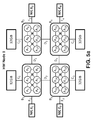
- Figure 5a shows a graphical representation of the microscopic view description of a node making use of letters A to F to represent variables for its physical resources.
- Each letter corresponds to a value corresponding to a physical resource category in the node template as defined above using the same letters for each category. Therefore, value A i makes reference to a processor on the board, B i makes to a grouping of processors (grouping of A i values) as defined by the graphical representation and so on for the rest of categories in the template that are shown in the graphical example (A to F).
- the HW pool description can be stored, for instance, as an XML file specified by an XSL template reflecting a list of instances of the location template, for its use by the SW-to-HW mapping system.
- Figure 5b shows a simplified graphical example of a HW pool description, where three physical locations are interconnected by a WAN through respective Data Plane Connection Interfaces, each physical location comprising a process pool including n computational nodes, and a storage pool including a plurality of storage devices (memories and/or hard drive disks).
- the SW-to-HW mapping method uses both the macroscopic and microscopic views that are defined by the three inputs to the system:
- the SW-to-HW mapping method runs to find a solution in an iterative way characterised by the fact that at discrete points in the algorithm logic, and to eventually proceed, it is enforced to perform the following "mapping sequence" of events as shown in the flow chart of the embodiment of Figure 6 :
- the algorithm logic will start applying the preconditions and the partitioning available at the networking service design to account for a reduction of complexity of the remaining problem after their application.
- the algorithm logic will be such that it optimises some criteria (e.g. the WAN bandwidth, the used HW resources, the number of locations used) for a given networking service.
- the network operator is free to envision and use the logic that best suits its needs.
- the algorithm will perform "mapping sequences" as described previously either for performing final mappings or for performing temporary tentative mappings as part of its iterative behaviour.
- the algorithm will iterate till an assignment that meets all the requirements is found. If a valid mapping is not found after a predefined set of iterations, the method concludes with an error condition, indicating that there are no enough available resources in the HW pool.
- an embodiment of the method of the first aspect of the invention is describes, said embodiment defining an example method to map SW-based network functions to HW resources of a pool is an iterative process that is described in the following stages:
Landscapes
- Engineering & Computer Science (AREA)
- Software Systems (AREA)
- Theoretical Computer Science (AREA)
- Computer Networks & Wireless Communication (AREA)
- Signal Processing (AREA)
- General Engineering & Computer Science (AREA)
- Physics & Mathematics (AREA)
- General Physics & Mathematics (AREA)
- Data Exchanges In Wide-Area Networks (AREA)
- Stored Programmes (AREA)
Claims (12)
- Computerimplementiertes Verfahren zum Bereitstellen eines Netzwerkverbindungsdienstes umfassend das Abbilden von softwarebasierten Netzwerkfunktionen auf Hardwareressourcen, wobei die Hardwareressourcen in einem Hardwareressourcenpool enthalten sind, wobei das Verfahren dadurch gekennzeichnet ist, dass das Abbilden dynamisch auf nicht zugewiesenen Ressourcen des Hardwareressourcenpools durchgeführt wird und auf mindestens folgenden Informationen basiert:• spezifische Hardwarebeschränkungen für das Unterstützen jeder der softwarebasierten Netzwerkfunktionen, wobei:▪ die softwarebasierten Netzwerkfunktionen durch Software-Appliances implementiert werden, von welchen jede mindestens eine softwarebasierte Netzwerkfunktion implementiert;▪ die Informationen zu spezifischen Hardwarebeschränkungen durch Software-Appliance-Deklarationen einschließlich Informationen bezüglich der Netzwerkfunktion oder -funktionen, die implementiert sind, und mindestens eine spezifische Hardwarekonfiguration, die für die Implementierung davon empfohlen wird, bereitgestellt werden; und▪ sich die Hardwarebeschränkungen mindestens auf Hardwareanforderungen und auf die erwartete Leistung für mindestens die spezifische Hardwarekonfiguration zum Unterstützen jeder softwarebasierten Netzwerkfunktion jeder Software-Appliance beziehen, wobei die Hardwarevoraussetzungen einige oder alle der folgenden Informationen beinhalten:- Anzahl und Art von Threads, die die Software-Appliance implementieren;- Gruppierungen von Threads;- Menge an Speicher, die jeder Thread oder jede Gruppe benötigt, und Durchsatz mit diesem Speicher;- Durchsatzanforderungen für Zwischen-Thread-/Gruppenkommunikation;- Anzahl und Merkmale von Schnittstellen, die von jedem Thread oder jeder Gruppe gehandhabt werden;- Durchsatzanforderungen für den Zugang zu Schnittstellenkarten durch jeden Thread/Gruppe;- ob die Software-Appliance ausschließlichen Zugang zu den Hardwareressourcen benötigt, denen sie durch das Abbilden zugewiesen ist, oder ob die Hardwareressourcen unter mehreren Software-Appliances geteilt werden können; und- Festplattenspeicheranforderungen bezüglich der Größe und Geschwindigkeit;• Netzwerkanforderungen von mindestens einer definierten Netzwerkbildungsdienstgestaltung für einen Dienst, der den Hardwareressourcenpool und mindestens einen Teil der softwarebasierten Netzwerkfunktionen verwendet; und• eine Hardwarebeschreibung der Hardwareressourcen, die in dem Hardwareressourcenpool enthalten sind, wobei der Hardwareressourcenpool mehrere Orte umfasst, wobei Informationen bezüglich der Orte des Hardwareressourcenpools sowohl in einer makroskopischen als auch einer mikroskopischen Ansicht jedes Orts bereitgestellt werden, die Folgendes beinhalten:wobei die Menge an Speicher, die jeder Thread oder jede Gruppe benötigt, und der Durchsatz mit diesem Speicher, die Durchsatzanforderungen für Zwischen-Thread-/Gruppenkommunikation, die Anzahl und Merkmale von Schnittstellen, die von jedem Thread oder jeder Gruppe gehandhabt werden, und die Durchsatzanforderungen für den Zugang zu Schnittstellenkarten durch jeden Thread/Gruppe, die als Teil der Hardwareanforderungen enthalten sind, auf entsprechenden HW-Fähigkeiten der Rechenknoten abgebildet werden.▪ auf einer makroskopischen Ebene für jeden Ort: Ortsname, Liste von Rechenknoten und Datenebenendurchsatz zwischen den Rechenknoten; und▪ auf einer makroskopischen Ebene eine ausführliche Beschreibung jedes Rechenknotens bezüglich:- Anzahl und Art von physikalischen Prozessoren, die auf einer Leiterplatte des Rechenknotens bereitgestellt sind;- Leistung bezüglich der Verarbeitungsgeschwindigkeit der physikalischen Prozessoren;- Gruppieren von Prozessorkernen in Sockel und Menge an Zwischenspeicher, der von jedem Prozessor bereitgestellt wird;- Menge an Speicher, der von jedem von mehreren Speichermodulen bereitgestellt wird, und Verbindungsdurchsatz zwischen Prozessorkernen und Speichermodulen;- Durchsatz, der von Zwischensockel-Kommunikationsbussen bereitgestellt wird;- Anzahl und Merkmale von Schnittstellenkarten;- Verbindung zwischen Prozessorkernen und Schnittstellenkarten einschließlich Informationen bezüglich darüber, ob jede Schnittstelle an einer bestimmten Gruppierung von Prozessorkernen direkt befestigt ist oder nicht; und- Art von Hardwareressourcenpool: Daten- oder Kontrollebenenpool, wobei das Abbilden in Form einer Sequenz von Ereignissen durch iteratives Ausführen eines Algorithmus einschließlich logischer und diskreter Stellen durchgeführt wird; und
- Verfahren nach Anspruch 1, wobei die Informationen zu spezifischen Hardwarebeschränkungen durch Ignorieren von Informationen über den Hardwareressourcenpool bereitgestellt werden und die Hardwarebeschreibungsinformationen durch Ignorieren von Informationen über die softwarebasierten Netzwerkfunktionen bereitgestellt werden.
- Verfahren nach Anspruch 1, wobei sich die erwartete Leistung auf mindestens eine einer maximalen Menge von unterstützten Nutzern, eine maximale Anzahl an unterstützten Vorrichtungen, eine maximale Anzahl an Dienstleistungsstellen, die bedient werden, und einen maximalen unterstützten Durchsatz beziehen.
- Verfahren nach einem der vorherigen Ansprüche, wobei sich die Netzwerkanforderungen mindestens auf softwarebasierte Netzwerkfunktionen, die an Anwesenheitsstellen auszuführen sind, und eine Menge an Clients, welche bedient werden müssen, bezieht.
- Verfahren nach Anspruch 4, wobei die Netzwerkanforderungen durch Ignorieren von Informationen über Hardwareelemente, die an einem gegebenen Anwesenheitsstelle ausgeführt werden, bereitgestellt werden.
- Verfahren nach Anspruch 4 oder 5, wobei die Netzwerkanforderungen durch eine Netzwerkbildungsdienstleistungsgestaltungsdefinition mit topologischen Anforderungen, Durchsatzanforderungen für jede softwarebasierte Netzwerkfunktion und Verbindungsanforderungen zwischen den softwarebasierten Netzwerkfunktionen bereitgestellt werden.
- Verfahren nach Anspruch 6, wobei die Netzwerkbildungsdienstleistungsgestaltungsdefinition Informationen bezüglich mindestens einer der folgenden beinhaltet:- Durchschnittstraffic-Kennzeichnung der Dienstleistungsstellen;- Netzwerkbildungsdienstleistungsdatenkette, die die softwarebasierten Netzwerkfunktionen detailliert angibt, die auf den Datentraffic angewendet werden müssen, der von den Dienstleistungsstellen in der Aufwärtsrichtung in das Netzwerk eintritt;- Netzwerkbildungsdienstleistungskontrollketten, von denen jede eine Gruppe von softwarebasierten Netzwerkfunktionen detailliert angibt, die Kontrolltraffic austauschen, der für einen spezifischen bestimmten Zweck des Netzwerkbildungsdienstes benötigt wird;- Netzwerkfunktionsbereichsdefinition, wo jeder Netzwerkfunktionsbereich eine Funktionssammlung von Orten pro Netzwerk des Hardwareressourcenpools ist; und- eine Gruppe von Voraussetzungen bezüglich des Hardwareressourcenpools in Bezug auf die Platzierung von softwarebasierten Netzwerkfunktionen.
- Verfahren nach einem der vorherigen Ansprüche, wobei der Hardwareressourcenpool Folgendes umfasst:mehrere Rechenknoten, die über mehrere physikalische Orte eingesetzt werden, wo jeder Ort durch die Komponenten seines Rechenknotens in einer Computerarchitektur oder mikroskopischen Ebene oder Ansicht bestimmt ist, undeine Anordnung, durch welche diese Rechenknoten untereinander innerhalb des Orts und/oder mit anderen Orten mit entsprechenden Verbindungen in einem Netzwerk oder einer makroskopischen Ebene oder Ansicht verbunden sind.
- Verfahren nach Anspruch 1, wobei die Sequenz von Ereignissen gemäß folgenden Schritten durchgeführt wird:• Auswählen eines Kandidatenorts für das Abbilden von mindestens einer neuen Software-Appliance, die eine gegebene softwarebasierte Netzwerkfunktion implementiert, die auf Grundlage der makroskopischen Ansicht auszuführen ist, und dann,• wenn zuvor das Verfahren andere Software-Appliances dem ausgewählten Kandidatenort zugewiesen hat, Durchführen des Sortierens einer gesamten Gruppe von Software-Appliances für diesen Ort einschließlich der abzubildenden neuen, angefangen mit jenen mit einschränkenderen Anforderungen, in einer mikroskopischen Ansicht, und dann• Überprüfen der Verfügbarkeit von Hardwareressourcen an dem ausgewählten Kandidatenort durch Vergleichen gemäß der mikroskopischen Ansicht der Anforderungen der Appliances mit der Beschreibung von einem oder mehreren mikroskopischen Rechenknoten, so dass der benötigte Speicher und Durchsatz, die benötigten Prozessoren, Netzwerkschnittstellen durch die Hardware erfüllt werden; und dann,• wenn genügend Hardwareressourcen vorhanden sind, und wenn die Software-Appliance eine ausschließliche Nutzung der Hardwareressourcen erfordert, Markieren dieser Hardwareressourcen als ausschließlich genutzt, so dass sie nicht mehr für folgende Abbildungen verfügbar sind, oder, wenn die Software-Appliances eine geteilte Nutzung der Hardwareressourcen erlauben, Markieren dieser Hardwareressourcen als im geteilten Modus genutzt.
- Verfahren nach einem der vorherigen Ansprüche, umfassend das Einsetzen des Netzwerkbildungsdienstes durch mindestens das Bilden eines Netzwerks mit den Hardwareressourcen, auf welchen die softwarebasierten Netzwerkfunktionen abgebildet sind, und die Verbindung davon.
- System zum Bereitstellen eines Netzwerkbildungsdienstes umfassend einen Hardwareressourcenpool und eine Rechenvorrichtung, die Zugang zu dem Hardwareressourcenpool und zu softwarebasierten Netzwerkfunktionen hat, wobei die Rechenvorrichtung ein Verfahren zum Bereitstellen eines Netzwerkbildungsdienstes implementiert, das das Abbilden von softwarebasierten Netzwerkfunktionen auf Hardwareressourcen des Hardwareressourcenpools umfasst, wobei das System dadurch gekennzeichnet ist, dass die Rechenvorrichtung das Verfahren nach einem der vorherigen Ansprüche implementiert.
- Computerprogrammprodukt umfassend Softwarecode, das angepasst ist, um das Verfahren nach einem der Ansprüche 1 bis 11 durchzuführen, wenn es in einem Computer ausgeführt wird.
Priority Applications (1)
| Application Number | Priority Date | Filing Date | Title |
|---|---|---|---|
| EP13814117.1A EP2939366B1 (de) | 2012-12-27 | 2013-12-19 | Computerimplementiertes verfahren und system zum bereitstellen eines netzwerkdienstes und computerprogrammprodukt, das zum durchführen des verfahrens ausgelegt ist |
Applications Claiming Priority (3)
| Application Number | Priority Date | Filing Date | Title |
|---|---|---|---|
| EP12382539.0A EP2750328A1 (de) | 2012-12-27 | 2012-12-27 | Computerimplementiertes Verfahren und System zum Bereitstellen eines Netzwerkdienstes und Computerprogrammprodukt, das zum Durchführen des Verfahrens ausgelegt ist |
| EP13814117.1A EP2939366B1 (de) | 2012-12-27 | 2013-12-19 | Computerimplementiertes verfahren und system zum bereitstellen eines netzwerkdienstes und computerprogrammprodukt, das zum durchführen des verfahrens ausgelegt ist |
| PCT/EP2013/077365 WO2014102134A1 (en) | 2012-12-27 | 2013-12-19 | A computer-implemented method and a system for providing a networking service, and a computer program product adapted to perform the method |
Publications (2)
| Publication Number | Publication Date |
|---|---|
| EP2939366A1 EP2939366A1 (de) | 2015-11-04 |
| EP2939366B1 true EP2939366B1 (de) | 2016-11-02 |
Family
ID=47598656
Family Applications (2)
| Application Number | Title | Priority Date | Filing Date |
|---|---|---|---|
| EP12382539.0A Withdrawn EP2750328A1 (de) | 2012-12-27 | 2012-12-27 | Computerimplementiertes Verfahren und System zum Bereitstellen eines Netzwerkdienstes und Computerprogrammprodukt, das zum Durchführen des Verfahrens ausgelegt ist |
| EP13814117.1A Active EP2939366B1 (de) | 2012-12-27 | 2013-12-19 | Computerimplementiertes verfahren und system zum bereitstellen eines netzwerkdienstes und computerprogrammprodukt, das zum durchführen des verfahrens ausgelegt ist |
Family Applications Before (1)
| Application Number | Title | Priority Date | Filing Date |
|---|---|---|---|
| EP12382539.0A Withdrawn EP2750328A1 (de) | 2012-12-27 | 2012-12-27 | Computerimplementiertes Verfahren und System zum Bereitstellen eines Netzwerkdienstes und Computerprogrammprodukt, das zum Durchführen des Verfahrens ausgelegt ist |
Country Status (5)
| Country | Link |
|---|---|
| US (1) | US9774542B2 (de) |
| EP (2) | EP2750328A1 (de) |
| BR (1) | BR112015014198B1 (de) |
| ES (1) | ES2607636T3 (de) |
| WO (1) | WO2014102134A1 (de) |
Families Citing this family (10)
| Publication number | Priority date | Publication date | Assignee | Title |
|---|---|---|---|---|
| US10116514B1 (en) * | 2015-03-30 | 2018-10-30 | Amdocs Development Limited | System, method and computer program for deploying an orchestration layer for a network based on network function virtualization (NFV) |
| WO2015143610A1 (zh) * | 2014-03-24 | 2015-10-01 | 华为技术有限公司 | 一种nfv系统的业务实现方法及通信单元 |
| WO2016048206A1 (en) * | 2014-09-25 | 2016-03-31 | Telefonaktiebolaget L M Ericsson (Publ) | Network functions virtualization in ad-hoc groups |
| US10339600B1 (en) * | 2015-12-18 | 2019-07-02 | EMC IP Holding Company LLC | Application platform reverse auction |
| CN107220120A (zh) * | 2016-03-21 | 2017-09-29 | 伊姆西公司 | 用于递送软件解决方案的方法和装置 |
| WO2018023338A1 (zh) | 2016-08-01 | 2018-02-08 | 华为技术有限公司 | 一种网络功能nf管理方法及nf管理设备 |
| CN107450923B (zh) * | 2017-07-28 | 2021-07-02 | 郑州云海信息技术有限公司 | 一种定制基线分离的程序实现方法及装置 |
| CN108306971B (zh) * | 2018-02-02 | 2020-06-23 | 网宿科技股份有限公司 | 一种发送数据资源的获取请求的方法和系统 |
| GB202211264D0 (en) * | 2022-08-02 | 2022-09-14 | Microsoft Technology Licensing Llc | Site network service design |
| GB2625358B (en) * | 2022-12-15 | 2025-06-11 | Imagination Tech Ltd | Hardware mapping |
Family Cites Families (7)
| Publication number | Priority date | Publication date | Assignee | Title |
|---|---|---|---|---|
| US7072960B2 (en) * | 2002-06-10 | 2006-07-04 | Hewlett-Packard Development Company, L.P. | Generating automated mappings of service demands to server capacities in a distributed computer system |
| US7426570B2 (en) * | 2003-07-25 | 2008-09-16 | Hewlett-Packard Development Company, L.P. | Determining placement of distributed application onto distributed resource infrastructure |
| US20070220586A1 (en) * | 2006-03-01 | 2007-09-20 | Norman Salazar | Computing resource assignment method and apparatus using genetic algorithms |
| US9436459B2 (en) * | 2010-05-28 | 2016-09-06 | Red Hat, Inc. | Generating cross-mapping of vendor software in a cloud computing environment |
| EP2936754B1 (de) * | 2013-01-11 | 2020-12-02 | Huawei Technologies Co., Ltd. | Netzwerkfunktionsvirtualisierung für eine netzwerkvorrichtung |
| US9973375B2 (en) * | 2013-04-22 | 2018-05-15 | Cisco Technology, Inc. | App store portal providing point-and-click deployment of third-party virtualized network functions |
| EP3332332A4 (de) * | 2015-08-25 | 2018-08-08 | Huawei Technologies Co., Ltd. | System und verfahren zur ressourcenverwaltung für netzwerkfunktionsvirtualisierung |
-
2012
- 2012-12-27 EP EP12382539.0A patent/EP2750328A1/de not_active Withdrawn
-
2013
- 2013-12-19 WO PCT/EP2013/077365 patent/WO2014102134A1/en not_active Ceased
- 2013-12-19 ES ES13814117.1T patent/ES2607636T3/es active Active
- 2013-12-19 US US14/652,206 patent/US9774542B2/en active Active
- 2013-12-19 EP EP13814117.1A patent/EP2939366B1/de active Active
- 2013-12-19 BR BR112015014198-6A patent/BR112015014198B1/pt active IP Right Grant
Also Published As
| Publication number | Publication date |
|---|---|
| BR112015014198A2 (pt) | 2017-07-11 |
| US20150326496A1 (en) | 2015-11-12 |
| US9774542B2 (en) | 2017-09-26 |
| ES2607636T3 (es) | 2017-04-03 |
| BR112015014198B1 (pt) | 2022-08-30 |
| EP2750328A1 (de) | 2014-07-02 |
| EP2939366A1 (de) | 2015-11-04 |
| WO2014102134A1 (en) | 2014-07-03 |
Similar Documents
| Publication | Publication Date | Title |
|---|---|---|
| EP2939366B1 (de) | Computerimplementiertes verfahren und system zum bereitstellen eines netzwerkdienstes und computerprogrammprodukt, das zum durchführen des verfahrens ausgelegt ist | |
| US12063148B2 (en) | Orchestrating configuration of a programmable accelerator | |
| Sun et al. | Low-latency orchestration for workflow-oriented service function chain in edge computing | |
| Yue et al. | Throughput optimization and delay guarantee VNF placement for mapping SFC requests in NFV-enabled networks | |
| Rabbani et al. | On tackling virtual data center embedding problem | |
| US8762999B2 (en) | Guest-initiated resource allocation request based on comparison of host hardware information and projected workload requirement | |
| WO2017067016A1 (en) | Extension of resource constraints for service-defined containers | |
| Bielski et al. | dReDBox: Materializing a full-stack rack-scale system prototype of a next-generation disaggregated datacenter | |
| Gupta et al. | Optimizing VM Placement for HPC in the Cloud | |
| US9112769B1 (en) | Programatically provisioning virtual networks | |
| WO2017080391A1 (zh) | 一种网络服务部署方法和装置 | |
| Seth et al. | Dynamic heterogeneous shortest job first (DHSJF): a task scheduling approach for heterogeneous cloud computing systems | |
| CN110297670A (zh) | 一种提高容器云上分布式任务训练效率的方法及系统 | |
| CN115617456A (zh) | 混合运行虚拟机与容器的方法、装置、电子设备和可读存储介质 | |
| Zhang et al. | Repeatable multi-dimensional virtual network embedding in cloud service platform | |
| Filippini et al. | SPACE4AI-R: a runtime management tool for AI applications component placement and resource scaling in computing continua | |
| CN113407306B (zh) | 一种资源管理系统、方法、装置、设备及介质 | |
| Wang et al. | EIS: edge information-aware scheduler for containerized IoT applications | |
| Visti et al. | MiCADO–Towards a microservice-based cloud application-level dynamic orchestrator | |
| CN115617446A (zh) | 一种虚拟化网络功能的资源调度方法以及相关设备 | |
| Ricci et al. | Precursors: Emulab | |
| Roozbeh | Toward Next-generation Data Centers: Principles of Software-Defined “Hardware” Infrastructures and Resource Disaggregation | |
| Roges et al. | Multi‐Objective Dynamic Registry Provisioning in Edge Computing Infrastructures | |
| Gunda et al. | Performance evaluation of wireguard in kubernetes cluster | |
| Luthra et al. | Understanding the Behavior of Operator Placement Mechanisms on Large-Scale Networks |
Legal Events
| Date | Code | Title | Description |
|---|---|---|---|
| PUAI | Public reference made under article 153(3) epc to a published international application that has entered the european phase |
Free format text: ORIGINAL CODE: 0009012 |
|
| 17P | Request for examination filed |
Effective date: 20150707 |
|
| AK | Designated contracting states |
Kind code of ref document: A1 Designated state(s): AL AT BE BG CH CY CZ DE DK EE ES FI FR GB GR HR HU IE IS IT LI LT LU LV MC MK MT NL NO PL PT RO RS SE SI SK SM TR |
|
| AX | Request for extension of the european patent |
Extension state: BA ME |
|
| DAX | Request for extension of the european patent (deleted) | ||
| GRAP | Despatch of communication of intention to grant a patent |
Free format text: ORIGINAL CODE: EPIDOSNIGR1 |
|
| RIC1 | Information provided on ipc code assigned before grant |
Ipc: H04L 12/911 20130101ALI20160517BHEP Ipc: G06F 9/50 20060101ALI20160517BHEP Ipc: G06F 9/445 20060101ALI20160517BHEP Ipc: H04L 12/24 20060101AFI20160517BHEP Ipc: H04L 29/08 20060101ALI20160517BHEP |
|
| INTG | Intention to grant announced |
Effective date: 20160616 |
|
| GRAS | Grant fee paid |
Free format text: ORIGINAL CODE: EPIDOSNIGR3 |
|
| GRAA | (expected) grant |
Free format text: ORIGINAL CODE: 0009210 |
|
| AK | Designated contracting states |
Kind code of ref document: B1 Designated state(s): AL AT BE BG CH CY CZ DE DK EE ES FI FR GB GR HR HU IE IS IT LI LT LU LV MC MK MT NL NO PL PT RO RS SE SI SK SM TR |
|
| REG | Reference to a national code |
Ref country code: GB Ref legal event code: FG4D |
|
| REG | Reference to a national code |
Ref country code: AT Ref legal event code: REF Ref document number: 842799 Country of ref document: AT Kind code of ref document: T Effective date: 20161115 Ref country code: CH Ref legal event code: EP |
|
| REG | Reference to a national code |
Ref country code: IE Ref legal event code: FG4D |
|
| REG | Reference to a national code |
Ref country code: DE Ref legal event code: R096 Ref document number: 602013013656 Country of ref document: DE |
|
| PG25 | Lapsed in a contracting state [announced via postgrant information from national office to epo] |
Ref country code: LV Free format text: LAPSE BECAUSE OF FAILURE TO SUBMIT A TRANSLATION OF THE DESCRIPTION OR TO PAY THE FEE WITHIN THE PRESCRIBED TIME-LIMIT Effective date: 20161102 |
|
| REG | Reference to a national code |
Ref country code: NL Ref legal event code: MP Effective date: 20161102 |
|
| REG | Reference to a national code |
Ref country code: LT Ref legal event code: MG4D |
|
| REG | Reference to a national code |
Ref country code: AT Ref legal event code: MK05 Ref document number: 842799 Country of ref document: AT Kind code of ref document: T Effective date: 20161102 |
|
| PG25 | Lapsed in a contracting state [announced via postgrant information from national office to epo] |
Ref country code: LT Free format text: LAPSE BECAUSE OF FAILURE TO SUBMIT A TRANSLATION OF THE DESCRIPTION OR TO PAY THE FEE WITHIN THE PRESCRIBED TIME-LIMIT Effective date: 20161102 Ref country code: SE Free format text: LAPSE BECAUSE OF FAILURE TO SUBMIT A TRANSLATION OF THE DESCRIPTION OR TO PAY THE FEE WITHIN THE PRESCRIBED TIME-LIMIT Effective date: 20161102 Ref country code: NL Free format text: LAPSE BECAUSE OF FAILURE TO SUBMIT A TRANSLATION OF THE DESCRIPTION OR TO PAY THE FEE WITHIN THE PRESCRIBED TIME-LIMIT Effective date: 20161102 Ref country code: NO Free format text: LAPSE BECAUSE OF FAILURE TO SUBMIT A TRANSLATION OF THE DESCRIPTION OR TO PAY THE FEE WITHIN THE PRESCRIBED TIME-LIMIT Effective date: 20170202 Ref country code: GR Free format text: LAPSE BECAUSE OF FAILURE TO SUBMIT A TRANSLATION OF THE DESCRIPTION OR TO PAY THE FEE WITHIN THE PRESCRIBED TIME-LIMIT Effective date: 20170203 |
|
| PG25 | Lapsed in a contracting state [announced via postgrant information from national office to epo] |
Ref country code: BE Free format text: LAPSE BECAUSE OF NON-PAYMENT OF DUE FEES Effective date: 20161231 Ref country code: IS Free format text: LAPSE BECAUSE OF FAILURE TO SUBMIT A TRANSLATION OF THE DESCRIPTION OR TO PAY THE FEE WITHIN THE PRESCRIBED TIME-LIMIT Effective date: 20170302 Ref country code: PT Free format text: LAPSE BECAUSE OF FAILURE TO SUBMIT A TRANSLATION OF THE DESCRIPTION OR TO PAY THE FEE WITHIN THE PRESCRIBED TIME-LIMIT Effective date: 20170302 Ref country code: FI Free format text: LAPSE BECAUSE OF FAILURE TO SUBMIT A TRANSLATION OF THE DESCRIPTION OR TO PAY THE FEE WITHIN THE PRESCRIBED TIME-LIMIT Effective date: 20161102 Ref country code: PL Free format text: LAPSE BECAUSE OF FAILURE TO SUBMIT A TRANSLATION OF THE DESCRIPTION OR TO PAY THE FEE WITHIN THE PRESCRIBED TIME-LIMIT Effective date: 20161102 Ref country code: AT Free format text: LAPSE BECAUSE OF FAILURE TO SUBMIT A TRANSLATION OF THE DESCRIPTION OR TO PAY THE FEE WITHIN THE PRESCRIBED TIME-LIMIT Effective date: 20161102 Ref country code: RS Free format text: LAPSE BECAUSE OF FAILURE TO SUBMIT A TRANSLATION OF THE DESCRIPTION OR TO PAY THE FEE WITHIN THE PRESCRIBED TIME-LIMIT Effective date: 20161102 Ref country code: HR Free format text: LAPSE BECAUSE OF FAILURE TO SUBMIT A TRANSLATION OF THE DESCRIPTION OR TO PAY THE FEE WITHIN THE PRESCRIBED TIME-LIMIT Effective date: 20161102 |
|
| PG25 | Lapsed in a contracting state [announced via postgrant information from national office to epo] |
Ref country code: RO Free format text: LAPSE BECAUSE OF FAILURE TO SUBMIT A TRANSLATION OF THE DESCRIPTION OR TO PAY THE FEE WITHIN THE PRESCRIBED TIME-LIMIT Effective date: 20161102 Ref country code: SK Free format text: LAPSE BECAUSE OF FAILURE TO SUBMIT A TRANSLATION OF THE DESCRIPTION OR TO PAY THE FEE WITHIN THE PRESCRIBED TIME-LIMIT Effective date: 20161102 Ref country code: EE Free format text: LAPSE BECAUSE OF FAILURE TO SUBMIT A TRANSLATION OF THE DESCRIPTION OR TO PAY THE FEE WITHIN THE PRESCRIBED TIME-LIMIT Effective date: 20161102 Ref country code: CZ Free format text: LAPSE BECAUSE OF FAILURE TO SUBMIT A TRANSLATION OF THE DESCRIPTION OR TO PAY THE FEE WITHIN THE PRESCRIBED TIME-LIMIT Effective date: 20161102 Ref country code: DK Free format text: LAPSE BECAUSE OF FAILURE TO SUBMIT A TRANSLATION OF THE DESCRIPTION OR TO PAY THE FEE WITHIN THE PRESCRIBED TIME-LIMIT Effective date: 20161102 |
|
| REG | Reference to a national code |
Ref country code: CH Ref legal event code: PL |
|
| REG | Reference to a national code |
Ref country code: DE Ref legal event code: R097 Ref document number: 602013013656 Country of ref document: DE |
|
| PG25 | Lapsed in a contracting state [announced via postgrant information from national office to epo] |
Ref country code: IT Free format text: LAPSE BECAUSE OF FAILURE TO SUBMIT A TRANSLATION OF THE DESCRIPTION OR TO PAY THE FEE WITHIN THE PRESCRIBED TIME-LIMIT Effective date: 20161102 Ref country code: SM Free format text: LAPSE BECAUSE OF FAILURE TO SUBMIT A TRANSLATION OF THE DESCRIPTION OR TO PAY THE FEE WITHIN THE PRESCRIBED TIME-LIMIT Effective date: 20161102 Ref country code: BE Free format text: LAPSE BECAUSE OF FAILURE TO SUBMIT A TRANSLATION OF THE DESCRIPTION OR TO PAY THE FEE WITHIN THE PRESCRIBED TIME-LIMIT Effective date: 20161102 Ref country code: BG Free format text: LAPSE BECAUSE OF FAILURE TO SUBMIT A TRANSLATION OF THE DESCRIPTION OR TO PAY THE FEE WITHIN THE PRESCRIBED TIME-LIMIT Effective date: 20170202 |
|
| PLBE | No opposition filed within time limit |
Free format text: ORIGINAL CODE: 0009261 |
|
| STAA | Information on the status of an ep patent application or granted ep patent |
Free format text: STATUS: NO OPPOSITION FILED WITHIN TIME LIMIT |
|
| PG25 | Lapsed in a contracting state [announced via postgrant information from national office to epo] |
Ref country code: MC Free format text: LAPSE BECAUSE OF FAILURE TO SUBMIT A TRANSLATION OF THE DESCRIPTION OR TO PAY THE FEE WITHIN THE PRESCRIBED TIME-LIMIT Effective date: 20161102 |
|
| REG | Reference to a national code |
Ref country code: FR Ref legal event code: ST Effective date: 20170831 |
|
| REG | Reference to a national code |
Ref country code: IE Ref legal event code: MM4A |
|
| 26N | No opposition filed |
Effective date: 20170803 |
|
| PG25 | Lapsed in a contracting state [announced via postgrant information from national office to epo] |
Ref country code: LI Free format text: LAPSE BECAUSE OF NON-PAYMENT OF DUE FEES Effective date: 20161231 Ref country code: FR Free format text: LAPSE BECAUSE OF NON-PAYMENT OF DUE FEES Effective date: 20170102 Ref country code: LU Free format text: LAPSE BECAUSE OF NON-PAYMENT OF DUE FEES Effective date: 20161219 Ref country code: CH Free format text: LAPSE BECAUSE OF NON-PAYMENT OF DUE FEES Effective date: 20161231 |
|
| PG25 | Lapsed in a contracting state [announced via postgrant information from national office to epo] |
Ref country code: SI Free format text: LAPSE BECAUSE OF FAILURE TO SUBMIT A TRANSLATION OF THE DESCRIPTION OR TO PAY THE FEE WITHIN THE PRESCRIBED TIME-LIMIT Effective date: 20161102 Ref country code: IE Free format text: LAPSE BECAUSE OF NON-PAYMENT OF DUE FEES Effective date: 20161219 |
|
| PG25 | Lapsed in a contracting state [announced via postgrant information from national office to epo] |
Ref country code: HU Free format text: LAPSE BECAUSE OF FAILURE TO SUBMIT A TRANSLATION OF THE DESCRIPTION OR TO PAY THE FEE WITHIN THE PRESCRIBED TIME-LIMIT; INVALID AB INITIO Effective date: 20131219 |
|
| PG25 | Lapsed in a contracting state [announced via postgrant information from national office to epo] |
Ref country code: MK Free format text: LAPSE BECAUSE OF FAILURE TO SUBMIT A TRANSLATION OF THE DESCRIPTION OR TO PAY THE FEE WITHIN THE PRESCRIBED TIME-LIMIT Effective date: 20161102 Ref country code: CY Free format text: LAPSE BECAUSE OF FAILURE TO SUBMIT A TRANSLATION OF THE DESCRIPTION OR TO PAY THE FEE WITHIN THE PRESCRIBED TIME-LIMIT Effective date: 20161102 |
|
| PG25 | Lapsed in a contracting state [announced via postgrant information from national office to epo] |
Ref country code: MT Free format text: LAPSE BECAUSE OF NON-PAYMENT OF DUE FEES Effective date: 20161219 |
|
| PG25 | Lapsed in a contracting state [announced via postgrant information from national office to epo] |
Ref country code: TR Free format text: LAPSE BECAUSE OF FAILURE TO SUBMIT A TRANSLATION OF THE DESCRIPTION OR TO PAY THE FEE WITHIN THE PRESCRIBED TIME-LIMIT Effective date: 20161102 |
|
| PG25 | Lapsed in a contracting state [announced via postgrant information from national office to epo] |
Ref country code: AL Free format text: LAPSE BECAUSE OF FAILURE TO SUBMIT A TRANSLATION OF THE DESCRIPTION OR TO PAY THE FEE WITHIN THE PRESCRIBED TIME-LIMIT Effective date: 20161102 |
|
| REG | Reference to a national code |
Ref country code: DE Ref legal event code: R079 Ref document number: 602013013656 Country of ref document: DE Free format text: PREVIOUS MAIN CLASS: H04L0012240000 Ipc: H04L0041000000 |
|
| PGFP | Annual fee paid to national office [announced via postgrant information from national office to epo] |
Ref country code: DE Payment date: 20241227 Year of fee payment: 12 |
|
| PGFP | Annual fee paid to national office [announced via postgrant information from national office to epo] |
Ref country code: ES Payment date: 20250113 Year of fee payment: 12 |
|
| PGFP | Annual fee paid to national office [announced via postgrant information from national office to epo] |
Ref country code: GB Payment date: 20251229 Year of fee payment: 13 |