EP2936998A1 - Tteok composition containing tagatose, tteok using same, and preparation method therefor - Google Patents
Tteok composition containing tagatose, tteok using same, and preparation method therefor Download PDFInfo
- Publication number
- EP2936998A1 EP2936998A1 EP13868344.6A EP13868344A EP2936998A1 EP 2936998 A1 EP2936998 A1 EP 2936998A1 EP 13868344 A EP13868344 A EP 13868344A EP 2936998 A1 EP2936998 A1 EP 2936998A1
- Authority
- EP
- European Patent Office
- Prior art keywords
- rice cake
- tagatose
- weight
- parts
- flour
- Prior art date
- Legal status (The legal status is an assumption and is not a legal conclusion. Google has not performed a legal analysis and makes no representation as to the accuracy of the status listed.)
- Granted
Links
Images




Classifications
-
- A—HUMAN NECESSITIES
- A23—FOODS OR FOODSTUFFS; TREATMENT THEREOF, NOT COVERED BY OTHER CLASSES
- A23B—PRESERVATION OF FOODS, FOODSTUFFS OR NON-ALCOHOLIC BEVERAGES; CHEMICAL RIPENING OF FRUIT OR VEGETABLES
- A23B2/00—Preservation of foods or foodstuffs, in general
- A23B2/70—Preservation of foods or foodstuffs, in general by treatment with chemicals
- A23B2/725—Preservation of foods or foodstuffs, in general by treatment with chemicals in the form of liquids or solids
- A23B2/729—Organic compounds; Microorganisms; Enzymes
- A23B2/779—Sugars; Derivatives thereof
-
- A—HUMAN NECESSITIES
- A23—FOODS OR FOODSTUFFS; TREATMENT THEREOF, NOT COVERED BY OTHER CLASSES
- A23L—FOODS, FOODSTUFFS OR NON-ALCOHOLIC BEVERAGES, NOT OTHERWISE PROVIDED FOR; PREPARATION OR TREATMENT THEREOF
- A23L7/00—Cereal-derived products; Malt products; Preparation or treatment thereof
- A23L7/10—Cereal-derived products
-
- A—HUMAN NECESSITIES
- A23—FOODS OR FOODSTUFFS; TREATMENT THEREOF, NOT COVERED BY OTHER CLASSES
- A23V—INDEXING SCHEME RELATING TO FOODS, FOODSTUFFS OR NON-ALCOHOLIC BEVERAGES AND LACTIC OR PROPIONIC ACID BACTERIA USED IN FOODSTUFFS OR FOOD PREPARATION
- A23V2002/00—Food compositions, function of food ingredients or processes for food or foodstuffs
Definitions
- the present invention relates to a rice cake composition containing tagatose and a rice cake using the same.
- the present invention also relates to a method of preparing a rice cake using tagatose.
- a rice cake is an age-old traditional Korean dish which is made by grinding grains, such as sticky rice and non-glutinous rice, into powder and processing, such as kneading and heating, the grain powder.
- a rice cake which is tasty and nutritious, is a popular snack and is used as a substitute for breakfast, particularly by a growing number of single-person households or dual-income families in recent years, consumption thereof is steadily increasing.
- a rice cake For use of a rice cake as a meal substitute, a certain period of storage time is required. However, since a rice cake includes grain powder as a main ingredient, degradation of starch in the rice cake shortens the expiration date and preservation period.
- Korean Patent Registration No. 10-0377212 discloses, as a method for extending the storage period of a rice cake or suppressing degradation of starch, a method of preparing a rice cake which processes a rice cake filling with a particular ingredient to delay aging of the rice cake, and a rice cake prepared by the method.
- This technology relates to a method for suppressing aging of the rice cake by using a shortening having a limited amount of solid fat at about room temperature, but such a method is not useful for preparing a rice cake having no filling, such as steamed white rice cake (baekseolgi).
- Korean Patent Publication No. 10-2012-0037819 discloses a method of producing a rice cake having improved taste and storage properties, in which ⁇ -amylase and trehalose are used to prepare a rice cake.
- ⁇ -amylase and trehalose are used to prepare a rice cake.
- trehalose is employed as a main sweetener as in this method
- a sweetening level can decrease to reduce taste for the rice cake and activity of ⁇ -amylase varies depending upon conditions, such as temperature, for preparation, distribution and storage of the rice cake to change physical properties and texture of the rice cake, thereby providing negative influence on the preservation of the rice cake.
- the present invention provides a rice cake having a longer storage period by suppressing starch retrogradation and water loss of the rice cake.
- the present invention is aimed at extending a storage period of a rice cake by including 0.1 to 30 parts by weight of tagatose based on 100 parts by weight of grain flour.
- the present invention provides a method of preparing a rice cake using tagatose in order to extend the storage period of the rice cake.
- a method of preparing a rice cake containing tagatose which includes mixing and kneading 100 parts by weight of grain flour, 0.1 to 10 parts by weight of salt, 30 to 70 parts by weight of water, and 0.1 to 30 parts by weight of tagatose; and heating and molding the dough.
- Another embodiment of the present invention provides a rice cake containing tagatose prepared by the method.
- a further embodiment of the present invention provides a rice cake composition containing tagatose which includes 100 parts by weight of grain flour, 0.1 to 10 parts by weight of salt, and 0.1 to 30 parts by weight of tagatose.
- Yet another embodiment of the present invention provides a rice cake containing tagatose using the composition.
- Embodiments of the present invention provide a method of preparing a rice cake using tagatose, a rice cake containing tagatose, and a rice cake composition containing tagatose, thereby suppressing change in physical properties and texture of the rice cake and extending a storage period of the rice cake.
- the present invention adds tagatose in preparing a rice cake to suppress starch retrogradation and moisture loss of the rice cake, thereby maintaining quality and texture of the rice cake for a comparatively long period of time after preparation.
- the present invention uses tagatose, as a sweetener, having a similar sweetness to sugar but containing low calories, thereby providing a low-calorie rice cake having excellent flavor and texture.
- One embodiment of the present invention provides a method of preparing a rice cake using tagatose in order to extend the storage period of the rice cake.
- D-tagatose is an isomer of fructose, which is known as a naturally occurring low-calorie monosaccharide. Tagatose is about 92% as sweet as sugar. However, tagatose has only about 38% of the calories of sugar and only 4% of a glycemic index (GI) of sugar and has thus become popular as a sugar substitute.
- GI glycemic index
- tagatose As generally recognized as safe (GRAS) and approved tagatose as a sweetener to be used for foods, drinks, health foods, diet additives, or the like.
- GRAS Food and Drug Administration
- Tagatose is known to hardly have side effects for human consumption, and thus uses thereof are expected.
- the present invention provides the method of preparing the rice cake which uses tagatose in preparing a rice cake, thereby not only providing substantially the same sweetness as sugar and reducing calories to be relatively free from calorie counting but also suppressing retrogradation of starch in the rice cake and improving water retention to extend a storage period.
- this embodiment provides a method of preparing a rice cake containing tagatose which includes mixing and kneading grain flour, salt, water, and tagatose; and heating and molding the dough.
- Any method for mixing and/or kneading ingredients may be used, without being particularly limited.
- An unrestricted example may include subjecting the grain flour, salt and water to primary mixing and filtering with a sieve; and adding tagatose to the filtered primary mixture and subjecting the mixture to secondary mixing and kneading.
- the filtering with the sieve is performed using preferably a 20-mesh to 100-mesh sieve, more preferably a 30-mesh to 70-mesh sieve.
- the grain flour may include, without being particularly limited to, any grain flour generally used in the art.
- Unrestricted examples of the grain flour may include rice flour such as glutinous rice flour, non-glutinous rice flour, wheat-rice flour, millet flour, brown rice flour and black rice flour; potato flour; sorghum flow; corn flour; barley flour; wheat flour such as hard flour, soft flour and medium flour; or the like. These flours may be used alone or as a mixture.
- the grain flour is preferably rice flour.
- any method for obtaining the grain flour may be used.
- commercially available grain flour may be may be obtained for direct use, or grains may be obtained and milled for use.
- an obtained grain is soaked in water for about 2 to about 12 hours, drained for about 1 hour, and ground using a roller mill into grain flour, in which the number of grinding times may be adjusted as necessary.
- the salt is present in an amount of 0.1 to 10 parts by weight, preferably 0.1 to 5 parts by weight, and more preferably 0.1 to 3 parts by weight based on 100 parts by weight of the grain flour.
- the water used is present in an amount of 30 to 70 parts by weight, preferably 40 to 60 parts by weight based on 100 parts by weight of the grain flour.
- Tagatose is present in an amount of 0.1 to 30 parts by weight, preferably 0.5 to 25 parts by weight, and more preferably 1 to 20 parts by weight. Within this range, sufficient effects of suppressing starch retrogradation and improving water retention by tagatose may be obtained.
- sugar and/or other sweeteners may additionally be used along with tagatose.
- the sugar is present in an amount of 0.1 to 30 parts by weight, preferably 0.5 to 20 parts by weight based on 100 parts by weight of the grain flour. Within this range, taste for the rice cake in view of sweetening level and flavor is improved in use of both tagatose and sugar as compared with in use of tagatose alone.
- the sweeteners may include any sweetener used in foods.
- Non-limiting examples of the sweeteners may include glucose, fructose, lactose, oligosaccharide, maltose, xylose, erythritol, indigestible maltodextrin, honey, steviol glycosides, or the like. These sweeteners may be used alone or as a mixture.
- the additional sweeteners are present in an amount of 0.1 to 30 parts by weight, preferably 0.5 to 20 parts by weight based on 100 parts by weight of the grain flour.
- an emulsifier and/or other additives may be further used in addition to the foregoing ingredients.
- any emulsifier generally used for preparing food, such as rice cake or bread, may be available for this embodiment, without being particularly limited.
- the emulsifier may include glycerol ester, propylene glycol ester, sucrose ester, sorbitan ester, monoglycerides, diglycerides, triglycerides, glycerin fatty acid ester, sucrose fatty acid ester, sorbitan fatty acid ester, propylene glycol fatty acid ester, polyoxyethylene sorbitan fatty acid ester, lecithin, or the like. These emulsifiers may be used alone or as a mixture.
- additives applicable to this embodiment may include a food stabilizer and/or moisture retention agent.
- any food stabilizer generally used in food preparing may be used.
- the food stabilizer may include alginate, sodium alginate, sodium propylene glycol alginate, casein, sodium caseinate, chondroitin sulfate, sodium chondroitin sulfate, cellulose, carboxy methyl cellulose, sodium carboxy methyl cellulose, sodium carboxy methyl starch, methyl cellulose, sodium polyacrylate, pectin, agar, gelatin, carrageenan, guar gum, tamarind gum, locust bean gum, arabic gum, xanthan gum, pullulan gum, gellan gum, welan gum, diutan gum, rhamsan gum, curdlan gum, furcellaran gum, tara gum, dextran, processed starch, sodium starch phosphate ester, chitosan, or the like.
- These stabilizers may be used alone or as a mixture.
- Any moisture retention agent generally used for food preparing may be available, without being particularly limited.
- An example of the moisture retention agent may include dextrin.
- the aforementioned ingredients are mixed and kneaded into dough, which in turn is subjected to heating and molding, thereby preparing a rice cake containing tagatose.
- the heating and molding of the dough may include placing the rice cake dough in an earthenware steamer and heating the dough, and cooling and molding the rice cake prepared by heating.
- Heating the rice cake dough may be conducted by any method for preparing a rice cake generally used in the art, without being particularly limited.
- a non-limiting example of heating rice cake dough may be a method of placing rice cake dough in an earthenware steamer or the like and steaming the rice cake dough into a rice cake using steam heating.
- Cooling and molding the heated rice cake may be conducted by any method for cooling a rice cake generally used in the art, without being particularly limited.
- a non-limiting example of cooling a rice cake may be a method of leaving a heated rice cake, for example, at room temperature (about 25°C) to decrease the internal temperature of the rice cake.
- the method of preparing the rice cake containing tagatose is illustrated as follows.
- a commercially available grain is washed and soaked in water for about 2 to 12 hours.
- the soaked grain is drained for about 1 hour and ground with a grinder, such as a roller mill, one or more times as needed.
- Salt and water are added to the ground grain flour to conduct primary mixing.
- the primary mixture is filtered through an about 20-mesh to 100-mesh sieve, after which tagatose and/or sugar and other sweeteners are added to the resulting mixture to conduct secondary mixing and kneading.
- the dough is placed in an earthenware steamer with a wet cotton cloth spread and is flattened, after which the dough is steamed in a steamer for about 30 minutes, with the earthenware steamer being covered with a wet cotton cloth, and is allowed to stand for about 10 minutes, thereby preparing a rice cake.
- the rice cake is taken out of the earthenware steamer and cooled to room temperature (about 25°C) for about 10 minutes to 1 hour, thereby producing a rice cake containing tagatose.
- Another embodiment of the present invention provides a rice cake composition containing tagatose which includes 100 parts by weight of grain flour, 0.1 to 10 parts by weight of salt, and 0.5 to 30 parts by weight of tagatose.
- the rice cake composition containing tagatose is the same as a rice cake composition used for the method of preparing the rice cake containing tagatose, and thus description thereof is not repeated herein.
- a further embodiment of the present invention provides a rice cake made by the method of preparing the rice cake containing tagatose and a rice cake containing tagatose made from the rice cake composition.
- the rice cake containing tagatose according to this embodiment has a daily average variation in moisture content of preferably 1 to 4%, more preferably 1 to 3%.
- the daily average variation in moisture content of the rice cake tends to decrease with increase in tagatose content.
- the daily average variation in moisture content is most preferably 1 to 2%. Within this range, moisture content of the rice cake relatively slowly decreases to reduce a rate of change in quality and texture of the rice cake, thereby extending a storage period of the rice cake.
- a method for measuring the moisture content of the rice cake may include any moisture content measurement method generally used in the art or similar arts.
- a drying method by heating under ordinary pressure is preferably used to measure the moisture content.
- a drying method by heating under ordinary pressure is a moisture content measurement method of calculating, as moisture content, reduced weight of a sample when the sample reaches a constant weight by heating at a slightly higher temperature (for example 105°C) than the boiling point of water (100°C).
- the daily average variation in moisture content is a variation in moisture content of the rice cake during 5-day storage after preparation divided by 5 days.
- the rice cake containing tagatose has a daily average variation in water activity of preferably 1 to 8%, more preferably 1 to 6%, and most preferably 1 to 4%.
- the daily average variation in water activity of the rice cake tends to decrease with an increase in tagatose content.
- the daily average variation in water activity is most preferably 1 to 2%.
- a rate of change in water activity of the rice cake relatively slowly decreases to maintain quality and texture of the rice cake for a considerable period of time, thereby extending the storage period of the rice cake.
- Water activity (Aw) is a ratio of vapor pressure (P) of water in food to vapor pressure (PO) of pure water at the same temperature (see Equation 2), which is known to be substantially associated with behaviors of microorganisms, particularly, saprogenic microorganisms, in foods.
- Water activity Aw Vapor pressure of water in food P / vapor pressure of pure P ⁇ 0
- the daily average variation in water activity is a variation in water activity of the rice cake during 5-day storage after preparation divided by 5 days.
- the rice cake containing tagatose according to this embodiment has an initial water activity, measured immediately after preparation of the rice cake, which is relatively low as compared with those containing sugar and other sweeteners and thus is sanitarily advantageous by inhibiting activities of microorganisms to suppress food contamination.
- a method for measuring the water activity of the rice cake may include any water activity measurement method generally used in the art or similar fields.
- a water activity meter (Aw meter, for example, AquaLab Series 3 TE, AquaLab, US) is preferably used to measure the water activity.
- the rice cake containing tagatose according to this embodiment preferably has a daily average variation in hardness of 50% to 130%, more preferably 50% to 120%, still more preferably 60% to 90%. Within this range, rate of an increase in hardness of the rice cake decreases to maintain the quality and texture of the rice cake for a relatively considerable period of time, thereby extending the storage period of the rice cake.
- Hardness is a measure of how hard a sample is, which represents a force needed to deform the sample to a certain degree.
- a method for measuring the hardness of the rice cake may include any hardness measurement method generally used in the art or similar fields.
- a texture analyzer for example, TA-XT2, Stable Micro Systems, Ltd., UK
- TA-XT2 Stable Micro Systems, Ltd., UK
- the daily average variation in hardness is a variation in hardness of the rice cake during 3-day storage after preparation divided by 3 days.
- the rice cake containing tagatose according to this embodiment has a daily average variation in springiness of, preferably, 3 to 10%, more preferably 3 to 9%, and most preferably 4 to 6%. Within this range, springiness of the rice cake slowly decreases, reducing the rate of the change in quality and texture of the rice cake, thereby extending the storage period of the rice cake.
- Springiness refers to resilience defined as the ability of a sample to return to the original form after being deformed by an applied force.
- the daily average variation in springiness is a variation in springiness of the rice cake during 3-day storage after preparation divided by 3 days.
- a method for measuring the springiness of the rice cake may include any springiness measurement method generally used in the art or similar fields.
- a texture analyzer for example, TA-XT2, Stable Micro Systems, Ltd., England
- TA-XT2 Stable Micro Systems, Ltd., England
- the rice cake containing tagatose according to this embodiment has a daily average variation in cohesiveness of, preferably, 20 to 30%, more preferably 20 to 28%, and most preferably 20 to 27%. Within this range, cohesiveness of the rice cake relatively slowly decreases, reducing the rate of the change in quality and texture of the rice cake, thereby extending the storage period of the rice cake.
- Cohesiveness refers to a force maintaining an original form of a sample.
- the daily average variation in cohesiveness is a variation in cohesiveness of the rice cake during 3-day storage after preparation divided by 3 days.
- a method for measuring the cohesiveness of the rice cake may include any cohesiveness measurement method generally used in the art or similar fields.
- a texture analyzer for example, TA-XT2, Stable Micro Systems, Ltd., England
- TA-XT2 Stable Micro Systems, Ltd., England
- the rice cake containing tagatose according to this embodiment has a daily average variation in chewiness of, preferably, 4 to 23%, more preferably 4 to 20%, and most preferably 4 to 15%. Within this range, chewiness of the rice cake relatively slowly decreases to reduce the rate of the change in quality and texture of the rice cake, and accordingly chewy texture of the rice cake is maintained for a considerable period of time after preparation, thereby extending the storage period of the rice cake.
- Chewiness refers to a force needed to render a solid sample swallowable.
- the daily average variation in chewiness is a variation in chewiness of the rice cake during 3-day storage after preparation divided by 3 days.
- a method for measuring the chewiness of the rice cake may include any chewiness measurement method generally used in the art or similar fields.
- a texture analyzer for example, TA-XT2, Stable Micro Systems, Ltd., England
- TA-XT2 Stable Micro Systems, Ltd., England
- the resulting dough was placed in a 15-cm-wide x 15-cm-long earthenware steamer with a wet cotton cloth spread and flattened to a thickness of 2 cm.
- a line was drawn in the flattened dough to a 3-cm-wide x 3-cm-long and the earthenware steamer was covered with a wet cotton cloth, after which the dough was steamed in a steamer for 30 minutes and allowed to stand for 10 minutes to make a rice cake.
- the rice cake was taken out of the earthenware steamer and cooled to room temperature (25°C) for 20 minutes, thereby obtaining a 3-cm-wide x 3-cm-long x 2-cm-thick sample of a rice cake containing tagatose.
- a rice cake containing tagatose was prepared in the same manner as in Example 1 except that 100 g of tagatose was added in the secondary mixing and kneading of Example 1.
- a rice cake containing tagatose was prepared in the same manner as in Example 1 except that 150 g of tagatose was added in the secondary mixing and kneading of Example 1.
- a rice cake containing tagatose was prepared in the same manner as in Example 1 except that 25 g of tagatose and 25 g of sugar were added, instead of 50 g of tagatose, in the secondary mixing and kneading of Example 1.
- a rice cake containing tagatose was prepared in the same manner as in Example 1 except that 50 g of sugar was added in the secondary mixing and kneading of Example 1.
- a rice cake containing tagatose was prepared in the same manner as in Example 1 except that 75 g of tagatose and 75 g of sugar were added, instead of 50 g of tagatose, in the secondary mixing and kneading of Example 1.
- a rice cake containing tagatose was prepared in the same manner as in Example 1 except that 50 g of trehalose was added, instead of 50 g of tagatose, in the secondary mixing and kneading of Example 1.
- a rice cake containing tagatose was prepared in the same manner as in Example 1 except that 100 g of trehalose was added, instead of 50 g of tagatose, in the secondary mixing and kneading of Example 1.
- a rice cake containing tagatose was prepared in the same manner as in Example 1 except that 150 g of trehalose was added, instead of 50 g of tagatose, in the secondary mixing and kneading of Example 1.
- a rice cake containing tagatose was prepared in the same manner as in Example 1 except that 50 g of D-sorbitol was added, instead of 50 g of tagatose, in the secondary mixing and kneading of Example 1.
- a rice cake containing tagatose was prepared in the same manner as in Example 1 except that 100 g of D-sorbitol was added, instead of 50 g of tagatose, in the secondary mixing and kneading of Example 1.
- a rice cake containing tagatose was prepared in the same manner as in Example 1 except that 150 g of D-sorbitol was added, instead of 50 g of tagatose, in the secondary mixing and kneading of Example 1.
- a rice cake containing tagatose was prepared in the same manner as in Example 1 except that 50 g of sugar was added, instead of 50 g of tagatose, in the secondary mixing and kneading of Example 1.
- a rice cake containing tagatose was prepared in the same manner as in Example 1 except that 100 g of sugar was added, instead of 50 g of tagatose, in the secondary mixing and kneading of Example 1.
- a rice cake containing tagatose was prepared in the same manner as in Example 1 except that 150 g of sugar was added, instead of 50 g of tagatose, in the secondary mixing and kneading of Example 1.
- compositions used in Examples 1 to 6 and Comparative Examples 1 to 9 are listed in Table 1.
- the respective rice cake samples prepared in Examples 1 to 6 and Comparative Examples 1 to 9 were put in an airtight container (Desiccator) to prevent infiltration of moisture from the outside into the rice cake samples and stored for 3 to 5 days, while conducting the following experiments every day.
- Desiccator airtight container
- the airtight container storing each rice cake sample was maintained under internal conditions of 33% RH and 25°C using a saturated salt solution (MgCl 2 ).
- the set humidity is about half of Korean average annual humidity (about 65%), which is a severer condition for accelerating the experiments.
- the rice cake samples were stored under the foregoing storage conditions, while measuring the moisture contents of the respective rice cake samples every day for 5 days by a drying method by heating to 105°C under ordinary pressure. The moisture contents of the respective rice cake samples were measured five times a day, an average value of which was calculated.
- the moisture loss levels were significantly different depending on kinds of the sweeteners used for the respective rice cake samples and became more distinctly different with a longer period of storage.
- the rice cake samples using equivalent amounts of the sweeteners classified into three cases of 50 g, 100 g, and 150 g
- the rice cake samples using tagatose in all the three cases showed the least moisture loss on the fifth storage day after preparation.
- Trehalose was evaluated as a sweetener showing next excellent water retention following tagatose.
- tagatose has a sweetening level about 92% of that of sugar
- trehalose has a sweetening level merely about 45% of that of sugar, and accordingly it is considered inappropriate to use trehalose as a main sweetener for preparation of a rice cake.
- the rice cake samples were stored under the foregoing storage conditions, while measuring the water activities of the respective rice cake samples every day for 5 days using a water activity meter (Aw meter, AquaLab Series 3 TE, AquaLab, US).
- the water activities were measured on the respective samples put in sample cups at 26°C in equilibrium of relative humidity using the water activity meter from which inside impurities were thoroughly removed.
- the water activities of the respective rice cake samples were measured three times a day, an average value of which was calculated.
- Tables 4 and 5 and Fig. 2 show that all the samples decreased in water activity overall with storage time.
- the rice cakes containing tagatose had lowest initial water activities immediately after preparation of the rice cake and thus were the most sanitary against microorganism growth, and the rice cake samples containing the other sweeteners were similar in initial water activity.
- the rice cakes respectively containing tagatose and trehalose alone, and the rice cakes containing tagatose and sugar together tended to decrease in water activity with an increase in sweetener content.
- the rice cakes respectively containing sorbitol and sugar alone also tended to decrease in water activity with an increase in sweetener content, in which the decrease in water activity were not remarkable as compared with those of the foregoing three cases.
- the rice cake samples using trehalose and tagatose in all three cases showed the least decrease in water activity on the fifth storage day after preparation.
- trehalose has a sweetening level merely about 45% of that of sugar, and accordingly it is considered inappropriate to use trehalose as a main sweetener for preparation of a rice cake.
- the rice cake samples were stored under the foregoing storage conditions, while conducting texture profile analysis to measure hardness, springiness, cohesiveness, and chewiness of the respective rice cake samples every day for 3 days using a texture analyzer (TA-XT2, Stable Micro Systems, Ltd., England).
- TA-XT2 Stable Micro Systems, Ltd., England
- Texture profile analysis was carried out using the texture analyzer under the following conditions listed in Table 6, in which the rice cake samples were subjected to a two-bite compression test using a cylindrical probe with a diameter of 50 mm. The variations in texture of the respective rice cake samples were evaluated eight times a day for 3 days, an average value of which was calculated.
- the rice cakes containing tagatose least increased in hardness, whereas the rice cakes containing sorbitol showed the greatest increase in hardness.
- hardness of starchy foods increases as amylase and amylopectin in the food are recrystallized to form a micelle.
- An increase in hardness is a typical indicator of retrogradation of starch and is one of determining factors affecting change in texture of a product.
- the respective samples showed different tendencies depending on sweeteners, but all the samples decreased in springiness on the third storage day as compared with initial springiness. Specifically, the rice cakes containing tagatose least decreased in springiness, whereas the rice cakes containing sorbitol or sugar showed the greatest decrease in springiness.
- the respective samples showed different variation tendencies depending on sweeteners.
- the rice cake containing trehalose least decreased in chewiness, followed by the rice cake containing tagatose.
- the rice cake containing sorbitol showed the greatest decrease in chewiness.
- the rice cakes containing tagatose had an insignificant variation in texture during storage as compared with those containing the other sweeteners and thus maintained excellent initial physical properties and texture.
- Example 2 containing 100 g of tagatose
- Example 5 containing 50 g of tagatose and 50 g of sugar
- Comparative Example 2 containing 100 g of trehalose
- Comparative Example 5 containing 100 g of sorbitol
- Comparative Example 8 containing 100 g of sugar
- the samplers were allowed to chew the rice cake samples with front teeth and evaluated hardness and moistness of each rice cake sample.
- the samplers were allowed to chew the samples with molars and evaluated chewiness.
- the samplers were allowed to appreciate flavor of the rice cake samples to evaluate sweetness and bitterness. Evaluation results were collected to obtain overall tastes. The samplers rated the samples on scale of 1 to 9, in which 9 represented a highest level of each physical property.
- the sensory evaluation was carried out twice in total, once immediately after preparation of the rice cake samples and once after 24-hour storage of the rice cake samples.
- the sensory evaluation results shown in Table 13 show that, as for hardness and moistness, the rice cakes containing tagatose or trehalose had soft and moist texture as compared with the other rice cakes. In addition, the rice cake containing tagatose least increased in hardness after 24-hour storage.
- Chewiness exhibited similar evaluation results to those of hardness overall, and sweetness and bitterness showed a similar tendency to that of sweetening levels of the respective sweeteners used for the rice cake samples.
- the rice cake containing trehalose was evaluated to have excellent hardness, moistness, and chewiness in similar levels to those of the rice cake containing tagatose but obtained an unsatisfactory result in sweetness and bitterness due to a considerably low sweetening level. Consequently, the rice cake containing trehalose received a substantially low evaluation in overall preference as compared with the rice cake containing tagatose.
- the rice cake containing tagatose of the present invention had excellent texture and preference immediately after preparation and involved an insignificant quality change during storage, as compared with use of other sweeteners, thereby providing superior texture and preference over storage time.
- This is considered attributable to tagatose which, with excellent water retention, suppressed a change in moisture of the rice cake and retrogradation of starch during storage, contributing to maintaining quality of the rice cake.
- a rice cake will be prepared with a suppressed change in texture, such as hardness and moistness, an improved sweetening level, and a higher preference by using appropriately adjusted amounts of tagatose and sugar together.
Landscapes
- Life Sciences & Earth Sciences (AREA)
- Engineering & Computer Science (AREA)
- Chemical & Material Sciences (AREA)
- Food Science & Technology (AREA)
- Polymers & Plastics (AREA)
- Wood Science & Technology (AREA)
- Zoology (AREA)
- Health & Medical Sciences (AREA)
- Nutrition Science (AREA)
- Cereal-Derived Products (AREA)
- Confectionery (AREA)
- Bakery Products And Manufacturing Methods Therefor (AREA)
Abstract
Description
- The present invention relates to a rice cake composition containing tagatose and a rice cake using the same. The present invention also relates to a method of preparing a rice cake using tagatose.
- A rice cake is an age-old traditional Korean dish which is made by grinding grains, such as sticky rice and non-glutinous rice, into powder and processing, such as kneading and heating, the grain powder. A rice cake, which is tasty and nutritious, is a popular snack and is used as a substitute for breakfast, particularly by a growing number of single-person households or dual-income families in recent years, consumption thereof is steadily increasing.
- For use of a rice cake as a meal substitute, a certain period of storage time is required. However, since a rice cake includes grain powder as a main ingredient, degradation of starch in the rice cake shortens the expiration date and preservation period.
- In detail, as starch in a rice cake is recrystallized and solidified immediately after preparation of the rice cake, the rice cake is gradually hardened and decreases in moisture content. This phenomenon tends to accelerate over time, and accordingly physical properties and texture of the rice cake deteriorate within a relatively short period of time, shortening the expiration date and preservation period of the rice cake.
- Korean Patent Registration No.
10-0377212 - Korean Patent Publication No.
10-2012-0037819 - Therefore, there is a need for development of a method and composition for suppressing change in physical properties and texture of a rice cake and extending a storage period of the rice cake.
- The present invention provides a rice cake having a longer storage period by suppressing starch retrogradation and water loss of the rice cake.
- Specifically, the present invention is aimed at extending a storage period of a rice cake by including 0.1 to 30 parts by weight of tagatose based on 100 parts by weight of grain flour.
- The present invention provides a method of preparing a rice cake using tagatose in order to extend the storage period of the rice cake. Particularly, one embodiment of the present invention provides a method of preparing a rice cake containing tagatose which includes mixing and kneading 100 parts by weight of grain flour, 0.1 to 10 parts by weight of salt, 30 to 70 parts by weight of water, and 0.1 to 30 parts by weight of tagatose; and heating and molding the dough.
- Another embodiment of the present invention provides a rice cake containing tagatose prepared by the method.
- A further embodiment of the present invention provides a rice cake composition containing tagatose which includes 100 parts by weight of grain flour, 0.1 to 10 parts by weight of salt, and 0.1 to 30 parts by weight of tagatose.
- Yet another embodiment of the present invention provides a rice cake containing tagatose using the composition.
- Embodiments of the present invention provide a method of preparing a rice cake using tagatose, a rice cake containing tagatose, and a rice cake composition containing tagatose, thereby suppressing change in physical properties and texture of the rice cake and extending a storage period of the rice cake. In detail, the present invention adds tagatose in preparing a rice cake to suppress starch retrogradation and moisture loss of the rice cake, thereby maintaining quality and texture of the rice cake for a comparatively long period of time after preparation.
- Further, the present invention uses tagatose, as a sweetener, having a similar sweetness to sugar but containing low calories, thereby providing a low-calorie rice cake having excellent flavor and texture.
-
-
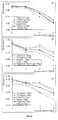
Fig. 1 is graphs depicting variations in moisture contents of rice cakes containing tagatose according to examples of the present invention and comparative examples during storage. In detail, graphs (A), (B), and (C) illustrate variations in moisture contents of the rice cakes containing 50 g, 100 g, and 150 g of sweeteners, respectively. -
Fig. 2 is graphs depicting variations in water activities of rice cakes containing tagatose according to examples of the present invention and comparative examples during storage. In detail, graphs (A), (B), and (C) illustrate variations in water activities of the rice cakes containing 50 g, 100 g, and 150 g of sweeteners, respectively. -
Fig. 3 is graphs depicting variations in hardness of rice cakes containing tagatose according to examples of the present invention and comparative examples during storage. In detail, graphs (A), (B), and (C) illustrate variations in hardness of the rice cakes containing 50 g, 100 g, and 150 g of sweeteners, respectively. -
Fig. 4 is graphs depicting variations in springiness of rice cakes containing tagatose according to examples of the present invention and comparative examples during storage. In detail, graphs (A), (B), and (C) illustrate variations in springiness of the rice cakes containing 50 g, 100 g, and 150 g of sweeteners, respectively. -
Fig. 5 is graphs depicting variations in cohesiveness of rice cakes containing tagatose according to examples of the present invention and comparative examples during storage. In detail, graphs (A), (B), and (C) illustrate variations in cohesiveness of the rice cakes containing 50 g, 100 g, and 150 g of sweeteners, respectively. -
Fig. 6 is graphs depicting variations in chewiness of rice cakes containing tagatose according to examples of the present invention and comparative examples during storage. In detail, graphs (A), (B), and (C) illustrate variations in chewiness of the rice cakes containing 50 g, 100 g, and 150 g of sweeteners, respectively. - Hereinafter, embodiments of the present invention will be described in more detail. Descriptions of details apparent to those skilled in the art will be omitted for clarity.
- One embodiment of the present invention provides a method of preparing a rice cake using tagatose in order to extend the storage period of the rice cake.
- D-tagatose is an isomer of fructose, which is known as a naturally occurring low-calorie monosaccharide. Tagatose is about 92% as sweet as sugar. However, tagatose has only about 38% of the calories of sugar and only 4% of a glycemic index (GI) of sugar and has thus become popular as a sugar substitute.
- Furthermore, the Food and Drug Administration (FDA) designated tagatose as generally recognized as safe (GRAS) and approved tagatose as a sweetener to be used for foods, drinks, health foods, diet additives, or the like. Tagatose is known to hardly have side effects for human consumption, and thus uses thereof are expected.
- The present invention provides the method of preparing the rice cake which uses tagatose in preparing a rice cake, thereby not only providing substantially the same sweetness as sugar and reducing calories to be relatively free from calorie counting but also suppressing retrogradation of starch in the rice cake and improving water retention to extend a storage period.
- Specifically, this embodiment provides a method of preparing a rice cake containing tagatose which includes mixing and kneading grain flour, salt, water, and tagatose; and heating and molding the dough.
- Hereinafter, each operation of the method according to this embodiment will be described in detail.
- Any method for mixing and/or kneading ingredients may be used, without being particularly limited. An unrestricted example may include subjecting the grain flour, salt and water to primary mixing and filtering with a sieve; and adding tagatose to the filtered primary mixture and subjecting the mixture to secondary mixing and kneading.
- The filtering with the sieve is performed using preferably a 20-mesh to 100-mesh sieve, more preferably a 30-mesh to 70-mesh sieve.
- The grain flour may include, without being particularly limited to, any grain flour generally used in the art. Unrestricted examples of the grain flour may include rice flour such as glutinous rice flour, non-glutinous rice flour, wheat-rice flour, millet flour, brown rice flour and black rice flour; potato flour; sorghum flow; corn flour; barley flour; wheat flour such as hard flour, soft flour and medium flour; or the like. These flours may be used alone or as a mixture.
- In this embodiment, the grain flour is preferably rice flour.
- Any method for obtaining the grain flour may be used. For example, commercially available grain flour may be may be obtained for direct use, or grains may be obtained and milled for use. According to an unrestricted example of obtaining grain flour by milling a grain, an obtained grain is soaked in water for about 2 to about 12 hours, drained for about 1 hour, and ground using a roller mill into grain flour, in which the number of grinding times may be adjusted as necessary.
- In the mixing and kneading according to this embodiment, the salt is present in an amount of 0.1 to 10 parts by weight, preferably 0.1 to 5 parts by weight, and more preferably 0.1 to 3 parts by weight based on 100 parts by weight of the grain flour. The water used is present in an amount of 30 to 70 parts by weight, preferably 40 to 60 parts by weight based on 100 parts by weight of the grain flour.
- Tagatose is present in an amount of 0.1 to 30 parts by weight, preferably 0.5 to 25 parts by weight, and more preferably 1 to 20 parts by weight. Within this range, sufficient effects of suppressing starch retrogradation and improving water retention by tagatose may be obtained.
- In the secondary mixing and kneading according to this embodiment, sugar and/or other sweeteners may additionally be used along with tagatose.
- The sugar is present in an amount of 0.1 to 30 parts by weight, preferably 0.5 to 20 parts by weight based on 100 parts by weight of the grain flour. Within this range, taste for the rice cake in view of sweetening level and flavor is improved in use of both tagatose and sugar as compared with in use of tagatose alone.
- The sweeteners may include any sweetener used in foods. Non-limiting examples of the sweeteners may include glucose, fructose, lactose, oligosaccharide, maltose, xylose, erythritol, indigestible maltodextrin, honey, steviol glycosides, or the like. These sweeteners may be used alone or as a mixture.
- The additional sweeteners are present in an amount of 0.1 to 30 parts by weight, preferably 0.5 to 20 parts by weight based on 100 parts by weight of the grain flour.
- In preparation of the rice cake according to this embodiment, an emulsifier and/or other additives may be further used in addition to the foregoing ingredients.
- Any emulsifier generally used for preparing food, such as rice cake or bread, may be available for this embodiment, without being particularly limited. Non-limiting examples of the emulsifier may include glycerol ester, propylene glycol ester, sucrose ester, sorbitan ester, monoglycerides, diglycerides, triglycerides, glycerin fatty acid ester, sucrose fatty acid ester, sorbitan fatty acid ester, propylene glycol fatty acid ester, polyoxyethylene sorbitan fatty acid ester, lecithin, or the like. These emulsifiers may be used alone or as a mixture.
- Other additives applicable to this embodiment may include a food stabilizer and/or moisture retention agent.
- Any food stabilizer generally used in food preparing may be used. Non-limiting examples of the food stabilizer may include alginate, sodium alginate, sodium propylene glycol alginate, casein, sodium caseinate, chondroitin sulfate, sodium chondroitin sulfate, cellulose, carboxy methyl cellulose, sodium carboxy methyl cellulose, sodium carboxy methyl starch, methyl cellulose, sodium polyacrylate, pectin, agar, gelatin, carrageenan, guar gum, tamarind gum, locust bean gum, arabic gum, xanthan gum, pullulan gum, gellan gum, welan gum, diutan gum, rhamsan gum, curdlan gum, furcellaran gum, tara gum, dextran, processed starch, sodium starch phosphate ester, chitosan, or the like. These stabilizers may be used alone or as a mixture.
- Any moisture retention agent generally used for food preparing may be available, without being particularly limited. An example of the moisture retention agent may include dextrin.
- Next, the aforementioned ingredients are mixed and kneaded into dough, which in turn is subjected to heating and molding, thereby preparing a rice cake containing tagatose.
- In detail, the heating and molding of the dough may include placing the rice cake dough in an earthenware steamer and heating the dough, and cooling and molding the rice cake prepared by heating.
- Heating the rice cake dough may be conducted by any method for preparing a rice cake generally used in the art, without being particularly limited. A non-limiting example of heating rice cake dough may be a method of placing rice cake dough in an earthenware steamer or the like and steaming the rice cake dough into a rice cake using steam heating.
- Cooling and molding the heated rice cake may be conducted by any method for cooling a rice cake generally used in the art, without being particularly limited. A non-limiting example of cooling a rice cake may be a method of leaving a heated rice cake, for example, at room temperature (about 25°C) to decrease the internal temperature of the rice cake.
- According to this embodiment, the method of preparing the rice cake containing tagatose is illustrated as follows.
- A commercially available grain is washed and soaked in water for about 2 to 12 hours. The soaked grain is drained for about 1 hour and ground with a grinder, such as a roller mill, one or more times as needed. Salt and water are added to the ground grain flour to conduct primary mixing. The primary mixture is filtered through an about 20-mesh to 100-mesh sieve, after which tagatose and/or sugar and other sweeteners are added to the resulting mixture to conduct secondary mixing and kneading. Next, the dough is placed in an earthenware steamer with a wet cotton cloth spread and is flattened, after which the dough is steamed in a steamer for about 30 minutes, with the earthenware steamer being covered with a wet cotton cloth, and is allowed to stand for about 10 minutes, thereby preparing a rice cake. Subsequently, the rice cake is taken out of the earthenware steamer and cooled to room temperature (about 25°C) for about 10 minutes to 1 hour, thereby producing a rice cake containing tagatose.
- Another embodiment of the present invention provides a rice cake composition containing tagatose which includes 100 parts by weight of grain flour, 0.1 to 10 parts by weight of salt, and 0.5 to 30 parts by weight of tagatose. The rice cake composition containing tagatose is the same as a rice cake composition used for the method of preparing the rice cake containing tagatose, and thus description thereof is not repeated herein.
- A further embodiment of the present invention provides a rice cake made by the method of preparing the rice cake containing tagatose and a rice cake containing tagatose made from the rice cake composition. The rice cake containing tagatose according to this embodiment has a daily average variation in moisture content of preferably 1 to 4%, more preferably 1 to 3%. The daily average variation in moisture content of the rice cake tends to decrease with increase in tagatose content. Thus, when the tagatose content is increased within the aforementioned preferable tagatose content range (0.1 to 30 parts by weight based on 100 parts by weight of grain flour), the daily average variation in moisture content is most preferably 1 to 2%. Within this range, moisture content of the rice cake relatively slowly decreases to reduce a rate of change in quality and texture of the rice cake, thereby extending a storage period of the rice cake.
- A method for measuring the moisture content of the rice cake may include any moisture content measurement method generally used in the art or similar arts. For example, a drying method by heating under ordinary pressure is preferably used to measure the moisture content.
- A drying method by heating under ordinary pressure is a moisture content measurement method of calculating, as moisture content, reduced weight of a sample when the sample reaches a constant weight by heating at a slightly higher temperature (for example 105°C) than the boiling point of water (100°C).
- In this embodiment, the daily average variation in moisture content is calculated by Equation 1:

where x is the moisture content of the rice cake measured immediately after preparation of the rice cake from the rice cake composition (that is, the moisture content on the 0th storage day (0 hours after preparation)), and y is the moisture content measured 5 days after preparation of the rice cake (that is, the moisture content on the fifth storage day (120 hours after preparation). - |x-y| is an absolute value of a difference between x and y.
- That is, the daily average variation in moisture content is a variation in moisture content of the rice cake during 5-day storage after preparation divided by 5 days.
- Further, the rice cake containing tagatose according to this embodiment has a daily average variation in water activity of preferably 1 to 8%, more preferably 1 to 6%, and most preferably 1 to 4%. The daily average variation in water activity of the rice cake tends to decrease with an increase in tagatose content. Thus, when the tagatose content is increased within the aforementioned preferable tagatose content range (0.1 to 30 parts by weight based on 100 parts by weight of grain flour), the daily average variation in water activity is most preferably 1 to 2%. Within this range, a rate of change in water activity of the rice cake relatively slowly decreases to maintain quality and texture of the rice cake for a considerable period of time, thereby extending the storage period of the rice cake.
- Water activity (Aw) is a ratio of vapor pressure (P) of water in food to vapor pressure (PO) of pure water at the same temperature (see Equation 2), which is known to be substantially associated with behaviors of microorganisms, particularly, saprogenic microorganisms, in foods.

- In the present invention, the daily average variation in water activity is calculated by Equation 3:

where x' is the water activity of the rice cake measured immediately after preparation of the rice cake with the rice cake composition (that is, the water activity on the 0th storage day (0 hours after preparation)), and y' is the water activity measured 5 days after preparation of the rice cake (that is, the water activity on the fifth storage day (120 hours after preparation). - |x'-y'| is an absolute value of a difference between x' and y'.
- That is, the daily average variation in water activity is a variation in water activity of the rice cake during 5-day storage after preparation divided by 5 days.
- The rice cake containing tagatose according to this embodiment has an initial water activity, measured immediately after preparation of the rice cake, which is relatively low as compared with those containing sugar and other sweeteners and thus is sanitarily advantageous by inhibiting activities of microorganisms to suppress food contamination.
- A method for measuring the water activity of the rice cake may include any water activity measurement method generally used in the art or similar fields. For example, a water activity meter (Aw meter, for example,
AquaLab Series 3 TE, AquaLab, US) is preferably used to measure the water activity. - The rice cake containing tagatose according to this embodiment preferably has a daily average variation in hardness of 50% to 130%, more preferably 50% to 120%, still more preferably 60% to 90%. Within this range, rate of an increase in hardness of the rice cake decreases to maintain the quality and texture of the rice cake for a relatively considerable period of time, thereby extending the storage period of the rice cake.
- Hardness is a measure of how hard a sample is, which represents a force needed to deform the sample to a certain degree. A method for measuring the hardness of the rice cake may include any hardness measurement method generally used in the art or similar fields. For example, a texture analyzer (for example, TA-XT2, Stable Micro Systems, Ltd., UK) is preferably used to measure the hardness of the rice cake.
- In this embodiment, the daily average variation in hardness of the rice cake is calculated by Equation 4:

where a is the hardness of the rice cake measured immediately after preparation of the rice cake with the rice cake composition (that is, the hardness on the 0th storage day (0 hours after preparation)), and b is the hardness measured 3 days after preparation of the rice cake (that is, the hardness on the third storage day (72 hours after preparation). - |a-b| is an absolute value of a difference between a and b.
- That is, the daily average variation in hardness is a variation in hardness of the rice cake during 3-day storage after preparation divided by 3 days.
- The rice cake containing tagatose according to this embodiment has a daily average variation in springiness of, preferably, 3 to 10%, more preferably 3 to 9%, and most preferably 4 to 6%. Within this range, springiness of the rice cake slowly decreases, reducing the rate of the change in quality and texture of the rice cake, thereby extending the storage period of the rice cake.
- Springiness refers to resilience defined as the ability of a sample to return to the original form after being deformed by an applied force. In this embodiment, the daily average variation in springiness of the rice cake is calculated by Equation 5:

where a' is the springiness of the rice cake measured immediately after preparation of the rice cake with the rice cake composition (that is, the springiness on the 0th storage day (0 hours after preparation)), and b' is the springiness measured 3 days after preparation of the rice cake (that is, the springiness on the third storage day (72 hours after preparation). - |a'-b'| is an absolute value of a difference between a' and b'.
- That is, the daily average variation in springiness is a variation in springiness of the rice cake during 3-day storage after preparation divided by 3 days.
- A method for measuring the springiness of the rice cake may include any springiness measurement method generally used in the art or similar fields. For example, a texture analyzer (for example, TA-XT2, Stable Micro Systems, Ltd., England) is preferably used to measure the springiness of the rice cake.
- The rice cake containing tagatose according to this embodiment has a daily average variation in cohesiveness of, preferably, 20 to 30%, more preferably 20 to 28%, and most preferably 20 to 27%. Within this range, cohesiveness of the rice cake relatively slowly decreases, reducing the rate of the change in quality and texture of the rice cake, thereby extending the storage period of the rice cake.
- Cohesiveness refers to a force maintaining an original form of a sample. In this embodiment, the daily average variation in cohesiveness of the rice cake is calculated by Equation 6:

where a" is the cohesiveness of the rice cake measured immediately after preparation of the rice cake with the rice cake composition (that is, the cohesiveness on the 0th storage day (0 hours after preparation)), and b" is the cohesiveness measured 3 days after preparation of the rice cake (that is, the cohesiveness on the third storage day (72 hours after preparation). - |a"-b"| is an absolute value of a difference between a" and b".
- That is, the daily average variation in cohesiveness is a variation in cohesiveness of the rice cake during 3-day storage after preparation divided by 3 days.
- A method for measuring the cohesiveness of the rice cake may include any cohesiveness measurement method generally used in the art or similar fields. For example, a texture analyzer (for example, TA-XT2, Stable Micro Systems, Ltd., England) is preferably used to measure the cohesiveness of the rice cake.
- The rice cake containing tagatose according to this embodiment has a daily average variation in chewiness of, preferably, 4 to 23%, more preferably 4 to 20%, and most preferably 4 to 15%. Within this range, chewiness of the rice cake relatively slowly decreases to reduce the rate of the change in quality and texture of the rice cake, and accordingly chewy texture of the rice cake is maintained for a considerable period of time after preparation, thereby extending the storage period of the rice cake.
- Chewiness refers to a force needed to render a solid sample swallowable. In this embodiment, the daily average variation in chewiness of the rice cake is calculated by Equation 7:

where, a"' is the chewiness of the rice cake measured immediately after preparation of the rice cake with the rice cake composition (that is, the chewiness on the 0th storage day (0 hours after preparation)), and b"' is the chewiness measured 3 days after preparation of the rice cake (that is, the chewiness on the third storage day (72 hours after preparation). - |a"'-b"'| is an absolute value of a difference between a" and b"'.
- That is, the daily average variation in chewiness is a variation in chewiness of the rice cake during 3-day storage after preparation divided by 3 days.
- A method for measuring the chewiness of the rice cake may include any chewiness measurement method generally used in the art or similar fields. For example, a texture analyzer (for example, TA-XT2, Stable Micro Systems, Ltd., England) is preferably used to measure the chewiness of the rice cake.
- Hereinafter, the present invention will be described in more detail with reference to examples, comparative examples and experimental examples. These examples are provided for illustrative purposes only and are not to be construed in any way as limiting the present invention.
- Commercially available rice (Imgeumnimpyo Incheon rice, National Agricultural Cooperative Federation Incheon City) was washed and soaked in water for 12 hours. The soaked rice was drained for about 1 hour and ground twice using a roller mill. 1 kg of the ground rice flour, 10 g of salt, and 500 g of water were subjected to primary mixing. The primary mixture was filtered with a 50-mesh sieve and mixed with 50 g of tagatose, followed by secondary mixing and kneading.
- Subsequently, the resulting dough was placed in a 15-cm-wide x 15-cm-long earthenware steamer with a wet cotton cloth spread and flattened to a thickness of 2 cm. Next, a line was drawn in the flattened dough to a 3-cm-wide x 3-cm-long and the earthenware steamer was covered with a wet cotton cloth, after which the dough was steamed in a steamer for 30 minutes and allowed to stand for 10 minutes to make a rice cake. The rice cake was taken out of the earthenware steamer and cooled to room temperature (25°C) for 20 minutes, thereby obtaining a 3-cm-wide x 3-cm-long x 2-cm-thick sample of a rice cake containing tagatose.
- A rice cake containing tagatose was prepared in the same manner as in Example 1 except that 100 g of tagatose was added in the secondary mixing and kneading of Example 1.
- A rice cake containing tagatose was prepared in the same manner as in Example 1 except that 150 g of tagatose was added in the secondary mixing and kneading of Example 1.
- A rice cake containing tagatose was prepared in the same manner as in Example 1 except that 25 g of tagatose and 25 g of sugar were added, instead of 50 g of tagatose, in the secondary mixing and kneading of Example 1.
- A rice cake containing tagatose was prepared in the same manner as in Example 1 except that 50 g of sugar was added in the secondary mixing and kneading of Example 1.
- A rice cake containing tagatose was prepared in the same manner as in Example 1 except that 75 g of tagatose and 75 g of sugar were added, instead of 50 g of tagatose, in the secondary mixing and kneading of Example 1.
- A rice cake containing tagatose was prepared in the same manner as in Example 1 except that 50 g of trehalose was added, instead of 50 g of tagatose, in the secondary mixing and kneading of Example 1.
- A rice cake containing tagatose was prepared in the same manner as in Example 1 except that 100 g of trehalose was added, instead of 50 g of tagatose, in the secondary mixing and kneading of Example 1.
- A rice cake containing tagatose was prepared in the same manner as in Example 1 except that 150 g of trehalose was added, instead of 50 g of tagatose, in the secondary mixing and kneading of Example 1.
- A rice cake containing tagatose was prepared in the same manner as in Example 1 except that 50 g of D-sorbitol was added, instead of 50 g of tagatose, in the secondary mixing and kneading of Example 1.
- A rice cake containing tagatose was prepared in the same manner as in Example 1 except that 100 g of D-sorbitol was added, instead of 50 g of tagatose, in the secondary mixing and kneading of Example 1.
- A rice cake containing tagatose was prepared in the same manner as in Example 1 except that 150 g of D-sorbitol was added, instead of 50 g of tagatose, in the secondary mixing and kneading of Example 1.
- A rice cake containing tagatose was prepared in the same manner as in Example 1 except that 50 g of sugar was added, instead of 50 g of tagatose, in the secondary mixing and kneading of Example 1.
- A rice cake containing tagatose was prepared in the same manner as in Example 1 except that 100 g of sugar was added, instead of 50 g of tagatose, in the secondary mixing and kneading of Example 1.
- A rice cake containing tagatose was prepared in the same manner as in Example 1 except that 150 g of sugar was added, instead of 50 g of tagatose, in the secondary mixing and kneading of Example 1.
- Compositions used in Examples 1 to 6 and Comparative Examples 1 to 9 are listed in Table 1.
TABLE 1 Composition(g) Basic composition Sweetener Rice flour Salt Water Tagatose Sugar Trehalose Sorbitol Example 1 1,000 10 500 50 - - - Example 2 100 - - - Example 3 150 - - - Example 4 25 25 - - Example 5 50 50 - - Example 6 75 75 - - Comparative Example 1 - - 50 - Comparative Example 2 - - 100 - Comparative Example 3 - - 150 - Comparative Example 4 - - - 50 Comparative Example 5 - - - 100 Comparative Example 6 - - - 150 Comparative Example 7 - 50 - - Comparative Example 8 - 100 - - Comparative Example 9 - 150 - - - The respective rice cake samples prepared in Examples 1 to 6 and Comparative Examples 1 to 9 were stored under the following conditions and subjected to the following experiments in order to evaluate storage properties thereof.
- The respective rice cake samples prepared in Examples 1 to 6 and Comparative Examples 1 to 9 were put in an airtight container (Desiccator) to prevent infiltration of moisture from the outside into the rice cake samples and stored for 3 to 5 days, while conducting the following experiments every day.
- The airtight container storing each rice cake sample was maintained under internal conditions of 33% RH and 25°C using a saturated salt solution (MgCl2). The set humidity is about half of Korean average annual humidity (about 65%), which is a severer condition for accelerating the experiments.
- To evaluate variations in moisture contents of the respective rice cake samples prepared in Examples 1 to 6 and Comparative Examples 1 to 9 during storage, the rice cake samples were stored under the foregoing storage conditions, while measuring the moisture contents of the respective rice cake samples every day for 5 days by a drying method by heating to 105°C under ordinary pressure. The moisture contents of the respective rice cake samples were measured five times a day, an average value of which was calculated.
- Experiment results are shown in Tables 2 and 3 and
Fig. 1 . In the following tables, measurements are listed according to sweetener contents of the rice cakes.TABLE 2 Sweetener Water content during storage (%) Immediately after preparation (0 day) 1 day 2 days 3 days 4 days 5 days Example 1 50 g of tagatose 39.1 37.9 37.0 35.9 5.0 33.5 Comparative Example 1 50 g of trehalose 39.4 38.2 37.2 36.1 35.0 33.5 Comparative Example 4 50 g of sorbitol 38.7 37.1 36.3 34.7 33.5 31.9 Comparative Example 7 50 g of sugar 39.0 36.9 36.3 35.0 33.3 31.1 Example 4 25 g of sugar + 25 g of tagatose 39.1 37.9 37.0 35.7 34.8 3.3 Example 2 100 g of tagatose 39.2 38.3 37.6 36.6 36.0 34.6 Comparative Example 2 100 g of trehalose 39.0 38.1 37.4 36.5 35.8 34.5 Comparative Example 5 100 g of sorbitol 38.8 37.7 36.8 35.9 35.0 33.3 Comparative Example 8 100 g of sugar 38.4 37.2 36.3 35.3 34.2 32.2 Example 5 50 g of sugar + 50 g of tagatose 39.0 38.3 37.4 36.3 35.5 34.2 Example 3 150 g of tagatose 39.2 38.9 38.9 38.4 37.7 36.0 Comparative Example 3 150 g of trehalose 38.6 38.4 38.3 37.8 37.4 35.4 Comparative Example 6 150 g of sorbitol 39.1 38.2 38.1 37.4 36.4 33.5 Comparative Example 9 150 g of sugar 38.6 37.1 36.7 35.7 34.6 33.2 Example 6 75 g of sugar + 75 g of tagatose 38.9 38.7 38.2 37.8 36.8 35.6 TABLE 3 Sweetener Moisture content variation for 5 days Daily average variation in moisture content Reduced amount (%) (absolute value) Reduction rate (%) (compared to initial value) Reduced amount (%) (absolute value) Reduction rate (%) (compared to initial value) Example 1 50 g of tagatose 5.6 14.3 1.1 2.9 Comparative Example 1 50 g of trehalose 5.9 15.1 1.2 3.0 Comparative Example 4 50 g of sorbitol 6.8 17.5 1.4 3.5 Comparative Example 7 50 g of sugar 7.9 20.2 1.6 4.0 Example 4 25 g of sugar + 25 g of tagatose 5.7 14.7 1.1 2.9 Example 2 100 g of tagatose 4.6 11.7 0.9 2.3 Comparative Example 2 100 g of trehalose 4.5 11.5 0.9 2.3 Comparative Example 5 100 g of sorbitol 5.5 14.3 1.1 2.9 Comparative Example 8 100 g of sugar 6.2 16.1 1.2 3.2 Example 5 50 g of sugar + 50 g of tagatose 4.8 12.3 1.0 2.5 Example 3 150 g of tagatose 3.2 8.2 0.6 1.6 Comparative Example 3 150 g of trehalose 3.2 8.2 0.6 1.6 Comparative Example 6 150 g of sorbitol 5.6 14.4 1.1 2.9 Comparative Example 9 150 g of sugar 5.4 14.0 1.1 2.8 Example 6 75 g of sugar + 75 g of tagatose 3.3 8.5 0.7 1.7 - The measurement results shown in Tables 2 and 3 and
Fig. 1 show that the respective rice cake samples were similar in initial moisture content and all the samples decreased in moisture content overall with storage time. Further, it was commonly observed that moisture loss levels of the rice cakes tend to decrease with an increase in sweetener content. This tendency is considered to be due to an increase in sweetener content which leads to increasing actions of OH- groups, so that the sweeteners have a stronger bonding force with moisture to improve water retention. - On the other hand, the moisture loss levels were significantly different depending on kinds of the sweeteners used for the respective rice cake samples and became more distinctly different with a longer period of storage. In detail, when comparing the rice cake samples using equivalent amounts of the sweeteners (classified into three cases of 50 g, 100 g, and 150 g), the rice cake samples using tagatose in all the three cases showed the least moisture loss on the fifth storage day after preparation.
- Trehalose was evaluated as a sweetener showing next excellent water retention following tagatose. However, tagatose has a sweetening level about 92% of that of sugar, whereas trehalose has a sweetening level merely about 45% of that of sugar, and accordingly it is considered inappropriate to use trehalose as a main sweetener for preparation of a rice cake.
- To evaluate variation in water activities of the respective rice cake samples prepared in Examples 1 to 6 and Comparative Examples 1 to 9 during storage, the rice cake samples were stored under the foregoing storage conditions, while measuring the water activities of the respective rice cake samples every day for 5 days using a water activity meter (Aw meter,
AquaLab Series 3 TE, AquaLab, US). The water activities were measured on the respective samples put in sample cups at 26°C in equilibrium of relative humidity using the water activity meter from which inside impurities were thoroughly removed. The water activities of the respective rice cake samples were measured three times a day, an average value of which was calculated. - Experiment results are shown in Tables 4 and 5 and
Fig. 2 .TABLE 4 Sweetener Water activity during storage Immediately after preparation (0 day) 1 day 2 days 3 days 4 days 5 days Example 1 50 g of tagatose 0.952 0.899 0.877 0.825 0.752 0.711 Comparative Example 1 50 g of trehalose 0.954 0.885 0.891 0.842 0.774 0.722 Comparative Example 4 50 g of sorbitol 0.954 0.871 0.821 0.784 0.624 0.557 Comparative Example 7 50 g of sugar 0.958 0.863 0.822 0.736 0.543 0.500 Example 4 25 g of sugar + 25 g of tagatose 0.954 0.912 0.884 0.826 0.713 0.695 Example 2 100 g of tagatose 0.939 0.929 0.896 0.837 0.789 0.756 Comparative Example 2 100 g of trehalose 0.945 0.921 0.916 0.871 0.833 0.807 Comparative Example 5 100 g of sorbitol 0.952 0.920 0.820 0.795 0.623 0.600 Comparative Example 8 100 g of sugar 0.956 0.934 0.868 0.750 0.561 0.511 Example 5 50 g of sugar + 50 g of tagatose 0.942 0.927 0.905 0.822 0.777 0.742 Example 3 150 g of tagatose 0.926 0.935 0.941 0.895 0.885 0.839 Comparative Example 3 150 g of trehalose 0.939 0.943 0.929 0.895 0.875 0.861 Comparative Example 6 150 g of sorbitol 0.947 0.929 0.909 0.794 0.659 0.594 Comparative Example 9 150 g of sugar 0.950 0.929 0.897 0.778 0.589 0.552 Example 6 75 g of sugar + 75 g of tagatose 0.942 0.926 0.915 0.882 0.862 0.841 TABLE 5 Sweetener Water activity variation for 5 days Daily average variation in water activity Reduced amount (absolute value) Reduction rate (%) (compared to initial value) Reduced amount (absolute value) Reduction rate (%) (compared to initial value) Example 1 50 g of tagatose 0.242 25.4 0.048 5.1 Comparative Example 1 50 g of trehalose 0.232 24.3 0.046 4.9 Comparative Example 4 50 g of sorbitol 0.397 41.6 0.079 8.3 Comparative Example 7 50 g of sugar 0.458 47.8 0.092 9.6 Example 4 25 g of sugar + 25 g of tagatose 0.259 27.1 0.052 5.4 Example 2 100 g of tagatose 0.184 19.6 0.037 3.9 Comparative Example 2 100 g of trehalose 0.138 14.6 0.028 2.9 Comparative Example 5 100 g of sorbitol 0.351 36.9 0.070 7.4 Comparative Example 8 100 g of sugar 0.445 46.6 0.089 9.3 Example 5 50 g of sugar + 50 g of tagatose 0.200 21.2 0.040 4.2 Example 3 150 g of tagatose 0.087 9.4 0.017 1.9 Comparative Example 3 150 g of trehalose 0.077 8.2 0.015 1.6 Comparative Example 6 150 g of sorbitol 0.353 37.3 0.071 7.5 Comparative Example 9 150 g of sugar 0.398 41.9 0.080 8.4 Example 6 75 g of sugar + 75 g of tagatose 0.100 10.6 0.020 2.1 - The measurement results shown in Tables 4 and 5 and
Fig. 2 show that all the samples decreased in water activity overall with storage time. In detail, the rice cakes containing tagatose had lowest initial water activities immediately after preparation of the rice cake and thus were the most sanitary against microorganism growth, and the rice cake samples containing the other sweeteners were similar in initial water activity. - On the other hand, the rice cakes respectively containing tagatose and trehalose alone, and the rice cakes containing tagatose and sugar together tended to decrease in water activity with an increase in sweetener content. The rice cakes respectively containing sorbitol and sugar alone also tended to decrease in water activity with an increase in sweetener content, in which the decrease in water activity were not remarkable as compared with those of the foregoing three cases.
- Variations in water activity became more distinctly different depending on kinds of the sweeteners used for the respective rice cake samples with a longer period of storage. In detail, when comparing the rice cake samples using equivalent amounts of the sweeteners (classified into three cases of 50 g, 100 g, and 150 g), the rice cake samples using trehalose and tagatose in all three cases showed the least decrease in water activity on the fifth storage day after preparation. However, trehalose has a sweetening level merely about 45% of that of sugar, and accordingly it is considered inappropriate to use trehalose as a main sweetener for preparation of a rice cake.
- Obviously, the rice cakes containing sugar alone had the greatest decrease in water activity, whereas the rice cakes containing sugar and tagatose together maintained a substantial level of water activity.
- To evaluate variations in texture of the respective rice cake samples prepared in Examples 1 to 6 and Comparative Examples 1 to 9 during storage, the rice cake samples were stored under the foregoing storage conditions, while conducting texture profile analysis to measure hardness, springiness, cohesiveness, and chewiness of the respective rice cake samples every day for 3 days using a texture analyzer (TA-XT2, Stable Micro Systems, Ltd., England).
- Texture profile analysis was carried out using the texture analyzer under the following conditions listed in Table 6, in which the rice cake samples were subjected to a two-bite compression test using a cylindrical probe with a diameter of 50 mm. The variations in texture of the respective rice cake samples were evaluated eight times a day for 3 days, an average value of which was calculated.
- Experimental results are shown in Tables 7 to 12 and
Figs. 3 to 6 .TABLE 6 Parameter Condition Sample size 3×3×2 cm3 Probe Cylinder-shaped with diameter of 50 mm Test type TPA Measurement type Two-bite compression test Distance 50% strain Pre-test speed 5 mm/sec Test speed 1 mm/sec Post-test speed 5 mm/sec Time 3 seconds Measured properties Hardness, springiness, cohesiveness, chewiness TABLE 7 Sweetener Hardness during storage Immediately after preparation (0 day) 1 day 2 days 3 days Example 1 50 g of tagatose 862.6 1594.5 2378.0 2482.3 Comparative Example 1 50 g of trehalose 980.9 1758.2 3746.0 4854.2 Comparative Example 4 50 g of sorbitol 1092.7 2537.5 4572.7 5606.5 Comparative Example 7 50 g of sugar 1084.7 2447.3 4113.2 5236.4 Example 4 25 g of sugar + 25 g of tagatose 923.1 2122.2 3532.0 4232.2 Example 2 100 g of tagatose 673.2 1495.0 2583.0 2395.6 Comparative Example 2 100 g of trehalose 788.3 1574.3 3257.5 3371.0 Comparative Example 5 100 g of sorbitol 942.7 2086.4 3711.6 5022.4 Comparative Example 8 100 g of sugar 1072.7 2276.5 3338.1 4862.3 Example 5 50 g of sugar + 50 g of tagatose 791.3 1621.2 2942.2 3721.2 Example 3 150 g of tagatose 621.4 1057.0 2190.9 2297.4 Comparative Example 3 150 g of trehalose 637.6 1172.0 2856.7 3274.5 Comparative Example 6 150 g of sorbitol 977.9 1878.2 4492.3 4547.0 Comparative Example 9 150 g of sugar 1125.7 1456.2 3131.8 3905.9 Example 6 75 g of sugar + 75 g of tagatose 751.2 1264.2 2389.2 2721.0 TABLE 8 Sweetener Springiness during storage Immediately after preparation (0 day) 1 day 2 days 3 days Example 1 50 g of tagatose 0.84 0.86 0.78 0.71 Comparative Example 1 50 g of trehalose 0.84 0.83 0.70 0.62 Comparative Example 4 50 g of sorbitol 0.86 0.85 0.78 0.64 Comparative Example 7 50 g of sugar 0.87 0.85 0.74 0.60 Example 4 25 g of sugar + 25 g of tagatose 0.86 0.85 0.75 0.61 Example 2 100 g of tagatose 0.82 0.78 0.79 0.68 Comparative Example 2 100 g of trehalose 0.88 0.74 0.81 0.71 Comparative Example 5 100 g of sorbitol 0.84 0.70 0.73 0.58 Comparative Example 8 100 g of sugar 0.85 0.73 0.68 0.60 Example 5 50 g of sugar + 50 g of tagatose 0.84 0.75 0.74 0.63 Example 3 150 g of tagatose 0.87 0.88 0.82 0.74 Comparative Example 3 150 g of trehalose 0.82 0.84 0.85 0.70 Comparative Example 6 150 g of sorbitol 0.85 0.80 0.69 0.59 Comparative Example 9 150 g of sugar 0.91 0.83 0.70 0.65 Example 6 75 g of sugar + 75 g of tagatose 0.89 0.84 0.75 0.68 TABLE 9 Sweetener Cohesiveness during storage Immediately after preparation (0 day) 1 day 2 days 3 days Example 1 50 g of tagatose 0.70 0.49 0.15 0.12 Comparative Example 1 50 g of trehalose 0.69 0.37 0.15 0.11 Comparative Example 4 50 g of sorbitol 0.73 0.43 0.13 0.06 Comparative Example 7 50 g of sugar 0.72 0.40 0.10 0.09 Example 4 25 g of sugar + 25 g of tagatose 0.70 0.42 0.12 0.07 Example 2 100 g of tagatose 0.74 0.54 0.18 0.15 Comparative Example 2 100 g of trehalose 0.75 0.53 0.20 0.13 Comparative Example 5 100 g of sorbitol 0.79 0.49 0.11 0.06 Comparative Example 8 100 g of sugar 0.76 0.40 0.11 0.09 Example 5 50 g of sugar + 50 g of tagatose 0.75 0.48 0.12 0.09 Example 3 150 g of tagatose 0.76 0.65 0.26 0.21 Comparative Example 3 150 g of trehalose 0.78 0.63 0.24 0.19 Comparative Example 6 150 g of sorbitol 0.72 0.33 0.08 0.06 Comparative Example 9 150 g of sugar 0.75 0.59 0.16 0.08 Example 6 75 g of sugar + 75 g of tagatose 0.76 0.63 0.18 0.14 TABLE 10 Sweetener Chewiness during storage Immediately after preparation (0 day) 1 day 2 days 3 days Example 1 50 g of tagatose 504.7 672.6 287.1 207.3 Comparative Example 1 50 g of trehalose 566.9 565.5 233.8 146.1 Comparative Example 4 50 g of sorbitol 684.0 925.7 471.4 223.1 Comparative Example 7 50 g of sugar 679.9 829.2 298.7 267.0 Example 4 25 g of sugar + 25 g of tagatose 555.9 754.2 309.4 187.5 Example 2 100 g of tagatose 406.3 626.3 368.5 239.9 Comparative Example 2 100 g of trehalose 516.2 612.3 535.2 304.6 Comparative Example 5 100 g of sorbitol 624.1 719.4 308.2 166.1 Comparative Example 8 100 g of sugar 692.0 667.1 251.3 247.9 Example 5 50 g of sugar + 50 g of tagatose 502.2 589.8 269.4 215.3 Example 3 150 g of tagatose 410.5 603.5 465.3 347.9 Comparative Example 3 150 g of trehalose 404.7 618.7 587.0 430.2 Comparative Example 6 150 g of sorbitol 605.9 496.2 237.1 149.0 Comparative Example 9 150 g of sugar 767.3 713.3 360.2 208.1 Example 6 75 g of sugar + 75 g of tagatose 512.0 671.9 330.9 252.2 TABLE 11 Sweetener Daily average variation in texture Hardness Springiness Variation amount (g force) (absolute value) Variation rate (%) (compared to initial value) Variation amount (absolute value) Variation rate (%) (compared to initial value) Example 1 50 g of tagatose 539.9 62.6 0.043 5.2 Comparative Example 1 50 g of trehalose 1291.1 131.6 0.075 8.9 Comparative Example 4 50 g of sorbitol 1504.6 137.7 0.071 8.3 Comparative Example 7 50 g of sugar 1383.9 127.6 0.092 10.5 Example 4 25 g of sugar + 25 g of tagatose 1103.0 119.5 0.084 9.7 Example 2 100 g of tagatose 574.1 85.3 0.045 5.5 Comparative Example 2 100 g of trehalose 860.9 109.2 0.056 6.4 Comparative Example 5 100 g of sorbitol 1359.9 144.3 0.087 10.4 Comparative Example 8 100 g of sugar 1263.2 117.8 0.084 9.9 Example 5 50 g of sugar + 50 g of tagatose 976.7 123.4 0.070 8.3 Example 3 150 g of tagatose 558.7 89.9 0.045 5.2 Comparative Example 3 150 g of trehalose 879.0 137.9 0.038 4.7 Comparative Example 6 150 g of sorbitol 1189.7 121.7 0.089 10.4 Comparative Example 9 150 g of sugar 926.7 82.3 0.087 9.6 Example 6 75 g of sugar + 75 g of tagatose 656.6 87.4 0.069 7.7 TABLE 12 Sweetener Daily average variation in texture Cohesiveness Chewiness Variation amount (absolute value) Variation rate (%) (compared to initial value) Variation amount (g force) (absolute value) Variation rate (%) (compared to initial value) Example 1 50 g of tagatose 0.194 27.7 99.1 19.6 Comparative Example 1 50 g of trehalose 0.191 27.8 140.3 24.7 Comparative Example 4 50 g of sorbitol 0.223 30.5 153.6 22.5 Comparative Example 7 50 g of sugar 0.211 29.4 137.6 20.2 Example 4 25 g of sugar + 25 g of tagatose 0.209 29.9 122.8 22.1 Example 2 100 g of tagatose 0.198 26.7 55.5 13.7 Comparative Example 2 100 g of trehalose 0.207 27.6 70.5 13.7 Comparative Example 5 100 g of sorbitol 0.244 30.9 152.7 24.5 Comparative Example 8 100 g of sugar 0.225 29.6 148.0 21.4 Example 5 50 g of sugar + 50 g of tagatose 0.221 29.3 95.6 19.0 Example 3 150 g of tagatose 0.184 24.3 20.9 5.1 Comparative Example 3 150 g of trehalose 0.196 25.3 8.5 2.1 Comparative Example 6 150 g of sorbitol 0.223 30.8 152.3 25.1 Comparative Example 9 150 g of sugar 0.221 29.7 186.4 24.3 Example 6 75 g of sugar + 75 g of tagatose 0.210 27.4 86.6 16.9 - The measurement results shown in Tables 7 to 12 and
Figs. 3 to 6 show that the samples increased in hardness and decreased in springiness, cohesiveness, and chewiness overall with storage time. - Specifically, as for hardness, the rice cakes containing tagatose least increased in hardness, whereas the rice cakes containing sorbitol showed the greatest increase in hardness. It is known that hardness of starchy foods increases as amylase and amylopectin in the food are recrystallized to form a micelle. An increase in hardness is a typical indicator of retrogradation of starch and is one of determining factors affecting change in texture of a product.
- As for springiness, the respective samples showed different tendencies depending on sweeteners, but all the samples decreased in springiness on the third storage day as compared with initial springiness. Specifically, the rice cakes containing tagatose least decreased in springiness, whereas the rice cakes containing sorbitol or sugar showed the greatest decrease in springiness.
- As for cohesiveness, all the samples had similar decreasing tendencies, in which the rice cakes containing tagatose least decreased in cohesiveness, whereas the rice cakes containing sorbitol showed the greatest decrease in cohesiveness.
- As for chewiness, the respective samples showed different variation tendencies depending on sweeteners. On the third storage day, among the rice cakes containing 150 g of the sweeteners, the rice cake containing trehalose least decreased in chewiness, followed by the rice cake containing tagatose. The rice cake containing sorbitol showed the greatest decrease in chewiness.
- Overall, the rice cakes containing tagatose had an insignificant variation in texture during storage as compared with those containing the other sweeteners and thus maintained excellent initial physical properties and texture.
- Sensory evaluation was carried out to evaluate texture and taste for the rice cakes prepared in the examples and comparative examples. In the sensory evaluation, 15 men and women tasted five rice cake samples prepared in Example 2 (containing 100 g of tagatose), Example 5 (containing 50 g of tagatose and 50 g of sugar), Comparative Example 2 (containing 100 g of trehalose), Comparative Example 5 (containing 100 g of sorbitol), and Comparative Example 8 (containing 100 g of sugar) and rated the samples according to category.
- Specifically, in a first stage of the sensory evaluation, the samplers were allowed to chew the rice cake samples with front teeth and evaluated hardness and moistness of each rice cake sample. In a second stage, the samplers were allowed to chew the samples with molars and evaluated chewiness. In a third stage, the samplers were allowed to appreciate flavor of the rice cake samples to evaluate sweetness and bitterness. Evaluation results were collected to obtain overall tastes. The samplers rated the samples on scale of 1 to 9, in which 9 represented a highest level of each physical property.
- The sensory evaluation was carried out twice in total, once immediately after preparation of the rice cake samples and once after 24-hour storage of the rice cake samples.
- Sensory evaluation results are shown in Table 13.
TABLE 13 Sample Sweetener Hardness Moistness Chewiness Sweetness Bitterness Overall preference 0 h 24 h 0 h 24 h 0 h 24 h 0 h 24 h 0 h 24 h 0 h 24 h Example 2 100 g of tagatose 4.73 5.21 7.67 6.34 6.33 7.29 6.07 6.00 1.87 1.99 6.13 5.91 Example 5 50 g of tagatose + 50 g of sugar 4.81 5.86 7.23 6.27 6.64 7.15 6.39 6.31 1.54 1.51 6.49 6.01 Comparative Example 2 100 g of trehalose 4.53 5.48 7.27 5.80 6.07 7.05 2.53 2.17 2.53 2.32 5.47 5.03 Comparative Example 5 100 g of sorbitol 6.93 8.99 5.93 3.14 8.00 9.31 3.47 2.39 2.60 3.26 4.40 3.19 Comparative Example 8 100g of sugar 6.27 8.34 5.67 3.39 7.20 8.36 6.47 6.39 2.07 2.49 6.67 5.84 - The sensory evaluation results shown in Table 13 show that, as for hardness and moistness, the rice cakes containing tagatose or trehalose had soft and moist texture as compared with the other rice cakes. In addition, the rice cake containing tagatose least increased in hardness after 24-hour storage.
- Chewiness exhibited similar evaluation results to those of hardness overall, and sweetness and bitterness showed a similar tendency to that of sweetening levels of the respective sweeteners used for the rice cake samples.
- According to the results, the rice cake containing trehalose was evaluated to have excellent hardness, moistness, and chewiness in similar levels to those of the rice cake containing tagatose but obtained an unsatisfactory result in sweetness and bitterness due to a considerably low sweetening level. Consequently, the rice cake containing trehalose received a substantially low evaluation in overall preference as compared with the rice cake containing tagatose.
- According to the sensory evaluation, the rice cake containing tagatose of the present invention had excellent texture and preference immediately after preparation and involved an insignificant quality change during storage, as compared with use of other sweeteners, thereby providing superior texture and preference over storage time. This is considered attributable to tagatose which, with excellent water retention, suppressed a change in moisture of the rice cake and retrogradation of starch during storage, contributing to maintaining quality of the rice cake. In addition, it is expected that a rice cake will be prepared with a suppressed change in texture, such as hardness and moistness, an improved sweetening level, and a higher preference by using appropriately adjusted amounts of tagatose and sugar together.
Claims (21)
- A method of preparing a rice cake containing tagatose, comprising:mixing and kneading 100 parts by weight of grain flour, 0.1 to 10 parts by weight of salt, 30 to 70 parts by weight of water, and 0.1 to 30 parts by weight of tagatose to form a dough; andheating and molding the dough.
- The method according to claim 1, wherein the mixing and kneading is performed using 1 to 20 parts by weight of tagatose.
- The method according to claim 1, wherein the mixing and kneading comprises:subjecting the grain flour, salt, and water to primary mixing and filtering with a sieve; andadding the tagatose to a filtered primary mixture, followed by subjecting the mixture to secondary mixing and kneading.
- The method according to claim 1, wherein the grain flour comprises at least one selected from the group consisting of rice flour, potato flour, sorghum flour, corn flour, barley flour, and wheat flour.
- The method according to claim 1, wherein 0.1 to 30 parts by weight of sugar is further added in the mixing and kneading.
- The method according to claim 1, wherein at least one sweetener selected from the group consisting of glucose, fructose, lactose, oligosaccharide, maltose, xylose, erythritol, indigestible maltodextrin, honey, and steviol glycosides is further added in the mixing and kneading.
- The method according to claim 6, wherein 0.1 to 30 parts by weight of the sweetener is added in the mixing and kneading.
- A rice cake containing tagatose prepared by the method according to any one of claims 1 to 7.
- A rice cake composition containing tagatose comprising:100 parts by weight of grain flour, 0.1 to 10 parts by weight of salt, and 0.1 to 30 parts by weight of tagatose.
- The rice cake composition containing tagatose according to claim 9, wherein the tagatose is present in an amount of 1 to 20 parts by weight.
- The rice cake composition containing tagatose according to claim 9, wherein the grain flour comprises at least one selected from the group consisting of rice flour, potato flour, sorghum flour, corn flour, barley flour, and wheat flour.
- The rice cake composition containing tagatose according to claim 9, further comprising: 0.1 to 30 parts by weight of sugar.
- The rice cake composition containing tagatose according to claim 9, further comprising: at least one sweetener selected from the group consisting of glucose, fructose, lactose, oligosaccharide, maltose, xylose, erythritol, indigestible maltodextrin, honey, and steviol glycosides.
- The rice cake composition containing tagatose according to claim 13, wherein the sweetener is present in an amount of 0.1 to 30 parts by weight.
- A rice cake containing tagatose prepared using the rice cake composition containing tagatose according to any one of claims 9 to 14.
- The rice cake containing tagatose according to claim 8 or 15, wherein the rice cake containing tagatose has a daily average variation in moisture content of 1 to 4%.
- The rice cake containing tagatose according to claim 8 or 15, wherein the rice cake containing tagatose has a daily average variation in water activity of 1 to 8%.
- The rice cake containing tagatose according to claim 8 or 15, wherein the rice cake containing tagatose has a daily average variation in hardness of 50 to 130%.
- The rice cake containing tagatose according to claim 8 or 15, wherein the rice cake containing tagatose has a daily average variation in springiness of 3 to 10%.
- The rice cake containing tagatose according to claim 8 or 15, wherein the rice cake containing tagatose has a daily average variation in cohesiveness of 20 to 30%.
- The rice cake containing tagatose according to claim 8 or 15, wherein the rice cake containing tagatose has a daily average variation in chewiness of 4 to 23%.
Applications Claiming Priority (2)
| Application Number | Priority Date | Filing Date | Title |
|---|---|---|---|
| KR20120151876A KR101490969B1 (en) | 2012-12-24 | 2012-12-24 | Rice cake composition containing d-tagatose, rice cake using the composition, and menufacturing method thereof |
| PCT/KR2013/012053 WO2014104691A1 (en) | 2012-12-24 | 2013-12-24 | Tteok composition containing tagatose, tteok using same, and preparation method therefor |
Publications (3)
| Publication Number | Publication Date |
|---|---|
| EP2936998A1 true EP2936998A1 (en) | 2015-10-28 |
| EP2936998A4 EP2936998A4 (en) | 2016-08-10 |
| EP2936998B1 EP2936998B1 (en) | 2017-12-13 |
Family
ID=51021664
Family Applications (1)
| Application Number | Title | Priority Date | Filing Date |
|---|---|---|---|
| EP13868344.6A Active EP2936998B1 (en) | 2012-12-24 | 2013-12-24 | Rice cake composition containing tagatose, rice cake using same, and preparation method therefor |
Country Status (5)
| Country | Link |
|---|---|
| EP (1) | EP2936998B1 (en) |
| JP (1) | JP5998293B2 (en) |
| KR (1) | KR101490969B1 (en) |
| CN (2) | CN104883903A (en) |
| WO (1) | WO2014104691A1 (en) |
Families Citing this family (8)
| Publication number | Priority date | Publication date | Assignee | Title |
|---|---|---|---|---|
| KR101753853B1 (en) | 2015-07-09 | 2017-07-04 | 김남중 | The baked rice cake-bread and the preparation methodthereof |
| CN107467492A (en) * | 2017-08-08 | 2017-12-15 | 合肥康桥工贸有限公司 | A kind of saccharide-controlled wheat flour |
| KR102521024B1 (en) * | 2017-10-31 | 2023-04-13 | 씨제이제일제당 주식회사 | A furikake comprising tagatose and method for preparation thereof |
| KR102508158B1 (en) * | 2018-12-24 | 2023-03-08 | 이진호 | Manufacturing Method of Rice Cake containing Glucose Syrup for Extension of Storage and the said Rice Cake with Sauce |
| KR102267323B1 (en) * | 2019-03-07 | 2021-06-21 | 임철준 | Composition for instant rice cake and method for preparing instant rice cake using the same |
| KR102288901B1 (en) * | 2019-03-29 | 2021-08-12 | 씨제이제일제당 주식회사 | Mixed sugar composition |
| CN115399435B (en) * | 2022-08-08 | 2025-01-07 | 广东省农业科学院蚕业与农产品加工研究所 | Anti-aging corn whole powder with high carotenoid retention rate and preparation method thereof |
| CN117643366A (en) * | 2023-12-27 | 2024-03-05 | 中原食品实验室 | Low-fat composite baked potato chip containing tagatose and preparation method thereof |
Family Cites Families (9)
| Publication number | Priority date | Publication date | Assignee | Title |
|---|---|---|---|---|
| KR100377212B1 (en) | 2000-08-22 | 2003-03-19 | 박충호 | Aging retarded grain cake and method for preparing the same |
| JP2002281906A (en) * | 2001-03-28 | 2002-10-02 | Kanebo Ltd | Mochi-like confectionery |
| WO2002087359A1 (en) * | 2001-04-27 | 2002-11-07 | Pepsico, Inc. | Use of erythritol and d-tagatose in diet or reduced-calorie beverages and food products |
| US20060068072A9 (en) * | 2001-04-27 | 2006-03-30 | Pepsico, Inc. | Use of erythritol and D-tagatose in diet or reduced-calorie beverages |
| KR100779160B1 (en) * | 2005-12-29 | 2007-11-28 | 주식회사 삼양제넥스 | Tagatose-containing low glycemic index mixed composition |
| DK2247196T3 (en) * | 2008-02-06 | 2015-02-16 | Senomyx Inc | Sweetener FORMATIONS AND PROCESSES FOR PREPARING THEM |
| KR101171258B1 (en) * | 2010-04-09 | 2012-08-07 | 씨제이제일제당 (주) | A method for manufacturing an artificial rice lowering a blood glucose level |
| KR101171196B1 (en) * | 2010-04-22 | 2012-08-07 | 정남농업협동조합 | Manufacturing method for preventing retrogradation of rice cake |
| KR20120037819A (en) | 2010-10-12 | 2012-04-20 | 류승현 | A method for manufacturing of rice cake with improved accetptance and antiaging |
-
2012
- 2012-12-24 KR KR20120151876A patent/KR101490969B1/en active Active
-
2013
- 2013-12-24 CN CN201380067626.8A patent/CN104883903A/en active Pending
- 2013-12-24 EP EP13868344.6A patent/EP2936998B1/en active Active
- 2013-12-24 WO PCT/KR2013/012053 patent/WO2014104691A1/en not_active Ceased
- 2013-12-24 JP JP2015549270A patent/JP5998293B2/en active Active
- 2013-12-24 CN CN201810088571.3A patent/CN108125098A/en active Pending
Non-Patent Citations (1)
| Title |
|---|
| See references of WO2014104691A1 * |
Also Published As
| Publication number | Publication date |
|---|---|
| KR20140082232A (en) | 2014-07-02 |
| EP2936998A4 (en) | 2016-08-10 |
| EP2936998B1 (en) | 2017-12-13 |
| WO2014104691A1 (en) | 2014-07-03 |
| CN108125098A (en) | 2018-06-08 |
| CN104883903A (en) | 2015-09-02 |
| JP2016501032A (en) | 2016-01-18 |
| KR101490969B1 (en) | 2015-02-06 |
| JP5998293B2 (en) | 2016-09-28 |
Similar Documents
| Publication | Publication Date | Title |
|---|---|---|
| EP2936998B1 (en) | Rice cake composition containing tagatose, rice cake using same, and preparation method therefor | |
| EP2939542B1 (en) | Baked confectionery | |
| JP5146783B2 (en) | Stuffing | |
| KR101311742B1 (en) | Composition for Manufacturing Gluten-free Fermented Rice Bread and Manufacturing Method Thereof | |
| CA2666954C (en) | Food composition having reduced fat and sugar content | |
| US20200392256A1 (en) | Starch with high dietary fiber content suitably usable in foods and beverages | |
| CN101744015A (en) | Grain powder composition | |
| Bhise et al. | Polyols to improve quality and shelf life of baked products: A review | |
| JPS60207542A (en) | Bread containing wxsu2 gene type starch as anti-caking agent | |
| KR101668880B1 (en) | Heat-stabilization of food antioxidant | |
| Ram | Production of spray-dried honey powder and its application in bread | |
| JP2014008028A (en) | Food product for easy mastication and swallowing | |
| IT201800005020A1 (en) | Composition based on fibers and its use for the preparation of food products | |
| KR20200116895A (en) | Liquid cake manufacturing composition, cake using the same, and manufacturing method thereof | |
| JP2022099934A (en) | Wheat flour for bread, mix for bread, bread, and production method of wheat flour for bread | |
| JP7663110B2 (en) | Pancakes and pancake premixes | |
| JP6105452B2 (en) | Bakery top dough | |
| CN111990630A (en) | Low-sugar syrup and preparation method thereof | |
| CN107846909A (en) | The filler and include these baked product that the baking of energy constant is stablized | |
| JP3015783B2 (en) | Production method of fermented flavor rice grain or rice flour and food containing | |
| KR101302446B1 (en) | Redbean sediment composition for Manggae rice cake and the method of preparation thereof | |
| JP2020146010A (en) | Dough for baked confectionery, and baked confectionery | |
| Sukhonthara | Using brown rice flour and alternative sweetener to reduce glycemic index in toddy palm cake | |
| KR100750952B1 (en) | Functional Baking Dough Composition Containing Germinated Buckwheat Powder, Bread and Method for Making the Same | |
| KR20160083756A (en) | Solid-food manufacturing method of parboiled rice |
Legal Events
| Date | Code | Title | Description |
|---|---|---|---|
| PUAI | Public reference made under article 153(3) epc to a published international application that has entered the european phase |
Free format text: ORIGINAL CODE: 0009012 |
|
| 17P | Request for examination filed |
Effective date: 20150713 |
|
| AK | Designated contracting states |
Kind code of ref document: A1 Designated state(s): AL AT BE BG CH CY CZ DE DK EE ES FI FR GB GR HR HU IE IS IT LI LT LU LV MC MK MT NL NO PL PT RO RS SE SI SK SM TR |
|
| AX | Request for extension of the european patent |
Extension state: BA ME |
|
| RIN1 | Information on inventor provided before grant (corrected) |
Inventor name: PARK, BYUNG GYU Inventor name: KIM, SEONG BO Inventor name: PARK, SEUNG WON Inventor name: KIM, YOUNG JAE Inventor name: CHOI, JONG MIN |
|
| DAX | Request for extension of the european patent (deleted) | ||
| RIC1 | Information provided on ipc code assigned before grant |
Ipc: A23L 3/3562 20060101ALI20160630BHEP Ipc: A21D 13/04 20060101ALI20160630BHEP Ipc: A23L 7/10 20160101AFI20160630BHEP |
|
| A4 | Supplementary search report drawn up and despatched |
Effective date: 20160708 |
|
| 17Q | First examination report despatched |
Effective date: 20170306 |
|
| REG | Reference to a national code |
Ref country code: DE Ref legal event code: R079 Ref document number: 602013030933 Country of ref document: DE Free format text: PREVIOUS MAIN CLASS: A23L0001100000 Ipc: A23L0007100000 |
|
| RIC1 | Information provided on ipc code assigned before grant |
Ipc: A23L 3/3562 20060101ALI20170616BHEP Ipc: A21D 13/04 20170101ALI20170616BHEP Ipc: A23L 7/10 20160101AFI20170616BHEP |
|
| GRAP | Despatch of communication of intention to grant a patent |
Free format text: ORIGINAL CODE: EPIDOSNIGR1 |
|
| INTG | Intention to grant announced |
Effective date: 20170821 |
|
| GRAS | Grant fee paid |
Free format text: ORIGINAL CODE: EPIDOSNIGR3 |
|
| GRAA | (expected) grant |
Free format text: ORIGINAL CODE: 0009210 |
|
| REG | Reference to a national code |
Ref country code: GB Ref legal event code: FG4D |
|
| REG | Reference to a national code |
Ref country code: AT Ref legal event code: REF Ref document number: 953511 Country of ref document: AT Kind code of ref document: T Effective date: 20171215 Ref country code: CH Ref legal event code: EP |
|
| REG | Reference to a national code |
Ref country code: FR Ref legal event code: PLFP Year of fee payment: 5 |
|
| REG | Reference to a national code |
Ref country code: IE Ref legal event code: FG4D |
|
| REG | Reference to a national code |
Ref country code: DE Ref legal event code: R096 Ref document number: 602013030933 Country of ref document: DE |
|
| REG | Reference to a national code |
Ref country code: NL Ref legal event code: MP Effective date: 20171213 |
|
| PG25 | Lapsed in a contracting state [announced via postgrant information from national office to epo] |
Ref country code: NO Free format text: LAPSE BECAUSE OF FAILURE TO SUBMIT A TRANSLATION OF THE DESCRIPTION OR TO PAY THE FEE WITHIN THE PRESCRIBED TIME-LIMIT Effective date: 20180313 Ref country code: FI Free format text: LAPSE BECAUSE OF FAILURE TO SUBMIT A TRANSLATION OF THE DESCRIPTION OR TO PAY THE FEE WITHIN THE PRESCRIBED TIME-LIMIT Effective date: 20171213 Ref country code: SE Free format text: LAPSE BECAUSE OF FAILURE TO SUBMIT A TRANSLATION OF THE DESCRIPTION OR TO PAY THE FEE WITHIN THE PRESCRIBED TIME-LIMIT Effective date: 20171213 |
|
| REG | Reference to a national code |
Ref country code: AT Ref legal event code: MK05 Ref document number: 953511 Country of ref document: AT Kind code of ref document: T Effective date: 20171213 |
|
| PG25 | Lapsed in a contracting state [announced via postgrant information from national office to epo] |
Ref country code: GR Free format text: LAPSE BECAUSE OF FAILURE TO SUBMIT A TRANSLATION OF THE DESCRIPTION OR TO PAY THE FEE WITHIN THE PRESCRIBED TIME-LIMIT Effective date: 20180314 Ref country code: RS Free format text: LAPSE BECAUSE OF FAILURE TO SUBMIT A TRANSLATION OF THE DESCRIPTION OR TO PAY THE FEE WITHIN THE PRESCRIBED TIME-LIMIT Effective date: 20171213 Ref country code: BG Free format text: LAPSE BECAUSE OF FAILURE TO SUBMIT A TRANSLATION OF THE DESCRIPTION OR TO PAY THE FEE WITHIN THE PRESCRIBED TIME-LIMIT Effective date: 20180313 Ref country code: HR Free format text: LAPSE BECAUSE OF FAILURE TO SUBMIT A TRANSLATION OF THE DESCRIPTION OR TO PAY THE FEE WITHIN THE PRESCRIBED TIME-LIMIT Effective date: 20171213 Ref country code: LV Free format text: LAPSE BECAUSE OF FAILURE TO SUBMIT A TRANSLATION OF THE DESCRIPTION OR TO PAY THE FEE WITHIN THE PRESCRIBED TIME-LIMIT Effective date: 20171213 |
|
| PG25 | Lapsed in a contracting state [announced via postgrant information from national office to epo] |
Ref country code: NL Free format text: LAPSE BECAUSE OF FAILURE TO SUBMIT A TRANSLATION OF THE DESCRIPTION OR TO PAY THE FEE WITHIN THE PRESCRIBED TIME-LIMIT Effective date: 20171213 |
|
| PG25 | Lapsed in a contracting state [announced via postgrant information from national office to epo] |
Ref country code: SK Free format text: LAPSE BECAUSE OF FAILURE TO SUBMIT A TRANSLATION OF THE DESCRIPTION OR TO PAY THE FEE WITHIN THE PRESCRIBED TIME-LIMIT Effective date: 20171213 Ref country code: CZ Free format text: LAPSE BECAUSE OF FAILURE TO SUBMIT A TRANSLATION OF THE DESCRIPTION OR TO PAY THE FEE WITHIN THE PRESCRIBED TIME-LIMIT Effective date: 20171213 Ref country code: ES Free format text: LAPSE BECAUSE OF FAILURE TO SUBMIT A TRANSLATION OF THE DESCRIPTION OR TO PAY THE FEE WITHIN THE PRESCRIBED TIME-LIMIT Effective date: 20171213 Ref country code: EE Free format text: LAPSE BECAUSE OF FAILURE TO SUBMIT A TRANSLATION OF THE DESCRIPTION OR TO PAY THE FEE WITHIN THE PRESCRIBED TIME-LIMIT Effective date: 20171213 Ref country code: CY Free format text: LAPSE BECAUSE OF FAILURE TO SUBMIT A TRANSLATION OF THE DESCRIPTION OR TO PAY THE FEE WITHIN THE PRESCRIBED TIME-LIMIT Effective date: 20171213 |
|
| REG | Reference to a national code |
Ref country code: CH Ref legal event code: PL |
|
| PG25 | Lapsed in a contracting state [announced via postgrant information from national office to epo] |
Ref country code: IS Free format text: LAPSE BECAUSE OF FAILURE TO SUBMIT A TRANSLATION OF THE DESCRIPTION OR TO PAY THE FEE WITHIN THE PRESCRIBED TIME-LIMIT Effective date: 20180413 Ref country code: RO Free format text: LAPSE BECAUSE OF FAILURE TO SUBMIT A TRANSLATION OF THE DESCRIPTION OR TO PAY THE FEE WITHIN THE PRESCRIBED TIME-LIMIT Effective date: 20171213 Ref country code: PL Free format text: LAPSE BECAUSE OF FAILURE TO SUBMIT A TRANSLATION OF THE DESCRIPTION OR TO PAY THE FEE WITHIN THE PRESCRIBED TIME-LIMIT Effective date: 20171213 Ref country code: AT Free format text: LAPSE BECAUSE OF FAILURE TO SUBMIT A TRANSLATION OF THE DESCRIPTION OR TO PAY THE FEE WITHIN THE PRESCRIBED TIME-LIMIT Effective date: 20171213 Ref country code: SM Free format text: LAPSE BECAUSE OF FAILURE TO SUBMIT A TRANSLATION OF THE DESCRIPTION OR TO PAY THE FEE WITHIN THE PRESCRIBED TIME-LIMIT Effective date: 20171213 Ref country code: IT Free format text: LAPSE BECAUSE OF FAILURE TO SUBMIT A TRANSLATION OF THE DESCRIPTION OR TO PAY THE FEE WITHIN THE PRESCRIBED TIME-LIMIT Effective date: 20171213 |
|
| REG | Reference to a national code |
Ref country code: FR Ref legal event code: PLFP Year of fee payment: 6 |
|
| REG | Reference to a national code |
Ref country code: DE Ref legal event code: R097 Ref document number: 602013030933 Country of ref document: DE |
|
| REG | Reference to a national code |
Ref country code: IE Ref legal event code: MM4A |
|
| PG25 | Lapsed in a contracting state [announced via postgrant information from national office to epo] |
Ref country code: MT Free format text: LAPSE BECAUSE OF NON-PAYMENT OF DUE FEES Effective date: 20171224 Ref country code: LU Free format text: LAPSE BECAUSE OF NON-PAYMENT OF DUE FEES Effective date: 20171224 Ref country code: MC Free format text: LAPSE BECAUSE OF FAILURE TO SUBMIT A TRANSLATION OF THE DESCRIPTION OR TO PAY THE FEE WITHIN THE PRESCRIBED TIME-LIMIT Effective date: 20171213 |
|
| REG | Reference to a national code |
Ref country code: BE Ref legal event code: MM Effective date: 20171231 |
|
| PLBE | No opposition filed within time limit |
Free format text: ORIGINAL CODE: 0009261 |
|
| STAA | Information on the status of an ep patent application or granted ep patent |
Free format text: STATUS: NO OPPOSITION FILED WITHIN TIME LIMIT |
|
| PG25 | Lapsed in a contracting state [announced via postgrant information from national office to epo] |
Ref country code: IE Free format text: LAPSE BECAUSE OF NON-PAYMENT OF DUE FEES Effective date: 20171224 |
|
| 26N | No opposition filed |
Effective date: 20180914 |
|
| PG25 | Lapsed in a contracting state [announced via postgrant information from national office to epo] |
Ref country code: CH Free format text: LAPSE BECAUSE OF NON-PAYMENT OF DUE FEES Effective date: 20171231 Ref country code: DK Free format text: LAPSE BECAUSE OF FAILURE TO SUBMIT A TRANSLATION OF THE DESCRIPTION OR TO PAY THE FEE WITHIN THE PRESCRIBED TIME-LIMIT Effective date: 20171213 Ref country code: LI Free format text: LAPSE BECAUSE OF NON-PAYMENT OF DUE FEES Effective date: 20171231 Ref country code: BE Free format text: LAPSE BECAUSE OF NON-PAYMENT OF DUE FEES Effective date: 20171231 |
|
| PG25 | Lapsed in a contracting state [announced via postgrant information from national office to epo] |
Ref country code: SI Free format text: LAPSE BECAUSE OF FAILURE TO SUBMIT A TRANSLATION OF THE DESCRIPTION OR TO PAY THE FEE WITHIN THE PRESCRIBED TIME-LIMIT Effective date: 20171213 |
|
| PG25 | Lapsed in a contracting state [announced via postgrant information from national office to epo] |
Ref country code: HU Free format text: LAPSE BECAUSE OF FAILURE TO SUBMIT A TRANSLATION OF THE DESCRIPTION OR TO PAY THE FEE WITHIN THE PRESCRIBED TIME-LIMIT; INVALID AB INITIO Effective date: 20131224 Ref country code: LT Free format text: LAPSE BECAUSE OF NON-PAYMENT OF DUE FEES Effective date: 20171213 |
|
| PG25 | Lapsed in a contracting state [announced via postgrant information from national office to epo] |
Ref country code: MK Free format text: LAPSE BECAUSE OF FAILURE TO SUBMIT A TRANSLATION OF THE DESCRIPTION OR TO PAY THE FEE WITHIN THE PRESCRIBED TIME-LIMIT Effective date: 20171213 |
|
| PG25 | Lapsed in a contracting state [announced via postgrant information from national office to epo] |
Ref country code: TR Free format text: LAPSE BECAUSE OF FAILURE TO SUBMIT A TRANSLATION OF THE DESCRIPTION OR TO PAY THE FEE WITHIN THE PRESCRIBED TIME-LIMIT Effective date: 20171213 |
|
| PG25 | Lapsed in a contracting state [announced via postgrant information from national office to epo] |
Ref country code: PT Free format text: LAPSE BECAUSE OF FAILURE TO SUBMIT A TRANSLATION OF THE DESCRIPTION OR TO PAY THE FEE WITHIN THE PRESCRIBED TIME-LIMIT Effective date: 20171213 |
|
| PG25 | Lapsed in a contracting state [announced via postgrant information from national office to epo] |
Ref country code: AL Free format text: LAPSE BECAUSE OF FAILURE TO SUBMIT A TRANSLATION OF THE DESCRIPTION OR TO PAY THE FEE WITHIN THE PRESCRIBED TIME-LIMIT Effective date: 20171213 |
|
| REG | Reference to a national code |
Ref country code: DE Ref legal event code: R082 Ref document number: 602013030933 Country of ref document: DE Representative=s name: CBDL PATENTANWAELTE GBR, DE Ref country code: DE Ref legal event code: R082 Ref document number: 602013030933 Country of ref document: DE Representative=s name: CBDL PATENTANWAELTE EGBR, DE |
|
| P01 | Opt-out of the competence of the unified patent court (upc) registered |
Effective date: 20230606 |
|
| PGFP | Annual fee paid to national office [announced via postgrant information from national office to epo] |
Ref country code: FR Payment date: 20250821 Year of fee payment: 13 |
|
| PGFP | Annual fee paid to national office [announced via postgrant information from national office to epo] |
Ref country code: DE Payment date: 20250820 Year of fee payment: 13 |
|
| PGFP | Annual fee paid to national office [announced via postgrant information from national office to epo] |
Ref country code: GB Payment date: 20251001 Year of fee payment: 13 |