EP2930639B1 - Multimodale biometrische profilierung - Google Patents
Multimodale biometrische profilierung Download PDFInfo
- Publication number
- EP2930639B1 EP2930639B1 EP15157771.5A EP15157771A EP2930639B1 EP 2930639 B1 EP2930639 B1 EP 2930639B1 EP 15157771 A EP15157771 A EP 15157771A EP 2930639 B1 EP2930639 B1 EP 2930639B1
- Authority
- EP
- European Patent Office
- Prior art keywords
- cover image
- biometric template
- biometric
- bit
- bits
- Prior art date
- Legal status (The legal status is an assumption and is not a legal conclusion. Google has not performed a legal analysis and makes no representation as to the accuracy of the status listed.)
- Active
Links
Images




Classifications
-
- G—PHYSICS
- G06—COMPUTING OR CALCULATING; COUNTING
- G06F—ELECTRIC DIGITAL DATA PROCESSING
- G06F21/00—Security arrangements for protecting computers, components thereof, programs or data against unauthorised activity
- G06F21/30—Authentication, i.e. establishing the identity or authorisation of security principals
- G06F21/31—User authentication
- G06F21/32—User authentication using biometric data, e.g. fingerprints, iris scans or voiceprints
-
- H—ELECTRICITY
- H04—ELECTRIC COMMUNICATION TECHNIQUE
- H04L—TRANSMISSION OF DIGITAL INFORMATION, e.g. TELEGRAPHIC COMMUNICATION
- H04L63/00—Network architectures or network communication protocols for network security
- H04L63/08—Network architectures or network communication protocols for network security for authentication of entities
- H04L63/0861—Network architectures or network communication protocols for network security for authentication of entities using biometrical features, e.g. fingerprint, retina-scan
Definitions
- Biometrics typically refers to the identification of humans by their physiological and/or behavioral characteristics or traits.
- physiological biometric characteristics or traits typically relate to face recognition, DNA, fingerprinting, palm printing, hand geometry, iris recognition, retina recognition, and odor/scent.
- behavioral biometric characteristics or traits are typically related to the pattern of behavior of a person, and include typing rhythm, gait, and voice.
- WO 2004/031920 A1 relates to a security system for controlling access to a computer system utilising a smartcard reader or encoder coupled to the computer system.
- a smartcard encoded with data is read using the smartcard reader or encoder.
- Authentication data from the smartcard reader or encoder is then checked to determine whether access to the computer system is granted or prohibited. If a determination is made to grant access, access to the computer system is granted.
- Biometric data is required from a user and must be identified with that of an authorised user before access is granted to the computer system.
- the smartcard encoded with details of biometric data is read, and actual biometric data is sensed.
- AGRAWAL N ET AL Biometric data hiding: A3 Factor authentication approach to verify identity with a single image using steganography, encryption and matching
- AGRAWAL N ET AL Biometric data hiding: A3 Factor authentication approach to verify identity with a single image using steganography, encryption and matching
- AGRAWAL N ET AL Biometric data hiding: A3 Factor authentication approach to verify identity with a single image using steganography, encryption and matching
- DCT Domain message embedding in Spread Spectrum Steganography describes a novel method of using redundancy in DCT coefficients.
- this method is improved upon the method of DCT embedding by using the sign of the DCT coefficients to get better accuracy of retrieved data and more robustness under channel attacks like channel noise and JPEG compression artifacts while maintaining the visual imperceptibility of cover image, and even extending the method further to obtain higher payloads.
- this method is applied for secure biometric data hiding, transmission and recovery. Iris code templates and fingerprints are hidden in the host image which can be any arbitrary image, such as face biometric modality and transmit the so formed imperceptible Stego-Image securely and robustly for authentication, and yet obtain perfect reconstruction and classification of iris codes and retrieval of fingerprints at the receiving end without any knowledge of the cover image i.e. a blind method of steganography, which in this case is used to hide biometric template in another biometric modality.
- the terms “a” and “an” are intended to denote at least one of a particular element.
- the term “includes” means includes but not limited to, the term “including” means including but not limited to.
- the term “based on” means based at least in part on.
- biometric profiling captured biometric information is typically stored in a secure environment for further analysis and verification, for example, of an unknown person's identity.
- an unauthorized entity may intercept the biometric information as it is being routed to a storage location, and thus obtain a person's biometric information.
- An unauthorized entity may also modify and/or otherwise tamper with the stored biometric information to prevent accurate verification of an unknown person's identity.
- the option to store biometric information along with other information related to a person, such as the person's cover image may also be limited due to the storage capacity of a database that may include biometric related information for thousands of individuals. Similarly, in the case of smart cards that have limited storage capacity, storage of biometric information along with other information related to a person may be limited.
- biometric information may include bandwidth related limitations on the amount of data that may be transmitted through a network. For example, it may be time consuming to transmit a relatively large amount of biometric data through a low bandwidth network. A person or an entity may also be opposed to having biometric data traverse through a network, based, for example, on privacy concerns.
- biometric profiling may be employed for facilitating international travel, bank automated teller machines, and even school lunch payments.
- biometric profiling may be employed for facilitating international travel, bank automated teller machines, and even school lunch payments.
- biometric profiling may be employed for facilitating international travel, bank automated teller machines, and even school lunch payments.
- Different applications that employ biometric profiling in such diverse areas may accept one or more of the aforementioned limitations of current biometric technologies.
- biometric template i.e., data related to physiological and/or behavioral characteristics or traits
- biometric data should be stored and transmitted in a secure manner.
- biometric profiling involves the use of cryptography as a mechanism for encryption of biometric templates.
- an encrypted biometric template is secure as long as the secret key is secure. Once the secret key is compromised, an unauthorized entity may modify and/or tamper with the encrypted biometric template.
- a multimodal biometric profiling system and a method for multimodal biometric profiling are disclosed herein, and address the aforementioned aspects related to biometric profiling by encrypting sensitive biometric data depending on a security requirement using steganography.
- security requirements may be categorized based on high security applications, medium security applications, and low security applications.
- High security applications may include, for example, defense applications, border control, etc.
- Medium security applications may include, for example, civilian applications, banking applications, etc.
- Low security applications may include, for example, time and attendance, forensic applications, etc.
- the system and method disclosed herein may employ steganography to secure a biometric template according to a security requirement, and to further conceal the existence of the biometric template.
- a plurality of multimodal biometric characteristics or traits may be combined into a single profile of a person, thus reducing the size of the overall biometric information.
- the system and method disclosed herein may provide for compression of sensitive data such that the sensitive date may be stored, for example, in a limited storage capacity of a portable token.
- the system and method disclosed herein may also provide for the concealment of the very existence of biometric data using steganography.
- a multimodal biometric profiling system may include a processor.
- An input module that is executed by the processor may receive a cover image (e.g., a facial or another image of a person) and a biometric template (e.g., a template that includes data related to physiological and/or behavioral characteristics or traits) for a person.
- a security requirement determination module that is executed by the processor may receive an indication of a security requirement (e.g., high security, medium security, or low security) related to biometric profiling for the person.
- a threshold determination module that is executed by the processor may determine a threshold value (e.g., y 1 or y 2 as described herein) based on the indicated security requirement.
- the threshold value may limit a number of biometric template bits of the biometric template that are embedded in a predetermined bit position (e.g., 6 th or 5 th bit position as described herein) of a cover image pixel of the cover image based on cover image intensity (e.g., percentage of cover image pixels in intensity range 192-255 or 96-255 as described herein) associated with the predetermined bit position (e.g., 6 th or 5 th bit position as described herein).
- a predetermined bit position e.g., 6 th or 5 th bit position as described herein
- cover image intensity e.g., percentage of cover image pixels in intensity range 192-255 or 96-255 as described herein
- a method for multimodal biometric profiling may include receiving an image and a biometric template for a person.
- the method for multimodal biometric profiling may further include determining, by a processor, a threshold value for embedding biometric template bits of the biometric template in a 5 th or 6 th bit position of an image pixel of the image.
- the image pixel of the image may be divisible into 8 bits, and a pixel intensity of the image pixel increases from bit 1 to bit 8.
- a non-transitory computer readable medium having stored thereon machine readable instructions for multimodal biometric profiling is disclosed herein.
- the machine readable instructions that when executed, cause a processor to receive an image and a template to be embedded in the image.
- the machine readable instructions that when executed, further cause the processor to determine a threshold value based on the image for limiting embedding of template bits of the template in a predetermined bit position of an image pixel of the image.
- the multimodal biometric profiling system and the method for multimodal biometric profiling disclosed herein may provide adaptive secure biometric profiling to facilitate profiling of biometric data based on a security requirement for a particular application. Whereas an unauthorized entity may attempt to decrypt an encrypted template, the system and method disclosed herein may hide the very existence of a biometric template. The existence of a biometric template may be concealed without adding any overhead.
- the system and method disclosed herein may be useful in a memory constrained environment, such as, for example, for storage of biometric data on smart cards, e-passports, digital tokens, mobile devices, etc.
- the system and method disclosed herein may provide for the storage of muitipie biometric traits in the same space that may be required for storage of a single biometric trait, which may be helpful in case of two factor authentication involving all biometric traits.
- the biometric information may be transmitted even on a relatively low bandwidth network.
- biometrics that are used in various business services such as banks or health care areas that rely on storing biometric information of a person on portable tokens such as smart cards that have limited memory capacity
- the system and method disclosed herein may provide for such business services to use multimodal biometrics of an individual, and store the multimodal biometrics securely in any memory stringent environment.
- the system and method disclosed herein may provide for improved security while sending biometric data over any mode of communication channel.
- the multimodal biometric profiling system and the method for multimodal biometric profiling disclosed herein provide a technical solution to technical problems related, for example, to biometric profiling.
- biometric profiling can be a daunting task, for example, due to the potential of unauthorized interception of biometric information during transmittal, or unauthorized modification of biometric information.
- the system and method disclosed herein provide the technical solution of receiving a cover image and a biometric template for a person, and receiving an indication of a security requirement related to biometric profiling for the person.
- a threshold value may be determined based on the indicated security requirement.
- the threshold value may limit a number of biometric template bits of the biometric template that are embedded in a predetermined bit position of a cover image pixel of the cover image based on cover image intensity associated with the predetermined bit position. Based on the embedding of the biometric template in the cover image, the existence of the embedded biometric template may be concealed from an unauthorized entity.
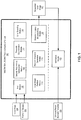
- FIG. 1 illustrates a detailed architecture of a multimodal biometric profiling system 100, according to an example of the present disclosure.
- the system 100 may include an input module 102 to receive a cover image 104, such as, for example, a facia! image for a person. Alternatively or additionally, the cover image 104 may encompass any type of image related to a person.
- the input module 102 may further receive a biometric template 106 that may include a plurality of biometric templates related to various physiological and/or behavioral characteristics and/or traits of the person.
- the biometric template 106 may include a data stream represented by 0's and 1's (i.e., binary 0's and 1's).
- a security requirement determination module 108 is to receive an indication (or a selection) of a security requirement from a plurality of security requirements that may include high security, medium security, and low security.
- the security requirements may relate to any type of security (e.g., high security related to defense applications, border control, etc., medium security related to civilian applications, banking applications, etc., or low security related to time and attendance, forensic applications, etc.) that is needed for securing the biometric template 106.
- a threshold determination module 110 is to determine a threshold value based on the indicated security requirement.
- the threshold value may be used to limit a number of biometric template bits of the biometric template 106 that are embedded in a predetermined bit position of a cover image pixel of the cover image 104 based on cover image intensity associated with the predetermined bit position.
- the threshold determination module 110 is to determine threshold values for embedding biometric template bits of the biometric template 106 in the 6 th and 5 th bit positions (as described in further detail below) of cover image pixels of the cover image 104.
- An error encoding module 112 is to provide for error encoding of the biometric template 106.
- a cover image partition module 114 is to partition the cover image 104 into a plurality of predetermined blocks.
- a random sequence generation module 116 is to generate a random sequence to randomize selection of cover image pixels of the blocks of the cover image 104.
- a biometric template bit embedding module 118 is to embed a biometric template bit of the biometric template 106 in an appropriate bit position of a cover image pixel of the blocks of the cover image 104 based on a total number of 1's in predetermined bit positions of the cover image pixel of the blocks according to the randomized selection of the cover image pixels of the blocks of the cover image 104.
- the biometric template bit embedding module 118 is to embed a biometric template bit of the biometric template 106 in an appropriate bit position of a cover image pixel of a block of the cover image 104 based on a total number of 1's in the 7 th and 8 th bit positions of the cover image pixel (e.g., for high security), or a total number of 1's in the 6 th , 7 th , and 8 th bit positions of the cover image pixel (e.g., for medium and low security).
- the biometric template bit embedding module 118 may generate an embedded cover image 120 that includes the biometric template 106 embedded therein.
- the embedded cover image 120 may be designated as a multimodal biometric profile.
- a verification module 122 is to verify an identity of an unknown person, or otherwise identify an unknown person, by generating a score that represents a comparison of an unknown person biometric template 124 to the biometric template 106 embedded in the embedded cover image 120. The score may be compared against a predetermined score threshold to determine whether there is a match.
- the modules and other elements of the multimodal biometric profiling system 100 may be machine readable instructions stored on a non-transitory computer readable medium.
- the modules and other elements of the multimodal biometric profiling system 100 may be hardware or a combination of machine readable instructions and hardware.
- FIG. 2 illustrates a high level flow chart 200 of operation of the security requirement determination module 108, according to an example of the present disclosure.
- the security requirement determination module 108 may receive an indication of a security requirement from a plurality of security requirements that may include high security 202, medium security 204, and low security 206.
- the indicated security requirement may be used by the biometric template bit embedding module 118 to respectively apply a biometric profiling process-1, a biometric profiling process-2, or a biometric profiling process-3, for embedding of a biometric template bit of the biometric template 106 in an appropriate bit position of a cover image pixel of a block of the cover image 104.
- the high security 202, medium security 204, and low security 206 security requirements may be provided in a look-up table that may be used to match a type of application to a corresponding security level.
- high security may be related to defense applications, border control, etc.
- medium security may be related to civilian applications, banking applications, etc.
- low security may be related to time and attendance, forensic applications, etc.
- the security requirement for the same application may also change dynamically based on time. For example, in an event of a war, the security requirement of an otherwise low security application may be elevated to high.
- the security requirement of the same application may also change depending on geography. For example, two different countries may require different security requirements for the same application.
- the security requirements may also change based on compliance requirements. For example, two different countries may require different types of compliance (e.g., more stringent, or more lenient).
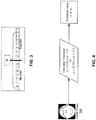
- FIG 3 illustrates a pixel divided into 8 bits, and the least and most significant parts of the pixel, according to an example of the present disclosure.
- each pixel of the cover image 104 may be divided into 8 bits.
- the least significant part of a pixel may be represented by bits 1-4, and the most significant part of a pixel may be represented by bits 5-8.
- FIG. 4 illustrates threshold determination for embedding of biometric template bits in the 6 th and 5 th bit positions of cover image pixels, according to an example of the present disclosure.
- the threshold determination module 110 may determine threshold values for embedding biometric template bits of the biometric template 106 in the 6 th and 5 th bit positions of cover image pixels.
- the cover image 104 may be divided into three channels, namely red, green, and blue (RGB).
- RGB red, green, and blue
- the threshold determination module 110 may determine a value x 1 that represents a percentage of pixels in the intensity range 192-255.
- Equations (1) and (2) the values specified in Equations (1) and (2) may be based on a maximum percentage of cover image pixels that can be considered for embedding in 6 th and 5 th bit positions.
- Figure 5 illustrates the maximum percentage of cover image pixels considered for embedding in the 6 th and 5 th bit positions, according to an example of the present disclosure.
- the cover image 104 may be designated as a high intensity image, and further, H 6 may represent a maximum percentage of cover image pixels of the cover image 104 that can be considered for embedding in the 6 th bit position.
- the cover image 104 may be designated as a low intensity image, and further, L 6 may represent a maximum percentage of cover image pixels of the cover image 104 that can be considered for embedding in the 6 th bit position.
- H 6 may include a range of approximately 63% - 67%, and approximately 65% in a particular example, and L 6 may include a range of approximately 8% - 11%, and approximately 10% in a particular example.
- H 6 may include a range between H 6 T min and H 6 T max
- L 6 may include a range between L 6 T min and L 6 T max
- the ranges H 6 T min and H 6 T max , and L 6 T min and L 6 T max may be based on a category, and further, on a type of the cover image 104 within the category.
- the cover image 104 for a category related to ethnicities may yield different ranges for H 6 and L 6 for different types of ethnicities.
- a typical ethnicity may include H 6 T min and H 6 T max of approximately 63% and 67%, respectively, and L 6 T min and L 6 T max of approximately 8% and 11%, respectively.
- a specific Caucasian ethnicity may include different values for H 6 T min and H 6 T max , and L 6 T min and L 6 T max .
- the value of y 1 may be based on a sliding window specified by Equation (1).
- the cover image 104 may be designated as a high intensity image, and further, H 5 may represent a maximum percentage of cover image pixels of the cover image 104 that can be considered for embedding in the 5 th bit position.
- the cover image 104 may be designated as a low intensity image, and further, L 5 may represent a maximum percentage of cover image pixels of the cover image 104 that can be considered for embedding in the 5 th bit position.
- H 5 and L 5 H 5 may include a range of approximately 42% - 46%, and approximately 45% in a particular example, and L 5 may include a range of approximately 18% - 21%, and approximately 20% in a particular example.
- H 5 may include a range between H 5 T min and H 5 T max
- L 5 may include a range between L 5 T min and L 5 T max .
- H 5 T min and H 5 T max are approximately 42% and 46%, respectively.
- L 5 T min and L 5 T max are approximately 18% and 21%, respectively.
- the value of y 2 may be based on a sliding window specified by Equation (2).
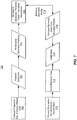
- FIG. 6 illustrates a flow chart 600 of multimodal biometric profiling implemented by the multimodal biometric profiling system 100, according to an example of the present disclosure.
- the biometric profiling process-1, the biometric profiling process-2, and the biometric profiling process-3 are described for embedding of a biometric template bit of the biometric template 106 in an appropriate bit position of a cover image pixel of a block of the cover image 104.
- the biometric profiling process-1 may include receiving the cover image 104, and determining the threshold value y 1 .
- the threshold determination module 110 may determine the threshold percentage y 1 of cover image pixels that can be considered for embedding in the 6 th bit position using Equation (1).
- the error encoding module 112 may error encode the biometric template 106 using an error encoding process.
- the error encoding module 112 may error encode the biometric template 106 to protect the biometric template 106 from errors, or check for errors.
- the cover image partition module 114 may partition the cover image 104 into a plurality of predetermined blocks.
- the cover image 104 may be partitioned into n 8x8 pixel blocks (i.e., n blocks that include 64 pixels each).
- the random sequence generation module 116 may generate a random sequence to randomize selection of cover image pixels of the blocks of the cover image 104. For example, for the n blocks of the cover image 104, starting with the first block, the random sequence generation module 116 may generate a random sequence to randomize selection of each of the 64 pixels of the blocks of the cover image 104.
- the biometric template bit embedding module 118 may fetch the cover image pixels from the cover image 104 according to the random sequence generated at block 608. For example, assuming that the cover image 104 includes n blocks, for the first block of the n blocks, at block 610, the biometric template bit embedding module 118 may fetch the appropriate pixel px z (i.e., one of the 64 pixels) of the first block from the cover image 104 according to the random sequence generated at block 608.
- the biometric template bit embedding module 118 may embed (e.g., by flipping a corresponding bit value from 0 to 1, or from 1 to 0, or otherwise changing a corresponding bit value) a biometric template bit of the biometric template 106 in an appropriate bit position of a cover image pixel of a block of the cover image 104 based on a total number of 1's in the 7 th and 8 th bit positions of the cover image pixel.
- the biometric template bit embedding module 118 may embed a biometric template bit of the biometric template 106 in an appropriate bit position of pixel px z of the first block of the cover image 104 based on a total number of 1's in the 7 th and 8 th bit positions of the pixel.
- the embedding of the biometric template bits of the biometric template 106 may be based on the following three cases (i.e., Case-0, Case-1, Case-2).
- the biometric template bit embedding module 118 may embed biometric template bits of the biometric template 106 in the 1 st and 2 nd bit positions of the appropriate cover image pixel of the appropriate block of the cover image 104 (e.g., 1 st and 2 nd bit positions of the cover image pixel px z of the first block of the cover image 104 according to the random sequence generated at block 608).
- the biometric template bit embedding module 118 may embed biometric template bits of the biometric template 106 in the 1 st , 2 nd , and 3 rd bit positions of the appropriate cover image pixel of the appropriate block of the cover image 104 (e.g., 1 st , 2 nd , and 3 rd bit positions of the cover image pixel px z of the first block of the cover image 104 according to the random sequence generated at block 608).
- the biometric template bit embedding module 118 may embed biometric template bits of the biometric template 106 in the 1 st bit position, and if a biometric profiling process-1 counter value is less than y 1 , then in the 6 th bit position, and otherwise in the 2 nd bit position of the appropriate cover image pixel of the appropriate block of the cover image 104 (e.g., 1 st bit position, and if the biometric profiling process-1 counter value is less than y 1 , then in the 6 th bit position, and otherwise in the 2 nd bit position of the cover image pixel px z of the first block of the cover image 104 according to the random sequence generated at block 608).
- the biometric profiling process-1 counter value may be incremented by a biometric profil
- the biometric template bit embedding module 118 may determine whether an end of the biometric template 106 is reached (i.e., all bits of the biometric template 106 are embedded). In response to a determination that the end of the biometric template 106 is reached, processing may end at block 616. In response to a determination that the end of the biometric template 106 is not reached, processing may continue to block 618.
- the biometric template bit embedding module 118 may determine whether an end of the block is reached (e.g., in the event all 64 pixels of the block include embedded biometric template bits of the biometric template 106). In response to a determination that the end of the block is not reached, processing may revert to block 610 to fetch another cover image pixel from the same block of the cover image 104 according to the random sequence generated at block 608.
- processing may proceed to block 620 to generate a random sequence to randomize selection of cover image pixels of the next block of the cover image 104.
- the biometric template bit embedding module 118 may embed all of the biometric template bits of the biometric template 106 in the appropriate bit position of the cover image pixels of the blocks of the cover image 104.
- the biometric profiling process-2 may include receiving the cover image 104, and determining the threshold value y 2 .
- the threshold determination module 110 may determine the threshold percentage y 2 of cover image pixels that can be considered for embedding in the 5 th bit position using Equation (2).
- the processing at blocks 604 - 610, and 614 - 620 may proceed in the same manner as discussed above with reference to the biometric profiling process-1 that is related to the high security 202.
- the biometric template bit embedding module 118 may embed a biometric template bit of the biometric template 106 in an appropriate bit position of a cover image pixel of a block of the cover image 104 based on a total number of 1's in the 6 th , 7 th , and 8 th bit positions of the pixel.
- the biometric template bit embedding module 118 may embed a biometric template bit of the biometric template 106 in an appropriate bit position of cover image pixel px z of the first block of the cover image 104 based on a total number of 1's in the 6 th , 7 th , and 8 th bit positions of the cover image pixel.
- the embedding of the biometric template bits of the biometric template 106 may be based on the following four cases (i.e., Case-0, Case-1, Case-2, and Case-3).
- the biometric template bit embedding module 118 may embed biometric template bits of the biometric template 106 in the 1 st and 2 nd bit positions of the appropriate cover image pixel of the appropriate block of the cover image 104 (e.g., 1 st and 2 nd bit positions of the cover image pixel px z of the first block of the cover image 104 according to the random sequence generated at block 608).
- the biometric template bit embedding module 118 may embed biometric template bits of the biometric template 106 in the 1 st , 2 nd , and 3 rd bit positions of the appropriate cover image pixel of the appropriate block of the cover image 104 (e.g., 1 st , 2 nd , and 3 rd bit positions of the cover image pixel px z of the first block of the cover image 104 according to the random sequence generated at block 608).
- the biometric template bit embedding module 118 may embed biometric template bits of the biometric template 106 in the 1 st bit position, and if a biometric profiling process-2 counter value is less than y 2 , then in the 5 th bit position, and otherwise in the 3 rd bit position of the appropriate cover image pixel of the appropriate block of the cover image 104 (e.g., 1 st bit position, and if a biometric profiling process-2 counter value is less than y 2 , then in the 5 th bit position, and otherwise in the 3 rd bit position of the cover image pixel px z of the first block of the cover image 104 according to the random sequence generated at block 608).
- the biometric template bit embedding module 118 may embed biometric template bits of the biometric template 106 in the 1 st and 2 nd bit positions, and if the biometric profiling process-2 counter value is less than y 2 , then in the 5 th bit position, and otherwise in the 3 rd bit position of the appropriate cover image pixel of the appropriate block of the cover image 104 (e.g., 1 st and 2 nd bit positions, and if the biometric profiling process-2 counter value is less than y 2 , then in the 5 th bit position, and otherwise in the 3 rd bit position of the cover image pixel px z of the first block of the cover image 104 according to the random sequence generated at block 60
- the biometric profiling process-3 may include receiving the cover image 104.
- a threshold value is not needed, and processing may proceed to block 604.
- the processing at blocks 604 - 610, and 614 - 620 may proceed in the same manner as discussed above with reference to the biometric profiling process-1 that is related to the high security 202, and likewise to the biometric profiling process-2 that is related to the medium security 204.
- the biometric template bit embedding module 118 may embed a biometric template bit of the biometric template 106 in an appropriate bit position of a cover image pixel of a block of the cover image 104 based on a total number of 1's in the 6 th , 7 th , and 8 th bit positions of the cover image pixel.
- the biometric template bit embedding module 118 may embed a biometric template bit of the biometric template 106 in an appropriate bit position of cover image pixel px z of the first block of the cover image 104 based on a total number of 1's in the 6 th , 7 th , and 8 th bit positions of the cover image pixel.
- the embedding of the biometric template bits of the biometric template 106 may be based on the following four cases (i.e., Case-0, Case-1, Case-2, and Case-3).
- the biometric template bit embedding module 118 may embed biometric template bits of the biometric template 106 in the 1 st and 2 nd bit positions of the appropriate cover image pixel of the appropriate block of the cover image 104 (e.g., 1 st and 2 nd bit positions of the cover image pixel px z of the first block of the cover image 104 according to the random sequence generated at block 608).
- the biometric template bit embedding module 118 may embed biometric template bits of the biometric template 106 in the 1 st and 2 nd bit positions of the appropriate cover image pixel of the appropriate block of the cover image 104 (e.g., 1 st and 2 nd bit positions of the cover image pixel px z of the first block of the cover image 104 according to the random sequence generated at block 608).
- the biometric template bit embedding module 118 may embed biometric template bits of the biometric template 106 in the 1 st , 2 nd , and 3 rd bit positions of the appropriate cover image pixel of the appropriate block of the cover image 104 (e.g., 1 st , 2 nd , and 3 rd bit positions of the cover image pixel px z of the first block of the cover image 104 according to the random sequence generated at block 608).
- the biometric template bit embedding module 118 may embed biometric template bits of the biometric template 106 in the 1 st , 2 nd , and 4 th bit positions of the appropriate pixel of the appropriate block of the cover image 104 (e.g., 1 st , 2 nd , and 4 th bit positions of the cover image pixel px z of the first block of the cover image 104 according to the random sequence generated at block 608).
- FIG. 7 illustrates a high level flow chart 700 of multimodal biometric profiling and verification implemented by the multimodal biometric profiling system 100, according to an example of the present disclosure.
- a facial image of a person may be captured.
- the facial image may be designated as the cover image 104.
- Additional physiological and/or behavioral characteristics and/or traits of the person may be captured. For example, a fingerprint and retinal scan of the person may be captured.
- retinal traits may be extracted to generate a retinal template 106.
- fingerprint traits may be extracted to generate a fingerprint template 106.
- identity i.e., identity of a person
- the multimodal biometric profiling system 100 may be used to embed the biometric template 106 (e.g., the retinal template 106, the fingerprint template 106, or both) in the cover image 104 to create a secure biometric profile P i .
- the embedding of the biometric template 106 may be based on the particular security requirement (e.g., high security 202, medium security 204, or low security 206).
- the secure biometric profile P i may be stored, for example, in a database, in a portable token, and/or in a user's workstation.
- biometrics of the unknown person may be presented for verification/identification.
- physiological and/or behavioral characteristics or traits of the unknown person may be captured.
- a fingerprint and retinal scan of the unknown person may be captured.
- various features may be extracted from the information captured for the unknown person.
- retinal traits may be extracted to generate a retinal template for verification.
- fingerprint traits may be extracted to generate a fingerprint template for verification.
- the biometric data (e.g., B j ) may be sent to the verification module 122 for verification at block 714 of the identity of the unknown person.
- the verification module 122 may retrieve at 716 a biometric profile P i that is to be verified as belonging to the unknown person. Alternatively or additionally, the verification module 122 may retrieve a plurality of biometric profiles P i that are to be analyzed to identify the unknown person.
- the biometric data from the biometric profile P i may be retrieved.
- the biometric data stored as E i may be retrieved.
- the verification module 122 may generate a score that represents a comparison of a biometric template from B j (e.g., the unknown person biometric template 124) to the appropriate biometric template from E i for the verification and/or identification of the unknown person.
- the score may be based on an inverse of the biometric profile P i that is to be compared to the biometric template from B j .
- the verification module 122 may confirm the identity of the unknown person (e.g., when comparing a biometric template from B j to a biometric template from E j that should belong to the unknown person), or otherwise identify the unknown person (e.g., when comparing a template from B j to a plurality of templates from E i that are not particularly known to belong to the unknown person).
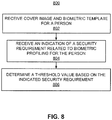
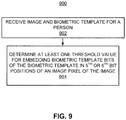
- Figures 8 and 9 illustrate flowcharts of methods 800 and 900 for multimodal biometric profiling, according to examples.
- the methods 800 and 900 may be implemented on the multimodal biometric profiling system 100 described above with reference to Figures 1-7 by way of example and not limitation.
- the methods 800 and 900 may be practiced in other systems.
- the method 800 may include receiving a cover image and a biometric template for a person.
- the input module 102 may receive the cover image 104, such as, for example, a facial image for a person, and the biometric template 106 that may include a plurality of biometric templates related to various physiological and/or behavioral characteristics and/or traits of the person.
- the method 800 may include receiving an indication of a security requirement related to biometric profiling for the person.
- the security requirement may include high security, medium security, or low security.
- the security requirement determination module 108 may receive an indication (or a selection) of a security requirement from a plurality of security requirements that may include high security, medium security, and low security.
- the method 800 may include determining a threshold value based on the indicated security requirement.
- the threshold determination module 110 may determine a threshold value based on the indicated security requirement.
- the threshold value may limit a number of biometric template bits of the biometric template that are embedded in a predetermined bit position (e.g., 6 th or 5 th bit position as described herein) of a cover image pixel of the cover image based on cover image intensity (e.g., percentage of cover image pixels in intensity range 192-255 or 96-255 as described herein) associated with the predetermined bit position (e.g., 6 th or 5 th bit position as described herein).
- a predetermined bit position e.g., 6 th or 5 th bit position as described herein
- cover image intensity e.g., percentage of cover image pixels in intensity range 192-255 or 96-255 as described herein
- the limit on the number of biometric template bits of the biometric template that are embedded in the predetermined bit position of the cover image pixel of the cover image may include a determination of whether the cover image intensity indicates a high intensity cover image or a low intensity cover image.
- a maximum percentage of the cover image pixels that can be considered for embedding in the 6 th bit position is approximately 63% to 67%
- a maximum percentage of the cover image pixels that can be considered for embedding in the 6 th bit position is approximately 8% to 11%.
- a maximum percentage of the cover image pixels that can be considered for embedding in the 5 th bit position is approximately 42% to 46%
- a maximum percentage of the cover image pixels that can be considered for embedding in the 5 th bit position is approximately 18% to 21%.
- the method 800 may further include partitioning (e.g., by using the cover image partition module 114) the cover image into a plurality of predetermined blocks, generating a random sequence (e.g., by using the random sequence generation module 116) to randomize selection of cover image pixels of at least one of the blocks of the cover image, and embedding a biometric template bit (e.g., by using the biometric template bit embedding module 118) of the biometric template in an appropriate bit position of a cover image pixel of the at least one of the blocks of the cover image based on a total number of 1's in predetermined bit positions of the cover image pixel of the at least one of the blocks according to the randomized selection of the cover image pixels of the at least one of the blocks of the cover image.
- partitioning e.g., by using the cover image partition module 114
- generating a random sequence e.g., by using the random sequence generation module 116
- embedding a biometric template bit e.g., by using the biometric
- the method 800 may further include embedding biometric template bits of the biometric template in appropriate bit positions of a cover image pixel of a block of the cover image based on determination of a total number of 1's in 7 th and 8 th bit positions of the cover image pixel that is divided into a least part that includes bits 1-4 and a most part that includes bits 5-8.
- the biometric template bits of the biometric template may be embedded in 1 st and 2 nd bit positions of the cover image pixel of the block of the cover image.
- the biometric template bits of the biometric template may be embedded in 1 st , 2 nd , and 3 rd bit positions of the cover image pixel of the block of the cover image.
- the biometric template bits of the biometric template may be embedded in 1 st , and if a counter value for a 6 th bit position of the cover image pixel of the block of the cover image is less than the threshold value, then in the 6 th bit position of the cover image pixel of the block of the cover image, and otherwise in the 2 nd bit position of the cover image pixel of the block of the cover image.
- the method 800 may further include embedding biometric template bits of the biometric template in appropriate bit positions of a cover image pixel of a block of the cover image based on determination of a total number of 1's in 6 th , 7 th , and 8 th bit positions of the cover image pixel that is divided into a least part that includes bits 1-4 and a most part that includes bits 5-8.
- the biometric template bits of the biometric template may be embedded in 1 st and 2 nd bit positions of the cover image pixel of the block of the cover image.
- the biometric template bits of the biometric template may be embedded in 1 st , 2 nd , and 3 rd bit positions of the cover image pixel of the block of the cover image.
- the biometric template bits of the biometric template may be embedded in 1 st , and if a counter value for a 5 th bit position of the cover image pixel of the block of the cover image is less than the threshold value, then in the 5 th bit position of the cover image pixel of the block of the cover image, and otherwise in the 3 rd bit position of the cover image pixel of the block of the cover image.
- the biometric template bits of the biometric template may be embedded in 1 st and 2 nd bit positions of the cover image pixel of the block of the cover image, and if the counter value for the 5 th bit position of the cover image pixel of the block of the cover image is less than the threshold value, then in the 5 th bit position of the cover image pixel of the block of the cover image, and otherwise in the 3 rd bit position of the cover image pixel of the block of the cover image.
- the method 800 may further include embedding biometric template bits of the biometric template in appropriate bit positions of a cover image pixel of a block of the cover image based on determination of a total number of 1's in 6 th , 7 th , and 8 th bit positions of the cover image pixel that is divided into a least part that includes bits 1-4 and a most part that includes bits 5-8.
- the biometric template bits of the biometric template may be embedded in 1 st and 2 nd bit positions of the cover image pixel of the block of the cover image.
- the biometric template bits of the biometric template may be embedded in 1 st , 2 nd , and 3 rd bit positions of the cover image pixel of the block of the cover image.
- the biometric template bits of the biometric template may be embedded in 1 st , 2 nd , and 4 th bit positions of the cover image pixel of the block of the cover image.
- the cover image intensity associated with a 5 th bit position is based on a percentage of cover image pixels that are in an intensity range of 96-255 based on an intensity scale of 0-255
- the cover image intensity associated with a 6 th bit position is based on a percentage of cover image pixels that are in an intensity range of 192-255 based on the intensity scale of 0-255.
- the method 900 may include receiving an image and a biometric template for a person.
- the method 900 may include determining, by a processor, at least one threshold value for embedding biometric template bits of the biometric template in 5 th or 6 th bit positions of an image pixel of the image.
- the image pixel of the image is divisible into 8 bits, and a pixel intensity of the image pixel increases from bit 1 to bit 8.
- the method 900 may further include embedding the biometric template bits of the biometric template for the person in the image to generate a biometric profile for the person, and verifying (e.g., by the verification module 122) an identity of an unknown person by comparing (e.g., as described herein with reference to Figure 7 ) a biometric template for the unknown person to the biometric template from the biometric profile for the person. Verifying an identity of an unknown person by comparing a biometric template for the unknown person to the biometric template from the biometric profile for the person may further include generating a score based on the comparison of the biometric template for the unknown person to the biometric template from the biometric profile for the person, and determining whether the score exceeds a predetermined score threshold.
- the method 900 may further include embedding the biometric template bits of the biometric template for the person in the image to generate a biometric profile for the person, with the biometric profile for the person being a same size as the image.
- Figure 10 shows a computer system 1000 that may be used with the examples described herein.
- the computer system may represent a generic platform that includes components that may be in a server or another computer system.
- the computer system 1000 may be used as a platform for the system 100.
- the computer system 1000 may execute, by a processor (e.g., a single or multiple processors) or other hardware processing circuit, the methods, functions and other processes described herein.
- a processor e.g., a single or multiple processors
- a computer readable medium which may be non-transitory, such as hardware storage devices (e.g., RAM (random access memory), ROM (read only memory), EPROM (erasable, programmable ROM), EEPROM (electrically erasable, programmable ROM), hard drives, and flash memory).
- RAM random access memory
- ROM read only memory
- EPROM erasable, programmable ROM
- EEPROM electrically erasable, programmable ROM
- hard drives e.g., hard drives, and flash memory
- the computer system 1000 may include a processor 1002 that may implement or execute machine readable instructions performing some or all of the methods, functions and other processes described herein. Commands and data from the processor 1002 may be communicated over a communication bus 1004.
- the computer system may also include a main memory 1006, such as a random access memory (RAM), where the machine readable instructions and data for the processor 1002 may reside during runtime, and a secondary data storage 1008, which may be non-volatile and stores machine readable instructions and data.
- the memory and data storage are examples of computer readable mediums.
- the memory 1006 may include a multimodal biometric profiling module 1020 including machine readable instructions residing in the memory 1006 during runtime and executed by the processor 1002.
- the multimodal biometric profiling module 1020 may include the modules of the system 100 shown in Figure 1 .
- the computer system 1000 may include an I/O device 1010, such as a keyboard, a mouse, a display, etc.
- the computer system may include a network interface 1012 for connecting to a network.
- Other known electronic components may be added or substituted in the computer system.
Landscapes
- Engineering & Computer Science (AREA)
- Computer Security & Cryptography (AREA)
- General Engineering & Computer Science (AREA)
- Computer Hardware Design (AREA)
- Theoretical Computer Science (AREA)
- Health & Medical Sciences (AREA)
- General Physics & Mathematics (AREA)
- Physics & Mathematics (AREA)
- Software Systems (AREA)
- Biomedical Technology (AREA)
- General Health & Medical Sciences (AREA)
- Computing Systems (AREA)
- Computer Networks & Wireless Communication (AREA)
- Signal Processing (AREA)
- Editing Of Facsimile Originals (AREA)
- Image Processing (AREA)
Claims (13)
- Ein System zur multimodalen biometrischen Profilerstellung (100), das Folgendes umfasst:mindestens einen Prozessor;ein Eingabemodul (102), das von dem mindestens einen Prozessor ausgeführt wird, um ein Coverbild (104) einer Person und eine biometrische Vorlagen-Datei bzw. ein biometrisches Template (106) der Person zu empfangen;ein Sicherheitsanforderungen-Bestimmungsmodul (108), das von dem mindestens einen Prozessor ausgeführt wird, um eine Angabe zu einer Sicherheitsanforderung im Zusammenhang mit der biometrischen Profilerstellung für die Person zu erhalten;ein Schwellenwert-Bestimmungsmodul (110), das von dem mindestens einen Prozessor ausgeführt wird, um einen Schwellenwert zu bestimmen, basierend auf der angegebenen Sicherheitsanforderung, wobei der Schwellenwert eine Anzahl von biometrischen Template-Bits des biometrischen Templates (106) begrenzen soll, die an einer vorbestimmten Bitposition eines Coverbild-Pixels des Coverbildes (104) eingebettet sind, basierend auf der Coverbild-Intensität, die der vorbestimmten Bitposition zugeordnet ist; undein biometrisches Template-Bit-Einbettungsmodul (118), um ein eingebettetes Coverbild (120) zu erzeugen, indem das biometrische Template (106) in das Coverbild (104) eingebettet wird;wobei die Grenze bei der Anzahl der biometrischen Template-Bits des biometrischen Templates (106), die an der vorbestimmten Bitposition des Coverbild-Pixels des Coverbildes (104) eingebettet sind, eine Feststellung beinhaltet, ob die Intensität des Coverbildes ein Coverbild hoher Intensität oder ein Coverbild niedriger Intensität angibt;wobei, für ein Coverbild-Pixel, das unterteilt ist in einen kleinsten Teil (leastpart), der die Bits 1 - 4 beinhaltet, und einen größten Teil (most part), der die Bits 5 - 8 beinhaltet,
für das Coverbild hoher Intensität, ein maximaler Prozentsatz der Coverbild-Pixel, die für die Einbettung an der 6. Bitposition in Betracht gezogen werden können, H6Tmin bis H6Tmax beträgt, und
für das Coverbild niedriger Intensität, ein maximaler Prozentsatz der Pixel des Coverbildes, die für die Einbettung an der 6. Bitposition in Betracht gezogen werden können, L6Tmin bis L6Tmax beträgt,
wobei H6Tmin, H6Tmax, L6Tmin und L6Tmax Parameter sind, die auf einer Kategorie des Coverbildes (104) basieren und
wobei H6Tmin, H6Tmax, L6Tmin und L6Tmax entsprechend 63%, 67%, 8% und 11% betragen. - Das System zur multimodalen biometrischen Profilerstellung (100) nach Anspruch 1, wobei die Sicherheitsanforderung eine der Folgenden beinhaltet: eine hohe Sicherheit (202), eine mittlere Sicherheit (204) und eine geringe Sicherheit (206), und wobei eine andere Sicherheitsanforderung einer anderen Anwendung des Systems zur multimodalen biometrischen Profilerstellung (100) entspricht und/oder
wobei sich der Schwellenwert für eine hohe Sicherheitsanforderung vom Schwellenwert für eine mittlere Sicherheitsanforderung unterscheidet. - Das System zur multimodalen biometrischen Profilerstellung (100) nach Anspruch 1, wobei für ein Cover-Bild Pixel, das unterteilt ist in einen kleinsten Teil, der die Bits 1 - 4 beinhaltet, und einen größten Teil, der die Bits 5 - 8 beinhaltet,
für das Coverbild hoher Intensität, ein maximaler Prozentsatz der Coverbild-Pixel, die für die Einbettung an der 5. Bitposition in Betracht gezogen werden können, H5Tmin bis H5Tmax beträgt, und
für das Coverbild niedriger Intensität, ein maximaler Prozentsatz der Pixel des Coverbildes, die für die Einbettung an der 5. Bitposition in Betracht gezogen werden können, L5Tmin bis L5Tmax beträgt,
wobei H5Tmin, H5Tmax, L5Tmin und L5Tmax Parameter sind, die auf einer Kategorie des Coverbildes basieren und
wobei vorzugsweise H5Tmin, H5Tmax, L5Tmin und L5Tmax entsprechend 42%, 46%, 18% bzw. 21% betragen. - Das System zur multimodalen biometrischen Profilerstellung (100) nach irgendeinem der Ansprüche von 1 bis 3, das ferner Folgendes umfasst:ein Coverbild-Aufteilungsmodul (114), das von dem mindestens einen Prozessor ausgeführt wird, um das Coverbild (104) in eine Vielzahl von vorbestimmten Blöcken aufzuteilen (606);ein Zufallssequenz-Erzeugungsmodul (116), das von dem mindestens einen Prozessor zur Erzeugung (608) einer Zufallssequenz ausgeführt wird, um die Auswahl von Coverbild-Pixeln von mindestens einem der Blöcke des Coverbildes (104) zu randomisieren; undwobei das biometrische Template-Bit-Einbettungsmodul (118), das durch den mindestens einen Prozessor ausgeführt wird, ein biometrisches Template-Bit des biometrischen Templates (106) an einer geeigneten Bitposition eines Coverbild-Pixels des mindestens einen der Blöcke des Coverbildes (104) einbetten (612) soll, basierend auf einer Gesamtzahl von 1 en an vorbestimmten Bitpositionen des Coverbild-Pixels des mindestens einen der Blöcke gemäß der randomisierten Auswahl der Coverbild-Pixel des mindestens einen der Blöcke des Coverbildes (104).
- Das System zur multimodalen biometrischen Profilerstellung (100) nach Anspruch 4, wobei für ein Coverbild-Pixel, das in einen kleinsten Teil, der die Bits 1 - 4 beinhaltet, und einen größten Teil, der die Bits 5 - 8 beinhaltet, unterteilt ist,
die vorbestimmten Bitpositionen des Coverbild-Pixels die 7. und 8. Bitposition des Coverbild-Pixels beinhalten oder
die vorbestimmten Bitpositionen des Coverbild-Pixels die 6., 7. und 8. Bitpositionen des Coverbild-Pixels beinhalten. - Das System zur multimodalen biometrischen Profilerstellung (100) nach irgendeinem der Ansprüche von 1 bis 3, wobei
das biometrische Template-Bit-Einbettungsmodul (118), das von dem mindestens einen Prozessor ausgeführt wird, biometrische Template-Bits des biometrischen Templates an geeigneten Bitpositionen eines Coverbild-Pixels eines Blocks des Coverbildes (104) einbetten (612) soll, basierend auf der Feststellung einer Gesamtzahl von 1en an der 7. und 8. Bitposition des Coverbild-Pixels, das in einen kleinsten Teil, der die Bits 1 - 4 enthält, und einen größten Teil unterteilt ist, der Bits 5 - 8 enthält, wobei für eine hohe Sicherheitsanforderung,
als Reaktion auf eine Feststellung, dass die Gesamtzahl der 1en an der 7. und 8. Bitposition des Coverbild-Pixels 0 ist, das biometrische Template-Bit-Einbettungsmodul (118) die biometrischen Template-Bits des biometrischen Templates (106) an der 1. und 2. Bitposition des Coverbild-Pixels des Blocks des Coverbildes (104) einbetten soll,
als Reaktion auf eine Feststellung, dass die Gesamtzahl der 1en an der 7. und 8. Bitposition des Coverbild-Pixels 1 ist, das biometrische Template-Bit-Einbettungsmodul (118) die biometrischen Template-Bits des biometrischen Templates (106) an der 1., 2. und 3. Bitposition des Coverbild-Pixels des Blocks des Coverbildes (104) einbetten soll, und
als Reaktion auf eine Feststellung, dass die Gesamtzahl der 1en an der 7. und 8. Bitposition des Coverbild-Pixels 2 ist, das biometrische Template-Bit-Einbettungsmodul (118) die biometrischen Template-Bits des biometrischen Templates (106) an der 1., und falls ein Zählerwert für eine 6. Bitposition des Coverbild-Pixels des Blocks des Coverbildes (104) kleiner als der Schwellenwert ist, dann an der 6. Bitposition des Coverbild-Pixels des Blocks des Coverbildes (104), und ansonsten an der 2. Bitposition des Coverbild-Pixels des Blocks des Coverbildes (104) einbetten soll. - Das System zur multimodalen biometrischen Profilerstellung (100) nach irgendeinem der Ansprüche 1 bis 3, wobei
das biometrische Template-Bit-Einbettungsmodul (118), das von dem mindestens einen Prozessor ausgeführt wird, biometrische Template-Bits des biometrischen Templates (106) an geeigneten Bitpositionen eines Coverbild-Pixels eines Blocks des Coverbildes (104) einbetten soll, basierend auf der Feststellung einer Gesamtzahl von 1en an der 6., 7. und 8. Bitposition des Coverbild-Pixels, das in einen kleinsten Teil, der die Bits 1 - 4 enthält, und einen größten Teil unterteilt ist, der Bits 5 - 8 enthält, wobei für eine mittlere Sicherheitsanforderung,
als Reaktion auf eine Feststellung, dass die Gesamtzahl der 1en an der 6., 7. und 8. Bitposition des Coverbild-Pixels 0 ist, das biometrische Template-Bit-Einbettungsmodul (118) die biometrischen Template-Bits des biometrischen Templates (106) an der 1. und 2. Bitposition des Coverbild-Pixels des Blocks des Coverbildes (104) einbetten soll,
als Reaktion auf eine Feststellung, dass die Gesamtzahl der 1en an der 6., 7. und 8. Bitposition des Coverbild-Pixels 1 ist, das biometrische Template-Bit-Einbettungsmodul (118) die biometrischen Template-Bits des biometrischen Templates (106) an der 1., 2. und 3. Bitposition des Coverbild-Pixels des Blocks des Coverbildes (104) einbetten soll,
als Reaktion auf eine Feststellung, dass die Gesamtzahl der 1en an der 6., 7. und 8. Bitposition des Coverbild-Pixels 2 ist, das biometrische Template-Bit-Einbettungsmodul (118) die biometrischen Template-Bits des biometrischen Templates (106) an der 1., und falls ein Zählerwert für eine 5. Bitposition des Coverbild-Pixels des Blocks des Coverbildes (104) kleiner als der Schwellenwert ist, dann an der 5. Bitposition des Coverbild-Pixels des Blocks des Coverbildes (104), und ansonsten an der 3. Bitposition des Coverbild-Pixels des Blocks des Coverbildes (104) einbetten soll, und
als Reaktion auf eine Feststellung, dass die Gesamtzahl der 1en an der 6., 7. und 8. Bitposition des Coverbild-Pixels 3 ist, das biometrische Template-Bit-Einbettungsmodul (118) die biometrischen Template-Bits des biometrischen Templates (106) an der 1. und 2. Bitposition des Coverbild-Pixels des Blocks des Coverbildes (104) einbetten soll, und falls ein Zählerwert für eine 5. Bitposition des Coverbild-Pixels des Blocks des Coverbildes (104) kleiner als der Schwellenwert ist, dann an der 5. Bitposition des Coverbild-Pixels des Blocks des Coverbildes (104), und ansonsten an der 3. Bitposition des Coverbild-Pixels des Blocks des Coverbildes (104) einbetten soll. - Das System zur multimodalen biometrischen Profilerstellung (100) nach irgendeinem der Ansprüche von 1 bis 3, wobei
das biometrische Template-Bit-Einbettungsmodul (118), das von dem mindestens einen Prozessor ausgeführt wird, biometrische Template-Bits des biometrischen Templates (106) an geeigneten Bitpositionen eines Coverbild-Pixels eines Blocks des Coverbildes (104) einbetten soll, basierend auf der Feststellung einer Gesamtzahl von 1en an der 6., 7. und 8. Bitposition des Coverbild-Pixels, das in einen kleinsten Teil, der die Bits 1 - 4 enthält, und einen größten Teil unterteilt ist, der Bits 5 - 8 enthält, wobei für eine niedrige Sicherheitsanforderung,
als Reaktion auf eine Feststellung, dass die Gesamtzahl der 1en an der 6., 7. und 8. Bitposition des Coverbild-Pixels 0 oder 1 ist, das biometrische Template-Bit-Einbettungsmodul (118) die biometrischen Template-Bits des biometrischen Templates (106) an der 1. und 2. Bitposition des Coverbild-Pixels des Blocks des Coverbildes (104) einbetten soll,
als Reaktion auf eine Feststellung, dass die Gesamtzahl der 1en an der 6., 7. und 8. Bitposition des Coverbild-Pixels 2 ist, das biometrische Template-Bit-Einbettungsmodul (118) die biometrischen Template-Bits des biometrischen Templates (106) an der 1., 2. und 3. Bitposition des Coverbild-Pixels des Blocks des Coverbildes (104) einbetten soll, und
als Reaktion auf eine Feststellung, dass die Gesamtzahl der 1en an der 6., 7. und 8. Bitposition des Coverbild-Pixels 3 ist, das biometrische Template-Bit-Einbettungsmodul (118) die biometrischen Template-Bits des biometrischen Templates (106) an der 1., 2. und 4. Bitposition des Coverbild-Pixels des Blocks des Coverbildes (104) einbetten soll. - Das System zur multimodalen biometrischen Profilerstellung (100) nach irgendeinem der Ansprüche 1 bis 8, wobei für ein Coverbild-Pixel, das in einen kleinsten Teil, der die Bits 1 - 4 enthält, und einen größten Teil unterteilt ist, der Bits 5 - 8 enthält,
die einer 5. Bit-Position zugeordnete Coverbild-Intensität auf einem Prozentsatz von Coverbild-Pixeln beruht, die, basierend auf einer Intensitätsskala von 0 - 255, in einem Intensitätsbereich von 96 - 255 liegen, und
die einer 6. Bitposition zugeordnete Coverbild-Intensität auf einem Prozentsatz von Coverbild-Pixeln beruht, die, basierend auf der Intensitätsskala von 0-255, in einem Intensitätsbereich von 192-255 liegen. - Ein Verfahren (900) zur multimodalen biometrischen Profilerstellung, wobei das Verfahren Folgendes umfasst:Empfangen (902) eines Bildes einer Person und eines biometrischen Templates (106) der Person;Bestimmen (904), durch einen Prozessor, mindestens eines Schwellenwerts zum Einbetten biometrischer Template-Bits des biometrischen Templates (106) in eine der Bitpositionen 5 und 6 eines Bildpixels des Bildes, wobei der Schwellenwert eine Anzahl von biometrischen Template-Bits des biometrischen Templates (106) begrenzen soll, die an einer vorbestimmten Bitposition eines Coverbild-Pixels des Coverbildes (104) eingebettet sind, basierend auf der der vorbestimmten Bitposition zugeordneten Coverbild-Intensität, und wobei das Bildpixel des Bildes in 8 Bit teilbar ist, und eine Pixel-Intensität des Bildpixels von Bit 1 auf Bit 8 ansteigt; undErzeugen eines eingebetteten Coverbildes (120) durch Einbetten des biometrischen Templates (106) in das Coverbild (104);wobei die Grenze bei der Anzahl der biometrischen Template-Bits des biometrischen Templates (106), die an der vorbestimmten Bitposition des Coverbild-Pixels des Coverbildes (104) eingebettet sind, eine Feststellung beinhaltet, ob die Intensität des Coverbildes ein Coverbild hoher Intensität oder ein Coverbild niedriger Intensität angibt;wobei, für ein Coverbild-Pixel, das unterteilt ist in einen kleinsten Teil (least part), der die Bits 1 - 4 beinhaltet, und einen größten Teil (most part), der die Bits 5 - 8 beinhaltet,
für das Coverbild hoher Intensität, ein maximaler Prozentsatz der Coverbild-Pixel, die für die Einbettung an der 6. Bitposition in Betracht gezogen werden können, H6Tmin bis H6Tmax beträgt, und
für das Coverbild niedriger Intensität, ein maximaler Prozentsatz der Pixel des Coverbildes, die für die Einbettung an der 6. Bitposition in Betracht gezogen werden können, L6Tmin bis L6Tmax beträgt,
wobei H6Tmin, H6Tmax, L6Tmin und L6Tmax Parameter sind, die auf einer Kategorie des Coverbildes (104) basieren und
wobei H6Tmin, H6Tmax, L6Tmin und L6Tmax entsprechend 63%, 67%, 8% und 11% betragen. - Das Verfahren zur multimodalen biometrischen Profilerstellung nach Anspruch 10, das ferner Folgendes umfasst:Einbetten der biometrischen Template-Bits des biometrischen Templates (106) für die Person in das Bild, um ein biometrisches Profil für die Person zu erzeugen; undÜberprüfen (714) der Identität einer unbekannten Person durch Vergleichen eines biometrischen Templates für die unbekannte Person mit dem biometrischen Template (106) aus dem biometrischen Profil für die Person, undwobei das Überprüfen (714) der Identität einer unbekannten Person durch Vergleichen eines biometrischen Templates für die unbekannte Person mit des biometrischen Templates (106) aus dem biometrischen Profil für die Person ferner vorzugsweise Folgendes umfasst:Erzeugen einer Bewertung (score) basierend auf dem Vergleich des biometrischen Templates für die unbekannte Person mit dem biometrischen Template (106) aus dem biometrischen Profil für die Person; undBestimmen, ob die Bewertung einen vorbestimmten Bewertungs-Schwellenwert überschreitet.
- Ein nichtflüchtiges, computerlesbares Medium, auf dem maschinenlesbare Anweisungen zur multimodalen biometrischen Profilerstellung gespeichert sind, wobei die maschinenlesbaren Anweisungen, wenn sie ausgeführt werden, einen Prozessor dazu veranlassen, Folgendes zu bewerkstelligen:Empfangen eines Bildes einer Person und eines biometrischen Templates (106) der Person, um es in das Bild einzubetten;Bestimmen mindestens eines Schwellenwerts, basierend auf dem Bild, zum Begrenzen der Einbettung von Template-Bits des Templates an mindestens einer vorgegebenen Bitposition eines Bildpixels des Bildes, wobei der Schwellenwert eine Anzahl von biometrischen Template-Bits des biometrischen Templates (106) begrenzen soll, die an einer vorbestimmten Bitposition eines Coverbild-Pixels des Coverbildes (104) eingebettet sind, basierend auf der der vorbestimmten Bitposition zugeordneten Coverbild-Intensität, undErzeugen eines eingebetteten Coverbildes (120) durch Einbetten des biometrischen Templates (106) in das Coverbild (104);wobei die Grenze bei der Anzahl der biometrischen Template-Bits des biometrischen Templates (106), die an der vorbestimmten Bitposition des Coverbild-Pixels des Coverbildes (104) eingebettet sind, eine Feststellung beinhaltet, ob die Intensität des Coverbildes ein Coverbild hoher Intensität oder ein Coverbild niedriger Intensität angibt;wobei, für ein Coverbild-Pixel, das unterteilt ist in einen kleinsten Teil (least part), der die Bits 1 - 4 beinhaltet, und einen größten Teil (most part), der die Bits 5 - 8 beinhaltet,
für das Coverbild hoher Intensität, ein maximaler Prozentsatz der Coverbild-Pixel, die für die Einbettung an der 6. Bitposition in Betracht gezogen werden können, H6Tmin bis H6Tmax beträgt, und
für das Coverbild niedriger Intensität, ein maximaler Prozentsatz der Pixel des Coverbildes, die für die Einbettung an der 6. Bitposition in Betracht gezogen werden können, L6Tmin bis L6Tmax beträgt,
wobei H6Tmin, H6Tmax, L6Tmin und L6Tmax Parameter sind, die auf einer Kategorie des Coverbildes (104) basieren und
wobei H6Tmin, H6Tmax, L6Tmin und L6Tmax entsprechend 63%, 67%, 8% und 11% betragen. - Das nichtflüchtige, computerlesbare Medium nach Anspruch 12, das ferner maschinenlesbare Anweisungen umfasst, die, wenn sie ausgeführt werden, den Prozessor ferner dazu veranlassen, Folgendes zu bewerkstelligen:
Einbetten der Template-Bits des Templates in das Bild, um ein Profil zu erzeugen, wobei das Profil die gleiche Größe aufweist wie das Bild.
Applications Claiming Priority (2)
| Application Number | Priority Date | Filing Date | Title |
|---|---|---|---|
| IN1900CH2014 | 2014-04-11 | ||
| US14/481,331 US9424478B2 (en) | 2014-04-11 | 2014-09-09 | Multimodal biometric profiling |
Publications (2)
| Publication Number | Publication Date |
|---|---|
| EP2930639A1 EP2930639A1 (de) | 2015-10-14 |
| EP2930639B1 true EP2930639B1 (de) | 2019-04-24 |
Family
ID=52686130
Family Applications (1)
| Application Number | Title | Priority Date | Filing Date |
|---|---|---|---|
| EP15157771.5A Active EP2930639B1 (de) | 2014-04-11 | 2015-03-05 | Multimodale biometrische profilierung |
Country Status (1)
| Country | Link |
|---|---|
| EP (1) | EP2930639B1 (de) |
Family Cites Families (3)
| Publication number | Priority date | Publication date | Assignee | Title |
|---|---|---|---|---|
| US5995630A (en) * | 1996-03-07 | 1999-11-30 | Dew Engineering And Development Limited | Biometric input with encryption |
| AU2002951755A0 (en) * | 2002-10-03 | 2002-10-17 | Banque-Tec International Pty Ltd | A smartcard security system for protecting a computer system |
| US8023160B2 (en) * | 2008-09-10 | 2011-09-20 | Xerox Corporation | Encoding message data in a cover contone image via halftone dot orientation |
-
2015
- 2015-03-05 EP EP15157771.5A patent/EP2930639B1/de active Active
Non-Patent Citations (1)
| Title |
|---|
| AGRAWAL N ET AL: "Biometric data hiding: A 3 factor authentication approach to verify identity with a single image using steganography, encryption and matching", COMPUTER VISION AND PATTERN RECOGNITION WORKSHOPS, 2009. CVPR WORKSHOPS 2009. IEEE COMPUTER SOCIETY CONFERENCE ON, IEEE, PISCATAWAY, NJ, USA, 20 June 2009 (2009-06-20), pages 85 - 92, XP031606962, ISBN: 978-1-4244-3994-2 * |
Also Published As
| Publication number | Publication date |
|---|---|
| EP2930639A1 (de) | 2015-10-14 |
Similar Documents
| Publication | Publication Date | Title |
|---|---|---|
| US11615176B2 (en) | Registration and verification of biometric modalities using encryption techniques in a deep neural network | |
| Campisi | Security and privacy in biometrics: towards a holistic approach | |
| RU2718226C2 (ru) | Системы и способы безопасного обращения с биометрическими данными | |
| JP4961214B2 (ja) | 生体認証方法およびシステム | |
| US9152779B2 (en) | Protecting codes, keys and user credentials with identity and patterns | |
| US9672581B2 (en) | Multimodal biometric profiling | |
| Bobkowska et al. | Incorporating iris, fingerprint and face biometric for fraud prevention in e‐passports using fuzzy vault | |
| CN111079573A (zh) | 基于图像随机置乱技术的防伪加密方法 | |
| Bhatnagar et al. | Enhancing the transmission security of biometric images using chaotic encryption | |
| Isa et al. | A watermarking technique to improve the security level in face recognition systems | |
| CN107180342A (zh) | 一种区块链私钥的保护方法、装置及系统 | |
| CN109416734A (zh) | 用于虹膜图像编码的自适应量化方法 | |
| Evangelin et al. | Securing recognized multimodal biometric images using cryptographic model | |
| Koptyra et al. | Multiply information coding and hiding using fuzzy vault | |
| JP2015041307A (ja) | 照合装置及び照合方法、照合システム、並びにコンピュータ・プログラム | |
| Osho et al. | AbsoluteSecure: a tri-layered data security system | |
| Eldawy et al. | A robust cancellable face and palmprint recognition system based on 3D optical chaos-DNA cryptosystem | |
| Butt et al. | Privacy protection of biometric templates | |
| EP2930639A1 (de) | Multimodale biometrische profilierung | |
| Huber et al. | Two-factor biometric recognition with integrated tamper-protection watermarking | |
| Patil et al. | Design and implementation of secure biometric based authentication system using RFID and secret sharing | |
| Malčík et al. | Anatomy of biometric passports | |
| Heyer | Biometrics technology review 2008 | |
| Nallathambi et al. | FPGA implementation of hiding information using cryptographic key | |
| Champaneria et al. | A Novel Approach for Securing Fingerprint Biometrics using Local Minutiae Structure |
Legal Events
| Date | Code | Title | Description |
|---|---|---|---|
| PUAI | Public reference made under article 153(3) epc to a published international application that has entered the european phase |
Free format text: ORIGINAL CODE: 0009012 |
|
| AK | Designated contracting states |
Kind code of ref document: A1 Designated state(s): AL AT BE BG CH CY CZ DE DK EE ES FI FR GB GR HR HU IE IS IT LI LT LU LV MC MK MT NL NO PL PT RO RS SE SI SK SM TR |
|
| AX | Request for extension of the european patent |
Extension state: BA ME |
|
| 17P | Request for examination filed |
Effective date: 20151029 |
|
| RBV | Designated contracting states (corrected) |
Designated state(s): AL AT BE BG CH CY CZ DE DK EE ES FI FR GB GR HR HU IE IS IT LI LT LU LV MC MK MT NL NO PL PT RO RS SE SI SK SM TR |
|
| STAA | Information on the status of an ep patent application or granted ep patent |
Free format text: STATUS: EXAMINATION IS IN PROGRESS |
|
| 17Q | First examination report despatched |
Effective date: 20180219 |
|
| GRAP | Despatch of communication of intention to grant a patent |
Free format text: ORIGINAL CODE: EPIDOSNIGR1 |
|
| STAA | Information on the status of an ep patent application or granted ep patent |
Free format text: STATUS: GRANT OF PATENT IS INTENDED |
|
| INTG | Intention to grant announced |
Effective date: 20181026 |
|
| RIN1 | Information on inventor provided before grant (corrected) |
Inventor name: GUPTA, DEEPMALA Inventor name: GN, MADHUSUDAN Inventor name: PAUL, SANJOY |
|
| GRAS | Grant fee paid |
Free format text: ORIGINAL CODE: EPIDOSNIGR3 |
|
| GRAA | (expected) grant |
Free format text: ORIGINAL CODE: 0009210 |
|
| STAA | Information on the status of an ep patent application or granted ep patent |
Free format text: STATUS: THE PATENT HAS BEEN GRANTED |
|
| AK | Designated contracting states |
Kind code of ref document: B1 Designated state(s): AL AT BE BG CH CY CZ DE DK EE ES FI FR GB GR HR HU IE IS IT LI LT LU LV MC MK MT NL NO PL PT RO RS SE SI SK SM TR |
|
| REG | Reference to a national code |
Ref country code: GB Ref legal event code: FG4D |
|
| REG | Reference to a national code |
Ref country code: CH Ref legal event code: EP |
|
| REG | Reference to a national code |
Ref country code: AT Ref legal event code: REF Ref document number: 1124976 Country of ref document: AT Kind code of ref document: T Effective date: 20190515 Ref country code: IE Ref legal event code: FG4D |
|
| REG | Reference to a national code |
Ref country code: DE Ref legal event code: R096 Ref document number: 602015028711 Country of ref document: DE |
|
| REG | Reference to a national code |
Ref country code: NL Ref legal event code: MP Effective date: 20190424 |
|
| REG | Reference to a national code |
Ref country code: LT Ref legal event code: MG4D |
|
| PG25 | Lapsed in a contracting state [announced via postgrant information from national office to epo] |
Ref country code: NL Free format text: LAPSE BECAUSE OF FAILURE TO SUBMIT A TRANSLATION OF THE DESCRIPTION OR TO PAY THE FEE WITHIN THE PRESCRIBED TIME-LIMIT Effective date: 20190424 |
|
| PG25 | Lapsed in a contracting state [announced via postgrant information from national office to epo] |
Ref country code: SE Free format text: LAPSE BECAUSE OF FAILURE TO SUBMIT A TRANSLATION OF THE DESCRIPTION OR TO PAY THE FEE WITHIN THE PRESCRIBED TIME-LIMIT Effective date: 20190424 Ref country code: HR Free format text: LAPSE BECAUSE OF FAILURE TO SUBMIT A TRANSLATION OF THE DESCRIPTION OR TO PAY THE FEE WITHIN THE PRESCRIBED TIME-LIMIT Effective date: 20190424 Ref country code: FI Free format text: LAPSE BECAUSE OF FAILURE TO SUBMIT A TRANSLATION OF THE DESCRIPTION OR TO PAY THE FEE WITHIN THE PRESCRIBED TIME-LIMIT Effective date: 20190424 Ref country code: PT Free format text: LAPSE BECAUSE OF FAILURE TO SUBMIT A TRANSLATION OF THE DESCRIPTION OR TO PAY THE FEE WITHIN THE PRESCRIBED TIME-LIMIT Effective date: 20190824 Ref country code: NO Free format text: LAPSE BECAUSE OF FAILURE TO SUBMIT A TRANSLATION OF THE DESCRIPTION OR TO PAY THE FEE WITHIN THE PRESCRIBED TIME-LIMIT Effective date: 20190724 Ref country code: AL Free format text: LAPSE BECAUSE OF FAILURE TO SUBMIT A TRANSLATION OF THE DESCRIPTION OR TO PAY THE FEE WITHIN THE PRESCRIBED TIME-LIMIT Effective date: 20190424 Ref country code: ES Free format text: LAPSE BECAUSE OF FAILURE TO SUBMIT A TRANSLATION OF THE DESCRIPTION OR TO PAY THE FEE WITHIN THE PRESCRIBED TIME-LIMIT Effective date: 20190424 Ref country code: LT Free format text: LAPSE BECAUSE OF FAILURE TO SUBMIT A TRANSLATION OF THE DESCRIPTION OR TO PAY THE FEE WITHIN THE PRESCRIBED TIME-LIMIT Effective date: 20190424 |
|
| PG25 | Lapsed in a contracting state [announced via postgrant information from national office to epo] |
Ref country code: GR Free format text: LAPSE BECAUSE OF FAILURE TO SUBMIT A TRANSLATION OF THE DESCRIPTION OR TO PAY THE FEE WITHIN THE PRESCRIBED TIME-LIMIT Effective date: 20190725 Ref country code: RS Free format text: LAPSE BECAUSE OF FAILURE TO SUBMIT A TRANSLATION OF THE DESCRIPTION OR TO PAY THE FEE WITHIN THE PRESCRIBED TIME-LIMIT Effective date: 20190424 Ref country code: BG Free format text: LAPSE BECAUSE OF FAILURE TO SUBMIT A TRANSLATION OF THE DESCRIPTION OR TO PAY THE FEE WITHIN THE PRESCRIBED TIME-LIMIT Effective date: 20190724 Ref country code: LV Free format text: LAPSE BECAUSE OF FAILURE TO SUBMIT A TRANSLATION OF THE DESCRIPTION OR TO PAY THE FEE WITHIN THE PRESCRIBED TIME-LIMIT Effective date: 20190424 Ref country code: PL Free format text: LAPSE BECAUSE OF FAILURE TO SUBMIT A TRANSLATION OF THE DESCRIPTION OR TO PAY THE FEE WITHIN THE PRESCRIBED TIME-LIMIT Effective date: 20190424 |
|
| REG | Reference to a national code |
Ref country code: AT Ref legal event code: MK05 Ref document number: 1124976 Country of ref document: AT Kind code of ref document: T Effective date: 20190424 |
|
| PG25 | Lapsed in a contracting state [announced via postgrant information from national office to epo] |
Ref country code: IS Free format text: LAPSE BECAUSE OF FAILURE TO SUBMIT A TRANSLATION OF THE DESCRIPTION OR TO PAY THE FEE WITHIN THE PRESCRIBED TIME-LIMIT Effective date: 20190824 |
|
| REG | Reference to a national code |
Ref country code: DE Ref legal event code: R097 Ref document number: 602015028711 Country of ref document: DE |
|
| PG25 | Lapsed in a contracting state [announced via postgrant information from national office to epo] |
Ref country code: AT Free format text: LAPSE BECAUSE OF FAILURE TO SUBMIT A TRANSLATION OF THE DESCRIPTION OR TO PAY THE FEE WITHIN THE PRESCRIBED TIME-LIMIT Effective date: 20190424 Ref country code: EE Free format text: LAPSE BECAUSE OF FAILURE TO SUBMIT A TRANSLATION OF THE DESCRIPTION OR TO PAY THE FEE WITHIN THE PRESCRIBED TIME-LIMIT Effective date: 20190424 Ref country code: DK Free format text: LAPSE BECAUSE OF FAILURE TO SUBMIT A TRANSLATION OF THE DESCRIPTION OR TO PAY THE FEE WITHIN THE PRESCRIBED TIME-LIMIT Effective date: 20190424 Ref country code: CZ Free format text: LAPSE BECAUSE OF FAILURE TO SUBMIT A TRANSLATION OF THE DESCRIPTION OR TO PAY THE FEE WITHIN THE PRESCRIBED TIME-LIMIT Effective date: 20190424 Ref country code: SK Free format text: LAPSE BECAUSE OF FAILURE TO SUBMIT A TRANSLATION OF THE DESCRIPTION OR TO PAY THE FEE WITHIN THE PRESCRIBED TIME-LIMIT Effective date: 20190424 Ref country code: RO Free format text: LAPSE BECAUSE OF FAILURE TO SUBMIT A TRANSLATION OF THE DESCRIPTION OR TO PAY THE FEE WITHIN THE PRESCRIBED TIME-LIMIT Effective date: 20190424 |
|
| PG25 | Lapsed in a contracting state [announced via postgrant information from national office to epo] |
Ref country code: SM Free format text: LAPSE BECAUSE OF FAILURE TO SUBMIT A TRANSLATION OF THE DESCRIPTION OR TO PAY THE FEE WITHIN THE PRESCRIBED TIME-LIMIT Effective date: 20190424 Ref country code: IT Free format text: LAPSE BECAUSE OF FAILURE TO SUBMIT A TRANSLATION OF THE DESCRIPTION OR TO PAY THE FEE WITHIN THE PRESCRIBED TIME-LIMIT Effective date: 20190424 |
|
| PLBE | No opposition filed within time limit |
Free format text: ORIGINAL CODE: 0009261 |
|
| STAA | Information on the status of an ep patent application or granted ep patent |
Free format text: STATUS: NO OPPOSITION FILED WITHIN TIME LIMIT |
|
| PG25 | Lapsed in a contracting state [announced via postgrant information from national office to epo] |
Ref country code: TR Free format text: LAPSE BECAUSE OF FAILURE TO SUBMIT A TRANSLATION OF THE DESCRIPTION OR TO PAY THE FEE WITHIN THE PRESCRIBED TIME-LIMIT Effective date: 20190424 |
|
| 26N | No opposition filed |
Effective date: 20200127 |
|
| PG25 | Lapsed in a contracting state [announced via postgrant information from national office to epo] |
Ref country code: SI Free format text: LAPSE BECAUSE OF FAILURE TO SUBMIT A TRANSLATION OF THE DESCRIPTION OR TO PAY THE FEE WITHIN THE PRESCRIBED TIME-LIMIT Effective date: 20190424 |
|
| PG25 | Lapsed in a contracting state [announced via postgrant information from national office to epo] |
Ref country code: MC Free format text: LAPSE BECAUSE OF FAILURE TO SUBMIT A TRANSLATION OF THE DESCRIPTION OR TO PAY THE FEE WITHIN THE PRESCRIBED TIME-LIMIT Effective date: 20190424 |
|
| REG | Reference to a national code |
Ref country code: CH Ref legal event code: PL |
|
| REG | Reference to a national code |
Ref country code: BE Ref legal event code: MM Effective date: 20200331 |
|
| PG25 | Lapsed in a contracting state [announced via postgrant information from national office to epo] |
Ref country code: LU Free format text: LAPSE BECAUSE OF NON-PAYMENT OF DUE FEES Effective date: 20200305 |
|
| PG25 | Lapsed in a contracting state [announced via postgrant information from national office to epo] |
Ref country code: CH Free format text: LAPSE BECAUSE OF NON-PAYMENT OF DUE FEES Effective date: 20200331 Ref country code: LI Free format text: LAPSE BECAUSE OF NON-PAYMENT OF DUE FEES Effective date: 20200331 |
|
| PG25 | Lapsed in a contracting state [announced via postgrant information from national office to epo] |
Ref country code: BE Free format text: LAPSE BECAUSE OF NON-PAYMENT OF DUE FEES Effective date: 20200331 |
|
| PG25 | Lapsed in a contracting state [announced via postgrant information from national office to epo] |
Ref country code: MT Free format text: LAPSE BECAUSE OF FAILURE TO SUBMIT A TRANSLATION OF THE DESCRIPTION OR TO PAY THE FEE WITHIN THE PRESCRIBED TIME-LIMIT Effective date: 20190424 Ref country code: CY Free format text: LAPSE BECAUSE OF FAILURE TO SUBMIT A TRANSLATION OF THE DESCRIPTION OR TO PAY THE FEE WITHIN THE PRESCRIBED TIME-LIMIT Effective date: 20190424 |
|
| PG25 | Lapsed in a contracting state [announced via postgrant information from national office to epo] |
Ref country code: MK Free format text: LAPSE BECAUSE OF FAILURE TO SUBMIT A TRANSLATION OF THE DESCRIPTION OR TO PAY THE FEE WITHIN THE PRESCRIBED TIME-LIMIT Effective date: 20190424 |
|
| P01 | Opt-out of the competence of the unified patent court (upc) registered |
Effective date: 20230523 |
|
| PGFP | Annual fee paid to national office [announced via postgrant information from national office to epo] |
Ref country code: FR Payment date: 20241231 Year of fee payment: 11 |
|
| PGFP | Annual fee paid to national office [announced via postgrant information from national office to epo] |
Ref country code: DE Payment date: 20241231 Year of fee payment: 11 |
|
| PGFP | Annual fee paid to national office [announced via postgrant information from national office to epo] |
Ref country code: GB Payment date: 20250102 Year of fee payment: 11 |
|
| PGFP | Annual fee paid to national office [announced via postgrant information from national office to epo] |
Ref country code: IE Payment date: 20260102 Year of fee payment: 12 |