EP2930203A1 - Light-blocking film - Google Patents
Light-blocking film Download PDFInfo
- Publication number
- EP2930203A1 EP2930203A1 EP13860804.7A EP13860804A EP2930203A1 EP 2930203 A1 EP2930203 A1 EP 2930203A1 EP 13860804 A EP13860804 A EP 13860804A EP 2930203 A1 EP2930203 A1 EP 2930203A1
- Authority
- EP
- European Patent Office
- Prior art keywords
- group
- carbon atoms
- light
- blocking film
- tert
- Prior art date
- Legal status (The legal status is an assumption and is not a legal conclusion. Google has not performed a legal analysis and makes no representation as to the accuracy of the status listed.)
- Withdrawn
Links
- 0 C*(C=C1)C(O*)=CC(O)=C1c1nc(C(C=C*)=C(C=C(C=*)O*)O)nc(C(/C=S/C)=C(C=C(C=C*)O*)O)n1 Chemical compound C*(C=C1)C(O*)=CC(O)=C1c1nc(C(C=C*)=C(C=C(C=*)O*)O)nc(C(/C=S/C)=C(C=C(C=C*)O*)O)n1 0.000 description 2
- DFANMEUHPMJFDO-UHFFFAOYSA-N CCCCCCOc(c(C)c1O)ccc1-c1nc(-c(c(O)c2C)ccc2OCCCCCC)nc(-c(ccc(OCCCCCC)c2C)c2O)n1 Chemical compound CCCCCCOc(c(C)c1O)ccc1-c1nc(-c(c(O)c2C)ccc2OCCCCCC)nc(-c(ccc(OCCCCCC)c2C)c2O)n1 DFANMEUHPMJFDO-UHFFFAOYSA-N 0.000 description 2
- VVBVFVRWEMORTQ-UHFFFAOYSA-N CCCCC(CC)C(OCCOc(cc1O)ccc1-c1nc(-c2ccccc2)nc(-c2ccccc2)n1)=O Chemical compound CCCCC(CC)C(OCCOc(cc1O)ccc1-c1nc(-c2ccccc2)nc(-c2ccccc2)n1)=O VVBVFVRWEMORTQ-UHFFFAOYSA-N 0.000 description 1
Images
Classifications
-
- C—CHEMISTRY; METALLURGY
- C08—ORGANIC MACROMOLECULAR COMPOUNDS; THEIR PREPARATION OR CHEMICAL WORKING-UP; COMPOSITIONS BASED THEREON
- C08J—WORKING-UP; GENERAL PROCESSES OF COMPOUNDING; AFTER-TREATMENT NOT COVERED BY SUBCLASSES C08B, C08C, C08F, C08G or C08H
- C08J5/00—Manufacture of articles or shaped materials containing macromolecular substances
- C08J5/18—Manufacture of films or sheets
-
- C—CHEMISTRY; METALLURGY
- C08—ORGANIC MACROMOLECULAR COMPOUNDS; THEIR PREPARATION OR CHEMICAL WORKING-UP; COMPOSITIONS BASED THEREON
- C08J—WORKING-UP; GENERAL PROCESSES OF COMPOUNDING; AFTER-TREATMENT NOT COVERED BY SUBCLASSES C08B, C08C, C08F, C08G or C08H
- C08J7/00—Chemical treatment or coating of shaped articles made of macromolecular substances
- C08J7/04—Coating
- C08J7/0427—Coating with only one layer of a composition containing a polymer binder
-
- C—CHEMISTRY; METALLURGY
- C08—ORGANIC MACROMOLECULAR COMPOUNDS; THEIR PREPARATION OR CHEMICAL WORKING-UP; COMPOSITIONS BASED THEREON
- C08J—WORKING-UP; GENERAL PROCESSES OF COMPOUNDING; AFTER-TREATMENT NOT COVERED BY SUBCLASSES C08B, C08C, C08F, C08G or C08H
- C08J7/00—Chemical treatment or coating of shaped articles made of macromolecular substances
- C08J7/04—Coating
- C08J7/043—Improving the adhesiveness of the coatings per se, e.g. forming primers
-
- C—CHEMISTRY; METALLURGY
- C08—ORGANIC MACROMOLECULAR COMPOUNDS; THEIR PREPARATION OR CHEMICAL WORKING-UP; COMPOSITIONS BASED THEREON
- C08K—Use of inorganic or non-macromolecular organic substances as compounding ingredients
- C08K5/00—Use of organic ingredients
- C08K5/16—Nitrogen-containing compounds
- C08K5/34—Heterocyclic compounds having nitrogen in the ring
- C08K5/3467—Heterocyclic compounds having nitrogen in the ring having more than two nitrogen atoms in the ring
- C08K5/3477—Six-membered rings
- C08K5/3492—Triazines
-
- C—CHEMISTRY; METALLURGY
- C09—DYES; PAINTS; POLISHES; NATURAL RESINS; ADHESIVES; COMPOSITIONS NOT OTHERWISE PROVIDED FOR; APPLICATIONS OF MATERIALS NOT OTHERWISE PROVIDED FOR
- C09D—COATING COMPOSITIONS, e.g. PAINTS, VARNISHES OR LACQUERS; FILLING PASTES; CHEMICAL PAINT OR INK REMOVERS; INKS; CORRECTING FLUIDS; WOODSTAINS; PASTES OR SOLIDS FOR COLOURING OR PRINTING; USE OF MATERIALS THEREFOR
- C09D7/00—Features of coating compositions, not provided for in group C09D5/00; Processes for incorporating ingredients in coating compositions
- C09D7/40—Additives
- C09D7/48—Stabilisers against degradation by oxygen, light or heat
-
- C—CHEMISTRY; METALLURGY
- C08—ORGANIC MACROMOLECULAR COMPOUNDS; THEIR PREPARATION OR CHEMICAL WORKING-UP; COMPOSITIONS BASED THEREON
- C08J—WORKING-UP; GENERAL PROCESSES OF COMPOUNDING; AFTER-TREATMENT NOT COVERED BY SUBCLASSES C08B, C08C, C08F, C08G or C08H
- C08J2345/00—Characterised by the use of homopolymers or copolymers of compounds having no unsaturated aliphatic radicals in side chain, and having one or more carbon-to-carbon double bonds in a carbocyclic or in a heterocyclic ring system; Derivatives of such polymers
-
- C—CHEMISTRY; METALLURGY
- C08—ORGANIC MACROMOLECULAR COMPOUNDS; THEIR PREPARATION OR CHEMICAL WORKING-UP; COMPOSITIONS BASED THEREON
- C08J—WORKING-UP; GENERAL PROCESSES OF COMPOUNDING; AFTER-TREATMENT NOT COVERED BY SUBCLASSES C08B, C08C, C08F, C08G or C08H
- C08J2367/00—Characterised by the use of polyesters obtained by reactions forming a carboxylic ester link in the main chain; Derivatives of such polymers
- C08J2367/02—Polyesters derived from dicarboxylic acids and dihydroxy compounds
Definitions
- the present invention relates to a light-blocking film which blocks ultraviolet radiation.
- a light-blocking film is laminated for the purposes of cutting ultraviolet radiation harmful to the articles and human inside and cutting infrared radiation to prevent an increase in the room temperature.
- a light-blocking film is used as a curtain or a temporary partition.
- an ultraviolet absorber is used for cutting ultraviolet radiation (Patent Documents 1 to 3).
- conventional light-blocking film do not have satisfactory ultraviolet radiation-absorbing capacity and their performance of blocking ultraviolet radiation particularly in a long wavelength region of 380 nm to 400 nm still has room for improvement.
- an object of the present invention is to provide a light-blocking film which is capable of efficiently blocking ultraviolet radiation in a long wavelength region of 380 nm to 400 nm with the use of a small amount of an ultraviolet absorber added thereto.
- the light-blocking film of the present invention is characterized in that it comprises at least one triazine compound represented by the following Formula (1), or that the triazine compound is coated thereon:
- R 1 to R 3 may be the same or different and each represent a linear or branched alkyl group having 1 to 12 carbon atoms, a cycloalkyl group having 3 to 8 carbon atoms, an alkenyl group having 2 to 8 carbon atoms, an aryl group having 6 to 18 carbon atoms, an alkylaryl group having 7 to 18 carbon atoms or an arylalkyl group having 7 to 18 carbon atoms, with a proviso that these alkyl, cycloalkyl, alkenyl, aryl, alkylaryl and arylalkyl groups are optionally substituted with a hydroxy group, a halogen atom, an alkyl or alkoxy group having 1 to 12 carbon atoms and optionally interrupted by an oxygen atom, a sulfur
- the triazine compound be one which is represented by the following Formula (2): (wherein, R 7 to R 9 may be the same or different and each represent a linear or branched alkyl group having 1 to 12 carbon atoms, with a proviso that these alkyl groups are optionally substituted with a hydroxy group, a halogen atom or an alkoxy group and optionally interrupted by an oxygen atom, a sulfur atom, a carbonyl group, an ester group, an amide group or an imino group).
- Formula (2) wherein, R 7 to R 9 may be the same or different and each represent a linear or branched alkyl group having 1 to 12 carbon atoms, with a proviso that these alkyl groups are optionally substituted with a hydroxy group, a halogen atom or an alkoxy group and optionally interrupted by an oxygen atom, a sulfur atom, a carbonyl group, an ester group, an amide group or an imino group).
- the triazine compound be kneaded into a synthetic resin used as a base material of the film.
- the triazine compound be coated on a base film.
- the light-blocking film of the present invention further comprises a near-infrared absorber, or that the near-infrared absorber be coated on the surface thereof.
- a light-blocking film which is capable of efficiently blocking ultraviolet radiation in a long wavelength region of 380 nm to 400 nm with the use of a small amount of an ultraviolet absorber added thereto can be provided.
- the light-blocking film of the present invention comprises at least one triazine compound represented by the following Formula (1) as an ultraviolet absorber:
- R 1 to R 3 may be the same or different and each represent a linear or branched alkyl group having 1 to 12 carbon atoms, a cycloalkyl group having 3 to 8 carbon atoms, an alkenyl group having 2 to 8 carbon atoms, an aryl group having 6 to 18 carbon atoms, an alkylaryl group having 7 to 18 carbon atoms or an arylalkyl group having 7 to 18 carbon atoms, with a proviso that these alkyl, cycloalkyl, alkenyl, aryl, alkylaryl and arylalkyl groups are optionally substituted with a hydroxy group, a halogen atom, an alkyl or alkoxy group having 1 to 12 carbon atoms and optionally interrupted by an oxygen atom, a sulfur atom, a carbonyl group, an ester group, an an oxygen
- examples of the linear or branched alkyl group having 1 to 12 carbon atoms which is represented by R 1 to R 3 include linear or branched alkyl groups such as methyl, ethyl, propyl, isopropyl, butyl, isobutyl, sec-butyl, tert-butyl, amyl, tert-amyl, hexyl, octyl, sec-octyl, tert-octyl, 2-ethylhexyl, decyl, undecyl and dodecyl, among which hexyl group is preferred because of its excellent blocking of ultraviolet radiation in a long wavelength region.
- Examples of the cycloalkyl group having 3 to 8 carbon atoms include cyclopropyl, cyclopentyl, cyclohexyl, cycloheptyl and cyclooctyl groups.
- alkyl group having 1 to 8 carbon atoms which is represented by R 4 to R 6 include methyl, ethyl, propyl, isopropyl, butyl, sec-butyl, tert-butyl, isobutyl, amyl, tert-amyl, hexyl, octyl and tert-octyl groups, among which methyl group is preferred because of its excellent blocking of ultraviolet radiation in a long wavelength region.
- Examples of the alkenyl group having 2 to 8 carbon atoms which is represented by R 1 to R 3 and R 4 to R 6 include linear and branched propenyl, butenyl, pentenyl, hexenyl, heptenyl and octenyl groups, regardless of the position of the unsaturated bond.
- Examples of the aryl group having 6 to 18 carbon atoms which is represented by R 1 to R 3 include phenyl, naphthyl and biphenyl groups; examples of the alkylaryl group having 7 to 18 carbon atoms include methylphenyl, dimethylphenyl, ethylphenyl and octylphenyl groups; and examples of the arylalkyl group having 7 to 18 carbon atoms include benzyl, 2-phenylethyl and 1-methyl-1-phenylethyl groups.
- Examples of a substituted and/or interrupted aryl group include 4-methylphenyl, 3-chlorophenyl, 4-benzyloxyphenyl, 4-cyanophenyl, 4-phenoxyphenyl, 4-glycidyloxyphenyl and 4-isocyanuratephenyl groups.
- the ester group is a group formed by dehydration condensation between a carboxylic acid and an alcohol
- the amide group is a group formed by dehydration condensation between a carboxylic acid and an amine
- alkoxy group having 1 to 12 carbon atoms examples include methoxy, ethoxy, propoxy, butoxy, pentoxy, hexaoxy, octoxy, nonyloxy, decyloxy, undecyloxy and dodecyloxy groups.
- Examples of a substituted and/or interrupted alkyl or cycloalkyl group which may be represented by R 1 to R 3 include 2-hydroxypropyl, 2-methoxyethyl, 3-sulfonyl-2-hydroxypropyl and 4-methylcyclohexyl groups.
- the triazine compound of the present invention which is represented by the Formula (1) is preferably a compound represented by the following Formula (2): (wherein, R 7 to R 9 may be the same or different and each represent a linear or branched alkyl group having 1 to 12 carbon atoms, with a proviso that these alkyl groups are optionally substituted with a hydroxy group, a halogen atom or an alkoxy group and optionally interrupted by an oxygen atom, a sulfur atom, a carbonyl group, an ester group, an amide group or an imino group).
- Formula (2) wherein, R 7 to R 9 may be the same or different and each represent a linear or branched alkyl group having 1 to 12 carbon atoms, with a proviso that these alkyl groups are optionally substituted with a hydroxy group, a halogen atom or an alkoxy group and optionally interrupted by an oxygen atom, a sulfur atom, a carbonyl group, an ester group, an amide group
- Examples of the linear or branched alkyl group having 1 to 12 carbon atoms which is represented by R 7 to R 9 in the Formula (2) include the same groups as those represented by the R 1 to R 3 in the Formula (1). Further, examples of the alkoxy group are the same as those described above.
- Examples of the compound of the present invention which is represented by the Formula (1) or (2) include, but not limited to, the following Compound Nos. 1 to 5.
- the light-blocking film of the present invention may further comprise a near-infrared absorber to block near-infrared radiation.
- the near-infrared absorber according to the present invention is not particularly restricted, and it may be any substance that shows absorption in the near-infrared region.
- examples thereof include polymethine dyes (cyanine dyes), indolenine cyanine dyes, phthalocyanine dyes, naphthalocyanine dyes, naphthol metal complex dyes, squarylium dyes, triazo dyes, dithiol metal complex salt dyes, pyrylium dyes, thiapyrylium dyes, indoaniline dyes, azoanthraquinone dyes, naphthoquinone dyes, anthraquinone dyes, bis(dithiolene) dyes, triphenylmethane dyes, aminium (aluminum) dyes, and diimmonium dyes.
- polymethine dyes cyanine dyes
- indolenine cyanine dyes phthalocyanine dyes
- an inorganic near-infrared absorber may also be used, and examples thereof include carbon blacks; tin oxide doped with antimony oxide or indium oxide; and oxides, carbides and borides of metals belonging to Group 4A, 5A or 6A of the periodic table.
- the light-blocking film of the present invention can be obtained by kneading an ultraviolet absorber represented by the Formula (1) or (2) into a synthetic resin directly or along with a binder resin and/or an additive(s) and then molding the synthetic resin into a film.
- the ultraviolet absorber may be applied to a base material made of a synthetic resin by coating or the like.
- a method for obtaining the light-blocking film of the present invention is not particularly restricted and, for example, any of the following three methods can be utilized.
- Method 1 A method of blending the ultraviolet absorber represented by the Formula (1) or (2) into a synthetic resin, kneading this synthetic resin to obtain an ultraviolet absorber resin composition, and then heat-molding the thus obtained composition to prepare a film or a sheet.
- Method 2 A method of preparing a paint or coating liquid containing the ultraviolet absorber represented by the Formula (1) or (2) and then applying the paint or coating liquid on a film or sheet containing a synthetic resin as a base material.
- Method 3 A method of incorporating the ultraviolet absorber represented by the Formula (1) or (2) into an adhesive and coating this adhesive on a film to prepare a laminated resin film or sheet.
- the transparency of the synthetic resin is preferably as high as possible when it is made into a resin film.
- a synthetic resin include, but not limited to, polyethylenes; polypropylenes; polystyrenes; copolymers of polyethylene and cycloolefin such as norbornene; polyacrylic acids; polyacrylates; polyacrylonitriles; vinyl compounds and addition polymers thereof, such as polyvinyl acetate, polyvinyl chloride and polyvinyl fluoride; polymethacrylic acids; polymethacrylates; copolymers of vinyl compounds or fluorocarbon compounds, such as polyvinylidene chloride, polyvinylidene fluoride, polyvinylidene cyanide, vinylidene fluoride-trifluoroethylene copolymers, vinylidene fluoride-tetrafluoroethylene
- the processing temperature, film-forming conditions and the like are somewhat variable depending on the base resin to be used; however, the light-blocking film of the present invention can be obtained by, for example, a method in which the ultraviolet absorber represented by the Formula (1) or (2) is added to powder or a pellet of the base resin and heat-dissolved at 150 to 350°C; the resultant is subsequently molded into a film, or extruded into a film or a raw sheet using an extruder; and the thus obtained film or raw sheet is stretched uniaxially or biaxially at a temperature of 30 to 120°C and a draw ratio of 2 to 5 to obtain a 10 to 200 ⁇ m-thick film.
- the ultraviolet absorber represented by the Formula (1) or (2) is added to powder or a pellet of the base resin and heat-dissolved at 150 to 350°C; the resultant is subsequently molded into a film, or extruded into a film or a raw sheet using an extruder; and the thus obtained film or raw sheet is stretched uniaxially or biaxially
- the ultraviolet absorber represented by the Formula (1) or (2) is added in an amount of preferably 0.001 to 20% by mass, more preferably 0.01 to 10% by mass, particularly preferably 0.1 to 5% by mass, with respect to the amount of the synthetic resin.
- amount is less than 0.001% by mass, the ultraviolet radiation-absorbing effect may not be sufficient, whereas when the amount is greater than 20% by mass, the transparency of the film may be reduced.
- a method of preparing a paint by dissolving the ultraviolet absorber represented by the Formula (1) or (2) in a binder resin and an organic solvent, or a method of preparing an aqueous paint by dissolving or dispersing the ultraviolet absorber represented by the Formula (1) or (2) in a binder resin and an aqueous solvent can be employed.
- an aliphatic ester-based resin for example, an acrylic resin, a melamine resin, a urethane resin, an aromatic ester-based resin, a polycarbonate resin, an aliphatic polyolefin resin, an aromatic polyolefin resin, a polyvinyl-based resin, a polyvinyl alcohol resin, a polyvinyl-based modified resin (such as PVB or EVA) or a copolymer of these resins is used as the binder.
- a halogen-based, alcohol-based, ketone-based, ester-based, aliphatic hydrocarbon-based, aromatic hydrocarbon-based or ether-based solvent, or a mixed system thereof is used.
- a method of dissolving or dispersing the ultraviolet absorber represented by the Formula (1) or (2) in an aqueous binder resin for example, a method of making the ultraviolet absorber represented by the Formula (1) or (2) into fine particles of several micrometers or less in size and then preparing an emulsion by dispersing the fine particles in an aqueous solvent using an emulsifier as required can be employed.
- aqueous binder resin examples include polyvinyl alcohols and modification products thereof; polyacrylic acids and copolymers thereof; and cellulose and modification products thereof.
- aqueous solvent examples include water; and solvents prepared by adding an alcohol such as methyl alcohol, a ketone such as acetone or an ether such as tetrahydrofuran to water.
- examples of the emulsion include those in which pulverized ultraviolet absorber represented by the Formula (1) or (2) (50 to 500 nm) is dispersed in an uncolored acrylic emulsion paint such as an acrylic emulsion-type aqueous paint dispersed in an acrylic emulsion.
- the ultraviolet absorber represented by the Formula (1) or (2) is added in an amount of preferably 0.001 to 20% by mass, more preferably 0.01 to 10% by mass, particularly preferably 0.1 to 5% by mass, with respect to the total amount of the binder resin and the synthetic resin of the base material on which coating is performed.
- the amount is less than 0.001% by mass, the ultraviolet radiation-absorbing effect may not be sufficient, whereas when the amount is greater than 20% by mass, the transparency of the film may be reduced.
- a dye or a pigment for controlling the color tone or other ultraviolet absorber may also be added.
- the paint or coating liquid prepared by the above-described method is coated on a synthetic resin film or sheet which serves as a base material by using a bar coater, a gravure coater, a comma coater, a rip coater, a curtain coater, a roll coater, a blade coater, a spin coater, a reverse coater or a die coater or by spraying or the like, thereby the light-blocking film is prepared. It is also possible to arrange a protective layer for protecting the coated surface or to laminate a transparent resin plate, a transparent resin film or the like on the coated surface. Further, a cast film is also included in this method.
- a known transparent adhesive such as an adhesive for common resins such as silicon-based, urethane-based and acrylic resins, a polyvinyl butyral (PVB) adhesive or an ethylene-vinyl acetate (EVA) adhesive, can be used as the adhesive.
- PVB polyvinyl butyral
- EVA ethylene-vinyl acetate
- resin films are adhered with each other to prepare the light-blocking film.
- a thermocompression bonding method can be employed as well.
- the ultraviolet absorber represented by the Formula (1) or (2) is added in an amount of preferably 0.001 to 20% by mass, more preferably 0.01 to 10% by mass, particularly preferably 0.1 to 5% by mass, with respect to the total amount of the solid content of the adhesive and the synthetic resin of the base material.
- amount is less than 0.001% by mass, the ultraviolet radiation-absorbing effect may not be sufficient, whereas when the amount is greater than 20% by mass, the transparency of the film may be reduced.
- the resin used as a base material of the light-blocking film of the present invention will be described.
- the resin used as the base material is not particularly restricted; however, it is preferably transparent.
- Such a resin examples include cellulose esters such as diacetyl cellulose, triacetyl cellulose (TAC), propionyl cellulose, butyryl cellulose, acetylpropionyl cellulose and nitrocellulose; polyamides such as nylon 6 and nylon 66; polyimides; polyurethanes; epoxy resins; polycarbonates; polyesters such as polyethylene terephthalate, polyethylene naphthalate, polybutylene terephthalate, poly-1,4-cyclohexane dimethylene terephthalate, polyethylene-1,2-diphenoxyethane-4,4'-dicarboxylate and polybutylene terephthalate; polystyrenes; polyolefins such as polyethylene, polypropylene, polymethylpentene and copolymers of polyethylene and cycloolefin such as norbornene; vinyl compounds such as polyacrylonitrile, polyvinyl acetate, polyvinyl chloride and polyvinyl fluoride
- polyester resins and norbornene resins are preferred.
- the above-described resins may be used individually or, depending on the application, two or more thereof may be used in the form of a mixture and/or a copolymer, or may be laminated with each other.
- the light-blocking film of the present invention may have a single-layer structure or a laminated multilayer structure.
- the light-blocking film of the present invention may have a multilayer structure as long as the ultraviolet absorber represented by the Formula (1) or (2) is used in at least layer.
- the base material resin of the light-blocking film of the present invention as required, a variety of additives may be used, and the base material resin may also be subjected to a surface treatment.
- antioxidants such as phenolic, phosphorus-based or thioether-based antioxidants
- ultraviolet absorbers other than the triazine compound of the present invention
- hindered amine-based light stabilizers nucleating agents; antistatic agents; light-absorbing dyes; pigments; dyes; lubricants; processing aids; plasticizers; metal deactivators; and flame retardants
- inorganic fine particles halogen-containing compounds, phosphate compounds, phosphoric acid amide compounds, melamine compounds, fluorocarbon resins, silicon resins, metal oxides, melamine (poly)phosphates and piperazine (poly)phosphates.
- phenolic antioxidants examples include 2,6-di-tert-butyl-p-cresol, 2,6-diphenyl-4-octadecyloxyphenol, distearyl(3,5-di-tert-butyl-4-hydroxybenzyl)phosphonate, 1,6-hexamethylene-bis[(3,5-di-tert-butyl-4-hydroxyphenyl)propionic acid amide], 4,4'-thiobis(6-tert-butyl-m-cresol), 2,2'-methylene-bis(4-methyl-6-tert-butylphenol), 2,2'-methylene-bis(4-ethyl-6-tert-butylphenol), 4,4'-butylidene-bis(6-tert-butyl-m-cresol), 2,2'-ethylidene-bis(4,6-di-tert-butylphenol), 2,2'-ethylidene-bis(4-sec-butyl-6
- Examples of the phosphorus-based antioxidants include trisnonylphenyl phosphite, tris[2-tert-butyl-4-(3-tert-butyl-4-hydroxy-5-methylphenylthio)-5-methylphenyl]phosphite, tridecyl phosphite, octyldiphenyl phosphite, di(decyl)monophenyl phosphite, di(tridecyl)pentaerythritol diphosphite, di(nonylphenyl)pentaerythritol diphosphite, bis(2,4-di-tert-butylphenyl)pentaerythritol diphosphite, bis(2,6-di-tert-butyl-4-methylphenyl)pentaerythritol diphosphite, bis(2,4,6-tri-tert-butylpheny
- thioether-based antioxidants examples include dialkyl thiodipropionates such as dilauryl thiodipropionate, dimyristyl thiodipropionate and distearyl thiodipropionate; and ⁇ -alkylmercaptopropionates of polyols, such as pentaerythritol-tetra( ⁇ -dodecylmercaptopropionate).
- Examples of the ultraviolet absorbers other than the triazine compound of the present invention include benzotriazole-based, benzophenone-based and benzoate-based ultraviolet absorbers, as well as triazine-based ultraviolet absorbers other than those represented by the Formula (1) or (2).
- benzotriazole-based ultraviolet absorbers include, but not particularly limited to, 2-(2'-hydroxyphenyl)benzotriazoles such as 2-(2'-hydroxy-5'-methylphenyl)benzotriazole, 2-(2'-hydroxy-3',5'-di-tert-butylphenyl)-5-chlorobenzotriazole, 2-(2'-hydroxy-3'-tert-butyl-5'-methylphenyl)-5-chlorobenzotriazole, 2-(2'-hydroxy-5'-tert-octylphenyl)benzotriazole, 2-(2'-hydroxy-3',5'-dicumylphenyl)benzotriazole, 2-(2'-hydroxy-3'-tert-butyl-5'-carboxyphenyl)benzotriazole and 2,2'-methylene-bis(4-tert-octyl-6-benzotriazolyl)phenol.
- benzophenone-based ultraviolet absorbers include, but not particularly limited to, 2-hydroxybenzophenones such as 2,4-dihydroxybenzophenone, 2-hydroxy-4-methoxybenzophenone, 2-hydroxy-4-octoxybenzophenone, and 5,5'-methylene-bis(2-hydroxy-4-methoxybenzophenone).
- benzoate-based ultraviolet absorbers include, but not particularly limited to, phenyl salicylate, resorcinol monobenzoate, 2,4-di-tert-butylphenyl-3,5-di-tert-butyl-4-hydroxybenzoate, 2,4-di-tert-amylphenyl-3,5-di-tert-butyl-4-hydroxybenzoate and hexadecyl-3,5-di-tert-butyl-4-hydroxybenzoate.
- triazine-based ultraviolet absorbers other than those represented by the Formula (1) or (2) include triaryltriazines such as 2-(2-hydroxy-4-octoxyphenyl)-4,6-bis(2,4-dimethylphenyl)-s-triazine, 2-(2-hydroxy-4-hexyloxyphenyl)-4,6-diphenyl-s-triazine, 2-(2-hydroxy-4-propoxy-5-methylphenyl)-4,6-bis(2,4-dimethylphenyl)-s-triazine, 2-(2-hydroxy-4-hexyloxyphenyl)-4,6-dibiphenyl-s-triazine, 2,4-bis(2-hydroxy-4-octoxyphenyl)-6-(2,4-dimethylphenyl)-s-triazine, 2,4,6-tris(2-hydroxy-4-octoxyphenyl)-s-triazine and 2-(4-isooctyloxycarbonylethoxyphen
- hindered amine-based light stabilizers examples include hindered amine compounds such as 2,2,6,6-tetramethyl-4-piperidyl stearate, 1,2,2,6,6-pentamethyl-4-piperidyl stearate, 2,2,6,6-tetramethyl-4-piperidylbenzoate, bis(2,2,6,6-tetramethyl-4-piperidyl)sebacate, bis(1,2,2,6,6-pentamethyl-4-piperidyl)sebacate, tetrakis(2,2,6,6-tetramethyl-4-piperidylbutane tetracarboxylate, tetrakis(1,2,2,6,6-pentamethyl-4-piperidylbutane tetracarboxylate, bis(2,2,6,6-tetramethyl-4-piperidyl) ⁇ di(tridecyl)-1,2,3,4-butane tetracarboxylate, bis(1,2,2,6,6-penta
- nucleating agents examples include metal salts of benzoic acids such as aluminum p-tert-butylbenzoate and sodium benzoate; metal salts of aromatic phosphoric acid esters, such as sodium bis(2,4-di-t-butylphenyl)phosphate, sodium methylene-bis(2,4-di-t-butylphenyl)phosphate and hydroxyaluminum bis[methylene-bis(2,4-di-t-butylphenyl)phosphate]; mixtures of a metal aromatic phosphate and an alkali metal compound; dibenzylidene sorbitols such as dibenzylidene sorbitol, bis(methylbenzylidene)sorbitol and bis(dimethylbenzylidene sorbitol); metal salts of amino acids; and metal salts of rosin acid.
- benzoic acids such as aluminum p-tert-butylbenzoate and sodium benzoate
- antistatic agents examples include cationic antistatic agents such as fatty acid quaternary ammonium ion salts and polyamine quaternary salts; anionic antistatic agents such as higher alcohol phosphates, higher alcohol EO adducts, polyethylene glycol fatty acid esters, anionic alkyl sulfonates, higher alcohol sulfates, higher alcohol ethylene oxide adduct sulfates and higher alcohol ethylene oxide adduct phosphates; nonionic antistatic agents such as polyhydric alcohol fatty acid esters, polyglycol phosphates and polyoxyethylene alkyl allyl ethers; and amphoteric antistatic agents such as amphoteric alkyl betaines (e.g., alkyldimethylamino acetic acid betaine) and imidazoline-type amphoteric surfactants. These antistatic agents may be used individually, or two or more thereof may be used in combination.
- anionic antistatic agents such as higher alcohol phosphates,
- examples of the surface treatment include chemical treatment, mechanical treatment, corona discharge treatment, flame treatment, ultraviolet irradiation treatment, high-frequency wave treatment, glow discharge treatment, active plasma treatment, laser treatment, mixed acid treatment and ozone oxidation treatment.
- the light-blocking film of the present invention may be directly used as a film or a sheet; however, it is also preferred to use the light-blocking film by laminating it on a glass, a resin glass, a building material, a transparent board, a synthetic resin plate, a synthetic resin film, a synthetic resin sheet or the like.
- the thickness of the light-blocking film is not particularly restricted; however, it is preferably 10 to 200 ⁇ m.
- the use of the light-blocking film of the present invention is not particularly restricted as long as it is used for the purpose of blocking ultraviolet radiation or blocking ultraviolet radiation and heat ray (near-infrared radiation), and the light-blocking film of the present invention can be used in, for example, window glasses of vehicles such as automobiles, trains and airplanes; window glasses of residential houses, buildings, factories and the like; curtains of residential houses, buildings, factories and the like; partitions of residential houses, buildings, factories and the like; window glasses, curtains and partitions of clean rooms; display windows and showcases; vending machine panels; covers, cases and packaging materials of electrical and electronic instruments; covers, cases and packaging materials of electrical and electronic materials; covers, cases and packaging materials of photo-curable materials and photo-reactive materials; protection films of display devices such as cellular phones, televisions and personal computers; lenses of glasses and sunglasses; lenses of optical instruments; and various packaging materials.
- window glasses of vehicles such as automobiles, trains and airplanes
- window glasses of residential houses, buildings, factories and the like curtains of residential houses, buildings, factories
- a resin solution containing 0.5 parts by mass of Compound No. 1 as an ultraviolet absorber and 2,000 parts by mass of dichloromethane as a solvent with respect to 100 parts by mass of a norbornene resin (manufactured by JSR Corporation, trade name: ARTON F5023) was flow-casted on a surface-polished glass plate using a bar coater.
- the flow-casted resin solution was pre-dried at 50°C for 20 minutes and then dried at 90°C for 30 minutes to prepare a film of 80 to 90 ⁇ m in thickness, which was subsequently cut to obtain a 2 cm ⁇ 2 cm square light-blocking film test piece.
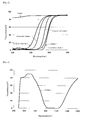
- the UV absorption spectrum of the thus obtained light-blocking film test piece was measured. This measurement was performed using V-670 manufactured by JASCO Corporation. The thus obtained absorption spectrum is shown in Fig. 1 .
- Fig. 1 the UV absorption spectrum of a film containing no ultraviolet absorber is also shown as a control.
- a comparative film test piece was obtained and its UV absorption spectrum was measured in the same manner as in Example 1, except that the following Compound No. 6, a monohydroxyphenyl triazine compound having a structure similar to that of the triazine compound of the present invention, was used as an ultraviolet absorber in place of Compound No. 1. The result thereof is shown in Fig. 1 .
- a comparative film test piece was obtained and its UV absorption spectrum was measured in the same manner as in Example 1, except that the following Compound No. 7, a benzotriazole-based ultraviolet absorber, was used as an ultraviolet absorber in place of Compound No. 1. The result thereof is shown in Fig. 1 .
- a comparative film test piece was obtained and its UV absorption spectrum was measured in the same manner as in Example 1, except that the following Compound No. 8, a benzotriazole-based ultraviolet absorber, was used as an ultraviolet absorber in place of Compound No. 1. The result thereof is shown in Fig. 1 .
- a comparative film test piece was obtained and its UV absorption spectrum was measured in the same manner as in Example 1, except that the following Compound No. 9, a benzophenone-based ultraviolet absorber, was used as an ultraviolet absorber in place of Compound No. 1. The result thereof is shown in Fig. 1 .
- Example 1 and Comparative Examples 1 to 4 shown in Fig. 1 From the results of Example 1 and Comparative Examples 1 to 4 shown in Fig. 1 , it is seen that the light-blocking film of the present invention efficiently blocks ultraviolet radiation and that it is particularly effective in blocking ultraviolet radiation in a long wavelength region of 380 nm to 400 nm. In contrast, it was found that the light-blocking films of Comparative Examples, in which other ultraviolet absorber was used, had poor ultraviolet radiation-blocking ability and that they are particularly ineffective in blocking ultraviolet radiation in a long wavelength region of 380 nm to 400 nm.
- the flow-casted resin solution was pre-dried at 50°C for 20 minutes and then dried at 90°C for 30 minutes to prepare a film of 80 to 90 ⁇ m in thickness, which was subsequently cut to obtain a 2 cm ⁇ 2 cm square light-blocking film test piece.
- the light absorption spectrum of the thus obtained light-blocking film test piece was measured. This measurement was performed using V-670 manufactured by JASCO Corporation. The thus obtained absorption spectrum is shown in Fig. 2 .
- the light-blocking film of the present invention efficiently blocks both ultraviolet radiation, particularly in a long wavelength region of 380 nm to 400 nm, and near-infrared radiation.
- a polyethylene terephthalate pellet manufactured by UNITIKA Ltd., product name: 1203 and, as an ultraviolet absorber, the ultraviolet absorber of Compound No. 1 were mixed at a mass ratio of 1:0.012.
- the resulting mixture was melted at a temperature of 260 to 280°C and extruded using an extruder to prepare a 100 ⁇ m-thick film.
- This film was then biaxially stretched to prepare a 25 ⁇ m-thick light-blocking film.
- This light-blocking film was found to efficiently block ultraviolet radiation in a long wavelength region of 380 nm to 400 nm.
Landscapes
- Chemical & Material Sciences (AREA)
- Organic Chemistry (AREA)
- Chemical Kinetics & Catalysis (AREA)
- Medicinal Chemistry (AREA)
- Polymers & Plastics (AREA)
- Health & Medical Sciences (AREA)
- Engineering & Computer Science (AREA)
- Manufacturing & Machinery (AREA)
- Materials Engineering (AREA)
- Life Sciences & Earth Sciences (AREA)
- Wood Science & Technology (AREA)
- Compositions Of Macromolecular Compounds (AREA)
- Laminated Bodies (AREA)
- Manufacture Of Macromolecular Shaped Articles (AREA)
Abstract
Description
- The present invention relates to a light-blocking film which blocks ultraviolet radiation.
- On the window glasses of structures such as buildings and residential houses and those of vehicles such as automobiles, trains and airplanes, a light-blocking film is laminated for the purposes of cutting ultraviolet radiation harmful to the articles and human inside and cutting infrared radiation to prevent an increase in the room temperature.
- In addition, in the photolithography process of the microelectronic circuit production, since unintended light (particularly light of the ultraviolet region) causes problems in the substrate production, a light-blocking film is used as a curtain or a temporary partition. In these light-blocking films, an ultraviolet absorber is used for cutting ultraviolet radiation (
Patent Documents 1 to 3). -
- Patent Document 1: Japanese Unexamined Patent Application Publication No.
2003-112391 - Patent Document 2: Japanese Unexamined Patent Application Publication No.
2008-265092 - Patent Document 3: Japanese Unexamined Patent Application Publication No.
H8-287715 - However, conventional light-blocking film do not have satisfactory ultraviolet radiation-absorbing capacity and their performance of blocking ultraviolet radiation particularly in a long wavelength region of 380 nm to 400 nm still has room for improvement.
- Furthermore, since conventional light-blocking films cut even the light in the visible region (450 nm to 500 nm), there is such a problem that the amount of visible light is reduced, darkening the space and causing visual fatigue.
- Therefore, an object of the present invention is to provide a light-blocking film which is capable of efficiently blocking ultraviolet radiation in a long wavelength region of 380 nm to 400 nm with the use of a small amount of an ultraviolet absorber added thereto.
- In order to solve the above-described problems, the present inventors intensively studied and discovered that the problems can be solved by using a triazine-based ultraviolet absorber having a specific structure, thereby completing the present invention.
- That is, the light-blocking film of the present invention is characterized in that it comprises at least one triazine compound represented by the following Formula (1), or that the triazine compound is coated thereon:

- In the light-blocking film of the present invention, it is preferred that the triazine compound be one which is represented by the following Formula (2):

- Further, in the light-blocking film of the present invention, it is preferred that the triazine compound be kneaded into a synthetic resin used as a base material of the film.
- Still further, in the light-blocking film of the present invention, it is preferred that the triazine compound be coated on a base film.
- Yet still further, it is preferred that the light-blocking film of the present invention further comprises a near-infrared absorber, or that the near-infrared absorber be coated on the surface thereof.
- According to the present invention, a light-blocking film which is capable of efficiently blocking ultraviolet radiation in a long wavelength region of 380 nm to 400 nm with the use of a small amount of an ultraviolet absorber added thereto can be provided.
-
-
Fig. 1 is a graph showing the results of Example 1, Comparative Example 1, Comparative Example 2, Comparative Example 3 and Comparative Example 4. -
Fig. 2 is a graph showing the results of Example 2. - The present invention will now be described in detail.
- The light-blocking film of the present invention comprises at least one triazine compound represented by the following Formula (1) as an ultraviolet absorber:

- In the Formula (1), examples of the linear or branched alkyl group having 1 to 12 carbon atoms which is represented by R1 to R3 include linear or branched alkyl groups such as methyl, ethyl, propyl, isopropyl, butyl, isobutyl, sec-butyl, tert-butyl, amyl, tert-amyl, hexyl, octyl, sec-octyl, tert-octyl, 2-ethylhexyl, decyl, undecyl and dodecyl, among which hexyl group is preferred because of its excellent blocking of ultraviolet radiation in a long wavelength region. Examples of the cycloalkyl group having 3 to 8 carbon atoms include cyclopropyl, cyclopentyl, cyclohexyl, cycloheptyl and cyclooctyl groups.
- Examples of the alkyl group having 1 to 8 carbon atoms which is represented by R4 to R6 include methyl, ethyl, propyl, isopropyl, butyl, sec-butyl, tert-butyl, isobutyl, amyl, tert-amyl, hexyl, octyl and tert-octyl groups, among which methyl group is preferred because of its excellent blocking of ultraviolet radiation in a long wavelength region.
- Examples of the alkenyl group having 2 to 8 carbon atoms which is represented by R1 to R3 and R4 to R6 include linear and branched propenyl, butenyl, pentenyl, hexenyl, heptenyl and octenyl groups, regardless of the position of the unsaturated bond.
- Examples of the aryl group having 6 to 18 carbon atoms which is represented by R1 to R3 include phenyl, naphthyl and biphenyl groups; examples of the alkylaryl group having 7 to 18 carbon atoms include methylphenyl, dimethylphenyl, ethylphenyl and octylphenyl groups; and examples of the arylalkyl group having 7 to 18 carbon atoms include benzyl, 2-phenylethyl and 1-methyl-1-phenylethyl groups. Examples of a substituted and/or interrupted aryl group include 4-methylphenyl, 3-chlorophenyl, 4-benzyloxyphenyl, 4-cyanophenyl, 4-phenoxyphenyl, 4-glycidyloxyphenyl and 4-isocyanuratephenyl groups.
- The ester group is a group formed by dehydration condensation between a carboxylic acid and an alcohol, and the amide group is a group formed by dehydration condensation between a carboxylic acid and an amine.
- Examples of the alkoxy group having 1 to 12 carbon atoms include methoxy, ethoxy, propoxy, butoxy, pentoxy, hexaoxy, octoxy, nonyloxy, decyloxy, undecyloxy and dodecyloxy groups.
- Examples of a substituted and/or interrupted alkyl or cycloalkyl group which may be represented by R1 to R3 include 2-hydroxypropyl, 2-methoxyethyl, 3-sulfonyl-2-hydroxypropyl and 4-methylcyclohexyl groups.
- The triazine compound of the present invention which is represented by the Formula (1) is preferably a compound represented by the following Formula (2):
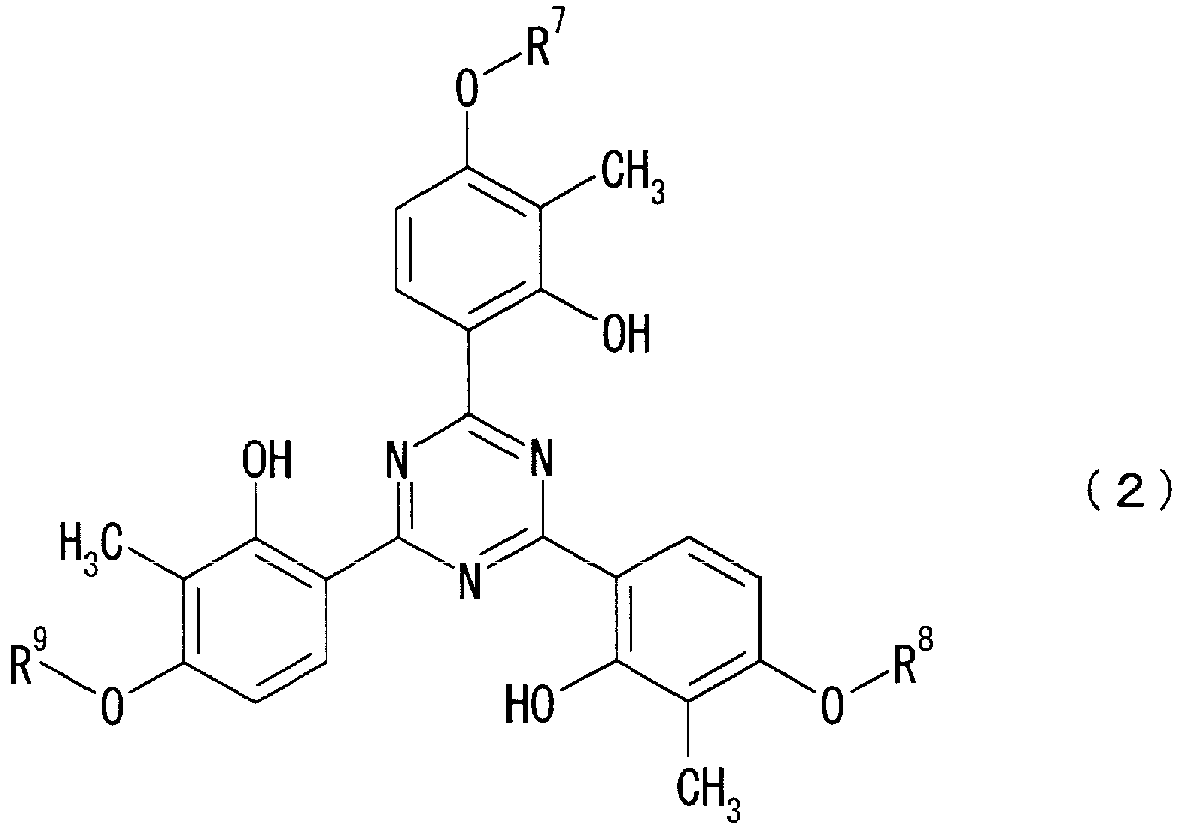
- Examples of the linear or branched alkyl group having 1 to 12 carbon atoms which is represented by R7 to R9 in the Formula (2) include the same groups as those represented by the R1 to R3 in the Formula (1). Further, examples of the alkoxy group are the same as those described above.
- Examples of the compound of the present invention which is represented by the Formula (1) or (2) include, but not limited to, the following Compound Nos. 1 to 5.


- The light-blocking film of the present invention may further comprise a near-infrared absorber to block near-infrared radiation.
- The near-infrared absorber according to the present invention is not particularly restricted, and it may be any substance that shows absorption in the near-infrared region. Examples thereof include polymethine dyes (cyanine dyes), indolenine cyanine dyes, phthalocyanine dyes, naphthalocyanine dyes, naphthol metal complex dyes, squarylium dyes, triazo dyes, dithiol metal complex salt dyes, pyrylium dyes, thiapyrylium dyes, indoaniline dyes, azoanthraquinone dyes, naphthoquinone dyes, anthraquinone dyes, bis(dithiolene) dyes, triphenylmethane dyes, aminium (aluminum) dyes, and diimmonium dyes. Further, an inorganic near-infrared absorber may also be used, and examples thereof include carbon blacks; tin oxide doped with antimony oxide or indium oxide; and oxides, carbides and borides of metals belonging to Group 4A, 5A or 6A of the periodic table.
- The light-blocking film of the present invention can be obtained by kneading an ultraviolet absorber represented by the Formula (1) or (2) into a synthetic resin directly or along with a binder resin and/or an additive(s) and then molding the synthetic resin into a film. Alternatively, the ultraviolet absorber may be applied to a base material made of a synthetic resin by coating or the like.
- A method for obtaining the light-blocking film of the present invention is not particularly restricted and, for example, any of the following three methods can be utilized.
- (Method 1) A method of blending the ultraviolet absorber represented by the Formula (1) or (2) into a synthetic resin, kneading this synthetic resin to obtain an ultraviolet absorber resin composition, and then heat-molding the thus obtained composition to prepare a film or a sheet.
- (Method 2) A method of preparing a paint or coating liquid containing the ultraviolet absorber represented by the Formula (1) or (2) and then applying the paint or coating liquid on a film or sheet containing a synthetic resin as a base material.
- (Method 3) A method of incorporating the ultraviolet absorber represented by the Formula (1) or (2) into an adhesive and coating this adhesive on a film to prepare a laminated resin film or sheet.
- In the
Method 1 in which the ultraviolet absorber represented by the Formula (1) or (2) is blended into a resin and this resin is then kneaded and heat-molded, the transparency of the synthetic resin is preferably as high as possible when it is made into a resin film. Specific examples of such a synthetic resin include, but not limited to, polyethylenes; polypropylenes; polystyrenes; copolymers of polyethylene and cycloolefin such as norbornene; polyacrylic acids; polyacrylates; polyacrylonitriles; vinyl compounds and addition polymers thereof, such as polyvinyl acetate, polyvinyl chloride and polyvinyl fluoride; polymethacrylic acids; polymethacrylates; copolymers of vinyl compounds or fluorocarbon compounds, such as polyvinylidene chloride, polyvinylidene fluoride, polyvinylidene cyanide, vinylidene fluoride-trifluoroethylene copolymers, vinylidene fluoride-tetrafluoroethylene copolymers and vinylidene cyanide-vinyl acetate copolymers; fluorine-containing compounds such as polytrifluoroethylene, polytetrafluoroethylene and polyhexafluoropropylene; polyamides such as nylon 6 and nylon 66; polyimides; polyurethanes; polypeptides; polyesters such as polyethylene terephthalate; polyethers such as polycarbonate, polyoxymethylene, polyethylene oxide and polypropylene oxide; epoxy resins; polyvinyl alcohols; and polyvinyl butyrals. - In the preparation method, the processing temperature, film-forming conditions and the like are somewhat variable depending on the base resin to be used; however, the light-blocking film of the present invention can be obtained by, for example, a method in which the ultraviolet absorber represented by the Formula (1) or (2) is added to powder or a pellet of the base resin and heat-dissolved at 150 to 350°C; the resultant is subsequently molded into a film, or extruded into a film or a raw sheet using an extruder; and the thus obtained film or raw sheet is stretched uniaxially or biaxially at a temperature of 30 to 120°C and a draw ratio of 2 to 5 to obtain a 10 to 200 µm-thick film. It is noted here that, at the time of the kneading, in addition to the additive(s) normally used in ordinary resin molding such as an infrared absorber, an antioxidant, a light stabilizer, a flame retardant and/or a plasticizer, a dye or a pigment for controlling the color tone or other ultraviolet absorber may also be added.
- The ultraviolet absorber represented by the Formula (1) or (2) is added in an amount of preferably 0.001 to 20% by mass, more preferably 0.01 to 10% by mass, particularly preferably 0.1 to 5% by mass, with respect to the amount of the synthetic resin. When the amount is less than 0.001% by mass, the ultraviolet radiation-absorbing effect may not be sufficient, whereas when the amount is greater than 20% by mass, the transparency of the film may be reduced.
- In the
Method 2 in which a paint is prepared and then coated, a method of preparing a paint by dissolving the ultraviolet absorber represented by the Formula (1) or (2) in a binder resin and an organic solvent, or a method of preparing an aqueous paint by dissolving or dispersing the ultraviolet absorber represented by the Formula (1) or (2) in a binder resin and an aqueous solvent can be employed. - In the former method, for example, an aliphatic ester-based resin, an acrylic resin, a melamine resin, a urethane resin, an aromatic ester-based resin, a polycarbonate resin, an aliphatic polyolefin resin, an aromatic polyolefin resin, a polyvinyl-based resin, a polyvinyl alcohol resin, a polyvinyl-based modified resin (such as PVB or EVA) or a copolymer of these resins is used as the binder. As the solvent, a halogen-based, alcohol-based, ketone-based, ester-based, aliphatic hydrocarbon-based, aromatic hydrocarbon-based or ether-based solvent, or a mixed system thereof is used.
- In the latter case, for example, a method of dissolving or dispersing the ultraviolet absorber represented by the Formula (1) or (2) in an aqueous binder resin, or a method of making the ultraviolet absorber represented by the Formula (1) or (2) into fine particles of several micrometers or less in size and then preparing an emulsion by dispersing the fine particles in an aqueous solvent using an emulsifier as required can be employed.
- Examples of the aqueous binder resin include polyvinyl alcohols and modification products thereof; polyacrylic acids and copolymers thereof; and cellulose and modification products thereof. Examples of the aqueous solvent include water; and solvents prepared by adding an alcohol such as methyl alcohol, a ketone such as acetone or an ether such as tetrahydrofuran to water.
- Further, examples of the emulsion include those in which pulverized ultraviolet absorber represented by the Formula (1) or (2) (50 to 500 nm) is dispersed in an uncolored acrylic emulsion paint such as an acrylic emulsion-type aqueous paint dispersed in an acrylic emulsion.
- In the
Method 2, the ultraviolet absorber represented by the Formula (1) or (2) is added in an amount of preferably 0.001 to 20% by mass, more preferably 0.01 to 10% by mass, particularly preferably 0.1 to 5% by mass, with respect to the total amount of the binder resin and the synthetic resin of the base material on which coating is performed. When the amount is less than 0.001% by mass, the ultraviolet radiation-absorbing effect may not be sufficient, whereas when the amount is greater than 20% by mass, the transparency of the film may be reduced. - In the paint or coating liquid, in addition to an additive(s) usually used in paints such as a near-infrared absorber, an antioxidant and/or a light stabilizer, a dye or a pigment for controlling the color tone or other ultraviolet absorber may also be added. The paint or coating liquid prepared by the above-described method is coated on a synthetic resin film or sheet which serves as a base material by using a bar coater, a gravure coater, a comma coater, a rip coater, a curtain coater, a roll coater, a blade coater, a spin coater, a reverse coater or a die coater or by spraying or the like, thereby the light-blocking film is prepared. It is also possible to arrange a protective layer for protecting the coated surface or to laminate a transparent resin plate, a transparent resin film or the like on the coated surface. Further, a cast film is also included in this method.
- In the
Method 3 in which a laminated resin film or sheet is prepared using an adhesive in which the ultraviolet absorber represented by the Formula (1) or (2) is incorporated, a known transparent adhesive, such as an adhesive for common resins such as silicon-based, urethane-based and acrylic resins, a polyvinyl butyral (PVB) adhesive or an ethylene-vinyl acetate (EVA) adhesive, can be used as the adhesive. Using an adhesive in which the ultraviolet absorber represented by the Formula (1) or (2) is incorporated, resin films are adhered with each other to prepare the light-blocking film. Alternatively, a thermocompression bonding method can be employed as well. - The ultraviolet absorber represented by the Formula (1) or (2) is added in an amount of preferably 0.001 to 20% by mass, more preferably 0.01 to 10% by mass, particularly preferably 0.1 to 5% by mass, with respect to the total amount of the solid content of the adhesive and the synthetic resin of the base material. When the amount is less than 0.001% by mass, the ultraviolet radiation-absorbing effect may not be sufficient, whereas when the amount is greater than 20% by mass, the transparency of the film may be reduced.
- Next, the resin used as a base material of the light-blocking film of the present invention will be described. The resin used as the base material is not particularly restricted; however, it is preferably transparent.
- Examples of such a resin include cellulose esters such as diacetyl cellulose, triacetyl cellulose (TAC), propionyl cellulose, butyryl cellulose, acetylpropionyl cellulose and nitrocellulose; polyamides such as nylon 6 and nylon 66; polyimides; polyurethanes; epoxy resins; polycarbonates; polyesters such as polyethylene terephthalate, polyethylene naphthalate, polybutylene terephthalate, poly-1,4-cyclohexane dimethylene terephthalate, polyethylene-1,2-diphenoxyethane-4,4'-dicarboxylate and polybutylene terephthalate; polystyrenes; polyolefins such as polyethylene, polypropylene, polymethylpentene and copolymers of polyethylene and cycloolefin such as norbornene; vinyl compounds such as polyacrylonitrile, polyvinyl acetate, polyvinyl chloride and polyvinyl fluoride; copolymers of vinyl compounds or fluorocarbon compounds, such as polyvinylidene chloride, polyvinylidene fluoride, polyvinylidene cyanide, vinylidene fluoride-trifluoroethylene copolymers, vinylidene fluoride-tetrafluoroethylene copolymers and vinylidene cyanide-vinyl acetate copolymers; acrylic resins such as polyacrylic acid, polymethyl methacrylate and polyacrylate; fluorine-containing compounds such as polyhexafluoropropylene; polycarbonates; polysulfones; polyether sulfones; polyether ketones; polyether imides; polyethers such as polyoxymethylene, polyethylene oxide and polypropylene oxide; polyvinyl alcohols; polyvinyl butyrals; and norbornene resins.
- Among these resins, polyester resins and norbornene resins are preferred.
- The above-described resins may be used individually or, depending on the application, two or more thereof may be used in the form of a mixture and/or a copolymer, or may be laminated with each other.
- The light-blocking film of the present invention may have a single-layer structure or a laminated multilayer structure. The light-blocking film of the present invention may have a multilayer structure as long as the ultraviolet absorber represented by the Formula (1) or (2) is used in at least layer.
- In the base material resin of the light-blocking film of the present invention, as required, a variety of additives may be used, and the base material resin may also be subjected to a surface treatment.
- Examples of the additives include antioxidants (such as phenolic, phosphorus-based or thioether-based antioxidants); ultraviolet absorbers other than the triazine compound of the present invention; hindered amine-based light stabilizers; nucleating agents; antistatic agents; light-absorbing dyes; pigments; dyes; lubricants; processing aids; plasticizers; metal deactivators; and flame retardants such as inorganic fine particles, halogen-containing compounds, phosphate compounds, phosphoric acid amide compounds, melamine compounds, fluorocarbon resins, silicon resins, metal oxides, melamine (poly)phosphates and piperazine (poly)phosphates.
- Examples of the phenolic antioxidants include 2,6-di-tert-butyl-p-cresol, 2,6-diphenyl-4-octadecyloxyphenol, distearyl(3,5-di-tert-butyl-4-hydroxybenzyl)phosphonate, 1,6-hexamethylene-bis[(3,5-di-tert-butyl-4-hydroxyphenyl)propionic acid amide], 4,4'-thiobis(6-tert-butyl-m-cresol), 2,2'-methylene-bis(4-methyl-6-tert-butylphenol), 2,2'-methylene-bis(4-ethyl-6-tert-butylphenol), 4,4'-butylidene-bis(6-tert-butyl-m-cresol), 2,2'-ethylidene-bis(4,6-di-tert-butylphenol), 2,2'-ethylidene-bis(4-sec-butyl-6-tert-butylphenol), 1,1,3-tris(2-methyl-4-hydroxy-5-tert-butylphenyl)butane, 1,3,5-tris(2,6-dimethyl-3-hydroxy-4-tert-butylbenzyl)isocyanurate, 1,3,5-tris(3,5-di-tert-butyl-4-hydroxybenzyl)isocyanurate, 1,3,5-tris(3,5-di-tert-butyl-4-hydroxybenzyl)-2,4,6-trimethylbenzene, 2-tert-butyl-4-methyl-6-(2-acryloyloxy-3-tert-butyl-5-methylbenzyl)phenol, stearyl(3,5-di-tert-butyl-4-hydroxyphenyl)propionate, thiodiethylene glycol-bis[(3,5-di-tert-butyl-4-hydroxyphenyl)propionate], 1,6-hexamethylene-bis[(3,5-di-tert-butyl-4-hydroxyphenyl)propionate], bis[3,3-bis(4-hydroxy-3-tert-butylphenyl)butyric acid]glycol ester, bis[2-tert-butyl-4-methyl-6-(2-hydroxy-3-tert-butyl-5-methylbenzyl)phenyl]terephthalate, 1,3,5-tris[(3,5-di-tert-butyl-4-hydroxyphenyl)propionyloxyethyl]isocyanurate, 3,9-bis[1,1-dimethyl{(3-tert-butyl-4-hydroxy-5-methylphenyl)propionyloxy}ethyl]-2,4,8,1 0-tetraoxaspiro[5.5]undecane, triethylene glycol-bis[(3-tert-butyl-4-hydroxy-5-methylphenyl)propionate] and tocophenol.
- Examples of the phosphorus-based antioxidants include trisnonylphenyl phosphite, tris[2-tert-butyl-4-(3-tert-butyl-4-hydroxy-5-methylphenylthio)-5-methylphenyl]phosphite, tridecyl phosphite, octyldiphenyl phosphite, di(decyl)monophenyl phosphite, di(tridecyl)pentaerythritol diphosphite, di(nonylphenyl)pentaerythritol diphosphite, bis(2,4-di-tert-butylphenyl)pentaerythritol diphosphite, bis(2,6-di-tert-butyl-4-methylphenyl)pentaerythritol diphosphite, bis(2,4,6-tri-tert-butylphenyl)pentaerythritol diphosphite, bis(2,4-dicumylphenyl)pentaerythritol diphosphite, tetra(tridecyl)isopropylidene diphenol diphosphite, tetra(tridecyl)-4,4'-n-butylidene-bis(2-tert-butyl-5-methylphenol) diphosphite, hexa(tridecyl)-1,1,3-tris(2-methyl-4-hydroxy-5-tert-butylphenyl)butane triphosphite, tetrakis(2,4-di-tert-butylphenyl)biphenylene diphosphonite, 9,10-dihydro-9-oxa-10-phosphaphenanthrene-10-oxide, 2,2'-methylene-bis(4,6-tert-butylphenyl)-2-ethylhexyl phosphite, 2,2'-methylene-bis(4,6-tert-butylphenyl)-octadecyl phosphite, 2,2'-ethylidene-bis(4,6-di-tert-butylphenyl)fluorophosphite, tris(2-[(2,4,8,10-tetrakis-tert-butyldibenzo[d,f][1,3,2]dioxaphosphepin-6-yl)oxy]ethyl)amine, 2-(1,1-dimethylethyl)-6-methyl-4-[3-[[2,4,8,10-tetrakis(1,1-dimethylethyl)dibenzo[d,f][1,3,2] dioxaphosphepin-6-yl]oxy]propyl]phenol, and phosphites of 2-ethyl-2-butylpropylene glycol and 2,4,6-tri-tert-butylphenol.
- Examples of the thioether-based antioxidants include dialkyl thiodipropionates such as dilauryl thiodipropionate, dimyristyl thiodipropionate and distearyl thiodipropionate; and β-alkylmercaptopropionates of polyols, such as pentaerythritol-tetra(β-dodecylmercaptopropionate).
- Examples of the ultraviolet absorbers other than the triazine compound of the present invention include benzotriazole-based, benzophenone-based and benzoate-based ultraviolet absorbers, as well as triazine-based ultraviolet absorbers other than those represented by the Formula (1) or (2).
- Examples of the benzotriazole-based ultraviolet absorbers include, but not particularly limited to, 2-(2'-hydroxyphenyl)benzotriazoles such as 2-(2'-hydroxy-5'-methylphenyl)benzotriazole, 2-(2'-hydroxy-3',5'-di-tert-butylphenyl)-5-chlorobenzotriazole, 2-(2'-hydroxy-3'-tert-butyl-5'-methylphenyl)-5-chlorobenzotriazole, 2-(2'-hydroxy-5'-tert-octylphenyl)benzotriazole, 2-(2'-hydroxy-3',5'-dicumylphenyl)benzotriazole, 2-(2'-hydroxy-3'-tert-butyl-5'-carboxyphenyl)benzotriazole and 2,2'-methylene-bis(4-tert-octyl-6-benzotriazolyl)phenol.
- Examples of the benzophenone-based ultraviolet absorbers include, but not particularly limited to, 2-hydroxybenzophenones such as 2,4-dihydroxybenzophenone, 2-hydroxy-4-methoxybenzophenone, 2-hydroxy-4-octoxybenzophenone, and 5,5'-methylene-bis(2-hydroxy-4-methoxybenzophenone).
- Examples of the benzoate-based ultraviolet absorbers include, but not particularly limited to, phenyl salicylate, resorcinol monobenzoate, 2,4-di-tert-butylphenyl-3,5-di-tert-butyl-4-hydroxybenzoate, 2,4-di-tert-amylphenyl-3,5-di-tert-butyl-4-hydroxybenzoate and hexadecyl-3,5-di-tert-butyl-4-hydroxybenzoate.
- Examples of the triazine-based ultraviolet absorbers other than those represented by the Formula (1) or (2) include triaryltriazines such as 2-(2-hydroxy-4-octoxyphenyl)-4,6-bis(2,4-dimethylphenyl)-s-triazine, 2-(2-hydroxy-4-hexyloxyphenyl)-4,6-diphenyl-s-triazine, 2-(2-hydroxy-4-propoxy-5-methylphenyl)-4,6-bis(2,4-dimethylphenyl)-s-triazine, 2-(2-hydroxy-4-hexyloxyphenyl)-4,6-dibiphenyl-s-triazine, 2,4-bis(2-hydroxy-4-octoxyphenyl)-6-(2,4-dimethylphenyl)-s-triazine, 2,4,6-tris(2-hydroxy-4-octoxyphenyl)-s-triazine and 2-(4-isooctyloxycarbonylethoxyphenyl)-4,6-diphenyl-s-triazine.
- Examples of the hindered amine-based light stabilizers include hindered amine compounds such as 2,2,6,6-tetramethyl-4-piperidyl stearate, 1,2,2,6,6-pentamethyl-4-piperidyl stearate, 2,2,6,6-tetramethyl-4-piperidylbenzoate, bis(2,2,6,6-tetramethyl-4-piperidyl)sebacate, bis(1,2,2,6,6-pentamethyl-4-piperidyl)sebacate, tetrakis(2,2,6,6-tetramethyl-4-piperidylbutane tetracarboxylate, tetrakis(1,2,2,6,6-pentamethyl-4-piperidylbutane tetracarboxylate, bis(2,2,6,6-tetramethyl-4-piperidyl)·di(tridecyl)-1,2,3,4-butane tetracarboxylate, bis(1,2,2,6,6-pentamethyl-4-piperidyl)·di(tridecyl)-1,2,3,4-butane tetracarboxylate, bis(1,2,2,6,6-pentamethyl-4-piperidyl)-2-butyl-2-(3,5-di-tert-butyl-4-hydroxybenzyl)malonate, 1-(2-hydroxyethyl)-2,2,6,6-tetramethyl-4-piperidinol/diethyl succinate polycondensate, 1,6-bis(2,2,6,6-tetramethyl-4-piperidylamino)hexane/dibromoethane polycondensate, 1,6-bis(2,2,6,6-tetramethyl-4-piperidylamino)hexane/2,4-dichloro-6-morpholino-s-triazine polycondensate, 1,6-bis(2,2,6,6-tetramethyl-4-piperidylamino)hexane/2,4-dichloro-6-tert-octylamino-s-triazine polycondensate, 1,5,8,12-tetrakis[2,4-bis(N-butyl-N-(2,2,6,6-tetramethyl-4-piperidyl)amino)-s-triazine-6-yl]-1, 5,8,12-tetraazadodecane, 1,5,8,12-tetrakis[2,4-bis(N-butyl-N-(1,2,2,6,6-pentamethyl-4-piperidyl)amino)-s-triazine-6-yl ]-1,5,8,12-tetraazadodecane, 1,6,11-tris[2,4-bis(N-butyl-N-(2,2,6,6-tetramethyl-4-piperidyl)amino)-s-triazine-6-ylaminoun decane,and 1,6,11-tris[2,4-bis(N-butyl-N-(1,2,2,6,6-pentamethyl-4-piperidyl)amino)-s-triazine-6-ylamino undecane.
- Examples of the nucleating agents include metal salts of benzoic acids such as aluminum p-tert-butylbenzoate and sodium benzoate; metal salts of aromatic phosphoric acid esters, such as sodium bis(2,4-di-t-butylphenyl)phosphate, sodium methylene-bis(2,4-di-t-butylphenyl)phosphate and hydroxyaluminum bis[methylene-bis(2,4-di-t-butylphenyl)phosphate]; mixtures of a metal aromatic phosphate and an alkali metal compound; dibenzylidene sorbitols such as dibenzylidene sorbitol, bis(methylbenzylidene)sorbitol and bis(dimethylbenzylidene sorbitol); metal salts of amino acids; and metal salts of rosin acid.
- Examples of the antistatic agents include cationic antistatic agents such as fatty acid quaternary ammonium ion salts and polyamine quaternary salts; anionic antistatic agents such as higher alcohol phosphates, higher alcohol EO adducts, polyethylene glycol fatty acid esters, anionic alkyl sulfonates, higher alcohol sulfates, higher alcohol ethylene oxide adduct sulfates and higher alcohol ethylene oxide adduct phosphates; nonionic antistatic agents such as polyhydric alcohol fatty acid esters, polyglycol phosphates and polyoxyethylene alkyl allyl ethers; and amphoteric antistatic agents such as amphoteric alkyl betaines (e.g., alkyldimethylamino acetic acid betaine) and imidazoline-type amphoteric surfactants. These antistatic agents may be used individually, or two or more thereof may be used in combination.
- Further, examples of the surface treatment include chemical treatment, mechanical treatment, corona discharge treatment, flame treatment, ultraviolet irradiation treatment, high-frequency wave treatment, glow discharge treatment, active plasma treatment, laser treatment, mixed acid treatment and ozone oxidation treatment. By performing a surface treatment, a large number of irregularities, lines or the like can be formed on the surface.
- The light-blocking film of the present invention may be directly used as a film or a sheet; however, it is also preferred to use the light-blocking film by laminating it on a glass, a resin glass, a building material, a transparent board, a synthetic resin plate, a synthetic resin film, a synthetic resin sheet or the like. The thickness of the light-blocking film is not particularly restricted; however, it is preferably 10 to 200 µm.
- The use of the light-blocking film of the present invention is not particularly restricted as long as it is used for the purpose of blocking ultraviolet radiation or blocking ultraviolet radiation and heat ray (near-infrared radiation), and the light-blocking film of the present invention can be used in, for example, window glasses of vehicles such as automobiles, trains and airplanes; window glasses of residential houses, buildings, factories and the like; curtains of residential houses, buildings, factories and the like; partitions of residential houses, buildings, factories and the like; window glasses, curtains and partitions of clean rooms; display windows and showcases; vending machine panels; covers, cases and packaging materials of electrical and electronic instruments; covers, cases and packaging materials of electrical and electronic materials; covers, cases and packaging materials of photo-curable materials and photo-reactive materials; protection films of display devices such as cellular phones, televisions and personal computers; lenses of glasses and sunglasses; lenses of optical instruments; and various packaging materials.
- The present invention will now be described in detail by way of examples thereof. However, the present invention is not restricted to the following examples by any means.
- A resin solution containing 0.5 parts by mass of Compound No. 1 as an ultraviolet absorber and 2,000 parts by mass of dichloromethane as a solvent with respect to 100 parts by mass of a norbornene resin (manufactured by JSR Corporation, trade name: ARTON F5023) was flow-casted on a surface-polished glass plate using a bar coater. The flow-casted resin solution was pre-dried at 50°C for 20 minutes and then dried at 90°C for 30 minutes to prepare a film of 80 to 90 µm in thickness, which was subsequently cut to obtain a 2 cm × 2 cm square light-blocking film test piece.
- The UV absorption spectrum of the thus obtained light-blocking film test piece was measured. This measurement was performed using V-670 manufactured by JASCO Corporation. The thus obtained absorption spectrum is shown in
Fig. 1 . - Further, in
Fig. 1 , the UV absorption spectrum of a film containing no ultraviolet absorber is also shown as a control.
- A comparative film test piece was obtained and its UV absorption spectrum was measured in the same manner as in Example 1, except that the following Compound No. 6, a monohydroxyphenyl triazine compound having a structure similar to that of the triazine compound of the present invention, was used as an ultraviolet absorber in place of Compound No. 1. The result thereof is shown in
Fig. 1 .
- A comparative film test piece was obtained and its UV absorption spectrum was measured in the same manner as in Example 1, except that the following Compound No. 7, a benzotriazole-based ultraviolet absorber, was used as an ultraviolet absorber in place of Compound No. 1. The result thereof is shown in
Fig. 1 .
- A comparative film test piece was obtained and its UV absorption spectrum was measured in the same manner as in Example 1, except that the following Compound No. 8, a benzotriazole-based ultraviolet absorber, was used as an ultraviolet absorber in place of Compound No. 1. The result thereof is shown in
Fig. 1 .
- A comparative film test piece was obtained and its UV absorption spectrum was measured in the same manner as in Example 1, except that the following Compound No. 9, a benzophenone-based ultraviolet absorber, was used as an ultraviolet absorber in place of Compound No. 1. The result thereof is shown in
Fig. 1 .
- From the results of Example 1 and Comparative Examples 1 to 4 shown in
Fig. 1 , it is seen that the light-blocking film of the present invention efficiently blocks ultraviolet radiation and that it is particularly effective in blocking ultraviolet radiation in a long wavelength region of 380 nm to 400 nm. In contrast, it was found that the light-blocking films of Comparative Examples, in which other ultraviolet absorber was used, had poor ultraviolet radiation-blocking ability and that they are particularly ineffective in blocking ultraviolet radiation in a long wavelength region of 380 nm to 400 nm. - A resin solution containing 0.5 parts by mass of Compound No. 1 as an ultraviolet absorber, 0.3 parts by mass of a diimonium compound (manufactured by Nippon Kayaku Co., Ltd., trade name: IRG-08) as a near-infrared absorber and 2,000 parts by mass of dichloromethane as a solvent with respect to 100 parts by mass of a norbornene resin (manufactured by JSR Corporation, trade name: ARTON F5023) was flow-casted on a surface-polished glass plate using a bar coater. The flow-casted resin solution was pre-dried at 50°C for 20 minutes and then dried at 90°C for 30 minutes to prepare a film of 80 to 90 µm in thickness, which was subsequently cut to obtain a 2 cm × 2 cm square light-blocking film test piece.
- The light absorption spectrum of the thus obtained light-blocking film test piece was measured. This measurement was performed using V-670 manufactured by JASCO Corporation. The thus obtained absorption spectrum is shown in
Fig. 2 . - From
Fig. 2 , it is seen that the light-blocking film of the present invention efficiently blocks both ultraviolet radiation, particularly in a long wavelength region of 380 nm to 400 nm, and near-infrared radiation. - A polyethylene terephthalate pellet (manufactured by UNITIKA Ltd., product name: 1203) and, as an ultraviolet absorber, the ultraviolet absorber of Compound No. 1 were mixed at a mass ratio of 1:0.012. The resulting mixture was melted at a temperature of 260 to 280°C and extruded using an extruder to prepare a 100 µm-thick film. This film was then biaxially stretched to prepare a 25 µm-thick light-blocking film. This light-blocking film was found to efficiently block ultraviolet radiation in a long wavelength region of 380 nm to 400 nm.
Claims (5)
- A light-blocking film, comprising at least one triazine compound represented by the following Formula (1) as an ultraviolet absorber or having said triazine compound coated thereon:

- The light-blocking film according to claim 1, wherein said triazine compound is a triazine compound represented by the following Formula (2):

- The light-blocking film according to claim 1, wherein said triazine compound is kneaded into a synthetic resin used as a base material of said film.
- The light-blocking film according to claim 1, wherein said triazine compound is coated on a base film.
- The light-blocking film according to claim 1, further comprising a near-infrared absorber or having said near-infrared absorber coated on the surface.
Applications Claiming Priority (2)
| Application Number | Priority Date | Filing Date | Title |
|---|---|---|---|
| JP2012267538A JP2013067811A (en) | 2012-12-06 | 2012-12-06 | Light-shielding film |
| PCT/JP2013/082672 WO2014088057A1 (en) | 2012-12-06 | 2013-12-05 | Light-blocking film |
Publications (2)
| Publication Number | Publication Date |
|---|---|
| EP2930203A1 true EP2930203A1 (en) | 2015-10-14 |
| EP2930203A4 EP2930203A4 (en) | 2016-08-10 |
Family
ID=48473846
Family Applications (1)
| Application Number | Title | Priority Date | Filing Date |
|---|---|---|---|
| EP13860804.7A Withdrawn EP2930203A4 (en) | 2012-12-06 | 2013-12-05 | LIGHT BLOCKING FILM |
Country Status (8)
| Country | Link |
|---|---|
| US (1) | US20150329684A1 (en) |
| EP (1) | EP2930203A4 (en) |
| JP (1) | JP2013067811A (en) |
| KR (1) | KR20150093176A (en) |
| CN (1) | CN104837899A (en) |
| BR (1) | BR112015012900A2 (en) |
| TW (1) | TWI600729B (en) |
| WO (1) | WO2014088057A1 (en) |
Families Citing this family (17)
| Publication number | Priority date | Publication date | Assignee | Title |
|---|---|---|---|---|
| US8908581B2 (en) * | 2007-05-01 | 2014-12-09 | Qualcomm Incorporated | Extended microsleep for communications |
| JP3185526U (en) * | 2013-05-26 | 2013-08-22 | 株式会社ミクロカプセル | Injection device |
| US10901125B2 (en) | 2014-05-23 | 2021-01-26 | Eyesafe, Llc | Light emission reducing compounds for electronic devices |
| WO2015179761A1 (en) * | 2014-05-23 | 2015-11-26 | Digihealth LLC | Light emission reducing film for electronic devices |
| US10642087B2 (en) | 2014-05-23 | 2020-05-05 | Eyesafe, Llc | Light emission reducing compounds for electronic devices |
| JP2016033021A (en) * | 2014-07-31 | 2016-03-10 | 株式会社Adeka | Ultraviolet blocking container |
| JP6753779B2 (en) | 2014-08-05 | 2020-09-09 | ミヨシ油脂株式会社 | Additives for imparting UV absorption and / or high refractive index to the matrix and resin members using them |
| KR20170129105A (en) * | 2015-03-17 | 2017-11-24 | 가부시키가이샤 아데카 | Insecticide film and insect cover |
| US11592701B2 (en) | 2018-11-28 | 2023-02-28 | Eyesafe Inc. | Backlight unit with emission modification |
| US12619111B2 (en) | 2018-11-28 | 2026-05-05 | Eyesafe Inc. | Color filter enhancements for display devices |
| US11126033B2 (en) | 2018-11-28 | 2021-09-21 | Eyesafe Inc. | Backlight unit with emission modification |
| US10955697B2 (en) | 2018-11-28 | 2021-03-23 | Eyesafe Inc. | Light emission modification |
| US12321060B1 (en) | 2018-11-28 | 2025-06-03 | Eyesafe Inc. | Color filter enhancements for display devices |
| US11810532B2 (en) | 2018-11-28 | 2023-11-07 | Eyesafe Inc. | Systems for monitoring and regulating harmful blue light exposure from digital devices |
| US10971660B2 (en) | 2019-08-09 | 2021-04-06 | Eyesafe Inc. | White LED light source and method of making same |
| GB2614722A (en) * | 2022-01-13 | 2023-07-19 | Pilkington Group Ltd | Corrosion-resistant and/or cleanable coated glass substrate |
| WO2025206333A1 (en) * | 2024-03-29 | 2025-10-02 | Tdk株式会社 | Resin composition, piezoelectric material, piezoelectric film, and piezoelectric element |
Family Cites Families (16)
| Publication number | Priority date | Publication date | Assignee | Title |
|---|---|---|---|---|
| JPH08287715A (en) | 1995-04-18 | 1996-11-01 | Sumitomo Bakelite Co Ltd | Ultraviolet-ray shielding film |
| US6191199B1 (en) * | 1999-05-03 | 2001-02-20 | Ciba Speciatly Chemicals Corporation | Stabilized adhesive compositions containing highly soluble, high extinction photostable hydroxyphenyl-s-triazine UV absorbers and laminated articles derived therefrom |
| ATE307165T1 (en) * | 2000-04-13 | 2005-11-15 | 3M Innovative Properties Co | LIGHT STABLE ITEMS |
| US6712896B2 (en) * | 2000-05-26 | 2004-03-30 | Konica Minolta Holdings, Inc. | Cellulose ester film, optical film, polarizing plate, optical compensation film and liquid crystal display |
| DE10117785A1 (en) * | 2001-04-10 | 2002-10-17 | Bayer Ag | Heat absorbing layer system containing IR and UV absorbers useful for heat insulation in automobile and building industries has outstanding long term weather resistance and excellent transparency and glaze |
| JP3956007B2 (en) | 2001-10-04 | 2007-08-08 | 富士フイルム株式会社 | UV absorbing film |
| EP1746445B1 (en) * | 2004-05-12 | 2012-02-22 | Adeka Corporation | Optical film |
| JP5541833B2 (en) | 2007-04-18 | 2014-07-09 | ズーホォースウイェークウフェンヨウシェンコンスー | Infrared, UV blocking film |
| JP2009098701A (en) * | 2007-12-27 | 2009-05-07 | Adeka Corp | Optical film and optical sheet |
| JP5411525B2 (en) * | 2009-02-18 | 2014-02-12 | 株式会社Adeka | Ultraviolet absorber composition with improved heat resistance and synthetic resin composition containing the same |
| JP5214552B2 (en) * | 2009-07-28 | 2013-06-19 | 株式会社Adeka | Blue-violet laser light absorbing material |
| JP5730490B2 (en) * | 2010-02-08 | 2015-06-10 | 株式会社Adeka | Optical filter |
| TR201909545T4 (en) * | 2011-02-23 | 2019-07-22 | Sekisui Chemical Co Ltd | Interlayer film and laminated glass for laminated glass. |
| JP2012201768A (en) * | 2011-03-24 | 2012-10-22 | Adeka Corp | Resin composition for coating fluorescent member and fluorescent member coated with the same |
| JP5654397B2 (en) * | 2011-03-25 | 2015-01-14 | 株式会社Adeka | Sealing film for solar cell |
| JP5977976B2 (en) * | 2012-03-27 | 2016-08-24 | 株式会社Adeka | Photocurable composition and hard coating agent |
-
2012
- 2012-12-06 JP JP2012267538A patent/JP2013067811A/en active Pending
-
2013
- 2013-12-05 BR BR112015012900A patent/BR112015012900A2/en not_active Application Discontinuation
- 2013-12-05 CN CN201380063849.7A patent/CN104837899A/en active Pending
- 2013-12-05 EP EP13860804.7A patent/EP2930203A4/en not_active Withdrawn
- 2013-12-05 WO PCT/JP2013/082672 patent/WO2014088057A1/en not_active Ceased
- 2013-12-05 US US14/649,956 patent/US20150329684A1/en not_active Abandoned
- 2013-12-05 KR KR1020157016497A patent/KR20150093176A/en not_active Ceased
- 2013-12-06 TW TW102144820A patent/TWI600729B/en active
Also Published As
| Publication number | Publication date |
|---|---|
| BR112015012900A2 (en) | 2020-01-07 |
| US20150329684A1 (en) | 2015-11-19 |
| WO2014088057A1 (en) | 2014-06-12 |
| EP2930203A4 (en) | 2016-08-10 |
| KR20150093176A (en) | 2015-08-17 |
| CN104837899A (en) | 2015-08-12 |
| TW201439238A (en) | 2014-10-16 |
| TWI600729B (en) | 2017-10-01 |
| JP2013067811A (en) | 2013-04-18 |
Similar Documents
| Publication | Publication Date | Title |
|---|---|---|
| US20150329684A1 (en) | Light-blocking film | |
| JP4070157B2 (en) | Triazine compounds and UV absorbers | |
| JP5411525B2 (en) | Ultraviolet absorber composition with improved heat resistance and synthetic resin composition containing the same | |
| JP2011202144A (en) | Adhesive composition, adhesive tape or film using the same, surface protective film, laminated glass and solar cell module | |
| KR20170095187A (en) | Acrylic resin composition and laminate formed by laminating same | |
| EP2868727B1 (en) | Near-infrared absorbing agent and near-infrared absorbing composition | |
| DE112009001702T5 (en) | Optical film | |
| JP7729719B2 (en) | Granular ultraviolet absorber and resin composition | |
| JP7729720B2 (en) | Granular ultraviolet absorber and resin composition | |
| US10517289B2 (en) | Insect-proofing film and insect-proofing cover | |
| JP5730490B2 (en) | Optical filter | |
| JP7729721B2 (en) | Granular ultraviolet absorber and resin composition | |
| JP3681209B2 (en) | Polymer material composition having improved weather resistance | |
| JP2007254533A (en) | Synthetic resin composition | |
| JPH09137151A (en) | Ultraviolet absorber and organic material added with it | |
| JP2011178900A (en) | Polyolefin resin composition |
Legal Events
| Date | Code | Title | Description |
|---|---|---|---|
| PUAI | Public reference made under article 153(3) epc to a published international application that has entered the european phase |
Free format text: ORIGINAL CODE: 0009012 |
|
| 17P | Request for examination filed |
Effective date: 20150528 |
|
| AK | Designated contracting states |
Kind code of ref document: A1 Designated state(s): AL AT BE BG CH CY CZ DE DK EE ES FI FR GB GR HR HU IE IS IT LI LT LU LV MC MK MT NL NO PL PT RO RS SE SI SK SM TR |
|
| AX | Request for extension of the european patent |
Extension state: BA ME |
|
| DAX | Request for extension of the european patent (deleted) | ||
| RA4 | Supplementary search report drawn up and despatched (corrected) |
Effective date: 20160713 |
|
| RIC1 | Information provided on ipc code assigned before grant |
Ipc: B32B 17/10 20060101ALI20160707BHEP Ipc: C09D 7/12 20060101ALI20160707BHEP Ipc: C08K 5/3492 20060101ALI20160707BHEP Ipc: C09J 11/06 20060101ALI20160707BHEP Ipc: C08J 7/06 20060101ALI20160707BHEP Ipc: C08J 5/18 20060101AFI20160707BHEP Ipc: C08L 101/00 20060101ALI20160707BHEP |
|
| STAA | Information on the status of an ep patent application or granted ep patent |
Free format text: STATUS: THE APPLICATION IS DEEMED TO BE WITHDRAWN |
|
| 18D | Application deemed to be withdrawn |
Effective date: 20170209 |