EP2929958A1 - Method for producing silicon-containing aluminum alloy ingot - Google Patents
Method for producing silicon-containing aluminum alloy ingot Download PDFInfo
- Publication number
- EP2929958A1 EP2929958A1 EP13863450.6A EP13863450A EP2929958A1 EP 2929958 A1 EP2929958 A1 EP 2929958A1 EP 13863450 A EP13863450 A EP 13863450A EP 2929958 A1 EP2929958 A1 EP 2929958A1
- Authority
- EP
- European Patent Office
- Prior art keywords
- silicon
- water
- aluminum alloy
- ingot
- molten metal
- Prior art date
- Legal status (The legal status is an assumption and is not a legal conclusion. Google has not performed a legal analysis and makes no representation as to the accuracy of the status listed.)
- Withdrawn
Links
- 229910052710 silicon Inorganic materials 0.000 title claims abstract description 142
- XUIMIQQOPSSXEZ-UHFFFAOYSA-N Silicon Chemical compound [Si] XUIMIQQOPSSXEZ-UHFFFAOYSA-N 0.000 title claims abstract description 141
- 239000010703 silicon Substances 0.000 title claims abstract description 141
- 229910000838 Al alloy Inorganic materials 0.000 title claims abstract description 70
- 238000004519 manufacturing process Methods 0.000 title abstract description 13
- 229910052698 phosphorus Inorganic materials 0.000 claims abstract description 69
- 239000011574 phosphorus Substances 0.000 claims abstract description 64
- OAICVXFJPJFONN-UHFFFAOYSA-N Phosphorus Chemical compound [P] OAICVXFJPJFONN-UHFFFAOYSA-N 0.000 claims abstract description 60
- 229910052751 metal Inorganic materials 0.000 claims abstract description 60
- 239000002184 metal Substances 0.000 claims abstract description 60
- 238000005266 casting Methods 0.000 claims abstract description 42
- 238000000034 method Methods 0.000 claims abstract description 31
- 238000002844 melting Methods 0.000 claims abstract description 30
- 230000008018 melting Effects 0.000 claims abstract description 30
- 229910052782 aluminium Inorganic materials 0.000 claims abstract description 28
- XAGFODPZIPBFFR-UHFFFAOYSA-N aluminium Chemical compound [Al] XAGFODPZIPBFFR-UHFFFAOYSA-N 0.000 claims abstract description 26
- 239000012535 impurity Substances 0.000 claims abstract description 25
- 239000000956 alloy Substances 0.000 claims abstract description 20
- 239000000463 material Substances 0.000 claims abstract description 16
- 230000015572 biosynthetic process Effects 0.000 claims abstract description 13
- XLYOFNOQVPJJNP-UHFFFAOYSA-N water Substances O XLYOFNOQVPJJNP-UHFFFAOYSA-N 0.000 claims description 32
- 239000000725 suspension Substances 0.000 abstract description 4
- 239000011777 magnesium Substances 0.000 description 15
- 229910052749 magnesium Inorganic materials 0.000 description 14
- VYPSYNLAJGMNEJ-UHFFFAOYSA-N Silicium dioxide Chemical compound O=[Si]=O VYPSYNLAJGMNEJ-UHFFFAOYSA-N 0.000 description 12
- RYGMFSIKBFXOCR-UHFFFAOYSA-N Copper Chemical compound [Cu] RYGMFSIKBFXOCR-UHFFFAOYSA-N 0.000 description 10
- FYYHWMGAXLPEAU-UHFFFAOYSA-N Magnesium Chemical compound [Mg] FYYHWMGAXLPEAU-UHFFFAOYSA-N 0.000 description 10
- 239000010949 copper Substances 0.000 description 10
- 229910052802 copper Inorganic materials 0.000 description 10
- 229910045601 alloy Inorganic materials 0.000 description 9
- 238000005507 spraying Methods 0.000 description 7
- 238000005516 engineering process Methods 0.000 description 6
- 239000000377 silicon dioxide Substances 0.000 description 6
- 238000007711 solidification Methods 0.000 description 6
- 230000008023 solidification Effects 0.000 description 6
- 230000000694 effects Effects 0.000 description 5
- TWRXJAOTZQYOKJ-UHFFFAOYSA-L Magnesium chloride Chemical compound [Mg+2].[Cl-].[Cl-] TWRXJAOTZQYOKJ-UHFFFAOYSA-L 0.000 description 4
- 150000001875 compounds Chemical class 0.000 description 4
- 238000001035 drying Methods 0.000 description 4
- -1 phosphorus compound Chemical class 0.000 description 4
- OKTJSMMVPCPJKN-UHFFFAOYSA-N Carbon Chemical compound [C] OKTJSMMVPCPJKN-UHFFFAOYSA-N 0.000 description 3
- VEXZGXHMUGYJMC-UHFFFAOYSA-M Chloride anion Chemical compound [Cl-] VEXZGXHMUGYJMC-UHFFFAOYSA-M 0.000 description 3
- KZBUYRJDOAKODT-UHFFFAOYSA-N Chlorine Chemical compound ClCl KZBUYRJDOAKODT-UHFFFAOYSA-N 0.000 description 3
- 229910052799 carbon Inorganic materials 0.000 description 3
- 230000000052 comparative effect Effects 0.000 description 3
- 238000001816 cooling Methods 0.000 description 3
- 238000001914 filtration Methods 0.000 description 3
- 239000002245 particle Substances 0.000 description 3
- 230000002093 peripheral effect Effects 0.000 description 3
- 239000002994 raw material Substances 0.000 description 3
- UXVMQQNJUSDDNG-UHFFFAOYSA-L Calcium chloride Chemical compound [Cl-].[Cl-].[Ca+2] UXVMQQNJUSDDNG-UHFFFAOYSA-L 0.000 description 2
- QVGXLLKOCUKJST-UHFFFAOYSA-N atomic oxygen Chemical compound [O] QVGXLLKOCUKJST-UHFFFAOYSA-N 0.000 description 2
- 239000001110 calcium chloride Substances 0.000 description 2
- 229910001628 calcium chloride Inorganic materials 0.000 description 2
- 238000009749 continuous casting Methods 0.000 description 2
- 238000004090 dissolution Methods 0.000 description 2
- 230000006355 external stress Effects 0.000 description 2
- 229910001629 magnesium chloride Inorganic materials 0.000 description 2
- 229910052760 oxygen Inorganic materials 0.000 description 2
- 239000001301 oxygen Substances 0.000 description 2
- 239000000843 powder Substances 0.000 description 2
- 238000005096 rolling process Methods 0.000 description 2
- IHGSAQHSAGRWNI-UHFFFAOYSA-N 1-(4-bromophenyl)-2,2,2-trifluoroethanone Chemical compound FC(F)(F)C(=O)C1=CC=C(Br)C=C1 IHGSAQHSAGRWNI-UHFFFAOYSA-N 0.000 description 1
- 230000004931 aggregating effect Effects 0.000 description 1
- 239000003990 capacitor Substances 0.000 description 1
- 238000003486 chemical etching Methods 0.000 description 1
- 238000012993 chemical processing Methods 0.000 description 1
- 238000006243 chemical reaction Methods 0.000 description 1
- 230000007547 defect Effects 0.000 description 1
- 230000006866 deterioration Effects 0.000 description 1
- 230000007613 environmental effect Effects 0.000 description 1
- 238000005530 etching Methods 0.000 description 1
- 238000001125 extrusion Methods 0.000 description 1
- 239000011888 foil Substances 0.000 description 1
- 238000005242 forging Methods 0.000 description 1
- 230000005484 gravity Effects 0.000 description 1
- 238000007654 immersion Methods 0.000 description 1
- 238000005259 measurement Methods 0.000 description 1
- 239000007769 metal material Substances 0.000 description 1
- 239000000203 mixture Substances 0.000 description 1
- 230000003647 oxidation Effects 0.000 description 1
- 238000007254 oxidation reaction Methods 0.000 description 1
- 238000012545 processing Methods 0.000 description 1
- 238000004445 quantitative analysis Methods 0.000 description 1
Images
Classifications
-
- B—PERFORMING OPERATIONS; TRANSPORTING
- B22—CASTING; POWDER METALLURGY
- B22D—CASTING OF METALS; CASTING OF OTHER SUBSTANCES BY THE SAME PROCESSES OR DEVICES
- B22D1/00—Treatment of fused masses in the ladle or the supply runners before casting
-
- C—CHEMISTRY; METALLURGY
- C22—METALLURGY; FERROUS OR NON-FERROUS ALLOYS; TREATMENT OF ALLOYS OR NON-FERROUS METALS
- C22C—ALLOYS
- C22C21/00—Alloys based on aluminium
- C22C21/02—Alloys based on aluminium with silicon as the next major constituent
-
- B—PERFORMING OPERATIONS; TRANSPORTING
- B22—CASTING; POWDER METALLURGY
- B22D—CASTING OF METALS; CASTING OF OTHER SUBSTANCES BY THE SAME PROCESSES OR DEVICES
- B22D21/00—Casting non-ferrous metals or metallic compounds so far as their metallurgical properties are of importance for the casting procedure; Selection of compositions therefor
- B22D21/02—Casting exceedingly oxidisable non-ferrous metals, e.g. in inert atmosphere
- B22D21/04—Casting aluminium or magnesium
-
- B—PERFORMING OPERATIONS; TRANSPORTING
- B22—CASTING; POWDER METALLURGY
- B22D—CASTING OF METALS; CASTING OF OTHER SUBSTANCES BY THE SAME PROCESSES OR DEVICES
- B22D7/00—Casting ingots, e.g. from ferrous metals
- B22D7/005—Casting ingots, e.g. from ferrous metals from non-ferrous metals
-
- C—CHEMISTRY; METALLURGY
- C22—METALLURGY; FERROUS OR NON-FERROUS ALLOYS; TREATMENT OF ALLOYS OR NON-FERROUS METALS
- C22C—ALLOYS
- C22C1/00—Making non-ferrous alloys
- C22C1/02—Making non-ferrous alloys by melting
-
- C—CHEMISTRY; METALLURGY
- C22—METALLURGY; FERROUS OR NON-FERROUS ALLOYS; TREATMENT OF ALLOYS OR NON-FERROUS METALS
- C22C—ALLOYS
- C22C1/00—Making non-ferrous alloys
- C22C1/02—Making non-ferrous alloys by melting
- C22C1/026—Alloys based on aluminium
Definitions
- the present invention relates to a method of producing a silicon-containing aluminum alloy ingot containing less phosphorus as an impurity.
- a silicon mass used as a production raw material for a continuous cast rod, etc. , of a silicon-containing aluminum alloy contains phosphorus. It is considered that phosphorus as an impurity in such a silicon mass is brought in from silica of a raw material, or from carbon used for deoxidization, in the process of producing the silicon mass.
- Patent Document 1 discloses that an aluminum alloy molten metal containing 5 ppm or more of phosphorus is subjected to a filtration treatment at a molten metal temperature of 750°C or lower to remove the phosphorus.
- Patent Document 2 describes that oxygen is added along with MgO to Al or Al alloy molten metal containing P as an impurity to form an oxide of the impurity P and/or a complex oxide of P and Mg, then the oxide and the complex oxide are separated to remove the phosphorus as an impurity.
- Patent Document 3 describes that Mg is added to an aluminum molten metal containing P at a molten metal temperature of 650 to 850°C to form a compound of P and Mg, and also MgCl 2 is formed by injecting chlorine gas or chloride, and P in the molten metal is removed while making MgCl 2 absorb the compound of P and Mg to rise to the surface. Further, Patent Document 3 describes that Ca is added to an aluminum molten metal containing P at a molten metal temperature of 650 to 850°C to form a compound of P and Ca, and also CaCl 2 is formed by injecting chlorine gas or chloride, and P in the molten metal is removed while making CaCl 2 absorb the compound of P and Mg to rise to the surface.
- Patent Document 3 since a large amount of chlorine gas or chloride was injected in the molten metal, the environmental load was great, and the removal rate of phosphorus was not sufficient.
- the present invention was made in view of the related technical background, and aims to provide a method of producing a silicon-containing aluminum ingot capable of preventing an occurrence of filter clogging that requires a suspension of casting, suppressing an aluminum loss, and also sufficiently reducing a content rate of phosphorus as an impurity in the obtained silicon-containing aluminum alloy ingot.
- the present invention In a silicon ingot, etc., as a silicon mass, in a stage of deoxidizing silica with carbon to form into an ingot, phosphorus exists as a phosphorus compound, etc.
- the inventor of the present invention found that the phosphorus as an impurity is distributed at a high concentration on a final solidified portion of the silicon ingot, etc., and especially on the surface of the final solidified portion.
- the inventor found that by subjecting a silicon mass to a water-rinsing treatment before introducing into a melting furnace, the content rate of phosphorus as an impurity in the obtained silicon-containing aluminum alloy ingot can be reduced, and completed the present invention. That is, to achieve the aforementioned objects, the present invention provides the following means.
- a silicon mass as a material used in producing a silicon-containing aluminum alloy ingot as at least a part of the silicon mass, a silicon mass subjected to a water-rinsing treatment before being introduced into a melting furnace is used. Therefore, phosphorus (including phosphorus compound) often aggregating on the surface of the silicon mass can be sufficiently rinsed and removed, making it possible to produce a silicon-containing aluminum alloy ingot in which the content rate of phosphorus as an impurity is sufficiently reduced. It becomes possible to suppress the content rate of phosphorus in the silicon-containing aluminum alloy ingot to 5 ppm or lower.
- phosphorus can be sufficiently removed. Since rinsing is done with water, the removing operation of phosphorus can be performed easily and productivity can also be improved.
- a silicon-containing aluminum alloy ingot in which the content rate of phosphorus is 5 ppm or lower can be produced.
- the production method of the present invention includes a water-rinsing step, a molten metal formation step, and a casting step.
- a silicon mass used as a material (a silicon mass containing phosphorus as an impurity) is subjected to a water-rinsing treatment.
- phosphorus exists as a phosphorus compound.
- the inventor of the present invention has found that the phosphorus as an impurity is distributed at a high concentration at the final solidified portion of the silicon ingot, especially on the surface of the final solidified portion.
- the molten silicon is poured into a casting mold 10
- the molten silicon is cooled and starts to solidify from the vicinity of the wall surface of the casting mold, and the top surface portion of the molten silicon at the opening of the top portion of the casting mold 10 solidifies last.
- the aforementioned final solidified portion refers to the solidified portion that solidifies last.
- the portion in which the remaining molten silicon is finally solidified can be defined as the "final solidified portion" (upper surface solidified portion).
- the water-rinsing step for example, at least the surface of the final solidified portion of the silicon ingot 11 (the upper surface of the ingot 11) is rinsed with water 13 (see Fig. 1 ). After drying the rinsed silicon ingot 11, the silicon ingot 11 is disintegrated (crushed) to obtain a plurality of crushed objects 12, and these crushed objects 12 are introduced into the melting furnace in the next step.
- the silicon ingot 11 is crushed to obtain a plurality of crushed objects 12 and a water-rinsing treatment for rinsing the surfaces of the crushed objects 12 with water 13 is performed (see Figs. 2 and 3 ).
- a water-rinsing treatment for rinsing the surfaces of the crushed objects 12 with water 13 is performed (see Figs. 2 and 3 ).
- the plurality of crushed objects 12 is introduced into the melting furnace in the next step.
- the size of the crushed object is 30 cm or less in average major axis length. Among them, it is preferable that the size of the crushed object is in a range of 1 cm to 30 cm in average major axis length.
- powders produced at the time of crushing may be introduced into the melting furnace together with the crushed objects of 1 cm to 30 cm in the later molten metal formation step.
- the water-rinsing treatment can be performed by spraying water 13 to a silicon ingot, crushed objects, etc. (see Figs. 1 and 2 ), or by immersing a silicon mass, crushed objects, etc., in water 13 (see Fig. 3 ).
- the method is not especially limited.
- the water-rinsing treatment it is preferable that 100 mass parts to 1,000 mass parts of water (water for immersion or spraying water) is used for 100 mass parts of silicon mass or crushed objects. Further, the water-rinsing time is preferably set to 10 to 30 minutes.
- the temperature of water for performing the water-rinsing treatment is 5°C to 90°C.
- the temperature of the water is 40°C to 60°C. By setting it to 40°C to 60°C, safety of the operation can be improved.
- phosphorus including phosphorus compound
- silicon mass silicon ingot, etc.
- an alloy material including at least an aluminum material and a silicon mass obtained through the water-rinsing step is introduced into a melting furnace to be melted to thereby obtain a molten metal.
- the molten metal temperature for melting is typically in a range of 770°C to 870°C.
- the aluminum material is not especially limited, for example, an aluminum ground metal, etc., can be exemplified.
- an ingot of an aluminum alloy containing silicon (silicon-containing aluminum alloy ingot) is obtained.
- a silicon-containing aluminum alloy ingot can be processed, or a continuous cast rod of a silicon-containing aluminum alloy can be processed.
- the shape of an ingot obtained by casting is not especially limited.
- the production method of the present invention it becomes possible to produce a silicon-containing aluminum alloy ingot in which the phosphorus content rate is 5 ppm or less (including 0 ppm) (see the later explained Embodiments 1 and 2).
- the casting method is not especially limited, and for example, a semi-continuous casting method, a horizontal continuous casting method, a strip casting method, a gravity casting method, etc., can be exemplified, but any casting method may be used.
- the production method of the present invention is for producing a silicon-containing aluminum alloy ingot (silicon-containing aluminum alloy cast product), and although the components other than Al and Si are not especially limited, as the aluminum alloy composition, 2000 series alloy, 3000 series alloy, 4000 series alloy, 5000 series alloy, and 6000 series alloy are suitable. Especially in the case of alloy series containing a large amount of Si, for example, 4000 series alloy is preferable since effects (effects of the present invention) are great.
- a silicon mass obtained by subjecting silica to a deoxidization treatment (phosphorus content rate 230 ppm) which was heated and melted was poured into a casting mold 10 and naturally cooled to obtain a rectangular shaped silicon ingot 11.
- a deoxidization treatment phosphorus content rate 230 ppm
- the solidification of the molten silicon progressed from the vicinity of the outer peripheral frame section of the casting mold and the solidification was completed on the upper exposed surface.
- the upper surface of the ingot 11 was subjected to a water-rinsing treatment for spraying water 13 of 20°C for 30 minutes.
- crushed objects 12 were introduced into a melting furnace, and an aluminum ground metal having an aluminum content rate of 99.7 mass%, a copper ground metal having a copper content rate of 99.9 mass%, and a magnesium ground metal having a magnesium content rate of 99.9 mass% were further introduced into the melting furnace and heated at 850°C to produce an aluminum alloy molten metal.
- the size of the crushed object was 10 cm in average major axis length.
- a silicon mass obtained by subjecting silica to a deoxidization treatment (phosphorus content rate was the same phosphorus content rate as the silicon mass used in Embodiment 1) which was heated and melted was poured into a casting mold 10 and naturally cooled to obtain a rectangular shaped silicon ingot 11. By this natural cooling, the solidification of the molten silicon progressed from the vicinity of the outer peripheral frame section of the casting mold and the solidification was completed on the upper exposed surface.
- the rectangular shaped silicon ingot 11 was taken out from the casting mold 10 and the silicon mass was crushed to obtain a plurality of crushed objects 12. Thereafter, the plurality of crushed objects 12 were subjected to a water-rinsing treatment for immersing them in water 13 of 90°C for 10 minutes. Next, after removing the adhered water from the taken-out crushed objects 12 by drying, these crushed objects 12 were introduced into a melting furnace, and an aluminum ground metal having an aluminum content rate of 99.7 mass%, a copper ground metal having a copper content rate of 99.9 mass%, and a magnesium ground metal having a magnesium content rate of 99.9 mass% were further introduced into the melting furnace and heated to 850°C to produce an aluminum alloy molten metal.
- the size of the crushed object was 15cm in average major axis length.
- a silicon mass obtained by subjecting silica to a deoxidization treatment (phosphorus content rate was the same phosphorus content rate as the silicon mass used in Embodiment 1) which was heated and melted was poured into a casting mold and naturally cooled. By this natural cooling, the solidification of the molten silicon progressed from the vicinity of the outer peripheral frame section of the casting mold and the solidification was completed on the upper exposed surface.
- the rectangular shaped silicon ingot was taken out from the casting mold, and a plurality of crushed objects obtained by crushing the silicon ingot were introduced into a melting furnace, and an aluminum ground metal having an aluminum content rate of 99.7 mass%, a copper ground metal having a copper content rate of 99.9 mass%, and a magnesium ground metal having a magnesium content rate of 99.9 mass% were further introduced into the melting furnace and heated to 850°C to produce an aluminum alloy molten metal.
- Each of the aforementioned materials was introduced so that the silicon content rate became 11 mass%, the copper content rate became 4 mass%, the magnesium content rate became 0.5 mass%, and the aluminum content rate became 84.5 mass% in the aluminum alloy molten metal.
- the size of the crushed object was 10 cm in average major axis length.
- the content rate of phosphorus was 25 ppm and the content rate of phosphorus was high.
- the content rate of phosphorus as an impurity is suppressed to low levels in a silicon-containing aluminum alloy ingot produced by the production method of the present invention, it can be suitably used as, for example, 1) products or parts in which, when the content rate of phosphorus as an impurity is high, a condensed portion of phosphorus is at a risk of becoming a source of cracks when external stress is applied (specifically, for example, automobile cast parts, etc.) 2) material produced through a step accompanied by a chemical reaction by chemical etching, etc., and products or parts obtained by processing while applying external stress (rolling, extrusion, forging, etc.) (specifically, for example, foil for electrolytic capacitors, sheet material, automobile parts, etc.), but it is not especially limited to these exemplified applications.
Landscapes
- Chemical & Material Sciences (AREA)
- Engineering & Computer Science (AREA)
- Mechanical Engineering (AREA)
- Materials Engineering (AREA)
- Metallurgy (AREA)
- Organic Chemistry (AREA)
- Silicon Compounds (AREA)
- Manufacture And Refinement Of Metals (AREA)
Abstract
Description
- The present invention relates to a method of producing a silicon-containing aluminum alloy ingot containing less phosphorus as an impurity.
- A silicon mass used as a production raw material for a continuous cast rod, etc. , of a silicon-containing aluminum alloy contains phosphorus. It is considered that phosphorus as an impurity in such a silicon mass is brought in from silica of a raw material, or from carbon used for deoxidization, in the process of producing the silicon mass.
- In a case in which an ingot is cast by adjusting the aluminum alloy molten metal using such a phosphorus-containing silicon mass as a part of the raw material and the ingot is processed by rolling, etc., hole defects, etc., are generated due to phosphorus contained in the ingot. As a result, a desired strength cannot be obtained, and for example, when chemical processing is performed, uniform etching cannot be performed, resulting in a deterioration of product quality.
- As a method of removing such phosphorus in an aluminum alloy, the following technologies are proposed. Patent Document 1 discloses that an aluminum alloy molten metal containing 5 ppm or more of phosphorus is subjected to a filtration treatment at a molten metal temperature of 750°C or lower to remove the phosphorus.
- Further, Patent Document 2 describes that oxygen is added along with MgO to Al or Al alloy molten metal containing P as an impurity to form an oxide of the impurity P and/or a complex oxide of P and Mg, then the oxide and the complex oxide are separated to remove the phosphorus as an impurity.
- Patent Document 3 describes that Mg is added to an aluminum molten metal containing P at a molten metal temperature of 650 to 850°C to form a compound of P and Mg, and also MgCl2 is formed by injecting chlorine gas or chloride, and P in the molten metal is removed while making MgCl2 absorb the compound of P and Mg to rise to the surface. Further, Patent Document 3 describes that Ca is added to an aluminum molten metal containing P at a molten metal temperature of 650 to 850°C to form a compound of P and Ca, and also CaCl2 is formed by injecting chlorine gas or chloride, and P in the molten metal is removed while making CaCl2 absorb the compound of P and Mg to rise to the surface.
-
- Patent Document 1: Japanese Unexamined Patent Application Publication No.
4-276031 - Patent Document 2: Japanese Unexamined Patent Application Publication No.
7-207366 - Patent Document 3: Japanese Patent Publication No.
3524519 - However, each of the technologies as described in the aforementioned Patent Documents 1 to 3 had the following problems. That is, in the technology of Patent Document 1, since minute aluminum phosphide particles are also mixed, there were problems that there were phosphorus that could not be removed since the minute particles passed through the filtration filter, and that the minute particles caused clogging of the filtration filter.
- Further, in the technology of Patent Document 2, since oxygen is injected into the molten metal, there was a problem that an oxidation loss of the molten metal (aluminum loss) occurred.
- Further, in the technology of Patent Document 3, since a large amount of chlorine gas or chloride was injected in the molten metal, the environmental load was great, and the removal rate of phosphorus was not sufficient.
- The present invention was made in view of the related technical background, and aims to provide a method of producing a silicon-containing aluminum ingot capable of preventing an occurrence of filter clogging that requires a suspension of casting, suppressing an aluminum loss, and also sufficiently reducing a content rate of phosphorus as an impurity in the obtained silicon-containing aluminum alloy ingot.
- In a silicon ingot, etc., as a silicon mass, in a stage of deoxidizing silica with carbon to form into an ingot, phosphorus exists as a phosphorus compound, etc. The inventor of the present invention found that the phosphorus as an impurity is distributed at a high concentration on a final solidified portion of the silicon ingot, etc., and especially on the surface of the final solidified portion. As a result of diligent research based on such new knowledge, the inventor found that by subjecting a silicon mass to a water-rinsing treatment before introducing into a melting furnace, the content rate of phosphorus as an impurity in the obtained silicon-containing aluminum alloy ingot can be reduced, and completed the present invention. That is, to achieve the aforementioned objects, the present invention provides the following means.
- (1) A method of producing a silicon-containing aluminum alloy ingot, comprising:
- a water-rinsing step for subjecting a silicon mass containing phosphorus as an impurity to a water-rinsing treatment;
- a molten metal formation step for obtaining molten metal by introducing an alloy material including at least an aluminum material and the silicon mass obtained through the water-rinsing step into a melting furnace and melting the alloy material; and
- a casting step for obtaining a silicon-containing aluminum alloy ingot by casting the obtained molten metal.
- (2) The method of producing a silicon-containing aluminum alloy ingot as recited in the aforementioned item (1), wherein,
in the water-rinsing step, after performing the water-rinsing treatment of rinsing a surface of the silicon ingot containing phosphorus as an impurity with water, the silicon ingot is crushed to obtain a plurality of crushed objects, and
the crushed object is introduced into the melting furnace in the molten metal formation step. - (3) The method of producing a silicon-containing aluminum alloy ingot as recited in the aforementioned item (1), wherein,
in the water-rinsing step, after obtaining a plurality of crushed objects by crushing the silicon ingot containing phosphorus as an impurity, a water-rinsing treatment of rinsing surfaces of the crushed objects with water is performed, and
the crushed object after the water-rinsing treatment is introduced into the melting furnace in the molten metal formation step. - (4) The method of producing a silicon-containing aluminum alloy ingot as recited in any one of the aforementioned items (1) to (3), wherein a temperature of water used for the water-rinsing treatment is 5°C to 90°C.
- (5) A method of producing a silicon-containing aluminum alloy ingot, comprising:
- a molten metal formation step for obtaining molten metal by introducing an alloy material including at least an aluminum material and a water-rinsed silicon mass into a melting furnace and melting the alloy material; and
- a casting step for obtaining a silicon-containing aluminum alloy ingot by casting the obtained molten metal.
- (6) The method of producing a silicon-containing aluminum alloy ingot as recited in any one of the aforementioned items (1) to (5), wherein a content rate of phosphorus in the silicon-containing aluminum alloy ingot obtained by the casting is 5 ppm or less.
- In the invention as recited in Item (1), as a silicon mass as a material used in producing a silicon-containing aluminum alloy ingot, as at least a part of the silicon mass, a silicon mass subjected to a water-rinsing treatment before being introduced into a melting furnace is used. Therefore, phosphorus (including phosphorus compound) often aggregating on the surface of the silicon mass can be sufficiently rinsed and removed, making it possible to produce a silicon-containing aluminum alloy ingot in which the content rate of phosphorus as an impurity is sufficiently reduced. It becomes possible to suppress the content rate of phosphorus in the silicon-containing aluminum alloy ingot to 5 ppm or lower.
- In comparison to a conventional technology using a method of separating and removing phosphorus existing in an aluminum alloy molten metal, phosphorus can be sufficiently removed. Since rinsing is done with water, the removing operation of phosphorus can be performed easily and productivity can also be improved.
- Further, it is a method in which a silicon mass is subjected to a water-rinsing treatment for rinsing and removing phosphorus at a stage before being introduced into a melting furnace (at the stage before becoming aluminum alloy molten metal), aluminum loss can be sufficiently suppressed.
- Further, since filter clogging that requires suspension of casting can be prevented, productivity can be further improved.
- According to the invention as recited in Item (2), since the water-rinsing treatment is performed in a state of a silicon ingot, a silicon-containing aluminum alloy ingot in which the content rate of phosphorus as an impurity is sufficiently reduced can be produced.
- According to the invention as recited in Item (3), since the water-rinsing treatment is performed in a state of a crushed objects obtained by crushing, a silicon-containing aluminum alloy ingot in which the content rate of phosphorus as an impurity is further reduced can be produced.
- According to the invention as recited in Item (4), since the temperature of water used for the water-rinsing treatment is 5°C to 90°C, the dissolution removability of phosphorus by water-rinsing can be further improved.
- In the invention as recited in Item (5), as a silicon mass as a material used in producing a silicon-containing aluminum alloy ingot, since a silicon mass that was already subjected to a water-rinsing treatment is used as at least a part of the silicon mass, it possible to produce a silicon-containing aluminum alloy ingot in which the content rate of phosphorus as an impurity is sufficiently reduced. It becomes possible to suppress the content rate of phosphorus in the silicon-containing aluminum alloy ingot to 5 ppm or lower. Further, aluminum loss can be sufficiently suppressed and filter clogging that requires suspension of casting can be prevented, which in turn can further improve the productivity.
- According to the invention as recited in Item (6), a silicon-containing aluminum alloy ingot in which the content rate of phosphorus is 5 ppm or lower can be produced.
-
-
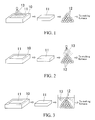
Fig. 1 is a schematic drawing showing a part of a process of a first embodiment of a production method according to the present invention. -
Fig. 2 is a schematic drawing showing a part of a process of a second embodiment of the production method according to the present invention. -
Fig. 3 is a schematic drawing showing a part of a process of a third embodiment of the production method according to the present invention. -
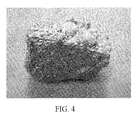
Fig. 4 is a crushed object exterior photograph showing an example of a crushed object. - An example of a production method of a silicon-containing aluminum alloy ingot according to the present invention will be explained. The production method of the present invention includes a water-rinsing step, a molten metal formation step, and a casting step.
- In the water-rinsing step, a silicon mass used as a material (a silicon mass containing phosphorus as an impurity) is subjected to a water-rinsing treatment.
- In a silicon ingot, etc., as a silicon mass, in a stage of deoxidizing silica with carbon to form an ingot, phosphorus exists as a phosphorus compound. As described above, the inventor of the present invention has found that the phosphorus as an impurity is distributed at a high concentration at the final solidified portion of the silicon ingot, especially on the surface of the final solidified portion. When a molten silicon is poured into a casting
mold 10, the molten silicon is cooled and starts to solidify from the vicinity of the wall surface of the casting mold, and the top surface portion of the molten silicon at the opening of the top portion of the castingmold 10 solidifies last. The aforementioned final solidified portion refers to the solidified portion that solidifies last. For example, after 95% or more of the volume of the molten silicon in the casting mold is solidified, the portion in which the remaining molten silicon is finally solidified can be defined as the "final solidified portion" (upper surface solidified portion). - In the water-rinsing step, for example, at least the surface of the final solidified portion of the silicon ingot 11 (the upper surface of the ingot 11) is rinsed with water 13 (see
Fig. 1 ). After drying the rinsedsilicon ingot 11, thesilicon ingot 11 is disintegrated (crushed) to obtain a plurality of crushedobjects 12, and these crushedobjects 12 are introduced into the melting furnace in the next step. - Alternatively, in the water-rinsing step, the
silicon ingot 11 is crushed to obtain a plurality of crushedobjects 12 and a water-rinsing treatment for rinsing the surfaces of the crushed objects 12 withwater 13 is performed (seeFigs. 2 and 3 ). After removing the adhered water from the silicon crushed obj ects 12 which have gone through rinsing by drying, wiping, etc., the plurality of crushedobjects 12 is introduced into the melting furnace in the next step. - It is preferable that the size of the crushed object (including powder form) is 30 cm or less in average major axis length. Among them, it is preferable that the size of the crushed object is in a range of 1 cm to 30 cm in average major axis length. In addition, in such a case, powders produced at the time of crushing may be introduced into the melting furnace together with the crushed objects of 1 cm to 30 cm in the later molten metal formation step.
- In the water-rinsing treatment, it is acceptable that at least a portion of the surface of the final solidified portion is rinsed with water, or that a portion not rinsed with water remains on the surface of the final solidified portion,.
- The water-rinsing treatment can be performed by spraying
water 13 to a silicon ingot, crushed objects, etc. (seeFigs. 1 and 2 ), or by immersing a silicon mass, crushed objects, etc., in water 13 (seeFig. 3 ). The method is not especially limited. - In a case of performing the water-rinsing treatment by spraying water on the silicon mass, it is preferable that water is sprayed from the top side in a state in which the silicon ingot is arranged with the surface of the final solidified portion facing upward. Further, in a case of performing the water-treatment by spraying water on the crushed objects, it is preferable that spraying is performed from the side direction (horizontal direction) in addition to spraying from the top side.
- When performing the water-rinsing treatment, it is preferable that 100 mass parts to 1,000 mass parts of water (water for immersion or spraying water) is used for 100 mass parts of silicon mass or crushed objects. Further, the water-rinsing time is preferably set to 10 to 30 minutes.
- It is preferable that the temperature of water for performing the water-rinsing treatment is 5°C to 90°C. By using water of 5°C to 90°C, the dissolution removability of phosphorus by water-rinsing can be further improved. In addition, in a case of accompanying conveyance and movement of the silicon mass in a later step, it is preferable that the temperature of the water is 40°C to 60°C. By setting it to 40°C to 60°C, safety of the operation can be improved.
- By performing a water-rinsing treatment as described above, phosphorus (including phosphorus compound) that is often aggregated on the surface of a silicon mass (silicon ingot, etc.) can be sufficiently rinsed and removed.
- In the molten metal formation step, an alloy material including at least an aluminum material and a silicon mass obtained through the water-rinsing step is introduced into a melting furnace to be melted to thereby obtain a molten metal. The molten metal temperature for melting is typically in a range of 770°C to 870°C.
- Although the aluminum material is not especially limited, for example, an aluminum ground metal, etc., can be exemplified.
- As the "silicon mass obtained through the water-rinsing step", a silicon ingot subjected to the water-rinsing step, a silicon crushed object subjected to the water-rinsing step, etc., can be exemplified.
- As needed, other metal materials (copper, magnesium, etc.) other than the aforementioned two materials may be introduced into the melting furnace. Further, in a range in which the effects of the present invention are not inhibited, introducing a silicon mass which has not been subjected to a water-rinsing treatment into the melting furnace together with the "silicon mass obtained through the water-rinsing step" is not excluded depending on the intended alloy specifications. However, for the alloy specifications intended for sufficiently obtaining an impurity phosphorus content reduction effect, it is needless to say that it is desirable to not introduce such silicon mass which has not been subjected to a water-rinsing treatment as much as possible.
- In the casting step, by subjecting a molten metal obtained in the molten metal formation step to casting, an ingot of an aluminum alloy containing silicon (silicon-containing aluminum alloy ingot) is obtained. By the aforementioned casting, a silicon-containing aluminum alloy ingot can be processed, or a continuous cast rod of a silicon-containing aluminum alloy can be processed. The shape of an ingot obtained by casting is not especially limited.
- According to the production method of the present invention, it becomes possible to produce a silicon-containing aluminum alloy ingot in which the phosphorus content rate is 5 ppm or less (including 0 ppm) (see the later explained Embodiments 1 and 2).
- The casting method is not especially limited, and for example, a semi-continuous casting method, a horizontal continuous casting method, a strip casting method, a gravity casting method, etc., can be exemplified, but any casting method may be used.
- The production method of the present invention is for producing a silicon-containing aluminum alloy ingot (silicon-containing aluminum alloy cast product), and although the components other than Al and Si are not especially limited, as the aluminum alloy composition, 2000 series alloy, 3000 series alloy, 4000 series alloy, 5000 series alloy, and 6000 series alloy are suitable. Especially in the case of alloy series containing a large amount of Si, for example, 4000 series alloy is preferable since effects (effects of the present invention) are great.
- Next, specific examples of the present invention will be explained, but the present invention is not especially limited to these examples.
- A silicon mass obtained by subjecting silica to a deoxidization treatment (phosphorus content rate 230 ppm) which was heated and melted was poured into a casting
mold 10 and naturally cooled to obtain a rectangular shapedsilicon ingot 11. By this natural cooling, the solidification of the molten silicon progressed from the vicinity of the outer peripheral frame section of the casting mold and the solidification was completed on the upper exposed surface. As shown inFig. 1 , in a state in which thesilicon ingot 11 was kept inside the castingmold 10, the upper surface of the ingot 11 (final solidified portion) was subjected to a water-rinsing treatment for sprayingwater 13 of 20°C for 30 minutes. - Next, after the rectangular shaped
silicon ingot 11 was taken out from the castingmold 10 and the adhered water was removed by drying, the silicon mass was crushed to obtain a plurality of crushed objects 12. Then these crushedobjects 12 were introduced into a melting furnace, and an aluminum ground metal having an aluminum content rate of 99.7 mass%, a copper ground metal having a copper content rate of 99.9 mass%, and a magnesium ground metal having a magnesium content rate of 99.9 mass% were further introduced into the melting furnace and heated at 850°C to produce an aluminum alloy molten metal. Each of the aforementioned materials was introduced so that the silicon content rate became 11 mass%, the copper content rate became 4 mass%, the magnesium content rate became 0.5 mass%, and the aluminum content rate became 84.5 mass% in the aluminum alloy molten metal. The size of the crushed object was 10 cm in average major axis length. - By casting the aluminum alloy molten metal, a silicon-containing aluminum alloy ingot (silicon-containing aluminum alloy ingot) was obtained.
- A silicon mass obtained by subjecting silica to a deoxidization treatment (phosphorus content rate was the same phosphorus content rate as the silicon mass used in Embodiment 1) which was heated and melted was poured into a casting
mold 10 and naturally cooled to obtain a rectangular shapedsilicon ingot 11. By this natural cooling, the solidification of the molten silicon progressed from the vicinity of the outer peripheral frame section of the casting mold and the solidification was completed on the upper exposed surface. - Next, as shown in
Fig. 3 , the rectangular shapedsilicon ingot 11 was taken out from the castingmold 10 and the silicon mass was crushed to obtain a plurality of crushed objects 12. Thereafter, the plurality of crushedobjects 12 were subjected to a water-rinsing treatment for immersing them inwater 13 of 90°C for 10 minutes. Next, after removing the adhered water from the taken-out crushedobjects 12 by drying, these crushedobjects 12 were introduced into a melting furnace, and an aluminum ground metal having an aluminum content rate of 99.7 mass%, a copper ground metal having a copper content rate of 99.9 mass%, and a magnesium ground metal having a magnesium content rate of 99.9 mass% were further introduced into the melting furnace and heated to 850°C to produce an aluminum alloy molten metal. Each of the aforementioned materials was introduced so that the silicon content rate became 11 mass%, the copper content rate became 4 mass%, the magnesium content rate became 0.5 mass%, and the aluminum content rate became 84.5 mass% in the aluminum alloy molten metal. The size of the crushed object was 15cm in average major axis length. - By casting the aluminum alloy molten metal, a silicon-containing aluminum alloy ingot (silicon-containing aluminum alloy ingot) was obtained.
- A silicon mass obtained by subjecting silica to a deoxidization treatment (phosphorus content rate was the same phosphorus content rate as the silicon mass used in Embodiment 1) which was heated and melted was poured into a casting mold and naturally cooled. By this natural cooling, the solidification of the molten silicon progressed from the vicinity of the outer peripheral frame section of the casting mold and the solidification was completed on the upper exposed surface.
- Next, the rectangular shaped silicon ingot was taken out from the casting mold, and a plurality of crushed objects obtained by crushing the silicon ingot were introduced into a melting furnace, and an aluminum ground metal having an aluminum content rate of 99.7 mass%, a copper ground metal having a copper content rate of 99.9 mass%, and a magnesium ground metal having a magnesium content rate of 99.9 mass% were further introduced into the melting furnace and heated to 850°C to produce an aluminum alloy molten metal. Each of the aforementioned materials was introduced so that the silicon content rate became 11 mass%, the copper content rate became 4 mass%, the magnesium content rate became 0.5 mass%, and the aluminum content rate became 84.5 mass% in the aluminum alloy molten metal. The size of the crushed object was 10 cm in average major axis length.
- By casting the aluminum alloy molten metal, a silicon-containing aluminum alloy ingot (silicon-containing aluminum alloy ingot) was obtained.
[Table 1] Water-rinsing treatment Phosphorus content rate of silicon-containing aluminum alloy ingot (ppm) Example 1 Silicon ingot was rinsed with water of 20°C 4 Example 2 Crushed objects were rinsed by immersing in water of 90°C 4 Comparative Example 1 None 25 - For each of the silicon-containing aluminum alloy ingots obtained in the aforementioned manner, the content rate of phosphorus was measured based on the following measuring method. The measurement results are shown in Table 1.
- The quantitative analysis of phosphorus in the silicon-containing aluminum alloy ingot was performed using an emission analyzing device ("PDA 5500 II" made by Shimadzu Corporation).
- As it is clear from the table, in the silicon-containing aluminum alloy ingots of Embodiments 1 and 2 produced using the production method of the present invention, the content rate of phosphorus was sufficiently suppressed to low levels.
- On the other hand, in the silicon-containing aluminum alloy ingot of Comparative Example 1 produced without using the production method of the present invention, the content rate of phosphorus was 25 ppm and the content rate of phosphorus was high.
- Since the content rate of phosphorus as an impurity is suppressed to low levels in a silicon-containing aluminum alloy ingot produced by the production method of the present invention, it can be suitably used as, for example, 1) products or parts in which, when the content rate of phosphorus as an impurity is high, a condensed portion of phosphorus is at a risk of becoming a source of cracks when external stress is applied (specifically, for example, automobile cast parts, etc.) 2) material produced through a step accompanied by a chemical reaction by chemical etching, etc., and products or parts obtained by processing while applying external stress (rolling, extrusion, forging, etc.) (specifically, for example, foil for electrolytic capacitors, sheet material, automobile parts, etc.), but it is not especially limited to these exemplified applications.
- The present invention claims priority to Japanese Patent Application No.
2012-269082 filed on December 10, 2012 - The terms and descriptions used herein are used only for explanatory purposes and the present invention is not limited to them. The present invention allows various design-changes falling within the claimed scope of the present invention unless it deviates from the spirits of the invention.
-
- 11...silicon ingot (silicon mass)
- 12...crushed object (silicon mass)
- 13...water
Claims (6)
- A method of producing a silicon-containing aluminum alloy ingot, comprising:a water-rinsing step for subjecting a silicon mass containing phosphorus as an impurity to a water-rinsing treatment;a molten metal formation step for obtaining molten metal by introducing an alloy material including at least an aluminum material and the silicon mass obtained through the water-rinsing step into a melting furnace and melting the alloy material; anda casting step for obtaining a silicon-containing aluminum alloy ingot by casting the obtained molten metal.
- The method of producing a silicon-containing aluminum alloy ingot as recited in claim 1, wherein,
in the water-rinsing step, after performing the water-rinsing treatment of rinsing a surface of the silicon ingot containing phosphorus as an impurity with water, the silicon ingot is crushed to obtain a plurality of crushed objects, and
the crushed object is introduced into the melting furnace in the molten metal formation step. - The method of producing a silicon-containing aluminum alloy ingot as recited in claim 1, wherein,
in the water-rinsing step, after obtaining a plurality of crushed objects by crushing the silicon ingot containing phosphorus as an impurity, a water-rinsing treatment of rinsing surfaces of the crushed objects with water is performed, and
the crushed object after the water-rinsing treatment is introduced into the melting furnace in the molten metal formation step. - The method of producing a silicon-containing aluminum alloy ingot as recited in any one of claims 1 to 3, wherein a temperature of water used for the water-rinsing treatment is 5°C to 90°C.
- A method of producing a silicon-containing aluminum alloy ingot, comprising:a molten metal formation step for obtaining molten metal by introducing an alloy material including at least an aluminum material and a water-rinsed silicon mass into a melting furnace and melting the alloy material; anda casting step for obtaining a silicon-containing aluminum alloy ingot by casting the obtained molten metal.
- The method of producing a silicon-containing aluminum alloy ingot as recited in any one of claims 1 to 5, wherein a content rate of phosphorus in the silicon-containing aluminum alloy ingot obtained by the casting is 5 ppm or less.
Applications Claiming Priority (2)
| Application Number | Priority Date | Filing Date | Title |
|---|---|---|---|
| JP2012269082 | 2012-12-10 | ||
| PCT/JP2013/082093 WO2014091939A1 (en) | 2012-12-10 | 2013-11-28 | Method for producing silicon-containing aluminum alloy ingot |
Publications (2)
| Publication Number | Publication Date |
|---|---|
| EP2929958A1 true EP2929958A1 (en) | 2015-10-14 |
| EP2929958A4 EP2929958A4 (en) | 2016-07-13 |
Family
ID=50934232
Family Applications (1)
| Application Number | Title | Priority Date | Filing Date |
|---|---|---|---|
| EP13863450.6A Withdrawn EP2929958A4 (en) | 2012-12-10 | 2013-11-28 | Method for producing silicon-containing aluminum alloy ingot |
Country Status (6)
| Country | Link |
|---|---|
| US (1) | US20150314367A1 (en) |
| EP (1) | EP2929958A4 (en) |
| JP (1) | JP5833257B2 (en) |
| KR (1) | KR20150067291A (en) |
| CN (1) | CN104837577B (en) |
| WO (1) | WO2014091939A1 (en) |
Families Citing this family (2)
| Publication number | Priority date | Publication date | Assignee | Title |
|---|---|---|---|---|
| CN113355543A (en) * | 2021-05-27 | 2021-09-07 | 江苏奋杰有色金属制品有限公司 | Production process of aluminum alloy cast rod |
| CN116586570A (en) * | 2023-05-17 | 2023-08-15 | 西南铝业(集团)有限责任公司 | A kind of preparation method of 5083 aluminum alloy casting ingot |
Family Cites Families (10)
| Publication number | Priority date | Publication date | Assignee | Title |
|---|---|---|---|---|
| JPH04276031A (en) | 1991-03-05 | 1992-10-01 | Nippon Light Metal Co Ltd | Method for removing phosphorus in aluminum |
| JPH07207366A (en) | 1994-01-17 | 1995-08-08 | Kobe Steel Ltd | Production of al or al alloy |
| JP3378342B2 (en) * | 1994-03-16 | 2003-02-17 | 日本軽金属株式会社 | Aluminum casting alloy excellent in wear resistance and method for producing the same |
| CN1043249C (en) * | 1995-04-18 | 1999-05-05 | 河南省淅川县冶金材料厂 | One-step method for producing silicon-aluminum-barium-iron alloy composite deoxidizer by submerged arc furnace |
| JP3524519B2 (en) | 2000-06-22 | 2004-05-10 | 株式会社大紀アルミニウム工業所 | Method for removing P and / or Sb from molten aluminum |
| FR2814757B1 (en) * | 2000-10-02 | 2003-07-11 | Invensil | DEVELOPMENT OF ALUMINUM-SILICON ALLOYS |
| US7223303B2 (en) * | 2004-08-26 | 2007-05-29 | Mitsubishi Materials Corporation | Silicon cleaning method for semiconductor materials and polycrystalline silicon chunk |
| US20100310445A1 (en) * | 2009-04-29 | 2010-12-09 | Calisolar, Inc. | Process Control For UMG-Si Material Purification |
| CN102020278A (en) * | 2009-09-09 | 2011-04-20 | 贵阳宝源阳光硅业有限公司 | Method for removing impurity phosphorus in silicon |
| JP5355320B2 (en) * | 2009-09-10 | 2013-11-27 | 日産自動車株式会社 | Aluminum alloy casting member and manufacturing method thereof |
-
2013
- 2013-11-28 EP EP13863450.6A patent/EP2929958A4/en not_active Withdrawn
- 2013-11-28 US US14/443,666 patent/US20150314367A1/en not_active Abandoned
- 2013-11-28 KR KR1020157011677A patent/KR20150067291A/en not_active Ceased
- 2013-11-28 CN CN201380064224.2A patent/CN104837577B/en not_active Expired - Fee Related
- 2013-11-28 WO PCT/JP2013/082093 patent/WO2014091939A1/en not_active Ceased
- 2013-11-28 JP JP2014551971A patent/JP5833257B2/en not_active Expired - Fee Related
Also Published As
| Publication number | Publication date |
|---|---|
| KR20150067291A (en) | 2015-06-17 |
| US20150314367A1 (en) | 2015-11-05 |
| JPWO2014091939A1 (en) | 2017-01-05 |
| EP2929958A4 (en) | 2016-07-13 |
| CN104837577B (en) | 2016-08-24 |
| WO2014091939A1 (en) | 2014-06-19 |
| JP5833257B2 (en) | 2015-12-16 |
| CN104837577A (en) | 2015-08-12 |
Similar Documents
| Publication | Publication Date | Title |
|---|---|---|
| KR101494998B1 (en) | Titanium slab for hot rolling and process for producing same | |
| EP2930251A1 (en) | Method for producing silicon-containing aluminum alloy ingot | |
| KR20170028374A (en) | Method for recycling scrap of 2xxx or 7xxx series alloys | |
| KR102449774B1 (en) | Titanium bar, titanium plate and method for producing the same | |
| US20150314367A1 (en) | Method of producing silicon-containing aluminum alloy ingot | |
| US9783871B2 (en) | Method of producing aluminium alloys containing lithium | |
| KR102655019B1 (en) | Impurity removal method | |
| CN106715755B (en) | Titanium cast slab for hot rolling with less occurrence of surface defects and method for producing same | |
| JP6800128B2 (en) | How to regenerate Al alloy | |
| WO2019198476A1 (en) | Impurity removal method | |
| JP2011012300A (en) | Copper alloy and method for producing copper alloy | |
| JP6756078B2 (en) | Manufacturing method of Ti—Al alloy | |
| KR101953487B1 (en) | Cast titanium slab for use in hot rolling and unlikely to exhibit surface defects, and method for producing same | |
| JP2006159213A (en) | Method for producing hollow-shaped forging steel, and method for producing cylindrical forged product | |
| JP3792535B2 (en) | Manufacturing method of high purity ruthenium target | |
| KR101568832B1 (en) | Method for producing high purity ferrosilicon | |
| JP3878432B2 (en) | High-purity ruthenium target and method for producing the target | |
| JP7854358B2 (en) | Method for manufacturing aluminum alloys and method for manufacturing aluminum alloy materials | |
| JP2007308769A (en) | Method for manufacturing aluminum alloy thick plate, and aluminum alloy thick plate | |
| KR20240072227A (en) | Impurity removal method, aluminum-based alloy manufacturing method, and aluminum-based alloy material manufacturing method | |
| JPH0543928A (en) | Manufacture of superhigh cleanliness steel |
Legal Events
| Date | Code | Title | Description |
|---|---|---|---|
| PUAI | Public reference made under article 153(3) epc to a published international application that has entered the european phase |
Free format text: ORIGINAL CODE: 0009012 |
|
| 17P | Request for examination filed |
Effective date: 20150615 |
|
| AK | Designated contracting states |
Kind code of ref document: A1 Designated state(s): AL AT BE BG CH CY CZ DE DK EE ES FI FR GB GR HR HU IE IS IT LI LT LU LV MC MK MT NL NO PL PT RO RS SE SI SK SM TR |
|
| AX | Request for extension of the european patent |
Extension state: BA ME |
|
| DAX | Request for extension of the european patent (deleted) | ||
| RA4 | Supplementary search report drawn up and despatched (corrected) |
Effective date: 20160609 |
|
| RIC1 | Information provided on ipc code assigned before grant |
Ipc: B22D 27/20 20060101AFI20160603BHEP Ipc: C22C 1/02 20060101ALI20160603BHEP Ipc: C22C 21/02 20060101ALI20160603BHEP Ipc: B22D 21/04 20060101ALI20160603BHEP Ipc: B22D 7/00 20060101ALI20160603BHEP |
|
| STAA | Information on the status of an ep patent application or granted ep patent |
Free format text: STATUS: THE APPLICATION IS DEEMED TO BE WITHDRAWN |
|
| 18D | Application deemed to be withdrawn |
Effective date: 20170110 |