EP2928891B1 - Protein kinase c inhibitors and uses thereof - Google Patents
Protein kinase c inhibitors and uses thereof Download PDFInfo
- Publication number
- EP2928891B1 EP2928891B1 EP13812297.3A EP13812297A EP2928891B1 EP 2928891 B1 EP2928891 B1 EP 2928891B1 EP 13812297 A EP13812297 A EP 13812297A EP 2928891 B1 EP2928891 B1 EP 2928891B1
- Authority
- EP
- European Patent Office
- Prior art keywords
- compound
- methyl
- octahydro
- quinolizin
- substituted
- Prior art date
- Legal status (The legal status is an assumption and is not a legal conclusion. Google has not performed a legal analysis and makes no representation as to the accuracy of the status listed.)
- Not-in-force
Links
- IOHVZACIJVNPRP-QFBILLFUSA-N 3-[[4-[[(1s,9ar)-2,3,4,6,7,8,9,9a-octahydro-1h-quinolizin-1-yl]methylamino]-5-(trifluoromethyl)pyrimidin-2-yl]amino]benzonitrile Chemical compound N1=C(NC[C@H]2[C@H]3CCCCN3CCC2)C(C(F)(F)F)=CN=C1NC1=CC=CC(C#N)=C1 IOHVZACIJVNPRP-QFBILLFUSA-N 0.000 claims description 2
- CAZOVTZVJHWKMQ-QFBILLFUSA-N 3-[[4-[[(1s,9ar)-2,3,4,6,7,8,9,9a-octahydro-1h-quinolizin-1-yl]methylamino]-5-chloropyrimidin-2-yl]amino]benzonitrile Chemical compound N1=C(NC[C@H]2[C@H]3CCCCN3CCC2)C(Cl)=CN=C1NC1=CC=CC(C#N)=C1 CAZOVTZVJHWKMQ-QFBILLFUSA-N 0.000 claims description 2
- BIYPQGDLRLUNSC-OXJNMPFZSA-N 4-n-[[(1s,9ar)-2,3,4,6,7,8,9,9a-octahydro-1h-quinolizin-1-yl]methyl]-2-n-(3,5-dimethoxyphenyl)-5-methoxypyrimidine-2,4-diamine Chemical compound COC1=CC(OC)=CC(NC=2N=C(NC[C@H]3[C@H]4CCCCN4CCC3)C(OC)=CN=2)=C1 BIYPQGDLRLUNSC-OXJNMPFZSA-N 0.000 claims description 2
- YEOZQKDUVGYXSK-LAUBAEHRSA-N 4-n-[[(1s,9ar)-2,3,4,6,7,8,9,9a-octahydro-1h-quinolizin-1-yl]methyl]-2-n-(3,5-dimethoxyphenyl)-5-methylpyrimidine-2,4-diamine Chemical compound COC1=CC(OC)=CC(NC=2N=C(NC[C@H]3[C@H]4CCCCN4CCC3)C(C)=CN=2)=C1 YEOZQKDUVGYXSK-LAUBAEHRSA-N 0.000 claims description 2
- XAPMKEUGTIGXAX-QFBILLFUSA-N 4-n-[[(1s,9ar)-2,3,4,6,7,8,9,9a-octahydro-1h-quinolizin-1-yl]methyl]-2-n-[4-methyl-3-(tetrazol-1-yl)phenyl]-5-(trifluoromethyl)pyrimidine-2,4-diamine Chemical compound CC1=CC=C(NC=2N=C(NC[C@H]3[C@H]4CCCCN4CCC3)C(=CN=2)C(F)(F)F)C=C1N1C=NN=N1 XAPMKEUGTIGXAX-QFBILLFUSA-N 0.000 claims description 2
- SVNSTPDXLPLDIA-HTAPYJJXSA-N 5-[[4-[[(1s,9ar)-2,3,4,6,7,8,9,9a-octahydro-1h-quinolizin-1-yl]methylamino]-5-(trifluoromethyl)pyrimidin-2-yl]amino]-2-cyclopropylbenzonitrile Chemical compound N1=C(NC[C@H]2[C@H]3CCCCN3CCC2)C(C(F)(F)F)=CN=C1NC(C=C1C#N)=CC=C1C1CC1 SVNSTPDXLPLDIA-HTAPYJJXSA-N 0.000 claims description 2
- RIRNDFOQQYLBCY-SIKLNZKXSA-N 7-[[4-[[(1s,9ar)-2,3,4,6,7,8,9,9a-octahydro-1h-quinolizin-1-yl]methylamino]-5-fluoropyrimidin-2-yl]amino]-4-(cyclopropylmethyl)-2,2-dimethyl-1,4-benzoxazin-3-one Chemical compound O=C1C(C)(C)OC2=CC(NC=3N=C(NC[C@H]4[C@H]5CCCCN5CCC4)C(F)=CN=3)=CC=C2N1CC1CC1 RIRNDFOQQYLBCY-SIKLNZKXSA-N 0.000 claims description 2
- 150000001875 compounds Chemical class 0.000 claims 88
- -1 amino, substituted amino Chemical group 0.000 claims 19
- 125000001072 heteroaryl group Chemical group 0.000 claims 18
- 125000000623 heterocyclic group Chemical group 0.000 claims 16
- 125000003118 aryl group Chemical group 0.000 claims 9
- 125000003107 substituted aryl group Chemical group 0.000 claims 9
- 150000003839 salts Chemical class 0.000 claims 7
- 229910052739 hydrogen Inorganic materials 0.000 claims 6
- 239000001257 hydrogen Substances 0.000 claims 6
- 125000003545 alkoxy group Chemical group 0.000 claims 5
- 125000000217 alkyl group Chemical group 0.000 claims 5
- 229910052736 halogen Inorganic materials 0.000 claims 5
- 150000002367 halogens Chemical group 0.000 claims 5
- 150000002431 hydrogen Chemical group 0.000 claims 5
- 125000005415 substituted alkoxy group Chemical group 0.000 claims 5
- 125000000547 substituted alkyl group Chemical group 0.000 claims 5
- 125000002252 acyl group Chemical group 0.000 claims 4
- 125000000266 alpha-aminoacyl group Chemical group 0.000 claims 4
- 125000004432 carbon atom Chemical group C* 0.000 claims 4
- 125000000753 cycloalkyl group Chemical group 0.000 claims 4
- 208000037265 diseases, disorders, signs and symptoms Diseases 0.000 claims 4
- BPFZRKQDXVZTFD-UHFFFAOYSA-N disulfur decafluoride Chemical group FS(F)(F)(F)(F)S(F)(F)(F)(F)F BPFZRKQDXVZTFD-UHFFFAOYSA-N 0.000 claims 4
- 125000005346 substituted cycloalkyl group Chemical group 0.000 claims 4
- 102000003923 Protein Kinase C Human genes 0.000 claims 3
- 108090000315 Protein Kinase C Proteins 0.000 claims 3
- 125000004442 acylamino group Chemical group 0.000 claims 3
- 125000003342 alkenyl group Chemical group 0.000 claims 3
- 125000004466 alkoxycarbonylamino group Chemical group 0.000 claims 3
- 125000000304 alkynyl group Chemical group 0.000 claims 3
- 125000006598 aminocarbonylamino group Chemical group 0.000 claims 3
- 125000003178 carboxy group Chemical group [H]OC(*)=O 0.000 claims 3
- 230000000694 effects Effects 0.000 claims 3
- 125000005017 substituted alkenyl group Chemical group 0.000 claims 3
- 125000004426 substituted alkynyl group Chemical group 0.000 claims 3
- 208000022873 Ocular disease Diseases 0.000 claims 2
- 239000012472 biological sample Substances 0.000 claims 2
- 125000004093 cyano group Chemical group *C#N 0.000 claims 2
- 201000010099 disease Diseases 0.000 claims 2
- 208000035475 disorder Diseases 0.000 claims 2
- 238000000034 method Methods 0.000 claims 2
- ASGMFNBUXDJWJJ-JLCFBVMHSA-N (1R,3R)-3-[[3-bromo-1-[4-(5-methyl-1,3,4-thiadiazol-2-yl)phenyl]pyrazolo[3,4-d]pyrimidin-6-yl]amino]-N,1-dimethylcyclopentane-1-carboxamide Chemical compound BrC1=NN(C2=NC(=NC=C21)N[C@H]1C[C@@](CC1)(C(=O)NC)C)C1=CC=C(C=C1)C=1SC(=NN=1)C ASGMFNBUXDJWJJ-JLCFBVMHSA-N 0.000 claims 1
- UAOUIVVJBYDFKD-XKCDOFEDSA-N (1R,9R,10S,11R,12R,15S,18S,21R)-10,11,21-trihydroxy-8,8-dimethyl-14-methylidene-4-(prop-2-enylamino)-20-oxa-5-thia-3-azahexacyclo[9.7.2.112,15.01,9.02,6.012,18]henicosa-2(6),3-dien-13-one Chemical compound C([C@@H]1[C@@H](O)[C@@]23C(C1=C)=O)C[C@H]2[C@]12C(N=C(NCC=C)S4)=C4CC(C)(C)[C@H]1[C@H](O)[C@]3(O)OC2 UAOUIVVJBYDFKD-XKCDOFEDSA-N 0.000 claims 1
- AOSZTAHDEDLTLQ-AZKQZHLXSA-N (1S,2S,4R,8S,9S,11S,12R,13S,19S)-6-[(3-chlorophenyl)methyl]-12,19-difluoro-11-hydroxy-8-(2-hydroxyacetyl)-9,13-dimethyl-6-azapentacyclo[10.8.0.02,9.04,8.013,18]icosa-14,17-dien-16-one Chemical compound C([C@@H]1C[C@H]2[C@H]3[C@]([C@]4(C=CC(=O)C=C4[C@@H](F)C3)C)(F)[C@@H](O)C[C@@]2([C@@]1(C1)C(=O)CO)C)N1CC1=CC=CC(Cl)=C1 AOSZTAHDEDLTLQ-AZKQZHLXSA-N 0.000 claims 1
- ABJSOROVZZKJGI-OCYUSGCXSA-N (1r,2r,4r)-2-(4-bromophenyl)-n-[(4-chlorophenyl)-(2-fluoropyridin-4-yl)methyl]-4-morpholin-4-ylcyclohexane-1-carboxamide Chemical compound C1=NC(F)=CC(C(NC(=O)[C@H]2[C@@H](C[C@@H](CC2)N2CCOCC2)C=2C=CC(Br)=CC=2)C=2C=CC(Cl)=CC=2)=C1 ABJSOROVZZKJGI-OCYUSGCXSA-N 0.000 claims 1
- GLGNXYJARSMNGJ-VKTIVEEGSA-N (1s,2s,3r,4r)-3-[[5-chloro-2-[(1-ethyl-6-methoxy-2-oxo-4,5-dihydro-3h-1-benzazepin-7-yl)amino]pyrimidin-4-yl]amino]bicyclo[2.2.1]hept-5-ene-2-carboxamide Chemical compound CCN1C(=O)CCCC2=C(OC)C(NC=3N=C(C(=CN=3)Cl)N[C@H]3[C@H]([C@@]4([H])C[C@@]3(C=C4)[H])C(N)=O)=CC=C21 GLGNXYJARSMNGJ-VKTIVEEGSA-N 0.000 claims 1
- SZUVGFMDDVSKSI-WIFOCOSTSA-N (1s,2s,3s,5r)-1-(carboxymethyl)-3,5-bis[(4-phenoxyphenyl)methyl-propylcarbamoyl]cyclopentane-1,2-dicarboxylic acid Chemical compound O=C([C@@H]1[C@@H]([C@](CC(O)=O)([C@H](C(=O)N(CCC)CC=2C=CC(OC=3C=CC=CC=3)=CC=2)C1)C(O)=O)C(O)=O)N(CCC)CC(C=C1)=CC=C1OC1=CC=CC=C1 SZUVGFMDDVSKSI-WIFOCOSTSA-N 0.000 claims 1
- GHYOCDFICYLMRF-UTIIJYGPSA-N (2S,3R)-N-[(2S)-3-(cyclopenten-1-yl)-1-[(2R)-2-methyloxiran-2-yl]-1-oxopropan-2-yl]-3-hydroxy-3-(4-methoxyphenyl)-2-[[(2S)-2-[(2-morpholin-4-ylacetyl)amino]propanoyl]amino]propanamide Chemical compound C1(=CCCC1)C[C@@H](C(=O)[C@@]1(OC1)C)NC([C@H]([C@@H](C1=CC=C(C=C1)OC)O)NC([C@H](C)NC(CN1CCOCC1)=O)=O)=O GHYOCDFICYLMRF-UTIIJYGPSA-N 0.000 claims 1
- GCTFTMWXZFLTRR-GFCCVEGCSA-N (2r)-2-amino-n-[3-(difluoromethoxy)-4-(1,3-oxazol-5-yl)phenyl]-4-methylpentanamide Chemical compound FC(F)OC1=CC(NC(=O)[C@H](N)CC(C)C)=CC=C1C1=CN=CO1 GCTFTMWXZFLTRR-GFCCVEGCSA-N 0.000 claims 1
- IUSARDYWEPUTPN-OZBXUNDUSA-N (2r)-n-[(2s,3r)-4-[[(4s)-6-(2,2-dimethylpropyl)spiro[3,4-dihydropyrano[2,3-b]pyridine-2,1'-cyclobutane]-4-yl]amino]-3-hydroxy-1-[3-(1,3-thiazol-2-yl)phenyl]butan-2-yl]-2-methoxypropanamide Chemical compound C([C@H](NC(=O)[C@@H](C)OC)[C@H](O)CN[C@@H]1C2=CC(CC(C)(C)C)=CN=C2OC2(CCC2)C1)C(C=1)=CC=CC=1C1=NC=CS1 IUSARDYWEPUTPN-OZBXUNDUSA-N 0.000 claims 1
- YJLIKUSWRSEPSM-WGQQHEPDSA-N (2r,3r,4s,5r)-2-[6-amino-8-[(4-phenylphenyl)methylamino]purin-9-yl]-5-(hydroxymethyl)oxolane-3,4-diol Chemical compound C=1C=C(C=2C=CC=CC=2)C=CC=1CNC1=NC=2C(N)=NC=NC=2N1[C@@H]1O[C@H](CO)[C@@H](O)[C@H]1O YJLIKUSWRSEPSM-WGQQHEPDSA-N 0.000 claims 1
- VIJSPAIQWVPKQZ-BLECARSGSA-N (2s)-2-[[(2s)-2-[[(2s)-2-[[(2s)-2-[[(2s)-2-[[(2s)-2-acetamido-5-(diaminomethylideneamino)pentanoyl]amino]-4-methylpentanoyl]amino]-4,4-dimethylpentanoyl]amino]-4-methylpentanoyl]amino]propanoyl]amino]-5-(diaminomethylideneamino)pentanoic acid Chemical compound NC(=N)NCCC[C@@H](C(O)=O)NC(=O)[C@H](C)NC(=O)[C@H](CC(C)C)NC(=O)[C@H](CC(C)(C)C)NC(=O)[C@H](CC(C)C)NC(=O)[C@H](CCCNC(N)=N)NC(C)=O VIJSPAIQWVPKQZ-BLECARSGSA-N 0.000 claims 1
- WWTBZEKOSBFBEM-SPWPXUSOSA-N (2s)-2-[[2-benzyl-3-[hydroxy-[(1r)-2-phenyl-1-(phenylmethoxycarbonylamino)ethyl]phosphoryl]propanoyl]amino]-3-(1h-indol-3-yl)propanoic acid Chemical compound N([C@@H](CC=1C2=CC=CC=C2NC=1)C(=O)O)C(=O)C(CP(O)(=O)[C@H](CC=1C=CC=CC=1)NC(=O)OCC=1C=CC=CC=1)CC1=CC=CC=C1 WWTBZEKOSBFBEM-SPWPXUSOSA-N 0.000 claims 1
- STBLNCCBQMHSRC-BATDWUPUSA-N (2s)-n-[(3s,4s)-5-acetyl-7-cyano-4-methyl-1-[(2-methylnaphthalen-1-yl)methyl]-2-oxo-3,4-dihydro-1,5-benzodiazepin-3-yl]-2-(methylamino)propanamide Chemical compound O=C1[C@@H](NC(=O)[C@H](C)NC)[C@H](C)N(C(C)=O)C2=CC(C#N)=CC=C2N1CC1=C(C)C=CC2=CC=CC=C12 STBLNCCBQMHSRC-BATDWUPUSA-N 0.000 claims 1
- QFLWZFQWSBQYPS-AWRAUJHKSA-N (3S)-3-[[(2S)-2-[[(2S)-2-[5-[(3aS,6aR)-2-oxo-1,3,3a,4,6,6a-hexahydrothieno[3,4-d]imidazol-4-yl]pentanoylamino]-3-methylbutanoyl]amino]-3-(4-hydroxyphenyl)propanoyl]amino]-4-[1-bis(4-chlorophenoxy)phosphorylbutylamino]-4-oxobutanoic acid Chemical compound CCCC(NC(=O)[C@H](CC(O)=O)NC(=O)[C@H](Cc1ccc(O)cc1)NC(=O)[C@@H](NC(=O)CCCCC1SC[C@@H]2NC(=O)N[C@H]12)C(C)C)P(=O)(Oc1ccc(Cl)cc1)Oc1ccc(Cl)cc1 QFLWZFQWSBQYPS-AWRAUJHKSA-N 0.000 claims 1
- IWZSHWBGHQBIML-ZGGLMWTQSA-N (3S,8S,10R,13S,14S,17S)-17-isoquinolin-7-yl-N,N,10,13-tetramethyl-2,3,4,7,8,9,11,12,14,15,16,17-dodecahydro-1H-cyclopenta[a]phenanthren-3-amine Chemical compound CN(C)[C@H]1CC[C@]2(C)C3CC[C@@]4(C)[C@@H](CC[C@@H]4c4ccc5ccncc5c4)[C@@H]3CC=C2C1 IWZSHWBGHQBIML-ZGGLMWTQSA-N 0.000 claims 1
- UDQTXCHQKHIQMH-KYGLGHNPSA-N (3ar,5s,6s,7r,7ar)-5-(difluoromethyl)-2-(ethylamino)-5,6,7,7a-tetrahydro-3ah-pyrano[3,2-d][1,3]thiazole-6,7-diol Chemical compound S1C(NCC)=N[C@H]2[C@@H]1O[C@H](C(F)F)[C@@H](O)[C@@H]2O UDQTXCHQKHIQMH-KYGLGHNPSA-N 0.000 claims 1
- OOKAZRDERJMRCJ-KOUAFAAESA-N (3r)-7-[(1s,2s,4ar,6s,8s)-2,6-dimethyl-8-[(2s)-2-methylbutanoyl]oxy-1,2,4a,5,6,7,8,8a-octahydronaphthalen-1-yl]-3-hydroxy-5-oxoheptanoic acid Chemical compound C1=C[C@H](C)[C@H](CCC(=O)C[C@@H](O)CC(O)=O)C2[C@@H](OC(=O)[C@@H](C)CC)C[C@@H](C)C[C@@H]21 OOKAZRDERJMRCJ-KOUAFAAESA-N 0.000 claims 1
- HUWSZNZAROKDRZ-RRLWZMAJSA-N (3r,4r)-3-azaniumyl-5-[[(2s,3r)-1-[(2s)-2,3-dicarboxypyrrolidin-1-yl]-3-methyl-1-oxopentan-2-yl]amino]-5-oxo-4-sulfanylpentane-1-sulfonate Chemical compound OS(=O)(=O)CC[C@@H](N)[C@@H](S)C(=O)N[C@@H]([C@H](C)CC)C(=O)N1CCC(C(O)=O)[C@H]1C(O)=O HUWSZNZAROKDRZ-RRLWZMAJSA-N 0.000 claims 1
- MPDDTAJMJCESGV-CTUHWIOQSA-M (3r,5r)-7-[2-(4-fluorophenyl)-5-[methyl-[(1r)-1-phenylethyl]carbamoyl]-4-propan-2-ylpyrazol-3-yl]-3,5-dihydroxyheptanoate Chemical compound C1([C@@H](C)N(C)C(=O)C2=NN(C(CC[C@@H](O)C[C@@H](O)CC([O-])=O)=C2C(C)C)C=2C=CC(F)=CC=2)=CC=CC=C1 MPDDTAJMJCESGV-CTUHWIOQSA-M 0.000 claims 1
- OMBVEVHRIQULKW-DNQXCXABSA-M (3r,5r)-7-[3-(4-fluorophenyl)-8-oxo-7-phenyl-1-propan-2-yl-5,6-dihydro-4h-pyrrolo[2,3-c]azepin-2-yl]-3,5-dihydroxyheptanoate Chemical compound O=C1C=2N(C(C)C)C(CC[C@@H](O)C[C@@H](O)CC([O-])=O)=C(C=3C=CC(F)=CC=3)C=2CCCN1C1=CC=CC=C1 OMBVEVHRIQULKW-DNQXCXABSA-M 0.000 claims 1
- YQOLEILXOBUDMU-KRWDZBQOSA-N (4R)-5-[(6-bromo-3-methyl-2-pyrrolidin-1-ylquinoline-4-carbonyl)amino]-4-(2-chlorophenyl)pentanoic acid Chemical compound CC1=C(C2=C(C=CC(=C2)Br)N=C1N3CCCC3)C(=O)NC[C@H](CCC(=O)O)C4=CC=CC=C4Cl YQOLEILXOBUDMU-KRWDZBQOSA-N 0.000 claims 1
- STPKWKPURVSAJF-LJEWAXOPSA-N (4r,5r)-5-[4-[[4-(1-aza-4-azoniabicyclo[2.2.2]octan-4-ylmethyl)phenyl]methoxy]phenyl]-3,3-dibutyl-7-(dimethylamino)-1,1-dioxo-4,5-dihydro-2h-1$l^{6}-benzothiepin-4-ol Chemical compound O[C@H]1C(CCCC)(CCCC)CS(=O)(=O)C2=CC=C(N(C)C)C=C2[C@H]1C(C=C1)=CC=C1OCC(C=C1)=CC=C1C[N+]1(CC2)CCN2CC1 STPKWKPURVSAJF-LJEWAXOPSA-N 0.000 claims 1
- OIIOPWHTJZYKIL-PMACEKPBSA-N (5S)-5-[[[5-[2-chloro-3-[2-chloro-3-[6-methoxy-5-[[[(2S)-5-oxopyrrolidin-2-yl]methylamino]methyl]pyrazin-2-yl]phenyl]phenyl]-3-methoxypyrazin-2-yl]methylamino]methyl]pyrrolidin-2-one Chemical compound C1(=C(N=C(C2=C(C(C3=CC=CC(=C3Cl)C3=NC(OC)=C(N=C3)CNC[C@H]3NC(=O)CC3)=CC=C2)Cl)C=N1)OC)CNC[C@H]1NC(=O)CC1 OIIOPWHTJZYKIL-PMACEKPBSA-N 0.000 claims 1
- VUEGYUOUAAVYAS-JGGQBBKZSA-N (6ar,9s,10ar)-9-(dimethylsulfamoylamino)-7-methyl-6,6a,8,9,10,10a-hexahydro-4h-indolo[4,3-fg]quinoline Chemical compound C1=CC([C@H]2C[C@@H](CN(C)[C@@H]2C2)NS(=O)(=O)N(C)C)=C3C2=CNC3=C1 VUEGYUOUAAVYAS-JGGQBBKZSA-N 0.000 claims 1
- DEVSOMFAQLZNKR-RJRFIUFISA-N (z)-3-[3-[3,5-bis(trifluoromethyl)phenyl]-1,2,4-triazol-1-yl]-n'-pyrazin-2-ylprop-2-enehydrazide Chemical compound FC(F)(F)C1=CC(C(F)(F)F)=CC(C2=NN(\C=C/C(=O)NNC=3N=CC=NC=3)C=N2)=C1 DEVSOMFAQLZNKR-RJRFIUFISA-N 0.000 claims 1
- KKHFRAFPESRGGD-UHFFFAOYSA-N 1,3-dimethyl-7-[3-(n-methylanilino)propyl]purine-2,6-dione Chemical compound C1=NC=2N(C)C(=O)N(C)C(=O)C=2N1CCCN(C)C1=CC=CC=C1 KKHFRAFPESRGGD-UHFFFAOYSA-N 0.000 claims 1
- MHSLDASSAFCCDO-UHFFFAOYSA-N 1-(5-tert-butyl-2-methylpyrazol-3-yl)-3-(4-pyridin-4-yloxyphenyl)urea Chemical compound CN1N=C(C(C)(C)C)C=C1NC(=O)NC(C=C1)=CC=C1OC1=CC=NC=C1 MHSLDASSAFCCDO-UHFFFAOYSA-N 0.000 claims 1
- KQZLRWGGWXJPOS-NLFPWZOASA-N 1-[(1R)-1-(2,4-dichlorophenyl)ethyl]-6-[(4S,5R)-4-[(2S)-2-(hydroxymethyl)pyrrolidin-1-yl]-5-methylcyclohexen-1-yl]pyrazolo[3,4-b]pyrazine-3-carbonitrile Chemical compound ClC1=C(C=CC(=C1)Cl)[C@@H](C)N1N=C(C=2C1=NC(=CN=2)C1=CC[C@@H]([C@@H](C1)C)N1[C@@H](CCC1)CO)C#N KQZLRWGGWXJPOS-NLFPWZOASA-N 0.000 claims 1
- WZZBNLYBHUDSHF-DHLKQENFSA-N 1-[(3s,4s)-4-[8-(2-chloro-4-pyrimidin-2-yloxyphenyl)-7-fluoro-2-methylimidazo[4,5-c]quinolin-1-yl]-3-fluoropiperidin-1-yl]-2-hydroxyethanone Chemical compound CC1=NC2=CN=C3C=C(F)C(C=4C(=CC(OC=5N=CC=CN=5)=CC=4)Cl)=CC3=C2N1[C@H]1CCN(C(=O)CO)C[C@@H]1F WZZBNLYBHUDSHF-DHLKQENFSA-N 0.000 claims 1
- ONBQEOIKXPHGMB-VBSBHUPXSA-N 1-[2-[(2s,3r,4s,5r)-3,4-dihydroxy-5-(hydroxymethyl)oxolan-2-yl]oxy-4,6-dihydroxyphenyl]-3-(4-hydroxyphenyl)propan-1-one Chemical compound O[C@@H]1[C@H](O)[C@@H](CO)O[C@H]1OC1=CC(O)=CC(O)=C1C(=O)CCC1=CC=C(O)C=C1 ONBQEOIKXPHGMB-VBSBHUPXSA-N 0.000 claims 1
- SCJSOTBOUVSPOJ-MGPUTAFESA-N 1-[3-[[4-[[(1s,9ar)-2,3,4,6,7,8,9,9a-octahydro-1h-quinolizin-1-yl]methylamino]-5-fluoropyrimidin-2-yl]amino]-5-methoxyphenyl]-4-methyltetrazol-5-one Chemical compound C=1C(OC)=CC(NC=2N=C(NC[C@H]3[C@H]4CCCCN4CCC3)C(F)=CN=2)=CC=1N1N=NN(C)C1=O SCJSOTBOUVSPOJ-MGPUTAFESA-N 0.000 claims 1
- BYVVCGQFRARGCB-SUMWQHHRSA-N 1-[5-[[4-[[(1S,9aR)-2,3,4,6,7,8,9,9a-octahydro-1H-quinolizin-1-yl]methylamino]-5-chloropyrimidin-2-yl]amino]-4-fluoro-2-hydroxyphenyl]-4-methyltetrazol-5-one Chemical compound O=C1N(C)N=NN1C1=CC(NC=2N=C(NC[C@H]3[C@H]4CCCCN4CCC3)C(Cl)=CN=2)=C(F)C=C1O BYVVCGQFRARGCB-SUMWQHHRSA-N 0.000 claims 1
- IXNAMKOGNAXGOU-SUMWQHHRSA-N 1-[5-[[4-[[(1S,9aR)-2,3,4,6,7,8,9,9a-octahydro-1H-quinolizin-1-yl]methylamino]-5-fluoropyrimidin-2-yl]amino]-4-fluoro-2-hydroxyphenyl]-4-methyltetrazol-5-one Chemical compound O=C1N(C)N=NN1C1=CC(NC=2N=C(NC[C@H]3[C@H]4CCCCN4CCC3)C(F)=CN=2)=C(F)C=C1O IXNAMKOGNAXGOU-SUMWQHHRSA-N 0.000 claims 1
- KDBJMXJMFQRPOC-PGRDOPGGSA-N 1-[5-[[4-[[(1s,9ar)-2,3,4,6,7,8,9,9a-octahydro-1h-quinolizin-1-yl]methylamino]-5-(dimethylamino)pyrimidin-2-yl]amino]-2-cyclopropyl-4-fluorophenyl]-4-methyltetrazol-5-one Chemical compound N1=C(NC[C@H]2[C@H]3CCCCN3CCC2)C(N(C)C)=CN=C1NC(C(=C1)F)=CC(N2C(N(C)N=N2)=O)=C1C1CC1 KDBJMXJMFQRPOC-PGRDOPGGSA-N 0.000 claims 1
- AFNCPOKNPXVBGE-HRAATJIYSA-N 1-[5-[[4-[[(1s,9ar)-2,3,4,6,7,8,9,9a-octahydro-1h-quinolizin-1-yl]methylamino]-5-(trifluoromethyl)pyrimidin-2-yl]amino]-2-cyclopropyl-4-fluorophenyl]-4-methyltetrazol-5-one Chemical compound O=C1N(C)N=NN1C1=CC(NC=2N=C(NC[C@H]3[C@H]4CCCCN4CCC3)C(=CN=2)C(F)(F)F)=C(F)C=C1C1CC1 AFNCPOKNPXVBGE-HRAATJIYSA-N 0.000 claims 1
- TVUFHSNUYQIVCU-HRAATJIYSA-N 1-[5-[[4-[[(1s,9ar)-2,3,4,6,7,8,9,9a-octahydro-1h-quinolizin-1-yl]methylamino]-5-chloropyrimidin-2-yl]amino]-2-cyclopropyl-4-fluorophenyl]-4-methyltetrazol-5-one Chemical compound O=C1N(C)N=NN1C1=CC(NC=2N=C(NC[C@H]3[C@H]4CCCCN4CCC3)C(Cl)=CN=2)=C(F)C=C1C1CC1 TVUFHSNUYQIVCU-HRAATJIYSA-N 0.000 claims 1
- PUJXCYQDRIVLRM-OXJNMPFZSA-N 1-[5-[[4-[[(1s,9ar)-2,3,4,6,7,8,9,9a-octahydro-1h-quinolizin-1-yl]methylamino]-5-chloropyrimidin-2-yl]amino]-4-fluoro-2-(1-hydroxy-2-methylpropan-2-yl)oxyphenyl]-4-methyltetrazol-5-one Chemical compound O=C1N(C)N=NN1C1=CC(NC=2N=C(NC[C@H]3[C@H]4CCCCN4CCC3)C(Cl)=CN=2)=C(F)C=C1OC(C)(C)CO PUJXCYQDRIVLRM-OXJNMPFZSA-N 0.000 claims 1
- BHISDZFJYJHUGQ-OXJNMPFZSA-N 1-[5-[[4-[[(1s,9ar)-2,3,4,6,7,8,9,9a-octahydro-1h-quinolizin-1-yl]methylamino]-5-chloropyrimidin-2-yl]amino]-4-fluoro-2-(2-hydroxy-2-methylpropoxy)phenyl]-4-methyltetrazol-5-one Chemical compound O=C1N(C)N=NN1C1=CC(NC=2N=C(NC[C@H]3[C@H]4CCCCN4CCC3)C(Cl)=CN=2)=C(F)C=C1OCC(C)(C)O BHISDZFJYJHUGQ-OXJNMPFZSA-N 0.000 claims 1
- PGIGLUNKVYVYDU-TWOQFEAHSA-N 1-[5-[[4-[[(1s,9ar)-2,3,4,6,7,8,9,9a-octahydro-1h-quinolizin-1-yl]methylamino]-5-chloropyrimidin-2-yl]amino]-4-fluoro-2-[(2s)-2-hydroxypropoxy]phenyl]-4-methyltetrazol-5-one Chemical compound C[C@H](O)COC1=CC(F)=C(NC=2N=C(NC[C@H]3[C@H]4CCCCN4CCC3)C(Cl)=CN=2)C=C1N1N=NN(C)C1=O PGIGLUNKVYVYDU-TWOQFEAHSA-N 0.000 claims 1
- LLHLWFKBJHMUJR-OXJNMPFZSA-N 1-[5-[[4-[[(1s,9ar)-2,3,4,6,7,8,9,9a-octahydro-1h-quinolizin-1-yl]methylamino]-5-fluoropyrimidin-2-yl]amino]-2-(oxetan-3-yloxy)phenyl]-4-methyltetrazol-5-one Chemical compound O=C1N(C)N=NN1C1=CC(NC=2N=C(NC[C@H]3[C@H]4CCCCN4CCC3)C(F)=CN=2)=CC=C1OC1COC1 LLHLWFKBJHMUJR-OXJNMPFZSA-N 0.000 claims 1
- KQQDMNIKAHENCV-HRAATJIYSA-N 1-[5-[[4-[[(1s,9ar)-2,3,4,6,7,8,9,9a-octahydro-1h-quinolizin-1-yl]methylamino]-5-fluoropyrimidin-2-yl]amino]-2-cyclopropyl-4-fluorophenyl]-4-methyltetrazol-5-one Chemical compound O=C1N(C)N=NN1C1=CC(NC=2N=C(NC[C@H]3[C@H]4CCCCN4CCC3)C(F)=CN=2)=C(F)C=C1C1CC1 KQQDMNIKAHENCV-HRAATJIYSA-N 0.000 claims 1
- SNCZVSLBUSQVJO-PGRDOPGGSA-N 1-[5-[[4-[[(1s,9ar)-2,3,4,6,7,8,9,9a-octahydro-1h-quinolizin-1-yl]methylamino]-5-fluoropyrimidin-2-yl]amino]-2-cyclopropyl-4-methylphenyl]-4-methyltetrazol-5-one Chemical compound N1=NN(C)C(=O)N1C=1C=C(NC=2N=C(NC[C@H]3[C@H]4CCCCN4CCC3)C(F)=CN=2)C(C)=CC=1C1CC1 SNCZVSLBUSQVJO-PGRDOPGGSA-N 0.000 claims 1
- DXHLJKLFXKLINW-OXJNMPFZSA-N 1-[5-[[4-[[(1s,9ar)-2,3,4,6,7,8,9,9a-octahydro-1h-quinolizin-1-yl]methylamino]-5-fluoropyrimidin-2-yl]amino]-4-fluoro-2-(1-hydroxy-2-methylpropan-2-yl)oxyphenyl]-4-methyltetrazol-5-one Chemical compound O=C1N(C)N=NN1C1=CC(NC=2N=C(NC[C@H]3[C@H]4CCCCN4CCC3)C(F)=CN=2)=C(F)C=C1OC(C)(C)CO DXHLJKLFXKLINW-OXJNMPFZSA-N 0.000 claims 1
- RRSBEQAJYACGLU-OXJNMPFZSA-N 1-[5-[[4-[[(1s,9ar)-2,3,4,6,7,8,9,9a-octahydro-1h-quinolizin-1-yl]methylamino]-5-fluoropyrimidin-2-yl]amino]-4-fluoro-2-(2-hydroxy-2-methylpropoxy)phenyl]-4-methyltetrazol-5-one Chemical compound O=C1N(C)N=NN1C1=CC(NC=2N=C(NC[C@H]3[C@H]4CCCCN4CCC3)C(F)=CN=2)=C(F)C=C1OCC(C)(C)O RRSBEQAJYACGLU-OXJNMPFZSA-N 0.000 claims 1
- MTDFOBYYLFPGCQ-TWOQFEAHSA-N 1-[5-[[4-[[(1s,9ar)-2,3,4,6,7,8,9,9a-octahydro-1h-quinolizin-1-yl]methylamino]-5-fluoropyrimidin-2-yl]amino]-4-fluoro-2-[(2s)-2-hydroxypropoxy]phenyl]-4-methyltetrazol-5-one Chemical compound C[C@H](O)COC1=CC(F)=C(NC=2N=C(NC[C@H]3[C@H]4CCCCN4CCC3)C(F)=CN=2)C=C1N1N=NN(C)C1=O MTDFOBYYLFPGCQ-TWOQFEAHSA-N 0.000 claims 1
- KVKDUGJMQCXXBP-LAUBAEHRSA-N 1-[5-[[4-[[(1s,9ar)-2,3,4,6,7,8,9,9a-octahydro-1h-quinolizin-1-yl]methylamino]-5-methoxypyrimidin-2-yl]amino]-2-cyclopropyl-4-fluorophenyl]-4-methyltetrazol-5-one Chemical compound N1=C(NC[C@H]2[C@H]3CCCCN3CCC2)C(OC)=CN=C1NC(C(=C1)F)=CC(N2C(N(C)N=N2)=O)=C1C1CC1 KVKDUGJMQCXXBP-LAUBAEHRSA-N 0.000 claims 1
- CJGWXRDTWCDQBG-PGRDOPGGSA-N 1-[5-[[4-[[(1s,9ar)-2,3,4,6,7,8,9,9a-octahydro-1h-quinolizin-1-yl]methylamino]-5-methylpyrimidin-2-yl]amino]-2-cyclopropyl-4-fluorophenyl]-4-methyltetrazol-5-one Chemical compound N1=C(NC[C@H]2[C@H]3CCCCN3CCC2)C(C)=CN=C1NC(C(=C1)F)=CC(N2C(N(C)N=N2)=O)=C1C1CC1 CJGWXRDTWCDQBG-PGRDOPGGSA-N 0.000 claims 1
- VDIVZWAHJANHBD-LAUBAEHRSA-N 1-[5-[[4-[[(1s,9ar)-2,3,4,6,7,8,9,9a-octahydro-1h-quinolizin-1-yl]methylamino]pyrimidin-2-yl]amino]-2-cyclopropyl-4-fluorophenyl]-4-methyltetrazol-5-one Chemical compound O=C1N(C)N=NN1C1=CC(NC=2N=C(NC[C@H]3[C@H]4CCCCN4CCC3)C=CN=2)=C(F)C=C1C1CC1 VDIVZWAHJANHBD-LAUBAEHRSA-N 0.000 claims 1
- UNILWMWFPHPYOR-KXEYIPSPSA-M 1-[6-[2-[3-[3-[3-[2-[2-[3-[[2-[2-[[(2r)-1-[[2-[[(2r)-1-[3-[2-[2-[3-[[2-(2-amino-2-oxoethoxy)acetyl]amino]propoxy]ethoxy]ethoxy]propylamino]-3-hydroxy-1-oxopropan-2-yl]amino]-2-oxoethyl]amino]-3-[(2r)-2,3-di(hexadecanoyloxy)propyl]sulfanyl-1-oxopropan-2-yl Chemical compound O=C1C(SCCC(=O)NCCCOCCOCCOCCCNC(=O)COCC(=O)N[C@@H](CSC[C@@H](COC(=O)CCCCCCCCCCCCCCC)OC(=O)CCCCCCCCCCCCCCC)C(=O)NCC(=O)N[C@H](CO)C(=O)NCCCOCCOCCOCCCNC(=O)COCC(N)=O)CC(=O)N1CCNC(=O)CCCCCN\1C2=CC=C(S([O-])(=O)=O)C=C2CC/1=C/C=C/C=C/C1=[N+](CC)C2=CC=C(S([O-])(=O)=O)C=C2C1 UNILWMWFPHPYOR-KXEYIPSPSA-M 0.000 claims 1
- WGFNXGPBPIJYLI-UHFFFAOYSA-N 2,6-difluoro-3-[(3-fluorophenyl)sulfonylamino]-n-(3-methoxy-1h-pyrazolo[3,4-b]pyridin-5-yl)benzamide Chemical compound C1=C2C(OC)=NNC2=NC=C1NC(=O)C(C=1F)=C(F)C=CC=1NS(=O)(=O)C1=CC=CC(F)=C1 WGFNXGPBPIJYLI-UHFFFAOYSA-N 0.000 claims 1
- FQMZXMVHHKXGTM-UHFFFAOYSA-N 2-(1-adamantyl)-n-[2-[2-(2-hydroxyethylamino)ethylamino]quinolin-5-yl]acetamide Chemical compound C1C(C2)CC(C3)CC2CC13CC(=O)NC1=CC=CC2=NC(NCCNCCO)=CC=C21 FQMZXMVHHKXGTM-UHFFFAOYSA-N 0.000 claims 1
- VCUXVXLUOHDHKK-UHFFFAOYSA-N 2-(2-aminopyrimidin-4-yl)-4-(2-chloro-4-methoxyphenyl)-1,3-thiazole-5-carboxamide Chemical compound ClC1=CC(OC)=CC=C1C1=C(C(N)=O)SC(C=2N=C(N)N=CC=2)=N1 VCUXVXLUOHDHKK-UHFFFAOYSA-N 0.000 claims 1
- QEBYEVQKHRUYPE-UHFFFAOYSA-N 2-(2-chlorophenyl)-5-[(1-methylpyrazol-3-yl)methyl]-4-[[methyl(pyridin-3-ylmethyl)amino]methyl]-1h-pyrazolo[4,3-c]pyridine-3,6-dione Chemical compound C1=CN(C)N=C1CN1C(=O)C=C2NN(C=3C(=CC=CC=3)Cl)C(=O)C2=C1CN(C)CC1=CC=CN=C1 QEBYEVQKHRUYPE-UHFFFAOYSA-N 0.000 claims 1
- ZIBNBBSBKNNMSN-QFBILLFUSA-N 2-[4-[[4-[[(1s,9ar)-2,3,4,6,7,8,9,9a-octahydro-1h-quinolizin-1-yl]methylamino]-5-chloropyrimidin-2-yl]amino]-2-(tetrazol-1-yl)phenoxy]ethanol Chemical compound OCCOC1=CC=C(NC=2N=C(NC[C@H]3[C@H]4CCCCN4CCC3)C(Cl)=CN=2)C=C1N1C=NN=N1 ZIBNBBSBKNNMSN-QFBILLFUSA-N 0.000 claims 1
- IPDARBQMLIQYMW-QFBILLFUSA-N 2-[4-[[4-[[(1s,9ar)-2,3,4,6,7,8,9,9a-octahydro-1h-quinolizin-1-yl]methylamino]-5-fluoropyrimidin-2-yl]amino]-2-(tetrazol-1-yl)phenoxy]ethanol Chemical compound OCCOC1=CC=C(NC=2N=C(NC[C@H]3[C@H]4CCCCN4CCC3)C(F)=CN=2)C=C1N1C=NN=N1 IPDARBQMLIQYMW-QFBILLFUSA-N 0.000 claims 1
- BWZOIDOWRLVYJQ-PKOBYXMFSA-N 2-[4-[[4-[[(1s,9ar)-2,3,4,6,7,8,9,9a-octahydro-1h-quinolizin-1-yl]methylamino]pyrimidin-2-yl]amino]-2-(tetrazol-1-yl)phenoxy]ethanol Chemical compound OCCOC1=CC=C(NC=2N=C(NC[C@H]3[C@H]4CCCCN4CCC3)C=CN=2)C=C1N1C=NN=N1 BWZOIDOWRLVYJQ-PKOBYXMFSA-N 0.000 claims 1
- PYRKKGOKRMZEIT-UHFFFAOYSA-N 2-[6-(2-cyclopropylethoxy)-9-(2-hydroxy-2-methylpropyl)-1h-phenanthro[9,10-d]imidazol-2-yl]-5-fluorobenzene-1,3-dicarbonitrile Chemical compound C1=C2C3=CC(CC(C)(O)C)=CC=C3C=3NC(C=4C(=CC(F)=CC=4C#N)C#N)=NC=3C2=CC=C1OCCC1CC1 PYRKKGOKRMZEIT-UHFFFAOYSA-N 0.000 claims 1
- FMKGJQHNYMWDFJ-CVEARBPZSA-N 2-[[4-(2,2-difluoropropoxy)pyrimidin-5-yl]methylamino]-4-[[(1R,4S)-4-hydroxy-3,3-dimethylcyclohexyl]amino]pyrimidine-5-carbonitrile Chemical compound FC(COC1=NC=NC=C1CNC1=NC=C(C(=N1)N[C@H]1CC([C@H](CC1)O)(C)C)C#N)(C)F FMKGJQHNYMWDFJ-CVEARBPZSA-N 0.000 claims 1
- PAYROHWFGZADBR-UHFFFAOYSA-N 2-[[4-amino-5-(5-iodo-4-methoxy-2-propan-2-ylphenoxy)pyrimidin-2-yl]amino]propane-1,3-diol Chemical compound C1=C(I)C(OC)=CC(C(C)C)=C1OC1=CN=C(NC(CO)CO)N=C1N PAYROHWFGZADBR-UHFFFAOYSA-N 0.000 claims 1
- VVCMGAUPZIKYTH-VGHSCWAPSA-N 2-acetyloxybenzoic acid;[(2s,3r)-4-(dimethylamino)-3-methyl-1,2-diphenylbutan-2-yl] propanoate;1,3,7-trimethylpurine-2,6-dione Chemical compound CC(=O)OC1=CC=CC=C1C(O)=O.CN1C(=O)N(C)C(=O)C2=C1N=CN2C.C([C@](OC(=O)CC)([C@H](C)CN(C)C)C=1C=CC=CC=1)C1=CC=CC=C1 VVCMGAUPZIKYTH-VGHSCWAPSA-N 0.000 claims 1
- YSUIQYOGTINQIN-UZFYAQMZSA-N 2-amino-9-[(1S,6R,8R,9S,10R,15R,17R,18R)-8-(6-aminopurin-9-yl)-9,18-difluoro-3,12-dihydroxy-3,12-bis(sulfanylidene)-2,4,7,11,13,16-hexaoxa-3lambda5,12lambda5-diphosphatricyclo[13.2.1.06,10]octadecan-17-yl]-1H-purin-6-one Chemical compound NC1=NC2=C(N=CN2[C@@H]2O[C@@H]3COP(S)(=O)O[C@@H]4[C@@H](COP(S)(=O)O[C@@H]2[C@@H]3F)O[C@H]([C@H]4F)N2C=NC3=C2N=CN=C3N)C(=O)N1 YSUIQYOGTINQIN-UZFYAQMZSA-N 0.000 claims 1
- TVTJUIAKQFIXCE-HUKYDQBMSA-N 2-amino-9-[(2R,3S,4S,5R)-4-fluoro-3-hydroxy-5-(hydroxymethyl)oxolan-2-yl]-7-prop-2-ynyl-1H-purine-6,8-dione Chemical compound NC=1NC(C=2N(C(N(C=2N=1)[C@@H]1O[C@@H]([C@H]([C@H]1O)F)CO)=O)CC#C)=O TVTJUIAKQFIXCE-HUKYDQBMSA-N 0.000 claims 1
- NPRYCHLHHVWLQZ-TURQNECASA-N 2-amino-9-[(2R,3S,4S,5R)-4-fluoro-3-hydroxy-5-(hydroxymethyl)oxolan-2-yl]-7-prop-2-ynylpurin-8-one Chemical compound NC1=NC=C2N(C(N(C2=N1)[C@@H]1O[C@@H]([C@H]([C@H]1O)F)CO)=O)CC#C NPRYCHLHHVWLQZ-TURQNECASA-N 0.000 claims 1
- LFOIDLOIBZFWDO-UHFFFAOYSA-N 2-methoxy-6-[6-methoxy-4-[(3-phenylmethoxyphenyl)methoxy]-1-benzofuran-2-yl]imidazo[2,1-b][1,3,4]thiadiazole Chemical compound N1=C2SC(OC)=NN2C=C1C(OC1=CC(OC)=C2)=CC1=C2OCC(C=1)=CC=CC=1OCC1=CC=CC=C1 LFOIDLOIBZFWDO-UHFFFAOYSA-N 0.000 claims 1
- DFRAKBCRUYUFNT-UHFFFAOYSA-N 3,8-dicyclohexyl-2,4,7,9-tetrahydro-[1,3]oxazino[5,6-h][1,3]benzoxazine Chemical compound C1CCCCC1N1CC(C=CC2=C3OCN(C2)C2CCCCC2)=C3OC1 DFRAKBCRUYUFNT-UHFFFAOYSA-N 0.000 claims 1
- QBWKPGNFQQJGFY-QLFBSQMISA-N 3-[(1r)-1-[(2r,6s)-2,6-dimethylmorpholin-4-yl]ethyl]-n-[6-methyl-3-(1h-pyrazol-4-yl)imidazo[1,2-a]pyrazin-8-yl]-1,2-thiazol-5-amine Chemical compound N1([C@H](C)C2=NSC(NC=3C4=NC=C(N4C=C(C)N=3)C3=CNN=C3)=C2)C[C@H](C)O[C@H](C)C1 QBWKPGNFQQJGFY-QLFBSQMISA-N 0.000 claims 1
- WFOVEDJTASPCIR-UHFFFAOYSA-N 3-[(4-methyl-5-pyridin-4-yl-1,2,4-triazol-3-yl)methylamino]-n-[[2-(trifluoromethyl)phenyl]methyl]benzamide Chemical compound N=1N=C(C=2C=CN=CC=2)N(C)C=1CNC(C=1)=CC=CC=1C(=O)NCC1=CC=CC=C1C(F)(F)F WFOVEDJTASPCIR-UHFFFAOYSA-N 0.000 claims 1
- BTHVMLTWAVVVMU-AZUAARDMSA-N 3-[[4-[[(1s,9ar)-2,3,4,6,7,8,9,9a-octahydro-1h-quinolizin-1-yl]methylamino]-5-(dimethylamino)pyrimidin-2-yl]amino]benzonitrile Chemical compound N1=C(NC[C@H]2[C@H]3CCCCN3CCC2)C(N(C)C)=CN=C1NC1=CC=CC(C#N)=C1 BTHVMLTWAVVVMU-AZUAARDMSA-N 0.000 claims 1
- MRFLMPQFKOSOPE-QFBILLFUSA-N 3-[[4-[[(1s,9ar)-2,3,4,6,7,8,9,9a-octahydro-1h-quinolizin-1-yl]methylamino]-5-fluoropyrimidin-2-yl]amino]benzonitrile Chemical compound N1=C(NC[C@H]2[C@H]3CCCCN3CCC2)C(F)=CN=C1NC1=CC=CC(C#N)=C1 MRFLMPQFKOSOPE-QFBILLFUSA-N 0.000 claims 1
- FPBCSEOBPSRLDK-PKOBYXMFSA-N 3-[[4-[[(1s,9ar)-2,3,4,6,7,8,9,9a-octahydro-1h-quinolizin-1-yl]methylamino]-5-methoxypyrimidin-2-yl]amino]benzonitrile Chemical compound N1=C(NC[C@H]2[C@H]3CCCCN3CCC2)C(OC)=CN=C1NC1=CC=CC(C#N)=C1 FPBCSEOBPSRLDK-PKOBYXMFSA-N 0.000 claims 1
- YMWHKBUVAYDPOG-AZUAARDMSA-N 3-[[4-[[(1s,9ar)-2,3,4,6,7,8,9,9a-octahydro-1h-quinolizin-1-yl]methylamino]-5-methylpyrimidin-2-yl]amino]benzonitrile Chemical compound N1=C(NC[C@H]2[C@H]3CCCCN3CCC2)C(C)=CN=C1NC1=CC=CC(C#N)=C1 YMWHKBUVAYDPOG-AZUAARDMSA-N 0.000 claims 1
- GMHGUXYDAVFCFA-PKOBYXMFSA-N 3-[[4-[[(1s,9ar)-2,3,4,6,7,8,9,9a-octahydro-1h-quinolizin-1-yl]methylamino]pyrimidin-2-yl]amino]benzonitrile Chemical compound N#CC1=CC=CC(NC=2N=C(NC[C@H]3[C@H]4CCCCN4CCC3)C=CN=2)=C1 GMHGUXYDAVFCFA-PKOBYXMFSA-N 0.000 claims 1
- VEHVOEDDZDOHHI-KBXCAEBGSA-N 4-[[(1S,9aR)-2,3,4,6,7,8,9,9a-octahydro-1H-quinolizin-1-yl]methylamino]-2-[2-fluoro-4-hydroxy-5-(4-methyl-5-oxotetrazol-1-yl)anilino]pyrimidine-5-carbonitrile Chemical compound O=C1N(C)N=NN1C1=CC(NC=2N=C(NC[C@H]3[C@H]4CCCCN4CCC3)C(C#N)=CN=2)=C(F)C=C1O VEHVOEDDZDOHHI-KBXCAEBGSA-N 0.000 claims 1
- WYFCZWSWFGJODV-MIANJLSGSA-N 4-[[(1s)-2-[(e)-3-[3-chloro-2-fluoro-6-(tetrazol-1-yl)phenyl]prop-2-enoyl]-5-(4-methyl-2-oxopiperazin-1-yl)-3,4-dihydro-1h-isoquinoline-1-carbonyl]amino]benzoic acid Chemical compound O=C1CN(C)CCN1C1=CC=CC2=C1CCN(C(=O)\C=C\C=1C(=CC=C(Cl)C=1F)N1N=NN=C1)[C@@H]2C(=O)NC1=CC=C(C(O)=O)C=C1 WYFCZWSWFGJODV-MIANJLSGSA-N 0.000 claims 1
- CDJZGXDQANPFHZ-HRAATJIYSA-N 4-[[(1s,9ar)-2,3,4,6,7,8,9,9a-octahydro-1h-quinolizin-1-yl]methylamino]-2-(3,5-dimethoxyanilino)pyrimidine-5-carbonitrile Chemical compound COC1=CC(OC)=CC(NC=2N=C(NC[C@H]3[C@H]4CCCCN4CCC3)C(C#N)=CN=2)=C1 CDJZGXDQANPFHZ-HRAATJIYSA-N 0.000 claims 1
- USOFQOYRZTUYCN-FDDCHVKYSA-N 4-[[(1s,9ar)-2,3,4,6,7,8,9,9a-octahydro-1h-quinolizin-1-yl]methylamino]-2-(3-cyano-4-cyclopropylanilino)pyrimidine-5-carbonitrile Chemical compound N1=C(NC[C@H]2[C@H]3CCCCN3CCC2)C(C#N)=CN=C1NC(C=C1C#N)=CC=C1C1CC1 USOFQOYRZTUYCN-FDDCHVKYSA-N 0.000 claims 1
- PVEOHAAOCYJYNA-LAUBAEHRSA-N 4-[[(1s,9ar)-2,3,4,6,7,8,9,9a-octahydro-1h-quinolizin-1-yl]methylamino]-2-(3-cyano-4-methylanilino)pyrimidine-5-carbonitrile Chemical compound C1=C(C#N)C(C)=CC=C1NC1=NC=C(C#N)C(NC[C@H]2[C@H]3CCCCN3CCC2)=N1 PVEOHAAOCYJYNA-LAUBAEHRSA-N 0.000 claims 1
- BIBRWTZMJJMWHS-LAUBAEHRSA-N 4-[[(1s,9ar)-2,3,4,6,7,8,9,9a-octahydro-1h-quinolizin-1-yl]methylamino]-2-[2-fluoro-4-(1-hydroxy-2-methylpropan-2-yl)oxy-5-(4-methyl-5-oxotetrazol-1-yl)anilino]pyrimidine-5-carbonitrile Chemical compound O=C1N(C)N=NN1C1=CC(NC=2N=C(NC[C@H]3[C@H]4CCCCN4CCC3)C(C#N)=CN=2)=C(F)C=C1OC(C)(C)CO BIBRWTZMJJMWHS-LAUBAEHRSA-N 0.000 claims 1
- VBYNNNJTEUNELQ-LAUBAEHRSA-N 4-[[(1s,9ar)-2,3,4,6,7,8,9,9a-octahydro-1h-quinolizin-1-yl]methylamino]-2-[2-fluoro-4-(2-hydroxy-2-methylpropoxy)-5-(4-methyl-5-oxotetrazol-1-yl)anilino]pyrimidine-5-carbonitrile Chemical compound O=C1N(C)N=NN1C1=CC(NC=2N=C(NC[C@H]3[C@H]4CCCCN4CCC3)C(C#N)=CN=2)=C(F)C=C1OCC(C)(C)O VBYNNNJTEUNELQ-LAUBAEHRSA-N 0.000 claims 1
- XGBBTNPVYKELND-OXJNMPFZSA-N 4-[[(1s,9ar)-2,3,4,6,7,8,9,9a-octahydro-1h-quinolizin-1-yl]methylamino]-2-[2-fluoro-4-(2-hydroxyethoxy)-5-(4-methyl-5-oxotetrazol-1-yl)anilino]pyrimidine-5-carbonitrile Chemical compound O=C1N(C)N=NN1C1=CC(NC=2N=C(NC[C@H]3[C@H]4CCCCN4CCC3)C(C#N)=CN=2)=C(F)C=C1OCCO XGBBTNPVYKELND-OXJNMPFZSA-N 0.000 claims 1
- YAZNAICLRMWIPK-HBRZWPCVSA-N 4-[[(1s,9ar)-2,3,4,6,7,8,9,9a-octahydro-1h-quinolizin-1-yl]methylamino]-2-[2-fluoro-4-(2-hydroxypropoxy)-5-(4-methyl-5-oxotetrazol-1-yl)anilino]pyrimidine-5-carbonitrile Chemical compound CC(O)COC1=CC(F)=C(NC=2N=C(NC[C@H]3[C@H]4CCCCN4CCC3)C(C#N)=CN=2)C=C1N1N=NN(C)C1=O YAZNAICLRMWIPK-HBRZWPCVSA-N 0.000 claims 1
- IIGYQSHDYOERIQ-LAUBAEHRSA-N 4-[[(1s,9ar)-2,3,4,6,7,8,9,9a-octahydro-1h-quinolizin-1-yl]methylamino]-2-[2-fluoro-4-(2-methoxyethoxy)-5-(4-methyl-5-oxotetrazol-1-yl)anilino]pyrimidine-5-carbonitrile Chemical compound COCCOC1=CC(F)=C(NC=2N=C(NC[C@H]3[C@H]4CCCCN4CCC3)C(C#N)=CN=2)C=C1N1N=NN(C)C1=O IIGYQSHDYOERIQ-LAUBAEHRSA-N 0.000 claims 1
- YAZNAICLRMWIPK-LLGFUMIMSA-N 4-[[(1s,9ar)-2,3,4,6,7,8,9,9a-octahydro-1h-quinolizin-1-yl]methylamino]-2-[2-fluoro-4-[(2r)-2-hydroxypropoxy]-5-(4-methyl-5-oxotetrazol-1-yl)anilino]pyrimidine-5-carbonitrile Chemical compound C[C@@H](O)COC1=CC(F)=C(NC=2N=C(NC[C@H]3[C@H]4CCCCN4CCC3)C(C#N)=CN=2)C=C1N1N=NN(C)C1=O YAZNAICLRMWIPK-LLGFUMIMSA-N 0.000 claims 1
- YAZNAICLRMWIPK-XGHQBKJUSA-N 4-[[(1s,9ar)-2,3,4,6,7,8,9,9a-octahydro-1h-quinolizin-1-yl]methylamino]-2-[2-fluoro-4-[(2s)-2-hydroxypropoxy]-5-(4-methyl-5-oxotetrazol-1-yl)anilino]pyrimidine-5-carbonitrile Chemical compound C[C@H](O)COC1=CC(F)=C(NC=2N=C(NC[C@H]3[C@H]4CCCCN4CCC3)C(C#N)=CN=2)C=C1N1N=NN(C)C1=O YAZNAICLRMWIPK-XGHQBKJUSA-N 0.000 claims 1
- HWZUPJNNTZOJHD-PGRDOPGGSA-N 4-[[(1s,9ar)-2,3,4,6,7,8,9,9a-octahydro-1h-quinolizin-1-yl]methylamino]-2-[2-fluoro-4-[(3-methyloxetan-3-yl)methoxy]-5-(4-methyl-5-oxotetrazol-1-yl)anilino]pyrimidine-5-carbonitrile Chemical compound O=C1N(C)N=NN1C1=CC(NC=2N=C(NC[C@H]3[C@H]4CCCCN4CCC3)C(C#N)=CN=2)=C(F)C=C1OCC1(C)COC1 HWZUPJNNTZOJHD-PGRDOPGGSA-N 0.000 claims 1
- TVORBIASFACACU-WMZHIEFXSA-N 4-[[(1s,9ar)-2,3,4,6,7,8,9,9a-octahydro-1h-quinolizin-1-yl]methylamino]-2-[2-fluoro-4-[2-(2-methoxyethoxy)ethoxy]-5-(4-methyl-5-oxotetrazol-1-yl)anilino]pyrimidine-5-carbonitrile Chemical compound COCCOCCOC1=CC(F)=C(NC=2N=C(NC[C@H]3[C@H]4CCCCN4CCC3)C(C#N)=CN=2)C=C1N1N=NN(C)C1=O TVORBIASFACACU-WMZHIEFXSA-N 0.000 claims 1
- XGBBTNPVYKELND-FLIYONFRSA-N 4-[[(1s,9ar)-2,3,4,6,7,8,9,9a-octahydro-1h-quinolizin-1-yl]methylamino]-2-[2-fluoro-5-(4-methyl-5-oxotetrazol-1-yl)-4-(1,1,2,2-tetradeuterio-2-hydroxyethoxy)anilino]pyrimidine-5-carbonitrile Chemical compound [2H]C([2H])(O)C([2H])([2H])OC1=CC(F)=C(NC=2N=C(NC[C@H]3[C@H]4CCCCN4CCC3)C(C#N)=CN=2)C=C1N1N=NN(C)C1=O XGBBTNPVYKELND-FLIYONFRSA-N 0.000 claims 1
- RBBAUSODHVHBLS-HRAATJIYSA-N 4-[[(1s,9ar)-2,3,4,6,7,8,9,9a-octahydro-1h-quinolizin-1-yl]methylamino]-2-[2-fluoro-5-(5-methyltetrazol-1-yl)anilino]pyrimidine-5-carbonitrile Chemical compound CC1=NN=NN1C1=CC=C(F)C(NC=2N=C(NC[C@H]3[C@H]4CCCCN4CCC3)C(C#N)=CN=2)=C1 RBBAUSODHVHBLS-HRAATJIYSA-N 0.000 claims 1
- QFDNXXHDKMRTPJ-MGPUTAFESA-N 4-[[(1s,9ar)-2,3,4,6,7,8,9,9a-octahydro-1h-quinolizin-1-yl]methylamino]-2-[2-fluoro-5-(5-methyltetrazol-1-yl)anilino]pyrimidine-5-carboxamide Chemical compound CC1=NN=NN1C1=CC=C(F)C(NC=2N=C(NC[C@H]3[C@H]4CCCCN4CCC3)C(C(N)=O)=CN=2)=C1 QFDNXXHDKMRTPJ-MGPUTAFESA-N 0.000 claims 1
- BTLHKHQNXCUNLJ-LAUBAEHRSA-N 4-[[(1s,9ar)-2,3,4,6,7,8,9,9a-octahydro-1h-quinolizin-1-yl]methylamino]-2-[3-(5-cyclopropyltetrazol-1-yl)-4-fluoroanilino]pyrimidine-5-carbonitrile Chemical compound FC1=CC=C(NC=2N=C(NC[C@H]3[C@H]4CCCCN4CCC3)C(C#N)=CN=2)C=C1N1N=NN=C1C1CC1 BTLHKHQNXCUNLJ-LAUBAEHRSA-N 0.000 claims 1
- RGWVLRAUAXAJLM-RXJZEZJSSA-N 4-[[(1s,9ar)-2,3,4,6,7,8,9,9a-octahydro-1h-quinolizin-1-yl]methylamino]-2-[3-cyano-4-(2-hydroxypropoxy)anilino]pyrimidine-5-carbonitrile Chemical compound C1=C(C#N)C(OCC(O)C)=CC=C1NC1=NC=C(C#N)C(NC[C@H]2[C@H]3CCCCN3CCC2)=N1 RGWVLRAUAXAJLM-RXJZEZJSSA-N 0.000 claims 1
- ILPWOIFXFYETDZ-HTAPYJJXSA-N 4-[[(1s,9ar)-2,3,4,6,7,8,9,9a-octahydro-1h-quinolizin-1-yl]methylamino]-2-[3-methoxy-5-(5-methyltetrazol-1-yl)anilino]pyrimidine-5-carbonitrile Chemical compound C=1C(OC)=CC(NC=2N=C(NC[C@H]3[C@H]4CCCCN4CCC3)C(C#N)=CN=2)=CC=1N1N=NN=C1C ILPWOIFXFYETDZ-HTAPYJJXSA-N 0.000 claims 1
- NQAZDTWPFYAHFU-CIZMTRRBSA-N 4-[[(1s,9ar)-2,3,4,6,7,8,9,9a-octahydro-1h-quinolizin-1-yl]methylamino]-2-[4-(1,4-dioxan-2-ylmethoxy)-2-fluoro-5-(4-methyl-5-oxotetrazol-1-yl)anilino]pyrimidine-5-carbonitrile Chemical compound O=C1N(C)N=NN1C1=CC(NC=2N=C(NC[C@H]3[C@H]4CCCCN4CCC3)C(C#N)=CN=2)=C(F)C=C1OCC1OCCOC1 NQAZDTWPFYAHFU-CIZMTRRBSA-N 0.000 claims 1
- JPRXPNCOZMMIKU-QSCSDJCXSA-N 4-[[(1s,9ar)-2,3,4,6,7,8,9,9a-octahydro-1h-quinolizin-1-yl]methylamino]-2-[4-(2,3-dihydroxypropoxy)-2-fluoro-5-(4-methyl-5-oxotetrazol-1-yl)anilino]pyrimidine-5-carbonitrile Chemical compound O=C1N(C)N=NN1C1=CC(NC=2N=C(NC[C@H]3[C@H]4CCCCN4CCC3)C(C#N)=CN=2)=C(F)C=C1OCC(O)CO JPRXPNCOZMMIKU-QSCSDJCXSA-N 0.000 claims 1
- WHNKPIXUGLPFOK-FXAWDEMLSA-N 4-[[(1s,9ar)-2,3,4,6,7,8,9,9a-octahydro-1h-quinolizin-1-yl]methylamino]-2-[4-(2-hydroxyethoxy)-3-(tetrazol-1-yl)anilino]pyrimidine-5-carbonitrile Chemical compound OCCOC1=CC=C(NC=2N=C(NC[C@H]3[C@H]4CCCCN4CCC3)C(C#N)=CN=2)C=C1N1C=NN=N1 WHNKPIXUGLPFOK-FXAWDEMLSA-N 0.000 claims 1
- FGSQXYSIMLMLJB-LAUBAEHRSA-N 4-[[(1s,9ar)-2,3,4,6,7,8,9,9a-octahydro-1h-quinolizin-1-yl]methylamino]-2-[4-chloro-3-(5-cyclopropyltetrazol-1-yl)anilino]pyrimidine-5-carbonitrile Chemical compound ClC1=CC=C(NC=2N=C(NC[C@H]3[C@H]4CCCCN4CCC3)C(C#N)=CN=2)C=C1N1N=NN=C1C1CC1 FGSQXYSIMLMLJB-LAUBAEHRSA-N 0.000 claims 1
- SHXJFDMFPCGEDC-HTAPYJJXSA-N 4-[[(1s,9ar)-2,3,4,6,7,8,9,9a-octahydro-1h-quinolizin-1-yl]methylamino]-2-[4-cyclopropyl-2-fluoro-5-(4-methyl-5-oxotetrazol-1-yl)anilino]pyrimidine-5-carbonitrile Chemical compound O=C1N(C)N=NN1C1=CC(NC=2N=C(NC[C@H]3[C@H]4CCCCN4CCC3)C(C#N)=CN=2)=C(F)C=C1C1CC1 SHXJFDMFPCGEDC-HTAPYJJXSA-N 0.000 claims 1
- PRKKLOHQZMVQNG-HTAPYJJXSA-N 4-[[(1s,9ar)-2,3,4,6,7,8,9,9a-octahydro-1h-quinolizin-1-yl]methylamino]-2-[4-cyclopropyl-2-fluoro-5-(tetrazol-1-yl)anilino]pyrimidine-5-carbonitrile Chemical compound C1=NN=NN1C=1C=C(NC=2N=C(NC[C@H]3[C@H]4CCCCN4CCC3)C(C#N)=CN=2)C(F)=CC=1C1CC1 PRKKLOHQZMVQNG-HTAPYJJXSA-N 0.000 claims 1
- ZUBOFHMLBMOIIF-OXJNMPFZSA-N 4-[[(1s,9ar)-2,3,4,6,7,8,9,9a-octahydro-1h-quinolizin-1-yl]methylamino]-2-[4-fluoro-3-(5-methyltetrazol-1-yl)anilino]pyrimidine-5-carbonitrile Chemical compound CC1=NN=NN1C1=CC(NC=2N=C(NC[C@H]3[C@H]4CCCCN4CCC3)C(C#N)=CN=2)=CC=C1F ZUBOFHMLBMOIIF-OXJNMPFZSA-N 0.000 claims 1
- GSGOVHSVKNPDQU-HNAYVOBHSA-N 4-[[(1s,9ar)-2,3,4,6,7,8,9,9a-octahydro-1h-quinolizin-1-yl]methylamino]-2-[4-fluoro-3-(5-methyltetrazol-1-yl)anilino]pyrimidine-5-carboxamide Chemical compound CC1=NN=NN1C1=CC(NC=2N=C(NC[C@H]3[C@H]4CCCCN4CCC3)C(C(N)=O)=CN=2)=CC=C1F GSGOVHSVKNPDQU-HNAYVOBHSA-N 0.000 claims 1
- BTRKELXKFFKNGN-FXAWDEMLSA-N 4-[[(1s,9ar)-2,3,4,6,7,8,9,9a-octahydro-1h-quinolizin-1-yl]methylamino]-2-[4-methoxy-3-(5-methyltetrazol-1-yl)anilino]pyrimidine-5-carbonitrile Chemical compound COC1=CC=C(NC=2N=C(NC[C@H]3[C@H]4CCCCN4CCC3)C(C#N)=CN=2)C=C1N1N=NN=C1C BTRKELXKFFKNGN-FXAWDEMLSA-N 0.000 claims 1
- NSLLVJFGXFBCKX-QFBILLFUSA-N 4-[[(1s,9ar)-2,3,4,6,7,8,9,9a-octahydro-1h-quinolizin-1-yl]methylamino]-2-[4-methoxy-3-(5-methyltetrazol-1-yl)anilino]pyrimidine-5-carboxamide Chemical compound COC1=CC=C(NC=2N=C(NC[C@H]3[C@H]4CCCCN4CCC3)C(C(N)=O)=CN=2)C=C1N1N=NN=C1C NSLLVJFGXFBCKX-QFBILLFUSA-N 0.000 claims 1
- JPTBJLSRFGSZGP-FXAWDEMLSA-N 4-[[(1s,9ar)-2,3,4,6,7,8,9,9a-octahydro-1h-quinolizin-1-yl]methylamino]-2-[4-methyl-3-(tetrazol-1-yl)anilino]pyrimidine-5-carbonitrile Chemical compound CC1=CC=C(NC=2N=C(NC[C@H]3[C@H]4CCCCN4CCC3)C(C#N)=CN=2)C=C1N1C=NN=N1 JPTBJLSRFGSZGP-FXAWDEMLSA-N 0.000 claims 1
- MLDZXMGRXMZNIK-HTAPYJJXSA-N 4-[[(1s,9ar)-2,3,4,6,7,8,9,9a-octahydro-1h-quinolizin-1-yl]methylamino]-2-[5-(5-cyclopropyltetrazol-1-yl)-2-fluoroanilino]pyrimidine-5-carbonitrile Chemical compound C1=C(NC=2N=C(NC[C@H]3[C@H]4CCCCN4CCC3)C(C#N)=CN=2)C(F)=CC=C1N1N=NN=C1C1CC1 MLDZXMGRXMZNIK-HTAPYJJXSA-N 0.000 claims 1
- MPMKMQHJHDHPBE-RUZDIDTESA-N 4-[[(2r)-1-(1-benzothiophene-3-carbonyl)-2-methylazetidine-2-carbonyl]-[(3-chlorophenyl)methyl]amino]butanoic acid Chemical compound O=C([C@@]1(N(CC1)C(=O)C=1C2=CC=CC=C2SC=1)C)N(CCCC(O)=O)CC1=CC=CC(Cl)=C1 MPMKMQHJHDHPBE-RUZDIDTESA-N 0.000 claims 1
- GSDQYSSLIKJJOG-UHFFFAOYSA-N 4-chloro-2-(3-chloroanilino)benzoic acid Chemical compound OC(=O)C1=CC=C(Cl)C=C1NC1=CC=CC(Cl)=C1 GSDQYSSLIKJJOG-UHFFFAOYSA-N 0.000 claims 1
- HWFAYYAKZIRRJG-MGPUTAFESA-N 4-n-[[(1s,9ar)-2,3,4,6,7,8,9,9a-octahydro-1h-quinolizin-1-yl]methyl]-2-n-(3,5-dimethoxyphenyl)-5-(trifluoromethyl)pyrimidine-2,4-diamine Chemical compound COC1=CC(OC)=CC(NC=2N=C(NC[C@H]3[C@H]4CCCCN4CCC3)C(=CN=2)C(F)(F)F)=C1 HWFAYYAKZIRRJG-MGPUTAFESA-N 0.000 claims 1
- HNWZFVGMKDCAIB-MGPUTAFESA-N 4-n-[[(1s,9ar)-2,3,4,6,7,8,9,9a-octahydro-1h-quinolizin-1-yl]methyl]-2-n-(3,5-dimethoxyphenyl)-5-fluoropyrimidine-2,4-diamine Chemical compound COC1=CC(OC)=CC(NC=2N=C(NC[C@H]3[C@H]4CCCCN4CCC3)C(F)=CN=2)=C1 HNWZFVGMKDCAIB-MGPUTAFESA-N 0.000 claims 1
- KDRRSOQHIRDUOS-LAUBAEHRSA-N 4-n-[[(1s,9ar)-2,3,4,6,7,8,9,9a-octahydro-1h-quinolizin-1-yl]methyl]-2-n-(3,5-dimethoxyphenyl)-5-n,5-n-dimethylpyrimidine-2,4,5-triamine Chemical compound COC1=CC(OC)=CC(NC=2N=C(NC[C@H]3[C@H]4CCCCN4CCC3)C(N(C)C)=CN=2)=C1 KDRRSOQHIRDUOS-LAUBAEHRSA-N 0.000 claims 1
- BCPXJTRMJDKSGY-OXJNMPFZSA-N 4-n-[[(1s,9ar)-2,3,4,6,7,8,9,9a-octahydro-1h-quinolizin-1-yl]methyl]-2-n-(3,5-dimethoxyphenyl)pyrimidine-2,4-diamine Chemical compound COC1=CC(OC)=CC(NC=2N=C(NC[C@H]3[C@H]4CCCCN4CCC3)C=CN=2)=C1 BCPXJTRMJDKSGY-OXJNMPFZSA-N 0.000 claims 1
- QHAXLTYBHRRKNZ-MAUKXSAKSA-N 4-n-[[(1s,9ar)-2,3,4,6,7,8,9,9a-octahydro-1h-quinolizin-1-yl]methyl]-2-n-(4,4-dimethyltetrazolo[5,1-c][1,4]benzoxazin-8-yl)-5-fluoropyrimidine-2,4-diamine Chemical compound C1CCN2CCCC[C@@H]2[C@@H]1CNC1=NC(NC2=CC=C3OC(C4=NN=NN4C3=C2)(C)C)=NC=C1F QHAXLTYBHRRKNZ-MAUKXSAKSA-N 0.000 claims 1
- JXGUHDLLSWGZMH-MGPUTAFESA-N 4-n-[[(1s,9ar)-2,3,4,6,7,8,9,9a-octahydro-1h-quinolizin-1-yl]methyl]-2-n-[2-fluoro-5-(5-methyltetrazol-1-yl)phenyl]-5-(trifluoromethyl)pyrimidine-2,4-diamine Chemical compound CC1=NN=NN1C1=CC=C(F)C(NC=2N=C(NC[C@H]3[C@H]4CCCCN4CCC3)C(=CN=2)C(F)(F)F)=C1 JXGUHDLLSWGZMH-MGPUTAFESA-N 0.000 claims 1
- RJGFZYMLZGHPBT-OXJNMPFZSA-N 4-n-[[(1s,9ar)-2,3,4,6,7,8,9,9a-octahydro-1h-quinolizin-1-yl]methyl]-2-n-[2-fluoro-5-(5-methyltetrazol-1-yl)phenyl]-5-methoxypyrimidine-2,4-diamine Chemical compound N1=C(NC[C@H]2[C@H]3CCCCN3CCC2)C(OC)=CN=C1NC(C(=CC=1)F)=CC=1N1N=NN=C1C RJGFZYMLZGHPBT-OXJNMPFZSA-N 0.000 claims 1
- YKKDBZNLFYGNEW-LAUBAEHRSA-N 4-n-[[(1s,9ar)-2,3,4,6,7,8,9,9a-octahydro-1h-quinolizin-1-yl]methyl]-2-n-[2-fluoro-5-(5-methyltetrazol-1-yl)phenyl]-5-methylpyrimidine-2,4-diamine Chemical compound CC1=NN=NN1C1=CC=C(F)C(NC=2N=C(NC[C@H]3[C@H]4CCCCN4CCC3)C(C)=CN=2)=C1 YKKDBZNLFYGNEW-LAUBAEHRSA-N 0.000 claims 1
- LKBNLLIGGLWWSS-LAUBAEHRSA-N 4-n-[[(1s,9ar)-2,3,4,6,7,8,9,9a-octahydro-1h-quinolizin-1-yl]methyl]-2-n-[2-fluoro-5-(5-methyltetrazol-1-yl)phenyl]-5-n,5-n-dimethylpyrimidine-2,4,5-triamine Chemical compound N1=C(NC[C@H]2[C@H]3CCCCN3CCC2)C(N(C)C)=CN=C1NC(C(=CC=1)F)=CC=1N1N=NN=C1C LKBNLLIGGLWWSS-LAUBAEHRSA-N 0.000 claims 1
- TYKIOEXPKCSYGZ-OXJNMPFZSA-N 4-n-[[(1s,9ar)-2,3,4,6,7,8,9,9a-octahydro-1h-quinolizin-1-yl]methyl]-2-n-[2-fluoro-5-(5-methyltetrazol-1-yl)phenyl]pyrimidine-2,4-diamine Chemical compound CC1=NN=NN1C1=CC=C(F)C(NC=2N=C(NC[C@H]3[C@H]4CCCCN4CCC3)C=CN=2)=C1 TYKIOEXPKCSYGZ-OXJNMPFZSA-N 0.000 claims 1
- BOVJBDFQRLFUSL-OXJNMPFZSA-N 4-n-[[(1s,9ar)-2,3,4,6,7,8,9,9a-octahydro-1h-quinolizin-1-yl]methyl]-2-n-[3-(1,1-dioxo-1,2-thiazolidin-2-yl)-4-fluorophenyl]-5-fluoropyrimidine-2,4-diamine Chemical compound FC1=CC=C(NC=2N=C(NC[C@H]3[C@H]4CCCCN4CCC3)C(F)=CN=2)C=C1N1CCCS1(=O)=O BOVJBDFQRLFUSL-OXJNMPFZSA-N 0.000 claims 1
- ZGDOFKDXFVHWOA-HRAATJIYSA-N 4-n-[[(1s,9ar)-2,3,4,6,7,8,9,9a-octahydro-1h-quinolizin-1-yl]methyl]-2-n-[3-methoxy-5-(5-methyltetrazol-1-yl)phenyl]-5-(trifluoromethyl)pyrimidine-2,4-diamine Chemical compound C=1C(OC)=CC(NC=2N=C(NC[C@H]3[C@H]4CCCCN4CCC3)C(=CN=2)C(F)(F)F)=CC=1N1N=NN=C1C ZGDOFKDXFVHWOA-HRAATJIYSA-N 0.000 claims 1
- ZBDDZMZCJAQOHA-PGRDOPGGSA-N 4-n-[[(1s,9ar)-2,3,4,6,7,8,9,9a-octahydro-1h-quinolizin-1-yl]methyl]-2-n-[3-methoxy-5-(5-methyltetrazol-1-yl)phenyl]-5-methylpyrimidine-2,4-diamine Chemical compound C=1C(OC)=CC(NC=2N=C(NC[C@H]3[C@H]4CCCCN4CCC3)C(C)=CN=2)=CC=1N1N=NN=C1C ZBDDZMZCJAQOHA-PGRDOPGGSA-N 0.000 claims 1
- PTJZUAOCJUSQNV-PGRDOPGGSA-N 4-n-[[(1s,9ar)-2,3,4,6,7,8,9,9a-octahydro-1h-quinolizin-1-yl]methyl]-2-n-[3-methoxy-5-(5-methyltetrazol-1-yl)phenyl]-5-n,5-n-dimethylpyrimidine-2,4,5-triamine Chemical compound C=1C(OC)=CC(NC=2N=C(NC[C@H]3[C@H]4CCCCN4CCC3)C(N(C)C)=CN=2)=CC=1N1N=NN=C1C PTJZUAOCJUSQNV-PGRDOPGGSA-N 0.000 claims 1
- XBDFULILOSCFSL-LAUBAEHRSA-N 4-n-[[(1s,9ar)-2,3,4,6,7,8,9,9a-octahydro-1h-quinolizin-1-yl]methyl]-2-n-[3-methoxy-5-(5-methyltetrazol-1-yl)phenyl]pyrimidine-2,4-diamine Chemical compound C=1C(OC)=CC(NC=2N=C(NC[C@H]3[C@H]4CCCCN4CCC3)C=CN=2)=CC=1N1N=NN=C1C XBDFULILOSCFSL-LAUBAEHRSA-N 0.000 claims 1
- UGBADIGJBRDZBW-HRAATJIYSA-N 4-n-[[(1s,9ar)-2,3,4,6,7,8,9,9a-octahydro-1h-quinolizin-1-yl]methyl]-2-n-[4-cyclopropyl-2-fluoro-5-(1-methyltetrazol-5-yl)oxyphenyl]-5-fluoropyrimidine-2,4-diamine Chemical compound CN1N=NN=C1OC1=CC(NC=2N=C(NC[C@H]3[C@H]4CCCCN4CCC3)C(F)=CN=2)=C(F)C=C1C1CC1 UGBADIGJBRDZBW-HRAATJIYSA-N 0.000 claims 1
- KVUXFSXEDXKPBH-HTAPYJJXSA-N 4-n-[[(1s,9ar)-2,3,4,6,7,8,9,9a-octahydro-1h-quinolizin-1-yl]methyl]-2-n-[4-cyclopropyl-2-fluoro-5-(5-methyltetrazol-1-yl)phenyl]-5-fluoropyrimidine-2,4-diamine Chemical compound CC1=NN=NN1C1=CC(NC=2N=C(NC[C@H]3[C@H]4CCCCN4CCC3)C(F)=CN=2)=C(F)C=C1C1CC1 KVUXFSXEDXKPBH-HTAPYJJXSA-N 0.000 claims 1
- KQSNUTRCEGUIRC-HRAATJIYSA-N 4-n-[[(1s,9ar)-2,3,4,6,7,8,9,9a-octahydro-1h-quinolizin-1-yl]methyl]-2-n-[4-cyclopropyl-2-fluoro-5-(tetrazol-1-yl)phenyl]-5-(trifluoromethyl)pyrimidine-2,4-diamine Chemical compound C1=NN=NN1C=1C=C(NC=2N=C(NC[C@H]3[C@H]4CCCCN4CCC3)C(=CN=2)C(F)(F)F)C(F)=CC=1C1CC1 KQSNUTRCEGUIRC-HRAATJIYSA-N 0.000 claims 1
- SQBZMVUPOXPQJG-HRAATJIYSA-N 4-n-[[(1s,9ar)-2,3,4,6,7,8,9,9a-octahydro-1h-quinolizin-1-yl]methyl]-2-n-[4-cyclopropyl-2-fluoro-5-(tetrazol-1-yl)phenyl]-5-fluoropyrimidine-2,4-diamine Chemical compound N1=C(NC[C@H]2[C@H]3CCCCN3CCC2)C(F)=CN=C1NC(C(=C1)F)=CC(N2N=NN=C2)=C1C1CC1 SQBZMVUPOXPQJG-HRAATJIYSA-N 0.000 claims 1
- AMEDCTBDGXOULL-LAUBAEHRSA-N 4-n-[[(1s,9ar)-2,3,4,6,7,8,9,9a-octahydro-1h-quinolizin-1-yl]methyl]-2-n-[4-cyclopropyl-2-fluoro-5-(tetrazol-1-yl)phenyl]-5-methoxypyrimidine-2,4-diamine Chemical compound N1=C(NC[C@H]2[C@H]3CCCCN3CCC2)C(OC)=CN=C1NC(C(=C1)F)=CC(N2N=NN=C2)=C1C1CC1 AMEDCTBDGXOULL-LAUBAEHRSA-N 0.000 claims 1
- JFROXKIBGZTBPZ-PGRDOPGGSA-N 4-n-[[(1s,9ar)-2,3,4,6,7,8,9,9a-octahydro-1h-quinolizin-1-yl]methyl]-2-n-[4-cyclopropyl-2-fluoro-5-(tetrazol-1-yl)phenyl]-5-methylpyrimidine-2,4-diamine Chemical compound N1=C(NC[C@H]2[C@H]3CCCCN3CCC2)C(C)=CN=C1NC(C(=C1)F)=CC(N2N=NN=C2)=C1C1CC1 JFROXKIBGZTBPZ-PGRDOPGGSA-N 0.000 claims 1
- CXRYEQQKVKEMQM-PGRDOPGGSA-N 4-n-[[(1s,9ar)-2,3,4,6,7,8,9,9a-octahydro-1h-quinolizin-1-yl]methyl]-2-n-[4-cyclopropyl-2-fluoro-5-(tetrazol-1-yl)phenyl]-5-n,5-n-dimethylpyrimidine-2,4,5-triamine Chemical compound N1=C(NC[C@H]2[C@H]3CCCCN3CCC2)C(N(C)C)=CN=C1NC(C(=C1)F)=CC(N2N=NN=C2)=C1C1CC1 CXRYEQQKVKEMQM-PGRDOPGGSA-N 0.000 claims 1
- FIPDFRXWTFLIME-LAUBAEHRSA-N 4-n-[[(1s,9ar)-2,3,4,6,7,8,9,9a-octahydro-1h-quinolizin-1-yl]methyl]-2-n-[4-cyclopropyl-2-fluoro-5-(tetrazol-1-yl)phenyl]pyrimidine-2,4-diamine Chemical compound C1=NN=NN1C=1C=C(NC=2N=C(NC[C@H]3[C@H]4CCCCN4CCC3)C=CN=2)C(F)=CC=1C1CC1 FIPDFRXWTFLIME-LAUBAEHRSA-N 0.000 claims 1
- WSFZYJVACNQXOR-HNAYVOBHSA-N 4-n-[[(1s,9ar)-2,3,4,6,7,8,9,9a-octahydro-1h-quinolizin-1-yl]methyl]-2-n-[4-fluoro-3-(5-methyltetrazol-1-yl)phenyl]-5-(trifluoromethyl)pyrimidine-2,4-diamine Chemical compound CC1=NN=NN1C1=CC(NC=2N=C(NC[C@H]3[C@H]4CCCCN4CCC3)C(=CN=2)C(F)(F)F)=CC=C1F WSFZYJVACNQXOR-HNAYVOBHSA-N 0.000 claims 1
- HHMAEZGILOJZTE-QFBILLFUSA-N 4-n-[[(1s,9ar)-2,3,4,6,7,8,9,9a-octahydro-1h-quinolizin-1-yl]methyl]-2-n-[4-fluoro-3-(5-methyltetrazol-1-yl)phenyl]-5-methoxypyrimidine-2,4-diamine Chemical compound N1=C(NC[C@H]2[C@H]3CCCCN3CCC2)C(OC)=CN=C1NC(C=1)=CC=C(F)C=1N1N=NN=C1C HHMAEZGILOJZTE-QFBILLFUSA-N 0.000 claims 1
- BYSOLKWWVGKMMT-FXAWDEMLSA-N 4-n-[[(1s,9ar)-2,3,4,6,7,8,9,9a-octahydro-1h-quinolizin-1-yl]methyl]-2-n-[4-fluoro-3-(5-methyltetrazol-1-yl)phenyl]-5-methylpyrimidine-2,4-diamine Chemical compound CC1=NN=NN1C1=CC(NC=2N=C(NC[C@H]3[C@H]4CCCCN4CCC3)C(C)=CN=2)=CC=C1F BYSOLKWWVGKMMT-FXAWDEMLSA-N 0.000 claims 1
- UXQSATGTBFJTTB-FXAWDEMLSA-N 4-n-[[(1s,9ar)-2,3,4,6,7,8,9,9a-octahydro-1h-quinolizin-1-yl]methyl]-2-n-[4-fluoro-3-(5-methyltetrazol-1-yl)phenyl]-5-n,5-n-dimethylpyrimidine-2,4,5-triamine Chemical compound N1=C(NC[C@H]2[C@H]3CCCCN3CCC2)C(N(C)C)=CN=C1NC(C=1)=CC=C(F)C=1N1N=NN=C1C UXQSATGTBFJTTB-FXAWDEMLSA-N 0.000 claims 1
- FLKAHOIICGGXBJ-QFBILLFUSA-N 4-n-[[(1s,9ar)-2,3,4,6,7,8,9,9a-octahydro-1h-quinolizin-1-yl]methyl]-2-n-[4-fluoro-3-(5-methyltetrazol-1-yl)phenyl]pyrimidine-2,4-diamine Chemical compound CC1=NN=NN1C1=CC(NC=2N=C(NC[C@H]3[C@H]4CCCCN4CCC3)C=CN=2)=CC=C1F FLKAHOIICGGXBJ-QFBILLFUSA-N 0.000 claims 1
- BUIYFAPEENIPQO-QFBILLFUSA-N 4-n-[[(1s,9ar)-2,3,4,6,7,8,9,9a-octahydro-1h-quinolizin-1-yl]methyl]-2-n-[4-methoxy-3-(5-methyltetrazol-1-yl)phenyl]-5-(trifluoromethyl)pyrimidine-2,4-diamine Chemical compound COC1=CC=C(NC=2N=C(NC[C@H]3[C@H]4CCCCN4CCC3)C(=CN=2)C(F)(F)F)C=C1N1N=NN=C1C BUIYFAPEENIPQO-QFBILLFUSA-N 0.000 claims 1
- WIYPRLNDGWFFHV-AZUAARDMSA-N 4-n-[[(1s,9ar)-2,3,4,6,7,8,9,9a-octahydro-1h-quinolizin-1-yl]methyl]-2-n-[4-methoxy-3-(5-methyltetrazol-1-yl)phenyl]-5-methylpyrimidine-2,4-diamine Chemical compound COC1=CC=C(NC=2N=C(NC[C@H]3[C@H]4CCCCN4CCC3)C(C)=CN=2)C=C1N1N=NN=C1C WIYPRLNDGWFFHV-AZUAARDMSA-N 0.000 claims 1
- CQSSZDMNHMLSRW-AZUAARDMSA-N 4-n-[[(1s,9ar)-2,3,4,6,7,8,9,9a-octahydro-1h-quinolizin-1-yl]methyl]-2-n-[4-methoxy-3-(5-methyltetrazol-1-yl)phenyl]-5-n,5-n-dimethylpyrimidine-2,4,5-triamine Chemical compound COC1=CC=C(NC=2N=C(NC[C@H]3[C@H]4CCCCN4CCC3)C(N(C)C)=CN=2)C=C1N1N=NN=C1C CQSSZDMNHMLSRW-AZUAARDMSA-N 0.000 claims 1
- SUQZQGWQPBQEQV-PKOBYXMFSA-N 4-n-[[(1s,9ar)-2,3,4,6,7,8,9,9a-octahydro-1h-quinolizin-1-yl]methyl]-2-n-[4-methoxy-3-(5-methyltetrazol-1-yl)phenyl]pyrimidine-2,4-diamine Chemical compound COC1=CC=C(NC=2N=C(NC[C@H]3[C@H]4CCCCN4CCC3)C=CN=2)C=C1N1N=NN=C1C SUQZQGWQPBQEQV-PKOBYXMFSA-N 0.000 claims 1
- ITPSIXZBPUFFHT-PKOBYXMFSA-N 4-n-[[(1s,9ar)-2,3,4,6,7,8,9,9a-octahydro-1h-quinolizin-1-yl]methyl]-2-n-[4-methyl-3-(tetrazol-1-yl)phenyl]pyrimidine-2,4-diamine Chemical compound CC1=CC=C(NC=2N=C(NC[C@H]3[C@H]4CCCCN4CCC3)C=CN=2)C=C1N1C=NN=N1 ITPSIXZBPUFFHT-PKOBYXMFSA-N 0.000 claims 1
- JSFOFDGAIWTLJH-HRAATJIYSA-N 4-n-[[(1s,9ar)-2,3,4,6,7,8,9,9a-octahydro-1h-quinolizin-1-yl]methyl]-2-n-[5-(5-cyclopropyltetrazol-1-yl)-2-fluorophenyl]-5-fluoropyrimidine-2,4-diamine Chemical compound C1=C(NC=2N=C(NC[C@H]3[C@H]4CCCCN4CCC3)C(F)=CN=2)C(F)=CC=C1N1N=NN=C1C1CC1 JSFOFDGAIWTLJH-HRAATJIYSA-N 0.000 claims 1
- YAGFAMKHFBLUDO-MGPUTAFESA-N 4-n-[[(1s,9ar)-2,3,4,6,7,8,9,9a-octahydro-1h-quinolizin-1-yl]methyl]-5-chloro-2-n-(3,5-dimethoxyphenyl)pyrimidine-2,4-diamine Chemical compound COC1=CC(OC)=CC(NC=2N=C(NC[C@H]3[C@H]4CCCCN4CCC3)C(Cl)=CN=2)=C1 YAGFAMKHFBLUDO-MGPUTAFESA-N 0.000 claims 1
- SQWAEJIKBWIYJQ-MGPUTAFESA-N 4-n-[[(1s,9ar)-2,3,4,6,7,8,9,9a-octahydro-1h-quinolizin-1-yl]methyl]-5-chloro-2-n-[2-fluoro-5-(5-methyltetrazol-1-yl)phenyl]pyrimidine-2,4-diamine Chemical compound CC1=NN=NN1C1=CC=C(F)C(NC=2N=C(NC[C@H]3[C@H]4CCCCN4CCC3)C(Cl)=CN=2)=C1 SQWAEJIKBWIYJQ-MGPUTAFESA-N 0.000 claims 1
- QLMOIXKINGDQEM-HRAATJIYSA-N 4-n-[[(1s,9ar)-2,3,4,6,7,8,9,9a-octahydro-1h-quinolizin-1-yl]methyl]-5-chloro-2-n-[3-methoxy-5-(5-methyltetrazol-1-yl)phenyl]pyrimidine-2,4-diamine Chemical compound C=1C(OC)=CC(NC=2N=C(NC[C@H]3[C@H]4CCCCN4CCC3)C(Cl)=CN=2)=CC=1N1N=NN=C1C QLMOIXKINGDQEM-HRAATJIYSA-N 0.000 claims 1
- KYPUWGODMUTABX-HRAATJIYSA-N 4-n-[[(1s,9ar)-2,3,4,6,7,8,9,9a-octahydro-1h-quinolizin-1-yl]methyl]-5-chloro-2-n-[4-cyclopropyl-2-fluoro-5-(tetrazol-1-yl)phenyl]pyrimidine-2,4-diamine Chemical compound C1=NN=NN1C=1C=C(NC=2N=C(NC[C@H]3[C@H]4CCCCN4CCC3)C(Cl)=CN=2)C(F)=CC=1C1CC1 KYPUWGODMUTABX-HRAATJIYSA-N 0.000 claims 1
- FWLVRMSWKCCPGW-HNAYVOBHSA-N 4-n-[[(1s,9ar)-2,3,4,6,7,8,9,9a-octahydro-1h-quinolizin-1-yl]methyl]-5-chloro-2-n-[4-fluoro-3-(5-methyltetrazol-1-yl)phenyl]pyrimidine-2,4-diamine Chemical compound CC1=NN=NN1C1=CC(NC=2N=C(NC[C@H]3[C@H]4CCCCN4CCC3)C(Cl)=CN=2)=CC=C1F FWLVRMSWKCCPGW-HNAYVOBHSA-N 0.000 claims 1
- NQIJWIQCVCKRTC-QFBILLFUSA-N 4-n-[[(1s,9ar)-2,3,4,6,7,8,9,9a-octahydro-1h-quinolizin-1-yl]methyl]-5-chloro-2-n-[4-methoxy-3-(5-methyltetrazol-1-yl)phenyl]pyrimidine-2,4-diamine Chemical compound COC1=CC=C(NC=2N=C(NC[C@H]3[C@H]4CCCCN4CCC3)C(Cl)=CN=2)C=C1N1N=NN=C1C NQIJWIQCVCKRTC-QFBILLFUSA-N 0.000 claims 1
- MHVUJRRCCWSULP-QFBILLFUSA-N 4-n-[[(1s,9ar)-2,3,4,6,7,8,9,9a-octahydro-1h-quinolizin-1-yl]methyl]-5-chloro-2-n-[4-methyl-3-(tetrazol-1-yl)phenyl]pyrimidine-2,4-diamine Chemical compound CC1=CC=C(NC=2N=C(NC[C@H]3[C@H]4CCCCN4CCC3)C(Cl)=CN=2)C=C1N1C=NN=N1 MHVUJRRCCWSULP-QFBILLFUSA-N 0.000 claims 1
- BZLSFQLOCWEIAW-XJKSGUPXSA-N 4-n-[[(1s,9ar)-2,3,4,6,7,8,9,9a-octahydro-1h-quinolizin-1-yl]methyl]-5-fluoro-2-n-(2,2,3,3-tetrafluoro-1,4-benzodioxin-6-yl)pyrimidine-2,4-diamine Chemical compound C1CCN2CCCC[C@@H]2[C@@H]1CNC1=NC(NC=2C=C3OC(F)(F)C(F)(F)OC3=CC=2)=NC=C1F BZLSFQLOCWEIAW-XJKSGUPXSA-N 0.000 claims 1
- MSRRTZFNJGNNFD-IFXJQAMLSA-N 4-n-[[(1s,9ar)-2,3,4,6,7,8,9,9a-octahydro-1h-quinolizin-1-yl]methyl]-5-fluoro-2-n-(3-fluoro-5-methoxyphenyl)pyrimidine-2,4-diamine Chemical compound COC1=CC(F)=CC(NC=2N=C(NC[C@H]3[C@H]4CCCCN4CCC3)C(F)=CN=2)=C1 MSRRTZFNJGNNFD-IFXJQAMLSA-N 0.000 claims 1
- PGCUBIYIMKFPSA-MGPUTAFESA-N 4-n-[[(1s,9ar)-2,3,4,6,7,8,9,9a-octahydro-1h-quinolizin-1-yl]methyl]-5-fluoro-2-n-[2-fluoro-5-(5-methyltetrazol-1-yl)phenyl]pyrimidine-2,4-diamine Chemical compound CC1=NN=NN1C1=CC=C(F)C(NC=2N=C(NC[C@H]3[C@H]4CCCCN4CCC3)C(F)=CN=2)=C1 PGCUBIYIMKFPSA-MGPUTAFESA-N 0.000 claims 1
- MRQBRTUKRQWZOL-SCLBCKFNSA-N 4-n-[[(1s,9ar)-2,3,4,6,7,8,9,9a-octahydro-1h-quinolizin-1-yl]methyl]-5-fluoro-2-n-[2-fluoro-5-(pentafluoro-$l^{6}-sulfanyl)phenyl]pyrimidine-2,4-diamine Chemical compound FC1=CC=C(S(F)(F)(F)(F)F)C=C1NC1=NC=C(F)C(NC[C@H]2[C@H]3CCCCN3CCC2)=N1 MRQBRTUKRQWZOL-SCLBCKFNSA-N 0.000 claims 1
- WAHPRKFZJWQUOH-SCLBCKFNSA-N 4-n-[[(1s,9ar)-2,3,4,6,7,8,9,9a-octahydro-1h-quinolizin-1-yl]methyl]-5-fluoro-2-n-[3-fluoro-5-(pentafluoro-$l^{6}-sulfanyl)phenyl]pyrimidine-2,4-diamine Chemical compound FS(F)(F)(F)(F)C1=CC(F)=CC(NC=2N=C(NC[C@H]3[C@H]4CCCCN4CCC3)C(F)=CN=2)=C1 WAHPRKFZJWQUOH-SCLBCKFNSA-N 0.000 claims 1
- KHCCNVKWJNAMCY-HNAYVOBHSA-N 4-n-[[(1s,9ar)-2,3,4,6,7,8,9,9a-octahydro-1h-quinolizin-1-yl]methyl]-5-fluoro-2-n-[4-fluoro-3-(5-methyltetrazol-1-yl)phenyl]pyrimidine-2,4-diamine Chemical compound CC1=NN=NN1C1=CC(NC=2N=C(NC[C@H]3[C@H]4CCCCN4CCC3)C(F)=CN=2)=CC=C1F KHCCNVKWJNAMCY-HNAYVOBHSA-N 0.000 claims 1
- UURKJZBPNCPOPH-OXJNMPFZSA-N 4-n-[[(1s,9ar)-2,3,4,6,7,8,9,9a-octahydro-1h-quinolizin-1-yl]methyl]-5-fluoro-2-n-[4-methoxy-3-(1,3-oxazol-5-yl)phenyl]pyrimidine-2,4-diamine Chemical compound COC1=CC=C(NC=2N=C(NC[C@H]3[C@H]4CCCCN4CCC3)C(F)=CN=2)C=C1C1=CN=CO1 UURKJZBPNCPOPH-OXJNMPFZSA-N 0.000 claims 1
- IGQDTIUQUSUIAA-QFBILLFUSA-N 4-n-[[(1s,9ar)-2,3,4,6,7,8,9,9a-octahydro-1h-quinolizin-1-yl]methyl]-5-fluoro-2-n-[4-methoxy-3-(5-methyltetrazol-1-yl)phenyl]pyrimidine-2,4-diamine Chemical compound COC1=CC=C(NC=2N=C(NC[C@H]3[C@H]4CCCCN4CCC3)C(F)=CN=2)C=C1N1N=NN=C1C IGQDTIUQUSUIAA-QFBILLFUSA-N 0.000 claims 1
- XOJDNXFRKZPHFV-QFBILLFUSA-N 4-n-[[(1s,9ar)-2,3,4,6,7,8,9,9a-octahydro-1h-quinolizin-1-yl]methyl]-5-fluoro-2-n-[4-methyl-3-(tetrazol-1-yl)phenyl]pyrimidine-2,4-diamine Chemical compound CC1=CC=C(NC=2N=C(NC[C@H]3[C@H]4CCCCN4CCC3)C(F)=CN=2)C=C1N1C=NN=N1 XOJDNXFRKZPHFV-QFBILLFUSA-N 0.000 claims 1
- HDBSQMYJAJKACW-LAUBAEHRSA-N 4-n-[[(1s,9ar)-2,3,4,6,7,8,9,9a-octahydro-1h-quinolizin-1-yl]methyl]-5-fluoro-2-n-[4-morpholin-4-yl-3-(trifluoromethyl)phenyl]pyrimidine-2,4-diamine Chemical compound N1=C(NC[C@H]2[C@H]3CCCCN3CCC2)C(F)=CN=C1NC(C=C1C(F)(F)F)=CC=C1N1CCOCC1 HDBSQMYJAJKACW-LAUBAEHRSA-N 0.000 claims 1
- FOPDCLIAVUANKZ-MAUKXSAKSA-N 4-n-[[(1s,9ar)-2,3,4,6,7,8,9,9a-octahydro-1h-quinolizin-1-yl]methyl]-5-fluoro-2-n-phenylpyrimidine-2,4-diamine Chemical compound N1=C(NC[C@H]2[C@H]3CCCCN3CCC2)C(F)=CN=C1NC1=CC=CC=C1 FOPDCLIAVUANKZ-MAUKXSAKSA-N 0.000 claims 1
- VWBUSHLSKAYQPC-LAUBAEHRSA-N 4-n-[[(1s,9ar)-2,3,4,6,7,8,9,9a-octahydro-1h-quinolizin-1-yl]methyl]-5-methoxy-2-n-[3-methoxy-5-(5-methyltetrazol-1-yl)phenyl]pyrimidine-2,4-diamine Chemical compound C=1C(OC)=CC(NC=2N=C(NC[C@H]3[C@H]4CCCCN4CCC3)C(OC)=CN=2)=CC=1N1N=NN=C1C VWBUSHLSKAYQPC-LAUBAEHRSA-N 0.000 claims 1
- CKALHCPNSOCGHA-PKOBYXMFSA-N 4-n-[[(1s,9ar)-2,3,4,6,7,8,9,9a-octahydro-1h-quinolizin-1-yl]methyl]-5-methoxy-2-n-[4-methoxy-3-(5-methyltetrazol-1-yl)phenyl]pyrimidine-2,4-diamine Chemical compound COC1=CC=C(NC=2N=C(NC[C@H]3[C@H]4CCCCN4CCC3)C(OC)=CN=2)C=C1N1N=NN=C1C CKALHCPNSOCGHA-PKOBYXMFSA-N 0.000 claims 1
- HNBUGPIQCNNCEF-PKOBYXMFSA-N 4-n-[[(1s,9ar)-2,3,4,6,7,8,9,9a-octahydro-1h-quinolizin-1-yl]methyl]-5-methoxy-2-n-[4-methyl-3-(tetrazol-1-yl)phenyl]pyrimidine-2,4-diamine Chemical compound N1=C(NC[C@H]2[C@H]3CCCCN3CCC2)C(OC)=CN=C1NC(C=1)=CC=C(C)C=1N1C=NN=N1 HNBUGPIQCNNCEF-PKOBYXMFSA-N 0.000 claims 1
- WKJMGEGTGGGJAW-AZUAARDMSA-N 4-n-[[(1s,9ar)-2,3,4,6,7,8,9,9a-octahydro-1h-quinolizin-1-yl]methyl]-5-methyl-2-n-[4-methyl-3-(tetrazol-1-yl)phenyl]pyrimidine-2,4-diamine Chemical compound CC1=CC=C(NC=2N=C(NC[C@H]3[C@H]4CCCCN4CCC3)C(C)=CN=2)C=C1N1C=NN=N1 WKJMGEGTGGGJAW-AZUAARDMSA-N 0.000 claims 1
- UOHUKEOOCYBNLT-AZUAARDMSA-N 4-n-[[(1s,9ar)-2,3,4,6,7,8,9,9a-octahydro-1h-quinolizin-1-yl]methyl]-5-n,5-n-dimethyl-2-n-[4-methyl-3-(tetrazol-1-yl)phenyl]pyrimidine-2,4,5-triamine Chemical compound N1=C(NC[C@H]2[C@H]3CCCCN3CCC2)C(N(C)C)=CN=C1NC(C=1)=CC=C(C)C=1N1C=NN=N1 UOHUKEOOCYBNLT-AZUAARDMSA-N 0.000 claims 1
- VKLKXFOZNHEBSW-UHFFFAOYSA-N 5-[[3-[(4-morpholin-4-ylbenzoyl)amino]phenyl]methoxy]pyridine-3-carboxamide Chemical compound O1CCN(CC1)C1=CC=C(C(=O)NC=2C=C(COC=3C=NC=C(C(=O)N)C=3)C=CC=2)C=C1 VKLKXFOZNHEBSW-UHFFFAOYSA-N 0.000 claims 1
- JIDLZYAIQRMUGQ-FDDCHVKYSA-N 5-[[4-[[(1s,9ar)-2,3,4,6,7,8,9,9a-octahydro-1h-quinolizin-1-yl]methylamino]-5-(dimethylamino)pyrimidin-2-yl]amino]-2-cyclopropyl-4-fluorobenzonitrile Chemical compound N1=C(NC[C@H]2[C@H]3CCCCN3CCC2)C(N(C)C)=CN=C1NC(C(=C1)F)=CC(C#N)=C1C1CC1 JIDLZYAIQRMUGQ-FDDCHVKYSA-N 0.000 claims 1
- WOQAXDSMJKYXQX-WMZHIEFXSA-N 5-[[4-[[(1s,9ar)-2,3,4,6,7,8,9,9a-octahydro-1h-quinolizin-1-yl]methylamino]-5-(dimethylamino)pyrimidin-2-yl]amino]-2-cyclopropylbenzonitrile Chemical compound N1=C(NC[C@H]2[C@H]3CCCCN3CCC2)C(N(C)C)=CN=C1NC(C=C1C#N)=CC=C1C1CC1 WOQAXDSMJKYXQX-WMZHIEFXSA-N 0.000 claims 1
- AMWGNEKQALTFQW-GHTZIAJQSA-N 5-[[4-[[(1s,9ar)-2,3,4,6,7,8,9,9a-octahydro-1h-quinolizin-1-yl]methylamino]-5-(dimethylamino)pyrimidin-2-yl]amino]-2-methylbenzonitrile Chemical compound N1=C(NC[C@H]2[C@H]3CCCCN3CCC2)C(N(C)C)=CN=C1NC1=CC=C(C)C(C#N)=C1 AMWGNEKQALTFQW-GHTZIAJQSA-N 0.000 claims 1
- MKOLXSHDISVSNW-MAUKXSAKSA-N 5-[[4-[[(1s,9ar)-2,3,4,6,7,8,9,9a-octahydro-1h-quinolizin-1-yl]methylamino]-5-(dimethylamino)pyrimidin-2-yl]amino]-3h-1,3-benzoxazol-2-one Chemical compound C1CCN2CCCC[C@@H]2[C@@H]1CNC1=NC(NC=2C=C3NC(=O)OC3=CC=2)=NC=C1N(C)C MKOLXSHDISVSNW-MAUKXSAKSA-N 0.000 claims 1
- RCJQMSXOSLEUGA-KSFYIVLOSA-N 5-[[4-[[(1s,9ar)-2,3,4,6,7,8,9,9a-octahydro-1h-quinolizin-1-yl]methylamino]-5-(trifluoromethyl)pyrimidin-2-yl]amino]-2-cyclopropyl-4-fluorobenzonitrile Chemical compound N#CC=1C=C(NC=2N=C(NC[C@H]3[C@H]4CCCCN4CCC3)C(=CN=2)C(F)(F)F)C(F)=CC=1C1CC1 RCJQMSXOSLEUGA-KSFYIVLOSA-N 0.000 claims 1
- JXAQTQNWBKZJDQ-OXJNMPFZSA-N 5-[[4-[[(1s,9ar)-2,3,4,6,7,8,9,9a-octahydro-1h-quinolizin-1-yl]methylamino]-5-(trifluoromethyl)pyrimidin-2-yl]amino]-2-methylbenzonitrile Chemical compound C1=C(C#N)C(C)=CC=C1NC1=NC=C(C(F)(F)F)C(NC[C@H]2[C@H]3CCCCN3CCC2)=N1 JXAQTQNWBKZJDQ-OXJNMPFZSA-N 0.000 claims 1
- DUDBDTMVVGFEKV-SUMWQHHRSA-N 5-[[4-[[(1s,9ar)-2,3,4,6,7,8,9,9a-octahydro-1h-quinolizin-1-yl]methylamino]-5-(trifluoromethyl)pyrimidin-2-yl]amino]-3h-1,3-benzoxazol-2-one Chemical compound C1CCN2CCCC[C@@H]2[C@@H]1CNC1=NC(NC=2C=C3NC(=O)OC3=CC=2)=NC=C1C(F)(F)F DUDBDTMVVGFEKV-SUMWQHHRSA-N 0.000 claims 1
- OLUPDIMVIMJITP-KSFYIVLOSA-N 5-[[4-[[(1s,9ar)-2,3,4,6,7,8,9,9a-octahydro-1h-quinolizin-1-yl]methylamino]-5-chloropyrimidin-2-yl]amino]-2-cyclopropyl-4-fluorobenzonitrile Chemical compound N#CC=1C=C(NC=2N=C(NC[C@H]3[C@H]4CCCCN4CCC3)C(Cl)=CN=2)C(F)=CC=1C1CC1 OLUPDIMVIMJITP-KSFYIVLOSA-N 0.000 claims 1
- XWUQNAGQINPAEK-HTAPYJJXSA-N 5-[[4-[[(1s,9ar)-2,3,4,6,7,8,9,9a-octahydro-1h-quinolizin-1-yl]methylamino]-5-chloropyrimidin-2-yl]amino]-2-cyclopropylbenzonitrile Chemical compound N1=C(NC[C@H]2[C@H]3CCCCN3CCC2)C(Cl)=CN=C1NC(C=C1C#N)=CC=C1C1CC1 XWUQNAGQINPAEK-HTAPYJJXSA-N 0.000 claims 1
- ADUNYWKTCMQWPE-OXJNMPFZSA-N 5-[[4-[[(1s,9ar)-2,3,4,6,7,8,9,9a-octahydro-1h-quinolizin-1-yl]methylamino]-5-chloropyrimidin-2-yl]amino]-2-methylbenzonitrile Chemical compound C1=C(C#N)C(C)=CC=C1NC1=NC=C(Cl)C(NC[C@H]2[C@H]3CCCCN3CCC2)=N1 ADUNYWKTCMQWPE-OXJNMPFZSA-N 0.000 claims 1
- RKRQSNVLDQDELJ-SUMWQHHRSA-N 5-[[4-[[(1s,9ar)-2,3,4,6,7,8,9,9a-octahydro-1h-quinolizin-1-yl]methylamino]-5-chloropyrimidin-2-yl]amino]-3h-1,3-benzoxazol-2-one Chemical compound C1CCN2CCCC[C@@H]2[C@@H]1CNC1=NC(NC=2C=C3NC(=O)OC3=CC=2)=NC=C1Cl RKRQSNVLDQDELJ-SUMWQHHRSA-N 0.000 claims 1
- DMUZYNIUQDAJMX-HBRZWPCVSA-N 5-[[4-[[(1s,9ar)-2,3,4,6,7,8,9,9a-octahydro-1h-quinolizin-1-yl]methylamino]-5-fluoropyrimidin-2-yl]amino]-2-(2-hydroxypropoxy)benzonitrile Chemical compound C1=C(C#N)C(OCC(O)C)=CC=C1NC1=NC=C(F)C(NC[C@H]2[C@H]3CCCCN3CCC2)=N1 DMUZYNIUQDAJMX-HBRZWPCVSA-N 0.000 claims 1
- IKIFFZJRUXECAS-KSFYIVLOSA-N 5-[[4-[[(1s,9ar)-2,3,4,6,7,8,9,9a-octahydro-1h-quinolizin-1-yl]methylamino]-5-fluoropyrimidin-2-yl]amino]-2-cyclopropyl-4-fluorobenzonitrile Chemical compound N1=C(NC[C@H]2[C@H]3CCCCN3CCC2)C(F)=CN=C1NC(C(=C1)F)=CC(C#N)=C1C1CC1 IKIFFZJRUXECAS-KSFYIVLOSA-N 0.000 claims 1
- GOXRITWLBIJGQI-HTAPYJJXSA-N 5-[[4-[[(1s,9ar)-2,3,4,6,7,8,9,9a-octahydro-1h-quinolizin-1-yl]methylamino]-5-fluoropyrimidin-2-yl]amino]-2-cyclopropylbenzonitrile Chemical compound N1=C(NC[C@H]2[C@H]3CCCCN3CCC2)C(F)=CN=C1NC(C=C1C#N)=CC=C1C1CC1 GOXRITWLBIJGQI-HTAPYJJXSA-N 0.000 claims 1
- MOBFBLDUDVNKOU-OXJNMPFZSA-N 5-[[4-[[(1s,9ar)-2,3,4,6,7,8,9,9a-octahydro-1h-quinolizin-1-yl]methylamino]-5-fluoropyrimidin-2-yl]amino]-2-methylbenzonitrile Chemical compound C1=C(C#N)C(C)=CC=C1NC1=NC=C(F)C(NC[C@H]2[C@H]3CCCCN3CCC2)=N1 MOBFBLDUDVNKOU-OXJNMPFZSA-N 0.000 claims 1
- COXKDAHZJNACDK-HTAPYJJXSA-N 5-[[4-[[(1s,9ar)-2,3,4,6,7,8,9,9a-octahydro-1h-quinolizin-1-yl]methylamino]-5-methoxypyrimidin-2-yl]amino]-2-cyclopropyl-4-fluorobenzonitrile Chemical compound N1=C(NC[C@H]2[C@H]3CCCCN3CCC2)C(OC)=CN=C1NC(C(=C1)F)=CC(C#N)=C1C1CC1 COXKDAHZJNACDK-HTAPYJJXSA-N 0.000 claims 1
- FMXRZEBCTRVIMR-PGRDOPGGSA-N 5-[[4-[[(1s,9ar)-2,3,4,6,7,8,9,9a-octahydro-1h-quinolizin-1-yl]methylamino]-5-methoxypyrimidin-2-yl]amino]-2-cyclopropylbenzonitrile Chemical compound N1=C(NC[C@H]2[C@H]3CCCCN3CCC2)C(OC)=CN=C1NC(C=C1C#N)=CC=C1C1CC1 FMXRZEBCTRVIMR-PGRDOPGGSA-N 0.000 claims 1
- WESWPDMKJPZJLY-FXAWDEMLSA-N 5-[[4-[[(1s,9ar)-2,3,4,6,7,8,9,9a-octahydro-1h-quinolizin-1-yl]methylamino]-5-methoxypyrimidin-2-yl]amino]-2-methylbenzonitrile Chemical compound N1=C(NC[C@H]2[C@H]3CCCCN3CCC2)C(OC)=CN=C1NC1=CC=C(C)C(C#N)=C1 WESWPDMKJPZJLY-FXAWDEMLSA-N 0.000 claims 1
- WSQOTMNJHINAIG-WMLDXEAASA-N 5-[[4-[[(1s,9ar)-2,3,4,6,7,8,9,9a-octahydro-1h-quinolizin-1-yl]methylamino]-5-methoxypyrimidin-2-yl]amino]-3h-1,3-benzoxazol-2-one Chemical compound C1CCN2CCCC[C@@H]2[C@@H]1CNC1=NC(NC=2C=C3NC(=O)OC3=CC=2)=NC=C1OC WSQOTMNJHINAIG-WMLDXEAASA-N 0.000 claims 1
- HWRHALJSPKXYFP-FDDCHVKYSA-N 5-[[4-[[(1s,9ar)-2,3,4,6,7,8,9,9a-octahydro-1h-quinolizin-1-yl]methylamino]-5-methylpyrimidin-2-yl]amino]-2-cyclopropyl-4-fluorobenzonitrile Chemical compound N1=C(NC[C@H]2[C@H]3CCCCN3CCC2)C(C)=CN=C1NC(C(=C1)F)=CC(C#N)=C1C1CC1 HWRHALJSPKXYFP-FDDCHVKYSA-N 0.000 claims 1
- CVIXNVZLDYCIGI-WMZHIEFXSA-N 5-[[4-[[(1s,9ar)-2,3,4,6,7,8,9,9a-octahydro-1h-quinolizin-1-yl]methylamino]-5-methylpyrimidin-2-yl]amino]-2-cyclopropylbenzonitrile Chemical compound N1=C(NC[C@H]2[C@H]3CCCCN3CCC2)C(C)=CN=C1NC(C=C1C#N)=CC=C1C1CC1 CVIXNVZLDYCIGI-WMZHIEFXSA-N 0.000 claims 1
- QWUCPPVNPXFPQK-GHTZIAJQSA-N 5-[[4-[[(1s,9ar)-2,3,4,6,7,8,9,9a-octahydro-1h-quinolizin-1-yl]methylamino]-5-methylpyrimidin-2-yl]amino]-2-methylbenzonitrile Chemical compound C1=C(C#N)C(C)=CC=C1NC1=NC=C(C)C(NC[C@H]2[C@H]3CCCCN3CCC2)=N1 QWUCPPVNPXFPQK-GHTZIAJQSA-N 0.000 claims 1
- WAZYHGCNRCMNSS-MAUKXSAKSA-N 5-[[4-[[(1s,9ar)-2,3,4,6,7,8,9,9a-octahydro-1h-quinolizin-1-yl]methylamino]-5-methylpyrimidin-2-yl]amino]-3h-1,3-benzoxazol-2-one Chemical compound C1CCN2CCCC[C@@H]2[C@@H]1CNC1=NC(NC=2C=C3NC(=O)OC3=CC=2)=NC=C1C WAZYHGCNRCMNSS-MAUKXSAKSA-N 0.000 claims 1
- MFWBWXYLWUNWBJ-HTAPYJJXSA-N 5-[[4-[[(1s,9ar)-2,3,4,6,7,8,9,9a-octahydro-1h-quinolizin-1-yl]methylamino]pyrimidin-2-yl]amino]-2-cyclopropyl-4-fluorobenzonitrile Chemical compound N#CC=1C=C(NC=2N=C(NC[C@H]3[C@H]4CCCCN4CCC3)C=CN=2)C(F)=CC=1C1CC1 MFWBWXYLWUNWBJ-HTAPYJJXSA-N 0.000 claims 1
- WSBBDYSSZLJZCW-PGRDOPGGSA-N 5-[[4-[[(1s,9ar)-2,3,4,6,7,8,9,9a-octahydro-1h-quinolizin-1-yl]methylamino]pyrimidin-2-yl]amino]-2-cyclopropylbenzonitrile Chemical compound N#CC1=CC(NC=2N=C(NC[C@H]3[C@H]4CCCCN4CCC3)C=CN=2)=CC=C1C1CC1 WSBBDYSSZLJZCW-PGRDOPGGSA-N 0.000 claims 1
- PGYYKZKXBQRNJY-FXAWDEMLSA-N 5-[[4-[[(1s,9ar)-2,3,4,6,7,8,9,9a-octahydro-1h-quinolizin-1-yl]methylamino]pyrimidin-2-yl]amino]-2-methylbenzonitrile Chemical compound C1=C(C#N)C(C)=CC=C1NC1=NC=CC(NC[C@H]2[C@H]3CCCCN3CCC2)=N1 PGYYKZKXBQRNJY-FXAWDEMLSA-N 0.000 claims 1
- OUTFCAPZSXANMX-WMLDXEAASA-N 5-[[4-[[(1s,9ar)-2,3,4,6,7,8,9,9a-octahydro-1h-quinolizin-1-yl]methylamino]pyrimidin-2-yl]amino]-3h-1,3-benzoxazol-2-one Chemical compound C1CCN2CCCC[C@@H]2[C@@H]1CNC1=NC(NC=2C=C3NC(OC3=CC=2)=O)=NC=C1 OUTFCAPZSXANMX-WMLDXEAASA-N 0.000 claims 1
- XFJBGINZIMNZBW-CRAIPNDOSA-N 5-chloro-2-[4-[(1r,2s)-2-[2-(5-methylsulfonylpyridin-2-yl)oxyethyl]cyclopropyl]piperidin-1-yl]pyrimidine Chemical compound N1=CC(S(=O)(=O)C)=CC=C1OCC[C@H]1[C@@H](C2CCN(CC2)C=2N=CC(Cl)=CN=2)C1 XFJBGINZIMNZBW-CRAIPNDOSA-N 0.000 claims 1
- IJRKLHTZAIFUTB-UHFFFAOYSA-N 5-nitro-2-(2-phenylethylamino)benzoic acid Chemical compound OC(=O)C1=CC([N+]([O-])=O)=CC=C1NCCC1=CC=CC=C1 IJRKLHTZAIFUTB-UHFFFAOYSA-N 0.000 claims 1
- RSIWALKZYXPAGW-NSHDSACASA-N 6-(3-fluorophenyl)-3-methyl-7-[(1s)-1-(7h-purin-6-ylamino)ethyl]-[1,3]thiazolo[3,2-a]pyrimidin-5-one Chemical compound C=1([C@@H](NC=2C=3N=CNC=3N=CN=2)C)N=C2SC=C(C)N2C(=O)C=1C1=CC=CC(F)=C1 RSIWALKZYXPAGW-NSHDSACASA-N 0.000 claims 1
- GDUANFXPOZTYKS-UHFFFAOYSA-N 6-bromo-8-[(2,6-difluoro-4-methoxybenzoyl)amino]-4-oxochromene-2-carboxylic acid Chemical compound FC1=CC(OC)=CC(F)=C1C(=O)NC1=CC(Br)=CC2=C1OC(C(O)=O)=CC2=O GDUANFXPOZTYKS-UHFFFAOYSA-N 0.000 claims 1
- AZUHCGVETFDRKP-GHTZIAJQSA-N 7-[[4-[[(1s,9ar)-2,3,4,6,7,8,9,9a-octahydro-1h-quinolizin-1-yl]methylamino]-5-fluoropyrimidin-2-yl]amino]-2,2-dimethyl-4-propan-2-yl-1,4-benzoxazin-3-one Chemical compound C1CCN2CCCC[C@@H]2[C@@H]1CNC1=NC(NC=2C=C3OC(C)(C)C(=O)N(C3=CC=2)C(C)C)=NC=C1F AZUHCGVETFDRKP-GHTZIAJQSA-N 0.000 claims 1
- ISAJXTNBKUPKCK-GHTZIAJQSA-N 7-[[4-[[(1s,9ar)-2,3,4,6,7,8,9,9a-octahydro-1h-quinolizin-1-yl]methylamino]-5-fluoropyrimidin-2-yl]amino]-4-(3-fluoropropyl)-2,2-dimethyl-1,4-benzoxazin-3-one Chemical compound C1CCN2CCCC[C@@H]2[C@@H]1CNC1=NC(NC=2C=C3OC(C(N(CCCF)C3=CC=2)=O)(C)C)=NC=C1F ISAJXTNBKUPKCK-GHTZIAJQSA-N 0.000 claims 1
- AJTXXATZJMEOKG-GHTZIAJQSA-N 7-[[4-[[(1s,9ar)-2,3,4,6,7,8,9,9a-octahydro-1h-quinolizin-1-yl]methylamino]-5-fluoropyrimidin-2-yl]amino]-4-(cyclopropylmethyl)-1,4-benzoxazin-3-one Chemical compound N1=C(NC[C@H]2[C@H]3CCCCN3CCC2)C(F)=CN=C1NC(C=C1OCC2=O)=CC=C1N2CC1CC1 AJTXXATZJMEOKG-GHTZIAJQSA-N 0.000 claims 1
- LEHICBARSORGBB-GHTZIAJQSA-N 7-[[4-[[(1s,9ar)-2,3,4,6,7,8,9,9a-octahydro-1h-quinolizin-1-yl]methylamino]-5-fluoropyrimidin-2-yl]amino]-4-(cyclopropylmethyl)-2,2-dimethylpyrido[3,2-b][1,4]oxazin-3-one Chemical compound O=C1C(C)(C)OC2=CC(NC=3N=C(NC[C@H]4[C@H]5CCCCN5CCC4)C(F)=CN=3)=CN=C2N1CC1CC1 LEHICBARSORGBB-GHTZIAJQSA-N 0.000 claims 1
- DYPGKOBODOMQJA-WMLDXEAASA-N 7-[[4-[[(1s,9ar)-2,3,4,6,7,8,9,9a-octahydro-1h-quinolizin-1-yl]methylamino]-5-fluoropyrimidin-2-yl]amino]-4-ethyl-2,2-difluoropyrido[3,2-b][1,4]oxazin-3-one Chemical compound C1CCN2CCCC[C@@H]2[C@@H]1CNC1=NC(NC=2C=C3OC(F)(F)C(=O)N(C3=NC=2)CC)=NC=C1F DYPGKOBODOMQJA-WMLDXEAASA-N 0.000 claims 1
- XASOHFCUIQARJT-UHFFFAOYSA-N 8-methoxy-6-[7-(2-morpholin-4-ylethoxy)imidazo[1,2-a]pyridin-3-yl]-2-(2,2,2-trifluoroethyl)-3,4-dihydroisoquinolin-1-one Chemical compound C(N1C(=O)C2=C(OC)C=C(C=3N4C(=NC=3)C=C(C=C4)OCCN3CCOCC3)C=C2CC1)C(F)(F)F XASOHFCUIQARJT-UHFFFAOYSA-N 0.000 claims 1
- IRBAWVGZNJIROV-SFHVURJKSA-N 9-(2-cyclopropylethynyl)-2-[[(2s)-1,4-dioxan-2-yl]methoxy]-6,7-dihydropyrimido[6,1-a]isoquinolin-4-one Chemical compound C1=C2C3=CC=C(C#CC4CC4)C=C3CCN2C(=O)N=C1OC[C@@H]1COCCO1 IRBAWVGZNJIROV-SFHVURJKSA-N 0.000 claims 1
- 208000023275 Autoimmune disease Diseases 0.000 claims 1
- IYHHRZBKXXKDDY-UHFFFAOYSA-N BI-605906 Chemical compound N=1C=2SC(C(N)=O)=C(N)C=2C(C(F)(F)CC)=CC=1N1CCC(S(C)(=O)=O)CC1 IYHHRZBKXXKDDY-UHFFFAOYSA-N 0.000 claims 1
- JQUCWIWWWKZNCS-LESHARBVSA-N C(C1=CC=CC=C1)(=O)NC=1SC[C@H]2[C@@](N1)(CO[C@H](C2)C)C=2SC=C(N2)NC(=O)C2=NC=C(C=C2)OC(F)F Chemical compound C(C1=CC=CC=C1)(=O)NC=1SC[C@H]2[C@@](N1)(CO[C@H](C2)C)C=2SC=C(N2)NC(=O)C2=NC=C(C=C2)OC(F)F JQUCWIWWWKZNCS-LESHARBVSA-N 0.000 claims 1
- BGGALFIXXQOTPY-NRFANRHFSA-N C1(=C(C2=C(C=C1)N(C(C#N)=C2)C[C@@H](N1CCN(CC1)S(=O)(=O)C)C)C)CN1CCC(CC1)NC1=NC(=NC2=C1C=C(S2)CC(F)(F)F)NC Chemical compound C1(=C(C2=C(C=C1)N(C(C#N)=C2)C[C@@H](N1CCN(CC1)S(=O)(=O)C)C)C)CN1CCC(CC1)NC1=NC(=NC2=C1C=C(S2)CC(F)(F)F)NC BGGALFIXXQOTPY-NRFANRHFSA-N 0.000 claims 1
- UHNRLQRZRNKOKU-UHFFFAOYSA-N CCN(CC1=NC2=C(N1)C1=CC=C(C=C1N=C2N)C1=NNC=C1)C(C)=O Chemical compound CCN(CC1=NC2=C(N1)C1=CC=C(C=C1N=C2N)C1=NNC=C1)C(C)=O UHNRLQRZRNKOKU-UHFFFAOYSA-N 0.000 claims 1
- PKMUHQIDVVOXHQ-HXUWFJFHSA-N C[C@H](C1=CC(C2=CC=C(CNC3CCCC3)S2)=CC=C1)NC(C1=C(C)C=CC(NC2CNC2)=C1)=O Chemical compound C[C@H](C1=CC(C2=CC=C(CNC3CCCC3)S2)=CC=C1)NC(C1=C(C)C=CC(NC2CNC2)=C1)=O PKMUHQIDVVOXHQ-HXUWFJFHSA-N 0.000 claims 1
- 229940126657 Compound 17 Drugs 0.000 claims 1
- 229940126639 Compound 33 Drugs 0.000 claims 1
- 229940127007 Compound 39 Drugs 0.000 claims 1
- UFHFLCQGNIYNRP-UHFFFAOYSA-N Hydrogen Chemical compound [H][H] UFHFLCQGNIYNRP-UHFFFAOYSA-N 0.000 claims 1
- LVDRREOUMKACNJ-BKMJKUGQSA-N N-[(2R,3S)-2-(4-chlorophenyl)-1-(1,4-dimethyl-2-oxoquinolin-7-yl)-6-oxopiperidin-3-yl]-2-methylpropane-1-sulfonamide Chemical compound CC(C)CS(=O)(=O)N[C@H]1CCC(=O)N([C@@H]1c1ccc(Cl)cc1)c1ccc2c(C)cc(=O)n(C)c2c1 LVDRREOUMKACNJ-BKMJKUGQSA-N 0.000 claims 1
- LIMFPAAAIVQRRD-BCGVJQADSA-N N-[2-[(3S,4R)-3-fluoro-4-methoxypiperidin-1-yl]pyrimidin-4-yl]-8-[(2R,3S)-2-methyl-3-(methylsulfonylmethyl)azetidin-1-yl]-5-propan-2-ylisoquinolin-3-amine Chemical compound F[C@H]1CN(CC[C@H]1OC)C1=NC=CC(=N1)NC=1N=CC2=C(C=CC(=C2C=1)C(C)C)N1[C@@H]([C@H](C1)CS(=O)(=O)C)C LIMFPAAAIVQRRD-BCGVJQADSA-N 0.000 claims 1
- AVYVHIKSFXVDBG-UHFFFAOYSA-N N-benzyl-N-hydroxy-2,2-dimethylbutanamide Chemical compound C(C1=CC=CC=C1)N(C(C(CC)(C)C)=O)O AVYVHIKSFXVDBG-UHFFFAOYSA-N 0.000 claims 1
- POFVJRKJJBFPII-UHFFFAOYSA-N N-cyclopentyl-5-[2-[[5-[(4-ethylpiperazin-1-yl)methyl]pyridin-2-yl]amino]-5-fluoropyrimidin-4-yl]-4-methyl-1,3-thiazol-2-amine Chemical compound C1(CCCC1)NC=1SC(=C(N=1)C)C1=NC(=NC=C1F)NC1=NC=C(C=C1)CN1CCN(CC1)CC POFVJRKJJBFPII-UHFFFAOYSA-N 0.000 claims 1
- OPFJDXRVMFKJJO-ZHHKINOHSA-N N-{[3-(2-benzamido-4-methyl-1,3-thiazol-5-yl)-pyrazol-5-yl]carbonyl}-G-dR-G-dD-dD-dD-NH2 Chemical compound S1C(C=2NN=C(C=2)C(=O)NCC(=O)N[C@H](CCCN=C(N)N)C(=O)NCC(=O)N[C@H](CC(O)=O)C(=O)N[C@H](CC(O)=O)C(=O)N[C@H](CC(O)=O)C(N)=O)=C(C)N=C1NC(=O)C1=CC=CC=C1 OPFJDXRVMFKJJO-ZHHKINOHSA-N 0.000 claims 1
- QOVYHDHLFPKQQG-NDEPHWFRSA-N N[C@@H](CCC(=O)N1CCC(CC1)NC1=C2C=CC=CC2=NC(NCC2=CN(CCCNCCCNC3CCCCC3)N=N2)=N1)C(O)=O Chemical compound N[C@@H](CCC(=O)N1CCC(CC1)NC1=C2C=CC=CC2=NC(NCC2=CN(CCCNCCCNC3CCCCC3)N=N2)=N1)C(O)=O QOVYHDHLFPKQQG-NDEPHWFRSA-N 0.000 claims 1
- PNUZDKCDAWUEGK-CYZMBNFOSA-N Sitafloxacin Chemical compound C([C@H]1N)N(C=2C(=C3C(C(C(C(O)=O)=CN3[C@H]3[C@H](C3)F)=O)=CC=2F)Cl)CC11CC1 PNUZDKCDAWUEGK-CYZMBNFOSA-N 0.000 claims 1
- 210000001744 T-lymphocyte Anatomy 0.000 claims 1
- LJOOWESTVASNOG-UFJKPHDISA-N [(1s,3r,4ar,7s,8s,8as)-3-hydroxy-8-[2-[(4r)-4-hydroxy-6-oxooxan-2-yl]ethyl]-7-methyl-1,2,3,4,4a,7,8,8a-octahydronaphthalen-1-yl] (2s)-2-methylbutanoate Chemical compound C([C@H]1[C@@H](C)C=C[C@H]2C[C@@H](O)C[C@@H]([C@H]12)OC(=O)[C@@H](C)CC)CC1C[C@@H](O)CC(=O)O1 LJOOWESTVASNOG-UFJKPHDISA-N 0.000 claims 1
- SPXSEZMVRJLHQG-XMMPIXPASA-N [(2R)-1-[[4-[(3-phenylmethoxyphenoxy)methyl]phenyl]methyl]pyrrolidin-2-yl]methanol Chemical compound C(C1=CC=CC=C1)OC=1C=C(OCC2=CC=C(CN3[C@H](CCC3)CO)C=C2)C=CC=1 SPXSEZMVRJLHQG-XMMPIXPASA-N 0.000 claims 1
- LNUFLCYMSVYYNW-ZPJMAFJPSA-N [(2r,3r,4s,5r,6r)-2-[(2r,3r,4s,5r,6r)-6-[(2r,3r,4s,5r,6r)-6-[(2r,3r,4s,5r,6r)-6-[[(3s,5s,8r,9s,10s,13r,14s,17r)-10,13-dimethyl-17-[(2r)-6-methylheptan-2-yl]-2,3,4,5,6,7,8,9,11,12,14,15,16,17-tetradecahydro-1h-cyclopenta[a]phenanthren-3-yl]oxy]-4,5-disulfo Chemical compound O([C@@H]1[C@@H](COS(O)(=O)=O)O[C@@H]([C@@H]([C@H]1OS(O)(=O)=O)OS(O)(=O)=O)O[C@@H]1[C@@H](COS(O)(=O)=O)O[C@@H]([C@@H]([C@H]1OS(O)(=O)=O)OS(O)(=O)=O)O[C@@H]1[C@@H](COS(O)(=O)=O)O[C@H]([C@@H]([C@H]1OS(O)(=O)=O)OS(O)(=O)=O)O[C@@H]1C[C@@H]2CC[C@H]3[C@@H]4CC[C@@H]([C@]4(CC[C@@H]3[C@@]2(C)CC1)C)[C@H](C)CCCC(C)C)[C@H]1O[C@H](COS(O)(=O)=O)[C@@H](OS(O)(=O)=O)[C@H](OS(O)(=O)=O)[C@H]1OS(O)(=O)=O LNUFLCYMSVYYNW-ZPJMAFJPSA-N 0.000 claims 1
- PSLUFJFHTBIXMW-WYEYVKMPSA-N [(3r,4ar,5s,6s,6as,10s,10ar,10bs)-3-ethenyl-10,10b-dihydroxy-3,4a,7,7,10a-pentamethyl-1-oxo-6-(2-pyridin-2-ylethylcarbamoyloxy)-5,6,6a,8,9,10-hexahydro-2h-benzo[f]chromen-5-yl] acetate Chemical compound O([C@@H]1[C@@H]([C@]2(O[C@](C)(CC(=O)[C@]2(O)[C@@]2(C)[C@@H](O)CCC(C)(C)[C@@H]21)C=C)C)OC(=O)C)C(=O)NCCC1=CC=CC=N1 PSLUFJFHTBIXMW-WYEYVKMPSA-N 0.000 claims 1
- SMNRFWMNPDABKZ-WVALLCKVSA-N [[(2R,3S,4R,5S)-5-(2,6-dioxo-3H-pyridin-3-yl)-3,4-dihydroxyoxolan-2-yl]methoxy-hydroxyphosphoryl] [[[(2R,3S,4S,5R,6R)-4-fluoro-3,5-dihydroxy-6-(hydroxymethyl)oxan-2-yl]oxy-hydroxyphosphoryl]oxy-hydroxyphosphoryl] hydrogen phosphate Chemical compound OC[C@H]1O[C@H](OP(O)(=O)OP(O)(=O)OP(O)(=O)OP(O)(=O)OC[C@H]2O[C@H]([C@H](O)[C@@H]2O)C2C=CC(=O)NC2=O)[C@H](O)[C@@H](F)[C@@H]1O SMNRFWMNPDABKZ-WVALLCKVSA-N 0.000 claims 1
- 230000004913 activation Effects 0.000 claims 1
- QBYJBZPUGVGKQQ-SJJAEHHWSA-N aldrin Chemical compound C1[C@H]2C=C[C@@H]1[C@H]1[C@@](C3(Cl)Cl)(Cl)C(Cl)=C(Cl)[C@@]3(Cl)[C@H]12 QBYJBZPUGVGKQQ-SJJAEHHWSA-N 0.000 claims 1
- XRWSZZJLZRKHHD-WVWIJVSJSA-N asunaprevir Chemical compound O=C([C@@H]1C[C@H](CN1C(=O)[C@@H](NC(=O)OC(C)(C)C)C(C)(C)C)OC1=NC=C(C2=CC=C(Cl)C=C21)OC)N[C@]1(C(=O)NS(=O)(=O)C2CC2)C[C@H]1C=C XRWSZZJLZRKHHD-WVWIJVSJSA-N 0.000 claims 1
- KGNDCEVUMONOKF-UGPLYTSKSA-N benzyl n-[(2r)-1-[(2s,4r)-2-[[(2s)-6-amino-1-(1,3-benzoxazol-2-yl)-1,1-dihydroxyhexan-2-yl]carbamoyl]-4-[(4-methylphenyl)methoxy]pyrrolidin-1-yl]-1-oxo-4-phenylbutan-2-yl]carbamate Chemical compound C1=CC(C)=CC=C1CO[C@H]1CN(C(=O)[C@@H](CCC=2C=CC=CC=2)NC(=O)OCC=2C=CC=CC=2)[C@H](C(=O)N[C@@H](CCCCN)C(O)(O)C=2OC3=CC=CC=C3N=2)C1 KGNDCEVUMONOKF-UGPLYTSKSA-N 0.000 claims 1
- 229910052799 carbon Inorganic materials 0.000 claims 1
- 229940125904 compound 1 Drugs 0.000 claims 1
- 229940125773 compound 10 Drugs 0.000 claims 1
- 229940125797 compound 12 Drugs 0.000 claims 1
- 229940126543 compound 14 Drugs 0.000 claims 1
- 229940125758 compound 15 Drugs 0.000 claims 1
- 229940126142 compound 16 Drugs 0.000 claims 1
- 229940125782 compound 2 Drugs 0.000 claims 1
- 229940125810 compound 20 Drugs 0.000 claims 1
- 229940126086 compound 21 Drugs 0.000 claims 1
- 229940126208 compound 22 Drugs 0.000 claims 1
- 229940125833 compound 23 Drugs 0.000 claims 1
- 229940125961 compound 24 Drugs 0.000 claims 1
- 229940125846 compound 25 Drugs 0.000 claims 1
- 229940125851 compound 27 Drugs 0.000 claims 1
- 229940127204 compound 29 Drugs 0.000 claims 1
- 229940126214 compound 3 Drugs 0.000 claims 1
- 229940125877 compound 31 Drugs 0.000 claims 1
- 229940125878 compound 36 Drugs 0.000 claims 1
- 229940125807 compound 37 Drugs 0.000 claims 1
- 229940127573 compound 38 Drugs 0.000 claims 1
- 229940126540 compound 41 Drugs 0.000 claims 1
- 229940125936 compound 42 Drugs 0.000 claims 1
- 229940125844 compound 46 Drugs 0.000 claims 1
- 229940127271 compound 49 Drugs 0.000 claims 1
- 229940125898 compound 5 Drugs 0.000 claims 1
- 229940126545 compound 53 Drugs 0.000 claims 1
- 229940127113 compound 57 Drugs 0.000 claims 1
- 229940125900 compound 59 Drugs 0.000 claims 1
- 229940126179 compound 72 Drugs 0.000 claims 1
- 239000003937 drug carrier Substances 0.000 claims 1
- BJXYHBKEQFQVES-NWDGAFQWSA-N enpatoran Chemical compound N[C@H]1CN(C[C@H](C1)C(F)(F)F)C1=C2C=CC=NC2=C(C=C1)C#N BJXYHBKEQFQVES-NWDGAFQWSA-N 0.000 claims 1
- XOWMXHNNGFHJCY-PGRDOPGGSA-N ethyl 2-[4-[[4-[[(1s,9ar)-2,3,4,6,7,8,9,9a-octahydro-1h-quinolizin-1-yl]methylamino]-5-cyanopyrimidin-2-yl]amino]-5-fluoro-2-(4-methyl-5-oxotetrazol-1-yl)phenoxy]-2-methylpropanoate Chemical compound CCOC(=O)C(C)(C)OC1=CC(F)=C(NC=2N=C(NC[C@H]3[C@H]4CCCCN4CCC3)C(C#N)=CN=2)C=C1N1N=NN(C)C1=O XOWMXHNNGFHJCY-PGRDOPGGSA-N 0.000 claims 1
- GWNFQAKCJYEJEW-UHFFFAOYSA-N ethyl 3-[8-[[4-methyl-5-[(3-methyl-4-oxophthalazin-1-yl)methyl]-1,2,4-triazol-3-yl]sulfanyl]octanoylamino]benzoate Chemical compound CCOC(=O)C1=CC(NC(=O)CCCCCCCSC2=NN=C(CC3=NN(C)C(=O)C4=CC=CC=C34)N2C)=CC=C1 GWNFQAKCJYEJEW-UHFFFAOYSA-N 0.000 claims 1
- JAXFJECJQZDFJS-XHEPKHHKSA-N gtpl8555 Chemical compound OC(=O)C[C@H](N)C(=O)N[C@@H](CCC(O)=O)C(=O)N[C@@H](C(C)C)C(=O)N[C@@H](C(C)C)C(=O)N1CCC[C@@H]1C(=O)N[C@H](B1O[C@@]2(C)[C@H]3C[C@H](C3(C)C)C[C@H]2O1)CCC1=CC=C(F)C=C1 JAXFJECJQZDFJS-XHEPKHHKSA-N 0.000 claims 1
- 238000000338 in vitro Methods 0.000 claims 1
- 208000027866 inflammatory disease Diseases 0.000 claims 1
- 230000002757 inflammatory effect Effects 0.000 claims 1
- 230000002401 inhibitory effect Effects 0.000 claims 1
- ZLVXBBHTMQJRSX-VMGNSXQWSA-N jdtic Chemical compound C1([C@]2(C)CCN(C[C@@H]2C)C[C@H](C(C)C)NC(=O)[C@@H]2NCC3=CC(O)=CC=C3C2)=CC=CC(O)=C1 ZLVXBBHTMQJRSX-VMGNSXQWSA-N 0.000 claims 1
- 230000001404 mediated effect Effects 0.000 claims 1
- ZBELDPMWYXDLNY-UHFFFAOYSA-N methyl 9-(4-bromo-2-fluoroanilino)-[1,3]thiazolo[5,4-f]quinazoline-2-carboximidate Chemical compound C12=C3SC(C(=N)OC)=NC3=CC=C2N=CN=C1NC1=CC=C(Br)C=C1F ZBELDPMWYXDLNY-UHFFFAOYSA-N 0.000 claims 1
- 125000002496 methyl group Chemical group [H]C([H])([H])* 0.000 claims 1
- YGBMCLDVRUGXOV-UHFFFAOYSA-N n-[6-[6-chloro-5-[(4-fluorophenyl)sulfonylamino]pyridin-3-yl]-1,3-benzothiazol-2-yl]acetamide Chemical compound C1=C2SC(NC(=O)C)=NC2=CC=C1C(C=1)=CN=C(Cl)C=1NS(=O)(=O)C1=CC=C(F)C=C1 YGBMCLDVRUGXOV-UHFFFAOYSA-N 0.000 claims 1
- IOMMMLWIABWRKL-WUTDNEBXSA-N nazartinib Chemical compound C1N(C(=O)/C=C/CN(C)C)CCCC[C@H]1N1C2=C(Cl)C=CC=C2N=C1NC(=O)C1=CC=NC(C)=C1 IOMMMLWIABWRKL-WUTDNEBXSA-N 0.000 claims 1
- 229910052757 nitrogen Inorganic materials 0.000 claims 1
- PIDFDZJZLOTZTM-KHVQSSSXSA-N ombitasvir Chemical compound COC(=O)N[C@@H](C(C)C)C(=O)N1CCC[C@H]1C(=O)NC1=CC=C([C@H]2N([C@@H](CC2)C=2C=CC(NC(=O)[C@H]3N(CCC3)C(=O)[C@@H](NC(=O)OC)C(C)C)=CC=2)C=2C=CC(=CC=2)C(C)(C)C)C=C1 PIDFDZJZLOTZTM-KHVQSSSXSA-N 0.000 claims 1
- 239000008194 pharmaceutical composition Substances 0.000 claims 1
- 125000002924 primary amino group Chemical group [H]N([H])* 0.000 claims 1
- AHRQYOSAXZQCIG-UHFFFAOYSA-N pyrimidine-5-carbonitrile Chemical compound N#CC1=C=NC=N[CH]1 AHRQYOSAXZQCIG-UHFFFAOYSA-N 0.000 claims 1
- FDBYIYFVSAHJLY-UHFFFAOYSA-N resmetirom Chemical compound N1C(=O)C(C(C)C)=CC(OC=2C(=CC(=CC=2Cl)N2C(NC(=O)C(C#N)=N2)=O)Cl)=N1 FDBYIYFVSAHJLY-UHFFFAOYSA-N 0.000 claims 1
- KSAVQLQVUXSOCR-UHFFFAOYSA-M sodium lauroyl sarcosinate Chemical compound [Na+].CCCCCCCCCCCC(=O)N(C)CC([O-])=O KSAVQLQVUXSOCR-UHFFFAOYSA-M 0.000 claims 1
- 230000002459 sustained effect Effects 0.000 claims 1
- 238000002560 therapeutic procedure Methods 0.000 claims 1
- 0 *NCC1C(CCCC2)N2CCC1 Chemical compound *NCC1C(CCCC2)N2CCC1 0.000 description 13
- ASSKVPFEZFQQNQ-UHFFFAOYSA-N O=C1Oc(cccc2)c2N1 Chemical compound O=C1Oc(cccc2)c2N1 ASSKVPFEZFQQNQ-UHFFFAOYSA-N 0.000 description 2
- YKXZRZGZJZYBBH-UHFFFAOYSA-N CC(C)(C(Nc1c2)=O)Oc1ccc2[N+]([O-])=O Chemical compound CC(C)(C(Nc1c2)=O)Oc1ccc2[N+]([O-])=O YKXZRZGZJZYBBH-UHFFFAOYSA-N 0.000 description 1
- CPWXCUXDPBASTJ-UHFFFAOYSA-N CC(C)c(cc1OC2)ccc1N(CC1CC1)C2=O Chemical compound CC(C)c(cc1OC2)ccc1N(CC1CC1)C2=O CPWXCUXDPBASTJ-UHFFFAOYSA-N 0.000 description 1
- KGWXHBFMXRWWCA-UHFFFAOYSA-N CC1(C)Oc(ccc([N+]([O-])=O)c2)c2-[n]2nnnc12 Chemical compound CC1(C)Oc(ccc([N+]([O-])=O)c2)c2-[n]2nnnc12 KGWXHBFMXRWWCA-UHFFFAOYSA-N 0.000 description 1
- FPXMZGAHNKPUPK-UHFFFAOYSA-N CN(C1=O)N=NN1c(cc1)c(C2CC2)cc1F Chemical compound CN(C1=O)N=NN1c(cc1)c(C2CC2)cc1F FPXMZGAHNKPUPK-UHFFFAOYSA-N 0.000 description 1
- NGLZJAJTKKMPHI-UHFFFAOYSA-N Cc(cccc1)c1-[n]1nnnc1 Chemical compound Cc(cccc1)c1-[n]1nnnc1 NGLZJAJTKKMPHI-UHFFFAOYSA-N 0.000 description 1
- NWPNXBQSRGKSJB-UHFFFAOYSA-N Cc1ccccc1C#N Chemical compound Cc1ccccc1C#N NWPNXBQSRGKSJB-UHFFFAOYSA-N 0.000 description 1
- PPDHXJCEEFLWGQ-UHFFFAOYSA-N Cc1nnn[n]1-c(cccc1)c1OC Chemical compound Cc1nnn[n]1-c(cccc1)c1OC PPDHXJCEEFLWGQ-UHFFFAOYSA-N 0.000 description 1
- BAPZMSBGBHJOQC-UHFFFAOYSA-N Cc1nnn[n]1-c1cc(OC)ccc1 Chemical compound Cc1nnn[n]1-c1cc(OC)ccc1 BAPZMSBGBHJOQC-UHFFFAOYSA-N 0.000 description 1
- XSDPIXDHOSRYAM-UHFFFAOYSA-N Clc(cccc1)c1-[n]1nnnc1C1CC1 Chemical compound Clc(cccc1)c1-[n]1nnnc1C1CC1 XSDPIXDHOSRYAM-UHFFFAOYSA-N 0.000 description 1
- AXNWDOFBICEYBJ-UHFFFAOYSA-N Fc(cc1)ccc1-[n]1nnnc1C1CC1 Chemical compound Fc(cc1)ccc1-[n]1nnnc1C1CC1 AXNWDOFBICEYBJ-UHFFFAOYSA-N 0.000 description 1
- HOANGMGESYNGLA-UHFFFAOYSA-N N#Cc(cc1)c(C2CC2)cc1F Chemical compound N#Cc(cc1)c(C2CC2)cc1F HOANGMGESYNGLA-UHFFFAOYSA-N 0.000 description 1
- WSBDCEJEINRUML-UHFFFAOYSA-N NCC1C(CCCC2)N2CCC1 Chemical compound NCC1C(CCCC2)N2CCC1 WSBDCEJEINRUML-UHFFFAOYSA-N 0.000 description 1
Classifications
-
- A—HUMAN NECESSITIES
- A61—MEDICAL OR VETERINARY SCIENCE; HYGIENE
- A61K—PREPARATIONS FOR MEDICAL, DENTAL OR TOILETRY PURPOSES
- A61K31/00—Medicinal preparations containing organic active ingredients
- A61K31/33—Heterocyclic compounds
- A61K31/395—Heterocyclic compounds having nitrogen as a ring hetero atom, e.g. guanethidine or rifamycins
- A61K31/495—Heterocyclic compounds having nitrogen as a ring hetero atom, e.g. guanethidine or rifamycins having six-membered rings with two or more nitrogen atoms as the only ring heteroatoms, e.g. piperazine or tetrazines
- A61K31/505—Pyrimidines; Hydrogenated pyrimidines, e.g. trimethoprim
- A61K31/506—Pyrimidines; Hydrogenated pyrimidines, e.g. trimethoprim not condensed and containing further heterocyclic rings
-
- A—HUMAN NECESSITIES
- A61—MEDICAL OR VETERINARY SCIENCE; HYGIENE
- A61K—PREPARATIONS FOR MEDICAL, DENTAL OR TOILETRY PURPOSES
- A61K31/00—Medicinal preparations containing organic active ingredients
- A61K31/33—Heterocyclic compounds
- A61K31/395—Heterocyclic compounds having nitrogen as a ring hetero atom, e.g. guanethidine or rifamycins
- A61K31/535—Heterocyclic compounds having nitrogen as a ring hetero atom, e.g. guanethidine or rifamycins having six-membered rings with at least one nitrogen and one oxygen as the ring hetero atoms, e.g. 1,2-oxazines
- A61K31/5375—1,4-Oxazines, e.g. morpholine
- A61K31/5377—1,4-Oxazines, e.g. morpholine not condensed and containing further heterocyclic rings, e.g. timolol
-
- A—HUMAN NECESSITIES
- A61—MEDICAL OR VETERINARY SCIENCE; HYGIENE
- A61K—PREPARATIONS FOR MEDICAL, DENTAL OR TOILETRY PURPOSES
- A61K31/00—Medicinal preparations containing organic active ingredients
- A61K31/33—Heterocyclic compounds
- A61K31/395—Heterocyclic compounds having nitrogen as a ring hetero atom, e.g. guanethidine or rifamycins
- A61K31/535—Heterocyclic compounds having nitrogen as a ring hetero atom, e.g. guanethidine or rifamycins having six-membered rings with at least one nitrogen and one oxygen as the ring hetero atoms, e.g. 1,2-oxazines
- A61K31/5375—1,4-Oxazines, e.g. morpholine
- A61K31/538—1,4-Oxazines, e.g. morpholine ortho- or peri-condensed with carbocyclic ring systems
-
- A—HUMAN NECESSITIES
- A61—MEDICAL OR VETERINARY SCIENCE; HYGIENE
- A61K—PREPARATIONS FOR MEDICAL, DENTAL OR TOILETRY PURPOSES
- A61K31/00—Medicinal preparations containing organic active ingredients
- A61K31/33—Heterocyclic compounds
- A61K31/395—Heterocyclic compounds having nitrogen as a ring hetero atom, e.g. guanethidine or rifamycins
- A61K31/535—Heterocyclic compounds having nitrogen as a ring hetero atom, e.g. guanethidine or rifamycins having six-membered rings with at least one nitrogen and one oxygen as the ring hetero atoms, e.g. 1,2-oxazines
- A61K31/5375—1,4-Oxazines, e.g. morpholine
- A61K31/5383—1,4-Oxazines, e.g. morpholine ortho- or peri-condensed with heterocyclic ring systems
-
- A—HUMAN NECESSITIES
- A61—MEDICAL OR VETERINARY SCIENCE; HYGIENE
- A61P—SPECIFIC THERAPEUTIC ACTIVITY OF CHEMICAL COMPOUNDS OR MEDICINAL PREPARATIONS
- A61P27/00—Drugs for disorders of the senses
- A61P27/02—Ophthalmic agents
-
- A—HUMAN NECESSITIES
- A61—MEDICAL OR VETERINARY SCIENCE; HYGIENE
- A61P—SPECIFIC THERAPEUTIC ACTIVITY OF CHEMICAL COMPOUNDS OR MEDICINAL PREPARATIONS
- A61P29/00—Non-central analgesic, antipyretic or antiinflammatory agents, e.g. antirheumatic agents; Non-steroidal antiinflammatory drugs [NSAID]
-
- A—HUMAN NECESSITIES
- A61—MEDICAL OR VETERINARY SCIENCE; HYGIENE
- A61P—SPECIFIC THERAPEUTIC ACTIVITY OF CHEMICAL COMPOUNDS OR MEDICINAL PREPARATIONS
- A61P37/00—Drugs for immunological or allergic disorders
- A61P37/02—Immunomodulators
-
- A—HUMAN NECESSITIES
- A61—MEDICAL OR VETERINARY SCIENCE; HYGIENE
- A61P—SPECIFIC THERAPEUTIC ACTIVITY OF CHEMICAL COMPOUNDS OR MEDICINAL PREPARATIONS
- A61P43/00—Drugs for specific purposes, not provided for in groups A61P1/00-A61P41/00
-
- C—CHEMISTRY; METALLURGY
- C07—ORGANIC CHEMISTRY
- C07D—HETEROCYCLIC COMPOUNDS
- C07D455/00—Heterocyclic compounds containing quinolizine ring systems, e.g. emetine alkaloids, protoberberine; Alkylenedioxy derivatives of dibenzo [a, g] quinolizines, e.g. berberine
- C07D455/02—Heterocyclic compounds containing quinolizine ring systems, e.g. emetine alkaloids, protoberberine; Alkylenedioxy derivatives of dibenzo [a, g] quinolizines, e.g. berberine containing not further condensed quinolizine ring systems
-
- C—CHEMISTRY; METALLURGY
- C07—ORGANIC CHEMISTRY
- C07D—HETEROCYCLIC COMPOUNDS
- C07D498/00—Heterocyclic compounds containing in the condensed system at least one hetero ring having nitrogen and oxygen atoms as the only ring hetero atoms
- C07D498/02—Heterocyclic compounds containing in the condensed system at least one hetero ring having nitrogen and oxygen atoms as the only ring hetero atoms in which the condensed system contains two hetero rings
- C07D498/04—Ortho-condensed systems
Definitions
- PKC Protein kinase C
- the PKC family of isozymes includes at least 11 different protein kinases that can be divided into at least three subfamilies based on their homology and sensitivity to activators. Each isozyme includes a number of homologous (“conserved” or “C”) domains interspersed with isozyme-unique (“variable” or “V”) domains.
- PKC ⁇ , ⁇ i , ⁇ ii and ⁇ contain four homologous domains (C1, C2, C3 and C4) and require calcium, phosphatidylserine, and diacylglycerol or phorbol esters for activation.
- Members of the "novel” or “nPKC” subfamily, PKC ⁇ , ⁇ , ⁇ and ⁇ lack the C2 homologous domain and do not require calcium for activation.
- PKC ⁇ and ⁇ /i lack both the C2 and one-half of the C1 homologous domains and are insensitive to diacylglycerol, phorbol esters and calcium.
- EP 0379806 A2 (Mitsui Petrochemical Industries - 01 August 1990) describes certain 2,6-di, 2,4,6-tri, 2,5,6-tri, and 2,4,5,6-tetra-substituted pyrimidines and certain 2,6-di-substituted pyridines and their use in the treatment of neurological diseases.
- a first aspect of the invention is a compound of formula (I): wherein:
- the compound is a compound of formula (II): wherein:
- R 12 , R 13 , R 14 , R 15 , and R 16 are independently selected from hydrogen, alkyl, substituted alkyl, halogen, cyano, alkoxy, substituted alkoxy, sulfur pentafluoride, aryl, substituted aryl, cycloalkyl, substituted cycloalkyl, heteroaryl, substituted heteroaryl, heterocyclyl, and substituted heterocyclyl, or R 14 and R 15 together with the carbon atoms to which they are attached form aryl, substituted aryl, heteroaryl, substituted heteroaryl, heterocyclyl, or substituted heterocyclyl.
- the compound is a compound of formula (IIa): or a salt or stereoisomer thereof.
- the compound is a compound of formula (III): wherein: R 12 , R 13 , R 14 , R 15 , and R 16 are independently selected from hydrogen, alkyl, substituted alkyl, alkenyl, substituted alkenyl, alkynyl, substituted alkynyl, halogen, cyano, hydroxyl, alkoxy, substituted alkoxy, amino, substituted amino, acylamino, aminocarbonylamino, alkoxycarbonylamino, acyl, carboxyl, carboxyl ester, aminoacyl, aminocarbonyloxy, nitro, sulfonyl, sulfonylamino, aminosulfonyl, sulfur pentafluoride, aryl, substituted aryl, cycloalkyl, substituted cycloalkyl, heteroaryl, substituted heteroaryl, heterocyclyl, and substituted heterocyclyl, or R 14 and R 15 together with the carbon atoms to which
- the compound is a compound of formula (IIIa): or a salt or stereoisomer thereof.
- the compound is a compound of formula (IV): wherein: R 12 , R 14 , R 15 , and R 16 are independently selected from hydrogen, alkyl, substituted alkyl, alkenyl, substituted alkenyl, alkynyl, substituted alkynyl, halogen, cyano, hydroxyl, alkoxy, substituted alkoxy, amino, substituted amino, acylamino, aminocarbonylamino, alkoxycarbonylamino, acyl, carboxyl, carboxyl ester, aminoacyl, aminocarbonyloxy, nitro, sulfonyl, sulfonylamino, aminosulfonyl, sulfur pentafluoride, aryl, substituted aryl, cycloalkyl, substituted cycloalkyl, heteroaryl, substituted heteroaryl, heterocyclyl, and substituted heterocyclyl, or R 14 and R 15 together with the carbon atoms to which they are attached form
- the compound is a compound of formula (IVa): or a salt or stereoisomer thereof.
- the compound is a compound selected from Compounds 1-156, as described herein.
- a second aspect of the invention is a pharmaceutical composition
- a pharmaceutical composition comprising a compound of the first aspect and a pharmaceutically acceptable carrier.
- a third aspect of the invention is an in vitro method of inhibiting a protein kinase C (PKC) activity in a biological sample, which method comprises contacting the biological sample with a compound of the first aspect.
- PLC protein kinase C
- a fourth aspect of the invention is a compound of the first aspect for use in therapy.
- the therapy is treatment of a disease or disorder that is mediated or sustained through the activity of a PKC activity.
- the therapy is treatment of a disease or disorder associated with activation of T cells.
- the therapy is treatment of: an inflammatory disease; an autoimmune disease; or an ocular disease or disorder involving inflammatory and/or neovascular events.
- This disclosure concerns compounds which are useful as inhibitors of protein kinase C (PKC) and are thus useful for treating a variety of diseases and disorders that are mediated or sustained through the activity of PKC. Also described herein are pharmaceutical compositions that include these compounds, methods of using these compounds in the treatment of various diseases and disorders, processes for preparing these compounds and intermediates useful in these processes.
- PKC protein kinase C
- Ar 1 is aryl or substituted aryl.
- Ar 1 is heteroaryl or substituted heteroaryl.
- R 12 , R 13 , R 14 , R 15 , and R 16 are independently selected from hydrogen, alkyl, substituted alkyl, halogen, cyano, alkoxy, substituted alkoxy, sulfur pentafluoride, aryl, substituted aryl, cycloalkyl, substituted cycloalkyl, heteroaryl, substituted heteroaryl, heterocyclyl, and substituted heterocyclyl, or R 14 and R 15 together with the carbon atoms to which they are attached form aryl, substituted aryl, heteroaryl, substituted heteroaryl, heterocyclyl, or substituted heterocyclyl.
- the compound is of the formula (IIa):
- R 12 , R 13 , R 14 , R 15 , and R 16 are independently selected from hydrogen, alkyl, substituted alkyl, halogen, cyano, alkoxy, substituted alkoxy, sulfur pentafluoride, aryl, substituted aryl, cycloalkyl, substituted cycloalkyl, heteroaryl, substituted heteroaryl, heterocyclyl, and substituted heterocyclyl, or R 14 and R 15 together with the carbon atoms to which they are attached form aryl, substituted aryl, heteroaryl, substituted heteroaryl, heterocyclyl, or substituted heterocyclyl.
- R 12 , R 13 , R 14 , R 15 , and R 16 are independently selected from hydrogen, alkyl, substituted alkyl, halogen, cyano, alkoxy, substituted alkoxy, sulfur pentafluoride, aryl, substituted aryl, cycloalkyl, substituted cycloalkyl, heteroaryl, substituted heteroaryl, heterocyclyl, and substituted heterocyclyl, or R 14 and R 15 together with the carbon atoms to which they are attached form aryl, substituted aryl, heteroaryl, substituted heteroaryl, heterocyclyl, or substituted heterocyclyl.
- the compound is a compound of formula (IIIa):
- R 12 , R 14 , R 15 , and R 16 are independently selected from hydrogen, alkyl, substituted alkyl, halogen, cyano, alkoxy, substituted alkoxy, sulfur pentafluoride, aryl, substituted aryl, cycloalkyl, substituted cycloalkyl, heteroaryl, substituted heteroaryl, heterocyclyl, and substituted heterocyclyl, or R 14 and R 15 together with the carbon atoms to which they are attached form aryl, substituted aryl, heteroaryl, substituted heteroaryl, heterocyclyl, or substituted heterocyclyl.
- the compound is a compound of formula (IVa):
- the compound is a compound of formula (IIIa):
- R 11 is selected from hydrogen, alkyl, substituted alkyl, alkoxy, substituted alkoxy, amino, substituted amino, cyano, halogen, acyl and aminoacyl.
- Y 1 and Y 2 are hydrogen.
- composition comprising a compound as described above and a pharmaceutically acceptable carrier.
- Also described herein is the present application directed to a compound of formula (I) according to the invention for use in treatment of a disease or disorder that is mediated or sustained through the activity of a PKC activity.
- the disease or disorder is associated with activation of T cells.
- the disease or disorder is an inflammatory disease.
- the disease or disorder is an autoimmune disease.
- the disease or disorder is an ocular disease or disorder involving inflammatory and/or neovascular events.
- the reaction is run in a polar aprotic or polar protic solvent.
- Ar 1 is aryl or substituted aryl.
- This disclosure concerns compounds which are useful as inhibitors of protein kinase C (PKC) and are thus useful for treating a variety of diseases and disorders that are mediated or sustained through the activity of PKC. Also described herein are pharmaceutical compositions that include these compounds, methods of using these compounds in the treatment of various diseases and disorders, processes for preparing these compounds and intermediates useful in these processes.
- PKC protein kinase C
- Alkyl refers to monovalent saturated aliphatic hydrocarbyl groups having from 1 to 10 carbon atoms and preferably 1 to 6 carbon atoms. This term includes, by way of example, linear and branched hydrocarbyl groups such as methyl (CH 3 -), ethyl (CH 3 CH 2 -), n-propyl (CH 3 CH 2 CH 2 -), isopropyl ((CH 3 ) 2 CH-), n-butyl (CH 3 CH 2 CH 2 CH 2 -), isobutyl ((CH 3 ) 2 CHCH 2 -), sec-butyl ((CH 3 )(CH 3 CH 2 )CH-), t-butyl ((CH 3 ) 3 C-), n-pentyl (CH 3 CH 2 CH 2 CH 2 CH 2 -), and neopentyl ((CH 3 ) 3 CCH 2 -).
- substituted alkyl refers to an alkyl group as defined herein wherein one or more carbon atoms in the alkyl chain have been optionally replaced with a heteroatom such as -O-, -N-, -S-, -S(O) n - (where n is 0 to 2), -NR- (where R is hydrogen or alkyl) and having from 1 to 5 substituents selected from the group consisting of alkoxy, substituted alkoxy, cycloalkyl, substituted cycloalkyl, cycloalkenyl, substituted cycloalkenyl, acyl, acylamino, acyloxy, amino, aminoacyl, aminoacyloxy, oxyaminoacyl, azido, cyano, halogen, hydroxyl, oxo, thioketo, carboxyl, carboxylalkyl, thioaryloxy, thioheteroaryloxy, thiohetero
- Alkylene refers to divalent aliphatic hydrocarbyl groups preferably having from 1 to 6 and more preferably 1 to 3 carbon atoms that are either straight-chained or branched, and which are optionally interrupted with one or more groups selected from -O-, -NR 10 -, -NR 10 C(O)-, and -C(O)NR 10 -.
- This term includes, by way of example, methylene (-CH 2 -), ethylene (-CH 2 CH 2 -), n-propylene (-CH 2 CH 2 CH 2 -), iso-propylene (-CH 2 CH(CH 3 )-), (-C(CH 3 ) 2 CH 2 CH 2 -), (-C(CH 3 ) 2 CH 2 C(O)-), (-C(CH 3 ) 2 CH 2 C(O)NH-), and (-CH(CH 3 )CH 2 -).
- Substituted alkylene refers to an alkylene group having from 1 to 3 hydrogens replaced with substituents as described for carbons in the definition of “substituted” below.
- alkane refers to alkyl group and alkylene group, as defined herein.
- alkylaminoalkyl refers to the groups R'NHR"- where R' is alkyl group as defined herein and R" is alkylene, alkenylene or alkynylene group as defined herein.
- alkaryl or "aralkyl” refers to the groups -alkylene-aryl and -substituted alkylene-aryl where alkylene, substituted alkylene and aryl are defined herein.
- Alkoxy refers to the group -O-alkyl, wherein alkyl is as defined herein. Alkoxy includes, by way of example, methoxy, ethoxy, n-propoxy, isopropoxy, n-butoxy, t-butoxy, sec-butoxy, and n-pentoxy.
- alkoxy also refers to the groups alkenyl-O-, cycloalkyl-O-, cycloalkenyl-O-, and alkynyl-O-, where alkenyl, cycloalkyl, cycloalkenyl, and alkynyl are as defined herein.
- substituted alkoxy refers to the groups substituted alkyl-O-, substituted alkenyl-O-, substituted cycloalkyl-O-, substituted cycloalkenyl-O-, and substituted alkynyl-O- where substituted alkyl, substituted alkenyl, substituted cycloalkyl, substituted cycloalkenyl and substituted alkynyl are as defined herein.
- alkoxyamino refers to the group -NH-alkoxy, wherein alkoxy is defined herein.
- haloalkoxy refers to the groups alkyl-O- wherein one or more hydrogen atoms on the alkyl group have been substituted with a halo group and include, by way of examples, groups such as trifluoromethoxy.
- haloalkyl refers to a substituted alkyl group as described above, wherein one or more hydrogen atoms on the alkyl group have been substituted with a halo group.
- groups include, without limitation, fluoroalkyl groups, such as trifluoromethyl, difluoromethyl, and trifluoroethyl.
- alkylalkoxy refers to the groups -alkylene-O-alkyl, alkylene-O-substituted alkyl, substituted alkylene-O-alkyl, and substituted alkylene-O-substituted alkyl wherein alkyl, substituted alkyl, alkylene and substituted alkylene are as defined herein.
- alkylthioalkoxy refers to the group -alkylene-S-alkyl, alkylene-S-substituted alkyl, substituted alkylene-S-alkyl and substituted alkylene-S-substituted alkyl wherein alkyl, substituted alkyl, alkylene and substituted alkylene are as defined herein.
- Alkenyl refers to straight chain or branched hydrocarbyl groups having from 2 to 6 carbon atoms and preferably 2 to 4 carbon atoms and having at least 1 and preferably from 1 to 2 sites of double bond unsaturation. This term includes, by way of example, bi-vinyl, allyl, and but-3-en-1-yl. Included within this term are the cis and trans isomers or mixtures of these isomers.
- substituted alkenyl refers to an alkenyl group as defined herein having from 1 to 5 substituents, or from 1 to 3 substituents, selected from alkoxy, substituted alkoxy, cycloalkyl, substituted cycloalkyl, cycloalkenyl, substituted cycloalkenyl, acyl, acylamino, acyloxy, amino, substituted amino, aminoacyl, aminoacyloxy, oxyaminoacyl, azido, cyano, halogen, hydroxyl, oxo, thioketo, carboxyl, carboxylalkyl, thioaryloxy, thioheteroaryloxy, thioheterocyclooxy, thiol, thioalkoxy, substituted thioalkoxy, aryl, aryloxy, heteroaryl, heteroaryloxy, heterocyclyl, heterocyclooxy, hydroxyamino, alkoxyamino,
- Alkynyl refers to straight or branched monovalent hydrocarbyl groups having from 2 to 6 carbon atoms and preferably 2 to 3 carbon atoms and having at least 1 and preferably from 1 to 2 sites of triple bond unsaturation. Examples of such alkynyl groups include acetylenyl (-C ⁇ CH), and propargyl (-CH 2 C ⁇ CH).
- substituted alkynyl refers to an alkynyl group as defined herein having from 1 to 5 substituents, or from 1 to 3 substituents, selected from alkoxy, substituted alkoxy, cycloalkyl, substituted cycloalkyl, cycloalkenyl, substituted cycloalkenyl, acyl, acylamino, acyloxy, amino, substituted amino, aminoacyl, aminoacyloxy, oxyaminoacyl, azido, cyano, halogen, hydroxyl, oxo, thioketo, carboxyl, carboxylalkyl, thioaryloxy, thioheteroaryloxy, thioheterocyclooxy, thiol, thioalkoxy, substituted thioalkoxy, aryl, aryloxy, heteroaryl, heteroaryloxy, heterocyclyl, heterocyclooxy, hydroxyamino, alkoxyamin
- Alkynyloxy refers to the group -O-alkynyl, wherein alkynyl is as defined herein. Alkynyloxy includes, by way of example, ethynyloxy and propynyloxy.
- Acyl refers to the groups H-C(O)-, alkyl-C(O)-, substituted alkyl-C(O)-, alkenyl-C(O)-, substituted alkenyl-C(O)-, alkynyl-C(O)-, substituted alkynyl-C(O)-, cycloalkyl-C(O)-, substituted cycloalkyl-C(O)-, cycloalkenyl-C(O)-, substituted cycloalkenyl-C(O)-, aryl-C(O)-, substituted aryl-C(O)-, heteroaryl-C(O)-, substituted heteroaryl-C(O)-, heterocyclyl-C(O)-, and substituted heterocyclyl-C(O)-, wherein alkyl, substituted alkyl, alkenyl, substituted alkenyl, alkynyl, substituted alkynyl, substitute
- Acylamino refers to the groups -NR 20 C(O)alkyl, -NR 20 C(O)substituted alkyl, N R 20 C(O)cycloalkyl, -NR 20 C(O)substituted cycloalkyl, -NR 20 C(O)cycloalkenyl, -NR 20 C(O)substituted cycloalkenyl, -NR 20 C(O)alkenyl, -NR 20 C(O)alkenyl, -NR 20 C(O)substituted alkenyl, -NR 20 C(O)alkynyl, -NR 20 C(O)substituted alkynyl, -NR 20 C(O)aryl, -NR 20 C(O)substituted aryl, -NR 20 C(O)heteroaryl, -NR 20 C(O)substituted heteroaryl, -NR 20 C(O)he
- Aminocarbonyl or the term “aminoacyl” refers to the group -C(O)NR 21 R 22 , wherein R 21 and R 22 independently are selected from the group consisting of hydrogen, alkyl, substituted alkyl, alkenyl, substituted alkenyl, alkynyl, substituted alkynyl, aryl, substituted aryl, cycloalkyl, substituted cycloalkyl, cycloalkenyl, substituted cycloalkenyl, heteroaryl, substituted heteroaryl, heterocyclic, and substituted heterocyclic and where R 21 and R 22 are optionally joined together with the nitrogen bound thereto to form a heterocyclic or substituted heterocyclic group, and wherein alkyl, substituted alkyl, alkenyl, substituted alkenyl, alkynyl, substituted alkynyl, cycloalkyl, substituted cycloalkyl, cycloalkenyl, substituted cycloal
- Aminocarbonylamino refers to the group -NR 21 C(O)NR 22 R 23 where R 21 , R 22 , and R 23 are independently selected from hydrogen, alkyl, aryl or cycloalkyl, or where two R groups are joined to form a heterocyclyl group.
- alkoxycarbonylamino refers to the group -NRC(O)OR where each R is independently hydrogen, alkyl, substituted alkyl, aryl, heteroaryl, or heterocyclyl wherein alkyl, substituted alkyl, aryl, heteroaryl, and heterocyclyl are as defined herein.
- acyloxy refers to the groups alkyl-C(O)O-, substituted alkyl-C(O)O-, cycloalkyl-C(O)O-, substituted cycloalkyl-C(O)O-, aryl-C(O)O-, heteroaryl-C(O)O-, and heterocyclyl-C(O)O- wherein alkyl, substituted alkyl, cycloalkyl, substituted cycloalkyl, aryl, heteroaryl, and heterocyclyl are as defined herein.
- Aminosulfonyl refers to the group -SO 2 NR 21 R 22 , wherein R 21 and R 22 independently are selected from the group consisting of hydrogen, alkyl, substituted alkyl, alkenyl, substituted alkenyl, alkynyl, substituted alkynyl, aryl, substituted aryl, cycloalkyl, substituted cycloalkyl, cycloalkenyl, substituted cycloalkenyl, heteroaryl, substituted heteroaryl, heterocyclic, substituted heterocyclic and where R 21 and R 22 are optionally joined together with the nitrogen bound thereto to form a heterocyclic or substituted heterocyclic group and alkyl, substituted alkyl, alkenyl, substituted alkenyl, alkynyl, substituted alkynyl, cycloalkyl, substituted cycloalkyl, cycloalkenyl, substituted cycloalkenyl, aryl, substituted aryl
- “Sulfonylamino” refers to the group -NR 21 SO 2 R 22 , wherein R 21 and R 22 independently are selected from the group consisting of hydrogen, alkyl, substituted alkyl, alkenyl, substituted alkenyl, alkynyl, substituted alkynyl, aryl, substituted aryl, cycloalkyl, substituted cycloalkyl, cycloalkenyl, substituted cycloalkenyl, heteroaryl, substituted heteroaryl, heterocyclic, and substituted heterocyclic and where R 21 and R 22 are optionally joined together with the atoms bound thereto to form a heterocyclic or substituted heterocyclic group, and wherein alkyl, substituted alkyl, alkenyl, substituted alkenyl, alkynyl, substituted alkynyl, cycloalkyl, substituted cycloalkyl, cycloalkenyl, substituted cycloalkenyl, aryl
- Aryl or “Ar” refers to a monovalent aromatic carbocyclic group of from 6 to 18 carbon atoms having a single ring (such as is present in a phenyl group) or a ring system having multiple condensed rings (examples of such aromatic ring systems include naphthyl, anthryl and indanyl) which condensed rings may or may not be aromatic, provided that the point of attachment is through an atom of an aromatic ring. This term includes, by way of example, phenyl and naphthyl.
- such aryl groups can optionally be substituted with from 1 to 5 substituents, or from 1 to 3 substituents, selected from acyloxy, hydroxy, thiol, acyl, alkyl, alkoxy, alkenyl, alkynyl, cycloalkyl, cycloalkenyl, substituted alkyl, substituted alkoxy, substituted alkenyl, substituted alkynyl, substituted cycloalkyl, substituted cycloalkenyl, amino, substituted amino, aminoacyl, acylamino, alkaryl, aryl, aryloxy, azido, carboxyl, carboxylalkyl, cyano, halogen, nitro, heteroaryl, heteroaryloxy, heterocyclyl, heterocyclooxy, aminoacyloxy, oxyacylamino, thioalkoxy, substituted thioalkoxy, thioaryloxy, thi
- Aryloxy refers to the group -O-aryl, wherein aryl is as defined herein, including, by way of example, phenoxy and naphthoxy, including optionally substituted aryl groups as also defined herein.
- Amino refers to the group -NH 2 .
- substituted amino refers to the group -NRR where each R is independently selected from the group consisting of hydrogen, alkyl, substituted alkyl, cycloalkyl, substituted cycloalkyl, alkenyl, substituted alkenyl, cycloalkenyl, substituted cycloalkenyl, alkynyl, substituted alkynyl, aryl, heteroaryl, and heterocyclyl provided that at least one R is not hydrogen.
- azido refers to the group -N 3 .
- Carboxyl refers to -CO 2 H or salts thereof.
- Carboxyl ester or “carboxy ester” or the terms “carboxyalkyl” or “carboxylalkyl” refers to the groups -C(O)O-alkyl, -C(O)O-substituted alkyl, -C(O)O-alkenyl, -C(O)O-substituted alkenyl, -C(O)O-alkynyl, -C(O)O-substituted alkynyl, -C(O)O-aryl, -C(O)O-substituted aryl, -C(O)O-cycloalkyl, -C(O)O-substituted cycloalkyl, -C(O)O-cycloalkenyl, -C(O)O-substituted cycloalkenyl, -C(O)O-heteroaryl, -C(O)O-
- (Carboxyl ester)oxy refers to the groups -O-C(O)O-alkyl, -O-C(O)O-substituted alkyl, -O-C(O)O-alkenyl, -O-C(O)O-substituted alkenyl, -O-C(O)O-alkynyl, -O-C(O)O-substituted alkynyl, -O-C(O)O-aryl, -O-C(O)O-substituted aryl, -O-C(O)O-cycloalkyl, -O-C(O)O-substituted cycloalkyl, -O-C(O)O-cycloalkenyl, -O-C(O)O-substituted cycloalkenyl, -O-C(O)O-heteroaryl, -O
- Cycloalkyl refers to cyclic alkyl groups of from 3 to 10 carbon atoms having single or multiple cyclic rings including fused, bridged, and spiro ring systems.
- suitable cycloalkyl groups include, for instance, adamantyl, cyclopropyl, cyclobutyl, cyclopentyl, and cyclooctyl.
- Such cycloalkyl groups include, by way of example, single ring structures such as cyclopropyl, cyclobutyl, cyclopentyl, and cyclooctyl, or multiple ring structures such as adamantanyl.
- substituted cycloalkyl refers to cycloalkyl groups having from 1 to 5 substituents, or from 1 to 3 substituents, selected from alkyl, substituted alkyl, alkoxy, substituted alkoxy, cycloalkyl, substituted cycloalkyl, cycloalkenyl, substituted cycloalkenyl, acyl, acylamino, acyloxy, amino, substituted amino, aminoacyl, aminoacyloxy, oxyaminoacyl, azido, cyano, halogen, hydroxyl, oxo, thioketo, carboxyl, carboxylalkyl, thioaryloxy, thioheteroaryloxy, thioheterocyclooxy, thiol, thioalkoxy, substituted thioalkoxy, aryl, aryloxy, heteroaryl, heteroaryloxy, heterocyclyl, heterocyclooxy, hydroxyamin
- Cycloalkenyl refers to non-aromatic cyclic alkyl groups of from 3 to 10 carbon atoms having single or multiple rings and having at least one double bond and preferably from 1 to 2 double bonds.
- substituted cycloalkenyl refers to cycloalkenyl groups having from 1 to 5 substituents, or from 1 to 3 substituents, selected from alkoxy, substituted alkoxy, cycloalkyl, substituted cycloalkyl, cycloalkenyl, substituted cycloalkenyl, acyl, acylamino, acyloxy, amino, substituted amino, aminoacyl, aminoacyloxy, oxyaminoacyl, azido, cyano, halogen, hydroxyl, keto, thioketo, carboxyl, carboxylalkyl, thioaryloxy, thioheteroaryloxy, thioheterocyclooxy, thiol, thioalkoxy, substituted thioalkoxy, aryl, aryloxy, heteroaryl, heteroaryloxy, heterocyclyl, heterocyclooxy, hydroxyamino, alkoxyamino, nitro
- Cycloalkynyl refers to non-aromatic cycloalkyl groups of from 5 to 10 carbon atoms having single or multiple rings and having at least one triple bond.
- Cycloalkoxy refers to -O-cycloalkyl
- Cycloalkenyloxy refers to -O-cycloalkenyl.
- Halo or halogen refers to fluoro, chloro, bromo, and iodo.
- Heteroaryl refers to an aromatic group of from 1 to 15 carbon atoms, such as from 1 to 10 carbon atoms and 1 to 10 heteroatoms selected from the group consisting of oxygen, nitrogen, and sulfur within the ring.
- Such heteroaryl groups can have a single ring (such as, pyridinyl, imidazolyl or furyl) or multiple condensed rings in a ring system (for example as in groups such as, indolizinyl, quinolinyl, benzofuran, benzimidazolyl or benzothienyl), wherein at least one ring within the ring system is aromatic and at least one ring within the ring system is aromatic , provided that the point of attachment is through an atom of an aromatic ring.
- the nitrogen and/or sulfur ring atom(s) of the heteroaryl group are optionally oxidized to provide for the N-oxide (N ⁇ O), sulfinyl, or sulfonyl moieties.
- N ⁇ O N-oxide
- sulfinyl N-oxide
- sulfonyl moieties N-oxide (N ⁇ O), sulfinyl, or sulfonyl moieties.
- This term includes, by way of example, pyridinyl, pyrrolyl, indolyl, thiophenyl, and furanyl.
- heteroaryl groups can be optionally substituted with 1 to 5 substituents, or from 1 to 3 substituents, selected from acyloxy, hydroxy, thiol, acyl, alkyl, alkoxy, alkenyl, alkynyl, cycloalkyl, cycloalkenyl, substituted alkyl, substituted alkoxy, substituted alkenyl, substituted alkynyl, substituted cycloalkyl, substituted cycloalkenyl, amino, substituted amino, aminoacyl, acylamino, alkaryl, aryl, aryloxy, azido, carboxyl, carboxylalkyl, cyano, halogen, nitro, heteroaryl, heteroaryloxy, heterocyclyl, heterocyclooxy, aminoacyloxy, oxyacylamino, thioalkoxy, substituted thioalkoxy, thioaryloxy, thio
- heteroaryl refers to the groups -alkylene-heteroaryl where alkylene and heteroaryl are defined herein. This term includes, by way of example, pyridylmethyl, pyridylethyl, and indolylmethyl.
- Heteroaryloxy refers to -O-heteroaryl.
- Heterocycle refers to a saturated or unsaturated group having a single ring or multiple condensed rings, including fused bridged and spiro ring systems, and having from 3 to 20 ring atoms, including 1 to 10 hetero atoms.
- These ring atoms are selected from the group consisting of nitrogen, sulfur, or oxygen, wherein, in fused ring systems, one or more of the rings can be cycloalkyl, aryl, or heteroaryl, provided that the point of attachment is through the non-aromatic ring.
- the nitrogen and/or sulfur atom(s) of the heterocyclic group are optionally oxidized to provide for the N-oxide, -S(O)-, or -SO 2 - moieties.
- heterocycles and heteroaryls include azetidine, pyrrole, imidazole, pyrazole, pyridine, pyrazine, pyrimidine, pyridazine, indolizine, isoindole, indole, dihydroindole, indazole, purine, quinolizine, isoquinoline, quinoline, phthalazine, naphthylpyridine, quinoxaline, quinazoline, cinnoline, pteridine, carbazole, carboline, phenanthridine, acridine, phenanthroline, isothiazole, phenazine, isoxazole, phenoxazine, phenothiazine, imidazolidine, imidazoline, piperidine, piperazine, indoline, phthalimide, 1,2,3,4-tetrahydroisoquinoline, 4,5,6,7-tetrahydro
- heterocyclic groups can be optionally substituted with 1 to 5, or from 1 to 3 substituents, selected from alkoxy, substituted alkoxy, cycloalkyl, substituted cycloalkyl, cycloalkenyl, substituted cycloalkenyl, acyl, acylamino, acyloxy, amino, substituted amino, aminoacyl, aminoacyloxy, oxyaminoacyl, azido, cyano, halogen, hydroxyl, oxo, thioketo, carboxyl, carboxylalkyl, thioaryloxy, thioheteroaryloxy, thioheterocyclooxy, thiol, thioalkoxy, substituted thioalkoxy, aryl, aryloxy, heteroaryl, heteroaryloxy, heterocyclyl, heterocyclooxy, hydroxyamino, alkoxyamino, nitro,
- Heterocyclyloxy refers to the group -O-heterocyclyl.
- heterocyclylthio refers to the group heterocyclic-S-.
- heterocyclene refers to the diradical group formed from a heterocycle, as defined herein.
- hydroxyamino refers to the group -NHOH.
- Niro refers to the group -NO 2 .
- “Sulfonyl” refers to the group SO 2 -alkyl, SO 2 -substituted alkyl, SO 2 -alkenyl, SO 2 -substituted alkenyl, SO 2 -cycloalkyl, SO 2 -substituted cylcoalkyl, SO 2 -cycloalkenyl, SO 2 -substituted cylcoalkenyl, SO 2 -aryl, SO 2 -substituted aryl, SO 2 -heteroaryl, SO 2 -substituted heteroaryl, SO 2 -heterocyclic, and SO 2 -substituted heterocyclic, wherein alkyl, substituted alkyl, alkenyl, substituted alkenyl, alkynyl, substituted alkynyl, cycloalkyl, substituted cycloalkyl, cycloalkenyl, substituted cycloalkenyl,
- “Sulfonyloxy” refers to the group -OSO 2 -alkyl, OSO 2 -substituted alkyl, OSO 2 -alkenyl, OSO 2 -substituted alkenyl, OSO 2 -cycloalkyl, OSO 2 -substituted cylcoalkyl, OSO 2 -cycloalkenyl, OSO 2 -substituted cylcoalkenyl, OSO 2 -aryl, OSO 2 -substituted aryl, OSO 2 -heteroaryl, OSO 2 -substituted heteroaryl, OSO 2 -heterocyclic, and OSO 2 substituted heterocyclic, wherein alkyl, substituted alkyl, alkenyl, substituted alkenyl, alkynyl, substituted alkynyl, cycloalkyl, substituted cycloalkyl, cycloalkeny
- aminocarbonyloxy refers to the group -OC(O)NRR where each R is independently hydrogen, alkyl, substituted alkyl, aryl, heteroaryl, or heterocyclic wherein alkyl, substituted alkyl, aryl, heteroaryl and heterocyclic are as defined herein.
- Thiol refers to the group -SH.
- Alkylthio or the term “thioalkoxy” refers to the group -S-alkyl, wherein alkyl is as defined herein.
- sulfur may be oxidized to -S(O)-.
- the sulfoxide may exist as one or more stereoisomers.
- substituted thioalkoxy refers to the group -S-substituted alkyl.
- thioaryloxy refers to the group aryl-S- wherein the aryl group is as defined herein including optionally substituted aryl groups also defined herein.
- heteroaryloxy refers to the group heteroaryl-S- wherein the heteroaryl group is as defined herein including optionally substituted aryl groups as also defined herein.
- heterocyclooxy refers to the group heterocyclyl-S- wherein the heterocyclyl group is as defined herein including optionally substituted heterocyclyl groups as also defined herein.
- substituted when used to modify a specified group or radical, can also mean that one or more hydrogen atoms of the specified group or radical are each, independently of one another, replaced with the same or different substituent groups as defined below.
- Each M + may independently be, for example, an alkali ion, such as K + , Na + , Li + ; an ammonium ion, such as + N(R 60 ) 4 ; or an alkaline earth ion, such as [Ca 2+ ] 0.5 , [Mg 2+ ] 0.5 , or [Ba 2+ ] 0.5
- subscript 0.5 means that one of the counter ions for such divalent alkali earth ions can be an ionized form of a compound of the invention and the other a typical counter ion such as chloride, or two ionized compounds disclosed herein can serve as counter ions for such divalent alkali earth ions, or a doubly ionized compound of the invention can serve as the counter ion for such divalent alkali earth ions).
- -NR 80 R 80 is meant to include -NH 2 , -NH-alkyl, N -pyrrolidinyl, N -piperazinyl, 4 N -methyl-piperazin-1-yl and N- morpholinyl.
- substituent groups for hydrogens on unsaturated carbon atoms in "substituted" alkene, alkyne, aryl and heteroaryl groups are, unless otherwise specified, -R 60 , halo, -O - M + , -OR 70 , -SR 70 , -S - M + , -NR 80 R 80 , trihalomethyl, -CF 3 , -CN, -OCN, -SCN, -NO, -NO 2 , -N 3 , -SO 2 R 70 , -SO 3 - M + , -SO 3 R 70 , -OSO 2 R 70 , -OSO 3 - M + , -OSO 3 R 70 , -PO 3 -2 (M + ) 2 , -P(O)(OR 70 )O - M + , -P(O)(OR 70 ) 2 , -C(O)R 70 ,
- substituent groups for hydrogens on nitrogen atoms in "substituted" heteroalkyl and cycloheteroalkyl groups are, unless otherwise specified, -R 60 , -O - M + , -OR 70 , -SR 70 , -S - M + , -NR 80 R 80 , trihalomethyl, -CF 3 , -CN, -NO, -NO 2 , -S(O) 2 R 70 , -S(O) 2 O - M + , -S(O) 2 OR 70 , -OS(O) 2 R 70 , -OS(O) 2 O - M + , -OS(O) 2 OR 70 , -P(O)(O - ) 2 (M + ) 2 , -P(O)(OR 70 )O - M + , -P(O)(OR 70 )(OR 70 ), -C
- a group that is substituted has 1, 2, 3, or 4 substituents, 1, 2, or 3 substituents, 1 or 2 substituents, or 1 substituent.
- arylalkyloxycarbonyl refers to the group (aryl)-(alkyl)-O-C(O)-.
- any of the groups disclosed herein which contain one or more substituents it is understood, of course, that such groups do not contain any substitution or substitution patterns which are sterically impractical and/or synthetically non-feasible.
- the subject compounds include all stereochemical isomers arising from the substitution of these compounds.
- pharmaceutically acceptable salt means a salt which is acceptable for administration to a patient, such as a mammal (salts with counterions having acceptable mammalian safety for a given dosage regime). Such salts can be derived from pharmaceutically acceptable inorganic or organic bases and from pharmaceutically acceptable inorganic or organic acids.
- “Pharmaceutically acceptable salt” refers to pharmaceutically acceptable salts of a compound, which salts are derived from a variety of organic and inorganic counter ions well known in the art and include, by way of example only, sodium, potassium, calcium, magnesium, ammonium, and tetraalkylammonium; and when the molecule contains a basic functionality, salts of organic or inorganic acids, such as hydrochloride, hydrobromide, formate, tartrate, besylate, mesylate, acetate, maleate, and oxalate.
- salt thereof means a compound formed when a proton of an acid is replaced by a cation, such as a metal cation or an organic cation.
- the salt is a pharmaceutically acceptable salt, although this is not required for salts of intermediate compounds that are not intended for administration to a patient.
- salts of the present compounds include those wherein the compound is protonated by an inorganic or organic acid to form a cation, with the conjugate base of the inorganic or organic acid as the anionic component of the salt.
- solvent refers to a complex formed by combination of solvent molecules with molecules or ions of the solute.
- the solvent can be an organic compound, an inorganic compound, or a mixture of both.
- Some examples of solvents include methanol, N,N- dimethylformamide, tetrahydrofuran, dimethylsulfoxide, and water. When the solvent is water, the solvate formed is a hydrate.
- Stereoisomers refer to compounds that have same atomic connectivity but different atomic arrangement in space. Stereoisomers include cis-trans isomers, E and Z isomers, enantiomers, and diastereomers.
- pyrazoles imidazoles, benzimidazoles, triazoles, and tetrazoles.
- “Pharmaceutically effective amount” and “therapeutically effective amount” refer to an amount of a compound sufficient to treat a specified disorder or disease or one or more of its symptoms and/or to prevent the occurrence of the disease or disorder.
- a pharmaceutically or therapeutically effective amount comprises an amount sufficient to, among other things, cause the tumor to shrink or decrease the growth rate of the tumor.
- Patient refers to human and non-human subjects, especially mammalian subjects.
- treating means the treating or treatment of a disease or medical condition in a patient, such as a mammal (particularly a human) that includes: (a) preventing the disease or medical condition from occurring, such as, prophylactic treatment of a subject; (b) ameliorating the disease or medical condition, such as, eliminating or causing regression of the disease or medical condition in a patient; (c) suppressing the disease or medical condition, for example by, slowing or arresting the development of the disease or medical condition in a patient; or (d) alleviating a symptom of the disease or medical condition in a patient.
- stereoisomer-enriched mixtures may contain one or more chiral centers and therefore, the embodiments are directed to racemic mixtures; pure stereoisomers (i.e., enantiomers or diastereomers); and stereoisomer-enriched mixtures unless otherwise indicated.
- pure stereoisomers i.e., enantiomers or diastereomers
- stereoisomer-enriched mixtures unless otherwise indicated.
- compositions of the present disclosure include compounds of formulae I-IV, shown below.
- Pharmaceutical compositions and methods of the present disclosure also contemplate compounds of formulae I-IV.
- Ar 1 is selected from aryl, substituted aryl, heteroaryl, and substituted heteroaryl. In certain embodiments, Ar 1 is aryl or substituted aryl. In certain embodiments, Ar 1 is aryl. In certain embodiments, Ar 1 is substituted aryl. In certain embodiments, Ar 1 is heteroaryl or substituted heteroaryl. In certain embodiments, Ar 1 is heteroaryl. In certain embodiments, Ar 1 is substituted heteroaryl.
- Q is C or N. In certain embodiments, Q is C. In certain embodiments, Q is N. In certain embodiments where Q is N, R 13 is absent.
- R 12 , R 13 , R 14 , R 15 , and R 16 are independently selected from hydrogen, alkyl, substituted alkyl, alkenyl, substituted alkenyl, alkynyl, substituted alkynyl, halogen, cyano, hydroxyl, alkoxy, substituted alkoxy, amino, substituted amino, acylamino, aminocarbonylamino, alkoxycarbonylamino, acyl, carboxyl, carboxyl ester, aminoacyl, aminocarbonyloxy, nitro, sulfonyl, sulfonylamino, aminosulfonyl, sulfur pentafluoride, aryl, substituted aryl, cycloalkyl, substituted cycloalkyl, heteroaryl, substituted heteroaryl, heterocyclyl, and substituted heterocyclyl, or R 14 and R 15 together with the carbon atoms to which they are attached form aryl, substituted aryl
- R 12 , R 13 , R 14 , R 15 , and R 16 are independently selected from hydrogen, alkyl, substituted alkyl, halogen, cyano, hydroxyl, alkoxy, substituted alkoxy, amino, substituted amino, acylamino, aminocarbonylamino, acyl, aminoacyl, aminocarbonyloxy, sulfur pentafluoride, aryl, substituted aryl, cycloalkyl, substituted cycloalkyl, heteroaryl, substituted heteroaryl, heterocyclyl, and substituted heterocyclyl, or R 14 and R 15 together with the carbon atoms to which they are attached form aryl, substituted aryl, heteroaryl, substituted heteroaryl, heterocyclyl, or substituted heterocyclyl.
- R 12 , R 13 , R 14 , R 15 , and R 16 are independently selected from hydrogen, alkyl, substituted alkyl, halogen, cyano, alkoxy, substituted alkoxy, sulfur pentafluoride, aryl, substituted aryl, cycloalkyl, substituted cycloalkyl, heteroaryl, substituted heteroaryl, heterocyclyl, and substituted heterocyclyl, or R 14 and R 15 together with the carbon atoms to which they are attached form aryl, substituted aryl, heteroaryl, substituted heteroaryl, heterocyclyl, or substituted heterocyclyl.
- R 12 , R 13 , R 14 , R 15 , and R 16 are independently selected from hydrogen, alkyl, substituted alkyl, halogen, cyano, alkoxy, substituted alkoxy, sulfur pentafluoride, aryl, substituted aryl, cycloalkyl, substituted cycloalkyl, heteroaryl, and substituted heteroaryl, or R 14 and R 15 together with the carbon atoms to which they are attached form a heterocyclyl or substituted heterocyclyl 5 to 8-membered ring.
- R 14 and R 15 together with the carbon atoms to which they are attached form a heterocyclyl or substituted heterocyclyl 5 to 8-membered ring.
- R 12 , R 13 , R 14 , R 15 , and R 16 are independently selected from hydrogen, alkyl, substituted alkyl, halogen, cyano, alkoxy, substituted alkoxy, sulfur pentafluoride, cycloalkyl, substituted, cycloalkyl, substituted cycloalkyl, heteroaryl, substituted heteroaryl, heterocyclyl, and substituted heterocyclyl.
- R 12 , R 13 , R 14 , R 15 , and R 16 are independently selected from hydrogen, alkyl, substituted alkyl, and halogen. In certain embodiments, R 12 , R 13 , R 14 , R 15 , and R 16 are independently selected from hydrogen, halogen, alkoxy, and substituted alkoxy. In certain embodiments, R 12 , R 13 , R 14 , R 15 , and R 16 are independently selected from hydrogen, alkyl, substituted alkyl, halogen, alkoxy, substituted alkoxy, cycloalkyl, substituted cycloalkyl, heterocyclyl, and substituted heterocyclyl.
- R 12 , R 13 , R 14 , R 15 , and R 16 are independently selected from hydrogen, alkyl, substituted alkyl, cyano, alkoxy, substituted alkoxy, sulfur pentafluoride, heteroaryl, substituted heteroaryl, heterocyclyl, and substituted heterocyclyl.
- R 12 is selected from hydrogen, alkyl, substituted alkyl, and halogen.
- R 13 is selected from hydrogen, halogen, alkoxy, and substituted alkoxy.
- R 14 is selected from hydrogen, alkyl, substituted alkyl, halogen, alkoxy, substituted alkoxy, cycloalkyl, substituted cycloalkyl, heterocyclyl, and substituted heterocyclyl.
- R 15 is selected from hydrogen, alkyl, substituted alkyl, cyano, alkoxy, substituted alkoxy, sulfur pentafluoride, heteroaryl, substituted heteroaryl, heterocyclyl, and substituted heterocyclyl.
- R 16 is selected from hydrogen, alkyl, substituted alkyl, and halogen.
- the compound in formula (IIa), in certain embodiments, is optically active. In certain embodiments, there is an enantiomeric excess of 90% or more. In certain embodiments, there is an enantiomeric excess of 95% or more. In certain embodiments, there is an enantiomeric excess of 99% or more.
- R 12 , R 13 , R 14 , R 15 , and R 16 are independently selected from hydrogen, alkyl, substituted alkyl, alkenyl, substituted alkenyl, alkynyl, substituted alkynyl, halogen, cyano, hydroxyl, alkoxy, substituted alkoxy, amino, substituted amino, acylamino, aminocarbonylamino, alkoxycarbonylamino, acyl, carboxyl, carboxyl ester, aminoacyl, aminocarbonyloxy, nitro, sulfonyl, sulfonylamino, aminosulfonyl, sulfur pentafluoride, aryl, substituted aryl, cycloalkyl, substituted cycloalkyl, heteroaryl, substituted heteroaryl, heterocyclyl, and substituted heterocyclyl, or R 14 and R 15 together with the carbon atoms to which they are attached form aryl, substituted aryl,
- R 12 , R 13 , R 14 , R 15 , and R 16 are independently selected from hydrogen, alkyl, substituted alkyl, halogen, cyano, hydroxyl, alkoxy, substituted alkoxy, amino, substituted amino, acylamino, aminocarbonylamino, acyl, aminoacyl, aminocarbonyloxy, sulfur pentafluoride, aryl, substituted aryl, cycloalkyl, substituted cycloalkyl, heteroaryl, substituted heteroaryl, heterocyclyl, and substituted heterocyclyl, or R 14 and R 15 together with the carbon atoms to which they are attached form aryl, substituted aryl, heteroaryl, substituted heteroaryl, heterocyclyl, or substituted heterocyclyl.
- R 12 , R 13 , R 14 , R 15 , and R 16 are independently selected from hydrogen, alkyl, substituted alkyl, halogen, cyano, alkoxy, substituted alkoxy, sulfur pentafluoride, aryl, substituted aryl, cycloalkyl, substituted cycloalkyl, heteroaryl, substituted heteroaryl, heterocyclyl, and substituted heterocyclyl, or R 14 and R 15 together with the carbon atoms to which they are attached form aryl, substituted aryl, heteroaryl, substituted heteroaryl, heterocyclyl, or substituted heterocyclyl.
- R 12 , R 13 , R 14 , R 15 , and R 16 are independently selected from hydrogen, alkyl, substituted alkyl, halogen, cyano, alkoxy, substituted alkoxy, sulfur pentafluoride, aryl, substituted aryl, cycloalkyl, substituted cycloalkyl, heteroaryl, and substituted heteroaryl, or R 14 and R 15 together with the carbon atoms to which they are attached form a heterocyclyl or substituted heterocyclyl 5 to 8-membered ring.
- R 14 and R 15 together with the carbon atoms to which they are attached form a heterocyclyl or substituted heterocyclyl 5 to 8-membered ring.
- R 12 , R 13 , R 14 , R 15 , and R 16 are independently selected from hydrogen, alkyl, substituted alkyl, halogen, cyano, alkoxy, substituted alkoxy, sulfur pentafluoride, cycloalkyl, substituted, cycloalkyl, substituted cycloalkyl, heteroaryl, substituted heteroaryl, heterocyclyl, and substituted heterocyclyl.
- R 12 , R 13 , R 14 , R 15 , and R 16 are independently selected from hydrogen, alkyl, substituted alkyl, and halogen. In certain embodiments, R 12 , R 13 , R 14 , R 15 , and R 16 are independently selected from hydrogen, halogen, alkoxy, and substituted alkoxy. In certain embodiments, R 12 , R 13 , R 14 , R 15 , and R 16 are independently selected from hydrogen, alkyl, substituted alkyl, halogen, alkoxy, substituted alkoxy, cycloalkyl, substituted cycloalkyl, heterocyclyl, and substituted heterocyclyl.
- R 12 , R 13 , R 14 , R 15 , and R 16 are independently selected from hydrogen, alkyl, substituted alkyl, cyano, alkoxy, substituted alkoxy, sulfur pentafluoride, heteroaryl, substituted heteroaryl, heterocyclyl, and substituted heterocyclyl.
- R 12 is selected from hydrogen, alkyl, substituted alkyl, and halogen.
- R 13 is selected from hydrogen, halogen, alkoxy, and substituted alkoxy.
- R 14 is selected from hydrogen, alkyl, substituted alkyl, halogen, alkoxy, substituted alkoxy, cycloalkyl, substituted cycloalkyl, heterocyclyl, and substituted heterocyclyl.
- R 15 is selected from hydrogen, alkyl, substituted alkyl, cyano, alkoxy, substituted alkoxy, sulfur pentafluoride, heteroaryl, substituted heteroaryl, heterocyclyl, and substituted heterocyclyl.
- R 16 is selected from hydrogen, alkyl, substituted alkyl, and halogen.
- the compound in formula (IIIa), in certain embodiments, is optically active. In certain embodiments, there is an enantiomeric excess of 90% or more. In certain embodiments, there is an enantiomeric excess of 95% or more. In certain embodiments, there is an enantiomeric excess of 99% or more.
- R 12 , R 14 , R 15 , and R 16 are independently selected from hydrogen, alkyl, substituted alkyl, alkenyl, substituted alkenyl, alkynyl, substituted alkynyl, halogen, cyano, hydroxyl, alkoxy, substituted alkoxy, amino, substituted amino, acylamino, aminocarbonylamino, alkoxycarbonylamino, acyl, carboxyl, carboxyl ester, aminoacyl, aminocarbonyloxy, nitro, sulfonyl, sulfonylamino, aminosulfonyl, sulfur pentafluoride, aryl, substituted aryl, cycloalkyl, substituted cycloalkyl, heteroaryl, substituted heteroaryl, heterocyclyl, and substituted heterocyclyl, or R 14 and R 15 together with the carbon atoms to which they are attached form aryl, substituted aryl, heteroaryl,
- R 12 , R 14 , R 15 , and R 16 are independently selected from hydrogen, alkyl, substituted alkyl, halogen, cyano, hydroxyl, alkoxy, substituted alkoxy, amino, substituted amino, acylamino, aminocarbonylamino, acyl, aminoacyl, aminocarbonyloxy, sulfur pentafluoride, aryl, substituted aryl, cycloalkyl, substituted cycloalkyl, heteroaryl, substituted heteroaryl, heterocyclyl, and substituted heterocyclyl, or R 14 and R 15 together with the carbon atoms to which they are attached form aryl, substituted aryl, heteroaryl, substituted heteroaryl, heterocyclyl, or substituted heterocyclyl.
- R 12 , R 14 , R 15 , and R 16 are independently selected from hydrogen, alkyl, substituted alkyl, halogen, cyano, alkoxy, substituted alkoxy, sulfur pentafluoride, aryl, substituted aryl, cycloalkyl, substituted cycloalkyl, heteroaryl, substituted heteroaryl, heterocyclyl, and substituted heterocyclyl, or R 14 and R 15 together with the carbon atoms to which they are attached form aryl, substituted aryl, heteroaryl, substituted heteroaryl, heterocyclyl, or substituted heterocyclyl.
- R 12 , R 14 , R 15 , and R 16 are independently selected from hydrogen, alkyl, substituted alkyl, halogen, cyano, alkoxy, substituted alkoxy, sulfur pentafluoride, aryl, substituted aryl, cycloalkyl, substituted cycloalkyl, heteroaryl, and substituted heteroaryl, or R 14 and R 15 together with the carbon atoms to which they are attached form a heterocyclyl or substituted heterocyclyl 5 to 8-membered ring.
- R 14 and R 15 together with the carbon atoms to which they are attached form a heterocyclyl or substituted heterocyclyl 5 to 8-membered ring.
- R 12 , R 14 , R 15 , and R 16 are independently selected from hydrogen, alkyl, substituted alkyl, halogen, cyano, alkoxy, substituted alkoxy, sulfur pentafluoride, cycloalkyl, substituted, cycloalkyl, substituted cycloalkyl, heteroaryl, substituted heteroaryl, heterocyclyl, and substituted heterocyclyl.
- R 12 , R 14 , R 15 , and R 16 are independently selected from hydrogen, alkyl, substituted alkyl, and halogen. In certain embodiments, R 12 , R 14 , R 15 , and R 16 are independently selected from hydrogen, halogen, alkoxy, and substituted alkoxy. In certain embodiments, R 12 , R 14 , R 15 , and R 16 are independently selected from hydrogen, alkyl, substituted alkyl, halogen, alkoxy, substituted alkoxy, cycloalkyl, substituted cycloalkyl, heterocyclyl, and substituted heterocyclyl.
- R 12 , R 14 , R 15 , and R 16 are independently selected from hydrogen, alkyl, substituted alkyl, cyano, alkoxy, substituted alkoxy, sulfur pentafluoride, heteroaryl, substituted heteroaryl, heterocyclyl, and substituted heterocyclyl.
- R 12 is selected from hydrogen, alkyl, substituted alkyl, and halogen.
- R 13 is absent.
- R 14 is selected from hydrogen, alkyl, substituted alkyl, halogen, alkoxy, substituted alkoxy, cycloalkyl, substituted cycloalkyl, heterocyclyl, and substituted heterocyclyl.
- R 15 is selected from hydrogen, alkyl, substituted alkyl, cyano, alkoxy, substituted alkoxy, sulfur pentafluoride, heteroaryl, substituted heteroaryl, heterocyclyl, and substituted heterocyclyl.
- R 16 is selected from hydrogen, alkyl, substituted alkyl, and halogen.
- the compound in formula (IVa), in certain embodiments, is optically active. In certain embodiments, there is an enantiomeric excess of 90% or more. In certain embodiments, there is an enantiomeric excess of 95% or more. In certain embodiments, there is an enantiomeric excess of 99% or more.
- the portion of the compound as shown in the following formula includes at least two chiral centers, and thus at least four stereoisomers. For clarity the numbering of the ring system is shown below with optional substituents omitted.
- the (1,9a) cis diastereomer has the structure: and the (1,9a) trans diastereomer has the structure:
- the (1,9a) trans diastereomer has the structure:
- R 11 is selected from hydrogen, alkyl, substituted alkyl, cycloalkyl, substituted cycloalkyl, hydroxy, alkoxy, substituted alkoxy, amino, substituted amino, carboxyl, carboxyl ester, cyano, halogen, acyl, aminoacyl, nitro, alkenyl, substituted alkenyl, alkynyl, substituted alkynyl, aryl, substituted aryl, heteroaryl, substituted heteroaryl, sulfide, substituted sulfide, and SFs.
- R 11 is selected from hydrogen, alkyl, substituted alkyl, cycloalkyl, substituted cycloalkyl, alkoxy, substituted alkoxy, amino, substituted amino, cyano, halogen, acyl and aminoacyl.
- R 11 is hydrogen. In certain embodiments, R 11 is alkyl or substituted alkyl. In certain embodiments, R 11 is alkyl, such as a C 1-6 alkyl, or C 1-3 alkyl. In certain embodiments, R 11 is substituted alkyl, such as a substituted C 1-6 alkyl, or substituted C 1-3 alkyl. In certain embodiments, R 11 is methyl. In certain embodiments, R 11 is trifluoromethyl. In certain embodiments, R 11 is cycloalkyl or substituted cycloalkyl. In certain embodiments, R 11 is cycloalkyl, such as a C 3-8 cycloalkyl, or C 3-6 cycloalkyl.
- R 11 is substituted cycloalkyl, such as a substituted C 3-8 cycloalkyl, or substituted C 3-6 cycloalkyl.
- R 11 is alkoxy or substituted alkoxy.
- R 11 is alkoxy, such as a C 1-6 alkoxy, or C 1-3 alkoxy.
- R 11 is substituted alkoxy, such as a substituted C 1-6 alkoxy, or substituted C 1-3 alkoxy.
- R 11 is methoxy.
- R 11 is amino or substituted amino.
- R 11 is dimethylamino.
- R 11 is cyano.
- R 11 is halogen.
- R 11 is fluoro.
- R 11 is chloro.
- R 11 is acyl.
- R 11 is aminoacyl.
- R 11 is carboxyl, carboxyl ester, nitro, alkenyl, substituted alkenyl, alkynyl, substituted alkynyl, aryl, substituted aryl, heteroaryl, substituted heteroaryl, sulfide, substituted sulfide, and SFs.
- R 11 is carboxyl or carboxyl ester.
- R 11 is nitro.
- R 11 is alkenyl or substituted alkenyl.
- R 11 is alkenyl, such as a C 2-6 alkenyl, or C 2-4 alkenyl.
- R 11 is substituted alkenyl, such as a substituted C 2-6 alkenyl, or substituted C 2-4 alkenyl. In certain embodiments, R 11 is alkynyl or substituted alkynyl. In certain embodiments, R 11 is alkynyl, such as a C 2-6 alkynyl, or C 2-4 alkynyl. In certain embodiments, R 11 is substituted alkynyl, such as a substituted C 2-6 alkynyl, or substituted C 2-4 alkynyl. In certain embodiments, R 11 is aryl or substituted aryl. In certain embodiments, R 11 is aryl. In certain embodiments, R 11 is substituted aryl.
- R 11 is heteroaryl or substituted heteroaryl. In certain embodiments, R 11 is heteroaryl. In certain embodiments, R 11 is substituted heteroaryl. In certain embodiments, R 11 is sulfide, substituted sulfide or SFs. In certain embodiments, R 11 is sulfide. In certain embodiments, R 11 is substituted sulfide. In certain embodiments, R 11 is SFs.
- Y 1 and Y 2 are independently selected from hydrogen and alkyl. In certain embodiments, Y 1 and Y 2 are hydrogen. In certain embodiments, Y 1 and Y 2 are alkyl. In certain embodiments, one of Y 1 and Y 2 is hydrogen and the other of Y 1 and Y 2 is alkyl.
- the compound is optically active. In certain embodiments of formula (V), there is an enantiomeric excess of 90% or more. In certain embodiments of formula (V), there is an enantiomeric excess of 95% or more. In certain embodiments of formula (V), there is an enantiomeric excess of 99% or more.
- R 18 comprises the formula
- the compound of formula (V) comprises the formula
- the compound of formula (V) comprises the formula
- the compound of formula (V) comprises the formula
- the compound of formula (V) comprises the formula
- the compound of formula (V) comprises the formula
- the compound of formula (V) comprises the formula
- the compound of formula (V) comprises the formula
- G is halogen or -NY 2 Ar 1 .
- G is halogen.
- G is -NY 2 Ar 1 .
- Y 2 is selected from hydrogen and alkyl.
- Ar 1 is selected from aryl, substituted aryl, heteroaryl, and substituted heteroaryl.
- Ar 1 is aryl or substituted aryl.
- Ar 1 is heteroaryl or substituted heteroaryl.
- a compound of formula (VI) is of the formula: wherein
- a compound of formula (VI) is of the formula: wherein
- H 1 and H 2 are hydrogen with cis relative configuration. In certain embodiments, H 1 and H 2 are hydrogen with trans relative configuration.
- the compounds described also include isotopically labeled compounds where one or more atoms have an atomic mass different from the atomic mass conventionally found in nature.
- isotopes that may be incorporated into the compounds disclosed herein include 2 H, 3 H, 11 C, 13 C, 14 C, 15 N, 18 O, 17 O, etc.
- the disclosed compounds may be enriched in one or more of these isotopes relative to the natural abundance of such isotope.
- deuterium ( 2 H) has a natural abundance of about 0.015%. Accordingly, for approximately every 6,500 hydrogen atoms occurring in nature, there is one deuterium atom.
- Specifically contemplated herein are compounds enriched in deuterium at one or more positions.
- deuterium containing compounds of the disclosure have deuterium at one or more positions (as the case may be) in an abundance of greater than 0.015%.
- compositions that include a pharmaceutically acceptable carrier and a therapeutically effective amount of a compound of formula I-IV or a pharmaceutically acceptable salt or solvate or stereoisomer thereof.
- a disclosed compound can be administered alone, as the sole active pharmaceutical agent, or in combination with one or more additional compounds of formula I-IV or in conjunction with other agents.
- the therapeutic agents can be formulated as separate compositions that are administered simultaneously or at different times, or the therapeutic agents can be administered together as a single composition combining two or more therapeutic agents.
- the pharmaceutical compositions disclosed herein containing a compound of formula I-IV optionally include other therapeutic agents. Accordingly, certain embodiments are directed to such pharmaceutical compositions, where the composition further includes a therapeutically effective amount of an agent selected as is known to those of skill in the art.
- the subject compounds can inhibit a protein kinase C (PKC) activity. Accordingly, the compounds are useful for treating a disease or disorder that is mediated through the activity of a PKC activity in a subject. Also, the compounds are useful for treating a disease or disorder that is associated with the activation of T-cells in a subject.
- PKC protein kinase C
- the method includes administering to the subject (e.g., patient) a compound of formula I-IV or a salt or solvate or stereoisomer thereof.
- the method includes administering to the subject (e.g., patient) a compound of formula I-IV or a salt or solvate or stereoisomer thereof.
- Also described herein is a method of treating an ocular disease or disorder involving inflammatory and/or neovascular events.
- Also described herein is a method of treating diseases or conditions of interest including atherosclerosis, vascular occlusion due to vascular injury, angioplasty, restenosis, obesity, syndrome X, impaired glucose tolerance, polycystic ovary syndrome, hypertension, heart failure, chronic obstructive pulmonary disease, CNS diseases, Alzheimer disease, amyotrophic lateral sclerosis, bipolar disease, cancer, infectious disease, AIDS, septic shock, adult respiratory distress syndrome, ischemia/reperfusion injury, myocardial infarction, stroke, gut ischemia, renal failure, hemorrhage shock, and traumatic shock, and traumatic brain injury.
- the present compounds are useful in treating muscle diseases or disorders, including inflammatory muscle disease and dystrophic disorders, such as Duchenne muscular dystrophy and myotonic muscular dystrophy.
- Also described herein is a method of treating diseases or conditions of interest including T-cell mediated acute or chronic inflammatory diseases or disorders or autoimmune diseases, rheumatoid arthritis, osteoarthritis, systemic lupus erythematosus, Hashimoto's thyroiditis, multiple sclerosis, myasthenia gravis, diabetes type I or II and the disorders associated therewith, transplant rejection, graft versus host disease, respiratory diseases, asthma, inflammatory lung injury, inflammatory liver injury, inflammatory glomerular injury, cutaneous manifestations of immunologically-mediated disorders or illnesses, inflammatory and hyperproliferative skin diseases, psoriasis, atopic dermatitis, allergic contact dermatitis, irritant contact dermatitis and further eczematous dermatitises, seborrhoeic dermatitis, inflammatory eye diseases, Sjoegren's syndrome, keratoconjunctivitis, uveitis, inflammatory bowel disease, Crohn's disease or ulcer
- the subject compounds can be used for treating a cell proliferative disorder.
- a method of treating diseases or conditions of interest including hematopoietic neoplasm, lymphoid neoplasm, T cell neoplasm, T-lymphoblastic leukemia, B cell neoplasm, B-lymphoblastic leukemia, Burkitt's lymphoma, myeloid neoplasm, myeloproferative disease, chronic myelogenous leukemia (CML), myelodysplastic disease, chronic myelomonocytic leukemia, myelodysplastic syndrome, and acute myeloid leukemia.
- CML chronic myelogenous leukemia
- myelodysplastic disease chronic myelomonocytic leukemia
- myelodysplastic syndrome and acute myeloid leukemia.
- Also described herein is a compound of formula I-IV or a salt or solvate or stereoisomer thereof, for use in therapy or as a medicament.
- a compound of formula I-IV or a salt or solvate or stereoisomer thereof for the manufacture of a medicament; for example, for the manufacture of a medicament for the inhibition of protein kinase C (PKC) activity.
- PKC protein kinase C
- a compound of formula I-IV or a salt or solvate or stereoisomer thereof for the manufacture of a medicament for the treatment of a disease or disorder mediated or sustained through the activity of PKC activity.
- a compound of formula I-IV or a salt or solvate or stereoisomer thereof for the manufacture of a medicament for the treatment of a disease or disorder associated with the activation of T-cells.
- Diseases or conditions of interest include an inflammatory disease, an immunological disorder, an autoimmune disease, an ocular disease or disorder involving inflammatory and/or neovascular events, organ and bone marrow transplant rejection, acute or chronic inflammation, allergies, contact dermatitis, psoriasis, rheumatoid arthritis, multiple sclerosis, type I diabetes, type II diabetes, inflammatory bowel disease, Guillain-Barre syndrome, Crohn's disease, ulcerative colitis, graft versus host disease, and lupus erythematosus.
- a compound of formula I-IV or a salt or solvate or stereoisomer thereof for the manufacture of a medicament for the treatment of a cell proliferative disorder.
- Diseases or conditions of interest include hematopoietic neoplasm, lymphoid neoplasm, T cell neoplasm, T-lymphoblastic leukemia, B cell neoplasm, B-lymphoblastic leukemia, Burkitt's lymphoma, myeloid neoplasm, myeloproferative disease, chronic myelogenous leukemia (CML), myelodysplastic disease, chronic myelomonocytic leukemia, myelodysplastic syndrome, acute myeloid leukemia.
- CML chronic myelogenous leukemia
- myelodysplastic disease chronic myelomonocytic leukemia
- myelodysplastic syndrome acute myeloid leukemia.
- Compounds as described herein can be purified by any purification protocol known in the art, including chromatography, such as HPLC, preparative thin layer chromatography, flash column chromatography and ion exchange chromatography. Any suitable stationary phase can be used, including normal and reversed phases as well as ionic resins.
- the disclosed compounds are purified via silica gel and/or alumina chromatography. See, e.g., Introduction to Modern Liquid Chromatography, 2nd Edition, ed. L. R. Snyder and J. J. Kirkland, John Wiley and Sons, 1979 ; and Thin Layer Chromatography, ed E. Stahl, Springer-Verlag, New York, 1969 .
- the subject compounds can be synthesized via a variety of different synthetic routes using commercially available starting materials and/or starting materials prepared by conventional synthetic methods. Suitable examples of methods that can be adapted to synthesize the 2,4-pyrimidinediamine compounds and prodrugs disclosed herein are found in U.S. Patent No. 5,958,935 . Specific examples describing the synthesis of various 2,4-pyrimidinediamine compounds and prodrugs, as well as intermediates therefore, are described in the U.S. Application Publication No. 2004/0029902 . Suitable examples of methods that can be routinely used and/or adapted to synthesize active 2,4-pyrimidinediamine compounds can also be found in WO 03/063794 , U.S. Application Serial No.
- the compounds can be synthesized from substituted or unsubstituted uracils as illustrated in Scheme 1, below:
- uracil A-1 is dihalogenated at the 2- and 4-positions using a standard dehydrating-halogenating agent such as POCl 3 (phosphorus oxychloride) (or other standard halogenating agent) to yield 2,4 dichloropyrimidine A-2.
- a standard dehydrating-halogenating agent such as POCl 3 (phosphorus oxychloride) (or other standard halogenating agent) to yield 2,4 dichloropyrimidine A-2.
- POCl 3 phosphorus oxychloride
- the chloride at the C4 position is more reactive towards nucleophiles than the chloride at the C2 position.
- the C4 halide is more reactive towards nucleophiles, as illustrated in the scheme.
- the identity of the substituent may alter this reactivity.
- the substituent is trifluoromethyl, a 50:50 mixture of 4N-substituted-4-pyrimidineamine A-4 and the corresponding 2N-substituted-2-pyrimidineamine is obtained.
- the regioselectivity of the reaction can also be controlled by adjusting the solvent and other synthetic conditions (such as temperature), as is well-known in the art.
- nucleophilic aromatic substitution can be used to couple compounds with an electrophilic leaving group, such as halides or pseudohalides, and compounds with an amino group.
- a halogen substituent on Compound A-2 and the amino group on Compound A-3 can react.
- a halogen substituent on Compound A-4 and the amino group on Compound A-5 can react.
- Conditions for nucleophilic aromatic substitution include the compounds reacting in a polar aprotic solvent or polar protic solvent. Suitable solvents include alcohols (such as isopropanol, methanol, ethanol), formic acid, dimethylsulfoxide, dimethylformamide, dioxane, and tetrahydrofuran. The reaction can be run at room temperature or can be heated.
- a coupling reaction such as a Buchwald coupling reaction
- the Buchwald coupling reaction involves palladium-catalyzed synthesis of aryl amines.
- Starting materials are aryl halides or pseudohalides (for example, triflates) and primary or secondary amines.
- Such reaction can be performed using a variety of methods well known in the art and specific examples can be had by reference to the Examples hereunder described.
- Asymmetric 2N,4N-disubstituted-5-fluoro-2,4-pyrimidinediamine A-10 can be obtained by reacting 2,4-dichloro-5-fluoropyrimidine A-8 with one equivalent of amine A-3 (to yield 2-chloro-N4-substituted-5-fluoro-4-pyrimidineamine A-9) followed by one or more equivalents of amine A-5.
- chloro derivatives of the compounds can be synthesized as illustrated in Scheme 3, below:
- Asymmetric 2N,4N-disubstituted-5-chloro-2,4-pyrimidinediamine A-15 can be obtained by reacting 2,5-dichloropyrimidin-4-ol A-12 with one equivalent of amine A-5 (to yield N2-substituted-5-chloro-pyrimidin-4-ol A-13).
- the hydroxy group of Compound A-13 is converted to a chloro group to yield Compound A-14, followed by reaction with one or more equivalents of amine A-3.
- Conversion of the hydroxy group to the chloro group can be accomplished with a dehydrating-halogenating agent such as POCl 3 (phosphorus oxychloride) (or other standard halogenating agent).
- the uracil A-1 and A-7 starting materials can be purchased from commercial sources or prepared using standard techniques of organic chemistry.
- Commercially available uracils that can be used as starting materials in the schemes disclosed herein include uracil (Aldrich #13,078-8; CAS Registry 66-22-8); 5-chlorouracil (Aldrich #224588; CAS Registry 1820-81-1); 5-bromouracil (Aldrich #85,247-3; CAS Registry 51-20-7); 5-fluorouracil (Aldrich #85,847-1; CAS Registry 51-21-8); 5-iodouracil (Aldrich #85,785-8; CAS Registry 696-07-1); 5-nitrouracil (Aldrich #85,276-7; CAS Registry 611-08-5); 5-methyluracil (thymine, Aldrich #T0376; CAS Registry 65-71-4); 5-(trifluoromethyl)-uracil (Aldrich #22,327-1; CAS Registry 54-20
- Pyrimidines such as A-11 can be purchased from commercial sources or, alternatively, can be synthesized utilizing standard techniques.
- Commercially available pyrimidines that can be used as starting materials in the schemes disclosed herein include 2,4,5-trichloropyrimidine (Aldrich #652032; CAS Registry 5750-76-5).
- Amines, such as A-3 and A-5 can be purchased from commercial sources or, alternatively, can be synthesized utilizing standard techniques.
- suitable amines can be synthesized from nitro precursors using standard chemistry. See also Vogel, 1989, Practical Organic Chemistry, Addison Wesley Longman, Ltd. and John Wiley & Sons, Inc.
- amines A-5 can be prepared as described in WO 2010/090875 , WO 2010/083207 , WO 2011/068898 and WO 2012/012619 .
- Compound A-3 can be synthesized as illustrated in Schemes 4 and 5, below.
- thiolactam B-2 can be prepared by conjugate addition of piperidine-2-thione B-1 to ethyl acrylate.
- Compound B-3 can be prepared as a single geometric isomer by reacting Compound B-2 with bromoacetonitrile in the presence of triphenylphosphine and triethylamine. Selective reduction of the ester group of Compound B-3 affords the alcohol (Compound B-4). Suitable conditions for reduction of the ester group include reaction with lithium aluminum hydride.
- Tosylate B-5 can be prepared under standard conditions (e.g., NaH, p-TsCl). Subsequent intramolecular mucleophilic displacement of Compound B-5 affords Compound B-6.
- Compound B-6 may serve as an intermediate precursor for the disatereomeric amines (which includes Compound A-3), as shown in Scheme 5 below.
- intermediate Compound B-6 can be preferentially converted to the cis -hydrogenated cyanoquinolizidine B-7 by catalytic hydrogenation.
- reduction of Compound B-6 with sodium cyanoborohydride affords an excess of the trans -cyanoquinolizidine B-8.
- the nitrile group on Compounds B-7 and B-8 can be reduced to afford ( ⁇ )-lupinamine B-9 and ( ⁇ )-epilupinamine B-10, respectively.
- Suitable conditions for reduction of the nitrile group in Compounds B-7 and B-8 include reaction with a catalyst, such as nickel-aluminum alloy, or reaction with a reducing agent, such as lithium aluminum hydride. Additional details of the reactions described in Schemes 4 and 5 may be found in Michael, J.P., and Jungmann, C.M., Tetrahedron, vol. 48, no. 46, pp. 10211-20220 (1992 ).
- stereoisomers of Compound A-3 can be isolated by procedures known to those skilled in the art.
- the individual stereoisomers may be obtained, for instance, by a resolution technique or by chromatography techniques (e.g., silica gel chromatography, chiral chromatography, etc.).
- Prodrugs as described herein can be prepared by routine modification of the above-described methods.
- such prodrugs can be prepared by reacting a suitably protected 2,4-pyrimidinediamine with a suitable progroup. Conditions for carrying out such reactions and for deprotecting the product to yield prodrugs as described herein are well-known.
- the embodiments are also directed to processes and novel intermediates useful for preparing compounds of formula I-IV or a salt or solvate or stereoisomer thereof.
- the method includes contacting a compound of the formula with a compound of the formula:
- aspects of the present disclosure include a method for making a compound according to the formula wherein
- the method includes contacting a compound of the formula wherein X 1 is a halogen; with a compound of the formula HNY 2 Ar 1 .
- the method further includes separating isomers with a resolution technique. In certain embodiments, in the above methods, the method further includes separating isomers with chiral chromatography. In certain embodiments, the disclosure provides a method for preparing an aptically active compound, for example as shown in Schemes 4 and 5 above.
- the above methods further include the step of forming a salt of a compound of formula I-IV.
- Embodiments are directed to the other processes described herein, and to the product prepared by any of the processes described herein.
- the disclosed compounds are useful for the inhibition of PKC activity and the treatment of a disease or disorder that is mediated through the activity of a PKC activity. Accordingly, pharmaceutical compositions comprising at least one disclosed compound are also described herein.
- a pharmaceutical composition that includes a subject compound may be administered to a patient alone, or in combination with other supplementary active agents.
- the pharmaceutical compositions may be manufactured using any of a variety of processes, including conventional mixing, dissolving, granulating, dragee-making, levigating, emulsifying, encapsulating, entrapping, and lyophilizing.
- the pharmaceutical composition can take any of a variety of forms including, but not limited to, a sterile solution, suspension, emulsion, lyophilisate, tablet, pill, pellet, capsule, powder, syrup, elixir or any other dosage form suitable for administration.
- a subject compound may be administered to a subject using any convenient means capable of resulting in the desired reduction in disease condition or symptom.
- a subject compound can be incorporated into a variety of formulations for therapeutic administration. More particularly, a subject compound can be formulated into pharmaceutical compositions by combination with appropriate pharmaceutically acceptable carriers or diluents, and may be formulated into preparations in solid, semi-solid, liquid or gaseous forms, such as tablets, capsules, powders, granules, ointments, solutions, suppositories, injections, inhalants, and aerosols.
- Formulations for pharmaceutical compositions are described in, for example, Remington's Pharmaceutical Sciences, by E. W. Martin, Mack Publishing Co., Easton, Pa., 19th Edition, 1995 ,which describes examples of formulations (and components thereof) suitable for pharmaceutical delivery of disclosed compounds.
- Pharmaceutical compositions that include at least one of the subject compounds can be formulated for use in human or veterinary medicine. Particular formulations of a disclosed pharmaceutical composition may depend, for example, on the mode of administration and/or on the location of the subject to be treated.
- formulations include a pharmaceutically acceptable carrier in addition to at least one active ingredient, such as a subject compound.
- other medicinal or pharmaceutical agents for example, with similar, related or complementary effects on the disease or condition being treated can also be included as active ingredients in a pharmaceutical composition.
- parenteral formulations may include injectable fluids, such as pharmaceutically and physiologically acceptable fluids such as water, physiological saline, balanced salt solutions, aqueous dextrose, glycerol or the like as a vehicle.
- injectable fluids such as pharmaceutically and physiologically acceptable fluids such as water, physiological saline, balanced salt solutions, aqueous dextrose, glycerol or the like as a vehicle.
- physiologically acceptable fluids such as water, physiological saline, balanced salt solutions, aqueous dextrose, glycerol or the like as a vehicle.
- non-toxic solid carriers can include, for example, pharmaceutical grades of mannitol, lactose, starch, or magnesium stearate.
- compositions to be administered can optionally contain minor amounts of non-toxic auxiliary substances (e.g., excipients), such as wetting or emulsifying agents, preservatives, and pH buffering agents; for example, sodium acetate or sorbitan monolaurate.
- excipients include, nonionic solubilizers, such as cremophor, or proteins, such as human serum albumin or plasma preparations.
- materials which can serve as pharmaceutically-acceptable carriers include: (1) sugars, such as lactose, glucose and sucrose; (2) starches, such as corn starch and potato starch; (3) cellulose, and its derivatives, such as sodium carboxymethyl cellulose, ethyl cellulose and cellulose acetate; (4) powdered tragacanth; (5) malt; (6) gelatin; (7) talc; (8) excipients, such as cocoa butter and suppository waxes; (9) oils, such as peanut oil, cottonseed oil, safflower oil, sesame oil, olive oil, corn oil and soybean oil; (10) glycols, such as propylene glycol; (11) polyols, such as glycerin, sorbitol, mannitol, and polyethylene glycol; (12) esters, such as ethyl oleate and ethyl laurate; (13) agar; (14) buffering agents, such as magnesium hydroxide and aluminum hydro
- compositions may be formulated as a pharmaceutically acceptable salt of a disclosed compound.
- Pharmaceutically acceptable salts are non-toxic salts of a free base form of a compound that possesses the desired pharmacological activity of the free base. These salts may be derived from inorganic or organic acids. Non-limiting examples of suitable inorganic acids are hydrochloric acid, nitric acid, hydrobromic acid, sulfuric acid, hydroiodic acid, and phosphoric acid.
- Non-limiting examples of suitable organic acids are acetic acid, propionic acid, glycolic acid, lactic acid, pyruvic acid, malonic acid, succinic acid, malic acid, maleic acid, fumaric acid, tartaric acid, citric acid, benzoic acid, cinnamic acid, mandelic acid, methanesulfonic acid, ethanesulfonic acid, methyl sulfonic acid, salicylic acid, formic acid, trichloroacetic acid, trifluoroacetic acid, gluconic acid, asparagic acid, aspartic acid, benzenesulfonic acid, para- toluenesulfonic acid, and naphthalenesulfonic acid.
- suitable organic acids are acetic acid, propionic acid, glycolic acid, lactic acid, pyruvic acid, malonic acid, succinic acid, malic acid, maleic acid, fumaric acid, tartaric acid, citric acid, benzoic acid
- the pharmaceutically acceptable salt includes formic acid. In certain embodiments, the pharmaceutically acceptable salt includes trifluoroacetic acid. Other suitable pharmaceutically acceptable salts are found in Remington's Pharmaceutical Sciences, 17th Edition, Mack Publishing Company, Easton, Pa., 1985 . A pharmaceutically acceptable salt may also serve to adjust the osmotic pressure of the composition.
- a subject compound can be used alone or in combination with appropriate additives to make tablets, powders, granules or capsules, for example, with conventional additives, such as lactose, mannitol, corn starch or potato starch; with binders, such as crystalline cellulose, cellulose derivatives, acacia, corn starch or gelatins; with disintegrators, such as corn starch, potato starch or sodium carboxymethylcellulose; with lubricants, such as talc or magnesium stearate; and if desired, with diluents, buffering agents, moistening agents, preservatives and flavoring agents.
- Such preparations can be used for oral administration.
- a subject compound can be formulated into preparations for injection by dissolving, suspending or emulsifying the compound in an aqueous or nonaqueous solvent, such as vegetable or other similar oils, synthetic aliphatic acid glycerides, esters of higher aliphatic acids or propylene glycol; and if desired, with conventional additives such as solubilizers, isotonic agents, suspending agents, emulsifying agents, stabilizers and preservatives.
- the preparation may also be emulsified or the active ingredient encapsulated in liposome vehicles.
- Formulations suitable for injection can be administered by an intravitreal, intraocular, intramuscular, subcutaneous, sublingual, or other route of administration, e.g., injection into the gum tissue or other oral tissue. Such formulations are also suitable for topical administration.
- a subject compound can be delivered by a continuous delivery system.
- continuous delivery system is used interchangeably herein with “controlled delivery system” and encompasses continuous (e.g., controlled) delivery devices (e.g., pumps) in combination with catheters and injection devices, a wide variety of which are known in the art.
- a subject compound can be utilized in aerosol formulation to be administered via inhalation.
- a subject compound can be formulated into pressurized acceptable propellants such as dichlorodifluoromethane, propane, and nitrogen.
- a subject compound can be made into suppositories by mixing with a variety of bases such as emulsifying bases or water-soluble bases.
- bases such as emulsifying bases or water-soluble bases.
- a subject compound can be administered rectally via a suppository.
- the suppository can include vehicles such as cocoa butter, carbowaxes and polyethylene glycols, which melt at body temperature, yet are substantially solid at room temperature.
- unit dosage form refers to physically discrete units suitable as unitary dosages for human and animal subjects, each unit containing a predetermined quantity of a subject compound calculated in an amount sufficient to produce the desired effect in association with a pharmaceutically acceptable diluent, carrier or vehicle.
- the specifications for a subject compound depend on the particular compound employed and the effect to be achieved, and the pharmacodynamics associated with each compound in the host.
- the dosage form of a disclosed pharmaceutical composition may be determined by the mode of administration chosen.
- topical or oral dosage forms may be employed.
- Topical preparations may include eye drops, ointments, and sprays.
- Oral formulations may be liquid (e.g., syrups, solutions or suspensions), or solid (e.g., powders, pills, tablets, or capsules). Methods of preparing such dosage forms are known, or will be apparent, to those skilled in the art.
- compositions that include a subject compound may be formulated in unit dosage form suitable for individual administration of precise dosages.
- the amount of active ingredient administered may depend on the subject being treated, the severity of the affliction, and the manner of administration, and is known to those skilled in the art.
- the formulation to be administered contains a quantity of the compounds disclosed herein in an amount effective to achieve the desired effect in the subject being treated.
- Each therapeutic compound can independently be in any dosage form, such as those described herein, and can also be administered in various ways, as described herein.
- the compounds may be formulated together, in a single dosage unit (that is, combined together in one form such as capsule, tablet, powder, or liquid, etc.) as a combination product.
- an individual subject compound may be administered at the same time as another therapeutic compound or sequentially, in any order thereof.
- the subject compounds can inhibit a protein kinase C (PKC) activity. Accordingly, the subject compounds are useful for treating a disease or disorder that is mediated through the activity of a PKC activity in a subject. In certain embodiments, the subject compounds are useful for treating a disease or disorder that is associated with the activation of T-cells in a subject.
- PKC protein kinase C
- the route of administration may be selected according to a variety of factors including the condition to be treated, the formulation and/or device used, and the patient to be treated.
- Routes of administration useful in the disclosed methods include oral and parenteral routes, such as intravenous (iv), intraperitoneal (ip), rectal, topical, ophthalmic, nasal, and transdermal. Formulations for these dosage forms are described herein.
- an effective amount of a subject compound may depend, at least, on the particular method of use, the subject being treated, the severity of the affliction, and the manner of administration of the therapeutic composition.
- a "therapeutically effective amount" of a composition is a quantity of a specified compound sufficient to achieve a desired effect in a subject (e.g., patient) being treated. For example, this may be the amount of a subject compound necessary to prevent, inhibit, reduce or relieve a disease or disorder that is mediated through the activity of a PKC activity in a subject.
- a therapeutically effective amount of a compound is an amount sufficient to prevent, inhibit, reduce or relieve a disease or disorder that is mediated through the activity of a PKC activity in a subject without causing a substantial cytotoxic effect on host cells.
- Therapeutically effective doses of a subject compound or pharmaceutical composition can be determined by one of skill in the art, with a goal of achieving local (e.g., tissue) concentrations that are at least as high as the IC 50 of an applicable compound disclosed herein.
- a dosage range is from 0.1 to 200 mg/kg body weight orally in single or divided doses.
- a dosage range is from 1.0 to 100 mg/kg body weight orally in single or divided doses, including from 1.0 to 50 mg/kg body weight, from 1.0 to 25 mg/kg body weight, from 1.0 to 10 mg/kg body weight (assuming an average body weight of approximately 70 kg; values may be adjusted accordingly for persons weighing more or less than average).
- the compositions are, for example, provided in the form of a tablet containing from about 10 to about 1000 mg of the active ingredient, such as 25 to 750 mg, or 50 to 500 mg, for example 75 mg, 100 mg, 200 mg, 250 mg, 400 mg, 500 mg, 600 mg, 750 mg, or 1000 mg of the active ingredient for the symptomatic adjustment of the dosage to the subject being treated.
- a tablet containing from 500 mg to 1000 mg active ingredient is administered once (e.g., a loading dose) followed by administration of 1/2 (i.e., half) dosage tablets (e.g., from 250 to 500 mg) each 6 to 24 hours for 3 days or more.
- the specific dose level and frequency of dosage for any particular subject may be varied and may depend upon a variety of factors, including the activity of the subject compound, the metabolic stability and length of action of that compound, the age, body weight, general health, sex and diet of the subject, mode and time of administration, rate of excretion, drug combination, and severity of the condition of the host undergoing therapy.
- Embodiments of the present disclosure also include combinations of one or more disclosed compounds with one or more other agents or therapies useful in the treatment of a disease or disorder.
- the disease or disorder is mediated through the activity of a PKC activity in a subject.
- the disease or disorder is cell proliferative disorder.
- one or more disclosed compounds may be administered in combination with therapeutically effective doses of other medicinal and pharmaceutical agents, or in combination other non-medicinal therapies, such as hormone or radiation therapy.
- administration in combination with refers to both concurrent and sequential administration of the active agents.
- PLC Protein Kinase C
- PKC is a family of enzymes that function as serine/threonine kinases.
- the isoenzymes of PKC differ in their tissue distribution, enzymatic selectivity, requirement for Ca 2+ , and regulation. PKCs play an important role in cell-cell signaling, gene expression and in the control of cell differentiation and growth.
- the subject compound can be a selective inhibitor of PKC, e.g. an inhibitor selective for PKC over one or more other protein kinases, e.g. over one or more tyrosine kinases, for instance, over one or more non- receptor or receptor tyrosine kinases, e.g. over one or more of PKA, PKB, Abl Met, Src, Ins- R, Flt-3, JAK-2, KDR and/or Ret proteins.
- the selective PKC inhibitors may optionally be selective over one or more serine/threonine kinases, e.g. one or more serine/threonine kinases which do not belong to the CDK family.
- the subject compounds can exhibit a selectivity of at least 10 fold, or 20 fold, or 100 fold for the PKC over one or more other protein kinases, e.g. over one or more tyrosine kinases, e.g. over Flt-3, JAK-2, KDR and/or Ret proteins, or over one or more serine/threonine kinases which do not belong to the CDK family.
- other protein kinases e.g. over one or more tyrosine kinases, e.g. over Flt-3, JAK-2, KDR and/or Ret proteins, or over one or more serine/threonine kinases which do not belong to the CDK family.
- the selectivity of a selective inhibitor of PKC over other protein kinases may be calculated as the ratio of the ICso measured for PKC in an assay described herein over the ICso determined for another kinase.
- a PKC inhibitor for which the ratio of the IC 50 value as determined in an Allogeneic Mixed Lymphocyte Reaction (MLR) assay to the IC 50 value as determined in a Bone Marrow Proliferation (BM) assay is higher than 5, 10, 20, or 30.
- MLR and BM assays can be done according to known methods, e.g. mouse or human MLR and BM assays, such as disclosed herein.
- the disclosure provides an inhibitor of PKC, which can be an isozyme-selective PKC inhibitor, wherein the subject compound possesses selectivity for the isoforms ⁇ and ⁇ of PKC over one or more of the other PKC isoforms.
- the subject compound possesses selectivity for the isoform ⁇ of PKC over one or more of the other PKC isoforms.
- the subject compound possesses selectivity for the isoform ⁇ of PKC over one or more of the other PKC isoforms.
- the disclosed compounds exhibit selectivity for PKC ⁇ and PKC ⁇ over at least one PKC isoform.
- a subject compound can show a selectivity of at least 10 fold, or 20 fold, or 100 fold for the isoforms ⁇ or ⁇ of PKC over one or more of the other PKC isoforms.
- Selectivity for the isoforms ⁇ or ⁇ of PKC over one or more of the other PKC isoforms can be measured by comparing the IC 50 of the subject compound for the isoforms ⁇ or ⁇ of PKC to the IC 50 of the subject compound for the other PKC isoforms.
- the selectivity can be determined by calculating the ratio of IC 50 of the subject compound for the other isoforms of PKC to the IC 50 of the subject compound for ⁇ or ⁇ isoforms of PKC.
- subject compounds exhibit a selectivity for PKC ⁇ , ⁇ or both over another PKC isoform of at least about 2-fold, such as from about 3-fold to about 300-fold, from about 10-fold to about 100-fold or from about 5-fold to 50-fold.
- IC 50 values are obtained, for example, according to PKC assays described herein.
- the subject compounds can show an IC 50 value for the isoforms ⁇ or ⁇ of PKC of 1 ⁇ M or less, such as less than about 300 nM, such as from about 1 nM to about 250 nM, less than 100 nM or even less than 10 nM in the assays disclosed herein.
- the subject compounds can show a selectivity of the isoforms ⁇ or ⁇ of PKC over other isoforms of PKC, as well as a selectivity over one or more of the other protein kinases, e.g. over one or more tyrosine kinases, or over one or more serine/threonine kinases which do not belong to the CDK-family, e.g. over one or more of PKA, PKB, Abl, Met, Src, Ins- it, Flt-3, JAK-2, KDR and Ret proteins, e.g. over one or more of Flt-3, JAK-2, KDR and Ret proteins.
- Certain isozymes of PKC have been implicated in the mechanisms of various disease states, including the following: cancer (PKC ⁇ , ⁇ I, ⁇ II, and ⁇ ); cardiac hypertrophy and heart failure (PKC ⁇ I and PKC ⁇ II) nociception (PKC ⁇ and ⁇ ); ischemia including myocardial infarction (PKC ⁇ and ⁇ ); immune response, particularly T-cell mediated (PKC ⁇ and ⁇ ); and fibroblast growth and memory (PKC ⁇ and ⁇ ).
- PKC inhibitors can also be used for treating an ocular disease or disorder involving inflammatory and/or neovascular events.
- the subject compounds can be used in the treatment of mammalian (especially human) disease states characterized by aberrant, elevated activity of a PKC isozyme in a tissue as compared to non-disease tissue of the same origin.
- PKC isozymes and disease states and/or biological functions amenable to therapy by inhibition of activity of the PKC isozyme include: PKC ⁇ (hyperproliferative cellular diseases, such as cancer); PKC ⁇ I and PKC ⁇ II (cardiac hypertrophy and heart failure); PKC ⁇ (pain management); PKC ⁇ (ischemia, hypoxia (e.g,.
- fibroblast growth such as in myocardial infarction and in stroke); apoptosis induced by UV irradiation; and aberrant fibroblast growth (e.g., as may occur in wound healing)); PKC ⁇ (pain management, myocardial dysfunction); PKC ⁇ (immune system diseases, particularly those involving T-cell mediated responses); and PKC ⁇ (memory and fibroblast growth).
- PKC ⁇ is expressed predominantly in lymphoid tissue and skeletal muscle. PKC ⁇ is selectively expressed in T-cells and plays a role in mature T-cell activation. It has been shown that PKC ⁇ is involved in T-cell receptor (TCR)-mediated T-cell activation but inessential during TCR-dependent thymocyte development. PKC ⁇ , but not other PKC isoforms, translocates to the site of cell contact between antigen-specific T-cells and antigen presenting cells (APC), where it localizes with the TCR in the central core of the T-cell activation.
- TCR T-cell receptor
- APC antigen presenting cells
- PKC ⁇ can selectively activate a FasL promoter-reporter gene and upregulate the mRNA or cell surface expression of endogenous FasL.
- PKC ⁇ and ⁇ can promote T-cell survival by protecting the cells from Fas-induced apoptosis, and this protective effect was mediated by promoting p90Rsk-dependent phosphorylation of BCL-2 family member BAD.
- PKC ⁇ appears to play a dual regulatory role in T-cell apoptosis.
- PKC ⁇ inhibitors can find use in the treatment or prevention of disorders or diseases mediated by T lymphocytes, for example, autoimmune disease such as rheumatoid arthritis, psoriasis and lupus erythematosus, and inflammatory disease such as asthma and inflammatory bowel diseases.
- autoimmune disease such as rheumatoid arthritis, psoriasis and lupus erythematosus
- inflammatory disease such as asthma and inflammatory bowel diseases.
- PKC ⁇ is a drug target for immunosuppression in transplantation and autoimmune diseases ( Isakov et al. (2002) Annual Review of Immunology, 20, 761-794 ).
- PCT Publication WO2004/043386 identifies PKC ⁇ as a target for treatment of transplant rejection and multiple sclerosis.
- PKC ⁇ also plays a role in inflammatory bowel disease ( The Journal of Pharmacology and Experimental Therapeutics (2005), 313 (3), 962-982 ), asthma ( WO 2005062918 ), and lupus ( Current Drug Targets: Inflammation & Allergy (2005), 4 (3), 295-298 ).
- PKC ⁇ is highly expressed in gastrointestinal stromal tumors ( Blay, P. et al. (2004) Clinical Cancer Research, 10, 12, Pt. 1 ), it has been suggested that PKC ⁇ is a molecular target for treatment of gastrointestinal cancer ( Wiedmann, M. et al. (2005) Current Cancer Drug Targets 5(3), 171 ).
- the subject compounds are useful for treating a disease or disorder that is mediated through, or exacerbated by, the activity of a PKC in a subject in need of treatment. Also, the compounds are useful for treating a disease or disorder that is associated with aberrant or otherwise undesirable T cell activation in a subject.
- inflammatory diseases contemplated for therapy include acute and chronic inflammation mediated or exacerbated by PKC activity.
- Diseases or conditions of interest for treatment as described herein include atherosclerosis, vascular occlusion due to vascular injury such as angioplasty, restenosis, obesity, syndrome X, impaired glucose tolerance, polycystic ovary syndrome, hypertension, heart failure, chronic obstructive pulmonary disease, CNS diseases such as Alzheimer disease or amyotrophic lateral sclerosis, cancer, infectious diseases such as: AIDS, septic shock or adult respiratory distress syndrome, ischemia/reperfusion injury, e.g., myocardial infarction, stroke, gut ischemia, renal failure or hemorrhage shock, and traumatic shock, e.g., traumatic brain injury.
- infectious diseases such as: AIDS, septic shock or adult respiratory distress syndrome, ischemia/reperfusion injury, e.g., myocardial infarction, stroke, gut ischemia, renal failure or hemorrhage shock, and traumatic shock, e.g., traumatic brain injury.
- T-cell mediated acute or chronic inflammatory diseases or disorders or autoimmune diseases include T-cell mediated acute or chronic inflammatory diseases or disorders or autoimmune diseases, rheumatoid arthritis, osteoarthritis, systemic lupus erythematosus, Hashimoto's thyroiditis, multiple sclerosis, myasthenia gravis, diabetes type I or II and the disorders associated therewith, transplant rejection, graft versus host disease, respiratory diseases, asthma, inflammatory lung injury, inflammatory liver injury, inflammatory glomerular injury, cutaneous manifestations of immunologically-mediated disorders or illnesses, inflammatory and hyperproliferative skin diseases (such as psoriasis, atopic dermatitis, allergic contact dermatitis, irritant contact dermatitis and further eczematous dermatitises, seborrhoeic dermatitis), inflammatory eye diseases (such as Sjoegren's syndrome, keratoconjunctivitis, uveitis) inflammatory bowel disease, Cr
- Ocular diseases or disorders involving inflammation and/or neovascularization include macular degeneration (AMD), diabetic ocular diseases or disorders, uveitis, optic neuritis, ocular edema, ocular angiogenesis, ischemic retinopathy, anterior ischemic optic neuropathy, optic neuropathy and neuritis, macular edema, cystoid macular edema (CME), retinal disease or disorder, such as retinal detachment, retinitis pigmentosa (RP), Stargart's disease, Best's vitelliform retinal degeneration, Leber's congenital amaurosis and other hereditary retinal degenerations, Sorsby's fundus dystrophy, pathologic myopia, retinopathy of prematurity (ROP), Leber's hereditary optic neuropathy, corneal transplantation or
- cell proliferative disorders treatable with the subject compound disclosed herein relate to any disorder characterized by aberrant cell proliferation. These include various tumors and cancers, benign or malignant, metastatic or non-metastatic. Specific properties of cancers, such as tissue invasiveness or metastasis, can be targeted using the methods described herein.
- Cell proliferative disorders include a variety of cancers, including, among others, breast cancer, ovarian cancer, renal cancer, gastrointestinal cancer, kidney cancer, bladder cancer, pancreatic cancer, lung squamous carcinoma, and adenocarcinoma.
- the cell proliferative disorder treated is a hematopoietic neoplasm, which is aberrant growth of cells of the hematopoietic system.
- Hematopoietic malignancies can have its origins in pluripotent stem cells, multipotent progenitor cells, oligopotent committed progenitor cells, precursor cells, and terminally differentiated cells involved in hematopoiesis. Some hematological malignancies are believed to arise from hematopoietic stem cells, which have the ability for self renewal.
- cells capable of developing specific subtypes of acute myeloid leukemia (AML) upon transplantation display the cell surface markers of hematopoietic stem cells, implicating hematopoietic stem cells as the source of leukemic cells.
- Blast cells that do not have a cell marker characteristic of hematopoietic stem cells appear to be incapable of establishing tumors upon transplantation ( Blaire et al., 1997, Blood 89:3104-3112 ).
- the stem cell origin of certain hematological malignancies also finds support in the observation that specific chromosomal abnormalities associated with particular types of leukemia can be found in normal cells of hematopoietic lineage as well as leukemic blast cells.
- the reciprocal translocation t(9q34;22q11) associated with approximately 95% of chronic myelogenous leukemia appears to be present in cells of the myeloid, erythroid, and lymphoid lineage, suggesting that the chromosomal aberration originates in hematopoietic stem cells.
- a subgroup of cells in certain types of CML displays the cell marker phenotype of hematopoietic stem cells.
- hematopoietic neoplasms often originate from stem cells, committed progenitor cells or more terminally differentiated cells of a developmental lineage can also be the source of some leukemias.
- forced expression of the fusion protein Bcr/Abl associated with chronic myelogenous leukemia
- common myeloid progenitor or granulocyte/macrophage progenitor cells produces a leukemic-like condition.
- chromosomal aberrations associated with subtypes of leukemia are not found in the cell population with a marker phenotype of hematopoietic stem cells, but are found in a cell population displaying markers of a more differentiated state of the hematopoietic pathway ( Turhan et al., 1995, Blood 85:2154-2161 ).
- committed progenitor cells and other differentiated cells may have only a limited potential for cell division
- leukemic cells may have acquired the ability to grow unregulated, in some instances mimicking the self-renewal characteristics of hematopoietic stem cells ( Passegue et al., Proc. Natl. Acad. Sci. USA, 2003, 100:11842-9 ).
- the hematopoietic neoplasm treated is a lymphoid neoplasm, where the abnormal cells are derived from and/or display the characteristic phenotype of cells of the lymphoid lineage.
- Lymphoid neoplasms can be subdivided into B-cell neoplasms, T and NK-cell neoplasms, and Hodgkin's lymphoma.
- B-cell neoplasms can be further subdivided into precursor B-cell neoplasm and mature/peripheral B-cell neoplasm.
- Exemplary B-cell neoplasms are precursor B-lymphoblastic leukemia/lymphoma (precursor B-cell acute lymphoblastic leukemia) while exemplary mature/peripheral B-cell neoplasms are B-cell chronic lymphocytic leukemia/small lymphocytic lymphoma, B-cell prolymphocytic leukemia, lymphoplasmacytic lymphoma, splenic marginal zone B-cell lymphoma, hairy cell leukemia, plasma cell myeloma/plasmacytoma, extranodal marginal zone B-cell lymphoma of MALT type, nodal marginal zone B-cell lymphoma, follicular lymphoma, mantle-cell lymphoma, diffuse large B-cell lymphoma, mediastinal large B-cell lymphoma, primary effusion lymphoma, and Burkitt's lymphoma/Burkitt cell leukemia.
- T-cell and Nk-cell neoplasms are further subdivided into precursor T-cell neoplasm and mature (peripheral) T-cell neoplasms.
- Exemplary precursor T-cell neoplasm is precursor T-lymphoblastic lymphoma/leukemia (precursor T-cell acute lymphoblastic leukemia) while exemplary mature (peripheral) T-cell neoplasms are T-cell prolymphocytic leukemia T-cell granular lymphocytic leukemia, aggressive NK-cell leukemia, adult T-cell lymphoma/leukemia (HTLV-1), extranodal NK/T-cell lymphoma, nasal type, enteropathy-type T-cell lymphoma, hepatosplenic gamma-delta T-cell lymphoma, subcutaneous panniculitis-like T-cell lymphoma, Mycosis fungoides/Sezary syndrome, Anaplastic large-cell
- the third member of lymphoid neoplasms is Hodgkin's lymphoma, also referred to as Hodgkin's disease.
- Hodgkin's lymphoma also referred to as Hodgkin's disease.
- Exemplary diagnosis of this class that can be treated with the compounds include, among others, nodular lymphocyte-predominant Hodgkin's lymphoma, and various classical forms of Hodgkin's disease, exemplary members of which are Nodular sclerosis Hodgkin's lymphoma (grades 1 and 2), Lymphocyte-rich classical Hodgkin's lymphoma, Mixed cellularity Hodgkin's lymphoma, and Lymphocyte depletion Hodgkin's lymphoma.
- the hematopoietic neoplasm treated is a myeloid neoplasm.
- This group comprises a large class of cell proliferative disorders involving or displaying the characteristic phenotype of the cells of the myeloid lineage.
- Myeloid neoplasms can be subdivided into myeloproliferative diseases, myelodysplastic/myeloproliferative diseases, myelodysplastic syndromes, and acute myeloid leukemias.
- Exemplary myeloproliferative diseases are chronic myelogenous leukemia (e.g., Philadelphia chromosome positive (t(9;22)(qq34;q11)), chronic neutrophilic leukemia, chronic eosinophilic leukemialhypereosinophilic syndrome, chronic idiopathic myelofibrosis, polycythemia vera, and essential thrombocythemia.
- Exemplary myelodysplastic/myeloproliferative diseases are chronic myelomonocytic leukemia, atypical chronic myelogenous leukemia, and juvenile myelomonocytic leukemia.
- Exemplary myelodysplastic syndromes are refractory anemia, with ringed sideroblasts and without ringed sideroblasts, refractory cytopenia (myelodysplastic syndrome) with multilineage dysplasia, refractory anemia (myelodysplastic syndrome) with excess blasts, 5q-syndrome, and myelodysplastic syndrome with t(9;12)(q22;p12) (TEL-Syk fusion; see, e.g., Kuno et al., 2001, Blood 97:1050 ).
- the composition can be used to treat acute myeloid leukemias (AML), which represent a large class of myeloid neoplasms having its own subdivision of disorders. These subdivisions include, among others, AMLs with recurrent cytogenetic translocations, AML with multilineage dysplasia, and other AML not otherwise categorized.
- AML acute myeloid leukemias
- Exemplary AMLs with recurrent cytogenetic translocations include, among others, AML with t(8;21)(q22;q22), AML1(CBF-alpha)/ETO, Acute promyelocytic leukemia (AML with t(15;17)(q22;q11-12) and variants, PML/RAR-alpha), AML with abnormal bone marrow eosinophils (inv(16)(p13q22) or t(16;16)(p13;q11), CBFb/MYH11X), and AML with 11q23 (MLL) abnormalities.
- Exemplary AML with multilineage dysplasia are those that are associated with or without prior myelodysplastic syndrome.
- AML minimally differentiated AML without maturation, AML with maturation, Acute myelomonocytic leukemia, Acute monocytic leukemia, Acute erythroid leukemia, Acute megakaryocytic leukemia, Acute basophilic leukemia, and Acute panmyelosis with myelofibrosis.
- cell proliferative disorders comprise virally mediated tumors. These can arise from infection of cells by an oncogenic virus that has the capability of transforming a normal cell into a tumor cell. Because rates of viral infection far exceed the number of actual incidence of cell transformation, viral mediated transformation generally act together with other cellular factors to generate a transformed tumor cell. Thus, a virally mediated tumor does not require the virus to be the sole causative agent of the cell proliferative disorder, but rather that the viral infection or persistent presence of virus is associated with the generation of the tumor.
- tumors where the causative agent is a virus typically has continual expression of a limited number of viral genes and that viral these oncogenes, expressed as part of the viral infection or through persistence of the virus, disrupts the normal cellular gene expression and signal transduction pathways.
- viral oncogenes involved in cell transformation appear to disrupt four main cellular processes: cell surface receptors that interact with growth factors and extracellular matrix, transmembrane signaling networks, cytosolic elements such as soluble proteins and second messengers, and nuclear proteins including DNA binding proteins and factors which function directly and indirectly in gene regulation and replication.
- the inhibition of PKC activity is measured by monitoring the production of phosphorylated peptide by fluorescence polarization at different concentrations of the inhibitor. Reactions are carried out in 96-well plate format with a total volume of 20 ⁇ L containing 20 mM HEPES, pH 7.4, 5 mM MgCl 2 , 0.2 mM CaCl 2 , 1 mM DTT, 0.02% Brij-35, 0.1 mg/ml phosphatidylserine, 0.02 mg/ml dioleoyl-sn-glycerol and 5 ⁇ M each of ATP and the peptide substrate.
- Human primary T cell isolation and culture Human primary T cells were prepared as follows. Fresh PBMC's from All Cells (Cat # PB002) were re-suspended in RPMI (RPMI-1640 with L-Glutamine; Mediatech, Inc., Herndon VA, cat. #10-040-CM) with 10% FBS and seeded into flasks and incubated at 37°C for 2 hours to allow the monocytes to adhere.
- RPMI RPMI-1640 with L-Glutamine; Mediatech, Inc., Herndon VA, cat. #10-040-CM
- the non-adherent cells were then centrifuged and re-suspended in RPMI medium containing 40 U/ml IL2 and seeded into a flask pre-coated with 1 ⁇ g/ml aCD3 and 5 ug/ml aCD28 (Anti-Human CD3, BD Pharmingen Catalog #555336, Anti-Human CD28, Beckman Coulter Catalog #IM1376).
- the cells were stimulated for 3-4 days, then transferred to a fresh flask and maintained in RPMI (RPMI-1640 with L-Glutamine; Mediatech, Inc., Herndon VA, cat. #10-040-CM) with 10% FBS and 40 U/ml IL-2.
- Human primary T cells (100,000 cells per well) were pre-incubated with or without test compound in RPMI-1640 with L-Glutamine and 10% FBS for 1 hour at 37 °C. Cells were then stimulated by transferring them to roundbottom 96-well plates pre-coated with 1 ⁇ g/ml ⁇ CD3 and 5 ⁇ g/ml ⁇ CD28. For counter assay, cells were instead stimulated by adding 8X stock solutions of PMA and ionomycin in RPMI-1640 with L-Glutamine and 10% FBS (for final concentrations of 0.5ng/ml PMA and 0.1 ⁇ M ionomycin, both from Calbiochem). Cells were incubated at 37 °C for 24 hours before 100 ⁇ L supernatants were harvested for quantification of IL-2 by ELISA using Human IL-2 Duoset ELISA Kit from R and D Systems, Cat. # DY202E.
- the subject compounds can be tested for activity on different PKC isoforms according to the following method. Assay is performed in a white with clear bottom 384-well microtiterplate with non-binding surface.
- the reaction mixture (25 ⁇ l) contains 1.5 ⁇ M of a tridecapeptide acceptor substrate that mimics the pseudo substrate sequence of PKC ⁇ with the Ala ⁇ Ser replacement, 10 ⁇ M 33 P-ATP, 10 mM Mg(NO 3 ) 2 , 0.2 mM CaCl 2 , PKG at a protein concentration varying from 25 to 400 ng/ml (depending on the isotype used), lipid vesicles (containing 30 mol % phosphatidylserine, 5 mol % DAG and 65 mol % phosphatidylcholine) at a final lipid concentration of 0.5 mM, in 20 mM Tris-HCl buffer pH 7.4+0.1% BSA.
- Incubation is performed for 60 minutes at room temperature. Reaction is stopped by adding 50 ⁇ l of stop mix (100 mM EDTA, 200 ⁇ M ATP, 0.1% Triton X-100, 0.375 mg/well streptavidin-coated SPA beads in phosphate buffered saline w/o Ca, Mg. After 10 minutes incubation at room temperature, the suspension is spun down for 10 minutes at 300 g. Incorporated radioactivity is measured in a Trilux counter for 1 minute. ICso measurement is performed on a routine basis by incubating a serial dilution of inhibitor at concentrations ranging between 1-1000 ⁇ M. ICso values are calculated from the graph by curve fitting with XL Fit® software.
- Human recombinant PKC ⁇ 1 is obtained from Oxford Biomedical Research and is used under the assay conditions as described under Section A.1 above.
- Human recombinant PKC ⁇ is obtained from PanVera and is used under the assay conditions as described under Section A.1 above.
- Human recombinant PKC ⁇ is used under the assay conditions as described above.
- the assay is performed with Jurkat cells transfected with a human interleukin-2 promoter/reporter gene construct as described by Baumann G et al. in Transplant. Proc. 1992; 24:43-8 , the ⁇ -galactosidase reporter gene being replaced by the luciferase gene ( de Wet J., et al., Mol. Cell. Biol. 1987, 7(2), 725-737 ).
- Cells are stimulated by solid phase-coupled antibodies or phorbol myristate acetate (PMA) and the Ca ++ ionophore ionomycin as follows.
- Microlite TM1 microtiter plates (Dynatech) are coated with 3 ⁇ g/ml goat anti-mouse IgG Fc antibodies (Jackson) in 55 ⁇ l phosphate-buffered saline (PBS) per well for three hours at room temperature. Plates are blocked after removing the antibodies by incubation with 2% bovine serum albumin (BSA) in PBS (300 ⁇ l per well) for 2 hours at room temperature.
- BSA bovine serum albumin
- test compounds in duplicates in assay medium RPMI 1640/10% fetal calf serum (FCS) containing 50 ⁇ M 2-mercaptoethanol, 100 units/ml penicillin and 100 ⁇ g/ml streptomycin
- FCS fetal calf serum
- 100 ⁇ l of this mixture containing 1 x 10 5 cells are then transferred to the antibody-coated assay plates.
- 100 ⁇ l are incubated with 40 ng/ml PMA and 2 ⁇ M ionomycin.
- the level of luciferase is determined by bioluminescence measurement.
- the plates are centrifuged for 10 minutes at 500 g and the supernatant is removed by flicking.
- Lysis buffer containing 25 mM Tris-phosphate, pH 7.8, 2 mM DTT, 2 mM 1,2-diaminocyclohexane-N,N,N',N-tetraacetic acid, 10% (v/v) glycerol and 1% (v/v) Triton X-100 is added (20 ⁇ l per well). The plates are incubated at room temperature for 10 minutes under constant shaking.
- Luciferase activity is assessed with a bioluminescence reader (Labsystem, Helsinki, Finland) after automatic addition of 50 ⁇ l per well luciferase reaction buffer containing 20 mM Tricine, 1.07 mM (MgCO 3 ) 4 Mg(OH) 2 x 5H 2 O, 2.67 mM MgSO 4 , 0.1 mM EDTA, 33.3 mM DTT, 270 ⁇ M coenzyme A, 470 ⁇ M luciferin (Chemie Brunschwig AG), 530 ⁇ M ATP, pH 7.8.
- Lag time is 0.5 seconds, total measuring time is 1 or 2 seconds.
- Low control values are light units from anti-T cell receptor- or PMA-stimulated cells
- high controls are from anti-T cell receptor/anti-CD28- or PMA/ionomycin-stimulated cells without any test sample.
- Low controls are subtracted from all values.
- the inhibition obtained in the presence of a test compound is calculated as percent inhibition of the high control.
- the concentration of test compounds resulting in 50% inhibition (IC 50 ) is determined from the dose-response curves.
- Bone marrow cells from CBA mice (2.5 x 10⁴ cells per well in flat bottom tissue culture microtiter plates) are incubated in 100 ⁇ l RPMI medium containing 10% FCS, 100 U/ml penicillin, 100 ⁇ g/ml streptomycin (Gibco BRL, Basel, Switzerland), 50 tJM 2-mercaptoethanol (Fluke, Buchs, Switzerland), WEHI-3 conditioned medium (7.5% v/v) and L929 conditioned medium (3% v/v) as a source of growth factors and serially diluted compounds. Seven three-fold dilution steps in duplicates per test compound are performed. After four days of incubation 1 ⁇ Ci 3 H-thymidine is added.
- WEHI-3 cells 1 (ATCC TIB68) and L929 cells (ATCC CCL 1) are grown in RPMI medium until confluence for 4 days and one week, respectively.
- Cells are harvested, resuspended in the same culture flasks in medium C containing 1% FCS (Schreier and Tees 1981) for WEHI-3 cells and RPMI medium for L929 cells and incubated for 2 days (WEHI-3) or one week (L929). The supernatant is collected, filtered through 0.2 ⁇ m and stored in aliquots at -80°C.
- the two-way MLR is performed according to standard procedures ( J. Immunol. Methods, 1973, 2, 279 and Meo T. et al., Immunological Methods, New York, Academic Press, 1979, 227-39 ). Briefly, spleen cells from CBA and BALB/c mice (1.6x10 5 cells from each strain per well in flat bottom tissue culture microtiter plates, 3.2x10 5 in total) are incubated in RPMI medium containing 10% FCS, 100 U/ml penicillin, 100 ⁇ g/ml streptomycin (Gibco BRL, Basel, Switzerland), 50 ⁇ M 2-mercaptoethanol (Fluka, Buchs, Switzerland) and serially diluted compounds.
- the strain combination used Male Lewis (RT 1 haplotype) and BN (RT 1 haplotype).
- the animals are anaesthetised using inhalational isofluorane. Following heparinisation of the donor rat through the abdominal inferior vena cava with simultaneous exsanguination via the aorta, the chest is opened and the heart rapidly cooled. The aorta is ligated and divided distal to the first branch and the brachiocephalic trunk is divided at the first bifurcation. The left pulmonary artery is ligated and divided and the right side divided but left open. All other vessels are dissected free, ligated and divided and the donor heart is removed into iced saline.
- the recipient is prepared by dissection and cross-clamping of the infra-renal abdominal aorta and vena cava.
- the graft is implanted with end-to-side anastomoses, using 1010 monofilament suture, between the donor brachiocephalic trunk and the recipient aorta and the donor right pulmonary artery to the recipient vena cava.
- the clamps are removed, the graft tethered retroabdominally, the abdominal contents washed with warm saline and the animal is closed and allowed to recover under a heating lamp.
- Graft survival is monitored by daily palpation of the beating donor heart through the abdominal wall. Rejection is considered to be complete when-heart beat stops. Graft survival is monitored in animals treated with compounds.
- Spleen cells (2x10 7 ) from Wistar/F rats are injected subcutaneously into the right hind footpad of (Wistar/F x Fischer 344)F 1 hybrid rats.
- the left footpad is left untreated.
- the animals are treated with the test compounds on 4 consecutive days (0-3).
- the popliteal lymph nodes are removed on day 7, and the weight differences between two corresponding lymph nodes are determined.
- the results are expressed as the inhibition of lymph node enlargement (given in percent) comparing the lymph node weight differences in the experimental groups to the weight difference between the corresponding lymph nodes from a group of animals left untreated with a test compound.
- the test compound is a selective PKC inhibitor.
- disclosed compounds that are particularly useful for treating graft versus host disease and related disorders are selective PKC ⁇ and ⁇ inhibitors.
- RA Rheumatoid arthritis
- IgG-containing IC are abundant in the synovial tissue of patients with RA. While it is still debated what role these complexes play in the etiology and pathology of the disease, IC communicate with the hematopoetic cells via the FcyR.
- CIA is a widely accepted animal model of RA that results in chronic inflammatory synovitis characterized by pannus formation and joint degradation.
- intradermal immunization with native type II collagen, emulsified with incomplete Freund's adjuvant results in an inflammatory polyarthritis within 10 or 11 days and subsequent joint destruction in 3 to 4 weeks.
- Syngeneic LOU rats are immunized with native type II collagen on Day 0, and efficacy of a test compound is evaluated in a prevention regimen and a treatment regimen.
- a prevention protocol either vehicle or various doses of a test compound are administered via oral gavage starting on day of immunization (Day 0).
- treatment protocol after clinical signs of arthritis develop on Day 10, treatment with a test compound is initiated (e.g., 300 mg/kg by oral gavage, qd) and continued until sacrifice on Day 28.
- clinical scores are obtained daily, and body weights are measured twice weekly.
- radiographic scores are obtained, and serum levels of collagen II antibody are measured by ELISA.
- rats can develop clinical CIA, as determined by an increase in their arthritis scores.
- the mean arthritic score gradually increases in the rats treated with vehicle alone after Day 10, and by Day 28 the mean clinical score can reach about 6.75.
- Mean clinical scores in animals treated from the day of immunization (Day 0) with a test compound can be significantly reduced on Days 10-28 compared with vehicle controls. In the rats treated with a test compound at disease onset, there can be a significantly lower arthritis score beginning around Day 16, and this difference can be observed until the end of the study on Day 28.
- Blinded radiographic scores (scale 0-6) can be obtained on Day 28 of CIA and compared between the animals in the vehicle group, animals in the prevention group, and animals in the treatment group.
- the groups administered with a test compound can preclude the development of erosions and reduced soft tissue swelling.
- the groups administered with a test compound can result in reduction of serum anti-collagen II antibody.
- EAE experimental autoimmune encephalomyelitis
- EAE is a useful model for multiple sclerosis (MS), an autoimmune disease of the CNS that is caused by immune-cell infiltration of the CNS white matter. Inflammation and subsequent destruction of myelin cause progressive paralysis.
- MS multiple sclerosis
- EAE is associated with peripheral activation of T cells autoreactive with myelin proteins, such as myelin basic protein (MBP), proteolipid protein (PLP), or myelin oligodendrocyte protein (MOG).
- MBP myelin basic protein
- PGP proteolipid protein
- MOG myelin oligodendrocyte protein
- Activated neuroantigen-specific T cells pass the blood-brain barrier, leading to focal mononuclear cell infiltration and demyelination.
- EAE can be induced in susceptible mouse strains by immunization with myelin-specific proteins in combination with adjuvant.
- mice hind limb and tail paralysis is apparent by Day 10 after immunization, the peak of disease severity can be observed between Days 10 and 14, and a cycle of partial spontaneous remission followed by relapse can be observed up to Day 35.
- the results can demonstrate the potential of the test compound to suppress disease severity and prevent relapse of disease symptoms that may be the result of FcyR-mediated cytokine release from immune cells.
- each mouse is sensitized with PLP/CFA. (150 ⁇ g PLP139-151 with 200 ⁇ g CFA in 0.05 ml of homogenate on four sites of hind flank for a total of 0.2 ml emulsion is used to induce EAE).
- a suppression protocol either vehicle or various doses of a test compound are administered via oral gavage starting on the day of immunization (Day 0).
- a treatment protocol at onset of disease, animals are separated to achieve groups with a similar mean clinical score at onset and administered vehicle or various dose frequencies of test compounds via oral gavage. In both protocols, clinical scores are monitored daily, and body weights are measured twice weekly.
- mice can develop clinical EAE, as evidenced by an increase in their mean clinical scores.
- the paralytic score can gradually increase in the animals treated with vehicle only from the day of immunization (Day 0), and by Day 14 the mean score can reach a peak of about 5.1.
- the mean clinical score in animals treated with either daily or twice daily can be significantly reduced.
- animals can exhibit a partial remission of mean clinical severity, which is a characteristic of the SJL model.
- the lower clinical scores in animals treated twice daily with a test compound can remain significant throughout the experiment until the animals are sacrificed on Day 30. These lower scores throughout the treatment period are reflected in the significantly lower cumulative disease index (CDI) and increase in cumulative weight index (CWI).
- CDI cumulative disease index
- CWI cumulative weight index
- SJL mice treated with a test compound at disease onset can show a significant decrease in CDI. Further, there can be a decrease in the number of relapses in animals treated with a test compound compared with the number of relapses in animals treated with vehicle.
- subject compounds can inhibit a PKC activity, such compounds are also useful as research tools. Also described herein is a method for using subject compounds as a research tool for studying a biological system or sample, or for discovering new chemical compounds that can inhibit a PKC activity.
- Also described herein is a method of studying a biological system or sample known to comprise PKC, the method comprising: (a) contacting the biological sample with a compound of formula I-IV or a salt or solvate or stereoisomer thereof; and (b) determining the inhibiting effects caused by the compound on the biological sample.
- Any suitable biological sample having PKC can be employed in such studies which can be conducted either in vitro or in vivo.
- Representative biological samples suitable for such studies include cells, cellular extracts, plasma membranes, tissue samples, isolated organs, mammals (such as mice, rats, guinea pigs, rabbits, dogs, pigs, and humans), with mammals being of particular interest.
- a biological sample comprising PKC is typically contacted with a PKC activity-inhibiting amount of a subject compound.
- Exposure encompasses contacting the biological sample with the compound or administering the compound to a subject.
- the determining step can involve measuring a response (a quantitative analysis) or can involve making an observation (a qualitative analysis).
- Measuring a response involves, for example, determining the effects of the compound on the biological sample using conventional procedures and equipment, such as radioligand binding assays and measuring ligand-mediated changes in functional assays.
- the assay results can be used to determine the activity level as well as the amount of compound necessary to achieve the desired result, that is, a PKC activity-inhibiting amount.
- subject compounds can be used as research tools for evaluating other chemical compounds, and thus are also useful in screening assays to discover, for example, new compounds having a PKC inhibiting activity.
- a subject compound can be used as a standard in an assay to allow comparison of the results obtained with a test compound and with the subject compounds to identify those test compounds that have about equal or superior activity, if any.
- ICso data for a test compound or a group of test compounds is compared to the ICso data for a subject compound to identify those test compounds that have the desired properties, for example, test compounds having an ICso about equal or superior to a subject compound, if any.
- a test compound can be evaluated in a biological assay, by a method comprising the steps of: (a) conducting a biological assay with a test compound to provide a first assay value; (b) conducting the biological assay with a subject compound to provide a second assay value; wherein step (a) is conducted either before, after or concurrently with step (b); and (c) comparing the first assay value from step (a) with the second assay value from step (b).
- the assays that can be used for generation of comparison data are disclosed herein, such as the PKC assays.
- HPLC and LCMS protocols are as follows:
- Protocol-1
- the mono-S N Ar product (50.0 mg, 1.0 eq) was dissolved in 4 ml of isopropyl alcohol in a 2 dram vial.
- p -Toluenesulfonic acid monohydrate (1.2 eq) and the desired aniline (1.5 eq) were added and the vial was sealed.
- the solvent was boiled off by removing the cap.
- the product was isolated by preparative HPLC eluting with an acetonitrile/water gradient.
- Example 54 N2-(4-cyclopropyl-2-fluoro-5-(1H-tetrazol-1-yl)phenyl)-N4-(((1S,9aR)-octahydro-1H-quinolizin-1-yl)methyl)-5-methoxypyrimidine-2,4-diamine (Compound 72, bis-formate salt)
- Example 65 N4-(((1S,9aR)-octahydro-1H-quinolizin-1-yl)methyl)-5-methoxy-N2-(3,5-dimethoxyphenyl)pyrimidine-2,4-diamine (Compound 83, bis-trifluoroacetate salt)
- Example 68 N4-(((1S,9aR)-octahydro-1H-quinolizin-1-yl)methyl)-N5,N5-dimethyl-N2-(4-methyl-3-(1H-tetrazol-1-yl)phenyl)pyrimidine-2,4,5-triamine (Compound 86, bis-formate salt)
- Example 69 1-(5-(4-(((1S,9aR)-octahydro-1H-quinolizin-1-yl)methylamino)-5-(dimethylamino)pyrimidin-2-ylamino)-2-cyclopropyl-4-fluorophenyl)-4-methyl-1H-tetrazol-5(4H)-one (Compound 87, bis-formate salt)
- Example 70 N2-(4-fluoro-3-(5-methyl-1H-tetrazol-1-yl)phenyl)-N4-(((1S,9aR)-octahydro-1H-quinolizin-1-yl)methyl)-N5,N5-dimethylpyrimidine-2,4,5-triamine (Compound 88, bis-formate salt)
- Example 71 N2-(2-fluoro-5-(5-methyl-1H-tetrazol-1-yl)phenyl)-N4-(((1S,9aR)-octahydro-1H-quinolizin-1-yl)methyl)-N5,N5-dimethylpyrimidine-2,4,5-triamine (Compound 89, bis-formate salt)
- Example 72 N4-(((1S,9aR)-octahydro-1H-quinolizin-1-yl)methyl)-N2-(4-methoxy-3-(5-methyl-1H-tetrazol-1-yl)phenyl)-N5,N5-dimethylpyrimidine-2,4,5-triamine (Compound 90, bis-formate salt)
- Example 73 N4-(((1S,9aR)-octahydro-1H-quinolizin-1-yl)methyl)-N2-(3-methoxy-5-(5-methyl-1H-tetrazol-1-yl)phenyl)-N5,N5-dimethylpyrimidine-2,4,5-triamine (Compound 91, bis-formate salt)
- Example 77 5-(4-(((1S,9aR)-octahydro-1H-quinolizin-1-yl)methylamino)-5-(dimethylamino)pyrimidin-2-ylamino)-2-cyclopropyl-4-fluorobenzonitrile (Compound 95, bis-trifluoroacetate salt)
- Example 78 N4-(((1S,9aR)-octahydro-1H-quinolizin-1-yl)methyl)-N2-(3,5-dimethoxyphenyl)-N5,N5-dimethylpyrimidine-2,4,5-triamine (Compound 96, bis-trifluoroacetate salt)
- Example 80 4-(((1S,9aR)-octahydro-1H-quinolizin-1-yl)methylamino)-2-(4-cyclopropyl-2-fluoro-5-(4,5-dihydro-4-methyl-5-oxotetrazol-1-yl)phenylamino)pyrimidine-5-carbonitrile (Compound 99)
- Example 81 N2-(4-cyclopropyl-2-fluoro-5-(1H-tetrazol-1-yl)phenyl)-5-(trifluoromethyl)-N4-(((1S,9aR)-octahydro-1H-quinolizin-1-yl)methyl)pyrimidine-2,4-diamine (Compound 100, bis-formate salt)
- Example 82 5-(trifluoromethyl)-N4-(((1S,9aR)-octahydro-1H-quinolizin-1-yl)methyl)-N2-(4-methyl-3-(1H-tetrazol-1-yl)phenyl)pyrimidine-2,4-diamine (Compound 101, formate salt)
- Example 83 1-(5-(4-(((1S,9aR)-octahydro-1H-quinolizin-1-yl)methylamino)-5-(trifluoromethyl)pyrimidin-2-ylamino)-2-cyclopropyl-4-fluorophenyl)-4-methyl-1H-tetrazol-5(4H)-one (Compound 102, bis-formate salt)
- Example 84 N2-(4-fluoro-3-(5-methyl-1H-tetrazol-1-yl)phenyl)-5-(trifluoromethyl)-N4-(((1S,9aR)-octahydro-1H-quinolizin-1H-yl)methyl)pyrimidine-2,4-diamine (Compound 103, bis-trifluoroacetate salt)
- Example 85 N2-(2-fluoro-5-(5-methyl-1H-tetrazol-1-yl)phenyl)-5-(trifluoromethyl)-N4-(((1S,9aR)-octahydro-1H-quinolizin-1H-yl)methyl)pyrimidine-2,4-diamine (Compound 104, bis-trifluoroacetate salt)
- Example 86 5-(trifluoromethyl)-N4-(((1S,9aR)-octahydro-1H-quinolizin-1-yl)methyl)-N2-(4-methoxy-3-(5-methyl-1H-tetrazol-1-yl)phenyl)pyrimidine-2,4-diamine (Compound 105, bis-trifluoroacetate salt)
- Example 87 5-(trifluoromethyl)-N4-(((1S,9aR)-octahydro-1H-quinolizin-1-yl)methyl)-N2-(3-methoxy-5-(5-methyl-1H-tetrazol-1-yl)phenyl)pyrimidine-2,4-diamine (Compound 106, bis-formate salt)
- Example 94 4-(((1S,9aR)-octahydro-1H-quinolizin-1-yl)methylamino)-2-(4-methoxy-3-(5-methyl-1H-tetrazol-1-yl)phenylamino)pyrimidine-5-carbonitrile (Compound 113, bis-formate salt)
- Example 96 4-(((1S,9aR)-octahydro-1H-quinolizin-1-yl)methylamino)-2-(3-methoxy-5-(5-methyl-1H-tetrazol-1-yl)phenylamino)pyrimidine-5-carbonitrile (Compound 115, bis-formate salt)
- Example 97 4-(((1S,9aR)-octahydro-1H-quinolizin-1-yl)methylamino)-2-(4-cyclopropyl-2-fluoro-5-(1H-tetrazol-1-yl)phenylamino)pyrimidine-5-carbonitrile (Compound 116, bis-formate salt)
- Example 102 4-(((1S,9aR)-octahydro-1H-quinolizin-1-yl)methylamino)-2-(3,5-dimethoxyphenylamino)pyrimidine-5-carbonitrile (Compound 121)
- Example 103 4-(((1S,9aR)-octahydro-1H-quinolizin-1-yl)methylamino)-2-(3-(5-cyclopropyl-1H-tetrazol-1-yl)-4-fluorophenylamino)pyrimidine-5-carbonitrile (Compound 122, bis-formate salt)
- Example 104 4-(((1S,9aR)-octahydro-1H-quinolizin-1-yl)methylamino)-2-(5-(5-cyclopropyl-1H-tetrazol-1-yl)-2-fluorophenylamino)pyrimidine-5-carbonitrile (Compound 123, bis-formate salt)
- Example 105 4-(((1S,9aR)-octahydro-1H-quinolizin-1-yl)methylamino)-2-(4-chloro-3-(5-cyclopropyl-1H-tetrazol-1-yl)phenylamino)pyrimidine-5-carbonitrile (Compound 124, bis-formate salt)
- Example 106 4-(((1S,9aR)-octahydro-1H-quinolizin-1-yl)methylamino)-2-(4-methoxy-3-(5-methyl-1H-tetrazol-1-yl)phenylamino)pyrimidine-5-carboxamide (Compound 125)
- Example 107 4-(((1S,9aR)-octahydro-1H-quinolizin-1-yl)methylamino)-2-(4-fluoro-3-(5-methyl-1H-tetrazol-1-yl)phenylamino)pyrimidine-5-carboxamide (Compound 126)
- Example 108 4-(((1S,9aR)-octahydro-1H-quinolizin-1-yl)methylamino)-2-(2-fluoro-5-(5-methyl-1H-tetrazol-1-yl)phenylamino)pyrimidine-5-carboxamide (Compound 127, trifluoroacetate salt)
- Example 109 1-(5-(4-(((1S,9aR)-octahydro-1H-quinolizin-1-yl)methylamino)-5-fluoropyrimidin-2-ylamino)-2-cyclopropyl-4-methylphenyl)-4-methyl-1H-tetrazol-5(4H)-one (Compound 15)
- Example 110 7-(4-(((1S,9aR)-octahydro-1H-quinolizin-1-yl)methylamino)-5-fluoropyrimidin-2-ylamino)-4-isopropyl-2,2-dimethyl-2H-benzo[b][1,4]oxazin-3(4H)-one (Compound 16)
- Example 111 1-(3-(4-(((1S,9aR)-octahydro-1H-quinolizin-1-yl)methylamino)-5-fluoropyrimidin-2-ylamino)-5-methoxyphenyl)-4-methyl-1H-tetrazol-5(4H)-one (Compound 17)
- Example 112 7-(4-(((1S,9aR)-octahydro-1H-quinolizin-1-yl)methylamino)-5-fluoropyrimidin-2-ylamino)-4-(cyclopropylmethyl)-2,2-dimethyl-2H-benzo[b][1,4]oxazin-3(4H)-one (Compound 18)
- Example 121 7-(4-(((1S,9aR)-octahydro-1H-quinolizin-1-yl)methylamino)-5-fluoropyrimidin-2-ylamino)-4-ethyl-2,2-difluoro-2H-pyrido[3,2-b][1,4]oxazin-3(4H)-one (Compound 27)
- Example 122 N2-(5-(1-methyl-1H-tetrazol-5-yloxy)-4-cyclopropyl-2-fluorophenyl)-5-fluoro-N4-(((1S,9aR)-octahydro-1H-quinolizin-1-yl)methyl)pyrimidine-2,4-diamine (Compound 28, formate salt)
- Example 125 7-(4-(((1S,9aR)-octahydro-1H-quinolizin-1-yl)methylamino)-5-fluoropyrimidin-2-ylamino)-4-(cyclopropylmethyl)-2,2-dimethyl-2H-pyrido[3,2-b][1,4]oxazin-3(4H)-one (Compound 31)
- 2,4,5-trichloropyrimidine (16.7 g, 91.0 mmol) was added to a tared, sealed flask and weighed. The oil was dissolved in 54 mL THF and cooled to 0 °C. 1M aqueous NaOH solution (182 mL, 182 mmol) was added dropwise via an addition funnel, keeping the reaction at 0 °C. This was allowed to warm to room temperature and concentrated to remove THF. Additional water was added to maintain dissolution. The pH was adjusted to 6 with a small quantity of HCl, and the aqueous was washed 3 times with ethyl acetate. The pH was then brought below 1 with more HCl, and extracted six times with ethyl acetate.
- the microwave vial was capped and sonicated under vacuum for 5 min.
- the reaction mixture was heated in the microwave at 120 °C for 2 h.
- the cooled reaction mixture was filtered using a pad of celite and rinsed with dioxane, and the filtrate was concentrated.
- the reaction mixture was filtered through a pad of celite, and the pad of celite was rinsed with MeOH. The filtrate was evaporated to dryness.
- Example 129 2-((2-fluoro-4-hydroxy-5-(4-methyl-5-oxo-4,5-dihydro-1H-tetrazol-1-yl)phenyl)amino)-4-((((1S,9aR)-octahydro-2H-quinolizin-1-yl)methyl)amino)pyrimidine-5-carbonitrile (Compound 128)
- Example 130 2-((2-fluoro-4-(2-methoxyethoxy)-5-(4-methyl-5-oxo-4,5-dihydro-1H-tetrazol-1-yl)phenyl)amino)-4-((((1S,9aR)-octahydro-2H-quinolizin-1-yl)methyl)amino)pyrimidine-5-carbonitrile (Compound 129, formate salt)
- Example 131 2-((2-fluoro-5-(4-methyl-5-oxo-4,5-dihydro-1H-tetrazol-1-yl)-4-((3-methyloxetan-3-yl)methoxy)phenyl)amino)-4-((((1S,9aR)-octahydro-2H-quinolizin-1-yl)methyl)amino)pyrimidine-5-carbonitrile (Compound 130, formate salt)
- Example 132 2-((4-((1,4-dioxan-2-yl)methoxy)-2-fluoro-5-(4-methyl-5-oxo-4,5-dihydro-1H-tetrazol-1-yl)phenyl)amino)-4-((((1S,9aR)-octahydro-2H-quinolizin-1-yl)methyl)amino)pyrimidine-5-carbonitrile (Compound 131, formate salt)
- Example 133 2-((4-(2,3-dihydroxypropoxy)-2-fluoro-5-(4-methyl-5-oxo-4,5-dihydro-1H-tetrazol-1-yl)phenyl)amino)-4-((((1S,9aR)-octahydro-2H-quinolizin-1-yl)methyl)amino)pyrimidine-5-carbonitrile (Compound 132, TFA salt)
- Example 134 2-((2-fluoro-4-(2-(2-methoxyethoxy)ethoxy)-5-(4-methyl-5-oxo-4,5-dihydro-1H-tetrazol-1-yl)phenyl)amino)-4-((((1S,9aR)-octahydro-2H-quinolizin-1-yl)methyl)amino)pyrimidine-5-carbonitrile (Compound 133, formate salt)
- Example 135 2-((2-fluoro-5-(4-methyl-5-oxo-4,5-dihydro-1H-tetrazol-1-yl)-4-(3,3,3-trifluoro-2-hydroxy-2-(trifluoromethyl)propoxy)phenyl)amino)-4-((((1S,9aR)-octahydro-2H-quinolizin-1-yl)methyl)amino)pyrimidine-5-carbonitrile (Compound 134, formate salt)
- Example 136 2-((2-fluoro-4-(2-hydroxyethoxy)-5-(4-methyl-5-oxo-4,5-dihydro-1H-tetrazol-1-yl)phenyl)amino)-4-((((1S,9aR)-octahydro-2H-quinolizin-1-yl)methyl)amino)pyrimidine-5-carbonitrile (Compound 135)
- Example 137 2-((2-fluoro-4-(2-hydroxypropoxy)-5-(4-methyl-5-oxo-4,5-dihydro-1H-tetrazol-1-yl)phenyl)amino)-4-((((1S,9aR)-octahydro-2H-quinolizin-1-yl)methyl)amino)pyrimidine-5-carbonitrile (Compound 136, formate salt)
- Example 138 2-((2-fluoro-4-(2-hydroxyethoxy-1,1,2,2-d4)-5-(4-methyl-5-oxo-4,5-dihydro-1H-tetrazol-1-yl)phenyl)amino)-4-((((1S,9aR)-octahydro-2H-quinolizin-1-yl)methyl)amino)pyrimidine-5-carbonitrile (Compound 137)
- Example 140 2-(4-((5-chloro-4-((((1S,9aR)-octahydro-2H-quinolizin-1-yl)methyl)amino)pyrimidin-2-yl)amino)-2-(1H-tetrazol-1-yl)phenoxy)ethan-1-ol (Compound 139)
- Example 141 2-((4-(2-hydroxyethoxy)-3-(1H-tetrazol-1-yl)phenyl)amino)-4-((((1S,9aR)-octahydro-2H-quinolizin-1-yl)methyl)amino)pyrimidine-5-carbonitrile (Compound 140)
- Example 142 2-(4-((4-((((1S,9aR)-octahydro-2H-quinolizin-1-yl)methyl)amino)pyrimidin-2-yl)amino)-2-(1H-tetrazol-1-yl)phenoxy)ethan-1-ol (Compound 141)
- Example 143 2-((2-fluoro-4-((S)-2-hydroxypropoxy)-5-(4-methyl-5-oxo-4,5-dihydro-1H-tetrazol-1-yl)phenyl)amino)-4-((((1S,9aR)-octahydro-2H-quinolizin-1-yl)methyl)amino)pyrimidine-5-carbonitrile (Compound 142)
- Example 144 2-((2-fluoro-4-((R)-2-hydroxypropoxy)-5-(4-methyl-5-oxo-4,5-dihydro-1H-tetrazol-1-yl)phenyl)amino)-4-((((1S,9aR)-octahydro-2H-quinolizin-1-yl)methyl)amino)pyrimidine-5-carbonitrile (Compound 143, formate salt)
- Example 145 2-((3-cyano-4-(2-hydroxypropoxy)phenyl)amino)-4-((((lS,9aR)-octahydro-2H-quinolizin-1-yl)methyl)amino)pyrimidine-5-carbonitrile (Compound 144, formate salt)
- Example 146 5-((5-fluoro-4-((((1S,9aR)-octahydro-2H-quinolizin-1-yl)methyl)amino)pyrimidin-2-yl)amino)-2-(2-hydroxypropoxy)benzonitrile (Compound 145, formate salt)
- Example 147 1-(5-((5-chloro-4-((((1S,9aR)-octahydro-2H-quinolizin-1-yl)methyl)amino)pyrimidin-2-yl)amino)-4-fluoro-2-hydroxyphenyl)-4-methyl-1,4-dihydro-5H-tetrazol-5-one (Compound 146)
- Example 148 1-(5-((5-fluoro-4-((((1S,9aR)-octahydro-2H-quinolizin-1-yl)methyl)amino)pyrimidin-2-yl)amino)-4-fluoro-2-hydroxyphenyl)-4-methyl-1,4-dihydro-5H-tetrazol-5-one (Compound 147)
- Example 149 1-(4-fluoro-5-((5-fluoro-4-((((1S,9aR)-octahydro-2H-quinolizin-1-yl)methyl)amino)pyrimidin-2-yl)amino)-2-((1-hydroxy-2-methylpropan-2-yl)oxy)phenyl)-4-methyl-1,4-dihydro-5H-tetrazol-5-one (Compound 148)
- Example 150 1-(4-fluoro-5-((5-fluoro-4-((((1S,9aR)-octahydro-2H-quinolizin-1-yl)methyl)amino)pyrimidin-2-yl)amino)-2-((S)-2-hydroxypropoxy)phenyl)-4-methyl-1,4-dihydro-5H-tetrazol-5-one (Compound 149)
- Example 151 ethyl 2-(4-((5-cyano-4-((((1S,9aR)-octahydro-2H-quinolizin-1-yl)methyl)amino)pyrimidin-2-yl)amino)-5-fluoro-2-(4-methyl-5-oxo-4,5-dihydro-1H-tetrazol-1-yl)phenoxy)-2-methylpropanoate (Compound 150)
- Example 152 2-((2-fluoro-4-((1-hydroxy-2-methylpropan-2-yl)oxy)-5-(4-methyl-5-oxo-4,5-dihydro-1H-tetrazol-1-yl)phenyl)amino)-4-((((1S,9aR)-octahydro-2H-quinolizin-1-yl)methyl)amino)pyrimidine-5-carbonitrile (Compound 151)
- Example 153 1-(5-((5-chloro-4-((((1S,9aR)-octahydro-2H-quinolizin-1-yl)methyl)amino)pyrimidin-2-yl)amino)-4-fluoro-2-((S)-2-hydroxypropoxy)phenyl)-4-methyl-1,4-dihydro-5H-tetrazol-5-one (Compound 152)
- Example 154 1-(5-((5-chloro-4-((((1S,9aR)-octahydro-2H-quinolizin-1-yl)methyl)amino)pyrimidin-2-yl)amino)-4-fluoro-2-((1-hydroxy-2-methylpropan-2-yl)oxy)phenyl)-4-methyl-1,4-dihydro-5H-tetrazol-5-one (Compound 153)
- Example 155 1-(4-fluoro-5-((5-fluoro-4-((((1S,9aR)-octahydro-2H-quinolizin-1-yl)methyl)amino)pyrimidin-2-yl)amino)-2-(2-hydroxy-2-methylpropoxy)phenyl)-4-methyl-1,4-dihydro-5H-tetrazol-5-one (Compound 154)
- Example 156 1-(5-((5-chloro-4-((((1S,9aR)-octahydro-2H-quinolizin-1-yl)methyl)amino)pyrimidin-2-yl)amino)-4-fluoro-2-(2-hydroxy-2-methylpropoxy)phenyl)-4-methyl-1,4-dihydro-5H-tetrazol-5-one (Compound 155)
- Example 157 2-((2-fluoro-4-(2-hydroxy-2-methylpropoxy)-5-(4-methyl-5-oxo-4,5-dihydro-1H-tetrazol-1-yl)phenyl)amino)-4-((((1S,9aR)-octahydro-2H-quinolizin-1-yl)methyl)amino)pyrimidine-5-carbonitrile (Compound 156)
- PKC-alpha, PKC-beta, PKC-delta, PKC epsilon and PKC-theta activity is determined via ELISA as follows: NUNC MAXISORP (#436110) or Costar High Binding (#3922) plates are coated with 0.01 mg/ml Neutravidin (Pierce #PI-31000) in 1x PBS (100 ⁇ L/well) for 18-24 hours at 4 °C. When ready to be used, plates are washed with 1x PBST and then blocked with 2% BSA in 1x PBST (100 ⁇ L/well) for a minimum of 1 hour at room temperature. The reactions are conducted in a volume of 60 ⁇ L/well.
- the plates are washed with 1x PBST to remove the 2% BSA blocking solution.
- Reaction solution containing the necessary buffer components as well as the appropriate concentrations of ATP and peptide substrate is then added to each well (see Table 3).
- Appropriate concentrations of test compound is then added - with the volume added should taking into consideration the DMSO tolerance of the kinases being about 0.2%.
- the reaction is then initiated by the addition of kinase - the approximate final concentration of which is listed in Table 3 (the concentration may vary depending on the batch to batch variability in the activity of enzymes). After allowing the reaction to stand at room temperature for 20 minutes, the plates are then washed with 1x PBST.
- an antibody developing solution containing a 1:10,000 dilution of the appropriate primary and secondary antibodies (Table 3) in a 0.1% BSA solution in 1x PBST is then added to each well (100 ⁇ L/well). This is then allowed to stand at room temperature for a minimum of 1 hour. After this time, the plates are again washed with 1x PBST.
- the SuperSignal ELISA Pico Chemiluminescent substrate (Pierce #PI-37069) was then added (100 ⁇ L/well) and the plate is read on a luminescence plate reader.
- the inhibition of PKC activity is measured by monitoring the production of phosphorylated peptide by fluorescence polarization at different concentrations of the inhibitor. Reactions are carried out in 96-well plate format with a total volume of 20 ⁇ L containing 20 mM HEPES, pH 7.4, 5 mM MgCl 2 , 0.2 mM CaCl 2 , 1 mM DTT, 0.02% Brij-35, 0.1 mg/ml phosphatidylserine, 0.02 mg/ml dioleoyl-sn-glycerol and 5 ⁇ M each of ATP and the peptide substrate.
- HEK-FLPTREX cells are stably transfected with pcDNA5/FRT/TO+hTRPV4a, rat TRPV1-HA or rTRPA1-HA are grown in Dulbecco's Modified Eagle's Medium (DMEM) containing 10% tetracycline-free fetal bovine serum, hygromycin (50 ⁇ g/ml) and blasticidin (10 ⁇ g/ml). Cells are treated with tetracycline (0.1 ⁇ g/ml, 20 h) to induce TRP expression.
- DMEM Dulbecco's Modified Eagle's Medium
- DRG from thoracic and lumbar spinal cord of rats or mice were minced in cold Hank's Balanced Salt Solution (HBSS) and incubated for 60 at 37 °C in DMEM containing 1 mg/ml of collagenase type IA and 0.1 mg/ml of DNAse type IV, pelleted and incubated with 0.25% trypsin for 30 minutes.
- Neurons are pelleted, suspended in DMEM containing 10% fetal bovine serum, 10% horse serum, 100 U/ml penicillin, 0.1 mg/ml streptomycin, 2 mM glutamine, dissociated by gentle trituration until the solution appears cloudy and homogeneous and plated on glass coverslips coated with PolyOnitine/laminin. Neurons are cultured for 3-4 days before the experiment.
- HBSS pH 7.4
- Ca2+ and Mg2+ 20 mM HEPES buffer, 0.1% BSA, 100 U/ml penicillin, 100 ⁇ g/ml streptomycin, with 2.5-5 ⁇ M Fura-2AM (Invitrogen) for 20-45 minutes at 37 °C.
- Cells are washed and fluorescence is measured at 340 nm and 380 nm excitation and 510 nm emission in a F-2500 spectrophotometer, or in a Flexstation 3 Microplate Reader III (for the measurement of the calcium in the cell population) or using a Zeiss Axiovert microscope, an ICCD video camera and a video microscopy acquisition program (for the measurement of the calcium influx in the single neurons).
- Substances are injected directly into the chamber (20 ml into 2 ml, for the spectrophotometer; 20 ml in 200 ml for the Flexstation, 50 ml in 350 ml in the chamber for the single cells).
- Example 161 In vivo hyperplasia
- Thermal hyperalgesia is assessed in mice using a plantar test apparatus and quantified as the latency of paw withdrawal to a radiant heat. Thermal hyperalgesia is defined as a decrease in the withdrawal latency compared to the basal measurement. After measuring basal level mice, under light halothane anesthesia (5%), are injected with testing compound into the left or right paws (5-10 ⁇ l intraplantar injection) and paw withdrawal measurements repeated at different time point. To assess PAR2 TRPV1, TRPV4 and TRPA1 mediated hyperalgesia and potentiation of TRPV-mediated responses, mice are treated with PAR2-AP for 15 minutes followed by capsaicin, 4 ⁇ PDD or HNE.
- the antagonists or the corresponding vehicles are injected 20-30 minutes before the challenge with agonists.
- the effects induced by the different treatments are evaluated within the same rat comparing the responses recorded in the right paw (receiving for example saline, or vehicle) with the responses obtained in the left paw (receiving for example PAR2-AP or 4 ⁇ PDD).
- Formalin induced hyperalgeisa is assessed using 5% solution of formalin administered by intradermal injection into the dorsal surface of the mouse or rat forepaw to induce a painful behavior. Pain is accessed on a four-level scale related to posture: 0, normal posture; 1, with the injected paw remaining on the ground but not supporting the animal; 2, with the injected paw clearly raised; and 3, with the injected paw being licked, nibbled, or shaken. Animals are observed and scored for behavior at 3 minutes after the injection (defined as initial phase that results from the direct stimulation of nociceptors), and then at 30-60 minutes after the injection (defined as second phase that involves a period of sensitization during which inflammatory phenomena occur).
- the nociceptive behavioral score for each 3-minutes interval is calculated as the weighted average of the number of seconds spent in each behavior. 2.5% solution of formalin is administered by intraplantar injection and thermal and mechanical pain measured as described above after 30-60 minutes. To assess the role of protein kinases, antagonists or their vehicles (control) are injected into the right paws 20-30 minutes before formalin. Nociceptive behavior will be scored for each rats and compared to control.
- Example 162 IL-2 ELISA, Human Primary T Cell, Anti CD3+CD28+
- Human primary T cell isolation and culture Human primary T cells were prepared as follows. Whole blood was obtained from a healthy volunteer, mixed 1:1 with PBS, layered on to Ficoll Hypaque (Amersham Pharmacia Biotech, Piscataway, NJ, Catalog #17-1440-03) in 2:1 blood/PBS:ficoll ratio and centrifuged for 30 minutes at 4 °C at 1750 rpm. The cells at the serum: ficoll interface were recovered and washed twice with 5 volumes of PBS.
- Human primary T cells (100,000 cells per well) were pre-incubated with or without test compound in Yssel's medium for 1 hour at 37 °C. Cells were then stimulated by transferring them to round-bottom 96-well plates pre-coated with 1 ⁇ g/ml ⁇ CD3 and 5 ⁇ g/ml ⁇ CD28. For counter assay, cells were instead stimulated by adding 8X stock solutions of PMA and ionomycin in Yssels (for final concentrations of 0.5ng/ml PMA and 0.1uM ionomycin, both from Calbiochem). Cells were incubated at 37 °C for 24 hours before 100 ⁇ L supernatants were harvested for quantification of IL-2 by ELISA using Human IL-2 Duoset ELISA Kit from R and D Systems, Cat. # DY202E.
- IC 50 data (micromolar) is shown in Table 5 below.
- Table 5 Compound IL2 ELISA, Human primary T cell, anti-CD3+CD28, 8pt ( ⁇ M) 1 0.1069 2 0.3718 3 1.68 4 0.1419 5 0.1201 6 0.0889 7 0.4279 8 0.1057 9 0.1947 10 0.5944 11 1.079 12 0.8891 13 4.48 14 0.2011 15 10.65 16 0.7025 17 0.4052 18 0.1265 19 0.5536 20 1.075 21 0.7019 22 0.6972 23 0.0663 24 3.45 25 0.8529 26 0.1694 27 0.6518 28 1.815 29 1.803 30 0.6716 31 0.3592 32 0.1587 33 0.1173 34 0.6696 35 0.0542 36 0.1124 37 0.0872 38 0.1264 39 0.4177 40 0.2666 41 0.0723 42 0.3481 43 0.4122 44 1.18 45 0.224 46 1.12 47 0.6487 48 3.815 49 0.8967 50 1.996 51 0.5315 52 0.4423 53 2.526 54
Landscapes
- Health & Medical Sciences (AREA)
- Chemical & Material Sciences (AREA)
- Organic Chemistry (AREA)
- Life Sciences & Earth Sciences (AREA)
- Veterinary Medicine (AREA)
- Public Health (AREA)
- General Health & Medical Sciences (AREA)
- Medicinal Chemistry (AREA)
- Animal Behavior & Ethology (AREA)
- Pharmacology & Pharmacy (AREA)
- Epidemiology (AREA)
- General Chemical & Material Sciences (AREA)
- Nuclear Medicine, Radiotherapy & Molecular Imaging (AREA)
- Chemical Kinetics & Catalysis (AREA)
- Bioinformatics & Cheminformatics (AREA)
- Engineering & Computer Science (AREA)
- Immunology (AREA)
- Ophthalmology & Optometry (AREA)
- Pain & Pain Management (AREA)
- Rheumatology (AREA)
- Pharmaceuticals Containing Other Organic And Inorganic Compounds (AREA)
- Nitrogen Condensed Heterocyclic Rings (AREA)
- Enzymes And Modification Thereof (AREA)
- Nitrogen And Oxygen Or Sulfur-Condensed Heterocyclic Ring Systems (AREA)
Description
- Protein kinase C ("PKC") is a key enzyme in signal transduction involved in a variety of cellular functions, including cell growth, regulation of gene expression, and ion channel activity. The PKC family of isozymes includes at least 11 different protein kinases that can be divided into at least three subfamilies based on their homology and sensitivity to activators. Each isozyme includes a number of homologous ("conserved" or "C") domains interspersed with isozyme-unique ("variable" or "V") domains. Members of the "classical" or "cPKC" subfamily, PKC α, βi, βii and γ, contain four homologous domains (C1, C2, C3 and C4) and require calcium, phosphatidylserine, and diacylglycerol or phorbol esters for activation. Members of the "novel" or "nPKC" subfamily, PKC δ, ε, η and θ, lack the C2 homologous domain and do not require calcium for activation. Finally, members of the "atypical" or "αPKC" subfamily, PKC ζ and λ/i, lack both the C2 and one-half of the C1 homologous domains and are insensitive to diacylglycerol, phorbol esters and calcium.
-
EP 0379806 A2 (Mitsui Petrochemical Industries - 01 August 1990) describes certain 2,6-di, 2,4,6-tri, 2,5,6-tri, and 2,4,5,6-tetra-substituted pyrimidines and certain 2,6-di-substituted pyridines and their use in the treatment of neurological diseases. - Rusconi et al., Bioorg. & Med. Chem., 2012, Vol. 20, pp. 5980-5985, describes the synthesis of 7-chloro-4-(N-lupinyl)aminoquinoline compounds and their antispasmodial activity.
- Chemical Abstracts Registry No. 1434136-42-1 (entered STN 04 June 2013) refers to the following compound:

-
US 2010/0184755 A1 (Zhao et al. - 22 July 2010 ) describes certain compounds of the following formula and their use as PKC inhibitors.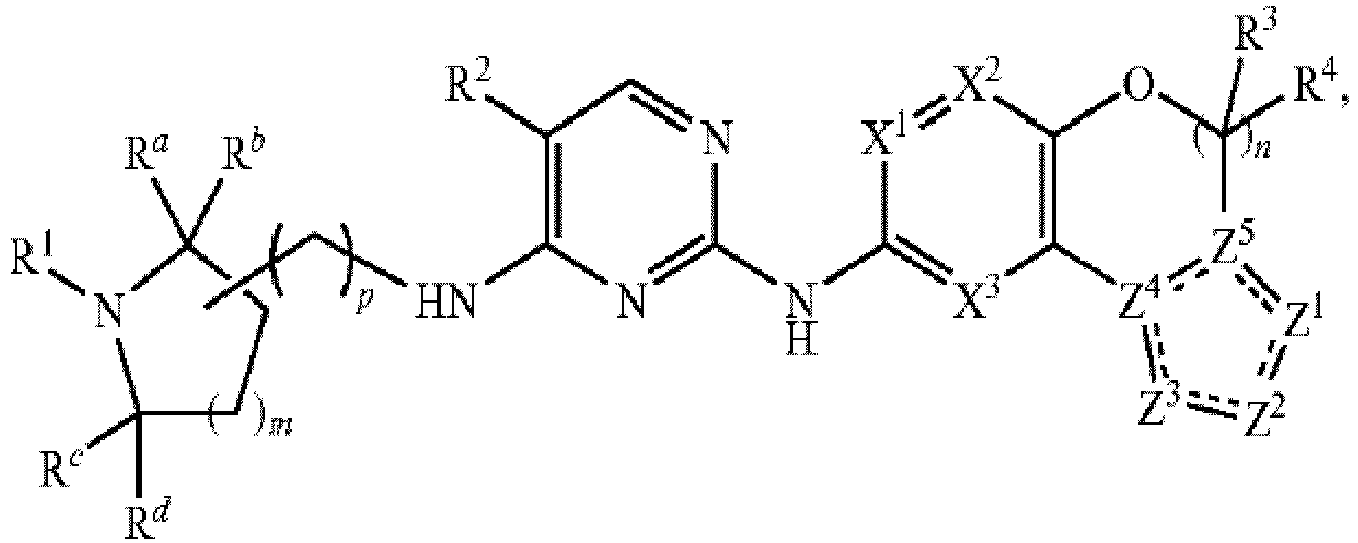
- A first aspect of the invention is a compound of formula (I):

- R11 is selected from hydrogen, alkyl, substituted alkyl, alkoxy, substituted alkoxy, amino, substituted amino, cyano, halogen, acyl and aminoacyl;
- Y1 and Y2 are hydrogen;
- Ar1 is selected from aryl, substituted aryl, heteroaryl, and substituted heteroaryl;
- In one embodiment, the compound is a compound of formula (II):

- Q is C or N; and
- R12, R13, R14, R15, and R16 are independently selected from hydrogen, alkyl, substituted alkyl, alkenyl, substituted alkenyl, alkynyl, substituted alkynyl, halogen, cyano, hydroxyl, alkoxy, substituted alkoxy, amino, substituted amino, acylamino, aminocarbonylamino, alkoxycarbonylamino, acyl, carboxyl, carboxyl ester, aminoacyl, aminocarbonyloxy, nitro, sulfonyl, sulfonylamino, aminosulfonyl, sulfur pentafluoride, aryl, substituted aryl, cycloalkyl, substituted cycloalkyl, heteroaryl, substituted heteroaryl, heterocyclyl, and substituted heterocyclyl, or R14 and R15 together with the carbon atoms to which they are attached form aryl, substituted aryl, heteroaryl, substituted heteroaryl, heterocyclyl, or substituted heterocyclyl;
- In one embodiment, R12, R13, R14, R15, and R16 are independently selected from hydrogen, alkyl, substituted alkyl, halogen, cyano, alkoxy, substituted alkoxy, sulfur pentafluoride, aryl, substituted aryl, cycloalkyl, substituted cycloalkyl, heteroaryl, substituted heteroaryl, heterocyclyl, and substituted heterocyclyl, or R14 and R15 together with the carbon atoms to which they are attached form aryl, substituted aryl, heteroaryl, substituted heteroaryl, heterocyclyl, or substituted heterocyclyl.
- In one embodiment, the compound is a compound of formula (IIa):

- In one embodiment, the compound is a compound of formula (III):

R12, R13, R14, R15, and R16 are independently selected from hydrogen, alkyl, substituted alkyl, alkenyl, substituted alkenyl, alkynyl, substituted alkynyl, halogen, cyano, hydroxyl, alkoxy, substituted alkoxy, amino, substituted amino, acylamino, aminocarbonylamino, alkoxycarbonylamino, acyl, carboxyl, carboxyl ester, aminoacyl, aminocarbonyloxy, nitro, sulfonyl, sulfonylamino, aminosulfonyl, sulfur pentafluoride, aryl, substituted aryl, cycloalkyl, substituted cycloalkyl, heteroaryl, substituted heteroaryl, heterocyclyl, and substituted heterocyclyl, or R14 and R15 together with the carbon atoms to which they are attached form aryl, substituted aryl, heteroaryl, substituted heteroaryl, heterocyclyl, or substituted heterocyclyl;
or a salt or stereoisomer thereof. - In one embodiment, the compound is a compound of formula (IIIa):

- In one embodiment, the compound is a compound of formula (IV):

R12, R14, R15, and R16 are independently selected from hydrogen, alkyl, substituted alkyl, alkenyl, substituted alkenyl, alkynyl, substituted alkynyl, halogen, cyano, hydroxyl, alkoxy, substituted alkoxy, amino, substituted amino, acylamino, aminocarbonylamino, alkoxycarbonylamino, acyl, carboxyl, carboxyl ester, aminoacyl, aminocarbonyloxy, nitro, sulfonyl, sulfonylamino, aminosulfonyl, sulfur pentafluoride, aryl, substituted aryl, cycloalkyl, substituted cycloalkyl, heteroaryl, substituted heteroaryl, heterocyclyl, and substituted heterocyclyl, or R14 and R15 together with the carbon atoms to which they are attached form aryl, substituted aryl, heteroaryl, substituted heteroaryl, heterocyclyl, or substituted heterocyclyl;
or a salt or stereoisomer thereof. - In one embodiment, the compound is a compound of formula (IVa):

- In one embodiment, the compound is a compound selected from Compounds 1-156, as described herein.
- A second aspect of the invention is a pharmaceutical composition comprising a compound of the first aspect and a pharmaceutically acceptable carrier.
- A third aspect of the invention is an in vitro method of inhibiting a protein kinase C (PKC) activity in a biological sample, which method comprises contacting the biological sample with a compound of the first aspect.
- A fourth aspect of the invention is a compound of the first aspect for use in therapy.
- In one embodiment, the therapy is treatment of a disease or disorder that is mediated or sustained through the activity of a PKC activity.
- In one embodiment, the therapy is treatment of a disease or disorder associated with activation of T cells.
- In one embodiment, the therapy is treatment of: an inflammatory disease; an autoimmune disease; or an ocular disease or disorder involving inflammatory and/or neovascular events.
- This disclosure concerns compounds which are useful as inhibitors of protein kinase C (PKC) and are thus useful for treating a variety of diseases and disorders that are mediated or sustained through the activity of PKC. Also described herein are pharmaceutical compositions that include these compounds, methods of using these compounds in the treatment of various diseases and disorders, processes for preparing these compounds and intermediates useful in these processes.
- Embodiments of the chemical structures are provided throughout the disclosure. By way of example, such compounds are represented by the following formula (I):

- R11 is selected from hydrogen, alkyl, substituted alkyl, cycloalkyl, substituted cycloalkyl, hydroxy, alkoxy, substituted alkoxy, amino, substituted amino, carboxyl, carboxyl ester, cyano, halogen, acyl, aminoacyl, nitro, alkenyl, substituted alkenyl, alkynyl, substituted alkynyl, aryl, substituted aryl, heteroaryl, substituted heteroaryl, sulfide, substituted sulfide, and SFs;
- Y1 and Y2 are independently selected from hydrogen and alkyl; and
- Ar1 is selected from aryl, substituted aryl, heteroaryl, and substituted heteroaryl;
- In some instances of formula (I), Ar1 is aryl or substituted aryl.
- In some instances of formula (I), Ar1 is heteroaryl or substituted heteroaryl.
- Also described herein is a compound of formula (II)

- R11 is selected from hydrogen, alkyl, substituted alkyl, hydroxy, alkoxy, substituted alkoxy, amino, substituted amino, carboxyl, carboxyl ester, cyano, halogen, acyl, aminoacyl, nitro, alkenyl, substituted alkenyl, alkynyl, and substituted alkynyl;
- Y1 and Y2 are independently selected from hydrogen and alkyl;
- Q is C or N; and
- R12, R13, R14, R15, and R16 are independently selected from hydrogen, alkyl, substituted alkyl, alkenyl, substituted alkenyl, alkynyl, substituted alkynyl, halogen, cyano, hydroxyl, alkoxy, substituted alkoxy, amino, substituted amino, acylamino, aminocarbonylamino, alkoxycarbonylamino, acyl, carboxyl, carboxyl ester, aminoacyl, aminocarbonyloxy, nitro, sulfonyl, sulfonylamino, aminosulfonyl, sulfur pentafluoride, aryl, substituted aryl, cycloalkyl, substituted cycloalkyl, heteroaryl, substituted heteroaryl, heterocyclyl, and substituted heterocyclyl, or R14 and R15 together with the carbon atoms to which they are attached form aryl, substituted aryl, heteroaryl, substituted heteroaryl, heterocyclyl, or substituted heterocyclyl;
- In some instances of formula (II), Q is C.
- In some instances of formula (II), Q is N and R13 is absent.
- In some instances of formula (II), R12, R13, R14, R15, and R16 are independently selected from hydrogen, alkyl, substituted alkyl, halogen, cyano, alkoxy, substituted alkoxy, sulfur pentafluoride, aryl, substituted aryl, cycloalkyl, substituted cycloalkyl, heteroaryl, substituted heteroaryl, heterocyclyl, and substituted heterocyclyl, or R14 and R15 together with the carbon atoms to which they are attached form aryl, substituted aryl, heteroaryl, substituted heteroaryl, heterocyclyl, or substituted heterocyclyl.
- In some instances, the compound is of the formula (IIa):

- In some instances of formula (IIa), Q is C.
- In some instances of formula (IIa), Q is N and R13 is absent.
- In some instances of formula (IIa), R12, R13, R14, R15, and R16 are independently selected from hydrogen, alkyl, substituted alkyl, halogen, cyano, alkoxy, substituted alkoxy, sulfur pentafluoride, aryl, substituted aryl, cycloalkyl, substituted cycloalkyl, heteroaryl, substituted heteroaryl, heterocyclyl, and substituted heterocyclyl, or R14 and R15 together with the carbon atoms to which they are attached form aryl, substituted aryl, heteroaryl, substituted heteroaryl, heterocyclyl, or substituted heterocyclyl.
- Also described herein is a compound of formula (III):

- R11 is selected from hydrogen, alkyl, substituted alkyl, hydroxy, alkoxy, substituted alkoxy, amino, substituted amino, carboxyl, carboxyl ester, cyano, halogen, acyl, aminoacyl, nitro, alkenyl, substituted alkenyl, alkynyl, and substituted alkynyl;
- Y1 and Y2 are independently selected from hydrogen and alkyl; and
- R12, R13, R14, R15, and R16 are independently selected from hydrogen, alkyl, substituted alkyl, alkenyl, substituted alkenyl, alkynyl, substituted alkynyl, halogen, cyano, hydroxyl, alkoxy, substituted alkoxy, amino, substituted amino, acylamino, aminocarbonylamino, alkoxycarbonylamino, acyl, carboxyl, carboxyl ester, aminoacyl, aminocarbonyloxy, nitro, sulfonyl, sulfonylamino, aminosulfonyl, sulfur pentafluoride, aryl, substituted aryl, cycloalkyl, substituted cycloalkyl, heteroaryl, substituted heteroaryl, heterocyclyl, and substituted heterocyclyl, or R14 and R15 together with the carbon atoms to which they are attached form aryl, substituted aryl, heteroaryl, substituted heteroaryl, heterocyclyl, or substituted heterocyclyl;
- In some instances of formula (III), R12, R13, R14, R15, and R16 are independently selected from hydrogen, alkyl, substituted alkyl, halogen, cyano, alkoxy, substituted alkoxy, sulfur pentafluoride, aryl, substituted aryl, cycloalkyl, substituted cycloalkyl, heteroaryl, substituted heteroaryl, heterocyclyl, and substituted heterocyclyl, or R14 and R15 together with the carbon atoms to which they are attached form aryl, substituted aryl, heteroaryl, substituted heteroaryl, heterocyclyl, or substituted heterocyclyl.
- In some instances of formula (III), the compound is a compound of formula (IIIa):

- Also described herein is a compound of formula (IV):

- R11 is selected from hydrogen, alkyl, substituted alkyl, hydroxy, alkoxy, substituted alkoxy, amino, substituted amino, carboxyl, carboxyl ester, cyano, halogen, acyl, aminoacyl, nitro, alkenyl, substituted alkenyl, alkynyl, and substituted alkynyl;
- Y1 and Y2 are independently selected from hydrogen and alkyl; and
- R12, R14, R15, and R16 are independently selected from hydrogen, alkyl, substituted alkyl, alkenyl, substituted alkenyl, alkynyl, substituted alkynyl, halogen, cyano, hydroxyl, alkoxy, substituted alkoxy, amino, substituted amino, acylamino, aminocarbonylamino, alkoxycarbonylamino, acyl, carboxyl, carboxyl ester, aminoacyl, aminocarbonyloxy, nitro, sulfonyl, sulfonylamino, aminosulfonyl, sulfur pentafluoride, aryl, substituted aryl, cycloalkyl, substituted cycloalkyl, heteroaryl, substituted heteroaryl, heterocyclyl, and substituted heterocyclyl, or R14 and R15 together with the carbon atoms to which they are attached form aryl, substituted aryl, heteroaryl, substituted heteroaryl, heterocyclyl, or substituted heterocyclyl;
- In some instances of formula (IV), R12, R14, R15, and R16 are independently selected from hydrogen, alkyl, substituted alkyl, halogen, cyano, alkoxy, substituted alkoxy, sulfur pentafluoride, aryl, substituted aryl, cycloalkyl, substituted cycloalkyl, heteroaryl, substituted heteroaryl, heterocyclyl, and substituted heterocyclyl, or R14 and R15 together with the carbon atoms to which they are attached form aryl, substituted aryl, heteroaryl, substituted heteroaryl, heterocyclyl, or substituted heterocyclyl.
- In some instances of formula (IV), the compound is a compound of formula (IVa):
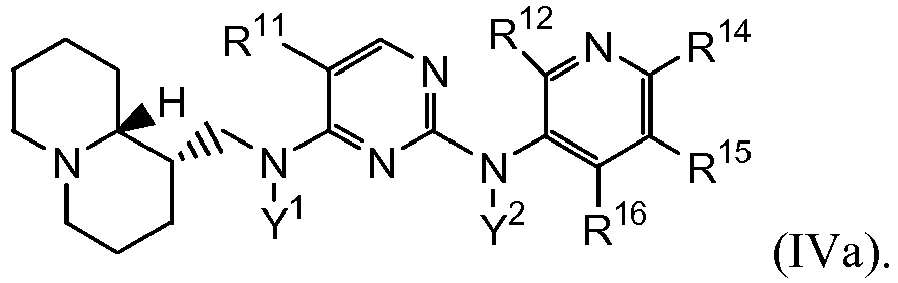
- In some instances of formula (I), the compound is a compound of formula (IIIa):
- In some instances of formulae (I)-(IV), R11 is selected from hydrogen, alkyl, substituted alkyl, alkoxy, substituted alkoxy, amino, substituted amino, cyano, halogen, acyl and aminoacyl.
- In some instances of formulae (I)-(IV), Y1 and Y2 are hydrogen.
- Also described herein is a compound selected from:
- Compound 1: 5-(4-(((1S,9aR)-octahydro-1H-quinolizin-1-yl)methylamino)-5-fluoropyrimidin-2-ylamino)-2-cyclopropylbenzonitrile;
- Compound 2: N2-(4-cyclopropyl-2-fluoro-5-(1H-tetrazol-1-yl)phenyl)-5-fluoro-N4-(((1S,9aR)-octahydro-1H-quinolizin-1-yl)methyl)pyrimidine-2,4-diamine;
- Compound 3: 1-(5-(4-(((1S,9aR)-octahydro-1H-quinolizin-1-yl)methylamino)-5-fluoropyrimidin-2-ylamino)-2-cyclopropyl-4-fluorophenyl)-4-methyl-1H-tetrazol-5(4H)-one;
- Compound 4: 5-fluoro-N4-(((1S,9aR)-octahydro-1H-quinolizin-1-yl)methyl)-N2-(4-methyl-3-(1H-tetrazol-1-yl)phenyl)pyrimidine-2,4-diamine;
- Compound 5: 5-(4-(((1S,9aR)-octahydro-1H-quinolizin-9-yl)methylamino)-5-chloropyrimidin-2-ylamino)-2-cyclopropylbenzonitrile;
- Compound 6: 5-fluoro-N4-(((1S,9aR)-octahydro-1H-quinolizin-1-yl)methyl)-N2-(4-methoxy-3-(5-methyl-1H-tetrazol-1-yl)phenyl)pyrimidine-2,4-diamine;
- Compound 7: 5-fluoro-N2-(2-fluoro-5-(5-methyl-1H-tetrazol-1-yl)phenyl)-N4-(((1S,9aR)-octahydro-1H-quinolizin-1-yl)methyl)pyrimidine-2,4-diamine;
- Compound 8: 5-fluoro-N2-(4-fluoro-3-(5-methyl-1H-tetrazol-1-yl)phenyl)-N4-(((1S,9aR)-octahydro-1H-quinolizin-1-yl)methyl)pyrimidine-2,4-diamine;
- Compound 9: 5-(4-(((1S,9aR)-octahydro-1H-quinolizin-1-yl)methylamino)-5-fluoropyrimidin-2-ylamino)-2-methylbenzonitrile;
- Compound 10: 3-(4-(((1S,9aR)-octahydro-1H-quinolizin-1-yl)methylamino)-5-fluoropyrimidin-2-ylamino)benzonitrile;
- Compound 11: 5-fluoro-N4-(((1S,9aR)-octahydro-1H-quinolizin-1-yl)methyl)-N2-(3,5 -dimethoxyphenyl)pyrimidine-2,4-diamine;
- Compound 12: 5-(4-(((1S,9aR)-octahydro-1H-quinolizin-1-yl)methylamino)-5-fluoropyrimidin-2-ylamino)-2-cyclopropyl-4-fluorobenzonitrile;
- Compound 13: 5-fluoro-N4-(((1S,9aR)-octahydro-1H-quinolizin-1-yl)methyl)-N2-phenylpyrimidine-2,4-diamine;
- Compound 14: 1-(5-(4-(((1S,9aR)-octahydro-1H-quinolizin-1-yl)methylamino)-5-fluoropyrimidin-2-ylamino)-2-(oxetan-3-yloxy)phenyl)-4-methyl-1H-tetrazol-5(4H)-one;
- Compound 15: 1-(5-(4-(((1S,9aR)-octahydro-1H-quinolizin-1-yl)methylamino)-5-fluoropyrimidin-2-ylamino)-2-cyclopropyl-4-methylphenyl)-4-methyl-1H-tetrazol-5(4H)-one;
- Compound 16: 7-(4-(((1S,9aR)-octahydro-1H-quinolizin-1-yl)methylamino)-5-fluoropyrimidin-2-ylamino)-4-isopropyl-2,2-dimethyl-2H-benzo[b][1,4]oxazin-3(4H)-one;
- Compound 17: 1-(3-(4-(((1S,9aR)-octahydro-1H-quinolizin-1-yl)methylamino)-5-fluoropyrimidin-2-ylamino)-5-methoxyphenyl)-4-methyl-1H-tetrazol-5(4H)-one;
- Compound 18: 7-(4-(((1S,9aR)-octahydro-1H-quinolizin-1-yl)methylamino)-5-fluoropyrimidin-2-ylamino)-4-(cyclopropylmethyl)-2,2-dimethyl-2H-benzo[b] [1,4]oxazin-3 (4H)-one;
- Compound 19: 5 -fluoro-N2-(3 -(trifluoromethyl)-4-morpholinophenyl)-N4-(((1S,9aR)-octahydro-1H-quinolizin-1-yl)methyl)pyrimidine-2,4-diamine;
- Compound 20: 5-fluoro-N2-(2,2,3,3-tetrafluoro-2,3-dihydrobenzo[b][1,4]dioxin-7-yl)-N4-(((1S,9aR)-octahydro-1H-quinolizin-1-yl)methyl)pyrimidine-2,4-diamine;
- Compound 21: 5-fluoro-N2-(3-fluoro-5-methoxyphenyl)-N4-(((1S,9aR)-octahydro-1H-quinolizin-1-yl)methyl)pyrimidine-2,4-diamine;
- Compound 22: 5-fluoro-N4-(((1S,9aR)-octahydro-1H-quinolizin-1-yl)methyl)-N2-(4-methoxy-3-(oxazol-5-yl)phenyl)pyrimidine-2,4-diamine;
- Compound 23: N2-(4-cyclopropyl-2-fluoro-5-(5-methyl-1H-tetrazol-1-yl)phenyl)-5-fluoro-N4-(((1S,9aR)-octahydro-1H-quinolizin-1-yl)methyl)pyrimidine-2,4-diamine;
- Compound 24: N2-[3-(1,1-dioxo-isothiazolidin-2-yl)-4-fluoro-phenyl]-5-fluoro-N4-(((1S,9aR)-octahydro-1H-quinolizin-1-yl)methyl)-pyrimidine-2,4-diamine;
- Compound 25: 7-(4-(((1S,9aR)-octahydro-1H-quinolizin-1-yl)methylamino)-5-fluoropyrimidin-2-ylamino)-4-(3-fluoropropyl)-2,2-dimethyl-2H-benzo[b][1,4]oxazin-3(4H)-one;
- Compound 26: 7-(4-(((1S,9aR)-octahydro-1H-quinolizin-1-yl)methylamino)-5-fluoropyrimidin-2-ylamino)-4-(cyclopropylmethyl)-2H-benzo[b][1,4]oxazin-3(4H)-one;
- Compound 27: 7-(4-(((1S,9aR)-octahydro-1H-quinolizin-1-yl)methylamino)-5-fluoropyrimidin-2-ylamino)-4-ethyl-2,2-difluoro-2H-pyrido[3,2-b][1,4]oxazin-3(4H)-one;
- Compound 28: N2-(5-(1-methyl-1H-tetrazol-5-yloxy)-4-cyclopropyl-2-fluorophenyl)-5-fluoro-N4-(((1S,9aR)-octahydro-1H-quinolizin-1-yl)methyl)pyrimidine-2,4-diamine;
- Compound 29: 5-fluoro-N2-(3-pentafluorosulfanyl-6-fluoro-phenyl)-N4-(((1S,9aR)-octahydro-1H-quinolizin-1-yl)methyl)pyrimidine-2,4-diamine;
- Compound 30: 5-fluoro-N2-(3-pentafluorosulfanyl-5-fluoro-phenyl)-N4-(((1S,9aR)-octahydro-1H-quinolizin-1-yl)methyl)pyrimidine-2,4-diamine;
- Compound 31: 7-(4-(((1S,9aR)-octahydro-1H-quinolizin-1-yl)methylamino)-5-fluoropyrimidin-2-ylamino)-4-(cyclopropylmethyl)-2,2-dimethyl-2H-pyrido[3,2-b][1,4]oxazin-3(4H)-one;
- Compound 32: 5-chloro-N2-(4-cyclopropyl-2-fluoro-5-(1H-tetrazol-1-yl)phenyl)-N4-(((1S,9aR)-octahydro-1H-quinolizin-1-yl)methyl)pyrimidine-2,4-diamine;
- Compound 33: 5-chloro-N4-(((1S,9aR)-octahydro-1H-quinolizin-1-yl)methyl)-N2-(4-methyl-3-(1H-tetrazol-1-yl)phenyl)pyrimidine-2,4-diamine;
- Compound 34: 1-(5-(4-(((1S,9aR)-octahydro-1H-quinolizin-1-yl)methylamino)-5-chloropyrimidin-2-ylamino)-2-cyclopropyl-4-fluorophenyl)-4-methyl-1H-tetrazol-5(4H)-one;
- Compound 35: 5-chloro-N2-(4-fluoro-3-(5-methyl-1H-tetrazol-1-yl)phenyl)-N4-(((1S,9aR)-octahydro-1H-quinolizin-1-yl)methyl)pyrimidine-2,4-diamine;
- Compound 36: 5-chloro-N2-(2-fluoro-5-(5-methyl-1H-tetrazol-1-yl)phenyl)-N4-(((1S,9aR)-octahydro-1H-quinolizin-1-yl)methyl)pyrimidine-2,4-diamine;
- Compound 37: 5-chloro-N4-(((1S,9aR)-octahydro-1H-quinolizin-1-yl)methyl)-N2-(4-methoxy-3-(5-methyl-1H-tetrazol-1-yl)phenyl)pyrimidine-2,4-diamine;
- Compound 38: 5-chloro-N4-(((1S,9aR)-octahydro-1H-quinolizin-1-yl)methyl)-N2-(3-methoxy-5-(5-methyl-1H-tetrazol-1-yl)phenyl)pyrimidine-2,4-diamine;
- Compound 39: 3-(4-(((1S,9aR)-octahydro-1H-quinolizin-1-yl)methylamino)-5-chloropyrimidin-2-ylamino)benzonitrile;
- Compound 40: 5-(4-(((1S,9aR)-octahydro-1H-quinolizin-1-yl)methylamino)-5-chloropyrimidin-2-ylamino)-2-methylbenzonitrile;
- Compound 41: 5-(4-(((1S,9aR)-octahydro-1H-quinolizin-1-yl)methylamino)-5-chloropyrimidin-2-ylamino)-2-cyclopropylbenzonitrile;
- Compound 42: 5-(4-(((1S,9aR)-octahydro-1H-quinolizin-1-yl)methylamino)-5-chloropyrimidin-2-ylamino)-2-cyclopropyl-4-fluorobenzonitrile;
- Compound 43: 5-chloro-N4-(((1S,9aR)-octahydro-1H-quinolizin-1-yl)methyl)-N2-(3,5 -dimethoxyphenyl)pyrimidine-2,4-diamine;
- Compound 44: 5-(4-(((1S,9aR)-octahydro-1H-quinolizin-1-yl)methylamino)-5-chloropyrimidin-2-ylamino)benzo[d]oxazol-2(3H)-one;
- Compound 45: N2-(5-(5-cyclopropyl-1H-tetrazol-1-yl)-2-fluorophenyl)-5-fluoro-N4-(((1S,9aR)-octahydro-1H-quinolizin-1-yl)methyl)pyrimidine-2,4-diamine;
- Compound 46: N2-(4-cyclopropyl-2-fluoro-5-(1H-tetrazol-1-yl)phenyl)-N4-(((1S,9aR)-octahydro-1H-quinolizin-1-yl)methyl)pyrimidine-2,4-diamine;
- Compound 47: N4-(((1S,9aR)-octahydro-1H-quinolizin-1-yl)methyl)-N2-(4-methyl-3-(1H-tetrazol-1-yl)phenyl)pyrimidine-2,4-diamine;
- Compound 48: 1-(5-(4-(((1S,9aR)-octahydro-1H-quinolizin-1-yl)methylamino)pyrimidin-2-ylamino)-2-cyclopropyl-4-fluorophenyl)-4-methyl-1H-tetrazol-5 (4H)-one;
- Compound 49: N2-(4-fluoro-3-(5-methyl-1H-tetrazol-1-yl)phenyl)-N4-(((1S,9aR)-octahydro-1H-quinolizin-1-yl)methyl)pyrimidine-2,4-diamine;
- Compound 50: N2-(2-fluoro-5-(5-methyl-1H-tetrazol-1-yl)phenyl)-N4-(((1S,9aR)-octahydro-1H-quinolizin-1 -yl)methyl)pyrimidine-2,4-diamine;
- Compound 51: N4-(((1S,9aR)-octahydro-1H-quinolizin-1-yl)methyl)-N2-(4-methoxy-3-(5-methyl-1H-tetrazol-1-yl)phenyl)pyrimidine-2,4-diamine;
- Compound 52: N4-(((1S,9aR)-octahydro-1H-quinolizin-1-yl)methyl)-N2-(3-methoxy-5-(5-methyl-1H-tetrazol-1-yl)phenyl)pyrimidine-2,4-diamine;
- Compound 53: 3-(4-(((1S,9aR)-octahydro-1H-quinolizin-1-yl)methylamino)pyrimidin-2-ylamino)benzonitrile;
- Compound 54: 5-(4-(((1S,9aR)-octahydro-1H-quinolizin-1-yl)methylamino)pyrimidin-2-ylamino)-2-methylbenzonitrile;
- Compound 55: 5-(4-(((1S,9aR)-octahydro-1H-quinolizin-1-yl)methylamino)pyrimidin-2-ylamino)-2-cyclopropylbenzonitrile;
- Compound 56: 5-(4-(((1S,9aR)-octahydro-1H-quinolizin-1-yl)methylamino)pyrimidin-2-ylamino)-2-cyclopropyl-4-fluorobenzonitrile;
- Compound 57: N4-(((1S,9aR)-octahydro-1H-quinolizin-1-yl)methyl)-N2-(3,5-dimethoxyphenyl)pyrimidine-2,4-diamine;
- Compound 58: 5-(4-(((1S,9aR)-octahydro-1H-quinolizin-1-yl)methylamino)pyrimidin-2-ylamino)benzo[d]oxazol-2(3H)-one;
- Compound 59: N2-(4-cyclopropyl-2-fluoro-5-(1H-tetrazol-1-yl)phenyl)-N4-(((1S,9aR)-octahydro-1H-quinolizin-1-yl)methyl)-5-methylpyrimidine-2,4-diamine;
- Compound 60: N4-(((1S,9aR)-octahydro-1H-quinolizin-1-yl)methyl)-5-methyl-N2-(4-methyl-3-(1H-tetrazol-1-yl)phenyl)pyrimidine-2,4-diamine;
- Compound 61: 1-(5-(4-(((1S,9aR)-octahydro-1H-quinolizin-1-yl)methylamino)-5-methylpyrimidin-2-ylamino)-2-cyclopropyl-4-fluorophenyl)-4-methyl-1H-tetrazol-5(4H)-one;
- Compound 62: N2-(4-fluoro-3-(5-methyl-1H-tetrazol-1-yl)phenyl)-N4-(((1S,9aR)-octahydro-1H-quinolizin-1-yl)methyl)-5-methylpyrimidine-2,4-diamine;
- Compound 63: N2-(2-fluoro-5-(5-methyl-1H-tetrazol-1-yl)phenyl)-N4-(((1S,9aR)-octahydro-1H-quinolizin-1-yl)methyl)-5-methylpyrimidine-2,4-diamine;
- Compound 64: N4-(((1S,9aR)-octahydro-1H-quinolizin-1-yl)methyl)-N2-(4-methoxy-3-(5-methyl-1H-tetrazol-1-yl)phenyl)-5-methylpyrimidine-2,4-diamine;
- Compound 65: N4-(((1S,9aR)-octahydro-1H-quinolizin-1-yl)methyl)-N2-(3-methoxy-5-(5-methyl-1H-tetrazol-1-yl)phenyl)-5-methylpyrimidine-2,4-diamine;
- Compound 66: 3-(4-(((1S,9aR)-octahydro-1H-quinolizin-1-yl)methylamino)-5-methylpyrimidin-2-ylamino)benzonitrile;
- Compound 67: 5-(4-(((1S,9aR)-octahydro-1H-quinolizin-1-yl)methylamino)-5-methylpyrimidin-2-ylamino)-2-methylbenzonitrile;
- Compound 68: 5-(4-(((1S,9aR)-octahydro-1H-quinolizin-1-yl)methylamino)-5-methylpyrimidin-2-ylamino)-2-cyclopropylbenzonitrile;
- Compound 69: 5-(4-(((1S,9aR)-octahydro-1H-quinolizin-1-yl)methylamino)-5-methylpyrimidin-2-ylamino)-2-cyclopropyl-4-fluorobenzonitrile;
- Compound 70: N4-(((1S,9aR)-octahydro-1H-quinolizin-1-yl)methyl)-N2-(3,5-dimethoxyphenyl)-5-methylpyrimidine-2,4-diamine;
- Compound 71: 5-(4-(((1S,9aR)-octahydro-1H-quinolizin-1-yl)methylamino)-5-methylpyrimidin-2-ylamino)benzo[d]oxazol-2(3H)-one;
- Compound 72: N2-(4-cyclopropyl-2-fluoro-5-(1H-tetrazol-1-yl)phenyl)-N4-(((1S,9aR)-octahydro-1H-quinolizin-1-yl)methyl)-5 -methoxypyrimidine-2,4-diamine;
- Compound 73: N4-(((1S,9aR)-octahydro-1H-quinolizin-1-yl)methyl)-5-methoxy-N2-(4-methyl-3-(1H-tetrazol-1-yl)phenyl)pyrimidine-2,4-diamine;
- Compound 74: 1-(5-(4-(((1S,9aR)-octahydro-1H-quinolizin-1-yl)methylamino)-5-methoxypyrimidin-2-ylamino)-2-cyclopropyl-4-fluorophenyl)-4-methyl-1H-tetrazol-5(4H)-one;
- Compound 75: N2-(4-fluoro-3-(5-methyl-1H-tetrazol-1-yl)phenyl)-N4-(((1S,9aR)-octahydro-1H-quinolizin-1-yl)methyl)-5-methoxypyrimidine-2,4-diamine;
- Compound 76: N2-(2-fluoro-5-(5-methyl-1H-tetrazol-1-yl)phenyl)-N4-(((1S,9aR)-octahydro-1H-quinolizin-1-yl)methyl)-5-methoxypyrimidine-2,4-diamine;
- Compound 77: N4-(((1S,9aR)-octahydro-1H-quinolizin-1-yl)methyl)-5-methoxy-N2-(4-methoxy-3-(5-methyl-1H-tetrazol-1-yl)phenyl)pyrimidine-2,4-diamine;
- Compound 78: N4-(((1S,9aR)-octahydro-1H-quinolizin-1-yl)methyl)-5-methoxy-N2-(3-methoxy-5-(5-methyl-1H-tetrazol-1-yl)phenyl)pyrimidine-2,4-diamine;
- Compound 79: 3-(4-(((1S,9aR)-octahydro-1H-quinolizin-1-yl)methylamino)-5-methoxypyrimidin-2-ylamino)benzonitrile;
- Compound 80: 5-(4-(((1S,9aR)-octahydro-1H-quinolizin-1-yl)methylamino)-5-methoxypyrimidin-2-ylamino)-2-methylbenzonitrile;
- Compound 81: 5-(4-(((1S,9aR)-octahydro-1H-quinolizin-1-yl)methylamino)-5-methoxypyrimidin-2-ylamino)-2-cyclopropylbenzonitrile;
- Compound 82: 5-(4-(((1S,9aR)-octahydro-1H-quinolizin-1-yl)methylamino)-5-methoxypyrimidin-2-ylamino)-2-cyclopropyl-4-fluorobenzonitrile;
- Compound 83: N4-(((1S,9aR)-octahydro-1H-quinolizin-1-yl)methyl)-5-methoxy-N2-(3,5 -dimethoxyphenyl)pyrimidine-2,4-diamine;
- Compound 84: 5-(4-(((1S,9aR)-octahydro-1H-quinolizin-1-yl)methylamino)-5-methoxypyrimidin-2-ylamino)benzo[d]oxazol-2(3H)-one;
- Compound 85: N2-(4-cyclopropyl-2-fluoro-5-(1H-tetrazol-1-yl)phenyl)-N4-(((1S,9aR)-octahydro-1H-quinolizin-1-yl)methyl)-N5,N5-dimethylpyrimidine-2,4,5-triamine;
- Compound 86: N4-(((1S,9aR)-octahydro-1H-quinolizin-1-yl)methyl)-N5,N5-dimethyl-N2-(4-methyl-3-(1H-tetrazol-1-yl)phenyl)pyrimidine-2,4,5-triamine;
- Compound 87: 1-(5-(4-(((1S,9aR)-octahydro-1H-quinolizin-1-yl)methylamino)-5-(dimethylamino)pyrimidin-2-ylamino)-2-cyclopropyl-4-fluorophenyl)-4-methyl-1H-tetrazol-5 (4H)-one;
- Compound 88: N2-(4-fluoro-3-(5-methyl-1H-tetrazol-1-yl)phenyl)-N4-(((1S,9aR)-octahydro-1H-quinolizin-1-yl)methyl)-N5,N5-dimethylpyrimidine-2,4,5-triamine;
- Compound 89: N2-(2-fluoro-5-(5-methyl-1H-tetrazol-1-yl)phenyl)-N4-(((1S,9aR)-octahydro-1H-quinolizin-1-yl)methyl)-N5,N5-dimethylpyrimidine-2,4,5-triamine;
- Compound 90: N4-(((1S,9aR)-octahydro-1H-quinolizin-1-yl)methyl)-N2-(4-methoxy-3-(5-methyl-1H-tetrazol-1-yl)phenyl)-N5,N5-dimethylpyrimidine-2,4,5-triamine;
- Compound 91: N4-(((1S,9aR)-octahydro-1H-quinolizin-1-yl)methyl)-N2-(3-methoxy-5-(5-methyl-1H-tetrazol-1-yl)phenyl)-N5,N5-dimethylpyrimidine-2,4,5-triamine;
- Compound 92: 3-(4-(((1S,9aR)-octahydro-1H-quinolizin-1-yl)methylamino)-5-(dimethylamino)pyrimidin-2-ylamino)benzonitrile;
- Compound 93: 5-(4-(((1S,9aR)-octahydro-1H-quinolizin-1-yl)methylamino)-5-(dimethylamino)pyrimidin-2-ylamino)-2-methylbenzonitrile;
- Compound 94: 5-(4-(((1S,9aR)-octahydro-1H-quinolizin-1-yl)methylamino)-5-(dimethylamino)pyrimidin-2-ylamino)-2-cyclopropylbenzonitrile;
- Compound 95: 5-(4-(((1S,9aR)-octahydro-1H-quinolizin-1-yl)methylamino)-5-(dimethylamino)pyrimidin-2-ylamino)-2-cyclopropyl-4-fluorobenzonitrile;
- Compound 96: N4-(((1S,9aR)-octahydro-1H-quinolizin-1-yl)methyl)-N2-(3,5-dimethoxyphenyl)-N5,N5-dimethylpyrimidine-2,4,5-triamine;
- Compound 97: 5-(4-(((1S,9aR)-octahydro-1H-quinolizin-1-yl)methylamino)-5-(dimethylamino)pyrimidin-2-ylamino)benzo[d]oxazol-2(3H)-one;
- Compound 98: N2-(4,4-dimethyl-4H-5-oxa-1,2,3,9b-tetraaza-cyclopenta[a]naphthalen-8-yl)-5-fluoro-N4-(((1S,9aR)-octahydro-1H-quinolizin-1-yl)methyl)-pyrimidine-2,4-diamine;
- Compound 99: 4-(((1S,9aR)-octahydro-1H-quinolizin-1-yl)methylamino)-2-(4-cyclopropyl-2-fluoro-5-(4,5-dihydro-4-methyl-5-oxotetrazol-1-yl)phenylamino)pyrimidine-5-carbonitrile;
- Compound 100: N2-(4-cyclopropyl-2-fluoro-5-(1H-tetrazol-1-yl)phenyl)-5-(trifluoromethyl)-N4-(((1S,9aR)-octahydro-1H-quinolizin-1-yl)methyl)pyrimidine-2,4-diamine;
- Compound 101: 5-(trifluoromethyl)-N4-(((1S,9aR)-octahydro-1H-quinolizin-1-yl)methyl)-N2-(4-methyl-3-(1H-tetrazol-1-yl)phenyl)pyrimidine-2,4-diamine;
- Compound 102: 1-(5-(4-(((1S,9aR)-octahydro-1H-quinolizin-1-yl)methylamino)-5-(trifluoromethyl)pyrimidin-2-ylamino)-2-cyclopropyl-4-fluorophenyl)-4-methyl-1H-tetrazol-5 (4H)-one;
- Compound 103: N2-(4-fluoro-3-(5-methyl-1H-tetrazol-1-yl)phenyl)-5-(trifluoromethyl)-N4-(((1S,9aR)-octahydro-1H-quinolizin-1-yl)methyl)pyrimidine-2,4-diamine;
- Compound 104: N2-(2-fluoro-5-(5-methyl-1H-tetrazol-1-yl)phenyl)-5-(trifluoromethyl)-N4-(((1S,9aR)-octahydro-1H-quinolizin-1-yl)methyl)pyrimidine-2,4-diamine;
- Compound 105: 5-(trifluoromethyl)-N4-(((1S,9aR)-octahydro-1H-quinolizin-1-yl)methyl)-N2-(4-methoxy-3-(5-methyl-1H-tetrazol-1-yl)phenyl)pyrimidine-2,4-diamine;
- Compound 106: 5-(trifluoromethyl)-N4-(((1S,9aR)-octahydro-1H-quinolizin-1-yl)methyl)-N2-(3-methoxy-5-(5-methyl-1H-tetrazol-1-yl)phenyl)pyrimidine-2,4-diamine;
- Compound 107: 3-(4-(((1S,9aR)-octahydro-1H-quinolizin-1-yl)methylamino)-5-(trifluoromethyl)pyrimidin-2-ylamino)benzonitrile;
- Compound 108: 5-(4-(((1S,9aR)-octahydro-1H-quinolizin-1-yl)methylamino)-5-(trifluoromethyl)pyrimidin-2-ylamino)-2-methylbenzonitrile;
- Compound 109: 5-(4-(((1S,9aR)-octahydro-1H-quinolizin-1-yl)methylamino)-5-(trifluoromethyl)pyrimidin-2-ylamino)-2-cyclopropylbenzonitrile;
- Compound 110: 5-(4-(((1S,9aR)-octahydro-1H-quinolizin-1-yl)methylamino)-5-(trifluoromethyl)pyrimidin-2-ylamino)-2-cyclopropyl-4-fluorobenzonitrile;
- Compound 111: 5-(trifluoromethyl)-N4-(((1S,9aR)-octahydro-1H-quinolizin-1-yl)methyl)-N2-(3,5-dimethoxyphenyl)pyrimidine-2,4-diamine;
- Compound 112: 5-(4-(((1S,9aR)-octahydro-1H-quinolizin-1-yl)methylamino)-5-(trifluoromethyl)pyrimidin-2-ylamino)benzo[d]oxazol-2(3H)-one;
- Compound 113: 4-(((1S,9aR)-octahydro-1H-quinolizin-1-yl)methylamino)-2-(4-methoxy-3-(5-methyl-1H-tetrazol-1-yl)phenylamino)pyrimidine-5 -carbonitrile;
- Compound 114: 4-(((1S,9aR)-octahydro-1H-quinolizin-1-yl)methylamino)-2-(4-fluoro-3-(5-methyl-1H-tetrazol-1-yl)phenylamino)pyrimidine-5-carbonitrile;
- Compound 115: 4-(((1S,9aR)-octahydro-1H-quinolizin-1-yl)methylamino)-2-(3-methoxy-5-(5-methyl-1H-tetrazol-1-yl)phenylamino)pyrimidine-5-carbonitrile;
- Compound 116: 4-(((1S,9aR)-octahydro-1H-quinolizin-1-yl)methylamino)-2-(4-cyclopropyl-2-fluoro-5-(1H-tetrazol-1-yl)phenylamino)pyrimidine-5-carbonitrile;
- Compound 117: 4-(((1S,9aR)-octahydro-1H-quinolizin-1-yl)methylamino)-2-(4-methyl-3-(1H-tetrazol-1-yl)phenylamino)pyrimidine-5-carbonitrile;
- Compound 118: 4-(((1S,9aR)-octahydro-1H-quinolizin-1-yl)methylamino)-2-(2-fluoro-5-(5-methyl-1H-tetrazol-1-yl)phenylamino)pyrimidine-5-carbonitrile;
- Compound 119: 4-(((1S,9aR)-octahydro-1H-quinolizin-1-yl)methylamino)-2-(3-cyano-4-methylphenylamino)pyrimidine-5-carbonitrile;
- Compound 120: 4-(((1S,9aR)-octahydro-1H-quinolizin-1-yl)methylamino)-2-(3-cyano-4-cyclopropylphenylamino)pyrimidine-5-carbonitrile;
- Compound 121: 4-(((1S,9aR)-octahydro-1H-quinolizin-1-yl)methylamino)-2-(3,5-dimethoxyphenylamino)pyrimidine-5 -carbonitrile;
- Compound 122: 4-(((1S,9aR)-octahydro-1H-quinolizin-1-yl)methylamino)-2-(3-(5-cyclopropyl-1H-tetrazol-1 -yl)-4-fluorophenylamino)pyrimidine-5 -carbonitrile;
- Compound 123: 4-(((1S,9aR)-octahydro-1H-quinolizin-1-yl)methylamino)-2-(5-(5-cyclopropyl-1H-tetrazol-1-yl)-2-fluorophenylamino)pyrimidine-5 -carbonitrile;
- Compound 124: 4-(((1S,9aR)-octahydro-1H-quinolizin-1-yl)methylamino)-2-(4-chloro-3-(5-cyclopropyl-1H-tetrazol-1-yl)phenylamino)pyrimidine-5-carbonitrile;
- Compound 125: 4-(((1S,9aR)-octahydro-1H-quinolizin-1-yl)methylamino)-2-(4-methoxy-3-(5-methyl-1H-tetrazol-1-yl)phenylamino)pyrimidine-5-carboxamide;
- Compound 126: 4-(((1S,9aR)-octahydro-1H-quinolizin-1-yl)methylamino)-2-(4-fluoro-3-(5-methyl-1H-tetrazol-1 -yl)phenylamino)pyrimidine-5 -carboxamide;
- Compound 127: 4-(((1S,9aR)-octahydro-1H-quinolizin-1-yl)methylamino)-2-(2-fluoro-5-(5-methyl-1H-tetrazol-1-yl)phenylamino)pyrimidine-5-carboxamide;
- Compound 128: 2-((2-fluoro-4-hydroxy-5-(4-methyl-5-oxo-4,5-dihydro-1H-tetrazol-1-yl)phenyl)amino)-4-((((1S,9aR)-octahydro-2H-quinolizin-1-yl)methyl)amino)pyrimidine-5-carbonitrile;
- Compound 129: 2-((2-fluoro-4-(2-methoxyethoxy)-5-(4-methyl-5-oxo-4,5-dihydro-1H-tetrazol-1-yl)phenyl)amino)-4-((((1S,9aR)-octahydro-2H-quinolizin-1-yl)methyl)amino)pyrimidine-5-carbonitrile;
- Compound 130: 2-((2-fluoro-5-(4-methyl-5-oxo-4,5-dihydro-1H-tetrazol-1-yl)-4-((3-methyloxetan-3-yl)methoxy)phenyl)amino)-4-((((1S,9aR)-octahydro-2H-quinolizin-1-yl)methyl)amino)pyrimidine-5-carbonitrile;
- Compound 131: 2-((4-((1,4-dioxan-2-yl)methoxy)-2-fluoro-5-(4-methyl-5-oxo-4,5-dihydro-1H-tetrazol-1-yl)phenyl)amino)-4-((((1S,9aR)-octahydro-2H-quinolizin-1-yl)methyl)amino)pyrimidine-5-carbonitrile;
- Compound 132: 2-((4-(2,3-dihydroxypropoxy)-2-fluoro-5-(4-methyl-5-oxo-4,5-dihydro-1H-tetrazol-1-yl)phenyl)amino)-4-((((1S,9aR)-octahydro-2H-quinolizin-1-yl)methyl)amino)pyrimidine-5-carbonitrile;
- Compound 133: 2-((2-fluoro-4-(2-(2-methoxyethoxy)ethoxy)-5-(4-methyl-5-oxo-4,5-dihydro-1H-tetrazol-1-yl)phenyl)amino)-4-((((1S,9aR)-octahydro-2H-quinolizin-1-yl)methyl)amino)pyrimidine-5-carbonitrile;
- Compound 134: 2-((2-fluoro-5-(4-methyl-5-oxo-4,5-dihydro-1H-tetrazol-1-yl)-4-(3,3,3-trifluoro-2-hydroxy-2-(trifluoromethyl)propoxy)phenyl)amino)-4-((((1S,9aR)-octahydro-2H-quinolizin-1-yl)methyl)amino)pyrimidine-5-carbonitrile;
- Compound 135: 2-((2-fluoro-4-(2-hydroxyethoxy)-5-(4-methyl-5-oxo-4,5-dihydro-1H-tetrazol-1-yl)phenyl)amino)-4-((((1S,9aR)-octahydro-2H-quinolizin-1-yl)methyl)amino)pyrimidine-5-carbonitrile;
- Compound 136: 2-((2-fluoro-4-(2-hydroxypropoxy)-5-(4-methyl-5-oxo-4,5-dihydro-1H-tetrazol-1-yl)phenyl)amino)-4-((((1S,9aR)-octahydro-2H-quinolizin-1-yl)methyl)amino)pyrimidine-5-carbonitrile;
- Compound 137: 2-((2-fluoro-4-(2-hydroxyethoxy-1,1,2,2-d4)-5-(4-methyl-5-oxo-4,5-dihydro-1H-tetrazol-1-yl)phenyl)amino)-4-((((1S,9aR)-octahydro-2H-quinolizin-1-yl)methyl)amino)pyrimidine-5-carbonitrile;
- Compound 138: 2-(4-((5-fluoro-4-((((1S,9aR)-octahydro-2H-quinolizin-1-yl)methyl)amino)pyrimidin-2-yl)amino)-2-(1H-tetrazol-1-yl)phenoxy)ethan-1-ol;
- Compound 139: 2-(4-((5-chloro-4-((((1S,9aR)-octahydro-2H-quinolizin-1-yl)methyl)amino)pyrimidin-2-yl)amino)-2-(1H-tetrazol-1-yl)phenoxy)ethan-1-ol;
- Compound 140: 2-((4-(2-hydroxyethoxy)-3-(1H-tetrazol-1-yl)phenyl)amino)-4-((((1S,9aR)-octahydro-2H-quinolizin-1-yl)methyl)amino)pyrimidine-5-carbonitrile;
- Compound 141: 2-(4-((4-((((1S,9aR)-octahydro-2H-quinolizin-1-yl)methyl)amino)pyrimidin-2-yl)amino)-2-(1H-tetrazol-1-yl)phenoxy)ethan-1-ol;
- Compound 142: 2-((2-fluoro-4-((S)-2-hydroxypropoxy)-5-(4-methyl-5-oxo-4,5-dihydro-1H-tetrazol-1-yl)phenyl)amino)-4-((((1S,9aR)-octahydro-2H-quinolizin-1-yl)methyl)amino)pyrimidine-5-carbonitrile;
- Compound 143: 2-((2-fluoro-4-((R)-2-hydroxypropoxy)-5-(4-methyl-5-oxo-4,5-dihydro-1H-tetrazol-1-yl)phenyl)amino)-4-((((1S,9aR)-octahydro-2H-quinolizin-1-yl)methyl)amino)pyrimidine-5-carbonitrile;
- Compound 144: 2-((3-cyano-4-(2-hydroxypropoxy)phenyl)amino)-4-((((1S,9aR)-octahydro-2H-quinolizin-1-yl)methyl)amino)pyrimidine-5-carbonitrile;
- Compound 145: 5-((5-fluoro-4-((((1S,9aR)-octahydro-2H-quinolizin-1-yl)methyl)amino)pyrimidin-2-yl)amino)-2-(2-hydroxypropoxy)benzonitrile;
- Compound 146: 1-(5-((5-chloro-4-((((1S,9aR)-octahydro-2H-quinolizin-1-yl)methyl)amino)pyrimidin-2-yl)amino)-4-fluoro-2-hydroxyphenyl)-4-methyl-1,4-dihydro-5H-tetrazol-5-one;
- Compound 147: 1-(5-((5-fluoro-4-((((1S,9aR)-octahydro-2H-quinolizin-1-yl)methyl)amino)pyrimidin-2-yl)amino)-4-fluoro-2-hydroxyphenyl)-4-methyl-1,4-dihydro-5H-tetrazol-5-one;
- Compound 148: 1-(4-fluoro-5-((5-fluoro-4-((((1S,9aR)-octahydro-2H-quinolizin-1-yl)methyl)amino)pyrimidin-2-yl)amino)-2-((1-hydroxy-2-methylpropan-2-yl)oxy)phenyl)-4-methyl-1,4-dihydro-5H-tetrazol-5-one;
- Compound 149: 1-(4-fluoro-5-((5-fluoro-4-((((1S,9aR)-octahydro-2H-quinolizin-1-yl)methyl)amino)pyrimidin-2-yl)amino)-2-((S)-2-hydroxypropoxy)phenyl)-4-methyl-1,4-dihydro-5H-tetrazol-5-one;
- Compound 150: ethyl 2-(4-((5-cyano-4-((((1S,9aR)-octahydro-2H-quinolizin-1-yl)methyl)amino)pyrimidin-2-yl)amino)-5-fluoro-2-(4-methyl-5-oxo-4,5-dihydro-1H-tetrazol-1-yl)phenoxy)-2-methylpropanoate;
- Compound 151: 2-((2-fluoro-4-((1-hydroxy-2-methylpropan-2-yl)oxy)-5-(4-methyl-5-oxo-4,5-dihydro-1H-tetrazol-1-yl)phenyl)amino)-4-((((1S,9aR)-octahydro-2H-quinolizin-1-yl)methyl)amino)pyrimidine-5-carbonitrile;
- Compound 152: 1-(5-((5-chloro-4-((((1S,9aR)-octahydro-2H-quinolizin-1-yl)methyl)amino)pyrimidin-2-yl)amino)-4-fluoro-2-((S)-2-hydroxypropoxy)phenyl)-4-methyl-1,4-dihydro-5H-tetrazol-5-one;
- Compound 153: 1-(5-((5-chloro-4-((((1S,9aR)-octahydro-2H-quinolizin-1-yl)methyl)amino)pyrimidin-2-yl)amino)-4-fluoro-2-((1-hydroxy-2-methylpropan-2-yl)oxy)phenyl)-4-methyl-1,4-dihydro-5H-tetrazol-5-one;
- Compound 154: 1-(4-fluoro-5-((5-fluoro-4-((((1S,9aR)-octahydro-2H-quinolizin-1-yl)methyl)amino)pyrimidin-2-yl)amino)-2-(2-hydroxy-2-methylpropoxy)phenyl)-4-methyl-1,4-dihydro-5H-tetrazol-5-one;
- Compound 155: 1-(5-((5-chloro-4-((((1S,9aR)-octahydro-2H-quinolizin-1-yl)methyl)amino)pyrimidin-2-yl)amino)-4-fluoro-2-(2-hydroxy-2-methylpropoxy)phenyl)-4-methyl-1,4-dihydro-5H-tetrazol-5-one; and
- Compound 156: 2-((2-fluoro-4-(2-hydroxy-2-methylpropoxy)-5-(4-methyl-5-oxo-4,5-dihydro-1H-tetrazol-1-yl)phenyl)amino)-4-((((1S,9aR)-octahydro-2H-quinolizin-1-yl)methyl)amino)pyrimidine-5-carbonitrile.
- Also described herein is a pharmaceutical composition comprising a compound as described above and a pharmaceutically acceptable carrier.
- Also described herein is the present application directed to a compound of formula (I) according to the invention for use in treatment of a disease or disorder that is mediated or sustained through the activity of a PKC activity.
- In some instances, the disease or disorder is associated with activation of T cells.
- In some instances, the disease or disorder is an inflammatory disease.
- In some instances, the disease or disorder is an autoimmune disease.
- In some instances, the disease or disorder is an ocular disease or disorder involving inflammatory and/or neovascular events.
- Also described herein is a method for making a compound according to the formula:

- R11 is selected from hydrogen, alkyl, substituted alkyl, hydroxy, alkoxy, substituted alkoxy, amino, substituted amino, carboxyl, carboxyl ester, cyano, halogen, acyl, aminoacyl, nitro, alkenyl, substituted alkenyl, alkynyl, and substituted alkynyl; and
- Y1 is selected from hydrogen and alkyl;
the method comprising contacting a compound of the formula

- Also described herein is a method for making a compound according to the formula:

- R11 is selected from hydrogen, alkyl, substituted alkyl, hydroxy, alkoxy, substituted alkoxy, amino, substituted amino, carboxyl, carboxyl ester, cyano, halogen, acyl, aminoacyl, nitro, alkenyl, substituted alkenyl, alkynyl, and substituted alkynyl;
- Y1 and Y2 are independently selected from hydrogen and alkyl; and
- Ar1 is selected from aryl, substituted aryl, heteroaryl, and substituted heteroaryl;
the method comprising contacting a compound of the formula
with a compound of the formula HNY2Ar1. - In some instances, the reaction is run in a polar aprotic or polar protic solvent.
- In some instances, Ar1 is aryl or substituted aryl.
- This disclosure concerns compounds which are useful as inhibitors of protein kinase C (PKC) and are thus useful for treating a variety of diseases and disorders that are mediated or sustained through the activity of PKC. Also described herein are pharmaceutical compositions that include these compounds, methods of using these compounds in the treatment of various diseases and disorders, processes for preparing these compounds and intermediates useful in these processes.
- Before the present invention is further described, it is to be understood that this invention is not limited to particular embodiments described, as such may, of course, vary. It is also to be understood that the terminology used herein is for the purpose of describing particular embodiments only, and is not intended to be limiting, since the scope of the present invention will be limited only by the appended claims.
- It must be noted that as used herein and in the appended claims, the singular forms "a," "an," and "the" include plural referents unless the context clearly dictates otherwise. It is further noted that the claims may be drafted to exclude any optional element. As such, this statement is intended to serve as antecedent basis for use of such exclusive terminology as "solely" and "only" in connection with the recitation of claim elements, or use of a "negative" limitation.
- Where a range of values is provided, it is understood that each intervening value, to the tenth of the unit of the lower limit unless the context clearly dictates otherwise, between the upper and lower limit of that range and any other stated or intervening value in that stated range, is specifically contemplated. The upper and lower limits of these smaller ranges may independently be included in the smaller ranges, and are also encompassed within the invention, subject to any specifically excluded limit in the stated range. Where the stated range includes one or both of the limits, ranges excluding either or both of those included limits are also included in the invention.
- The publications discussed herein are provided solely for their disclosure prior to the filing date of the present application. Nothing herein is to be construed as an admission that the present invention is not entitled to antedate such publication by virtue of prior invention. Further, the dates of publication provided may be different from the actual publication dates which may need to be independently confirmed.
- Unless defined otherwise, all technical and scientific terms used herein have the same meaning as commonly understood by one of ordinary skill in the art to which this invention belongs. Although any methods and materials similar or equivalent to those described herein can also be used in the practice or testing of the present invention, the preferred methods and materials are now described.
- Except as otherwise noted, the methods and techniques of the present embodiments are generally performed according to conventional methods well known in the art and as described in various general and more specific references that are cited and discussed throughout the present specification. See, e.g., Loudon, Organic Chemistry, Fourth Edition, New York: Oxford University Press, 2002, pp. 360-361, 1084-1085; Smith and March, March's Advanced Organic Chemistry: Reactions, Mechanisms, and Structure, Fifth Edition, Wiley-Interscience, 2001; or Vogel, A Textbook of Practical Organic Chemistry, Including Qualitative Organic Analysis, Fourth Edition, New York: Longman, 1978.
- The nomenclature used herein to name the subject compounds is illustrated in the Examples herein. This nomenclature has generally been derived using the commercially-available AutoNom software (MDL, San Leandro, CA.).
- The following terms have the following meanings unless otherwise indicated. Any undefined terms have their art recognized meanings.
- "Alkyl" refers to monovalent saturated aliphatic hydrocarbyl groups having from 1 to 10 carbon atoms and preferably 1 to 6 carbon atoms. This term includes, by way of example, linear and branched hydrocarbyl groups such as methyl (CH3-), ethyl (CH3CH2-), n-propyl (CH3CH2CH2-), isopropyl ((CH3)2CH-), n-butyl (CH3CH2CH2CH2-), isobutyl ((CH3)2CHCH2-), sec-butyl ((CH3)(CH3CH2)CH-), t-butyl ((CH3)3C-), n-pentyl (CH3CH2CH2CH2CH2-), and neopentyl ((CH3)3CCH2-).
- The term "substituted alkyl" refers to an alkyl group as defined herein wherein one or more carbon atoms in the alkyl chain have been optionally replaced with a heteroatom such as -O-, -N-, -S-, -S(O)n- (where n is 0 to 2), -NR- (where R is hydrogen or alkyl) and having from 1 to 5 substituents selected from the group consisting of alkoxy, substituted alkoxy, cycloalkyl, substituted cycloalkyl, cycloalkenyl, substituted cycloalkenyl, acyl, acylamino, acyloxy, amino, aminoacyl, aminoacyloxy, oxyaminoacyl, azido, cyano, halogen, hydroxyl, oxo, thioketo, carboxyl, carboxylalkyl, thioaryloxy, thioheteroaryloxy, thioheterocyclooxy, thiol, thioalkoxy, substituted thioalkoxy, aryl, aryloxy, heteroaryl, heteroaryloxy, heterocyclyl, heterocyclooxy, hydroxyamino, alkoxyamino, nitro, -SO-alkyl,-SO-aryl, -SO-heteroaryl, -SO2-alkyl, -SO2-aryl, -SO2-heteroaryl, and -NRaRb, wherein R' and R" may be the same or different and are chosen from hydrogen, optionally substituted alkyl, cycloalkyl, alkenyl, cycloalkenyl, alkynyl, aryl, heteroaryl and heterocyclic.
- "Alkylene" refers to divalent aliphatic hydrocarbyl groups preferably having from 1 to 6 and more preferably 1 to 3 carbon atoms that are either straight-chained or branched, and which are optionally interrupted with one or more groups selected from -O-, -NR10-, -NR10C(O)-, and -C(O)NR10-. This term includes, by way of example, methylene (-CH2-), ethylene (-CH2CH2-), n-propylene (-CH2CH2CH2-), iso-propylene (-CH2CH(CH3)-), (-C(CH3)2CH2CH2-), (-C(CH3)2CH2C(O)-), (-C(CH3)2CH2C(O)NH-), and (-CH(CH3)CH2-).
- "Substituted alkylene" refers to an alkylene group having from 1 to 3 hydrogens replaced with substituents as described for carbons in the definition of "substituted" below.
- The term "alkane" refers to alkyl group and alkylene group, as defined herein.
- The term "alkylaminoalkyl", "alkylaminoalkenyl" and "alkylaminoalkynyl" refers to the groups R'NHR"- where R' is alkyl group as defined herein and R" is alkylene, alkenylene or alkynylene group as defined herein.
- The term "alkaryl" or "aralkyl" refers to the groups -alkylene-aryl and -substituted alkylene-aryl where alkylene, substituted alkylene and aryl are defined herein.
- "Alkoxy" refers to the group -O-alkyl, wherein alkyl is as defined herein. Alkoxy includes, by way of example, methoxy, ethoxy, n-propoxy, isopropoxy, n-butoxy, t-butoxy, sec-butoxy, and n-pentoxy. The term "alkoxy" also refers to the groups alkenyl-O-, cycloalkyl-O-, cycloalkenyl-O-, and alkynyl-O-, where alkenyl, cycloalkyl, cycloalkenyl, and alkynyl are as defined herein.
- The term "substituted alkoxy" refers to the groups substituted alkyl-O-, substituted alkenyl-O-, substituted cycloalkyl-O-, substituted cycloalkenyl-O-, and substituted alkynyl-O- where substituted alkyl, substituted alkenyl, substituted cycloalkyl, substituted cycloalkenyl and substituted alkynyl are as defined herein.
- The term "alkoxyamino" refers to the group -NH-alkoxy, wherein alkoxy is defined herein.
- The term "haloalkoxy" refers to the groups alkyl-O- wherein one or more hydrogen atoms on the alkyl group have been substituted with a halo group and include, by way of examples, groups such as trifluoromethoxy.
- The term "haloalkyl" refers to a substituted alkyl group as described above, wherein one or more hydrogen atoms on the alkyl group have been substituted with a halo group. Examples of such groups include, without limitation, fluoroalkyl groups, such as trifluoromethyl, difluoromethyl, and trifluoroethyl.
- The term "alkylalkoxy" refers to the groups -alkylene-O-alkyl, alkylene-O-substituted alkyl, substituted alkylene-O-alkyl, and substituted alkylene-O-substituted alkyl wherein alkyl, substituted alkyl, alkylene and substituted alkylene are as defined herein.
- The term "alkylthioalkoxy" refers to the group -alkylene-S-alkyl, alkylene-S-substituted alkyl, substituted alkylene-S-alkyl and substituted alkylene-S-substituted alkyl wherein alkyl, substituted alkyl, alkylene and substituted alkylene are as defined herein.
- "Alkenyl" refers to straight chain or branched hydrocarbyl groups having from 2 to 6 carbon atoms and preferably 2 to 4 carbon atoms and having at least 1 and preferably from 1 to 2 sites of double bond unsaturation. This term includes, by way of example, bi-vinyl, allyl, and but-3-en-1-yl. Included within this term are the cis and trans isomers or mixtures of these isomers.
- The term "substituted alkenyl" refers to an alkenyl group as defined herein having from 1 to 5 substituents, or from 1 to 3 substituents, selected from alkoxy, substituted alkoxy, cycloalkyl, substituted cycloalkyl, cycloalkenyl, substituted cycloalkenyl, acyl, acylamino, acyloxy, amino, substituted amino, aminoacyl, aminoacyloxy, oxyaminoacyl, azido, cyano, halogen, hydroxyl, oxo, thioketo, carboxyl, carboxylalkyl, thioaryloxy, thioheteroaryloxy, thioheterocyclooxy, thiol, thioalkoxy, substituted thioalkoxy, aryl, aryloxy, heteroaryl, heteroaryloxy, heterocyclyl, heterocyclooxy, hydroxyamino, alkoxyamino, nitro, -SO-alkyl,-SO-substituted alkyl, -SO-aryl, -SO-heteroaryl, -SO2-alkyl, -SO2-substituted alkyl, -SO2-aryl and -SO2-heteroaryl.
- "Alkynyl" refers to straight or branched monovalent hydrocarbyl groups having from 2 to 6 carbon atoms and preferably 2 to 3 carbon atoms and having at least 1 and preferably from 1 to 2 sites of triple bond unsaturation. Examples of such alkynyl groups include acetylenyl (-C≡CH), and propargyl (-CH2C≡CH).
- The term "substituted alkynyl" refers to an alkynyl group as defined herein having from 1 to 5 substituents, or from 1 to 3 substituents, selected from alkoxy, substituted alkoxy, cycloalkyl, substituted cycloalkyl, cycloalkenyl, substituted cycloalkenyl, acyl, acylamino, acyloxy, amino, substituted amino, aminoacyl, aminoacyloxy, oxyaminoacyl, azido, cyano, halogen, hydroxyl, oxo, thioketo, carboxyl, carboxylalkyl, thioaryloxy, thioheteroaryloxy, thioheterocyclooxy, thiol, thioalkoxy, substituted thioalkoxy, aryl, aryloxy, heteroaryl, heteroaryloxy, heterocyclyl, heterocyclooxy, hydroxyamino, alkoxyamino, nitro, -SO-alkyl,-SO-substituted alkyl, -SO-aryl, -SO-heteroaryl, -SO2-alkyl, -SO2-substituted alkyl, -SO2-aryl, and -SO2-heteroaryl.
- "Alkynyloxy" refers to the group -O-alkynyl, wherein alkynyl is as defined herein. Alkynyloxy includes, by way of example, ethynyloxy and propynyloxy.
- "Acyl" refers to the groups H-C(O)-, alkyl-C(O)-, substituted alkyl-C(O)-, alkenyl-C(O)-, substituted alkenyl-C(O)-, alkynyl-C(O)-, substituted alkynyl-C(O)-, cycloalkyl-C(O)-, substituted cycloalkyl-C(O)-, cycloalkenyl-C(O)-, substituted cycloalkenyl-C(O)-, aryl-C(O)-, substituted aryl-C(O)-, heteroaryl-C(O)-, substituted heteroaryl-C(O)-, heterocyclyl-C(O)-, and substituted heterocyclyl-C(O)-, wherein alkyl, substituted alkyl, alkenyl, substituted alkenyl, alkynyl, substituted alkynyl, cycloalkyl, substituted cycloalkyl, cycloalkenyl, substituted cycloalkenyl, aryl, substituted aryl, heteroaryl, substituted heteroaryl, heterocyclic, and substituted heterocyclic are as defined herein. For example, acyl includes the "acetyl" group CH3C(O)-
- "Acylamino" refers to the groups -NR20C(O)alkyl, -NR20C(O)substituted alkyl, N R20C(O)cycloalkyl, -NR20C(O)substituted cycloalkyl, -NR20C(O)cycloalkenyl, -NR20C(O)substituted cycloalkenyl, -NR20C(O)alkenyl, -NR20C(O)substituted alkenyl, -NR20C(O)alkynyl, -NR20C(O)substituted alkynyl, -NR20C(O)aryl, -NR20C(O)substituted aryl, -NR20C(O)heteroaryl, -NR20C(O)substituted heteroaryl, -NR20C(O)heterocyclic, and -NR20C(O)substituted heterocyclic, wherein R20 is hydrogen or alkyl and wherein alkyl, substituted alkyl, alkenyl, substituted alkenyl, alkynyl, substituted alkynyl, cycloalkyl, substituted cycloalkyl, cycloalkenyl, substituted cycloalkenyl, aryl, substituted aryl, heteroaryl, substituted heteroaryl, heterocyclic, and substituted heterocyclic are as defined herein.
- "Aminocarbonyl" or the term "aminoacyl" refers to the group -C(O)NR21R22, wherein R21 and R22 independently are selected from the group consisting of hydrogen, alkyl, substituted alkyl, alkenyl, substituted alkenyl, alkynyl, substituted alkynyl, aryl, substituted aryl, cycloalkyl, substituted cycloalkyl, cycloalkenyl, substituted cycloalkenyl, heteroaryl, substituted heteroaryl, heterocyclic, and substituted heterocyclic and where R21 and R22 are optionally joined together with the nitrogen bound thereto to form a heterocyclic or substituted heterocyclic group, and wherein alkyl, substituted alkyl, alkenyl, substituted alkenyl, alkynyl, substituted alkynyl, cycloalkyl, substituted cycloalkyl, cycloalkenyl, substituted cycloalkenyl, aryl, substituted aryl, heteroaryl, substituted heteroaryl, heterocyclic, and substituted heterocyclic are as defined herein.
- "Aminocarbonylamino" refers to the group -NR21C(O)NR22R23 where R21, R22, and R23 are independently selected from hydrogen, alkyl, aryl or cycloalkyl, or where two R groups are joined to form a heterocyclyl group.
- The term "alkoxycarbonylamino" refers to the group -NRC(O)OR where each R is independently hydrogen, alkyl, substituted alkyl, aryl, heteroaryl, or heterocyclyl wherein alkyl, substituted alkyl, aryl, heteroaryl, and heterocyclyl are as defined herein.
- The term "acyloxy" refers to the groups alkyl-C(O)O-, substituted alkyl-C(O)O-, cycloalkyl-C(O)O-, substituted cycloalkyl-C(O)O-, aryl-C(O)O-, heteroaryl-C(O)O-, and heterocyclyl-C(O)O- wherein alkyl, substituted alkyl, cycloalkyl, substituted cycloalkyl, aryl, heteroaryl, and heterocyclyl are as defined herein.
- "Aminosulfonyl" refers to the group -SO2NR21R22, wherein R21 and R22 independently are selected from the group consisting of hydrogen, alkyl, substituted alkyl, alkenyl, substituted alkenyl, alkynyl, substituted alkynyl, aryl, substituted aryl, cycloalkyl, substituted cycloalkyl, cycloalkenyl, substituted cycloalkenyl, heteroaryl, substituted heteroaryl, heterocyclic, substituted heterocyclic and where R21 and R22 are optionally joined together with the nitrogen bound thereto to form a heterocyclic or substituted heterocyclic group and alkyl, substituted alkyl, alkenyl, substituted alkenyl, alkynyl, substituted alkynyl, cycloalkyl, substituted cycloalkyl, cycloalkenyl, substituted cycloalkenyl, aryl, substituted aryl, heteroaryl, substituted heteroaryl, heterocyclic and substituted heterocyclic are as defined herein.
- "Sulfonylamino" refers to the group -NR21SO2R22, wherein R21 and R22 independently are selected from the group consisting of hydrogen, alkyl, substituted alkyl, alkenyl, substituted alkenyl, alkynyl, substituted alkynyl, aryl, substituted aryl, cycloalkyl, substituted cycloalkyl, cycloalkenyl, substituted cycloalkenyl, heteroaryl, substituted heteroaryl, heterocyclic, and substituted heterocyclic and where R21 and R22 are optionally joined together with the atoms bound thereto to form a heterocyclic or substituted heterocyclic group, and wherein alkyl, substituted alkyl, alkenyl, substituted alkenyl, alkynyl, substituted alkynyl, cycloalkyl, substituted cycloalkyl, cycloalkenyl, substituted cycloalkenyl, aryl, substituted aryl, heteroaryl, substituted heteroaryl, heterocyclic, and substituted heterocyclic are as defined herein.
- "Aryl" or "Ar" refers to a monovalent aromatic carbocyclic group of from 6 to 18 carbon atoms having a single ring (such as is present in a phenyl group) or a ring system having multiple condensed rings (examples of such aromatic ring systems include naphthyl, anthryl and indanyl) which condensed rings may or may not be aromatic, provided that the point of attachment is through an atom of an aromatic ring. This term includes, by way of example, phenyl and naphthyl. Unless otherwise constrained by the definition for the aryl substituent, such aryl groups can optionally be substituted with from 1 to 5 substituents, or from 1 to 3 substituents, selected from acyloxy, hydroxy, thiol, acyl, alkyl, alkoxy, alkenyl, alkynyl, cycloalkyl, cycloalkenyl, substituted alkyl, substituted alkoxy, substituted alkenyl, substituted alkynyl, substituted cycloalkyl, substituted cycloalkenyl, amino, substituted amino, aminoacyl, acylamino, alkaryl, aryl, aryloxy, azido, carboxyl, carboxylalkyl, cyano, halogen, nitro, heteroaryl, heteroaryloxy, heterocyclyl, heterocyclooxy, aminoacyloxy, oxyacylamino, thioalkoxy, substituted thioalkoxy, thioaryloxy, thioheteroaryloxy, -SO-alkyl, -SO-substituted alkyl, -SO-aryl, -SO-heteroaryl, -SO2-alkyl, -SO2-substituted alkyl, -SO2-aryl, -SO2-heteroaryl and trihalomethyl.
- "Aryloxy" refers to the group -O-aryl, wherein aryl is as defined herein, including, by way of example, phenoxy and naphthoxy, including optionally substituted aryl groups as also defined herein.
- "Amino" refers to the group -NH2.
- The term "substituted amino" refers to the group -NRR where each R is independently selected from the group consisting of hydrogen, alkyl, substituted alkyl, cycloalkyl, substituted cycloalkyl, alkenyl, substituted alkenyl, cycloalkenyl, substituted cycloalkenyl, alkynyl, substituted alkynyl, aryl, heteroaryl, and heterocyclyl provided that at least one R is not hydrogen.
- The term "azido" refers to the group -N3.
- "Carboxyl," "carboxy" or "carboxylate" refers to -CO2H or salts thereof.
- "Carboxyl ester" or "carboxy ester" or the terms "carboxyalkyl" or "carboxylalkyl" refers to the groups -C(O)O-alkyl, -C(O)O-substituted alkyl, -C(O)O-alkenyl, -C(O)O-substituted alkenyl, -C(O)O-alkynyl, -C(O)O-substituted alkynyl, -C(O)O-aryl, -C(O)O-substituted aryl, -C(O)O-cycloalkyl, -C(O)O-substituted cycloalkyl, -C(O)O-cycloalkenyl, -C(O)O-substituted cycloalkenyl, -C(O)O-heteroaryl, -C(O)O-substituted heteroaryl, -C(O)O-heterocyclic, and -C(O)O-substituted heterocyclic, wherein alkyl, substituted alkyl, alkenyl, substituted alkenyl, alkynyl, substituted alkynyl, cycloalkyl, substituted cycloalkyl, cycloalkenyl, substituted cycloalkenyl, aryl, substituted aryl, heteroaryl, substituted heteroaryl, heterocyclic, and substituted heterocyclic are as defined herein.
- "(Carboxyl ester)oxy" or "carbonate" refers to the groups -O-C(O)O-alkyl, -O-C(O)O-substituted alkyl, -O-C(O)O-alkenyl, -O-C(O)O-substituted alkenyl, -O-C(O)O-alkynyl, -O-C(O)O-substituted alkynyl, -O-C(O)O-aryl, -O-C(O)O-substituted aryl, -O-C(O)O-cycloalkyl, -O-C(O)O-substituted cycloalkyl, -O-C(O)O-cycloalkenyl, -O-C(O)O-substituted cycloalkenyl, -O-C(O)O-heteroaryl, -O-C(O)O-substituted heteroaryl, -O-C(O)O-heterocyclic, and -O-C(O)O-substituted heterocyclic, wherein alkyl, substituted alkyl, alkenyl, substituted alkenyl, alkynyl, substituted alkynyl, cycloalkyl, substituted cycloalkyl, cycloalkenyl, substituted cycloalkenyl, aryl, substituted aryl, heteroaryl, substituted heteroaryl, heterocyclic, and substituted heterocyclic are as defined herein.
- "Cyano" or "nitrile" refers to the group -CN.
- "Cycloalkyl" refers to cyclic alkyl groups of from 3 to 10 carbon atoms having single or multiple cyclic rings including fused, bridged, and spiro ring systems. Examples of suitable cycloalkyl groups include, for instance, adamantyl, cyclopropyl, cyclobutyl, cyclopentyl, and cyclooctyl. Such cycloalkyl groups include, by way of example, single ring structures such as cyclopropyl, cyclobutyl, cyclopentyl, and cyclooctyl, or multiple ring structures such as adamantanyl.
- The term "substituted cycloalkyl" refers to cycloalkyl groups having from 1 to 5 substituents, or from 1 to 3 substituents, selected from alkyl, substituted alkyl, alkoxy, substituted alkoxy, cycloalkyl, substituted cycloalkyl, cycloalkenyl, substituted cycloalkenyl, acyl, acylamino, acyloxy, amino, substituted amino, aminoacyl, aminoacyloxy, oxyaminoacyl, azido, cyano, halogen, hydroxyl, oxo, thioketo, carboxyl, carboxylalkyl, thioaryloxy, thioheteroaryloxy, thioheterocyclooxy, thiol, thioalkoxy, substituted thioalkoxy, aryl, aryloxy, heteroaryl, heteroaryloxy, heterocyclyl, heterocyclooxy, hydroxyamino, alkoxyamino, nitro, -SO-alkyl, -SO-substituted alkyl, -SO-aryl, -SO-heteroaryl, -SO2-alkyl,-SO2-substituted alkyl, -SO2-aryl and -SO2-heteroaryl.
- "Cycloalkenyl" refers to non-aromatic cyclic alkyl groups of from 3 to 10 carbon atoms having single or multiple rings and having at least one double bond and preferably from 1 to 2 double bonds.
- The term "substituted cycloalkenyl" refers to cycloalkenyl groups having from 1 to 5 substituents, or from 1 to 3 substituents, selected from alkoxy, substituted alkoxy, cycloalkyl, substituted cycloalkyl, cycloalkenyl, substituted cycloalkenyl, acyl, acylamino, acyloxy, amino, substituted amino, aminoacyl, aminoacyloxy, oxyaminoacyl, azido, cyano, halogen, hydroxyl, keto, thioketo, carboxyl, carboxylalkyl, thioaryloxy, thioheteroaryloxy, thioheterocyclooxy, thiol, thioalkoxy, substituted thioalkoxy, aryl, aryloxy, heteroaryl, heteroaryloxy, heterocyclyl, heterocyclooxy, hydroxyamino, alkoxyamino, nitro, -SO-alkyl, -SO-substituted alkyl, -SO-aryl, -SO-heteroaryl, -SO2-alkyl, -SO2-substituted alkyl, -SO2-aryl and -SO2-heteroaryl.
- "Cycloalkynyl" refers to non-aromatic cycloalkyl groups of from 5 to 10 carbon atoms having single or multiple rings and having at least one triple bond.
- "Cycloalkoxy" refers to -O-cycloalkyl.
- "Cycloalkenyloxy" refers to -O-cycloalkenyl.
- "Halo" or "halogen" refers to fluoro, chloro, bromo, and iodo.
- "Hydroxy" or "hydroxyl" refers to the group -OH.
- "Heteroaryl" refers to an aromatic group of from 1 to 15 carbon atoms, such as from 1 to 10 carbon atoms and 1 to 10 heteroatoms selected from the group consisting of oxygen, nitrogen, and sulfur within the ring. Such heteroaryl groups can have a single ring (such as, pyridinyl, imidazolyl or furyl) or multiple condensed rings in a ring system (for example as in groups such as, indolizinyl, quinolinyl, benzofuran, benzimidazolyl or benzothienyl), wherein at least one ring within the ring system is aromatic and at least one ring within the ring system is aromatic , provided that the point of attachment is through an atom of an aromatic ring. In certain embodiments, the nitrogen and/or sulfur ring atom(s) of the heteroaryl group are optionally oxidized to provide for the N-oxide (N→O), sulfinyl, or sulfonyl moieties. This term includes, by way of example, pyridinyl, pyrrolyl, indolyl, thiophenyl, and furanyl. Unless otherwise constrained by the definition for the heteroaryl substituent, such heteroaryl groups can be optionally substituted with 1 to 5 substituents, or from 1 to 3 substituents, selected from acyloxy, hydroxy, thiol, acyl, alkyl, alkoxy, alkenyl, alkynyl, cycloalkyl, cycloalkenyl, substituted alkyl, substituted alkoxy, substituted alkenyl, substituted alkynyl, substituted cycloalkyl, substituted cycloalkenyl, amino, substituted amino, aminoacyl, acylamino, alkaryl, aryl, aryloxy, azido, carboxyl, carboxylalkyl, cyano, halogen, nitro, heteroaryl, heteroaryloxy, heterocyclyl, heterocyclooxy, aminoacyloxy, oxyacylamino, thioalkoxy, substituted thioalkoxy, thioaryloxy, thioheteroaryloxy, -SO-alkyl, -SO-substituted alkyl, -SO-aryl, -SO-heteroaryl, -SO2-alkyl, -SO2-substituted alkyl, -SO2-aryl and -SO2-heteroaryl, and trihalomethyl.
- The term "heteroaralkyl" refers to the groups -alkylene-heteroaryl where alkylene and heteroaryl are defined herein. This term includes, by way of example, pyridylmethyl, pyridylethyl, and indolylmethyl.
- "Heteroaryloxy" refers to -O-heteroaryl.
- "Heterocycle," "heterocyclic," "heterocycloalkyl," and "heterocyclyl" refer to a saturated or unsaturated group having a single ring or multiple condensed rings, including fused bridged and spiro ring systems, and having from 3 to 20 ring atoms, including 1 to 10 hetero atoms. These ring atoms are selected from the group consisting of nitrogen, sulfur, or oxygen, wherein, in fused ring systems, one or more of the rings can be cycloalkyl, aryl, or heteroaryl, provided that the point of attachment is through the non-aromatic ring. In certain embodiments, the nitrogen and/or sulfur atom(s) of the heterocyclic group are optionally oxidized to provide for the N-oxide, -S(O)-, or -SO2- moieties.
- Examples of heterocycles and heteroaryls include azetidine, pyrrole, imidazole, pyrazole, pyridine, pyrazine, pyrimidine, pyridazine, indolizine, isoindole, indole, dihydroindole, indazole, purine, quinolizine, isoquinoline, quinoline, phthalazine, naphthylpyridine, quinoxaline, quinazoline, cinnoline, pteridine, carbazole, carboline, phenanthridine, acridine, phenanthroline, isothiazole, phenazine, isoxazole, phenoxazine, phenothiazine, imidazolidine, imidazoline, piperidine, piperazine, indoline, phthalimide, 1,2,3,4-tetrahydroisoquinoline, 4,5,6,7-tetrahydrobenzo[b]thiophene, thiazole, thiazolidine, thiophene, benzo[b]thiophene, morpholinyl, thiomorpholinyl (also referred to as thiamorpholinyl), 1,1-dioxothiomorpholinyl, piperidinyl, pyrrolidine, and tetrahydrofuranyl.
- Unless otherwise constrained by the definition for the heterocyclic substituent, such heterocyclic groups can be optionally substituted with 1 to 5, or from 1 to 3 substituents, selected from alkoxy, substituted alkoxy, cycloalkyl, substituted cycloalkyl, cycloalkenyl, substituted cycloalkenyl, acyl, acylamino, acyloxy, amino, substituted amino, aminoacyl, aminoacyloxy, oxyaminoacyl, azido, cyano, halogen, hydroxyl, oxo, thioketo, carboxyl, carboxylalkyl, thioaryloxy, thioheteroaryloxy, thioheterocyclooxy, thiol, thioalkoxy, substituted thioalkoxy, aryl, aryloxy, heteroaryl, heteroaryloxy, heterocyclyl, heterocyclooxy, hydroxyamino, alkoxyamino, nitro, -SO-alkyl, -SO-substituted alkyl, -SO-aryl, -SO-heteroaryl, -SO2-alkyl, -SO2-substituted alkyl, -SO2-aryl, -SO2-heteroaryl, and fused heterocycle.
- "Heterocyclyloxy" refers to the group -O-heterocyclyl.
- The term "heterocyclylthio" refers to the group heterocyclic-S-.
- The term "heterocyclene" refers to the diradical group formed from a heterocycle, as defined herein.
- The term "hydroxyamino" refers to the group -NHOH.
- "Nitro" refers to the group -NO2.
- "Oxo" refers to the atom (=O).
- "Sulfonyl" refers to the group SO2-alkyl, SO2-substituted alkyl, SO2-alkenyl, SO2-substituted alkenyl, SO2-cycloalkyl, SO2-substituted cylcoalkyl, SO2-cycloalkenyl, SO2-substituted cylcoalkenyl, SO2-aryl, SO2-substituted aryl, SO2-heteroaryl, SO2-substituted heteroaryl, SO2-heterocyclic, and SO2-substituted heterocyclic, wherein alkyl, substituted alkyl, alkenyl, substituted alkenyl, alkynyl, substituted alkynyl, cycloalkyl, substituted cycloalkyl, cycloalkenyl, substituted cycloalkenyl, aryl, substituted aryl, heteroaryl, substituted heteroaryl, heterocyclic, and substituted heterocyclic are as defined herein. Sulfonyl includes, by way of example, methyl-SO2-, phenyl-SO2-, and 4-methylphenyl-SO2-.
- "Sulfonyloxy" refers to the group -OSO2-alkyl, OSO2-substituted alkyl, OSO2-alkenyl, OSO2-substituted alkenyl, OSO2-cycloalkyl, OSO2-substituted cylcoalkyl, OSO2-cycloalkenyl, OSO2-substituted cylcoalkenyl, OSO2-aryl, OSO2-substituted aryl, OSO2-heteroaryl, OSO2-substituted heteroaryl, OSO2-heterocyclic, and OSO2 substituted heterocyclic, wherein alkyl, substituted alkyl, alkenyl, substituted alkenyl, alkynyl, substituted alkynyl, cycloalkyl, substituted cycloalkyl, cycloalkenyl, substituted cycloalkenyl, aryl, substituted aryl, heteroaryl, substituted heteroaryl, heterocyclic, and substituted heterocyclic are as defined herein.
- The term "aminocarbonyloxy" refers to the group -OC(O)NRR where each R is independently hydrogen, alkyl, substituted alkyl, aryl, heteroaryl, or heterocyclic wherein alkyl, substituted alkyl, aryl, heteroaryl and heterocyclic are as defined herein.
- "Thiol" refers to the group -SH.
- "Thioxo" or the term "thioketo" refers to the atom (=S).
- "Alkylthio" or the term "thioalkoxy" refers to the group -S-alkyl, wherein alkyl is as defined herein. In certain embodiments, sulfur may be oxidized to -S(O)-. The sulfoxide may exist as one or more stereoisomers.
- The term "substituted thioalkoxy" refers to the group -S-substituted alkyl.
- The term "thioaryloxy" refers to the group aryl-S- wherein the aryl group is as defined herein including optionally substituted aryl groups also defined herein.
- The term "thioheteroaryloxy" refers to the group heteroaryl-S- wherein the heteroaryl group is as defined herein including optionally substituted aryl groups as also defined herein.
- The term "thioheterocyclooxy" refers to the group heterocyclyl-S- wherein the heterocyclyl group is as defined herein including optionally substituted heterocyclyl groups as also defined herein.
- In addition to the disclosure herein, the term "substituted," when used to modify a specified group or radical, can also mean that one or more hydrogen atoms of the specified group or radical are each, independently of one another, replaced with the same or different substituent groups as defined below.
- In addition to the groups disclosed with respect to the individual terms herein, substituent groups for substituting for one or more hydrogens (any two hydrogens on a single carbon can be replaced with =O, =NR70, =N-OR70, =N2 or =S) on saturated carbon atoms in the specified group or radical are, unless otherwise specified, -R60, halo, =O, -OR70, -SR70, -NR80R80, trihalomethyl, -CN, -OCN, -SCN, -NO, -NO2, =N2, -N3, -SO2R70, -SO2O-M+, -SO2OR70, -OSO2R70, -OSO2O-M+, -OSO2OR70, -P(O)(O-)2(M+)2, -P(O)(OR70)O-M+, -P(O)(OR70)2, -C(O)R70, -C(S)R70, -C(NR70)R70, -C(O)O-M+, -C(O)OR70, -C(S)OR70, -C(O)NR80R80, -C(NR70)NR80R80, -OC(O)R70, -OC(S)R70, -OC(O)O-M+, -OC(O)OR70, -OC(S)OR70, -NR70C(O)R70, -NR70C(S)R70, -NR70CO2 -M+, -NR70CO2R70, -NR70C(S)OR70, -NR70C(O)NR80R80, -NR70C(NR70)R70 and -NR70C(NR70)NR80R80, where R60 is selected from the group consisting of optionally substituted alkyl, cycloalkyl, heteroalkyl, heterocycloalkylalkyl, cycloalkylalkyl, aryl, arylalkyl, heteroaryl and heteroarylalkyl, each R70 is independently hydrogen or R60; each R80 is independently R70 or alternatively, two R80's, taken together with the nitrogen atom to which they are bonded, form a 5-, 6- or 7-membered heterocycloalkyl which may optionally include from 1 to 4 of the same or different additional heteroatoms selected from the group consisting of O, N and S, of which N may have -H or C1-C3 alkyl substitution; and each M+ is a counter ion with a net single positive charge. Each M+ may independently be, for example, an alkali ion, such as K+, Na+, Li+; an ammonium ion, such as +N(R60)4; or an alkaline earth ion, such as [Ca2+]0.5, [Mg2+]0.5, or [Ba2+]0.5 ("subscript 0.5 means that one of the counter ions for such divalent alkali earth ions can be an ionized form of a compound of the invention and the other a typical counter ion such as chloride, or two ionized compounds disclosed herein can serve as counter ions for such divalent alkali earth ions, or a doubly ionized compound of the invention can serve as the counter ion for such divalent alkali earth ions). As specific examples, -NR80R80 is meant to include -NH2, -NH-alkyl, N-pyrrolidinyl, N-piperazinyl, 4N-methyl-piperazin-1-yl and N-morpholinyl.
- In addition to the disclosure herein, substituent groups for hydrogens on unsaturated carbon atoms in "substituted" alkene, alkyne, aryl and heteroaryl groups are, unless otherwise specified, -R60, halo, -O-M+, -OR70, -SR70, -S-M+, -NR80R80, trihalomethyl, -CF3, -CN, -OCN, -SCN, -NO, -NO2, -N3, -SO2R70, -SO3 -M+, -SO3R70, -OSO2R70, -OSO3 - M+, -OSO3R70, -PO3 -2(M+)2, -P(O)(OR70)O-M+, -P(O)(OR70)2, -C(O)R70, -C(S)R70, -C(NR70)R70, -CO2 -M+, -CO2R70, -C(S)OR70, -C(O)NR80R80, -C(NR70)NR80R80, -OC(O)R70, -OC(S)R70, -OCO2 -M+, -OCO2R70, -OC(S)OR70, -NR70C(O)R70, -NR70C(S)R70, -NR70CO2 - M+, -NR70CO2R70, -NR70C(S)OR70, -NR70C(O)NR80R80, -NR70C(NR70)R70 and -NR70C(NR70)NR80R80, where R60, R70, R80 and M+ are as previously defined, provided that in case of substituted alkene or alkyne, the substituents are not -O-M+, -OR70, -SR70, or -S- M+.
- In addition to the groups disclosed with respect to the individual terms herein, substituent groups for hydrogens on nitrogen atoms in "substituted" heteroalkyl and cycloheteroalkyl groups are, unless otherwise specified, -R60, -O-M+, -OR70, -SR70, -S-M+, -NR80R80, trihalomethyl, -CF3, -CN, -NO, -NO2, -S(O)2R70, -S(O)2O-M+, -S(O)2OR70, -OS(O)2R70, -OS(O)2O-M+, -OS(O)2OR70, -P(O)(O-)2(M+)2, -P(O)(OR70)O-M+, -P(O)(OR70)(OR70), -C(O)R70, -C(S)R70, -C(NR70)R70, -C(O)OR70, -C(S)OR70, -C(O)NR80R80, -C(NR70)NR80R80, -OC(O)R70, -OC(S)R70, -OC(O)OR70, -OC(S)OR70, -NR70C(O)R70, -NR70C(S)R70, -NR70C(O)OR70, -NR70C(S)OR70, -NR70C(O)NR80R80, -NR70C(NR70)R70 and -NR70C(NR70)NR80R80, where R60, R70, R80 and M+ are as previously defined.
- In addition to the disclosure herein, in a certain embodiment, a group that is substituted has 1, 2, 3, or 4 substituents, 1, 2, or 3 substituents, 1 or 2 substituents, or 1 substituent.
- It is understood that in all substituted groups defined above, polymers arrived at by defining substituents with further substituents to themselves (e.g., substituted aryl having a substituted aryl group as a substituent which is itself substituted with a substituted aryl group, which is further substituted by a substituted aryl group, etc.) are not intended for inclusion herein. In such cases, the maximum number of such substitutions is three. For example, serial substitutions of substituted aryl groups specifically contemplated herein are limited to substituted aryl-(substituted aryl)-substituted aryl.
- Unless indicated otherwise, the nomenclature of substituents that are not explicitly defined herein are arrived at by naming the terminal portion of the functionality followed by the adjacent functionality toward the point of attachment. For example, the substituent "arylalkyloxycarbonyl" refers to the group (aryl)-(alkyl)-O-C(O)-.
- As to any of the groups disclosed herein which contain one or more substituents, it is understood, of course, that such groups do not contain any substitution or substitution patterns which are sterically impractical and/or synthetically non-feasible. In addition, the subject compounds include all stereochemical isomers arising from the substitution of these compounds.
- The term "pharmaceutically acceptable salt" means a salt which is acceptable for administration to a patient, such as a mammal (salts with counterions having acceptable mammalian safety for a given dosage regime). Such salts can be derived from pharmaceutically acceptable inorganic or organic bases and from pharmaceutically acceptable inorganic or organic acids. "Pharmaceutically acceptable salt" refers to pharmaceutically acceptable salts of a compound, which salts are derived from a variety of organic and inorganic counter ions well known in the art and include, by way of example only, sodium, potassium, calcium, magnesium, ammonium, and tetraalkylammonium; and when the molecule contains a basic functionality, salts of organic or inorganic acids, such as hydrochloride, hydrobromide, formate, tartrate, besylate, mesylate, acetate, maleate, and oxalate.
- The term "salt thereof' means a compound formed when a proton of an acid is replaced by a cation, such as a metal cation or an organic cation. Where applicable, the salt is a pharmaceutically acceptable salt, although this is not required for salts of intermediate compounds that are not intended for administration to a patient. By way of example, salts of the present compounds include those wherein the compound is protonated by an inorganic or organic acid to form a cation, with the conjugate base of the inorganic or organic acid as the anionic component of the salt.
- "Solvate" refers to a complex formed by combination of solvent molecules with molecules or ions of the solute. The solvent can be an organic compound, an inorganic compound, or a mixture of both. Some examples of solvents include methanol, N,N-dimethylformamide, tetrahydrofuran, dimethylsulfoxide, and water. When the solvent is water, the solvate formed is a hydrate.
- "Stereoisomer" and "stereoisomers" refer to compounds that have same atomic connectivity but different atomic arrangement in space. Stereoisomers include cis-trans isomers, E and Z isomers, enantiomers, and diastereomers.
- "Tautomer" refers to alternate forms of a molecule that differ only in electronic bonding of atoms and/or in the position of a proton, such as enol-keto and imine-enamine tautomers, or the tautomeric forms of heteroaryl groups containing a -N=C(H)-NH- ring atom arrangement, such as pyrazoles, imidazoles, benzimidazoles, triazoles, and tetrazoles. A person of ordinary skill in the art would recognize that other tautomeric ring atom arrangements are possible.
- It will be appreciated that the term "or a salt or solvate or stereoisomer thereof' is intended to include all permutations of salts, solvates and stereoisomers, such as a solvate of a pharmaceutically acceptable salt of a stereoisomer of subject compound.
- "Pharmaceutically effective amount" and "therapeutically effective amount" refer to an amount of a compound sufficient to treat a specified disorder or disease or one or more of its symptoms and/or to prevent the occurrence of the disease or disorder. In reference to tumorigenic proliferative disorders, a pharmaceutically or therapeutically effective amount comprises an amount sufficient to, among other things, cause the tumor to shrink or decrease the growth rate of the tumor.
- "Patient" refers to human and non-human subjects, especially mammalian subjects.
- The term "treating" or "treatment" as used herein means the treating or treatment of a disease or medical condition in a patient, such as a mammal (particularly a human) that includes: (a) preventing the disease or medical condition from occurring, such as, prophylactic treatment of a subject; (b) ameliorating the disease or medical condition, such as, eliminating or causing regression of the disease or medical condition in a patient; (c) suppressing the disease or medical condition, for example by, slowing or arresting the development of the disease or medical condition in a patient; or (d) alleviating a symptom of the disease or medical condition in a patient.
- The following substituents and values are intended to provide representative examples of various aspects and embodiments. These representative values are intended to further define and illustrate such aspects and embodiments and are not intended to exclude other embodiments or to limit the scope of the present disclosure. In this regard, the representation that a particular value or substituent is preferred is not intended in any way to exclude other values or substituents from the present disclosure unless specifically indicated.
- These compounds may contain one or more chiral centers and therefore, the embodiments are directed to racemic mixtures; pure stereoisomers (i.e., enantiomers or diastereomers); and stereoisomer-enriched mixtures unless otherwise indicated. When a particular stereoisomer is shown or named herein, it will be understood by those skilled in the art that minor amounts of other stereoisomers may be present in the compositions unless otherwise indicated, provided that the desired utility of the composition as a whole is not eliminated by the presence of such other isomers.
- The compositions of the present disclosure include compounds of formulae I-IV, shown below. Pharmaceutical compositions and methods of the present disclosure also contemplate compounds of formulae I-IV.
- Also described herein is a compound of formula (I):

- R11 is selected from hydrogen, alkyl, substituted alkyl, cycloalkyl, substituted cycloalkyl, hydroxy, alkoxy, substituted alkoxy, amino, substituted amino, carboxyl, carboxyl ester, cyano, halogen, acyl, aminoacyl, nitro, alkenyl, substituted alkenyl, alkynyl, substituted alkynyl, aryl, substituted aryl, heteroaryl, substituted heteroaryl, sulfide, substituted sulfide, and SF5;
- Y1 and Y2 are independently selected from hydrogen and alkyl; and
- Ar1 is selected from aryl, substituted aryl, heteroaryl, and substituted heteroaryl;
- In formula (I), Ar1 is selected from aryl, substituted aryl, heteroaryl, and substituted heteroaryl. In certain embodiments, Ar1 is aryl or substituted aryl. In certain embodiments, Ar1 is aryl. In certain embodiments, Ar1 is substituted aryl. In certain embodiments, Ar1 is heteroaryl or substituted heteroaryl. In certain embodiments, Ar1 is heteroaryl. In certain embodiments, Ar1 is substituted heteroaryl.
- Also described herein is a compound of formula (II):

- R11 is selected from hydrogen, alkyl, substituted alkyl, cycloalkyl, substituted cycloalkyl, hydroxy, alkoxy, substituted alkoxy, amino, substituted amino, carboxyl, carboxyl ester, cyano, halogen, acyl, aminoacyl, nitro, alkenyl, substituted alkenyl, alkynyl, substituted alkynyl, aryl, substituted aryl, heteroaryl, substituted heteroaryl, sulfide, substituted sulfide, and SF5;
- Y1 and Y2 are independently selected from hydrogen and alkyl;
- Q is C or N; and
- R12, R13, R14, R15, and R16 are independently selected from hydrogen, alkyl, substituted alkyl, alkenyl, substituted alkenyl, alkynyl, substituted alkynyl, halogen, cyano, hydroxyl, alkoxy, substituted alkoxy, amino, substituted amino, acylamino, aminocarbonylamino, alkoxycarbonylamino, acyl, carboxyl, carboxyl ester, aminoacyl, aminocarbonyloxy, nitro, sulfonyl, sulfonylamino, aminosulfonyl, sulfur pentafluoride, aryl, substituted aryl, cycloalkyl, substituted cycloalkyl, heteroaryl, substituted heteroaryl, heterocyclyl, and substituted heterocyclyl, or R14 and R15 together with the carbon atoms to which they are attached form aryl, substituted aryl, heteroaryl, substituted heteroaryl, heterocyclyl, or substituted heterocyclyl;
- Also described herein is a compound of formula (IIa):

- R11 is selected from hydrogen, alkyl, substituted alkyl, cycloalkyl, substituted cycloalkyl, hydroxy, alkoxy, substituted alkoxy, amino, substituted amino, carboxyl, carboxyl ester, cyano, halogen, acyl, aminoacyl, nitro, alkenyl, substituted alkenyl, alkynyl, substituted alkynyl, aryl, substituted aryl, heteroaryl, substituted heteroaryl, sulfide, substituted sulfide, and SF5;
- Y1 and Y2 are independently selected from hydrogen and alkyl;
- Q is C or N; and
- R12, R13, R14, R15, and R16 are independently selected from hydrogen, alkyl, substituted alkyl, alkenyl, substituted alkenyl, alkynyl, substituted alkynyl, halogen, cyano, hydroxyl, alkoxy, substituted alkoxy, amino, substituted amino, acylamino, aminocarbonylamino, alkoxycarbonylamino, acyl, carboxyl, carboxyl ester, aminoacyl, aminocarbonyloxy, nitro, sulfonyl, sulfonylamino, aminosulfonyl, sulfur pentafluoride, aryl, substituted aryl, cycloalkyl, substituted cycloalkyl, heteroaryl, substituted heteroaryl, heterocyclyl, and substituted heterocyclyl, or R14 and R15 together with the carbon atoms to which they are attached form aryl, substituted aryl, heteroaryl, substituted heteroaryl, heterocyclyl, or substituted heterocyclyl;
- Reference to formula (II) is meant to include compounds of formula (II) and (IIa).
- In formula (II), Q is C or N. In certain embodiments, Q is C. In certain embodiments, Q is N. In certain embodiments where Q is N, R13 is absent.
- In formula (II), R12, R13, R14, R15, and R16 are independently selected from hydrogen, alkyl, substituted alkyl, alkenyl, substituted alkenyl, alkynyl, substituted alkynyl, halogen, cyano, hydroxyl, alkoxy, substituted alkoxy, amino, substituted amino, acylamino, aminocarbonylamino, alkoxycarbonylamino, acyl, carboxyl, carboxyl ester, aminoacyl, aminocarbonyloxy, nitro, sulfonyl, sulfonylamino, aminosulfonyl, sulfur pentafluoride, aryl, substituted aryl, cycloalkyl, substituted cycloalkyl, heteroaryl, substituted heteroaryl, heterocyclyl, and substituted heterocyclyl, or R14 and R15 together with the carbon atoms to which they are attached form aryl, substituted aryl, heteroaryl, substituted heteroaryl, heterocyclyl, or substituted heterocyclyl.
- In certain embodiments, R12, R13, R14, R15, and R16 are independently selected from hydrogen, alkyl, substituted alkyl, halogen, cyano, hydroxyl, alkoxy, substituted alkoxy, amino, substituted amino, acylamino, aminocarbonylamino, acyl, aminoacyl, aminocarbonyloxy, sulfur pentafluoride, aryl, substituted aryl, cycloalkyl, substituted cycloalkyl, heteroaryl, substituted heteroaryl, heterocyclyl, and substituted heterocyclyl, or R14 and R15 together with the carbon atoms to which they are attached form aryl, substituted aryl, heteroaryl, substituted heteroaryl, heterocyclyl, or substituted heterocyclyl.
- In certain embodiments, R12, R13, R14, R15, and R16 are independently selected from hydrogen, alkyl, substituted alkyl, halogen, cyano, alkoxy, substituted alkoxy, sulfur pentafluoride, aryl, substituted aryl, cycloalkyl, substituted cycloalkyl, heteroaryl, substituted heteroaryl, heterocyclyl, and substituted heterocyclyl, or R14 and R15 together with the carbon atoms to which they are attached form aryl, substituted aryl, heteroaryl, substituted heteroaryl, heterocyclyl, or substituted heterocyclyl.
- In certain embodiments, R12, R13, R14, R15, and R16 are independently selected from hydrogen, alkyl, substituted alkyl, halogen, cyano, alkoxy, substituted alkoxy, sulfur pentafluoride, aryl, substituted aryl, cycloalkyl, substituted cycloalkyl, heteroaryl, and substituted heteroaryl, or R14 and R15 together with the carbon atoms to which they are attached form a heterocyclyl or substituted heterocyclyl 5 to 8-membered ring.
- In certain embodiments, R14 and R15 together with the carbon atoms to which they are attached form a heterocyclyl or substituted heterocyclyl 5 to 8-membered ring. In certain embodiments, R12, R13, R14, R15, and R16 are independently selected from hydrogen, alkyl, substituted alkyl, halogen, cyano, alkoxy, substituted alkoxy, sulfur pentafluoride, cycloalkyl, substituted, cycloalkyl, substituted cycloalkyl, heteroaryl, substituted heteroaryl, heterocyclyl, and substituted heterocyclyl.
- In certain embodiments, R12, R13, R14, R15, and R16 are independently selected from hydrogen, alkyl, substituted alkyl, and halogen. In certain embodiments, R12, R13, R14, R15, and R16 are independently selected from hydrogen, halogen, alkoxy, and substituted alkoxy. In certain embodiments, R12, R13, R14, R15, and R16 are independently selected from hydrogen, alkyl, substituted alkyl, halogen, alkoxy, substituted alkoxy, cycloalkyl, substituted cycloalkyl, heterocyclyl, and substituted heterocyclyl. In certain embodiments, R12, R13, R14, R15, and R16 are independently selected from hydrogen, alkyl, substituted alkyl, cyano, alkoxy, substituted alkoxy, sulfur pentafluoride, heteroaryl, substituted heteroaryl, heterocyclyl, and substituted heterocyclyl.
- In certain embodiments, R12 is selected from hydrogen, alkyl, substituted alkyl, and halogen. In certain embodiments, R13 is selected from hydrogen, halogen, alkoxy, and substituted alkoxy. In certain embodiments, R14 is selected from hydrogen, alkyl, substituted alkyl, halogen, alkoxy, substituted alkoxy, cycloalkyl, substituted cycloalkyl, heterocyclyl, and substituted heterocyclyl. In certain embodiments, R15 is selected from hydrogen, alkyl, substituted alkyl, cyano, alkoxy, substituted alkoxy, sulfur pentafluoride, heteroaryl, substituted heteroaryl, heterocyclyl, and substituted heterocyclyl. In certain embodiments, R16 is selected from hydrogen, alkyl, substituted alkyl, and halogen.
- In formula (IIa), in certain embodiments, the compound is optically active. In certain embodiments, there is an enantiomeric excess of 90% or more. In certain embodiments, there is an enantiomeric excess of 95% or more. In certain embodiments, there is an enantiomeric excess of 99% or more.
- Also described herein is a compound of formula (III):

- R11 is selected from hydrogen, alkyl, substituted alkyl, cycloalkyl, substituted cycloalkyl, hydroxy, alkoxy, substituted alkoxy, amino, substituted amino, carboxyl, carboxyl ester, cyano, halogen, acyl, aminoacyl, nitro, alkenyl, substituted alkenyl, alkynyl, substituted alkynyl, aryl, substituted aryl, heteroaryl, substituted heteroaryl, sulfide, substituted sulfide, and SFs;
- Y1 and Y2 are independently selected from hydrogen and alkyl; and
- R12, R13, R14, R15, and R16 are independently selected from hydrogen, alkyl, substituted alkyl, alkenyl, substituted alkenyl, alkynyl, substituted alkynyl, halogen, cyano, hydroxyl, alkoxy, substituted alkoxy, amino, substituted amino, acylamino, aminocarbonylamino, alkoxycarbonylamino, acyl, carboxyl, carboxyl ester, aminoacyl, aminocarbonyloxy, nitro, sulfonyl, sulfonylamino, aminosulfonyl, sulfur pentafluoride, aryl, substituted aryl, cycloalkyl, substituted cycloalkyl, heteroaryl, substituted heteroaryl, heterocyclyl, and substituted heterocyclyl, or R14 and R15 together with the carbon atoms to which they are attached form aryl, substituted aryl, heteroaryl, substituted heteroaryl, heterocyclyl, or substituted heterocyclyl;
- Also described herein is a compound of formula (IIIa):

- R11 is selected from hydrogen, alkyl, substituted alkyl, cycloalkyl, substituted cycloalkyl, hydroxy, alkoxy, substituted alkoxy, amino, substituted amino, carboxyl, carboxyl ester, cyano, halogen, acyl, aminoacyl, nitro, alkenyl, substituted alkenyl, alkynyl, substituted alkynyl, aryl, substituted aryl, heteroaryl, substituted heteroaryl, sulfide, substituted sulfide, and SFs;
- Y1 and Y2 are independently selected from hydrogen and alkyl; and
- R12, R13, R14, R15, and R16 are independently selected from hydrogen, alkyl, substituted alkyl, alkenyl, substituted alkenyl, alkynyl, substituted alkynyl, halogen, cyano, hydroxyl, alkoxy, substituted alkoxy, amino, substituted amino, acylamino, aminocarbonylamino, alkoxycarbonylamino, acyl, carboxyl, carboxyl ester, aminoacyl, aminocarbonyloxy, nitro, sulfonyl, sulfonylamino, aminosulfonyl, sulfur pentafluoride, aryl, substituted aryl, cycloalkyl, substituted cycloalkyl, heteroaryl, substituted heteroaryl, heterocyclyl, and substituted heterocyclyl, or R14 and R15 together with the carbon atoms to which they are attached form aryl, substituted aryl, heteroaryl, substituted heteroaryl, heterocyclyl, or substituted heterocyclyl;
- Reference to formula (III) is meant to include compounds of formula (III) and (IIIa).
- In formula (III), R12, R13, R14, R15, and R16 are independently selected from hydrogen, alkyl, substituted alkyl, alkenyl, substituted alkenyl, alkynyl, substituted alkynyl, halogen, cyano, hydroxyl, alkoxy, substituted alkoxy, amino, substituted amino, acylamino, aminocarbonylamino, alkoxycarbonylamino, acyl, carboxyl, carboxyl ester, aminoacyl, aminocarbonyloxy, nitro, sulfonyl, sulfonylamino, aminosulfonyl, sulfur pentafluoride, aryl, substituted aryl, cycloalkyl, substituted cycloalkyl, heteroaryl, substituted heteroaryl, heterocyclyl, and substituted heterocyclyl, or R14 and R15 together with the carbon atoms to which they are attached form aryl, substituted aryl, heteroaryl, substituted heteroaryl, heterocyclyl, or substituted heterocyclyl.
- In certain embodiments, R12, R13, R14, R15, and R16 are independently selected from hydrogen, alkyl, substituted alkyl, halogen, cyano, hydroxyl, alkoxy, substituted alkoxy, amino, substituted amino, acylamino, aminocarbonylamino, acyl, aminoacyl, aminocarbonyloxy, sulfur pentafluoride, aryl, substituted aryl, cycloalkyl, substituted cycloalkyl, heteroaryl, substituted heteroaryl, heterocyclyl, and substituted heterocyclyl, or R14 and R15 together with the carbon atoms to which they are attached form aryl, substituted aryl, heteroaryl, substituted heteroaryl, heterocyclyl, or substituted heterocyclyl.
- In certain embodiments, R12, R13, R14, R15, and R16 are independently selected from hydrogen, alkyl, substituted alkyl, halogen, cyano, alkoxy, substituted alkoxy, sulfur pentafluoride, aryl, substituted aryl, cycloalkyl, substituted cycloalkyl, heteroaryl, substituted heteroaryl, heterocyclyl, and substituted heterocyclyl, or R14 and R15 together with the carbon atoms to which they are attached form aryl, substituted aryl, heteroaryl, substituted heteroaryl, heterocyclyl, or substituted heterocyclyl.
- In certain embodiments, R12, R13, R14, R15, and R16 are independently selected from hydrogen, alkyl, substituted alkyl, halogen, cyano, alkoxy, substituted alkoxy, sulfur pentafluoride, aryl, substituted aryl, cycloalkyl, substituted cycloalkyl, heteroaryl, and substituted heteroaryl, or R14 and R15 together with the carbon atoms to which they are attached form a heterocyclyl or substituted heterocyclyl 5 to 8-membered ring.
- In certain embodiments, R14 and R15 together with the carbon atoms to which they are attached form a heterocyclyl or substituted heterocyclyl 5 to 8-membered ring. In certain embodiments, R12, R13, R14, R15, and R16 are independently selected from hydrogen, alkyl, substituted alkyl, halogen, cyano, alkoxy, substituted alkoxy, sulfur pentafluoride, cycloalkyl, substituted, cycloalkyl, substituted cycloalkyl, heteroaryl, substituted heteroaryl, heterocyclyl, and substituted heterocyclyl.
- In certain embodiments, R12, R13, R14, R15, and R16 are independently selected from hydrogen, alkyl, substituted alkyl, and halogen. In certain embodiments, R12, R13, R14, R15, and R16 are independently selected from hydrogen, halogen, alkoxy, and substituted alkoxy. In certain embodiments, R12, R13, R14, R15, and R16 are independently selected from hydrogen, alkyl, substituted alkyl, halogen, alkoxy, substituted alkoxy, cycloalkyl, substituted cycloalkyl, heterocyclyl, and substituted heterocyclyl. In certain embodiments, R12, R13, R14, R15, and R16 are independently selected from hydrogen, alkyl, substituted alkyl, cyano, alkoxy, substituted alkoxy, sulfur pentafluoride, heteroaryl, substituted heteroaryl, heterocyclyl, and substituted heterocyclyl.
- In certain embodiments, R12 is selected from hydrogen, alkyl, substituted alkyl, and halogen. In certain embodiments, R13 is selected from hydrogen, halogen, alkoxy, and substituted alkoxy. In certain embodiments, R14 is selected from hydrogen, alkyl, substituted alkyl, halogen, alkoxy, substituted alkoxy, cycloalkyl, substituted cycloalkyl, heterocyclyl, and substituted heterocyclyl. In certain embodiments, R15 is selected from hydrogen, alkyl, substituted alkyl, cyano, alkoxy, substituted alkoxy, sulfur pentafluoride, heteroaryl, substituted heteroaryl, heterocyclyl, and substituted heterocyclyl. In certain embodiments, R16 is selected from hydrogen, alkyl, substituted alkyl, and halogen.
- In formula (IIIa), in certain embodiments, the compound is optically active. In certain embodiments, there is an enantiomeric excess of 90% or more. In certain embodiments, there is an enantiomeric excess of 95% or more. In certain embodiments, there is an enantiomeric excess of 99% or more.
- Also described herein is a compound of formula (IV):

- R11 is selected from hydrogen, alkyl, substituted alkyl, cycloalkyl, substituted cycloalkyl, hydroxy, alkoxy, substituted alkoxy, amino, substituted amino, carboxyl, carboxyl ester, cyano, halogen, acyl, aminoacyl, nitro, alkenyl, substituted alkenyl, alkynyl, substituted alkynyl, aryl, substituted aryl, heteroaryl, substituted heteroaryl, sulfide, substituted sulfide, and SFs;
- Y1 and Y2 are independently selected from hydrogen and alkyl; and
- R12, R14, R15, and R16 are independently selected from hydrogen, alkyl, substituted alkyl, alkenyl, substituted alkenyl, alkynyl, substituted alkynyl, halogen, cyano, hydroxyl, alkoxy, substituted alkoxy, amino, substituted amino, acylamino, aminocarbonylamino, alkoxycarbonylamino, acyl, carboxyl, carboxyl ester, aminoacyl, aminocarbonyloxy, nitro, sulfonyl, sulfonylamino, aminosulfonyl, sulfur pentafluoride, aryl, substituted aryl, cycloalkyl, substituted cycloalkyl, heteroaryl, substituted heteroaryl, heterocyclyl, and substituted heterocyclyl, or R14 and R15 together with the carbon atoms to which they are attached form aryl, substituted aryl, heteroaryl, substituted heteroaryl, heterocyclyl, or substituted heterocyclyl;
- Also described herein is a compound of formula (IVa):

- R11 is selected from hydrogen, alkyl, substituted alkyl, cycloalkyl, substituted cycloalkyl, hydroxy, alkoxy, substituted alkoxy, amino, substituted amino, carboxyl, carboxyl ester, cyano, halogen, acyl, aminoacyl, nitro, alkenyl, substituted alkenyl, alkynyl, substituted alkynyl, aryl, substituted aryl, heteroaryl, substituted heteroaryl, sulfide, substituted sulfide, and SFs;
- Y1 and Y2 are independently selected from hydrogen and alkyl; and
- R12, R14, R15, and R16 are independently selected from hydrogen, alkyl, substituted alkyl, alkenyl, substituted alkenyl, alkynyl, substituted alkynyl, halogen, cyano, hydroxyl, alkoxy, substituted alkoxy, amino, substituted amino, acylamino, aminocarbonylamino, alkoxycarbonylamino, acyl, carboxyl, carboxyl ester, aminoacyl, aminocarbonyloxy, nitro, sulfonyl, sulfonylamino, aminosulfonyl, sulfur pentafluoride, aryl, substituted aryl, cycloalkyl, substituted cycloalkyl, heteroaryl, substituted heteroaryl, heterocyclyl, and substituted heterocyclyl, or R14 and R15 together with the carbon atoms to which they are attached form aryl, substituted aryl, heteroaryl, substituted heteroaryl, heterocyclyl, or substituted heterocyclyl;
- Reference to formula (IV) is meant to include compounds of formula (IV) and (IVa).
- In formula (IV), R12, R14, R15, and R16 are independently selected from hydrogen, alkyl, substituted alkyl, alkenyl, substituted alkenyl, alkynyl, substituted alkynyl, halogen, cyano, hydroxyl, alkoxy, substituted alkoxy, amino, substituted amino, acylamino, aminocarbonylamino, alkoxycarbonylamino, acyl, carboxyl, carboxyl ester, aminoacyl, aminocarbonyloxy, nitro, sulfonyl, sulfonylamino, aminosulfonyl, sulfur pentafluoride, aryl, substituted aryl, cycloalkyl, substituted cycloalkyl, heteroaryl, substituted heteroaryl, heterocyclyl, and substituted heterocyclyl, or R14 and R15 together with the carbon atoms to which they are attached form aryl, substituted aryl, heteroaryl, substituted heteroaryl, heterocyclyl, or substituted heterocyclyl. In certain embodiments of formula (IV), R13 is absent.
- In certain embodiments, R12, R14, R15, and R16 are independently selected from hydrogen, alkyl, substituted alkyl, halogen, cyano, hydroxyl, alkoxy, substituted alkoxy, amino, substituted amino, acylamino, aminocarbonylamino, acyl, aminoacyl, aminocarbonyloxy, sulfur pentafluoride, aryl, substituted aryl, cycloalkyl, substituted cycloalkyl, heteroaryl, substituted heteroaryl, heterocyclyl, and substituted heterocyclyl, or R14 and R15 together with the carbon atoms to which they are attached form aryl, substituted aryl, heteroaryl, substituted heteroaryl, heterocyclyl, or substituted heterocyclyl.
- In certain embodiments, R12, R14, R15, and R16 are independently selected from hydrogen, alkyl, substituted alkyl, halogen, cyano, alkoxy, substituted alkoxy, sulfur pentafluoride, aryl, substituted aryl, cycloalkyl, substituted cycloalkyl, heteroaryl, substituted heteroaryl, heterocyclyl, and substituted heterocyclyl, or R14 and R15 together with the carbon atoms to which they are attached form aryl, substituted aryl, heteroaryl, substituted heteroaryl, heterocyclyl, or substituted heterocyclyl.
- In certain embodiments, R12, R14, R15, and R16 are independently selected from hydrogen, alkyl, substituted alkyl, halogen, cyano, alkoxy, substituted alkoxy, sulfur pentafluoride, aryl, substituted aryl, cycloalkyl, substituted cycloalkyl, heteroaryl, and substituted heteroaryl, or R14 and R15 together with the carbon atoms to which they are attached form a heterocyclyl or substituted heterocyclyl 5 to 8-membered ring.
- In certain embodiments, R14 and R15 together with the carbon atoms to which they are attached form a heterocyclyl or substituted heterocyclyl 5 to 8-membered ring. In certain embodiments, R12, R14, R15, and R16 are independently selected from hydrogen, alkyl, substituted alkyl, halogen, cyano, alkoxy, substituted alkoxy, sulfur pentafluoride, cycloalkyl, substituted, cycloalkyl, substituted cycloalkyl, heteroaryl, substituted heteroaryl, heterocyclyl, and substituted heterocyclyl.
- In certain embodiments, R12, R14, R15, and R16 are independently selected from hydrogen, alkyl, substituted alkyl, and halogen. In certain embodiments, R12, R14, R15, and R16 are independently selected from hydrogen, halogen, alkoxy, and substituted alkoxy. In certain embodiments, R12, R14, R15, and R16 are independently selected from hydrogen, alkyl, substituted alkyl, halogen, alkoxy, substituted alkoxy, cycloalkyl, substituted cycloalkyl, heterocyclyl, and substituted heterocyclyl. In certain embodiments, R12, R14, R15, and R16 are independently selected from hydrogen, alkyl, substituted alkyl, cyano, alkoxy, substituted alkoxy, sulfur pentafluoride, heteroaryl, substituted heteroaryl, heterocyclyl, and substituted heterocyclyl.
- In certain embodiments, R12 is selected from hydrogen, alkyl, substituted alkyl, and halogen. In certain embodiments, R13 is absent. In certain embodiments, R14 is selected from hydrogen, alkyl, substituted alkyl, halogen, alkoxy, substituted alkoxy, cycloalkyl, substituted cycloalkyl, heterocyclyl, and substituted heterocyclyl. In certain embodiments, R15 is selected from hydrogen, alkyl, substituted alkyl, cyano, alkoxy, substituted alkoxy, sulfur pentafluoride, heteroaryl, substituted heteroaryl, heterocyclyl, and substituted heterocyclyl. In certain embodiments, R16 is selected from hydrogen, alkyl, substituted alkyl, and halogen.
- In formula (IVa), in certain embodiments, the compound is optically active. In certain embodiments, there is an enantiomeric excess of 90% or more. In certain embodiments, there is an enantiomeric excess of 95% or more. In certain embodiments, there is an enantiomeric excess of 99% or more.
- With reference to formulae I-IV, the portion of the compound as shown in the following formula:
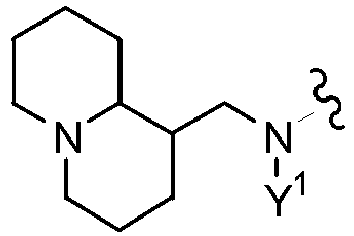

- With continued reference to formulae I-IV, the (1,9a) cis diastereomer has the structure:


- In certain embodiments of formulae I-IV, the (1,9a) trans diastereomer has the structure:

- In formulae I-IV, R11 is selected from hydrogen, alkyl, substituted alkyl, cycloalkyl, substituted cycloalkyl, hydroxy, alkoxy, substituted alkoxy, amino, substituted amino, carboxyl, carboxyl ester, cyano, halogen, acyl, aminoacyl, nitro, alkenyl, substituted alkenyl, alkynyl, substituted alkynyl, aryl, substituted aryl, heteroaryl, substituted heteroaryl, sulfide, substituted sulfide, and SFs.
- In certain embodiments, R11 is selected from hydrogen, alkyl, substituted alkyl, cycloalkyl, substituted cycloalkyl, alkoxy, substituted alkoxy, amino, substituted amino, cyano, halogen, acyl and aminoacyl.
- In certain embodiments, R11 is hydrogen. In certain embodiments, R11 is alkyl or substituted alkyl. In certain embodiments, R11 is alkyl, such as a C1-6 alkyl, or C1-3 alkyl. In certain embodiments, R11 is substituted alkyl, such as a substituted C1-6 alkyl, or substituted C1-3 alkyl. In certain embodiments, R11 is methyl. In certain embodiments, R11 is trifluoromethyl. In certain embodiments, R11 is cycloalkyl or substituted cycloalkyl. In certain embodiments, R11 is cycloalkyl, such as a C3-8 cycloalkyl, or C3-6 cycloalkyl. In certain embodiments, R11 is substituted cycloalkyl, such as a substituted C3-8 cycloalkyl, or substituted C3-6 cycloalkyl. In certain embodiments, R11 is alkoxy or substituted alkoxy. In certain embodiments, R11 is alkoxy, such as a C1-6 alkoxy, or C1-3 alkoxy. In certain embodiments, R11 is substituted alkoxy, such as a substituted C1-6 alkoxy, or substituted C1-3 alkoxy. In certain embodiments, R11 is methoxy. In certain embodiments, R11 is amino or substituted amino. In certain embodiments, R11 is dimethylamino. In certain embodiments, R11 is cyano. In certain embodiments, R11 is halogen. In certain embodiments, R11 is fluoro. In certain embodiments, R11 is chloro. In certain embodiments, R11 is acyl. In certain embodiments, R11 is aminoacyl.
- In certain embodiments, R11 is carboxyl, carboxyl ester, nitro, alkenyl, substituted alkenyl, alkynyl, substituted alkynyl, aryl, substituted aryl, heteroaryl, substituted heteroaryl, sulfide, substituted sulfide, and SFs. In certain embodiments, R11 is carboxyl or carboxyl ester. In certain embodiments, R11 is nitro. In certain embodiments, R11 is alkenyl or substituted alkenyl. In certain embodiments, R11 is alkenyl, such as a C2-6 alkenyl, or C2-4 alkenyl. In certain embodiments, R11 is substituted alkenyl, such as a substituted C2-6 alkenyl, or substituted C2-4 alkenyl. In certain embodiments, R11 is alkynyl or substituted alkynyl. In certain embodiments, R11 is alkynyl, such as a C2-6 alkynyl, or C2-4 alkynyl. In certain embodiments, R11 is substituted alkynyl, such as a substituted C2-6 alkynyl, or substituted C2-4 alkynyl. In certain embodiments, R11 is aryl or substituted aryl. In certain embodiments, R11 is aryl. In certain embodiments, R11 is substituted aryl. In certain embodiments, R11 is heteroaryl or substituted heteroaryl. In certain embodiments, R11 is heteroaryl. In certain embodiments, R11 is substituted heteroaryl. In certain embodiments, R11 is sulfide, substituted sulfide or SFs. In certain embodiments, R11 is sulfide. In certain embodiments, R11 is substituted sulfide. In certain embodiments, R11 is SFs.
- In formulae I-IV, Y1 and Y2 are independently selected from hydrogen and alkyl. In certain embodiments, Y1 and Y2 are hydrogen. In certain embodiments, Y1 and Y2 are alkyl. In certain embodiments, one of Y1 and Y2 is hydrogen and the other of Y1 and Y2 is alkyl.
- Embodiments of the compounds of formulae I-IV are shown in the following table.
Table 1 
Compound R11 Y1 Y2 Ar1 1 F H H 
2 F H H 
3 F H H 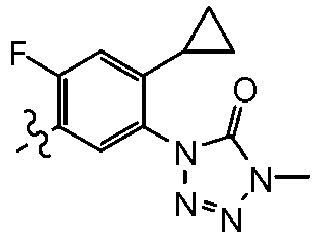
4 F H H 
5 Cl H H 
6 F H H 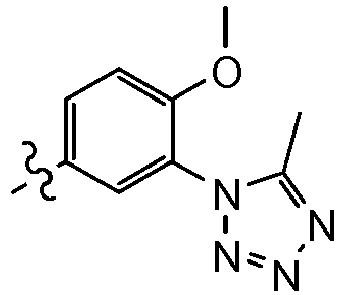
7 F H H 
8 F H H 
9 F H H 
10 F H H 
11 F H H 
12 F H H 
13 F H H 
14 F H H 
15 F H H 
16 F H H 
17 F H H 
18 F H H 
19 F H H 
20 F H H 
21 F H H 
22 F H H 
23 F H H 
24 F H H 
25 F H H 
26 F H H 
27 F H H 
28 F H H 
29 F H H 
30 F H H 
31 F H H 
32 Cl H H 
33 Cl H H 
34 Cl H H 
35 Cl H H 
36 Cl H H 
37 Cl H H 
38 Cl H H 
39 Cl H H 
40 Cl H H 
41 Cl H H 
42 Cl H H 
43 Cl H H 
44 Cl H H 
45 F H H 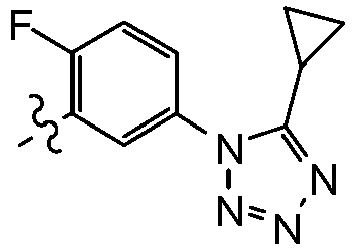
46 H H H 
47 H H H 
48 H H H 
49 H H H 
50 H H H 
51 H H H 
52 H H H 
53 H H H 
54 H H H 
55 H H H 
56 H H H 
57 H H H 
58 H H H 
59 CH3 H H 
60 CH3 H H 
61 CH3 H H 
62 CH3 H H 
63 CH3 H H 
64 CH3 H H 
65 CH3 H H 
66 CH3 H H 
67 CH3 H H 
68 CH3 H H 
69 CH3 H H 
70 CH3 H H 
71 CH3 H H 
72 OCH3 H H 
73 OCH3 H H 
74 OCH3 H H 
75 OCH3 H H 
76 OCH3 H H 
77 OCH3 H H 
78 OCH3 H H 
79 OCH3 H H 
80 OCH3 H H 
81 OCH3 H H 
82 OCH3 H H 
83 OCH3 H H 
84 OCH3 H H 
85 N(CH3)2 H H 
86 N(CH3)2 H H 
87 N(CH3)2 H H 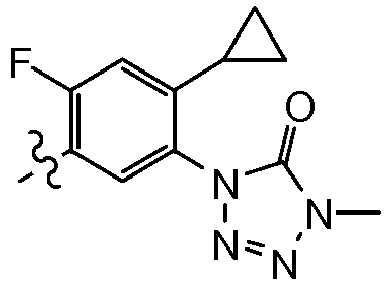
88 N(CH3)2 H H 
89 N(CH3)2 H H 
90 N(CH3)2 H H 
91 N(CH3)2 H H 
92 N(CH3)2 H H 
93 N(CH3)2 H H 
94 N(CH3)2 H H 
95 N(CH3)2 H H 
96 N(CH3)2 H H 
97 N(CH3)2 H H 
98 F H H 
99 CN H H 
100 CF3 H H 
101 CF3 H H 
102 CF3 H H 
103 CF3 H H 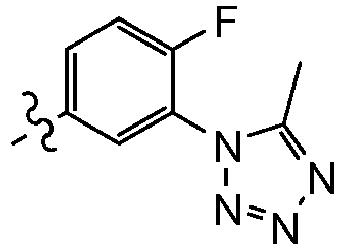
104 CF3 H H 
105 CF3 H H 
106 CF3 H H 
107 CF3 H H 
108 CF3 H H 
109 CF3 H H 
110 CF3 H H 
111 CF3 H H 
112 CF3 H H 
113 CN H H 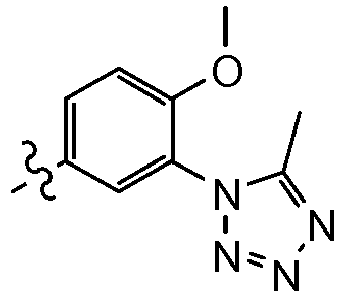
114 CN H H 
115 CN H H 
116 CN H H 
117 CN H H 
118 CN H H 
119 CN H H 
120 CN H H 
121 CN H H 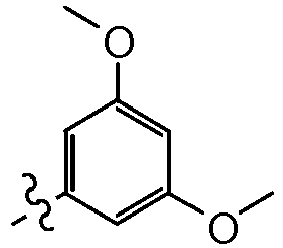
122 CN H H 
123 CN H H 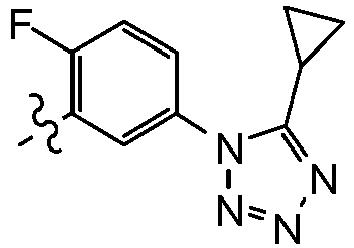
124 CN H H 
125 CONH2 H H 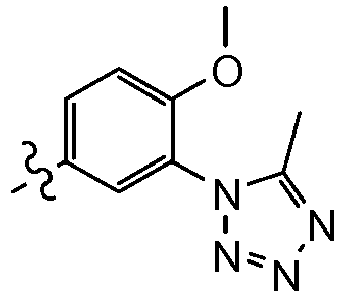
126 CONH2 H H 
127 CONH2 H H 
128 CN H H 
129 CN H H 
130 CN H H 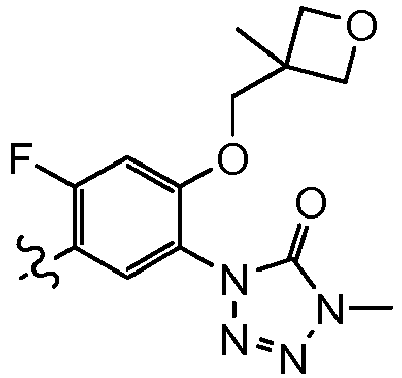
131 CN H H 
132 CN H H 
133 CN H H 
134 CN H H 
135 CN H H 
136 CN H H 
137 CN H H 
138 F H H 
139 Cl H H 
140 CN H H 
141 H H H 
142 CN H H 
143 CN H H 
144 CN H H 
145 F H H 
146 Cl H H 
147 F H H 
148 F H H 
149 F H H 
150 CN H H 
151 CN H H 
152 Cl H H 
153 Cl H H 
154 F H H 
155 Cl H H 
156 CN H H 
- Particular compounds of interest, and salts or solvates or stereoisomers thereof, include:
- Compound 1: 5-(4-(((1S,9aR)-octahydro-1H-quinolizin-1-yl)methylamino)-5-fluoropyrimidin-2-ylamino)-2-cyclopropylbenzonitrile;
- Compound 2: N2-(4-cyclopropyl-2-fluoro-5-(1H-tetrazol-1-yl)phenyl)-5-fluoro-N4-(((1S,9aR)-octahydro-1H-quinolizin-1-yl)methyl)pyrimidine-2,4-diamine;
- Compound 3: 1-(5-(4-(((1S,9aR)-octahydro-1H-quinolizin-1-yl)methylamino)-5-fluoropyrimidin-2-ylamino)-2-cyclopropyl-4-fluorophenyl)-4-methyl-1H-tetrazol-5(4H)-one;
- Compound 4: 5-fluoro-N4-(((1S,9aR)-octahydro-1H-quinolizin-1-yl)methyl)-N2-(4-methyl-3-(1H-tetrazol-1-yl)phenyl)pyrimidine-2,4-diamine;
- Compound 5: 5-(4-(((1S,9aR)-octahydro-1H-quinolizin-9-yl)methylamino)-5-chloropyrimidin-2-ylamino)-2-cyclopropylbenzonitrile;
- Compound 6: 5-fluoro-N4-(((1S,9aR)-octahydro-1H-quinolizin-1-yl)methyl)-N2-(4-methoxy-3-(5-methyl-1H-tetrazol-1-yl)phenyl)pyrimidine-2,4-diamine;
- Compound 7: 5-fluoro-N2-(2-fluoro-5-(5-methyl-1H-tetrazol-1-yl)phenyl)-N4-(((1S,9aR)-octahydro-1H-quinolizin-1-yl)methyl)pyrimidine-2,4-diamine;
- Compound 8: 5-fluoro-N2-(4-fluoro-3-(5-methyl-1H-tetrazol-1-yl)phenyl)-N4-(((1S,9aR)-octahydro-1H-quinolizin-1-yl)methyl)pyrimidine-2,4-diamine;
- Compound 9: 5-(4-(((1S,9aR)-octahydro-1H-quinolizin-1-yl)methylamino)-5-fluoropyrimidin-2-ylamino)-2-methylbenzonitrile;
- Compound 10: 3-(4-(((1S,9aR)-octahydro-1H-quinolizin-1-yl)methylamino)-5-fluoropyrimidin-2-ylamino)benzonitrile;
- Compound 11: 5-fluoro-N4-(((1S,9aR)-octahydro-1H-quinolizin-1-yl)methyl)-N2-(3,5 -dimethoxyphenyl)pyrimidine-2,4-diamine;
- Compound 12: 5-(4-(((1S,9aR)-octahydro-1H-quinolizin-1-yl)methylamino)-5-fluoropyrimidin-2-ylamino)-2-cyclopropyl-4-fluorobenzonitrile;
- Compound 13: 5-fluoro-N4-(((1S,9aR)-octahydro-1H-quinolizin-1-yl)methyl)-N2-phenylpyrimidine-2,4-diamine;
- Compound 14: 1-(5-(4-(((1S,9aR)-octahydro-1H-quinolizin-1-yl)methylamino)-5-fluoropyrimidin-2-ylamino)-2-(oxetan-3-yloxy)phenyl)-4-methyl-1H-tetrazol-5(4H)-one;
- Compound 15: 1-(5-(4-(((1S,9aR)-octahydro-1H-quinolizin-1-yl)methylamino)-5-fluoropyrimidin-2-ylamino)-2-cyclopropyl-4-methylphenyl)-4-methyl-1H-tetrazol-5(4H)-one;
- Compound 16: 7-(4-(((1S,9aR)-octahydro-1H-quinolizin-1-yl)methylamino)-5-fluoropyrimidin-2-ylamino)-4-isopropyl-2,2-dimethyl-2H-benzo[b][1,4]oxazin-3(4H)-one;
- Compound 17: 1-(3-(4-(((1S,9aR)-octahydro-1H-quinolizin-1-yl)methylamino)-5-fluoropyrimidin-2-ylamino)-5-methoxyphenyl)-4-methyl-1H-tetrazol-5(4H)-one;
- Compound 18: 7-(4-(((1S,9aR)-octahydro-1H-quinolizin-1-yl)methylamino)-5-fluoropyrimidin-2-ylamino)-4-(cyclopropylmethyl)-2,2-dimethyl-2H-benzo[b][1,4]oxazin-3(4H)-one;
- Compound 19: 5 -fluoro-N2-(3 -(trifluoromethyl)-4-morpholinophenyl)-N4-(((1S,9aR)-octahydro-1H-quinolizin-1-yl)methyl)pyrimidine-2,4-diamine;
- Compound 20: 5-fluoro-N2-(2,2,3,3-tetrafluoro-2,3-dihydrobenzo[b][1,4]dioxin-7-yl)-N4-(((1S,9aR)-octahydro-1H-quinolizin-1-yl)methyl)pyrimidine-2,4-diamine;
- Compound 21: 5-fluoro-N2-(3-fluoro-5-methoxyphenyl)-N4-(((1S,9aR)-octahydro-1H-quinolizin-1-yl)methyl)pyrimidine-2,4-diamine;
- Compound 22: 5-fluoro-N4-(((1S,9aR)-octahydro-1H-quinolizin-1-yl)methyl)-N2-(4-methoxy-3-(oxazol-5-yl)phenyl)pyrimidine-2,4-diamine;
- Compound 23: N2-(4-cyclopropyl-2-fluoro-5-(5-methyl-1H-tetrazol-1-yl)phenyl)-5-fluoro-N4-(((1S,9aR)-octahydro-1H-quinolizin-1-yl)methyl)pyrimidine-2,4-diamine;
- Compound 24: N2-[3-(1,1-dioxo-isothiazolidin-2-yl)-4-fluoro-phenyl]-5-fluoro-N4-(((1S,9aR)-octahydro-1H-quinolizin-1-yl)methyl)-pyrimidine-2,4-diamine;
- Compound 25: 7-(4-(((1S,9aR)-octahydro-1H-quinolizin-1-yl)methylamino)-5-fluoropyrimidin-2-ylamino)-4-(3-fluoropropyl)-2,2-dimethyl-2H-benzo[b][1,4]oxazin-3(4H)-one;
- Compound 26: 7-(4-(((1S,9aR)-octahydro-1H-quinolizin-1-yl)methylamino)-5-fluoropyrimidin-2-ylamino)-4-(cyclopropylmethyl)-2H-benzo[b][1,4]oxazin-3(4H)-one;
- Compound 27: 7-(4-(((1S,9aR)-octahydro-1H-quinolizin-1-yl)methylamino)-5-fluoropyrimidin-2-ylamino)-4-ethyl-2,2-difluoro-2H-pyrido[3,2-b][1,4]oxazin-3 (4H)-one;
- Compound 28: N2-(5-(1-methyl-1H-tetrazol-5-yloxy)-4-cyclopropyl-2-fluorophenyl)-5-fluoro-N4-(((1S,9aR)-octahydro-1H-quinolizin-1-yl)methyl)pyrimidine-2,4-diamine;
- Compound 29: 5-fluoro-N2-(3-pentafluorosulfanyl-6-fluoro-phenyl)-N4-(((1S,9aR)-octahydro-1H-quinolizin-1-yl)methyl)pyrimidine-2,4-diamine;
- Compound 30: 5-fluoro-N2-(3-pentafluorosulfanyl-5-fluoro-phenyl)-N4-(((1S,9aR)-octahydro-1H-quinolizin-1-yl)methyl)pyrimidine-2,4-diamine;
- Compound 31: 7-(4-(((1S,9aR)-octahydro-1H-quinolizin-1-yl)methylamino)-5-fluoropyrimidin-2-ylamino)-4-(cyclopropylmethyl)-2,2-dimethyl-2H-pyrido[3,2-b][1,4]oxazin-3(4H)-one;
- Compound 32: 5-chloro-N2-(4-cyclopropyl-2-fluoro-5-(1H-tetrazol-1-yl)phenyl)-N4-(((1S,9aR)-octahydro-1H-quinolizin-1-yl)methyl)pyrimidine-2,4-diamine;
- Compound 33: 5-chloro-N4-(((1S,9aR)-octahydro-1H-quinolizin-1-yl)methyl)-N2-(4-methyl-3-(1H-tetrazol-1-yl)phenyl)pyrimidine-2,4-diamine;
- Compound 34: 1-(5-(4-(((1S,9aR)-octahydro-1H-quinolizin-1-yl)methylamino)-5-chloropyrimidin-2-ylamino)-2-cyclopropyl-4-fluorophenyl)-4-methyl-1H-tetrazol-5(4H)-one;
- Compound 35: 5-chloro-N2-(4-fluoro-3-(5-methyl-1H-tetrazol-1-yl)phenyl)-N4-(((1S,9aR)-octahydro-1H-quinolizin-1-yl)methyl)pyrimidine-2,4-diamine;
- Compound 36: 5-chloro-N2-(2-fluoro-5-(5-methyl-1H-tetrazol-1-yl)phenyl)-N4-(((1S,9aR)-octahydro-1H-quinolizin-1-yl)methyl)pyrimidine-2,4-diamine;
- Compound 37: 5-chloro-N4-(((1S,9aR)-octahydro-1H-quinolizin-1-yl)methyl)-N2-(4-methoxy-3-(5-methyl-1H-tetrazol-1-yl)phenyl)pyrimidine-2,4-diamine;
- Compound 38: 5-chloro-N4-(((1S,9aR)-octahydro-1H-quinolizin-1-yl)methyl)-N2-(3-methoxy-5-(5-methyl-1H-tetrazol-1-yl)phenyl)pyrimidine-2,4-diamine;
- Compound 39: 3-(4-(((1S,9aR)-octahydro-1H-quinolizin-1-yl)methylamino)-5-chloropyrimidin-2-ylamino)benzonitrile;
- Compound 40: 5-(4-(((1S,9aR)-octahydro-1H-quinolizin-1-yl)methylamino)-5-chloropyrimidin-2-ylamino)-2-methylbenzonitrile;
- Compound 41: 5-(4-(((1S,9aR)-octahydro-1H-quinolizin-1-yl)methylamino)-5-chloropyrimidin-2-ylamino)-2-cyclopropylbenzonitrile;
- Compound 42: 5-(4-(((1S,9aR)-octahydro-1H-quinolizin-1-yl)methylamino)-5-chloropyrimidin-2-ylamino)-2-cyclopropyl-4-fluorobenzonitrile;
- Compound 43: 5-chloro-N4-(((1S,9aR)-octahydro-1H-quinolizin-1-yl)methyl)-N2-(3,5 -dimethoxyphenyl)pyrimidine-2,4-diamine;
- Compound 44: 5-(4-(((1S,9aR)-octahydro-1H-quinolizin-1-yl)methylamino)-5-chloropyrimidin-2-ylamino)benzo[d]oxazol-2(3H)-one;
- Compound 45: N2-(5-(5-cyclopropyl-1H-tetrazol-1 -yl)-2-fluorophenyl)-5-fluoro-N4-(((1S,9aR)-octahydro-1H-quinolizin-1-yl)methyl)pyrimidine-2,4-diamine;
- Compound 46: N2-(4-cyclopropyl-2-fluoro-5-(1H-tetrazol-1-yl)phenyl)-N4-(((1S,9aR)-octahydro-1H-quinolizin-1-yl)methyl)pyrimidine-2,4-diamine;
- Compound 47: N4-(((1S,9aR)-octahydro-1H-quinolizin-1 -yl)methyl)-N2-(4-methyl-3-(1H-tetrazol-1-yl)phenyl)pyrimidine-2,4-diamine;
- Compound 48: 1-(5-(4-(((1S,9aR)-octahydro-1H-quinolizin-1-yl)methylamino)pyrimidin-2-ylamino)-2-cyclopropyl-4-fluorophenyl)-4-methyl-1H-tetrazol-5 (4H)-one;
- Compound 49: N2-(4-fluoro-3-(5-methyl-1H-tetrazol-1-yl)phenyl)-N4-(((1S,9aR)-octahydro-1H-quinolizin-1-yl)methyl)pyrimidine-2,4-diamine;
- Compound 50: N2-(2-fluoro-5-(5-methyl-1H-tetrazol-1-yl)phenyl)-N4-(((S,9aR)-octahydro-1H-quinolizin-1-yl)methyl)pyrimidine-2,4-diamine;
- Compound 51: N4-(((1S,9aR)-octahydro-1H-quinolizin-1-yl)methyl)-N2-(4-methoxy-3 -(5 -methyl-1H-tetrazol-1-yl)phenyl)pyrimidine-2,4-diamine;
- Compound 52: N4-(((1S,9aR)-octahydro-1H-quinolizin-1-yl)methyl)-N2-(3-methoxy-5-(5-methyl-1H-tetrazol-1-yl)phenyl)pyrimidine-2,4-diamine;
- Compound 53: 3-(4-(((1S,9aR)-octahydro-1H-quinolizin-1-yl)methylamino)pyrimidin-2-ylamino)benzonitrile;
- Compound 54: 5-(4-(((1S,9aR)-octahydro-1H-quinolizin-1-yl)methylamino)pyrimidin-2-ylamino)-2-methylbenzonitrile;
- Compound 55: 5-(4-(((1S,9aR)-octahydro-1H-quinolizin-1-yl)methylamino)pyrimidin-2-ylamino)-2-cyclopropylbenzonitrile;
- Compound 56: 5-(4-(((1S,9aR)-octahydro-1H-quinolizin-1-yl)methylamino)pyrimidin-2-ylamino)-2-cyclopropyl-4-fluorobenzonitrile;
- Compound 57: N4-(((1S,9aR)-octahydro-1H-quinolizin-1 -yl)methyl)-N2-(3,5-dimethoxyphenyl)pyrimidine-2,4-diamine;
- Compound 58: 5-(4-(((1S,9aR)-octahydro-1H-quinolizin-1-yl)methylamino)pyrimidin-2-ylamino)benzo[d]oxazol-2(3H)-one;
- Compound 59: N2-(4-cyclopropyl-2-fluoro-5-(1H-tetrazol-1-yl)phenyl)-N4-(((1S ,9aR)-octahydro-1H-quinolizin-1-yl)methyl)-5 -methylpyrimidine-2,4-diamine;
- Compound 60: N4-(((1S,9aR)-octahydro-1H-quinolizin-1 -yl)methyl)-5-methyl-N2-(4-methyl-3-(1H-tetrazol-1-yl)phenyl)pyrimidine-2,4-diamine;
- Compound 61: 1-(5-(4-(((1S,9aR)-octahydro-1H-quinolizin-1-yl)methylamino)-5-methylpyrimidin-2-ylamino)-2-cyclopropyl-4-fluorophenyl)-4-methyl-1H-tetrazol-5(4H)-one;
- Compound 62: N2-(4-fluoro-3-(5-methyl-1H-tetrazol-1-yl)phenyl)-N4-(((1S,9aR)-octahydro-1H-quinolizin-1-yl)methyl)-5-methylpyrimidine-2,4-diamine;
- Compound 63: N2-(2-fluoro-5-(5-methyl-1H-tetrazol-1-yl)phenyl)-N4-(((1S,9aR)-octahydro-1H-quinolizin-1-yl)methyl)-5-methylpyrimidine-2,4-diamine;
- Compound 64: N4-(((1S,9aR)-octahydro-1H-quinolizin-1 -yl)methyl)-N2-(4-methoxy-3-(5-methyl-1H-tetrazol-1-yl)phenyl)-5-methylpyrimidine-2,4-diamine;
- Compound 65: N4-(((1S,9aR)-octahydro-1H-quinolizin-1-yl)methyl)-N2-(3-methoxy-5-(5-methyl-1H-tetrazol-1-yl)phenyl)-5-methylpyrimidine-2,4-diamine;
- Compound 66: 3-(4-(((1S,9aR)-octahydro-1H-quinolizin-1-yl)methylamino)-5-methylpyrimidin-2-ylamino)benzonitrile;
- Compound 67: 5-(4-(((1S,9aR)-octahydro-1H-quinolizin-1-yl)methylamino)-5-methylpyrimidin-2-ylamino)-2-methylbenzonitrile;
- Compound 68: 5-(4-(((1S,9aR)-octahydro-1H-quinolizin-1-yl)methylamino)-5-methylpyrimidin-2-ylamino)-2-cyclopropylbenzonitrile;
- Compound 69: 5-(4-(((1S,9aR)-octahydro-1H-quinolizin-1-yl)methylamino)-5-methylpyrimidin-2-ylamino)-2-cyclopropyl-4-fluorobenzonitrile;
- Compound 70: N4-(((1S,9aR)-octahydro-1H-quinolizin-1 -yl)methyl)-N2-(3,5-dimethoxyphenyl)-5-methylpyrimidine-2,4-diamine;
- Compound 71: 5-(4-(((1S,9aR)-octahydro-1H-quinolizin-1-yl)methylamino)-5-methylpyrimidin-2-ylamino)benzo[d]oxazol-2(3H)-one;
- Compound 72: N2-(4-cyclopropyl-2-fluoro-5-(1H-tetrazol-1-yl)phenyl)-N4-(((1S,9aR)-octahydro-1H-quinolizin-1-yl)methyl)-5-methoxypyrimidine-2,4-diamine;
- Compound 73: N4-(((1S,9aR)-octahydro-1H-quinolizin-1-yl)methyl)-5-methoxy-N2-(4-methyl-3-(1H-tetrazol-1-yl)phenyl)pyrimidine-2,4-diamine;
- Compound 74: 1-(5-(4-(((1S,9aR)-octahydro-1H-quinolizin-1-yl)methylamino)-5-methoxypyrimidin-2-ylamino)-2-cyclopropyl-4-fluorophenyl)-4-methyl-1H-tetrazol-5(4H)-one;
- Compound 75: N2-(4-fluoro-3-(5-methyl-1H-tetrazol-1-yl)phenyl)-N4-(((1S,9aR)-octahydro-1H-quinolizin-1-yl)methyl)-5-methoxypyrimidine-2,4-diamine;
- Compound 76: N2-(2-fluoro-5-(5-methyl-1H-tetrazol-1-yl)phenyl)-N4-(((1S,9aR)-octahydro-1H-quinolizin-1-yl)methyl)-5-methoxypyrimidine-2,4-diamine;
- Compound 77: N4-(((1S,9aR)-octahydro-1H-quinolizin-1-yl)methyl)-5-methoxy-N2-(4-methoxy-3-(5-methyl-1H-tetrazol-1-yl)phenyl)pyrimidine-2,4-diamine;
- Compound 78: N4-(((1S,9aR)-octahydro-1H-quinolizin-1-yl)methyl)-5-methoxy-N2-(3-methoxy-5-(5-methyl-1H-tetrazol-1-yl)phenyl)pyrimidine-2,4-diamine;
- Compound 79: 3-(4-(((1S,9aR)-octahydro-1H-quinolizin-1-yl)methylamino)-5-methoxypyrimidin-2-ylamino)benzonitrile;
- Compound 80: 5-(4-(((1S,9aR)-octahydro-1H-quinolizin-1-yl)methylamino)-5-methoxypyrimidin-2-ylamino)-2-methylbenzonitrile;
- Compound 81: 5-(4-(((1S,9aR)-octahydro-1H-quinolizin-1-yl)methylamino)-5-methoxypyrimidin-2-ylamino)-2-cyclopropylbenzonitrile;
- Compound 82: 5-(4-(((1S,9aR)-octahydro-1H-quinolizin-1-yl)methylamino)-5-methoxypyrimidin-2-ylamino)-2-cyclopropyl-4-fluorobenzonitrile;
- Compound 83: N4-(((1S,9aR)-octahydro-1H-quinolizin-1-yl)methyl)-5-methoxy-N2-(3,5 -dimethoxyphenyl)pyrimidine-2,4-diamine;
- Compound 84: 5-(4-(((1S,9aR)-octahydro-1H-quinolizin-1-yl)methylamino)-5-methoxypyrimidin-2-ylamino)benzo[d]oxazol-2(3H)-one;
- Compound 85: N2-(4-cyclopropyl-2-fluoro-5-(1H-tetrazol-1-yl)phenyl)-N4-(((1S,9aR)-octahydro-1H-quinolizin-1-yl)methyl)-N5,N5-dimethylpyrimidine-2,4,5-triamine;
- Compound 86: N4-(((1S,9aR)-octahydro-1H-quinolizin-1-yl)methyl)-N5,N5-dimethyl-N2-(4-methyl-3-(1H-tetrazol-1-yl)phenyl)pyrimidine-2,4,5-triamine;
- Compound 87: 1-(5-(4-(((1S,9aR)-octahydro-1H-quinolizin-1-yl)methylamino)-5-(dimethylamino)pyrimidin-2-ylamino)-2-cyclopropyl-4-fluorophenyl)-4-methyl-1H-tetrazol-5 (4H)-one;
- Compound 88: N2-(4-fluoro-3-(5-methyl-1H-tetrazol-1-yl)phenyl)-N4-(((1S,9aR)-octahydro-1H-quinolizin-1-yl)methyl)-N5,N5-dimethylpyrimidine-2,4,5-triamine;
- Compound 89: N2-(2-fluoro-5-(5-methyl-1H-tetrazol-1-yl)phenyl)-N4-(((1S,9aR)-octahydro-1H-quinolizin-1-yl)methyl)-N5,N5-dimethylpyrimidine-2,4,5-triamine;
- Compound 90: N4-(((1S,9aR)-octahydro-1H-quinolizin-1 -yl)methyl)-N2-(4-methoxy-3-(5-methyl-1H-tetrazol-1-yl)phenyl)-N5,N5-dimethylpyrimidine-2,4,5-triamine;
- Compound 91: N4-(((1S,9aR)-octahydro-1H-quinolizin-1-yl)methyl)-N2-(3-methoxy-5-(5-methyl-1H-tetrazol-1-yl)phenyl)-N5,N5-dimethylpyrimidine-2,4,5-triamine;
- Compound 92: 3-(4-(((1S,9aR)-octahydro-1H-quinolizin-1-yl)methylamino)-5-(dimethylamino)pyrimidin-2-ylamino)benzonitrile;
- Compound 93: 5-(4-(((1S,9aR)-octahydro-1H-quinolizin-1-yl)methylamino)-5-(dimethylamino)pyrimidin-2-ylamino)-2-methylbenzonitrile;
- Compound 94: 5-(4-(((1S,9aR)-octahydro-1H-quinolizin-1 -yl)methylamino)-5-(dimethylamino)pyrimidin-2-ylamino)-2-cyclopropylbenzonitrile;
- Compound 95: 5-(4-(((1S,9aR)-octahydro-1H-quinolizin-1-yl)methylamino)-5-(dimethylamino)pyrimidin-2-ylamino)-2-cyclopropyl-4-fluorobenzonitrile;
- Compound 96: N4-(((1S,9aR)-octahydro-1H-quinolizin-1-yl)methyl)-N2-(3,5-dimethoxyphenyl)-N5,N5-dimethylpyrimidine-2,4,5-triamine;
- Compound 97: 5-(4-(((1S,9aR)-octahydro-1H-quinolizin-1-yl)methylamino)-5-(dimethylamino)pyrimidin-2-ylamino)benzo[d]oxazol-2(3H)-one;
- Compound 98: N2-(4,4-dimethyl-4H-5-oxa-1,2,3,9b-tetraaza-cyclopenta[a]naphthalen-8-yl)-5-fluoro-N4-(((1S,9aR)-octahydro-1H-quinolizin-1-yl)methyl)-pyrimidine-2,4-diamine;
- Compound 99: 4-(((1S,9aR)-octahydro-1H-quinolizin-1-yl)methylamino)-2-(4-cyclopropyl-2-fluoro-5-(4,5-dihydro-4-methyl-5-oxotetrazol-1-yl)phenylamino)pyrimidine-5-carbonitrile;
- Compound 100: N2-(4-cyclopropyl-2-fluoro-5-(1H-tetrazol-1-yl)phenyl)-5-(trifluoromethyl)-N4-(((1S,9aR)-octahydro-1H-quinolizin-1-yl)methyl)pyrimidine-2,4-diamine;
- Compound 101: 5-(trifluoromethyl)-N4-(((1S,9aR)-octahydro-1H-quinolizin-1-yl)methyl)-N2-(4-methyl-3-(1H-tetrazol-1-yl)phenyl)pyrimidine-2,4-diamine;
- Compound 102: 1-(5-(4-(((1S,9aR)-octahydro-1H-quinolizin-1-yl)methylamino)-5-(trifluoromethyl)pyrimidin-2-ylamino)-2-cyclopropyl-4-fluorophenyl)-4-methyl-1H-tetrazol-5 (4H)-one;
- Compound 103: N2-(4-fluoro-3-(5-methyl-1H-tetrazol-1-yl)phenyl)-5-(trifluoromethyl)-N4-(((1S,9aR)-octahydro-1H-quinolizin-1-yl)methyl)pyrimidine-2,4-diamine;
- Compound 104: N2-(2-fluoro-5-(5-methyl-1H-tetrazol-1-yl)phenyl)-5-(trifluoromethyl)-N4-(((1S,9aR)-octahydro-1H-quinolizin-1-yl)methyl)pyrimidine-2,4-diamine;
- Compound 105: 5-(trifluoromethyl)-N4-(((1S,9aR)-octahydro-1H-quinolizin-1-yl)methyl)-N2-(4-methoxy-3-(5-methyl-1H-tetrazol-1-yl)phenyl)pyrimidine-2,4-diamine;
- Compound 106: 5-(trifluoromethyl)-N4-(((1S,9aR)-octahydro-1H-quinolizin-1-yl)methyl)-N2-(3-methoxy-5-(5-methyl-1H-tetrazol-1-yl)phenyl)pyrimidine-2,4-diamine;
- Compound 107: 3-(4-(((1S,9aR)-octahydro-1H-quinolizin-1-yl)methylamino)-5-(trifluoromethyl)pyrimidin-2-ylamino)benzonitrile;
- Compound 108: 5-(4-(((1S,9aR)-octahydro-1H-quinolizin-1-yl)methylamino)-5-(trifluoromethyl)pyrimidin-2-ylamino)-2-methylbenzonitrile;
- Compound 109: 5-(4-(((1S,9aR)-octahydro-1H-quinolizin-1-yl)methylamino)-5-(trifluoromethyl)pyrimidin-2-ylamino)-2-cyclopropylbenzonitrile;
- Compound 110: 5-(4-(((1S,9aR)-octahydro-1H-quinolizin-1-yl)methylamino)-5-(trifluoromethyl)pyrimidin-2-ylamino)-2-cyclopropyl-4-fluorobenzonitrile;
- Compound 111: 5-(trifluoromethyl)-N4-(((1S,9aR)-octahydro-1H-quinolizin-1-yl)methyl)-N2-(3,5-dimethoxyphenyl)pyrimidine-2,4-diamine;
- Compound 112: 5-(4-(((1S,9aR)-octahydro-1H-quinolizin-1-yl)methylamino)-5-(trifluoromethyl)pyrimidin-2-ylamino)benzo[d]oxazol-2(3H)-one;
- Compound 113: 4-(((1S,9aR)-octahydro-1H-quinolizin-1-yl)methylamino)-2-(4-methoxy-3-(5-methyl-1H-tetrazol-1-yl)phenylamino)pyrimidine-5-carbonitrile;
- Compound 114: 4-(((1S,9aR)-octahydro-1H-quinolizin-1-yl)methylamino)-2-(4-fluoro-3 -(5 -methyl-1H-tetrazol-1 -yl)phenylamino)pyrimidine-5 -carbonitrile;
- Compound 115: 4-(((1S,9aR)-octahydro-1H-quinolizin-1-yl)methylamino)-2-(3-methoxy-5 -(5 -methyl-1H-tetrazol-1 -yl)phenylamino)pyrimidine-5 -carbonitrile;
- Compound 116: 4-(((1S,9aR)-octahydro-1H-quinolizin-1-yl)methylamino)-2-(4-cyclopropyl-2-fluoro-5-(1H-tetrazol-1-yl)phenylamino)pyrimidine-5-carbonitrile;
- Compound 117: 4-(((1S,9aR)-octahydro-1H-quinolizin-1-yl)methylamino)-2-(4-methyl-3-(1H-tetrazol-1-yl)phenylamino)pyrimidine-5-carbonitrile;
- Compound 118: 4-(((1S,9aR)-octahydro-1H-quinolizin-1-yl)methylamino)-2-(2-fluoro-5 -(5 -methyl-1H-tetrazol-1 -yl)phenylamino)pyrimidine-5 -carbonitrile;
- Compound 119: 4-(((1S,9aR)-octahydro-1H-quinolizin-1-yl)methylamino)-2-(3-cyano-4-methylphenylamino)pyrimidine-5-carbonitrile;
- Compound 120: 4-(((1S,9aR)-octahydro-1H-quinolizin-1-yl)methylamino)-2-(3-cyano-4-cyclopropylphenylamino)pyrimidine-5-carbonitrile;
- Compound 121: 4-(((1S,9aR)-octahydro-1H-quinolizin-1-yl)methylamino)-2-(3,5-dimethoxyphenylamino)pyrimidine-5-carbonitrile;
- Compound 122: 4-(((1S,9aR)-octahydro-1H-quinolizin-1-yl)methylamino)-2-(3-(5-cyclopropyl-1H-tetrazol-1-yl)-4-fluorophenylamino)pyrimidine-5-carbonitrile;
- Compound 123: 4-(((1S,9aR)-octahydro-1H-quinolizin-1-yl)methylamino)-2-(5-(5-cyclopropyl-1H-tetrazol-1 -yl)-2-fluorophenylamino)pyrimidine-5 -carbonitrile;
- Compound 124: 4-(((1S,9aR)-octahydro-1H-quinolizin-1-yl)methylamino)-2-(4-chloro-3-(5-cyclopropyl-1H-tetrazol-1-yl)phenylamino)pyrimidine-5-carbonitrile;
- Compound 125: 4-(((1S,9aR)-octahydro-1H-quinolizin-1-yl)methylamino)-2-(4-methoxy-3 -(5 -methyl-1H-tetrazol-1 -yl)phenylamino)pyrimidine-5 -carboxamide;
- Compound 126: 4-(((1S,9aR)-octahydro-1H-quinolizin-1-yl)methylamino)-2-(4-fluoro-3 -(5 -methyl-1H-tetrazol-1 -yl)phenylamino)pyrimidine-5 -carboxamide;
- Compound 127: 4-(((1S,9aR)-octahydro-1H-quinolizin-1-yl)methylamino)-2-(2-fluoro-5 -(5 -methyl-1H-tetrazol-1 -yl)phenylamino)pyrimidine-5 -carboxamide;
- Compound 128: 2-((2-fluoro-4-hydroxy-5-(4-methyl-5-oxo-4,5-dihydro-1H-tetrazol-1-yl)phenyl)amino)-4-((((1S,9aR)-octahydro-2H-quinolizin-1-yl)methyl)amino)pyrimidine-5-carbonitrile;
- Compound 129: 2-((2-fluoro-4-(2-methoxyethoxy)-5-(4-methyl-5-oxo-4,5-dihydro-1H-tetrazol-1-yl)phenyl)amino)-4-((((1S,9aR)-octahydro-2H-quinolizin-1-yl)methyl)amino)pyrimidine-5-carbonitrile;
- Compound 130: 2-((2-fluoro-5-(4-methyl-5-oxo-4,5-dihydro-1H-tetrazol-1-yl)-4-((3-methyloxetan-3-yl)methoxy)phenyl)amino)-4-((((1S,9aR)-octahydro-2H-quinolizin-1-yl)methyl)amino)pyrimidine-5-carbonitrile;
- Compound 131: 2-((4-((1,4-dioxan-2-yl)methoxy)-2-fluoro-5-(4-methyl-5-oxo-4,5-dihydro-1H-tetrazol-1-yl)phenyl)amino)-4-((((1S,9aR)-octahydro-2H-quinolizin-1-yl)methyl)amino)pyrimidine-5-carbonitrile;
- Compound 132: 2-((4-(2,3-dihydroxypropoxy)-2-fluoro-5-(4-methyl-5-oxo-4,5-dihydro-1H-tetrazol-1-yl)phenyl)amino)-4-((((1S,9aR)-octahydro-2H-quinolizin-1-yl)methyl)amino)pyrimidine-5-carbonitrile;
- Compound 133: 2-((2-fluoro-4-(2-(2-methoxyethoxy)ethoxy)-5-(4-methyl-5-oxo-4,5-dihydro-1H-tetrazol-1-yl)phenyl)amino)-4-((((1S,9aR)-octahydro-2H-quinolizin-1-yl)methyl)amino)pyrimidine-5-carbonitrile;
- Compound 134: 2-((2-fluoro-5-(4-methyl-5-oxo-4,5-dihydro-1H-tetrazol-1-yl)-4-(3,3,3-trifluoro-2-hydroxy-2-(trifluoromethyl)propoxy)phenyl)amino)-4-((((1S,9aR)-octahydro-2H-quinolizin-1-yl)methyl)amino)pyrimidine-5-carbonitrile;
- Compound 135: 2-((2-fluoro-4-(2-hydroxyethoxy)-5-(4-methyl-5-oxo-4,5-dihydro-1H-tetrazol-1-yl)phenyl)amino)-4-((((1S,9aR)-octahydro-2H-quinolizin-1-yl)methyl)amino)pyrimidine-5-carbonitrile;
- Compound 136: 2-((2-fluoro-4-(2-hydroxypropoxy)-5-(4-methyl-5-oxo-4,5-dihydro-1H-tetrazol-1-yl)phenyl)amino)-4-((((1S,9aR)-octahydro-2H-quinolizin-1-yl)methyl)amino)pyrimidine-5-carbonitrile;
- Compound 137: 2-((2-fluoro-4-(2-hydroxyethoxy-1,1,2,2-d4)-5-(4-methyl-5-oxo-4,5-dihydro-1H-tetrazol-1-yl)phenyl)amino)-4-((((1S,9aR)-octahydro-2H-quinolizin-1-yl)methyl)amino)pyrimidine-5-carbonitrile;
- Compound 138: 2-(4-((5-fluoro-4-((((1S,9aR)-octahydro-2H-quinolizin-1-yl)methyl)amino)pyrimidin-2-yl)amino)-2-(1H-tetrazol-1-yl)phenoxy)ethan-1-ol;
- Compound 139: 2-(4-((5-chloro-4-((((1S,9aR)-octahydro-2H-quinolizin-1-yl)methyl)amino)pyrimidin-2-yl)amino)-2-(1H-tetrazol-1-yl)phenoxy)ethan-1-ol;
- Compound 140: 2-((4-(2-hydroxyethoxy)-3-(1H-tetrazol-1-yl)phenyl)amino)-4-((((1S,9aR)-octahydro-2H-quinolizin-1-yl)methyl)amino)pyrimidine-5-carbonitrile;
- Compound 141: 2-(4-((4-((((1S,9aR)-octahydro-2H-quinolizin-1-yl)methyl)amino)pyrimidin-2-yl)amino)-2-(1H-tetrazol-1-yl)phenoxy)ethan-1-ol;
- Compound 142: 2-((2-fluoro-4-((S)-2-hydroxypropoxy)-5-(4-methyl-5-oxo-4,5-dihydro-1H-tetrazol-1-yl)phenyl)amino)-4-((((1S,9aR)-octahydro-2H-quinolizin-1-yl)methyl)amino)pyrimidine-5-carbonitrile;
- Compound 143: 2-((2-fluoro-4-((R)-2-hydroxypropoxy)-5-(4-methyl-5-oxo-4,5-dihydro-1H-tetrazol-1-yl)phenyl)amino)-4-((((1S,9aR)-octahydro-2H-quinolizin-1-yl)methyl)amino)pyrimidine-5-carbonitrile;
- Compound 144: 2-((3-cyano-4-(2-hydroxypropoxy)phenyl)amino)-4-((((1S,9aR)-octahydro-2H-quinolizin-1-yl)methyl)amino)pyrimidine-5-carbonitrile;
- Compound 145: 5-((5-fluoro-4-((((1S,9aR)-octahydro-2H-quinolizin-1-yl)methyl)amino)pyrimidin-2-yl)amino)-2-(2-hydroxypropoxy)benzonitrile;
- Compound 146: 1-(5-((5-chloro-4-((((1S,9aR)-octahydro-2H-quinolizin-1-yl)methyl)amino)pyrimidin-2-yl)amino)-4-fluoro-2-hydroxyphenyl)-4-methyl-1,4-dihydro-5H-tetrazol-5-one;
- Compound 147: 1-(5-((5-fluoro-4-((((1S,9aR)-octahydro-2H-quinolizin-1-yl)methyl)amino)pyrimidin-2-yl)amino)-4-fluoro-2-hydroxyphenyl)-4-methyl-1,4-dihydro-5H-tetrazol-5-one;
- Compound 148: 1-(4-fluoro-5-((5-fluoro-4-((((1S,9aR)-octahydro-2H-quinolizin-1-yl)methyl)amino)pyrimidin-2-yl)amino)-2-((1-hydroxy-2-methylpropan-2-yl)oxy)phenyl)-4-methyl-1,4-dihydro-5H-tetrazol-5-one;
- Compound 149: 1-(4-fluoro-5-((5-fluoro-4-((((1S,9aR)-octahydro-2H-quinolizin-1-yl)methyl)amino)pyrimidin-2-yl)amino)-2-((S)-2-hydroxypropoxy)phenyl)-4-methyl-1,4-dihydro-5H-tetrazol-5-one;
- Compound 150: ethyl 2-(4-((5-cyano-4-((((1S,9aR)-octahydro-2H-quinolizin-1-yl)methyl)amino)pyrimidin-2-yl)amino)-5-fluoro-2-(4-methyl-5-oxo-4,5-dihydro-1H-tetrazol-1-yl)phenoxy)-2-methylpropanoate;
- Compound 151: 2-((2-fluoro-4-((1-hydroxy-2-methylpropan-2-yl)oxy)-5-(4-methyl-5-oxo-4,5-dihydro-1H-tetrazol-1-yl)phenyl)amino)-4-((((1S,9aR)-octahydro-2H-quinolizin-1-yl)methyl)amino)pyrimidine-5-carbonitrile;
- Compound 152: 1-(5-((5-chloro-4-((((1S,9aR)-octahydro-2H-quinolizin-1-yl)methyl)amino)pyrimidin-2-yl)amino)-4-fluoro-2-((S)-2-hydroxypropoxy)phenyl)-4-methyl-1,4-dihydro-5H-tetrazol-5-one;
- Compound 153: 1-(5-((5-chloro-4-((((1S,9aR)-octahydro-2H-quinolizin-1-yl)methyl)amino)pyrimidin-2-yl)amino)-4-fluoro-2-((1-hydroxy-2-methylpropan-2-yl)oxy)phenyl)-4-methyl-1,4-dihydro-5H-tetrazol-5-one;
- Compound 154: 1-(4-fluoro-5-((5-fluoro-4-((((1S,9aR)-octahydro-2H-quinolizin-1-yl)methyl)amino)pyrimidin-2-yl)amino)-2-(2-hydroxy-2-methylpropoxy)phenyl)-4-methyl-1,4-dihydro-5H-tetrazol-5-one;
- Compound 155: 1-(5-((5-chloro-4-((((1S,9aR)-octahydro-2H-quinolizin-1-yl)methyl)amino)pyrimidin-2-yl)amino)-4-fluoro-2-(2-hydroxy-2-methylpropoxy)phenyl)-4-methyl-1,4-dihydro-5H-tetrazol-5-one; and
- Compound 156: 2-((2-fluoro-4-(2-hydroxy-2-methylpropoxy)-5-(4-methyl-5-oxo-4,5-dihydro-1H-tetrazol-1-yl)phenyl)amino)-4-((((1S,9aR)-octahydro-2H-quinolizin-1-yl)methyl)amino)pyrimidine-5-carbonitrile.
- Also described herein is a compound according to the formula:
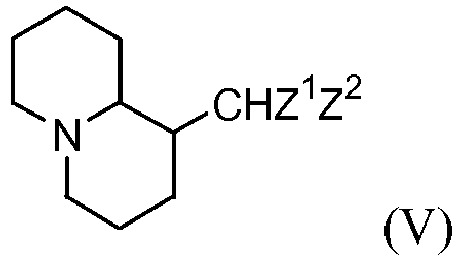
- Z1 is OR17, -NR17R18 or X;
- Z2 is H, or Z1 and Z2 together form an oxo, =NR19 or =NNR20R21;
- R17 is H, alkyl, substituted alkyl, acyl, acylamino, -SO2-alkyl or -SO2-aryl;
- R18 is H, alkyl, substituted alkyl, acyl, acylamino, -SO2-alkyl, -SO2-aryl, aryl, substituted aryl, heteroaryl, or substituted heteroaryl;
- X is halo or azido; and
- R19, R20 and R21 are each independently selected from alkyl, substituted alkyl, aryl substituted aryl, heteroaryl and substituted heteroaryl.
- In certain embodiments of formula (V), the compound is optically active. In certain embodiments of formula (V), there is an enantiomeric excess of 90% or more. In certain embodiments of formula (V), there is an enantiomeric excess of 95% or more. In certain embodiments of formula (V), there is an enantiomeric excess of 99% or more.
- In certain embodiments, in formula (V), R18 comprises the formula
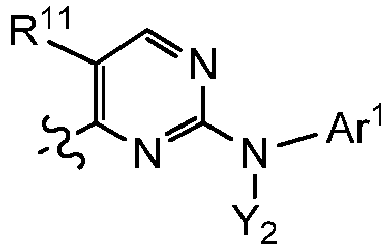
- wherein R11 is selected from hydrogen, alkyl, substituted alkyl, hydroxy, alkoxy, substituted alkoxy, amino, substituted amino, carboxyl, carboxyl ester, cyano, halogen, acyl, aminoacyl, nitro, alkenyl, substituted alkenyl, alkynyl, and substituted alkynyl;
- Y2 is selected from hydrogen and alkyl; and
- Ar1 is selected from aryl, substituted aryl, heteroaryl, and substituted heteroaryl.
- In certain embodiments, the compound of formula (V) comprises the formula

- In certain embodiments, the compound of formula (V) comprises the formula

- In certain embodiments, the compound of formula (V) comprises the formula

- In certain embodiments, the compound of formula (V) comprises the formula

- In certain embodiments, the compound of formula (V) comprises the formula

- In certain embodiments, the compound of formula (V) comprises the formula

- In certain embodiments, the compound of formula (V) comprises the formula

- Also described herein is a compound according to the formula:
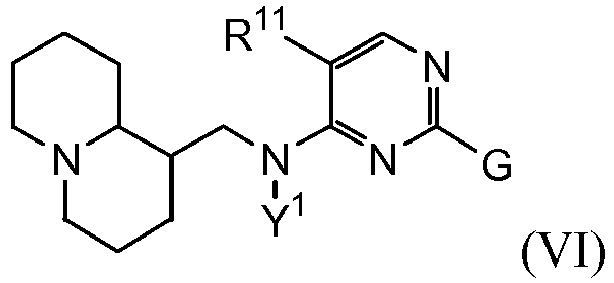
- R11 is selected from hydrogen, alkyl, substituted alkyl, hydroxy, alkoxy, substituted alkoxy, amino, substituted amino, carboxyl, carboxyl ester, cyano, halogen, acyl, aminoacyl, nitro, alkenyl, substituted alkenyl, alkynyl, and substituted alkynyl; and
- Y1 is selected from hydrogen and alkyl.
- In formula (VI), G is halogen or -NY2Ar1. In certain embodiments, G is halogen. In certain embodiments, G is -NY2Ar1. In certain embodiments, Y2 is selected from hydrogen and alkyl. In certain embodiments, Ar1 is selected from aryl, substituted aryl, heteroaryl, and substituted heteroaryl. In certain embodiments, Ar1 is aryl or substituted aryl. In certain embodiments, Ar1 is heteroaryl or substituted heteroaryl.
- In certain embodiments, a compound of formula (VI) is of the formula:

- R11 is selected from hydrogen, alkyl, substituted alkyl, hydroxy, alkoxy, substituted alkoxy, amino, substituted amino, carboxyl, carboxyl ester, cyano, halogen, acyl, aminoacyl, nitro, alkenyl, substituted alkenyl, alkynyl, and substituted alkynyl; and
- Y1 is selected from hydrogen and alkyl.
- In certain embodiments, a compound of formula (VI) is of the formula:

- R11 is selected from hydrogen, alkyl, substituted alkyl, hydroxy, alkoxy, substituted alkoxy, amino, substituted amino, carboxyl, carboxyl ester, cyano, halogen, acyl, aminoacyl, nitro, alkenyl, substituted alkenyl, alkynyl, and substituted alkynyl;
- Y1 is selected from hydrogen and alkyl; and
- H1 and H2 are each hydrogen.
- In certain embodiments, H1 and H2 are hydrogen with cis relative configuration. In certain embodiments, H1 and H2 are hydrogen with trans relative configuration.
- The compounds described also include isotopically labeled compounds where one or more atoms have an atomic mass different from the atomic mass conventionally found in nature. Examples of isotopes that may be incorporated into the compounds disclosed herein include 2H, 3H, 11C, 13C, 14C, 15N, 18O, 17O, etc. Thus, the disclosed compounds may be enriched in one or more of these isotopes relative to the natural abundance of such isotope. By way of example, deuterium (2H) has a natural abundance of about 0.015%. Accordingly, for approximately every 6,500 hydrogen atoms occurring in nature, there is one deuterium atom. Specifically contemplated herein are compounds enriched in deuterium at one or more positions. Thus, deuterium containing compounds of the disclosure have deuterium at one or more positions (as the case may be) in an abundance of greater than 0.015%.
- The present disclosure also provides pharmaceutical compositions that include a pharmaceutically acceptable carrier and a therapeutically effective amount of a compound of formula I-IV or a pharmaceutically acceptable salt or solvate or stereoisomer thereof.
- A disclosed compound can be administered alone, as the sole active pharmaceutical agent, or in combination with one or more additional compounds of formula I-IV or in conjunction with other agents. When administered as a combination, the therapeutic agents can be formulated as separate compositions that are administered simultaneously or at different times, or the therapeutic agents can be administered together as a single composition combining two or more therapeutic agents. Thus, the pharmaceutical compositions disclosed herein containing a compound of formula I-IV optionally include other therapeutic agents. Accordingly, certain embodiments are directed to such pharmaceutical compositions, where the composition further includes a therapeutically effective amount of an agent selected as is known to those of skill in the art.
- The subject compounds can inhibit a protein kinase C (PKC) activity. Accordingly, the compounds are useful for treating a disease or disorder that is mediated through the activity of a PKC activity in a subject. Also, the compounds are useful for treating a disease or disorder that is associated with the activation of T-cells in a subject.
- Also described herein is a method of treating an inflammatory disease in a subject. In certain embodiments, the method includes administering to the subject (e.g., patient) a compound of formula I-IV or a salt or solvate or stereoisomer thereof.
- Also described herein is a method of treating an autoimmune disease in a subject. In certain embodiments, the method includes administering to the subject (e.g., patient) a compound of formula I-IV or a salt or solvate or stereoisomer thereof.
- Also described herein is a method of treating an ocular disease or disorder involving inflammatory and/or neovascular events.
- Also described herein is a method of treating diseases or conditions of interest including atherosclerosis, vascular occlusion due to vascular injury, angioplasty, restenosis, obesity, syndrome X, impaired glucose tolerance, polycystic ovary syndrome, hypertension, heart failure, chronic obstructive pulmonary disease, CNS diseases, Alzheimer disease, amyotrophic lateral sclerosis, bipolar disease, cancer, infectious disease, AIDS, septic shock, adult respiratory distress syndrome, ischemia/reperfusion injury, myocardial infarction, stroke, gut ischemia, renal failure, hemorrhage shock, and traumatic shock, and traumatic brain injury. The present compounds are useful in treating muscle diseases or disorders, including inflammatory muscle disease and dystrophic disorders, such as Duchenne muscular dystrophy and myotonic muscular dystrophy.
- Also described herein is a method of treating diseases or conditions of interest including T-cell mediated acute or chronic inflammatory diseases or disorders or autoimmune diseases, rheumatoid arthritis, osteoarthritis, systemic lupus erythematosus, Hashimoto's thyroiditis, multiple sclerosis, myasthenia gravis, diabetes type I or II and the disorders associated therewith, transplant rejection, graft versus host disease, respiratory diseases, asthma, inflammatory lung injury, inflammatory liver injury, inflammatory glomerular injury, cutaneous manifestations of immunologically-mediated disorders or illnesses, inflammatory and hyperproliferative skin diseases, psoriasis, atopic dermatitis, allergic contact dermatitis, irritant contact dermatitis and further eczematous dermatitises, seborrhoeic dermatitis, inflammatory eye diseases, Sjoegren's syndrome, keratoconjunctivitis, uveitis, inflammatory bowel disease, Crohn's disease or ulcerative colitis, Guillain-Barre syndrome, and allergies.
- The subject compounds can be used for treating a cell proliferative disorder. Also described herein is a method of treating diseases or conditions of interest including hematopoietic neoplasm, lymphoid neoplasm, T cell neoplasm, T-lymphoblastic leukemia, B cell neoplasm, B-lymphoblastic leukemia, Burkitt's lymphoma, myeloid neoplasm, myeloproferative disease, chronic myelogenous leukemia (CML), myelodysplastic disease, chronic myelomonocytic leukemia, myelodysplastic syndrome, and acute myeloid leukemia.
- Since embodiments of the subject compounds possess PKC inhibitory properties, such compounds are also useful as research tools. Accordingly, Also described herein is a method for using a compound of formula I-IV or a salt or solvate or stereoisomer thereof as a research tool for studying a biological system or sample, or for discovering new chemical compounds having PKC inhibitory properties.
- Also described herein is a compound of formula I-IV or a salt or solvate or stereoisomer thereof, for use in therapy or as a medicament.
- Additionally, also described herein is the use of a compound of formula I-IV or a salt or solvate or stereoisomer thereof, for the manufacture of a medicament; for example, for the manufacture of a medicament for the inhibition of protein kinase C (PKC) activity. Also described herein is the use of a compound of formula I-IV or a salt or solvate or stereoisomer thereof for the manufacture of a medicament for the treatment of a disease or disorder mediated or sustained through the activity of PKC activity. Also described herein is the use of a compound of formula I-IV or a salt or solvate or stereoisomer thereof for the manufacture of a medicament for the treatment of a disease or disorder associated with the activation of T-cells. Diseases or conditions of interest include an inflammatory disease, an immunological disorder, an autoimmune disease, an ocular disease or disorder involving inflammatory and/or neovascular events, organ and bone marrow transplant rejection, acute or chronic inflammation, allergies, contact dermatitis, psoriasis, rheumatoid arthritis, multiple sclerosis, type I diabetes, type II diabetes, inflammatory bowel disease, Guillain-Barre syndrome, Crohn's disease, ulcerative colitis, graft versus host disease, and lupus erythematosus.
- Also described herein is the use of a compound of formula I-IV or a salt or solvate or stereoisomer thereof for the manufacture of a medicament for the treatment of a cell proliferative disorder. Diseases or conditions of interest include hematopoietic neoplasm, lymphoid neoplasm, T cell neoplasm, T-lymphoblastic leukemia, B cell neoplasm, B-lymphoblastic leukemia, Burkitt's lymphoma, myeloid neoplasm, myeloproferative disease, chronic myelogenous leukemia (CML), myelodysplastic disease, chronic myelomonocytic leukemia, myelodysplastic syndrome, acute myeloid leukemia.
- Many general references providing commonly known chemical synthetic schemes and conditions useful for synthesizing the disclosed compounds are available (see, e.g., Smith and March, March's Advanced Organic Chemistry: Reactions, Mechanisms, and Structure, Fifth Edition, Wiley-Interscience, 2001; or Vogel, A Textbook of Practical Organic Chemistry, Including Qualitative Organic Analysis, Fourth Edition, New York: Longman, 1978).
- Compounds as described herein can be purified by any purification protocol known in the art, including chromatography, such as HPLC, preparative thin layer chromatography, flash column chromatography and ion exchange chromatography. Any suitable stationary phase can be used, including normal and reversed phases as well as ionic resins. In certain embodiments, the disclosed compounds are purified via silica gel and/or alumina chromatography. See, e.g., Introduction to Modern Liquid Chromatography, 2nd Edition, ed. L. R. Snyder and J. J. Kirkland, John Wiley and Sons, 1979; and Thin Layer Chromatography, ed E. Stahl, Springer-Verlag, New York, 1969.
- During any of the processes for preparation of the subject compounds, it may be necessary and/or desirable to protect sensitive or reactive groups on any of the molecules concerned. This may be achieved by means of conventional protecting groups as described in standard works, such as J. F. W. McOmie, "Protective Groups in Organic Chemistry", Plenum Press, London and New York 1973, in T. W. Greene and P. G. M. Wuts, "Protective Groups in Organic Synthesis", Third edition, Wiley, New York 1999, in "The Peptides"; Volume 3 (editors: E. Gross and J. Meienhofer), Academic Press, London and New York 1981, in "Methoden der organischen Chemie", Houben-Weyl, 4th edition, Vol. 15/1, Georg Thieme Verlag, Stuttgart 1974, in H.-D. Jakubke and H. Jescheit, "Aminosauren, Peptide, Proteine", Verlag Chemie, Weinheim, Deerfield Beach, and Basel 1982, and/or in Jochen Lehmann, "Chemie der Kohlenhydrate: Monosaccharide and Derivate", Georg Thieme Verlag, Stuttgart 1974. The protecting groups may be removed at a convenient subsequent stage using methods known from the art.
- The subject compounds can be synthesized via a variety of different synthetic routes using commercially available starting materials and/or starting materials prepared by conventional synthetic methods. Suitable examples of methods that can be adapted to synthesize the 2,4-pyrimidinediamine compounds and prodrugs disclosed herein are found in
U.S. Patent No. 5,958,935 . Specific examples describing the synthesis of various 2,4-pyrimidinediamine compounds and prodrugs, as well as intermediates therefore, are described in theU.S. Application Publication No. 2004/0029902 . Suitable examples of methods that can be routinely used and/or adapted to synthesize active 2,4-pyrimidinediamine compounds can also be found inWO 03/063794 U.S. Application Serial No. 10/631,029, filed July 29, 2003 WO2004/014382 ,U.S. Application Publication No. 2005/0234049 , andWO2005/016893 . All of the compounds described herein (including prodrugs) can be prepared by adaptation of these methods. - Exemplary synthetic methods for the 2,4-substituted pyrimidinediamines described herein are described below. Those of skill in the art will also be able to readily adapt these methods for the synthesis of specific 2,4-substituted pyrimidinediamines as described herein.
- A variety of examples of synthetic routes that can be used to synthesize the 2,4-pyrimidinediamine compounds disclosed herein are described in the schemes below. These methods can be adapted to synthesize the 2,4-pyrimidinediamine compounds and prodrugs described herein.
- In certain embodiments, the compounds can be synthesized from substituted or unsubstituted uracils as illustrated in Scheme 1, below:

- In Scheme 1, R11, R12, R13, R14, R15, R16, Y1, Y2, and Q are as set forth hereinbefore.
- According to Scheme 1, uracil A-1 is dihalogenated at the 2- and 4-positions using a standard dehydrating-halogenating agent such as POCl3 (phosphorus oxychloride) (or other standard halogenating agent) to yield 2,4 dichloropyrimidine A-2. Depending upon the substituents in pyrimidinediamine A-2, the chloride at the C4 position is more reactive towards nucleophiles than the chloride at the C2 position. This differential reactivity can be exploited by first reacting 2,4 dichloropyrimidine A-2 with one equivalent of amine A-3, yielding 4N-substituted-2-chloro-4-pyrimidineamine A-4, followed by one or more equivalents of amine A-5 to yield a 2,4-pyrimidinediamine derivative A-6.
- Typically, the C4 halide is more reactive towards nucleophiles, as illustrated in the scheme. However, as will be recognized by skilled artisans, the identity of the substituent may alter this reactivity. For example, when the substituent is trifluoromethyl, a 50:50 mixture of 4N-substituted-4-pyrimidineamine A-4 and the corresponding 2N-substituted-2-pyrimidineamine is obtained. The regioselectivity of the reaction can also be controlled by adjusting the solvent and other synthetic conditions (such as temperature), as is well-known in the art.
- In certain embodiments, to couple compounds with an electrophilic leaving group, such as halides or pseudohalides, and compounds with an amino group, nucleophilic aromatic substitution can be used. For example, a halogen substituent on Compound A-2 and the amino group on Compound A-3 can react. Also for example, a halogen substituent on Compound A-4 and the amino group on Compound A-5 can react. Conditions for nucleophilic aromatic substitution include the compounds reacting in a polar aprotic solvent or polar protic solvent. Suitable solvents include alcohols (such as isopropanol, methanol, ethanol), formic acid, dimethylsulfoxide, dimethylformamide, dioxane, and tetrahydrofuran. The reaction can be run at room temperature or can be heated.
- In certain embodiments, to couple compounds with an electrophilic leaving group, such as halides or pseudohalides, and aryl compounds with an amino group, a coupling reaction, such as a Buchwald coupling reaction, can be used. The Buchwald coupling reaction involves palladium-catalyzed synthesis of aryl amines. Starting materials are aryl halides or pseudohalides (for example, triflates) and primary or secondary amines. Such reaction can be performed using a variety of methods well known in the art and specific examples can be had by reference to the Examples hereunder described.
- A specific embodiment of Scheme 1 utilizing 5-fluorouracil (Aldrich #32,937-1) as a starting material is illustrated in Scheme 2, below.

- In Scheme 2, R11, R12, R13, R14, R15, R16, Y1, Y2, and Q are as set forth hereinbefore.
- Asymmetric 2N,4N-disubstituted-5-fluoro-2,4-pyrimidinediamine A-10 can be obtained by reacting 2,4-dichloro-5-fluoropyrimidine A-8 with one equivalent of amine A-3 (to yield 2-chloro-N4-substituted-5-fluoro-4-pyrimidineamine A-9) followed by one or more equivalents of amine A-5.
- In certain embodiments, chloro derivatives of the compounds can be synthesized as illustrated in Scheme 3, below:

- In Scheme 3, R12, R13, R14, R15, R16, Y1, Y2, and Q are as set forth hereinbefore.
- Asymmetric 2N,4N-disubstituted-5-chloro-2,4-pyrimidinediamine A-15 can be obtained by reacting 2,5-dichloropyrimidin-4-ol A-12 with one equivalent of amine A-5 (to yield N2-substituted-5-chloro-pyrimidin-4-ol A-13). The hydroxy group of Compound A-13 is converted to a chloro group to yield Compound A-14, followed by reaction with one or more equivalents of amine A-3. Conversion of the hydroxy group to the chloro group can be accomplished with a dehydrating-halogenating agent such as POCl3 (phosphorus oxychloride) (or other standard halogenating agent).
- The uracil A-1 and A-7 starting materials can be purchased from commercial sources or prepared using standard techniques of organic chemistry. Commercially available uracils that can be used as starting materials in the schemes disclosed herein include uracil (Aldrich #13,078-8; CAS Registry 66-22-8); 5-chlorouracil (Aldrich #224588; CAS Registry 1820-81-1); 5-bromouracil (Aldrich #85,247-3; CAS Registry 51-20-7); 5-fluorouracil (Aldrich #85,847-1; CAS Registry 51-21-8); 5-iodouracil (Aldrich #85,785-8; CAS Registry 696-07-1); 5-nitrouracil (Aldrich #85,276-7; CAS Registry 611-08-5); 5-methyluracil (thymine, Aldrich #T0376; CAS Registry 65-71-4); 5-(trifluoromethyl)-uracil (Aldrich #22,327-1; CAS Registry 54-20-6); 5-cyanouracil (Aldrich #AMS000822). Additional 5-substituted uracils are available from General Intermediates of Canada, Inc., Edmonton, CA and/or Interchim, Cedex, France, or can be prepared using standard techniques. Various textbook references teaching suitable synthetic methods are provided infra.
- Pyrimidines, such as A-11 can be purchased from commercial sources or, alternatively, can be synthesized utilizing standard techniques. Commercially available pyrimidines that can be used as starting materials in the schemes disclosed herein include 2,4,5-trichloropyrimidine (Aldrich #652032; CAS Registry 5750-76-5).
- Amines, such as A-3 and A-5 can be purchased from commercial sources or, alternatively, can be synthesized utilizing standard techniques. For example, suitable amines can be synthesized from nitro precursors using standard chemistry. See also Vogel, 1989, Practical Organic Chemistry, Addison Wesley Longman, Ltd. and John Wiley & Sons, Inc. For example, amines A-5 can be prepared as described in
WO 2010/090875 ,WO 2010/083207 ,WO 2011/068898 andWO 2012/012619 . - In certain embodiments, Compound A-3 can be synthesized as illustrated in Schemes 4 and 5, below.

- Referring to Scheme 4, thiolactam B-2 can be prepared by conjugate addition of piperidine-2-thione B-1 to ethyl acrylate. Compound B-3 can be prepared as a single geometric isomer by reacting Compound B-2 with bromoacetonitrile in the presence of triphenylphosphine and triethylamine. Selective reduction of the ester group of Compound B-3 affords the alcohol (Compound B-4). Suitable conditions for reduction of the ester group include reaction with lithium aluminum hydride. Tosylate B-5 can be prepared under standard conditions (e.g., NaH, p-TsCl). Subsequent intramolecular mucleophilic displacement of Compound B-5 affords Compound B-6.
- Compound B-6 may serve as an intermediate precursor for the disatereomeric amines (which includes Compound A-3), as shown in Scheme 5 below.

- Referring to Scheme 5, intermediate Compound B-6 can be preferentially converted to the cis-hydrogenated cyanoquinolizidine B-7 by catalytic hydrogenation. Alternatively, reduction of Compound B-6 with sodium cyanoborohydride affords an excess of the trans-cyanoquinolizidine B-8. The nitrile group on Compounds B-7 and B-8 can be reduced to afford (±)-lupinamine B-9 and (±)-epilupinamine B-10, respectively. Suitable conditions for reduction of the nitrile group in Compounds B-7 and B-8 include reaction with a catalyst, such as nickel-aluminum alloy, or reaction with a reducing agent, such as lithium aluminum hydride. Additional details of the reactions described in Schemes 4 and 5 may be found in Michael, J.P., and Jungmann, C.M., Tetrahedron, vol. 48, no. 46, pp. 10211-20220 (1992).
- The stereoisomers of Compound A-3 can be isolated by procedures known to those skilled in the art. The individual stereoisomers may be obtained, for instance, by a resolution technique or by chromatography techniques (e.g., silica gel chromatography, chiral chromatography, etc.).
- Although many of the synthetic schemes discussed above do not illustrate the use of protecting groups, skilled artisans will recognize that in some instances certain substituents may include functional groups requiring protection. The exact identity of the protecting group used will depend upon, among other things, the identity of the functional group being protected and the reaction conditions used in the particular synthetic scheme, and will be apparent to those of skill in the art. Guidance for selecting protecting groups, their attachment and removal suitable for a particular application can be found, for example, in Greene & Wuts, supra.
- Prodrugs as described herein can be prepared by routine modification of the above-described methods. Alternatively, such prodrugs can be prepared by reacting a suitably protected 2,4-pyrimidinediamine with a suitable progroup. Conditions for carrying out such reactions and for deprotecting the product to yield prodrugs as described herein are well-known.
- Various references teaching methods useful for synthesizing pyrimidines generally, as well as starting materials described in the Schemes above, are known in the art. For specific guidance, the reader is referred to Brown, D. J., "The Pyrimidines", in The Chemistry of Heterocyclic Compounds, Volume 16 (Weissberger, A., Ed.), 1962, Interscience Publishers, (A Division of John Wiley & Sons), New York ("Brown I"); Brown, D. J., "The Pyrimidines", in The Chemistry of Heterocyclic Compounds, Volume 16, Supplement I (Weissberger, A. and Taylor, E. C., Ed.), 1970, Wiley-Interscience, (A Division of John Wiley & Sons), New York (Brown II"); Brown, D. J., "The Pyrimidines", in The Chemistry of Heterocyclic Compounds, Volume 16, Supplement II (Weissberger, A. and Taylor, E. C., Ed.), 1985, An Interscience Publication (John Wiley & Sons), New York ("Brown III"); Brown, D. J., "The Pyrimidines" in The Chemistry of Heterocyclic Compounds, Volume 52 (Weissberger, A. and Taylor, E. C., Ed.), 1994, John Wiley & Sons, Inc., New York, pp. 1-1509 (Brown IV"); Kenner, G. W. and Todd, A., in Heterocyclic Compounds, Volume 6, (Elderfield, R. C., Ed.), 1957, John Wiley, New York, Chapter 7 (pyrimidines); Paquette, L. A., Principles of Modern Heterocyclic Chemistry, 1968, W. A. Benjamin, Inc., New York, pp. 1 - 401 (uracil synthesis pp. 313, 315; pyrimidinediamine synthesis pp. 313-316; amino pyrimidinediamine synthesis pp. 315); Joule, J. A., Mills, K. and Smith, G. F., Heterocyclic Chemistry, 3rd Edition, 1995, Chapman and Hall, London, UK, pp. 1 - 516; Vorbrüggen, H. and Ruh-Pohlenz, C., Handbook of Nucleoside Synthesis, John Wiley & Sons, New York, 2001, pp. 1-631 (protection of pyrimidines by acylation pp. 90-91; silylation of pyrimidines pp. 91-93); Joule, J. A., Mills, K. and Smith, G. F., Heterocyclic Chemistry, 4th Edition, 2000, Blackwell Science, Ltd, Oxford, UK, pp. 1 - 589; and Comprehensive Organic Synthesis, Volumes 1-9 (Trost, B. M. and Fleming, I., Ed.), 1991, Pergamon Press, Oxford, UK.
- The embodiments are also directed to processes and novel intermediates useful for preparing compounds of formula I-IV or a salt or solvate or stereoisomer thereof.
- Also described herein is a method for making a compound according to the formula

- R11 is selected from hydrogen, alkyl, substituted alkyl, hydroxy, alkoxy, substituted alkoxy, amino, substituted amino, carboxyl, carboxyl ester, cyano, halogen, acyl, aminoacyl, nitro, alkenyl, substituted alkenyl, alkynyl, and substituted alkynyl; and
- Y1 is selected from hydrogen and alkyl.
- In certain embodiments, the method includes contacting a compound of the formula


- Aspects of the present disclosure include a method for making a compound according to the formula

- R11 is selected from hydrogen, alkyl, substituted alkyl, hydroxy, alkoxy, substituted alkoxy, amino, substituted amino, carboxyl, carboxyl ester, cyano, halogen, acyl, aminoacyl, nitro, alkenyl, substituted alkenyl, alkynyl, and substituted alkynyl;
- Y1 and Y2 are independently selected from hydrogen and alkyl; and
- Ar1 is selected from aryl, substituted aryl, heteroaryl, and substituted heteroaryl.
- In certain embodiments, the method includes contacting a compound of the formula

with a compound of the formula HNY2Ar1. - In certain embodiments, in the above methods, the method further includes separating isomers with a resolution technique. In certain embodiments, in the above methods, the method further includes separating isomers with chiral chromatography. In certain embodiments, the disclosure provides a method for preparing an aptically active compound, for example as shown in Schemes 4 and 5 above.
- In some embodiments, the above methods further include the step of forming a salt of a compound of formula I-IV. Embodiments are directed to the other processes described herein, and to the product prepared by any of the processes described herein.
- In certain embodiments, the disclosed compounds are useful for the inhibition of PKC activity and the treatment of a disease or disorder that is mediated through the activity of a PKC activity. Accordingly, pharmaceutical compositions comprising at least one disclosed compound are also described herein.
- A pharmaceutical composition that includes a subject compound may be administered to a patient alone, or in combination with other supplementary active agents. The pharmaceutical compositions may be manufactured using any of a variety of processes, including conventional mixing, dissolving, granulating, dragee-making, levigating, emulsifying, encapsulating, entrapping, and lyophilizing. The pharmaceutical composition can take any of a variety of forms including, but not limited to, a sterile solution, suspension, emulsion, lyophilisate, tablet, pill, pellet, capsule, powder, syrup, elixir or any other dosage form suitable for administration.
- A subject compound may be administered to a subject using any convenient means capable of resulting in the desired reduction in disease condition or symptom. Thus, a subject compound can be incorporated into a variety of formulations for therapeutic administration. More particularly, a subject compound can be formulated into pharmaceutical compositions by combination with appropriate pharmaceutically acceptable carriers or diluents, and may be formulated into preparations in solid, semi-solid, liquid or gaseous forms, such as tablets, capsules, powders, granules, ointments, solutions, suppositories, injections, inhalants, and aerosols.
- Formulations for pharmaceutical compositions are described in, for example, Remington's Pharmaceutical Sciences, by E. W. Martin, Mack Publishing Co., Easton, Pa., 19th Edition, 1995,which describes examples of formulations (and components thereof) suitable for pharmaceutical delivery of disclosed compounds. Pharmaceutical compositions that include at least one of the subject compounds can be formulated for use in human or veterinary medicine. Particular formulations of a disclosed pharmaceutical composition may depend, for example, on the mode of administration and/or on the location of the subject to be treated. In some embodiments, formulations include a pharmaceutically acceptable carrier in addition to at least one active ingredient, such as a subject compound. In other embodiments, other medicinal or pharmaceutical agents, for example, with similar, related or complementary effects on the disease or condition being treated can also be included as active ingredients in a pharmaceutical composition.
- Pharmaceutically acceptable carriers useful for the disclosed methods and compositions may depend on the particular mode of administration being employed. For example, parenteral formulations may include injectable fluids, such as pharmaceutically and physiologically acceptable fluids such as water, physiological saline, balanced salt solutions, aqueous dextrose, glycerol or the like as a vehicle. For solid compositions (e.g., powder, pill, tablet, or capsule forms), non-toxic solid carriers can include, for example, pharmaceutical grades of mannitol, lactose, starch, or magnesium stearate. In addition to biologically neutral carriers, pharmaceutical compositions to be administered can optionally contain minor amounts of non-toxic auxiliary substances (e.g., excipients), such as wetting or emulsifying agents, preservatives, and pH buffering agents; for example, sodium acetate or sorbitan monolaurate. Other examples of excipients include, nonionic solubilizers, such as cremophor, or proteins, such as human serum albumin or plasma preparations.
- Some examples of materials which can serve as pharmaceutically-acceptable carriers include: (1) sugars, such as lactose, glucose and sucrose; (2) starches, such as corn starch and potato starch; (3) cellulose, and its derivatives, such as sodium carboxymethyl cellulose, ethyl cellulose and cellulose acetate; (4) powdered tragacanth; (5) malt; (6) gelatin; (7) talc; (8) excipients, such as cocoa butter and suppository waxes; (9) oils, such as peanut oil, cottonseed oil, safflower oil, sesame oil, olive oil, corn oil and soybean oil; (10) glycols, such as propylene glycol; (11) polyols, such as glycerin, sorbitol, mannitol, and polyethylene glycol; (12) esters, such as ethyl oleate and ethyl laurate; (13) agar; (14) buffering agents, such as magnesium hydroxide and aluminum hydroxide; (15) alginic acid; (16) water (e.g., pyrogen-free water); (17) isotonic saline; (18) Ringer's solution; (19) ethyl alcohol; (20) pH buffered solutions; (21) polyesters, polycarbonates and/or polyanhydrides; and (22) other non-toxic compatible substances employed in pharmaceutical formulations.
- The disclosed pharmaceutical compositions may be formulated as a pharmaceutically acceptable salt of a disclosed compound. Pharmaceutically acceptable salts are non-toxic salts of a free base form of a compound that possesses the desired pharmacological activity of the free base. These salts may be derived from inorganic or organic acids. Non-limiting examples of suitable inorganic acids are hydrochloric acid, nitric acid, hydrobromic acid, sulfuric acid, hydroiodic acid, and phosphoric acid. Non-limiting examples of suitable organic acids are acetic acid, propionic acid, glycolic acid, lactic acid, pyruvic acid, malonic acid, succinic acid, malic acid, maleic acid, fumaric acid, tartaric acid, citric acid, benzoic acid, cinnamic acid, mandelic acid, methanesulfonic acid, ethanesulfonic acid, methyl sulfonic acid, salicylic acid, formic acid, trichloroacetic acid, trifluoroacetic acid, gluconic acid, asparagic acid, aspartic acid, benzenesulfonic acid, para-toluenesulfonic acid, and naphthalenesulfonic acid. In certain embodiments, the pharmaceutically acceptable salt includes formic acid. In certain embodiments, the pharmaceutically acceptable salt includes trifluoroacetic acid. Other suitable pharmaceutically acceptable salts are found in Remington's Pharmaceutical Sciences, 17th Edition, Mack Publishing Company, Easton, Pa., 1985. A pharmaceutically acceptable salt may also serve to adjust the osmotic pressure of the composition.
- A subject compound can be used alone or in combination with appropriate additives to make tablets, powders, granules or capsules, for example, with conventional additives, such as lactose, mannitol, corn starch or potato starch; with binders, such as crystalline cellulose, cellulose derivatives, acacia, corn starch or gelatins; with disintegrators, such as corn starch, potato starch or sodium carboxymethylcellulose; with lubricants, such as talc or magnesium stearate; and if desired, with diluents, buffering agents, moistening agents, preservatives and flavoring agents. Such preparations can be used for oral administration.
- A subject compound can be formulated into preparations for injection by dissolving, suspending or emulsifying the compound in an aqueous or nonaqueous solvent, such as vegetable or other similar oils, synthetic aliphatic acid glycerides, esters of higher aliphatic acids or propylene glycol; and if desired, with conventional additives such as solubilizers, isotonic agents, suspending agents, emulsifying agents, stabilizers and preservatives. The preparation may also be emulsified or the active ingredient encapsulated in liposome vehicles. Formulations suitable for injection can be administered by an intravitreal, intraocular, intramuscular, subcutaneous, sublingual, or other route of administration, e.g., injection into the gum tissue or other oral tissue. Such formulations are also suitable for topical administration.
- In some embodiments, a subject compound can be delivered by a continuous delivery system. The term "continuous delivery system" is used interchangeably herein with "controlled delivery system" and encompasses continuous (e.g., controlled) delivery devices (e.g., pumps) in combination with catheters and injection devices, a wide variety of which are known in the art.
- A subject compound can be utilized in aerosol formulation to be administered via inhalation. A subject compound can be formulated into pressurized acceptable propellants such as dichlorodifluoromethane, propane, and nitrogen.
- Furthermore, a subject compound can be made into suppositories by mixing with a variety of bases such as emulsifying bases or water-soluble bases. A subject compound can be administered rectally via a suppository. The suppository can include vehicles such as cocoa butter, carbowaxes and polyethylene glycols, which melt at body temperature, yet are substantially solid at room temperature.
- The term "unit dosage form," as used herein, refers to physically discrete units suitable as unitary dosages for human and animal subjects, each unit containing a predetermined quantity of a subject compound calculated in an amount sufficient to produce the desired effect in association with a pharmaceutically acceptable diluent, carrier or vehicle. The specifications for a subject compound depend on the particular compound employed and the effect to be achieved, and the pharmacodynamics associated with each compound in the host.
- The dosage form of a disclosed pharmaceutical composition may be determined by the mode of administration chosen. For example, in addition to injectable fluids, topical or oral dosage forms may be employed. Topical preparations may include eye drops, ointments, and sprays. Oral formulations may be liquid (e.g., syrups, solutions or suspensions), or solid (e.g., powders, pills, tablets, or capsules). Methods of preparing such dosage forms are known, or will be apparent, to those skilled in the art.
- Certain embodiments of the pharmaceutical compositions that include a subject compound may be formulated in unit dosage form suitable for individual administration of precise dosages. The amount of active ingredient administered may depend on the subject being treated, the severity of the affliction, and the manner of administration, and is known to those skilled in the art. In certain instances, the formulation to be administered contains a quantity of the compounds disclosed herein in an amount effective to achieve the desired effect in the subject being treated.
- Each therapeutic compound can independently be in any dosage form, such as those described herein, and can also be administered in various ways, as described herein. For example, the compounds may be formulated together, in a single dosage unit (that is, combined together in one form such as capsule, tablet, powder, or liquid, etc.) as a combination product. Alternatively, when not formulated together in a single dosage unit, an individual subject compound may be administered at the same time as another therapeutic compound or sequentially, in any order thereof.
- The subject compounds can inhibit a protein kinase C (PKC) activity. Accordingly, the subject compounds are useful for treating a disease or disorder that is mediated through the activity of a PKC activity in a subject. In certain embodiments, the subject compounds are useful for treating a disease or disorder that is associated with the activation of T-cells in a subject.
- The route of administration may be selected according to a variety of factors including the condition to be treated, the formulation and/or device used, and the patient to be treated. Routes of administration useful in the disclosed methods include oral and parenteral routes, such as intravenous (iv), intraperitoneal (ip), rectal, topical, ophthalmic, nasal, and transdermal. Formulations for these dosage forms are described herein.
- An effective amount of a subject compound may depend, at least, on the particular method of use, the subject being treated, the severity of the affliction, and the manner of administration of the therapeutic composition. A "therapeutically effective amount" of a composition is a quantity of a specified compound sufficient to achieve a desired effect in a subject (e.g., patient) being treated. For example, this may be the amount of a subject compound necessary to prevent, inhibit, reduce or relieve a disease or disorder that is mediated through the activity of a PKC activity in a subject. Ideally, a therapeutically effective amount of a compound is an amount sufficient to prevent, inhibit, reduce or relieve a disease or disorder that is mediated through the activity of a PKC activity in a subject without causing a substantial cytotoxic effect on host cells.
- Therapeutically effective doses of a subject compound or pharmaceutical composition can be determined by one of skill in the art, with a goal of achieving local (e.g., tissue) concentrations that are at least as high as the IC50 of an applicable compound disclosed herein.
- An example of a dosage range is from 0.1 to 200 mg/kg body weight orally in single or divided doses. In some embodiments, a dosage range is from 1.0 to 100 mg/kg body weight orally in single or divided doses, including from 1.0 to 50 mg/kg body weight, from 1.0 to 25 mg/kg body weight, from 1.0 to 10 mg/kg body weight (assuming an average body weight of approximately 70 kg; values may be adjusted accordingly for persons weighing more or less than average). For oral administration, the compositions are, for example, provided in the form of a tablet containing from about 10 to about 1000 mg of the active ingredient, such as 25 to 750 mg, or 50 to 500 mg, for example 75 mg, 100 mg, 200 mg, 250 mg, 400 mg, 500 mg, 600 mg, 750 mg, or 1000 mg of the active ingredient for the symptomatic adjustment of the dosage to the subject being treated. In certain embodiments of an oral dosage regimen, a tablet containing from 500 mg to 1000 mg active ingredient is administered once (e.g., a loading dose) followed by administration of 1/2 (i.e., half) dosage tablets (e.g., from 250 to 500 mg) each 6 to 24 hours for 3 days or more.
- The specific dose level and frequency of dosage for any particular subject may be varied and may depend upon a variety of factors, including the activity of the subject compound, the metabolic stability and length of action of that compound, the age, body weight, general health, sex and diet of the subject, mode and time of administration, rate of excretion, drug combination, and severity of the condition of the host undergoing therapy.
- Embodiments of the present disclosure also include combinations of one or more disclosed compounds with one or more other agents or therapies useful in the treatment of a disease or disorder. In certain instances, the disease or disorder is mediated through the activity of a PKC activity in a subject. In certain instances, the disease or disorder is cell proliferative disorder. For example, one or more disclosed compounds may be administered in combination with therapeutically effective doses of other medicinal and pharmaceutical agents, or in combination other non-medicinal therapies, such as hormone or radiation therapy. The term "administration in combination with" refers to both concurrent and sequential administration of the active agents.
- PKC is a family of enzymes that function as serine/threonine kinases. The isoenzymes of PKC differ in their tissue distribution, enzymatic selectivity, requirement for Ca2+, and regulation. PKCs play an important role in cell-cell signaling, gene expression and in the control of cell differentiation and growth.
- The subject compound can be a selective inhibitor of PKC, e.g. an inhibitor selective for PKC over one or more other protein kinases, e.g. over one or more tyrosine kinases, for instance, over one or more non- receptor or receptor tyrosine kinases, e.g. over one or more of PKA, PKB, Abl Met, Src, Ins- R, Flt-3, JAK-2, KDR and/or Ret proteins. The selective PKC inhibitors may optionally be selective over one or more serine/threonine kinases, e.g. one or more serine/threonine kinases which do not belong to the CDK family. The subject compounds can exhibit a selectivity of at least 10 fold, or 20 fold, or 100 fold for the PKC over one or more other protein kinases, e.g. over one or more tyrosine kinases, e.g. over Flt-3, JAK-2, KDR and/or Ret proteins, or over one or more serine/threonine kinases which do not belong to the CDK family.
- The selectivity of a selective inhibitor of PKC over other protein kinases may be calculated as the ratio of the ICso measured for PKC in an assay described herein over the ICso determined for another kinase. In a certain instance, there is provided a PKC inhibitor for which the ratio of the IC50 value as determined in an Allogeneic Mixed Lymphocyte Reaction (MLR) assay to the IC50 value as determined in a Bone Marrow Proliferation (BM) assay is higher than 5, 10, 20, or 30. MLR and BM assays can be done according to known methods, e.g. mouse or human MLR and BM assays, such as disclosed herein.
- The disclosure provides an inhibitor of PKC, which can be an isozyme-selective PKC inhibitor, wherein the subject compound possesses selectivity for the isoforms θ and α of PKC over one or more of the other PKC isoforms. In a certain instance, the subject compound possesses selectivity for the isoform θ of PKC over one or more of the other PKC isoforms. In a certain instance, the subject compound possesses selectivity for the isoform α of PKC over one or more of the other PKC isoforms. In one embodiment, the disclosed compounds exhibit selectivity for PKC θ and PKC α over at least one PKC isoform.
- A subject compound can show a selectivity of at least 10 fold, or 20 fold, or 100 fold for the isoforms θ or α of PKC over one or more of the other PKC isoforms. Selectivity for the isoforms θ or α of PKC over one or more of the other PKC isoforms can be measured by comparing the IC50 of the subject compound for the isoforms θ or α of PKC to the IC50 of the subject compound for the other PKC isoforms. In certain instances, the selectivity can be determined by calculating the ratio of IC50 of the subject compound for the other isoforms of PKC to the IC50 of the subject compound for θ or α isoforms of PKC. In certain examples subject compounds exhibit a selectivity for PKC θ, α or both over another PKC isoform of at least about 2-fold, such as from about 3-fold to about 300-fold, from about 10-fold to about 100-fold or from about 5-fold to 50-fold. IC50 values are obtained, for example, according to PKC assays described herein. The subject compounds can show an IC50 value for the isoforms θ or α of PKC of 1 µM or less, such as less than about 300 nM, such as from about 1 nM to about 250 nM, less than 100 nM or even less than 10 nM in the assays disclosed herein.
- The subject compounds can show a selectivity of the isoforms θ or µ of PKC over other isoforms of PKC, as well as a selectivity over one or more of the other protein kinases, e.g. over one or more tyrosine kinases, or over one or more serine/threonine kinases which do not belong to the CDK-family, e.g. over one or more of PKA, PKB, Abl, Met, Src, Ins- it, Flt-3, JAK-2, KDR and Ret proteins, e.g. over one or more of Flt-3, JAK-2, KDR and Ret proteins.
- Certain isozymes of PKC have been implicated in the mechanisms of various disease states, including the following: cancer (PKC α, βI, βII, and δ); cardiac hypertrophy and heart failure (PKC βI and PKC βII) nociception (PKC γ and ε); ischemia including myocardial infarction (PKC ε and δ); immune response, particularly T-cell mediated (PKC θ and α); and fibroblast growth and memory (PKC δ and ζ). The role of PKC ε is also implicated in pain perception. PKC inhibitors can also be used for treating an ocular disease or disorder involving inflammatory and/or neovascular events.
- The subject compounds can be used in the treatment of mammalian (especially human) disease states characterized by aberrant, elevated activity of a PKC isozyme in a tissue as compared to non-disease tissue of the same origin. PKC isozymes and disease states and/or biological functions amenable to therapy by inhibition of activity of the PKC isozyme include: PKC α (hyperproliferative cellular diseases, such as cancer); PKC βI and PKC βII (cardiac hypertrophy and heart failure); PKC γ (pain management); PKC δ (ischemia, hypoxia (e.g,. such as in myocardial infarction and in stroke); apoptosis induced by UV irradiation; and aberrant fibroblast growth (e.g., as may occur in wound healing)); PKC ε (pain management, myocardial dysfunction); PKC θ (immune system diseases, particularly those involving T-cell mediated responses); and PKC ζ (memory and fibroblast growth).
- PKC θ is expressed predominantly in lymphoid tissue and skeletal muscle. PKC θ is selectively expressed in T-cells and plays a role in mature T-cell activation. It has been shown that PKC θ is involved in T-cell receptor (TCR)-mediated T-cell activation but inessential during TCR-dependent thymocyte development. PKC θ, but not other PKC isoforms, translocates to the site of cell contact between antigen-specific T-cells and antigen presenting cells (APC), where it localizes with the TCR in the central core of the T-cell activation. PKC θ, but not the α, ε, or ζ isoenzymes, can selectively activate a FasL promoter-reporter gene and upregulate the mRNA or cell surface expression of endogenous FasL. On the other hand, PKC θ and ε can promote T-cell survival by protecting the cells from Fas-induced apoptosis, and this protective effect was mediated by promoting p90Rsk-dependent phosphorylation of BCL-2 family member BAD. Thus, PKC θ appears to play a dual regulatory role in T-cell apoptosis.
- PKC θ inhibitors can find use in the treatment or prevention of disorders or diseases mediated by T lymphocytes, for example, autoimmune disease such as rheumatoid arthritis, psoriasis and lupus erythematosus, and inflammatory disease such as asthma and inflammatory bowel diseases.
- PKC θ is a drug target for immunosuppression in transplantation and autoimmune diseases (Isakov et al. (2002) Annual Review of Immunology, 20, 761-794).
PCT Publication WO2004/043386 identifies PKC θ as a target for treatment of transplant rejection and multiple sclerosis. PKC θ also plays a role in inflammatory bowel disease (The Journal of Pharmacology and Experimental Therapeutics (2005), 313 (3), 962-982), asthma (WO 2005062918 ), and lupus (Current Drug Targets: Inflammation & Allergy (2005), 4 (3), 295-298). - In addition, PKC θ is highly expressed in gastrointestinal stromal tumors (Blay, P. et al. (2004) Clinical Cancer Research, 10, 12, Pt. 1), it has been suggested that PKC θ is a molecular target for treatment of gastrointestinal cancer (Wiedmann, M. et al. (2005) Current Cancer Drug Targets 5(3), 171).
- Experiments induced in PKC θ knock-out mice led to the conclusion that PKC θ inactivation prevented fat-induced defects in insulin signalling and glucose transport in skeletal muscle (Kim J. et al, 2004, The J. of Clinical Investigation 114 (6), 823). This data indicates PKC θ is a therapeutic target for the treatment of type 2 diabetes, and hence PKC θ inhibitors can be useful for treating such disease.
- The subject compounds are useful for treating a disease or disorder that is mediated through, or exacerbated by, the activity of a PKC in a subject in need of treatment. Also, the compounds are useful for treating a disease or disorder that is associated with aberrant or otherwise undesirable T cell activation in a subject.
- Accordingly, described herein are methods of treating an inflammatory disease in a subject by administering an effective amount of a subject compound, including a salt or solvate or stereoisomer thereof, so as to treat inflammation. Inflammatory diseases contemplated for therapy include acute and chronic inflammation mediated or exacerbated by PKC activity.
- Also described herein are methods of treating an autoimmune disease in a subject by administering to the subject an effective amount of a subject compound, including a salt or solvate or stereoisomer thereof, so as to treat the autoimmune disease.
- Also described herein are methods of treating an ocular disease or disorder involving inflammatory and/or neovascular events by administration of a subject compound, including a salt or solvate or stereoisomer thereof, in an effective amount.
- Diseases or conditions of interest for treatment as described herein include atherosclerosis, vascular occlusion due to vascular injury such as angioplasty, restenosis, obesity, syndrome X, impaired glucose tolerance, polycystic ovary syndrome, hypertension, heart failure, chronic obstructive pulmonary disease, CNS diseases such as Alzheimer disease or amyotrophic lateral sclerosis, cancer, infectious diseases such as: AIDS, septic shock or adult respiratory distress syndrome, ischemia/reperfusion injury, e.g., myocardial infarction, stroke, gut ischemia, renal failure or hemorrhage shock, and traumatic shock, e.g., traumatic brain injury.
- Further diseases or conditions of interest for treatment as described herein include T-cell mediated acute or chronic inflammatory diseases or disorders or autoimmune diseases, rheumatoid arthritis, osteoarthritis, systemic lupus erythematosus, Hashimoto's thyroiditis, multiple sclerosis, myasthenia gravis, diabetes type I or II and the disorders associated therewith, transplant rejection, graft versus host disease, respiratory diseases, asthma, inflammatory lung injury, inflammatory liver injury, inflammatory glomerular injury, cutaneous manifestations of immunologically-mediated disorders or illnesses, inflammatory and hyperproliferative skin diseases (such as psoriasis, atopic dermatitis, allergic contact dermatitis, irritant contact dermatitis and further eczematous dermatitises, seborrhoeic dermatitis), inflammatory eye diseases (such as Sjoegren's syndrome, keratoconjunctivitis, uveitis) inflammatory bowel disease, Crohn's disease or ulcerative colitis, Guillain-Barre syndrome, and allergies.
- The subject compounds can also be used for preventing or treating or delaying ocular diseases and disorders involving inflammation and/or neovascularization. Ocular diseases or disorders involving inflammatory and/or neovascular events include macular degeneration (AMD), diabetic ocular diseases or disorders, uveitis, optic neuritis, ocular edema, ocular angiogenesis, ischemic retinopathy, anterior ischemic optic neuropathy, optic neuropathy and neuritis, macular edema, cystoid macular edema (CME), retinal disease or disorder, such as retinal detachment, retinitis pigmentosa (RP), Stargart's disease, Best's vitelliform retinal degeneration, Leber's congenital amaurosis and other hereditary retinal degenerations, Sorsby's fundus dystrophy, pathologic myopia, retinopathy of prematurity (ROP), Leber's hereditary optic neuropathy, corneal transplantation or refractive corneal surgery, keratoconjunctivitis, or dry eye.
- Generally, cell proliferative disorders treatable with the subject compound disclosed herein relate to any disorder characterized by aberrant cell proliferation. These include various tumors and cancers, benign or malignant, metastatic or non-metastatic. Specific properties of cancers, such as tissue invasiveness or metastasis, can be targeted using the methods described herein. Cell proliferative disorders include a variety of cancers, including, among others, breast cancer, ovarian cancer, renal cancer, gastrointestinal cancer, kidney cancer, bladder cancer, pancreatic cancer, lung squamous carcinoma, and adenocarcinoma.
- In some embodiments, the cell proliferative disorder treated is a hematopoietic neoplasm, which is aberrant growth of cells of the hematopoietic system. Hematopoietic malignancies can have its origins in pluripotent stem cells, multipotent progenitor cells, oligopotent committed progenitor cells, precursor cells, and terminally differentiated cells involved in hematopoiesis. Some hematological malignancies are believed to arise from hematopoietic stem cells, which have the ability for self renewal. For instance, cells capable of developing specific subtypes of acute myeloid leukemia (AML) upon transplantation display the cell surface markers of hematopoietic stem cells, implicating hematopoietic stem cells as the source of leukemic cells. Blast cells that do not have a cell marker characteristic of hematopoietic stem cells appear to be incapable of establishing tumors upon transplantation (Blaire et al., 1997, Blood 89:3104-3112). The stem cell origin of certain hematological malignancies also finds support in the observation that specific chromosomal abnormalities associated with particular types of leukemia can be found in normal cells of hematopoietic lineage as well as leukemic blast cells. For instance, the reciprocal translocation t(9q34;22q11) associated with approximately 95% of chronic myelogenous leukemia appears to be present in cells of the myeloid, erythroid, and lymphoid lineage, suggesting that the chromosomal aberration originates in hematopoietic stem cells. A subgroup of cells in certain types of CML displays the cell marker phenotype of hematopoietic stem cells.
- Although hematopoietic neoplasms often originate from stem cells, committed progenitor cells or more terminally differentiated cells of a developmental lineage can also be the source of some leukemias. For example, forced expression of the fusion protein Bcr/Abl (associated with chronic myelogenous leukemia) in common myeloid progenitor or granulocyte/macrophage progenitor cells produces a leukemic-like condition. Moreover, some chromosomal aberrations associated with subtypes of leukemia are not found in the cell population with a marker phenotype of hematopoietic stem cells, but are found in a cell population displaying markers of a more differentiated state of the hematopoietic pathway (Turhan et al., 1995, Blood 85:2154-2161). Thus, while committed progenitor cells and other differentiated cells may have only a limited potential for cell division, leukemic cells may have acquired the ability to grow unregulated, in some instances mimicking the self-renewal characteristics of hematopoietic stem cells (Passegue et al., Proc. Natl. Acad. Sci. USA, 2003, 100:11842-9).
- In some embodiments, the hematopoietic neoplasm treated is a lymphoid neoplasm, where the abnormal cells are derived from and/or display the characteristic phenotype of cells of the lymphoid lineage. Lymphoid neoplasms can be subdivided into B-cell neoplasms, T and NK-cell neoplasms, and Hodgkin's lymphoma. B-cell neoplasms can be further subdivided into precursor B-cell neoplasm and mature/peripheral B-cell neoplasm. Exemplary B-cell neoplasms are precursor B-lymphoblastic leukemia/lymphoma (precursor B-cell acute lymphoblastic leukemia) while exemplary mature/peripheral B-cell neoplasms are B-cell chronic lymphocytic leukemia/small lymphocytic lymphoma, B-cell prolymphocytic leukemia, lymphoplasmacytic lymphoma, splenic marginal zone B-cell lymphoma, hairy cell leukemia, plasma cell myeloma/plasmacytoma, extranodal marginal zone B-cell lymphoma of MALT type, nodal marginal zone B-cell lymphoma, follicular lymphoma, mantle-cell lymphoma, diffuse large B-cell lymphoma, mediastinal large B-cell lymphoma, primary effusion lymphoma, and Burkitt's lymphoma/Burkitt cell leukemia. T-cell and Nk-cell neoplasms are further subdivided into precursor T-cell neoplasm and mature (peripheral) T-cell neoplasms. Exemplary precursor T-cell neoplasm is precursor T-lymphoblastic lymphoma/leukemia (precursor T-cell acute lymphoblastic leukemia) while exemplary mature (peripheral) T-cell neoplasms are T-cell prolymphocytic leukemia T-cell granular lymphocytic leukemia, aggressive NK-cell leukemia, adult T-cell lymphoma/leukemia (HTLV-1), extranodal NK/T-cell lymphoma, nasal type, enteropathy-type T-cell lymphoma, hepatosplenic gamma-delta T-cell lymphoma, subcutaneous panniculitis-like T-cell lymphoma, Mycosis fungoides/Sezary syndrome, Anaplastic large-cell lymphoma, T/null cell, primary cutaneous type, Peripheral T-cell lymphoma, not otherwise characterized, Angioimmunoblastic T-cell lymphoma, Anaplastic large-cell lymphoma, T/null cell, primary systemic type. The third member of lymphoid neoplasms is Hodgkin's lymphoma, also referred to as Hodgkin's disease. Exemplary diagnosis of this class that can be treated with the compounds include, among others, nodular lymphocyte-predominant Hodgkin's lymphoma, and various classical forms of Hodgkin's disease, exemplary members of which are Nodular sclerosis Hodgkin's lymphoma (grades 1 and 2), Lymphocyte-rich classical Hodgkin's lymphoma, Mixed cellularity Hodgkin's lymphoma, and Lymphocyte depletion Hodgkin's lymphoma.
- In some embodiments, the hematopoietic neoplasm treated is a myeloid neoplasm. This group comprises a large class of cell proliferative disorders involving or displaying the characteristic phenotype of the cells of the myeloid lineage. Myeloid neoplasms can be subdivided into myeloproliferative diseases, myelodysplastic/myeloproliferative diseases, myelodysplastic syndromes, and acute myeloid leukemias. Exemplary myeloproliferative diseases are chronic myelogenous leukemia (e.g., Philadelphia chromosome positive (t(9;22)(qq34;q11)), chronic neutrophilic leukemia, chronic eosinophilic leukemialhypereosinophilic syndrome, chronic idiopathic myelofibrosis, polycythemia vera, and essential thrombocythemia. Exemplary myelodysplastic/myeloproliferative diseases are chronic myelomonocytic leukemia, atypical chronic myelogenous leukemia, and juvenile myelomonocytic leukemia. Exemplary myelodysplastic syndromes are refractory anemia, with ringed sideroblasts and without ringed sideroblasts, refractory cytopenia (myelodysplastic syndrome) with multilineage dysplasia, refractory anemia (myelodysplastic syndrome) with excess blasts, 5q-syndrome, and myelodysplastic syndrome with t(9;12)(q22;p12) (TEL-Syk fusion; see, e.g., Kuno et al., 2001, Blood 97:1050).
- In some embodiments, the composition can be used to treat acute myeloid leukemias (AML), which represent a large class of myeloid neoplasms having its own subdivision of disorders. These subdivisions include, among others, AMLs with recurrent cytogenetic translocations, AML with multilineage dysplasia, and other AML not otherwise categorized. Exemplary AMLs with recurrent cytogenetic translocations include, among others, AML with t(8;21)(q22;q22), AML1(CBF-alpha)/ETO, Acute promyelocytic leukemia (AML with t(15;17)(q22;q11-12) and variants, PML/RAR-alpha), AML with abnormal bone marrow eosinophils (inv(16)(p13q22) or t(16;16)(p13;q11), CBFb/MYH11X), and AML with 11q23 (MLL) abnormalities. Exemplary AML with multilineage dysplasia are those that are associated with or without prior myelodysplastic syndrome. Other acute myeloid leukemias not classified within any definable group include, AML minimally differentiated, AML without maturation, AML with maturation, Acute myelomonocytic leukemia, Acute monocytic leukemia, Acute erythroid leukemia, Acute megakaryocytic leukemia, Acute basophilic leukemia, and Acute panmyelosis with myelofibrosis.
- As described herein, cell proliferative disorders comprise virally mediated tumors. These can arise from infection of cells by an oncogenic virus that has the capability of transforming a normal cell into a tumor cell. Because rates of viral infection far exceed the number of actual incidence of cell transformation, viral mediated transformation generally act together with other cellular factors to generate a transformed tumor cell. Thus, a virally mediated tumor does not require the virus to be the sole causative agent of the cell proliferative disorder, but rather that the viral infection or persistent presence of virus is associated with the generation of the tumor. Generally, tumors where the causative agent is a virus typically has continual expression of a limited number of viral genes and that viral these oncogenes, expressed as part of the viral infection or through persistence of the virus, disrupts the normal cellular gene expression and signal transduction pathways. Without being bound by theory, viral oncogenes involved in cell transformation appear to disrupt four main cellular processes: cell surface receptors that interact with growth factors and extracellular matrix, transmembrane signaling networks, cytosolic elements such as soluble proteins and second messengers, and nuclear proteins including DNA binding proteins and factors which function directly and indirectly in gene regulation and replication.
- The following are examples of assays useful in characterizing activities of a compound of the present disclosure.
- The inhibition of PKC activity is measured by monitoring the production of phosphorylated peptide by fluorescence polarization at different concentrations of the inhibitor. Reactions are carried out in 96-well plate format with a total volume of 20 µL containing 20 mM HEPES, pH 7.4, 5 mM MgCl2, 0.2 mM CaCl2, 1 mM DTT, 0.02% Brij-35, 0.1 mg/ml phosphatidylserine, 0.02 mg/ml dioleoyl-sn-glycerol and 5 µM each of ATP and the peptide substrate. Compounds are first diluted serially in DMSO and then transferred to a solution containing the above concentrations of HEPES, MgCl2, CaCl2, DTT, and Brij-35 to yield 5x compound solutions in 2% DMSO, which is then added to the reaction solution. Reactions are initiated by the addition of PKC at a typical concentration as described in the table below, and then allowed to incubate at room temperature for 20 minutes. At the end of this time, a combination of quench (EDTA) and detection (peptide tracer and antibody) reagents is added using the protocol of Invitrogen P2748 (Carlsbad, CA), a Protein Kinase C Fluorescence polarization Assay Kit. After a 30 minute period of incubation, the amount of phosphorylated peptide generated is measured by fluorescence polarization (Ex = 485 nm, Em = 535 nm) using a Tecan Polarian instrument (Switzerland).
Table 2 Peptide substrate SEQ ID Enzyme source enzyme concentration PKC theta RFARKGSLRQKNV Seq ID No. 1 Upstate Biotechnologies, Temecula, CA, cat. # 14-444 40 ng/ml PKC epsilon RF ARKGSLRQKNV Seq ID No. 1 Upstate Biotechnologies, Temecula, CA, cat. #14-518 50 ng/ml - Human primary T cell isolation and culture: Human primary T cells were prepared as follows. Fresh PBMC's from All Cells (Cat # PB002) were re-suspended in RPMI (RPMI-1640 with L-Glutamine; Mediatech, Inc., Herndon VA, cat. #10-040-CM) with 10% FBS and seeded into flasks and incubated at 37°C for 2 hours to allow the monocytes to adhere. The non-adherent cells were then centrifuged and re-suspended in RPMI medium containing 40 U/ml IL2 and seeded into a flask pre-coated with 1 µg/ml aCD3 and 5 ug/ml aCD28 (Anti-Human CD3, BD Pharmingen Catalog #555336, Anti-Human CD28, Beckman Coulter Catalog #IM1376). The cells were stimulated for 3-4 days, then transferred to a fresh flask and maintained in RPMI (RPMI-1640 with L-Glutamine; Mediatech, Inc., Herndon VA, cat. #10-040-CM) with 10% FBS and 40 U/ml IL-2.
- Primary T cell stimulation and IL2 ELISA: Human primary T cells (100,000 cells per well) were pre-incubated with or without test compound in RPMI-1640 with L-Glutamine and 10% FBS for 1 hour at 37 °C. Cells were then stimulated by transferring them to roundbottom 96-well plates pre-coated with 1 µg/ml αCD3 and 5 µg/ml αCD28. For counter assay, cells were instead stimulated by adding 8X stock solutions of PMA and ionomycin in RPMI-1640 with L-Glutamine and 10% FBS (for final concentrations of 0.5ng/ml PMA and 0.1 µM ionomycin, both from Calbiochem). Cells were incubated at 37 °C for 24 hours before 100 µL supernatants were harvested for quantification of IL-2 by ELISA using Human IL-2 Duoset ELISA Kit from R and D Systems, Cat. # DY202E.
- The subject compounds can be tested for activity on different PKC isoforms according to the following method. Assay is performed in a white with clear bottom 384-well microtiterplate with non-binding surface. The reaction mixture (25 µl) contains 1.5 µM of a tridecapeptide acceptor substrate that mimics the pseudo substrate sequence of PKC α with the Ala→Ser replacement, 10 µM 33P-ATP, 10 mM Mg(NO3)2, 0.2 mM CaCl2, PKG at a protein concentration varying from 25 to 400 ng/ml (depending on the isotype used), lipid vesicles (containing 30 mol % phosphatidylserine, 5 mol % DAG and 65 mol % phosphatidylcholine) at a final lipid concentration of 0.5 mM, in 20 mM Tris-HCl buffer pH 7.4+0.1% BSA. Incubation is performed for 60 minutes at room temperature. Reaction is stopped by adding 50 µl of stop mix (100 mM EDTA, 200 µM ATP, 0.1% Triton X-100, 0.375 mg/well streptavidin-coated SPA beads in phosphate buffered saline w/o Ca, Mg. After 10 minutes incubation at room temperature, the suspension is spun down for 10 minutes at 300 g. Incorporated radioactivity is measured in a Trilux counter for 1 minute. ICso measurement is performed on a routine basis by incubating a serial dilution of inhibitor at concentrations ranging between 1-1000 µM. ICso values are calculated from the graph by curve fitting with XL Fit® software.
- Human recombinant PKC α is obtained from Oxford Biomedical Research and is used under the assay conditions as described under Section A.1 above.
- Human recombinant PKC β1 is obtained from Oxford Biomedical Research and is used under the assay conditions as described under Section A.1 above.
- Human recombinant PKC δ is obtained from Oxford Biomedical Research and is used under the assay conditions as described under Section A.1 above.
- Human recombinant PKC ε is obtained from Oxford Biomedical Research and is used under the assay conditions as described under Section A.1 above.
- Human recombinant PKC η is obtained from PanVera and is used under the assay conditions as described under Section A.1 above.
- Human recombinant PKC θ is used under the assay conditions as described above.
- The assay is performed with Jurkat cells transfected with a human interleukin-2 promoter/reporter gene construct as described by Baumann G et al. in Transplant. Proc. 1992; 24:43-8, the β-galactosidase reporter gene being replaced by the luciferase gene (de Wet J., et al., Mol. Cell. Biol. 1987, 7(2), 725-737). Cells are stimulated by solid phase-coupled antibodies or phorbol myristate acetate (PMA) and the Ca++ionophore ionomycin as follows. For antibody-mediated stimulation Microlite TM1 microtiter plates (Dynatech) are coated with 3 µg/ml goat anti-mouse IgG Fc antibodies (Jackson) in 55 µl phosphate-buffered saline (PBS) per well for three hours at room temperature. Plates are blocked after removing the antibodies by incubation with 2% bovine serum albumin (BSA) in PBS (300 µl per well) for 2 hours at room temperature. After washing three times with 300 µl PBS per well, 10 ng/ml anti-T cell receptor antibodies (WT31, Becton & Dickinson) and 300 ng/ml anti-CD28 antibodies (15E8) in 50 µl 2% BSA/PBS are added as stimulating antibodies and incubated overnight at 4°C. Finally the plates are washed three times with 300 µl PBS per well. Seven three-fold serial dilutions of test compounds in duplicates in assay medium (RPMI 1640/10% fetal calf serum (FCS) containing 50 µM 2-mercaptoethanol, 100 units/ml penicillin and 100 µg/ml streptomycin) are prepared in separate plates, mixed with transfected Jurkat cells (clone K22 290_H23) and incubated for 30 minutes at 37°C in 5% CO2 100 µl of this mixture containing 1 x 10⁵ cells are then transferred to the antibody-coated assay plates. In parallel 100 µl are incubated with 40 ng/ml PMA and 2 µM ionomycin. After incubation for 5.5 hours at 37°C in 5% CO2, the level of luciferase is determined by bioluminescence measurement. The plates are centrifuged for 10 minutes at 500 g and the supernatant is removed by flicking. Lysis buffer containing 25 mM Tris-phosphate, pH 7.8, 2 mM DTT, 2 mM 1,2-diaminocyclohexane-N,N,N',N-tetraacetic acid, 10% (v/v) glycerol and 1% (v/v) Triton X-100 is added (20 µl per well). The plates are incubated at room temperature for 10 minutes under constant shaking. Luciferase activity is assessed with a bioluminescence reader (Labsystem, Helsinki, Finland) after automatic addition of 50 µl per well luciferase reaction buffer containing 20 mM Tricine, 1.07 mM (MgCO3)4Mg(OH)2 x 5H2O, 2.67 mM MgSO4, 0.1 mM EDTA, 33.3 mM DTT, 270 µM coenzyme A, 470 µM luciferin (Chemie Brunschwig AG), 530 µM ATP, pH 7.8. Lag time is 0.5 seconds, total measuring time is 1 or 2 seconds. Low control values are light units from anti-T cell receptor- or PMA-stimulated cells, high controls are from anti-T cell receptor/anti-CD28- or PMA/ionomycin-stimulated cells without any test sample. Low controls are subtracted from all values. The inhibition obtained in the presence of a test compound is calculated as percent inhibition of the high control. The concentration of test compounds resulting in 50% inhibition (IC50) is determined from the dose-response curves.
- Bone marrow cells from CBA mice (2.5 x 10⁴ cells per well in flat bottom tissue culture microtiter plates) are incubated in 100 µl RPMI medium containing 10% FCS, 100 U/ml penicillin, 100 µg/ml streptomycin (Gibco BRL, Basel, Switzerland), 50 tJM 2-mercaptoethanol (Fluke, Buchs, Switzerland), WEHI-3 conditioned medium (7.5% v/v) and L929 conditioned medium (3% v/v) as a source of growth factors and serially diluted compounds. Seven three-fold dilution steps in duplicates per test compound are performed. After four days of incubation 1 µCi 3H-thymidine is added. Cells are harvested after an additional five-hour incubation period, and incorporated 3H-thymidine is determined according to standard procedures. Conditioned media are prepared as follows. WEHI-3 cells 1 (ATCC TIB68) and L929 cells (ATCC CCL 1) are grown in RPMI medium until confluence for 4 days and one week, respectively. Cells are harvested, resuspended in the same culture flasks in medium C containing 1% FCS (Schreier and Tees 1981) for WEHI-3 cells and RPMI medium for L929 cells and incubated for 2 days (WEHI-3) or one week (L929). The supernatant is collected, filtered through 0.2 µm and stored in aliquots at -80°C. Cultures without test compounds and without WEHI-3 and L929 supernatants are used as low control values. Low control values are subtracted from all values. High controls without any sample are taken as 100% proliferation. Percent inhibition by the samples is calculated and the concentrations required for 50% inhibition (IC50 values) are determined.
- The two-way MLR is performed according to standard procedures (J. Immunol. Methods, 1973, 2, 279 and Meo T. et al., Immunological Methods, New York, Academic Press, 1979, 227-39). Briefly, spleen cells from CBA and BALB/c mice (1.6x10⁵ cells from each strain per well in flat bottom tissue culture microtiter plates, 3.2x10⁵ in total) are incubated in RPMI medium containing 10% FCS, 100 U/ml penicillin, 100 µg/ml streptomycin (Gibco BRL, Basel, Switzerland), 50 µM 2-mercaptoethanol (Fluka, Buchs, Switzerland) and serially diluted compounds. Seven three-fold dilution steps in duplicates per test compound are performed. After four days of incubation 1 µCi 3H-thymidine is added. Cells are harvested after an additional five-hour incubation period, and incorporated 3H-thymidine is determined according to standard procedures. Background values (low control) of the MLR are the proliferation of BALB/c cells alone. Low controls are subtracted from all values. High controls without any sample are taken as 100% proliferation. Percent inhibition by the samples is calculated, and the concentrations required for 50% inhibition (IC50 values) are determined.
- The strain combination used: Male Lewis (RT1 haplotype) and BN (RT1 haplotype). The animals are anaesthetised using inhalational isofluorane. Following heparinisation of the donor rat through the abdominal inferior vena cava with simultaneous exsanguination via the aorta, the chest is opened and the heart rapidly cooled. The aorta is ligated and divided distal to the first branch and the brachiocephalic trunk is divided at the first bifurcation. The left pulmonary artery is ligated and divided and the right side divided but left open. All other vessels are dissected free, ligated and divided and the donor heart is removed into iced saline.
- The recipient is prepared by dissection and cross-clamping of the infra-renal abdominal aorta and vena cava. The graft is implanted with end-to-side anastomoses, using 1010 monofilament suture, between the donor brachiocephalic trunk and the recipient aorta and the donor right pulmonary artery to the recipient vena cava. The clamps are removed, the graft tethered retroabdominally, the abdominal contents washed with warm saline and the animal is closed and allowed to recover under a heating lamp. Graft survival is monitored by daily palpation of the beating donor heart through the abdominal wall. Rejection is considered to be complete when-heart beat stops. Graft survival is monitored in animals treated with compounds.
- Spleen cells (2x10⁷) from Wistar/F rats are injected subcutaneously into the right hind footpad of (Wistar/F x Fischer 344)F1 hybrid rats. The left footpad is left untreated. The animals are treated with the test compounds on 4 consecutive days (0-3). The popliteal lymph nodes are removed on day 7, and the weight differences between two corresponding lymph nodes are determined. The results are expressed as the inhibition of lymph node enlargement (given in percent) comparing the lymph node weight differences in the experimental groups to the weight difference between the corresponding lymph nodes from a group of animals left untreated with a test compound. In certain instances the test compound is a selective PKC inhibitor. For example, disclosed compounds that are particularly useful for treating graft versus host disease and related disorders are selective PKC α and θ inhibitors.
- Rheumatoid arthritis (RA) is characterized by chronic joint inflammation eventually leading to irreversible cartilage destruction. IgG-containing IC are abundant in the synovial tissue of patients with RA. While it is still debated what role these complexes play in the etiology and pathology of the disease, IC communicate with the hematopoetic cells via the FcyR.
- CIA is a widely accepted animal model of RA that results in chronic inflammatory synovitis characterized by pannus formation and joint degradation. In this model, intradermal immunization with native type II collagen, emulsified with incomplete Freund's adjuvant, results in an inflammatory polyarthritis within 10 or 11 days and subsequent joint destruction in 3 to 4 weeks.
- Syngeneic LOU rats are immunized with native type II collagen on Day 0, and efficacy of a test compound is evaluated in a prevention regimen and a treatment regimen. In the prevention protocol, either vehicle or various doses of a test compound are administered via oral gavage starting on day of immunization (Day 0). In the treatment protocol, after clinical signs of arthritis develop on Day 10, treatment with a test compound is initiated (e.g., 300 mg/kg by oral gavage, qd) and continued until sacrifice on Day 28. In both protocols, clinical scores are obtained daily, and body weights are measured twice weekly. At Day 28, radiographic scores are obtained, and serum levels of collagen II antibody are measured by ELISA.
- By 10 days after immunization, rats can develop clinical CIA, as determined by an increase in their arthritis scores. The mean arthritic score gradually increases in the rats treated with vehicle alone after Day 10, and by Day 28 the mean clinical score can reach about 6.75. Mean clinical scores in animals treated from the day of immunization (Day 0) with a test compound can be significantly reduced on Days 10-28 compared with vehicle controls. In the rats treated with a test compound at disease onset, there can be a significantly lower arthritis score beginning around Day 16, and this difference can be observed until the end of the study on Day 28.
- Blinded radiographic scores (scale 0-6) can be obtained on Day 28 of CIA and compared between the animals in the vehicle group, animals in the prevention group, and animals in the treatment group.
- The groups administered with a test compound, either prophylactically (at immunization) or after disease onset can preclude the development of erosions and reduced soft tissue swelling. Similarly, the groups administered with a test compound can result in reduction of serum anti-collagen II antibody.
- The in vivo efficacy of a test compound towards autoimmune diseases can be demonstrated in a mouse model of experimental autoimmune encephalomyelitis (EAE).
- EAE is a useful model for multiple sclerosis (MS), an autoimmune disease of the CNS that is caused by immune-cell infiltration of the CNS white matter. Inflammation and subsequent destruction of myelin cause progressive paralysis. Like the human disease, EAE is associated with peripheral activation of T cells autoreactive with myelin proteins, such as myelin basic protein (MBP), proteolipid protein (PLP), or myelin oligodendrocyte protein (MOG). Activated neuroantigen-specific T cells pass the blood-brain barrier, leading to focal mononuclear cell infiltration and demyelination. EAE can be induced in susceptible mouse strains by immunization with myelin-specific proteins in combination with adjuvant. In the SJL mouse model used in these studies, hind limb and tail paralysis is apparent by Day 10 after immunization, the peak of disease severity can be observed between Days 10 and 14, and a cycle of partial spontaneous remission followed by relapse can be observed up to Day 35. The results can demonstrate the potential of the test compound to suppress disease severity and prevent relapse of disease symptoms that may be the result of FcyR-mediated cytokine release from immune cells.
- In the SJL murine model of EAE, each mouse is sensitized with PLP/CFA. (150 µg PLP139-151 with 200 µg CFA in 0.05 ml of homogenate on four sites of hind flank for a total of 0.2 ml emulsion is used to induce EAE). In a suppression protocol, either vehicle or various doses of a test compound are administered via oral gavage starting on the day of immunization (Day 0). In a treatment protocol, at onset of disease, animals are separated to achieve groups with a similar mean clinical score at onset and administered vehicle or various dose frequencies of test compounds via oral gavage. In both protocols, clinical scores are monitored daily, and body weights are measured twice weekly.
- By 10 days after PLP immunization, SJL mice can develop clinical EAE, as evidenced by an increase in their mean clinical scores. The paralytic score can gradually increase in the animals treated with vehicle only from the day of immunization (Day 0), and by Day 14 the mean score can reach a peak of about 5.1. At disease peak (e.g., Day 14), the mean clinical score in animals treated with either daily or twice daily can be significantly reduced. By Day 16, animals can exhibit a partial remission of mean clinical severity, which is a characteristic of the SJL model. The lower clinical scores in animals treated twice daily with a test compound can remain significant throughout the experiment until the animals are sacrificed on Day 30. These lower scores throughout the treatment period are reflected in the significantly lower cumulative disease index (CDI) and increase in cumulative weight index (CWI).
- SJL mice treated with a test compound at disease onset (e.g., Day 11) can show a significant decrease in CDI. Further, there can be a decrease in the number of relapses in animals treated with a test compound compared with the number of relapses in animals treated with vehicle.
- Since subject compounds can inhibit a PKC activity, such compounds are also useful as research tools. Also described herein is a method for using subject compounds as a research tool for studying a biological system or sample, or for discovering new chemical compounds that can inhibit a PKC activity.
- Also described herein is a method of studying a biological system or sample known to comprise PKC, the method comprising: (a) contacting the biological sample with a compound of formula I-IV or a salt or solvate or stereoisomer thereof; and (b) determining the inhibiting effects caused by the compound on the biological sample.
- Any suitable biological sample having PKC can be employed in such studies which can be conducted either in vitro or in vivo. Representative biological samples suitable for such studies include cells, cellular extracts, plasma membranes, tissue samples, isolated organs, mammals (such as mice, rats, guinea pigs, rabbits, dogs, pigs, and humans), with mammals being of particular interest.
- When used as a research tool, a biological sample comprising PKC is typically contacted with a PKC activity-inhibiting amount of a subject compound. After the biological sample is exposed to the compound, the effects of inhibition of a PKC activity are determined using conventional procedures and equipment, such as the assays disclosed herein. Exposure encompasses contacting the biological sample with the compound or administering the compound to a subject. The determining step can involve measuring a response (a quantitative analysis) or can involve making an observation (a qualitative analysis). Measuring a response involves, for example, determining the effects of the compound on the biological sample using conventional procedures and equipment, such as radioligand binding assays and measuring ligand-mediated changes in functional assays. The assay results can be used to determine the activity level as well as the amount of compound necessary to achieve the desired result, that is, a PKC activity-inhibiting amount.
- Additionally, subject compounds can be used as research tools for evaluating other chemical compounds, and thus are also useful in screening assays to discover, for example, new compounds having a PKC inhibiting activity. In this manner, a subject compound can be used as a standard in an assay to allow comparison of the results obtained with a test compound and with the subject compounds to identify those test compounds that have about equal or superior activity, if any. For example, ICso data for a test compound or a group of test compounds is compared to the ICso data for a subject compound to identify those test compounds that have the desired properties, for example, test compounds having an ICso about equal or superior to a subject compound, if any.
- This includes, as separate embodiments, both the generation of comparison data (using the appropriate assays) and the analysis of test data to identify test compounds of interest. Thus, a test compound can be evaluated in a biological assay, by a method comprising the steps of: (a) conducting a biological assay with a test compound to provide a first assay value; (b) conducting the biological assay with a subject compound to provide a second assay value; wherein step (a) is conducted either before, after or concurrently with step (b); and (c) comparing the first assay value from step (a) with the second assay value from step (b). The assays that can be used for generation of comparison data are disclosed herein, such as the PKC assays.
- The following examples are put forth so as to provide those of ordinary skill in the art with a complete disclosure and description of how to make and use the embodiments. Efforts have been made to ensure accuracy with respect to numbers used (e.g. amounts, temperature, etc.) but some experimental errors and deviations should be accounted for. As will be understood, by those of skill in the art of organic synthesis and medicinal chemistry the specific conditions set forth below are exemplary and can be varied or adapted in routine fashion. Unless indicated otherwise, parts are parts by weight, molecular weight is weight average molecular weight, temperature is in degrees Celsius, and pressure is at or near atmospheric. Standard abbreviations may be used.
- As referred to in the Examples, HPLC and LCMS protocols are as follows:
-
HPLC: Waters 2690 Alliance
Diode array detector (210-400 nm)
Column: Phenomenex Gemini 4.6 x 100 mm, 5um, 110Å
Column temperature 30°C
Sample temperature 15°C
Solvent A - 0.05% Formic acid in Water
Solvent B - 0.05% Formic acid in Acetonitrile
Flow rate - 1.5 ml/minGradient: Time A% B% 0 95 5 10 0 100 (curve=6) 11.1 0 100 11.2 95 5 12.1 95 5 -
HPLC: Waters 2690 Alliance
Diode array detector (210-400 nm)
Column: Phenomenex Gemini 4.6 x 100 mm, 5um, 110Å
Column temperature 30°C
Sample temperature 15°C
Solvent A - 0.05% Formic acid in Water
Solvent B - 0.05% Formic acid in Acetonitrile
Flow rate - 1.5 ml/minGradient: Time A% B% 0 95 5 10 0 100 (curve=8) 11.1 0 100 11.2 95 5 12.1 95 5 -
HPLC: Waters 2695 Alliance
Diode array detector (210-400 nm)
Column: Phenomenex Gemini 4.6 x 100 mm, 5um, 110Å
Column temperature 30°C
Sample temperature 15°C
Solvent A - 0.05% Formic acid in Water
Solvent B - 0.05% Formic acid in Acetonitrile
Flow rate - 1.5 ml/minGradient: Time A% B% 0 95 5 10 0 100 (curve=6) 11.1 0 100 11.2 95 5 12.1 95 5 - Chiral HPLC methods:
-
- HPLC: Waters 2695 Alliance
- Diode array detector (210-400 nm)
- Column: Chiralcel-OJ, 4.6 x 250 mm, with guard
- Mobil phase (isocratic): 40% methanol, 40% ethanol, 19.9% Hexane, 0.1% triethylamine
- Flow rate: 0.5 ml/min
- Injection volume: 3 µL
- Concentration: approx 5 mg/ml
- Detection: UV at 254 nm
- Run Time: 30 minutes
-
- HPLC: Waters 2695 Alliance
- Diode array detector (210-400 nm)
- Column: Chiralcel-OJ, 4.6 x 250 mm, with guard
- Mobil phase (isocratic): 89.9% Hexane, 5% methanol, 5% ethanol 0.1% triethylamine
- Flow rate: 0.5 ml/min
- Injection volume: 3 µL
- Concentration: approx 5 mg/ml
- Detection: UV at 254 nm
- Run Time: 45 minutes
-

- The lupinane amine • 2HCl (1-[(1S,9aR)-octahydro-2H-quinolizin-1-yl]methanamine, CAS #: 75532-84-2, commercially available from ChemBridge, San Diego) (1.0 eq) was combined with 2,4-dichloro-5-X-pyrimidine (X = H, F, Cl, Me, CF3, CN, CONH2, OMe, NMe2) (1.0 eq) and NaHCO3 (1.2 eq). A mixture of MeOH:H2O (4/1) (concentration of the reaction mixture: ca. 0.1 - 0.5 M) was added and the resulting suspension was stirred for 1 d at RT. After the completion of the reaction was confirmed by TLC and HPLC, silica gel was added to the reaction mixture and solvents were evaporated under reduced pressure. The resulting solid was loaded on a CombiFlash column and further purified by flash chromatography eluting with DCM/MeOH-NH3 (2M) (gradient 0 -> 10%).
- The mono-SNAr product (50.0 mg, 1.0 eq) was dissolved in 4 ml of isopropyl alcohol in a 2 dram vial. p-Toluenesulfonic acid monohydrate (1.2 eq) and the desired aniline (1.5 eq) were added and the vial was sealed. After heating over night at 80 °C using an anodized aluminum heating block the solvent was boiled off by removing the cap. The product was isolated by preparative HPLC eluting with an acetonitrile/water gradient.
-

-

- 3-amino-4-fluorobenzonitrile (9.82 g, 72.1 mmol) was dissolved in acetonitrile to give a pale yellow solution. NBS (13.5g, 75.7 mmol) was added in portions; the reaction mixture turned brown-blackish but remained a solution. After the completion of the reaction was confirmed by TLC and HPLC, silica gel was added to the reaction mixture and the solvent was evaporated under reduced pressure. The crude product was leaded on a CombiFlash column (330 g) and the product was eluted with hexanes/ethyl acetate (0 → 15% gradient). The clean fractions were combined to give 9.63 g (62%) of a yellowish off-white solid. More product was found in mixed fractions which were discarded. 1H NMR (300 MHz, dmso) δ 7.57 (d, J = 10.9 Hz, 1H), 7.17 (d, J = 8.7 Hz, 1H), 5.85 (s br, 2H); MS (ES) 213/215 (M-H).
-
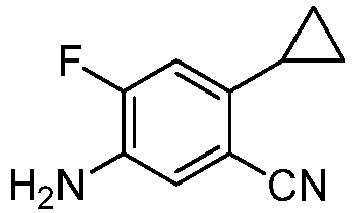
- The product from the above reaction (5-amino-2-bromo-4-fluorobenzonitrile) (4.0 g, 18.6 mmol), cyclo-propyl boronic acid (3.19 g, 37.2 mmol), Pd(OAc)2 (835 mg, 3.72 mmol), tricyclohexyl phosphine (1.04 g, 3.72 mmol), Cs2CO3 (36.3 g, 111.6 mmol) were combined in a pressure vessel. A mixture of toluene (110 ml) and H2O (35 ml) was added. The ensuing yellow-orange suspension was degassed and flushed with nitrogen gas (3x). The pressure vessel was sealed and heated over night (ca. 12 h) at 110 °C. After checking the reaction by TLC and HPLC, the precipitate/salts were filtered off, more H2O was added and the mixture was extracted with ethyl acetate (3x). The combined organic phases were filtered through Na2SO4, silica gel was added and solvents were removed using a rotary evaporator. Further purification by CombiFlash (120 g column) eluting with hexanes/ethyl acetate (0 → 20% gradient) yielded 2.01 g (61%) of the desired product in form of a pale yellow, beige solid. 1H NMR (300 MHz, cdcl3) δ 6.98 (d, J = 8.6 Hz, 1H), 6.58 (d,J = 12.0 Hz, 1H), 3.81 (s br, 2H), 2.21 - 2.06 (m, 1H), 1.11 - 0.99 (m, 2H), 0.69 - 0.59 (m, 2H); MS (ES) 177 (M+H).
-

- Compound 1 was prepared as described in Example 1.
1H NMR (300 MHz, dmso) δ 9.22 (s, 1H), 8.12 (s, 1H), 7.84 (d, J = 3.7 Hz, 1H), 7.79 (d, J = 8.7 Hz, 1H), 7.51 (s, 1H), 6.92 (d, J = 8.8 Hz, 1H), 3.64 - 3.44 (m, 2H), 3.41 - 3.21 (m, 4H), 2.71 (d, J = 9.3 Hz, 2H), 2.48 (s, 2H), 2.13 - 1.98 (m, 1H), 1.98 - 1.73 (m, 7H), 1.68 (d, J = 13.4 Hz, 4H), 1.59 - 1.33 (m, 4H), 1.33 - 1.08 (m, 3H), 1.01 (d, J = 10.2 Hz, 2H), 0.70 (d, J= 4.8 Hz, 2H); MS (ES) 421 (M+H). -

- Compound 2 was prepared as described in Example 1.
1H NMR (300 MHz, dmso) δ 9.87 (dd, J = 12.6, 0.6 Hz, 1H), 8.10 (dd, J = 9.3, 4.1 Hz, 1H), 7.97 (d, J = 4.1 Hz, 1H), 7.47 (d, J = 8.0 Hz, 1H), 7.13 - 7.00 (m, 2H), 3.57 - 3.02 (m, 5H), 3.02 - 2.74 (m, 2H), 2.33 - 1.99 (m, 2H), 1.90 - 1.08 (m, 20H), 0.76 (dd, J = 18.3, 9.8 Hz, 2H), 0.72 - 0.53 (m, 2H) ; MS (ES) 482 (M+H). -
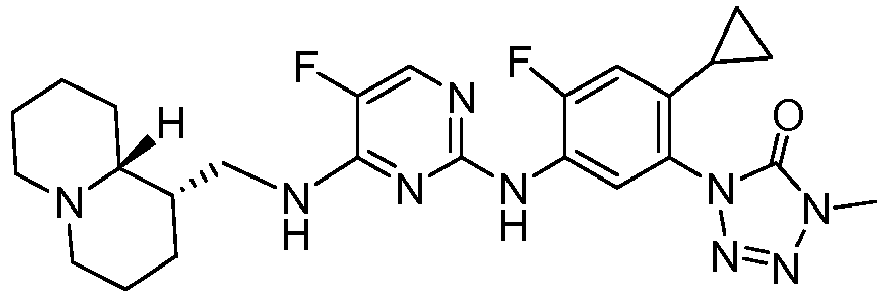
- Compound 3 was prepared as described in Example 1.
1H NMR (300 MHz, dmso) δ 8.16 - 8.09 (m, 1H), 8.04 (t, J = 4.4 Hz, 2H), 7.84 (d, J = 7.6 Hz, 1H), 7.62 (d, J = 7.5 Hz, 1H), 3.61 (s, 3H), 3.55 - 3.04 (m, 3H), 3.02 - 2.73 (m, 2H), 2.55 - 2.40 (m, 2H), 2.31 - 1.86 (m, 4H), 1.82 - 1.10 (m, 4H), 0.88 (t, J = 8.0 Hz, 2H), 0.69 (dd, J = 12.0, 4.8 Hz, 2H); MS (ES) 512 (M+H). -

- Compound 4 was prepared as described in Example 1.
1H NMR (300 MHz, dmso) δ 9.94 (d, J= 10.0 Hz, 2H), 9.25 (s, 1H), 8.80 (s, 1H), 8.53 (s, 1H), 8.09 (t, J = 3.6 Hz, 1H), 7.96 - 7.85 (m, 1H), 7.62 (d, J = 10.6 Hz, 2H), 3.53 - 3.22 (m, 3H), 3.22 - 3.07 (m, 2H), 3.03 - 2.77 (m, 2H), 2.31 - 2.08 (m, 6H), 2.07 (s, 3H), 1.86 - 1.10 (m, 5H); MS (ES) 438 (M+H). -

- Compound 6 was prepared as described in Example 1.
1H NMR (300 MHz, dmso) δ 10.08 - 9.83 (m, 1H), 9.66 (s, 1H), 8.05 (t, J = 3.9 Hz, 1H), 7.77 (dd, J = 9.0, 2.5 Hz, 1H), 7.68 (dd, J = 9.0, 2.6 Hz, 1H), 7.31 (dd, J = 9.1, 2.3 Hz, 1H), 3.77 (s, 3H), 3.56 - 3.04 (m, 3H), 3.03 - 2.73 (m, 4H), 2.50 - 2.43 (m, 1H), 2.37 (s, 3H), 2.29 - 2.07 (m, 4H), 1.89 - 1.10 (m, 7H); MS (ES) 468 (M+H). -

- Compound 7 was prepared as described in Example 1.
MS (ES) 456 (M+H). -

- Compound 8 was prepared as described in Example 1.
1H NMR (300 MHz, dmso) δ 10.38 - 10.13 (m, 1H), 9.92 - 9.34 (m, 1H), 8.67 - 8.30 (m, 1H), 8.17 - 8.03 (m, 1H), 7.97 - 7.71 (m, 1H), 7.53 (dd, J = 23.0, 13.4 Hz, 1H), 3.73 - 3.06 (m, 5H), 3.05 - 2.75 (m, 2H), 2.49 (s, 3H), 2.36 - 2.02 (m, 2H), 1.91 - 1.06 (m, 9H); MS (ES) 456 (M+H). -
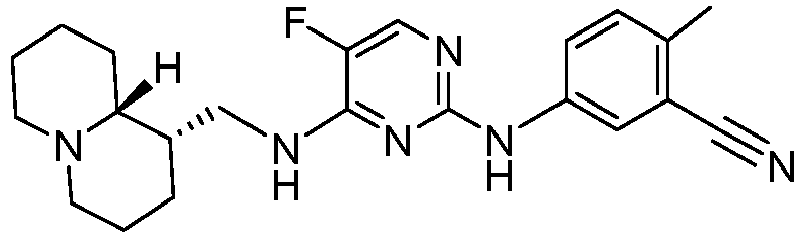
- Compound 9 was prepared as described in Example 1.
1H NMR (300 MHz, dmso) δ 9.87 (s, 1H), 9.29 (s, 1H), 8.80 (d, J = 11.1 Hz, 1H), 8.10 (dd, J = 10.3, 3.6 Hz, 1H), 7.69 - 7.57 (m, 1H), 7.44 - 7.33 (m, 1H), 3.70 - 3.56 (m, 2H), 3.54 - 3.12 (m, 2H), 3.04 - 2.79 (m, 2H), 2.41 (d, J = 4.5 Hz, 1H), 2.27 (s, 3H), 2.20 - 2.03 (m, 4H), 1.91 - 1.65 (m, 3H), 1.58 (s, 2H), 1.50 - 1.20 (m, 2H); MS (ES) 395 (M+H). -

- Compound 10 was prepared as described in Example 1.
MS (ES) 381 (M+H). -

- Compound 11 was prepared as described in Example 1.
1H NMR (300 MHz, dmso) δ 10.12 (d, J = 19.2 Hz, 1H), 9.44 - 9.16 (m, 2H), 8.28-8.01 (m, 1H), 6.76 (d, J = 2.1 Hz, 1H), 6.63 (d, J = 2.2 Hz, 1H), 6.42 - 6.21 (m, 1H), 3.78 - 3.65 (m, 2H), 3.57 - 3.34 (m, 2H), 3.34 - 3.01 (m, 2H), 3.05 - 2.74 (m, 1H), 2.39 - 1.98 (m, 3H), 2.00 - 1.62 (m, 4H), 1.64 - 1.16 (m, 4H); MS (ES) 416 (M+H). -

- Compound 12 was prepared as described in Example 1.
1H NMR (300 MHz, dmso) δ 8.84 (s, 1H), 7.94 (t, J = 3.4 Hz, 1H), 7.01 (d, J = 12.2 Hz, 1H), 3.64 - 3.38 (m, 2H), 3.29 (d, J = 6.9 Hz, 2H), 3.17 (d, J = 6.3 Hz, 2H), 3.03 - 2.76 (m, 1H), 2.12 (s, 1H), 1.89 - 1.66 (m, 6H), 1.65 - 1.48 (m, 4H), 1.50 - 1.30 (m, 2H), 1.09 (d, J = 8.0 Hz, 2H), 0.91 - 0.74 (m, 2H); MS (ES) 439 (M+H). -

- Compound 13 was prepared as described in Example 1.
1H NMR (300 MHz, dmso) δ 10.09 (d, J = 14.5 Hz, 1H), 9.43 - 9.10 (m, 1H), 8.16 (td, J= 5.4, 1.7 Hz, 1H), 7.48 - 7.27 (m, 3H), 7.26 - 7.12 (m, 2H), 3.70 - 3.08 (m, 2H), 3.03 - 2.71 (m, 2H), 2.54 - 2.42 (m, 2H), 2.17 - 1.98 (m, 1H), 1.93 - 1.63 (m, 4H), 1.63 - 1.50 (m, 4H), 1.49 - 1.19 (m, 3H); MS (ES) 356 (M+H). -

- Compound 32 was prepared as described in Example 1.
1H NMR (300 MHz, dmso) δ 9.85 (d, J= 14.6 Hz, 1H), 9.00 - 8.67 (m, 1H), 7.95 (d, J = 8.9 Hz, 1H), 7.21 - 7.11 (m, 1H), 3.50 - 3.02 (m, 2H), 2.99 - 2.61 (m, 4H), 2.12 (s, 1H), 1.96 - 1.25 (m, 6H), 1.22 (dd, J = 6.2, 2.6 Hz, 6H), 0.99 - 0.44 (m, 4H); MS (ES) 498 (M+H). -

- Compound 33 was prepared as described in Example 1.
1H NMR (300 MHz, dmso) δ 9.86 (d, J = 9.6 Hz, 1H), 8.06 (d, J= 5.1 Hz, 1H), 8.00 - 7.85 (m, 1H), 7.71 (dd, J = 14.1, 5.9 Hz, 1H), 7.41 (d, J = 8.5 Hz, 1H), 3.70 - 3.53 (m, 2H), 3.53 - 3.06 (m, 4H), 3.04 - 2.74 (m, 1H), 2.30 - 2.13 (m, 4H), 2.07 (s, 3H), 1.89 - 1.62 (m, 3H), 1.62 - 1.31 (m, 2H), 1.30 - 1.10 (m, 2H); MS (ES) 454 (M+H). -

- Compound 34 was prepared as described in Example 1.
1H NMR (300 MHz, dmso) δ 8.80 (d, J = 23.6 Hz, 1H), 7.91 (d, J = 10.5 Hz, 1H), 7.45 - 7.31 (m, 1H), 7.00 (dd, J = 11.9, 7.8 Hz, 1H), 3.62 (s, 3H), 3.56 - 3.04 (m, 3H), 3.02 - 2.72 (m, 3H), 2.23 - 1.98 (m, 1H), 1.94 - 1.44 (m, 6H), 1.44 - 1.12 (m, 6H), 0.92 - 0.77 (m, 2H), 0.66 (dd, J= 8.6, 4.3 Hz, 2H); MS (ES) 428 (M+H). -

- Compound 35 was prepared as described in Example 1.
1H NMR (300 MHz, dmso) δ 8.18 - 8.05 (m, 1H), 7.98 (d, J = 7.3 Hz, 1H), 7.86 (d, J = 9.0 Hz, 1H), 7.40 (s, 1H), 3.53 - 3.07 (m, 4H), 2.95 (m, 2H), 2.26 (m, 1H), 2.00 - 1.60 (m, 8H), 1.60 - 1.13 (m, 6H); MS (ES) 472 (M+H). -

- Compound 36 was prepared as described in Example 1.
MS (ES) 472 (M+H). -

- Compound 37 was prepared as described in Example 1.
1H NMR (300 MHz, dmso) δ 9.62 - 9.41 (m, 1H), 8.01 (d, J = 3.5 Hz, 1H), 7.96 - 7.83 (m, 1H), 7.77 (ddd, J = 14.4, 9.1, 2.5 Hz, 1H), 7.70 - 7.54 (m, 1H), 7.29 (dd, J = 9.2, 3.5 Hz, 1H), 3.76 (s, 3H), 3.70 - 3.34 (m, 3H), 3.36 - 3.04 (m, 2H), 3.03 - 2.69 (m, 2H), 2.37 (s, 3H), 2.19 - 2.03 (m, 2H), 1.98 - 1.07 (m, 9H); MS (ES) 484 (M+H). -

- Compound 38 was prepared as described in Example 1.
MS (ES) 484 (M+H). -

- Compound 39 was prepared as described in Example 1.
1H NMR (300 MHz, dmso) δ 9.51 (s, 1H), 8.20 (s, 1H), 8.00 - 7.92 (m, 1H), 7.69 (s, 1H), 7.40 (t, J = 8.0 Hz, 1H), 7.30 (d, J = 6.3 Hz, 1H), 3.59 (t, J = 5.5 Hz, 1H), 3.30 (m, 2H), 2.74 (d, J = 10.3 Hz, 2H), 2.48 (dd, J = 3.1, 1.8 Hz, 2H), 2.02 - 1.76 (m, 4H), 1.73 - 1.58 (m, 2H), 1.57 - 1.25 (m, 4H), 1.24 - 1.05 (m, 1H); MS (ES) 397 (M+H). -

- Compound 40 was prepared as described in Example 1.
1H NMR (300 MHz, dmso) δ 9.37 (s, 1H), 8.12 (d, J = 2.2 Hz, 1H), 7.88 - 7.75 (m, 1H), 7.72 - 7.61 (m, 1H), 7.26 (d, J = 8.8 Hz, 1H), 3.65 - 3.47 (m, 4H), 2.73 (d, J = 9.7 Hz, 4H), 2.53 - 2.43 (m, 1H), 2.36 (s, 3H), 2.02 - 1.73 (m, 4H), 1.72 - 1.56 (m, 2H), 1.58 - 1.23 (m, 4H), 1.24 - 1.02 (m, 1H); MS (ES) 411 (M+H). -

- Compound 41 was prepared as described for the corresponding formic acid salt in Example 124.
1H NMR (300 MHz, dmso) δ 9.36 (s, 1H), 8.08 (d, J = 2.3 Hz, 1H), 7.91 (d, J = 2.5 Hz, 1H), 7.81 (d, J = 11.1 Hz, 1H), 7.67 (s, 1H), 6.93 (d, J = 8.8 Hz, 1H), 3.56 (t, J = 5.4 Hz, 2H), 2.72 (d, J= 10.6 Hz, 2H), 2.53 - 2.41 (m, 1H), 2.14 - 1.99 (m, 2H), 1.99 - 1.69 (m, 5H), 1.65 (d, J = 12.8 Hz, 2H), 1.60 - 1.21 (m, 4H), 1.23 - 1.07 (m, 1H), 1.07 - 0.90 (m, 2H), 0.80 - 0.62 (m, 2H); MS (ES) 437 (M+H). -

- Compound 42 was prepared as described in Example 1.
1H NMR (300 MHz, dmso) δ 8.74 (s, 1H), 8.10 (d, J = 7.9 Hz, 1H), 7.88 (d, J = 1.1 Hz, 1H), 7.62 - 7.45 (m, 1H), 6.96 (d, J= 12.2 Hz, 1H), 3.58 - 3.22 (m, 5H), 2.75 (m, 2H), 2.17 - 1.75 (m, 4H), 1.77 - 1.32 (m, 5H), 1.34 - 0.95 (m, 5H), 0.81 (t, J = 4.5 Hz, 2H); MS (ES) 455 (M+H). -
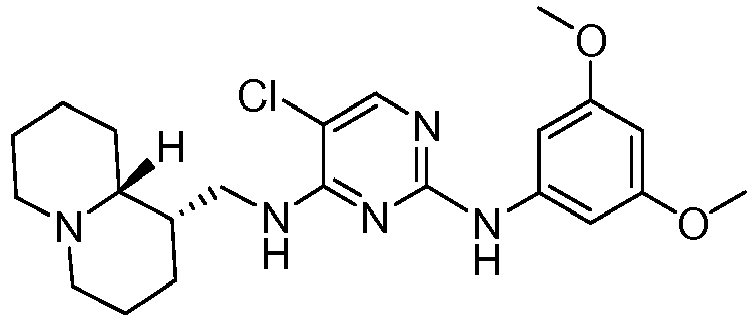
- Compound 43 was prepared as described in Example 1.
1H NMR (300 MHz, dmso) δ 9.81 (d, J = 11.5 Hz, 1H), 9.69 - 9.23 (m, 1H), 8.10 - 7.98 (m, 1H), 6.89 (d, J = 2.2 Hz, 1H), 6.74 (d, J = 2.2 Hz, 1H), 6.21 (dt, J = 6.2, 2.2 Hz, 1H), 3.70 (s, 6H), 3.56 - 3.24 (m, 3H), 3.22 - 3.08 (m, 2H), 3.02 - 2.75 (m, 1H), 2.43 - 2.27 (m, 1H), 2.26 - 2.12 (m, 1H), 2.05 - 1.68 (m, 7H), 1.67 - 1.51 (m, 6H), 1.51 - 1.17 (m, 2H); MS (ES) 432 (M+H). -

- Compound 44 was prepared as described in Example 1.
MS (ES) 429 (M+H). -

- Compound 45 was prepared as described in Example 1.
1H NMR (300 MHz, dmso) δ 8.67 (s, 1H), 8.40 (dt, J = 6.8, 3.4 Hz, 1H), 7.84 (d, J = 3.7 Hz, 1H), 7.56 (s, 1H), 7.47 (dd, J = 10.7, 8.8 Hz, 1H), 7.30 (dt, J = 7.6, 3.4 Hz, 1H), 3.40 (dd, J = 11.0, 3.7 Hz, 3H), 2.64 (t, J = 10.6 Hz, 3H), 2.11 - 1.96 (m, 1H), 1.87 - 1.68 (m, 4H), 1.68 - 1.51 (m, 3H), 1.50 - 1.37 (m, 1H), 1.37 - 0.96 (m, 8H); MS (ES) 482 (M+H). -

- Compound 46 was prepared as described in Example 1.
1H NMR (300 MHz, dmso) δ 9.96 (s, 1H), 9.87 (d, J= 14.3 Hz, 1H), 9.08 - 8.66 (m, 1H), 8.15 - 8.00 (m, 1H), 7.90 - 7.76 (m, 1H), 7.26 (dd, J = 11.6, 8.1 Hz, 1H), 6.24 (d, J = 7.1 Hz, 1H), 3.57 - 3.05 (m, 4H), 3.04 - 2.76 (m, 2H), 2.13 - 1.86 (m, 1H), 1.86 - 1.30 (m, 9H), 1.28 - 1.06 (m, 3H), 0.84 (t, J= 5.8 Hz, 2H), 0.77 - 0.61 (m, 2H); MS (ES) 464 (M+H). -
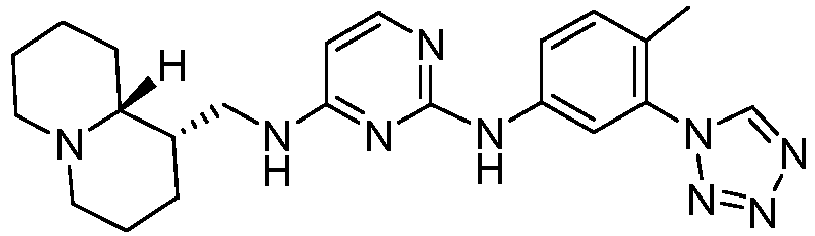
- Compound 47 was prepared as described in Example 1.
1H NMR (300 MHz, dmso) δ 10.58 - 10.29 (m, 1H), 9.88 (d, J = 12.6 Hz, 1H), 9.39 - 9.09 (m, 1H), 7.90 - 7.76 (m, 1H), 7.71 - 7.59 (m, 1H), 7.58 - 7.51 (m, 1H), 6.29 (dd, J= 7.1, 3.9 Hz, 1H), 3.45 - 3.06 (m, 2H), 3.06 - 2.75 (m, 3H), 2.37 - 1.95 (m, 3H), 2.11 (s, 3H) 1.92 - 1.50 (m, 6H), 1.49 - 1.10 (m, 5H); MS (ES) 420 (M+H). -

- Compound 48 was prepared as described in Example 1.
1H NMR (300 MHz, dmso) δ 8.24 (d, J= 0.8 Hz, 2H), 7.97 (d, J = 7.6 Hz, 1H), 7.71 (s, 1H), 7.24 (s, 1H), 6.97 (d, J = 12.1 Hz, 1H), 5.94 (dd, J = 5.9, 0.7 Hz, 1H), 3.62 (s, 3H), 3.45 - 3.29 (m, 1H), 3.29 - 3.12 (m, 1H), 3.03 - 2.81 (m, 2H), 2.51 - 2.13 (m, 3H), 1.86 (s br, 1H), 1.76 - 1.12 (m, 11H), 0.81 (dt, J= 5.5, 5.0 Hz, 2H), 0.70 - 0.55 (m, 2H); MS (ES) 494 (M+H). -

- Compound 49 was prepared as described in Example 1.
1H NMR (300 MHz, dmso) δ 10.55 - 10.15 (m, 1H), 9.38 - 8.95 (m, 1H), 8.02 (s, 1H), 7.91 - 7.75 (m, 2H), 7.75 - 7.58 (m, 2H), 6.27 (d, J = 6.8 Hz, 1H), 3.65 - 3.10 (m, 2H), 3.06 - 2.76 (m, 2H), 2.26 (s, 3H), 2.19 - 1.90 (m, 1H), 1.90 - 1.52 (m, 6H), 1.51 - 1.12 (m, 3H); MS (ES) 438 (M+H). -

- Compound 50 was prepared as described in Example 1.
1H NMR (300 MHz, dmso) δ 10.73 (s, 1H), 9.40 - 9.12 (m, 1H), 8.30 - 7.72 (m, 2H), 7.64 (dd, J= 10.3, 4.8 Hz, 2H), 6.29 (t, J= 7.5 Hz, 1H), 3.62 - 2.61 (m, 7H), 2.29 (s, 3H), 2.17 - 1.83 (m, 2H), 1.85 - 0.92 (m, 9H); MS (ES) 438 (M+H). -

- Compound 51 was prepared as described in Example 1.
1H NMR (300 MHz, dmso) δ 11.20 - 10.53 (m, 1H), 9.84 (s, 1H), 9.50 - 9.05 (m, 1H), 7.98 - 7.50 (m, 3H), 7.50 - 7.23 (m, 1H), 6.22 (dd, J = 7.0, 3.4 Hz, 1H), 3.80 (s, 3H), 3.75 - 3.05 (m, 5H), 3.04 - 2.62 (m, 2H), 2.38 (s, 3H), 2.21 - 1.97 (m, 1H), 1.87 - 1.06 (m, 10H); MS (ES) 450 (M+H). -

- Compound 52 was prepared as described in Example 1.
1H NMR (300 MHz, dmso) δ 11.33 - 10.96 (m, 1H), 9.42 - 9.24 (m, 1H), 7.87 (t, J = 8.1 Hz, 1H), 7.50 (s, 1H), 7.36 (s, 1H), 7.09 (s, 1H), 6.29 (d, J = 7.2 Hz, 1H), 3.82 (s, 3H), 3.77 - 3.61 (m, 1H), 3.57 - 3.05 (m, 3H), 3.05 - 2.77 (m, 2H), 2.58 (s, 3H), 2.48 (d, J = 1.7 Hz, 1H), 2.31 - 2.02 (m, 1H), 1.88 - 1.33 (m, 8H), 1.31 - 1.09 (m, 1H); MS (ES) 450 (M+H). -
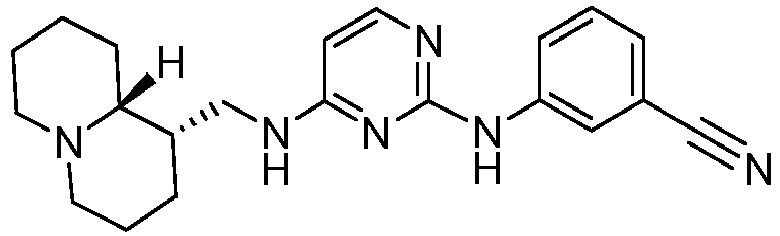
- Compound 53 was prepared as described in Example 1.
1H NMR (300 MHz, dmso) δ 11.15 - 10.79 (m, 1H), 10.01 - 9.57 (m, 1H), 9.20 (s, 1H), 8.24 - 7.98 (m, 1H), 7.96 - 7.64 (m, 2H), 7.59 (s, 1H), 6.27 (d, J= 7.1 Hz, 1H), 3.28 - 2.75 (m, 6H), 2.26 (m, 1H), 2.10 (m, 1H), 1.95 - 1.14 (m, 10H); MS (ES) 463 (M+H). -

- Compound 54 was prepared as described in Example 1.
1H NMR (300 MHz, dmso) δ 11.23 - 10.75 (m, 1H), 9.54 - 8.90 (m, 1H), 8.24 - 7.91 (m, 1H), 7.86 (t, J = 7.6 Hz, 1H), 7.61 (t, J = 9.1 Hz, 1H), 7.45 (d, J = 8.5 Hz, 1H), 6.34 - 6.13 (m, 1H), 3.42 - 3.10 (m, 3H), 3.08 - 2.93 (m, 2H), 2.95 - 2.79 (m, 2H), 2.44 (s, 3H), 2.33 - 2.18 (m, 1H), 2.09 (s, 1H), 1.94 - 1.20 (m, 9H); MS (ES) 377 (M+H). -
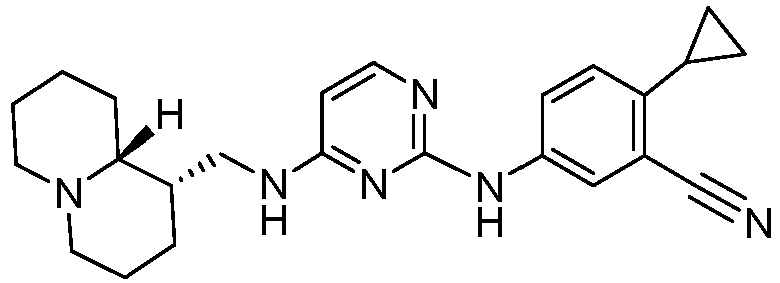
- Compound 55 was prepared as described in Example 1.
1H NMR (300 MHz, dmso) δ 11.09 - 10.62 (m, 1H), 9.56 - 8.95 (m, 1H), 8.19 - 7.89 (m, 1H), 7.87 - 7.74 (m, 1H), 7.68 - 7.46 (m, 1H), 7.10 (d, J = 8.8 Hz, 1H), 6.26 (d, J = 11.6 Hz, 1H), 3.24 - 2.72 (m, 4H), 2.34 - 2.00 (m, 3H), 1.95 - 1.23 (m, 12H), 1.10 (d, J = 7.9 Hz, 2H), 0.90 - 0.56 (m, 2H); MS (ES) 403 (M+H). -

- Compound 56 was prepared as described in Example 1.
1H NMR (300 MHz, dmso) δ 10.06 (s, 1H), 9.42 - 9.10 (m, 1H), 8.23 - 8.02 (m, 1H), 7.83 (dd, J = 10.4, 7.4 Hz, 1H), 6.28 (t, J = 6.4 Hz, 1H), 3.30 - 3.04 (m, 4H), 3.05 - 2.73 (m, 2H), 2.22 - 2.07 (m, 2H), 2.00 - 1.87 (m, 2H), 1.87 - 1.30 (m, 10H), 1.24 - 1.05 (m, 2H), 0.95 - 0.73 (m, 2H); MS (ES) 421 (M+H). -

- Compound 57 was prepared as described in Example 1.
MS (ES) 398 (M+H). -

- Compound 58 was prepared as described in Example 1.
1H NMR (300 MHz, dmso) δ 11.73 (s, 1H), 10.28 - 10.04 (m, 1H), 9.21 - 8.73 (m, 1H), 7.75 (dd, J = 7.1, 4.6 Hz, 1H), 7.28 (td, J = 8.3, 2.7 Hz, 2H), 7.21 - 7.13 (m, 1H), 6.31 - 6.11 (m, 1H), 3.34 - 3.06 (m, 4H), 3.03 - 2.69 (m, 3H), 2.21 - 1.89 (m, 1H), 1.87 - 1.61 (m, 4H), 1.60 - 1.34 (m, 5H), 1.37 - 1.12 (m, 2H); MS (ES) 495 (M+H). -

- Compound 59 was prepared as described in Example 1.
1H NMR (300 MHz, dmso) δ 10.32 - 10.08 (m, 1H), 9.86 (dd, J = 17.5, 2.3 Hz, 1H), 9.24 (s, 1H), 8.52 - 8.19 (m, 1H), 7.97 (d, J = 7.4 Hz, 1H), 7.82 - 7.73 (m, 1H), 7.24 (t, J= 11.0 Hz, 1H), 3.36 - 3.03 (m, 4H), 3.02 - 2.89 (m, 1H), 2.90 - 2.75 (m, 1H), 2.18 - 2.03 (m, 1H), 1.96 (s, 3H), 1.84 - 1.25 (m, 10H), 1.24 - 1.09 (m, 1H), 1.08 - 0.95 (m, 1H), 0.84 (t, J= 8.0 Hz, 2H), 0.77 - 0.58 (m, 2H); MS (ES) 478 (M+H). -

- Compound 60 was prepared as described in Example 1.
1H NMR (300 MHz, dmso) δ 10.43 - 10.10 (m, 1H), 9.93 - 9.72 (m, 1H), 8.84 (s, 1H), 8.50 (d, J = 16.0 Hz, 1H), 7.79 - 7.68 (m, 1H), 7.65 - 7.51 (m, 2H), 3.69 - 3.54 (m, 1H), 3.51 - 3.03 (m, 4H), 3.02 - 2.74 (m, 1H), 2.23 - 2.16 (m, 1H), 2.12 (s, 3H), 1.98 (s, 3H), 1.87 - 1.51 (m, 7H), 1.42 (m, 3H), 1.27 - 1.04 (m, 1H); MS (ES) 434 (M+H). -

- Compound 61 was prepared as described in Example 1.
1H NMR (300 MHz, dmso) δ 9.94 (d, J = 26.4 Hz, 1H), 9.24 (s, 1H), 8.75 (s, 1H), 8.52 (d, J = 23.2 Hz, 1H), 7.72 (t, J = 8.2 Hz, 1H), 7.54 (d, J = 8.8 Hz, 1H), 3.61 (s, 3H), 3.55 - 3.37 (m, 1H), 3.36 - 3.00 (m, 4H), 3.00 - 2.86 (m, 1H), 2.87 - 2.70 (m, 1H), 2.13 - 1.99 (m, 1H), 1.96 (s, 3H), 1.91 - 1.05 (m, 11H), 1.00 - 0.86 (m, 2H), 0.83 - 0.65 (m, 2H); MS (ES) 508 (M+H). -

- Compound 62 was prepared as described in Example 1.
1H NMR (300 MHz, dmso) δ 10.70 - 10.11 (m, 1H), 8.67 - 8.41 (m, 1H), 8.04 - 7.88 (m, 1H), 7.83 - 7.52 (m, 2H), 7.32 (t, J= 9.5 Hz, 1H), 7.02 - 6.88 (m, 1H), 3.41 - 3.20 (m, 3H), 3.20 - 3.02 (m, 2H), 3.02 - 2.71 (m, 2H), 2.44 (s, 3H), 2.20 - 2.04 (m, 1H), 1.98 (s, 3H), 1.88 - 1.48 (m, 5H), 1.49 - 1.23 (m, 4H), 1.23 - 0.98 (m, 1H); MS (ES) 452 (M+H). -

- Compound 63 was prepared as described in Example 1.
1H NMR (300 MHz, dmso) δ 10.11 (d, J = 14.3 Hz, 1H), 8.81 (s, 1H), 8.64 - 8.48 (m, 1H), 7.89 (d, J = 7.0 Hz, 1H), 7.77 (d, J = 15.2 Hz, 1H), 7.70 - 7.60 (m, 1H), 3.44 - 3.35 (m, 2H), 3.34 - 3.17 (m, 2H), 3.09 (d, J = 13.4 Hz, 1H), 2.98 - 2.70 (m, 2H), 2.53 (td, J = 4.2, 1.9 Hz, 2H), 2.21 - 2.03 (m, 1H), 1.98 (s, 3H), 1.92 (s, 1H), 1.86 - 1.45 (m, 8H), 1.43 - 1.03 (m, 5H), 1.01 - 0.81 (m, 1H); MS (ES) 452 (M+H). -

- Compound 64 was prepared as described in Example 1.
1H NMR (300 MHz, dmso) δ 11.13 - 10.47 (m, 1H), 10.12 - 9.33 (m, 1H), 8.66 - 8.34 (m, 1H), 7.93 - 7.48 (m, 2H), 7.38 (s, 1H), 3.80 (s, 3H), 3.74 - 3.59 (m, 1H), 3.52 - 3.21 (m, 2H), 3.19 - 3.03 (m, 2H), 3.03 - 2.89 (m, 1H), 2.89 - 2.68 (m, 1H), 2.38 (s, 3H), 2.30 - 2.16 (m, 1H), 2.13 - 2.01 (m, 1H), 1.97 (s, 3H), 1.89 - 0.99 (m, 9H); MS (ES) 464 (M+H). -

- Compound 65 was prepared as described in Example 1.
1H NMR (300 MHz, dmso) δ 11.22 - 10.77 (m, 1H), 10.06 - 9.31 (m, J = 128.3 Hz, 1H), 8.73 - 8.42 (m, 1H), 7.82 (d, J = 13.1 Hz, 1H), 7.47 - 7.16 (m, 2H), 7.14 - 6.90 (m, 1H), 3.82 (s, 3H), 3.76 (d, J = 8.0 Hz, 1H), 3.52 - 3.21 (m, 2H), 3.21 - 3.05 (m, 2H), 3.02 - 2.90 (m, 1H), 2.84 (s, 1H), 2.58 (s, 3H), 2.32 (m, 1H), 2.12 (d, J = 6.1 Hz, 1H), 2.00 (s, 3H), 1.95 - 1.48 (m, 7H), 1.48 - 1.09 (m, 2H); MS (ES) 464 (M+H). -

- Compound 66 was prepared as described in Example 1.
1H NMR (300 MHz, dmso) δ 9.17 (s, 1H), 8.23 (d, J = 15.6 Hz, 2H), 7.96 (d, J = 8.7 Hz, 1H), 7.66 (s, 1H), 7.36 (t, J = 7.9 Hz, 1H), 7.23 (d, J = 7.2 Hz, 1H), 6.91 (s, 1H), 2.87 - 2.70 (m, 4H), 2.21 - 1.92 (m, 3H), 1.90 (s, 3H), 1.86 - 1.61 (m, 3H), 1.60 - 1.40 (m, 4H), 1.40 - 1.28 (m, 2H), 1.26 - 1.10 (m, 2H); MS (ES) 377 (M+H). -

- Compound 67 was prepared as described in Example 1.
MS (ES) 391 (M+H). -

- Compound 68 was prepared as described in Example 1.
1H NMR (300 MHz, dmso) δ 10.27 - 10.05 (m, 1H), 9.38 - 8.81 (m, 1H), 8.49 (d, J = 14.4 Hz, 1H), 8.03 -7.79 (m, 1H), 7.75 (d, J = 11.1 Hz, 1H), 7.56 (t, J = 10.3 Hz, 1H), 3.73 - 3.58 (m, 1H), 3.31 - 3.23 (m, 2H), 3.21 - 3.05 (m, 2H), 3.04 - 2.74 (m, 1H), 2.21 - 2.06 (m, 1H), 1.98 (s, 3H), 1.93 - 1.63 (m, 6H), 1.61 - 1.25 (m, 6H), 1.24 - 1.05 (m, 2H), 0.76 (t, J= 9.0 Hz, 2H); MS (ES) 417 (M+H). -

- Compound 69 was prepared as described in Example 1.
1H NMR (300 MHz, dmso) δ 10.38 (s, 1H), 8.67 - 8.48 (m, 1H), 8.17 - 7.97 (m, 1H), 7.79 (dd, J = 10.5, 0.9 Hz, 1H), 7.13 (dd, J = 11.9, 7.1 Hz, 1H), 3.66 - 3.40 (m, 1H), 3.40 - 3.21 (m, 2H), 3.14 (d, J = 7.5 Hz, 1H), 2.98 (d, J = 12.0 Hz, 1H), 2.83 (s, 1H), 2.14 (t, J = 12.8 Hz, 1H), 1.98 (s, 3H), 1.87 - 1.28 (m, 11H), 1.16 (dd, J = 10.6, 4.4 Hz, 2H), 1.04 - 0.77 (m, 3H); MS (ES) 435 (M+H). -

- Compound 70 was prepared as described in Example 1.
1H NMR (300 MHz, dmso) δ 10.71 - 10.35 (m, 1H), 8.63 - 8.47 (m, 1H), 7.75 (d, J = 16.9 Hz, 1H), 6.77 (s, 1H), 6.61 (s, 1H), 6.35 (d, J = 1.7 Hz, 1H), 3.73 (s, 6H), 358 - 3.23 (m, 1H), 3.24 - 3.04 (m, 2H), 2.97 (d, J = 11.0 Hz, 1H), 2.92 - 2.69 (m, 1H), 2.41 - 2.26 (m, 1H), 2.23 - 2.04 (m, 1H), 1.98 (s, 3H), 1.93 - 1.68 (m, 5H), 1.67 - 1.50 (m, 4H), 1.50 - 1.19 (m, 2H); MS (ES) 412 (M+H). -

- Compound 71 was prepared as described in Example 1.
1H NMR (300 MHz, dmso) δ 11.85 (t, J = 7.0 Hz, 1H), 10.81 - 10.44 (m, 1H), 9.97 - 9.31 (m, 1H), 8.66 - 8.36 (m, 1H), 7.81 - 7.61 (m, 1H), 7.34 - 6.97 (m, 2H), 3.77 - 2.61 (m, 6H), 2.34 - 2.11 (m, 1H), 2.14 - 2.01 (m, 1H), 1.97 (s, 3H), 1.93 - 1.60 (m, 4H), 1.61 - 1.45 (m, 3H), 1.46 - 0.99 (m, 3H); MS (ES) 409 (M+H). -

- Compound 72 was prepared as described in Example 1.
1H NMR (300 MHz, dmso) δ 9.91 - 9.77 (m, 1H), 9.00 (dd, J = 74.3, 56.6 Hz, 2H), 8.00 - 7.73 (m, 1H), 7.63 - 7.50 (m, 1H), 7.33 - 7.17 (m, 1H), 3.82 (s, 3H), 3.34 - 3.03 (m, 5H), 3.02 - 2.70 (m, 2H), 2.21 - 1.88 (m, 1H), 1.87 - 1.28 (m, 9H), 1.24 - 0.92 (m, 2H), 0.86 (d, J = 8.0 Hz, 2H), 0.79 - 0.62 (m, 2H); MS (ES) 494 (M+H). -

- Compound 73 was prepared as described in Example 1.
1H NMR (300 MHz, dmso) δ 9.84 (s, 1H), 9.00 (s, 1H), 8.05 (s, 1H), 7.73 (d, J = 8.4 Hz, 1H), 7.54 (s, 1H), 7.27 (d, J = 8.5 Hz, 1H), 6.97 (t, J= 5.4 Hz, 1H), 3.72 (s, 3H), 3.55 - 3.35 (m, 4H), 2.69 (t, J = 9.6 Hz, 3H), 1.95 - 1.74 (m, 4H), 1.71 - 1.53 (m, 3H), 1.52 - 1.02 (m, 4H); MS (ES) 450 (M+H). -

- Compound 74 was prepared as described in Example 1.
1H NMR (300 MHz, dmso) δ 8.10 (dt, J = 18.9, 9.5 Hz, 1H), 8.02 (s, 1H), 7.49 (s, 1H), 7.09 - 6.87 (m, 2H), 3.71 (s, 3H), 3.61 (s, 3H), 3.49 - 3.35 (m, 4H), 2.67 (m, 3H), 1.91 - 1.72 (m, 4H), 1.72 - 1.51 (m, 5H), 1.52 - 1.00 (m, 3H), 0.87 - 0.72 (m, 2H), 0.67 - 0.53 (m, 2H); MS (ES) 524 (M+H). -
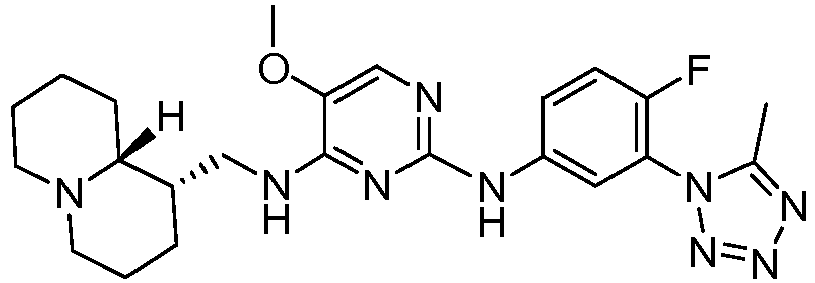
- Compound 75 was prepared as described in Example 1.
1H NMR (300 MHz, dmso) δ 9.12 (s, 1H), 8.21 (dt, J = 12.5, 6.3 Hz, 1H), 7.87 (dd, J = 8.4, 3.8 Hz, 1H), 7.54 (d, J = 1.2 Hz, 1H), 7.41 (t, J = 9.5 Hz, 1H), 7.00 (t, J = 5.2 Hz, 1H), 3.73 (s, 3H), 3.55 - 3.39 (m, 4H), 2.76 - 2.61 (m, 3H), 2.48 (s, 3H), 1.94 - 1.72 (m, 4H), 1.72 - 1.53 (m, 3H), 1.54 - 1.02 (m, 4H); MS (ES) 468 (M+H). -

- Compound 76 was prepared as described in Example 1.
MS (ES) 468 (M+H). -

- Compound 77 was prepared as described in Example 1.
1H NMR (300 MHz, dmso) δ 8.84 (s, 1H), 8.01 (s, 1H), 7.85 (dd, J = 9.1, 1.7 Hz, 1H), 7.52 (s, 1H), 7.19 (d, J = 9.2 Hz, 1H), 6.93 (t, J = 5.1 Hz, 1H), 3.71 (s, 3H), 3.42 (m, 3H), 3.31 (s, 3H), 2.69 (t, J = 8.8 Hz, 4H), 2.37 (s, 3H), 1.96 - 1.73 (m, 4H), 1.73 - 1.52 (m, 3H), 1.52 - 1.01 (m, 4H); MS (ES) 480 (M+H). -

- Compound 78 was prepared as described in Example 1.
1H NMR (300 MHz, dmso) δ 9.07 (s, 1H), 7.66 (t, J = 1.7 Hz, 1H), 7.62 (t, J = 2.0 Hz, 1H), 7.56 (s, 1H), 6.97 (t, J = 5.3 Hz, 1H), 6.67 (t, J = 2.0 Hz, 1H), 3.78 (s, 3H), 3.74 (s, 3H), 3.48 (td, J = 14.0, 8.6 Hz, 2H), 3.43 - 3.28 (m, 2H), 2.73 - 2.61 (m, 2H), 2.56 (s, 3H), 2.48 (dd, J = 3.6, 1.8 Hz, 1H), 1.93 - 1.69 (m, 4H), 1.68 - 1.53 (m, 3H), 1.51 - 1.03 (m, 4H); MS (ES) 480 (M+H). -

- Compound 79 was prepared as described in Example 1.
1H NMR (300 MHz, dmso) δ 9.10 (s, 1H), 8.27 (d, J = 1.5 Hz, 1H), 7.93 (d, J = 7.5 Hz, 1H), 7.58 (s, 1H), 7.34 (t, J = 8.0 Hz, 1H), 7.20 (d, J = 7.5 Hz, 1H), 7.03 (t, J = 4.8 Hz, 1H), 3.78 - 3.71 (m, 3H), 3.54 (t, J = 5.6 Hz, 2H), 3.40 - 3.24 (m, 2H), 2.72 (d, J = 10.8 Hz, 2H), 2.55 - 2.43 (m, 1H), 1.98 - 1.87 (m, 2H), 1.87 - 1.72 (m, 3H), 1.72 - 1.59 (m, 2H), 1.57 - 1.33 (m, 4H), 1.33 - 1.04 (m, 3H); MS (ES) 393 (M+H). -

- Compound 80 was prepared as described in Example 1.
1H NMR (300 MHz, dmso) δ 8.95 (d, J = 2.8 Hz, 1H), 8.21 (s, 1H), 7.81 (dd, J = 8.5, 2.5 Hz, 1H), 7.56 (d, J = 3.5 Hz, 1H), 7.21 (dd, J = 8.6, 2.9 Hz, 1H), 7.05 - 6.93 (m, 1H), 3.79 - 3.70 (s, 3H), 3.63 - 3.45 (m, 2H), 3.41 - 3.26 (m, 2H), 2.71 (d, J = 9.8 Hz, 2H), 2.56 - 2.44 (m, 1H), 2.35 (s, 3H), 1.99 - 1.59 (m, 5H), 1.59 - 1.34 (m, 4H), 1.32 - 1.02 (m, 2H); MS (ES) 407 (M+H). -

- Compound 81 was prepared as described in Example 1.
1H NMR (300 MHz, dmso) δ 8.94 (s, 1H), 8.19 (d, J = 2.0 Hz, 1H), 7.79 (d, J = 8.8 Hz, 1H), 7.56 (d, J = 1.6 Hz, 1H), 7.01 (d, J = 5.2 Hz, 1H), 6.90 (d, J = 8.7 Hz, 1H), 3.73 (s, 3H), 3.52 (t, J = 5.6 Hz, 2H), 3.42 - 3.22 (m, 2H), 2.71 (d, J = 10.2 Hz, 3H), 2.10 - 1.98 (m, 1H), 1.98 - 1.59 (m, 4H), 1.58 - 1.33 (m, 4H), 1.32 - 1.05 (m, 3H), 1.00 (dd, J = 6.4, 1.9 Hz, 2H), 0.68 (d, J = 4.9 Hz, 2H); MS (ES) 433 (M+H). -

- Compound 82 was prepared as described in Example 1.
MS (ES) 451 (M+H). -

- Compound 83 was prepared as described in Example 1.
1H NMR (300 MHz, dmso) δ 10.87 - 10.42 (m, 1H), 8.98 (d, J = 5.8 Hz, 1H), 7.64 (dd, J = 17.1, 1.0 Hz, 1H), 6.77 (s, 1H), 6.62 (s, 1H), 6.32 (s, 1H), 3.81 (s, 3H), 3.72 (s, 6H), 3.56 - 3.06 (m, 4H), 3.03 - 2.76 (m, 2H), 2.44 - 2.27 (m, 1H), 2.25 - 2.08 (m, 1H), 2.04 - 1.14 (m, 10H); MS (ES) 428 (M+H). -

- Compound 84 was prepared as described in Example 1.
1H NMR (300 MHz, dmso) δ 11.79 (d, J = 6.1 Hz, 1H), 10.81 - 10.38 (m, 1H), 9.80 - 9.24 (m, 1H), 9.03 - 8.79 (m, J = 17.3 Hz, 1H), 7.70 - 7.53 (m, 1H), 7.36 - 7.17 (m, 1H), 7.08 (dd, J = 13.8, 5.2 Hz, 1H), 3.80 (s, 3H), 3.67 - 3.02 (m, 4H), 2.99 - 2.62 (m, 2H), 2.36 - 2.16 (m, 1H), 2.14 - 2.00 (m, 1H), 1.99 - 1.03 (m, 10H); MS (ES) 425 (M+H). -

- Compound 85 was prepared as described in Example 1.
MS (ES) 507 (M+H). -

- Compound 86 was prepared as described in Example 1.
MS (ES) 463 (M+H). -

- Compound 87 was prepared as described in Example 1.
1H NMR (300 MHz, dmso) δ 8.45 (s, 1H), 8.13 - 7.75 (m, 1H), 7.66 (s, 1H), 7.40 - 7.13 (m, 1H), 7.00 (d, J = 12.0 Hz, 1H), 3.61 (s, 3H), 3.55 - 3.04 (m, 3H), 3.00 - 2.74 (m, 4H), 2.52 (s, 6H), 2.23 - 1.98 (m, 4H), 1.95 - 1.44 (m, 5H), 1.36 (s, 3H), 0.84 (s, 2H), 0.64 (s, 2H); MS (ES) 537 (M+H). -

- Compound 88 was prepared as described in Example 1.
1H NMR (300 MHz, dmso) δ 9.21 (s, 1H), 8.24 (dd, J = 7.1, 2.8 Hz, 1H), 7.93 - 7.82 (m, 1H), 7.67 (d, J = 2.7 Hz, 1H), 7.49 - 7.35 (m, 1H), 7.09 (d, J = 7.7Hz, 1H), 3.51 - 3.40 (m, 4H), 2.83 - 2.67 (m, 3H), 2.48 (s, 6H), 2.26 (s, 3H), 2.08 - 1.82 (m, 3H), 1.82 - 1.54 (m, 3H), 1.54 - 1.02 (m, 5H); MS (ES) 481 (M+H). -

- Compound 89 was prepared as described in Example 1.
1H NMR (300 MHz, dmso) δ 10.09 - 9.98 (m, 1H), 8.89 - 8.65 (m, 2H), 8.18 - 7.86 (m, 1H), 7.74 - 7.54 (m, 2H), 3.29 - 3.14 (m, 3H), 3.15 - 3.01 (m, 2H), 2.97 - 2.73 (m, 2H), 2.53 (s, 6H), 2.26 (s, 3H), 2.21 - 1.78 (m, 2H), 1.76 - 0.81 (m, 10H); MS (ES) 481 (M+H). -

- Compound 90 was prepared as described in Example 1.
1H NMR (300 MHz, dmso) δ 10.20 - 9.81 (m, 1H), 8.89 - 8.59 (m, 1H), 7.76 (d, J = 2.5 Hz, 1H), 7.65 (dt, J = 9.0, 3.3 Hz, 1H), 7.53 (dd, J = 11.2, 8.7 Hz, 2H), 7.37 (d, J = 9.0 Hz, 1H), 3.80 (s, 3H), 3.34 - 3.19 (m, 3H), 3.20 - 3.03 (m, 2H), 2.95 (d, J = 11.6 Hz, 1H), 2.91 - 2.72 (m, 1H), 2.53 (s, 6H), 2.26 (s, 3H), 2.15 - 1.96 (m, 3H), 1.96 - 1.43 (m, 6H), 1.43 - 0.99 (m, 2H); MS (ES) 493 (M+H). -

- Compound 91 was prepared as described in Example 1.
MS (ES) 493 (M+H). -

- Compound 92 was prepared as described in Example 1.
MS (ES) 406 (M+H). -

- Compound 93 was prepared as described in Example 1.
MS (ES) 420 (M+H). -

- Compound 94 was prepared as described in Example 1.
MS (ES) 446 (M+H). -

- Compound 95 was prepared as described in Example 1.
1H NMR (300 MHz, dmso) δ 10.63 - 10.42 (m, 1H), 8.88 - 8.68 (m, 1H), 8.21 - 7.98 (m, 1H), 7.72 (d, J = 8.3 Hz, 1H), 7.11 (dd, J = 11.8, 6.8 Hz, 1H), 3.61 - 3.40 (m, 1H), 3.42 - 3.20 (m, 3H), 3.21 - 3.03 (m, 2H), 3.03 - 2.72 (m, 1H), 2.54 (s, 6H), 2.33 - 2.07 (m, 2H), 2.07 - 1.24 (m, 10H), 1.25 - 1.07 (m, 2H), 1.04 - 0.79 (m, 2H); MS (ES) 464 (M+H). -

- Compound 96 was prepared as described in Example 1.
1H NMR (300 MHz, dmso) δ 10.88 - 10.42 (m, 1H), 8.85 - 8.58 (m, 1H), 7.69 (dd, J = 13.2, 1.5 Hz, 1H), 6.79 (s, 1H), 6.62 (s, 1H), 6.32 (s, 1H), 3.73 (s, 6H), 3.69 - 3.60 (m, 1H), 3.55 - 3.22 (m, 2H), 3.22 - 3.04 (m, 2H), 3.04 - 2.73 (m, 2H), 2.53 (s, 6H), 2.45 - 2.28 (m, 1H), 2.26 - 2.09 (m, 1H), 2.07 - 1.16 (m, 9H); MS (ES) 441 (M+H). -

- Compound 97 was prepared as described in Example 1.
1H NMR (300 MHz, dmso) δ 11.84 (s, 1H), 10.89 - 10.51 (m, 1H), 8.86 - 8.51 (m, 1H), 7.67 (s, 1H), 7.24 (dd, J = 14.0, 7.0 Hz, 2H), 7.08 (d, J = 8.5 Hz, 1H), 3.66 - 3.02 (m, 5H), 3.00 - 2.68 (m, 2H), 2.53 (s, 6H), 2.38 - 2.20 (m, 1H), 2.18 - 2.01 (m, 1H), 2.00 - 1.47 (m, 6H), 1.48 - 1.01 (m, 3H); MS (ES) 438 (M+H). -

- Compound 99 was prepared as described in Example 1.
1H NMR (300 MHz, dmso) δ 9.41 (s, 1H), 8.25 (d, J = 2.7 Hz, 1H), 8.18 (s, 1H), 7.60 (dd, J = 7.4, 2.4 Hz, 1H), 7.01 (dd, J = 11.8, 2.1 Hz, 1H), 3.60 (s, 3H), 3.49 - 3.32 (m, 2H), 3.49 - 3.33 (m, 3H), 2.79 - 2.60 (m, 2H), 2.01 - 1.00 (m, 11H), 0.96 - 0.78 (m, 2H), 0.75 - 0.59 (m, 2H); MS (ES) 519 (M+H). -

- Compound 100 was prepared as described in Example 1.
MS (ES) 532 (M+H). -

- Compound 101 was prepared as described in Example 1.
MS (ES) 488 (M+H). -

- Compound 102 was prepared as described in Example 1.
1H NMR (300 MHz, dmso) δ 8.64 (s, 1H), 8.19 - 8.08 (m, 1H), 7.71 - 7.59 (m, 1H), 7.42 - 7.24 (m, 1H), 7.03 (d, J = 11.3 Hz, 1H), 3.60 (s, 3H), 3.42 - 2.88 (m, 4H), 2.50 - 2.33 (m, 3H), 2.19 - 1.86 (m, 2H), 1.85 - 1.06 (m, 10H), 0.96 - 0.84 (m, 2H), 0.76 - 0.61 (m, 2H); MS (ES) 562 (M+H). -

- Compound 103 was prepared as described in Example 1.
1H NMR (300 MHz, dmso) δ 9.63 (s, 1H), 9.30 - 9.03 (m, 1H), 8.39 - 8.23 (m, 1H), 8.04 - 7.88 (m, 1H), 7.88 - 7.71 (m, 1H), 7.70 - 7.53 (m, 1H), 3.59 - 3.36 (m, 1H), 3.36 - 3.19 (m, 2H), 3.20 - 2.67 (m, 4H), 2.49 (s, 3H), 2.26 - 1.97 (m, 1H), 1.94 - 0.84 (m, 10H); MS (ES) 506 (M+H). -

- Compound 104 was prepared as described in Example 1.
1H NMR (300 MHz, dmso) δ 9.21 - 8.86 (m, 1H), 8.17 - 7.70 (m, 1H), 7.69 - 7.47 (m, 1H), 7.21 (ddd, J = 11.2, 8.6, 2.5 Hz, 1H), 6.95 (dt, J = 7.8, 2.6 Hz, 1H), 6.80 - 6.66 (m, 1H), 3.59 - 2.66 (m, 7H), 2.49 (s, 3H), 2.35 - 2.04 (m, 1H), 1.98 - 1.19 (m, 6H), 1.17 - 0.92 (m, 3H), 0.87 - 0.65 (m, 1H); MS (ES) 506 (M+H). -

- Compound 105 was prepared as described in Example 1.
1H NMR (300 MHz, dmso) δ 9.53 - 9.33 (m, 1H), 8.73 - 8.47 (m, 1H), 8.38 (d, J = 2.5 Hz, 1H), 7.75 - 7.59 (m, 2H), 7.36 (dd, J = 8.7, 3.4 Hz, 2H), 3.81 (s, 3H), 3.55 - 3.37 (m, 1H), 3.36 - 3.20 (m, 2H), 3.20 - 2.71 (m, 4H), 2.37 (s, 3H), 2.21 - 1.84 (m, 1H), 1.84 - 1.04 (m, 9H), 0.90 (s, 1H); MS (ES) 518 (M+H). -

- Compound 106 was prepared as described in Example 1.
MS (ES) 518 (M+H). -

- Compound 107 was prepared as described in Example 1.
1H NMR (300 MHz, dmso) δ 8.69 (s, 1H), 8.31 - 8.16 (m, 1H), 8.08 - 7.95 (m, 1H), 7.81 (s, 1H), 7.64 - 7.49 (m, 2H), 3.49 - 3.30 (m, 1H), 3.24 - 3.04 (m, 3H), 3.01 - 2.70 (m, 1H), 2.44 - 2.23 (m, 2H), 2.22 - 1.26 (m, 11H); MS (ES) 431 (M+H). -

- Compound 108 was prepared as described in Example 1.
1H NMR (300 MHz, dmso) δ 8.35 - 8.12 (m, 1H), 7.64 (t, J = 11.8 Hz, 1H), 7.46 (d, J = 7.4 Hz, 1H), 7.38 (t, J = 8.5 Hz, 1H), 7.07 (dd, J = 13.7, 8.1 Hz, 1H), 6.82 - 6.71 (m, 1H), 3.65 - 3.22 (m, 3H), 3.22 - 2.95 (m, 2H), 2.90 - 2.62 (m, 2H), 2.26 (s, 3H), 2.23 - 2.12 (m, 1H), 2.12 - 1.77 (m, 4H), 1.75 - 0.93 (m, 6H); MS (ES) 445 (M+H). -

- Compound 109 was prepared as described in Example 1.
1H NMR (300 MHz, dmso) δ 8.60 (s, 1H), 8.30 - 8.15 (m, 1H), 7.98 - 7.80 (m, 1H), 7.80 - 7.58 (m, 1H), 7.45 (dd, J = 8.0, 2.6 Hz, 1H), 7.13 - 6.99 (m, 1H), 3.44 - 2.92 (m, 7H), 2.21 - 2.00 (m, 2H), 1.98 - 1.18 (m, 12H), 1.17 - 0.98 (m, 2H), 0.85 - 0.67 (m, 2H); MS (ES) 471 (M+H). -

- Compound 110 was prepared as described in Example 1.
MS (ES) 489 (M+H). -

- Compound 111 was prepared as described in Example 1.
1H NMR (300 MHz, dmso) δ 8.34 - 7.96 (m, 1H), 7.44 (s, 1H), 7.07 (s, 1H), 6.78 (s, 1H), 6.28 (s, 1H), 3.71 (s, 3H), 3.61 - 2.96 (m, 4H), 2.95 - 2.56 (m, 3H), 2.26 (s, 3H), 2.19 - 1.87 (m, 2H), 1.86 - 1.16 (m, 9H); MS (ES) 466 (M+H). -

- Compound 112 was prepared as described in Example 1.
MS (ES) 463 (M+H). -

- Compound 113 was prepared as described in Example 1.
1H NMR (300 MHz, dmso) δ 10.18 - 9.54 (m, 1H), 9.33 - 8.67 (m, 1H), 8.42 - 8.27 (m, 1H), 7.99 - 7.69 (m, 2H), 7.37 - 7.19 (m, 1H), 3.77 (s, 3H), 3.71 - 3.38 (m, 1H), 3.20 - 3.03 (m, 2H), 3.02 - 2.73 (m, 1H), 2.44 - 2.32 (m, 3H), 2.26 (s, 3H), 2.21 - 2.02 (m, 2H), 1.99 - 1.03 (m, 9H); MS (ES) 475 (M+H). -

- Compound 114 was prepared as described in Example 1.
1H NMR (300 MHz, dmso) δ 10.29 - 9.82 (m, 1H), 9.32 - 8.70 (m, 1H), 8.47 - 8.34 (m, 1H), 8.14 - 8.02 (m, 1H), 8.01 - 7.83 (m, 1H), 7.67 - 7.50 (m, 1H), 3.62 (dd, J = 4.4, 3.7 Hz, 1H), 3.54 - 3.22 (m, 4H), 3.23 - 3.05 (m, 1H), 3.03 - 2.74 (m, 1H), 2.49 (s, 3H), 2.22 - 2.07 (m, 1H), 2.02 - 1.08 (m, 10H); MS (ES) 463 (M+H). -

- Compound 115 was prepared as described in Example 1.
1H NMR (300 MHz, dmso) δ 10.03 (s, 1H), 9.34 - 8.70 (m, 1H), 8.50 - 8.26 (m, 1H), 7.99 (s, 1H), 7.59 (s, 1H), 7.04 - 6.88 (m, 1H), 3.79 (s, 3H), 3.55 - 3.35 (m, 3H), 3.26 - 3.06 (m, 3H), 3.05 - 2.74 (m, 1H), 2.56 (s, 3H), 2.38 - 2.14 (m, 3H), 2.03 - 1.07 (m, 8H); MS (ES) 475 (M+H). -

- Compound 116 was prepared as described in Example 1.
1H NMR (300 MHz, dmso) δ 9.95 - 9.76 (m, 1H), 9.71 - 9.40 (m, 1H), 8.33 (s, 1H), 7.99 - 7.78 (m, 1H), 7.69 (d, J = 6.1 Hz, 1H), 7.28 - 7.12 (m, 1H), 3.58 - 3.40 (m, 1H), 3.37 - 3.00 (m, 3H), 3.00 - 2.72 (m, 3H), 2.19 - 1.94 (m, 1H), 1.93 - 1.27 (m, 8H), 1.28 - 0.99 (m, 2H), 0.89 - 0.74 (m, 2H), 0.74 - 0.58 (m, 2H); MS (ES) 489 (M+H). -

- Compound 117 was prepared as described in Example 1.
1H NMR (300 MHz, dmso) δ 10.12 - 9.76 (m, 1H), 8.41 - 8.24 (m, 1H), 7.96 (d, J = 2.3 Hz, 1H), 7.77 (d, J = 8.2 Hz, 1H), 7.38 (d, J = 8.6 Hz, 1H), 3.61 - 3.15 (m, 3H), 2.85 - 2.56 (m, 4H), 2.06 (s, 3H), 1.99 - 0.99 (m, 11H); MS (ES) 445 (M+H). -

- Compound 118 was prepared as described in Example 1.
1H NMR (300 MHz, cdcl3) δ 8.66 (d, J = 5.1 Hz, 1H), 8.16 (s, 1H), 7.68 (d, J = 8.1 Hz, 1H), 7.24 (d, J = 9.2 Hz, 1H), 7.07 (d, J = 8.1 Hz, 1H), 7.00 (dd, J = 7.5, 4.4 Hz, 1H), 3.70 - 3.48 (m, 3H), 3.39 - 2.98 (m, 4H), 2.27 (s, 3H), 2.23 - 1.89 (m, 1H), 1.88 - 1.06 (m, 10H); MS (ES) 463 (M+H). -

- Compound 119 was prepared as described in Example 1.
1H NMR (300 MHz, dmso) δ 9.91 (s, 1H), 8.33 (d, J = 2.6 Hz, 2H), 8.08 (s, 1H), 7.82 (dd, J = 8.5, 2.2 Hz, 1H), 7.31 (d, J = 8.5 Hz, 1H), 3.70 - 3.44 (m, 2H), 3.45 - 3.17 (m, 3H), 2.81 - 2.61 (m, 2H), 2.39 (s, 3H), 2.02 - 1.57 (m, 6H), 1.56 - 1.23 (m, 4H), 1.23 - 1.02 (m, 1H); MS (ES) 402 (M+H). -

- Compound 120 was prepared as described in Example 1.
1H NMR (300 MHz, dmso) δ 9.90 (s, 1H), 8.32 (d, J = 1.7 Hz, 1H), 8.04 (s, 1H), 7.83 (d, J = 8.7 Hz, 1H), 6.99 (dd, J = 8.7, 1.5 Hz, 1H), 3.67 - 3.45 (m, 2H), 3.44 - 3.12 (m, 3H), 2.73 (d, J = 10.2 Hz, 2H), 2.15 - 2.01 (m, 1H), 2.01 - 1.56 (m, 6H), 1.56 - 1.24 (m, 4H), 1.24 - 1.10 (m, 1H), 1.05 (td, J = 6.5, 1.9 Hz, 2H), 0.73 (t, J = 5.5 Hz, 2H); MS (ES) 428 (M+H). -

- Compound 121 was prepared as described in Example 1.
1H NMR (300 MHz, dmso) δ 9.63 (s, 1H), 8.39 - 8.16 (m, 2H), 7.00 (t, J = 2.4 Hz, 2H), 6.14 (t, J = 2.2 Hz, 1H), 3.70 (s, 6H), 3.66 - 3.48 (m, 4H), 2.82 - 2.62 (m, 3H), 2.06 - 1.57 (m, 6H), 1.56 - 1.26 (m, 4H), 1.25 - 1.03 (m, 1H); MS (ES) 423 (M+H). -

- Compound 122 was prepared as described in Example 1.
1H NMR (300 MHz, dmso) δ 8.47 - 8.29 (m, 2H), 8.21 - 8.10 (m, 2H), 7.94 (dd, J = 8.3, 3.9 Hz, 1H), 7.54 (t, J = 9.5 Hz, 1H), 3.56 - 3.40 (m, 4H), 2.82 - 2.64 (m, 3H), 2.10 - 1.99 (m, 1H), 1.98 - 1.77 (m, 4H), 1.77 - 1.23 (m, 7H), 1.23 - 0.99 (m, 4H); MS (ES) 489 (M+H). -

- Compound 123 was prepared as described in Example 1.
1H NMR (300 MHz, dmso) δ 9.59 (s, 1H), 8.36 - 8.15 (m, 2H), 8.13 - 8.03 (m, 1H), 7.56 - 7.48 (m, 2H), 3.46 - 3.23 (m, 3H), 2.68 (s, 4H), 2.02 (dd, J = 10.6, 5.4 Hz, 1H), 1.96 - 1.69 (m, 4H), 1.70 - 1.39 (m, 4H), 1.39 - 0.95 (m, 7H); MS (ES) 489 (M+H). -

- Compound 124 was prepared as described in Example 1.
1H NMR (300 MHz, dmso) δ 8.38 (t, J = 7.7 Hz, 1H), 8.25 - 8.08 (m, 2H), 7.96 (d, J = 8.7 Hz, 1H), 7.73 (d, J = 8.9 Hz, 1H), 7.46 (d, J = 6.8 Hz, 1H), 7.09 (d, J = 8.4 Hz, 1H), 3.37 - 2.85 (m, 5H), 2.33 - 2.20 (m, 2H), 2.17 - 1.99 (m, 1H), 1.91 - 1.64 (m, 5H), 1.64 - 1.21 (m, 7H), 1.21 - 1.01 (m, 3H); MS (ES) 506 (M+H). -

- Compound 125 was prepared as described in Example 1.
1H NMR (300 MHz, dmso) δ 9.58 (s, 1H), 9.23 (s, 1H), 8.48 (s, 1H), 8.02 (d, J = 2.6 Hz, 1H), 7.88 (dd, J = 9.1, 2.6 Hz, 1H), 7.24 (d, J = 9.2 Hz, 1H), 3.75 (s, 3H), 3.65 - 3.51 (m, 1H), 3.49 - 3.35 (m, 3H), 2.67 (t, J = 10.4 Hz, 3H), 2.38 (s, 3H), 1.92 - 1.73 (m, 2H), 1.72 - 1.40 (m, 4H), 1.39 - 1.00 (m, 5H); MS (ES) 493 (M+H). -

- Compound 126 was prepared as described in Example 1.
1H NMR (300 MHz, dmso) δ 9.78 (s, 1H), 9.22 (s, 1H), 8.47 (s, 1H), 8.20 (dd, J = 6.7, 2.6 Hz, 1H), 7.93 - 7.83 (m, 1H), 7.44 (t, J = 9.5 Hz, 1H), 3.60 - 3.46 (m, 1H), 3.46 - 3.20 (m, 4H), 2.72 - 2.56 (m, 2H), 2.45 (s, 3H), 1.90 - 1.69 (m, 3H), 1.70 - 1.48 (m, 3H), 1.49 - 1.35 (m, 2H), 1.35 - 1.15 (m, 2H), 1.15 - 0.95 (m, 1H); MS (ES) 481 (M+H). -

- Compound 127 was prepared as described in Example 1.
1H NMR (300 MHz, dmso) δ 9.18 (s, 2H), 8.49 (s, 1H), 8.22 (dd, J = 6.9, 2.5 Hz, 1H), 7.55 - 7.44 (m, 1H), 7.43 - 7.34 (m, 1H), 3.58 - 3.44 (m, 1H), 3.33 - 3.06 (m, 2H), 2.81 - 2.63 (m, 4H), 2.55 (s, 3H), 2.07 - 1.80 (m, 3H), 1.75 - 1.40 (m, 4H), 1.38 - 1.01 (m, 4H); MS (ES) 481 (M+H). -

- Compound 15 was prepared as described in Example 1.
1H NMR (300 MHz; d6 -DMSO) δ 8.08 (s, 1H), 7.7 (d, J=3.9Hz, 1H), 7.57 (s, 1H), 7.38 (m, 1H), 6.93 (s, 1H), 3.61 (s, 3H), 3.37 (m, 1H), 2.65 (m, 2H), 2.22 (s, 3H), 1.78-1.2 (m, 14H), 0.76 (d, J=8.1Hz, 2H), 0.54 (m, 2H); m/z = 508.39 (M+H)+. -

- Compound 16 was prepared as described in Example 1.
1H NMR (300 MHz; d6 -DMSO) δ 8.99 (s, 1H), 7.8 (d, J=3.9Hz, 1H), 7.51 (d, J=2.1Hz 1H), 7.42 (m, 1H), 7.31 (d, J=9.0Hz 1H), 7.08 (d, J=9.0Hz, 1H), 4.64 (m, 1H), 3.55 (m, 2H), 2.72 (m, 2H), 1.97-1.67 (m, 14H), 1.4 (s, 3H), 1.38, (s, 3H), 1.31 (s, 3H), 1.30 (s, 3H); m/z = 497.10 (M+H)+, m/z = 495.12 (M-H)- -

- Compound 17 was prepared as described in Example 1.
1H NMR (300 MHz; d6-DMSO) δ 9.27 (s, 1H), 7.9 (s, 1H), 7.85 (d, J=3.6Hz, 1H), 7.49 (s, 1H), 7.41 (m, 1H), 6.95 (m, 1H), 3.76 (s, 3H), 3.59 (m, 1H), 3.53 (m, 2H), 2.67 (d, J=10.2Hz, 2H), 1.88-1.28 (m, 14H); m/z = 484.26 (M+H)+. -
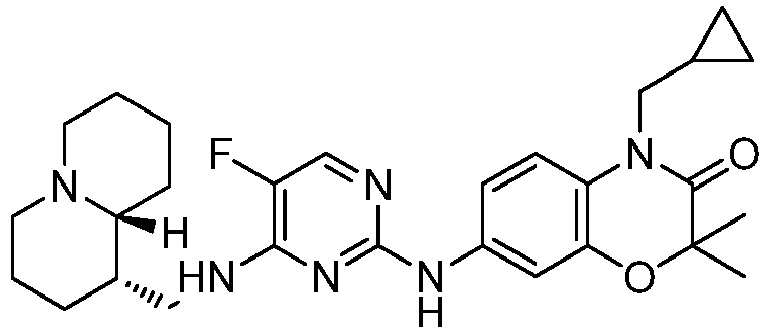
- Compound 18 was prepared as described in Example 1.
1H NMR (300 MHz; d6-DMSO) δ 8.99 (s, 1H), 7.81 (d, J=3.9Hz, 1H), 7.52 (s, 1H), 7.42 (m, 1H), 7.32 (d, J=8.7Hz, 1H), 7.048 (d, J=8.7Hz, 1H), 3.76 (d, J=6.6Hz, 2H), 3.54 (s, 2H), 2.72 (d, J=10.5Hz, 2H), 1.94 (m, 2H), 1.82 (m, 2H), 1.68 (d, J=12.0Hz, 2H), 1.48-1.27 (9H), 0.42 (m, 2H), 0.3 (m, 2H); m/z = 509.00 (M+H)+. -

- Compound 19 was prepared as described in Example 1.
1H NMR (300 MHz; d6-DMSO) δ 9.2 (s, 1H), 8.02 (s, 1H), 7.97 (d, J=9.3Hz, 1H), 7.83 (d, J=3.3Hz, 1H), 7.49 (m, 1H), 7.4 (d, J=9.3Hz, 1H), 3.66 (s, 4H), 3.54 (m, 2H), 2.76 (s, 4H), 2.69(m, 2H), 2.22 (s, 3H), 1.90-1.17 (m, 14H); m/z = 509.27 (M+H)+. -
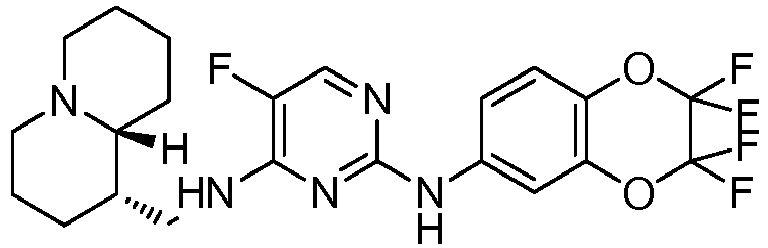
- Compound 20 was prepared as described in Example 1.
1H NMR (300 MHz; d6-DMSO) δ 9.36 (s, 1H), 8.08 (d, J=2.4Hz, 1H), 7.85 (d, J=3.6Hz, 1H), 7.55 (m, 1H), 7.38 (d, J=6.6Hz, 1H), 7.28 (s, 1H), 3.56 (d, J=5.1Hz, 2H), 2.71 (d, J=10.2Hz, 2H), 1.92-1.2 (m, 14H); 19F NMR δ -90.94, -166.2; m/z = 486.2 (M+H)+. -

- Compound 21 was prepared as described in Example 1.
1H NMR (300 MHz; d6-DMSO) δ 9.15 (s, 1H), 7.85 (d, J=1.8Hz, 1H), 7.48 (m, 1H), 7.30 (d, J=11.7Hz, 1H), 7.13 (s, 1H), 6.27 (d, J=8.4Hz, 1H), 3.72 (s, 3H), 3.63 (m, 2H), 2.7 (d, J=9.0Hz, 2H), 1.93-1.2 (m, 14H), 19F NMR δ -112.14, -166.5; m/z = 404.23 (M+H)+. -

- Compound 22 was prepared as described in Example 1.
1H NMR (300 MHz; d6-DMSO) δ 8.91 (s, 1H), 8.39 (s, 1H), 8.1 (d, J=2.1Hz, 1H), 7.79 (d, J=3.9Hz, 1H), 7.58 (d, J=8.7Hz, 1H), 7.48 (s, 1H), 7.41 (m, 1H), 6.99 (d, J=9.0Hz, 1H), 3.86 (s, 3H), 3.54 (m, 2H), 2.65 (m, 2H), 1.85-1.26 (m, 14H); m/z = 453.31 (M+H)+. -

- Compound 23 was prepared as described in Example 1.
1H NMR (300 MHz; d6-DMSO) δ 8.54 (s, 1H), 7.91 (d, J=7.2Hz, 1H), 7.78 (d, J=3.6Hz, 1H), 7.46 (s, 1H), 7.05 (d, J=11.7Hz, 1H), 3.37 (m, 2H), 2.71 (m, 2H), 2.67 (m, 2H), 2.41 (s, 3H), 1.82-1.12 (m, 14H), 0.75 (m, 2H), 0.65 (m, 2H); m/z = 496.24 (M+H)+. -

- Compound 24 was prepared as described in Example 1.
1H NMR (300 MHz; d6-DMSO) δ 9.07 (s, 1H), 8.54 (s, 1H), 8.21 (s, 1H), 7.76 (d, J=7.5Hz, 1H), 7.71-7.66 (m, 1H), 7.46 (m, 1H), 7.1 (t, J=9.3Hz, 1H), 3.71 (t, J=6.6Hz, 2H), 3.5 (m, 2H), 3.37 (t, J=7.5Hz, 2H), 2.31 (d, J=11.7Hz, 2H), 2.41 (t, J=7.2Hz, 2H), 1.94-1.27 (m, 14H); m/z = 493.32 (M+H)+. -
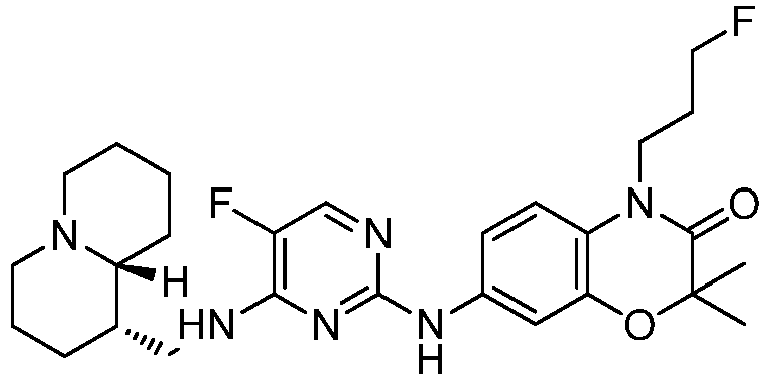
- Compound 25 was prepared as described in Example 1.
1H NMR (300 MHz; d6-DMSO) δ 9.0 (s, 1H), 7.8 (d, J=3.0Hz, 1H), 7.54 (s, 1H), 7.42 (m, 1H), 7.31 (d, J=8.4Hz, 1H), 6.97 (d, J=9.0Hz, 1H), 4.55 (t, J=5.7Hz, 2H), 4.39 (t, J=5.4Hz, 2H), 3.94 (t, J=6.9Hz, 2H), 3.55 (m, 2H), 2.70 (m, 2H), 1.97-1.29 (m, 17H), 19F NMR δ -73.4, -167.4; m/z = 515.36 (M+H)+. -

- Compound 26 was prepared as described in Example 1.
1H NMR (300 MHz; d6-DMSO) δ 9.0 (s, 1H), 7.81 (d, J=3.9Hz, 1H), 7.5-7.36 (m, 3H), 7.09 (d, J=8.7Hz, 1H), 4.55 (s, 2H), 3.76 (m, 2H), 3.54 (m, 2H), 2.70 (m, 2H), 1.78-1.2 (m, 14H), 0.425 (m, 2H), 0.31 (m, 2H); m/z = 481.26 (M+H)+. -

- Compound 27 was prepared as described in Example 1.
1H NMR (300 MHz; d6-DMSO) δ 9.49 (s, 1H), 8.56 (d, J=2.4Hz, 1H), 8.28 (d, J=2.4Hz, 1H), 7.87 (d, J=3.6Hz, 1H), 7.65 (m, 1H), 4.09 (q, J=7.2Hz, 2H), 3.58 (m, 2H), 2.72 (d, J=10.5Hz, 2H), 1.95-1.26 (m, 14H), 1.19 (t, J=6.6Hz, 2H), 19F NMR δ -73.9, -165.9; m/z = 492.35 (M+H)+. -

- Compound 28 was prepared as described in Example 1.
1H NMR (300 MHz; d6-DMSO) δ 8.23 (m, 1H), 7.77 (s, 1H), 7.27 (s, 1H), 3.51 (bs, 2H), 4.2 (s, 3H), 3.51 (s, 3H), 3.17 (d, J=11.7Hz, 2H), 1.98-1.36 (m, 14H), 0.86 (d, J=8.4Hz, 2H), 0.64 (d, J=5.1Hz, 2H); m/z = 512.29 (M+H)+. -

- Compound 29 was prepared as described in Example 1.
- Mono-SNAr product (75 mg, 1.0 eq), 3 ml of isopropyl alcohol, p-Toluenesulfonic acid monohydrate (1.5 eq) and the desired aniline (1.5 eq) were used and the reaction was heated at 70 °C overnight. After purification by preparative HPLC, the mixture was partitioned between 1M NaOH (30 mL) and EtOAc (30 mL). The aqueous layer was extracted with EtOAc (2 x 20 mL) and the combined organic extracts were dried (Na2SO4), filtered and the solvent removed under vacuum to leave a crude residue. The residue was lyophilized from MeCN / H2O to give the product as a solid. Compound 29 was obtained as a single enantiomer (and single diastereomer); purity = 99.26% by LC/MS; m/z = 500.29 (M+H)+. 1H NMR (300 MHz; d 6-DMSO) δ 8.72 (s, 1H), 8.46 (dd, J = 6.9, 2.7 Hz, 1H), 7.83 (d, J = 3.8 Hz, 1H), 7.58-7.53 (m, 2H), 7.40 (q, J = 13.8 Hz, 1H), 3.43 (t, J = 5.9 Hz, 2H), 2.74-2.62 (m, 2H), 1.91-1.55 (m, 7H), 1.49-1.06 (m, 7H); 19F NMR (300 MHz; d 6-DMSO) δ -112.6 (m), -117.2, -135.1, -135.6, -166.2; m/z = 500.29 (M+H)+.
-

- Compound 30 was prepared as described in Example 1.
- Mono-SNAr product (75 mg, 1.0 eq), 3 ml of isopropyl alcohol, p-Toluenesulfonic acid monohydrate (1.5 eq) and the desired aniline (1.5 eq) were used and the reaction was heated at 70 °C overnight. After purification by preparative HPLC, the mixture was partitioned between 1M NaOH (30 mL) and EtOAc (30 mL). The aqueous layer was extracted with EtOAc (2 x 20 mL) and the combined organic extracts were dried (Na2SO4), filtered and the solvent removed under vacuum to leave a residue. The residue was lyophilized from MeCN / H2O to give the product (73 mg, 58%) as a solid. Compound 30 was obtained as a single enantiomer (and single diastereomer); purity = 99.67% by LC/MS; m/z = 500.29 (M+H)+. 1H NMR (300 MHz; d 6-DMSO) δ 9.63 (s, 1H), 8.13 (d, J = 11.8 Hz, 1H), 8.06 (s, 1H), 7.91 (d, J = 3.7 Hz, 1H), 7.63 (br. d, J = 5.1 Hz, 1H), 7.27 (dt, J = 8.9, 1.9 Hz, 1H), 3.51-3.58 (m, 2H), 2.74 (br. d, J = 10.6 Hz, 2H), 1.93-1.65 (m, 7H), 1.45-1.13 (m, 7H); 19F NMR (300 MHz; d 6-DMSO) δ -109.7 (t), -113.7 (m), -136.1, -136.7, -165.1; m/z = 500.29 (M+H)+.
-

- Compound 31 was prepared as described in Example 1.
1H NMR (300 MHz; d6-DMSO) δ 9.19 (s, 1H), 8.38 (d, J=2.4Hz, 1H), 7.84 (d, J=3.6Hz, 1H), 7.52 (s, 1H), 4.07 (d, J=5.4Hz, 1H), 3.86 (d, J=6.9Hz, 2H), 3.56 (m, 1H), 3.15 (d, J=4.5Hz, 2H), 2.7 (m, 2H), 1.95-1.2 (m, 14H), 1.4 (s, 6H), 0.38 (m, 2H), 0.3 (m, 2H); m/z = 509.99 (M+H)+. -

-

- 2,4,5-trichloropyrimidine (16.7 g, 91.0 mmol) was added to a tared, sealed flask and weighed. The oil was dissolved in 54 mL THF and cooled to 0 °C. 1M aqueous NaOH solution (182 mL, 182 mmol) was added dropwise via an addition funnel, keeping the reaction at 0 °C. This was allowed to warm to room temperature and concentrated to remove THF. Additional water was added to maintain dissolution. The pH was adjusted to 6 with a small quantity of HCl, and the aqueous was washed 3 times with ethyl acetate. The pH was then brought below 1 with more HCl, and extracted six times with ethyl acetate. This layer was washed with brine and dried over sodium sulfate. Product solution was filtered, concentrated, and dried on the high vacuum to give 14.1 g of 2,5-dichloropyrimidin-4-ol as an oil (96%).
1H NMR (300 MHz; d6 -DMSO) δ 8.24 (s, 1H); m/z = 165 (M+H)+. -

- 5-amino-2-bromobenzonitrile (5.0 g, 25.4 mmol), cyclopropylboronic acid (4.36 g, 50.8 mmol), Cs2CO3 (49.62 g, 152.3 mmol), and tricyclohexylphosphine (2.85 g, 10.2 mmol) were weighed out and added to a large reaction tube with magnetic stir bar. Toluene (120 mL) and water (40 mL) were added, and the reaction was subjected to vigorous subsurface nitrogen sparging. Pd(OAc)2 (1.14 g, 5.1 mmol) was weighed out and added, the tube was sealed under nitrogen, and the reaction was heated overnight at 110 °C. This was then filtered with water and ethyl acetate washings. The combined washings were treated with saturated aqueous NaHCO3 and the layers were separated. The aqueous was extracted 4 more times with ethyl acetate, and the combined organic layer was washed twice with brine and dried over sodium sulfate. After filtration, concentration, and drying on the high vacuum, 7.65 g was obtained of 5-amino-2-cyclopropylbenzonitrile containing tricyclohexylphosphine derived byproducts. This was used without further purification.
1H NMR (300 MHz; d6 -DMSO) δ 6.94 - 6.58 (m, 3H), 5.34 (s, 2H), 1.98 - 1.90 (m, 1H), 0.91 (qd, 2H), 0.73 - 0.43 (m, 2H); m/z = 159 (M+H)+. -

- 5-amino-2-cyclopropylbenzonitrile (25.4 mmol; from the previous reaction) was transferred to a large reaction tube with magnetic stir bar in 250 mL isopropyl alcohol. 2,5-dichloropyrimidin-4-ol (4.20 g, 25.5 mmol) and p-toluenesulfonic acid monohydrate (14.50 g, 76.2 mmol) were weighed out and added. This was heated overnight at 110 °C. After that time, it was allowed to cool to room temperature and an orange precipitate was filtered off. The filtrate was concentrated to half volume, and a second precipitate crashed out which was filtered off. Again, the filtrate was concentrated to half volume and a third precipitate crashed out which was filtered off. Finally, further concentration crashed out a fourth precipitate which was collected and washed with hexane. This was dried on high vacuum to give 5.63 g of 5-(5-chloro-4-hydroxypyrimidin-2-ylamino)-2-cyclopropylbenzonitrile as a tosylate salt, containing 1.2 equivalents of p-toluenesulfonic acid (45% yield).
1H NMR (300 MHz; d6 -DMSO) δ 8.03 (d, 1H), 7.99 (s, 1H), 7.62 (dd, 1H), 7.47 (d, 2.4 H-tosylate), 7.11 (d, 2.4 H- tosylate), 7.05 (d, 1H), 2.27 (s, 3.6 H- tosylate), 2.09 (td, 1H), 1.10 - 1.00 (m, 2H), 0.84 - 0.65 (m, 2H); m/z = 287 (M+H)+. -

- 5-(5-chloro-4-hydroxypyrimidin-2-ylamino)-2-cyclopropylbenzonitrile, containing 1.2 equivalents of p-toluenesulfonic acid (1.00 g, 2.03 mmol) was weighed out and added to a flask with a magnetic stir bar. This was suspended in 11 mL POCl3 and the reaction was heated at reflux for 3 hours. This was evaporated, then quenched with cold 10% aqueous Na2CO3. The mixture was extracted 4 times with ethyl acetate and the combined organic layer was dried over sodium sulfate. This was filtered, concentrated onto a plug of silica, and purified by column chromatography. Pure product was concentrated and dried on the high vacuum to give 493 mg of 5-(4,5-dichloropyrimidin-2-ylamino)-2-cyclopropylbenzonitrile (80% yield, accounting for the mass of p-toluenesulfonic acid present in the starting material).
1H NMR (300 MHz; d6 -DMSO) δ 10.40 (s, 1H), 8.67 (s, 1H), 8.04 (d, 1H), 7.76 (dd, 1H), 7.06 (d, 1H), 2.16 - 2.02 (m, 1H), 1.10 - 0.99 (m, 2H), 0.84 - 0.71 (m, 2H); m/z = 305 (M+H)+. -

- ((1S,9aR)-octahydro-1H-quinolizin-9-yl)methanamine, di-HCl salt (55.4 mg, 0.23 mmol) was weighed out and added to a reaction vial with a magnetic stir bar. 5-(4,5-dichloropyrimidin-2-ylamino)-2-cyclopropylbenzonitrile (35.0 mg, 0.12 mmol) was weighed out and added followed by addition of 3 mL isopropyl alcohol and then diisopropylethylamine (0.120 mL, 0.69 mmol). This was heated overnight at 110 °C. The solvent was evaporated and the residue purified by preparative HPLC to obtain 26.5 mg of pure Compound 5 as a mono-formic acid salt (48% yield).
1H NMR (300 MHz; d6 -DMSO) δ 9.37 (s, 1H), 8.17 (s, 1H), 8.10 (s, 1H), 7.94 (s, 1H), 7.81 (dd, 1H), 7.64 (t, 1H), 6.96 (d, 1H), 3.56 (t, 2H), 2.80 (d, 2H), 2.25 - 1.89 (m, 5H), 1.89 - 1.76 (m, 1H), 1.74 - 1.41 (m, 6H), 1.35 (d, 2H), 1.20 (d, 1H), 1.02 (dt, 2H), 0.88 - 0.56 (m, 2H); m/z = 437 (M+H)+. -

- To a microwave vial, was added 2-chloro-5-fluoro-N-(((1S,9aR)-octahydro-1H-quinolizin-1-yl)methyl)pyrimidin-4-amine (prepared according to Example 1; 400 mg, 1.34 mmol, 1 equiv), 1-(5-amino-2-(oxetan-3-yloxy)phenyl)-4-methyl-1H-tetrazol-5(4H)-one (prepared as described in
WO2011/068898 ; 493 mg, 1.87 mmol, 1.4 equiv), rac-BINAP (181 mg, 0.291 mmol, 0.217 equiv), Cs2CO3 (1.31 g, 4.02 mmol, 3 equiv), Pd(OAc)2 (26 mg, 0.116 mmol, 0.0870 equiv), and dioxane (10 mL). The microwave vial was capped and sonicated under vacuum for 5 min. The reaction mixture was heated in the microwave at 120 °C for 2 h. The cooled reaction mixture was filtered using a pad of celite and rinsed with dioxane, and the filtrate was concentrated. The crude product was purified by flash chromatography and eluted with DCM:2M NH3/MeOH = 100:0 to 94:4 using 1% 2M NH3/MeOH increments to provide the desired product Compound 14 1-(5-(4-(((1S,9aR)-octahydro-1H-quinolizin-1-yl)methylamino)-5-fluoropyrimidin-2-ylamino)-2-(oxetan-3-yloxy)phenyl)-4-methyl-1H-tetrazol-5(4H)-one (535 mg, 76%) as a solid.
1H NMR (300 MHz; d6-DMSO) δ 9.10 (s, 1H), 7.92 (s, 1H), 7.71-7.81 (m, 2H), 7.45 (bs, 1H), 6.77-6.81 (d, 1H, J = 9.3Hz), 5.22-5.27 (p, 1H, J = 4.8Hz), 4.80-4.84 (t, 2H, J = 6Hz), 4.40-4.44 (t, 2H, J = 5.4Hz), 3.62 (s, 3H), 3.48 (bs, 2H), 2.69 (bs, 2H), 1.06-2.99 (m, 14H); 19F NMR (282 MHz; d6-DMSO) δ -167.2 (s); m/z = 526 (M+H)+. -

-

- A suspension of 2,2-dimethyl-6-nitro-2H-benzo[b][1,4]oxazin-3(4H)-one (1.00 g, 4.50 mmol, 1 equiv) and sodium azide (1.76 g, 27.0 mmol, 6 equiv) in ACN (50 mL) under argon was cooled to -10 °C (external temperature). While maintaining the temperature at -10 °C, trifluoromethanesulfonic anhydride (2.27 mL, 3.81 g, 13.5 mmol, 3 equiv) was added slowly dropwise. The reaction was allowed to warm to RT overnight. TLC, LCMS indicated a 1:1 ratio of reactant:product. Reaction was cooled to -10 °C, and was slowly quenched with ice-cold saturated NaHCO3 and diluted with EtOAc. The layers were separated, and the organic layer was washed with water 1x, dried over Na2SO4, and concentrated to dryness. The crude product was purified by flash chromatography and eluted with DCM to afford the product nitro tetrazole (609 mg, 55%) as a white solid and recovered 450 mg of reactant.
1H NMR (300 MHz; d6 -DMSO) δ 8.60-8.61 (d, 1H, J = 2.4Hz), 8.28-8.31 (m, 1H), 7.46-7.49 (d, 1H, J = 9Hz), 1.83 (s, 3H); m/z = 248 (M+H)+. -

- A Parr vessel was charged with the nitro tetrazole (330 mg, 1.33 mmol), EtOH (4 mL), and 20 % Pd(OH)2/C (33 mg, 10% by weight of the starting nitro compound) giving a suspension. The vessel was sealed, degassed, and back-filled with H2 (x3). The vessel was then charged with 40 psi H2 and allowed to shake for 3 h. LCMS analysis indicated a 10:90 ratio of hydroxamine:product. Additional catalyst was added 20% Pd(OH)2/C (33 mg, 10% by weight of the starting nitro compound) and allowed to shake for 1 h. LCMS analysis indicated a 10:90 ratio of hydroxamine:product. The reaction mixture was filtered through a pad of celite, and the pad of celite was rinsed with MeOH. The filtrate was evaporated to dryness. The crude product was absorbed onto silica gel and purified by flash chromatography and eluted with hex:EtOAc = 100:0 to 30%-40% EtOAc using 10% EtOAc increments to afford the product amine tetrazole (269 mg, 93%) as a white solid.
1H NMR (300 MHz; d6 -DMSO) δ 7.12-7.13 (d, 1H, J = 2.7Hz), 6.93-6.95 (d, 1H, J = 8.7Hz), 6.58-6.61 (dd, 1H, J = 2.4Hz, J = 8.7Hz), 5.33 (bs, 2H), 1.69 (s, 3H); m/z = 218 (M+H)+. -

- A mixture of 2-chloro-5-fluoro-N-(((1S,9aR)-octahydro-1H-quinolizin-1-yl)methyl)pyrimidin-4-amine (prepared as described in Example 1; 42 mg, 0.142 mmol, 1 equiv), amine tetrazole (37 mg, 0.170 mmol, 1.2 equiv), and PTSA monohydrate (27 mg, 1.42 mmol, 1 equiv) in IPA (2 mL) was heated to 70 °C for 3 d. LCMS indicated 1% unreacted 2-chloro-5-fluoro-N-(((1S,9aR)-octahydro-1H-quinolizin-1-yl)methyl)pyrimidin-4-amine. After cooling the reaction to ambient temperature, 3-amino benzoic acid (20 mg, 0.142 mmol, 1 equiv) was added and heated to 70 °C overnight to scavenge the unreacted pyrimidine. After cooling to ambient temperature, the crude mixture was concentrated to dryness. The residue was taken in ice-cold water, EtOAc, and aqueous IN NaOH. The aqueous and organic layers were partitioned, and the organic layer washed with IN NaOH (1 x 5 mL). The organic layer was dried (Na2SO4), filtered, and the solvent removed under vacuum. The crude product was purified by prepTLC using DCM:2M NH3/MeOH = 1:1 to provide the desired product Compound 98 (56 mg, 83%) as a solid.
1H NMR (300 MHz; d6-DMSO) δ 9.27 (s, 1H), 8.53 (s, 1H), 7.85-7.87 (m, 1H), 7.51-7.61 (m, 2H), 7.07-7.15 (d, 1H, J = 9Hz), 3.49-3.58 (m, 2H), 2.51-2.74 (m, 2H), 0.986-2.09 (m, 20H); 19F NMR (282 MHz; d6-DMSO) δ -166.8 (s); m/z = 480 (M+H)+. -

- Compound 128 was prepared as described in Example 1.
MS (ES) 495 (M+H). -

- Compound 129 was prepared as described in Example 1.
MS (ES) 533 (M+H). -

- Compound 130 was prepared as described in Example 1.
MS (ES) 579 (M+H). -

- Compound 131 was prepared as described in Example 1.
MS (ES) 595 (M+H). -

- Compound 132 was prepared as described in Example 1.
MS (ES) 569 (M+H). -

- Compound 133 was prepared as described in Example 1.
MS (ES) 597 (M+H). -

- Compound 134 was prepared as described in Example 1.
MS (ES) 675 (M+H). -

- Compound 135 was prepared as described in Example 1.
MS (ES) 539 (M+H). -

- Compound 136 was prepared as described in Example 1.
MS (ES) 553 (M+H). -

- Compound 137 was prepared as described in Example 1.
MS (ES) 543 (M+H). -

- Compound 138 was prepared as described in Example 1.
MS (ES) 484 (M+H). -

- Compound 139 was prepared as described in Example 1.
MS (ES) 501 (M+H). -

- Compound 140 was prepared as described in Example 1.
MS (ES) 491 (M+H). -

- Compound 141 was prepared as described in Example 1.
MS (ES) 466 (M+H). -
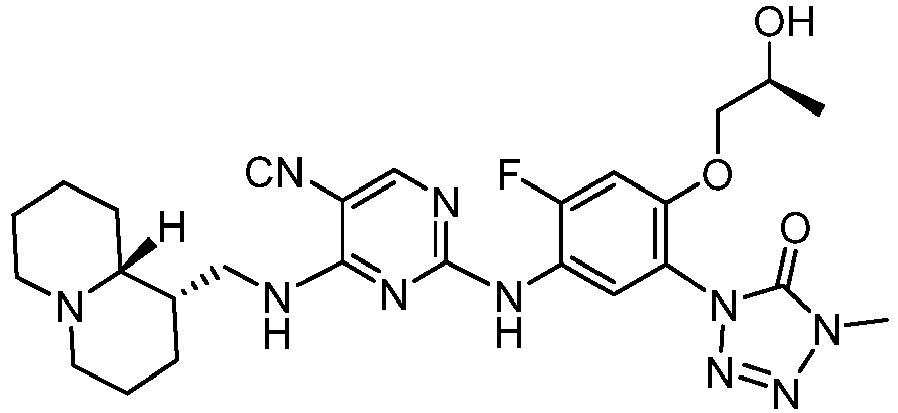
- Compound 142 was prepared as described in Example 1.
MS (ES) 553 (M+H). -

- Compound 143 was prepared as described in Example 1.
MS (ES) 553 (M+H). -

- Compound 144 was prepared as described in Example 1.
MS (ES) 462 (M+H). -

- Compound 145 was prepared as described in Example 1.
MS (ES) 455 (M+H). -

- Compound 146 was prepared as described in Example 1.
MS (ES) 504 (M+H). -

- Compound 147 was prepared as described in Example 1.
MS (ES) 488 (M+H). -

- Compound 148 was prepared as described in Example 1.
MS (ES) 560 (M+H). -

- Compound 149 was prepared as described in Example 1.
MS (ES) 546 (M+H). -

- Compound 150 was prepared as described in Example 1.
MS (ES) 609 (M+H). -

- Compound 151 was prepared as described in Example 1.
MS (ES) 567 (M+H). -

- Compound 152 was prepared as described in Example 1.
MS (ES) 563 (M+H). -
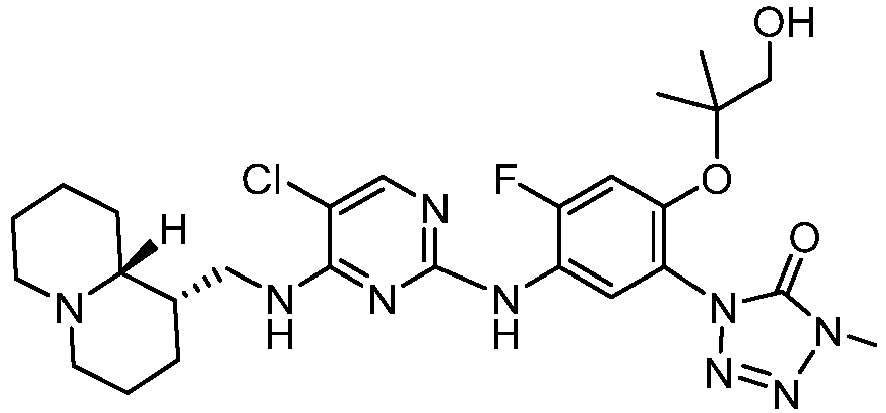
- Compound 153 was prepared as described in Example 1.
MS (ES) 577 (M+H). -

- Compound 154 was prepared as described in Example 1.
MS (ES) 560 (M+H). -

- Compound 155 was prepared as described in Example 1.
MS (ES) 577 (M+H). -

- Compound 156 was prepared as described in Example 1.
MS (ES) 567 (M+H). - The inhibition of PKC-alpha, PKC-beta, PKC-delta, PKC epsilon and PKC-theta activity is determined via ELISA as follows: NUNC MAXISORP (#436110) or Costar High Binding (#3922) plates are coated with 0.01 mg/ml Neutravidin (Pierce #PI-31000) in 1x PBS (100 µL/well) for 18-24 hours at 4 °C. When ready to be used, plates are washed with 1x PBST and then blocked with 2% BSA in 1x PBST (100 µL/well) for a minimum of 1 hour at room temperature. The reactions are conducted in a volume of 60 µL/well. When ready to begin, the plates are washed with 1x PBST to remove the 2% BSA blocking solution. Reaction solution containing the necessary buffer components as well as the appropriate concentrations of ATP and peptide substrate is then added to each well (see Table 3). Appropriate concentrations of test compound is then added - with the volume added should taking into consideration the DMSO tolerance of the kinases being about 0.2%. The reaction is then initiated by the addition of kinase - the approximate final concentration of which is listed in Table 3 (the concentration may vary depending on the batch to batch variability in the activity of enzymes). After allowing the reaction to stand at room temperature for 20 minutes, the plates are then washed with 1x PBST.
Table 3 Kinase Buffer components [ATP] (uM) [peptide] (uM) Time (min) 1° and 2° antibodies Notes PKCs α: ∼ 8 ng/ml 20 mM Hepes pH 7.4 1 µM 1 µM PKC peptide (biotin-RFARKGSLRQKNV) (Invitrogen #P2760) 20 min Rabbit pSer PKC substrate Ab (Cell Signaling #2261); HRP-goat a-rabbit (Jackson Immunoresearch #111-035-003) 0.15 mg/ml DAG (Sigma #D0138) β: ∼ 16 ng/ml 5 mM MgCl2 0.75 mg/ml Phospho serine (Sigma #P6641) δ: ∼ 13 ng/ml 0.2 mM CaCl2 ε: ∼ 13 ng/ml 1 mM DTT DMSO tolerance ∼ 0.2% θ: ∼ 8 ng/ml 0.05% Chaps - After removal of the reaction mixture from the plate and washing with 1x PBST, an antibody developing solution containing a 1:10,000 dilution of the appropriate primary and secondary antibodies (Table 3) in a 0.1% BSA solution in 1x PBST is then added to each well (100 µL/well). This is then allowed to stand at room temperature for a minimum of 1 hour. After this time, the plates are again washed with 1x PBST. The SuperSignal ELISA Pico Chemiluminescent substrate (Pierce #PI-37069) was then added (100 µL/well) and the plate is read on a luminescence plate reader.
- Alternatively, the inhibition of PKC activity is measured by monitoring the production of phosphorylated peptide by fluorescence polarization at different concentrations of the inhibitor. Reactions are carried out in 96-well plate format with a total volume of 20 µL containing 20 mM HEPES, pH 7.4, 5 mM MgCl2, 0.2 mM CaCl2, 1 mM DTT, 0.02% Brij-35, 0.1 mg/ml phosphatidylserine, 0.02 mg/ml dioleoyl-sn-glycerol and 5 µM each of ATP and the peptide substrate. Compounds are first diluted serially in DMSO and then transferred to a solution containing the above concentrations of HEPES, MgCl2, CaCl2, DTT, and Brij-35 to yield 5x compound solutions in 2% DMSO, which is then added to the reaction solution. Reactions are initiated by the addition of PKC at a typical concentration as described in Table 4, and then allowed to incubate at room temperature for 20 minutes. At the end of this time, a combination of quench (EDTA) and detection (peptide tracer and antibody) reagents is added using the protocol of Invitrogen P2748. After a 30 minutes period of incubation, the amount of phosphorylated peptide generated is measured by fluorescence polarization (Ex = 485 nm, Em = 535 nm) using a Tecan Polarian instrument.
Table 4 Peptide substrate SEQ ID Enzyme source Typical enzyme concentration PKC theta RFARKGSLRQKNV Seq ID No. 1 Upstate Biotechnologies, Temecula, CA, cat. #14-444 40 ng/ml PKC epsilon RFARKGSLRQKNV Seq ID No. 1 Upstate Biotechnologies, Temecula, CA, cat. #14-518 50 ng/ml - HEK-FLPTREX cells are stably transfected with pcDNA5/FRT/TO+hTRPV4a, rat TRPV1-HA or rTRPA1-HA are grown in Dulbecco's Modified Eagle's Medium (DMEM) containing 10% tetracycline-free fetal bovine serum, hygromycin (50 µg/ml) and blasticidin (10 µg/ml). Cells are treated with tetracycline (0.1 µg/ml, 20 h) to induce TRP expression. DRG from thoracic and lumbar spinal cord of rats or mice were minced in cold Hank's Balanced Salt Solution (HBSS) and incubated for 60 at 37 °C in DMEM containing 1 mg/ml of collagenase type IA and 0.1 mg/ml of DNAse type IV, pelleted and incubated with 0.25% trypsin for 30 minutes. Neurons are pelleted, suspended in DMEM containing 10% fetal bovine serum, 10% horse serum, 100 U/ml penicillin, 0.1 mg/ml streptomycin, 2 mM glutamine, dissociated by gentle trituration until the solution appears cloudy and homogeneous and plated on glass coverslips coated with PolyOnitine/laminin. Neurons are cultured for 3-4 days before the experiment.
- Cells grown on coverslips or on a 96 multiwell plate are incubated in HBSS (pH 7.4) containing Ca2+ and Mg2+, 20 mM HEPES buffer, 0.1% BSA, 100 U/ml penicillin, 100 µg/ml streptomycin, with 2.5-5 µM Fura-2AM (Invitrogen) for 20-45 minutes at 37 °C. Cells are washed and fluorescence is measured at 340 nm and 380 nm excitation and 510 nm emission in a F-2500 spectrophotometer, or in a Flexstation 3 Microplate Reader III (for the measurement of the calcium in the cell population) or using a Zeiss Axiovert microscope, an ICCD video camera and a video microscopy acquisition program (for the measurement of the calcium influx in the single neurons). Substances are injected directly into the chamber (20 ml into 2 ml, for the spectrophotometer; 20 ml in 200 ml for the Flexstation, 50 ml in 350 ml in the chamber for the single cells).
- Mechanical pain is quantified as the number of times the hind paw is withdrawn in response to 5 applications of a 0.173 mN von Frey hair. Responses are expressed as a percentage (e.g. 3 withdrawals out of 5 are recorded as 60%) and mechanical hyperalgesia defined as increase in the percentage of withdrawal compared to basal measurement. 2) Mechanical pain is quantified using the 'up-down paradigm', determining the 50% response threshold to the von Frey filaments applied to the mid-plantar surface for 5 s or until a withdrawal response occurred. Von Frey filaments are in this range of intensities: 1.65, 2.44, 2.83, 3.22, 3.61, 3.84, 4.08.
- Thermal hyperalgesia is assessed in mice using a plantar test apparatus and quantified as the latency of paw withdrawal to a radiant heat. Thermal hyperalgesia is defined as a decrease in the withdrawal latency compared to the basal measurement. After measuring basal level mice, under light halothane anesthesia (5%), are injected with testing compound into the left or right paws (5-10 µl intraplantar injection) and paw withdrawal measurements repeated at different time point. To assess PAR2 TRPV1, TRPV4 and TRPA1 mediated hyperalgesia and potentiation of TRPV-mediated responses, mice are treated with PAR2-AP for 15 minutes followed by capsaicin, 4αPDD or HNE. To assess the role of protein kinases, the antagonists or the corresponding vehicles are injected 20-30 minutes before the challenge with agonists. The effects induced by the different treatments are evaluated within the same rat comparing the responses recorded in the right paw (receiving for example saline, or vehicle) with the responses obtained in the left paw (receiving for example PAR2-AP or 4αPDD).
- Formalin induced hyperalgeisa is assessed using 5% solution of formalin administered by intradermal injection into the dorsal surface of the mouse or rat forepaw to induce a painful behavior. Pain is accessed on a four-level scale related to posture: 0, normal posture; 1, with the injected paw remaining on the ground but not supporting the animal; 2, with the injected paw clearly raised; and 3, with the injected paw being licked, nibbled, or shaken. Animals are observed and scored for behavior at 3 minutes after the injection (defined as initial phase that results from the direct stimulation of nociceptors), and then at 30-60 minutes after the injection (defined as second phase that involves a period of sensitization during which inflammatory phenomena occur). The nociceptive behavioral score for each 3-minutes interval is calculated as the weighted average of the number of seconds spent in each behavior. 2.5% solution of formalin is administered by intraplantar injection and thermal and mechanical pain measured as described above after 30-60 minutes. To assess the role of protein kinases, antagonists or their vehicles (control) are injected into the right paws 20-30 minutes before formalin. Nociceptive behavior will be scored for each rats and compared to control.
- Compounds 1-156 were tested in a whole cell functional assay for PKC mediated IL-2 production as follows. Human primary T cell isolation and culture: Human primary T cells were prepared as follows. Whole blood was obtained from a healthy volunteer, mixed 1:1 with PBS, layered on to Ficoll Hypaque (Amersham Pharmacia Biotech, Piscataway, NJ, Catalog #17-1440-03) in 2:1 blood/PBS:ficoll ratio and centrifuged for 30 minutes at 4 °C at 1750 rpm. The cells at the serum: ficoll interface were recovered and washed twice with 5 volumes of PBS. These freshly isolated human peripheral blood mononuclear cells were cultured in Yssel's medium containing 40 U/ml IL2 in a flask pre-coated with 1 µg/ml αCD3 and 5 µg/ml αCD28 (Anti-Human CD3, BD Pharmingen Catalog #555336, Anti-Human CD28, Beckman Coulter Catalog #IM1376). The cells were stimulated for 3-4 days, then transferred to a fresh flask and maintained in RPMI (RPMI-1640 with L-Glutamine; Mediatech, Inc., Herndon VA, cat. #10-040-CM) with 10% FBS and 40 U/ml IL-2. The primary T-cells were then washed twice with PBS to remove the IL-2.
- Primary T cell stimulation and IL2 ELISA: Human primary T cells (100,000 cells per well) were pre-incubated with or without test compound in Yssel's medium for 1 hour at 37 °C. Cells were then stimulated by transferring them to round-bottom 96-well plates pre-coated with 1 µg/ml αCD3 and 5 µg/ml αCD28. For counter assay, cells were instead stimulated by adding 8X stock solutions of PMA and ionomycin in Yssels (for final concentrations of 0.5ng/ml PMA and 0.1uM ionomycin, both from Calbiochem). Cells were incubated at 37 °C for 24 hours before 100 µL supernatants were harvested for quantification of IL-2 by ELISA using Human IL-2 Duoset ELISA Kit from R and D Systems, Cat. # DY202E.
- IC50 data (micromolar) is shown in Table 5 below.
Table 5 Compound IL2 ELISA, Human primary T cell, anti-CD3+CD28, 8pt (µM) 1 0.1069 2 0.3718 3 1.68 4 0.1419 5 0.1201 6 0.0889 7 0.4279 8 0.1057 9 0.1947 10 0.5944 11 1.079 12 0.8891 13 4.48 14 0.2011 15 10.65 16 0.7025 17 0.4052 18 0.1265 19 0.5536 20 1.075 21 0.7019 22 0.6972 23 0.0663 24 3.45 25 0.8529 26 0.1694 27 0.6518 28 1.815 29 1.803 30 0.6716 31 0.3592 32 0.1587 33 0.1173 34 0.6696 35 0.0542 36 0.1124 37 0.0872 38 0.1264 39 0.4177 40 0.2666 41 0.0723 42 0.3481 43 0.4122 44 1.18 45 0.224 46 1.12 47 0.6487 48 3.815 49 0.8967 50 1.996 51 0.5315 52 0.4423 53 2.526 54 1.098 55 0.6073 56 3.797 57 3.586 58 18.62 59 0.16 60 1.356 61 1.979 62 1.872 63 1.161 64 0.4593 65 0.0728 66 1.479 67 1.077 68 0.95 69 0.265 70 1.53 71 3.747 72 1.271 73 3.269 74 2.194 75 2.912 76 6.448 77 2.418 78 2.241 79 5.354 80 2.484 81 1.308 82 1.306 83 3.872 84 15.4 85 3.314 86 11.04 87 8.257 88 12.73 89 14.58 90 9.82 91 7.943 92 9.457 93 3.922 94 2.573 95 1.74 96 4.981 97 5.41 98 0.0774 99 0.0509 100 4.214 101 10.69 102 12.64 103 26.55 104 26.8 105 11.75 106 21.47 107 17.07 108 41.2 109 6.576 110 10.71 111 12.5 112 21.72 113 0.018 114 0.0365 115 0.0225 116 0.0074 117 0.0117 118 0.076 119 0.0357 120 0.0093 121 0.1414 122 0.0206 123 0.0418 124 0.0031 125 1.784 126 1.602 127 0.8239 128 1.937 129 1.336 130 0.4443 131 1.305 132 1.238 133 0.9923 134 0.9084 135 5008 136 0.1761 137 9999 138 0.0493 139 0.0175 140 0.0276 141 3.549 142 0.0662 143 0.1468 144 12.39 145 4.628 146 1.976 147 5.06 148 1.592 149 0.2655 150 1.139 151 0.3055 152 0.0898 153 0.8319 154 0.1877 155 0.1358 156 0.0276
Claims (15)
- A compound of formula (I):
 R11 is selected from hydrogen, alkyl, substituted alkyl, alkoxy, substituted alkoxy, amino, substituted amino, cyano, halogen, acyl and aminoacyl;Y1 and Y2 are hydrogen;Ar1 is selected from aryl, substituted aryl, heteroaryl, and substituted heteroaryl;or a salt or stereoisomer thereof.
 - A compound according to claim 1, which is a compound of formula (II):
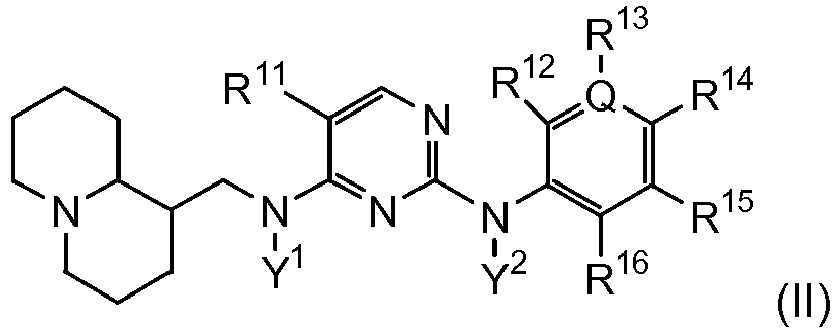 Q is C or N; andR12, R13, R14, R15, and R16 are independently selected from hydrogen, alkyl, substituted alkyl, alkenyl, substituted alkenyl, alkynyl, substituted alkynyl, halogen, cyano, hydroxyl, alkoxy, substituted alkoxy, amino, substituted amino, acylamino, aminocarbonylamino, alkoxycarbonylamino, acyl, carboxyl, carboxyl ester, aminoacyl, aminocarbonyloxy, nitro, sulfonyl, sulfonylamino, aminosulfonyl, sulfur pentafluoride, aryl, substituted aryl, cycloalkyl, substituted cycloalkyl, heteroaryl, substituted heteroaryl, heterocyclyl, and substituted heterocyclyl, or R14 and R15 together with the carbon atoms to which they are attached form aryl, substituted aryl, heteroaryl, substituted heteroaryl, heterocyclyl, or substituted heterocyclyl;or a salt or stereoisomer thereof.
 - A compound according to claim 2, wherein R12, R13, R14, R15, and R16 are independently selected from hydrogen, alkyl, substituted alkyl, halogen, cyano, alkoxy, substituted alkoxy, sulfur pentafluoride, aryl, substituted aryl, cycloalkyl, substituted cycloalkyl, heteroaryl, substituted heteroaryl, heterocyclyl, and substituted heterocyclyl, or R14 and R15 together with the carbon atoms to which they are attached form aryl, substituted aryl, heteroaryl, substituted heteroaryl, heterocyclyl, or substituted heterocyclyl.
- A compound according to claim 2, which is a compound of formula (IIa):

- A compound according to claim 1, which is a compound of formula (III):

R12, R13, R14, R15, and R16 are independently selected from hydrogen, alkyl, substituted alkyl, alkenyl, substituted alkenyl, alkynyl, substituted alkynyl, halogen, cyano, hydroxyl, alkoxy, substituted alkoxy, amino, substituted amino, acylamino, aminocarbonylamino, alkoxycarbonylamino, acyl, carboxyl, carboxyl ester, aminoacyl, aminocarbonyloxy, nitro, sulfonyl, sulfonylamino, aminosulfonyl, sulfur pentafluoride, aryl, substituted aryl, cycloalkyl, substituted cycloalkyl, heteroaryl, substituted heteroaryl, heterocyclyl, and substituted heterocyclyl, or R14 and R15 together with the carbon atoms to which they are attached form aryl, substituted aryl, heteroaryl, substituted heteroaryl, heterocyclyl, or substituted heterocyclyl;
or a salt or stereoisomer thereof. - A compound according to claim 5, which is a compound of formula (IIIa):
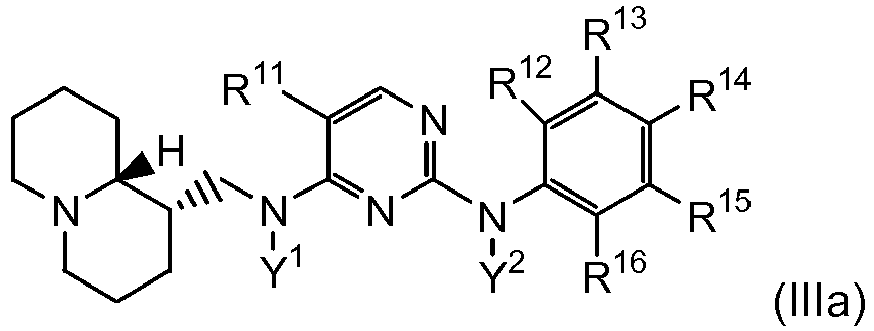
- A compound according to claim 1, which is a compound of formula (IV):

R12, R14, R15, and R16 are independently selected from hydrogen, alkyl, substituted alkyl, alkenyl, substituted alkenyl, alkynyl, substituted alkynyl, halogen, cyano, hydroxyl, alkoxy, substituted alkoxy, amino, substituted amino, acylamino, aminocarbonylamino, alkoxycarbonylamino, acyl, carboxyl, carboxyl ester, aminoacyl, aminocarbonyloxy, nitro, sulfonyl, sulfonylamino, aminosulfonyl, sulfur pentafluoride, aryl, substituted aryl, cycloalkyl, substituted cycloalkyl, heteroaryl, substituted heteroaryl, heterocyclyl, and substituted heterocyclyl, or R14 and R15 together with the carbon atoms to which they are attached form aryl, substituted aryl, heteroaryl, substituted heteroaryl, heterocyclyl, or substituted heterocyclyl;
or a salt or stereoisomer thereof. - A compound according to claim 7, which is a compound of formula (IVa):

- A compound according to claim 1, which is a compound selected from:Compound 1: 5-(4-(((1S,9aR)-octahydro-1H-quinolizin-1-yl)methylamino)-5-fluoropyrimidin-2-ylamino)-2-cyclopropylbenzonitrile;Compound 2: N2-(4-cyclopropyl-2-fluoro-5-(1H-tetrazol-1-yl)phenyl)-5-fluoro-N4-(((1S,9aR)-octahydro-1H-quinolizin-1-yl)methyl)pyrimidine-2,4-diamine;Compound 3: 1-(5-(4-(((1S,9aR)-octahydro-1H-quinolizin-1-yl)methylamino)-5-fluoropyrimidin-2-ylamino)-2-cyclopropyl-4-fluorophenyl)-4-methyl-1H-tetrazol-5(4H)-one;Compound 4: 5-fluoro-N4-(((1S,9aR)-octahydro-1H-quinolizin-1-yl)methyl)-N2-(4-methyl-3-(1H-tetrazol-1-yl)phenyl)pyrimidine-2,4-diamine;Compound 5: 5-(4-(((1S,9aR)-octahydro-1H-quinolizin-9-yl)methylamino)-5-chloropyrimidin-2-ylamino)-2-cyclopropylbenzonitrile;Compound 6: 5-fluoro-N4-(((1S,9aR)-octahydro-1H-quinolizin-1-yl)methyl)-N2-(4-methoxy-3-(5-methyl-1H-tetrazol-1-yl)phenyl)pyrimidine-2,4-diamine;Compound 7: 5-fluoro-N2-(2-fluoro-5-(5-methyl-1H-tetrazol-1-yl)phenyl)-N4-(((1S,9aR)-octahydro-1H-quinolizin-1-yl)methyl)pyrimidine-2,4-diamine;Compound 8: 5-fluoro-N2-(4-fluoro-3-(5-methyl-1H-tetrazol-1-yl)phenyl)-N4-(((1S,9aR)-octahydro-1H-quinolizin-1-yl)methyl)pyrimidine-2,4-diamine;Compound 9: 5-(4-(((1S,9aR)-octahydro-1H-quinolizin-1-yl)methylamino)-5-fluoropyrimidin-2-ylamino)-2-methylbenzonitrile;Compound 10: 3-(4-(((1S,9aR)-octahydro-1H-quinolizin-1-yl)methylamino)-5-fluoropyrimidin-2-ylamino)benzonitrile;Compound 11: 5-fluoro-N4-(((1S,9aR)-octahydro-1H-quinolizin-1-yl)methyl)-N2-(3,5-dimethoxyphenyl)pyrimidine-2,4-diamine;Compound 12: 5-(4-(((1S,9aR)-octahydro-1H-quinolizin-1-yl)methylamino)-5-fluoropyrimidin-2-ylamino)-2-cyclopropyl-4-fluorobenzonitrile;Compound 13: 5-fluoro-N4-(((1S,9aR)-octahydro-1H-quinolizin-1-yl)methyl)-N2-phenylpyrimidine-2,4-diamine;Compound 14: 1-(5-(4-(((1S,9aR)-octahydro-1H-quinolizin-1-yl)methylamino)-5-fluoropyrimidin-2-ylamino)-2-(oxetan-3-yloxy)phenyl)-4-methyl-1H-tetrazol-5(4H)-one;Compound 15: 1-(5-(4-(((1S,9aR)-octahydro-1H-quinolizin-1-yl)methylamino)-5-fluoropyrimidin-2-ylamino)-2-cyclopropyl-4-methylphenyl)-4-methyl-1H-tetrazol-5(4H)-one;Compound 16: 7-(4-(((1S,9aR)-octahydro-1H-quinolizin-1-yl)methylamino)-5-fluoropyrimidin-2-ylamino)-4-isopropyl-2,2-dimethyl-2H-benzo[b][1,4]oxazin-3(4H)-one;Compound 17: 1-(3-(4-(((1S,9aR)-octahydro-1H-quinolizin-1-yl)methylamino)-5-fluoropyrimidin-2-ylamino)-5-methoxyphenyl)-4-methyl-1H-tetrazol-5(4H)-one;Compound 18: 7-(4-(((1S,9aR)-octahydro-1H-quinolizin-1-yl)methylamino)-5-fluoropyrimidin-2-ylamino)-4-(cyclopropylmethyl)-2,2-dimethyl-2H-benzo[b][1,4]oxazin-3(4H)-one;Compound 19: 5-fluoro-N2-(3-(trifluoromethyl)-4-morpholinophenyl)-N4-(((1S,9aR)-octahydro-1H-quinolizin-1-yl)methyl)pyrimidine-2,4-diamine;Compound 20: 5-fluoro-N2-(2,2,3,3-tetrafluoro-2,3-dihydrobenzo[b][1,4]dioxin-7-yl)-N4-(((1S,9aR)-octahydro-1H-quinolizin-1-yl)methyl)pyrimidine-2,4-diamine;Compound 21: 5-fluoro-N2-(3-fluoro-5-methoxyphenyl)-N4-(((1S,9aR)-octahydro-1H-quinolizin-1-yl)methyl)pyrimidine-2,4-diamine;Compound 22: 5-fluoro-N4-(((1S,9aR)-octahydro-1H-quinolizin-1-yl)methyl)-N2-(4-methoxy-3-(oxazol-5-yl)phenyl)pyrimidine-2,4-diamine;Compound 23: N2-(4-cyclopropyl-2-fluoro-5-(5-methyl-1H-tetrazol-1-yl)phenyl)-5-fluoro-N4-(((1S,9aR)-octahydro-1H-quinolizin-1-yl)methyl)pyrimidine-2,4-diamine;Compound 24: N2-[3-(1,1-dioxo-isothiazolidin-2-yl)-4-fluoro-phenyl]-5-fluoro-N4-(((1S,9aR)-octahydro-1H-quinolizin-1-yl)methyl)-pyrimidine-2,4-diamine;Compound 25: 7-(4-(((1S,9aR)-octahydro-1H-quinolizin-1-yl)methylamino)-5-fluoropyrimidin-2-ylamino)-4-(3-fluoropropyl)-2,2-dimethyl-2H-benzo[b][1,4]oxazin-3(4H)-one;Compound 26: 7-(4-(((1S,9aR)-octahydro-1H-quinolizin-1-yl)methylamino)-5-fluoropyrimidin-2-ylamino)-4-(cyclopropylmethyl)-2H-benzo[b][1,4]oxazin-3(4H)-one;Compound 27: 7-(4-(((1S,9aR)-octahydro-1H-quinolizin-1-yl)methylamino)-5-fluoropyrimidin-2-ylamino)-4-ethyl-2,2-difluoro-2H-pyrido[3,2-b][1,4]oxazin-3(4H)-one;Compound 28: N2-(5-(1-methyl-1H-tetrazol-5-yloxy)-4-cyclopropyl-2-fluorophenyl)-5-fluoro-N4-(((1S,9aR)-octahydro-1H-quinolizin-1-yl)methyl)pyrimidine-2,4-diamine;Compound 29: 5-fluoro-N2-(3-pentafluorosulfanyl-6-fluoro-phenyl)-N4-(((1S,9aR)-octahydro-1H-quinolizin-1-yl)methyl)pyrimidine-2,4-diamine;Compound 30: 5-fluoro-N2-(3-pentafluorosulfanyl-5-fluoro-phenyl)-N4-(((1S,9aR)-octahydro-1H-quinolizin-1-yl)methyl)pyrimidine-2,4-diamine;Compound 31: 7-(4-(((1S,9aR)-octahydro-1H-quinolizin-1-yl)methylamino)-5-fluoropyrimidin-2-ylamino)-4-(cyclopropylmethyl)-2,2-dimethyl-2H-pyrido[3,2-b][1,4]oxazin-3(4H)-one;Compound 32: 5-chloro-N2-(4-cyclopropyl-2-fluoro-5-(1H-tetrazol-1-yl)phenyl)-N4-(((1S,9aR)-octahydro-1H-quinolizin-1-yl)methyl)pyrimidine-2,4-diamine;Compound 33: 5-chloro-N4-(((1S,9aR)-octahydro-1H-quinolizin-1-yl)methyl)-N2-(4-methyl-3-(1H-tetrazol-1-yl)phenyl)pyrimidine-2,4-diamine;Compound 34: 1-(5-(4-(((1S,9aR)-octahydro-1H-quinolizin-1-yl)methylamino)-5-chloropyrimidin-2-ylamino)-2-cyclopropyl-4-fluorophenyl)-4-methyl-1H-tetrazol-5(4H)-one;Compound 35: 5-chloro-N2-(4-fluoro-3-(5-methyl-1H-tetrazol-1-yl)phenyl)-N4-(((1S,9aR)-octahydro-1H-quinolizin-1-yl)methyl)pyrimidine-2,4-diamine;Compound 36: 5-chloro-N2-(2-fluoro-5-(5-methyl-1H-tetrazol-1-yl)phenyl)-N4-(((1S,9aR)-octahydro-1H-quinolizin-1-yl)methyl)pyrimidine-2,4-diamine;Compound 37: 5-chloro-N4-(((1S,9aR)-octahydro-1H-quinolizin-1-yl)methyl)-N2-(4-methoxy-3-(5-methyl-1H-tetrazol-1-yl)phenyl)pyrimidine-2,4-diamine;Compound 38: 5-chloro-N4-(((1S,9aR)-octahydro-1H-quinolizin-1-yl)methyl)-N2-(3-methoxy-5-(5-methyl-1H-tetrazol-1-yl)phenyl)pyrimidine-2,4-diamine;Compound 39: 3-(4-(((1S,9aR)-octahydro-1H-quinolizin-1-yl)methylamino)-5-chloropyrimidin-2-ylamino)benzonitrile;Compound 40: 5-(4-(((1S,9aR)-octahydro-1H-quinolizin-1-yl)methylamino)-5-chloropyrimidin-2-ylamino)-2-methylbenzonitrile;Compound 41: 5-(4-(((1S,9aR)-octahydro-1H-quinolizin-1-yl)methylamino)-5-chloropyrimidin-2-ylamino)-2-cyclopropylbenzonitrile;Compound 42: 5-(4-(((1S,9aR)-octahydro-1H-quinolizin-1-yl)methylamino)-5-chloropyrimidin-2-ylamino)-2-cyclopropyl-4-fluorobenzonitrile;Compound 43: 5-chloro-N4-(((1S,9aR)-octahydro-1H-quinolizin-1-yl)methyl)-N2-(3,5-dimethoxyphenyl)pyrimidine-2,4-diamine;Compound 44: 5-(4-(((1S,9aR)-octahydro-1H-quinolizin-1-yl)methylamino)-5-chloropyrimidin-2-ylamino)benzo[d]oxazol-2(3H)-one;Compound 45: N2-(5-(5-cyclopropyl-1H-tetrazol-1-yl)-2-fluorophenyl)-5-fluoro-N4-(((1S,9aR)-octahydro-1H-quinolizin-1-yl)methyl)pyrimidine-2,4-diamine;Compound 46: N2-(4-cyclopropyl-2-fluoro-5-(1H-tetrazol-1-yl)phenyl)-N4-(((1S,9aR)-octahydro-1H-quinolizin-1-yl)methyl)pyrimidine-2,4-diamine;Compound 47: N4-(((1S,9aR)-octahydro-1H-quinolizin-1-yl)methyl)-N2-(4-methyl-3-(1H-tetrazol-1-yl)phenyl)pyrimidine-2,4-diamine;Compound 48: 1-(5-(4-(((1S,9aR)-octahydro-1H-quinolizin-1-yl)methylamino)pyrimidin-2-ylamino)-2-cyclopropyl-4-fluorophenyl)-4-methyl-1H-tetrazol-5(4H)-one;Compound 49: N2-(4-fluoro-3-(5-methyl-1H-tetrazol-1-yl)phenyl)-N4-(((1S,9aR)-octahydro-1H-quinolizin-1-yl)methyl)pyrimidine-2,4-diamine;Compound 50: N2-(2-fluoro-5-(5-methyl-1H-tetrazol-1-yl)phenyl)-N4-(((1S,9aR)-octahydro-1H-quinolizin-1-yl)methyl)pyrimidine-2,4-diamine;Compound 51: N4-(((1S,9aR)-octahydro-1H-quinolizin-1-yl)methyl)-N2-(4-methoxy-3-(5-methyl-1H-tetrazol-1-yl)phenyl)pyrimidine-2,4-diamine;Compound 52: N4-(((1S,9aR)-octahydro-1H-quinolizin-1-yl)methyl)-N2-(3-methoxy-5-(5-methyl-1H-tetrazol-1-yl)phenyl)pyrimidine-2,4-diamine;Compound 53: 3-(4-(((1S,9aR)-octahydro-1H-quinolizin-1-yl)methylamino)pyrimidin-2-ylamino)benzonitrile;Compound 54: 5-(4-(((1S,9aR)-octahydro-1H-quinolizin-1-yl)methylamino)pyrimidin-2-ylamino)-2-methylbenzonitrile;Compound 55: 5-(4-(((1S,9aR)-octahydro-1H-quinolizin-1-yl)methylamino)pyrimidin-2-ylamino)-2-cyclopropylbenzonitrile;Compound 56: 5-(4-(((1S,9aR)-octahydro-1H-quinolizin-1-yl)methylamino)pyrimidin-2-ylamino)-2-cyclopropyl-4-fluorobenzonitrile;Compound 57: N4-(((1S,9aR)-octahydro-1H-quinolizin-1-yl)methyl)-N2-(3,5-dimethoxyphenyl)pyrimidine-2,4-diamine;Compound 58: 5-(4-(((1S,9aR)-octahydro-1H-quinolizin-1-yl)methylamino)pyrimidin-2-ylamino)benzo[d]oxazol-2(3H)-one;Compound 59: N2-(4-cyclopropyl-2-fluoro-5-(1H-tetrazol-1-yl)phenyl)-N4-(((1S,9aR)-octahydro-1H-quinolizin-1-yl)methyl)-5-methylpyrimidine-2,4-diamine;Compound 60: N4-(((1S,9aR)-octahydro-1H-quinolizin-1-yl)methyl)-5-methyl-N2-(4-methyl-3-(1H-tetrazol-1-yl)phenyl)pyrimidine-2,4-diamine;Compound 61: 1-(5-(4-(((1S,9aR)-octahydro-1H-quinolizin-1-yl)methylamino)-5-methylpyrimidin-2-ylamino)-2-cyclopropyl-4-fluorophenyl)-4-methyl-1H-tetrazol-5(4H)-one;Compound 62: N2-(4-fluoro-3-(5-methyl-1H-tetrazol-1-yl)phenyl)-N4-(((1S,9aR)-octahydro-1H-quinolizin-1-yl)methyl)-5-methylpyrimidine-2,4-diamine;Compound 63: N2-(2-fluoro-5-(5-methyl-1H-tetrazol-1-yl)phenyl)-N4-(((1S,9aR)-octahydro-1H-quinolizin-1-yl)methyl)-5-methylpyrimidine-2,4-diamine;Compound 64: N4-(((1S,9aR)-octahydro-1H-quinolizin-1-yl)methyl)-N2-(4-methoxy-3-(5-methyl-1H-tetrazol-1-yl)phenyl)-5-methylpyrimidine-2,4-diamine;Compound 65: N4-(((1S,9aR)-octahydro-1H-quinolizin-1-yl)methyl)-N2-(3-methoxy-5-(5-methyl-1H-tetrazol-1-yl)phenyl)-5-methylpyrimidine-2,4-diamine;Compound 66: 3-(4-(((1S,9aR)-octahydro-1H-quinolizin-1-yl)methylamino)-5-methylpyrimidin-2-ylamino)benzonitrile;Compound 67: 5-(4-(((1S,9aR)-octahydro-1H-quinolizin-1-yl)methylamino)-5-methylpyrimidin-2-ylamino)-2-methylbenzonitrile;Compound 68: 5-(4-(((1S,9aR)-octahydro-1H-quinolizin-1-yl)methylamino)-5-methylpyrimidin-2-ylamino)-2-cyclopropylbenzonitrile;Compound 69: 5-(4-(((1S,9aR)-octahydro-1H-quinolizin-1-yl)methylamino)-5-methylpyrimidin-2-ylamino)-2-cyclopropyl-4-fluorobenzonitrile;Compound 70: N4-(((1S,9aR)-octahydro-1H-quinolizin-1-yl)methyl)-N2-(3,5-dimethoxyphenyl)-5-methylpyrimidine-2,4-diamine;Compound 71: 5-(4-(((1S,9aR)-octahydro-1H-quinolizin-1-yl)methylamino)-5-methylpyrimidin-2-ylamino)benzo[d]oxazol-2(3H)-one;Compound 72: N2-(4-cyclopropyl-2-fluoro-5-(1H-tetrazol-1-yl)phenyl)-N4-(((1S,9aR)-octahydro-1H-quinolizin-1-yl)methyl)-5-methoxypyrimidine-2,4-diamine;Compound 73: N4-(((1S,9aR)-octahydro-1H-quinolizin-1-yl)methyl)-5-methoxy-N2-(4-methyl-3-(1H-tetrazol-1-yl)phenyl)pyrimidine-2,4-diamine;Compound 74: 1-(5-(4-(((1S,9aR)-octahydro-1H-quinolizin-1-yl)methylamino)-5-methoxypyrimidin-2-ylamino)-2-cyclopropyl-4-fluorophenyl)-4-methyl-1H-tetrazol-5(4H)-one;Compound 75: N2-(4-fluoro-3-(5-methyl-1H-tetrazol-1-yl)phenyl)-N4-(((1S,9aR)-octahydro-1H-quinolizin-1-yl)methyl)-5-methoxypyrimidine-2,4-diamine;Compound 76: N2-(2-fluoro-5-(5-methyl-1H-tetrazol-1-yl)phenyl)-N4-(((1S,9aR)-octahydro-1H-quinolizin-1-yl)methyl)-5-methoxypyrimidine-2,4-diamine;Compound 77: N4-(((1S,9aR)-octahydro-1H-quinolizin-1-yl)methyl)-5-methoxy-N2-(4-methoxy-3-(5-methyl-1H-tetrazol-1-yl)phenyl)pyrimidine-2,4-diamine;Compound 78: N4-(((1S,9aR)-octahydro-1H-quinolizin-1-yl)methyl)-5-methoxy-N2-(3-methoxy-5-(5-methyl-1H-tetrazol-1-yl)phenyl)pyrimidine-2,4-diamine;Compound 79: 3-(4-(((1S,9aR)-octahydro-1H-quinolizin-1-yl)methylamino)-5-methoxypyrimidin-2-ylamino)benzonitrile;Compound 80: 5-(4-(((1S,9aR)-octahydro-1H-quinolizin-1-yl)methylamino)-5-methoxypyrimidin-2-ylamino)-2-methylbenzonitrile;Compound 81: 5-(4-(((1S,9aR)-octahydro-1H-quinolizin-1-yl)methylamino)-5-methoxypyrimidin-2-ylamino)-2-cyclopropylbenzonitrile;Compound 82: 5-(4-(((1S,9aR)-octahydro-1H-quinolizin-1-yl)methylamino)-5-methoxypyrimidin-2-ylamino)-2-cyclopropyl-4-fluorobenzonitrile;Compound 83: N4-(((1S,9aR)-octahydro-1H-quinolizin-1-yl)methyl)-5-methoxy-N2-(3,5-dimethoxyphenyl)pyrimidine-2,4-diamine;Compound 84: 5-(4-(((1S,9aR)-octahydro-1H-quinolizin-1-yl)methylamino)-5-methoxypyrimidin-2-ylamino)benzo[d]oxazol-2(3H)-one;Compound 85: N2-(4-cyclopropyl-2-fluoro-5-(1H-tetrazol-1-yl)phenyl)-N4-(((1S,9aR)-octahydro-1H-quinolizin-1-yl)methyl)-N5,N5-dimethylpyrimidine-2,4,5-triamine;Compound 86: N4-(((1S,9aR)-octahydro-1H-quinolizin-1-yl)methyl)-N5,N5-dimethyl-N2-(4-methyl-3-(1H-tetrazol-1-yl)phenyl)pyrimidine-2,4,5-triamine;Compound 87: 1-(5-(4-(((1S,9aR)-octahydro-1H-quinolizin-1-yl)methylamino)-5-(dimethylamino)pyrimidin-2-ylamino)-2-cyclopropyl-4-fluorophenyl)-4-methyl-1H-tetrazol-5(4H)-one;Compound 88: N2-(4-fluoro-3-(5-methyl-1H-tetrazol-1-yl)phenyl)-N4-(((1S,9aR)-octahydro-1H-quinolizin-1-yl)methyl)-N5,N5-dimethylpyrimidine-2,4,5-triamine;Compound 89: N2-(2-fluoro-5-(5-methyl-1H-tetrazol-1-yl)phenyl)-N4-(((1S,9aR)-octahydro-1H-quinolizin-1-yl)methyl)-N5,N5-dimethylpyrimidine-2,4,5-triamine;Compound 90: N4-(((1S,9aR)-octahydro-1H-quinolizin-1-yl)methyl)-N2-(4-methoxy-3-(5-methyl-1H-tetrazol-1-yl)phenyl)-N5,N5-dimethylpyrimidine-2,4,5-triamine;Compound 91: N4-(((1S,9aR)-octahydro-1H-quinolizin-1-yl)methyl)-N2-(3-methoxy-5-(5-methyl-1H-tetrazol-1-yl)phenyl)-N5,N5-dimethylpyrimidine-2,4,5-triamine;Compound 92: 3-(4-(((1S,9aR)-octahydro-1H-quinolizin-1-yl)methylamino)-5-(dimethylamino)pyrimidin-2-ylamino)benzonitrile;Compound 93: 5-(4-(((1S,9aR)-octahydro-1H-quinolizin-1-yl)methylamino)-5-(dimethylamino)pyrimidin-2-ylamino)-2-methylbenzonitrile;Compound 94: 5-(4-(((1S,9aR)-octahydro-1H-quinolizin-1-yl)methylamino)-5-(dimethylamino)pyrimidin-2-ylamino)-2-cyclopropylbenzonitrile;Compound 95: 5-(4-(((1S,9aR)-octahydro-1H-quinolizin-1-yl)methylamino)-5-(dimethylamino)pyrimidin-2-ylamino)-2-cyclopropyl-4-fluorobenzonitrile;Compound 96: N4-(((1S,9aR)-octahydro-1H-quinolizin-1-yl)methyl)-N2-(3,5-dimethoxyphenyl)-N5,N5-dimethylpyrimidine-2,4,5-triamine;Compound 97: 5-(4-(((1S,9aR)-octahydro-1H-quinolizin-1-yl)methylamino)-5-(dimethylamino)pyrimidin-2-ylamino)benzo[d]oxazol-2(3H)-one;Compound 98: N2-(4,4-dimethyl-4H-5-oxa-1,2,3,9b-tetraazacyclopenta[a]naphthalen-8-yl)-5-fluoro-N4-(((1S,9aR)-octahydro-1H-quinolizin-1-yl)methyl)-pyrimidine-2,4-diamine;Compound 99: 4-(((1S,9aR)-octahydro-1H-quinolizin-1-yl)methylamino)-2-(4-cyclopropyl-2-fluoro-5-(4,5-dihydro-4-methyl-5-oxotetrazol-1-yl)phenylamino)pyrimidine-5-carbonitrile;Compound 100: N2-(4-cyclopropyl-2-fluoro-5-(1H-tetrazol-1-yl)phenyl)-5-(trifluoromethyl)-N4-(((1S,9aR)-octahydro-1H-quinolizin-1-yl)methyl)pyrimidine-2,4-diamine;Compound 101: 5-(trifluoromethyl)-N4-(((1S,9aR)-octahydro-1H-quinolizin-1-yl)methyl)-N2-(4-methyl-3-(1H-tetrazol-1-yl)phenyl)pyrimidine-2,4-diamine;Compound 102: 1-(5-(4-(((1S,9aR)-octahydro-1H-quinolizin-1-yl)methylamino)-5-(trifluoromethyl)pyrimidin-2-ylamino)-2-cyclopropyl-4-fluorophenyl)-4-methyl-1H-tetrazol-5(4H)-one;Compound 103: N2-(4-fluoro-3-(5-methyl-1H-tetrazol-1-yl)phenyl)-5-(trifluoromethyl)-N4-(((1S,9aR)-octahydro-1H-quinolizin-1-yl)methyl)pyrimidine-2,4-diamine;Compound 104: N2-(2-fluoro-5-(5-methyl-1H-tetrazol-1-yl)phenyl)-5-(trifluoromethyl)-N4-(((1S,9aR)-octahydro-1H-quinolizin-1-yl)methyl)pyrimidine-2,4-diamine;Compound 105: 5-(trifluoromethyl)-N4-(((1S,9aR)-octahydro-1H-quinolizin-1-yl)methyl)-N2-(4-methoxy-3-(5-methyl-1H-tetrazol-1-yl)phenyl)pyrimidine-2,4-diamine;Compound 106: 5-(trifluoromethyl)-N4-(((1S,9aR)-octahydro-1H-quinolizin-1-yl)methyl)-N2-(3-methoxy-5-(5-methyl-1H-tetrazol-1-yl)phenyl)pyrimidine-2,4-diamine;Compound 107: 3-(4-(((1S,9aR)-octahydro-1H-quinolizin-1-yl)methylamino)-5-(trifluoromethyl)pyrimidin-2-ylamino)benzonitrile;Compound 108: 5-(4-(((1S,9aR)-octahydro-1H-quinolizin-1-yl)methylamino)-5-(trifluoromethyl)pyrimidin-2-ylamino)-2-methylbenzonitrile;Compound 109: 5-(4-(((1S,9aR)-octahydro-1H-quinolizin-1-yl)methylamino)-5-(trifluoromethyl)pyrimidin-2-ylamino)-2-cyclopropylbenzonitrile;Compound 110: 5-(4-(((1S,9aR)-octahydro-1H-quinolizin-1-yl)methylamino)-5-(trifluoromethyl)pyrimidin-2-ylamino)-2-cyclopropyl-4-fluorobenzonitrile;Compound 111: 5-(trifluoromethyl)-N4-(((1S,9aR)-octahydro-1H-quinolizin-1-yl)methyl)-N2-(3,5-dimethoxyphenyl)pyrimidine-2,4-diamine;Compound 112: 5-(4-(((1S,9aR)-octahydro-1H-quinolizin-1-yl)methylamino)-5-(trifluoromethyl)pyrimidin-2-ylamino)benzo[d]oxazol-2(3H)-one;Compound 113: 4-(((1S,9aR)-octahydro-1H-quinolizin-1-yl)methylamino)-2-(4-methoxy-3-(5-methyl-1H-tetrazol-1-yl)phenylamino)pyrimidine-5-carbonitrile;Compound 114: 4-(((1S,9aR)-octahydro-1H-quinolizin-1-yl)methylamino)-2-(4-fluoro-3-(5-methyl-1H-tetrazol-1-yl)phenylamino)pyrimidine-5-carbonitrile;Compound 115: 4-(((1S,9aR)-octahydro-1H-quinolizin-1-yl)methylamino)-2-(3-methoxy-5-(5-methyl-1H-tetrazol-1-yl)phenylamino)pyrimidine-5-carbonitrile;Compound 116: 4-(((1S,9aR)-octahydro-1H-quinolizin-1-yl)methylamino)-2-(4-cyclopropyl-2-fluoro-5-(1H-tetrazol-1-yl)phenylamino)pyrimidine-5-carbonitrile;Compound 117: 4-(((1S,9aR)-octahydro-1H-quinolizin-1-yl)methylamino)-2-(4-methyl-3-(1H-tetrazol-1-yl)phenylamino)pyrimidine-5-carbonitrile;Compound 118: 4-(((1S,9aR)-octahydro-1H-quinolizin-1-yl)methylamino)-2-(2-fluoro-5-(5-methyl-1H-tetrazol-1-yl)phenylamino)pyrimidine-5-carbonitrile;Compound 119: 4-(((1S,9aR)-octahydro-1H-quinolizin-1-yl)methylamino)-2-(3-cyano-4-methylphenylamino)pyrimidine-5-carbonitrile;Compound 120: 4-(((1S,9aR)-octahydro-1H-quinolizin-1-yl)methylamino)-2-(3-cyano-4-cyclopropylphenylamino)pyrimidine-5-carbonitrile;Compound 121: 4-(((1S,9aR)-octahydro-1H-quinolizin-1-yl)methylamino)-2-(3,5-dimethoxyphenylamino)pyrimidine-5-carbonitrile;Compound 122: 4-(((1S,9aR)-octahydro-1H-quinolizin-1-yl)methylamino)-2-(3-(5-cyclopropyl-1H-tetrazol-1-yl)-4-fluorophenylamino)pyrimidine-5-carbonitrile;Compound 123: 4-(((1S,9aR)-octahydro-1H-quinolizin-1-yl)methylamino)-2-(5-(5-cyclopropyl-1H-tetrazol-1-yl)-2-fluorophenylamino)pyrimidine-5-carbonitrile;Compound 124: 4-(((1S,9aR)-octahydro-1H-quinolizin-1-yl)methylamino)-2-(4-chloro-3-(5-cyclopropyl-1H-tetrazol-1-yl)phenylamino)pyrimidine-5-carbonitrile;Compound 125: 4-(((1S,9aR)-octahydro-1H-quinolizin-1-yl)methylamino)-2-(4-methoxy-3-(5-methyl-1H-tetrazol-1-yl)phenylamino)pyrimidine-5-carboxamide;Compound 126: 4-(((1S,9aR)-octahydro-1H-quinolizin-1-yl)methylamino)-2-(4-fluoro-3-(5-methyl-1H-tetrazol-1-yl)phenylamino)pyrimidine-5-carboxamide;Compound 127: 4-(((1S,9aR)-octahydro-1H-quinolizin-1-yl)methylamino)-2-(2-fluoro-5-(5-methyl-1H-tetrazol-1-yl)phenylamino)pyrimidine-5-carboxamide;Compound 128: 2-((2-fluoro-4-hydroxy-5-(4-methyl-5-oxo-4,5-dihydro-1H-tetrazol-1-yl)phenyl)amino)-4-((((1S,9aR)-octahydro-2H-quinolizin-1-yl)methyl)amino)pyrimidine-5-carbonitrile;Compound 129: 2-((2-fluoro-4-(2-methoxyethoxy)-5-(4-methyl-5-oxo-4,5-dihydro-1H-tetrazol-1-yl)phenyl)amino)-4-((((1S,9aR)-octahydro-2H-quinolizin-1-yl)methyl)amino)pyrimidine-5-carbonitrile;Compound 130: 2-((2-fluoro-5-(4-methyl-5-oxo-4,5-dihydro-1H-tetrazol-1-yl)-4-((3-methyloxetan-3-yl)methoxy)phenyl)amino)-4-((((1S,9aR)-octahydro-2H-quinolizin-1-yl)methyl)amino)pyrimidine-5-carbonitrile;Compound 131: 2-((4-((1,4-dioxan-2-yl)methoxy)-2-fluoro-5-(4-methyl-5-oxo-4,5-dihydro-1H-tetrazol-1-yl)phenyl)amino)-4-((((1S,9aR)-octahydro-2H-quinolizin-1-yl)methyl)amino)pyrimidine-5-carbonitrile;Compound 132: 2-((4-(2,3-dihydroxypropoxy)-2-fluoro-5-(4-methyl-5-oxo-4,5-dihydro-1H-tetrazol-1-yl)phenyl)amino)-4-((((1S,9aR)-octahydro-2H-quinolizin-1-yl)methyl)amino)pyrimidine-5-carbonitrile;Compound 133: 2-((2-fluoro-4-(2-(2-methoxyethoxy)ethoxy)-5-(4-methyl-5-oxo-4,5-dihydro-1H-tetrazol-1-yl)phenyl)amino)-4-((((1S,9aR)-octahydro-2H-quinolizin-1-yl)methyl)amino)pyrimidine-5-carbonitrile;Compound 134: 2-((2-fluoro-5-(4-methyl-5-oxo-4,5-dihydro-1H-tetrazol-1-yl)-4-(3,3,3-trifluoro-2-hydroxy-2-(trifluoromethyl)propoxy)phenyl)amino)-4-((((1S,9aR)-octahydro-2H-quinolizin-1-yl)methyl)amino)pyrimidine-5-carbonitrile;Compound 135: 2-((2-fluoro-4-(2-hydroxyethoxy)-5-(4-methyl-5-oxo-4,5-dihydro-1H-tetrazol-1-yl)phenyl)amino)-4-((((1S,9aR)-octahydro-2H-quinolizin-1-yl)methyl)amino)pyrimidine-5-carbonitrile;Compound 136: 2-((2-fluoro-4-(2-hydroxypropoxy)-5-(4-methyl-5-oxo-4,5-dihydro-1H-tetrazol-1-yl)phenyl)amino)-4-((((1S,9aR)-octahydro-2H-quinolizin-1-yl)methyl)amino)pyrimidine-5-carbonitrile;Compound 137: 2-((2-fluoro-4-(2-hydroxyethoxy-1,1,2,2-d4)-5-(4-methyl-5-oxo-4,5-dihydro-1H-tetrazol-1-yl)phenyl)amino)-4-((((1S,9aR)-octahydro-2H-quinolizin-1-yl)methyl)amino)pyrimidine-5-carbonitrile;Compound 138: 2-(4-((5-fluoro-4-((((1S,9aR)-octahydro-2H-quinolizin-1-yl)methyl)amino)pyrimidin-2-yl)amino)-2-(1H-tetrazol-1-yl)phenoxy)ethan-1-ol;Compound 139: 2-(4-((5-chloro-4-((((1S,9aR)-octahydro-2H-quinolizin-1-yl)methyl)amino)pyrimidin-2-yl)amino)-2-(1H-tetrazol-1-yl)phenoxy)ethan-1-ol;Compound 140: 2-((4-(2-hydroxyethoxy)-3-(1H-tetrazol-1-yl)phenyl)amino)-4-((((1S,9aR)-octahydro-2H-quinolizin-1-yl)methyl)amino)pyrimidine-5-carbonitrile;Compound 141: 2-(4-((4-((((1S,9aR)-octahydro-2H-quinolizin-1-yl)methyl)amino)pyrimidin-2-yl)amino)-2-(1H-tetrazol-1-yl)phenoxy)ethan-1-ol;Compound 142: 2-((2-fluoro-4-((S)-2-hydroxypropoxy)-5-(4-methyl-5-oxo-4,5-dihydro-1H-tetrazol-1-yl)phenyl)amino)-4-((((1S,9aR)-octahydro-2H-quinolizin-1-yl)methyl)amino)pyrimidine-5-carbonitrile;Compound 143: 2-((2-fluoro-4-((R)-2-hydroxypropoxy)-5-(4-methyl-5-oxo-4,5-dihydro-1H-tetrazol-1-yl)phenyl)amino)-4-((((1S,9aR)-octahydro-2H-quinolizin-1-yl)methyl)amino)pyrimidine-5-carbonitrile;Compound 144: 2-((3-cyano-4-(2-hydroxypropoxy)phenyl)amino)-4-((((1S,9aR)-octahydro-2H-quinolizin-1-yl)methyl)amino)pyrimidine-5-carbonitrile;Compound 145: 5-((5-fluoro-4-((((1S,9aR)-octahydro-2H-quinolizin-1-yl)methyl)amino)pyrimidin-2-yl)amino)-2-(2-hydroxypropoxy)benzonitrile;Compound 146: 1-(5-((5-chloro-4-((((1S,9aR)-octahydro-2H-quinolizin-1-yl)methyl)amino)pyrimidin-2-yl)amino)-4-fluoro-2-hydroxyphenyl)-4-methyl-1,4-dihydro-5H-tetrazol-5-one;Compound 147: 1-(5-((5-fluoro-4-((((1S,9aR)-octahydro-2H-quinolizin-1-yl)methyl)amino)pyrimidin-2-yl)amino)-4-fluoro-2-hydroxyphenyl)-4-methyl-1,4-dihydro-5H-tetrazol-5-one;Compound 148: 1-(4-fluoro-5-((5-fluoro-4-((((1S,9aR)-octahydro-2H-quinolizin-1-yl)methyl)amino)pyrimidin-2-yl)amino)-2-((1-hydroxy-2-methylpropan-2-yl)oxy)phenyl)-4-methyl-1,4-dihydro-5H-tetrazol-5-one;Compound 149: 1-(4-fluoro-5-((5-fluoro-4-((((1S,9aR)-octahydro-2H-quinolizin-1-yl)methyl)amino)pyrimidin-2-yl)amino)-2-((S)-2-hydroxypropoxy)phenyl)-4-methyl-1,4-dihydro-5H-tetrazol-5-one;Compound 150: ethyl 2-(4-((5-cyano-4-((((1S,9aR)-octahydro-2H-quinolizin-1-yl)methyl)amino)pyrimidin-2-yl)amino)-5-fluoro-2-(4-methyl-5-oxo-4,5-dihydro-1H-tetrazol-1-yl)phenoxy)-2-methylpropanoate;Compound 151: 2-((2-fluoro-4-((1-hydroxy-2-methylpropan-2-yl)oxy)-5-(4-methyl-5-oxo-4,5-dihydro-1H-tetrazol-1-yl)phenyl)amino)-4-((((1S,9aR)-octahydro-2H-quinolizin-1-yl)methyl)amino)pyrimidine-5-carbonitrile;Compound 152: 1-(5-((5-chloro-4-((((1S,9aR)-octahydro-2H-quinolizin-1-yl)methyl)amino)pyrimidin-2-yl)amino)-4-fluoro-2-((S)-2-hydroxypropoxy)phenyl)-4-methyl-1,4-dihydro-5H-tetrazol-5-one;Compound 153: 1-(5-((5-chloro-4-((((1S,9aR)-octahydro-2H-quinolizin-1-yl)methyl)amino)pyrimidin-2-yl)amino)-4-fluoro-2-((1-hydroxy-2-methylpropan-2-yl)oxy)phenyl)-4-methyl-1,4-dihydro-5H-tetrazol-5-one;Compound 154: 1-(4-fluoro-5-((5-fluoro-4-((((1S,9aR)-octahydro-2H-quinolizin-1-yl)methyl)amino)pyrimidin-2-yl)amino)-2-(2-hydroxy-2-methylpropoxy)phenyl)-4-methyl-1,4-dihydro-5H-tetrazol-5-one;Compound 155: 1-(5-((5-chloro-4-((((1S,9aR)-octahydro-2H-quinolizin-1-yl)methyl)amino)pyrimidin-2-yl)amino)-4-fluoro-2-(2-hydroxy-2-methylpropoxy)phenyl)-4-methyl-1,4-dihydro-5H-tetrazol-5-one; andCompound 156: 2-((2-fluoro-4-(2-hydroxy-2-methylpropoxy)-5-(4-methyl-5-oxo-4,5-dihydro-1H-tetrazol-1-yl)phenyl)amino)-4-((((1S,9aR)-octahydro-2H-quinolizin-1-yl)methyl)amino)pyrimidine-5-carbonitrile.
- A pharmaceutical composition comprising a compound according to any one of claims 1 to 9 and a pharmaceutically acceptable carrier.
- An in vitro method of inhibiting a protein kinase C (PKC) activity in a biological sample, which method comprises contacting the biological sample with a compound according to any one of claims 1 to 9.
- A compound according to any one of claims 1 to 9 for use in therapy.
- A compound for use according to claim 12 in the treatment of a disease or disorder that is mediated or sustained through the activity of a PKC activity.
- A compound for use according to claim 12 in the treatment of a disease or disorder associated with activation of T cells.
- A compound for use according to claim 12 in the treatment of: an inflammatory disease; an autoimmune disease; or an ocular disease or disorder involving inflammatory and/or neovascular events.
Applications Claiming Priority (2)
| Application Number | Priority Date | Filing Date | Title |
|---|---|---|---|
| US201261733259P | 2012-12-04 | 2012-12-04 | |
| PCT/US2013/072917 WO2014089112A1 (en) | 2012-12-04 | 2013-12-03 | Protein kinase c inhibitors and uses thereof |
Publications (2)
| Publication Number | Publication Date |
|---|---|
| EP2928891A1 EP2928891A1 (en) | 2015-10-14 |
| EP2928891B1 true EP2928891B1 (en) | 2019-02-20 |
Family
ID=49881002
Family Applications (1)
| Application Number | Title | Priority Date | Filing Date |
|---|---|---|---|
| EP13812297.3A Not-in-force EP2928891B1 (en) | 2012-12-04 | 2013-12-03 | Protein kinase c inhibitors and uses thereof |
Country Status (5)
| Country | Link |
|---|---|
| US (2) | US9062068B2 (en) |
| EP (1) | EP2928891B1 (en) |
| JP (1) | JP6357167B2 (en) |
| CA (1) | CA2892677A1 (en) |
| WO (1) | WO2014089112A1 (en) |
Families Citing this family (8)
| Publication number | Priority date | Publication date | Assignee | Title |
|---|---|---|---|---|
| NZ715903A (en) | 2014-01-30 | 2017-06-30 | Signal Pharm Llc | Solid forms of 2-(tert-butylamino)-4-((1r,3r,4r)-3-hydroxy-4-methylcyclohexylamino)-pyrimidine-5-carboxamide, compositions thereof and methods of their use |
| EP3319968A1 (en) | 2015-07-06 | 2018-05-16 | Rodin Therapeutics, Inc. | Heterobicyclic n-aminophenyl-amides as inhibitors of histone deacetylase |
| WO2017007756A1 (en) | 2015-07-06 | 2017-01-12 | Rodin Therapeutics, Inc | Hetero-halo inhibitors of histone deacetylase |
| US20200039998A1 (en) * | 2016-12-19 | 2020-02-06 | Epizyme, Inc. | Amine-substituted heterocyclic compounds as ehmt2 inhibitors and methods of use thereof |
| HUE057849T2 (en) | 2017-01-11 | 2022-06-28 | Alkermes Inc | Bicyclic inhibitors of histone deacetylase |
| CN110621316B (en) | 2017-04-21 | 2024-01-26 | Epizyme股份有限公司 | Combination therapy with EHMT2 inhibitors |
| LT3664802T (en) | 2017-08-07 | 2022-06-27 | Alkermes, Inc. | Bicyclic inhibitors of histone deacetylase |
| WO2024122617A1 (en) | 2022-12-08 | 2024-06-13 | 塩野義製薬株式会社 | Nitrogen-containing heterocycle with serotonin receptor-binding activity and carbocyclic derivative |
Family Cites Families (16)
| Publication number | Priority date | Publication date | Assignee | Title |
|---|---|---|---|---|
| DE493586C (en) | 1927-06-03 | 1930-03-08 | I G Farbenindustrie Akt Ges | Process for the preparation of derivatives of lupinane |
| US3394141A (en) * | 1965-11-12 | 1968-07-23 | Fabio Sparatore | Z-benzyaminobenzimidazoles |
| HU206337B (en) * | 1988-12-29 | 1992-10-28 | Mitsui Petrochemical Ind | Process for producing pyrimidine derivatives and pharmaceutical compositions |
| GB9523675D0 (en) | 1995-11-20 | 1996-01-24 | Celltech Therapeutics Ltd | Chemical compounds |
| TWI329105B (en) | 2002-02-01 | 2010-08-21 | Rigel Pharmaceuticals Inc | 2,4-pyrimidinediamine compounds and their uses |
| US7465730B2 (en) | 2002-07-11 | 2008-12-16 | Merck & Co. Inc. | Treatment of neuropathic pain with 6H-pyrrolo[3,4-d]pyridazine compounds |
| HRP20050089B1 (en) | 2002-07-29 | 2015-06-19 | Rigel Pharmaceuticals | Methods of treating or preventing autoimmune diseases with 2,4-pyrimidinediamine compounds |
| WO2004043386A2 (en) | 2002-11-08 | 2004-05-27 | Tolerrx, Inc. | Molecules preferentially associated with effector t cells and methods of their use |
| WO2005012294A1 (en) | 2003-07-30 | 2005-02-10 | Rigel Pharmaceuticals, Inc. | 2,4-pyrimidinediamine compounds for use in the treatment or prevention of autoimmune diseases |
| US20050164323A1 (en) | 2003-12-24 | 2005-07-28 | Wyeth | Methods of treating asthma |
| CA2669736C (en) * | 2005-11-03 | 2017-02-21 | Chembridge Research Laboratories, Inc. | Heterocyclic compounds as tyrosine kinase modulators |
| WO2010053583A2 (en) * | 2008-11-10 | 2010-05-14 | Dana Farber Cancer Institute | Small molecule cd4 mimetics and uses thereof |
| JP5603881B2 (en) * | 2009-01-15 | 2014-10-08 | ライジェル ファーマシューティカルズ, インコーポレイテッド | Protein kinase C inhibitors and uses thereof |
| JP5781943B2 (en) * | 2009-01-21 | 2015-09-24 | ライジェル ファーマシューティカルズ, インコーポレイテッド | N2- (3-pyridyl or phenyl) -N4- (4-piperidyl) -2,4-pyrimidinediamine derivatives useful for the treatment of inflammatory diseases, autoimmune diseases or proliferative diseases |
| EP2507227B1 (en) | 2009-12-01 | 2014-10-08 | Rigel Pharmaceuticals, Inc. | Tetrazolones as protein kinase c inhibitors and uses thereof |
| JP6035238B2 (en) | 2010-07-21 | 2016-11-30 | ライジェル ファーマシューティカルズ, インコーポレイテッド | Protein kinase C inhibitor and use thereof |
-
2013
- 2013-12-03 EP EP13812297.3A patent/EP2928891B1/en not_active Not-in-force
- 2013-12-03 WO PCT/US2013/072917 patent/WO2014089112A1/en not_active Ceased
- 2013-12-03 CA CA2892677A patent/CA2892677A1/en not_active Abandoned
- 2013-12-03 JP JP2015545521A patent/JP6357167B2/en not_active Expired - Fee Related
- 2013-12-03 US US14/095,893 patent/US9062068B2/en active Active
-
2015
- 2015-05-14 US US14/712,748 patent/US9913843B2/en not_active Expired - Fee Related
Non-Patent Citations (1)
| Title |
|---|
| None * |
Also Published As
| Publication number | Publication date |
|---|---|
| EP2928891A1 (en) | 2015-10-14 |
| US9062068B2 (en) | 2015-06-23 |
| JP2016502545A (en) | 2016-01-28 |
| CA2892677A1 (en) | 2014-06-12 |
| WO2014089112A1 (en) | 2014-06-12 |
| US20140163022A1 (en) | 2014-06-12 |
| JP6357167B2 (en) | 2018-07-11 |
| US9913843B2 (en) | 2018-03-13 |
| US20150306100A1 (en) | 2015-10-29 |
Similar Documents
| Publication | Publication Date | Title |
|---|---|---|
| US9181222B2 (en) | Protein kinase C inhibitors and uses thereof | |
| EP2507227B1 (en) | Tetrazolones as protein kinase c inhibitors and uses thereof | |
| EP2389373B1 (en) | Derivatives of n2-(3-pyridyl or phenyl)-n4-(4-piperidyl)-2,4-pyrimidinediamine useful in the treatment of inflammatory, autoimmune or proliferative diseases | |
| EP2928891B1 (en) | Protein kinase c inhibitors and uses thereof | |
| CA2867760C (en) | Indolizinyl derivatives as protein kinase c inhibitors and uses thereof | |
| EP2970275B1 (en) | Protein kinase c inhibitors and uses thereof |
Legal Events
| Date | Code | Title | Description |
|---|---|---|---|
| PUAI | Public reference made under article 153(3) epc to a published international application that has entered the european phase |
Free format text: ORIGINAL CODE: 0009012 |
|
| 17P | Request for examination filed |
Effective date: 20150618 |
|
| AK | Designated contracting states |
Kind code of ref document: A1 Designated state(s): AL AT BE BG CH CY CZ DE DK EE ES FI FR GB GR HR HU IE IS IT LI LT LU LV MC MK MT NL NO PL PT RO RS SE SI SK SM TR |
|
| AX | Request for extension of the european patent |
Extension state: BA ME |
|
| DAX | Request for extension of the european patent (deleted) | ||
| STAA | Information on the status of an ep patent application or granted ep patent |
Free format text: STATUS: EXAMINATION IS IN PROGRESS |
|
| 17Q | First examination report despatched |
Effective date: 20170228 |
|
| GRAP | Despatch of communication of intention to grant a patent |
Free format text: ORIGINAL CODE: EPIDOSNIGR1 |
|
| STAA | Information on the status of an ep patent application or granted ep patent |
Free format text: STATUS: GRANT OF PATENT IS INTENDED |
|
| INTG | Intention to grant announced |
Effective date: 20180718 |
|
| GRAS | Grant fee paid |
Free format text: ORIGINAL CODE: EPIDOSNIGR3 |
|
| GRAA | (expected) grant |
Free format text: ORIGINAL CODE: 0009210 |
|
| STAA | Information on the status of an ep patent application or granted ep patent |
Free format text: STATUS: THE PATENT HAS BEEN GRANTED |
|
| AK | Designated contracting states |
Kind code of ref document: B1 Designated state(s): AL AT BE BG CH CY CZ DE DK EE ES FI FR GB GR HR HU IE IS IT LI LT LU LV MC MK MT NL NO PL PT RO RS SE SI SK SM TR |
|
| REG | Reference to a national code |
Ref country code: GB Ref legal event code: FG4D |
|
| REG | Reference to a national code |
Ref country code: CH Ref legal event code: EP |
|
| REG | Reference to a national code |
Ref country code: DE Ref legal event code: R096 Ref document number: 602013051084 Country of ref document: DE |
|
| REG | Reference to a national code |
Ref country code: AT Ref legal event code: REF Ref document number: 1098013 Country of ref document: AT Kind code of ref document: T Effective date: 20190315 |
|
| REG | Reference to a national code |
Ref country code: IE Ref legal event code: FG4D |
|
| REG | Reference to a national code |
Ref country code: NL Ref legal event code: MP Effective date: 20190220 |
|
| REG | Reference to a national code |
Ref country code: LT Ref legal event code: MG4D |
|
| PG25 | Lapsed in a contracting state [announced via postgrant information from national office to epo] |
Ref country code: NO Free format text: LAPSE BECAUSE OF FAILURE TO SUBMIT A TRANSLATION OF THE DESCRIPTION OR TO PAY THE FEE WITHIN THE PRESCRIBED TIME-LIMIT Effective date: 20190520 Ref country code: FI Free format text: LAPSE BECAUSE OF FAILURE TO SUBMIT A TRANSLATION OF THE DESCRIPTION OR TO PAY THE FEE WITHIN THE PRESCRIBED TIME-LIMIT Effective date: 20190220 Ref country code: SE Free format text: LAPSE BECAUSE OF FAILURE TO SUBMIT A TRANSLATION OF THE DESCRIPTION OR TO PAY THE FEE WITHIN THE PRESCRIBED TIME-LIMIT Effective date: 20190220 Ref country code: NL Free format text: LAPSE BECAUSE OF FAILURE TO SUBMIT A TRANSLATION OF THE DESCRIPTION OR TO PAY THE FEE WITHIN THE PRESCRIBED TIME-LIMIT Effective date: 20190220 Ref country code: PT Free format text: LAPSE BECAUSE OF FAILURE TO SUBMIT A TRANSLATION OF THE DESCRIPTION OR TO PAY THE FEE WITHIN THE PRESCRIBED TIME-LIMIT Effective date: 20190620 Ref country code: LT Free format text: LAPSE BECAUSE OF FAILURE TO SUBMIT A TRANSLATION OF THE DESCRIPTION OR TO PAY THE FEE WITHIN THE PRESCRIBED TIME-LIMIT Effective date: 20190220 |
|
| PG25 | Lapsed in a contracting state [announced via postgrant information from national office to epo] |
Ref country code: HR Free format text: LAPSE BECAUSE OF FAILURE TO SUBMIT A TRANSLATION OF THE DESCRIPTION OR TO PAY THE FEE WITHIN THE PRESCRIBED TIME-LIMIT Effective date: 20190220 Ref country code: LV Free format text: LAPSE BECAUSE OF FAILURE TO SUBMIT A TRANSLATION OF THE DESCRIPTION OR TO PAY THE FEE WITHIN THE PRESCRIBED TIME-LIMIT Effective date: 20190220 Ref country code: GR Free format text: LAPSE BECAUSE OF FAILURE TO SUBMIT A TRANSLATION OF THE DESCRIPTION OR TO PAY THE FEE WITHIN THE PRESCRIBED TIME-LIMIT Effective date: 20190521 Ref country code: IS Free format text: LAPSE BECAUSE OF FAILURE TO SUBMIT A TRANSLATION OF THE DESCRIPTION OR TO PAY THE FEE WITHIN THE PRESCRIBED TIME-LIMIT Effective date: 20190620 Ref country code: BG Free format text: LAPSE BECAUSE OF FAILURE TO SUBMIT A TRANSLATION OF THE DESCRIPTION OR TO PAY THE FEE WITHIN THE PRESCRIBED TIME-LIMIT Effective date: 20190520 Ref country code: RS Free format text: LAPSE BECAUSE OF FAILURE TO SUBMIT A TRANSLATION OF THE DESCRIPTION OR TO PAY THE FEE WITHIN THE PRESCRIBED TIME-LIMIT Effective date: 20190220 |
|
| REG | Reference to a national code |
Ref country code: AT Ref legal event code: MK05 Ref document number: 1098013 Country of ref document: AT Kind code of ref document: T Effective date: 20190220 |
|
| PG25 | Lapsed in a contracting state [announced via postgrant information from national office to epo] |
Ref country code: EE Free format text: LAPSE BECAUSE OF FAILURE TO SUBMIT A TRANSLATION OF THE DESCRIPTION OR TO PAY THE FEE WITHIN THE PRESCRIBED TIME-LIMIT Effective date: 20190220 Ref country code: DK Free format text: LAPSE BECAUSE OF FAILURE TO SUBMIT A TRANSLATION OF THE DESCRIPTION OR TO PAY THE FEE WITHIN THE PRESCRIBED TIME-LIMIT Effective date: 20190220 Ref country code: IT Free format text: LAPSE BECAUSE OF FAILURE TO SUBMIT A TRANSLATION OF THE DESCRIPTION OR TO PAY THE FEE WITHIN THE PRESCRIBED TIME-LIMIT Effective date: 20190220 Ref country code: RO Free format text: LAPSE BECAUSE OF FAILURE TO SUBMIT A TRANSLATION OF THE DESCRIPTION OR TO PAY THE FEE WITHIN THE PRESCRIBED TIME-LIMIT Effective date: 20190220 Ref country code: CZ Free format text: LAPSE BECAUSE OF FAILURE TO SUBMIT A TRANSLATION OF THE DESCRIPTION OR TO PAY THE FEE WITHIN THE PRESCRIBED TIME-LIMIT Effective date: 20190220 Ref country code: ES Free format text: LAPSE BECAUSE OF FAILURE TO SUBMIT A TRANSLATION OF THE DESCRIPTION OR TO PAY THE FEE WITHIN THE PRESCRIBED TIME-LIMIT Effective date: 20190220 Ref country code: SK Free format text: LAPSE BECAUSE OF FAILURE TO SUBMIT A TRANSLATION OF THE DESCRIPTION OR TO PAY THE FEE WITHIN THE PRESCRIBED TIME-LIMIT Effective date: 20190220 Ref country code: AL Free format text: LAPSE BECAUSE OF FAILURE TO SUBMIT A TRANSLATION OF THE DESCRIPTION OR TO PAY THE FEE WITHIN THE PRESCRIBED TIME-LIMIT Effective date: 20190220 |
|
| REG | Reference to a national code |
Ref country code: DE Ref legal event code: R097 Ref document number: 602013051084 Country of ref document: DE |
|
| PG25 | Lapsed in a contracting state [announced via postgrant information from national office to epo] |
Ref country code: PL Free format text: LAPSE BECAUSE OF FAILURE TO SUBMIT A TRANSLATION OF THE DESCRIPTION OR TO PAY THE FEE WITHIN THE PRESCRIBED TIME-LIMIT Effective date: 20190220 Ref country code: SM Free format text: LAPSE BECAUSE OF FAILURE TO SUBMIT A TRANSLATION OF THE DESCRIPTION OR TO PAY THE FEE WITHIN THE PRESCRIBED TIME-LIMIT Effective date: 20190220 |
|
| PLBE | No opposition filed within time limit |
Free format text: ORIGINAL CODE: 0009261 |
|
| STAA | Information on the status of an ep patent application or granted ep patent |
Free format text: STATUS: NO OPPOSITION FILED WITHIN TIME LIMIT |
|
| PG25 | Lapsed in a contracting state [announced via postgrant information from national office to epo] |
Ref country code: AT Free format text: LAPSE BECAUSE OF FAILURE TO SUBMIT A TRANSLATION OF THE DESCRIPTION OR TO PAY THE FEE WITHIN THE PRESCRIBED TIME-LIMIT Effective date: 20190220 |
|
| 26N | No opposition filed |
Effective date: 20191121 |
|
| PG25 | Lapsed in a contracting state [announced via postgrant information from national office to epo] |
Ref country code: SI Free format text: LAPSE BECAUSE OF FAILURE TO SUBMIT A TRANSLATION OF THE DESCRIPTION OR TO PAY THE FEE WITHIN THE PRESCRIBED TIME-LIMIT Effective date: 20190220 |
|
| PG25 | Lapsed in a contracting state [announced via postgrant information from national office to epo] |
Ref country code: TR Free format text: LAPSE BECAUSE OF FAILURE TO SUBMIT A TRANSLATION OF THE DESCRIPTION OR TO PAY THE FEE WITHIN THE PRESCRIBED TIME-LIMIT Effective date: 20190220 |
|
| REG | Reference to a national code |
Ref country code: DE Ref legal event code: R119 Ref document number: 602013051084 Country of ref document: DE |
|
| REG | Reference to a national code |
Ref country code: CH Ref legal event code: PL |
|
| REG | Reference to a national code |
Ref country code: BE Ref legal event code: MM Effective date: 20191231 |
|
| PG25 | Lapsed in a contracting state [announced via postgrant information from national office to epo] |
Ref country code: MC Free format text: LAPSE BECAUSE OF FAILURE TO SUBMIT A TRANSLATION OF THE DESCRIPTION OR TO PAY THE FEE WITHIN THE PRESCRIBED TIME-LIMIT Effective date: 20190220 |
|
| GBPC | Gb: european patent ceased through non-payment of renewal fee |
Effective date: 20191203 |
|
| PG25 | Lapsed in a contracting state [announced via postgrant information from national office to epo] |
Ref country code: FR Free format text: LAPSE BECAUSE OF NON-PAYMENT OF DUE FEES Effective date: 20191231 Ref country code: DE Free format text: LAPSE BECAUSE OF NON-PAYMENT OF DUE FEES Effective date: 20200701 Ref country code: LU Free format text: LAPSE BECAUSE OF NON-PAYMENT OF DUE FEES Effective date: 20191203 Ref country code: GB Free format text: LAPSE BECAUSE OF NON-PAYMENT OF DUE FEES Effective date: 20191203 Ref country code: IE Free format text: LAPSE BECAUSE OF NON-PAYMENT OF DUE FEES Effective date: 20191203 |
|
| PG25 | Lapsed in a contracting state [announced via postgrant information from national office to epo] |
Ref country code: LI Free format text: LAPSE BECAUSE OF NON-PAYMENT OF DUE FEES Effective date: 20191231 Ref country code: CH Free format text: LAPSE BECAUSE OF NON-PAYMENT OF DUE FEES Effective date: 20191231 Ref country code: BE Free format text: LAPSE BECAUSE OF NON-PAYMENT OF DUE FEES Effective date: 20191231 |
|
| PG25 | Lapsed in a contracting state [announced via postgrant information from national office to epo] |
Ref country code: CY Free format text: LAPSE BECAUSE OF FAILURE TO SUBMIT A TRANSLATION OF THE DESCRIPTION OR TO PAY THE FEE WITHIN THE PRESCRIBED TIME-LIMIT Effective date: 20190220 |
|
| PG25 | Lapsed in a contracting state [announced via postgrant information from national office to epo] |
Ref country code: MT Free format text: LAPSE BECAUSE OF FAILURE TO SUBMIT A TRANSLATION OF THE DESCRIPTION OR TO PAY THE FEE WITHIN THE PRESCRIBED TIME-LIMIT Effective date: 20190220 Ref country code: HU Free format text: LAPSE BECAUSE OF FAILURE TO SUBMIT A TRANSLATION OF THE DESCRIPTION OR TO PAY THE FEE WITHIN THE PRESCRIBED TIME-LIMIT; INVALID AB INITIO Effective date: 20131203 |
|
| PG25 | Lapsed in a contracting state [announced via postgrant information from national office to epo] |
Ref country code: MK Free format text: LAPSE BECAUSE OF FAILURE TO SUBMIT A TRANSLATION OF THE DESCRIPTION OR TO PAY THE FEE WITHIN THE PRESCRIBED TIME-LIMIT Effective date: 20190220 |
|
| P01 | Opt-out of the competence of the unified patent court (upc) registered |
Effective date: 20230503 |