EP2927332A1 - Neutralization treatment method and neutralizing agent - Google Patents
Neutralization treatment method and neutralizing agent Download PDFInfo
- Publication number
- EP2927332A1 EP2927332A1 EP13858678.9A EP13858678A EP2927332A1 EP 2927332 A1 EP2927332 A1 EP 2927332A1 EP 13858678 A EP13858678 A EP 13858678A EP 2927332 A1 EP2927332 A1 EP 2927332A1
- Authority
- EP
- European Patent Office
- Prior art keywords
- neutralization treatment
- neutralizing agent
- neutralization
- boiler ash
- slurry
- Prior art date
- Legal status (The legal status is an assumption and is not a legal conclusion. Google has not performed a legal analysis and makes no representation as to the accuracy of the status listed.)
- Withdrawn
Links
- 238000006386 neutralization reaction Methods 0.000 title claims abstract description 140
- 238000000034 method Methods 0.000 title claims abstract description 118
- 230000003472 neutralizing effect Effects 0.000 title claims abstract description 64
- 239000007788 liquid Substances 0.000 claims abstract description 66
- 239000003795 chemical substances by application Substances 0.000 claims abstract description 63
- 238000009854 hydrometallurgy Methods 0.000 claims abstract description 31
- NINIDFKCEFEMDL-UHFFFAOYSA-N Sulfur Chemical compound [S] NINIDFKCEFEMDL-UHFFFAOYSA-N 0.000 claims abstract description 28
- 239000011593 sulfur Substances 0.000 claims abstract description 28
- 229910052717 sulfur Inorganic materials 0.000 claims abstract description 28
- 239000003245 coal Substances 0.000 claims abstract description 26
- 229910052751 metal Inorganic materials 0.000 claims abstract description 26
- 239000002184 metal Substances 0.000 claims abstract description 24
- 235000019738 Limestone Nutrition 0.000 claims abstract description 22
- 239000006028 limestone Substances 0.000 claims abstract description 22
- 238000003723 Smelting Methods 0.000 claims abstract description 20
- 238000002485 combustion reaction Methods 0.000 claims abstract description 13
- 239000000446 fuel Substances 0.000 claims abstract description 11
- 230000003009 desulfurizing effect Effects 0.000 claims abstract description 10
- PXHVJJICTQNCMI-UHFFFAOYSA-N Nickel Chemical compound [Ni] PXHVJJICTQNCMI-UHFFFAOYSA-N 0.000 claims description 69
- 239000002002 slurry Substances 0.000 claims description 69
- 229910052759 nickel Inorganic materials 0.000 claims description 35
- 238000005987 sulfurization reaction Methods 0.000 claims description 22
- 229910017052 cobalt Inorganic materials 0.000 claims description 19
- 239000010941 cobalt Substances 0.000 claims description 19
- GUTLYIVDDKVIGB-UHFFFAOYSA-N cobalt atom Chemical compound [Co] GUTLYIVDDKVIGB-UHFFFAOYSA-N 0.000 claims description 19
- 238000002386 leaching Methods 0.000 claims description 18
- 238000000926 separation method Methods 0.000 claims description 16
- 229910000480 nickel oxide Inorganic materials 0.000 claims description 14
- GNRSAWUEBMWBQH-UHFFFAOYSA-N oxonickel Chemical compound [Ni]=O GNRSAWUEBMWBQH-UHFFFAOYSA-N 0.000 claims description 14
- AXCZMVOFGPJBDE-UHFFFAOYSA-L calcium dihydroxide Chemical compound [OH-].[OH-].[Ca+2] AXCZMVOFGPJBDE-UHFFFAOYSA-L 0.000 abstract description 32
- 239000000920 calcium hydroxide Substances 0.000 abstract description 32
- 235000011116 calcium hydroxide Nutrition 0.000 abstract description 32
- 229910001861 calcium hydroxide Inorganic materials 0.000 abstract description 32
- QAOWNCQODCNURD-UHFFFAOYSA-N Sulfuric acid Chemical compound OS(O)(=O)=O QAOWNCQODCNURD-UHFFFAOYSA-N 0.000 description 36
- 239000000243 solution Substances 0.000 description 35
- 238000006477 desulfuration reaction Methods 0.000 description 24
- 230000023556 desulfurization Effects 0.000 description 24
- XEEYBQQBJWHFJM-UHFFFAOYSA-N Iron Chemical compound [Fe] XEEYBQQBJWHFJM-UHFFFAOYSA-N 0.000 description 19
- 239000011575 calcium Substances 0.000 description 18
- 239000000654 additive Substances 0.000 description 15
- 230000000996 additive effect Effects 0.000 description 15
- 239000012535 impurity Substances 0.000 description 13
- UCKMPCXJQFINFW-UHFFFAOYSA-N Sulphide Chemical compound [S-2] UCKMPCXJQFINFW-UHFFFAOYSA-N 0.000 description 12
- 238000012546 transfer Methods 0.000 description 11
- 229910052742 iron Inorganic materials 0.000 description 10
- 239000002253 acid Substances 0.000 description 9
- 239000003513 alkali Substances 0.000 description 6
- 229910052749 magnesium Inorganic materials 0.000 description 6
- 239000011777 magnesium Substances 0.000 description 6
- 239000002244 precipitate Substances 0.000 description 6
- FYYHWMGAXLPEAU-UHFFFAOYSA-N Magnesium Chemical compound [Mg] FYYHWMGAXLPEAU-UHFFFAOYSA-N 0.000 description 5
- 229910001385 heavy metal Inorganic materials 0.000 description 5
- 238000011084 recovery Methods 0.000 description 5
- XLYOFNOQVPJJNP-UHFFFAOYSA-N water Chemical compound O XLYOFNOQVPJJNP-UHFFFAOYSA-N 0.000 description 5
- VTYYLEPIZMXCLO-UHFFFAOYSA-L Calcium carbonate Chemical compound [Ca+2].[O-]C([O-])=O VTYYLEPIZMXCLO-UHFFFAOYSA-L 0.000 description 4
- CWYNVVGOOAEACU-UHFFFAOYSA-N Fe2+ Chemical compound [Fe+2] CWYNVVGOOAEACU-UHFFFAOYSA-N 0.000 description 4
- 239000007864 aqueous solution Substances 0.000 description 4
- 229910052802 copper Inorganic materials 0.000 description 4
- 239000010949 copper Substances 0.000 description 4
- 238000005086 pumping Methods 0.000 description 4
- 238000005406 washing Methods 0.000 description 4
- 239000002699 waste material Substances 0.000 description 4
- RYGMFSIKBFXOCR-UHFFFAOYSA-N Copper Chemical compound [Cu] RYGMFSIKBFXOCR-UHFFFAOYSA-N 0.000 description 3
- RWSOTUBLDIXVET-UHFFFAOYSA-N Dihydrogen sulfide Chemical compound S RWSOTUBLDIXVET-UHFFFAOYSA-N 0.000 description 3
- VYPSYNLAJGMNEJ-UHFFFAOYSA-N Silicium dioxide Chemical compound O=[Si]=O VYPSYNLAJGMNEJ-UHFFFAOYSA-N 0.000 description 3
- 230000000694 effects Effects 0.000 description 3
- 230000002349 favourable effect Effects 0.000 description 3
- 229910001448 ferrous ion Inorganic materials 0.000 description 3
- 239000007789 gas Substances 0.000 description 3
- 230000005484 gravity Effects 0.000 description 3
- 229910000037 hydrogen sulfide Inorganic materials 0.000 description 3
- XLYOFNOQVPJJNP-UHFFFAOYSA-M hydroxide Chemical compound [OH-] XLYOFNOQVPJJNP-UHFFFAOYSA-M 0.000 description 3
- 238000011835 investigation Methods 0.000 description 3
- 229910000360 iron(III) sulfate Inorganic materials 0.000 description 3
- 229910052748 manganese Inorganic materials 0.000 description 3
- 239000011572 manganese Substances 0.000 description 3
- WPBNNNQJVZRUHP-UHFFFAOYSA-L manganese(2+);methyl n-[[2-(methoxycarbonylcarbamothioylamino)phenyl]carbamothioyl]carbamate;n-[2-(sulfidocarbothioylamino)ethyl]carbamodithioate Chemical compound [Mn+2].[S-]C(=S)NCCNC([S-])=S.COC(=O)NC(=S)NC1=CC=CC=C1NC(=S)NC(=O)OC WPBNNNQJVZRUHP-UHFFFAOYSA-L 0.000 description 3
- 150000002739 metals Chemical class 0.000 description 3
- 239000006228 supernatant Substances 0.000 description 3
- 229910052725 zinc Inorganic materials 0.000 description 3
- 239000011701 zinc Substances 0.000 description 3
- PWHULOQIROXLJO-UHFFFAOYSA-N Manganese Chemical compound [Mn] PWHULOQIROXLJO-UHFFFAOYSA-N 0.000 description 2
- HCHKCACWOHOZIP-UHFFFAOYSA-N Zinc Chemical compound [Zn] HCHKCACWOHOZIP-UHFFFAOYSA-N 0.000 description 2
- -1 aluminum ion Chemical class 0.000 description 2
- 238000007664 blowing Methods 0.000 description 2
- 229910000019 calcium carbonate Inorganic materials 0.000 description 2
- 239000000378 calcium silicate Substances 0.000 description 2
- 229910052918 calcium silicate Inorganic materials 0.000 description 2
- OYACROKNLOSFPA-UHFFFAOYSA-N calcium;dioxido(oxo)silane Chemical compound [Ca+2].[O-][Si]([O-])=O OYACROKNLOSFPA-UHFFFAOYSA-N 0.000 description 2
- 238000006243 chemical reaction Methods 0.000 description 2
- 239000000428 dust Substances 0.000 description 2
- 238000002474 experimental method Methods 0.000 description 2
- 238000006460 hydrolysis reaction Methods 0.000 description 2
- BAUYGSIQEAFULO-UHFFFAOYSA-L iron(2+) sulfate (anhydrous) Chemical compound [Fe+2].[O-]S([O-])(=O)=O BAUYGSIQEAFULO-UHFFFAOYSA-L 0.000 description 2
- 229910000359 iron(II) sulfate Inorganic materials 0.000 description 2
- 239000011504 laterite Substances 0.000 description 2
- 229910001710 laterite Inorganic materials 0.000 description 2
- 238000005259 measurement Methods 0.000 description 2
- 239000007787 solid Substances 0.000 description 2
- 239000002562 thickening agent Substances 0.000 description 2
- IPRPPFIAVHPVJH-UHFFFAOYSA-N (4-hydroxyphenyl)acetaldehyde Chemical compound OC1=CC=C(CC=O)C=C1 IPRPPFIAVHPVJH-UHFFFAOYSA-N 0.000 description 1
- OYPRJOBELJOOCE-UHFFFAOYSA-N Calcium Chemical compound [Ca] OYPRJOBELJOOCE-UHFFFAOYSA-N 0.000 description 1
- 229910015853 MSO4 Inorganic materials 0.000 description 1
- AFCARXCZXQIEQB-UHFFFAOYSA-N N-[3-oxo-3-(2,4,6,7-tetrahydrotriazolo[4,5-c]pyridin-5-yl)propyl]-2-[[3-(trifluoromethoxy)phenyl]methylamino]pyrimidine-5-carboxamide Chemical compound O=C(CCNC(=O)C=1C=NC(=NC=1)NCC1=CC(=CC=C1)OC(F)(F)F)N1CC2=C(CC1)NN=N2 AFCARXCZXQIEQB-UHFFFAOYSA-N 0.000 description 1
- QAOWNCQODCNURD-UHFFFAOYSA-L Sulfate Chemical compound [O-]S([O-])(=O)=O QAOWNCQODCNURD-UHFFFAOYSA-L 0.000 description 1
- QXZUUHYBWMWJHK-UHFFFAOYSA-N [Co].[Ni] Chemical compound [Co].[Ni] QXZUUHYBWMWJHK-UHFFFAOYSA-N 0.000 description 1
- 230000002378 acidificating effect Effects 0.000 description 1
- 230000002411 adverse Effects 0.000 description 1
- 229910052783 alkali metal Inorganic materials 0.000 description 1
- 150000001340 alkali metals Chemical class 0.000 description 1
- 229910052784 alkaline earth metal Inorganic materials 0.000 description 1
- 229910052782 aluminium Inorganic materials 0.000 description 1
- 230000015572 biosynthetic process Effects 0.000 description 1
- 229910052791 calcium Inorganic materials 0.000 description 1
- 229910052804 chromium Inorganic materials 0.000 description 1
- 239000011651 chromium Substances 0.000 description 1
- 239000000567 combustion gas Substances 0.000 description 1
- 238000009841 combustion method Methods 0.000 description 1
- 238000010908 decantation Methods 0.000 description 1
- 230000002950 deficient Effects 0.000 description 1
- 238000007599 discharging Methods 0.000 description 1
- 238000011156 evaluation Methods 0.000 description 1
- 239000011790 ferrous sulphate Substances 0.000 description 1
- 235000003891 ferrous sulphate Nutrition 0.000 description 1
- 238000001914 filtration Methods 0.000 description 1
- 229910052598 goethite Inorganic materials 0.000 description 1
- 229910052595 hematite Inorganic materials 0.000 description 1
- 239000011019 hematite Substances 0.000 description 1
- 150000004679 hydroxides Chemical class 0.000 description 1
- AEIXRCIKZIZYPM-UHFFFAOYSA-M hydroxy(oxo)iron Chemical compound [O][Fe]O AEIXRCIKZIZYPM-UHFFFAOYSA-M 0.000 description 1
- 239000002440 industrial waste Substances 0.000 description 1
- 150000002500 ions Chemical class 0.000 description 1
- UQSXHKLRYXJYBZ-UHFFFAOYSA-N iron oxide Inorganic materials [Fe]=O UQSXHKLRYXJYBZ-UHFFFAOYSA-N 0.000 description 1
- LIKBJVNGSGBSGK-UHFFFAOYSA-N iron(3+);oxygen(2-) Chemical compound [O-2].[O-2].[O-2].[Fe+3].[Fe+3] LIKBJVNGSGBSGK-UHFFFAOYSA-N 0.000 description 1
- JEIPFZHSYJVQDO-UHFFFAOYSA-N iron(III) oxide Inorganic materials O=[Fe]O[Fe]=O JEIPFZHSYJVQDO-UHFFFAOYSA-N 0.000 description 1
- 230000007774 longterm Effects 0.000 description 1
- HCWCAKKEBCNQJP-UHFFFAOYSA-N magnesium orthosilicate Chemical compound [Mg+2].[Mg+2].[O-][Si]([O-])([O-])[O-] HCWCAKKEBCNQJP-UHFFFAOYSA-N 0.000 description 1
- 239000000391 magnesium silicate Substances 0.000 description 1
- 229910052919 magnesium silicate Inorganic materials 0.000 description 1
- 235000019792 magnesium silicate Nutrition 0.000 description 1
- 229910021645 metal ion Inorganic materials 0.000 description 1
- 239000000203 mixture Substances 0.000 description 1
- 230000003647 oxidation Effects 0.000 description 1
- 238000007254 oxidation reaction Methods 0.000 description 1
- 230000033116 oxidation-reduction process Effects 0.000 description 1
- 238000012805 post-processing Methods 0.000 description 1
- 239000000843 powder Substances 0.000 description 1
- 239000000047 product Substances 0.000 description 1
- 239000011369 resultant mixture Substances 0.000 description 1
- 239000004576 sand Substances 0.000 description 1
- 239000000377 silicon dioxide Substances 0.000 description 1
- 238000003756 stirring Methods 0.000 description 1
- 238000004065 wastewater treatment Methods 0.000 description 1
Images

Classifications
-
- C—CHEMISTRY; METALLURGY
- C02—TREATMENT OF WATER, WASTE WATER, SEWAGE, OR SLUDGE
- C02F—TREATMENT OF WATER, WASTE WATER, SEWAGE, OR SLUDGE
- C02F1/00—Treatment of water, waste water, or sewage
- C02F1/66—Treatment of water, waste water, or sewage by neutralisation; pH adjustment
-
- C—CHEMISTRY; METALLURGY
- C22—METALLURGY; FERROUS OR NON-FERROUS ALLOYS; TREATMENT OF ALLOYS OR NON-FERROUS METALS
- C22B—PRODUCTION AND REFINING OF METALS; PRETREATMENT OF RAW MATERIALS
- C22B23/00—Obtaining nickel or cobalt
- C22B23/04—Obtaining nickel or cobalt by wet processes
- C22B23/0453—Treatment or purification of solutions, e.g. obtained by leaching
- C22B23/0461—Treatment or purification of solutions, e.g. obtained by leaching by chemical methods
-
- C—CHEMISTRY; METALLURGY
- C22—METALLURGY; FERROUS OR NON-FERROUS ALLOYS; TREATMENT OF ALLOYS OR NON-FERROUS METALS
- C22B—PRODUCTION AND REFINING OF METALS; PRETREATMENT OF RAW MATERIALS
- C22B3/00—Extraction of metal compounds from ores or concentrates by wet processes
- C22B3/20—Treatment or purification of solutions, e.g. obtained by leaching
- C22B3/44—Treatment or purification of solutions, e.g. obtained by leaching by chemical processes
-
- C—CHEMISTRY; METALLURGY
- C02—TREATMENT OF WATER, WASTE WATER, SEWAGE, OR SLUDGE
- C02F—TREATMENT OF WATER, WASTE WATER, SEWAGE, OR SLUDGE
- C02F2101/00—Nature of the contaminant
- C02F2101/10—Inorganic compounds
- C02F2101/20—Heavy metals or heavy metal compounds
-
- C—CHEMISTRY; METALLURGY
- C02—TREATMENT OF WATER, WASTE WATER, SEWAGE, OR SLUDGE
- C02F—TREATMENT OF WATER, WASTE WATER, SEWAGE, OR SLUDGE
- C02F2103/00—Nature of the water, waste water, sewage or sludge to be treated
- C02F2103/10—Nature of the water, waste water, sewage or sludge to be treated from quarries or from mining activities
-
- C—CHEMISTRY; METALLURGY
- C02—TREATMENT OF WATER, WASTE WATER, SEWAGE, OR SLUDGE
- C02F—TREATMENT OF WATER, WASTE WATER, SEWAGE, OR SLUDGE
- C02F2103/00—Nature of the water, waste water, sewage or sludge to be treated
- C02F2103/16—Nature of the water, waste water, sewage or sludge to be treated from metallurgical processes, i.e. from the production, refining or treatment of metals, e.g. galvanic wastes
-
- F—MECHANICAL ENGINEERING; LIGHTING; HEATING; WEAPONS; BLASTING
- F23—COMBUSTION APPARATUS; COMBUSTION PROCESSES
- F23J—REMOVAL OR TREATMENT OF COMBUSTION PRODUCTS OR COMBUSTION RESIDUES; FLUES
- F23J2900/00—Special arrangements for conducting or purifying combustion fumes; Treatment of fumes or ashes
- F23J2900/01005—Mixing water to ash
-
- Y—GENERAL TAGGING OF NEW TECHNOLOGICAL DEVELOPMENTS; GENERAL TAGGING OF CROSS-SECTIONAL TECHNOLOGIES SPANNING OVER SEVERAL SECTIONS OF THE IPC; TECHNICAL SUBJECTS COVERED BY FORMER USPC CROSS-REFERENCE ART COLLECTIONS [XRACs] AND DIGESTS
- Y02—TECHNOLOGIES OR APPLICATIONS FOR MITIGATION OR ADAPTATION AGAINST CLIMATE CHANGE
- Y02P—CLIMATE CHANGE MITIGATION TECHNOLOGIES IN THE PRODUCTION OR PROCESSING OF GOODS
- Y02P10/00—Technologies related to metal processing
- Y02P10/20—Recycling
Definitions
- the present invention relates to a neutralization treatment method and a neutralizing agent, more specifically, a neutralization treatment method capable of efficiently performing a final neutralization treatment for a process liquid discharged in a metal smelting or hydrometallurgy process, and a neutralizing agent used for the neutralization treatment.
- the present application claims a priority based on Japanese Patent Application No. 2012-260034 filled on November 28, 2012 in Japan, and this Application is incorporated into the present application by reference.
- the pH is increased by the addition of a neutralizing agent into an acidic process liquid generated, heavy metals contained in the liquid are solidified as hydroxides, and the solid and the liquid are separated by the operation of a filtration treatment and the like. Further, the solution after the solid-liquid separation is discharged (drained) or reused, and on the other hand, the solid containing metal components is treated in a dumping ground.
- a neutralization treatment for a process liquid for example, it has been common to perform a treatment, for example, by using a calcium-based neutralizing agent such as lime stone, and slaked lime.
- a calcium-based neutralizing agent such as lime stone, and slaked lime.
- These neutralizing agents are relatively inexpensive, however, the amount of the neutralizing agent to be used (required amount) has been increased along with the increased amount of the process liquid to be treated.
- the amount of a neutralizing agent to be used varies depending on the amount of a process liquid to be treated and further depending on the acidity of a process liquid, the concentration of heavy metals contained, and the like. However, also in any metal smelting or hydrometallurgy process, it is desired to reduce the amount of a neutralizing agent to be used from the viewpoint of cost reduction.
- the present invention was made in consideration of the above circumstances, and is to provide a neutralization treatment method capable of performing an efficient neutralization treatment with the reduction of the amount of a neutralizing agent to be used such as slaked lime in a neutralization treatment (final neutralization treatment) that is performed in order to discharge a process liquid generated in a metal smelting or hydrometallurgy process to the outside of the system.
- a neutralization treatment method capable of performing an efficient neutralization treatment with the reduction of the amount of a neutralizing agent to be used such as slaked lime in a neutralization treatment (final neutralization treatment) that is performed in order to discharge a process liquid generated in a metal smelting or hydrometallurgy process to the outside of the system.
- the present inventors found that the amount of a neutralizing agent such as slaked lime to be used, which is used in a neutralization treatment for a process liquid, can effectively be reduced by using as a neutralizing agent boiler ash that is obtained after combustion of a fluidized-bed boiler, and thus have completed the present invention.
- a neutralizing agent such as slaked lime
- the neutralization treatment method according to the present invention is characterized in that a neutralization treatment is performed by using as a neutralizing agent boiler ash being obtained after combustion of a fluidized-bed boiler and being obtained by burning of a sulfur content derived from coal being a fuel while adding lime stone to the sulfur content and desulfurizing the sulfur content, in a neutralization treatment method for a liquid discharged in a metal smelting or hydrometallurgy process.
- a boiler ash slurry being a slurry of the above-mentioned boiler ash is preferably used as a neutralizing agent. Further, the above-mentioned boiler ash slurry has preferably a slurry concentration of 4.0 % by weight or less.
- the above-mentioned metal smelting or hydrometallurgy process is a hydrometallurgy process in which nickel and cobalt are recovered from a nickel oxide ore, and can be applied for a neutralization treatment for a solution after sulfurization treatment, which is obtained through a leaching step, a solid-liquid separation step, a neutralization step, and a sulfurization step.
- the neutralizing agent according to the present invention is a neutralizing agent used for a neutralization treatment for a liquid discharged in a metal smelting or hydrometallurgy process, and is characterized by including boiler ash being obtained after combustion of a fluidized-bed boiler and being obtained by burning of a sulfur content derived from coal being a fuel while adding lime stone to the sulfur content and desulfurizing the sulfur content.
- the amount of a neutralizing agent such as slaked lime to be used can be effectively reduced, and an efficient neutralization treatment can be performed.
- the present embodiment a specific embodiment of the neutralization treatment method according to the present invention (hereinafter, referred to as "the present embodiment”) will be described in detail in the following order. Further, the present invention is not limited to the following embodiment, and various changes may be made without departing from the spirit of the present invention.
- the neutralization treatment method according to the present embodiment is, for example, a method of a neutralization treatment (hereinafter, also referred to as "final neutralization treatment") that is performed in order to discharge the process liquid discharged in a smelting process of a metal such as nickel and copper, and is capable of performing an efficient neutralization treatment with the reduction of the treatment cost.
- final neutralization treatment a method of a neutralization treatment (hereinafter, also referred to as "final neutralization treatment”) that is performed in order to discharge the process liquid discharged in a smelting process of a metal such as nickel and copper, and is capable of performing an efficient neutralization treatment with the reduction of the treatment cost.
- the neutralization treatment method according to the present embodiment is characterized by performing a neutralization treatment using as a neutralizing agent boiler ash that is obtained after combustion of a fluidized-bed boiler and is obtained by the burning of a sulfur content derived from coal being a fuel while adding lime stone to the sulfur content and desulfurizing the sulfur content.
- the amount of a neutralizing agent such as slaked lime to be used, which is charged and added to perform a neutralization treatment for a process liquid generated in a metal smelting or hydrometallurgy process, can effectively be reduced. This enables an efficient neutralization treatment to be performed.
- the fluidized-bed boiler ash has been generally wasted as industrial wastes so far. In addition, at the wasting, it has been required to perform a treatment specialized for the neutralization of the alkali because unreacted alkali content remains in the boiler ash.
- use of the fluidized-bed boiler ash as a neutralizing agent for a neutralization treatment for a process liquid allows the waste amount from the boiler to be reduced, and further the alkali content in the boiler ash to effectively be utilized. This allows thus the treatment cost required for the waste treatment to effectively be reduced.
- a fixed-bed system In general, in a combustion method of a boiler using coal, for example, there are a fixed-bed system, an entrained bed system, a fluidized bed system, and the like. Specifically, in a fixed bed system, the charged massive coal is reacted with air in a stationary state and burned or gasified. However, in this fixed bed system, a large amount of excessive air is required for the burning, therefore, there is a limit to the apparatus because of having low boiler efficiency and being hardly enlarged in scale. Further, the entrained bed system is a method in which the dust coal charged in a boiler is jetted together with air and is burned. In this entrained bed system, the combustibility is favorable and the excessive air required is less, however, there is a limit that dust coal is required to be used.
- the fluidized bed system is a system in which granular coal is charged into a fluidized bed of silica sand and the like that are floated and fluidized by air flow, and is burned.
- the boiler since the heat conduction in a fluidized bed is favorable, the boiler can be miniaturized, and further, the combustion at a low temperature of around 1000°C or lower as compared with a fixed bed system can be performed, therefore, there is an advantage that the concentration of NOx in combustion gas is low, and low-grade coal can be used.
- a Ca source In a boiler of this fluidized bed system (fluidized-bed boiler), a Ca source is charged and mixed together with a boiler fuel of coal in the furnace.
- the Ca source is used for a desulfurization treatment for desulfurization of the sulfur content derived from coal, and in the furnace, the coal is burned while desulfurizing the sulfur content, and boiler ash is generated.
- Patent Documents 1 to 3 there are disclosures in Patent Documents 1 to 3.
- an alkali component such as lime stone is used, and in order to ensure the desulfurization effect, the lime stone and the like are generally added in an excessive amount. Therefore, in the boiler ash discharged from the fluidized-bed boiler (boiler ash after in-furnace desulfurization), unreacted Ca that has not involved in the desulfurization remains.
- Table 1 shows results of the experiment that was performed in order to find the amount of the residual Ca in the boiler ash after desulfurization in a fluidized-bed boiler.
- a neutralization treatment by sulfuric acid is performed for the coal and Ca content ("coal + Ca content") in a state before the boiler combustion (before in-furnace desulfurization treatment), and the amount of the sulfuric acid required for the neutralization is measured.
- a neutralization treatment by sulfuric acid is performed for the boiler ash obtained after the boiler combustion (after in-furnace desulfurization treatment) in the same manner as in above, and the amount of the sulfuric acid consumed for the neutralization is measured.
- the amounts of the sulfuric acids were compared with each other.
- the Ca-remaining fluidized-bed boiler ash is used as a neutralizing agent, for example, for a neutralization treatment (final neutralization treatment) for a process liquid generated in a smelting process of a metal such as nickel and copper.
- a neutralization treatment final neutralization treatment
- the neutralization treatment method according to the present embodiment will be described by way of an example in a case of applying to a neutralization treatment for a barren solution that is a process liquid generated in a hydrometallurgy process of a nickel oxide ore.
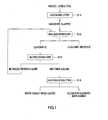
- Fig. 1 is a process chart of a hydrometallurgy method using a high-temperature high-pressure acid leaching process of a nickel oxide ore.
- the hydrometallurgy method for a nickel oxide ore includes: a leaching step S 11 in which nickel and cobalt are leached from a nickel oxide ore with low-grade nickel; a solid-liquid separation step S12 in which the resultant leach slurry is solid-liquid separated into a leachate and leach residues; a neutralization step S13 in which the leachate is neutralized, and separated into a mother liquid for the recovery of nickel and cobalt and a neutralized precipitate slurry; and a sulfurization step S 14 in which a sulfurization treatment is performed by the blowing of hydrogen sulfide gas into a sulfuric acid solution that is a mother liquid, and a mixed sulfide containing nickel and cobalt and a barren solution are obtained.
- a leaching step S 11 sulfuric acid is added into a slurry of a nickel oxide ore, and the resultant mixture is subjected to a stirring treatment at a temperature of 220 to 280°C to form a leach slurry containing a leachate and leach residues.
- a high temperature pressure vessel autoclave
- Examples of the nickel oxide ore used in the leaching step S11 include a so-called laterite ore mainly such as a limonite ore and a saprolite ore.
- the nickel content of the laterite ore is generally 0.8 to 2.5% by weight, and the nickel is contained as a hydroxide or a calcium silicate (magnesium silicate) ore.
- the content of iron is 10 to 50% by weight, and the iron is mainly in a form of a trivalent hydroxide (goethite), and divalent iron is partly contained in the calcium silicate ore.
- a leaching reaction and a high temperature heat hydrolysis reaction which are represented by the following equations (1) to (5), are generated, and the leaching of the nickel, cobalt, and the like as a sulfate and the immobilization of the leach ferrous sulfate as hematite are performed.
- the immobilization of a ferrous ion does not completely progress, therefore, generally, in a liquid portion of a leach slurry to be obtained, divalent and trivalent ferrous ions are contained in addition to the nickel, cobalt, and the like.
- a leach slurry formed in a leaching step S11 is subjected to multi-stage washing to obtain a leachate containing nickel and cobalt, and leach residues.
- the multi-stage washing method in the solid-liquid separation step S12 is not particularly limited, however, a continuous counter current decantation method (CCD method) in which a washing liquid not containing nickel is brought into contact with a counter current is preferably used. This allows the washing liquid to be newly introduced into the system to be reduced, and further the recovery rate of the nickel and cobalt to be 95% or more.
- CCD method continuous counter current decantation method
- a neutralizing agent such as calcium carbonate is added into a leachate so that the pH of the leachate is 4.0 or less, and preferably 3.2 to 3.8 while preventing the oxidation of the separated leachate, and a mother liquid for the recovery of the nickel and cobalt and a neutralized precipitate slurry containing trivalent iron are formed.
- a neutralization treatment for a leachate is performed as described above, consequently, the excessive acid used in the leaching step S11 according to high-temperature high-pressure acid leaching is neutralized, and further impurity components such as a trivalent ferrous ion and an aluminum ion, which remain in a solution, are removed. It is noted that when the pH of a leachate exceeds 4.0, a hydroxide of nickel is largely generated.
- a sulfurization step S 14 hydrogen sulfide gas is blown into a sulfuric acid solution that is a mother liquid for the recovery of nickel and cobalt, which is obtained in the neutralization step S 13, to generate a sulfurization reaction, and a mixed sulfide containing nickel and cobalt (nickel-cobalt mixed sulfide) and a solution after sulfurization (barren solution) are formed.
- a mixed sulfide containing nickel and cobalt nickel-cobalt mixed sulfide
- barren solution a solution after sulfurization
- the mother liquid is a sulfuric acid aqueous solution containing nickel and cobalt, which is obtained by the neutralization treatment for a leachate as described above.
- the pH is 3.2 to 4.0
- the nickel concentration is 2 to 5 g/L
- the cobalt concentration is 0.1 to 1.0 g/L
- a sulfuric acid solution including impurity metal elements that contain at least one or more of, for example, iron, magnesium and manganese as impurity components can be used.
- the impurity metal component largely varies depending on the oxidation-reduction potential of the leaching, the operation condition of the autoclave, and the grade of the ore, however, in general, around several g/L of iron, magnesium, manganese, and other impurity metal elements are contained.
- iron, manganese, an alkali metal, and an alkali earth metal such as magnesium which are impurity metal components contained in the sulfuric acid aqueous solution, are present in a relatively large amount as compared with the nickel and cobalt to be recovered, however, the stability as a sulfide that is formed in the sulfurization step S14 is low. Therefore, these metal impurities are not contained in a sulfide to be formed, and contained in a barren solution obtained by the removal of the formed sulfide. It is noted that the barren solution has a pH of around 1.0 to 3.0.
- the recovery method can be performed by a settling separation treatment for a slurry of the sulfide obtained by a sulfurization reaction using a settling separation apparatus such as a thickener, the sulfide that is a precipitate is separated and recovered from the bottom of the thickener, and the aqueous solution component is overflowed and recovered as a barren solution.
- a barren solution obtained through the sulfurization step S 14 of a hydrometallurgy method for a nickel oxide ore contains an ion of the impurity metals containing at least one or more of iron, magnesium, and manganese. Therefore, in the discharge of the barren solution, which is a process liquid discharged by a smelting method for the nickel, to the outside of the system, it is required that the acid in the barren solution is neutralized, and the neutralization treatment (final neutralization treatment) for the removal of the remaining metal ions in the barren solution is performed.
- the barren solution is preferably subjected to a neutralization treatment in order to be in a state in which impurity components are reduced as much as possible.
- the neutralization treatment for the barren solution has been performed, for example, by using a high alkaline neutralizing agent such as lime stone, and slaked lime in order to achieve the pH required for the neutralization.
- a high alkaline neutralizing agent such as lime stone, and slaked lime
- a neutralizing agent such as slaked lime, which is relatively advantageous in cost as compared with other neutralizing agents, is used, there is a problem that the affect degree on the finish cost is large when the used amount becomes enormous as the amount of the barren solution to be treated is increased.
- boiler ash that is obtained after combustion of a fluidized-bed boiler and is obtained by burning of a sulfur content derived from coal being a fuel while adding lime stone to the sulfur content and desulfurizing the sulfur content, that is, boiler ash after in-furnace desulfurization is used.
- Fig. 2 is a flow chart showing a flow of a final neutralization treatment for a barren solution (process liquid) that is a solution after sulfurization obtained in a hydrometallurgy process of nickel, by using the boiler ash after in-furnace desulfurization generated from a fluidized-bed boiler as a neutralizing agent.
- a barren solution process liquid
- a barren solution recovered after a sulfurization treatment is transferred and charged into a neutralization tank for the final neutralization treatment.
- a neutralization tank slaked lime or lime stone is charged and added as a neutralizing agent for the neutralization treatment.
- the neutralizing agent boiler ash after in-furnace desulfurization, which is generated from a fluidized-bed boiler, is charged and added as part of the neutralizing agent together with the slaked lime or lime stone.
- the boiler ash after in-furnace desulfurization to be used as part of the neutralizing agent is the boiler ash obtained by the charging and burning of the lime stone that is used together with the coal being a boiler fuel for a desulfurization treatment for the coal, in the furnace of a boiler of a fluidized bed system.
- the Ca content derived from the lime stone used for the desulfurization treatment remains, therefore, based on the remained Ca, the boiler ash can effectively be used as a neutralizing agent for a neutralization treatment for a barren solution.
- the additive amount of the boiler ash used for a neutralizing agent is not particularly limited, and can appropriately be determined depending on the amount of a process liquid to be subjected to the treatment, the acid concentration in the process liquid, the content of impurity components, and the like. Further, the upper limit of the additive amount is not also particularly limited, and the amount of the neutralizing agent to be used such as slaked lime, which is added at the same time, can more effectively be reduced as the additive amount of the boiler ash is increased.
- the boiler ash can be used even in a state of the ash by being added into a neutralization tank in a predetermined amount, however, is preferably used as a boiler ash slurry in a slurry state, which has been prepared in advance by the addition of water.
- a boiler ash slurry as a neutralizing agent, and by the addition into a neutralization tank before the neutralization of a process liquid or during the neutralization reaction, the handling property becomes easy, and further the unreacted Ca content in the boiler ash after in-furnace desulfurization can efficiently be utilized.
- automatic supply using a liquid transfer pump and the like can efficiently be performed.
- the slurry concentration of the boiler ash slurry is not particularly limited, however, is preferably less than 4.6% by weight, and more preferably 4.0% by weight or less.
- the viscosity of the slurry after neutralization treatment containing a neutralized product after the addition of the boiler ash slurry becomes high, and there may be a case where some influence exerts on the pumping for the transfer of the slurry after neutralization treatment to a delivering process and a gravity separation treatment, which are postprocesses.
- the lower limit of the slurry concentration is preferably appropriately adjusted by taking the load amount of the solid-liquid separation operation and the power consumption of the pump, which are described above, and the like into consideration from the viewpoint of the operation management.
- the boiler ash added as a neutralizing agent is precipitated together with a neutralized precipitate generated in a neutralization treatment. Therefore, also in a case where the boiler ash is used as a neutralizing agent, no influence exerts on the clarity of the supernatant after the neutralization treatment, and adverse influence is not exerted in a solid-liquid separation treatment after the neutralization treatment, either.
- boiler ash that is obtained after combustion of a fluidized-bed boiler and is obtained by burning of a sulfur content derived from coal being a fuel while adding lime stone to the sulfur content and desulfurizing the sulfur content is used as a neutralizing agent to perform a neutralization treatment.
- the amount of a neutralizing agent to be used such as slaked lime or lime stone can be effectively reduced, and an efficient treatment can be performed with the reduction of the neutralization treatment cost.
- the used boiler ash is contained in a neutralized precipitate, therefore, the amount of the treatment waste generated from the fluidized-bed boiler can be reduced by the wasting together with the neutralized precipitate.
- the unreacted alkali content in the boiler ash is consumed, therefore, also in a case where the boiler ash is separately subjected to a waste treatment, the treatment cost for the neutralization of alkali content can drastically be reduced.
- an efficient final neutralization treatment can be performed by a gradual neutralization treatment including the first stage neutralization treatment using lime stone as a neutralizing agent, and the second stage neutralization treatment using slaked lime as a neutralizing agent. Even in such a case, in each of the first stage neutralization treatment and the second stage neutralization treatment, by the addition of the above-described boiler ash as part of the neutralizing agent, each amount of the lime stone and slaked lime to be used is effectively reduced, and the total amount of the neutralizing agent to be used in the final neutralization treatment can be reduced.
- a neutralization treatment for a barren solution that is a process liquid generated in a smelting process of nickel is used as an example, however, the process liquid for which a neutralization treatment method according to the present embodiment is applied, is not limited to this, and as long as being an acid solution, any process liquids can suitably be used.
- the kinds of the heavy metals and acid contained in the process liquid are not also particularly limited, and various acid solutions can be applied as a treatment object.
- Boiler ash after in-furnace desulfurization which had been generated by the addition of CaCO 3 (lime stone) with a weight ratio of 3.5% into coal with a sulfur grade of 0.5% while desulfurizing in the furnace by a fluidized-bed boiler, was slurried by the addition of water, and made into a boiler ash slurry with a slurry concentration of 25% by weight.
- CaCO 3 limestone stone
- a sulfurization step in which a mixed sulfide containing nickel and cobalt is formed by the blowing of hydrogen sulfide gas into a mother liquid containing a sulfuric acid aqueous solution containing nickel and cobalt, iron, magnesium, manganese, and other impurity metals, which had been recovered through a leaching step, a solid-liquid separation step, and a neutralization step, was performed, and then a barren solution (process slurry) discharged from the sulfurization step was recovered.
- a neutralization treatment in which impurity metals in the process slurry are removed while adjusting the pH of the solution, by using the prepared boiler ash slurry as a neutralizing agent was performed.
- the process slurry was housed in a neutralization tank in the final neutralization step, a boiler ash slurry that is a neutralizing agent was added in an additive amount of 25 m 3 /hr, and further slaked lime was added at the same time to perform the neutralization treatment.
- the additive amount of the slaked lime required for the increase of the pH of the process slurry at 800 m 3 /hr from 5.0 to 9.0 was 50.0 m 3 /hr, and the used amount of the slaked lime could be reduced as much as by 0.7 m 3 per unit time as compared with the additive amount of 50.7 m 3 /hr in the conventional neutralization treatment in which slaked lime is only used as a neutralizing agent. Further, the reduction amount is equivalent to 174 kg (1.4%) in terms of slaked lime powder.
- Example 2 a neutralization treatment for a process slurry was performed in the same manner as in Example 1 except that each additive amount of the boiler ash slurries was set as 50 m 3 /hr (Example 2), 75 m 3 /hr (Example 3), and 100 m 3 /hr (Example 4), respectively.
- each additive amount (used amount) of the slaked lime that had been added at the same time was 49.4 m 3 /hr (Example 2), 48.7 m 3 /hr (Example 3), and 48.0 m 3 /hr (Example 4), respectively, and the amount of the required slaked lime to be used can effectively be reduced as the additive amount of boiler ash is increased.
- the measurement results of the used amounts of slaked lime in a case free from boiler ash, and in Examples 1 to 4 were shown in order in the following Table 2.
- Example Reference Example 1 2 3 4 Additive amount of boiler ash (m 3 /hr) 0 25 50 75 100 Used amount of slaked lime (m 3 /hr) 50.7 50.0 49.4 48.7 48.0
- Example 5 a barren solution (process slurry) after a sulfurization step in a hydrometallurgy process of nickel was charged into a neutralization tank at a flow rate of 800 m 3 /hr, and a neutralization treatment for the process slurry was performed for 30 days by using boiler ash as a neutralizing agent. It is noted that the same boiler ash slurry as that in Example 1 was charged and added into a neutralization tank in an additive amount of 25 m 3 /hr, and slaked lime was also used as a neutralizing agent together with the boiler ash slurry.
- the used amount of the slaked lime was 8823.6 t for 30 days in total. Since the used amount of the slaked lime when a neutralization treatment had been performed for 30 days by using only conventional slaked lime was 8948.9 t, therefore, a large amount of 125.3 t of the slaked lime could be reduced by a neutralization treatment over a long period of time by using the boiler ash slurry as part of a neutralizing agent.
- a neutralization treatment for a process slurry was performed by using a boiler ash slurry in which the slurry concentration had been changed as in the following Table 3, as part of a neutralizing agent, and the liquid transfer property of the slurry obtained after a neutralization treatment was investigated. It is noted that the liquid transfer property was investigated based on the influence on a pump when the slurry after neutralization treatment is transferred to a delivering process and a gravity separation treatment, which are postprocesses.
- Example Reference Example 6 7 8 9 10 11 12 13 14 15 Additive amount of boiler ash (m 3 /hr) 0 0.5 0.9 1.4 1.8 2.3 2.8 3.2 3.7 4.0 4.6 Used amount of slaked lime (m 3 /hr) ⁇ ⁇ ⁇ ⁇ ⁇ ⁇ ⁇ ⁇ ⁇ ⁇ ⁇ ⁇ ⁇ ⁇ ⁇
- the slurry concentration of the boiler ash slurry used as a neutralizing agent is preferably less than 4.6% by weight, and more preferably 4.0% by weight or less.
Landscapes
- Chemical & Material Sciences (AREA)
- Engineering & Computer Science (AREA)
- Organic Chemistry (AREA)
- Environmental & Geological Engineering (AREA)
- Life Sciences & Earth Sciences (AREA)
- Chemical Kinetics & Catalysis (AREA)
- General Chemical & Material Sciences (AREA)
- Manufacturing & Machinery (AREA)
- Materials Engineering (AREA)
- Mechanical Engineering (AREA)
- Metallurgy (AREA)
- Geochemistry & Mineralogy (AREA)
- Geology (AREA)
- General Life Sciences & Earth Sciences (AREA)
- Hydrology & Water Resources (AREA)
- Water Supply & Treatment (AREA)
- Manufacture And Refinement Of Metals (AREA)
- Treating Waste Gases (AREA)
Abstract
Description
- The present invention relates to a neutralization treatment method and a neutralizing agent, more specifically, a neutralization treatment method capable of efficiently performing a final neutralization treatment for a process liquid discharged in a metal smelting or hydrometallurgy process, and a neutralizing agent used for the neutralization treatment. The present application claims a priority based on Japanese Patent Application No.
2012-260034 filled on November 28, 2012 - In a process liquid generated from a smelting process of a metal such as nickel and copper, many heavy metals are contained, therefore, in order to discharge the process liquid into the environment (outside of the system), it is required to remove the heavy metals and further to perform a waste water treatment (neutralization treatment) in which the pH is adjusted to the vicinity of the neutrality.
- Specifically, in the neutralization treatment, the pH is increased by the addition of a neutralizing agent into an acidic process liquid generated, heavy metals contained in the liquid are solidified as hydroxides, and the solid and the liquid are separated by the operation of a filtration treatment and the like. Further, the solution after the solid-liquid separation is discharged (drained) or reused, and on the other hand, the solid containing metal components is treated in a dumping ground.
- So far, in a neutralization treatment for a process liquid, for example, it has been common to perform a treatment, for example, by using a calcium-based neutralizing agent such as lime stone, and slaked lime. These neutralizing agents are relatively inexpensive, however, the amount of the neutralizing agent to be used (required amount) has been increased along with the increased amount of the process liquid to be treated.
- As described above, the amount of a neutralizing agent to be used varies depending on the amount of a process liquid to be treated and further depending on the acidity of a process liquid, the concentration of heavy metals contained, and the like. However, also in any metal smelting or hydrometallurgy process, it is desired to reduce the amount of a neutralizing agent to be used from the viewpoint of cost reduction.
-
- Patent document 1: Japanese Patent Application Laid-Open (JP-A) No.
H06-205931 - Patent document 2:
JP-A No. H10-026334 - Patent document 3:
JP-A No. 2009-095698 - Accordingly, the present invention was made in consideration of the above circumstances, and is to provide a neutralization treatment method capable of performing an efficient neutralization treatment with the reduction of the amount of a neutralizing agent to be used such as slaked lime in a neutralization treatment (final neutralization treatment) that is performed in order to discharge a process liquid generated in a metal smelting or hydrometallurgy process to the outside of the system. Means to Solve the Problems
- As a result of the intensive studies by the present inventors in order to solve the problems described above, the present inventors found that the amount of a neutralizing agent such as slaked lime to be used, which is used in a neutralization treatment for a process liquid, can effectively be reduced by using as a neutralizing agent boiler ash that is obtained after combustion of a fluidized-bed boiler, and thus have completed the present invention.
- That is, the neutralization treatment method according to the present invention is characterized in that a neutralization treatment is performed by using as a neutralizing agent boiler ash being obtained after combustion of a fluidized-bed boiler and being obtained by burning of a sulfur content derived from coal being a fuel while adding lime stone to the sulfur content and desulfurizing the sulfur content, in a neutralization treatment method for a liquid discharged in a metal smelting or hydrometallurgy process.
- Herein, a boiler ash slurry being a slurry of the above-mentioned boiler ash is preferably used as a neutralizing agent. Further, the above-mentioned boiler ash slurry has preferably a slurry concentration of 4.0 % by weight or less.
- The above-mentioned metal smelting or hydrometallurgy process is a hydrometallurgy process in which nickel and cobalt are recovered from a nickel oxide ore, and can be applied for a neutralization treatment for a solution after sulfurization treatment, which is obtained through a leaching step, a solid-liquid separation step, a neutralization step, and a sulfurization step.
- Further, the neutralizing agent according to the present invention is a neutralizing agent used for a neutralization treatment for a liquid discharged in a metal smelting or hydrometallurgy process, and is characterized by including boiler ash being obtained after combustion of a fluidized-bed boiler and being obtained by burning of a sulfur content derived from coal being a fuel while adding lime stone to the sulfur content and desulfurizing the sulfur content.
- According to the present invention, in a neutralization treatment for a process liquid generated in a metal smelting or hydrometallurgy process, the amount of a neutralizing agent such as slaked lime to be used can be effectively reduced, and an efficient neutralization treatment can be performed.
-
-
Fig. 1 is a process chart of a hydrometallurgy process of a nickel oxide ore. -
Fig. 2 is a flow chart showing a flow of neutralization using fluidized-bed boiler ash as a neutralizing agent in a final neutralization treatment for a barren solution generated in a hydrometallurgy process of nickel. - Hereinafter, a specific embodiment of the neutralization treatment method according to the present invention (hereinafter, referred to as "the present embodiment") will be described in detail in the following order. Further, the present invention is not limited to the following embodiment, and various changes may be made without departing from the spirit of the present invention.
- 1. Overview
- 2. Fluidized-bed boiler and boiler ash thereof
- 3. Neutralization treatment method
- 3-1. Hydrometallurgy method for nickel oxide ore
- 3-2. Neutralization treatment method
- The neutralization treatment method according to the present embodiment is, for example, a method of a neutralization treatment (hereinafter, also referred to as "final neutralization treatment") that is performed in order to discharge the process liquid discharged in a smelting process of a metal such as nickel and copper, and is capable of performing an efficient neutralization treatment with the reduction of the treatment cost.
- Specifically, the neutralization treatment method according to the present embodiment is characterized by performing a neutralization treatment using as a neutralizing agent boiler ash that is obtained after combustion of a fluidized-bed boiler and is obtained by the burning of a sulfur content derived from coal being a fuel while adding lime stone to the sulfur content and desulfurizing the sulfur content.
- Details will be described later, however, in a fluidized-bed boiler, in addition to coal being a boiler fuel, lime stone for a desulfurization treatment to remove the sulfur content of the coal is charged and burned. From this, in the fluidized-bed boiler ash, Ca derived from the lime stone that is charged for the desulfurization treatment remains. Therefore, use of the fluidized-bed boiler ash for a neutralization treatment allows the neutralization for a process liquid to be performed with the Ca contained in the boiler ash.
- According to such a neutralization treatment method, the amount of a neutralizing agent such as slaked lime to be used, which is charged and added to perform a neutralization treatment for a process liquid generated in a metal smelting or hydrometallurgy process, can effectively be reduced. This enables an efficient neutralization treatment to be performed.
- Further, the fluidized-bed boiler ash has been generally wasted as industrial wastes so far. In addition, at the wasting, it has been required to perform a treatment specialized for the neutralization of the alkali because unreacted alkali content remains in the boiler ash. However, as in the present embodiment, use of the fluidized-bed boiler ash as a neutralizing agent for a neutralization treatment for a process liquid allows the waste amount from the boiler to be reduced, and further the alkali content in the boiler ash to effectively be utilized. This allows thus the treatment cost required for the waste treatment to effectively be reduced.
- Herein, the boiler ash generated by combustion of a fluidized-bed boiler will be described in more detail.
- In general, in a combustion method of a boiler using coal, for example, there are a fixed-bed system, an entrained bed system, a fluidized bed system, and the like. Specifically, in a fixed bed system, the charged massive coal is reacted with air in a stationary state and burned or gasified. However, in this fixed bed system, a large amount of excessive air is required for the burning, therefore, there is a limit to the apparatus because of having low boiler efficiency and being hardly enlarged in scale. Further, the entrained bed system is a method in which the dust coal charged in a boiler is jetted together with air and is burned. In this entrained bed system, the combustibility is favorable and the excessive air required is less, however, there is a limit that dust coal is required to be used.
- On the other hand, the fluidized bed system is a system in which granular coal is charged into a fluidized bed of silica sand and the like that are floated and fluidized by air flow, and is burned. In this fluidized bed system, since the heat conduction in a fluidized bed is favorable, the boiler can be miniaturized, and further, the combustion at a low temperature of around 1000°C or lower as compared with a fixed bed system can be performed, therefore, there is an advantage that the concentration of NOx in combustion gas is low, and low-grade coal can be used.
- In a boiler of this fluidized bed system (fluidized-bed boiler), a Ca source is charged and mixed together with a boiler fuel of coal in the furnace. The Ca source is used for a desulfurization treatment for desulfurization of the sulfur content derived from coal, and in the furnace, the coal is burned while desulfurizing the sulfur content, and boiler ash is generated. It is noted that as to a technique regarding to a fluidized-bed boiler, for example, there are disclosures in Patent Documents 1 to 3.
- Meanwhile, as a Ca source to be used for the desulfurization treatment, an alkali component such as lime stone is used, and in order to ensure the desulfurization effect, the lime stone and the like are generally added in an excessive amount. Therefore, in the boiler ash discharged from the fluidized-bed boiler (boiler ash after in-furnace desulfurization), unreacted Ca that has not involved in the desulfurization remains.
- Herein, Table 1 shows results of the experiment that was performed in order to find the amount of the residual Ca in the boiler ash after desulfurization in a fluidized-bed boiler. Specifically, in this experiment, a neutralization treatment by sulfuric acid is performed for the coal and Ca content ("coal + Ca content") in a state before the boiler combustion (before in-furnace desulfurization treatment), and the amount of the sulfuric acid required for the neutralization is measured. On the other hand, a neutralization treatment by sulfuric acid is performed for the boiler ash obtained after the boiler combustion (after in-furnace desulfurization treatment) in the same manner as in above, and the amount of the sulfuric acid consumed for the neutralization is measured. The amounts of the sulfuric acids were compared with each other.
[Table 1] Amount of sulfuric acid required for neutralization of "coal + Ca content" before in-furnace desulfurization Amount of sulfuric acid consumed for neutralization of boiler ash after in-furnace desulfurization Ca residual ratio Amount of sulfuric acid (mol) 0.0270 0.0073 27% - As a result, as shown in Table 1, the amount of the sulfuric acid required for the neutralization of the "coal + Ca content" before in-furnace desulfurization treatment was 0.0270 mol, and on the other hand, the amount of the sulfuric acid consumed for the neutralization of the boiler ash obtained after in-furnace desulfurization treatment was 0.0073 mol. From this, it was found that in the boiler ash, around 27% of the Ca source that is charged into the furnace remains unreacted.
- Therefore, in the present embodiment, the Ca-remaining fluidized-bed boiler ash is used as a neutralizing agent, for example, for a neutralization treatment (final neutralization treatment) for a process liquid generated in a smelting process of a metal such as nickel and copper. This allows the Ca content in the boiler ash to effectively be utilized in a neutralization treatment, and the amount of the neutralizing agent to be used for the neutralization treatment, such as slaked lime, can effectively be reduced.
- Hereinafter, more specifically, the neutralization treatment method according to the present embodiment will be described. Herein, the neutralization treatment method according to the present embodiment will be described by way of an example in a case of applying to a neutralization treatment for a barren solution that is a process liquid generated in a hydrometallurgy process of a nickel oxide ore.
- First, an overview of a hydrometallurgy process (method) of a nickel oxide ore will be described. It is noted that herein, the overview will be described by using a hydrometallurgy method using a high-temperature high-pressure acid leaching process (HPAL process) as a specific example.
-
Fig. 1 is a process chart of a hydrometallurgy method using a high-temperature high-pressure acid leaching process of a nickel oxide ore. As shown inFig. 1 , the hydrometallurgy method for a nickel oxide ore includes: a leaching step S 11 in which nickel and cobalt are leached from a nickel oxide ore with low-grade nickel; a solid-liquid separation step S12 in which the resultant leach slurry is solid-liquid separated into a leachate and leach residues; a neutralization step S13 in which the leachate is neutralized, and separated into a mother liquid for the recovery of nickel and cobalt and a neutralized precipitate slurry; and a sulfurization step S 14 in which a sulfurization treatment is performed by the blowing of hydrogen sulfide gas into a sulfuric acid solution that is a mother liquid, and a mixed sulfide containing nickel and cobalt and a barren solution are obtained. - In a leaching step S 11, sulfuric acid is added into a slurry of a nickel oxide ore, and the resultant mixture is subjected to a stirring treatment at a temperature of 220 to 280°C to form a leach slurry containing a leachate and leach residues. In the leaching step S11, for example, a high temperature pressure vessel (autoclave) is used.
- Examples of the nickel oxide ore used in the leaching step S11 include a so-called laterite ore mainly such as a limonite ore and a saprolite ore. The nickel content of the laterite ore is generally 0.8 to 2.5% by weight, and the nickel is contained as a hydroxide or a calcium silicate (magnesium silicate) ore. Further, the content of iron is 10 to 50% by weight, and the iron is mainly in a form of a trivalent hydroxide (goethite), and divalent iron is partly contained in the calcium silicate ore.
- Specifically, in the leaching step S11, a leaching reaction and a high temperature heat hydrolysis reaction, which are represented by the following equations (1) to (5), are generated, and the leaching of the nickel, cobalt, and the like as a sulfate and the immobilization of the leach ferrous sulfate as hematite are performed. However, since the immobilization of a ferrous ion does not completely progress, therefore, generally, in a liquid portion of a leach slurry to be obtained, divalent and trivalent ferrous ions are contained in addition to the nickel, cobalt, and the like.
-
- Leaching Reaction
MO + H2SO4 ⇒ MSO4 + H2O ··· (1)
(In which, in the equation (1) M denotes Ni, Co, Fe, Zn, Cu, Mg, Cr, Mn, or the like.)
2Fe(OH)3 + 3H2SO4 ⇒ Fe2(SO4)3 + 6H2O ··· (2)
FeO + H2SO4 ⇒ FeSO4 + H2O ··· (3)
- High temperature heat hydrolysis reaction
2FeSO4 + H2SO4 + 1/2O2 ⇒ Fe2(SO4)3 + H2O ··· (4)
Fe2(SO4)3 + 3H2O ⇒ Fe2O3 + 3H2SO4 ··· (5)
- In a solid-liquid separation step S12, a leach slurry formed in a leaching step S11 is subjected to multi-stage washing to obtain a leachate containing nickel and cobalt, and leach residues.
- The multi-stage washing method in the solid-liquid separation step S12 is not particularly limited, however, a continuous counter current decantation method (CCD method) in which a washing liquid not containing nickel is brought into contact with a counter current is preferably used. This allows the washing liquid to be newly introduced into the system to be reduced, and further the recovery rate of the nickel and cobalt to be 95% or more.
- In a neutralization step S13, a neutralizing agent such as calcium carbonate is added into a leachate so that the pH of the leachate is 4.0 or less, and preferably 3.2 to 3.8 while preventing the oxidation of the separated leachate, and a mother liquid for the recovery of the nickel and cobalt and a neutralized precipitate slurry containing trivalent iron are formed. In the neutralization step S 13, a neutralization treatment for a leachate is performed as described above, consequently, the excessive acid used in the leaching step S11 according to high-temperature high-pressure acid leaching is neutralized, and further impurity components such as a trivalent ferrous ion and an aluminum ion, which remain in a solution, are removed. It is noted that when the pH of a leachate exceeds 4.0, a hydroxide of nickel is largely generated.
- In a sulfurization step S 14, hydrogen sulfide gas is blown into a sulfuric acid solution that is a mother liquid for the recovery of nickel and cobalt, which is obtained in the neutralization step S 13, to generate a sulfurization reaction, and a mixed sulfide containing nickel and cobalt (nickel-cobalt mixed sulfide) and a solution after sulfurization (barren solution) are formed. It is noted that in a case where zinc is contained in a mother liquid, prior to the formation of a mixed sulfide of nickel and cobalt by a sulfurization reaction, a treatment in which zinc is selectively separated as a sulfide can be performed.
- The mother liquid is a sulfuric acid aqueous solution containing nickel and cobalt, which is obtained by the neutralization treatment for a leachate as described above. Specifically, for example, the pH is 3.2 to 4.0, the nickel concentration is 2 to 5 g/L, and the cobalt concentration is 0.1 to 1.0 g/L, and further a sulfuric acid solution including impurity metal elements that contain at least one or more of, for example, iron, magnesium and manganese as impurity components can be used. The impurity metal component largely varies depending on the oxidation-reduction potential of the leaching, the operation condition of the autoclave, and the grade of the ore, however, in general, around several g/L of iron, magnesium, manganese, and other impurity metal elements are contained.
- Herein, iron, manganese, an alkali metal, and an alkali earth metal such as magnesium, which are impurity metal components contained in the sulfuric acid aqueous solution, are present in a relatively large amount as compared with the nickel and cobalt to be recovered, however, the stability as a sulfide that is formed in the sulfurization step S14 is low. Therefore, these metal impurities are not contained in a sulfide to be formed, and contained in a barren solution obtained by the removal of the formed sulfide. It is noted that the barren solution has a pH of around 1.0 to 3.0.
- As described above, in the sulfurization step 14, a mixed sulfide of nickel and cobalt in which impurities are fewer contained, and a barren solution stabilized at a low level of the nickel concentration are formed and recovered. It is noted that the recovery method can be performed by a settling separation treatment for a slurry of the sulfide obtained by a sulfurization reaction using a settling separation apparatus such as a thickener, the sulfide that is a precipitate is separated and recovered from the bottom of the thickener, and the aqueous solution component is overflowed and recovered as a barren solution.
- As described above, a barren solution obtained through the sulfurization step S 14 of a hydrometallurgy method for a nickel oxide ore contains an ion of the impurity metals containing at least one or more of iron, magnesium, and manganese. Therefore, in the discharge of the barren solution, which is a process liquid discharged by a smelting method for the nickel, to the outside of the system, it is required that the acid in the barren solution is neutralized, and the neutralization treatment (final neutralization treatment) for the removal of the remaining metal ions in the barren solution is performed. Further, also in a case where the barren solution is repeatedly used in the above-described hydrometallurgy process, the barren solution is preferably subjected to a neutralization treatment in order to be in a state in which impurity components are reduced as much as possible.
- Conventionally, the neutralization treatment for the barren solution has been performed, for example, by using a high alkaline neutralizing agent such as lime stone, and slaked lime in order to achieve the pH required for the neutralization. However, such a high alkaline neutralizing agent requires a complicated pretreatment and a pretreatment equipment when the used amount becomes large as the generated amount of the barren solution from the sulfurization step S14 is increased. Further, even if a neutralizing agent such as slaked lime, which is relatively advantageous in cost as compared with other neutralizing agents, is used, there is a problem that the affect degree on the finish cost is large when the used amount becomes enormous as the amount of the barren solution to be treated is increased.
- Accordingly, in the present embodiment, in the neutralization treatment for a barren solution that is a process liquid generated in the smelting process, as the neutralizing agent, boiler ash that is obtained after combustion of a fluidized-bed boiler and is obtained by burning of a sulfur content derived from coal being a fuel while adding lime stone to the sulfur content and desulfurizing the sulfur content, that is, boiler ash after in-furnace desulfurization is used.
-
Fig. 2 is a flow chart showing a flow of a final neutralization treatment for a barren solution (process liquid) that is a solution after sulfurization obtained in a hydrometallurgy process of nickel, by using the boiler ash after in-furnace desulfurization generated from a fluidized-bed boiler as a neutralizing agent. - As shown in the flow chart of
Fig. 2 , a barren solution recovered after a sulfurization treatment is transferred and charged into a neutralization tank for the final neutralization treatment. On the other hand, in the neutralization tank, slaked lime or lime stone is charged and added as a neutralizing agent for the neutralization treatment. At this time, as the neutralizing agent, boiler ash after in-furnace desulfurization, which is generated from a fluidized-bed boiler, is charged and added as part of the neutralizing agent together with the slaked lime or lime stone. - The boiler ash after in-furnace desulfurization to be used as part of the neutralizing agent is the boiler ash obtained by the charging and burning of the lime stone that is used together with the coal being a boiler fuel for a desulfurization treatment for the coal, in the furnace of a boiler of a fluidized bed system. As described above, in the boiler ash after the in-furnace desulfurization, the Ca content derived from the lime stone used for the desulfurization treatment remains, therefore, based on the remained Ca, the boiler ash can effectively be used as a neutralizing agent for a neutralization treatment for a barren solution.
- Herein, the additive amount of the boiler ash used for a neutralizing agent is not particularly limited, and can appropriately be determined depending on the amount of a process liquid to be subjected to the treatment, the acid concentration in the process liquid, the content of impurity components, and the like. Further, the upper limit of the additive amount is not also particularly limited, and the amount of the neutralizing agent to be used such as slaked lime, which is added at the same time, can more effectively be reduced as the additive amount of the boiler ash is increased.
- Further, the boiler ash can be used even in a state of the ash by being added into a neutralization tank in a predetermined amount, however, is preferably used as a boiler ash slurry in a slurry state, which has been prepared in advance by the addition of water. As described above, by using a boiler ash slurry as a neutralizing agent, and by the addition into a neutralization tank before the neutralization of a process liquid or during the neutralization reaction, the handling property becomes easy, and further the unreacted Ca content in the boiler ash after in-furnace desulfurization can efficiently be utilized. In addition, by being in a slurry state, for example, automatic supply using a liquid transfer pump and the like can efficiently be performed.
- Further, the slurry concentration of the boiler ash slurry is not particularly limited, however, is preferably less than 4.6% by weight, and more preferably 4.0% by weight or less. When the slurry concentration of the boiler ash slurry is 4.6% by weight or more, the viscosity of the slurry after neutralization treatment containing a neutralized product after the addition of the boiler ash slurry becomes high, and there may be a case where some influence exerts on the pumping for the transfer of the slurry after neutralization treatment to a delivering process and a gravity separation treatment, which are postprocesses. It is noted that when the slurry concentration is extremely low, there may be a case where the liquid amount in a neutralization tank is increased, and load is applied to the solid-liquid separation operation, or there may be a case where power consumption involved in the pump operation is increased. Therefore, the lower limit of the slurry concentration is preferably appropriately adjusted by taking the load amount of the solid-liquid separation operation and the power consumption of the pump, which are described above, and the like into consideration from the viewpoint of the operation management.
- It is noted that the boiler ash added as a neutralizing agent is precipitated together with a neutralized precipitate generated in a neutralization treatment. Therefore, also in a case where the boiler ash is used as a neutralizing agent, no influence exerts on the clarity of the supernatant after the neutralization treatment, and adverse influence is not exerted in a solid-liquid separation treatment after the neutralization treatment, either.
- As described above in detail, in the neutralization treatment method according to the present embodiment, in the final neutralization treatment for a process liquid generated in a metal smelting or hydrometallurgy process, boiler ash that is obtained after combustion of a fluidized-bed boiler and is obtained by burning of a sulfur content derived from coal being a fuel while adding lime stone to the sulfur content and desulfurizing the sulfur content is used as a neutralizing agent to perform a neutralization treatment.
- According to such a neutralization treatment method, the amount of a neutralizing agent to be used such as slaked lime or lime stone can be effectively reduced, and an efficient treatment can be performed with the reduction of the neutralization treatment cost. Further, the used boiler ash is contained in a neutralized precipitate, therefore, the amount of the treatment waste generated from the fluidized-bed boiler can be reduced by the wasting together with the neutralized precipitate. Furthermore, as described above, by using the boiler ash as a neutralizing agent, the unreacted alkali content in the boiler ash is consumed, therefore, also in a case where the boiler ash is separately subjected to a waste treatment, the treatment cost for the neutralization of alkali content can drastically be reduced.
- It is noted that it has been known that in the final neutralization treatment of which a flow chart is shown in
Fig. 2 , an efficient final neutralization treatment can be performed by a gradual neutralization treatment including the first stage neutralization treatment using lime stone as a neutralizing agent, and the second stage neutralization treatment using slaked lime as a neutralizing agent. Even in such a case, in each of the first stage neutralization treatment and the second stage neutralization treatment, by the addition of the above-described boiler ash as part of the neutralizing agent, each amount of the lime stone and slaked lime to be used is effectively reduced, and the total amount of the neutralizing agent to be used in the final neutralization treatment can be reduced. - Further, in the above-described embodiment, a neutralization treatment for a barren solution that is a process liquid generated in a smelting process of nickel is used as an example, however, the process liquid for which a neutralization treatment method according to the present embodiment is applied, is not limited to this, and as long as being an acid solution, any process liquids can suitably be used. In addition, the kinds of the heavy metals and acid contained in the process liquid are not also particularly limited, and various acid solutions can be applied as a treatment object.
- Hereinafter, Examples of the present invention will be described, however, the present invention is not limited to the following Examples.
- Boiler ash after in-furnace desulfurization, which had been generated by the addition of CaCO3 (lime stone) with a weight ratio of 3.5% into coal with a sulfur grade of 0.5% while desulfurizing in the furnace by a fluidized-bed boiler, was slurried by the addition of water, and made into a boiler ash slurry with a slurry concentration of 25% by weight.
- On the other hand, in a hydrometallurgy method for a nickel oxide ore (hydrometallurgy process of nickel), a sulfurization step in which a mixed sulfide containing nickel and cobalt is formed by the blowing of hydrogen sulfide gas into a mother liquid containing a sulfuric acid aqueous solution containing nickel and cobalt, iron, magnesium, manganese, and other impurity metals, which had been recovered through a leaching step, a solid-liquid separation step, and a neutralization step, was performed, and then a barren solution (process slurry) discharged from the sulfurization step was recovered.
- In the final neutralization treatment at the discharging of the recovered process slurry to the outside of the system, a neutralization treatment in which impurity metals in the process slurry are removed while adjusting the pH of the solution, by using the prepared boiler ash slurry as a neutralizing agent was performed. Specifically, the process slurry was housed in a neutralization tank in the final neutralization step, a boiler ash slurry that is a neutralizing agent was added in an additive amount of 25 m3/hr, and further slaked lime was added at the same time to perform the neutralization treatment.
- As a result, the additive amount of the slaked lime required for the increase of the pH of the process slurry at 800 m3/hr from 5.0 to 9.0 was 50.0 m3/hr, and the used amount of the slaked lime could be reduced as much as by 0.7 m3 per unit time as compared with the additive amount of 50.7 m3/hr in the conventional neutralization treatment in which slaked lime is only used as a neutralizing agent. Further, the reduction amount is equivalent to 174 kg (1.4%) in terms of slaked lime powder. As described above, it was found that the amount of slaked lime to be used, which is required for the neutralization of a process slurry, can be drastically reduced by a neutralization treatment in which boiler ash after in-furnace sulfurization is added into a process slurry using as part of the neutralizing agent.
- It is noted that the clarity of the supernatant after the addition of the boiler ash was not different from that in a case where the boiler ash had not been added. From this, it was found that by using boiler ash as a neutralizing agent, the amount of a neutralizing agent to be used is reduced and a neutralization treatment can efficiently and effectively be performed without exerting influence on the clarity of the supernatant.
- Next, in Examples 2 to 4, the reduction effect of the amount of slaked lime to be used when the additive amount of a boiler ash slurry had been added was investigated.
- Specifically, a neutralization treatment for a process slurry was performed in the same manner as in Example 1 except that each additive amount of the boiler ash slurries was set as 50 m3/hr (Example 2), 75 m3/hr (Example 3), and 100 m3/hr (Example 4), respectively.
- As a result, it was found that each additive amount (used amount) of the slaked lime that had been added at the same time was 49.4 m3/hr (Example 2), 48.7 m3/hr (Example 3), and 48.0 m3/hr (Example 4), respectively, and the amount of the required slaked lime to be used can effectively be reduced as the additive amount of boiler ash is increased. Further, the measurement results of the used amounts of slaked lime in a case free from boiler ash, and in Examples 1 to 4 were shown in order in the following Table 2.
[Table 2] Example Reference Example 1 2 3 4 Additive amount of boiler ash (m3/hr) 0 25 50 75 100 Used amount of slaked lime (m3/hr) 50.7 50.0 49.4 48.7 48.0 - Next, in Example 5, a barren solution (process slurry) after a sulfurization step in a hydrometallurgy process of nickel was charged into a neutralization tank at a flow rate of 800 m3/hr, and a neutralization treatment for the process slurry was performed for 30 days by using boiler ash as a neutralizing agent. It is noted that the same boiler ash slurry as that in Example 1 was charged and added into a neutralization tank in an additive amount of 25 m3/hr, and slaked lime was also used as a neutralizing agent together with the boiler ash slurry.
- As a result, the used amount of the slaked lime was 8823.6 t for 30 days in total. Since the used amount of the slaked lime when a neutralization treatment had been performed for 30 days by using only conventional slaked lime was 8948.9 t, therefore, a large amount of 125.3 t of the slaked lime could be reduced by a neutralization treatment over a long period of time by using the boiler ash slurry as part of a neutralizing agent.
- Next, in Examples 6 to 15, the liquid transfer property of the slurry after neutralization treatment (mixture slurry after neutralization treatment) obtained after a neutralization treatment when the slurry concentration of the boiler ash slurry was changed was investigated.
- Specifically, in Examples 6 to 15, respectively, a neutralization treatment for a process slurry was performed by using a boiler ash slurry in which the slurry concentration had been changed as in the following Table 3, as part of a neutralizing agent, and the liquid transfer property of the slurry obtained after a neutralization treatment was investigated. It is noted that the liquid transfer property was investigated based on the influence on a pump when the slurry after neutralization treatment is transferred to a delivering process and a gravity separation treatment, which are postprocesses.
- Measurement results of the liquid transfer property of the slurry after neutralization treatment are shown in the following Table 3. It is noted that in the evaluation of the liquid transfer property shown in the Table 3, "⊙" indicates that the viscosity of the slurry after neutralization treatment was low, and the transfer to a delivering process and a gravity separation treatment was favorable, "○" indicates that the viscosity was slightly increased, however, there was no possibility of exerting the influence on the pumping, and "Δ" indicates that the viscosity was increased until the influence on the pumping was exerted, and there was a possibility of generating defective transfer.
[Table 3] Example Reference Example 6 7 8 9 10 11 12 13 14 15 Additive amount of boiler ash (m3/hr) 0 0.5 0.9 1.4 1.8 2.3 2.8 3.2 3.7 4.0 4.6 Used amount of slaked lime (m3/hr) ⊙ ⊙ ⊙ ⊙ ⊙ ⊙ ○ ○ ○ ○ Δ - As shown in Table 3, when the slurry concentration of the boiler ash slurry was up to 2.3% by weight, the viscosity of the slurry after neutralization treatment was not changed with or without the addition of boiler ash, and the transfer into a postprocessing could be performed favorably. On the other hand, when the slurry concentration was increased to higher than 2.3% by weight, the viscosity of the process slurry into which boiler ash had been added was increased, and when the slurry concentration of the boiler ash slurry was increased to 4.6% by weight or more, the viscosity was increased until the influence on the pumping was exerted.
- Therefore, it was found that the slurry concentration of the boiler ash slurry used as a neutralizing agent is preferably less than 4.6% by weight, and more preferably 4.0% by weight or less.
Claims (5)
- A neutralization treatment method for a liquid discharged in a metal smelting or hydrometallurgy process, comprising:performing a neutralization treatment using as a neutralizing agent boiler ash being obtained after combustion of a fluidized-bed boiler and being obtained by burning of a sulfur content derived from coal being a fuel while adding lime stone to the sulfur content and desulfurizing the sulfur content.
- The neutralization treatment method according to Claim 1, wherein
a boiler ash slurry being a slurry of the boiler ash is used as a neutralizing agent. - The neutralization treatment method according to Claim 2, wherein
the boiler ash slurry has a slurry concentration of 4.0 % by weight or less. - The neutralization treatment method according to Claim 1, wherein
the metal smelting or hydrometallurgy process is a hydrometallurgy process in which nickel and cobalt are recovered from a nickel oxide ore, and is used for a neutralization treatment for a solution after sulfurization treatment, which is obtained through a leaching step, a solid-liquid separation step, a neutralization step, and a sulfurization step. - A neutralizing agent used for a neutralization treatment for a liquid discharged in a metal smelting or hydrometallurgy process, comprising:boiler ash being obtained after combustion of a fluidized-bed boiler and being obtained by burning of a sulfur content derived from coal being a fuel while adding lime stone to the sulfur content and desulfurizing the sulfur content.
Applications Claiming Priority (2)
| Application Number | Priority Date | Filing Date | Title |
|---|---|---|---|
| JP2012260034A JP5652460B2 (en) | 2012-11-28 | 2012-11-28 | Neutralizing treatment method and neutralizing agent |
| PCT/JP2013/081470 WO2014084129A1 (en) | 2012-11-28 | 2013-11-22 | Neutralization treatment method and neutralizing agent |
Publications (2)
| Publication Number | Publication Date |
|---|---|
| EP2927332A1 true EP2927332A1 (en) | 2015-10-07 |
| EP2927332A4 EP2927332A4 (en) | 2016-08-10 |
Family
ID=50827767
Family Applications (1)
| Application Number | Title | Priority Date | Filing Date |
|---|---|---|---|
| EP13858678.9A Withdrawn EP2927332A4 (en) | 2012-11-28 | 2013-11-22 | Neutralization treatment method and neutralizing agent |
Country Status (7)
| Country | Link |
|---|---|
| US (1) | US20150299007A1 (en) |
| EP (1) | EP2927332A4 (en) |
| JP (1) | JP5652460B2 (en) |
| AU (1) | AU2013353308A1 (en) |
| CA (1) | CA2892828C (en) |
| PH (1) | PH12015501200A1 (en) |
| WO (1) | WO2014084129A1 (en) |
Families Citing this family (4)
| Publication number | Priority date | Publication date | Assignee | Title |
|---|---|---|---|---|
| JP5871026B2 (en) * | 2014-05-13 | 2016-03-01 | 住友金属鉱山株式会社 | Method for neutralizing acidic sulfuric acid solution and method for hydrometallizing nickel oxide ore |
| JP2017148726A (en) * | 2016-02-24 | 2017-08-31 | 住友金属鉱山株式会社 | Neutralization method using boiler ash |
| CN115403014B (en) * | 2022-08-23 | 2024-09-03 | 深圳市中金岭南有色金属股份有限公司丹霞冶炼厂 | Sulfur melting method for improving grade of mining and metallurgy sulfur |
| CN116874062B (en) * | 2023-07-21 | 2025-12-12 | 武汉钢铁有限公司 | Method for treating sodium-based desulfurization ash using a drum-type steel slag treatment process system |
Family Cites Families (15)
| Publication number | Priority date | Publication date | Assignee | Title |
|---|---|---|---|---|
| US3599610A (en) * | 1970-08-03 | 1971-08-17 | Air Prod & Chem | Combustion of high-sulfur coal with minimal ecological trauma |
| JPS6146392Y2 (en) * | 1978-12-08 | 1986-12-26 | ||
| JPS58150417A (en) * | 1982-03-03 | 1983-09-07 | Sumitomo Heavy Ind Ltd | Desulfurization of waste gas |
| DE3732329A1 (en) * | 1987-09-25 | 1989-04-13 | Hoelter Heinz | Process for treating heavy-metal-containing waste waters |
| JPH06205931A (en) | 1993-01-07 | 1994-07-26 | Babcock Hitachi Kk | Combustion equipment and flue gas desulfurization method |
| US5645730A (en) * | 1995-02-21 | 1997-07-08 | Envirocorp Services & Technology, Inc. | Acid wastewater treatement |
| CA2194611A1 (en) | 1996-03-01 | 1997-09-01 | Robert M. Williams | Method of and apparatus for processing limestone to meet circulating fluidized bed combustion requirement |
| DE19812261A1 (en) * | 1998-03-20 | 1999-09-23 | Bayer Ag | Production of gypsum and iron oxide pigments from dilute acid formed in the manufacture of titanium dioxide |
| WO2001032324A1 (en) * | 1999-11-04 | 2001-05-10 | Idemitsu Kosan Co., Ltd. | Method for treating combustion ash of coal and method for desulfurization |
| US6656247B1 (en) * | 2002-08-08 | 2003-12-02 | Dynatec Corporation | Selective precipitation of manganese from magnesium-containing solutions |
| JP4525428B2 (en) * | 2004-05-13 | 2010-08-18 | 住友金属鉱山株式会社 | Method for hydrometallizing nickel oxide ore |
| US7387767B2 (en) * | 2005-04-07 | 2008-06-17 | Dynatec Corporation | Recovery of nickel, cobalt, iron, silica, zinc and copper from laterite ore by sulfuric acid leaching |
| JP5398973B2 (en) | 2007-10-15 | 2014-01-29 | 中国電力株式会社 | Placing slurry of gypsum slurry and limestone slurry in exhaust gas desulfurization equipment |
| JP5446226B2 (en) * | 2008-09-19 | 2014-03-19 | 住友金属鉱山株式会社 | Method for hydrometallizing nickel oxide ore |
| AU2009212947B2 (en) * | 2008-09-19 | 2014-06-05 | Sumitomo Metal Mining Co., Ltd. | Hydrometallurgical process of nickel laterite ore |
-
2012
- 2012-11-28 JP JP2012260034A patent/JP5652460B2/en active Active
-
2013
- 2013-11-22 US US14/647,619 patent/US20150299007A1/en not_active Abandoned
- 2013-11-22 WO PCT/JP2013/081470 patent/WO2014084129A1/en not_active Ceased
- 2013-11-22 CA CA2892828A patent/CA2892828C/en not_active Expired - Fee Related
- 2013-11-22 AU AU2013353308A patent/AU2013353308A1/en not_active Abandoned
- 2013-11-22 EP EP13858678.9A patent/EP2927332A4/en not_active Withdrawn
-
2015
- 2015-05-28 PH PH12015501200A patent/PH12015501200A1/en unknown
Also Published As
| Publication number | Publication date |
|---|---|
| JP2014105367A (en) | 2014-06-09 |
| US20150299007A1 (en) | 2015-10-22 |
| PH12015501200A1 (en) | 2015-08-17 |
| EP2927332A4 (en) | 2016-08-10 |
| JP5652460B2 (en) | 2015-01-14 |
| WO2014084129A1 (en) | 2014-06-05 |
| CA2892828A1 (en) | 2014-06-05 |
| CA2892828C (en) | 2019-05-28 |
| AU2013353308A1 (en) | 2015-07-16 |
Similar Documents
| Publication | Publication Date | Title |
|---|---|---|
| EP3279344B1 (en) | Method for manufacturing nickel and cobalt mixed sulfide and nickel oxide ore hydrometallurgical method | |
| EP2824202B1 (en) | Neutralization method and neutralization plant | |
| CA2892828C (en) | Neutralization treatment method and neutralizing agent | |
| EP2860271B1 (en) | Method comprising neutralization | |
| JP2017061733A (en) | Hydrometallurgical process of nickel oxide ore and exudation treatment facility | |
| WO2016194709A1 (en) | Free acid-removing equipment, free acid-removing method, and method for manufacturing mixed nickel and cobalt sulfide | |
| EP3395968B1 (en) | Method for removing sulfurizing agent | |
| JP2016113703A (en) | Neutralization method by wet type refining of nickel oxide ore | |
| AU2015384934B2 (en) | Method for producing nickel sulfide and hydrometallurgical method for nickel oxide ore | |
| JP7293873B2 (en) | Method for producing nickel sulfide, hydrometallurgical method for nickel oxide ore | |
| JP7238686B2 (en) | Neutralization method | |
| EP2883969B1 (en) | Method for effluent treatment in smelting of nickel oxide ore | |
| EP2980024B1 (en) | Method for manufacturing hematite for iron manufacture | |
| JP5637296B1 (en) | Neutralization method | |
| JP5704280B2 (en) | Neutralizing treatment method and neutralizing agent | |
| JP7087601B2 (en) | Sulfide removal method and nickel oxide ore hydrometallurgy method | |
| JP5637297B1 (en) | Neutralization method | |
| EP3418405A1 (en) | Neutralization method and nickel oxide ore hydrometallurgical method | |
| JP2015105431A (en) | Neutralization treatment method | |
| JP2022139188A (en) | Wet type smelting method for nickel oxide ore | |
| JPH01317587A (en) | Treatment of acidic waste liquid | |
| JP2017148726A (en) | Neutralization method using boiler ash |
Legal Events
| Date | Code | Title | Description |
|---|---|---|---|
| PUAI | Public reference made under article 153(3) epc to a published international application that has entered the european phase |
Free format text: ORIGINAL CODE: 0009012 |
|
| 17P | Request for examination filed |
Effective date: 20150625 |
|
| AK | Designated contracting states |
Kind code of ref document: A1 Designated state(s): AL AT BE BG CH CY CZ DE DK EE ES FI FR GB GR HR HU IE IS IT LI LT LU LV MC MK MT NL NO PL PT RO RS SE SI SK SM TR |
|
| AX | Request for extension of the european patent |
Extension state: BA ME |
|
| DAX | Request for extension of the european patent (deleted) | ||
| RA4 | Supplementary search report drawn up and despatched (corrected) |
Effective date: 20160707 |
|
| RIC1 | Information provided on ipc code assigned before grant |
Ipc: C02F 1/66 20060101AFI20160701BHEP Ipc: C02F 103/10 20060101ALN20160701BHEP Ipc: F23J 1/00 20060101ALI20160701BHEP Ipc: C22B 3/00 20060101ALN20160701BHEP Ipc: C22B 23/00 20060101ALI20160701BHEP Ipc: C02F 101/20 20060101ALN20160701BHEP Ipc: C02F 103/16 20060101ALN20160701BHEP Ipc: C22B 3/44 20060101ALI20160701BHEP |
|
| STAA | Information on the status of an ep patent application or granted ep patent |
Free format text: STATUS: THE APPLICATION IS DEEMED TO BE WITHDRAWN |
|
| 18D | Application deemed to be withdrawn |
Effective date: 20170207 |