EP2924924A1 - Child-parent base station cluster, central unit, remote unit and information processing method - Google Patents
Child-parent base station cluster, central unit, remote unit and information processing method Download PDFInfo
- Publication number
- EP2924924A1 EP2924924A1 EP12889796.4A EP12889796A EP2924924A1 EP 2924924 A1 EP2924924 A1 EP 2924924A1 EP 12889796 A EP12889796 A EP 12889796A EP 2924924 A1 EP2924924 A1 EP 2924924A1
- Authority
- EP
- European Patent Office
- Prior art keywords
- function module
- layer
- interface
- remote
- central unit
- Prior art date
- Legal status (The legal status is an assumption and is not a legal conclusion. Google has not performed a legal analysis and makes no representation as to the accuracy of the status listed.)
- Granted
Links
Images



Classifications
-
- H—ELECTRICITY
- H04—ELECTRIC COMMUNICATION TECHNIQUE
- H04W—WIRELESS COMMUNICATION NETWORKS
- H04W72/00—Local resource management
- H04W72/20—Control channels or signalling for resource management
- H04W72/29—Control channels or signalling for resource management between an access point and the access point controlling device
-
- H—ELECTRICITY
- H04—ELECTRIC COMMUNICATION TECHNIQUE
- H04L—TRANSMISSION OF DIGITAL INFORMATION, e.g. TELEGRAPHIC COMMUNICATION
- H04L12/00—Data switching networks
- H04L12/64—Hybrid switching systems
- H04L12/6418—Hybrid transport
-
- H—ELECTRICITY
- H04—ELECTRIC COMMUNICATION TECHNIQUE
- H04W—WIRELESS COMMUNICATION NETWORKS
- H04W76/00—Connection management
- H04W76/20—Manipulation of established connections
- H04W76/27—Transitions between radio resource control [RRC] states
-
- H—ELECTRICITY
- H04—ELECTRIC COMMUNICATION TECHNIQUE
- H04W—WIRELESS COMMUNICATION NETWORKS
- H04W88/00—Devices specially adapted for wireless communication networks, e.g. terminals, base stations or access point devices
- H04W88/08—Access point devices
- H04W88/085—Access point devices with remote components
Definitions
- the present invention relates to a communications technology, and in particular, to a master-slave base station cluster, a central unit, a remote unit, and an information processing method.
- Heterogeneous network briefly referred to as HetNet
- macro cell split is two effective capacity improvement manners.
- a remote radio head Remote Radio Head, briefly referred to as RRH
- the integrated low power base station may be a micro base station (Micro), a pico base station (Pico), or a home base station (Femto).
- the former manner puts a high demand on a transmission bandwidth and time delay, and a bare fiber or wave division multiplexing (Wave Division Multiplexing, briefly referred to as WDM) manner is required for transmission; and the later manner cannot implement maximization of resource sharing.
- WDM Wide Division Multiplexing
- Embodiments of the present invention provide a mother-son base station cluster, a central unit, a remote unit, and an information processing method, which are used to reduce the requirements on a transmission bandwidth and time delay, and maximize resource sharing.
- a master-slave base station cluster which includes: a central unit and at least one remote unit, where each remote unit is connected to the central unit through a remote interface;
- the central unit includes: at least one function module of a media access control MAC layer function module, a radio link control RLC layer function module, a packet data convergence protocol PDCP layer function module, and a radio resource control RRC function module, and a first interface function module;
- the at least one function module of the MAC layer function module, the RLC layer function module, the PDCP layer function module, and the RRC function module included in the central unit is configured to use a protocol of a layer to which each function module belongs to perform corresponding processing on data;
- the first interface function module is configured to generate an IP packet or a layer 2 packet according to the data processed by the at least one function module of the MAC layer function module, the RLC layer function module, the PDCP layer function module, and the RRC function module, and transfer the packet to each remote unit; and each remote unit includes:
- the central unit includes the MAC layer function module, the RLC layer function module, the PDCP layer function module, the RRC function module, and the first interface function module; and each remote unit includes the second interface function module and the L1 layer function module; where the second interface function module of each remote unit is connected to the first interface function module through an L1 remote interface.
- the central unit includes the RLC layer function module, the PDCP layer function module, the RRC function module, and the first interface function module; and each remote unit includes the MAC layer function module, the second interface function module, and the L1 layer function module, where the second interface function module of each remote unit is connected to the first interface function module through a MAC remote interface.
- the MAC layer function module includes: a MAC layer control sub-module and a MAC layer data sub-module; and the central unit includes the MAC layer control sub-module, the RLC layer function module, the PDCP layer function module, the RRC function module and the first interface function module; and each remote unit includes the MAC layer data sub-module, the second interface function module, and the L1 layer function module, where the second interface function module of each remote unit is connected to the first interface function module through a MAC remote interface.
- the central unit includes the PDCP layer function module, the RRC function module, and the first interface function module; and each remote unit includes the MAC layer function module, the RLC layer function module, the second interface function module, and the L1 layer function module, where the second interface function module of each remote unit is connected to the first interface function module through an RLC remote interface.
- the central unit includes the RRC function module and the first interface function module; and each remote unit includes the MAC layer function module, the RLC layer function module, the PDCP layer function module, the second interface function module, and the L1 layer function module, where the second interface function module of each remote unit is connected to the first interface function module through a PDCP remote interface.
- the central unit further includes: a coordination module, configured to coordinate communication between the at least one remote unit and the central unit, and when the at least one remote unit includes at least two remote units, perform coordination and control on radio signal interference between the at least two remote units.
- a coordination module configured to coordinate communication between the at least one remote unit and the central unit, and when the at least one remote unit includes at least two remote units, perform coordination and control on radio signal interference between the at least two remote units.
- a central unit where the central unit and at least one remote unit form a master-slave base station cluster, and the central unit includes: at least one function module of a media access control MAC layer function module, a radio link control RLC layer function module, a packet data convergence protocol PDCP layer function module, and a radio resource control RRC function module, and a first interface function module; the at least one function module of the MAC layer function module, the RLC layer function module, the PDCP layer function module, and the RRC function module included in the central unit is configured to use a protocol of a layer to which each function module belongs to perform corresponding processing on data; and the first interface function module is connected to each remote unit through a remote interface, and is configured to generate an IP packet or a layer 2 packet according to the data processed by the at least one function module of the MAC layer function module, the RLC layer function module, the PDCP layer function module, and the RRC function module to transfer the packet to each remote unit, where each remote unit includes:
- the central unit includes the MAC layer function module, the RLC layer function module, the PDCP layer function module, the RRC function module, and the first interface function module; and the first interface function module of the central unit is connected to the second interface function module of each remote unit through an L1 remote interface.
- the central unit includes the RLC layer function module, the PDCP layer function module, the RRC function module, and the first interface function module; and the first interface function module of the central unit is connected to the second interface function module of each remote unit through a MAC remote interface.
- the MAC layer function module includes: a MAC layer control sub-module and a MAC layer data sub-module; and the central unit includes the MAC layer control sub-module, the RLC layer function module, the PDCP layer function module, the RRC function module, and the first interface function module; and the first interface function module of the central unit is connected to the second interface function module of each remote unit through a MAC remote interface.
- the central unit includes the PDCP layer function module, the RRC function module, and the first interface function module; and the first interface function module of the central unit is connected to the second interface function module of each remote unit through an RLC remote interface.
- the central unit includes the RRC function module and the first interface function module; and the first interface function module of the central unit is connected to the second interface function module of each remote unit through a PDCP remote interface.
- the central unit further includes: a coordination module, configured to coordinate communication between the at least one remote unit and the central unit, and when the at least one remote unit includes at least two remote units, perform coordination and control on radio signal interference between the at least two remote units.
- a coordination module configured to coordinate communication between the at least one remote unit and the central unit, and when the at least one remote unit includes at least two remote units, perform coordination and control on radio signal interference between the at least two remote units.
- a remote unit where the remote unit and a central unit form a master-slave base station cluster, and the remote unit includes: a second interface function module, an L1 layer function module, and another function module of a media access control MAC layer function module, a radio link control RLC layer function module, a packet data convergence protocol PDCP layer function module, and a radio resource control RRC function module except a function module included in the central unit;
- the second interface function module is connected to the central unit through a remote interface, and is configured to parse an IP packet or a layer 2 packet transferred by the central unit;
- the L1 layer function module, and the another function module in the MAC layer function module, the RLC layer function module, the PDCP layer function module, and the RRC function module except the function module included in the central unit, are configured to use a protocol of a layer to which each function module belongs to perform corresponding processing on the data obtained through parsing by the second interface function module;
- the central unit includes: the first interface function module,
- the remote unit only includes the second interface function module and the L1 layer function module; and the second interface function module of the remote unit is connected to the first interface function module through an L1 remote interface.
- the remote unit includes the MAC layer function module, the second interface function module, and the L1 layer function module; and the second interface function module of the remote unit is connected to the first interface function module through a MAC remote interface.
- the MAC layer function module includes: a MAC layer control sub-module and a MAC layer data sub-module; and the remote unit includes the MAC layer data sub-module, the second interface function module, and the L1 layer function module; and the second interface function module of the remote unit is connected to the first interface function module through a MAC remote interface.
- the remote unit includes the MAC layer function module, the RLC layer function module, the second interface function module, and the L1 layer function module; and the second interface function module of the remote unit is connected to the first interface function module through an RLC remote interface.
- the remote unit includes the MAC layer function module, the RLC layer function module, the PDCP layer function module, the second interface function module, and the L1 layer function module; and the second interface function module of the remote unit is connected to the first interface function module through a PDCP remote interface.
- an information processing method which includes:
- an information processing method which includes:
- an information processing method which includes:
- the central unit and the remote unit form the master-slave base station cluster
- the central unit is connected to the remote unit based on the remote interface
- the central unit and the remote unit may perform communication based on the remote interface, thereby facilitating implementing resource sharing.
- the remote interface between the central unit and the remote unit is at least one of the L1 remote interface, the MAC remote interface, the RLC remote interface, and the PDCP remote interface.
- the data volume transmitted by these interfaces: the L1 remote interface, the MAC remote interface, the RLC remote interface, and the PDCP remote interface is relatively smaller, thereby facilitating reducing the data volume exchanged between the central unit and the remote unit, and reducing the requirements on the transmission bandwidth and the time delay.
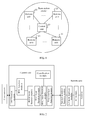
- FIG. 1 is a schematic structural diagram of a master-slave base station cluster according to an embodiment of the present invention.
- the master-slave base station cluster in this embodiment includes: a central unit (Central Unit) 10 and at least one remote unit (Remote Unit) 20.
- Each remote unit 20 is connected to the central unit 10 through a remote interface.
- the master-slave base station cluster provided in the embodiment of the present invention may be a cluster centering the central unit 10, and formed by at least one remote unit 20 mutually connected to the central unit 10.
- the central unit 10 in this embodiment includes: at least one function module of a media access control (Media Access Control, briefly referred to as MAC) layer function module, a radio link control (Radio Link Control, briefly referred to as RLC) layer function module, a packet data convergence protocol (Packet Data Convergence Protocol, briefly referred to as PDCP) layer function module, and a radio resource control (Radio Resource Control, briefly referred to as RRC) function module, and a first interface function module.
- the MAC layer function module, the RLC layer function module, the PDCP layer function module, or the RRC function module may be understood as a module implementing a function of each protocol layer.
- the at least one function module of the MAC layer function module, the RLC layer function module, the PDCP layer function module, and the RRC function module included in the central unit 10 may be configured to use a protocol of a layer to which each function module belongs to perform corresponding processing on data.
- a layer to which the MAC layer function module belongs is a MAC layer
- a layer to which the RLC layer function module belongs is an RLC layer
- a layer to which the PDCP layer function module belongs is a PDCP layer, and so on.
- the first interface function module is configured to generate an IP packet or a layer 2 packet according to the data processed by the at least one of the MAC layer function module, the RLC layer function module, the PDCP layer function module, and the RRC function module, and transfer the packet to each remote unit 20.
- Each remote unit 20 in this embodiment includes: a second interface function module, a layer 1 (L1) layer function module, and another function module of the MAC layer function module, the RLC layer function module, the PDCP layer function module, and the RRC function module except the function module included in the central unit 10;
- the second interface function module is configured to parse the IP packet or the layer 2 packet transferred by the first interface function module;
- the L1 layer function module, and the another function module of the MAC layer function module, the RLC layer function module, the PDCP layer function module, and the RRC function module except the function module included in the central unit 10 are configured to use a protocol of a layer to which each function module belongs to perform corresponding processing on the data obtained through parsing by the second interface function module.
- the data involved in the embodiments of the present invention is a broad concept, and may include user data and/or control signaling transmitted between a user and a core network, and derived data after related protocol processing.
- the master-slave base station cluster in this embodiment implement, by separating the central unit 10 and the remote unit 20, and by adding an interface function module at the central unit 10 and the remote unit 20, communication between the central unit 10 and the remote unit 20, thereby facilitating implementing resource sharing.
- the master-slave base station cluster in this embodiment jointly implement a MAC layer function, an RLC layer function, a PDCP layer function, and an RRC function at the central unit 10 and the remote unit 20, and therefore, the remote interface between the central unit 10 and the remote unit 20 is at least one of an L1 remote interface, a MAC remote interface, an RLC remote interface, and a PDCP remote interface.
- the L1 remote interface refers to an interface between the remote unit 20 and the central unit 10 when the L1 layer function module is located on the remote unit 20 and the remote unit 20 is connected to the central unit 10 through the L1 layer function module.
- the MAC remote interface refers to an interface between the remote unit 20 and the central unit 10 when the MAC layer function module is located on the remote unit 20 and the remote unit 20 is connected to the central unit 10 through the MAC layer function module.
- the RLC remote interface refers to an interface between the remote unit 20 and the central unit 10 when the RLC layer function module is located on the remote unit 20 and the remote unit 20 is connected to the central unit 10 through the RLC layer function module.
- the PDCP remote interface refers to an interface between the remote unit 20 and the central unit 10 when the PDCP layer function module is located on the remote unit 20 and the remote unit 20 is connected to the central unit 10 through a PDCP function module.
- the data volume transmitted by these interfaces: the L1 remote interface, the MAC remote interface, the RLC remote interface, and the PDCP remote interface is relatively smaller, thereby facilitating reducing the data volume exchanged between the central unit 10 and the remote unit 20, and reducing the requirements on a transmission bandwidth and time delay. It can be seen that, the master-slave base station cluster in this embodiment provides a solution which can reduce the requirements on the transmission bandwidth and the time delay, and implement maximization of resource sharing.
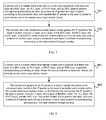
- the central unit 10 in this embodiment includes: the first interface function module, the MAC layer function module, the RLC layer function module, the PDCP layer function module, and the RRC function module; and each remote unit 20 includes: the second interface function module and the L1 layer function module.
- the central unit 10 further includes: a total radiated power (Total Radiated Power, briefly referred to as TRP) function module, which is mainly configured to process IP transmission on an S1 interface and an X2 interface.
- TRP Total Radiated Power
- the S1 interface refers to a communication interface between the central unit 10 and a core network in this embodiment, and specifically refers to a communication interface between a TRP function module in the central unit 10 and the core network.
- the X2 interface refers to a communication interface between different central units 10.
- the second interface function module of each remote unit 20 is connected to the first interface function module of the central unit 10 through a remote L1 layer interface.
- the central unit 10 uses a protocol of a layer to which each function module belongs to perform corresponding processing on data through the MAC layer function module, the RLC layer function module, the PDCP layer function module, and the RRC function module thereof in order.
- a protocol of a layer to which each function module belongs to perform corresponding processing on data through the MAC layer function module, the RLC layer function module, the PDCP layer function module, and the RRC function module thereof in order.
- the L1 layer function module in the remote unit 20 performs L1 layer processing on the data.
- the PDCP layer function module in the central unit 10 performs processing such as transmission control protocol (Transmission Control Protocol, briefly referred to as TCP)/user datagram protocol (User Datagram Protocol, briefly referred to as UDP)/internet protocol (Internet Protocol, briefly referred to as IP) header compression on the data, so as to send the data to the RLC layer function module.
- TCP Transmission Control Protocol
- UDP User Datagram Protocol
- IP Internet Protocol
- the RLC layer function module of the central unit 10 performs fragmentation and cascading on a data packet and then sends the packet to the MAC layer function module.
- the MAC layer function module of the central unit 10 selects a proper modulation and coding scheme (Modulation and Coding Scheme, briefly referred to as MCS), and then the first interface function module encapsulates the data processed by the foregoing function module into an IP packet or a layer 2 packet, and sends the packet to the second interface function module of the remote unit 20 through the L1 remote interface.
- the second interface function module of the remote unit 20 parses the IP packet or the layer 2 packet, and provides the data obtained through parsing to the L1 layer function module of the remote unit 20.
- the L1 layer function module of the remote unit 20 performs coding and modulation according to the MCS selected by the MAC layer function module, and finally, a radio frequency module and an antenna in the remote unit 20 performs processing for sending.
- the antenna here is an optional component. Control signaling of a layer 3 is mainly sent to the PDCP layer function module by the RRC function module.
- a processing procedure of data sent from the remote unit 20 to the central unit 10 reference may be made to the processing procedure of the data sent from the central unit 10 to the remote unit 20 for implementation, and the difference lies in that: a processing direction is opposite, and data content is different, which are not described herein again.
- the central unit 10 in this embodiment includes: the first interface function module, the RLC layer function module, the PDCP layer function module, and the RRC function module.
- Each remote unit 20 includes: the second interface function module, the L1 layer function module, and the MAC layer function module.
- the second interface function module of each remote unit 20 is connected to the first interface function module of the central unit 10 through a remote MAC layer interface.
- the central unit 10 uses a protocol of a layer to which each function module belongs to perform corresponding processing on data through the RLC layer function module, the PDCP layer function module, and the RRC function module thereof in order.
- the MAC layer function module and the L1 layer function module in the remote unit 20 performs MAC layer and L1 layer processing on the data.
- the PDCP layer function module of the central unit 10 performs processing such as TCP/UDP/IP header compression on the data in order and then sends the data to the RLC layer function module.
- the RLC layer function module of the central unit 10 performs fragmentation and cascading on a data packet, and then sends related data to the first interface function module; and the first interface function module encapsulates the data into an IP packet or a layer 2 packet, and sends the packet to the second interface function module of the remote unit 20 through the MAC remote interface.
- the second interface function module of the remote unit 20 parses the IP packet or the layer 2 packet, and sends the data obtained through parsing to the MAC layer function module of the remote unit 20; and the MAC layer function module of the remote unit 20 selects a proper MCS, and then sends the processed data to the L1 layer function module of the remote unit 20.
- the L1 layer function module of the remote unit 20 performs coding and modulation according to the MCS selected by the MAC layer function module, and finally, a radio frequency module and an antenna in the remote unit 20 performs processing for sending.
- the antenna here is an optional component.
- Control signaling of a layer 3 is mainly sent to the PDCP layer function module by the RRC function module.
- a processing procedure of data sent from the remote unit 20 to the central unit 10 reference may be made to the processing procedure of the data sent from the central unit 10 to the remote unit 20 for implementation, and the difference lies in that: a processing direction is opposite, and data content is different, which are not described herein again.
- the MAC layer function module includes: a MAC layer control sub-module and a MAC layer data sub-module.
- the MAC layer control sub-module is mainly responsible for completing a control plane function of the MAC layer, for example, mainly using a protocol of a layer to which the MAC layer control sub-module belongs to perform corresponding processing on control signaling of the layer to which the MAC layer control sub-module belongs.
- the MAC layer data sub-module is mainly responsible for completing a user plane function of the MAC layer, for example, mainly using a protocol of a layer to which the MAC layer data sub-module belongs to perform corresponding processing on user plane data of the layer to which the MAC layer data sub-module belongs.
- the central unit 10 in this embodiment includes: the first interface function module, the MAC layer control sub-module, the RLC layer function module, the PDCP layer function module, and the RRC function module.
- Each remote unit 20 includes: the second interface function module, the L1 layer function module, and the MAC layer data sub-module.
- the second interface function module of each remote unit 20 is connected to the first interface function module of the central unit 10 through a remote MAC layer interface.
- the central unit 10 uses a protocol of a layer to which each function module belongs to perform corresponding processing on data through the MAC layer control sub-module, the RLC layer function module, the PDCP layer function module, and the RRC function module thereof in order.
- the protocol of the layer to which it belongs to perform corresponding processing on the data For a manner for each function module to use the protocol of the layer to which it belongs to perform corresponding processing on the data, reference may be made to relevant description in the prior art.
- the MAC layer data sub-module and the L1 layer function module in the remote unit 20 perform MAC layer and L1 layer processing on the data.
- the PDCP layer function module of the central unit 10 performs processing such as TCP/UDP/IP header compression on the data in order and then sends the data to the RLC layer function module.
- the RLC layer function module of the central unit 10 performs fragmentation and cascading on a data packet, and then sends related data to the first interface function module of the central unit 10; and the first interface function module encapsulates the data into an IP packet or a layer 2 packet, and sends the packet to the second interface function module of the remote unit 20 through the MAC remote interface.
- the second interface function module of the remote unit 20 parses the IP packet or the layer 2 packet, and sends the data obtained through parsing to the MAC layer data sub-module of the remote unit 20; and the MAC layer data sub-module of the remote unit 20 selects a proper MCS, and then sends the processed data to the L1 layer function module of the remote unit 20.
- the L1 layer function module of the remote unit 20 performs coding and modulation according to the MCS selected by the MAC layer data sub-module, and finally, a radio frequency module and an antenna in the remote unit 20 performs processing for sending.
- the antenna here is an optional component. Control signaling of the MAC layer is mainly sent by the RRC function module to the PDCP layer function module, and the MAC layer control plane function is completed by the MAC layer control sub-module.
- a processing procedure of data sent from the remote unit 20 to the central unit 10 reference may be made to the processing procedure of the data sent from the central unit 10 to the remote unit 20 for implementation, and the difference lies in that: a processing direction is opposite, and data content is different, which are not described herein again.
- the central unit 10 in this embodiment includes: the first interface function module, the PDCP layer function module, and the RRC function module.
- Each remote unit 20 includes: the second interface function module, the L1 layer function module, the MAC layer function module, and the RLC layer function module.
- the second interface function module of each remote unit 20 is connected to the first interface function module of the central unit 10 through a remote RLC layer interface.
- the central unit 10 uses a protocol of a layer to which each function module belongs to perform corresponding processing on data through the PDCP layer function module and the RRC function module thereof in order.
- a protocol of the layer to which it belongs to perform corresponding processing on the data reference may be made to relevant description in the prior art.
- the RLC layer function module, the MAC layer function module, and the L1 layer function module in the remote unit 20 uses a protocol of a layer to which each function module belongs to perform corresponding processing on the data.
- a manner for each function module to use the protocol of the layer to which it belongs to perform corresponding processing on the data reference may be made to relevant description in the prior art.
- the PDCP layer function module of the central unit 10 performs processing such as TCP/UDP/IP header compression on the data in order and then sends the data to the first interface function module of the central unit 10.
- the first interface function encapsulates the data into an IP packet or a layer 2 packet, and sends the packet to the second interface function module of the remote unit 20 through the RLC remote interface.
- the second interface function module parses the IP packet or the layer 2 packet, and sends the data obtained through parsing to the RLC layer function module of the remote unit 20; and the RLC layer function module of the remote unit 20 performs fragmentation and cascading on a data packet and then sends the packet to the MAC layer function module of the remote unit 20.
- the MAC layer function module of the remote unit 20 selects a proper MCS, and then sends the processed data to the L1 layer function module of the remote unit 20.
- the L1 layer function module of the remote unit 20 performs coding and modulation according to the MCS selected by the MAC layer function module, and finally, a radio frequency module and an antenna in the remote unit 20 performs processing for sending.
- the antenna here is an optional component. Control signaling of a layer 3 is mainly sent to the PDCP layer function module by the RRC function module.
- a processing procedure of data sent from the remote unit 20 to the central unit 10 reference may be made to the processing procedure of the data sent from the central unit 10 to the remote unit 20 for implementation, and the difference lies in that: a processing direction is opposite, and data content is different, which are not described herein again.
- the central unit 10 in this embodiment includes: the first interface function module and the RRC function module.
- Each remote unit 20 includes: the second interface function module, the L1 layer function module, the MAC layer function module, the RLC layer function module, and the PDCP layer function module.
- the second interface function module of each remote unit 20 is connected to the first interface function module of the central unit 10 through a remote PDCP layer interface.
- the remote unit 20 uses a protocol of a layer to which each function module belongs to perform corresponding processing on data through the PDCP layer function module, the MAC layer function module, the RLC layer function module, and the L1 layer function module thereof in order.
- a protocol of a layer to which each function module belongs to perform corresponding processing on data through the PDCP layer function module, the MAC layer function module, the RLC layer function module, and the L1 layer function module thereof in order.
- the RRC function module in the central unit 10 uses a protocol of a layer to which it belongs to perform corresponding processing on the data.
- the RRC function module to use the protocol of the layer to which it belongs to perform corresponding processing on the data, reference may be made to relevant description in the prior art.
- the PDCP layer function module of the remote unit 20 performs processing such as TCP/UDP/IP header compression on the data in order and then sends the data to the first interface function module of the central unit 10.
- the first interface function module encapsulates the data into an IP packet or a layer 2 packet, and sends the packet to the second interface function module of the remote unit 20 through the PDCP remote interface.
- the second interface function module parses the IP packet or the layer 2 packet, and sends the data obtained through parsing to the RLC layer function module of the remote unit 20.
- the RLC layer function module of the remote unit 20 performs fragmentation and cascading on the data packet and then sends the packet to the MAC layer function module of the remote unit 20.
- the MAC layer function module of the remote unit 20 selects a proper MCS, and sends the processed data to the L1 layer function module of the remote unit 20.
- the L1 layer function module of the remote unit 20 performs coding and modulation according to the MCS selected by the MAC layer function module, and finally, a radio frequency module and an antenna in the remote unit 20 performs processing for sending.
- the antenna here is an optional component. Control signaling of a layer 3 is mainly sent to the PDCP layer function module by the RRC function module through a PDCP remote interface.
- a processing procedure of data sent from the remote unit 20 to the central unit 10 reference may be made to the processing procedure of the data sent from the central unit 10 to the remote unit 20 for implementation, and the difference lies in that: a processing direction is opposite, and data content is different, which are not described herein again.
- the central unit 10 in this embodiment may further include a coordination module.
- the coordination module is mainly configured to coordinate communication between the central unit 10 and the at least one remote unit 20 connected to the central unit 10, and when the at least one remote unit 20 includes at least two remote units 20, is responsible for performing coordination and control on radio signal interference between the at least two remote units 20.
- the coordination module of the central unit 10 may be connected to another module in the central unit 10.
- the coordination module may be connected to all the other modules in the central unit 10, and may also be connected to a part of the other modules in the central unit 10.
- FIG. 2 and FIG. 4 are shown with an example where a coordination module is only connected to a MAC layer function module; and FIG.
- FIG. 3 , FIG. 5, and FIG. 6 are shown with an example where a coordination module is only connected to a first interface function module.
- the coordination module may further be connected to the MAC layer function module and the first interface function module at the same time.
- the foregoing coordination module may further be implemented independently of the central unit 10.
- a single device may be deployed, and is configured to complete a function of a coordination module. That is to say, the device is responsible for controlling communication between the central unit 10 and the at least one remote unit 20 connected to the central unit 10, and when the at least one remote unit 20 includes at least two remote units 20, is responsible for performing coordination and control on radio signal interference between at least two remote units 20.
- the central unit 10 may not include the coordination module.
- the central unit 10 is separated from the remote unit 20.
- an interface function module at the central unit 10 and the remote unit 20
- communication between the central unit 10 and the remote unit 20 is implemented, thereby facilitating implementing resource sharing.
- the coordination module is added to the central unit 10, and is responsible for coordinating communication between the central unit 10 and the remote unit 20, and radio signal interference between the remote units 20, thereby facilitating implementing sharing of information such as power and interference.
- the central unit 10 and the remote unit 20 jointly implement the MAC layer function, the RLC layer function, the PDCP layer function, and the RRC function.
- the remote interface between the central unit 10 and the remote unit 20 is the L1 remote interface, the MAC remote interface, the RLC remote interface, or the PDCP remote interface.
- the data volume transmitted by these interfaces is relatively smaller, thereby facilitating reducing the data volume exchanged between the central unit 10 and the remote unit 20, and reducing the requirements on the transmission bandwidth and the time delay.
- An embodiment of the present invention provides a central unit, where the central unit and at least one remote unit form a master-slave base station cluster.
- the central unit is connected to each remote unit through a remote interface.
- the central unit in this embodiment includes: at least one function module of a MAC layer function module, an RLC layer function module, a PDCP layer function module, and an RRC function module, and a first interface function module; the at least one function module of the MAC layer function module, the RLC layer function module, the PDCP layer function module, and the RRC function module included in the central unit is configured to use a protocol of a layer to which each function module belongs to perform corresponding processing on data, where for a manner for each function module to use the protocol of the layer to which it belongs to perform corresponding processing on the data, reference may be made to relevant description in the prior art; and the first interface function module is configured to generate an IP packet or a layer 2 packet according to the data processed by the at least one function module of the MAC layer function module, the RLC layer
- Each remote unit connected to the central unit in this embodiment includes: a second interface function module, an L1 layer function module, and another function module of the MAC layer function module, the RLC layer function module, the PDCP layer function module, and the RRC function module except the function module included in the central unit in this embodiment.
- the central unit in this embodiment coordinates with the remote unit to form the master-slave base station cluster.
- the central unit and the remote unit are separated, and the central unit and the remote unit perform communication based on remote interface, thereby facilitating implementing resource sharing.
- the central unit and the remote unit in this embodiment jointly implement a MAC layer function, an RLC layer function, a PDCP layer function, and an RRC function.
- the remote interface between the central unit and the remote unit in this embodiment is an L1 remote interface, a MAC remote interface, an RLC remote interface, or a PDCP remote interface. Compared with a remote interface in an existing RRH remote manner, the data volume of these interfaces is relatively smaller, thereby facilitating reducing the data volume exchanged between the central unit and the remote unit, and reducing the requirements on a transmission bandwidth and time delay.
- the central unit in this embodiment includes: the first interface function module, and the MAC layer function module, the RLC layer function module, the PDCP layer function module, and the RRC function module in the MAC layer function module, the RLC layer function module, the PDCP layer function module, and the RRC function module.
- each remote unit includes: the second interface function module, and the L1 layer function module.
- the first interface function module of the central unit is connected to the second interface function module of each remote unit through an L1 remote interface.
- the central unit in this embodiment includes: the first interface function module, and the RLC layer function module, the PDCP layer function module, and the RRC function module in the MAC layer function module, the RLC layer function module, the PDCP layer function module, and the RRC function module.
- each remote unit includes: the second interface function module, the L1 layer function module, and the MAC layer function module in the MAC layer function module, the RLC layer function module, the PDCP layer function module, and the RRC function module.
- the first interface function module of the central unit is connected to the second interface function module of each remote unit through a MAC remote interface.
- the MAC layer function module includes: a MAC layer control sub-module and a MAC layer data sub-module.
- the central unit in this embodiment includes: the first interface function module, and the MAC layer control sub-module, the RLC layer function module, the PDCP layer function module, and the RRC function module in the MAC layer function module, the RLC layer function module, the PDCP layer function module, and the RRC function module.
- each remote unit includes: the second interface function module, the L1 layer function module, and the MAC layer data sub-module in the MAC layer function module, the RLC layer function module, the PDCP layer function module, and the RRC function module.
- the first interface function module of the central unit is connected to the second interface function module of each remote unit through a MAC remote interface.
- the central unit in this embodiment includes: the first interface function module, and the PDCP layer function module and the RRC function module in the MAC layer function module, the RLC layer function module, the PDCP layer function module, and the RRC function module.
- each remote unit includes: the second interface function module, the L1 layer function module, and the MAC layer function module and the RLC layer function module in the MAC layer function module, the RLC layer function module, the PDCP layer function module, and the RRC function module.
- the first interface function module of the central unit is connected to the second interface function module of each remote unit through an RLC remote interface.
- the central unit in this embodiment includes: the first interface function module, and the RRC function module in the MAC layer function module, the RLC function module, the PDCP layer function module, and the RRC function module.
- each remote unit includes: the second interface function module, the L1 layer function module, and the MAC layer function module, the RLC layer function module, and the PDCP layer function module in the MAC layer function module, the RLC layer function module, the PDCP layer function module, and the RRC function module.
- the first interface function module of the central unit is connected to the second interface function module of each remote unit through a PDCP remote interface.
- the central unit in this embodiment may further include a coordination module, as shown in FIG. 2 to FIG. 6 .
- the coordination module is configured to coordinate communication between the at least one remote unit and the central unit in this embodiment, and when the at least one remote unit includes at least two remote units, perform coordination and control on radio signal interference between the at least two remote units.
- the central unit in this embodiment may further include a TRP function module.
- the TRP function module is mainly configured to process IP transmission on an S1 interface and an X2 interface.
- An embodiment of the present invention provides a remote unit, where at least one remote unit and a central unit may form a master-slave base station cluster.
- the remote unit is connected to the central unit through a remote interface.
- the remote unit includes: a second interface function module, an L1 layer function module, and another function module of a MAC layer function module, an RLC layer function module, a PDCP layer function module, and an RRC function module except a function module included in the central unit;
- the second interface function module is connected to the first interface function module through a remote interface, and is configured to parse an IP packet or a layer 2 packet transferred by the first interface function module;
- the L1 layer function module, and the another function module of the MAC layer function module, the RLC layer function module, the PDCP layer function module, and the RRC function module except the function module included in the central unit are configured to use a protocol of a layer to which each function module belongs to perform corresponding processing on the data obtained through parsing by the second interface function module.
- the central unit connected to the remote unit includes: the first interface function module, and at least one function module of the MAC layer function module, the RLC layer function module, the PDCP layer function module, and the RRC function module.
- the central unit in this embodiment coordinates with the remote unit to form the master-slave base station cluster.
- the central unit and the remote unit are separated, and the central unit and the remote unit perform communication based on remote interface, thereby facilitating implementing resource sharing.
- the central unit and the remote unit in this embodiment jointly implement a MAC layer function, an RLC layer function, a PDCP layer function, and an RRC function.
- the remote interface between the central unit and the remote unit in this embodiment is an L1 remote interface, a MAC remote interface, an RLC remote interface, or a PDCP remote interface. Compared with a remote interface in an existing RRH remote manner, the data volume of these interfaces is relatively smaller, thereby facilitating reducing the data volume exchanged between the central unit and the remote unit, and reducing the requirements on a transmission bandwidth and time delay.
- the central unit in this embodiment includes: the second interface function module and the L1 layer function module.
- the central unit includes: the first interface function module, and the MAC layer function module, the RLC layer function module, the PDCP layer function module, and the RRC function module in the MAC layer function module, the RLC layer function module, the PDCP layer function module, and the RRC function module.
- the second interface function module of the remote unit is connected to the first interface function module of the central unit through an L1 remote interface.
- the remote unit in this embodiment includes: the second interface function module, the L1 layer function module, and the MAC layer function module in the MAC layer function module, the RLC layer function module, the PDCP layer function module, and the RRC function module.
- the central unit includes: the first interface function module, and the RLC layer function module, the PDCP layer function module, and the RRC function module in the MAC layer function module, the RLC layer function module, the PDCP layer function module, and the RRC function module.
- the second interface function module of the remote unit is connected to the first interface function module of the central unit through a MAC remote interface.
- the MAC layer function module includes: a MAC layer control sub-module and a MAC layer data sub-module.
- the remote unit in this embodiment includes: the second interface function module, the L1 layer function module, and the MAC layer data sub-module in the MAC layer function module, the RLC layer function module, the PDCP layer function module, and the RRC function module.
- the central unit includes: the first interface function module, and the MAC layer control sub-module, the RLC layer function module, the PDCP layer function module, and the RRC function module in the MAC layer function module, the RLC layer function module, the PDCP layer function module, and the RRC function module.
- the second interface function module of the remote unit is connected to the first interface function module of the central unit through a MAC remote interface.
- the remote unit in this embodiment includes: the second interface function module, the L1 layer function module, and the MAC layer function module and the RLC layer function module in the MAC layer function module, the RLC layer function module, the PDCP layer function module, and the RRC function module.
- the central unit includes: the first interface function module, and the PDCP layer function module and the RRC function module in the MAC layer function module, the RLC layer function module, the PDCP layer function module, and the RRC function module.
- the second interface function module of the remote unit is connected to the first interface function module of the central unit through an RLC remote interface.
- the remote unit in this embodiment includes: the second interface function module, the L1 layer function module, and the MAC layer function module, the RLC layer function module, and the PDCP layer function module in the MAC layer function module, the RLC layer function module, the PDCP layer function module, and the RRC function module.
- the central unit includes: the first interface function module, and the RRC function module in the MAC layer function module, the RLC layer function module, the PDCP layer function module, and the RRC function module.
- the second interface function module of the remote unit is connected to the first interface function module of the central unit through a PDCP remote interface.
- FIG. 7 is a flowchart of an information processing method according to an embodiment of the present invention. As shown in FIG. 7 , the method in this embodiment includes:
- the information processing method provided in this embodiment may be performed by the master-slave base station cluster provided in any one of FIG. 1 to FIG. 6 .
- the master-slave base station cluster provided in any one of FIG. 1 to FIG. 6 .
- the information processing method provided in this embodiment is performed by the master-slave base station cluster. In one aspect, it facilitates implementing resource sharing; in another aspect, it facilitates reducing the data volume exchanged between the central unit and the remote unit, thereby reducing the requirements on a transmission bandwidth and time delay.
- FIG. 8 is a flowchart of an information processing method according to another embodiment of the present invention. As shown in FIG. 8 , the method in this embodiment includes:
- Step 801 A central unit in a master-slave base station cluster uses a protocol of at least one layer of a MAC layer, an RLC layer, a PDCP layer, and an RRC layer to perform corresponding processing on data, where the central unit and at least one remote unit form the master-slave base station cluster.
- Step 802 The central unit generates an IP packet or a layer 2 packet according to the processed data, transfers the IP packet or the layer 2 packet to each remote unit in the master-slave base station cluster, so that the remote unit parses the IP packet or the layer 2 packet, uses an L1 layer, and a layer of the MAC layer, the RLC layer, the PDCP layer, and the RRC layer except the central unit to process the data, and uses a protocol of another layer except a protocol of each layer to perform corresponding processing on the data obtained through parsing.
- the information processing method provided in this embodiment may be performed by the central unit in the master-slave base station cluster provided in FIG. 1 to FIG. 6 .
- the central unit in the master-slave base station cluster provided in FIG. 1 to FIG. 6 .
- FIG. 9 is a flowchart of an information processing method according to still another embodiment of the present invention. As shown in FIG. 9 , the method in this embodiment includes:
- the information processing method provided in this embodiment may be performed by the remote unit in the master-slave base station cluster provided in FIG. 1 to FIG. 6 .
- the remote unit in the master-slave base station cluster provided in FIG. 1 to FIG. 6 .
- the foregoing program may be stored in a computer readable storage medium. When the program runs, the steps of the foregoing method embodiments are performed.
- the foregoing storage mediums include various mediums capable of storing program code, such as a ROM, a RAM, a magnetic disk, or an optical disc.
Landscapes
- Engineering & Computer Science (AREA)
- Computer Networks & Wireless Communication (AREA)
- Signal Processing (AREA)
- Mobile Radio Communication Systems (AREA)
- Computer Security & Cryptography (AREA)
Abstract
Description
- The present invention relates to a communications technology, and in particular, to a master-slave base station cluster, a central unit, a remote unit, and an information processing method.
- With the rapid development of a mobile bandwidth, a wireless network puts an increasingly higher demand on the capacity support. In the condition that a spectrum resource is limited, a heterogeneous network (Heterogeneous network, briefly referred to as HetNet) and macro cell split are two effective capacity improvement manners.
- At present, in the HetNet, there are mainly two manners of low power base stations: a remote radio head (Remote Radio Head, briefly referred to as RRH) remote manner and an integrated low power base station. The integrated low power base station, for example, may be a micro base station (Micro), a pico base station (Pico), or a home base station (Femto). The former manner puts a high demand on a transmission bandwidth and time delay, and a bare fiber or wave division multiplexing (Wave Division Multiplexing, briefly referred to as WDM) manner is required for transmission; and the later manner cannot implement maximization of resource sharing. At present, a solution that can reduce the transmission bandwidth and the time delay and maximize resource sharing is required.
- Embodiments of the present invention provide a mother-son base station cluster, a central unit, a remote unit, and an information processing method, which are used to reduce the requirements on a transmission bandwidth and time delay, and maximize resource sharing.
- According to a first aspect, a master-slave base station cluster is provided, which includes: a central unit and at least one remote unit, where each remote unit is connected to the central unit through a remote interface;
the central unit includes: at least one function module of a media access control MAC layer function module, a radio link control RLC layer function module, a packet data convergence protocol PDCP layer function module, and a radio resource control RRC function module, and a first interface function module; the at least one function module of the MAC layer function module, the RLC layer function module, the PDCP layer function module, and the RRC function module included in the central unit is configured to use a protocol of a layer to which each function module belongs to perform corresponding processing on data; and the first interface function module is configured to generate an IP packet or a layer 2 packet according to the data processed by the at least one function module of the MAC layer function module, the RLC layer function module, the PDCP layer function module, and the RRC function module, and transfer the packet to each remote unit; and
each remote unit includes: a second interface function module, a layer 1 (L1) layer function module, and another function module of the MAC layer function module, the RLC layer function module, the PDCP layer function module, and the RRC function module except the function module included in the central unit; the second interface function module is connected to the first interface function module, and is configured to parse the IP packet or the layer 2 packet transferred by the first interface function module; and the L1 layer function module, and the another function module of the MAC layer function module, the RLC layer function module, the PDCP layer function module, and the RRC function module except the function module included in the central unit, are configured to use a protocol of a layer to which each function module belongs to perform corresponding processing on the data obtained through parsing by the second interface function module. - In a first possible implementation manner of the first aspect, the central unit includes the MAC layer function module, the RLC layer function module, the PDCP layer function module, the RRC function module, and the first interface function module; and each remote unit includes the second interface function module and the L1 layer function module; where
the second interface function module of each remote unit is connected to the first interface function module through an L1 remote interface. - In a second possible implementation manner of the first aspect, the central unit includes the RLC layer function module, the PDCP layer function module, the RRC function module, and the first interface function module; and each remote unit includes the MAC layer function module, the second interface function module, and the L1 layer function module, where
the second interface function module of each remote unit is connected to the first interface function module through a MAC remote interface. - In a third possible implementation manner of the first aspect, the MAC layer function module includes: a MAC layer control sub-module and a MAC layer data sub-module; and
the central unit includes the MAC layer control sub-module, the RLC layer function module, the PDCP layer function module, the RRC function module and the first interface function module; and each remote unit includes the MAC layer data sub-module, the second interface function module, and the L1 layer function module, where
the second interface function module of each remote unit is connected to the first interface function module through a MAC remote interface. - In a fourth possible implementation manner of the first aspect, the central unit includes the PDCP layer function module, the RRC function module, and the first interface function module; and each remote unit includes the MAC layer function module, the RLC layer function module, the second interface function module, and the L1 layer function module, where
the second interface function module of each remote unit is connected to the first interface function module through an RLC remote interface. - In a fifth possible implementation manner of the first aspect, the central unit includes the RRC function module and the first interface function module; and each remote unit includes the MAC layer function module, the RLC layer function module, the PDCP layer function module, the second interface function module, and the L1 layer function module, where
the second interface function module of each remote unit is connected to the first interface function module through a PDCP remote interface. - With reference to the first aspect or the first possible implementation manner of the first aspect or the second possible implementation manner of the first aspect or the third possible implementation manner of the first aspect or the fourth possible implementation manner of the first aspect or the fifth possible implementation manner of the first aspect, in a sixth possible implementation manner of the first aspect, the central unit further includes: a coordination module, configured to coordinate communication between the at least one remote unit and the central unit, and when the at least one remote unit includes at least two remote units, perform coordination and control on radio signal interference between the at least two remote units.
- According to a second aspect, a central unit is provided, where the central unit and at least one remote unit form a master-slave base station cluster, and the central unit includes: at least one function module of a media access control MAC layer function module, a radio link control RLC layer function module, a packet data convergence protocol PDCP layer function module, and a radio resource control RRC function module, and a first interface function module; the at least one function module of the MAC layer function module, the RLC layer function module, the PDCP layer function module, and the RRC function module included in the central unit is configured to use a protocol of a layer to which each function module belongs to perform corresponding processing on data; and the first interface function module is connected to each remote unit through a remote interface, and is configured to generate an IP packet or a layer 2 packet according to the data processed by the at least one function module of the MAC layer function module, the RLC layer function module, the PDCP layer function module, and the RRC function module to transfer the packet to each remote unit, where
each remote unit includes: a second interface function module, an L1 layer function module, and another function module of the MAC layer function module, the RLC layer function module, the PDCP layer function module, and the RRC function module except the function module included in the central unit. - In a first possible implementation manner of the second aspect, the central unit includes the MAC layer function module, the RLC layer function module, the PDCP layer function module, the RRC function module, and the first interface function module; and the first interface function module of the central unit is connected to the second interface function module of each remote unit through an L1 remote interface.
- In a second possible implementation manner of the second aspect, the central unit includes the RLC layer function module, the PDCP layer function module, the RRC function module, and the first interface function module; and the first interface function module of the central unit is connected to the second interface function module of each remote unit through a MAC remote interface.
- In a third possible implementation manner of the second aspect, the MAC layer function module includes: a MAC layer control sub-module and a MAC layer data sub-module; and
the central unit includes the MAC layer control sub-module, the RLC layer function module, the PDCP layer function module, the RRC function module, and the first interface function module; and the first interface function module of the central unit is connected to the second interface function module of each remote unit through a MAC remote interface. - In a fourth possible implementation manner of the second aspect, the central unit includes the PDCP layer function module, the RRC function module, and the first interface function module; and the first interface function module of the central unit is connected to the second interface function module of each remote unit through an RLC remote interface.
- In a fifth possible implementation manner of the second aspect, the central unit includes the RRC function module and the first interface function module; and the first interface function module of the central unit is connected to the second interface function module of each remote unit through a PDCP remote interface.
- With reference to the second aspect or the first possible implementation manner of the second aspect or the second possible implementation manner of the second aspect or the third possible implementation manner of the second aspect or the fourth possible implementation manner of the second aspect or the fifth possible implementation manner of the second aspect, in a sixth possible implementation manner of the second aspect, the central unit further includes: a coordination module, configured to coordinate communication between the at least one remote unit and the central unit, and when the at least one remote unit includes at least two remote units, perform coordination and control on radio signal interference between the at least two remote units.
- According to a third aspect, a remote unit is provided, where the remote unit and a central unit form a master-slave base station cluster, and the remote unit includes: a second interface function module, an L1 layer function module, and another function module of a media access control MAC layer function module, a radio link control RLC layer function module, a packet data convergence protocol PDCP layer function module, and a radio resource control RRC function module except a function module included in the central unit; the second interface function module is connected to the central unit through a remote interface, and is configured to parse an IP packet or a layer 2 packet transferred by the central unit; and the L1 layer function module, and the another function module in the MAC layer function module, the RLC layer function module, the PDCP layer function module, and the RRC function module except the function module included in the central unit, are configured to use a protocol of a layer to which each function module belongs to perform corresponding processing on the data obtained through parsing by the second interface function module; and
the central unit includes: the first interface function module, and at least one function module of the MAC layer function module, the RLC layer function module, the PDCP layer function module, and the RRC function module. - In a first possible implementation manner of the third aspect, the remote unit only includes the second interface function module and the L1 layer function module; and the second interface function module of the remote unit is connected to the first interface function module through an L1 remote interface.
- In a second possible implementation manner of the third aspect, the remote unit includes the MAC layer function module, the second interface function module, and the L1 layer function module; and the second interface function module of the remote unit is connected to the first interface function module through a MAC remote interface.
- In a third possible implementation manner of the third aspect, the MAC layer function module includes: a MAC layer control sub-module and a MAC layer data sub-module; and
the remote unit includes the MAC layer data sub-module, the second interface function module, and the L1 layer function module; and the second interface function module of the remote unit is connected to the first interface function module through a MAC remote interface. - In a fourth possible implementation manner of the third aspect, the remote unit includes the MAC layer function module, the RLC layer function module, the second interface function module, and the L1 layer function module; and the second interface function module of the remote unit is connected to the first interface function module through an RLC remote interface.
- In a fifth possible implementation manner of the third aspect, the remote unit includes the MAC layer function module, the RLC layer function module, the PDCP layer function module, the second interface function module, and the L1 layer function module; and the second interface function module of the remote unit is connected to the first interface function module through a PDCP remote interface.
- According to a fourth aspect, an information processing method is provided, which includes:
- using, by a central unit in a master-slave base station cluster, a protocol of at least one layer of a media access control MAC layer, a radio link control RLC layer, a packet data convergence protocol PDCP layer, and a radio resource control RRC layer to perform corresponding processing on data, generating an IP packet or a layer 2 packet according to the processed data, and transferring the IP packet or the layer 2 packet to each remote unit in the master-slave base station cluster; and
- parsing, by the remote unit in the master-slave base station cluster, the IP packet or the layer 2 packet, using a layer 1 (L1) layer, and a layer of the MAC layer, the RLC layer, the PDCP layer, and the RRC layer except the central unit to process the data, and using a protocol of another layer except a protocol of each layer to perform corresponding processing on the data obtained through parsing.
- According to a fifth aspect, an information processing method is provided, which includes:
- using, by a central unit in a master-slave base station cluster, a protocol of at least one layer of a media access control MAC layer, a radio link control RLC layer, a packet data convergence protocol PDCP layer, and a radio resource control RRC layer to perform corresponding processing on data, where the central unit and at least one remote unit form the master-slave base station cluster; and
- generating, by the central unit, an IP packet or a layer 2 packet according to the processed data, and transferring the IP packet or the layer 2 packet to each remote unit in the master-slave base station cluster, so that the remote unit parses the IP packet or the layer 2 packet, uses a layer 1 (L1) layer, and a layer of the MAC layer, the RLC layer, the PDCP layer, and the RRC layer except the central unit to process the data, and uses a protocol of another layer except a protocol of each layer to perform corresponding processing on the data obtained through parsing.
- According to a sixth aspect, an information processing method is provided, which includes:
- receiving, by a remote unit in a master-slave base station cluster, an IP packet or a layer 2 packet sent by a central unit in the master-slave base station cluster, where the IP packet or the layer 2 packet is generated according to data processed by the central unit by using a protocol of at least one layer of a media access control MAC layer, a radio link control RLC layer, a packet data convergence protocol PDCP layer, and a radio resource control RRC layer to perform corresponding processing on the data, and the central unit and the at least one remote unit form the master-slave base station cluster; and
- parsing, by the remote unit, the IP packet or the layer 2 packet, using a layer 1 (L1) layer, and a layer of the MAC layer, the RLC layer, the PDCP layer, and the RRC layer except the central unit to process the data, and using a protocol of another layer except a protocol of each layer to perform corresponding processing on the data obtained through parsing.
- According to the master-slave base station cluster, the central unit, the remote unit, and the information processing method provided in the embodiments of the present invention, the central unit and the remote unit form the master-slave base station cluster, the central unit is connected to the remote unit based on the remote interface, and the central unit and the remote unit may perform communication based on the remote interface, thereby facilitating implementing resource sharing. By implementing an L1 layer function at the remote unit, and jointly implementing a media access control layer function, a radio link control layer function, a packet data convergence protocol layer function, and a radio resource control function through the central unit and the remote unit, the remote interface between the central unit and the remote unit is at least one of the L1 remote interface, the MAC remote interface, the RLC remote interface, and the PDCP remote interface. Compared with a remote interface in an existing RRH remote manner, the data volume transmitted by these interfaces: the L1 remote interface, the MAC remote interface, the RLC remote interface, and the PDCP remote interface is relatively smaller, thereby facilitating reducing the data volume exchanged between the central unit and the remote unit, and reducing the requirements on the transmission bandwidth and the time delay.
- To describe the technical solutions in the embodiments of the present invention or in the prior art more clearly, the following briefly introduces the accompanying drawings required for describing the embodiments or the prior art. Apparently, the accompanying drawings in the following description show merely some embodiments of the present invention, and persons of ordinary skill in the art may still derive other drawings from these accompanying drawings without creative efforts.
-
FIG. 1 is a schematic structural diagram of a master-slave base station cluster according to an embodiment of the present invention; -
FIG. 2 is a schematic structural diagram of a central unit and a remote unit in a master-slave base station cluster according to an embodiment of the present invention; -
FIG. 3 is a schematic structural diagram of a central unit and a remote unit in a master-slave base station cluster according to another embodiment of the present invention; -
FIG. 4 is a schematic structural diagram of a central unit and a remote unit in a master-slave base station cluster according to still another embodiment of the present invention; -
FIG. 5 is a schematic structural diagram of a central unit and a remote unit in a master-slave base station cluster according to still another embodiment of the present invention; -
FIG. 6 is a schematic structural diagram of a central unit and a remote unit in a master-slave base station cluster according to still another embodiment of the present invention; -
FIG. 7 is a flowchart of an information processing method according to an embodiment of the present invention; -
FIG. 8 is a flowchart of an information processing method according to another embodiment of the present invention; and -
FIG. 9 is a flowchart of an information processing method according to still another embodiment of the present invention. - To make the objectives, technical solutions, and advantages of the embodiments of the present invention more comprehensible, the following clearly and completely describes the technical solutions in the embodiments of the present invention with reference to the accompanying drawings in the embodiments of the present invention. Apparently, the described embodiments are merely a part rather than all of the embodiments of the present invention. All other embodiments obtained by persons of ordinary skill in the art based on the embodiments of the present invention without creative efforts shall fall within the protection scope of the present invention.
-
FIG. 1 is a schematic structural diagram of a master-slave base station cluster according to an embodiment of the present invention. As shown inFIG. 1 , the master-slave base station cluster in this embodiment includes: a central unit (Central Unit) 10 and at least one remote unit (Remote Unit) 20. Eachremote unit 20 is connected to thecentral unit 10 through a remote interface. The master-slave base station cluster provided in the embodiment of the present invention may be a cluster centering thecentral unit 10, and formed by at least oneremote unit 20 mutually connected to thecentral unit 10. - The
central unit 10 in this embodiment includes: at least one function module of a media access control (Media Access Control, briefly referred to as MAC) layer function module, a radio link control (Radio Link Control, briefly referred to as RLC) layer function module, a packet data convergence protocol (Packet Data Convergence Protocol, briefly referred to as PDCP) layer function module, and a radio resource control (Radio Resource Control, briefly referred to as RRC) function module, and a first interface function module. The MAC layer function module, the RLC layer function module, the PDCP layer function module, or the RRC function module may be understood as a module implementing a function of each protocol layer. The at least one function module of the MAC layer function module, the RLC layer function module, the PDCP layer function module, and the RRC function module included in thecentral unit 10 may be configured to use a protocol of a layer to which each function module belongs to perform corresponding processing on data. For example, a layer to which the MAC layer function module belongs is a MAC layer, a layer to which the RLC layer function module belongs is an RLC layer, a layer to which the PDCP layer function module belongs is a PDCP layer, and so on. The first interface function module is configured to generate an IP packet or a layer 2 packet according to the data processed by the at least one of the MAC layer function module, the RLC layer function module, the PDCP layer function module, and the RRC function module, and transfer the packet to eachremote unit 20. - Each
remote unit 20 in this embodiment includes: a second interface function module, a layer 1 (L1) layer function module, and another function module of the MAC layer function module, the RLC layer function module, the PDCP layer function module, and the RRC function module except the function module included in thecentral unit 10; the second interface function module is configured to parse the IP packet or the layer 2 packet transferred by the first interface function module; and the L1 layer function module, and the another function module of the MAC layer function module, the RLC layer function module, the PDCP layer function module, and the RRC function module except the function module included in thecentral unit 10, are configured to use a protocol of a layer to which each function module belongs to perform corresponding processing on the data obtained through parsing by the second interface function module. - It should be noted that, the data involved in the embodiments of the present invention is a broad concept, and may include user data and/or control signaling transmitted between a user and a core network, and derived data after related protocol processing.
- It can be seen from the above that, the master-slave base station cluster in this embodiment implement, by separating the
central unit 10 and theremote unit 20, and by adding an interface function module at thecentral unit 10 and theremote unit 20, communication between thecentral unit 10 and theremote unit 20, thereby facilitating implementing resource sharing. - In addition, the master-slave base station cluster in this embodiment jointly implement a MAC layer function, an RLC layer function, a PDCP layer function, and an RRC function at the
central unit 10 and theremote unit 20, and therefore, the remote interface between thecentral unit 10 and theremote unit 20 is at least one of an L1 remote interface, a MAC remote interface, an RLC remote interface, and a PDCP remote interface. The L1 remote interface refers to an interface between theremote unit 20 and thecentral unit 10 when the L1 layer function module is located on theremote unit 20 and theremote unit 20 is connected to thecentral unit 10 through the L1 layer function module. The MAC remote interface refers to an interface between theremote unit 20 and thecentral unit 10 when the MAC layer function module is located on theremote unit 20 and theremote unit 20 is connected to thecentral unit 10 through the MAC layer function module. The RLC remote interface refers to an interface between theremote unit 20 and thecentral unit 10 when the RLC layer function module is located on theremote unit 20 and theremote unit 20 is connected to thecentral unit 10 through the RLC layer function module. The PDCP remote interface refers to an interface between theremote unit 20 and thecentral unit 10 when the PDCP layer function module is located on theremote unit 20 and theremote unit 20 is connected to thecentral unit 10 through a PDCP function module. Compared with a remote interface in an existing RRH remote manner, the data volume transmitted by these interfaces: the L1 remote interface, the MAC remote interface, the RLC remote interface, and the PDCP remote interface is relatively smaller, thereby facilitating reducing the data volume exchanged between thecentral unit 10 and theremote unit 20, and reducing the requirements on a transmission bandwidth and time delay. It can be seen that, the master-slave base station cluster in this embodiment provides a solution which can reduce the requirements on the transmission bandwidth and the time delay, and implement maximization of resource sharing. - In an optional implementation manner, as shown in
FIG. 2 , thecentral unit 10 in this embodiment includes: the first interface function module, the MAC layer function module, the RLC layer function module, the PDCP layer function module, and the RRC function module; and eachremote unit 20 includes: the second interface function module and the L1 layer function module. Besides, thecentral unit 10 further includes: a total radiated power (Total Radiated Power, briefly referred to as TRP) function module, which is mainly configured to process IP transmission on an S1 interface and an X2 interface. The S1 interface refers to a communication interface between thecentral unit 10 and a core network in this embodiment, and specifically refers to a communication interface between a TRP function module in thecentral unit 10 and the core network. The X2 interface refers to a communication interface between differentcentral units 10. The second interface function module of eachremote unit 20 is connected to the first interface function module of thecentral unit 10 through a remote L1 layer interface. - In this implementation manner, the
central unit 10 uses a protocol of a layer to which each function module belongs to perform corresponding processing on data through the MAC layer function module, the RLC layer function module, the PDCP layer function module, and the RRC function module thereof in order. For a manner for each function module to use the protocol of the layer to which it belongs to perform corresponding processing on the data, reference may be made to relevant description in the prior art. The L1 layer function module in theremote unit 20 performs L1 layer processing on the data. For example, for data sent from thecentral unit 10 to theremote unit 20, the PDCP layer function module in thecentral unit 10 performs processing such as transmission control protocol (Transmission Control Protocol, briefly referred to as TCP)/user datagram protocol (User Datagram Protocol, briefly referred to as UDP)/internet protocol (Internet Protocol, briefly referred to as IP) header compression on the data, so as to send the data to the RLC layer function module. The RLC layer function module of thecentral unit 10 performs fragmentation and cascading on a data packet and then sends the packet to the MAC layer function module. The MAC layer function module of thecentral unit 10 selects a proper modulation and coding scheme (Modulation and Coding Scheme, briefly referred to as MCS), and then the first interface function module encapsulates the data processed by the foregoing function module into an IP packet or a layer 2 packet, and sends the packet to the second interface function module of theremote unit 20 through the L1 remote interface. The second interface function module of theremote unit 20 parses the IP packet or the layer 2 packet, and provides the data obtained through parsing to the L1 layer function module of theremote unit 20. The L1 layer function module of theremote unit 20 performs coding and modulation according to the MCS selected by the MAC layer function module, and finally, a radio frequency module and an antenna in theremote unit 20 performs processing for sending. The antenna here is an optional component. Control signaling of a layer 3 is mainly sent to the PDCP layer function module by the RRC function module. - For a processing procedure of data sent from the
remote unit 20 to thecentral unit 10, reference may be made to the processing procedure of the data sent from thecentral unit 10 to theremote unit 20 for implementation, and the difference lies in that: a processing direction is opposite, and data content is different, which are not described herein again. - In another optional implementation manner, as shown in
FIG. 3 , thecentral unit 10 in this embodiment includes: the first interface function module, the RLC layer function module, the PDCP layer function module, and the RRC function module. Eachremote unit 20 includes: the second interface function module, the L1 layer function module, and the MAC layer function module. The second interface function module of eachremote unit 20 is connected to the first interface function module of thecentral unit 10 through a remote MAC layer interface. - In this implementation manner, the
central unit 10 uses a protocol of a layer to which each function module belongs to perform corresponding processing on data through the RLC layer function module, the PDCP layer function module, and the RRC function module thereof in order. For a manner for each function module to use the protocol of the layer to which it belongs to perform corresponding processing on the data, reference may be made to relevant description in the prior art. The MAC layer function module and the L1 layer function module in theremote unit 20 performs MAC layer and L1 layer processing on the data. For example, for data sent from thecentral unit 10 to theremote unit 20, the PDCP layer function module of thecentral unit 10 performs processing such as TCP/UDP/IP header compression on the data in order and then sends the data to the RLC layer function module. The RLC layer function module of thecentral unit 10 performs fragmentation and cascading on a data packet, and then sends related data to the first interface function module; and the first interface function module encapsulates the data into an IP packet or a layer 2 packet, and sends the packet to the second interface function module of theremote unit 20 through the MAC remote interface. The second interface function module of theremote unit 20 parses the IP packet or the layer 2 packet, and sends the data obtained through parsing to the MAC layer function module of theremote unit 20; and the MAC layer function module of theremote unit 20 selects a proper MCS, and then sends the processed data to the L1 layer function module of theremote unit 20. The L1 layer function module of theremote unit 20 performs coding and modulation according to the MCS selected by the MAC layer function module, and finally, a radio frequency module and an antenna in theremote unit 20 performs processing for sending. The antenna here is an optional component. Control signaling of a layer 3 is mainly sent to the PDCP layer function module by the RRC function module. - For a processing procedure of data sent from the
remote unit 20 to thecentral unit 10, reference may be made to the processing procedure of the data sent from thecentral unit 10 to theremote unit 20 for implementation, and the difference lies in that: a processing direction is opposite, and data content is different, which are not described herein again. - In still another optional implementation manner, the MAC layer function module includes: a MAC layer control sub-module and a MAC layer data sub-module. The MAC layer control sub-module is mainly responsible for completing a control plane function of the MAC layer, for example, mainly using a protocol of a layer to which the MAC layer control sub-module belongs to perform corresponding processing on control signaling of the layer to which the MAC layer control sub-module belongs. The MAC layer data sub-module is mainly responsible for completing a user plane function of the MAC layer, for example, mainly using a protocol of a layer to which the MAC layer data sub-module belongs to perform corresponding processing on user plane data of the layer to which the MAC layer data sub-module belongs. As shown in
FIG. 4 , thecentral unit 10 in this embodiment includes: the first interface function module, the MAC layer control sub-module, the RLC layer function module, the PDCP layer function module, and the RRC function module. Eachremote unit 20 includes: the second interface function module, the L1 layer function module, and the MAC layer data sub-module. The second interface function module of eachremote unit 20 is connected to the first interface function module of thecentral unit 10 through a remote MAC layer interface. - In this implementation manner, the
central unit 10 uses a protocol of a layer to which each function module belongs to perform corresponding processing on data through the MAC layer control sub-module, the RLC layer function module, the PDCP layer function module, and the RRC function module thereof in order. For a manner for each function module to use the protocol of the layer to which it belongs to perform corresponding processing on the data, reference may be made to relevant description in the prior art. The MAC layer data sub-module and the L1 layer function module in theremote unit 20 perform MAC layer and L1 layer processing on the data. For example, for data sent from thecentral unit 10 to theremote unit 20, where the data mainly refers to user plane data, the PDCP layer function module of thecentral unit 10 performs processing such as TCP/UDP/IP header compression on the data in order and then sends the data to the RLC layer function module. The RLC layer function module of thecentral unit 10 performs fragmentation and cascading on a data packet, and then sends related data to the first interface function module of thecentral unit 10; and the first interface function module encapsulates the data into an IP packet or a layer 2 packet, and sends the packet to the second interface function module of theremote unit 20 through the MAC remote interface. The second interface function module of theremote unit 20 parses the IP packet or the layer 2 packet, and sends the data obtained through parsing to the MAC layer data sub-module of theremote unit 20; and the MAC layer data sub-module of theremote unit 20 selects a proper MCS, and then sends the processed data to the L1 layer function module of theremote unit 20. The L1 layer function module of theremote unit 20 performs coding and modulation according to the MCS selected by the MAC layer data sub-module, and finally, a radio frequency module and an antenna in theremote unit 20 performs processing for sending. The antenna here is an optional component. Control signaling of the MAC layer is mainly sent by the RRC function module to the PDCP layer function module, and the MAC layer control plane function is completed by the MAC layer control sub-module. - For a processing procedure of data sent from the
remote unit 20 to thecentral unit 10, reference may be made to the processing procedure of the data sent from thecentral unit 10 to theremote unit 20 for implementation, and the difference lies in that: a processing direction is opposite, and data content is different, which are not described herein again. - In still another optional implementation manner, as shown in
FIG. 5 , thecentral unit 10 in this embodiment includes: the first interface function module, the PDCP layer function module, and the RRC function module. Eachremote unit 20 includes: the second interface function module, the L1 layer function module, the MAC layer function module, and the RLC layer function module. The second interface function module of eachremote unit 20 is connected to the first interface function module of thecentral unit 10 through a remote RLC layer interface. - In this implementation manner, the
central unit 10 uses a protocol of a layer to which each function module belongs to perform corresponding processing on data through the PDCP layer function module and the RRC function module thereof in order. For a manner for each function module to use a protocol of the layer to which it belongs to perform corresponding processing on the data, reference may be made to relevant description in the prior art. The RLC layer function module, the MAC layer function module, and the L1 layer function module in theremote unit 20 uses a protocol of a layer to which each function module belongs to perform corresponding processing on the data. For a manner for each function module to use the protocol of the layer to which it belongs to perform corresponding processing on the data, reference may be made to relevant description in the prior art. For example, for data sent from thecentral unit 10 to theremote unit 20, the PDCP layer function module of thecentral unit 10 performs processing such as TCP/UDP/IP header compression on the data in order and then sends the data to the first interface function module of thecentral unit 10. The first interface function encapsulates the data into an IP packet or a layer 2 packet, and sends the packet to the second interface function module of theremote unit 20 through the RLC remote interface. The second interface function module parses the IP packet or the layer 2 packet, and sends the data obtained through parsing to the RLC layer function module of theremote unit 20; and the RLC layer function module of theremote unit 20 performs fragmentation and cascading on a data packet and then sends the packet to the MAC layer function module of theremote unit 20. The MAC layer function module of theremote unit 20 selects a proper MCS, and then sends the processed data to the L1 layer function module of theremote unit 20. The L1 layer function module of theremote unit 20 performs coding and modulation according to the MCS selected by the MAC layer function module, and finally, a radio frequency module and an antenna in theremote unit 20 performs processing for sending. The antenna here is an optional component. Control signaling of a layer 3 is mainly sent to the PDCP layer function module by the RRC function module. - For a processing procedure of data sent from the
remote unit 20 to thecentral unit 10, reference may be made to the processing procedure of the data sent from thecentral unit 10 to theremote unit 20 for implementation, and the difference lies in that: a processing direction is opposite, and data content is different, which are not described herein again. - In still another optional implementation manner, as shown in
FIG. 6 , thecentral unit 10 in this embodiment includes: the first interface function module and the RRC function module. Eachremote unit 20 includes: the second interface function module, the L1 layer function module, the MAC layer function module, the RLC layer function module, and the PDCP layer function module. The second interface function module of eachremote unit 20 is connected to the first interface function module of thecentral unit 10 through a remote PDCP layer interface. - In this implementation manner, the
remote unit 20 uses a protocol of a layer to which each function module belongs to perform corresponding processing on data through the PDCP layer function module, the MAC layer function module, the RLC layer function module, and the L1 layer function module thereof in order. For a manner for each function module to use the protocol of the layer to which it belongs to perform corresponding processing on the data, reference may be made to relevant description in the prior art. The RRC function module in thecentral unit 10 uses a protocol of a layer to which it belongs to perform corresponding processing on the data. For a manner for the RRC function module to use the protocol of the layer to which it belongs to perform corresponding processing on the data, reference may be made to relevant description in the prior art. For example, for data sent from thecentral unit 10 to theremote unit 20, the PDCP layer function module of theremote unit 20 performs processing such as TCP/UDP/IP header compression on the data in order and then sends the data to the first interface function module of thecentral unit 10. The first interface function module encapsulates the data into an IP packet or a layer 2 packet, and sends the packet to the second interface function module of theremote unit 20 through the PDCP remote interface. The second interface function module parses the IP packet or the layer 2 packet, and sends the data obtained through parsing to the RLC layer function module of theremote unit 20. The RLC layer function module of theremote unit 20 performs fragmentation and cascading on the data packet and then sends the packet to the MAC layer function module of theremote unit 20. The MAC layer function module of theremote unit 20 selects a proper MCS, and sends the processed data to the L1 layer function module of theremote unit 20. The L1 layer function module of theremote unit 20 performs coding and modulation according to the MCS selected by the MAC layer function module, and finally, a radio frequency module and an antenna in theremote unit 20 performs processing for sending. The antenna here is an optional component. Control signaling of a layer 3 is mainly sent to the PDCP layer function module by the RRC function module through a PDCP remote interface. - For a processing procedure of data sent from the
remote unit 20 to thecentral unit 10, reference may be made to the processing procedure of the data sent from thecentral unit 10 to theremote unit 20 for implementation, and the difference lies in that: a processing direction is opposite, and data content is different, which are not described herein again. - In an optional implementation manner, as shown in
FIG. 2 to FIG. 6 , thecentral unit 10 in this embodiment may further include a coordination module. The coordination module is mainly configured to coordinate communication between thecentral unit 10 and the at least oneremote unit 20 connected to thecentral unit 10, and when the at least oneremote unit 20 includes at least tworemote units 20, is responsible for performing coordination and control on radio signal interference between the at least tworemote units 20. According to an application need, the coordination module of thecentral unit 10 may be connected to another module in thecentral unit 10. For example, the coordination module may be connected to all the other modules in thecentral unit 10, and may also be connected to a part of the other modules in thecentral unit 10.FIG. 2 andFIG. 4 are shown with an example where a coordination module is only connected to a MAC layer function module; andFIG. 3 ,FIG. 5, and FIG. 6 are shown with an example where a coordination module is only connected to a first interface function module. For another example, when thecentral unit 10 includes the MAC layer function module and the first interface function module at the same time, the coordination module may further be connected to the MAC layer function module and the first interface function module at the same time. - Further, the foregoing coordination module may further be implemented independently of the
central unit 10. For example, a single device may be deployed, and is configured to complete a function of a coordination module. That is to say, the device is responsible for controlling communication between thecentral unit 10 and the at least oneremote unit 20 connected to thecentral unit 10, and when the at least oneremote unit 20 includes at least tworemote units 20, is responsible for performing coordination and control on radio signal interference between at least tworemote units 20. Correspondingly, thecentral unit 10 may not include the coordination module. - In the foregoing implementation manners, the
central unit 10 is separated from theremote unit 20. By adding an interface function module at thecentral unit 10 and theremote unit 20, communication between thecentral unit 10 and theremote unit 20 is implemented, thereby facilitating implementing resource sharing. Further, because the coordination module is added to thecentral unit 10, and is responsible for coordinating communication between thecentral unit 10 and theremote unit 20, and radio signal interference between theremote units 20, thereby facilitating implementing sharing of information such as power and interference. In addition, thecentral unit 10 and theremote unit 20 jointly implement the MAC layer function, the RLC layer function, the PDCP layer function, and the RRC function. The remote interface between thecentral unit 10 and theremote unit 20 is the L1 remote interface, the MAC remote interface, the RLC remote interface, or the PDCP remote interface. Compared with a remote interface in an existing RRH remote manner, the data volume transmitted by these interfaces is relatively smaller, thereby facilitating reducing the data volume exchanged between thecentral unit 10 and theremote unit 20, and reducing the requirements on the transmission bandwidth and the time delay. - An embodiment of the present invention provides a central unit, where the central unit and at least one remote unit form a master-slave base station cluster. The central unit is connected to each remote unit through a remote interface. The central unit in this embodiment includes: at least one function module of a MAC layer function module, an RLC layer function module, a PDCP layer function module, and an RRC function module, and a first interface function module; the at least one function module of the MAC layer function module, the RLC layer function module, the PDCP layer function module, and the RRC function module included in the central unit is configured to use a protocol of a layer to which each function module belongs to perform corresponding processing on data, where for a manner for each function module to use the protocol of the layer to which it belongs to perform corresponding processing on the data, reference may be made to relevant description in the prior art; and the first interface function module is configured to generate an IP packet or a layer 2 packet according to the data processed by the at least one function module of the MAC layer function module, the RLC layer function module, the PDCP layer function module, and the RRC function module to transfer the packet to each remote unit.
- Each remote unit connected to the central unit in this embodiment includes: a second interface function module, an L1 layer function module, and another function module of the MAC layer function module, the RLC layer function module, the PDCP layer function module, and the RRC function module except the function module included in the central unit in this embodiment.
- The central unit in this embodiment coordinates with the remote unit to form the master-slave base station cluster. In one aspect in this embodiment, the central unit and the remote unit are separated, and the central unit and the remote unit perform communication based on remote interface, thereby facilitating implementing resource sharing. In addition, the central unit and the remote unit in this embodiment jointly implement a MAC layer function, an RLC layer function, a PDCP layer function, and an RRC function. The remote interface between the central unit and the remote unit in this embodiment is an L1 remote interface, a MAC remote interface, an RLC remote interface, or a PDCP remote interface. Compared with a remote interface in an existing RRH remote manner, the data volume of these interfaces is relatively smaller, thereby facilitating reducing the data volume exchanged between the central unit and the remote unit, and reducing the requirements on a transmission bandwidth and time delay.
- In an optional implementation manner, as shown in
FIG. 2 , the central unit in this embodiment includes: the first interface function module, and the MAC layer function module, the RLC layer function module, the PDCP layer function module, and the RRC function module in the MAC layer function module, the RLC layer function module, the PDCP layer function module, and the RRC function module. Correspondingly, each remote unit includes: the second interface function module, and the L1 layer function module. In this embodiment, the first interface function module of the central unit is connected to the second interface function module of each remote unit through an L1 remote interface. - In an optional implementation manner, as shown in
FIG. 3 , the central unit in this embodiment includes: the first interface function module, and the RLC layer function module, the PDCP layer function module, and the RRC function module in the MAC layer function module, the RLC layer function module, the PDCP layer function module, and the RRC function module. Correspondingly, each remote unit includes: the second interface function module, the L1 layer function module, and the MAC layer function module in the MAC layer function module, the RLC layer function module, the PDCP layer function module, and the RRC function module. In this embodiment, the first interface function module of the central unit is connected to the second interface function module of each remote unit through a MAC remote interface. - In an optional implementation manner, the MAC layer function module includes: a MAC layer control sub-module and a MAC layer data sub-module. As shown in
FIG. 4 , the central unit in this embodiment includes: the first interface function module, and the MAC layer control sub-module, the RLC layer function module, the PDCP layer function module, and the RRC function module in the MAC layer function module, the RLC layer function module, the PDCP layer function module, and the RRC function module. Correspondingly, each remote unit includes: the second interface function module, the L1 layer function module, and the MAC layer data sub-module in the MAC layer function module, the RLC layer function module, the PDCP layer function module, and the RRC function module. In this embodiment, the first interface function module of the central unit is connected to the second interface function module of each remote unit through a MAC remote interface. - In an optional implementation manner, as shown in
FIG. 5 , the central unit in this embodiment includes: the first interface function module, and the PDCP layer function module and the RRC function module in the MAC layer function module, the RLC layer function module, the PDCP layer function module, and the RRC function module. Correspondingly, each remote unit includes: the second interface function module, the L1 layer function module, and the MAC layer function module and the RLC layer function module in the MAC layer function module, the RLC layer function module, the PDCP layer function module, and the RRC function module. In this embodiment, the first interface function module of the central unit is connected to the second interface function module of each remote unit through an RLC remote interface. - In an optional implementation manner, as shown in
FIG. 6 , the central unit in this embodiment includes: the first interface function module, and the RRC function module in the MAC layer function module, the RLC function module, the PDCP layer function module, and the RRC function module. Correspondingly, each remote unit includes: the second interface function module, the L1 layer function module, and the MAC layer function module, the RLC layer function module, and the PDCP layer function module in the MAC layer function module, the RLC layer function module, the PDCP layer function module, and the RRC function module. In this embodiment, the first interface function module of the central unit is connected to the second interface function module of each remote unit through a PDCP remote interface. - Optionally, the central unit in this embodiment may further include a coordination module, as shown in
FIG. 2 to FIG. 6 . The coordination module is configured to coordinate communication between the at least one remote unit and the central unit in this embodiment, and when the at least one remote unit includes at least two remote units, perform coordination and control on radio signal interference between the at least two remote units. - Further, as shown in
FIG. 2 to FIG. 6 , the central unit in this embodiment may further include a TRP function module. The TRP function module is mainly configured to process IP transmission on an S1 interface and an X2 interface. - For the working principle of each implementation structure of the central unit provided in this embodiment, reference may be made to the description of the embodiments shown in
FIG. 2 to FIG. 6 , which is not described herein again. - An embodiment of the present invention provides a remote unit, where at least one remote unit and a central unit may form a master-slave base station cluster. The remote unit is connected to the central unit through a remote interface. The remote unit includes: a second interface function module, an L1 layer function module, and another function module of a MAC layer function module, an RLC layer function module, a PDCP layer function module, and an RRC function module except a function module included in the central unit; the second interface function module is connected to the first interface function module through a remote interface, and is configured to parse an IP packet or a layer 2 packet transferred by the first interface function module; and the L1 layer function module, and the another function module of the MAC layer function module, the RLC layer function module, the PDCP layer function module, and the RRC function module except the function module included in the central unit, are configured to use a protocol of a layer to which each function module belongs to perform corresponding processing on the data obtained through parsing by the second interface function module. For a manner for each function module to use the protocol of the layer to which each function module belongs to perform corresponding processing on the data obtained through parsing by the second interface function module, reference may be made to relevant description in the prior art.
- The central unit connected to the remote unit includes: the first interface function module, and at least one function module of the MAC layer function module, the RLC layer function module, the PDCP layer function module, and the RRC function module.
- It can be seen that, the central unit in this embodiment coordinates with the remote unit to form the master-slave base station cluster. In one aspect in this embodiment, the central unit and the remote unit are separated, and the central unit and the remote unit perform communication based on remote interface, thereby facilitating implementing resource sharing. In addition, the central unit and the remote unit in this embodiment jointly implement a MAC layer function, an RLC layer function, a PDCP layer function, and an RRC function. The remote interface between the central unit and the remote unit in this embodiment is an L1 remote interface, a MAC remote interface, an RLC remote interface, or a PDCP remote interface. Compared with a remote interface in an existing RRH remote manner, the data volume of these interfaces is relatively smaller, thereby facilitating reducing the data volume exchanged between the central unit and the remote unit, and reducing the requirements on a transmission bandwidth and time delay.
- In an optional implementation manner, as shown in
FIG. 2 , the central unit in this embodiment includes: the second interface function module and the L1 layer function module. Correspondingly, the central unit includes: the first interface function module, and the MAC layer function module, the RLC layer function module, the PDCP layer function module, and the RRC function module in the MAC layer function module, the RLC layer function module, the PDCP layer function module, and the RRC function module. In this embodiment, the second interface function module of the remote unit is connected to the first interface function module of the central unit through an L1 remote interface. - In an optional implementation manner, as shown in
FIG. 3 , the remote unit in this embodiment includes: the second interface function module, the L1 layer function module, and the MAC layer function module in the MAC layer function module, the RLC layer function module, the PDCP layer function module, and the RRC function module. Correspondingly, the central unit includes: the first interface function module, and the RLC layer function module, the PDCP layer function module, and the RRC function module in the MAC layer function module, the RLC layer function module, the PDCP layer function module, and the RRC function module. In this embodiment, the second interface function module of the remote unit is connected to the first interface function module of the central unit through a MAC remote interface. - In an optional implementation manner, the MAC layer function module includes: a MAC layer control sub-module and a MAC layer data sub-module. As shown in
FIG. 4 , the remote unit in this embodiment includes: the second interface function module, the L1 layer function module, and the MAC layer data sub-module in the MAC layer function module, the RLC layer function module, the PDCP layer function module, and the RRC function module. Correspondingly, the central unit includes: the first interface function module, and the MAC layer control sub-module, the RLC layer function module, the PDCP layer function module, and the RRC function module in the MAC layer function module, the RLC layer function module, the PDCP layer function module, and the RRC function module. In this embodiment, the second interface function module of the remote unit is connected to the first interface function module of the central unit through a MAC remote interface. - In an optional implementation manner, as shown in
FIG. 5 , the remote unit in this embodiment includes: the second interface function module, the L1 layer function module, and the MAC layer function module and the RLC layer function module in the MAC layer function module, the RLC layer function module, the PDCP layer function module, and the RRC function module. Correspondingly, the central unit includes: the first interface function module, and the PDCP layer function module and the RRC function module in the MAC layer function module, the RLC layer function module, the PDCP layer function module, and the RRC function module. In this embodiment, the second interface function module of the remote unit is connected to the first interface function module of the central unit through an RLC remote interface. - In an optional implementation manner, as shown in
FIG. 6 , the remote unit in this embodiment includes: the second interface function module, the L1 layer function module, and the MAC layer function module, the RLC layer function module, and the PDCP layer function module in the MAC layer function module, the RLC layer function module, the PDCP layer function module, and the RRC function module. Correspondingly, the central unit includes: the first interface function module, and the RRC function module in the MAC layer function module, the RLC layer function module, the PDCP layer function module, and the RRC function module. In this embodiment, the second interface function module of the remote unit is connected to the first interface function module of the central unit through a PDCP remote interface. - For the working principle of each implementation structure of the remote unit provided in this embodiment, reference may be made to the description of the embodiments shown in
FIG. 2 to FIG. 6 , which is not described herein again. -
FIG. 7 is a flowchart of an information processing method according to an embodiment of the present invention. As shown inFIG. 7 , the method in this embodiment includes: - Step 701: A central unit in a master-slave base station cluster uses a protocol of at least one layer of a MAC layer, an RLC layer, a PDCP layer, and an RRC layer to perform corresponding processing on data, generates an IP packet or a layer 2 packet according to the processed data, and transfers the IP packet or the layer 2 packet to each remote unit in the master-slave base station cluster.
- Step 702: The remote unit in the master-slave base station cluster parses the IP packet or the layer 2 packet, uses an L1 layer, and a layer of the MAC layer, the RLC layer, the PDCP layer, and the RRC layer except the central unit to process the data, and uses a protocol of another layer except a protocol of each layer to perform corresponding processing on the data obtained through parsing.
- The information processing method provided in this embodiment may be performed by the master-slave base station cluster provided in any one of
FIG. 1 to FIG. 6 . For a detailed description of each step, reference may be made to the description of the embodiments shown inFIG. 1 to FIG. 6 , which is not described herein again. - The information processing method provided in this embodiment is performed by the master-slave base station cluster. In one aspect, it facilitates implementing resource sharing; in another aspect, it facilitates reducing the data volume exchanged between the central unit and the remote unit, thereby reducing the requirements on a transmission bandwidth and time delay.
-
FIG. 8 is a flowchart of an information processing method according to another embodiment of the present invention. As shown inFIG. 8 , the method in this embodiment includes: - Step 801: A central unit in a master-slave base station cluster uses a protocol of at least one layer of a MAC layer, an RLC layer, a PDCP layer, and an RRC layer to perform corresponding processing on data, where the central unit and at least one remote unit form the master-slave base station cluster.
- Step 802: The central unit generates an IP packet or a layer 2 packet according to the processed data, transfers the IP packet or the layer 2 packet to each remote unit in the master-slave base station cluster, so that the remote unit parses the IP packet or the layer 2 packet, uses an L1 layer, and a layer of the MAC layer, the RLC layer, the PDCP layer, and the RRC layer except the central unit to process the data, and uses a protocol of another layer except a protocol of each layer to perform corresponding processing on the data obtained through parsing.
- The information processing method provided in this embodiment may be performed by the central unit in the master-slave base station cluster provided in
FIG. 1 to FIG. 6 . For a detailed description of each step, reference may be made to the description of the embodiments shown inFIG. 1 to FIG. 6 , which is not described herein again. -
FIG. 9 is a flowchart of an information processing method according to still another embodiment of the present invention. As shown inFIG. 9 , the method in this embodiment includes: - Step 901: A remote unit in a master-slave base station cluster receives an IP packet or a layer 2 packet sent by a central unit in the master-slave base station cluster, where the IP packet or the layer 2 packet is generated according to data processed by the central unit by using a protocol of at least one layer of a MAC layer, an RLC layer, a PDCP layer, and an RRC layer to perform corresponding processing on the data, and the central unit and the at least one remote unit form the master-slave base station cluster.
- Step 902: The remote unit parses the IP packet or the layer 2 packet, uses an L1 layer, and a layer of the MAC layer, the RLC layer, the PDCP layer, and the RRC layer except the central unit to process the data, and uses a protocol of another layer except a protocol of each layer to perform corresponding processing on the data obtained through parsing.
- The information processing method provided in this embodiment may be performed by the remote unit in the master-slave base station cluster provided in
FIG. 1 to FIG. 6 . For a detailed description of each step, reference may be made to the description of the embodiments shown inFIG. 1 to FIG. 6 , which is not described herein again. - Persons of ordinary skill in the art may understand that, all or a part of the steps of the foregoing method embodiments may be implemented by a program instructing relevant hardware. The foregoing program may be stored in a computer readable storage medium. When the program runs, the steps of the foregoing method embodiments are performed. The foregoing storage mediums include various mediums capable of storing program code, such as a ROM, a RAM, a magnetic disk, or an optical disc.
- Finally, it should be noted that the foregoing embodiments are merely intended for describing the technical solutions of the present invention rather than limiting the present invention. Although the present invention is described in detail with reference to the foregoing embodiments, persons of ordinary skill in the art should understand that they may still make modifications to the technical solutions described in the foregoing embodiments or make equivalent replacements to some or all the technical features thereof, as long as such modifications or replacement do not cause the essence of corresponding technical solutions to depart from the scope of the technical solutions of the embodiments of the present invention.
Claims (23)
- A master-slave base station cluster, comprising: a central unit and at least one remote unit, wherein each remote unit is connected to the central unit through a remote interface;
the central unit comprises: at least one function module of a media access control MAC layer function module, a radio link control RLC layer function module, a packet data convergence protocol PDCP layer function module, and a radio resource control RRC protocol function module, and a first interface function module; the at least one function module of the MAC layer function module, the RLC layer function module, the PDCP layer function module, and the RRC function module comprised in the central unit is configured to perform corresponding processing on data by using a protocol of a layer to which each function module belongs; and the first interface function module is configured to generate an IP packet or a Layer 2 packet according to the data processed by the at least one function module of the MAC layer function module, the RLC layer function module, the PDCP layer function module, and the RRC function module, and transfer the packet to each remote unit; and
each remote unit comprises: a second interface function module, a Layer 1 (L1) layer function module, and another function module of the MAC layer function module, the RLC layer function module, the PDCP layer function module, and the RRC function module except the function module comprised in the central unit; the second interface function module is connected to the first interface function module, and is configured to parse the IP packet or the Layer 2 packet transferred by the first interface function module; and the L1 layer function module, and the another function module of the MAC layer function module, the RLC layer function module, the PDCP layer function module, and the RRC function module except the function module comprised in the central unit, are configured to perform corresponding processing on the data which is obtained through parsing by the second interface function module by use a protocol of a layer to which each function module belongs. - The master-slave base station cluster according to claim 1, wherein the central unit comprises the MAC layer function module, the RLC layer function module, the PDCP layer function module, the RRC function module, and the first interface function module; and each remote unit comprises the second interface function module and the L1 layer function module, wherein
the second interface function module of each remote unit is connected to the first interface function module through an L1 remote interface. - The master-slave base station cluster according to claim 1, wherein the central unit comprises the RLC layer function module, the PDCP layer function module, the RRC function module, and the first interface function module; and each remote unit comprises the MAC layer function module, the second interface function module, and the L1 layer function module, wherein
the second interface function module of each remote unit is connected to the first interface function module through a MAC remote interface. - The master-slave base station cluster according to claim 1, wherein the MAC layer function module comprises: a MAC layer control sub-module and a MAC layer data sub-module; and
the central unit comprises the MAC layer control sub-module, the RLC layer function module, the PDCP layer function module, the RRC function module, and the first interface function module; and each remote unit comprises the MAC layer data sub-module, the second interface function module, and the L1 layer function module, wherein
the second interface function module of each remote unit is connected to the first interface function module through a MAC remote interface. - The master-slave base station cluster according to claim 1, wherein the central unit comprises the PDCP layer function module, the RRC function module, and the first interface function module; and each remote unit comprises the MAC layer function module, the RLC layer function module, the second interface function module, and the L1 layer function module, wherein
the second interface function module of each remote unit is connected to the first interface function module through an RLC remote interface. - The master-slave base station cluster according to claim 1, wherein the central unit comprises the RRC function module and the first interface function module; and each remote unit comprises the MAC layer function module, the RLC layer function module, the PDCP layer function module, the second interface function module, and the L1 layer function module, wherein
the second interface function module of each remote unit is connected to the first interface function module through a PDCP remote interface. - The master-slave base station cluster according to any one of claims 1 to 6, wherein the central unit further comprises: a coordination module, configured to coordinate communication between the at least one remote unit and the central unit, and when the at least one remote unit comprises at least two remote units, perform coordination and control on radio signal interference between the at least two remote units.
- A central unit, wherein the central unit and at least one remote unit form a master-slave base station cluster, and the central unit comprises: at least one function module of a media access control MAC layer function module, a radio link control RLC layer function module, a packet data convergence protocol PDCP layer function module, and a radio resource control RRC function module, and a first interface function module; the at least one function module of the MAC layer function module, the RLC layer function module, the PDCP layer function module, and the RRC function module comprised in the central unit is configured to use a protocol of a layer to which each function module belongs to perform corresponding processing on data; and the first interface function module is connected to each remote unit through a remote interface, and is configured to generate an IP packet or a Layer 2 packet according to the data processed by the at least one function module of the MAC layer function module, the RLC layer function module, the PDCP layer function module, and the RRC function module, and transfer the packet to each remote unit, wherein
each remote unit comprises: a second interface function module, an L1 layer function module, and another function module of the MAC layer function module, the RLC layer function module, the PDCP layer function module, and the RRC function module except the function module comprised in the central unit. - The central unit according to claim 8, wherein the central unit comprises the MAC layer function module, the RLC layer function module, the PDCP layer function module, the RRC function module, and the first interface function module; and the first interface function module of the central unit is connected to the second interface function module of each remote unit through an L1 remote interface.
- The central unit according to claim 8, wherein the central unit comprises the RLC layer function module, the PDCP layer function module, the RRC function module, and the first interface function module; and the first interface function module of the central unit is connected to the second interface function module of each remote unit through a MAC remote interface.
- The central unit according to claim 8, wherein the MAC layer function module comprises: a MAC layer control sub-module and a MAC layer data sub-module; and
the central unit comprises the MAC layer control sub-module, the RLC layer function module, the PDCP layer function module, the RRC function module, and the first interface function module; and the first interface function module of the central unit is connected to the second interface function module of each remote unit through a MAC remote interface. - The central unit according to claim 8, wherein the central unit comprises the PDCP layer function module, the RRC function module, and the first interface function module; and the first interface function module of the central unit is connected to the second interface function module of each remote unit through an RLC remote interface.
- The central unit according to claim 8, wherein the central unit comprises the RRC function module, and the first interface function module; and the first interface function module of the central unit is connected to the second interface function module of each remote unit through a PDCP remote interface.
- The central unit according to any one of claims 8 to 13, further comprising:a coordination module, configured to coordinate communication between the at least one remote unit and the central unit, and when the at least one remote unit comprises at least two remote units, perform coordination and control on radio signal interference between the at least two remote units.
- A remote unit, wherein the remote unit and a central unit form a master-slave base station cluster, and the remote unit comprises: a second interface function module, an L1 layer function module, and another function module of a media access control MAC layer function module, a radio link control RLC layer function module, a packet data convergence protocol PDCP layer function module, and a radio resource control RRC function module except a function module comprised in the central unit; the second interface function module is connected to the central unit through a remote interface, and is configured to parse an IP packet or a Layer 2 packet transferred by the central unit; and the L1 layer function module, and the another function module in the MAC layer function module, the RLC layer function module, the PDCP layer function module, and the RRC function module except the function module comprised in the central unit, are configured to use a protocol of a layer to which each function module belongs to perform corresponding processing on the data obtained through parsing by the second interface function module; and
the central unit comprises: the first interface function module, and at least one function module of the MAC layer function module, the RLC layer function module, the PDCP layer function module, and the RRC function module. - The remote unit according to claim 15, wherein the remote unit only comprises the second interface function module and the L1 layer function module; and the second interface function module of the remote unit is connected to the first interface function module through an L1 remote interface.
- The remote unit according to claim 15, wherein the remote unit comprises the MAC layer function module, the second interface function module, and the L1 layer function module; and the second interface function module of the remote unit is connected to the first interface function module through a MAC remote interface.
- The remote unit according to claim 15, wherein the MAC layer function module comprises: a MAC layer control sub-module and a MAC layer data sub-module; and
the remote unit comprises the MAC layer data sub-module, the second interface function module, and the L1 layer function module; and the second interface function module of the remote unit is connected to the first interface function module through a MAC remote interface. - The remote unit according to claim 15, wherein the remote unit comprises the MAC layer function module, the RLC layer function module, the second interface function module, and the L1 layer function module; and the second interface function module of the remote unit is connected to the first interface function module through an RLC remote interface.
- The remote unit according to claim 15, wherein the remote unit comprises the MAC layer function module, the RLC layer function module, the PDCP layer function module, the second interface function module, and the L1 layer function module; and the second interface function module of the remote unit is connected to the first interface function module through a PDCP remote interface.
- An information processing method, comprising:using, by a central unit in a master-slave base station cluster, a protocol of at least one layer of a media access control MAC layer, a radio link control RLC layer, a packet data convergence protocol PDCP layer, and a radio resource control RRC layer to perform corresponding processing on data, generating an IP packet or a Layer 2 packet according to the processed data, and transferring the IP packet or the Layer 2 packet to each remote unit in the master-slave base station cluster; andparsing, by the remote unit in the master-slave base station cluster, the IP packet or the Layer 2 packet, using a Layer 1 (L1) layer, and a layer of the MAC layer, the RLC layer, the PDCP layer, and the RRC layer except the central unit to process the data, and using a protocol of another layer except a protocol of each layer to perform corresponding processing on the data obtained through parsing.
- An information processing method, comprising:using, by a central unit in a master-slave base station cluster, a protocol of at least one layer of a media access control MAC layer, a radio link control RLC layer, a packet data convergence protocol PDCP layer, and a radio resource control RRC layer to perform corresponding processing on data, wherein the central unit and at least one remote unit form the master-slave base station cluster; andgenerating, by the central unit, an IP packet or a Layer 2 packet according to the processed data, and transferring the IP packet or the Layer 2 packet to each remote unit in the master-slave base station cluster, so that the remote unit parses the IP packet or the Layer 2 packet, uses a Layer 1 (L1) layer, and a layer of the MAC layer, the RLC layer, the PDCP layer, and the RRC layer except the central unit to process the data, and uses a protocol of another layer except a protocol of each layer to perform corresponding processing on the data obtained through parsing.
- An information processing method, comprising:receiving, by a remote unit in a master-slave base station cluster, an IP packet or a Layer 2 packet sent by a central unit in the master-slave base station cluster, wherein the IP packet or the Layer 2 packet is generated according to data processed by the central unit by using a protocol of at least one layer of a media access control MAC layer, a radio link control RLC layer, a packet data convergence protocol PDCP layer, and a radio resource control RRC layer to perform corresponding processing on the data, and the central unit and the at least one remote unit form the master-slave base station cluster; andparsing, by the remote unit, the IP packet or the Layer 2 packet, using a Layer 1 (L1) layer, and a layer of the MAC layer, the RLC layer, the PDCP layer, and the RRC layer except the central unit to process the data, and using a protocol of another layer except a protocol of each layer to perform corresponding processing on the data obtained through parsing.
Applications Claiming Priority (1)
| Application Number | Priority Date | Filing Date | Title |
|---|---|---|---|
| PCT/CN2012/086679 WO2014089833A1 (en) | 2012-12-14 | 2012-12-14 | Child-parent base station cluster, central unit, remote unit and information processing method |
Publications (3)
| Publication Number | Publication Date |
|---|---|
| EP2924924A1 true EP2924924A1 (en) | 2015-09-30 |
| EP2924924A4 EP2924924A4 (en) | 2015-10-14 |
| EP2924924B1 EP2924924B1 (en) | 2020-06-03 |
Family
ID=49535850
Family Applications (1)
| Application Number | Title | Priority Date | Filing Date |
|---|---|---|---|
| EP12889796.4A Active EP2924924B1 (en) | 2012-12-14 | 2012-12-14 | Master-slave base station cluster and information processing method |
Country Status (5)
| Country | Link |
|---|---|
| US (1) | US9883504B2 (en) |
| EP (1) | EP2924924B1 (en) |
| KR (1) | KR20150093832A (en) |
| CN (2) | CN106211340A (en) |
| WO (1) | WO2014089833A1 (en) |
Cited By (4)
| Publication number | Priority date | Publication date | Assignee | Title |
|---|---|---|---|---|
| EP3301874A4 (en) * | 2015-06-30 | 2018-05-16 | Huawei Technologies Co., Ltd. | Data transmission method and relevant device |
| GB2577986A (en) * | 2018-09-21 | 2020-04-15 | British Telecomm | Cellular telecommunications network |
| US11546819B2 (en) | 2018-08-23 | 2023-01-03 | British Telecommunications Public Limited Company | Cellular telecommunications network |
| US12058063B2 (en) | 2018-09-21 | 2024-08-06 | British Telecommunications Public Limited Company | Cellular telecommunications network |
Families Citing this family (17)
| Publication number | Priority date | Publication date | Assignee | Title |
|---|---|---|---|---|
| EP2957141B1 (en) | 2013-02-12 | 2019-01-02 | Altiostar Networks, Inc. | Long term evolution radio access network |
| US10326569B2 (en) | 2013-02-12 | 2019-06-18 | Altiostar Networks, Inc. | Inter-site carrier aggregation with physical uplink control channel monitoring |
| CN104796914B (en) * | 2015-04-30 | 2018-03-02 | 中国联合网络通信集团有限公司 | Base station cluster system |
| EP3363259A1 (en) * | 2015-10-15 | 2018-08-22 | Telefonaktiebolaget LM Ericsson (publ) | Methods, apparatuses and computer programs for providing an x2 interface between a network unit and a remote network in wireless communication systems |
| WO2017177224A1 (en) | 2016-04-08 | 2017-10-12 | Altiostar Networks, Inc. | Wireless data priority services |
| WO2017177223A1 (en) | 2016-04-08 | 2017-10-12 | Altiostar Networks, Inc. | Dual connectivity |
| CN107306424A (en) * | 2016-04-25 | 2017-10-31 | 中兴通讯股份有限公司 | Data transmission method and device |
| CN107484183B (en) * | 2016-06-08 | 2020-12-29 | 中国移动通信有限公司研究院 | A distributed base station system, CU, DU and data transmission method |
| CN108307545B (en) * | 2016-09-23 | 2023-03-14 | 中兴通讯股份有限公司 | Data sending device and method after functional reconstruction of BBU and RRU |
| EP3510805B1 (en) * | 2016-09-28 | 2020-07-29 | Huawei Technologies Co., Ltd. | Radio resource management configuration device and method |
| CN108024374A (en) * | 2016-11-03 | 2018-05-11 | 电信科学技术研究院 | A kind of method and system for carrying out data sending and receiving |
| US10624034B2 (en) | 2016-12-13 | 2020-04-14 | Altiostar Networks, Inc. | Power control in wireless communications |
| CN109673027B (en) * | 2017-10-16 | 2023-01-10 | 中兴通讯股份有限公司 | Multi-centralized unit CU fusion method, corresponding equipment and system |
| WO2019159700A1 (en) | 2018-02-13 | 2019-08-22 | 日本電気株式会社 | First unit, second unit, communication device, terminal device, method, program, and recording medium |
| CN112752305B (en) * | 2019-10-29 | 2023-03-31 | 中国移动通信有限公司研究院 | Flow control method, device, related equipment and storage medium |
| US12408074B2 (en) * | 2022-12-02 | 2025-09-02 | Electronics And Telecommunications Research Institute | Method and apparatus of data transmission for high capacity network |
| KR102841742B1 (en) * | 2022-12-02 | 2025-08-01 | 한국전자통신연구원 | Method and apparatus of data transmission for high capacity network |
Family Cites Families (14)
| Publication number | Priority date | Publication date | Assignee | Title |
|---|---|---|---|---|
| JPH06502980A (en) * | 1991-09-24 | 1994-03-31 | モトローラ・インコーポレイテッド | Cellular radio systems that utilize a common radio backbone |
| US6301229B1 (en) * | 1998-04-07 | 2001-10-09 | 3Com Corporation | Distribution of protocol processes from network elements to end stations |
| FR2841086B1 (en) * | 2002-06-14 | 2004-08-27 | Nortel Networks Ltd | METHOD FOR CONTROLLING DATA TRANSMISSION AND CONTROL UNIT FOR IMPLEMENTING THE METHOD |
| US20050138171A1 (en) * | 2003-12-19 | 2005-06-23 | Slaight Thomas M. | Logical network traffic filtering |
| CN101052003A (en) * | 2007-03-31 | 2007-10-10 | 华为技术有限公司 | Base station controller system and device, radio access net and data transmitting method |
| CN102460393B (en) * | 2009-05-01 | 2014-05-07 | 思杰系统有限公司 | Systems and methods for establishing cloud bridges between virtual storage resources |
| US8478982B2 (en) * | 2009-08-06 | 2013-07-02 | Broadcom Corporation | Media access control security management in physical layer |
| US20120020374A1 (en) * | 2010-07-26 | 2012-01-26 | Kenneth Jonsson | Method and System for Merging Network Stacks |
| US9100886B2 (en) * | 2010-11-23 | 2015-08-04 | Telefonaktiebolaget L M Ericsson (Publ) | Pico cell error recovery in HetNet |
| KR101472100B1 (en) * | 2010-12-22 | 2014-12-11 | 주식회사 케이티 | Base station apparatus and data processing method in wireless communication system |
| KR101867959B1 (en) * | 2011-01-12 | 2018-06-15 | 삼성전자주식회사 | Apparatus and method for operating centralized base station in mobile communication system |
| CN102647804B (en) * | 2011-02-21 | 2014-12-31 | 中国移动通信集团公司 | Distributed base station as well as data transmission method and device |
| US20120300710A1 (en) * | 2011-05-27 | 2012-11-29 | Nokia Siemens Networks Oy | Distributing L2 Baseband Processing in a Radio Network |
| CN102316055A (en) * | 2011-09-06 | 2012-01-11 | 中兴通讯股份有限公司 | Base band unit, base band processing unit (BBU), remote radio unit (RRU) and base station |
-
2012
- 2012-12-14 EP EP12889796.4A patent/EP2924924B1/en active Active
- 2012-12-14 CN CN201610567281.8A patent/CN106211340A/en active Pending
- 2012-12-14 CN CN201280002990.1A patent/CN103392354B/en active Active
- 2012-12-14 KR KR1020157018683A patent/KR20150093832A/en not_active Ceased
- 2012-12-14 WO PCT/CN2012/086679 patent/WO2014089833A1/en not_active Ceased
-
2015
- 2015-06-11 US US14/737,205 patent/US9883504B2/en active Active
Cited By (7)
| Publication number | Priority date | Publication date | Assignee | Title |
|---|---|---|---|---|
| EP3301874A4 (en) * | 2015-06-30 | 2018-05-16 | Huawei Technologies Co., Ltd. | Data transmission method and relevant device |
| US10856260B2 (en) | 2015-06-30 | 2020-12-01 | Huawei Technologies Co., Ltd. | Data transmission method and related device |
| US11546819B2 (en) | 2018-08-23 | 2023-01-03 | British Telecommunications Public Limited Company | Cellular telecommunications network |
| GB2577986A (en) * | 2018-09-21 | 2020-04-15 | British Telecomm | Cellular telecommunications network |
| GB2577986B (en) * | 2018-09-21 | 2021-02-10 | British Telecomm | Cellular telecommunications network |
| US10993155B2 (en) | 2018-09-21 | 2021-04-27 | British Telecommunications Public Limited Company | Implementing functional split of protocol functions in a central base station unit |
| US12058063B2 (en) | 2018-09-21 | 2024-08-06 | British Telecommunications Public Limited Company | Cellular telecommunications network |
Also Published As
| Publication number | Publication date |
|---|---|
| CN106211340A (en) | 2016-12-07 |
| US9883504B2 (en) | 2018-01-30 |
| CN103392354A (en) | 2013-11-13 |
| EP2924924B1 (en) | 2020-06-03 |
| CN103392354B (en) | 2016-09-28 |
| WO2014089833A1 (en) | 2014-06-19 |
| KR20150093832A (en) | 2015-08-18 |
| US20150312904A1 (en) | 2015-10-29 |
| EP2924924A4 (en) | 2015-10-14 |
Similar Documents
| Publication | Publication Date | Title |
|---|---|---|
| US9883504B2 (en) | Master-slave base station cluster, central unit, remote unit, and information processing method | |
| US9602182B2 (en) | Baseband processing apparatus in radio communication system and radio communication | |
| TW201944806A (en) | Facilitating quality of service flow remapping utilizing a service data adaptation protocol layer | |
| US10389560B2 (en) | Baseband processing unit, radio remote unit, and communication method | |
| WO2014056306A1 (en) | Bbu, rru and data transmission method and wireless access system therefor | |
| WO2024159096A1 (en) | Pdcp oood behavior based on radio configuration and/or flow characteristics | |
| CN117897996A (en) | Uplink signal transmission method, device, chip, medium, product and program | |
| US10631318B2 (en) | Resource division method and apparatus | |
| US9210612B2 (en) | Communication system, method and device | |
| US20230319860A1 (en) | Communication Method, Apparatus, and System | |
| US20180242122A1 (en) | Method for sending application layer parameter information, method for receiving application layer parameter information, and device | |
| US20250310034A1 (en) | Data transmission method and related apparatus | |
| WO2024250443A1 (en) | Operations related to ai/ml model | |
| US20250016565A1 (en) | Enhanced Integrity Protection for Wireless Networking Systems | |
| EP4604623A1 (en) | Ambient iot device and node | |
| WO2025222514A1 (en) | Devices and methods for communication | |
| CN113632559B (en) | Bandwidth Partial Switching Mechanism | |
| WO2025176038A1 (en) | Communication method and communication apparatus | |
| WO2025035420A9 (en) | Data transmission method and apparatus | |
| WO2024245016A1 (en) | Communication method and apparatus | |
| CN104994090A (en) | Data frame conversion method and device, communication node and communication system | |
| CN119498020A (en) | Protocol data unit session modification procedure for industrial traffic | |
| CN104468064A (en) | Community realization method, system and device | |
| KR20200017510A (en) | Method for indicating pilot precoding mode, network side device and terminal | |
| CN102958110A (en) | Method and system for base station subsystem (BSS) to acquire VAMOS (voice service over adaptive multi-user channels on slot) information |
Legal Events
| Date | Code | Title | Description |
|---|---|---|---|
| PUAI | Public reference made under article 153(3) epc to a published international application that has entered the european phase |
Free format text: ORIGINAL CODE: 0009012 |
|
| 17P | Request for examination filed |
Effective date: 20150622 |
|
| AK | Designated contracting states |
Kind code of ref document: A1 Designated state(s): AL AT BE BG CH CY CZ DE DK EE ES FI FR GB GR HR HU IE IS IT LI LT LU LV MC MK MT NL NO PL PT RO RS SE SI SK SM TR |
|
| AX | Request for extension of the european patent |
Extension state: BA ME |
|
| RA4 | Supplementary search report drawn up and despatched (corrected) |
Effective date: 20150914 |
|
| RIC1 | Information provided on ipc code assigned before grant |
Ipc: H04W 88/12 20090101ALN20150908BHEP Ipc: H04L 12/70 20130101AFI20150908BHEP Ipc: H04W 88/08 20090101ALI20150908BHEP |
|
| DAX | Request for extension of the european patent (deleted) | ||
| RAP1 | Party data changed (applicant data changed or rights of an application transferred) |
Owner name: HUAWEI TECHNOLOGIES CO., LTD. |
|
| STAA | Information on the status of an ep patent application or granted ep patent |
Free format text: STATUS: EXAMINATION IS IN PROGRESS |
|
| 17Q | First examination report despatched |
Effective date: 20181017 |
|
| GRAP | Despatch of communication of intention to grant a patent |
Free format text: ORIGINAL CODE: EPIDOSNIGR1 |
|
| STAA | Information on the status of an ep patent application or granted ep patent |
Free format text: STATUS: GRANT OF PATENT IS INTENDED |
|
| RIC1 | Information provided on ipc code assigned before grant |
Ipc: H04W 88/12 20090101ALN20191129BHEP Ipc: H04W 88/08 20090101ALI20191129BHEP Ipc: H04L 12/64 20060101ALI20191129BHEP Ipc: H04W 76/27 20180101ALI20191129BHEP Ipc: H04L 12/70 20130101AFI20191129BHEP |
|
| INTG | Intention to grant announced |
Effective date: 20200103 |
|
| RIC1 | Information provided on ipc code assigned before grant |
Ipc: H04W 88/08 20090101ALI20191213BHEP Ipc: H04W 88/12 20090101ALN20191213BHEP Ipc: H04W 76/27 20180101ALI20191213BHEP Ipc: H04L 12/64 20060101ALI20191213BHEP Ipc: H04L 12/70 20130101AFI20191213BHEP |
|
| GRAS | Grant fee paid |
Free format text: ORIGINAL CODE: EPIDOSNIGR3 |
|
| GRAA | (expected) grant |
Free format text: ORIGINAL CODE: 0009210 |
|
| STAA | Information on the status of an ep patent application or granted ep patent |
Free format text: STATUS: THE PATENT HAS BEEN GRANTED |
|
| AK | Designated contracting states |
Kind code of ref document: B1 Designated state(s): AL AT BE BG CH CY CZ DE DK EE ES FI FR GB GR HR HU IE IS IT LI LT LU LV MC MK MT NL NO PL PT RO RS SE SI SK SM TR |
|
| REG | Reference to a national code |
Ref country code: GB Ref legal event code: FG4D |
|
| REG | Reference to a national code |
Ref country code: AT Ref legal event code: REF Ref document number: 1278217 Country of ref document: AT Kind code of ref document: T Effective date: 20200615 Ref country code: CH Ref legal event code: EP |
|
| REG | Reference to a national code |
Ref country code: DE Ref legal event code: R096 Ref document number: 602012070552 Country of ref document: DE |
|
| REG | Reference to a national code |
Ref country code: LT Ref legal event code: MG4D |
|
| PG25 | Lapsed in a contracting state [announced via postgrant information from national office to epo] |
Ref country code: SE Free format text: LAPSE BECAUSE OF FAILURE TO SUBMIT A TRANSLATION OF THE DESCRIPTION OR TO PAY THE FEE WITHIN THE PRESCRIBED TIME-LIMIT Effective date: 20200603 Ref country code: GR Free format text: LAPSE BECAUSE OF FAILURE TO SUBMIT A TRANSLATION OF THE DESCRIPTION OR TO PAY THE FEE WITHIN THE PRESCRIBED TIME-LIMIT Effective date: 20200904 Ref country code: LT Free format text: LAPSE BECAUSE OF FAILURE TO SUBMIT A TRANSLATION OF THE DESCRIPTION OR TO PAY THE FEE WITHIN THE PRESCRIBED TIME-LIMIT Effective date: 20200603 Ref country code: NO Free format text: LAPSE BECAUSE OF FAILURE TO SUBMIT A TRANSLATION OF THE DESCRIPTION OR TO PAY THE FEE WITHIN THE PRESCRIBED TIME-LIMIT Effective date: 20200903 Ref country code: FI Free format text: LAPSE BECAUSE OF FAILURE TO SUBMIT A TRANSLATION OF THE DESCRIPTION OR TO PAY THE FEE WITHIN THE PRESCRIBED TIME-LIMIT Effective date: 20200603 |
|
| REG | Reference to a national code |
Ref country code: NL Ref legal event code: MP Effective date: 20200603 |
|
| PG25 | Lapsed in a contracting state [announced via postgrant information from national office to epo] |
Ref country code: RS Free format text: LAPSE BECAUSE OF FAILURE TO SUBMIT A TRANSLATION OF THE DESCRIPTION OR TO PAY THE FEE WITHIN THE PRESCRIBED TIME-LIMIT Effective date: 20200603 Ref country code: HR Free format text: LAPSE BECAUSE OF FAILURE TO SUBMIT A TRANSLATION OF THE DESCRIPTION OR TO PAY THE FEE WITHIN THE PRESCRIBED TIME-LIMIT Effective date: 20200603 Ref country code: LV Free format text: LAPSE BECAUSE OF FAILURE TO SUBMIT A TRANSLATION OF THE DESCRIPTION OR TO PAY THE FEE WITHIN THE PRESCRIBED TIME-LIMIT Effective date: 20200603 Ref country code: BG Free format text: LAPSE BECAUSE OF FAILURE TO SUBMIT A TRANSLATION OF THE DESCRIPTION OR TO PAY THE FEE WITHIN THE PRESCRIBED TIME-LIMIT Effective date: 20200903 |
|
| REG | Reference to a national code |
Ref country code: AT Ref legal event code: MK05 Ref document number: 1278217 Country of ref document: AT Kind code of ref document: T Effective date: 20200603 |
|
| PG25 | Lapsed in a contracting state [announced via postgrant information from national office to epo] |
Ref country code: AL Free format text: LAPSE BECAUSE OF FAILURE TO SUBMIT A TRANSLATION OF THE DESCRIPTION OR TO PAY THE FEE WITHIN THE PRESCRIBED TIME-LIMIT Effective date: 20200603 Ref country code: NL Free format text: LAPSE BECAUSE OF FAILURE TO SUBMIT A TRANSLATION OF THE DESCRIPTION OR TO PAY THE FEE WITHIN THE PRESCRIBED TIME-LIMIT Effective date: 20200603 |
|
| PG25 | Lapsed in a contracting state [announced via postgrant information from national office to epo] |
Ref country code: SM Free format text: LAPSE BECAUSE OF FAILURE TO SUBMIT A TRANSLATION OF THE DESCRIPTION OR TO PAY THE FEE WITHIN THE PRESCRIBED TIME-LIMIT Effective date: 20200603 Ref country code: AT Free format text: LAPSE BECAUSE OF FAILURE TO SUBMIT A TRANSLATION OF THE DESCRIPTION OR TO PAY THE FEE WITHIN THE PRESCRIBED TIME-LIMIT Effective date: 20200603 Ref country code: CZ Free format text: LAPSE BECAUSE OF FAILURE TO SUBMIT A TRANSLATION OF THE DESCRIPTION OR TO PAY THE FEE WITHIN THE PRESCRIBED TIME-LIMIT Effective date: 20200603 Ref country code: EE Free format text: LAPSE BECAUSE OF FAILURE TO SUBMIT A TRANSLATION OF THE DESCRIPTION OR TO PAY THE FEE WITHIN THE PRESCRIBED TIME-LIMIT Effective date: 20200603 Ref country code: PT Free format text: LAPSE BECAUSE OF FAILURE TO SUBMIT A TRANSLATION OF THE DESCRIPTION OR TO PAY THE FEE WITHIN THE PRESCRIBED TIME-LIMIT Effective date: 20201006 Ref country code: IT Free format text: LAPSE BECAUSE OF FAILURE TO SUBMIT A TRANSLATION OF THE DESCRIPTION OR TO PAY THE FEE WITHIN THE PRESCRIBED TIME-LIMIT Effective date: 20200603 Ref country code: RO Free format text: LAPSE BECAUSE OF FAILURE TO SUBMIT A TRANSLATION OF THE DESCRIPTION OR TO PAY THE FEE WITHIN THE PRESCRIBED TIME-LIMIT Effective date: 20200603 Ref country code: ES Free format text: LAPSE BECAUSE OF FAILURE TO SUBMIT A TRANSLATION OF THE DESCRIPTION OR TO PAY THE FEE WITHIN THE PRESCRIBED TIME-LIMIT Effective date: 20200603 |
|
| PG25 | Lapsed in a contracting state [announced via postgrant information from national office to epo] |
Ref country code: IS Free format text: LAPSE BECAUSE OF FAILURE TO SUBMIT A TRANSLATION OF THE DESCRIPTION OR TO PAY THE FEE WITHIN THE PRESCRIBED TIME-LIMIT Effective date: 20201003 Ref country code: SK Free format text: LAPSE BECAUSE OF FAILURE TO SUBMIT A TRANSLATION OF THE DESCRIPTION OR TO PAY THE FEE WITHIN THE PRESCRIBED TIME-LIMIT Effective date: 20200603 Ref country code: PL Free format text: LAPSE BECAUSE OF FAILURE TO SUBMIT A TRANSLATION OF THE DESCRIPTION OR TO PAY THE FEE WITHIN THE PRESCRIBED TIME-LIMIT Effective date: 20200603 |
|
| REG | Reference to a national code |
Ref country code: DE Ref legal event code: R097 Ref document number: 602012070552 Country of ref document: DE |
|
| PLBE | No opposition filed within time limit |
Free format text: ORIGINAL CODE: 0009261 |
|
| STAA | Information on the status of an ep patent application or granted ep patent |
Free format text: STATUS: NO OPPOSITION FILED WITHIN TIME LIMIT |
|
| PG25 | Lapsed in a contracting state [announced via postgrant information from national office to epo] |
Ref country code: DK Free format text: LAPSE BECAUSE OF FAILURE TO SUBMIT A TRANSLATION OF THE DESCRIPTION OR TO PAY THE FEE WITHIN THE PRESCRIBED TIME-LIMIT Effective date: 20200603 |
|
| 26N | No opposition filed |
Effective date: 20210304 |
|
| PG25 | Lapsed in a contracting state [announced via postgrant information from national office to epo] |
Ref country code: SI Free format text: LAPSE BECAUSE OF FAILURE TO SUBMIT A TRANSLATION OF THE DESCRIPTION OR TO PAY THE FEE WITHIN THE PRESCRIBED TIME-LIMIT Effective date: 20200603 |
|
| REG | Reference to a national code |
Ref country code: CH Ref legal event code: PL |
|
| GBPC | Gb: european patent ceased through non-payment of renewal fee |
Effective date: 20201214 |
|
| PG25 | Lapsed in a contracting state [announced via postgrant information from national office to epo] |
Ref country code: MC Free format text: LAPSE BECAUSE OF FAILURE TO SUBMIT A TRANSLATION OF THE DESCRIPTION OR TO PAY THE FEE WITHIN THE PRESCRIBED TIME-LIMIT Effective date: 20200603 |
|
| REG | Reference to a national code |
Ref country code: BE Ref legal event code: MM Effective date: 20201231 |
|
| PG25 | Lapsed in a contracting state [announced via postgrant information from national office to epo] |
Ref country code: FR Free format text: LAPSE BECAUSE OF NON-PAYMENT OF DUE FEES Effective date: 20201231 Ref country code: LU Free format text: LAPSE BECAUSE OF NON-PAYMENT OF DUE FEES Effective date: 20201214 Ref country code: IE Free format text: LAPSE BECAUSE OF NON-PAYMENT OF DUE FEES Effective date: 20201214 |
|
| PG25 | Lapsed in a contracting state [announced via postgrant information from national office to epo] |
Ref country code: GB Free format text: LAPSE BECAUSE OF NON-PAYMENT OF DUE FEES Effective date: 20201214 Ref country code: CH Free format text: LAPSE BECAUSE OF NON-PAYMENT OF DUE FEES Effective date: 20201231 Ref country code: LI Free format text: LAPSE BECAUSE OF NON-PAYMENT OF DUE FEES Effective date: 20201231 |
|
| PG25 | Lapsed in a contracting state [announced via postgrant information from national office to epo] |
Ref country code: IS Free format text: LAPSE BECAUSE OF FAILURE TO SUBMIT A TRANSLATION OF THE DESCRIPTION OR TO PAY THE FEE WITHIN THE PRESCRIBED TIME-LIMIT Effective date: 20201003 Ref country code: TR Free format text: LAPSE BECAUSE OF FAILURE TO SUBMIT A TRANSLATION OF THE DESCRIPTION OR TO PAY THE FEE WITHIN THE PRESCRIBED TIME-LIMIT Effective date: 20200603 Ref country code: MT Free format text: LAPSE BECAUSE OF FAILURE TO SUBMIT A TRANSLATION OF THE DESCRIPTION OR TO PAY THE FEE WITHIN THE PRESCRIBED TIME-LIMIT Effective date: 20200603 Ref country code: CY Free format text: LAPSE BECAUSE OF FAILURE TO SUBMIT A TRANSLATION OF THE DESCRIPTION OR TO PAY THE FEE WITHIN THE PRESCRIBED TIME-LIMIT Effective date: 20200603 |
|
| PG25 | Lapsed in a contracting state [announced via postgrant information from national office to epo] |
Ref country code: MK Free format text: LAPSE BECAUSE OF FAILURE TO SUBMIT A TRANSLATION OF THE DESCRIPTION OR TO PAY THE FEE WITHIN THE PRESCRIBED TIME-LIMIT Effective date: 20200603 |
|
| PG25 | Lapsed in a contracting state [announced via postgrant information from national office to epo] |
Ref country code: BE Free format text: LAPSE BECAUSE OF NON-PAYMENT OF DUE FEES Effective date: 20201231 |
|
| P01 | Opt-out of the competence of the unified patent court (upc) registered |
Free format text: CASE NUMBER: UPC_APP_429175/2023 Effective date: 20230524 |
|
| PGFP | Annual fee paid to national office [announced via postgrant information from national office to epo] |
Ref country code: DE Payment date: 20251104 Year of fee payment: 14 |