EP2921365A1 - Vorrichtung und Verfahren zum Verhindern der Ausgabe von Kollisionswarnungen und/oder Abstandswarnungen, insbesondere während eines Abschleppvorgangs, sowie Fahrzeug - Google Patents
Vorrichtung und Verfahren zum Verhindern der Ausgabe von Kollisionswarnungen und/oder Abstandswarnungen, insbesondere während eines Abschleppvorgangs, sowie Fahrzeug Download PDFInfo
- Publication number
- EP2921365A1 EP2921365A1 EP15000456.2A EP15000456A EP2921365A1 EP 2921365 A1 EP2921365 A1 EP 2921365A1 EP 15000456 A EP15000456 A EP 15000456A EP 2921365 A1 EP2921365 A1 EP 2921365A1
- Authority
- EP
- European Patent Office
- Prior art keywords
- state
- warnings
- collision
- switching
- distance
- Prior art date
- Legal status (The legal status is an assumption and is not a legal conclusion. Google has not performed a legal analysis and makes no representation as to the accuracy of the status listed.)
- Granted
Links
Images
Classifications
-
- G—PHYSICS
- G08—SIGNALLING
- G08G—TRAFFIC CONTROL SYSTEMS
- G08G1/00—Traffic control systems for road vehicles
- G08G1/16—Anti-collision systems
-
- B—PERFORMING OPERATIONS; TRANSPORTING
- B60—VEHICLES IN GENERAL
- B60Q—ARRANGEMENT OF SIGNALLING OR LIGHTING DEVICES, THE MOUNTING OR SUPPORTING THEREOF OR CIRCUITS THEREFOR, FOR VEHICLES IN GENERAL
- B60Q9/00—Arrangement or adaptation of signal devices not provided for in one of main groups B60Q1/00 - B60Q7/00, e.g. haptic signalling
- B60Q9/008—Arrangement or adaptation of signal devices not provided for in one of main groups B60Q1/00 - B60Q7/00, e.g. haptic signalling for anti-collision purposes
-
- B—PERFORMING OPERATIONS; TRANSPORTING
- B60—VEHICLES IN GENERAL
- B60W—CONJOINT CONTROL OF VEHICLE SUB-UNITS OF DIFFERENT TYPE OR DIFFERENT FUNCTION; CONTROL SYSTEMS SPECIALLY ADAPTED FOR HYBRID VEHICLES; ROAD VEHICLE DRIVE CONTROL SYSTEMS FOR PURPOSES NOT RELATED TO THE CONTROL OF A PARTICULAR SUB-UNIT
- B60W30/00—Purposes of road vehicle drive control systems not related to the control of a particular sub-unit, e.g. of systems using conjoint control of vehicle sub-units
- B60W30/08—Active safety systems predicting or avoiding probable or impending collision or attempting to minimise its consequences
-
- B—PERFORMING OPERATIONS; TRANSPORTING
- B60—VEHICLES IN GENERAL
- B60W—CONJOINT CONTROL OF VEHICLE SUB-UNITS OF DIFFERENT TYPE OR DIFFERENT FUNCTION; CONTROL SYSTEMS SPECIALLY ADAPTED FOR HYBRID VEHICLES; ROAD VEHICLE DRIVE CONTROL SYSTEMS FOR PURPOSES NOT RELATED TO THE CONTROL OF A PARTICULAR SUB-UNIT
- B60W30/00—Purposes of road vehicle drive control systems not related to the control of a particular sub-unit, e.g. of systems using conjoint control of vehicle sub-units
- B60W30/14—Adaptive cruise control
- B60W30/16—Control of distance between vehicles, e.g. keeping a distance to preceding vehicle
-
- B—PERFORMING OPERATIONS; TRANSPORTING
- B60—VEHICLES IN GENERAL
- B60W—CONJOINT CONTROL OF VEHICLE SUB-UNITS OF DIFFERENT TYPE OR DIFFERENT FUNCTION; CONTROL SYSTEMS SPECIALLY ADAPTED FOR HYBRID VEHICLES; ROAD VEHICLE DRIVE CONTROL SYSTEMS FOR PURPOSES NOT RELATED TO THE CONTROL OF A PARTICULAR SUB-UNIT
- B60W50/00—Details of control systems for road vehicle drive control not related to the control of a particular sub-unit, e.g. process diagnostic or vehicle driver interfaces
- B60W50/08—Interaction between the driver and the control system
- B60W50/082—Selecting or switching between different modes of propelling
-
- B—PERFORMING OPERATIONS; TRANSPORTING
- B60—VEHICLES IN GENERAL
- B60W—CONJOINT CONTROL OF VEHICLE SUB-UNITS OF DIFFERENT TYPE OR DIFFERENT FUNCTION; CONTROL SYSTEMS SPECIALLY ADAPTED FOR HYBRID VEHICLES; ROAD VEHICLE DRIVE CONTROL SYSTEMS FOR PURPOSES NOT RELATED TO THE CONTROL OF A PARTICULAR SUB-UNIT
- B60W50/00—Details of control systems for road vehicle drive control not related to the control of a particular sub-unit, e.g. process diagnostic or vehicle driver interfaces
- B60W50/08—Interaction between the driver and the control system
- B60W50/14—Means for informing the driver, warning the driver or prompting a driver intervention
- B60W2050/143—Alarm means
-
- B—PERFORMING OPERATIONS; TRANSPORTING
- B60—VEHICLES IN GENERAL
- B60W—CONJOINT CONTROL OF VEHICLE SUB-UNITS OF DIFFERENT TYPE OR DIFFERENT FUNCTION; CONTROL SYSTEMS SPECIALLY ADAPTED FOR HYBRID VEHICLES; ROAD VEHICLE DRIVE CONTROL SYSTEMS FOR PURPOSES NOT RELATED TO THE CONTROL OF A PARTICULAR SUB-UNIT
- B60W50/00—Details of control systems for road vehicle drive control not related to the control of a particular sub-unit, e.g. process diagnostic or vehicle driver interfaces
- B60W50/08—Interaction between the driver and the control system
- B60W50/14—Means for informing the driver, warning the driver or prompting a driver intervention
- B60W2050/146—Display means
-
- B—PERFORMING OPERATIONS; TRANSPORTING
- B60—VEHICLES IN GENERAL
- B60W—CONJOINT CONTROL OF VEHICLE SUB-UNITS OF DIFFERENT TYPE OR DIFFERENT FUNCTION; CONTROL SYSTEMS SPECIALLY ADAPTED FOR HYBRID VEHICLES; ROAD VEHICLE DRIVE CONTROL SYSTEMS FOR PURPOSES NOT RELATED TO THE CONTROL OF A PARTICULAR SUB-UNIT
- B60W2540/00—Input parameters relating to occupants
- B60W2540/215—Selection or confirmation of options
-
- B—PERFORMING OPERATIONS; TRANSPORTING
- B60—VEHICLES IN GENERAL
- B60W—CONJOINT CONTROL OF VEHICLE SUB-UNITS OF DIFFERENT TYPE OR DIFFERENT FUNCTION; CONTROL SYSTEMS SPECIALLY ADAPTED FOR HYBRID VEHICLES; ROAD VEHICLE DRIVE CONTROL SYSTEMS FOR PURPOSES NOT RELATED TO THE CONTROL OF A PARTICULAR SUB-UNIT
- B60W2554/00—Input parameters relating to objects
-
- B—PERFORMING OPERATIONS; TRANSPORTING
- B60—VEHICLES IN GENERAL
- B60W—CONJOINT CONTROL OF VEHICLE SUB-UNITS OF DIFFERENT TYPE OR DIFFERENT FUNCTION; CONTROL SYSTEMS SPECIALLY ADAPTED FOR HYBRID VEHICLES; ROAD VEHICLE DRIVE CONTROL SYSTEMS FOR PURPOSES NOT RELATED TO THE CONTROL OF A PARTICULAR SUB-UNIT
- B60W2554/00—Input parameters relating to objects
- B60W2554/80—Spatial relation or speed relative to objects
-
- B—PERFORMING OPERATIONS; TRANSPORTING
- B60—VEHICLES IN GENERAL
- B60Y—INDEXING SCHEME RELATING TO ASPECTS CROSS-CUTTING VEHICLE TECHNOLOGY
- B60Y2300/00—Purposes or special features of road vehicle drive control systems
- B60Y2300/28—Purposes or special features of road vehicle drive control systems related to towing or towed situations
Definitions
- the invention relates to a method for preventing the issuing of collision warnings and / or distance warnings and to a device for preventing the output of collision warnings and / or distance warnings, in particular during the towing process, as well as a vehicle.
- distance and / or collision warnings are e.g. then issued when the motor vehicle, e.g. due to carelessness of the driver or due to complex traffic situations, a preceding vehicle is approaching at such a speed that the risk of an accident threatens.
- Distance and / or collision warnings are e.g. issued as optical acoustic or haptic signals in the passenger compartment.
- Such systems are known as distance warning or collision warning systems and are typically implemented as sub-functions of adaptive cruise control or emergency braking systems.
- an actuator-sensor system eg in the form of a radar device, is integrated as part of these systems, in particular in the front region of the motor vehicle.
- the actuator-sensor system measures, in particular, the distance to the vehicle in front and, in the event of an accident-prone distance as a result of the speed, with activated cruise control or activated emergency brake system, intervenes directly in the vehicle movement.
- the distance warning or collision warning systems can not be switched off and are automatically activated after the engine is switched on above a predefined speed value.
- the tow truck usually travels at a distance of a few centimeters to about five meters, depending on the tow rope or towing rod length in front of the towed vehicle during towing. This distance between the towing vehicle and the towed motor vehicle means that constantly collision warnings and / or distance warnings are issued from the towed motor vehicle to the driver.
- collision warnings and / or distance warnings on the one hand affect the comfort of the driver of the towed motor vehicle, but on the other hand can even lead to the driver being distracted by the collision warnings and / or distance warnings in such a way that new accident hazards can arise.
- the object of the present invention is therefore to prevent the output of collision warnings and / or distance warnings during a towing process.
- the invention achieves this object by a device for preventing the issuing of collision warnings and / or distance warnings according to claim 1 and a method for preventing the output of collision warnings and / or distance warnings according to claim 7 and a vehicle according to claim 11.
- the invention comprises a switching means, which comprises a first and a second state.
- the switching means allows the output of collision and / or distance warnings in motor vehicles with collision warning output means and / or distance warning output means.
- the switching means prevents, suppresses and / or switches collision and / or distance warnings.
- the invention comprises an actuating means.
- the switching means is transferred by manual actuation of the actuating means from the first to the second state and from the second to the first state.
- the output of collision and / or distance warnings with the switching means in the first state is allowed and prevented in the second state.
- the output of collision warnings and / or distance warnings during the towing process can be prevented or disabled so as to increase the comfort of the driver of the towed vehicle.
- the actuating means is a manual switch or pushbutton, in particular a toggle switch, a rocker switch, a pressure switch, a detent switch, a slide switch, a rotary switch, a tap changer or a pushbutton switch.
- the actuating means on a symbol or a lettering are designed so that they indicate a towing process.
- the symbol or lettering ensures that the driver of the motor vehicle is aware of the function of the actuating means and does not associate it with others, e.g. confused switches or buttons in the passenger compartment. An accidental shutdown of collision warnings and / or distance warnings is counteracted.
- the device comprises a return means and the method comprises a reset step.
- the return means or in the reset step when the ignition of the motor vehicle is switched on and / or off, the switching means, in the case that it is in the second state, is converted into the first state.
- a switching means that is in the second state and therefore prevents collision warnings and / or distance warnings is thus automatically transferred to the first state when the motor vehicle is parked and / or restarted after a towing process.
- This ensures that after completing the towing process the collision warnings and / or distance warnings are no longer prevented.
- a switching means which has been inadvertently transferred to the second state automatically transferred to the first state every time the engine of the motor vehicle starts up.
- the invention comprises a coupling of the switching means with the hazard warning lights of the vehicle, in particular via a control unit of the vehicle.
- the coupling is e.g. an electrical connection and / or a connection via a signal line.
- the coupling is used to activate the hazard warning lights in the second state and / or when switching the switching means from the first state to the second state. Accordingly, therefore, the hazard warning lights is activated when the switching means is in the second state and / or when switching the switching means from the first state to the second state.
- the hazard warning system is thus “automatically” activated as soon as the collision warning output means and / or distance warning output means are prevented or suppressed, so if a towing operation is to take place.
- the advantage consists in a safety gain for the towing process, which should preferably always be carried out with an activated hazard warning lights. This is advantageous automatically and without additional driver operation of another switch possible.
- the invention comprises an optical display step and / or a display drive step and a display drive means, respectively.
- an optical signal is output in the vehicle interior and with the display control step or the display control means a display is driven such that it outputs an optical signal.
- the display means and the display driving step and the display driving means are designed so as to output the optical signal exclusively or to drive the display only in such a way that it outputs an optical signal when the switching means is in the second state.
- the driver is advantageously signaled that the switching means is in the second state, so collision warnings and / or distance warnings are prevented.
- a driver who has inadvertently actuated the actuating means during or before normal driving and thus has transferred the switching means to the second state is therefore advised to re-actuate the actuating means so that the collision warnings and / or distance warnings are no longer prevented.
- the motor vehicle is preferably a commercial vehicle.
- the preceding vehicle is preferably a commercial vehicle.
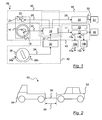
- Fig. 1 shows first an embodiment of the device for preventing the output of collision warnings and / or distance warnings.
- the device has a switching means 10.
- the switching means 10 is designed to assume a first and a second state.
- the switching means 10 has a signal line 11 to a control unit 12 of the vehicle, which controls in particular also a distance control.
- a first signal is generated in the switching means 10 and transmitted via the signal line 11 to the control unit 12, the signal instructing the control unit 12 to allow collision and / or distance warnings of collision warning output means and / or distance warning output means of the adaptive cruise control.
- the control unit 12 is for this purpose via the outputs 13a, 13b with collision warning output means 14a and distance alarm output means 14b connected.
- collision warning output means 14a in the event of a collision collision warnings 15a and in the event of danger of dangerous distances, eg between the vehicle and a preceding vehicle, with the distance alert output means 14b distance warnings 15b are issued.
- a signal other than the first signal is generated in the switching means 10 and transmitted via the signal line 11 to the control unit 12, the signal now instructing the control unit 12 to suppress or prevent collision and / or distance warnings 15a, 15b. that is, not to output with the distance warning output means 14b of the adaptive cruise control.
- the device has an actuating means 16.
- the actuating means 16 is a manual push-button 16, which has a symbol 18.
- the symbol 18 shows a vehicle on a towing hook and thus indicates a towing process.
- the actuating means 16 is connected via a further signal line 20 to the switching means 10.
- the switching means 10 is coupled via the control unit 12 to the hazard warning system 19 of the vehicle, so for example electrically and / or connected via a signal line.
- the hazard warning system 19 is activated in the second state and / or when switching the switching means 10 from the first state to the second state via the control unit.
- the hazard warning system 19 is activated simultaneously when collision and / or distance warnings 15a, 15b are suppressed or prevented, so if a towing should take place.
- the hazard warning system 19 by pressing an on-off switch of the hazard warning lights 19, not shown here be deactivated again after it has been activated by the switching means 10 and the control unit 12.
- the deactivation of the hazard warning system 19 can be deactivated by simply or repeatedly pressing the on and off switch of the hazard warning system 19, in particular after a switch-on and a subsequent turn-off of the on and off the hazard warning system 19 itself.
- no additional switch for deactivating the hazard warning system 19th required, but it is the usual in-vehicle on-off switch of the hazard warning lights 19 used, although this is activated by means of another signal, here by the signal of switching the switching means 10 from the first to the second state.
- the device has an optical display means 22, which here corresponds to a light emitting diode on.
- the display means 22 is driven in this embodiment by the switching means 10 via a further signal line 24.
- the display means 22 outputs an optical signal 23.
- an optical signal 23 means that the LED lights up.
- no optical signal 23 is output by the display means 22. The LED does not light up in this case.
- the device has a display drive means 26, which is connected via a further signal line 28 to the switching means 10.
- the display driving means 26 has an output 30 according to this embodiment.
- the output 30 is used to control a display 31, which is arranged for example in the region of the speed indicator.
- the display 30 is controlled by the display drive means 26 via the output 30 such that it outputs no optical signal 23.
- the display 30 is controlled by the display drive means 26 via the output 30 such that it outputs an optical signal 23.
- One such optical signal 23 is in particular a signal indicating that collision and / or distance warnings 15a, 15b are suppressed or prevented for the given period of time.
- the device has a return means 32, which is connected via a further signal line 34 to the ignition lock 36 of the motor vehicle and via a further signal line 37 to the switching means 10.
- the ignition switch 36 is used to turn on 38 a and turn off 38 b of the ignition 39 of the vehicle by turning with an ignition key, not shown, the ignition 39 is controlled by the control unit 12 of the vehicle.
- the return means 32 is designed to detect switching on and / or off 38 a, 38 b of the ignition 39 with the ignition lock 36 by means of the signal line 34 and the switching means 10, in the case that the switching means 10 is in the second state, in to transfer the first state, when a switching on and / or off 38 a, 38 b of the ignition 39 is detected by the return means 32.
- a switching step 40 of an embodiment of the method for preventing the output of collision warnings 15a and / or distance warnings 15b in motor vehicles with collision warning output means 14a and / or distance warning output means 14b is thus illustrated.
- the output of collision and / or distance warnings 15a, 15b is allowed with a switching means 10 in a first state and prevented in a second state, depending on the operation of an actuating means 16.
- a reset step 42 in which when switching on and / or off 38a of the ignition 39 of the motor vehicle with the ignition switch 36, the switching means 10, in the case that this is in the second state, in the first state is transferred.
- a display step 44 and a display driving step 46 are shown, wherein in the display step 44 only in the case of a state in the second state switching means 10, an optical signal 23 is output and the display control step 46, a display 30 is driven such that this one outputs optical signal 23 in the vehicle interior.
- FIG. 1 An embodiment of the device 48 according to the invention, comprising at least the switching means 10, the actuating means 16, and the return means 32nd
- Fig. 2 shows a towing situation 50, in which a motor vehicle 52 is towed by a preceding motor vehicle 54.
- the motor vehicle 52 is towed by a tow bar 56 through the preceding motor vehicle 54.
- the motor vehicle 52 has an exemplary embodiment of the device 48 according to the invention, so that despite the small distance 58 between the motor vehicles 52, 54 no collision warnings 15a with collision warning output means 14a and / or distance warnings 15b with distance alarm output means 14b are output when the actuating means 16 with the switching means 10 was transferred to the first state.
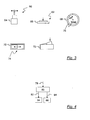
- Fig. 3 shows a plurality of actuating means 16, which are used in various embodiments of the device 48. Switches 60 and buttons 62 are shown.
- Fig. 3 shows, for example, a switch 60 designed as a toggle switch 64 and a push button switch 66 designed as a pushbutton 62 Fig. 3 nor a rotary switch 68, a slide switch 70 and a rocker switch 72.
- the slide switch 72 is an example of a detent switch 74.
- the rotary switch 68 also has a lettering 76 to alert the driver to the function of the rotary switch 68.
- Fig. 4 shows a section of a sequence of an embodiment of the invention in a dangerous situation in which a collision threatens or warning because of too small a distance 58 is to be output.
- a collision warning 15a or distance warning 15b is generated 78.
Landscapes
- Engineering & Computer Science (AREA)
- Mechanical Engineering (AREA)
- Automation & Control Theory (AREA)
- Transportation (AREA)
- Human Computer Interaction (AREA)
- Physics & Mathematics (AREA)
- General Physics & Mathematics (AREA)
- Traffic Control Systems (AREA)
Abstract
Description
- Die Erfindung betrifft ein Verfahren zum Verhindern der Ausgabe von Kollisionswarnungen und/oder Abstandswarnungen sowie eine Vorrichtung zur Verhinderung der Ausgabe von Kollisionswarnungen und/oder Abstandswarnungen, insbesondere während des Abschleppvorgangs, sowie ein Fahrzeug.
- Es sind in Kraftfahrzeuge integrierte Systeme bekannt, die Abstands- und/oder Kollisionswarnungen für den Fahrer des Kraftfahrzeugs ausgeben. Derartige Abstands- und/oder Kollisionswarnungen werden z.B. dann ausgegeben, wenn sich das Kraftfahrzeug, z.B. aus Unachtsamkeit des Fahrers oder aufgrund komplexer Verkehrssituationen, einem vorausfahrenden Kraftfahrzeug mit einer derartigen Geschwindigkeit nähert, dass die Gefahr eines Unfalls droht. Abstands- und/oder Kollisionswarnungen werden z.B. als optische akustische oder haptische Signale im Fahrgastraum ausgegeben.
- Derartige Systeme sind als Abstandswarnungs- oder Kollisionswarnungssysteme bekannt und üblicherweise als Teilfunktionen von Abstandsregeltempomaten oder Notbremssystemen realisiert. Bei Abstandsregeltempomaten oder Notbremssystemen eines Kraftfahrzeugs ist als Teil dieser Systeme, insbesondere im Frontbereich des Kraftfahrzeugs, ein Aktor-Sensor-System, z.B. in Form einer Radareinrichtung, integriert. Mit dem Aktor-Sensor-System wird dann insbesondere der Abstand zum vorausfahrenden Kraftfahrzeug gemessen und im Falle eines aufgrund der Geschwindigkeit unfallgefährlichen Abstands, bei aktiviertem Abstandsregeltempomat oder aktiviertem Notbremssystem direkt in die Fahrzeugbewegung eingegriffen.
- Im Gegensatz zu den Abstandsregeltempomaten oder Notbremssystemen selbst sind die Abstandswarnungs- oder Kollisionswarnungssysteme nicht abschaltbar und nach dem Einschalten des Motors ab einem vordefinierten Geschwindigkeitswert automatisch aktiviert.
- Daher ergibt sich ein technisches Problem, wenn Fahrzeuge mit Abstands- und/oder Kollisionswarnungssystemen abgeschleppt werden müssen. Beim Abschleppvorgang muss der Motor üblicherweise laufen, damit das abgeschleppte Kraftfahrzeug gelenkt werden kann. Moderne Fahrzeuge weisen eine Lenkunterstützung auf, die ein Lenken bei laufendem Motor zwar erleichtert, aber bei abgeschaltetem Motor ein Lenken des Kraftfahrzeugs erschwert bzw. sogar gar nicht möglich macht. Wie bereits oben geschildert, wird gemäß dem Stand der Technik, bei laufendem Motor auch das Abstands- und/oder Kollisionswarnungssystem ab einem bestimmten Geschwindigkeitswert aktiviert.
- Das Abschleppfahrzeug fährt beim Abschleppvorgang üblicherweise in einem Abstand von einigen Zentimetern bis etwa fünf Metern, je nach Abschleppseil- oder Abschleppstangenlänge vor dem abgeschleppten Kraftfahrzeug. Dieser Abstand zwischen dem Abschleppfahrzeug und dem abgeschleppten Kraftfahrzeug führt dazu, dass ständig Kollisionswarnungen und/oder Abstandswarnungen vom abgeschleppten Kraftfahrzeug an dessen Fahrer ausgegeben werden.
- Diese Kollisionswarnungen und/oder Abstandswarnungen beeinträchtigen einerseits den Komfort des Fahrers des abgeschleppten Kraftfahrzeugs, können andererseits jedoch sogar dazu führen, dass der Fahrer durch die Kollisionswarnungen und/oder Abstandswarnungen derart abgelenkt ist, dass neue Unfallgefahren entstehen können.
- Die Aufgabe der vorliegenden Erfindung ist es daher, während eines Abschleppvorgangs die Ausgabe von Kollisionswarnungen und/oder Abstandswarnungen zu verhindern.
- Die Erfindung löst diese Aufgabe durch eine Vorrichtung zur Verhinderung der Ausgabe von Kollisionswarnungen und/oder Abstandswarnungen nach Anspruch 1 sowie ein Verfahren zum Verhindern der Ausgabe von Kollisionswarnungen und/oder Abstandswarnungen nach Anspruch 7 sowie ein Fahrzeug nach Anspruch 11.
- Die Erfindung umfasst dazu ein Schaltmittel, welches einen ersten und einen zweiten Zustand umfasst. Im ersten Zustand erlaubt das Schaltmittel die Ausgabe von Kollisions- und/oder Abstandswarnungen bei Kraftfahrzeugen mit Kollisionswarnungsausgabemitteln und/oder Abstandswarnungsausgabemitteln. Im zweiten Zustand verhindert, unterdrückt und/oder schaltet das Schaltmittel Kollisions- und/oder Abstandswarnungen.
- Ferner weist die Erfindung ein Betätigungsmittel auf. Mit dem Betätigungsmittel wird das Schaltmittel durch manuelle Betätigung des Betätigungsmittels vom ersten in den zweiten Zustand und vom zweiten in den ersten Zustand überführt.
- Gemäß dem erfindungsgemäßen Verfahren wird bei einem Schaltschritt in Abhängigkeit von der Betätigung des Betätigungsmittels die Ausgabe von Kollisions- und/oder Abstandswarnungen mit dem Schaltmittel in dem ersten Zustand erlaubt und in dem zweiten Zustand verhindert.
- Dank der Erfindung kann die Ausgabe von Kollisionswarnungen und/oder Abstandswarnungen während des Abschleppvorgangs verhindert bzw. abgeschaltet werden, um so den Komfort des Fahrers des abgeschleppten Fahrzeugs zu erhöhen.
- Gemäß einem ersten Ausführungsbeispiel ist das Betätigungsmittel ein manueller Schalter oder Taster, insbesondere ein Kippschalter, ein Wippschalter, ein Druckschalter, ein Rastschalter, ein Schiebeschalter, ein Drehschalter ein Stufenschalter oder ein Tastschalter.
- Mit einem als Schalter oder Taster ausgebildeten Betätigungsmittel ist es vorteilhafterweise möglich, das Schaltmittel auf einfache Weise vom ersten in den zweiten oder vom zweiten in den ersten Zustand zu überführen.
- Gemäß einem weiteren Ausführungsbeispiel weist das Betätigungsmittel ein Symbol oder einen Schriftzug auf. Dieses Symbol und dieser Schriftzug sind derart gestaltet, sodass sie auf einen Abschleppvorgang hinweisen.
- Mit dem Symbol oder dem Schriftzug wird sicher gestellt, dass der Fahrer des Kraftfahrzeugs sich über die Funktion des Betätigungsmittels bewusst ist und dieses nicht mit anderen z.B. im Fahrgastraum befindenden Schaltern oder Tastern verwechselt. Einem versehentlichen Abschalten von Kollisionswarnungen und/oder Abstandswarnungen wird damit entgegengewirkt.
- Gemäß einem weiteren Ausführungsbeispiel weist die Vorrichtung ein Rückstellmittel und das Verfahren einen Rückstellschritt auf. Mit dem Rückstellmittel bzw. im Rückstellschritt wird beim Ein- und/oder Abschalten der Zündung des Kraftfahrzeugs das Schaltmittel, im Falle, dass sich dieses im zweiten Zustand befindet, in den ersten Zustand überführt.
- Vorteilhafterweise wird somit ein Schaltmittel, dass sich im zweiten Zustand befindet und daher Kollisionswarnungen und/oder Abstandswarnungen verhindert, automatisch in den ersten Zustand überführt, wenn das Kraftfahrzeug nach einem Abschleppvorgang abgestellt und/oder erneut gestartet wird. Damit wird sichergestellt, dass nach Beenden des Abschleppvorgangs die Kollisionswarnungen und/oder Abstandswarnungen nicht mehr verhindert werden. Hierbei wird ausgenutzt, dass nach Beenden eines Abschleppvorgangs das abgeschleppte Fahrzeug üblicherweise abgestellt und/oder erneut gestartet wird. Ferner wird auch ein versehentlich in den zweiten Zustand überführtes Schaltmittel, bei jedem neuen Starten des Motors des Kraftfahrzeugs automatisch in den ersten Zustand überführt.
- Gemäß einem weiteren Ausführungsbeispiel weist die Erfindung eine Kopplung des Schaltmittels mit der Warnblinkanlage des Fahrzeugs, insbesondere über ein Steuergerät des Fahrzeugs, auf. Die Kopplung ist z.B. eine elektrische Verbindung und/oder eine Verbindung über eine Signalleitung. Die Kopplung dient dazu die Warnblinkanlage im zweiten Zustand und/oder beim Umschalten des Schaltmittels vom ersten Zustand in den zweiten Zustand zu aktivieren. Demnach wird also die Warnblinkanlage aktiviert, wenn das Schaltmittel im zweiten Zustand ist und/oder beim Umschalten des Schaltmittels vom ersten Zustand in den zweiten Zustand. Die Warnblinkanlage wird demnach "automatisch" aktiviert, sobald die Kollisionswarnungsausgabemittel und/oder Abstandswarnungsausgabemittel verhindert bzw. unterdrückt werden, wenn also ein Abschleppvorgang erfolgen soll. Der Vorteil besteht in einem Sicherheitsgewinn für den Abschleppvorgang, welcher vorzugsweise immer mit einer aktivierten Warnblinkanlage durchgeführt werden sollte. Dies ist vorteilhaft automatisch und ohne zusätzliche Fahrerbetätigung eines weiteren Schalters möglich.
- Gemäß einem weiteren Ausführungsbeispiel weist die Erfindung ein optisches Anzeigemittel bzw. einen optischen Anzeigeschritt und/oder ein Anzeigeansteuerschritt bzw. ein Anzeigeansteuermittel auf. Mit dem Anzeigeschritt bzw. dem Anzeigemittel wird ein optisches Signal im Fahrzeuginnenraum ausgegeben und mit dem Anzeigeansteuerschritt bzw. dem Anzeigeansteuermittel eine Anzeige derart angesteuert, dass diese ein optisches Signal ausgibt. Das Anzeigemittel bzw. der Anzeigeschritt und der Anzeigeansteuerschritt bzw. das Anzeigeansteuermittel sind jedoch derart ausgebildet, das optische Signal ausschließlich auszugeben bzw. die Anzeige ausschließlich dann derart anzusteuern, dass diese ein optisches Signal ausgibt, wenn sich das Schaltmittel im zweiten Zustand befindet.
- Somit wird dem Fahrer vorteilhafterweise signalisiert, dass sich das Schaltmittel im zweiten Zustand befindet, also Kollisionswarnungen und/oder Abstandswarnungen verhindert werden. Ein Fahrer, der das Betätigungsmittel während oder vor der normalen Fahrt versehentlich betätigt hat und somit das Schaltmittel in den zweiten Zustand überführt hat, wird also darauf hingewiesen das Betätigungsmittel erneut zu betätigen, damit die Kollisionswarnungen und/oder Abstandswarnungen nicht mehr verhindert werden. Bei dem Kraftfahrzeug handelt es sich vorzugsweise um ein Nutzfahrzeug. Ebenso ist das vorausfahrende Fahrzeug vorzugsweise ein Nutzfahrzeug.
- Weitere Ausführungsformen der Erfindung ergeben sich aus den Unteransprüchen sowie aus den anhand der Zeichnungen näher erläuterten Ausführungsbeispielen. In den Zeichnungen zeigen:
- Fig. 1
- ein Ausführungsbeispiel der Erfindung,
- Fig. 2
- eine Abschleppsituation,
- Fig. 3
- mehrere Betätigungsmittel und
- Fig. 4
- einen Ausschnitt eines Ablaufs eines Ausführungsbeispiels.
-
Fig. 1 zeigt zunächst ein Ausführungsbeispiel der Vorrichtung zur Verhinderung der Ausgabe von Kollisionswarnungen und/oder Abstandswarnungen. Die Vorrichtung weist ein Schaltmittel 10 auf. Das Schaltmittel 10 ist derart ausgebildet, um einen ersten und einen zweiten Zustand einzunehmen. Ferner weist das Schaltmittel 10 eine Signalleitung 11 zu einem Steuergerät 12 des Fahrzeugs auf, das insbesondere auch einen Abstandsregeltempomaten steuert. - Im ersten Zustand wird in dem Schaltmittel 10 ein erstes Signal erzeugt und über die Signalleitung 11 an das Steuergerät 12 übermittelt, wobei das Signal das Steuergerät 12 anweist, Kollisions- und/oder Abstandswarnungen von Kollisionswarnungsausgabemitteln und/oder Abstandswarnungsausgabemitteln des Abstandsregeltempomaten zu erlauben. Das Steuergerät 12 ist dazu über die Ausgänge 13a, 13b mit Kollisionswarnungsausgabemitteln 14a und Abstandswarnungsausgabemitteln 14b verbunden. Mit den Kollisionswarnungsausgabemitteln 14a werden also im Falle der Gefahr einer Kollision Kollisionswarnungen 15a und im Falle der Gefahr von gefährlichen Abständen, z.B. zwischen dem Fahrzeug und einem vorausfahrenden Fahrzeug, mit den Abstandswarnungsausgabemitteln 14b Abstandswarnungen 15b ausgegeben.
- Im zweiten Zustand wird in dem Schaltmittel 10 ein anderes als das erste Signal erzeugt und über die Signalleitung 11 an das Steuergerät 12 übermittelt, wobei das Signal nun das Steuergerät 12 anweist Kollisions- und/oder Abstandswarnungen 15a, 15b zu unterdrücken bzw. zu verhindern, also nicht mit den Abstandswarnungsausgabemitteln 14b des Abstandsregeltempomaten auszugeben.
- Ferner weist die Vorrichtung ein Betätigungsmittel 16 auf. Das Betätigungsmittel 16 ist ein manueller Tastschalter 16, der ein Symbol 18 aufweist. Das Symbol 18 zeigt ein Fahrzeug an einem Abschlepphaken und weist damit auf einen Abschleppvorgang hin. Das Betätigungsmittel 16 ist über eine weitere Signalleitung 20 mit dem Schaltmittel 10 verbunden. Durch Betätigung des Betätigungsmittels 16, also durch Drücken des Tastschalters 16, wird das Schaltmittel 10 von einem ersten Zustand in einen zweiten Zustand oder von einem zweiten in einen ersten Zustand überführt.
- Außerdem ist das Schaltmittel 10 über das Steuergerät 12 mit der Warnblinkanlage 19 des Fahrzeugs gekoppelt, also z.B. elektrisch und/oder über eine Signalleitung verbunden. Die Warnblinkanlage 19 wird im zweiten Zustand und/oder beim Umschalten des Schaltmittels 10 vom ersten Zustand in den zweiten Zustand über das Steuergerät aktiviert. Somit wird die Warnblinkanlage 19 gleichzeitig aktiviert, wenn Kollisions- und/oder Abstandswarnungen 15a, 15b unterdrückt bzw. verhindern werden, wenn also ein Abschleppvorgang stattfinden soll. Im Falle, dass bei dem Abschleppvorgang die Warnblinkanlage 19 nicht aktiviert werden soll, so kann die Warnblinkanlage 19 durch Betätigen eines hier nicht dargestellten Ein- und Ausschalters der Warnblinkanlage 19 wieder deaktiviert werden, nachdem diese durch das Schaltmittel 10 bzw. das Steuergerät 12 aktiviert wurde. Die Deaktivierung der Warnblinkanlage 19 kann durch einfaches oder mehrfaches Betätigen des Ein- und Ausschalters der Warnblinkanlage 19 deaktiviert werden, insbesondere nach einem Einschaltvorgang und einem folgenden Ausschaltvorgang des Ein- und Ausschalters der Warnblinkanlage 19 selbst. Damit ist kein zusätzlicher Schalter zur Deaktivierung der Warnblinkanlage 19 erforderlich, sondern es wird der üblicherweise im Fahrzeug vorhandene Ein- und Ausschalter der Warnblinkanlage 19 verwendet, obwohl diese mittels eines anderen Signals, hier durch das Signal des Umschaltens des Schaltmittels 10 vom ersten in den zweiten Zustand, aktiviert wird.
- Zudem weist die Vorrichtung ein optisches Anzeigemittel 22, das hier einer Leuchtdiode entspricht, auf. Das Anzeigemittel 22 wird in diesem Ausführungsbeispiel von dem Schaltmittel 10 über eine weitere Signalleitung 24 angesteuert. Im Falle, dass sich das Schaltmittel im zweiten Zustand befindet, wird vom Anzeigemittel 22 ein optisches Signal 23 ausgegeben. Hier bedeutet ein optisches Signal 23 ausgeben, dass die Leuchtdiode aufleuchtet. Im Falle, dass sich das Schaltmittel im ersten Zustand befindet, wird vom Anzeigemittel 22 kein optisches Signal 23 ausgegeben. Die Leuchtdiode leuchtet in diesem Fall also nicht.
- Außerdem weist die Vorrichtung ein Anzeigeansteuermittel 26 auf, das über eine weitere Signalleitung 28 mit dem Schaltmittel 10 verbunden ist. Das Anzeigeansteuermittel 26 weist gemäß diesem Ausführungsbeispiel einen Ausgang 30 auf. Der Ausgang 30 dient zur Ansteuerung einer Anzeige 31, die z.B. im Bereich des Geschwindigkeitsanzeigers angeordnet ist. Im Falle, dass sich das Schaltmittel 10 im ersten Zustand befindet, wird vom Anzeigeansteuermittel 26 über den Ausgang 30 die Anzeige 30 derart angesteuert, dass diese kein optisches Signal 23 ausgibt. Im Falle, dass sich das Schaltmittel 10 im zweiten Zustand befindet, wird vom Anzeigeansteuermittel 26 über den Ausgang 30 die Anzeige 30 derart angesteuert, dass diese ein optisches Signal 23 ausgibt. Ein derartiges optisches Signal 23 ist insbesondere ein Signal, dass darauf hinweist, dass Kollisions- und/oder Abstandswarnungen 15a, 15b zum gegebenen Zeitraum unterdrückt bzw. verhindert werden.
- Ferner weist die Vorrichtung ein Rückstellmittel 32 auf, das über eine weitere Signalleitung 34 mit dem Zündschloss 36 des Kraftfahrzeugs und über eine weitere Signalleitung 37 mit dem Schaltmittel 10 verbunden ist. Das Zündschloss 36 dient zum Einschalten 38a und Abschalten 38b der Zündung 39 des Fahrzeugs durch drehen mit einem nicht dargestellten Zündschlüssel, wobei die Zündung 39 dazu vom Steuergerät 12 des Fahrzeugs angesteuert wird. Das Rückstellmittel 32 ist derart ausgebildet, um ein Ein- und/oder Abschalten 38a, 38b der Zündung 39 mit dem Zündschloss 36 mittels der Signalleitung 34 zu detektieren und das Schaltmittel 10, im Falle, dass sich das Schaltmittel 10 im zweiten Zustand befindet, in den ersten Zustand zu überführen, wenn ein Ein- und/oder Abschalten 38a, 38b der Zündung 39 vom Rückstellmittel 32 detektiert wird.
- Ferner ist somit der Ablauf eines Schaltschritts 40 eines Ausführungsbeispiels des Verfahrens zum Verhindern der Ausgabe von Kollisionswarnungen 15a und/oder Abstandswarnungen 15b bei Kraftfahrzeugen mit Kollisionswarnungsausgabemitteln 14a und/oder Abstandswarnungsausgabemitteln 14b dargestellt. Bei dem Schaltschritt 40 wird in Abhängigkeit von der Betätigung eines Betätigungsmittels 16 die Ausgabe von Kollisions- und/oder Abstandswarnungen 15a, 15b mit einem Schaltmittel 10 in einem ersten Zustand erlaubt und in einem zweiten Zustand verhindert.
- Zudem ist auch der Ablauf eines Rückstellschritts 42 dargestellt, bei dem beim Ein- und/oder Abschalten 38a, 38b der Zündung 39 des Kraftfahrzeugs mit dem Zündschloss 36 das Schaltmittel 10, im Falle, dass sich dieses im zweiten Zustand befindet, in den ersten Zustand überführt wird.
- Außerdem ist der Ablauf eines Anzeigeschritts 44 und eines Anzeigeansteuerschritts 46 dargestellt, wobei bei dem Anzeigeschritt 44 ausschließlich im Falle eines sich im zweiten Zustand befindenden Schaltmittels 10 ein optisches Signal 23 ausgegeben wird und mit dem Anzeigeansteuerschritt 46 eine Anzeige 30 derart angesteuert wird, dass diese ein optisches Signal 23 im Fahrzeuginnenraum ausgibt.
- Demnach zeigt
Fig. 1 ein Ausführungsbeispiel der erfindungsgemäßen Vorrichtung 48, umfassend zumindest das Schaltmittel 10, das Betätigungsmittel 16, sowie das Rückstellmittel 32. -
Fig. 2 zeigt eine Abschleppsituation 50, bei der ein Kraftfahrzeug 52 von einem vorausfahrenden Kraftfahrzeug 54 abgeschleppt wird. Das Kraftfahrzeug 52 wird mit einer Abschleppstange 56 durch das vorausfahrende Kraftfahrzeug 54 abgeschleppt. Das Kraftfahrzeug 52 weist ein Ausführungsbeispiel der erfindungsgemäßen Vorrichtung 48 auf, sodass trotz des geringen Abstands 58 zwischen den Kraftfahrzeugen 52, 54 keine Kollisionswarnungen 15a mit Kollisionswarnungsausgabemittel 14a und/oder von Abstandswarnungen 15b mit Abstandswarnungsausgabemittel 14b ausgegeben werden, wenn das Betätigungsmittel 16 mit dem Schaltmittel 10 in den ersten Zustand überführt wurde. -
Fig. 3 zeigt mehrere Betätigungsmittel 16, die in verschiedenen Ausführungsformen der Vorrichtung 48 eingesetzt werden. Es sind Schalter 60 und Taster 62 dargestellt.Fig. 3 zeigt z.B. einen als Kippschalter 64 ausgebildeten Schalter 60 und einen als Taster 62 ausgebildeten Tastschalter 66. Ferner zeigt dieFig. 3 noch einen Drehschalter 68, einen Schiebeschalter 70 und einen Wippschalter 72. Der Schiebeschalter 72 ist ein Beispiel für einen Rastschalter 74. Der Drehschalter 68 weist zudem einen Schriftzug 76 auf, um den Fahrer auf die Funktion des Drehschalters 68 hinzuweisen. -
Fig. 4 zeigt einen Ausschnitt eines Ablauf eines Ausführungsbeispiels der Erfindung in einer Gefahrensituation, in der eine Kollision droht oder eine Warnung wegen eines zu geringen Abstands 58 ausgegeben werden soll. Zunächst wird eine Kollisionswarnung 15a oder Abstandswarnung 15b erzeugt 78. Daraufhin wird geprüft 80, ob das Schaltmittel 10 im ersten Zustand oder im zweiten Zustand ist. Ist das Schaltmittel 10 im ersten Zustand 82, so werden die Kollisionswarnung 15a oder Abstandswarnung 15b ausgegeben 84. Ist das Schaltmittel 10 im zweiten Zustand 86, so werden die Kollisionswarnung 15a oder Abstandswarnung 15b nicht ausgegeben 88. -
- 10
- Schaltmittel
- 11
- Signalleitung
- 12
- Steuergerät
- 13a, b
- Ausgänge des Steuergeräts
- 14a
- Kollisionswarnungsausgabemittel
- 14b
- Abstandswarnungsausgabemittel
- 15a
- Kollisionswarnungen
- 15b
- Abstandswarnungen
- 16
- Betätigungsmittel
- 18
- Symbol
- 19
- Warnblinkanlage
- 20
- weitere Signalleitung
- 22
- optisches Anzeigemittel
- 23
- optisches Signal
- 24
- weitere Signalleitung
- 26
- Anzeigeansteuermittel
- 28
- weitere Signalleitung
- 30
- Ausgang des Anzeigeansteuermittels
- 31
- Anzeige
- 32
- Rückstellmittel
- 34
- weitere Signalleitung
- 36
- Zündschloss
- 37
- weitere Signalleitung
- 38a
- Einschalten der Zündung
- 38b
- Abschalten der Zündung
- 39
- Zündung
- 40
- Schaltschritt
- 42
- Rückstellschritt
- 44
- Anzeigeschritt
- 46
- Anzeigeansteuerschritt
- 48
- Vorrichtung
- 50
- Abschleppvorgang
- 52
- Kraftfahrzeug
- 54
- vorausfahrendes Fahrzeug
- 56
- Abschleppstange
- 58
- Abstand
- 60
- Schalter
- 62
- Taster
- 64
- Kippschalter
- 66
- Tastschalter
- 68
- Drehschalter
- 70
- Schiebeschalter
- 72
- Wippschalter
- 74
- Rastschalter
- 76
- Schriftzug
- 78
- Erzeugen einer Kollisionswarnung oder Abstandswarnung
- 80
- Prüfen des Zustands
- 82
- erster Zustand
- 84
- Ausgeben von Kollisions- oder Abstandswarnung
- 86
- zweiter Zustand
- 88
- Nicht Ausgeben von Kollisions- oder Abstandswarnung
Claims (11)
- Vorrichtung (48) zur Verhinderung der Ausgabe von Kollisionswarnungen (15a) und/oder Abstandswarnungen (15b) bei Kraftfahrzeugen (52) mit Kollisionswarnungsausgabemitteln (14a) und/oder Abstandswarnungsausgabemitteln (14b), wobei die Vorrichtung (48) ein Schaltmittel (10) umfasst, das derart ausgebildet ist, um in einem ersten Zustand (82) die Ausgabe von Kollisions- und/oder Abstandswarnungen (15a, 15b) zu erlauben und in einem zweiten Zustand (86) Kollisions- und/oder Abstandswarnungen (15a, 15b) zu verhindern, und die Vorrichtung (48) ein Betätigungsmittel (16) aufweist, wobei das Betätigungsmittel (16) derart ausgebildet ist, um das Schaltmittel (10) durch manuelle Betätigung des Betätigungsmittels (16) vom ersten Zustand (82) in den zweiten Zustand (86) und vom zweiten Zustand (86) in den ersten Zustand (82) zu überführen.
- Vorrichtung (48) nach Anspruch 1,
dadurch gekennzeichnet, dass
das Betätigungsmittel (16) ein manueller Schalter (60) oder Taster (62), insbesondere ein Kippschalter (64), ein Wippschalter (72), ein Rastschalter (74), ein Schiebeschalter (70), ein Drehschalter (68), ein Stufenschalter oder ein Tastschalter (66), ist. - Vorrichtung (48) nach Anspruch 1 oder 2,
dadurch gekennzeichnet, dass
das Betätigungsmittel (16) ein Symbol (18) oder einen Schriftzug (76) aufweist, das bzw. der auf einen Abschleppvorgang (50) hinweist. - Vorrichtung (48) nach einem der vorhergehenden Ansprüche,
dadurch gekennzeichnet, dass
die Vorrichtung (48) ein Rückstellmittel (32) aufweist, wobei das Rückstellmittel (32) derart ausgebildet ist, um beim Einschalten (38a) und/oder Abschalten (38b) der Zündung (39) des Kraftfahrzeugs (52) das Schaltmittel (10), im Falle, dass sich dieses im zweiten Zustand (86) befindet, in den ersten Zustand (82) zu überführen. - Vorrichtung (48) nach einem der vorhergehenden Ansprüche,
dadurch gekennzeichnet, dass
die Vorrichtung (48) ein optisches Anzeigemittel (22) und/oder ein Anzeigeansteuermittel (26) aufweist, wobei das Anzeigemittel (22) derart ausgebildet ist, um ausschließlich im Falle eines sich im zweiten Zustand (86) befindenden Schaltmittels (10) ein optisches Signal (23) im Fahrzeuginnenraum auszugeben und das Anzeigeansteuermittel (26) derart ausgebildet ist, um ausschließlich im Falle eines sich im zweiten Zustand (86) befindenden Schaltmittels (10) eine Anzeige (31) im Fahrzeuginnenraum derart anzusteuern, dass diese ein optisches Signal (23) ausgibt. - Vorrichtung (48) nach einem der vorhergehenden Ansprüche,
dadurch gekennzeichnet, dass
das Schaltmittel (10) mit der Warnblinkanlage (19) des Kraftfahrzeugs (52) gekoppelt ist, um die Warnblinkanlage (19) im zweiten Zustand (86) und/oder beim Umschalten des Schaltmittels (10) vom ersten Zustand (82) in den zweiten Zustand (86) zu aktivieren. - Verfahren zum Verhindern der Ausgabe von Kollisionswarnungen (15a) und/oder Abstandswarnungen (15b) bei Kraftfahrzeugen (52) mit Kollisionswarnungsausgabemitteln (14a) und/oder Abstandswarnungsausgabemitteln (14b), wobei das Verfahren einen Schaltschritt (40) umfasst, bei dem die Ausgabe von Kollisions- und/oder Abstandswarnungen (15a, 15b) mit einem Schaltmittel (10) in einem ersten Zustand (82) erlaubt und in einem zweiten Zustand (86) verhindert wird und das Schaltmittel (10) durch Betätigung eines Betätigungsmittels (16) vom ersten Zustand (82) in den zweiten Zustand (86) und vom zweiten Zustand (86) in den ersten Zustand (82) überführt wird.
- Verfahren nach Anspruch 7,
dadurch gekennzeichnet, dass
das Verfahren einen Rückstellschritt (42) aufweist, bei dem beim Einschalten (38a) und/oder Abschalten (38b) der Zündung (39) des Kraftfahrzeugs (52) das Schaltmittel (10), im Falle, dass sich dieses im zweiten Zustand (86) befindet, in den ersten Zustand (82) überführt wird. - Verfahren nach Anspruch 7 oder 8 ,
dadurch gekennzeichnet, dass
das Verfahren einen optischen Anzeigeschritt (44) und/oder ein Anzeigeansteuerschritt (46) aufweist, wobei mit dem Anzeigeschritt (44) ausschließlich im Falle eines sich im zweiten Zustand (86) befindenden Schaltmittels (10) ein optisches Signal (23) mit einem Anzeigemittel (22) und mit dem Anzeigeansteuerschritt (46) ausschließlich im Falle eines sich im zweiten Zustand (86) befindenden Schaltmittels (10) eine Anzeige (31) derart angesteuert wird, dass diese ein optisches Signal (23) im Fahrzeuginnenraum ausgibt. - Verfahren nach einem der Ansprüche 7 bis 9,
dadurch gekennzeichnet, dass
das Schaltmittel (10) mit der Warnblinkanlage (19) des Kraftfahrzeugs (52) gekoppelt ist, und die Warnblinkanlage (19) im zweiten Zustand (86) und/oder beim Umschalten des Schaltmittels (10) vom ersten Zustand (82) in den zweiten Zustand (86) aktiviert wird. - Fahrzeug (52), insbesondere Nutzfahrzeug, mit einer Vorrichtung (48) nach einem der Ansprüche 1 bis 6 zur Durchführung des Verfahrens nach einem der Ansprüche 7 bis 10.
Applications Claiming Priority (1)
| Application Number | Priority Date | Filing Date | Title |
|---|---|---|---|
| DE102014003255.8A DE102014003255A1 (de) | 2014-03-12 | 2014-03-12 | Vorrichtung und Verfahren zum Verhindern der Ausgabe von Kollisionswarnungen und/oder Abstandswarnungen, insbesondere während eines Abschleppvorgangs, sowie Fahrzeug |
Publications (2)
| Publication Number | Publication Date |
|---|---|
| EP2921365A1 true EP2921365A1 (de) | 2015-09-23 |
| EP2921365B1 EP2921365B1 (de) | 2020-09-23 |
Family
ID=52669374
Family Applications (1)
| Application Number | Title | Priority Date | Filing Date |
|---|---|---|---|
| EP15000456.2A Active EP2921365B1 (de) | 2014-03-12 | 2015-02-16 | Vorrichtung und Verfahren zum Verhindern der Ausgabe von Kollisionswarnungen und/oder Abstandswarnungen, insbesondere während eines Abschleppvorgangs, sowie Fahrzeug |
Country Status (2)
| Country | Link |
|---|---|
| EP (1) | EP2921365B1 (de) |
| DE (1) | DE102014003255A1 (de) |
Citations (2)
| Publication number | Priority date | Publication date | Assignee | Title |
|---|---|---|---|---|
| US6225918B1 (en) * | 1999-02-19 | 2001-05-01 | Bing Kam | Automatic warning signal system for vehicles |
| US20130300551A1 (en) * | 2012-05-10 | 2013-11-14 | Steven J. Weber | Object proximity system |
Family Cites Families (5)
| Publication number | Priority date | Publication date | Assignee | Title |
|---|---|---|---|---|
| DE19511388C1 (de) * | 1995-03-28 | 1996-09-12 | Siemens Ag | Sicherheitsvorrichtung für ein Kraftfahrzeug |
| DE10161567B4 (de) * | 2001-12-14 | 2007-02-08 | Audi Ag | Kraftfahrzeug mit einem akustischen und/oder optischen Abstands-Warnsystem |
| DE202005001605U1 (de) * | 2005-02-02 | 2005-05-12 | Herrmann, Gerhard | Sicherheitsabstandswarner für KFZ |
| DE102006032171A1 (de) * | 2006-07-12 | 2008-01-24 | Bayerische Motoren Werke Ag | Kraftfahrzeug mit einem automatisch aktivierbaren Abstandserfassungssystem |
| DE102007029032B4 (de) * | 2007-06-23 | 2024-05-29 | Bayerische Motoren Werke Aktiengesellschaft | Bedieneinrichtung |
-
2014
- 2014-03-12 DE DE102014003255.8A patent/DE102014003255A1/de not_active Withdrawn
-
2015
- 2015-02-16 EP EP15000456.2A patent/EP2921365B1/de active Active
Patent Citations (2)
| Publication number | Priority date | Publication date | Assignee | Title |
|---|---|---|---|---|
| US6225918B1 (en) * | 1999-02-19 | 2001-05-01 | Bing Kam | Automatic warning signal system for vehicles |
| US20130300551A1 (en) * | 2012-05-10 | 2013-11-14 | Steven J. Weber | Object proximity system |
Also Published As
| Publication number | Publication date |
|---|---|
| DE102014003255A1 (de) | 2015-09-17 |
| EP2921365B1 (de) | 2020-09-23 |
Similar Documents
| Publication | Publication Date | Title |
|---|---|---|
| DE102007051190B4 (de) | Fahrerassistenzsystem | |
| EP2509840A1 (de) | Notbremsassistenzsystem zur unterstützung eines fahrers eines fahrzeugs beim anfahren | |
| DE102015219231A1 (de) | Ansteuervorrichtung und Verfahren zum Betreiben eines Fahrerassistenzsystems | |
| EP2803521A2 (de) | Fahrassistenzvorrichtung für ein Kraftfahrzeug mit einer Einrichtung zur Verkehrszeichen-Überwachung und einer Einrichtung zur Begrenzung der Fahrzeug-Geschwindigkeit | |
| DE102013212793A1 (de) | Fahrzeugbremsleuchtensystem und Verfahren, um ein folgendes Fahrzeug auf einen unsicheren Folgeabstand hinzuweisen | |
| EP2319732A2 (de) | Vorrichtung und Verfahren zur Überwachung und Signalisierung von Verkehrssituationen und Betriebszuständen in einem Fahrzeug und im Umfeld des Fahrzeugs | |
| DE102011111904A1 (de) | Verfahren zum Signalisieren eines Bremsvorgangs an einem Anhängefahrzeug, Steuereinrichtung und Anhängefahrzeug | |
| DE102007029032B4 (de) | Bedieneinrichtung | |
| DE102016221694A1 (de) | Abschleppassistenz für ein Kraftfahrzeug | |
| EP3740406A1 (de) | Assistenzsystem für ein fahrzeug | |
| DE102009052590A1 (de) | Vorrichtung und Verfahren zur Überwachung und Signalisierung von Verkehrssituationen und Betriebszuständen in einem Fahrzeug und im Umfeld des Fahrzeugs | |
| EP2921364B1 (de) | Verfahren und Vorrichtung sowie Fahrzeug zum Verhindern der Ausgabe von Kollisionswarnungen und/oder Abstandswarnungen während eines Abschleppvorgangs | |
| DE102018211339B3 (de) | Assistenzsystem für ein Fahrzeug | |
| WO2018162011A1 (de) | Automatisches notbremssystem. | |
| EP2921365B1 (de) | Vorrichtung und Verfahren zum Verhindern der Ausgabe von Kollisionswarnungen und/oder Abstandswarnungen, insbesondere während eines Abschleppvorgangs, sowie Fahrzeug | |
| DE19734005A1 (de) | Vorrichtung zur Verringerung des Bremswegs bei Kraftfahrzeugen | |
| DE102017005833A1 (de) | Verfahren und Vorrichtung zur Signalisierung eines Bremsvorganges | |
| EP3159230B1 (de) | Verfahren zum betrieb eines fahrdynamikregelungssystems eines kraftfahrzeugs und kraftfahrzeug | |
| DE112020002254T5 (de) | Kollisionsvermeidungs-aktivierungsleuchten | |
| DE102017008268A1 (de) | Verfahren zur Unterstützung des Fahrers eines Fahrzeugs und elektronisches Bremssystem | |
| DE202014009059U1 (de) | Geschwindigkeitsregler eines Kraftfahrzeugs mit Abschaltfunktion und Kraftfahrzeug | |
| DE102022204778A1 (de) | Assistenzsystem für ein Fahrzeug sowie Verfahren zum Betrieb eines Assistenzsystems für ein Fahrzeug sowie Fahrzeug | |
| DE102016006534A1 (de) | Elektromotorisches Kupplungssystem | |
| DE20009138U1 (de) | Warnvorrichtung | |
| DE102016006637A1 (de) | Fahrtrichtungsanzeiger-Steuermodul |
Legal Events
| Date | Code | Title | Description |
|---|---|---|---|
| PUAI | Public reference made under article 153(3) epc to a published international application that has entered the european phase |
Free format text: ORIGINAL CODE: 0009012 |
|
| AK | Designated contracting states |
Kind code of ref document: A1 Designated state(s): AL AT BE BG CH CY CZ DE DK EE ES FI FR GB GR HR HU IE IS IT LI LT LU LV MC MK MT NL NO PL PT RO RS SE SI SK SM TR |
|
| AX | Request for extension of the european patent |
Extension state: BA ME |
|
| 17P | Request for examination filed |
Effective date: 20160323 |
|
| RBV | Designated contracting states (corrected) |
Designated state(s): AL AT BE BG CH CY CZ DE DK EE ES FI FR GB GR HR HU IE IS IT LI LT LU LV MC MK MT NL NO PL PT RO RS SE SI SK SM TR |
|
| STAA | Information on the status of an ep patent application or granted ep patent |
Free format text: STATUS: EXAMINATION IS IN PROGRESS |
|
| 17Q | First examination report despatched |
Effective date: 20190926 |
|
| GRAP | Despatch of communication of intention to grant a patent |
Free format text: ORIGINAL CODE: EPIDOSNIGR1 |
|
| STAA | Information on the status of an ep patent application or granted ep patent |
Free format text: STATUS: GRANT OF PATENT IS INTENDED |
|
| RIC1 | Information provided on ipc code assigned before grant |
Ipc: B60Q 9/00 20060101ALI20200408BHEP Ipc: B60W 50/14 20200101AFI20200408BHEP Ipc: G08G 1/16 20060101ALI20200408BHEP Ipc: B60W 50/08 20200101ALI20200408BHEP Ipc: B60W 30/16 20200101ALI20200408BHEP Ipc: B60W 30/095 20120101ALI20200408BHEP Ipc: B60W 30/08 20120101ALI20200408BHEP |
|
| INTG | Intention to grant announced |
Effective date: 20200424 |
|
| GRAS | Grant fee paid |
Free format text: ORIGINAL CODE: EPIDOSNIGR3 |
|
| GRAA | (expected) grant |
Free format text: ORIGINAL CODE: 0009210 |
|
| STAA | Information on the status of an ep patent application or granted ep patent |
Free format text: STATUS: THE PATENT HAS BEEN GRANTED |
|
| AK | Designated contracting states |
Kind code of ref document: B1 Designated state(s): AL AT BE BG CH CY CZ DE DK EE ES FI FR GB GR HR HU IE IS IT LI LT LU LV MC MK MT NL NO PL PT RO RS SE SI SK SM TR |
|
| REG | Reference to a national code |
Ref country code: GB Ref legal event code: FG4D Free format text: NOT ENGLISH |
|
| REG | Reference to a national code |
Ref country code: CH Ref legal event code: EP |
|
| REG | Reference to a national code |
Ref country code: IE Ref legal event code: FG4D Free format text: LANGUAGE OF EP DOCUMENT: GERMAN |
|
| REG | Reference to a national code |
Ref country code: AT Ref legal event code: REF Ref document number: 1316106 Country of ref document: AT Kind code of ref document: T Effective date: 20201015 Ref country code: DE Ref legal event code: R096 Ref document number: 502015013490 Country of ref document: DE |
|
| PG25 | Lapsed in a contracting state [announced via postgrant information from national office to epo] |
Ref country code: NO Free format text: LAPSE BECAUSE OF FAILURE TO SUBMIT A TRANSLATION OF THE DESCRIPTION OR TO PAY THE FEE WITHIN THE PRESCRIBED TIME-LIMIT Effective date: 20201223 Ref country code: GR Free format text: LAPSE BECAUSE OF FAILURE TO SUBMIT A TRANSLATION OF THE DESCRIPTION OR TO PAY THE FEE WITHIN THE PRESCRIBED TIME-LIMIT Effective date: 20201224 Ref country code: HR Free format text: LAPSE BECAUSE OF FAILURE TO SUBMIT A TRANSLATION OF THE DESCRIPTION OR TO PAY THE FEE WITHIN THE PRESCRIBED TIME-LIMIT Effective date: 20200923 Ref country code: SE Free format text: LAPSE BECAUSE OF FAILURE TO SUBMIT A TRANSLATION OF THE DESCRIPTION OR TO PAY THE FEE WITHIN THE PRESCRIBED TIME-LIMIT Effective date: 20200923 Ref country code: BG Free format text: LAPSE BECAUSE OF FAILURE TO SUBMIT A TRANSLATION OF THE DESCRIPTION OR TO PAY THE FEE WITHIN THE PRESCRIBED TIME-LIMIT Effective date: 20201223 Ref country code: FI Free format text: LAPSE BECAUSE OF FAILURE TO SUBMIT A TRANSLATION OF THE DESCRIPTION OR TO PAY THE FEE WITHIN THE PRESCRIBED TIME-LIMIT Effective date: 20200923 |
|
| PG25 | Lapsed in a contracting state [announced via postgrant information from national office to epo] |
Ref country code: LV Free format text: LAPSE BECAUSE OF FAILURE TO SUBMIT A TRANSLATION OF THE DESCRIPTION OR TO PAY THE FEE WITHIN THE PRESCRIBED TIME-LIMIT Effective date: 20200923 Ref country code: RS Free format text: LAPSE BECAUSE OF FAILURE TO SUBMIT A TRANSLATION OF THE DESCRIPTION OR TO PAY THE FEE WITHIN THE PRESCRIBED TIME-LIMIT Effective date: 20200923 |
|
| REG | Reference to a national code |
Ref country code: NL Ref legal event code: MP Effective date: 20200923 |
|
| REG | Reference to a national code |
Ref country code: DE Ref legal event code: R081 Ref document number: 502015013490 Country of ref document: DE Owner name: ZF CV SYSTEMS EUROPE BV, BE Free format text: FORMER OWNER: WABCO GMBH, 30453 HANNOVER, DE Ref country code: DE Ref legal event code: R081 Ref document number: 502015013490 Country of ref document: DE Owner name: ZF CV SYSTEMS HANNOVER GMBH, DE Free format text: FORMER OWNER: WABCO GMBH, 30453 HANNOVER, DE |
|
| REG | Reference to a national code |
Ref country code: LT Ref legal event code: MG4D |
|
| PG25 | Lapsed in a contracting state [announced via postgrant information from national office to epo] |
Ref country code: LT Free format text: LAPSE BECAUSE OF FAILURE TO SUBMIT A TRANSLATION OF THE DESCRIPTION OR TO PAY THE FEE WITHIN THE PRESCRIBED TIME-LIMIT Effective date: 20200923 Ref country code: NL Free format text: LAPSE BECAUSE OF FAILURE TO SUBMIT A TRANSLATION OF THE DESCRIPTION OR TO PAY THE FEE WITHIN THE PRESCRIBED TIME-LIMIT Effective date: 20200923 Ref country code: PT Free format text: LAPSE BECAUSE OF FAILURE TO SUBMIT A TRANSLATION OF THE DESCRIPTION OR TO PAY THE FEE WITHIN THE PRESCRIBED TIME-LIMIT Effective date: 20210125 Ref country code: RO Free format text: LAPSE BECAUSE OF FAILURE TO SUBMIT A TRANSLATION OF THE DESCRIPTION OR TO PAY THE FEE WITHIN THE PRESCRIBED TIME-LIMIT Effective date: 20200923 Ref country code: SM Free format text: LAPSE BECAUSE OF FAILURE TO SUBMIT A TRANSLATION OF THE DESCRIPTION OR TO PAY THE FEE WITHIN THE PRESCRIBED TIME-LIMIT Effective date: 20200923 Ref country code: EE Free format text: LAPSE BECAUSE OF FAILURE TO SUBMIT A TRANSLATION OF THE DESCRIPTION OR TO PAY THE FEE WITHIN THE PRESCRIBED TIME-LIMIT Effective date: 20200923 Ref country code: CZ Free format text: LAPSE BECAUSE OF FAILURE TO SUBMIT A TRANSLATION OF THE DESCRIPTION OR TO PAY THE FEE WITHIN THE PRESCRIBED TIME-LIMIT Effective date: 20200923 |
|
| RAP4 | Party data changed (patent owner data changed or rights of a patent transferred) |
Owner name: ZF CV SYSTEMS HANNOVER GMBH |
|
| PG25 | Lapsed in a contracting state [announced via postgrant information from national office to epo] |
Ref country code: IS Free format text: LAPSE BECAUSE OF FAILURE TO SUBMIT A TRANSLATION OF THE DESCRIPTION OR TO PAY THE FEE WITHIN THE PRESCRIBED TIME-LIMIT Effective date: 20210123 Ref country code: PL Free format text: LAPSE BECAUSE OF FAILURE TO SUBMIT A TRANSLATION OF THE DESCRIPTION OR TO PAY THE FEE WITHIN THE PRESCRIBED TIME-LIMIT Effective date: 20200923 Ref country code: ES Free format text: LAPSE BECAUSE OF FAILURE TO SUBMIT A TRANSLATION OF THE DESCRIPTION OR TO PAY THE FEE WITHIN THE PRESCRIBED TIME-LIMIT Effective date: 20200923 Ref country code: AL Free format text: LAPSE BECAUSE OF FAILURE TO SUBMIT A TRANSLATION OF THE DESCRIPTION OR TO PAY THE FEE WITHIN THE PRESCRIBED TIME-LIMIT Effective date: 20200923 |
|
| REG | Reference to a national code |
Ref country code: DE Ref legal event code: R097 Ref document number: 502015013490 Country of ref document: DE |
|
| PG25 | Lapsed in a contracting state [announced via postgrant information from national office to epo] |
Ref country code: SK Free format text: LAPSE BECAUSE OF FAILURE TO SUBMIT A TRANSLATION OF THE DESCRIPTION OR TO PAY THE FEE WITHIN THE PRESCRIBED TIME-LIMIT Effective date: 20200923 |
|
| PLBE | No opposition filed within time limit |
Free format text: ORIGINAL CODE: 0009261 |
|
| STAA | Information on the status of an ep patent application or granted ep patent |
Free format text: STATUS: NO OPPOSITION FILED WITHIN TIME LIMIT |
|
| PG25 | Lapsed in a contracting state [announced via postgrant information from national office to epo] |
Ref country code: DK Free format text: LAPSE BECAUSE OF FAILURE TO SUBMIT A TRANSLATION OF THE DESCRIPTION OR TO PAY THE FEE WITHIN THE PRESCRIBED TIME-LIMIT Effective date: 20200923 Ref country code: SI Free format text: LAPSE BECAUSE OF FAILURE TO SUBMIT A TRANSLATION OF THE DESCRIPTION OR TO PAY THE FEE WITHIN THE PRESCRIBED TIME-LIMIT Effective date: 20200923 |
|
| 26N | No opposition filed |
Effective date: 20210624 |
|
| PG25 | Lapsed in a contracting state [announced via postgrant information from national office to epo] |
Ref country code: MC Free format text: LAPSE BECAUSE OF FAILURE TO SUBMIT A TRANSLATION OF THE DESCRIPTION OR TO PAY THE FEE WITHIN THE PRESCRIBED TIME-LIMIT Effective date: 20200923 |
|
| REG | Reference to a national code |
Ref country code: BE Ref legal event code: MM Effective date: 20210228 |
|
| PG25 | Lapsed in a contracting state [announced via postgrant information from national office to epo] |
Ref country code: IT Free format text: LAPSE BECAUSE OF FAILURE TO SUBMIT A TRANSLATION OF THE DESCRIPTION OR TO PAY THE FEE WITHIN THE PRESCRIBED TIME-LIMIT Effective date: 20200923 Ref country code: LU Free format text: LAPSE BECAUSE OF NON-PAYMENT OF DUE FEES Effective date: 20210216 Ref country code: LI Free format text: LAPSE BECAUSE OF NON-PAYMENT OF DUE FEES Effective date: 20210228 Ref country code: CH Free format text: LAPSE BECAUSE OF NON-PAYMENT OF DUE FEES Effective date: 20210228 |
|
| PG25 | Lapsed in a contracting state [announced via postgrant information from national office to epo] |
Ref country code: IE Free format text: LAPSE BECAUSE OF NON-PAYMENT OF DUE FEES Effective date: 20210216 |
|
| REG | Reference to a national code |
Ref country code: DE Ref legal event code: R081 Ref document number: 502015013490 Country of ref document: DE Owner name: ZF CV SYSTEMS EUROPE BV, BE Free format text: FORMER OWNER: ZF CV SYSTEMS HANNOVER GMBH, 30453 HANNOVER, DE |
|
| REG | Reference to a national code |
Ref country code: AT Ref legal event code: MM01 Ref document number: 1316106 Country of ref document: AT Kind code of ref document: T Effective date: 20210216 |
|
| PG25 | Lapsed in a contracting state [announced via postgrant information from national office to epo] |
Ref country code: AT Free format text: LAPSE BECAUSE OF NON-PAYMENT OF DUE FEES Effective date: 20210216 |
|
| PG25 | Lapsed in a contracting state [announced via postgrant information from national office to epo] |
Ref country code: BE Free format text: LAPSE BECAUSE OF NON-PAYMENT OF DUE FEES Effective date: 20210228 |
|
| PG25 | Lapsed in a contracting state [announced via postgrant information from national office to epo] |
Ref country code: HU Free format text: LAPSE BECAUSE OF FAILURE TO SUBMIT A TRANSLATION OF THE DESCRIPTION OR TO PAY THE FEE WITHIN THE PRESCRIBED TIME-LIMIT; INVALID AB INITIO Effective date: 20150216 |
|
| PG25 | Lapsed in a contracting state [announced via postgrant information from national office to epo] |
Ref country code: CY Free format text: LAPSE BECAUSE OF FAILURE TO SUBMIT A TRANSLATION OF THE DESCRIPTION OR TO PAY THE FEE WITHIN THE PRESCRIBED TIME-LIMIT Effective date: 20200923 |
|
| P01 | Opt-out of the competence of the unified patent court (upc) registered |
Effective date: 20230528 |
|
| PG25 | Lapsed in a contracting state [announced via postgrant information from national office to epo] |
Ref country code: MK Free format text: LAPSE BECAUSE OF FAILURE TO SUBMIT A TRANSLATION OF THE DESCRIPTION OR TO PAY THE FEE WITHIN THE PRESCRIBED TIME-LIMIT Effective date: 20200923 |
|
| PG25 | Lapsed in a contracting state [announced via postgrant information from national office to epo] |
Ref country code: TR Free format text: LAPSE BECAUSE OF FAILURE TO SUBMIT A TRANSLATION OF THE DESCRIPTION OR TO PAY THE FEE WITHIN THE PRESCRIBED TIME-LIMIT Effective date: 20200923 |
|
| PG25 | Lapsed in a contracting state [announced via postgrant information from national office to epo] |
Ref country code: MT Free format text: LAPSE BECAUSE OF FAILURE TO SUBMIT A TRANSLATION OF THE DESCRIPTION OR TO PAY THE FEE WITHIN THE PRESCRIBED TIME-LIMIT Effective date: 20200923 |
|
| PGFP | Annual fee paid to national office [announced via postgrant information from national office to epo] |
Ref country code: FR Payment date: 20251208 Year of fee payment: 12 |
|
| PGFP | Annual fee paid to national office [announced via postgrant information from national office to epo] |
Ref country code: GB Payment date: 20260106 Year of fee payment: 12 |
|
| PGFP | Annual fee paid to national office [announced via postgrant information from national office to epo] |
Ref country code: DE Payment date: 20251224 Year of fee payment: 12 |