EP2917252B1 - Nanocrystalline cellulose (ncc) as functional scaffold for amine-cured epoxy nanocomposite materials of tunable properties - Google Patents
Nanocrystalline cellulose (ncc) as functional scaffold for amine-cured epoxy nanocomposite materials of tunable properties Download PDFInfo
- Publication number
- EP2917252B1 EP2917252B1 EP13852795.7A EP13852795A EP2917252B1 EP 2917252 B1 EP2917252 B1 EP 2917252B1 EP 13852795 A EP13852795 A EP 13852795A EP 2917252 B1 EP2917252 B1 EP 2917252B1
- Authority
- EP
- European Patent Office
- Prior art keywords
- ncc
- epoxy
- amine
- functionalized
- nanocomposite
- Prior art date
- Legal status (The legal status is an assumption and is not a legal conclusion. Google has not performed a legal analysis and makes no representation as to the accuracy of the status listed.)
- Not-in-force
Links
- 229920001046 Nanocellulose Polymers 0.000 title claims description 136
- 239000004593 Epoxy Substances 0.000 title claims description 70
- 239000002114 nanocomposite Substances 0.000 title claims description 36
- 239000000463 material Substances 0.000 title description 18
- -1 aliphatic amines Chemical class 0.000 claims description 29
- 239000000178 monomer Substances 0.000 claims description 25
- 239000004848 polyfunctional curative Substances 0.000 claims description 23
- 229920000647 polyepoxide Polymers 0.000 claims description 22
- 239000003822 epoxy resin Substances 0.000 claims description 21
- 238000000034 method Methods 0.000 claims description 20
- 150000001412 amines Chemical class 0.000 claims description 17
- 239000000203 mixture Substances 0.000 claims description 16
- 239000003999 initiator Substances 0.000 claims description 15
- 230000008569 process Effects 0.000 claims description 15
- LCFVJGUPQDGYKZ-UHFFFAOYSA-N Bisphenol A diglycidyl ether Chemical compound C=1C=C(OCC2OC2)C=CC=1C(C)(C)C(C=C1)=CC=C1OCC1CO1 LCFVJGUPQDGYKZ-UHFFFAOYSA-N 0.000 claims description 11
- FLCAEMBIQVZWIF-UHFFFAOYSA-N 6-(dimethylamino)-2-methylhex-2-enamide Chemical group CN(C)CCCC=C(C)C(N)=O FLCAEMBIQVZWIF-UHFFFAOYSA-N 0.000 claims description 9
- 150000003254 radicals Chemical class 0.000 claims description 8
- 239000002131 composite material Substances 0.000 claims description 7
- 238000002156 mixing Methods 0.000 claims description 7
- 238000006116 polymerization reaction Methods 0.000 claims description 6
- 238000004519 manufacturing process Methods 0.000 claims description 5
- 229920003986 novolac Polymers 0.000 claims description 5
- HRPVXLWXLXDGHG-UHFFFAOYSA-N Acrylamide Chemical group NC(=O)C=C HRPVXLWXLXDGHG-UHFFFAOYSA-N 0.000 claims description 4
- IISBACLAFKSPIT-UHFFFAOYSA-N bisphenol A Chemical compound C=1C=C(O)C=CC=1C(C)(C)C1=CC=C(O)C=C1 IISBACLAFKSPIT-UHFFFAOYSA-N 0.000 claims description 4
- PXKLMJQFEQBVLD-UHFFFAOYSA-N bisphenol F Chemical compound C1=CC(O)=CC=C1CC1=CC=C(O)C=C1 PXKLMJQFEQBVLD-UHFFFAOYSA-N 0.000 claims description 4
- 238000010526 radical polymerization reaction Methods 0.000 claims description 3
- 239000002904 solvent Substances 0.000 claims description 3
- NEYTXADIGVEHQD-UHFFFAOYSA-N 2-hydroxy-2-(prop-2-enoylamino)acetic acid Chemical compound OC(=O)C(O)NC(=O)C=C NEYTXADIGVEHQD-UHFFFAOYSA-N 0.000 claims description 2
- YQIGLEFUZMIVHU-UHFFFAOYSA-N 2-methyl-n-propan-2-ylprop-2-enamide Chemical compound CC(C)NC(=O)C(C)=C YQIGLEFUZMIVHU-UHFFFAOYSA-N 0.000 claims description 2
- QTWJRLJHJPIABL-UHFFFAOYSA-N 2-methylphenol;3-methylphenol;4-methylphenol Chemical compound CC1=CC=C(O)C=C1.CC1=CC=CC(O)=C1.CC1=CC=CC=C1O QTWJRLJHJPIABL-UHFFFAOYSA-N 0.000 claims description 2
- CNCOEDDPFOAUMB-UHFFFAOYSA-N N-Methylolacrylamide Chemical compound OCNC(=O)C=C CNCOEDDPFOAUMB-UHFFFAOYSA-N 0.000 claims description 2
- ISWSIDIOOBJBQZ-UHFFFAOYSA-N Phenol Chemical compound OC1=CC=CC=C1 ISWSIDIOOBJBQZ-UHFFFAOYSA-N 0.000 claims description 2
- 150000004982 aromatic amines Chemical class 0.000 claims description 2
- QVGXLLKOCUKJST-UHFFFAOYSA-N atomic oxygen Chemical compound [O] QVGXLLKOCUKJST-UHFFFAOYSA-N 0.000 claims description 2
- 229930003836 cresol Natural products 0.000 claims description 2
- GYZLOYUZLJXAJU-UHFFFAOYSA-N diglycidyl ether Chemical compound C1OC1COCC1CO1 GYZLOYUZLJXAJU-UHFFFAOYSA-N 0.000 claims description 2
- FQPSGWSUVKBHSU-UHFFFAOYSA-N methacrylamide Chemical compound CC(=C)C(N)=O FQPSGWSUVKBHSU-UHFFFAOYSA-N 0.000 claims description 2
- 229940088644 n,n-dimethylacrylamide Drugs 0.000 claims description 2
- YLGYACDQVQQZSW-UHFFFAOYSA-N n,n-dimethylprop-2-enamide Chemical compound CN(C)C(=O)C=C YLGYACDQVQQZSW-UHFFFAOYSA-N 0.000 claims description 2
- UUORTJUPDJJXST-UHFFFAOYSA-N n-(2-hydroxyethyl)prop-2-enamide Chemical compound OCCNC(=O)C=C UUORTJUPDJJXST-UHFFFAOYSA-N 0.000 claims description 2
- KCTMTGOHHMRJHZ-UHFFFAOYSA-N n-(2-methylpropoxymethyl)prop-2-enamide Chemical compound CC(C)COCNC(=O)C=C KCTMTGOHHMRJHZ-UHFFFAOYSA-N 0.000 claims description 2
- ZEMHQYNMVKDBFJ-UHFFFAOYSA-N n-(3-hydroxypropyl)prop-2-enamide Chemical compound OCCCNC(=O)C=C ZEMHQYNMVKDBFJ-UHFFFAOYSA-N 0.000 claims description 2
- RWJGITGQDQSWJG-UHFFFAOYSA-N n-(3-methoxypropyl)prop-2-enamide Chemical compound COCCCNC(=O)C=C RWJGITGQDQSWJG-UHFFFAOYSA-N 0.000 claims description 2
- BYJPRUDFDZPCBH-UHFFFAOYSA-N n-[2-(2-hydroxyethoxy)ethyl]prop-2-enamide Chemical compound OCCOCCNC(=O)C=C BYJPRUDFDZPCBH-UHFFFAOYSA-N 0.000 claims description 2
- QNILTEGFHQSKFF-UHFFFAOYSA-N n-propan-2-ylprop-2-enamide Chemical compound CC(C)NC(=O)C=C QNILTEGFHQSKFF-UHFFFAOYSA-N 0.000 claims description 2
- 239000001301 oxygen Substances 0.000 claims description 2
- 229910052760 oxygen Inorganic materials 0.000 claims description 2
- 150000002978 peroxides Chemical class 0.000 claims description 2
- JRKICGRDRMAZLK-UHFFFAOYSA-L persulfate group Chemical group S(=O)(=O)([O-])OOS(=O)(=O)[O-] JRKICGRDRMAZLK-UHFFFAOYSA-L 0.000 claims description 2
- 238000010926 purge Methods 0.000 claims description 2
- 229910001428 transition metal ion Inorganic materials 0.000 claims description 2
- OEIXGLMQZVLOQX-UHFFFAOYSA-N trimethyl-[3-(prop-2-enoylamino)propyl]azanium;chloride Chemical compound [Cl-].C[N+](C)(C)CCCNC(=O)C=C OEIXGLMQZVLOQX-UHFFFAOYSA-N 0.000 claims description 2
- 238000006243 chemical reaction Methods 0.000 description 20
- CSCPPACGZOOCGX-UHFFFAOYSA-N Acetone Chemical compound CC(C)=O CSCPPACGZOOCGX-UHFFFAOYSA-N 0.000 description 14
- ROOXNKNUYICQNP-UHFFFAOYSA-N ammonium peroxydisulfate Substances [NH4+].[NH4+].[O-]S(=O)(=O)OOS([O-])(=O)=O ROOXNKNUYICQNP-UHFFFAOYSA-N 0.000 description 12
- VAZSKTXWXKYQJF-UHFFFAOYSA-N ammonium persulfate Chemical compound [NH4+].[NH4+].[O-]S(=O)OOS([O-])=O VAZSKTXWXKYQJF-UHFFFAOYSA-N 0.000 description 12
- 229910001870 ammonium persulfate Inorganic materials 0.000 description 12
- 229920000642 polymer Polymers 0.000 description 12
- XLYOFNOQVPJJNP-UHFFFAOYSA-N water Substances O XLYOFNOQVPJJNP-UHFFFAOYSA-N 0.000 description 11
- 229920002678 cellulose Polymers 0.000 description 10
- 239000001913 cellulose Substances 0.000 description 10
- 238000004132 cross linking Methods 0.000 description 10
- 229920005989 resin Polymers 0.000 description 10
- 239000011347 resin Substances 0.000 description 10
- ZMXDDKWLCZADIW-UHFFFAOYSA-N N,N-Dimethylformamide Chemical compound CN(C)C=O ZMXDDKWLCZADIW-UHFFFAOYSA-N 0.000 description 9
- 238000002360 preparation method Methods 0.000 description 8
- 239000003426 co-catalyst Substances 0.000 description 7
- 230000004044 response Effects 0.000 description 7
- IJGRMHOSHXDMSA-UHFFFAOYSA-N Atomic nitrogen Chemical compound N#N IJGRMHOSHXDMSA-UHFFFAOYSA-N 0.000 description 6
- 238000007306 functionalization reaction Methods 0.000 description 6
- 238000005259 measurement Methods 0.000 description 6
- 230000002787 reinforcement Effects 0.000 description 6
- 238000002411 thermogravimetry Methods 0.000 description 6
- 230000006870 function Effects 0.000 description 5
- 239000000047 product Substances 0.000 description 5
- 239000004971 Cross linker Substances 0.000 description 4
- IAZDPXIOMUYVGZ-UHFFFAOYSA-N Dimethylsulphoxide Chemical compound CS(C)=O IAZDPXIOMUYVGZ-UHFFFAOYSA-N 0.000 description 4
- LNEPOXFFQSENCJ-UHFFFAOYSA-N haloperidol Chemical compound C1CC(O)(C=2C=CC(Cl)=CC=2)CCN1CCCC(=O)C1=CC=C(F)C=C1 LNEPOXFFQSENCJ-UHFFFAOYSA-N 0.000 description 4
- 125000002887 hydroxy group Chemical group [H]O* 0.000 description 4
- 239000002245 particle Substances 0.000 description 4
- 238000003860 storage Methods 0.000 description 4
- 239000000126 substance Substances 0.000 description 4
- RPNUMPOLZDHAAY-UHFFFAOYSA-N Diethylenetriamine Chemical compound NCCNCCN RPNUMPOLZDHAAY-UHFFFAOYSA-N 0.000 description 3
- OKKJLVBELUTLKV-UHFFFAOYSA-N Methanol Chemical compound OC OKKJLVBELUTLKV-UHFFFAOYSA-N 0.000 description 3
- 239000007900 aqueous suspension Substances 0.000 description 3
- 238000005119 centrifugation Methods 0.000 description 3
- 239000003795 chemical substances by application Substances 0.000 description 3
- QGBSISYHAICWAH-UHFFFAOYSA-N dicyandiamide Chemical compound NC(N)=NC#N QGBSISYHAICWAH-UHFFFAOYSA-N 0.000 description 3
- 239000006185 dispersion Substances 0.000 description 3
- 229920000578 graft copolymer Polymers 0.000 description 3
- 239000001257 hydrogen Substances 0.000 description 3
- 229910052739 hydrogen Inorganic materials 0.000 description 3
- RAXXELZNTBOGNW-UHFFFAOYSA-N imidazole Natural products C1=CNC=N1 RAXXELZNTBOGNW-UHFFFAOYSA-N 0.000 description 3
- 230000004048 modification Effects 0.000 description 3
- 238000012986 modification Methods 0.000 description 3
- 229910052757 nitrogen Inorganic materials 0.000 description 3
- 238000012545 processing Methods 0.000 description 3
- 238000009864 tensile test Methods 0.000 description 3
- 229920002554 vinyl polymer Polymers 0.000 description 3
- WTFAGPBUAGFMQX-UHFFFAOYSA-N 1-[2-[2-(2-aminopropoxy)propoxy]propoxy]propan-2-amine Chemical compound CC(N)COCC(C)OCC(C)OCC(C)N WTFAGPBUAGFMQX-UHFFFAOYSA-N 0.000 description 2
- 229920003319 Araldite® Polymers 0.000 description 2
- MQJKPEGWNLWLTK-UHFFFAOYSA-N Dapsone Chemical compound C1=CC(N)=CC=C1S(=O)(=O)C1=CC=C(N)C=C1 MQJKPEGWNLWLTK-UHFFFAOYSA-N 0.000 description 2
- GDFCSMCGLZFNFY-UHFFFAOYSA-N Dimethylaminopropyl Methacrylamide Chemical compound CN(C)CCCNC(=O)C(C)=C GDFCSMCGLZFNFY-UHFFFAOYSA-N 0.000 description 2
- UFHFLCQGNIYNRP-UHFFFAOYSA-N Hydrogen Chemical compound [H][H] UFHFLCQGNIYNRP-UHFFFAOYSA-N 0.000 description 2
- 239000002202 Polyethylene glycol Substances 0.000 description 2
- QAOWNCQODCNURD-UHFFFAOYSA-N Sulfuric acid Chemical compound OS(O)(=O)=O QAOWNCQODCNURD-UHFFFAOYSA-N 0.000 description 2
- 238000005903 acid hydrolysis reaction Methods 0.000 description 2
- VBIXEXWLHSRNKB-UHFFFAOYSA-N ammonium oxalate Chemical compound [NH4+].[NH4+].[O-]C(=O)C([O-])=O VBIXEXWLHSRNKB-UHFFFAOYSA-N 0.000 description 2
- 238000013459 approach Methods 0.000 description 2
- 230000015556 catabolic process Effects 0.000 description 2
- 239000003054 catalyst Substances 0.000 description 2
- 238000007334 copolymerization reaction Methods 0.000 description 2
- ORTQZVOHEJQUHG-UHFFFAOYSA-L copper(II) chloride Chemical compound Cl[Cu]Cl ORTQZVOHEJQUHG-UHFFFAOYSA-L 0.000 description 2
- 238000006731 degradation reaction Methods 0.000 description 2
- 239000008367 deionised water Substances 0.000 description 2
- 229910021641 deionized water Inorganic materials 0.000 description 2
- 238000000113 differential scanning calorimetry Methods 0.000 description 2
- 150000002118 epoxides Chemical group 0.000 description 2
- 239000010408 film Substances 0.000 description 2
- 238000009472 formulation Methods 0.000 description 2
- 238000010559 graft polymerization reaction Methods 0.000 description 2
- 239000000017 hydrogel Substances 0.000 description 2
- 230000002209 hydrophobic effect Effects 0.000 description 2
- 230000006872 improvement Effects 0.000 description 2
- 238000002329 infrared spectrum Methods 0.000 description 2
- 230000007246 mechanism Effects 0.000 description 2
- 239000002159 nanocrystal Substances 0.000 description 2
- 239000012299 nitrogen atmosphere Substances 0.000 description 2
- 229920002401 polyacrylamide Polymers 0.000 description 2
- 229920001610 polycaprolactone Polymers 0.000 description 2
- 239000004632 polycaprolactone Substances 0.000 description 2
- 229920001223 polyethylene glycol Polymers 0.000 description 2
- 229920001155 polypropylene Polymers 0.000 description 2
- 238000000746 purification Methods 0.000 description 2
- 238000001338 self-assembly Methods 0.000 description 2
- 150000004756 silanes Chemical class 0.000 description 2
- 239000011343 solid material Substances 0.000 description 2
- 239000004094 surface-active agent Substances 0.000 description 2
- 239000000725 suspension Substances 0.000 description 2
- 125000000391 vinyl group Chemical group [H]C([*])=C([H])[H] 0.000 description 2
- WZCQRUWWHSTZEM-UHFFFAOYSA-N 1,3-phenylenediamine Chemical compound NC1=CC=CC(N)=C1 WZCQRUWWHSTZEM-UHFFFAOYSA-N 0.000 description 1
- RNLHGQLZWXBQNY-UHFFFAOYSA-N 3-(aminomethyl)-3,5,5-trimethylcyclohexan-1-amine Chemical compound CC1(C)CC(N)CC(C)(CN)C1 RNLHGQLZWXBQNY-UHFFFAOYSA-N 0.000 description 1
- YBRVSVVVWCFQMG-UHFFFAOYSA-N 4,4'-diaminodiphenylmethane Chemical compound C1=CC(N)=CC=C1CC1=CC=C(N)C=C1 YBRVSVVVWCFQMG-UHFFFAOYSA-N 0.000 description 1
- JVVRCYWZTJLJSG-UHFFFAOYSA-N 4-dimethylaminophenol Chemical compound CN(C)C1=CC=C(O)C=C1 JVVRCYWZTJLJSG-UHFFFAOYSA-N 0.000 description 1
- 229960000549 4-dimethylaminophenol Drugs 0.000 description 1
- VHYFNPMBLIVWCW-UHFFFAOYSA-N 4-dimethylaminopyridine Substances CN(C)C1=CC=NC=C1 VHYFNPMBLIVWCW-UHFFFAOYSA-N 0.000 description 1
- 241000894006 Bacteria Species 0.000 description 1
- 229910021592 Copper(II) chloride Inorganic materials 0.000 description 1
- 229920000742 Cotton Polymers 0.000 description 1
- 125000002353 D-glucosyl group Chemical group C1([C@H](O)[C@@H](O)[C@H](O)[C@H](O1)CO)* 0.000 description 1
- JLBSVDZUWJLOCF-GTWSWNCMSA-N DDM-838 Chemical compound C1CCCNC(=O)C1NC(=O)CC(C)OC(=O)C(CCCCNC(=O)\C=C/CCCCCCCCCCCCCCCCC)NC(=O)C(N=1)(C)COC=1C1=CC=CC=C1O JLBSVDZUWJLOCF-GTWSWNCMSA-N 0.000 description 1
- 102100028735 Dachshund homolog 1 Human genes 0.000 description 1
- BRLQWZUYTZBJKN-UHFFFAOYSA-N Epichlorohydrin Chemical compound ClCC1CO1 BRLQWZUYTZBJKN-UHFFFAOYSA-N 0.000 description 1
- 238000001157 Fourier transform infrared spectrum Methods 0.000 description 1
- 101000915055 Homo sapiens Dachshund homolog 1 Proteins 0.000 description 1
- 241001082241 Lythrum hyssopifolia Species 0.000 description 1
- 229910021380 Manganese Chloride Inorganic materials 0.000 description 1
- GLFNIEUTAYBVOC-UHFFFAOYSA-L Manganese chloride Chemical compound Cl[Mn]Cl GLFNIEUTAYBVOC-UHFFFAOYSA-L 0.000 description 1
- 229920001131 Pulp (paper) Polymers 0.000 description 1
- BLRPTPMANUNPDV-UHFFFAOYSA-N Silane Chemical compound [SiH4] BLRPTPMANUNPDV-UHFFFAOYSA-N 0.000 description 1
- 239000004809 Teflon Substances 0.000 description 1
- 229920006362 Teflon® Polymers 0.000 description 1
- RTAQQCXQSZGOHL-UHFFFAOYSA-N Titanium Chemical compound [Ti] RTAQQCXQSZGOHL-UHFFFAOYSA-N 0.000 description 1
- 239000000654 additive Substances 0.000 description 1
- 230000000996 additive effect Effects 0.000 description 1
- 239000000853 adhesive Substances 0.000 description 1
- 230000001070 adhesive effect Effects 0.000 description 1
- 230000002776 aggregation Effects 0.000 description 1
- 238000004220 aggregation Methods 0.000 description 1
- 125000001931 aliphatic group Chemical group 0.000 description 1
- 238000004458 analytical method Methods 0.000 description 1
- 239000012736 aqueous medium Substances 0.000 description 1
- 230000015572 biosynthetic process Effects 0.000 description 1
- 230000003197 catalytic effect Effects 0.000 description 1
- 238000012668 chain scission Methods 0.000 description 1
- 239000007795 chemical reaction product Substances 0.000 description 1
- 239000003638 chemical reducing agent Substances 0.000 description 1
- 150000001875 compounds Chemical class 0.000 description 1
- 230000001143 conditioned effect Effects 0.000 description 1
- 239000003431 cross linking reagent Substances 0.000 description 1
- 239000013078 crystal Substances 0.000 description 1
- SSJXIUAHEKJCMH-UHFFFAOYSA-N cyclohexane-1,2-diamine Chemical compound NC1CCCCC1N SSJXIUAHEKJCMH-UHFFFAOYSA-N 0.000 description 1
- NGPGDYLVALNKEG-OLXYHTOASA-N diammonium L-tartrate Chemical compound [NH4+].[NH4+].[O-]C(=O)[C@H](O)[C@@H](O)C([O-])=O NGPGDYLVALNKEG-OLXYHTOASA-N 0.000 description 1
- 238000007865 diluting Methods 0.000 description 1
- 229920001971 elastomer Polymers 0.000 description 1
- 125000003700 epoxy group Chemical group 0.000 description 1
- 230000001747 exhibiting effect Effects 0.000 description 1
- SLGWESQGEUXWJQ-UHFFFAOYSA-N formaldehyde;phenol Chemical compound O=C.OC1=CC=CC=C1 SLGWESQGEUXWJQ-UHFFFAOYSA-N 0.000 description 1
- 239000007789 gas Substances 0.000 description 1
- 230000009477 glass transition Effects 0.000 description 1
- VOZRXNHHFUQHIL-UHFFFAOYSA-N glycidyl methacrylate Chemical compound CC(=C)C(=O)OCC1CO1 VOZRXNHHFUQHIL-UHFFFAOYSA-N 0.000 description 1
- 150000002357 guanidines Chemical class 0.000 description 1
- 229940083094 guanine derivative acting on arteriolar smooth muscle Drugs 0.000 description 1
- 125000001165 hydrophobic group Chemical group 0.000 description 1
- 229920001600 hydrophobic polymer Polymers 0.000 description 1
- 150000002460 imidazoles Chemical class 0.000 description 1
- 238000011065 in-situ storage Methods 0.000 description 1
- 238000010348 incorporation Methods 0.000 description 1
- 239000011261 inert gas Substances 0.000 description 1
- 239000004615 ingredient Substances 0.000 description 1
- 230000003993 interaction Effects 0.000 description 1
- 239000002655 kraft paper Substances 0.000 description 1
- 239000012978 lignocellulosic material Substances 0.000 description 1
- 239000007788 liquid Substances 0.000 description 1
- 229940018564 m-phenylenediamine Drugs 0.000 description 1
- 235000002867 manganese chloride Nutrition 0.000 description 1
- 239000011565 manganese chloride Substances 0.000 description 1
- 239000011159 matrix material Substances 0.000 description 1
- 238000001000 micrograph Methods 0.000 description 1
- 239000002086 nanomaterial Substances 0.000 description 1
- 239000003960 organic solvent Substances 0.000 description 1
- 238000010525 oxidative degradation reaction Methods 0.000 description 1
- 229920001568 phenolic resin Polymers 0.000 description 1
- 229920002939 poly(N,N-dimethylacrylamides) Polymers 0.000 description 1
- 150000003141 primary amines Chemical class 0.000 description 1
- 230000009257 reactivity Effects 0.000 description 1
- 238000000926 separation method Methods 0.000 description 1
- 229910000077 silane Inorganic materials 0.000 description 1
- 239000011122 softwood Substances 0.000 description 1
- 239000007787 solid Substances 0.000 description 1
- 230000003068 static effect Effects 0.000 description 1
- 238000003756 stirring Methods 0.000 description 1
- 150000003512 tertiary amines Chemical class 0.000 description 1
- 238000012360 testing method Methods 0.000 description 1
- BFKJFAAPBSQJPD-UHFFFAOYSA-N tetrafluoroethene Chemical compound FC(F)=C(F)F BFKJFAAPBSQJPD-UHFFFAOYSA-N 0.000 description 1
- 239000010409 thin film Substances 0.000 description 1
Images





Classifications
-
- C—CHEMISTRY; METALLURGY
- C08—ORGANIC MACROMOLECULAR COMPOUNDS; THEIR PREPARATION OR CHEMICAL WORKING-UP; COMPOSITIONS BASED THEREON
- C08F—MACROMOLECULAR COMPOUNDS OBTAINED BY REACTIONS ONLY INVOLVING CARBON-TO-CARBON UNSATURATED BONDS
- C08F251/00—Macromolecular compounds obtained by polymerising monomers on to polysaccharides or derivatives thereof
- C08F251/02—Macromolecular compounds obtained by polymerising monomers on to polysaccharides or derivatives thereof on to cellulose or derivatives thereof
-
- C—CHEMISTRY; METALLURGY
- C08—ORGANIC MACROMOLECULAR COMPOUNDS; THEIR PREPARATION OR CHEMICAL WORKING-UP; COMPOSITIONS BASED THEREON
- C08B—POLYSACCHARIDES; DERIVATIVES THEREOF
- C08B15/00—Preparation of other cellulose derivatives or modified cellulose, e.g. complexes
- C08B15/05—Derivatives containing elements other than carbon, hydrogen, oxygen, halogens or sulfur
- C08B15/06—Derivatives containing elements other than carbon, hydrogen, oxygen, halogens or sulfur containing nitrogen, e.g. carbamates
-
- C—CHEMISTRY; METALLURGY
- C08—ORGANIC MACROMOLECULAR COMPOUNDS; THEIR PREPARATION OR CHEMICAL WORKING-UP; COMPOSITIONS BASED THEREON
- C08G—MACROMOLECULAR COMPOUNDS OBTAINED OTHERWISE THAN BY REACTIONS ONLY INVOLVING UNSATURATED CARBON-TO-CARBON BONDS
- C08G59/00—Polycondensates containing more than one epoxy group per molecule; Macromolecules obtained by polymerising compounds containing more than one epoxy group per molecule using curing agents or catalysts which react with the epoxy groups
- C08G59/18—Macromolecules obtained by polymerising compounds containing more than one epoxy group per molecule using curing agents or catalysts which react with the epoxy groups ; e.g. general methods of curing
- C08G59/40—Macromolecules obtained by polymerising compounds containing more than one epoxy group per molecule using curing agents or catalysts which react with the epoxy groups ; e.g. general methods of curing characterised by the curing agents used
- C08G59/50—Amines
-
- C—CHEMISTRY; METALLURGY
- C08—ORGANIC MACROMOLECULAR COMPOUNDS; THEIR PREPARATION OR CHEMICAL WORKING-UP; COMPOSITIONS BASED THEREON
- C08G—MACROMOLECULAR COMPOUNDS OBTAINED OTHERWISE THAN BY REACTIONS ONLY INVOLVING UNSATURATED CARBON-TO-CARBON BONDS
- C08G59/00—Polycondensates containing more than one epoxy group per molecule; Macromolecules obtained by polymerising compounds containing more than one epoxy group per molecule using curing agents or catalysts which react with the epoxy groups
- C08G59/18—Macromolecules obtained by polymerising compounds containing more than one epoxy group per molecule using curing agents or catalysts which react with the epoxy groups ; e.g. general methods of curing
- C08G59/40—Macromolecules obtained by polymerising compounds containing more than one epoxy group per molecule using curing agents or catalysts which react with the epoxy groups ; e.g. general methods of curing characterised by the curing agents used
- C08G59/50—Amines
- C08G59/504—Amines containing an atom other than nitrogen belonging to the amine group, carbon and hydrogen
-
- C—CHEMISTRY; METALLURGY
- C08—ORGANIC MACROMOLECULAR COMPOUNDS; THEIR PREPARATION OR CHEMICAL WORKING-UP; COMPOSITIONS BASED THEREON
- C08L—COMPOSITIONS OF MACROMOLECULAR COMPOUNDS
- C08L51/00—Compositions of graft polymers in which the grafted component is obtained by reactions only involving carbon-to-carbon unsaturated bonds; Compositions of derivatives of such polymers
- C08L51/02—Compositions of graft polymers in which the grafted component is obtained by reactions only involving carbon-to-carbon unsaturated bonds; Compositions of derivatives of such polymers grafted on to polysaccharides
-
- C—CHEMISTRY; METALLURGY
- C08—ORGANIC MACROMOLECULAR COMPOUNDS; THEIR PREPARATION OR CHEMICAL WORKING-UP; COMPOSITIONS BASED THEREON
- C08L—COMPOSITIONS OF MACROMOLECULAR COMPOUNDS
- C08L63/00—Compositions of epoxy resins; Compositions of derivatives of epoxy resins
-
- C—CHEMISTRY; METALLURGY
- C08—ORGANIC MACROMOLECULAR COMPOUNDS; THEIR PREPARATION OR CHEMICAL WORKING-UP; COMPOSITIONS BASED THEREON
- C08L—COMPOSITIONS OF MACROMOLECULAR COMPOUNDS
- C08L2312/00—Crosslinking
Definitions
- the disclosure relates to a novel process for functionalizing NCC, a method for producing amine-cured epoxy-based nanocomposites through the use of said functionalized NCC, and nanocomposites thereof.
- Nanocrystalline cellulose or cellulose nanocrystals (CNC) are extracted as a colloidal suspension by (typically sulfuric) acid hydrolysis of lignocellulosic materials, such as bacteria, cotton, or wood pulp.
- NCC is comprised of cellulose, a linear polymer of ⁇ (1 ⁇ 4) linked D-glucose units, whose chains are arranged to form crystalline and amorphous domains.
- Colloidal suspensions of cellulose crystallites form a chiral nematic structure upon reaching a critical concentration. Hydrogen bonding between the cellulose chains can stabilize the local structure in NCC, and plays a key role in the formation of crystalline domains.
- NCC non-crystalline cellulose chain
- the iridescence of NCC self-assemblies is typically characterized by the finger-print patterns, where the patch work of bright and dark regions is typical of spherulitic behavior of fibrillar crystals in which the molecules are packed with their axes perpendicular to the fibrillar axis.
- NCC is also characterized by high crystallinity (between 85 and 97%, typically greater than 90%) approaching the theoretical limit of the cellulose chains ( Hamad and Hu, Can. J. Chem Engrg., 2010, 88: 392-402 ).
- NCC can act as high-performance reinforcement in polymer systems.
- the major obstacles to NCC application in composite manufacture are: (1) aggregation of NCC particles, (2) poor dispersion of the hydrophilic NCC particles in mostly hydrophobic polymer matrices, and (3) poor interfacial adhesion between NCC and polymer.
- Different approaches have been followed to increase NCC's dispersion and interaction with polymer matrices.
- Use of surfactants is a simple enough method, but a large amount of surfactant is normally required which would negatively impact the strength of the resulting composite.
- Surface modification on the other hand, generally involves reaction with the hydroxyl groups on the NCC surface.
- Silanes have, for example, been employed to graft hydrophobic groups onto the NCC surface.
- polymers with hydroxyl reactive groups have been used as well, such as polyethylene glycol (PEG) (see Araki, J. et al. Langmuir, 2001, 17 (1), 21-27 , Polycaprolactone (PCL) (see Habibi, Y. et al. Biomacromolecules, 2008, 9 (7), 1974-1980 ) and poly(propylene) (PP) (see Ljungberg, N. et al. Biomacromolecules 2005, 6 (5), 2732-2739 ).
- PEG polyethylene glycol
- PCL Polycaprolactone
- PP poly(propylene)
- Such modifications can make NCC more hydrophobic and give NCC reasonable stability in organic solvents.
- these reactions (i) generally involve several, intricate steps, (ii) are therefore costly, and (iii) have limited scalability.
- CA 2 786 738 discloses production of a hydrogel whose function is to absorb water while maintaining its structural integrity.
- the reference discloses the preparation of a NCC-(vinyl)monomer cross linker intended to be used in a further copolymerization process with hydrophilic monomers.
- the examples bridging pages 7 and 8 of the specification is illustrating these embodiments.
- Glycidyl methacrylate (GMA) which is an epoxy-containing vinyl monomer, is covalently coupled to the -OH groups found on NCC with a base (DMAP).
- DMAP base
- This NCC crosslinker, containing polymerizable vinyl monomers is then copolymerized with acrylamide monomers in the second step to provide a hydrogel.
- MFC microfibrillated cellulose
- Fig. 2 On page 1286, section 2.1, it is disclosed that MFC is treated with two silanes and a titanate compound. This reaction leads to a silane-treated MFC and titanate-treated MFC.
- Fig. 8 on page 1291 illustrates the resulting compound following treatment with Lica 38.
- ISO International Standards Organisation
- a functionalized NCC wherein said functionalized NCC is comprising a plurality of polymer chains cross-linkable with an epoxy resin, said polymer chains being covalently bonded to hydroxyl groups of cellulose subunits of said NCC.
- a hardener comprising the functionalized NCC as described herein in admixture with an amine-based hardener.
- a nanocomposite comprising one or more amine-cured epoxy resin and a functionalized NCC.
- a method for improving at least one property of an amine-cured epoxy comprising adding a functionalized NCC to said epoxy.
- Epoxy resins are known for their high strength and stiffness. This invention deals with developing amine-cured epoxy nanocomposite systems that have improved properties through the use of nanocrystalline cellulose (NCC) as both cross-linker and reinforcement domain.
- NCC nanocrystalline cellulose
- An aspect of the present disclosure is the functionalization reaction of nanocrystalline cellulose (NCC).
- NCC acts as a functionalised scaffold that produces novel highly flexible (or tough) epoxy. This is a unique property that epoxy does not have.
- the functionalization reaction described herein can be an aqueous free radical surface grafting polymerization and a large variety of free radical initiators and monomers can be used.
- Functionalized NCC can be used to reinforce a variety of amine-cured epoxy resins.
- the monomers used for functionalizing NCC are selected to be cross-linkable with epoxy and soluble in water.
- Acrylamide specifically Dimethylamino propyl methacrylamide (DPMA)
- DPMA Dimethylamino propyl methacrylamide
- the choice of monomers is not limited to the aforementioned.
- NCC functionalization reaction N-(Isobutoxymethyl)acrylamide, Methacrylamide, N-(3-Methoxypropyl)acrylamide, N-Isopropylmethacrylamide, N-Isopropylacrylamide, N-(Hydroxymethyl)acrylamide, N-Hydroxyethyl acrylamide, N,N-Dimethylacrylamide, 3-Acryloylamino-1-propanol, N-Acryloylamido-ethoxyethanol, (3-Acrylamidopropyl)trimethylammonium chloride, 2-Acrylamidoglycolic acid.
- the overriding factor is that the corresponding polymer of the chosen monomer should also be compatible with the epoxy-hardener system, so that functionalized NCC can be well dispersed in the resin matrix.
- Free radical polymerization requires a suitable initiator.
- suitable initiators include: persulfates, peroxides, transition metal ions, or other common free radical initiators.
- Co-catalysts can also be used in some cases to act as reducing agents in the reaction. Suitable co-catalysts can be either inorganic, such as copper (II) chloride and manganese(II) chloride, or organic, such as ammonium oxalate and ammonium tartrate dibasic.
- NCC-based nanomaterials can be synthesized by in situ surface graft co-polymerization of NCC in an aqueous medium using a suitable monomer. The process begins by providing a water suspension of NCC and monomer in the desired ratios, and then diluting with deionized water (DI) to achieve the required concentration.
- DI deionized water
- the mass ratio of NCC to that of the monomer can be adjusted, ranging from about 1:10 to about 10:1. Examples include from about 1: 5 to about 5:1 or about 1:3 to about 3: 1 or for example about 1:2.
- the concentration of NCC is controlled to be from about 0.5% to about 5%.
- the pH of the reaction can be from 10 to 14.
- the reaction is initiated using a suitable free radical initiator, optionally in the presence of a suitable co-catalyst.
- the required amount of initiator is dissolved in DI water.
- Both initiator and NCC solutions are then purged (e.g. with an inert gas such as nitrogen) for a suitable duration.
- the polymerization starts by adding the initiator solution into the NCC solution, where the initiator is added in two steps.
- the reaction is allowed to proceed for 1 to 24 hours at a suitably controlled temperature, from about 21°C to 90°C.
- the product is isolated and can be further purified by centrifugation with a 50/50 acetone/water mixture.
- the resulting functionalized NCC i.e., poly(DPMA)-NCC in this case, is hydrophobic and typically dispersible in polar solvents-for instance, methanol and dimethyl sulfoxide (DMSO).
- a functionalized NCC wherein said functionalized NCC is comprising a plurality of acrylamide polymer chains cross-linkable with an epoxy resin, said polymer chains being covalently bonded to hydroxyl groups of cellulose subunits of said NCC.
- the amount of polymer chains grafted on NCC, such as acrylamide polymers, can be characterized as a grafting yield.
- the grafting yield for the functionalized NCC can be defined as ratio of grafted polymer to total added monomer.
- One possible means for assessing the ratio is by gravimetric measurements.
- the grafting ratio of the functionalized NCC is from 1-20%, ideally around 15-20%.
- a further characterizing feature of the functionalized NCC is observed by reviewing the IR spectrum.
- the C-N and CNH vibrations of an acrylamide e.g. poly(DPMA)
- an acrylamide e.g. poly(DPMA)
- a variety of epoxy resin products can be used in this invention.
- liquid resins based on the diglycidyl ether of bisphenol A also termed DGEBA or BADGE type resins
- Other types of epoxy resins include bisphenol F type epoxy, epoxy phenol novolac, and epoxy cresol novolac.
- Some commercial examples include, but are not limited to, Araldite MY 720 (Huntsman), Araldite MY 510 (Huntsman), Tactix 742 (Huntsman), and Tactix 556 (Huntsman).
- the epoxy portion can remain fixed, and variations in processing and performance of the resin are obtained by making changes to the hardener.
- the amine hardener used herein is not particularly limited.
- suitable hardeners can be: Aliphatic amines (diethylenetriamine, DETA), cycloaliphatic amines (isophorone diamine, IPD; or diamineocyclohexane, DACH), aromatic amines (4,4'-diaminodiphenyl methane, DDM or MDA; 4,4'-diaminophenyl sulfone, DDS; m-phenylenediamine, MPDA), as well as catalysts, including tertiary amines, BF3-monoethylamine, or imidazoles.
- Criteria for choosing the amine hardener include cost of the hardener, processing requirements and performance requirements of the resulting mixture. As a general rule, use of a 1:1 stoichiometric ratio of the hardener amine hydrogen to epoxide groups will be acceptable. Other stoichiometric ratios are possible so as to attain specific formulations for optimal processing and product performance.
- the choice is influenced by (i) the required softening point or glass transition temperature of the resin, which is in turn affected by the choice of hardner, curing cycle and resin type, (ii) resistance to oxidative degradation, and (iii) resistance to thermally-induced chain scission.
- Amine hardeners that may be used in accordance with this disclosure include polyetheramines (PEAs) exhibiting steric hindrance near the amine (e.g. with JEFFAMINE® D-230 amine). Cycloaliphatic amines, ethyleneamines (e.g. DETA, TETA, and TEPA) and unhindered polyetheramines may be used. Amine hardeners may be combined to modify the viscosity and reactivity of the hardener. Additionally, some amines such as imidazole and its derivatives can be used as catalytic or co-curing agents, as are some guanidine derivatives such as "dicy" (dicyandiamide or cyanoguanidine).
- the functionalised NCC described herein can be provided alone for use as an additive to be mixed with the epoxy components (e.g. to be added at the time of mixing of the components)
- the functionalised NCC described herein can be mixed (blended) with the hardener (which is a necessary ingredient for ultimately making amine cured epoxy) to produce a new class of hardeners that can produce toughened and stronger epoxy.
- a hardener for use in amine-cured epoxy resins, said hardener comprising the functionalized NCC as described herein in admixture with an amine-based hardener.
- the amount of functionalized NCC, such as poly(DPMA)-NCC, used in the epoxy resin is not particularly limited, however for most applications a substantially small amount is required.
- the amount of NCC material in the composite can be up to about 15%w/w; or up to about 10%w/w; or up to about 5%w/w; or from about 0.5% to about 15%w/w; or from about 1% to about 5%w/w; or alternatively about 4% w/w.
- the amount of NCC, or functionalized NCC is predicated by the level of desired improvement in performance (e.g., 20 % versus 100 % increase in toughness), whereby NCC functions as a reinforcement network or scaffold, as well as enhances the cross-linking density within the epoxy resin.
- a method for improving at least one property of an amine-cured epoxy comprising adding a functionalized NCC to said epoxy.
- the functionalized NCC described herein provides surprisingly advantageous properties because of its ability to act as cross-linker and reinforcement agent. In principle, it is therefore possible to tailor the performance requirement of the epoxy resin.
- the properties improved by the functionalized NCC can be mechanical properties such as one or more of tensile strength response, stiffness, toughness, dynamic storage modulus, and dynamic loss modulus.
- the chemicals, used as received are purchased from Sigma-Aldrich except NCC, which is prepared in-house by sulfuric acid hydrolysis of kraft bleached softwood pulp.
- the reaction began by mixing an aqueous suspension of NCC at the required concentration with DPMA.
- the mass ratio of NCC to that of the monomer was 1:2 and NCC concentration was 3 % w/w in this particular example.
- the pH of the reaction solution was pH 11.5.
- the reaction was initiated using ammonium persulfate (APS) and the molar ratio of APS:DPMA is 1.2:100.
- APS ammonium persulfate
- the initiator was dissolved in DI water. Both APS and NCC solutions were then purged with nitrogen for 30 mins.
- the polymerization starts by adding the APS solution into the NCC solution.
- the reaction was then allowed to proceed for 18 hours at 60°C.
- the solid material was centrifuged by adding acetone to obtain a 50/50 w/w acetone/water mixture. Centrifugation was carried out at 4,000 rpm for 30 min, and was repeated twice.
- the product was centrifuged once more with pure acetone to complete the purification protocol.
- FIG. 1 clearly shows the peak at about 1500 cm -1 representing C-N and CNH vibrations, which are indicative of successful poly(DPMA) grafting onto the NCC surface.
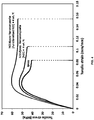
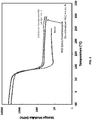
- FIGs. 2 and 3 illustrate the thermal stability of the functionalized NCC, poly(DPMA)-NCC. These figures show that probable degradation of the material initially starts above 170 °C, followed by a second stage above 300 °C.
- the grafting yield for the functionalized NCC in this preparation defined as ratio of grafted polymer to total added monomer, was 15.3 ⁇ 2.6 %.
- the particle size, determined by Zetasizer measurements, of the resulting poly(DPMA)-NCC supramolecular material was 212 ⁇ 1.2 nm.
- Example 2 Preparation 2: Surface graft polymerization of NCC with N -[3-(Dimethylamino)propyl]methacrylamide using co-catalvst
- the reaction began by mixing an aqueous suspension of NCC at the required concentration with DPMA.
- the mass ratio of NCC to that of the monomer was 1:2 and NCC concentration was 3 % w/w in this particular example.
- the pH of the reaction solution was pH 11.5.
- the reaction was initiated using ammonium persulfate (APS) and the molar ratio of APS:DPMA is 1.2:100.
- APS ammonium persulfate
- the initiator was dissolved in DI water. Both APS and NCC solutions were then purged with nitrogen for 30 min.
- the polymerization started by adding the APS solution into the NCC solution, and the reaction was allowed to proceed for 18 hours at 40°C. After completion of the reaction, the solid material was centrifuged by adding acetone to obtain a 50/50 w/w acetone/water mixture.
- Fig. 1 clearly shows the peak at about 1500 cm -1 representing C-N and CNH vibrations, which are indicative of successful poly(DPMA) grafting onto the NCC surface.
- Figs. 2 and 3 illustrate the thermal stability of the functionalized NCC, poly(DPMA)-NCC. These figures show that probable degradation of the material initially starts above 170 °C, followed by a second stage above 300 °C.
- the grafting yield for the functionalized NCC in this preparation defined as ratio of grafted polymer to total added monomer, was 15.4 ⁇ 1.7 %.
- the particle size, determined by Zetasizer measurements, of the resulting poly(DPMA)-NCC supramolecular material was 252 ⁇ 5.8 nm.
- Thermogravimetric measurements as a function of temperature for Preparation 1 and 2 are practically identical ( Fig. 2 ), as are the differential scanning calorimetric responses ( Fig. 3 ). This illustrates that the thermal stability of poly(DPMA)-NCC supramolecular materials prepared with or without using a catalyst is practically identical, and their potential processability will be similar.
- Example 3 Preparation and properties of amine-cured NCC-epoxy nanocomposite systems
- NCC poly(PDMA)-NCC supramolecular materials
- amine-cured epoxy nanocomposite systems were prepared using NCC and poly(DPMA)-NCC.
- two epoxy systems were examined: A high-purity bisphenol A diglycidylether epoxy resin, and a semi-solid reaction product of epichlorohydrin and phenol-formaldehyde epoxy resin.
- D.E.R. 332 commercial epoxy resin
- D.E.N. 438 an epoxy novolac resin
- the hardener used was JEFFAMINE D-230 polyetheramine (Huntsman), which is a difunctional primary amine with an average molecular weight of about 230.
- the cured films were cut into 5 mm-width strips and conditioned at 23 °C and 50 % R.H. for 48 hours.
- the tensile measurements were performed at a gauge length of 5 mm and grip separation rate of 5 mm/min using an Instron tensile testing equipment. It is evident from Table 1 (using D.E.R. 332 epoxy system) that NCC and functionalized NCC significantly improve the mechanical properties of the resulting nanocomposite materials. Incorporation of 4 wt. % NCC improves the ultimate tensile stress, Young's modulus, and strain at break by 7%, 18% and 15%, respectively. This indicates that NCC acts both as reinforcement and cross-linking agent with the epoxy resin.
- the cross-linking density of the resulting NCC-epoxy nanocomposite system was significantly enhanced by using NCC.
- Functionalization of NCC through the grafting of poly(DPMA) onto NCC to produce poly(DPMA)-NCC supramolecular materials further enhanced the cross-linking density.
- Table 1 and Table 2 (using D.E.N. 438 epoxy resin) reveals that all mechanical properties, ultimate tensile stress, Young's modulus and strain at break were appreciably enhanced relative to the property of the starting epoxy system ( Fig. 4 ).
- Fig. 5 and Fig. 6 further confirm these trends for the dynamic mechanical properties of NCC-epoxy nanocomposites, where storage and loss moduli are increased by, at least, one-order of magnitude relative to epoxy.
- NCC or functionalized NCC clearly does not affect the thermal stability of the resulting NCC-epoxy nancomposite materials as can be seen from the is thermal gravimetric analysis (TGA), performed using TGA Q50 (TA Instruments) under nitrogen atmosphere, of amine-cured epoxy and NCC-reinforced epoxy nanocomposite samples. Tests were carried out from 30 °C to 600 °C at 20°C.min -1 ( Fig. 9 ). Fig. 10 is differential scanning calorimetric (DSC) analysis, using DSC Q100 (TA Instruments), of amine-cured epoxy and NCC-reinforced epoxy nanocomposite samples.
- TGA thermal gravimetric analysis
- DSC differential scanning calorimetric
- This novel NCC-epoxy nanocomposite material with tailor-made performance has practically identical thermal stability and processability to the starting epoxy resin. It can have significantly wide applications ranging from adhesives, composite laminates, composite sandwich structures, thin films, fibres, nonwoven networks, and other structures comprising one or more of the above.
Landscapes
- Chemical & Material Sciences (AREA)
- Health & Medical Sciences (AREA)
- Chemical Kinetics & Catalysis (AREA)
- Medicinal Chemistry (AREA)
- Polymers & Plastics (AREA)
- Organic Chemistry (AREA)
- Life Sciences & Earth Sciences (AREA)
- Engineering & Computer Science (AREA)
- Biochemistry (AREA)
- Materials Engineering (AREA)
- Epoxy Resins (AREA)
Description
- The disclosure relates to a novel process for functionalizing NCC, a method for producing amine-cured epoxy-based nanocomposites through the use of said functionalized NCC, and nanocomposites thereof.
- Nanocrystalline cellulose (NCC), or cellulose nanocrystals (CNC), are extracted as a colloidal suspension by (typically sulfuric) acid hydrolysis of lignocellulosic materials, such as bacteria, cotton, or wood pulp. NCC is comprised of cellulose, a linear polymer of β(1→4) linked D-glucose units, whose chains are arranged to form crystalline and amorphous domains. Colloidal suspensions of cellulose crystallites form a chiral nematic structure upon reaching a critical concentration. Hydrogen bonding between the cellulose chains can stabilize the local structure in NCC, and plays a key role in the formation of crystalline domains. The iridescence of NCC self-assemblies is typically characterized by the finger-print patterns, where the patch work of bright and dark regions is typical of spherulitic behavior of fibrillar crystals in which the molecules are packed with their axes perpendicular to the fibrillar axis. NCC is also characterized by high crystallinity (between 85 and 97%, typically greater than 90%) approaching the theoretical limit of the cellulose chains (Hamad and Hu, Can. J. Chem Engrg., 2010, 88: 392-402).
- Owing to its unique strength and self-assembly properties, NCC can act as high-performance reinforcement in polymer systems. The major obstacles to NCC application in composite manufacture are: (1) aggregation of NCC particles, (2) poor dispersion of the hydrophilic NCC particles in mostly hydrophobic polymer matrices, and (3) poor interfacial adhesion between NCC and polymer. Different approaches have been followed to increase NCC's dispersion and interaction with polymer matrices. Use of surfactants is a simple enough method, but a large amount of surfactant is normally required which would negatively impact the strength of the resulting composite. Surface modification, on the other hand, generally involves reaction with the hydroxyl groups on the NCC surface. Silanes have, for example, been employed to graft hydrophobic groups onto the NCC surface. Moreover, polymers with hydroxyl reactive groups have been used as well, such as polyethylene glycol (PEG) (see Araki, J. et al. Langmuir, 2001, 17 (1), 21-27, Polycaprolactone (PCL) (see Habibi, Y. et al. Biomacromolecules, 2008, 9 (7), 1974-1980) and poly(propylene) (PP) (see Ljungberg, N. et al. Biomacromolecules 2005, 6 (5), 2732-2739). Such modifications can make NCC more hydrophobic and give NCC reasonable stability in organic solvents. However, these reactions (i) generally involve several, intricate steps, (ii) are therefore costly, and (iii) have limited scalability.
-
CA 2 786 738 discloses production of a hydrogel whose function is to absorb water while maintaining its structural integrity. The reference discloses the preparation of a NCC-(vinyl)monomer cross linker intended to be used in a further copolymerization process with hydrophilic monomers. The examples bridging pages 7 and 8 of the specification is illustrating these embodiments. In a first step, Glycidyl methacrylate (GMA), which is an epoxy-containing vinyl monomer, is covalently coupled to the -OH groups found on NCC with a base (DMAP). This NCC crosslinker, containing polymerizable vinyl monomers is then copolymerized with acrylamide monomers in the second step to provide a hydrogel. - LU, J. ET AL.: "Surface modification of microfibrillated cellulose for epoxy composite applications", POLYMER; vol. 49, no. 5, 2008, pages 1285-1296 discloses the use of microfibrillated cellulose (MFC). MFC is different from NCC and a micrograph of the structure is shown in
Fig. 2 . On page 1286, section 2.1, it is disclosed that MFC is treated with two silanes and a titanate compound. This reaction leads to a silane-treated MFC and titanate-treated MFC.Fig. 8 on page 1291 illustrates the resulting compound following treatment with Lica 38. The International Standards Organisation (ISO) has stipulated that the use of the term cellulose nanocrystals (CNC), should replace nanocrystalline cellulose (NCC), however the two are used herein interchangeably. - In one aspect, there is provided a process for functionalizing NCC comprising:
- (i) providing a mixture of NCC and one or more monomers, wherein said mixture is suitable for free radical polymerization and said monomer is cross-linkable with epoxy and is aqueous soluble;
- (ii) providing a solution of a free radical initiator;
- (iii) purging oxygen from the mixture of (i) and the solution of (ii);
- (iv) mixing (i) and (ii) after step (iii) to allow polymerization; and
- (v) isolating said functionalized NCC.
- In one aspect, there is provided a functionalized NCC prepared in accordance with the process as defined herein.
- In one aspect, there is provided a functionalized NCC, wherein said functionalized NCC is comprising a plurality of polymer chains cross-linkable with an epoxy resin, said polymer chains being covalently bonded to hydroxyl groups of cellulose subunits of said NCC.
- In one aspect, there is provided a hardener, said hardener comprising the functionalized NCC as described herein in admixture with an amine-based hardener.
- In a further aspect, there is provided a nanocomposite comprising one or more amine-cured epoxy resin and a functionalized NCC.
- In a further aspect, there is provided a process for preparing an epoxy-based nanocomposite comprising:
- i) mixing a functionalized NCC, an amine-curable epoxy resin and a hardener in a suitable solvent; and
- ii) allowing the mixture obtained from i) to cure to obtain said nanocomposite.
- In one aspect, there is provided a method for improving at least one property of an amine-cured epoxy comprising adding a functionalized NCC to said epoxy.
-
-
Fig. 1 is FT-IR spectrum of poly(DPMA)-NCC prepared with and without a co-catalyst; -
Fig. 2 is Thermogravimetric (TGA) response of poly(DPMA)-NCC prepared with and without co-catalyst; -
Fig. 3 is Differential scanning calorimetric (DSC) response of poly(DPMA)-NCC prepared with and without co-catalyst; -
Fig. 4 is tensile response of amine-cured epoxy (bisphenol A diglycidylether) vis-à-vis samples reinforced with NCC or poly(DPMA) functionalized NCC; -
Fig. 5 is dynamic storage modulus as a function of temperature response of amine-cured epoxy (bisphenol A diglycidylether) vis-à-vis samples reinforced with NCC or poly(DPMA) functionalized NCC; -
Fig. 6 is dynamic loss modulus as a function of temperature response of amine-cured epoxy (bisphenol A diglycidylether) vis-à-vis samples reinforced with NCC or poly(DPMA) functionalized NCC; -
Fig. 7 is schematic representation of the cross-linking mechanism using NCC in amine-cured NCC-epoxy nanocomposite materials; -
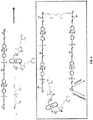
Fig. 8 is schematic representation of the cross-linking mechanism using functionalized NCC in amine-cured NCC-epoxy nanocomposite materials); -
Fig. 9 is thermal gravimetric analysis (TGA) of nanocomposite samples obtained form or poly(DPMA) functionalized NCC amine-cured epoxy (bisphenol A diglycidylether); -
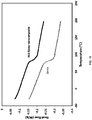
FIG. 10 is differential scanning calorimetric (DSC) analysis of nanocomposite samples obtained form or poly(DPMA) functionalized NCC amine-cured epoxy (bisphenol A diglycidylether). - Epoxy resins are known for their high strength and stiffness. This invention deals with developing amine-cured epoxy nanocomposite systems that have improved properties through the use of nanocrystalline cellulose (NCC) as both cross-linker and reinforcement domain. An aspect of the present disclosure is the functionalization reaction of nanocrystalline cellulose (NCC).
- The inventors have observed that functionalization of NCC as described herein creates new opportunities for improving the cross-linking density within epoxy, thereby contributing to improving mechanical properties. It is believed that NCC acts as a functionalised scaffold that produces novel highly flexible (or tough) epoxy. This is a unique property that epoxy does not have.
- The functionalization reaction described herein can be an aqueous free radical surface grafting polymerization and a large variety of free radical initiators and monomers can be used. Functionalized NCC can be used to reinforce a variety of amine-cured epoxy resins.
- The monomers used for functionalizing NCC are selected to be cross-linkable with epoxy and soluble in water. Acrylamide, specifically Dimethylamino propyl methacrylamide (DPMA), is used in the examples below. However, the choice of monomers is not limited to the aforementioned. Other possible monomers that can be used in the NCC functionalization reaction are: N-(Isobutoxymethyl)acrylamide, Methacrylamide, N-(3-Methoxypropyl)acrylamide, N-Isopropylmethacrylamide, N-Isopropylacrylamide, N-(Hydroxymethyl)acrylamide, N-Hydroxyethyl acrylamide, N,N-Dimethylacrylamide, 3-Acryloylamino-1-propanol, N-Acryloylamido-ethoxyethanol, (3-Acrylamidopropyl)trimethylammonium chloride, 2-Acrylamidoglycolic acid. The overriding factor is that the corresponding polymer of the chosen monomer should also be compatible with the epoxy-hardener system, so that functionalized NCC can be well dispersed in the resin matrix.
- Free radical polymerization requires a suitable initiator. Non-limiting examples of generally suitable initiators include: persulfates, peroxides, transition metal ions, or other common free radical initiators. Co-catalysts can also be used in some cases to act as reducing agents in the reaction. Suitable co-catalysts can be either inorganic, such as copper (II) chloride and manganese(II) chloride, or organic, such as ammonium oxalate and ammonium tartrate dibasic.
- Functionalization of NCC is necessary for the crosslinking and dispersion in epoxy resin matrices. NCC-based nanomaterials can be synthesized by in situ surface graft co-polymerization of NCC in an aqueous medium using a suitable monomer. The process begins by providing a water suspension of NCC and monomer in the desired ratios, and then diluting with deionized water (DI) to achieve the required concentration. The mass ratio of NCC to that of the monomer can be adjusted, ranging from about 1:10 to about 10:1. Examples include from about 1: 5 to about 5:1 or about 1:3 to about 3: 1 or for example about 1:2. In the final reaction solution, the concentration of NCC is controlled to be from about 0.5% to about 5%. The pH of the reaction can be from 10 to 14. The reaction is initiated using a suitable free radical initiator, optionally in the presence of a suitable co-catalyst. The required amount of initiator is dissolved in DI water. Both initiator and NCC solutions are then purged (e.g. with an inert gas such as nitrogen) for a suitable duration. The polymerization starts by adding the initiator solution into the NCC solution, where the initiator is added in two steps. The reaction is allowed to proceed for 1 to 24 hours at a suitably controlled temperature, from about 21°C to 90°C. After completion of the reaction, the product is isolated and can be further purified by centrifugation with a 50/50 acetone/water mixture. The resulting functionalized NCC, i.e., poly(DPMA)-NCC in this case, is hydrophobic and typically dispersible in polar solvents-for instance, methanol and dimethyl sulfoxide (DMSO).
- In one embodiment, there is provided a functionalized NCC, wherein said functionalized NCC is comprising a plurality of acrylamide polymer chains cross-linkable with an epoxy resin, said polymer chains being covalently bonded to hydroxyl groups of cellulose subunits of said NCC. The amount of polymer chains grafted on NCC, such as acrylamide polymers, can be characterized as a grafting yield.
- As used herein, the grafting yield for the functionalized NCC can be defined as ratio of grafted polymer to total added monomer. One possible means for assessing the ratio is by gravimetric measurements.
- In further embodiments, the grafting ratio of the functionalized NCC is from 1-20%, ideally around 15-20%.
- A further characterizing feature of the functionalized NCC, is observed by reviewing the IR spectrum. For example, the C-N and CNH vibrations of an acrylamide (e.g. poly(DPMA)) at about 1500 cm-1 of the IR spectrum shows the successful grafting onto the NCC surface.
- A variety of epoxy resin products, including commercially available resins, can be used in this invention. For example, liquid resins based on the diglycidyl ether of bisphenol A (also termed DGEBA or BADGE type resins) can be useful. Other types of epoxy resins include bisphenol F type epoxy, epoxy phenol novolac, and epoxy cresol novolac. Some commercial examples include, but are not limited to, Araldite MY 720 (Huntsman), Araldite MY 510 (Huntsman), Tactix 742 (Huntsman), and Tactix 556 (Huntsman).
- In certain embodiments, the epoxy portion can remain fixed, and variations in processing and performance of the resin are obtained by making changes to the hardener. The amine hardener used herein is not particularly limited. Examples of suitable hardeners can be: Aliphatic amines (diethylenetriamine, DETA), cycloaliphatic amines (isophorone diamine, IPD; or diamineocyclohexane, DACH), aromatic amines (4,4'-diaminodiphenyl methane, DDM or MDA; 4,4'-diaminophenyl sulfone, DDS; m-phenylenediamine, MPDA), as well as catalysts, including tertiary amines, BF3-monoethylamine, or imidazoles. Criteria for choosing the amine hardener (or mixture thereof) include cost of the hardener, processing requirements and performance requirements of the resulting mixture. As a general rule, use of a 1:1 stoichiometric ratio of the hardener amine hydrogen to epoxide groups will be acceptable. Other stoichiometric ratios are possible so as to attain specific formulations for optimal processing and product performance. The choice is influenced by (i) the required softening point or glass transition temperature of the resin, which is in turn affected by the choice of hardner, curing cycle and resin type, (ii) resistance to oxidative degradation, and (iii) resistance to thermally-induced chain scission.
- Amine hardeners that may be used in accordance with this disclosure include polyetheramines (PEAs) exhibiting steric hindrance near the amine (e.g. with JEFFAMINE® D-230 amine). Cycloaliphatic amines, ethyleneamines (e.g. DETA, TETA, and TEPA) and unhindered polyetheramines may be used. Amine hardeners may be combined to modify the viscosity and reactivity of the hardener. Additionally, some amines such as imidazole and its derivatives can be used as catalytic or co-curing agents, as are some guanidine derivatives such as "dicy" (dicyandiamide or cyanoguanidine).
- In one embodiment, the functionalised NCC described herein can be provided alone for use as an additive to be mixed with the epoxy components (e.g. to be added at the time of mixing of the components) Alternatively, the functionalised NCC described herein can be mixed (blended) with the hardener (which is a necessary ingredient for ultimately making amine cured epoxy) to produce a new class of hardeners that can produce toughened and stronger epoxy.
- In one embodiment, there is therefore provided a hardener for use in amine-cured epoxy resins, said hardener comprising the functionalized NCC as described herein in admixture with an amine-based hardener.
- The amount of functionalized NCC, such as poly(DPMA)-NCC, used in the epoxy resin, is not particularly limited, however for most applications a substantially small amount is required. For example, the amount of NCC material in the composite can be up to about 15%w/w; or up to about 10%w/w; or up to about 5%w/w; or from about 0.5% to about 15%w/w; or from about 1% to about 5%w/w; or alternatively about 4% w/w. The amount of NCC, or functionalized NCC, is predicated by the level of desired improvement in performance (e.g., 20 % versus 100 % increase in toughness), whereby NCC functions as a reinforcement network or scaffold, as well as enhances the cross-linking density within the epoxy resin.
- As discussed above, there is provided a method for improving at least one property of an amine-cured epoxy comprising adding a functionalized NCC to said epoxy.
- Without being bound to theory, it is believed that the functionalized NCC described herein provides surprisingly advantageous properties because of its ability to act as cross-linker and reinforcement agent. In principle, it is therefore possible to tailor the performance requirement of the epoxy resin. Without limitations, the properties improved by the functionalized NCC can be mechanical properties such as one or more of tensile strength response, stiffness, toughness, dynamic storage modulus, and dynamic loss modulus.
- The following examples are provided to further illustrate details for the preparation and use of the functionalized NCC as well as nanocomposites containing same. They are not intended to be limitations on the scope of the instant disclosure in any way, and they should not be so construed. Those skilled in the art will readily understand that known variations of the conditions and processes of the following preparative procedures can be used to prepare these functionalized NCC and nanocomposites.
- Unless otherwise specified, the chemicals, used as received, are purchased from Sigma-Aldrich except NCC, which is prepared in-house by sulfuric acid hydrolysis of kraft bleached softwood pulp.
- The reaction began by mixing an aqueous suspension of NCC at the required concentration with DPMA. The mass ratio of NCC to that of the monomer was 1:2 and NCC concentration was 3 % w/w in this particular example. The pH of the reaction solution was pH 11.5.
- The reaction was initiated using ammonium persulfate (APS) and the molar ratio of APS:DPMA is 1.2:100. The initiator was dissolved in DI water. Both APS and NCC solutions were then purged with nitrogen for 30 mins. The polymerization starts by adding the APS solution into the NCC solution. The reaction was then allowed to proceed for 18 hours at 60°C. After completion of the reaction, the solid material was centrifuged by adding acetone to obtain a 50/50 w/w acetone/water mixture. Centrifugation was carried out at 4,000 rpm for 30 min, and was repeated twice. The product was centrifuged once more with pure acetone to complete the purification protocol.
Fig. 1 clearly shows the peak at about 1500 cm-1 representing C-N and CNH vibrations, which are indicative of successful poly(DPMA) grafting onto the NCC surface.Figs. 2 and3 illustrate the thermal stability of the functionalized NCC, poly(DPMA)-NCC. These figures show that probable degradation of the material initially starts above 170 °C, followed by a second stage above 300 °C. - The grafting yield for the functionalized NCC in this preparation, defined as ratio of grafted polymer to total added monomer, was 15.3 ± 2.6 %. The particle size, determined by Zetasizer measurements, of the resulting poly(DPMA)-NCC supramolecular material was 212 ± 1.2 nm.
- The reaction began by mixing an aqueous suspension of NCC at the required concentration with DPMA. The mass ratio of NCC to that of the monomer was 1:2 and NCC concentration was 3 % w/w in this particular example. The pH of the reaction solution was pH 11.5.
- The reaction was initiated using ammonium persulfate (APS) and the molar ratio of APS:DPMA is 1.2:100. The initiator was dissolved in DI water. Both APS and NCC solutions were then purged with nitrogen for 30 min. A co-catalyst, ammonium oxalate, at the ratio of 1:1 to APS, was first dissolved in DI water and quickly added into the reaction right before adding APS. The polymerization started by adding the APS solution into the NCC solution, and the reaction was allowed to proceed for 18 hours at 40°C. After completion of the reaction, the solid material was centrifuged by adding acetone to obtain a 50/50 w/w acetone/water mixture. Centrifugation was carried out at 4,000 rpm for 30 min, and repeated twice. The product was centrifuged once more with pure acetone to complete the purification protocol.
Fig. 1 clearly shows the peak at about 1500 cm-1 representing C-N and CNH vibrations, which are indicative of successful poly(DPMA) grafting onto the NCC surface.Figs. 2 and3 illustrate the thermal stability of the functionalized NCC, poly(DPMA)-NCC. These figures show that probable degradation of the material initially starts above 170 °C, followed by a second stage above 300 °C. - The grafting yield for the functionalized NCC in this preparation, defined as ratio of grafted polymer to total added monomer, was 15.4 ± 1.7 %. The particle size, determined by Zetasizer measurements, of the resulting poly(DPMA)-NCC supramolecular material was 252 ± 5.8 nm.
- Thermogravimetric measurements as a function of temperature for
Preparation 1 and 2 are practically identical (Fig. 2 ), as are the differential scanning calorimetric responses (Fig. 3 ). This illustrates that the thermal stability of poly(DPMA)-NCC supramolecular materials prepared with or without using a catalyst is practically identical, and their potential processability will be similar. - To prove the functionality of NCC poly(PDMA)-NCC supramolecular materials, amine-cured epoxy nanocomposite systems were prepared using NCC and poly(DPMA)-NCC. To further confirm the wide applicability of this novel approach, two epoxy systems were examined: A high-purity bisphenol A diglycidylether epoxy resin, and a semi-solid reaction product of epichlorohydrin and phenol-formaldehyde epoxy resin. Of the former type, we used one commercial epoxy resin, D.E.R. 332 (Dow Chemicals), and of the latter type, D.E.N. 438, an epoxy novolac resin (Dow Chemicals). In both cases, the hardener used was JEFFAMINE D-230 polyetheramine (Huntsman), which is a difunctional primary amine with an average molecular weight of about 230.
- To prepare epoxy film samples, epoxy, hardener and NCC were mixed together in a suitable solvent, for instance, dimethylformamide (DMF). The resin and curing agent are reacted at approximately stoichiometric quantities determined from specific information provided by relevant chemical supplier. In this case, to calculate the stoichiometric ratio, the amine H equivalent weight is first determined from the following equation:


- For tensile property measurements, the cured films were cut into 5 mm-width strips and conditioned at 23 °C and 50 % R.H. for 48 hours. The tensile measurements were performed at a gauge length of 5 mm and grip separation rate of 5 mm/min using an Instron tensile testing equipment. It is evident from Table 1 (using D.E.R. 332 epoxy system) that NCC and functionalized NCC significantly improve the mechanical properties of the resulting nanocomposite materials. Incorporation of 4 wt. % NCC improves the ultimate tensile stress, Young's modulus, and strain at break by 7%, 18% and 15%, respectively. This indicates that NCC acts both as reinforcement and cross-linking agent with the epoxy resin. That is to say, the cross-linking density of the resulting NCC-epoxy nanocomposite system was significantly enhanced by using NCC. Functionalization of NCC through the grafting of poly(DPMA) onto NCC to produce poly(DPMA)-NCC supramolecular materials further enhanced the cross-linking density. Examining Table 1 and Table 2 (using D.E.N. 438 epoxy resin) reveals that all mechanical properties, ultimate tensile stress, Young's modulus and strain at break were appreciably enhanced relative to the property of the starting epoxy system (
Fig. 4 ).Fig. 5 andFig. 6 further confirm these trends for the dynamic mechanical properties of NCC-epoxy nanocomposites, where storage and loss moduli are increased by, at least, one-order of magnitude relative to epoxy. - The cross-link densities for our NCC-epoxy nanocomposite materials were calculated (Table 3) from the plateau region above Tg (150°C in our case) using the following equation derived from the theory of rubber elasticity:

- The measured densities of the samples described in Table 3 are practically identical, and it is therefore conclusive that the improvement in dynamic and static mechanical properties of the NCC-epoxy nanocomposite materials is due to both reinforcement and cross-linking of NCC or functionalized NCC. It is further evident that functionalized NCC, i.e., poly(DPMA)-NCC supramolecules, renders the epoxy network significantly more flexible.
Fig. 7 andFig. 8 present a schematic of the cross-linking scenario in the presence of NCC (Fig. 7 ) or functionalized NCC (FIG. 8 ), which essentially holds true for any type of amine-cured epoxy system. - It is apposite to note that NCC or functionalized NCC clearly does not affect the thermal stability of the resulting NCC-epoxy nancomposite materials as can be seen from the is thermal gravimetric analysis (TGA), performed using TGA Q50 (TA Instruments) under nitrogen atmosphere, of amine-cured epoxy and NCC-reinforced epoxy nanocomposite samples. Tests were carried out from 30 °C to 600 °C at 20°C.min-1 (
Fig. 9 ).Fig. 10 is differential scanning calorimetric (DSC) analysis, using DSC Q100 (TA Instruments), of amine-cured epoxy and NCC-reinforced epoxy nanocomposite samples. Samples were tested from -40 °C to 200 °C at 10°C.min-1 under nitrogen atmosphere. The second cycles were used for analysisTable 1 Tensile testing results for NCC-epoxy nanocomposite materials using D.E.R. 332. Ultimate Tensile Stress Young's Modulus Strain at Break (MPa) (MPa) (%) Epoxy 50.7 ± 1.7 2084 ± 137 8.4 ± 2.6 NCC-Epoxy nanocomposite [NCC] = 4 wt. % 54.2 ± 3.0 2465 ± 248 9.7 ± 2.7 NCC-Epoxy nanocomposite [Functionalized NCC] = 4 wt. % 60.0 ± 1.3 2712 ± 38 15.2 ± 1.7 Table 2 Tensile testing results for NCC-epoxy nanocomposite materials using D.E.N. 438. Samples Ultimate Tensile Stres (MPa) Young's Modulus (MPa) Strain at Break (%) Epoxy 56.2 ± 1.96 2255 ± 125 6.0 ± 0.83 NCC-epoxy nanocomposite [functionalize NCC] = 4 wt. % 67.0 ± 1.7 2720 ± 56 7.8 ± 1.2 Table 3 Cross-linking density of NCC-epoxy nanocomposite systems. Epoxy NCC-Epoxy Nanocomposite [NCC] = 4 wt. % NCC-Epoxy Nanocomposite [Functionalize NCC] = 4 wt. % Density (g/cm3) 1.135 1.154 1.142 Mc 581 174 200 - This novel NCC-epoxy nanocomposite material with tailor-made performance has practically identical thermal stability and processability to the starting epoxy resin. It can have significantly wide applications ranging from adhesives, composite laminates, composite sandwich structures, thin films, fibres, nonwoven networks, and other structures comprising one or more of the above.
Claims (12)
- A process for functionalizing nanocrystalline cellulose (NCC) comprising:(i) providing a mixture of NCC and one or more monomers, wherein said mixture is suitable for free radical polymerization and said monomer is cross-linkable with epoxy and is aqueous soluble;(ii) providing a solution of a free radical initiator;(iii) purging oxygen from the mixture of (i) and the solution of (ii);(iv) mixing (i) and (ii) after step (iii) to allow polymerization; and(v) isolating said functionalized NCC.
- The process of claim 1, wherein said free radical initiator is comprising persulfates, peroxides, transition metal ions, or other common free radical initiators.
- The process of any one of claims 1 to 2, wherein said monomer is an acrylamide.
- The process of any one of claims 1 to 3, wherein said monomer is Dimethylamino propyl methacrylamide (DPMA), N-(Isobutoxymethyl)acrylamide, Methacrylamide, N-(3-Methoxypropyl)acrylamide, N-Isopropylmethacrylamide, N-Isopropylacrylamide, N-(Hydroxymethyl)acrylamide, N-Hydroxyethyl acrylamide, N,N-Dimethylacrylamide, 3-Acryloylamino-1-propanol, N-Acryloylamido-ethoxyethanol, (3-Acrylamidopropyl)trimethylammonium chloride, or 2-Acrylamidoglycolic acid.
- The process of any one of claims 1 to 4, wherein the mass ratio of NCC to that of the monomer is ranging from 1:10 to 10:1.
- A functionalized NCC prepared in accordance with the process of any one of claims 1 to 5.
- A nanocomposite comprising one or more amine-cured epoxy resin and a functionalized NCC as defined in claim 6.
- A process for preparing an epoxy-based nanocomposite comprising:i) mixing a functionalized NCC as defined in claim 6, an amine-curable epoxy resin and a hardener in a suitable solvent; andii) allowing the mixture obtained from i) to cure to obtain said nanocomposite.
- The process as defined in claim 8, wherein the hardener is comprising aliphatic amines, cycloaliphatic amines, aromatic amines, polyetheramines, ethyleneamines or a combination thereof.
- The nanocomposite as defined in claim 7 or the process as defined in claim 8 or 9, wherein said epoxy is comprising diglycidyl ether of bisphenol A (DGEBA or BADGE), bisphenol F type epoxy, epoxy phenol novolac, epoxy cresol novolac or a combination thereof.
- The nanocomposite as defined in claim 7 or the process as defined in claim 8 or 9, wherein said functionalized NCC in the composite can be present in an amount of up to 15%w/w.
- A method for improving at least one mechanical property of an amine-cured epoxy comprising adding a functionalized NCC as defined in claim 6 to said epoxy.
Applications Claiming Priority (2)
| Application Number | Priority Date | Filing Date | Title |
|---|---|---|---|
| US201261725201P | 2012-11-12 | 2012-11-12 | |
| PCT/CA2013/050858 WO2014071527A1 (en) | 2012-11-12 | 2013-11-12 | Ncc as functional scaffold for amine-cured epoxy nanocomposite materials of tunable properties |
Publications (3)
| Publication Number | Publication Date |
|---|---|
| EP2917252A1 EP2917252A1 (en) | 2015-09-16 |
| EP2917252A4 EP2917252A4 (en) | 2016-08-03 |
| EP2917252B1 true EP2917252B1 (en) | 2018-11-07 |
Family
ID=50683882
Family Applications (1)
| Application Number | Title | Priority Date | Filing Date |
|---|---|---|---|
| EP13852795.7A Not-in-force EP2917252B1 (en) | 2012-11-12 | 2013-11-12 | Nanocrystalline cellulose (ncc) as functional scaffold for amine-cured epoxy nanocomposite materials of tunable properties |
Country Status (4)
| Country | Link |
|---|---|
| US (1) | US9624330B2 (en) |
| EP (1) | EP2917252B1 (en) |
| CA (1) | CA2890653C (en) |
| WO (1) | WO2014071527A1 (en) |
Families Citing this family (5)
| Publication number | Priority date | Publication date | Assignee | Title |
|---|---|---|---|---|
| CA2938518C (en) * | 2014-02-10 | 2021-02-23 | Celluforce Inc. | Nanocrystalline cellulose derived formaldehyde-based adhesive, uses thereof and process for preparing same |
| EP3152026B1 (en) * | 2014-06-03 | 2023-08-02 | Essentium IPCO, LLC | Cellulose nanocrystal polymer composite |
| US10676846B2 (en) | 2015-07-28 | 2020-06-09 | Celluforce Inc. | Processes for preparing amine-functionalized cellulose nanocrystals and nitrogen doped carbon nanofibers |
| US11084907B2 (en) * | 2017-07-05 | 2021-08-10 | Tuskegee University | Nanocellulosic compositions |
| CN113402670B (en) * | 2021-07-19 | 2022-05-10 | 青岛科技大学 | A kind of cellulose nanocrystalline powder and its preparation method and application |
Family Cites Families (4)
| Publication number | Priority date | Publication date | Assignee | Title |
|---|---|---|---|---|
| CA2786141A1 (en) * | 2009-12-30 | 2011-07-07 | Axcelon Biopolymers Corporation | Transparent bacterial cellulose nanocomposite hydrogels |
| JP2013517353A (en) * | 2010-01-22 | 2013-05-16 | エフピーイノベイションズ | Nanocomposite hydrogels and methods for their preparation for industrial and medical applications |
| WO2011100818A1 (en) * | 2010-02-18 | 2011-08-25 | Fpinnovations | Thermoplastic nanocomposite material based on nanocrystalline cellulose (ncc) |
| CA2848337C (en) * | 2011-09-13 | 2018-04-24 | Celluforce Inc. | Ncc-based supramolecular materials for thermoplastic and thermoset polymer composites |
-
2013
- 2013-11-12 CA CA2890653A patent/CA2890653C/en not_active Expired - Fee Related
- 2013-11-12 WO PCT/CA2013/050858 patent/WO2014071527A1/en not_active Ceased
- 2013-11-12 EP EP13852795.7A patent/EP2917252B1/en not_active Not-in-force
- 2013-11-12 US US14/442,033 patent/US9624330B2/en not_active Expired - Fee Related
Non-Patent Citations (1)
| Title |
|---|
| None * |
Also Published As
| Publication number | Publication date |
|---|---|
| CA2890653A1 (en) | 2014-05-15 |
| EP2917252A1 (en) | 2015-09-16 |
| US9624330B2 (en) | 2017-04-18 |
| US20150322191A1 (en) | 2015-11-12 |
| WO2014071527A1 (en) | 2014-05-15 |
| CA2890653C (en) | 2019-01-08 |
| EP2917252A4 (en) | 2016-08-03 |
Similar Documents
| Publication | Publication Date | Title |
|---|---|---|
| KR101097602B1 (en) | - nanocomposites based on polyurethane or polyurethane-epoxy hybrid resins prepared avoiding isocyanates | |
| EP2551288B1 (en) | Epoxy resin composition for use in a carbon-fiber-reinforced composite material, prepreg, and carbon-fiber-reinforced composite material | |
| Liu et al. | Synthesis, modification and properties of rosin-based non-isocyanate polyurethanes coatings | |
| RU2513626C2 (en) | Composition of epoxy resin, pre-preg and fibre-reinforced composite material | |
| JP5933707B2 (en) | Thermosetting epoxy-based reinforcement adduct | |
| EP3020763B1 (en) | Epoxy resin composition, prepreg, and carbon fiber-reinforced composite material | |
| US9624330B2 (en) | NCC as a functional scaffold for amine-cured epoxy nanocomposite materials of tunable properties | |
| JPH0834831A (en) | Amine-modified epoxy resin composition | |
| KR102824800B1 (en) | Cellulose fiber composite | |
| Illy et al. | The influence of formulation and processing parameters on the thermal properties of a chitosan–epoxy prepolymer system | |
| US9751969B2 (en) | NCC-based supramolecular materials for thermoplastic and thermoset polymer composites | |
| Shibata et al. | Bio-based epoxy/chitin nanofiber composites cured with amine-type hardeners containing chitosan | |
| Sugane et al. | Self-healing epoxy networks based on cyclodextrin–adamantane host–guest interactions | |
| WO2022124191A1 (en) | Thermosetting epoxy resin composition, molded article from thermosetting epoxy resin, molding material for fiber-reinforced composite material, fiber-reinforced composite material, and method for producing fiber-reinforced composite material | |
| CN108530564B (en) | Epoxidized SBS (styrene-butadiene-styrene), block polymer active amine flexibilizer, preparation thereof and application thereof in epoxy resin | |
| EP2388279A1 (en) | Two-part adhesive | |
| EP3387079B1 (en) | Aminimide compositions | |
| JP2009298833A (en) | Epoxy resin composition and cured material of the same | |
| JP2022182934A (en) | Polyrotaxane | |
| RU2574061C2 (en) | Adducts as hardeners in thermally cured epoxy systems | |
| JP2016094610A (en) | Adduct for thermosetting epoxy-based reinforcement agent | |
| JP2022039265A (en) | Epoxy resin composition, tow prepreg and fiber-reinforced composite material | |
| JP2022039264A (en) | Epoxy resin composition, tow prepreg and fiber-reinforced composite material | |
| JP2022039266A (en) | Epoxy resin composition, intermediate base material, tow prepreg and fiber-reinforced composite material | |
| CN102924713A (en) | Composition for making machinable resin sheets |
Legal Events
| Date | Code | Title | Description |
|---|---|---|---|
| PUAI | Public reference made under article 153(3) epc to a published international application that has entered the european phase |
Free format text: ORIGINAL CODE: 0009012 |
|
| 17P | Request for examination filed |
Effective date: 20150610 |
|
| AK | Designated contracting states |
Kind code of ref document: A1 Designated state(s): AL AT BE BG CH CY CZ DE DK EE ES FI FR GB GR HR HU IE IS IT LI LT LU LV MC MK MT NL NO PL PT RO RS SE SI SK SM TR |
|
| AX | Request for extension of the european patent |
Extension state: BA ME |
|
| DAX | Request for extension of the european patent (deleted) | ||
| RA4 | Supplementary search report drawn up and despatched (corrected) |
Effective date: 20160705 |
|
| RIC1 | Information provided on ipc code assigned before grant |
Ipc: C08L 51/02 20060101ALI20160630BHEP Ipc: C08F 251/02 20060101AFI20160630BHEP Ipc: C08L 63/00 20060101ALI20160630BHEP |
|
| 17Q | First examination report despatched |
Effective date: 20170308 |
|
| RIC1 | Information provided on ipc code assigned before grant |
Ipc: C08L 1/02 20060101ALI20180412BHEP Ipc: C08L 63/00 20060101ALI20180412BHEP Ipc: C08G 59/50 20060101ALI20180412BHEP Ipc: C08F 251/02 20060101AFI20180412BHEP |
|
| GRAP | Despatch of communication of intention to grant a patent |
Free format text: ORIGINAL CODE: EPIDOSNIGR1 |
|
| INTG | Intention to grant announced |
Effective date: 20180607 |
|
| GRAS | Grant fee paid |
Free format text: ORIGINAL CODE: EPIDOSNIGR3 |
|
| GRAA | (expected) grant |
Free format text: ORIGINAL CODE: 0009210 |
|
| AK | Designated contracting states |
Kind code of ref document: B1 Designated state(s): AL AT BE BG CH CY CZ DE DK EE ES FI FR GB GR HR HU IE IS IT LI LT LU LV MC MK MT NL NO PL PT RO RS SE SI SK SM TR |
|
| REG | Reference to a national code |
Ref country code: GB Ref legal event code: FG4D |
|
| REG | Reference to a national code |
Ref country code: CH Ref legal event code: EP Ref country code: AT Ref legal event code: REF Ref document number: 1061983 Country of ref document: AT Kind code of ref document: T Effective date: 20181115 |
|
| REG | Reference to a national code |
Ref country code: IE Ref legal event code: FG4D |
|
| REG | Reference to a national code |
Ref country code: DE Ref legal event code: R096 Ref document number: 602013046467 Country of ref document: DE |
|
| REG | Reference to a national code |
Ref country code: NL Ref legal event code: MP Effective date: 20181107 |
|
| REG | Reference to a national code |
Ref country code: LT Ref legal event code: MG4D |
|
| REG | Reference to a national code |
Ref country code: AT Ref legal event code: MK05 Ref document number: 1061983 Country of ref document: AT Kind code of ref document: T Effective date: 20181107 |
|
| PG25 | Lapsed in a contracting state [announced via postgrant information from national office to epo] |
Ref country code: HR Free format text: LAPSE BECAUSE OF FAILURE TO SUBMIT A TRANSLATION OF THE DESCRIPTION OR TO PAY THE FEE WITHIN THE PRESCRIBED TIME-LIMIT Effective date: 20181107 Ref country code: LT Free format text: LAPSE BECAUSE OF FAILURE TO SUBMIT A TRANSLATION OF THE DESCRIPTION OR TO PAY THE FEE WITHIN THE PRESCRIBED TIME-LIMIT Effective date: 20181107 Ref country code: AT Free format text: LAPSE BECAUSE OF FAILURE TO SUBMIT A TRANSLATION OF THE DESCRIPTION OR TO PAY THE FEE WITHIN THE PRESCRIBED TIME-LIMIT Effective date: 20181107 Ref country code: BG Free format text: LAPSE BECAUSE OF FAILURE TO SUBMIT A TRANSLATION OF THE DESCRIPTION OR TO PAY THE FEE WITHIN THE PRESCRIBED TIME-LIMIT Effective date: 20190207 Ref country code: FI Free format text: LAPSE BECAUSE OF FAILURE TO SUBMIT A TRANSLATION OF THE DESCRIPTION OR TO PAY THE FEE WITHIN THE PRESCRIBED TIME-LIMIT Effective date: 20181107 Ref country code: LV Free format text: LAPSE BECAUSE OF FAILURE TO SUBMIT A TRANSLATION OF THE DESCRIPTION OR TO PAY THE FEE WITHIN THE PRESCRIBED TIME-LIMIT Effective date: 20181107 Ref country code: IS Free format text: LAPSE BECAUSE OF FAILURE TO SUBMIT A TRANSLATION OF THE DESCRIPTION OR TO PAY THE FEE WITHIN THE PRESCRIBED TIME-LIMIT Effective date: 20190307 Ref country code: ES Free format text: LAPSE BECAUSE OF FAILURE TO SUBMIT A TRANSLATION OF THE DESCRIPTION OR TO PAY THE FEE WITHIN THE PRESCRIBED TIME-LIMIT Effective date: 20181107 Ref country code: NO Free format text: LAPSE BECAUSE OF FAILURE TO SUBMIT A TRANSLATION OF THE DESCRIPTION OR TO PAY THE FEE WITHIN THE PRESCRIBED TIME-LIMIT Effective date: 20190207 |
|
| PG25 | Lapsed in a contracting state [announced via postgrant information from national office to epo] |
Ref country code: RS Free format text: LAPSE BECAUSE OF FAILURE TO SUBMIT A TRANSLATION OF THE DESCRIPTION OR TO PAY THE FEE WITHIN THE PRESCRIBED TIME-LIMIT Effective date: 20181107 Ref country code: NL Free format text: LAPSE BECAUSE OF FAILURE TO SUBMIT A TRANSLATION OF THE DESCRIPTION OR TO PAY THE FEE WITHIN THE PRESCRIBED TIME-LIMIT Effective date: 20181107 Ref country code: PT Free format text: LAPSE BECAUSE OF FAILURE TO SUBMIT A TRANSLATION OF THE DESCRIPTION OR TO PAY THE FEE WITHIN THE PRESCRIBED TIME-LIMIT Effective date: 20190307 Ref country code: GR Free format text: LAPSE BECAUSE OF FAILURE TO SUBMIT A TRANSLATION OF THE DESCRIPTION OR TO PAY THE FEE WITHIN THE PRESCRIBED TIME-LIMIT Effective date: 20190208 Ref country code: AL Free format text: LAPSE BECAUSE OF FAILURE TO SUBMIT A TRANSLATION OF THE DESCRIPTION OR TO PAY THE FEE WITHIN THE PRESCRIBED TIME-LIMIT Effective date: 20181107 Ref country code: SE Free format text: LAPSE BECAUSE OF FAILURE TO SUBMIT A TRANSLATION OF THE DESCRIPTION OR TO PAY THE FEE WITHIN THE PRESCRIBED TIME-LIMIT Effective date: 20181107 |
|
| REG | Reference to a national code |
Ref country code: CH Ref legal event code: PL |
|
| PG25 | Lapsed in a contracting state [announced via postgrant information from national office to epo] |
Ref country code: PL Free format text: LAPSE BECAUSE OF FAILURE TO SUBMIT A TRANSLATION OF THE DESCRIPTION OR TO PAY THE FEE WITHIN THE PRESCRIBED TIME-LIMIT Effective date: 20181107 Ref country code: DK Free format text: LAPSE BECAUSE OF FAILURE TO SUBMIT A TRANSLATION OF THE DESCRIPTION OR TO PAY THE FEE WITHIN THE PRESCRIBED TIME-LIMIT Effective date: 20181107 Ref country code: IT Free format text: LAPSE BECAUSE OF FAILURE TO SUBMIT A TRANSLATION OF THE DESCRIPTION OR TO PAY THE FEE WITHIN THE PRESCRIBED TIME-LIMIT Effective date: 20181107 Ref country code: CZ Free format text: LAPSE BECAUSE OF FAILURE TO SUBMIT A TRANSLATION OF THE DESCRIPTION OR TO PAY THE FEE WITHIN THE PRESCRIBED TIME-LIMIT Effective date: 20181107 Ref country code: LU Free format text: LAPSE BECAUSE OF NON-PAYMENT OF DUE FEES Effective date: 20181112 |
|
| REG | Reference to a national code |
Ref country code: DE Ref legal event code: R097 Ref document number: 602013046467 Country of ref document: DE |
|
| REG | Reference to a national code |
Ref country code: BE Ref legal event code: MM Effective date: 20181130 |
|
| REG | Reference to a national code |
Ref country code: IE Ref legal event code: MM4A |
|
| PG25 | Lapsed in a contracting state [announced via postgrant information from national office to epo] |
Ref country code: MC Free format text: LAPSE BECAUSE OF FAILURE TO SUBMIT A TRANSLATION OF THE DESCRIPTION OR TO PAY THE FEE WITHIN THE PRESCRIBED TIME-LIMIT Effective date: 20181107 Ref country code: SK Free format text: LAPSE BECAUSE OF FAILURE TO SUBMIT A TRANSLATION OF THE DESCRIPTION OR TO PAY THE FEE WITHIN THE PRESCRIBED TIME-LIMIT Effective date: 20181107 Ref country code: SM Free format text: LAPSE BECAUSE OF FAILURE TO SUBMIT A TRANSLATION OF THE DESCRIPTION OR TO PAY THE FEE WITHIN THE PRESCRIBED TIME-LIMIT Effective date: 20181107 Ref country code: EE Free format text: LAPSE BECAUSE OF FAILURE TO SUBMIT A TRANSLATION OF THE DESCRIPTION OR TO PAY THE FEE WITHIN THE PRESCRIBED TIME-LIMIT Effective date: 20181107 Ref country code: CH Free format text: LAPSE BECAUSE OF NON-PAYMENT OF DUE FEES Effective date: 20181130 Ref country code: RO Free format text: LAPSE BECAUSE OF FAILURE TO SUBMIT A TRANSLATION OF THE DESCRIPTION OR TO PAY THE FEE WITHIN THE PRESCRIBED TIME-LIMIT Effective date: 20181107 Ref country code: LI Free format text: LAPSE BECAUSE OF NON-PAYMENT OF DUE FEES Effective date: 20181130 |
|
| PLBE | No opposition filed within time limit |
Free format text: ORIGINAL CODE: 0009261 |
|
| STAA | Information on the status of an ep patent application or granted ep patent |
Free format text: STATUS: NO OPPOSITION FILED WITHIN TIME LIMIT |
|
| 26N | No opposition filed |
Effective date: 20190808 |
|
| PG25 | Lapsed in a contracting state [announced via postgrant information from national office to epo] |
Ref country code: IE Free format text: LAPSE BECAUSE OF NON-PAYMENT OF DUE FEES Effective date: 20181112 Ref country code: SI Free format text: LAPSE BECAUSE OF FAILURE TO SUBMIT A TRANSLATION OF THE DESCRIPTION OR TO PAY THE FEE WITHIN THE PRESCRIBED TIME-LIMIT Effective date: 20181107 |
|
| PG25 | Lapsed in a contracting state [announced via postgrant information from national office to epo] |
Ref country code: BE Free format text: LAPSE BECAUSE OF NON-PAYMENT OF DUE FEES Effective date: 20181130 |
|
| PG25 | Lapsed in a contracting state [announced via postgrant information from national office to epo] |
Ref country code: MT Free format text: LAPSE BECAUSE OF NON-PAYMENT OF DUE FEES Effective date: 20181112 |
|
| PG25 | Lapsed in a contracting state [announced via postgrant information from national office to epo] |
Ref country code: TR Free format text: LAPSE BECAUSE OF FAILURE TO SUBMIT A TRANSLATION OF THE DESCRIPTION OR TO PAY THE FEE WITHIN THE PRESCRIBED TIME-LIMIT Effective date: 20181107 |
|
| PG25 | Lapsed in a contracting state [announced via postgrant information from national office to epo] |
Ref country code: CY Free format text: LAPSE BECAUSE OF FAILURE TO SUBMIT A TRANSLATION OF THE DESCRIPTION OR TO PAY THE FEE WITHIN THE PRESCRIBED TIME-LIMIT Effective date: 20181107 Ref country code: HU Free format text: LAPSE BECAUSE OF FAILURE TO SUBMIT A TRANSLATION OF THE DESCRIPTION OR TO PAY THE FEE WITHIN THE PRESCRIBED TIME-LIMIT; INVALID AB INITIO Effective date: 20131112 Ref country code: MK Free format text: LAPSE BECAUSE OF NON-PAYMENT OF DUE FEES Effective date: 20181107 |
|
| PGFP | Annual fee paid to national office [announced via postgrant information from national office to epo] |
Ref country code: DE Payment date: 20201028 Year of fee payment: 8 Ref country code: GB Payment date: 20201104 Year of fee payment: 8 Ref country code: FR Payment date: 20201026 Year of fee payment: 8 |
|
| REG | Reference to a national code |
Ref country code: DE Ref legal event code: R119 Ref document number: 602013046467 Country of ref document: DE |
|
| GBPC | Gb: european patent ceased through non-payment of renewal fee |
Effective date: 20211112 |
|
| PG25 | Lapsed in a contracting state [announced via postgrant information from national office to epo] |
Ref country code: GB Free format text: LAPSE BECAUSE OF NON-PAYMENT OF DUE FEES Effective date: 20211112 Ref country code: DE Free format text: LAPSE BECAUSE OF NON-PAYMENT OF DUE FEES Effective date: 20220601 |
|
| PG25 | Lapsed in a contracting state [announced via postgrant information from national office to epo] |
Ref country code: FR Free format text: LAPSE BECAUSE OF NON-PAYMENT OF DUE FEES Effective date: 20211130 |