EP2913416A1 - Article and method for forming an article - Google Patents
Article and method for forming an article Download PDFInfo
- Publication number
- EP2913416A1 EP2913416A1 EP15156134.7A EP15156134A EP2913416A1 EP 2913416 A1 EP2913416 A1 EP 2913416A1 EP 15156134 A EP15156134 A EP 15156134A EP 2913416 A1 EP2913416 A1 EP 2913416A1
- Authority
- EP
- European Patent Office
- Prior art keywords
- composition
- article
- devoid
- titanium
- microstructure
- Prior art date
- Legal status (The legal status is an assumption and is not a legal conclusion. Google has not performed a legal analysis and makes no representation as to the accuracy of the status listed.)
- Granted
Links
Images


Classifications
-
- F—MECHANICAL ENGINEERING; LIGHTING; HEATING; WEAPONS; BLASTING
- F01—MACHINES OR ENGINES IN GENERAL; ENGINE PLANTS IN GENERAL; STEAM ENGINES
- F01D—NON-POSITIVE DISPLACEMENT MACHINES OR ENGINES, e.g. STEAM TURBINES
- F01D25/00—Component parts, details, or accessories, not provided for in, or of interest apart from, other groups
- F01D25/005—Selecting particular materials
-
- C—CHEMISTRY; METALLURGY
- C22—METALLURGY; FERROUS OR NON-FERROUS ALLOYS; TREATMENT OF ALLOYS OR NON-FERROUS METALS
- C22F—CHANGING THE PHYSICAL STRUCTURE OF NON-FERROUS METALS AND NON-FERROUS ALLOYS
- C22F1/00—Changing the physical structure of non-ferrous metals or alloys by heat treatment or by hot or cold working
- C22F1/10—Changing the physical structure of non-ferrous metals or alloys by heat treatment or by hot or cold working of nickel or cobalt or alloys based thereon
-
- B—PERFORMING OPERATIONS; TRANSPORTING
- B22—CASTING; POWDER METALLURGY
- B22D—CASTING OF METALS; CASTING OF OTHER SUBSTANCES BY THE SAME PROCESSES OR DEVICES
- B22D21/00—Casting non-ferrous metals or metallic compounds so far as their metallurgical properties are of importance for the casting procedure; Selection of compositions therefor
- B22D21/002—Castings of light metals
- B22D21/005—Castings of light metals with high melting point, e.g. Be 1280 degrees C, Ti 1725 degrees C
-
- B—PERFORMING OPERATIONS; TRANSPORTING
- B22—CASTING; POWDER METALLURGY
- B22D—CASTING OF METALS; CASTING OF OTHER SUBSTANCES BY THE SAME PROCESSES OR DEVICES
- B22D27/00—Treating the metal in the mould while it is molten or ductile ; Pressure or vacuum casting
- B22D27/04—Influencing the temperature of the metal, e.g. by heating or cooling the mould
- B22D27/045—Directionally solidified castings
-
- B—PERFORMING OPERATIONS; TRANSPORTING
- B22—CASTING; POWDER METALLURGY
- B22D—CASTING OF METALS; CASTING OF OTHER SUBSTANCES BY THE SAME PROCESSES OR DEVICES
- B22D7/00—Casting ingots, e.g. from ferrous metals
- B22D7/005—Casting ingots, e.g. from ferrous metals from non-ferrous metals
-
- C—CHEMISTRY; METALLURGY
- C22—METALLURGY; FERROUS OR NON-FERROUS ALLOYS; TREATMENT OF ALLOYS OR NON-FERROUS METALS
- C22C—ALLOYS
- C22C19/00—Alloys based on nickel or cobalt
- C22C19/03—Alloys based on nickel or cobalt based on nickel
- C22C19/05—Alloys based on nickel or cobalt based on nickel with chromium
- C22C19/051—Alloys based on nickel or cobalt based on nickel with chromium and Mo or W
- C22C19/056—Alloys based on nickel or cobalt based on nickel with chromium and Mo or W with the maximum Cr content being at least 10% but less than 20%
-
- F—MECHANICAL ENGINEERING; LIGHTING; HEATING; WEAPONS; BLASTING
- F01—MACHINES OR ENGINES IN GENERAL; ENGINE PLANTS IN GENERAL; STEAM ENGINES
- F01D—NON-POSITIVE DISPLACEMENT MACHINES OR ENGINES, e.g. STEAM TURBINES
- F01D5/00—Blades; Blade-carrying members; Heating, heat-insulating, cooling or antivibration means on the blades or the members
- F01D5/12—Blades
- F01D5/28—Selecting particular materials; Particular measures relating thereto; Measures against erosion or corrosion
Definitions
- the present invention is directed to a nickel-based superalloy, an article formed of a nickel-based superalloy and a method for forming an article.
- Hot gas path components of gas turbines and aviation engines operate at elevated temperatures, often in excess of 1093° C (2,000° F).
- the superalloy compositions used to form hot gas path components are often single-crystal compositions incorporating significant amounts of tantalum (Ta).
- the present invention is an improvement to the class of alloys disclosed and claimed in U.S. Pat. No. 6,416,596 B1, issued Jul. 9, 2002 to John H. Wood et al. ; which was an improvement to the class of alloys disclosed and claimed in U.S. Pat. No. 3,615,376, issued Oct. 26, 1971 to Earl W. Ross .
- GTD-111 has a nominal composition, in weight percent of the alloy, of 14% chromium, 9.5% cobalt, 3.8% tungsten, 1.5% molybdenum, 4.9% titanium, 3.0% aluminum, 0.1% carbon, 0.01% boron, 2.8% tantalum, and the balance nickel and incidental impurities.
- GTD-111 is a registered trademark of General Electric Company.
- GTD-111 contains substantial concentrations of titanium (Ti) and tantalum (Ta).
- Eta phase may form on the mold surfaces and in the interior of the casting, which, in some cases results in the formation of cracks.
- An attribute of the alloys disclosed and claimed in U.S. Pat. No. 6,416,596 , including GTD-111, is the presence of "Eta" phase, a hexagonal close-packed form of the intermetallic Ni 3 Ti, as well as segregated titanium metal in the solidified alloy.
- titanium has a strong tendency to be rejected from the liquid side of the solid/liquid interface, resulting in the segregation (local enrichment) of titanium in the solidification front and promoting the formation of Eta in the last solidified liquid.
- the segregation of titanium also reduces the solidus temperature, increasing the fraction of gamma/gamma prime ( ⁇ / ⁇ ') eutectic phases and resulting micro-shrinkages in the solidified alloy.
- the Eta phase in particular, may cause certain articles cast from those alloys to be rejected during the initial casting process, as well as post-casting, machining and repair processes.
- the presence of Eta phase may result in degradation of the alloy's mechanical properties during service exposure.
- TCP phases In addition to the formation of Eta, the class of alloys claimed in U.S. Pat. No. 6,416,596 is susceptible to the formation of detrimental topologically close-packed (TCP) phases (e.g., ⁇ and ⁇ phases). TCP phases form after exposure at temperatures above about 816° C (1500° F). TCP phases are not only brittle, but their formation reduces solution strengthening potential of the alloy by removing solute elements from the desired alloy phases and concentrating them in the brittle phases so that intended strength and life goals are not met. The formation of TCP phases beyond small nominal amounts results from the composition and thermal history of the alloy.
- TCP phases detrimental topologically close-packed
- an article comprising a composition, wherein the composition comprises, by weight percent, about 13.7% to about 14.3% chromium (Cr), about 9.0% to about 10.0% cobalt (Co), about 3.5% to about 3.9% aluminum (Al), about 3.4% to about 3.8% titanium (Ti), about 4.0% to about 4.4% tungsten (W), about 1.4% to about 1.7% molybdenum (Mo), about 1.55% to about 1.75% niobium (Nb), about 0.08% to about 0.12% carbon (C), about 0.005% to about 0.040% zirconium (Zr), about 0.010% to about 0.014% boron (B), and balance nickel (Ni) and incidental impurities.
- the composition is substantially free of tantalum (Ta) and includes a microstructure substantially devoid of Eta phase and TCP phases
- a method for forming an article includes providing a composition and forming the article.
- the method includes casting a composition, by weight percent, of about 13.7% to about 14.3% chromium (Cr), about 9.0% to about 10.0% cobalt (Co), about 3.5% to about 3.9% aluminum (Al), about 3.4% to about 3.8% titanium (Ti), about 4.0% to about 4.4% tungsten (W), about 1.4% to about 1.7% molybdenum (Mo), about 1.55% to about 1.75% niobium (Nb), about 0.08% to about 0.12% carbon (C), about 0.005% to about 0.040% zirconium (Zr), about 0.010% to about 0.014% boron (B), and balance nickel (Ni) and incidental impurities.
- the composition is substantially free of tantalum (Ta).
- the method includes heat treating the composition to form a heat-treated microstructure.
- the heat-treated microstructure is substantially devoid of Eta phase and TCP phases.
- Embodiments of the present disclosure in comparison to methods and articles not using one or more of the features disclosed herein, increase corrosion resistance, increase oxidation resistance, lengthen low-cycle fatigue lifetime, lengthen high-cycle fatigue lifetime, increase creep lifetime, improved castability, increase phase stability at elevated temperatures, decrease cost, or a combination thereof.
- Embodiments of the present disclosure enable the fabrication of hot gas path components of gas turbines and gas turbine engines with tantalum-free nicked-based superalloys having at least as advantageous properties at elevated temperatures as tantalum-containing nicked-based superalloys and being free of Eta phase and TCP phases.
- an article includes a composition comprising, by weight percent, about 13.7% to about 14.3% chromium (Cr), about 9.0% to about 10.0% cobalt (Co), about 3.5% to about 3.9% aluminum (Al), about 3.4% to about 3.8% titanium (Ti), about 4.0% to about 4.4% tungsten (W), about 1.4% to about 1.7% molybdenum (Mo), about 1.55% to about 1.75% niobium (Nb), about 0.08% to about 0.12% carbon (C), about 0.005% to about 0.040% zirconium (Zr), about 0.010% to about 0.014% boron (B), and balance nickel (Ni) and incidental impurities.
- the composition is devoid of tantalum (Ta) or includes tantalum (Ta) as a trace element.
- tantalum (Ta) is present in an amount of less than about 0.01% or less than about 0.001%, by weight, of the composition.
- a ratio of aluminum to titanium in the alloy composition from 0.92 to 1.15 or from 0.95 to 1.10 or about 1.00.
- the composition includes, by weight percent, about 13.9% to about 14.1% chromium (Cr), about 9.25% to about 9.75% cobalt (Co), about 3.6% to about 3.8% aluminum (Al), about 3.5% to about 3.7% titanium (Ti), about 4.1% to about 4.3% tungsten (W), about 1.5% to about 1.6% molybdenum (Mo), about 1.60% to about 1.70% niobium (Nb), about 0.09% to about 0.11% carbon (C), about 0.010% to about 0.030% zirconium (Zr), about 0.011% to about 0.013% boron (B), and balance nickel (Ni) and incidental impurities.
- the composition includes, by weight percent, about 14.0% chromium (Cr), about 9.50% cobalt (Co), about 3.7% aluminum (Al), about 3.6% titanium (Ti), about 4.2% tungsten (W), about 1.55% molybdenum (Mo), about 1.65% niobium (Nb), about 0.10% carbon (C), about 0.02% zirconium (Zr), about 0.012% boron (B), and balance nickel (Ni) and incidental impurities.
- the composition is devoid of tantalum (Ta) or includes tantalum (Ta) as a trace element.
- Articles formed of the composition, according to the present disclosure achieve mechanical properties in the superalloy that equal or exceed those of conventional superalloys, such as GTD-111, while minimizing or, ideally, completely avoiding the formation of microstructural instabilities such as Eta phase and TCP phases.
- the nickel-base superalloy cast article of the present invention has an improved combination of corrosion resistance, oxidation resistance, lengthened low-cycle fatigue lifetime, lengthened high-cycle fatigue lifetime, increased creep lifetime, improved castability, increased phase stability at elevated temperatures, decreased cost, all with respect to GTD-111 and minimizes or eliminates detrimental formation of Eta phase and the detrimental formation of topologically close-packed phases in the superalloy microstructure at elevated temperatures.
- the nickel-based superalloy article is characterized by an improved combination of creep life and microstructural stability in which the detrimental formation of Eta phase and topologically close-packed phase are minimized or eliminated in the superalloy microstructure at elevated temperatures.
- the microstructure formed from the composition is devoid of Eta phase.
- the microstructure formed from the composition is devoid of TCP phases.
- the method for forming the article includes providing the composition and forming the article from the composition. In a further embodiment, forming the article from the composition includes any suitable technique, including, but not limited to, casting.
- any casting method may be utilized, e.g., ingot casting, investment casting or near net shape casting.
- the molten metal may desirably be cast by an investment casting process which may generally be more suitable for the production of parts that cannot be produced by normal manufacturing techniques, such as turbine buckets, that have complex shapes, or turbine components that have to withstand high temperatures.
- the molten metal may be cast into turbine components by an ingot casting process. The casting may be done using gravity, pressure, inert gas or vacuum conditions. In some embodiments, casting is done in a vacuum.
- the melt in the mold is directionally solidified.
- Directional solidification generally results in single-crystal or columnar structure, i.e., elongated grains in the direction of growth, and thus, higher creep strength for the airfoil than an equiaxed cast, and is suitable for use in some embodiments.
- dendritic crystals are oriented along a directional heat flow and form either a columnar crystalline microstructure (i.e. grains which run over the entire length of the work piece and are referred to here, in accordance with the language customarily used, as directionally solidified (DS)).
- DS directionally solidified
- the cast articles comprising the nickel-based alloy are typically subjected to different heat treatments in order to optimize the strength as well as to increase creep resistance.
- the castings are desirably solution heat treated at a temperature between the solidus and gamma prime solvus temperatures.
- Solidus is a temperature at which alloy starts melting during heating, or finishes solidification during cooling from liquid phase.
- Gamma prime solvus is a temperature at which gamma prime phase completely dissolves into gamma matrix phase during heating, or starts precipitating in gamma matrix phase during cooling.
- Such heat treatments generally reduce the presence of segregation.
- alloys are heat treated below gamma prime solvus temperature to form gamma prime precipitates.
- Articles formed of the composition, according to the present disclosure have fine eutectic areas compared with conventional superalloy compositions, such as GTD-111.
- the formed articles include longer low cycle fatigue (LCF) lifetimes due to less crack initiation sites resulting from the composition of the disclosure.
- the refined eutectic area also results in more gamma primes formed in the solidification process going into solution upon heat treatment.
- the nickel-based alloys described are processed into a hot gas component of a gas turbine or an aviation engine, and wherein the hot gas path component is subjected to temperatures of at least about 1093° C (2,000° F).
- the hot gas path component is selected from the group consisting of a bucket or blade, a vane, a nozzle, a seal, a combustor, and a stationary shroud.
- the nickel-based alloys are processed into turbine buckets (also referred to as turbine blades) for large gas turbine machines.
- Example 1 A directionally solidified composition, according to the present disclosure, was directionally solidified and was subjected to solution heat treated at 1121° C (2050° F) for 2 hours and aged at 843° C (1550° F) for 4 hours.
- FIG. 1 shows a micrograph of the cast composition at two different magnifications. As is shown in FIG. 1 , Example 1 includes a microstructure that is 75% in solution, with a fine eutectic phase having less than 1 mil over the majority of the sample. No Eta phase and no TCP phases are present in the sample.
- Example 2 A directionally solidified composition, according to the present disclosure, was subjected to a creep rupture test at 816° C (1500° F) for 1201 hours.
- FIG. 2 shows a micrograph of the resulting microstructure of the tested sample at two different magnifications. As is shown in FIG. 2 , Example 2 includes a bimodal gamma prime microstructure having no Eta phase and no TCP phases are present in the sample. In addition, gamma double prime phases are not identified in the sample.
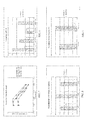
- FIG. 3 shows tensile strength and yield strength for Example 1, according to the present disclosure, with respect to comparative results of GTD-111.
- FIG. 4 shows comparative low-cycle fatigue properties for Example 1, according to the present disclosure, with respect to comparative results of GTD-111.
- FIG. 5 shows comparative high-cycle fatigue properties for Example 1, according to the present disclosure, with respect to comparative results of GTD-111.
- FIG. 6 shows comparative stress rupture life for Example 1, according to the present disclosure, with respect to comparative results of GTD-111.
Landscapes
- Engineering & Computer Science (AREA)
- Chemical & Material Sciences (AREA)
- Mechanical Engineering (AREA)
- Materials Engineering (AREA)
- Metallurgy (AREA)
- Organic Chemistry (AREA)
- General Engineering & Computer Science (AREA)
- Physics & Mathematics (AREA)
- Thermal Sciences (AREA)
- Crystallography & Structural Chemistry (AREA)
- Turbine Rotor Nozzle Sealing (AREA)
Abstract
Description
- The present invention is directed to a nickel-based superalloy, an article formed of a nickel-based superalloy and a method for forming an article.
- Hot gas path components of gas turbines and aviation engines, particularly turbine blades, vanes, nozzles, seals and stationary shrouds, operate at elevated temperatures, often in excess of 1093° C (2,000° F). The superalloy compositions used to form hot gas path components are often single-crystal compositions incorporating significant amounts of tantalum (Ta).
- The present invention is an improvement to the class of alloys disclosed and claimed in
U.S. Pat. No. 6,416,596 B1, issued Jul. 9, 2002 to John H. Wood et al. ; which was an improvement to the class of alloys disclosed and claimed inU.S. Pat. No. 3,615,376, issued Oct. 26, 1971 to Earl W. Ross . One known superalloy composition within the above class of alloys is referred to herein as "GTD-111." GTD-111 has a nominal composition, in weight percent of the alloy, of 14% chromium, 9.5% cobalt, 3.8% tungsten, 1.5% molybdenum, 4.9% titanium, 3.0% aluminum, 0.1% carbon, 0.01% boron, 2.8% tantalum, and the balance nickel and incidental impurities. GTD-111 is a registered trademark of General Electric Company. - GTD-111 contains substantial concentrations of titanium (Ti) and tantalum (Ta). In certain conditions, Eta phase may form on the mold surfaces and in the interior of the casting, which, in some cases results in the formation of cracks. An attribute of the alloys disclosed and claimed in
U.S. Pat. No. 6,416,596 , including GTD-111, is the presence of "Eta" phase, a hexagonal close-packed form of the intermetallic Ni3Ti, as well as segregated titanium metal in the solidified alloy. During alloy solidification, titanium has a strong tendency to be rejected from the liquid side of the solid/liquid interface, resulting in the segregation (local enrichment) of titanium in the solidification front and promoting the formation of Eta in the last solidified liquid. The segregation of titanium also reduces the solidus temperature, increasing the fraction of gamma/gamma prime (γ/ γ') eutectic phases and resulting micro-shrinkages in the solidified alloy. The Eta phase, in particular, may cause certain articles cast from those alloys to be rejected during the initial casting process, as well as post-casting, machining and repair processes. In addition, the presence of Eta phase may result in degradation of the alloy's mechanical properties during service exposure. - In addition to the formation of Eta, the class of alloys claimed in
U.S. Pat. No. 6,416,596 is susceptible to the formation of detrimental topologically close-packed (TCP) phases (e.g., µ and σ phases). TCP phases form after exposure at temperatures above about 816° C (1500° F). TCP phases are not only brittle, but their formation reduces solution strengthening potential of the alloy by removing solute elements from the desired alloy phases and concentrating them in the brittle phases so that intended strength and life goals are not met. The formation of TCP phases beyond small nominal amounts results from the composition and thermal history of the alloy. - Articles and methods having improvements in the process and/or the properties of the components formed would be desirable in the art.
- In one embodiment, an article comprising a composition, wherein the composition comprises, by weight percent, about 13.7% to about 14.3% chromium (Cr), about 9.0% to about 10.0% cobalt (Co), about 3.5% to about 3.9% aluminum (Al), about 3.4% to about 3.8% titanium (Ti), about 4.0% to about 4.4% tungsten (W), about 1.4% to about 1.7% molybdenum (Mo), about 1.55% to about 1.75% niobium (Nb), about 0.08% to about 0.12% carbon (C), about 0.005% to about 0.040% zirconium (Zr), about 0.010% to about 0.014% boron (B), and balance nickel (Ni) and incidental impurities. The composition is substantially free of tantalum (Ta) and includes a microstructure substantially devoid of Eta phase and TCP phases
- In another embodiment, a method for forming an article includes providing a composition and forming the article. The method includes casting a composition, by weight percent, of about 13.7% to about 14.3% chromium (Cr), about 9.0% to about 10.0% cobalt (Co), about 3.5% to about 3.9% aluminum (Al), about 3.4% to about 3.8% titanium (Ti), about 4.0% to about 4.4% tungsten (W), about 1.4% to about 1.7% molybdenum (Mo), about 1.55% to about 1.75% niobium (Nb), about 0.08% to about 0.12% carbon (C), about 0.005% to about 0.040% zirconium (Zr), about 0.010% to about 0.014% boron (B), and balance nickel (Ni) and incidental impurities. The composition is substantially free of tantalum (Ta). The method includes heat treating the composition to form a heat-treated microstructure. The heat-treated microstructure is substantially devoid of Eta phase and TCP phases.
- Other features and advantages of the present invention will be apparent from the following more detailed description, taken in conjunction with the accompanying drawings which illustrate, by way of example, the principles of the invention.
-
-
FIG. 1 shows micrographs of a cast composition, according to the present disclosure. -
FIG. 2 shows micrographs of a cast composition subjected to creep testing, according to the present disclosure. -
FIG. 3 shows graphs illustrating tensile strength and yield strength of an alloy, according to the present disclosure and GTD-111. -
FIG. 4 shows graphs illustrating the comparative low-cycle fatigue properties of an alloy, according to the present disclosure and GTD-111. -
FIG. 5 shows graphs illustrating the comparative high-cycle fatigue properties of an alloy, according to the present disclosure and GTD-111. -
FIG. 6 shows graphs illustrating the comparative stress rupture life of an alloy, according to the present disclosure and GTD-111. - Provided are an article and a method for forming an article. Embodiments of the present disclosure, in comparison to methods and articles not using one or more of the features disclosed herein, increase corrosion resistance, increase oxidation resistance, lengthen low-cycle fatigue lifetime, lengthen high-cycle fatigue lifetime, increase creep lifetime, improved castability, increase phase stability at elevated temperatures, decrease cost, or a combination thereof. Embodiments of the present disclosure enable the fabrication of hot gas path components of gas turbines and gas turbine engines with tantalum-free nicked-based superalloys having at least as advantageous properties at elevated temperatures as tantalum-containing nicked-based superalloys and being free of Eta phase and TCP phases.
- When introducing elements of various embodiments of the present invention, the articles "a," "an," "the," and "said" are intended to mean that there are one or more of the elements. The terms "comprising," "including," and "having" are intended to be inclusive and mean that there may be additional elements other than the listed elements. These terms may also encompass the term "consisting of".
- In one embodiment, an article includes a composition comprising, by weight percent, about 13.7% to about 14.3% chromium (Cr), about 9.0% to about 10.0% cobalt (Co), about 3.5% to about 3.9% aluminum (Al), about 3.4% to about 3.8% titanium (Ti), about 4.0% to about 4.4% tungsten (W), about 1.4% to about 1.7% molybdenum (Mo), about 1.55% to about 1.75% niobium (Nb), about 0.08% to about 0.12% carbon (C), about 0.005% to about 0.040% zirconium (Zr), about 0.010% to about 0.014% boron (B), and balance nickel (Ni) and incidental impurities. The composition is devoid of tantalum (Ta) or includes tantalum (Ta) as a trace element. In a further embodiment, tantalum (Ta) is present in an amount of less than about 0.01% or less than about 0.001%, by weight, of the composition.
- In one embodiment of the present invention, a ratio of aluminum to titanium in the alloy composition from 0.92 to 1.15 or from 0.95 to 1.10 or about 1.00.
- In a further embodiment, the composition includes, by weight percent, about 13.9% to about 14.1% chromium (Cr), about 9.25% to about 9.75% cobalt (Co), about 3.6% to about 3.8% aluminum (Al), about 3.5% to about 3.7% titanium (Ti), about 4.1% to about 4.3% tungsten (W), about 1.5% to about 1.6% molybdenum (Mo), about 1.60% to about 1.70% niobium (Nb), about 0.09% to about 0.11% carbon (C), about 0.010% to about 0.030% zirconium (Zr), about 0.011% to about 0.013% boron (B), and balance nickel (Ni) and incidental impurities. In a further embodiment, the composition includes, by weight percent, about 14.0% chromium (Cr), about 9.50% cobalt (Co), about 3.7% aluminum (Al), about 3.6% titanium (Ti), about 4.2% tungsten (W), about 1.55% molybdenum (Mo), about 1.65% niobium (Nb), about 0.10% carbon (C), about 0.02% zirconium (Zr), about 0.012% boron (B), and balance nickel (Ni) and incidental impurities. The composition is devoid of tantalum (Ta) or includes tantalum (Ta) as a trace element.
- Articles formed of the composition, according to the present disclosure, achieve mechanical properties in the superalloy that equal or exceed those of conventional superalloys, such as GTD-111, while minimizing or, ideally, completely avoiding the formation of microstructural instabilities such as Eta phase and TCP phases. For example, the nickel-base superalloy cast article of the present invention has an improved combination of corrosion resistance, oxidation resistance, lengthened low-cycle fatigue lifetime, lengthened high-cycle fatigue lifetime, increased creep lifetime, improved castability, increased phase stability at elevated temperatures, decreased cost, all with respect to GTD-111 and minimizes or eliminates detrimental formation of Eta phase and the detrimental formation of topologically close-packed phases in the superalloy microstructure at elevated temperatures. The nickel-based superalloy article is characterized by an improved combination of creep life and microstructural stability in which the detrimental formation of Eta phase and topologically close-packed phase are minimized or eliminated in the superalloy microstructure at elevated temperatures. In one embodiment, the microstructure formed from the composition, according to the present disclosure, is devoid of Eta phase. In one embodiment, the microstructure formed from the composition is devoid of TCP phases.
- In one embodiment, the method for forming the article includes providing the composition and forming the article from the composition. In a further embodiment, forming the article from the composition includes any suitable technique, including, but not limited to, casting.
- As mentioned above, any casting method may be utilized, e.g., ingot casting, investment casting or near net shape casting. In embodiments wherein more complex parts are desirably produced, the molten metal may desirably be cast by an investment casting process which may generally be more suitable for the production of parts that cannot be produced by normal manufacturing techniques, such as turbine buckets, that have complex shapes, or turbine components that have to withstand high temperatures. In another embodiment, the molten metal may be cast into turbine components by an ingot casting process. The casting may be done using gravity, pressure, inert gas or vacuum conditions. In some embodiments, casting is done in a vacuum.
- In one embodiment, the melt in the mold is directionally solidified. Directional solidification generally results in single-crystal or columnar structure, i.e., elongated grains in the direction of growth, and thus, higher creep strength for the airfoil than an equiaxed cast, and is suitable for use in some embodiments. In a directional solidification, dendritic crystals are oriented along a directional heat flow and form either a columnar crystalline microstructure (i.e. grains which run over the entire length of the work piece and are referred to here, in accordance with the language customarily used, as directionally solidified (DS)). In this process, a transmission to globular (polycrystalline) solidification needs to be avoided, since non-directional growth inevitably forms transverse and longitudinal grain boundaries, which negate the favorable properties of the directionally solidified (DS).
- The cast articles comprising the nickel-based alloy are typically subjected to different heat treatments in order to optimize the strength as well as to increase creep resistance. In some embodiments, the castings are desirably solution heat treated at a temperature between the solidus and gamma prime solvus temperatures. Solidus is a temperature at which alloy starts melting during heating, or finishes solidification during cooling from liquid phase. Gamma prime solvus is a temperature at which gamma prime phase completely dissolves into gamma matrix phase during heating, or starts precipitating in gamma matrix phase during cooling. Such heat treatments generally reduce the presence of segregation. After solution heat treatments, alloys are heat treated below gamma prime solvus temperature to form gamma prime precipitates.
- Articles formed of the composition, according to the present disclosure, have fine eutectic areas compared with conventional superalloy compositions, such as GTD-111. The formed articles include longer low cycle fatigue (LCF) lifetimes due to less crack initiation sites resulting from the composition of the disclosure. In addition, the refined eutectic area also results in more gamma primes formed in the solidification process going into solution upon heat treatment.
- In one embodiment, the nickel-based alloys described are processed into a hot gas component of a gas turbine or an aviation engine, and wherein the hot gas path component is subjected to temperatures of at least about 1093° C (2,000° F). In a further embodiment, the hot gas path component is selected from the group consisting of a bucket or blade, a vane, a nozzle, a seal, a combustor, and a stationary shroud. In one embodiment, the nickel-based alloys are processed into turbine buckets (also referred to as turbine blades) for large gas turbine machines.
- Example 1: A directionally solidified composition, according to the present disclosure, was directionally solidified and was subjected to solution heat treated at 1121° C (2050° F) for 2 hours and aged at 843° C (1550° F) for 4 hours.
FIG. 1 shows a micrograph of the cast composition at two different magnifications. As is shown inFIG. 1 , Example 1 includes a microstructure that is 75% in solution, with a fine eutectic phase having less than 1 mil over the majority of the sample. No Eta phase and no TCP phases are present in the sample. - Example 2: A directionally solidified composition, according to the present disclosure, was subjected to a creep rupture test at 816° C (1500° F) for 1201 hours.
FIG. 2 shows a micrograph of the resulting microstructure of the tested sample at two different magnifications. As is shown inFIG. 2 , Example 2 includes a bimodal gamma prime microstructure having no Eta phase and no TCP phases are present in the sample. In addition, gamma double prime phases are not identified in the sample. -
FIG. 3 shows tensile strength and yield strength for Example 1, according to the present disclosure, with respect to comparative results of GTD-111.FIG. 4 shows comparative low-cycle fatigue properties for Example 1, according to the present disclosure, with respect to comparative results of GTD-111.FIG. 5 shows comparative high-cycle fatigue properties for Example 1, according to the present disclosure, with respect to comparative results of GTD-111.FIG. 6 shows comparative stress rupture life for Example 1, according to the present disclosure, with respect to comparative results of GTD-111. - While the invention has been described with reference to one or more embodiments, it will be understood by those skilled in the art that various changes may be made and equivalents may be substituted for elements thereof without departing from the scope of the invention. In addition, many modifications may be made to adapt a particular situation or material to the teachings of the invention without departing from the essential scope thereof. Therefore, it is intended that the invention not be limited to the particular embodiment disclosed as the best mode contemplated for carrying out this invention, but that the invention will include all embodiments falling within the scope of the appended claims.
Claims (15)
- An article comprising a composition, wherein the composition comprises, by weight percent:about 13.7% to about 14.3% chromium (Cr);about 9.0% to about 10.0% cobalt (Co);about 3.5% to about 3.9% aluminum (Al);about 3.4% to about 3.8% titanium (Ti);about 4.0% to about 4.4% tungsten (W);about 1.4% to about 1.7% molybdenum (Mo);about 1.55% to about 1.75% niobium (Nb);about 0.08% to about 0.12% carbon (C);about 0.005% to about 0.040% zirconium (Zr);about 0.010% to about 0.014% boron (B);balance nickel (Ni) and incidental impurities, andwherein the composition is substantially free of tantalum (Ta) and the composition includes a microstructure substantially devoid of Eta phase.
- The article of claim 1, wherein the microstructure is devoid of Eta phase, or is devoid of TCP phases, or is devoid of Eta phase and TCP phases.
- The article of claim 1 or claim 2, wherein the composition is directionally solidified.
- The article of any preceding claim, wherein the composition comprises, by weight percent:about 13.9% to about 14.1% chromium (Cr);about 9.25% to about 9.75% cobalt (Co);about 3.6% to about 3.8% aluminum (Al);about 3.5% to about 3.7% titanium (Ti);about 4.1% to about 4.3% tungsten (W);about 1.5% to about 1.6% molybdenum (Mo);about 1.60% to about 1.70% niobium (Nb);about 0.09% to about 0.11% carbon (C);about 0.010% to about 0.030% zirconium (Zr);about 0.011% to about 0.013% boron (B);balance nickel (Ni) and incidental impurities.
- The article of any preceding claim, wherein the composition comprises, by weight percent about 14.0% chromium (Cr), about 9.50% cobalt (Co), about 3.7% aluminum (Al), about 3.6% titanium (Ti), about 4.2% tungsten (W), about 1.55% molybdenum (Mo), about 1.65% niobium (Nb), about 0.10% carbon (C), about 0.02% zirconium (Zr), about 0.012% boron (B), and balance nickel (Ni) and incidental impurities.
- The article of any preceding claim, wherein the article is a hot gas path component of a gas turbine or an aviation engine, and wherein the hot gas path component is subjected to temperatures of at least about 1093° C (2,000° F).
- The article of claim 6, wherein the hot gas path component is selected from the group consisting of a blade, a vane, a nozzle, a seal and a stationary shroud.
- A method for forming an article, comprising:casting a composition comprising, by weight percent:about 13.7% to about 14.3% chromium (Cr);about 9.0% to about 10.0% cobalt (Co);about 3.5% to about 3.9% aluminum (Al);about 3.4% to about 3.8% titanium (Ti);about 4.0% to about 4.4% tungsten (W);about 1.4% to about 1.7% molybdenum (Mo);about 1.55% to about 1.75% niobium (Nb);about 0.08% to about 0.12% carbon (C);about 0.005% to about 0.040% zirconium (Zr);about 0.010% to about 0.014% boron (B);balance nickel (Ni) and incidental impurities, the composition being substantially free of tantalum (Ta);heat treating the composition to form a heat-treated microstructure;wherein the refined microstructure is substantially devoid of Eta phase.
- The method of claim 8, wherein the heat-treated microstructure is devoid of Eta phase, or wherein the heat-treated microstructure is devoid of TCP phases, or wherein the microstructure is devoid of Eta phase and TCP phases.
- The method of claim 8 or claim 9, wherein the composition comprises, by weight percent:about 13.9% to about 14.1% chromium (Cr);about 9.25% to about 9.75% cobalt (Co);about 3.6% to about 3.8% aluminum (Al);about 3.5% to about 3.7% titanium (Ti);about 4.1% to about 4.3% tungsten (W);about 1.5% to about 1.6% molybdenum (Mo);about 1.60% to about 1.70% niobium (Nb);about 0.09% to about 0.11% carbon (C);about 0.010% to about 0.030% zirconium (Zr);about 0.011% to about 0.013% boron (B);balance nickel (Ni) and incidental impurities.
- The method of any one of claims 8 to 10, wherein the composition comprises, by weight percent about 14.0% chromium (Cr), about 9.50% cobalt (Co), about 3.7% aluminum (Al), about 3.6% titanium (Ti), about 4.2% tungsten (W), about 1.55% molybdenum (Mo), about 1.65% niobium (Nb), about 0.10% carbon (C), about 0.02% zirconium (Zr), about 0.012% boron (B), and balance nickel (Ni) and incidental impurities.
- The method of any one of claims 8 to 11, wherein the article is a hot gas path component of a gas turbine or an aviation engine, and wherein the hot gas path component is subjected to temperatures of at least about 2,000 °F.
- The method of claim 12, wherein the hot gas path component is selected from the group consisting of a blade, a vane, a nozzle, a seal and a stationary shroud.
- The method of any one of claims 8 to 13, wherein casting the composition comprises one of ingot casting, investment casting and near net shape casting
- The method any one of claims 8 to 14, wherein casting the composition includes directionally solidifying the composition.
Applications Claiming Priority (1)
| Application Number | Priority Date | Filing Date | Title |
|---|---|---|---|
| US14/193,576 US9404388B2 (en) | 2014-02-28 | 2014-02-28 | Article and method for forming an article |
Publications (2)
| Publication Number | Publication Date |
|---|---|
| EP2913416A1 true EP2913416A1 (en) | 2015-09-02 |
| EP2913416B1 EP2913416B1 (en) | 2017-01-11 |
Family
ID=52484406
Family Applications (1)
| Application Number | Title | Priority Date | Filing Date |
|---|---|---|---|
| EP15156134.7A Active EP2913416B1 (en) | 2014-02-28 | 2015-02-23 | Article and method for forming an article |
Country Status (3)
| Country | Link |
|---|---|
| US (1) | US9404388B2 (en) |
| EP (1) | EP2913416B1 (en) |
| JP (1) | JP6721289B2 (en) |
Cited By (1)
| Publication number | Priority date | Publication date | Assignee | Title |
|---|---|---|---|---|
| EP3778943A4 (en) * | 2018-04-02 | 2021-10-20 | Mitsubishi Power, Ltd. | Ni group superalloy casting material and ni group superalloy product using same |
Families Citing this family (4)
| Publication number | Priority date | Publication date | Assignee | Title |
|---|---|---|---|---|
| JP6821147B2 (en) * | 2018-09-26 | 2021-01-27 | 日立金属株式会社 | Ni-based super heat-resistant alloy for aircraft engine cases and aircraft engine cases made of this |
| US11199101B2 (en) * | 2019-12-12 | 2021-12-14 | General Electric Company | System and method to apply multiple thermal treatments to workpiece and related turbomachine components |
| US11725260B1 (en) | 2022-04-08 | 2023-08-15 | General Electric Company | Compositions, articles and methods for forming the same |
| US20240352557A1 (en) | 2023-04-19 | 2024-10-24 | General Electric Company | Compositions, Articles and Methods for Forming the Same |
Citations (4)
| Publication number | Priority date | Publication date | Assignee | Title |
|---|---|---|---|---|
| US3615376A (en) | 1968-11-01 | 1971-10-26 | Gen Electric | Cast nickel base alloy |
| US6416596B1 (en) | 1974-07-17 | 2002-07-09 | The General Electric Company | Cast nickel-base alloy |
| US20040177901A1 (en) * | 2002-12-17 | 2004-09-16 | Hitachi, Ltd. | High-strength ni-base superalloy and gas turbine blades |
| EP2520678A2 (en) * | 2011-05-04 | 2012-11-07 | General Electric Company | Nickel-base alloy |
Family Cites Families (5)
| Publication number | Priority date | Publication date | Assignee | Title |
|---|---|---|---|---|
| DE3683091D1 (en) * | 1985-05-09 | 1992-02-06 | United Technologies Corp | PROTECTIVE LAYERS FOR SUPER ALLOYS, WELL ADAPTED TO THE SUBSTRATES. |
| US20030111138A1 (en) | 2001-12-18 | 2003-06-19 | Cetel Alan D. | High strength hot corrosion and oxidation resistant, directionally solidified nickel base superalloy and articles |
| US7153377B2 (en) * | 2004-02-02 | 2006-12-26 | R. J. Lee Group, Inc. | Method of separating admixed contaminants from superalloy metal powder |
| US20090041615A1 (en) | 2007-08-10 | 2009-02-12 | Siemens Power Generation, Inc. | Corrosion Resistant Alloy Compositions with Enhanced Castability and Mechanical Properties |
| EP2431489A1 (en) | 2010-09-20 | 2012-03-21 | Siemens Aktiengesellschaft | Nickel-base superalloy |
-
2014
- 2014-02-28 US US14/193,576 patent/US9404388B2/en active Active
-
2015
- 2015-02-23 EP EP15156134.7A patent/EP2913416B1/en active Active
- 2015-02-23 JP JP2015032394A patent/JP6721289B2/en active Active
Patent Citations (4)
| Publication number | Priority date | Publication date | Assignee | Title |
|---|---|---|---|---|
| US3615376A (en) | 1968-11-01 | 1971-10-26 | Gen Electric | Cast nickel base alloy |
| US6416596B1 (en) | 1974-07-17 | 2002-07-09 | The General Electric Company | Cast nickel-base alloy |
| US20040177901A1 (en) * | 2002-12-17 | 2004-09-16 | Hitachi, Ltd. | High-strength ni-base superalloy and gas turbine blades |
| EP2520678A2 (en) * | 2011-05-04 | 2012-11-07 | General Electric Company | Nickel-base alloy |
Cited By (1)
| Publication number | Priority date | Publication date | Assignee | Title |
|---|---|---|---|---|
| EP3778943A4 (en) * | 2018-04-02 | 2021-10-20 | Mitsubishi Power, Ltd. | Ni group superalloy casting material and ni group superalloy product using same |
Also Published As
| Publication number | Publication date |
|---|---|
| JP6721289B2 (en) | 2020-07-15 |
| EP2913416B1 (en) | 2017-01-11 |
| JP2015165046A (en) | 2015-09-17 |
| US9404388B2 (en) | 2016-08-02 |
| US20150247422A1 (en) | 2015-09-03 |
Similar Documents
| Publication | Publication Date | Title |
|---|---|---|
| EP3091096B1 (en) | Article and method for forming an article | |
| JP6514441B2 (en) | Cast nickel base superalloy containing iron | |
| US10767246B2 (en) | Enhanced superalloys by zirconium addition | |
| RU2712323C1 (en) | BLANK OF FORGING ALLOY BASED ON Ni AND HIGH-TEMPERATURE ELEMENT OF TURBINE DESIGN USING THIS WORKPIECE | |
| US9518310B2 (en) | Superalloys and components formed thereof | |
| CN102002612B (en) | Nickel based super alloy and goods thereof | |
| JP2021070867A (en) | High gamma prime nickel based superalloy, its use, and method of manufacturing turbine engine components | |
| JP4885530B2 (en) | High strength and high ductility Ni-base superalloy, member using the same, and manufacturing method | |
| EP2913416B1 (en) | Article and method for forming an article | |
| CN105492639A (en) | Superalloys and components formed thereof | |
| CN101294251A (en) | Gas turbine blade and method of manufacturing the same | |
| JP3820430B2 (en) | Ni-based single crystal superalloy, manufacturing method thereof, and gas turbine component | |
| EP2520678B1 (en) | Nickel-base alloy | |
| JP2009149976A (en) | Ternary nickel eutectic alloy | |
| JP5626920B2 (en) | Nickel-base alloy castings, gas turbine blades and gas turbines | |
| JP2015529743A (en) | Nickel-base superalloy, method of nickel-base superalloy, and components formed from nickel-base superalloy | |
| CN102146538B (en) | Nickel-basis-superalloy with improved degradation behaviour | |
| JP2004332114A (en) | Nickel-based superalloy and single crystal cast | |
| JP2023018394A (en) | Ni-based superalloy and turbine wheel | |
| JP2018104766A (en) | Ni-BASED ALLOY UNIDIRECTIONAL SOLIDIFICATION MEMBER AND MANUFACTURING METHOD OF UNIDIRECTIONAL SOLIDIFICATION MEMBER |
Legal Events
| Date | Code | Title | Description |
|---|---|---|---|
| PUAI | Public reference made under article 153(3) epc to a published international application that has entered the european phase |
Free format text: ORIGINAL CODE: 0009012 |
|
| AK | Designated contracting states |
Kind code of ref document: A1 Designated state(s): AL AT BE BG CH CY CZ DE DK EE ES FI FR GB GR HR HU IE IS IT LI LT LU LV MC MK MT NL NO PL PT RO RS SE SI SK SM TR |
|
| AX | Request for extension of the european patent |
Extension state: BA ME |
|
| 17P | Request for examination filed |
Effective date: 20160302 |
|
| RBV | Designated contracting states (corrected) |
Designated state(s): AL AT BE BG CH CY CZ DE DK EE ES FI FR GB GR HR HU IE IS IT LI LT LU LV MC MK MT NL NO PL PT RO RS SE SI SK SM TR |
|
| GRAP | Despatch of communication of intention to grant a patent |
Free format text: ORIGINAL CODE: EPIDOSNIGR1 |
|
| RIC1 | Information provided on ipc code assigned before grant |
Ipc: C22C 19/05 20060101AFI20160706BHEP |
|
| INTG | Intention to grant announced |
Effective date: 20160728 |
|
| GRAS | Grant fee paid |
Free format text: ORIGINAL CODE: EPIDOSNIGR3 |
|
| GRAA | (expected) grant |
Free format text: ORIGINAL CODE: 0009210 |
|
| AK | Designated contracting states |
Kind code of ref document: B1 Designated state(s): AL AT BE BG CH CY CZ DE DK EE ES FI FR GB GR HR HU IE IS IT LI LT LU LV MC MK MT NL NO PL PT RO RS SE SI SK SM TR |
|
| REG | Reference to a national code |
Ref country code: GB Ref legal event code: FG4D |
|
| REG | Reference to a national code |
Ref country code: CH Ref legal event code: EP |
|
| REG | Reference to a national code |
Ref country code: AT Ref legal event code: REF Ref document number: 861346 Country of ref document: AT Kind code of ref document: T Effective date: 20170115 |
|
| REG | Reference to a national code |
Ref country code: IE Ref legal event code: FG4D |
|
| REG | Reference to a national code |
Ref country code: FR Ref legal event code: PLFP Year of fee payment: 3 |
|
| REG | Reference to a national code |
Ref country code: DE Ref legal event code: R096 Ref document number: 602015001238 Country of ref document: DE |
|
| REG | Reference to a national code |
Ref country code: LT Ref legal event code: MG4D |
|
| REG | Reference to a national code |
Ref country code: NL Ref legal event code: MP Effective date: 20170111 |
|
| PG25 | Lapsed in a contracting state [announced via postgrant information from national office to epo] |
Ref country code: BE Free format text: LAPSE BECAUSE OF NON-PAYMENT OF DUE FEES Effective date: 20170228 |
|
| REG | Reference to a national code |
Ref country code: AT Ref legal event code: MK05 Ref document number: 861346 Country of ref document: AT Kind code of ref document: T Effective date: 20170111 |
|
| PG25 | Lapsed in a contracting state [announced via postgrant information from national office to epo] |
Ref country code: NL Free format text: LAPSE BECAUSE OF FAILURE TO SUBMIT A TRANSLATION OF THE DESCRIPTION OR TO PAY THE FEE WITHIN THE PRESCRIBED TIME-LIMIT Effective date: 20170111 |
|
| PG25 | Lapsed in a contracting state [announced via postgrant information from national office to epo] |
Ref country code: FI Free format text: LAPSE BECAUSE OF FAILURE TO SUBMIT A TRANSLATION OF THE DESCRIPTION OR TO PAY THE FEE WITHIN THE PRESCRIBED TIME-LIMIT Effective date: 20170111 Ref country code: NO Free format text: LAPSE BECAUSE OF FAILURE TO SUBMIT A TRANSLATION OF THE DESCRIPTION OR TO PAY THE FEE WITHIN THE PRESCRIBED TIME-LIMIT Effective date: 20170411 Ref country code: LT Free format text: LAPSE BECAUSE OF FAILURE TO SUBMIT A TRANSLATION OF THE DESCRIPTION OR TO PAY THE FEE WITHIN THE PRESCRIBED TIME-LIMIT Effective date: 20170111 Ref country code: IS Free format text: LAPSE BECAUSE OF FAILURE TO SUBMIT A TRANSLATION OF THE DESCRIPTION OR TO PAY THE FEE WITHIN THE PRESCRIBED TIME-LIMIT Effective date: 20170511 Ref country code: HR Free format text: LAPSE BECAUSE OF FAILURE TO SUBMIT A TRANSLATION OF THE DESCRIPTION OR TO PAY THE FEE WITHIN THE PRESCRIBED TIME-LIMIT Effective date: 20170111 Ref country code: GR Free format text: LAPSE BECAUSE OF FAILURE TO SUBMIT A TRANSLATION OF THE DESCRIPTION OR TO PAY THE FEE WITHIN THE PRESCRIBED TIME-LIMIT Effective date: 20170412 |
|
| PG25 | Lapsed in a contracting state [announced via postgrant information from national office to epo] |
Ref country code: PT Free format text: LAPSE BECAUSE OF FAILURE TO SUBMIT A TRANSLATION OF THE DESCRIPTION OR TO PAY THE FEE WITHIN THE PRESCRIBED TIME-LIMIT Effective date: 20170511 Ref country code: ES Free format text: LAPSE BECAUSE OF FAILURE TO SUBMIT A TRANSLATION OF THE DESCRIPTION OR TO PAY THE FEE WITHIN THE PRESCRIBED TIME-LIMIT Effective date: 20170111 Ref country code: SE Free format text: LAPSE BECAUSE OF FAILURE TO SUBMIT A TRANSLATION OF THE DESCRIPTION OR TO PAY THE FEE WITHIN THE PRESCRIBED TIME-LIMIT Effective date: 20170111 Ref country code: LV Free format text: LAPSE BECAUSE OF FAILURE TO SUBMIT A TRANSLATION OF THE DESCRIPTION OR TO PAY THE FEE WITHIN THE PRESCRIBED TIME-LIMIT Effective date: 20170111 Ref country code: BG Free format text: LAPSE BECAUSE OF FAILURE TO SUBMIT A TRANSLATION OF THE DESCRIPTION OR TO PAY THE FEE WITHIN THE PRESCRIBED TIME-LIMIT Effective date: 20170411 Ref country code: PL Free format text: LAPSE BECAUSE OF FAILURE TO SUBMIT A TRANSLATION OF THE DESCRIPTION OR TO PAY THE FEE WITHIN THE PRESCRIBED TIME-LIMIT Effective date: 20170111 Ref country code: AT Free format text: LAPSE BECAUSE OF FAILURE TO SUBMIT A TRANSLATION OF THE DESCRIPTION OR TO PAY THE FEE WITHIN THE PRESCRIBED TIME-LIMIT Effective date: 20170111 Ref country code: RS Free format text: LAPSE BECAUSE OF FAILURE TO SUBMIT A TRANSLATION OF THE DESCRIPTION OR TO PAY THE FEE WITHIN THE PRESCRIBED TIME-LIMIT Effective date: 20170111 |
|
| REG | Reference to a national code |
Ref country code: DE Ref legal event code: R097 Ref document number: 602015001238 Country of ref document: DE |
|
| PG25 | Lapsed in a contracting state [announced via postgrant information from national office to epo] |
Ref country code: RO Free format text: LAPSE BECAUSE OF FAILURE TO SUBMIT A TRANSLATION OF THE DESCRIPTION OR TO PAY THE FEE WITHIN THE PRESCRIBED TIME-LIMIT Effective date: 20170111 Ref country code: SK Free format text: LAPSE BECAUSE OF FAILURE TO SUBMIT A TRANSLATION OF THE DESCRIPTION OR TO PAY THE FEE WITHIN THE PRESCRIBED TIME-LIMIT Effective date: 20170111 Ref country code: EE Free format text: LAPSE BECAUSE OF FAILURE TO SUBMIT A TRANSLATION OF THE DESCRIPTION OR TO PAY THE FEE WITHIN THE PRESCRIBED TIME-LIMIT Effective date: 20170111 Ref country code: CZ Free format text: LAPSE BECAUSE OF FAILURE TO SUBMIT A TRANSLATION OF THE DESCRIPTION OR TO PAY THE FEE WITHIN THE PRESCRIBED TIME-LIMIT Effective date: 20170111 |
|
| PLBE | No opposition filed within time limit |
Free format text: ORIGINAL CODE: 0009261 |
|
| STAA | Information on the status of an ep patent application or granted ep patent |
Free format text: STATUS: NO OPPOSITION FILED WITHIN TIME LIMIT |
|
| REG | Reference to a national code |
Ref country code: IE Ref legal event code: MM4A |
|
| PG25 | Lapsed in a contracting state [announced via postgrant information from national office to epo] |
Ref country code: DK Free format text: LAPSE BECAUSE OF FAILURE TO SUBMIT A TRANSLATION OF THE DESCRIPTION OR TO PAY THE FEE WITHIN THE PRESCRIBED TIME-LIMIT Effective date: 20170111 Ref country code: MC Free format text: LAPSE BECAUSE OF FAILURE TO SUBMIT A TRANSLATION OF THE DESCRIPTION OR TO PAY THE FEE WITHIN THE PRESCRIBED TIME-LIMIT Effective date: 20170111 Ref country code: SM Free format text: LAPSE BECAUSE OF FAILURE TO SUBMIT A TRANSLATION OF THE DESCRIPTION OR TO PAY THE FEE WITHIN THE PRESCRIBED TIME-LIMIT Effective date: 20170111 |
|
| 26N | No opposition filed |
Effective date: 20171012 |
|
| PG25 | Lapsed in a contracting state [announced via postgrant information from national office to epo] |
Ref country code: LU Free format text: LAPSE BECAUSE OF NON-PAYMENT OF DUE FEES Effective date: 20170223 |
|
| REG | Reference to a national code |
Ref country code: BE Ref legal event code: MM Effective date: 20170228 |
|
| REG | Reference to a national code |
Ref country code: FR Ref legal event code: PLFP Year of fee payment: 4 |
|
| PG25 | Lapsed in a contracting state [announced via postgrant information from national office to epo] |
Ref country code: SI Free format text: LAPSE BECAUSE OF FAILURE TO SUBMIT A TRANSLATION OF THE DESCRIPTION OR TO PAY THE FEE WITHIN THE PRESCRIBED TIME-LIMIT Effective date: 20170111 Ref country code: IE Free format text: LAPSE BECAUSE OF NON-PAYMENT OF DUE FEES Effective date: 20170223 |
|
| PG25 | Lapsed in a contracting state [announced via postgrant information from national office to epo] |
Ref country code: MT Free format text: LAPSE BECAUSE OF NON-PAYMENT OF DUE FEES Effective date: 20170223 |
|
| PG25 | Lapsed in a contracting state [announced via postgrant information from national office to epo] |
Ref country code: HU Free format text: LAPSE BECAUSE OF FAILURE TO SUBMIT A TRANSLATION OF THE DESCRIPTION OR TO PAY THE FEE WITHIN THE PRESCRIBED TIME-LIMIT; INVALID AB INITIO Effective date: 20150223 |
|
| PG25 | Lapsed in a contracting state [announced via postgrant information from national office to epo] |
Ref country code: CY Free format text: LAPSE BECAUSE OF FAILURE TO SUBMIT A TRANSLATION OF THE DESCRIPTION OR TO PAY THE FEE WITHIN THE PRESCRIBED TIME-LIMIT Effective date: 20170111 |
|
| PG25 | Lapsed in a contracting state [announced via postgrant information from national office to epo] |
Ref country code: MK Free format text: LAPSE BECAUSE OF FAILURE TO SUBMIT A TRANSLATION OF THE DESCRIPTION OR TO PAY THE FEE WITHIN THE PRESCRIBED TIME-LIMIT Effective date: 20170111 |
|
| PG25 | Lapsed in a contracting state [announced via postgrant information from national office to epo] |
Ref country code: TR Free format text: LAPSE BECAUSE OF FAILURE TO SUBMIT A TRANSLATION OF THE DESCRIPTION OR TO PAY THE FEE WITHIN THE PRESCRIBED TIME-LIMIT Effective date: 20170111 |
|
| PG25 | Lapsed in a contracting state [announced via postgrant information from national office to epo] |
Ref country code: AL Free format text: LAPSE BECAUSE OF FAILURE TO SUBMIT A TRANSLATION OF THE DESCRIPTION OR TO PAY THE FEE WITHIN THE PRESCRIBED TIME-LIMIT Effective date: 20170111 |
|
| PGFP | Annual fee paid to national office [announced via postgrant information from national office to epo] |
Ref country code: CH Payment date: 20210120 Year of fee payment: 7 |
|
| REG | Reference to a national code |
Ref country code: CH Ref legal event code: PL |
|
| PG25 | Lapsed in a contracting state [announced via postgrant information from national office to epo] |
Ref country code: LI Free format text: LAPSE BECAUSE OF NON-PAYMENT OF DUE FEES Effective date: 20220228 Ref country code: CH Free format text: LAPSE BECAUSE OF NON-PAYMENT OF DUE FEES Effective date: 20220228 |
|
| P01 | Opt-out of the competence of the unified patent court (upc) registered |
Effective date: 20230522 |
|
| REG | Reference to a national code |
Ref country code: DE Ref legal event code: R081 Ref document number: 602015001238 Country of ref document: DE Owner name: GENERAL ELECTRIC TECHNOLOGY GMBH, CH Free format text: FORMER OWNER: GENERAL ELECTRIC COMPANY, SCHENECTADY, N.Y., US |
|
| REG | Reference to a national code |
Ref country code: GB Ref legal event code: 732E Free format text: REGISTERED BETWEEN 20240222 AND 20240228 |
|
| PGFP | Annual fee paid to national office [announced via postgrant information from national office to epo] |
Ref country code: GB Payment date: 20260121 Year of fee payment: 12 |
|
| PGFP | Annual fee paid to national office [announced via postgrant information from national office to epo] |
Ref country code: DE Payment date: 20260121 Year of fee payment: 12 |
|
| PGFP | Annual fee paid to national office [announced via postgrant information from national office to epo] |
Ref country code: IT Payment date: 20260121 Year of fee payment: 12 |
|
| PGFP | Annual fee paid to national office [announced via postgrant information from national office to epo] |
Ref country code: FR Payment date: 20260121 Year of fee payment: 12 |