EP2913095A1 - Charged porous polymeric membrane with high void volume - Google Patents
Charged porous polymeric membrane with high void volume Download PDFInfo
- Publication number
- EP2913095A1 EP2913095A1 EP14199195.0A EP14199195A EP2913095A1 EP 2913095 A1 EP2913095 A1 EP 2913095A1 EP 14199195 A EP14199195 A EP 14199195A EP 2913095 A1 EP2913095 A1 EP 2913095A1
- Authority
- EP
- European Patent Office
- Prior art keywords
- pores
- pore size
- bulk
- membrane
- controlled pore
- Prior art date
- Legal status (The legal status is an assumption and is not a legal conclusion. Google has not performed a legal analysis and makes no representation as to the accuracy of the status listed.)
- Granted
Links
Images
Classifications
-
- B—PERFORMING OPERATIONS; TRANSPORTING
- B01—PHYSICAL OR CHEMICAL PROCESSES OR APPARATUS IN GENERAL
- B01D—SEPARATION
- B01D69/00—Semi-permeable membranes for separation processes or apparatus characterised by their form, structure or properties; Manufacturing processes specially adapted therefor
- B01D69/06—Flat membranes
-
- B—PERFORMING OPERATIONS; TRANSPORTING
- B01—PHYSICAL OR CHEMICAL PROCESSES OR APPARATUS IN GENERAL
- B01D—SEPARATION
- B01D63/00—Apparatus in general for separation processes using semi-permeable membranes
- B01D63/08—Flat membrane modules
- B01D63/081—Manufacturing thereof
-
- B—PERFORMING OPERATIONS; TRANSPORTING
- B01—PHYSICAL OR CHEMICAL PROCESSES OR APPARATUS IN GENERAL
- B01D—SEPARATION
- B01D67/00—Processes specially adapted for manufacturing semi-permeable membranes for separation processes or apparatus
- B01D67/0002—Organic membrane manufacture
- B01D67/0009—Organic membrane manufacture by phase separation, sol-gel transition, evaporation or solvent quenching
- B01D67/0011—Casting solutions therefor
-
- B—PERFORMING OPERATIONS; TRANSPORTING
- B01—PHYSICAL OR CHEMICAL PROCESSES OR APPARATUS IN GENERAL
- B01D—SEPARATION
- B01D67/00—Processes specially adapted for manufacturing semi-permeable membranes for separation processes or apparatus
- B01D67/0002—Organic membrane manufacture
- B01D67/0023—Organic membrane manufacture by inducing porosity into non porous precursor membranes
- B01D67/003—Organic membrane manufacture by inducing porosity into non porous precursor membranes by selective elimination of components, e.g. by leaching
-
- B—PERFORMING OPERATIONS; TRANSPORTING
- B01—PHYSICAL OR CHEMICAL PROCESSES OR APPARATUS IN GENERAL
- B01D—SEPARATION
- B01D69/00—Semi-permeable membranes for separation processes or apparatus characterised by their form, structure or properties; Manufacturing processes specially adapted therefor
- B01D69/02—Semi-permeable membranes for separation processes or apparatus characterised by their form, structure or properties; Manufacturing processes specially adapted therefor characterised by their properties
-
- B—PERFORMING OPERATIONS; TRANSPORTING
- B01—PHYSICAL OR CHEMICAL PROCESSES OR APPARATUS IN GENERAL
- B01D—SEPARATION
- B01D2323/00—Details relating to membrane preparation
- B01D2323/08—Specific temperatures applied
-
- B—PERFORMING OPERATIONS; TRANSPORTING
- B01—PHYSICAL OR CHEMICAL PROCESSES OR APPARATUS IN GENERAL
- B01D—SEPARATION
- B01D2323/00—Details relating to membrane preparation
- B01D2323/15—Use of additives
- B01D2323/18—Pore-control agents or pore formers
-
- B—PERFORMING OPERATIONS; TRANSPORTING
- B01—PHYSICAL OR CHEMICAL PROCESSES OR APPARATUS IN GENERAL
- B01D—SEPARATION
- B01D2323/00—Details relating to membrane preparation
- B01D2323/15—Use of additives
- B01D2323/218—Additive materials
- B01D2323/2181—Inorganic additives
- B01D2323/21813—Metal oxides
-
- B—PERFORMING OPERATIONS; TRANSPORTING
- B01—PHYSICAL OR CHEMICAL PROCESSES OR APPARATUS IN GENERAL
- B01D—SEPARATION
- B01D2325/00—Details relating to properties of membranes
- B01D2325/02—Details relating to pores or porosity of the membranes
- B01D2325/021—Pore shapes
-
- B—PERFORMING OPERATIONS; TRANSPORTING
- B01—PHYSICAL OR CHEMICAL PROCESSES OR APPARATUS IN GENERAL
- B01D—SEPARATION
- B01D2325/00—Details relating to properties of membranes
- B01D2325/02—Details relating to pores or porosity of the membranes
- B01D2325/022—Asymmetric membranes
-
- B—PERFORMING OPERATIONS; TRANSPORTING
- B01—PHYSICAL OR CHEMICAL PROCESSES OR APPARATUS IN GENERAL
- B01D—SEPARATION
- B01D2325/00—Details relating to properties of membranes
- B01D2325/02—Details relating to pores or porosity of the membranes
- B01D2325/0283—Pore size
-
- B—PERFORMING OPERATIONS; TRANSPORTING
- B01—PHYSICAL OR CHEMICAL PROCESSES OR APPARATUS IN GENERAL
- B01D—SEPARATION
- B01D2325/00—Details relating to properties of membranes
- B01D2325/02—Details relating to pores or porosity of the membranes
- B01D2325/0283—Pore size
- B01D2325/02833—Pore size more than 10 and up to 100 nm
-
- B—PERFORMING OPERATIONS; TRANSPORTING
- B01—PHYSICAL OR CHEMICAL PROCESSES OR APPARATUS IN GENERAL
- B01D—SEPARATION
- B01D2325/00—Details relating to properties of membranes
- B01D2325/14—Membrane materials having negatively charged functional groups
-
- B—PERFORMING OPERATIONS; TRANSPORTING
- B01—PHYSICAL OR CHEMICAL PROCESSES OR APPARATUS IN GENERAL
- B01D—SEPARATION
- B01D2325/00—Details relating to properties of membranes
- B01D2325/16—Membrane materials having positively charged functional groups
Definitions
- Polymeric membranes are used to filter a variety of fluids. However, there is a need for membranes that provide high throughput performance.
- the present invention provides for ameliorating at least some of the disadvantages of the prior art.
- An embodiment of the invention provides a membrane, comprising a single layer having a first microporous surface; a second microporous surface; and, a porous bulk between the first microporous surface and the second microporous surface, wherein the bulk comprises a first set of pores having outer rims, prepared by removing introduced dissolvable silca nanoparticles, the first set of pores having a first controlled pore size, and a second set of pores connecting the outer rims of the first set of pores, the second set of pores having a second controlled pore size, and a polymer matrix supporting the first set of pores, wherein the first controlled pore size is greater than the second controlled pore size, wherein the first and/or second microporous surface comprises a neutrally charged, a negatively charged, or a positively charged, microporous surface.
- the porous bulk comprises a neutrally charged bulk, a negatively charged bulk and/or a positively charged bulk.
- the membrane comprises at least one zone comprising the porous bulk, wherein the zone comprises a neutral charge, a negative charge and/or a positive charge.
- the membrane has at least one additional porous bulk, wherein the additional bulk comprises a third set of pores having outer rims, prepared by removing introduced dissolvable silica nanoparticles, the third set of pores having a third controlled pore size, and a fourth set of pores connecting the outer rims of the third set of pores, the fourth set of pores having a fourth controlled pore size, and a polymer matrix supporting the third set of pores, wherein the third controlled pore size is greater than the fourth controlled pore size.
- the at least one additional bulk can comprise a neutrally charged zone, a negatively charged zone and/or a positively charged zone.
- the membrane can further comprise at least one additional layer, wherein the additional layer(s) can comprise a neutrally charged, a negatively charged, or a positively charged, microporous surface (or porous surface), in some embodiments, also comprising a neutrally charged, a negatively charged, or a positively charged, bulk.
- additional layer(s) can comprise a neutrally charged, a negatively charged, or a positively charged, microporous surface (or porous surface), in some embodiments, also comprising a neutrally charged, a negatively charged, or a positively charged, bulk.
- filters and filter devices comprising the membranes, as well of methods of making and using the membranes, are provided.
- a membrane comprising a single layer having a first microporous surface; a second microporous surface; and, a porous bulk between the first microporous surface and the second microporous surface, wherein the bulk comprises a first set of pores having outer rims, prepared by removing introduced dissolvable silica nanoparticles, the first set of pores having a first controlled pore size, and a second set of pores connecting the outer rims of the first set of pores, the second set of pores having a second controlled pore size, and a polymer matrix supporting the first set of pores, wherein the first controlled pore size is greater than the second controlled pore size, wherein the first and/or second microporous surface comprises a neutrally charged surface, a negatively charged surface, or a positively charged surface.
- the porous bulk comprises a neutrally charged bulk, a negatively charged bulk and/or a positively charged bulk.
- the membrane comprises at least one zone comprising the porous bulk, wherein the zone comprises a neutral charge, a negative charge and/or a positive charge.
- the membrane has at least one additional porous bulk (e.g., as part of an additional layer or region of the membrane), wherein the additional bulk comprises a third set of pores having outer rims, prepared by removing introduced dissolvable silica nanoparticles, the third set of pores having a third controlled pore size, and a fourth set of pores connecting the outer rims of the third set of pores, the fourth set of pores having a fourth controlled pore size, and a polymer matrix supporting the third set of pores, wherein the third controlled pore size is greater than the fourth controlled pore size.
- the at least one additional bulk can comprise at least one neutrally charged zone, negatively charged zone and/or a positively charged zone and/or a neutrally charged zone.
- the membrane further comprises at least one additional layer, the layer having (i) a first porous surface; (ii) a second porous surface; and, (iii) a porous bulk between the first porous surface and the second porous surface of the additional layer, wherein the porous bulk comprises a fibrous matrix; or (iv) a first microporous surface; (v) a second microporous surface; and, (vi) a porous bulk between the first microporous surface and the second microporous surface of the additional layer, wherein the second porous bulk comprises: (a) a first set of pores having outer rims, prepared by removing introduced dissolvable silica nanoparticles, the first set of pores having a first controlled pore size, and a second set of pores connecting the outer rims of the first set of pores, the second set of pores having a second controlled pore size, and a polymer matrix supporting the first set of pores, wherein the first controlled pore size is greater
- membranes according to the invention are integral (i.e., the layers, zones and/or regions are bonded together such that the membrane behaves as a single structure that does not delaminate or separate under normal use conditions). For example, while making the membranes, portions of each layer, zone, and/or region can infiltrate each other and mix.
- the controlled pore size of the first set of pores is in the range of from about 50 nm to about 1000 nm, for example, from about 160 nm to about 630 nm.
- the pore size of the first set of pores is about 160 nm, about 180 nm, about 200 nm, about 220 nm, about 240 nm, about 260 nm, about 280 nm, about 300 nm, about 320 nm, about 340 nm, about 360 nm, about 380 nm, about 400 nm, about 420 nm, about 440 nm, about 460 nm, about 480 nm, about 500 nm, about 520 nm, about 540 nm, about 560 nm, about 580 nm, about 600 nm, or about 620 nm.
- the second controlled pore size in the porous bulk (or the controlled pore size in any other bulk with respect to the pores connecting pores having outer rims) is in a ratio in the range of about 0.2 to about 0.4 times the first controlled pore size (or the controlled pore size with respect to pores having outer rims).
- the controlled pore size of pores having outer rims in one porous bulk is greater than the controlled pore size of pores in another bulk or layer, e.g., wherein the controlled pore size of pores in another bulk or layer comprises the retentive portion of the composite membrane. In some other embodiments, the controlled pore size of pores having outer rims in the bulk is less than the controlled pore size of pores in another bulk or layer, e.g., wherein bulk comprising pores having outer rims comprises the retentive portion of the composite membrane.
- the membrane is prepared by introducing dissolvable silica nanoparticles into solutions comprising one or more membrane forming polymers and charged polymers (typically, the membrane forming polymers and charged polymers are dissolved in a solvent or mixture of solvents), casting the nanoparticle-containing polymer solution (preferably, casting the nanoparticle-containing polymer solution on a substrate wherein the substrate has been pretreated with a preconditioning or releasing agent; more preferably, wherein the agent has been dried on the substrate before casting the solution thereon), carrying out phase inversion of the nanoparticle-containing polymer solution to provide a membrane comprising a neutrally charged, negatively charged or positively charged surface, subsequently dissolving the nanoparticles, and washing the resultant membrane.
- dissolvable silica nanoparticles into solutions comprising one or more membrane forming polymers and charged polymers (typically, the membrane forming polymers and charged polymers are dissolved in a solvent or mixture of solvents), casting the nanoparticle-containing polymer solution (preferably, casting the nanoparticle-
- the charged polymers are polymers that provide a positive or negative charge.
- Positively charged polymers can be any polymer that carries a positive charge or can become positively charged when exposed to fluids.
- polymers bearing amino, imino, ammonium, or phosphonium groups in the backbone, pendant groups, and/or on the chain ends are suitable.
- polymers having positive charge include polyethylenimine, polydiallyldimethylammonium chloride, polyvinylamine, amine terminated polyethylene oxide or polyethylene glycol, poly(2-vinylpyridine), poly(4-vinylpyridine), and poly(1-vinylpyrrolidone-co-2-dimethylaminoethylmethacrylate).
- Negatively charged polymers can be any polymer that carries a negative charge or can become negatively charged when exposed to fluids.
- polymers bearing carboxyl, sulfonic, or phosphonic groups in the backbone, pendant groups, and/or chain ends are suitable.
- polymers having negative charge include maleic acid:methyl vinyl ether copolymer, polystyrene sulfonic acid, sulfonated polysufone, sulfonated polyether sulfone, polyacrylic acid, polymethacrylic acid, and polyvinylphenol.
- membranes according to the invention can be produced using preformed polymers such as polyethersulfone (PES), polyvinylidene fluoride (PVDF), and polyacrylonitrile (PAN), that are commonly used in commercial membranes.
- PES polyethersulfone
- PVDF polyvinylidene fluoride
- PAN polyacrylonitrile
- the nanoparticles can be dissolved without using hydrofluoric acid, for example, the nanoparticles can be dissolved using safer, more environmentally benign solvents.
- filters and filter devices are provided, the filter and filter devices comprising at least one membrane.
- a method of filtering fluid is also provided in accordance with another embodiment of the invention, the method comprising passing the fluid through at least one membrane, or a filter comprising at least one membrane, as described above.
- a charged zone (sometimes referred to below as a “charged continuous zone”) refers to a charge localized in a generally predetermined portion of the thickness of the membrane, generally parallel to the major surfaces (upstream and downstream surfaces) of the membrane.
- mosaic membranes have a plurality of separate (non-continuous) anion-exchange regions, cation-exchange regions, and neutral regions throughout the membrane.
- Embodiments of membranes according to the invention include a variety of charged groups, and suitable chemistries for providing membranes with charged groups are known in the art.
- dye screening tests can be carried out using charged dyes, for example, positively charged dyes such as methylene blue or toluidine blue, and negatively charged dyes such as metanil yellow or Ponceau S red.
- the zeta potentials can be determined, e.g., by determining streaming potentials at various pHs.
- a method of preparing a membrane comprises (a) casting a solution comprising a dissolvable silica nanoparticle-containing polymer solution comprising an uncharged polymer or charged polymer onto a substrate; (b) carrying out phase inversion of the nanoparticle-containing polymer solution to provide a membrane; (c) dissolving the nanoparticles and obtaining a nanoparticle-depleted membrane comprising a negatively charged or positively charged surface; and (d) washing the nanoparticle-depleted membrane.
- Preferably (a) comprises casting the solution on a substrate pretreated with a preconditioning agent or a release agent.
- the preconditioning agent or the release agent is dried on the substrate before casting the solution on the pretreated substrate.
- the method comprises exposing the nanoparticle-containing polymer solution to a temperature in the range of from about 40 °C to about 80 °C for a period in the range of from about 1 minute to about 2 hours.
- the method comprises forming a film, and immersing the film in liquid to obtain the membrane.
- dissolving the particles creates a first set of pores in the membranes, the first set of pores having outer rims, and located within the outer rims is a second set of pores.
- the dashed line highlights an outer rim of a pore in the first set
- the solid line highlights a pore in the second set.
- the second set of pores allows communication (e.g., fluid flow) from the void within one outer rim into the void of another outer rim.
- the dissolvable particles are not pure silica.
- the particles comprise silica nanoparticles ranging in diameter from about 50 nm to about 1000 nm.
- the particles comprise silica nanoparticles ranging in diameter from about 50 nm to about 1000 nm, having a density of 1.96g/cm 3 or less.
- the silica nanoparticles have a particle density of about 1.93 to about 1.96 g/cm 3 .
- the silica nanoparticles can have a particle size, e.g., diameter, of less than 1000 nm, in particular a particle size of from about 160 nm to about 630 nm.
- the nanoparticles have a particle size of about 160 nm, about 180 nm, about 200 nm, about 220 nm, about 240 nm, about 260 nm, about 280 nm, about 300 nm, about 320 nm, about 340 nm, about 360 nm, about 380 nm, about 400 nm, about 420 nm, about 440 nm, about 460 nm, about 480 nm, about 500 nm, about 520 nm, about 540 nm, about 560 nm, about 580 nm, about 600 nm, or about 620 nm.
- the silica nanoparticles can be prepared by a method comprising: (a) reacting an orthosilicate and an alcohol or a mixture of alcohols in an aqueous medium in the presence of a salt of a metal of Group Ia or Group IIa, or in the presence of a metalloid compound, optionally in combination with ammonium hydroxide, (b) isolating the resulting nanoparticles, and (c) treating the nanoparticles from (b) with an acid.
- the nanoparticles can be included in the coating composition prior to the acid treatment (c).
- the orthosilicate used in the preparation of the nanoparticles is a tetraalkylorthosilicate.
- tetraalkylorthosilicates tetramethylorthosilicate, tetraethylorthosilicate, tetrapropylorthosilicate, tetrabutylorthosilicate, and tetrapentylorthosilicate.
- any suitable alcohol or mixture of alcohols can be used in the preparation of the nanoparticles, for example, the alcohol or mixture of alcohols is selected from methanol, ethanol, propanol, butanol, and mixtures thereof.
- the salt of the metal used in the preparation of the nanoparticles can be selected from salts of lithium, sodium, potassium, cesium, magnesium, and calcium.
- the salt of the metal is selected from lithium acetate, sodium acetate, sodium metasilicate, sodium formate, potassium acetate, cesium acetate, magnesium acetate, and calcium acetate.
- the metalloid compound is a compound of boron, for example, boric acid or a boric acid ester such as alkyl borate.
- the alkyl borate can be a trialkyl borate such as trimethyl borate or triethyl borate.
- the acid employed in (c) of the method above can be a mineral acid or organic acid.
- mineral acids include hydrochloric acid, sulfuric acid, and nitric acid, preferably hydrochloric acid or sulfuric acid.
- organic acids include acetic acid, formic acid, trifluoroacetic acid, trichloroacetic acid, and p-toluenesulfonic acid, preferably formic acid.
- the nanoparticles isolated in (b) can be treated with a 1N to 2N acid, e.g., 1N HCl, or 10-50% weight % organic acid in water, e.g., 50% aqueous formic acid, for a period of about 0.5 hr to about 3 hr, preferably about 1 hr to 2 hr.
- a 1N to 2N acid e.g., 1N HCl
- 10-50% weight % organic acid in water e.g., 50% aqueous formic acid
- the nanoparticles can be sonicated in an acid bath for the above period.
- the nanoparticles are isolated from the acid and washed with deionized water and dried under vacuum to obtain the silica nanoparticles.
- silica nanoparticles can be prepared as follows. In a 6 L jacketed flask kept at 25 °C, 4.8 g lithium acetate dihydrate (LiOAc. 2H 2 O), 2480 mL deionized water (DI-H 2 O), 2.9 L anhydrous ethanol (EtOH), and 120 mL 28% w/w NH 3 in water is stirred for 30 min at 200 rpm using an overhead mixer with PTFE impellers.
- LiOAc. 2H 2 O lithium acetate dihydrate
- DI-H 2 O deionized water
- EtOH anhydrous ethanol
- TEOS tetraethylorthosilicate
- Typical stock solutions comprising the dissolvable nanoparticles, preferably purified dissolvable nanoparticles comprise the nanoparticles dispersed at concentrations in the range of from about 30 wt% to about 65 wt% dimethyl formamide (DMF), with in the range of from about 0.001% to about 0.1% triethanolamine (TEA).
- DMF dimethyl formamide
- TAA triethanolamine
- the process should avoid using hydrofluoric acid; rather, the nanoparticles can be, and should be, dissolved using safer, more environmentally benign solvents.
- the nanoparticle-containing membrane can be placed in a mineral acid (e.g., HCl or H 2 SO 4 ) at a concentration in the range of about 0.1 to about 2 moles/L for a period in the range of from about 1 minute to about 1 hour, followed by immersion in an alkaline solution (e.g., KOH or NaOH) at a concentration in the range of about 0.1 to about 4 moles/L for a period in the range of from about 30 minutes to about 24 hours, followed by washing in water (e.g., DI water) for a period in the range of about 30 minutes to about 4 hours.
- the membrane can subsequently be dried, e.g., in an oven at a temperature in the range of from about 40 °C to about 80 °C for a period in the range
- the phase inversion process for producing the membrane from the nanoparticle-containing polymer solution involves casting or extruding a polymer solution into a thin film on the substrate, and precipitating the polymer(s) through one or more of the following: (a) evaporation of the solvent and nonsolvent, (b) exposure to a non-solvent vapor, such as water vapor, which absorbs on the exposed surface, (c) quenching in a non-solvent liquid (e.g., a phase immersion bath containing water, and/or another non-solvent or solvent), and (d) thermally quenching a hot film so that the solubility of the polymer is suddenly greatly reduced.
- a non-solvent liquid e.g., a phase immersion bath containing water, and/or another non-solvent or solvent
- Phase inversion can be induced by the wet process (immersion precipitation), vapor induced phase separation (VIPS), thermally induced phase separation (TIPS), quenching, dry-wet casting, and solvent evaporation (dry casting). Dry phase inversion differs from the wet or dry-wet procedure by the absence of immersion coagulation. In these techniques, an initially homogeneous polymer solution becomes thermodynamically unstable due to different external effects, and induces phase separation into a polymer lean phase and a polymer rich phase. The polymer rich phase forms the matrix of the membrane, and the polymer lean phase, having increased levels of solvents and non-solvents, forms pores.
- a membrane-forming polymer solution is prepared by dissolving the polymer in a solvent or a mixture of solvents.
- polymer solutions can include, polymers such as, for example, polyaromatics; sulfones (e.g., polysulfones, including aromatic polysulfones such as, for example, polyethersulfone (PES), polyether ether sulfone, bisphenol A polysulfone, polyarylsulfone, and polyphenylsulfone), polyamides, polyimides, polyvinylidene halides (including polyvinylidene fluoride (PVDF)), polyolefins, such as polypropylene and polymethylpentene, polyesters, polystyrenes, polycarbonates, polyacrylonitriles ((PANs) including polyalkylacrylonitriles), cellulosic polymers (such as cellulose
- Polymer solutions can include a mixture of polymers, e.g., a hydrophobic polymer (e.g., a sulfone polymer) and a hydrophilic polymer (e.g., polyvinylpyrrolidone (PVP)).
- a hydrophobic polymer e.g., a sulfone polymer
- a hydrophilic polymer e.g., polyvinylpyrrolidone (PVP)
- typical polymer solutions comprise at least one solvent, and may further comprise at least one non-solvent.
- suitable solvents include, for example, dimethyl formamide (DMF); N,N-dimethylacetamide (DMAC); N-methyl pyrrolidone (NMP); dimethyl sulfoxide (DMSO), methyl sulfoxide, tetramethylurea; dioxane; diethyl succinate; chloroform; and tetrachloroethane; and mixtures thereof.
- Suitable nonsolvents include, for example, water; various polyethylene glycols (PEGs; e.g., PEG-200, PEG-300, PEG-400, PEG-1000); various polypropylene glycols; various alcohols, e.g., methanol, ethanol, isopropyl alcohol (IPA), amyl alcohols, hexanols, heptanols, and octanols; alkanes, such as hexane, propane, nitropropane, heptanes, and octane; and ketone, ethers and esters such as acetone, butyl ether, ethyl acetate, and amyl acetate; acids, such as acetic acid, citric acid, and lactic acid; and various salts, such as calcium chloride, magnesium chloride, and lithium chloride; and mixtures thereof.
- PEGs polyethylene glycols
- PEG-200 polyethylene glyco
- a solution comprising a polymer can further comprise, for example, one or more polymerization initiators (e.g., any one or more of peroxides, ammonium persulfate, aliphatic azo compounds (e.g., 2,2'-azobis(2-amidinopropane) dihydrochloride (V50)), and combinations thereof), and/or minor ingredients such as surfactants and/or release agents.
- polymerization initiators e.g., any one or more of peroxides, ammonium persulfate, aliphatic azo compounds (e.g., 2,2'-azobis(2-amidinopropane) dihydrochloride (V50)
- minor ingredients such as surfactants and/or release agents.
- Typical stock solutions including a polymer comprise in the range of from about 10 wt% to about 35 wt% resin (e.g., PES, PVDF, or PAN), in the range of from about 0 to about 10 wt% PVP, in the range of from about 0 to about 10 wt% PEG, in the range of from about 0 to about 90 wt% NMP, in the range of from about 0 to about 90 wt% DMF, and in the range of from about 0 to about 90 wt% DMAC.
- the charged polymer can be present in an amount of up to about 5 wt% relative to total resin only (e.g., ⁇ 5 PHR).
- Illustrative solutions comprising polymers, and illustrative solvents and nonsolvents, and illustrative charged groups, include those disclosed in, for example, U.S. Patents 4,340,579 ; 4,629,563 ; 4,900,449 ; 4,964,990 , 5,444,097 ; 5,846,422 ; 5,906,742 ; 5,928,774 ; 6,045,899 ; 6,146,747 ; 6,780,327 , 6,783,937 , 7,208,200 , and 7,189,322 .
- the membranes are sulfone membranes (more preferably, polyethersulfone membranes and/or polyarylsulfone membranes), acrylic membranes (e.g., (PANs, including polyalkylacrylonitriles), or semi-crystalline membranes (for example, PVDF membranes and/or polyamide membranes).
- sulfone membranes more preferably, polyethersulfone membranes and/or polyarylsulfone membranes
- acrylic membranes e.g., (PANs, including polyalkylacrylonitriles)
- semi-crystalline membranes for example, PVDF membranes and/or polyamide membranes.
- the membranes can be cast manually (e.g., poured, cast, or spread by hand onto the substrate) or automatically (e.g., poured or otherwise cast onto a moving bed having the substrate thereon).
- a variety of casting techniques including multiple casting techniques, are known in the art and are suitable.
- a variety of devices known in the art can be used for casting. Suitable devices include, for example, mechanical spreaders, that comprise spreading knives, doctor blades, or spray/pressurized systems.
- a spreading device is an extrusion die or slot coater, comprising a casting chamber into which the casting formulation (solution comprising a polymer) can be introduced and forced out under pressure through a narrow slot.
- the solutions comprising polymers can be cast by means of a doctor blade with knife gaps in the range from about 100 micrometers to about 500 micrometers, more typically in the range from about 120 micrometers to about 400 micrometers.
- casting speeds are suitable as is known in the art.
- the casting speed is at least about 3 feet per minute (fpm), more typically in the range of from about 3 to about 40 fpm, in some embodiments, at least about 5 fpm.
- the substrate is a non-paper substrate.
- Suitable substrates include, for example, glass, a polyester such as polyethylene terephthalate (PET) (e.g., commercially available as MYLAR); polypropylene; polyethylene (including polyethylene naphthalate (PEN); polyethylene terephthalate glycol (PETG)); polyimide; polyphenylene oxide; nylon; and acrylics.
- PET polyethylene terephthalate
- PEN polyethylene naphthalate
- PETG polyethylene terephthalate glycol
- polyimide polyphenylene oxide
- nylon and acrylics.
- the substrate has been pretreated with a preconditioning agent or release agent, preferably, wherein the agent is dried before the particle-containing polymer solution is cast on the pretreated substrate.
- a preconditioning agent or release agent preferably, wherein the agent is dried before the particle-containing polymer solution is cast on the pretreated substrate.
- the preconditioning or release agent does not dissolve in solvents used in the casting formulation, is compatible with membrane processing temperatures, sufficiently adheres to the cast film during thermal processing that it does not delaminate, and dissolves readily in solvents that do not dissolve the membrane resin (such that the membrane can be released from the substrate).
- suitable preconditioning or release agents include polyvinyl alcohol (PVOH), polyvinylpyrrolidone (PVP), poly(acrylic acid), and poly(methacrylic acid).
- a PVOH stock solution can be prepared with about 5 wt% to about 15 wt% PVOH in deionized water, and cast on a substrate using a casting bar with a gap in the range of from about 1 to about 10 mil, and dried in an oven at a temperature in the range of from about 40 °C to about 80 °C for a period in the range of from about 1 minute to about 2 hours.
- the membranes can have any suitable pore structure, e.g., a pore size (for example, as evidenced by bubble point, or by K L as described in, for example, U.S. Patent 4,340,479 , or evidenced by capillary condensation flow porometry), a mean flow pore (MFP) size (e.g., when characterized using a porometer, for example, a Porvair Porometer (Porvair plc, Norfolk, UK), or a porometer available under the trademark POROLUX (Porometer.com; Belgium)), a pore rating, a pore diameter (e.g., when characterized using the modified OSU F2 test as described in, for example, U.S. Patent 4,925,572 ), or removal rating media.
- the pore structure used depends on the size of the particles to be utilized, the composition of the fluid to be treated, and the desired effluent level of the treated fluid.
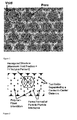
- the membranes have a desirable hexagonal structure resulting from the first set of pores in the bulk of the membrane. As illustrated in Figure 2 (showing the first set of pores resulting from dissolving the introduced particles and the hexagonal structure representing the maximum void fraction), the maximum void fraction is 74 volume percent, and membranes according to embodiments of the invention have in the range of from about 66% to about 73% void fraction.
- microporous surfaces of the membranes can have any suitable mean pore size, e.g., as determined by, for example, calculating the average surface pore size from an SEM at 5,000X or 20,000X magnification.
- the thickness of membranes according to embodiments of the invention is in the range of about 0.5 mils to about 6.5 mils, preferably, in the range of from about 1 mils to about 3 mils.
- the layer comprises a fibrous porous medium (e.g., a fabric web such as woven web or a non-woven web; or a wet-laid medium) or comprises a porous membrane made without dissolvable particles
- the medium can be made of any suitable material; preferably, the fibrous medium or membrane comprises a polymeric medium.
- suitable fibrous porous media and porous membranes without dissolvable particles can be prepared by methods known to those of ordinary skill in the art.
- the membrane can have any desired critical wetting surface tension (CWST, as defined in, for example, U.S. Patent 4,925,572 ).
- CWST can be selected as is known in the art, e.g., as additionally disclosed in, for example, U.S. Patents 5,152,905 , 5,443,743 , 5,472,621 , and 6,074,869 .
- the membrane has a CWST of greater than about 70 dynes/cm (about 70 x 10 -5 N/cm), more typically greater than about 73 dynes/cm (about 73 x 10 -5 N/cm), and can have a CWST of about 78 dynes/cm (about 78 x 10 -5 N/cm) or more. In some embodiments, the membrane has a CWST of about 82 dynes/cm (about 82 x 10 -5 N/cm) or more.
- the surface characteristics of the membrane can be modified (e.g., to affect the CWST, to include a surface charge, e.g., a positive or negative charge, and/or to alter the polarity or hydrophilicity of the surface) by wet or dry oxidation, by coating or depositing a polymer on the surface, or by a grafting reaction. Modifications include, e.g., irradiation, a polar or charged monomer, coating and/or curing the surface with a charged polymer, and carrying out chemical modification to attach functional groups on the surface.
- Grafting reactions may be activated by exposure to an energy source such as gas plasma, vapor plasma, corona discharge, heat, a Van de Graff generator, ultraviolet light, electron beam, or to various other forms of radiation, or by surface etching or deposition using a plasma treatment.
- an energy source such as gas plasma, vapor plasma, corona discharge, heat, a Van de Graff generator, ultraviolet light, electron beam, or to various other forms of radiation, or by surface etching or deposition using a plasma treatment.
- Membranes according to embodiments of the invention can be used in a variety of applications, including, for example, diagnostic applications (including, for example, sample preparation and/or diagnostic lateral flow devices), ink jet applications, filtering fluids for the pharmaceutical industry, filtering fluids for medical applications (including for home and/or for patient use, e.g., intravenous applications, also including, for example, filtering biological fluids such as blood (e.g., to remove leukocytes)), filtering fluids for the electronics industry (e.g., filtering photoresist fluids in the microelectronics industry), filtering fluids for the food and beverage industry, clarification, filtering antibody- and/or protein-containing fluids, filtering nucleic acid-containing fluids, cell detection (including in situ ), cell harvesting, and/or filtering cell culture fluids.
- diagnostic applications including, for example, sample preparation and/or diagnostic lateral flow devices
- ink jet applications filtering fluids for the pharmaceutical industry
- filtering fluids for medical applications including for home and/or
- membranes according to embodiments of the invention can be used to filter air and/or gas and/or can be used for venting applications (e.g., allowing air and/or gas, but not liquid, to pass therethrough).
- Membranes according to embodiments of the inventions can be used in a variety of devices, including surgical devices and products, such as, for example, ophthalmic surgical products.
- the membrane zones, regions, and/or layers in the composite membrane can be in any order, depending on the application.
- the first layer, zone, or region, or any other layer, zone, or region can be the "upstream” layer, zone, or region, i.e., the layer, zone, or region first contacted by the fluid.
- the first layer, zone, or region, or any other layer, zone, or region can be the "downstream” layer, zone, or region, i.e., the layer , zone, or region last contacted by the fluid.
- any layer, zone, or region can be the "upstream,” "downstream,” or an intermediate layer, zone, or region.
- a method of treating fluid comprises passing a fluid comprising a higher concentration of anions than cations from the upstream surface of the membrane through the downstream surface.
- a method of treating fluid comprises passing a fluid comprising a higher concentration of cations than anions from the upstream surface of the membrane through the downstream surface.
- the membrane can have a variety of configurations, including planar, pleated, and/or hollow cylindrical.
- Membranes according to embodiments of the invention are typically disposed in a housing comprising at least one inlet and at least one outlet and defining at least one fluid flow path between the inlet and the outlet, wherein at least one inventive membrane or a filter including at least one inventive membrane is across the fluid flow path, to provide a filter device or filter module.
- a filter device comprising a housing comprising an inlet and a first outlet, and defining a first fluid flow path between the inlet and the first outlet; and at least one inventive membrane or a filter comprising at least one inventive membrane, the inventive membrane or filter comprising at least one inventive membrane being disposed in the housing across the first fluid flow path.
- At least one inventive membrane or filter comprising at least one inventive membrane is disposed in a housing comprising at least one inlet and at least two outlets and defining at least a first fluid flow path between the inlet and the first outlet, and a second fluid flow path between the inlet and the second outlet, wherein the inventive membrane or filter comprising at least one inventive membrane is across the first fluid flow path, to provide a filter device or filter module.
- the filter device comprises a crossflow filter module, the housing comprising an inlet, a first outlet comprising a concentrate outlet, and a second outlet comprising a permeate outlet, and defining a first fluid flow path between the inlet and the first outlet, and a second fluid flow path between the inlet and the second outlet, wherein at least one inventive membrane or filter comprising at least one inventive membrane is disposed across the first fluid flow path.
- the filter device or module may be sterilizable. Any housing of suitable shape and providing an inlet and one or more outlets may be employed.
- the housing can be fabricated from any suitable rigid impervious material, including any impervious thermoplastic material, which is compatible with the fluid being processed.
- the housing can be fabricated from a metal, such as stainless steel, or from a polymer, e.g., transparent or translucent polymer, such as an acrylic, polypropylene, polystyrene, or a polycarbonated resin.
- dissolvable particles are prepared in stock solutions, and PVOH stock solution are prepared, as described below.
- Dissolvable particles are prepared in stock solution as follows: In a jacketed flask kept at 25 °C, a solution is prepared consisting of 1 mol/L ammonia (NH 3 ), 8.24 mol/L ethanol (ETOH), 1 mol/L methanol (MeOH), 23.7 mol/L deionized (DI) water, 0.15 mol/L tetraethoxysilane (TEOS), and 0.0078 mol/L sodium metasilicate (Na 2 SiO 3 ), and stirred at 200 rpm for 1 hr. Dynamic light scattering and SEM show particle diameters of approximately 570 nm.
- Particles are centrifuged, decanted, and re-suspended in ETOH twice. Then, the particles are centrifuged, decanted, and re-suspended in DMF along with 0.1 % triethanolamine (TEA) three times. The stock solution has a final concentration of 63% (w/w) particles.
- Stock solutions having nanoparticles having diameters of approximately 310 nm are prepared as follows: In a jacketed flask kept at 25 °C, a solution is prepared consisting of 0.9 mol/L NH 3 , 9.16 mol/L ETOH, 23.07 mol/L DI water, 0.15 mol/L TEOS, and 0.0078 mol/L lithium acetate (CH 3 COOLi), and stirred at 200 rpm for 1 hr. Dynamic light scattering and SEM show particle diameters of approximately 310 nm. Particles are centrifuged, decanted, and re-suspended in ETOH twice. Then, the particles are centrifuged, decanted, and re-suspended in DMF along with 0.1 % TEA three times. The stock solution has a final concentration of 55% (w/w) particles.
- Polyvinyl Alcohol (PVOH) stock solution is prepared as follows: In a jacketed kettle kept at 90 °C, a solution is prepared by combining 10% w/w PVOH (96% Hydrolyzed, Scientific Polymer Products) with 90% DI water and stirring at 200 rpm for 16 hr.
- the membrane in determining whether a membrane has a positive charge, the membrane is submerged for 30 minutes in a negatively charged dye solution (Ponceau S (Red) Dye, 0.05% in DI water). The membrane is leached in a 0.1% solution of ammonium hydroxide, followed by DI water leaching and drying. Digital microscope photos show the red color dye is present at the surface and in the bulk of the membrane having the positive charge, whereas no red color is shown if the membrane has a negative charge, or a neutral charge.
- a negatively charged dye solution Ponceau S (Red) Dye, 0.05% in DI water.
- a membrane in determining whether a membrane has a negative charge, the membrane is submerged for 30 minutes in a positively charged dye solution (Toluidine Blue Dye, 0.05% in DI water). The membrane is leached DI water, followed by drying. Digital microscope photos show the blue color dye is present at the surface and in the bulk of the membrane having the negative charge, whereas no blue color is shown if the membrane has a positive charge, or a neutral charge.
- a positively charged dye solution Toluidine Blue Dye, 0.05% in DI water
- SEM analysis and porometry are used to determine the second controlled pore size of the second set of pores, that are located in the connections between the outer rims of the first set of pores.
- This example demonstrates the preparation of a membrane according to an embodiment of the invention, the membrane comprising a single layer having first and second microporous surfaces, a porous bulk between the surfaces, wherein the bulk comprises a first set of pores having outer rims, prepared by removing introduced dissolvable nanoparticles, the first set of pores having a first controlled pore size of about 570 nm, and a second set of pores connecting the outer rims of the first set of pores, the second set of pores having a second controlled pore size of about 171 nm, and a polymer matrix supporting the first set of pores, and the surfaces and the bulk have a neutral charge.
- a stock solution having dissolvable particles having diameters of approximately 570 nm is prepared as described above.
- a polymer (resin) stock solution is prepared as follows: In a jacketed kettle kept at 25 °C using a circulating bath, 30% (w/w) PES resin (BASF, Ultrason E 6020 P), 15% (w/w) NMP, and 55% (w/w) DMF are mixed at 800 rpm using an overhead mixer for 4 hr. The solution is placed under vacuum at 200 mbar for 30 minutes to deaerate the solution.
- a casting solution is prepared as follows: The resin stock solution and the particle stock solution are combined in a flask and mixed at 30,000 rpm for 2 min with final concentrations of 40% (w/w) particles, 11% PES, 6% NMP, and 43% DMF, followed by deaeration at 200 mbar for 30 min.
- PVOH stock solution is cast onto a glass plate and placed in an oven at 80 °C for 2 hr. to form a film. Subsequently, the casting solution is cast onto the PVOH film using a 3 mil gapped casting bar and placed in an oven for 15 min at 60 °C followed by immersion in water at 80 °C for 1 hr. to release the membrane from the coated substrate. The membrane is soaked in 1 mol/L HCl for 30 min., then 2 mol/L KOH for 18 hr. The membrane is subsequently washed with water at 25 °C for 2 hr and dried at 70 °C for 30 min.
- This example demonstrates the preparation of a membrane according to another embodiment of the invention, the membrane comprising a single layer having first and second microporous surfaces, a porous bulk between the surfaces, wherein the bulk comprises a first set of pores having outer rims, prepared by removing introduced dissolvable nanoparticles, the first set of pores having a first controlled pore size of about 570 nm, and a second set of pores connecting the outer rims of the first set of pores, the second set of pores having a second controlled pore size of about 171 nm, and a polymer matrix supporting the first set of pores, and the surfaces and the bulk comprise a negative charge.
- a stock solution having dissolvable particles having diameters of approximately 570 nm is prepared as described above.
- a polymer (resin) stock solution is prepared as follows: In a jacketed kettle kept at 25 °C using a circulating bath, 20% (w/w) PES resin (BASF, Ultrason E 6020 P), 20% (w/w) NMP, 59% (w/w) DMF, ⁇ 1% PEG-1000, and ⁇ 1% 1:1 maleic acid:methyl vinyl ether copolymer (Scientific Polymer Products) are mixed at 800 rpm using an overhead mixer for 4 hr. The solution is placed under vacuum at 200 mbar for 30 minutes to deaerate the solution.
- a casting solution is prepared as follows: The resin stock solution and the particle stock solution are combined in a flask and mixed at 30,000 rpm for 2 min with final concentrations of 29% (w/w) particles, 11% PES, 11% NMP, 49% DMF, ⁇ 1% PEG-1000, and ⁇ 1% 1:1 maleic acid:methyl vinyl ether copolymer, followed by deaeration at 200 mbar for 30 min.
- PVOH stock solution is cast onto a glass plate and placed in an oven at 80 °C for 2 hr. to form a film. Subsequently, the casting solution is cast onto the PVOH film using a 3 mil gapped casting bar and placed in an oven for 15 min at 60 °C followed by immersion in water at 80 °C for 1 hr. to release the membrane from the coated substrate. The membrane is soaked in 1 mol/L HCl for 30 min., then 2 mol/L KOH for 18 hr. The membrane is subsequently washed with water at 25 °C for 2 hr and dried at 70 °C for 30 min.
- This example demonstrates the preparation of a membrane according to another embodiment of the invention, the membrane comprising a single layer having first and second microporous surfaces, a porous bulk between the surfaces, wherein the bulk comprises a first set of pores having outer rims, prepared by removing introduced dissolvable nanoparticles, the first set of pores having a first controlled pore size of about 570 nm, and a second set of pores connecting the outer rims of the first set of pores, the second set of pores having a second controlled pore size of about 171 nm, and a polymer matrix supporting the first set of pores, and the surfaces and the bulk comprise a positive charge.
- a stock solution having dissolvable particles having diameters of approximately 570 nm is prepared as described above.
- a polymer (resin) stock solution is prepared as follows: In a jacketed kettle kept at 25 °C using a circulating bath, 20% (w/w) PES resin (BASF, Ultrason E 6020 P), 20% (w/w) NMP, 59% (w/w) DMF, ⁇ 1% PEG-1000, and ⁇ 1% branched polyethylenimine (Sigma-Aldrich) are mixed at 800 rpm using an overhead mixer for 4 hr. The solution is placed under vacuum at 200 mbar for 30 minutes to deaerate the solution.
- a casting solution is prepared as follows: The resin stock solution and the particle stock solution are combined in a flask and mixed at 30,000 rpm for 2 min with final concentrations of 29% (w/w) particles, 11% PES, 11% NMP, 49% DMF, ⁇ 1% PEG-1000, and ⁇ 1% branched polyethylenimine, followed by deaeration at 200 mbar for 30 min.
- PVOH stock solution is cast onto a glass plate and placed in an oven at 80 °C for 2 hr. to form a film. Subsequently, the casting solution is cast onto the PVOH film using a 3 mil gapped casting bar and placed in an oven for 15 min at 60 °C followed by immersion in water at 80 °C for 1 hr. to release the membrane from the coated substrate. The membrane is soaked in 1 mol/L HCl for 30 min., then 2 mol/L KOH for 18 hr. The membrane is subsequently washed with water at 25 °C for 2 hr and dried at 70 °C for 30 min.
- This example demonstrates the preparation of a membrane according to another embodiment of the invention, the membrane comprising a single layer having first and second microporous surfaces, a first and second zones respectively comprising first and second porous bulks between the surfaces, wherein each of the bulks comprises a first set of pores having outer rims, prepared by removing introduced dissolvable nanoparticles, the first set of pores having a first controlled pore size of about 570 nm, and a second set of pores connecting the outer rims of the first set of pores, the second set of pores having a second controlled pore size of about 171 nm, and a polymer matrix supporting the first set of pores, and wherein one zone comprise a positively charged zone and the other zone comprises a separate, negatively charged zone.
- Two stock solution having dissolvable particles having diameters of approximately 570 nm is prepared as described above.
- a first polymer (resin) stock solution is prepared as follows: In a jacketed kettle kept at 25 °C using a circulating bath, 20% (w/w) PES resin (BASF, Ultrason E 6020 P), 20% (w/w) NMP, 59% (w/w) DMF, ⁇ 1% PEG-1000, and ⁇ 1% 1:1 maleic acid:methyl vinyl ether copolymer (Scientific Polymer Products) are mixed at 800 rpm using an overhead mixer for 4 hr. The solution is placed under vacuum at 200 mbar for 30 minutes to deaerate the solution.
- a first casting solution is prepared as follows: The resin stock solution and the particle stock solution are combined in a flask and mixed at 30,000 rpm for 2 min with final concentrations of 29% (w/w) particles, 11% PES, 11% NMP, 49% DMF, ⁇ 1% PEG-1000, and ⁇ 1% 1:1 maleic acid:methyl vinyl ether copolymer, followed by deaeration at 200 mbar for 30 min.
- a second polymer (resin) stock solution is prepared as follows: In a jacketed kettle kept at 25 °C using a circulating bath, 20% (w/w) PES resin (BASF, Ultrason E 6020 P), 20% (w/w) NMP, 59% (w/w) DMF, ⁇ 1% PEG-1000, and ⁇ 1% branched polyethylenimine (Sigma-Aldrich) are mixed at 800 rpm using an overhead mixer for 4 hr. The solution is placed under vacuum at 200 mbar for 30 minutes to deaerate the solution.
- a second casting solution is prepared as follows: The resin stock solution and the particle stock solution are combined in a flask and mixed at 30,000 rpm for 2 min with final concentrations of 29% (w/w) particles, 11% PES, 11% NMP, 49% DMF, ⁇ 1% PEG-1000, and ⁇ 1% branched polyethylenimine, followed by deaeration at 200 mbar for 30 min.
- PVOH stock solution is cast onto a glass plate and placed in an oven at 80 °C for 2 hr. to form a film.
- the first casting solution is cast onto the PVOH film using a 3 mil gapped casting bar and placed in an oven for 15 min at 60 °C.
- the second casting solution is cast onto the coated using a 5 mil gapped casting bar and placed in an oven for 15 min at 60 °C, followed by immersion in water at 80 °C for 1 hr. to release the membrane from the coated substrate.
- the membrane is soaked in 1 mol/L HCl for 30 min., then 2 mol/L KOH for 18 hr.
- the membrane is subsequently washed with water at 25 °C for 2 hr and dried at 70 °C for 30 min.
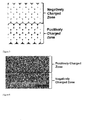
- Figure 3 is a diagrammatic representation of a membrane comprising a first zone comprising a first porous bulk and a second zone comprising a second porous bulk, wherein the first zone comprises a negative charge, and the second zone comprises a positive charge.
- Figure 4 is an SEM showing an enlarged partial cross-sectional view of the membrane prepared in the Example, showing the first zone comprising a first porous bulk and a second zone comprising a second porous bulk, wherein the first zone comprises a negative charge through the bulk, and the second zone comprises a positive charge through the bulk, also showing that the membrane is integral.
- This example demonstrates the preparation of a membrane according to another embodiment of the invention, the membrane comprising a single layer having first and second microporous surfaces, a porous bulk between the surfaces, wherein the bulk comprises a first set of pores having outer rims, prepared by removing introduced dissolvable nanoparticles, the first set of pores having a first controlled pore size of about 310 nm, and a second set of pores connecting the outer rims of the first set of pores, the second set of pores having a second controlled pore size of about 93 nm, and a polymer matrix supporting the first set of pores, and the surfaces and the bulk comprise a negative charge.
- a stock solution having dissolvable particles having diameters of approximately 310 nm is prepared as described above.
- a polymer (resin) stock solution is prepared as follows: In a jacketed kettle kept at 40 °C using a circulating bath, 20% (w/w) PES resin (BASF, Ultrason E 6020 P), 20% (w/w) NMP, 59% (w/w) DMF, ⁇ 1% PEG-200, and ⁇ 1% 1:1 poly(methacrylic acid) (Scientific Polymer Products) are mixed at 800 rpm using an overhead mixer for 4 hr. The solution is placed under vacuum at 200 mbar for 30 minutes to deaerate the solution.
- a casting solution is prepared as follows: The resin stock solution and the particle stock solution are combined in a flask and mixed at 30,000 rpm for 2 min with final concentrations of 28% (w/w) particles, 10% PES, 10% NMP, 52% DMF, ⁇ 1% PEG-200, and ⁇ 1% poly(methacrylic acid), followed by deaeration at 200 mbar for 30 min.
- PVOH stock solution is cast onto a glass plate and placed in an oven at 80 °C for 2 hr. to form a film. Subsequently, the casting solution is cast onto the PVOH film using a 7 mil gapped casting bar and placed in an oven for 15 min at 60 °C followed by immersion in water at 80 °C for 1 hr. to release the membrane from the coated substrate. The membrane is soaked in 0.5 mol/L HCl for 30 min., then 2 mol/L KOH for 4 hr. The membrane is subsequently washed with water at 25 °C for 2 hr and dried at 70 °C for 30 min.
- This example demonstrates the preparation of a membrane according to another embodiment of the invention, the membrane comprising a single layer having first and second microporous surfaces, a porous bulk between the surfaces, wherein the bulk comprises a first set of pores having outer rims, prepared by removing introduced dissolvable nanoparticles, the first set of pores having a first controlled pore size of about 310 nm, and a second set of pores connecting the outer rims of the first set of pores, the second set of pores having a second controlled pore size of about 93 nm, and a polymer matrix supporting the first set of pores, and the surfaces and bulk comprise a positive charge.
- a stock solution having dissolvable particles having diameters of approximately 310 nm is prepared as described above.
- a polymer (resin) stock solution is prepared as follows: In a jacketed kettle kept at 40 °C using a circulating bath, 20% (w/w) PES resin (BASF, Ultrason E 6020 P), 20% (w/w) NMP, 59% (w/w) DMF, ⁇ 1% PEG-4000, and ⁇ 1% poly(2-vinylpyridine) (Scientific Polymer Products) are mixed at 800 rpm using an overhead mixer for 4 hr. The solution is placed under vacuum at 200 mbar for 30 minutes to deaerate the solution.
- a casting solution is prepared as follows: The resin stock solution and the particle stock solution are combined in a flask and mixed at 30,000 rpm for 2 min with final concentrations of 28% (w/w) particles, 10% PES, 10% NMP, 52% DMF, ⁇ 1% PEG-4000, and ⁇ 1% poly(2-vinylpyridine), followed by deaeration at 200 mbar for 30 min.
- PVOH stock solution is cast onto a glass plate and placed in an oven at 80 °C for 2 hr. to form a film. Subsequently, the casting solution is cast onto the PVOH film using a 7 mil gapped casting bar and placed in an oven for 15 min at 60 °C followed by immersion in water at 80 °C for 1 hr. to release the membrane from the coated substrate. The membrane is soaked in 0.5 mol/L HCl for 30 min., then 2 mol/L KOH for 4 hr. The membrane is subsequently washed with water at 25 °C for 2 hr and dried at 70 °C for 30 min.
Landscapes
- Chemical & Material Sciences (AREA)
- Chemical Kinetics & Catalysis (AREA)
- Engineering & Computer Science (AREA)
- Manufacturing & Machinery (AREA)
- Dispersion Chemistry (AREA)
- Separation Using Semi-Permeable Membranes (AREA)
- Manufacture Of Porous Articles, And Recovery And Treatment Of Waste Products (AREA)
- Water Supply & Treatment (AREA)
Abstract
Description
- Polymeric membranes are used to filter a variety of fluids. However, there is a need for membranes that provide high throughput performance.
- The present invention provides for ameliorating at least some of the disadvantages of the prior art. These and other advantages of the present invention will be apparent from the description as set forth below.
- An embodiment of the invention provides a membrane, comprising a single layer having a first microporous surface; a second microporous surface; and, a porous bulk between the first microporous surface and the second microporous surface, wherein the bulk comprises a first set of pores having outer rims, prepared by removing introduced dissolvable silca nanoparticles, the first set of pores having a first controlled pore size, and a second set of pores connecting the outer rims of the first set of pores, the second set of pores having a second controlled pore size, and a polymer matrix supporting the first set of pores, wherein the first controlled pore size is greater than the second controlled pore size, wherein the first and/or second microporous surface comprises a neutrally charged, a negatively charged, or a positively charged, microporous surface.
- In an embodiment of the membrane, the porous bulk comprises a neutrally charged bulk, a negatively charged bulk and/or a positively charged bulk. In some embodiments, the membrane comprises at least one zone comprising the porous bulk, wherein the zone comprises a neutral charge, a negative charge and/or a positive charge.
- In some embodiments, the membrane has at least one additional porous bulk, wherein the additional bulk comprises a third set of pores having outer rims, prepared by removing introduced dissolvable silica nanoparticles, the third set of pores having a third controlled pore size, and a fourth set of pores connecting the outer rims of the third set of pores, the fourth set of pores having a fourth controlled pore size, and a polymer matrix supporting the third set of pores, wherein the third controlled pore size is greater than the fourth controlled pore size. The at least one additional bulk can comprise a neutrally charged zone, a negatively charged zone and/or a positively charged zone.
- Additionally, or alternatively, the membrane can further comprise at least one additional layer, wherein the additional layer(s) can comprise a neutrally charged, a negatively charged, or a positively charged, microporous surface (or porous surface), in some embodiments, also comprising a neutrally charged, a negatively charged, or a positively charged, bulk.
- In accordance with other embodiments of the invention, filters and filter devices comprising the membranes, as well of methods of making and using the membranes, are provided.
-
-
Figure 1 is a scanning electron micrograph (SEM) showing a surface view of an embodiment of a membrane according to the present invention, showing a first set of pores having connecting outer rims (one pore highlighted in dashed lines), and a second set of pores (one pore highlighted in solid line) located in the connecting outer rims of the first set of pores. -
Figure 2 illustrates hexagonal packing of the first set of pores (formed by dissolving of particles) in a membrane according to an embodiment of the invention, wherein the hexagonal packing is 74 volume percent.Figure 2 also illustrates the matrix ("polymer formed interstitials") supporting the first set of pores, and the second set of pores connecting the outer rims of the first set of pores. -
Figure 3 is a diagrammatic representation of an embodiment of a membrane according to an embodiment of the invention, comprising a first zone comprising a first porous bulk and a second zone comprising a second porous bulk, wherein the first zone comprises a negative charge, and the second zone comprises a positive charge. -
Figure 4 is an SEM showing an enlarged partial cross-sectional view of a membrane according to an embodiment of the present invention, showing a first zone comprising a first porous bulk and a second zone comprising a second porous bulk, wherein the first zone comprises a negative charge, and the second zone comprises a positive charge. - In accordance with an embodiment of the present invention, a membrane is provided, the membrane comprising a single layer having a first microporous surface; a second microporous surface; and, a porous bulk between the first microporous surface and the second microporous surface, wherein the bulk comprises a first set of pores having outer rims, prepared by removing introduced dissolvable silica nanoparticles, the first set of pores having a first controlled pore size, and a second set of pores connecting the outer rims of the first set of pores, the second set of pores having a second controlled pore size, and a polymer matrix supporting the first set of pores, wherein the first controlled pore size is greater than the second controlled pore size, wherein the first and/or second microporous surface comprises a neutrally charged surface, a negatively charged surface, or a positively charged surface.
- In an embodiment of the membrane, the porous bulk comprises a neutrally charged bulk, a negatively charged bulk and/or a positively charged bulk. In some embodiments, the membrane comprises at least one zone comprising the porous bulk, wherein the zone comprises a neutral charge, a negative charge and/or a positive charge.
- In some embodiments, the membrane has at least one additional porous bulk (e.g., as part of an additional layer or region of the membrane), wherein the additional bulk comprises a third set of pores having outer rims, prepared by removing introduced dissolvable silica nanoparticles, the third set of pores having a third controlled pore size, and a fourth set of pores connecting the outer rims of the third set of pores, the fourth set of pores having a fourth controlled pore size, and a polymer matrix supporting the third set of pores, wherein the third controlled pore size is greater than the fourth controlled pore size. The at least one additional bulk can comprise at least one neutrally charged zone, negatively charged zone and/or a positively charged zone and/or a neutrally charged zone.
- Alternatively, or additionally, in some embodiments, the membrane further comprises at least one additional layer, the layer having (i) a first porous surface; (ii) a second porous surface; and, (iii) a porous bulk between the first porous surface and the second porous surface of the additional layer, wherein the porous bulk comprises a fibrous matrix; or (iv) a first microporous surface; (v) a second microporous surface; and, (vi) a porous bulk between the first microporous surface and the second microporous surface of the additional layer, wherein the second porous bulk comprises: (a) a first set of pores having outer rims, prepared by removing introduced dissolvable silica nanoparticles, the first set of pores having a first controlled pore size, and a second set of pores connecting the outer rims of the first set of pores, the second set of pores having a second controlled pore size, and a polymer matrix supporting the first set of pores, wherein the first controlled pore size is greater than the second controlled pore size; (b) a set of pores prepared by phase inversion, the set of pores having a controlled pore size; or (c) a fibrous matrix; or, (d) a set of pores prepared by stretching or track etching or e-beam, the set of pores having a controlled pore size. In an embodiment, the additional layer comprises at least one neutrally charged zone, negatively charged zone and/or positively charged surface, in some embodiments, also comprising at least one neutrally charged zone, negatively charged zone and/or positively charged zone.
- In some embodiments membranes according to the invention are integral (i.e., the layers, zones and/or regions are bonded together such that the membrane behaves as a single structure that does not delaminate or separate under normal use conditions). For example, while making the membranes, portions of each layer, zone, and/or region can infiltrate each other and mix.
- In accordance with an embodiment, the controlled pore size of the first set of pores (and/or the controlled pore size of another set of pores prepared by removing introduced silica nanoparticles) is in the range of from about 50 nm to about 1000 nm, for example, from about 160 nm to about 630 nm. Thus, for example, the pore size of the first set of pores is about 160 nm, about 180 nm, about 200 nm, about 220 nm, about 240 nm, about 260 nm, about 280 nm, about 300 nm, about 320 nm, about 340 nm, about 360 nm, about 380 nm, about 400 nm, about 420 nm, about 440 nm, about 460 nm, about 480 nm, about 500 nm, about 520 nm, about 540 nm, about 560 nm, about 580 nm, about 600 nm, or about 620 nm.
- In an embodiment, the second controlled pore size in the porous bulk (or the controlled pore size in any other bulk with respect to the pores connecting pores having outer rims) is in a ratio in the range of about 0.2 to about 0.4 times the first controlled pore size (or the controlled pore size with respect to pores having outer rims).
- In some embodiments, the controlled pore size of pores having outer rims in one porous bulk is greater than the controlled pore size of pores in another bulk or layer, e.g., wherein the controlled pore size of pores in another bulk or layer comprises the retentive portion of the composite membrane. In some other embodiments, the controlled pore size of pores having outer rims in the bulk is less than the controlled pore size of pores in another bulk or layer, e.g., wherein bulk comprising pores having outer rims comprises the retentive portion of the composite membrane.
- In an embodiment, the membrane is prepared by introducing dissolvable silica nanoparticles into solutions comprising one or more membrane forming polymers and charged polymers (typically, the membrane forming polymers and charged polymers are dissolved in a solvent or mixture of solvents), casting the nanoparticle-containing polymer solution (preferably, casting the nanoparticle-containing polymer solution on a substrate wherein the substrate has been pretreated with a preconditioning or releasing agent; more preferably, wherein the agent has been dried on the substrate before casting the solution thereon), carrying out phase inversion of the nanoparticle-containing polymer solution to provide a membrane comprising a neutrally charged, negatively charged or positively charged surface, subsequently dissolving the nanoparticles, and washing the resultant membrane.
- The charged polymers are polymers that provide a positive or negative charge. Positively charged polymers can be any polymer that carries a positive charge or can become positively charged when exposed to fluids. Thus, for example, polymers bearing amino, imino, ammonium, or phosphonium groups in the backbone, pendant groups, and/or on the chain ends are suitable. Examples of polymers having positive charge include polyethylenimine, polydiallyldimethylammonium chloride, polyvinylamine, amine terminated polyethylene oxide or polyethylene glycol, poly(2-vinylpyridine), poly(4-vinylpyridine), and poly(1-vinylpyrrolidone-co-2-dimethylaminoethylmethacrylate).
- Negatively charged polymers can be any polymer that carries a negative charge or can become negatively charged when exposed to fluids. Thus, for example, polymers bearing carboxyl, sulfonic, or phosphonic groups in the backbone, pendant groups, and/or chain ends are suitable. Examples of polymers having negative charge include maleic acid:methyl vinyl ether copolymer, polystyrene sulfonic acid, sulfonated polysufone, sulfonated polyether sulfone, polyacrylic acid, polymethacrylic acid, and polyvinylphenol.
- Advantageously, membranes according to the invention can be produced using preformed polymers such as polyethersulfone (PES), polyvinylidene fluoride (PVDF), and polyacrylonitrile (PAN), that are commonly used in commercial membranes. Additionally, the nanoparticles can be dissolved without using hydrofluoric acid, for example, the nanoparticles can be dissolved using safer, more environmentally benign solvents.
- In other embodiments, filters and filter devices are provided, the filter and filter devices comprising at least one membrane.
- A method of filtering fluid is also provided in accordance with another embodiment of the invention, the method comprising passing the fluid through at least one membrane, or a filter comprising at least one membrane, as described above.
- In accordance with the invention, a charged zone (sometimes referred to below as a "charged continuous zone") refers to a charge localized in a generally predetermined portion of the thickness of the membrane, generally parallel to the major surfaces (upstream and downstream surfaces) of the membrane. In contrast, mosaic membranes have a plurality of separate (non-continuous) anion-exchange regions, cation-exchange regions, and neutral regions throughout the membrane.
- Embodiments of membranes according to the invention include a variety of charged groups, and suitable chemistries for providing membranes with charged groups are known in the art.
- If desired, there are a number of procedures for confirming the presence of the desired charges in the surfaces, regions, and/or zones in the membranes. For example, dye screening tests can be carried out using charged dyes, for example, positively charged dyes such as methylene blue or toluidine blue, and negatively charged dyes such as metanil yellow or Ponceau S red. Alternatively, or additionally, the zeta potentials can be determined, e.g., by determining streaming potentials at various pHs.
- In accordance with an embodiment of the invention, a method of preparing a membrane comprises (a) casting a solution comprising a dissolvable silica nanoparticle-containing polymer solution comprising an uncharged polymer or charged polymer onto a substrate; (b) carrying out phase inversion of the nanoparticle-containing polymer solution to provide a membrane; (c) dissolving the nanoparticles and obtaining a nanoparticle-depleted membrane comprising a negatively charged or positively charged surface; and (d) washing the nanoparticle-depleted membrane.
- Preferably (a) comprises casting the solution on a substrate pretreated with a preconditioning agent or a release agent. In some embodiments of the method, the preconditioning agent or the release agent is dried on the substrate before casting the solution on the pretreated substrate.
- In some embodiments, the method comprises exposing the nanoparticle-containing polymer solution to a temperature in the range of from about 40 °C to about 80 °C for a period in the range of from about 1 minute to about 2 hours. Alternatively, or additionally, in some embodiments, the method comprises forming a film, and immersing the film in liquid to obtain the membrane.
- As will be described in more detail below, dissolving the particles creates a first set of pores in the membranes, the first set of pores having outer rims, and located within the outer rims is a second set of pores. As illustrated in
Figure 1 , the dashed line highlights an outer rim of a pore in the first set, and the solid line highlights a pore in the second set. The second set of pores allows communication (e.g., fluid flow) from the void within one outer rim into the void of another outer rim. - A variety of dissolvable silica nanoparticles are suitable for use in preparing membranes according to embodiments of the invention. Preferably, the dissolvable particles are not pure silica. Typically, the particles comprise silica nanoparticles ranging in diameter from about 50 nm to about 1000 nm. In an embodiment, the particles comprise silica nanoparticles ranging in diameter from about 50 nm to about 1000 nm, having a density of 1.96g/cm3 or less. In some embodiments, the silica nanoparticles have a particle density of about 1.93 to about 1.96 g/cm3.
- The silica nanoparticles can have a particle size, e.g., diameter, of less than 1000 nm, in particular a particle size of from about 160 nm to about 630 nm. Thus, for example, the nanoparticles have a particle size of about 160 nm, about 180 nm, about 200 nm, about 220 nm, about 240 nm, about 260 nm, about 280 nm, about 300 nm, about 320 nm, about 340 nm, about 360 nm, about 380 nm, about 400 nm, about 420 nm, about 440 nm, about 460 nm, about 480 nm, about 500 nm, about 520 nm, about 540 nm, about 560 nm, about 580 nm, about 600 nm, or about 620 nm.
- The silica nanoparticles can be prepared by a method comprising: (a) reacting an orthosilicate and an alcohol or a mixture of alcohols in an aqueous medium in the presence of a salt of a metal of Group Ia or Group IIa, or in the presence of a metalloid compound, optionally in combination with ammonium hydroxide, (b) isolating the resulting nanoparticles, and (c) treating the nanoparticles from (b) with an acid.
- In an embodiment, the nanoparticles can be included in the coating composition prior to the acid treatment (c).
- In an embodiment, the orthosilicate used in the preparation of the nanoparticles is a tetraalkylorthosilicate. Examples of tetraalkylorthosilicates tetramethylorthosilicate, tetraethylorthosilicate, tetrapropylorthosilicate, tetrabutylorthosilicate, and tetrapentylorthosilicate.
- Any suitable alcohol or mixture of alcohols can be used in the preparation of the nanoparticles, for example, the alcohol or mixture of alcohols is selected from methanol, ethanol, propanol, butanol, and mixtures thereof.
- The salt of the metal used in the preparation of the nanoparticles can be selected from salts of lithium, sodium, potassium, cesium, magnesium, and calcium. In an embodiment, the salt of the metal is selected from lithium acetate, sodium acetate, sodium metasilicate, sodium formate, potassium acetate, cesium acetate, magnesium acetate, and calcium acetate. In another embodiment, the metalloid compound is a compound of boron, for example, boric acid or a boric acid ester such as alkyl borate. The alkyl borate can be a trialkyl borate such as trimethyl borate or triethyl borate.
- The acid employed in (c) of the method above can be a mineral acid or organic acid. Examples of mineral acids include hydrochloric acid, sulfuric acid, and nitric acid, preferably hydrochloric acid or sulfuric acid. Examples of organic acids include acetic acid, formic acid, trifluoroacetic acid, trichloroacetic acid, and p-toluenesulfonic acid, preferably formic acid. The nanoparticles isolated in (b) can be treated with a 1N to 2N acid, e.g., 1N HCl, or 10-50% weight % organic acid in water, e.g., 50% aqueous formic acid, for a period of about 0.5 hr to about 3 hr, preferably about 1 hr to 2 hr. For example, the nanoparticles can be sonicated in an acid bath for the above period. Following the acid treatment, the nanoparticles are isolated from the acid and washed with deionized water and dried under vacuum to obtain the silica nanoparticles.
- Illustratively, silica nanoparticles can be prepared as follows. In a 6 L jacketed flask kept at 25 °C, 4.8 g lithium acetate dihydrate (LiOAc. 2H2O), 2480 mL deionized water (DI-H2O), 2.9 L anhydrous ethanol (EtOH), and 120 mL 28% w/w NH3 in water is stirred for 30 min at 200 rpm using an overhead mixer with PTFE impellers. A solution of 300 mL EtOH with 200 mL tetraethylorthosilicate (TEOS), which is prepared under dry conditions (< 10% relative humidity), is rapidly poured into the 6 L flask, and mixing is increased to 400 rpm and a dry air purge (< 1% relative humidity) is utilized for 5 min. Mixing is reduced to 200 rpm, the dry air purge is removed, the flask is sealed, and the reaction continues for a total of 1 h. The particles are purified by centrifugation and re-suspension in EtOH three times.
- Typical stock solutions comprising the dissolvable nanoparticles, preferably purified dissolvable nanoparticles, comprise the nanoparticles dispersed at concentrations in the range of from about 30 wt% to about 65 wt% dimethyl formamide (DMF), with in the range of from about 0.001% to about 0.1% triethanolamine (TEA).
- A variety of procedures are suitable for dissolving the particles. As noted above, the process should avoid using hydrofluoric acid; rather, the nanoparticles can be, and should be, dissolved using safer, more environmentally benign solvents. For example, the nanoparticle-containing membrane can be placed in a mineral acid (e.g., HCl or H2SO4) at a concentration in the range of about 0.1 to about 2 moles/L for a period in the range of from about 1 minute to about 1 hour, followed by immersion in an alkaline solution (e.g., KOH or NaOH) at a concentration in the range of about 0.1 to about 4 moles/L for a period in the range of from about 30 minutes to about 24 hours, followed by washing in water (e.g., DI water) for a period in the range of about 30 minutes to about 4 hours. If desired, the membrane can subsequently be dried, e.g., in an oven at a temperature in the range of from about 40 °C to about 80 °C for a period in the range of about 30 minutes to about 2 hours.
- Typically, the phase inversion process for producing the membrane from the nanoparticle-containing polymer solution involves casting or extruding a polymer solution into a thin film on the substrate, and precipitating the polymer(s) through one or more of the following: (a) evaporation of the solvent and nonsolvent, (b) exposure to a non-solvent vapor, such as water vapor, which absorbs on the exposed surface, (c) quenching in a non-solvent liquid (e.g., a phase immersion bath containing water, and/or another non-solvent or solvent), and (d) thermally quenching a hot film so that the solubility of the polymer is suddenly greatly reduced. Phase inversion can be induced by the wet process (immersion precipitation), vapor induced phase separation (VIPS), thermally induced phase separation (TIPS), quenching, dry-wet casting, and solvent evaporation (dry casting). Dry phase inversion differs from the wet or dry-wet procedure by the absence of immersion coagulation. In these techniques, an initially homogeneous polymer solution becomes thermodynamically unstable due to different external effects, and induces phase separation into a polymer lean phase and a polymer rich phase. The polymer rich phase forms the matrix of the membrane, and the polymer lean phase, having increased levels of solvents and non-solvents, forms pores.
- A membrane-forming polymer solution is prepared by dissolving the polymer in a solvent or a mixture of solvents. A variety of polymer solutions are suitable for use in the invention, and are known in the art. Suitable polymer solutions can include, polymers such as, for example, polyaromatics; sulfones (e.g., polysulfones, including aromatic polysulfones such as, for example, polyethersulfone (PES), polyether ether sulfone, bisphenol A polysulfone, polyarylsulfone, and polyphenylsulfone), polyamides, polyimides, polyvinylidene halides (including polyvinylidene fluoride (PVDF)), polyolefins, such as polypropylene and polymethylpentene, polyesters, polystyrenes, polycarbonates, polyacrylonitriles ((PANs) including polyalkylacrylonitriles), cellulosic polymers (such as cellulose acetates and cellulose nitrates), fluoropolymers, and polyetherether ketone (PEEK). Polymer solutions can include a mixture of polymers, e.g., a hydrophobic polymer (e.g., a sulfone polymer) and a hydrophilic polymer (e.g., polyvinylpyrrolidone (PVP)).
- In addition to one or more polymers, typical polymer solutions comprise at least one solvent, and may further comprise at least one non-solvent. Suitable solvents include, for example, dimethyl formamide (DMF); N,N-dimethylacetamide (DMAC); N-methyl pyrrolidone (NMP); dimethyl sulfoxide (DMSO), methyl sulfoxide, tetramethylurea; dioxane; diethyl succinate; chloroform; and tetrachloroethane; and mixtures thereof. Suitable nonsolvents include, for example, water; various polyethylene glycols (PEGs; e.g., PEG-200, PEG-300, PEG-400, PEG-1000); various polypropylene glycols; various alcohols, e.g., methanol, ethanol, isopropyl alcohol (IPA), amyl alcohols, hexanols, heptanols, and octanols; alkanes, such as hexane, propane, nitropropane, heptanes, and octane; and ketone, ethers and esters such as acetone, butyl ether, ethyl acetate, and amyl acetate; acids, such as acetic acid, citric acid, and lactic acid; and various salts, such as calcium chloride, magnesium chloride, and lithium chloride; and mixtures thereof.
- If desired, a solution comprising a polymer can further comprise, for example, one or more polymerization initiators (e.g., any one or more of peroxides, ammonium persulfate, aliphatic azo compounds (e.g., 2,2'-azobis(2-amidinopropane) dihydrochloride (V50)), and combinations thereof), and/or minor ingredients such as surfactants and/or release agents.
- Typical stock solutions including a polymer (before combining with a solution comprising the dissolvable nanoparticles) comprise in the range of from about 10 wt% to about 35 wt% resin (e.g., PES, PVDF, or PAN), in the range of from about 0 to about 10 wt% PVP, in the range of from about 0 to about 10 wt% PEG, in the range of from about 0 to about 90 wt% NMP, in the range of from about 0 to about 90 wt% DMF, and in the range of from about 0 to about 90 wt% DMAC. When a charged polymer is included in the stock solutions, the charged polymer can be present in an amount of up to about 5 wt% relative to total resin only (e.g., ≤ 5 PHR).
- Suitable components of solutions are known in the art. Illustrative solutions comprising polymers, and illustrative solvents and nonsolvents, and illustrative charged groups, include those disclosed in, for example,
U.S. Patents 4,340,579 ;4,629,563 ;4,900,449 ;4,964,990 ,5,444,097 ;5,846,422 ;5,906,742 ;5,928,774 ;6,045,899 ;6,146,747 ;6,780,327 ,6,783,937 ,7,208,200 , and7,189,322 . - While a variety of polymeric membranes can be produced in accordance with the invention, in preferred embodiments, the membranes are sulfone membranes (more preferably, polyethersulfone membranes and/or polyarylsulfone membranes), acrylic membranes (e.g., (PANs, including polyalkylacrylonitriles), or semi-crystalline membranes (for example, PVDF membranes and/or polyamide membranes).
- The membranes can be cast manually (e.g., poured, cast, or spread by hand onto the substrate) or automatically (e.g., poured or otherwise cast onto a moving bed having the substrate thereon).
- A variety of casting techniques, including multiple casting techniques, are known in the art and are suitable. A variety of devices known in the art can be used for casting. Suitable devices include, for example, mechanical spreaders, that comprise spreading knives, doctor blades, or spray/pressurized systems. One example of a spreading device is an extrusion die or slot coater, comprising a casting chamber into which the casting formulation (solution comprising a polymer) can be introduced and forced out under pressure through a narrow slot. Illustratively, the solutions comprising polymers can be cast by means of a doctor blade with knife gaps in the range from about 100 micrometers to about 500 micrometers, more typically in the range from about 120 micrometers to about 400 micrometers.
- A variety of casting speeds are suitable as is known in the art. Typically, the casting speed is at least about 3 feet per minute (fpm), more typically in the range of from about 3 to about 40 fpm, in some embodiments, at least about 5 fpm.
- A variety of substrates are suitable for preparing membranes according to embodiments of the invention. Preferably, the substrate is a non-paper substrate. Suitable substrates include, for example, glass, a polyester such as polyethylene terephthalate (PET) (e.g., commercially available as MYLAR); polypropylene; polyethylene (including polyethylene naphthalate (PEN); polyethylene terephthalate glycol (PETG)); polyimide; polyphenylene oxide; nylon; and acrylics.
- Also, a variety of media (for use as the second layer, third layer, or additional layer) as described herein can be used for preparing composite membranes according to embodiments of the invention.
- In some embodiments, the substrate has been pretreated with a preconditioning agent or release agent, preferably, wherein the agent is dried before the particle-containing polymer solution is cast on the pretreated substrate. Without being bound to any particular theory, it is believed that, with respect to some substrates and/or polymers, the use of a preconditioning or release agent improves efficiency in separating the dissolvable particle-containing membrane from the substrate, before dissolving the particles.
- Preferably, the preconditioning or release agent does not dissolve in solvents used in the casting formulation, is compatible with membrane processing temperatures, sufficiently adheres to the cast film during thermal processing that it does not delaminate, and dissolves readily in solvents that do not dissolve the membrane resin (such that the membrane can be released from the substrate). Examples of suitable preconditioning or release agents include polyvinyl alcohol (PVOH), polyvinylpyrrolidone (PVP), poly(acrylic acid), and poly(methacrylic acid).
- Illustratively, a PVOH stock solution can be prepared with about 5 wt% to about 15 wt% PVOH in deionized water, and cast on a substrate using a casting bar with a gap in the range of from about 1 to about 10 mil, and dried in an oven at a temperature in the range of from about 40 °C to about 80 °C for a period in the range of from about 1 minute to about 2 hours.
- The membranes can have any suitable pore structure, e.g., a pore size (for example, as evidenced by bubble point, or by KL as described in, for example,
U.S. Patent 4,340,479 , or evidenced by capillary condensation flow porometry), a mean flow pore (MFP) size (e.g., when characterized using a porometer, for example, a Porvair Porometer (Porvair plc, Norfolk, UK), or a porometer available under the trademark POROLUX (Porometer.com; Belgium)), a pore rating, a pore diameter (e.g., when characterized using the modified OSU F2 test as described in, for example,U.S. Patent 4,925,572 ), or removal rating media. The pore structure used depends on the size of the particles to be utilized, the composition of the fluid to be treated, and the desired effluent level of the treated fluid. - Additionally, the membranes have a desirable hexagonal structure resulting from the first set of pores in the bulk of the membrane. As illustrated in
Figure 2 (showing the first set of pores resulting from dissolving the introduced particles and the hexagonal structure representing the maximum void fraction), the maximum void fraction is 74 volume percent, and membranes according to embodiments of the invention have in the range of from about 66% to about 73% void fraction. - The microporous surfaces of the membranes can have any suitable mean pore size, e.g., as determined by, for example, calculating the average surface pore size from an SEM at 5,000X or 20,000X magnification.
- Typically, the thickness of membranes according to embodiments of the invention is in the range of about 0.5 mils to about 6.5 mils, preferably, in the range of from about 1 mils to about 3 mils.
- In those embodiments with the second, third, and/or additional layer comprises a fibrous matrix, e.g., the layer comprises a fibrous porous medium (e.g., a fabric web such as woven web or a non-woven web; or a wet-laid medium) or comprises a porous membrane made without dissolvable particles, the medium can be made of any suitable material; preferably, the fibrous medium or membrane comprises a polymeric medium. A variety of polymers are suitable, and suitable fibrous porous media and porous membranes without dissolvable particles can be prepared by methods known to those of ordinary skill in the art.
- The membrane can have any desired critical wetting surface tension (CWST, as defined in, for example,
U.S. Patent 4,925,572 ). The CWST can be selected as is known in the art, e.g., as additionally disclosed in, for example,U.S. Patents 5,152,905 ,5,443,743 ,5,472,621 , and6,074,869 . Typically, the membrane has a CWST of greater than about 70 dynes/cm (about 70 x 10-5 N/cm), more typically greater than about 73 dynes/cm (about 73 x 10-5 N/cm), and can have a CWST of about 78 dynes/cm (about 78 x 10-5 N/cm) or more. In some embodiments, the membrane has a CWST of about 82 dynes/cm (about 82 x 10-5 N/cm) or more. - The surface characteristics of the membrane can be modified (e.g., to affect the CWST, to include a surface charge, e.g., a positive or negative charge, and/or to alter the polarity or hydrophilicity of the surface) by wet or dry oxidation, by coating or depositing a polymer on the surface, or by a grafting reaction. Modifications include, e.g., irradiation, a polar or charged monomer, coating and/or curing the surface with a charged polymer, and carrying out chemical modification to attach functional groups on the surface. Grafting reactions may be activated by exposure to an energy source such as gas plasma, vapor plasma, corona discharge, heat, a Van de Graff generator, ultraviolet light, electron beam, or to various other forms of radiation, or by surface etching or deposition using a plasma treatment.
- A variety of fluids can be filtered in accordance with embodiments of the invention. Membranes according to embodiments of the invention can be used in a variety of applications, including, for example, diagnostic applications (including, for example, sample preparation and/or diagnostic lateral flow devices), ink jet applications, filtering fluids for the pharmaceutical industry, filtering fluids for medical applications (including for home and/or for patient use, e.g., intravenous applications, also including, for example, filtering biological fluids such as blood (e.g., to remove leukocytes)), filtering fluids for the electronics industry (e.g., filtering photoresist fluids in the microelectronics industry), filtering fluids for the food and beverage industry, clarification, filtering antibody- and/or protein-containing fluids, filtering nucleic acid-containing fluids, cell detection (including in situ), cell harvesting, and/or filtering cell culture fluids. Alternatively, or additionally, membranes according to embodiments of the invention can be used to filter air and/or gas and/or can be used for venting applications (e.g., allowing air and/or gas, but not liquid, to pass therethrough). Membranes according to embodiments of the inventions can be used in a variety of devices, including surgical devices and products, such as, for example, ophthalmic surgical products.
- In use filtering a fluid, the membrane zones, regions, and/or layers in the composite membrane can be in any order, depending on the application. For example, the first layer, zone, or region, or any other layer, zone, or region can be the "upstream" layer, zone, or region, i.e., the layer, zone, or region first contacted by the fluid. Alternatively, the first layer, zone, or region, or any other layer, zone, or region, can be the "downstream" layer, zone, or region, i.e., the layer , zone, or region last contacted by the fluid. In yet another alternative, in those embodiments having at least three layers, zones, or regions, any layer, zone, or region can be the "upstream," "downstream," or an intermediate layer, zone, or region.
- In one embodiment wherein the upstream portion of the membrane comprises a positively charged zone and the downstream portion of the membrane comprises a negatively charged zone, a method of treating fluid comprises passing a fluid comprising a higher concentration of anions than cations from the upstream surface of the membrane through the downstream surface. Without being limited to any particular mechanism, it is believed that as the anions are captured and/or bound in the positively charged zone, the anions can repulse some additional anions, providing a prefiltration function, and allowing more of the positively charged zone to be available for further adsorption to capacity.
- Similarly, in one embodiment wherein the upstream portion of the membrane comprises a negatively charged zone and the downstream portion of the membrane comprises a positively charged zone, a method of treating fluid comprises passing a fluid comprising a higher concentration of cations than anions from the upstream surface of the membrane through the downstream surface. Without being limited to any particular mechanism, it is believed that as the cations are captured and/or bound in the negatively charged zone, the cations can repulse some additional cations, providing a prefiltration function, and allowing more of the negatively charged zone to be available for further adsorption to capacity.
- In accordance with embodiments of the invention, the membrane can have a variety of configurations, including planar, pleated, and/or hollow cylindrical.
- Membranes according to embodiments of the invention are typically disposed in a housing comprising at least one inlet and at least one outlet and defining at least one fluid flow path between the inlet and the outlet, wherein at least one inventive membrane or a filter including at least one inventive membrane is across the fluid flow path, to provide a filter device or filter module. In an embodiment, a filter device is provided comprising a housing comprising an inlet and a first outlet, and defining a first fluid flow path between the inlet and the first outlet; and at least one inventive membrane or a filter comprising at least one inventive membrane, the inventive membrane or filter comprising at least one inventive membrane being disposed in the housing across the first fluid flow path.
- Preferably, for crossflow applications, at least one inventive membrane or filter comprising at least one inventive membrane is disposed in a housing comprising at least one inlet and at least two outlets and defining at least a first fluid flow path between the inlet and the first outlet, and a second fluid flow path between the inlet and the second outlet, wherein the inventive membrane or filter comprising at least one inventive membrane is across the first fluid flow path, to provide a filter device or filter module. In an illustrative embodiment, the filter device comprises a crossflow filter module, the housing comprising an inlet, a first outlet comprising a concentrate outlet, and a second outlet comprising a permeate outlet, and defining a first fluid flow path between the inlet and the first outlet, and a second fluid flow path between the inlet and the second outlet, wherein at least one inventive membrane or filter comprising at least one inventive membrane is disposed across the first fluid flow path.
- The filter device or module may be sterilizable. Any housing of suitable shape and providing an inlet and one or more outlets may be employed.
- The housing can be fabricated from any suitable rigid impervious material, including any impervious thermoplastic material, which is compatible with the fluid being processed. For example, the housing can be fabricated from a metal, such as stainless steel, or from a polymer, e.g., transparent or translucent polymer, such as an acrylic, polypropylene, polystyrene, or a polycarbonated resin.
- The following examples further illustrate the invention but, of course, should not be construed as in any way limiting its scope.
- In the following examples, dissolvable particles are prepared in stock solutions, and PVOH stock solution are prepared, as described below.
- Stock solutions having nanoparticles having diameters of approximately 570 nm are prepared as follows: Dissolvable particles are prepared in stock solution as follows: In a jacketed flask kept at 25 °C, a solution is prepared consisting of 1 mol/L ammonia (NH3), 8.24 mol/L ethanol (ETOH), 1 mol/L methanol (MeOH), 23.7 mol/L deionized (DI) water, 0.15 mol/L tetraethoxysilane (TEOS), and 0.0078 mol/L sodium metasilicate (Na2SiO3), and stirred at 200 rpm for 1 hr. Dynamic light scattering and SEM show particle diameters of approximately 570 nm. Particles are centrifuged, decanted, and re-suspended in ETOH twice. Then, the particles are centrifuged, decanted, and re-suspended in DMF along with 0.1 % triethanolamine (TEA) three times. The stock solution has a final concentration of 63% (w/w) particles.
- Stock solutions having nanoparticles having diameters of approximately 310 nm are prepared as follows: In a jacketed flask kept at 25 °C, a solution is prepared consisting of 0.9 mol/L NH3, 9.16 mol/L ETOH, 23.07 mol/L DI water, 0.15 mol/L TEOS, and 0.0078 mol/L lithium acetate (CH3COOLi), and stirred at 200 rpm for 1 hr. Dynamic light scattering and SEM show particle diameters of approximately 310 nm. Particles are centrifuged, decanted, and re-suspended in ETOH twice. Then, the particles are centrifuged, decanted, and re-suspended in DMF along with 0.1 % TEA three times. The stock solution has a final concentration of 55% (w/w) particles.
- Polyvinyl Alcohol (PVOH) stock solution is prepared as follows: In a jacketed kettle kept at 90 °C, a solution is prepared by combining 10% w/w PVOH (96% Hydrolyzed, Scientific Polymer Products) with 90% DI water and stirring at 200 rpm for 16 hr.
- In general, in determining whether a membrane has a positive charge, the membrane is submerged for 30 minutes in a negatively charged dye solution (Ponceau S (Red) Dye, 0.05% in DI water). The membrane is leached in a 0.1% solution of ammonium hydroxide, followed by DI water leaching and drying. Digital microscope photos show the red color dye is present at the surface and in the bulk of the membrane having the positive charge, whereas no red color is shown if the membrane has a negative charge, or a neutral charge.
- In general, in determining whether a membrane has a negative charge, the membrane is submerged for 30 minutes in a positively charged dye solution (Toluidine Blue Dye, 0.05% in DI water). The membrane is leached DI water, followed by drying. Digital microscope photos show the blue color dye is present at the surface and in the bulk of the membrane having the negative charge, whereas no blue color is shown if the membrane has a positive charge, or a neutral charge.
- In the following examples, SEM analysis and porometry are used to determine the second controlled pore size of the second set of pores, that are located in the connections between the outer rims of the first set of pores.
- This example demonstrates the preparation of a membrane according to an embodiment of the invention, the membrane comprising a single layer having first and second microporous surfaces, a porous bulk between the surfaces, wherein the bulk comprises a first set of pores having outer rims, prepared by removing introduced dissolvable nanoparticles, the first set of pores having a first controlled pore size of about 570 nm, and a second set of pores connecting the outer rims of the first set of pores, the second set of pores having a second controlled pore size of about 171 nm, and a polymer matrix supporting the first set of pores, and the surfaces and the bulk have a neutral charge.
- A stock solution having dissolvable particles having diameters of approximately 570 nm is prepared as described above.
- A polymer (resin) stock solution is prepared as follows: In a jacketed kettle kept at 25 °C using a circulating bath, 30% (w/w) PES resin (BASF, Ultrason E 6020 P), 15% (w/w) NMP, and 55% (w/w) DMF are mixed at 800 rpm using an overhead mixer for 4 hr. The solution is placed under vacuum at 200 mbar for 30 minutes to deaerate the solution.
- A casting solution is prepared as follows: The resin stock solution and the particle stock solution are combined in a flask and mixed at 30,000 rpm for 2 min with final concentrations of 40% (w/w) particles, 11% PES, 6% NMP, and 43% DMF, followed by deaeration at 200 mbar for 30 min.
- Using a casting bar gapped to 5 mil, PVOH stock solution is cast onto a glass plate and placed in an oven at 80 °C for 2 hr. to form a film. Subsequently, the casting solution is cast onto the PVOH film using a 3 mil gapped casting bar and placed in an oven for 15 min at 60 °C followed by immersion in water at 80 °C for 1 hr. to release the membrane from the coated substrate. The membrane is soaked in 1 mol/L HCl for 30 min., then 2 mol/L KOH for 18 hr. The membrane is subsequently washed with water at 25 °C for 2 hr and dried at 70 °C for 30 min.
- After exposing two separate sections of the membrane individually to Ponceau S (Red) Dye, and Toluidine Blue Dye, no prominent red or blue color is shown, thus showing the membrane has a neutral charge at the surface and through the bulk.
- This example demonstrates the preparation of a membrane according to another embodiment of the invention, the membrane comprising a single layer having first and second microporous surfaces, a porous bulk between the surfaces, wherein the bulk comprises a first set of pores having outer rims, prepared by removing introduced dissolvable nanoparticles, the first set of pores having a first controlled pore size of about 570 nm, and a second set of pores connecting the outer rims of the first set of pores, the second set of pores having a second controlled pore size of about 171 nm, and a polymer matrix supporting the first set of pores, and the surfaces and the bulk comprise a negative charge.
- A stock solution having dissolvable particles having diameters of approximately 570 nm is prepared as described above.
- A polymer (resin) stock solution is prepared as follows: In a jacketed kettle kept at 25 °C using a circulating bath, 20% (w/w) PES resin (BASF, Ultrason E 6020 P), 20% (w/w) NMP, 59% (w/w) DMF, <1% PEG-1000, and <1% 1:1 maleic acid:methyl vinyl ether copolymer (Scientific Polymer Products) are mixed at 800 rpm using an overhead mixer for 4 hr. The solution is placed under vacuum at 200 mbar for 30 minutes to deaerate the solution.
- A casting solution is prepared as follows: The resin stock solution and the particle stock solution are combined in a flask and mixed at 30,000 rpm for 2 min with final concentrations of 29% (w/w) particles, 11% PES, 11% NMP, 49% DMF, <1% PEG-1000, and <1% 1:1 maleic acid:methyl vinyl ether copolymer, followed by deaeration at 200 mbar for 30 min.
- Using a casting bar gapped to 5 mil, PVOH stock solution is cast onto a glass plate and placed in an oven at 80 °C for 2 hr. to form a film. Subsequently, the casting solution is cast onto the PVOH film using a 3 mil gapped casting bar and placed in an oven for 15 min at 60 °C followed by immersion in water at 80 °C for 1 hr. to release the membrane from the coated substrate. The membrane is soaked in 1 mol/L HCl for 30 min., then 2 mol/L KOH for 18 hr. The membrane is subsequently washed with water at 25 °C for 2 hr and dried at 70 °C for 30 min.
- After exposing the membrane to Toluidine Blue Dye, a prominent blue color is shown, thus showing the membrane has a negative charge at the surfaces and through the bulk.
- This example demonstrates the preparation of a membrane according to another embodiment of the invention, the membrane comprising a single layer having first and second microporous surfaces, a porous bulk between the surfaces, wherein the bulk comprises a first set of pores having outer rims, prepared by removing introduced dissolvable nanoparticles, the first set of pores having a first controlled pore size of about 570 nm, and a second set of pores connecting the outer rims of the first set of pores, the second set of pores having a second controlled pore size of about 171 nm, and a polymer matrix supporting the first set of pores, and the surfaces and the bulk comprise a positive charge.
- A stock solution having dissolvable particles having diameters of approximately 570 nm is prepared as described above.
- A polymer (resin) stock solution is prepared as follows: In a jacketed kettle kept at 25 °C using a circulating bath, 20% (w/w) PES resin (BASF, Ultrason E 6020 P), 20% (w/w) NMP, 59% (w/w) DMF, <1% PEG-1000, and <1% branched polyethylenimine (Sigma-Aldrich) are mixed at 800 rpm using an overhead mixer for 4 hr. The solution is placed under vacuum at 200 mbar for 30 minutes to deaerate the solution.
- A casting solution is prepared as follows: The resin stock solution and the particle stock solution are combined in a flask and mixed at 30,000 rpm for 2 min with final concentrations of 29% (w/w) particles, 11% PES, 11% NMP, 49% DMF, <1% PEG-1000, and <1% branched polyethylenimine, followed by deaeration at 200 mbar for 30 min.
- Using a casting bar gapped to 5 mil, PVOH stock solution is cast onto a glass plate and placed in an oven at 80 °C for 2 hr. to form a film. Subsequently, the casting solution is cast onto the PVOH film using a 3 mil gapped casting bar and placed in an oven for 15 min at 60 °C followed by immersion in water at 80 °C for 1 hr. to release the membrane from the coated substrate. The membrane is soaked in 1 mol/L HCl for 30 min., then 2 mol/L KOH for 18 hr. The membrane is subsequently washed with water at 25 °C for 2 hr and dried at 70 °C for 30 min.
- After exposing the membrane to Ponceau S, a prominent red color is shown, thus showing the membrane has a positive charge at the surface and through the bulk.
- This example demonstrates the preparation of a membrane according to another embodiment of the invention, the membrane comprising a single layer having first and second microporous surfaces, a first and second zones respectively comprising first and second porous bulks between the surfaces, wherein each of the bulks comprises a first set of pores having outer rims, prepared by removing introduced dissolvable nanoparticles, the first set of pores having a first controlled pore size of about 570 nm, and a second set of pores connecting the outer rims of the first set of pores, the second set of pores having a second controlled pore size of about 171 nm, and a polymer matrix supporting the first set of pores, and wherein one zone comprise a positively charged zone and the other zone comprises a separate, negatively charged zone.
- Two stock solution having dissolvable particles having diameters of approximately 570 nm is prepared as described above.
- A first polymer (resin) stock solution is prepared as follows: In a jacketed kettle kept at 25 °C using a circulating bath, 20% (w/w) PES resin (BASF, Ultrason E 6020 P), 20% (w/w) NMP, 59% (w/w) DMF, <1% PEG-1000, and <1% 1:1 maleic acid:methyl vinyl ether copolymer (Scientific Polymer Products) are mixed at 800 rpm using an overhead mixer for 4 hr. The solution is placed under vacuum at 200 mbar for 30 minutes to deaerate the solution.
- A first casting solution is prepared as follows: The resin stock solution and the particle stock solution are combined in a flask and mixed at 30,000 rpm for 2 min with final concentrations of 29% (w/w) particles, 11% PES, 11% NMP, 49% DMF, <1% PEG-1000, and <1% 1:1 maleic acid:methyl vinyl ether copolymer, followed by deaeration at 200 mbar for 30 min.
- A second polymer (resin) stock solution is prepared as follows: In a jacketed kettle kept at 25 °C using a circulating bath, 20% (w/w) PES resin (BASF, Ultrason E 6020 P), 20% (w/w) NMP, 59% (w/w) DMF, <1% PEG-1000, and <1% branched polyethylenimine (Sigma-Aldrich) are mixed at 800 rpm using an overhead mixer for 4 hr. The solution is placed under vacuum at 200 mbar for 30 minutes to deaerate the solution.
- A second casting solution is prepared as follows: The resin stock solution and the particle stock solution are combined in a flask and mixed at 30,000 rpm for 2 min with final concentrations of 29% (w/w) particles, 11% PES, 11% NMP, 49% DMF, <1% PEG-1000, and <1% branched polyethylenimine, followed by deaeration at 200 mbar for 30 min.
- Using a casting bar gapped to 5 mil, PVOH stock solution is cast onto a glass plate and placed in an oven at 80 °C for 2 hr. to form a film. Subsequently, the first casting solution is cast onto the PVOH film using a 3 mil gapped casting bar and placed in an oven for 15 min at 60 °C. Subsequently, the second casting solution is cast onto the coated using a 5 mil gapped casting bar and placed in an oven for 15 min at 60 °C, followed by immersion in water at 80 °C for 1 hr. to release the membrane from the coated substrate. The membrane is soaked in 1 mol/L HCl for 30 min., then 2 mol/L KOH for 18 hr. The membrane is subsequently washed with water at 25 °C for 2 hr and dried at 70 °C for 30 min.
- After exposing the membrane to Ponceau S (Red) Dye, and Toluidine Blue Dye, a prominent red color is shown for one zone and free microporous surface, and a prominent blue color is shown for the other zone and the other free microporous surface, thus showing the membrane has distinct positively charged and negatively charged zones.
-
Figure 3 is a diagrammatic representation of a membrane comprising a first zone comprising a first porous bulk and a second zone comprising a second porous bulk, wherein the first zone comprises a negative charge, and the second zone comprises a positive charge. -
Figure 4 is an SEM showing an enlarged partial cross-sectional view of the membrane prepared in the Example, showing the first zone comprising a first porous bulk and a second zone comprising a second porous bulk, wherein the first zone comprises a negative charge through the bulk, and the second zone comprises a positive charge through the bulk, also showing that the membrane is integral. - This example demonstrates the preparation of a membrane according to another embodiment of the invention, the membrane comprising a single layer having first and second microporous surfaces, a porous bulk between the surfaces, wherein the bulk comprises a first set of pores having outer rims, prepared by removing introduced dissolvable nanoparticles, the first set of pores having a first controlled pore size of about 310 nm, and a second set of pores connecting the outer rims of the first set of pores, the second set of pores having a second controlled pore size of about 93 nm, and a polymer matrix supporting the first set of pores, and the surfaces and the bulk comprise a negative charge.
- A stock solution having dissolvable particles having diameters of approximately 310 nm is prepared as described above.
- A polymer (resin) stock solution is prepared as follows: In a jacketed kettle kept at 40 °C using a circulating bath, 20% (w/w) PES resin (BASF, Ultrason E 6020 P), 20% (w/w) NMP, 59% (w/w) DMF, <1% PEG-200, and <1% 1:1 poly(methacrylic acid) (Scientific Polymer Products) are mixed at 800 rpm using an overhead mixer for 4 hr. The solution is placed under vacuum at 200 mbar for 30 minutes to deaerate the solution.
- A casting solution is prepared as follows: The resin stock solution and the particle stock solution are combined in a flask and mixed at 30,000 rpm for 2 min with final concentrations of 28% (w/w) particles, 10% PES, 10% NMP, 52% DMF, <1% PEG-200, and <1% poly(methacrylic acid), followed by deaeration at 200 mbar for 30 min.
- Using a casting bar gapped to 5 mil, PVOH stock solution is cast onto a glass plate and placed in an oven at 80 °C for 2 hr. to form a film. Subsequently, the casting solution is cast onto the PVOH film using a 7 mil gapped casting bar and placed in an oven for 15 min at 60 °C followed by immersion in water at 80 °C for 1 hr. to release the membrane from the coated substrate. The membrane is soaked in 0.5 mol/L HCl for 30 min., then 2 mol/L KOH for 4 hr. The membrane is subsequently washed with water at 25 °C for 2 hr and dried at 70 °C for 30 min.
- After exposing the membrane to Toluidine Blue Dye, a prominent blue color is shown, thus showing the membrane has a negative charge at the surfaces and through the bulk.
- This example demonstrates the preparation of a membrane according to another embodiment of the invention, the membrane comprising a single layer having first and second microporous surfaces, a porous bulk between the surfaces, wherein the bulk comprises a first set of pores having outer rims, prepared by removing introduced dissolvable nanoparticles, the first set of pores having a first controlled pore size of about 310 nm, and a second set of pores connecting the outer rims of the first set of pores, the second set of pores having a second controlled pore size of about 93 nm, and a polymer matrix supporting the first set of pores, and the surfaces and bulk comprise a positive charge.
- A stock solution having dissolvable particles having diameters of approximately 310 nm is prepared as described above.
- A polymer (resin) stock solution is prepared as follows: In a jacketed kettle kept at 40 °C using a circulating bath, 20% (w/w) PES resin (BASF, Ultrason E 6020 P), 20% (w/w) NMP, 59% (w/w) DMF, <1% PEG-4000, and <1% poly(2-vinylpyridine) (Scientific Polymer Products) are mixed at 800 rpm using an overhead mixer for 4 hr. The solution is placed under vacuum at 200 mbar for 30 minutes to deaerate the solution.
- A casting solution is prepared as follows: The resin stock solution and the particle stock solution are combined in a flask and mixed at 30,000 rpm for 2 min with final concentrations of 28% (w/w) particles, 10% PES, 10% NMP, 52% DMF, <1% PEG-4000, and <1% poly(2-vinylpyridine), followed by deaeration at 200 mbar for 30 min.
- Using a casting bar gapped to 5 mil, PVOH stock solution is cast onto a glass plate and placed in an oven at 80 °C for 2 hr. to form a film. Subsequently, the casting solution is cast onto the PVOH film using a 7 mil gapped casting bar and placed in an oven for 15 min at 60 °C followed by immersion in water at 80 °C for 1 hr. to release the membrane from the coated substrate. The membrane is soaked in 0.5 mol/L HCl for 30 min., then 2 mol/L KOH for 4 hr. The membrane is subsequently washed with water at 25 °C for 2 hr and dried at 70 °C for 30 min.
- After exposing the membrane to Ponceau S, a prominent red color is shown, thus showing the membrane has a positive charge at the surface and through the bulk.
- All references, including publications, patent applications, and patents, cited herein are hereby incorporated by reference to the same extent as if each reference were individually and specifically indicated to be incorporated by reference and were set forth in its entirety herein.
- The use of the terms "a" and "an" and "the" and "at least one" and similar referents in the context of describing the invention (especially in the context of the following claims) are to be construed to cover both the singular and the plural, unless otherwise indicated herein or clearly contradicted by context. The use of the term "at least one" followed by a list of one or more items (for example, "at least one of A and B") is to be construed to mean one item selected from the listed items (A or B) or any combination of two or more of the listed items (A and B), unless otherwise indicated herein or clearly contradicted by context. The terms "comprising," "having," "including," and "containing" are to be construed as open-ended terms (i.e., meaning "including, but not limited to,") unless otherwise noted. Recitation of ranges of values herein are merely intended to serve as a shorthand method of referring individually to each separate value falling within the range, unless otherwise indicated herein, and each separate value is incorporated into the specification as if it were individually recited herein. All methods described herein can be performed in any suitable order unless otherwise indicated herein or otherwise clearly contradicted by context. The use of any and all examples, or exemplary language (e.g., "such as") provided herein, is intended merely to better illuminate the invention and does not pose a limitation on the scope of the invention unless otherwise claimed. No language in the specification should be construed as indicating any non-claimed element as essential to the practice of the invention.
- Preferred embodiments of this invention are described herein, including the best mode known to the inventors for carrying out the invention. Variations of those preferred embodiments may become apparent to those of ordinary skill in the art upon reading the foregoing description. The inventors expect skilled artisans to employ such variations as appropriate, and the inventors intend for the invention to be practiced otherwise than as specifically described herein. Accordingly, this invention includes all modifications and equivalents of the subject matter recited in the claims appended hereto as permitted by applicable law. Moreover, any combination of the above-described elements in all possible variations thereof is encompassed by the invention unless otherwise indicated herein or otherwise clearly contradicted by context.
Claims (13)
- A microporous membrane comprising a single layer having(a) a first microporous surface;(b) a second microporous surface; and,(c) a first porous bulk between the first microporous surface and the second microporous surface, wherein the bulk comprises a first set of pores having outer rims, prepared by removing introduced dissolvable silica nanoparticles, the first set of pores having a first controlled pore size, and a second set of pores connecting the outer rims of the first set of pores, the second set of pores having a second controlled pore size, and a polymer matrix supporting the first set of pores, wherein the first controlled pore size is greater than the second controlled pore size, and wherein the first and/or second microporous surface comprises a neutrally charged, a negatively charged, or a positively charged, surface.
- The microporous membrane according to claim 1, wherein the first set of pores have a controlled pore size in the range of from about 50 nm to about 1000 nm.
- The microporous membrane according to claim 1 or 2, wherein the first porous bulk comprises a neutrally charged, a negatively charged, or a positively charged, bulk.
- The microporous membrane of any one of claims 1-3, wherein the membrane further comprises a second porous bulk comprising a third set of pores having outer rims, prepared by removing introduced dissolvable silica nanoparticles, the third set of pores having a third controlled pore size, and a fourth set of pores connecting the outer rims of the third set of pores, the fourth set of pores having a fourth controlled pore size, and a second polymer matrix supporting the third set of pores, wherein the third controlled pore size is greater than the fourth controlled pore size.
- The microporous membrane according to claim 4, wherein,(i) when the first porous bulk comprises a negatively charged bulk, the second bulk comprises a neutrally charged, or positively charged, bulk;(ii) when the first porous bulk comprises a positively charged bulk, the second bulk comprises a neutrally charged, or negatively charged, bulk; and(iii) when the first porous bulk comprises a neutrally charged bulk, the second bulk comprises a negatively charged, or positively charged, bulk.
- The microporous membrane according to claim 4 or 5, wherein the first set of pores and the third set of pores have substantially the same controlled pore size.
- The membrane of any one of claims 4-6, further comprising at least a third porous bulk comprising a fifth set of pores having outer rims, prepared by removing introduced dissolvable silica nanoparticles, the fifth set of pores having a fifth controlled pore size, and a sixth set of pores connecting the outer rims of the fifth set of pores, the sixth set of pores having a sixth controlled pore size, and a third polymer matrix supporting the fifth set of pores, wherein the fifth controlled pore size is greater than the sixth controlled pore size, the third porous bulk comprising a different charge than the first porous bulk or the second porous bulk.
- The membrane according to any one of claims 1-7, further comprising an additional layer having(i) a first porous surface;(ii) a second porous surface; and,(iii) a porous bulk between the first porous surface and the second porous surface of the additional layer, wherein the porous bulk comprises a fibrous matrix;
or(iv) a first microporous surface;(v) a second microporous surface; and,(vi) a porous bulk between the first microporous surface and the second microporous surface of the additional layer, wherein the second porous bulk comprises:(a) a first set of pores having outer rims, prepared by removing introduced dissolvable silica nanoparticles, the first set of pores having a first controlled pore size, and a second set of pores connecting the outer rims of the first set of pores, the second set of pores having a second controlled pore size, and a polymer matrix supporting the first set of pores, wherein the first controlled pore size is greater than the second controlled pore size;(b) a set of pores prepared by phase inversion, the set of pores having a controlled pore size; or(c) a fibrous matrix; or,(d) a set of pores prepared by stretching or track etching or e-beam, the set of pores having a controlled pore size. - A method of making a membrane, the method comprising:(a) casting a solution comprising a dissolvable silica nanoparticle-containing polymer solution comprising an uncharged polymer or a charged polymer onto a substrate;(b) carrying out phase inversion of the nanoparticle-containing polymer solution to provide a membrane;(c) dissolving the nanoparticles and obtaining a nanoparticle-depleted membrane comprising a neutrally charged, a negatively charged, or a positively charged surface; and(d) washing the nanoparticle-depleted membrane.
- The method of claim 9, wherein (a) comprises casting the solution on a substrate pretreated with a preconditioning agent or a release agent.
- The method of claim 10, wherein the preconditioning agent or the release agent is dried on the substrate before casting the solution on the pretreated substrate.
- The method of any one of claims 9-11, wherein (b) comprises exposing the nanoparticle-containing polymer solution to a temperature in the range of from about 40 °C to about 80 °C for a period in the range of from about 1 minute to about 2 hours.
- A method of filtering a fluid, the method comprising passing the fluid through the membrane of any one of claims 1-8.
Applications Claiming Priority (1)
| Application Number | Priority Date | Filing Date | Title |
|---|---|---|---|
| US14/193,843 US9302228B2 (en) | 2014-02-28 | 2014-02-28 | Charged porous polymeric membrane with high void volume |
Publications (2)
| Publication Number | Publication Date |
|---|---|
| EP2913095A1 true EP2913095A1 (en) | 2015-09-02 |
| EP2913095B1 EP2913095B1 (en) | 2023-09-27 |
Family
ID=52231907
Family Applications (1)
| Application Number | Title | Priority Date | Filing Date |
|---|---|---|---|
| EP14199195.0A Active EP2913095B1 (en) | 2014-02-28 | 2014-12-19 | Charged porous polymeric membrane with high void volume |
Country Status (6)
| Country | Link |
|---|---|
| US (1) | US9302228B2 (en) |
| EP (1) | EP2913095B1 (en) |
| JP (1) | JP6014881B2 (en) |
| CN (1) | CN104877342B (en) |
| AU (1) | AU2014277783B2 (en) |
| SG (1) | SG10201408447YA (en) |
Families Citing this family (14)
| Publication number | Priority date | Publication date | Assignee | Title |
|---|---|---|---|---|
| CN105188893B (en) * | 2013-04-26 | 2018-11-20 | 科廷科技大学 | Article with channel and method for its manufacture |
| US9561473B2 (en) | 2014-02-28 | 2017-02-07 | Pall Corporation | Charged hollow fiber membrane having hexagonal voids |
| US9764292B2 (en) | 2014-02-28 | 2017-09-19 | Pall Corporation | Porous polymeric membrane with high void volume |
| US9446355B2 (en) | 2014-02-28 | 2016-09-20 | Pall Corporation | Porous polymeric membrane with high void volume |
| US9610548B2 (en) | 2014-02-28 | 2017-04-04 | Pall Corporation | Composite porous polymeric membrane with high void volume |
| US9776142B2 (en) | 2014-02-28 | 2017-10-03 | Pall Corporation | Porous polymeric membrane with high void volume |
| US9737860B2 (en) | 2014-02-28 | 2017-08-22 | Pall Corporation | Hollow fiber membrane having hexagonal voids |
| JP7084683B2 (en) * | 2015-02-23 | 2022-06-15 | 東京応化工業株式会社 | Liquid purification method, chemical or cleaning liquid manufacturing method, filter media, and filter device |
| JP6869680B2 (en) * | 2015-09-30 | 2021-05-12 | 東京応化工業株式会社 | Filtration filters and filtration methods, and methods for manufacturing refined chemical products for lithography |
| US10429738B2 (en) * | 2015-09-30 | 2019-10-01 | Tokyo Ohka Kogyo Co., Ltd. | Filtration filter, filtration method, production method of purified liquid chemical product for lithography, and method of forming resist pattern |
| WO2018025790A1 (en) * | 2016-08-03 | 2018-02-08 | 東京応化工業株式会社 | Method for purifying liquid, and method for producing porous membrane |
| US12180108B2 (en) * | 2017-12-19 | 2024-12-31 | Corning Incorporated | Methods for etching vias in glass-based articles employing positive charge organic molecules |
| CN109499100A (en) * | 2018-12-17 | 2019-03-22 | 鲁东大学 | A kind of water-oil separationg film and preparation method thereof of high intensity self-supporting |
| EP3815763A1 (en) | 2019-11-01 | 2021-05-05 | I3 Membrane GmbH | Method and apparatus for dc voltage controlled adsorption and desorption on charged membranes |
Citations (22)
| Publication number | Priority date | Publication date | Assignee | Title |
|---|---|---|---|---|
| US4340579A (en) | 1978-12-02 | 1982-07-20 | Vereinigte Aluminium-Werke Aktiengesellschaft | Process for producing modified alumina hydrate crystals |
| US4340479A (en) | 1978-05-15 | 1982-07-20 | Pall Corporation | Process for preparing hydrophilic polyamide membrane filter media and product |
| US4629563A (en) | 1980-03-14 | 1986-12-16 | Brunswick Corporation | Asymmetric membranes |
| US4900449A (en) | 1987-05-20 | 1990-02-13 | Gelman Sciences | Filtration membranes and method of making the same |
| US4925572A (en) | 1987-10-20 | 1990-05-15 | Pall Corporation | Device and method for depletion of the leukocyte content of blood and blood components |
| US4964990A (en) | 1987-05-20 | 1990-10-23 | Gelman Sciences, Inc. | Filtration membranes and method of making the same |
| US5152905A (en) | 1989-09-12 | 1992-10-06 | Pall Corporation | Method for processing blood for human transfusion |
| US5443743A (en) | 1991-09-11 | 1995-08-22 | Pall Corporation | Gas plasma treated porous medium and method of separation using same |
| US5444097A (en) | 1992-07-07 | 1995-08-22 | Millipore Corporation | Porous polymeric structures and a method of making such structures by means of heat-induced phase separation |
| US5472621A (en) | 1992-06-10 | 1995-12-05 | Pall Corporation | Method for treating transition zone material |
| US5846422A (en) | 1994-03-04 | 1998-12-08 | Memtec America Corporation | Large pore synthetic polymer membranes |
| US5906742A (en) | 1995-07-05 | 1999-05-25 | Usf Filtration And Separations Group Inc. | Microfiltration membranes having high pore density and mixed isotropic and anisotropic structure |
| US5928774A (en) | 1997-07-08 | 1999-07-27 | Usf Filtration And Separations Group Inc. | Highly asymmetric ultrafiltration membranes |
| US6045899A (en) | 1996-12-12 | 2000-04-04 | Usf Filtration & Separations Group, Inc. | Highly assymetric, hydrophilic, microfiltration membranes having large pore diameters |
| US6074869A (en) | 1994-07-28 | 2000-06-13 | Pall Corporation | Fibrous web for processing a fluid |
| US6146747A (en) | 1997-01-22 | 2000-11-14 | Usf Filtration And Separations Group Inc. | Highly porous polyvinylidene difluoride membranes |
| US6780327B1 (en) | 1999-02-25 | 2004-08-24 | Pall Corporation | Positively charged membrane |
| US6783937B1 (en) | 1999-02-25 | 2004-08-31 | Pall Corporation | Negatively charged membrane |
| US7189322B2 (en) | 1999-05-14 | 2007-03-13 | Pall Corporation | Charged membrane |
| US7208200B2 (en) | 2000-05-24 | 2007-04-24 | Millipore Corporation | Process of forming multilayered structures |
| EP2476724A1 (en) * | 2011-01-17 | 2012-07-18 | ETH Zurich | Pourous polymer membranes |
| US20130134081A1 (en) * | 2011-11-29 | 2013-05-30 | Samsung Electronics Co., Ltd. | Hybrid porous structure, method of preparing hybrid porous structure, separation membrane including hybrid porous structure, and water treatment device including membrane |
Family Cites Families (75)
| Publication number | Priority date | Publication date | Assignee | Title |
|---|---|---|---|---|
| US2913419A (en) | 1956-04-18 | 1959-11-17 | Du Pont | Chemical process and composition |
| US2974108A (en) | 1957-01-14 | 1961-03-07 | Du Pont | Aluminosilicate aquasols and their preparation |
| CA1047718A (en) | 1971-12-16 | 1979-02-06 | Robert E. Kesting | Microporous polyester membranes and polymer assisted phase inversion process for making same |
| US3957651A (en) | 1971-12-16 | 1976-05-18 | Chemical Systems Incorporated | Microporous polyester membranes and polymer assisted phase inversion process for their manufacture |
| US4188418A (en) | 1972-08-09 | 1980-02-12 | Lever Brothers Company | Separation process |
| CH625966A5 (en) | 1977-07-15 | 1981-10-30 | Kilcher Chemie Ag | |
| JPS5420790A (en) | 1977-07-15 | 1979-02-16 | Hitachi Ltd | Sample introducing device |
| US4289600A (en) | 1978-03-31 | 1981-09-15 | Hooker Chemicals & Plastics Corp. | Microporous membrane materials |
| DE2829045A1 (en) | 1978-07-01 | 1980-01-10 | Degussa | PRESERVED FELLING ACID |
| JPS58110414A (en) | 1981-12-23 | 1983-07-01 | Tokuyama Soda Co Ltd | Inorganic oxide and its manufacture |
| US5236683A (en) | 1987-01-20 | 1993-08-17 | Mizusawa Industrial Chemicals, Ltd. | Amorphous silica spherical particles |
| US5221497A (en) | 1988-03-16 | 1993-06-22 | Nissan Chemical Industries, Ltd. | Elongated-shaped silica sol and method for preparing the same |
| US4940571A (en) | 1988-04-01 | 1990-07-10 | Gte Laboratories Incorporated | Method of making large particle size, high purity dense silica |
| US5100581A (en) | 1990-02-22 | 1992-03-31 | Nissan Chemical Industries Ltd. | Method of preparing high-purity aqueous silica sol |
| US5024826A (en) | 1990-03-05 | 1991-06-18 | E. I. Du Pont De Nemours And Company | Silica particulate composition |
| US5102917A (en) | 1990-09-14 | 1992-04-07 | Cpc Engineering Corporation | Porous polysulfone media suitable for filtration |
| US5938874A (en) | 1994-02-11 | 1999-08-17 | Allegiance Corporation | Process of making microporous film |
| CA2509635C (en) | 1997-09-30 | 2007-11-20 | Nalco Chemical Company | Colloidal borosilicates and their use in the production of paper |
| US6083393A (en) | 1997-10-27 | 2000-07-04 | Pall Corporation | Hydrophilic membrane |
| CO5070714A1 (en) | 1998-03-06 | 2001-08-28 | Nalco Chemical Co | PROCESS FOR THE PREPARATION OF STABLE COLOIDAL SILICE |
| DE60011584T3 (en) | 1999-02-25 | 2008-03-06 | Pall Corp. | POSITIVE LOADED MEMBRANE |
| US6680013B1 (en) | 1999-04-15 | 2004-01-20 | Regents Of The University Of Minnesota | Synthesis of macroporous structures |
| US7838225B2 (en) | 1999-10-29 | 2010-11-23 | Hologic, Inc. | Methods for detection of a target nucleic acid by forming a cleavage structure using a reverse transcriptase |
| PT1261550E (en) | 2000-03-03 | 2006-05-31 | Grace Gmbh & Co Kg | PARTICLES OF SILICA AMORFA UNDERSTANDING BORO |
| US6548264B1 (en) | 2000-05-17 | 2003-04-15 | University Of Florida | Coated nanoparticles |
| KR100575113B1 (en) * | 2000-06-21 | 2006-05-03 | 가부시키가이샤 구라레 | Porous hollow fiber membranes and method of making the same |
| US6906109B2 (en) | 2000-09-01 | 2005-06-14 | Chemical Products Corp. | Method for controling uniformity of colloidal silica particle size |
| DE10048616A1 (en) | 2000-09-30 | 2002-04-11 | Degussa | Doped precipitated silica |
| US6929764B2 (en) | 2000-11-17 | 2005-08-16 | William Marsh Rice University | Polymers having ordered, monodisperse pores and their corresponding ordered, monodisperse colloids |
| DE10058258B4 (en) | 2000-11-23 | 2005-01-27 | Goedel, Werner Andreas | Porous membranes, their preparation and use |
| TWI276604B (en) | 2001-12-27 | 2007-03-21 | Tokuyama Corp | Silica composite oxide particles and method of producing the same |
| DE10344819B4 (en) | 2003-09-26 | 2017-06-29 | Sartorius Stedim Biotech Gmbh | Adsorption membranes, methods of making the same and devices comprising the adsorption membranes |
| US7438875B2 (en) | 2003-10-16 | 2008-10-21 | Kimberly-Clark Worldwide, Inc. | Method for reducing odor using metal-modified silica particles |
| AU2003296868A1 (en) | 2003-12-31 | 2005-07-21 | Council Of Scientific And Industrial Research | A process for the preparation of free standing membranes |
| US20050234136A1 (en) | 2004-04-19 | 2005-10-20 | Holland Brian T | Colloidal compositions and methods of preparing same |
| US20060283095A1 (en) | 2005-06-15 | 2006-12-21 | Planar Solutions, Llc | Fumed silica to colloidal silica conversion process |
| US8052788B2 (en) | 2005-08-10 | 2011-11-08 | Nalco Company | Method of producing silica sols with controllable broad size distribution and minimum particle size |
| EP1764116A1 (en) | 2005-09-16 | 2007-03-21 | Debiotech S.A. | Porous coating process using colloidal particles |
| KR101214060B1 (en) | 2005-09-26 | 2012-12-20 | 플레이너 솔루션즈 엘엘씨 | Ultrapure colloidal silica for use in chemical mechanical polishing applications |
| WO2007045053A1 (en) | 2005-10-19 | 2007-04-26 | Vlaamse Instelling Voor Technologisch Onderzoek N.V. (Vito) | Zeolite-like membranes from nano-zeolitic particles |
| US7717271B2 (en) * | 2005-12-07 | 2010-05-18 | General Electric Company | Membrane structure and method of making |
| DE102006010831A1 (en) | 2006-03-07 | 2007-09-13 | Werner Andreas Goedel | Composite membrane, useful e.g. for filtration and as membrane reactor, comprises porous layer of hardened material and porous support structure, parts of which penetrate into the porous layer |
| DE102006036863B4 (en) | 2006-08-03 | 2008-10-16 | Technische Universität Chemnitz | Mechanically stable porous membrane, process for its preparation and its use |
| US7943543B1 (en) | 2006-09-29 | 2011-05-17 | Uop Llc | Ionic liquid-solid-polymer mixed matrix membranes for gas separations |
| US20080108497A1 (en) | 2006-11-08 | 2008-05-08 | Holland Brian T | Metal-rich siliceous compositions and methods of producing same |
| WO2009010945A2 (en) | 2007-07-13 | 2009-01-22 | University College Cork - National University Of Ireland, Cork | A method for synthesising microparticles |
| US20090149313A1 (en) | 2007-12-11 | 2009-06-11 | Chunqing Liu | Mixed Matrix Membranes Containing Low Acidity Nano-Sized SAPO-34 Molecular Sieves |
| TWI457283B (en) | 2008-02-12 | 2014-10-21 | Nissan Chemical Ind Ltd | Silica colloidal particles and production method thereof, and organic solvent-dispersed silica sol, polimerizable compound-dispersed silica sol and dicarboxylic anhydride-dispersed silica sol thereof |
| JP5042110B2 (en) | 2008-04-22 | 2012-10-03 | サルナス、ペトロニス | Production of nanopores |
| US8163388B2 (en) | 2008-12-15 | 2012-04-24 | Kimberly-Clark Worldwide, Inc. | Compositions comprising metal-modified silica nanoparticles |
| US20100155325A1 (en) | 2008-12-24 | 2010-06-24 | General Electric Company | Particle-templated membranes, and related processes for their preparation |
| JP2010158606A (en) | 2009-01-06 | 2010-07-22 | Kurita Water Ind Ltd | Filter, method of manufacturing the same, and method of treating fluid |
| EP2405999A2 (en) | 2009-03-13 | 2012-01-18 | President and Fellows of Harvard College | Systems and methods of templating using particles such as colloidal particles |
| KR101213714B1 (en) | 2009-05-27 | 2012-12-18 | 한국세라믹기술원 | Preparation method for mesoporous silica nanoparticles using transition metal salt |
| WO2011063356A2 (en) | 2009-11-22 | 2011-05-26 | Sirnaomics, Inc. | Rare earth-doped up-conversion nanoparticles for therapeutic and diagnostic applications |
| US8845991B2 (en) | 2010-04-08 | 2014-09-30 | Ecolab Usa Inc. | Silica particle manufacturing process |
| US8932549B2 (en) | 2010-04-08 | 2015-01-13 | Ecolab Usa Inc. | Sulfur containing silica particle |
| CN102382247B (en) | 2010-09-03 | 2014-06-04 | 中国科学院过程工程研究所 | Preparation method of molecular imprinting polymer micro-sphere with uniform size and application |
| WO2012058154A2 (en) | 2010-10-27 | 2012-05-03 | University Of Florida Research Foundation, Inc. | Porous polymer membrances, methods of making, and methods of use |
| JP5605566B2 (en) | 2010-11-18 | 2014-10-15 | 公立大学法人首都大学東京 | Method for producing porous polyimide membrane |
| US8540800B2 (en) | 2011-03-21 | 2013-09-24 | Uop Llc | Microporous UZM-5 inorganic zeolite membranes for gas, vapor, and liquid separations |
| KR101852924B1 (en) | 2011-11-04 | 2018-04-30 | 삼성전자주식회사 | Hybrid porous structured material, membrane including the same and method of preparing hybrid porous structure material |
| JP2015504452A (en) | 2011-12-06 | 2015-02-12 | エンパイア テクノロジー ディベロップメント エルエルシー | Phosphorus loading particles and methods of preparing and using them |
| US9266066B2 (en) | 2011-12-13 | 2016-02-23 | Pall Corporation | Membrane with localized asymmetries |
| WO2013130893A2 (en) | 2012-02-28 | 2013-09-06 | Massachusetts Institute Of Technology | Hierarchical porous membrane for emulsion separation |
| US9459188B2 (en) | 2012-03-16 | 2016-10-04 | Board Of Trustees Of Michigan State University | Functionalization of a porous membrane with an adsorbed polyacid |
| US20140339164A1 (en) | 2013-05-14 | 2014-11-20 | Pall Corporation | High throughput membrane |
| CN103386299B (en) | 2013-08-02 | 2016-03-30 | 天津工业大学 | A kind of non-woven group compound film for lithium isotope separation and preparation method thereof and the isotopic method of membrane chromatography separating Li |
| US9610548B2 (en) | 2014-02-28 | 2017-04-04 | Pall Corporation | Composite porous polymeric membrane with high void volume |
| US9776142B2 (en) | 2014-02-28 | 2017-10-03 | Pall Corporation | Porous polymeric membrane with high void volume |
| US9446355B2 (en) | 2014-02-28 | 2016-09-20 | Pall Corporation | Porous polymeric membrane with high void volume |
| US9737860B2 (en) | 2014-02-28 | 2017-08-22 | Pall Corporation | Hollow fiber membrane having hexagonal voids |
| US20150246320A1 (en) | 2014-02-28 | 2015-09-03 | Pall Corporation | Porous polymeric membrane with high void volume |
| US9764292B2 (en) | 2014-02-28 | 2017-09-19 | Pall Corporation | Porous polymeric membrane with high void volume |
| US9561473B2 (en) | 2014-02-28 | 2017-02-07 | Pall Corporation | Charged hollow fiber membrane having hexagonal voids |
-
2014
- 2014-02-28 US US14/193,843 patent/US9302228B2/en active Active
- 2014-12-17 SG SG10201408447YA patent/SG10201408447YA/en unknown
- 2014-12-18 JP JP2014256512A patent/JP6014881B2/en active Active
- 2014-12-18 AU AU2014277783A patent/AU2014277783B2/en active Active
- 2014-12-19 EP EP14199195.0A patent/EP2913095B1/en active Active
- 2014-12-31 CN CN201410858524.4A patent/CN104877342B/en active Active
Patent Citations (24)
| Publication number | Priority date | Publication date | Assignee | Title |
|---|---|---|---|---|
| US4340479A (en) | 1978-05-15 | 1982-07-20 | Pall Corporation | Process for preparing hydrophilic polyamide membrane filter media and product |
| US4340479B1 (en) | 1978-05-15 | 1996-08-27 | Pall Corp | Process for preparing hydrophilic polyamide membrane filter media and product |
| US4340579A (en) | 1978-12-02 | 1982-07-20 | Vereinigte Aluminium-Werke Aktiengesellschaft | Process for producing modified alumina hydrate crystals |
| US4629563A (en) | 1980-03-14 | 1986-12-16 | Brunswick Corporation | Asymmetric membranes |
| US4629563B1 (en) | 1980-03-14 | 1997-06-03 | Memtec North America | Asymmetric membranes |
| US4900449A (en) | 1987-05-20 | 1990-02-13 | Gelman Sciences | Filtration membranes and method of making the same |
| US4964990A (en) | 1987-05-20 | 1990-10-23 | Gelman Sciences, Inc. | Filtration membranes and method of making the same |
| US4925572A (en) | 1987-10-20 | 1990-05-15 | Pall Corporation | Device and method for depletion of the leukocyte content of blood and blood components |
| US5152905A (en) | 1989-09-12 | 1992-10-06 | Pall Corporation | Method for processing blood for human transfusion |
| US5443743A (en) | 1991-09-11 | 1995-08-22 | Pall Corporation | Gas plasma treated porous medium and method of separation using same |
| US5472621A (en) | 1992-06-10 | 1995-12-05 | Pall Corporation | Method for treating transition zone material |
| US5444097A (en) | 1992-07-07 | 1995-08-22 | Millipore Corporation | Porous polymeric structures and a method of making such structures by means of heat-induced phase separation |
| US5846422A (en) | 1994-03-04 | 1998-12-08 | Memtec America Corporation | Large pore synthetic polymer membranes |
| US6074869A (en) | 1994-07-28 | 2000-06-13 | Pall Corporation | Fibrous web for processing a fluid |
| US5906742A (en) | 1995-07-05 | 1999-05-25 | Usf Filtration And Separations Group Inc. | Microfiltration membranes having high pore density and mixed isotropic and anisotropic structure |
| US6045899A (en) | 1996-12-12 | 2000-04-04 | Usf Filtration & Separations Group, Inc. | Highly assymetric, hydrophilic, microfiltration membranes having large pore diameters |
| US6146747A (en) | 1997-01-22 | 2000-11-14 | Usf Filtration And Separations Group Inc. | Highly porous polyvinylidene difluoride membranes |
| US5928774A (en) | 1997-07-08 | 1999-07-27 | Usf Filtration And Separations Group Inc. | Highly asymmetric ultrafiltration membranes |
| US6780327B1 (en) | 1999-02-25 | 2004-08-24 | Pall Corporation | Positively charged membrane |
| US6783937B1 (en) | 1999-02-25 | 2004-08-31 | Pall Corporation | Negatively charged membrane |
| US7189322B2 (en) | 1999-05-14 | 2007-03-13 | Pall Corporation | Charged membrane |
| US7208200B2 (en) | 2000-05-24 | 2007-04-24 | Millipore Corporation | Process of forming multilayered structures |
| EP2476724A1 (en) * | 2011-01-17 | 2012-07-18 | ETH Zurich | Pourous polymer membranes |
| US20130134081A1 (en) * | 2011-11-29 | 2013-05-30 | Samsung Electronics Co., Ltd. | Hybrid porous structure, method of preparing hybrid porous structure, separation membrane including hybrid porous structure, and water treatment device including membrane |
Non-Patent Citations (8)
| Title |
|---|
| A.L. AHMAD ET AL: "Recent development in additives modifications of polyethersulfone membrane for flux enhancement", CHEMICAL ENGINEERING JOURNAL, vol. 223, 1 May 2013 (2013-05-01), pages 246 - 267, XP055197981, ISSN: 1385-8947, DOI: 10.1016/j.cej.2013.02.130 * |
| ANTJE WILKE ET AL: "Mesoporous Polymer Networks-Ultraporous DVB Resins by Hard-Templating of Close-Packed Silica Spheres", MACROMOLECULAR RAPID COMMUNICATIONS, vol. 33, no. 9, 14 May 2012 (2012-05-14), pages 785 - 790, XP055198463, ISSN: 1022-1336, DOI: 10.1002/marc.201100862 * |
| BYRON GATES ET AL: "Fabrication and Characterization of Porous Membranes with Highly Ordered Three-Dimensional Periodic Structures", CHEMISTRY OF MATERIALS, vol. 11, no. 10, 1 October 1999 (1999-10-01), pages 2827 - 2836, XP055200681, ISSN: 0897-4756, DOI: 10.1021/cm990195d * |
| CHRISTOPH R KELLENBERGER ET AL: "Soluble nanoparticles as removable pore templates for the preparation of polymer ultrafiltration membranes", JOURNAL OF MEMBRANE SCIENCE, ELSEVIER, vol. 387, 9 October 2011 (2011-10-09), pages 76 - 82, XP028118989, ISSN: 0376-7388, [retrieved on 20111013], DOI: 10.1016/J.MEMSCI.2011.10.011 * |
| DINGCAI WU ET AL: "Design and Preparation of Porous Polymers", CHEMICAL REVIEWS, vol. 112, no. 7, 11 July 2012 (2012-07-11), pages 3959 - 4015, XP055198477, ISSN: 0009-2665, DOI: 10.1021/cr200440z * |
| LIU H Y ET AL: "A hard-template process to prepare three-dimensionally macroporous polymer electrolyte for lithium-ion batteries", ELECTROCHIMICA ACTA, ELSEVIER SCIENCE PUBLISHERS, BARKING, GB, vol. 121, 15 January 2014 (2014-01-15), pages 328 - 336, XP028663178, ISSN: 0013-4686, DOI: 10.1016/J.ELECTACTA.2014.01.013 * |
| MUNAKATA ET AL: "Three-dimensionally ordered macroporous polyimide composite membrane with controlled pore size for direct methanol fuel cells", JOURNAL OF POWER SOURCES, ELSEVIER SA, CH, vol. 178, no. 2, 3 March 2008 (2008-03-03), pages 596 - 602, XP022509798, ISSN: 0378-7753, DOI: 10.1016/J.JPOWSOUR.2007.08.060 * |
| WEBER J ET AL: "Mesoporous poly(benzimidazole) networks via solvent mediated templating of hard spheres", MACROMOLECULES, AMERICAN CHEMICAL SOCIETY, US, vol. 40, 20 February 2007 (2007-02-20), pages 1299 - 1304, XP002660474, ISSN: 0024-9297, [retrieved on 20070124], DOI: 10.1021/MA062598M * |
Also Published As
| Publication number | Publication date |
|---|---|
| AU2014277783B2 (en) | 2016-07-14 |
| AU2014277783A1 (en) | 2015-09-17 |
| CN104877342B (en) | 2017-04-12 |
| US20150246323A1 (en) | 2015-09-03 |
| JP2015165006A (en) | 2015-09-17 |
| JP6014881B2 (en) | 2016-10-26 |
| SG10201408447YA (en) | 2015-09-29 |
| EP2913095B1 (en) | 2023-09-27 |
| US9302228B2 (en) | 2016-04-05 |
| CN104877342A (en) | 2015-09-02 |
Similar Documents
| Publication | Publication Date | Title |
|---|---|---|
| US9302228B2 (en) | Charged porous polymeric membrane with high void volume | |
| AU2014277780B2 (en) | Porous polymeric membrane with high void volume | |
| AU2014277784B2 (en) | Porous polymeric membrane with high void volume | |
| US9610548B2 (en) | Composite porous polymeric membrane with high void volume | |
| US9446355B2 (en) | Porous polymeric membrane with high void volume | |
| US9561473B2 (en) | Charged hollow fiber membrane having hexagonal voids | |
| US9764292B2 (en) | Porous polymeric membrane with high void volume | |
| US9737860B2 (en) | Hollow fiber membrane having hexagonal voids | |
| CA2810018C (en) | Large pore polymeric membrane | |
| EP2992948A1 (en) | Robust polymeric membrane |
Legal Events
| Date | Code | Title | Description |
|---|---|---|---|
| PUAI | Public reference made under article 153(3) epc to a published international application that has entered the european phase |
Free format text: ORIGINAL CODE: 0009012 |
|
| AK | Designated contracting states |
Kind code of ref document: A1 Designated state(s): AL AT BE BG CH CY CZ DE DK EE ES FI FR GB GR HR HU IE IS IT LI LT LU LV MC MK MT NL NO PL PT RO RS SE SI SK SM TR |
|
| AX | Request for extension of the european patent |
Extension state: BA ME |
|
| 17P | Request for examination filed |
Effective date: 20160301 |
|
| RBV | Designated contracting states (corrected) |
Designated state(s): AL AT BE BG CH CY CZ DE DK EE ES FI FR GB GR HR HU IE IS IT LI LT LU LV MC MK MT NL NO PL PT RO RS SE SI SK SM TR |
|
| STAA | Information on the status of an ep patent application or granted ep patent |
Free format text: STATUS: EXAMINATION IS IN PROGRESS |
|
| 17Q | First examination report despatched |
Effective date: 20170817 |
|
| GRAP | Despatch of communication of intention to grant a patent |
Free format text: ORIGINAL CODE: EPIDOSNIGR1 |
|
| STAA | Information on the status of an ep patent application or granted ep patent |
Free format text: STATUS: GRANT OF PATENT IS INTENDED |
|
| INTG | Intention to grant announced |
Effective date: 20221213 |
|
| GRAS | Grant fee paid |
Free format text: ORIGINAL CODE: EPIDOSNIGR3 |
|
| GRAJ | Information related to disapproval of communication of intention to grant by the applicant or resumption of examination proceedings by the epo deleted |
Free format text: ORIGINAL CODE: EPIDOSDIGR1 |
|
| GRAL | Information related to payment of fee for publishing/printing deleted |
Free format text: ORIGINAL CODE: EPIDOSDIGR3 |
|
| STAA | Information on the status of an ep patent application or granted ep patent |
Free format text: STATUS: EXAMINATION IS IN PROGRESS |
|
| GRAP | Despatch of communication of intention to grant a patent |
Free format text: ORIGINAL CODE: EPIDOSNIGR1 |
|
| STAA | Information on the status of an ep patent application or granted ep patent |
Free format text: STATUS: GRANT OF PATENT IS INTENDED |
|
| INTC | Intention to grant announced (deleted) | ||
| INTG | Intention to grant announced |
Effective date: 20230516 |
|
| P01 | Opt-out of the competence of the unified patent court (upc) registered |
Effective date: 20230530 |
|
| GRAA | (expected) grant |
Free format text: ORIGINAL CODE: 0009210 |
|
| STAA | Information on the status of an ep patent application or granted ep patent |
Free format text: STATUS: THE PATENT HAS BEEN GRANTED |
|
| AK | Designated contracting states |
Kind code of ref document: B1 Designated state(s): AL AT BE BG CH CY CZ DE DK EE ES FI FR GB GR HR HU IE IS IT LI LT LU LV MC MK MT NL NO PL PT RO RS SE SI SK SM TR |
|
| REG | Reference to a national code |
Ref country code: GB Ref legal event code: FG4D |
|
| REG | Reference to a national code |
Ref country code: CH Ref legal event code: EP |
|
| REG | Reference to a national code |
Ref country code: DE Ref legal event code: R096 Ref document number: 602014088412 Country of ref document: DE |
|
| REG | Reference to a national code |
Ref country code: IE Ref legal event code: FG4D Ref country code: NL Ref legal event code: FP |
|
| REG | Reference to a national code |
Ref country code: SE Ref legal event code: TRGR |
|
| REG | Reference to a national code |
Ref country code: LT Ref legal event code: MG9D |
|
| PG25 | Lapsed in a contracting state [announced via postgrant information from national office to epo] |
Ref country code: GR Free format text: LAPSE BECAUSE OF FAILURE TO SUBMIT A TRANSLATION OF THE DESCRIPTION OR TO PAY THE FEE WITHIN THE PRESCRIBED TIME-LIMIT Effective date: 20231228 |
|
| PG25 | Lapsed in a contracting state [announced via postgrant information from national office to epo] |
Ref country code: RS Free format text: LAPSE BECAUSE OF FAILURE TO SUBMIT A TRANSLATION OF THE DESCRIPTION OR TO PAY THE FEE WITHIN THE PRESCRIBED TIME-LIMIT Effective date: 20230927 Ref country code: NO Free format text: LAPSE BECAUSE OF FAILURE TO SUBMIT A TRANSLATION OF THE DESCRIPTION OR TO PAY THE FEE WITHIN THE PRESCRIBED TIME-LIMIT Effective date: 20231227 Ref country code: LV Free format text: LAPSE BECAUSE OF FAILURE TO SUBMIT A TRANSLATION OF THE DESCRIPTION OR TO PAY THE FEE WITHIN THE PRESCRIBED TIME-LIMIT Effective date: 20230927 Ref country code: LT Free format text: LAPSE BECAUSE OF FAILURE TO SUBMIT A TRANSLATION OF THE DESCRIPTION OR TO PAY THE FEE WITHIN THE PRESCRIBED TIME-LIMIT Effective date: 20230927 Ref country code: HR Free format text: LAPSE BECAUSE OF FAILURE TO SUBMIT A TRANSLATION OF THE DESCRIPTION OR TO PAY THE FEE WITHIN THE PRESCRIBED TIME-LIMIT Effective date: 20230927 Ref country code: GR Free format text: LAPSE BECAUSE OF FAILURE TO SUBMIT A TRANSLATION OF THE DESCRIPTION OR TO PAY THE FEE WITHIN THE PRESCRIBED TIME-LIMIT Effective date: 20231228 Ref country code: FI Free format text: LAPSE BECAUSE OF FAILURE TO SUBMIT A TRANSLATION OF THE DESCRIPTION OR TO PAY THE FEE WITHIN THE PRESCRIBED TIME-LIMIT Effective date: 20230927 |
|
| REG | Reference to a national code |
Ref country code: AT Ref legal event code: MK05 Ref document number: 1614848 Country of ref document: AT Kind code of ref document: T Effective date: 20230927 |
|
| PG25 | Lapsed in a contracting state [announced via postgrant information from national office to epo] |
Ref country code: IS Free format text: LAPSE BECAUSE OF FAILURE TO SUBMIT A TRANSLATION OF THE DESCRIPTION OR TO PAY THE FEE WITHIN THE PRESCRIBED TIME-LIMIT Effective date: 20240127 |
|
| PG25 | Lapsed in a contracting state [announced via postgrant information from national office to epo] |
Ref country code: AT Free format text: LAPSE BECAUSE OF FAILURE TO SUBMIT A TRANSLATION OF THE DESCRIPTION OR TO PAY THE FEE WITHIN THE PRESCRIBED TIME-LIMIT Effective date: 20230927 |
|
| PG25 | Lapsed in a contracting state [announced via postgrant information from national office to epo] |
Ref country code: ES Free format text: LAPSE BECAUSE OF FAILURE TO SUBMIT A TRANSLATION OF THE DESCRIPTION OR TO PAY THE FEE WITHIN THE PRESCRIBED TIME-LIMIT Effective date: 20230927 |
|
| PG25 | Lapsed in a contracting state [announced via postgrant information from national office to epo] |
Ref country code: SM Free format text: LAPSE BECAUSE OF FAILURE TO SUBMIT A TRANSLATION OF THE DESCRIPTION OR TO PAY THE FEE WITHIN THE PRESCRIBED TIME-LIMIT Effective date: 20230927 Ref country code: RO Free format text: LAPSE BECAUSE OF FAILURE TO SUBMIT A TRANSLATION OF THE DESCRIPTION OR TO PAY THE FEE WITHIN THE PRESCRIBED TIME-LIMIT Effective date: 20230927 Ref country code: IS Free format text: LAPSE BECAUSE OF FAILURE TO SUBMIT A TRANSLATION OF THE DESCRIPTION OR TO PAY THE FEE WITHIN THE PRESCRIBED TIME-LIMIT Effective date: 20240127 Ref country code: ES Free format text: LAPSE BECAUSE OF FAILURE TO SUBMIT A TRANSLATION OF THE DESCRIPTION OR TO PAY THE FEE WITHIN THE PRESCRIBED TIME-LIMIT Effective date: 20230927 Ref country code: EE Free format text: LAPSE BECAUSE OF FAILURE TO SUBMIT A TRANSLATION OF THE DESCRIPTION OR TO PAY THE FEE WITHIN THE PRESCRIBED TIME-LIMIT Effective date: 20230927 Ref country code: CZ Free format text: LAPSE BECAUSE OF FAILURE TO SUBMIT A TRANSLATION OF THE DESCRIPTION OR TO PAY THE FEE WITHIN THE PRESCRIBED TIME-LIMIT Effective date: 20230927 Ref country code: AT Free format text: LAPSE BECAUSE OF FAILURE TO SUBMIT A TRANSLATION OF THE DESCRIPTION OR TO PAY THE FEE WITHIN THE PRESCRIBED TIME-LIMIT Effective date: 20230927 Ref country code: PT Free format text: LAPSE BECAUSE OF FAILURE TO SUBMIT A TRANSLATION OF THE DESCRIPTION OR TO PAY THE FEE WITHIN THE PRESCRIBED TIME-LIMIT Effective date: 20240129 Ref country code: SK Free format text: LAPSE BECAUSE OF FAILURE TO SUBMIT A TRANSLATION OF THE DESCRIPTION OR TO PAY THE FEE WITHIN THE PRESCRIBED TIME-LIMIT Effective date: 20230927 |
|
| PG25 | Lapsed in a contracting state [announced via postgrant information from national office to epo] |
Ref country code: PL Free format text: LAPSE BECAUSE OF FAILURE TO SUBMIT A TRANSLATION OF THE DESCRIPTION OR TO PAY THE FEE WITHIN THE PRESCRIBED TIME-LIMIT Effective date: 20230927 |
|
| REG | Reference to a national code |
Ref country code: DE Ref legal event code: R097 Ref document number: 602014088412 Country of ref document: DE |
|
| PG25 | Lapsed in a contracting state [announced via postgrant information from national office to epo] |
Ref country code: DK Free format text: LAPSE BECAUSE OF FAILURE TO SUBMIT A TRANSLATION OF THE DESCRIPTION OR TO PAY THE FEE WITHIN THE PRESCRIBED TIME-LIMIT Effective date: 20230927 |
|
| PG25 | Lapsed in a contracting state [announced via postgrant information from national office to epo] |
Ref country code: DK Free format text: LAPSE BECAUSE OF FAILURE TO SUBMIT A TRANSLATION OF THE DESCRIPTION OR TO PAY THE FEE WITHIN THE PRESCRIBED TIME-LIMIT Effective date: 20230927 |
|
| REG | Reference to a national code |
Ref country code: CH Ref legal event code: PL |
|
| PLBE | No opposition filed within time limit |
Free format text: ORIGINAL CODE: 0009261 |
|
| STAA | Information on the status of an ep patent application or granted ep patent |
Free format text: STATUS: NO OPPOSITION FILED WITHIN TIME LIMIT |
|
| PG25 | Lapsed in a contracting state [announced via postgrant information from national office to epo] |
Ref country code: LU Free format text: LAPSE BECAUSE OF NON-PAYMENT OF DUE FEES Effective date: 20231219 |
|
| PG25 | Lapsed in a contracting state [announced via postgrant information from national office to epo] |
Ref country code: MC Free format text: LAPSE BECAUSE OF FAILURE TO SUBMIT A TRANSLATION OF THE DESCRIPTION OR TO PAY THE FEE WITHIN THE PRESCRIBED TIME-LIMIT Effective date: 20230927 |
|
| PG25 | Lapsed in a contracting state [announced via postgrant information from national office to epo] |
Ref country code: MC Free format text: LAPSE BECAUSE OF FAILURE TO SUBMIT A TRANSLATION OF THE DESCRIPTION OR TO PAY THE FEE WITHIN THE PRESCRIBED TIME-LIMIT Effective date: 20230927 Ref country code: LU Free format text: LAPSE BECAUSE OF NON-PAYMENT OF DUE FEES Effective date: 20231219 |
|
| 26N | No opposition filed |
Effective date: 20240628 |
|
| REG | Reference to a national code |
Ref country code: IE Ref legal event code: MM4A |
|
| PG25 | Lapsed in a contracting state [announced via postgrant information from national office to epo] |
Ref country code: IE Free format text: LAPSE BECAUSE OF NON-PAYMENT OF DUE FEES Effective date: 20231219 |
|
| PG25 | Lapsed in a contracting state [announced via postgrant information from national office to epo] |
Ref country code: CH Free format text: LAPSE BECAUSE OF NON-PAYMENT OF DUE FEES Effective date: 20231231 |
|
| PG25 | Lapsed in a contracting state [announced via postgrant information from national office to epo] |
Ref country code: SI Free format text: LAPSE BECAUSE OF FAILURE TO SUBMIT A TRANSLATION OF THE DESCRIPTION OR TO PAY THE FEE WITHIN THE PRESCRIBED TIME-LIMIT Effective date: 20230927 |
|
| PG25 | Lapsed in a contracting state [announced via postgrant information from national office to epo] |
Ref country code: SI Free format text: LAPSE BECAUSE OF FAILURE TO SUBMIT A TRANSLATION OF THE DESCRIPTION OR TO PAY THE FEE WITHIN THE PRESCRIBED TIME-LIMIT Effective date: 20230927 Ref country code: IE Free format text: LAPSE BECAUSE OF NON-PAYMENT OF DUE FEES Effective date: 20231219 Ref country code: CH Free format text: LAPSE BECAUSE OF NON-PAYMENT OF DUE FEES Effective date: 20231231 |
|
| PG25 | Lapsed in a contracting state [announced via postgrant information from national office to epo] |
Ref country code: BG Free format text: LAPSE BECAUSE OF FAILURE TO SUBMIT A TRANSLATION OF THE DESCRIPTION OR TO PAY THE FEE WITHIN THE PRESCRIBED TIME-LIMIT Effective date: 20230927 |
|
| PG25 | Lapsed in a contracting state [announced via postgrant information from national office to epo] |
Ref country code: BG Free format text: LAPSE BECAUSE OF FAILURE TO SUBMIT A TRANSLATION OF THE DESCRIPTION OR TO PAY THE FEE WITHIN THE PRESCRIBED TIME-LIMIT Effective date: 20230927 |
|
| PG25 | Lapsed in a contracting state [announced via postgrant information from national office to epo] |
Ref country code: CY Free format text: LAPSE BECAUSE OF FAILURE TO SUBMIT A TRANSLATION OF THE DESCRIPTION OR TO PAY THE FEE WITHIN THE PRESCRIBED TIME-LIMIT; INVALID AB INITIO Effective date: 20141219 |
|
| PG25 | Lapsed in a contracting state [announced via postgrant information from national office to epo] |
Ref country code: HU Free format text: LAPSE BECAUSE OF FAILURE TO SUBMIT A TRANSLATION OF THE DESCRIPTION OR TO PAY THE FEE WITHIN THE PRESCRIBED TIME-LIMIT; INVALID AB INITIO Effective date: 20141219 |
|
| PG25 | Lapsed in a contracting state [announced via postgrant information from national office to epo] |
Ref country code: TR Free format text: LAPSE BECAUSE OF FAILURE TO SUBMIT A TRANSLATION OF THE DESCRIPTION OR TO PAY THE FEE WITHIN THE PRESCRIBED TIME-LIMIT Effective date: 20230927 |
|
| PGFP | Annual fee paid to national office [announced via postgrant information from national office to epo] |
Ref country code: GB Payment date: 20251223 Year of fee payment: 12 |
|
| PGFP | Annual fee paid to national office [announced via postgrant information from national office to epo] |
Ref country code: IT Payment date: 20251218 Year of fee payment: 12 |
|
| PGFP | Annual fee paid to national office [announced via postgrant information from national office to epo] |
Ref country code: FR Payment date: 20251230 Year of fee payment: 12 Ref country code: NL Payment date: 20251222 Year of fee payment: 12 |
|
| PGFP | Annual fee paid to national office [announced via postgrant information from national office to epo] |
Ref country code: SE Payment date: 20251222 Year of fee payment: 12 |
|
| PGFP | Annual fee paid to national office [announced via postgrant information from national office to epo] |
Ref country code: DE Payment date: 20251229 Year of fee payment: 12 |
|
| PGFP | Annual fee paid to national office [announced via postgrant information from national office to epo] |
Ref country code: BE Payment date: 20260109 Year of fee payment: 12 |