EP2913032A2 - Polymerstent und Herstellungsverfahren dafür - Google Patents
Polymerstent und Herstellungsverfahren dafür Download PDFInfo
- Publication number
- EP2913032A2 EP2913032A2 EP15156735.1A EP15156735A EP2913032A2 EP 2913032 A2 EP2913032 A2 EP 2913032A2 EP 15156735 A EP15156735 A EP 15156735A EP 2913032 A2 EP2913032 A2 EP 2913032A2
- Authority
- EP
- European Patent Office
- Prior art keywords
- polymeric stent
- pattern
- polylactic acid
- molecular weight
- laser
- Prior art date
- Legal status (The legal status is an assumption and is not a legal conclusion. Google has not performed a legal analysis and makes no representation as to the accuracy of the status listed.)
- Granted
Links
Images


Classifications
-
- A—HUMAN NECESSITIES
- A61—MEDICAL OR VETERINARY SCIENCE; HYGIENE
- A61F—FILTERS IMPLANTABLE INTO BLOOD VESSELS; PROSTHESES; DEVICES PROVIDING PATENCY TO, OR PREVENTING COLLAPSING OF, TUBULAR STRUCTURES OF THE BODY, e.g. STENTS; ORTHOPAEDIC, NURSING OR CONTRACEPTIVE DEVICES; FOMENTATION; TREATMENT OR PROTECTION OF EYES OR EARS; BANDAGES, DRESSINGS OR ABSORBENT PADS; FIRST-AID KITS
- A61F2/00—Filters implantable into blood vessels; Prostheses, i.e. artificial substitutes or replacements for parts of the body; Appliances for connecting them with the body; Devices providing patency to, or preventing collapsing of, tubular structures of the body, e.g. stents
- A61F2/82—Devices providing patency to, or preventing collapsing of, tubular structures of the body, e.g. stents
- A61F2/86—Stents in a form characterised by the wire-like elements; Stents in the form characterised by a net-like or mesh-like structure
- A61F2/90—Stents in a form characterised by the wire-like elements; Stents in the form characterised by a net-like or mesh-like structure characterised by a net-like or mesh-like structure
- A61F2/91—Stents in a form characterised by the wire-like elements; Stents in the form characterised by a net-like or mesh-like structure characterised by a net-like or mesh-like structure made from perforated sheets or tubes, e.g. perforated by laser cuts or etched holes
- A61F2/915—Stents in a form characterised by the wire-like elements; Stents in the form characterised by a net-like or mesh-like structure characterised by a net-like or mesh-like structure made from perforated sheets or tubes, e.g. perforated by laser cuts or etched holes with bands having a meander structure, adjacent bands being connected to each other
-
- B—PERFORMING OPERATIONS; TRANSPORTING
- B23—MACHINE TOOLS; METAL-WORKING NOT OTHERWISE PROVIDED FOR
- B23K—SOLDERING OR UNSOLDERING; WELDING; CLADDING OR PLATING BY SOLDERING OR WELDING; CUTTING BY APPLYING HEAT LOCALLY, e.g. FLAME CUTTING; WORKING BY LASER BEAM
- B23K26/00—Working by laser beam, e.g. welding, cutting or boring
- B23K26/02—Positioning or observing the workpiece, e.g. with respect to the point of impact; Aligning, aiming or focusing the laser beam
- B23K26/06—Shaping the laser beam, e.g. by masks or multi-focusing
- B23K26/062—Shaping the laser beam, e.g. by masks or multi-focusing by direct control of the laser beam
- B23K26/0622—Shaping the laser beam, e.g. by masks or multi-focusing by direct control of the laser beam by shaping pulses
- B23K26/0624—Shaping the laser beam, e.g. by masks or multi-focusing by direct control of the laser beam by shaping pulses using ultrashort pulses, i.e. pulses of 1 ns or less
-
- B—PERFORMING OPERATIONS; TRANSPORTING
- B23—MACHINE TOOLS; METAL-WORKING NOT OTHERWISE PROVIDED FOR
- B23K—SOLDERING OR UNSOLDERING; WELDING; CLADDING OR PLATING BY SOLDERING OR WELDING; CUTTING BY APPLYING HEAT LOCALLY, e.g. FLAME CUTTING; WORKING BY LASER BEAM
- B23K26/00—Working by laser beam, e.g. welding, cutting or boring
- B23K26/02—Positioning or observing the workpiece, e.g. with respect to the point of impact; Aligning, aiming or focusing the laser beam
- B23K26/06—Shaping the laser beam, e.g. by masks or multi-focusing
- B23K26/067—Dividing the beam into multiple beams, e.g. multi-focusing
- B23K26/0676—Dividing the beam into multiple beams, e.g. multi-focusing into dependently operating sub-beams, e.g. an array of spots with fixed spatial relationship or for performing simultaneously identical operations
-
- B—PERFORMING OPERATIONS; TRANSPORTING
- B23—MACHINE TOOLS; METAL-WORKING NOT OTHERWISE PROVIDED FOR
- B23K—SOLDERING OR UNSOLDERING; WELDING; CLADDING OR PLATING BY SOLDERING OR WELDING; CUTTING BY APPLYING HEAT LOCALLY, e.g. FLAME CUTTING; WORKING BY LASER BEAM
- B23K26/00—Working by laser beam, e.g. welding, cutting or boring
- B23K26/36—Removing material
- B23K26/38—Removing material by boring or cutting
-
- B—PERFORMING OPERATIONS; TRANSPORTING
- B23—MACHINE TOOLS; METAL-WORKING NOT OTHERWISE PROVIDED FOR
- B23K—SOLDERING OR UNSOLDERING; WELDING; CLADDING OR PLATING BY SOLDERING OR WELDING; CUTTING BY APPLYING HEAT LOCALLY, e.g. FLAME CUTTING; WORKING BY LASER BEAM
- B23K26/00—Working by laser beam, e.g. welding, cutting or boring
- B23K26/36—Removing material
- B23K26/40—Removing material taking account of the properties of the material involved
- B23K26/402—Removing material taking account of the properties of the material involved involving non-metallic material, e.g. isolators
-
- B—PERFORMING OPERATIONS; TRANSPORTING
- B29—WORKING OF PLASTICS; WORKING OF SUBSTANCES IN A PLASTIC STATE IN GENERAL
- B29C—SHAPING OR JOINING OF PLASTICS; SHAPING OF MATERIAL IN A PLASTIC STATE, NOT OTHERWISE PROVIDED FOR; AFTER-TREATMENT OF THE SHAPED PRODUCTS, e.g. REPAIRING
- B29C35/00—Heating, cooling or curing, e.g. crosslinking or vulcanising; Apparatus therefor
- B29C35/02—Heating or curing, e.g. crosslinking or vulcanizing during moulding, e.g. in a mould
- B29C35/08—Heating or curing, e.g. crosslinking or vulcanizing during moulding, e.g. in a mould by wave energy or particle radiation
- B29C35/0805—Heating or curing, e.g. crosslinking or vulcanizing during moulding, e.g. in a mould by wave energy or particle radiation using electromagnetic radiation
-
- B—PERFORMING OPERATIONS; TRANSPORTING
- B29—WORKING OF PLASTICS; WORKING OF SUBSTANCES IN A PLASTIC STATE IN GENERAL
- B29C—SHAPING OR JOINING OF PLASTICS; SHAPING OF MATERIAL IN A PLASTIC STATE, NOT OTHERWISE PROVIDED FOR; AFTER-TREATMENT OF THE SHAPED PRODUCTS, e.g. REPAIRING
- B29C59/00—Surface shaping of articles, e.g. embossing; Apparatus therefor
- B29C59/16—Surface shaping of articles, e.g. embossing; Apparatus therefor by wave energy or particle radiation, e.g. infrared heating
- B29C59/165—Surface shaping of articles, e.g. embossing; Apparatus therefor by wave energy or particle radiation, e.g. infrared heating of profiled articles, e.g. hollow or tubular articles
-
- A—HUMAN NECESSITIES
- A61—MEDICAL OR VETERINARY SCIENCE; HYGIENE
- A61F—FILTERS IMPLANTABLE INTO BLOOD VESSELS; PROSTHESES; DEVICES PROVIDING PATENCY TO, OR PREVENTING COLLAPSING OF, TUBULAR STRUCTURES OF THE BODY, e.g. STENTS; ORTHOPAEDIC, NURSING OR CONTRACEPTIVE DEVICES; FOMENTATION; TREATMENT OR PROTECTION OF EYES OR EARS; BANDAGES, DRESSINGS OR ABSORBENT PADS; FIRST-AID KITS
- A61F2/00—Filters implantable into blood vessels; Prostheses, i.e. artificial substitutes or replacements for parts of the body; Appliances for connecting them with the body; Devices providing patency to, or preventing collapsing of, tubular structures of the body, e.g. stents
- A61F2/82—Devices providing patency to, or preventing collapsing of, tubular structures of the body, e.g. stents
-
- A—HUMAN NECESSITIES
- A61—MEDICAL OR VETERINARY SCIENCE; HYGIENE
- A61F—FILTERS IMPLANTABLE INTO BLOOD VESSELS; PROSTHESES; DEVICES PROVIDING PATENCY TO, OR PREVENTING COLLAPSING OF, TUBULAR STRUCTURES OF THE BODY, e.g. STENTS; ORTHOPAEDIC, NURSING OR CONTRACEPTIVE DEVICES; FOMENTATION; TREATMENT OR PROTECTION OF EYES OR EARS; BANDAGES, DRESSINGS OR ABSORBENT PADS; FIRST-AID KITS
- A61F2/00—Filters implantable into blood vessels; Prostheses, i.e. artificial substitutes or replacements for parts of the body; Appliances for connecting them with the body; Devices providing patency to, or preventing collapsing of, tubular structures of the body, e.g. stents
- A61F2/82—Devices providing patency to, or preventing collapsing of, tubular structures of the body, e.g. stents
- A61F2/86—Stents in a form characterised by the wire-like elements; Stents in the form characterised by a net-like or mesh-like structure
- A61F2/90—Stents in a form characterised by the wire-like elements; Stents in the form characterised by a net-like or mesh-like structure characterised by a net-like or mesh-like structure
- A61F2/91—Stents in a form characterised by the wire-like elements; Stents in the form characterised by a net-like or mesh-like structure characterised by a net-like or mesh-like structure made from perforated sheets or tubes, e.g. perforated by laser cuts or etched holes
- A61F2/915—Stents in a form characterised by the wire-like elements; Stents in the form characterised by a net-like or mesh-like structure characterised by a net-like or mesh-like structure made from perforated sheets or tubes, e.g. perforated by laser cuts or etched holes with bands having a meander structure, adjacent bands being connected to each other
- A61F2002/91533—Stents in a form characterised by the wire-like elements; Stents in the form characterised by a net-like or mesh-like structure characterised by a net-like or mesh-like structure made from perforated sheets or tubes, e.g. perforated by laser cuts or etched holes with bands having a meander structure, adjacent bands being connected to each other characterised by the phase between adjacent bands
-
- A—HUMAN NECESSITIES
- A61—MEDICAL OR VETERINARY SCIENCE; HYGIENE
- A61F—FILTERS IMPLANTABLE INTO BLOOD VESSELS; PROSTHESES; DEVICES PROVIDING PATENCY TO, OR PREVENTING COLLAPSING OF, TUBULAR STRUCTURES OF THE BODY, e.g. STENTS; ORTHOPAEDIC, NURSING OR CONTRACEPTIVE DEVICES; FOMENTATION; TREATMENT OR PROTECTION OF EYES OR EARS; BANDAGES, DRESSINGS OR ABSORBENT PADS; FIRST-AID KITS
- A61F2/00—Filters implantable into blood vessels; Prostheses, i.e. artificial substitutes or replacements for parts of the body; Appliances for connecting them with the body; Devices providing patency to, or preventing collapsing of, tubular structures of the body, e.g. stents
- A61F2/82—Devices providing patency to, or preventing collapsing of, tubular structures of the body, e.g. stents
- A61F2/86—Stents in a form characterised by the wire-like elements; Stents in the form characterised by a net-like or mesh-like structure
- A61F2/90—Stents in a form characterised by the wire-like elements; Stents in the form characterised by a net-like or mesh-like structure characterised by a net-like or mesh-like structure
- A61F2/91—Stents in a form characterised by the wire-like elements; Stents in the form characterised by a net-like or mesh-like structure characterised by a net-like or mesh-like structure made from perforated sheets or tubes, e.g. perforated by laser cuts or etched holes
- A61F2/915—Stents in a form characterised by the wire-like elements; Stents in the form characterised by a net-like or mesh-like structure characterised by a net-like or mesh-like structure made from perforated sheets or tubes, e.g. perforated by laser cuts or etched holes with bands having a meander structure, adjacent bands being connected to each other
- A61F2002/91533—Stents in a form characterised by the wire-like elements; Stents in the form characterised by a net-like or mesh-like structure characterised by a net-like or mesh-like structure made from perforated sheets or tubes, e.g. perforated by laser cuts or etched holes with bands having a meander structure, adjacent bands being connected to each other characterised by the phase between adjacent bands
- A61F2002/91541—Adjacent bands are arranged out of phase
-
- A—HUMAN NECESSITIES
- A61—MEDICAL OR VETERINARY SCIENCE; HYGIENE
- A61F—FILTERS IMPLANTABLE INTO BLOOD VESSELS; PROSTHESES; DEVICES PROVIDING PATENCY TO, OR PREVENTING COLLAPSING OF, TUBULAR STRUCTURES OF THE BODY, e.g. STENTS; ORTHOPAEDIC, NURSING OR CONTRACEPTIVE DEVICES; FOMENTATION; TREATMENT OR PROTECTION OF EYES OR EARS; BANDAGES, DRESSINGS OR ABSORBENT PADS; FIRST-AID KITS
- A61F2/00—Filters implantable into blood vessels; Prostheses, i.e. artificial substitutes or replacements for parts of the body; Appliances for connecting them with the body; Devices providing patency to, or preventing collapsing of, tubular structures of the body, e.g. stents
- A61F2/82—Devices providing patency to, or preventing collapsing of, tubular structures of the body, e.g. stents
- A61F2/86—Stents in a form characterised by the wire-like elements; Stents in the form characterised by a net-like or mesh-like structure
- A61F2/90—Stents in a form characterised by the wire-like elements; Stents in the form characterised by a net-like or mesh-like structure characterised by a net-like or mesh-like structure
- A61F2/91—Stents in a form characterised by the wire-like elements; Stents in the form characterised by a net-like or mesh-like structure characterised by a net-like or mesh-like structure made from perforated sheets or tubes, e.g. perforated by laser cuts or etched holes
- A61F2/915—Stents in a form characterised by the wire-like elements; Stents in the form characterised by a net-like or mesh-like structure characterised by a net-like or mesh-like structure made from perforated sheets or tubes, e.g. perforated by laser cuts or etched holes with bands having a meander structure, adjacent bands being connected to each other
- A61F2002/9155—Adjacent bands being connected to each other
- A61F2002/91575—Adjacent bands being connected to each other connected peak to trough
-
- A—HUMAN NECESSITIES
- A61—MEDICAL OR VETERINARY SCIENCE; HYGIENE
- A61F—FILTERS IMPLANTABLE INTO BLOOD VESSELS; PROSTHESES; DEVICES PROVIDING PATENCY TO, OR PREVENTING COLLAPSING OF, TUBULAR STRUCTURES OF THE BODY, e.g. STENTS; ORTHOPAEDIC, NURSING OR CONTRACEPTIVE DEVICES; FOMENTATION; TREATMENT OR PROTECTION OF EYES OR EARS; BANDAGES, DRESSINGS OR ABSORBENT PADS; FIRST-AID KITS
- A61F2/00—Filters implantable into blood vessels; Prostheses, i.e. artificial substitutes or replacements for parts of the body; Appliances for connecting them with the body; Devices providing patency to, or preventing collapsing of, tubular structures of the body, e.g. stents
- A61F2/82—Devices providing patency to, or preventing collapsing of, tubular structures of the body, e.g. stents
- A61F2/86—Stents in a form characterised by the wire-like elements; Stents in the form characterised by a net-like or mesh-like structure
- A61F2/90—Stents in a form characterised by the wire-like elements; Stents in the form characterised by a net-like or mesh-like structure characterised by a net-like or mesh-like structure
- A61F2/91—Stents in a form characterised by the wire-like elements; Stents in the form characterised by a net-like or mesh-like structure characterised by a net-like or mesh-like structure made from perforated sheets or tubes, e.g. perforated by laser cuts or etched holes
- A61F2/915—Stents in a form characterised by the wire-like elements; Stents in the form characterised by a net-like or mesh-like structure characterised by a net-like or mesh-like structure made from perforated sheets or tubes, e.g. perforated by laser cuts or etched holes with bands having a meander structure, adjacent bands being connected to each other
- A61F2002/9155—Adjacent bands being connected to each other
- A61F2002/91583—Adjacent bands being connected to each other by a bridge, whereby at least one of its ends is connected along the length of a strut between two consecutive apices within a band
-
- A—HUMAN NECESSITIES
- A61—MEDICAL OR VETERINARY SCIENCE; HYGIENE
- A61F—FILTERS IMPLANTABLE INTO BLOOD VESSELS; PROSTHESES; DEVICES PROVIDING PATENCY TO, OR PREVENTING COLLAPSING OF, TUBULAR STRUCTURES OF THE BODY, e.g. STENTS; ORTHOPAEDIC, NURSING OR CONTRACEPTIVE DEVICES; FOMENTATION; TREATMENT OR PROTECTION OF EYES OR EARS; BANDAGES, DRESSINGS OR ABSORBENT PADS; FIRST-AID KITS
- A61F2210/00—Particular material properties of prostheses classified in groups A61F2/00 - A61F2/26 or A61F2/82 or A61F9/00 or A61F11/00 or subgroups thereof
- A61F2210/0004—Particular material properties of prostheses classified in groups A61F2/00 - A61F2/26 or A61F2/82 or A61F9/00 or A61F11/00 or subgroups thereof bioabsorbable
-
- A—HUMAN NECESSITIES
- A61—MEDICAL OR VETERINARY SCIENCE; HYGIENE
- A61F—FILTERS IMPLANTABLE INTO BLOOD VESSELS; PROSTHESES; DEVICES PROVIDING PATENCY TO, OR PREVENTING COLLAPSING OF, TUBULAR STRUCTURES OF THE BODY, e.g. STENTS; ORTHOPAEDIC, NURSING OR CONTRACEPTIVE DEVICES; FOMENTATION; TREATMENT OR PROTECTION OF EYES OR EARS; BANDAGES, DRESSINGS OR ABSORBENT PADS; FIRST-AID KITS
- A61F2240/00—Manufacturing or designing of prostheses classified in groups A61F2/00 - A61F2/26 or A61F2/82 or A61F9/00 or A61F11/00 or subgroups thereof
- A61F2240/001—Designing or manufacturing processes
-
- B—PERFORMING OPERATIONS; TRANSPORTING
- B23—MACHINE TOOLS; METAL-WORKING NOT OTHERWISE PROVIDED FOR
- B23K—SOLDERING OR UNSOLDERING; WELDING; CLADDING OR PLATING BY SOLDERING OR WELDING; CUTTING BY APPLYING HEAT LOCALLY, e.g. FLAME CUTTING; WORKING BY LASER BEAM
- B23K2101/00—Articles made by soldering, welding or cutting
- B23K2101/02—Honeycomb structures
-
- B—PERFORMING OPERATIONS; TRANSPORTING
- B23—MACHINE TOOLS; METAL-WORKING NOT OTHERWISE PROVIDED FOR
- B23K—SOLDERING OR UNSOLDERING; WELDING; CLADDING OR PLATING BY SOLDERING OR WELDING; CUTTING BY APPLYING HEAT LOCALLY, e.g. FLAME CUTTING; WORKING BY LASER BEAM
- B23K2103/00—Materials to be soldered, welded or cut
- B23K2103/30—Organic materials
- B23K2103/42—Plastics other than composite materials
-
- B—PERFORMING OPERATIONS; TRANSPORTING
- B23—MACHINE TOOLS; METAL-WORKING NOT OTHERWISE PROVIDED FOR
- B23K—SOLDERING OR UNSOLDERING; WELDING; CLADDING OR PLATING BY SOLDERING OR WELDING; CUTTING BY APPLYING HEAT LOCALLY, e.g. FLAME CUTTING; WORKING BY LASER BEAM
- B23K2103/00—Materials to be soldered, welded or cut
- B23K2103/50—Inorganic materials other than metals or composite materials
-
- B—PERFORMING OPERATIONS; TRANSPORTING
- B29—WORKING OF PLASTICS; WORKING OF SUBSTANCES IN A PLASTIC STATE IN GENERAL
- B29C—SHAPING OR JOINING OF PLASTICS; SHAPING OF MATERIAL IN A PLASTIC STATE, NOT OTHERWISE PROVIDED FOR; AFTER-TREATMENT OF THE SHAPED PRODUCTS, e.g. REPAIRING
- B29C35/00—Heating, cooling or curing, e.g. crosslinking or vulcanising; Apparatus therefor
- B29C35/02—Heating or curing, e.g. crosslinking or vulcanizing during moulding, e.g. in a mould
- B29C35/08—Heating or curing, e.g. crosslinking or vulcanizing during moulding, e.g. in a mould by wave energy or particle radiation
- B29C35/0805—Heating or curing, e.g. crosslinking or vulcanizing during moulding, e.g. in a mould by wave energy or particle radiation using electromagnetic radiation
- B29C2035/0838—Heating or curing, e.g. crosslinking or vulcanizing during moulding, e.g. in a mould by wave energy or particle radiation using electromagnetic radiation using laser
-
- B—PERFORMING OPERATIONS; TRANSPORTING
- B29—WORKING OF PLASTICS; WORKING OF SUBSTANCES IN A PLASTIC STATE IN GENERAL
- B29C—SHAPING OR JOINING OF PLASTICS; SHAPING OF MATERIAL IN A PLASTIC STATE, NOT OTHERWISE PROVIDED FOR; AFTER-TREATMENT OF THE SHAPED PRODUCTS, e.g. REPAIRING
- B29C35/00—Heating, cooling or curing, e.g. crosslinking or vulcanising; Apparatus therefor
- B29C35/02—Heating or curing, e.g. crosslinking or vulcanizing during moulding, e.g. in a mould
- B29C35/08—Heating or curing, e.g. crosslinking or vulcanizing during moulding, e.g. in a mould by wave energy or particle radiation
-
- B—PERFORMING OPERATIONS; TRANSPORTING
- B29—WORKING OF PLASTICS; WORKING OF SUBSTANCES IN A PLASTIC STATE IN GENERAL
- B29K—INDEXING SCHEME ASSOCIATED WITH SUBCLASSES B29B, B29C OR B29D, RELATING TO MOULDING MATERIALS OR TO MATERIALS FOR MOULDS, REINFORCEMENTS, FILLERS OR PREFORMED PARTS, e.g. INSERTS
- B29K2067/00—Use of polyesters or derivatives thereof, as moulding material
- B29K2067/04—Polyesters derived from hydroxycarboxylic acids
- B29K2067/046—PLA, i.e. polylactic acid or polylactide
-
- B—PERFORMING OPERATIONS; TRANSPORTING
- B29—WORKING OF PLASTICS; WORKING OF SUBSTANCES IN A PLASTIC STATE IN GENERAL
- B29K—INDEXING SCHEME ASSOCIATED WITH SUBCLASSES B29B, B29C OR B29D, RELATING TO MOULDING MATERIALS OR TO MATERIALS FOR MOULDS, REINFORCEMENTS, FILLERS OR PREFORMED PARTS, e.g. INSERTS
- B29K2995/00—Properties of moulding materials, reinforcements, fillers, preformed parts or moulds
- B29K2995/0037—Other properties
- B29K2995/0059—Degradable
- B29K2995/006—Bio-degradable, e.g. bioabsorbable, bioresorbable or bioerodible
-
- B—PERFORMING OPERATIONS; TRANSPORTING
- B29—WORKING OF PLASTICS; WORKING OF SUBSTANCES IN A PLASTIC STATE IN GENERAL
- B29L—INDEXING SCHEME ASSOCIATED WITH SUBCLASS B29C, RELATING TO PARTICULAR ARTICLES
- B29L2031/00—Other particular articles
- B29L2031/753—Medical equipment; Accessories therefor
- B29L2031/7532—Artificial members, protheses
Definitions
- the field of the invention relates to polymeric stents, and in particular methods of manufacturing such devices.
- stents are expandable medical prostheses, and are used within body vessels of humans for a variety of medical applications. Examples include intravascular stents for treating stenosis, and stents for maintaining openings in the urinary, biliary, tracheobronchial, esophageal, and renal tracts, and inferior vena cava.
- a stent Prior to placement, a stent will be maintained in a compressed state and delivered by a device designed to position the compressed stent at a treatment site, and then allow the stent to expand once in position.
- stents are delivered to the treatment site by passage through the lumen of body vessels.
- an implantable endoprosthesis that is, a stent is introduced through a delivery device, and is passed through body vessel conduits to a treatment site. After the stent approaches the treatment site, the stent is typically mechanically expanded, usually with the aid of an inflatable balloon, thereby being expanded within the body vessel. The delivery device is then retreated and removed from the patient. The stent remains within the vessel at the treatment site as an implant.
- the present disclosure provides polymeric stents and methods for their manufacture using a laser. Compared to prior art polymeric stents, the stents described herein have superior properties, for example, with respect to mechanical strength, thermal injury and/or low degradation, as compared to prior art designs.
- a method for manufacturing a polymeric stent comprising: forming a pattern on a polylactic acid tube with a second harmonic generator laser in which a wavelength ranging from about 940 nm to 1552 nm or less is converted.
- a polymeric stent made from a biodegradable polymer, such as polylactic acid, wherein a pattern is formed using a second harmonic generator laser in which a wavelength of 940 nm to 1,552 nm is converted, and
- a variation in polydispersity index (PDI) represented by the following Equation 1 is 20% or less:
- Variation in Polydispersity Index % B - A A ⁇ 100 in Equation 1,
- A is a polydispersity index of a polymeric stent before a pattern is formed
- B is a polydispersity index of the polymeric stent after the pattern is formed.
- An exemplary embodiment of the present specification is advantageous in that when a pattern is formed on a polymeric stent, the thermal injury of the polymeric stent is minimal.
- An exemplary embodiment of the present specification is advantageous in that when a pattern is formed on a polymeric stent, the polymeric stent shows low degradation.
- the present specification provides a method for manufacturing a polymeric stent, the method including: manufacturing the polymeric stent by forming a pattern on a polylactic acid tube with a second harmonic generator laser.
- the second harmonic generator laser refers to a laser of which the wavelength is divided in half using a second harmonic generator (SHG).
- the pattern may be formed on the polylactic acid tube using a second harmonic generator laser in which a wavelength of 940 nm to 1,552 nm is converted.
- the pattern may be formed on the polylactic acid tube using a laser in which the wavelength of a laser having a wavelength of 940 nm to 1,552 nm is divided in half through a second harmonic generator (SHG). More specifically, the pattern may be formed on the polylactic acid tube using a laser in which the wavelength of a laser having a wavelength of 1,000 nm to 1,100 nm is divided in half through the second harmonic generator (SHG).
- SHG second harmonic generator
- the kind of laser having the wavelength is not particularly limited as long as the wavelength is in a range 940 nm to 1,552 nm.
- the laser may be any one of neodymium-doped laser, ytterbium-doped laser, erbium-doped laser and hybrid fiber laser.
- the wavelength of the second harmonic generator laser may be 470 nm to 776 nm.
- the pattern may be formed on the polylactic acid tube using a second harmonic generator laser in which a wavelength of 940 nm to 1,552 nm is converted.
- the wavelength of the second harmonic generator laser may be 500 nm to 550 nm, if necessary.
- a polymeric stent is manufactured by a biodegradable polymer which may be degraded in vivo
- a biodegradable polymer such as polylactic acid is sensitive to an external environment such as heat, moisture and light, and the molecular weight of the biodegradable polymer greatly affects the performance of a polymeric stent, such as mechanical strength and biodegradation rate.
- the molecular weight of the biodegradable polymer needs to be adjusted in order to secure the mechanical strength of the polymeric stent and optimize the biodegradation rate.
- the present inventors have studied the change in properties of the biodegradable polymeric stent according to the change in wavelength of the ultra-short pulse laser, particularly, the change in properties of a polylactic acid polymeric stent according to the change in wavelength of the ultra-short wavelength laser.
- a variation in polydispersity index (PDI) of the polymeric stent which is represented by the following Equation 1, may be 20% or less.
- Variation in Polydispersity Index % B - A A ⁇ 100 In Equation 1,
- A is a polydispersity index of a polylactic acid tube before a pattern is formed on the polylactic acid tube
- B is a polydispersity index of the polymeric stent after the pattern is formed on the polylactic acid tube.
- a variation in average molecular weight of the polymeric stent which is represented by the following Equation 2, may be 20% or less.
- Variation in Average Molecular Weight % C - D C ⁇ 100 In Equation 2,
- C is an average molecular weight of a polylactic acid tube before a pattern is formed on the polylactic acid tube
- D is an average molecular weight of the polymeric stent after the pattern is formed on the polylactic acid tube.
- the variation in average molecular weight may be a variation in number average molecular weight or a variation in mass average molecular weight.
- a polydispersity index of the polymeric stent on which the pattern is formed may be 1 to 2.
- a polydispersity index means a value obtained by dividing a mass average molecular weight by a number average molecular weight, indicating that a dispersion of the molecular weight is narrow as the value is closer to 1.
- a pulse width of the second harmonic generator laser may be 10 pico-second (ps) or less. Specifically, a pulse width of the second harmonic generator laser may be 1 pico-second (ps) or less. If necessary, a pulse width of the second harmonic generator laser may be 900 femto-second (fs) or less.
- the lower limit of the pulse width of the second harmonic generator laser is not particularly limited as long as the value is 10 ps or less, but may be, for example, 1 fs or more.
- a pulse refers to a waveform in which the amplitude appears with an impact only within a short time at a constant interval
- a width of the pulse means an interval between a time when the amplitude of the pulse becomes 1/2 in a rise time and a time when the amplitude of the pulse becomes 1/2 in a fall time.
- a width of the pulse of the laser may be 1 fs to 900 fs before or after being converted into the second harmonic wave.
- a repetition rate of the laser may be 2 kHz to 200 kHz before or after being converted into the second harmonic wave.
- the power of the laser may be 0.1 W to 10 W before or after being converted into the second harmonic wave.
- a spot size of the second harmonic generator laser may be 1 ⁇ m to 50 ⁇ m
- the pattern formed on the surface of the polymeric stent is not particularly limited, and a pattern generally used in the art may be adopted.
- the pattern may include a V-letter closed figure.
- the method may include manufacturing a polylactic acid tube before the forming of the pattern.
- the manufacturing of the polylactic acid tube may include: manufacturing the polylactic acid tube by extruding a molten polylactic acid polymer; and expanding a diameter of the extruded polylactic acid tube.
- the diameter of the expanded polylactic acid tube is the same as that of the polylactic acid tube prepared for the forming of the pattern.
- the outer diameter of the expanded polylactic acid tube may be the same as or smaller than the inner diameter of the blood vessels.
- the inner diameter of the blood vessels may vary depending on the blood vessel into which the polymeric stent is inserted.
- the diameter of the blood vessel may be 2.5 mm to 4.0 mm.
- the outer diameter of the expanded polylactic acid tube may be 0.3X to IX of the inner diameter of the blood vessel. If necessary, the outer diameter may be 0.4X to 0.7X of the inner diameter of the blood vessel.
- the melting point of the polylactic acid polymer exceeds 115°C.
- the polylactic acid polymer has a melting point of 115°C or less, there is a disadvantage in that the mechanical strength is low and the biodegradation rate is fast.
- An exemplary embodiment of the present specification may further include applying a composition for preventing restenosis on the surface of the polymeric stent on which the pattern is formed.
- the thickness of the composition applied on the polymeric stent on which the pattern is formed may be 2 ⁇ m to 30 ⁇ m.
- composition for preventing restenosis may be applied on a part or all of the surface of the polymeric stent on which the pattern is formed.
- composition for preventing restenosis may be applied at least on an outer side surface or an inner side surface of the surface of the polymeric stent on which the pattern is formed.
- composition for preventing restenosis may be applied on the entire surface of the polymeric stent on which the pattern is formed.
- composition for preventing restenosis is not particularly limited as long as the composition includes a compound capable of preventing restenosis.
- the composition for preventing restenosis may include a Rapamycin-based compound.
- the Rapamycin-based compound may be Sirolimus, Everolimus, Biolimus, Zotarolimus and the like.
- the composition for preventing restenosis may include at least one Rapamycin-based compound selected from Sirolimus, Everolimus, Biolimus and Zotarolimus.
- composition for preventing restenosis may further include a polymer and a solvent.
- the polymer is not particularly limited as long as the polymer may impart an adhesion property to the surface of the polymeric stent.
- the polymer may be the same as or similar to a polymer constituting the polymeric stent.
- a polymer included in the composition for preventing restenosis may include a polylactic acid-based polymer.
- the solvent is not particularly limited, and may be selected among those used in the art.
- the solvent may include one or two or more from acetone, methanol and ethanol.
- the concentration of the solute except for the solvent in the composition for preventing restenosis may be 0.1% by weight to 5% by weight.
- An exemplary embodiment of the present specification may further include compressing the polymeric stent on which the composition for preventing restenosis is applied in a radius direction.
- the compressing step compression is performed such that the form of the circular cross-sectional surface of the polymeric stent is maintained. Specifically, the compressing is performed by applying force to all the radial directions of the polymeric stent.
- the radius direction refers to a direction from the circumference of the circle to the center of the circle on the cross-sectional surface perpendicular to the longitudinal direction of the polymeric stent.
- the temperature in the compressing step may be higher than the body temperature and lower than the glass transition temperature of the polymeric stent.
- the body temperature is a temperature of blood in the blood vessel into which the polymeric stent is inserted, but specifically, the body temperature may be more than 36°C and less than 39°C, and the glass transition temperature of the polymeric stent may be about 60°C.
- the polymeric stent may be compressed in all the radial directions using a crimping head heated to a temperature which is higher than the body temperature and lower than the glass transition temperature of the polymeric stent.
- the outer diameter of the polymeric stent compressed in the compressing step may be 1 mm to 1.6 mm.
- a balloon may be inserted into the inside of the polymeric stent, and then the polymeric stent may be compressed.
- a delivery device When a balloon is inserted into the inside of the polymeric stent before the polymeric stent is compressed, a delivery device is used to position the polymeric stent in the compressed state to a treatment site, and then the polymeric stent may be mechanically expanded with the aid of an inflatable balloon, within the body vessel. The delivery device is then detached from the polymeric stent, and the polymeric stent remains within the body vessel at the treatment site as an implant.
- the method for manufacturing a polymeric stent may further include forming a groove or a hole on at least one of the struts of the polymeric stent on which the pattern is formed, and affixing a radiomarker to the groove or the hole.
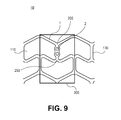
- polylactic acid molten at 115°C to 240°C it is possible to use polylactic acid molten at 115°C to 240°C to affix a radiomarker to the groove as illustrated in FIG. 9 .
- polylactic acid is molten at a temperature more than 240°C to adhere the radiomarker, the molecular weight of the polylactic acid molten is rapidly decreased, and polylactic acid molten at a temperature less than 115°C is not suitable because of low mechanical strength and high biodegradation rate.
- the melting point of polylactic acid used to affix the radio marker in the affixing of the radio marker exceeds 115°C.
- the polylactic acid used herein has a melting point of 115°C or less, there is a disadvantage in that the mechanical strength is low and the biodegradation rate is fast.
- the stent When the stent is generally inserted into and present within body vessels, radiation such as X-ray is irradiated to the human body in order to know the position and the like of the polymeric stent.
- radiation such as X-ray is irradiated to the human body in order to know the position and the like of the polymeric stent.
- the polymeric stent since the polymeric stent is generally radiolucent and transmits radiation, the position cannot be detected by radiation.
- a radiomarker including a radiopaque material which reflects radiation may be attached or fused to one or more struts in the polymeric stent.
- a radiomarker 2 including a radiopaque material may be attached or fused to at least one strut 1 of a polymeric stent 10.
- the present specification provides a polymeric stent manufactured by the method for manufacturing a polymeric stent.
- the polydispersity index of the polymeric stent may be 1 to 2.
- the present specification provides a polymeric stent in which a pattern is formed using a second harmonic generator laser in which a wavelength of 940 nm to 1,552 nm is converted, and
- Equation 1 a variation in polydispersity index (PDI) represented by the following Equation 1 is 20% or less.
- Variation in Polydispersity Index % B - A A ⁇ 100 In Equation 1,
- A is a polydispersity index of a polymeric stent before a pattern is formed
- B is a polydispersity index of the polymeric stent after the pattern is formed.
- the polydispersity index of the polymeric stent may be 1 to 2.
- the present specification provides a polymeric stent in which a pattern is formed using a second harmonic generator laser in which a wavelength of 940 nm to 1,552 nm is converted,
- Equation 1 a variation in polydispersity index (PDI) represented by the following Equation 1 is 20% or less, and a variation in average molecular weight represented by the following Equation 2 is 20% or less.
- Variation in Polydispersity Index % B - A A ⁇ 100 In Equation 1,
- A is a polydispersity index of a polymeric stent before a pattern is formed
- C is an average molecular weight of a polymeric stent before a pattern is formed
- D is an average molecular weight of the polymeric stent after the pattern is formed.
- the present specification provides a polymeric stent in which a pattern is formed using a second harmonic generator laser in which a wavelength of 940 nm to 1,552 nm is converted, and
- Equation 2 a variation in average molecular weight represented by the following Equation 2 is 20% or less.
- Variation in Average Molecular Weight % D - C C ⁇ 100 In Equation 2,
- C is an average molecular weight of a polymeric stent before a pattern is formed
- D is an average molecular weight of the polymeric stent after the pattern is formed.
- the description on the polymeric stent is the same as what is described above in the method for manufacturing a polymeric stent.
- a second harmonic generator was used to convert a laser having a wavelength of 1,030 nm into a second harmonic generator laser having a wavelength of 515 nm and a pattern was formed on a polylactic acid tube with a second harmonic generator laser having a wavelength of 515 nm.
- Physical properties of the laser having a wavelength of 1,030 nm are as follows.
- a process was performed in the same manner as in Example 1, except that a third harmonic generator was used to convert a laser having a wavelength of 1,030 nm into a third harmonic generator laser having a wavelength of 343 nm and a pattern was formed on a polylactic acid tube with a third harmonic generator laser having a wavelength of 343 nm.
- the third harmonic generator refers to a device which divides the wavelength of the laser into 1/3.
- a process was performed in the same manner as in Example 1, except that a pattern was formed on a polylactic acid tube with a laser having a wavelength of 1,030 nm without using the second harmonic generator.
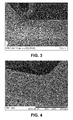
- Example 1 While forming the pattern with the laser in Example 1 and Comparative Examples 1 and 2, a surface exposed by cutting the polylactic acid tube was each captured by a scanning electron microscope (SEM) and observed.
- SEM scanning electron microscope
- FIGS. 1 to 3 A photograph taken of the cut surface of Example 1 is illustrated in FIGS. 1 to 3 .
- FIGS. 4 to 5 A photograph taken of the cut surface of Comparative Example 1 is illustrated in FIGS. 4 to 5 .
- FIG. 4 is a SEM photograph of Comparative Example 1, a connecting part of struts in a polymeric stent on which a pattern was formed was observed, and it can be seen that the surrounding portions of the cut surface of the strut were polymer-modified.
- FIG. 5 is a SEM photograph of Comparative Example 1, a cut surface of a polymeric stent on which a pattern was formed was observed, and it can be seen that the cut surface was relatively cleanly cut.
- FIG. 6 is a SEM photograph of Comparative Example 2, and it can be seen that the cut surface of the polymeric stent on which the pattern was formed was not clean and heat modification occurred at the cut surface.
- A is a polydispersity index of a polylactic acid (PLA) tube before a pattern is formed on the polylactic acid tube, and
- B is a polydispersity index of the polylactic acid (PLA) polymeric stent after the pattern is formed on the polylactic acid tube.
- Variation in Average Molecular Weight % C - D C ⁇ 100 In Equation 2,
- C is an average molecular weight of a polylactic acid tube before a pattern is formed
- D is an average molecular weight of the polymeric stent after the pattern is formed.
- HFIP gel column (Agilent) was used as a column in the measurement of GPC, and a solution in which 10 mM of sodium trifluoroacetate was dissolved in hexafluoroisopropanol (HFIP) was used as an eluent at a transport speed of 0.2 ml/min.
- Example 1 As shown in Table 1, it can be seen that in Example 1, there was almost no change in variation in the molecular weight after a pattern was formed.
- Comparative Example 2 it can be seen that a variation in polydispersity index was significant, and as a result, it can be seen that the distribution of molecular weights was broadened.
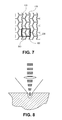
- An ultra-short pulse laser (laser having a pulse width of pico seconds or less) was used to form a groove in a strut of a polylactic acid stent as illustrated in FIG. 8 .
- a melt gun by which polylactic acid was molten at a temperature 115°C to 240°C was used to adhere the radiomarker to a strut of a polylactic acid stent in which the groove is formed, as illustrated in FIG. 9 .
- polylactic acid When polylactic acid is molten at a temperature more than 240°C to adhere the radiomarker, the molecular weight of polylactic acid is rapidly decreased, and polylactic acid molten at less than 115°C is not suitable because of low mechanical strength and high biodegradation rate.
- the numbers represent the following structures: (1) strut; (2) radiomarker; (10) polymeric stent; (110) unit cell; (130) linker portion; (200) first hinge portion; (250) second hinge portion; and (300) repeating unit.
Landscapes
- Engineering & Computer Science (AREA)
- Physics & Mathematics (AREA)
- Health & Medical Sciences (AREA)
- Optics & Photonics (AREA)
- Plasma & Fusion (AREA)
- Mechanical Engineering (AREA)
- Biomedical Technology (AREA)
- Oral & Maxillofacial Surgery (AREA)
- Toxicology (AREA)
- Life Sciences & Earth Sciences (AREA)
- Animal Behavior & Ethology (AREA)
- Cardiology (AREA)
- Transplantation (AREA)
- Heart & Thoracic Surgery (AREA)
- Vascular Medicine (AREA)
- Veterinary Medicine (AREA)
- Public Health (AREA)
- General Health & Medical Sciences (AREA)
- Thermal Sciences (AREA)
- Electromagnetism (AREA)
- Materials For Medical Uses (AREA)
- Media Introduction/Drainage Providing Device (AREA)
- Prostheses (AREA)
Applications Claiming Priority (1)
| Application Number | Priority Date | Filing Date | Title |
|---|---|---|---|
| KR20140022859A KR101489263B1 (ko) | 2014-02-26 | 2014-02-26 | 고분자 스텐트의 제조방법 및 폴리락트산 고분자 스텐트 |
Publications (3)
| Publication Number | Publication Date |
|---|---|
| EP2913032A2 true EP2913032A2 (de) | 2015-09-02 |
| EP2913032A3 EP2913032A3 (de) | 2015-10-07 |
| EP2913032B1 EP2913032B1 (de) | 2018-11-21 |
Family
ID=52590165
Family Applications (1)
| Application Number | Title | Priority Date | Filing Date |
|---|---|---|---|
| EP15156735.1A Active EP2913032B1 (de) | 2014-02-26 | 2015-02-26 | Polymerstent und Herstellungsverfahren dafür |
Country Status (3)
| Country | Link |
|---|---|
| US (3) | US9510961B2 (de) |
| EP (1) | EP2913032B1 (de) |
| KR (1) | KR101489263B1 (de) |
Families Citing this family (5)
| Publication number | Priority date | Publication date | Assignee | Title |
|---|---|---|---|---|
| WO2012137206A2 (en) * | 2011-04-04 | 2012-10-11 | Allium Medical Solutions Ltd. | System and method for manufacturing a stent |
| KR101489263B1 (ko) * | 2014-02-26 | 2015-02-04 | 썬텍 주식회사 | 고분자 스텐트의 제조방법 및 폴리락트산 고분자 스텐트 |
| US10010436B2 (en) | 2012-09-20 | 2018-07-03 | Dotter Intellectual Pte, Ltd. | Polymeric stent and methods of manufacturing the same |
| EP3613533A1 (de) * | 2018-08-24 | 2020-02-26 | Biotronik Ag | Verfahren zur herstellung eines implantats sowie durch das verfahren hergestelltes implantat |
| US12599966B2 (en) | 2020-11-24 | 2026-04-14 | Boston Scientific Scimed, Inc. | Additive mannufacturing of a medical device |
Family Cites Families (16)
| Publication number | Priority date | Publication date | Assignee | Title |
|---|---|---|---|---|
| DE69509927T2 (de) * | 1994-01-21 | 2000-01-27 | Shimadzu Corp., Kyoto | Methode zur Herstellung von Polymilchsäure |
| DK171865B1 (da) | 1995-09-11 | 1997-07-21 | Cook William Europ | Ekspanderbar endovasculær stent |
| US7671295B2 (en) | 2000-01-10 | 2010-03-02 | Electro Scientific Industries, Inc. | Processing a memory link with a set of at least two laser pulses |
| US6616689B1 (en) | 2000-05-03 | 2003-09-09 | Advanced Cardiovascular Systems, Inc. | Intravascular stent |
| US6517888B1 (en) * | 2000-11-28 | 2003-02-11 | Scimed Life Systems, Inc. | Method for manufacturing a medical device having a coated portion by laser ablation |
| US20040220660A1 (en) * | 2001-02-05 | 2004-11-04 | Shanley John F. | Bioresorbable stent with beneficial agent reservoirs |
| US6563080B2 (en) | 2001-02-15 | 2003-05-13 | Scimed Life Systems, Inc. | Laser cutting of stents and other medical devices |
| US7971333B2 (en) | 2006-05-30 | 2011-07-05 | Advanced Cardiovascular Systems, Inc. | Manufacturing process for polymetric stents |
| US20070034615A1 (en) | 2005-08-15 | 2007-02-15 | Klaus Kleine | Fabricating medical devices with an ytterbium tungstate laser |
| US20070156230A1 (en) * | 2006-01-04 | 2007-07-05 | Dugan Stephen R | Stents with radiopaque markers |
| US8002817B2 (en) | 2007-05-04 | 2011-08-23 | Abbott Cardiovascular Systems Inc. | Stents with high radial strength and methods of manufacturing same |
| US20090319031A1 (en) | 2008-06-19 | 2009-12-24 | Yunbing Wang | Bioabsorbable Polymeric Stent With Improved Structural And Molecular Weight Integrity |
| US8147744B2 (en) * | 2009-04-10 | 2012-04-03 | Abbott Cardiovascular Systems Inc. | Method of making a stent formed from crosslinked bioabsorbable polymer |
| US8679394B2 (en) * | 2010-06-10 | 2014-03-25 | Abbott Cardiovascular Systems Inc. | Laser system and processing conditions for manufacturing bioabsorbable stents |
| KR101489263B1 (ko) * | 2014-02-26 | 2015-02-04 | 썬텍 주식회사 | 고분자 스텐트의 제조방법 및 폴리락트산 고분자 스텐트 |
| GB2512016A (en) | 2012-09-24 | 2014-09-24 | Arterius Ltd | Methods |
-
2014
- 2014-02-26 KR KR20140022859A patent/KR101489263B1/ko active Active
-
2015
- 2015-02-19 US US14/626,584 patent/US9510961B2/en active Active
- 2015-02-26 EP EP15156735.1A patent/EP2913032B1/de active Active
-
2016
- 2016-09-30 US US15/282,500 patent/US10426645B2/en active Active
- 2016-10-31 US US15/338,890 patent/US20170042711A1/en not_active Abandoned
Non-Patent Citations (1)
| Title |
|---|
| None |
Also Published As
| Publication number | Publication date |
|---|---|
| EP2913032A3 (de) | 2015-10-07 |
| EP2913032B1 (de) | 2018-11-21 |
| US20170042711A1 (en) | 2017-02-16 |
| KR101489263B1 (ko) | 2015-02-04 |
| US20170014251A1 (en) | 2017-01-19 |
| US9510961B2 (en) | 2016-12-06 |
| US10426645B2 (en) | 2019-10-01 |
| US20150238335A1 (en) | 2015-08-27 |
Similar Documents
| Publication | Publication Date | Title |
|---|---|---|
| US10426645B2 (en) | Polymeric stent and methods of manufacturing the same | |
| KR101866911B1 (ko) | 높은 피로 및 방사 강도를 갖는 생흡수성 중합체 재질의 얇은 스트러트 스텐트 및 이의 제조방법 | |
| EP2874676B1 (de) | Periphere gerüste aus bioresorbierbarem formgedächtnispolymer | |
| EP2699206B1 (de) | Verfahren zur herstellung von stosselastischen polymergerüsten | |
| US7964136B2 (en) | Method of sterilizing polymeric struts and stents | |
| EP2707046B1 (de) | Steuerung des abbauprofils eines bioresorbierbaren poly(l-lactid)-gerüstes | |
| EP2752173A1 (de) | Gegen Quetschung unempfindliche Polymerstents | |
| EP2627363B1 (de) | Verfahren zur minimierung von kettenaufspaltung und monomergenerierung bei der bearbeitung von poly(l-lactid)-stents | |
| US20080269874A1 (en) | Implantable medical devices fabricated from polymers with radiopaque groups | |
| CA2516799A1 (en) | Intraluminal prostheses having polymeric material with selectively modified crystallinity and mthods of making same | |
| EP2134381A2 (de) | Implantierbare medizinische vorrichtungen aus blockcopolymeren | |
| EP2701894A1 (de) | Konditionierung von polymeren medizinischen vorrichtungen nach einer elektronenstrahlsterilisation | |
| JP6342387B2 (ja) | ポリ(l−ラクチド)と親水性ポリマーとのブロックコポリマーでできている生体吸収性ポリマーに関連したスキャフォールド | |
| CN106659822A (zh) | 形成聚合物支架结构的溶剂方法 | |
| US10004619B2 (en) | Polymeric stent and methods of manufacturing the same | |
| US10099431B2 (en) | Method to increase radial strength of a bioresorbable scaffold | |
| JP2018512201A (ja) | 光活性基を有する生体内分解性ポリマー系医療用デバイス | |
| HK1186991A (en) | Method to minimize chain scission and monomer generation in processing of poly(l-lactide) stent | |
| HK1186991B (en) | Method to minimize chain scission and monomer generation in processing of poly(l-lactide) stent |
Legal Events
| Date | Code | Title | Description |
|---|---|---|---|
| PUAI | Public reference made under article 153(3) epc to a published international application that has entered the european phase |
Free format text: ORIGINAL CODE: 0009012 |
|
| AK | Designated contracting states |
Kind code of ref document: A2 Designated state(s): AL AT BE BG CH CY CZ DE DK EE ES FI FR GB GR HR HU IE IS IT LI LT LU LV MC MK MT NL NO PL PT RO RS SE SI SK SM TR |
|
| AX | Request for extension of the european patent |
Extension state: BA ME |
|
| PUAL | Search report despatched |
Free format text: ORIGINAL CODE: 0009013 |
|
| AK | Designated contracting states |
Kind code of ref document: A3 Designated state(s): AL AT BE BG CH CY CZ DE DK EE ES FI FR GB GR HR HU IE IS IT LI LT LU LV MC MK MT NL NO PL PT RO RS SE SI SK SM TR |
|
| AX | Request for extension of the european patent |
Extension state: BA ME |
|
| RIC1 | Information provided on ipc code assigned before grant |
Ipc: B23K 26/40 20140101ALI20150902BHEP Ipc: A61F 2/91 20130101AFI20150902BHEP |
|
| 17P | Request for examination filed |
Effective date: 20160407 |
|
| RBV | Designated contracting states (corrected) |
Designated state(s): AL AT BE BG CH CY CZ DE DK EE ES FI FR GB GR HR HU IE IS IT LI LT LU LV MC MK MT NL NO PL PT RO RS SE SI SK SM TR |
|
| 17Q | First examination report despatched |
Effective date: 20160502 |
|
| STAA | Information on the status of an ep patent application or granted ep patent |
Free format text: STATUS: EXAMINATION IS IN PROGRESS |
|
| REG | Reference to a national code |
Ref country code: DE Ref legal event code: R079 Ref document number: 602015019962 Country of ref document: DE Free format text: PREVIOUS MAIN CLASS: A61F0002910000 Ipc: A61F0002820000 |
|
| RIC1 | Information provided on ipc code assigned before grant |
Ipc: B29C 59/16 20060101ALI20180323BHEP Ipc: B23K 26/38 20140101ALI20180323BHEP Ipc: A61F 2/82 20130101AFI20180323BHEP Ipc: B23K 26/0622 20140101ALI20180323BHEP Ipc: B29L 31/00 20060101ALI20180323BHEP Ipc: B29C 35/08 20060101ALI20180323BHEP Ipc: B23K 101/02 20060101ALI20180323BHEP Ipc: B23K 26/067 20060101ALI20180323BHEP Ipc: B29K 67/00 20060101ALI20180323BHEP Ipc: A61F 2/915 20130101ALI20180323BHEP Ipc: B23K 103/00 20060101ALI20180323BHEP |
|
| GRAP | Despatch of communication of intention to grant a patent |
Free format text: ORIGINAL CODE: EPIDOSNIGR1 |
|
| STAA | Information on the status of an ep patent application or granted ep patent |
Free format text: STATUS: GRANT OF PATENT IS INTENDED |
|
| INTG | Intention to grant announced |
Effective date: 20180622 |
|
| RAP1 | Party data changed (applicant data changed or rights of an application transferred) |
Owner name: DOTTER INTELLECTUAL PTE. LTD. |
|
| GRAS | Grant fee paid |
Free format text: ORIGINAL CODE: EPIDOSNIGR3 |
|
| GRAA | (expected) grant |
Free format text: ORIGINAL CODE: 0009210 |
|
| STAA | Information on the status of an ep patent application or granted ep patent |
Free format text: STATUS: THE PATENT HAS BEEN GRANTED |
|
| AK | Designated contracting states |
Kind code of ref document: B1 Designated state(s): AL AT BE BG CH CY CZ DE DK EE ES FI FR GB GR HR HU IE IS IT LI LT LU LV MC MK MT NL NO PL PT RO RS SE SI SK SM TR |
|
| REG | Reference to a national code |
Ref country code: CH Ref legal event code: EP Ref country code: CH Ref legal event code: NV Representative=s name: VALIPAT S.A. GEVERS SA, CH |
|
| REG | Reference to a national code |
Ref country code: IE Ref legal event code: FG4D |
|
| REG | Reference to a national code |
Ref country code: DE Ref legal event code: R096 Ref document number: 602015019962 Country of ref document: DE |
|
| REG | Reference to a national code |
Ref country code: AT Ref legal event code: REF Ref document number: 1066659 Country of ref document: AT Kind code of ref document: T Effective date: 20181215 |
|
| REG | Reference to a national code |
Ref country code: NL Ref legal event code: MP Effective date: 20181121 |
|
| REG | Reference to a national code |
Ref country code: CH Ref legal event code: PCAR Free format text: NEW ADDRESS: RUE DES NOYERS 11, 2000 NEUCHATEL (CH) |
|
| REG | Reference to a national code |
Ref country code: AT Ref legal event code: MK05 Ref document number: 1066659 Country of ref document: AT Kind code of ref document: T Effective date: 20181121 |
|
| PG25 | Lapsed in a contracting state [announced via postgrant information from national office to epo] |
Ref country code: IS Free format text: LAPSE BECAUSE OF FAILURE TO SUBMIT A TRANSLATION OF THE DESCRIPTION OR TO PAY THE FEE WITHIN THE PRESCRIBED TIME-LIMIT Effective date: 20190321 Ref country code: FI Free format text: LAPSE BECAUSE OF FAILURE TO SUBMIT A TRANSLATION OF THE DESCRIPTION OR TO PAY THE FEE WITHIN THE PRESCRIBED TIME-LIMIT Effective date: 20181121 Ref country code: LV Free format text: LAPSE BECAUSE OF FAILURE TO SUBMIT A TRANSLATION OF THE DESCRIPTION OR TO PAY THE FEE WITHIN THE PRESCRIBED TIME-LIMIT Effective date: 20181121 Ref country code: HR Free format text: LAPSE BECAUSE OF FAILURE TO SUBMIT A TRANSLATION OF THE DESCRIPTION OR TO PAY THE FEE WITHIN THE PRESCRIBED TIME-LIMIT Effective date: 20181121 Ref country code: AT Free format text: LAPSE BECAUSE OF FAILURE TO SUBMIT A TRANSLATION OF THE DESCRIPTION OR TO PAY THE FEE WITHIN THE PRESCRIBED TIME-LIMIT Effective date: 20181121 Ref country code: BG Free format text: LAPSE BECAUSE OF FAILURE TO SUBMIT A TRANSLATION OF THE DESCRIPTION OR TO PAY THE FEE WITHIN THE PRESCRIBED TIME-LIMIT Effective date: 20190221 Ref country code: NO Free format text: LAPSE BECAUSE OF FAILURE TO SUBMIT A TRANSLATION OF THE DESCRIPTION OR TO PAY THE FEE WITHIN THE PRESCRIBED TIME-LIMIT Effective date: 20190221 Ref country code: ES Free format text: LAPSE BECAUSE OF FAILURE TO SUBMIT A TRANSLATION OF THE DESCRIPTION OR TO PAY THE FEE WITHIN THE PRESCRIBED TIME-LIMIT Effective date: 20181121 Ref country code: LT Free format text: LAPSE BECAUSE OF FAILURE TO SUBMIT A TRANSLATION OF THE DESCRIPTION OR TO PAY THE FEE WITHIN THE PRESCRIBED TIME-LIMIT Effective date: 20181121 |
|
| PG25 | Lapsed in a contracting state [announced via postgrant information from national office to epo] |
Ref country code: PT Free format text: LAPSE BECAUSE OF FAILURE TO SUBMIT A TRANSLATION OF THE DESCRIPTION OR TO PAY THE FEE WITHIN THE PRESCRIBED TIME-LIMIT Effective date: 20190321 Ref country code: AL Free format text: LAPSE BECAUSE OF FAILURE TO SUBMIT A TRANSLATION OF THE DESCRIPTION OR TO PAY THE FEE WITHIN THE PRESCRIBED TIME-LIMIT Effective date: 20181121 Ref country code: NL Free format text: LAPSE BECAUSE OF FAILURE TO SUBMIT A TRANSLATION OF THE DESCRIPTION OR TO PAY THE FEE WITHIN THE PRESCRIBED TIME-LIMIT Effective date: 20181121 Ref country code: GR Free format text: LAPSE BECAUSE OF FAILURE TO SUBMIT A TRANSLATION OF THE DESCRIPTION OR TO PAY THE FEE WITHIN THE PRESCRIBED TIME-LIMIT Effective date: 20190222 Ref country code: SE Free format text: LAPSE BECAUSE OF FAILURE TO SUBMIT A TRANSLATION OF THE DESCRIPTION OR TO PAY THE FEE WITHIN THE PRESCRIBED TIME-LIMIT Effective date: 20181121 Ref country code: RS Free format text: LAPSE BECAUSE OF FAILURE TO SUBMIT A TRANSLATION OF THE DESCRIPTION OR TO PAY THE FEE WITHIN THE PRESCRIBED TIME-LIMIT Effective date: 20181121 |
|
| PG25 | Lapsed in a contracting state [announced via postgrant information from national office to epo] |
Ref country code: CZ Free format text: LAPSE BECAUSE OF FAILURE TO SUBMIT A TRANSLATION OF THE DESCRIPTION OR TO PAY THE FEE WITHIN THE PRESCRIBED TIME-LIMIT Effective date: 20181121 Ref country code: DK Free format text: LAPSE BECAUSE OF FAILURE TO SUBMIT A TRANSLATION OF THE DESCRIPTION OR TO PAY THE FEE WITHIN THE PRESCRIBED TIME-LIMIT Effective date: 20181121 Ref country code: PL Free format text: LAPSE BECAUSE OF FAILURE TO SUBMIT A TRANSLATION OF THE DESCRIPTION OR TO PAY THE FEE WITHIN THE PRESCRIBED TIME-LIMIT Effective date: 20181121 |
|
| REG | Reference to a national code |
Ref country code: DE Ref legal event code: R097 Ref document number: 602015019962 Country of ref document: DE |
|
| PG25 | Lapsed in a contracting state [announced via postgrant information from national office to epo] |
Ref country code: EE Free format text: LAPSE BECAUSE OF FAILURE TO SUBMIT A TRANSLATION OF THE DESCRIPTION OR TO PAY THE FEE WITHIN THE PRESCRIBED TIME-LIMIT Effective date: 20181121 Ref country code: SM Free format text: LAPSE BECAUSE OF FAILURE TO SUBMIT A TRANSLATION OF THE DESCRIPTION OR TO PAY THE FEE WITHIN THE PRESCRIBED TIME-LIMIT Effective date: 20181121 Ref country code: RO Free format text: LAPSE BECAUSE OF FAILURE TO SUBMIT A TRANSLATION OF THE DESCRIPTION OR TO PAY THE FEE WITHIN THE PRESCRIBED TIME-LIMIT Effective date: 20181121 Ref country code: SK Free format text: LAPSE BECAUSE OF FAILURE TO SUBMIT A TRANSLATION OF THE DESCRIPTION OR TO PAY THE FEE WITHIN THE PRESCRIBED TIME-LIMIT Effective date: 20181121 |
|
| PLBE | No opposition filed within time limit |
Free format text: ORIGINAL CODE: 0009261 |
|
| STAA | Information on the status of an ep patent application or granted ep patent |
Free format text: STATUS: NO OPPOSITION FILED WITHIN TIME LIMIT |
|
| 26N | No opposition filed |
Effective date: 20190822 |
|
| PG25 | Lapsed in a contracting state [announced via postgrant information from national office to epo] |
Ref country code: LU Free format text: LAPSE BECAUSE OF NON-PAYMENT OF DUE FEES Effective date: 20190226 Ref country code: MC Free format text: LAPSE BECAUSE OF FAILURE TO SUBMIT A TRANSLATION OF THE DESCRIPTION OR TO PAY THE FEE WITHIN THE PRESCRIBED TIME-LIMIT Effective date: 20181121 Ref country code: SI Free format text: LAPSE BECAUSE OF FAILURE TO SUBMIT A TRANSLATION OF THE DESCRIPTION OR TO PAY THE FEE WITHIN THE PRESCRIBED TIME-LIMIT Effective date: 20181121 |
|
| REG | Reference to a national code |
Ref country code: BE Ref legal event code: MM Effective date: 20190228 |
|
| REG | Reference to a national code |
Ref country code: IE Ref legal event code: MM4A |
|
| PG25 | Lapsed in a contracting state [announced via postgrant information from national office to epo] |
Ref country code: IE Free format text: LAPSE BECAUSE OF NON-PAYMENT OF DUE FEES Effective date: 20190226 |
|
| PG25 | Lapsed in a contracting state [announced via postgrant information from national office to epo] |
Ref country code: BE Free format text: LAPSE BECAUSE OF NON-PAYMENT OF DUE FEES Effective date: 20190228 |
|
| PG25 | Lapsed in a contracting state [announced via postgrant information from national office to epo] |
Ref country code: TR Free format text: LAPSE BECAUSE OF FAILURE TO SUBMIT A TRANSLATION OF THE DESCRIPTION OR TO PAY THE FEE WITHIN THE PRESCRIBED TIME-LIMIT Effective date: 20181121 |
|
| PG25 | Lapsed in a contracting state [announced via postgrant information from national office to epo] |
Ref country code: MT Free format text: LAPSE BECAUSE OF NON-PAYMENT OF DUE FEES Effective date: 20190226 |
|
| PG25 | Lapsed in a contracting state [announced via postgrant information from national office to epo] |
Ref country code: CY Free format text: LAPSE BECAUSE OF FAILURE TO SUBMIT A TRANSLATION OF THE DESCRIPTION OR TO PAY THE FEE WITHIN THE PRESCRIBED TIME-LIMIT Effective date: 20181121 |
|
| PG25 | Lapsed in a contracting state [announced via postgrant information from national office to epo] |
Ref country code: HU Free format text: LAPSE BECAUSE OF FAILURE TO SUBMIT A TRANSLATION OF THE DESCRIPTION OR TO PAY THE FEE WITHIN THE PRESCRIBED TIME-LIMIT; INVALID AB INITIO Effective date: 20150226 |
|
| PG25 | Lapsed in a contracting state [announced via postgrant information from national office to epo] |
Ref country code: MK Free format text: LAPSE BECAUSE OF FAILURE TO SUBMIT A TRANSLATION OF THE DESCRIPTION OR TO PAY THE FEE WITHIN THE PRESCRIBED TIME-LIMIT Effective date: 20181121 |
|
| REG | Reference to a national code |
Ref country code: DE Ref legal event code: R081 Ref document number: 602015019962 Country of ref document: DE Owner name: DOTTER INC., KR Free format text: FORMER OWNER: DOTTER INTELLECTUAL PTE. LTD., SINGAPORE, SG |
|
| REG | Reference to a national code |
Ref country code: GB Ref legal event code: 732E Free format text: REGISTERED BETWEEN 20230119 AND 20230125 |
|
| PGFP | Annual fee paid to national office [announced via postgrant information from national office to epo] |
Ref country code: CH Payment date: 20250306 Year of fee payment: 11 |
|
| REG | Reference to a national code |
Ref country code: CH Ref legal event code: R18 Free format text: ST27 STATUS EVENT CODE: U-0-0-R10-R18 (AS PROVIDED BY THE NATIONAL OFFICE) Effective date: 20260209 |
|
| REG | Reference to a national code |
Ref country code: CH Ref legal event code: U11 Free format text: ST27 STATUS EVENT CODE: U-0-0-U10-U11 (AS PROVIDED BY THE NATIONAL OFFICE) Effective date: 20260301 |
|
| REG | Reference to a national code |
Ref country code: CH Ref legal event code: R18 Free format text: ST27 STATUS EVENT CODE: U-0-0-R10-R18 (AS PROVIDED BY THE NATIONAL OFFICE) Effective date: 20260320 |
|
| PGFP | Annual fee paid to national office [announced via postgrant information from national office to epo] |
Ref country code: GB Payment date: 20260227 Year of fee payment: 12 |
|
| PGFP | Annual fee paid to national office [announced via postgrant information from national office to epo] |
Ref country code: DE Payment date: 20260227 Year of fee payment: 12 |
|
| PGFP | Annual fee paid to national office [announced via postgrant information from national office to epo] |
Ref country code: IT Payment date: 20260219 Year of fee payment: 12 |
|
| PGFP | Annual fee paid to national office [announced via postgrant information from national office to epo] |
Ref country code: FR Payment date: 20260225 Year of fee payment: 12 |