EP2912898B1 - Ausgabe von daten an eine drahtlose station - Google Patents
Ausgabe von daten an eine drahtlose station Download PDFInfo
- Publication number
- EP2912898B1 EP2912898B1 EP13802804.8A EP13802804A EP2912898B1 EP 2912898 B1 EP2912898 B1 EP 2912898B1 EP 13802804 A EP13802804 A EP 13802804A EP 2912898 B1 EP2912898 B1 EP 2912898B1
- Authority
- EP
- European Patent Office
- Prior art keywords
- access point
- association
- data
- wireless
- wireless station
- Prior art date
- Legal status (The legal status is an assumption and is not a legal conclusion. Google has not performed a legal analysis and makes no representation as to the accuracy of the status listed.)
- Active
Links
Images



Classifications
-
- H—ELECTRICITY
- H04—ELECTRIC COMMUNICATION TECHNIQUE
- H04W—WIRELESS COMMUNICATION NETWORKS
- H04W72/00—Local resource management
- H04W72/02—Selection of wireless resources by user or terminal
-
- H—ELECTRICITY
- H04—ELECTRIC COMMUNICATION TECHNIQUE
- H04W—WIRELESS COMMUNICATION NETWORKS
- H04W52/00—Power management, e.g. Transmission Power Control [TPC] or power classes
- H04W52/02—Power saving arrangements
- H04W52/0203—Power saving arrangements in the radio access network or backbone network of wireless communication networks
- H04W52/0206—Power saving arrangements in the radio access network or backbone network of wireless communication networks in access points, e.g. base stations
-
- H—ELECTRICITY
- H04—ELECTRIC COMMUNICATION TECHNIQUE
- H04B—TRANSMISSION
- H04B1/00—Details of transmission systems, not covered by a single one of groups H04B3/00 - H04B13/00; Details of transmission systems not characterised by the medium used for transmission
- H04B1/69—Spread spectrum techniques
- H04B1/713—Spread spectrum techniques using frequency hopping
- H04B1/7156—Arrangements for sequence synchronisation
-
- H—ELECTRICITY
- H04—ELECTRIC COMMUNICATION TECHNIQUE
- H04W—WIRELESS COMMUNICATION NETWORKS
- H04W52/00—Power management, e.g. Transmission Power Control [TPC] or power classes
- H04W52/02—Power saving arrangements
- H04W52/0209—Power saving arrangements in terminal devices
- H04W52/0212—Power saving arrangements in terminal devices managed by the network, e.g. network or access point is leader and terminal is follower
- H04W52/0216—Power saving arrangements in terminal devices managed by the network, e.g. network or access point is leader and terminal is follower using a pre-established activity schedule, e.g. traffic indication frame
-
- H—ELECTRICITY
- H04—ELECTRIC COMMUNICATION TECHNIQUE
- H04W—WIRELESS COMMUNICATION NETWORKS
- H04W52/00—Power management, e.g. Transmission Power Control [TPC] or power classes
- H04W52/02—Power saving arrangements
- H04W52/0209—Power saving arrangements in terminal devices
- H04W52/0212—Power saving arrangements in terminal devices managed by the network, e.g. network or access point is leader and terminal is follower
- H04W52/0219—Power saving arrangements in terminal devices managed by the network, e.g. network or access point is leader and terminal is follower where the power saving management affects multiple terminals
-
- H—ELECTRICITY
- H04—ELECTRIC COMMUNICATION TECHNIQUE
- H04W—WIRELESS COMMUNICATION NETWORKS
- H04W68/00—User notification, e.g. alerting and paging, for incoming communication, change of service or the like
- H04W68/02—Arrangements for increasing efficiency of notification or paging channel
- H04W68/025—Indirect paging
-
- H—ELECTRICITY
- H04—ELECTRIC COMMUNICATION TECHNIQUE
- H04W—WIRELESS COMMUNICATION NETWORKS
- H04W72/00—Local resource management
- H04W72/04—Wireless resource allocation
-
- H—ELECTRICITY
- H04—ELECTRIC COMMUNICATION TECHNIQUE
- H04W—WIRELESS COMMUNICATION NETWORKS
- H04W74/00—Wireless channel access
- H04W74/04—Scheduled access
-
- H—ELECTRICITY
- H04—ELECTRIC COMMUNICATION TECHNIQUE
- H04W—WIRELESS COMMUNICATION NETWORKS
- H04W74/00—Wireless channel access
- H04W74/04—Scheduled access
- H04W74/06—Scheduled access using polling
-
- H—ELECTRICITY
- H04—ELECTRIC COMMUNICATION TECHNIQUE
- H04L—TRANSMISSION OF DIGITAL INFORMATION, e.g. TELEGRAPHIC COMMUNICATION
- H04L41/00—Arrangements for maintenance, administration or management of data switching networks, e.g. of packet switching networks
- H04L41/50—Network service management, e.g. ensuring proper service fulfilment according to agreements
- H04L41/5003—Managing SLA; Interaction between SLA and QoS
-
- H—ELECTRICITY
- H04—ELECTRIC COMMUNICATION TECHNIQUE
- H04L—TRANSMISSION OF DIGITAL INFORMATION, e.g. TELEGRAPHIC COMMUNICATION
- H04L61/00—Network arrangements, protocols or services for addressing or naming
- H04L61/09—Mapping addresses
- H04L61/10—Mapping addresses of different types
-
- H—ELECTRICITY
- H04—ELECTRIC COMMUNICATION TECHNIQUE
- H04W—WIRELESS COMMUNICATION NETWORKS
- H04W74/00—Wireless channel access
- H04W74/08—Non-scheduled access, e.g. ALOHA
- H04W74/0808—Non-scheduled access, e.g. ALOHA using carrier sensing, e.g. carrier sense multiple access [CSMA]
- H04W74/0816—Non-scheduled access, e.g. ALOHA using carrier sensing, e.g. carrier sense multiple access [CSMA] with collision avoidance
-
- H—ELECTRICITY
- H04—ELECTRIC COMMUNICATION TECHNIQUE
- H04W—WIRELESS COMMUNICATION NETWORKS
- H04W76/00—Connection management
- H04W76/20—Manipulation of established connections
- H04W76/28—Discontinuous transmission [DTX]; Discontinuous reception [DRX]
-
- H—ELECTRICITY
- H04—ELECTRIC COMMUNICATION TECHNIQUE
- H04W—WIRELESS COMMUNICATION NETWORKS
- H04W88/00—Devices specially adapted for wireless communication networks, e.g. terminals, base stations or access point devices
- H04W88/08—Access point devices
-
- Y—GENERAL TAGGING OF NEW TECHNOLOGICAL DEVELOPMENTS; GENERAL TAGGING OF CROSS-SECTIONAL TECHNOLOGIES SPANNING OVER SEVERAL SECTIONS OF THE IPC; TECHNICAL SUBJECTS COVERED BY FORMER USPC CROSS-REFERENCE ART COLLECTIONS [XRACs] AND DIGESTS
- Y02—TECHNOLOGIES OR APPLICATIONS FOR MITIGATION OR ADAPTATION AGAINST CLIMATE CHANGE
- Y02D—CLIMATE CHANGE MITIGATION TECHNOLOGIES IN INFORMATION AND COMMUNICATION TECHNOLOGIES [ICT], I.E. INFORMATION AND COMMUNICATION TECHNOLOGIES AIMING AT THE REDUCTION OF THEIR OWN ENERGY USE
- Y02D30/00—Reducing energy consumption in communication networks
- Y02D30/70—Reducing energy consumption in communication networks in wireless communication networks
Definitions
- the present disclosure is related generally to wireless signals and, more particularly, to delivering data to a wireless station.
- an access point e.g., a Wi-Fi router
- An access point is a device that allows wireless devices, such as wireless sensors, to connect to a wired network, such as the Internet.
- the application server sends data to a wireless sensor
- the data are first buffered by the associated access point until the wireless device comes out of low-power mode.
- the access point When a wireless station comes out of low-power mode, the access point lets the wireless station know that the access point has buffered data for that wireless station. Typically, the access point does this by broadcasting a unique identifier associated with each such wireless station. However, if large number of wireless devices (e.g., thousands of sensors deployed in a building) require frequent updates, the list of unique identifiers is long. As a result, each wireless device may need to stay awake for extended periods of time, thereby reducing battery life.
- US2005/122936 A1 , US 2012/063335 A1 , US 2010/265864 A1 and EP 1 499 144 A1 address this problem by segmenting the population of wireless stations into a plurality of groups such that the access point can transmit a traffic indication message that comprises the group identifier of the group of wireless stations it addresses together with a plurality of abbreviated wireless station identifiers belonging to the respective group of wireless stations.
- a Wi-Fi router receives a plurality of connection requests from a plurality of gas or electric utility meters. In response, the Wi-Fi router transmits a unique identifier to each of the meters. Because the wireless meters are typically battery powered and cycling in and out of a sleep mode, the Wi-Fi router buffers data coming from a utility company for the wireless meters (e.g., a firmware update). If the number of meters with buffered data at the Wi-Fi router is relatively low, then the Wi-Fi router transmits an explicit list of meter identifiers indicating that buffered data are held for each meter identified by the list.
- a utility company e.g., a firmware update
- the Wi-Fi router transmits data indicative of a range of meter identifiers indicating that buffered data may be held for each meter identified by the range.
- transmitting a range of association identifiers when the number of wireless stations with buffered data at the access point is large allows the wake-up message to be short, thereby reducing the number of signaling intervals needed to notify a large population of wireless stations that buffered data are held by the access point.
- transmitting an explicit list of association identifiers when the number of wireless stations with buffered data is short maximizes the number of wireless stations from amongst a large population of wireless stations that may be notified during a single signaling attempt, thereby avoiding notification delays occurring when sparse bitmaps are sent in different signaling intervals to wake up a batch of wireless stations with dissimilar low-power association identifiers and dissimilar wake-up periods.
- the stations can request, via a skip-rate value in the association request, a degree of sleeping that the station is to utilize.
- the access point can then schedule the station to the requested skip-rate value or an alternate value in conjunction with an offset value to allow the station to determine which data delivery periods the station should look for an address of the station to be presented in the address list schemes presented herein.
- the access point transmits a skip-rate count with every data-delivery beacon. Stations can then determine their next period of delivery by taking the broadcast skip-rate counter value and performing a modulo operation with the assigned skip rate and comparing the remainder with the assigned offset value. This permits the access point to balance the station delivery periods over a number of sequential delivery periods while permitting to the stations extended sleep intervals.
- a controller is structured to transmit polling information to indicate that each wireless station identified by the list should poll for the buffered data.
- the controller is structured to transmit schedule information indicating that each wireless station identified by the range should wake up at a scheduled wake-up time to begin receiving an associated portion of the buffered data.
- the scheduled wake-up time is responsive to a delivery interval.
- the controller is structured to transmit a skip-rate counter for each delivery beacon. Based on the value of this skip-rate counter, the controller is able to consider for inclusion those stations that have computationally correct skip rate and offset values that have buffered data availability and a synchronization point associated with at least one of the plurality of wireless stations.
- a skip-rate counter of 67 indicates that data for stations with a skip rate of 8 and offset 3 are included in the delivery period. In that same period, devices with buffered data with a skip rate of 12 and an offset of 7 are similarly included.
- the controller is structured to transmit a skip-rate counter to be used by the wireless station by matching the offset value and the remainder of the skip-rate counter modulo the skip rate.
- reporting buffered data availability is limited to wireless stations that have a skip rate and an offset value aligned with a current cycle value.
- the controller is structured to receive a request from a wireless station to modify the skip rate, modify the offset value, and transmit the modified skip rate and the modified offset value to the wireless station.
- the controller is structured to determine that the number of wireless stations is greater than the threshold, and, in response, cause the transmitter to also transmit an indication that at least one wireless station in the range need not wake up at the scheduled time to receive buffered data.
- the controller is structured to cause the transmitter to transmit at least one low-power association identifier and at least one non-low-power association identifier.
- the controller is structured to cause the transmitter to transmit a delivery interval time indicative of a time between a transmission of first buffered data associated with a first wireless station and a transmission of second buffered data associated with a second wireless station.
- the controller is structured to cause the transmitter to transmit a skip rate indicative of a wake-up frequency associated with at least one of the plurality of wireless stations.
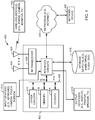
- FIG. 1 A block diagram of an exemplary wireless network communications system 100 is illustrated in Figure 1 .
- the example system 100 includes a plurality of wireless stations 102 which wirelessly communicate with a plurality of associated access points 104.
- the access point 104 is an 802.11-type router.
- Each access point 104 connects one or more wireless stations 102 to one or more application servers 106 via a network 108.
- Each wireless station 102 may be any suitable type of wireless device.
- the wireless station 102 is a sensor structured to take one or more types of physical measurements such as temperature, sound, pressure, humidity, light, gas flow, liquid flow, heart rate, etc.
- the wireless station 102 may be connected to an AC power source or the wireless station 102 may be battery powered.
- a plurality of battery-powered water-meter readers are placed in a neighborhood to periodically send water-meter readings to an application server 106 for storage in a database 110.
- FIG. 2 A diagram of portions of an example access point 104 for delivering data to a wireless station 102 is illustrated in Figure 2 .
- the access point 104 may be implemented in hardware or a combination of hardware and hardware executing software.
- at least a portion of the wireless device 102 is embodied in a CPU executing software.
- Other suitable hardware includes one or more application-specific integrated circuits, state machines, field-programmable gate arrays, or digital signal processors.
- an association receiver 202 receives a plurality of association requests 204 from a plurality of wireless stations 102. For example, 2000 gas meters and 2000 water meters may all attempt to link to a particular access point 104.
- An association transmitter 206 operatively coupled to the association receiver 202, then transmits a different association identifier in the association response 208 to each of the plurality of wireless stations 102.
- the access point 104 assigns each gas meter and each water meter a unique low-power ID.
- the association request 204 optionally includes a requested skip rate
- the association transmitter 206 optionally includes the same or a different value for an assigned skip rate and an offset value in the association response 208.
- the access point 104 maintains a list 216 of stations to permit it to hold the assigned association identifiers, skip rates, and offsets. It builds this list 216 as it assigns these values in the association responses 208.
- a data buffer 210 buffers data 212 for a subset of the plurality of wireless stations 102. For example, all of the water meters may need a firmware update, or a few water meters may need new instructions. For each delivery, a skip-rate counter 218 is updated and used in conjunction with the list of stations 216 in a data selector 220 to select the buffers of those wireless stations 102 that will be looking at the delivery beacon by computing the relevant modulo function for each of the plurality of wireless stations 102 and selecting those with matching offsets.
- the access point 104 determines if the number of wireless stations 102 with buffered data 212 is less than a certain threshold. For example, the access point 104 may determine that more than or less than 50 meters have buffered data 212 at the access point 104.
- a data transmitter 214 operatively coupled to the skip-rate counter 218 and to the data selector 220 transmits a list of association identifiers 222 indicating that buffered data 212 are held for each wireless station 102 identified by the list.
- the data transmitter 214 explicitly lists the low-power ID for all meters that need an update and indicates that each such wireless station 102 should poll for its buffered data.
- the number of bits required to transmit a list of association identifiers can be significantly less than the number of bits required to transmit a bitmap.
- the maximum length of a TIM bitmap in the IEEE 802.11 standard is 2008 bits, whereas transmitting 50 sixteen-bit low-power identifiers requires an 800-bit list, and these identifiers may represent a population of wireless stations far exceeding 2008.
- the data transmitter 214 transmits data indicative of a range of association identifiers indicating that buffered data 212 are held for each wireless station 102 identified by the range.
- the data transmitter 214 sends the association identifiers 222 for the bottom and the top of one or more ranges of meters, not all of which necessarily have buffered data 212, and indicates that each such wireless station 102 should wake up at a scheduled time to receive its buffered data 212, if any.
- the data transmitter 214 sends bitmaps for one or more ranges of low-power association identifiers indicating which stations have buffered data. Wireless stations 102 receiving a bitmap and having no data to receive may remain in sleep mode instead of waking up.
- FIG. 3 A block diagram of portions of an example wireless station 102 is illustrated in Figure 3 .
- the wireless station 102 may be implemented in hardware or a combination of hardware and software according to the possibilities described above with reference to the access point 104.
- the wireless station 102 includes an association requester 302 operatively coupled to an association receiver 304.
- the association requester 302 transmits an association request 204, which optionally includes a requested skip rate, to an access point 104, and the association receiver 304 receives an association identifier, skip rate, and offset values in the association response 208 from the access point 104.
- the access point 104 may transmit an explicit list of association identifiers 222 (e.g., when the list is relatively short), or the access point 104 may transmit the boundaries of one or more ranges of association identifiers 222 (e.g., when the list is relatively long).
- the access point 104 when transmitting the boundaries of the one or more ranges of association identifiers, the access point 104 identifies a range using a bottom low-power ID and a value indicating the number of wireless stations in the bitmap. In another example, the access point 104 identifies a range using a bottom and a top low-power ID.
- a short-delay scheduler 306 operatively coupled to the association receiver 304 programs a sleep timer 310 operatively coupled to the short-delay scheduler 306, with a wake-up time 308, and the wireless station 102 enters a power-save (sleep) mode to conserve battery power until the earliest time that the buffered data 212 for that wireless station 102 may start being transmitted.
- the range may include hundreds of wireless stations 102 each of which has buffered data 212.
- the sleep timer 310 then wakes 312 the wireless station 102 up from the power-save mode at or before the scheduled time in order to start monitoring for the buffered data 212 with its address from the access point 104 via a data receiver 314 operatively coupled to the sleep timer 310.
- the short-delay scheduler 306 which is operatively coupled to the association receiver 304, wakes up the wireless station and transmits a poll message to the access point 104 requesting the immediate delivery of buffered data. If the association identifier from the association response 208 associated with a wireless station 102 is in an explicit list of association identifiers 222 received from the access point 104, then the wireless station 102 may poll the access point 104 for the buffered data 212.
- the wireless station 102 may use these values in a skip scheduler 316.
- the skip scheduler 316 may monitor the skip-rate counter 218 value received from the data receiver 314 to determine when the next expected delivery period may occur and inform the data receiver 314 with an appropriate skip indication 318. This permits the data receiver 314 to shut down until the next expected delivery period.
- FIG. 4 A block diagram of an example computing device 400 that may be used to transmit or receive data to or from a wireless station 102 is illustrated in Figure 4 .
- the computing device 400 may be a wireless station 102, an access point 104, or any other suitable device.
- the example electrical device 400 includes a main unit 402 which may include, if desired, one or more processors 404 electrically coupled by an address/data bus 406 to one or more memories 408, other computer circuitry 410, and one or more interface circuits 412.
- the processor 404 may be any suitable processor or plurality of processors.
- the electrical device 400 may include a CPU or a graphics processing unit.
- the memory 408 may include various types of non-transitory memory including volatile memory or non-volatile memory such as, but not limited to, distributed memory, read-only memory, random-access memory, etc.
- the memory 408 typically stores a software program that interacts with the other devices in the system as described herein. This program may be executed by the processor 404 in any suitable manner.
- the memory 408 may also store digital data indicative of documents, files, programs, web pages, etc., retrieved from a server or loaded via an input device 414.
- the interface circuit 412 may be implemented using any suitable interface standard, such as an Ethernet interface or a Universal Serial Bus interface.
- One or more input devices 414 may be connected to the interface circuit 412 for entering data and commands into the main unit 402.
- the input device 414 may be a keyboard, mouse, touch screen, track pad, isopoint, camera, or a voice-recognition system.
- One or more displays, printers, speakers, monitors, televisions, high-definition televisions, or other suitable output devices 416 may also be connected to the main unit 402 via the interface circuit 412.
- the display 416 may be a cathode ray tube, liquid crystal display, or any other type of suitable display.
- the display 416 generates visual displays of data generated during operation of the device 400.
- the display 416 may be used to display web pages or other content received from a server.
- the visual displays may include prompts for human input, run-time statistics, calculated values, data, etc.
- One or more storage devices 418 may also be connected to the main unit 402 via the interface circuit 412.
- a hard drive, CD drive, DVD drive, or other storage device may be connected to the main unit 402.
- the storage devices 418 may store any type of data used by the device 400.
- the electrical device 400 may also exchange data with other network devices 422 via a connection to a network.
- the network connection may be any type of network connection, such as an Ethernet connection, digital subscriber line, telephone line, coaxial cable, etc.
- Users of the system may be required to register with a server. In such an instance, each user may choose a user identifier (e.g., e-mail address) and a password which may be required for the activation of services.
- the user identifier and password may be passed across the network using encryption built into the user's browser. Alternatively, the user identifier or password may be assigned by the server.
- the device 400 is a wireless device.
- the device 400 may include one or more antennas 424 connected to one or more radio frequency transceivers 426.
- the transceiver 426 may include one or more receivers and one or more transmitters.
- the transceiver 426 may be a cellular transceiver.
- the transceiver 426 allows the device 400 to exchange signals, such as voice, video, and data, with other wireless devices 428, such as a phone, camera, monitor, television, or high-definition television.
- the device may send and receive wireless telephone signals, text messages, audio signals, and video signals.
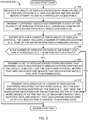
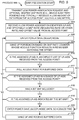
- FIG. 5 A flowchart of an example process 500 for delivering data to a wireless station 102 is illustrated in Figure 5 .
- the process 500 may be carried out by one or more suitably programmed controllers or processors executing software (e.g., block 404 of Figure 4 ).
- the process 500 may also be embodied in hardware or a combination of hardware and software according to the possibilities described above with reference to the access point 104.
- the process 500 is described with reference to the flowchart illustrated in Figure 5 , it will be appreciated that many other methods of performing the acts associated with process 500 may be used. For example, the order of many of the operations may be changed, and some of the operations described may be optional.
- an access point 104 receives a plurality of association requests from a plurality of wireless stations 102 and transmits a different association identifier to each of the plurality of wireless stations 102. Because the wireless stations 102 are typically battery powered and cycling in and out of a sleep mode, the access point 104 buffers data coming from one or more application servers 106 for the wireless stations 102. If the number of wireless stations 102 with buffered data at the access point 104 is less than a threshold, then the access point 104 transmits a list of association identifiers indicating that buffered data are held for each wireless station 102 identified by the list.
- the access point 104 transmits data indicative of a range of association identifiers indicating that buffered data may be held for each wireless station 102 identified by the range.
- the example process 500 begins when an access point 104, or any other suitable device or system, receives a plurality of association requests from a plurality of wireless stations 102 (block 502). For example, 3000 gas meters and 3000 water meters may all attempt to link to a particular access point 104.
- the access point 104 then transmits a different association identifier to each of the plurality of wireless stations 102 (block 504).
- the access point 104 assigns each gas meter and each water meter a unique low-power ID.
- the access point 104 may transmit an association identifier to one wireless station 102 (block 504) and then, subsequently, receive an association request from another wireless station 102.
- the access point 104 buffers data for a subset of the plurality of wireless stations 102, the subset including a number of wireless stations 102 (block 506). For example, all of the water meters may need a firmware update or a few water meters may need new instructions. Before transmitting the buffered data to the wireless stations 102, the access point 104 determines if the number of wireless stations 102 with buffered data is less than a certain threshold (block 508). For example, the access point 104 may determine that more than or less than 100 meters have buffered data at the access point 104.
- the access point 104 transmits a list of association identifiers indicating that buffered data are held for each wireless station 102 identified by the list (block 520).
- the access point 104 explicitly lists the low-power ID of all of the meters that need an update and indicates that each such wireless station 102 should poll for its buffered data.
- the access point 104 transmits data indicative of a range of association identifiers indicating that buffered data may be held for each wireless station 102 identified by the range (block 512).
- the access point 104 sends the association identifiers for the bottom and the top of one or more ranges of meters, not all of which necessarily have buffered data, and indicates that each such wireless station 102 should wake up at a scheduled time to receive its buffered data, if any.
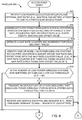
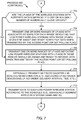
- a flowchart of an example process 600 for delivering data to a wireless station 102 is illustrated in Figures 6 and 7 .
- the process 600 may be carried out by one or more suitably programmed controllers or processors executing software (e.g., block 404 of Figure 4 ).
- the process 600 may also be embodied in hardware or a combination of hardware and software according to the possibilities described above with reference to the access point 104.
- the process 600 is described with reference to the flowchart illustrated in Figures 6 and 7 , it will be appreciated that many other methods of performing the acts associated with process 600 may be used. For example, the order of many of the operations may be changed, and some of the operations described may be optional.
- an access point 104 receives one or more low-power association requests and assigns each wireless station 102 a low-power association identifier ("LP-AID") and optionally a skip rate and offset.
- the access point 104 buffers data from an application server 106 for the wireless stations 102.
- the access point 104 maintains a skip-rate counter, which increments for each delivery period. For each such delivery period, the access point 104 selects those stations 102 which are expected to be awake by comparing the assigned skip rate and offset values to the skip-rate counter value and performing the modulo function.
- the access point 104 uses this list to select those stations 102 which have buffered data 212 available for delivery.
- the access point 104 transmits an explicit list of low-power association identifiers 222 indicating that each wireless station 102 with buffered data should poll for its data. If the number of wireless stations 102 with buffered data is not less than the threshold, then the access point 104 transmits one or more ranges of low-power association identifiers 222 along with associated optional bit maps or other suitable data indicating that those wireless stations 102 should be awake and ready to receive data when transmitted by the access point 104. Alternatively, the access point 104 may transmit a polling flag indicating that each such wireless station 102 should poll the access point 104 for its data. The access point 104 may also transmit scheduling information and transmit the buffered data according to the schedule.
- the example process 600 begins when an access point 104, or any other suitable device or system, receives one or more low-power association requests, which each contain an optional skip rate (block 602).
- multiple gas and water meters attempt to link to a particular access point 104.
- the gas meters optionally include in their association request a skip-rate value of 16.
- the access point 104 assigns each low power wireless station 102 an LP-AID and optionally a skip rate and an offset value (block 604).
- the access point 104 increments the skip-rate counter for each delivery period (block 606).
- the assigned skip rate may be the value included in the request from the wireless station 102 or modified by the access point 104 (e.g., for load balancing).
- a corresponding offset value may also be assigned.
- the offset value permits the access point 104 to distribute traffic over the delivery period of a given cycle. For example, the access point 104 may instruct many wireless stations 102 to wake up and check for buffered data on every eighth beacon but assigns different offset values (e.g., 0 to 7), so that those wake-up periods are spread out over different times.
- the access point 104 may take the skip-rate skipping outcome into account when making assigning LP-AID values to devices 102. Its goal would be to keep the LP-AID values in a numerically close range for a given beacon in the skip cycle to permit the bitmap addressing approach to be as efficient as possible.
- the access point 104 identifies one or more wireless stations 102 with buffer data from a server 106 where the associated skip rate and offset value synchronize with the skip-rate counter value (block 608). For example, if the skip-rate counter value is 67, then for wireless stations 102 with a skip rate of 8, select those with an offset value of 3. Before transmitting buffered data to the wireless stations 102, the access point 104 determines if the number of wireless stations 102 with buffered data is below a certain threshold (block 610). For example, the access point 104 may check if the number of wireless stations 102 with buffered data is less than fifty.
- the access point 104 transmits an explicit list of low-power association identifiers indicating that each wireless station 102 with buffered data should poll for its data (block 612).
- the access point 104 subsequently receives and services each polling request (block 614). For example, the access point 104 may send a firmware upgrade to a small number of gas meters.
- the access point 104 determines if the low-power association identifiers of the wireless stations 102 with buffered data at the access point 104 are numerically close or in a small number of numerically close groups (block 702 of Figure 7 ). If the low-power association identifiers are numerically close or in a small number of numerically close groups, then the access point 104 transmits one or more ranges of low-power association identifiers along with associated bit maps or other suitable data for each range indicating that wireless stations 102 with those low-power association identifiers should be awake and ready to receive data when transmitted by the access point 104 (block 704). Alternatively, the access point 104 transmits a polling flag indicating that each such wireless station 102 should poll the access point 104 for its data.
- the access point 104 transmits one or more ranges of low-power association identifiers indicating wireless stations 102 with low-power association identifiers in those ranges should be awake and ready to receive data when transmitted by the access point 104 (block 706).
- the access point 104 transmits a polling flag indicating that each such wireless station 102 should poll the access point 104 for its data.
- the access point 104 optionally transmits a skip-rate counter and scheduling information (block 708).
- the access point 104 may indicate that it will be transmitting buffered data to wireless stations 102 in ascending order of low-power association identifier, descending order of low-power association identifier, a delivery interval time, or any other suitable scheduling information.
- the access point 104 transmits the buffered data to each wireless station 102 according to the schedule (block 710).
- the schedule established by the access point 104 consists of start times beginning at multiples of the delivery interval.
- the position of the low-power association ID of a wireless station 102 within a list or range determines which multiple of the delivery interval corresponds to the potential start time of that wireless station 102 in the schedule.
- the wireless station 102 listed first in the list or range is given a start time corresponding to the first multiple of the delivery interval.
- the second wireless station 102 in the list or range may be given a start time corresponding to the second multiple of the delivery interval, and so on.
- the product of the delivery interval and the number of wireless stations 102 in a list or range should be much less than the beacon interval of the access point 104.
- the access point 104 provides a new delivery interval each time the access point 104 transmits a list or a range.
- the access point 104 notifies wireless stations 102 during association which delivery interval to use when scheduling is enabled. In another embodiment, the access point 104 does not provide a delivery interval to wireless stations 102, so the access point 104 uses a default delivery interval equal to the beacon interval divided by the length of the list or the beacon interval divided by the total number of wireless stations 102 in the range transmitted by the access point 104.
- the access point 104 may begin delivering buffered data to a wireless station 102 any time after the scheduled start time for the wireless station 102, and the access point 104 is under no obligation to begin transmitting immediately at a scheduled start time, as the schedule is not intended to account for queuing delays or channel access delays that might normally occur.
- FIG. 8 A flowchart of an example process 800 for receiving data at a wireless station 102 is illustrated in Figure 8 .
- the process 800 may be carried out by one or more suitably programmed controllers or processors executing software (e.g., block 404 of Figure 4 ).
- the process 800 may also be embodied in hardware or a combination of hardware and software according to the possibilities described above with reference to the access point 104.
- the process 800 is described with reference to the flowchart illustrated in Figure 8 , it will be appreciated that many other methods of performing the acts associated with process 800 may be used. For example, the order of many of the operations may be changed, and some of the operations described may be optional.
- a wireless station 102 requests and receives an association identifier from an access point 104. Subsequently, the wireless station 102 may look for an indication that the access point 104 has buffered data for it based on the assigned association identifier. Accordingly, if the association identifier is in a list received from the access point 104, then the wireless station 102 polls the access point 104 for the buffered data. However, if the association identifier is in a range indicated by the access point 104, then the wireless station 102 enters a power-save (sleep) mode to conserve battery power until a scheduled time when the buffered data for that wireless station 102 are being transmitted.
- a power-save short-save
- the example process 800 begins when a wireless station 102, or any other suitable device or system, transmits an association request to an access point 104 (block 802).
- the wireless station 102 is a battery-powered device that typically receives a low amount of data from the access point 104, such as a gas meter.
- the wireless station 102 then receives its association identifier from the access point 104 (block 804).
- the access point 104 may transmit an explicit list of association identifiers (e.g., when the list is relatively short), or the access point 104 may transmit the boundaries of one or more ranges of association identifiers (e.g., when the list is relatively long).
- the wireless station 102 polls the access point 104 for the buffered data (block 812).
- the wireless station 102 polls the access point 104 using a power-save poll message, wherein the power-save poll message includes a header indicating that a header-extension field is included in the message to transport the low-power association identifier from the wireless station 102 to the access point 104.
- the access point 104 uses the information in the header-extension field to determine a low-power association identifier for the polling station.
- the wireless station 102 enters a power-save (sleep) mode (block 816) to conserve battery power until the buffered data for that wireless station 102 are being transmitted.
- the range may include hundreds of wireless stations 102 each of which has buffered data.
- the wireless station 102 wakes up from the power-save mode at or before a scheduled time (block 818) in order to receive the buffered data from the access point 104 (block 820).
- the wireless station 102 calculates a scheduled wake-up time based upon information provided by the access point 104.
- the access point 104 provides a delivery interval along with the range of association identifiers, and the wireless station 102 calculates its schedule wake-up time by multiplying the delivery interval by the number of wireless stations 102 in the range with buffered data plus one.
- the wireless station 102 determines the delivery interval, and thereby determines its wake up schedule, by dividing the number of wireless stations 102 with buffered data by the beacon interval.
- the wireless station 102 may receive data from the access point 104 using this scheduled method (block 820) before the wireless station 102 receives data from the access point 104 using the polling method (block 812).
- a flowchart of another example process 900 for receiving data at a wireless station 102 is illustrated in Figure 9 .
- the process 900 may be carried out by one or more suitably programmed controllers or processors executing software (e.g., block 404 of Figure 4 ).
- the process 900 may also be embodied in hardware or a combination of hardware and software according to the possibilities described above with reference to the access point 104.
- the process 900 is described with reference to the flowchart illustrated in Figure 9 , it will be appreciated that many other methods of performing the acts associated with process 900 may be used. For example, the order of many of the operations may be changed, and some of the operations described may be optional.
- a wireless station 102 requests and receives a low-power association identifier and optionally a skip rate and offset value from an access point 104.
- the wireless station 102 then enters a power-save (sleep) mode to conserve battery power and periodically wakes up for a beacon with a skip-rate counter 218 from the access point 104 based on the assigned skip rate and offset value. If the association identifier is in an explicit list received from the access point 104, then the wireless station 102 polls the access point 104 for its buffered data.
- the wireless station 102 determines if a bit map or other indication of what wireless stations 102 in the range actually have buffered data was also transmitted by the access point 104. If a bit map was transmitted, and it indicates that the wireless station 102 has buffered data at the access point 104, then the wireless station 102 enters a power-save (sleep) mode until a scheduled time when the wireless station 102 wakes up and receives the buffered data.
- a bit map or other indication of what wireless stations 102 in the range actually have buffered data was also transmitted by the access point 104. If a bit map was transmitted, and it indicates that the wireless station 102 has buffered data at the access point 104, then the wireless station 102 enters a power-save (sleep) mode until a scheduled time when the wireless station 102 wakes up and receives the buffered data.
- the example process 900 begins when a wireless station 102, or any other suitable device or system, transmits a low-power association request and optionally a desired skip rate (block 902).
- the wireless station 102 receives a low-power association identifier and optionally a skip rate and offset value from the access point 104 (block 904).
- the skip rate may be a rate requested by the wireless station 102 or some other suitable rate determined by the access point 104 (e.g., based on load balancing).
- the wireless station 102 then enters a power-save (sleep) mode to conserve battery power (block 906). Subsequently, the wireless station 102 wakes up for a beacon from the access point 104 at a time that is optionally based on the broadcast skip-rate counter 218 and the skip rate and offset value assigned to the wireless station 102 (block 908). At some point, when the wireless station 102 is awake, the access point 104 may transmit an explicit list of association identifiers or a range of association identifiers to indicate that those wireless stations 102 have buffered data at the access point 104.
- association identifier assigned to the wireless station 102 is in an explicit list of association identifiers received from the access point 104 (block 910), then the wireless station 102 polls the access point 104 for its buffered data (block 912). If the association identifier assigned to the wireless station 102 is in a range of association identifiers received from the access point 104 (block 914), then the wireless station 102 determines if a bit map or other indication of what wireless stations 102 in the range actually have buffered data was also transmitted by the access point 104 (block 916). If the bit map or other indication was transmitted by the access point 104, then the wireless station 102 determines if the access point 104 has buffered data for it based on the bit map (block 918).
- the wireless station 102 If the access point 104 has buffered data for the wireless station 102, then the wireless station 102 enters a power-save (sleep) mode until a scheduled time (block 920). At or before the scheduled time, the wireless station 102 wakes up and receives the buffered data (block 922).
Landscapes
- Engineering & Computer Science (AREA)
- Computer Networks & Wireless Communication (AREA)
- Signal Processing (AREA)
- Mobile Radio Communication Systems (AREA)
Claims (10)
- Verfahren (500) zum Liefern von Daten (212) zu drahtlosen Stationen (102), wobei das Verfahren (500) Folgendes umfasst:Empfangen (502) von mehreren Zuordnungsanforderungen (204) von mehreren drahtlosen Stationen (102);Senden (504) von unterschiedlichen Zuordnungskennungen (208) an jede der mehreren drahtlosen Stationen (102);Puffern (506) von Daten (212) für eine Teilmenge der mehreren drahtlosen Stationen (102), wobei die Teilmenge eine Zahl von drahtlosen Stationen (102) enthält;Senden (520) einer Liste von Zuordnungskennungen (208), die anzeigen, dass gepufferte Daten (212) für jede der drahtlosen Stationen (102), die durch die Liste identifiziert wird, gespeichert werden, wenn (508) die Zahl von drahtlosen Stationen (102) in der Teilmenge kleiner als ein Schwellenwert ist; undSenden (512) von Daten, die einen Bereich von Zuordnungskennungen (208) anzeigen, die anzeigen, dass die gepufferten Daten (212) für mindestens eine drahtlose Station (102), die durch den Bereich identifiziert wird, gespeichert werden, wenn (508) die Zahl der drahtlosen Stationen (102) in der Teilmenge nicht kleiner als ein Schwellenwert ist, wobei das Senden von Daten, das Senden der Grenzen des Bereichs der Zuordnungskennungen (208) umfasst.
- Verfahren nach Anspruch 1, das ferner das Senden von Abrufinformationen umfasst, um anzuzeigen, dass jede drahtlose Station, die durch die Liste identifiziert wird, die gepufferten Daten abrufen soll.
- Verfahren nach Anspruch 1, das ferner das Senden von Zeitplaninformationen umfasst, die anzeigen, dass jede drahtlose Station, die durch den Bereich identifiziert wird, zu einer geplanten Weckzeit aufgeweckt werden soll, um mit dem Empfangen eines zugeordneten Abschnitts der gepufferten Daten zu beginnen.
- Verfahren nach Anspruch 3, wobei die geplante Weckzeit auf ein Lieferintervall reagiert.
- Verfahren nach Anspruch 1, das ferner das Senden einer Überspringrate bzw. eines Versatzwertes umfasst, die eine Berichtsfrequenz, die einer Verfügbarkeit von gepufferten Daten zugeordnet ist, und einen Synchronisationspunkt, der mindestens einem der mehreren drahtlosen Stationen zugeordnet ist, anzeigen.
- Verfahren nach Anspruch 5. das ferner Folgendes umfasst:Empfangen einer Anforderung von einer drahtlosen Station, um die Überspringrate zu modifizieren;Modifizieren der Überspringrate;Modifizieren des Versatzwertes; undSenden der modifizierten Überspringrate und des modifizierten Versatzwertes zu der drahtlosen Station.
- Verfahren nach Anspruch 1, das ferner das Senden einer Überspringrate umfasst, die eine Weckfrequenz anzeigt, die mindestens einer der mehreren drahtlosen Stationen zugeordnet ist.
- Vorrichtung (104) zum Liefern (212) von Daten zu drahtlosen Stationen (102), wobei die Vorrichtung (104) Folgendes umfasst:einen Empfänger (202);einen Sender (206);einen Speicher (408); undeine Steuereinrichtung (404), die betriebstechnisch an den Empfänger (202), den Sender (206) und den Speicher (408) gekoppelt ist, wobei die Steuereinrichtung (404) strukturiert ist, um:den Empfänger (202) zu veranlassen, mehrere Zuordnungsanforderungen (204) von mehreren drahtlosen Stationen (102) zu empfangen;den Sender (206) zu veranlassen, an jede der mehreren drahtlosen Stationen (102) eine andere Zuordnungskennung (208) zu senden (504);den Speicher (408) zu veranlassen, Daten (212) für eine Teilmenge der mehreren drahtlosen Stationen (102) zu puffern (506), wobei die Teilmenge eine Zahl von drahtlosen Stationen (102) enthält;zu bestimmen (508), ob die Zahl der drahtlosen Stationen (102) in der Teilmenge kleiner als ein Schwellenwert ist, und falls dies der Fall ist, den Sender (206) zu veranlassen, eine Liste von Zuordnungskennungen (208) zu senden (520), die anzeigt, dass gepufferte Daten (212) für jede drahtlose Station (102) gespeichert werden, die durch die Liste identifiziert wird; undzu bestimmen (508), ob die Zahl der drahtlosen Stationen (102) in der Teilmenge nicht kleiner als der Schwellenwert ist, und falls dies der Fall ist, den Sender (206) zu veranlassen, Daten zu senden (512), die einen Bereich von Zuordnungskennungen (208) anzeigen, die anzeigen, dass gepufferte Daten (212) für mindestens eine drahtlose Station (102) gespeichert werden, die durch den Bereich identifiziert werden, wobei das Senden der Daten das Senden der Grenzen des Bereichs der Zuordnungskennungen (208) umfasst.
- Verfahren (800) zum Empfangen von Daten an einer drahtlosen Station (102), wobei das Verfahren (800) Folgendes umfasst:Senden (802) einer Zuordnungsanforderung (204);Empfangen (804) einer Zuordnungskennung (208) von einem Zugangspunkt (104);Abrufen (812) von Daten (212) von dem Zugangspunkt (104), wenn (806) die Zuordnungskennung (208) sich in einer Liste von Zuordnungskennungen (208) befindet, die von dem Zugangspunkt (104) empfangen worden ist; undEintreten (816) in einen Energiesparmodus, Wecken (818) aus dem Energiesparmodus zu einem geplanten Zeitpunkt und Empfangen (820) von Daten (212) von dem Zugangspunkt (104), wenn (814) sich die Zuordnungskennung (208) in einem Bereich von Zuordnungskennungen (208) befindet, der von dem Zugangspunkt (104) empfangen worden ist, wobei Daten, die den Bereich der Zuordnungskennungen anzeigen, von der drahtlosen Station empfangen werden, und es umfassen, die Grenzen des Bereichs der Zuordnungskennungen (208) zu empfangen.
- Vorrichtung (102) zum Empfangen von Daten (212), wobei die Vorrichtung (102) Folgendes umfasst:einen Empfänger (304);einen Sender (302); undeine Steuereinrichtung (404), die betriebstechnisch an den Empfänger (304) und den Sender (302) gekoppelt ist, wobei die Steuereinrichtung (404) strukturiert ist, um:den Sender (302) zu veranlassen, eine Zuordnungsanforderung (204) zu senden (802);den Empfänger (304) zu veranlassen, eine Zuordnungskennung (208) von einem Zugangspunkt (104) zu empfangen (804);die Vorrichtung (102) zu veranlassen, Daten (212) von dem Zugangspunkt (104) abzurufen, wenn (814) sich die Zuordnungskennung (208) in einer Liste von Zuordnungskennungen (208) befindet, die von dem Zugangspunkt (104) empfangen worden ist; unddie Vorrichtung (102) zu veranlassen, in einen Energiesparmodus einzutreten (816), die Vorrichtung (102) zu veranlassen, zu einem geplanten Zeitpunkt aus dem Energiesparmodus aufzuwachen, und den Empfänger (304) zu veranlassen, die Daten (212) von dem Zugangspunkt (104) zu empfangen, wenn (814) sich die Zuordnungskennung (208) in einem Bereich von Zuordnungskennungen (208) befindet, der von dem Zugangspunkt (104) empfangen worden ist, wobei Daten, die den Bereich von Zuordnungskennungen anzeigen, von der drahtlosen Station empfangen werden und es umfassen, die Grenzen des Bereichs der Zuordnungskennungen (208) empfangen.
Applications Claiming Priority (3)
| Application Number | Priority Date | Filing Date | Title |
|---|---|---|---|
| US201261731566P | 2012-11-30 | 2012-11-30 | |
| US14/086,007 US9503979B2 (en) | 2012-11-30 | 2013-11-21 | Delivering data to a wireless station |
| PCT/US2013/071567 WO2014085282A1 (en) | 2012-11-30 | 2013-11-25 | Delivering data to a wireless station |
Publications (2)
| Publication Number | Publication Date |
|---|---|
| EP2912898A1 EP2912898A1 (de) | 2015-09-02 |
| EP2912898B1 true EP2912898B1 (de) | 2019-01-09 |
Family
ID=50825381
Family Applications (1)
| Application Number | Title | Priority Date | Filing Date |
|---|---|---|---|
| EP13802804.8A Active EP2912898B1 (de) | 2012-11-30 | 2013-11-25 | Ausgabe von daten an eine drahtlose station |
Country Status (4)
| Country | Link |
|---|---|
| US (3) | US9503979B2 (de) |
| EP (1) | EP2912898B1 (de) |
| CN (1) | CN104813718B (de) |
| WO (1) | WO2014085282A1 (de) |
Families Citing this family (8)
| Publication number | Priority date | Publication date | Assignee | Title |
|---|---|---|---|---|
| WO2016130064A1 (en) * | 2015-02-10 | 2016-08-18 | Telefonaktiebolaget Lm Ericsson (Publ) | Methods, access point and wireless device for communicating downlink data |
| GB2545024B (en) * | 2015-12-04 | 2019-01-02 | Imagination Tech Ltd | Intelligent power saving |
| CN108811048B (zh) * | 2017-04-27 | 2022-03-29 | 珠海市魅族科技有限公司 | 无线局域网的通信方法、通信装置和通信设备 |
| US10897505B2 (en) * | 2017-05-18 | 2021-01-19 | Intel Corporation | Managing transmissions for a wireless sensor network during air transport |
| CN108401280B (zh) * | 2018-02-07 | 2021-09-17 | 新华三技术有限公司 | 一种ap节能方法、装置及ac |
| CN109347604B (zh) * | 2018-10-26 | 2021-01-19 | 香港中文大学(深圳) | 一种基于分批稀疏码的多跳网络通信方法和系统 |
| US10517106B1 (en) * | 2019-05-30 | 2019-12-24 | Cypress Semiconductor Corporation | Systems, methods, and devices for network request scheduling |
| TWI756911B (zh) * | 2020-11-10 | 2022-03-01 | 瑞昱半導體股份有限公司 | WiFi STA分組方法和相關裝置 |
Family Cites Families (12)
| Publication number | Priority date | Publication date | Assignee | Title |
|---|---|---|---|---|
| US5974310A (en) * | 1997-03-20 | 1999-10-26 | Omnipoint Corporation | Communication control for a user of a central communication center |
| ATE472859T1 (de) | 2000-08-01 | 2010-07-15 | Itron Inc | Frequenzspannungsspreizspektrumsystem mit nachlauf hoher empfindlichkeit, sowie synchronisierung für frequenzlabile signale |
| US6934299B2 (en) | 2003-06-06 | 2005-08-23 | Motorola, Inc. | Beacon packet having traffic indicator flag |
| JP2005039471A (ja) | 2003-07-18 | 2005-02-10 | Toshiba Corp | 移動通信端末の間欠受信制御方法及び移動通信端末 |
| KR100686775B1 (ko) | 2003-11-07 | 2007-02-23 | 삼성전자주식회사 | 광대역 무선 접속 통신 시스템에서 트래픽 지시 메시지 전송 방법 |
| KR100617731B1 (ko) * | 2004-06-19 | 2006-08-28 | 삼성전자주식회사 | 통신 시스템에서 트래픽 통보 메시지를 송수신하는 장치 및 방법 |
| TWI251999B (en) * | 2004-09-23 | 2006-03-21 | Inst Information Industry | Media access control method of wireless local area networks having both guaranteed network service quality and power consumption management |
| US7809009B2 (en) * | 2006-02-21 | 2010-10-05 | Cisco Technology, Inc. | Pipelined packet switching and queuing architecture |
| US8089908B2 (en) | 2007-03-13 | 2012-01-03 | Conexant Systems, Inc. | Systems and methods for indicating buffered data at an access point using a traffic indication map broadcast |
| EP2048823A1 (de) | 2007-10-12 | 2009-04-15 | Thomson Licensing | Verfahren und Vorrichtung zur Leistungsverwaltung in einem Kommunikationssystem |
| US8553605B2 (en) | 2010-09-10 | 2013-10-08 | Qualcomm Incorporated | Packet identification for power saving in wireless communication networks |
| US9019874B2 (en) * | 2012-06-27 | 2015-04-28 | Nokia Corporation | Method, apparatus, and computer program product for resolving hidden node in synchronized DCF based channel access |
-
2013
- 2013-11-21 US US14/086,007 patent/US9503979B2/en not_active Expired - Fee Related
- 2013-11-25 CN CN201380061817.3A patent/CN104813718B/zh active Active
- 2013-11-25 WO PCT/US2013/071567 patent/WO2014085282A1/en not_active Ceased
- 2013-11-25 EP EP13802804.8A patent/EP2912898B1/de active Active
-
2015
- 2015-09-04 US US14/845,726 patent/US9717050B2/en not_active Expired - Fee Related
-
2017
- 2017-06-21 US US15/629,179 patent/US10028255B2/en active Active
Non-Patent Citations (1)
| Title |
|---|
| None * |
Also Published As
| Publication number | Publication date |
|---|---|
| US9503979B2 (en) | 2016-11-22 |
| CN104813718B (zh) | 2019-04-02 |
| EP2912898A1 (de) | 2015-09-02 |
| CN104813718A (zh) | 2015-07-29 |
| US10028255B2 (en) | 2018-07-17 |
| US20140153464A1 (en) | 2014-06-05 |
| US20170289909A1 (en) | 2017-10-05 |
| US20150382300A1 (en) | 2015-12-31 |
| US9717050B2 (en) | 2017-07-25 |
| WO2014085282A1 (en) | 2014-06-05 |
Similar Documents
| Publication | Publication Date | Title |
|---|---|---|
| US10028255B2 (en) | Delivering data to a wireless station | |
| US10313975B2 (en) | Apparatus and method for reducing power consumption in portable terminal | |
| US12439338B2 (en) | Wake-up signal configuration method, wake-up signal processing method, and related device | |
| CN111278027B (zh) | 节能信号检测方法、资源确定方法及相关设备 | |
| JP7858111B2 (ja) | ページング指示方法、ページング指示装置、端末と可読記憶媒体 | |
| US9462549B2 (en) | Systems and methods for optimizing power consumption associated with processing group addressed messages | |
| US20220279379A1 (en) | Cell congestion processing method, terminal, and network side device | |
| US9001694B2 (en) | Methods and apparatus for controlling a wireless station | |
| US8310968B2 (en) | Access point, wireless communication station, wireless communication system and wireless communication method | |
| CN113676990B (zh) | 信息检测、发送方法、终端及网络侧设备 | |
| US10645670B2 (en) | Method and device for instructing a user equipment to monitor a downlink information | |
| CN111586814B (zh) | 无线网络终端节点低功耗处理方法、装置、设备和存储介质 | |
| CN110461031B (zh) | 终端设备的控制方法及终端设备 | |
| US10200955B2 (en) | Collaborative transmission management for smart devices | |
| KR20120035358A (ko) | 전자 가격 표시 시스템 및 그 운용방법 | |
| CN113260069B (zh) | 一种载波资源调度方法、装置及电子设备 | |
| CN111614452B (zh) | 检测位置的确定方法、配置方法、终端及网络侧设备 | |
| CN109547948B (zh) | 无线局域网的通信方法、装置、接入点设备和站点设备 | |
| US9877285B2 (en) | Method and system for device aware power save | |
| CN113473577B (zh) | 休眠行为处理方法、指示方法、终端及网络设备 | |
| CN112312558A (zh) | 一种传输方法、检测方法、网络设备及终端 | |
| CN113573388B (zh) | 星形网络调度睡眠的方法、装置、电子设备、及存储介质 | |
| CN119212053A (zh) | 消息周期调整方法、装置、电子设备及存储介质 | |
| CN109309935B (zh) | 无线局域网的通信方法、装置、接入点设备和站点设备 | |
| CN108574974A (zh) | 一种无线接入方法、相关设备及系统 |
Legal Events
| Date | Code | Title | Description |
|---|---|---|---|
| PUAI | Public reference made under article 153(3) epc to a published international application that has entered the european phase |
Free format text: ORIGINAL CODE: 0009012 |
|
| 17P | Request for examination filed |
Effective date: 20150529 |
|
| AK | Designated contracting states |
Kind code of ref document: A1 Designated state(s): AL AT BE BG CH CY CZ DE DK EE ES FI FR GB GR HR HU IE IS IT LI LT LU LV MC MK MT NL NO PL PT RO RS SE SI SK SM TR |
|
| AX | Request for extension of the european patent |
Extension state: BA ME |
|
| DAX | Request for extension of the european patent (deleted) | ||
| RAP1 | Party data changed (applicant data changed or rights of an application transferred) |
Owner name: MOTOROLA MOBILITY LLC |
|
| RAP1 | Party data changed (applicant data changed or rights of an application transferred) |
Owner name: GOOGLE TECHNOLOGY HOLDINGS LLC |
|
| STAA | Information on the status of an ep patent application or granted ep patent |
Free format text: STATUS: EXAMINATION IS IN PROGRESS |
|
| 17Q | First examination report despatched |
Effective date: 20161205 |
|
| GRAP | Despatch of communication of intention to grant a patent |
Free format text: ORIGINAL CODE: EPIDOSNIGR1 |
|
| STAA | Information on the status of an ep patent application or granted ep patent |
Free format text: STATUS: GRANT OF PATENT IS INTENDED |
|
| INTG | Intention to grant announced |
Effective date: 20180622 |
|
| GRAS | Grant fee paid |
Free format text: ORIGINAL CODE: EPIDOSNIGR3 |
|
| GRAA | (expected) grant |
Free format text: ORIGINAL CODE: 0009210 |
|
| STAA | Information on the status of an ep patent application or granted ep patent |
Free format text: STATUS: THE PATENT HAS BEEN GRANTED |
|
| AK | Designated contracting states |
Kind code of ref document: B1 Designated state(s): AL AT BE BG CH CY CZ DE DK EE ES FI FR GB GR HR HU IE IS IT LI LT LU LV MC MK MT NL NO PL PT RO RS SE SI SK SM TR |
|
| REG | Reference to a national code |
Ref country code: GB Ref legal event code: FG4D |
|
| REG | Reference to a national code |
Ref country code: CH Ref legal event code: EP Ref country code: AT Ref legal event code: REF Ref document number: 1088891 Country of ref document: AT Kind code of ref document: T Effective date: 20190115 |
|
| REG | Reference to a national code |
Ref country code: DE Ref legal event code: R096 Ref document number: 602013049644 Country of ref document: DE |
|
| REG | Reference to a national code |
Ref country code: IE Ref legal event code: FG4D |
|
| REG | Reference to a national code |
Ref country code: NL Ref legal event code: MP Effective date: 20190109 |
|
| REG | Reference to a national code |
Ref country code: LT Ref legal event code: MG4D |
|
| PG25 | Lapsed in a contracting state [announced via postgrant information from national office to epo] |
Ref country code: NL Free format text: LAPSE BECAUSE OF FAILURE TO SUBMIT A TRANSLATION OF THE DESCRIPTION OR TO PAY THE FEE WITHIN THE PRESCRIBED TIME-LIMIT Effective date: 20190109 |
|
| REG | Reference to a national code |
Ref country code: AT Ref legal event code: MK05 Ref document number: 1088891 Country of ref document: AT Kind code of ref document: T Effective date: 20190109 |
|
| PG25 | Lapsed in a contracting state [announced via postgrant information from national office to epo] |
Ref country code: PT Free format text: LAPSE BECAUSE OF FAILURE TO SUBMIT A TRANSLATION OF THE DESCRIPTION OR TO PAY THE FEE WITHIN THE PRESCRIBED TIME-LIMIT Effective date: 20190509 Ref country code: ES Free format text: LAPSE BECAUSE OF FAILURE TO SUBMIT A TRANSLATION OF THE DESCRIPTION OR TO PAY THE FEE WITHIN THE PRESCRIBED TIME-LIMIT Effective date: 20190109 Ref country code: SE Free format text: LAPSE BECAUSE OF FAILURE TO SUBMIT A TRANSLATION OF THE DESCRIPTION OR TO PAY THE FEE WITHIN THE PRESCRIBED TIME-LIMIT Effective date: 20190109 Ref country code: PL Free format text: LAPSE BECAUSE OF FAILURE TO SUBMIT A TRANSLATION OF THE DESCRIPTION OR TO PAY THE FEE WITHIN THE PRESCRIBED TIME-LIMIT Effective date: 20190109 Ref country code: NO Free format text: LAPSE BECAUSE OF FAILURE TO SUBMIT A TRANSLATION OF THE DESCRIPTION OR TO PAY THE FEE WITHIN THE PRESCRIBED TIME-LIMIT Effective date: 20190409 Ref country code: LT Free format text: LAPSE BECAUSE OF FAILURE TO SUBMIT A TRANSLATION OF THE DESCRIPTION OR TO PAY THE FEE WITHIN THE PRESCRIBED TIME-LIMIT Effective date: 20190109 Ref country code: FI Free format text: LAPSE BECAUSE OF FAILURE TO SUBMIT A TRANSLATION OF THE DESCRIPTION OR TO PAY THE FEE WITHIN THE PRESCRIBED TIME-LIMIT Effective date: 20190109 |
|
| PG25 | Lapsed in a contracting state [announced via postgrant information from national office to epo] |
Ref country code: BG Free format text: LAPSE BECAUSE OF FAILURE TO SUBMIT A TRANSLATION OF THE DESCRIPTION OR TO PAY THE FEE WITHIN THE PRESCRIBED TIME-LIMIT Effective date: 20190409 Ref country code: RS Free format text: LAPSE BECAUSE OF FAILURE TO SUBMIT A TRANSLATION OF THE DESCRIPTION OR TO PAY THE FEE WITHIN THE PRESCRIBED TIME-LIMIT Effective date: 20190109 Ref country code: GR Free format text: LAPSE BECAUSE OF FAILURE TO SUBMIT A TRANSLATION OF THE DESCRIPTION OR TO PAY THE FEE WITHIN THE PRESCRIBED TIME-LIMIT Effective date: 20190410 Ref country code: IS Free format text: LAPSE BECAUSE OF FAILURE TO SUBMIT A TRANSLATION OF THE DESCRIPTION OR TO PAY THE FEE WITHIN THE PRESCRIBED TIME-LIMIT Effective date: 20190509 Ref country code: LV Free format text: LAPSE BECAUSE OF FAILURE TO SUBMIT A TRANSLATION OF THE DESCRIPTION OR TO PAY THE FEE WITHIN THE PRESCRIBED TIME-LIMIT Effective date: 20190109 Ref country code: HR Free format text: LAPSE BECAUSE OF FAILURE TO SUBMIT A TRANSLATION OF THE DESCRIPTION OR TO PAY THE FEE WITHIN THE PRESCRIBED TIME-LIMIT Effective date: 20190109 |
|
| REG | Reference to a national code |
Ref country code: DE Ref legal event code: R097 Ref document number: 602013049644 Country of ref document: DE |
|
| PG25 | Lapsed in a contracting state [announced via postgrant information from national office to epo] |
Ref country code: RO Free format text: LAPSE BECAUSE OF FAILURE TO SUBMIT A TRANSLATION OF THE DESCRIPTION OR TO PAY THE FEE WITHIN THE PRESCRIBED TIME-LIMIT Effective date: 20190109 Ref country code: IT Free format text: LAPSE BECAUSE OF FAILURE TO SUBMIT A TRANSLATION OF THE DESCRIPTION OR TO PAY THE FEE WITHIN THE PRESCRIBED TIME-LIMIT Effective date: 20190109 Ref country code: SK Free format text: LAPSE BECAUSE OF FAILURE TO SUBMIT A TRANSLATION OF THE DESCRIPTION OR TO PAY THE FEE WITHIN THE PRESCRIBED TIME-LIMIT Effective date: 20190109 Ref country code: AL Free format text: LAPSE BECAUSE OF FAILURE TO SUBMIT A TRANSLATION OF THE DESCRIPTION OR TO PAY THE FEE WITHIN THE PRESCRIBED TIME-LIMIT Effective date: 20190109 Ref country code: DK Free format text: LAPSE BECAUSE OF FAILURE TO SUBMIT A TRANSLATION OF THE DESCRIPTION OR TO PAY THE FEE WITHIN THE PRESCRIBED TIME-LIMIT Effective date: 20190109 Ref country code: AT Free format text: LAPSE BECAUSE OF FAILURE TO SUBMIT A TRANSLATION OF THE DESCRIPTION OR TO PAY THE FEE WITHIN THE PRESCRIBED TIME-LIMIT Effective date: 20190109 Ref country code: EE Free format text: LAPSE BECAUSE OF FAILURE TO SUBMIT A TRANSLATION OF THE DESCRIPTION OR TO PAY THE FEE WITHIN THE PRESCRIBED TIME-LIMIT Effective date: 20190109 Ref country code: CZ Free format text: LAPSE BECAUSE OF FAILURE TO SUBMIT A TRANSLATION OF THE DESCRIPTION OR TO PAY THE FEE WITHIN THE PRESCRIBED TIME-LIMIT Effective date: 20190109 |
|
| PLBE | No opposition filed within time limit |
Free format text: ORIGINAL CODE: 0009261 |
|
| STAA | Information on the status of an ep patent application or granted ep patent |
Free format text: STATUS: NO OPPOSITION FILED WITHIN TIME LIMIT |
|
| PG25 | Lapsed in a contracting state [announced via postgrant information from national office to epo] |
Ref country code: SM Free format text: LAPSE BECAUSE OF FAILURE TO SUBMIT A TRANSLATION OF THE DESCRIPTION OR TO PAY THE FEE WITHIN THE PRESCRIBED TIME-LIMIT Effective date: 20190109 |
|
| 26N | No opposition filed |
Effective date: 20191010 |
|
| PG25 | Lapsed in a contracting state [announced via postgrant information from national office to epo] |
Ref country code: SI Free format text: LAPSE BECAUSE OF FAILURE TO SUBMIT A TRANSLATION OF THE DESCRIPTION OR TO PAY THE FEE WITHIN THE PRESCRIBED TIME-LIMIT Effective date: 20190109 |
|
| PGFP | Annual fee paid to national office [announced via postgrant information from national office to epo] |
Ref country code: FR Payment date: 20191125 Year of fee payment: 7 |
|
| PG25 | Lapsed in a contracting state [announced via postgrant information from national office to epo] |
Ref country code: TR Free format text: LAPSE BECAUSE OF FAILURE TO SUBMIT A TRANSLATION OF THE DESCRIPTION OR TO PAY THE FEE WITHIN THE PRESCRIBED TIME-LIMIT Effective date: 20190109 |
|
| REG | Reference to a national code |
Ref country code: CH Ref legal event code: PL |
|
| PG25 | Lapsed in a contracting state [announced via postgrant information from national office to epo] |
Ref country code: CH Free format text: LAPSE BECAUSE OF NON-PAYMENT OF DUE FEES Effective date: 20191130 Ref country code: MC Free format text: LAPSE BECAUSE OF FAILURE TO SUBMIT A TRANSLATION OF THE DESCRIPTION OR TO PAY THE FEE WITHIN THE PRESCRIBED TIME-LIMIT Effective date: 20190109 Ref country code: LI Free format text: LAPSE BECAUSE OF NON-PAYMENT OF DUE FEES Effective date: 20191130 Ref country code: LU Free format text: LAPSE BECAUSE OF NON-PAYMENT OF DUE FEES Effective date: 20191125 |
|
| REG | Reference to a national code |
Ref country code: BE Ref legal event code: MM Effective date: 20191130 |
|
| PG25 | Lapsed in a contracting state [announced via postgrant information from national office to epo] |
Ref country code: IE Free format text: LAPSE BECAUSE OF NON-PAYMENT OF DUE FEES Effective date: 20191125 |
|
| PG25 | Lapsed in a contracting state [announced via postgrant information from national office to epo] |
Ref country code: BE Free format text: LAPSE BECAUSE OF NON-PAYMENT OF DUE FEES Effective date: 20191130 |
|
| PG25 | Lapsed in a contracting state [announced via postgrant information from national office to epo] |
Ref country code: CY Free format text: LAPSE BECAUSE OF FAILURE TO SUBMIT A TRANSLATION OF THE DESCRIPTION OR TO PAY THE FEE WITHIN THE PRESCRIBED TIME-LIMIT Effective date: 20190109 |
|
| PG25 | Lapsed in a contracting state [announced via postgrant information from national office to epo] |
Ref country code: MT Free format text: LAPSE BECAUSE OF FAILURE TO SUBMIT A TRANSLATION OF THE DESCRIPTION OR TO PAY THE FEE WITHIN THE PRESCRIBED TIME-LIMIT Effective date: 20190109 Ref country code: HU Free format text: LAPSE BECAUSE OF FAILURE TO SUBMIT A TRANSLATION OF THE DESCRIPTION OR TO PAY THE FEE WITHIN THE PRESCRIBED TIME-LIMIT; INVALID AB INITIO Effective date: 20131125 |
|
| PG25 | Lapsed in a contracting state [announced via postgrant information from national office to epo] |
Ref country code: FR Free format text: LAPSE BECAUSE OF NON-PAYMENT OF DUE FEES Effective date: 20201130 |
|
| PG25 | Lapsed in a contracting state [announced via postgrant information from national office to epo] |
Ref country code: MK Free format text: LAPSE BECAUSE OF FAILURE TO SUBMIT A TRANSLATION OF THE DESCRIPTION OR TO PAY THE FEE WITHIN THE PRESCRIBED TIME-LIMIT Effective date: 20190109 |
|
| P01 | Opt-out of the competence of the unified patent court (upc) registered |
Effective date: 20230511 |
|
| PGFP | Annual fee paid to national office [announced via postgrant information from national office to epo] |
Ref country code: DE Payment date: 20241127 Year of fee payment: 12 |
|
| PGFP | Annual fee paid to national office [announced via postgrant information from national office to epo] |
Ref country code: GB Payment date: 20241127 Year of fee payment: 12 |
|
| REG | Reference to a national code |
Ref country code: DE Ref legal event code: R119 Ref document number: 602013049644 Country of ref document: DE |