EP2910909A1 - Volume measuring device and volume measuring method - Google Patents
Volume measuring device and volume measuring method Download PDFInfo
- Publication number
- EP2910909A1 EP2910909A1 EP13846576.0A EP13846576A EP2910909A1 EP 2910909 A1 EP2910909 A1 EP 2910909A1 EP 13846576 A EP13846576 A EP 13846576A EP 2910909 A1 EP2910909 A1 EP 2910909A1
- Authority
- EP
- European Patent Office
- Prior art keywords
- cylinder
- gas
- volume
- pressure
- coating
- Prior art date
- Legal status (The legal status is an assumption and is not a legal conclusion. Google has not performed a legal analysis and makes no representation as to the accuracy of the status listed.)
- Withdrawn
Links
- 238000000034 method Methods 0.000 title claims abstract description 21
- 239000011248 coating agent Substances 0.000 claims abstract description 53
- 238000000576 coating method Methods 0.000 claims abstract description 53
- 229920005989 resin Polymers 0.000 claims abstract description 30
- 239000011347 resin Substances 0.000 claims abstract description 30
- 238000009530 blood pressure measurement Methods 0.000 claims description 25
- 238000005507 spraying Methods 0.000 claims description 17
- 230000008030 elimination Effects 0.000 claims description 14
- 238000003379 elimination reaction Methods 0.000 claims description 14
- 230000015572 biosynthetic process Effects 0.000 claims description 12
- 238000001816 cooling Methods 0.000 claims description 8
- 239000007921 spray Substances 0.000 claims description 5
- 238000005979 thermal decomposition reaction Methods 0.000 claims description 4
- 238000005259 measurement Methods 0.000 abstract description 41
- 238000002485 combustion reaction Methods 0.000 abstract description 14
- 238000002347 injection Methods 0.000 description 4
- 239000007924 injection Substances 0.000 description 4
- 238000004519 manufacturing process Methods 0.000 description 3
- UFWIBTONFRDIAS-UHFFFAOYSA-N Naphthalene Chemical compound C1=CC=CC2=CC=CC=C21 UFWIBTONFRDIAS-UHFFFAOYSA-N 0.000 description 2
- 239000004721 Polyphenylene oxide Substances 0.000 description 2
- 125000003118 aryl group Chemical group 0.000 description 2
- 239000000446 fuel Substances 0.000 description 2
- 238000007689 inspection Methods 0.000 description 2
- 239000000203 mixture Substances 0.000 description 2
- 230000002093 peripheral effect Effects 0.000 description 2
- 229920000570 polyether Polymers 0.000 description 2
- 229920000642 polymer Polymers 0.000 description 2
- 125000001174 sulfone group Chemical group 0.000 description 2
- 238000012795 verification Methods 0.000 description 2
- 239000004215 Carbon black (E152) Substances 0.000 description 1
- 229920002292 Nylon 6 Polymers 0.000 description 1
- 229920002845 Poly(methacrylic acid) Polymers 0.000 description 1
- 229930182556 Polyacetal Natural products 0.000 description 1
- 239000004698 Polyethylene Substances 0.000 description 1
- 239000004793 Polystyrene Substances 0.000 description 1
- 229920002125 Sokalan® Polymers 0.000 description 1
- 239000000853 adhesive Substances 0.000 description 1
- 230000001070 adhesive effect Effects 0.000 description 1
- 230000000903 blocking effect Effects 0.000 description 1
- 230000006835 compression Effects 0.000 description 1
- 238000007906 compression Methods 0.000 description 1
- 238000007796 conventional method Methods 0.000 description 1
- 238000000354 decomposition reaction Methods 0.000 description 1
- 238000010586 diagram Methods 0.000 description 1
- KPUWHANPEXNPJT-UHFFFAOYSA-N disiloxane Chemical compound [SiH3]O[SiH3] KPUWHANPEXNPJT-UHFFFAOYSA-N 0.000 description 1
- 239000000428 dust Substances 0.000 description 1
- 238000010438 heat treatment Methods 0.000 description 1
- 229930195733 hydrocarbon Natural products 0.000 description 1
- 150000002430 hydrocarbons Chemical class 0.000 description 1
- 239000004615 ingredient Substances 0.000 description 1
- 229920000233 poly(alkylene oxides) Polymers 0.000 description 1
- 229920000747 poly(lactic acid) Polymers 0.000 description 1
- 229920000058 polyacrylate Polymers 0.000 description 1
- 239000004584 polyacrylic acid Substances 0.000 description 1
- 229920002239 polyacrylonitrile Polymers 0.000 description 1
- 229920001610 polycaprolactone Polymers 0.000 description 1
- 239000004632 polycaprolactone Substances 0.000 description 1
- 229920005547 polycyclic aromatic hydrocarbon Polymers 0.000 description 1
- -1 polyethylene Polymers 0.000 description 1
- 229920000573 polyethylene Polymers 0.000 description 1
- 239000004626 polylactic acid Substances 0.000 description 1
- 229920000193 polymethacrylate Polymers 0.000 description 1
- 229920006324 polyoxymethylene Polymers 0.000 description 1
- 229920002223 polystyrene Polymers 0.000 description 1
- 229920002635 polyurethane Polymers 0.000 description 1
- 239000004814 polyurethane Substances 0.000 description 1
- 239000004800 polyvinyl chloride Substances 0.000 description 1
- 229920000915 polyvinyl chloride Polymers 0.000 description 1
- 229920002717 polyvinylpyridine Polymers 0.000 description 1
Images


Classifications
-
- G—PHYSICS
- G01—MEASURING; TESTING
- G01F—MEASURING VOLUME, VOLUME FLOW, MASS FLOW OR LIQUID LEVEL; METERING BY VOLUME
- G01F17/00—Methods or apparatus for determining the capacity of containers or cavities, or the volume of solid bodies
-
- F—MECHANICAL ENGINEERING; LIGHTING; HEATING; WEAPONS; BLASTING
- F02—COMBUSTION ENGINES; HOT-GAS OR COMBUSTION-PRODUCT ENGINE PLANTS
- F02F—CYLINDERS, PISTONS OR CASINGS, FOR COMBUSTION ENGINES; ARRANGEMENTS OF SEALINGS IN COMBUSTION ENGINES
- F02F1/00—Cylinders; Cylinder heads
- F02F1/18—Other cylinders
-
- F—MECHANICAL ENGINEERING; LIGHTING; HEATING; WEAPONS; BLASTING
- F02—COMBUSTION ENGINES; HOT-GAS OR COMBUSTION-PRODUCT ENGINE PLANTS
- F02F—CYLINDERS, PISTONS OR CASINGS, FOR COMBUSTION ENGINES; ARRANGEMENTS OF SEALINGS IN COMBUSTION ENGINES
- F02F11/00—Arrangements of sealings in combustion engines
-
- G—PHYSICS
- G01—MEASURING; TESTING
- G01M—TESTING STATIC OR DYNAMIC BALANCE OF MACHINES OR STRUCTURES; TESTING OF STRUCTURES OR APPARATUS, NOT OTHERWISE PROVIDED FOR
- G01M15/00—Testing of engines
- G01M15/04—Testing internal-combustion engines
- G01M15/05—Testing internal-combustion engines by combined monitoring of two or more different engine parameters
Definitions
- the present invention relates to a volume measuring device and volume measuring method.
- the first method is to utilize the volume and pressure change of the medium inside the combustion chamber ( JP H04-198833A , JP H06-082342A ).
- the second method is an acoustic volume measuring method using a Helmholtz resonator ( JP H06-186070A ).
- the third method is to measure the quantity of the oil which needed to fill the hollowed portion of the cylinder main body that is surrounded by the piston positioned at the top dead center and cylinder head.
- the first and second methods may have disadvantages that the pressure variation and the acoustic pressure cannot be measured accurately because the air leak may occur at a gap around the piston ring and the combustion chamber may not be a completely closed object.
- the third method has a disadvantage for use in a factory line because it is necessary to disassemble the cylinder main body.
- the present invention has been made in view of the above described circumstances, and the objective is to provide a precise and convenient measuring method of cylinder volume of the combustion chamber of a reciprocation engine when the piston is at top dead center without being influenced by the gap around the piston ring.
- a volume measuring device of a cylinder in a reciprocation engine including:
- the coating is formed on the inner surface of the cylinder for blocking the gap around the piston ring and the gas leak does not occur during the pressure measurement. This allows an accurate measurement of the pressure. Further, the cylinder volume can be calculated accurately and conveniently by using a pressure variation that occurs when a fixed quantity of gas is introduced inside the cylinder or when a fixed quantity of a gas is emitted from inside the cylinder. This allows an application for inspection of the product in the production line of a factory.
- the volume measuring device of the present invention can have a cleansing means that cleanse inside the cylinder by high temperature / pressure gas prior to the coating executed by coat forming means.
- the volume measuring device of the present invention can have elimination means that thermal decomposes the coating, after the pressure measurement executed by the pressure measurement means, by introducing a high temperature gas inside the cylinder and that eliminates the organic gas arose from the thermal decomposition.
- the coating is formed by the pyrolytic resin, the coating can be eliminated conveniently by thermal decomposition after the pressure measurement using heating process and by eliminating the organic gas, and can retrieve an original state.
- coating formation means preferably includes: a spraying device which sprays the pyrolytic resin to a portion of or entire inner surface of the cylinder; and a cooling device which cools the sprayed pyrolytic resin.
- the volume measuring device of the present invention can form a thin and uniform thickness coating easily by spraying the pyrolytic resin to the cylinder surface. Further, the coating can be formed efficiently in a reduced time by equipping the cooling device.
- the volume measuring device of the present invention can be used suitably for measurement of a cylinder volume when the cylinder is at the top dead center.
- this volume measuring device can measure the volume regardless of the position of the cylinder, this device allows an accurately and convenient measurement compared with the conventional method. Thus, the volume can be measured accurately even at the top dead center position where the volume is small and measurement error tends to occur.
- the present invention relates to volume measuring method of a cylinder in a reciprocation engine including:
- the volume measuring method of a present invention allows an accurate and convenient inspection of the cylinder volume in a factory line of the reciprocating engine.
- the volume measuring device or method of a present invention allows an accurate and convenient measurement of the cylinder volume when the piston is at top dead center without being influenced by the gap near the piston ring.
- volume measuring device 1 for measuring cylinder volume in an internal-combustion engine of a reciprocation engine.
- Volume measuring device 1 has cleansing means 2, coating formation means 3, pressure measurement means 4, temperature sensor 5, cylinder-volume calculation means 6, elimination means 7, and control means 8.
- Coating formation means 3 has spraying device 9 and cooling device 10.
- Pressure measurement means 4 has gas introductory part 11, gas emission part 12, and pressure sensor 13.
- Volume measuring device 1 cleanses inside the cylinder using cleansing means 2 and then coats a portion of or entire inner surface of a cylinder with pyrolytic resin using spraying device 9 of coating formation means 3.
- the coated pyrolytic resin is cooled by cooling device 10, and the coating is thereby formed.
- a fixed quantity of gas is then introduced inside the cylinder, where the coating is formed therein, from gas introductory part 11. Or otherwise, a fixed quantity of gas is emitted from gas emission part 12.
- pressure sensor 13 measures the pressure inside the cylinder before and after the introduction or emission of the gas.
- Cylinder-volume calculation means 6 calculates the volume of the cylinder from using pressure or temperature information of cylinder before and after the introduction or emission of the gas.
- Internal-combustion engine 20 in which volume measuring device 1 of present embodiment is employed, is a reciprocating type internal-combustion engine having piston 22 that reciprocates. This piston 22 has a multiple piston rings 23. In this internal-combustion engine 20, air-fuel mixture is ignited by ignition device and the air-fuel mixture is thereby combusted (so called "combustion cycle"). The compression ratio is determined by the ratio of the cylinder volume when piston 22 is at top dead center and when at bottom dead center.
- Volume measuring device 1 of this embodiment is a device for measuring the volume of cylinder 21 irrespective of the position of piston 22, and can measure the cylinder volume when the piston is at top dead center and bottom dead center.
- cleansing means 30 of this embodiment is attached to plughole 31 for the igniter mentioned above.
- Cleansing means 30 has gas introductory part 32 which introduces high temperature and high pressure gas inside cylinder 21, and gas emission part 33 which eliminates the of the cleansed gas by aspiration.
- coating formation means 40 has spraying device 41.
- Spraying device 41 is attached to plughole 31 for the igniter such that injection nozzle 42, which injects pyrolytic resin, is located in the upper part of the cylinder.
- the injection nozzle has a nozzle that can spray pyrolytic resin to an arbitrary area of the inner surface of the cylinder (not illustrated).
- pressure measurement means 50 consists of gas introductory part 51, gas emission part 52, and pressure sensor 53.
- Pressure measurement means 50 is attached to plughole 31 for the igniter.
- the volume of the gas introduced from gas introductory part 51 and the emitted gas are controlled accurately by control device 8.
- Pressure sensor 53 is attached through the plughole 31 such that the pressure of cylinder 21 can be measured.
- pressure sensor 53 is required to have a capability that can measure a subtle variation of the pressure with a sufficient accuracy.
- Cylinder-volume calculation means 6 calculates the cylinder volume using pressure information obtained by pressure measurement means 4, temperature information detected by temperature sensor 5, and gas volume information introduced from gas introductory part 51.
- elimination means 60 has introductory part 61 and emission part 62 that introduces and emits high temperature gas respectively. Elimination means 60 is attached to plughole 31 for the igniter. Introductory part 61 decomposes the coating formed by pyrolytic resin by introducing high temperature gas inside the cylinder, and emits the generated organic gas.
- Piston 22 is located at a target position for measuring a cylinder volume in a combustion chamber of a reciprocation engine.
- the target position is, for example, top dead center and bottom dead center.
- Cleansing means 30 of the volume measuring device of this embodiment is attached to plughole 31.
- Cleansing means 30 has gas introductory part 32 and gas emission part 33.
- Gas introductory part 32 is attached near the ceiling of cylinder 21 so that high temperature and high pressure gas can cleanse inside cylinder 21.
- High temperature and high pressure gas introduced from gas introductory part 32 decomposes, volatilizes or tears adhesion such as oil that remains in cylinder 21.
- the decomposed, volatilized or tore adhesion are emitted from gas emission part 33 by aspiration, and the cleansing in cylinder 21 is thereby completed. Further, the introduction timing and amount (time), and the emission timing and amount (time) of high temperature and high pressure gas is controlled by control means 8.
- Spraying device 41 is attached to plughole 31.
- Spraying device 41 sprays pyrolytic resin in cylinder 21 cleansed by cleansing means 30, and coats a portion of or entire surface of cylinder 21.
- the pyrolytic resin can block the gap portion near piston ring 23 where the gas tends to leak, specifically the gap between piston ring 23 and combustion chamber inner wall 24.
- Spraying device 41 has injection nozzle 42 at its tip portion of cylinder 21 sides.
- Spraying device 42 has multiple spraying holes to spray pyrolytic resin to any area in cylinder 21.
- the coated pyrolytic resin is cooled by cooling device 10 (not illustrated) and forms coating 43 so that the gas leak during the pressure measurement is prevented.
- cooling device 10 When the coating consisting of the pyrolytic resin has sufficient strength, use of cooling device 10 is not necessary.
- the thickness of the coating should be an amount that does not affect the volume of the cylinder 21. Generally, the thickness shall be 10 ⁇ m or more and 200 ⁇ m or less. 10 ⁇ m or more and 100 ⁇ m or less is preferable. 10 ⁇ m or more and 50 ⁇ m or less is much preferable. 10 ⁇ m or more and 25 ⁇ m or less is optimum.
- the cylinder volume may be estimated by first spraying a predetermined amount of pyrolytic resin by spraying device 41, and then adding the predetermined amount of pyrolytic resin to the computed cylinder volume. In this case, the coating can have any thickness but shall be small enough so that it can be eliminated easily using an elimination procedure mentioned later.
- the pyrolytic resin can be a polycyclic aromatic hydrocarbon (PAH) such as naphthalene, paraffinic hydro-carbon or pyrolytic polymer.
- PAH polycyclic aromatic hydrocarbon
- the pyrolytic polymer can be polystyrene, polyvinyl pyridine, aromatic polyether sulphone such as halogenated aromatic polyether sulphone, polyacrylonitrile, polyalkylene oxide, polyethylene, polylactic acid, poly-siloxane, polycaprolactone, polycaprolactam, polyurethane, polymethacrylate, polymethacrylic acid, polyacrylate, polyacrylic acid, polydiene, polyvinyl chloride and polyacetal.
- PAH polycyclic aromatic hydrocarbon
- the pyrolytic polymer can be polystyrene, polyvinyl pyridine, aromatic polyether sulphone such as halogenated aromatic polyether sulphone, polyacrylonitrile, polyalkylene oxide, polyethylene, poly
- Pressure measurement means 50 is attached to plughole 31 as shown in Fig. 4 .
- Pressure measurement means 50 has gas introductory part 51, gas emission part 52, and pressure sensor 53.
- Gas introductory part 51 introduces the gas for measurement into cylinder 21 from a tank that supplies the gas. Type and quantity of the introduced gas is controlled accurately by control means 8.
- introduction of the measurement gas from introductory part 51 is paused at an arbitrary timing T1 where the gas inside cylinder 21 is replaced completely to the measurement gas.
- Pressure sensor 53 measures the pressure inside the cylinder at time T1. This measured value information is transmitted to cylinder volume calculation means 6 which is discussed later.
- the measurement gas of predetermined quantity is then introduced inside the cylinder from gas introductory part 51.
- Pressure sensor 53 measures the pressure inside cylinder 21 at time T2 where introduction of the measurement gas of predetermined amount is completed. This measured value information is transmitted similarly as above to cylinder volume calculation means 6.
- Temperature sensor 53 transmits the temperature information inside cylinder 21 of times T1 and T2 to cylinder volume calculation means 6.
- Elimination means 60 is then operated to eliminate the coating, which is made of pyrolytic resin, formed on the inner surface of cylinder 21, and replaces the measurement gas inside cylinder 21 to an open air.
- Elimination means 60 has gas introductory part 61 and gas emission part 62.
- the high temperature gas is introduced from gas introductory part 61 and is injected to the coating on the inner surface of cylinder 21.
- the use of high temperature allows thermal decomposition of the coating ingredient made of pyrolytic resin, and an organic gas is generated. Then the generated organic gas and the measurement gas used for measurement are emitted from gas emission part 62 and are eliminated.
- open air is introduced from gas introductory part 61 and inside of cylinder 21 is replaced to the open air to retrieve the original state before the measurement operation.
- Cylinder-volume calculation means 6 calculates the volume of cylinder 21 according to Boyle Charles's law using pressure and temperature information of cylinder 21 which is received at times T1 and T2, and quantity information of the measurement gas introduced to cylinder 21 from gas introductory part 51 at time T2.
- the volume of the coated portion shall be considered, the volume of the cylinder 21 is assumed as a sum of the computed volume and the volume of the coated portion.
- the pressure was measured including the peripheral space such as a gas introduction/emission line or plughole 31, the volume of the peripheral space subtracted from the computed volume is assumed as the volume of cylinder 21.
- the portion where the gas tends to leak can be sealed by forming the coating made of pyrolytic resin on the inner surface of cylinder 21 using coating formation means 40.
- coating formation means 40 For example, the gap between piston ring 23 and combustion chamber inner wall 24 and end gap of the piston ring can be sealed.
- the volume measurement device replaces inside cylinder 21 into a measurement gas and then measures pressure and temperature inside cylinder 21 of this time point. Then the pressure and temperature inside cylinder 21 is measured after the predetermined amount of measurement gas is introduced therein. Volume of cylinder 21 is computed by calculating such information. The volume of cylinder 21 can thereby be measured precisely and conveniently. This allows the use in quality verification in the mass-production line of engines.
- volume measuring device 1 of the first embodiment cleansing means 2, coating formation means 3 and pressure measurement means 4 are replaced for respective process. Instead, a device which equips all of these means can be attached as shown in Fig. 6 can be used. This eliminates the need of replacement but can achieve the same function. Volume measuring device 1 of the present invention allows an efficient measurement of cylinder volume by such configuration.
- gas introduction/emission of cleansing means 2, pressure measurement means 4, and elimination means 7 are made by single device as shown in Fig. 6 .
- cleansing means 2 high temperature and high pressure gas are introduced in the cylinder 21 from gas introductory part 70.
- gas emission part 71 may be opened and adjusted so that the cleansing can be done easily.
- the lines besides gas introductory part 70 and gas emission part 71 are closed by cock.
- Gas introductory part 70 is controlled by control means 8 in the cleansing process so that the high temperature and high pressure gas for cleansing is supplied because this part is used for supplying both the gas for cleansing, and the gas for decomposition.
- the gas used for cleansing is emitted from gas emission part 71 after the adhesive inside cylinder 21 is decomposed, volatilized and tore by the introduction of high temperature and high pressure gas.
- Pyrolytic resin is then sprayed inside cylinder 21 from spraying device 72, and the coating made of pyrolytic resin is formed in a portion of or entire inner surface of cylinder 21.
- Cooling device 10 may operated thereafter to cool the coating to reinforce the strength of the coating.
- the measurement gas is then introduced inside the cylinder from the measurement gas introductory part 73 of pressure measurement means 4.
- the line of measurement gas emission part 74 is also opened to replace the entire gas inside the cylinder to the measurement gas. All the lines are then closed and pressure sensor 75 measures the pressure inside cylinder 21 at this time point (T1).
- the measured value information is transmitted to cylinder volume calculation means 6 described later.
- measurement gas introductory part 73 is opened again and the measurement gas of predetermined quantity is introduced inside cylinder 21.
- Pressure sensor 75 measures the pressure inside cylinder 21 at time T2 where the introduction of the measurement gas is completed.
- the measured value information is transmitted to cylinder volume calculation means 6 similarly as above.
- the computation of the volume of cylinder 21 is executed by similar method as the first embodiment.
- High temperature gas is then introduced from gas introductory part 70 and is sprayed to the coating of the inner surface of cylinder 21.
- the line of gas emission part 71 is opened simultaneously and the pressure inside cylinder 21 is adjusted.
- the generated organic gas and the measurement gas used for the measurement are emitted by aspiration and are eliminated from gas emission part 71.
- the open air is introduced from gas introductory part 70, and inside of the cylinder is replaced to the open air to retrieve the original state before the measurement operation.
- the gas inside cylinder 21 does not need to be replaced to the measurement gas when the gas components of the measurement gas introduced during the pressure measurement of cylinder 21 and the gas inside cylinder 21 after formation of the coating are the same.
- lines other than measurement gas introductory part 73 shall be closed after the pyrolytic resin coating is formed. Then the measurement gas of predetermined quantity and the following procedures can be performed similarly.
- inside of the cylinder may be decompressed by emitting the measurement gas of predetermined quantity from gas emission part 12 when the pressure is measured after the gas inside cylinder 21 is replaced with the measurement gas at time T1.
- the volume of cylinder 21 can be calculated by cylinder volume calculation means 6 using pressure and temperature information when the measurement gas of predetermined quantity is emitted at time T2 and pressure and temperature information at time T1.
- the cylinder volume can be measured precisely and conveniently when the piston is at top dead center without being influenced by the gap around the piston ring.
- the volume measuring device and volume measuring method of the present invention can be used conveniently for the quality verification in the factory line of mass production engines.
Landscapes
- Engineering & Computer Science (AREA)
- Chemical & Material Sciences (AREA)
- Combustion & Propulsion (AREA)
- Physics & Mathematics (AREA)
- General Physics & Mathematics (AREA)
- Mechanical Engineering (AREA)
- General Engineering & Computer Science (AREA)
- Fluid Mechanics (AREA)
- Measuring Fluid Pressure (AREA)
- Length Measuring Devices With Unspecified Measuring Means (AREA)
- Testing Of Engines (AREA)
Abstract
Description
- The present invention relates to a volume measuring device and volume measuring method.
- There are several known methods for measuring a cylinder volume of the combustion chamber of a reciprocation engine when a piston is at top dead center. The first method is to utilize the volume and pressure change of the medium inside the combustion chamber (
JP H04-198833A JP H06-082342A JP H06-186070A -
- Patent Document 1: Japanese Unexamined Patent Application, Publication No.
H04-198833 - Patent Document 2: Japanese Unexamined Patent Application, Publication No.
H06-82342 - Patent Document 3: Japanese Unexamined Patent Application, Publication No.
H06-186070 - The present invention has been made in view of the above described circumstances, and the objective is to provide a precise and convenient measuring method of cylinder volume of the combustion chamber of a reciprocation engine when the piston is at top dead center without being influenced by the gap around the piston ring.
- In accordance with the present invention aiming at solving the aforementioned problems, there is provided a volume measuring device of a cylinder in a reciprocation engine including:
- a coating forming means which forms a coating using pyrolytic resin on a portion of or entire inner surface of the cylinder;
- a pressure measuring means which introduces a fixed quantity of gas into the cylinder where the coating is formed therein or derives a fixed quantity of gas from inside the cylinder and measures the pressure inside the cylinder before and after the introduction or emission of the gas; and
- a volume calculation means that calculates the cylinder volume using a pressure value obtained by the pressure measurement means.
- According to the volume measuring device of the present invention, the coating is formed on the inner surface of the cylinder for blocking the gap around the piston ring and the gas leak does not occur during the pressure measurement. This allows an accurate measurement of the pressure. Further, the cylinder volume can be calculated accurately and conveniently by using a pressure variation that occurs when a fixed quantity of gas is introduced inside the cylinder or when a fixed quantity of a gas is emitted from inside the cylinder. This allows an application for inspection of the product in the production line of a factory.
- Preferably, the volume measuring device of the present invention can have a cleansing means that cleanse inside the cylinder by high temperature / pressure gas prior to the coating executed by coat forming means.
- This allows an accurate measurement of the cylinder volume because the coating is formed after the removal of the oil or dust attached inside the cylinder.
- Preferably, the volume measuring device of the present invention can have elimination means that thermal decomposes the coating, after the pressure measurement executed by the pressure measurement means, by introducing a high temperature gas inside the cylinder and that eliminates the organic gas arose from the thermal decomposition.
- Since the coating is formed by the pyrolytic resin, the coating can be eliminated conveniently by thermal decomposition after the pressure measurement using heating process and by eliminating the organic gas, and can retrieve an original state.
- Preferably, coating formation means preferably includes: a spraying device which sprays the pyrolytic resin to a portion of or entire inner surface of the cylinder; and a cooling device which cools the sprayed pyrolytic resin.
- The volume measuring device of the present invention can form a thin and uniform thickness coating easily by spraying the pyrolytic resin to the cylinder surface. Further, the coating can be formed efficiently in a reduced time by equipping the cooling device.
- The volume measuring device of the present invention can be used suitably for measurement of a cylinder volume when the cylinder is at the top dead center. Although this volume measuring device can measure the volume regardless of the position of the cylinder, this device allows an accurately and convenient measurement compared with the conventional method. Thus, the volume can be measured accurately even at the top dead center position where the volume is small and measurement error tends to occur.
- The present invention relates to volume measuring method of a cylinder in a reciprocation engine including:
- a coating forming step which forms a coating on a portion of or entire inner surface of the cylinder using pyrolytic resin;
- a pressure measuring step which introduces a fixed quantity of gas into the cylinder where the coating is formed therein or derives a fixed quantity of gas from inside the cylinder and measures the pressure inside the cylinder before and after the introduction or emission of the gas; and
- a volume calculation step that calculates the cylinder volume using a pressure value obtained at the pressure measurement step.
- The volume measuring method of a present invention allows an accurate and convenient inspection of the cylinder volume in a factory line of the reciprocating engine.
- The volume measuring device or method of a present invention allows an accurate and convenient measurement of the cylinder volume when the piston is at top dead center without being influenced by the gap near the piston ring.
-
-
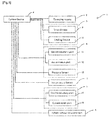
Fig. 1 is a block diagram of a volume measuring device according to a first embodiment of the volume measuring device. -
Fig. 2 is a vertical sectional view of a cleansing means according to a first embodiment of the volume measuring device. -
Fig. 3 is a vertical sectional view of a coat forming means according to a first embodiment of the volume measuring device. -
Fig. 4 is a vertical sectional view of a pressure measuring means according to a first embodiment of the volume measuring device. -
Fig. 5 is a vertical sectional view of elimination means according to a first embodiment of the volume measuring device. -
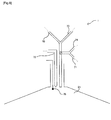
Fig. 6 is a vertical sectional view of elimination means according to a second embodiment of the volume measuring device. - In the following, a detailed description will be given of an embodiment of the present invention with reference to the accompanying drawings. It should be noted that the following embodiments are merely preferable examples, and do not limit the scope of the present invention, applied field thereof, or application thereof.
- The present embodiment relates to
volume measuring device 1 for measuring cylinder volume in an internal-combustion engine of a reciprocation engine.Volume measuring device 1 has cleansing means 2, coating formation means 3, pressure measurement means 4,temperature sensor 5, cylinder-volume calculation means 6, elimination means 7, and control means 8. Coating formation means 3 has spraying device 9 andcooling device 10. Pressure measurement means 4 has gasintroductory part 11,gas emission part 12, and pressure sensor 13. -
Volume measuring device 1 cleanses inside the cylinder using cleansing means 2 and then coats a portion of or entire inner surface of a cylinder with pyrolytic resin using spraying device 9 of coating formation means 3. The coated pyrolytic resin is cooled bycooling device 10, and the coating is thereby formed. A fixed quantity of gas is then introduced inside the cylinder, where the coating is formed therein, from gasintroductory part 11. Or otherwise, a fixed quantity of gas is emitted fromgas emission part 12. Then pressure sensor 13 measures the pressure inside the cylinder before and after the introduction or emission of the gas. Cylinder-volume calculation means 6 calculates the volume of the cylinder from using pressure or temperature information of cylinder before and after the introduction or emission of the gas. - Internal-
combustion engine 20, in whichvolume measuring device 1 of present embodiment is employed, is a reciprocating type internal-combustionengine having piston 22 that reciprocates. Thispiston 22 has a multiple piston rings 23. In this internal-combustion engine 20, air-fuel mixture is ignited by ignition device and the air-fuel mixture is thereby combusted (so called "combustion cycle"). The compression ratio is determined by the ratio of the cylinder volume whenpiston 22 is at top dead center and when at bottom dead center.Volume measuring device 1 of this embodiment is a device for measuring the volume ofcylinder 21 irrespective of the position ofpiston 22, and can measure the cylinder volume when the piston is at top dead center and bottom dead center. - As shown in
Fig. 2 , cleansing means 30 of this embodiment is attached to plughole 31 for the igniter mentioned above. Cleansing means 30 has gasintroductory part 32 which introduces high temperature and high pressure gas insidecylinder 21, andgas emission part 33 which eliminates the of the cleansed gas by aspiration. - As shown in
Fig. 3 , coating formation means 40 has spraying device 41. Spraying device 41 is attached to plughole 31 for the igniter such thatinjection nozzle 42, which injects pyrolytic resin, is located in the upper part of the cylinder. The injection nozzle has a nozzle that can spray pyrolytic resin to an arbitrary area of the inner surface of the cylinder (not illustrated). - As shown in
Fig.4 , pressure measurement means 50 consists of gasintroductory part 51,gas emission part 52, andpressure sensor 53. Pressure measurement means 50 is attached to plughole 31 for the igniter. The volume of the gas introduced from gasintroductory part 51 and the emitted gas are controlled accurately by control device 8.Pressure sensor 53 is attached through the plughole 31 such that the pressure ofcylinder 21 can be measured. In the present invention,pressure sensor 53 is required to have a capability that can measure a subtle variation of the pressure with a sufficient accuracy. - Cylinder-volume calculation means 6 calculates the cylinder volume using pressure information obtained by pressure measurement means 4, temperature information detected by
temperature sensor 5, and gas volume information introduced from gasintroductory part 51. - As shown in
Fig. 5 , elimination means 60 hasintroductory part 61 andemission part 62 that introduces and emits high temperature gas respectively. Elimination means 60 is attached to plughole 31 for the igniter.Introductory part 61 decomposes the coating formed by pyrolytic resin by introducing high temperature gas inside the cylinder, and emits the generated organic gas. - Next, the operation of this embodiment is discussed.
-
Piston 22 is located at a target position for measuring a cylinder volume in a combustion chamber of a reciprocation engine. The target position is, for example, top dead center and bottom dead center. Cleansing means 30 of the volume measuring device of this embodiment is attached to plughole 31. Cleansing means 30 has gasintroductory part 32 andgas emission part 33. Gasintroductory part 32 is attached near the ceiling ofcylinder 21 so that high temperature and high pressure gas can cleanse insidecylinder 21. High temperature and high pressure gas introduced from gasintroductory part 32 decomposes, volatilizes or tears adhesion such as oil that remains incylinder 21. The decomposed, volatilized or tore adhesion are emitted fromgas emission part 33 by aspiration, and the cleansing incylinder 21 is thereby completed. Further, the introduction timing and amount (time), and the emission timing and amount (time) of high temperature and high pressure gas is controlled by control means 8. - Then, spraying device 41 is attached to plughole 31. Spraying device 41 sprays pyrolytic resin in
cylinder 21 cleansed by cleansing means 30, and coats a portion of or entire surface ofcylinder 21. The pyrolytic resin can block the gap portion nearpiston ring 23 where the gas tends to leak, specifically the gap betweenpiston ring 23 and combustion chamberinner wall 24. Spraying device 41 hasinjection nozzle 42 at its tip portion ofcylinder 21 sides. Sprayingdevice 42 has multiple spraying holes to spray pyrolytic resin to any area incylinder 21. - The coated pyrolytic resin is cooled by cooling device 10 (not illustrated) and forms coating 43 so that the gas leak during the pressure measurement is prevented. When the coating consisting of the pyrolytic resin has sufficient strength, use of cooling
device 10 is not necessary. - The thickness of the coating should be an amount that does not affect the volume of the
cylinder 21. Generally, the thickness shall be 10 µm or more and 200 µm or less. 10 µm or more and 100 µm or less is preferable. 10 µm or more and 50 µm or less is much preferable. 10 µm or more and 25 µm or less is optimum. The cylinder volume may be estimated by first spraying a predetermined amount of pyrolytic resin by spraying device 41, and then adding the predetermined amount of pyrolytic resin to the computed cylinder volume. In this case, the coating can have any thickness but shall be small enough so that it can be eliminated easily using an elimination procedure mentioned later. - The pyrolytic resin can be a polycyclic aromatic hydrocarbon (PAH) such as naphthalene, paraffinic hydro-carbon or pyrolytic polymer. The pyrolytic polymer can be polystyrene, polyvinyl pyridine, aromatic polyether sulphone such as halogenated aromatic polyether sulphone, polyacrylonitrile, polyalkylene oxide, polyethylene, polylactic acid, poly-siloxane, polycaprolactone, polycaprolactam, polyurethane, polymethacrylate, polymethacrylic acid, polyacrylate, polyacrylic acid, polydiene, polyvinyl chloride and polyacetal.
- Thereafter, pressure measurement means 50 is attached to plughole 31 as shown in
Fig. 4 . Pressure measurement means 50 has gasintroductory part 51,gas emission part 52, andpressure sensor 53. Gasintroductory part 51 introduces the gas for measurement intocylinder 21 from a tank that supplies the gas. Type and quantity of the introduced gas is controlled accurately by control means 8. In this embodiment, introduction of the measurement gas fromintroductory part 51 is paused at an arbitrary timing T1 where the gas insidecylinder 21 is replaced completely to the measurement gas.Pressure sensor 53 measures the pressure inside the cylinder at time T1. This measured value information is transmitted to cylinder volume calculation means 6 which is discussed later. The measurement gas of predetermined quantity is then introduced inside the cylinder from gasintroductory part 51.Pressure sensor 53 measures the pressure insidecylinder 21 at time T2 where introduction of the measurement gas of predetermined amount is completed. This measured value information is transmitted similarly as above to cylinder volume calculation means 6. -
Temperature sensor 53 transmits the temperature information insidecylinder 21 of times T1 and T2 to cylinder volume calculation means 6. - Elimination means 60 is then operated to eliminate the coating, which is made of pyrolytic resin, formed on the inner surface of
cylinder 21, and replaces the measurement gas insidecylinder 21 to an open air. Elimination means 60 has gasintroductory part 61 andgas emission part 62. The high temperature gas is introduced from gasintroductory part 61 and is injected to the coating on the inner surface ofcylinder 21. The use of high temperature allows thermal decomposition of the coating ingredient made of pyrolytic resin, and an organic gas is generated. Then the generated organic gas and the measurement gas used for measurement are emitted fromgas emission part 62 and are eliminated. At this point, open air is introduced from gasintroductory part 61 and inside ofcylinder 21 is replaced to the open air to retrieve the original state before the measurement operation. - Cylinder-volume calculation means 6 calculates the volume of
cylinder 21 according to Boyle Charles's law using pressure and temperature information ofcylinder 21 which is received at times T1 and T2, and quantity information of the measurement gas introduced tocylinder 21 from gasintroductory part 51 at time T2. When the volume of the coated portion shall be considered, the volume of thecylinder 21 is assumed as a sum of the computed volume and the volume of the coated portion. When the pressure was measured including the peripheral space such as a gas introduction/emission line orplughole 31, the volume of the peripheral space subtracted from the computed volume is assumed as the volume ofcylinder 21. - According to this embodiment, the portion where the gas tends to leak can be sealed by forming the coating made of pyrolytic resin on the inner surface of
cylinder 21 using coating formation means 40. For example, the gap betweenpiston ring 23 and combustion chamberinner wall 24 and end gap of the piston ring can be sealed. This allows an accurate measurement of pressure insidecylinder 21. The volume measurement device according to this embodiment replaces insidecylinder 21 into a measurement gas and then measures pressure and temperature insidecylinder 21 of this time point. Then the pressure and temperature insidecylinder 21 is measured after the predetermined amount of measurement gas is introduced therein. Volume ofcylinder 21 is computed by calculating such information. The volume ofcylinder 21 can thereby be measured precisely and conveniently. This allows the use in quality verification in the mass-production line of engines. - The following embodiment can be contemplated. The portion which is common to the first embodiment will not be described in detail.
- In
volume measuring device 1 of the first embodiment, cleansing means 2, coating formation means 3 and pressure measurement means 4 are replaced for respective process. Instead, a device which equips all of these means can be attached as shown inFig. 6 can be used. This eliminates the need of replacement but can achieve the same function.Volume measuring device 1 of the present invention allows an efficient measurement of cylinder volume by such configuration. - In this embodiment, gas introduction/emission of cleansing means 2, pressure measurement means 4, and elimination means 7 are made by single device as shown in
Fig. 6 . As cleansing means 2, high temperature and high pressure gas are introduced in thecylinder 21 from gasintroductory part 70. Here,gas emission part 71 may be opened and adjusted so that the cleansing can be done easily. The lines besides gasintroductory part 70 andgas emission part 71 are closed by cock. Gasintroductory part 70 is controlled by control means 8 in the cleansing process so that the high temperature and high pressure gas for cleansing is supplied because this part is used for supplying both the gas for cleansing, and the gas for decomposition. The gas used for cleansing is emitted fromgas emission part 71 after the adhesive insidecylinder 21 is decomposed, volatilized and tore by the introduction of high temperature and high pressure gas. - Pyrolytic resin is then sprayed inside
cylinder 21 from sprayingdevice 72, and the coating made of pyrolytic resin is formed in a portion of or entire inner surface ofcylinder 21.Cooling device 10 may operated thereafter to cool the coating to reinforce the strength of the coating. - The measurement gas is then introduced inside the cylinder from the measurement gas
introductory part 73 of pressure measurement means 4. At this time, the line of measurementgas emission part 74 is also opened to replace the entire gas inside the cylinder to the measurement gas. All the lines are then closed andpressure sensor 75 measures the pressure insidecylinder 21 at this time point (T1). The measured value information is transmitted to cylinder volume calculation means 6 described later. Next, measurement gasintroductory part 73 is opened again and the measurement gas of predetermined quantity is introduced insidecylinder 21.Pressure sensor 75 measures the pressure insidecylinder 21 at time T2 where the introduction of the measurement gas is completed. The measured value information is transmitted to cylinder volume calculation means 6 similarly as above. The computation of the volume ofcylinder 21 is executed by similar method as the first embodiment. - High temperature gas is then introduced from gas
introductory part 70 and is sprayed to the coating of the inner surface ofcylinder 21. At this time, the line ofgas emission part 71 is opened simultaneously and the pressure insidecylinder 21 is adjusted. Next, the generated organic gas and the measurement gas used for the measurement are emitted by aspiration and are eliminated fromgas emission part 71. At this time, the open air is introduced from gasintroductory part 70, and inside of the cylinder is replaced to the open air to retrieve the original state before the measurement operation. - In the above embodiment, the gas inside
cylinder 21 does not need to be replaced to the measurement gas when the gas components of the measurement gas introduced during the pressure measurement ofcylinder 21 and the gas insidecylinder 21 after formation of the coating are the same. In this case, lines other than measurement gasintroductory part 73 shall be closed after the pyrolytic resin coating is formed. Then the measurement gas of predetermined quantity and the following procedures can be performed similarly. - In the above embodiment, inside of the cylinder may be decompressed by emitting the measurement gas of predetermined quantity from
gas emission part 12 when the pressure is measured after the gas insidecylinder 21 is replaced with the measurement gas at time T1. The volume ofcylinder 21 can be calculated by cylinder volume calculation means 6 using pressure and temperature information when the measurement gas of predetermined quantity is emitted at time T2 and pressure and temperature information at time T1. - As discussed above, the cylinder volume can be measured precisely and conveniently when the piston is at top dead center without being influenced by the gap around the piston ring. The volume measuring device and volume measuring method of the present invention can be used conveniently for the quality verification in the factory line of mass production engines.
-
- 1
- Volume measuring device
- 2
- Cleansing means
- 3
- Coating formation means
- 4
- Pressure measurement means
- 5
- Temperature sensor
- 6
- Cylinder volume calculation means
- 7
- Elimination means
- 8
- Control device
- 20
- Internal-combustion engine
- 21
- Cylinder
- 22
- Piston
- 23
- Piston ring
- 24
- Inner wall
- 30
- Cleansing means
- 31
- Plughole
- 40
- Coating formation means
- 41
- Spraying device
- 42
- Injection nozzle
- 50
- Pressure measurement means
- 53
- Pressure sensor
- 60
- Elimination means
- 70
- Gas introductory part
- 71
- Gas emit part
- 72
- Spraying device
- 73
- Measurement gas introductory part
- 74
- Measurement gas emission part
- 75
- Pressure sensor
Claims (6)
- A volume measuring device of a cylinder in a reciprocation engine comprising:a coating forming means which forms a coating on a portion of or entire inner surface of the cylinder using pyrolytic resin;a pressure measuring means which introduces a fixed quantity of gas into the cylinder where the coating is formed therein or derives a fixed quantity of gas from inside the cylinder and measures the pressure inside the cylinder before and after the introduction or emission of the gas; anda volume calculation means that calculates the cylinder volume using a pressure value obtained by the pressure measurement means.
- The volume measuring device of claim 1 further comprising a cleansing means to cleanse inside the cylinder by high temperature / pressure gas prior to the coating executed by coat forming means.
- The volume measuring device of either claim 1 or 2, further comprising elimination means that thermal decomposes the coating, after the pressure measurement executed by the pressure measurement means, by introducing a high temperature gas inside the cylinder and eliminates the organic gas arose from the thermal decomposition.
- The volume measuring device of one of claims 1 to 3, wherein the coating formation means includes:a spraying device which sprays the pyrolytic resin to a portion of or entire inner surface of the cylinder; anda cooling device which cools the sprayed pyrolytic resin.
- The volume measuring device of one of claims 1 to 4, wherein the cylinder is in the top dead centre position.
- A volume measuring method of a cylinder in a reciprocation engine comprising:a coating forming step which forms a coating on a portion of or entire inner surface of the cylinder using pyrolytic resin;a pressure measuring step which introduces a fixed quantity of gas into the cylinder where the coating is formed therein or derives a fixed quantity of gas from inside the cylinder and measures the pressure inside the cylinder before and after the introduction or emission of the gas; anda volume calculation step that calculates the cylinder volume using a pressure value obtained at the pressure measurement step.
Applications Claiming Priority (2)
| Application Number | Priority Date | Filing Date | Title |
|---|---|---|---|
| JP2012232268 | 2012-10-19 | ||
| PCT/JP2013/078230 WO2014061751A1 (en) | 2012-10-19 | 2013-10-17 | Volume measuring device and volume measuring method |
Publications (2)
| Publication Number | Publication Date |
|---|---|
| EP2910909A1 true EP2910909A1 (en) | 2015-08-26 |
| EP2910909A4 EP2910909A4 (en) | 2016-06-22 |
Family
ID=50488311
Family Applications (1)
| Application Number | Title | Priority Date | Filing Date |
|---|---|---|---|
| EP13846576.0A Withdrawn EP2910909A4 (en) | 2012-10-19 | 2013-10-17 | Volume measuring device and volume measuring method |
Country Status (4)
| Country | Link |
|---|---|
| US (1) | US9976892B2 (en) |
| EP (1) | EP2910909A4 (en) |
| JP (1) | JP6229123B2 (en) |
| WO (1) | WO2014061751A1 (en) |
Family Cites Families (12)
| Publication number | Priority date | Publication date | Assignee | Title |
|---|---|---|---|---|
| GB585803A (en) * | 1943-10-12 | 1947-02-25 | Standard Oil Dev Co | Improvements in or relating to addition agents for mineral lubricating oils |
| DE3320793A1 (en) * | 1983-06-09 | 1984-12-13 | Daimler-Benz Ag, 7000 Stuttgart | Method for determining the compression volume of reciprocating piston combustion engines |
| JPS63132318U (en) * | 1987-02-23 | 1988-08-30 | ||
| ES2067026T3 (en) * | 1989-04-20 | 1995-03-16 | Orbital Eng Pty | PROCEDURE FOR ELIMINATING DEPOSITS FROM INJECTOR NOZZLES. |
| JP2958575B2 (en) | 1990-11-29 | 1999-10-06 | 株式会社小野測器 | Reciprocating engine compression ratio measurement device |
| JP3028442B2 (en) * | 1992-08-31 | 2000-04-04 | 株式会社小野測器 | Reciprocating engine compression ratio measurement device |
| JP2894126B2 (en) | 1992-12-16 | 1999-05-24 | 日産自動車株式会社 | Acoustic volumetric meter |
| JPH07332108A (en) * | 1994-06-14 | 1995-12-22 | Nissan Motor Co Ltd | Engine displacement measurement device |
| US5786531A (en) * | 1997-02-27 | 1998-07-28 | General Motors Corporation | Compression ratio measurement |
| US7958855B2 (en) * | 2008-05-30 | 2011-06-14 | Kawasaki Jukogyo Kabushiki Kaisha | Air-cooled V-type combustion engine |
| JP2010185290A (en) * | 2009-02-10 | 2010-08-26 | Toyota Central R&D Labs Inc | Heat insulating film and method of forming the same |
| US8627845B2 (en) * | 2010-02-26 | 2014-01-14 | Auto-Mark, Inc. | Directional conduit guide support |
-
2013
- 2013-10-17 EP EP13846576.0A patent/EP2910909A4/en not_active Withdrawn
- 2013-10-17 WO PCT/JP2013/078230 patent/WO2014061751A1/en not_active Ceased
- 2013-10-17 JP JP2014542178A patent/JP6229123B2/en not_active Expired - Fee Related
-
2015
- 2015-04-17 US US14/689,924 patent/US9976892B2/en not_active Expired - Fee Related
Also Published As
| Publication number | Publication date |
|---|---|
| US20150226593A1 (en) | 2015-08-13 |
| JP6229123B2 (en) | 2017-11-15 |
| JPWO2014061751A1 (en) | 2016-09-05 |
| US9976892B2 (en) | 2018-05-22 |
| EP2910909A4 (en) | 2016-06-22 |
| WO2014061751A1 (en) | 2014-04-24 |
Similar Documents
| Publication | Publication Date | Title |
|---|---|---|
| CN101881246B (en) | Measuring device and measuring method for response time of oil injector | |
| US20170254261A1 (en) | Opposed piston engine with pistons having conical recesses therein | |
| CN104822925B (en) | Fuel injection device and its control method | |
| CN107873069A (en) | Lubricating syringe and its production method for large-sized low-speed two stroke engine | |
| CN113944582B (en) | Fuel spray characteristics test system for diesel engines under low temperature cold start conditions | |
| US6182437B1 (en) | Fuel injector heat shield | |
| EP1568876A3 (en) | Gas mixture temperature estimation apparatus for internal combustion engine | |
| Pielecha | Modeling of gasoline fuel spray penetration in SIDI engines | |
| EP2910909A1 (en) | Volume measuring device and volume measuring method | |
| Montanaro et al. | Impinging jets of fuel on a heated surface: effects of wall temperature and injection conditions | |
| CN103492699B (en) | Nozzle Coking Compensation Strategy | |
| CN105020076B (en) | The measurement apparatus and measuring method of electromagnetic type diesel injector injection duration | |
| Montanaro et al. | Effects of ultra-high injection pressures up to 100 MPa on gasoline spray morphology | |
| CN105445033B (en) | A kind of CONSTANT VOLUME MODEL COMBUSTION CHAMBER for studying spray discharge pattern and its microscopic characteristics | |
| Mayer et al. | Experimental investigation of flame-wall-impingement and near-wall combustion on the piston temperature of a diesel engine using instantaneous surface temperature measurements | |
| US20170145975A1 (en) | Method and device for characterizing an injector | |
| CN103485953B (en) | Determine the method for spray cone angle of oil atomizer spray orifice | |
| WO2020261841A1 (en) | Device and method for controlling an ignition device with a fuel-fed prechamber in an internal combustion engine | |
| ATE266104T1 (en) | METHOD AND DEVICE FOR THERMALLY COATING CYLINDER WALLS OF COMBUSTION ENGINES | |
| Zhou et al. | Investigation on cyclic variation of diesel spray and a reconsideration of penetration model | |
| Cao et al. | Characteristics of the transient heat transfer of impinging flames and correlation analysis using a new characteristic velocity under CI engine-like conditions | |
| CN209432443U (en) | A kind of combustor test part with burner inner liner side wall refrigerating function | |
| Liu et al. | Experimental study on the boiling criterion of the fuel film formed from spray/wall impingement | |
| CN104018971A (en) | Device and method for achieving spraying constant volume chamber low-temperature environment | |
| JP2013167190A (en) | Fuel injection device of internal combustion engine |
Legal Events
| Date | Code | Title | Description |
|---|---|---|---|
| PUAI | Public reference made under article 153(3) epc to a published international application that has entered the european phase |
Free format text: ORIGINAL CODE: 0009012 |
|
| 17P | Request for examination filed |
Effective date: 20150519 |
|
| AK | Designated contracting states |
Kind code of ref document: A1 Designated state(s): AL AT BE BG CH CY CZ DE DK EE ES FI FR GB GR HR HU IE IS IT LI LT LU LV MC MK MT NL NO PL PT RO RS SE SI SK SM TR |
|
| AX | Request for extension of the european patent |
Extension state: BA ME |
|
| DAX | Request for extension of the european patent (deleted) | ||
| RA4 | Supplementary search report drawn up and despatched (corrected) |
Effective date: 20160523 |
|
| RIC1 | Information provided on ipc code assigned before grant |
Ipc: F02F 1/00 20060101ALI20160517BHEP Ipc: G01F 17/00 20060101AFI20160517BHEP Ipc: F02B 77/04 20060101ALI20160517BHEP Ipc: G01M 15/08 20060101ALI20160517BHEP |
|
| STAA | Information on the status of an ep patent application or granted ep patent |
Free format text: STATUS: REQUEST FOR EXAMINATION WAS MADE |
|
| STAA | Information on the status of an ep patent application or granted ep patent |
Free format text: STATUS: THE APPLICATION IS DEEMED TO BE WITHDRAWN |
|
| 18D | Application deemed to be withdrawn |
Effective date: 20190501 |