EP2909999B1 - Lastenausgleicher-bypass - Google Patents
Lastenausgleicher-bypass Download PDFInfo
- Publication number
- EP2909999B1 EP2909999B1 EP13785712.4A EP13785712A EP2909999B1 EP 2909999 B1 EP2909999 B1 EP 2909999B1 EP 13785712 A EP13785712 A EP 13785712A EP 2909999 B1 EP2909999 B1 EP 2909999B1
- Authority
- EP
- European Patent Office
- Prior art keywords
- source
- destination
- message
- address
- intermediary
- Prior art date
- Legal status (The legal status is an assumption and is not a legal conclusion. Google has not performed a legal analysis and makes no representation as to the accuracy of the status listed.)
- Active
Links
Images




Classifications
-
- H—ELECTRICITY
- H04—ELECTRIC COMMUNICATION TECHNIQUE
- H04L—TRANSMISSION OF DIGITAL INFORMATION, e.g. TELEGRAPHIC COMMUNICATION
- H04L61/00—Network arrangements, protocols or services for addressing or naming
- H04L61/09—Mapping addresses
- H04L61/25—Mapping addresses of the same type
- H04L61/2503—Translation of Internet protocol [IP] addresses
- H04L61/2521—Translation architectures other than single NAT servers
-
- H—ELECTRICITY
- H04—ELECTRIC COMMUNICATION TECHNIQUE
- H04L—TRANSMISSION OF DIGITAL INFORMATION, e.g. TELEGRAPHIC COMMUNICATION
- H04L67/00—Network arrangements or protocols for supporting network services or applications
- H04L67/01—Protocols
- H04L67/10—Protocols in which an application is distributed across nodes in the network
- H04L67/1001—Protocols in which an application is distributed across nodes in the network for accessing one among a plurality of replicated servers
- H04L67/1038—Load balancing arrangements to avoid a single path through a load balancer
-
- H—ELECTRICITY
- H04—ELECTRIC COMMUNICATION TECHNIQUE
- H04L—TRANSMISSION OF DIGITAL INFORMATION, e.g. TELEGRAPHIC COMMUNICATION
- H04L67/00—Network arrangements or protocols for supporting network services or applications
- H04L67/50—Network services
- H04L67/56—Provisioning of proxy services
- H04L67/563—Data redirection of data network streams
-
- H—ELECTRICITY
- H04—ELECTRIC COMMUNICATION TECHNIQUE
- H04L—TRANSMISSION OF DIGITAL INFORMATION, e.g. TELEGRAPHIC COMMUNICATION
- H04L12/00—Data switching networks
- H04L12/54—Store-and-forward switching systems
- H04L12/56—Packet switching systems
Definitions
- a load balancer allows multiple machines to be associated with a single virtual network address. Network messages that are addressed to the virtual network address are received by the load balancer, which decides which of multiple machines are to handle the network message. The load balancer then forwards the network message towards a destination intermediary. The destination intermediary then delivers the network message to the designated machine.
- US 2003/056002 A1 relates to server-based software applications that involve latency-sensitive message traffic over a packet-switched network such as the Internet.
- the remote computer In order to establish direct communication between a remote computer and an assigned server, the remote computer firstly sends a probe request to a load balancer.
- the load balancer receives the probe request, and selects and assigns a server using a conventional selection algorithm.
- the load balancer forwards the probe request to the assigned server.
- the assigned server receives the forwarded probe request.
- the assigned server generates a probe response to be sent to the remote computer containing the unique IP address of the assigned server in the body of the response.
- the probe response is addressed to the NAT associate with the remote computer.
- the remote computer receives the probe response and extracts the unique network address of the assigned server from the response. Using this unique address, the remote computer thereafter communicates directly with the assigned server bypassing the load balancer.
- US 2004/260745 A1 relates to the management of network connectivity between a host and server cluster members in a clustered network environment.
- An initial message is transmitted from the host to the server cluster.
- the cluster's virtual IP address is mapped to a load balancing node so that the initial message arrives at the load balancing node.
- the node balancing node selects a target server to receive the initial message. Once the target server is selected, the load balancing node forwards the message to the target server.
- the load balancing node sends an instructing message to the host.
- the instructing message requests that the host modifies its network mapping such that future messages sent by the host to the server cluster reach the target server without passing through the load balancing node.
- US 2011/225231 A1 relates to a cloud platform that includes a load balancer and several servers.
- the servers are configured with public addresses, private addresses and an address of the load balancer.
- the loopback interface of the servers is configured with the address of the load balancer. This allows a server to bypass the load balancer when replying to communication messages. Additionally, the public and private addresses of the servers enable direct addressability in the cloud computing system.
- At least one embodiment described herein relates to bypassing a load balancer that initially appeared in a multi-message flow from a source machine served by a source intermediary and a destination machine served by a destination intermediary.
- One or more original network messages (and perhaps just the first) of the flow arrive from the source intermediary at the load balancer.
- the load balancer selects which machine is to send the message to, and it turns out selects the destination machine.
- the load balancer then dispatches the network message to the destination intermediary that serves the destination machine.
- the destination intermediary instructs the source intermediary to transmit subsequent messages in the flow to the destination machine in a manner that bypasses the load balancer.
- the source intermediary may modify addressing of subsequent flow messages from the source machine such that they are rerouted to the destination machine without addressing the load balancer.
- the load balancer initially appears in a multi-message flow from a source machine served by a source intermediary and a destination machine served by a destination intermediary.
- One or more original network messages (and perhaps just the first) of the flow arrive from the source intermediary at the load balancer.
- the load balancer selects which machine is to handle the message, and it turns out selects the destination machine.
- the load balancer then dispatches the network message to the destination intermediary that serves the destination machine.
- the destination intermediary instructs the source intermediary to transmit subsequent messages in the flow in a manner that bypasses the load balancer.
- the source intermediary may modify addressing of subsequent flow messages from the source machine such that they are rerouted to the destination machine without addressing the load balancer.
- the network messages described herein may be Internet Protocol (IP) layer network messages
- IP Internet Protocol
- the source machine may operate in a cloud computing environment, in the public Internet, or in any other environment.
- the destination machine may also operate in a cloud computing environment, in the public Internet, or in any other environment.
- there may be any permutation of source and destination virtual machines including 1) both source and destination machines being virtual machines, 2) both source and destination machines being physical machines, 3) the source machine being a virtual machine and the destination machine being a physical machine, and 4) the source machine being a physical machine and the destination machine being a virtual machine.
- Computing systems are now increasingly taking a wide variety of forms. Computing systems may, for example, be handheld devices, appliances, laptop computers, desktop computers, mainframes, distributed computing systems, or even devices that have not conventionally been considered a computing system.
- the term "computing system” is defined broadly as including any device or system (or combination thereof) that includes at least one physical and tangible processor, and a physical and tangible memory capable of having thereon computer-executable instructions that may be executed by the processor.
- the memory may take any form and may depend on the nature and form of the computing system.
- a computing system may be distributed over a network environment and may include multiple constituent computing systems.
- a computing system 100 typically includes at least one processing unit 102 and memory 104.
- the memory 104 may be physical system memory, which may be volatile, non-volatile, or some combination of the two.
- the term “memory” may also be used herein to refer to non-volatile mass storage such as physical storage media. If the computing system is distributed, the processing, memory and/or storage capability may be distributed as well.
- the term "module” or “component” can refer to software objects or routines that execute on the computing system. The different components, modules, engines, and services described herein may be implemented as objects or processes that execute on the computing system (e.g., as separate threads).
- embodiments are described with reference to acts that are performed by one or more computing systems. If such acts are implemented in software, one or more processors of the associated computing system that performs the act direct the operation of the computing system in response to having executed computer-executable instructions.
- such computer-executable instructions may be embodied on one or more computer-readable media that form a computer program product.
- An example of such an operation involves the manipulation of data.
- the computer-executable instructions (and the manipulated data) may be stored in the memory 104 of the computing system 100.
- Computing system 100 may also contain communication channels 108 that allow the computing system 100 to communicate with other message processors over, for example, network 110.
- Embodiments described herein may comprise or utilize a special purpose or general-purpose computer including computer hardware, such as, for example, one or more processors and system memory, as discussed in greater detail below.
- Embodiments described herein also include physical and other computer-readable media for carrying or storing computer-executable instructions and/or data structures.
- Such computer-readable media can be any available media that can be accessed by a general purpose or special purpose computer system.
- Computer-readable media that store computer-executable instructions are physical storage media.
- Computer-readable media that carry computer-executable instructions are transmission media.
- embodiments of the invention can comprise at least two distinctly different kinds of computer-readable media: computer storage media and transmission media.
- Computer storage media includes RAM, ROM, EEPROM, CD-ROM or other optical disk storage, magnetic disk storage or other magnetic storage devices, or any other medium which can be used to store desired program code means in the form of computer-executable instructions or data structures and which can be accessed by a general purpose or special purpose computer.
- a "network” is defined as one or more data links that enable the transport of electronic data between computer systems and/or modules and/or other electronic devices.
- a network or another communications connection can include a network and/or data links which can be used to carry or desired program code means in the form of computer-executable instructions or data structures and which can be accessed by a general purpose or special purpose computer. Combinations of the above should also be included within the scope of computer-readable media.
- program code means in the form of computer-executable instructions or data structures can be transferred automatically from transmission media to computer storage media (or vice versa).
- computer-executable instructions or data structures received over a network or data link can be buffered in RAM within a network interface module (e.g., a "NIC"), and then eventually transferred to computer system RAM and/or to less volatile computer storage media at a computer system.
- a network interface module e.g., a "NIC”
- NIC network interface module
- computer storage media can be included in computer system components that also (or even primarily) utilize transmission media.
- Computer-executable instructions comprise, for example, instructions and data which, when executed at a processor, cause a general purpose computer, special purpose computer, or special purpose processing device to perform a certain function or group of functions.
- the computer executable instructions may be, for example, binaries, intermediate format instructions such as assembly language, or even source code.
- the invention may be practiced in network computing environments with many types of computer system configurations, including, personal computers, desktop computers, laptop computers, message processors, hand-held devices, multi-processor systems, microprocessor-based or programmable consumer electronics, network PCs, minicomputers, mainframe computers, mobile telephones, PDAs, pagers, routers, switches, and the like.
- the invention may also be practiced in distributed system environments where local and remote computer systems, which are linked (either by hardwired data links, wireless data links, or by a combination of hardwired and wireless data links) through a network, both perform tasks.
- program modules may be located in both local and remote memory storage devices.
- FIG. 1 One type of physical computing system is termed a host computing system (or simply "host").
- host Each host is capable of running one or more, and potentially many, virtual machines.
- Figure 2 abstractly illustrates a host 200 in further detail.
- the host 200 is illustrated as operating three virtual machines 210 including virtual machines 210A, 210B and 210C.
- the ellipses 210D once again represents that the principles described herein are not limited to the number of virtual machines running on the host 200. There may be as few as zero virtual machines running on the host with the only upper limit being defined by the physical capabilities of the host 200.
- the virtual machines emulates a fully operational computing system including an at least an operating system, and perhaps one or more other applications as well.
- Each virtual machine is assigned to a particular client, and is responsible to support the desktop environment for that client.
- the virtual machine generates a desktop image or other rendering instructions that represent a current state of the desktop, and then transmits the image or instructions to the client for rendering of the desktop.
- the user inputs are transmitted from the client to the virtual machine.
- the virtual machine processes the user inputs and, if appropriate, changes the desktop state. If such change in desktop state is to cause a change in the rendered desktop, then the virtual machine alters the image or rendering instructions, if appropriate, and transmits the altered image or rendered instructions to the client computing system for appropriate rendering. From the prospective of the user, it is as though the client computing system is itself performing the desktop processing.
- the host 200 includes a hypervisor 220 that emulates virtual resources for the virtual machines 210 using physical resources 221 that are abstracted from view of the virtual machines 210.
- the hypervisor 221 also provides proper isolation between the virtual machines 210.
- the hypervisor 220 provides the illusion that the virtual machine is interfacing with a physical resource, even though the virtual machine only interfaces with the appearance (e.g., a virtual resource) of a physical resource, and not with a physical resource directly.
- the physical resources 221 are abstractly represented as including resources 221A through 221F. Examples of physical resources 221 including processing capacity, memory, disk space, network bandwidth, media drives, and so forth.
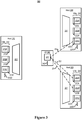
- FIG 3 illustrates a distributed system 300 that includes three intermediaries.
- the communicating machines are virtual machines and thus, the three intermediaries are illustrated as being hypervisors within host computing systems 310, 320 and 330 (hereinafter referred to simply as "hosts").
- hosts Each host 310, 320 and 330 may be structured and operate as described above for the host 200 of Figure 2 .
- Each host has a hypervisor much as host 200 has hypervisor 220.
- hosts 310, 320 and 330 have respective hypervisors 311, 321 and 331.
- the hypervisor 311 might be replaced by another intermediary, such as a vmswitch, suitable for physical machines.
- the hypervisor 321 might be replaced by a vmswitch.
- the hypervisor 331 might also be replaced by a vmswitch.
- destination virtual machine and “destination host” are referred to, these terms may be replaced by respective terms “destination physical machine” and “destination vmswitch”. Nevertheless, the example of Figures 4 through 7 will proceed with the discussion of the exchange in the specific example of a virtual machine.
- Each host has virtual machines running thereon much as host 200 has virtual machines 210 running thereon.
- host 310 has running thereon virtual machines 312, including virtual machine 312A, 312B and 312C, although the ellipses 312D represent flexibility in the number of virtual machines running on the host 310.
- Host 320 has running thereon virtual machines 322, including virtual machine 322A, 322B and 322C, although the ellipses 322D represent flexibility in the number of virtual machines running on the host 320.
- Host 330 has running thereon virtual machines 332, including virtual machine 332A, 332B and 332C, although the ellipses 332D represent flexibility in the number of virtual machines running on the host 330.
- Each virtual machine is addressable by a routable device identifier.
- virtual machines 312A, 312B, 312C, 322A, 322B, 322C, 332A, 332B and 332C are addressable by respective routable device identifiers 313A, 313B, 313C, 323A, 323B, 323C, 333A, 333B and 332C.
- the distributed system 300 also includes a load balancer 340 that gets traffic for virtual network address 341.
- the load balancer 340 is configured such that messages that are received by the load balancer 342 and that are addressed using the virtual network address 341, are distributed to one of a group of virtual machines associated with the virtual network address. For instance, there are three virtual machines associated with the virtual network address 341 including virtual machine 322B (as represented by association 351), virtual machine 322A (as represented by association 352) and virtual machine 332C (as represented by association 353).
- the load balancer 340 performs load balancing by selecting one of the virtual machines 332B, 332A or 332C to receive the message addressed to the virtual network, and dispatches the network message to that selected virtual machine.
- the ellipses 342 represents that the load balancer 340 may perform this load balancing function for other virtual network addresses also, which virtual network address may be associated with a distinct set of one or more virtual machines.
- the virtual network address includes a virtual Internet Protocol (IP) address.
- IP Internet Protocol
- virtual machine 312A will be a source virtual machine for a particular message flow
- source host 310 will be a source host for that message flow
- virtual machine 322A will be a destination virtual machine for that message flow
- host 320 will be a destination host for that message flow.
- the source host There are two embodiments of instructing the source host to bypass the load balancer.
- One will be referred to as a "separate instruction" embodiment in which the destination host provides an instruction to bypass that is separate and apart from the response to the first source-side network message associated with the flow. This first embodiment may be helpful in cases in which, for example, there might not be a response to the source-side network message.
- the second embodiment will be referred to as an "integrated response" embodiment in which the destination host provides bypass instructions within the response to the source-side network message.
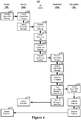
- Figure 4 illustrates a flowchart of a method 400 for a source virtual machine on a source host communication a "first" exchange in a multi-message flow with a destination virtual machine hosted by a destination host.
- Figure 4 specifically addresses the separate instruction embodiment.
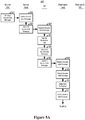
- Figure 5 illustrates a flowchart of a method that is similar to that of Figure 4 , except that it addresses the integrated response embodiment.
- the terms "first”, “second”, and so forth are not intended to imply an actually temporal ordering, but merely to distinguish one item from another.
- the "first" exchange illustrated in Figure 4 need not be the actual first exchange between the source virtual machine and the destination virtual machine, nor even the actual first exchange in a particular message flow. Nevertheless, the exchanges of Figures 4 and 5A and 5B , occur before the subsequent message of Figure 7 .
- DESTINATION VM Those acts that are performed by the destination virtual machine (e.g., destination virtual machine 322A) are in the right column under the header "DESTINATION VM".
- the methods 400 and 500 will be described concurrently up to the point where the "separate instruction” and "integrated response" embodiments diverge.
- the methods 400 and 500 begin with the source virtual machine generating a source-side network message (acts 401 and 501).
- a "source-side” network message refers to a network message generated by the source virtual machine, hypervisor, or host; whereas a "destination-side” network message refers to a network message generated by the destination virtual machine, hypervisor, or host.
- the destination address has a destination virtual network address that is routed through the load balancer, and a source address that includes a routable device identifier that addresses the source virtual machine.
- the virtual network address and the routable device identifiers are network-level addresses. However, the principles described herein also apply to addresses at other layers of the protocol stack, such as the application-level.
- the virtual network addresses are virtual Internet Protocol (IP) or (VIP) addresses
- the routable device identifiers are Device IP (or DIP) addresses.
- Figure 6A illustrates example data structure of the source-side network message generated by the source virtual machine in acts 401 and 501.
- the network message includes the virtual IP address of the load balancer (VIPD) as the destination address, as well as the routable device identifier of the source virtual machine (DIPS) as the source address.
- VIP load balancer
- DIPS routable device identifier of the source virtual machine
- the source host e.g., the source hypervisor 311 intercepts the source-side network message (acts 402 and 502). The source host then dispatches the source-side network message (acts 403 and 503) without altering the source or destination addresses. This might involve some configuration to ensure that the source address does not undergo Network Address Translation (NAT) and thus remains unchanged.
- NAT Network Address Translation
- the source-side network message is routed through the network, and since the destination address is the virtual network address served by the load balancer, the load balancer receives the source-side network message (acts 404 and 504).
- the load balancer 340 may receive a network message that included the virtual network address 341 as the destination address.
- the load balancer selects one of the group of virtual machines associated with the virtual network address as being the destination virtual machine (acts 405 and 505). For instance, in Figure 3 , virtual machines 322B, 322A and 332C are associated with the virtual network address 341. In the example, suppose that the load balancer 340 selects virtual machine 322A as the destination virtual machine (and thus the host 320 would be the destination host).
- the load balancer then augments the source-side network message to be from the load balancer to the selected destination virtual machine (acts 406 and 506).
- This augmentation may be done by, for example, encapsulating the original message with an additional operative addressing header.
- Figure 6B shows the source-side network message which is the same as that of Figure 6A , except that the encapsulating addressing layer (which will function to route the message) includes a destination address that includes the routable device identifier (e.g., DIPD) that addresses the destination virtual machine (e.g., virtual machine 322A), and that includes a source address that addresses the load balancer (e.g., MUX).
- DIPD routable device identifier
- MUX source address that addresses the load balancer
- the load balancer then dispatches the augmented source-side network message to the selected destination virtual machine (acts 407 and 507).
- the load balancer 340 may dispatch the augmented source-side network message illustrated in Figure 6B to the destination virtual machine 322A.
- the destination host then receives the augmented source-side network message (acts 408 and 508), and accesses the pre-augmented version of the source-side network message (acts 409 and 509).
- the message may be decapsulated in order to arrive again at the message of Figure 6A .
- the destination host determines that the source host is to address subsequent network messages originated from the source virtual machine and associated with the same multi-message flow to the destination virtual machine in a manner that bypasses the load balancer (acts 410 and 510). For instance, the destination hypervisor 321 may have been previously instructed to cause redirection to happen for any flow from any source virtual machine that arrives via the load balancer.
- the host then provides the redirection instruction to the source host.
- the instruction is provided out-of-band from any response to the source-side network message.
- the source-side network message is passed to the destination virtual machine (act 411).
- the instruction message is dispatched from the destination host to the source host (act 412), which receives the instruction (act 413).
- the instruction message is shown as being dispatched (act 412) after the source-side network message is passed (act 411) to the destination virtual machine, there is no timing dependency between those two acts.
- the destination virtual machine receives the source-side network message (act 414), and if a response is to be generated, generates the response (act 415), and dispatches the destination-side network message (i.e., the response) to the source virtual machine (act 416).
- the source virtual machine then receives the response (act 417)
- the destination host determines that the flow is to be redirected to bypass the load balancer.
- the destination host or hypervisor modifies the source-side network message such that the destination address includes a routable device identifier that addresses the source virtual machine (act 511).
- Figure 6A illustrates the source-side network message that was extracted from the augmented source-side network message received from the load balancer.
- Figure 6C illustrates the source-side network message but in which the destination address changes from the virtual network address (VIPD) of the load balancer to the routable device identifier (DIPD) of the source virtual machine.
- VIP virtual network address
- DIPD routable device identifier
- the source host then passes the modified source-side network message to the destination virtual machine (act 512), which receives the modified-source side network message (act 513).
- the destination virtual machine then generates a destination-side network message (act 514), which will be referred to hereinafter simply as "the response".
- Figure 6D illustrates an example response to the source-side network message of Figure 6C .
- the source and destination addresses are reversed as is typical of any response.
- the destination address includes the routable device identifier (DIPS) that addresses the source virtual machine, and the source address is the routable device identifier (DIPD) that addresses the destination virtual machine.
- DIPS routable device identifier
- DIPD routable device identifier
- the destination host accesses (act 515) and modifies the response (act 516) so that the source address includes the virtual network address that addresses the load balancer.
- Figure 6E illustrates such a modified response.
- the original response is encapsulated with an addressing header which again specifies the routable device identifier (DIPS) as the destination address, but the virtual network address (VIPD) of the load balancer as the source address.
- the destination host then dispatches the augmented response to the source virtual machine (act 517).
- the source host receives the augmented response (act 518), and extracts the original response from the response (act 519). For instance, in the case of the encapsulated response of Figure 6E , the source host may decapsulate the response to obtain the originally generated response represented in Figure 6D . The source host then modifies the original response so that the source address includes the destination virtual network address of the load balancer (act 520). The source host also notes the routable device identifier (e.g., DIPD) of the destination virtual machine for modification described hereinafter associated with subsequent source-side network messages. As an example, Figure 6F illustrates a modified response. The source host then dispatches the response (act 521), which is received by the source virtual machine (act 522).
- the response act 521
- the source virtual machine From the perspective of the source virtual machine, the source virtual machine issued a message to the virtual network address, and received a response from the virtual network address.
- the source host has been configured to redirect subsequent messages for the flow from the source host to bypass the load balancer.
- the destination host might also return a normal response to the original source-side network message that does not include an instruction.
- Figure 6F again illustrates an example of such a response. Comparing to the original source-side network message of Figure 6A , note that the source and destination addresses are reversed. Thus, even a source host that is not capable of responding to the instruction represented in Figure 6E , will still recognize the response of Figure 6F as being responsive. Thus, the principles described herein may be rolled out in a controlled fashion.
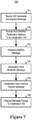
- Figure 7 illustrates a flowchart of a method 700 for delivering subsequent network messages associated with the same flow from the source virtual machine to the destination virtual machine.
- the method 700 may be performed for each subsequent network message. From the perspective of the source and destination virtual machines, the redirection is not apparent.
- the source virtual machine merely dispatch a second (or third, and so forth) source-side network message (act 701) that has a destination address that includes the destination virtual network address that addresses the load balancer, and that has a source address that includes a routable device identifier that addresses the source virtual machine.
- act 701 may be structured as described in Figure 6A , and thus act 701 may be the same as acts 401 and 501 of Figures 4 and 5 , respectively.
- the source host then intercepts the subsequent source-side network message (act 702), and modifies the destination address of the network message so as to use the routable device identifier that addresses the destination virtual machine as a destination address.
- Figure 6G illustrates the network message in which there has been an encapsulation of an additional addressing structure.
- the destination address remains the routable device identifier (DIPD) of the destination virtual machine, but the source address is modified to be the routable device identifier (DIPS) of the source virtual machine.
- This modified message is dispatched (act 703), and does not reach the load balancer (since the virtual network address VIPD is not in the controlling destination address field). But rather, the message arrives at the destination host (act 704).
- the destination host decapsulates the message to extract the original message issued by the source virtual machine (act 705), and passes that original message to the destination virtual machine (act 706).
- the load balancer played no role in this delivery.
- the principles described herein allow for much of the flow messages associated with a flow to be routed directly to the destination virtual machine, thus making delivery more efficient. Furthermore, this is done while allowing load balancing to be decided by a load balancer early in the flow. Thus, load balancing may still be applied to the flow generally. Furthermore, if the load balancer were to malfunction, the flow may continue.
Landscapes
- Engineering & Computer Science (AREA)
- Computer Networks & Wireless Communication (AREA)
- Signal Processing (AREA)
- Data Exchanges In Wide-Area Networks (AREA)
- Computer And Data Communications (AREA)
Claims (10)
- Computerprogrammprodukt mit einem oder mehreren computerlesbaren Speichermedien, auf denen computerausführbare Befehle vorhanden sind, die so strukturiert sind, dass, wenn sie von einem oder mehreren Prozessoren einer Zielzwischeneinheit ausgeführt werden, die als eine Zielmaschine dient, die in einem Multi-Nachrichtenstrom aus einer Ursprungsmaschine beteiligt ist, die als eine Ursprungszwischeneinheit dient, bewirken, dass die Zielzwischeneinheit ein Verfahren zum Umleiten des Multi-Nachrichtenstroms derart ausführt, dass eine Lastausgleichseinheit umgangen wird, die in einer oder mehreren vorhergehenden Netzwerknachrichten, die zu dem Multi-Nachrichtenstrom gehören, verwendet wird, wobei das Verfahren umfasst:in Reaktion darauf, dass die Zielzwischeneinheit eine Netzwerknachricht, die zu dem Multi-Nachrichtenstrom gehört, aus der Lastausgleichseinheit empfängt (408), Ermitteln (410), dass die Ursprungszwischeneinheit nachfolgende Netzwerknachrichten, die aus der Ursprungsmaschine stammen und zu dem gleichen Multi-Nachrichtenstrom gehören, an die Zielmaschine in einer Weise zu adressieren sind, in der die Lastausgleichseinheit umgangen wird;Ausgeben einer Befehlsnachricht aus der Zielzwischeneinheit an die Ursprungszwischeneinheit, wobei die Ursprungszwischeneinheit angewiesen wird (412), nachfolgende Netzwerkadressen aus der Ursprungsmaschine, die zu dem gleichen Multi-Nachrichtenstrom gehören, an die Zielmaschine derart zu adressieren, dass die Lastausgleichseinheit umgangen wird, wobei die ausgegebene Befehlsnachricht getrennt von einer Antwortnachricht auf die empfangene Netzwerknachricht ist.
- Verfahren einer Ursprungsmaschine in einer Ursprungszwischeneinheit, die einen Multi-Nachrichtenstrom an eine Zielmaschine in einer Zielzwischeneinheit übermittelt, wobei das Verfahren umfasst:einen Vorgang, in welchem die Ursprungsmaschine eine ursprungsseitige Netzwerknachricht ausgibt, die eine Zieladresse hat, die eine Zieladresse für ein virtuelles Netzwerk enthält, die über eine Lastausgleichseinheit geleitet wird, die Netzwerkadressen, die an die virtuelle Netzwerkadresse gerichtet sind, auf eine von mehreren Maschinen verteilt, die der virtuellen Netzwerkadresse zugeordnet ist, wobei die Zielmaschine eine der mehreren Maschinen ist, die der virtuellen Netzwerkadresse zugeordnet sind, wobei die ursprungsseitige Netzwerknachricht eine Ursprungsadresse hat, die eine weiterleitbare Gerätekennung hat, die die Ursprungsmaschine als Adresse hat; undeinen Vorgang, in welchem die Ursprungszwischeneinheit eine nachfolgende zielseitige Netzwerknachricht aus der Zielzwischeneinheit empfängt (413), wobei die nachfolgende zielseitige Netzwerknachricht von der Ursprungszwischeneinheit so interpretierbar ist, dass die Ursprungszwischeneinheit angewiesen wird, nachfolgende Netzwerknachrichten, die den gleichen Strom wie die ursprungsseitige Netzwerknachricht betreffen, an eine weiterleitbare Gerätekennung auszugeben, die die Zielmaschine als Adresse hat, wobei die nachfolgende zielseitige Netzwerknachricht getrennt von einer Antwortnachricht auf die ursprungsseitige Netzwerknachricht ist.
- Verfahren nach Anspruch 2, wobei die nachfolgende zielseitige Netzwerknachricht eine Ursprungsadresse hat, die eine weiterleitbare Gerätekennung enthält, die die Zielmaschine als Adresse hat, und eine Zieladresse hat, die die weiterleitbare Gerätekennung, die die Ursprungsmaschine als Adresse hat, enthält.
- Verfahren nach Anspruch 3, wobei Empfangen der nachfolgenden zielseitigen Netzwerknachricht umfasst:Erzeugen einer gekapselten zielseitigen Netzwerknachricht, die die nachfolgende zielseitige Netzwerknachricht mit Kapselungsadresseninformation kapselt, wobei die gekapselte Adresseninformation eine Ursprungsadresse enthält, die die virtuelle Netzwerkadresse enthält, die die Lastausgleichseinheit als Adresse hat; undeinen Vorgang, in welchem die Ursprungszwischeneinheit die gekapselte zielseitige Netzwerknachricht entkapselt und die gekapselte Nachricht als einen Befehl auslegt, um nachfolgende ursprungsseitige Netzwerknachrichten, die den gleichen Strom betreffen, zu modifizieren.
- Verfahren nach Anspruch 2, das ferner umfasst:
einen Vorgang, wonach die Ursprungszwischeneinheit die nachfolgende zielseitige Netzwerknachricht derart modifiziert, dass die Ursprungsadresse die virtuelle Zielnetzwerkadresse der Lastausgleichseinheit enthält. - Verfahren nach Anspruch 2, wobei die ursprungsseitige Netzwerknachricht eine erste ursprungsseitige Netzwerknachricht ist, und wobei das Verfahren ferner umfasst:
einen Vorgang, wonach die Ursprungsmaschine eine zweite ursprungsseitige Netzwerknachricht ausgibt, die eine Zieladresse, die die virtuelle Netzwerkadresse enthält, die die Lastausgleichseinheit als Adresse hat, und eine Ursprungsadresse hat, die eine weiterleitbare Gerätekennung enthält, die die Ursprungsmaschine als Adresse hat. - Verfahren nach Anspruch 6, das fermer umfasst:einen Vorgang, in welchem die Ursprungszwischeneinheit die zweite ursprungsseitige Netzwerknachricht abfängt;einen Vorgang, in welchem die Ursprungszwischeneinheit die zweite ursprungsseitige Netzwerknachricht derart modifiziert, dass die weiterleitbare Gerätekennung, die die Zielmaschine als Adresse hat, als eine Zieladresse verwendet wird; undeinen Vorgang, in welchem die Ursprungszwischeneinheit die modifizierte zweite ursprungsseitige Netzwerknachricht zu der Zielmaschine derart ausgibt, dass die Lastausgleichseinheit umgangen wird.
- Verfahren nach Anspruch 7, wobei die Modifizierung der zweiten Netzwerknachricht in der Ursprungszwischeneinheit eine Nachrichtenkapselung umfasst.
- Verfahren nach Anspruch 8, wobei der Vorgang, in welchem die Ursprungszwischeneinheit die gekapselte Nachricht aufnimmt, beinhaltet: Verifizieren der Identität des Nachrichtensenders und Zurückweisen der Nachricht, wenn die Identität nicht verifizierbar ist.
- Verfahren nach Anspruch 9, wobei der Vorgang des Verifizierens der Identität des Senders umfasst: Verifizieren, dass die Nachrichten Daten aus der ursprungsseitigen Nachricht enthält.
Applications Claiming Priority (2)
| Application Number | Priority Date | Filing Date | Title |
|---|---|---|---|
| US13/652,718 US9246998B2 (en) | 2012-10-16 | 2012-10-16 | Load balancer bypass |
| PCT/US2013/065159 WO2014062752A1 (en) | 2012-10-16 | 2013-10-16 | Load balancer bypass |
Publications (2)
| Publication Number | Publication Date |
|---|---|
| EP2909999A1 EP2909999A1 (de) | 2015-08-26 |
| EP2909999B1 true EP2909999B1 (de) | 2019-11-20 |
Family
ID=49515490
Family Applications (1)
| Application Number | Title | Priority Date | Filing Date |
|---|---|---|---|
| EP13785712.4A Active EP2909999B1 (de) | 2012-10-16 | 2013-10-16 | Lastenausgleicher-bypass |
Country Status (5)
| Country | Link |
|---|---|
| US (2) | US9246998B2 (de) |
| EP (1) | EP2909999B1 (de) |
| CN (1) | CN104756466B (de) |
| BR (1) | BR112015007738B1 (de) |
| WO (1) | WO2014062752A1 (de) |
Families Citing this family (29)
| Publication number | Priority date | Publication date | Assignee | Title |
|---|---|---|---|---|
| US8612550B2 (en) | 2011-02-07 | 2013-12-17 | Microsoft Corporation | Proxy-based cache content distribution and affinity |
| US9246998B2 (en) | 2012-10-16 | 2016-01-26 | Microsoft Technology Licensing, Llc | Load balancer bypass |
| US9888055B2 (en) | 2013-03-15 | 2018-02-06 | Profitbricks Gmbh | Firewall for a virtual network and related techniques |
| US9361171B2 (en) | 2014-03-07 | 2016-06-07 | ProfitBricks, Inc. | Systems and methods for storage of data in a virtual storage device |
| US9454314B2 (en) | 2014-03-07 | 2016-09-27 | ProfitBricks, Inc. | Systems and methods for creating an image of a virtual storage device |
| US9935834B1 (en) | 2015-03-13 | 2018-04-03 | Cisco Technology, Inc. | Automated configuration of virtual port channels |
| US10110668B1 (en) | 2015-03-31 | 2018-10-23 | Cisco Technology, Inc. | System and method for monitoring service nodes |
| US9954783B1 (en) | 2015-03-31 | 2018-04-24 | Cisco Technology, Inc. | System and method for minimizing disruption from failed service nodes |
| US10079725B1 (en) | 2015-04-01 | 2018-09-18 | Cisco Technology, Inc. | Route map policies for network switches |
| US9985894B1 (en) * | 2015-04-01 | 2018-05-29 | Cisco Technology, Inc. | Exclude filter for load balancing switch |
| US10103995B1 (en) | 2015-04-01 | 2018-10-16 | Cisco Technology, Inc. | System and method for automated policy-based routing |
| US10075377B1 (en) | 2015-04-23 | 2018-09-11 | Cisco Technology, Inc. | Statistical collection in a network switch natively configured as a load balancer |
| US10033631B1 (en) | 2015-04-23 | 2018-07-24 | Cisco Technology, Inc. | Route distribution for service appliances |
| US9935882B2 (en) | 2015-05-13 | 2018-04-03 | Cisco Technology, Inc. | Configuration of network elements for automated policy-based routing |
| US10404788B2 (en) * | 2016-06-30 | 2019-09-03 | Alibaba Group Holding Limited | Express route transmissions between virtual machines and cloud service computing devices |
| US10419330B2 (en) | 2016-07-21 | 2019-09-17 | Alibaba Group Holding Limited | Express route transmissions between virtual machines and cloud service computing devices |
| US20180054475A1 (en) * | 2016-08-16 | 2018-02-22 | Microsoft Technology Licensing, Llc | Load balancing system and method for cloud-based network appliances |
| US10320895B2 (en) * | 2016-11-15 | 2019-06-11 | Microsoft Technology Licensing, Llc | Live migration of load balanced virtual machines via traffic bypass |
| US10848432B2 (en) | 2016-12-18 | 2020-11-24 | Cisco Technology, Inc. | Switch fabric based load balancing |
| US10652320B2 (en) * | 2017-02-21 | 2020-05-12 | Microsoft Technology Licensing, Llc | Load balancing in distributed computing systems |
| US11082312B2 (en) | 2017-10-04 | 2021-08-03 | Cisco Technology, Inc. | Service chaining segmentation analytics |
| US10965598B1 (en) | 2017-10-04 | 2021-03-30 | Cisco Technology, Inc. | Load balancing in a service chain |
| US10965596B2 (en) | 2017-10-04 | 2021-03-30 | Cisco Technology, Inc. | Hybrid services insertion |
| US10581962B2 (en) * | 2017-11-01 | 2020-03-03 | Alibaba Group Holding Limited | Direct communication between physical server and storage service |
| US10587517B2 (en) * | 2017-11-30 | 2020-03-10 | Juniper Networks, Inc. | Optimizing fabric path forwarding for virtual nodes within an electronic device |
| CN108809985B (zh) * | 2018-06-13 | 2021-01-26 | 山东云科汉威软件有限公司 | 一种移动平台系统 |
| US11102114B2 (en) * | 2018-12-28 | 2021-08-24 | Alibaba Group Holding Limited | Method, apparatus, and computer-readable storage medium for network optimization for accessing cloud service from on-premises network |
| US11106482B2 (en) | 2019-05-31 | 2021-08-31 | Microsoft Technology Licensing, Llc | Connectivity migration in a virtual execution system |
| US12562983B2 (en) * | 2023-09-19 | 2026-02-24 | Cisco Technology, Inc. | Service routing using IP encapsulation |
Family Cites Families (163)
| Publication number | Priority date | Publication date | Assignee | Title |
|---|---|---|---|---|
| US5251205A (en) * | 1990-09-04 | 1993-10-05 | Digital Equipment Corporation | Multiple protocol routing |
| US5305389A (en) | 1991-08-30 | 1994-04-19 | Digital Equipment Corporation | Predictive cache system |
| US5371852A (en) | 1992-10-14 | 1994-12-06 | International Business Machines Corporation | Method and apparatus for making a cluster of computers appear as a single host on a network |
| US5793763A (en) | 1995-11-03 | 1998-08-11 | Cisco Technology, Inc. | Security system for network address translation systems |
| US5935207A (en) | 1996-06-03 | 1999-08-10 | Webtv Networks, Inc. | Method and apparatus for providing remote site administrators with user hits on mirrored web sites |
| US5774660A (en) * | 1996-08-05 | 1998-06-30 | Resonate, Inc. | World-wide-web server with delayed resource-binding for resource-based load balancing on a distributed resource multi-node network |
| US5892903A (en) * | 1996-09-12 | 1999-04-06 | Internet Security Systems, Inc. | Method and apparatus for detecting and identifying security vulnerabilities in an open network computer communication system |
| US6470389B1 (en) * | 1997-03-14 | 2002-10-22 | Lucent Technologies Inc. | Hosting a network service on a cluster of servers using a single-address image |
| US5924116A (en) | 1997-04-02 | 1999-07-13 | International Business Machines Corporation | Collaborative caching of a requested object by a lower level node as a function of the caching status of the object at a higher level node |
| US6351775B1 (en) | 1997-05-30 | 2002-02-26 | International Business Machines Corporation | Loading balancing across servers in a computer network |
| US6434620B1 (en) | 1998-08-27 | 2002-08-13 | Alacritech, Inc. | TCP/IP offload network interface device |
| US6070191A (en) | 1997-10-17 | 2000-05-30 | Lucent Technologies Inc. | Data distribution techniques for load-balanced fault-tolerant web access |
| US6249801B1 (en) * | 1998-07-15 | 2001-06-19 | Radware Ltd. | Load balancing |
| US6427187B2 (en) | 1998-07-31 | 2002-07-30 | Cache Flow, Inc. | Multiple cache communication |
| US6438652B1 (en) | 1998-10-09 | 2002-08-20 | International Business Machines Corporation | Load balancing cooperating cache servers by shifting forwarded request |
| US6490615B1 (en) | 1998-11-20 | 2002-12-03 | International Business Machines Corporation | Scalable cache |
| US6496505B2 (en) * | 1998-12-11 | 2002-12-17 | Lucent Technologies Inc. | Packet tunneling optimization to wireless devices accessing packet-based wired networks |
| US6587431B1 (en) * | 1998-12-18 | 2003-07-01 | Nortel Networks Limited | Supertrunking for packet switching |
| US6748416B2 (en) * | 1999-01-20 | 2004-06-08 | International Business Machines Corporation | Client-side method and apparatus for improving the availability and performance of network mediated services |
| US7197044B1 (en) | 1999-03-17 | 2007-03-27 | Broadcom Corporation | Method for managing congestion in a network switch |
| US6671259B1 (en) * | 1999-03-30 | 2003-12-30 | Fujitsu Limited | Method and system for wide area network load balancing |
| US7299294B1 (en) | 1999-11-10 | 2007-11-20 | Emc Corporation | Distributed traffic controller for network data |
| EP1049307A1 (de) * | 1999-04-29 | 2000-11-02 | International Business Machines Corporation | System und Verfahren zur Zuweisung von Klientsitzungen in einem Verband von mit dem World Wide Web verbundenen Servern |
| US7437305B1 (en) | 1999-05-11 | 2008-10-14 | Christopher Angel Kantarjiev | Scheduling delivery of products via the internet |
| US6704278B1 (en) | 1999-07-02 | 2004-03-09 | Cisco Technology, Inc. | Stateful failover of service managers |
| US6970913B1 (en) | 1999-07-02 | 2005-11-29 | Cisco Technology, Inc. | Load balancing using distributed forwarding agents with application based feedback for different virtual machines |
| US20010034752A1 (en) | 2000-01-26 | 2001-10-25 | Prompt2U Inc. | Method and system for symmetrically distributed adaptive matching of partners of mutual interest in a computer network |
| US8291007B2 (en) | 2000-02-22 | 2012-10-16 | Flash Networks Ltd | System and method to accelerate client/server interactions using predictive requests |
| US7024466B2 (en) | 2000-04-07 | 2006-04-04 | Movielink, Llc | Network configured for delivery of content for download to a recipient |
| US6742044B1 (en) * | 2000-05-10 | 2004-05-25 | Cisco Technology, Inc. | Distributed network traffic load balancing technique implemented without gateway router |
| US7039709B1 (en) * | 2000-05-31 | 2006-05-02 | International Business Machines Corporation | Dynamically selection of most efficient transmission medium and route from a client browser |
| US6981056B1 (en) * | 2000-06-28 | 2005-12-27 | Cisco Technology, Inc. | Wide area load balancing of web traffic |
| US6615317B2 (en) | 2000-07-07 | 2003-09-02 | Fitech Laboratories, Inc. | Methods and systems for providing a highly scalable synchronous data cache |
| US6732237B1 (en) | 2000-08-29 | 2004-05-04 | Oracle International Corporation | Multi-tier caching system |
| US20020032755A1 (en) | 2000-09-13 | 2002-03-14 | Marc Abrahams | Registration system and method using a back end server |
| US7272653B2 (en) | 2000-09-28 | 2007-09-18 | International Business Machines Corporation | System and method for implementing a clustered load balancer |
| US6970939B2 (en) | 2000-10-26 | 2005-11-29 | Intel Corporation | Method and apparatus for large payload distribution in a network |
| WO2002035799A2 (en) * | 2000-10-26 | 2002-05-02 | Prismedia Networks, Inc. | Method and apparatus for large payload distribution in a network |
| US6643357B2 (en) * | 2000-12-14 | 2003-11-04 | Nortel Networks Limited | Distributed redirect server |
| US8112545B1 (en) | 2000-12-19 | 2012-02-07 | Rockstar Bidco, LP | Distributed network address translation control |
| US7089328B1 (en) * | 2000-12-29 | 2006-08-08 | Cisco Technology, Inc. | Method allocation scheme for maintaining server load balancers services in a high throughput environment |
| US7188145B2 (en) | 2001-01-12 | 2007-03-06 | Epicrealm Licensing Llc | Method and system for dynamic distributed data caching |
| US6549997B2 (en) | 2001-03-16 | 2003-04-15 | Fujitsu Limited | Dynamic variable page size translation of addresses |
| US8244864B1 (en) * | 2001-03-20 | 2012-08-14 | Microsoft Corporation | Transparent migration of TCP based connections within a network load balancing system |
| US6871347B2 (en) * | 2001-04-13 | 2005-03-22 | Interland, Inc. | Method and apparatus for facilitating load balancing across name servers |
| US20020161923A1 (en) | 2001-04-27 | 2002-10-31 | Foster Michael S. | Method and system for reconfiguring a path in a communications network |
| US7292571B2 (en) * | 2001-04-30 | 2007-11-06 | Aol Llc, A Delaware Limited Liability Company | Load balancing with direct terminal response |
| US20030005080A1 (en) | 2001-06-28 | 2003-01-02 | Watkins James S. | Systems and methods for accessing data |
| US7245632B2 (en) | 2001-08-10 | 2007-07-17 | Sun Microsystems, Inc. | External storage for modular computer systems |
| US7321925B2 (en) * | 2001-09-18 | 2008-01-22 | Intel Corporation | Load balancing and fault tolerance for server-based software applications |
| EP1315349B1 (de) | 2001-11-21 | 2008-03-19 | Sun Microsystems, Inc. | Verfahren um einen Lastverteiler in ein Client- Server- System zu integrieren |
| US7289525B2 (en) | 2002-02-21 | 2007-10-30 | Intel Corporation | Inverse multiplexing of managed traffic flows over a multi-star network |
| US7512702B1 (en) | 2002-03-19 | 2009-03-31 | Cisco Technology, Inc. | Method and apparatus providing highly scalable server load balancing |
| US6856991B1 (en) | 2002-03-19 | 2005-02-15 | Cisco Technology, Inc. | Method and apparatus for routing data to a load balanced server using MPLS packet labels |
| US7133905B2 (en) | 2002-04-09 | 2006-11-07 | Akamai Technologies, Inc. | Method and system for tiered distribution in a content delivery network |
| US7020706B2 (en) | 2002-06-17 | 2006-03-28 | Bmc Software, Inc. | Method and system for automatically updating multiple servers |
| US7280557B1 (en) | 2002-06-28 | 2007-10-09 | Cisco Technology, Inc. | Mechanisms for providing stateful NAT support in redundant and asymetric routing environments |
| US8150951B2 (en) * | 2002-07-10 | 2012-04-03 | Cisco Technology, Inc. | System and method for communicating in a loadbalancing environment |
| US7328237B1 (en) * | 2002-07-25 | 2008-02-05 | Cisco Technology, Inc. | Technique for improving load balancing of traffic in a data network using source-side related information |
| US20040030765A1 (en) * | 2002-08-12 | 2004-02-12 | Zilbershtein Itai Ephraim | Local network natification |
| US7561587B2 (en) | 2002-09-26 | 2009-07-14 | Yhc Corporation | Method and system for providing layer-4 switching technologies |
| US7616638B2 (en) | 2003-07-29 | 2009-11-10 | Orbital Data Corporation | Wavefront detection and disambiguation of acknowledgments |
| US20080008202A1 (en) | 2002-10-31 | 2008-01-10 | Terrell William C | Router with routing processors and methods for virtualization |
| US7191235B1 (en) * | 2002-11-26 | 2007-03-13 | Cisco Technology, Inc. | System and method for communicating data in a loadbalancing environment |
| US7243351B2 (en) | 2002-12-17 | 2007-07-10 | International Business Machines Corporation | System and method for task scheduling based upon the classification value and probability |
| US7890633B2 (en) | 2003-02-13 | 2011-02-15 | Oracle America, Inc. | System and method of extending virtual address resolution for mapping networks |
| US20040167981A1 (en) | 2003-02-25 | 2004-08-26 | Douglas Christopher Paul | Method and system for monitoring relationships between content devices in a content delivery network |
| US7975043B2 (en) | 2003-02-25 | 2011-07-05 | Hewlett-Packard Development Company, L.P. | Method and apparatus for monitoring a network |
| US7324512B2 (en) * | 2003-06-12 | 2008-01-29 | International Business Machines Corporation | MAC layer bridging of network frames between isolated and external networks |
| US20040260745A1 (en) * | 2003-06-18 | 2004-12-23 | Gage Christopher A. S. | Load balancer performance using affinity modification |
| US7912954B1 (en) | 2003-06-27 | 2011-03-22 | Oesterreicher Richard T | System and method for digital media server load balancing |
| US7613822B2 (en) | 2003-06-30 | 2009-11-03 | Microsoft Corporation | Network load balancing with session information |
| US7590736B2 (en) | 2003-06-30 | 2009-09-15 | Microsoft Corporation | Flexible network load balancing |
| US7606929B2 (en) | 2003-06-30 | 2009-10-20 | Microsoft Corporation | Network load balancing with connection manipulation |
| US7567504B2 (en) * | 2003-06-30 | 2009-07-28 | Microsoft Corporation | Network load balancing with traffic routing |
| US7636917B2 (en) | 2003-06-30 | 2009-12-22 | Microsoft Corporation | Network load balancing with host status information |
| WO2005027438A1 (ja) * | 2003-09-11 | 2005-03-24 | Fujitsu Limited | パケット中継装置 |
| US9584360B2 (en) | 2003-09-29 | 2017-02-28 | Foundry Networks, Llc | Global server load balancing support for private VIP addresses |
| US20050097185A1 (en) | 2003-10-07 | 2005-05-05 | Simon Gibson | Localization link system |
| US8572249B2 (en) | 2003-12-10 | 2013-10-29 | Aventail Llc | Network appliance for balancing load and platform services |
| US7478173B1 (en) * | 2003-12-18 | 2009-01-13 | Wmware, Inc. | Method and system for sharing a network connection in a virtual computer system |
| US20050188055A1 (en) | 2003-12-31 | 2005-08-25 | Saletore Vikram A. | Distributed and dynamic content replication for server cluster acceleration |
| US8689319B2 (en) | 2004-04-19 | 2014-04-01 | Sollitionary, Inc. | Network security system |
| US7565423B1 (en) | 2004-06-30 | 2009-07-21 | Google Inc. | System and method of accessing a document efficiently through multi-tier web caching |
| US7813263B2 (en) | 2004-06-30 | 2010-10-12 | Conexant Systems, Inc. | Method and apparatus providing rapid end-to-end failover in a packet switched communications network |
| US20060294584A1 (en) | 2005-06-22 | 2006-12-28 | Netdevices, Inc. | Auto-Configuration of Network Services Required to Support Operation of Dependent Network Services |
| US8145908B1 (en) * | 2004-10-29 | 2012-03-27 | Akamai Technologies, Inc. | Web content defacement protection system |
| DE602004027516D1 (de) | 2004-12-03 | 2010-07-15 | St Microelectronics Srl | Ein Verfahren zum Verwalten von virtuellen Maschinen in einer körperlichen Verarbeitungsmaschine, ein entsprechendes Prozessorsystem und Computerprogrammprodukt dafür |
| US8954595B2 (en) * | 2004-12-30 | 2015-02-10 | Citrix Systems, Inc. | Systems and methods for providing client-side accelerated access to remote applications via TCP buffering |
| US7886076B2 (en) * | 2005-01-12 | 2011-02-08 | International Business Machines Corporation | Bypassing routing stacks using mobile internet protocol |
| US7334076B2 (en) | 2005-03-08 | 2008-02-19 | Microsoft Corporation | Method and system for a guest physical address virtualization in a virtual machine environment |
| US7693050B2 (en) | 2005-04-14 | 2010-04-06 | Microsoft Corporation | Stateless, affinity-preserving load balancing |
| US20070055789A1 (en) | 2005-09-08 | 2007-03-08 | Benoit Claise | Method and apparatus for managing routing of data elements |
| EP1764970A1 (de) * | 2005-09-19 | 2007-03-21 | Matsushita Electric Industrial Co., Ltd. | Mobile Mehrfachschnittstellen Knoten mit gleichzeitiger Heim und Fremdnetzwerksverbindung |
| US7685109B1 (en) | 2005-12-29 | 2010-03-23 | Amazon Technologies, Inc. | Method and apparatus for data partitioning and replication in a searchable data service |
| US7694011B2 (en) | 2006-01-17 | 2010-04-06 | Cisco Technology, Inc. | Techniques for load balancing over a cluster of subscriber-aware application servers |
| US8274989B1 (en) | 2006-03-31 | 2012-09-25 | Rockstar Bidco, LP | Point-to-multipoint (P2MP) resilience for GMPLS control of ethernet |
| US7769834B2 (en) * | 2006-05-30 | 2010-08-03 | Riverbed Technology, Inc. | System for selecting a proxy pair based on configurations of autodiscovered proxies on a network |
| US8005022B2 (en) | 2006-07-20 | 2011-08-23 | Oracle America, Inc. | Host operating system bypass for packets destined for a virtual machine |
| US7953889B2 (en) * | 2006-08-03 | 2011-05-31 | Citrix Systems, Inc. | Systems and methods for routing VPN traffic around network disruption |
| US7730269B2 (en) | 2006-08-29 | 2010-06-01 | International Business Machines Corporation | Load management to reduce communication signaling latency in a virtual machine environment |
| US20080201540A1 (en) | 2007-02-16 | 2008-08-21 | Ravi Sahita | Preservation of integrity of data across a storage hierarchy |
| US7761664B2 (en) | 2007-04-13 | 2010-07-20 | International Business Machines Corporation | Systems and methods for multi-level exclusive caching using hints |
| US7768907B2 (en) | 2007-04-23 | 2010-08-03 | International Business Machines Corporation | System and method for improved Ethernet load balancing |
| US8561061B2 (en) | 2007-05-14 | 2013-10-15 | Vmware, Inc. | Adaptive dynamic selection and application of multiple virtualization techniques |
| US8903938B2 (en) * | 2007-06-18 | 2014-12-02 | Amazon Technologies, Inc. | Providing enhanced data retrieval from remote locations |
| US20090063706A1 (en) | 2007-08-30 | 2009-03-05 | International Business Machines Corporation | Combined Layer 2 Virtual MAC Address with Layer 3 IP Address Routing |
| US7383327B1 (en) * | 2007-10-11 | 2008-06-03 | Swsoft Holdings, Ltd. | Management of virtual and physical servers using graphic control panels |
| US7697557B2 (en) | 2007-12-26 | 2010-04-13 | Alcatel Lucent | Predictive caching content distribution network |
| US8031713B2 (en) * | 2008-01-29 | 2011-10-04 | International Business Machines Corporation | General multi-link interface for networking environments |
| JP4973560B2 (ja) | 2008-03-26 | 2012-07-11 | 富士通株式会社 | サーバおよび接続先サーバ切替制御方法 |
| US8281363B1 (en) * | 2008-03-31 | 2012-10-02 | Symantec Corporation | Methods and systems for enforcing network access control in a virtual environment |
| US9762692B2 (en) | 2008-04-04 | 2017-09-12 | Level 3 Communications, Llc | Handling long-tail content in a content delivery network (CDN) |
| US8041896B2 (en) * | 2008-04-30 | 2011-10-18 | Hewlett-Packard Development Company, L.P. | Virtualization platform with dedicated cache access |
| CN101631110B (zh) | 2008-07-15 | 2013-01-02 | 国际商业机器公司 | 基于相对位置动态确定连接建立机制的装置和方法 |
| US8128279B2 (en) | 2008-07-16 | 2012-03-06 | GM Global Technology Operations LLC | Cloud point monitoring systems for determining a cloud point temperature of diesel fuel |
| US8180896B2 (en) | 2008-08-06 | 2012-05-15 | Edgecast Networks, Inc. | Global load balancing on a content delivery network |
| US20100036903A1 (en) | 2008-08-11 | 2010-02-11 | Microsoft Corporation | Distributed load balancer |
| JP2010061283A (ja) | 2008-09-02 | 2010-03-18 | Fujitsu Ltd | ロードバランサ設定プログラム,ロードバランサ設定方法及びロードバランサ設定装置 |
| US7860100B2 (en) | 2008-10-01 | 2010-12-28 | Cisco Technology, Inc. | Service path selection in a service network |
| US8201237B1 (en) * | 2008-12-10 | 2012-06-12 | Amazon Technologies, Inc. | Establishing secure remote access to private computer networks |
| US7831661B2 (en) * | 2008-12-18 | 2010-11-09 | Vmware, Inc. | Measuring client interactive performance using a display channel |
| US8769205B2 (en) * | 2009-01-20 | 2014-07-01 | Oracle International Corporation | Methods and systems for implementing transcendent page caching |
| CA3204215A1 (en) * | 2009-04-01 | 2010-10-07 | Nicira, Inc. | Method and apparatus for implementing and managing virtual switches |
| US8433749B2 (en) | 2009-04-15 | 2013-04-30 | Accenture Global Services Limited | Method and system for client-side scaling of web server farm architectures in a cloud data center |
| US9600332B2 (en) * | 2009-04-28 | 2017-03-21 | Cisco Technology, Inc. | Server load balancing based on virtual utilization, physical utilization, and feedback |
| US8416692B2 (en) * | 2009-05-28 | 2013-04-09 | Microsoft Corporation | Load balancing across layer-2 domains |
| US20100318609A1 (en) * | 2009-06-15 | 2010-12-16 | Microsoft Corporation | Bridging enterprise networks into cloud |
| US8737407B2 (en) | 2009-06-22 | 2014-05-27 | Citrix Systems, Inc. | Systems and methods for distributed hash table in multi-core system |
| US8533317B2 (en) | 2009-06-22 | 2013-09-10 | Citrix Systems, Inc. | Systems and methods for monitor distribution in a multi-core system |
| US8566822B2 (en) * | 2009-07-22 | 2013-10-22 | Broadcom Corporation | Method and system for distributing hypervisor functionality over multiple physical devices in a network and configuring sub-hypervisor to control the virtual machines |
| US8873375B2 (en) * | 2009-07-22 | 2014-10-28 | Broadcom Corporation | Method and system for fault tolerance and resilience for virtualized machines in a network |
| US8613085B2 (en) * | 2009-07-22 | 2013-12-17 | Broadcom Corporation | Method and system for traffic management via virtual machine migration |
| JP5338555B2 (ja) | 2009-08-11 | 2013-11-13 | 富士通株式会社 | 負荷分散装置、負荷分散方法および負荷分散プログラム |
| US7937438B1 (en) * | 2009-12-07 | 2011-05-03 | Amazon Technologies, Inc. | Using virtual networking devices to manage external connections |
| US8645508B1 (en) | 2010-03-03 | 2014-02-04 | Amazon Technologies, Inc. | Managing external communications for provided computer networks |
| US8504556B1 (en) * | 2010-03-08 | 2013-08-06 | Amazon Technologies, Inc. | System and method for diminishing workload imbalance across multiple database systems |
| CN101815033B (zh) * | 2010-03-12 | 2013-04-24 | 成都市华为赛门铁克科技有限公司 | 负载均衡的方法、设备及系统 |
| US8266204B2 (en) * | 2010-03-15 | 2012-09-11 | Microsoft Corporation | Direct addressability and direct server return |
| CN102907055B (zh) | 2010-03-26 | 2015-06-17 | 思杰系统有限公司 | 用于在多核装置上进行链路负载平衡的系统和方法 |
| US8619584B2 (en) | 2010-04-30 | 2013-12-31 | Cisco Technology, Inc. | Load balancing over DCE multipath ECMP links for HPC and FCoE |
| US8533337B2 (en) * | 2010-05-06 | 2013-09-10 | Citrix Systems, Inc. | Continuous upgrading of computers in a load balanced environment |
| US8493851B2 (en) * | 2010-05-07 | 2013-07-23 | Broadcom Corporation | Method and system for offloading tunnel packet processing in cloud computing |
| US8902743B2 (en) * | 2010-06-28 | 2014-12-02 | Microsoft Corporation | Distributed and scalable network address translation |
| US8611349B1 (en) * | 2010-06-28 | 2013-12-17 | Amazon Technologies, Inc. | Methods and apparatus for internet-scale routing using small-scale border routers |
| US8547835B2 (en) | 2010-10-21 | 2013-10-01 | Telefonaktiebolaget L M Ericsson (Publ) | Controlling IP flows to bypass a packet data network gateway using multi-path transmission control protocol connections |
| US8755283B2 (en) | 2010-12-17 | 2014-06-17 | Microsoft Corporation | Synchronizing state among load balancer components |
| US8533343B1 (en) * | 2011-01-13 | 2013-09-10 | Google Inc. | Virtual network pairs |
| US8402112B2 (en) | 2011-01-14 | 2013-03-19 | Microsoft Corporation | Inter-cache communication using HTTP resource |
| US8612550B2 (en) | 2011-02-07 | 2013-12-17 | Microsoft Corporation | Proxy-based cache content distribution and affinity |
| US9191327B2 (en) | 2011-02-10 | 2015-11-17 | Varmour Networks, Inc. | Distributed service processing of network gateways using virtual machines |
| US8676980B2 (en) | 2011-03-22 | 2014-03-18 | Cisco Technology, Inc. | Distributed load balancer in a virtual machine environment |
| US8751691B1 (en) * | 2011-03-23 | 2014-06-10 | Amazon Technologies, Inc. | Methods and apparatus for remapping public network addresses on a network to an external network via an intermediate network |
| US20120303809A1 (en) * | 2011-05-25 | 2012-11-29 | Microsoft Corporation | Offloading load balancing packet modification |
| AU2012296329B2 (en) | 2011-08-17 | 2015-08-27 | Nicira, Inc. | Logical L3 routing |
| US9135269B2 (en) * | 2011-12-07 | 2015-09-15 | Egnyte, Inc. | System and method of implementing an object storage infrastructure for cloud-based services |
| US20130159487A1 (en) | 2011-12-14 | 2013-06-20 | Microsoft Corporation | Migration of Virtual IP Addresses in a Failover Cluster |
| CN102436401A (zh) * | 2011-12-16 | 2012-05-02 | 北京邮电大学 | 负载均衡系统及方法 |
| US9083709B2 (en) | 2012-05-11 | 2015-07-14 | Cisco Technology, Inc. | Virtual internet protocol migration and load balancing |
| US20140006681A1 (en) | 2012-06-29 | 2014-01-02 | Broadcom Corporation | Memory management in a virtualization environment |
| US8805990B2 (en) | 2012-07-12 | 2014-08-12 | Microsoft Corporation | Load balancing for single-address tenants |
| US9246998B2 (en) | 2012-10-16 | 2016-01-26 | Microsoft Technology Licensing, Llc | Load balancer bypass |
| US20140115135A1 (en) * | 2012-10-22 | 2014-04-24 | Telefonaktiebolaget L M Ericsson (Publ) | Method and system of frame based identifier locator network protocol (ilnp) load balancing and routing |
-
2012
- 2012-10-16 US US13/652,718 patent/US9246998B2/en active Active
-
2013
- 2013-10-16 EP EP13785712.4A patent/EP2909999B1/de active Active
- 2013-10-16 WO PCT/US2013/065159 patent/WO2014062752A1/en not_active Ceased
- 2013-10-16 CN CN201380054147.2A patent/CN104756466B/zh not_active Expired - Fee Related
- 2013-10-16 BR BR112015007738-2A patent/BR112015007738B1/pt not_active IP Right Cessation
-
2015
- 2015-12-17 US US14/972,951 patent/US9826033B2/en not_active Expired - Fee Related
Non-Patent Citations (1)
| Title |
|---|
| None * |
Also Published As
| Publication number | Publication date |
|---|---|
| US20140108655A1 (en) | 2014-04-17 |
| US20160105499A1 (en) | 2016-04-14 |
| CN104756466B (zh) | 2018-05-25 |
| CN104756466A (zh) | 2015-07-01 |
| EP2909999A1 (de) | 2015-08-26 |
| WO2014062752A1 (en) | 2014-04-24 |
| BR112015007738A2 (pt) | 2017-11-28 |
| BR112015007738B1 (pt) | 2022-03-15 |
| US9246998B2 (en) | 2016-01-26 |
| US9826033B2 (en) | 2017-11-21 |
Similar Documents
| Publication | Publication Date | Title |
|---|---|---|
| US9246998B2 (en) | Load balancer bypass | |
| US11777897B2 (en) | Cloud infrastructure resources for connecting a service provider private network to a customer private network | |
| US11409550B2 (en) | Low latency connections to workspaces in a cloud computing environment | |
| KR101840904B1 (ko) | 가상화된 네트워크와 비-가상화된 네트워크 간 가상화 게이트웨이 | |
| US8805990B2 (en) | Load balancing for single-address tenants | |
| US12015562B2 (en) | Port addressing via packet header modification | |
| JP2018033136A (ja) | 仮想ネットワーク環境で仮想スイッチを利用してロードバランシングを処理する方法およびシステム | |
| JP2018033135A (ja) | 仮想ネットワーク環境でループバックインタフェースを利用してdsrロードバランシングを処理する方法およびシステム | |
| US20240031282A1 (en) | Layer-2 networking span port in a virtualized cloud environment | |
| US11095716B2 (en) | Data replication for a virtual networking system | |
| US12289284B2 (en) | Cloud infrastructure resources for connecting a service provider private network to a customer private network | |
| US10148613B2 (en) | Increased port address space | |
| EP3369217B1 (de) | Betrieb von mehreren gateways auf einem einzigen betriebssystem | |
| Kächele et al. | COSCAnet: virtualized sockets for scalable and flexible PaaS applications |
Legal Events
| Date | Code | Title | Description |
|---|---|---|---|
| PUAI | Public reference made under article 153(3) epc to a published international application that has entered the european phase |
Free format text: ORIGINAL CODE: 0009012 |
|
| 17P | Request for examination filed |
Effective date: 20150309 |
|
| AK | Designated contracting states |
Kind code of ref document: A1 Designated state(s): AL AT BE BG CH CY CZ DE DK EE ES FI FR GB GR HR HU IE IS IT LI LT LU LV MC MK MT NL NO PL PT RO RS SE SI SK SM TR |
|
| AX | Request for extension of the european patent |
Extension state: BA ME |
|
| DAX | Request for extension of the european patent (deleted) | ||
| STAA | Information on the status of an ep patent application or granted ep patent |
Free format text: STATUS: EXAMINATION IS IN PROGRESS |
|
| 17Q | First examination report despatched |
Effective date: 20180906 |
|
| GRAP | Despatch of communication of intention to grant a patent |
Free format text: ORIGINAL CODE: EPIDOSNIGR1 |
|
| STAA | Information on the status of an ep patent application or granted ep patent |
Free format text: STATUS: GRANT OF PATENT IS INTENDED |
|
| INTG | Intention to grant announced |
Effective date: 20190524 |
|
| GRAS | Grant fee paid |
Free format text: ORIGINAL CODE: EPIDOSNIGR3 |
|
| GRAA | (expected) grant |
Free format text: ORIGINAL CODE: 0009210 |
|
| STAA | Information on the status of an ep patent application or granted ep patent |
Free format text: STATUS: THE PATENT HAS BEEN GRANTED |
|
| AK | Designated contracting states |
Kind code of ref document: B1 Designated state(s): AL AT BE BG CH CY CZ DE DK EE ES FI FR GB GR HR HU IE IS IT LI LT LU LV MC MK MT NL NO PL PT RO RS SE SI SK SM TR |
|
| REG | Reference to a national code |
Ref country code: GB Ref legal event code: FG4D |
|
| REG | Reference to a national code |
Ref country code: CH Ref legal event code: EP |
|
| REG | Reference to a national code |
Ref country code: DE Ref legal event code: R096 Ref document number: 602013063144 Country of ref document: DE |
|
| REG | Reference to a national code |
Ref country code: IE Ref legal event code: FG4D |
|
| REG | Reference to a national code |
Ref country code: AT Ref legal event code: REF Ref document number: 1205470 Country of ref document: AT Kind code of ref document: T Effective date: 20191215 |
|
| REG | Reference to a national code |
Ref country code: NL Ref legal event code: MP Effective date: 20191120 |
|
| REG | Reference to a national code |
Ref country code: LT Ref legal event code: MG4D |
|
| PG25 | Lapsed in a contracting state [announced via postgrant information from national office to epo] |
Ref country code: NL Free format text: LAPSE BECAUSE OF FAILURE TO SUBMIT A TRANSLATION OF THE DESCRIPTION OR TO PAY THE FEE WITHIN THE PRESCRIBED TIME-LIMIT Effective date: 20191120 Ref country code: SE Free format text: LAPSE BECAUSE OF FAILURE TO SUBMIT A TRANSLATION OF THE DESCRIPTION OR TO PAY THE FEE WITHIN THE PRESCRIBED TIME-LIMIT Effective date: 20191120 Ref country code: LV Free format text: LAPSE BECAUSE OF FAILURE TO SUBMIT A TRANSLATION OF THE DESCRIPTION OR TO PAY THE FEE WITHIN THE PRESCRIBED TIME-LIMIT Effective date: 20191120 Ref country code: GR Free format text: LAPSE BECAUSE OF FAILURE TO SUBMIT A TRANSLATION OF THE DESCRIPTION OR TO PAY THE FEE WITHIN THE PRESCRIBED TIME-LIMIT Effective date: 20200221 Ref country code: NO Free format text: LAPSE BECAUSE OF FAILURE TO SUBMIT A TRANSLATION OF THE DESCRIPTION OR TO PAY THE FEE WITHIN THE PRESCRIBED TIME-LIMIT Effective date: 20200220 Ref country code: LT Free format text: LAPSE BECAUSE OF FAILURE TO SUBMIT A TRANSLATION OF THE DESCRIPTION OR TO PAY THE FEE WITHIN THE PRESCRIBED TIME-LIMIT Effective date: 20191120 Ref country code: BG Free format text: LAPSE BECAUSE OF FAILURE TO SUBMIT A TRANSLATION OF THE DESCRIPTION OR TO PAY THE FEE WITHIN THE PRESCRIBED TIME-LIMIT Effective date: 20200220 Ref country code: FI Free format text: LAPSE BECAUSE OF FAILURE TO SUBMIT A TRANSLATION OF THE DESCRIPTION OR TO PAY THE FEE WITHIN THE PRESCRIBED TIME-LIMIT Effective date: 20191120 |
|
| PG25 | Lapsed in a contracting state [announced via postgrant information from national office to epo] |
Ref country code: RS Free format text: LAPSE BECAUSE OF FAILURE TO SUBMIT A TRANSLATION OF THE DESCRIPTION OR TO PAY THE FEE WITHIN THE PRESCRIBED TIME-LIMIT Effective date: 20191120 Ref country code: IS Free format text: LAPSE BECAUSE OF FAILURE TO SUBMIT A TRANSLATION OF THE DESCRIPTION OR TO PAY THE FEE WITHIN THE PRESCRIBED TIME-LIMIT Effective date: 20200320 Ref country code: HR Free format text: LAPSE BECAUSE OF FAILURE TO SUBMIT A TRANSLATION OF THE DESCRIPTION OR TO PAY THE FEE WITHIN THE PRESCRIBED TIME-LIMIT Effective date: 20191120 |
|
| PG25 | Lapsed in a contracting state [announced via postgrant information from national office to epo] |
Ref country code: AL Free format text: LAPSE BECAUSE OF FAILURE TO SUBMIT A TRANSLATION OF THE DESCRIPTION OR TO PAY THE FEE WITHIN THE PRESCRIBED TIME-LIMIT Effective date: 20191120 |
|
| PG25 | Lapsed in a contracting state [announced via postgrant information from national office to epo] |
Ref country code: EE Free format text: LAPSE BECAUSE OF FAILURE TO SUBMIT A TRANSLATION OF THE DESCRIPTION OR TO PAY THE FEE WITHIN THE PRESCRIBED TIME-LIMIT Effective date: 20191120 Ref country code: PT Free format text: LAPSE BECAUSE OF FAILURE TO SUBMIT A TRANSLATION OF THE DESCRIPTION OR TO PAY THE FEE WITHIN THE PRESCRIBED TIME-LIMIT Effective date: 20200412 Ref country code: DK Free format text: LAPSE BECAUSE OF FAILURE TO SUBMIT A TRANSLATION OF THE DESCRIPTION OR TO PAY THE FEE WITHIN THE PRESCRIBED TIME-LIMIT Effective date: 20191120 Ref country code: ES Free format text: LAPSE BECAUSE OF FAILURE TO SUBMIT A TRANSLATION OF THE DESCRIPTION OR TO PAY THE FEE WITHIN THE PRESCRIBED TIME-LIMIT Effective date: 20191120 Ref country code: CZ Free format text: LAPSE BECAUSE OF FAILURE TO SUBMIT A TRANSLATION OF THE DESCRIPTION OR TO PAY THE FEE WITHIN THE PRESCRIBED TIME-LIMIT Effective date: 20191120 Ref country code: RO Free format text: LAPSE BECAUSE OF FAILURE TO SUBMIT A TRANSLATION OF THE DESCRIPTION OR TO PAY THE FEE WITHIN THE PRESCRIBED TIME-LIMIT Effective date: 20191120 |
|
| REG | Reference to a national code |
Ref country code: AT Ref legal event code: MK05 Ref document number: 1205470 Country of ref document: AT Kind code of ref document: T Effective date: 20191120 |
|
| REG | Reference to a national code |
Ref country code: DE Ref legal event code: R097 Ref document number: 602013063144 Country of ref document: DE |
|
| PG25 | Lapsed in a contracting state [announced via postgrant information from national office to epo] |
Ref country code: SK Free format text: LAPSE BECAUSE OF FAILURE TO SUBMIT A TRANSLATION OF THE DESCRIPTION OR TO PAY THE FEE WITHIN THE PRESCRIBED TIME-LIMIT Effective date: 20191120 Ref country code: SM Free format text: LAPSE BECAUSE OF FAILURE TO SUBMIT A TRANSLATION OF THE DESCRIPTION OR TO PAY THE FEE WITHIN THE PRESCRIBED TIME-LIMIT Effective date: 20191120 |
|
| PLBE | No opposition filed within time limit |
Free format text: ORIGINAL CODE: 0009261 |
|
| STAA | Information on the status of an ep patent application or granted ep patent |
Free format text: STATUS: NO OPPOSITION FILED WITHIN TIME LIMIT |
|
| 26N | No opposition filed |
Effective date: 20200821 |
|
| PG25 | Lapsed in a contracting state [announced via postgrant information from national office to epo] |
Ref country code: PL Free format text: LAPSE BECAUSE OF FAILURE TO SUBMIT A TRANSLATION OF THE DESCRIPTION OR TO PAY THE FEE WITHIN THE PRESCRIBED TIME-LIMIT Effective date: 20191120 Ref country code: SI Free format text: LAPSE BECAUSE OF FAILURE TO SUBMIT A TRANSLATION OF THE DESCRIPTION OR TO PAY THE FEE WITHIN THE PRESCRIBED TIME-LIMIT Effective date: 20191120 Ref country code: AT Free format text: LAPSE BECAUSE OF FAILURE TO SUBMIT A TRANSLATION OF THE DESCRIPTION OR TO PAY THE FEE WITHIN THE PRESCRIBED TIME-LIMIT Effective date: 20191120 |
|
| PG25 | Lapsed in a contracting state [announced via postgrant information from national office to epo] |
Ref country code: IT Free format text: LAPSE BECAUSE OF FAILURE TO SUBMIT A TRANSLATION OF THE DESCRIPTION OR TO PAY THE FEE WITHIN THE PRESCRIBED TIME-LIMIT Effective date: 20191120 |
|
| REG | Reference to a national code |
Ref country code: CH Ref legal event code: PL |
|
| PG25 | Lapsed in a contracting state [announced via postgrant information from national office to epo] |
Ref country code: LU Free format text: LAPSE BECAUSE OF NON-PAYMENT OF DUE FEES Effective date: 20201016 Ref country code: MC Free format text: LAPSE BECAUSE OF FAILURE TO SUBMIT A TRANSLATION OF THE DESCRIPTION OR TO PAY THE FEE WITHIN THE PRESCRIBED TIME-LIMIT Effective date: 20191120 |
|
| REG | Reference to a national code |
Ref country code: BE Ref legal event code: MM Effective date: 20201031 |
|
| PG25 | Lapsed in a contracting state [announced via postgrant information from national office to epo] |
Ref country code: CH Free format text: LAPSE BECAUSE OF NON-PAYMENT OF DUE FEES Effective date: 20201031 Ref country code: BE Free format text: LAPSE BECAUSE OF NON-PAYMENT OF DUE FEES Effective date: 20201031 Ref country code: LI Free format text: LAPSE BECAUSE OF NON-PAYMENT OF DUE FEES Effective date: 20201031 |
|
| PG25 | Lapsed in a contracting state [announced via postgrant information from national office to epo] |
Ref country code: IE Free format text: LAPSE BECAUSE OF NON-PAYMENT OF DUE FEES Effective date: 20201016 |
|
| REG | Reference to a national code |
Ref country code: DE Ref legal event code: R079 Ref document number: 602013063144 Country of ref document: DE Free format text: PREVIOUS MAIN CLASS: H04L0029080000 Ipc: H04L0065000000 |
|
| PG25 | Lapsed in a contracting state [announced via postgrant information from national office to epo] |
Ref country code: TR Free format text: LAPSE BECAUSE OF FAILURE TO SUBMIT A TRANSLATION OF THE DESCRIPTION OR TO PAY THE FEE WITHIN THE PRESCRIBED TIME-LIMIT Effective date: 20191120 Ref country code: MT Free format text: LAPSE BECAUSE OF FAILURE TO SUBMIT A TRANSLATION OF THE DESCRIPTION OR TO PAY THE FEE WITHIN THE PRESCRIBED TIME-LIMIT Effective date: 20191120 Ref country code: CY Free format text: LAPSE BECAUSE OF FAILURE TO SUBMIT A TRANSLATION OF THE DESCRIPTION OR TO PAY THE FEE WITHIN THE PRESCRIBED TIME-LIMIT Effective date: 20191120 |
|
| PG25 | Lapsed in a contracting state [announced via postgrant information from national office to epo] |
Ref country code: MK Free format text: LAPSE BECAUSE OF FAILURE TO SUBMIT A TRANSLATION OF THE DESCRIPTION OR TO PAY THE FEE WITHIN THE PRESCRIBED TIME-LIMIT Effective date: 20191120 |
|
| P01 | Opt-out of the competence of the unified patent court (upc) registered |
Effective date: 20230505 |
|
| PGFP | Annual fee paid to national office [announced via postgrant information from national office to epo] |
Ref country code: FR Payment date: 20230920 Year of fee payment: 11 |
|
| PGFP | Annual fee paid to national office [announced via postgrant information from national office to epo] |
Ref country code: GB Payment date: 20240919 Year of fee payment: 12 |
|
| PGFP | Annual fee paid to national office [announced via postgrant information from national office to epo] |
Ref country code: DE Payment date: 20240919 Year of fee payment: 12 |
|
| PG25 | Lapsed in a contracting state [announced via postgrant information from national office to epo] |
Ref country code: FR Free format text: LAPSE BECAUSE OF NON-PAYMENT OF DUE FEES Effective date: 20241031 |