EP2905862A1 - Power generation plan formulation system for small-scale power system and method therefor - Google Patents
Power generation plan formulation system for small-scale power system and method therefor Download PDFInfo
- Publication number
- EP2905862A1 EP2905862A1 EP13843429.5A EP13843429A EP2905862A1 EP 2905862 A1 EP2905862 A1 EP 2905862A1 EP 13843429 A EP13843429 A EP 13843429A EP 2905862 A1 EP2905862 A1 EP 2905862A1
- Authority
- EP
- European Patent Office
- Prior art keywords
- blackout
- power
- power generation
- generation plan
- risk
- Prior art date
- Legal status (The legal status is an assumption and is not a legal conclusion. Google has not performed a legal analysis and makes no representation as to the accuracy of the status listed.)
- Withdrawn
Links
Images




Classifications
-
- G—PHYSICS
- G06—COMPUTING OR CALCULATING; COUNTING
- G06Q—INFORMATION AND COMMUNICATION TECHNOLOGY [ICT] SPECIALLY ADAPTED FOR ADMINISTRATIVE, COMMERCIAL, FINANCIAL, MANAGERIAL OR SUPERVISORY PURPOSES; SYSTEMS OR METHODS SPECIALLY ADAPTED FOR ADMINISTRATIVE, COMMERCIAL, FINANCIAL, MANAGERIAL OR SUPERVISORY PURPOSES, NOT OTHERWISE PROVIDED FOR
- G06Q10/00—Administration; Management
- G06Q10/06—Resources, workflows, human or project management; Enterprise or organisation planning; Enterprise or organisation modelling
- G06Q10/063—Operations research, analysis or management
- G06Q10/0635—Risk analysis of enterprise or organisation activities
-
- G—PHYSICS
- G06—COMPUTING OR CALCULATING; COUNTING
- G06Q—INFORMATION AND COMMUNICATION TECHNOLOGY [ICT] SPECIALLY ADAPTED FOR ADMINISTRATIVE, COMMERCIAL, FINANCIAL, MANAGERIAL OR SUPERVISORY PURPOSES; SYSTEMS OR METHODS SPECIALLY ADAPTED FOR ADMINISTRATIVE, COMMERCIAL, FINANCIAL, MANAGERIAL OR SUPERVISORY PURPOSES, NOT OTHERWISE PROVIDED FOR
- G06Q10/00—Administration; Management
- G06Q10/04—Forecasting or optimisation specially adapted for administrative or management purposes, e.g. linear programming or "cutting stock problem"
-
- G—PHYSICS
- G06—COMPUTING OR CALCULATING; COUNTING
- G06Q—INFORMATION AND COMMUNICATION TECHNOLOGY [ICT] SPECIALLY ADAPTED FOR ADMINISTRATIVE, COMMERCIAL, FINANCIAL, MANAGERIAL OR SUPERVISORY PURPOSES; SYSTEMS OR METHODS SPECIALLY ADAPTED FOR ADMINISTRATIVE, COMMERCIAL, FINANCIAL, MANAGERIAL OR SUPERVISORY PURPOSES, NOT OTHERWISE PROVIDED FOR
- G06Q10/00—Administration; Management
- G06Q10/06—Resources, workflows, human or project management; Enterprise or organisation planning; Enterprise or organisation modelling
- G06Q10/063—Operations research, analysis or management
-
- H—ELECTRICITY
- H02—GENERATION; CONVERSION OR DISTRIBUTION OF ELECTRIC POWER
- H02J—ELECTRIC POWER NETWORKS; CIRCUIT ARRANGEMENTS OR SYSTEMS FOR SUPPLYING OR DISTRIBUTING ELECTRIC POWER; SYSTEMS FOR STORING ELECTRIC ENERGY
- H02J3/00—Circuit arrangements for AC mains or AC distribution networks
- H02J3/004—Generation forecast, e.g. methods or systems for forecasting future energy generation
-
- G—PHYSICS
- G06—COMPUTING OR CALCULATING; COUNTING
- G06Q—INFORMATION AND COMMUNICATION TECHNOLOGY [ICT] SPECIALLY ADAPTED FOR ADMINISTRATIVE, COMMERCIAL, FINANCIAL, MANAGERIAL OR SUPERVISORY PURPOSES; SYSTEMS OR METHODS SPECIALLY ADAPTED FOR ADMINISTRATIVE, COMMERCIAL, FINANCIAL, MANAGERIAL OR SUPERVISORY PURPOSES, NOT OTHERWISE PROVIDED FOR
- G06Q50/00—Information and communication technology [ICT] specially adapted for implementation of business processes of specific business sectors, e.g. utilities or tourism
- G06Q50/06—Energy or water supply
-
- H—ELECTRICITY
- H02—GENERATION; CONVERSION OR DISTRIBUTION OF ELECTRIC POWER
- H02J—ELECTRIC POWER NETWORKS; CIRCUIT ARRANGEMENTS OR SYSTEMS FOR SUPPLYING OR DISTRIBUTING ELECTRIC POWER; SYSTEMS FOR STORING ELECTRIC ENERGY
- H02J2103/00—Details of circuit arrangements for mains or AC distribution networks
- H02J2103/30—Simulating, planning, modelling, reliability check or computer assisted design [CAD] of electric power networks
-
- H—ELECTRICITY
- H02—GENERATION; CONVERSION OR DISTRIBUTION OF ELECTRIC POWER
- H02J—ELECTRIC POWER NETWORKS; CIRCUIT ARRANGEMENTS OR SYSTEMS FOR SUPPLYING OR DISTRIBUTING ELECTRIC POWER; SYSTEMS FOR STORING ELECTRIC ENERGY
- H02J3/00—Circuit arrangements for AC mains or AC distribution networks
-
- Y—GENERAL TAGGING OF NEW TECHNOLOGICAL DEVELOPMENTS; GENERAL TAGGING OF CROSS-SECTIONAL TECHNOLOGIES SPANNING OVER SEVERAL SECTIONS OF THE IPC; TECHNICAL SUBJECTS COVERED BY FORMER USPC CROSS-REFERENCE ART COLLECTIONS [XRACs] AND DIGESTS
- Y02—TECHNOLOGIES OR APPLICATIONS FOR MITIGATION OR ADAPTATION AGAINST CLIMATE CHANGE
- Y02E—REDUCTION OF GREENHOUSE GAS [GHG] EMISSIONS, RELATED TO ENERGY GENERATION, TRANSMISSION OR DISTRIBUTION
- Y02E40/00—Technologies for an efficient electrical power generation, transmission or distribution
- Y02E40/70—Smart grids as climate change mitigation technology in the energy generation sector
-
- Y—GENERAL TAGGING OF NEW TECHNOLOGICAL DEVELOPMENTS; GENERAL TAGGING OF CROSS-SECTIONAL TECHNOLOGIES SPANNING OVER SEVERAL SECTIONS OF THE IPC; TECHNICAL SUBJECTS COVERED BY FORMER USPC CROSS-REFERENCE ART COLLECTIONS [XRACs] AND DIGESTS
- Y02—TECHNOLOGIES OR APPLICATIONS FOR MITIGATION OR ADAPTATION AGAINST CLIMATE CHANGE
- Y02E—REDUCTION OF GREENHOUSE GAS [GHG] EMISSIONS, RELATED TO ENERGY GENERATION, TRANSMISSION OR DISTRIBUTION
- Y02E60/00—Enabling technologies; Technologies with a potential or indirect contribution to GHG emissions mitigation
-
- Y—GENERAL TAGGING OF NEW TECHNOLOGICAL DEVELOPMENTS; GENERAL TAGGING OF CROSS-SECTIONAL TECHNOLOGIES SPANNING OVER SEVERAL SECTIONS OF THE IPC; TECHNICAL SUBJECTS COVERED BY FORMER USPC CROSS-REFERENCE ART COLLECTIONS [XRACs] AND DIGESTS
- Y04—INFORMATION OR COMMUNICATION TECHNOLOGIES HAVING AN IMPACT ON OTHER TECHNOLOGY AREAS
- Y04S—SYSTEMS INTEGRATING TECHNOLOGIES RELATED TO POWER NETWORK OPERATION, COMMUNICATION OR INFORMATION TECHNOLOGIES FOR IMPROVING THE ELECTRICAL POWER GENERATION, TRANSMISSION, DISTRIBUTION, MANAGEMENT OR USAGE, i.e. SMART GRIDS
- Y04S10/00—Systems supporting electrical power generation, transmission or distribution
- Y04S10/50—Systems or methods supporting the power network operation or management, involving a certain degree of interaction with the load-side end user applications
-
- Y—GENERAL TAGGING OF NEW TECHNOLOGICAL DEVELOPMENTS; GENERAL TAGGING OF CROSS-SECTIONAL TECHNOLOGIES SPANNING OVER SEVERAL SECTIONS OF THE IPC; TECHNICAL SUBJECTS COVERED BY FORMER USPC CROSS-REFERENCE ART COLLECTIONS [XRACs] AND DIGESTS
- Y04—INFORMATION OR COMMUNICATION TECHNOLOGIES HAVING AN IMPACT ON OTHER TECHNOLOGY AREAS
- Y04S—SYSTEMS INTEGRATING TECHNOLOGIES RELATED TO POWER NETWORK OPERATION, COMMUNICATION OR INFORMATION TECHNOLOGIES FOR IMPROVING THE ELECTRICAL POWER GENERATION, TRANSMISSION, DISTRIBUTION, MANAGEMENT OR USAGE, i.e. SMART GRIDS
- Y04S40/00—Systems for electrical power generation, transmission, distribution or end-user application management characterised by the use of communication or information technologies, or communication or information technology specific aspects supporting them
- Y04S40/20—Information technology specific aspects, e.g. CAD, simulation, modelling, system security
Definitions
- the embodiments of the present disclosure relates to a power generation plan creating system and a method thereof that consider an adverse effect when a power quality is changed.
- Patent Document 1 JP 4435101 B
- a power generation plan is so far created based on a presumption that the power quality is within a certain value, and a power generation plan with a change in power quality has not been created, and setting of the optimized power quality has not been performed so far.
- An objective of the embodiments of the present disclosure is to provide a power generation plan creating system and a method thereof which can create an optimized power generation plan using a power quality as a parameter in a small-scale power system.
- a power generation plan creating system is for a small-scale power system, and the power generation plan creating system includes: a condition setting unit setting a time slot of a power generation plan; a power-quality-condition setting unit setting a condition for a frequency fluctuation and for a voltage fluctuation to set a power quality condition; a power generation plan calculating unit setting an operation cost based on the set time slot of the power generation plan and power quality; a blackout rate calculating unit calculating a blackout rate for each blackout time; a risk calculating unit calculating a blackout risk through a predetermined calculation formula based on the blackout rate calculated by the blackout rate calculating unit; and a whole cost integrating unit totaling the blackout risk obtained by the risk calculating unit and the operation cost obtained by the power generation plan calculating unit to integrate a whole cost for each power quality.
- a power generation plan creating method is for a small-scale power system, and the power generation plan creating method includes: a condition setting step of setting a time slot of a power generation plan; a power-quality-condition setting step of setting a condition for a frequency fluctuation and for a voltage fluctuation to set a power quality condition; a power generation plan calculating step of setting an operation cost based on the set time slot of the power generation plan and power quality; a blackout rate calculating step of calculating a blackout rate for each blackout time; a risk calculating step of calculating a blackout risk through a predetermined calculation formula based on the blackout rate calculated through the blackout rate calculating step; a whole cost integrating step of totaling the blackout risk obtained through the risk calculating step and the operation cost obtained through the power generation plan calculating step to integrate a whole cost for each power quality; and a whole cost minimizing condition outputting step of selecting and outputting a power quality condition that minimizes the whole cost based on whole costs
- FIG. 1 illustrates a configuration of a power generation plan creating system according to a first embodiment.
- a power generation plan creating system 10 of this embodiment includes, in a main block 1, a condition setting unit 11 that sets a time slot, etc., at which a user desires a planning, a power-quality-condition setting unit 12 that sets, for a frequency fluctuation and for a voltage fluctuation, upper/lower limit values, fluctuation range, and a calculation start condition, respectively, a power-quality-condition changing unit 13 that changes those conditions, and a power-generation-plan calculating unit 14 that sets operation costs based on the set planning time slot and power quality.
- the main block 1 includes a blackout rate calculating unit 15 that calculates a blackout rate for each blackout time, a risk calculating unit 16 that calculates a risk using a predetermined calculation formula, a whole cost integrating unit 17 that adds the blackout risk obtained by the risk calculating unit 16 and the operation costs obtained by the power-generation-plan calculating unit 14 to integrate the whole costs, a determining unit 18 that determines whether or not to complete a calculation based on the condition set by the power-quality-condition setting unit 12, and an outputting unit 19 that selects and outputs a power quality condition which minimizes the whole costs.
- a blackout rate calculating unit 15 that calculates a blackout rate for each blackout time
- a risk calculating unit 16 that calculates a risk using a predetermined calculation formula
- a whole cost integrating unit 17 that adds the blackout risk obtained by the risk calculating unit 16 and the operation costs obtained by the power-generation-plan calculating unit 14 to integrate the whole costs
- a determining unit 18 that determines
- the power generation plan creating system 10 is capable of utilizing an external demand predicting system 21.
- the power generation plan creating system includes, as external databases, an operation planning DB 22, a blackout characteristic DB 23, a blackout risk DB 24, and a whole cost DB 25.
- the demand predicting system 21 is a system that supplies power generation amount information to the condition setting unit 11.
- the operation planning DB 22 stores information to be utilized by the power-generation-plan calculating unit 14, and stores, for example, power generator performance information, such a power generation amount, a time, and weather information, facility constraint information, such as the number of activations/deactivations of a power generator, a track constraint, and a minimum electric accumulation amount, and prediction information, such as weather information and a singularity.
- the blackout characteristic DB 23 stores data to be utilized by the blackout rate calculating unit 15, and stores characteristics representing a relationship between a frequency fluctuation allowable range and a blackout rate for each blackout time, and characteristics representing a relationship between a voltage fluctuation allowable range and a blackout rate for each blackout time.
- the blackout risk DB 24 stores data to be utilized by the risk calculating unit 16, and stores a total damage compensation amount per a blackout time determined according to each time.
- the whole cost DB 25 stores data on whole costs for each power quality calculated by the whole cost integrating unit 17.
- condition setting unit 11 sets a time slot at which the user of this apparatus desires a planning
- condition setting unit 11 obtains scheduled power generation amount information regarding the set time from the external demand predicting system 21.
- Example scheduled power generation amount information is expressed as "from Month A, Day B, Hour C, Minute D to Month E, Day F, Hour G, and Minute H: II kWh".
- the power-quality-condition setting unit 12 sets, for each of the frequency fluctuation and the voltage fluctuation that are the barometers of the power quality, an allowable amount in accordance with a time slot (voltage fluctuation ( ⁇ ) allowable range and a frequency fluctuation ( ⁇ ) allowable range.
- the unit is % or Hz and kV), and the upper or lower limit value of allowable level to start a calculation, and, an margin of the allowable level.
- Step S13 Power Generation Plan Calculating Step
- the power-generation-plan calculating unit 14 sets operation costs that minimizes a power generation unit price based on the power generator performance information, the facility constraint information, and prediction information all obtained from the operation planning DB 22, with reference to the set planning time slot and the initial value of the power quality (i.e., the voltage fluctuation allowable range and the frequency fluctuation allowable range at the time of the start of the calculation both set by the power-quality-condition setting unit 12).
- the operation costs are set so as to minimize the power generation unit price, e.g., the conventionally well-known scheme disclosed in Patent Document 1 is applicable.
- the blackout rate calculating unit 15 checks characteristic data stored in the blackout characteristic DB 23 in advance to calculate the blackout rate for each blackout time.
- the blackout characteristic DB 23 stores data on, for example, characteristics representing a relationship between the frequency fluctuation allowable range and a blackout rate for each blackout time, and characteristics representing a relationship between the voltage fluctuation allowable range and a blackout rate for each blackout time.
- the blackout characteristic DB 23 also stores data on a blackout time determination table that associates a blackout time with an event in order to set the aforementioned characteristics.
- example applicable data that can be stored in the blackout characteristic DB 23 is characterized data through a malfunction simulation using a simulation model which simulates a system configuration in advance.
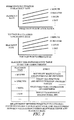
- the blackout time may be set in accordance with criterion including the blackout time determination table illustrated in FIG. 3 .
- the blackout rate due to a frequency fluctuation and the blackout rate due to a voltage fluctuation are compared with each other for each blackout time, and the higher blackout rate is set to be the blackout rate corresponding to the blackout time.
- the risk calculating unit 16 calculates a risk by multiplying the blackout rate for each blackout time by a damage compensation amount that is set in accordance with that blackout time.
- the calculation formula of the risk the following formula (1) is applicable.
- a consumer m represents the total consumers subjected to damage compensation due to a blackout.
- the risk calculating unit 16 obtains the risk for each blackout time n through the above-explained formula (1), and accumulates the calculated risks. Information necessary for the calculation is stored in advance in the blackout risk DB 24. Data stored in the blackout risk DB 24 is a total damage compensation amount per a blackout time determined according to each time. As is indicated by the calculation formula (1), this amount is a value obtained by adding the damage compensation amounts of all consumers who are connected to a target system.
- the damage compensation amount differs consumer by consumer and time by time.
- the damage compensation amount is large.
- various companies are running their own businesses in the daytime, and thus the damage compensation amount to a blackout is large, but is small in the night.
- the damage compensation amount differs depending on the season and the day like the year-end and new-year season and the end of a month with a large number of accountings. This amount should be set in advance based on a research result of a past example damage compensation case, etc.
- Step S16 Whole Cost Integrating and Data Storing Step
- the whole cost integrating unit 17 adds the risk due to a blackout which is obtained by the risk calculating unit 16 in accordance with the power quality and the operation costs obtained by the power-generation-plan calculating unit 14 to integrate the whole costs, and stores the integrated data in the whole cost DB 25.
- Step S17 Calculation Completion Determining Step
- the determining unit 18 determines whether or not to complete the calculation for all cases under the condition set by the power-quality-condition setting unit 12.
- the power-quality-condition changing unit 13 adds or subtracts the margin set by the power-quality-condition setting unit 12 relative to the voltage fluctuation allowable range and the frequency fluctuation allowable range calculated right before, thereby changing (step S19) the power quality condition. Subsequently, the processes subsequent to the step S13 are repeated.
- Step S18 Whole Cost Minimizing Condition Output Step
- the outputting unit 19 refers to the whole costs for each power quality stored in the whole cost DB 25, and selects and outputs the power quality condition that minimizes the whole costs.
- the power generation plan creating system 10 of this embodiment enables a creation of a power generation plan with details, such as for each time slot, and for each singular dayincluding a holiday, a weekday, and a long holiday season. For example, for a time slot like the night at which a blackout risk is small, a power generation plan for decreasing the power quality and also decreasing the whole costs can be created.
- FIG. 4 illustrates a configuration of a power generation plan creating system according to a second embodiment.
- the same structural element as that of the first embodiment will be denoted by the same reference numeral, and the duplicated explanation thereof will be omitted.
- a power generation plan creating system 20 of this embodiment employs the same configuration as that of the power generation plan creating system 10 of the first embodiment except that a consumer anti-blackout preparation DB 31 to be utilized by the risk calculating unit 16 is provided outside the main block 1.
- the consumer anti-blackout preparation DB 31 stores, as information researched in advance, data relevant to a risk reduction, such as the presence/absence of an uninterruptable power source (UPS) device, a UPS backup time, the presence/absence of batteries, and battery remaining level information (e.g. , the capacity and the SOC secured level %).
- UPS uninterruptable power source
- the power generation plan creating system 20 performs, in the risk calculating step of the step S15, a calculation by the risk calculating unit 16 in consideration of a risk reduction using the consumer anti-blackout preparation DB 31.
- a risk calculation formula of this embodiment can be expressed as the following formula (2).
- a consumer m represents a total consumers subjected to a blackout damage compensation.
- the formula (2) differs therefrom that an avoidance coefficient is set.
- the avoidance coefficient becomes "0" when a consumer carries out a complete blackout avoiding preparation, becomes "1" when no preparation is carried out, and becomes a coefficient between 0 to 1 when a preparation contains an uncertainty.
- the uncertainty to avoid a blackout is expressed as a blackout avoidance achievement rate by a probability, the avoidance coefficient becomes "1 - blackout avoidance achievement rate".
- the power generation plan creating system 20 of this embodiment considers consumer anti-blackout preparation information in the risk calculating step of the step S15, enabling a risk reduction in accordance with an anti-blackout preparation by the consumer. Hence, when a power supplier further reduces the power quality, the power generation costs can be further suppressed.
- FIG. 5 illustrates a configuration of a power generation plan creating system according to a third embodiment.
- the same structural element as that of the first or second embodiment will be denoted by the same reference numeral, and the duplicated explanation thereof will be omitted.
- a power generation plan creating system 30 of this embodiment employs the same configuration as that of the power generation plan creating system 20 of the second embodiment except that an anti-blackout-facility-data updating unit 41 that automatically updates data relative to the consumer anti-blackout preparation DB 31 is provided outside the main block 1.
- the anti-blackout-facility-data updating unit 41 has a function of automatically updating information stored in the consumer anti-blackout preparation DB 31. More specifically, pieces of data on, for each consumer, a UPS backup time (h), and a battery SOC set level (%), and the like are acquired online through a communication line like the Internet. As to the acquisition timing, a consumer may transmit pieces of data, or the anti-blackout-facility-data updating unit 41 may periodically check the data storage of a consumer, and may update the data when there is a change in data contents. Hence, anti-blackout-facility data for each consumer can be updated to the latest information. In addition, operation plan information on, for example, batteries including time information may be obtained from the consumer to update the data contents.
- the anti-blackout-facility-data updating unit 41 automatically updates data stored in the consumer anti-blackout preparation DB 31 to the latest information. Therefore, an anti-blackout preparation by the consumer can be precisely reflected on the operation plan.
- FIG. 6 illustrates a configuration of a power generation plan creating system according to a fourth embodiment.
- the same structural element as that of the above-explained embodiment will be denoted by the same reference numeral, and the duplicated explanation thereof will be omitted.
- a power generation plan creating system 40 of this embodiment employs the same configuration as that of the power generation plan creating system 10 of the first embodiment except that, right next to the power-quality-condition setting unit 12, a power-quality-plan setting unit 51 is provided which sets in advance the lower limit value of the power quality for each time slot.
- the power-quality-plan setting unit 51 sets, for each of the frequency fluctuation and the voltage fluctuation, the lower limit value of the fluctuation allowable amount as illustrated in, for example, FIG. 7 .
- the fluctuation allowable amount may be set through a function formula which has a time as a parameter.
- the power-quality-plan setting unit 51 in a main block 2 sets the lower limit value of the power quality in advance for each time slot, thereby enabling to make an operation plan based on consumer needs. For example, an operation plan that increases the power quality only during the daytime of a weekday at which factories are in operation can be made.
- FIG. 8 illustrates a configuration of a power generation plan creating system according to a fifth embodiment.
- the same structural element as that of the above-explained embodiment will be denoted by the same reference numeral, and the duplicated explanation thereof will be omitted.
- a power generation plan creating system 50 of this embodiment employs the same configuration as that of the power generation plan creating system 20 of the second embodiment except that a blackout-risk-data updating unit 61 that periodically and automatically updates registered information in the blackout risk DB 24 and in the consumer anti-blackout preparation DB 31 is provided outside the main block 1.
- the blackout-risk-data updating unit 61 automatically updates the damage compensation amount at the time of a blackout which changes in accordance with, for example, a local development. More specifically, information relevant to a change in the blackout risk calculation condition, such as tenants currently occupying a local commercial facility, and a new construction of a hospital or a school, is acquired online through a communication line like the Internet from an organization like an autonomous community. As to the acquisition timing, a consumer may transmit data, or the blackout-risk-data updating unit 61 may periodically checks the data storage, and may update the data when there is a change in data contents. Hence, the registered information in the blackout risk DB 24 and in the consumer anti-blackout preparation DB 31 can be periodically updated to the latest information. In addition, an update plan that contains time information may be acquired from the consumer to update the data.
- the blackout-risk-data updating unit 61 automatically updates the blackout risk information.
- the damage compensation amount can be easily corrected.
- FIG. 9 illustrates a configuration of a power generation plan creating system according to a sixth embodiment.
- the same structural element as that of the above-explained embodiment will be denoted by the same reference numeral, and the duplicated explanation thereof will be omitted.
- a power generation plan creating system 60 of this embodiment employs the same configuration as that of the power generation plan creating system 10 of the first embodiment except that, instead of the blackout risk DB 24, a terminal-system blackout risk DB 71 and a terminal-system consumer anti-blackout preparation DB 72 are provided outside the main block 1.
- the terminal-system blackout risk DB 71 and the terminal-system consumer anti-blackout preparation DB 72 store registered information divided for each power transmission and for each terminal system that is opened/closed by a consumer terminal breaker of a power company. For example, data on the damage compensation amount for each blackout time is stored in the database and divided for each terminal system such that JP AA YEN/minute for a system A, JP BB YEN/minute for a system B, and JP CC YEN/minute for a system C.
- the blackout risk information is sorted for each terminal system, it becomes possible to create a power generation plan for each terminal system. Hence, when the power demand becomes urgent, an operation that can perform a load interruption on a terminal system in the order of a lower risk is enabled.
Landscapes
- Business, Economics & Management (AREA)
- Engineering & Computer Science (AREA)
- Human Resources & Organizations (AREA)
- Strategic Management (AREA)
- Economics (AREA)
- Entrepreneurship & Innovation (AREA)
- Marketing (AREA)
- General Physics & Mathematics (AREA)
- Game Theory and Decision Science (AREA)
- Development Economics (AREA)
- Theoretical Computer Science (AREA)
- Operations Research (AREA)
- Quality & Reliability (AREA)
- Tourism & Hospitality (AREA)
- Physics & Mathematics (AREA)
- General Business, Economics & Management (AREA)
- Educational Administration (AREA)
- Power Engineering (AREA)
- Supply And Distribution Of Alternating Current (AREA)
- Management, Administration, Business Operations System, And Electronic Commerce (AREA)
- Control Of Eletrric Generators (AREA)
Abstract
Description
- The embodiments of the present disclosure relates to a power generation plan creating system and a method thereof that consider an adverse effect when a power quality is changed.
- When, in Japan, a change in circumstances of electricity businesses like separation of electric transmission/electric distribution advances in future or when a business in a newly developing country is taken into consideration, if the power quality (i.e., a frequency fluctuation and a voltage fluctuation) can be uniquely set at a power feeding instruction center, etc. , of a small-scale power system like a smart grid in accordance with local needs and actual conditions, a further reduction of power generation costs is enabled.
- Patent Document 1:
JP 4435101 B - However, a power generation plan is so far created based on a presumption that the power quality is within a certain value, and a power generation plan with a change in power quality has not been created, and setting of the optimized power quality has not been performed so far.
- An objective of the embodiments of the present disclosure is to provide a power generation plan creating system and a method thereof which can create an optimized power generation plan using a power quality as a parameter in a small-scale power system.
- To accomplish the above objective, a power generation plan creating system according to embodiments of the present disclosure is for a small-scale power system, and the power generation plan creating system includes: a condition setting unit setting a time slot of a power generation plan; a power-quality-condition setting unit setting a condition for a frequency fluctuation and for a voltage fluctuation to set a power quality condition; a power generation plan calculating unit setting an operation cost based on the set time slot of the power generation plan and power quality; a blackout rate calculating unit calculating a blackout rate for each blackout time; a risk calculating unit calculating a blackout risk through a predetermined calculation formula based on the blackout rate calculated by the blackout rate calculating unit; and a whole cost integrating unit totaling the blackout risk obtained by the risk calculating unit and the operation cost obtained by the power generation plan calculating unit to integrate a whole cost for each power quality.
- In addition, a power generation plan creating method according to embodiment of the present disclosure is for a small-scale power system, and the power generation plan creating method includes: a condition setting step of setting a time slot of a power generation plan; a power-quality-condition setting step of setting a condition for a frequency fluctuation and for a voltage fluctuation to set a power quality condition; a power generation plan calculating step of setting an operation cost based on the set time slot of the power generation plan and power quality; a blackout rate calculating step of calculating a blackout rate for each blackout time; a risk calculating step of calculating a blackout risk through a predetermined calculation formula based on the blackout rate calculated through the blackout rate calculating step; a whole cost integrating step of totaling the blackout risk obtained through the risk calculating step and the operation cost obtained through the power generation plan calculating step to integrate a whole cost for each power quality; and a whole cost minimizing condition outputting step of selecting and outputting a power quality condition that minimizes the whole cost based on whole costs calculated power quality by power quality through the whole cost integrating step.
-
-
FIG. 1 is a block diagram illustrating a configuration of a power generation plan creating system according to a first embodiment; -
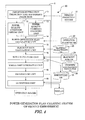
FIG. 2 is a flowchart illustrating procedures of a power generation plan creating method of the first embodiment; -
FIG. 3 is a graph illustrating characteristics representing a relationship between a frequency fluctuation allowable range and a blackout rate for each blackout time, and characteristics representing a voltage fluctuation allowable range and a blackout rate for each blackout time; -
FIG. 4 is a block diagram illustrating a configuration of a power generation plan creating system according to a second embodiment; -
FIG. 5 is a block diagram illustrating a configuration of a power generation plan creating system according to a third embodiment; -
FIG. 6 is a block diagram illustrating a configuration of a power generation plan creating system according to a fourth embodiment; -
FIG. 7 is a graph illustrating a relationship between a frequency fluctuation and a time, and a relationship between a voltage fluctuation and a time; -
FIG. 8 is a block diagram illustrating a configuration of a power generation plan creating system according to a fifth embodiment; and -
FIG. 9 is a block diagram illustrating a configuration of a power generation plan creating system according to a sixth embodiment. - Specific embodiments of the present disclosure will be explained below with reference to the figures.
-
FIG. 1 illustrates a configuration of a power generation plan creating system according to a first embodiment. - A power generation
plan creating system 10 of this embodiment includes, in amain block 1, acondition setting unit 11 that sets a time slot, etc., at which a user desires a planning, a power-quality-condition setting unit 12 that sets, for a frequency fluctuation and for a voltage fluctuation, upper/lower limit values, fluctuation range, and a calculation start condition, respectively, a power-quality-condition changing unit 13 that changes those conditions, and a power-generation-plan calculating unit 14 that sets operation costs based on the set planning time slot and power quality. - In addition, the
main block 1 includes a blackoutrate calculating unit 15 that calculates a blackout rate for each blackout time, arisk calculating unit 16 that calculates a risk using a predetermined calculation formula, a wholecost integrating unit 17 that adds the blackout risk obtained by therisk calculating unit 16 and the operation costs obtained by the power-generation-plan calculating unit 14 to integrate the whole costs, a determiningunit 18 that determines whether or not to complete a calculation based on the condition set by the power-quality-condition setting unit 12, and anoutputting unit 19 that selects and outputs a power quality condition which minimizes the whole costs. - Still further, the power generation
plan creating system 10 is capable of utilizing an external demand predictingsystem 21. Moreover, the power generation plan creating system includes, as external databases, an operation planning DB 22, a blackout characteristic DB 23, ablackout risk DB 24, and a whole cost DB 25. - The demand predicting
system 21 is a system that supplies power generation amount information to thecondition setting unit 11. The operation planning DB 22 stores information to be utilized by the power-generation-plan calculating unit 14, and stores, for example, power generator performance information, such a power generation amount, a time, and weather information, facility constraint information, such as the number of activations/deactivations of a power generator, a track constraint, and a minimum electric accumulation amount, and prediction information, such as weather information and a singularity. - The
blackout characteristic DB 23 stores data to be utilized by the blackoutrate calculating unit 15, and stores characteristics representing a relationship between a frequency fluctuation allowable range and a blackout rate for each blackout time, and characteristics representing a relationship between a voltage fluctuation allowable range and a blackout rate for each blackout time. - The blackout risk DB 24 stores data to be utilized by the
risk calculating unit 16, and stores a total damage compensation amount per a blackout time determined according to each time. The whole cost DB 25 stores data on whole costs for each power quality calculated by the wholecost integrating unit 17. - An explanation will now be given of a method for creating a power generation plan through the power generation
plan creating system 10 employing the above-explained configuration with reference toFIG. 2 . - First, when the
condition setting unit 11 sets a time slot at which the user of this apparatus desires a planning, thecondition setting unit 11 obtains scheduled power generation amount information regarding the set time from the external demand predictingsystem 21. Example scheduled power generation amount information is expressed as "from Month A, Day B, Hour C, Minute D to Month E, Day F, Hour G, and Minute H: II kWh". - Next, the power-quality-condition setting
unit 12 sets, for each of the frequency fluctuation and the voltage fluctuation that are the barometers of the power quality, an allowable amount in accordance with a time slot (voltage fluctuation (±) allowable range and a frequency fluctuation (±) allowable range. The unit is % or Hz and kV), and the upper or lower limit value of allowable level to start a calculation, and, an margin of the allowable level. - The power-generation-
plan calculating unit 14 sets operation costs that minimizes a power generation unit price based on the power generator performance information, the facility constraint information, and prediction information all obtained from theoperation planning DB 22, with reference to the set planning time slot and the initial value of the power quality (i.e., the voltage fluctuation allowable range and the frequency fluctuation allowable range at the time of the start of the calculation both set by the power-quality-condition setting unit 12). When the operation costs are set so as to minimize the power generation unit price, e.g., the conventionally well-known scheme disclosed inPatent Document 1 is applicable. - Next, the blackout
rate calculating unit 15 checks characteristic data stored in theblackout characteristic DB 23 in advance to calculate the blackout rate for each blackout time. - As illustrated in
FIG. 3 , theblackout characteristic DB 23 stores data on, for example, characteristics representing a relationship between the frequency fluctuation allowable range and a blackout rate for each blackout time, and characteristics representing a relationship between the voltage fluctuation allowable range and a blackout rate for each blackout time. In addition, theblackout characteristic DB 23 also stores data on a blackout time determination table that associates a blackout time with an event in order to set the aforementioned characteristics. - In this case, example applicable data that can be stored in the
blackout characteristic DB 23 is characterized data through a malfunction simulation using a simulation model which simulates a system configuration in advance. In addition, when a blackout time is set based on a simulation result, the blackout time may be set in accordance with criterion including the blackout time determination table illustrated inFIG. 3 . Next, the blackout rate due to a frequency fluctuation and the blackout rate due to a voltage fluctuation are compared with each other for each blackout time, and the higher blackout rate is set to be the blackout rate corresponding to the blackout time. - The
risk calculating unit 16 calculates a risk by multiplying the blackout rate for each blackout time by a damage compensation amount that is set in accordance with that blackout time. As to the calculation formula of the risk, the following formula (1) is applicable.

- In this case, a blackout time n is an assumed blackout time, and can be set as, for example, n = 1 second, 5 seconds, 10 seconds, 1 minute, 10 minutes, 1 hour, ... and 1 day, and the like. In addition, a consumer m represents the total consumers subjected to damage compensation due to a blackout.
- The
risk calculating unit 16 obtains the risk for each blackout time n through the above-explained formula (1), and accumulates the calculated risks. Information necessary for the calculation is stored in advance in theblackout risk DB 24. Data stored in theblackout risk DB 24 is a total damage compensation amount per a blackout time determined according to each time. As is indicated by the calculation formula (1), this amount is a value obtained by adding the damage compensation amounts of all consumers who are connected to a target system. - In this case, the damage compensation amount differs consumer by consumer and time by time. In the case of, for example, a hospital or a stock market that has a large impact to a society, the damage compensation amount is large. In general, various companies are running their own businesses in the daytime, and thus the damage compensation amount to a blackout is large, but is small in the night. Still further, the damage compensation amount differs depending on the season and the day like the year-end and new-year season and the end of a month with a large number of accountings. This amount should be set in advance based on a research result of a past example damage compensation case, etc.
- As an example, it can be set that "in a time slot A-B in a weekday, total damage compensation amount is JP AA YEN/minute per a blackout time, and the breakdown thereof is that, first consumer: JP BB YEN/minute; second consumer: JP CC YEN/minute, and the like", "in a time slot C-D in a weekday, total damage compensation amount is JP DD YEN/minute per a blackout time, and the breakdown thereof is that, first consumer: JP EE YEN/minute; second consumer: JP DD YEN/minute, and the like".
- Next, the whole
cost integrating unit 17 adds the risk due to a blackout which is obtained by therisk calculating unit 16 in accordance with the power quality and the operation costs obtained by the power-generation-plan calculating unit 14 to integrate the whole costs, and stores the integrated data in thewhole cost DB 25. - The determining
unit 18 determines whether or not to complete the calculation for all cases under the condition set by the power-quality-condition setting unit 12. When the calculation has not been completed yet (step S17: NO), the power-quality-condition changing unit 13 adds or subtracts the margin set by the power-quality-condition setting unit 12 relative to the voltage fluctuation allowable range and the frequency fluctuation allowable range calculated right before, thereby changing (step S19) the power quality condition. Subsequently, the processes subsequent to the step S13 are repeated. - Conversely, when the determining
unit 18 determines (step S17: YES) that the calculation has been completed, the outputtingunit 19 refers to the whole costs for each power quality stored in thewhole cost DB 25, and selects and outputs the power quality condition that minimizes the whole costs. - The power generation
plan creating system 10 of this embodiment enables a creation of a power generation plan with details, such as for each time slot, and for each singular dayincluding a holiday, a weekday, and a long holiday season. For example, for a time slot like the night at which a blackout risk is small, a power generation plan for decreasing the power quality and also decreasing the whole costs can be created. - Therefore, it becomes possible to make an operation plan that minimizes the whole costs which include the costs of a blackout risk that is in a trade-off relationship with the power quality, and the operation costs.
-
FIG. 4 illustrates a configuration of a power generation plan creating system according to a second embodiment. In this case, the same structural element as that of the first embodiment will be denoted by the same reference numeral, and the duplicated explanation thereof will be omitted. - A power generation
plan creating system 20 of this embodiment employs the same configuration as that of the power generationplan creating system 10 of the first embodiment except that a consumeranti-blackout preparation DB 31 to be utilized by therisk calculating unit 16 is provided outside themain block 1. - The consumer
anti-blackout preparation DB 31 stores, as information researched in advance, data relevant to a risk reduction, such as the presence/absence of an uninterruptable power source (UPS) device, a UPS backup time, the presence/absence of batteries, and battery remaining level information (e.g. , the capacity and the SOC secured level %). - The power generation
plan creating system 20 performs, in the risk calculating step of the step S15, a calculation by therisk calculating unit 16 in consideration of a risk reduction using the consumeranti-blackout preparation DB 31. A risk calculation formula of this embodiment can be expressed as the following formula (2).
[Formula 2]

- In this case, a blackout time n is an assumed blackout time, an can be set as, for example, n = 1 second, 5 seconds, 10 seconds, 1 minute, 10 minutes, 1 hour, ... 1 day, and the like. In addition, a consumer m represents a total consumers subjected to a blackout damage compensation.
- When compared with the formula (1) of the first embodiment, the formula (2) differs therefrom that an avoidance coefficient is set. The avoidance coefficient becomes "0" when a consumer carries out a complete blackout avoiding preparation, becomes "1" when no preparation is carried out, and becomes a coefficient between 0 to 1 when a preparation contains an uncertainty. When the uncertainty to avoid a blackout is expressed as a blackout avoidance achievement rate by a probability, the avoidance coefficient becomes "1 - blackout avoidance achievement rate".
- The power generation
plan creating system 20 of this embodiment considers consumer anti-blackout preparation information in the risk calculating step of the step S15, enabling a risk reduction in accordance with an anti-blackout preparation by the consumer. Hence, when a power supplier further reduces the power quality, the power generation costs can be further suppressed. -
FIG. 5 illustrates a configuration of a power generation plan creating system according to a third embodiment. The same structural element as that of the first or second embodiment will be denoted by the same reference numeral, and the duplicated explanation thereof will be omitted. - A power generation
plan creating system 30 of this embodiment employs the same configuration as that of the power generationplan creating system 20 of the second embodiment except that an anti-blackout-facility-data updating unit 41 that automatically updates data relative to the consumeranti-blackout preparation DB 31 is provided outside themain block 1. - The anti-blackout-facility-
data updating unit 41 has a function of automatically updating information stored in the consumeranti-blackout preparation DB 31. More specifically, pieces of data on, for each consumer, a UPS backup time (h), and a battery SOC set level (%), and the like are acquired online through a communication line like the Internet. As to the acquisition timing, a consumer may transmit pieces of data, or the anti-blackout-facility-data updating unit 41 may periodically check the data storage of a consumer, and may update the data when there is a change in data contents. Hence, anti-blackout-facility data for each consumer can be updated to the latest information. In addition, operation plan information on, for example, batteries including time information may be obtained from the consumer to update the data contents. - According to the power generation
plan creating system 30 of this embodiment, the anti-blackout-facility-data updating unit 41 automatically updates data stored in the consumeranti-blackout preparation DB 31 to the latest information. Therefore, an anti-blackout preparation by the consumer can be precisely reflected on the operation plan. -
FIG. 6 illustrates a configuration of a power generation plan creating system according to a fourth embodiment. The same structural element as that of the above-explained embodiment will be denoted by the same reference numeral, and the duplicated explanation thereof will be omitted. - A power generation
plan creating system 40 of this embodiment employs the same configuration as that of the power generationplan creating system 10 of the first embodiment except that, right next to the power-quality-condition setting unit 12, a power-quality-plan setting unit 51 is provided which sets in advance the lower limit value of the power quality for each time slot. - The power-quality-
plan setting unit 51 sets, for each of the frequency fluctuation and the voltage fluctuation, the lower limit value of the fluctuation allowable amount as illustrated in, for example,FIG. 7 . The fluctuation allowable amount may be set through a function formula which has a time as a parameter. - According to the power generation
plan creating system 40 of this embodiment, the power-quality-plan setting unit 51 in amain block 2 sets the lower limit value of the power quality in advance for each time slot, thereby enabling to make an operation plan based on consumer needs. For example, an operation plan that increases the power quality only during the daytime of a weekday at which factories are in operation can be made. -
FIG. 8 illustrates a configuration of a power generation plan creating system according to a fifth embodiment. The same structural element as that of the above-explained embodiment will be denoted by the same reference numeral, and the duplicated explanation thereof will be omitted. - A power generation
plan creating system 50 of this embodiment employs the same configuration as that of the power generationplan creating system 20 of the second embodiment except that a blackout-risk-data updating unit 61 that periodically and automatically updates registered information in theblackout risk DB 24 and in the consumeranti-blackout preparation DB 31 is provided outside themain block 1. - The blackout-risk-
data updating unit 61 automatically updates the damage compensation amount at the time of a blackout which changes in accordance with, for example, a local development. More specifically, information relevant to a change in the blackout risk calculation condition, such as tenants currently occupying a local commercial facility, and a new construction of a hospital or a school, is acquired online through a communication line like the Internet from an organization like an autonomous community. As to the acquisition timing, a consumer may transmit data, or the blackout-risk-data updating unit 61 may periodically checks the data storage, and may update the data when there is a change in data contents. Hence, the registered information in theblackout risk DB 24 and in the consumeranti-blackout preparation DB 31 can be periodically updated to the latest information. In addition, an update plan that contains time information may be acquired from the consumer to update the data. - According to the power generation
plan creating system 50 of this embodiment, the blackout-risk-data updating unit 61 automatically updates the blackout risk information. Hence, when, for example, a hospital is newly constructed or when there is a change in tenants which are currently occupying a commercial facility, the damage compensation amount can be easily corrected. -
FIG. 9 illustrates a configuration of a power generation plan creating system according to a sixth embodiment. The same structural element as that of the above-explained embodiment will be denoted by the same reference numeral, and the duplicated explanation thereof will be omitted. - A power generation
plan creating system 60 of this embodiment employs the same configuration as that of the power generationplan creating system 10 of the first embodiment except that, instead of theblackout risk DB 24, a terminal-systemblackout risk DB 71 and a terminal-system consumer anti-blackout preparation DB 72 are provided outside themain block 1. - The terminal-system
blackout risk DB 71 and the terminal-system consumer anti-blackout preparation DB 72 store registered information divided for each power transmission and for each terminal system that is opened/closed by a consumer terminal breaker of a power company. For example, data on the damage compensation amount for each blackout time is stored in the database and divided for each terminal system such that JP AA YEN/minute for a system A, JP BB YEN/minute for a system B, and JP CC YEN/minute for a system C. - According to the power generation
plan creating system 60 of this embodiment, since the blackout risk information is sorted for each terminal system, it becomes possible to create a power generation plan for each terminal system. Hence, when the power demand becomes urgent, an operation that can perform a load interruption on a terminal system in the order of a lower risk is enabled. -
- (1) In the respective embodiments described above, databases that are the
operation planning DB 22, the blackoutcharacteristic DB 23, theblackout risk DB 24, and thewhole cost DB 25 are provided outside themain block 1 or themain block 2, but some of or all of the databases may be provided inside themain block 1 or themain block 2 as needed. - (2) In the fourth embodiment (
FIG. 6 ), the power-quality-plan setting unit 51 that sets the lower limit value of the power quality is provided right next to the power-quality-condition setting unit 12, but the power-quality-condition setting unit 12 may have a function of the power-quality-planning setting unit 51 beforehand. - (3) In the sixth embodiment (
FIG. 9 ), the terminal-system blackout-risk-data updating unit that periodically and automatically updates the registered information in the terminal-systemblackout risk DB 71 and the terminal-system consumer anti-blackout preparation DB 72 may be provided outside themain block 1. - (4) Several embodiments of the present disclosure were explained in this specification, but those embodiments are merely presented as examples, and are not intended to limit the scope and spirit of the present disclosure. The above-explained embodiments can be carried out in various other forms, and permit various omissions, replacements, and modifications without departing from the scope and spirit of the present disclosure. Such embodiments and modifications thereof are within the scope and spirit of the present disclosure, and also within an equivalent range to the subject matter as recited in appended claims.
-
- 1, 2
- Main block
- 10
- Power generation plan creating system
- 11
- Condition setting unit
- 12
- Power-quality-condition setting unit
- 13
- Power-quality-condition changing unit
- 14
- Power-generation-plan calculating unit
- 15
- Blackout rate calculating unit
- 16
- Risk calculating unit
- 17
- Whole cost integrating unit
- 18
- Determining unit
- 19
- Outputting unit
- 20
- Power generation plan creating system
- 21
- Demand predicting system
- 22
- Operation planning DB
- 23
- Blackout characteristic DB
- 24
- Blackout risk DB
- 25
- Whole cost DB
- 30
- Power generation plan creating system
- 31
- Consumer anti-blackout preparation DB
- 40
- Power generation plan creating system
- 41
- Anti-blackout-facility-data updating unit
- 50
- Power generation plan creating system
- 51
- Power-quality-planning setting unit
- 60
- Power generation plan creating system
- 61
- Blackout-risk-data updating unit
- 71
- Terminal-system blackout risk DB
- 72
- Terminal-system consumer anti-blackout preparation DB
Claims (8)
- A power generation plan creating system for a small-scale power system, the power generation plan creating system comprising:a condition setting unit setting a time slot of a power generation plan;a power-quality-condition setting unit setting a condition for a frequency fluctuation and for a voltage fluctuation to set a power quality condition;a power generation plan calculating unit setting an operation cost based on the set time slot of the power generation plan and the power quality;a blackout rate calculating unit calculating a blackout rate for each blackout time;a risk calculating unit calculating a blackout risk through a predetermined calculation formula based on the blackout rate calculated by the blackout rate calculating unit; anda whole cost integrating unit totaling the blackout risk obtained by the risk calculating unit and the operation cost obtained by the power generation plan calculating unit to integrate a whole cost for each power quality.
- The power generation plan creating system for a small-scale power system according to claim 1, further comprising an outputting unit selecting and outputting a power quality condition that minimizes the whole cost from whole costs calculated by power quality by the whole cost integrating unit.
- The power generation plan creating system for a small-scale power system according to claim 1 or 2, further comprising a blackout risk database to be utilized by the risk calculating unit, and storing data on a total damage compensation amount per a blackout time.
- The power generation plan creating system for a small-scale power system according to any one of claims 1 to 3, further comprising a consumer anti-blackout preparation database to be utilized by the risk calculating unit, and storing data on a risk reduction.
- The power generation plan creating system for a small-scale power system according to claim 4, further comprising an anti-blackout-facility-data updating unit automatically updating information in the consumer anti-blackout preparation database to latest information.
- The power generation plan creating system for a small-scale power system according to claim 4, further comprising a blackout-risk-data updating unit automatically updating data in the blackout risk database and information in the consumer anti-blackout preparation database to latest information.
- The power generation plan creating system for a small-scale power system according to claim 1 or 2, further comprising:a blackout risk database to be utilized by the risk calculating unit, and storing data on a total damage compensation amount per a blackout time for each terminal system; anda consumer anti-blackout preparation database storing data on a risk reduction for each terminal system.
- A power generation plan creating method for a small-scale power system, the power generation plan creating method comprising:a condition setting step of setting a time slot of a power generation plan;a power-quality-condition setting step of setting a condition for a frequency fluctuation and for a voltage fluctuation to set a power quality condition;a power generation plan calculating step of setting an operation cost based on the set time slot of the power generation plan and the power quality;a blackout rate calculating step of calculating a blackout rate for each blackout time;a risk calculating step of calculating a blackout risk through a predetermined calculation formula based on the blackout rate calculated through the blackout rate calculating step;a whole cost integrating step of totaling the blackout risk obtained through the risk calculating step and the operation cost obtained through the power generation plan calculating step to integrate a whole cost for each power quality; anda whole cost minimizing condition outputting step of selecting and outputting a power quality condition that minimizes the whole cost based on whole costs calculated power quality by power quality through the whole cost integrating step.
Applications Claiming Priority (2)
| Application Number | Priority Date | Filing Date | Title |
|---|---|---|---|
| JP2012220164A JP6132504B2 (en) | 2012-10-02 | 2012-10-02 | System and method for generating power generation plan for small-scale power system |
| PCT/JP2013/076680 WO2014054628A1 (en) | 2012-10-02 | 2013-10-01 | Power generation plan formulation system for small-scale power system and method therefor |
Publications (2)
| Publication Number | Publication Date |
|---|---|
| EP2905862A1 true EP2905862A1 (en) | 2015-08-12 |
| EP2905862A4 EP2905862A4 (en) | 2016-05-25 |
Family
ID=50434954
Family Applications (1)
| Application Number | Title | Priority Date | Filing Date |
|---|---|---|---|
| EP13843429.5A Withdrawn EP2905862A4 (en) | 2012-10-02 | 2013-10-01 | POWER GENERATING PLAN FORMULATION SYSTEM FOR SMALL SCALE POWER SYSTEM AND METHOD THEREOF |
Country Status (6)
| Country | Link |
|---|---|
| US (1) | US20150254585A1 (en) |
| EP (1) | EP2905862A4 (en) |
| JP (1) | JP6132504B2 (en) |
| CN (1) | CN104380555B (en) |
| IN (1) | IN2015DN02949A (en) |
| WO (1) | WO2014054628A1 (en) |
Families Citing this family (12)
| Publication number | Priority date | Publication date | Assignee | Title |
|---|---|---|---|---|
| JP2019134497A (en) * | 2016-03-30 | 2019-08-08 | 株式会社日立製作所 | Power interconnection controller and method |
| JP6676445B2 (en) * | 2016-04-07 | 2020-04-08 | 株式会社日立製作所 | Maintenance planning support system for power generation units |
| CN106789239A (en) * | 2016-12-21 | 2017-05-31 | 国网江西省电力公司信息通信分公司 | Towards the information application system failure trend prediction method and device of power business |
| CN106779221A (en) * | 2016-12-21 | 2017-05-31 | 国网江西省电力公司信息通信分公司 | Towards the information application system fault trend information acquisition method of power business |
| CN107069721B (en) * | 2017-06-21 | 2020-01-31 | 华北电力大学 | electric power system operation risk assessment method based on random set theory |
| CN108122068A (en) * | 2017-12-05 | 2018-06-05 | 中国电力科学研究院有限公司 | A kind of power distribution network risk-averse retailer method and system |
| JP6664016B2 (en) * | 2018-03-22 | 2020-03-13 | 三菱重工業株式会社 | Adjusting force measuring device, adjusting force measuring system, adjusting force measuring method, program, and measuring instrument |
| CN111177323B (en) * | 2019-12-31 | 2022-04-01 | 国网安徽省电力有限公司安庆供电公司 | Power failure plan unstructured data extraction and identification method based on artificial intelligence |
| CN112736903B (en) * | 2020-12-25 | 2024-12-24 | 国网上海能源互联网研究院有限公司 | A method and device for optimizing energy dispatching of island microgrid |
| JP7721278B2 (en) * | 2021-02-08 | 2025-08-13 | 株式会社東芝 | Power outage risk assessment system and power outage risk assessment method |
| CN113313385B (en) * | 2021-05-31 | 2024-04-16 | 国网内蒙古东部电力有限公司 | A grid additional cost assessment method considering the risks of multiple types of power sources connected to the grid |
| CN114648179B (en) * | 2022-05-18 | 2022-08-26 | 国网四川省电力公司电力科学研究院 | Power grid transmission line maintenance plan generation method, device, equipment and storage medium |
Family Cites Families (9)
| Publication number | Priority date | Publication date | Assignee | Title |
|---|---|---|---|---|
| JP2002034151A (en) * | 2000-07-18 | 2002-01-31 | Mitsubishi Electric Corp | System evaluating device and optimal system configuration determining device |
| JP3986735B2 (en) * | 2000-07-27 | 2007-10-03 | 株式会社東芝 | Power system control device and storage medium |
| US8069077B2 (en) * | 2003-06-11 | 2011-11-29 | Kabushiki Kaisha Toshiba | Electric-power-generating-facility operation management support system, electric-power-generating-facility operation management support method, and program for executing support method, and program for executing operation management support method on computer |
| JP4435101B2 (en) | 2006-03-09 | 2010-03-17 | 株式会社東芝 | Design evaluation method for small-scale power system |
| US7853365B2 (en) * | 2008-04-30 | 2010-12-14 | Kabushiki Kaisha Toshiba | Optimal load distributing system |
| JP5088628B2 (en) * | 2008-07-09 | 2012-12-05 | 清水建設株式会社 | Power failure evaluation device |
| JP2010020454A (en) * | 2008-07-09 | 2010-01-28 | Sky Co Ltd | Printer management system and printer management program |
| JP5398271B2 (en) * | 2009-01-09 | 2014-01-29 | 株式会社東芝 | Design evaluation support system and design evaluation support method for substation equipment system |
| EP2389617A4 (en) * | 2009-01-26 | 2015-02-25 | Geneva Cleantech Inc | MONITORING ENERGY CONSUMPTION WITH REMOTE DISPLAY AND AUTOMATIC DEVICE DETECTION INCLUDING GRAPHICAL USER INTERFACE |
-
2012
- 2012-10-02 JP JP2012220164A patent/JP6132504B2/en active Active
-
2013
- 2013-10-01 IN IN2949DEN2015 patent/IN2015DN02949A/en unknown
- 2013-10-01 US US14/433,125 patent/US20150254585A1/en not_active Abandoned
- 2013-10-01 EP EP13843429.5A patent/EP2905862A4/en not_active Withdrawn
- 2013-10-01 CN CN201380032780.1A patent/CN104380555B/en active Active
- 2013-10-01 WO PCT/JP2013/076680 patent/WO2014054628A1/en not_active Ceased
Also Published As
| Publication number | Publication date |
|---|---|
| WO2014054628A1 (en) | 2014-04-10 |
| IN2015DN02949A (en) | 2015-09-18 |
| EP2905862A4 (en) | 2016-05-25 |
| CN104380555A (en) | 2015-02-25 |
| CN104380555B (en) | 2016-12-28 |
| JP6132504B2 (en) | 2017-05-24 |
| JP2014073062A (en) | 2014-04-21 |
| US20150254585A1 (en) | 2015-09-10 |
Similar Documents
| Publication | Publication Date | Title |
|---|---|---|
| EP2905862A1 (en) | Power generation plan formulation system for small-scale power system and method therefor | |
| Apribowo et al. | Optimal planning of battery energy storage systems by considering battery degradation due to ambient temperature: A review, challenges, and new perspective | |
| Aschidamini et al. | Expansion planning of power distribution systems considering reliability: A comprehensive review | |
| Nguyen et al. | Market evaluation of energy storage systems incorporating technology-specific nonlinear models | |
| Tabora et al. | Hybrid system assessment in on-grid and off-grid conditions: a technical and economical approach | |
| Carrasco Ortega et al. | Battery energy storage systems for the new electricity market landscape: Modeling, state diagnostics, management, and viability—A review | |
| Fesagandis et al. | Resilient scheduling of networked microgrids against real-time failures | |
| Syed et al. | A rapid review on community connected microgrids | |
| US11949231B1 (en) | Renewable energy power plant network simulator | |
| Nedjalkov et al. | Blueprint and implementation of rural stand-alone power grids with second-life lithium ion vehicle traction battery systems for resilient energy supply of tropical or remote regions | |
| Saviuc et al. | Economic performance of using batteries in European residential microgrids under the net-metering scheme | |
| Aslam et al. | Application of energy storage systems to enhance power system resilience: A critical review | |
| Ijeoma et al. | Techno-economic assessment of the viability of commercial solar pv system in Port Harcourt, Rivers State, Nigeria | |
| de Araujo Silva Júnior et al. | Characterization of the operation of a BESS with a photovoltaic system as a regular source for the auxiliary systems of a high-voltage substation in Brazil | |
| Helman et al. | Development of long-duration energy storage projects in electric power systems in the United States: a survey of factors which are shaping the market | |
| US11949233B1 (en) | Renewable energy power plant simulator | |
| Sowa et al. | Method for the operation planning of virtual power plants considering forecasting errors of distributed energy resources | |
| Pimentel Pincelli et al. | Life cycle assessment of a virtual power plant: Evaluating the environmental performance of a system utilising solar photovoltaic generation and batteries | |
| Balducci et al. | Nantucket island energy storage system assessment | |
| Galvan et al. | Efficient energy-management system using a hybrid transactive-model predictive control mechanism for prosumer-centric networked microgrids | |
| Cavalcanti et al. | Case studies for supplying the alternating current auxiliary systems of substations with a voltage equal to or higher than 230 kV | |
| Dashtdar et al. | Optimization of microgrid operation based on two-level probabilistic scheduling with benders decomposition | |
| Marksan et al. | Multi-Objective Optimization of Mobile Battery Energy Storage and Dynamic Feeder Reconfiguration for Enhanced Voltage Profiles in Active Distribution Systems | |
| Saulny | Operation and profitability of batteries in electricity reserve markets | |
| Balducci et al. | Washington clean energy fund grid modernization projects: Economic analysis |
Legal Events
| Date | Code | Title | Description |
|---|---|---|---|
| PUAI | Public reference made under article 153(3) epc to a published international application that has entered the european phase |
Free format text: ORIGINAL CODE: 0009012 |
|
| 17P | Request for examination filed |
Effective date: 20150417 |
|
| AK | Designated contracting states |
Kind code of ref document: A1 Designated state(s): AL AT BE BG CH CY CZ DE DK EE ES FI FR GB GR HR HU IE IS IT LI LT LU LV MC MK MT NL NO PL PT RO RS SE SI SK SM TR |
|
| AX | Request for extension of the european patent |
Extension state: BA ME |
|
| DAX | Request for extension of the european patent (deleted) | ||
| RA4 | Supplementary search report drawn up and despatched (corrected) |
Effective date: 20160422 |
|
| RIC1 | Information provided on ipc code assigned before grant |
Ipc: G06Q 50/06 20120101ALI20160415BHEP Ipc: G06Q 10/04 20120101AFI20160415BHEP Ipc: H02J 3/00 20060101ALI20160415BHEP |
|
| STAA | Information on the status of an ep patent application or granted ep patent |
Free format text: STATUS: EXAMINATION IS IN PROGRESS |
|
| 17Q | First examination report despatched |
Effective date: 20180316 |
|
| STAA | Information on the status of an ep patent application or granted ep patent |
Free format text: STATUS: THE APPLICATION HAS BEEN WITHDRAWN |
|
| 18W | Application withdrawn |
Effective date: 20180719 |