EP2904729B1 - Extension carrier for arq - Google Patents
Extension carrier for arq Download PDFInfo
- Publication number
- EP2904729B1 EP2904729B1 EP13815137.8A EP13815137A EP2904729B1 EP 2904729 B1 EP2904729 B1 EP 2904729B1 EP 13815137 A EP13815137 A EP 13815137A EP 2904729 B1 EP2904729 B1 EP 2904729B1
- Authority
- EP
- European Patent Office
- Prior art keywords
- data
- rec
- block
- transmission
- transmitted
- Prior art date
- Legal status (The legal status is an assumption and is not a legal conclusion. Google has not performed a legal analysis and makes no representation as to the accuracy of the status listed.)
- Active
Links
Images



Classifications
-
- H—ELECTRICITY
- H04—ELECTRIC COMMUNICATION TECHNIQUE
- H04L—TRANSMISSION OF DIGITAL INFORMATION, e.g. TELEGRAPHIC COMMUNICATION
- H04L5/00—Arrangements affording multiple use of the transmission path
- H04L5/14—Two-way operation using the same type of signal, i.e. duplex
-
- H—ELECTRICITY
- H04—ELECTRIC COMMUNICATION TECHNIQUE
- H04L—TRANSMISSION OF DIGITAL INFORMATION, e.g. TELEGRAPHIC COMMUNICATION
- H04L1/00—Arrangements for detecting or preventing errors in the information received
- H04L1/12—Arrangements for detecting or preventing errors in the information received by using return channel
- H04L1/16—Arrangements for detecting or preventing errors in the information received by using return channel in which the return channel carries supervisory signals, e.g. repetition request signals
- H04L1/18—Automatic repetition systems, e.g. Van Duuren systems
- H04L1/1867—Arrangements specially adapted for the transmitter end
- H04L1/1887—Scheduling and prioritising arrangements
-
- H—ELECTRICITY
- H04—ELECTRIC COMMUNICATION TECHNIQUE
- H04L—TRANSMISSION OF DIGITAL INFORMATION, e.g. TELEGRAPHIC COMMUNICATION
- H04L1/00—Arrangements for detecting or preventing errors in the information received
- H04L1/12—Arrangements for detecting or preventing errors in the information received by using return channel
- H04L1/16—Arrangements for detecting or preventing errors in the information received by using return channel in which the return channel carries supervisory signals, e.g. repetition request signals
- H04L1/18—Automatic repetition systems, e.g. Van Duuren systems
- H04L1/1867—Arrangements specially adapted for the transmitter end
- H04L1/1896—ARQ related signaling
Definitions
- the present invention relates generally to wireless communication networks, and in particular to an extension carrier for ARQ re-transmission traffic.
- a base station in a wireless communication network provides wireless communications services to a large plurality of User Equipment (UE) within its service area, or cell.
- UE User Equipment
- Each base station generally includes a scheduling function, which schedules downlink transmissions to numerous UE according to several criteria (e.g., amount of data for each UE, channel quality reported by each UE, UE bit rate capability, amount of data recently transmitted to a UE, and the like).
- Efficient scheduling improves overall throughput. For example, in proportionally fair scheduling, more data is transmitted to UE experiencing the best channel conditions, with UE experiencing poor channel conditions being served just often enough to maintain an acceptable level of performance.
- a recent development in wireless communication network technology is the cooperative scheduling of traffic between multiple cells, which can reduce inter-cell interference.
- Radio Frequency (RF) signals transmitted across an air interface experience interference and noise, distorting the signal and introducing errors in the data extracted from the signal at a receiver. Accordingly, error detection and correction techniques are critical to digital wireless communications. Indeed, to maximize overall performance, system parameters are often adjusted to achieve a predetermined, non-zero error rate, e.g., 10% Block Error Rate (BLER).
- BLER Block Error Rate
- a simple error detection scheme is to add a parity bit to a block of bits, the parity bit value set to ensure that the number of bits with the value 1 in the block is even or odd.
- the receiver performs a parity check by counting the number of 1's in the block, and comparing the result to the parity hit
- a more advanced system for error detection is the Cyclic Redundancy Check (CRC).
- CRC Cyclic Redundancy Check
- a type of hash function is performed on a block of data, and the result is appended to and transmitted with the block.
- a receiver performs the same calculation, and compares its result to the received CRC value to detect errors.
- Numerous other error detection schemes are known in the art; for example, Forward Error Correction (FEC) coding encodes sufficient redundancy into a data block for the receiver to perform not only error detection, but also unassisted correction of some errors.
- FEC Forward Error Correction
- ARQ Automatic Repeat reQuest
- a receiver upon detecting an error, requests a retransmission of a block of data.
- the receiver may explicitly acknowledge each data block, by transmitting an acknowledgment (ACK) if no errors are detected or a negative acknowledgment (NAK) if the block was received with one or more errors.
- ACKs may be implicit, with the receiver only transmitting a NAK in the case of a detected error.
- the transmitter retains a copy of each transmitted data block until the receipt of an ACK/NAK, or in the case of implicit acknowledgment, until either a NAK is received or a timeout occurs.
- the transmitter Upon receiving a NAK, the transmitter re-transmits coded data based on the original data block.
- the transmitter is operating in a Chase combining HARQ protocol.
- the retransmission contains coded bits unused in previous transmission attempts, it is operating in an incremental redundancy HARQ protocol.
- the receiver may replace the erroneously received data block with the re-transmitted one, or may combine the two, and additionally utilize FEC codes, to correct the errors. Since the re-transmission itself may be received with errors, it may be NAK'ed, prompting another re-transmission.
- Various wireless communication system protocols define a maximum number of re-transmission attempts, after which higher-layer error recovery techniques are invoked.
- re-transmission to mean both the case of repetition of previously sent coded bits, and the case of coded bits unused in previous transmission attempts, and the combination of the two.
- An ARQ or HARQ scheme is simple to implement at both the transmitter and receiver, minimally degrades performance, adds little overhead to the transmitted signals, and not only allows the system to recover from inevitable errors, but allows the system to be - purposefully operated with a desired non-zero error rate.
- the overall error rate may be tuned (e.g., 10% BLER)
- the timing of individual block errors, and hence the timing of NAKs and HARQ re-transmissions is random. This random injection of required transmissions prevents the scheduler from operating as efficiently as it could if all its transmissions in a given frame were deterministic.
- HARQ re-transmissions also impede the ability to coordinate schedulers across cells.
- WO 2011/096683 A2 PANTECH CO LTD [KR]; KWON KI BUM [KR] KIM KI TAE [KR]; YOON SUNG JUN), published 11 August 2011 and its family member in the english language US 2012/320853 A1 (KWON KI BUM [KR] ET AL), published 20 December 2012 describe such as retransmission system.
- Figure 1 depicts a high-level, functional block diagram of a wireless communication network 10.
- the network 10 depicted in Figure 1 conforms to the 3GPP Long Term Evolution (LTE) protocol and its extensions, which is the context in which embodiments of the present invention are explained.
- LTE Long Term Evolution
- the present invention is not limited to networks 10 conforming to the LTE protocol.
- a Radio Access Network (RAN) 12 e.g., E-UTRAN, comprises one or more base stations 14, known in LTE as eNodeBs. Each eNodeB 14 provides wireless communication service to a plurality of User Equipment (UE) 16 within a geographical area, or cell 18.
- a core network 20 comprises a plurality of communicatively-linked nodes, such as a Mobility Management Entity (MME) and Serving Gateway (S-GW) 22.
- MME-S-GW 22 connects to numerous nodes (not all of which are depicted for simplicity), including a Packet Data Network Gateway (PDN-GW) 24.
- PDN-GW 24 provides connectivity to packet data networks such as the Internet 26, and through an IP Multimedia Subsystem (IMS) 28 to the Public Switched Telephone Network (PSTN) 30.
- IMS IP Multimedia Subsystem
- LTE uses Orthogonal Frequency Division Multiplex (OFDM) modulation in the downlink (and DFT-spread OFDM in the uplink).
- OFDM Orthogonal Frequency Division Multiplex
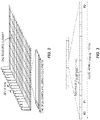
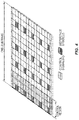
- the basic LTE downlink physical resource can thus be seen as a time-frequency grid as illustrated in Figure 2 .
- Each resource element corresponds to one OFDM subcarrier (15 KHz) during one OFDM symbol interval.
- Resource allocation in LTE is typically described in terms of resource blocks (RB), where a resource block corresponds to one slot (0.5 ms) in the time domain and 12 contiguous subcarriers in the frequency domain.
- RB resource blocks
- a pair of two adjacent resource blocks in the time direction (1.0 ms) is known as a resource block pair.
- Resource blocks are numbered in the frequency domain, starting with 0 from one end of the system bandwidth.
- Downlink transmissions are dynamically scheduled, i . e ., in each subframe the base station 14 transmits control information specifying to which UE 16 data is transmitted, and on which resource blocks, in the current downlink subframe.
- CFT Control Format Indicator
- the CFI is transmitted as the first symbol in the control channel, and is assigned the logical channel Physical Control Format Indicator Channel (PCFICH).
- PCFICH Physical Control Format Indicator Channel
- the downlink subframe also contains common reference symbols (CRS), which are known to the receiver and used for coherent demodulation of e.g. the control information.
- CRS common reference symbols
- Dynamic scheduling information is communicated to the UEs 16 via the Physical Downlink Control Channel (PDCCH) transmitted in the control region.
- the UE 16 shall perform either reception of the Physical Downlink Shared Channel (PDSCH), using the CFI from the PCFICH to determine where the PDSCH begins, or transmission on the Physical Uplink Shared Channel (PUSCH), according to pre-determined timing specified in the LTE specifications.
- PDSCH Physical Downlink Shared Channel
- PUSCH Physical Uplink Shared Channel
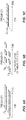
- FIG. 5A depicts full-duplex Frequency Division Duplex (FDD), in which downlink and uplink transmission take place concurrently in different, sufficiently separated, frequency bands.
- Figure 5B depicts half-duplex FDD, which occurs in the UE 16, as discussed below.
- Figure 5C depicts Time Division Duplex (TDD), in which downlink and uplink transmissions take place in different, non-overlapping time slots in the same frequency band.
- FDD Frequency Division Duplex
- TDD Time Division Duplex
- Signals transmitted in a wireless communication network are typically temporally organized in the form of a frame structure.
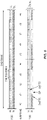
- Figure 6 depicts the ten equally-sized subframes, each of 1 msec, duration, that make up an LTE frame.
- FDD Frequency Division Duplex
- a UE 16 can transmit and receive simultaneously, while in half-duplex operation, the UE 16 alternates between transmit and receive operation.
- the base station 14 is always capable of simultaneous reception/transmission, e.g., receiving uplink signals from one UE 16 while simultaneously transmitting in the downlink to another UE 16.
- a half-duplex UE 16 monitors (or receives data) on the downlink except when explicitly instructed to transmit in a certain subframe.
- TDD operation In the case of TDD operation (depicted in the lower part of Figure 6 ), only a single carrier frequency is used, and uplink and downlink transmissions are always separated in time (and also on a cell basis). Since the same carrier frequency is used for uplink and downlink transmission, both the base station 14 and the UE 16 must switch from transmission to reception and vice versa.
- An essential aspect of any TDD system is to provide the possibility fix a sufficiently large guard time in which neither downlink nor uplink transmissions occur. This is required to avoid interference between uplink and downlink transmissions.
- this guard time is provided by special subframes (subframe 1 and, in some cases, subframe 6), which are split into three parts: a downlink part (DwPTS), a guard period (GP), and an uplink part (UpPTS).
- DwPTS downlink part
- GP guard period
- UpPTS uplink part
- TDD allows for different asymmetries in terms of the amount of resources allocated for uplink and downlink transmission, by means of different configurations.
- Figure 7 depicts seven different TDD configurations defined for LTE, As used herein, a DL subframe may refer to either a dedicated DL subframe or the special subframe.
- Rel-10 supports Component Carrier (CC) bandwidths up to 20 MHz (which is the maximum LTE Rel-8 carrier bandwidth).
- CC Component Carrier
- an LTE Rel-10 operation wider than 20 MHz is possible, and appears as a plurality of LTE carriers to an LTE Rel-10 UE 16.
- CA Carrier Aggregation
- the Rel-10 standard supports up to five aggregated carriers where each carrier is limited in the RF specifications to have a one of six bandwidths, namely: 6, 15, 25, 50, 75, or 100 RB (corresponding to 1.4, 3, 5, 10, 15, and 20 MHz, respectively).
- the number of aggregated CC, as well as the bandwidth of the individual CC, may be different for uplink and downlink.
- a symmetric configuration refers to the case where the number of CC in downlink and uplink is the same; an asymmetric configuration refers to the case where the number of CC is different. It is important to note that the number of CC configured in the network may be different from the number of CC seen by a terminal: A terminal may for example support more downlink CC than uplink CC, even though the network offers the same number of uplink and downlink CC.
- an LTE Rel-10 terminal behaves similarly to a LTE Rel-8 terminal.
- a terminal may - depending on its own capabilities and the network - be configured with additional CC in the UL and DL. Configuration is based on Radio Resource Control (RRC).
- RRC Radio Resource Control
- Scheduling of a CC is done on the PDCCH via downlink assignments.
- Control information on the PDCCH is formatted as a Downlink Control information (DCI) message.
- DCI Downlink Control information
- a terminal only operates with one DL and one UL CC; therefore, the association between DL assignment, UL grants and the corresponding DL and UL CCs is clear.
- two modes of CA must be distinguished: The first case is very similar to the operation of multiple Rel-8 terminals - a DL assignment or UL grant contained in a DCI message transmitted on a CC is either valid for the DL CC itself or for associated UL CC.
- a second mode of operation augments a DCI message with the Carrier Indicator Field (CIF).
- a DCI containing a DL assignment with CIF is valid for the DL CC indicted with CIF, and a DCI containing an UL grant with CIF is valid for the indicated UL CC.
- CIF Carrier Indic
- a wireless communication network 10 employing an ARQ scheme may be operated with a certain error level target. That is, given the channel quality, the base station 14 chooses a bit rate for each initial transmission that aims for a predetermined target error rate.
- the target may be 10% block error rate (BLER).
- BLER block error rate
- a first re-transmission will be necessary approximately 10% of the time. Further re-transmissions are less likely.
- the volume of re-transmissions is relatively small compared to that of first transmissions.
- a UE 16 is notified by the network of downlink data transmission by the physical downlink control channel (PDCCH).
- PDCH physical downlink control channel
- a UE 16 Upon reception of a PDCCH in a particular subframe n, a UE 16 is required to decode the corresponding physical downlink share channel (PDSCH) and to send ACK/NAK feedback in a subsequent subframe n+k.
- PDSCH physical downlink share channel
- the ACK/NAK feedback informs the eNodeB whether the corresponding PDSCH data was decoded correctly. When the eNodeB detects an ACK feedback, it can discard the data from the associated buffer, and possibly proceed to send new data blocks to the UE 16.
- the ACK/NAK feedback is sent by the UE 16 using one of the two possible approaches, depending on whether the UE 16 is simultaneously transmitting on a physical uplink shared channel (PUSCH). If so, the ACK/NAK is sent on the PUSCH. Otherwise, the ACK/NAK feedback is sent via a physical uplink control channel (PUCCH).
- PUCCH physical uplink control channel
- the transmission of PUCCH is mapped onto one specific uplink CC, the UL Primary CC (UL PCC).
- the ARQ process introduces a random component to the scheduler of the main carrier, which could operate more efficiently if it were more predictable.
- the random ARQ re-transmissions also prevent the most effective use of advanced scheduling techniques that cover multiple cells.
- more than one block of data may be transmitted or retransmitted in the above disclosed schemes.
- the UE will send back a number of ACK/NAK indicators corresponding to the more than one block of data transmitted from the base station.
- the UE will send back one ACK/NAK indicator with value ACK indicating whether all the received blocks of data are correct and with value NAK indicating at least one of the received data blocks is in error.
- the base station shall retransmit the multiple blocks of data.
- Release 11 of the LTE specification introduces extension carriers.
- ARQ/HARQ re-transmissions are shifted from the carrier on which the first transmission occurs --- referred to herein as the "main carrier," although in a given implementation it may be the Primary CC or a Secondary CC - to an extension carrier.
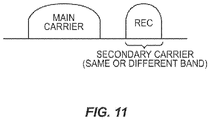
- Figure 11 depicts a main carrier and a Re-transmission Extension Carrier (REC).
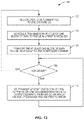
- Figure 12 illustrates a method 100 of operating a base station 14 in a wireless communication network 10 implementing a REC Data to be transmitted to one or more UEs 16 are received at the base station 14 (block 102). Transmission of a block of data to a UE 16 is scheduled on a first carrier (i.e ., the main carrier) (block 104). The base station 14 then transmits the block of data to the UE 16 as scheduled (block 106). The UE 14 sends an ACK or NAK acknowledgement.
- a first carrier i.e ., the main carrier
- the base station 14 If the base station receives an ACK (block 108) - including if a timer expires without receiving a NAK, in a HARQ system using implicit acknowledgment - the base station 14 concludes the block was received correctly by the UE 16, and processing proceeds, e.g., by receiving more data to transmit (block 102). On the other hand, if the base station 14 receives a NAK (block 106), indicating an error in the data decoded by the UE 16, then HARQ re-transmission of the relevant bock of data to the UE 16 is performed on the REC, which is separate from the first (main) carrier (block 110).
- UE If the UE responds to the re-transmission with another NAK (block 108), subsequent re-transmissions are also sent on the REC (block 110). Note that in the event of repeated NAKs, at some point the HARQ re-transmission process terminates (not shown), and a transmission error is reported to higher-layer protocols for recovery. Note also that UE 16 conforming to LTE specification Rel-10 or earlier cannot connect to the REC.
- the REC comprises a pair of frequency bands (whether located in the same band as the main carrier or not), and the REC is operated in FDD mode. In another embodiment, the REC comprises a single frequency band and it is operated in TDD mode. In one embodiment, the duplex mode of the REC is different than that of the main carrier.
- the REC is associated with one main carrier.
- the REC derives its generic CC signaling from that of the main carrier, instead of carrying that signaling itself. This allows more resources of the REC to be used for carrying re-transmission data.
- Technology enabling this result is disclosed in co-pending U.S. Patent Application Serial No. 13/307,835, filed November 30, 2011 , titled, "Synchronization and Reference Signals on Aggregated Carriers," and assigned to the assignee of the present application.
- the capacity of the REC is much smaller than that of the main carrier.
- the minimum required REC capacity would be roughly 10% of that of the main carrier.
- the bandwidth of the REC may be scaled accordingly, as a baseline.
- the capacity scaling can be achieved in an FDD system by partitioning available frequency bandwidth into small carriers; in a TDD system it can be achieved by partitioning available time slots.
- the scheduler of the REC is derived from that of the main carrier. That is, the main carrier assigns the re-transmissions to the REC, which sends them as they come. In one embodiment, the main carrier cross-schedules the re-transmission on the REC - that is, a UE 16 would read scheduling information on PDCCH on the main carrier, and then read the re-transmitted data on PDSCH on the REC.
- the scheduler is more independent, and orders the re-transmissions according to REC channel quality measurements from the UEs 16 (among other factors).
- the re-transmission scheduling information is transmitted on the control channel of the REC.
- the main carrier conforms to the LTE Rel-10 specification, since the main carrier has limited PDCCH capacity.
- the REC uplink may be implemented in a variety of ways.
- the REC uplink channel is a dedicated carrier (FDD) or time slot (TDD), carrying only ACK/NAK messages and "overhead" signaling such as channel quality measurements.
- the REC uplink may be "piggy-backed” on the uplink carrier of the main carrier.
- the REC uplink is a shared carrier, along with the uplink channels of other re-transmission carriers.
- the capacity of a REC may be only a fraction of that of its corresponding main carrier, and hence the bandwidth of the REC may be configured to be much lower than that of the main carrier (e.g., 10%, in the case of a 10% BLER).
- the REC has a relatively wide bandwidth, and its capacity is shared among a plurality of main carriers.
- the bandwidth may be shared in various ways.
- the REC bandwidth is shared equally among a number of main carriers (e.g., eight).
- the fixed sharing may be implemented as time division multiplexing, or more generally by allocating resource blocks in a fixed periodic manner.
- multiple main carriers direct their re-transmissions to the same REC, where they are handled by a single REC scheduler. This makes the sharing more flexible and adjustable to the short-term needs of main carriers.
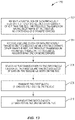
- a method 200 of operating a REC scheduler is depicted in Figure 13 .
- the REC scheduler receives a first block of data previously transmitted to a first UE 16 on a first carrier other than the REC, the previous transmission having been NAK'ed by the first UE 16 as containing one or more errors (block 202).
- the REC scheduler also receives a second block of data previously transmitted to a second UE 16 on a second carrier other than the REC, the previous transmission having been NAK'ed by the second UE 16 as containing one or more errors (block 204).
- the REC scheduler then schedules both transmissions on the REC (block 206), in response to, e.g., channel quality feedback from served UEs 16, the size of the respective blocks of re-transmission data, parameters associated with the re-transmission data such as QoS, and the like.
- the base station 14 then transmits the first block of data to the first UE 16 and the second block of data to the second UE 16, according to the REC scheduler.
- the multiple main carriers and the REC are all transmitted from the same base station 14 in one embodiment.
- the REC may be transmitted from a different base station 14 than one or more of the main carriers, if there exist suitably communication links between the base stations 14 to enable fast transmission coordination.
- re-transmissions from multiple main carriers are not scheduled or otherwise cooperatively managed on the REC, but rather the REC is operated in contention mode.
- contention mode main carriers at two or more base stations 14 share an REC channel (carrier bandwidth or time slot).
- each base station 14 monitors the REC for an ongoing transmission from another base station 14. If the REC is "quiet," the base station 14 proceeds to transit its re-transmission data on the REC. On the other hand, if it senses an ongoing transmission on the REC, the base station 14 will back off from the transmission according to a pre-determined method (e.g., await the expiration of a timer, which may be initialized to a random number).
- the contention mode comprises sensing the transmit antenna for an ongoing transmission of the REC channel.
- the main carrier then transmits or backs off according to the detected level of activity.
- the contention modes described above are not limited to embodiments wherein the REC comprises a component carrier of the wireless communication network 10.
- the REC is implemented in unlicensed spectrum
- the REC may be in the Industrial, Scientific and Medical (ISM) radio bands.
- ISM Industrial, Scientific and Medical
- a characteristic of unlicensed spectrum is the lack of any exclusive regulatory protection from interference generated by other users of the spectrum, such as cordless (conventional) phones, Bluetooth ® devices, microwave ovens, and the like.
- the above-described contention technique (back-off if busy) may be applicable in such environments.
- active contention techniques may not be feasible, such as due to cost constraints or implementation difficulties, or may not be effective, such as when operating in unlicensed spectrum with near-continuous interference.
- interference mitigation mechanisms are added to the signals carrying the REC transmission. Such interference mitigation mechanisms may include (but are not limited to); selection of lower coding rate, spreading the transmission over wider frequency/time resources using spread spectrum techniques, and applying transmitter side beam-forming to the intended receivers. Concurrently or additionally, interference suppression techniques may be employed by receivers, such as using the spread frequency-time resources or multiple receive antennas.
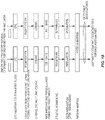
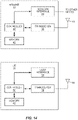
- Figure 14 depicts functional block diagrams of a base station, such as an LTE eNodeB 14, and UE 16.
- the eNodeB 14 includes a controller 40, memory 42, network interface 46, and a transceiver 46 coupled to one or more antenna 48. Additional components of the eNodeB 14 are omitted for clarity.
- the controller 40 may comprise any sequential state machine operative to execute machine instructions stored as machine-readable computer programs in the memory 42, such as one or more hardware-implemented state machines (e.g., in discrete logic, FPGA, ASIC, etc.); programmable logic together with appropriate firmware; one or more stored-program, general-purpose processors, such as a microprocessor or Digital Signal Processor (DSP), together with appropriate software; or any combination of the above.
- one or more hardware-implemented state machines e.g., in discrete logic, FPGA, ASIC, etc.
- programmable logic together with appropriate firmware
- one or more stored-program, general-purpose processors such as a microprocessor or Digital Signal Processor (DSP), together with appropriate software; or any combination of the above.
- DSP Digital Signal Processor
- the memory 42 may comprise any non-transient machine-readable media known in the art or that may be developed, including but not limited to magnetic media (e.g., floppy disc, hard disc drive, etc.), optical media (e.g., CD-ROM, DVD-ROM, etc.), solid state media (e.g., SRAM, DRAM, DDRAM, ROM, PROM, EPROM, Flash memory, etc.), or the like.
- the memory 42 is operative to store program code operative to cause the controller to operate as described herein.
- the network interface 44 is operative to communicatively couple the eNodeB 14 to other LTE core network nodes, such as the MME/S-GW 22.
- the eNodeB may additionally be coupled to other eNodeBs 14, or other network nodes.
- the network interface 44 is operative to implement a variety of communication protocols over physical channel such as, but not limited to, wired electrical or optical networks.
- the transceiver 66 is operative to modulate and transmit data according to OF DMA techniques, and otherwise generate and process signal tor transmission to UE 16 within its cell 18, according to the various 3GPP LTE specifications.
- the transceiver is operative to transmit data to UE 16 on a main carrier, and in some embodiments, is further operative to re-transmit data to the UE 16 on a REC.
- the transceiver 66 is further operative to receive and process signals from UE 16 in its cell 18, including, in some embodiments, uplink REC signals.
- the antenna 48 may comprise one antenna (or one antenna per sector), or may comprise multiple antennae in a Multiple Input Multiple Output (MIMO) configuration.
- MIMO Multiple Input Multiple Output
- the UE 16 includes a controller 60, memory 62, user interface 64, and a transceiver 66 coupled to one or more antenna 68. Additional components of the UE 16 are omitted for clarity.
- the controller 60, memory 62, transceiver 66, and antenna 68 may be as describe above with respect to the eNodeB 14, with variations for low power and mobility, as known by those of skill in the art.
- the user interface 64 may include a microphone, speaker, keypad, display, and/or touchscreen, operative to receive voice and control inputs from a user, and operative to display information and render sounds to the user.
- UE 16 may include numerous additional components (e.g., camera) omitted from Figure 14 for clarity.
- required ARQ/HARQ retransmissions are diverted from one or more main carriers to a REC, freeing the main carrier scheduler(s) of the random interruption, and allowing it/them to perform more efficient, deterministic scheduling.
- Inter-cell scheduling and coordination are also improved.
Landscapes
- Engineering & Computer Science (AREA)
- Signal Processing (AREA)
- Computer Networks & Wireless Communication (AREA)
- Mobile Radio Communication Systems (AREA)
Applications Claiming Priority (2)
| Application Number | Priority Date | Filing Date | Title |
|---|---|---|---|
| US13/633,226 US9397819B2 (en) | 2012-10-02 | 2012-10-02 | Extension carrier for ARQ |
| PCT/IB2013/058864 WO2014053960A1 (en) | 2012-10-02 | 2013-09-25 | Extension carrier for arq |
Publications (2)
| Publication Number | Publication Date |
|---|---|
| EP2904729A1 EP2904729A1 (en) | 2015-08-12 |
| EP2904729B1 true EP2904729B1 (en) | 2022-12-14 |
Family
ID=49887002
Family Applications (1)
| Application Number | Title | Priority Date | Filing Date |
|---|---|---|---|
| EP13815137.8A Active EP2904729B1 (en) | 2012-10-02 | 2013-09-25 | Extension carrier for arq |
Country Status (4)
| Country | Link |
|---|---|
| US (1) | US9397819B2 (enExample) |
| EP (1) | EP2904729B1 (enExample) |
| IN (1) | IN2015DN02746A (enExample) |
| WO (1) | WO2014053960A1 (enExample) |
Families Citing this family (12)
| Publication number | Priority date | Publication date | Assignee | Title |
|---|---|---|---|---|
| US9596676B2 (en) * | 2013-02-13 | 2017-03-14 | Qualcomm Incorporated | Calibration of a downlink transmit path of a base station |
| US9729283B2 (en) * | 2014-05-08 | 2017-08-08 | Intel IP Corporation | Systems, methods and devices for flexible retransmissions |
| US9917676B2 (en) | 2014-06-11 | 2018-03-13 | Samsung Electronics Co., Ltd. | Harq procedure and frame structure for LTE cells on unlicensed spectrum |
| US9912504B2 (en) | 2014-07-31 | 2018-03-06 | Futurewei Technologies, Inc. | System and method for multiple carrier transmission |
| EP3038285B1 (en) * | 2014-12-22 | 2022-04-27 | Industrial Technology Research Institute | Method of handling communication operation in communication system and related apparatus |
| CN106941397B (zh) * | 2016-01-04 | 2020-04-24 | 中兴通讯股份有限公司 | 在非授权频段上通信的方法和装置 |
| JP6445098B2 (ja) * | 2016-07-01 | 2018-12-26 | 華碩電腦股▲ふん▼有限公司 | 無線通信システムにおいてサービングビームが無効になったときに通信を管理する方法及び装置 |
| US10608790B2 (en) | 2017-05-04 | 2020-03-31 | At&T Intellectual Property I, L.P. | Data transmission with code block segmentation for 5G systems |
| EP3416322A1 (en) * | 2017-06-14 | 2018-12-19 | Fraunhofer-Gesellschaft zur Förderung der angewandten Forschung e.V. | Reliable ultra-low latency communications |
| EP3416450A1 (en) | 2017-06-14 | 2018-12-19 | Fraunhofer-Gesellschaft zur Förderung der angewandten Forschung e.V. | Joint resource pools for uplink communications |
| US11337192B2 (en) * | 2017-09-28 | 2022-05-17 | LG Electionics Inc. | Method and apparatus for supporting multiple carriers in wireless communication system |
| KR102595684B1 (ko) * | 2018-05-11 | 2023-10-31 | 프라운호퍼 게젤샤프트 쭈르 푀르데룽 데어 안겐반텐 포르슝 에. 베. | 공간 다양성과 관련된 지점 대 다중 지점 공유 액세스(access) 전이중(全二重) 무선 이중화 방식 |
Family Cites Families (13)
| Publication number | Priority date | Publication date | Assignee | Title |
|---|---|---|---|---|
| US8908609B1 (en) * | 2003-06-06 | 2014-12-09 | Rockstar Consortium Us Lp | Multi-hop wireless communications system and method |
| US20050207345A1 (en) * | 2004-03-22 | 2005-09-22 | Onggosanusi Eko N | Hybrid ARQ schemes for a multi-carrier communications system |
| US8516323B2 (en) * | 2004-04-05 | 2013-08-20 | Telefonaktiebolaget L M Ericsson (Publ) | Repair function for a broadcast service |
| US7292825B2 (en) * | 2004-10-19 | 2007-11-06 | Ipwireless, Inc. | Retransmission scheme in a cellular communication system |
| JP4687343B2 (ja) * | 2005-09-06 | 2011-05-25 | 日本電気株式会社 | チャネル帯域占有率評価方法、無線通信システム、チャネル帯域占有率評価装置及びプログラム |
| US20080144572A1 (en) * | 2006-12-15 | 2008-06-19 | Makhijani Mahesh A | Method and Apparatus for Achieving Frequency Diversity in Scheduled Packet Data Transmissions |
| US9130698B2 (en) | 2009-05-21 | 2015-09-08 | Qualcomm Incorporated | Failure indication for one or more carriers in a multi-carrier communication environment |
| US8811262B2 (en) | 2009-06-08 | 2014-08-19 | Lg Electronics Inc. | Method in which a relay allocates carriers on a backhaul link and an access link in a multi-carrier wireless communication system |
| KR20110090521A (ko) | 2010-02-04 | 2011-08-10 | 주식회사 팬택 | 무선통신 시스템에서 데이터 및 제어정보의 전송 방법 및 그 송신장치, 그 수신장치 |
| US9363059B2 (en) * | 2010-04-02 | 2016-06-07 | Acer Incorporated | Method of handling component carrier activation and deactivation and communication device thereof |
| US20120213141A1 (en) * | 2011-02-22 | 2012-08-23 | Qualcomm Incorporated | Enhanced multimedia broadcast multicast service carriers in carrier aggregation |
| KR20120103400A (ko) * | 2011-03-11 | 2012-09-19 | 삼성전자주식회사 | 통신시스템에서 하이브리드 자동재전송요구 지원 방법 및 장치 |
| EP2813121A2 (en) * | 2012-01-11 | 2014-12-17 | Interdigital Patent Holdings, Inc. | Adaptive control channel |
-
2012
- 2012-10-02 US US13/633,226 patent/US9397819B2/en active Active
-
2013
- 2013-09-25 IN IN2746DEN2015 patent/IN2015DN02746A/en unknown
- 2013-09-25 EP EP13815137.8A patent/EP2904729B1/en active Active
- 2013-09-25 WO PCT/IB2013/058864 patent/WO2014053960A1/en not_active Ceased
Also Published As
| Publication number | Publication date |
|---|---|
| IN2015DN02746A (enExample) | 2015-08-28 |
| EP2904729A1 (en) | 2015-08-12 |
| US9397819B2 (en) | 2016-07-19 |
| US20140092784A1 (en) | 2014-04-03 |
| WO2014053960A1 (en) | 2014-04-10 |
Similar Documents
| Publication | Publication Date | Title |
|---|---|---|
| US9397819B2 (en) | Extension carrier for ARQ | |
| EP3590214B1 (en) | Methods and apparatus for enhanced spectral efficiency and reliability of transmissions without grant | |
| CN115349233B (zh) | 无线电链路控制(rlc)状态报告 | |
| AU2012319228B2 (en) | Simultaneous reporting of ACK/NACK and channel-state information using PUCCH format 3 resources | |
| EP3930238B1 (en) | Systems and methods for improved uplink coverage | |
| CN103563273B (zh) | 在无线通信系统中用于调度的方法和设备 | |
| CN108650067B (zh) | 组合的tdd和fdd载波聚合中的传输 | |
| US8885525B2 (en) | Method and apparatus for soft buffer partitioning in time-division duplexing system | |
| US10341061B2 (en) | Hybrid automatic repeat request timing for reduced transmission time intervals | |
| KR20200134927A (ko) | 무선 통신 시스템에서 제어 정보 전송 방법 및 장치 | |
| TWI702815B (zh) | 高效混合自動重傳請求運作方法及其使用者設備 | |
| KR20190095326A (ko) | 데이터 전송을 위한 방법 및 장치 | |
| EP3485592A1 (en) | Systems and methods for processing time reduction signaling | |
| US20210051702A1 (en) | Configured grant uplink control information (uci) multiplexing for new radio-unlicensed (nr-u) | |
| US12568485B2 (en) | Method and apparatus for transmitting and receiving data in wireless communication system | |
| CN105393485A (zh) | 无线通信系统中的方法和节点 | |
| CN105659678A (zh) | 一种上行数据的传输方法及相关设备 | |
| KR20180049748A (ko) | 무선 셀룰라 통신 시스템에서 제어신호 검출 방법 및 장치 | |
| KR20180119882A (ko) | 무선 통신 시스템에서 상향링크 신호 전송 타이밍 설정 방법 및 장치 | |
| KR20190000653A (ko) | 무선 통신 시스템에서 상향링크 제어 채널 송수신 방법 및 장치 | |
| KR20180064853A (ko) | 무선 셀룰라 통신 시스템에서 하향링크 제어신호 복호 방법 및 장치 | |
| WO2017055186A1 (en) | Transmission of uplink control information in unlicensed spectrum | |
| AU2015204364A1 (en) | Simultaneous reporting of ACK/NACK and channel-state information using PUCCH format 3 resources | |
| KR20180108320A (ko) | 무선 통신 시스템에서 하향링크 제어신호 검출 방법 및 장치 | |
| HK1193519A (en) | Simultaneous reporting of ack/nack and channel-state information using pucch format 3 resources |
Legal Events
| Date | Code | Title | Description |
|---|---|---|---|
| PUAI | Public reference made under article 153(3) epc to a published international application that has entered the european phase |
Free format text: ORIGINAL CODE: 0009012 |
|
| 17P | Request for examination filed |
Effective date: 20150423 |
|
| AK | Designated contracting states |
Kind code of ref document: A1 Designated state(s): AL AT BE BG CH CY CZ DE DK EE ES FI FR GB GR HR HU IE IS IT LI LT LU LV MC MK MT NL NO PL PT RO RS SE SI SK SM TR |
|
| AX | Request for extension of the european patent |
Extension state: BA ME |
|
| DAX | Request for extension of the european patent (deleted) | ||
| STAA | Information on the status of an ep patent application or granted ep patent |
Free format text: STATUS: EXAMINATION IS IN PROGRESS |
|
| 17Q | First examination report despatched |
Effective date: 20190621 |
|
| GRAP | Despatch of communication of intention to grant a patent |
Free format text: ORIGINAL CODE: EPIDOSNIGR1 |
|
| STAA | Information on the status of an ep patent application or granted ep patent |
Free format text: STATUS: GRANT OF PATENT IS INTENDED |
|
| GRAS | Grant fee paid |
Free format text: ORIGINAL CODE: EPIDOSNIGR3 |
|
| INTG | Intention to grant announced |
Effective date: 20221007 |
|
| GRAA | (expected) grant |
Free format text: ORIGINAL CODE: 0009210 |
|
| STAA | Information on the status of an ep patent application or granted ep patent |
Free format text: STATUS: THE PATENT HAS BEEN GRANTED |
|
| AK | Designated contracting states |
Kind code of ref document: B1 Designated state(s): AL AT BE BG CH CY CZ DE DK EE ES FI FR GB GR HR HU IE IS IT LI LT LU LV MC MK MT NL NO PL PT RO RS SE SI SK SM TR |
|
| REG | Reference to a national code |
Ref country code: GB Ref legal event code: FG4D |
|
| REG | Reference to a national code |
Ref country code: CH Ref legal event code: EP |
|
| REG | Reference to a national code |
Ref country code: DE Ref legal event code: R096 Ref document number: 602013083064 Country of ref document: DE |
|
| REG | Reference to a national code |
Ref country code: IE Ref legal event code: FG4D |
|
| REG | Reference to a national code |
Ref country code: AT Ref legal event code: REF Ref document number: 1538311 Country of ref document: AT Kind code of ref document: T Effective date: 20230115 |
|
| REG | Reference to a national code |
Ref country code: LT Ref legal event code: MG9D |
|
| REG | Reference to a national code |
Ref country code: NL Ref legal event code: MP Effective date: 20221214 |
|
| PG25 | Lapsed in a contracting state [announced via postgrant information from national office to epo] |
Ref country code: SE Free format text: LAPSE BECAUSE OF FAILURE TO SUBMIT A TRANSLATION OF THE DESCRIPTION OR TO PAY THE FEE WITHIN THE PRESCRIBED TIME-LIMIT Effective date: 20221214 Ref country code: NO Free format text: LAPSE BECAUSE OF FAILURE TO SUBMIT A TRANSLATION OF THE DESCRIPTION OR TO PAY THE FEE WITHIN THE PRESCRIBED TIME-LIMIT Effective date: 20230314 Ref country code: LT Free format text: LAPSE BECAUSE OF FAILURE TO SUBMIT A TRANSLATION OF THE DESCRIPTION OR TO PAY THE FEE WITHIN THE PRESCRIBED TIME-LIMIT Effective date: 20221214 Ref country code: FI Free format text: LAPSE BECAUSE OF FAILURE TO SUBMIT A TRANSLATION OF THE DESCRIPTION OR TO PAY THE FEE WITHIN THE PRESCRIBED TIME-LIMIT Effective date: 20221214 |
|
| REG | Reference to a national code |
Ref country code: AT Ref legal event code: MK05 Ref document number: 1538311 Country of ref document: AT Kind code of ref document: T Effective date: 20221214 |
|
| PG25 | Lapsed in a contracting state [announced via postgrant information from national office to epo] |
Ref country code: RS Free format text: LAPSE BECAUSE OF FAILURE TO SUBMIT A TRANSLATION OF THE DESCRIPTION OR TO PAY THE FEE WITHIN THE PRESCRIBED TIME-LIMIT Effective date: 20221214 Ref country code: LV Free format text: LAPSE BECAUSE OF FAILURE TO SUBMIT A TRANSLATION OF THE DESCRIPTION OR TO PAY THE FEE WITHIN THE PRESCRIBED TIME-LIMIT Effective date: 20221214 Ref country code: HR Free format text: LAPSE BECAUSE OF FAILURE TO SUBMIT A TRANSLATION OF THE DESCRIPTION OR TO PAY THE FEE WITHIN THE PRESCRIBED TIME-LIMIT Effective date: 20221214 Ref country code: GR Free format text: LAPSE BECAUSE OF FAILURE TO SUBMIT A TRANSLATION OF THE DESCRIPTION OR TO PAY THE FEE WITHIN THE PRESCRIBED TIME-LIMIT Effective date: 20230315 |
|
| PG25 | Lapsed in a contracting state [announced via postgrant information from national office to epo] |
Ref country code: NL Free format text: LAPSE BECAUSE OF FAILURE TO SUBMIT A TRANSLATION OF THE DESCRIPTION OR TO PAY THE FEE WITHIN THE PRESCRIBED TIME-LIMIT Effective date: 20221214 |
|
| PG25 | Lapsed in a contracting state [announced via postgrant information from national office to epo] |
Ref country code: SM Free format text: LAPSE BECAUSE OF FAILURE TO SUBMIT A TRANSLATION OF THE DESCRIPTION OR TO PAY THE FEE WITHIN THE PRESCRIBED TIME-LIMIT Effective date: 20221214 Ref country code: RO Free format text: LAPSE BECAUSE OF FAILURE TO SUBMIT A TRANSLATION OF THE DESCRIPTION OR TO PAY THE FEE WITHIN THE PRESCRIBED TIME-LIMIT Effective date: 20221214 Ref country code: PT Free format text: LAPSE BECAUSE OF FAILURE TO SUBMIT A TRANSLATION OF THE DESCRIPTION OR TO PAY THE FEE WITHIN THE PRESCRIBED TIME-LIMIT Effective date: 20230414 Ref country code: ES Free format text: LAPSE BECAUSE OF FAILURE TO SUBMIT A TRANSLATION OF THE DESCRIPTION OR TO PAY THE FEE WITHIN THE PRESCRIBED TIME-LIMIT Effective date: 20221214 Ref country code: EE Free format text: LAPSE BECAUSE OF FAILURE TO SUBMIT A TRANSLATION OF THE DESCRIPTION OR TO PAY THE FEE WITHIN THE PRESCRIBED TIME-LIMIT Effective date: 20221214 Ref country code: CZ Free format text: LAPSE BECAUSE OF FAILURE TO SUBMIT A TRANSLATION OF THE DESCRIPTION OR TO PAY THE FEE WITHIN THE PRESCRIBED TIME-LIMIT Effective date: 20221214 Ref country code: AT Free format text: LAPSE BECAUSE OF FAILURE TO SUBMIT A TRANSLATION OF THE DESCRIPTION OR TO PAY THE FEE WITHIN THE PRESCRIBED TIME-LIMIT Effective date: 20221214 |
|
| PG25 | Lapsed in a contracting state [announced via postgrant information from national office to epo] |
Ref country code: SK Free format text: LAPSE BECAUSE OF FAILURE TO SUBMIT A TRANSLATION OF THE DESCRIPTION OR TO PAY THE FEE WITHIN THE PRESCRIBED TIME-LIMIT Effective date: 20221214 Ref country code: PL Free format text: LAPSE BECAUSE OF FAILURE TO SUBMIT A TRANSLATION OF THE DESCRIPTION OR TO PAY THE FEE WITHIN THE PRESCRIBED TIME-LIMIT Effective date: 20221214 Ref country code: IS Free format text: LAPSE BECAUSE OF FAILURE TO SUBMIT A TRANSLATION OF THE DESCRIPTION OR TO PAY THE FEE WITHIN THE PRESCRIBED TIME-LIMIT Effective date: 20230414 Ref country code: AL Free format text: LAPSE BECAUSE OF FAILURE TO SUBMIT A TRANSLATION OF THE DESCRIPTION OR TO PAY THE FEE WITHIN THE PRESCRIBED TIME-LIMIT Effective date: 20221214 |
|
| REG | Reference to a national code |
Ref country code: DE Ref legal event code: R097 Ref document number: 602013083064 Country of ref document: DE |
|
| PLBE | No opposition filed within time limit |
Free format text: ORIGINAL CODE: 0009261 |
|
| STAA | Information on the status of an ep patent application or granted ep patent |
Free format text: STATUS: NO OPPOSITION FILED WITHIN TIME LIMIT |
|
| PG25 | Lapsed in a contracting state [announced via postgrant information from national office to epo] |
Ref country code: DK Free format text: LAPSE BECAUSE OF FAILURE TO SUBMIT A TRANSLATION OF THE DESCRIPTION OR TO PAY THE FEE WITHIN THE PRESCRIBED TIME-LIMIT Effective date: 20221214 |
|
| 26N | No opposition filed |
Effective date: 20230915 |
|
| PG25 | Lapsed in a contracting state [announced via postgrant information from national office to epo] |
Ref country code: SI Free format text: LAPSE BECAUSE OF FAILURE TO SUBMIT A TRANSLATION OF THE DESCRIPTION OR TO PAY THE FEE WITHIN THE PRESCRIBED TIME-LIMIT Effective date: 20221214 |
|
| REG | Reference to a national code |
Ref country code: DE Ref legal event code: R119 Ref document number: 602013083064 Country of ref document: DE |
|
| REG | Reference to a national code |
Ref country code: CH Ref legal event code: PL |
|
| PG25 | Lapsed in a contracting state [announced via postgrant information from national office to epo] |
Ref country code: LU Free format text: LAPSE BECAUSE OF NON-PAYMENT OF DUE FEES Effective date: 20230925 |
|
| REG | Reference to a national code |
Ref country code: BE Ref legal event code: MM Effective date: 20230930 |
|
| GBPC | Gb: european patent ceased through non-payment of renewal fee |
Effective date: 20230925 |
|
| PG25 | Lapsed in a contracting state [announced via postgrant information from national office to epo] |
Ref country code: LU Free format text: LAPSE BECAUSE OF NON-PAYMENT OF DUE FEES Effective date: 20230925 Ref country code: IT Free format text: LAPSE BECAUSE OF FAILURE TO SUBMIT A TRANSLATION OF THE DESCRIPTION OR TO PAY THE FEE WITHIN THE PRESCRIBED TIME-LIMIT Effective date: 20221214 Ref country code: MC Free format text: LAPSE BECAUSE OF FAILURE TO SUBMIT A TRANSLATION OF THE DESCRIPTION OR TO PAY THE FEE WITHIN THE PRESCRIBED TIME-LIMIT Effective date: 20221214 |
|
| REG | Reference to a national code |
Ref country code: IE Ref legal event code: MM4A |
|
| PG25 | Lapsed in a contracting state [announced via postgrant information from national office to epo] |
Ref country code: IE Free format text: LAPSE BECAUSE OF NON-PAYMENT OF DUE FEES Effective date: 20230925 |
|
| PG25 | Lapsed in a contracting state [announced via postgrant information from national office to epo] |
Ref country code: GB Free format text: LAPSE BECAUSE OF NON-PAYMENT OF DUE FEES Effective date: 20230925 |
|
| PG25 | Lapsed in a contracting state [announced via postgrant information from national office to epo] |
Ref country code: CH Free format text: LAPSE BECAUSE OF NON-PAYMENT OF DUE FEES Effective date: 20230930 |
|
| PG25 | Lapsed in a contracting state [announced via postgrant information from national office to epo] |
Ref country code: IE Free format text: LAPSE BECAUSE OF NON-PAYMENT OF DUE FEES Effective date: 20230925 Ref country code: GB Free format text: LAPSE BECAUSE OF NON-PAYMENT OF DUE FEES Effective date: 20230925 Ref country code: FR Free format text: LAPSE BECAUSE OF NON-PAYMENT OF DUE FEES Effective date: 20230930 Ref country code: DE Free format text: LAPSE BECAUSE OF NON-PAYMENT OF DUE FEES Effective date: 20240403 Ref country code: CH Free format text: LAPSE BECAUSE OF NON-PAYMENT OF DUE FEES Effective date: 20230930 |
|
| PG25 | Lapsed in a contracting state [announced via postgrant information from national office to epo] |
Ref country code: BE Free format text: LAPSE BECAUSE OF NON-PAYMENT OF DUE FEES Effective date: 20230930 |
|
| PG25 | Lapsed in a contracting state [announced via postgrant information from national office to epo] |
Ref country code: BG Free format text: LAPSE BECAUSE OF FAILURE TO SUBMIT A TRANSLATION OF THE DESCRIPTION OR TO PAY THE FEE WITHIN THE PRESCRIBED TIME-LIMIT Effective date: 20221214 |
|
| PG25 | Lapsed in a contracting state [announced via postgrant information from national office to epo] |
Ref country code: BG Free format text: LAPSE BECAUSE OF FAILURE TO SUBMIT A TRANSLATION OF THE DESCRIPTION OR TO PAY THE FEE WITHIN THE PRESCRIBED TIME-LIMIT Effective date: 20221214 |
|
| PG25 | Lapsed in a contracting state [announced via postgrant information from national office to epo] |
Ref country code: CY Free format text: LAPSE BECAUSE OF FAILURE TO SUBMIT A TRANSLATION OF THE DESCRIPTION OR TO PAY THE FEE WITHIN THE PRESCRIBED TIME-LIMIT; INVALID AB INITIO Effective date: 20130925 |
|
| PG25 | Lapsed in a contracting state [announced via postgrant information from national office to epo] |
Ref country code: HU Free format text: LAPSE BECAUSE OF FAILURE TO SUBMIT A TRANSLATION OF THE DESCRIPTION OR TO PAY THE FEE WITHIN THE PRESCRIBED TIME-LIMIT; INVALID AB INITIO Effective date: 20130925 |
|
| PG25 | Lapsed in a contracting state [announced via postgrant information from national office to epo] |
Ref country code: TR Free format text: LAPSE BECAUSE OF FAILURE TO SUBMIT A TRANSLATION OF THE DESCRIPTION OR TO PAY THE FEE WITHIN THE PRESCRIBED TIME-LIMIT Effective date: 20221214 |