EP2899384A1 - Method and apparatus for controlling starting of a gas turbine - Google Patents
Method and apparatus for controlling starting of a gas turbine Download PDFInfo
- Publication number
- EP2899384A1 EP2899384A1 EP15151814.9A EP15151814A EP2899384A1 EP 2899384 A1 EP2899384 A1 EP 2899384A1 EP 15151814 A EP15151814 A EP 15151814A EP 2899384 A1 EP2899384 A1 EP 2899384A1
- Authority
- EP
- European Patent Office
- Prior art keywords
- gas turbine
- fuel
- flow rate
- acceleration rate
- temperature
- Prior art date
- Legal status (The legal status is an assumption and is not a legal conclusion. Google has not performed a legal analysis and makes no representation as to the accuracy of the status listed.)
- Granted
Links
Images



Classifications
-
- F—MECHANICAL ENGINEERING; LIGHTING; HEATING; WEAPONS; BLASTING
- F02—COMBUSTION ENGINES; HOT-GAS OR COMBUSTION-PRODUCT ENGINE PLANTS
- F02C—GAS-TURBINE PLANTS; AIR INTAKES FOR JET-PROPULSION PLANTS; CONTROLLING FUEL SUPPLY IN AIR-BREATHING JET-PROPULSION PLANTS
- F02C7/00—Features, components parts, details or accessories, not provided for in, or of interest apart form groups F02C1/00 - F02C6/00; Air intakes for jet-propulsion plants
- F02C7/26—Starting; Ignition
-
- F—MECHANICAL ENGINEERING; LIGHTING; HEATING; WEAPONS; BLASTING
- F02—COMBUSTION ENGINES; HOT-GAS OR COMBUSTION-PRODUCT ENGINE PLANTS
- F02C—GAS-TURBINE PLANTS; AIR INTAKES FOR JET-PROPULSION PLANTS; CONTROLLING FUEL SUPPLY IN AIR-BREATHING JET-PROPULSION PLANTS
- F02C9/00—Controlling gas-turbine plants; Controlling fuel supply in air- breathing jet-propulsion plants
-
- F—MECHANICAL ENGINEERING; LIGHTING; HEATING; WEAPONS; BLASTING
- F02—COMBUSTION ENGINES; HOT-GAS OR COMBUSTION-PRODUCT ENGINE PLANTS
- F02C—GAS-TURBINE PLANTS; AIR INTAKES FOR JET-PROPULSION PLANTS; CONTROLLING FUEL SUPPLY IN AIR-BREATHING JET-PROPULSION PLANTS
- F02C9/00—Controlling gas-turbine plants; Controlling fuel supply in air- breathing jet-propulsion plants
- F02C9/26—Control of fuel supply
- F02C9/28—Regulating systems responsive to plant or ambient parameters, e.g. temperature, pressure, rotor speed
-
- F—MECHANICAL ENGINEERING; LIGHTING; HEATING; WEAPONS; BLASTING
- F02—COMBUSTION ENGINES; HOT-GAS OR COMBUSTION-PRODUCT ENGINE PLANTS
- F02C—GAS-TURBINE PLANTS; AIR INTAKES FOR JET-PROPULSION PLANTS; CONTROLLING FUEL SUPPLY IN AIR-BREATHING JET-PROPULSION PLANTS
- F02C9/00—Controlling gas-turbine plants; Controlling fuel supply in air- breathing jet-propulsion plants
- F02C9/26—Control of fuel supply
- F02C9/46—Emergency fuel control
-
- F—MECHANICAL ENGINEERING; LIGHTING; HEATING; WEAPONS; BLASTING
- F05—INDEXING SCHEMES RELATING TO ENGINES OR PUMPS IN VARIOUS SUBCLASSES OF CLASSES F01-F04
- F05D—INDEXING SCHEME FOR ASPECTS RELATING TO NON-POSITIVE-DISPLACEMENT MACHINES OR ENGINES, GAS-TURBINES OR JET-PROPULSION PLANTS
- F05D2260/00—Function
- F05D2260/85—Starting
-
- F—MECHANICAL ENGINEERING; LIGHTING; HEATING; WEAPONS; BLASTING
- F05—INDEXING SCHEMES RELATING TO ENGINES OR PUMPS IN VARIOUS SUBCLASSES OF CLASSES F01-F04
- F05D—INDEXING SCHEME FOR ASPECTS RELATING TO NON-POSITIVE-DISPLACEMENT MACHINES OR ENGINES, GAS-TURBINES OR JET-PROPULSION PLANTS
- F05D2270/00—Control
- F05D2270/01—Purpose of the control system
- F05D2270/04—Purpose of the control system to control acceleration (u)
Definitions
- Exemplary embodiments of the present disclosure relate to a method and apparatus for controlling a gas turbine when the gas turbine is started, which are capable of improving the staring operation of a gas turbine.
- Gas turbines that produce motive power by rotating a turbine using combustion gas generated by combusting fuel gas is being widely used in power generators, etc.
- a gas turbine generator generates electric power to be supplied to load devices. Furthermore, the gas turbine generator is a power generation apparatus suitable for a so-called cogeneration system because the waste heat of the gas turbine generator can be recovered as a heat source for heating or hot water.
- the cogeneration system that uses the gas turbine generator may also be used as a small-sized power generator used in homes in addition to a large-sized power plant.
- the operation of the gas turbine generator may need to be stopped because there are time periods in which requirements for electric power or waste heat are not significant.
- the rate of temperature increase for each component is not constant because an internal temperature is significantly different between a temperature when the gas turbine is stopped (upon cooling) and a temperature when the gas turbine generates electric power. Accordingly, there is a disadvantage in that the lifespan of the gas turbine is reduced due to sudden heat stress applied to components if the time from starting the generator to the time that normal power generation starts (i.e., the starting time) is too short. Furthermore, there is a disadvantage in that a feed power command is not handled quickly if the starting time is too long. Accordingly, there is a need for an improved starting control system capable of driving a gas turbine generator more stably.
- a first object of the present disclosure is to provide a method for controlling a gas turbine when the gas turbine is started, wherein the number of rotations of a gas turbine can be reached to a desired level when the gas turbine is started.
- a second object of the present disclosure is to make the number of rotations of a gas turbine stably reach a target level without an unstable phenomenon, such as hang or surge, regardless of operation conditions, such as atmospheric pressure and atmospheric temperature that affect the starting time of the gas turbine when the gas turbine is started.
- a third object of the present disclosure is to provide a method for controlling a gas turbine when the gas turbine is started, wherein an internal temperature can rapidly reach a target level when the gas turbine is started.
- a fourth object of the present disclosure is to provide a method for controlling a gas turbine when the gas turbine is started, which is capable of preparing for the overheating or flame-out of a gas turbine when the gas turbine is started.
- a method of controlling a gas turbine wherein rotational speed of the gas turbine is increased to reference starting speed when the gas turbine is started.
- the method includes measuring the number of rotations of the gas turbine, determining a target acceleration rate based on the number of rotations of the gas turbine, measuring a current acceleration rate, determining a flow rate of fuel based on a difference between the current acceleration rate and the target acceleration rate, and controlling the flow rate of the fuel at the determined flow rate.
- the flow rate of the fuel may be determined between a maximum flow rate that has been previously stored and a minimum flow rate.
- the method may further include monitoring a temperature of an exhaust gas after controlling the flow rate of the fuel.
- Determining the target acceleration rate may include determining the target acceleration rate with reference to data of a graph or table form in which a first axis is the number of rotations of the gas turbine and a second axis is the target acceleration rate.
- a value obtained by subtracting the current acceleration rate from the target acceleration rate may be proportional to the determined flow rate of the fuel in an n-degree (n: a positive real number) equation form.
- Monitoring the temperature of the exhaust gas may include measuring a temperature of the exhaust gas of the gas turbine, terminating the monitoring if the measured temperature of the exhaust gas is smaller than a predetermined upper limit alarm value and returning to measuring the number of rotations of the gas turbine, returning to measuring the temperature of the exhaust gas in a state in which the flow rate of the fuel supplied to the gas turbine is maintained if the measured temperature of the exhaust gas is equal to or greater than the predetermined upper limit alarm value and is less than a predetermined upper limit danger value, and performing an emergency stop of the gas turbine if the measured temperature of the exhaust gas is equal to or greater than the predetermined upper limit alarm value.
- Monitoring the temperature of the exhaust gas may include measuring a temperature of the exhaust gas of the gas turbine and performing an emergency stop of the gas turbine if the measured temperature of the exhaust gas is less than a predetermined lower limit danger value.
- Monitoring the temperature of the exhaust gas may include calculating an expected temperature of the exhaust gas based on the determined flow rate of the fuel, measuring a temperature of the exhaust gas of the gas turbine, and performing an emergency stop of the gas turbine if a difference between the calculated expected temperature and the measured temperature of the exhaust gas is greater than a predetermined reference value and returning to measuring the number of rotations of the gas turbine if the difference is less than the predetermined reference value.
- Calculating the expectation temperature may include determining the expected temperature with reference to data of a curve or table form in which a first axis is the flow rate of the fuel and a second axis is the expectation temperature of the exhaust gas.
- An apparatus for controlling a gas turbine when the gas turbine is started in accordance with another aspect of the present disclosure may include a rotation detection unit configured to measure the number of rotations of the gas turbine, a storage unit configured to store target acceleration rate data to be applied to the gas turbine when the gas turbine is started, a fuel flow control unit configured to control a flow rate of fuel supplied to the gas turbine, an exhaust temperature measurement unit configured to measure a temperature of an exhaust gas of the gas turbine, and a control unit configured to determine a flow rate of fuel to be supplied to the gas turbine based on the target acceleration rate data and the measured number of rotations of the gas turbine when the gas turbine is started, to control the flow rate of the fuel at the determined flow rate, and to determine whether or not to perform an emergency stop of the gas turbine based on a temperature of the exhaust gas monitored when the gas turbine is started.
- the control unit may be configured to determine a target acceleration rate at present time based on the target acceleration rate data, and to calculate a current acceleration rate according to the number of rotations of the gas turbine that has been accumulated and measured.
- the flow rate of the fuel may be determined based on a difference between the current acceleration rate and the target acceleration rate and controlled with the determined flow rate.
- the target acceleration rate data may be data of a graph or table form in which a first axis is the number of rotations of the gas turbine and a second axis is the target acceleration rate.
- the control unit may be configured to maintain the flow rate of the fuel supplied to the gas turbine if the measured temperature of the exhaust gas is equal to or greater than a previously stored upper limit alarm value and is less than a previously stored upper limit danger value and to perform an emergency stop of the gas turbine if the measured temperature of the exhaust gas is equal to or greater than the previously stored upper limit danger value.
- the control unit may be configured to perform an emergency stop on the gas turbine if the measured temperature of the exhaust gas is less than the previously stored lower limit danger value.
- the storage unit may be configured to store expected temperature data of a curve or table form in which a first axis is the flow rate of the fuel and a second axis is an expectation temperature of the exhaust gas.
- the control unit may be configured to calculate the expected temperature of the exhaust gas based on the determined flow rate of the fuel and perform an emergency stop on the gas turbine if a difference between the calculated expectation temperature and the measured temperature of the exhaust gas is equal to or greater than a previously stored reference value. Further, the control unit may apply Proportional Integral Differential (PID) control when the flow rate of the fuel is determined, Further, the control unit may increase the flow rate of the fuel if the current acceleration rate is less than the target acceleration rate, and decrease the flow rate of the fuel if the current acceleration rate is equal to or greater than the target acceleration rate.
- PID Proportional Integral Differential
- starting may include a process of accelerating a gas turbine from a stop state until parameters, such as the number of rotations and temperature of the gas turbine, have stabilized values.
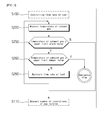
- FIG. 1 is a flowchart illustrating a method for controlling the starting of a gas turbine in accordance with an embodiment of the present disclosure.
- the method for controlling the starting of a gas turbine in accordance with an embodiment of the present disclosure includes a gas turbine control method that increases the rotational speed of the gas turbine to a reference starting speed.
- the method may include step S110 of measuring the number of rotations of the gas turbine, step S120 of determining a target acceleration rate based on the number of rotations of the gas turbine, step S140 of calculating a current acceleration rate, step S160 of determining a flow rate of fuel based on a difference between the current acceleration rate and the target acceleration rate, and step S180 of supplying fuel to the gas turbine at the determined flow rate.
- the method may further include step S200 of performing actions depending on temperature by monitoring the temperature of an exhaust gas after step S180.
- the number of rotations of the gas turbine measured at step S110 includes the number of rotations of the gas turbine in a predetermined unit time (e.g., rpm or the number of rotations per second).
- the number of rotations of the gas turbine may be measured in such a way as to count the detection value of a speed sensor, installed in the blade shaft of the gas turbine, for a unit time.
- the gas turbine is driven until a target number of rotations of the gas turbine is reached to efficiently drive the gas turbine.
- the target acceleration rate may be determined based on the number of rotations of the gas turbine measured at step S110.
- the target acceleration rate may be determined with reference to target acceleration rate data according to the number of rotations of the gas turbine that has been empirically or experimentally obtained.
- a gas turbine control system may include a storage device for storing the aforementioned acceleration rate date.
- the acceleration rate date may be designated differently depending on a specification of the gas turbine (or design characteristics) and stored.
- the data may have a graph or table form in which one axis is the number of rotations of the gas turbine and another axis is a target acceleration rate.
- the current acceleration rate may be calculated based on the number of rotations of the gas turbine measured at step S110.
- the acceleration rate of the gas turbine is the number of rotations of the gas turbine per unit time (e.g., hour), and thus the current acceleration rate may be calculated based on the number of rotations of the gas turbine per unit time that has been measured at step S110.
- the flow rate of fuel may be determined between predetermined minimum and maximum flow rates. More specifically, when the gas turbine is started, the maximum and minimum amount of fuel may be limited in order to avoid hang and surge. Furthermore, the flow rate of fuel may be controlled by Proportional Integral Differential (PID) control so that the gas turbine follows a predetermined target acceleration rate. Furthermore, the gas turbine control system may be a closed loop control in order to improve starting stability regardless of the operation conditions of the gas turbine.
- PID Proportional Integral Differential
- Such PID control is a kind of feedback control in which the output of the system maintains a reference voltage based on an error between a control parameter and a reference input value and is a combination of proportional control, proportional-integral control, and proportional-derivative control.
- control is performed such that the flow rate of fuel is increased according to an increase of the current acceleration rate (e.g., proportional control). If the current acceleration rate is greater than the target acceleration rate and the current acceleration rate is unable to be proportionally increased, the flow rate of fuel is set based on proportional integral or proportional derivative control.
- the target acceleration rate determined at step S120 is compared with the current acceleration rate calculated at step S140. If the current acceleration rate is smaller than the target acceleration rate, the flow rate of fuel is determined based on a value obtained by subtracting the current acceleration rate from the target acceleration rate. In this case, the flow rate of fuel may be increased to cause an increase of the acceleration rate of the gas turbine because the flow rate of fuel may safely be increased.
- the value obtained by subtracting the current acceleration rate from the target acceleration rate may be proportional to the determined flow rate of fuel in the form of an n-degree (n: a positive real number) equation.
- the flow rate of fuel may be determined to be a value lower than a value when the current acceleration rate is smaller than the target acceleration rate. This may be checked depending on whether the value obtained by subtracting the target acceleration rate from the current acceleration rate is greater than a predetermined reference value.
- the gas turbine may be subject to an emergency stop.
- the gas turbine control system controls a fuel control valve and supplies fuel at the flow rate determined at step S160.
- the detection value of a temperature sensor installed on the exhaust port side of the gas turbine may be received.
- whether the gas turbine is normal or abnormal may be determined based on the received temperature value, and actions may be taken based on a result of the determination.
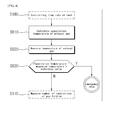
- FIG. 2 is a flowchart illustrating an embodiment of step S200 of monitoring temperature of an exhaust gas in FIG. 1 . Processes of FIG. 2 may be performed after step S180 of controlling the flow rate of fuel in FIG. 1 .
- step S200 may include step S220 of measuring temperature of the exhaust gas of the gas turbine, step S250 of terminating the monitoring if the measured temperature of the exhaust gas is less than a predetermined upper limit alarm value and returning to step S110 of measuring the number of rotations of the gas turbine in FIG. 1 , step 260 of determining if the measured exhaust gas is equal to or greater than the predetermined upper limit danger value, step S280 of maintaining the flow rate of fuel supplied to the gas turbine and returning to step S220 if the measured temperature of the exhaust gas does not exceed a predetermined upper limit danger value at step S260, and step of performing an emergency stop on the gas turbine if the measured temperature of the exhaust gas is equal to or greater than the predetermined upper limit danger value at step S260.
- the gas turbine control system may store the upper limit alarm value and the upper limit danger value used at step S250 and step S260 in advance.
- the upper limit alarm value may be the temperature of the exhaust gas of the gas turbine at which control of the gas turbine needs to be changed in order to protect the gas turbine.
- the upper limit danger value is the temperature of the exhaust gas of the gas turbine at which the gas turbine needs to be subject to an emergency stop.
- the flow rate of fuel supplied to the gas turbine may be maintained at step S280. Thereafter, when the control process returns to the step S220, a gas turbine overheating warning message may be output to the person in charge or an operator using a visual and/or auditory method.
- step S280 it has been illustrated that the flow rate of fuel supplied to the gas turbine is maintained, but this is not required.
- the flow rate of fuel may be reduced, for example, based on PID control to achieve advantages such as driving the gas turbine more stably.
- the process of performing an emergency stop of the gas turbine maybe similar to a normal emergency stop process during the gas turbine operation.
- An emergency stop message may be output to the person in charge or an operator using a visual and/or auditory method, if desired.
- an over-EGT (Exhaust Gas Temperature) method to limit temperature of the exhaust gas has been applied in the illustrated processes to protect the gas turbine during starting. If the upper limit alarm value is reached at step S250, the temperature of the exhaust gas may be monitored without increasing the flow rate of fuel until the temperature of the exhaust gas is less than the upper limit alarm value. If the temperature of the exhaust gas continues to rise and becomes equal to or greater than the upper limit danger value (e.g., a trip limit) at step S260 in the state in which the flow rate of fuel has not been increased, the gas turbine may be subject to an emergency stop (ESD).
- ESD Emergency Stop
- FIG. 3 is a flowchart illustrating another embodiment of step S200 of monitoring temperature of an exhaust gas in FIG. 1 . Processes of FIG. 3 may be performed after step S180 of controlling the flow rate of fuel in FIG. 1 .
- step S200 may include step S420 of measuring the temperature of the exhaust gas of the gas turbine, step S430 of determining if the measured temperature of the exhaust gas is less than a predetermined lower limit danger value and performing an emergency stop of the gas turbine if the measured temperature is less than the predetermined lower limit danger value, step S450 of determining if the measured temperature of the exhaust gas is equal to or greater than a predetermined upper limit alarm value and terminating the monitoring and returning to step S110 of FIG.
- step S480 of maintaining the flow rate of fuel supplied to the gas turbine and returning to step S420 if the measured temperature of the exhaust gas is equal to or greater than the predetermined upper limit alarm value at step S450 and is less than a predetermined upper limit danger value at step S460, and step 460 of determining if the measured temperature of the exhaust gas is equal to or greater than the predetermined upper limit danger value and performing an emergency stop if the measured temperature if equal to or greater than the predetermined upper limit danger value.
- the gas turbine control system may store the lower limit danger value used at step S430 in advance.
- the lower limit danger value may be used to apply flame-out protection logic to protect the gas turbine when the gas turbine is started.
- the lower limit danger value may be a predetermined reference temperature or may be a value compared with a previously measured temperature. In the latter case, the lower limit danger value may be a previously measured temperature value or may be a temperature value obtained by subtracting a specific value (about 10°C) from the previously measured temperature value. In such a case if a flame-out occurs, the temperature of the exhaust gas may not increase or may decrease.
- step S110 of FIG. 1 If the measured temperature of the exhaust gas is less than the lower limit danger value or equal to or greater than the upper limit danger value, the gas turbine is subject to an emergency stop. If the measured temperature of the exhaust gas is between the upper limit danger value and the upper limit alarm value, the process returns to step S420 in the state in which the flow rate of fuel is maintained.
- a corresponding message may be output to the person in charge and/or an operator using a visual and/or auditory method in the state in which the gas turbine has been subjected to an emergency stop or the flow rate of fuel is maintained.
- FIG. 4 is a flowchart illustrating yet another embodiment of step S200 of monitoring temperature of an exhaust gas in FIG. 1 . Processes of FIG. 4 may be performed after step S180 of controlling the flow rate of fuel in FIG. 1 .
- step S200 may include step S610 of calculating an expected temperature of the exhaust gas based on the flow rate of fuel that has been determined at step S160 and supplied at step S180, step S620 of measuring the temperature of the exhaust gas of the gas turbine, and step S630 of determining if a difference between the calculated expected temperature and the measured temperature of the exhaust gas exceeds a predetermined reference value and performing an emergency stop of the gas turbine if it is determined that the difference exceeds the predetermined reference value or returning to step S110 if it is determined that the difference does not exceed the predetermined reference value.
- the processes of monitoring the upper limit alarm value and the upper limit danger value and taking measures may be additionally performed after step S630.
- the emergency stop at step S630 may apply flame-out protection logic in order to protect the gas turbine when the gas turbine is started.
- the gas turbine control system may check whether an expected temperature of an exhaust gas in the flow rate of fuel determined at step S160 has been reached, may determine that flame-out has occurred if the expected temperature of the exhaust gas is not reached, and may perform an emergency stop of the gas turbine.
- the expected temperature at step S610 may be determined with reference to data of a curve (or graph) or table form in which one axis is the flow rate of fuel and another axis is the expected temperature of the exhaust gas.
- the reference value may be used to continue starting of the gas turbine without performing an emergency stop when the measured temperature of the exhaust gas does not reach the expected temperature, but a difference between the measured temperature and the expected temperature is very slight. If such a slight difference has already been incorporated into the curve or table, the reference value may be set close to 0.
- the gas turbine control system may store the reference value used at step S630 and/or the reference curve (or table) used at step S610 in advance.
- a corresponding message may be output to the person in charge and/or an operator using a visual and/or auditory method in the state in which an emergency stop has been performed on the gas turbine.
- FIG. 5 is a block diagram illustrating gas turbine control system in accordance with an embodiment of the present disclosure.
- An apparatus 100 for controlling a gas turbine may include a rotation detection unit configured to measure the number of rotations of a gas turbine 20, a storage unit 160 configured to store a target acceleration rate data to be applied to the gas turbine when the gas turbine is started, a fuel flow control unit configured to control a flow rate of fuel supplied to the gas turbine 20, an exhaust temperature measurement unit configured to measure a temperature of the exhaust gas of the gas turbine 20, and a control unit 200.
- the control unit 200 may determine a flow rate of fuel to be supplied to the gas turbine 20 based on the target acceleration rate data and the measured number of rotations of the gas turbine when the gas turbine is started and supply fuel to the gas turbine at the determined flow rate. Furthermore, the control unit 200 may perform an emergency stop of the gas turbine based on the temperature of the exhaust gas that is monitored when the gas turbine is started.
- the rotation detection unit may be implemented using a rotation sensor input stage configured to receive a sensing signal from a rotation sensor installed in the axis of the gas turbine 20.
- the exhaust temperature measurement unit may be implemented using a temperature sensor input stage configured to receive a sensing signal from a temperature sensor installed on the exhaust port side of the gas turbine 20.
- the rotation sensor and temperature sensor input stages may be integrated into a sensor input stage 140, as illustrated in FIG. 5 but may also be separate.
- the sensor input stage 140 is illustrated in FIG. 5 as a combined stage for clarity and simplicity in the drawing.
- the control unit 200 may control the operation of the control signal output stage 120 in order to control a flow rate of fuel to be supplied to the gas turbine.
- the control signal output stage 120 may control a valve installed between the gas turbine 20 and a fuel supply device 10.
- the storage unit 160 may be volatile and/or non-volatile memory inside the apparatus 100 or may be a database device outside the apparatus 100.
- the control unit 200 may include a single processor or multiple processors configured to perform a method for controlling starting of a gas turbine in accordance with one or more embodiments of the present disclosure.
- the control unit 200 may determine a target acceleration rate based on target acceleration rate data and calculate a current acceleration rate based on the number of rotations of the gas turbine that has been accumulated and measured over a period of time.
- the control unit 200 may determine a flow rate of fuel based on a difference between the current acceleration rate and the target acceleration rate and control the flow rate of fuel supplied to the gas turbine so that the flow rate of the supplied fuel becomes the determined flow rate.
- the target acceleration rate data may be data of a graph or table form in which one axis is the number of rotations of the gas turbine and another axis is the target acceleration rate.
- the target acceleration rate data may have been stored in the storage unit 160.
- the control unit 200 maintains the flow rate of fuel supplied to the gas turbine. If the measured temperature of the exhaust gas is equal to or greater than the upper limit danger value, the control unit 200 may perform an emergency stop of the gas turbine.
- control unit 200 may perform an emergency stop of the gas turbine.
- the control unit 200 may calculate an expected temperature of the exhaust gas based on the determined flow rate of fuel and predetermined expected temperature data. If a difference between the calculated expected temperature and the measured temperature of the exhaust gas exceeds a predetermined reference value, the control unit 200 may perform an emergency stop of the gas turbine.
- the storage unit 160 may store the expected temperature data in a curve or table form in which one axis is the flow rate of fuel and another axis is the expected temperature of the exhaust gas.
- FIG. 6 illustrates a process of performing PID control that may be performed by the control unit 200 illustrated in FIG. 5 .
- the PID control to control of a flow rate of fuel includes a target acceleration rate dN target , a maximum acceleration rate dN max , and a minimum acceleration rate dN min and calculates the upper and/or lower limit of the acceleration rate of the gas turbine.
- An opening rate limit value of the valve disposed between the gas turbine and the fuel supply device is determined based on the values.
- the opening rate limit value of the valve may be determined based on an opening rate-of-change value ROC set of the valve according to a previously stored acceleration rate of the gas turbine.
- an increment dCV of the acceleration rate control value of the gas turbine is calculated by incorporating error values E n , E n-1 , E n-2 , ..., calculated based on a changing acceleration rate of the gas turbine, a proportional constant K G , an integral time T i , and a derivative time T d into the flow rate of fuel.
- a control value CV n is calculated by incorporating the increment dCV of the acceleration rate control value of the gas turbine into control of the acceleration rate of the gas turbine in the current time. The opening rate of the valve is controlled based on the control value CV n of the acceleration rate of the gas turbine.
- the increment dCV of the acceleration rate control value of the gas turbine and the control value CV n of the acceleration rate of the gas turbine in the current time may be calculated as follows.
- CV n CV n - 1 + dCV
- the flow rate of fuel is determined between a maximum flow rate of fuel and a minimum flow rate of fuel set by an upper limit fuel flow setting unit 220 and a lower limit fuel flow setting unit 240.
- the maximum flow rate of fuel and the minimum flow rate of fuel may be fixed values or may be values determined based on a target acceleration rate or a current acceleration rate.
- the maximum flow rate of fuel and the minimum flow rate of fuel are determined based on a target acceleration rate or a current acceleration rate.
- the upper limit fuel flow setting unit 220 and the lower limit fuel flow setting unit 240 may include an acceleration rate upper/lower limit setting unit 220 configured to determine a maximum acceleration rate and a minimum acceleration rate based on a target acceleration rate or a current acceleration rate and a fuel flow setting/control unit 240 configured to determine a maximum flow rate of fuel and a minimum flow rate of fuel based on the determined maximum acceleration rate and minimum acceleration rate.
- a maximum acceleration rate and minimum acceleration rate of the gas turbine may have values determined based on a target acceleration rate or a current acceleration rate.
- Maximum/minimum acceleration rate data regarding the target acceleration rate (or the current acceleration rate) and the maximum acceleration rate and the minimum acceleration rate allocated to the target acceleration rate (or the current acceleration rate) may be stored in the storage unit 160.
- Some of the blocks of the control unit 200 may include a summer 260 for subtraction configured to calculate a difference between a predetermined acceleration rate and an actual acceleration rate and a summer 246 configured to calculate an increment dCV of the acceleration rate control value of the gas turbine into which an error has been incorporated.
- Equation 1 the increment dCV of the acceleration rate control value of the gas turbine calculated by the summer 246 is expressed in Equation 1 and Equation 2 below.
- dCV K p ⁇ E n - E n - 1 + K i * E n + K d ⁇ E n - E n - 1 - E n - 1 - E n - 2
- Performing the described method for controlling the starting of a gas turbine may provide advantages in that the number of rotations and/or an internal temperature of the gas turbine when the gas turbine is started can reach a desired level.
- the gas turbine can be started stably without a phenomenon such as hang or surge, regardless of operation conditions, such as atmospheric pressure and air temperature that affect the starting time of the gas turbine. Accordingly, there are advantages in that high starting reliability can be obtained and the lifespan of a gas turbine design can be improved.
- the method for controlling a gas turbine when the gas turbine is started according to the present disclosure has an advantage in that the overheating or flame-out of the gas turbine can be reduced.
Landscapes
- Engineering & Computer Science (AREA)
- Chemical & Material Sciences (AREA)
- Combustion & Propulsion (AREA)
- Mechanical Engineering (AREA)
- General Engineering & Computer Science (AREA)
- Control Of Turbines (AREA)
Abstract
Description
- Exemplary embodiments of the present disclosure relate to a method and apparatus for controlling a gas turbine when the gas turbine is started, which are capable of improving the staring operation of a gas turbine.
- Gas turbines that produce motive power by rotating a turbine using combustion gas generated by combusting fuel gas is being widely used in power generators, etc.
- A gas turbine generator generates electric power to be supplied to load devices. Furthermore, the gas turbine generator is a power generation apparatus suitable for a so-called cogeneration system because the waste heat of the gas turbine generator can be recovered as a heat source for heating or hot water.
- The cogeneration system that uses the gas turbine generator may also be used as a small-sized power generator used in homes in addition to a large-sized power plant. In the cogeneration system that uses the gas turbine generator, the operation of the gas turbine generator may need to be stopped because there are time periods in which requirements for electric power or waste heat are not significant.
- In a gas turbine, that is, the motor of the gas turbine generator, the rate of temperature increase for each component is not constant because an internal temperature is significantly different between a temperature when the gas turbine is stopped (upon cooling) and a temperature when the gas turbine generates electric power. Accordingly, there is a disadvantage in that the lifespan of the gas turbine is reduced due to sudden heat stress applied to components if the time from starting the generator to the time that normal power generation starts (i.e., the starting time) is too short. Furthermore, there is a disadvantage in that a feed power command is not handled quickly if the starting time is too long. Accordingly, there is a need for an improved starting control system capable of driving a gas turbine generator more stably.
- A first object of the present disclosure is to provide a method for controlling a gas turbine when the gas turbine is started, wherein the number of rotations of a gas turbine can be reached to a desired level when the gas turbine is started.
- A second object of the present disclosure is to make the number of rotations of a gas turbine stably reach a target level without an unstable phenomenon, such as hang or surge, regardless of operation conditions, such as atmospheric pressure and atmospheric temperature that affect the starting time of the gas turbine when the gas turbine is started.
- A third object of the present disclosure is to provide a method for controlling a gas turbine when the gas turbine is started, wherein an internal temperature can rapidly reach a target level when the gas turbine is started.
- A fourth object of the present disclosure is to provide a method for controlling a gas turbine when the gas turbine is started, which is capable of preparing for the overheating or flame-out of a gas turbine when the gas turbine is started.
- In accordance with an aspect of the present disclosure for achieving the first object of the present disclosure, there is provided a method of controlling a gas turbine, wherein rotational speed of the gas turbine is increased to reference starting speed when the gas turbine is started. The method includes measuring the number of rotations of the gas turbine, determining a target acceleration rate based on the number of rotations of the gas turbine, measuring a current acceleration rate, determining a flow rate of fuel based on a difference between the current acceleration rate and the target acceleration rate, and controlling the flow rate of the fuel at the determined flow rate. The flow rate of the fuel may be determined between a maximum flow rate that has been previously stored and a minimum flow rate.
- The method may further include monitoring a temperature of an exhaust gas after controlling the flow rate of the fuel.
- Determining the target acceleration rate may include determining the target acceleration rate with reference to data of a graph or table form in which a first axis is the number of rotations of the gas turbine and a second axis is the target acceleration rate.
- In determining the flow rate of the fuel, a value obtained by subtracting the current acceleration rate from the target acceleration rate may be proportional to the determined flow rate of the fuel in an n-degree (n: a positive real number) equation form.
- Monitoring the temperature of the exhaust gas may include measuring a temperature of the exhaust gas of the gas turbine, terminating the monitoring if the measured temperature of the exhaust gas is smaller than a predetermined upper limit alarm value and returning to measuring the number of rotations of the gas turbine, returning to measuring the temperature of the exhaust gas in a state in which the flow rate of the fuel supplied to the gas turbine is maintained if the measured temperature of the exhaust gas is equal to or greater than the predetermined upper limit alarm value and is less than a predetermined upper limit danger value, and performing an emergency stop of the gas turbine if the measured temperature of the exhaust gas is equal to or greater than the predetermined upper limit alarm value.
- Monitoring the temperature of the exhaust gas may include measuring a temperature of the exhaust gas of the gas turbine and performing an emergency stop of the gas turbine if the measured temperature of the exhaust gas is less than a predetermined lower limit danger value.
- Monitoring the temperature of the exhaust gas may include calculating an expected temperature of the exhaust gas based on the determined flow rate of the fuel, measuring a temperature of the exhaust gas of the gas turbine, and performing an emergency stop of the gas turbine if a difference between the calculated expected temperature and the measured temperature of the exhaust gas is greater than a predetermined reference value and returning to measuring the number of rotations of the gas turbine if the difference is less than the predetermined reference value.
- Calculating the expectation temperature may include determining the expected temperature with reference to data of a curve or table form in which a first axis is the flow rate of the fuel and a second axis is the expectation temperature of the exhaust gas.
- An apparatus for controlling a gas turbine when the gas turbine is started in accordance with another aspect of the present disclosure may include a rotation detection unit configured to measure the number of rotations of the gas turbine, a storage unit configured to store target acceleration rate data to be applied to the gas turbine when the gas turbine is started, a fuel flow control unit configured to control a flow rate of fuel supplied to the gas turbine, an exhaust temperature measurement unit configured to measure a temperature of an exhaust gas of the gas turbine, and a control unit configured to determine a flow rate of fuel to be supplied to the gas turbine based on the target acceleration rate data and the measured number of rotations of the gas turbine when the gas turbine is started, to control the flow rate of the fuel at the determined flow rate, and to determine whether or not to perform an emergency stop of the gas turbine based on a temperature of the exhaust gas monitored when the gas turbine is started.
- The control unit may be configured to determine a target acceleration rate at present time based on the target acceleration rate data, and to calculate a current acceleration rate according to the number of rotations of the gas turbine that has been accumulated and measured. The flow rate of the fuel may be determined based on a difference between the current acceleration rate and the target acceleration rate and controlled with the determined flow rate.
- The target acceleration rate data may be data of a graph or table form in which a first axis is the number of rotations of the gas turbine and a second axis is the target acceleration rate.
- The control unit may be configured to maintain the flow rate of the fuel supplied to the gas turbine if the measured temperature of the exhaust gas is equal to or greater than a previously stored upper limit alarm value and is less than a previously stored upper limit danger value and to perform an emergency stop of the gas turbine if the measured temperature of the exhaust gas is equal to or greater than the previously stored upper limit danger value.
- The control unit may be configured to perform an emergency stop on the gas turbine if the measured temperature of the exhaust gas is less than the previously stored lower limit danger value.
- The storage unit may be configured to store expected temperature data of a curve or table form in which a first axis is the flow rate of the fuel and a second axis is an expectation temperature of the exhaust gas.
- The control unit may be configured to calculate the expected temperature of the exhaust gas based on the determined flow rate of the fuel and perform an emergency stop on the gas turbine if a difference between the calculated expectation temperature and the measured temperature of the exhaust gas is equal to or greater than a previously stored reference value. Further, the control unit may apply Proportional Integral Differential (PID) control when the flow rate of the fuel is determined, Further, the control unit may increase the flow rate of the fuel if the current acceleration rate is less than the target acceleration rate, and decrease the flow rate of the fuel if the current acceleration rate is equal to or greater than the target acceleration rate.
- The above and other objects, features and other advantages of the present disclosure will be more clearly understood from the following detailed description taken in conjunction with the accompanying drawings, in which:
-
FIG. 1 is a flowchart illustrating a method for controlling a gas turbine when the gas turbine is started in accordance with an embodiment of the present disclosure; -
FIG. 2 is a flowchart illustrating an embodiment of step S200 of monitoring temperature of an exhaust gas inFIG. 1 ; -
FIG. 3 is a flowchart illustrating another embodiment of step S200 of monitoring temperature of an exhaust gas inFIG. 1 ; -
FIG. 4 is a flowchart illustrating yet another embodiment of step S200 of monitoring temperature of an exhaust gas inFIG. 1 ; and -
FIG. 5 is a block diagram illustrating gas turbine control system in accordance with an embodiment of the present disclosure. -
FIG. 6 illustrates a process of performing PID control by the control unit of the apparatus illustrated inFIG. 5 . - Hereinafter, some exemplary embodiments of the present disclosure are described in detail with reference to the accompanying drawings.
- In the following description, the term "starting" may include a process of accelerating a gas turbine from a stop state until parameters, such as the number of rotations and temperature of the gas turbine, have stabilized values.
-
FIG. 1 is a flowchart illustrating a method for controlling the starting of a gas turbine in accordance with an embodiment of the present disclosure. - As illustrated in
FIG. 1 , the method for controlling the starting of a gas turbine in accordance with an embodiment of the present disclosure includes a gas turbine control method that increases the rotational speed of the gas turbine to a reference starting speed. The method may include step S110 of measuring the number of rotations of the gas turbine, step S120 of determining a target acceleration rate based on the number of rotations of the gas turbine, step S140 of calculating a current acceleration rate, step S160 of determining a flow rate of fuel based on a difference between the current acceleration rate and the target acceleration rate, and step S180 of supplying fuel to the gas turbine at the determined flow rate. - The method may further include step S200 of performing actions depending on temperature by monitoring the temperature of an exhaust gas after step S180.
- The number of rotations of the gas turbine measured at step S110 includes the number of rotations of the gas turbine in a predetermined unit time (e.g., rpm or the number of rotations per second). At step S110, the number of rotations of the gas turbine may be measured in such a way as to count the detection value of a speed sensor, installed in the blade shaft of the gas turbine, for a unit time.
- During the initial driving of the gas turbine (e.g., when the gas turbine is started), the gas turbine is driven until a target number of rotations of the gas turbine is reached to efficiently drive the gas turbine.
- At step S120, the target acceleration rate may be determined based on the number of rotations of the gas turbine measured at step S110. The target acceleration rate may be determined with reference to target acceleration rate data according to the number of rotations of the gas turbine that has been empirically or experimentally obtained. A gas turbine control system may include a storage device for storing the aforementioned acceleration rate date. The acceleration rate date may be designated differently depending on a specification of the gas turbine (or design characteristics) and stored. The data may have a graph or table form in which one axis is the number of rotations of the gas turbine and another axis is a target acceleration rate.
- At step S140, the current acceleration rate may be calculated based on the number of rotations of the gas turbine measured at step S110. The acceleration rate of the gas turbine is the number of rotations of the gas turbine per unit time (e.g., hour), and thus the current acceleration rate may be calculated based on the number of rotations of the gas turbine per unit time that has been measured at step S110.
- At step S160, the flow rate of fuel may be determined between predetermined minimum and maximum flow rates. More specifically, when the gas turbine is started, the maximum and minimum amount of fuel may be limited in order to avoid hang and surge. Furthermore, the flow rate of fuel may be controlled by Proportional Integral Differential (PID) control so that the gas turbine follows a predetermined target acceleration rate. Furthermore, the gas turbine control system may be a closed loop control in order to improve starting stability regardless of the operation conditions of the gas turbine.
- Such PID control is a kind of feedback control in which the output of the system maintains a reference voltage based on an error between a control parameter and a reference input value and is a combination of proportional control, proportional-integral control, and proportional-derivative control.
- In an embodiment of the present disclosure, if the current acceleration rate is smaller than the target acceleration rate and the current acceleration rate is proportionally increased, control is performed such that the flow rate of fuel is increased according to an increase of the current acceleration rate (e.g., proportional control). If the current acceleration rate is greater than the target acceleration rate and the current acceleration rate is unable to be proportionally increased, the flow rate of fuel is set based on proportional integral or proportional derivative control.
- That is, at step S160, first, the target acceleration rate determined at step S120 is compared with the current acceleration rate calculated at step S140. If the current acceleration rate is smaller than the target acceleration rate, the flow rate of fuel is determined based on a value obtained by subtracting the current acceleration rate from the target acceleration rate. In this case, the flow rate of fuel may be increased to cause an increase of the acceleration rate of the gas turbine because the flow rate of fuel may safely be increased. For example, the value obtained by subtracting the current acceleration rate from the target acceleration rate may be proportional to the determined flow rate of fuel in the form of an n-degree (n: a positive real number) equation.
- If the current acceleration rate is greater than the target acceleration rate, the flow rate of fuel may be determined to be a value lower than a value when the current acceleration rate is smaller than the target acceleration rate. This may be checked depending on whether the value obtained by subtracting the target acceleration rate from the current acceleration rate is greater than a predetermined reference value.
- If the current acceleration rate is much greater than the target acceleration rate and thus a value obtained by subtracting the target acceleration rate from the current acceleration rate is very different from a predetermined reference value, it may be determined to be abnormal and thus the gas turbine may be subject to an emergency stop.
- At step S180, the gas turbine control system controls a fuel control valve and supplies fuel at the flow rate determined at step S160.
- At step S200, the detection value of a temperature sensor installed on the exhaust port side of the gas turbine may be received. At step S200, whether the gas turbine is normal or abnormal may be determined based on the received temperature value, and actions may be taken based on a result of the determination.
-
FIG. 2 is a flowchart illustrating an embodiment of step S200 of monitoring temperature of an exhaust gas inFIG. 1 . Processes ofFIG. 2 may be performed after step S180 of controlling the flow rate of fuel inFIG. 1 . - In the illustrated embodiment, step S200 may include step S220 of measuring temperature of the exhaust gas of the gas turbine, step S250 of terminating the monitoring if the measured temperature of the exhaust gas is less than a predetermined upper limit alarm value and returning to step S110 of measuring the number of rotations of the gas turbine in
FIG. 1 , step 260 of determining if the measured exhaust gas is equal to or greater than the predetermined upper limit danger value, step S280 of maintaining the flow rate of fuel supplied to the gas turbine and returning to step S220 if the measured temperature of the exhaust gas does not exceed a predetermined upper limit danger value at step S260, and step of performing an emergency stop on the gas turbine if the measured temperature of the exhaust gas is equal to or greater than the predetermined upper limit danger value at step S260. - The gas turbine control system may store the upper limit alarm value and the upper limit danger value used at step S250 and step S260 in advance. The upper limit alarm value may be the temperature of the exhaust gas of the gas turbine at which control of the gas turbine needs to be changed in order to protect the gas turbine. The upper limit danger value is the temperature of the exhaust gas of the gas turbine at which the gas turbine needs to be subject to an emergency stop.
- If the measured temperature of the exhaust gas is equal to or greater than the upper limit alarm value and does not exceed the upper limit danger value at step S260, the flow rate of fuel supplied to the gas turbine may be maintained at step S280. Thereafter, when the control process returns to the step S220, a gas turbine overheating warning message may be output to the person in charge or an operator using a visual and/or auditory method.
- At step S280, it has been illustrated that the flow rate of fuel supplied to the gas turbine is maintained, but this is not required. The flow rate of fuel may be reduced, for example, based on PID control to achieve advantages such as driving the gas turbine more stably.
- The process of performing an emergency stop of the gas turbine maybe similar to a normal emergency stop process during the gas turbine operation. An emergency stop message may be output to the person in charge or an operator using a visual and/or auditory method, if desired.
- An over-EGT (Exhaust Gas Temperature) method to limit temperature of the exhaust gas has been applied in the illustrated processes to protect the gas turbine during starting. If the upper limit alarm value is reached at step S250, the temperature of the exhaust gas may be monitored without increasing the flow rate of fuel until the temperature of the exhaust gas is less than the upper limit alarm value. If the temperature of the exhaust gas continues to rise and becomes equal to or greater than the upper limit danger value (e.g., a trip limit) at step S260 in the state in which the flow rate of fuel has not been increased, the gas turbine may be subject to an emergency stop (ESD).
-
FIG. 3 is a flowchart illustrating another embodiment of step S200 of monitoring temperature of an exhaust gas inFIG. 1 . Processes ofFIG. 3 may be performed after step S180 of controlling the flow rate of fuel inFIG. 1 . - In the illustrated embodiment, step S200 may include step S420 of measuring the temperature of the exhaust gas of the gas turbine, step S430 of determining if the measured temperature of the exhaust gas is less than a predetermined lower limit danger value and performing an emergency stop of the gas turbine if the measured temperature is less than the predetermined lower limit danger value, step S450 of determining if the measured temperature of the exhaust gas is equal to or greater than a predetermined upper limit alarm value and terminating the monitoring and returning to step S110 of
FIG. 1 if the measured temperature does not exceed the predetermined upper limit value and the measured temperature of the exhaust gas is equal to or greater than the predetermined lower limit danger value at step S430, step S480 of maintaining the flow rate of fuel supplied to the gas turbine and returning to step S420 if the measured temperature of the exhaust gas is equal to or greater than the predetermined upper limit alarm value at step S450 and is less than a predetermined upper limit danger value at step S460, and step 460 of determining if the measured temperature of the exhaust gas is equal to or greater than the predetermined upper limit danger value and performing an emergency stop if the measured temperature if equal to or greater than the predetermined upper limit danger value. - The processes of monitoring the upper limit alarm value and the upper limit danger value and taking measures are similar to those of
FIG. 2 , and thus redundant descriptions thereof are omitted. - The gas turbine control system may store the lower limit danger value used at step S430 in advance.
- The lower limit danger value may be used to apply flame-out protection logic to protect the gas turbine when the gas turbine is started. The lower limit danger value may be a predetermined reference temperature or may be a value compared with a previously measured temperature. In the latter case, the lower limit danger value may be a previously measured temperature value or may be a temperature value obtained by subtracting a specific value (about 10°C) from the previously measured temperature value. In such a case if a flame-out occurs, the temperature of the exhaust gas may not increase or may decrease.
- In the flowchart of
FIG. 3 , if the measured temperature of the exhaust gas is between the lower limit danger value and the upper limit alarm value, the process returns to step S110 ofFIG. 1 . If the measured temperature of the exhaust gas is less than the lower limit danger value or equal to or greater than the upper limit danger value, the gas turbine is subject to an emergency stop. If the measured temperature of the exhaust gas is between the upper limit danger value and the upper limit alarm value, the process returns to step S420 in the state in which the flow rate of fuel is maintained. - In the aforementioned embodiment, a corresponding message may be output to the person in charge and/or an operator using a visual and/or auditory method in the state in which the gas turbine has been subjected to an emergency stop or the flow rate of fuel is maintained.
-
FIG. 4 is a flowchart illustrating yet another embodiment of step S200 of monitoring temperature of an exhaust gas inFIG. 1 . Processes ofFIG. 4 may be performed after step S180 of controlling the flow rate of fuel inFIG. 1 . - In the illustrated embodiment, step S200 may include step S610 of calculating an expected temperature of the exhaust gas based on the flow rate of fuel that has been determined at step S160 and supplied at step S180, step S620 of measuring the temperature of the exhaust gas of the gas turbine, and step S630 of determining if a difference between the calculated expected temperature and the measured temperature of the exhaust gas exceeds a predetermined reference value and performing an emergency stop of the gas turbine if it is determined that the difference exceeds the predetermined reference value or returning to step S110 if it is determined that the difference does not exceed the predetermined reference value.
- Although not illustrated, as in
FIGS. 2 and3 , the processes of monitoring the upper limit alarm value and the upper limit danger value and taking measures may be additionally performed after step S630. - The emergency stop at step S630 may apply flame-out protection logic in order to protect the gas turbine when the gas turbine is started. The gas turbine control system may check whether an expected temperature of an exhaust gas in the flow rate of fuel determined at step S160 has been reached, may determine that flame-out has occurred if the expected temperature of the exhaust gas is not reached, and may perform an emergency stop of the gas turbine. The expected temperature at step S610 may be determined with reference to data of a curve (or graph) or table form in which one axis is the flow rate of fuel and another axis is the expected temperature of the exhaust gas.
- The reference value may be used to continue starting of the gas turbine without performing an emergency stop when the measured temperature of the exhaust gas does not reach the expected temperature, but a difference between the measured temperature and the expected temperature is very slight. If such a slight difference has already been incorporated into the curve or table, the reference value may be set close to 0.
- The gas turbine control system may store the reference value used at step S630 and/or the reference curve (or table) used at step S610 in advance.
- In the aforementioned embodiment, a corresponding message may be output to the person in charge and/or an operator using a visual and/or auditory method in the state in which an emergency stop has been performed on the gas turbine.
-
FIG. 5 is a block diagram illustrating gas turbine control system in accordance with an embodiment of the present disclosure. - An
apparatus 100 for controlling a gas turbine may include a rotation detection unit configured to measure the number of rotations of agas turbine 20, astorage unit 160 configured to store a target acceleration rate data to be applied to the gas turbine when the gas turbine is started, a fuel flow control unit configured to control a flow rate of fuel supplied to thegas turbine 20, an exhaust temperature measurement unit configured to measure a temperature of the exhaust gas of thegas turbine 20, and acontrol unit 200. Thecontrol unit 200 may determine a flow rate of fuel to be supplied to thegas turbine 20 based on the target acceleration rate data and the measured number of rotations of the gas turbine when the gas turbine is started and supply fuel to the gas turbine at the determined flow rate. Furthermore, thecontrol unit 200 may perform an emergency stop of the gas turbine based on the temperature of the exhaust gas that is monitored when the gas turbine is started. - The rotation detection unit may be implemented using a rotation sensor input stage configured to receive a sensing signal from a rotation sensor installed in the axis of the
gas turbine 20. The exhaust temperature measurement unit may be implemented using a temperature sensor input stage configured to receive a sensing signal from a temperature sensor installed on the exhaust port side of thegas turbine 20. The rotation sensor and temperature sensor input stages may be integrated into asensor input stage 140, as illustrated inFIG. 5 but may also be separate. Thesensor input stage 140 is illustrated inFIG. 5 as a combined stage for clarity and simplicity in the drawing. - The
control unit 200 may control the operation of the controlsignal output stage 120 in order to control a flow rate of fuel to be supplied to the gas turbine. The controlsignal output stage 120 may control a valve installed between thegas turbine 20 and afuel supply device 10. - The
storage unit 160 may be volatile and/or non-volatile memory inside theapparatus 100 or may be a database device outside theapparatus 100. - The
control unit 200 may include a single processor or multiple processors configured to perform a method for controlling starting of a gas turbine in accordance with one or more embodiments of the present disclosure. - For example, the
control unit 200 may determine a target acceleration rate based on target acceleration rate data and calculate a current acceleration rate based on the number of rotations of the gas turbine that has been accumulated and measured over a period of time. Thecontrol unit 200 may determine a flow rate of fuel based on a difference between the current acceleration rate and the target acceleration rate and control the flow rate of fuel supplied to the gas turbine so that the flow rate of the supplied fuel becomes the determined flow rate. In this case, the target acceleration rate data may be data of a graph or table form in which one axis is the number of rotations of the gas turbine and another axis is the target acceleration rate. The target acceleration rate data may have been stored in thestorage unit 160. - Furthermore, if the measured temperature of the exhaust gas is equal to or greater than a predetermined upper limit alarm value and less than a predetermined upper limit danger value, the
control unit 200 maintains the flow rate of fuel supplied to the gas turbine. If the measured temperature of the exhaust gas is equal to or greater than the upper limit danger value, thecontrol unit 200 may perform an emergency stop of the gas turbine. - Alternatively, if the measured temperature of the exhaust gas is less than the predetermined lower limit danger value, the
control unit 200 may perform an emergency stop of the gas turbine. - The
control unit 200 may calculate an expected temperature of the exhaust gas based on the determined flow rate of fuel and predetermined expected temperature data. If a difference between the calculated expected temperature and the measured temperature of the exhaust gas exceeds a predetermined reference value, thecontrol unit 200 may perform an emergency stop of the gas turbine. Thestorage unit 160 may store the expected temperature data in a curve or table form in which one axis is the flow rate of fuel and another axis is the expected temperature of the exhaust gas. -
FIG. 6 illustrates a process of performing PID control that may be performed by thecontrol unit 200 illustrated inFIG. 5 . - As illustrated in
FIG. 6 , the PID control to control of a flow rate of fuel includes a target acceleration rate dNtarget, a maximum acceleration rate dNmax, and a minimum acceleration rate dNmin and calculates the upper and/or lower limit of the acceleration rate of the gas turbine. An opening rate limit value of the valve disposed between the gas turbine and the fuel supply device is determined based on the values. The opening rate limit value of the valve may be determined based on an opening rate-of-change value ROCset of the valve according to a previously stored acceleration rate of the gas turbine. - After the upper or lower limit of the acceleration rate of the gas turbine and the opening rate limit value of the valve are calculated as described above, an error En between an actual acceleration rate dNactual, n and the target acceleration rate dNtarget is calculated, PID control is performed using the calculated error value En.
- That is, an increment dCV of the acceleration rate control value of the gas turbine is calculated by incorporating error values En, En-1, En-2, ..., calculated based on a changing acceleration rate of the gas turbine, a proportional constant KG, an integral time Ti, and a derivative time Td into the flow rate of fuel. A control value CVn is calculated by incorporating the increment dCV of the acceleration rate control value of the gas turbine into control of the acceleration rate of the gas turbine in the current time. The opening rate of the valve is controlled based on the control value CVn of the acceleration rate of the gas turbine.
- The increment dCV of the acceleration rate control value of the gas turbine and the control value CVn of the acceleration rate of the gas turbine in the current time may be calculated as follows.


- (the acceleration rate control value of the gas turbine (the degree of opening of the valve) is controlled at a time tn (current scan)
- The aforementioned parameters may be defined as follows:
- dNtarget: A target acceleration rate of the gas turbine
- dNmax: A maximum acceleration rate of the gas turbine
- dNmin: A minimum acceleration rate of the gas turbine
- ROCset: An opening rate-of-change value of the fuel control valve
- dNactual, n: An actual acceleration rate of the gas turbine at present time (i.e., a time tn)
- En = (dNtarget-dNactual/tn): An error attributable to a difference between the target acceleration rate and a current acceleration rate at the time tn (i.e., current scan)
- En-1 = (dNtarget -dNactual, /tn-1): An error attributable to a difference between the target acceleration rate and a current acceleration rate at a time tn-1 (i.e., previous scan)
- En-1 = (dNtarget -dNactual, /tn-2): An error attributable to a difference between the target acceleration rate and a current acceleration rate at a time tn-2 (i.e., scan prior to 2 steps)
- KG: Proportional gain (=Kp)
- Ti: Integral time
- Td: Derivative time
- Ki: Integral gain (=KG*ScanRate/Ti)
- Kd: Differential gain (=KG*Td/ScanRate)
- ScanRate = scan rate of a control algorithm
- dP = Proportional portion of the control algorithm
- dI = Integral portion of the control algorithm
- dD = Derivative portion of the control algorithm
- The flow rate of fuel is determined between a maximum flow rate of fuel and a minimum flow rate of fuel set by an upper limit fuel flow setting unit 220 and a lower limit fuel flow setting unit 240. The maximum flow rate of fuel and the minimum flow rate of fuel may be fixed values or may be values determined based on a target acceleration rate or a current acceleration rate.
- In the example of
FIG. 6 , the maximum flow rate of fuel and the minimum flow rate of fuel are determined based on a target acceleration rate or a current acceleration rate. The upper limit fuel flow setting unit 220 and the lower limit fuel flow setting unit 240 may include an acceleration rate upper/lower limit setting unit 220 configured to determine a maximum acceleration rate and a minimum acceleration rate based on a target acceleration rate or a current acceleration rate and a fuel flow setting/control unit 240 configured to determine a maximum flow rate of fuel and a minimum flow rate of fuel based on the determined maximum acceleration rate and minimum acceleration rate. - A maximum acceleration rate and minimum acceleration rate of the gas turbine may have values determined based on a target acceleration rate or a current acceleration rate. Maximum/minimum acceleration rate data regarding the target acceleration rate (or the current acceleration rate) and the maximum acceleration rate and the minimum acceleration rate allocated to the target acceleration rate (or the current acceleration rate) may be stored in the
storage unit 160. - Some of the blocks of the
control unit 200 may include asummer 260 for subtraction configured to calculate a difference between a predetermined acceleration rate and an actual acceleration rate and a summer 246 configured to calculate an increment dCV of the acceleration rate control value of the gas turbine into which an error has been incorporated. - In this case, the increment dCV of the acceleration rate control value of the gas turbine calculated by the summer 246 is expressed in
Equation 1 andEquation 2 below.
- = KG[(En En-1) + ScanRate/Ti *En + Td/ScanRate((En-En-1)- (En-1-En-2))]

- (the acceleration rate control value of the gas turbine (the degree of opening of the valve) is controlled at a time tn (current scan)
- Performing the described method for controlling the starting of a gas turbine may provide advantages in that the number of rotations and/or an internal temperature of the gas turbine when the gas turbine is started can reach a desired level.
- More specifically, the gas turbine can be started stably without a phenomenon such as hang or surge, regardless of operation conditions, such as atmospheric pressure and air temperature that affect the starting time of the gas turbine. Accordingly, there are advantages in that high starting reliability can be obtained and the lifespan of a gas turbine design can be improved.
- Alternatively, the method for controlling a gas turbine when the gas turbine is started according to the present disclosure has an advantage in that the overheating or flame-out of the gas turbine can be reduced.
- While the present disclosure has been particularly shown and described with reference to exemplary embodiments thereof, it will be understood by those of ordinary skill in the art that various changes and modifications may be made therein without departing from the technical idea and scope of the present disclosure and such changes and modifications belong to the claims of the present disclosure. Further, the embodiments discussed have been presented by way of example only and not limitation. Thus, the breadth and scope of the invention(s) should not be limited by any of the above-described exemplary embodiments, but should be defined only in accordance with the following claims and their equivalents. Moreover, the above advantages and features are provided in described embodiments, but shall not limit the application of the claims to processes and structures accomplishing any or all of the above advantages.
Claims (15)
- A method for controlling starting of a gas turbine, comprising:measuring a number of rotations of the gas turbine;determining a target acceleration rate of the gas turbine based on the number of rotations of the gas turbine;calculating a current acceleration rate of the gas turbine;determining a flow rate of fuel supplied to the gas turbine based on a difference between the current acceleration rate and the target acceleration rate; andsupplying fuel to the gas turbine at the determined flow rate of the fuel, whereinthe flow rate of the fuel is determined between a maximum flow rate of the fuel that has been previously stored and a minimum flow rate of the fuel.
- The method according to claim 1, further comprising monitoring a temperature of an exhaust gas after supplying the fuel.
- The method according to claim 1 or 2, wherein determining the target acceleration rate includes determining the target acceleration rate with reference to data of a graph or table form in which a first axis is the number of rotations of the gas turbine and a second axis is the target acceleration rate.
- The method according to any one of the preceding claims, wherein determining the flow rate of the fuel includes applying Proportional Integral Differential (PID) control when the flow rate of the fuel is determined.
- The method according to claim 4, wherein determining the flow rate of the fuel includes increasing the flow rate of the fuel if the current acceleration rate is smaller than the target acceleration rate.
- The method according to claim 4 or 5, wherein in determining the flow rate of the fuel, a value obtained by subtracting the current acceleration rate from the target acceleration rate is proportional to the determined flow rate of the fuel in an n-degree equation form, n being a positive real number.
- The method according to claim 4, wherein determining the flow rate of the fuel includes decreasing the flow rate of the fuel if the current acceleration rate is equal to or greater than the target acceleration rate.
- The method according to any one the claims 2 - 7, wherein monitoring the temperature of the exhaust gas includes:measuring the temperature of the exhaust gas;terminating the monitoring if the measured temperature of the exhaust gas is smaller than a predetermined upper limit alarm value and returning to measuring the number of rotations of the gas turbine;returning to measuring the temperature of the exhaust gas in a state in which the flow rate of the fuel supplied to the gas turbine is maintained if the measured temperature of the exhaust gas is equal to or greater than the predetermined upper limit alarm value and is less than a predetermined upper limit danger value; andperforming an emergency stop of the gas turbine if the measured temperature of the exhaust gas is equal to or greater than the predetermined upper limit danger value.
- The method according to claim 8, wherein monitoring the temperature of the exhaust gas includes performing the emergency stop of the gas turbine if the measured temperature of the exhaust gas is less than a predetermined lower limit danger value.
- The method according to any one the claims 2 - 7, wherein monitoring the temperature of the exhaust gas includes:calculating an expected temperature of the exhaust gas based on the determined flow rate of the fuel;measuring a temperature of the exhaust gas of the gas turbine; andperforming an emergency stop of the gas turbine if a difference between the calculated expected temperature and the measured temperature of the exhaust gas is greater than a predetermined reference value and returning to measuring the number of rotations of the gas turbine if the difference is less than the predetermined reference value.
- The method according to claim 10, wherein calculating the expected temperature includes determining the expected temperature with reference to data of a curve or table form in which a first axis is the flow rate of the fuel and a second axis is the expected temperature of the exhaust gas.
- An apparatus for controlling a gas turbine, comprising:a rotation detection unit configured to measure a number of rotations of the gas turbine;a storage unit configured to store target acceleration rate data to be applied to the gas turbine when the gas turbine is started;a fuel flow control unit configured to control a flow rate of fuel supplied to the gas turbine;an exhaust temperature measurement unit configured to measure a temperature of an exhaust gas of the gas turbine; anda control unit configured to
determine a flow rate of fuel to be supplied to the gas turbine based on the target acceleration rate data and the measured number of rotations of the gas turbine when the gas turbine is started,
supply the fuel at the determined flow rate, and
determine whether or not to perform an emergency stop of the gas turbine based on a temperature of the exhaust gas monitored when the gas turbine is started. - The apparatus according to claim 12, wherein the control unit is configured to
determine a target acceleration rate based on the target acceleration rate data, calculate a current acceleration rate based on the number of rotations of the gas turbine, and
determine the flow rate of the fuel based on a difference between the current acceleration rate and the target acceleration rate, and
wherein the target acceleration rate data is data of a graph or table form in which a first axis is the number of rotations of the gas turbine and a second axis is the target acceleration rate. - The apparatus according to claim 12, wherein the control unit is configured to
maintain the flow rate of the fuel supplied to the gas turbine if the measured temperature of the exhaust gas is equal to or greater than a previously stored upper limit alarm value and is less than a previously stored upper limit danger value, and
perform an emergency stop of the gas turbine if the measured temperature of the exhaust gas is equal to or greater than the previously stored upper limit danger value, and
perform the emergency stop of the gas turbine if the measured temperature of the exhaust gas is less than a previously stored lower limit danger value. - The apparatus according to claim 12 or 13, wherein the control unit is configured to
calculate the expected temperature of the exhaust gas based on the determined flow rate of the fuel, and
perform an emergency stop of the gas turbine if a difference between the calculated expected temperature and the measured temperature of the exhaust gas is equal to or greater than a previously stored reference value,
apply Proportional Integral Differential (PID) control when the flow rate of the fuel is determined, and
increase the flow rate of the fuel if the current acceleration rate is less than the target acceleration rate, and
decrease the flow rate of the fuel if the current acceleration rate is equal to or greater than the target acceleration rate.
Applications Claiming Priority (1)
| Application Number | Priority Date | Filing Date | Title |
|---|---|---|---|
| KR1020140009020A KR101633169B1 (en) | 2014-01-24 | 2014-01-24 | Control method and control device of gas turbine engine in starting |
Publications (2)
| Publication Number | Publication Date |
|---|---|
| EP2899384A1 true EP2899384A1 (en) | 2015-07-29 |
| EP2899384B1 EP2899384B1 (en) | 2019-03-13 |
Family
ID=52394127
Family Applications (1)
| Application Number | Title | Priority Date | Filing Date |
|---|---|---|---|
| EP15151814.9A Active EP2899384B1 (en) | 2014-01-24 | 2015-01-20 | Method and apparatus for controlling starting of a gas turbine |
Country Status (5)
| Country | Link |
|---|---|
| US (1) | US10196984B2 (en) |
| EP (1) | EP2899384B1 (en) |
| JP (1) | JP5986174B2 (en) |
| KR (1) | KR101633169B1 (en) |
| CN (1) | CN104806359B (en) |
Cited By (2)
| Publication number | Priority date | Publication date | Assignee | Title |
|---|---|---|---|---|
| EP3366893A3 (en) * | 2017-02-27 | 2018-11-14 | General Electric Company | System and method for predicting and enhancing power plant startup time |
| EP3626947A1 (en) * | 2018-09-24 | 2020-03-25 | Pratt & Whitney Canada Corp. | System and methods of determining acceleration of a shaft |
Families Citing this family (7)
| Publication number | Priority date | Publication date | Assignee | Title |
|---|---|---|---|---|
| CN105240131B (en) * | 2015-09-02 | 2017-10-24 | 中国南方航空工业(集团)有限公司 | Gas turbine control method and device |
| CN105822434B (en) * | 2016-05-10 | 2018-04-06 | 中国科学院工程热物理研究所 | A kind of apparatus and method for preventing the cold and hot suspension of Study On Start-up Process For Gas Turbines |
| US10641179B2 (en) * | 2016-11-07 | 2020-05-05 | General Electric Company | System and method for starting gas turbine engines |
| CN110886656B (en) * | 2018-09-11 | 2024-06-18 | 普拉特-惠特尼加拿大公司 | Method and system for setting an acceleration schedule for engine start |
| CN110925107B (en) * | 2019-12-20 | 2022-02-22 | 潍柴西港新能源动力有限公司 | Fuel closed-loop control method for gas power generation engine |
| CN113756959B (en) * | 2020-06-05 | 2022-11-11 | 中国航发商用航空发动机有限责任公司 | Gas turbine engine start control method, control system, medium, carrier, and test bench |
| CN111927636A (en) * | 2020-07-31 | 2020-11-13 | 中国航发贵阳发动机设计研究所 | Method for limiting temperature after turbine in starting process of aircraft engine |
Citations (7)
| Publication number | Priority date | Publication date | Assignee | Title |
|---|---|---|---|---|
| EP0092502A1 (en) * | 1982-04-16 | 1983-10-26 | Chandler Evans Inc. | Fuel control for controlling helicopter rotor/turbine acceleration |
| US5212943A (en) * | 1991-10-08 | 1993-05-25 | Sundstrand Corporation | Reduced thermal stress turbine starting strategy |
| US5361579A (en) * | 1993-06-01 | 1994-11-08 | Sundstrand Corporation | Turbojet fuel control system |
| EP1361351A2 (en) * | 2002-05-09 | 2003-11-12 | General Electric Company | Method to extend the life of a gas turbine engine |
| US20040200206A1 (en) * | 2002-03-20 | 2004-10-14 | Mckelvey Terrence | Gas turbine apparatus |
| US20040200207A1 (en) * | 2002-01-21 | 2004-10-14 | Mckelvey Terence | Gas turbine apparatus |
| US20130227959A1 (en) * | 2012-03-02 | 2013-09-05 | Hamilton Sundstrand Corporation | Method of acceleration control during apu starting |
Family Cites Families (22)
| Publication number | Priority date | Publication date | Assignee | Title |
|---|---|---|---|---|
| US925482A (en) * | 1908-10-09 | 1909-06-22 | William J Kahlo | Artificial minnow. |
| GB925482A (en) * | 1960-08-12 | 1963-05-08 | Napier & Son Ltd | Fuel supply apparatus for internal combustion engines |
| JPS5512257A (en) * | 1978-07-14 | 1980-01-28 | Hitachi Ltd | Operating gas turbine |
| JPS5915638A (en) * | 1982-07-19 | 1984-01-26 | Yanmar Diesel Engine Co Ltd | Control device of gas turbine engine |
| US4672806A (en) * | 1983-01-28 | 1987-06-16 | General Electric Company | Isochronous gas turbine speed control |
| JP2798533B2 (en) * | 1991-09-19 | 1998-09-17 | 株式会社神戸製鋼所 | Start control device for gas turbine |
| JP3357723B2 (en) * | 1993-09-16 | 2002-12-16 | 株式会社東芝 | Gas turbine controller |
| JPH09287483A (en) * | 1996-04-19 | 1997-11-04 | Hitachi Ltd | Gas turbine and its misfire detection method |
| US5966925A (en) * | 1996-04-26 | 1999-10-19 | Kabushiki Kaisha Toshiba | Gas turbine power plant control for starting and stopping |
| JP3361053B2 (en) * | 1998-05-14 | 2003-01-07 | 株式会社日立製作所 | Power plant load control device |
| JP4146049B2 (en) * | 1999-10-05 | 2008-09-03 | 本田技研工業株式会社 | Control device for aircraft gas turbine engine |
| JP2003214188A (en) * | 2002-01-21 | 2003-07-30 | Ebara Corp | Gas turbine device |
| JP2003278560A (en) * | 2002-03-22 | 2003-10-02 | Ebara Corp | Flame-out discrimination method and gas turbine device |
| JP2003291792A (en) * | 2002-04-03 | 2003-10-15 | Advics:Kk | Brake control device |
| US6834226B2 (en) * | 2002-09-13 | 2004-12-21 | Elliott Energy Systems, Inc. | Multiple control loop acceleration of turboalternator after reaching self-sustaining speed previous to reaching synchronous speed |
| US7831073B2 (en) * | 2005-06-29 | 2010-11-09 | Accuray Incorporated | Precision registration of X-ray images to cone-beam CT scan for image-guided radiation treatment |
| JP4699130B2 (en) * | 2005-08-03 | 2011-06-08 | 三菱重工業株式会社 | Gas turbine inlet guide vane control device |
| US20070102877A1 (en) | 2005-11-02 | 2007-05-10 | Personius James M | Apparatus and methodology for sports square wagering |
| FR2953557B1 (en) * | 2009-12-07 | 2012-03-02 | Ge Energy Products France Snc | METHOD FOR DETECTING LIQUID FUEL LEAKAGE IN GAS TURBINE |
| US20130022795A1 (en) * | 2011-07-21 | 2013-01-24 | Bo Wang | Method for high resolution sublimation printing |
| US9134807B2 (en) | 2012-03-02 | 2015-09-15 | Microsoft Technology Licensing, Llc | Pressure sensitive key normalization |
| FR3004759B1 (en) * | 2013-04-23 | 2015-05-15 | Snecma | METHOD AND DEVICE FOR GENERATING A FUEL FLOW CONTROL FOR INJECTION IN A COMBUSTION CHAMBER OF A TURBOMACHINE |
-
2014
- 2014-01-24 KR KR1020140009020A patent/KR101633169B1/en active Active
- 2014-11-26 JP JP2014238661A patent/JP5986174B2/en active Active
- 2014-12-15 US US14/570,751 patent/US10196984B2/en active Active
-
2015
- 2015-01-04 CN CN201510001762.8A patent/CN104806359B/en active Active
- 2015-01-20 EP EP15151814.9A patent/EP2899384B1/en active Active
Patent Citations (7)
| Publication number | Priority date | Publication date | Assignee | Title |
|---|---|---|---|---|
| EP0092502A1 (en) * | 1982-04-16 | 1983-10-26 | Chandler Evans Inc. | Fuel control for controlling helicopter rotor/turbine acceleration |
| US5212943A (en) * | 1991-10-08 | 1993-05-25 | Sundstrand Corporation | Reduced thermal stress turbine starting strategy |
| US5361579A (en) * | 1993-06-01 | 1994-11-08 | Sundstrand Corporation | Turbojet fuel control system |
| US20040200207A1 (en) * | 2002-01-21 | 2004-10-14 | Mckelvey Terence | Gas turbine apparatus |
| US20040200206A1 (en) * | 2002-03-20 | 2004-10-14 | Mckelvey Terrence | Gas turbine apparatus |
| EP1361351A2 (en) * | 2002-05-09 | 2003-11-12 | General Electric Company | Method to extend the life of a gas turbine engine |
| US20130227959A1 (en) * | 2012-03-02 | 2013-09-05 | Hamilton Sundstrand Corporation | Method of acceleration control during apu starting |
Cited By (3)
| Publication number | Priority date | Publication date | Assignee | Title |
|---|---|---|---|---|
| EP3366893A3 (en) * | 2017-02-27 | 2018-11-14 | General Electric Company | System and method for predicting and enhancing power plant startup time |
| US10487750B2 (en) | 2017-02-27 | 2019-11-26 | General Electric Company | System and method for predicting and enhancing power plant startup time |
| EP3626947A1 (en) * | 2018-09-24 | 2020-03-25 | Pratt & Whitney Canada Corp. | System and methods of determining acceleration of a shaft |
Also Published As
| Publication number | Publication date |
|---|---|
| KR20150088947A (en) | 2015-08-04 |
| JP5986174B2 (en) | 2016-09-06 |
| CN104806359B (en) | 2017-01-04 |
| US10196984B2 (en) | 2019-02-05 |
| EP2899384B1 (en) | 2019-03-13 |
| US20150211419A1 (en) | 2015-07-30 |
| KR101633169B1 (en) | 2016-06-24 |
| JP2015137647A (en) | 2015-07-30 |
| CN104806359A (en) | 2015-07-29 |
Similar Documents
| Publication | Publication Date | Title |
|---|---|---|
| EP2899384A1 (en) | Method and apparatus for controlling starting of a gas turbine | |
| CN103370859B (en) | For estimating the system and method for the temperature of generator amature in electric drive machinery | |
| US10443505B2 (en) | Bowed rotor start mitigation in a gas turbine engine | |
| CN106907229B (en) | A method for controlling an electronic water pump of an engine | |
| EP3246530A1 (en) | System and method of gas turbine engine shaft cooling | |
| EP3121389A1 (en) | Gas turbine engine control method with mitigation action if potential shaft failure detected | |
| CN105510830B (en) | Method for monitoring the state of a battery in a motor vehicle | |
| CN104595038A (en) | Systems and Methods for Using a Combustion Dynamics Tuning Algorithm with a Multi-Can Combustor | |
| CN103857905B (en) | Operate the method and corresponding wind turbine of wind turbine | |
| JP2009203985A (en) | Method for operation of wind power plant | |
| US20220290576A1 (en) | Aircraft propulsion system | |
| JP6971704B2 (en) | Systems and Methods to Improve Shutdown Purge Flow in Gas Turbine Systems | |
| JP6967912B2 (en) | Systems and Methods to Improve Shutdown Purge Flow in Gas Turbine Systems | |
| JP6587884B2 (en) | Turbine controller, turbine, and method for reducing turbine shaft vibration value | |
| CA3003808A1 (en) | Method and system for detecting high turbine temperature operations | |
| KR101971337B1 (en) | Gas Turbine System and Controlling Method thereof | |
| CN107002605A (en) | Transmission equipment for transporting medium and for limiting system pressure | |
| US9419406B2 (en) | Laser oscillator provided with blower | |
| JP4090269B2 (en) | Gas turbine equipment | |
| JP2013199889A (en) | Method for stopping power generation facility and monitoring device | |
| CN101881223A (en) | Modified MW Spare Curve Method | |
| JP5371260B2 (en) | Inverter type engine power generator | |
| US20130104561A1 (en) | Active fuel control on gas turbine shutdown sequence | |
| KR101704134B1 (en) | Method for determining state of stack cooling water of fuel cell vehicle | |
| JP5222008B2 (en) | Method and apparatus for restarting single-shaft combined plant |
Legal Events
| Date | Code | Title | Description |
|---|---|---|---|
| PUAI | Public reference made under article 153(3) epc to a published international application that has entered the european phase |
Free format text: ORIGINAL CODE: 0009012 |
|
| 17P | Request for examination filed |
Effective date: 20150120 |
|
| AK | Designated contracting states |
Kind code of ref document: A1 Designated state(s): AL AT BE BG CH CY CZ DE DK EE ES FI FR GB GR HR HU IE IS IT LI LT LU LV MC MK MT NL NO PL PT RO RS SE SI SK SM TR |
|
| AX | Request for extension of the european patent |
Extension state: BA ME |
|
| RBV | Designated contracting states (corrected) |
Designated state(s): AL AT BE BG CH CY CZ DE DK EE ES FI FR GB GR HR HU IE IS IT LI LT LU LV MC MK MT NL NO PL PT RO RS SE SI SK SM TR |
|
| RIC1 | Information provided on ipc code assigned before grant |
Ipc: F02C 7/26 20060101AFI20180813BHEP Ipc: F02C 9/46 20060101ALI20180813BHEP Ipc: F02C 9/00 20060101ALI20180813BHEP Ipc: F02C 9/28 20060101ALI20180813BHEP |
|
| GRAP | Despatch of communication of intention to grant a patent |
Free format text: ORIGINAL CODE: EPIDOSNIGR1 |
|
| STAA | Information on the status of an ep patent application or granted ep patent |
Free format text: STATUS: GRANT OF PATENT IS INTENDED |
|
| RAP1 | Party data changed (applicant data changed or rights of an application transferred) |
Owner name: DOOSAN HEAVY INDUSTRIES & CONSTRUCTION CO., LTD. |
|
| INTG | Intention to grant announced |
Effective date: 20181017 |
|
| GRAS | Grant fee paid |
Free format text: ORIGINAL CODE: EPIDOSNIGR3 |
|
| GRAA | (expected) grant |
Free format text: ORIGINAL CODE: 0009210 |
|
| STAA | Information on the status of an ep patent application or granted ep patent |
Free format text: STATUS: THE PATENT HAS BEEN GRANTED |
|
| AK | Designated contracting states |
Kind code of ref document: B1 Designated state(s): AL AT BE BG CH CY CZ DE DK EE ES FI FR GB GR HR HU IE IS IT LI LT LU LV MC MK MT NL NO PL PT RO RS SE SI SK SM TR |
|
| REG | Reference to a national code |
Ref country code: GB Ref legal event code: FG4D |
|
| REG | Reference to a national code |
Ref country code: CH Ref legal event code: EP Ref country code: AT Ref legal event code: REF Ref document number: 1108000 Country of ref document: AT Kind code of ref document: T Effective date: 20190315 |
|
| REG | Reference to a national code |
Ref country code: IE Ref legal event code: FG4D |
|
| REG | Reference to a national code |
Ref country code: DE Ref legal event code: R096 Ref document number: 602015026153 Country of ref document: DE |
|
| REG | Reference to a national code |
Ref country code: NL Ref legal event code: MP Effective date: 20190313 |
|
| REG | Reference to a national code |
Ref country code: LT Ref legal event code: MG4D |
|
| PG25 | Lapsed in a contracting state [announced via postgrant information from national office to epo] |
Ref country code: FI Free format text: LAPSE BECAUSE OF FAILURE TO SUBMIT A TRANSLATION OF THE DESCRIPTION OR TO PAY THE FEE WITHIN THE PRESCRIBED TIME-LIMIT Effective date: 20190313 Ref country code: SE Free format text: LAPSE BECAUSE OF FAILURE TO SUBMIT A TRANSLATION OF THE DESCRIPTION OR TO PAY THE FEE WITHIN THE PRESCRIBED TIME-LIMIT Effective date: 20190313 Ref country code: LT Free format text: LAPSE BECAUSE OF FAILURE TO SUBMIT A TRANSLATION OF THE DESCRIPTION OR TO PAY THE FEE WITHIN THE PRESCRIBED TIME-LIMIT Effective date: 20190313 Ref country code: NO Free format text: LAPSE BECAUSE OF FAILURE TO SUBMIT A TRANSLATION OF THE DESCRIPTION OR TO PAY THE FEE WITHIN THE PRESCRIBED TIME-LIMIT Effective date: 20190613 |
|
| PG25 | Lapsed in a contracting state [announced via postgrant information from national office to epo] |
Ref country code: RS Free format text: LAPSE BECAUSE OF FAILURE TO SUBMIT A TRANSLATION OF THE DESCRIPTION OR TO PAY THE FEE WITHIN THE PRESCRIBED TIME-LIMIT Effective date: 20190313 Ref country code: HR Free format text: LAPSE BECAUSE OF FAILURE TO SUBMIT A TRANSLATION OF THE DESCRIPTION OR TO PAY THE FEE WITHIN THE PRESCRIBED TIME-LIMIT Effective date: 20190313 Ref country code: NL Free format text: LAPSE BECAUSE OF FAILURE TO SUBMIT A TRANSLATION OF THE DESCRIPTION OR TO PAY THE FEE WITHIN THE PRESCRIBED TIME-LIMIT Effective date: 20190313 Ref country code: LV Free format text: LAPSE BECAUSE OF FAILURE TO SUBMIT A TRANSLATION OF THE DESCRIPTION OR TO PAY THE FEE WITHIN THE PRESCRIBED TIME-LIMIT Effective date: 20190313 Ref country code: GR Free format text: LAPSE BECAUSE OF FAILURE TO SUBMIT A TRANSLATION OF THE DESCRIPTION OR TO PAY THE FEE WITHIN THE PRESCRIBED TIME-LIMIT Effective date: 20190614 Ref country code: BG Free format text: LAPSE BECAUSE OF FAILURE TO SUBMIT A TRANSLATION OF THE DESCRIPTION OR TO PAY THE FEE WITHIN THE PRESCRIBED TIME-LIMIT Effective date: 20190613 |
|
| REG | Reference to a national code |
Ref country code: AT Ref legal event code: MK05 Ref document number: 1108000 Country of ref document: AT Kind code of ref document: T Effective date: 20190313 |
|
| PG25 | Lapsed in a contracting state [announced via postgrant information from national office to epo] |
Ref country code: EE Free format text: LAPSE BECAUSE OF FAILURE TO SUBMIT A TRANSLATION OF THE DESCRIPTION OR TO PAY THE FEE WITHIN THE PRESCRIBED TIME-LIMIT Effective date: 20190313 Ref country code: RO Free format text: LAPSE BECAUSE OF FAILURE TO SUBMIT A TRANSLATION OF THE DESCRIPTION OR TO PAY THE FEE WITHIN THE PRESCRIBED TIME-LIMIT Effective date: 20190313 Ref country code: ES Free format text: LAPSE BECAUSE OF FAILURE TO SUBMIT A TRANSLATION OF THE DESCRIPTION OR TO PAY THE FEE WITHIN THE PRESCRIBED TIME-LIMIT Effective date: 20190313 Ref country code: CZ Free format text: LAPSE BECAUSE OF FAILURE TO SUBMIT A TRANSLATION OF THE DESCRIPTION OR TO PAY THE FEE WITHIN THE PRESCRIBED TIME-LIMIT Effective date: 20190313 Ref country code: AL Free format text: LAPSE BECAUSE OF FAILURE TO SUBMIT A TRANSLATION OF THE DESCRIPTION OR TO PAY THE FEE WITHIN THE PRESCRIBED TIME-LIMIT Effective date: 20190313 Ref country code: PT Free format text: LAPSE BECAUSE OF FAILURE TO SUBMIT A TRANSLATION OF THE DESCRIPTION OR TO PAY THE FEE WITHIN THE PRESCRIBED TIME-LIMIT Effective date: 20190713 Ref country code: IT Free format text: LAPSE BECAUSE OF FAILURE TO SUBMIT A TRANSLATION OF THE DESCRIPTION OR TO PAY THE FEE WITHIN THE PRESCRIBED TIME-LIMIT Effective date: 20190313 Ref country code: SK Free format text: LAPSE BECAUSE OF FAILURE TO SUBMIT A TRANSLATION OF THE DESCRIPTION OR TO PAY THE FEE WITHIN THE PRESCRIBED TIME-LIMIT Effective date: 20190313 |
|
| PG25 | Lapsed in a contracting state [announced via postgrant information from national office to epo] |
Ref country code: PL Free format text: LAPSE BECAUSE OF FAILURE TO SUBMIT A TRANSLATION OF THE DESCRIPTION OR TO PAY THE FEE WITHIN THE PRESCRIBED TIME-LIMIT Effective date: 20190313 Ref country code: SM Free format text: LAPSE BECAUSE OF FAILURE TO SUBMIT A TRANSLATION OF THE DESCRIPTION OR TO PAY THE FEE WITHIN THE PRESCRIBED TIME-LIMIT Effective date: 20190313 |
|
| REG | Reference to a national code |
Ref country code: DE Ref legal event code: R097 Ref document number: 602015026153 Country of ref document: DE |
|
| PG25 | Lapsed in a contracting state [announced via postgrant information from national office to epo] |
Ref country code: AT Free format text: LAPSE BECAUSE OF FAILURE TO SUBMIT A TRANSLATION OF THE DESCRIPTION OR TO PAY THE FEE WITHIN THE PRESCRIBED TIME-LIMIT Effective date: 20190313 Ref country code: IS Free format text: LAPSE BECAUSE OF FAILURE TO SUBMIT A TRANSLATION OF THE DESCRIPTION OR TO PAY THE FEE WITHIN THE PRESCRIBED TIME-LIMIT Effective date: 20190713 |
|
| PLBE | No opposition filed within time limit |
Free format text: ORIGINAL CODE: 0009261 |
|
| STAA | Information on the status of an ep patent application or granted ep patent |
Free format text: STATUS: NO OPPOSITION FILED WITHIN TIME LIMIT |
|
| PG25 | Lapsed in a contracting state [announced via postgrant information from national office to epo] |
Ref country code: DK Free format text: LAPSE BECAUSE OF FAILURE TO SUBMIT A TRANSLATION OF THE DESCRIPTION OR TO PAY THE FEE WITHIN THE PRESCRIBED TIME-LIMIT Effective date: 20190313 |
|
| 26N | No opposition filed |
Effective date: 20191216 |
|
| PG25 | Lapsed in a contracting state [announced via postgrant information from national office to epo] |
Ref country code: SI Free format text: LAPSE BECAUSE OF FAILURE TO SUBMIT A TRANSLATION OF THE DESCRIPTION OR TO PAY THE FEE WITHIN THE PRESCRIBED TIME-LIMIT Effective date: 20190313 |
|
| PG25 | Lapsed in a contracting state [announced via postgrant information from national office to epo] |
Ref country code: TR Free format text: LAPSE BECAUSE OF FAILURE TO SUBMIT A TRANSLATION OF THE DESCRIPTION OR TO PAY THE FEE WITHIN THE PRESCRIBED TIME-LIMIT Effective date: 20190313 |
|
| PG25 | Lapsed in a contracting state [announced via postgrant information from national office to epo] |
Ref country code: MC Free format text: LAPSE BECAUSE OF FAILURE TO SUBMIT A TRANSLATION OF THE DESCRIPTION OR TO PAY THE FEE WITHIN THE PRESCRIBED TIME-LIMIT Effective date: 20190313 |
|
| REG | Reference to a national code |
Ref country code: CH Ref legal event code: PL |
|
| GBPC | Gb: european patent ceased through non-payment of renewal fee |
Effective date: 20200120 |
|
| REG | Reference to a national code |
Ref country code: BE Ref legal event code: MM Effective date: 20200131 |
|
| PG25 | Lapsed in a contracting state [announced via postgrant information from national office to epo] |
Ref country code: LU Free format text: LAPSE BECAUSE OF NON-PAYMENT OF DUE FEES Effective date: 20200120 Ref country code: FR Free format text: LAPSE BECAUSE OF NON-PAYMENT OF DUE FEES Effective date: 20200131 Ref country code: GB Free format text: LAPSE BECAUSE OF NON-PAYMENT OF DUE FEES Effective date: 20200120 |
|
| PG25 | Lapsed in a contracting state [announced via postgrant information from national office to epo] |
Ref country code: CH Free format text: LAPSE BECAUSE OF NON-PAYMENT OF DUE FEES Effective date: 20200131 Ref country code: BE Free format text: LAPSE BECAUSE OF NON-PAYMENT OF DUE FEES Effective date: 20200131 Ref country code: LI Free format text: LAPSE BECAUSE OF NON-PAYMENT OF DUE FEES Effective date: 20200131 |
|
| PG25 | Lapsed in a contracting state [announced via postgrant information from national office to epo] |
Ref country code: IE Free format text: LAPSE BECAUSE OF NON-PAYMENT OF DUE FEES Effective date: 20200120 |
|
| PG25 | Lapsed in a contracting state [announced via postgrant information from national office to epo] |
Ref country code: MT Free format text: LAPSE BECAUSE OF FAILURE TO SUBMIT A TRANSLATION OF THE DESCRIPTION OR TO PAY THE FEE WITHIN THE PRESCRIBED TIME-LIMIT Effective date: 20190313 Ref country code: CY Free format text: LAPSE BECAUSE OF FAILURE TO SUBMIT A TRANSLATION OF THE DESCRIPTION OR TO PAY THE FEE WITHIN THE PRESCRIBED TIME-LIMIT Effective date: 20190313 |
|
| PG25 | Lapsed in a contracting state [announced via postgrant information from national office to epo] |
Ref country code: MK Free format text: LAPSE BECAUSE OF FAILURE TO SUBMIT A TRANSLATION OF THE DESCRIPTION OR TO PAY THE FEE WITHIN THE PRESCRIBED TIME-LIMIT Effective date: 20190313 |
|
| PGFP | Annual fee paid to national office [announced via postgrant information from national office to epo] |
Ref country code: DE Payment date: 20251126 Year of fee payment: 12 |