EP2899251A1 - Method for increasing coke oven gas - Google Patents
Method for increasing coke oven gas Download PDFInfo
- Publication number
- EP2899251A1 EP2899251A1 EP12884829.8A EP12884829A EP2899251A1 EP 2899251 A1 EP2899251 A1 EP 2899251A1 EP 12884829 A EP12884829 A EP 12884829A EP 2899251 A1 EP2899251 A1 EP 2899251A1
- Authority
- EP
- European Patent Office
- Prior art keywords
- steam
- gas
- coke
- oven
- coke oven
- Prior art date
- Legal status (The legal status is an assumption and is not a legal conclusion. Google has not performed a legal analysis and makes no representation as to the accuracy of the status listed.)
- Granted
Links
Images

Classifications
-
- C—CHEMISTRY; METALLURGY
- C10—PETROLEUM, GAS OR COKE INDUSTRIES; TECHNICAL GASES CONTAINING CARBON MONOXIDE; FUELS; LUBRICANTS; PEAT
- C10B—DESTRUCTIVE DISTILLATION OF CARBONACEOUS MATERIALS FOR PRODUCTION OF GAS, COKE, TAR, OR SIMILAR MATERIALS
- C10B29/00—Other details of coke ovens
-
- C—CHEMISTRY; METALLURGY
- C10—PETROLEUM, GAS OR COKE INDUSTRIES; TECHNICAL GASES CONTAINING CARBON MONOXIDE; FUELS; LUBRICANTS; PEAT
- C10B—DESTRUCTIVE DISTILLATION OF CARBONACEOUS MATERIALS FOR PRODUCTION OF GAS, COKE, TAR, OR SIMILAR MATERIALS
- C10B57/00—Other carbonising or coking processes; Features of destructive distillation processes in general
- C10B57/12—Applying additives during coking
-
- C—CHEMISTRY; METALLURGY
- C10—PETROLEUM, GAS OR COKE INDUSTRIES; TECHNICAL GASES CONTAINING CARBON MONOXIDE; FUELS; LUBRICANTS; PEAT
- C10B—DESTRUCTIVE DISTILLATION OF CARBONACEOUS MATERIALS FOR PRODUCTION OF GAS, COKE, TAR, OR SIMILAR MATERIALS
- C10B45/00—Other details
-
- C—CHEMISTRY; METALLURGY
- C10—PETROLEUM, GAS OR COKE INDUSTRIES; TECHNICAL GASES CONTAINING CARBON MONOXIDE; FUELS; LUBRICANTS; PEAT
- C10B—DESTRUCTIVE DISTILLATION OF CARBONACEOUS MATERIALS FOR PRODUCTION OF GAS, COKE, TAR, OR SIMILAR MATERIALS
- C10B57/00—Other carbonising or coking processes; Features of destructive distillation processes in general
- C10B57/18—Modifying the properties of the distillation gases in the oven
-
- Y—GENERAL TAGGING OF NEW TECHNOLOGICAL DEVELOPMENTS; GENERAL TAGGING OF CROSS-SECTIONAL TECHNOLOGIES SPANNING OVER SEVERAL SECTIONS OF THE IPC; TECHNICAL SUBJECTS COVERED BY FORMER USPC CROSS-REFERENCE ART COLLECTIONS [XRACs] AND DIGESTS
- Y02—TECHNOLOGIES OR APPLICATIONS FOR MITIGATION OR ADAPTATION AGAINST CLIMATE CHANGE
- Y02P—CLIMATE CHANGE MITIGATION TECHNOLOGIES IN THE PRODUCTION OR PROCESSING OF GOODS
- Y02P20/00—Technologies relating to chemical industry
- Y02P20/10—Process efficiency
- Y02P20/129—Energy recovery, e.g. by cogeneration, H2recovery or pressure recovery turbines
Definitions
- the present invention relates a method of increasing the amount of coke-oven gas, and, more particularly, to a method of increasing the amount of coke-oven gas by optimizing the starting point of introduction of steam into a gas way in a carbonization chamber of a coke oven and thus increasing the introduction time of the steam into the gas way.
- a coke oven is an apparatus for preparing coke by carbonizing coal (raw material) at high temperature.
- coal is charged in a carbonization chamber, heated to 1100°C ⁇ 1340°C and then maintained at the same temperature for a predetermined time to carbonize the coal.
- air and fuel gas are supplied into a combustion chamber.
- a coke oven is equipped with a plurality of independent carbonization chambers, and each of the carbonization chambers is provided with a gas rising pipe.
- Such a coke oven generates coke-oven gas (COG), which is a volatile gas, during the process of carbonizing the coal stored in each carbonization chamber.
- COG coke-oven gas
- This coke-oven gas is discharged through the gas rising pipe of the coke oven.
- the coke-oven gas discharged through the gas rising pipe of the coke oven includes a large amount of environmental pollutants, such as dust, tar and the like, together with volatile materials.
- environmental pollutants such as dust, tar and the like
- they are collected in a gas collection pipe, and then sent into a post-treatment process.
- coke-oven gas is mostly reused as fuel in an iron mill by a refining process.
- methods of increasing the usage of coke-oven gas have recently been researched and developed.
- Japanese Unexamined Patent Application Publication No. 2000-144142 (2000.05.26 .) discloses "a method of removing carbon attached to a carbonization chamber of a coke oven".
- This method is a technology of removing carbon attached to a carbonization chamber of a coke oven by injecting a gas mixture including carbon dioxide and steam into the carbonization chamber, and is characterized in that carbon dioxide (steam) and air is alternately provided in order to prevent the extreme rise and fall of temperature in the carbonization chamber at the time of gas injection.
- This method is a technology of increasing the amount of coke-oven gas by reacting high-temperature carbon with carbon dioxide and water using the waste heat generated from a coke oven, and is characterized in that carbon dioxide, water or a mixture thereof (gasifying agent) was supplied into a gas way in a carbonization chamber of a coke oven, and thus the gasifying agent reacts with carbon in the carbonization chamber, thereby increasing the amount of coke-oven gas.
- the present inventor made experiments on the change in temperature of a gas way located at the upper portion of a carbonization chamber of a coke oven and the change in amount of generation of coke-oven gas over time, assuming that the operation time of the coke oven in one cycle is set to 24 hours. The results thereof are shown in FIG. 1 .
- a predetermined level of residence time can be secured only when carbon dioxide is introduced in 14 hours, and an endothermic reaction of carbon dioxide with carbon attached to a coke oven occurs even when the temperature of coal charged in the coke oven reaches 800 °C or higher. Therefore, there occurs a problem that a carbonization region, which can be used at the time of a reaction of carbon dioxide and carbon, is limited to a predetermined region.
- a coke-oven gas treatment system is disposed at the rear end of a coke oven.
- H 2 S hydrogen sulfide
- a part of unreacted carbon dioxide is introduced into a hydrogen sulfide (H 2 S) removal system to remove H 2 S, whereas most of unreacted carbon dioxide is supplied to a subsequent process to remove combustible components from coke-oven gas, thus lowering calorific value.
- carbon dioxide instead of H 2 S, is removed by the hydrogen sulfide (H 2 S) removal system itself, thus lowering H 2 S removal efficiency.
- an object of the present invention is to provide a method of increasing the amount of coke-oven gas, wherein the amount of generation of coke-oven gas can be increased by optimizing the starting point of introduction of steam, the reaction rate of steam with carbon being higher than the reaction rate of carbon dioxide with carbon, into a coke oven and thus maximizing the reaction time of steam with carbon in the coke oven.
- an aspect of the present invention provides a method of increasing an amount of coke-oven gas, including the step of: introducing steam into a gas way of a carbonization chamber of a coke oven such that a water-gas reaction is conducted at 500 °C ⁇ or higher during a process of carbonizing coal in the carbonization chamber of the coke oven, wherein the starting point of introduction of steam into the gas way is moved up prior to a time point at which an amount of generation of coke-oven gas is maximized, so as to increase the steam introduction time, thereby maximizing a reaction of steam with carbon existing in the carbonization chamber of the coke oven.
- Tar generated in the early stage of carbonization may be removed by the following Reaction Formula: Tar + H 2 O --> CO + CH 4 + H 2 , and the effective residence time ( ⁇ ) of steam may be determined by dividing the effective volume of the gas way by the total amount of the introduced steam and the generated coke oven.
- the collision frequency of the carbon existing in the carbonization chamber of the coke oven and the steam introduced into the gas way may be increased.
- the collision frequency of the carbon existing in the carbonization chamber of the coke oven and the steam introduced into the gas way may be expressed by a collision frequency factor (A), and the collision frequency factor (A) may be determined in consideration of the structure of the gas way and the flow of the steam.
- the amount of introduction of steam may be changed according to the effective residence time of steam and the reaction temperature.
- the effective residence time of steam may be changed according to the introduction position of steam and the introduction manner of steam.
- Oxygen may be supplied into the carbonization chamber of the coke oven before the steam is introduced into the gas way.
- the steam may be introduced into the gas way of the carbonization chamber of the coke oven while it is preheated by waste heat discharged from a gas rising pipe provided on the carbonization chamber.
- the present invention can exhibit the following advantages thanks to the above technical configuration.
- steam introduction time can be increased because steam can be introduced before the amount of generation of coke-oven gas in a carbonization chamber of a coke oven is maximized.
- the amount of generation of coke-oven gas can be increased several times compared to when a conventional coke oven using carbon dioxide is used.
- tar generated in the early stage of carbonization reacts with steam to be converted into hydrogen and carbon monoxide, and thus the burden of a tar removal process can be reduced.
- a steam conversion rate can be calculated by using the residence time of steam in a gas way of a carbonization chamber of a coke oven.
- the total production of reducing gas can be calculated by using the steam conversion rate.
- the method of increasing the amount of coke-oven gas according to the present invention is carried out by a coke oven including a carbonization chamber 10, a combustion chamber (not shown), a coke supply unit 20, a steam introduction pipe 30 and a gas rising pipe 40.
- a coke oven including a carbonization chamber 10, a combustion chamber (not shown), a coke supply unit 20, a steam introduction pipe 30 and a gas rising pipe 40.
- a coke oven including a carbonization chamber 10, a combustion chamber (not shown), a coke supply unit 20, a steam introduction pipe 30 and a gas rising pipe 40.
- the steam introduction pipe 30 be disposed at a side of the carbonization chamber 30 provided at the opposite side thereof with the gas rising pipe 40, the side being far away from the opposite side thereof. That is, the steam introduction pipe 30 is disposed in this way in order to secure sufficient residence time and sufficient reaction time while steam moves to the gas rising pipe 40 through a gas way (W) of the carbonization chamber 10.
- the method of increasing the amount of coke-oven gas according to the present invention is characterized in that steam is introduced into a gas way of a carbonization chamber of a coke oven such that a water-gas reaction is conducted at 500 °C ⁇ or higher during a process of carbonizing coal in the carbonization chamber of the coke oven, so the effective residence time of steam increases, thereby maximizing the reaction time of steam with carbon existing in the carbonization chamber of the coke oven.
- high-temperature waste heat can be efficiently recovered by a water-gas reaction corresponding an endothermic reaction at 500°C or higher, and a carbonization region capable of introducing steam is enlarged, thus remarkably increasing the amount of coke-oven gas.
- steam is introduced into the gas way in a carbonization chamber of a coke oven before the amount of coke-oven gas generated in the process of carbonizing coal in the carbonization chamber of the coke oven is maximized, so steam introduction time is increased, thus maximizing the reaction time of steam with carbon existing in the carbonization chamber of the coke oven and solving the problem caused by the introduction of carbon dioxide. That is, the reaction temperature of steam and carbon is lower than the reaction temperature of carbon dioxide and carbon, and the reaction rate of steam and carbon is higher than the reaction rate of carbon dioxide and carbon, thereby advancing the starting point of introduction of steam.
- the temperature in the gas way reaches 500 °C ⁇ 1100 °C.
- steam for the reaction of steam with carbon (about 500 °C) attached to the inner side of the upper portion of the carbonization chamber of the coke oven, steam must be introduced at 500°C or higher.
- reaction temperature of steam with carbon is lower than that of carbon dioxide with carbon, steam can be introduced when the temperature in the gas way is higher than 500 °C.
- the present inventor recognized that the reaction of steam with carbon takes place at low temperature compared to the reaction of carbon dioxide with carbon and that the reaction rate of steam with carbon is higher than the reaction rate of carbon dioxide with carbon by three or more times. Based on these recognitions, steam was introduced after 2 hours from the carbonization start point, and thus the steam introduction time, which was two times longer than a conventional carbon dioxide introduction time, was secured. Consequently, it can be ascertained that steam can be introduced to such a degree that the moles of steam is about six times those of carbon dioxide.
- tar generated in the early stage of carbonization reacts with steam to be converted into hydrogen and carbon monoxide, and thus the burden of a tar removal process can be reduced.
- the present inventor made experiments on the reactivity of carbon dioxide and steam with high-temperature carbon according to reaction temperature and residence time.
- the conversion rates of steam and carbon dioxide were evaluated while changing the reaction temperature in a tester partially filled with carbon to 800°C and 900°C and changing the residence time of steam and carbon dioxide in the tester to 30 seconds and 1 minute.
- the conversion rate of steam is about two times that of carbon dioxide at low temperature and that, considering the temperature of a coke oven, the introduction time of steam is about two times that of carbon dioxide. Therefore, it can be ascertained that the coke-oven gas increment attributable to steam is about four times the coke-oven gas increment attributable to carbon dioxide.
- the conversion rate of steam can be improved by maximizing the effective residence time of steam, this effective residence time thereof being obtained by dividing the effective volume of a gas way by the total amount of introduced steam and generated coke oven gas, and further can be improved by increasing the collision frequency of the carbon existing in the carbonization chamber of the coke oven and the steam introduced into the gas way.
- the collision frequency of the carbon existing in the carbonization chamber of the coke oven and the steam introduced into the gas way is expressed by a collision frequency factor (A), and the collision frequency factor (A) is an optional value determined by the structure of the gas way, the flow of steam, the charging of carbon, attaching structure or the like.
- the present inventor found a steam conversion rate and various factors influencing the steam conversion rate, and analyzed the relation among these factors, thus deducing the specific correlation among the above factors.
- ⁇ represents effective residence time of steam in a gas way, and is obtained by dividing the effective volume (Nm 3 ) of a gas way by the total flow rate (Nm 3 /sec) of steam and coke-oven gas. Substantially, this effective residence time of steam corresponds to the reaction time of steam with carbon in a coke oven, and its value is 1 ⁇ 300 seconds.
- This effective residence time of steam may be determined by the introduction position and introduction manner of steam.
- A is a collision frequency factor (sec -1 ) representing the collision frequency of steam and carbon, and is determined by the structure of the gas way, the flow of steam, the charging of carbon, attaching structure or the like. The value thereof is 102 ⁇ 108.
- E activation energy (J/mol) for a reaction of steam and carbon (compounded coal, attached carbon, sponge carbon, coke or the like), and its value is 10000 ⁇ 200000.
- R represents an ideal gas constant (J/mol*K), and its value is 8.3144.
- T represents a reaction temperature (K), and its value is 800 ⁇ 1400.
- n represents a reaction order, and its value is 0.5 ⁇ 1. n depends on the kind of carbon (compounded coal, attached carbon, sponge carbon, coke or the like).
- the conversion rate of steam can be maximized by optimizing various factor values using Formula 1 above.
- the efficiency of increasing the amount of coke-oven gas can be optimized by changing the amount of introduction of steam according to the effective residence time of steam and the reaction temperature.
- t of Formula 3 above represents the residence time of steam in a gas way of a coke oven, and its value is present between 0 and ⁇ .
- the method of increasing the amount of coke oven gas according to the present invention is characterized in that oxygen is supplied into the carbonization chamber of the coke oven before the steam is introduced the gas way.
- the supplied oxygen reacts with carbon or a carbon compound to generate carbon dioxide, carbon monoxide, hydrogen and water.
- this reaction is an exothermic reaction, it prevents the temperature in the gas way of the carbonization chamber of the coke oven from being lowered.
- the temperature of steam introduced into the gas way of the carbonization chamber of the coke oven must be maintained constant. Therefore, when water, not steam, is supplied into the coke oven, the temperature in the carbonization chamber is lowered, and thus steam, not water, must be supplied into the coke oven.
- the method of increasing the amount of coke oven gas according to the present invention is further characterized in that waste heat discharged from a gas rising pipe is recovered, steam is preheated by this waste heat, and then the preheated steam is supplied into the gas way of the carbonization chamber of the coke oven.
Landscapes
- Chemical & Material Sciences (AREA)
- Engineering & Computer Science (AREA)
- Materials Engineering (AREA)
- Oil, Petroleum & Natural Gas (AREA)
- Organic Chemistry (AREA)
- Coke Industry (AREA)
- Industrial Gases (AREA)
Abstract
Description
- The present invention relates a method of increasing the amount of coke-oven gas, and, more particularly, to a method of increasing the amount of coke-oven gas by optimizing the starting point of introduction of steam into a gas way in a carbonization chamber of a coke oven and thus increasing the introduction time of the steam into the gas way.
- A coke oven is an apparatus for preparing coke by carbonizing coal (raw material) at high temperature. In the coke oven, coal is charged in a carbonization chamber, heated to 1100°C ~ 1340°C and then maintained at the same temperature for a predetermined time to carbonize the coal. Here, in order to maintain such a temperature state, air and fuel gas are supplied into a combustion chamber.
- A coke oven is equipped with a plurality of independent carbonization chambers, and each of the carbonization chambers is provided with a gas rising pipe.
- Such a coke oven generates coke-oven gas (COG), which is a volatile gas, during the process of carbonizing the coal stored in each carbonization chamber. This coke-oven gas is discharged through the gas rising pipe of the coke oven.
- The coke-oven gas discharged through the gas rising pipe of the coke oven includes a large amount of environmental pollutants, such as dust, tar and the like, together with volatile materials. In order to remove such environmental pollutants, generally, they are collected in a gas collection pipe, and then sent into a post-treatment process.
- Meanwhile, coke-oven gas is mostly reused as fuel in an iron mill by a refining process. With the increase in the usage of coke-oven gas, methods of increasing the usage of coke-oven gas have recently been researched and developed.
- In relation to such research and development, various conventional technologies are disclosed.
- Japanese Unexamined Patent Application Publication No.
2000-144142 (2000.05.26 - This method is a technology of removing carbon attached to a carbonization chamber of a coke oven by injecting a gas mixture including carbon dioxide and steam into the carbonization chamber, and is characterized in that carbon dioxide (steam) and air is alternately provided in order to prevent the extreme rise and fall of temperature in the carbonization chamber at the time of gas injection.
- Further, Korean Patent Registration No.
10-1082127 - (2011.11.03.), filed and registered by the present inventor, discloses "a method of increasing the amount of coke-oven gas using carbon dioxide". This method is a technology of increasing the amount of coke-oven gas by reacting high-temperature carbon with carbon dioxide and water using the waste heat generated from a coke oven, and is characterized in that carbon dioxide, water or a mixture thereof (gasifying agent) was supplied into a gas way in a carbonization chamber of a coke oven, and thus the gasifying agent reacts with carbon in the carbonization chamber, thereby increasing the amount of coke-oven gas.
- The above-mentioned conventional technologies disclose methods of increasing the amount of coke-oven gas as well as recovering waste heat from coke-oven gas by injecting carbon dioxide and water into a coke oven to induce an endothermic reaction with high-temperature carbon.
- However, the present inventor ascertained that various problems occurred when the amount of coke-oven gas was increased by the conventional technologies.
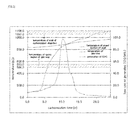
- In order to confirm the above problems, the present inventor made experiments on the change in temperature of a gas way located at the upper portion of a carbonization chamber of a coke oven and the change in amount of generation of coke-oven gas over time, assuming that the operation time of the coke oven in one cycle is set to 24 hours. The results thereof are shown in
FIG. 1 . - As shown in
FIG. 1 , it can be ascertained that the temperature of the gas way located at the upper portion of the carbonization chamber was maintained at 500 °C ~ 1100°C and that the amount of generation of coke-oven gas started to increase rapidly in about 6 hours, was maximized in about 10 hours, and decreased rapidly in about 13.5 hours. These numerical results may be changed by various factors, such as rate of temperature increase, structure of a coke oven, amount of charged raw material, etc., but the forms of generation of coke-oven gas are similar to each other. - According to this change in amount of generation of coke-oven gas, carbon dioxide must be introduced when the amount of generation of coke-oven gas is less than the average amount thereof. Therefore, when carbon dioxide is introduced therebefore, there is a problem in that it moves together with coke-oven gas in the gas way, so the effective residence time thereof in the gas way is insufficient, and thus the reaction time thereof with carbon in the gas way is also insufficient.
- That is, a predetermined level of residence time can be secured only when carbon dioxide is introduced in 14 hours, and an endothermic reaction of carbon dioxide with carbon attached to a coke oven occurs even when the temperature of coal charged in the coke oven reaches 800 °C or higher. Therefore, there occurs a problem that a carbonization region, which can be used at the time of a reaction of carbon dioxide and carbon, is limited to a predetermined region.
- Meanwhile, for the purpose of treating coke-oven gas, a coke-oven gas treatment system is disposed at the rear end of a coke oven. Here, when the amount of coke-oven gas is increased by the introduction of carbon dioxide, a part of unreacted carbon dioxide is introduced into a hydrogen sulfide (H2S) removal system to remove H2S, whereas most of unreacted carbon dioxide is supplied to a subsequent process to remove combustible components from coke-oven gas, thus lowering calorific value. Further, in this case, carbon dioxide, instead of H2S, is removed by the hydrogen sulfide (H2S) removal system itself, thus lowering H2S removal efficiency.
- It is to be understood that the foregoing description is provided to merely aid the understanding of the present invention, and does not mean that the present invention falls under the purview of the related art which was already known to those skilled in the art.
-
- (Patent document 1) Japanese Unexamined Patent Application Publication No.
2000-144142 (2000.05.26 - (Patent document 2) Korean Patent Registration No.
10-1082127 (2011.11.03 - Accordingly, the present invention has been made to solve the above-mentioned problems, and an object of the present invention is to provide a method of increasing the amount of coke-oven gas, wherein the amount of generation of coke-oven gas can be increased by optimizing the starting point of introduction of steam, the reaction rate of steam with carbon being higher than the reaction rate of carbon dioxide with carbon, into a coke oven and thus maximizing the reaction time of steam with carbon in the coke oven.
- In order to accomplish the above object, an aspect of the present invention provides a method of increasing an amount of coke-oven gas, including the step of: introducing steam into a gas way of a carbonization chamber of a coke oven such that a water-gas reaction is conducted at 500 °C ~ or higher during a process of carbonizing coal in the carbonization chamber of the coke oven, wherein the starting point of introduction of steam into the gas way is moved up prior to a time point at which an amount of generation of coke-oven gas is maximized, so as to increase the steam introduction time, thereby maximizing a reaction of steam with carbon existing in the carbonization chamber of the coke oven.
- Assuming that carbonization time in the coke oven is 24 hours, steam may be introduced after 2 hours from carbonization start point.
- Tar generated in the early stage of carbonization may be removed by the following Reaction Formula: Tar + H2O --> CO + CH4 + H2, and the effective residence time (τ) of steam may be determined by dividing the effective volume of the gas way by the total amount of the introduced steam and the generated coke oven.
- The collision frequency of the carbon existing in the carbonization chamber of the coke oven and the steam introduced into the gas way may be increased.
- The collision frequency of the carbon existing in the carbonization chamber of the coke oven and the steam introduced into the gas way may be expressed by a collision frequency factor (A), and the collision frequency factor (A) may be determined in consideration of the structure of the gas way and the flow of the steam.
- The conversion ratio (X) of the introduced steam into coke-oven gas may be represented by the following Formula:

(E: activation energy (J/mol), R: 8.3144(J/mol*K), T: reaction temperature (K), n: reaction order). - The amount of introduction of steam may be changed according to the effective residence time of steam and the reaction temperature.
- The effective residence time of steam may be changed according to the introduction position of steam and the introduction manner of steam.
- The introduced steam may react with carbon existing in the carbonization chamber of the coke oven by the following Formula:
C + H2O --> H2 + CO,
and the relation among the total production (P) of reducing gas (H2 + CO), the conversion ratio (X) of steam and the amount (FH2O) of introduced steam may be represented by the following Formula:
(P: total reducing gas production (Nm3/min), FH2O: steam introduction amount (Nm3/min), t: steam introduction time (min)). - The relation between the conversion ratio (X) of the introduced steam into coke-oven gas and the partial pressure of the steam existing in the carbonization chamber of the coke oven may be represented by the following Formula:

(E: activation energy (J/mol), R: 8.3144(J/mol*K), T: reaction temperature (K), n: reaction order). - Oxygen may be supplied into the carbonization chamber of the coke oven before the steam is introduced into the gas way.
- The steam may be introduced into the gas way of the carbonization chamber of the coke oven while it is preheated by waste heat discharged from a gas rising pipe provided on the carbonization chamber.
- The present invention can exhibit the following advantages thanks to the above technical configuration.
- First, steam introduction time can be increased because steam can be introduced before the amount of generation of coke-oven gas in a carbonization chamber of a coke oven is maximized.
- Second, thanks to the increase in steam introduction time, the amount of generation of coke-oven gas can be increased several times compared to when a conventional coke oven using carbon dioxide is used.
- Third, tar generated in the early stage of carbonization reacts with steam to be converted into hydrogen and carbon monoxide, and thus the burden of a tar removal process can be reduced.
- Fourth, a problem of a H2S removal rate being reduced due to the introduction of carbon dioxide can be solved.
- Fifth, a steam conversion rate can be calculated by using the residence time of steam in a gas way of a carbonization chamber of a coke oven.
- Sixth, the total production of reducing gas can be calculated by using the steam conversion rate.
-
-
FIG. 1 is a graph showing the change in amount of coke-oven gas generated from a coke oven over time. -
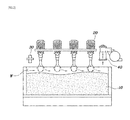
FIG. 2 is a schematic view showing a coke oven for realizing the method of increasing the amount of coke-oven gas according to the present invention. -
FIG. 3 is a graph showing the starting point of introduction of steam in the method of increasing the amount of coke-oven gas according to the present invention. - Hereinafter, preferred embodiments of the present invention will be described in detail with reference to the accompanying drawings.
- As shown in
FIG. 2 , the method of increasing the amount of coke-oven gas according to the present invention is carried out by a coke oven including acarbonization chamber 10, a combustion chamber (not shown), acoke supply unit 20, asteam introduction pipe 30 and agas rising pipe 40. Detailed descriptions of these constituents will be omitted because they are the same as those disclosed in Korean Patent Registration No.1082127 - However, it is preferred that the
steam introduction pipe 30 be disposed at a side of thecarbonization chamber 30 provided at the opposite side thereof with thegas rising pipe 40, the side being far away from the opposite side thereof. That is, thesteam introduction pipe 30 is disposed in this way in order to secure sufficient residence time and sufficient reaction time while steam moves to thegas rising pipe 40 through a gas way (W) of thecarbonization chamber 10. - The method of increasing the amount of coke-oven gas according to the present invention is characterized in that steam is introduced into a gas way of a carbonization chamber of a coke oven such that a water-gas reaction is conducted at 500 °C ~ or higher during a process of carbonizing coal in the carbonization chamber of the coke oven, so the effective residence time of steam increases, thereby maximizing the reaction time of steam with carbon existing in the carbonization chamber of the coke oven.
- When steam is introduced under the condition of lower than 500 °C, thermodynamically, a reaction does not easily take place.
- As above, high-temperature waste heat can be efficiently recovered by a water-gas reaction corresponding an endothermic reaction at 500°C or higher, and a carbonization region capable of introducing steam is enlarged, thus remarkably increasing the amount of coke-oven gas.
- As shown in
FIG. 1 , when the carbonization time in a coke oven is set to 24 hours, the temperature of the gas way located at the upper portion of the carbonization chamber is maintained at 500°C ~ 1100°C, and the amount of generation of coke-oven gas starts to increase rapidly in about 6 hours from the carbonization start point, is maximized in about 10 hours therefrom, and decreases rapidly in about 13.5 hours therefrom. These numerical results may be changed by various factors, such as rate of temperature increase, structure of a coke oven, amount of charged raw material, etc., but the forms of generation of coke-oven gas are similar to each other. - According to the pattern of generation of coke-oven gas over carbonization time, in order to increase the amount of coke-oven gas by the introduction of carbon dioxide into a coke oven, sufficient carbon dioxide residence time can be secured only after the lapse of at least 13.5 hours from carbonization start point, so there is a problem that the starting point of introduction of carbon dioxide is limited. That is, since coke-oven gas generated in a coke oven moves toward a gas rising pipe through the gas way, when carbon dioxide is introduced at the carbonization time region in which the amount of generation of coke-oven gas rapidly increases, there is a problem that the effect of increasing the amount of coke-oven gas is reduced in half because the residence time of carbon dioxide in the coke oven and the reaction time of carbon dioxide with carbon existing in the carbonization chamber are very short.
- In the method of increasing the amount of coke-oven gas according to the present invention, steam is introduced into the gas way in a carbonization chamber of a coke oven before the amount of coke-oven gas generated in the process of carbonizing coal in the carbonization chamber of the coke oven is maximized, so steam introduction time is increased, thus maximizing the reaction time of steam with carbon existing in the carbonization chamber of the coke oven and solving the problem caused by the introduction of carbon dioxide. That is, the reaction temperature of steam and carbon is lower than the reaction temperature of carbon dioxide and carbon, and the reaction rate of steam and carbon is higher than the reaction rate of carbon dioxide and carbon, thereby advancing the starting point of introduction of steam.
- As shown in
FIG. 3 , according to the present invention, assuming that carbonization time in the coke oven is 24 hours, steam can be introduced after 2 hours from the carbonization start point, if the temperature in the gas way is 500 °C ~ or higher. - Generally, the temperature in the gas way reaches 500 °C ~ 1100 °C. However, for the reaction of steam with carbon (about 500 °C) attached to the inner side of the upper portion of the carbonization chamber of the coke oven, steam must be introduced at 500°C or higher.
- When the carbonization time is about 2 hours, water contained in the charged coal is almost volatilized, and thus the optimal reaction efficiency can be expected according the introduction of steam. However, when steam is introduced before 2 hours from the carbonization start point, there is a problem in that the reaction efficiency is reduced in half because coal contains water.
- Since the reaction rate of steam with carbon is higher than that of carbon dioxide with carbon, the generation of coke-oven gas increases rapidly. Therefore, although the flow rate of coke-oven gas in the gas way increases, steam reacts with carbon existing in the gas way before it comes out of the gas way, and thus the starting point of introduction of steam can be advanced before the generation of coke-oven gas is maximized.
- Further, since the reaction temperature of steam with carbon is lower than that of carbon dioxide with carbon, steam can be introduced when the temperature in the gas way is higher than 500 °C.
- The present inventor recognized that the reaction of steam with carbon takes place at low temperature compared to the reaction of carbon dioxide with carbon and that the reaction rate of steam with carbon is higher than the reaction rate of carbon dioxide with carbon by three or more times. Based on these recognitions, steam was introduced after 2 hours from the carbonization start point, and thus the steam introduction time, which was two times longer than a conventional carbon dioxide introduction time, was secured. Consequently, it can be ascertained that steam can be introduced to such a degree that the moles of steam is about six times those of carbon dioxide.
- Further, according to the present invention, tar generated in the early stage of carbonization reacts with steam to be converted into hydrogen and carbon monoxide, and thus the burden of a tar removal process can be reduced.
Tar + H2O --> CO + CH4 + H2
- Based on these facts, the present inventor made experiments on the reactivity of carbon dioxide and steam with high-temperature carbon according to reaction temperature and residence time.
- The conversion rates of steam and carbon dioxide were evaluated while changing the reaction temperature in a tester partially filled with carbon to 800°C and 900°C and changing the residence time of steam and carbon dioxide in the tester to 30 seconds and 1 minute.
- In this case, nitrogen was used as balance gas for residence time control, and steam and carbon dioxide were introduced at a flow rate of 6 L/hr. The results thereof (reactivity (conversion rate)) are given in Table 1 below.
[Table 1] Reaction temperature (°C) Residence time (sec) Steam conversion rate (%) Carbon dioxide conversion rate (%) 800 30 60 30 60 70 40 900 30 80 60 60 90 70 - As given in Table 1 above, it can be ascertained that the conversion rate of carbon dioxide is 60% or less under the conditions of a reaction temperature of lower than 900 °C and a residence time of shorter than 60 seconds. Therefore, there is a serious problem in treating the remaining carbon dioxide.
- In contrast, it can be ascertained that the conversion rate of steam is about two times that of carbon dioxide at low temperature and that, considering the temperature of a coke oven, the introduction time of steam is about two times that of carbon dioxide. Therefore, it can be ascertained that the coke-oven gas increment attributable to steam is about four times the coke-oven gas increment attributable to carbon dioxide.
- Meanwhile, in the method of increasing the amount of coke-oven gas according to the present invention, the conversion rate of steam can be improved by maximizing the effective residence time of steam, this effective residence time thereof being obtained by dividing the effective volume of a gas way by the total amount of introduced steam and generated coke oven gas, and further can be improved by increasing the collision frequency of the carbon existing in the carbonization chamber of the coke oven and the steam introduced into the gas way.
- The collision frequency of the carbon existing in the carbonization chamber of the coke oven and the steam introduced into the gas way is expressed by a collision frequency factor (A), and the collision frequency factor (A) is an optional value determined by the structure of the gas way, the flow of steam, the charging of carbon, attaching structure or the like.
- The present inventor found a steam conversion rate and various factors influencing the steam conversion rate, and analyzed the relation among these factors, thus deducing the specific correlation among the above factors. This specific correlation is represented by the following Formula 1:

wherein X represents a steam conversion rate, and the range thereof is 0 ~ 1. - τ represents effective residence time of steam in a gas way, and is obtained by dividing the effective volume (Nm3) of a gas way by the total flow rate (Nm3/sec) of steam and coke-oven gas. Substantially, this effective residence time of steam corresponds to the reaction time of steam with carbon in a coke oven, and its value is 1 ~ 300 seconds.
- This effective residence time of steam may be determined by the introduction position and introduction manner of steam.
- A is a collision frequency factor (sec-1) representing the collision frequency of steam and carbon, and is determined by the structure of the gas way, the flow of steam, the charging of carbon, attaching structure or the like. The value thereof is 102 ~ 108.
- E represents activation energy (J/mol) for a reaction of steam and carbon (compounded coal, attached carbon, sponge carbon, coke or the like), and its value is 10000 ~ 200000.
- R represents an ideal gas constant (J/mol*K), and its value is 8.3144.
- T represents a reaction temperature (K), and its value is 800 ~ 1400.
- n represents a reaction order, and its value is 0.5 ~ 1. n depends on the kind of carbon (compounded coal, attached carbon, sponge carbon, coke or the like).
- As such, the conversion rate of steam can be maximized by optimizing various factor values using Formula 1 above.
- According to Formula 1 above, the efficiency of increasing the amount of coke-oven gas can be optimized by changing the amount of introduction of steam according to the effective residence time of steam and the reaction temperature.
- Meanwhile, the introduced steam reacts with carbon existing in the carbonization chamber of the coke oven by the following reaction Formula: C + H2O --> H2 + CO, and the relation among the total production (P) of reducing gas (H2 + CO), the conversion ratio (X) of steam and the amount (FH2O) of introduced steam is represented by the following Formula 2:

(P: total reducing gas production (Nm3/min), FH2O: steam introduction amount (Nm3/min), t: steam introduction time (min)). - According to Formula 2 above, since the conversion rate of steam influences the total production of reducing gas (coke oven gas), the factors of Formula 1 above influencing the conversion rate of steam may influence the total production of reducing gas.
- Since the above-mentioned steam conversion rate and steam introduction amount are changed according to the reaction temperature range, the total production of reducing gas can be calculated by adding up all the values corresponding to each range.

(PH2O: partial pressure of steam in a coke oven, other factors are the same as those explained in Formula 1 above) - As represented by Formula 3 above, since the conversion rate of steam can be controlled according to the partial pressure of steam in the coke oven, t of Formula 3 above represents the residence time of steam in a gas way of a coke oven, and its value is present between 0 and τ.
- Meanwhile, the method of increasing the amount of coke oven gas according to the present invention is characterized in that oxygen is supplied into the carbonization chamber of the coke oven before the steam is introduced the gas way.
- The supplied oxygen reacts with carbon or a carbon compound to generate carbon dioxide, carbon monoxide, hydrogen and water. Here, since this reaction is an exothermic reaction, it prevents the temperature in the gas way of the carbonization chamber of the coke oven from being lowered.
- Further, the temperature of steam introduced into the gas way of the carbonization chamber of the coke oven must be maintained constant. Therefore, when water, not steam, is supplied into the coke oven, the temperature in the carbonization chamber is lowered, and thus steam, not water, must be supplied into the coke oven.
- The method of increasing the amount of coke oven gas according to the present invention is further characterized in that waste heat discharged from a gas rising pipe is recovered, steam is preheated by this waste heat, and then the preheated steam is supplied into the gas way of the carbonization chamber of the coke oven.
- For example, when the gas rising pipe is surrounded by a heat exchange unit (pipe or the like), steam (or water) passes through the heat exchange unit to absorb the waste heat discharged from the gas rising pipe and to preheat the steam, and then the preheated steam is supplied into the gas way in the carbonization chamber of the coke oven, there are advantages that the steam having constant temperature can be easily supplied and the waste heat discharged from the gas rising pipe can be efficiently recovered.
- Although the preferred embodiments of the present invention have been disclosed for illustrative purposes, those skilled in the art will appreciate that various modifications, additions and substitutions are possible, without departing from the scope and spirit of the invention as disclosed in the accompanying claims.
-
- 10:
- carbonization chamber
- 20:
- coke supply unit
- 30:
- steam introduction pipe
- 40:
- gas rising pipe
- W:
- gas way
Claims (12)
- A method of increasing an amount of coke-oven gas, comprising the step of:introducing steam into a gas way of a carbonization chamber of a coke oven such that a water-gas reaction is conducted at 500°C or higher during a process of carbonizing coal in the carbonization chamber of the coke oven,wherein a starting point of introduction of steam into the gas way is moved up prior to a time point at which an amount of generation of coke-oven gas is maximized, so as to increase the steam introduction time, thereby maximizing a reaction of steam with carbon existing in the carbonization chamber of the coke oven.
- The method of claim 1, wherein, assuming that carbonization time in the coke oven is 24 hours, steam is introduced after 2 hours from carbonization start point.
- The method of claim 2, wherein tar generated in the early stage of carbonization is removed by the following Reaction Formula: Tar + H2O --> CO + CH4 + H2, and the effective residence time (τ) of steam is determined by dividing the effective volume of the gas way by the total amount of the introduced steam and the generated coke oven.
- The method of claim 1, wherein the collision frequency of the carbon existing in the carbonization chamber of the coke oven and the steam introduced into the gas way is increased.
- The method of claim 4, wherein the collision frequency of the carbon existing in the carbonization chamber of the coke oven and the steam introduced into the gas way is expressed by a collision frequency factor (A), and the collision frequency factor (A) is determined in consideration of the structure of the gas way and the flow of the steam.
- The method of claim 4, wherein the conversion ratio (X) of the introduced steam into coke-oven gas is represented by the following Formula:

(E: activation energy (J/mol), R: 8.3144(J/mol*K), T: reaction temperature (K), n: reaction order). - The method of claim 6, wherein the amount of introduction of steam is changed according to the effective residence time of steam and the reaction temperature.
- The method of claim 6, wherein the effective residence time of steam is changed according to the introduction position of steam and the introduction manner of steam.
- The method of claim 5, wherein the introduced steam reacts with carbon existing in the carbonization chamber of the coke oven by the following Reaction Formula:
C + H2O --> H2 + CO, and
the relation among the total production (P) of reducing gas (H2 + CO), the conversion ratio (X) of steam and the amount (FH2O) of introduced steam is represented by the following Formula:
(P: total reducing gas production (Nm3/min), FH2O: steam introduction amount (Nm3/min), t: steam introduction time (min)). - The method of claim 4, wherein the relation between the conversion ratio (X) of the introduced steam into coke-oven gas and the partial pressure of the steam existing in the carbonization chamber of the coke oven is represented by the following Formula:

(E: activation energy (J/mol), R: 8.3144(J/mol*K), T: reaction temperature (K), n: reaction order). - The method of claim 1, wherein oxygen is supplied into the carbonization chamber of the coke oven before the steam is introduced into the gas way.
- The method of claim 1, wherein the steam is introduced into the gas way of the carbonization chamber of the coke oven while it is preheated by waste heat discharged from a gas rising pipe provided on the carbonization chamber.
Applications Claiming Priority (2)
| Application Number | Priority Date | Filing Date | Title |
|---|---|---|---|
| KR1020120105766A KR101421802B1 (en) | 2012-09-24 | 2012-09-24 | Method for amplifying coke-oven |
| PCT/KR2012/008050 WO2014046329A1 (en) | 2012-09-24 | 2012-10-04 | Method for increasing coke oven gas |
Publications (3)
| Publication Number | Publication Date |
|---|---|
| EP2899251A1 true EP2899251A1 (en) | 2015-07-29 |
| EP2899251A4 EP2899251A4 (en) | 2016-05-25 |
| EP2899251B1 EP2899251B1 (en) | 2019-02-20 |
Family
ID=50341612
Family Applications (1)
| Application Number | Title | Priority Date | Filing Date |
|---|---|---|---|
| EP12884829.8A Active EP2899251B1 (en) | 2012-09-24 | 2012-10-04 | Method for increasing coke oven gas |
Country Status (6)
| Country | Link |
|---|---|
| US (1) | US10465123B2 (en) |
| EP (1) | EP2899251B1 (en) |
| JP (1) | JP5990733B2 (en) |
| KR (1) | KR101421802B1 (en) |
| CN (1) | CN104662129B (en) |
| WO (1) | WO2014046329A1 (en) |
Families Citing this family (1)
| Publication number | Priority date | Publication date | Assignee | Title |
|---|---|---|---|---|
| KR101759329B1 (en) * | 2015-12-23 | 2017-07-18 | 주식회사 포스코 | System for amplifying coke-oven gas and this method |
Family Cites Families (17)
| Publication number | Priority date | Publication date | Assignee | Title |
|---|---|---|---|---|
| US711905A (en) * | 1901-08-12 | 1902-10-21 | Thaddeus S C Lowe | Process of manufacturing coke. |
| FR970752A (en) * | 1948-08-13 | 1951-01-09 | Tech Ind Soc D | Device for removing top carbon (graphite) in coke ovens or the like |
| DE1006110B (en) | 1955-06-18 | 1957-04-11 | Otto & Co Gmbh Dr C | Process for the production of standard-compliant town gas in an indirectly heated chamber furnace for the production of gas and coke |
| US3964976A (en) * | 1974-06-28 | 1976-06-22 | Allied Chemical Corporation | Process for cleaning coke oven gas offtakes |
| JPS5925882A (en) * | 1982-08-04 | 1984-02-09 | Ishikawajima Harima Heavy Ind Co Ltd | Method for removing carbon from coke oven |
| JPH01247485A (en) * | 1988-03-30 | 1989-10-03 | Sumitomo Metal Ind Ltd | Prevention of coke oven from emitting black smoke |
| JPH03212487A (en) * | 1990-01-18 | 1991-09-18 | Nkk Corp | Method for operating coke oven |
| JP2933788B2 (en) * | 1992-12-04 | 1999-08-16 | 新日本製鐵株式会社 | Coke oven carbon removal method |
| JP3241587B2 (en) * | 1996-03-29 | 2001-12-25 | 新日本製鐵株式会社 | Method of preventing carbon adhesion at the base of coke oven riser |
| JPH10287879A (en) * | 1997-04-10 | 1998-10-27 | Nippon Steel Corp | Method and apparatus for suppressing carbon adhesion to bricks in the top space of coke oven |
| JP2000144142A (en) | 1998-11-11 | 2000-05-26 | Nkk Corp | Removal method of carbon adhering to coke oven carbonization chamber |
| JP2000219883A (en) | 1999-02-02 | 2000-08-08 | Nippon Steel Corp | Method for suppressing adhesion of attached carbon in coke oven and method for removing attached carbon |
| JP2000273473A (en) | 1999-03-23 | 2000-10-03 | Nippon Steel Corp | Coke oven treatment method |
| JP2003082355A (en) * | 2001-09-14 | 2003-03-19 | Sumitomo Metal Ind Ltd | Coke oven and its operation method |
| CN101624539B (en) * | 2008-07-09 | 2012-04-18 | 兖矿集团有限公司 | Method for using supplementary carbon source as gasification agent of coal water slurry gasification furnace |
| CN101659879B (en) * | 2008-08-25 | 2013-10-02 | 杭州林达化工技术工程有限公司 | Chemical-electric poly-generation method and equipment |
| KR101082127B1 (en) * | 2009-12-29 | 2011-11-10 | 재단법인 포항산업과학연구원 | A method for amplifying coke-oven gas by using CO2 |
-
2012
- 2012-09-24 KR KR1020120105766A patent/KR101421802B1/en active Active
- 2012-10-04 EP EP12884829.8A patent/EP2899251B1/en active Active
- 2012-10-04 CN CN201280075969.4A patent/CN104662129B/en active Active
- 2012-10-04 WO PCT/KR2012/008050 patent/WO2014046329A1/en not_active Ceased
- 2012-10-04 US US14/429,221 patent/US10465123B2/en active Active
- 2012-10-04 JP JP2015532936A patent/JP5990733B2/en active Active
Also Published As
| Publication number | Publication date |
|---|---|
| KR20140043545A (en) | 2014-04-10 |
| JP2015532934A (en) | 2015-11-16 |
| EP2899251A4 (en) | 2016-05-25 |
| KR101421802B1 (en) | 2014-07-23 |
| CN104662129A (en) | 2015-05-27 |
| WO2014046329A1 (en) | 2014-03-27 |
| US10465123B2 (en) | 2019-11-05 |
| JP5990733B2 (en) | 2016-09-14 |
| CN104662129B (en) | 2018-05-29 |
| EP2899251B1 (en) | 2019-02-20 |
| US20150218458A1 (en) | 2015-08-06 |
Similar Documents
| Publication | Publication Date | Title |
|---|---|---|
| RU2759379C2 (en) | Method for ammonia synthesis characterized in low level of co2 emissions into atmosphere | |
| RU2528525C2 (en) | Method of iron production by direct reduction and device to this end | |
| CN103781724A (en) | Device for producing synthesis gas containing carbon monoxide and hydrogen and method for producing the same | |
| US9255224B2 (en) | Method for increasing amount of coke oven gas by using carbon dioxide | |
| KR101321823B1 (en) | Apparatus for manufacturing syngas containing co and h2 and method thereof | |
| RU2011125340A (en) | METHOD AND DEVICE FOR PRODUCING RAW SYNTHESIS GAS | |
| JP2012529569A (en) | Apparatus and method for producing iron, semi-steel and reducing gas | |
| JP6242797B2 (en) | Coke dry quenching with carbon dioxide, including subsequent use of produced carbon monoxide | |
| KR20240016962A (en) | How blast furnace equipment operates | |
| KR101407507B1 (en) | Process and apparatus for producing of ammonium bicarbonate | |
| KR20130066263A (en) | A method for preparing reducing gas by using cokes oven gas and by-product gas from steel works | |
| EP2899251B1 (en) | Method for increasing coke oven gas | |
| EP3868899B1 (en) | Carbon dioxide emission reduction type molten iron manufacturing apparatus and manufacturing method thereof | |
| KR101387324B1 (en) | Method for amplifying coke-oven gas by using oxidation agents | |
| EP4361233A1 (en) | Manufacturing method and manufacturing apparatus of syngas, and manufacturing method of liquid hydrocarbon using the same | |
| KR20250085804A (en) | Method for producing reduced iron | |
| CN109652604A (en) | A method of cementite is prepared using ferriferous oxide two-step method | |
| KR101884865B1 (en) | Devidce for increasing in quantity of coke oven gas, and the method | |
| JP7192845B2 (en) | Blast Furnace Operation Method and Blast Furnace Incidental Equipment | |
| KR101387325B1 (en) | A method for amplifying coke-oven gas by using oxygen | |
| JP2006045394A (en) | Operation method of waste gasification processing equipment | |
| CN107043644A (en) | A kind of technique of coal based synthetic gas and synthesizing natural gas from coke oven gas | |
| JP7463364B2 (en) | Purified gas production method and purified gas production apparatus | |
| KR20240140225A (en) | Device and method for recycling carbon dioxide generated in refining process of coke oven gas | |
| RU2808735C1 (en) | Restored iron production line and method for obtaining restored iron |
Legal Events
| Date | Code | Title | Description |
|---|---|---|---|
| PUAI | Public reference made under article 153(3) epc to a published international application that has entered the european phase |
Free format text: ORIGINAL CODE: 0009012 |
|
| 17P | Request for examination filed |
Effective date: 20150417 |
|
| AK | Designated contracting states |
Kind code of ref document: A1 Designated state(s): AL AT BE BG CH CY CZ DE DK EE ES FI FR GB GR HR HU IE IS IT LI LT LU LV MC MK MT NL NO PL PT RO RS SE SI SK SM TR |
|
| AX | Request for extension of the european patent |
Extension state: BA ME |
|
| DAX | Request for extension of the european patent (deleted) | ||
| REG | Reference to a national code |
Ref country code: DE Ref legal event code: R079 Ref document number: 602012056990 Country of ref document: DE Free format text: PREVIOUS MAIN CLASS: C10B0029000000 Ipc: C10B0045000000 |
|
| RA4 | Supplementary search report drawn up and despatched (corrected) |
Effective date: 20160425 |
|
| RIC1 | Information provided on ipc code assigned before grant |
Ipc: C10B 57/12 20060101ALI20160419BHEP Ipc: C10B 57/18 20060101ALI20160419BHEP Ipc: C10B 45/00 20060101AFI20160419BHEP |
|
| STAA | Information on the status of an ep patent application or granted ep patent |
Free format text: STATUS: EXAMINATION IS IN PROGRESS |
|
| 17Q | First examination report despatched |
Effective date: 20170404 |
|
| GRAP | Despatch of communication of intention to grant a patent |
Free format text: ORIGINAL CODE: EPIDOSNIGR1 |
|
| STAA | Information on the status of an ep patent application or granted ep patent |
Free format text: STATUS: GRANT OF PATENT IS INTENDED |
|
| INTG | Intention to grant announced |
Effective date: 20180615 |
|
| GRAJ | Information related to disapproval of communication of intention to grant by the applicant or resumption of examination proceedings by the epo deleted |
Free format text: ORIGINAL CODE: EPIDOSDIGR1 |
|
| STAA | Information on the status of an ep patent application or granted ep patent |
Free format text: STATUS: EXAMINATION IS IN PROGRESS |
|
| GRAR | Information related to intention to grant a patent recorded |
Free format text: ORIGINAL CODE: EPIDOSNIGR71 |
|
| GRAS | Grant fee paid |
Free format text: ORIGINAL CODE: EPIDOSNIGR3 |
|
| STAA | Information on the status of an ep patent application or granted ep patent |
Free format text: STATUS: GRANT OF PATENT IS INTENDED |
|
| INTC | Intention to grant announced (deleted) | ||
| GRAJ | Information related to disapproval of communication of intention to grant by the applicant or resumption of examination proceedings by the epo deleted |
Free format text: ORIGINAL CODE: EPIDOSDIGR1 |
|
| GRAR | Information related to intention to grant a patent recorded |
Free format text: ORIGINAL CODE: EPIDOSNIGR71 |
|
| GRAS | Grant fee paid |
Free format text: ORIGINAL CODE: EPIDOSNIGR3 |
|
| INTG | Intention to grant announced |
Effective date: 20181204 |
|
| GRAJ | Information related to disapproval of communication of intention to grant by the applicant or resumption of examination proceedings by the epo deleted |
Free format text: ORIGINAL CODE: EPIDOSDIGR1 |
|
| GRAR | Information related to intention to grant a patent recorded |
Free format text: ORIGINAL CODE: EPIDOSNIGR71 |
|
| GRAS | Grant fee paid |
Free format text: ORIGINAL CODE: EPIDOSNIGR3 |
|
| GRAA | (expected) grant |
Free format text: ORIGINAL CODE: 0009210 |
|
| STAA | Information on the status of an ep patent application or granted ep patent |
Free format text: STATUS: THE PATENT HAS BEEN GRANTED |
|
| INTG | Intention to grant announced |
Effective date: 20190102 |
|
| INTG | Intention to grant announced |
Effective date: 20190110 |
|
| AK | Designated contracting states |
Kind code of ref document: B1 Designated state(s): AL AT BE BG CH CY CZ DE DK EE ES FI FR GB GR HR HU IE IS IT LI LT LU LV MC MK MT NL NO PL PT RO RS SE SI SK SM TR |
|
| REG | Reference to a national code |
Ref country code: GB Ref legal event code: FG4D |
|
| REG | Reference to a national code |
Ref country code: CH Ref legal event code: EP |
|
| REG | Reference to a national code |
Ref country code: DE Ref legal event code: R096 Ref document number: 602012056990 Country of ref document: DE |
|
| REG | Reference to a national code |
Ref country code: AT Ref legal event code: REF Ref document number: 1098155 Country of ref document: AT Kind code of ref document: T Effective date: 20190315 |
|
| REG | Reference to a national code |
Ref country code: IE Ref legal event code: FG4D |
|
| REG | Reference to a national code |
Ref country code: NL Ref legal event code: MP Effective date: 20190220 |
|
| REG | Reference to a national code |
Ref country code: LT Ref legal event code: MG4D |
|
| PG25 | Lapsed in a contracting state [announced via postgrant information from national office to epo] |
Ref country code: FI Free format text: LAPSE BECAUSE OF FAILURE TO SUBMIT A TRANSLATION OF THE DESCRIPTION OR TO PAY THE FEE WITHIN THE PRESCRIBED TIME-LIMIT Effective date: 20190220 Ref country code: NO Free format text: LAPSE BECAUSE OF FAILURE TO SUBMIT A TRANSLATION OF THE DESCRIPTION OR TO PAY THE FEE WITHIN THE PRESCRIBED TIME-LIMIT Effective date: 20190520 Ref country code: SE Free format text: LAPSE BECAUSE OF FAILURE TO SUBMIT A TRANSLATION OF THE DESCRIPTION OR TO PAY THE FEE WITHIN THE PRESCRIBED TIME-LIMIT Effective date: 20190220 Ref country code: PT Free format text: LAPSE BECAUSE OF FAILURE TO SUBMIT A TRANSLATION OF THE DESCRIPTION OR TO PAY THE FEE WITHIN THE PRESCRIBED TIME-LIMIT Effective date: 20190620 Ref country code: LT Free format text: LAPSE BECAUSE OF FAILURE TO SUBMIT A TRANSLATION OF THE DESCRIPTION OR TO PAY THE FEE WITHIN THE PRESCRIBED TIME-LIMIT Effective date: 20190220 Ref country code: NL Free format text: LAPSE BECAUSE OF FAILURE TO SUBMIT A TRANSLATION OF THE DESCRIPTION OR TO PAY THE FEE WITHIN THE PRESCRIBED TIME-LIMIT Effective date: 20190220 |
|
| PG25 | Lapsed in a contracting state [announced via postgrant information from national office to epo] |
Ref country code: LV Free format text: LAPSE BECAUSE OF FAILURE TO SUBMIT A TRANSLATION OF THE DESCRIPTION OR TO PAY THE FEE WITHIN THE PRESCRIBED TIME-LIMIT Effective date: 20190220 Ref country code: HR Free format text: LAPSE BECAUSE OF FAILURE TO SUBMIT A TRANSLATION OF THE DESCRIPTION OR TO PAY THE FEE WITHIN THE PRESCRIBED TIME-LIMIT Effective date: 20190220 Ref country code: BG Free format text: LAPSE BECAUSE OF FAILURE TO SUBMIT A TRANSLATION OF THE DESCRIPTION OR TO PAY THE FEE WITHIN THE PRESCRIBED TIME-LIMIT Effective date: 20190520 Ref country code: IS Free format text: LAPSE BECAUSE OF FAILURE TO SUBMIT A TRANSLATION OF THE DESCRIPTION OR TO PAY THE FEE WITHIN THE PRESCRIBED TIME-LIMIT Effective date: 20190620 Ref country code: GR Free format text: LAPSE BECAUSE OF FAILURE TO SUBMIT A TRANSLATION OF THE DESCRIPTION OR TO PAY THE FEE WITHIN THE PRESCRIBED TIME-LIMIT Effective date: 20190521 Ref country code: RS Free format text: LAPSE BECAUSE OF FAILURE TO SUBMIT A TRANSLATION OF THE DESCRIPTION OR TO PAY THE FEE WITHIN THE PRESCRIBED TIME-LIMIT Effective date: 20190220 |
|
| REG | Reference to a national code |
Ref country code: AT Ref legal event code: MK05 Ref document number: 1098155 Country of ref document: AT Kind code of ref document: T Effective date: 20190220 |
|
| PG25 | Lapsed in a contracting state [announced via postgrant information from national office to epo] |
Ref country code: DK Free format text: LAPSE BECAUSE OF FAILURE TO SUBMIT A TRANSLATION OF THE DESCRIPTION OR TO PAY THE FEE WITHIN THE PRESCRIBED TIME-LIMIT Effective date: 20190220 Ref country code: IT Free format text: LAPSE BECAUSE OF FAILURE TO SUBMIT A TRANSLATION OF THE DESCRIPTION OR TO PAY THE FEE WITHIN THE PRESCRIBED TIME-LIMIT Effective date: 20190220 Ref country code: EE Free format text: LAPSE BECAUSE OF FAILURE TO SUBMIT A TRANSLATION OF THE DESCRIPTION OR TO PAY THE FEE WITHIN THE PRESCRIBED TIME-LIMIT Effective date: 20190220 Ref country code: CZ Free format text: LAPSE BECAUSE OF FAILURE TO SUBMIT A TRANSLATION OF THE DESCRIPTION OR TO PAY THE FEE WITHIN THE PRESCRIBED TIME-LIMIT Effective date: 20190220 Ref country code: RO Free format text: LAPSE BECAUSE OF FAILURE TO SUBMIT A TRANSLATION OF THE DESCRIPTION OR TO PAY THE FEE WITHIN THE PRESCRIBED TIME-LIMIT Effective date: 20190220 Ref country code: ES Free format text: LAPSE BECAUSE OF FAILURE TO SUBMIT A TRANSLATION OF THE DESCRIPTION OR TO PAY THE FEE WITHIN THE PRESCRIBED TIME-LIMIT Effective date: 20190220 Ref country code: AL Free format text: LAPSE BECAUSE OF FAILURE TO SUBMIT A TRANSLATION OF THE DESCRIPTION OR TO PAY THE FEE WITHIN THE PRESCRIBED TIME-LIMIT Effective date: 20190220 Ref country code: SK Free format text: LAPSE BECAUSE OF FAILURE TO SUBMIT A TRANSLATION OF THE DESCRIPTION OR TO PAY THE FEE WITHIN THE PRESCRIBED TIME-LIMIT Effective date: 20190220 |
|
| REG | Reference to a national code |
Ref country code: DE Ref legal event code: R097 Ref document number: 602012056990 Country of ref document: DE |
|
| PG25 | Lapsed in a contracting state [announced via postgrant information from national office to epo] |
Ref country code: SM Free format text: LAPSE BECAUSE OF FAILURE TO SUBMIT A TRANSLATION OF THE DESCRIPTION OR TO PAY THE FEE WITHIN THE PRESCRIBED TIME-LIMIT Effective date: 20190220 Ref country code: PL Free format text: LAPSE BECAUSE OF FAILURE TO SUBMIT A TRANSLATION OF THE DESCRIPTION OR TO PAY THE FEE WITHIN THE PRESCRIBED TIME-LIMIT Effective date: 20190220 |
|
| PLBE | No opposition filed within time limit |
Free format text: ORIGINAL CODE: 0009261 |
|
| STAA | Information on the status of an ep patent application or granted ep patent |
Free format text: STATUS: NO OPPOSITION FILED WITHIN TIME LIMIT |
|
| PG25 | Lapsed in a contracting state [announced via postgrant information from national office to epo] |
Ref country code: AT Free format text: LAPSE BECAUSE OF FAILURE TO SUBMIT A TRANSLATION OF THE DESCRIPTION OR TO PAY THE FEE WITHIN THE PRESCRIBED TIME-LIMIT Effective date: 20190220 |
|
| 26N | No opposition filed |
Effective date: 20191121 |
|
| PG25 | Lapsed in a contracting state [announced via postgrant information from national office to epo] |
Ref country code: SI Free format text: LAPSE BECAUSE OF FAILURE TO SUBMIT A TRANSLATION OF THE DESCRIPTION OR TO PAY THE FEE WITHIN THE PRESCRIBED TIME-LIMIT Effective date: 20190220 |
|
| PG25 | Lapsed in a contracting state [announced via postgrant information from national office to epo] |
Ref country code: TR Free format text: LAPSE BECAUSE OF FAILURE TO SUBMIT A TRANSLATION OF THE DESCRIPTION OR TO PAY THE FEE WITHIN THE PRESCRIBED TIME-LIMIT Effective date: 20190220 |
|
| PG25 | Lapsed in a contracting state [announced via postgrant information from national office to epo] |
Ref country code: MC Free format text: LAPSE BECAUSE OF FAILURE TO SUBMIT A TRANSLATION OF THE DESCRIPTION OR TO PAY THE FEE WITHIN THE PRESCRIBED TIME-LIMIT Effective date: 20190220 |
|
| REG | Reference to a national code |
Ref country code: CH Ref legal event code: PL |
|
| PG25 | Lapsed in a contracting state [announced via postgrant information from national office to epo] |
Ref country code: CH Free format text: LAPSE BECAUSE OF NON-PAYMENT OF DUE FEES Effective date: 20191031 Ref country code: LU Free format text: LAPSE BECAUSE OF NON-PAYMENT OF DUE FEES Effective date: 20191004 Ref country code: LI Free format text: LAPSE BECAUSE OF NON-PAYMENT OF DUE FEES Effective date: 20191031 |
|
| REG | Reference to a national code |
Ref country code: BE Ref legal event code: MM Effective date: 20191031 |
|
| PG25 | Lapsed in a contracting state [announced via postgrant information from national office to epo] |
Ref country code: BE Free format text: LAPSE BECAUSE OF NON-PAYMENT OF DUE FEES Effective date: 20191031 |
|
| GBPC | Gb: european patent ceased through non-payment of renewal fee |
Effective date: 20191004 |
|
| PG25 | Lapsed in a contracting state [announced via postgrant information from national office to epo] |
Ref country code: FR Free format text: LAPSE BECAUSE OF NON-PAYMENT OF DUE FEES Effective date: 20191031 Ref country code: IE Free format text: LAPSE BECAUSE OF NON-PAYMENT OF DUE FEES Effective date: 20191004 Ref country code: GB Free format text: LAPSE BECAUSE OF NON-PAYMENT OF DUE FEES Effective date: 20191004 |
|
| PG25 | Lapsed in a contracting state [announced via postgrant information from national office to epo] |
Ref country code: CY Free format text: LAPSE BECAUSE OF FAILURE TO SUBMIT A TRANSLATION OF THE DESCRIPTION OR TO PAY THE FEE WITHIN THE PRESCRIBED TIME-LIMIT Effective date: 20190220 |
|
| PG25 | Lapsed in a contracting state [announced via postgrant information from national office to epo] |
Ref country code: MT Free format text: LAPSE BECAUSE OF FAILURE TO SUBMIT A TRANSLATION OF THE DESCRIPTION OR TO PAY THE FEE WITHIN THE PRESCRIBED TIME-LIMIT Effective date: 20190220 Ref country code: HU Free format text: LAPSE BECAUSE OF FAILURE TO SUBMIT A TRANSLATION OF THE DESCRIPTION OR TO PAY THE FEE WITHIN THE PRESCRIBED TIME-LIMIT; INVALID AB INITIO Effective date: 20121004 |
|
| PG25 | Lapsed in a contracting state [announced via postgrant information from national office to epo] |
Ref country code: MK Free format text: LAPSE BECAUSE OF FAILURE TO SUBMIT A TRANSLATION OF THE DESCRIPTION OR TO PAY THE FEE WITHIN THE PRESCRIBED TIME-LIMIT Effective date: 20190220 |
|
| REG | Reference to a national code |
Ref country code: DE Ref legal event code: R081 Ref document number: 602012056990 Country of ref document: DE Owner name: POSCO CO., LTD, POHANG-SI, KR Free format text: FORMER OWNERS: POSCO, POHANG-SI, GYEONGSANGBUK-DO, KR; RESEARCH INSTITUTE OF INDUSTRIAL SCIENCE & TECHNOLOGY, POHANG-SI, GYEONGSANGBUK, KR Ref country code: DE Ref legal event code: R081 Ref document number: 602012056990 Country of ref document: DE Owner name: POSCO CO., LTD, POHANG- SI, KR Free format text: FORMER OWNERS: POSCO, POHANG-SI, GYEONGSANGBUK-DO, KR; RESEARCH INSTITUTE OF INDUSTRIAL SCIENCE & TECHNOLOGY, POHANG-SI, GYEONGSANGBUK, KR Ref country code: DE Ref legal event code: R081 Ref document number: 602012056990 Country of ref document: DE Owner name: RESEARCH INSTITUTE OF INDUSTRIAL SCIENCE & TEC, KR Free format text: FORMER OWNERS: POSCO, POHANG-SI, GYEONGSANGBUK-DO, KR; RESEARCH INSTITUTE OF INDUSTRIAL SCIENCE & TECHNOLOGY, POHANG-SI, GYEONGSANGBUK, KR Ref country code: DE Ref legal event code: R081 Ref document number: 602012056990 Country of ref document: DE Owner name: POSCO HOLDINGS INC., KR Free format text: FORMER OWNERS: POSCO, POHANG-SI, GYEONGSANGBUK-DO, KR; RESEARCH INSTITUTE OF INDUSTRIAL SCIENCE & TECHNOLOGY, POHANG-SI, GYEONGSANGBUK, KR |
|
| REG | Reference to a national code |
Ref country code: DE Ref legal event code: R081 Ref document number: 602012056990 Country of ref document: DE Owner name: POSCO CO., LTD, POHANG-SI, KR Free format text: FORMER OWNERS: POSCO HOLDINGS INC., SEOUL, KR; RESEARCH INSTITUTE OF INDUSTRIAL SCIENCE & TECHNOLOGY, POHANG-SI, GYEONGSANGBUK, KR Ref country code: DE Ref legal event code: R081 Ref document number: 602012056990 Country of ref document: DE Owner name: RESEARCH INSTITUTE OF INDUSTRIAL SCIENCE & TEC, KR Free format text: FORMER OWNERS: POSCO HOLDINGS INC., SEOUL, KR; RESEARCH INSTITUTE OF INDUSTRIAL SCIENCE & TECHNOLOGY, POHANG-SI, GYEONGSANGBUK, KR Ref country code: DE Ref legal event code: R081 Ref document number: 602012056990 Country of ref document: DE Owner name: POSCO CO., LTD, POHANG- SI, KR Free format text: FORMER OWNERS: POSCO HOLDINGS INC., SEOUL, KR; RESEARCH INSTITUTE OF INDUSTRIAL SCIENCE & TECHNOLOGY, POHANG-SI, GYEONGSANGBUK, KR |
|
| PGFP | Annual fee paid to national office [announced via postgrant information from national office to epo] |
Ref country code: DE Payment date: 20250922 Year of fee payment: 14 |