EP2895862B1 - Biomarker - Google Patents
Biomarker Download PDFInfo
- Publication number
- EP2895862B1 EP2895862B1 EP13780187.4A EP13780187A EP2895862B1 EP 2895862 B1 EP2895862 B1 EP 2895862B1 EP 13780187 A EP13780187 A EP 13780187A EP 2895862 B1 EP2895862 B1 EP 2895862B1
- Authority
- EP
- European Patent Office
- Prior art keywords
- subject
- phprt
- prt
- malaria
- plasmodium falciparum
- Prior art date
- Legal status (The legal status is an assumption and is not a legal conclusion. Google has not performed a legal analysis and makes no representation as to the accuracy of the status listed.)
- Not-in-force
Links
Images




Classifications
-
- A—HUMAN NECESSITIES
- A61—MEDICAL OR VETERINARY SCIENCE; HYGIENE
- A61P—SPECIFIC THERAPEUTIC ACTIVITY OF CHEMICAL COMPOUNDS OR MEDICINAL PREPARATIONS
- A61P33/00—Antiparasitic agents
- A61P33/02—Antiprotozoals, e.g. for leishmaniasis, trichomoniasis, toxoplasmosis
- A61P33/06—Antimalarials
-
- C—CHEMISTRY; METALLURGY
- C12—BIOCHEMISTRY; BEER; SPIRITS; WINE; VINEGAR; MICROBIOLOGY; ENZYMOLOGY; MUTATION OR GENETIC ENGINEERING
- C12Q—MEASURING OR TESTING PROCESSES INVOLVING ENZYMES, NUCLEIC ACIDS OR MICROORGANISMS; COMPOSITIONS OR TEST PAPERS THEREFOR; PROCESSES OF PREPARING SUCH COMPOSITIONS; CONDITION-RESPONSIVE CONTROL IN MICROBIOLOGICAL OR ENZYMOLOGICAL PROCESSES
- C12Q1/00—Measuring or testing processes involving enzymes, nucleic acids or microorganisms; Compositions therefor; Processes of preparing such compositions
- C12Q1/02—Measuring or testing processes involving enzymes, nucleic acids or microorganisms; Compositions therefor; Processes of preparing such compositions involving viable microorganisms
- C12Q1/04—Determining presence or kind of microorganism; Use of selective media for testing antibiotics or bacteriocides; Compositions containing a chemical indicator therefor
-
- G—PHYSICS
- G01—MEASURING; TESTING
- G01N—INVESTIGATING OR ANALYSING MATERIALS BY DETERMINING THEIR CHEMICAL OR PHYSICAL PROPERTIES
- G01N33/00—Investigating or analysing materials by specific methods not covered by groups G01N1/00 - G01N31/00
- G01N33/48—Biological material, e.g. blood, urine; Haemocytometers
- G01N33/50—Chemical analysis of biological material, e.g. blood, urine; Testing involving biospecific ligand binding methods; Immunological testing
- G01N33/53—Immunoassay; Biospecific binding assay; Materials therefor
- G01N33/569—Immunoassay; Biospecific binding assay; Materials therefor for microorganisms, e.g. protozoa, bacteria, viruses
- G01N33/56905—Protozoa
-
- G—PHYSICS
- G01—MEASURING; TESTING
- G01N—INVESTIGATING OR ANALYSING MATERIALS BY DETERMINING THEIR CHEMICAL OR PHYSICAL PROPERTIES
- G01N2333/00—Assays involving biological materials from specific organisms or of a specific nature
- G01N2333/435—Assays involving biological materials from specific organisms or of a specific nature from animals; from humans
- G01N2333/44—Assays involving biological materials from specific organisms or of a specific nature from animals; from humans from protozoa
- G01N2333/445—Plasmodium
-
- G—PHYSICS
- G01—MEASURING; TESTING
- G01N—INVESTIGATING OR ANALYSING MATERIALS BY DETERMINING THEIR CHEMICAL OR PHYSICAL PROPERTIES
- G01N2800/00—Detection or diagnosis of diseases
- G01N2800/52—Predicting or monitoring the response to treatment, e.g. for selection of therapy based on assay results in personalised medicine; Prognosis
-
- Y—GENERAL TAGGING OF NEW TECHNOLOGICAL DEVELOPMENTS; GENERAL TAGGING OF CROSS-SECTIONAL TECHNOLOGIES SPANNING OVER SEVERAL SECTIONS OF THE IPC; TECHNICAL SUBJECTS COVERED BY FORMER USPC CROSS-REFERENCE ART COLLECTIONS [XRACs] AND DIGESTS
- Y02—TECHNOLOGIES OR APPLICATIONS FOR MITIGATION OR ADAPTATION AGAINST CLIMATE CHANGE
- Y02A—TECHNOLOGIES FOR ADAPTATION TO CLIMATE CHANGE
- Y02A50/00—TECHNOLOGIES FOR ADAPTATION TO CLIMATE CHANGE in human health protection, e.g. against extreme weather
- Y02A50/30—Against vector-borne diseases, e.g. mosquito-borne, fly-borne, tick-borne or waterborne diseases whose impact is exacerbated by climate change
Definitions
- the present invention relates to the biomarker PF10_0121 for determining the malarial status of a subject, and to uses thereof.
- the present invention is defined by the appended claims. Any subject-matter identified in the application as “invention”, “embodiment”, “aspect”, etc., which exceeds the scope of the invention as represented by the claims does not form part of the claimed invention but only serves as background information to better understand the invention.
- Human malaria is a life-threatening disease caused by Plasmodium parasites which accounts for approximately 655,000 deaths yearly, primarily in African children. Five Plasmodium species cause human malaria, but the majority of deaths are attributable to Plasmodium falciparum. Since most deaths in children admitted to hospital with severe malaria occur within the first 24 hours, it is critical to diagnose and treat malaria patients promptly.
- the standard method to diagnose malaria infection requires the visualization of the parasite in blood using light microscopy.
- laboratory facilities to diagnose malaria are not available in many resource-poor endemic settings, and the administration of antimalarials is often based on non-specific clinical symptoms.
- Treatment allocation based on clinical presentation results in over diagnosis of malaria and thus in the overuse of antimalarial treatment, which contributes to the increasing resistance of Plasmodium falciparum to available drugs. Consequently, the World Health Organisation recommends that all suspected malaria cases should be confirmed with a parasite-based diagnostic assay.
- a number of commercially available rapid diagnostic tests (RDTs) based on lateral flow immunochromatographic assays (dipsticks) that detect Plasmodium falciparum proteins have been developed and implemented with variable success. RDTs are relatively inexpensive, simple to use and results can be obtained in approximately 20 minutes.
- HRP-2 histidine-rich protein 2
- pLDH lactate dehydrogenase
- pFBPA aldolase
- pLDH does not persist in blood but Plasmodium falciparum gametocytes, the sexual stage of malaria parasites that does not cause acute infection, produce pLDH and this may produce a positive test despite clearance of the asexual parasite forms that have caused the acute infection.
- Huang et al. 2012 discloses proteomic identification of host and parasite biomarkers in saliva with uncomplicated malaria.
- biomarker(s) that may be used to give an indication of the malarial status in an individual and/or which may also be used to assess the type of treatment that is appropriate for such an individual.
- the present invention provides a method for determining the malarial status of a subject, comprising the steps of:
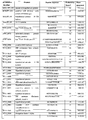
- step (ii) of the method of the invention the level, or presence, of one or more of the proteins identified in Figure 4 is determined.
- the proteins identified in Figure 4 may be defined by the name given in the table and/or by the accession number given in the table, the proteins are referred to herein as the "alternative biomarkers”.
- the alternative biomarker may be any protein identified in Figure 4 , in particular it may be any one or more of the following: 14-3-3 protein, heat shock protein 86, heat shock 70kDa protein, QF122 antigen, enolase, ribosomal phosphoprotein P0, vacuolar ATP synthase catalytic subunit a, elongation factor 1 alpha, proliferating cell nuclear antigen, ribonucleoside-diphosphate reductase large subunit, triose-phosphate isomerise, glyceraldehyde-3-phosphate dehydrogenase, Rab1, heat shock protein signal peptide, PfmpC 1 TM helix, high mobility group protein, chaperonin cpn60 mitochondrial precursor and actin.
- 14-3-3 protein heat shock protein 86, heat shock 70kDa protein, QF122 antigen, enolase, ribosomal phosphoprotein P0, vacuolar ATP synthase catalytic subunit
- the presence of pHPRT and/or pPGM and/or any of the alternative biomarkers is indicative/diagnostic of malaria in a subject.
- the method of the invention may include a further step of concluding a subject has malaria if pHPRT and/or pPGM and/or one or more of the alternative biomarkers are present in the sample.
- pHPRT and pPGM and the alternative biomarkers are parasite proteins they should not be present at any level in a subject who does not have malaria.
- the method of the invention may further comprise the step of comparing the level determined in (ii) with one or more pre-determined reference values.
- the level of pHPRT and/or pPGM and/or one or more of the alternative biomarkers may be compared to the level in a control sample, preferably a non-infected sample, to allow for any inaccuracy or background in the test method used.
- step (ii) the level of at least pHPRT is determined
- the method of the invention may allow the diagnosis of acute or symptomatic malaria, that is, the presence of pHPRT and optionally also pPGM and/or one or more of the alternative biomarkers, may allow a diagnosis of acute malaria.
- acute malaria is defined as the presence of malarial parasites and symptoms of malaria, for example a fever.
- the step of obtaining the sample preferably does not form part of the invention
- biological sample' refers to a sample of biological fluid obtained for the purpose of diagnosis or evaluation of a subject of interest.
- Preferred biological samples include, but are not limited to, blood, serum, plasma, saliva and cerebrospinal fluid.
- test samples would be more readily analyzed following a fractionation or purification procedure, for example, separation of whole blood into serum or plasma components.
- the biological sample may be a plasma sample obtained from a subject
- level' refers to the amount or concentration of pHPRT and/or pPGM and/or one or more of the alternative biomarkers contained in the biological sample.
- malaria status includes any manifestation of malaria. For example, the presence or absence of malaria, the progression of malaria, and the effectiveness or response of a subject to a treatment for malaria.
- the method of the invention may be used, for example, for any one or more of the following: to diagnose malaria; to advise on the prognosis of a subject with malaria; to monitor disease progression; and to monitor effectiveness or response of a subject to a particular treatment.
- the method of the invention allows the diagnosis of malaria from the analysis of the level of pHPRT and/or pPGM and/or one or more of the alternative biomarkers in a sample from the patient.
- the level of pHPRT and/or pPGM and/or one or more of the alternative biomarkers may be compared to a reference value.
- the reference value be the level of expression of the same protein in a sample from one or more subjects who do not have malaria - as determined, for example, by the visualisation of the parasite light microscopy. These samples have so called "normal values" of the biomarkers.
- the reference value may be a previous value obtained for a specific subject. This kind of reference may be used if the method is to be used to monitor progression of an infection or to monitor response of a subject to a particular treatment.
- the level of pHPRT and/or pPGM and/or one or more of the alternative biomarkers may be evaluated by any suitable method.
- any suitable method for example if protein levels are to be determined any of the group comprising immunoassays, spectrometry, western blot, ELISA, immunoprecipitation, slot or dot blot assay, isoelectric focussing, SDS-PAGE and antibody microarray immunohistological staining, radio immuno assay (RIA), fluoroimmunoassay, an immunoassay using an avidin-biotin or streptoavidin-biotin system, etc and combinations thereof may be used. These methods are well known to persons skilled in the art. Other methods may also be used.
- the method of the invention allows a result to be obtained in less than 24 hours, preferably less than 12 hours, less 6 hours, less than 4 hours, less than 3 hours, less than 2 hours, less than 1 hour, more preferably less than 30 minutes.
- the method of the invention may be used in conjunction with an assessment of clinical symptoms to provide a more effective diagnosis of malaria.
- the present invention may also provide a method for determining the appropriate treatment for a subject comprising the steps of:
- step (b) the level, or presence, of one or more of the alternative biomarkers may be determined.
- a patient with pHPRT and/or pPGM and/or one or more of the alternative biomarkers in the sample may be treated as having malaria and anti-malarial drugs will be administered.
- the method of the invention may include a further step of comparing the level of pHPRT and/or pPGM and/or one or more of the alternative biomarkers determined in step (b) with one or more predetermined reference values prior to step (c). Preferably the level of pHPRT is determined.
- the method of the invention which uses pHPRT and/or pPGM and/or one or more of the alternative biomarkers to determine a diagnosis of malaria may be used in combination with the clinical features, for example fever, to determine a diagnosis of malaria.
- the method of the present invention may be carried out in vitro.
- the subject may be a human.
- the subject may be a mammal, for example, a dog, cat, horse, cow, monkey, ape, rodent, hamster, rat, or guinea pig.
- the invention provides a method of determining the response of a subject with malaria to a particular treatment comprising the steps of:
- step (b) the level of one or more of the alternative biomarkers may be determined, and in step (c) the level of one or more of the alternative biomarkers is compared with a reference value.
- the reference value may be the level of pHPRT and/or pPGM and/or one or more of the alternative biomarkers in an earlier sample from the same subject.
- the invention provides a method for treating malaria in a patient comprising: requesting a test providing the results of an analysis to determine whether the patient has pHPRT and/or pPGM in a biological sample from the patient and administering antimalarial treatment to the patient if pHRT and/or pPGM are found in the biological sample.
- the invention provides a method of diagnosing malaria in a human subject, wherein the malaria is characterised by the presence of pHRT and/or pPGM comprising:
- the invention provides a kit for use in determining the malarial status of a subject comprising at least one agent for determining the level of pHPRT and/or pPGM and/or one or more of the alternative biomarkers in a biological sample provided by the subject.
- the agent may be an antibody
- the kit may further comprise instructions for suitable operational parameters in the form of a label or separate insert.
- the kit may further comprise one or more pHPRT and/or pPGM samples to be used as standard(s) for calibration and comparison.
- the invention may further provide use of the level of pHPRT and/or pPGM and/or one or more of the alternative biomarkers as a biomarker to determine the malarial status of a subject.
- the invention may provide a method of diagnosing malaria in a subject comprising:
- step (ii) in step (ii) the presence, and optionally the level, of one or more the alternative biomarkers is determined, and this is used in step (iii) to diagnose malaria.
- At least the level of pHPRT is determined
- the invention may provide a method of treating malaria in a subject comprising:
- step (ii) the presence, and optionally the level, of one or more the alternative biomarkers is determined, and this is used in step (iii) to determine if anti-malarial drugs should be administered.
- PTP proteotypic peptides
- the predicted PTPs were synthesized (unpurified) with isotopically-labeled amino acids either with a C-term Arg ( 13 C 6 15 N 4 ) or a C-term Lys ( 13 C 6 15 N 2 ) using SPOT synthesis (JPT Peptide Technology, Germany) and used as a reference to develop the corresponding SRM assays.
- the mass difference between the endogenous and the heavy labeled peptides for the 1+ fragment was either 8 or 10 Da.
- the stable isotope standard peptides were added prior to protein digestion and used as internal standards.
- Fmoc 9-fluorenylmethyloxycarbonyl
- Peptide SRM standard curve and linear range The peptides were weighed with high precision scale, solubilized in 10% ACN and 0.5% FA and dried in a speed vacuum centrifuge. Serial dilutions from a stock concentration of 23 ng/ ⁇ L were produced for the peptides GILAADESTQTIK (Seq ID No: 88) and VLVPNGVIK (Seq ID No: 89) in 2% ACN and 0.1% FA.
- SRM assays For SRM assays, 2 to 3 peptides and 3 to 5 transitions per peptide were used to target the pPGM or pHPRT proteins. Depleted plasma samples were spiked with a mixture of stable isotope standard (SIS) peptides in equimolar amount to get 109.1 fmol of each SIS peptide and 1 ⁇ g of plasma proteins in 1 ⁇ L. The mixture was reduced with 200 mM DTT in 100 mM Tris buffer, pH 7.8 for 30 min, alkylated with 200 mM iodoacetamide in 100 mM Tris buffer, pH 7.8 for 30 min followed by second 30 minutes incubation with DTT.
- SIS stable isotope standard
- the proteins were digested with sequencing grade modified trypsin (Promega) at 37°C overnight using an enzyme to substrate ratio of 1:20. The digestion was stopped by adding 5% formic acid. Samples were desalted by Sep-Pak Light C18 cartridge (Waters), dried by speed vacuum and resuspended in buffer A (2% ACN, 0.1% FA) to get a final concentration of 1 ⁇ g/ ⁇ L for plasma sample and 109.1 fmol/ ⁇ L for each heavy-labelled peptide. One ⁇ L was injected on the Agilent 6460 Triple Quadrupole instrument coupled to an Agilent 1200 HPLC system equipped with a Chip-cube (Agilent Technologies).
- the optimal collision energy (CE) used for SRM assays was derived from empirical data of SIS peptide fragmentation in a 6520 Q-TOF instrument (Agilent Technologies).
- Q-TOF MS/MS data from SIS peptides were searched against a FASTA file that included (1) a concatenated sequence of all synthetic peptides, (2) P. falciparum 3D7 and (3) Homo sapiens proteomes to search MS/MS data.
- HPLC HPLC-Chip
- SRM data were analyzed using Skyline software (v1.2) ( MacLean, B., et al (2010) Skyline: an open source document editor for creating and analyzing targeted proteomics experiments. Bioinformatics 26, 966-968 ). Relative quantitation was done using the area ratio (light/heavy) and for each peptide only the 3 most intense transitions were considered. For each selected peptides, the most intense peak was used as quantifier and the others were used as qualifiers to validate the ratio and the retention time of the peptide measured. Retention times and peak selection was initially performed automatically by the software and validated by inspection of individual chromatograms, and selection was based on the retention time obtained with the heavy labelled peptides. The result was an alignment of the endogenous with the heavy labelled peptides. In those cases where transitions for endogenous peptides were not well resolved (eg, retention time mismatches), the analysis was discontinued.
- Protein sequence alignment was performed using Clustal Omega and visualized in ClustalX v2.1. ( Larkin, M. A et al (2007) Clustal W and Clustal X version 2.0. Bioinformatics 23, 2947-2948 ; Sievers, F., et al (2011) Fast, scalable generation of high-quality protein multiple sequence alignments using Clustal Omega. Mol Syst Biol 7, 539 ). The statistical analysis was done with GraphPad Prism 5 (GraphPad Software Inc, USA) and Stata 11 (StataCorp LP, USA).
- the transitions detected for each peptide are shown in Figure 1 .
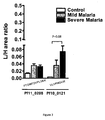
- the SIS and the endogenous peptides were eluted at the same retention time. In the majority of cases, the intensity of the precursor was higher for the SIS peptide. However, despite lower intensity the number of transitions detected with endogenous peptides was higher than those of spiked peptides. Peptides were detected for all the proteins and in most cases analysed. The area of the transition with the highest intensity (quantifier) of the endogenous peptide (light) and the corresponding area of the heavy-labeled peptide (spiked) were used to calculate the ratios to perform relative quantitation of the peptides in individual samples.
- pPGM was measured with FTGWTDVPLSEK - Seq ID No: 96 peptide and could be quantified in 36 patients, and pHPRT was measured with VLVPNGVIK - Seq ID No: 94 and could be quantified in 28 patients.
- the uniqueness criterion used for PTP selection of P.falciparum proteins was based on differences with host protein sequence ( Homo sapiens ) but not with other parasite species that may cause human malaria.
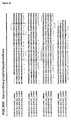
- the sequence alignment indicates that peptides selected to quantify P. falciparum PGM and HPRT were species specific.
Landscapes
- Health & Medical Sciences (AREA)
- Life Sciences & Earth Sciences (AREA)
- Chemical & Material Sciences (AREA)
- Engineering & Computer Science (AREA)
- Immunology (AREA)
- Molecular Biology (AREA)
- Organic Chemistry (AREA)
- General Health & Medical Sciences (AREA)
- Biomedical Technology (AREA)
- Tropical Medicine & Parasitology (AREA)
- Hematology (AREA)
- Urology & Nephrology (AREA)
- Analytical Chemistry (AREA)
- Microbiology (AREA)
- Biochemistry (AREA)
- Biotechnology (AREA)
- Physics & Mathematics (AREA)
- Medicinal Chemistry (AREA)
- Wood Science & Technology (AREA)
- Zoology (AREA)
- Proteomics, Peptides & Aminoacids (AREA)
- Pathology (AREA)
- Virology (AREA)
- Cell Biology (AREA)
- Food Science & Technology (AREA)
- General Physics & Mathematics (AREA)
- Veterinary Medicine (AREA)
- Genetics & Genomics (AREA)
- General Engineering & Computer Science (AREA)
- Bioinformatics & Cheminformatics (AREA)
- Biophysics (AREA)
- Toxicology (AREA)
- Chemical Kinetics & Catalysis (AREA)
- General Chemical & Material Sciences (AREA)
- Nuclear Medicine, Radiotherapy & Molecular Imaging (AREA)
- Pharmacology & Pharmacy (AREA)
- Animal Behavior & Ethology (AREA)
- Public Health (AREA)
- Measuring Or Testing Involving Enzymes Or Micro-Organisms (AREA)
- Investigating Or Analysing Biological Materials (AREA)
Claims (13)
- Ein Verfahren für die Bestimmung des Malaria-Status eines Patienten, das die folgenden Schritte aufweist:i) die Bereitstellung einer biologischen Probe von einem Patienten; undii) die Bestimmung des Grades oder des Vorhandenseins von PF10_0121 (Hypoxanthin-Phosphoribosyltransferase, pHPRT) in der biologischen Probe.
- Das Verfahren gemäß Anspruch 1, wobei das Vorhandensein von pHPRT Malaria in einem Patienten anzeigt oder diagnostiziert.
- Das Verfahren gemäß eines oder mehrerer der vorhergehenden Ansprüche, die darüberhinaus den Schritt des Vergleichs des in Schritt (ii) mit einem oder mehreren vorher festgelegten Referenzwerten bestimmten Grades aufweist.
- Das Verfahren eines oder mehrerer der vorhergehenden Ansprüche, wobei das Vorhandensein von pHPRT eine akute oder symptomatische Malaria anzeigt.
- Das Verfahren gemäß eines oder mehrerer der vorhergehenden Ansprüche, wobei das Verfahren für eine oder mehrere der folgenden Aufgaben eingesetzt wird: für die Diagnose von Malaria; für die Beratung bei der Prognose eines Patienten mit Malaria; für die Überwachung des Krankheitsverlaufes; und für die Überwachung der Effektivität oder des Ansprechverhaltens eines Patienten auf eine bestimmte Behandlung.
- Ein Verfahren für die Bestimmung der geeigneten Behandlung für einen Patienten, das die folgenden Schritte aufweist:(a) die Bereitstellung einer biologischen Probe von einem Patienten;(b) die Bestimmung des Grades oder des Vorhandenseins von pHPRT in der biologischen Probe; und(c) die Verwendung der Resultate in (b) für die Bestimmung der geeignetsten Therapie.
- Das Verfahren gemäß Anspruch 6, wobei das Vorhandensein von pHPRT in der Probe anzeigt, dass der Patient als Malaria-Patient behandelt werden muss und ihm Malaria-Medikamente verabreicht werden müssen.
- Das Verfahren gemäß Anspruch 6 oder 7, das darüberhinaus den Schritt des Vergleichs des Grades an pHPRT, der in Schritt (b) mit einem oder mehreren vorher festgelegten Referenzwerten vor Schritt (c) bestimmt wurde, aufweist.
- Ein Verfahren für die Bestimmung des Ansprechverhaltens eines Patienten mit Malaria auf eine bestimmte Behandlung, das die folgenden Schritte aufweist:(a) die Bereitstellung einer biologischen Probe von einem Patienten;(b) die Bestimmung des Grades oder des Vorhandenseins von pHPRT in der biologischen Probe des Patienten; und(c) den Vergleich des Grades an pHPRT, der in Schritt (b) mit einem oder mehreren Referenzwerten bestimmt wurde.
- Das Verfahren gemäß Anspruch 9, wobei der Referenzwert der Grad an pHPRT in einer früheren Probe desselben Patienten ist.
- Ein Verfahren für die Diagnose von Malaria in einem Patienten, das Folgendes aufweist:i) die Erlangung einer biologischen Probe von einem Patienten;ii) die Bestimmung des Vorhandenseins, und optional des Grades an, PF10_0121 (Hypoxanthin-Phosphoribosyltransferase, pHPRT) in der biologischen Probe; undiii) die Diagnose von Malaria, wenn pHPRT in der Probe vorhanden ist
- Ein Malaria-Medikament für die Verwendung bei der Behandlung von Malaria in einem Patienten, wobei das Malaria-Medikament für die Verabreichung vorgesehen ist, wenn pHPRT in einer von einem Patienten erlangten Probe vorhanden ist.
- Das Verfahren oder das Malaria-Medikament gemäß eines oder mehrerer der vorhergehenden Ansprüche, wobei die biologische Probe eine Plasma-Probe ist.
Applications Claiming Priority (2)
| Application Number | Priority Date | Filing Date | Title |
|---|---|---|---|
| GBGB1216562.7A GB201216562D0 (en) | 2012-09-17 | 2012-09-17 | Biomarker |
| PCT/GB2013/052391 WO2014041356A2 (en) | 2012-09-17 | 2013-09-12 | Biomarker |
Publications (2)
| Publication Number | Publication Date |
|---|---|
| EP2895862A2 EP2895862A2 (de) | 2015-07-22 |
| EP2895862B1 true EP2895862B1 (de) | 2016-11-09 |
Family
ID=47144386
Family Applications (1)
| Application Number | Title | Priority Date | Filing Date |
|---|---|---|---|
| EP13780187.4A Not-in-force EP2895862B1 (de) | 2012-09-17 | 2013-09-12 | Biomarker |
Country Status (5)
| Country | Link |
|---|---|
| US (1) | US20150225763A1 (de) |
| EP (1) | EP2895862B1 (de) |
| JP (1) | JP2015531483A (de) |
| GB (1) | GB201216562D0 (de) |
| WO (1) | WO2014041356A2 (de) |
Family Cites Families (1)
| Publication number | Priority date | Publication date | Assignee | Title |
|---|---|---|---|---|
| EP1853914B1 (de) * | 2005-01-25 | 2015-04-22 | The Johns Hopkins University | Plasmodium-diagnosetest |
-
2012
- 2012-09-17 GB GBGB1216562.7A patent/GB201216562D0/en not_active Ceased
-
2013
- 2013-09-12 US US14/428,935 patent/US20150225763A1/en not_active Abandoned
- 2013-09-12 JP JP2015531639A patent/JP2015531483A/ja active Pending
- 2013-09-12 WO PCT/GB2013/052391 patent/WO2014041356A2/en not_active Ceased
- 2013-09-12 EP EP13780187.4A patent/EP2895862B1/de not_active Not-in-force
Also Published As
| Publication number | Publication date |
|---|---|
| WO2014041356A3 (en) | 2014-05-08 |
| GB201216562D0 (en) | 2012-10-31 |
| JP2015531483A (ja) | 2015-11-02 |
| US20150225763A1 (en) | 2015-08-13 |
| WO2014041356A2 (en) | 2014-03-20 |
| EP2895862A2 (de) | 2015-07-22 |
Similar Documents
| Publication | Publication Date | Title |
|---|---|---|
| US11726099B2 (en) | Biomarker for mental disorders including cognitive disorders, and method using said biomarker to detect mental disorders including cognitive disorders | |
| JP5555846B2 (ja) | 急性中枢神経障害の予後判定方法 | |
| CN110431425B (zh) | proADM作为指示不良事件的标志物 | |
| EP2239576A1 (de) | Zusammensetzung und verfahren für die diagnose oder den nachweis von magenkrebs | |
| US10145853B2 (en) | Biomarkers for non-alcoholic fatty liver disease, and methods for detecting non-alcoholic fatty liver disease by using such biomarkers | |
| KR20100058496A (ko) | 조산의 위험을 평가하기 위한 바이오마커의 확인 및 정량화 | |
| EP3695224A1 (de) | Prognose- und progressionsbiomarker für chronische nierenkrankheit | |
| WO2006073195A1 (ja) | 糖尿病の予知・診断方法および糖尿病予知・診断用キット | |
| WO2018083308A1 (en) | Mass spectrometry-based methods for the detection of circulating histones h3 and h2b in plasma from sepsis or septic shock (ss) patients | |
| JP4515099B2 (ja) | Lasp−1免疫反応性の決定によって炎症性疾患および感染を診断するための方法 | |
| WO2015023068A1 (ko) | 당단백질의 탈당화 검출을 통한 암 마커 스크리닝 방법 및 간세포암 마커 | |
| EP2895862B1 (de) | Biomarker | |
| US20210270835A1 (en) | Biomarkers for urothelial carcinoma and applications thereof | |
| US20210063401A1 (en) | Methods and materials for assessing and treating cancer | |
| JP5688829B2 (ja) | 示差的な糖尿病の予知・診断方法および糖尿病予知・診断用キット | |
| EP3969914B1 (de) | Lama2, plxdc2 und mll4 als neuartige biomarker für prädiabetes und diabetes | |
| WO2011138955A1 (ja) | Siaα2-8Siaα2-3Galβ-R糖鎖を持つムチン1の分析方法 | |
| JP2024113271A (ja) | 癌の腫瘍マーカー | |
| WO2011049431A1 (en) | Blood coagulation status measurement in saliva | |
| HK40017069B (en) | Proadm as marker indicating an adverse event |
Legal Events
| Date | Code | Title | Description |
|---|---|---|---|
| PUAI | Public reference made under article 153(3) epc to a published international application that has entered the european phase |
Free format text: ORIGINAL CODE: 0009012 |
|
| 17P | Request for examination filed |
Effective date: 20150323 |
|
| AK | Designated contracting states |
Kind code of ref document: A2 Designated state(s): AL AT BE BG CH CY CZ DE DK EE ES FI FR GB GR HR HU IE IS IT LI LT LU LV MC MK MT NL NO PL PT RO RS SE SI SK SM TR |
|
| AX | Request for extension of the european patent |
Extension state: BA ME |
|
| DAX | Request for extension of the european patent (deleted) | ||
| GRAP | Despatch of communication of intention to grant a patent |
Free format text: ORIGINAL CODE: EPIDOSNIGR1 |
|
| INTG | Intention to grant announced |
Effective date: 20160602 |
|
| RAP1 | Party data changed (applicant data changed or rights of an application transferred) |
Owner name: OXFORD UNIVERSITY INNOVATION LIMITED |
|
| GRAS | Grant fee paid |
Free format text: ORIGINAL CODE: EPIDOSNIGR3 |
|
| GRAA | (expected) grant |
Free format text: ORIGINAL CODE: 0009210 |
|
| AK | Designated contracting states |
Kind code of ref document: B1 Designated state(s): AL AT BE BG CH CY CZ DE DK EE ES FI FR GB GR HR HU IE IS IT LI LT LU LV MC MK MT NL NO PL PT RO RS SE SI SK SM TR |
|
| REG | Reference to a national code |
Ref country code: GB Ref legal event code: FG4D |
|
| REG | Reference to a national code |
Ref country code: AT Ref legal event code: REF Ref document number: 844411 Country of ref document: AT Kind code of ref document: T Effective date: 20161115 Ref country code: CH Ref legal event code: EP |
|
| REG | Reference to a national code |
Ref country code: IE Ref legal event code: FG4D |
|
| REG | Reference to a national code |
Ref country code: DE Ref legal event code: R096 Ref document number: 602013013902 Country of ref document: DE |
|
| PG25 | Lapsed in a contracting state [announced via postgrant information from national office to epo] |
Ref country code: LV Free format text: LAPSE BECAUSE OF FAILURE TO SUBMIT A TRANSLATION OF THE DESCRIPTION OR TO PAY THE FEE WITHIN THE PRESCRIBED TIME-LIMIT Effective date: 20161109 |
|
| RAP2 | Party data changed (patent owner data changed or rights of a patent transferred) |
Owner name: OXFORD UNIVERSITY INNOVATION LIMITED |
|
| REG | Reference to a national code |
Ref country code: LT Ref legal event code: MG4D |
|
| REG | Reference to a national code |
Ref country code: NL Ref legal event code: MP Effective date: 20161109 |
|
| REG | Reference to a national code |
Ref country code: AT Ref legal event code: MK05 Ref document number: 844411 Country of ref document: AT Kind code of ref document: T Effective date: 20161109 |
|
| PG25 | Lapsed in a contracting state [announced via postgrant information from national office to epo] |
Ref country code: GR Free format text: LAPSE BECAUSE OF FAILURE TO SUBMIT A TRANSLATION OF THE DESCRIPTION OR TO PAY THE FEE WITHIN THE PRESCRIBED TIME-LIMIT Effective date: 20170210 Ref country code: NO Free format text: LAPSE BECAUSE OF FAILURE TO SUBMIT A TRANSLATION OF THE DESCRIPTION OR TO PAY THE FEE WITHIN THE PRESCRIBED TIME-LIMIT Effective date: 20170209 Ref country code: LT Free format text: LAPSE BECAUSE OF FAILURE TO SUBMIT A TRANSLATION OF THE DESCRIPTION OR TO PAY THE FEE WITHIN THE PRESCRIBED TIME-LIMIT Effective date: 20161109 Ref country code: NL Free format text: LAPSE BECAUSE OF FAILURE TO SUBMIT A TRANSLATION OF THE DESCRIPTION OR TO PAY THE FEE WITHIN THE PRESCRIBED TIME-LIMIT Effective date: 20161109 Ref country code: SE Free format text: LAPSE BECAUSE OF FAILURE TO SUBMIT A TRANSLATION OF THE DESCRIPTION OR TO PAY THE FEE WITHIN THE PRESCRIBED TIME-LIMIT Effective date: 20161109 |
|
| PG25 | Lapsed in a contracting state [announced via postgrant information from national office to epo] |
Ref country code: IS Free format text: LAPSE BECAUSE OF FAILURE TO SUBMIT A TRANSLATION OF THE DESCRIPTION OR TO PAY THE FEE WITHIN THE PRESCRIBED TIME-LIMIT Effective date: 20170309 Ref country code: HR Free format text: LAPSE BECAUSE OF FAILURE TO SUBMIT A TRANSLATION OF THE DESCRIPTION OR TO PAY THE FEE WITHIN THE PRESCRIBED TIME-LIMIT Effective date: 20161109 Ref country code: ES Free format text: LAPSE BECAUSE OF FAILURE TO SUBMIT A TRANSLATION OF THE DESCRIPTION OR TO PAY THE FEE WITHIN THE PRESCRIBED TIME-LIMIT Effective date: 20161109 Ref country code: FI Free format text: LAPSE BECAUSE OF FAILURE TO SUBMIT A TRANSLATION OF THE DESCRIPTION OR TO PAY THE FEE WITHIN THE PRESCRIBED TIME-LIMIT Effective date: 20161109 Ref country code: PL Free format text: LAPSE BECAUSE OF FAILURE TO SUBMIT A TRANSLATION OF THE DESCRIPTION OR TO PAY THE FEE WITHIN THE PRESCRIBED TIME-LIMIT Effective date: 20161109 Ref country code: RS Free format text: LAPSE BECAUSE OF FAILURE TO SUBMIT A TRANSLATION OF THE DESCRIPTION OR TO PAY THE FEE WITHIN THE PRESCRIBED TIME-LIMIT Effective date: 20161109 Ref country code: PT Free format text: LAPSE BECAUSE OF FAILURE TO SUBMIT A TRANSLATION OF THE DESCRIPTION OR TO PAY THE FEE WITHIN THE PRESCRIBED TIME-LIMIT Effective date: 20170309 Ref country code: AT Free format text: LAPSE BECAUSE OF FAILURE TO SUBMIT A TRANSLATION OF THE DESCRIPTION OR TO PAY THE FEE WITHIN THE PRESCRIBED TIME-LIMIT Effective date: 20161109 |
|
| PG25 | Lapsed in a contracting state [announced via postgrant information from national office to epo] |
Ref country code: EE Free format text: LAPSE BECAUSE OF FAILURE TO SUBMIT A TRANSLATION OF THE DESCRIPTION OR TO PAY THE FEE WITHIN THE PRESCRIBED TIME-LIMIT Effective date: 20161109 Ref country code: CZ Free format text: LAPSE BECAUSE OF FAILURE TO SUBMIT A TRANSLATION OF THE DESCRIPTION OR TO PAY THE FEE WITHIN THE PRESCRIBED TIME-LIMIT Effective date: 20161109 Ref country code: RO Free format text: LAPSE BECAUSE OF FAILURE TO SUBMIT A TRANSLATION OF THE DESCRIPTION OR TO PAY THE FEE WITHIN THE PRESCRIBED TIME-LIMIT Effective date: 20161109 Ref country code: DK Free format text: LAPSE BECAUSE OF FAILURE TO SUBMIT A TRANSLATION OF THE DESCRIPTION OR TO PAY THE FEE WITHIN THE PRESCRIBED TIME-LIMIT Effective date: 20161109 Ref country code: SK Free format text: LAPSE BECAUSE OF FAILURE TO SUBMIT A TRANSLATION OF THE DESCRIPTION OR TO PAY THE FEE WITHIN THE PRESCRIBED TIME-LIMIT Effective date: 20161109 |
|
| REG | Reference to a national code |
Ref country code: DE Ref legal event code: R097 Ref document number: 602013013902 Country of ref document: DE |
|
| PG25 | Lapsed in a contracting state [announced via postgrant information from national office to epo] |
Ref country code: SM Free format text: LAPSE BECAUSE OF FAILURE TO SUBMIT A TRANSLATION OF THE DESCRIPTION OR TO PAY THE FEE WITHIN THE PRESCRIBED TIME-LIMIT Effective date: 20161109 Ref country code: BE Free format text: LAPSE BECAUSE OF FAILURE TO SUBMIT A TRANSLATION OF THE DESCRIPTION OR TO PAY THE FEE WITHIN THE PRESCRIBED TIME-LIMIT Effective date: 20161109 Ref country code: IT Free format text: LAPSE BECAUSE OF FAILURE TO SUBMIT A TRANSLATION OF THE DESCRIPTION OR TO PAY THE FEE WITHIN THE PRESCRIBED TIME-LIMIT Effective date: 20161109 Ref country code: BG Free format text: LAPSE BECAUSE OF FAILURE TO SUBMIT A TRANSLATION OF THE DESCRIPTION OR TO PAY THE FEE WITHIN THE PRESCRIBED TIME-LIMIT Effective date: 20170209 |
|
| PLBE | No opposition filed within time limit |
Free format text: ORIGINAL CODE: 0009261 |
|
| STAA | Information on the status of an ep patent application or granted ep patent |
Free format text: STATUS: NO OPPOSITION FILED WITHIN TIME LIMIT |
|
| 26N | No opposition filed |
Effective date: 20170810 |
|
| PG25 | Lapsed in a contracting state [announced via postgrant information from national office to epo] |
Ref country code: SI Free format text: LAPSE BECAUSE OF FAILURE TO SUBMIT A TRANSLATION OF THE DESCRIPTION OR TO PAY THE FEE WITHIN THE PRESCRIBED TIME-LIMIT Effective date: 20161109 |
|
| REG | Reference to a national code |
Ref country code: DE Ref legal event code: R119 Ref document number: 602013013902 Country of ref document: DE |
|
| REG | Reference to a national code |
Ref country code: CH Ref legal event code: PL |
|
| GBPC | Gb: european patent ceased through non-payment of renewal fee |
Effective date: 20170912 |
|
| PG25 | Lapsed in a contracting state [announced via postgrant information from national office to epo] |
Ref country code: MC Free format text: LAPSE BECAUSE OF FAILURE TO SUBMIT A TRANSLATION OF THE DESCRIPTION OR TO PAY THE FEE WITHIN THE PRESCRIBED TIME-LIMIT Effective date: 20161109 |
|
| REG | Reference to a national code |
Ref country code: IE Ref legal event code: MM4A |
|
| PG25 | Lapsed in a contracting state [announced via postgrant information from national office to epo] |
Ref country code: LU Free format text: LAPSE BECAUSE OF NON-PAYMENT OF DUE FEES Effective date: 20170912 |
|
| REG | Reference to a national code |
Ref country code: FR Ref legal event code: ST Effective date: 20180531 |
|
| PG25 | Lapsed in a contracting state [announced via postgrant information from national office to epo] |
Ref country code: IE Free format text: LAPSE BECAUSE OF NON-PAYMENT OF DUE FEES Effective date: 20170912 Ref country code: LI Free format text: LAPSE BECAUSE OF NON-PAYMENT OF DUE FEES Effective date: 20170930 Ref country code: CH Free format text: LAPSE BECAUSE OF NON-PAYMENT OF DUE FEES Effective date: 20170930 Ref country code: GB Free format text: LAPSE BECAUSE OF NON-PAYMENT OF DUE FEES Effective date: 20170912 Ref country code: DE Free format text: LAPSE BECAUSE OF NON-PAYMENT OF DUE FEES Effective date: 20180404 |
|
| PG25 | Lapsed in a contracting state [announced via postgrant information from national office to epo] |
Ref country code: FR Free format text: LAPSE BECAUSE OF NON-PAYMENT OF DUE FEES Effective date: 20171002 |
|
| PG25 | Lapsed in a contracting state [announced via postgrant information from national office to epo] |
Ref country code: MT Free format text: LAPSE BECAUSE OF NON-PAYMENT OF DUE FEES Effective date: 20170912 |
|
| PG25 | Lapsed in a contracting state [announced via postgrant information from national office to epo] |
Ref country code: HU Free format text: LAPSE BECAUSE OF FAILURE TO SUBMIT A TRANSLATION OF THE DESCRIPTION OR TO PAY THE FEE WITHIN THE PRESCRIBED TIME-LIMIT; INVALID AB INITIO Effective date: 20130912 |
|
| PG25 | Lapsed in a contracting state [announced via postgrant information from national office to epo] |
Ref country code: CY Free format text: LAPSE BECAUSE OF FAILURE TO SUBMIT A TRANSLATION OF THE DESCRIPTION OR TO PAY THE FEE WITHIN THE PRESCRIBED TIME-LIMIT Effective date: 20161109 |
|
| PG25 | Lapsed in a contracting state [announced via postgrant information from national office to epo] |
Ref country code: MK Free format text: LAPSE BECAUSE OF FAILURE TO SUBMIT A TRANSLATION OF THE DESCRIPTION OR TO PAY THE FEE WITHIN THE PRESCRIBED TIME-LIMIT Effective date: 20161109 |
|
| PG25 | Lapsed in a contracting state [announced via postgrant information from national office to epo] |
Ref country code: TR Free format text: LAPSE BECAUSE OF FAILURE TO SUBMIT A TRANSLATION OF THE DESCRIPTION OR TO PAY THE FEE WITHIN THE PRESCRIBED TIME-LIMIT Effective date: 20161109 |
|
| PG25 | Lapsed in a contracting state [announced via postgrant information from national office to epo] |
Ref country code: AL Free format text: LAPSE BECAUSE OF FAILURE TO SUBMIT A TRANSLATION OF THE DESCRIPTION OR TO PAY THE FEE WITHIN THE PRESCRIBED TIME-LIMIT Effective date: 20161109 |