EP2894209A1 - Method for filling mixed refrigerant containing 2,3,3,3-tetrafluoropropene - Google Patents
Method for filling mixed refrigerant containing 2,3,3,3-tetrafluoropropene Download PDFInfo
- Publication number
- EP2894209A1 EP2894209A1 EP13836157.1A EP13836157A EP2894209A1 EP 2894209 A1 EP2894209 A1 EP 2894209A1 EP 13836157 A EP13836157 A EP 13836157A EP 2894209 A1 EP2894209 A1 EP 2894209A1
- Authority
- EP
- European Patent Office
- Prior art keywords
- hfc
- composition
- refrigerant mixture
- transfer
- target
- Prior art date
- Legal status (The legal status is an assumption and is not a legal conclusion. Google has not performed a legal analysis and makes no representation as to the accuracy of the status listed.)
- Granted
Links
Classifications
-
- F—MECHANICAL ENGINEERING; LIGHTING; HEATING; WEAPONS; BLASTING
- F25—REFRIGERATION OR COOLING; COMBINED HEATING AND REFRIGERATION SYSTEMS; HEAT PUMP SYSTEMS; MANUFACTURE OR STORAGE OF ICE; LIQUEFACTION SOLIDIFICATION OF GASES
- F25B—REFRIGERATION MACHINES, PLANTS OR SYSTEMS; COMBINED HEATING AND REFRIGERATION SYSTEMS; HEAT PUMP SYSTEMS
- F25B45/00—Arrangements for charging or discharging refrigerant
-
- C—CHEMISTRY; METALLURGY
- C09—DYES; PAINTS; POLISHES; NATURAL RESINS; ADHESIVES; COMPOSITIONS NOT OTHERWISE PROVIDED FOR; APPLICATIONS OF MATERIALS NOT OTHERWISE PROVIDED FOR
- C09K—MATERIALS FOR MISCELLANEOUS APPLICATIONS, NOT PROVIDED FOR ELSEWHERE
- C09K5/00—Heat-transfer, heat-exchange or heat-storage materials, e.g. refrigerants; Materials for the production of heat or cold by chemical reactions other than by combustion
- C09K5/02—Materials undergoing a change of physical state when used
- C09K5/04—Materials undergoing a change of physical state when used the change of state being from liquid to vapour or vice versa
-
- C—CHEMISTRY; METALLURGY
- C09—DYES; PAINTS; POLISHES; NATURAL RESINS; ADHESIVES; COMPOSITIONS NOT OTHERWISE PROVIDED FOR; APPLICATIONS OF MATERIALS NOT OTHERWISE PROVIDED FOR
- C09K—MATERIALS FOR MISCELLANEOUS APPLICATIONS, NOT PROVIDED FOR ELSEWHERE
- C09K5/00—Heat-transfer, heat-exchange or heat-storage materials, e.g. refrigerants; Materials for the production of heat or cold by chemical reactions other than by combustion
- C09K5/02—Materials undergoing a change of physical state when used
- C09K5/04—Materials undergoing a change of physical state when used the change of state being from liquid to vapour or vice versa
- C09K5/041—Materials undergoing a change of physical state when used the change of state being from liquid to vapour or vice versa for compression-type refrigeration systems
- C09K5/044—Materials undergoing a change of physical state when used the change of state being from liquid to vapour or vice versa for compression-type refrigeration systems comprising halogenated compounds
- C09K5/045—Materials undergoing a change of physical state when used the change of state being from liquid to vapour or vice versa for compression-type refrigeration systems comprising halogenated compounds containing only fluorine as halogen
-
- F—MECHANICAL ENGINEERING; LIGHTING; HEATING; WEAPONS; BLASTING
- F25—REFRIGERATION OR COOLING; COMBINED HEATING AND REFRIGERATION SYSTEMS; HEAT PUMP SYSTEMS; MANUFACTURE OR STORAGE OF ICE; LIQUEFACTION SOLIDIFICATION OF GASES
- F25B—REFRIGERATION MACHINES, PLANTS OR SYSTEMS; COMBINED HEATING AND REFRIGERATION SYSTEMS; HEAT PUMP SYSTEMS
- F25B1/00—Compression machines, plants or systems with non-reversible cycle
-
- C—CHEMISTRY; METALLURGY
- C09—DYES; PAINTS; POLISHES; NATURAL RESINS; ADHESIVES; COMPOSITIONS NOT OTHERWISE PROVIDED FOR; APPLICATIONS OF MATERIALS NOT OTHERWISE PROVIDED FOR
- C09K—MATERIALS FOR MISCELLANEOUS APPLICATIONS, NOT PROVIDED FOR ELSEWHERE
- C09K2205/00—Aspects relating to compounds used in compression type refrigeration systems
- C09K2205/10—Components
- C09K2205/12—Hydrocarbons
- C09K2205/126—Unsaturated fluorinated hydrocarbons
-
- C—CHEMISTRY; METALLURGY
- C09—DYES; PAINTS; POLISHES; NATURAL RESINS; ADHESIVES; COMPOSITIONS NOT OTHERWISE PROVIDED FOR; APPLICATIONS OF MATERIALS NOT OTHERWISE PROVIDED FOR
- C09K—MATERIALS FOR MISCELLANEOUS APPLICATIONS, NOT PROVIDED FOR ELSEWHERE
- C09K2205/00—Aspects relating to compounds used in compression type refrigeration systems
- C09K2205/22—All components of a mixture being fluoro compounds
-
- F—MECHANICAL ENGINEERING; LIGHTING; HEATING; WEAPONS; BLASTING
- F25—REFRIGERATION OR COOLING; COMBINED HEATING AND REFRIGERATION SYSTEMS; HEAT PUMP SYSTEMS; MANUFACTURE OR STORAGE OF ICE; LIQUEFACTION SOLIDIFICATION OF GASES
- F25B—REFRIGERATION MACHINES, PLANTS OR SYSTEMS; COMBINED HEATING AND REFRIGERATION SYSTEMS; HEAT PUMP SYSTEMS
- F25B2345/00—Details for charging or discharging refrigerants; Service stations therefor
- F25B2345/001—Charging refrigerant to a cycle
-
- F—MECHANICAL ENGINEERING; LIGHTING; HEATING; WEAPONS; BLASTING
- F25—REFRIGERATION OR COOLING; COMBINED HEATING AND REFRIGERATION SYSTEMS; HEAT PUMP SYSTEMS; MANUFACTURE OR STORAGE OF ICE; LIQUEFACTION SOLIDIFICATION OF GASES
- F25B—REFRIGERATION MACHINES, PLANTS OR SYSTEMS; COMBINED HEATING AND REFRIGERATION SYSTEMS; HEAT PUMP SYSTEMS
- F25B2345/00—Details for charging or discharging refrigerants; Service stations therefor
- F25B2345/003—Control issues for charging or collecting refrigerant to or from a cycle
Definitions
- the present invention relates to a method for filling a refrigerant mixture comprising 2,3,3,3-tetrafluoropropene.
- HFC-134a 1,1,1,2-tetrafluoroethane
- R-410A GWP: 2,088
- R-404A GWP: 3,922
- R-407C GWP: 1,770
- HFC-134a 1,1,1,2-tetrafluoroethane
- Refrigerants should be selected from various refrigerants, taking into consideration the application, operating conditions, and other conditions, from multiple viewpoints, including environmental friendliness, safety, performance, and economic efficiency.
- Various types of refrigerants are currently proposed, together with fluorocarbon and natural refrigerants; however, currently no refrigerants satisfy all requirements, including flammability, efficiency, and GWP value. It is necessary to select the right refrigerant for the right place, depending on the application, operating conditions, and other conditions.
- HFO-1234yf refrigerants have attracted attention because of their low GWP and low toxicity in fields other than the field of car air conditioners.
- HFO-1234yf refrigerants are a major candidate for an alternative to HFC-134a refrigerants in the field of large refrigeration and air-conditioning systems.
- R-410A and other refrigerants for use for example, in fixed-type refrigeration and air-conditioning systems
- HFO refrigerants alone have low vapor pressure and raise concerns of insufficient capability or performance degradation, as compared to conventional refrigerants.
- HFO refrigerants are known to be slightly flammable.
- non-azeotropic refrigerant mixtures of various refrigerants have been proposed recently to improve performance and achieve non-flammability (PTL 1 to PTL 3).
- a composition change of a few percent not only causes a significant change in refrigerant performance to thereby reduce capability and efficiency, but also has a major impact on the safety of the refrigerant, such as on flammability (PTL 4 and PTL 5).
- difluoromethane HFC-32, CH 2 F 2
- HFC-32, CH 2 F 2 difluoromethane
- HFO-1234yf has a very high refrigerating capacity; however, the difference in boiling point between HFC-32 and HFO-1234yf is at least 20 K.
- Composition changes that occur during the transfer of such a refrigerant mixture from a feeding container (e.g., a gas cylinder or tank truck) to a refrigeration and air-conditioning system or other tanks are at a non-negligible level in terms of performance.
- a feeding container e.g., a gas cylinder or tank truck
- composition change rate is about ⁇ 4 wt% from the target composition, and refrigeration capacity and refrigerant capacity (e.g., COP) expected from the target composition cannot be ensured. Therefore, it is important to control the composition change rate within a range as narrow as possible.
- composition changes significantly vary depending on the type and composition ratio of non-azeotrope refrigerant, and it is difficult to predict the range of composition changes without actual measurement.
- a primary object of the present invention is to provide a method for filling a refrigerant mixture that enables composition changes of a non-azeotropic refrigerant mixture comprising 2,3,3,3-tetrafluoropropene and difluoromethane during the transfer of the mixture to fall within an acceptable range of refrigerant performance.
- the present inventors conducted extensive research on methods for filling a liquefied gas in order to solve the problem of composition changes that occur in a non-azeotropic mixture comprising two liquefied gases having different boiling points when the mixture is stored in a hermetically sealed container and transferred from the liquid phase to another container.
- the present invention provides a method for filling a non-azeotropic refrigerant mixture comprising difluoromethane and 2,3,3,3-tetrafluoropropene.
- the method for filling a refrigerant mixture of the present invention has a feature in that, in transferring a HFC-32/HFO-1234yf refrigerant mixture, which is a non-azeotropic refrigerant and which has a composition of 10 to 90 wt% HFC-32 in the liquid phase, to a target container or equipment from a feeding container, the proportion of HFC-32 in the liquid phase of the refrigerant mixture in the feeding container is adjusted before the transfer to a specific range.
- the mixture ratio is described below in terms of a refrigerant mixture before being transferred to a target container or equipment from a feeding container that is filled with the refrigerant mixture in an amount equal to or less than 100 wt% or 70 wt% of a maximum filling amount of the refrigerant mixture.
- maximum filling amount (100 wt% of the maximum filling amount) used herein refers to a maximum amount that can be filled into a container, as defined in international law regarding transportation or in the High Pressure Gas Safety Act of Japan. According to the High Pressure Gas Safety Act of Japan, the maximum filling amount is calculated as below:
- the fill constant C here is determined in Japan as a value obtained by dividing 1.05 by the specific gravity of the gas at 48°C.
- fill constant C is defined as a value obtained by dividing 1.05 by the specific gravity of the gas at 65°C when passing through tropical regions, and it is defined as a value obtained by dividing 1.05 by the specific gravity of the gas at 45°C when only regions other than tropical regions are involved.
- the mixture ratio is described below in terms of a refrigerant mixture before being transferred to a target container or equipment from a feeding container that is filled with the refrigerant mixture in an amount equal to or less than the maximum filling amount (100 wt%) of the refrigerant mixture, the maximum filling amount being calculated using a value obtained by dividing 1.05 by the specific gravity of the gas at 65°C as the fill constant.
- the proportion (initial composition) of HFC-32 in the liquid phase of the refrigerant mixture in the feeding container is adjusted immediately before the transfer to x + y 1 wt% (minimum value) to x + a wt% (maximum value), so that the proportion of HFC-32 in the liquid phase of the refrigerant mixture in the feeding container falls within a set tolerance ( ⁇ a wt%) of a target composition (x) of HFC-32 during initiation and completion of the transfer.
- ⁇ a set tolerance (a ⁇ 0)
- x target composition (with the proviso that 10 ⁇ x ⁇ 90, excluding a range satisfying an inequality: y 1 > a)
- the " ⁇ a” (set tolerance) is a difference between a reference value (a target composition (x) of HFC-32) and an acceptable maximum or minimum value of the reference value. Specifically, the " ⁇ a” is an acceptable gap relative to the target composition.
- the proportion of HFC-32 in the liquid phase of the mixture in a feeding container is adjusted, before transfer, to a specific range; therefore, even when the feeding container is filled with the refrigerant mixture in an amount equal to 100 wt% of the maximum filling amount of the refrigerant mixture, changes in the composition in a target container or equipment fall within an acceptable range, i.e., ⁇ a wt% of the target composition, until transfer is completed.
- the "target composition" of HFC-32 is the concentration of HFC-32 in the overall composition (liquid phase and vapor phase) of the HFC-32/HFO-1234yf refrigerant mixture, and is calculated in a target container or equipment.
- HFC-32 The boiling point of HFC-32 is lower than that of HFO-1234yf. Therefore, when the space created due to extraction of refrigerant is refilled with vapor evaporated from the liquid phase during transfer, HFC-32 evaporates in an amount greater than that of HFO-1234yf, causing a reduction in the HFC-32 concentration in the liquid phase. For this reason, HFC-32 is preferably filled into a feeding container before transfer in an amount greater than that of the target composition.
- the value a above is generally set to 0.5 ⁇ a ⁇ 3.0.
- a method that performs transfer at a handling temperature of 40°C For example, according to the High Pressure Gas Safety Act of Japan, handling a container at a temperature of 40°C or more is prohibited; therefore, particularly in Japan, the handling temperature is 0 to 40°C when transfer is performed. Also in international law, etc., it is required to avoid handling highpressure gas at a high temperature. A higher temperature during transfer (at the time of handling) causes a larger composition change associated with the transfer. Therefore, the conditions for the transfer at a handling temperature of 40°C can be applied to the conditions for the transfer at a handling temperature ranging from 0 to 40°C.
- a method of the present invention for filling a refrigerant mixture comprising HFC-32 and HFO-1234yf in such a manner that HFC-32 is present in the liquid phase in an amount of 10 to 90 wt% based on 100 wt% of the total of HFC-32 and HFO-1234yf in transferring the refrigerant mixture in a liquid state to a target container or equipment from a feeding container, the proportion (initial composition) of HFC-32 in the liquid phase of the refrigerant mixture in the feeding container is preferably adjusted, before the transfer, to x + y A wt% to x + 2.5 wt%, so that the proportion of HFC-32 in the liquid phase of the refrigerant mixture in the feeding container falls within a range of ⁇ 2.5 wt% of a target composition (x) of HFC-32 during initiation and completion of the transfer.
- the proportion of HFC-32 in the liquid phase of the refrigerant mixture in the feeding container is adjusted, before the transfer, to about x - 1.9 wt% to x + 2.5 wt%. Changes in the composition in a target container or equipment can thereby fall within the acceptable range of ⁇ 2.5 wt% of the target composition until the transfer is completed.
- HFC-32 The boiling point of HFC-32 is lower than that of HFO-1234yf. Therefore, when the space created due to extraction of refrigerant is refilled with vapor evaporated from the liquid phase during the transfer, HFC-32 evaporates in an amount greater than that of HFO-1234yf, causing a reduction in the HFC-32 concentration in the liquid phase. For this reason, HFC-32 is preferably filled into a feeding container before the transfer in an amount greater than that of the target composition.
- the upper limit of the composition of HFC-32 in the liquid phase of the HFC-32/HFO-1234yf refrigerant mixture immediately before the transfer is +2.5 wt% of the target composition of HFC-32.
- the mixture contains HFC-32 in an amount of 90 wt%, changes in the composition of HFC-32 are small; therefore, even when the initial composition of HFC-32 is about -1.9 wt% of the target composition (90 wt%), the proportion of HFC-32 in the liquid phase of the mixture falls within ⁇ 2.5 wt% of the target composition until the transfer is completed.
- a method of the present invention for filling a refrigerant mixture comprising HFC-32 and HFO-1234yf in such a manner that HFC-32 is present in the liquid phase in an amount of 10 to 90 wt% based on 100 wt% of the total of HFC-32 and HFO-1234yf in transferring the refrigerant mixture in a liquid state to a target container or equipment from a feeding container, the proportion (initial composition) of HFC-32 in the liquid phase of the refrigerant mixture in the feeding container is preferably adjusted, before the transfer, to x + y B wt% to x + 2.0 wt%, so that the proportion of HFC-32 in the liquid phase of the refrigerant mixture in the feeding container falls within a range of ⁇ 2.0 wt% of the target composition (x) of HFC-32 during initiation and completion of the transfer.
- the proportion of HFC-32 in the liquid phase of the refrigerant mixture in the feeding container is adjusted, before the transfer, to about x - 1.4 wt% to x + 2.0 wt%. Changes in the composition in a target container or equipment can thereby fall within the acceptable range of ⁇ 2.0 wt% of the target composition until the transfer is completed.
- HFC-32 is preferably filled into a feeding container before the transfer in an amount greater than that of the target composition.
- the composition of HFC-32 in the HFC-32/HFO-1234yf refrigerant mixture is made to fall within the acceptable range of ⁇ 2.0 wt% of the target composition in a target container or equipment until the transfer is completed
- the upper limit of the composition of HFC-32 in the liquid phase of the HFC-32/HFO-1234yf refrigerant mixture immediately before the transfer is +2.0 wt% of the target composition of HFC-32.
- the mixture contains HFC-32 in an amount of 90 wt%, changes in the composition of HFC-32 are small; therefore, even when the initial composition of HFC-32 is about -1.4 wt% of the target composition (90 wt%), the proportion of HFC-32 in the liquid phase of the mixture falls within ⁇ 2.0 wt% of the target composition until the transfer is completed.
- a 1.5, and 32 ⁇ x ⁇ 42, then y c
- x is a target composition
- the proportion of HFC-32 in the liquid phase of the refrigerant mixture in the feeding container is adjusted, before the transfer, to about x - 0.9 wt% to x + 1.5 wt%. Changes in the composition in a target container or equipment can thereby fall within the acceptable range of ⁇ 1.5 wt% of the target composition until the transfer is completed.
- HFC-32 is preferably filled into a feeding container before the transfer in an amount greater than that of the target composition.
- the composition of HFC-32 in the HFC-32/HFO-1234yf refrigerant mixture is made to fall within the acceptable range of ⁇ 1.5 wt% of the target composition in a target container or equipment until the transfer is completed
- the upper limit of the composition of HFC-32 in the liquid phase of the HFC-32/HFO-1234yf refrigerant mixture immediately before the transfer is +1.5 wt% of the target composition of HFC-32.
- the mixture contains HFC-32 in an amount of 90 wt%, changes in the composition of HFC-32 are small; therefore, even when the initial composition of HFC-32 is about -0.9 wt% of the target composition (90 wt%), the proportion of HFC-32 in the liquid phase of the mixture falls within ⁇ 1.5 wt% of the target composition until the transfer is completed.
- the proportion of HFC-32 in the liquid phase of the refrigerant mixture in the feeding container is adjusted, before the transfer, to about x - 0.5 wt% to x + 1.0 wt%. Changes in the composition in a target container or equipment can thereby fall within the acceptable range of ⁇ 1.0 wt% of the target composition until the transfer is completed.
- HFC-32 is preferably filled into a feeding container before the transfer in an amount greater than that of the target composition.
- the composition of HFC-32 in the HFC-32/HFO-1234yf refrigerant mixture is made to fall within the acceptable range of ⁇ 1.0 wt% of the target composition in a target container or equipment until the transfer is completed
- the upper limit of the composition of HFC-32 in the liquid phase of the HFC-32/HFO-1234yf refrigerant mixture immediately before the transfer is +1.0 wt% of the target composition of HFC-32.
- the mixture contains HFC-32 in an amount of 90 wt%, changes in the composition of HFC-32 are small; therefore, even when the initial composition of HFC-32 is about -0.5 wt% of the target composition (90 wt%), the proportion of HFC-32 in the liquid phase of the mixture falls within ⁇ 1.0 wt% of the target composition until the transfer is completed.
- Equation (1) above can be derived from Equations (2) to (5) above. Based on the value of each coefficient of Equations (2) to (5), L 1 to P 1 of Equation (1) can be calculated from the target composition (x) with respect to the set tolerance (a).
- a method of the present invention for filling a refrigerant mixture comprising HFC-32 and HFO-1234yf, the HFC-32 being present in a liquid phase in an amount of 10 to 90 wt% based on 100 wt% of the total of HFC-32 and HFO-1234yf, has the following feature.
- the proportion (initial composition) of the HFC-32 in the liquid phase of the refrigerant mixture in the feeding container is adjusted immediately before the transfer to x + y 1 wt% (minimum value) to x + a wt% (maximum value), so that the proportion of the HFC-32 in the liquid phase of the refrigerant mixture in the feeding container falls within a set tolerance ( ⁇ a wt%) of the target composition (x) of HFC-32 during initiation and completion of the transfer.
- the mixture ratio is described below in terms of a refrigerant mixture before being transferred to a target container or equipment from a feeding container that is filled with the refrigerant mixture in an amount equal to 70 wt% of the maximum filling amount calculated by using a value obtained by dividing 1.05 by the specific gravity of the gas at 65°C as the fill constant.
- the proportion (initial composition) of HFC-32 in the liquid phase of the refrigerant mixture in the feeding container is adjusted immediately before the transfer to x + y 2 wt% (minimum value) to x + a wt% (maximum value), so that the proportion of HFC-32 in the liquid phase of the refrigerant mixture in the feeding container falls within a set tolerance ( ⁇ a wt%) of the target composition (x) of HFC-32 during initiation and completion of the transfer.
- ⁇ a set tolerance (a ⁇ 0)
- x target composition (with the proviso that 10 ⁇ x ⁇ 90, excluding a range satisfying an inequality: y 2 > a)
- the " ⁇ a" (set tolerance) is a difference between a reference value (a target composition (x) of HFC-32) and an acceptable maximum or minimum value of the reference value. Specifically, the " ⁇ a" is an acceptable gap relative to the target composition.
- the proportion of HFC-32 in the liquid phase of the mixture in a feeding container is adjusted before transfer to a specific range; therefore, even when the feeding container is initially filled with the refrigerant mixture in an amount equal to 70 wt% of the maximum filling amount of the refrigerant mixture, changes in the composition in a target container or equipment fall within an acceptable range, i.e., ⁇ a wt% of the target composition, until transfer is completed.
- the "target composition" of HFC-32 is the concentration of HFC-32 in the overall composition (liquid phase and vapor phase) of the HFC-32/HFO-1234yf refrigerant mixture, and is calculated in a target container or equipment.
- HFC-32 The boiling point of HFC-32 is lower than that of HFO-1234yf. Therefore, when the space created due to extraction of refrigerant is refilled with vapor evaporated from the liquid phase during transfer, HFC-32 evaporates in an amount greater than that of HFO-1234yf, causing a reduction in the HFC-32 concentration in the liquid phase. For this reason, HFC-32 is preferably filled into a feeding container before transfer in an amount greater than that of the target composition.
- the value a above is generally set to 0.5 ⁇ a ⁇ 3.0.
- the conditions for the transfer at a handling temperature of 40°C can be applied to the conditions for the transfer at a handling temperature ranging from 0 to 40°C.
- the proportion (initial composition) of HFC-32 in the liquid phase of the refrigerant mixture in the feeding container is preferably adjusted, before the transfer, to x + y E wt% to x + 2.5 wt%, so that the proportion of HFC-32 in the liquid phase of the refrigerant mixture in the feeding container falls within a range of ⁇ 2.5 wt% of the target composition (x) of HFC-32
- the proportion of HFC-32 in the liquid phase of the refrigerant mixture in the feeding container is adjusted, before the transfer, to about x - 2.0 wt% to x + 2.5 wt%. Changes in the composition in a target container or equipment can thereby fall within the acceptable range of ⁇ 2.5 wt% of the target composition until the transfer is completed.
- HFC-32 The boiling point of HFC-32 is lower than that of HFO-1234yf. Therefore, when the space created due to extraction of refrigerant is refilled with vapor evaporated from the liquid phase during the transfer, HFC-32 evaporates in an amount greater than that of HFO-1234yf, causing a reduction in the HFC-32 concentration in the liquid phase. For this reason, HFC-32 is preferably filled into a feeding container before the transfer in an amount greater than that of the target composition.
- the upper limit of the composition of HFC-32 in the liquid phase of the HFC-32/HFO-1234yf refrigerant mixture immediately before the transfer is +2.5 wt% of the target composition of HFC-32.
- the mixture contains HFC-32 in an amount of 90 wt%, changes in the composition of HFC-32 are small; therefore, even when the initial composition of HFC-32 is about -2.0 wt% of the target composition (90 wt%), the proportion of HFC-32 in the liquid phase of the mixture falls within ⁇ 2.5 wt% of the target composition until the transfer is completed.
- (2-3) Filling method that enables the composition of HFC-32 to fall within a range of ⁇ 2.0 wt% of the target composition (x) of HFC-32
- the proportion (initial composition) of HFC-32 in the liquid phase of the refrigerant mixture in the feeding container is preferably adjusted, before the transfer, to x + y F wt% to x + 2.0 wt%, so that the proportion of HFC-32 in the liquid phase of the refrigerant mixture in the feeding container falls within a range of ⁇ 2.0 wt% of the target composition (x) of HFC-32
- the proportion of HFC-32 in the liquid phase of the refrigerant mixture in the feeding container is adjusted, before the transfer, to about x - 1.5 wt% to x + 2.0 wt%. Changes in the composition in a target container or equipment can thereby fall within the acceptable range of ⁇ 2.0 wt% of the target composition until the transfer is completed.
- HFC-32 is preferably filled into a feeding container before the transfer in an amount greater than that of the target composition.
- the composition of HFC-32 in the HFC-32/HFO-1234yf refrigerant mixture is made to fall within the acceptable range of ⁇ 2.0 wt% of the target composition in a target container or equipment until the transfer is completed
- the upper limit of the composition of HFC-32 in the liquid phase of the HFC-32/HFO-1234yf refrigerant mixture immediately before the transfer is +2.0 wt% of the target composition of HFC-32.
- the mixture contains HFC-32 in an amount of 90 wt%, changes in the composition of HFC-32 are small; therefore, even when the initial composition of HFC-32 is about -1.5 wt% of the target composition (90 wt%), the proportion of HFC-32 in the liquid phase of the mixture falls within ⁇ 2.0 wt% of the target composition until the transfer is completed.
- the proportion (initial composition) of HFC-32 in the liquid phase of the refrigerant mixture in the feeding container is preferably adjusted, before the transfer, to x + y G wt% to x + 1.5 wt%, so that the proportion of HFC-32 in the liquid phase of the refrigerant mixture in the feeding container falls within a range of ⁇ 1.5 wt% of the target composition (x) of HFC-32
- the proportion of HFC-32 in the liquid phase of the refrigerant mixture in the feeding container is adjusted, before the transfer, to about x - 1.0 wt% to x + 1.5 wt%. Changes in the composition in a target container or equipment can thereby fall within the acceptable range of ⁇ 1.5 wt% of the target composition until the transfer is completed.
- HFC-32 is preferably filled into a feeding container before the transfer in an amount greater than that of the target composition.
- the composition of HFC-32 in the HFC-32/HFO-1234yf refrigerant mixture is made to fall within the acceptable range of ⁇ 1.5 wt% of the target composition in a target container or equipment until the transfer is completed
- the upper limit of the composition of HFC-32 in the liquid phase of the HFC-32/HFO-1234yf refrigerant mixture immediately before the transfer is +1.5 wt% of the target composition of HFC-32.
- the mixture contains HFC-32 in an amount of 90 wt%, changes in the composition of HFC-32 are small; therefore, even when the initial composition of HFC-32 is about -1.0 wt% of the target composition (90 wt%), the proportion of HFC-32 in the liquid phase of the mixture falls within ⁇ 1.5 wt% of the target composition until the transfer is completed.
- the proportion (initial composition) of HFC-32 in the liquid phase of the refrigerant mixture in the feeding container is preferably adjusted, before the transfer, to x + y H wt% to x + 1.0 wt%, so that the proportion of HFC-32 in the liquid phase of the refrigerant mixture in the feeding container falls within a range of ⁇ 1.0 wt% of the target
- the proportion of HFC-32 in the liquid phase of the refrigerant mixture in the feeding container is adjusted, before the transfer, to about x - 0.5 wt% to x + 1.0 wt%. Changes in the composition in a target container or equipment can thereby fall within the acceptable range of ⁇ 1.0 wt% of the target composition until the transfer is completed.
- HFC-32 is preferably filled into a feeding container before the transfer in an amount greater than that of the target composition.
- the composition of HFC-32 in the HFC-32/HFO-1234yf refrigerant mixture is made to fall within the acceptable range of ⁇ 1.0 wt% of the target composition in a target container or equipment until the transfer is completed
- the upper limit of the composition of HFC-32 in the liquid phase of the HFC-32/HFO-1234yf refrigerant mixture immediately before the transfer is +1.0 wt% of the target composition of HFC-32.
- the mixture contains HFC-32 in an amount of 90 wt%, changes in the composition of HFC-32 are small; therefore, even when the initial composition of HFC-32 is about -0.5 wt% of the target composition (90 wt%), the proportion of HFC-32 in the liquid phase of the mixture falls within ⁇ 1.0 wt% of the target composition until the transfer is completed.
- Equation (6) above can be derived from Equations (7) to (10) above. Based on the value of each coefficient of Equations (7) to (10), L 2 to P 2 of Equation (6) can be calculated from the target composition (x) with respect to the set tolerance (a).
- a method of the present invention for filling a refrigerant mixture comprising HFC-32 and HFO-1234yf, the HFC-32 being present in a liquid phase in an amount of 10 to 90 wt% based on 100 wt% of the total of HFC-32 and HFO-1234yf has the following feature.
- the proportion (initial composition) of the HFC-32 in the liquid phase of the refrigerant mixture in the feeding container is adjusted immediately before the transfer to x + y 2 wt% (minimum value) to x + a wt% (maximum value), so that the proportion of the HFC-32 in the liquid phase of the refrigerant mixture in the feeding container can fall within a set tolerance ( ⁇ a wt%) of the target composition (x) of HFC-32 during initiation and completion of the transfer.
- x is within a range of 10 to 18 wt% or 60 to 90 wt%.
- ⁇ a a set tolerance (a ⁇ 0);
- the mixture ratio is described below in terms of a refrigerant mixture before being transferred to a target container or equipment from a feeding container that is filled with the refrigerant mixture in an amount equal to or less than 100 wt% of the maximum filling amount calculated by using a value obtained by dividing 1.05 by the specific gravity of the gas at 45°C as the fill constant.
- (3-1) Filling method that enables the composition of HFC-32 to fall within a range of ⁇ a wt% of the target composition (x) of HFC-32
- the proportion (initial composition) of HFC-32 in the liquid phase of the refrigerant mixture in the feeding container is adjusted immediately before the transfer to x + y 3 wt% (minimum value) to x + a wt% (maximum value), so that the proportion of HFC-32 in the liquid phase of the refrigerant mixture in the feeding container falls within a set tolerance ( ⁇ a wt%) of the target composition (x) of HFC-32 during initiation and completion of the transfer.
- ⁇ a set tolerance (a ⁇ 0)
- x target composition (with the proviso that 10 ⁇ x ⁇ 90, excluding a range satisfying an inequality: y 3 > a)
- the " ⁇ a" (set tolerance) is a difference between a reference value (a target composition (x) of HFC-32) and an acceptable maximum or minimum value of the reference value. Specifically, the " ⁇ a" is an acceptable gap relative to the target composition.
- the proportion of HFC-32 in the liquid phase of the mixture in a feeding container is adjusted before transfer to a specific range; therefore, even when the feeding container is filled with the refrigerant mixture in an amount equal to 100 wt% of the maximum filling amount of the refrigerant mixture, changes in the composition in a target container or equipment fall within an acceptable range, i.e., ⁇ a wt% of the target composition, until transfer is completed.
- the "target composition" of HFC-32 is the concentration of HFC-32 in the overall composition (liquid phase and vapor phase) of the HFC-32/HFO-1234yf refrigerant mixture, and is calculated in a target container or equipment.
- HFC-32 The boiling point of HFC-32 is lower than that of HFO-1234yf. Therefore, when the space created due to extraction of refrigerant is refilled with vapor evaporated from the liquid phase during transfer, HFC-32 evaporates in an amount greater than that of HFO-1234yf, causing a reduction in the HFC-32 concentration in the liquid phase. For this reason, HFC-32 is preferably filled into a feeding container before transfer in an amount greater than that of the target composition.
- the value a above is generally set to 0.5 ⁇ a ⁇ 3.0.
- the handling temperature is basically 0 to 40°C when transfer is performed.
- a higher temperature during transfer (at the time of handling) causes a larger composition change associated with the transfer. Therefore, the conditions for the transfer at a handling temperature of 40°C can also be applied to the conditions for the transfer at a handling temperature ranging from 0 to 40°C.
- a method of the present invention for filling a refrigerant mixture comprising HFC-32 and HFO-1234yf in such a manner that HFC-32 is present in the liquid phase in an amount of 10 to 90 wt% based on 100 wt% of the total of HFC-32 and HFO-1234yf in transferring the refrigerant mixture in a liquid state to a target container or equipment from a feeding container, the proportion (initial composition) of HFC-32 in the liquid phase of the refrigerant mixture in the feeding container is preferably adjusted, before the transfer, to x + y I wt% to x + 2.5 wt%, so that the proportion of HFC-32 in the liquid phase of the refrigerant mixture in the feeding container falls within a range of ⁇ 2.5 wt% of the target composition (x) of HFC-32 during initiation and completion of the transfer.
- the proportion of HFC-32 in the liquid phase of the refrigerant mixture in the feeding container is adjusted, before the transfer, to x - 1.8 wt% to x + 2.5 wt%. Changes in the composition in a target container or equipment can thereby fall within the acceptable range of ⁇ 2.5 wt% of the target composition until the transfer is completed.
- HFC-32 The boiling point of HFC-32 is lower than that of HFO-1234yf. Therefore, when the space created due to extraction of refrigerant is refilled with vapor evaporated from the liquid phase during the transfer, HFC-32 evaporates in an amount greater than that of HFO-1234yf, causing a reduction in the HFC-32 concentration in the liquid phase. For this reason, HFC-32 is preferably filled into a feeding container before the transfer in an amount greater than that of the target composition.
- the upper limit of the composition of HFC-32 in the liquid phase of the HFC-32/HFO-1234yf refrigerant mixture immediately before the transfer is +2.5 wt% of the target composition of HFC-32.
- the mixture contains HFC-32 in an amount of 90 wt%, changes in the composition of HFC-32 are small; therefore, even when the initial composition of HFC-32 is about -1.8 wt% of the target composition (90 wt%), the proportion of HFC-32 in the liquid phase of the mixture falls within ⁇ 2.5 wt% of the target composition until the transfer is completed.
- a method of the present invention for filling a refrigerant mixture comprising HFC-32 and HFO-1234yf in such a manner that HFC-32 is present in the liquid phase in an amount of 10 to 90 wt% based on 100 wt% of the total of HFC-32 and HFO-1234yf in transferring the refrigerant mixture in a liquid state to a target container or equipment from a feeding container, the proportion (initial composition) of HFC-32 in the liquid phase of the refrigerant mixture in the feeding container is preferably adjusted, before the transfer, to x + y J wt% to x + 2.0 wt%, so that the proportion of HFC-32 in the liquid phase of the refrigerant mixture in the feeding container falls within a range of ⁇ 2.0 wt% of the target composition (x) of HFC-32 during initiation and completion of the transfer.
- the proportion of HFC-32 in the liquid phase of the refrigerant mixture in the feeding container is adjusted, before the transfer, to about x - 1.3 wt% to x + 2.0 wt%. Changes in the composition in a target container or equipment can thereby fall within the acceptable range of ⁇ 2.0 wt% of the target composition until the transfer is completed.
- HFC-32 is preferably filled into a feeding container before the transfer in an amount greater than that of the target composition.
- the composition of HFC-32 in the HFC-32/HFO-1234yf refrigerant mixture is made to fall within the acceptable range of ⁇ 2.0 wt% of the target composition in a target container or equipment until the transfer is completed
- the upper limit of the composition of HFC-32 in the liquid phase of the HFC-32/HFO-1234yf refrigerant mixture immediately before the transfer is +2.0 wt% of the target composition of HFC-32.
- the mixture contains HFC-32 in an amount of 90 wt%, changes in the composition of HFC-32 are small; therefore, even when the initial composition of HFC-32 is about -1.3 wt% of the target composition (90 wt%), the proportion of HFC-32 in the liquid phase of the mixture falls within ⁇ 2.0 wt% of the target composition until the transfer is completed.
- a 1.5, and 26.5 ⁇ x ⁇ 47.5
- x is a target composition
- the proportion of HFC-32 in the liquid phase of the refrigerant mixture in the feeding container is adjusted, before the transfer, to about x - 0.9 wt% to x + 1.5 wt%. Changes in the composition in a target container or equipment can thereby fall within the acceptable range of ⁇ 1.5 wt% of the target composition until the transfer is completed.
- HFC-32 is preferably filled into a feeding container before the transfer in an amount greater than that of the target composition.
- the composition of HFC-32 in the HFC-32/HFO-1234yf refrigerant mixture is made to fall within the acceptable range of ⁇ 1.5 wt% of the target composition in a target container or equipment until the transfer is completed
- the upper limit of the composition of HFC-32 in the liquid phase of the HFC-32/HFO-1234yf refrigerant mixture immediately before the transfer is +1.5 wt% of the target composition of HFC-32.
- the mixture contains HFC-32 in an amount of 90 wt%, changes in the composition of HFC-32 are small; therefore, even when the initial composition of HFC-32 is about -0.9 wt% of the target composition (90 wt%), the proportion of HFC-32 in the liquid phase of the mixture falls within ⁇ 1.5 wt% of the target composition until the transfer is completed.
- a 1.0, and 13.5 ⁇ x ⁇
- the proportion of HFC-32 in the liquid phase of the refrigerant mixture in the feeding container is adjusted, before the transfer, to about x - 0.4 wt% to x + 1.0 wt%. Changes in the composition in a target container or equipment can thereby fall within the acceptable range of ⁇ 1.0 wt% of the target composition until the transfer is completed.
- HFC-32 is preferably filled into a feeding container before the transfer in an amount greater than that of the target composition.
- the composition of HFC-32 in the HFC-32/HFO-1234yf refrigerant mixture is made to fall within the acceptable range of ⁇ 1.0 wt% of the target composition in a target container or equipment until the transfer is completed
- the upper limit of the composition of HFC-32 in the liquid phase of the HFC-32/HFO-1234yf refrigerant mixture immediately before the transfer is +1.0 wt% of the target composition of HFC-32.
- the mixture contains HFC-32 in an amount of 90 wt%, changes in the composition of HFC-32 are small; therefore, even when the initial composition of HFC-32 is about -0.4 wt% of the target composition (90 wt%), the proportion of HFC-32 in the liquid phase of the mixture falls within ⁇ 1.0 wt% of the target composition until the transfer is completed.
- Equation (11) above can be derived from Equations (12) to (15) above. Based on the value of each coefficient of Equations (12) to (15), L 3 to P 3 of Equation (11) can be calculated from the target composition (x) with respect to the set tolerance (a).
- a method of the present invention for filling a refrigerant mixture comprising HFC-32 and HFO-1234yf, the HFC-32 being present in a liquid phase in an amount of 10 to 90 wt% based on 100 wt% of the total of HFC-32 and HFO-1234yf has the following feature.
- the proportion (initial composition) of the HFC-32 in the liquid phase of the refrigerant mixture in the feeding container is adjusted immediately before the transfer to x + y 3 wt% (minimum value) to x + a wt% (maximum value), so that the proportion of the HFC-32 in the liquid phase of the refrigerant mixture in the feeding container can fall within a set tolerance ( ⁇ a wt%) of the target composition (x) of HFC-32 during initiation and completion of the transfer.
- ⁇ a a set tolerance (a ⁇ 0) ;
- the conditions for transfer performed when the filling amount of the refrigerant mixture is 70 wt% of the maximum filling amount calculated by using a value obtained by dividing 1.05 by the specific gravity of the gas at 65°C as the fill constant, and the conditions for transfer performed when the filling amount of the refrigerant mixture is 100 wt% of the maximum filling amount calculated by using a value obtained by dividing 1.05 by the specific gravity of the gas at 45°C as the fill constant, can be applied to obtain conditions for transfer performed when the filling amount of the refrigerant mixture is in a range between 70 wt% of the maximum filling amount calculated by using a value obtained by dividing 1.05 by the specific gravity of the gas at 65°C as the fill constant and 100 wt% of the maximum filling amount calculated by using a value obtained by dividing 1.05 by the specific gravity of the gas at 45°C as the fill constant.
- the mixture ratio is described below in terms of a refrigerant mixture before being transferred to a target container or equipment from a feeding container that is filled with the refrigerant mixture in an amount equal to a maximum filling amount (100 wt% of a maximum filling amount) of the refrigerant mixture.
- maximum filling amount (100 wt% of the maximum filling amount) used herein refers to a maximum amount that can be filled into a container, as defined in international law regarding transportation or in the High Pressure Gas Safety Act of Japan. According to the High Pressure Gas Safety Act of Japan, the maximum filling amount is calculated as below:
- the fill constant C here is determined in Japan as a value obtained by dividing 1.05 by the specific gravity of the gas at 48°C.
- fill constant C is defined as a value obtained by dividing 1.05 by the specific gravity of the gas at 65°C when passing through tropical regions, and it is defined as a value obtained by dividing 1.05 by the specific gravity of the gas at 45°C when only regions other than tropical regions are involved.
- the maximum filling amount (100 wt% of the maximum filling amount) of the refrigerant mixture refers to a value calculated by using a fill constant obtained by dividing 1.05 by the specific gravity of the gas at 45°C.
- the mixture ratio is described below in terms of a refrigerant mixture before being transferred to a target container or equipment from a feeding container.
- the use of the mixture ratio enables the proportion of HFC-32 in the liquid phase of the refrigerant mixture in the feeding container to fall within a range of ⁇ 2.0 wt% of the target composition (x) of HFC-32 during initiation and completion of the transfer.
- the " ⁇ a” (set tolerance) is a difference between a reference value (a target composition (x) of HFC-32) and an acceptable maximum or minimum value of the reference value. Specifically, the " ⁇ a” is an acceptable gap relative to the target composition.
- the "target composition" of HFC-32 is the concentration of HFC-32 in the overall composition (liquid phase and vapor phase) of the HFC-32/HFO-1234yf refrigerant mixture, and is calculated in a target container or equipment.
- a method (a gas transfer filling method) of the present invention for filling a refrigerant mixture comprising HFC-32 and HFO-1234yf in such a manner that the HFC-32 is present in the liquid phase in an amount of 10 to 90 wt% based on 100 wt% of the total of HFC-32 and HFO-1234yf, the method being performed in transferring the refrigerant mixture in a liquid state to a target container or equipment from a feeding container that is filled with the refrigerant mixture in an arbitrarily adjusted amount has the following feature.
- the proportion (initial composition) of HFC-32 in the liquid phase of the refrigerant mixture in the feeding container is adjusted immediately before the transfer to x + y 4 wt% (minimum value) to x + 2.0 wt% (maximum value), so that the proportion of HFC-32 in the liquid phase of the refrigerant mixture in the feeding container falls within a range of ⁇ 2.0 wt% of a target composition (x) of HFC-32 during initiation and completion of the transfer.
- y 4 an amount (wt%) initially filled into the feeding container
- x target composition (with the proviso that 10 ⁇ x ⁇ 90, excluding a range satisfying an inequality: y 4 > 2)
- the proportion of HFC-32 in the liquid phase of the mixture in a feeding container is adjusted, before transfer, to a specific range; therefore, even when the feeding container is filled with the refrigerant mixture in an amount equal to 100 wt% of the maximum filling amount, changes in the composition in a target container or equipment fall within an acceptable range, i.e., ⁇ 2.0 wt% of the target composition, until transfer is completed.
- HFC-32 The boiling point of HFC-32 is lower than that of HFO-1234yf. Therefore, when the space created due to extraction of refrigerant is refilled with vapor evaporated from the liquid phase during transfer, HFC-32 evaporates in an amount greater than that of HFO-1234yf, causing a reduction in the HFC-32 concentration in the liquid phase. For this reason, HFC-32 is preferably filled into a feeding container before transfer in an amount greater than that of the target composition.
- the value b above is generally set to 60 ⁇ b ⁇ 100.
- a method that performs transfer at a handling temperature of 40°C For example, according to the High Pressure Gas Safety Act of Japan, handling a container at a temperature of 40°C or more is prohibited; therefore, particularly in Japan, the handling temperature is 0 to 40°C when transfer is performed. A higher temperature during transfer (at the time of handling) causes a larger composition change associated with the transfer. Therefore, the conditions for the transfer at a handling temperature of 40°C can be applied to the conditions for the transfer at a handling temperature ranging from 0 to 40°C.
- an equation that satisfies a filling method in which the initial filling amount is b wt% is also satisfied in a filling method in which the initial filling amount is b wt% or less.
- an equation that satisfies a filling method in which the initial filling amount is 100 wt% is also satisfied in a filling method in which the initial filling amount is 100 to 0 wt%.
- An equation that satisfies a filling method in which the initial filling amount is 90 wt% is also satisfied in a filling method in which the initial filling amount is 90 to 0 wt%.
- An equation that satisfies a filling method in which the initial filling amount is 80 wt% is also satisfied in a filling method in which the initial filling amount is 80 to 0 wt%.
- An equation that satisfies a filling method in which the initial filling amount is 70 wt% is also satisfied in a filling method in which the initial filling amount is 70 to 0 wt%.
- An equation that satisfies a filling method in which the initial filling amount is 60 wt% is also satisfied in a filling method in which the initial filling amount is 60 to 0 wt%.
- the refrigerant mixture is filled into a container in an amount equal to 100 wt% of the maximum filling amount of the refrigerant mixture and in which the composition of HFC-32 falls within a range of ⁇ 2.0 wt% of the target composition (x) of HFC-32 during initiation and completion of transfer.
- the proportion (initial composition) of HFC-32 in the liquid phase of the refrigerant mixture in the feeding container is preferably adjusted, before the transfer, to x + y P1 wt% to x + 2.0 wt%, so that the proportion of HFC-32 in the liquid phase of the refrigerant mixture in the feeding container falls within a range of ⁇ 2.0 wt% of a target composition (x) of HFC
- the proportion of HFC-32 in the liquid phase of the refrigerant mixture in the feeding container is adjusted, before the transfer, to about x - 1.3 wt% to x + 2.0 wt%. Changes in the composition in a target container or equipment can thereby fall within the acceptable range of ⁇ 2.0 wt% of the target composition until the transfer is completed.
- HFC-32 The boiling point of HFC-32 is lower than that of HFO-1234yf. Therefore, when the space created due to extraction of refrigerant is refilled with vapor evaporated from the liquid phase during the transfer, HFC-32 evaporates in an amount greater than that of HFO-1234yf, causing a reduction in the HFC-32 concentration in the liquid phase. For this reason, HFC-32 is preferably filled into a feeding container before the transfer in an amount greater than that of the target composition.
- the upper limit of the composition of HFC-32 in the liquid phase of the HFC-32/HFO-1234yf refrigerant mixture immediately before the transfer is +2.0 wt% of the target composition of HFC-32.
- the mixture contains HFC-32 in an amount of 90 wt%, changes in the composition of HFC-32 are small; therefore, even when the initial composition of HFC-32 is about -1.3 wt% of the target composition (90 wt%), the proportion of HFC-32 in the liquid phase of the mixture falls within ⁇ 2.0 wt% of the target composition until the transfer is completed.
- the refrigerant mixture is filled into a container in an amount equal to 90 wt% of the maximum filling amount of the refrigerant mixture and in which the composition of HFC-32 falls within a range of ⁇ 2.0 wt% of the target composition (x) of HFC-32 during initiation and completion of transfer.
- the proportion (initial composition) of HFC-32 in the liquid phase of the refrigerant mixture in the feeding container is preferably adjusted, before the transfer, to x + y P2 wt% to x + 2.0 wt%, so that the proportion of HFC-32 in the liquid phase of the refrigerant mixture in the feeding container falls within a range of ⁇ 2.0 wt% of a target composition (x) of HFC
- the proportion of HFC-32 in the liquid phase of the refrigerant mixture in the feeding container is adjusted, before the transfer, to about x - 1.3 wt% to x + 2.0 wt%. Changes in the composition in a target container or equipment can thereby fall within the acceptable range of ⁇ 2.0 wt% of the target composition until the transfer is completed.
- HFC-32 The boiling point of HFC-32 is lower than that of HFO-1234yf. Therefore, when the space created due to extraction of refrigerant is refilled with vapor evaporated from the liquid phase during the transfer, HFC-32 evaporates in an amount greater than that of HFO-1234yf, causing a reduction in the HFC-32 concentration in the liquid phase. For this reason, HFC-32 is preferably filled into a feeding container before the transfer in an amount greater than that of the target composition.
- the upper limit of the composition of HFC-32 in the liquid phase of the HFC-32/HFO-1234yf refrigerant mixture immediately before the transfer is +2.0 wt% of the target composition of HFC-32.
- the mixture contains HFC-32 in an amount of 90 wt%, changes in the composition of HFC-32 are small; therefore, even when the initial composition of HFC-32 is about -1.3 wt% of the target composition (90 wt%), the proportion of HFC-32 in the liquid phase of the mixture falls within ⁇ 2.0 wt% of the target composition until the transfer is completed.
- the refrigerant mixture is filled into a container in an amount equal to 80 wt% of the maximum filling amount of the refrigerant mixture and in which the composition of HFC-32 falls within a range of ⁇ 2.0 wt% of the target composition (x) of HFC-32 during initiation and completion of transfer.
- the proportion (initial composition) of HFC-32 in the liquid phase of the refrigerant mixture in the feeding container is preferably adjusted, before the transfer, to x + y P3 wt% to x + 2.0 wt%, so that the proportion of HFC-32 in the liquid phase of the refrigerant mixture in the feeding container falls within a range of ⁇ 2.0% of a target composition (x) of HFC-32 during
- the proportion of HFC-32 in the liquid phase of the refrigerant mixture in the feeding container is adjusted, before the transfer, to about x - 1.4 wt% to x + 2.0 wt%. Changes in the composition in a target container or equipment can thereby fall within the acceptable range of ⁇ 2.0 wt% of the target composition until the transfer is completed.
- HFC-32 The boiling point of HFC-32 is lower than that of HFO-1234yf. Therefore, when the space created due to extraction of refrigerant is refilled with vapor evaporated from the liquid phase during the transfer, HFC-32 evaporates in an amount greater than that of HFO-1234yf, causing a reduction in the HFC-32 concentration in the liquid phase. For this reason, HFC-32 is preferably filled into a feeding container before the transfer in an amount greater than that of the target composition.
- the upper limit of the composition of HFC-32 in the liquid phase of the HFC-32/HFO-1234yf refrigerant mixture immediately before the transfer is +2.0 wt% of the target composition of HFC-32.
- the mixture contains HFC-32 in an amount of 90 wt%, changes in the composition of HFC-32 are small; therefore, even when the initial composition of HFC-32 is about -1.4 wt% of the target composition (90 wt%), the proportion of HFC-32 in the liquid phase of the mixture falls within ⁇ 2.0 wt% of the target composition until the transfer is completed.
- the refrigerant mixture is filled into a container in an amount equal to 70 wt% of the maximum filling amount of the refrigerant mixture and in which the composition of HFC-32 falls within a range of ⁇ 2.0 wt% of the target composition (x) of HFC-32 during initiation and completion of transfer.
- the proportion (initial composition) of HFC-32 in the liquid phase of the refrigerant mixture in the feeding container is preferably adjusted, before the transfer, to x + y P4 wt% to x + 2.0 wt%, so that the proportion of HFC-32 in the liquid phase of the refrigerant mixture in the feeding container falls within a range of ⁇ 2.0% of a target composition (x) of HFC-32 during
- the proportion of HFC-32 in the liquid phase of the refrigerant mixture in the feeding container is adjusted, before the transfer, to about x - 1.4 wt% to x + 2.0 wt%. Changes in the composition in a target container or equipment can thereby fall within the acceptable range of ⁇ 2.0 wt% of the target composition until the transfer is completed.
- HFC-32 The boiling point of HFC-32 is lower than that of HFO-1234yf. Therefore, when the space created due to extraction of refrigerant is refilled with vapor evaporated from the liquid phase during the transfer, HFC-32 evaporates in an amount greater than that of HFO-1234yf, causing a reduction in the HFC-32 concentration in the liquid phase. For this reason, HFC-32 is preferably filled into a feeding container before the transfer in an amount greater than that of the target composition.
- the upper limit of the composition of HFC-32 in the liquid phase of the HFC-32/HFO-1234yf refrigerant mixture immediately before the transfer is +2.0 wt% of the target composition of HFC-32.
- the mixture contains HFC-32 in an amount of 90 wt%, changes in the composition of HFC-32 are small; therefore, even when the initial composition of HFC-32 is about -1.4 wt% of the target composition (90 wt%), the proportion of HFC-32 in the liquid phase of the mixture falls within ⁇ 2.0 wt% of the target composition until the transfer is completed.
- the refrigerant mixture is filled into a container in an amount equal to 60 wt% of the maximum filling amount of the refrigerant mixture and in which the composition of HFC-32 falls within a range of ⁇ 2.0 wt% of the target composition (x) of HFC-32 during initiation and completion of transfer.
- the proportion (initial composition) of HFC-32 in the liquid phase of the refrigerant mixture in the feeding container is preferably adjusted, before the transfer, to x + y P5 wt% to x + 2.0 wt%, so that the proportion of HFC-32 in the liquid phase of the refrigerant mixture in the feeding container falls within a range of ⁇ 2.0% of a target composition (x) of HFC-32 during
- the proportion of HFC-32 in the liquid phase of the refrigerant mixture in the feeding container is adjusted, before the transfer, to about x - 1.4 wt% to x + 2.0 wt%. Changes in the composition in a target container or equipment can thereby fall within the acceptable range of ⁇ 2.0 wt% of the target composition until the transfer is completed.
- HFC-32 The boiling point of HFC-32 is lower than that of HFO-1234yf. Therefore, when the space created due to extraction of refrigerant is refilled with vapor evaporated from the liquid phase during the transfer, HFC-32 evaporates in an amount greater than that of HFO-1234yf, causing a reduction in the HFC-32 concentration in the liquid phase. For this reason, HFC-32 is preferably filled into a feeding container before the transfer in an amount greater than that of the target composition.
- the upper limit of the composition of HFC-32 in the liquid phase of the HFC-32/HFO-1234yf refrigerant mixture immediately before the transfer is +2.0 wt% of the target composition of HFC-32.
- the mixture contains HFC-32 in an amount of 90 wt%, changes in the composition of HFC-32 are small; therefore, even when the initial composition of HFC-32 is about -1.4 wt% of the target composition (90 wt%), the proportion of HFC-32 in the liquid phase of the mixture falls within ⁇ 2.0 wt% of the target composition until the transfer is completed.
- Equation (16) above can be derived from Equations (17) to (21) above. Based on the value of each coefficient of Equations (17) to (21), L 4 to P 4 of Equation (16) can be calculated from the target composition (x) with respect to the initial filling amount (b).
- a method of the present invention for filling a mixed refrigerant comprising HFC-32 and HFO-1234yf, the HFC-32 being present in a liquid phase in an amount of 10 to 90 wt% based on 100 wt% of the total of HFC-32 and HFO-1234yf, has the following feature.
- the proportion (initial composition) of the HFC-32 in the liquid phase of the refrigerant mixture in the feeding container is adjusted immediately before the transfer to x + y 4 wt% (minimum value) to x + 2.0 wt% (maximum value), so that the proportion of the HFC-32 in the liquid phase of the refrigerant mixture in the feeding container falls within a set tolerance ( ⁇ 2.0 wt%) of the target composition (x) of HFC-32 during initiation and completion of the transfer.
- b an amount (wt%) initially filled into the feeding container;
- x a target composition, with the proviso that 10 ⁇ x ⁇ 90, excluding a range satisfying the inequality: y 4 > 2
- the mixture ratio is described below in terms of a refrigerant mixture before being transferred to a target container or equipment from a feeding container.
- the use of the mixture ratio enables the proportion of HFC-32 in the liquid phase of the refrigerant mixture in the feeding container to fall within a range of ⁇ 1.5 wt% of the target composition (x) of HFC-32 during initiation and completion of the transfer.
- a method (a gas transfer filling method) of the present invention for filling a refrigerant mixture comprising HFC-32 and HFO-1234yf in such a manner that the HFC-32 is present in the liquid phase in an amount of 10 to 90 wt% based on 100 wt% of the total of HFC-32 and HFO-1234yf, the method being performed in transferring the refrigerant mixture in a liquid state to a target container or equipment from a feeding container that is filled with the refrigerant mixture in an arbitrarily adjusted amount has the following feature.
- the proportion (initial composition) of HFC-32 in the liquid phase of the refrigerant mixture in the feeding container is adjusted immediately before the transfer to x + y 5 wt% (minimum value) to x + 1.5 wt% (maximum value), so that the proportion of HFC-32 in the liquid phase of the refrigerant mixture in the feeding container falls within a range of ⁇ 1.5 wt% of a target composition (x) of HFC-32 during initiation and completion of the transfer.
- y 5 an amount (wt%) initially filled into the feeding container
- x target composition (with the proviso that 10 ⁇ x ⁇ 90, excluding a range satisfying an inequality: y 5 > 1.5)
- the proportion of HFC-32 in the liquid phase of the mixture in a feeding container is adjusted, before transfer, to a specific range; therefore, even when the feeding container is filled with the refrigerant mixture in an amount equal to 100 wt% of the maximum filling amount, changes in the composition in a target container or equipment fall within an acceptable range, i.e., ⁇ 1.5 wt% of the target composition, until transfer is completed.
- HFC-32 The boiling point of HFC-32 is lower than that of HFO-1234yf. Therefore, when the space created due to extraction of refrigerant is refilled with vapor evaporated from the liquid phase during transfer, HFC-32 evaporates in an amount greater than that of HFO-1234yf, causing a reduction in the HFC-32 concentration in the liquid phase. For this reason, HFC-32 is preferably filled into a feeding container before transfer in an amount greater than that of the target composition.
- the value b above is generally set to 60 ⁇ b ⁇ 100.
- a method that performs transfer at a handling temperature of 40°C For example, according to the High Pressure Gas Safety Act of Japan, handling a container at a temperature of 40°C or more is prohibited; therefore, particularly in Japan, the handling temperature is 0 to 40°C when transfer is performed. A higher temperature during transfer (at the time of handling) causes a larger composition change associated with the transfer. Therefore, the conditions for the transfer at a handling temperature of 40°C can be applied to the conditions for the transfer at a handling temperature ranging from 0 to 40°C.
- the filling amount in a feeding container when the refrigerant mixture in a liquid state is transferred to a target container or equipment from the feeding container, a smaller initial filling amount results in a smaller composition change associated with the transfer during initiation and completion of the transfer. Therefore, an equation that satisfies a filling method in which the initial filling amount is b wt% is also satisfied in a filling method in which the initial filling amount is b wt% or less.
- the refrigerant mixture is filled into a container in an amount equal to 100 wt% of the maximum filling amount of the refrigerant mixture and in which the composition of HFC-32 falls within a range of ⁇ 1.5 wt% of the target composition (x) of HFC-32 during initiation and completion of transfer.
- the proportion (initial composition) of HFC-32 in the liquid phase of the refrigerant mixture in the feeding container is preferably adjusted, before the transfer, to x + y Q1 wt% to x + 1.5 wt%, so that the proportion of HFC-32 in the liquid phase of the refrigerant mixture in the feeding container falls within a range of ⁇ 1.5 wt% of
- the proportion of HFC-32 in the liquid phase of the refrigerant mixture in the feeding container is adjusted, before the transfer, to about x - 0.9 wt% to x + 1.5 wt%. Changes in the composition in a target container or equipment can thereby fall within the acceptable range of ⁇ 1.5 wt% of the target composition until the transfer is completed.
- HFC-32 The boiling point of HFC-32 is lower than that of HFO-1234yf. Therefore, when the space created due to extraction of refrigerant is refilled with vapor evaporated from the liquid phase during the transfer, HFC-32 evaporates in an amount greater than that of HFO-1234yf, causing a reduction in the HFC-32 concentration in the liquid phase. For this reason, HFC-32 is preferably filled into a feeding container before the transfer in an amount greater than that of the target composition.
- the upper limit of the composition of HFC-32 in the liquid phase of the HFC-32/HFO-1234yf refrigerant mixture immediately before the transfer is +1.5 wt% of the target composition of HFC-32.
- the mixture contains HFC-32 in an amount of 90 wt%, changes in the composition of HFC-32 are small; therefore, even when the initial composition of HFC-32 is about -0.9 wt% of the target composition (90 wt%), the proportion of HFC-32 in the liquid phase of the mixture falls within ⁇ 1.5 wt% of the target composition until the transfer is completed.
- the refrigerant mixture is filled into a container in an amount equal to 90 wt% of the maximum filling amount of the refrigerant mixture and in which the composition of HFC-32 falls within a range of ⁇ 1.5 wt% of the target composition (x) of HFC-32 during initiation and completion of transfer.
- the proportion (initial composition) of HFC-32 in the liquid phase of the refrigerant mixture in the feeding container is preferably adjusted, before the transfer, to x + y Q2 wt% to x + 1.5 wt%, so that the proportion of HFC-32 in the liquid phase of the refrigerant mixture in the feeding container falls within a range of ⁇ 1.5% of a target composition
- the proportion of HFC-32 in the liquid phase of the refrigerant mixture in the feeding container is adjusted, before the transfer, to about x - 0.9 wt% to x + 1.5 wt%. Changes in the composition in a target container or equipment can thereby fall within the acceptable range of ⁇ 1.5 wt% of the target composition until the transfer is completed.
- HFC-32 The boiling point of HFC-32 is lower than that of HFO-1234yf. Therefore, when the space created due to extraction of refrigerant is refilled with vapor evaporated from the liquid phase during the transfer, HFC-32 evaporates in an amount greater than that of HFO-1234yf, causing a reduction in the HFC-32 concentration in the liquid phase. For this reason, HFC-32 is preferably filled into a feeding container before the transfer in an amount greater than that of the target composition.
- the upper limit of the composition of HFC-32 in the liquid phase of the HFC-32/HFO-1234yf refrigerant mixture immediately before the transfer is +1.5 wt% of the target composition of HFC-32.
- the mixture contains HFC-32 in an amount of 90 wt%, changes in the composition of HFC-32 are small; therefore, even when the initial composition of HFC-32 is about -0.9 wt% of the target composition (90 wt%), the proportion of HFC-32 in the liquid phase of the mixture falls within ⁇ 1.5 wt% of the target composition until the transfer is completed.
- the refrigerant mixture is filled into a container in an amount equal to 80 wt% of the maximum filling amount of the refrigerant mixture and in which the composition of HFC-32 falls within a range of ⁇ 1.5 wt% of the target composition (x) of HFC-32 during initiation and completion of transfer.
- the proportion (initial composition) of HFC-32 in the liquid phase of the refrigerant mixture in the feeding container is preferably adjusted, before the transfer, to x + y Q3 wt% to x + 1.5 wt%, so that the proportion of HFC-32 in the liquid phase of the refrigerant mixture in the feeding container falls within a range of ⁇ 1.5 wt% of a target composition (x) of HFC
- the proportion of HFC-32 in the liquid phase of the refrigerant mixture in the feeding container is adjusted, before the transfer, to about x - 0.9 wt% to x + 1.5 wt%. Changes in the composition in a target container or equipment can thereby fall within the acceptable range of ⁇ 1.5 wt% of the target composition until the transfer is completed.
- HFC-32 The boiling point of HFC-32 is lower than that of HFO-1234yf. Therefore, when the space created due to extraction of refrigerant is refilled with vapor evaporated from the liquid phase during the transfer, HFC-32 evaporates in an amount greater than that of HFO-1234yf, causing a reduction in the HFC-32 concentration in the liquid phase. For this reason, HFC-32 is preferably filled into a feeding container before the transfer in an amount greater than that of the target composition.
- the upper limit of the composition of HFC-32 in the liquid phase of the HFC-32/HFO-1234yf refrigerant mixture immediately before the transfer is +1.5 wt% of the target composition of HFC-32.
- the mixture contains HFC-32 in an amount of 90 wt%, changes in the composition of HFC-32 are small; therefore, even when the initial composition of HFC-32 is about -0.9 wt% of the target composition (90 wt%), the proportion of HFC-32 in the liquid phase of the mixture falls within ⁇ 1.5 wt% of the target composition until the transfer is completed.
- the refrigerant mixture is filled into a container in an amount equal to 70 wt% of the maximum filling amount of the refrigerant mixture and in which the composition of HFC-32 falls within a range of ⁇ 1.5 wt% of the target composition (x) of HFC-32 during initiation and completion of transfer.
- the proportion (initial composition) of HFC-32 in the liquid phase of the refrigerant mixture in the feeding container is preferably adjusted, before the transfer, to x + y Q4 wt% to x + 1.5 wt%, so that the proportion of HFC-32 in the liquid phase of the refrigerant mixture in the feeding container falls within a range of ⁇ 1.5 wt% of a target composition (x) of HFC
- the proportion of HFC-32 in the liquid phase of the refrigerant mixture in the feeding container is adjusted, before the transfer, to about x - 0.9 wt% to x + 1.5 wt%. Changes in the composition in a target container or equipment can thereby fall within the acceptable range of ⁇ 1.5 wt% of the target composition until the transfer is completed.
- HFC-32 The boiling point of HFC-32 is lower than that of HFO-1234yf. Therefore, when the space created due to extraction of refrigerant is refilled with vapor evaporated from the liquid phase during the transfer, HFC-32 evaporates in an amount greater than that of HFO-1234yf, causing a reduction in the HFC-32 concentration in the liquid phase. For this reason, HFC-32 is preferably filled into a feeding container before the transfer in an amount greater than that of the target composition.
- the upper limit of the composition of HFC-32 in the liquid phase of the HFC-32/HFO-1234yf refrigerant mixture immediately before the transfer is +1.5 wt% of the target composition of HFC-32.
- the mixture contains HFC-32 in an amount of 90 wt%, changes in the composition of HFC-32 are small; therefore, even when the initial composition of HFC-32 is about -0.9 wt% of the target composition (90 wt%), the proportion of HFC-32 in the liquid phase of the mixture falls within ⁇ 1.5 wt% of the target composition until the transfer is completed.
- the refrigerant mixture is filled into a container in an amount equal to 60 wt% of the maximum filling amount of the refrigerant mixture and in which the composition of HFC-32 falls within a range of ⁇ 1.5 wt% of the target composition (x) of HFC-32 during initiation and completion of transfer.
- the proportion (initial composition) of HFC-32 in the liquid phase of the refrigerant mixture in the feeding container is preferably adjusted, before the transfer, to x + y Q5 wt% to x + 1.5 wt%, so that the proportion of HFC-32 in the liquid phase of the refrigerant mixture in the feeding container falls within a range of ⁇ 1.5% of a target composition (x) of HFC-32 during
- the proportion of HFC-32 in the liquid phase of the refrigerant mixture in the feeding container is adjusted, before the transfer, to about x - 0.9 wt% to x + 1.5 wt%. Changes in the composition in a target container or equipment can thereby fall within the acceptable range of ⁇ 1.5 wt% of the target composition until the transfer is completed.
- HFC-32 The boiling point of HFC-32 is lower than that of HFO-1234yf. Therefore, when the space created due to extraction of refrigerant is refilled with vapor evaporated from the liquid phase during the transfer, HFC-32 evaporates in an amount greater than that of HFO-1234yf, causing a reduction in the HFC-32 concentration in the liquid phase. For this reason, HFC-32 is preferably filled into a feeding container before the transfer in an amount greater than that of the target composition.
- the upper limit of the composition of HFC-32 in the liquid phase of the HFC-32/HFO-1234yf refrigerant mixture immediately before the transfer is +1.5 wt% of the target composition of HFC-32.
- the mixture contains HFC-32 in an amount of 90 wt%, changes in the composition of HFC-32 are small; therefore, even when the initial composition of HFC-32 is about -0.9 wt% of the target composition (90 wt%), the proportion of HFC-32 in the liquid phase of the mixture falls within ⁇ 1.5 wt% of the target composition until the transfer is completed.
- Equation (22) above can be derived from Equations (23) to (27) above. Based on the value of each coefficient of Equations (23) to (27), L 5 to P 5 of Equation (22) can be calculated from the target composition (x) with respect to the initial filling amount (b).
- a method of the present invention for filling a mixed refrigerant comprising HFC-32 and HFO-1234yf, the HFC-32 being present in a liquid phase in an amount of 10 to 90 wt% based on 100 wt% of the total of HFC-32 and HFO-1234yf, has the following feature.
- the proportion (initial composition) of the HFC-32 in the liquid phase of the refrigerant mixture in the feeding container is adjusted immediately before the transfer to x + y 5 wt% (minimum value) to x + 1.5 wt% (maximum value), so that the proportion of the HFC-32 in the liquid phase of the refrigerant mixture in the feeding container falls within a set tolerance ( ⁇ 1.5 wt%) of the target composition (x) of HFC-32 during initiation and completion of the transfer.
- b an amount (wt%) initially filled into the feeding container;
- x a target composition, with the proviso that 10 ⁇ x ⁇ 90, excluding a range satisfying the inequality: y 5 > 1.5
- the mixture ratio is described below in terms of a refrigerant mixture before being transferred to a target container or equipment from a feeding container.
- the use of the mixture ratio enables the proportion of HFC-32 in the liquid phase of the refrigerant mixture in the feeding container to fall within a range of ⁇ 1 wt% of the target composition (x) of HFC-32 during initiation and completion of the transfer.
- (3-1) Filling method that enables the composition of HFC-32 to fall within a range of ⁇ 1 wt% of the target composition (x) of HFC-32
- a method (a gas transfer filling method) of the present invention for filling a refrigerant mixture comprising HFC-32 and HFO-1234yf in such a manner that the HFC-32 is present in the liquid phase in an amount of 10 to 18.5 wt% or 60 to 90 wt% based on 100 wt% of the total of HFC-32 and HFO-1234yf, the method being performed in transferring the refrigerant mixture in a liquid state to a target container or equipment from a feeding container that is filled with the refrigerant mixture in an arbitrarily adjusted amount has the following feature.
- the proportion (initial composition) of HFC-32 in the liquid phase of the refrigerant mixture in the feeding container is adjusted immediately before the transfer to x + y 6 wt% (minimum value) to x + 1.0 wt% (maximum value), so that the proportion of HFC-32 in the liquid phase of the refrigerant mixture in the feeding container falls within a range of ⁇ 1.0 wt% of a target composition (x) of HFC-32 during initiation and completion of the transfer.
- b an amount (wt%) initially filled into the feeding container
- x target composition (with the proviso that 10 ⁇ x ⁇ 18.5 or 60 ⁇ x ⁇ 90, excluding a range satisfying an inequality: Y 6 > 1)
- the proportion of HFC-32 in the liquid phase of the mixture in a feeding container is adjusted, before transfer, to a specific range; therefore, even when the feeding container is filled with the refrigerant mixture in an amount equal to 100 wt% of the maximum filling amount, changes in the composition in a target container or equipment fall within an acceptable range, i.e., ⁇ 1.0 wt% of the target composition, until transfer is completed.
- HFC-32 The boiling point of HFC-32 is lower than that of HFO-1234yf. Therefore, when the space created due to extraction of refrigerant is refilled with vapor evaporated from the liquid phase during transfer, HFC-32 evaporates in an amount greater than that of HFO-1234yf, causing a reduction in the HFC-32 concentration in the liquid phase. For this reason, HFC-32 is preferably filled into a feeding container before transfer in an amount greater than that of the target composition.
- the value b above is generally set to 60 ⁇ b ⁇ 100.
- a method that performs transfer at a handling temperature of 40°C For example, according to the High Pressure Gas Safety Act of Japan, handling a container at a temperature of 40°C or more is prohibited; therefore, particularly in Japan, the handling temperature is 0 to 40°C when transfer is performed. A higher temperature during transfer (at the time of handling) causes a larger composition change associated with the transfer. Therefore, the conditions for the transfer at a handling temperature of 40°C can be applied to the conditions for the transfer at a handling temperature ranging from 0 to 40°C.
- the filling amount in a feeding container when the refrigerant mixture in a liquid state is transferred to a target container or equipment from the feeding container, a smaller initial filling amount results in a smaller composition change associated with the transfer during initiation and completion of the transfer. Therefore, an equation that satisfies a filling method in which the initial filling amount is b wt% is also satisfied in a filling method in which the initial filling amount is b wt% or less.
- the refrigerant mixture is filled into a container in an amount equal to 100 wt% of the maximum filling amount of the refrigerant mixture and in which the composition of HFC-32 falls within a range of ⁇ 1 wt% of the target composition (x) of HFC-32 during initiation and completion of transfer.
- the proportion (initial composition) of HFC-32 in the liquid phase of the refrigerant mixture in the feeding container is preferably adjusted, before the transfer, to x + y R1 wt% to x + 1.0 wt%, so that the proportion of HFC-32 in the liquid phase of the refrigerant mixture in the feeding container falls within a range of ⁇ 1.0 wt%
- the proportion of HFC-32 in the liquid phase of the refrigerant mixture in the feeding container is adjusted, before the transfer, to about x - 0.4 wt% to x + 1.0 wt%. Changes in the composition in a target container or equipment can thereby fall within the acceptable range of ⁇ 1.0 wt% of the target composition until the transfer is completed.
- HFC-32 The boiling point of HFC-32 is lower than that of HFO-1234yf. Therefore, when the space created due to extraction of refrigerant is refilled with vapor evaporated from the liquid phase during the transfer, HFC-32 evaporates in an amount greater than that of HFO-1234yf, causing a reduction in the HFC-32 concentration in the liquid phase. For this reason, HFC-32 is preferably filled into a feeding container before the transfer in an amount greater than that of the target composition.
- the upper limit of the composition of HFC-32 in the liquid phase of the HFC-32/HFO-1234yf refrigerant mixture immediately before the transfer is +1.0 wt% of the target composition of HFC-32.
- the mixture contains HFC-32 in an amount of 90 wt%, changes in the composition of HFC-32 are small; therefore, even when the initial composition of HFC-32 is about -0.4 wt% of the target composition (90 wt%), the proportion of HFC-32 in the liquid phase of the mixture falls within ⁇ 1.0 wt% of the target composition until the transfer is completed.
- the refrigerant mixture is filled into a container in an amount equal to 90 wt% of the maximum filling amount of the refrigerant mixture and in which the composition of HFC-32 falls within a range of ⁇ 1 wt% of the target composition (x) of HFC-32 during initiation and completion of transfer.
- the proportion (initial composition) of HFC-32 in the liquid phase of the refrigerant mixture in the feeding container is preferably adjusted, before the transfer, to x + y R2 wt% to x + 1.0 wt%, so that the proportion of HFC-32 in the liquid phase of the refrigerant mixture in the feeding container falls within a range of ⁇ 1.0 wt% of
- the proportion of HFC-32 in the liquid phase of the refrigerant mixture in the feeding container is adjusted, before the transfer, to about x - 0.4 wt% to x + 1.0 wt%. Changes in the composition in a target container or equipment can thereby fall within the acceptable range of ⁇ 1.0 wt% of the target composition until the transfer is completed.
- HFC-32 The boiling point of HFC-32 is lower than that of HFO-1234yf. Therefore, when the space created due to extraction of refrigerant is refilled with vapor evaporated from the liquid phase during the transfer, HFC-32 evaporates in an amount greater than that of HFO-1234yf, causing a reduction in the HFC-32 concentration in the liquid phase. For this reason, HFC-32 is preferably filled into a feeding container before the transfer in an amount greater than that of the target composition.
- the upper limit of the composition of HFC-32 in the liquid phase of the HFC-32/HFO-1234yf refrigerant mixture immediately before the transfer is +1.0 wt% of the target composition of HFC-32.
- the mixture contains HFC-32 in an amount of 90 wt%, changes in the composition of HFC-32 are small; therefore, even when the initial composition of HFC-32 is about -0.4 wt% of the target composition (90 wt%), the proportion of HFC-32 in the liquid phase of the mixture falls within ⁇ 1.0 wt% of the target composition until the transfer is completed.
- the refrigerant mixture is filled into a container in an amount equal to 80 wt% of the maximum filling amount of the refrigerant mixture and in which the composition of HFC-32 falls within a range of ⁇ 1 wt% of the target composition (x) of HFC-32 during initiation and completion of transfer.
- the proportion (initial composition) of HFC-32 in the liquid phase of the refrigerant mixture in the feeding container is preferably adjusted, before the transfer, to x + y R3 wt% to x + 1.0 wt%, so that the proportion of HFC-32 in the liquid phase of the refrigerant mixture in the feeding container falls within a range of ⁇ 1.0 wt% of
- the proportion of HFC-32 in the liquid phase of the refrigerant mixture in the feeding container is adjusted, before the transfer, to about x - 0.4 wt% to x + 1.0 wt%. Changes in the composition in a target container or equipment can thereby fall within the acceptable range of ⁇ 1.0 wt% of the target composition until the transfer is completed.
- HFC-32 The boiling point of HFC-32 is lower than that of HFO-1234yf. Therefore, when the space created due to extraction of refrigerant is refilled with vapor evaporated from the liquid phase during the transfer, HFC-32 evaporates in an amount greater than that of HFO-1234yf, causing a reduction in the HFC-32 concentration in the liquid phase. For this reason, HFC-32 is preferably filled into a feeding container before the transfer in an amount greater than that of the target composition.
- the upper limit of the composition of HFC-32 in the liquid phase of the HFC-32/HFO-1234yf refrigerant mixture immediately before the transfer is +1.0 wt% of the target composition of HFC-32.
- the mixture contains HFC-32 in an amount of 90 wt%, changes in the composition of HFC-32 are small; therefore, even when the initial composition of HFC-32 is about -0.4 wt% of the target composition (90 wt%), the proportion of HFC-32 in the liquid phase of the mixture falls within ⁇ 1.0 wt% of the target composition until the transfer is completed.
- the refrigerant mixture is filled into a container in an amount equal to 70 wt% of the maximum filling amount of the refrigerant mixture and in which the composition of HFC-32 falls within a range of ⁇ 1 wt% of the target composition (x) of HFC-32 during initiation and completion of transfer.
- the proportion (initial composition) of HFC-32 in the liquid phase of the refrigerant mixture in the feeding container is preferably adjusted, before the transfer, to x + y R4 wt% to x + 1.0 wt%, so that the proportion of HFC-32 in the liquid phase of the refrigerant mixture in the feeding container falls within a range of ⁇ 1.0 wt%
- the proportion of HFC-32 in the liquid phase of the refrigerant mixture in the feeding container is adjusted, before the transfer, to about x - 0.4 wt% to x + 1.0 wt%. Changes in the composition in a target container or equipment can thereby fall within the acceptable range of ⁇ 1.0 wt% of the target composition until the transfer is completed.
- HFC-32 The boiling point of HFC-32 is lower than that of HFO-1234yf. Therefore, when the space created due to extraction of refrigerant is refilled with vapor evaporated from the liquid phase during the transfer, HFC-32 evaporates in an amount greater than that of HFO-1234yf, causing a reduction in the HFC-32 concentration in the liquid phase. For this reason, HFC-32 is preferably filled into a feeding container before the transfer in an amount greater than that of the target composition.
- the upper limit of the composition of HFC-32 in the liquid phase of the HFC-32/HFO-1234yf refrigerant mixture immediately before the transfer is +1.0 wt% of the target composition of HFC-32.
- the mixture contains HFC-32 in an amount of 90 wt%, changes in the composition of HFC-32 are small; therefore, even when the initial composition of HFC-32 is about -0.4 wt% of the target composition (90 wt%), the proportion of HFC-32 in the liquid phase of the mixture falls within ⁇ 1.0 wt% of the target composition until the transfer is completed.
- the refrigerant mixture is filled into a container in an amount equal to 60 wt% of the maximum filling amount of the refrigerant mixture and in which the composition of HFC-32 falls within a range of ⁇ 1 wt% of the target composition (x) of HFC-32 during initiation and completion of transfer.
- the proportion (initial composition) of HFC-32 in the liquid phase of the refrigerant mixture in the feeding container is preferably adjusted, before the transfer, to x + y R5 wt% to x + 1.0 wt%, so that the proportion of HFC-32 in the liquid phase of the refrigerant mixture in the feeding container falls within a range of ⁇ 1.0 wt% of
- the proportion of HFC-32 in the liquid phase of the refrigerant mixture in the feeding container is adjusted, before the transfer, to about x - 0.5 wt% to x + 1.0 wt%. Changes in the composition in a target container or equipment can thereby fall within the acceptable range of ⁇ 1.0 wt% of the target composition until the transfer is completed.
- HFC-32 The boiling point of HFC-32 is lower than that of HFO-1234yf. Therefore, when the space created due to extraction of refrigerant is refilled with vapor evaporated from the liquid phase during the transfer, HFC-32 evaporates in an amount greater than that of HFO-1234yf, causing a reduction in the HFC-32 concentration in the liquid phase. For this reason, HFC-32 is preferably filled into a feeding container before the transfer in an amount greater than that of the target composition.
- the upper limit of the composition of HFC-32 in the liquid phase of the HFC-32/HFO-1234yf refrigerant mixture immediately before the transfer is +1.0 wt% of the target composition of HFC-32.
- the mixture contains HFC-32 in an amount of 90 wt%, changes in the composition of HFC-32 are small; therefore, even when the initial composition of HFC-32 is about -0.5 wt% of the target composition (90 wt%), the proportion of HFC-32 in the liquid phase of the mixture falls within ⁇ 1.0 wt% of the target composition until the transfer is completed.
- Equation (28) above can be derived from Equations (29) to (33) above. Based on the value of each coefficient of Equations (29) to (33), L 6 to P 6 of Equation (28) can be calculated from the target composition (x) with respect to the initial filling amount (b).
- a method of the present invention for filling a mixed refrigerant comprising HFC-32 and HFO-1234yf, the HFC-32 being present in a liquid phase in an amount of 10 to 18.5 wt% or 60 to 90 wt% based on 100 wt% of the total of HFC-32 and HFO-1234yf, has the following feature.
- the proportion (initial composition) of the HFC-32 in the liquid phase of the refrigerant mixture in the feeding container is adjusted immediately before the transfer to x + y 6 wt% (minimum value) to x + 1.0 wt% (maximum value), so that the proportion of the HFC-32 in the liquid phase of the refrigerant mixture in the feeding container falls within a set tolerance ( ⁇ 1.0 wt%) of the target composition (x) of HFC-32 during initiation and completion of the transfer.
- x is within a range of 10 to 13.5 wt% or 67 to 90 wt%.
- a set tolerance is ⁇ 1.0 wt%
- the refrigerant mixture is filled into a container in an amount equal to or less than 90 wt% of the maximum filling amount, if 14 ⁇ x ⁇ 66, then y R2 > 1; therefore, x is within a range of 10 to 14 wt% or 66 to 90 wt%.
- a set tolerance is ⁇ 1.0 wt%
- the refrigerant mixture is filled into a container in an amount equal to or less than 80 wt% of the maximum filling amount, if 15.5 ⁇ x ⁇ 65, then y R3 > 1; therefore, x is within a range of 10 to 15.5 wt% or 65 to 90 wt%.
- b an amount (wt%) initially filled into the feeding container;
- the target of the present invention is a mixed composition comprising HFC-32 in an amount of 10 to 90 wt%.
- the idea of the present invention can also be applied to a non-azeotropic mixture comprising HFO-1234yf and any HFC compound having a different boiling point from HFO-1234yf.
- a non-azeotropic mixture comprising HFO-1234yf include HFCs such as pentafluoroethane (HFC-125), HFC-152, and HFC-143a; HFOs such as HFO-1234ze(E), HFO-1243zf, and HFO-1225ye; and propane, CO 2 , and the like.
- the feeding container of the present invention is not particularly limited insofar as it is a hermetically sealed container that can store a refrigerant mixture. Examples thereof include a tank, a tanker, a storage tank, and the like.
- the composition of the mixture is likely to undergo a change when a feeding container has a small capacity, or when a large amount of a mixture is extracted each time.
- the equipment to which a refrigerant mixture is transferred may be any device as long as it uses a vapor compression refrigeration cycle.
- a device is not particularly limited, and may be, for example, a refrigeration air-conditioning system, a refrigerator, or a hot-water supplier.
- Vapor compression refrigeration equipment produced by the method of the present invention comprises refrigerant and the main body of the refrigeration equipment.
- the main body of the refrigeration equipment is not particularly limited, and a known body of refrigeration equipment can be used as is.
- the transfer may be performed by using a pressure difference, a pump, or the like.
- the handling temperature is basically 0 to 40°C when transfer is performed. Also in international law, etc., it is required to avoid handling highpressure gas at a high temperature. A higher temperature during transfer (at the time of handling) causes a larger composition change associated with the transfer. Therefore, the conditions for the transfer at a handling temperature of 40°C can also be applied to the conditions for the transfer at a handling temperature ranging from 0 to 40°C.
- composition changes associated with the transfer of the refrigerant mixture can fall within an acceptable range.
- a 10-L hermetically sealed container was filled with 2,3,3,3-tetrafluoropropene (HFO-1234yf) and difluoromethane (HFC-32) in the maximum amount that could be filled with the composition immediately before transfer so that the liquid phase had a fixed composition at 40°C, and the container was maintained at 40°C.
- the maximum filling amount is defined by law and calculated as below:
- the fill constant C here is determined in Japan as a value obtained by dividing 1.05 by the specific gravity of the gas at 48°C.
- the fill constant C is defined as a value obtained by dividing 1.05 by the specific gravity of the gas at 65°C when passing through tropical regions, and it is defined as a value obtained by dividing 1.05 by the specific gravity of the gas at 45°C when only regions other than tropical regions are involved.
- the liquid phase was gradually transferred from the container to another empty container using a pump.
- Part of the gas was collected through a sampling valve disposed in the middle of a pipe for extracting the liquid phase, and the component composition was analyzed by gas chromatography.
- Tables 1 and 2 show the results of composition changes during the transfer in Reference Example 1 when the filling amount is calculated by using, as the fill constant, values obtained by dividing 1.05 by the specific gravity of the gas at 45°C and 65°C.
- composition gap composition change
- refrigerant capacity e.g., COP
- Table 1 reveals that the concentration of HFC-32 in the HFC-32/HFO-1234yf refrigerant mixture at the time of the completion of the transfer was lower than that at the time of the start of the transfer. This is because the boiling point of HFC-32 is lower than the boiling point of HFO-1234yf, and when the space created due to extraction of refrigerant is refilled with vapor evaporated from the liquid phase during the transfer, HFC-32 evaporates in an amount greater than that of HFO-1234yf, causing a reduction in the HFC-32 concentration in the liquid phase. For this reason, it was found that HFC-32 was preferably filled into a feeding container before the transfer in an amount greater than that of the target composition. Even when the composition change during the transfer was the lowest (HFC-32: 90 wt.%), the width of the composition change during start and completion of the transfer was about 0.5 wt.%.
- the filling amount was calculated by using a value obtained by dividing 1.05 by the specific gravity of the gas at 65°C as the fill constant.
- a 10-L hermetically sealed container was filled with 2,3,3,3-tetrafluoropropene (HFO-1234yf) and difluoromethane (HFC-32) in the maximum amount (100 wt% of the maximum filling amount) that could be filled with the composition immediately before transfer so that the liquid phase had a fixed composition at 40°C, and the container was maintained at 40°C.
- the initial composition of HFC-32 in the liquid phase before the transfer was adjusted to +2.5 wt.% of the target composition.
- the liquid phase was gradually transferred from the container to another empty container by using a pump, and the component composition was analyzed.
- Table 2 shows the results of composition changes during the transfer when the initial composition was adjusted to +2.5 wt.% of the target composition.
- Table 3 HFC-32 target composition HFC-32 composition before transfer HFC-32 composition after extraction of liquid Gap from HFC-32 target composition wt.% wt.% wt.% wt.% 90.0 92.5 92.1 +2.1 80.0 82.5 81.5 +1.5 70.0 72.5 70.9 +0.9 60.0 62.5 60.3 +0.3 50.0 52.5 49.8 -0.2 40.0 42.5 39.5 -0.5 30.0 32.5 29.5 -0.5 20.0 22.5 19.9 -0.1 10.0 12.5 10.8 +0.8
- the gap between the target composition and the initial composition before the transfer falls within a range of ⁇ 2.5 wt.% of the target composition when the HFC-32 composition, among the compositions from the start of filling (before the transfer) until the entire liquid is extracted (until the transfer is completed), is within a range of 10 to 90 wt.% in the HFC-32/HFO-1234yf refrigerant mixture in the liquid phase.
- the HFC-32 composition in the HFC-32/HFO-1234yf refrigerant mixture in the liquid phase before the transfer that enabled the HFC-32 composition at the time of the completion of the transfer to be -2.5 wt.% of the target composition (x) was determined.
- Table 4 shows the lower limit (y A ) of the gap between the target composition and the initial composition in this case.
- HFC-32 target composition (x) HFC-32 composition before transfer HFC-32 composition after extraction of liquid
- Lower limit of gap (y A ) 90.0 88.1 87.5 -1.9 80.0 78.7 77.5 -1.3 70.0 69.3 67.5 -0.7 60.0 59.9 57.5 -0.1 50.0 50.3 47.5 +0.3 40.0 40.5 37.5 +0.5 30.0 30.4 27.5 +0.4 20.0 19.9 17.5 -0.1 10.0 8.7 7.5 -1.3
- the gap from the target composition falls within a range of ⁇ 2.5 wt.% of the target composition from before the transfer to the completion of the transfer.
- Example 5 Analysis was performed as in Example 1, except that the initial composition of HFC-32 in the liquid phase before the transfer was adjusted to +2.0 wt.% of the target composition. Table 5 shows the results of composition changes during the transfer when the initial composition was adjusted to +2.0 wt.% of the target composition.
- the gap between the target composition and the initial composition before the transfer falls within a range of ⁇ 2.0 wt.% of the target composition when the HFC-32 composition, among the compositions from the start of filling (before the transfer) until the entire liquid is extracted (until the transfer is completed), is within a range of 10 to 90 wt.% in the HFC-32/HFO-1234yf refrigerant mixture in the liquid phase.
- the HFC-32 composition in the HFC-32/HFO-1234yf refrigerant mixture in the liquid phase before the transfer that enabled the HFC-32 composition at the time of the completion of the transfer to be -2.0 wt.% of the target composition (x) was determined.
- Table 6 shows the lower limit (y B ) of the gap between the target composition and the initial composition in this case.
- HFC-32 target composition (x) HFC-32 composition before transfer HFC-32 composition after extraction of liquid
- Lower limit of gap (y B ) 90.0 88.6 88.0 -1.4 80.0 79.2 78.0 -0.8 70.0 69.8 68.0 -0.2 60.0 60.3 58.0 +0.3 50.0 50.8 48.0 +0.8 40.0 41.0 38.0 ⁇ 1.0 30.0 30.9 28.0 +0.9 20.0 20.4 18.0 +0.4 10.0 9.3 8.0 -0.7
- Example 7 shows the result of composition changes during the transfer when the initial composition was adjusted to +1.5 wt.% of the target composition.
- the gap between the target composition and the initial composition before the transfer falls within a range of ⁇ 1.5 wt.% of the target composition when the HFC-32 composition, among the compositions from the start of filling (before the transfer) until the entire liquid is extracted (until the transfer is completed), is within a range of 10 to 32 wt.% or 42 to 90 wt.% in the HFC-32/HFO-1234yf refrigerant mixture in the liquid phase.
- the HFC-32 composition in the HFC-32/HFO-1234yf refrigerant mixture in the liquid phase before the transfer that enabled the HFC-32 composition at the time of the completion of the transfer to be -1.5 wt.% of the target composition (x) was determined.
- Table 8 shows the lower limit (y c ) of the gap between the target composition and the initial composition in this case.
- Lower limit of gap (y c ) 90.0 89.1 88.5 -0.9 80.0 79.6 78.5 -0.4 70.0 70.2 68.5 +0.2 60.0 60.8 58.5 +0.8 50.0 51.3 48.5 +1.3 42.0 43.5 40.5 +1.5 32.0 33.5 30.5 +1.5 30.0 31.5 28.5 +1.5 20.0 20.9 18.5 +0.9 10.0 9.9 8.5 -0.1
- the gap from the target composition falls within a range of ⁇ 1.5 wt.% of the target composition from before the transfer to the completion of the transfer.
- Example 9 shows the result of composition changes during the transfer when the initial composition was adjusted to +1.0 wt.% of the target composition.
- the gap between the target composition and the initial composition before the transfer falls within a range of ⁇ 1.0 wt.% of the target composition when the HFC-32 composition, among the compositions from the start of filling (before the transfer) until the entire liquid is extracted (until the transfer is completed), is within a range of 10 to 14 wt.% or 65 to 90 wt.% in the HFC-32/HFO-1234yf refrigerant mixture in the liquid phase.
- the HFC-32 composition in the HFC-32/HFO-1234yf refrigerant mixture in the liquid phase before the transfer that enabled the HFC-32 composition at the time of the completion of the transfer to be -1.0 wt.% of the target composition (x) was determined.
- Table 10 shows the lower limit (y D ) of the gap between the target composition and the initial composition in this case.
- the gap from the target composition falls within a range of ⁇ 1.0 wt.% of the target composition from before the transfer to the completion of the transfer.
- the filling amount was calculated by using a value obtained by dividing 1.05 by the specific gravity of the gas at 65°C as the fill constant.
- Example 11 shows the result of composition changes during the transfer when the initial composition was adjusted to +2.5 wt.% of the target composition.
- the gap between the target composition and the initial composition before the transfer falls within a range of ⁇ 2.5 wt.% of the target composition when the HFC-32 composition, among the compositions from the start of filling (before the transfer) until the entire liquid is extracted (until the transfer is completed), is in a range of 10 to 90 wt.% in the HFC-32/HFO-1234yf refrigerant mixture in the liquid phase.
- the HFC-32 composition in the HFC-32/HFO-1234yf refrigerant mixture in the liquid phase before the transfer that enabled the HFC-32 composition at the time of the completion of the transfer to be -2.5 wt.% of the target composition (x) was determined.
- Table 12 shows the lower limit (y E ) of the gap between the target composition and the initial composition in this case.
- HFC-32 target composition (x) HFC-32 composition before transfer HFC-32 composition after extraction of liquid
- Lower limit of gap (y E ) 90.0 88.0 87.5 -2.0 80.0 78.6 77.5 -1.4 70.0 69.1 67.5 -0.9 60.0 59.6 57.5 -0.4 50.0 50.0 47.5 +0.0 40.0 40.1 37.5 +0.1 30.0 30.0 27.5 +0.0 20.0 19.5 17.5 -0.5 10.0 8.5 7.5 -1.5
- the gap from the target composition falls within a range of ⁇ 2.5 wt.% of the target composition from before the transfer to the completion of the transfer.
- Example 13 shows the result of composition changes during the transfer when the initial composition was adjusted to +2.0 wt.% of the target composition.
- the gap between the target composition and the initial composition before the transfer falls within a range of ⁇ 2.0 wt.% of the target composition when the HFC-32 composition, among the compositions from the start of filling (before the transfer) until the entire liquid is extracted (until the transfer is completed), is within a range of 10 to 90 wt.% in the HFC-32/HFO-1234yf refrigerant mixture in the liquid phase.
- the HFC-32 composition in the HFC-32/HFO-1234yf refrigerant mixture in the liquid phase before the transfer that enabled the HFC-32 composition at the time of the completion of the transfer to be -2.0 wt.% of the target composition (x) was determined.
- Table 14 shows the lower limit (y F ) of the gap between the target composition and the initial composition in this case.
- HFC-32 target composition (x) HFC-32 composition before transfer HFC-32 composition after extraction of liquid
- Example 15 shows the result of composition changes during the transfer when the initial composition was adjusted to +1.5 wt.% of the target composition.
- the gap between the target composition and the initial composition before the transfer falls within a range of ⁇ 1.5 wt.% of the target composition when the HFC-32 composition, among the compositions from the start of filling (before the transfer) until the entire liquid is extracted (until the transfer is completed), is within a range of 10 to 90 wt.% in the HFC-32/HFO-1234yf refrigerant mixture in the liquid phase.0
- the HFC-32 composition in the HFC-32/HFO-1234yf refrigerant mixture in the liquid phase before the transfer that enabled the HFC-32 composition at the time of the completion of the transfer to be -1.5 wt.% of the target composition (x) was determined.
- Table 16 shows the lower limit (y G ) of the gap between the target composition and the initial composition in this case.
- Lower limit of gap (y G ) 90.0 89.0 88.5 -1.0 80.0 79.5 78.5 -0.5 70.0 70.0 68.5 +0.0 60.0 60.5 58.5 +0.5 50.0 50.9 48.5 +0.9 40.0 41.1 38.5 +1.1 30.0 31.0 28.5 +1.0 20.0 20.6 18.5 +0.6 10.0 9.6 8.5 -0.4
- the gap from the target composition falls within a range of ⁇ 1.5 wt.% of the target composition from before the transfer to the completion of the transfer.
- Example 17 shows the result of composition changes during the transfer when the initial composition was adjusted to +1.0 wt.% of the target composition.
- the gap between the target composition and the initial composition before the transfer falls within a range of ⁇ 1.0 wt.% of the target composition when the HFC-32 composition, among the compositions from the start of filling (before the transfer) until the entire liquid is extracted (until the transfer is completed), is within a range of 10 to 18 wt.% or 60 to 90 wt.% in the HFC-32/HFO-1234yf refrigerant mixture in the liquid phase.
- the HFC-32 composition in the HFC-32/HFO-1234yf refrigerant mixture in the liquid phase before the transfer that enabled the HFC-32 composition at the time of the completion of the transfer to be -1.0 wt.% of the target composition (x) was determined.
- Table 18 shows the lower limit (y H ) of the gap between the target composition and the initial composition in this case.
- the filling amount was calculated by using a value obtained by dividing 1.05 by the specific gravity of the gas at 45°C as the fill constant.
- a 10-L hermetically sealed container was filled with 2,3,3,3-tetrafluoropropene (HFO-1234yf) and difluoromethane (HFC-32) in the maximum amount (100 wt% of the maximum filling amount) that could be filled with the composition immediately before transfer so that the liquid phase had a fixed composition at 40°C, and the container was maintained at 40°C.
- the initial composition of HFC-32 in the liquid phase before the transfer was adjusted to +2.5 wt.% of the target composition.
- the liquid phase was gradually transferred from the container to another empty container by using a pump, and the component composition was analyzed.
- Table 2 shows the results of composition changes during the transfer when the initial composition was adjusted to +2.5 wt.% of the target composition.
- Table 19 HFC-32 target composition HFC-32 composition before transfer HFC-32 composition after extraction of liquid Gap from HFC-32 target composition wt.% wt.% wt.% wt.% 90.0 92.5 92.1 +2.1 80.0 82.5 81.5 +1.5 70.0 72.5 70.8 +0.8 60.0 62.5 60.2 +0.2 50.0 52.5 49.6 -0.4 40.0 42.5 39.3 -0.7 30.0 32.5 29.4 -0.6 20.0 22.5 19.8 -0.2 10.0 12.5 10.7 +0.7
- the gap between the target composition and the initial composition before the transfer falls within a range of ⁇ 2.5 wt.% of the target composition when the HFC-32 composition, among the compositions from the start of filling (before the transfer) until the entire liquid is extracted (until the transfer is completed), is within a range of 10 to 90 wt.% in the HFC-32/HFO-1234yf refrigerant mixture in the liquid phase.
- the HFC-32 composition in the HFC-32/HFO-1234yf refrigerant mixture in the liquid phase before the transfer that enabled the HFC-32 composition at the time of the completion of the transfer to be -2.5 wt.% of the target composition (x) was determined.
- Table 20 shows the lower limit (y I ) of the gap between the target composition and the initial composition in this case.
- HFC-32 target composition (x) HFC-32 composition before transfer HFC-32 composition after extraction of liquid
- Lower limit of gap (y I ) 90.0 88.2 87.5 -1.8 80.0 78.8 77.5 -1.2 70.0 69.4 67.5 -0.6 60.0 60.0 57.5 +0.0 50.0 50.5 47.5 +0.5 40.0 40.7 37.5 +0.7 30.0 30.6 27.5 +0.6 20.0 20.0 17.5 +0.0 10.0 8.8 7.5 -1.2
- the gap from the target composition falls within a range of ⁇ 2.5 wt.% of the target composition from before the transfer to the completion of the transfer.
- Example 21 shows the results of composition changes during the transfer when the initial composition was adjusted to +2.0 wt.% of the target composition.
- the gap between the target composition and the initial composition before the transfer falls within a range of ⁇ 2.0 wt.% of the target composition when the HFC-32 composition, among the compositions from the start of filling (before the transfer) until the entire liquid is extracted (until the transfer is completed), is within a range of 10 to 90 wt.% in the HFC-32/HFO-1234yf refrigerant mixture in the liquid phase.
- the HFC-32 composition in the HFC-32/HFO-1234yf refrigerant mixture in the liquid phase before the transfer that enabled the HFC-32 composition at the time of the completion of the transfer to be -2.0 wt.% of the target composition (x) was determined.
- Table 22 shows the lower limit (y j ) of the gap between the target composition and the initial composition in this case.
- HFC-32 target composition (x) HFC-32 composition before transfer HFC-32 composition after extraction of liquid
- Lower limit of gap (y j ) 90.0 88.6 88.0 -1.3 80.0 79.2 78.0 -0.7 70.0 69.8 68.0 -0.1 60.0 60.3 58.0 +0.5 50.0 50.8 48.0 +1.0 40.0 41.0 38.0 +1.2 30.0 30.9 28.0 +1.1 20.0 20.4 18.0 +0.6 10.0 9.3 8.0 -0.6
- the gap from the target composition falls within a range of ⁇ 2.0 wt.% of the target composition from before the transfer to the completion of the transfer.
- Example 7 shows the result of composition changes during the transfer when the initial composition was adjusted to +1.5 wt.% of the target composition.
- Table 23 HFC-32 target composition HFC-32 composition before transfer HFC-32 composition after extraction of liquid Gap from HFC-32 target composition wt.% wt.% wt.% wt.% 90.0 91.5 91.0 +1.0 80.0 81.5 80.4 +0.4 70.0 71.5 69.7 -0.3 60.0 61.5 59.1 -0.9 50.0 51.5 48.6 -1.4 47.5 49.0 46.0 -1.5 26.5 28.0 25.0 -1.5 20.0 21.5 18.9 -1.1 10.0 11.5 9.9 -0.1
- the gap between the target composition and the initial composition before the transfer falls within a range of ⁇ 1.5 wt.% of the target composition when the HFC-32 composition, among the compositions from the start of filling (before the transfer) until the entire liquid is extracted (until the transfer is completed), is within a range of 10 to 26.5 wt.% or 47.5 to 90 wt.% in the HFC-32/HFO-1234yf refrigerant mixture in the liquid phase.
- the HFC-32 composition in the HFC-32/HFO-1234yf refrigerant mixture in the liquid phase before the transfer that enabled the HFC-32 composition at the time of the completion of the transfer to be -1.5 wt.% of the target composition (x) was determined.
- Table 24 shows the lower limit (y K ) of the gap between the target composition and the initial composition in this case.
- the gap from the target composition falls within a range of ⁇ 1.5 wt.% of the target composition from before the transfer to the completion of the transfer.
- Example 25 HFC-32 target composition HFC-32 composition before transfer HFC-32 composition after extraction of liquid Gap from HFC-32 target composition wt.% wt.% wt.% wt.% 90.0 91.0 90.5 +0.5 80.0 81.0 79.9 -0.1 70.0 71.0 69.2 -0.8 67.0 68.0 66.0 -1.0 13.5 14.5 12.5 -1.0 10.0 11.0 9.4 -0.6
- the gap between the target composition and the initial composition before the transfer falls within a range of ⁇ 1.0 wt.% of the target composition when the HFC-32 composition, among the compositions from the start of filling (before the transfer) until the entire liquid is extracted (until the transfer is completed), is within a range of 10 to 13.5 wt.% or 67 to 90 wt.% in the HFC-32/HFO-1234yf refrigerant mixture in the liquid phase.
- the HFC-32 composition in the HFC-32/HFO-1234yf refrigerant mixture in the liquid phase before the transfer that enabled the HFC-32 composition at the time of the completion of the transfer to be -1.0 wt.% of the target composition (x) was determined.
- Table 26 shows the lower limit (y L ) of the gap between the target composition and the initial composition in this case.
- Lower limit of gap (y L ) 90.0 89.6 89.0 -0.4 80.0 80.2 79.0 +0.2 70.0 70.8 69.0 +0.8 67.0 68.0 66.0 +1.0 13.5 14.5 12.5 +1.0 10.0 10.6 9.0 +0.6
- the gap from the target composition falls within a range of ⁇ 1.0 wt.% of the target composition from before the transfer to the completion of the transfer.
- a 10-L hermetically sealed container was filled with 2,3,3,3-tetrafluoropropene (HFO-1234yf) and difluoromethane (HFC-32) in the maximum amount that could be filled with the composition immediately before transfer so that the liquid phase had a fixed composition at 40°C, and the container was maintained at 40°C.
- the maximum filling amount is calculated as below:
- the fill constant C here is determined in Japan as a value obtained by dividing 1.05 by the specific gravity of the gas at 48°C.
- the fill constant C is defined as a value obtained by dividing 1.05 by the specific gravity of the gas at 65°C when passing through tropical regions, and it is defined as a value obtained by dividing 1.05 by the specific gravity of the gas at 45°C when only regions other than tropical regions are involved.
- the liquid phase was gradually transferred from the container to another empty container using a pump.
- Part of the gas was collected through a sampling valve disposed in the middle of a pipe for extracting the liquid phase, and the component composition was analyzed by gas chromatography.
- Table 27 shows the results of composition changes during the transfer in Reference Example 2 when the filling amount is calculated by using, as the fill constant, a value obtained by dividing 1.05 by the specific gravity of the gas at 45°C.
- composition gap composition change
- refrigerant capacity e.g., COP
- Table 27 reveals that the concentration of HFC-32 in the HFC-32/HFO-1234yf refrigerant mixture at the time of the completion of the transfer was lower than that at the time of the start of the transfer. This is because the boiling point of HFC-32 is lower than the boiling point of HFO-1234yf, and when the space created due to extraction of refrigerant is refilled with vapor evaporated from the liquid phase during the transfer, HFC-32 evaporates in an amount greater than that of HFO-1234yf, causing a reduction in the HFC-32 concentration in the liquid phase. For this reason, it was found that HFC-32 was preferably filled into a feeding container before the transfer in an amount greater than that of the target composition. Even when the composition change during the transfer was the lowest (HFC-32: 90 wt.%), the width of the composition change during start and completion of the transfer was about 0.5 wt.%.
- a 10-L hermetically sealed container was filled with 2,3,3,3-tetrafluoropropene (HFO-1234yf) and difluoromethane (HFC-32) in the maximum amount (100 wt% of the maximum filling amount) that could be filled with the composition immediately before transfer so that the liquid phase had a fixed composition at 40°C, and the container was maintained at 40°C.
- the initial composition of HFC-32 in the liquid phase before the transfer was adjusted to +2.0 wt.% of the target composition.
- the liquid phase was gradually transferred from the container to another empty container by using a pump, and the component composition was analyzed.
- Table 28 shows the results of composition changes during the transfer when the initial composition was adjusted to +2.0 wt.% of the target composition.
- Table 28 HFC-32 target composition (x) HFC-32 composition before transfer HFC-32 composition after extraction of liquid Gap from HFC-32 target composition wt.% wt.% wt.% wt.% 90.0 92.0 91.6 1.6 80.0 82.0 80.9 0.9 70.0 72.0 70.3 0.3 60.0 62.0 59.6 -0.4 50.0 52.0 49.1 -0.9 40.0 42.0 38.8 -1.2 30.0 32.0 28.9 -1.1 20.0 22.0 19.4 -0.6 10.0 12.0 10.3 0.3
- the gap between the target composition and the initial composition before the transfer falls within a range of ⁇ 2.0 wt.% of the target composition when the HFC-32 composition, among the compositions from the start of filling (before the transfer) until the entire liquid is extracted (until the transfer is completed), is within a range of 10 to 90 wt.% in the HFC-32/HFO-1234yf refrigerant mixture in the liquid phase.
- the HFC-32 composition in the HFC-32/HFO-1234yf refrigerant mixture in the liquid phase before the transfer that enabled the HFC-32 composition at the time of the completion of the transfer to be -2 wt.% of the target composition (x) was determined.
- Table 29 shows the lower limit (y P1 ) of the gap between the target composition and the initial composition in this case.
- a 10-L hermetically sealed container was filled with HFO-1234yf and HFC-32 in an amount equal to 90 wt% of the maximum filling amount that could be filled with the composition immediately before transfer so that the liquid phase had a fixed composition at 40°C, and the container was maintained at 40°C.
- the initial composition of HFC-32 in the liquid phase before the transfer was adjusted to +2.0 wt.% of the target composition.
- the liquid phase was gradually transferred from the container to another empty container by using a pump, and the component composition was analyzed. Table 30 shows the results of composition changes during the transfer when the initial composition was adjusted to +2.0 wt.% of the target composition.
- the gap between the target composition and the initial composition before the transfer falls within a range of ⁇ 2.0 wt.% of the target composition when the HFC-32 composition, among the compositions from the start of filling (before the transfer) until the entire liquid is extracted (until the transfer is completed), is within a range of 10 to 90 wt.% in the HFC-32/HFO-1234yf refrigerant mixture in the liquid phase.
- the HFC-32 composition in the HFC-32/HFO-1234yf refrigerant mixture in the liquid phase before the transfer that enabled the HFC-32 composition at the time of the completion of the transfer to be -2.0 wt.% of the target composition (x) was determined.
- Table 31 shows the lower limit (y P2 ) of the gap between the target composition and the initial composition in this case.
- the gap from the target composition falls within a range of ⁇ 2.0 wt.% of the target composition from before the transfer to the completion of the transfer.
- a 10-L hermetically sealed container was filled with HFO-1234yf and HFC-32 in an amount equal to 80 wt% of the maximum filling amount that could be filled with the composition immediately before transfer so that the liquid phase had a fixed composition at 40°C, and the container was maintained at 40°C.
- the initial composition of HFC-32 in the liquid phase before the transfer was adjusted to +2.0 wt.% of the target composition.
- the liquid phase was gradually transferred from the container to another empty container by using a pump, and the component composition was analyzed. Table 32 shows the results of composition changes during the transfer when the initial composition was adjusted to +2.0 wt.% of the target composition.
- the gap between the target composition and the initial composition before the transfer falls within a range of ⁇ 2 wt.% of the target composition when the HFC-32 composition, among the compositions from the start of filling (before the transfer) until the entire liquid is extracted (until the transfer is completed), is within a range of 10 to 90 wt.% in the HFC-32/HFO-1234yf refrigerant mixture in the liquid phase.
- the HFC-32 composition in the HFC-32/HFO-1234yf refrigerant mixture in the liquid phase before the transfer that enabled the HFC-32 composition at the time of the completion of the transfer to be -2 wt.% of the target composition (x) was determined.
- Table 33 shows the lower limit (y P3 ) of the gap between the target composition and the initial composition in this case.
- the gap from the target composition falls within a range of ⁇ 2.0 wt.% of the target composition from before the transfer to the completion of the transfer.
- a 10-L hermetically sealed container was filled with HFO-1234yf and HFC-32 in an amount equal to 70 wt% of the maximum filling amount that could be filled with the composition immediately before transfer so that the liquid phase had a fixed composition at 40°C, and the container was maintained at 40°C.
- the initial composition of HFC-32 in the liquid phase before the transfer was adjusted to +2.0 wt.% of the target composition.
- the liquid phase was gradually transferred from the container to another empty container by using a pump, and the component composition was analyzed.
- Table 34 shows the results of composition changes during the transfer when the initial composition was adjusted to +2.0 wt.% of the target composition.
- the gap between the target composition and the initial composition before the transfer falls within a range of ⁇ 2.0 wt.% of the target composition when the HFC-32 composition, among the compositions from the start of filling (before the transfer) until the entire liquid is extracted (until the transfer is completed), is within a range of 10 to 90 wt.% in the HFC-32/HFO-1234yf refrigerant mixture in the liquid phase.
- the HFC-32 composition in the HFC-32/HFO-1234yf refrigerant mixture in the liquid phase before the transfer that enabled the HFC-32 composition at the time of the completion of the transfer to be -2 wt.% of the target composition (x) was determined.
- Table 35 shows the lower limit (y P4 ) of the gap between the target composition and the initial composition in this case.
- HFC-32 target composition (x) HFC-32 composition before transfer HFC-32 composition after extraction of liquid
- the gap from the target composition falls within a range of ⁇ 2.0 wt.% of the target composition from before the transfer to the completion of the transfer.
- a 10-L hermetically sealed container was filled with HFO-1234yf and HFC-32 in an amount equal to 60% of the maximum filling amount that could be filled with the composition immediately before transfer so that the liquid phase had a fixed composition at 40°C, and the container was maintained at 40°C.
- the initial composition of HFC-32 in the liquid phase before the transfer was adjusted to +2.0 wt.% of the target composition.
- the liquid phase was gradually transferred from the container to another empty container by using a pump, and the component composition was analyzed.
- Table 36 shows the results of composition changes during the transfer when the initial composition was adjusted to +2.0 wt.% of the target composition.
- the gap between the target composition and the initial composition before the transfer falls within a range of ⁇ 2.0 wt.% of the target composition when the HFC-32 composition, among the compositions from the start of filling (before the transfer) until the entire liquid is extracted (until the transfer is completed), is within a range of 10 to 90 wt.% in the HFC-32/HFO-1234yf refrigerant mixture in the liquid phase.
- the HFC-32 composition in the HFC-32/HFO-1234yf refrigerant mixture in the liquid phase before the transfer that enabled the HFC-32 composition at the time of the completion of the transfer to be -2 wt.% of the target composition (x) was determined.
- Table 35 shows the lower limit (y P5 ) of the gap between the target composition and the initial composition in this case.
- a 10-L hermetically sealed container was filled with HFO-1234yf and HFC-32 in the maximum amount (100% of the maximum filling amount) that could be filled with the composition immediately before transfer so that the liquid phase had a fixed composition at 40°C, and the container was maintained at 40°C.
- the initial composition of HFC-32 in the liquid phase before the transfer was adjusted to +1.5 wt.% of the target composition.
- the liquid phase was gradually transferred from the container to another empty container by using a pump, and the component composition was analyzed. Table 38 shows the results of composition changes during the transfer when the initial composition was adjusted to +1.5 wt.% of the target composition.
- the gap between the target composition and the initial composition before the transfer falls within a range of ⁇ 1.5 wt.% of the target composition when the HFC-32 composition, among the compositions from the start of filling (before the transfer) until the entire liquid is extracted (until the transfer is completed), is within a range of 10 to 26.5 wt.% or 47.5 to 90 wt.% in the HFC-32/HFO-1234yf refrigerant mixture in the liquid phase.
- the HFC-32 composition in the HFC-32/HFO-1234yf refrigerant mixture in the liquid phase before the transfer that enabled the HFC-32 composition at the time of the completion of the transfer to be -1.5 wt.% of the target composition (x) was determined.
- Table 39 shows the lower limit (y Q1 ) of the gap between the target composition and the initial composition in this case.
- a 10-L hermetically sealed container was filled with HFO-1234yf and HFC-32 in an amount equal to 90% of the maximum filling amount that could be filled with the composition immediately before transfer so that the liquid phase had a fixed composition at 40°C, and the container was maintained at 40°C.
- the initial composition of HFC-32 in the liquid phase before the transfer was adjusted to +1.5 wt.% of the target composition.
- the liquid phase was gradually transferred from the container to another empty container by using a pump, and the component composition was analyzed.
- Table 40 shows the results of composition changes during the transfer when the initial composition was adjusted to +1.5 wt.% of the target composition.
- the gap between the target composition and the initial composition before the transfer falls within a range of ⁇ 1.5 wt.% of the target composition when the HFC-32 composition, among the compositions from the start of filling (before the transfer) until the entire liquid is extracted (until the transfer is completed), is within a range of 10 to 30 wt.% or 44 to 90 wt.% in the HFC-32/HFO-1234yf refrigerant mixture in the liquid phase.
- the HFC-32 composition in the HFC-32/HFO-1234yf refrigerant mixture in the liquid phase before the transfer that enabled the HFC-32 composition at the time of the completion of the transfer to be -1.5 wt.% of the target composition (x) was determined.
- Table 41 shows the lower limit (y Q2 ) of the gap between the target composition and the initial composition in this case.
- the gap from the target composition falls within a range of ⁇ 1.5 wt.% of the target composition from before the transfer to the completion of the transfer.
- a 10-L hermetically sealed container was filled with HFO-1234yf and HFC-32 in an amount equal to 80% of the maximum filling amount that could be filled with the composition immediately before transfer so that the liquid phase had a fixed composition at 40°C, and the container was maintained at 40°C.
- the initial composition of HFC-32 in the liquid phase before the transfer was adjusted to +1.5 wt.% of the target composition.
- the liquid phase was gradually transferred from the container to another empty container by using a pump, and the component composition was analyzed.
- Table 42 shows the results of composition changes during the transfer when the initial composition was adjusted to +1.5 wt.% of the target composition.
- the gap between the target composition and the initial composition before the transfer falls within a range of ⁇ 1.5 wt.% of the target composition when the HFC-32 composition, among the compositions from the start of filling (before the transfer) until the entire liquid is extracted (until the transfer is completed), is within a range of 10 to 90 wt.% in the HFC-32/HFO-1234yf refrigerant mixture in the liquid phase.
- the HFC-32 composition in the HFC-32/HFO-1234yf refrigerant mixture in the liquid phase before the transfer that enabled the HFC-32 composition at the time of the completion of the transfer to be -1.5 wt.% of the target composition (x) was determined.
- Table 43 shows the lower limit (y Q3 ) of the gap between the target composition and the initial composition in this case.
- a 10-L hermetically sealed container was filled with HFO-1234yf and HFC-32 in an amount equal to 70% of the maximum filling amount that could be filled with the composition immediately before transfer so that the liquid phase had a fixed composition at 40°C, and the container was maintained at 40°C.
- the initial composition of HFC-32 in the liquid phase before the transfer was adjusted to +1.5 wt.% of the target composition.
- the liquid phase was gradually transferred from the container to another empty container by using a pump, and the component composition was analyzed.
- Table 44 shows the results of composition changes during the transfer when the initial composition was adjusted to +1.5 wt.% of the target composition.
- the gap between the target composition and the initial composition before the transfer falls within a range of ⁇ 1.5 wt.% of the target composition when the HFC-32 composition, among the compositions from the start of filling (before the transfer) until the entire liquid is extracted (until the transfer is completed), is within a range of 10 to 90 wt.% in the HFC-32/HFO-1234yf refrigerant mixture in the liquid phase.
- the HFC-32 composition in the HFC-32/HFO-1234yf refrigerant mixture in the liquid phase before the transfer that enabled the HFC-32 composition at the time of the completion of the transfer to be -1.5 wt.% of the target composition (x) was determined.
- Table 45 shows the lower limit (y Q4 ) of the gap between the target composition and the initial composition in this case.
- a 10-L hermetically sealed container was filled with HFO-1234yf and HFC-32 in an amount equal to 60% of the maximum filling amount that could be filled with the composition immediately before transfer so that the liquid phase had a fixed composition at 40°C, and the container was maintained at 40°C.
- the initial composition of HFC-32 in the liquid phase before the transfer was adjusted to +1.5 wt.% of the target composition.
- the liquid phase was gradually transferred from the container to another empty container by using a pump, and the component composition was analyzed.
- Table 46 shows the results of composition changes during the transfer when the initial composition was adjusted to +1.5 wt.% of the target composition.
- the gap between the target composition and the initial composition before the transfer falls within a range of ⁇ 1.5 wt.% of the target composition when the HFC-32 composition, among the compositions from the start of filling (before the transfer) until the entire liquid is extracted (until the transfer is completed), is within a range of 10 to 90 wt.% in the HFC-32/HFO-1234yf refrigerant mixture in the liquid phase.
- the HFC-32 composition in the HFC-32/HFO-1234yf refrigerant mixture in the liquid phase before the transfer that enabled the HFC-32 composition at the time of the completion of the transfer to be -1.5 wt.% of the target composition (x) was determined.
- Table 47 shows the lower limit (y Q5 ) of the gap between the target composition and the initial composition in this case.
- the gap from the target composition falls within a range of ⁇ 1.5 wt.% of the target composition from before the transfer to the completion of the transfer.
- a 10-L hermetically sealed container was filled with HFO-1234yf and HFC-32 in the maximum amount (100% of the maximum filling amount) that could be filled with the composition immediately before transfer so that the liquid phase had a fixed composition at 40°C, and the container was maintained at 40°C.
- the initial composition of HFC-32 in the liquid phase before the transfer was adjusted to +1 wt.% of the target composition.
- the liquid phase was gradually transferred from the container to another empty container by using a pump, and the component composition was analyzed.
- Table 48 shows the results of composition changes during the transfer when the initial composition was adjusted to +1.0 wt.% of the target composition.
- the gap between the target composition and the initial composition before the transfer falls within a range of ⁇ 1.0 wt.% of the target composition when the HFC-32 composition, among the compositions from the start of filling (before the transfer) until the entire liquid is extracted (until the transfer is completed), is within a range of 10 to 13.5 wt.% or 67 to 90 wt.% in the HFC-32/HFO-1234yf refrigerant mixture in the liquid phase.
- the HFC-32 composition in the HFC-32/HFO-1234yf refrigerant mixture in the liquid phase before the transfer that enabled the HFC-32 composition at the time of the completion of the transfer to be -1 wt.% of the target composition (x) was determined.
- Table 49 shows the lower limit (y R1 ) of the gap between the target composition and the initial composition in this case.
- HFC-32 target composition (x) HFC-32 composition before transfer HFC-32 composition after extraction of liquid
- Lower limit of gap (y R1 ) wt.% wt.% wt.% wt.% wt.% 90.0 89.6 89.0 -0.4 80.0 80.2 79.0 0.2 70.0 70.8 69.0 0.8 67.0 68.0 66.0 1.0 13.5 14.5 12.5 1.0 10.0 10.6 9.0 0.6
- the gap from the target composition falls within a range of ⁇ 1.0 wt.% of the target composition from before the transfer to the completion of the transfer.
- a 10-L hermetically sealed container was filled with HFO-1234yf and HFC-32 in an amount equal to 90% of the maximum filling amount that could be filled with the composition immediately before transfer so that the liquid phase had a fixed composition at 40°C, and the container was maintained at 40°C.
- the initial composition of HFC-32 in the liquid phase before the transfer was adjusted to +1.0 wt.% of the target composition.
- the liquid phase was gradually transferred from the container to another empty container by using a pump, and the component composition was analyzed.
- Table 50 shows the results of composition changes during the transfer when the initial composition was adjusted to +1.0 wt.% of the target composition.
- the gap between the target composition and the initial composition before the transfer falls within a range of ⁇ 1.0 wt.% of the target composition when the HFC-32 composition, among the compositions from the start of filling (before the transfer) until the entire liquid is extracted (until the transfer is completed), is within a range of 10 to 14 wt.% or 66 to 90 wt.% in the HFC-32/HFO-1234yf refrigerant mixture in the liquid phase.
- the HFC-32 composition in the HFC-32/HFO-1234yf refrigerant mixture in the liquid phase before the transfer that enabled the HFC-32 composition at the time of the completion of the transfer to be -1 wt.% of the target composition (x) was determined.
- Table 51 shows the lower limit (y R2 ) of the gap between the target composition and the initial composition in this case.
- the gap from the target composition falls within a range of ⁇ 1.0 wt.% of the target composition from before the transfer to the completion of the transfer.
- a 10-L hermetically sealed container was filled with HFO-1234yf and HFC-32 in an amount equal to 80 wt% of the maximum filling amount that could be filled with the composition immediately before transfer so that the liquid phase had a fixed composition at 40°C, and the container was maintained at 40°C.
- the initial composition of HFC-32 in the liquid phase before the transfer was adjusted to +1.0 wt.% of the target composition.
- the liquid phase was gradually transferred from the container to another empty container by using a pump, and the component composition was analyzed.
- Table 52 shows the results of composition changes during the transfer when the initial composition was adjusted to +1.0 wt.% of the target composition.
- the gap between the target composition and the initial composition before the transfer falls within a range of ⁇ 1.0 wt.% of the target composition when the HFC-32 composition, among the compositions from the start of filling (before the transfer) until the entire liquid is extracted (until the transfer is completed), is within a range of 10 to 15.5 wt.% or 65 to 90 wt.% in the HFC-32/HFO-1234yf refrigerant mixture in the liquid phase.
- the HFC-32 composition in the HFC-32/HFO-1234yf refrigerant mixture in the liquid phase before the transfer that enabled the HFC-32 composition at the time of the completion of the transfer to be -1 wt.% of the target composition (x) was determined.
- Table 53 shows the lower limit (y R3 ) of the gap between the target composition and the initial composition in this case.
- the gap from the target composition falls within a range of ⁇ 1.0 wt.% of the target composition from before the transfer to the completion of the transfer.
- a 10-L hermetically sealed container was filled with HFO-1234yf and HFC-32 in an amount equal to 70 wt% of the maximum filling amount that could be filled with the composition immediately before transfer so that the liquid phase had a fixed composition at 40°C, and the container was maintained at 40°C.
- the initial composition of HFC-32 in the liquid phase before the transfer was adjusted to +1.0 wt.% of the target composition.
- the liquid phase was gradually transferred from the container to another empty container by using a pump, and the component composition was analyzed.
- Table 54 shows the results of composition changes during the transfer when the initial composition was adjusted to +1.0 wt.% of the target composition.
- the gap between the target composition and the initial composition before the transfer falls within a range of ⁇ 1.0 wt.% of the target composition when the HFC-32 composition, among the compositions from the start of filling (before the transfer) until the entire liquid is extracted (until the transfer is completed), is within a range of 10 to 16.5 wt.% or 62.5 to 90 wt.% in the HFC-32/HFO-1234yf refrigerant mixture in the liquid phase.
- the HFC-32 composition in the HFC-32/HFO-1234yf refrigerant mixture in the liquid phase before the transfer that enabled the HFC-32 composition at the time of the completion of the transfer to be -1 wt.% of the target composition (x) was determined.
- Table 55 shows the lower limit (y R4 ) of the gap between the target composition and the initial composition in this case.
- the gap from the target composition falls within a range of ⁇ 1.0 wt.% of the target composition from before the transfer to the completion of the transfer.
- a 10-L hermetically sealed container was filled with HFO-1234yf and HFC-32 in an amount equal to 60 wt% of the maximum filling amount that could be filled with the composition immediately before transfer so that the liquid phase had a fixed composition at 40°C, and the container was maintained at 40°C.
- the initial composition of HFC-32 in the liquid phase before the transfer was adjusted to +1.0 wt.% of the target composition.
- the liquid phase was gradually transferred from the container to another empty container by using a pump, and the component composition was analyzed.
- Table 56 shows the results of composition changes during the transfer when the initial composition was adjusted to +1.0 wt.% of the target composition.
- the gap between the target composition and the initial composition before the transfer falls within a range of ⁇ 1.0 wt.% of the target composition when the HFC-32 composition, among the compositions from the start of filling (before the transfer) until the entire liquid is extracted (until the transfer is completed), is within a range of 10 to 18.5 wt.% or 60 to 90 wt.% in the HFC-32/HFO-1234yf refrigerant mixture in the liquid phase.
- the HFC-32 composition in the HFC-32/HFO-1234yf refrigerant mixture in the liquid phase before the transfer that enabled the HFC-32 composition at the time of the completion of the transfer to be -1 wt.% of the target composition (x) was determined.
- Table 57 shows the lower limit (y R5 ) of the gap between the target composition and the initial composition in this case.
- the present invention provides a novel method for filling a non-azeotropic refrigerant mixture that enables composition changes associated with the transfer of the refrigerant mixture to fall within a fixed range of the target composition from before the transfer to the completion of the transfer, as compared to when the refrigerant mixture is transferred without taking any measures, and that also enables the use of the entire amount of the liquid phase.
Landscapes
- Engineering & Computer Science (AREA)
- Chemical & Material Sciences (AREA)
- Physics & Mathematics (AREA)
- Thermal Sciences (AREA)
- Mechanical Engineering (AREA)
- General Engineering & Computer Science (AREA)
- Chemical Kinetics & Catalysis (AREA)
- Combustion & Propulsion (AREA)
- Materials Engineering (AREA)
- Organic Chemistry (AREA)
- Organic Low-Molecular-Weight Compounds And Preparation Thereof (AREA)
- Filling Or Discharging Of Gas Storage Vessels (AREA)
Abstract
Description
- The present invention relates to a method for filling a refrigerant mixture comprising 2,3,3,3-tetrafluoropropene.
- Recently, review of refrigerants is progressing in the fields of refrigeration and air conditioning from the viewpoint of preventing global warming. In the field of car air conditioners, refrigerants with a global warming potential (GWP) of 150 or more are regulated by the EU F-Gas Regulation. Then 2,3,3,3-tetrafluoropropene (HFO-1234yf, CF3CF=CH2) that has a GWP of 4 has been used.
- As for fixed-type refrigeration and air-conditioning systems, currently used refrigerants, such as R-410A (GWP: 2,088), R-404A (GWP: 3,922), R-407C (GWP: 1,770), and 1,1,1,2-tetrafluoroethane (hereinafter, HFC-134a) (GWP: 1,430), have high GWP and are thus being regulated in developed countries from the viewpoint of not only cutting CO2, but also reducing HFC (hydrofluorocarbons or fluorinated hydrocarbons). The development of alternative refrigerants is an urgent issue. Refrigerants should be selected from various refrigerants, taking into consideration the application, operating conditions, and other conditions, from multiple viewpoints, including environmental friendliness, safety, performance, and economic efficiency. Various types of refrigerants are currently proposed, together with fluorocarbon and natural refrigerants; however, currently no refrigerants satisfy all requirements, including flammability, efficiency, and GWP value. It is necessary to select the right refrigerant for the right place, depending on the application, operating conditions, and other conditions.
- Among refrigerants, HFO-1234yf refrigerants have attracted attention because of their low GWP and low toxicity in fields other than the field of car air conditioners. HFO-1234yf refrigerants are a major candidate for an alternative to HFC-134a refrigerants in the field of large refrigeration and air-conditioning systems. However, as alternatives to R-410A and other refrigerants for use, for example, in fixed-type refrigeration and air-conditioning systems, HFO refrigerants alone have low vapor pressure and raise concerns of insufficient capability or performance degradation, as compared to conventional refrigerants. In addition, HFO refrigerants are known to be slightly flammable.
- Accordingly, non-azeotropic refrigerant mixtures of various refrigerants have been proposed recently to improve performance and achieve non-flammability (PTL 1 to PTL 3).
- However, many of the mixtures of HFC and HFO-1234yf are non-azeotropic mixtures and therefore undergo composition changes during phase changes, such as evaporation and condensation. This is because low-boiling-point components are more likely to be evaporated, and high-boiling-point components are more likely to be condensed. This tendency is prominent in the case of evaporation, i.e., a phase change from liquid to vapor, and is particularly remarkable when the components of the mixture have a large difference in their boiling points. For this reason, when such a non-azeotropic mixture is transferred from a container to another container, the mixture is usually extracted from the liquid phase so as not to induce phase changes.
- Nevertheless, a mixture of components that have a large difference in boiling points undergoes a composition change of a few percent, even when the mixture is extracted from the liquid phase. This is because the reduced pressure and the increased gas phase space due to the extraction of the mixture lead to evaporation of low-boiling-point components in the liquid phase. A composition change of a few percent not only causes a significant change in refrigerant performance to thereby reduce capability and efficiency, but also has a major impact on the safety of the refrigerant, such as on flammability (PTL 4 and PTL 5).
- In particular, difluoromethane (HFC-32, CH2F2), which is likely to be used as a refrigerant mixture with HFO-1234yf, has a very high refrigerating capacity; however, the difference in boiling point between HFC-32 and HFO-1234yf is at least 20 K. Composition changes that occur during the transfer of such a refrigerant mixture from a feeding container (e.g., a gas cylinder or tank truck) to a refrigeration and air-conditioning system or other tanks are at a non-negligible level in terms of performance. Moreover, in terms of not only performance, but also quality assurance of the refrigerant mixture, it is important to control composition changes within the set tolerance of the refrigerant mixture.
- For example, when a refrigerant mixture comprising HFO-1234yf and HFC-32 is transferred at 40°C, without taking any measures, a composition gap of up to 3 to 4 wt% from the target composition develops when the entire liquid before transfer is extracted. In this case, the composition change rate is about ±4 wt% from the target composition, and refrigeration capacity and refrigerant capacity (e.g., COP) expected from the target composition cannot be ensured. Therefore, it is important to control the composition change rate within a range as narrow as possible.
- Furthermore, composition changes significantly vary depending on the type and composition ratio of non-azeotrope refrigerant, and it is difficult to predict the range of composition changes without actual measurement.
-
- PTL 1:
-
JP2010-47754A - PTL 2:
-
JP2011-525204A - PTL 3:
-
JP2011-522947A - PTL 4:
-
JP10-197108A - PTL 5:
-
JP3186065B - A primary object of the present invention is to provide a method for filling a refrigerant mixture that enables composition changes of a non-azeotropic refrigerant mixture comprising 2,3,3,3-tetrafluoropropene and difluoromethane during the transfer of the mixture to fall within an acceptable range of refrigerant performance.
- The present inventors conducted extensive research on methods for filling a liquefied gas in order to solve the problem of composition changes that occur in a non-azeotropic mixture comprising two liquefied gases having different boiling points when the mixture is stored in a hermetically sealed container and transferred from the liquid phase to another container.
- Specifically, the present invention provides a method for filling a non-azeotropic refrigerant mixture comprising difluoromethane and 2,3,3,3-tetrafluoropropene.
-
- Item 1. A method (a gas transfer filling method) for filling a refrigerant mixture comprising difluoromethane and 2,3,3,3-tetrafluoropropene, the difluoromethane being present in a liquid phase in an amount of 10 to 90 wt% based on 100 wt% of the total of the difluoromethane and 2,3,3,3-tetrafluoropropene,
the method comprising, in transferring the refrigerant mixture in a liquid state to a target container or equipment from a feeding container,
adjusting, immediately before the transfer, the proportion (initial composition) of the difluoromethane in the liquid phase of the refrigerant mixture in the feeding container to x + y1 wt% (minimum value) to x + a wt% (maximum value), so that the proportion of the difluoromethane in the liquid phase of the refrigerant mixture in the feeding container falls within a range of ±a wt% of a target composition (x) of the difluoromethane during initiation and completion of the transfer,
wherein ±a is a set tolerance (a ≥ 0); x is a target composition with the proviso that 10 ≤ x ≤ 90, excluding a range satisfying an inequality: y1 > a;
and y1 is a lower limit of a gap between the target composition and the initial composition, and is represented by Equation (1) below:
wherein L1 = 0.0002a + 0.016, M1 = 0.072a + 3.4761, N1 = 7.914a + 187.52, and P1 = 1194.8a - 9.58. - Item 2. The method for filling a refrigerant mixture according to Item 1, wherein the value a satisfies 0.5 ≤ a ≤ 3.0.
- Item 3. A method (a gas transfer filling method) for filling a refrigerant mixture comprising difluoromethane and 2,3,3,3-tetrafluoropropene, the difluoromethane being present in a liquid phase in an amount of 10 to 90 wt% based on 100 wt% of the total of the difluoromethane and 2,3,3,3-tetrafluoropropene,
the method comprising, in transferring the refrigerant mixture in a liquid state to a target container or equipment from a feeding container,
adjusting, immediately before the transfer, the proportion (initial composition) of the difluoromethane in the liquid phase of the refrigerant mixture in the feeding container to x + yA wt% to x + 2.5 wt%, so that the proportion of the difluoromethane in the liquid phase of the refrigerant mixture in the feeding container falls within a range of ±2.5 wt% of a target composition (x) of the difluoromethane during initiation and completion of the transfer,
wherein x is a target composition with the proviso that 10 ≤ x ≤ 90; and yA is a lower limit of a gap between the target composition and the initial composition, and is represented by Equation (2) below:
- Item 4. A method (a gas transfer filling method) for filling a refrigerant mixture comprising difluoromethane and 2,3,3,3-tetrafluoropropene, the difluoromethane being present in a liquid phase in an amount of 10 to 90 wt% based on 100 wt% of the total of the difluoromethane and 2,3,3,3-tetrafluoropropene,
the method comprising, in transferring the refrigerant mixture in a liquid state to a target container or equipment from a feeding container,
adjusting, immediately before the transfer, the proportion (initial composition) of the difluoromethane in the liquid phase of the refrigerant mixture in the feeding container to x + yB wt% to x + 2.0 wt%, so that the proportion of the difluoromethane in the liquid phase of the refrigerant mixture in the feeding container falls within a range of ±2.0 wt% of a target composition (x) of the difluoromethane during initiation and completion of the transfer,
wherein x is a target composition with the proviso that 10 ≤ x ≤ 90; and yB is a lower limit of a gap between the target composition and the initial composition, and is represented by Equation (3) below:
- Item 5. A method (a gas transfer filling method) for filling a refrigerant mixture comprising difluoromethane and 2,3,3,3-tetrafluoropropene, the difluoromethane being present in a liquid phase in an amount of 10 to 32 wt% or 42 to 90 wt% based on 100 wt% of the total of the difluoromethane and 2,3,3,3-tetrafluoropropene,
the method comprising, in transferring the refrigerant mixture in a liquid state to a target container or equipment from a feeding container,
adjusting, immediately before the transfer, the proportion (initial composition) of the difluoromethane in the liquid phase of the refrigerant mixture in the feeding container to x + yc wt% to x + 1.5 wt%, so that the proportion of the difluoromethane in the liquid phase of the refrigerant mixture in the feeding container falls within a range of ±1.5 wt% of a target composition (x) of the difluoromethane during initiation and completion of the transfer,
wherein x is a target composition with the proviso that 10 ≤ x ≤ 32 or 42 ≤ x ≤ 90; and yc is a lower limit of a gap between the target composition and the initial composition, and is represented by Equation (4) below:
- Item 6. A method (a gas transfer filling method) for filling a refrigerant mixture comprising difluoromethane and 2,3,3,3-tetrafluoropropene, the difluoromethane being present in a liquid phase in an amount of 10 to 14 wt% or 65 to 90 wt% based on 100 wt% of the total of the difluoromethane and 2,3,3,3-tetrafluoropropene,
the method comprising, in transferring the refrigerant mixture in a liquid state to a target container or equipment from a feeding container,
adjusting, immediately before the transfer, the proportion (initial composition) of the difluoromethane in the liquid phase of the refrigerant mixture in the feeding container to x + yD wt% to x + 1.0 wt%, so that the proportion of the difluoromethane in the liquid phase of the refrigerant mixture in the feeding container falls within a range of ±1.0 wt% of a target composition (x) of the difluoromethane during initiation and completion of the transfer,
wherein x is a target composition with the proviso that 10 ≤ x ≤ 14 or 65 ≤ x ≤ 90; and yD is a lower limit of a gap between the target composition and the initial composition, and is represented by Equation (5) below:
-
- Item 7. A method (a gas transfer filling method) for filling a refrigerant mixture comprising difluoromethane and 2,3,3,3-tetrafluoropropene, the difluoromethane being present in a liquid phase in an amount of 10 to 90 wt% based on 100 wt% of the total of the difluoromethane and 2,3,3,3-tetrafluoropropene,
the method comprising, in transferring the refrigerant mixture in a liquid state to a target container or equipment from a feeding container that is filled with the refrigerant mixture in an amount equal to or less than 70 wt% of a maximum filling amount of the refrigerant mixture,
adjusting, immediately before the transfer, the proportion (initial composition) of the difluoromethane in the liquid phase of the refrigerant mixture in the feeding container to x + y2 wt% (minimum value) to x + a wt% (maximum value), so that the proportion of the difluoromethane in the liquid phase of the refrigerant mixture in the feeding container falls within a range of ±a wt% of a target composition (x) of the difluoromethane during initiation and completion of the transfer,
wherein ±a is a set tolerance (a ≥ 0); x is a target composition with the proviso that 10 ≤ x ≤ 90, excluding a range satisfying y2 > a;
and y2 is a lower limit of a gap between the target composition and the initial composition, and is represented by Equation (6) below:
wherein L2 = -0.0016a + 0.0169, M2 = -0.1765a + 3.4316, N2 = -1.87a + 180.08, and P2 = 1119.5a + 148.9. - Item 8. The method for filling a refrigerant mixture according to Item 7, wherein the value a satisfies 0.5 ≤ a ≤ 3.0.
- Item 9. A method (a gas transfer filling method) for filling a refrigerant mixture comprising difluoromethane and 2,3,3,3-tetrafluoropropene, the difluoromethane being present in a liquid phase in an amount of 10 to 90 wt% based on 100 wt% of the total of the difluoromethane and 2,3,3,3-tetrafluoropropene,
the method comprising, in transferring the refrigerant mixture in a liquid state to a target container or equipment from a feeding container that is filled with the refrigerant mixture in an amount equal to or less than 70 wt% of a maximum filling amount of the refrigerant mixture,
adjusting, immediately before the transfer, the proportion (initial composition) of the difluoromethane in the liquid phase of the refrigerant mixture in the feeding container to x + yE wt% to x + 2.5 wt%, so that the proportion of the difluoromethane in the liquid phase of the refrigerant mixture in the feeding container falls within a range of ±2.5 wt% of a target composition (x) of the difluoromethane during initiation and completion of the transfer,
wherein x is a target composition with the proviso that 10 ≤ x ≤ 90; and yE is a lower limit of a gap between the target composition and the initial composition, and is represented by Equation (7) below:
- Item 10. A method (a gas transfer filling method) for filling a refrigerant mixture comprising difluoromethane and 2,3,3,3-tetrafluoropropene, the difluoromethane being present in a liquid phase in an amount of 10 to 90 wt% based on 100 wt% of the total of the difluoromethane and 2,3,3,3-tetrafluoropropene,
the method comprising, in transferring the refrigerant mixture in a liquid state to a target container or equipment from a feeding container that is filled with the refrigerant mixture in an amount equal to or less than 70 wt% of a maximum filling amount of the refrigerant mixture,
adjusting, immediately before the transfer, the proportion (initial composition) of the difluoromethane in the liquid phase of the refrigerant mixture in the feeding container to x + yF wt% to x + 2.0 wt%, so that the proportion of the difluoromethane in the liquid phase of the refrigerant mixture in the feeding container falls within a range of ±2.0 wt% of a target composition (x) of the difluoromethane during initiation and completion of the transfer,
wherein x is a target composition with the proviso that 10 ≤ x ≤ 90; and yF is a lower limit of a gap between the target composition and the initial composition, and is represented by Equation (8) below:
- Item 11. A method (a gas transfer filling method) for filling a refrigerant mixture comprising difluoromethane and 2,3,3,3-tetrafluoropropene, the difluoromethane being present in a liquid phase in an amount of 10 to 90 wt% based on 100 wt% of the total of the difluoromethane and 2,3,3,3-tetrafluoropropene,
the method comprising, in transferring the refrigerant mixture in a liquid state to a target container or equipment from a feeding container that is filled with the refrigerant mixture in an amount equal to or less than 70 wt% of a maximum filling amount of the refrigerant mixture,
adjusting, immediately before the transfer, the proportion (initial composition) of the difluoromethane in the liquid phase of the refrigerant mixture in the feeding container to x + yG wt% to x + 1.5 wt%, so that the proportion of the difluoromethane in the liquid phase of the refrigerant mixture in the feeding container falls within a range of ±1.5 wt% of a target composition (x) of the difluoromethane during initiation and completion of the transfer,
wherein x is a target composition with the proviso that 10 ≤ x ≤ 90; and yG is a lower limit of a gap between the target composition and the initial composition, and is represented by Equation (9) below:
- Item 12. A method (a gas transfer filling method) for filling a refrigerant mixture comprising difluoromethane and 2,3,3,3-tetrafluoropropene, the difluoromethane being present in a liquid phase in an amount of 10 to 18 wt% or 60 to 90 wt% based on 100 wt% of the total of the difluoromethane and 2,3,3,3-tetrafluoropropene,
the method comprising, in transferring the refrigerant mixture in a liquid state to a target container or equipment from a feeding container that is filled with the refrigerant mixture in an amount equal to or less than 70 wt% of a maximum filling amount of the refrigerant mixture,
adjusting, immediately before the transfer, the proportion (initial composition) of the difluoromethane in the liquid phase of the refrigerant mixture in the feeding container to x + yH wt% to x + 1.0 wt%, so that the proportion of the difluoromethane in the liquid phase of the refrigerant mixture in the feeding container falls within a range of ±1.0 wt% of a target composition (x) of the difluoromethane during initiation and completion of the transfer,
wherein x is a target composition with the proviso that 10 ≤ x ≤ 18 or 60 ≤ x ≤ 90; and yH is a lower limit of a gap between the target composition and the initial composition, and is represented by Equation (10) below:
-
- Item 13. A method (a gas transfer filling method) for filling a refrigerant mixture comprising difluoromethane and 2,3,3,3-tetrafluoropropene, the difluoromethane being present in a liquid phase in an amount of 10 to 90 wt% based on 100 wt% of the total of the difluoromethane and 2,3,3,3-tetrafluoropropene,
the method comprising, in transferring the refrigerant mixture in a liquid state to a target container or equipment from a feeding container,
adjusting, immediately before the transfer, the proportion (initial composition) of the difluoromethane in the liquid phase of the refrigerant mixture in the feeding container to x + y3 wt% (minimum value) to x + a wt% (maximum value), so that the proportion of the difluoromethane in the liquid phase of the refrigerant mixture in the feeding container falls within a range of ±a wt% of a target composition (x) of the difluoromethane during initiation and completion of the transfer,
wherein ±a is a set tolerance (a ≥ 0); x is a target composition with the proviso that 10 ≤ x ≤ 90, excluding a range satisfying an inequality: y3 > a;
and y3 is a lower limit of a gap between the target composition and the initial composition, and is represented by Equation (11) below:

wherein L3 = 0.0003a + 0.0172, M3 = 0.0962a+ 3.6851, N3 = 9.704a + 196.9, and P3 = 1241.2a - 93.54. - Item 14. The method for filling a refrigerant mixture according to Item 13, wherein the value a satisfies 0.5 ≤ a ≤ 3.0.
- Item 15. A method (a gas transfer filling method) for filling a refrigerant mixture comprising difluoromethane and 2,3,3,3-tetrafluoropropene, the difluoromethane being present in a liquid phase in an amount of 10 to 90 wt% based on 100 wt% of the total of the difluoromethane and 2,3,3,3-tetrafluoropropene,
the method comprising, in transferring the refrigerant mixture in a liquid state to a target container or equipment from a feeding container,
adjusting, immediately before the transfer, the proportion (initial composition) of the difluoromethane in the liquid phase of the refrigerant mixture in the feeding container to x + yI wt% to x + 2.5 wt%, so that the proportion of the difluoromethane in the liquid phase of the refrigerant mixture in the feeding container falls within a range of ±2.5 wt% of a target composition (x) of the difluoromethane during initiation and completion of the transfer,
wherein x is a target composition with the proviso that 10 ≤ x ≤ 90; and yI is a lower limit of a gap between the target composition and the initial composition, and is represented by Equation (12) below:
- Item 16. A method (a gas transfer filling method) for filling a refrigerant mixture comprising difluoromethane and 2,3,3,3-tetrafluoropropene, the difluoromethane being present in a liquid phase in an amount of 10 to 90 wt% based on 100 wt% of the total of the difluoromethane and 2,3,3,3-tetrafluoropropene,
the method comprising, in transferring the refrigerant mixture in a liquid state to a target container or equipment from a feeding container,
adjusting, immediately before the transfer, the proportion (initial composition) of the difluoromethane in the liquid phase of the refrigerant mixture in the feeding container to x + yJ wt% to x + 2.0 wt%, so that the proportion of the difluoromethane in the liquid phase of the refrigerant mixture in the feeding container falls within a range of ±2.0 wt% of a target composition (x) of the difluoromethane during initiation and completion of the transfer,
wherein x is a target composition with the proviso that 10 ≤ x ≤ 90; and yJ is a lower limit of a gap between the target composition and the initial composition, and is represented by Equation (13) below:
- Item 17. A method (a gas transfer filling method) for filling a refrigerant mixture comprising difluoromethane and 2,3,3,3-tetrafluoropropene, the difluoromethane being present in a liquid phase in an amount of 10 to 26.5 wt% or 47.5 to 90 wt% based on 100 wt% of the total of the difluoromethane and 2,3,3,3-tetrafluoropropene,
the method comprising, in transferring the refrigerant mixture in a liquid state to a target container or equipment from a feeding container,
adjusting, immediately before the transfer, the proportion (initial composition) of the difluoromethane in the liquid phase of the refrigerant mixture in the feeding container to x + yK wt% to x + 1.5 wt%, so that the proportion of the difluoromethane in the liquid phase of the refrigerant mixture in the feeding container falls within a range of ±1.5 wt% of a target composition (x) of the difluoromethane during initiation and completion of the transfer,
wherein x is a target composition with the proviso that 10 ≤ x ≤ 26.5 or 47.5 ≤ x ≤ 90; and yK is a lower limit of a gap between the target composition and the initial composition, and is represented by Equation (14) below:
- Item 18. A method (a gas transfer filling method) for filling a refrigerant mixture comprising difluoromethane and 2,3,3,3-tetrafluoropropene, the difluoromethane being present in a liquid phase in an amount of 10 to 13.5 wt% or 67 to 90 wt% based on 100 wt% of the total of the difluoromethane and 2,3,3,3-tetrafluoropropene,
the method comprising, in transferring the refrigerant mixture in a liquid state to a target container or equipment from a feeding container,
adjusting, immediately before the transfer, the proportion (initial composition) of the difluoromethane in the liquid phase of the refrigerant mixture in the feeding container to x + yL wt% to x + 1.0 wt%, so that the proportion of the difluoromethane in the liquid phase of the refrigerant mixture in the feeding container falls within a range of ±1.0 wt% of a target composition (x) of the difluoromethane during initiation and completion of the transfer,
wherein x is a target composition with the proviso that 10 ≤ x ≤ 13.5 or 67 ≤ x ≤ 90; and yL is a lower limit of a gap between the target composition and the initial composition, and is represented by Equation (15) below:
-
- Item 19. A method (a gas transfer filling method) for filling a refrigerant mixture comprising difluoromethane and 2,3,3,3-tetrafluoropropene, the difluoromethane being present in a liquid phase in an amount of 10 to 90 wt% based on 100 wt% of the total of the difluoromethane and 2,3,3,3-tetrafluoropropene,
the method comprising, in transferring the refrigerant mixture in a liquid state to a target container or equipment from a feeding container,
adjusting, immediately before the transfer, the proportion (initial composition) of the difluoromethane in the liquid phase of the refrigerant mixture in the feeding container to x + y4 wt% (minimum value) to x + 2.0 wt% (maximum value), so that the proportion of the difluoromethane in the liquid phase of the refrigerant mixture in the feeding container falls within a range of ±2.0 wt% of a target composition (x) of the difluoromethane during initiation and completion of the transfer,
wherein b is an amount (wt%) initially filled into the feeding container; x is a target composition with the proviso that 10 ≤ x ≤ 90, excluding a range satisfying an inequality: y4 > 2;
and y4 is a lower limit of a gap between the target composition and the initial composition, and is represented by Equation (16) below:
wherein L4 = 0.0001b + 0.0081, M4 = 0.0195b + 1.958, N4 = 0.9878b + 118.91, and P4 = -0.176b + 2408.7. - Item 20. A method (a gas transfer filling method) for filling a refrigerant mixture comprising difluoromethane and 2,3,3,3-tetrafluoropropene, the difluoromethane being present in a liquid phase in an amount of 10 to 90 wt% based on 100 wt% of the total of the difluoromethane and 2,3,3,3-tetrafluoropropene,
the method comprising, in transferring the refrigerant mixture in a liquid state to a target container or equipment from a feeding container that is filled with the refrigerant mixture in an amount equal to or less than 100 wt% of a maximum filling amount of the refrigerant mixture,
adjusting, immediately before the transfer, the proportion (initial composition) of the difluoromethane in the liquid phase of the refrigerant mixture in the feeding container to x + yP1 wt% to x + 2.0 wt%, so that the proportion of the difluoromethane in the liquid phase of the refrigerant mixture in the feeding container falls within a range of ±2.0 wt% of a target composition (x) of the difluoromethane during initiation and completion of the transfer,
wherein x is a target composition with the proviso that 10 ≤ x ≤ 90; and yP1 is a lower limit of a gap between the target composition and the initial composition, and is represented by Equation (17) below:
- Item 21. A method (a gas transfer filling method) for filling a refrigerant mixture comprising difluoromethane and 2,3,3,3-tetrafluoropropene, the difluoromethane being present in a liquid phase in an amount of 10 to 90 wt% based on 100 wt% of the total of the difluoromethane and 2,3,3,3-tetrafluoropropene,
the method comprising, in transferring the refrigerant mixture in a liquid state to a target container or equipment from a feeding container that is filled with the refrigerant mixture in an amount equal to or less than 90 wt% of a maximum filling amount of the refrigerant mixture,
adjusting, immediately before the transfer, the proportion (initial composition) of the difluoromethane in the liquid phase of the refrigerant mixture in the feeding container to x + yP2 wt% to x + 2.0 wt%, so that the proportion of the difluoromethane in the liquid phase of the refrigerant mixture in the feeding container falls within a range of ±2.0 wt% of a target composition (x) of the difluoromethane during initiation and completion of the transfer,
wherein x is a target composition with the proviso that 10 ≤ x ≤ 90; and yP2 is a lower limit of a gap between the target composition and the initial composition, and is represented by Equation (18) below:
- Item 22. A method (a gas transfer filling method) for filling a refrigerant mixture comprising difluoromethane and 2,3,3,3-tetrafluoropropene, the difluoromethane being present in a liquid phase in an amount of 10 to 90 wt% based on 100 wt% of the total of the difluoromethane and 2,3,3,3-tetrafluoropropene,
the method comprising, in transferring the refrigerant mixture in a liquid state to a target container or equipment from a feeding container that is filled with the refrigerant mixture in an amount equal to or less than 80 wt% of a maximum filling amount of the refrigerant mixture,
adjusting, immediately before the transfer, the proportion (initial composition) of the difluoromethane in the liquid phase of the refrigerant mixture in the feeding container to x + yP3 wt% to x + 2.0 wt%, so that the proportion of the difluoromethane in the liquid phase of the refrigerant mixture in the feeding container falls within a range of ±2.0 wt% of a target composition (x) of the difluoromethane during initiation and completion of the transfer,
wherein x is a target composition with the proviso that 10 ≤ x ≤ 90; and yP3 is a lower limit of a gap between the target composition and the initial composition, and is represented by Equation (19) below:
- Item 23. A method (a gas transfer filling method) for filling a refrigerant mixture comprising difluoromethane and 2,3,3,3-tetrafluoropropene, the difluoromethane being present in a liquid phase in an amount of 10 to 90 wt% based on 100 wt% of the total of the difluoromethane and 2,3,3,3-tetrafluoropropene,
the method comprising, in transferring the refrigerant mixture in a liquid state to a target container or equipment from a feeding container that is filled with the refrigerant mixture in an amount equal to or less than 70 wt% of a maximum filling amount of the refrigerant mixture,
adjusting, immediately before the transfer, the proportion (initial composition) of the difluoromethane in the liquid phase of the refrigerant mixture in the feeding container to x + yP4 wt% to x + 2.0 wt%, so that the proportion of the difluoromethane in the liquid phase of the refrigerant mixture in the feeding container falls within a range of ±2.0 wt% of a target composition (x) of the difluoromethane during initiation and completion of the transfer,
wherein x is a target composition with the proviso that 10 ≤ x ≤ 90; and yP4 is a lower limit of a gap between the target composition and the initial composition, and is represented by Equation (20) below:
- Item 24. A method (a gas transfer filling method) for filling a refrigerant mixture comprising difluoromethane and 2,3,3,3-tetrafluoropropene, the difluoromethane being present in a liquid phase in an amount of 10 to 90 wt% based on 100 wt% of the total of the difluoromethane and 2,3,3,3-tetrafluoropropene,
the method comprising, in transferring the refrigerant mixture in a liquid state to a target container or equipment from a feeding container that is filled with the refrigerant mixture in an amount equal to or less than 60 wt% of a maximum filling amount of the refrigerant mixture,
adjusting, immediately before the transfer, the proportion (initial composition) of the difluoromethane in the liquid phase of the refrigerant mixture in the feeding container to x + yP5 wt% to x + 2.0 wt%, so that the proportion of the difluoromethane in the liquid phase of the refrigerant mixture in the feeding container falls within a range of ±2.0 wt% of a target composition (x) of the difluoromethane during initiation and completion of the transfer, - wherein x is a target composition with the proviso that 10 ≤ x ≤ 90; and yP5 is a lower limit of a gap between the target composition and the initial composition, and is represented by Equation (21) below:

-
- Item 25. A method (a gas transfer filling method) for filling a refrigerant mixture comprising difluoromethane and 2,3,3,3-tetrafluoropropene, the difluoromethane being present in a liquid phase in an amount of 10 to 90 wt% based on 100 wt% of the total of the difluoromethane and 2,3,3,3-tetrafluoropropene,
the method comprising, in transferring the refrigerant mixture in a liquid state to a target container or equipment from a feeding container,
adjusting, immediately before the transfer, the proportion (initial composition) of the difluoromethane in the liquid phase of the refrigerant mixture in the feeding container to x + y5 wt% (minimum value) to x + 1.5 wt% (maximum value), so that the proportion of the difluoromethane in the liquid phase of the refrigerant mixture in the feeding container falls within a range of ±1.5 wt% of a target composition (x) of the difluoromethane during initiation and completion of the transfer,
wherein b is an amount (wt%) initially filled into the feeding container; x is a target composition with the proviso that 10 ≤ x ≤ 90, excluding a range satisfying an inequality: y5 > 1.5;
and y5 is a lower limit of a gap between the target composition and the initial composition, and is represented by Equation (22) below:
wherein L5 = 0.00005b + 0.0092, M5 = 0.0171b + 2.1013, N5 = 0.8528b + 125.11, and P5 = -2.372b + 1972.3. - Item 26. A method (a gas transfer filling method) for filling a refrigerant mixture comprising difluoromethane and 2,3,3,3-tetrafluoropropene, the difluoromethane being present in a liquid phase in an amount of 10 to 26.5 wt% to 47.5 to 90 wt% based on 100 wt% of the total of the difluoromethane and 2,3,3,3-tetrafluoropropene,
the method comprising, in transferring the refrigerant mixture in a liquid state to a target container or equipment from a feeding container that is filled with the refrigerant mixture in an amount equal to or less than 100 wt% of a maximum filling amount of the refrigerant mixture,
adjusting, immediately before the transfer, the proportion (initial composition) of the difluoromethane in the liquid phase of the refrigerant mixture in the feeding container to x + yQ1 wt% to x + 1.5 wt%, so that the proportion of the difluoromethane in the liquid phase of the refrigerant mixture in the feeding container falls within a range of ±1.5 wt% of a target composition (x) of the difluoromethane during initiation and completion of the transfer,
wherein x is a target composition with the proviso that 10 ≤ x ≤ 26.5 or 47.5 ≤ x ≤ 90; and yQ1 is a lower limit of a gap between the target composition and the initial composition, and is represented by Equation (23) below:
- Item 27. A method (a gas transfer filling method) for filling a refrigerant mixture comprising difluoromethane and 2,3,3,3-tetrafluoropropene, the difluoromethane being present in a liquid phase in an amount of 10 to 30 wt% to 44 to 90 wt% based on 100 wt% of the total of the difluoromethane and 2,3,3,3-tetrafluoropropene,
the method comprising, in transferring the refrigerant mixture in a liquid state to a target container or equipment from a feeding container that is filled with the refrigerant mixture in an amount equal to or less than 90 wt% of a maximum filling amount of the refrigerant mixture,
adjusting, immediately before the transfer, the proportion (initial composition) of the difluoromethane in the liquid phase of the refrigerant mixture in the feeding container to x + yQ2 wt% to x + 1.5 wt%, so that the proportion of the difluoromethane in the liquid phase of the refrigerant mixture in the feeding container falls within a range of ±1.5 wt% of a target composition (x) of the difluoromethane during initiation and completion of the transfer,
wherein x is a target composition with the proviso that 10 ≤ x ≤ 30 or 44 ≤ x ≤ 90; and yQ2 is a lower limit of a gap between the target composition and the initial composition, and is represented by Equation (24) below:
- Item 28. A method (a gas transfer filling method) for filling a refrigerant mixture comprising difluoromethane and 2,3,3,3-tetrafluoropropene, the difluoromethane being present in a liquid phase in an amount of 10 to 90 wt% based on 100 wt% of the total of the difluoromethane and 2,3,3,3-tetrafluoropropene,
the method comprising, in transferring the refrigerant mixture in a liquid state to a target container or equipment from a feeding container that is filled with the refrigerant mixture in an amount equal to or less than 80 wt% of a maximum filling amount of the refrigerant mixture,
adjusting, immediately before the transfer, the proportion (initial composition) of the difluoromethane in the liquid phase of the refrigerant mixture in the feeding container to x + yQ3 wt% to x + 1.5 wt%, so that the proportion of the difluoromethane in the liquid phase of the refrigerant mixture in the feeding container falls within a range of ±1.5 wt% of a target composition (x) of the difluoromethane during initiation and completion of the transfer,
wherein x is a target composition with the proviso that 10 ≤ x ≤ 90; and yQ3 is a lower limit of a gap between the target composition and the initial composition, and is represented by Equation (25) below:
- Item 29. A method (a gas transfer filling method) for filling a refrigerant mixture comprising difluoromethane and 2,3,3,3-tetrafluoropropene, the difluoromethane being present in a liquid phase in an amount of 10 to 90 wt% based on 100 wt% of the total of the difluoromethane and 2,3,3,3-tetrafluoropropene,
the method comprising, in transferring the refrigerant mixture in a liquid state to a target container or equipment from a feeding container that is filled with the refrigerant mixture in an amount equal to or less than 70 wt% of a maximum filling amount of the refrigerant mixture,
adjusting, immediately before the transfer, the proportion (initial composition) of the difluoromethane in the liquid phase of the refrigerant mixture in the feeding container to x + yQ4 wt% to x + 1.5 wt%, so that the proportion of the difluoromethane in the liquid phase of the refrigerant mixture in the feeding container falls within a range of ±1.5 wt% of a target composition (x) of the difluoromethane during initiation and completion of the transfer,
wherein x is a target composition with the proviso that 10 ≤ x ≤ 90; and yQ4 is a lower limit of a gap between the target composition and the initial composition, and is represented by Equation (26) below:
- Item 30. A method (a gas transfer filling method) for filling a refrigerant mixture comprising difluoromethane and 2,3,3,3-tetrafluoropropene, the difluoromethane being present in a liquid phase in an amount of 10 to 90 wt% based on 100 wt% of the total of the difluoromethane and 2,3,3,3-tetrafluoropropene,
the method comprising, in transferring the refrigerant mixture in a liquid state to a target container or equipment from a feeding container that is filled with the refrigerant mixture in an amount equal to or less than 60 wt% of a maximum filling amount of the refrigerant mixture,
adjusting, immediately before the transfer, the proportion (initial composition) of the difluoromethane in the liquid phase of the refrigerant mixture in the feeding container to x + yQ5 wt% to x + 1.5 wt%, so that the proportion of the difluoromethane in the liquid phase of the refrigerant mixture in the feeding container falls within a range of ±1.5 wt% of a target composition (x) of the difluoromethane during initiation and completion of the transfer,
wherein x is a target composition with the proviso that 10 ≤ x ≤ 90; and yQ5 is a lower limit of a gap between the target composition and the initial composition, and is represented by Equation (27) below:
-
- Item 31. A method (a gas transfer filling method) for filling a refrigerant mixture comprising difluoromethane and 2,3,3,3-tetrafluoropropene, the difluoromethane being present in a liquid phase in an amount of 10 to 18.5 wt% or 60 to 90 wt% based on 100 wt% of the total of the difluoromethane and 2,3,3,3-tetrafluoropropene,
the method comprising, in transferring the refrigerant mixture in a liquid state to a target container or equipment from a feeding container,
adjusting, immediately before the transfer, the proportion (initial composition) of the difluoromethane in the liquid phase of the refrigerant mixture in the feeding container to x + y6 wt% (minimum value) to x + 1.0 wt% (maximum value), so that the proportion of the difluoromethane in the liquid phase of the refrigerant mixture in the feeding container falls within a range of ±1.0 wt% of a target composition (x) of the difluoromethane during initiation and completion of the transfer,
wherein b is an amount (wt%) initially filled into the feeding container; x is a target composition with the proviso that 10 ≤ x ≤ 18.5 or 60 ≤ x ≤ 90, excluding a range satisfying an inequality: y6 > 1;
and y6 is a lower limit of a gap between the target composition and the initial composition, and is represented by Equation (28) below:
wherein L6 = 0.00009b + 0.0086, M6 = 0.0183b + 2.003, N6 = 0.9237b + 117.29, and P6 = -1.055b + 1292.7. - Item 32. A method (a gas transfer filling method) for filling a refrigerant mixture comprising difluoromethane and 2,3,3,3-tetrafluoropropene, the difluoromethane being present in a liquid phase in an amount of 10 to 13.5 wt% or 67 to 90 wt% based on 100 wt% of the total of the difluoromethane and 2,3,3,3-tetrafluoropropene,
the method comprising, in transferring the refrigerant mixture in a liquid state to a target container or equipment from a feeding container that is filled with the refrigerant mixture in an amount equal to or less than 100 wt% of a maximum filling amount of the refrigerant mixture,
adjusting, immediately before the transfer, the proportion (initial composition) of the difluoromethane in the liquid phase of the refrigerant mixture in the feeding container to x + yR1 wt% to x + 1.0 wt%, so that the proportion of the difluoromethane in the liquid phase of the refrigerant mixture in the feeding container falls within a range of ±1.0 wt% of a target composition (x) of the difluoromethane during initiation and completion of the transfer,
wherein x is a target composition with the proviso that 10 ≤ x ≤ 13.5 or 67 ≤ x ≤ 90; and yR1 is a lower limit of a gap between the target composition and the initial composition, and is represented by Equation (29) below:
- Item 33. A method (a gas transfer filling method) for filling a refrigerant mixture comprising difluoromethane and 2,3,3,3-tetrafluoropropene, the difluoromethane being present in a liquid phase in an amount of 10 to 14 wt% or 66 to 90 wt% based on 100 wt% of the total of the difluoromethane and 2,3,3,3-tetrafluoropropene,
the method comprising, in transferring the refrigerant mixture in a liquid state to a target container or equipment from a feeding container that is filled with the refrigerant mixture in an amount equal to or less than 90 wt% of a maximum filling amount of the refrigerant mixture,
adjusting, immediately before the transfer, the proportion (initial composition) of the difluoromethane in the liquid phase of the refrigerant mixture in the feeding container to x + yR2 wt% to x + 1.0 wt%, so that the proportion of the difluoromethane in the liquid phase of the refrigerant mixture in the feeding container falls within a range of ±1.0 wt% of a target composition (x) of the difluoromethane during initiation and completion of the transfer,
wherein x is a target composition with the proviso that 10 ≤ x ≤ 14 or 66 ≤ x ≤ 90; and yR2 is a lower limit of a gap between the target composition and the initial composition, and is represented by Equation (30) below:
- Item 34. A method (a gas transfer filling method) for filling a refrigerant mixture comprising difluoromethane and 2,3,3,3-tetrafluoropropene, the difluoromethane being present in a liquid phase in an amount of 10 to 15.5 wt% or 65 to 90 wt% based on 100 wt% of the total of the difluoromethane and 2,3,3,3-tetrafluoropropene,
the method comprising, in transferring the refrigerant mixture in a liquid state to a target container or equipment from a feeding container that is filled with the refrigerant mixture in an amount equal to or less than 80 wt% of a maximum filling amount of the refrigerant mixture,
adjusting, immediately before the transfer, the proportion (initial composition) of the difluoromethane in the liquid phase of the refrigerant mixture in the feeding container to x + yR3 wt% to x + 1.0 wt%, so that the proportion of the difluoromethane in the liquid phase of the refrigerant mixture in the feeding container falls within a range of ±1.0 wt% of a target composition (x) of the difluoromethane during initiation and completion of the transfer,
wherein x is a target composition with the proviso that 10 ≤ x ≤ 15.5 or 65 ≤ x ≤ 90; and yR3 is a lower limit of a gap between the target composition and the initial composition, and is represented by Equation (31) below:
- Item 35. A method (a gas transfer filling method) for filling a refrigerant mixture comprising difluoromethane and 2,3,3,3-tetrafluoropropene, the difluoromethane being present in a liquid phase in an amount of 10 to 16.5 wt% or 62.5 to 90 wt% based on 100 wt% of the total of the difluoromethane and 2,3,3,3-tetrafluoropropene,
the method comprising, in transferring the refrigerant mixture in a liquid state to a target container or equipment from a feeding container that is filled with the refrigerant mixture in an amount equal to or less than 70 wt% of a maximum filling amount of the refrigerant mixture,
adjusting, immediately before the transfer, the proportion (initial composition) of the difluoromethane in the liquid phase of the refrigerant mixture in the feeding container to x + yR4 wt% to x + 1.0 wt%, so that the proportion of the difluoromethane in the liquid phase of the refrigerant mixture in the feeding container falls within a range of ±1.0 wt% of a target composition (x) of the difluoromethane during initiation and completion of the transfer,
wherein x is a target composition with the proviso that 10 ≤ x ≤ 16.5 or 62.5 ≤ x ≤ 90; and yR4 is a lower limit of a gap between the target composition and the initial composition, and is represented by Equation (32) below:
- Item 36. A method (a gas transfer filling method) for filling a refrigerant mixture comprising difluoromethane and 2,3,3,3-tetrafluoropropene, the difluoromethane being present in a liquid phase in an amount of 10 to 18.5 wt% or 60 to 90 wt% based on 100 wt% of the total of the difluoromethane and 2,3,3,3-tetrafluoropropene,
the method comprising, in transferring the refrigerant mixture in a liquid state to a target container or equipment from a feeding container that is filled with the refrigerant mixture in an amount equal to or less than 60 wt% of a maximum filling amount of the refrigerant mixture,
adjusting, immediately before the transfer, the proportion (initial composition) of the difluoromethane in the liquid phase of the refrigerant mixture in the feeding container to x + yR5 wt% to x + 1.0 wt%, so that the proportion of the difluoromethane in the liquid phase of the refrigerant mixture in the feeding container falls within a range of ±1.0 wt% of a target composition (x) of the difluoromethane during initiation and completion of the transfer,
wherein x is a target composition with the proviso that 10 ≤ x ≤ 18.5 or 60 ≤ x ≤ 90; and yR5 is a lower limit of a gap between the target composition and the initial composition, and is represented by Equation (33) below:
- Hereinafter, the method of the present invention for filling a non-azeotropic refrigerant mixture comprising difluoromethane (HFC-32, CH2F2) and 2,3,3,3-tetrafluoropropene (HFO-1234yf, CF3CF=CH2) is described in more detail.
- The method for filling a refrigerant mixture of the present invention has a feature in that, in transferring a HFC-32/HFO-1234yf refrigerant mixture, which is a non-azeotropic refrigerant and which has a composition of 10 to 90 wt% HFC-32 in the liquid phase, to a target container or equipment from a feeding container, the proportion of HFC-32 in the liquid phase of the refrigerant mixture in the feeding container is adjusted before the transfer to a specific range.
- The mixture ratio is described below in terms of a refrigerant mixture before being transferred to a target container or equipment from a feeding container that is filled with the refrigerant mixture in an amount equal to or less than 100 wt% or 70 wt% of a maximum filling amount of the refrigerant mixture.
- The term "maximum filling amount" (100 wt% of the maximum filling amount) used herein refers to a maximum amount that can be filled into a container, as defined in international law regarding transportation or in the High Pressure Gas Safety Act of Japan. According to the High Pressure Gas Safety Act of Japan, the maximum filling amount is calculated as below:
- G = V/C
- G: Mass (kg) of fluorocarbon
- V: Capacity (L) of the container
- C: Constant according to the type of fluorocarbon
- The fill constant C here is determined in Japan as a value obtained by dividing 1.05 by the specific gravity of the gas at 48°C. When export is involved, according to international law, fill constant C is defined as a value obtained by dividing 1.05 by the specific gravity of the gas at 65°C when passing through tropical regions, and it is defined as a value obtained by dividing 1.05 by the specific gravity of the gas at 45°C when only regions other than tropical regions are involved.
- In transfer of a HFC-32/HFO-1234yf refrigerant mixture to a target container or equipment from a feeding container, a smaller amount of the mixture initially filled into the feeding container results in a smaller change in the composition of HFC-32 in the liquid phase of the refrigerant mixture in the feeding container during initiation and completion of the transfer.
- The maximum filling amounts calculated by using the fill constants are shown below in decreasing order:
- A maximum filling amount calculated by using a value obtained by dividing 1.05 by the specific gravity of the gas at 45°C as the fill constant > a maximum filling amount calculated by using a value obtained by dividing 1.05 by the specific gravity of the gas at 48°C as the fill constant > a maximum filling amount calculated by using a value obtained by dividing 1.05 by the specific gravity of the gas at 65°C as the fill constant.
- Hereinafter, a value obtained by dividing 1.05 by the specific gravity of the gas at 45°C or 65°C is used as the fill constant.
- The mixture ratio is described below in terms of a refrigerant mixture before being transferred to a target container or equipment from a feeding container that is filled with the refrigerant mixture in an amount equal to or less than the maximum filling amount (100 wt%) of the refrigerant mixture, the maximum filling amount being calculated using a value obtained by dividing 1.05 by the specific gravity of the gas at 65°C as the fill constant.
- A method (a gas transfer filling method) of the present invention for filling a refrigerant mixture comprising HFC-32 and HFO-1234yf in such a manner that the HFC-32 is present in the liquid phase in an amount of 10 to 90 wt% based on 100 wt% of the total of HFC-32 and HFO-1234yf, the method being performed in transferring the refrigerant mixture in a liquid state to a target container or equipment from a feeding container that is filled with the refrigerant mixture in an amount equal to or less than 100 wt% of the maximum filling amount of the refrigerant mixture, has the following feature. Specifically, the proportion (initial composition) of HFC-32 in the liquid phase of the refrigerant mixture in the feeding container is adjusted immediately before the transfer to x + y1 wt% (minimum value) to x + a wt% (maximum value), so that the proportion of HFC-32 in the liquid phase of the refrigerant mixture in the feeding container falls within a set tolerance (±a wt%) of a target composition (x) of HFC-32 during initiation and completion of the transfer.
±a: set tolerance (a ≥ 0)
x: target composition (with the proviso that 10 ≤ x ≤ 90, excluding a range satisfying an inequality: y1 > a)
y1: a lower limit of a gap between the target composition and the initial composition, y1 being represented by Equation (1) below:

- The "±a" (set tolerance) is a difference between a reference value (a target composition (x) of HFC-32) and an acceptable maximum or minimum value of the reference value. Specifically, the "±a" is an acceptable gap relative to the target composition.
- According to the method for filling a refrigerant mixture of the present invention, the proportion of HFC-32 in the liquid phase of the mixture in a feeding container is adjusted, before transfer, to a specific range; therefore, even when the feeding container is filled with the refrigerant mixture in an amount equal to 100 wt% of the maximum filling amount of the refrigerant mixture, changes in the composition in a target container or equipment fall within an acceptable range, i.e., ±a wt% of the target composition, until transfer is completed.
- The "target composition" of HFC-32 is the concentration of HFC-32 in the overall composition (liquid phase and vapor phase) of the HFC-32/HFO-1234yf refrigerant mixture, and is calculated in a target container or equipment.
- The boiling point of HFC-32 is lower than that of HFO-1234yf. Therefore, when the space created due to extraction of refrigerant is refilled with vapor evaporated from the liquid phase during transfer, HFC-32 evaporates in an amount greater than that of HFO-1234yf, causing a reduction in the HFC-32 concentration in the liquid phase. For this reason, HFC-32 is preferably filled into a feeding container before transfer in an amount greater than that of the target composition. The value a above is generally set to 0.5 ≤ a ≤ 3.0.
- Hereinafter, one example is described regarding a method that performs transfer at a handling temperature of 40°C. For example, according to the High Pressure Gas Safety Act of Japan, handling a container at a temperature of 40°C or more is prohibited; therefore, particularly in Japan, the handling temperature is 0 to 40°C when transfer is performed. Also in international law, etc., it is required to avoid handling highpressure gas at a high temperature. A higher temperature during transfer (at the time of handling) causes a larger composition change associated with the transfer. Therefore, the conditions for the transfer at a handling temperature of 40°C can be applied to the conditions for the transfer at a handling temperature ranging from 0 to 40°C.
- Hereinafter, an embodiment in which the set tolerance (±a) is ±2.5 is described.
- In one embodiment of a method of the present invention for filling a refrigerant mixture comprising HFC-32 and HFO-1234yf in such a manner that HFC-32 is present in the liquid phase in an amount of 10 to 90 wt% based on 100 wt% of the total of HFC-32 and HFO-1234yf, in transferring the refrigerant mixture in a liquid state to a target container or equipment from a feeding container, the proportion (initial composition) of HFC-32 in the liquid phase of the refrigerant mixture in the feeding container is preferably adjusted, before the transfer, to x + yA wt% to x + 2.5 wt%, so that the proportion of HFC-32 in the liquid phase of the refrigerant mixture in the feeding container falls within a range of ±2.5 wt% of a target composition (x) of HFC-32 during initiation and completion of the transfer.
- (In the above, x is a target composition, with the proviso that 10 ≤ x ≤ 90; and yA is a lower limit of a gap between the target composition and the initial composition, and is represented by Equation (2):

- In this embodiment, referring to Equation (2) above, in transferring the HFC-32/HFO-1234yf refrigerant mixture to a target container or equipment from a feeding container, the proportion of HFC-32 in the liquid phase of the refrigerant mixture in the feeding container is adjusted, before the transfer, to about x - 1.9 wt% to x + 2.5 wt%. Changes in the composition in a target container or equipment can thereby fall within the acceptable range of ±2.5 wt% of the target composition until the transfer is completed.
- The boiling point of HFC-32 is lower than that of HFO-1234yf. Therefore, when the space created due to extraction of refrigerant is refilled with vapor evaporated from the liquid phase during the transfer, HFC-32 evaporates in an amount greater than that of HFO-1234yf, causing a reduction in the HFC-32 concentration in the liquid phase. For this reason, HFC-32 is preferably filled into a feeding container before the transfer in an amount greater than that of the target composition. In the method for filling a refrigerant mixture in which the composition of HFC-32 in the HFC-32/HFO-1234yf refrigerant mixture is made to fall within the acceptable range of ±2.5 wt% of the target composition in a target container or equipment until the transfer is completed, the upper limit of the composition of HFC-32 in the liquid phase of the HFC-32/HFO-1234yf refrigerant mixture immediately before the transfer is +2.5 wt% of the target composition of HFC-32.
- Further, when the mixture contains HFC-32 in an amount of 90 wt%, changes in the composition of HFC-32 are small; therefore, even when the initial composition of HFC-32 is about -1.9 wt% of the target composition (90 wt%), the proportion of HFC-32 in the liquid phase of the mixture falls within ±2.5 wt% of the target composition until the transfer is completed.
- Hereinafter, an embodiment in which the set tolerance (±a) is ±2.0 is described.
- In one embodiment of a method of the present invention for filling a refrigerant mixture comprising HFC-32 and HFO-1234yf in such a manner that HFC-32 is present in the liquid phase in an amount of 10 to 90 wt% based on 100 wt% of the total of HFC-32 and HFO-1234yf, in transferring the refrigerant mixture in a liquid state to a target container or equipment from a feeding container, the proportion (initial composition) of HFC-32 in the liquid phase of the refrigerant mixture in the feeding container is preferably adjusted, before the transfer, to x + yB wt% to x + 2.0 wt%, so that the proportion of HFC-32 in the liquid phase of the refrigerant mixture in the feeding container falls within a range of ±2.0 wt% of the target composition (x) of HFC-32 during initiation and completion of the transfer.
- (In the above, x is a target composition, with the proviso that 10 ≤ x ≤ 90; and yB is a lower limit of a gap between the target composition and the initial composition, and is represented by Equation (3):

- In this embodiment, referring to Equation (3) above, in transferring the HFC-32/HFO-1234yf refrigerant mixture to a target container or equipment from a feeding container, the proportion of HFC-32 in the liquid phase of the refrigerant mixture in the feeding container is adjusted, before the transfer, to about x - 1.4 wt% to x + 2.0 wt%. Changes in the composition in a target container or equipment can thereby fall within the acceptable range of ±2.0 wt% of the target composition until the transfer is completed.
- For the same reason as described earlier, HFC-32 is preferably filled into a feeding container before the transfer in an amount greater than that of the target composition. In the method for filling a refrigerant mixture, in which the composition of HFC-32 in the HFC-32/HFO-1234yf refrigerant mixture is made to fall within the acceptable range of ±2.0 wt% of the target composition in a target container or equipment until the transfer is completed, the upper limit of the composition of HFC-32 in the liquid phase of the HFC-32/HFO-1234yf refrigerant mixture immediately before the transfer is +2.0 wt% of the target composition of HFC-32.
- Further, when the mixture contains HFC-32 in an amount of 90 wt%, changes in the composition of HFC-32 are small; therefore, even when the initial composition of HFC-32 is about -1.4 wt% of the target composition (90 wt%), the proportion of HFC-32 in the liquid phase of the mixture falls within ±2.0 wt% of the target composition until the transfer is completed.
- Hereinafter, an embodiment in which the set tolerance (±a) is ±1.5 is described.
- In one embodiment of a method of the present invention for filling a refrigerant mixture comprising HFC-32 and HFO-1234yf in such a manner that HFC-32 is present in the liquid phase in an amount of 10 to 32 wt% or 42 to 90 wt% based on 100 wt% of the total of HFC-32 and HFO-1234yf, in transferring the refrigerant mixture in a liquid state to a target container or equipment from a feeding container, the proportion (initial composition) of HFC-32 in the liquid phase of the refrigerant mixture in the feeding container is preferably adjusted, before the transfer, to x + yc wt% to x + 1.5 wt%, so that the proportion of HFC-32 in the liquid phase of the refrigerant mixture in the feeding container falls within a range of ±1.5% of the target composition (x) of HFC-32 during initiation and completion of the transfer. When a = 1.5, and 32 < x < 42, then yc > a; therefore, x is within a range of 10 to 32 wt% or 42 to 90 wt%.
- (In the above, x is a target composition; and yc is a lower limit of a gap between the target composition and the initial composition, and is represented by Equation (4):

- In this embodiment, referring to Equation (4) above, in transferring the HFC-32/HFO-1234yf refrigerant mixture to a target container or equipment from a feeding container, the proportion of HFC-32 in the liquid phase of the refrigerant mixture in the feeding container is adjusted, before the transfer, to about x - 0.9 wt% to x + 1.5 wt%. Changes in the composition in a target container or equipment can thereby fall within the acceptable range of ±1.5 wt% of the target composition until the transfer is completed.
- For the same reason as described earlier, HFC-32 is preferably filled into a feeding container before the transfer in an amount greater than that of the target composition. In the method for filling a refrigerant mixture, in which the composition of HFC-32 in the HFC-32/HFO-1234yf refrigerant mixture is made to fall within the acceptable range of ±1.5 wt% of the target composition in a target container or equipment until the transfer is completed, the upper limit of the composition of HFC-32 in the liquid phase of the HFC-32/HFO-1234yf refrigerant mixture immediately before the transfer is +1.5 wt% of the target composition of HFC-32.
- Further, when the mixture contains HFC-32 in an amount of 90 wt%, changes in the composition of HFC-32 are small; therefore, even when the initial composition of HFC-32 is about -0.9 wt% of the target composition (90 wt%), the proportion of HFC-32 in the liquid phase of the mixture falls within ±1.5 wt% of the target composition until the transfer is completed.
- Hereinafter, an embodiment in which the set tolerance (±a) is ±1.0 is described.
- In one embodiment of a method of the present invention for filling a refrigerant mixture comprising HFC-32 and HFO-1234yf in such a manner that HFC-32 is present in the liquid phase in an amount of 10 to 14 wt% or 65 to 90 wt% based on 100 wt% of the total of HFC-32 and HFO-1234yf, in transferring the refrigerant mixture in a liquid state to a target container or equipment from a feeding container, the proportion (initial composition) of HFC-32 in the liquid phase of the refrigerant mixture in the feeding container is preferably adjusted, before the transfer, to x + yd wt% to x + 1.0 wt%, so that the proportion of HFC-32 in the liquid phase of the refrigerant mixture in the feeding container falls within a range of ±1.0 wt% of the target composition (x) of HFC-32 during initiation and completion of the transfer. When a = 1.0, and 14 < x < 65, then yD > a; therefore, x is within a range of 10 to 14 wt% or 65 to 90 wt%.
- (In the above, x is as defined above; and yd is a lower limit of a gap between the target composition and the initial composition, and is represented by Equation (5):

- In this embodiment, referring to Equation (5) above, in transferring the HFC-32/HFO-1234yf refrigerant mixture to a target container or equipment from a feeding container, the proportion of HFC-32 in the liquid phase of the refrigerant mixture in the feeding container is adjusted, before the transfer, to about x - 0.5 wt% to x + 1.0 wt%. Changes in the composition in a target container or equipment can thereby fall within the acceptable range of ±1.0 wt% of the target composition until the transfer is completed.
- For the same reason as described earlier, HFC-32 is preferably filled into a feeding container before the transfer in an amount greater than that of the target composition. In the method for filling a refrigerant mixture, in which the composition of HFC-32 in the HFC-32/HFO-1234yf refrigerant mixture is made to fall within the acceptable range of ±1.0 wt% of the target composition in a target container or equipment until the transfer is completed, the upper limit of the composition of HFC-32 in the liquid phase of the HFC-32/HFO-1234yf refrigerant mixture immediately before the transfer is +1.0 wt% of the target composition of HFC-32.
- Further, when the mixture contains HFC-32 in an amount of 90 wt%, changes in the composition of HFC-32 are small; therefore, even when the initial composition of HFC-32 is about -0.5 wt% of the target composition (90 wt%), the proportion of HFC-32 in the liquid phase of the mixture falls within ±1.0 wt% of the target composition until the transfer is completed.
- The concept of a filling method of the present invention is shown below, in relation to an embodiment performed when a container is filled with a non-azeotropic refrigerant mixture comprising HFC-32 and HFO-1234yf in an amount equal to or less than 100 wt% of the maximum filling amount.[0170] Equation (1) above can be derived from Equations (2) to (5) above. Based on the value of each coefficient of Equations (2) to (5), L1 to P1 of Equation (1) can be calculated from the target composition (x) with respect to the set tolerance (a).

- A method of the present invention for filling a refrigerant mixture comprising HFC-32 and HFO-1234yf, the HFC-32 being present in a liquid phase in an amount of 10 to 90 wt% based on 100 wt% of the total of HFC-32 and HFO-1234yf, has the following feature. Specifically, in transferring the refrigerant mixture in a liquid state into a target container or equipment from a feeding container, the proportion (initial composition) of the HFC-32 in the liquid phase of the refrigerant mixture in the feeding container is adjusted immediately before the transfer to x + y1 wt% (minimum value) to x + a wt% (maximum value), so that the proportion of the HFC-32 in the liquid phase of the refrigerant mixture in the feeding container falls within a set tolerance (±a wt%) of the target composition (x) of HFC-32 during initiation and completion of the transfer.
- In view of the concept of the present invention described above, when a = 1.5, and 32 < x < 42, then yc > a; therefore, x is within a range of 10 to 32 wt% or 42 to 90 wt%. Further, when a = 1.0, and 14 < x < 65, then yD > a; therefore, x is within a range of 10 to 14 wt% or 65 to 90 wt%.
±a: a set tolerance (a ≥ 0);
x: a target composition, with the proviso that 10 ≤ x ≤ 90, excluding a range satisfying the inequality: y1 > a
y1: a lower limit of a gap between the target composition and the initial composition, y1 being represented by Equation (1) below:
- The mixture ratio is described below in terms of a refrigerant mixture before being transferred to a target container or equipment from a feeding container that is filled with the refrigerant mixture in an amount equal to 70 wt% of the maximum filling amount calculated by using a value obtained by dividing 1.05 by the specific gravity of the gas at 65°C as the fill constant.
- A method (a gas transfer filling method) of the present invention for filling a refrigerant mixture comprising HFC-32 and HFO-1234yf in such a manner that the HFC-32 is present in the liquid phase in an amount of 10 to 90 wt% based on 100 wt% of the total of HFC-32 and HFO-1234yf, the method being performed in transferring the refrigerant mixture in a liquid state to a target container or equipment from a feeding container that is filled with the refrigerant mixture in an amount equal to or less than 70 wt% of the maximum filling amount of the refrigerant mixture, has the following feature. Specifically, the proportion (initial composition) of HFC-32 in the liquid phase of the refrigerant mixture in the feeding container is adjusted immediately before the transfer to x + y2 wt% (minimum value) to x + a wt% (maximum value), so that the proportion of HFC-32 in the liquid phase of the refrigerant mixture in the feeding container falls within a set tolerance (±a wt%) of the target composition (x) of HFC-32 during initiation and completion of the transfer.
±a: set tolerance (a ≥ 0)
x: target composition (with the proviso that 10 ≤ x ≤ 90, excluding a range satisfying an inequality: y2 > a)
y2: a lower limit of a gap between the target composition and the initial composition, y2 being represented by Equation (6) below:
- According to the method for filling a refrigerant mixture of the present invention, the proportion of HFC-32 in the liquid phase of the mixture in a feeding container is adjusted before transfer to a specific range; therefore, even when the feeding container is initially filled with the refrigerant mixture in an amount equal to 70 wt% of the maximum filling amount of the refrigerant mixture, changes in the composition in a target container or equipment fall within an acceptable range, i.e., ±a wt% of the target composition, until transfer is completed.
- The "target composition" of HFC-32 is the concentration of HFC-32 in the overall composition (liquid phase and vapor phase) of the HFC-32/HFO-1234yf refrigerant mixture, and is calculated in a target container or equipment.
- The boiling point of HFC-32 is lower than that of HFO-1234yf. Therefore, when the space created due to extraction of refrigerant is refilled with vapor evaporated from the liquid phase during transfer, HFC-32 evaporates in an amount greater than that of HFO-1234yf, causing a reduction in the HFC-32 concentration in the liquid phase. For this reason, HFC-32 is preferably filled into a feeding container before transfer in an amount greater than that of the target composition. The value a above is generally set to 0.5 ≤ a ≤ 3.0.
- Hereinafter, one example is described regarding a method that performs transfer at a handling temperature of 40°C. For the same reason as described earlier, even when the container is filled with the refrigerant mixture in an amount equal to 70 wt% of the maximum filling amount, the conditions for the transfer at a handling temperature of 40°C can be applied to the conditions for the transfer at a handling temperature ranging from 0 to 40°C.
- Hereinafter, an embodiment in which the set tolerance (±a) is ±2.5 is described.
- In one embodiment of a method of the present invention for filling a refrigerant mixture comprising HFC-32 and HFO-1234yf in such a manner that HFC-32 is present in the liquid phase in an amount of 10 to 90 wt% based on 100 wt% of the total of HFC-32 and HFO-1234yf, in transferring the refrigerant mixture in a liquid state to a target container or equipment from a feeding container that is filled with the refrigerant mixture in an amount equal to or less than 70 wt% of the maximum filling amount of the refrigerant mixture, the proportion (initial composition) of HFC-32 in the liquid phase of the refrigerant mixture in the feeding container is preferably adjusted, before the transfer, to x + yE wt% to x + 2.5 wt%, so that the proportion of HFC-32 in the liquid phase of the refrigerant mixture in the feeding container falls within a range of ±2.5 wt% of the target composition (x) of HFC-32 during initiation and completion of the transfer.
- (In the above, x is a target composition, with the proviso that 10 ≤ x ≤ 90; and yE is a lower limit of a gap between the target composition and the initial composition, and is represented by Equation (7):

- In this embodiment, referring to Equation (7) above, in transferring the HFC-32/HFO-1234yf refrigerant mixture to a target container or equipment from a feeding container, the proportion of HFC-32 in the liquid phase of the refrigerant mixture in the feeding container is adjusted, before the transfer, to about x - 2.0 wt% to x + 2.5 wt%. Changes in the composition in a target container or equipment can thereby fall within the acceptable range of ±2.5 wt% of the target composition until the transfer is completed.
- The boiling point of HFC-32 is lower than that of HFO-1234yf. Therefore, when the space created due to extraction of refrigerant is refilled with vapor evaporated from the liquid phase during the transfer, HFC-32 evaporates in an amount greater than that of HFO-1234yf, causing a reduction in the HFC-32 concentration in the liquid phase. For this reason, HFC-32 is preferably filled into a feeding container before the transfer in an amount greater than that of the target composition. In the method for filling a refrigerant mixture in which the composition of HFC-32 in the HFC-32/HFO-1234yf refrigerant mixture is made to fall within the acceptable range of ±2.5 wt% of the target composition in a target container or equipment until the transfer is completed, the upper limit of the composition of HFC-32 in the liquid phase of the HFC-32/HFO-1234yf refrigerant mixture immediately before the transfer is +2.5 wt% of the target composition of HFC-32.
- Further, when the mixture contains HFC-32 in an amount of 90 wt%, changes in the composition of HFC-32 are small; therefore, even when the initial composition of HFC-32 is about -2.0 wt% of the target composition (90 wt%), the proportion of HFC-32 in the liquid phase of the mixture falls within ±2.5 wt% of the target composition until the transfer is completed.
- Hereinafter, an embodiment in which the set tolerance (±a) is ±2.0 is described.
- In one embodiment of a method of the present invention for filling a refrigerant mixture comprising HFC-32 and HFO-1234yf in such a manner that HFC-32 is present in the liquid phase in an amount of 10 to 90 wt% based on 100 wt% of the total of HFC-32 and HFO-1234yf, in transferring the refrigerant mixture in a liquid state to a target container or equipment from a feeding container that is filled with the refrigerant mixture in an amount equal to or less than 70 wt% of the maximum filling amount of the refrigerant mixture, the proportion (initial composition) of HFC-32 in the liquid phase of the refrigerant mixture in the feeding container is preferably adjusted, before the transfer, to x + yF wt% to x + 2.0 wt%, so that the proportion of HFC-32 in the liquid phase of the refrigerant mixture in the feeding container falls within a range of ±2.0 wt% of the target composition (x) of HFC-32 during initiation and completion of the transfer.
- (In the above, x is a target composition, with the proviso that 10 ≤ x ≤ 90; and yF is a lower limit of a gap between the target composition and the initial composition, and is represented by Equation (8):

- In this embodiment, referring to Equation (8) above, in transferring the HFC-32/HFO-1234yf refrigerant mixture to a target container or equipment from a feeding container, the proportion of HFC-32 in the liquid phase of the refrigerant mixture in the feeding container is adjusted, before the transfer, to about x - 1.5 wt% to x + 2.0 wt%. Changes in the composition in a target container or equipment can thereby fall within the acceptable range of ±2.0 wt% of the target composition until the transfer is completed.
- For the same reason as described earlier, HFC-32 is preferably filled into a feeding container before the transfer in an amount greater than that of the target composition. In the method for filling a refrigerant mixture, in which the composition of HFC-32 in the HFC-32/HFO-1234yf refrigerant mixture is made to fall within the acceptable range of ±2.0 wt% of the target composition in a target container or equipment until the transfer is completed, the upper limit of the composition of HFC-32 in the liquid phase of the HFC-32/HFO-1234yf refrigerant mixture immediately before the transfer is +2.0 wt% of the target composition of HFC-32.
- Further, when the mixture contains HFC-32 in an amount of 90 wt%, changes in the composition of HFC-32 are small; therefore, even when the initial composition of HFC-32 is about -1.5 wt% of the target composition (90 wt%), the proportion of HFC-32 in the liquid phase of the mixture falls within ±2.0 wt% of the target composition until the transfer is completed.
- Hereinafter, an embodiment in which the set tolerance (±a) is ±1.5 is described.
- In one embodiment of a method of the present invention for filling a refrigerant mixture comprising HFC-32 and HFO-1234yf in such a manner that HFC-32 is present in the liquid phase in an amount of 10 to 90 wt% based on 100 wt% of the total of HFC-32 and HFO-1234yf, in transferring the refrigerant mixture in a liquid state to a target container or equipment from a feeding container that is filled with the refrigerant mixture in an amount equal to or less than 70 wt% of the maximum filling amount of the refrigerant mixture, the proportion (initial composition) of HFC-32 in the liquid phase of the refrigerant mixture in the feeding container is preferably adjusted, before the transfer, to x + yG wt% to x + 1.5 wt%, so that the proportion of HFC-32 in the liquid phase of the refrigerant mixture in the feeding container falls within a range of ±1.5 wt% of the target composition (x) of HFC-32 during initiation and completion of the transfer.
- (In the above, x is a target composition, with the proviso that 10 ≤ x ≤ 90; and yG is a lower limit of a gap between the target composition and the initial composition, and is represented by Equation (9):

- In this embodiment, referring to Equation (9) above, in transferring the HFC-32/HFO-1234yf refrigerant mixture to a target container or equipment from a feeding container, the proportion of HFC-32 in the liquid phase of the refrigerant mixture in the feeding container is adjusted, before the transfer, to about x - 1.0 wt% to x + 1.5 wt%. Changes in the composition in a target container or equipment can thereby fall within the acceptable range of ±1.5 wt% of the target composition until the transfer is completed.
- For the same reason as described earlier, HFC-32 is preferably filled into a feeding container before the transfer in an amount greater than that of the target composition. In the method for filling a refrigerant mixture, in which the composition of HFC-32 in the HFC-32/HFO-1234yf refrigerant mixture is made to fall within the acceptable range of ±1.5 wt% of the target composition in a target container or equipment until the transfer is completed, the upper limit of the composition of HFC-32 in the liquid phase of the HFC-32/HFO-1234yf refrigerant mixture immediately before the transfer is +1.5 wt% of the target composition of HFC-32.
- Further, when the mixture contains HFC-32 in an amount of 90 wt%, changes in the composition of HFC-32 are small; therefore, even when the initial composition of HFC-32 is about -1.0 wt% of the target composition (90 wt%), the proportion of HFC-32 in the liquid phase of the mixture falls within ±1.5 wt% of the target composition until the transfer is completed.
- Hereinafter, an embodiment in which the set tolerance (±a) is ±1.0 is described.
- In one embodiment of a method of the present invention for filling a refrigerant mixture comprising HFC-32 and HFO-1234yf in such a manner that HFC-32 is present in the liquid phase in an amount of 10 to 18 wt% or 60 to 90 wt% based on 100 wt% of the total of HFC-32 and HFO-1234yf, in transferring the refrigerant mixture in a liquid state to a target container or equipment from a feeding container that is filled with the refrigerant mixture in an amount equal to or less than 70 wt% of the maximum filling amount of the refrigerant mixture, the proportion (initial composition) of HFC-32 in the liquid phase of the refrigerant mixture in the feeding container is preferably adjusted, before the transfer, to x + yH wt% to x + 1.0 wt%, so that the proportion of HFC-32 in the liquid phase of the refrigerant mixture in the feeding container falls within a range of ±1.0 wt% of the target composition (x) of HFC-32 during initiation and completion of the transfer. When a = 1.0, and 18 < x < 60, then yH > a; therefore, x is within a range of 10 to 18 wt% or 60 to 90 wt%.
- (In the above, x is as defined above; and yH is a lower limit of a gap between the target composition and the initial composition, and is represented by Equation (10):

- In this embodiment, referring to Equation (10) above, in transferring the HFC-32/HFO-1234yf refrigerant mixture to a target container or equipment from a feeding container, the proportion of HFC-32 in the liquid phase of the refrigerant mixture in the feeding container is adjusted, before the transfer, to about x - 0.5 wt% to x + 1.0 wt%. Changes in the composition in a target container or equipment can thereby fall within the acceptable range of ±1.0 wt% of the target composition until the transfer is completed.
- For the same reason as described earlier, HFC-32 is preferably filled into a feeding container before the transfer in an amount greater than that of the target composition. In the method for filling a refrigerant mixture, in which the composition of HFC-32 in the HFC-32/HFO-1234yf refrigerant mixture is made to fall within the acceptable range of ±1.0 wt% of the target composition in a target container or equipment until the transfer is completed, the upper limit of the composition of HFC-32 in the liquid phase of the HFC-32/HFO-1234yf refrigerant mixture immediately before the transfer is +1.0 wt% of the target composition of HFC-32.
- Further, when the mixture contains HFC-32 in an amount of 90 wt%, changes in the composition of HFC-32 are small; therefore, even when the initial composition of HFC-32 is about -0.5 wt% of the target composition (90 wt%), the proportion of HFC-32 in the liquid phase of the mixture falls within ±1.0 wt% of the target composition until the transfer is completed.
- The concept of a filling method of the present invention is shown below, in relation to an embodiment performed when a container is filled with a non-azeotropic refrigerant mixture comprising HFC-32 and HFO-1234yf in an amount equal to or less than 70 wt% of the maximum filling amount.

- Equation (6) above can be derived from Equations (7) to (10) above. Based on the value of each coefficient of Equations (7) to (10), L2 to P2 of Equation (6) can be calculated from the target composition (x) with respect to the set tolerance (a).
- A method of the present invention for filling a refrigerant mixture comprising HFC-32 and HFO-1234yf, the HFC-32 being present in a liquid phase in an amount of 10 to 90 wt% based on 100 wt% of the total of HFC-32 and HFO-1234yf has the following feature. Specifically, in transferring the refrigerant mixture in a liquid state into a target container or equipment from a feeding container that is filled with the refrigerant mixture in an amount equal to or less than 70 wt% of the maximum filling amount of the refrigerant mixture, the proportion (initial composition) of the HFC-32 in the liquid phase of the refrigerant mixture in the feeding container is adjusted immediately before the transfer to x + y2 wt% (minimum value) to x + a wt% (maximum value), so that the proportion of the HFC-32 in the liquid phase of the refrigerant mixture in the feeding container can fall within a set tolerance (±a wt%) of the target composition (x) of HFC-32 during initiation and completion of the transfer.
- In view of the concept of the present invention described above, when a = 1.0, and 18 < x < 60, then yH > a; therefore, x is within a range of 10 to 18 wt% or 60 to 90 wt%.
±a: a set tolerance (a ≥ 0);
x: a target composition, with the proviso that 10 ≤ x ≤ 90, excluding a range satisfying the inequality: y2 > a
y2: a lower limit of a gap between the target composition and the initial composition, y2 being represented by Equation (6) below:
- The mixture ratio is described below in terms of a refrigerant mixture before being transferred to a target container or equipment from a feeding container that is filled with the refrigerant mixture in an amount equal to or less than 100 wt% of the maximum filling amount calculated by using a value obtained by dividing 1.05 by the specific gravity of the gas at 45°C as the fill constant.
- A method (a gas transfer filling method) of the present invention for filling a refrigerant mixture comprising HFC-32 and HFO-1234yf in such a manner that the HFC-32 is present in the liquid phase in an amount of 10 to 90 wt% based on 100 wt% of the total of HFC-32 and HFO-1234yf, the method being performed in transferring the refrigerant mixture in a liquid state to a target container or equipment from a feeding container that is filled with the refrigerant mixture, has the following feature. Specifically, the proportion (initial composition) of HFC-32 in the liquid phase of the refrigerant mixture in the feeding container is adjusted immediately before the transfer to x + y3 wt% (minimum value) to x + a wt% (maximum value), so that the proportion of HFC-32 in the liquid phase of the refrigerant mixture in the feeding container falls within a set tolerance (±a wt%) of the target composition (x) of HFC-32 during initiation and completion of the transfer.
±a: set tolerance (a ≥ 0)
x: target composition (with the proviso that 10 ≤ x ≤ 90, excluding a range satisfying an inequality: y3 > a)
y3: a lower limit of a gap between the target composition and the initial composition, y3 being represented by Equation (11) below:
- According to the method for filling a refrigerant mixture of the present invention, the proportion of HFC-32 in the liquid phase of the mixture in a feeding container is adjusted before transfer to a specific range; therefore, even when the feeding container is filled with the refrigerant mixture in an amount equal to 100 wt% of the maximum filling amount of the refrigerant mixture, changes in the composition in a target container or equipment fall within an acceptable range, i.e., ±a wt% of the target composition, until transfer is completed.
- The "target composition" of HFC-32 is the concentration of HFC-32 in the overall composition (liquid phase and vapor phase) of the HFC-32/HFO-1234yf refrigerant mixture, and is calculated in a target container or equipment.
- The boiling point of HFC-32 is lower than that of HFO-1234yf. Therefore, when the space created due to extraction of refrigerant is refilled with vapor evaporated from the liquid phase during transfer, HFC-32 evaporates in an amount greater than that of HFO-1234yf, causing a reduction in the HFC-32 concentration in the liquid phase. For this reason, HFC-32 is preferably filled into a feeding container before transfer in an amount greater than that of the target composition. The value a above is generally set to 0.5 ≤ a ≤ 3.0.
- Hereinafter, one example is described regarding a method that performs transfer at a handling temperature of 40°C. For example, according to the High Pressure Gas Safety Act of Japan, etc., handling a container at a temperature of 40°C or more is prohibited; therefore, the handling temperature is basically 0 to 40°C when transfer is performed. A higher temperature during transfer (at the time of handling) causes a larger composition change associated with the transfer. Therefore, the conditions for the transfer at a handling temperature of 40°C can also be applied to the conditions for the transfer at a handling temperature ranging from 0 to 40°C.
- Hereinafter, an embodiment in which the set tolerance (±a) is ±2.5 is described.
- In one embodiment of a method of the present invention for filling a refrigerant mixture comprising HFC-32 and HFO-1234yf in such a manner that HFC-32 is present in the liquid phase in an amount of 10 to 90 wt% based on 100 wt% of the total of HFC-32 and HFO-1234yf, in transferring the refrigerant mixture in a liquid state to a target container or equipment from a feeding container, the proportion (initial composition) of HFC-32 in the liquid phase of the refrigerant mixture in the feeding container is preferably adjusted, before the transfer, to x + yI wt% to x + 2.5 wt%, so that the proportion of HFC-32 in the liquid phase of the refrigerant mixture in the feeding container falls within a range of ±2.5 wt% of the target composition (x) of HFC-32 during initiation and completion of the transfer.
- (In the above, x is a target composition, with the proviso that 10 ≤ x ≤ 90; and yI is a lower limit of a gap between the target composition and the initial composition, and is represented by Equation (12):

- In this embodiment, referring to Equation (12) above, in transferring the HFC-32/HFO-1234yf refrigerant mixture to a target container or equipment from a feeding container, the proportion of HFC-32 in the liquid phase of the refrigerant mixture in the feeding container is adjusted, before the transfer, to x - 1.8 wt% to x + 2.5 wt%. Changes in the composition in a target container or equipment can thereby fall within the acceptable range of ±2.5 wt% of the target composition until the transfer is completed.
- The boiling point of HFC-32 is lower than that of HFO-1234yf. Therefore, when the space created due to extraction of refrigerant is refilled with vapor evaporated from the liquid phase during the transfer, HFC-32 evaporates in an amount greater than that of HFO-1234yf, causing a reduction in the HFC-32 concentration in the liquid phase. For this reason, HFC-32 is preferably filled into a feeding container before the transfer in an amount greater than that of the target composition. In the method for filling a refrigerant mixture in which the composition of HFC-32 in the HFC-32/HFO-1234yf refrigerant mixture is made to fall within the acceptable range of ±2.5 wt% of the target composition in a target container or equipment until the transfer is completed, the upper limit of the composition of HFC-32 in the liquid phase of the HFC-32/HFO-1234yf refrigerant mixture immediately before the transfer is +2.5 wt% of the target composition of HFC-32.
- Further, when the mixture contains HFC-32 in an amount of 90 wt%, changes in the composition of HFC-32 are small; therefore, even when the initial composition of HFC-32 is about -1.8 wt% of the target composition (90 wt%), the proportion of HFC-32 in the liquid phase of the mixture falls within ±2.5 wt% of the target composition until the transfer is completed.
- Hereinafter, an embodiment in which the set tolerance (±a) is ±2.0 is described.
- In one embodiment of a method of the present invention for filling a refrigerant mixture comprising HFC-32 and HFO-1234yf in such a manner that HFC-32 is present in the liquid phase in an amount of 10 to 90 wt% based on 100 wt% of the total of HFC-32 and HFO-1234yf, in transferring the refrigerant mixture in a liquid state to a target container or equipment from a feeding container, the proportion (initial composition) of HFC-32 in the liquid phase of the refrigerant mixture in the feeding container is preferably adjusted, before the transfer, to x + yJ wt% to x + 2.0 wt%, so that the proportion of HFC-32 in the liquid phase of the refrigerant mixture in the feeding container falls within a range of ±2.0 wt% of the target composition (x) of HFC-32 during initiation and completion of the transfer.
- (In the above, x is a target composition, with the proviso that 10 ≤ x ≤ 90; and yJ is a lower limit of a gap between the target composition and the initial composition, and is represented by Equation (13):

- In this embodiment, referring to Equation (13) above, in transferring the HFC-32/HFO-1234yf refrigerant mixture to a target container or equipment from a feeding container, the proportion of HFC-32 in the liquid phase of the refrigerant mixture in the feeding container is adjusted, before the transfer, to about x - 1.3 wt% to x + 2.0 wt%. Changes in the composition in a target container or equipment can thereby fall within the acceptable range of ±2.0 wt% of the target composition until the transfer is completed.
- For the same reason as described earlier, HFC-32 is preferably filled into a feeding container before the transfer in an amount greater than that of the target composition. In the method for filling a refrigerant mixture, in which the composition of HFC-32 in the HFC-32/HFO-1234yf refrigerant mixture is made to fall within the acceptable range of ±2.0 wt% of the target composition in a target container or equipment until the transfer is completed, the upper limit of the composition of HFC-32 in the liquid phase of the HFC-32/HFO-1234yf refrigerant mixture immediately before the transfer is +2.0 wt% of the target composition of HFC-32.
- Further, when the mixture contains HFC-32 in an amount of 90 wt%, changes in the composition of HFC-32 are small; therefore, even when the initial composition of HFC-32 is about -1.3 wt% of the target composition (90 wt%), the proportion of HFC-32 in the liquid phase of the mixture falls within ±2.0 wt% of the target composition until the transfer is completed.
- Hereinafter, an embodiment in which the set tolerance (±a) is ±1.5 is described.
- In one embodiment of a method of the present invention for filling a refrigerant mixture comprising HFC-32 and HFO-1234yf in such a manner that HFC-32 is present in the liquid phase in an amount of 10 to 26.5 wt% or 47.5 to 90 wt% based on 100 wt% of the total of HFC-32 and HFO-1234yf, in transferring the refrigerant mixture in a liquid state to a target container or equipment from a feeding container, the proportion (initial composition) of HFC-32 in the liquid phase of the refrigerant mixture in the feeding container is preferably adjusted, before the transfer, to x + yK wt% to x + 1.5 wt%, so that the proportion of HFC-32 in the liquid phase of the refrigerant mixture in the feeding container falls within a range of ±1.5 wt% of the target composition (x) of HFC-32 during initiation and completion of the transfer. When a = 1.5, and 26.5 < x < 47.5, then yK > a; therefore, x is within a range of 10 to 26.5 wt% or 47.5 to 90 wt%.
- (In the above, x is a target composition; and yK is a lower limit of a gap between the target composition and the initial composition, and is represented by Equation (14):

- In this embodiment, referring to Equation (14) above, in transferring the HFC-32/HFO-1234yf refrigerant mixture to a target container or equipment from a feeding container, the proportion of HFC-32 in the liquid phase of the refrigerant mixture in the feeding container is adjusted, before the transfer, to about x - 0.9 wt% to x + 1.5 wt%. Changes in the composition in a target container or equipment can thereby fall within the acceptable range of ±1.5 wt% of the target composition until the transfer is completed.
- For the same reason as described earlier, HFC-32 is preferably filled into a feeding container before the transfer in an amount greater than that of the target composition. In the method for filling a refrigerant mixture, in which the composition of HFC-32 in the HFC-32/HFO-1234yf refrigerant mixture is made to fall within the acceptable range of ±1.5 wt% of the target composition in a target container or equipment until the transfer is completed, the upper limit of the composition of HFC-32 in the liquid phase of the HFC-32/HFO-1234yf refrigerant mixture immediately before the transfer is +1.5 wt% of the target composition of HFC-32.
- Further, when the mixture contains HFC-32 in an amount of 90 wt%, changes in the composition of HFC-32 are small; therefore, even when the initial composition of HFC-32 is about -0.9 wt% of the target composition (90 wt%), the proportion of HFC-32 in the liquid phase of the mixture falls within ±1.5 wt% of the target composition until the transfer is completed.
- Hereinafter, an embodiment in which the set tolerance (±a) is ±1.0 is described.
- In one embodiment of a method of the present invention for filling a refrigerant mixture comprising HFC-32 and HFO-1234yf in such a manner that HFC-32 is present in the liquid phase in an amount of 10 to 13.5 wt% or 67 to 90 wt% based on 100 wt% of the total of HFC-32 and HFO-1234yf, in transferring the refrigerant mixture in a liquid state to a target container or equipment from a feeding container, the proportion (initial composition) of HFC-32 in the liquid phase of the refrigerant mixture in the feeding container is preferably adjusted, before the transfer, to x + yL wt% to x + 1.0 wt%, so that the proportion of HFC-32 in the liquid phase of the refrigerant mixture in the feeding container falls within a range of ±1.0 wt% of the target composition (x) of HFC-32 during initiation and completion of the transfer. When a = 1.0, and 13.5 < x < 67, then yL > a; therefore, x is within a range of 10 to 13.5 wt% or 67 to 90 wt%.
- (In the above, x is as defined above, with the proviso that 10 ≤ x ≤ 13.5 or 67 ≤ x ≤ 90; and yL is a lower limit of a gap between the target composition and the initial composition, and is represented by Equation (5):

- In this embodiment, referring to Equation (15) above, in transferring the HFC-32/HFO-1234yf refrigerant mixture to a target container or equipment from a feeding container, the proportion of HFC-32 in the liquid phase of the refrigerant mixture in the feeding container is adjusted, before the transfer, to about x - 0.4 wt% to x + 1.0 wt%. Changes in the composition in a target container or equipment can thereby fall within the acceptable range of ±1.0 wt% of the target composition until the transfer is completed.
- For the same reason as described earlier, HFC-32 is preferably filled into a feeding container before the transfer in an amount greater than that of the target composition. In the method for filling a refrigerant mixture, in which the composition of HFC-32 in the HFC-32/HFO-1234yf refrigerant mixture is made to fall within the acceptable range of ±1.0 wt% of the target composition in a target container or equipment until the transfer is completed, the upper limit of the composition of HFC-32 in the liquid phase of the HFC-32/HFO-1234yf refrigerant mixture immediately before the transfer is +1.0 wt% of the target composition of HFC-32.
- Further, when the mixture contains HFC-32 in an amount of 90 wt%, changes in the composition of HFC-32 are small; therefore, even when the initial composition of HFC-32 is about -0.4 wt% of the target composition (90 wt%), the proportion of HFC-32 in the liquid phase of the mixture falls within ±1.0 wt% of the target composition until the transfer is completed.
- The concept of a filling method of the present invention is shown below, in relation to an embodiment performed when a container is filled with a non-azeotropic refrigerant mixture comprising HFC-32 and HFO-1234yf in an amount equal to or less than 100 wt% of the maximum filling amount.

- Equation (11) above can be derived from Equations (12) to (15) above. Based on the value of each coefficient of Equations (12) to (15), L3 to P3 of Equation (11) can be calculated from the target composition (x) with respect to the set tolerance (a).
- A method of the present invention for filling a refrigerant mixture comprising HFC-32 and HFO-1234yf, the HFC-32 being present in a liquid phase in an amount of 10 to 90 wt% based on 100 wt% of the total of HFC-32 and HFO-1234yf has the following feature. Specifically, in transferring the refrigerant mixture in a liquid state into a target container or equipment from a feeding container, the proportion (initial composition) of the HFC-32 in the liquid phase of the refrigerant mixture in the feeding container is adjusted immediately before the transfer to x + y3 wt% (minimum value) to x + a wt% (maximum value), so that the proportion of the HFC-32 in the liquid phase of the refrigerant mixture in the feeding container can fall within a set tolerance (±a wt%) of the target composition (x) of HFC-32 during initiation and completion of the transfer.
- In view of the concept of the present invention described above, when a = 1.5, and 26.5 < x < 47.5, then yK > a; therefore, x is within a range of 10 to 26.5 wt% or 47.5 to 90 wt%. Further, when a = 1.0, and 13.5 < x < 67, then yL > a; therefore, x is within a range of 10 to 13.5 wt% or 67 to 90 wt%.
±a: a set tolerance (a ≥ 0) ;
x: a target composition, with the proviso that 10 ≤ x ≤ 90, excluding a range satisfying the inequality: y3 > a
y3: a lower limit of a gap between the target composition and the initial composition, y3 being represented by Equation (11) below:
- In transfer of a HFC-32/HFO-1234yf refrigerant mixture to a target container or equipment from a feeding container, a smaller amount of the mixture initially filled into the feeding container results in a smaller change in the composition of HFC-32 in the liquid phase of the refrigerant mixture in the feeding container during initiation and completion of the transfer.
- In terms of transfer of a HFC-32/HFO-1234yf refrigerant mixture, from the standpoint of a refrigerant mixture as a product, it is less likely to perform transfer when a feeding container is initially filled with the refrigerant mixture in an amount equal to or less than 70 wt% of the maximum filling amount. Specifically, when transfer is performed, the filling is assumed to be 70 to 100 wt%. Therefore, the conditions for transfer performed when the filling amount of the refrigerant mixture is 70 wt% of the maximum filling amount calculated by using a value obtained by dividing 1.05 by the specific gravity of the gas at 65°C as the fill constant, and the conditions for transfer performed when the filling amount of the refrigerant mixture is 100 wt% of the maximum filling amount calculated by using a value obtained by dividing 1.05 by the specific gravity of the gas at 45°C as the fill constant, can be applied to obtain conditions for transfer performed when the filling amount of the refrigerant mixture is in a range between 70 wt% of the maximum filling amount calculated by using a value obtained by dividing 1.05 by the specific gravity of the gas at 65°C as the fill constant and 100 wt% of the maximum filling amount calculated by using a value obtained by dividing 1.05 by the specific gravity of the gas at 45°C as the fill constant.
- The mixture ratio is described below in terms of a refrigerant mixture before being transferred to a target container or equipment from a feeding container that is filled with the refrigerant mixture in an amount equal to a maximum filling amount (100 wt% of a maximum filling amount) of the refrigerant mixture.
- The term "maximum filling amount" (100 wt% of the maximum filling amount) used herein refers to a maximum amount that can be filled into a container, as defined in international law regarding transportation or in the High Pressure Gas Safety Act of Japan. According to the High Pressure Gas Safety Act of Japan, the maximum filling amount is calculated as below:
- G = V/C
- G: Mass (kg) of fluorocarbon
- V: Capacity (L) of the container
- C: Constant according to the type of fluorocarbon
- The fill constant C here is determined in Japan as a value obtained by dividing 1.05 by the specific gravity of the gas at 48°C. When export is involved, according to international law, fill constant C is defined as a value obtained by dividing 1.05 by the specific gravity of the gas at 65°C when passing through tropical regions, and it is defined as a value obtained by dividing 1.05 by the specific gravity of the gas at 45°C when only regions other than tropical regions are involved.
- In transfer of a HFC-32/HFO-1234yf refrigerant mixture to a target container or equipment from a feeding container, a smaller amount of the mixture initially filled into the feeding container results in a smaller change in the composition of HFC-32 in the liquid phase of the refrigerant mixture in the feeding container during initiation and completion of the transfer.
- Hereinafter, the maximum filling amount (100 wt% of the maximum filling amount) of the refrigerant mixture refers to a value calculated by using a fill constant obtained by dividing 1.05 by the specific gravity of the gas at 45°C.
- The mixture ratio is described below in terms of a refrigerant mixture before being transferred to a target container or equipment from a feeding container. The use of the mixture ratio enables the proportion of HFC-32 in the liquid phase of the refrigerant mixture in the feeding container to fall within a range of ±2.0 wt% of the target composition (x) of HFC-32 during initiation and completion of the transfer.
- The "±a" (set tolerance) is a difference between a reference value (a target composition (x) of HFC-32) and an acceptable maximum or minimum value of the reference value. Specifically, the "±a" is an acceptable gap relative to the target composition.
- The "target composition" of HFC-32 is the concentration of HFC-32 in the overall composition (liquid phase and vapor phase) of the HFC-32/HFO-1234yf refrigerant mixture, and is calculated in a target container or equipment.
- A method (a gas transfer filling method) of the present invention for filling a refrigerant mixture comprising HFC-32 and HFO-1234yf in such a manner that the HFC-32 is present in the liquid phase in an amount of 10 to 90 wt% based on 100 wt% of the total of HFC-32 and HFO-1234yf, the method being performed in transferring the refrigerant mixture in a liquid state to a target container or equipment from a feeding container that is filled with the refrigerant mixture in an arbitrarily adjusted amount has the following feature. Specifically, the proportion (initial composition) of HFC-32 in the liquid phase of the refrigerant mixture in the feeding container is adjusted immediately before the transfer to x + y4 wt% (minimum value) to x + 2.0 wt% (maximum value), so that the proportion of HFC-32 in the liquid phase of the refrigerant mixture in the feeding container falls within a range of ±2.0 wt% of a target composition (x) of HFC-32 during initiation and completion of the transfer.
b: an amount (wt%) initially filled into the feeding container
x: target composition (with the proviso that 10 ≤ x ≤ 90, excluding a range satisfying an inequality: y4 > 2)
y4: a lower limit of a gap between the target composition and the initial composition, y4 being represented by Equation (16) below:
- According to the method for filling a refrigerant mixture of the present invention, the proportion of HFC-32 in the liquid phase of the mixture in a feeding container is adjusted, before transfer, to a specific range; therefore, even when the feeding container is filled with the refrigerant mixture in an amount equal to 100 wt% of the maximum filling amount, changes in the composition in a target container or equipment fall within an acceptable range, i.e., ±2.0 wt% of the target composition, until transfer is completed.
- The boiling point of HFC-32 is lower than that of HFO-1234yf. Therefore, when the space created due to extraction of refrigerant is refilled with vapor evaporated from the liquid phase during transfer, HFC-32 evaporates in an amount greater than that of HFO-1234yf, causing a reduction in the HFC-32 concentration in the liquid phase. For this reason, HFC-32 is preferably filled into a feeding container before transfer in an amount greater than that of the target composition.
- The value b above is generally set to 60 ≤ b ≤ 100.
- Hereinafter, one example is described regarding a method that performs transfer at a handling temperature of 40°C. For example, according to the High Pressure Gas Safety Act of Japan, handling a container at a temperature of 40°C or more is prohibited; therefore, particularly in Japan, the handling temperature is 0 to 40°C when transfer is performed. A higher temperature during transfer (at the time of handling) causes a larger composition change associated with the transfer. Therefore, the conditions for the transfer at a handling temperature of 40°C can be applied to the conditions for the transfer at a handling temperature ranging from 0 to 40°C.
- Moreover, regarding the filling amount in a feeding container, when the refrigerant mixture in a liquid state is transferred to a target container or equipment from the feeding container, a smaller initial filling amount results in a smaller composition change associated with the transfer during initiation and completion of the transfer. Therefore, an equation that satisfies a filling method in which the initial filling amount is b wt% is also satisfied in a filling method in which the initial filling amount is b wt% or less. For example, an equation that satisfies a filling method in which the initial filling amount is 100 wt% is also satisfied in a filling method in which the initial filling amount is 100 to 0 wt%. An equation that satisfies a filling method in which the initial filling amount is 90 wt% is also satisfied in a filling method in which the initial filling amount is 90 to 0 wt%. An equation that satisfies a filling method in which the initial filling amount is 80 wt% is also satisfied in a filling method in which the initial filling amount is 80 to 0 wt%. An equation that satisfies a filling method in which the initial filling amount is 70 wt% is also satisfied in a filling method in which the initial filling amount is 70 to 0 wt%. An equation that satisfies a filling method in which the initial filling amount is 60 wt% is also satisfied in a filling method in which the initial filling amount is 60 to 0 wt%.
- Hereinafter, an embodiment is described in which the refrigerant mixture is filled into a container in an amount equal to 100 wt% of the maximum filling amount of the refrigerant mixture and in which the composition of HFC-32 falls within a range of ±2.0 wt% of the target composition (x) of HFC-32 during initiation and completion of transfer.
- In one embodiment of a method of the present invention for filling a refrigerant mixture comprising HFC-32 and HFO-1234yf in such a manner that HFC-32 is present in the liquid phase in an amount of 10 to 90 wt% based on 100 wt% of the total of HFC-32 and HFO-1234yf, in transferring the refrigerant mixture in a liquid state to a target container or equipment from a feeding container that is filled with the refrigerant mixture in an amount equal to or less than 100 wt% of the maximum filling amount of the refrigerant mixture, the proportion (initial composition) of HFC-32 in the liquid phase of the refrigerant mixture in the feeding container is preferably adjusted, before the transfer, to x + yP1 wt% to x + 2.0 wt%, so that the proportion of HFC-32 in the liquid phase of the refrigerant mixture in the feeding container falls within a range of ±2.0 wt% of a target composition (x) of HFC-32 during initiation and completion of the transfer.
- (In the above, x is a target composition, with the proviso that 10 ≤ x ≤ 90; and yP1 is a lower limit of a gap between the target composition and the initial composition, and is represented by Equation (17):

- In this embodiment, referring to Equation (17) above, in transferring the HFC-32/HFO-1234yf refrigerant mixture to a target container or equipment from a feeding container, the proportion of HFC-32 in the liquid phase of the refrigerant mixture in the feeding container is adjusted, before the transfer, to about x - 1.3 wt% to x + 2.0 wt%. Changes in the composition in a target container or equipment can thereby fall within the acceptable range of ±2.0 wt% of the target composition until the transfer is completed.
- The boiling point of HFC-32 is lower than that of HFO-1234yf. Therefore, when the space created due to extraction of refrigerant is refilled with vapor evaporated from the liquid phase during the transfer, HFC-32 evaporates in an amount greater than that of HFO-1234yf, causing a reduction in the HFC-32 concentration in the liquid phase. For this reason, HFC-32 is preferably filled into a feeding container before the transfer in an amount greater than that of the target composition. In the method for filling a refrigerant mixture in which the composition of HFC-32 in the HFC-32/HFO-1234yf refrigerant mixture is made to fall within the acceptable range of ±2.0 wt% of the target composition in a target container or equipment until the transfer is completed, the upper limit of the composition of HFC-32 in the liquid phase of the HFC-32/HFO-1234yf refrigerant mixture immediately before the transfer is +2.0 wt% of the target composition of HFC-32.
- Further, when the mixture contains HFC-32 in an amount of 90 wt%, changes in the composition of HFC-32 are small; therefore, even when the initial composition of HFC-32 is about -1.3 wt% of the target composition (90 wt%), the proportion of HFC-32 in the liquid phase of the mixture falls within ±2.0 wt% of the target composition until the transfer is completed.
- Hereinafter, an embodiment is described in which the refrigerant mixture is filled into a container in an amount equal to 90 wt% of the maximum filling amount of the refrigerant mixture and in which the composition of HFC-32 falls within a range of ±2.0 wt% of the target composition (x) of HFC-32 during initiation and completion of transfer.
- In one embodiment of a method of the present invention for filling a refrigerant mixture comprising HFC-32 and HFO-1234yf in such a manner that HFC-32 is present in the liquid phase in an amount of 10 to 90 wt% based on 100 wt% of the total of HFC-32 and HFO-1234yf, in transferring the refrigerant mixture in a liquid state to a target container or equipment from a feeding container that is filled with the refrigerant mixture in an amount equal to or less than 90 wt% of the maximum filling amount of the refrigerant mixture, the proportion (initial composition) of HFC-32 in the liquid phase of the refrigerant mixture in the feeding container is preferably adjusted, before the transfer, to x + yP2 wt% to x + 2.0 wt%, so that the proportion of HFC-32 in the liquid phase of the refrigerant mixture in the feeding container falls within a range of ±2.0 wt% of a target composition (x) of HFC-32 during initiation and completion of the transfer.
- (In the above, x is a target composition, with the proviso that 10 ≤ x ≤ 90; and yP2 is a lower limit of a gap between the target composition and the initial composition, and is represented by Equation (18):

- In this embodiment, referring to Equation (18) above, in transferring the HFC-32/HFO-1234yf refrigerant mixture to a target container or equipment from a feeding container, the proportion of HFC-32 in the liquid phase of the refrigerant mixture in the feeding container is adjusted, before the transfer, to about x - 1.3 wt% to x + 2.0 wt%. Changes in the composition in a target container or equipment can thereby fall within the acceptable range of ±2.0 wt% of the target composition until the transfer is completed.
- The boiling point of HFC-32 is lower than that of HFO-1234yf. Therefore, when the space created due to extraction of refrigerant is refilled with vapor evaporated from the liquid phase during the transfer, HFC-32 evaporates in an amount greater than that of HFO-1234yf, causing a reduction in the HFC-32 concentration in the liquid phase. For this reason, HFC-32 is preferably filled into a feeding container before the transfer in an amount greater than that of the target composition. In the method for filling a refrigerant mixture in which the composition of HFC-32 in the HFC-32/HFO-1234yf refrigerant mixture is made to fall within the acceptable range of ±2.0 wt% of the target composition in a target container or equipment until the transfer is completed, the upper limit of the composition of HFC-32 in the liquid phase of the HFC-32/HFO-1234yf refrigerant mixture immediately before the transfer is +2.0 wt% of the target composition of HFC-32.
- Further, when the mixture contains HFC-32 in an amount of 90 wt%, changes in the composition of HFC-32 are small; therefore, even when the initial composition of HFC-32 is about -1.3 wt% of the target composition (90 wt%), the proportion of HFC-32 in the liquid phase of the mixture falls within ±2.0 wt% of the target composition until the transfer is completed.
- Hereinafter, an embodiment is described in which the refrigerant mixture is filled into a container in an amount equal to 80 wt% of the maximum filling amount of the refrigerant mixture and in which the composition of HFC-32 falls within a range of ±2.0 wt% of the target composition (x) of HFC-32 during initiation and completion of transfer.
- In one embodiment of a method of the present invention for filling a refrigerant mixture comprising HFC-32 and HFO-1234yf in such a manner that HFC-32 is present in the liquid phase in an amount of 10 to 90 wt% based on 100 wt% of the total of HFC-32 and HFO-1234yf, in transferring the refrigerant mixture in a liquid state to a target container or equipment from a feeding container that is filled with the refrigerant mixture in an amount equal to or less than 80 wt% of the maximum filling amount of the refrigerant mixture, the proportion (initial composition) of HFC-32 in the liquid phase of the refrigerant mixture in the feeding container is preferably adjusted, before the transfer, to x + yP3 wt% to x + 2.0 wt%, so that the proportion of HFC-32 in the liquid phase of the refrigerant mixture in the feeding container falls within a range of ±2.0% of a target composition (x) of HFC-32 during initiation and completion of the transfer.
- (In the above, x is a target composition, with the proviso that 10 ≤ x ≤ 90; and yP3 is a lower limit of a gap between the target composition and the initial composition, and is represented by Equation (19):

- In this embodiment, referring to Equation (19) above, in transferring the HFC-32/HFO-1234yf refrigerant mixture to a target container or equipment from a feeding container, the proportion of HFC-32 in the liquid phase of the refrigerant mixture in the feeding container is adjusted, before the transfer, to about x - 1.4 wt% to x + 2.0 wt%. Changes in the composition in a target container or equipment can thereby fall within the acceptable range of ±2.0 wt% of the target composition until the transfer is completed.
- The boiling point of HFC-32 is lower than that of HFO-1234yf. Therefore, when the space created due to extraction of refrigerant is refilled with vapor evaporated from the liquid phase during the transfer, HFC-32 evaporates in an amount greater than that of HFO-1234yf, causing a reduction in the HFC-32 concentration in the liquid phase. For this reason, HFC-32 is preferably filled into a feeding container before the transfer in an amount greater than that of the target composition. In the method for filling a refrigerant mixture in which the composition of HFC-32 in the HFC-32/HFO-1234yf refrigerant mixture is made to fall within the acceptable range of ±2.0 wt% of the target composition in a target container or equipment until the transfer is completed, the upper limit of the composition of HFC-32 in the liquid phase of the HFC-32/HFO-1234yf refrigerant mixture immediately before the transfer is +2.0 wt% of the target composition of HFC-32.
- Further, when the mixture contains HFC-32 in an amount of 90 wt%, changes in the composition of HFC-32 are small; therefore, even when the initial composition of HFC-32 is about -1.4 wt% of the target composition (90 wt%), the proportion of HFC-32 in the liquid phase of the mixture falls within ±2.0 wt% of the target composition until the transfer is completed.
- Hereinafter, an embodiment is described in which the refrigerant mixture is filled into a container in an amount equal to 70 wt% of the maximum filling amount of the refrigerant mixture and in which the composition of HFC-32 falls within a range of ±2.0 wt% of the target composition (x) of HFC-32 during initiation and completion of transfer.
- In one embodiment of a method of the present invention for filling a refrigerant mixture comprising HFC-32 and HFO-1234yf in such a manner that HFC-32 is present in the liquid phase in an amount of 10 to 90 wt% based on 100 wt% of the total of HFC-32 and HFO-1234yf, in transferring the refrigerant mixture in a liquid state to a target container or equipment from a feeding container that is filled with the refrigerant mixture in an amount equal to or less than 70 wt% of the maximum filling amount of the refrigerant mixture, the proportion (initial composition) of HFC-32 in the liquid phase of the refrigerant mixture in the feeding container is preferably adjusted, before the transfer, to x + yP4 wt% to x + 2.0 wt%, so that the proportion of HFC-32 in the liquid phase of the refrigerant mixture in the feeding container falls within a range of ±2.0% of a target composition (x) of HFC-32 during initiation and completion of the transfer.
- (In the above, x is a target composition, with the proviso that 10 ≤ x ≤ 90; and yP4 is a lower limit of a gap between the target composition and the initial composition, and is represented by Equation (20):

- In this embodiment, referring to Equation (20) above, in transferring the HFC-32/HFO-1234yf refrigerant mixture to a target container or equipment from a feeding container, the proportion of HFC-32 in the liquid phase of the refrigerant mixture in the feeding container is adjusted, before the transfer, to about x - 1.4 wt% to x + 2.0 wt%. Changes in the composition in a target container or equipment can thereby fall within the acceptable range of ±2.0 wt% of the target composition until the transfer is completed.
- The boiling point of HFC-32 is lower than that of HFO-1234yf. Therefore, when the space created due to extraction of refrigerant is refilled with vapor evaporated from the liquid phase during the transfer, HFC-32 evaporates in an amount greater than that of HFO-1234yf, causing a reduction in the HFC-32 concentration in the liquid phase. For this reason, HFC-32 is preferably filled into a feeding container before the transfer in an amount greater than that of the target composition. In the method for filling a refrigerant mixture in which the composition of HFC-32 in the HFC-32/HFO-1234yf refrigerant mixture is made to fall within the acceptable range of ±2.0 wt% of the target composition in a target container or equipment until the transfer is completed, the upper limit of the composition of HFC-32 in the liquid phase of the HFC-32/HFO-1234yf refrigerant mixture immediately before the transfer is +2.0 wt% of the target composition of HFC-32.
- Further, when the mixture contains HFC-32 in an amount of 90 wt%, changes in the composition of HFC-32 are small; therefore, even when the initial composition of HFC-32 is about -1.4 wt% of the target composition (90 wt%), the proportion of HFC-32 in the liquid phase of the mixture falls within ±2.0 wt% of the target composition until the transfer is completed.
- Hereinafter, an embodiment is described in which the refrigerant mixture is filled into a container in an amount equal to 60 wt% of the maximum filling amount of the refrigerant mixture and in which the composition of HFC-32 falls within a range of ±2.0 wt% of the target composition (x) of HFC-32 during initiation and completion of transfer.
- In one embodiment of a method of the present invention for filling a refrigerant mixture comprising HFC-32 and HFO-1234yf in such a manner that HFC-32 is present in the liquid phase in an amount of 10 to 90 wt% based on 100 wt% of the total of HFC-32 and HFO-1234yf, in transferring the refrigerant mixture in a liquid state to a target container or equipment from a feeding container that is filled with the refrigerant mixture in an amount equal to or less than 60 wt% of the maximum filling amount of the refrigerant mixture, the proportion (initial composition) of HFC-32 in the liquid phase of the refrigerant mixture in the feeding container is preferably adjusted, before the transfer, to x + yP5 wt% to x + 2.0 wt%, so that the proportion of HFC-32 in the liquid phase of the refrigerant mixture in the feeding container falls within a range of ±2.0% of a target composition (x) of HFC-32 during initiation and completion of the transfer.
- (In the above, x is a target composition, with the proviso that 10 ≤ x ≤ 90; and yP5 is a lower limit of a gap between the target composition and the initial composition, and is represented by Equation (21):

- In this embodiment, referring to Equation (21) above, in transferring the HFC-32/HFO-1234yf refrigerant mixture to a target container or equipment from a feeding container, the proportion of HFC-32 in the liquid phase of the refrigerant mixture in the feeding container is adjusted, before the transfer, to about x - 1.4 wt% to x + 2.0 wt%. Changes in the composition in a target container or equipment can thereby fall within the acceptable range of ±2.0 wt% of the target composition until the transfer is completed.
- The boiling point of HFC-32 is lower than that of HFO-1234yf. Therefore, when the space created due to extraction of refrigerant is refilled with vapor evaporated from the liquid phase during the transfer, HFC-32 evaporates in an amount greater than that of HFO-1234yf, causing a reduction in the HFC-32 concentration in the liquid phase. For this reason, HFC-32 is preferably filled into a feeding container before the transfer in an amount greater than that of the target composition. In the method for filling a refrigerant mixture in which the composition of HFC-32 in the HFC-32/HFO-1234yf refrigerant mixture is made to fall within the acceptable range of ±2.0 wt% of the target composition in a target container or equipment until the transfer is completed, the upper limit of the composition of HFC-32 in the liquid phase of the HFC-32/HFO-1234yf refrigerant mixture immediately before the transfer is +2.0 wt% of the target composition of HFC-32.
- Further, when the mixture contains HFC-32 in an amount of 90 wt%, changes in the composition of HFC-32 are small; therefore, even when the initial composition of HFC-32 is about -1.4 wt% of the target composition (90 wt%), the proportion of HFC-32 in the liquid phase of the mixture falls within ±2.0 wt% of the target composition until the transfer is completed.
- The concept of a filling method of the present invention is shown below, in relation to an embodiment in which the composition of HFC-32 falls within ±2.0 wt% of the target composition (x) of HFC-32 during initiation and completion of transfer.
- Equation (16) above can be derived from Equations (17) to (21) above. Based on the value of each coefficient of Equations (17) to (21), L4 to P4 of Equation (16) can be calculated from the target composition (x) with respect to the initial filling amount (b).
- A method of the present invention for filling a mixed refrigerant comprising HFC-32 and HFO-1234yf, the HFC-32 being present in a liquid phase in an amount of 10 to 90 wt% based on 100 wt% of the total of HFC-32 and HFO-1234yf, has the following feature. Specifically, in transferring the refrigerant mixture in a liquid state into a target container or equipment from a feeding container, the proportion (initial composition) of the HFC-32 in the liquid phase of the refrigerant mixture in the feeding container is adjusted immediately before the transfer to x + y4 wt% (minimum value) to x + 2.0 wt% (maximum value), so that the proportion of the HFC-32 in the liquid phase of the refrigerant mixture in the feeding container falls within a set tolerance (±2.0 wt%) of the target composition (x) of HFC-32 during initiation and completion of the transfer.
b: an amount (wt%) initially filled into the feeding container;
x: a target composition, with the proviso that 10 ≤ x ≤ 90, excluding a range satisfying the inequality: y4 > 2
y4: a lower limit of a gap between the target composition and the initial composition, y4 being represented by Equation (16) below: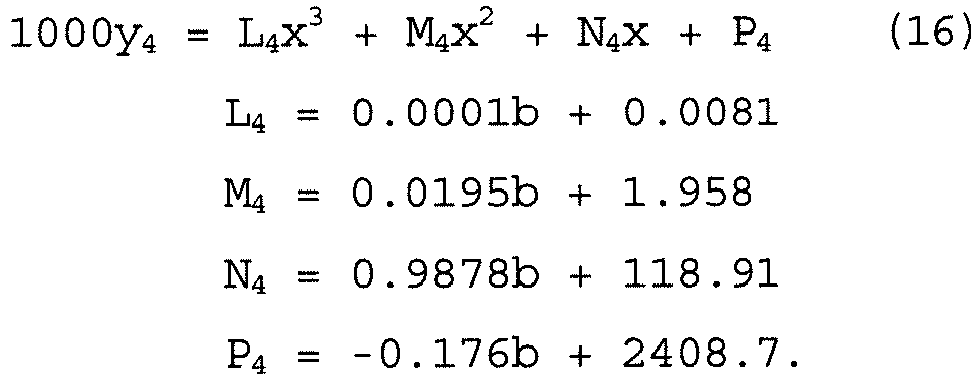
- The mixture ratio is described below in terms of a refrigerant mixture before being transferred to a target container or equipment from a feeding container. The use of the mixture ratio enables the proportion of HFC-32 in the liquid phase of the refrigerant mixture in the feeding container to fall within a range of ±1.5 wt% of the target composition (x) of HFC-32 during initiation and completion of the transfer.
- A method (a gas transfer filling method) of the present invention for filling a refrigerant mixture comprising HFC-32 and HFO-1234yf in such a manner that the HFC-32 is present in the liquid phase in an amount of 10 to 90 wt% based on 100 wt% of the total of HFC-32 and HFO-1234yf, the method being performed in transferring the refrigerant mixture in a liquid state to a target container or equipment from a feeding container that is filled with the refrigerant mixture in an arbitrarily adjusted amount has the following feature. Specifically, the proportion (initial composition) of HFC-32 in the liquid phase of the refrigerant mixture in the feeding container is adjusted immediately before the transfer to x + y5 wt% (minimum value) to x + 1.5 wt% (maximum value), so that the proportion of HFC-32 in the liquid phase of the refrigerant mixture in the feeding container falls within a range of ±1.5 wt% of a target composition (x) of HFC-32 during initiation and completion of the transfer.
b: an amount (wt%) initially filled into the feeding container
x: target composition (with the proviso that 10 ≤ x ≤ 90, excluding a range satisfying an inequality: y5 > 1.5)
y5: a lower limit of a gap between the target composition and the initial composition, y5 being represented by Equation (22) below: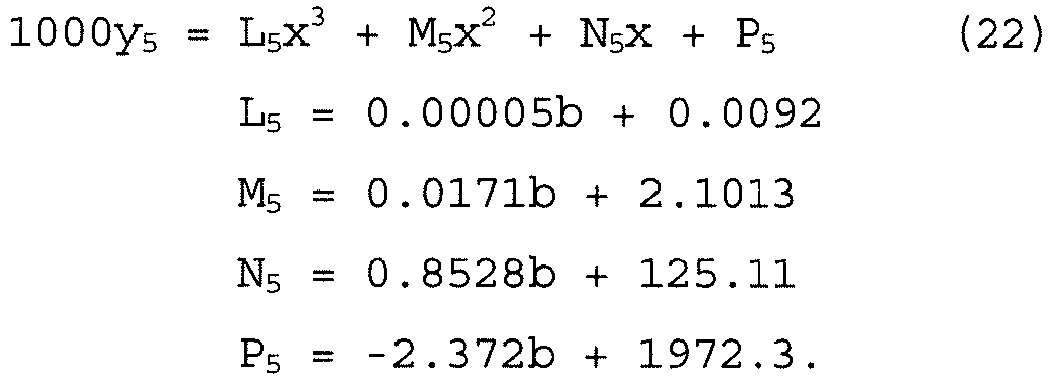
- According to the method for filling a refrigerant mixture of the present invention, the proportion of HFC-32 in the liquid phase of the mixture in a feeding container is adjusted, before transfer, to a specific range; therefore, even when the feeding container is filled with the refrigerant mixture in an amount equal to 100 wt% of the maximum filling amount, changes in the composition in a target container or equipment fall within an acceptable range, i.e., ±1.5 wt% of the target composition, until transfer is completed.
- The boiling point of HFC-32 is lower than that of HFO-1234yf. Therefore, when the space created due to extraction of refrigerant is refilled with vapor evaporated from the liquid phase during transfer, HFC-32 evaporates in an amount greater than that of HFO-1234yf, causing a reduction in the HFC-32 concentration in the liquid phase. For this reason, HFC-32 is preferably filled into a feeding container before transfer in an amount greater than that of the target composition.
- The value b above is generally set to 60 ≤ b ≤ 100.
- Hereinafter, one example is described regarding a method that performs transfer at a handling temperature of 40°C. For example, according to the High Pressure Gas Safety Act of Japan, handling a container at a temperature of 40°C or more is prohibited; therefore, particularly in Japan, the handling temperature is 0 to 40°C when transfer is performed. A higher temperature during transfer (at the time of handling) causes a larger composition change associated with the transfer. Therefore, the conditions for the transfer at a handling temperature of 40°C can be applied to the conditions for the transfer at a handling temperature ranging from 0 to 40°C.
- Moreover, regarding the filling amount in a feeding container, when the refrigerant mixture in a liquid state is transferred to a target container or equipment from the feeding container, a smaller initial filling amount results in a smaller composition change associated with the transfer during initiation and completion of the transfer. Therefore, an equation that satisfies a filling method in which the initial filling amount is b wt% is also satisfied in a filling method in which the initial filling amount is b wt% or less.
- Hereinafter, an embodiment is described in which the refrigerant mixture is filled into a container in an amount equal to 100 wt% of the maximum filling amount of the refrigerant mixture and in which the composition of HFC-32 falls within a range of ±1.5 wt% of the target composition (x) of HFC-32 during initiation and completion of transfer.
- In one embodiment of a method of the present invention for filling a refrigerant mixture comprising HFC-32 and HFO-1234yf in such a manner that HFC-32 is present in the liquid phase in an amount of 10 to 26.5 wt% or 47.5 to 90 wt% based on 100 wt% of the total of HFC-32 and HFO-1234yf, in transferring the refrigerant mixture in a liquid state to a target container or equipment from a feeding container that is filled with the refrigerant mixture in an amount equal to or less than 100 wt% of the maximum filling amount of the refrigerant mixture, the proportion (initial composition) of HFC-32 in the liquid phase of the refrigerant mixture in the feeding container is preferably adjusted, before the transfer, to x + yQ1 wt% to x + 1.5 wt%, so that the proportion of HFC-32 in the liquid phase of the refrigerant mixture in the feeding container falls within a range of ±1.5 wt% of a target composition (x) of HFC-32 during initiation and completion of the transfer.
- (In the above, x is a target composition with the proviso that 10 ≤ x ≤ 26.5 or 47.5 ≤ x ≤ 90; and yQ1 is a lower limit of a gap between the target composition and the initial composition, and is represented by Equation (23):

- In this embodiment, referring to Equation (23) above, in transferring the HFC-32/HFO-1234yf refrigerant mixture to a target container or equipment from a feeding container, the proportion of HFC-32 in the liquid phase of the refrigerant mixture in the feeding container is adjusted, before the transfer, to about x - 0.9 wt% to x + 1.5 wt%. Changes in the composition in a target container or equipment can thereby fall within the acceptable range of ±1.5 wt% of the target composition until the transfer is completed.
- The boiling point of HFC-32 is lower than that of HFO-1234yf. Therefore, when the space created due to extraction of refrigerant is refilled with vapor evaporated from the liquid phase during the transfer, HFC-32 evaporates in an amount greater than that of HFO-1234yf, causing a reduction in the HFC-32 concentration in the liquid phase. For this reason, HFC-32 is preferably filled into a feeding container before the transfer in an amount greater than that of the target composition. In the method for filling a refrigerant mixture in which the composition of HFC-32 in the HFC-32/HFO-1234yf refrigerant mixture is made to fall within the acceptable range of ±1.5 wt% of the target composition in a target container or equipment until the transfer is completed, the upper limit of the composition of HFC-32 in the liquid phase of the HFC-32/HFO-1234yf refrigerant mixture immediately before the transfer is +1.5 wt% of the target composition of HFC-32.
- Further, when the mixture contains HFC-32 in an amount of 90 wt%, changes in the composition of HFC-32 are small; therefore, even when the initial composition of HFC-32 is about -0.9 wt% of the target composition (90 wt%), the proportion of HFC-32 in the liquid phase of the mixture falls within ±1.5 wt% of the target composition until the transfer is completed.
- Hereinafter, an embodiment is described in which the refrigerant mixture is filled into a container in an amount equal to 90 wt% of the maximum filling amount of the refrigerant mixture and in which the composition of HFC-32 falls within a range of ±1.5 wt% of the target composition (x) of HFC-32 during initiation and completion of transfer.
- In one embodiment of a method of the present invention for filling a refrigerant mixture comprising HFC-32 and HFO-1234yf in such a manner that HFC-32 is present in the liquid phase in an amount of 10 to 30 wt% or 44 to 90 wt% based on 100 wt% of the total of HFC-32 and HFO-1234yf, in transferring the refrigerant mixture in a liquid state to a target container or equipment from a feeding container that is filled with the refrigerant mixture in an amount equal to or less than 90 wt% of the maximum filling amount of the refrigerant mixture, the proportion (initial composition) of HFC-32 in the liquid phase of the refrigerant mixture in the feeding container is preferably adjusted, before the transfer, to x + yQ2 wt% to x + 1.5 wt%, so that the proportion of HFC-32 in the liquid phase of the refrigerant mixture in the feeding container falls within a range of ±1.5% of a target composition (x) of HFC-32 during initiation and completion of the transfer.
- (In the above, x is a target composition, with the proviso that 10 ≤ x ≤ 30 or 44 ≤ x ≤ 90; and yQ2 is a lower limit of a gap between the target composition and the initial composition, and is represented by Equation (24):

- In this embodiment, referring to Equation (24) above, in transferring the HFC-32/HFO-1234yf refrigerant mixture to a target container or equipment from a feeding container, the proportion of HFC-32 in the liquid phase of the refrigerant mixture in the feeding container is adjusted, before the transfer, to about x - 0.9 wt% to x + 1.5 wt%. Changes in the composition in a target container or equipment can thereby fall within the acceptable range of ±1.5 wt% of the target composition until the transfer is completed.
- The boiling point of HFC-32 is lower than that of HFO-1234yf. Therefore, when the space created due to extraction of refrigerant is refilled with vapor evaporated from the liquid phase during the transfer, HFC-32 evaporates in an amount greater than that of HFO-1234yf, causing a reduction in the HFC-32 concentration in the liquid phase. For this reason, HFC-32 is preferably filled into a feeding container before the transfer in an amount greater than that of the target composition. In the method for filling a refrigerant mixture in which the composition of HFC-32 in the HFC-32/HFO-1234yf refrigerant mixture is made to fall within the acceptable range of ±1.5 wt% of the target composition in a target container or equipment until the transfer is completed, the upper limit of the composition of HFC-32 in the liquid phase of the HFC-32/HFO-1234yf refrigerant mixture immediately before the transfer is +1.5 wt% of the target composition of HFC-32.
- Further, when the mixture contains HFC-32 in an amount of 90 wt%, changes in the composition of HFC-32 are small; therefore, even when the initial composition of HFC-32 is about -0.9 wt% of the target composition (90 wt%), the proportion of HFC-32 in the liquid phase of the mixture falls within ±1.5 wt% of the target composition until the transfer is completed.
- Hereinafter, an embodiment is described in which the refrigerant mixture is filled into a container in an amount equal to 80 wt% of the maximum filling amount of the refrigerant mixture and in which the composition of HFC-32 falls within a range of ±1.5 wt% of the target composition (x) of HFC-32 during initiation and completion of transfer.
- In one embodiment of a method of the present invention for filling a refrigerant mixture comprising HFC-32 and HFO-1234yf in such a manner that HFC-32 is present in the liquid phase in an amount of 10 to 90 wt% based on 100 wt% of the total of HFC-32 and HFO-1234yf, in transferring the refrigerant mixture in a liquid state to a target container or equipment from a feeding container that is filled with the refrigerant mixture in an amount equal to or less than 80 wt% of the maximum filling amount of the refrigerant mixture, the proportion (initial composition) of HFC-32 in the liquid phase of the refrigerant mixture in the feeding container is preferably adjusted, before the transfer, to x + yQ3 wt% to x + 1.5 wt%, so that the proportion of HFC-32 in the liquid phase of the refrigerant mixture in the feeding container falls within a range of ±1.5 wt% of a target composition (x) of HFC-32 during initiation and completion of the transfer.
- (In the above, x is a target composition, with the proviso that 10 ≤ x ≤ 90; and yQ3 is a lower limit of a gap between the target composition and the initial composition, and is represented by Equation (25):

- In this embodiment, referring to Equation (25) above, in transferring the HFC-32/HFO-1234yf refrigerant mixture to a target container or equipment from a feeding container, the proportion of HFC-32 in the liquid phase of the refrigerant mixture in the feeding container is adjusted, before the transfer, to about x - 0.9 wt% to x + 1.5 wt%. Changes in the composition in a target container or equipment can thereby fall within the acceptable range of ±1.5 wt% of the target composition until the transfer is completed.
- The boiling point of HFC-32 is lower than that of HFO-1234yf. Therefore, when the space created due to extraction of refrigerant is refilled with vapor evaporated from the liquid phase during the transfer, HFC-32 evaporates in an amount greater than that of HFO-1234yf, causing a reduction in the HFC-32 concentration in the liquid phase. For this reason, HFC-32 is preferably filled into a feeding container before the transfer in an amount greater than that of the target composition. In the method for filling a refrigerant mixture in which the composition of HFC-32 in the HFC-32/HFO-1234yf refrigerant mixture is made to fall within the acceptable range of ±1.5 wt% of the target composition in a target container or equipment until the transfer is completed, the upper limit of the composition of HFC-32 in the liquid phase of the HFC-32/HFO-1234yf refrigerant mixture immediately before the transfer is +1.5 wt% of the target composition of HFC-32.
- Further, when the mixture contains HFC-32 in an amount of 90 wt%, changes in the composition of HFC-32 are small; therefore, even when the initial composition of HFC-32 is about -0.9 wt% of the target composition (90 wt%), the proportion of HFC-32 in the liquid phase of the mixture falls within ±1.5 wt% of the target composition until the transfer is completed.
- Hereinafter, an embodiment is described in which the refrigerant mixture is filled into a container in an amount equal to 70 wt% of the maximum filling amount of the refrigerant mixture and in which the composition of HFC-32 falls within a range of ±1.5 wt% of the target composition (x) of HFC-32 during initiation and completion of transfer.
- In one embodiment of a method of the present invention for filling a refrigerant mixture comprising HFC-32 and HFO-1234yf in such a manner that HFC-32 is present in the liquid phase in an amount of 10 to 90 wt% based on 100 wt% of the total of HFC-32 and HFO-1234yf, in transferring the refrigerant mixture in a liquid state to a target container or equipment from a feeding container that is filled with the refrigerant mixture in an amount equal to or less than 70 wt% of the maximum filling amount of the refrigerant mixture, the proportion (initial composition) of HFC-32 in the liquid phase of the refrigerant mixture in the feeding container is preferably adjusted, before the transfer, to x + yQ4 wt% to x + 1.5 wt%, so that the proportion of HFC-32 in the liquid phase of the refrigerant mixture in the feeding container falls within a range of ±1.5 wt% of a target composition (x) of HFC-32 during initiation and completion of the transfer.
- (In the above, x is a target composition, with the proviso that 10 ≤ x ≤ 90; and yQ4 is a lower limit of a gap between the target composition and the initial composition, and is represented by Equation (26):

- In this embodiment, referring to Equation (26) above, in transferring the HFC-32/HFO-1234yf refrigerant mixture to a target container or equipment from a feeding container, the proportion of HFC-32 in the liquid phase of the refrigerant mixture in the feeding container is adjusted, before the transfer, to about x - 0.9 wt% to x + 1.5 wt%. Changes in the composition in a target container or equipment can thereby fall within the acceptable range of ±1.5 wt% of the target composition until the transfer is completed.
- The boiling point of HFC-32 is lower than that of HFO-1234yf. Therefore, when the space created due to extraction of refrigerant is refilled with vapor evaporated from the liquid phase during the transfer, HFC-32 evaporates in an amount greater than that of HFO-1234yf, causing a reduction in the HFC-32 concentration in the liquid phase. For this reason, HFC-32 is preferably filled into a feeding container before the transfer in an amount greater than that of the target composition. In the method for filling a refrigerant mixture in which the composition of HFC-32 in the HFC-32/HFO-1234yf refrigerant mixture is made to fall within the acceptable range of ±1.5 wt% of the target composition in a target container or equipment until the transfer is completed, the upper limit of the composition of HFC-32 in the liquid phase of the HFC-32/HFO-1234yf refrigerant mixture immediately before the transfer is +1.5 wt% of the target composition of HFC-32.
- Further, when the mixture contains HFC-32 in an amount of 90 wt%, changes in the composition of HFC-32 are small; therefore, even when the initial composition of HFC-32 is about -0.9 wt% of the target composition (90 wt%), the proportion of HFC-32 in the liquid phase of the mixture falls within ±1.5 wt% of the target composition until the transfer is completed.
- Hereinafter, an embodiment is described in which the refrigerant mixture is filled into a container in an amount equal to 60 wt% of the maximum filling amount of the refrigerant mixture and in which the composition of HFC-32 falls within a range of ±1.5 wt% of the target composition (x) of HFC-32 during initiation and completion of transfer.
- In one embodiment of a method of the present invention for filling a refrigerant mixture comprising HFC-32 and HFO-1234yf in such a manner that HFC-32 is present in the liquid phase in an amount of 10 to 90 wt% based on 100 wt% of the total of HFC-32 and HFO-1234yf, in transferring the refrigerant mixture in a liquid state to a target container or equipment from a feeding container that is filled with the refrigerant mixture in an amount equal to or less than 60 wt% of the maximum filling amount of the refrigerant mixture, the proportion (initial composition) of HFC-32 in the liquid phase of the refrigerant mixture in the feeding container is preferably adjusted, before the transfer, to x + yQ5 wt% to x + 1.5 wt%, so that the proportion of HFC-32 in the liquid phase of the refrigerant mixture in the feeding container falls within a range of ±1.5% of a target composition (x) of HFC-32 during initiation and completion of the transfer.
- (In the above, x is a target composition, with the proviso that 10 ≤ x ≤ 90; and yQ5 is a lower limit of a gap between the target composition and the initial composition, and is represented by Equation (27):

- In this embodiment, referring to Equation (27) above, in transferring the HFC-32/HFO-1234yf refrigerant mixture to a target container or equipment from a feeding container, the proportion of HFC-32 in the liquid phase of the refrigerant mixture in the feeding container is adjusted, before the transfer, to about x - 0.9 wt% to x + 1.5 wt%. Changes in the composition in a target container or equipment can thereby fall within the acceptable range of ±1.5 wt% of the target composition until the transfer is completed.
- The boiling point of HFC-32 is lower than that of HFO-1234yf. Therefore, when the space created due to extraction of refrigerant is refilled with vapor evaporated from the liquid phase during the transfer, HFC-32 evaporates in an amount greater than that of HFO-1234yf, causing a reduction in the HFC-32 concentration in the liquid phase. For this reason, HFC-32 is preferably filled into a feeding container before the transfer in an amount greater than that of the target composition. In the method for filling a refrigerant mixture in which the composition of HFC-32 in the HFC-32/HFO-1234yf refrigerant mixture is made to fall within the acceptable range of ±1.5 wt% of the target composition in a target container or equipment until the transfer is completed, the upper limit of the composition of HFC-32 in the liquid phase of the HFC-32/HFO-1234yf refrigerant mixture immediately before the transfer is +1.5 wt% of the target composition of HFC-32.
- Further, when the mixture contains HFC-32 in an amount of 90 wt%, changes in the composition of HFC-32 are small; therefore, even when the initial composition of HFC-32 is about -0.9 wt% of the target composition (90 wt%), the proportion of HFC-32 in the liquid phase of the mixture falls within ±1.5 wt% of the target composition until the transfer is completed.
- The concept of a filling method of the present invention is shown below, in relation to an embodiment in which the composition of HFC-32 falls within ±1.5 wt% of the target composition (x) of HFC-32 during initiation and completion of transfer.
- Equation (22) above can be derived from Equations (23) to (27) above. Based on the value of each coefficient of Equations (23) to (27), L5 to P5 of Equation (22) can be calculated from the target composition (x) with respect to the initial filling amount (b).
- A method of the present invention for filling a mixed refrigerant comprising HFC-32 and HFO-1234yf, the HFC-32 being present in a liquid phase in an amount of 10 to 90 wt% based on 100 wt% of the total of HFC-32 and HFO-1234yf, has the following feature. Specifically, in transferring the refrigerant mixture in a liquid state into a target container or equipment from a feeding container, the proportion (initial composition) of the HFC-32 in the liquid phase of the refrigerant mixture in the feeding container is adjusted immediately before the transfer to x + y5 wt% (minimum value) to x + 1.5 wt% (maximum value), so that the proportion of the HFC-32 in the liquid phase of the refrigerant mixture in the feeding container falls within a set tolerance (±1.5 wt%) of the target composition (x) of HFC-32 during initiation and completion of the transfer.
- In view of the concept of the present invention described above, when a = 1.5, and the refrigerant mixture is filled into a container in an amount equal to or less than 100 wt% of the maximum filling amount, if 26.5 < x < 47.5, then yQ1 > 1.5; therefore, x is within a range of 10 to 26.5 wt% or 47.5 to 90 wt%. Further, when a = 1.5, and the refrigerant mixture is filled into a container in an amount equal to or less than 90% of the maximum filling amount, if 30 < x < 44, then yQ2 > 1.5; therefore, x is within a range of 10 to 30 wt% or 44 to 90 wt%.
b: an amount (wt%) initially filled into the feeding container;
x: a target composition, with the proviso that 10 ≤ x ≤ 90, excluding a range satisfying the inequality: y5 > 1.5
y5: a lower limit of a gap between the target composition and the initial composition, y5 being represented by Equation (22) below:
- The mixture ratio is described below in terms of a refrigerant mixture before being transferred to a target container or equipment from a feeding container. The use of the mixture ratio enables the proportion of HFC-32 in the liquid phase of the refrigerant mixture in the feeding container to fall within a range of ±1 wt% of the target composition (x) of HFC-32 during initiation and completion of the transfer.
- A method (a gas transfer filling method) of the present invention for filling a refrigerant mixture comprising HFC-32 and HFO-1234yf in such a manner that the HFC-32 is present in the liquid phase in an amount of 10 to 18.5 wt% or 60 to 90 wt% based on 100 wt% of the total of HFC-32 and HFO-1234yf, the method being performed in transferring the refrigerant mixture in a liquid state to a target container or equipment from a feeding container that is filled with the refrigerant mixture in an arbitrarily adjusted amount has the following feature. Specifically, the proportion (initial composition) of HFC-32 in the liquid phase of the refrigerant mixture in the feeding container is adjusted immediately before the transfer to x + y6 wt% (minimum value) to x + 1.0 wt% (maximum value), so that the proportion of HFC-32 in the liquid phase of the refrigerant mixture in the feeding container falls within a range of ±1.0 wt% of a target composition (x) of HFC-32 during initiation and completion of the transfer.
b: an amount (wt%) initially filled into the feeding container
x: target composition (with the proviso that 10 ≤ x ≤ 18.5 or 60 ≤ x ≤ 90, excluding a range satisfying an inequality: Y6 > 1)
y6: a lower limit of a gap between the target composition and the initial composition, y6 being represented by Equation (28) below:
- According to the method for filling a refrigerant mixture of the present invention, the proportion of HFC-32 in the liquid phase of the mixture in a feeding container is adjusted, before transfer, to a specific range; therefore, even when the feeding container is filled with the refrigerant mixture in an amount equal to 100 wt% of the maximum filling amount, changes in the composition in a target container or equipment fall within an acceptable range, i.e., ±1.0 wt% of the target composition, until transfer is completed.
- The boiling point of HFC-32 is lower than that of HFO-1234yf. Therefore, when the space created due to extraction of refrigerant is refilled with vapor evaporated from the liquid phase during transfer, HFC-32 evaporates in an amount greater than that of HFO-1234yf, causing a reduction in the HFC-32 concentration in the liquid phase. For this reason, HFC-32 is preferably filled into a feeding container before transfer in an amount greater than that of the target composition.
- The value b above is generally set to 60 ≤ b ≤ 100.
- Hereinafter, one example is described regarding a method that performs transfer at a handling temperature of 40°C. For example, according to the High Pressure Gas Safety Act of Japan, handling a container at a temperature of 40°C or more is prohibited; therefore, particularly in Japan, the handling temperature is 0 to 40°C when transfer is performed. A higher temperature during transfer (at the time of handling) causes a larger composition change associated with the transfer. Therefore, the conditions for the transfer at a handling temperature of 40°C can be applied to the conditions for the transfer at a handling temperature ranging from 0 to 40°C.
- Moreover, regarding the filling amount in a feeding container, when the refrigerant mixture in a liquid state is transferred to a target container or equipment from the feeding container, a smaller initial filling amount results in a smaller composition change associated with the transfer during initiation and completion of the transfer. Therefore, an equation that satisfies a filling method in which the initial filling amount is b wt% is also satisfied in a filling method in which the initial filling amount is b wt% or less.
- Hereinafter, an embodiment is described in which the refrigerant mixture is filled into a container in an amount equal to 100 wt% of the maximum filling amount of the refrigerant mixture and in which the composition of HFC-32 falls within a range of ±1 wt% of the target composition (x) of HFC-32 during initiation and completion of transfer.
- In one embodiment of a method of the present invention for filling a refrigerant mixture comprising HFC-32 and HFO-1234yf in such a manner that HFC-32 is present in the liquid phase in an amount of 10 to 13.5 wt% or 67 to 90 wt% based on 100 wt% of the total of HFC-32 and HFO-1234yf, in transferring the refrigerant mixture in a liquid state to a target container or equipment from a feeding container that is filled with the refrigerant mixture in an amount equal to or less than 100 wt% of the maximum filling amount of the refrigerant mixture, the proportion (initial composition) of HFC-32 in the liquid phase of the refrigerant mixture in the feeding container is preferably adjusted, before the transfer, to x + yR1 wt% to x + 1.0 wt%, so that the proportion of HFC-32 in the liquid phase of the refrigerant mixture in the feeding container falls within a range of ±1.0 wt% of a target composition (x) of HFC-32 during initiation and completion of the transfer.
- (In the above, x is a target composition, with the proviso that 10 ≤ x ≤ 13.5 or 67 ≤ x ≤ 90; and yR1 is a lower limit of a gap between the target composition and the initial composition, and is represented by Equation (29):

- In this embodiment, referring to Equation (29) above, in transferring the HFC-32/HFO-1234yf refrigerant mixture to a target container or equipment from a feeding container, the proportion of HFC-32 in the liquid phase of the refrigerant mixture in the feeding container is adjusted, before the transfer, to about x - 0.4 wt% to x + 1.0 wt%. Changes in the composition in a target container or equipment can thereby fall within the acceptable range of ±1.0 wt% of the target composition until the transfer is completed.
- The boiling point of HFC-32 is lower than that of HFO-1234yf. Therefore, when the space created due to extraction of refrigerant is refilled with vapor evaporated from the liquid phase during the transfer, HFC-32 evaporates in an amount greater than that of HFO-1234yf, causing a reduction in the HFC-32 concentration in the liquid phase. For this reason, HFC-32 is preferably filled into a feeding container before the transfer in an amount greater than that of the target composition. In the method for filling a refrigerant mixture in which the composition of HFC-32 in the HFC-32/HFO-1234yf refrigerant mixture is made to fall within the acceptable range of ±1.0 wt% of the target composition in a target container or equipment until the transfer is completed, the upper limit of the composition of HFC-32 in the liquid phase of the HFC-32/HFO-1234yf refrigerant mixture immediately before the transfer is +1.0 wt% of the target composition of HFC-32.
- Further, when the mixture contains HFC-32 in an amount of 90 wt%, changes in the composition of HFC-32 are small; therefore, even when the initial composition of HFC-32 is about -0.4 wt% of the target composition (90 wt%), the proportion of HFC-32 in the liquid phase of the mixture falls within ±1.0 wt% of the target composition until the transfer is completed.
- Hereinafter, an embodiment is described in which the refrigerant mixture is filled into a container in an amount equal to 90 wt% of the maximum filling amount of the refrigerant mixture and in which the composition of HFC-32 falls within a range of ±1 wt% of the target composition (x) of HFC-32 during initiation and completion of transfer.
- In one embodiment of a method of the present invention for filling a refrigerant mixture comprising HFC-32 and HFO-1234yf in such a manner that HFC-32 is present in the liquid phase in an amount of 10 to 14 wt% or 66 to 90 wt% based on 100 wt% of the total of HFC-32 and HFO-1234yf, in transferring the refrigerant mixture in a liquid state to a target container or equipment from a feeding container that is filled with the refrigerant mixture in an amount equal to or less than 90 wt% of the maximum filling amount of the refrigerant mixture, the proportion (initial composition) of HFC-32 in the liquid phase of the refrigerant mixture in the feeding container is preferably adjusted, before the transfer, to x + yR2 wt% to x + 1.0 wt%, so that the proportion of HFC-32 in the liquid phase of the refrigerant mixture in the feeding container falls within a range of ±1.0 wt% of a target composition (x) of HFC-32 during initiation and completion of the transfer.
- (In the above, x is a target composition, with the proviso that 10 ≤ x ≤ 14 or 66 ≤ x ≤ 90; and yR2 is a lower limit of a gap between the target composition and the initial composition, and is represented by Equation (30):

- In this embodiment, referring to Equation (30) above, in transferring the HFC-32/HFO-1234yf refrigerant mixture to a target container or equipment from a feeding container, the proportion of HFC-32 in the liquid phase of the refrigerant mixture in the feeding container is adjusted, before the transfer, to about x - 0.4 wt% to x + 1.0 wt%. Changes in the composition in a target container or equipment can thereby fall within the acceptable range of ±1.0 wt% of the target composition until the transfer is completed.
- The boiling point of HFC-32 is lower than that of HFO-1234yf. Therefore, when the space created due to extraction of refrigerant is refilled with vapor evaporated from the liquid phase during the transfer, HFC-32 evaporates in an amount greater than that of HFO-1234yf, causing a reduction in the HFC-32 concentration in the liquid phase. For this reason, HFC-32 is preferably filled into a feeding container before the transfer in an amount greater than that of the target composition. In the method for filling a refrigerant mixture in which the composition of HFC-32 in the HFC-32/HFO-1234yf refrigerant mixture is made to fall within the acceptable range of ±1.0 wt% of the target composition in a target container or equipment until the transfer is completed, the upper limit of the composition of HFC-32 in the liquid phase of the HFC-32/HFO-1234yf refrigerant mixture immediately before the transfer is +1.0 wt% of the target composition of HFC-32.
- Further, when the mixture contains HFC-32 in an amount of 90 wt%, changes in the composition of HFC-32 are small; therefore, even when the initial composition of HFC-32 is about -0.4 wt% of the target composition (90 wt%), the proportion of HFC-32 in the liquid phase of the mixture falls within ±1.0 wt% of the target composition until the transfer is completed.
- Hereinafter, an embodiment is described in which the refrigerant mixture is filled into a container in an amount equal to 80 wt% of the maximum filling amount of the refrigerant mixture and in which the composition of HFC-32 falls within a range of ±1 wt% of the target composition (x) of HFC-32 during initiation and completion of transfer.
- In one embodiment of a method of the present invention for filling a refrigerant mixture comprising HFC-32 and HFO-1234yf in such a manner that HFC-32 is present in the liquid phase in an amount of 10 to 15.5 wt% or 65 to 90 wt% based on 100 wt% of the total of HFC-32 and HFO-1234yf, in transferring the refrigerant mixture in a liquid state to a target container or equipment from a feeding container that is filled with the refrigerant mixture in an amount equal to or less than 80 wt% of the maximum filling amount of the refrigerant mixture, the proportion (initial composition) of HFC-32 in the liquid phase of the refrigerant mixture in the feeding container is preferably adjusted, before the transfer, to x + yR3 wt% to x + 1.0 wt%, so that the proportion of HFC-32 in the liquid phase of the refrigerant mixture in the feeding container falls within a range of ±1.0 wt% of a target composition (x) of HFC-32 during initiation and completion of the transfer.
- (In the above, x is a target composition with the proviso that 10 ≤ x ≤ 15.5 or 65 ≤ x ≤ 90; and yR3 is a lower limit of a gap between the target composition and the initial composition, and is represented by Equation (31):

- In this embodiment, referring to Equation (30) above, in transferring the HFC-32/HFO-1234yf refrigerant mixture to a target container or equipment from a feeding container, the proportion of HFC-32 in the liquid phase of the refrigerant mixture in the feeding container is adjusted, before the transfer, to about x - 0.4 wt% to x + 1.0 wt%. Changes in the composition in a target container or equipment can thereby fall within the acceptable range of ±1.0 wt% of the target composition until the transfer is completed.
- The boiling point of HFC-32 is lower than that of HFO-1234yf. Therefore, when the space created due to extraction of refrigerant is refilled with vapor evaporated from the liquid phase during the transfer, HFC-32 evaporates in an amount greater than that of HFO-1234yf, causing a reduction in the HFC-32 concentration in the liquid phase. For this reason, HFC-32 is preferably filled into a feeding container before the transfer in an amount greater than that of the target composition. In the method for filling a refrigerant mixture in which the composition of HFC-32 in the HFC-32/HFO-1234yf refrigerant mixture is made to fall within the acceptable range of ±1.0 wt% of the target composition in a target container or equipment until the transfer is completed, the upper limit of the composition of HFC-32 in the liquid phase of the HFC-32/HFO-1234yf refrigerant mixture immediately before the transfer is +1.0 wt% of the target composition of HFC-32.
- Further, when the mixture contains HFC-32 in an amount of 90 wt%, changes in the composition of HFC-32 are small; therefore, even when the initial composition of HFC-32 is about -0.4 wt% of the target composition (90 wt%), the proportion of HFC-32 in the liquid phase of the mixture falls within ±1.0 wt% of the target composition until the transfer is completed.
- Hereinafter, an embodiment is described in which the refrigerant mixture is filled into a container in an amount equal to 70 wt% of the maximum filling amount of the refrigerant mixture and in which the composition of HFC-32 falls within a range of ±1 wt% of the target composition (x) of HFC-32 during initiation and completion of transfer.
- In one embodiment of a method of the present invention for filling a refrigerant mixture comprising HFC-32 and HFO-1234yf in such a manner that HFC-32 is present in the liquid phase in an amount of 10 to 16.5 wt% or 62.5 to 90 wt% based on 100 wt% of the total of HFC-32 and HFO-1234yf, in transferring the refrigerant mixture in a liquid state to a target container or equipment from a feeding container that is filled with the refrigerant mixture in an amount equal to or less than 70 wt% of the maximum filling amount of the refrigerant mixture, the proportion (initial composition) of HFC-32 in the liquid phase of the refrigerant mixture in the feeding container is preferably adjusted, before the transfer, to x + yR4 wt% to x + 1.0 wt%, so that the proportion of HFC-32 in the liquid phase of the refrigerant mixture in the feeding container falls within a range of ±1.0 wt% of a target composition (x) of HFC-32 during initiation and completion of the transfer.
- (In the above, x is a target composition, with the proviso that 10 ≤ x ≤ 16.5 or 62.5 ≤ x ≤ 90; and yR4 is a lower limit of a gap between the target composition and the initial composition, and is represented by Equation (32):

- In this embodiment, referring to Equation (32) above, in transferring the HFC-32/HFO-1234yf refrigerant mixture to a target container or equipment from a feeding container, the proportion of HFC-32 in the liquid phase of the refrigerant mixture in the feeding container is adjusted, before the transfer, to about x - 0.4 wt% to x + 1.0 wt%. Changes in the composition in a target container or equipment can thereby fall within the acceptable range of ±1.0 wt% of the target composition until the transfer is completed.
- The boiling point of HFC-32 is lower than that of HFO-1234yf. Therefore, when the space created due to extraction of refrigerant is refilled with vapor evaporated from the liquid phase during the transfer, HFC-32 evaporates in an amount greater than that of HFO-1234yf, causing a reduction in the HFC-32 concentration in the liquid phase. For this reason, HFC-32 is preferably filled into a feeding container before the transfer in an amount greater than that of the target composition. In the method for filling a refrigerant mixture in which the composition of HFC-32 in the HFC-32/HFO-1234yf refrigerant mixture is made to fall within the acceptable range of ±1.0 wt% of the target composition in a target container or equipment until the transfer is completed, the upper limit of the composition of HFC-32 in the liquid phase of the HFC-32/HFO-1234yf refrigerant mixture immediately before the transfer is +1.0 wt% of the target composition of HFC-32.
- Further, when the mixture contains HFC-32 in an amount of 90 wt%, changes in the composition of HFC-32 are small; therefore, even when the initial composition of HFC-32 is about -0.4 wt% of the target composition (90 wt%), the proportion of HFC-32 in the liquid phase of the mixture falls within ±1.0 wt% of the target composition until the transfer is completed.
- Hereinafter, an embodiment is described in which the refrigerant mixture is filled into a container in an amount equal to 60 wt% of the maximum filling amount of the refrigerant mixture and in which the composition of HFC-32 falls within a range of ±1 wt% of the target composition (x) of HFC-32 during initiation and completion of transfer.
- In one embodiment of a method of the present invention for filling a refrigerant mixture comprising HFC-32 and HFO-1234yf in such a manner that HFC-32 is present in the liquid phase in an amount of 10 to 18.5 wt% or 60 to 90 wt% based on 100 wt% of the total of HFC-32 and HFO-1234yf, in transferring the refrigerant mixture in a liquid state to a target container or equipment from a feeding container that is filled with the refrigerant mixture in an amount equal to or less than 60 wt% of the maximum filling amount of the refrigerant mixture, the proportion (initial composition) of HFC-32 in the liquid phase of the refrigerant mixture in the feeding container is preferably adjusted, before the transfer, to x + yR5 wt% to x + 1.0 wt%, so that the proportion of HFC-32 in the liquid phase of the refrigerant mixture in the feeding container falls within a range of ±1.0 wt% of a target composition (x) of HFC-32 during initiation and completion of the transfer.
- (In the above, x is a target composition, with the proviso that 10 ≤ x ≤ 18.5 or 60 ≤ x ≤ 90; and yR5 is a lower limit of a gap between the target composition and the initial composition, and is represented by Equation (33):

- In this embodiment, referring to Equation (33) above, in transferring the HFC-32/HFO-1234yf refrigerant mixture to a target container or equipment from a feeding container, the proportion of HFC-32 in the liquid phase of the refrigerant mixture in the feeding container is adjusted, before the transfer, to about x - 0.5 wt% to x + 1.0 wt%. Changes in the composition in a target container or equipment can thereby fall within the acceptable range of ±1.0 wt% of the target composition until the transfer is completed.
- The boiling point of HFC-32 is lower than that of HFO-1234yf. Therefore, when the space created due to extraction of refrigerant is refilled with vapor evaporated from the liquid phase during the transfer, HFC-32 evaporates in an amount greater than that of HFO-1234yf, causing a reduction in the HFC-32 concentration in the liquid phase. For this reason, HFC-32 is preferably filled into a feeding container before the transfer in an amount greater than that of the target composition. In the method for filling a refrigerant mixture in which the composition of HFC-32 in the HFC-32/HFO-1234yf refrigerant mixture is made to fall within the acceptable range of ±1.0 wt% of the target composition in a target container or equipment until the transfer is completed, the upper limit of the composition of HFC-32 in the liquid phase of the HFC-32/HFO-1234yf refrigerant mixture immediately before the transfer is +1.0 wt% of the target composition of HFC-32.
- Further, when the mixture contains HFC-32 in an amount of 90 wt%, changes in the composition of HFC-32 are small; therefore, even when the initial composition of HFC-32 is about -0.5 wt% of the target composition (90 wt%), the proportion of HFC-32 in the liquid phase of the mixture falls within ±1.0 wt% of the target composition until the transfer is completed.
- The concept of a filling method of the present invention is shown below, in relation to an embodiment in which the composition of HFC-32 falls within ±1.0 wt% of the target composition (x) of HFC-32 during initiation and completion of transfer.
- Equation (28) above can be derived from Equations (29) to (33) above. Based on the value of each coefficient of Equations (29) to (33), L6 to P6 of Equation (28) can be calculated from the target composition (x) with respect to the initial filling amount (b).
- A method of the present invention for filling a mixed refrigerant comprising HFC-32 and HFO-1234yf, the HFC-32 being present in a liquid phase in an amount of 10 to 18.5 wt% or 60 to 90 wt% based on 100 wt% of the total of HFC-32 and HFO-1234yf, has the following feature. Specifically, in transferring the refrigerant mixture in a liquid state into a target container or equipment from a feeding container, the proportion (initial composition) of the HFC-32 in the liquid phase of the refrigerant mixture in the feeding container is adjusted immediately before the transfer to x + y6 wt% (minimum value) to x + 1.0 wt% (maximum value), so that the proportion of the HFC-32 in the liquid phase of the refrigerant mixture in the feeding container falls within a set tolerance (±1.0 wt%) of the target composition (x) of HFC-32 during initiation and completion of the transfer.
- In view of the concept of the present invention described above, when a set tolerance is ±1.0 wt%, and the refrigerant mixture is filled into a container in an amount equal to or less than 100 wt% of the maximum filling amount, if 13.5 < x < 67, then yR1 > 1; therefore, x is within a range of 10 to 13.5 wt% or 67 to 90 wt%. Further, when a set tolerance is ±1.0 wt%, and the refrigerant mixture is filled into a container in an amount equal to or less than 90 wt% of the maximum filling amount, if 14 < x < 66, then yR2 > 1; therefore, x is within a range of 10 to 14 wt% or 66 to 90 wt%. When a set tolerance is ±1.0 wt%, and the refrigerant mixture is filled into a container in an amount equal to or less than 80 wt% of the maximum filling amount, if 15.5 < x < 65, then yR3 > 1; therefore, x is within a range of 10 to 15.5 wt% or 65 to 90 wt%. When a set tolerance is ±1.0 wt%, and the refrigerant mixture is filled into a container in an amount equal to or less than 70 wt% of the maximum filling amount, if 16.5 < x < 62.5, then yR4 > 1; therefore, x is within a range of 10 to 16.5 wt% or 62.5 to 90 wt%. When a set tolerance is ±1.0 wt%, and the refrigerant mixture is filled into a container in an amount equal to or less than 60 wt% of the maximum filling amount, if 18.5 < x < 60, then yR5 > 1; therefore, x is within a range of 10 to 18.5 wt% or 60 to 90 wt%.
b: an amount (wt%) initially filled into the feeding container;
x: a target composition, with the proviso that 10 ≤ x ≤ 18.5 or 60 ≤ x ≤ 90, excluding a range satisfying the inequality: Y6 > 1
y6: a lower limit of a gap between the target composition and the initial composition, y6 being represented by Equation (28) below:
- Among HFC-32/HFO-1234yf refrigerant mixtures, the target of the present invention is a mixed composition comprising HFC-32 in an amount of 10 to 90 wt%. However, the idea of the present invention can also be applied to a non-azeotropic mixture comprising HFO-1234yf and any HFC compound having a different boiling point from HFO-1234yf. Examples of a non-azeotropic mixture comprising HFO-1234yf include HFCs such as pentafluoroethane (HFC-125), HFC-152, and HFC-143a; HFOs such as HFO-1234ze(E), HFO-1243zf, and HFO-1225ye; and propane, CO2, and the like.
- The feeding container of the present invention is not particularly limited insofar as it is a hermetically sealed container that can store a refrigerant mixture. Examples thereof include a tank, a tanker, a storage tank, and the like. The composition of the mixture is likely to undergo a change when a feeding container has a small capacity, or when a large amount of a mixture is extracted each time.
- In this method, as long as the amount initially filled into a feeding container is 60 to 100 wt% of the maximum filling amount, transfer can be performed several times in divided portions until it is completed. This method plays a role even when the transfer is stopped before the liquid phase is entirely transferred.
- The equipment to which a refrigerant mixture is transferred may be any device as long as it uses a vapor compression refrigeration cycle. Such a device is not particularly limited, and may be, for example, a refrigeration air-conditioning system, a refrigerator, or a hot-water supplier.
- Vapor compression refrigeration equipment produced by the method of the present invention comprises refrigerant and the main body of the refrigeration equipment. The main body of the refrigeration equipment is not particularly limited, and a known body of refrigeration equipment can be used as is.
- To perform the transfer, known means may be used. For example, the transfer may be performed by using a pressure difference, a pump, or the like.
- Further, for example, according to the High Pressure Gas Safety Act of Japan, handling a container at a temperature of 40°C or more is prohibited; therefore, the handling temperature is basically 0 to 40°C when transfer is performed. Also in international law, etc., it is required to avoid handling highpressure gas at a high temperature. A higher temperature during transfer (at the time of handling) causes a larger composition change associated with the transfer. Therefore, the conditions for the transfer at a handling temperature of 40°C can also be applied to the conditions for the transfer at a handling temperature ranging from 0 to 40°C.
- When a non-azeotropic refrigerant mixture comprising 2,3,3,3-tetrafluoropropene and difluoromethane is filled by the method of the present invention, composition changes associated with the transfer of the refrigerant mixture can fall within an acceptable range.
- The present invention is described with reference to Examples; however, the present invention is not limited thereto, without departing from the scope of the invention.
- A 10-L hermetically sealed container was filled with 2,3,3,3-tetrafluoropropene (HFO-1234yf) and difluoromethane (HFC-32) in the maximum amount that could be filled with the composition immediately before transfer so that the liquid phase had a fixed composition at 40°C, and the container was maintained at 40°C. The maximum filling amount is defined by law and calculated as below:
- G = V/C
- G: Mass of fluorocarbon (kg)
- V: Capacity (L) of the container
- C: Constant according to the type of fluorocarbon
- The fill constant C here is determined in Japan as a value obtained by dividing 1.05 by the specific gravity of the gas at 48°C.
- When export is involved, according to international law, the fill constant C is defined as a value obtained by dividing 1.05 by the specific gravity of the gas at 65°C when passing through tropical regions, and it is defined as a value obtained by dividing 1.05 by the specific gravity of the gas at 45°C when only regions other than tropical regions are involved.
- In Reference Example 1, a value obtained by dividing 1.05 by the specific gravity of the gas at 45°C or 65°C was used as the fill constant.
- The reasons for selecting 40°C as the temperature during the transfer are that the use of containers at a temperature over 40°C is prohibited by the High Pressure Gas Safety Act of Japan, that international law, etc., also require avoiding the use of containers at a high temperature, and that since a larger composition change develops at a higher temperature, data obtained at a temperature of 40°C is assumed to be data from the severest conditions.
- Subsequently, the liquid phase was gradually transferred from the container to another empty container using a pump. Part of the gas was collected through a sampling valve disposed in the middle of a pipe for extracting the liquid phase, and the component composition was analyzed by gas chromatography.
- Tables 1 and 2 show the results of composition changes during the transfer in Reference Example 1 when the filling amount is calculated by using, as the fill constant, values obtained by dividing 1.05 by the specific gravity of the gas at 45°C and 65°C.
-
Table 1 HFC-32 target composition HFC-32 composition before transfer HFC-32 composition after extraction of liquid Gap from HFC-32 target composition wt.% wt.% wt.% wt.% 90.0 90.0 89.5 -0.5 80.0 80.0 78.8 -1.2 70.0 70.0 68.1 -1.9 60.0 60.0 57.5 -2.5 50.0 50.0 47.0 -3.0 40.0 40.0 36.8 -3.2 30.0 30.0 26.9 -3.1 20.0 20.0 17.5 -2.5 10.0 10.0 8.5 -1.5 -
Table 2 HFC-32 target composition HFC-32 composition before transfer HFC-32 composition after extraction of liquid Gap from HFC-32 target composition wt.% wt.% wt.% wt.% 90.0 90.0 89.5 -0.5 80.0 80.0 78.9 -1.1 70.0 70.0 68.3 -1.7 60.0 60.0 57.7 -2.3 50.0 50.0 47.2 -2.8 40.0 40.0 37.0 -3.0 30.0 30.0 27.1 -2.9 20.0 20.0 17.6 -2.4 10.0 10.0 8.6 -1.4 - As shown in Tables 1 and 2, when the refrigerant mixture is transferred without taking any measure, a composition gap (composition change) of up to 3 to 4 wt.% from the target composition develops when the entire liquid before transfer is extracted (at the time of the completion of the transfer). Thus, refrigeration capacity and refrigerant capacity (e.g., COP) expected from the target composition cannot be ensured during start and completion of the transfer.
- Table 1 reveals that the concentration of HFC-32 in the HFC-32/HFO-1234yf refrigerant mixture at the time of the completion of the transfer was lower than that at the time of the start of the transfer. This is because the boiling point of HFC-32 is lower than the boiling point of HFO-1234yf, and when the space created due to extraction of refrigerant is refilled with vapor evaporated from the liquid phase during the transfer, HFC-32 evaporates in an amount greater than that of HFO-1234yf, causing a reduction in the HFC-32 concentration in the liquid phase. For this reason, it was found that HFC-32 was preferably filled into a feeding container before the transfer in an amount greater than that of the target composition. Even when the composition change during the transfer was the lowest (HFC-32: 90 wt.%), the width of the composition change during start and completion of the transfer was about 0.5 wt.%.
- The filling amount was calculated by using a value obtained by dividing 1.05 by the specific gravity of the gas at 65°C as the fill constant.
- A 10-L hermetically sealed container was filled with 2,3,3,3-tetrafluoropropene (HFO-1234yf) and difluoromethane (HFC-32) in the maximum amount (100 wt% of the maximum filling amount) that could be filled with the composition immediately before transfer so that the liquid phase had a fixed composition at 40°C, and the container was maintained at 40°C. In this case, the initial composition of HFC-32 in the liquid phase before the transfer was adjusted to +2.5 wt.% of the target composition. Subsequently, as in Reference Example 1, the liquid phase was gradually transferred from the container to another empty container by using a pump, and the component composition was analyzed. Table 2 shows the results of composition changes during the transfer when the initial composition was adjusted to +2.5 wt.% of the target composition.
Table 3 HFC-32 target composition HFC-32 composition before transfer HFC-32 composition after extraction of liquid Gap from HFC-32 target composition wt.% wt.% wt.% wt.% 90.0 92.5 92.1 +2.1 80.0 82.5 81.5 +1.5 70.0 72.5 70.9 +0.9 60.0 62.5 60.3 +0.3 50.0 52.5 49.8 -0.2 40.0 42.5 39.5 -0.5 30.0 32.5 29.5 -0.5 20.0 22.5 19.9 -0.1 10.0 12.5 10.8 +0.8 - As shown in Table 3, by adjusting the initial composition to +2.5 wt.% of the target composition, the gap between the target composition and the initial composition before the transfer falls within a range of ±2.5 wt.% of the target composition when the HFC-32 composition, among the compositions from the start of filling (before the transfer) until the entire liquid is extracted (until the transfer is completed), is within a range of 10 to 90 wt.% in the HFC-32/HFO-1234yf refrigerant mixture in the liquid phase.
- Moreover, the HFC-32 composition in the HFC-32/HFO-1234yf refrigerant mixture in the liquid phase before the transfer that enabled the HFC-32 composition at the time of the completion of the transfer to be -2.5 wt.% of the target composition (x) was determined. Table 4 shows the lower limit (yA) of the gap between the target composition and the initial composition in this case.
Table 4 HFC-32 target composition (x) HFC-32 composition before transfer HFC-32 composition after extraction of liquid Lower limit of gap (yA) 90.0 88.1 87.5 -1.9 80.0 78.7 77.5 -1.3 70.0 69.3 67.5 -0.7 60.0 59.9 57.5 -0.1 50.0 50.3 47.5 +0.3 40.0 40.5 37.5 +0.5 30.0 30.4 27.5 +0.4 20.0 19.9 17.5 -0.1 10.0 8.7 7.5 -1.3 - The results show that HFC-32 undergoes the least composition change when the target composition is 90 wt.%, and that even when the initial composition of HFC-32 in the HFC-32/HFO-1234yf refrigerant mixture in the liquid phase is -1.9 wt.% of the target composition, the gap from the target composition falls within a range of ±2.5 wt.% of the target composition from before the transfer to the completion of the transfer.
- Based on these results, the lower limit (yA) of the gap between the target composition and the initial composition is represented by the following equation using the target composition (x):

- Therefore, when the initial composition of HFC-32 in the HFC-32/HFO-1234yf refrigerant mixture in the liquid phase is adjusted within a range of yA to 2.5 wt.% of the target composition, the gap from the target composition falls within a range of ±2.5 wt.% of the target composition from before the transfer to the completion of the transfer.
- Analysis was performed as in Example 1, except that the initial composition of HFC-32 in the liquid phase before the transfer was adjusted to +2.0 wt.% of the target composition. Table 5 shows the results of composition changes during the transfer when the initial composition was adjusted to +2.0 wt.% of the target composition.
Table 5 HFC-32 target composition HFC-32 composition before transfer HFC-32 composition after extraction of liquid Gap from HFC-32 target composition wt.% wt.% wt.% wt.% 90.0 92.0 91.6 +1.6 80.0 82.0 81.0 +1.0 70.0 72.0 70.4 +0.4 60.0 62.0 59.8 -0.2 50.0 52.0 49.3 -0.7 40.0 42.0 39.0 -1.0 30.0 32.0 29.0 -1.0 20.0 22.0 19.5 -0.5 10.0 12.0 10.4 +0.4 - As shown in Table 5, by adjusting the initial composition to +2.0 wt.% of the target composition, the gap between the target composition and the initial composition before the transfer falls within a range of ±2.0 wt.% of the target composition when the HFC-32 composition, among the compositions from the start of filling (before the transfer) until the entire liquid is extracted (until the transfer is completed), is within a range of 10 to 90 wt.% in the HFC-32/HFO-1234yf refrigerant mixture in the liquid phase.
- Moreover, the HFC-32 composition in the HFC-32/HFO-1234yf refrigerant mixture in the liquid phase before the transfer that enabled the HFC-32 composition at the time of the completion of the transfer to be -2.0 wt.% of the target composition (x) was determined. Table 6 shows the lower limit (yB) of the gap between the target composition and the initial composition in this case.
Table 6 HFC-32 target composition (x) HFC-32 composition before transfer HFC-32 composition after extraction of liquid Lower limit of gap (yB) 90.0 88.6 88.0 -1.4 80.0 79.2 78.0 -0.8 70.0 69.8 68.0 -0.2 60.0 60.3 58.0 +0.3 50.0 50.8 48.0 +0.8 40.0 41.0 38.0 ±1.0 30.0 30.9 28.0 +0.9 20.0 20.4 18.0 +0.4 10.0 9.3 8.0 -0.7 - The results show that HFC-32 undergoes the least composition change when the target composition is 90 wt.%, and that even when the initial composition of HFC-32 in the HFC-32/HFO-1234yf refrigerant mixture in the liquid phase is -1.4 wt.% of the target composition, the gap from the target composition falls within a range of ±2.0 wt.% of the target composition from before the transfer to the completion of the transfer.
- Based on these results, the lower limit (yB) of the gap between the target composition and the initial composition is represented by the following equation using the target composition (x):

- Analysis was performed as in Example 1, except that the initial composition of HFC-32 in the liquid phase before the transfer was adjusted to +1.5 wt.% of the target composition. Table 7 shows the result of composition changes during the transfer when the initial composition was adjusted to +1.5 wt.% of the target composition.
Table 7 HFC-32 target composition HFC-32 composition before transfer HFC-32 composition after extraction of liquid Gap from HFC-32 target composition wt.% wt.% wt.% wt.% 90.0 91.5 91.1 +1.1 80.0 81.5 80.5 +0.5 70.0 71.5 69.8 -0.2 60.0 61.5 59.2 -0.8 50.0 51.5 48.8 -1.2 42.0 43.5 40.5 -1.5 41.0 42.5 39.5 -1.6 33.0 34.5 31.5 -1.6 32.0 33.5 30.5 -1.5 30.0 31.5 28.5 -1.5 20.0 21.5 19.0 -1.0 10.0 11.5 9.9 -0.1 - As shown in Table 7, by adjusting the initial composition to +1.5 wt.% of the target composition, the gap between the target composition and the initial composition before the transfer falls within a range of ±1.5 wt.% of the target composition when the HFC-32 composition, among the compositions from the start of filling (before the transfer) until the entire liquid is extracted (until the transfer is completed), is within a range of 10 to 32 wt.% or 42 to 90 wt.% in the HFC-32/HFO-1234yf refrigerant mixture in the liquid phase.
- Moreover, the HFC-32 composition in the HFC-32/HFO-1234yf refrigerant mixture in the liquid phase before the transfer that enabled the HFC-32 composition at the time of the completion of the transfer to be -1.5 wt.% of the target composition (x) was determined. Table 8 shows the lower limit (yc) of the gap between the target composition and the initial composition in this case.
Table 8 HFC-32 target composition (x) HFC-32 composition before transfer HFC-32 composition after extraction of liquid Lower limit of gap (yc) 90.0 89.1 88.5 -0.9 80.0 79.6 78.5 -0.4 70.0 70.2 68.5 +0.2 60.0 60.8 58.5 +0.8 50.0 51.3 48.5 +1.3 42.0 43.5 40.5 +1.5 32.0 33.5 30.5 +1.5 30.0 31.5 28.5 +1.5 20.0 20.9 18.5 +0.9 10.0 9.9 8.5 -0.1 - The results show that HFC-32 undergoes the least composition change when the target composition is 90 wt.%, and that even when the initial composition of HFC-32 in the HFC-32/HFO-1234yf refrigerant mixture in the liquid phase is -0.9 wt.% of the target composition, the gap from the target composition falls within a range of ±1.5 wt.% of the target composition from before the transfer to the completion of the transfer.
- Based on these results, the lower limit (yc) of the gap between the target composition and the initial composition is represented by the following equation using the target composition (x):

- Therefore, when the initial composition of HFC-32 in the HFC-32/HFO-1234yf refrigerant mixture in the liquid phase is adjusted within a range of yc to 1.5 wt.% of the target composition, the gap from the target composition falls within a range of ±1.5 wt.% of the target composition from before the transfer to the completion of the transfer.
- Analysis was performed as in Example 1, except that the initial composition of HFC-32 in the liquid phase before the transfer was adjusted to +1.0 wt.% of the target composition. Table 9 shows the result of composition changes during the transfer when the initial composition was adjusted to +1.0 wt.% of the target composition.
Table 9 HFC-32 target composition HFC-32 composition before transfer HFC-32 composition after extraction of liquid Gap from HFC-32 target composition wt.% wt.% wt.% wt.% 90.0 91.0 90.5 +0.5 80.0 81.0 79.9 -0.1 70.0 71.0 69.3 -0.7 65.0 66.0 64.0 -1.0 64.0 65.0 62.9 -1.1 15.0 16.0 14.0 -1.0 14.0 15.0 13.1 -0.9 10.0 11.0 9.5 -0.5 - As shown in Table 9, by adjusting the initial composition to +1.0 wt.% of the target composition, the gap between the target composition and the initial composition before the transfer falls within a range of ±1.0 wt.% of the target composition when the HFC-32 composition, among the compositions from the start of filling (before the transfer) until the entire liquid is extracted (until the transfer is completed), is within a range of 10 to 14 wt.% or 65 to 90 wt.% in the HFC-32/HFO-1234yf refrigerant mixture in the liquid phase.
- Moreover, the HFC-32 composition in the HFC-32/HFO-1234yf refrigerant mixture in the liquid phase before the transfer that enabled the HFC-32 composition at the time of the completion of the transfer to be -1.0 wt.% of the target composition (x) was determined. Table 10 shows the lower limit (yD) of the gap between the target composition and the initial composition in this case.
Table 10 HFC-32 target composition (x) HFC-32 composition before transfer HFC-32 composition after extraction of liquid Lower limit of gap (YD) 90.0 89.5 89.0 -0.5 80.0 80.1 79.0 +0.1 70.0 70.7 69.0 +0.7 65.0 66.0 64.0 ±1.0 14.0 14.9 13.0 +0.9 10.0 10.4 9.0 +0.4 - The results show that HFC-32 undergoes the least composition change when the target composition is 90 wt.%, and that even when the initial composition of HFC-32 in the HFC-32/HFO-1234yf refrigerant mixture in the liquid phase is -0.5 wt.% of the target composition, the gap from the target composition falls within a range of ±1.5 wt.% of the target composition from before the transfer to the completion of the transfer.
- Based on these results, the lower limit (yD) of the gap between the target composition and the initial composition is represented by the following equation using the target composition (x):

- Therefore, when the initial composition of HFC-32 in the HFC-32/HFO-1234yf refrigerant mixture in the liquid phase is adjusted within a range of yD to 1.0 wt.% of the target composition, the gap from the target composition falls within a range of ±1.0 wt.% of the target composition from before the transfer to the completion of the transfer.
- The filling amount was calculated by using a value obtained by dividing 1.05 by the specific gravity of the gas at 65°C as the fill constant.
- Analysis was performed as in Example 1, except that the initial composition of HFC-32 in the liquid phase before the transfer was adjusted to +2.5 wt.% of the target composition, and that the filling amount was 70 wt% of the maximum filling amount. Table 11 shows the result of composition changes during the transfer when the initial composition was adjusted to +2.5 wt.% of the target composition.
Table 11 HFC-32 target composition HFC-32 composition before transfer HFC-32 composition after extraction of liquid Gap from HFC-32 target composition wt.% wt.% wt.% wt.% 90.0 92.5 92.2 +2.2 80.0 82.5 81.7 +1.7 70.0 72.5 71.1 +1.1 60.0 62.5 60.6 +0.6 50.0 52.5 50.2 +0.2 40.0 42.5 39.9 -0.1 30.0 32.5 29.9 -0.1 20.0 22.5 20.3 +0.3 10.0 12.5 11.1 +1.1 - As shown in Table 11, by adjusting the initial composition to +2.5 wt.% of the target composition, the gap between the target composition and the initial composition before the transfer falls within a range of ±2.5 wt.% of the target composition when the HFC-32 composition, among the compositions from the start of filling (before the transfer) until the entire liquid is extracted (until the transfer is completed), is in a range of 10 to 90 wt.% in the HFC-32/HFO-1234yf refrigerant mixture in the liquid phase.
- Moreover, the HFC-32 composition in the HFC-32/HFO-1234yf refrigerant mixture in the liquid phase before the transfer that enabled the HFC-32 composition at the time of the completion of the transfer to be -2.5 wt.% of the target composition (x) was determined. Table 12 shows the lower limit (yE) of the gap between the target composition and the initial composition in this case.
Table 12 HFC-32 target composition (x) HFC-32 composition before transfer HFC-32 composition after extraction of liquid Lower limit of gap (yE) 90.0 88.0 87.5 -2.0 80.0 78.6 77.5 -1.4 70.0 69.1 67.5 -0.9 60.0 59.6 57.5 -0.4 50.0 50.0 47.5 +0.0 40.0 40.1 37.5 +0.1 30.0 30.0 27.5 +0.0 20.0 19.5 17.5 -0.5 10.0 8.5 7.5 -1.5 - The results show that HFC-32 undergoes the least composition change when the target composition is 90 wt.%, and that even when the initial composition of HFC-32 in the HFC-32/HFO-1234yf refrigerant mixture in the liquid phase is -2.0 wt.% of the target composition, the gap from the target composition falls within a range of ±2.5 wt.% of the target composition from before the transfer to the completion of the transfer.
- Based on these results, the lower limit (yE) of the gap between the target composition and the initial composition is represented by the following equation using the target composition (x):

- Therefore, when the initial composition of HFC-32 in the HFC-32/HFO-1234yf refrigerant mixture in the liquid phase is adjusted within a range of yE to 2.5 wt.% of the target composition, the gap from the target composition falls within a range of ±2.5 wt.% of the target composition from before the transfer to the completion of the transfer.
- Analysis was performed as in Example 5, except that the initial composition of HFC-32 in the liquid phase before the transfer was adjusted to +2.0 wt.% of the target composition. Table 13 shows the result of composition changes during the transfer when the initial composition was adjusted to +2.0 wt.% of the target composition.
Table 13 HFC-32 target composition HFC-32 composition before transfer HFC-32 composition after extraction of liquid Gap from HFC-32 target composition wt.% wt.% wt.% wt.% 90.0 92.0 91.6 +1.6 80.0 82.0 81.1 +1.1 70.0 72.0 70.6 +0.6 60.0 62.0 60.1 +0.1 50.0 52.0 49.6 -0.4 40.0 42.0 39.4 -0.6 30.0 32.0 29.4 -0.6 20.0 22.0 19.8 -0.2 10.0 12.0 10.6 +0.6 - As shown in Table 13, by adjusting the initial composition to +2.0 wt.% of the target composition, the gap between the target composition and the initial composition before the transfer falls within a range of ±2.0 wt.% of the target composition when the HFC-32 composition, among the compositions from the start of filling (before the transfer) until the entire liquid is extracted (until the transfer is completed), is within a range of 10 to 90 wt.% in the HFC-32/HFO-1234yf refrigerant mixture in the liquid phase.
- Moreover, the HFC-32 composition in the HFC-32/HFO-1234yf refrigerant mixture in the liquid phase before the transfer that enabled the HFC-32 composition at the time of the completion of the transfer to be -2.0 wt.% of the target composition (x) was determined. Table 14 shows the lower limit (yF) of the gap between the target composition and the initial composition in this case.
Table 14 HFC-32 target composition (x) HFC-32 composition before transfer HFC-32 composition after extraction of liquid Lower limit of gap (yF) 90.0 88.5 88.0 -1.5 80.0 79.0 78.0 -1.0 70.0 69.6 68.0 -0.4 60.0 60.0 58.0 +0.0 50.0 50.4 48.0 +0.4 40.0 40.6 38.0 +0.6 30.0 30.5 28.0 +0.5 20.0 20.0 18.0 +0.0 10.0 9.1 8.0 -0.9 - The results show that HFC-32 undergoes the least composition change when the target composition is 90 wt.%, and that even when the initial composition of HFC-32 in the HFC-32/HFO-1234yf refrigerant mixture in the liquid phase is -1.5 wt.% of the target composition, the gap from the target composition falls within a range of ±2.0 wt.% of the target composition from before the transfer to the completion of the transfer.
- Based on these results, the lower limit (yF) of the gap between the target composition and the initial composition is represented by the following equation using the target composition (x):

- Analysis was performed as in Example 5, except that the initial composition of HFC-32 in the liquid phase before the transfer was adjusted to +1.5 wt.% of the target composition. Table 15 shows the result of composition changes during the transfer when the initial composition was adjusted to +1.5 wt.% of the target composition.
Table 15 HFC-32 target composition HFC-32 composition before transfer HFC-32 composition after extraction of liquid Gap from HFC-32 target composition wt.% wt.% wt.% wt.% 90.0 91.5 91.1 +1.1 80.0 81.5 80.6 +0.6 70.0 71.5 70.0 +0.0 60.0 61.5 59.5 -0.5 50.0 51.5 49.1 -0.9 40.0 41.5 38.9 -1.1 30.0 31.5 29.0 -1.0 20.0 21.5 19.4 -0.6 10.0 11.5 10.2 +0.2 - As shown in Table 15, by adjusting the initial composition to +1.5 wt.% of the target composition, the gap between the target composition and the initial composition before the transfer falls within a range of ±1.5 wt.% of the target composition when the HFC-32 composition, among the compositions from the start of filling (before the transfer) until the entire liquid is extracted (until the transfer is completed), is within a range of 10 to 90 wt.% in the HFC-32/HFO-1234yf refrigerant mixture in the liquid phase.0
- Moreover, the HFC-32 composition in the HFC-32/HFO-1234yf refrigerant mixture in the liquid phase before the transfer that enabled the HFC-32 composition at the time of the completion of the transfer to be -1.5 wt.% of the target composition (x) was determined. Table 16 shows the lower limit (yG) of the gap between the target composition and the initial composition in this case.
Table 16 HFC-32 target composition (x) HFC-32 composition before transfer HFC-32 composition after extraction of liquid Lower limit of gap (yG) 90.0 89.0 88.5 -1.0 80.0 79.5 78.5 -0.5 70.0 70.0 68.5 +0.0 60.0 60.5 58.5 +0.5 50.0 50.9 48.5 +0.9 40.0 41.1 38.5 +1.1 30.0 31.0 28.5 +1.0 20.0 20.6 18.5 +0.6 10.0 9.6 8.5 -0.4 - The results show that HFC-32 undergoes the least composition change when the target composition is 90 wt.%, and that even when the initial composition of HFC-32 in the HFC-32/HFO-1234yf refrigerant mixture in the liquid phase is -1.0 wt.% of the target composition, the gap from the target composition falls within a range of ±1.5 wt.% of the target composition from before the transfer to the completion of the transfer.
- Based on these results, the lower limit (yG) of the gap between the target composition and the initial composition is represented by the following equation using the target composition (x):

- Therefore, when the initial composition of HFC-32 in the HFC-32/HFO-1234yf refrigerant mixture in the liquid phase is adjusted within a range of yG to 1.5 wt.% of the target composition, the gap from the target composition falls within a range of ±1.5 wt.% of the target composition from before the transfer to the completion of the transfer.
- Analysis was performed as in Example 5, except that the initial composition of HFC-32 in the liquid phase before the transfer was adjusted to +1.0 wt.% of the target composition. Table 17 shows the result of composition changes during the transfer when the initial composition was adjusted to +1.0 wt.% of the target composition.
Table 17 HFC-32 target composition HFC-32 composition before transfer HFC-32 composition after extraction of liquid Gap from HFC-32 target composition wt.% wt.% wt.% wt.% 90.0 91.0 90.6 +0.6 80.0 81.0 80.1 +0.1 70.0 71.0 69.5 -0.5 60.0 61.0 59.0 -1.0 59.0 60.0 58.0 -1.1 19.0 20.0 18.0 -1.1 18.0 19.0 17.0 -1.0 10.0 11.0 9.7 -0.3 - As shown in Table 17, by adjusting the initial composition to +1.0 wt.% of the target composition, the gap between the target composition and the initial composition before the transfer falls within a range of ±1.0 wt.% of the target composition when the HFC-32 composition, among the compositions from the start of filling (before the transfer) until the entire liquid is extracted (until the transfer is completed), is within a range of 10 to 18 wt.% or 60 to 90 wt.% in the HFC-32/HFO-1234yf refrigerant mixture in the liquid phase.
- Moreover, the HFC-32 composition in the HFC-32/HFO-1234yf refrigerant mixture in the liquid phase before the transfer that enabled the HFC-32 composition at the time of the completion of the transfer to be -1.0 wt.% of the target composition (x) was determined. Table 18 shows the lower limit (yH) of the gap between the target composition and the initial composition in this case.
Table 18 HFC-32 target composition (x) HFC-32 composition before transfer HFC-32 composition after extraction of liquid Lower limit of gap (yH) 90.0 89.5 89.0 -0.5 80.0 80.0 79.0 +0.0 70.0 70.5 69.0 +0.5 60.0 61.0 59.0 +1.0 18.0 19.0 17.0 +1.0 10.0 10.2 9.0 +0.2 - The results show that HFC-32 undergoes the least composition change when the target composition is 90 wt.%, and that even when the initial composition of HFC-32 in the HFC-32/HFO-1234yf refrigerant mixture in the liquid phase is -0.5 wt.% of the target composition, the gap from the target composition falls within a range of ±1.5 wt.% of the target composition from before the transfer to the completion of the transfer.
- Based on these results, the lower limit (yH) of the gap between the target composition and the initial composition is represented by the following equation using the target composition (x):

- The filling amount was calculated by using a value obtained by dividing 1.05 by the specific gravity of the gas at 45°C as the fill constant.
- A 10-L hermetically sealed container was filled with 2,3,3,3-tetrafluoropropene (HFO-1234yf) and difluoromethane (HFC-32) in the maximum amount (100 wt% of the maximum filling amount) that could be filled with the composition immediately before transfer so that the liquid phase had a fixed composition at 40°C, and the container was maintained at 40°C. In this case, the initial composition of HFC-32 in the liquid phase before the transfer was adjusted to +2.5 wt.% of the target composition. Subsequently, as in Reference Example 1, the liquid phase was gradually transferred from the container to another empty container by using a pump, and the component composition was analyzed. Table 2 shows the results of composition changes during the transfer when the initial composition was adjusted to +2.5 wt.% of the target composition.
Table 19 HFC-32 target composition HFC-32 composition before transfer HFC-32 composition after extraction of liquid Gap from HFC-32 target composition wt.% wt.% wt.% wt.% 90.0 92.5 92.1 +2.1 80.0 82.5 81.5 +1.5 70.0 72.5 70.8 +0.8 60.0 62.5 60.2 +0.2 50.0 52.5 49.6 -0.4 40.0 42.5 39.3 -0.7 30.0 32.5 29.4 -0.6 20.0 22.5 19.8 -0.2 10.0 12.5 10.7 +0.7 - As shown in Table 19, by adjusting the initial composition to +2.5 wt.% of the target composition, the gap between the target composition and the initial composition before the transfer falls within a range of ±2.5 wt.% of the target composition when the HFC-32 composition, among the compositions from the start of filling (before the transfer) until the entire liquid is extracted (until the transfer is completed), is within a range of 10 to 90 wt.% in the HFC-32/HFO-1234yf refrigerant mixture in the liquid phase.
- Moreover, the HFC-32 composition in the HFC-32/HFO-1234yf refrigerant mixture in the liquid phase before the transfer that enabled the HFC-32 composition at the time of the completion of the transfer to be -2.5 wt.% of the target composition (x) was determined. Table 20 shows the lower limit (yI) of the gap between the target composition and the initial composition in this case.
Table 20 HFC-32 target composition (x) HFC-32 composition before transfer HFC-32 composition after extraction of liquid Lower limit of gap (yI) 90.0 88.2 87.5 -1.8 80.0 78.8 77.5 -1.2 70.0 69.4 67.5 -0.6 60.0 60.0 57.5 +0.0 50.0 50.5 47.5 +0.5 40.0 40.7 37.5 +0.7 30.0 30.6 27.5 +0.6 20.0 20.0 17.5 +0.0 10.0 8.8 7.5 -1.2 - The results show that HFC-32 undergoes the least composition change when the target composition is 90 wt.%, and that even when the initial composition of HFC-32 in the HFC-32/HFO-1234yf refrigerant mixture in the liquid phase is -1.8 wt.% of the target composition, the gap from the target composition falls within a range of ±2.5 wt.% of the target composition from before the transfer to the completion of the transfer.
- Based on these results, the lower limit (yI) of the gap between the target composition and the initial composition is represented by the following equation using the target composition (x):

- Therefore, when the initial composition of HFC-32 in the HFC-32/HFO-1234yf refrigerant mixture in the liquid phase is adjusted within a range of yI to 2.5 wt.% of the target composition, the gap from the target composition falls within a range of ±2.5 wt.% of the target composition from before the transfer to the completion of the transfer.
- Analysis was performed as in Example 1, except that the initial composition of HFC-32 in the liquid phase before the transfer was adjusted to +2.0 wt.% of the target composition. Table 21 shows the results of composition changes during the transfer when the initial composition was adjusted to +2.0 wt.% of the target composition.
Table 21 HFC-32 target composition HFC-32 composition before transfer HFC-32 composition after extraction of liquid Gap from HFC-32 target composition wt.% wt.% wt.% wt.% 90.0 92.0 91.6 +1.6 80.0 82.0 80.9 +0.9 70.0 72.0 70.3 +0.3 60.0 62.0 59.6 -0.4 50.0 52.0 49.1 -0.9 40.0 42.0 38.8 -1.2 30.0 32.0 28.9 -1.1 20.0 22.0 19.4 -0.6 10.0 12.0 10.3 +0.3 - As shown in Table 21, by adjusting the initial composition to +2.0 wt.% of the target composition, the gap between the target composition and the initial composition before the transfer falls within a range of ±2.0 wt.% of the target composition when the HFC-32 composition, among the compositions from the start of filling (before the transfer) until the entire liquid is extracted (until the transfer is completed), is within a range of 10 to 90 wt.% in the HFC-32/HFO-1234yf refrigerant mixture in the liquid phase.
- Moreover, the HFC-32 composition in the HFC-32/HFO-1234yf refrigerant mixture in the liquid phase before the transfer that enabled the HFC-32 composition at the time of the completion of the transfer to be -2.0 wt.% of the target composition (x) was determined. Table 22 shows the lower limit (yj) of the gap between the target composition and the initial composition in this case.
Table 22 HFC-32 target composition (x) HFC-32 composition before transfer HFC-32 composition after extraction of liquid Lower limit of gap (yj) 90.0 88.6 88.0 -1.3 80.0 79.2 78.0 -0.7 70.0 69.8 68.0 -0.1 60.0 60.3 58.0 +0.5 50.0 50.8 48.0 +1.0 40.0 41.0 38.0 +1.2 30.0 30.9 28.0 +1.1 20.0 20.4 18.0 +0.6 10.0 9.3 8.0 -0.6 - The results show that HFC-32 undergoes the least composition change when the target composition is 90 wt.%, and that even when the initial composition of HFC-32 in the HFC-32/HFO-1234yf refrigerant mixture in the liquid phase is -1.3 wt.% of the target composition, the gap from the target composition falls within a range of ±2.0 wt.% of the target composition from before the transfer to the completion of the transfer.
- Based on these results, the lower limit (yj) of the gap between the target composition and the initial composition is represented by the following equation using the target composition (x):

- Therefore, when the initial composition of HFC-32 in the HFC-32/HFO-1234yf refrigerant mixture in the liquid phase is adjusted within a range of yj to 2.0 wt.% of the target composition, the gap from the target composition falls within a range of ±2.0 wt.% of the target composition from before the transfer to the completion of the transfer.
- Analysis was performed as in Example 1, except that the initial composition of HFC-32 in the liquid phase before the transfer was adjusted to +1.5 wt.% of the target composition. Table 7 shows the result of composition changes during the transfer when the initial composition was adjusted to +1.5 wt.% of the target composition.
Table 23 HFC-32 target composition HFC-32 composition before transfer HFC-32 composition after extraction of liquid Gap from HFC-32 target composition wt.% wt.% wt.% wt.% 90.0 91.5 91.0 +1.0 80.0 81.5 80.4 +0.4 70.0 71.5 69.7 -0.3 60.0 61.5 59.1 -0.9 50.0 51.5 48.6 -1.4 47.5 49.0 46.0 -1.5 26.5 28.0 25.0 -1.5 20.0 21.5 18.9 -1.1 10.0 11.5 9.9 -0.1 - As shown in Table 7, by adjusting the initial composition to +1.5 wt.% of the target composition, the gap between the target composition and the initial composition before the transfer falls within a range of ±1.5 wt.% of the target composition when the HFC-32 composition, among the compositions from the start of filling (before the transfer) until the entire liquid is extracted (until the transfer is completed), is within a range of 10 to 26.5 wt.% or 47.5 to 90 wt.% in the HFC-32/HFO-1234yf refrigerant mixture in the liquid phase.
- Moreover, the HFC-32 composition in the HFC-32/HFO-1234yf refrigerant mixture in the liquid phase before the transfer that enabled the HFC-32 composition at the time of the completion of the transfer to be -1.5 wt.% of the target composition (x) was determined. Table 24 shows the lower limit (yK) of the gap between the target composition and the initial composition in this case.
Table 24 HFC-32 target composition (x) HFC-32 composition before transfer HFC-32 composition after extraction of liquid Lower limit of gap (yK) 90.0 89.1 88.5 -0.9 80.0 79.8 78.5 -0.2 70.0 70.4 68.5 +0.4 60.0 61.0 58.5 +1.0 50.0 51.5 48.5 +1.5 47.5 49.0 46.0 +1.5 26.5 28.0 25.0 +1.5 20.0 21.1 18.5 +1.1 10.0 10.0 8.5 0.0 - The results show that HFC-32 undergoes the least composition change when the target composition is 90 wt.%, and that even when the initial composition of HFC-32 in the HFC-32/HFO-1234yf refrigerant mixture in the liquid phase is -0.9 wt.% of the target composition, the gap from the target composition falls within a range of ±1.5 wt.% of the target composition from before the transfer to the completion of the transfer.
- Based on these results, the lower limit (yK) of the gap between the target composition and the initial composition is represented by the following equation using the target composition (x):

- Therefore, when the initial composition of HFC-32 in the HFC-32/HFO-1234yf refrigerant mixture in the liquid phase is adjusted within a range of yK to 1.5 wt.% of the target composition, the gap from the target composition falls within a range of ±1.5 wt.% of the target composition from before the transfer to the completion of the transfer.
- Analysis was performed as in Example 1, except that the initial composition of HFC-32 in the liquid phase before the transfer was adjusted to +1.0 wt.% of the target composition. Table 25 shows the result of composition changes during the transfer when the initial composition was adjusted to +1.0 wt.% of the target composition.
Table 25 HFC-32 target composition HFC-32 composition before transfer HFC-32 composition after extraction of liquid Gap from HFC-32 target composition wt.% wt.% wt.% wt.% 90.0 91.0 90.5 +0.5 80.0 81.0 79.9 -0.1 70.0 71.0 69.2 -0.8 67.0 68.0 66.0 -1.0 13.5 14.5 12.5 -1.0 10.0 11.0 9.4 -0.6 - As shown in Table 25, by adjusting the initial composition to +1.0 wt.% of the target composition, the gap between the target composition and the initial composition before the transfer falls within a range of ±1.0 wt.% of the target composition when the HFC-32 composition, among the compositions from the start of filling (before the transfer) until the entire liquid is extracted (until the transfer is completed), is within a range of 10 to 13.5 wt.% or 67 to 90 wt.% in the HFC-32/HFO-1234yf refrigerant mixture in the liquid phase.
- Moreover, the HFC-32 composition in the HFC-32/HFO-1234yf refrigerant mixture in the liquid phase before the transfer that enabled the HFC-32 composition at the time of the completion of the transfer to be -1.0 wt.% of the target composition (x) was determined. Table 26 shows the lower limit (yL) of the gap between the target composition and the initial composition in this case.
Table 26 HFC-32 target composition (x) HFC-32 composition before transfer HFC-32 composition after extraction of liquid Lower limit of gap (yL) 90.0 89.6 89.0 -0.4 80.0 80.2 79.0 +0.2 70.0 70.8 69.0 +0.8 67.0 68.0 66.0 +1.0 13.5 14.5 12.5 +1.0 10.0 10.6 9.0 +0.6 - The results show that HFC-32 undergoes the least composition change when the target composition is 90 wt.%, and that even when the initial composition of HFC-32 in the HFC-32/HFO-1234yf refrigerant mixture in the liquid phase is -0.4 wt.% of the target composition, the gap from the target composition falls within a range of ±1.0 wt.% of the target composition from before the transfer to the completion of the transfer.
- Based on these results, the lower limit (yL) of the gap between the target composition and the initial composition is represented by the following equation using the target composition (x):

- Therefore, when the initial composition of HFC-32 in the HFC-32/HFO-1234yf refrigerant mixture in the liquid phase is adjusted within a range of yL to 1.0 wt.% of the target composition, the gap from the target composition falls within a range of ±1.0 wt.% of the target composition from before the transfer to the completion of the transfer.
- A 10-L hermetically sealed container was filled with 2,3,3,3-tetrafluoropropene (HFO-1234yf) and difluoromethane (HFC-32) in the maximum amount that could be filled with the composition immediately before transfer so that the liquid phase had a fixed composition at 40°C, and the container was maintained at 40°C. The maximum filling amount is calculated as below:
- G = V/C
- G: Mass of fluorocarbon (kg)
- V: Capacity (L) of the container
- C: Constant according to the type of fluorocarbon
- The fill constant C here is determined in Japan as a value obtained by dividing 1.05 by the specific gravity of the gas at 48°C.
- When export is involved, according to international law, the fill constant C is defined as a value obtained by dividing 1.05 by the specific gravity of the gas at 65°C when passing through tropical regions, and it is defined as a value obtained by dividing 1.05 by the specific gravity of the gas at 45°C when only regions other than tropical regions are involved.
- In Reference Example 2, a value obtained by dividing 1.05 by the specific gravity of the gas at 45°C was used as the fill constant.
- The reasons for selecting 40°C as the temperature during the transfer are that the use of containers at a temperature over 40°C is prohibited by the High Pressure Gas Safety Act of Japan, the Regulations for the Carriage and Storage of Dangerous Goods in Ship, the International Maritime Dangerous Goods Code, etc., and that since a larger composition change develops at a higher temperature, data obtained at a temperature of 40°C is assumed to be data from the severest conditions.
- Subsequently, the liquid phase was gradually transferred from the container to another empty container using a pump. Part of the gas was collected through a sampling valve disposed in the middle of a pipe for extracting the liquid phase, and the component composition was analyzed by gas chromatography.
- Table 27 shows the results of composition changes during the transfer in Reference Example 2 when the filling amount is calculated by using, as the fill constant, a value obtained by dividing 1.05 by the specific gravity of the gas at 45°C.
-
Table 27 HFC-32 target composition (x) HFC-32 composition before transfer HFC-32 composition after extraction of liquid Gap from HFC-32 target composition wt.% wt.% wt.% wt.% 90.0 90.0 89.5 -0.5 80.0 80.0 78.8 -1.2 70.0 70.0 68.1 -1.9 60.0 60.0 57.5 -2.5 50.0 50.0 47.0 -3.0 40.0 40.0 36.8 -3.2 30.0 30.0 26.9 -3.1 20.0 20.0 17.5 -2.5 10.0 10.0 8.5 -1.5 - As shown in Table 27, when the refrigerant mixture is transferred without taking any measure, a composition gap (composition change) of up to 3 to 4 wt.% from the target composition develops when the entire liquid before transfer is extracted (at the time of the completion of the transfer). Thus, refrigeration capacity and refrigerant capacity (e.g., COP) expected from the target composition cannot be ensured during start and completion of the transfer.
- Table 27 reveals that the concentration of HFC-32 in the HFC-32/HFO-1234yf refrigerant mixture at the time of the completion of the transfer was lower than that at the time of the start of the transfer. This is because the boiling point of HFC-32 is lower than the boiling point of HFO-1234yf, and when the space created due to extraction of refrigerant is refilled with vapor evaporated from the liquid phase during the transfer, HFC-32 evaporates in an amount greater than that of HFO-1234yf, causing a reduction in the HFC-32 concentration in the liquid phase. For this reason, it was found that HFC-32 was preferably filled into a feeding container before the transfer in an amount greater than that of the target composition. Even when the composition change during the transfer was the lowest (HFC-32: 90 wt.%), the width of the composition change during start and completion of the transfer was about 0.5 wt.%.
- A 10-L hermetically sealed container was filled with 2,3,3,3-tetrafluoropropene (HFO-1234yf) and difluoromethane (HFC-32) in the maximum amount (100 wt% of the maximum filling amount) that could be filled with the composition immediately before transfer so that the liquid phase had a fixed composition at 40°C, and the container was maintained at 40°C. In this case, the initial composition of HFC-32 in the liquid phase before the transfer was adjusted to +2.0 wt.% of the target composition. Subsequently, as in Reference Example 2, the liquid phase was gradually transferred from the container to another empty container by using a pump, and the component composition was analyzed. Table 28 shows the results of composition changes during the transfer when the initial composition was adjusted to +2.0 wt.% of the target composition.
Table 28 HFC-32 target composition (x) HFC-32 composition before transfer HFC-32 composition after extraction of liquid Gap from HFC-32 target composition wt.% wt.% wt.% wt.% 90.0 92.0 91.6 1.6 80.0 82.0 80.9 0.9 70.0 72.0 70.3 0.3 60.0 62.0 59.6 -0.4 50.0 52.0 49.1 -0.9 40.0 42.0 38.8 -1.2 30.0 32.0 28.9 -1.1 20.0 22.0 19.4 -0.6 10.0 12.0 10.3 0.3 - As shown in Table 28, by adjusting the initial composition to +2.0 wt.% of the target composition, the gap between the target composition and the initial composition before the transfer falls within a range of ±2.0 wt.% of the target composition when the HFC-32 composition, among the compositions from the start of filling (before the transfer) until the entire liquid is extracted (until the transfer is completed), is within a range of 10 to 90 wt.% in the HFC-32/HFO-1234yf refrigerant mixture in the liquid phase.
- Moreover, the HFC-32 composition in the HFC-32/HFO-1234yf refrigerant mixture in the liquid phase before the transfer that enabled the HFC-32 composition at the time of the completion of the transfer to be -2 wt.% of the target composition (x) was determined. Table 29 shows the lower limit (yP1) of the gap between the target composition and the initial composition in this case.
Table 29 HFC-32 target composition (x) HFC-32 composition before transfer HFC-32 composition after extraction of liquid Lower limit of gap (yP1) wt.% wt.% wt.% wt.% 90.0 88.7 88.0 -1.3 80.0 79.3 78.0 -0.7 70.0 69.9 68.0 -0.1 60.0 60.5 58.0 0.5 50.0 51.0 48.0 1.0 47.5 41.2 38.0 1.2 26.5 31.1 28.0 1.1 20.0 20.6 18.0 0.6 10.0 9.4 8.0 -0.6 - The results show that HFC-32 undergoes the least composition change when the target composition is 90 wt.%, and that even when the initial composition of HFC-32 in the HFC-32/HFO-1234yf refrigerant mixture in the liquid phase is -1.3 wt.% of the target composition, the gap from the target composition falls within a range of ±2.0 wt.% of the target composition from before the transfer to the completion of the transfer.
- Based on these results, the lower limit (yP1) of the gap between the target composition and the initial composition is represented by the following equation using the target composition (x):

- A 10-L hermetically sealed container was filled with HFO-1234yf and HFC-32 in an amount equal to 90 wt% of the maximum filling amount that could be filled with the composition immediately before transfer so that the liquid phase had a fixed composition at 40°C, and the container was maintained at 40°C. In this case, the initial composition of HFC-32 in the liquid phase before the transfer was adjusted to +2.0 wt.% of the target composition. Subsequently, as in Example 5, the liquid phase was gradually transferred from the container to another empty container by using a pump, and the component composition was analyzed. Table 30 shows the results of composition changes during the transfer when the initial composition was adjusted to +2.0 wt.% of the target composition.
Table 30 HFC-32 target composition (x) HFC-32 composition before transfer HFC-32 composition after extraction of liquid Gap from HFC-32 target composition wt.% wt.% wt.% wt.% 90.0 92.0 91.6 1.6 80.0 82.0 81.0 1.0 70.0 72.0 70.3 0.3 60.0 62.0 59.7 -0.3 50.0 52.0 49.2 -0.8 40.0 42.0 38.9 -1.1 30.0 32.0 29.0 -1.0 20.0 22.0 19.5 -0.5 10.0 12.0 10.4 0.4 - As shown in Table 30, by adjusting the initial composition to +2 wt.% of the target composition, the gap between the target composition and the initial composition before the transfer falls within a range of ±2.0 wt.% of the target composition when the HFC-32 composition, among the compositions from the start of filling (before the transfer) until the entire liquid is extracted (until the transfer is completed), is within a range of 10 to 90 wt.% in the HFC-32/HFO-1234yf refrigerant mixture in the liquid phase.
- Moreover, the HFC-32 composition in the HFC-32/HFO-1234yf refrigerant mixture in the liquid phase before the transfer that enabled the HFC-32 composition at the time of the completion of the transfer to be -2.0 wt.% of the target composition (x) was determined. Table 31 shows the lower limit (yP2) of the gap between the target composition and the initial composition in this case.
Table 31 HFC-32 target composition (x) HFC-32 composition before transfer HFC-32 composition after extraction of liquid Lower limit of gap (yP2) wt.% wt.% wt.% wt.% 90.0 88.7 88.0 -1.3 80.0 79.2 78.0 -0.8 70.0 69.8 68.0 -0.2 60.0 60.4 58.0 0.4 50.0 50.9 48.0 0.9 40.0 41.1 38.0 1.1 30.0 31.0 28.0 1.0 20.0 20.5 18.0 0.5 10.0 9.4 8.0 -0.6 - The results show that HFC-32 undergoes the least composition change when the target composition is 90 wt.%, and that even when the initial composition of HFC-32 in the HFC-32/HFO-1234yf refrigerant mixture in the liquid phase is -1.3 wt.% of the target composition, the gap from the target composition falls within a range of ±2.0 wt.% of the target composition from before the transfer to the completion of the transfer.
- Based on these results, the lower limit (yP2) of the gap between the target composition and the initial composition is represented by the following equation using the target composition (x):

- Therefore, when the initial composition of HFC-32 in the HFC-32/HFO-1234yf refrigerant mixture in the liquid phase is adjusted within a range of yP2 to 2.0 wt.% of the target composition, the gap from the target composition falls within a range of ±2.0 wt.% of the target composition from before the transfer to the completion of the transfer.
- A 10-L hermetically sealed container was filled with HFO-1234yf and HFC-32 in an amount equal to 80 wt% of the maximum filling amount that could be filled with the composition immediately before transfer so that the liquid phase had a fixed composition at 40°C, and the container was maintained at 40°C. In this case, the initial composition of HFC-32 in the liquid phase before the transfer was adjusted to +2.0 wt.% of the target composition. Subsequently, as in Example 5, the liquid phase was gradually transferred from the container to another empty container by using a pump, and the component composition was analyzed. Table 32 shows the results of composition changes during the transfer when the initial composition was adjusted to +2.0 wt.% of the target composition.
Table 32 HFC-32 target composition (x) HFC-32 composition before transfer HFC-32 composition after extraction of liquid Gap from HFC-32 target composition wt.% wt.% wt.% wt.% 90.0 92.0 91.6 1.6 80.0 82.0 81.0 1.0 70.0 72.0 70.4 0.4 60.0 62.0 59.8 -0.2 50.0 52.0 49.3 -0.7 40.0 42.0 39.1 -0.9 30.0 32.0 29.1 -0.9 20.0 22.0 19.6 -0.4 10.0 12.0 10.4 0.4 - As shown in Table 32, by adjusting the initial composition to +2 wt.% of the target composition, the gap between the target composition and the initial composition before the transfer falls within a range of ±2 wt.% of the target composition when the HFC-32 composition, among the compositions from the start of filling (before the transfer) until the entire liquid is extracted (until the transfer is completed), is within a range of 10 to 90 wt.% in the HFC-32/HFO-1234yf refrigerant mixture in the liquid phase.
- Moreover, the HFC-32 composition in the HFC-32/HFO-1234yf refrigerant mixture in the liquid phase before the transfer that enabled the HFC-32 composition at the time of the completion of the transfer to be -2 wt.% of the target composition (x) was determined. Table 33 shows the lower limit (yP3) of the gap between the target composition and the initial composition in this case.
Table 33 HFC-32 target composition (x) HFC-32 composition before transfer HFC-32 composition after extraction of liquid Lower limit of gap (yP3) wt.% wt.% wt.% wt.% 90.0 88.6 88.0 -1.4 80.0 79.2 78.0 -0.8 70.0 69.8 68.0 -0.2 60.0 60.3 58.0 0.3 50.0 50.7 48.0 0.7 40.0 41.0 38.0 1.0 30.0 30.9 28.0 0.9 20.0 20.3 18.0 0.3 10.0 9.3 8.0 -0.7 - The results show that HFC-32 undergoes the least composition change when the target composition is 90 wt.%, and that even when the initial composition of HFC-32 in the HFC-32/HFO-1234yf refrigerant mixture in the liquid phase is -1.4 wt.% of the target composition, the gap from the target composition falls within a range of ±2.0 wt.% of the target composition from before the transfer to the completion of the transfer.
- Based on these results, the lower limit (yP3) of the gap between the target composition and the initial composition is represented by the following equation using the target composition (x):

- Therefore, when the initial composition of HFC-32 in the HFC-32/HFO-1234yf refrigerant mixture in the liquid phase is adjusted within a range of yP3 to 2 wt.% of the target composition, the gap from the target composition falls within a range of ±2.0 wt.% of the target composition from before the transfer to the completion of the transfer.
- A 10-L hermetically sealed container was filled with HFO-1234yf and HFC-32 in an amount equal to 70 wt% of the maximum filling amount that could be filled with the composition immediately before transfer so that the liquid phase had a fixed composition at 40°C, and the container was maintained at 40°C. In this case, the initial composition of HFC-32 in the liquid phase before the transfer was adjusted to +2.0 wt.% of the target composition. Subsequently, as in Example 5, the liquid phase was gradually transferred from the container to another empty container by using a pump, and the component composition was analyzed. Table 34 shows the results of composition changes during the transfer when the initial composition was adjusted to +2.0 wt.% of the target composition.
Table 34 HFC-32 target composition (x) HFC-32 composition before transfer HFC-32 composition after extraction of liquid Gap from HFC-32 target composition wt.% wt.% wt.% wt.% 90.0 92.0 91.6 1.6 80.0 82.0 81.1 1.1 70.0 72.0 70.5 0.5 60.0 62.0 59.9 -0.1 50.0 52.0 49.5 -0.5 40.0 42.0 39.2 -0.8 30.0 32.0 29.3 -0.7 20.0 22.0 19.7 -0.3 10.0 12.0 10.5 0.5 - As shown in Table 34, by adjusting the initial composition to +2.0 wt.% of the target composition, the gap between the target composition and the initial composition before the transfer falls within a range of ±2.0 wt.% of the target composition when the HFC-32 composition, among the compositions from the start of filling (before the transfer) until the entire liquid is extracted (until the transfer is completed), is within a range of 10 to 90 wt.% in the HFC-32/HFO-1234yf refrigerant mixture in the liquid phase.
- Moreover, the HFC-32 composition in the HFC-32/HFO-1234yf refrigerant mixture in the liquid phase before the transfer that enabled the HFC-32 composition at the time of the completion of the transfer to be -2 wt.% of the target composition (x) was determined. Table 35 shows the lower limit (yP4) of the gap between the target composition and the initial composition in this case.
Table 35 HFC-32 target composition (x) HFC-32 composition before transfer HFC-32 composition after extraction of liquid Lower limit of gap (yP4) wt.% wt.% wt.% wt.% 90.0 88.6 88.0 -1.4 80.0 79.1 78.0 -0.9 70.0 69.7 68.0 -0.3 60.0 60.2 58.0 0.2 50.0 50.6 48.0 0.6 40.0 40.8 38.0 0.8 30.0 30.7 28.0 0.7 20.0 20.2 18.0 0.2 10.0 9.2 8.0 -0.8 - The results show that HFC-32 undergoes the least composition change when the target composition is 90 wt.%, and that even when the initial composition of HFC-32 in the HFC-32/HFO-1234yf refrigerant mixture in the liquid phase is -1.4 wt.% of the target composition, the gap from the target composition falls within a range of ±2.0 wt.% of the target composition from before the transfer to the completion of the transfer.
- Based on these results, the lower limit (yP4) of the gap between the target composition and the initial composition is represented by the following equation using the target composition (x):

- Therefore, when the initial composition of HFC-32 in the HFC-32/HFO-1234yf refrigerant mixture in the liquid phase is adjusted within a range of yP4 to 2 wt.% of the target composition, the gap from the target composition falls within a range of ±2.0 wt.% of the target composition from before the transfer to the completion of the transfer.
- A 10-L hermetically sealed container was filled with HFO-1234yf and HFC-32 in an amount equal to 60% of the maximum filling amount that could be filled with the composition immediately before transfer so that the liquid phase had a fixed composition at 40°C, and the container was maintained at 40°C. In this case, the initial composition of HFC-32 in the liquid phase before the transfer was adjusted to +2.0 wt.% of the target composition. Subsequently, as in Example 5, the liquid phase was gradually transferred from the container to another empty container by using a pump, and the component composition was analyzed. Table 36 shows the results of composition changes during the transfer when the initial composition was adjusted to +2.0 wt.% of the target composition.
Table 36 HFC-32 target composition (x) HFC-32 composition before transfer HFC-32 composition after extraction of liquid Gap from HFC-32 target composition wt.% wt.% wt.% wt.% 90.0 92.0 91.6 1.6 80.0 82.0 81.1 1.1 70.0 72.0 70.6 0.6 60.0 62.0 60.1 0.1 50.0 52.0 49.6 -0.4 40.0 42.0 39.4 -0.6 30.0 32.0 29.5 -0.5 20.0 22.0 19.9 -0.1 10.0 12.0 10.6 0.6 - As shown in Table 36, by adjusting the initial composition to +2 wt.% of the target composition, the gap between the target composition and the initial composition before the transfer falls within a range of ±2.0 wt.% of the target composition when the HFC-32 composition, among the compositions from the start of filling (before the transfer) until the entire liquid is extracted (until the transfer is completed), is within a range of 10 to 90 wt.% in the HFC-32/HFO-1234yf refrigerant mixture in the liquid phase.
- Moreover, the HFC-32 composition in the HFC-32/HFO-1234yf refrigerant mixture in the liquid phase before the transfer that enabled the HFC-32 composition at the time of the completion of the transfer to be -2 wt.% of the target composition (x) was determined. Table 35 shows the lower limit (yP5) of the gap between the target composition and the initial composition in this case.
Table 37 HFC-32 target composition (x) HFC-32 composition before transfer HFC-32 composition after extraction of liquid Lower limit of gap (yP5) wt.% wt.% wt.% wt.% 90.0 88.6 88.0 -1.4 80.0 79.1 78.0 -0.9 70.0 69.6 68.0 -0.4 60.0 60.1 58.0 0.1 50.0 50.5 48.0 0.5 47.5 40.7 38.0 0.7 26.5 30.5 28.0 0.5 20.0 20.1 18.0 0.1 10.0 9.1 8.0 -0.9 - The results show that HFC-32 undergoes the least composition change when the target composition is 90 wt.%, and that even when the initial composition of HFC-32 in the HFC-32/HFO-1234yf refrigerant mixture in the liquid phase is -1.4 wt.% of the target composition, the gap from the target composition falls within a range of ±2.0 wt.% of the target composition from before the transfer to the completion of the transfer.
- Based on these results, the lower limit (yP5) of the gap between the target composition and the initial composition is represented by the following equation using the target composition (x):

- A 10-L hermetically sealed container was filled with HFO-1234yf and HFC-32 in the maximum amount (100% of the maximum filling amount) that could be filled with the composition immediately before transfer so that the liquid phase had a fixed composition at 40°C, and the container was maintained at 40°C. In this case, the initial composition of HFC-32 in the liquid phase before the transfer was adjusted to +1.5 wt.% of the target composition. Subsequently, as in Reference Example 2, the liquid phase was gradually transferred from the container to another empty container by using a pump, and the component composition was analyzed. Table 38 shows the results of composition changes during the transfer when the initial composition was adjusted to +1.5 wt.% of the target composition.
Table 38 HFC-32 target composition (x) HFC-32 composition before transfer HFC-32 composition after extraction of liquid Gap from HFC-32 target composition wt.% wt.% wt.% wt.% 90.0 91.5 91.0 1.0 80.0 81.5 80.4 0.4 70.0 71.5 69.7 -0.3 60.0 61.5 59.1 -0.9 50.0 51.5 48.6 -1.4 47.5 49.0 46.0 -1.5 26.5 28.0 25.0 -1.5 20.0 21.5 18.9 -1.1 10.0 11.5 9.9 -0.1 - As shown in Table 38, by adjusting the initial composition to +1.5 wt.% of the target composition, the gap between the target composition and the initial composition before the transfer falls within a range of ±1.5 wt.% of the target composition when the HFC-32 composition, among the compositions from the start of filling (before the transfer) until the entire liquid is extracted (until the transfer is completed), is within a range of 10 to 26.5 wt.% or 47.5 to 90 wt.% in the HFC-32/HFO-1234yf refrigerant mixture in the liquid phase.
- Moreover, the HFC-32 composition in the HFC-32/HFO-1234yf refrigerant mixture in the liquid phase before the transfer that enabled the HFC-32 composition at the time of the completion of the transfer to be -1.5 wt.% of the target composition (x) was determined. Table 39 shows the lower limit (yQ1) of the gap between the target composition and the initial composition in this case.
Table 39 HFC-32 target composition (x) HFC-32 composition before transfer HFC-32 composition after extraction of liquid Lower limit of gap (yQ1) wt.% wt.% wt.% wt.% 90.0 89.1 88.5 -0.9 80.0 79.8 78.5 -0.2 70.0 70.4 68.5 0.4 60.0 61.0 58.5 1.0 50.0 51.5 48.5 1.5 47.5 49.0 46.0 1.5 26.5 28.0 25.0 1.5 20.0 21.1 18.5 1.1 10.0 10.0 8.5 0.0 - The results show that HFC-32 undergoes the least composition change when the target composition is 90 wt.%, and that even when the initial composition of HFC-32 in the HFC-32/HFO-1234yf refrigerant mixture in the liquid phase is -0.9 wt.% of the target composition, the gap from the target composition falls within a range of ±1.5 wt.% of the target composition from before the transfer to the completion of the transfer.
- Based on these results, the lower limit (yQ1) of the gap between the target composition and the initial composition is represented by the following equation using the target composition (x):

- A 10-L hermetically sealed container was filled with HFO-1234yf and HFC-32 in an amount equal to 90% of the maximum filling amount that could be filled with the composition immediately before transfer so that the liquid phase had a fixed composition at 40°C, and the container was maintained at 40°C. In this case, the initial composition of HFC-32 in the liquid phase before the transfer was adjusted to +1.5 wt.% of the target composition. Subsequently, as in Example 10, the liquid phase was gradually transferred from the container to another empty container by using a pump, and the component composition was analyzed. Table 40 shows the results of composition changes during the transfer when the initial composition was adjusted to +1.5 wt.% of the target composition.
Table 40 HFC-32 target composition (x) HFC-32 composition before transfer HFC-32 composition after extraction of liquid Gap from HFC-32 target composition wt.% wt.% wt.% wt.% 90.0 91.5 91.1 1.1 80.0 81.5 80.5 0.5 70.0 71.5 69.8 -0.2 60.0 61.5 59.2 -0.8 50.0 51.5 48.7 -1.3 44.0 45.5 42.5 -1.5 30.0 31.5 28.5 -1.5 20.0 21.5 19.0 -1.0 10.0 11.5 9.9 -0.1 - As shown in Table 40, by adjusting the initial composition to +1.5 wt.% of the target composition, the gap between the target composition and the initial composition before the transfer falls within a range of ±1.5 wt.% of the target composition when the HFC-32 composition, among the compositions from the start of filling (before the transfer) until the entire liquid is extracted (until the transfer is completed), is within a range of 10 to 30 wt.% or 44 to 90 wt.% in the HFC-32/HFO-1234yf refrigerant mixture in the liquid phase.
- Moreover, the HFC-32 composition in the HFC-32/HFO-1234yf refrigerant mixture in the liquid phase before the transfer that enabled the HFC-32 composition at the time of the completion of the transfer to be -1.5 wt.% of the target composition (x) was determined. Table 41 shows the lower limit (yQ2) of the gap between the target composition and the initial composition in this case.
Table 41 HFC-32 target composition (x) HFC-32 composition before transfer HFC-32 composition after extraction of liquid Lower limit of gap (yQ2) wt.% wt.% wt.% wt.% 90.0 89.1 88.5 -0.9 80.0 79.7 78.5 -0.3 70.0 70.3 68.5 0.3 60.0 60.9 58.5 0.9 50.0 51.4 48.5 1.4 44.0 45.5 42.5 1.5 30.0 31.5 28.5 1.5 20.0 21.0 18.5 1.0 10.0 9.9 8.5 -0.1 - The results show that HFC-32 undergoes the least composition change when the target composition is 90 wt.%, and that even when the initial composition of HFC-32 in the HFC-32/HFO-1234yf refrigerant mixture in the liquid phase is -0.9 wt.% of the target composition, the gap from the target composition falls within a range of ±1.5 wt.% of the target composition from before the transfer to the completion of the transfer.
- Based on these results, the lower limit (yQ2) of the gap between the target composition and the initial composition is represented by the following equation using the target composition (x):

- Therefore, when the initial composition of HFC-32 in the HFC-32/HFO-1234yf refrigerant mixture in the liquid phase is adjusted within a range of yQ2 to 1.5 wt.% of the target composition, the gap from the target composition falls within a range of ±1.5 wt.% of the target composition from before the transfer to the completion of the transfer.
- A 10-L hermetically sealed container was filled with HFO-1234yf and HFC-32 in an amount equal to 80% of the maximum filling amount that could be filled with the composition immediately before transfer so that the liquid phase had a fixed composition at 40°C, and the container was maintained at 40°C. In this case, the initial composition of HFC-32 in the liquid phase before the transfer was adjusted to +1.5 wt.% of the target composition. Subsequently, as in Example 10, the liquid phase was gradually transferred from the container to another empty container by using a pump, and the component composition was analyzed. Table 42 shows the results of composition changes during the transfer when the initial composition was adjusted to +1.5 wt.% of the target composition.
Table 42 HFC-32 target composition (x) HFC-32 composition before transfer HFC-32 composition after extraction of liquid Gap from HFC-32 target composition wt.% wt.% wt.% wt.% 90.0 91.5 91.1 1.1 80.0 81.5 80.5 0.5 70.0 71.5 69.9 -0.1 60.0 61.5 59.3 -0.7 50.0 51.5 48.8 -1.2 40.0 41.5 38.6 -1.4 30.0 31.5 28.6 -1.4 20.0 21.5 19.1 -0.9 10.0 11.5 10.0 0.0 - As shown in Table 42, by adjusting the initial composition to +1.5 wt.% of the target composition, the gap between the target composition and the initial composition before the transfer falls within a range of ±1.5 wt.% of the target composition when the HFC-32 composition, among the compositions from the start of filling (before the transfer) until the entire liquid is extracted (until the transfer is completed), is within a range of 10 to 90 wt.% in the HFC-32/HFO-1234yf refrigerant mixture in the liquid phase.
- Moreover, the HFC-32 composition in the HFC-32/HFO-1234yf refrigerant mixture in the liquid phase before the transfer that enabled the HFC-32 composition at the time of the completion of the transfer to be -1.5 wt.% of the target composition (x) was determined. Table 43 shows the lower limit (yQ3) of the gap between the target composition and the initial composition in this case.
Table 43 HFC-32 target composition (x) HFC-32 composition before transfer HFC-32 composition after extraction of liquid Lower limit of gap (YQ3) wt.% wt.% wt.% wt.% 90.0 89.1 88.5 -0.9 80.0 79.7 78.5 -0.3 70.0 70.2 68.5 0.2 60.0 60.8 58.5 0.8 50.0 51.2 48.5 1.2 40.0 41.5 38.5 1.5 30.0 31.4 28.5 1.4 20.0 20.9 18.5 0.9 10.0 9.9 8.5 -0.1 - The results show that HFC-32 undergoes the least composition change when the target composition is 90 wt.%, and that even when the initial composition of HFC-32 in the HFC-32/HFO-1234yf refrigerant mixture in the liquid phase is -0.9 wt.% of the target composition, the gap from the target composition falls within a range of ±1.5 wt.% of the target composition from before the transfer to the completion of the transfer.
- Based on these results, the lower limit (yQ3) of the gap between the target composition and the initial composition is represented by the following equation using the target composition (x):

- A 10-L hermetically sealed container was filled with HFO-1234yf and HFC-32 in an amount equal to 70% of the maximum filling amount that could be filled with the composition immediately before transfer so that the liquid phase had a fixed composition at 40°C, and the container was maintained at 40°C. In this case, the initial composition of HFC-32 in the liquid phase before the transfer was adjusted to +1.5 wt.% of the target composition. Subsequently, as in Example 10, the liquid phase was gradually transferred from the container to another empty container by using a pump, and the component composition was analyzed. Table 44 shows the results of composition changes during the transfer when the initial composition was adjusted to +1.5 wt.% of the target composition.
Table 44 HFC-32 target composition (x) HFC-32 composition before transfer HFC-32 composition after extraction of liquid Gap from HFC-32 target composition wt.% wt.% wt.% wt.% 90.0 91.5 91.1 1.1 80.0 81.5 80.5 0.5 70.0 71.5 70.0 0.0 60.0 61.5 59.4 -0.6 50.0 51.5 49.0 -1.0 40.0 41.5 38.7 -1.3 30.0 31.5 28.8 -1.2 20.0 21.5 19.2 -0.8 10.0 11.5 10.1 0.1 - As shown in Table 44, by adjusting the initial composition to +1.5 wt.% of the target composition, the gap between the target composition and the initial composition before the transfer falls within a range of ±1.5 wt.% of the target composition when the HFC-32 composition, among the compositions from the start of filling (before the transfer) until the entire liquid is extracted (until the transfer is completed), is within a range of 10 to 90 wt.% in the HFC-32/HFO-1234yf refrigerant mixture in the liquid phase.
- Moreover, the HFC-32 composition in the HFC-32/HFO-1234yf refrigerant mixture in the liquid phase before the transfer that enabled the HFC-32 composition at the time of the completion of the transfer to be -1.5 wt.% of the target composition (x) was determined. Table 45 shows the lower limit (yQ4) of the gap between the target composition and the initial composition in this case.
Table 45 HFC-32 target composition (x) HFC-32 composition before transfer HFC-32 composition after extraction of liquid Lower limit of gap (yQ4) wt.% wt.% wt.% wt.% 90.0 89.1 88.5 -0.9 80.0 79.6 78.5 -0.4 70.0 70.2 68.5 0.2 60.0 60.7 58.5 0.7 50.0 51.1 48.5 1.1 40.0 41.3 38.5 1.3 30.0 31.2 28.5 1.2 20.0 20.7 18.5 0.7 10.0 9.8 8.5 -0.2 - The results show that HFC-32 undergoes the least composition change when the target composition is 90 wt.%, and that even when the initial composition of HFC-32 in the HFC-32/HFO-1234yf refrigerant mixture in the liquid phase is -0.9 wt.% of the target composition, the gap from the target composition falls within a range of ±1.5 wt.% of the target composition from before the transfer to the completion of the transfer.
- Based on these results, the lower limit (yQ4) of the gap between the target composition and the initial composition is represented by the following equation using the target composition (x):

- A 10-L hermetically sealed container was filled with HFO-1234yf and HFC-32 in an amount equal to 60% of the maximum filling amount that could be filled with the composition immediately before transfer so that the liquid phase had a fixed composition at 40°C, and the container was maintained at 40°C. In this case, the initial composition of HFC-32 in the liquid phase before the transfer was adjusted to +1.5 wt.% of the target composition. Subsequently, as in Example 10, the liquid phase was gradually transferred from the container to another empty container by using a pump, and the component composition was analyzed. Table 46 shows the results of composition changes during the transfer when the initial composition was adjusted to +1.5 wt.% of the target composition.
Table 46 HFC-32 target composition (x) HFC-32 composition before transfer HFC-32 composition after extraction of liquid Gap from HFC-32 target composition wt.% wt.% wt.% wt.% 90.0 91.5 91.1 1.1 80.0 81.5 80.6 0.6 70.0 71.5 70.0 0.0 60.0 61.5 59.5 -0.5 50.0 51.5 49.1 -0.9 40.0 41.5 38.9 -1.1 30.0 31.5 29.0 -1.0 20.0 21.5 19.4 -0.6 10.0 11.5 10.2 0.2 - As shown in Table 46, by adjusting the initial composition to +1.5 wt.% of the target composition, the gap between the target composition and the initial composition before the transfer falls within a range of ±1.5 wt.% of the target composition when the HFC-32 composition, among the compositions from the start of filling (before the transfer) until the entire liquid is extracted (until the transfer is completed), is within a range of 10 to 90 wt.% in the HFC-32/HFO-1234yf refrigerant mixture in the liquid phase.
- Moreover, the HFC-32 composition in the HFC-32/HFO-1234yf refrigerant mixture in the liquid phase before the transfer that enabled the HFC-32 composition at the time of the completion of the transfer to be -1.5 wt.% of the target composition (x) was determined. Table 47 shows the lower limit (yQ5) of the gap between the target composition and the initial composition in this case.
Table 47 HFC-32 target composition (x) HFC-32 composition before transfer HFC-32 composition after extraction of liquid Lower limit of gap (yQ5) wt.% wt.% wt.% wt.% 90.0 89.1 88.5 -0.9 80.0 79.6 78.5 -0.4 70.0 70.1 68.5 0.1 60.0 60.6 58.5 0.6 50.0 50.9 48.5 0.9 40.0 41.2 38.5 1.2 30.0 31.1 28.5 1.1 20.0 20.6 18.5 0.6 10.0 9.7 8.5 -0.3 - The results show that HFC-32 undergoes the least composition change when the target composition is 90 wt.%, and that even when the initial composition of HFC-32 in the HFC-32/HFO-1234yf refrigerant mixture in the liquid phase is -0.9 wt.% of the target composition, the gap from the target composition falls within a range of ±1.5 wt.% of the target composition from before the transfer to the completion of the transfer.
- Based on these results, the lower limit (yQ5) of the gap between the target composition and the initial composition is represented by the following equation using the target composition (x):

- Therefore, when the initial composition of HFC-32 in the HFC-32/HFO-1234yf refrigerant mixture in the liquid phase is adjusted within a range of yQ5 to 1.5 wt.% of the target composition, the gap from the target composition falls within a range of ±1.5 wt.% of the target composition from before the transfer to the completion of the transfer.
- A 10-L hermetically sealed container was filled with HFO-1234yf and HFC-32 in the maximum amount (100% of the maximum filling amount) that could be filled with the composition immediately before transfer so that the liquid phase had a fixed composition at 40°C, and the container was maintained at 40°C. In this case, the initial composition of HFC-32 in the liquid phase before the transfer was adjusted to +1 wt.% of the target composition. Subsequently, as in Reference Example 2, the liquid phase was gradually transferred from the container to another empty container by using a pump, and the component composition was analyzed. Table 48 shows the results of composition changes during the transfer when the initial composition was adjusted to +1.0 wt.% of the target composition.
Table 48 HFC-32 target composition (x) HFC-32 composition before transfer HFC-32 composition after extraction of liquid Gap from HFC-32 target composition wt.% wt.% wt.% wt.% 90.0 91.0 90.5 0.5 80.0 81.0 79.9 -0.1 70.0 71.0 69.2 -0.8 67.0 68.0 66.0 -1.0 13.5 14.5 12.5 -1.0 10.0 11.0 9.4 -0.6 - As shown in Table 48, by adjusting the initial composition to +1.0 wt.% of the target composition, the gap between the target composition and the initial composition before the transfer falls within a range of ±1.0 wt.% of the target composition when the HFC-32 composition, among the compositions from the start of filling (before the transfer) until the entire liquid is extracted (until the transfer is completed), is within a range of 10 to 13.5 wt.% or 67 to 90 wt.% in the HFC-32/HFO-1234yf refrigerant mixture in the liquid phase.
- Moreover, the HFC-32 composition in the HFC-32/HFO-1234yf refrigerant mixture in the liquid phase before the transfer that enabled the HFC-32 composition at the time of the completion of the transfer to be -1 wt.% of the target composition (x) was determined. Table 49 shows the lower limit (yR1) of the gap between the target composition and the initial composition in this case.
Table 49 HFC-32 target composition (x) HFC-32 composition before transfer HFC-32 composition after extraction of liquid Lower limit of gap (yR1) wt.% wt.% wt.% wt.% 90.0 89.6 89.0 -0.4 80.0 80.2 79.0 0.2 70.0 70.8 69.0 0.8 67.0 68.0 66.0 1.0 13.5 14.5 12.5 1.0 10.0 10.6 9.0 0.6 - The results show that HFC-32 undergoes the least composition change when the target composition is 90 wt.%, and that even when the initial composition of HFC-32 in the HFC-32/HFO-1234yf refrigerant mixture in the liquid phase is -0.4 wt.% of the target composition, the gap from the target composition falls within a range of ±1.0 wt.% of the target composition from before the transfer to the completion of the transfer.
- Based on these results, the lower limit (yR1) of the gap between the target composition and the initial composition is represented by the following equation using the target composition (x):

- Therefore, when the initial composition of HFC-32 in the HFC-32/HFO-1234yf refrigerant mixture in the liquid phase is adjusted within a range of yR1 to 1 wt.% of the target composition, the gap from the target composition falls within a range of ±1.0 wt.% of the target composition from before the transfer to the completion of the transfer.
- A 10-L hermetically sealed container was filled with HFO-1234yf and HFC-32 in an amount equal to 90% of the maximum filling amount that could be filled with the composition immediately before transfer so that the liquid phase had a fixed composition at 40°C, and the container was maintained at 40°C. In this case, the initial composition of HFC-32 in the liquid phase before the transfer was adjusted to +1.0 wt.% of the target composition. Subsequently, as in Example 15, the liquid phase was gradually transferred from the container to another empty container by using a pump, and the component composition was analyzed. Table 50 shows the results of composition changes during the transfer when the initial composition was adjusted to +1.0 wt.% of the target composition.
Table 50 HFC-32 target composition (x) HFC-32 composition before transfer HFC-32 composition after extraction of liquid Gap from HFC-32 target composition wt.% wt.% wt.% wt.% 90.0 91.0 90.5 0.5 80.0 81.0 79.9 -0.1 70.0 71.0 69.3 -0.7 66.0 67.0 65.0 -1.0 14.0 15.0 13.0 -1.0 10.0 11.0 9.5 -0.5 - As shown in Table 50, by adjusting the initial composition to +1.0 wt.% of the target composition, the gap between the target composition and the initial composition before the transfer falls within a range of ±1.0 wt.% of the target composition when the HFC-32 composition, among the compositions from the start of filling (before the transfer) until the entire liquid is extracted (until the transfer is completed), is within a range of 10 to 14 wt.% or 66 to 90 wt.% in the HFC-32/HFO-1234yf refrigerant mixture in the liquid phase.
- Moreover, the HFC-32 composition in the HFC-32/HFO-1234yf refrigerant mixture in the liquid phase before the transfer that enabled the HFC-32 composition at the time of the completion of the transfer to be -1 wt.% of the target composition (x) was determined. Table 51 shows the lower limit (yR2) of the gap between the target composition and the initial composition in this case.
Table 51 HFC-32 target composition (x) HFC-32 composition before transfer HFC-32 composition after extraction of liquid Lower limit of gap (yR2) wt.% wt.% wt.% wt.% 90.0 89.6 89.0 -0.4 80.0 80.2 79.0 0.2 70.0 70.8 69.0 0.8 66.0 67.0 65.0 1.0 15.0 16.1 14.0 1.1 10.0 10.5 9.0 0.5 - The results show that HFC-32 undergoes the least composition change when the target composition is 90 wt.%, and that even when the initial composition of HFC-32 in the HFC-32/HFO-1234yf refrigerant mixture in the liquid phase is -0.4 wt.% of the target composition, the gap from the target composition falls within a range of ±1.0 wt.% of the target composition from before the transfer to the completion of the transfer.
- Based on these results, the lower limit (yR2) of the gap between the target composition and the initial composition is represented by the following equation using the target composition (x):

- Therefore, when the initial composition of HFC-32 in the HFC-32/HFO-1234yf refrigerant mixture in the liquid phase is adjusted within a range of yR2 to 1 wt.% of the target composition, the gap from the target composition falls within a range of ±1.0 wt.% of the target composition from before the transfer to the completion of the transfer.
- A 10-L hermetically sealed container was filled with HFO-1234yf and HFC-32 in an amount equal to 80 wt% of the maximum filling amount that could be filled with the composition immediately before transfer so that the liquid phase had a fixed composition at 40°C, and the container was maintained at 40°C. In this case, the initial composition of HFC-32 in the liquid phase before the transfer was adjusted to +1.0 wt.% of the target composition. Subsequently, as in Example 15, the liquid phase was gradually transferred from the container to another empty container by using a pump, and the component composition was analyzed. Table 52 shows the results of composition changes during the transfer when the initial composition was adjusted to +1.0 wt.% of the target composition.
Table 52 HFC-32 target composition (x) HFC-32 composition before transfer HFC-32 composition after extraction of liquid Gap from HFC-32 target composition wt.% wt.% wt.% wt.% 90.0 91.0 90.5 0.5 80.0 81.0 80.0 0.0 70.0 71.0 69.3 -0.7 65.0 66.0 64.0 -1.0 15.5 16.5 14.5 -1.0 10.0 11.0 9.6 -0.4 - As shown in Table 52, by adjusting the initial composition to +1.0 wt.% of the target composition, the gap between the target composition and the initial composition before the transfer falls within a range of ±1.0 wt.% of the target composition when the HFC-32 composition, among the compositions from the start of filling (before the transfer) until the entire liquid is extracted (until the transfer is completed), is within a range of 10 to 15.5 wt.% or 65 to 90 wt.% in the HFC-32/HFO-1234yf refrigerant mixture in the liquid phase.
- Moreover, the HFC-32 composition in the HFC-32/HFO-1234yf refrigerant mixture in the liquid phase before the transfer that enabled the HFC-32 composition at the time of the completion of the transfer to be -1 wt.% of the target composition (x) was determined. Table 53 shows the lower limit (yR3) of the gap between the target composition and the initial composition in this case.
Table 53 HFC-32 target composition (x) HFC-32 composition before transfer HFC-32 composition after extraction of liquid Lower limit of gap (yR3) wt.% wt.% wt.% wt.% 90.0 89.6 89.0 -0.4 80.0 80.1 79.0 0.1 70.0 70.7 69.0 0.7 65.0 66.0 64.0 1.0 15.0 16.0 14.0 1.0 10.0 10.4 9.0 0.4 - The results show that HFC-32 undergoes the least composition change when the target composition is 90 wt.%, and that even when the initial composition of HFC-32 in the HFC-32/HFO-1234yf refrigerant mixture in the liquid phase is -0.4 wt.% of the target composition, the gap from the target composition falls within a range of ±1.0 wt.% of the target composition from before the transfer to the completion of the transfer.
- Based on these results, the lower limit (yR3) of the gap between the target composition and the initial composition is represented by the following equation using the target composition (x):

- Therefore, when the initial composition of HFC-32 in the HFC-32/HFO-1234yf refrigerant mixture in the liquid phase is adjusted within a range of yR3 to 1 wt.% of the target composition, the gap from the target composition falls within a range of ±1.0 wt.% of the target composition from before the transfer to the completion of the transfer.
- A 10-L hermetically sealed container was filled with HFO-1234yf and HFC-32 in an amount equal to 70 wt% of the maximum filling amount that could be filled with the composition immediately before transfer so that the liquid phase had a fixed composition at 40°C, and the container was maintained at 40°C. In this case, the initial composition of HFC-32 in the liquid phase before the transfer was adjusted to +1.0 wt.% of the target composition. Subsequently, as in Example 15, the liquid phase was gradually transferred from the container to another empty container by using a pump, and the component composition was analyzed. Table 54 shows the results of composition changes during the transfer when the initial composition was adjusted to +1.0 wt.% of the target composition.
Table 54 HFC-32 target composition (x) HFC-32 composition before transfer HFC-32 composition after extraction of liquid Gap from HFC-32 target composition wt.% wt.% wt.% wt.% 90.0 91.0 90.6 0.6 80.0 81.0 80.0 0.0 70.0 71.0 69.4 -0.6 62.5 63.5 61.5 -1.0 16.5 17.5 15.5 -1.0 10.0 11.0 9.6 -0.4 - As shown in Table 54, by adjusting the initial composition to +1.0 wt.% of the target composition, the gap between the target composition and the initial composition before the transfer falls within a range of ±1.0 wt.% of the target composition when the HFC-32 composition, among the compositions from the start of filling (before the transfer) until the entire liquid is extracted (until the transfer is completed), is within a range of 10 to 16.5 wt.% or 62.5 to 90 wt.% in the HFC-32/HFO-1234yf refrigerant mixture in the liquid phase.
- Moreover, the HFC-32 composition in the HFC-32/HFO-1234yf refrigerant mixture in the liquid phase before the transfer that enabled the HFC-32 composition at the time of the completion of the transfer to be -1 wt.% of the target composition (x) was determined. Table 55 shows the lower limit (yR4) of the gap between the target composition and the initial composition in this case.
Table 55 HFC-32 target composition (x) HFC-32 composition before transfer HFC-32 composition after extraction of liquid Lower limit of gap (YR4) wt.% wt.% wt.% wt.% 90.0 89.6 89.0 -0.4 80.0 80.1 79.0 0.1 70.0 70.6 69.0 0.6 62.5 63.5 61.5 1.0 16.5 17.5 15.5 1.0 10.0 10.3 9.0 0.3 - The results show that HFC-32 undergoes the least composition change when the target composition is 90 wt.%, and that even when the initial composition of HFC-32 in the HFC-32/HFO-1234yf refrigerant mixture in the liquid phase is -0.4 wt.% of the target composition, the gap from the target composition falls within a range of ±1.0 wt.% of the target composition from before the transfer to the completion of the transfer.
- Based on these results, the lower limit (yR4) of the gap between the target composition and the initial composition is represented by the following equation using the target composition (x):

- Therefore, when the initial composition of HFC-32 in the HFC-32/HFO-1234yf refrigerant mixture in the liquid phase is adjusted within a range of yR4 to 1 wt.% of the target composition, the gap from the target composition falls within a range of ±1.0 wt.% of the target composition from before the transfer to the completion of the transfer.
- A 10-L hermetically sealed container was filled with HFO-1234yf and HFC-32 in an amount equal to 60 wt% of the maximum filling amount that could be filled with the composition immediately before transfer so that the liquid phase had a fixed composition at 40°C, and the container was maintained at 40°C. In this case, the initial composition of HFC-32 in the liquid phase before the transfer was adjusted to +1.0 wt.% of the target composition. Subsequently, as in Example 15, the liquid phase was gradually transferred from the container to another empty container by using a pump, and the component composition was analyzed. Table 56 shows the results of composition changes during the transfer when the initial composition was adjusted to +1.0 wt.% of the target composition.
Table 56 HFC-32 target composition (x) HFC-32 composition before transfer HFC-32 composition after extraction of liquid Gap from HFC-32 target composition wt.% wt.% wt.% wt.% 90.0 91.0 90.6 0.6 80.0 81.0 80.1 0.1 70.0 71.0 69.5 -0.5 60.0 61.0 59.0 -1.0 18.5 19.5 17.5 -1.0 10.0 11.0 9.7 -0.3 - As shown in Table 56, by adjusting the initial composition to +1.0 wt.% of the target composition, the gap between the target composition and the initial composition before the transfer falls within a range of ±1.0 wt.% of the target composition when the HFC-32 composition, among the compositions from the start of filling (before the transfer) until the entire liquid is extracted (until the transfer is completed), is within a range of 10 to 18.5 wt.% or 60 to 90 wt.% in the HFC-32/HFO-1234yf refrigerant mixture in the liquid phase.
- Moreover, the HFC-32 composition in the HFC-32/HFO-1234yf refrigerant mixture in the liquid phase before the transfer that enabled the HFC-32 composition at the time of the completion of the transfer to be -1 wt.% of the target composition (x) was determined. Table 57 shows the lower limit (yR5) of the gap between the target composition and the initial composition in this case.
Table 57 HFC-32 target composition (x) HFC-32 composition before transfer HFC-32 composition after extraction of liquid Lower limit of gap (yR5) wt.% wt.% wt.% wt.% 90.0 89.5 89.0 -0.5 80.0 80.0 79.0 0.0 70.0 70.6 69.0 0.6 60.0 61.0 59.0 1.0 18.5 19.5 17.5 1.0 10.0 10.2 9.0 0.2 - The results show that HFC-32 undergoes the least composition change when the target composition is 90 wt.%, and that even when the initial composition of HFC-32 in the HFC-32/HFO-1234yf refrigerant mixture in the liquid phase is -0.5 wt.% of the target composition, the gap from the target composition falls within a range of ±1.0 wt.% of the target composition from before the transfer to the completion of the transfer.
- Based on these results, the lower limit (yR5) of the gap between the target composition and the initial composition is represented by the following equation using the target composition (x):

- As is clear from the results of the above Examples, the present invention provides a novel method for filling a non-azeotropic refrigerant mixture that enables composition changes associated with the transfer of the refrigerant mixture to fall within a fixed range of the target composition from before the transfer to the completion of the transfer, as compared to when the refrigerant mixture is transferred without taking any measures, and that also enables the use of the entire amount of the liquid phase.
- Performing the method of the present invention leads to a significant result in which composition changes that occur during the transfer of a non-azeotropic HFO-1234yf/HFC-32 refrigerant mixture, which is used as a working medium for a vapor compression refrigeration cycle, fall within a range that does not impair refrigerant capacity.
Claims (9)
- A method for filling a refrigerant mixture comprising difluoromethane and 2,3,3,3-tetrafluoropropene, the difluoromethane being present in a liquid phase in an amount of 10 to 90 wt% based on 100 wt% of the total of the difluoromethane and 2,3,3,3-tetrafluoropropene,
the method comprising, in transferring the refrigerant mixture in a liquid state to a target container or equipment from a feeding container,
adjusting, immediately before the transfer, the proportion (initial composition) of the difluoromethane in the liquid phase of the refrigerant mixture in the feeding container to x + y1 wt% (minimum value) to x + a wt% (maximum value), so that the proportion of the difluoromethane in the liquid phase of the refrigerant mixture in the feeding container falls within a range of ±a wt% of a target composition (x) of the difluoromethane during initiation and completion of the transfer,
wherein ±a is a set tolerance (a ≥ 0); x is a target composition with the proviso that 10 ≤ x ≤ 90, excluding a range satisfying an inequality: y1 > a; and y1 is a lower limit of a gap between the target composition and the initial composition, and is represented by Equation (1) below:
wherein L1 = 0.0002a + 0.016, M1 = 0.072a + 3.4761, N1 = 7.914a + 187.52, and P1 = 1194.8a - 9.58. - The method for filling a refrigerant mixture according to claim 1, wherein the value a satisfies 0.5 ≤ a ≤ 3.0.
- A method for filling a refrigerant mixture comprising difluoromethane and 2,3,3,3-tetrafluoropropene, the difluoromethane being present in a liquid phase in an amount of 10 to 90 wt% based on 100 wt% of the total of the difluoromethane and 2,3,3,3-tetrafluoropropene,
the method comprising, in transferring the refrigerant mixture in a liquid state to a target container or equipment from a feeding container that is filled with the refrigerant mixture in an amount equal to or less than 70 wt% of a maximum filling amount of the refrigerant mixture,
adjusting, immediately before the transfer, the proportion (initial composition) of the difluoromethane in the liquid phase of the refrigerant mixture in the feeding container to x + y2 wt% (minimum value) to x + a wt% (maximum value), so that the proportion of the difluoromethane in the liquid phase of the refrigerant mixture in the feeding container falls within a range of ±a wt% of a target composition (x) of the difluoromethane during initiation and completion of the transfer,
wherein ±a is a set tolerance (a ≥ 0); x is a target composition with the proviso that 10 ≤ x ≤ 90, excluding a range satisfying y2 > a; and y2 is a lower limit of a gap between the target composition and the initial composition, and is represented by Equation (6) below:
wherein L2 = -0.0016a + 0.0169, M2 = -0.1765a + 3.4316, N2 = -1.87a + 180.08, and P2 = 1119.5a + 148.9. - The method for filling a refrigerant mixture according to claim 3, wherein the value a satisfies 0.5 ≤ a ≤ 3.0.
- A method for filling a refrigerant mixture comprising difluoromethane and 2,3,3,3-tetrafluoropropene, the difluoromethane being present in a liquid phase in an amount of 10 to 90 wt% based on 100 wt% of the total of the difluoromethane and 2,3,3,3-tetrafluoropropene,
the method comprising, in transferring the refrigerant mixture in a liquid state to a target container or equipment from a feeding container,
adjusting, immediately before the transfer, the proportion (initial composition) of the difluoromethane in the liquid phase of the refrigerant mixture in the feeding container to x + y3 wt% (minimum value) to x + a wt% (maximum value), so that the proportion of the difluoromethane in the liquid phase of the refrigerant mixture in the feeding container falls within a range of ±a wt% of a target composition (x) of the difluoromethane during initiation and completion of the transfer,
wherein ±a is a set tolerance (a ≥ 0); x is a target composition with the proviso that 10 ≤ x ≤ 90, excluding a range satisfying an inequality: y3 > a; and y3 is a lower limit of a gap between the target composition and the initial composition, and is represented by Equation (11) below:
wherein L3 = 0.0003a + 0.0172, M3 = 0.0962a+ 3.6851, N3 = 9.704a + 196.9, and P3 = 1241.2a - 93.54. - The method for filling a refrigerant mixture according to claim 5, wherein the value a satisfies 0.5 ≤ a ≤ 3.0.
- A method for filling a refrigerant mixture comprising difluoromethane and 2,3,3,3-tetrafluoropropene, the difluoromethane being present in a liquid phase in an amount of 10 to 90 wt% based on 100 wt% of the total of the difluoromethane and 2,3,3,3-tetrafluoropropene,
the method comprising, in transferring the refrigerant mixture in a liquid state to a target container or equipment from a feeding container,
adjusting, immediately before the transfer, the proportion (initial composition) of the difluoromethane in the liquid phase of the refrigerant mixture in the feeding container to x + y4 wt% (minimum value) to x + 2.0 wt% (maximum value), so that the proportion of the difluoromethane in the liquid phase of the refrigerant mixture in the feeding container falls within a range of ±2.0 wt% of a target composition (x) of the difluoromethane during initiation and completion of the transfer,
wherein b is an amount (wt%) initially filled into the feeding container; x is a target composition with the proviso that 10 ≤ x ≤ 90, excluding a range satisfying an inequality: y4 > 2; and y4 is a lower limit of a gap between the target composition and the initial composition, and is represented by Equation (16) below:
wherein L4 = 0.0001b + 0.0081, M4 = 0.0195b + 1.958, N4 = 0.9878b + 118.91, and P4 = -0.176b + 2408.7. - A method for filling a refrigerant mixture comprising difluoromethane and 2,3,3,3-tetrafluoropropene, the difluoromethane being present in a liquid phase in an amount of 10 to 90 wt% based on 100 wt% of the total of the difluoromethane and 2,3,3,3-tetrafluoropropene,
the method comprising, in transferring the refrigerant mixture in a liquid state to a target container or equipment from a feeding container,
adjusting, immediately before the transfer, the proportion (initial composition) of the difluoromethane in the liquid phase of the refrigerant mixture in the feeding container to x + y5 wt% (minimum value) to x + 1.5 wt% (maximum value), so that the proportion of the difluoromethane in the liquid phase of the refrigerant mixture in the feeding container falls within a range of ±1.5 wt% of a target composition (x) of the difluoromethane during initiation and completion of the transfer,
wherein b is an amount (wt%) initially filled into the feeding container; x is a target composition with the proviso that 10 ≤ x ≤ 90, excluding a range satisfying an inequality: y5 > 1.5; and y5 is a lower limit of a gap between the target composition and the initial composition, and is represented by Equation (22) below:
wherein L5 = 0.00005b + 0.0092, M5 = 0.0171b + 2.1013, N5 = 0.8528b + 125.11, and P5 = -2.372b + 1972.3. - A method for filling a refrigerant mixture comprising difluoromethane and 2,3,3,3-tetrafluoropropene, the difluoromethane being present in a liquid phase in an amount of 10 to 18.5 wt% or 60 to 90 wt% based on 100 wt% of the total of the difluoromethane and 2,3,3,3-tetrafluoropropene,
the method comprising, in transferring the refrigerant mixture in a liquid state to a target container or equipment from a feeding container,
adjusting, immediately before the transfer, the proportion (initial composition) of the difluoromethane in the liquid phase of the refrigerant mixture in the feeding container to x + y6 wt% (minimum value) to x + 1.0 wt% (maximum value), so that the proportion of the difluoromethane in the liquid phase of the refrigerant mixture in the feeding container falls within a range of ±1.0 wt% of a target composition (x) of the difluoromethane during initiation and completion of the transfer,
wherein b is an amount (wt%) initially filled into the feeding container; x is a target composition with the proviso that 10 ≤ x ≤ 18.5 wt% or 60 ≤ x ≤ 90 wt%, excluding a range satisfying an inequality: y6 > 1; and y6 is a lower limit of a gap between the target composition and the initial composition, and is represented by Equation (28) below:
Priority Applications (2)
| Application Number | Priority Date | Filing Date | Title |
|---|---|---|---|
| PL13836157T PL2894209T3 (en) | 2012-09-04 | 2013-09-04 | Method for filling mixed refrigerant containing 2,3,3,3-tetrafluoropropene |
| EP21216419.8A EP3995555A1 (en) | 2012-09-04 | 2013-09-04 | Method for filling mixed refrigerant containing 2,3,3,3-tetrafluoropropene |
Applications Claiming Priority (2)
| Application Number | Priority Date | Filing Date | Title |
|---|---|---|---|
| US201261696419P | 2012-09-04 | 2012-09-04 | |
| PCT/JP2013/073851 WO2014038604A1 (en) | 2012-09-04 | 2013-09-04 | Method for filling mixed refrigerant containing 2,3,3,3-tetrafluoropropene |
Related Child Applications (1)
| Application Number | Title | Priority Date | Filing Date |
|---|---|---|---|
| EP21216419.8A Division EP3995555A1 (en) | 2012-09-04 | 2013-09-04 | Method for filling mixed refrigerant containing 2,3,3,3-tetrafluoropropene |
Publications (3)
| Publication Number | Publication Date |
|---|---|
| EP2894209A1 true EP2894209A1 (en) | 2015-07-15 |
| EP2894209A4 EP2894209A4 (en) | 2016-08-03 |
| EP2894209B1 EP2894209B1 (en) | 2022-01-05 |
Family
ID=50237212
Family Applications (2)
| Application Number | Title | Priority Date | Filing Date |
|---|---|---|---|
| EP13836157.1A Active EP2894209B1 (en) | 2012-09-04 | 2013-09-04 | Method for filling mixed refrigerant containing 2,3,3,3-tetrafluoropropene |
| EP21216419.8A Withdrawn EP3995555A1 (en) | 2012-09-04 | 2013-09-04 | Method for filling mixed refrigerant containing 2,3,3,3-tetrafluoropropene |
Family Applications After (1)
| Application Number | Title | Priority Date | Filing Date |
|---|---|---|---|
| EP21216419.8A Withdrawn EP3995555A1 (en) | 2012-09-04 | 2013-09-04 | Method for filling mixed refrigerant containing 2,3,3,3-tetrafluoropropene |
Country Status (10)
| Country | Link |
|---|---|
| US (1) | US9528735B2 (en) |
| EP (2) | EP2894209B1 (en) |
| JP (1) | JP6107828B2 (en) |
| CN (1) | CN104603228B (en) |
| DK (1) | DK2894209T3 (en) |
| ES (1) | ES2905258T3 (en) |
| HU (1) | HUE057967T2 (en) |
| PL (1) | PL2894209T3 (en) |
| PT (1) | PT2894209T (en) |
| WO (1) | WO2014038604A1 (en) |
Families Citing this family (5)
| Publication number | Priority date | Publication date | Assignee | Title |
|---|---|---|---|---|
| JP5861727B2 (en) * | 2014-03-04 | 2016-02-16 | ダイキン工業株式会社 | Method for charging mixed refrigerant containing trans-1,3,3,3-tetrafluoropropene |
| CN117210201A (en) * | 2015-11-20 | 2023-12-12 | 大金工业株式会社 | Compositions containing mixtures of fluorocarbons and uses thereof |
| WO2017126446A1 (en) * | 2016-01-18 | 2017-07-27 | 旭硝子株式会社 | Filling method for mixed refrigerant including trifluoroethylene |
| JPWO2017126447A1 (en) * | 2016-01-18 | 2018-12-06 | Agc株式会社 | Method for charging mixed refrigerant containing trifluoroethylene |
| WO2024204451A1 (en) | 2023-03-28 | 2024-10-03 | ダイキン工業株式会社 | Method for filling refrigerant mixture containing hfo-1132(e) and hfo-1234yf |
Family Cites Families (20)
| Publication number | Priority date | Publication date | Assignee | Title |
|---|---|---|---|---|
| JP3575090B2 (en) | 1994-12-12 | 2004-10-06 | 旭硝子株式会社 | Adjusting composition change during non-azeotropic refrigerant mixture transfer and filling |
| JPH08193761A (en) * | 1995-01-17 | 1996-07-30 | Matsushita Electric Ind Co Ltd | High-pressure container for non-azeotropic mixed refrigerant |
| ES2148743T3 (en) | 1995-04-18 | 2000-10-16 | Daikin Ind Ltd | PROCEDURE FOR LOADING A REFRIGERANT MIXTURE. |
| JPH09151370A (en) * | 1995-11-30 | 1997-06-10 | Asahi Glass Co Ltd | Mixed refrigerant and cooling device using the same |
| JPH10160296A (en) | 1996-11-28 | 1998-06-19 | Daikin Ind Ltd | Method for filling mixed refrigerant |
| JPH10197108A (en) | 1997-01-13 | 1998-07-31 | Daikin Ind Ltd | Filling method of mixed refrigerant |
| JPH11124569A (en) * | 1997-08-19 | 1999-05-11 | Showa Denko Kk | Method for subdividing and filling non-axeotropic refrigerant |
| US20060243944A1 (en) * | 2005-03-04 | 2006-11-02 | Minor Barbara H | Compositions comprising a fluoroolefin |
| JP2009257652A (en) * | 2008-02-29 | 2009-11-05 | Daikin Ind Ltd | Refrigerating apparatus |
| JP2009257655A (en) | 2008-03-04 | 2009-11-05 | Daikin Ind Ltd | Refrigerating apparatus |
| JP2009222360A (en) * | 2008-03-18 | 2009-10-01 | Daikin Ind Ltd | Heat exchanger |
| FR2932492B1 (en) | 2008-06-11 | 2010-07-30 | Arkema France | COMPOSITIONS BASED ON HYDROFLUOROOLEFINS |
| WO2010002016A1 (en) * | 2008-07-01 | 2010-01-07 | Daikin Industries, Ltd. | REFRIGERANT COMPOSITION COMPRISING DIFLUOROMETHANE (HFC32) AND 2,3,3,3-TETRAFLUOROPROPENE (HFO1234yf) |
| ATE552319T1 (en) | 2008-07-01 | 2012-04-15 | Daikin Ind Ltd | COOLANT WITH DIFLUOROMETHANE (HFC32), PENTAFLUORETHANE (HFC125) AND 2,3,3,3,- TETRAFLUOROPRENE (HFO1234YF) |
| CN107384323A (en) | 2008-07-30 | 2017-11-24 | 霍尼韦尔国际公司 | The composition of the alkene substituted containing difluoromethane and fluorine |
| FR2936806B1 (en) | 2008-10-08 | 2012-08-31 | Arkema France | REFRIGERANT FLUID |
| US20100122545A1 (en) * | 2008-11-19 | 2010-05-20 | E. I. Du Pont De Nemours And Company | Tetrafluoropropene compositions and uses thereof |
| BR122013002802A2 (en) | 2008-11-19 | 2016-01-05 | Du Pont | composition, process for producing cooling, process for producing heating, method, apparatus and stationary cooling system |
| JP5590024B2 (en) * | 2009-02-26 | 2014-09-17 | ダイキン工業株式会社 | Refrigerant composition containing hydrofluoropropene with low global warming potential |
| MY158739A (en) * | 2009-12-21 | 2016-11-15 | Du Pont | Compositions comprising tetrafluoropropene and difluoromethane and uses thereof |
-
2013
- 2013-09-04 ES ES13836157T patent/ES2905258T3/en active Active
- 2013-09-04 EP EP13836157.1A patent/EP2894209B1/en active Active
- 2013-09-04 PT PT138361571T patent/PT2894209T/en unknown
- 2013-09-04 JP JP2014534397A patent/JP6107828B2/en active Active
- 2013-09-04 HU HUE13836157A patent/HUE057967T2/en unknown
- 2013-09-04 PL PL13836157T patent/PL2894209T3/en unknown
- 2013-09-04 US US14/425,485 patent/US9528735B2/en active Active
- 2013-09-04 WO PCT/JP2013/073851 patent/WO2014038604A1/en not_active Ceased
- 2013-09-04 EP EP21216419.8A patent/EP3995555A1/en not_active Withdrawn
- 2013-09-04 DK DK13836157.1T patent/DK2894209T3/en active
- 2013-09-04 CN CN201380046070.4A patent/CN104603228B/en active Active
Non-Patent Citations (2)
| Title |
|---|
| None |
| See also references of WO2014038604A1 |
Also Published As
| Publication number | Publication date |
|---|---|
| DK2894209T3 (en) | 2022-02-21 |
| HUE057967T2 (en) | 2022-06-28 |
| PL2894209T3 (en) | 2022-05-02 |
| EP3995555A1 (en) | 2022-05-11 |
| CN104603228B (en) | 2018-04-06 |
| EP2894209B1 (en) | 2022-01-05 |
| US9528735B2 (en) | 2016-12-27 |
| WO2014038604A1 (en) | 2014-03-13 |
| EP2894209A4 (en) | 2016-08-03 |
| PT2894209T (en) | 2022-01-27 |
| JP6107828B2 (en) | 2017-04-05 |
| ES2905258T3 (en) | 2022-04-07 |
| US20150211773A1 (en) | 2015-07-30 |
| CN104603228A (en) | 2015-05-06 |
| JPWO2014038604A1 (en) | 2016-08-12 |
Similar Documents
| Publication | Publication Date | Title |
|---|---|---|
| US10358592B2 (en) | Heat transfer method | |
| EP3121241B1 (en) | Heat cycle system composition and heat cycle system | |
| US9039922B2 (en) | Low-temperature and average-temperature refrigeration | |
| US9133379B2 (en) | Binary refrigerating fluid | |
| EP2894209B1 (en) | Method for filling mixed refrigerant containing 2,3,3,3-tetrafluoropropene | |
| EP3128265B1 (en) | Filling method using mixed refrigerant including trans-1, 3, 3, 3-tetrafluoropropene | |
| US20180320043A1 (en) | Filling method for mixed refrigerant including trifluoroethylene | |
| JP2020519716A (en) | Composition | |
| EP3985080A1 (en) | Method for transfer-filling refrigerant composition | |
| US20180320042A1 (en) | Filling method for mixed refrigerant including trifluoroethylene | |
| EP4692686A1 (en) | Method for filling refrigerant mixture containing hfo-1132(e) and hfo-1234yf | |
| Tarlea et al. | R513A and R1234yf alternative replacement of R134A refrigerant |
Legal Events
| Date | Code | Title | Description |
|---|---|---|---|
| PUAI | Public reference made under article 153(3) epc to a published international application that has entered the european phase |
Free format text: ORIGINAL CODE: 0009012 |
|
| 17P | Request for examination filed |
Effective date: 20150402 |
|
| AK | Designated contracting states |
Kind code of ref document: A1 Designated state(s): AL AT BE BG CH CY CZ DE DK EE ES FI FR GB GR HR HU IE IS IT LI LT LU LV MC MK MT NL NO PL PT RO RS SE SI SK SM TR |
|
| AX | Request for extension of the european patent |
Extension state: BA ME |
|
| DAX | Request for extension of the european patent (deleted) | ||
| RA4 | Supplementary search report drawn up and despatched (corrected) |
Effective date: 20160704 |
|
| RIC1 | Information provided on ipc code assigned before grant |
Ipc: C09K 5/04 20060101AFI20160628BHEP Ipc: F25B 45/00 20060101ALI20160628BHEP Ipc: F25B 1/00 20060101ALI20160628BHEP |
|
| STAA | Information on the status of an ep patent application or granted ep patent |
Free format text: STATUS: EXAMINATION IS IN PROGRESS |
|
| 17Q | First examination report despatched |
Effective date: 20170616 |
|
| TPAC | Observations filed by third parties |
Free format text: ORIGINAL CODE: EPIDOSNTIPA |
|
| TPAC | Observations filed by third parties |
Free format text: ORIGINAL CODE: EPIDOSNTIPA |
|
| TPAC | Observations filed by third parties |
Free format text: ORIGINAL CODE: EPIDOSNTIPA |
|
| TPAC | Observations filed by third parties |
Free format text: ORIGINAL CODE: EPIDOSNTIPA |
|
| GRAP | Despatch of communication of intention to grant a patent |
Free format text: ORIGINAL CODE: EPIDOSNIGR1 |
|
| STAA | Information on the status of an ep patent application or granted ep patent |
Free format text: STATUS: GRANT OF PATENT IS INTENDED |
|
| INTG | Intention to grant announced |
Effective date: 20210713 |
|
| GRAS | Grant fee paid |
Free format text: ORIGINAL CODE: EPIDOSNIGR3 |
|
| GRAA | (expected) grant |
Free format text: ORIGINAL CODE: 0009210 |
|
| STAA | Information on the status of an ep patent application or granted ep patent |
Free format text: STATUS: THE PATENT HAS BEEN GRANTED |
|
| AK | Designated contracting states |
Kind code of ref document: B1 Designated state(s): AL AT BE BG CH CY CZ DE DK EE ES FI FR GB GR HR HU IE IS IT LI LT LU LV MC MK MT NL NO PL PT RO RS SE SI SK SM TR |
|
| REG | Reference to a national code |
Ref country code: GB Ref legal event code: FG4D |
|
| REG | Reference to a national code |
Ref country code: CH Ref legal event code: EP |
|
| REG | Reference to a national code |
Ref country code: AT Ref legal event code: REF Ref document number: 1460581 Country of ref document: AT Kind code of ref document: T Effective date: 20220115 |
|
| REG | Reference to a national code |
Ref country code: DE Ref legal event code: R096 Ref document number: 602013080617 Country of ref document: DE |
|
| REG | Reference to a national code |
Ref country code: PT Ref legal event code: SC4A Ref document number: 2894209 Country of ref document: PT Date of ref document: 20220127 Kind code of ref document: T Free format text: AVAILABILITY OF NATIONAL TRANSLATION Effective date: 20220120 |
|
| REG | Reference to a national code |
Ref country code: IE Ref legal event code: FG4D |
|
| REG | Reference to a national code |
Ref country code: DK Ref legal event code: T3 Effective date: 20220214 |
|
| REG | Reference to a national code |
Ref country code: SE Ref legal event code: TRGR |
|
| REG | Reference to a national code |
Ref country code: NL Ref legal event code: FP |
|
| REG | Reference to a national code |
Ref country code: ES Ref legal event code: FG2A Ref document number: 2905258 Country of ref document: ES Kind code of ref document: T3 Effective date: 20220407 |
|
| REG | Reference to a national code |
Ref country code: LT Ref legal event code: MG9D |
|
| REG | Reference to a national code |
Ref country code: HU Ref legal event code: AG4A Ref document number: E057967 Country of ref document: HU |
|
| PG25 | Lapsed in a contracting state [announced via postgrant information from national office to epo] |
Ref country code: RS Free format text: LAPSE BECAUSE OF FAILURE TO SUBMIT A TRANSLATION OF THE DESCRIPTION OR TO PAY THE FEE WITHIN THE PRESCRIBED TIME-LIMIT Effective date: 20220105 Ref country code: NO Free format text: LAPSE BECAUSE OF FAILURE TO SUBMIT A TRANSLATION OF THE DESCRIPTION OR TO PAY THE FEE WITHIN THE PRESCRIBED TIME-LIMIT Effective date: 20220405 Ref country code: LT Free format text: LAPSE BECAUSE OF FAILURE TO SUBMIT A TRANSLATION OF THE DESCRIPTION OR TO PAY THE FEE WITHIN THE PRESCRIBED TIME-LIMIT Effective date: 20220105 Ref country code: HR Free format text: LAPSE BECAUSE OF FAILURE TO SUBMIT A TRANSLATION OF THE DESCRIPTION OR TO PAY THE FEE WITHIN THE PRESCRIBED TIME-LIMIT Effective date: 20220105 Ref country code: BG Free format text: LAPSE BECAUSE OF FAILURE TO SUBMIT A TRANSLATION OF THE DESCRIPTION OR TO PAY THE FEE WITHIN THE PRESCRIBED TIME-LIMIT Effective date: 20220405 |
|
| PG25 | Lapsed in a contracting state [announced via postgrant information from national office to epo] |
Ref country code: LV Free format text: LAPSE BECAUSE OF FAILURE TO SUBMIT A TRANSLATION OF THE DESCRIPTION OR TO PAY THE FEE WITHIN THE PRESCRIBED TIME-LIMIT Effective date: 20220105 Ref country code: GR Free format text: LAPSE BECAUSE OF FAILURE TO SUBMIT A TRANSLATION OF THE DESCRIPTION OR TO PAY THE FEE WITHIN THE PRESCRIBED TIME-LIMIT Effective date: 20220406 Ref country code: FI Free format text: LAPSE BECAUSE OF FAILURE TO SUBMIT A TRANSLATION OF THE DESCRIPTION OR TO PAY THE FEE WITHIN THE PRESCRIBED TIME-LIMIT Effective date: 20220105 |
|
| PG25 | Lapsed in a contracting state [announced via postgrant information from national office to epo] |
Ref country code: IS Free format text: LAPSE BECAUSE OF FAILURE TO SUBMIT A TRANSLATION OF THE DESCRIPTION OR TO PAY THE FEE WITHIN THE PRESCRIBED TIME-LIMIT Effective date: 20220505 |
|
| REG | Reference to a national code |
Ref country code: DE Ref legal event code: R097 Ref document number: 602013080617 Country of ref document: DE |
|
| PG25 | Lapsed in a contracting state [announced via postgrant information from national office to epo] |
Ref country code: SM Free format text: LAPSE BECAUSE OF FAILURE TO SUBMIT A TRANSLATION OF THE DESCRIPTION OR TO PAY THE FEE WITHIN THE PRESCRIBED TIME-LIMIT Effective date: 20220105 Ref country code: RO Free format text: LAPSE BECAUSE OF FAILURE TO SUBMIT A TRANSLATION OF THE DESCRIPTION OR TO PAY THE FEE WITHIN THE PRESCRIBED TIME-LIMIT Effective date: 20220105 Ref country code: EE Free format text: LAPSE BECAUSE OF FAILURE TO SUBMIT A TRANSLATION OF THE DESCRIPTION OR TO PAY THE FEE WITHIN THE PRESCRIBED TIME-LIMIT Effective date: 20220105 |
|
| PLBE | No opposition filed within time limit |
Free format text: ORIGINAL CODE: 0009261 |
|
| STAA | Information on the status of an ep patent application or granted ep patent |
Free format text: STATUS: NO OPPOSITION FILED WITHIN TIME LIMIT |
|
| PG25 | Lapsed in a contracting state [announced via postgrant information from national office to epo] |
Ref country code: AL Free format text: LAPSE BECAUSE OF FAILURE TO SUBMIT A TRANSLATION OF THE DESCRIPTION OR TO PAY THE FEE WITHIN THE PRESCRIBED TIME-LIMIT Effective date: 20220105 |
|
| 26N | No opposition filed |
Effective date: 20221006 |
|
| PG25 | Lapsed in a contracting state [announced via postgrant information from national office to epo] |
Ref country code: SI Free format text: LAPSE BECAUSE OF FAILURE TO SUBMIT A TRANSLATION OF THE DESCRIPTION OR TO PAY THE FEE WITHIN THE PRESCRIBED TIME-LIMIT Effective date: 20220105 |
|
| PG25 | Lapsed in a contracting state [announced via postgrant information from national office to epo] |
Ref country code: MC Free format text: LAPSE BECAUSE OF FAILURE TO SUBMIT A TRANSLATION OF THE DESCRIPTION OR TO PAY THE FEE WITHIN THE PRESCRIBED TIME-LIMIT Effective date: 20220105 |
|
| PG25 | Lapsed in a contracting state [announced via postgrant information from national office to epo] |
Ref country code: LU Free format text: LAPSE BECAUSE OF NON-PAYMENT OF DUE FEES Effective date: 20220904 |
|
| P01 | Opt-out of the competence of the unified patent court (upc) registered |
Effective date: 20230525 |
|
| PG25 | Lapsed in a contracting state [announced via postgrant information from national office to epo] |
Ref country code: IE Free format text: LAPSE BECAUSE OF NON-PAYMENT OF DUE FEES Effective date: 20220904 |
|
| PG25 | Lapsed in a contracting state [announced via postgrant information from national office to epo] |
Ref country code: CY Free format text: LAPSE BECAUSE OF FAILURE TO SUBMIT A TRANSLATION OF THE DESCRIPTION OR TO PAY THE FEE WITHIN THE PRESCRIBED TIME-LIMIT Effective date: 20220105 |
|
| PG25 | Lapsed in a contracting state [announced via postgrant information from national office to epo] |
Ref country code: MK Free format text: LAPSE BECAUSE OF FAILURE TO SUBMIT A TRANSLATION OF THE DESCRIPTION OR TO PAY THE FEE WITHIN THE PRESCRIBED TIME-LIMIT Effective date: 20220105 |
|
| PG25 | Lapsed in a contracting state [announced via postgrant information from national office to epo] |
Ref country code: MT Free format text: LAPSE BECAUSE OF FAILURE TO SUBMIT A TRANSLATION OF THE DESCRIPTION OR TO PAY THE FEE WITHIN THE PRESCRIBED TIME-LIMIT Effective date: 20220105 |
|
| PGFP | Annual fee paid to national office [announced via postgrant information from national office to epo] |
Ref country code: NL Payment date: 20250814 Year of fee payment: 13 |
|
| REG | Reference to a national code |
Ref country code: AT Ref legal event code: UEP Ref document number: 1460581 Country of ref document: AT Kind code of ref document: T Effective date: 20220105 |
|
| REG | Reference to a national code |
Ref country code: CH Ref legal event code: U11 Free format text: ST27 STATUS EVENT CODE: U-0-0-U10-U11 (AS PROVIDED BY THE NATIONAL OFFICE) Effective date: 20251001 |
|
| PGFP | Annual fee paid to national office [announced via postgrant information from national office to epo] |
Ref country code: PT Payment date: 20250903 Year of fee payment: 13 |
|
| PGFP | Annual fee paid to national office [announced via postgrant information from national office to epo] |
Ref country code: DK Payment date: 20250911 Year of fee payment: 13 Ref country code: DE Payment date: 20250730 Year of fee payment: 13 |
|
| PGFP | Annual fee paid to national office [announced via postgrant information from national office to epo] |
Ref country code: PL Payment date: 20250801 Year of fee payment: 13 Ref country code: TR Payment date: 20250902 Year of fee payment: 13 Ref country code: IT Payment date: 20250825 Year of fee payment: 13 |
|
| PGFP | Annual fee paid to national office [announced via postgrant information from national office to epo] |
Ref country code: HU Payment date: 20250828 Year of fee payment: 13 Ref country code: BE Payment date: 20250818 Year of fee payment: 13 Ref country code: GB Payment date: 20250731 Year of fee payment: 13 |
|
| PGFP | Annual fee paid to national office [announced via postgrant information from national office to epo] |
Ref country code: FR Payment date: 20250808 Year of fee payment: 13 Ref country code: AT Payment date: 20250827 Year of fee payment: 13 |
|
| PGFP | Annual fee paid to national office [announced via postgrant information from national office to epo] |
Ref country code: SE Payment date: 20250728 Year of fee payment: 13 |
|
| PGFP | Annual fee paid to national office [announced via postgrant information from national office to epo] |
Ref country code: CZ Payment date: 20250821 Year of fee payment: 13 |
|
| PGFP | Annual fee paid to national office [announced via postgrant information from national office to epo] |
Ref country code: SK Payment date: 20250812 Year of fee payment: 13 |
|
| PGFP | Annual fee paid to national office [announced via postgrant information from national office to epo] |
Ref country code: CH Payment date: 20251001 Year of fee payment: 13 |
|
| PGFP | Annual fee paid to national office [announced via postgrant information from national office to epo] |
Ref country code: ES Payment date: 20251013 Year of fee payment: 13 |