EP2891500A1 - Contrast agent for determination of aldehyde dehydrogenase (ALDH) activity - Google Patents
Contrast agent for determination of aldehyde dehydrogenase (ALDH) activity Download PDFInfo
- Publication number
- EP2891500A1 EP2891500A1 EP14150267.4A EP14150267A EP2891500A1 EP 2891500 A1 EP2891500 A1 EP 2891500A1 EP 14150267 A EP14150267 A EP 14150267A EP 2891500 A1 EP2891500 A1 EP 2891500A1
- Authority
- EP
- European Patent Office
- Prior art keywords
- ethanol
- activity
- composition
- signal
- aldh
- Prior art date
- Legal status (The legal status is an assumption and is not a legal conclusion. Google has not performed a legal analysis and makes no representation as to the accuracy of the status listed.)
- Granted
Links
- 108020002663 Aldehyde Dehydrogenase Proteins 0.000 title claims abstract description 103
- 230000000694 effects Effects 0.000 title claims abstract description 83
- 239000002872 contrast media Substances 0.000 title claims description 10
- 102000005369 Aldehyde Dehydrogenase Human genes 0.000 title abstract description 96
- LFQSCWFLJHTTHZ-UHFFFAOYSA-N Ethanol Chemical compound CCO LFQSCWFLJHTTHZ-UHFFFAOYSA-N 0.000 claims abstract description 285
- 238000000034 method Methods 0.000 claims abstract description 70
- 239000000203 mixture Substances 0.000 claims abstract description 63
- 108010021809 Alcohol dehydrogenase Proteins 0.000 claims abstract description 44
- 238000001727 in vivo Methods 0.000 claims abstract description 30
- 238000001514 detection method Methods 0.000 claims abstract description 25
- 238000000338 in vitro Methods 0.000 claims abstract description 18
- 210000004185 liver Anatomy 0.000 claims description 44
- 229910052799 carbon Inorganic materials 0.000 claims description 25
- LFQSCWFLJHTTHZ-VQEHIDDOSA-N ethanol-1-13c Chemical compound C[13CH2]O LFQSCWFLJHTTHZ-VQEHIDDOSA-N 0.000 claims description 17
- 239000003814 drug Substances 0.000 claims description 16
- 229940079593 drug Drugs 0.000 claims description 15
- QTBSBXVTEAMEQO-VQEHIDDOSA-N acetic acid-1-13c Chemical compound C[13C](O)=O QTBSBXVTEAMEQO-VQEHIDDOSA-N 0.000 claims description 10
- 125000004435 hydrogen atom Chemical group [H]* 0.000 claims description 10
- 102000009645 Mitochondrial Aldehyde Dehydrogenase Human genes 0.000 claims description 9
- 108010009513 Mitochondrial Aldehyde Dehydrogenase Proteins 0.000 claims description 9
- OKTJSMMVPCPJKN-UHFFFAOYSA-N Carbon Chemical compound [C] OKTJSMMVPCPJKN-UHFFFAOYSA-N 0.000 claims description 8
- ZPUCINDJVBIVPJ-LJISPDSOSA-N cocaine Chemical compound O([C@H]1C[C@@H]2CC[C@@H](N2C)[C@H]1C(=O)OC)C(=O)C1=CC=CC=C1 ZPUCINDJVBIVPJ-LJISPDSOSA-N 0.000 abstract description 12
- 229960003920 cocaine Drugs 0.000 abstract description 6
- 208000007848 Alcoholism Diseases 0.000 abstract description 5
- 201000007930 alcohol dependence Diseases 0.000 abstract description 5
- 208000022497 Cocaine-Related disease Diseases 0.000 abstract description 3
- 201000006145 cocaine dependence Diseases 0.000 abstract description 3
- 206010013663 drug dependence Diseases 0.000 abstract description 3
- 206010071602 Genetic polymorphism Diseases 0.000 abstract description 2
- 239000003596 drug target Substances 0.000 abstract description 2
- 208000019622 heart disease Diseases 0.000 abstract description 2
- IKHGUXGNUITLKF-UHFFFAOYSA-N Acetaldehyde Chemical compound CC=O IKHGUXGNUITLKF-UHFFFAOYSA-N 0.000 description 66
- 102000007698 Alcohol dehydrogenase Human genes 0.000 description 40
- QTBSBXVTEAMEQO-UHFFFAOYSA-M Acetate Chemical compound CC([O-])=O QTBSBXVTEAMEQO-UHFFFAOYSA-M 0.000 description 35
- AUZONCFQVSMFAP-UHFFFAOYSA-N disulfiram Chemical compound CCN(CC)C(=S)SSC(=S)N(CC)CC AUZONCFQVSMFAP-UHFFFAOYSA-N 0.000 description 31
- 241000282414 Homo sapiens Species 0.000 description 25
- 241001465754 Metazoa Species 0.000 description 21
- 210000001519 tissue Anatomy 0.000 description 21
- 230000003647 oxidation Effects 0.000 description 19
- 238000007254 oxidation reaction Methods 0.000 description 19
- 241000700159 Rattus Species 0.000 description 17
- 229960002563 disulfiram Drugs 0.000 description 16
- 230000004060 metabolic process Effects 0.000 description 16
- 238000005259 measurement Methods 0.000 description 15
- 238000001228 spectrum Methods 0.000 description 15
- 238000005481 NMR spectroscopy Methods 0.000 description 13
- 230000001086 cytosolic effect Effects 0.000 description 13
- 208000037265 diseases, disorders, signs and symptoms Diseases 0.000 description 13
- 230000004149 ethanol metabolism Effects 0.000 description 13
- 150000001299 aldehydes Chemical class 0.000 description 12
- 201000010099 disease Diseases 0.000 description 12
- VYFYYTLLBUKUHU-UHFFFAOYSA-N dopamine Chemical compound NCCC1=CC=C(O)C(O)=C1 VYFYYTLLBUKUHU-UHFFFAOYSA-N 0.000 description 12
- 239000000523 sample Substances 0.000 description 12
- 230000037396 body weight Effects 0.000 description 10
- 238000002474 experimental method Methods 0.000 description 10
- BAWFJGJZGIEFAR-NNYOXOHSSA-O NAD(+) Chemical compound NC(=O)C1=CC=C[N+]([C@H]2[C@@H]([C@H](O)[C@@H](COP(O)(=O)OP(O)(=O)OC[C@@H]3[C@H]([C@@H](O)[C@@H](O3)N3C4=NC=NC(N)=C4N=C3)O)O2)O)=C1 BAWFJGJZGIEFAR-NNYOXOHSSA-O 0.000 description 8
- 210000004027 cell Anatomy 0.000 description 8
- 230000001419 dependent effect Effects 0.000 description 8
- 238000002347 injection Methods 0.000 description 8
- 239000007924 injection Substances 0.000 description 8
- 230000005291 magnetic effect Effects 0.000 description 8
- 239000000126 substance Substances 0.000 description 8
- 239000008280 blood Substances 0.000 description 7
- 210000004369 blood Anatomy 0.000 description 7
- 238000004090 dissolution Methods 0.000 description 7
- 230000010287 polarization Effects 0.000 description 7
- IADQVXRMSNIUEL-UHFFFAOYSA-N 3,4-dihydroxyphenylacetaldehyde Chemical compound OC1=CC=C(CC=O)C=C1O IADQVXRMSNIUEL-UHFFFAOYSA-N 0.000 description 6
- IAZDPXIOMUYVGZ-UHFFFAOYSA-N Dimethylsulphoxide Chemical compound CS(C)=O IAZDPXIOMUYVGZ-UHFFFAOYSA-N 0.000 description 6
- OKKJLVBELUTLKV-UHFFFAOYSA-N Methanol Chemical compound OC OKKJLVBELUTLKV-UHFFFAOYSA-N 0.000 description 6
- 210000004556 brain Anatomy 0.000 description 6
- 150000001875 compounds Chemical class 0.000 description 6
- 230000006378 damage Effects 0.000 description 6
- 229960003638 dopamine Drugs 0.000 description 6
- 230000002440 hepatic effect Effects 0.000 description 6
- 239000003112 inhibitor Substances 0.000 description 6
- 239000007788 liquid Substances 0.000 description 6
- 238000004519 manufacturing process Methods 0.000 description 6
- 230000002438 mitochondrial effect Effects 0.000 description 6
- 229930027945 nicotinamide-adenine dinucleotide Natural products 0.000 description 6
- NMKJFZCBCIUYHI-UHFFFAOYSA-N N-(1,3-benzodioxol-5-ylmethyl)-2,6-dichlorobenzamide Chemical compound ClC1=CC=CC(Cl)=C1C(=O)NCC1=CC=C(OCO2)C2=C1 NMKJFZCBCIUYHI-UHFFFAOYSA-N 0.000 description 5
- 206010028980 Neoplasm Diseases 0.000 description 5
- 238000003556 assay Methods 0.000 description 5
- 239000000872 buffer Substances 0.000 description 5
- 238000004113 cell culture Methods 0.000 description 5
- 230000003247 decreasing effect Effects 0.000 description 5
- 239000007789 gas Substances 0.000 description 5
- 238000003384 imaging method Methods 0.000 description 5
- 230000000302 ischemic effect Effects 0.000 description 5
- BOPGDPNILDQYTO-NNYOXOHSSA-N nicotinamide-adenine dinucleotide Chemical compound C1=CCC(C(=O)N)=CN1[C@H]1[C@H](O)[C@H](O)[C@@H](COP(O)(=O)OP(O)(=O)OC[C@@H]2[C@H]([C@@H](O)[C@@H](O2)N2C3=NC=NC(N)=C3N=C2)O)O1 BOPGDPNILDQYTO-NNYOXOHSSA-N 0.000 description 5
- 210000000056 organ Anatomy 0.000 description 5
- 230000005298 paramagnetic effect Effects 0.000 description 5
- LCTONWCANYUPML-LBPDFUHNSA-N pyruvic acid-1-13c Chemical compound CC(=O)[13C](O)=O LCTONWCANYUPML-LBPDFUHNSA-N 0.000 description 5
- XLYOFNOQVPJJNP-UHFFFAOYSA-N water Substances O XLYOFNOQVPJJNP-UHFFFAOYSA-N 0.000 description 5
- 108700028369 Alleles Proteins 0.000 description 4
- 208000024827 Alzheimer disease Diseases 0.000 description 4
- 102000004190 Enzymes Human genes 0.000 description 4
- 108090000790 Enzymes Proteins 0.000 description 4
- JVTAAEKCZFNVCJ-UHFFFAOYSA-M Lactate Chemical compound CC(O)C([O-])=O JVTAAEKCZFNVCJ-UHFFFAOYSA-M 0.000 description 4
- NBBJYMSMWIIQGU-UHFFFAOYSA-N Propionic aldehyde Chemical compound CCC=O NBBJYMSMWIIQGU-UHFFFAOYSA-N 0.000 description 4
- XSQUKJJJFZCRTK-UHFFFAOYSA-N Urea Chemical compound NC(N)=O XSQUKJJJFZCRTK-UHFFFAOYSA-N 0.000 description 4
- IKHGUXGNUITLKF-VQEHIDDOSA-N acetaldehyde-1-13c Chemical compound C[13CH]=O IKHGUXGNUITLKF-VQEHIDDOSA-N 0.000 description 4
- 201000011510 cancer Diseases 0.000 description 4
- 230000005764 inhibitory process Effects 0.000 description 4
- 239000002609 medium Substances 0.000 description 4
- 229910021645 metal ion Inorganic materials 0.000 description 4
- 229910052756 noble gas Inorganic materials 0.000 description 4
- 230000008569 process Effects 0.000 description 4
- OIIWPAYIXDCDNL-UHFFFAOYSA-M sodium 3-(trimethylsilyl)propionate Chemical compound [Na+].C[Si](C)(C)CCC([O-])=O OIIWPAYIXDCDNL-UHFFFAOYSA-M 0.000 description 4
- 238000012360 testing method Methods 0.000 description 4
- 210000003462 vein Anatomy 0.000 description 4
- DGVVWUTYPXICAM-UHFFFAOYSA-N β‐Mercaptoethanol Chemical compound OCCS DGVVWUTYPXICAM-UHFFFAOYSA-N 0.000 description 4
- 102100040069 Aldehyde dehydrogenase 1A1 Human genes 0.000 description 3
- 101710150756 Aldehyde dehydrogenase, mitochondrial Proteins 0.000 description 3
- 102000016938 Catalase Human genes 0.000 description 3
- 108010053835 Catalase Proteins 0.000 description 3
- 108010001202 Cytochrome P-450 CYP2E1 Proteins 0.000 description 3
- PEDCQBHIVMGVHV-UHFFFAOYSA-N Glycerine Chemical compound OCC(O)CO PEDCQBHIVMGVHV-UHFFFAOYSA-N 0.000 description 3
- 108010006519 Molecular Chaperones Proteins 0.000 description 3
- 241000699666 Mus <mouse, genus> Species 0.000 description 3
- IKHGUXGNUITLKF-XPULMUKRSA-N acetaldehyde Chemical compound [14CH]([14CH3])=O IKHGUXGNUITLKF-XPULMUKRSA-N 0.000 description 3
- 230000004913 activation Effects 0.000 description 3
- 239000012190 activator Substances 0.000 description 3
- 239000000556 agonist Substances 0.000 description 3
- 230000001476 alcoholic effect Effects 0.000 description 3
- 239000008365 aqueous carrier Substances 0.000 description 3
- 238000001574 biopsy Methods 0.000 description 3
- 230000015572 biosynthetic process Effects 0.000 description 3
- 239000007853 buffer solution Substances 0.000 description 3
- 239000000969 carrier Substances 0.000 description 3
- 239000003795 chemical substances by application Substances 0.000 description 3
- 230000001684 chronic effect Effects 0.000 description 3
- 208000019425 cirrhosis of liver Diseases 0.000 description 3
- 238000005859 coupling reaction Methods 0.000 description 3
- 238000011161 development Methods 0.000 description 3
- 239000000284 extract Substances 0.000 description 3
- 230000004907 flux Effects 0.000 description 3
- -1 hydroxy hydrogen Chemical compound 0.000 description 3
- 238000012623 in vivo measurement Methods 0.000 description 3
- 230000007246 mechanism Effects 0.000 description 3
- 230000002503 metabolic effect Effects 0.000 description 3
- 208000010125 myocardial infarction Diseases 0.000 description 3
- 238000005057 refrigeration Methods 0.000 description 3
- 239000007787 solid Substances 0.000 description 3
- 239000002904 solvent Substances 0.000 description 3
- 230000003595 spectral effect Effects 0.000 description 3
- 238000004611 spectroscopical analysis Methods 0.000 description 3
- 239000000758 substrate Substances 0.000 description 3
- 238000012546 transfer Methods 0.000 description 3
- YUGMCLJIWGEKCK-QMMMGPOBSA-N (R)-3,4-dihydroxymandelaldehyde Chemical compound O=C[C@H](O)C1=CC=C(O)C(O)=C1 YUGMCLJIWGEKCK-QMMMGPOBSA-N 0.000 description 2
- YUGMCLJIWGEKCK-UHFFFAOYSA-N 3,4-dihydroxymandelaldehyde Chemical compound O=CC(O)C1=CC=C(O)C(O)=C1 YUGMCLJIWGEKCK-UHFFFAOYSA-N 0.000 description 2
- GJTJQSPLLQWKMB-CDYZYAPPSA-N 3-hydroxy-4-oxo-3-[(trimethylazaniumyl)methyl](413C)pentanoate Chemical compound [13C](C)(=O)C(O)(C[N+](C)(C)C)CC([O-])=O GJTJQSPLLQWKMB-CDYZYAPPSA-N 0.000 description 2
- JVJFIQYAHPMBBX-UHFFFAOYSA-N 4-hydroxynonenal Chemical compound CCCCCC(O)C=CC=O JVJFIQYAHPMBBX-UHFFFAOYSA-N 0.000 description 2
- 102100026605 Aldehyde dehydrogenase, dimeric NADP-preferring Human genes 0.000 description 2
- IJGRMHOSHXDMSA-UHFFFAOYSA-N Atomic nitrogen Chemical compound N#N IJGRMHOSHXDMSA-UHFFFAOYSA-N 0.000 description 2
- 102100024889 Cytochrome P450 2E1 Human genes 0.000 description 2
- 101710088194 Dehydrogenase Proteins 0.000 description 2
- 108020005199 Dehydrogenases Proteins 0.000 description 2
- 206010061818 Disease progression Diseases 0.000 description 2
- KCXVZYZYPLLWCC-UHFFFAOYSA-N EDTA Chemical compound OC(=O)CN(CC(O)=O)CCN(CC(O)=O)CC(O)=O KCXVZYZYPLLWCC-UHFFFAOYSA-N 0.000 description 2
- 208000021241 Ethylene glycol poisoning Diseases 0.000 description 2
- 206010016654 Fibrosis Diseases 0.000 description 2
- 241000282412 Homo Species 0.000 description 2
- UFHFLCQGNIYNRP-UHFFFAOYSA-N Hydrogen Chemical compound [H][H] UFHFLCQGNIYNRP-UHFFFAOYSA-N 0.000 description 2
- PIWKPBJCKXDKJR-UHFFFAOYSA-N Isoflurane Chemical compound FC(F)OC(Cl)C(F)(F)F PIWKPBJCKXDKJR-UHFFFAOYSA-N 0.000 description 2
- 102000003855 L-lactate dehydrogenase Human genes 0.000 description 2
- 108700023483 L-lactate dehydrogenases Proteins 0.000 description 2
- 241000699670 Mus sp. Species 0.000 description 2
- SNIOPGDIGTZGOP-UHFFFAOYSA-N Nitroglycerin Chemical compound [O-][N+](=O)OCC(O[N+]([O-])=O)CO[N+]([O-])=O SNIOPGDIGTZGOP-UHFFFAOYSA-N 0.000 description 2
- 239000000006 Nitroglycerin Substances 0.000 description 2
- 208000018737 Parkinson disease Diseases 0.000 description 2
- 108010029485 Protein Isoforms Proteins 0.000 description 2
- 102000001708 Protein Isoforms Human genes 0.000 description 2
- 241000283984 Rodentia Species 0.000 description 2
- 208000027418 Wounds and injury Diseases 0.000 description 2
- 238000009825 accumulation Methods 0.000 description 2
- 230000009471 action Effects 0.000 description 2
- 239000013543 active substance Substances 0.000 description 2
- 230000003044 adaptive effect Effects 0.000 description 2
- QVGXLLKOCUKJST-UHFFFAOYSA-N atomic oxygen Chemical compound [O] QVGXLLKOCUKJST-UHFFFAOYSA-N 0.000 description 2
- 108010047153 bovine corneal protein 54 Proteins 0.000 description 2
- ZTQSAGDEMFDKMZ-UHFFFAOYSA-N butyric aldehyde Natural products CCCC=O ZTQSAGDEMFDKMZ-UHFFFAOYSA-N 0.000 description 2
- 239000004202 carbamide Substances 0.000 description 2
- 230000003197 catalytic effect Effects 0.000 description 2
- 230000008859 change Effects 0.000 description 2
- 238000006243 chemical reaction Methods 0.000 description 2
- 230000007882 cirrhosis Effects 0.000 description 2
- 230000001934 delay Effects 0.000 description 2
- 229910003460 diamond Inorganic materials 0.000 description 2
- 239000010432 diamond Substances 0.000 description 2
- 230000005750 disease progression Effects 0.000 description 2
- 238000001952 enzyme assay Methods 0.000 description 2
- LFQSCWFLJHTTHZ-OUBTZVSYSA-N ethanol-2-13c Chemical compound [13CH3]CO LFQSCWFLJHTTHZ-OUBTZVSYSA-N 0.000 description 2
- 230000005284 excitation Effects 0.000 description 2
- 238000009472 formulation Methods 0.000 description 2
- 239000011521 glass Substances 0.000 description 2
- 229960003711 glyceryl trinitrate Drugs 0.000 description 2
- 210000003494 hepatocyte Anatomy 0.000 description 2
- 229910052739 hydrogen Inorganic materials 0.000 description 2
- 239000001257 hydrogen Substances 0.000 description 2
- 230000002102 hyperpolarization Effects 0.000 description 2
- 208000014674 injury Diseases 0.000 description 2
- 230000002427 irreversible effect Effects 0.000 description 2
- 208000028867 ischemia Diseases 0.000 description 2
- 229960002725 isoflurane Drugs 0.000 description 2
- 210000005228 liver tissue Anatomy 0.000 description 2
- 239000011159 matrix material Substances 0.000 description 2
- 239000002207 metabolite Substances 0.000 description 2
- 230000003228 microsomal effect Effects 0.000 description 2
- 210000003470 mitochondria Anatomy 0.000 description 2
- 210000004165 myocardium Anatomy 0.000 description 2
- 239000001301 oxygen Substances 0.000 description 2
- 229910052760 oxygen Inorganic materials 0.000 description 2
- 230000037361 pathway Effects 0.000 description 2
- 102000054765 polymorphisms of proteins Human genes 0.000 description 2
- 230000002265 prevention Effects 0.000 description 2
- 238000011552 rat model Methods 0.000 description 2
- 238000011084 recovery Methods 0.000 description 2
- 230000004044 response Effects 0.000 description 2
- 238000012552 review Methods 0.000 description 2
- 238000012216 screening Methods 0.000 description 2
- 230000035945 sensitivity Effects 0.000 description 2
- 241000894007 species Species 0.000 description 2
- 239000006228 supernatant Substances 0.000 description 2
- 238000003786 synthesis reaction Methods 0.000 description 2
- 231100000331 toxic Toxicity 0.000 description 2
- 230000002588 toxic effect Effects 0.000 description 2
- 230000001052 transient effect Effects 0.000 description 2
- 238000013519 translation Methods 0.000 description 2
- 230000032258 transport Effects 0.000 description 2
- OHSJPLSEQNCRLW-UHFFFAOYSA-N triphenylmethyl radical Chemical compound C1=CC=CC=C1[C](C=1C=CC=CC=1)C1=CC=CC=C1 OHSJPLSEQNCRLW-UHFFFAOYSA-N 0.000 description 2
- 210000004881 tumor cell Anatomy 0.000 description 2
- QKNYBSVHEMOAJP-UHFFFAOYSA-N 2-amino-2-(hydroxymethyl)propane-1,3-diol;hydron;chloride Chemical compound Cl.OCC(N)(CO)CO QKNYBSVHEMOAJP-UHFFFAOYSA-N 0.000 description 1
- YYOOFJZTRCPVFD-UHFFFAOYSA-N 3-[[3-[4-(methanesulfonamido)phenyl]-4-oxochromen-7-yl]oxymethyl]benzoic acid Chemical compound C1=CC(NS(=O)(=O)C)=CC=C1C1=COC2=CC(OCC=3C=C(C=CC=3)C(O)=O)=CC=C2C1=O YYOOFJZTRCPVFD-UHFFFAOYSA-N 0.000 description 1
- 102000008146 Acetate-CoA ligase Human genes 0.000 description 1
- 108010049926 Acetate-CoA ligase Proteins 0.000 description 1
- 208000022099 Alzheimer disease 2 Diseases 0.000 description 1
- 206010002091 Anaesthesia Diseases 0.000 description 1
- 208000031229 Cardiomyopathies Diseases 0.000 description 1
- 238000004435 EPR spectroscopy Methods 0.000 description 1
- 206010020772 Hypertension Diseases 0.000 description 1
- 206010061216 Infarction Diseases 0.000 description 1
- WHUUTDBJXJRKMK-VKHMYHEASA-N L-glutamic acid Chemical compound OC(=O)[C@@H](N)CCC(O)=O WHUUTDBJXJRKMK-VKHMYHEASA-N 0.000 description 1
- KDXKERNSBIXSRK-UHFFFAOYSA-N Lysine Natural products NCCCCC(N)C(O)=O KDXKERNSBIXSRK-UHFFFAOYSA-N 0.000 description 1
- 239000004472 Lysine Substances 0.000 description 1
- 102000003939 Membrane transport proteins Human genes 0.000 description 1
- 108090000301 Membrane transport proteins Proteins 0.000 description 1
- ACFIXJIJDZMPPO-NNYOXOHSSA-N NADPH Chemical compound C1=CCC(C(=O)N)=CN1[C@H]1[C@H](O)[C@H](O)[C@@H](COP(O)(=O)OP(O)(=O)OC[C@@H]2[C@H]([C@@H](OP(O)(O)=O)[C@@H](O2)N2C3=NC=NC(N)=C3N=C2)O)O1 ACFIXJIJDZMPPO-NNYOXOHSSA-N 0.000 description 1
- 206010029350 Neurotoxicity Diseases 0.000 description 1
- 229910001454 Ni2+ Inorganic materials 0.000 description 1
- VEQPNABPJHWNSG-UHFFFAOYSA-N Nickel(2+) Chemical compound [Ni+2] VEQPNABPJHWNSG-UHFFFAOYSA-N 0.000 description 1
- 206010033645 Pancreatitis Diseases 0.000 description 1
- 229940124158 Protease/peptidase inhibitor Drugs 0.000 description 1
- 102000001253 Protein Kinase Human genes 0.000 description 1
- LCTONWCANYUPML-UHFFFAOYSA-M Pyruvate Chemical compound CC(=O)C([O-])=O LCTONWCANYUPML-UHFFFAOYSA-M 0.000 description 1
- FAPWRFPIFSIZLT-UHFFFAOYSA-M Sodium chloride Chemical compound [Na+].[Cl-] FAPWRFPIFSIZLT-UHFFFAOYSA-M 0.000 description 1
- 229930006000 Sucrose Natural products 0.000 description 1
- CZMRCDWAGMRECN-UGDNZRGBSA-N Sucrose Chemical compound O[C@H]1[C@H](O)[C@@H](CO)O[C@@]1(CO)O[C@@H]1[C@H](O)[C@@H](O)[C@H](O)[C@@H](CO)O1 CZMRCDWAGMRECN-UGDNZRGBSA-N 0.000 description 1
- 206010044221 Toxic encephalopathy Diseases 0.000 description 1
- 239000007983 Tris buffer Substances 0.000 description 1
- 229920004890 Triton X-100 Polymers 0.000 description 1
- 239000013504 Triton X-100 Substances 0.000 description 1
- 229910052770 Uranium Inorganic materials 0.000 description 1
- 238000002835 absorbance Methods 0.000 description 1
- 239000002253 acid Substances 0.000 description 1
- 229910052768 actinide Inorganic materials 0.000 description 1
- 230000001154 acute effect Effects 0.000 description 1
- 208000026594 alcoholic fatty liver disease Diseases 0.000 description 1
- 230000037005 anaesthesia Effects 0.000 description 1
- 238000004458 analytical method Methods 0.000 description 1
- 239000003125 aqueous solvent Substances 0.000 description 1
- 230000006399 behavior Effects 0.000 description 1
- 210000005013 brain tissue Anatomy 0.000 description 1
- 238000012754 cardiac puncture Methods 0.000 description 1
- 230000005961 cardioprotection Effects 0.000 description 1
- 150000003943 catecholamines Chemical class 0.000 description 1
- 150000005829 chemical entities Chemical class 0.000 description 1
- 238000000701 chemical imaging Methods 0.000 description 1
- 230000036757 core body temperature Effects 0.000 description 1
- 230000008878 coupling Effects 0.000 description 1
- 238000010168 coupling process Methods 0.000 description 1
- 238000002425 crystallisation Methods 0.000 description 1
- 230000008025 crystallization Effects 0.000 description 1
- 230000007812 deficiency Effects 0.000 description 1
- 230000006735 deficit Effects 0.000 description 1
- 230000006866 deterioration Effects 0.000 description 1
- 229910052805 deuterium Inorganic materials 0.000 description 1
- 235000014113 dietary fatty acids Nutrition 0.000 description 1
- 208000035475 disorder Diseases 0.000 description 1
- 239000012738 dissolution medium Substances 0.000 description 1
- 231100000673 dose–response relationship Toxicity 0.000 description 1
- 238000001647 drug administration Methods 0.000 description 1
- 239000003937 drug carrier Substances 0.000 description 1
- 238000007876 drug discovery Methods 0.000 description 1
- 238000007877 drug screening Methods 0.000 description 1
- 230000002255 enzymatic effect Effects 0.000 description 1
- 238000011067 equilibration Methods 0.000 description 1
- 238000000605 extraction Methods 0.000 description 1
- 239000011536 extraction buffer Substances 0.000 description 1
- 229930195729 fatty acid Natural products 0.000 description 1
- 239000000194 fatty acid Substances 0.000 description 1
- 230000004129 fatty acid metabolism Effects 0.000 description 1
- 150000004665 fatty acids Chemical class 0.000 description 1
- 239000012530 fluid Substances 0.000 description 1
- RYHQMKVRYNEBNJ-BMWGJIJESA-K gadoterate meglumine Chemical compound [Gd+3].CNC[C@H](O)[C@@H](O)[C@H](O)[C@H](O)CO.OC(=O)CN1CCN(CC([O-])=O)CCN(CC([O-])=O)CCN(CC([O-])=O)CC1 RYHQMKVRYNEBNJ-BMWGJIJESA-K 0.000 description 1
- GFSTXYOTEVLASN-UHFFFAOYSA-K gadoteric acid Chemical compound [Gd+3].OC(=O)CN1CCN(CC([O-])=O)CCN(CC([O-])=O)CCN(CC([O-])=O)CC1 GFSTXYOTEVLASN-UHFFFAOYSA-K 0.000 description 1
- 229960003823 gadoteric acid Drugs 0.000 description 1
- 230000004110 gluconeogenesis Effects 0.000 description 1
- 229930195712 glutamate Natural products 0.000 description 1
- 230000036541 health Effects 0.000 description 1
- 210000002989 hepatic vein Anatomy 0.000 description 1
- 238000013537 high throughput screening Methods 0.000 description 1
- 230000013632 homeostatic process Effects 0.000 description 1
- 238000000265 homogenisation Methods 0.000 description 1
- 235000003642 hunger Nutrition 0.000 description 1
- 239000012135 ice-cold extraction buffer Substances 0.000 description 1
- 230000006698 induction Effects 0.000 description 1
- 230000007574 infarction Effects 0.000 description 1
- 230000002401 inhibitory effect Effects 0.000 description 1
- 239000013067 intermediate product Substances 0.000 description 1
- 238000001990 intravenous administration Methods 0.000 description 1
- 238000010253 intravenous injection Methods 0.000 description 1
- 238000002075 inversion recovery Methods 0.000 description 1
- 238000011835 investigation Methods 0.000 description 1
- 239000013038 irreversible inhibitor Substances 0.000 description 1
- 208000037906 ischaemic injury Diseases 0.000 description 1
- 229940101737 isoflo Drugs 0.000 description 1
- 230000005445 isotope effect Effects 0.000 description 1
- 229910052747 lanthanoid Inorganic materials 0.000 description 1
- 150000002602 lanthanoids Chemical class 0.000 description 1
- 230000037356 lipid metabolism Effects 0.000 description 1
- 229940040511 liver extract Drugs 0.000 description 1
- 238000002595 magnetic resonance imaging Methods 0.000 description 1
- 230000005415 magnetization Effects 0.000 description 1
- 238000012423 maintenance Methods 0.000 description 1
- 238000007726 management method Methods 0.000 description 1
- 238000002844 melting Methods 0.000 description 1
- 230000008018 melting Effects 0.000 description 1
- 230000009061 membrane transport Effects 0.000 description 1
- 125000002496 methyl group Chemical group [H]C([H])([H])* 0.000 description 1
- 210000001589 microsome Anatomy 0.000 description 1
- 230000002107 myocardial effect Effects 0.000 description 1
- 208000015122 neurodegenerative disease Diseases 0.000 description 1
- 231100000189 neurotoxic Toxicity 0.000 description 1
- 230000002887 neurotoxic effect Effects 0.000 description 1
- 230000007135 neurotoxicity Effects 0.000 description 1
- 231100000228 neurotoxicity Toxicity 0.000 description 1
- 229910052757 nitrogen Inorganic materials 0.000 description 1
- 150000002835 noble gases Chemical class 0.000 description 1
- 238000003305 oral gavage Methods 0.000 description 1
- 230000001590 oxidative effect Effects 0.000 description 1
- 230000004783 oxidative metabolism Effects 0.000 description 1
- 239000002907 paramagnetic material Substances 0.000 description 1
- 239000000137 peptide hydrolase inhibitor Substances 0.000 description 1
- 230000000858 peroxisomal effect Effects 0.000 description 1
- 210000002824 peroxisome Anatomy 0.000 description 1
- 239000000546 pharmaceutical excipient Substances 0.000 description 1
- 230000006611 pharmacological activation Effects 0.000 description 1
- 230000035790 physiological processes and functions Effects 0.000 description 1
- 238000012910 preclinical development Methods 0.000 description 1
- 230000003449 preventive effect Effects 0.000 description 1
- 239000000047 product Substances 0.000 description 1
- 230000004224 protection Effects 0.000 description 1
- 108060006633 protein kinase Proteins 0.000 description 1
- 230000009467 reduction Effects 0.000 description 1
- 230000002829 reductive effect Effects 0.000 description 1
- 238000011160 research Methods 0.000 description 1
- 230000029058 respiratory gaseous exchange Effects 0.000 description 1
- 150000004666 short chain fatty acids Chemical class 0.000 description 1
- 230000011664 signaling Effects 0.000 description 1
- 210000002027 skeletal muscle Anatomy 0.000 description 1
- 239000011780 sodium chloride Substances 0.000 description 1
- FQENQNTWSFEDLI-UHFFFAOYSA-J sodium diphosphate Chemical compound [Na+].[Na+].[Na+].[Na+].[O-]P([O-])(=O)OP([O-])([O-])=O FQENQNTWSFEDLI-UHFFFAOYSA-J 0.000 description 1
- 229940048086 sodium pyrophosphate Drugs 0.000 description 1
- 159000000000 sodium salts Chemical class 0.000 description 1
- 239000011877 solvent mixture Substances 0.000 description 1
- 238000000264 spin echo pulse sequence Methods 0.000 description 1
- 230000002269 spontaneous effect Effects 0.000 description 1
- 230000037351 starvation Effects 0.000 description 1
- 230000004936 stimulating effect Effects 0.000 description 1
- 239000005720 sucrose Substances 0.000 description 1
- 239000000725 suspension Substances 0.000 description 1
- 238000007910 systemic administration Methods 0.000 description 1
- 238000002626 targeted therapy Methods 0.000 description 1
- 230000002123 temporal effect Effects 0.000 description 1
- 235000019818 tetrasodium diphosphate Nutrition 0.000 description 1
- 239000001577 tetrasodium phosphonato phosphate Substances 0.000 description 1
- 231100000419 toxicity Toxicity 0.000 description 1
- 230000001988 toxicity Effects 0.000 description 1
- 230000007306 turnover Effects 0.000 description 1
- 231100000402 unacceptable toxicity Toxicity 0.000 description 1
Images

Classifications
-
- A—HUMAN NECESSITIES
- A61—MEDICAL OR VETERINARY SCIENCE; HYGIENE
- A61K—PREPARATIONS FOR MEDICAL, DENTAL OR TOILETRY PURPOSES
- A61K49/00—Preparations for testing in vivo
- A61K49/06—Nuclear magnetic resonance [NMR] contrast preparations; Magnetic resonance imaging [MRI] contrast preparations
- A61K49/08—Nuclear magnetic resonance [NMR] contrast preparations; Magnetic resonance imaging [MRI] contrast preparations characterised by the carrier
- A61K49/10—Organic compounds
Definitions
- the present invention relates to a new composition which may be used as a contrast agent and to a method of 13 C magnetic resonance (MR) detection which can be used to determine aldehyde dehydrogenase (ALDH) or also alcohol dehydrogenase (ADH) activity.
- MR magnetic resonance
- ADH alcohol dehydrogenase
- P4502E1 may also display some activity.
- Acetaldehyde is in turn metabolized to acetate by the action of aldehyde dehydrogenase (ALDH), mainly by ALDH2.
- ALDH2 Aldehyde Dehydrogenase
- the object of the present invention is to provide a composition and a method for the determination of ALDH or ADH activity in vitro or in vivo in a human or non-human animal body.
- Ethanol is oxidized by the liver to produce acetate, the majority of which exits via the hepatic vein and is metabolized further in other tissues ( Lundquist, F. "Production and utilization of free acetate in man", Nature 1962; 193; 579-580 ).
- the bulk of its oxidation to acetaldehyde and further to acetate is via the coupled reactions catalyzed by the NAD + -dependent dehydrogenases: cytosolic alcohol dehydrogenase (ADH) and mitochondrial aldehdyde dehydrogenase (ALDH2) ( Lieber, C.S.
- Ethanol oxidation by hepatic dehydrogenases causes an acute increase in the NADH/NAD + ratio, leading to an increase in cytosolic lactate concentrations and disturbances of lipid metabolism, with consequent onset of alcoholic fatty liver disease ( Lieber, C.S. "Ethanol metabolism, cirrhosis and alcoholism",Clin.Chim. Acta 1997; 257: 59-84 ; Krebs, H.A., Freedland, R.A.; Hems, R., Stubbs, M. "Inhibition of hepatic gluconeogensis by ethanol.”, Biochem.J. 1969; 112: 117-124 ).
- Adaptive induction of hepatic CYP2E1 activity by chronic ethanol exposure which increases the liver's capacity to produce acetaldehyde from ethanol, is accompanied by a decreasing capacity of the liver mitochondlia to oxidize this acetaldehyde.
- This decreased capacity results from functional and structural impairment caused by exposure to the elevated acetaldehyde concentrations ( Lieber, C.S., DeCarli, L.M. "Ethanol oxidation by hepatic microsomes: adaptive increase after ethanol feeding.” Science 1968; 162:917-918 ; Hasumura; Y., Teschke, R., Lieber, C.S.
- ALDH2 The capacity to oxidize endogenous and exogenous aldehydes, conferred upon extra-hepatic tissues by expression of ALDH2, is fundamental for their normal function.
- Pharmacological activation of ALDH2 protects the myocardium from ischemic injury by stimulating the oxidative activity of ALDH2 towards 4-hydroxy-2-nonenal, a toxic aldehyde produced in ischemic heart ( Chen, C.H., Budas, G.R., Churchill, E.N., Disatnik, M.H., Hurley, T.D., Mochly-Rosen, D.
- ALDH2 is expressed in brain tissue, where it is essential for the maintenance of dopamine (DA) homeostasis and the oxidation of the endogenous aldehydes DOPAL (3,4-dihydroxyphenylacetaldehyde) and DOPEGAL (3,4-dihydroxyphenylglycolaldehyde).
- DOPAL dopamine
- DOPAL dopamine
- DOPEGAL DOPAL
- DA accumulation is neurotoxic and disturbances of their metabolism are implicated in neurodegenerative disorders such as Parkinson's disease (PD) and in Alzheimer's disease (AD) ( Marchitti, S.A., Deitrich, R.A., Vasiliou, V.
- DA signaling in brain plays a major role in establishing addictive behaviors and in triggering relapse ( Yao, L., Fan, P., Arolfo, M., Jiang, Z., Olive, M.F., Zablocki, J., Sun, H.L., Chu, N., Lee, J., Kim, H.Y., Leung, K., Shryock, J., Blackburn, B., Diamond, I., "Inhibition of aldehyde dehydrogenase-2 suppresses cocaine seeking by generating THP, a cocain use-dependent inhibitor of dopamine synthesis.”, Nat. Med.
- ALDH2 The role of ALDH2 in human health is illustrated by the inability of individuals carrying the ALDH2*2 allele, which encodes an inactive E487K mutant, to dispose efficiently of toxic aldehydes.
- ALDH2*2 allele carriers are at higher risk of increased morbidity after myocardial infarction and are more likely to develop late-onset AD and cancers in the UADT ( Yokohama, A., Omori, T., Yokohama T., "Alcohol and aldehyde dehydrogenase polymorphisms and a new strategy for prevention and screening for cancer in the upper aerodigestive tract in East Asians.”, Keio J.
- Alda-1 is an agonist and chemical chaperone for the common human aldehyde dehydrogenase 2 variant.”, Nat. Struct. Mol. Bio 2010; 17:159-164 ).
- ALDH2*2 allele carriers worldwide is estimated to be at least 540 million, comprising approximately 40% of native East Asian populations ( Perez-Miller, S., Younus, H., Vanam, R., Chen, C.H., Mochly-Rosen, D., Hurley, T.D., " Alda-1 is an agonist and chemical chaperone for the common human aldehyde dehydrogenase 2 variant.”, Nat. Struct. Mol. Bio 2010; 17:159-164 ).
- the recently developed ALDH2 activator, Alda-1 was shown to confer protection against myocardial ischemic damage in a rat model of infarction ( Chen, C.H., Budas, G.R., Churchill, E.N., Disatnik, M.H., Hurley, T.D., Mochly-Rosen, D., "Activation of aldehyde dehydrogenase-2 reduces ischemic damage to the heart.”, Science 2008; 321: 1493-1495 ; Sun, L., Ferreira, J.C., Mochly-Rosen, D., "ALDH2 activator inhibits increased myocardial infarction injury by nitroglycerin tolerance.”, Sci.Transl.Med.
- Alda-1 is an agonist and chemical chaperone for the common human aldehyde dehydrogenase 2 variant., Nat. Struct. Mol. Biol. 2010; 17: 159-164 ).
- a non-invasive method for measuring ALDH activity in vivo would inform preclinical development of these drugs and could accelerate their translation to the clinic.
- DNP dissolution dynamic nuclear polarization
- the activity of ALDH2 has been estimated indirectly from measurements of hyperpolarized 13 C label exchange between injected [1- 13 C]pyruvate and endogenous lactate, in the reaction catalyzed by lactate dehydrogenase (LDH) ( Josan, S., Spielman, D., Yen, Y.F., Hurd, R., Pfefferbaum, A., Mayer, D., "Fast volumetric imaging of ethanol metabolism in rat liver with hyperpolarized [1-13C]pyruvate.”, NMR Biomed.
- LDH lactate dehydrogenase
- the present invention addresses the need for new improved compositions and methods for determining ALDH activity or ADH activity, especially ALDH-2 activity in vitro or in vivo.
- the influence of ALDH2 activity on this label flux was demonstrated by inhibiting the enzyme with the irreversible inhibitor, disulfiram ( Klyosov, A.A., Rashkovetsky, L.G., Tahir, M.K., Keung, W.M., "Possible role of liver cytosolic and mitochondrial aldehyde dehydrogenase in acetaldehyde metabolism.”, Biochemistry 1996; 35: 4445-4456 ).
- the present invention thus provides a composition comprising hyperpolarised [ 13 C]ethanol, which ethanol is deuterated on at least one hydrogen atom.
- the said composition is preferably a MR contrast agent.
- carbon 1 of the ethanol is 13 C-labelled.
- carbon 2 of the ethanol is 13 C-labelled.
- both carbon 1 and carbon 2 of the ethanol are 13 C-labelled.
- a further embodiment of the invention is a composition comprising hyperpolarised [ 13 C]ethanol, wherein said ethanol is deuterated on at least two hydrogen atoms.
- the ethanol is deuterated on at least three hydrogen atoms.
- the ethanol is deuterated on at least four hydrogen atoms.
- the ethanol is deuterated on five hydrogen atoms.
- hydroxy hydrogen is not deuterated.
- a preferred embodiment of the invention comprises a composition wherein the deuterated [ 13 C]ethanol is [1- 13 C, U-'H 5 ].
- U indicates that the hydrogen is uniformly labeled.
- the invention further comprises a composition as described above for use in a method for determining ALDH activity, wherein the signal of 13 C-acetate and optionally the signal of 13 C-ethanol and/or 13 C-acetaldehyde is/are detected by 13 C-MR detection.
- the signal of 13 C-acetate is determined.
- the signal of 13 C-acetaldehyde is determined.
- the signal of 13 C-ethanol is determined.
- Aldehyde dehydrogenase ALDH comprises a number of families, including ALDH1, ALDH2 and ALDH3.
- the use is in a method for determining ALDH2 activity.
- the use is in a method for determining ALDH1 activity.
- the use is in a method for determining ALDH3 activity.
- Another embodiment of the invention is a composition for use in an in vivo method for determining ALDH activity.
- Still another embodiment of the invention is a composition for use in an in vivo method for determining ADH activity.
- the method is preferably a method for determining ALDH or ADH activity in a human or non-human animal body.
- Still another embodiment of the invention is a composition for use in an in vitro method for determining ALDH activity.
- Another embodiment of the invention is a composition for use in an in vitro method for determining ADH activity.
- the method is preferably a method for determining ALDH or for determining ADH activity in a cell culture, in body samples or in isolated organs derived from a human or non-human animal body.
- Another embodiment of the present invention is a composition as described above, for use in a method for determining ALDH activity, wherein the signal of 13 C-acetate and the signal of 13 C-ethanol are detected by 13 C-MR detection.
- Still another embodiment of the present invention is a composition as described above for use in a method for determining ALDH activity, wherein the signal of 13 C-acetate and the signal of 13 C-acetaldehyde are detected by 13 C-MR detection.
- Still another embodiment of the present invention is a composition as described above for use in a method for determining ALDH activity, wherein the signal of 13 C-acetate, the signal of 13 C-acetaldehyde and the signal of 13 C-ethanol are detected by 13 C-MR detection.
- Another embodiment of the present invention is a composition as described above for use in a method for determining ADH activity, wherein the signal of 13 C-acetaldehyde and optionally the signal of 13 C-ethanol is/are detected by 13 C-MR detection.
- Still another embodiment of the present invention is a method for determining ALDH activity by 13 C-MR detection using the composition of claim 1, wherein the signal of 13 C-acetate and optionally the signal of 13 C-ethanol and/or 13 C-acetaldehyde is/are detected.
- Another embodiment of the present invention is a method for determining ADH activity by 13 C-MR detection using the composition of claim 1, wherein the signal of 13 C-acetaldehyde and optionally the signal of 13 C-ethanol is/are detected.
- said determination of ADH activity is carried out in tissue different from liver tissue.
- the signal or signals are used to generate a metabolic profile.
- the method is carried out in vivo or in vitro and the signal or signals is/are used in assessing the efficacy of potential drugs to alter ALDH or ADH activity.
- the method is carried out in vivo or in vitro and the signal or signals is/are used to assess response to treatment and/or treatment efficacy in diseased patients undergoing treatment for their disease.
- the method is carried out in vivo or in vitro and the signal or signals is/are used for identifying patients at risk of developing a disease and/or candidates for preventive measures to avoid development of a disease.
- the present invention provides a method for determining ALDH activity by 13 C-MR directly in the liver.
- composition according to the invention may, as mentioned above, be used as a contrast medium for in vivo 13 C-MR detection, i.e. in living human or non-human animal beings. Further the composition may be used as an contrast medium for in vitro 13 C-MR detection, e.g. in cell cultures or body samples, ex vivo tissue obtained from a biopsy or isolated organs, all of those dervied from a human or non-human animal body.
- hypopolarised and “polarised” are used interchangeably hereinafter and denote a nuclear polarisation level in excess of 0.1%, more preferred in excess of 1% and most preferred in excess of 10%.
- Hyperpolarisation of NMR active 13 C-nuclei may be achieved by different methods which are for instance described in WO-A-98/30918 , WO-A-99/24080 and WO-A-99/35508 , all of which are incorporated herein by reference and hyperpolarisation methods known in the art are polarisation transfer from a noble gas, "brute force", spin refrigeration, the parahydrogen method and dynamic nuclear polarisation (DNP).
- hyperpolarised 13 C-ethanol is by polarisation transfer from a hyperpolarised noble gas, which is described in WO-A- 98/30918 .
- Noble gases having non-zero nuclear spin can be hyperpolarised by the use of circularly polarised light.
- a hyperpolarised noble gas preferably He or Xe, or a mixture of such gases, may be used to effect polarisation of 13 C-nuclei.
- the hyperpolarised gas may be in the gas phase or it may be dissolved in a liquid/solvent, or the hyperpolarised gas itself may serve as a solvent. Alternatively, the gas may be condensed onto a cooled solid surface and used in this form, or allowed to sublime.
- hyperpolarisation is imparted to 13 C-nuclei by thermodynamic equilibration at a very low temperature and high field.
- Hyperpolarisation compared to the operating field and temperature of the NMR spectrometer is effected by use of a very high field and very low temperature ("brute force").
- the magnetic field strength used should be as high as possible, suitably higher than 1 T, preferably higher than 5 T, more preferably higher than 15 T or more and especially preferably 20 T or more.
- the temperature should be very low, e.g. 4.2 K or less, preferably 1.5 K or less, more preferably 1.0 K or less, especially preferably 100mK or less.
- Another way for obtaining hyperpolarised 13 C-ethanol is the spin refrigeration method.
- This method covers spin polarisation of a solid compound or system by spin refrigeration polarisation.
- the system is doped with, or intimately mixed with, suitable crystalline paramagnetic material such as Ni 2+ , lanthanide or actinide ions with a symmetry axis of order three or more.
- suitable crystalline paramagnetic material such as Ni 2+ , lanthanide or actinide ions with a symmetry axis of order three or more.
- the instrumentation is simpler than required for DNP with no need for a uniform magnetic field since no resonance excitation field is applied.
- the process is carried out by physically rotating the sample around an axis perpendicular to the direction of the magnetic field.
- the prerequisite for this method is that the paramagnetic species has a highly anisotropic g-factor.
- the electron paramagnetic resonance will be brought into contact with the nuclear spins, leading to a decrease in the nuclear spin temperature.
- a composition comprising the compound to be polarised and a DNP agent is prepared which is then frozen and inserted into the DNP polariser for polarisation.
- the frozen solid hyperpolarised composition is rapidly transferred into the liquid state, either by melting it or by dissolving it in a suitable dissolution medium. Dissolution is preferred and the dissolution process of a frozen hyperpolarised composition and suitable devices therefore are described in detail in WO-A-02/36005 .
- the sample to be polarised i.e. 13 C ethanol and a DNP agent may further comprise a paramagnetic metal ion.
- the presence of paramagnetic metal ions in the composition to be polarised by DNP has been found to result in increased polarisation levels, as described in detail in WO-A2-2007/064226 , which is incorporated herein by reference.
- the composition to be polarised comprises [1- 13 C, U- 2 H 5 ]ethanol, a trityl radical and optionally a paramagnetic metal ion.
- said paramagnetic metal ion is present this is preferably present in the form of gadoteric acid which comprises Gd 3+ .
- Such MR imaging medium is preferably obtained by dynamic nuclear polarisation.
- compositions according to the invention may be used as contrast medium for in vivo ALDH or ADH activity determination by 13 C-MR determination, i.e. in living human or non-human beings.
- the contrast medium is provided as a composition that is suitable for being administered to a living human or non-human animal body.
- a contrast medium preferably comprises, in addition to the MR active agent, [1- 13 C, U- 2 H 5 ]ethanol, an aqueous carrier, preferably a physiologically tolerable and pharmaceutically acceptable aqueous carrier like water, a buffer solution or saline.
- Such an composition may further comprise conventional pharmaceutical or veterinary carrier or exipients, e.g. formulation aids such as are conventional for diagnostic compositions in human or veterinary medicine.
- the method of the invention is carried out in vitro and the information obtained is used in assessing the efficacy of potential drugs that alter ALDH activity, e.g. in a drug discovery and/or screening process.
- the method of the invention may be carried out in suitable cell cultures or tissue.
- the cells or the tissue is contacted with the potential drug and ALDH or ADH activity is determined by 13 C-MR detection according to the method of the invention.
- Information about the efficacy of the potential drug may be obtained by comparing the ALDH or ADH activity of the treated cells or tissue with the ALDH or ADH activity of non-treated cells or tissue.
- the variation of ALDH or ADH activity may be determined by determining the ALDH or ADH activity of cells or tissue before and after treatment.
- Such a drug efficacy assessment may be carried out on for instance microplates, which would allow parallel testing of various potential drugs and/or various doses of potential drugs and thus would make this suitable for high-throughput screening.
- the method of the invention is carried out in vivo and the information obtained is used in assessing the efficacy of potential drugs that alter ALDH or ADH activity in vivo.
- the method of the invention may be carried out in, for instance, test animals or volunteers in a clinical trial. To the test animal or the volunteer a potential drug is administered and ALDH or ADH activity is determined by 13 C-MR detection according to the method of the invention. Information about the efficacy of the potential drug may be obtained by determining the variation of ALDH or ADH activity before and after treatment, e.g. over a certain period with repeated treatment. Such a drug efficacy assessment may be carried out in pre-clinical research (test animals) or in clinical trials.
- the method of the invention is carried out in vivo or in vitro and the information obtained is used to assess response to treatment and/or to determine treatment efficacy in patients undergoing treatment for their disease.
- the information obtained by the method of the invention may be used in a subsequent step for various purposes.
- Another purpose may be to gain insight into disease states, i.e. identify patients at risk, early detection of diseases, evaluating disease progression, severity and complications related to a disease.
- the method of the invention is carried out in vivo or in vitro and the information obtained is used to monitor progression of a disease. This may be useful for diseases or disorders where the disease has not progessed to a level where treatment is indicated or recommended, e.g. because of severe side-effects associated with said treatment. In such a situation the choice of action is "watchful waiting", i.e. the patient is closely monitored for disease progression and early detection or deterioration.
- the method of the invention may be used to determine the initial ALDH or ADH activity and to make subsequent ALDH or ADH activity determinations over a period of time at a certain frequency.
- a decrease or change in ALDH or ADH activity may indicate progress or worsening of a disease and the said decrease can be used by the physician to decide on commencement of treatment.
- suitable samples from a patient under treatment are obtainable, e.g. tissue samples or body samples.
- the imaging medium according to the invention may be used as contrast medium for in vitro ALDH or ADH activity determination by 13 C-MR detection, i.e. in cell cultures or body samples, ex vivo tissues such as biopsy tissue or isolated organs.
- the composition is provided as a composition that is suitable for being added to, for instance, cell cultures, body samples, ex vivo tissues like biopsy tissue or isolated organs.
- Such a composition preferably comprises in addition to the MR active agent, deuterated 13 C ethanol, a solvent which is compatible with and used for in vitro cell or tissue assays, for instance DMSO or methanol or solvent mixtures comprising an aqueous carrier and a non aqueous solvent, for instance mixtures or DMSO and water or a buffer solution or methanol and water and a buffer solution.
- a solvent which is compatible with and used for in vitro cell or tissue assays for instance DMSO or methanol or solvent mixtures comprising an aqueous carrier and a non aqueous solvent, for instance mixtures or DMSO and water or a buffer solution or methanol and water and a buffer solution.
- DMSO or methanol or solvent mixtures comprising an aqueous carrier and a non aqueous solvent, for instance mixtures or DMSO and water or a buffer solution or methanol and water and a buffer solution.
- pharmaceutically acceptable carriers, excipients and formulation aids
- composition used in the method of the invention is used for in vivo dtermination of ALDH2 activity, i.e. in a living human or non-human animal body
- said medium is preferably administered to said body by any route known in the art, preferable parenterally, more preferable intravenously.
- the body under examination is positioned in an MR magnet.
- Dedicated 13 C-MR and 1 H-MR or double tuned 13 C/ 1 H RF-coils are positioned to cover the area of interest. Exact dosage and concentration of the composition will depend upon a variety of factors such as toxicity and the administration route.
- an MR imaging sequence is applied preferably one that encodes the volume of interest in a combined frequency and spatially selective way. The exact time of applying an MR sequence is highly dependent on the volume of interest and the species.
- the ALDH or ADH activity map or measurement generated in the preferred embodiment of the use according to the invention is indicative for the ALDH or ADH activity of the body, part of the body, cells, tissue body sample etc. under examination and said information obtained may be used in a subsequent step for various purposes.
- OX063 tris (8-carboxy- 2,2,6,6-tetra-(hydroxyethyl)-benzo-[1,2-4,50]-bis-(1,3)- dithiole-4-yl)-methyl, sodium salt; GE Healthcare, Little Chalfont, UK
- the dissolution buffer (PBS, pH 7.5, 100 mg/L EDTA) was heated to 180°C and pressurized to 10 bar before dissolving the frozen polarized samples.
- the dissolved sample contained 110 mM [1- 13 C] ethanol.
- For measurements of the liquid state polarization a sample of [1- 13 C] ethanol was polarized and dissolved as described above. Two mL of the sample, containing approximately 60 mM [1- 13 C] ethanol were injected into 2 mL of PBS buffer, pH 7.4 in a 10 mm NMR tube placed inside a vertical bore 9.4 T NMR spectrometer with a broadband probe tuned to 13 C (Varian NMR Instruments, Palo Alto, CA, U.S.).
- In vivo NMR spectroscopy A catheter was inserted in a tail vein and the mouse placed in a heated cradle. Throughout the experiment animal breathing rate and core body temperature were monitored using a Biotrig physiological monitor (Small Animal Instruments, Stony Brook, NY), which were within the range of 60-100 bpm and 36-37°C, respectively. A 20 mm diameter surface coil (Rapid Biomedical GmbH, Rimpar, Germany) was placed over the liver and the entire assembly placed in a 13 C/ 1 H volume coil (Rapid Biomedicals, Germany), in a 7T horizontal bore magnet (Varian, Palo Alto, CA).
- Livers were localized in transverse 1 H images, acquired using a spin-echo pulse sequence (TR, 1.5 s; echo time (TE), 10 ms; field of view, 40 mm x 40 mm; data matrix, 128 x 128; slice thickness, 2 mm; 15 slices).
- TR spin-echo pulse sequence
- TE echo time
- 10 ms field of view
- 40 mm x 40 mm field of view
- data matrix 128 x 128
- slice thickness 2 mm
- 15 slices 15 slices.
- 13 C spectroscopic acquisitions were started and 10 ⁇ l of the dissolved sample per g body weight, typically 240 ⁇ L in total, were injected via the tail vein over a period of 2 seconds.
- Single transient spectra (sweep width 6 kHz, TE 280 ms) from the entire sensitive volume of the surface coil were acquired using a frequency-selective excitation pulse (450 ⁇ s 3-lobe sinc pulse) centered either at 180 ppm (the acetate region of the spectrum) or at 60 ppm (the ethanol region of the spectrum) with a nominal flip angle of 10°.
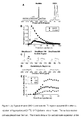
- a series of ethanol and acetate spectra were acquired from one animal, where four acetate spectra were acquired followed by a single ethanol spectrum (TR 1.0s) and this pattern was repeated over a period of 120 s ( Figure 1 ).
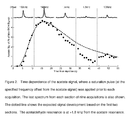
- spectra were collected using a repeated acquisition pattern, where nine acetate spectra were acquired followed by a single ethanol spectrum (TR 1.1 s). Within each repeat, every spectral acquisition was preceded by a saturation pulse (1s hard pulse with a B 1 field of 100 Hz) at 100 kHz (control saturations 1 and 2 (see Figure 2 )), -1840Hz (control saturation 3), 1840 Hz (saturation at the acetaldehyde resonance frequency) or at 100 kHz (control saturation 4) from the acetate resonance frequency.
- the buffer contained 100 mM TMSP (2,2,3,3-D4 sodium-3-trimethylsilylpropionate) as an intensity and chemical shift standard (Cambridge Isotope Laboratories, Inc. Andover MA, US). 13 C spectra (the sum of 1024 transients) were acquired under fully relaxed conditions at 125 MHz (Bruker Avance II + 500 MHz spectrometer) into 25,294 data points using a 90° pulse, a sweep width of 5 kHz, and a TR of 35 seconds.
- TMSP 2,2,3,3-D4 sodium-3-trimethylsilylpropionate
- Integrated intensities of the 2- 13 C ethanol and 2- 13 C acetate resonances were normalized to that of TMSP and multiplied by the methyl 13 C concentration in 100 mM TMSP (3.33 mM) in order to convert to acetate or ethanol concentrations.
- Liver Tissue Extraction Freeze-clamped livers were homogenized using a manual Potter S homogenizer (Sartorius, Epsom, UK) in 7 volumes (mL per gram wet weight of liver) of ice-cold extraction buffer (50 mM Tris-HCl, pH 7.4 containing 0.25 M sucrose, 0.1 % v/v 2-mercaptoethanol, 1 mM EDTA and protease inhibitor cocktail (Roche)). Ten strokes of 5 seconds (each followed by a 5 second pause) at 1000 r.p.m. were used. Homogenates were centrifuged at 800 g (Eppendorf 5415D benchtop centrifuge) at 4°C.
- the supernatant was extracted by the addition of 20 % v/v of extraction buffer containing 5% v/v of Triton X-100.
- the extracts were centrifuged at 16200 g at 4°C to remove debris.
- Supernatants were kept on ice and used for enzyme assays.
- ALDH2 activity assay The assay mixture containing 0.5 mM NAD + , 0.1 % v/v of 2-mercaptoethanol, 200 mM KCl in 100 mM sodium pyrophosphate buffer, pH 9.0. The sample of liver extract was pre-incubated at room temperature for 20 minutes and the reaction initiated by the addition of propionaldehyde to a final concentration of 20 ⁇ M.
- the assay measures predominantly ALDH2 activity ( Klyosov, A.A., Rashkovetsky, L.G., Tahir, M.K., Keung, W.M., "Possible role of liver cytosolic and mitochondrial aldehyde dehydrogenase in acetaldehyde metabolism.”, Biochemistry 1996; 35: 4445-4456 ; Eriksson, C.J., Marselos, M., Koivula, T., "Role of cytosolic liver aldehyde dehydrogenase in the oxidation of acetaldehyde during ethanol metabolism in vivo.”, Biochem.J.
- NADH adenosine dehydrogenase
- a Tecan Sunrise 96 well plate reader One unit of ALDH activity is defined as the amount of enzyme that oxidizes 1 ⁇ mol of propionaldehyde (and reduces 1 ⁇ mol of NAD + ) per minute. All assays were carried out at 25°C.
- the disulfiram - sensitive, mitochondrial ('low K m ') isoform of ALDH is primarily responsible for acetaldehyde oxidation in the hepatocyte during ethanol metabolism and accounts for approximately 60 - 80% of acetaldehyde oxidation in the liver in both healthy humans ( Forte-McRobbie, C.M., Pietruszko, R., "Aldehyde dehydrogenase content and composition of human liver.”, Alcohol 1985; 2: 375-381 ) and in rodents ( Klyosov, A.A., Rashkovetsky, L.G., Tahir, M.K., Keung, W.M., "Possible role of liver cytosolic and mitochondrial aldehyde dehydrogenase in acetaldehyde metabolism.”, Biochemistry 1996; 35: 4445-4456 ).
- the other enzymes including the cytosolic ('high Km') ALDH1 isoform, account for the remaining 20 - 40 % ( Klyosov, A.A., Rashkovetsky, L.G., Tahir, M.K., Keung, W.M., "Possible role of liver cytosolic and mitochondrial aldehyde dehydrogenase in acetaldehyde metabolism.”, Biochemistry 1996; 35: 4445-4456 ; Eriksson, C.J., Marselos, M., Koivula, T., "Role of cytosolic rat liver aldehyde dehydrogenase in the oxidation of acetaldehyde during ethanol metabolism in vivo.”, Biochem.J.
- a limitation of the method is the requirement that the tissue contain ADH activity, so for example it could not be used directly in heart muscle to measure ALDH2 activity as it lacks ADH. Nevertheless measurements in liver could still be used to assess the efficacy of drugs targeted at ALDH2. Measurements with hyperpolarized [1- 13 C] acetaldehyde would remove this requirement for the presence of ADH activity, however these are likely to be limited by unacceptable toxicity of the aldehyde ( Von Burg, R., Stout, T., "Acetaldehyde.”, J.Appl.Toxicol. 1991; 11: 373-376 ).
- hyperpolarized [1- 13 C, U- 2 H 5 ] ethanol also offers a new avenue for elucidating certain aspects of ethanol metabolism, for example the possibility of oxidation of ethanol by the brain, which until now has been limited to ex vivo studies ( Wang, J., Du, H., Jiang, L., Ma, X., de Graaf, R.A., Behar, K.L., Mason, G.F., "Oxidation of ethanol in the rat brain and effects associated with chronic ethanol exposure.” , Proc.Natl.Acad.Sci USA 2013; 110:14444-14449 ).
Landscapes
- Health & Medical Sciences (AREA)
- Chemical & Material Sciences (AREA)
- Medicinal Chemistry (AREA)
- Nuclear Medicine, Radiotherapy & Molecular Imaging (AREA)
- Radiology & Medical Imaging (AREA)
- Epidemiology (AREA)
- Life Sciences & Earth Sciences (AREA)
- Animal Behavior & Ethology (AREA)
- General Health & Medical Sciences (AREA)
- Public Health (AREA)
- Veterinary Medicine (AREA)
- Measuring Or Testing Involving Enzymes Or Micro-Organisms (AREA)
Abstract
Description
- The present invention relates to a new composition which may be used as a contrast agent and to a method of 13C magnetic resonance (MR) detection which can be used to determine aldehyde dehydrogenase (ALDH) or also alcohol dehydrogenase (ADH) activity.
- The metabolism of alcohol proceeds via two steps, as indicated in the schematic representation below:

- The major pathway of oxidative metabolism of ethanol involves alcohol dehydrogenase (ADH) which produces acetaldehyde. At high ethanol concentration the enzymes catalase and P4502E1 may also display some activity. Acetaldehyde is in turn metabolized to acetate by the action of aldehyde dehydrogenase (ALDH), mainly by ALDH2.
- Aldehyde Dehydrogenase (ALDH2) is an emerging drug target for the treatment of heart disease, cocaine and alcohol dependence and conditions caused by genetic polymorphisms in ALDH2. Non-invasive measurement of ALDH2 activity in vivo could inform the development of these drugs and accelerate their translation to the clinic.
- The object of the present invention is to provide a composition and a method for the determination of ALDH or ADH activity in vitro or in vivo in a human or non-human animal body.
- Ethanol is oxidized by the liver to produce acetate, the majority of which exits via the hepatic vein and is metabolized further in other tissues (Lundquist, F. "Production and utilization of free acetate in man", Nature 1962; 193; 579-580). At low to medium blood concentrations of ethanol (up to 24 mM in humans) the bulk of its oxidation to acetaldehyde and further to acetate is via the coupled reactions catalyzed by the NAD+-dependent dehydrogenases: cytosolic alcohol dehydrogenase (ADH) and mitochondrial aldehdyde dehydrogenase (ALDH2) (Lieber, C.S. "Ethanol metabolism, cirrhosis and alcoholism",Clin.Chim. Acta 1997; 257: 59-84; Korsten, M.A., Matsuzaki, S., Feinman, L., Lieber C.S. "High blood acetaldehyde levels after ethanol administration. Difference between alcoholic and nonalcoholic subjects", N. Engl. J. Med. 1975; 292:386-389). Microsomal NADPH-dependent cytochrome CYP2E1 and peroxisomal H2O2 - dependent catalase can also oxidize ethanol to acetaldehyde, their relative contributions increasing, for example, during exposure to high-doses of ethanol and in starvation respectively (Lieber, C.S. "Microsomal ethanol-oxidizing systems (MEOS): the first 30 years (1968-1998) - review." Alcohol Clin. Exp. Res. 1999; 23:991-1007; Handler, J.A.; Thurman, R.G." Catalase-dependent ethanol oxidation in perfused rat liver. Requirement for fatty-acid stimulated H2O2 production by peroxisomes.", Eur.J.Biochem. 1988; 176: 477-484). Ethanol oxidation by hepatic dehydrogenases causes an acute increase in the NADH/NAD+ ratio, leading to an increase in cytosolic lactate concentrations and disturbances of lipid metabolism, with consequent onset of alcoholic fatty liver disease (Lieber, C.S. "Ethanol metabolism, cirrhosis and alcoholism",Clin.Chim. Acta 1997; 257: 59-84; Krebs, H.A., Freedland, R.A.; Hems, R., Stubbs, M. "Inhibition of hepatic gluconeogensis by ethanol.", Biochem.J. 1969; 112: 117-124). Adaptive induction of hepatic CYP2E1 activity by chronic ethanol exposure, which increases the liver's capacity to produce acetaldehyde from ethanol, is accompanied by a decreasing capacity of the liver mitochondlia to oxidize this acetaldehyde. This decreased capacity results from functional and structural impairment caused by exposure to the elevated acetaldehyde concentrations (Lieber, C.S., DeCarli, L.M. "Ethanol oxidation by hepatic microsomes: adaptive increase after ethanol feeding." Science 1968; 162:917-918; Hasumura; Y., Teschke, R., Lieber, C.S. "Acetaldehyde oxidation by hepatic mitochondria: decrease after chronic ethanol consumption." Science 1975; 189: 727-729; Hoek, J.B., Cahill, A., Pastorino, J.G. "Alcohol and mitochondria: a dysfunctional relationship." Gastroenterology 2002; 122: 2049-2063). Inefficient disposal of acetaldehyde and its accumulation, both intra- and extra-hepatically, is the direct cause of liver cirrhosis, and is implicated in alcohol-induced cardiomyopathy and pancreatitis, and in some types of cancer, particularly in the upper aerodigestive tract (UADT) (Yokoyama, A., Omori, T. Yokoyama, T. "Alcohol and aldehyde dehydrogenase polymorphisms and a new strategy for prevention and screening for cancer in the upper aerodigestive tract in East Asians." Keio J. Med.; 59:115-130, Poschl, G., Seitz, H.K., "Alcohol and cancer." Alcohol 2004; 39: 155-165).
- The capacity to oxidize endogenous and exogenous aldehydes, conferred upon extra-hepatic tissues by expression of ALDH2, is fundamental for their normal function. Pharmacological activation of ALDH2 protects the myocardium from ischemic injury by stimulating the oxidative activity of ALDH2 towards 4-hydroxy-2-nonenal, a toxic aldehyde produced in ischemic heart (Chen, C.H., Budas, G.R., Churchill, E.N., Disatnik, M.H., Hurley, T.D., Mochly-Rosen, D. "Activation of aldehyde dehydrogenase-2 reduces ischemic damage to the heart." Science 2008; 321: 1493-1495; Sun, L., Ferreira, J.C., Mochly-Rosen, D. "ALDH2 activator inhibits increased myocardial infarction injury by nitroglycerin tolerance." Sci.Transl.Med. 2011 (107): 107-111, Chen, C.H., Gray, M.O., Mochly-Rosen, D. "Cardioprotection from ischemia by a brief exposure to physiological levels of ethanol: role of epsilon protein kinase." C.Proc. Natl. Acad. Sci. USA 1999; 96: 12784-12789). ALDH2 is expressed in brain tissue, where it is essential for the maintenance of dopamine (DA) homeostasis and the oxidation of the endogenous aldehydes DOPAL (3,4-dihydroxyphenylacetaldehyde) and DOPEGAL (3,4-dihydroxyphenylglycolaldehyde). DOPEGAL, DOPAL and DA accumulation is neurotoxic and disturbances of their metabolism are implicated in neurodegenerative disorders such as Parkinson's disease (PD) and in Alzheimer's disease (AD) (Marchitti, S.A., Deitrich, R.A., Vasiliou, V. "Neurotoxicity and metabolism of the catecholamine-derived 3,4-dihydroxyphenylacetaldehyde and 3,4-dihydroxyphenylglycolaldehyde: the role of aldehyde dehydrogenase.",Pharmacol. Rev. 2007; 59: 125-150; LaVoie, M.J., Ostaszewski, B.L., Weihofen, A., Schlossmacher, M.G., Selkoe, D.J., "Dopamine covalently modifies and functionally inactivates parkin.", Nat.Med. 2005; 11: 1214-1221). In addition, DA signaling in brain plays a major role in establishing addictive behaviors and in triggering relapse (Yao, L., Fan, P., Arolfo, M., Jiang, Z., Olive, M.F., Zablocki, J., Sun, H.L., Chu, N., Lee, J., Kim, H.Y., Leung, K., Shryock, J., Blackburn, B., Diamond, I., "Inhibition of aldehyde dehydrogenase-2 suppresses cocaine seeking by generating THP, a cocain use-dependent inhibitor of dopamine synthesis.", Nat. Med. 2010; 16: 1024-1028; Arolfo, M.P., Overstreet, D.H., Yao, L., Fan, P., Lawrence, A.J., Tao, G., Keung, W.M., Vallee, B.L., Olive, M.F., Gass, J.T., Rubin, E., Anni, H., Hodge, C.W., Besheer, J., Zablocki, J., Leung, K., Blackburn, B.K., Lange, L.G., Diamond, L, "Suppression of heavy drinking and alcohol seeking by a selective ALDH-2 inhibitor.", Alcohol Clin.Exp.Res., 2009; 33: 1935-1944).
- The role of ALDH2 in human health is illustrated by the inability of individuals carrying the ALDH2*2 allele, which encodes an inactive E487K mutant, to dispose efficiently of toxic aldehydes. ALDH2*2 allele carriers are at higher risk of increased morbidity after myocardial infarction and are more likely to develop late-onset AD and cancers in the UADT (Yokohama, A., Omori, T., Yokohama T., "Alcohol and aldehyde dehydrogenase polymorphisms and a new strategy for prevention and screening for cancer in the upper aerodigestive tract in East Asians.", Keio J. Med.; 59:115-130; Chen, C.H., Budas, G.R., Churchill, E.N., Disatnik, M.H., Hurley, T.D., Mochly-Rosen, D., "Activation of aldehyde dehydrogenase-2 reduces ischemic damage to the heart.", Science 2008; 321: 1493-1495; Kamino, K., Nagasaka, K., Imagawa, M., Yamamoto, H., Yoneda, H., Ueki, A., Kitamura, S., Namekata, K., Miki, T., Ohta, S., "Deficiency in mitochondrial aldehyde dehydrogenase increases the risk for late-onset Alzheimer's disease in the Japanese population.", Biochem.Biophys.Res.Commun. 2000; 273: 192-196; Perez-Miller, S., Younus, H., Vanam, R., Chen, C.H., Mochly-Rosen, D., Hurley, T.D., " Alda-1 is an agonist and chemical chaperone for the common human aldehyde dehydrogenase 2 variant.", Nat. Struct. Mol. Bio 2010; 17:159-164). The number of ALDH2*2 allele carriers worldwide is estimated to be at least 540 million, comprising approximately 40% of native East Asian populations (Perez-Miller, S., Younus, H., Vanam, R., Chen, C.H., Mochly-Rosen, D., Hurley, T.D., " Alda-1 is an agonist and chemical chaperone for the common human aldehyde dehydrogenase 2 variant.", Nat. Struct. Mol. Bio 2010; 17:159-164).
- The recently developed ALDH2 activator, Alda-1, was shown to confer protection against myocardial ischemic damage in a rat model of infarction (Chen, C.H., Budas, G.R., Churchill, E.N., Disatnik, M.H., Hurley, T.D., Mochly-Rosen, D., "Activation of aldehyde dehydrogenase-2 reduces ischemic damage to the heart.", Science 2008; 321: 1493-1495; Sun, L., Ferreira, J.C., Mochly-Rosen, D., "ALDH2 activator inhibits increased myocardial infarction injury by nitroglycerin tolerance.", Sci.Transl.Med. 2011 (107): 107-111) and a ALDH2- specific inhibitor, CVT-10216, inhibited addictive substance seeking and relapse in rat models of cocaine addiction and alcoholism (Yao, L., Fan, P., Arolfo, M., Jiang, Z., Olive, M.F., Zablocki, J., Sun, H.L., Chu, N., Lee, J., Kim, H.Y., Leung, K., Shryock, J., Blackburn, B., Diamond, L, "Inhibition of aldehyde dehydrogenase-2 suppresses cocaine seeking by generating THP, a cocain use-dependent inhibitor of dopamine synthesis.", Nat. Med. 2010; 16: 1024-1028; Arolfo, M.P., Overstreet, D.H., Yao, L., Fan, P., Lawrence, A.J., Tao, G., Keung, W.M., Vallee, B.L., Olive, M.F., Gass, J.T., Rubin, E., Anni, H., Hodge, C.W., Besheer, J., Zablocki, J., Leung, K., Blackburn, B.K., Lange, L.G., Diamond, L, "Suppression of heavy drinking and alcohol seeking by a selective ALDH-2 inhibitor.", Alcohol Clin.Exp.Res. 2009; 33: 1935-1944).
- In addition, the catalytic activity of the E487K ALDH2 mutant can be partially restored by Alda-1, which could have important implications for clinical management of diseases affecting carriers of the ALDH2*2 allele (Perez-Miller, S., Younus, H., Vanam, R., Chen, C.H., Mochly-Rosen, D., Hurley, T.D., "Alda-1 is an agonist and chemical chaperone for the common human aldehyde dehydrogenase 2 variant.", Nat. Struct. Mol. Biol. 2010; 17: 159-164). A non-invasive method for measuring ALDH activity in vivo would inform preclinical development of these drugs and could accelerate their translation to the clinic.
- Much of what is known about ethanol metabolism derives from ex vivo studies on perfused organs, isolated hepatocytes and tissue samples (Krebs, H.A., Freedland, R.A., Hems, R., Stubbs, M., "Inhibition of hepatic gluconeogenesis by ethanol.", Biochem.J. 1969; 112: 117-124; Yao, C.T., Lai, C.L., Hsieh, H.S., Chi, C.W., Yin, S.J., "Establishment of steady-state metabolism of ethanol in perfused rat liver: the quantitative analyses using kinetic mechanism-based rate equations of alcohol dehydrogenase.", Alcohol 2010; 44: 541-551; Klyosov, A.A., Rashkovetsky, L.G., Tahir, M.K., Keung, W.M., "Possible role of liver cytosolic and mitochondrial aldehyde dehydrogenases in acetaldehyde metabolism.", Biochemistry 1996; 35: 4445-4456). Investigation of ethanol metabolism in vivo has been limited to magnetic resonance spectroscopy (MRS) studies, which have been used, for example, to investigate the distribution of 13C label in rat brain metabolite pools following systemic administration of [1-13C] ethanol (Xiang, Y., Shen, J., "In vivo detection of intermediate products of [1-13C]ethanol in the brain using 13C MRS.", NMR Biomed. 2011; 24: 1054-1062). The main limitation of using 13C MRS in this way is its low sensitivity, which results in relatively low temporal and spatial resolution.
- The recent introduction of dissolution dynamic nuclear polarization (DNP) (Ardenkjaer-Larsen, J.H., Fridlund, B., Gram, A., Hansson, G., Hansson, L., Lerche, M.H., Servin, R., Thaning, M., Golman, K., "Increase in signal-to-noise ratio of >10,000 times in liquid-state NMR.", Proc. Natl. Acad. Sci. USA 2003; 100: 10158-10163), which can increase the sensitivity of 13C MRS by at least four orders of magnitude, has made possible measurements of the metabolism of many 13C-labeled substrates in vivo (Gallagher, F.A., Kettunen, M.L, Brindle; K.M., "Biomedical applications of hyperpolarized 13C magnetic resonance imaging.", Progress in Nuc. Mag. Res. Spec. 2009; 55: 285-295; Kurhanewicz, J., Vigneron, D.B., Brindle, K.M., Chekmenev; E.Y, Comment, A., Cunningham, C.H., Deberardinis, R.J., Green, G.G., Leach, M.O., Rajan, S.S., Rizi, R.R., Ross, B.D., Warren, W.S., Malloy, C.R., "Analysis of cancer metabolism by imaging hyperpolarized nuclei: prospects for translation to clinincal research.", Neoplasia 2011; 13: 81-97). The activity of ALDH2 has been estimated indirectly from measurements of hyperpolarized 13C label exchange between injected [1-13C]pyruvate and endogenous lactate, in the reaction catalyzed by lactate dehydrogenase (LDH) (Josan, S., Spielman, D., Yen, Y.F., Hurd, R., Pfefferbaum, A., Mayer, D., "Fast volumetric imaging of ethanol metabolism in rat liver with hyperpolarized [1-13C]pyruvate.", NMR Biomed. 2012; 25: 993-999; Spielman, D.M., Mayer, D., Yen, Y.F., Tropp, J., Hurd, R.E., Pfefferbaum, A., "In vivo measurement of ethanol metabolism in the rat liver using magnetic resonance spectroscopy of hyperpolarized [1-13C]pyruvate.", Magn.Reson.Med. 2009; 62: 307-313). This exchange was increased in rat liver by ethanol injection, which increased the NADH/NAD+ ratio, and was decreased by the ALDH2 inhibitor, disulfiram. An increase in the NADH/NAD+ ratio strongly stimulates the LDH-catalyzed exchange (Witney, T.H., Kettunen, M.I., Brindle, K.M., "Kinetic modeling of ). However, this indirect measurement assumes that during ethanol metabolism the change in the mitochondrial NADH/NAD+ ratio mirrors its cytosolic equivalent (Josan, S., Xu, T., Yen, Y.F., Hurd, R., Ferreira, J., Chen, C.H., Mochly-Rosen, D., Pfefferbaum, A., Mayer, D., Spielman, D., "In vivo measurement of aldehyde dehydrogenase-2 activity in rat liver ethanol model using dynamic MRSI of hyperpolarized [1-13C]pyruvate.", NMR Biomed. 2013; 26: 607-612). This is not the case, for example, in physiological states where the relative contribution of NAD+-independent pathways of ethanol oxidation to acetaldehyde, such as that catalyzed by CYP2E1, become important (Korsten, M.A., Matsuzaki, S., Feinman, L., Lieber, C.S., "High blood acetaldehyde levels after ethanol administration. Difference between alcoholic and non-alcoholic subjects.", N. Engl. J.Med. 1975; 292: 386-389).
- The present invention adresses the need for new improved compositions and methods for determining ALDH activity or ADH activity, especially ALDH-2 activity in vitro or in vivo.
- It has thus been demonstrated that oxidation of hyperpolarized perdeuterated [1-13C] ethanol ([1-13C, U-'H5]ethanol) to [1-13C] acetate, in the coupled reactions catalyzed by cytosolic ADH and mitochondrial ALDH2, can be measured and imaged directly in mouse liver in vivo using 13C MRS/magnetic resonance spectroscopic imaging (MRSI). The influence of ALDH2 activity on this label flux was demonstrated by inhibiting the enzyme with the irreversible inhibitor, disulfiram (Klyosov, A.A., Rashkovetsky, L.G., Tahir, M.K., Keung, W.M., "Possible role of liver cytosolic and mitochondrial aldehyde dehydrogenase in acetaldehyde metabolism.", Biochemistry 1996; 35: 4445-4456). The present invention thus provides a composition comprising hyperpolarised [13C]ethanol, which ethanol is deuterated on at least one hydrogen atom.
- The said composition is preferably a MR contrast agent.
- In a preferred embodiment of the
invention carbon 1 of the ethanol is 13C-labelled. - In a further embodiment of the invention carbon 2 of the ethanol is 13C-labelled.
- In a still further embodiment of the invention both
carbon 1 and carbon 2 of the ethanol are 13C-labelled. - A further embodiment of the invention is a composition comprising hyperpolarised [13C]ethanol, wherein said ethanol is deuterated on at least two hydrogen atoms.
- In a still further embodiment of the invention, the ethanol is deuterated on at least three hydrogen atoms.
- In a further embodiment of the invention, the ethanol is deuterated on at least four hydrogen atoms.
- In still another embodiment of the invention, the ethanol is deuterated on five hydrogen atoms.
- In a further preferred embodiment the hydroxy hydrogen is not deuterated.
- A preferred embodiment of the invention comprises a composition wherein the deuterated [13C]ethanol is [1-13C, U-'H5]. U indicates that the hydrogen is uniformly labeled.
- The invention further comprises a composition as described above for use in a method for determining ALDH activity, wherein the signal of 13C-acetate and optionally the signal of 13C-ethanol and/or 13C-acetaldehyde is/are detected by 13C-MR detection.
- In another embodiment the signal of 13C-acetate is determined.
- In another embodiment the signal of 13C-acetaldehyde is determined.
- In still another embodiment the signal of 13C-ethanol is determined.
- Aldehyde dehydrogenase ALDH comprises a number of families, including ALDH1, ALDH2 and ALDH3.
- According to a preferred embodiment the use is in a method for determining ALDH2 activity.
- According to a further embodiment the use is in a method for determining ALDH1 activity.
- According to a still further embodiment the use is in a method for determining ALDH3 activity.
- Another embodiment of the invention is a composition for use in an in vivo method for determining ALDH activity.
- Still another embodiment of the invention is a composition for use in an in vivo method for determining ADH activity.
- The method is preferably a method for determining ALDH or ADH activity in a human or non-human animal body.
- Still another embodiment of the invention is a composition for use in an in vitro method for determining ALDH activity.
- Another embodiment of the invention is a composition for use in an in vitro method for determining ADH activity.
- The method is preferably a method for determining ALDH or for determining ADH activity in a cell culture, in body samples or in isolated organs derived from a human or non-human animal body.
- Another embodiment of the present invention is a composition as described above, for use in a method for determining ALDH activity, wherein the signal of 13C-acetate and the signal of 13C-ethanol are detected by 13C-MR detection.
- Still another embodiment of the present invention is a composition as described above for use in a method for determining ALDH activity, wherein the signal of 13C-acetate and the signal of 13C-acetaldehyde are detected by 13C-MR detection.
- Still another embodiment of the present invention is a composition as described above for use in a method for determining ALDH activity, wherein the signal of 13C-acetate, the signal of 13C-acetaldehyde and the signal of 13C-ethanol are detected by 13C-MR detection.
- Another embodiment of the present invention is a composition as described above for use in a method for determining ADH activity, wherein the signal of 13C-acetaldehyde and optionally the signal of 13C-ethanol is/are detected by 13C-MR detection.
- Still another embodiment of the present invention is a method for determining ALDH activity by 13C-MR detection using the composition of
claim 1, wherein the signal of 13C-acetate and optionally the signal of 13C-ethanol and/or 13C-acetaldehyde is/are detected. - Another embodiment of the present invention is a method for determining ADH activity by 13C-MR detection using the composition of
claim 1, wherein the signal of 13C-acetaldehyde and optionally the signal of 13C-ethanol is/are detected. - In a preferred embodiment of the invention said determination of ADH activity is carried out in tissue different from liver tissue.
- In a preferred embodiment of the method the signal or signals are used to generate a metabolic profile.
- In another embodiment of the method of the invention, the method is carried out in vivo or in vitro and the signal or signals is/are used in assessing the efficacy of potential drugs to alter ALDH or ADH activity.
- In still another embodiment of the method of the invention, the method is carried out in vivo or in vitro and the signal or signals is/are used to assess response to treatment and/or treatment efficacy in diseased patients undergoing treatment for their disease.
- In still another embodiment of the method of the invention, the method is carried out in vivo or in vitro and the signal or signals is/are used for identifying patients at risk of developing a disease and/or candidates for preventive measures to avoid development of a disease.
- Finally the present invention provides a method for determining ALDH activity by 13C-MR directly in the liver.
- The composition according to the invention may, as mentioned above, be used as a contrast medium for in vivo 13C-MR detection, i.e. in living human or non-human animal beings. Further the composition may be used as an contrast medium for in vitro 13C-MR detection, e.g. in cell cultures or body samples, ex vivo tissue obtained from a biopsy or isolated organs, all of those dervied from a human or non-human animal body.
- The terms "hyperpolarised" and "polarised" are used interchangeably hereinafter and denote a nuclear polarisation level in excess of 0.1%, more preferred in excess of 1% and most preferred in excess of 10%.
- Hyperpolarisation of NMR active 13C-nuclei may be achieved by different methods which are for instance described in
WO-A-98/30918 WO-A-99/24080 WO-A-99/35508 - One way of obtaining hyperpolarised 13C-ethanol is by polarisation transfer from a hyperpolarised noble gas, which is described in
WO-A- 98/30918 - Another way for obtaining hyperpolarised 13C-ethanol is that polarisation is imparted to 13C-nuclei by thermodynamic equilibration at a very low temperature and high field. Hyperpolarisation compared to the operating field and temperature of the NMR spectrometer is effected by use of a very high field and very low temperature ("brute force"). The magnetic field strength used should be as high as possible, suitably higher than 1 T, preferably higher than 5 T, more preferably higher than 15 T or more and especially preferably 20 T or more. The temperature should be very low, e.g. 4.2 K or less, preferably 1.5 K or less, more preferably 1.0 K or less, especially preferably 100mK or less.
- Another way for obtaining hyperpolarised 13C-ethanol is the spin refrigeration method. This method covers spin polarisation of a solid compound or system by spin refrigeration polarisation. The system is doped with, or intimately mixed with, suitable crystalline paramagnetic material such as Ni2+, lanthanide or actinide ions with a symmetry axis of order three or more. The instrumentation is simpler than required for DNP with no need for a uniform magnetic field since no resonance excitation field is applied. The process is carried out by physically rotating the sample around an axis perpendicular to the direction of the magnetic field. The prerequisite for this method is that the paramagnetic species has a highly anisotropic g-factor. As a result of the sample rotation, the electron paramagnetic resonance will be brought into contact with the nuclear spins, leading to a decrease in the nuclear spin temperature. Sample rotation is carried out until the nuclear spin polarisation has reached a new equilibrium.
- To polarise a chemical entity, i.e. compound, by the DNP method, a composition comprising the compound to be polarised and a DNP agent is prepared which is then frozen and inserted into the DNP polariser for polarisation. After the polarisation, the frozen solid hyperpolarised composition is rapidly transferred into the liquid state, either by melting it or by dissolving it in a suitable dissolution medium. Dissolution is preferred and the dissolution process of a frozen hyperpolarised composition and suitable devices therefore are described in detail in
WO-A-02/36005 - In order to obtain a high polarisation level in the compound to be polarised said compound and the DNP agent need to be in intimate contact during the DNP process. This is not the case if the composition crystallizes upon being frozen or cooled. To avoid crystallization, either glass formers need to be present in the composition or compounds need to be chosen for polarisations that do not crystallize upon being frozen, but rather form a glass.
- If the hyperpolarised 13C-2H ethanol used in the method of the invention is obtained by DNP, the sample to be polarised, i.e. 13C ethanol and a DNP agent may further comprise a paramagnetic metal ion. The presence of paramagnetic metal ions in the composition to be polarised by DNP has been found to result in increased polarisation levels, as described in detail in
WO-A2-2007/064226 , which is incorporated herein by reference. Hence in a preferred embodiment the composition to be polarised comprises [1-13C, U-2H5]ethanol, a trityl radical and optionally a paramagnetic metal ion. When said paramagnetic metal ion is present this is preferably present in the form of gadoteric acid which comprises Gd3+. Such MR imaging medium is preferably obtained by dynamic nuclear polarisation. - As mentioned earlier, compositions according to the invention may be used as contrast medium for in vivo ALDH or ADH activity determination by 13C-MR determination, i.e. in living human or non-human beings. For this purpose, the contrast medium is provided as a composition that is suitable for being administered to a living human or non-human animal body. Such a contrast medium preferably comprises, in addition to the MR active agent, [1-13C, U-2H5]ethanol, an aqueous carrier, preferably a physiologically tolerable and pharmaceutically acceptable aqueous carrier like water, a buffer solution or saline. Such an composition may further comprise conventional pharmaceutical or veterinary carrier or exipients, e.g. formulation aids such as are conventional for diagnostic compositions in human or veterinary medicine.
- In one embodiment, the method of the invention is carried out in vitro and the information obtained is used in assessing the efficacy of potential drugs that alter ALDH activity, e.g. in a drug discovery and/or screening process. In such an embodiment, the method of the invention may be carried out in suitable cell cultures or tissue. The cells or the tissue is contacted with the potential drug and ALDH or ADH activity is determined by 13C-MR detection according to the method of the invention. Information about the efficacy of the potential drug may be obtained by comparing the ALDH or ADH activity of the treated cells or tissue with the ALDH or ADH activity of non-treated cells or tissue. Alternatively, the variation of ALDH or ADH activity may be determined by determining the ALDH or ADH activity of cells or tissue before and after treatment. Such a drug efficacy assessment may be carried out on for instance microplates, which would allow parallel testing of various potential drugs and/or various doses of potential drugs and thus would make this suitable for high-throughput screening.
- In another preferred embodiment, the method of the invention is carried out in vivo and the information obtained is used in assessing the efficacy of potential drugs that alter ALDH or ADH activity in vivo. In such an embodiment, the method of the invention may be carried out in, for instance, test animals or volunteers in a clinical trial. To the test animal or the volunteer a potential drug is administered and ALDH or ADH activity is determined by 13C-MR detection according to the method of the invention. Information about the efficacy of the potential drug may be obtained by determining the variation of ALDH or ADH activity before and after treatment, e.g. over a certain period with repeated treatment. Such a drug efficacy assessment may be carried out in pre-clinical research (test animals) or in clinical trials.
- In another embodiment, the method of the invention is carried out in vivo or in vitro and the information obtained is used to assess response to treatment and/or to determine treatment efficacy in patients undergoing treatment for their disease.
- As stated earlier, the information obtained by the method of the invention may be used in a subsequent step for various purposes. Another purpose may be to gain insight into disease states, i.e. identify patients at risk, early detection of diseases, evaluating disease progression, severity and complications related to a disease.
- In yet another embodiment, the method of the invention is carried out in vivo or in vitro and the information obtained is used to monitor progression of a disease. This may be useful for diseases or disorders where the disease has not progessed to a level where treatment is indicated or recommended, e.g. because of severe side-effects associated with said treatment. In such a situation the choice of action is "watchful waiting", i.e. the patient is closely monitored for disease progression and early detection or deterioration. In this embodiment, the method of the invention may be used to determine the initial ALDH or ADH activity and to make subsequent ALDH or ADH activity determinations over a period of time at a certain frequency. It can be expected that a decrease or change in ALDH or ADH activity may indicate progress or worsening of a disease and the said decrease can be used by the physician to decide on commencement of treatment. To carry out the method of the invention for the above-mentioned purpose in vitro does of course require that suitable samples from a patient under treatment are obtainable, e.g. tissue samples or body samples.
- Further, the imaging medium according to the invention may be used as contrast medium for in vitro ALDH or ADH activity determination by 13C-MR detection, i.e. in cell cultures or body samples, ex vivo tissues such as biopsy tissue or isolated organs. For this purpose, the composition is provided as a composition that is suitable for being added to, for instance, cell cultures, body samples, ex vivo tissues like biopsy tissue or isolated organs. Such a composition preferably comprises in addition to the MR active agent, deuterated 13C ethanol, a solvent which is compatible with and used for in vitro cell or tissue assays, for instance DMSO or methanol or solvent mixtures comprising an aqueous carrier and a non aqueous solvent, for instance mixtures or DMSO and water or a buffer solution or methanol and water and a buffer solution. As is apparent for a skilled person, pharmaceutically acceptable carriers, excipients and formulation aids may be present in such a composition but are not required for such a purpose.
- If the composition used in the method of the invention is used for in vivo dtermination of ALDH2 activity, i.e. in a living human or non-human animal body, said medium is preferably administered to said body by any route known in the art, preferable parenterally, more preferable intravenously. Generally, the body under examination is positioned in an MR magnet. Dedicated 13C-MR and 1H-MR or double tuned 13C/1H RF-coils are positioned to cover the area of interest. Exact dosage and concentration of the composition will depend upon a variety of factors such as toxicity and the administration route. At specified time after administration, an MR imaging sequence is applied preferably one that encodes the volume of interest in a combined frequency and spatially selective way. The exact time of applying an MR sequence is highly dependent on the volume of interest and the species.
- The ALDH or ADH activity map or measurement generated in the preferred embodiment of the use according to the invention is indicative for the ALDH or ADH activity of the body, part of the body, cells, tissue body sample etc. under examination and said information obtained may be used in a subsequent step for various purposes.
-
-
Figure 1 shows:- (a) Typical ethanol (EtOH) and acetate 13C signals acquired 20 s after i.v. injection of hyperpolarized [1-13C, U-2H5]ethanol into a mouse. The surface receive coil was placed over the liver. The inserts show a 10x vertical scale expansion of the acetate signal and a resolution-enhanced ethanol signal showing the splitting due to carbon-deuterium coupling.
- (b) Time dependence of the ethanol and acetate signals following ethanol injection. The amplitude of the acetate signal has been multiplied 10x.
- (c-e) The effect of disulfiram treatment on acetate signal intensity. The [1-13C]acetate (175 - 190 ppm) (c) and [1 - 13C] acetaldehyde (200 - 215 ppm) (d) regions of the spectra are shown from animals treated with the indicated disulfiram concentrations (mg/kg body weight) ∼24 h prior to the MR experiment.
- (e) Time dependence of the acetate signal intensity following disulfiram treatment at the indicated concentrations (mg/kg body weight).
-
Figure 2 shows:
Time dependence of the acetate signal, where a saturation pulse (at the specified frequency offset from the acetate signal) was applied prior to each acquisition. The last spectrum from each section of nine acquisitions is also shown. The dotted line shows the expected signal development based on the first two sections. The acetaldehyde resonance is at +1.8 kHz from the acetate resonance. -
Figure 3 shows:
Chemical shift images of urea (a), acetate (b) and ethanol (c) superimposed on a reference 1H image (the location of the liver is circled in a). The ethanol CSI was collected 30 s later than CSI of the acetate and urea signals. All images were normalized to the maximum ethanol signal intensity. - 13C T1 measurements in vitro: Measurements were made at 11 T (Bruker Avance II+ 500 MHz spectrometer) using an inversion recovery sequence in samples containing approximately 10 mM [1-13C] ethanol or 1 M ethanol, 10% D2O and 4% BSA (Sigma Aldrich), buffered with PBS to pH 7.5. A TR of 300 seconds and 16 delays between 1 and 200 seconds were used for measurements with [1-13C, U-2H5] ethanol and a TR of 50 seconds and 16 delays between 0.5 and 50 seconds were used for measurements of the natural abundance 13C signal from 1M ethanol.
- A 2:3 glycerol: [1-13C] ethanol mixture, containing 15 mM trityl radical (OX063: tris (8-carboxy- 2,2,6,6-tetra-(hydroxyethyl)-benzo-[1,2-4,50]-bis-(1,3)- dithiole-4-yl)-methyl, sodium salt; GE Healthcare, Little Chalfont, UK) and 1.5 mM gadotelic acid (DOTAREM; Guebert, Roissy, France), was polarized for approximately 120 minutes in a 3.35 T Hypersense polarizer (Oxford Instruments, Abingdon, Oxfordshire, UK) using irradiation at 94.124 GHz. The dissolution buffer (PBS, pH 7.5, 100 mg/L EDTA) was heated to 180°C and pressurized to 10 bar before dissolving the frozen polarized samples. The dissolved sample contained 110 mM [1-13C] ethanol. For measurements of the liquid state polarization a sample of [1-13C] ethanol was polarized and dissolved as described above. Two mL of the sample, containing approximately 60 mM [1-13C] ethanol were injected into 2 mL of PBS buffer, pH 7.4 in a 10 mm NMR tube placed inside a vertical bore 9.4 T NMR spectrometer with a broadband probe tuned to 13C (Varian NMR Instruments, Palo Alto, CA, U.S.). Immediately following injection and approximately 9 seconds after dissolution, 180 single transient spectra, with a nominal pulse flip angle of 6° and 8 kHz spectral width, were acquired with a TR of 1 second. Three 90° pulses were then applied to eliminate the remaining hyperpolarization. A 13C spectrum (the sum of 128 transients) was then acquired using a 6° pulse, a spectral width of 8 kHz, and a TR of 300 seconds. The temperature of the sample was kept at 37°C. The liquid state polarization was calculated from the ratio of the maximal integrated intensity of the hyperpolarized [1-13C] ethanol signal to the integrated intensity of the thermal equilibrium signal corrected for the number of transients.
- All animal experiments were approved by local ethical review committees and performed in accordance with the Animals (Scientific Procedures) Act of 1986. Female CD1 mice (6-8 weeks old) were used in all experiments. Animals were anaesthetized using 3 % isoflurane vapor (Isoflo, Abbotts Laboratories Ltd, Maidenhead, UK) in an oxygen/air mixture. Anesthesia was maintained during the MR experiments with 1-2 % isoflurane vapor in an oxygen/air mixture delivered via a face mask.
- In vivo NMR spectroscopy: A catheter was inserted in a tail vein and the mouse placed in a heated cradle. Throughout the experiment animal breathing rate and core body temperature were monitored using a Biotrig physiological monitor (Small Animal Instruments, Stony Brook, NY), which were within the range of 60-100 bpm and 36-37°C, respectively. A 20 mm diameter surface coil (Rapid Biomedical GmbH, Rimpar, Germany) was placed over the liver and the entire assembly placed in a 13C/1 H volume coil (Rapid Biomedicals, Germany), in a 7T horizontal bore magnet (Varian, Palo Alto, CA). Livers were localized in transverse 1H images, acquired using a spin-echo pulse sequence (TR, 1.5 s; echo time (TE), 10 ms; field of view, 40 mm x 40 mm; data matrix, 128 x 128; slice thickness, 2 mm; 15 slices). Immediately after dissolution, 13C spectroscopic acquisitions were started and 10 µl of the dissolved sample per g body weight, typically 240 µL in total, were injected via the tail vein over a period of 2 seconds. Single transient spectra (sweep width 6 kHz, TE 280 ms) from the entire sensitive volume of the surface coil were acquired using a frequency-selective excitation pulse (450 µs 3-lobe sinc pulse) centered either at 180 ppm (the acetate region of the spectrum) or at 60 ppm (the ethanol region of the spectrum) with a nominal flip angle of 10°. A series of ethanol and acetate spectra were acquired from one animal, where four acetate spectra were acquired followed by a single ethanol spectrum (TR 1.0s) and this pattern was repeated over a period of 120 s (
Figure 1 ). In animals in which ALDH2 was inhibited with disulfiram, spectra were collected using a repeated acquisition pattern, where nine acetate spectra were acquired followed by a single ethanol spectrum (TR 1.1 s). Within each repeat, every spectral acquisition was preceded by a saturation pulse (1s hard pulse with a B1 field of 100 Hz) at 100 kHz (control saturations 1 and 2 (seeFigure 2 )), -1840Hz (control saturation 3), 1840 Hz (saturation at the acetaldehyde resonance frequency) or at 100 kHz (control saturation 4) from the acetate resonance frequency. In three animals, two chemical shift images (FOV 40x40mm, 32x32 data matrix,TR 30 ms, TE 0.58 ms) were acquired, starting 15 s after ethanol injection, where the images were acquired first from acetate and then ethanol. All data were phase and baseline corrected and the signal integrals for ethanol and acetate measured. - Animals were given 100 mg/kg or 600 mg/kg body weight of disulfiram as a suspension in 5% w/v of gum arabicum, by oral gavage (Spielman, D.M., Mayer, D., Yen, Y.F., Tropp, J., Hurd, R.E., Pfefferbaum, A., "In vivo measurement of ethanol metabolism in the rat liver using magnetic resonance spectroscopy of hyperpolarized [1-13C]pyruvate.", Magn.Reson.Med. 2009; 62: 307-313). 13C MRS experiments were performed approximately 24 hours after drug administration. In some experiments, shortly after completion of MRS measurements, animals were killed and their livers rapidly excised, freeze-clamped and stored at - 80°C before homogenization and enzyme assay.
- Measurement of blood ethanol level: An appropriate volume of [2-13C] ethanol, polarized and dissolved to the same concentration as [1-13C] ethanol, was injected into the tail vein of animals that had been anesthetized for 30-45 minutes. Blood was withdrawn by cardiac puncture, which began 75 seconds after the start of ethanol injection and was completed within 30 seconds. Individual blood samples were transferred into separate BD Microtainer FE micro-collection tubes (BD, Franklin Lakes, NJ, US), centrifuged at 800 g and the plasma removed and frozen in liquid nitrogen. For NMR spectroscopy, plasma samples were thawed and diluted in 200 mM PBS in D2O, pH 7.5. The buffer contained 100 mM TMSP (2,2,3,3-D4 sodium-3-trimethylsilylpropionate) as an intensity and chemical shift standard (Cambridge Isotope Laboratories, Inc. Andover MA, US). 13C spectra (the sum of 1024 transients) were acquired under fully relaxed conditions at 125 MHz (Bruker Avance II+ 500 MHz spectrometer) into 25,294 data points using a 90° pulse, a sweep width of 5 kHz, and a TR of 35 seconds. Integrated intensities of the 2-13C ethanol and 2-13C acetate resonances were normalized to that of TMSP and multiplied by the methyl 13C concentration in 100 mM TMSP (3.33 mM) in order to convert to acetate or ethanol concentrations.
- Liver Tissue Extraction: Freeze-clamped livers were homogenized using a manual Potter S homogenizer (Sartorius, Epsom, UK) in 7 volumes (mL per gram wet weight of liver) of ice-cold extraction buffer (50 mM Tris-HCl, pH 7.4 containing 0.25 M sucrose, 0.1 % v/v 2-mercaptoethanol, 1 mM EDTA and protease inhibitor cocktail (Roche)). Ten strokes of 5 seconds (each followed by a 5 second pause) at 1000 r.p.m. were used. Homogenates were centrifuged at 800 g (Eppendorf 5415D benchtop centrifuge) at 4°C. The supernatant was extracted by the addition of 20 % v/v of extraction buffer containing 5% v/v of Triton X-100. The extracts were centrifuged at 16200 g at 4°C to remove debris. Supernatants were kept on ice and used for enzyme assays.
- ALDH2 activity assay: The assay mixture containing 0.5 mM NAD+, 0.1 % v/v of 2-mercaptoethanol, 200 mM KCl in 100 mM sodium pyrophosphate buffer, pH 9.0. The sample of liver extract was pre-incubated at room temperature for 20 minutes and the reaction initiated by the addition of propionaldehyde to a final concentration of 20 µM. At this low aldehyde concentration the assay measures predominantly ALDH2 activity (Klyosov, A.A., Rashkovetsky, L.G., Tahir, M.K., Keung, W.M., "Possible role of liver cytosolic and mitochondrial aldehyde dehydrogenase in acetaldehyde metabolism.", Biochemistry 1996; 35: 4445-4456; Eriksson, C.J., Marselos, M., Koivula, T., "Role of cytosolic liver aldehyde dehydrogenase in the oxidation of acetaldehyde during ethanol metabolism in vivo.", Biochem.J. 1975; 152: 709-712). The formation of NADH was measured for 5 minutes after substrate addition as an increase in absorbance at 340 nm using a Tecan Sunrise 96 well plate reader. One unit of ALDH activity is defined as the amount of enzyme that oxidizes 1 µmol of propionaldehyde (and reduces 1 µmol of NAD+) per minute. All assays were carried out at 25°C.
- The 13C T1 of perdeuterated ethanol ([1-13C, U-'H5]ethanol) in a PBS buffer, pH 7.5, containing 4% BSA was 56 s s (n= 2; 56.6 s and 55.3 s) and 9.9 s(n= 2; 9.8 s and 10.0 s) for natural abundance 13C in the protonated form. The T1 calculated from the decay of the polarization in [1-13C, U-2H5]ethanol was 53.7 +/- 3.2 s (SD, n=3) The polarization buildup time constant of dynamic nuclear polarization of the deuterated form was 41.2 ± 5.5 minutes (n = 3) and the liquid state polarization was 14.1 ± 3.3 % when measured approximately 9 seconds after dissolution.
- Hyperpolarized [1-13C, U-2H5] ethanol (110 mM) was injected into mice via a tail vein catheter (10 µl/g body weight) and a series of 13C spectra were acquired using a surface coil placed over the liver (
Figure 1 ). These showed oxidation of [1-13C, U-2H5] ethanol to produce [1-13C] acetate (∼185 ppm) (Figure 1 a-c ). The [1-13C] acetaldehyde intermediate, at 207.4 ppm, was not observed, even following treatment of the animals with the irreversible ALDH2 inhibitor, disulfiram (Figure 1 d) . The metabolites downstream from [1-13C] acetate; [1-13C] acetylcarnitine (at 175 ppm) (Jensen, P.R., Peitersen, T., Karlsson, M., t'Zandt, R., Gisselsson, A., Gisselsson, A., Hansson, G., Meier, S., Lerche, M.H., "Tissue-specific short chain fatty acid metabolism and slow metabolic recovery after ischemia from hyperpolarized NMR in vivo.", J.Biol.Chem. 2009; 284: 36077-36082; Bastiaansen, J.A.M., Cheng, T., Mishkovsky, M., Duarte, J.M.N., Comment, A., Gruetter, R., "In vivo enzymatic activity of acetylCoA synthetase in skeletal muscle revealed by 13C turnover from hyperpolarised [1-13C]acetate to [1-13C]acetylcarnitine." Biochim.Biophys.Acta 2013; 1830: 4171-4178), and H13CO- 3 (at 164 ppm) were, in general not detected, although in some animals resonances were observed between 175 and 180 ppm (Figure 1 c) . - Treatment of the animals with disulfiram decreased the maximum acetate signal (normalized to the maximum ethanol signal) by approximately 43 % at a dose of 100 mg/kg (n=1) and by 79 ± 8 % (SD, n=3) at 600 mg/kg body weight (
Figure 1 c & e ). The ALDH2 activity in extracts of livers from control animals was 0.37 ±0.07 units per gram wet weight (U/gww) (SD, n = 3) and 0.12 ± 0.10 U/gww (SD, n = 3) inanimals 24 hours after treatment with 600 mg / kg body weight disulfiram, a decrease of 68%. - Introduction of a saturation pulse at the resonance frequency of the unobserved [1-13C] acetaldehyde resulted in a rapid decrease in the acetate signal intensity and subsequent recovery when saturation was stopped, demonstrating that the acetate was produced via acetaldehyde (
Figure 2 ). Chemical shift images showed that the ethanol and acetate signals were mainly from the liver (Figure 3 ). - 13C MRS measurements on plasma samples withdrawn 75 seconds after the start of [2-13C] ethanol injection gave an ethanol concentration of 1.73 ± 0.48 mM (SD, n = 3) and an [1-13C] acetate concentration of 0.93 ± 0.29 mM (SD, n = 3).
- The disulfiram - sensitive, mitochondrial ('low Km') isoform of ALDH (ALDH2) is primarily responsible for acetaldehyde oxidation in the hepatocyte during ethanol metabolism and accounts for approximately 60 - 80% of acetaldehyde oxidation in the liver in both healthy humans (Forte-McRobbie, C.M., Pietruszko, R., "Aldehyde dehydrogenase content and composition of human liver.", Alcohol 1985; 2: 375-381) and in rodents (Klyosov, A.A., Rashkovetsky, L.G., Tahir, M.K., Keung, W.M., "Possible role of liver cytosolic and mitochondrial aldehyde dehydrogenase in acetaldehyde metabolism.", Biochemistry 1996; 35: 4445-4456). The other enzymes, including the cytosolic ('high Km') ALDH1 isoform, account for the remaining 20 - 40 % (Klyosov, A.A., Rashkovetsky, L.G., Tahir, M.K., Keung, W.M., "Possible role of liver cytosolic and mitochondrial aldehyde dehydrogenase in acetaldehyde metabolism.", Biochemistry 1996; 35: 4445-4456; Eriksson, C.J., Marselos, M., Koivula, T., "Role of cytosolic rat liver aldehyde dehydrogenase in the oxidation of acetaldehyde during ethanol metabolism in vivo.", Biochem.J. 1975; 152: 709-712; Forte-McRobbie, C.M., Pietruszko, R., "Aldehyde dehydrogenase content and composition of human liver.", Alcohol 1985; 2: 375-381 and Svanas, G.W., Weiner, H., "Aldehyde dehydrogenase activity as the rate-limiting factor for acetaldehyde metabolism in rat liver." Arch.Biochem.Biophys. 1985; 236: 36-46). Decreasing ALDH activity in this study by 68%, using the irreversible ALDH2 inhibitor disulfiram (Klyosov, A.A., Rashkovetsky, L.G., Tahir, M.K., Keung, W.M., "Possible role of liver cytosolic and mitochondrial aldehyde dehydrogenase in acetaldehyde metabolism.", Biochemistry 1996; 35: 4445-4456 and Tottmar, O., Marchner, H.,"Disulfiram as a tool in the studies on the metabolism of acetaldehyde in rats.", Acta Pharmacol. Toxicol. (Copenh) 1976; 38: 366-375), reduced the acetate signal intensity by ∼79%, and implies, therefore, that the rate of acetate production from hyperpolarized [1-13C, U-2H5] ethanol in the liver is determined primarily by ALDH2 activity. This reduction in ALDH2 activity assayed in tissue extracts agrees well with a decrease of approximately 67 % measured in rat liver 24 h after administration of 600 mg/kg disulfiram (Tottmar, O., Marchner, H.,"Disulfiram as a tool in the studies on the metabolism of acetaldehyde in rats.", Acta Pharmacol. Toxicol. (Copenh) 1976; 38: 366-375). Although the production of acetaldehyde from ethanol was not observed, the level of acetaldehyde being too low to detect, applying a saturation pulse at the acetaldehyde resonance frequency and observing a decrease in the acetate signal intensity confirmed that the production of acetate from [1-13C, U-2H5] ethanol proceeded via acetaldehyde. This magnetization transfer experiment may provide an alternative method for assessing ALDH activity.
- The observation that flux of hyperpolarized 13C label from [1-13C, U-2H5] ethanol is strongly dependent on ALDH2 activity, and thus can be used to assess changes in the activity of this enzyme in liver, further implies that the delivery of ethanol and its transport into the cell and the activity of ADH have little influence on the rate of acetate production. This agrees with ex vivo work demonstrating that the activity of mitochondrial ALDH governs the rate of acetaldehyde oxidation during ethanol metabolism in rat liver slices (Svanas, G.W., Weiner, H., "Aldehyde dehydrogenase activity as the rate-limiting factor for acetaldehyde metabolism in rat liver.", Arch.Biochem.Biophys. 1085; 236: 36-46). The amphipathic nature of ethanol means that it can freely diffuse from the bloodstream into tissues and therefore its utilization is less likely to be limited by transport into cells when compared to other hyperpolarized 13C-labelled tracers that require facilitated membrane transport (Witney, T.H., Kettunen, M.I., Brindle, K.M., "Kinetic modeling of ). Assuming that water accounts for approximately 74% of body weight in rodents, injection of 10 µl per g body weight of 110 mM ethanol would be expected to give approximately 1.5 mM of ethanol at equilibrium, with approximately equal concentrations in intra- and extracellular water (Xiang, Y., Shen, J., "In vivo detection of intermediate metabolic products of [1-13C]ethanol in the brain using 13C MRS."NMR Biomed. 2011; 24: 1054-1062; Trippodo, N.C., Walsh, G.M., Frolich, E.D., "Fluid volumes during onset of spontaneous hypertension in rats.", Am.J.Physiol. 1978; 235: H52-55). Consistent with this expectation a blood concentration of 1.73 mM at 75 s after injection of 10 µl per g body weight of 110 mM ethanol was measured.
- Per-deuteration of the molecule extended the T1 relaxation time by a factor of ∼5, to 55 s, making possible imaging of the hyperpolarized molecule and its subsequent metabolism (
Figure 3 ). Although deuteration will affect the ADH-catalyzed oxidation of ethanol to acetaldehyde, through a primary kinetic isotope effect (Brooks, R.I., Shore, J.D., "Effect of substrate structure on the rate of the catalytic step in the liver alcohol dehydrogenase mechanism.", Biochemistry 1971; 10: 3855-3858), it will not affect the subsequent oxidation to acetate, catalyzed by ALDH, where there is no such effect (Ni, L., Sheikh, S., Weiner, H., "Involvement of glutamate 399 and lysine 192 in the mechanism of human liver mitochondrial dehydrogenase.", J.Biol.Chem. 1997; 272: 18823-18826). - In summary, the oxidation of ethanol to acetate in vivo in real time using hyperpolarized [1-13C, U-2H5] ethanol has been measured and it has been demonstrated that in liver this flux is determined predominantly by ALDH2 activity. Since intravenous ethanol administration is a clinically approved medical procedure in, for example, the treatment of ethylene glycol poisoning (Scalley, R.D., Ferguson, D.R., Piccaro, J.C., Smart, M.L., Archie, T.E., "Treament of ethylene glycol poisoning." Am.Fam.Physician 2002; 66: 807-812) hyperpolarized [1-13C, U-2H5]ethanol could be translated to the clinic as means of assessing ALDH2 -targeted therapy. A limitation of the method is the requirement that the tissue contain ADH activity, so for example it could not be used directly in heart muscle to measure ALDH2 activity as it lacks ADH. Nevertheless measurements in liver could still be used to assess the efficacy of drugs targeted at ALDH2. Measurements with hyperpolarized [1-13C] acetaldehyde would remove this requirement for the presence of ADH activity, however these are likely to be limited by unacceptable toxicity of the aldehyde (Von Burg, R., Stout, T., "Acetaldehyde.", J.Appl.Toxicol. 1991; 11: 373-376). In addition, hyperpolarized [1-13C, U-2H5] ethanol also offers a new avenue for elucidating certain aspects of ethanol metabolism, for example the possibility of oxidation of ethanol by the brain, which until now has been limited to ex vivo studies (Wang, J., Du, H., Jiang, L., Ma, X., de Graaf, R.A., Behar, K.L., Mason, G.F., "Oxidation of ethanol in the rat brain and effects associated with chronic ethanol exposure." , Proc.Natl.Acad.Sci USA 2013; 110:14444-14449).
Claims (15)
- A composition comprising hyperpolarised [13C]-ethanol which ethanol is deuterated on at least one hydrogen atom.
- The composition of claim 1, wherein said composition is a MR contrast medium.
- The composition of claim 1, wherein carbon 1, carbon 2 or both carbon 1 and carbon 2 is/are 13C-labelled.
- The composition of claim 1, wherein said ethanol is deuterated on at least two hydrogen atoms, at least three hydrogen atoms, at least four hydrogen atoms or at five hydrogen atoms.
- The composition of claim 1, wherein the deuterated [13C]-ethanol is [1-13C, U-2H5].
- The composition of claim 1 for use in a method for determining ALDH activity; wherein the signal of [13C]-acetate and optionally the signal of 13C-ethanol and/or 13C-acetaldehyde is/are detected by 13C-MR detection.
- The composition of claim 1 for use in a method for determining ALDH2 activity; wherein the signal of [13C]-acetate and optionally the signal of 13C-ethanol is/are detected by 13C-MR detection.
- The composition of claim 1 for use in a method for determining ADH activity; wherein the signal of 13C-acetaldehyde and optionally the signal of 13C-ethanol is/are detected by 13C-MR detection.
- The composition of claim 6 or 8, for use in an in vivo method.
- The composition of claim 6 or 8, for use in an in vitro method.
- A method for determining ALDH activity by 13C-MR detection using the composition of claim 1 wherein the signal of [13C]-acetate and optionally the signal of 13C-ethanol and/or 13C-acetaldehyde is/are detected.
- A method for determining ALDH2 activity by 13C-MR detection using the composition of claim 1 wherein the signal of [13C]-acetate and optionally the signal of 13C-ethanol is/are detected.
- A method for determining ADH activity by 13C-MR detection using the composition of claim 1, wherein the signal of 13C-acetaldehyde and optionally the signal of 13C-ethanol is/are detected.
- The method of claim 11 or 13 or the composition of claim 6 or 8, which is carried out in vivo or in vitro and wherein the signal or signals is/are used in assessing the efficacy of potential drugs that alter ALDH activity.
- A method for determining ALDH activity by 13C-MR detection directly in the liver.
Priority Applications (1)
| Application Number | Priority Date | Filing Date | Title |
|---|---|---|---|
| EP14150267.4A EP2891500B1 (en) | 2014-01-07 | 2014-01-07 | Contrast agent for determination of aldehyde dehydrogenase (ALDH) activity |
Applications Claiming Priority (1)
| Application Number | Priority Date | Filing Date | Title |
|---|---|---|---|
| EP14150267.4A EP2891500B1 (en) | 2014-01-07 | 2014-01-07 | Contrast agent for determination of aldehyde dehydrogenase (ALDH) activity |
Publications (2)
| Publication Number | Publication Date |
|---|---|
| EP2891500A1 true EP2891500A1 (en) | 2015-07-08 |
| EP2891500B1 EP2891500B1 (en) | 2018-08-01 |
Family
ID=49920154
Family Applications (1)
| Application Number | Title | Priority Date | Filing Date |
|---|---|---|---|
| EP14150267.4A Not-in-force EP2891500B1 (en) | 2014-01-07 | 2014-01-07 | Contrast agent for determination of aldehyde dehydrogenase (ALDH) activity |
Country Status (1)
| Country | Link |
|---|---|
| EP (1) | EP2891500B1 (en) |
Citations (5)
| Publication number | Priority date | Publication date | Assignee | Title |
|---|---|---|---|---|
| WO1998030918A1 (en) | 1997-01-08 | 1998-07-16 | Nycomed Imaging As | Method of magnetic resonance imaging |
| WO1999024080A1 (en) | 1997-11-12 | 1999-05-20 | Nycomed Imaging As | Para-hydrogen labelled agents and their use in magnetic resonance imaging |
| WO1999035508A1 (en) | 1998-01-05 | 1999-07-15 | Nycomed Imaging As | Method of magnetic resonance investigation |
| WO2002036005A1 (en) | 2000-11-03 | 2002-05-10 | Amersham Health As | Methods and devices for polarised nmr samples |
| WO2007064226A2 (en) | 2005-12-01 | 2007-06-07 | Ge Healthcare As | Method of dynamic nuclear polarisation (dnp) using a trityl radical and a paramagnetic metal ion |
-
2014
- 2014-01-07 EP EP14150267.4A patent/EP2891500B1/en not_active Not-in-force
Patent Citations (5)
| Publication number | Priority date | Publication date | Assignee | Title |
|---|---|---|---|---|
| WO1998030918A1 (en) | 1997-01-08 | 1998-07-16 | Nycomed Imaging As | Method of magnetic resonance imaging |
| WO1999024080A1 (en) | 1997-11-12 | 1999-05-20 | Nycomed Imaging As | Para-hydrogen labelled agents and their use in magnetic resonance imaging |
| WO1999035508A1 (en) | 1998-01-05 | 1999-07-15 | Nycomed Imaging As | Method of magnetic resonance investigation |
| WO2002036005A1 (en) | 2000-11-03 | 2002-05-10 | Amersham Health As | Methods and devices for polarised nmr samples |
| WO2007064226A2 (en) | 2005-12-01 | 2007-06-07 | Ge Healthcare As | Method of dynamic nuclear polarisation (dnp) using a trityl radical and a paramagnetic metal ion |
Non-Patent Citations (59)
| Title |
|---|
| ARDENKJAER-LARSEN, J.H.; FRIDLUND, B.; GRAM, A.; HANSSON, G.; HANSSON, L.; LERCHE, M.H.; SERVIN, R.; THANING, M.; GOLMAN, K.: "Increase in signal-to-noise ratio of >10,000 times in liquid-state NMR.", PROC. NATL. ACAD. SCI. USA, vol. 100, 2003, pages 10158 - 10163, XP002280244, DOI: doi:10.1073/pnas.1733835100 |
| AROLFO, M.P.; OVERSTREET, D.H.; YAO, L.; FAN, P.; LAWRENCE, A.J.; TAO, G.; KEUNG, W.M.; VALLEE, B.L.; OLIVE, M.F.; GASS, J.T.: "Suppression of heavy drinking and alcohol seeking by a selective ALDH-2 inhibitor", ALCOHOL CLIN.EXP.RES., vol. 33, 2009, pages 1935 - 1944 |
| BASTIAANSEN, J.A.M.; CHENG, T.; MISHKOVSKY, M.; DUARTE, J.M.N.; COMMENT, A.; GRUETTER, R.: "In vivo enzymatic activity of acetylCoA synthetase in skeletal muscle revealed by 13C turnover from hyperpolarised [1-13C]acetate to [1- 13C]acetylcamitine.", BIOCHIM.BIOPHYS.ACTA, vol. 1830, 2013, pages 4171 - 4178 |
| BROOKS, R.I.; SHORE, J.D.: "Effect of substrate structure on the rate of the catalytic step in the liver alcohol dehydrogenase mechanism.", BIOCHEMISTRY, vol. 10, 1971, pages 3855 - 3858 |
| CHEN, C.H.; BUDAS, G.R.; CHURCHILL, E.N.; DISATNIK, M.H.; HURLEY, T.D.; MOCHLY-ROSEN, D.: "Activation of aldehyde dehydrogenase-2 reduces ischemic damage to the heart.", SCIENCE, vol. 321, 2008, pages 1493 - 1495, XP008139634, DOI: doi:10.1126/science.1158554 |
| CHEN, C.H.; GRAY, M.O.; MOCHLY-ROSEN, D.: "Cardioprotection from ischemia by a brief exposure to physiological levels of ethanol: role of epsilon protein kinase.", C.PROC. NATL. ACAD. SCI. USA, vol. 96, 1999, pages 12784 - 12789, XP055223821, DOI: doi:10.1073/pnas.96.22.12784 |
| DANIEL M. SPIELMAN ET AL: "In vivo measurement of ethanol metabolism in the rat liver using magnetic resonance spectroscopy of hyperpolarized [1- 13 C]pyruvate", MAGNETIC RESONANCE IN MEDICINE, vol. 62, no. 2, 1 August 2009 (2009-08-01), pages 307 - 313, XP055112860, ISSN: 0740-3194, DOI: 10.1002/mrm.21998 * |
| ERIKSSON, C.J.; MARSELOS, M.; KOIVULA, T.: "Role of cytosolic liver aldehyde dehydrogenase in the oxidation of acetaldehyde during ethanol metabolism in vivo.", BIOCHEM.J., vol. 152, 1975, pages 709 - 712 |
| ERIKSSON, C.J.; MARSELOS, M.; KOIVULA, T.: "Role of cytosolic rat liver aldehyde dehydrogenase in the oxidation of acetaldehyde during ethanol metabolism in vivo.", BIOCHEM.J., vol. 152, 1975, pages 709 - 712 |
| FORTE-MCROBBIE, C.M.; PIETRUSZKO, R.: "Aldehyde dehydrogenase content and composition of human liver", ALCOHOL, vol. 2, 1985, pages 375 - 381, XP024400040, DOI: doi:10.1016/0741-8329(85)90098-9 |
| FORTE-MCROBBIE, C.M.; PIETRUSZKO, R.: "Aldehyde dehydrogenase content and composition of human liver.", ALCOHOL, vol. 2, 1985, pages 375 - 381, XP024400040, DOI: doi:10.1016/0741-8329(85)90098-9 |
| GALLAGHER, F.A.; KETTUNEN, M.I.; BRINDLE; K.M.: "Biomedical applications of hyperpolarized 13C magnetic resonance imaging", PROGRESS IN NUC. MAG. RES. SPEC., vol. 55, 2009, pages 285 - 295, XP026666642, DOI: doi:10.1016/j.pnmrs.2009.06.001 |
| HANDLER, J.A.; THURMAN, R.G.: "Catalase-dependent ethanol oxidation in perfused rat liver. Requirement for fatty-acid stimulated H202 production by peroxisomes", EUR.J.BIOCHEM., vol. 176, 1988, pages 477 - 484 |
| HASUMURA; Y.; TESCHKE, R.; LIEBER, C.S.: "Acetaldehyde oxidation by hepatic mitochondria: decrease after chronic ethanol consumption", SCIENCE, vol. 189, 1975, pages 727 - 729 |
| HOEK, J.B; CAHILL, A; PASTORINO, J.G: "Alcohol and mitochondria: a dysfunctional relationship", GASTROENTEROLOGY, vol. 122, 2002, pages 2049 - 2063, XP029479491, DOI: doi:10.1053/gast.2002.33613 |
| J. WANG ET AL: "Oxidation of ethanol in the rat brain and effects associated with chronic ethanol exposure", PROCEEDINGS OF THE NATIONAL ACADEMY OF SCIENCES, vol. 110, no. 35, 12 August 2013 (2013-08-12), pages 14444 - 14449, XP055112760, ISSN: 0027-8424, DOI: 10.1073/pnas.1306011110 * |
| JENSEN, P.R.; PEITERSEN, T.; KARLSSON, M.; T'ZANDT, R.; GISSELSSON, A.; GISSELSSON, A.; HANSSON, G.; MEIER, S.; LERCHE, M.H.: "Tissue-specific short chain fatty acid metabolism and slow metabolic recovery after ischemia from hyperpolarized NMR in vivo.", J.BIOL.CHEM., vol. 284, 2009, pages 36077 - 36082 |
| JOSAN, S.; SPIELMAN, D.; YEN, Y.F.; HURD, R.; PFEFFERBAUM, A.; MAYER, D.: "Fast volumetric imaging of ethanol metabolism in rat liver with hyperpolarized [1-13C]pyruvate.", NMR BIOMED., vol. 25, 2012, pages 993 - 999 |
| JOSAN, S.; XU, T.; YEN, Y.F.; HURD, R.; FERREIRA, J.; CHEN, C.H.; MOCHLY-ROSEN, D.; PFEFFERBAUM, A.; MAYER, D.; SPIELMAN, D.: "In vivo measurement of aldehyde dehydrogenase-2 activity in rat liver ethanol model using dynamic MRSI of hyperpolarized [1-13C]pyruvate", NMR BIOMED., vol. 26, 2013, pages 607 - 612 |
| KAMINO, K.; NAGASAKA, K.; IMAGAWA, M.; YAMAMOTO, H.; YONEDA, H.; UEKI, A.; KITAMURA, S.; NAMEKATA, K.; MIKI, T.; OHTA, S.: "Deficiency in mitochondrial aldehyde dehydrogenase increases the risk for late-onset Alzheimer's disease in the Japanese population.", BIOCHEM.BIOPHYS.RES.COMMUN., vol. 273, 2000, pages 192 - 196 |
| KLYOSOV, A.A.; RASHKOVETSKY, L.G.; TAHIR, M.K.; KEUNG, W.M.: "Possible role of liver cytosolic and mitochondrial aldehyde dehydrogenase in acetaldehyde metabolism.", BIOCHEMISTRY, vol. 35, 1996, pages 4445 - 4456 |
| KLYOSOV, A.A.; RASHKOVETSKY, L.G.; TAHIR, M.K.; KEUNG, W.M.: "Possible role of liver cytosolic and mitochondrial aldehyde dehydrogenases in acetaldehyde metabolism.", BIOCHEMISTRY, vol. 35, 1996, pages 4445 - 4456 |
| KORSTEN, M.A.; MATSUZAKI, S.; FEINMAN, L.; LIEBER C.S.: "High blood acetaldehyde levels after ethanol administration. Difference between alcoholic and nonalcoholic subjects", N. ENGL. J. MED., vol. 292, 1975, pages 386 - 389 |
| KORSTEN, M.A.; MATSUZAKI, S.; FEINMAN, L.; LIEBER, C.S.: "High blood acetaldehyde levels after ethanol administration. Difference between alcoholic and non-alcoholic subjects.", N. ENGL. J.MED., vol. 292, 1975, pages 386 - 389 |
| KREBS, H.A.; FREEDLAND, R.A.; HEMS, R.; STUBBS, M.: "Inhibition of hepatic gluconeogenesis by ethanol.", BIOCHEM.J., vol. 112, 1969, pages 117 - 124 |
| KREBS, H.A.; FREEDLAND, R.A.; HEMS, R.; STUBBS, M.: "Inhibition of hepatic gluconeogensis by ethanol.", BIOCHEM.J., vol. 112, 1969, pages 117 - 124 |
| KURHANEWICZ, J.; VIGNERON, D.B.; BRINDLE, K.M.; CHEKMENEV; E.Y; COMMENT, A.; CUNNINGHAM, C.H.; DEBERARDINIS, R.J.; GREEN, G.G.; LE: "Analysis of cancer metabolism by imaging hyperpolarized nuclei: prospects for translation to clinincal research.", NEOPLASIA, vol. 13, 2011, pages 81 - 97 |
| LAVOIE, M.J.; OSTASZEWSKI, B.L.; WEIHOFEN, A.; SCHLOSSMACHER, M.G.; SELKOE, D.J.: "Dopamine covalently modifies and functionally inactivates parkin", NAT.MED., vol. 11, 2005, pages 1214 - 1221 |
| LIEBER, C.S.: "Ethanol metabolism, cirrhosis and alcoholism", CLIN.CHIM. ACTA, vol. 257, 1997, pages 59 - 84 |
| LIEBER, C.S.: "Microsomal ethanol-oxidizing systems (MEOS): the first 30 years (1968-1998) - review.", ALCOHOL CLIN. EXP. RES., vol. 23, 1968, pages 991 - 1007 |
| LIEBER, C.S.; DECARLI, L.M.: "Ethanol oxidation by hepatic microsomes: adaptive increase after ethanol feeding", SCIENCE, vol. 162, 1968, pages 917 - 918 |
| LUNDQUIST, F.: "Production and utilization of free acetate in man", NATURE, vol. 193, 1962, pages 579 - 580 |
| MARCHITTI, S.A.; DEITRICH, R.A.; VASILIOU, V.: "Neurotoxicity and metabolism of the catecholamine-derived 3,4-dihydroxyphenylacetaldehyde and 3,4-dihydroxyphenylglycolaldehyde: the role of aldehyde dehydrogenase.", PHARMACOL. REV., vol. 59, 2007, pages 125 - 150 |
| NI, L.; SHEIKH, S.; WEINER, H.: "Involvement of glutamate 399 and lysine 192 in the mechanism of human liver mitochondrial dehydrogenase.", J.BIOL.CHEM., vol. 272, 1997, pages 18823 - 18826 |
| PEREZ-MILLER, S.; YOUNUS, H.; VANAM, R.; CHEN, C.H.; MOCHLY-ROSEN, D.; HURLEY, T.D.: "Alda- is an agonist and chemical chaperone for the common human aldehyde dehydrogenase 2 variant.", NAT. STRUCT. MOL. BIOL., vol. 17, 2010, pages 159 - 164 |
| PEREZ-MILLER, S.; YOUNUS, H.; VANAM, R.; CHEN, C.H.; MOCHLY-ROSEN, D.; HURLEY, T.D.: "Alda-1 is an agonist and chemical chaperone for the common human aldehyde dehydrogenase 2 variant.", NAT. STRUCT. MOL. BIO, vol. 17, 2010, pages 159 - 164 |
| POSCHL, G.; SEITZ, H.K.: "Alcohol and cancer.", ALCOHOL, vol. 39, 2004, pages 155 - 165 |
| ROLFO, M.P.; OVERSTREET, D.H.; YAO, L.; FAN, P.; LAWRENCE, A.J.; TAO, G.; KEUNG, W.M.; VALLEE, B.L.; OLIVE, M.F.; GASS, J.T.: "Suppression of heavy drinking and alcohol seeking by a selective ALDH-2 inhibitor.", ALCOHOL CLIN.EXP.RES., vol. 33, 2009, pages 1935 - 1944 |
| SCALLEY, R.D.; FERGUSON, D.R.; PICCARO, J.C.; SMART, M.L.; ARCHIE, T.E.: "Treament of ethylene glycol poisoning.", AM.FAM.PHYSICIAN, vol. 66, 2002, pages 807 - 812 |
| SPIELMAN, D.M.; MAYER, D.; YEN, Y.F.; TROPP, J.; HURD, R.E.; PFEFFERBAUM, A.: "In vivo measurement of ethanol metabolism in the rat liver using magnetic resonance spectroscopy of hyperpolarized [1- 13C]pyruvate.", MAGN.RESON.MED., vol. 62, 2009, pages 307 - 313, XP055112860, DOI: doi:10.1002/mrm.21998 |
| SPIELMAN, D.M.; MAYER, D.; YEN, Y.F.; TROPP, J.; HURD, R.E.; PFEFFERBAUM, A.: "In vivo measurement of ethanol metabolism in the rat liver using magnetic resonance spectroscopy of hyperpolarized [1-13C]pyruvate.", MAGN.RESON.MED., vol. 62, 2009, pages 307 - 313, XP055112860, DOI: doi:10.1002/mrm.21998 |
| SUN, L.; FERREIRA, J.C.; MOCHLY-ROSEN, D.: "ALDH2 activator inhibits increased myocardial infarction injury by nitroglycerin tolerance", SCI.TRANSL.MED., vol. 107, 2011, pages 107 - 111 |
| SUN, L.; FERREIRA, J.C.; MOCHLY-ROSEN, D.: "ALDH2 activator inhibits increased myocardial infarction injury by nitroglycerin tolerance.", SCI.TRANSL.MED., vol. 107, 2011, pages 107 - 111 |
| SVANAS, G.W.; WEINER, H.: "Aldehyde dehydrogenase activity as the rate-limiting factor for acetaldehyde metabolism in rat liver", ARCH.BIOCHEM.BIOPHYS., vol. 236, October 1985 (1985-10-01), pages 36 - 46, XP024761159, DOI: doi:10.1016/0003-9861(85)90603-4 |
| SVANAS, G.W.; WEINER, H.: "Aldehyde dehydrogenase activity as the rate-limiting factor for acetaldehyde metabolism in rat liver.", ARCH.BIOCHEM.BIOPHYS., vol. 236, 1985, pages 36 - 46, XP024761159, DOI: doi:10.1016/0003-9861(85)90603-4 |
| THOMAS TRANTZSCHEL ET AL: "Parahydrogen induced polarization in face of keto-enol tautomerism: proof of concept with hyperpolarized ethanol", PHYSICAL CHEMISTRY CHEMICAL PHYSICS, vol. 14, no. 16, 1 January 2012 (2012-01-01), pages 5601, XP055112792, ISSN: 1463-9076, DOI: 10.1039/c2cp40272f * |
| TOTTMAR, 0.; MARCHNER, H.: "Disulfiram as a tool in the studies on the metabolism of acetaldehyde in rats.", ACTA PHARMACOL. TOXICOL. (COPENH, vol. 38, 1976, pages 366 - 375 |
| TRIPPODO, N.C.; WALSH, G.M.; FROLICH, E.D.: "Fluid volumes during onset of spontaneous hypertension in rats.", AM.J.PHYSIOL., vol. 235, 1978, pages H52 - 55 |
| VON BURG, R.; STOUT, T.: "Acetaldehyde", J.APPL.TOXICOL., vol. 11, 1991, pages 373 - 376 |
| WANG, J.; DU, H.; JIANG, L.; MA, X.; DE GRAAF, R.A.; BEHAR, K.L.; MASON, G.F.: "Oxidation of ethanol in the rat brain and effects associated with chronic ethanol exposure.", PROC.NATL.ACAD.SCI USA, vol. 110, 2013, pages 14444 - 14449, XP055112760, DOI: doi:10.1073/pnas.1306011110 |
| WITNEY, T.H.; KETTUNEN, M.I.; BRINDLE, K.M.: "Kinetic modeling of hyperpolarised 13C label exchange between pyruvate and lactate in tumor cells.", J.BIOL.CHEM., vol. 286, 2011, pages 24572 - 24580 |
| WITNEY, T.H.; KETTUNEN, M.I.; BRINDLE, K.M.: "Kinetic modeling of hyperpolarized 13C label between pyruate and lactate in tumor cells.", J.BIOL.CHEM., vol. 286, 2011, pages 24572 - 24580 |
| XIANG, Y.; SHEN, J.: "In vivo detection of intermediate metabolic products of [1-13C]ethanol in the brain using 13C MRS.", NMR BIOMED., vol. 24, 2011, pages 1054 - 1062, XP055112824, DOI: doi:10.1002/nbm.1653 |
| XIANG, Y.; SHEN, J.: "In vivo detection of intermediate products of [1-13C]ethanol in the brain using 13C MRS.", NMR BIOMED., vol. 24, 2011, pages 1054 - 1062, XP055112824, DOI: doi:10.1002/nbm.1653 |
| YAO, C.T.; LAI, C.L.; HSIEH, H.S.; CHI, C.W.; YIN, S.J.: "Establishment of steady-state metabolism of ethanol in perfused rat liver: the quantitative analyses using kinetic mechanism-based rate equations of alcohol dehydrogenase.", ALCOHOL, vol. 44, 2010, pages 541 - 551, XP027282401 |
| YAO, L.; FAN, P.; AROLFO, M.; JIANG, Z.; OLIVE, M.F.; ZABLOCKI, J.; SUN, H.L.; CHU, N.; LEE, J.; KIM, H.Y.: "Inhibition of aldehyde dehydrogenase-2 suppresses cocaine seeking by generating THP, a cocain use- dependent inhibitor of dopamine synthesis.", NAT. MED., vol. 16, 2010, pages 1024 - 1028, XP055322905, DOI: doi:10.1038/nm.2200 |
| YOKOHAMA, A.; OMORI, T.; YOKOHAMA T.: "Alcohol and aldehyde dehydrogenase polymorphisms and a new strategy for prevention and screening for cancer in the upper aerodigestive tract in East Asians.", KEIO J. MED., vol. 59, pages 115 - 130 |
| YOKOYAMA, A.; OMORI, T.; YOKOYAMA, T.: "Alcohol and aldehyde dehydrogenase polymorphisms and a new strategy for prevention and screening for cancer in the upper aerodigestive tract in East Asians.", KEIO J. MED., vol. 59, pages 115 - 130 |
| YUN XIANG ET AL: "In vivo detection of intermediate metabolic products of [1-13C]ethanol in the brain using 13C MRS", NMR IN BIOMEDICINE, vol. 24, no. 9, 11 February 2011 (2011-02-11), pages 1054 - 1062, XP055112824, ISSN: 0952-3480, DOI: 10.1002/nbm.1653 * |
Also Published As
| Publication number | Publication date |
|---|---|
| EP2891500B1 (en) | 2018-08-01 |
Similar Documents
| Publication | Publication Date | Title |
|---|---|---|
| Bhattacharya et al. | Towards hyperpolarized 13C-succinate imaging of brain cancer | |
| Adamson et al. | Magnetic resonance imaging with hyperpolarized agents: methods and applications | |
| EP1824523B1 (en) | Method of cardiac imaging with the use of hyperpolarized 13c-pyruvate | |
| Khemtong et al. | Hyperpolarized 13C NMR detects rapid drug‐induced changes in cardiac metabolism | |
| US10265421B2 (en) | Hyperpolarized esters as metabolic markers in MR | |
| US20100178249A1 (en) | Imaging medium comprising lactate and hyperpolarised 13c-pyruvate | |
| Skinner et al. | Metabolic and molecular imaging with hyperpolarised tracers | |
| AU2008294727B2 (en) | Method of determination of PDH activity and imaging media for use in said method | |
| US8951500B2 (en) | 13C-MR imaging or spectroscopy of cell death | |
| Cho et al. | Hyperpolarized [6-13C, 15N3]-arginine as a probe for in vivo arginase activity | |
| US20110243855A1 (en) | Method and imaging medium for use in the method | |
| US9408925B2 (en) | Hyperpolarized lactate contrast agent for determination of LDH activity | |
| EP2268321B1 (en) | Method of determining alanine transaminase (ALT) activity by 13C-MR detection using hyperpolarised 13C-pyruvate | |
| US8968703B2 (en) | 13C-MR detection using hyperpolarised 13C-fructose | |
| EP2891500B1 (en) | Contrast agent for determination of aldehyde dehydrogenase (ALDH) activity | |
| US20150133341A1 (en) | Intra-Operative Cancer Diagnosis Based on a Hyperpolarized Marker | |
| Xu et al. | In vivo 13C saturation transfer effect of the lactate dehydrogenase reaction | |
| Cho | Synthesis, Characterization, and Translation of [6-13C, 15N3]-Arginine, A Hyperpolarized 13C Magnetic Resonance Spectroscopy Probe for in vivo Arginase Activity | |
| Aime et al. | Advances in bio-imaging: a survey from WWMR 2010 |
Legal Events
| Date | Code | Title | Description |
|---|---|---|---|
| PUAI | Public reference made under article 153(3) epc to a published international application that has entered the european phase |
Free format text: ORIGINAL CODE: 0009012 |
|
| 17P | Request for examination filed |
Effective date: 20140107 |
|
| AK | Designated contracting states |
Kind code of ref document: A1 Designated state(s): AL AT BE BG CH CY CZ DE DK EE ES FI FR GB GR HR HU IE IS IT LI LT LU LV MC MK MT NL NO PL PT RO RS SE SI SK SM TR |
|
| AX | Request for extension of the european patent |
Extension state: BA ME |
|
| STAA | Information on the status of an ep patent application or granted ep patent |
Free format text: STATUS: EXAMINATION IS IN PROGRESS |
|
| 17Q | First examination report despatched |
Effective date: 20170718 |
|
| GRAP | Despatch of communication of intention to grant a patent |
Free format text: ORIGINAL CODE: EPIDOSNIGR1 |
|
| STAA | Information on the status of an ep patent application or granted ep patent |
Free format text: STATUS: GRANT OF PATENT IS INTENDED |
|
| INTG | Intention to grant announced |
Effective date: 20180309 |
|
| GRAS | Grant fee paid |
Free format text: ORIGINAL CODE: EPIDOSNIGR3 |
|
| GRAA | (expected) grant |
Free format text: ORIGINAL CODE: 0009210 |
|
| STAA | Information on the status of an ep patent application or granted ep patent |
Free format text: STATUS: THE PATENT HAS BEEN GRANTED |
|
| AK | Designated contracting states |
Kind code of ref document: B1 Designated state(s): AL AT BE BG CH CY CZ DE DK EE ES FI FR GB GR HR HU IE IS IT LI LT LU LV MC MK MT NL NO PL PT RO RS SE SI SK SM TR |
|
| REG | Reference to a national code |
Ref country code: GB Ref legal event code: FG4D |
|
| REG | Reference to a national code |
Ref country code: CH Ref legal event code: EP Ref country code: AT Ref legal event code: REF Ref document number: 1023546 Country of ref document: AT Kind code of ref document: T Effective date: 20180815 |
|
| REG | Reference to a national code |
Ref country code: IE Ref legal event code: FG4D |
|
| REG | Reference to a national code |
Ref country code: DE Ref legal event code: R096 Ref document number: 602014029382 Country of ref document: DE |
|
| REG | Reference to a national code |
Ref country code: NL Ref legal event code: MP Effective date: 20180801 |
|
| REG | Reference to a national code |
Ref country code: LT Ref legal event code: MG4D |
|
| REG | Reference to a national code |
Ref country code: AT Ref legal event code: MK05 Ref document number: 1023546 Country of ref document: AT Kind code of ref document: T Effective date: 20180801 |
|
| PG25 | Lapsed in a contracting state [announced via postgrant information from national office to epo] |
Ref country code: NO Free format text: LAPSE BECAUSE OF FAILURE TO SUBMIT A TRANSLATION OF THE DESCRIPTION OR TO PAY THE FEE WITHIN THE PRESCRIBED TIME-LIMIT Effective date: 20181101 Ref country code: GR Free format text: LAPSE BECAUSE OF FAILURE TO SUBMIT A TRANSLATION OF THE DESCRIPTION OR TO PAY THE FEE WITHIN THE PRESCRIBED TIME-LIMIT Effective date: 20181102 Ref country code: BG Free format text: LAPSE BECAUSE OF FAILURE TO SUBMIT A TRANSLATION OF THE DESCRIPTION OR TO PAY THE FEE WITHIN THE PRESCRIBED TIME-LIMIT Effective date: 20181101 Ref country code: AT Free format text: LAPSE BECAUSE OF FAILURE TO SUBMIT A TRANSLATION OF THE DESCRIPTION OR TO PAY THE FEE WITHIN THE PRESCRIBED TIME-LIMIT Effective date: 20180801 Ref country code: PL Free format text: LAPSE BECAUSE OF FAILURE TO SUBMIT A TRANSLATION OF THE DESCRIPTION OR TO PAY THE FEE WITHIN THE PRESCRIBED TIME-LIMIT Effective date: 20180801 Ref country code: LT Free format text: LAPSE BECAUSE OF FAILURE TO SUBMIT A TRANSLATION OF THE DESCRIPTION OR TO PAY THE FEE WITHIN THE PRESCRIBED TIME-LIMIT Effective date: 20180801 Ref country code: IS Free format text: LAPSE BECAUSE OF FAILURE TO SUBMIT A TRANSLATION OF THE DESCRIPTION OR TO PAY THE FEE WITHIN THE PRESCRIBED TIME-LIMIT Effective date: 20181201 Ref country code: RS Free format text: LAPSE BECAUSE OF FAILURE TO SUBMIT A TRANSLATION OF THE DESCRIPTION OR TO PAY THE FEE WITHIN THE PRESCRIBED TIME-LIMIT Effective date: 20180801 Ref country code: NL Free format text: LAPSE BECAUSE OF FAILURE TO SUBMIT A TRANSLATION OF THE DESCRIPTION OR TO PAY THE FEE WITHIN THE PRESCRIBED TIME-LIMIT Effective date: 20180801 Ref country code: FI Free format text: LAPSE BECAUSE OF FAILURE TO SUBMIT A TRANSLATION OF THE DESCRIPTION OR TO PAY THE FEE WITHIN THE PRESCRIBED TIME-LIMIT Effective date: 20180801 Ref country code: SE Free format text: LAPSE BECAUSE OF FAILURE TO SUBMIT A TRANSLATION OF THE DESCRIPTION OR TO PAY THE FEE WITHIN THE PRESCRIBED TIME-LIMIT Effective date: 20180801 |
|
| PG25 | Lapsed in a contracting state [announced via postgrant information from national office to epo] |
Ref country code: AL Free format text: LAPSE BECAUSE OF FAILURE TO SUBMIT A TRANSLATION OF THE DESCRIPTION OR TO PAY THE FEE WITHIN THE PRESCRIBED TIME-LIMIT Effective date: 20180801 Ref country code: HR Free format text: LAPSE BECAUSE OF FAILURE TO SUBMIT A TRANSLATION OF THE DESCRIPTION OR TO PAY THE FEE WITHIN THE PRESCRIBED TIME-LIMIT Effective date: 20180801 Ref country code: LV Free format text: LAPSE BECAUSE OF FAILURE TO SUBMIT A TRANSLATION OF THE DESCRIPTION OR TO PAY THE FEE WITHIN THE PRESCRIBED TIME-LIMIT Effective date: 20180801 |
|
| PG25 | Lapsed in a contracting state [announced via postgrant information from national office to epo] |
Ref country code: ES Free format text: LAPSE BECAUSE OF FAILURE TO SUBMIT A TRANSLATION OF THE DESCRIPTION OR TO PAY THE FEE WITHIN THE PRESCRIBED TIME-LIMIT Effective date: 20180801 Ref country code: RO Free format text: LAPSE BECAUSE OF FAILURE TO SUBMIT A TRANSLATION OF THE DESCRIPTION OR TO PAY THE FEE WITHIN THE PRESCRIBED TIME-LIMIT Effective date: 20180801 Ref country code: IT Free format text: LAPSE BECAUSE OF FAILURE TO SUBMIT A TRANSLATION OF THE DESCRIPTION OR TO PAY THE FEE WITHIN THE PRESCRIBED TIME-LIMIT Effective date: 20180801 Ref country code: CZ Free format text: LAPSE BECAUSE OF FAILURE TO SUBMIT A TRANSLATION OF THE DESCRIPTION OR TO PAY THE FEE WITHIN THE PRESCRIBED TIME-LIMIT Effective date: 20180801 Ref country code: EE Free format text: LAPSE BECAUSE OF FAILURE TO SUBMIT A TRANSLATION OF THE DESCRIPTION OR TO PAY THE FEE WITHIN THE PRESCRIBED TIME-LIMIT Effective date: 20180801 |
|
| REG | Reference to a national code |
Ref country code: DE Ref legal event code: R097 Ref document number: 602014029382 Country of ref document: DE |
|
| PG25 | Lapsed in a contracting state [announced via postgrant information from national office to epo] |
Ref country code: SM Free format text: LAPSE BECAUSE OF FAILURE TO SUBMIT A TRANSLATION OF THE DESCRIPTION OR TO PAY THE FEE WITHIN THE PRESCRIBED TIME-LIMIT Effective date: 20180801 Ref country code: DK Free format text: LAPSE BECAUSE OF FAILURE TO SUBMIT A TRANSLATION OF THE DESCRIPTION OR TO PAY THE FEE WITHIN THE PRESCRIBED TIME-LIMIT Effective date: 20180801 Ref country code: SK Free format text: LAPSE BECAUSE OF FAILURE TO SUBMIT A TRANSLATION OF THE DESCRIPTION OR TO PAY THE FEE WITHIN THE PRESCRIBED TIME-LIMIT Effective date: 20180801 |
|
| PLBE | No opposition filed within time limit |
Free format text: ORIGINAL CODE: 0009261 |
|
| STAA | Information on the status of an ep patent application or granted ep patent |
Free format text: STATUS: NO OPPOSITION FILED WITHIN TIME LIMIT |
|
| 26N | No opposition filed |
Effective date: 20190503 |
|
| REG | Reference to a national code |
Ref country code: DE Ref legal event code: R119 Ref document number: 602014029382 Country of ref document: DE |
|
| PG25 | Lapsed in a contracting state [announced via postgrant information from national office to epo] |
Ref country code: SI Free format text: LAPSE BECAUSE OF FAILURE TO SUBMIT A TRANSLATION OF THE DESCRIPTION OR TO PAY THE FEE WITHIN THE PRESCRIBED TIME-LIMIT Effective date: 20180801 Ref country code: MC Free format text: LAPSE BECAUSE OF FAILURE TO SUBMIT A TRANSLATION OF THE DESCRIPTION OR TO PAY THE FEE WITHIN THE PRESCRIBED TIME-LIMIT Effective date: 20180801 |
|
| REG | Reference to a national code |
Ref country code: CH Ref legal event code: PL |
|
| GBPC | Gb: european patent ceased through non-payment of renewal fee |
Effective date: 20190107 |
|
| PG25 | Lapsed in a contracting state [announced via postgrant information from national office to epo] |
Ref country code: LU Free format text: LAPSE BECAUSE OF NON-PAYMENT OF DUE FEES Effective date: 20190107 |
|
| REG | Reference to a national code |
Ref country code: BE Ref legal event code: MM Effective date: 20190131 |
|
| REG | Reference to a national code |
Ref country code: IE Ref legal event code: MM4A |
|
| PG25 | Lapsed in a contracting state [announced via postgrant information from national office to epo] |
Ref country code: DE Free format text: LAPSE BECAUSE OF NON-PAYMENT OF DUE FEES Effective date: 20190801 Ref country code: FR Free format text: LAPSE BECAUSE OF NON-PAYMENT OF DUE FEES Effective date: 20190131 |
|
| PG25 | Lapsed in a contracting state [announced via postgrant information from national office to epo] |
Ref country code: BE Free format text: LAPSE BECAUSE OF NON-PAYMENT OF DUE FEES Effective date: 20190131 |
|
| PG25 | Lapsed in a contracting state [announced via postgrant information from national office to epo] |
Ref country code: CH Free format text: LAPSE BECAUSE OF NON-PAYMENT OF DUE FEES Effective date: 20190131 Ref country code: GB Free format text: LAPSE BECAUSE OF NON-PAYMENT OF DUE FEES Effective date: 20190107 Ref country code: LI Free format text: LAPSE BECAUSE OF NON-PAYMENT OF DUE FEES Effective date: 20190131 |
|
| PG25 | Lapsed in a contracting state [announced via postgrant information from national office to epo] |
Ref country code: IE Free format text: LAPSE BECAUSE OF NON-PAYMENT OF DUE FEES Effective date: 20190107 |
|
| PG25 | Lapsed in a contracting state [announced via postgrant information from national office to epo] |
Ref country code: TR Free format text: LAPSE BECAUSE OF FAILURE TO SUBMIT A TRANSLATION OF THE DESCRIPTION OR TO PAY THE FEE WITHIN THE PRESCRIBED TIME-LIMIT Effective date: 20180801 |
|
| PG25 | Lapsed in a contracting state [announced via postgrant information from national office to epo] |
Ref country code: MT Free format text: LAPSE BECAUSE OF NON-PAYMENT OF DUE FEES Effective date: 20190107 Ref country code: PT Free format text: LAPSE BECAUSE OF FAILURE TO SUBMIT A TRANSLATION OF THE DESCRIPTION OR TO PAY THE FEE WITHIN THE PRESCRIBED TIME-LIMIT Effective date: 20181201 |
|
| PG25 | Lapsed in a contracting state [announced via postgrant information from national office to epo] |
Ref country code: CY Free format text: LAPSE BECAUSE OF FAILURE TO SUBMIT A TRANSLATION OF THE DESCRIPTION OR TO PAY THE FEE WITHIN THE PRESCRIBED TIME-LIMIT Effective date: 20180801 |
|
| PG25 | Lapsed in a contracting state [announced via postgrant information from national office to epo] |
Ref country code: HU Free format text: LAPSE BECAUSE OF FAILURE TO SUBMIT A TRANSLATION OF THE DESCRIPTION OR TO PAY THE FEE WITHIN THE PRESCRIBED TIME-LIMIT; INVALID AB INITIO Effective date: 20140107 |
|
| PG25 | Lapsed in a contracting state [announced via postgrant information from national office to epo] |
Ref country code: MK Free format text: LAPSE BECAUSE OF FAILURE TO SUBMIT A TRANSLATION OF THE DESCRIPTION OR TO PAY THE FEE WITHIN THE PRESCRIBED TIME-LIMIT Effective date: 20180801 |