EP2889179A2 - Control method and system of electric vehicle - Google Patents
Control method and system of electric vehicle Download PDFInfo
- Publication number
- EP2889179A2 EP2889179A2 EP14191294.9A EP14191294A EP2889179A2 EP 2889179 A2 EP2889179 A2 EP 2889179A2 EP 14191294 A EP14191294 A EP 14191294A EP 2889179 A2 EP2889179 A2 EP 2889179A2
- Authority
- EP
- European Patent Office
- Prior art keywords
- current
- motor
- motor speed
- controller
- operating point
- Prior art date
- Legal status (The legal status is an assumption and is not a legal conclusion. Google has not performed a legal analysis and makes no representation as to the accuracy of the status listed.)
- Granted
Links
Images

Classifications
-
- B—PERFORMING OPERATIONS; TRANSPORTING
- B60—VEHICLES IN GENERAL
- B60L—PROPULSION OF ELECTRICALLY-PROPELLED VEHICLES; SUPPLYING ELECTRIC POWER FOR AUXILIARY EQUIPMENT OF ELECTRICALLY-PROPELLED VEHICLES; ELECTRODYNAMIC BRAKE SYSTEMS FOR VEHICLES IN GENERAL; MAGNETIC SUSPENSION OR LEVITATION FOR VEHICLES; MONITORING OPERATING VARIABLES OF ELECTRICALLY-PROPELLED VEHICLES; ELECTRIC SAFETY DEVICES FOR ELECTRICALLY-PROPELLED VEHICLES
- B60L50/00—Electric propulsion with power supplied within the vehicle
- B60L50/50—Electric propulsion with power supplied within the vehicle using propulsion power supplied by batteries or fuel cells
-
- B—PERFORMING OPERATIONS; TRANSPORTING
- B60—VEHICLES IN GENERAL
- B60L—PROPULSION OF ELECTRICALLY-PROPELLED VEHICLES; SUPPLYING ELECTRIC POWER FOR AUXILIARY EQUIPMENT OF ELECTRICALLY-PROPELLED VEHICLES; ELECTRODYNAMIC BRAKE SYSTEMS FOR VEHICLES IN GENERAL; MAGNETIC SUSPENSION OR LEVITATION FOR VEHICLES; MONITORING OPERATING VARIABLES OF ELECTRICALLY-PROPELLED VEHICLES; ELECTRIC SAFETY DEVICES FOR ELECTRICALLY-PROPELLED VEHICLES
- B60L15/00—Methods, circuits, or devices for controlling the traction-motor speed of electrically-propelled vehicles
- B60L15/20—Methods, circuits, or devices for controlling the traction-motor speed of electrically-propelled vehicles for control of the vehicle or its driving motor to achieve a desired performance, e.g. speed, torque, programmed variation of speed
- B60L15/2045—Methods, circuits, or devices for controlling the traction-motor speed of electrically-propelled vehicles for control of the vehicle or its driving motor to achieve a desired performance, e.g. speed, torque, programmed variation of speed for optimising the use of energy
-
- B—PERFORMING OPERATIONS; TRANSPORTING
- B60—VEHICLES IN GENERAL
- B60K—ARRANGEMENT OR MOUNTING OF PROPULSION UNITS OR OF TRANSMISSIONS IN VEHICLES; ARRANGEMENT OR MOUNTING OF PLURAL DIVERSE PRIME-MOVERS IN VEHICLES; AUXILIARY DRIVES FOR VEHICLES; INSTRUMENTATION OR DASHBOARDS FOR VEHICLES; ARRANGEMENTS IN CONNECTION WITH COOLING, AIR INTAKE, GAS EXHAUST OR FUEL SUPPLY OF PROPULSION UNITS IN VEHICLES
- B60K1/00—Arrangement or mounting of electrical propulsion units
-
- B—PERFORMING OPERATIONS; TRANSPORTING
- B60—VEHICLES IN GENERAL
- B60L—PROPULSION OF ELECTRICALLY-PROPELLED VEHICLES; SUPPLYING ELECTRIC POWER FOR AUXILIARY EQUIPMENT OF ELECTRICALLY-PROPELLED VEHICLES; ELECTRODYNAMIC BRAKE SYSTEMS FOR VEHICLES IN GENERAL; MAGNETIC SUSPENSION OR LEVITATION FOR VEHICLES; MONITORING OPERATING VARIABLES OF ELECTRICALLY-PROPELLED VEHICLES; ELECTRIC SAFETY DEVICES FOR ELECTRICALLY-PROPELLED VEHICLES
- B60L15/00—Methods, circuits, or devices for controlling the traction-motor speed of electrically-propelled vehicles
- B60L15/02—Methods, circuits, or devices for controlling the traction-motor speed of electrically-propelled vehicles characterised by the form of the current used in the control circuit
- B60L15/025—Methods, circuits, or devices for controlling the traction-motor speed of electrically-propelled vehicles characterised by the form of the current used in the control circuit using field orientation; Vector control; Direct Torque Control [DTC]
-
- B—PERFORMING OPERATIONS; TRANSPORTING
- B60—VEHICLES IN GENERAL
- B60L—PROPULSION OF ELECTRICALLY-PROPELLED VEHICLES; SUPPLYING ELECTRIC POWER FOR AUXILIARY EQUIPMENT OF ELECTRICALLY-PROPELLED VEHICLES; ELECTRODYNAMIC BRAKE SYSTEMS FOR VEHICLES IN GENERAL; MAGNETIC SUSPENSION OR LEVITATION FOR VEHICLES; MONITORING OPERATING VARIABLES OF ELECTRICALLY-PROPELLED VEHICLES; ELECTRIC SAFETY DEVICES FOR ELECTRICALLY-PROPELLED VEHICLES
- B60L3/00—Electric devices on electrically-propelled vehicles for safety purposes; Monitoring operating variables, e.g. speed, deceleration or energy consumption
- B60L3/12—Recording operating variables ; Monitoring of operating variables
-
- B—PERFORMING OPERATIONS; TRANSPORTING
- B60—VEHICLES IN GENERAL
- B60L—PROPULSION OF ELECTRICALLY-PROPELLED VEHICLES; SUPPLYING ELECTRIC POWER FOR AUXILIARY EQUIPMENT OF ELECTRICALLY-PROPELLED VEHICLES; ELECTRODYNAMIC BRAKE SYSTEMS FOR VEHICLES IN GENERAL; MAGNETIC SUSPENSION OR LEVITATION FOR VEHICLES; MONITORING OPERATING VARIABLES OF ELECTRICALLY-PROPELLED VEHICLES; ELECTRIC SAFETY DEVICES FOR ELECTRICALLY-PROPELLED VEHICLES
- B60L50/00—Electric propulsion with power supplied within the vehicle
- B60L50/50—Electric propulsion with power supplied within the vehicle using propulsion power supplied by batteries or fuel cells
- B60L50/51—Electric propulsion with power supplied within the vehicle using propulsion power supplied by batteries or fuel cells characterised by AC-motors
-
- B—PERFORMING OPERATIONS; TRANSPORTING
- B60—VEHICLES IN GENERAL
- B60W—CONJOINT CONTROL OF VEHICLE SUB-UNITS OF DIFFERENT TYPE OR DIFFERENT FUNCTION; CONTROL SYSTEMS SPECIALLY ADAPTED FOR HYBRID VEHICLES; ROAD VEHICLE DRIVE CONTROL SYSTEMS FOR PURPOSES NOT RELATED TO THE CONTROL OF A PARTICULAR SUB-UNIT
- B60W10/00—Conjoint control of vehicle sub-units of different type or different function
-
- B—PERFORMING OPERATIONS; TRANSPORTING
- B60—VEHICLES IN GENERAL
- B60W—CONJOINT CONTROL OF VEHICLE SUB-UNITS OF DIFFERENT TYPE OR DIFFERENT FUNCTION; CONTROL SYSTEMS SPECIALLY ADAPTED FOR HYBRID VEHICLES; ROAD VEHICLE DRIVE CONTROL SYSTEMS FOR PURPOSES NOT RELATED TO THE CONTROL OF A PARTICULAR SUB-UNIT
- B60W20/00—Control systems specially adapted for hybrid vehicles
-
- B—PERFORMING OPERATIONS; TRANSPORTING
- B60—VEHICLES IN GENERAL
- B60L—PROPULSION OF ELECTRICALLY-PROPELLED VEHICLES; SUPPLYING ELECTRIC POWER FOR AUXILIARY EQUIPMENT OF ELECTRICALLY-PROPELLED VEHICLES; ELECTRODYNAMIC BRAKE SYSTEMS FOR VEHICLES IN GENERAL; MAGNETIC SUSPENSION OR LEVITATION FOR VEHICLES; MONITORING OPERATING VARIABLES OF ELECTRICALLY-PROPELLED VEHICLES; ELECTRIC SAFETY DEVICES FOR ELECTRICALLY-PROPELLED VEHICLES
- B60L2240/00—Control parameters of input or output; Target parameters
- B60L2240/40—Drive Train control parameters
- B60L2240/42—Drive Train control parameters related to electric machines
- B60L2240/421—Speed
-
- B—PERFORMING OPERATIONS; TRANSPORTING
- B60—VEHICLES IN GENERAL
- B60L—PROPULSION OF ELECTRICALLY-PROPELLED VEHICLES; SUPPLYING ELECTRIC POWER FOR AUXILIARY EQUIPMENT OF ELECTRICALLY-PROPELLED VEHICLES; ELECTRODYNAMIC BRAKE SYSTEMS FOR VEHICLES IN GENERAL; MAGNETIC SUSPENSION OR LEVITATION FOR VEHICLES; MONITORING OPERATING VARIABLES OF ELECTRICALLY-PROPELLED VEHICLES; ELECTRIC SAFETY DEVICES FOR ELECTRICALLY-PROPELLED VEHICLES
- B60L2240/00—Control parameters of input or output; Target parameters
- B60L2240/40—Drive Train control parameters
- B60L2240/42—Drive Train control parameters related to electric machines
- B60L2240/423—Torque
-
- B—PERFORMING OPERATIONS; TRANSPORTING
- B60—VEHICLES IN GENERAL
- B60L—PROPULSION OF ELECTRICALLY-PROPELLED VEHICLES; SUPPLYING ELECTRIC POWER FOR AUXILIARY EQUIPMENT OF ELECTRICALLY-PROPELLED VEHICLES; ELECTRODYNAMIC BRAKE SYSTEMS FOR VEHICLES IN GENERAL; MAGNETIC SUSPENSION OR LEVITATION FOR VEHICLES; MONITORING OPERATING VARIABLES OF ELECTRICALLY-PROPELLED VEHICLES; ELECTRIC SAFETY DEVICES FOR ELECTRICALLY-PROPELLED VEHICLES
- B60L2240/00—Control parameters of input or output; Target parameters
- B60L2240/40—Drive Train control parameters
- B60L2240/42—Drive Train control parameters related to electric machines
- B60L2240/427—Voltage
-
- B—PERFORMING OPERATIONS; TRANSPORTING
- B60—VEHICLES IN GENERAL
- B60L—PROPULSION OF ELECTRICALLY-PROPELLED VEHICLES; SUPPLYING ELECTRIC POWER FOR AUXILIARY EQUIPMENT OF ELECTRICALLY-PROPELLED VEHICLES; ELECTRODYNAMIC BRAKE SYSTEMS FOR VEHICLES IN GENERAL; MAGNETIC SUSPENSION OR LEVITATION FOR VEHICLES; MONITORING OPERATING VARIABLES OF ELECTRICALLY-PROPELLED VEHICLES; ELECTRIC SAFETY DEVICES FOR ELECTRICALLY-PROPELLED VEHICLES
- B60L2240/00—Control parameters of input or output; Target parameters
- B60L2240/40—Drive Train control parameters
- B60L2240/42—Drive Train control parameters related to electric machines
- B60L2240/429—Current
-
- B—PERFORMING OPERATIONS; TRANSPORTING
- B60—VEHICLES IN GENERAL
- B60L—PROPULSION OF ELECTRICALLY-PROPELLED VEHICLES; SUPPLYING ELECTRIC POWER FOR AUXILIARY EQUIPMENT OF ELECTRICALLY-PROPELLED VEHICLES; ELECTRODYNAMIC BRAKE SYSTEMS FOR VEHICLES IN GENERAL; MAGNETIC SUSPENSION OR LEVITATION FOR VEHICLES; MONITORING OPERATING VARIABLES OF ELECTRICALLY-PROPELLED VEHICLES; ELECTRIC SAFETY DEVICES FOR ELECTRICALLY-PROPELLED VEHICLES
- B60L2240/00—Control parameters of input or output; Target parameters
- B60L2240/40—Drive Train control parameters
- B60L2240/54—Drive Train control parameters related to batteries
- B60L2240/547—Voltage
-
- B—PERFORMING OPERATIONS; TRANSPORTING
- B60—VEHICLES IN GENERAL
- B60L—PROPULSION OF ELECTRICALLY-PROPELLED VEHICLES; SUPPLYING ELECTRIC POWER FOR AUXILIARY EQUIPMENT OF ELECTRICALLY-PROPELLED VEHICLES; ELECTRODYNAMIC BRAKE SYSTEMS FOR VEHICLES IN GENERAL; MAGNETIC SUSPENSION OR LEVITATION FOR VEHICLES; MONITORING OPERATING VARIABLES OF ELECTRICALLY-PROPELLED VEHICLES; ELECTRIC SAFETY DEVICES FOR ELECTRICALLY-PROPELLED VEHICLES
- B60L2240/00—Control parameters of input or output; Target parameters
- B60L2240/40—Drive Train control parameters
- B60L2240/54—Drive Train control parameters related to batteries
- B60L2240/549—Current
-
- B—PERFORMING OPERATIONS; TRANSPORTING
- B60—VEHICLES IN GENERAL
- B60L—PROPULSION OF ELECTRICALLY-PROPELLED VEHICLES; SUPPLYING ELECTRIC POWER FOR AUXILIARY EQUIPMENT OF ELECTRICALLY-PROPELLED VEHICLES; ELECTRODYNAMIC BRAKE SYSTEMS FOR VEHICLES IN GENERAL; MAGNETIC SUSPENSION OR LEVITATION FOR VEHICLES; MONITORING OPERATING VARIABLES OF ELECTRICALLY-PROPELLED VEHICLES; ELECTRIC SAFETY DEVICES FOR ELECTRICALLY-PROPELLED VEHICLES
- B60L2260/00—Operating Modes
- B60L2260/40—Control modes
- B60L2260/44—Control modes by parameter estimation
-
- H—ELECTRICITY
- H02—GENERATION; CONVERSION OR DISTRIBUTION OF ELECTRIC POWER
- H02P—CONTROL OR REGULATION OF ELECTRIC MOTORS, ELECTRIC GENERATORS OR DYNAMO-ELECTRIC CONVERTERS; CONTROLLING TRANSFORMERS, REACTORS OR CHOKE COILS
- H02P21/00—Arrangements or methods for the control of electric machines by vector control, e.g. by control of field orientation
- H02P21/22—Current control, e.g. using a current control loop
-
- Y—GENERAL TAGGING OF NEW TECHNOLOGICAL DEVELOPMENTS; GENERAL TAGGING OF CROSS-SECTIONAL TECHNOLOGIES SPANNING OVER SEVERAL SECTIONS OF THE IPC; TECHNICAL SUBJECTS COVERED BY FORMER USPC CROSS-REFERENCE ART COLLECTIONS [XRACs] AND DIGESTS
- Y02—TECHNOLOGIES OR APPLICATIONS FOR MITIGATION OR ADAPTATION AGAINST CLIMATE CHANGE
- Y02T—CLIMATE CHANGE MITIGATION TECHNOLOGIES RELATED TO TRANSPORTATION
- Y02T10/00—Road transport of goods or passengers
- Y02T10/10—Internal combustion engine [ICE] based vehicles
- Y02T10/40—Engine management systems
-
- Y—GENERAL TAGGING OF NEW TECHNOLOGICAL DEVELOPMENTS; GENERAL TAGGING OF CROSS-SECTIONAL TECHNOLOGIES SPANNING OVER SEVERAL SECTIONS OF THE IPC; TECHNICAL SUBJECTS COVERED BY FORMER USPC CROSS-REFERENCE ART COLLECTIONS [XRACs] AND DIGESTS
- Y02—TECHNOLOGIES OR APPLICATIONS FOR MITIGATION OR ADAPTATION AGAINST CLIMATE CHANGE
- Y02T—CLIMATE CHANGE MITIGATION TECHNOLOGIES RELATED TO TRANSPORTATION
- Y02T10/00—Road transport of goods or passengers
- Y02T10/60—Other road transportation technologies with climate change mitigation effect
- Y02T10/64—Electric machine technologies in electromobility
-
- Y—GENERAL TAGGING OF NEW TECHNOLOGICAL DEVELOPMENTS; GENERAL TAGGING OF CROSS-SECTIONAL TECHNOLOGIES SPANNING OVER SEVERAL SECTIONS OF THE IPC; TECHNICAL SUBJECTS COVERED BY FORMER USPC CROSS-REFERENCE ART COLLECTIONS [XRACs] AND DIGESTS
- Y02—TECHNOLOGIES OR APPLICATIONS FOR MITIGATION OR ADAPTATION AGAINST CLIMATE CHANGE
- Y02T—CLIMATE CHANGE MITIGATION TECHNOLOGIES RELATED TO TRANSPORTATION
- Y02T10/00—Road transport of goods or passengers
- Y02T10/60—Other road transportation technologies with climate change mitigation effect
- Y02T10/70—Energy storage systems for electromobility, e.g. batteries
-
- Y—GENERAL TAGGING OF NEW TECHNOLOGICAL DEVELOPMENTS; GENERAL TAGGING OF CROSS-SECTIONAL TECHNOLOGIES SPANNING OVER SEVERAL SECTIONS OF THE IPC; TECHNICAL SUBJECTS COVERED BY FORMER USPC CROSS-REFERENCE ART COLLECTIONS [XRACs] AND DIGESTS
- Y02—TECHNOLOGIES OR APPLICATIONS FOR MITIGATION OR ADAPTATION AGAINST CLIMATE CHANGE
- Y02T—CLIMATE CHANGE MITIGATION TECHNOLOGIES RELATED TO TRANSPORTATION
- Y02T10/00—Road transport of goods or passengers
- Y02T10/60—Other road transportation technologies with climate change mitigation effect
- Y02T10/72—Electric energy management in electromobility
Definitions
- the present invention relates to a control method and system of an electric vehicle. More particularly, the present invention relates to a control method and system of an electric vehicle that reduces fuel consumption and cost by more efficiently controlling a motor disposed within the electric vehicle.
- An electric vehicle has been developed to help with environmental pollution by developing alternative energy sources.
- An electric vehicle includes a motor that is configured to propel the vehicle and a high voltage battery that is configured to supply power to the motor.
- a battery is an energy source used to drive the motor, and is configured to supply power to the motor using an inverter.
- a maximum torque per ampere (MTPA) control method is one existing motor control method.
- the MTPA control method sets a current map by sweeping current supplied to the motor.
- the MTPA control method controls the motor using mathematical modeling, but the nonlinearity of the motor cannot be represented by a mathematical equation causing the mathematical modeling to usually be ineffective.
- a motor control method that sets a current map from an operating point that minimizes output current of the motor is used.
- an operating point can be calculated from an equal torque region obtained by current sweep.
- the measuring factors e.g., motor torque, motor current, motor voltage, power factor of the motor, direct current (DC) voltage, and DC current
- DC direct current
- the present invention provides a control method of an electric vehicle that may reduce fuel consumption and cost by more efficiently controlling a motor disposed within an electric vehicle. Further, the present invention provides a control method of an electric vehicle that may reduce cost of a motor control system and may also simplify the motor control system.
- a control method of an electric vehicle may include: supplying electricity using a battery operated by a controller, receiving electricity from the battery and generating power using a motor operated by a controller, detecting, by the controller, a torque command, a motor speed, and a motor current; calculating, by the controller, a motor voltage using the motor current; determining, by the controller, when voltage utilization ,based on a speed range of the motor, is greater than a predetermined value; generating, by the controller, an operating point correcting function, based on the motor speed, in response to the voltage utilization being less than the predetermined value; calculating, by the controller, a current command ,based on the motor speed, from the operating point correcting function; and outputting, by the controller, the calculated current command.
- the generation of an operating point correcting function may include: determining a maximum efficiency driving current map from a first motor speed; calculating a first current magnitude and a first current angle using the first motor speed; determining a maximum efficiency operating point from a second motor speed; calculating a second current magnitude and a second current angle from the second motor speed; and generating the operating point correcting function from the first and second current magnitude and the first and second current angle.
- the current map may be set using the first motor speed by sweeping a first direct current (DC) supplied from the battery.
- the operating point may be set using the second motor speed by sweeping a second DC supplied from the battery.
- the generation of the operating point correcting function may further include calculating a difference of the first and second current magnitude and a difference of the first and second current angle; and generating the operating point correcting function by approximating the difference of the current magnitude and the current angle.
- the difference of the current magnitude and the current angle may be approximated using a predetermined quadratic function.
- the control method of an electric vehicle may further include operating the motor using overmodulation in response to the voltage utilization being greater than a predetermined value.
- an optimal operating point may be set based on a motor speed through an operating point correcting function, fuel consumption of a vehicle may be reduced. Further, since measuring factors necessary for controlling a motor may be minimized, system configuration may be simplified.
- vehicle or “vehicular” or other similar term as used herein is inclusive of motor vehicles in general such as passenger automobiles including sports utility vehicles (SUV), buses, trucks, various commercial vehicles, watercraft including a variety of boats and ships, aircraft, and the like, and includes hybrid vehicles, electric vehicles, plug-in hybrid electric vehicles, hydrogen-powered vehicles and other alternative fuel vehicles (e.g. fuels derived from resources other than petroleum).
- a hybrid vehicle is a vehicle that has two or more sources of power, for example both gasoline-powered and electric-powered vehicles.
- controller/control unit refers to a hardware device that includes a memory and a processor.
- the memory is configured to store the modules and the processor is specifically configured to execute said modules to perform one or more processes which are described further below.
- control logic of the present invention may be embodied as non-transitory computer readable media on a computer readable medium containing executable program instructions executed by a processor, controller/control unit or the like.
- the computer readable mediums include, but are not limited to, ROM, RAM, compact disc (CD)-ROMs, magnetic tapes, floppy disks, flash drives, smart cards and optical data storage devices.
- the computer readable recording medium can also be distributed in network coupled computer systems so that the computer readable media is stored and executed in a distributed fashion, e.g., by a telematics server or a Controller Area Network (CAN).
- a telematics server or a Controller Area Network (CAN).
- CAN Controller Area Network
- FIG. 1 is an exemplary block diagram illustrating an electric vehicle according to an exemplary embodiment of the present invention.
- an electric vehicle may include a battery 10 configured to supply electricity, a motor 30 configured to receive electricity from the battery 10 and generate power, and a controller 20 configured to operate the battery 10 and the motor 30.
- the battery 10 may be operated by the controller to supply direct current power (DC power), and particularly supply substantially constant voltage power.
- DC power direct current power
- the controller 20 may include one or more microprocessors operated by a predetermined program or hardware that includes the microprocessor.
- the predetermined program may include a series of commands configured to perform a control method of an electric vehicle according to an exemplary embodiment of the present invention to be described below.
- the controller 20 may be an inverter configured to receive electricity from the battery 10 and operate the motor 30.
- FIG. 2 is an exemplary flowchart illustrating a control method of an electric vehicle according to an exemplary embodiment of the present invention.
- the controller 20 may be configured to detect a motor speed and current (S120), and the controller 20 may be configured to calculate a motor voltage from the motor current (S130).
- the controller 20 may also be configured to determine whether voltage utilization of the motor 30 is greater than about 1 (S140).
- the controller may be configured to deteremine a substantial amount of voltage is used in a relatively high speed range (e.g., predetermined speed range) and may further be configured to operate the motor 30 by overmodulation (S150).
- An overmodulation control method is generally known to those skilled in the art, and detailed description thereof will be omitted.
- the controller 20 may be configured to calculate an operating point correcting function based on the motor speed (S200).
- the controller 20 may be configured to set a current map with respect to a first motor speed by sweeping a first direct current supplied from the battery 10 (S210).
- the first motor speed may be about 1500 revolutions per minute (RPM).
- the controller 20 may be configured to calculate a first magnitude (Is1) of a first d-axis current (Id1) and a first q-axis current (Iq1), and a first angle (Beta1) of the first d-axis current (Id1) and the first q-axis current (Iq1) within a synchronous reference frame with respect to a torque command at the first motor speed (S220).
- the controller 20 may be configured to set an operating point with respect to a second motor speed by sweeping a second direct current supplied from the battery 10 (S230).
- controller 20 may be configured to calculate a second magnitude (Is2) of a second d-axis current (Id2) and a second q-axis current (Iq2), and a second angle (Beta2) of the second d-axis current (Id2) and the second q-axis current (Iq2) with respect to the second motor speed (S240).
- the controller 20 may be configured to calculate a difference between the first and second current magnitude and a difference between the first and second current angle (S250).
- the difference (Delta_Is) of the current magnitude may be a difference between Is1 and Is2.
- the difference (Delta_Beta) of the current angle may be a difference between Beta1 and Beta2.
- the controller 20 may further be configured to approximate the difference of the current magnitude (Delta_Is) and the difference of the current angle (Delta_Beta), and calculate an operating point correcting function (Func_Delta_Is, Func_Delta_Beta) (S260).
- the controller 20 may be configured to obtain a maximum efficiency operating point within overall speed range by interpolating the first d-axis current (Id1) c and the second d-axis current (Id2) and by interpolating the first q-axis current (Iq1) and the first q-axis current (Iq2).
- the controller 20 may be configured to calculate the operating point correcting function by a linear function or a quadratic function, when the controller 20 interpolates the d-axis current (Id1) calculated from the first motor speed and the d-axis current (Id2) calculated from the second motor speed, or when the q-axis current (Iq1) calculated from the first motor speed and the q-axis current (Iq2) calculated from the second motor speed.
- the controller 20 may be configured to calculate a current command with respect to the motor speed using the operating point correcting function (S300).
- the controller 20 may be configured to calculate a new current magnitude (Is_new) and a new current angle (Beta_new) using the operating point correcting function (S310).
- the Func_Delta_Is() is the operating point correcting function of a current magnitude
- the Func_Delta_Beta() is the operating point correcting function of a current angle
- the controller 20 may be configured to calculate a new d-axis current command (Id_new) and a new q-axis current command (Iq_new) within a synchronous reference frame from the new current magnitude (Is_new) and the new current angle (Beta_new) at step S320.
- the controller 20 may be configured to then output the new d-axis current command (Id_new) and the new q-axis current command (Iq_new) to the motor 30.
- FIG. 5 is an exemplary graph illustrating an operating point according to a motor speed according to an exemplary embodiment of the present invention.
- FIG. 5 illustrates an operating point obtained from the first motor speed (e.g., about 1500 RPM) and an operating point obtained from the second motor speed (e.g., about 2000 RPM).
- the motor 30 may be operated while also taking the variation of core loss based on motor speed into account, which allows for a maximized efficiency while driving based on motor speed.
- a current map may be set for one motor speed.
- the maximum efficient operating point may be the minimum point of DC current. Therefore, a current map determined by direct current of the battery and required torque may become a maximum efficiency current map. By using this method, a measuring error may be reduced and a measuring system may be simplified.
- the motor since the motor may be operated by measuring direct current of the battery, it may be possible to operate the motor based on the efficiency of the inverter. Furthermore, a voltage output from the battery may be maintained substantially constant. Therefore, when minimum input power (i.e., direct voltage * direct current) is determined by verifying direct current of the battery, an operating point of maximum efficiency (minimum loss) may be obtained. By using this method, fuel consumption may be reduced.
- minimum input power i.e., direct voltage * direct current
- minimum loss minimum loss
Landscapes
- Engineering & Computer Science (AREA)
- Transportation (AREA)
- Mechanical Engineering (AREA)
- Power Engineering (AREA)
- Life Sciences & Earth Sciences (AREA)
- Sustainable Development (AREA)
- Sustainable Energy (AREA)
- Chemical & Material Sciences (AREA)
- Combustion & Propulsion (AREA)
- Automation & Control Theory (AREA)
- Electric Propulsion And Braking For Vehicles (AREA)
- Control Of Ac Motors In General (AREA)
Abstract
Description
- The present invention relates to a control method and system of an electric vehicle. More particularly, the present invention relates to a control method and system of an electric vehicle that reduces fuel consumption and cost by more efficiently controlling a motor disposed within the electric vehicle.
- An electric vehicle has been developed to help with environmental pollution by developing alternative energy sources. An electric vehicle includes a motor that is configured to propel the vehicle and a high voltage battery that is configured to supply power to the motor. A battery is an energy source used to drive the motor, and is configured to supply power to the motor using an inverter.
- A maximum torque per ampere (MTPA) control method is one existing motor control method. The MTPA control method sets a current map by sweeping current supplied to the motor. The MTPA control method controls the motor using mathematical modeling, but the nonlinearity of the motor cannot be represented by a mathematical equation causing the mathematical modeling to usually be ineffective.
- In order to account for the problem, a motor control method that sets a current map from an operating point that minimizes output current of the motor is used. In particular, an operating point can be calculated from an equal torque region obtained by current sweep. However, since the motor control method does not consider a loss of the motor and the inverter, the measuring factors (e.g., motor torque, motor current, motor voltage, power factor of the motor, direct current (DC) voltage, and DC current) are usually greater than the actual value. Accordingly, when various measuring factors are used, an output result may be distorted by the incorrect measuring factors. Further, since various measuring factors are used, a measuring system becomes more complex, which results in increased system manufacturing costs.
- The above information disclosed in this section is merely for enhancement of understanding of the background of the invention and therefore it may contain information that does not form the prior art that is already known in this country to a person of ordinary skill in the art.
- The present invention provides a control method of an electric vehicle that may reduce fuel consumption and cost by more efficiently controlling a motor disposed within an electric vehicle. Further, the present invention provides a control method of an electric vehicle that may reduce cost of a motor control system and may also simplify the motor control system.
- A control method of an electric vehicle according to an exemplary embodiment of the present invention may include: supplying electricity using a battery operated by a controller, receiving electricity from the battery and generating power using a motor operated by a controller, detecting, by the controller, a torque command, a motor speed, and a motor current; calculating, by the controller, a motor voltage using the motor current; determining, by the controller, when voltage utilization ,based on a speed range of the motor, is greater than a predetermined value; generating, by the controller, an operating point correcting function, based on the motor speed, in response to the voltage utilization being less than the predetermined value; calculating, by the controller, a current command ,based on the motor speed, from the operating point correcting function; and outputting, by the controller, the calculated current command.
- The generation of an operating point correcting function may include: determining a maximum efficiency driving current map from a first motor speed; calculating a first current magnitude and a first current angle using the first motor speed; determining a maximum efficiency operating point from a second motor speed; calculating a second current magnitude and a second current angle from the second motor speed; and generating the operating point correcting function from the first and second current magnitude and the first and second current angle. The current map may be set using the first motor speed by sweeping a first direct current (DC) supplied from the battery. In addition, the operating point may be set using the second motor speed by sweeping a second DC supplied from the battery.
- Further, the generation of the operating point correcting function may further include calculating a difference of the first and second current magnitude and a difference of the first and second current angle; and generating the operating point correcting function by approximating the difference of the current magnitude and the current angle. The difference of the current magnitude and the current angle may be approximated using a predetermined quadratic function. The control method of an electric vehicle may further include operating the motor using overmodulation in response to the voltage utilization being greater than a predetermined value.
- According to an exemplary embodiment of the present invention, since an optimal operating point may be set based on a motor speed through an operating point correcting function, fuel consumption of a vehicle may be reduced. Further, since measuring factors necessary for controlling a motor may be minimized, system configuration may be simplified.
- The accompanying drawings are referenced to describe exemplary embodiments of the present invention, and therefore a technical spirit of the present invention is not to be construed to be limited to the accompanying drawings.
-
FIG. 1 is an exemplary block diagram illustrating an electric vehicle according to an exemplary embodiment of the present invention; -
FIG. 2 is an exemplary flowchart illustrating a control method of an electric vehicle according to an exemplary embodiment of the present invention; -
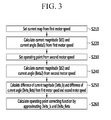
FIG. 3 is an exemplary flowchart illustrating a method for obtaining an operating point correcting function according to an exemplary embodiment of the present invention; -
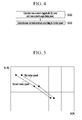
FIG. 4 is an exemplary flowchart illustrating a method for obtaining a new current command according to an exemplary embodiment of the present invention; and -
FIG. 5 is an exemplary graph illustrating an operating point according to motor speed according to an exemplary embodiment of the present invention. - It is understood that the term "vehicle" or "vehicular" or other similar term as used herein is inclusive of motor vehicles in general such as passenger automobiles including sports utility vehicles (SUV), buses, trucks, various commercial vehicles, watercraft including a variety of boats and ships, aircraft, and the like, and includes hybrid vehicles, electric vehicles, plug-in hybrid electric vehicles, hydrogen-powered vehicles and other alternative fuel vehicles (e.g. fuels derived from resources other than petroleum). As referred to herein, a hybrid vehicle is a vehicle that has two or more sources of power, for example both gasoline-powered and electric-powered vehicles.
- Although exemplary embodiment is described as using a plurality of units to perform the exemplary process, it is understood that the exemplary processes may also be performed by one or plurality of modules. Additionally, it is understood that the term controller/control unit refers to a hardware device that includes a memory and a processor. The memory is configured to store the modules and the processor is specifically configured to execute said modules to perform one or more processes which are described further below.
- Furthermore, control logic of the present invention may be embodied as non-transitory computer readable media on a computer readable medium containing executable program instructions executed by a processor, controller/control unit or the like. Examples of the computer readable mediums include, but are not limited to, ROM, RAM, compact disc (CD)-ROMs, magnetic tapes, floppy disks, flash drives, smart cards and optical data storage devices. The computer readable recording medium can also be distributed in network coupled computer systems so that the computer readable media is stored and executed in a distributed fashion, e.g., by a telematics server or a Controller Area Network (CAN).
- The terminology used herein is for the purpose of describing particular embodiments only and is not intended to be limiting of the invention. As used herein, the singular forms "a", "an" and "the" are intended to include the plural forms as well, unless the context clearly indicates otherwise. It will be further understood that the terms "comprises" and/or "comprising," when used in this specification, specify the presence of stated features, integers, steps, operations, elements, and/or components, but do not preclude the presence or addition of one or more other features, integers, steps, operations, elements, components, and/or groups thereof. As used herein, the term "and/or" includes any and all combinations of one or more of the associated listed items.
- It will be understood that, although the terms "first," "second," etc. may be used herein to describe various elements, these elements should not be limited by these terms. These terms are only used to distinguish one element from another element. For instance, a first element discussed below could be termed a second element without departing from the teachings of the present invention. Similarly, the second element could also be termed the first element.
- Unless specifically stated or obvious from context, as used herein, the term "about" is understood as within a range of normal tolerance in the art, for example within 2 standard deviations of the mean. "About" can be understood as within 10%, 9%, 8%, 7%, 6%, 5%, 4%, 3%, 2%, 1%, 0.5%, 0.1%, 0.05%, or 0.01% of the stated value. Unless otherwise clear from the context, all numerical values provided herein are modified by the term "about."
- The present invention will be described more fully hereinafter with reference to the accompanying drawings, in which exemplary embodiments of the invention are shown. As those skilled in the art would realize, the described exemplary embodiments may be modified in various different ways, all without departing from the spirit or scope of the present invention.
- In describing the present invention, parts that are not related to the description will be omitted. Like reference numerals generally designate like elements throughout the specification. In addition, the magnitude and thickness of each configuration shown in the drawings are arbitrarily shown for better understanding and ease of description, but the present invention is not limited thereto. In the drawings, the thickness of layers, films, panels, regions, etc., are exaggerated for clarity.
-
FIG. 1 is an exemplary block diagram illustrating an electric vehicle according to an exemplary embodiment of the present invention. As shown inFIG. 1 , an electric vehicle according to an exemplary embodiment of the present invention may include abattery 10 configured to supply electricity, amotor 30 configured to receive electricity from thebattery 10 and generate power, and acontroller 20 configured to operate thebattery 10 and themotor 30. Thebattery 10 may be operated by the controller to supply direct current power (DC power), and particularly supply substantially constant voltage power. - The
controller 20 may include one or more microprocessors operated by a predetermined program or hardware that includes the microprocessor. The predetermined program may include a series of commands configured to perform a control method of an electric vehicle according to an exemplary embodiment of the present invention to be described below. Generally, thecontroller 20 may be an inverter configured to receive electricity from thebattery 10 and operate themotor 30. -
FIG. 2 is an exemplary flowchart illustrating a control method of an electric vehicle according to an exemplary embodiment of the present invention. As shown inFIG. 2 , when a torque command is input to the controller 20 (S110), thecontroller 20 may be configured to detect a motor speed and current (S120), and thecontroller 20 may be configured to calculate a motor voltage from the motor current (S130). Thecontroller 20 may also be configured to determine whether voltage utilization of themotor 30 is greater than about 1 (S140). When the voltage utilization of the motor is greater than about 1, the controller may be configured to deteremine a substantial amount of voltage is used in a relatively high speed range (e.g., predetermined speed range) and may further be configured to operate themotor 30 by overmodulation (S150). An overmodulation control method is generally known to those skilled in the art, and detailed description thereof will be omitted. - When the voltage utilization of the
motor 30 is less than about 1, thecontroller 20 may be configured to calculate an operating point correcting function based on the motor speed (S200). Hereinafter, the process of obtaining an operating point correcting function based on the motor speed (S200) will be described in detail referring toFIG. 3 . In particular, thecontroller 20 may be configured to set a current map with respect to a first motor speed by sweeping a first direct current supplied from the battery 10 (S210). The first motor speed may be about 1500 revolutions per minute (RPM). - Additionally, the
controller 20 may be configured to calculate a first magnitude (Is1) of a first d-axis current (Id1) and a first q-axis current (Iq1), and a first angle (Beta1) of the first d-axis current (Id1) and the first q-axis current (Iq1) within a synchronous reference frame with respect to a torque command at the first motor speed (S220). Thecontroller 20 may be configured to set an operating point with respect to a second motor speed by sweeping a second direct current supplied from the battery 10 (S230). Further, thecontroller 20 may be configured to calculate a second magnitude (Is2) of a second d-axis current (Id2) and a second q-axis current (Iq2), and a second angle (Beta2) of the second d-axis current (Id2) and the second q-axis current (Iq2) with respect to the second motor speed (S240). - The
controller 20 may be configured to calculate a difference between the first and second current magnitude and a difference between the first and second current angle (S250). The difference (Delta_Is) of the current magnitude may be a difference between Is1 and Is2. The difference (Delta_Beta) of the current angle may be a difference between Beta1 and Beta2. The difference (Delta_Is) of the current magnitude and the difference (Delta_Beta) of the current angle may be calculated using the following equations: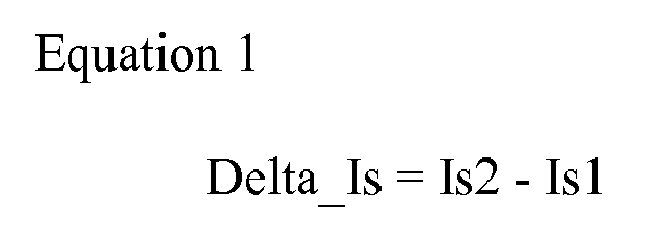

- The
controller 20 may further be configured to approximate the difference of the current magnitude (Delta_Is) and the difference of the current angle (Delta_Beta), and calculate an operating point correcting function (Func_Delta_Is, Func_Delta_Beta) (S260). Thecontroller 20 may be configured to obtain a maximum efficiency operating point within overall speed range by interpolating the first d-axis current (Id1) c and the second d-axis current (Id2) and by interpolating the first q-axis current (Iq1) and the first q-axis current (Iq2). Subsequently, thecontroller 20 may be configured to calculate the operating point correcting function by a linear function or a quadratic function, when thecontroller 20 interpolates the d-axis current (Id1) calculated from the first motor speed and the d-axis current (Id2) calculated from the second motor speed, or when the q-axis current (Iq1) calculated from the first motor speed and the q-axis current (Iq2) calculated from the second motor speed. Referring toFIG. 2 , thecontroller 20 may be configured to calculate a current command with respect to the motor speed using the operating point correcting function (S300). - As shown in
FIG. 4 , thecontroller 20 may be configured to calculate a new current magnitude (Is_new) and a new current angle (Beta_new) using the operating point correcting function (S310). The new current magnitude (Is_new) and the new current angle (Beta_new) may then be calculated by the following equations:

- wherein, the Func_Delta_Is() is the operating point correcting function of a current magnitude and the Func_Delta_Beta() is the operating point correcting function of a current angle.
- The
controller 20 may be configured to calculate a new d-axis current command (Id_new) and a new q-axis current command (Iq_new) within a synchronous reference frame from the new current magnitude (Is_new) and the new current angle (Beta_new) at step S320. The new d-axis current command (Id_new) and the new q-axis current command (Iq_new) may be calculated from the following equations:

- Referring to
FIG. 2 , thecontroller 20 may be configured to then output the new d-axis current command (Id_new) and the new q-axis current command (Iq_new) to themotor 30. -
FIG. 5 is an exemplary graph illustrating an operating point according to a motor speed according to an exemplary embodiment of the present invention. In particular,FIG. 5 illustrates an operating point obtained from the first motor speed (e.g., about 1500 RPM) and an operating point obtained from the second motor speed (e.g., about 2000 RPM). - Generally, as the motor speed increases, core loss of the motor also increases. Due to the core loss, the maximum efficiency operating point needs more d-axis current that moves in a negative direction. Since the core loss increases as the motor speed increases, the maximum efficiency operating point may be different for each motor speed. Accordingly, the
motor 30 may be operated while also taking the variation of core loss based on motor speed into account, which allows for a maximized efficiency while driving based on motor speed. - In an exemplary embodiment of the present invention, a current map may be set for one motor speed. In other words, the current map may be set by using motor torque and direct current of the
battery 10. Accordingly, when the motor is operated while substantially maintaining a voltage of thebattery 10, the output of thebattery 10 may be determined by DC current of the battery 10 (i.e, battery output = battery voltage * battery current). Further, when an equal torque of a curve is determined by current sweep, the output of themotor 30 may become equivalent (i.e., motor output = motor speed * motor torque). This means the maximum efficiency operating point of the motor system when the input is the output of the battery and the output is the motor output, thebattery 10 output may be minimized, due to the output of themotor 30 being substantially equivalent to the input. In other words, since the output of thebattery 10 is substantially constant, the maximum efficient operating point may be the minimum point of DC current. Therefore, a current map determined by direct current of the battery and required torque may become a maximum efficiency current map. By using this method, a measuring error may be reduced and a measuring system may be simplified. - Moreover, according to an exemplary embodiment of the present invention, since the motor may be operated by measuring direct current of the battery, it may be possible to operate the motor based on the efficiency of the inverter. Furthermore, a voltage output from the battery may be maintained substantially constant. Therefore, when minimum input power (i.e., direct voltage * direct current) is determined by verifying direct current of the battery, an operating point of maximum efficiency (minimum loss) may be obtained. By using this method, fuel consumption may be reduced.
-
- 10: battery
- 20: controller
- 30: motor
- While this invention has been described in connection with what is presently considered to be exemplary embodiments, it is to be understood that the invention is not limited to the disclosed exemplary embodiments, but, on the contrary, is intended to cover various modifications and equivalent arrangements included within the spirit and scope of the appended claims.
Claims (19)
- A control method of an electric vehicle, comprising:operating, by a controller, a battery and a motor;detecting, by the controller, a torque command, a motor speed, and a motor current;calculating, by the controller, a motor voltage from the motor current;determining, by the controller, whether voltage utilization based on a speed range of the motor is greater than a predetermined value;generating, by the controller, an operating point correcting function based on the motor speed in response to the voltage utilization being less than the predetermined value;calculating, by the controller, a current command according to the motor speed from the operating point correcting function; andoutputting, by a controller, the calculated current command.
- The control method of electric vehicle of claim 1, wherein the generating of an operating point correcting function, includes:determining, by the controller, a maximum efficient driving current map from a first motor speed;calculating, by the controller, a first current magnitude and a first current angle from the first motor speed;determining, by the controller, a maximum efficient operating point from a second motor speed;calculating, by a controller, a second current magnitude and a second current angle from the second motor speed; andgenerating, by a controller, the operating point correcting function from the first and second current magnitude and the first and second current angle calculated from the first motor speed and second motor speed.
- The control method of electric vehicle of claim 2, wherein the determining of the current map from the first motor speed includes sweeping, by the controller, a first direct current supplied from the battery.
- The control method of electric vehicle of claim 2, wherein the determining of the operating point from the second motor speed includes sweeping, by the controller, a second direct current supplied from the battery.
- The control method of electric vehicle of claim 2, wherein the generating the operating point correcting function comprises:calculating, by the controller, a difference between the first and second current magnitude and a difference between the first and second current angle calculated from the first motor speed and second motor speed; andapproximating, by the controller, the difference between the current magnitude and the difference between the current angle configured to generate the operating point correcting function.
- The control method of electric vehicle of claim 5, wherein the approximating of the difference between the first and second current magnitude and the difference between the first and second current angle is approximated using a quadratic function.
- The control method of electric vehicle of claim 1, further comprising:operating, by the controller, the motor by overmodulation in response to the voltage utilization being greater than a predetermined value.
- An electric vehicle control system, comprising:a battery configured to supply electricity;a motor configured to receive electricity from the battery and generate power;a controller configured to:operate the battery and the motor;detect a torque command, a motor speed, and a motor current;calculate a motor voltage using the motor current;determine when voltage utilization ,based on a speed range of the motor, is greater than a predetermined value;generate an operating point correcting function based on the motor speed in response to the voltage utilization being less than the predetermined value;calculate a current command based on the motor speed from the operating point correcting function; andoutput the calculated current command.
- The electric vehicle control system of claim 8, wherein controller is further configured to:determine a maximum efficient driving current map from a first motor speed;calculate a first current magnitude and a first current angle from the first motor speed;determine a maximum efficient operating point from a second motor speed;calculate a second current magnitude and a second current angle from the second motor speed; andgenerate the operating point correcting function from the first and second current magnitude and the first and second current angle calculated from the first motor speed and the second motor speed.
- The electric vehicle control system of claim 9, wherein the controller is further configured to:calculate a difference between the first and second current magnitude and a difference between the first and second current angle calculated; andapproximate the difference between the current magnitude and the difference between the current angle configured to generate the operating point correcting function.
- The electric vehicle control system of claim 10, wherein the controller is further configured to approximate the difference between the first and second current magnitude and the difference between the first and second current angle using a quadratic function.
- The electric vehicle control system of claim 8, wherein the controller is further configured to operate the motor by overmodulation in response to the voltage utilization being great than a predetermined value.
- A non-transitory computer readable medium containing program instructions executed by a controller, the computer readable medium comprising:program instructions that control a battery and a motor;program instructions that detect a torque command, a motor speed, and a motor current;program instructions that calculate a motor voltage from the motor current;program instructions that determine whether voltage utilization according to a speed range of the motor is greater than a predetermined value;program instructions that generate an operating point correcting function based on the motor speed in response to the voltage utilization being less than the predetermined value;program instructions that calculate a current command based on the motor speed from the operating point correcting function; andprogram instructions that output the calculated current command.
- The non-transitory computer readable medium of claim 13, wherein the generating of an operating point correcting function includes:program instructions that determine a maximum efficient driving current map from a first motor speed;program instructions that calculate a first current magnitude and a first current angle from the first motor speed;program instructions that determine a maximum efficient operating point from a second motor speed;program instructions that calculate a second current magnitude and a second current angle from the second motor speed; andprogram instructions that generate the operating point correcting function from the first and second current magnitude and the first and second current angle calculated from the first motor speed and the second motor speed.
- The non-transitory computer readable medium of claim 14, wherein the determining of the current map from the first motor speed includes program instructions that sweep a first direct current supplied from the battery.
- The non-transitory computer readable medium of claim 14, wherein the determining of the operating point from the second motor speed includes program instructions that sweep a second direct current supplied from the battery.
- The non-transitory computer readable medium of claim 14, wherein the generating of the operating point correcting function includes:program instructions that calculate a difference between the first and second current magnitude and a difference between the first and second current angle calculated; andprogram instructions that approximate the difference between the current magnitude and the difference between the current angle configured to generate the operating point correcting function.
- The non-transitory computer readable medium of claim 17, wherein the approximating the difference between the current magnitude and the current angle includes program instructions that approximate the difference between the first and second current magnitude and the difference of the first and second current angle using a quadratic function.
- The non-transitory computer readable medium of claim 13, further comprising program instructions that operate the motor by overmodulation in response to the voltage utilization being greater than a predetermined value.
Applications Claiming Priority (1)
| Application Number | Priority Date | Filing Date | Title |
|---|---|---|---|
| KR20130162932A KR101500397B1 (en) | 2013-12-24 | 2013-12-24 | Motor Control Method of Electric Vehicle |
Publications (3)
| Publication Number | Publication Date |
|---|---|
| EP2889179A2 true EP2889179A2 (en) | 2015-07-01 |
| EP2889179A3 EP2889179A3 (en) | 2015-09-23 |
| EP2889179B1 EP2889179B1 (en) | 2019-01-09 |
Family
ID=51947116
Family Applications (1)
| Application Number | Title | Priority Date | Filing Date |
|---|---|---|---|
| EP14191294.9A Active EP2889179B1 (en) | 2013-12-24 | 2014-10-31 | Control method and system of electric vehicle |
Country Status (4)
| Country | Link |
|---|---|
| US (1) | US9409486B2 (en) |
| EP (1) | EP2889179B1 (en) |
| KR (1) | KR101500397B1 (en) |
| CN (1) | CN104723900B (en) |
Cited By (1)
| Publication number | Priority date | Publication date | Assignee | Title |
|---|---|---|---|---|
| CN111446897A (en) * | 2020-04-30 | 2020-07-24 | 上海中科深江电动车辆有限公司 | Method for calibrating voltage utilization rate of automatic calibration motor |
Families Citing this family (11)
| Publication number | Priority date | Publication date | Assignee | Title |
|---|---|---|---|---|
| KR101856317B1 (en) * | 2016-04-18 | 2018-05-10 | 현대자동차주식회사 | Control method and system of vehicle converter |
| KR101875642B1 (en) * | 2016-04-18 | 2018-07-06 | 현대자동차 주식회사 | Apparatus and method for controlling motor |
| CN106100484B (en) * | 2016-08-08 | 2018-12-07 | 凯晟动力技术(嘉兴)有限公司 | A kind of motor of hybrid power automobile control method |
| CN106329856A (en) * | 2016-08-24 | 2017-01-11 | 廖建航 | Voltage acquisition method and system based on vertical winding machine |
| WO2018035777A1 (en) * | 2016-08-24 | 2018-03-01 | 廖建航 | Method and system for determining voltage in horizontal winding machine |
| CN106301135A (en) * | 2016-08-24 | 2017-01-04 | 廖建航 | Voltage determination method and system in horizontal coil winding machine |
| WO2018035776A1 (en) * | 2016-08-24 | 2018-03-01 | 廖建航 | Vertical winding machine voltage acquisition method and system |
| CN106094911A (en) * | 2016-08-24 | 2016-11-09 | 廖建航 | Closed loop control application process in vertical coil winding machine and system |
| CN106253604A (en) * | 2016-08-24 | 2016-12-21 | 廖建航 | The current control method of vertical coil winding machine and system |
| KR20230011009A (en) * | 2021-07-13 | 2023-01-20 | 현대자동차주식회사 | System for controlling motor of vehicle |
| DE102022131650A1 (en) * | 2022-11-30 | 2024-06-06 | Audi Aktiengesellschaft | Method for determining a predictive ego speed of a vehicle traveling along a predetermined route, control device for a vehicle or for a navigation device or for a mobile user terminal, navigation device and vehicle |
Family Cites Families (13)
| Publication number | Priority date | Publication date | Assignee | Title |
|---|---|---|---|---|
| JP3903625B2 (en) * | 1998-12-21 | 2007-04-11 | トヨタ自動車株式会社 | Power output device |
| JP4718041B2 (en) * | 2000-11-22 | 2011-07-06 | ダイキン工業株式会社 | Inverter control method and apparatus |
| US7586286B2 (en) * | 2006-11-17 | 2009-09-08 | Continental Automotive Systems Us, Inc. | Method and apparatus for motor control |
| KR100992755B1 (en) | 2007-12-13 | 2010-11-05 | 기아자동차주식회사 | Method of Determining Optimum Driving Points by SOC of Hybrid Vehicles |
| JP4957574B2 (en) * | 2008-02-07 | 2012-06-20 | 株式会社デンソー | Rotating machine control device and rotating machine control system |
| EP2093098B1 (en) | 2008-02-21 | 2010-05-12 | Yamaha Hatsudoki Kabushiki Kaisha | Wheel driving apparatus and electric vehicle including the same |
| CN101252336B (en) * | 2008-03-07 | 2011-12-28 | 清华大学 | Permanent magnetism synchronous electric machine - compressor system high speed operation control method |
| JP4582168B2 (en) | 2008-03-21 | 2010-11-17 | 株式会社デンソー | Rotating machine control device and rotating machine control system |
| KR101469993B1 (en) | 2008-06-16 | 2014-12-05 | 현대자동차주식회사 | Method for motor control of electric vehicle |
| WO2012104960A1 (en) * | 2011-01-31 | 2012-08-09 | スズキ株式会社 | Drive control device for hybrid vehicle |
| JP2013060175A (en) | 2011-09-15 | 2013-04-04 | Nissan Motor Co Ltd | Control device for hybrid vehicle |
| KR101272955B1 (en) | 2011-12-07 | 2013-06-12 | 기아자동차주식회사 | Method for controlling motor of green car |
| CN102684576A (en) * | 2012-05-23 | 2012-09-19 | 东方电气集团东风电机有限公司 | Permanent magnet motor controller applied to pure electric car and control method |
-
2013
- 2013-12-24 KR KR20130162932A patent/KR101500397B1/en active Active
-
2014
- 2014-10-31 EP EP14191294.9A patent/EP2889179B1/en active Active
- 2014-10-31 US US14/530,300 patent/US9409486B2/en active Active
- 2014-11-11 CN CN201410643840.XA patent/CN104723900B/en active Active
Non-Patent Citations (1)
| Title |
|---|
| None |
Cited By (2)
| Publication number | Priority date | Publication date | Assignee | Title |
|---|---|---|---|---|
| CN111446897A (en) * | 2020-04-30 | 2020-07-24 | 上海中科深江电动车辆有限公司 | Method for calibrating voltage utilization rate of automatic calibration motor |
| CN111446897B (en) * | 2020-04-30 | 2023-05-26 | 上海中科深江电动车辆有限公司 | Method for calibrating auto-calibration motor voltage utilization |
Also Published As
| Publication number | Publication date |
|---|---|
| US9409486B2 (en) | 2016-08-09 |
| US20150175015A1 (en) | 2015-06-25 |
| EP2889179A3 (en) | 2015-09-23 |
| EP2889179B1 (en) | 2019-01-09 |
| CN104723900A (en) | 2015-06-24 |
| KR101500397B1 (en) | 2015-03-19 |
| CN104723900B (en) | 2018-06-01 |
Similar Documents
| Publication | Publication Date | Title |
|---|---|---|
| EP2889179B1 (en) | Control method and system of electric vehicle | |
| US9083271B2 (en) | Motor control system and method for environmentally-friendly vehicle | |
| US7586286B2 (en) | Method and apparatus for motor control | |
| US9007013B2 (en) | Inverter control method and system for eco-friendly vehicle | |
| US9114724B2 (en) | Control method of hybrid vehicle | |
| US8907613B2 (en) | System and method for controlling motor of electric vehicle | |
| US9484851B2 (en) | Technique for correcting resolver offset | |
| US11563225B2 (en) | System and method of controlling air compressor motor for fuel cell vehicle and system and method of controlling operation of fuel cell vehicle using same | |
| US20150180255A1 (en) | Method and system of calculating battery charge time | |
| CN106274894B (en) | Apparatus and method for controlling operation mode of hybrid vehicle | |
| US8664900B2 (en) | System for controlling motor of hybrid vehicle | |
| EP2963806B1 (en) | Device and method of 6-step controlling inverter of motor driving system | |
| US9789866B2 (en) | Apparatus and method for controlling mode change of hybrid electric vehicle | |
| US8896247B2 (en) | Current sensor reconfiguration method of a vehicle having a motor | |
| US11285836B2 (en) | Method and apparatus for controlling scheduled charging | |
| US10576960B2 (en) | Apparatus and method for calculating maximum output torque of engine of hybrid electric vehicle | |
| US10293701B2 (en) | Control method and system of low-voltage DC-DC converter for hybrid vehicle | |
| US9172316B2 (en) | Inverter control method and system for eco-friendly vehicle | |
| US8884556B2 (en) | System for controlling a motor of vehicle | |
| CN105281593B (en) | Improve the control device and method of the voltage utilization of the inverter of new-energy automobile | |
| US9614469B2 (en) | Apparatus and method for controlling electric vehicle | |
| CN111775926B (en) | Driving mode control method and system of range-extended electric vehicle | |
| CN103144551B (en) | For controlling the system and method for the motor of electric motor car | |
| CN105098208A (en) | Method and system for controlling air intake of fuel cell vehicle | |
| US20240190264A1 (en) | Control device for vehicle |
Legal Events
| Date | Code | Title | Description |
|---|---|---|---|
| PUAI | Public reference made under article 153(3) epc to a published international application that has entered the european phase |
Free format text: ORIGINAL CODE: 0009012 |
|
| 17P | Request for examination filed |
Effective date: 20141031 |
|
| AK | Designated contracting states |
Kind code of ref document: A2 Designated state(s): AL AT BE BG CH CY CZ DE DK EE ES FI FR GB GR HR HU IE IS IT LI LT LU LV MC MK MT NL NO PL PT RO RS SE SI SK SM TR |
|
| AX | Request for extension of the european patent |
Extension state: BA ME |
|
| PUAL | Search report despatched |
Free format text: ORIGINAL CODE: 0009013 |
|
| AK | Designated contracting states |
Kind code of ref document: A3 Designated state(s): AL AT BE BG CH CY CZ DE DK EE ES FI FR GB GR HR HU IE IS IT LI LT LU LV MC MK MT NL NO PL PT RO RS SE SI SK SM TR |
|
| AX | Request for extension of the european patent |
Extension state: BA ME |
|
| RIC1 | Information provided on ipc code assigned before grant |
Ipc: B60W 10/00 20060101ALI20150818BHEP Ipc: B60L 15/02 20060101ALI20150818BHEP Ipc: B60K 1/00 20060101ALI20150818BHEP Ipc: B60L 11/18 20060101ALI20150818BHEP Ipc: H02P 21/14 20060101ALI20150818BHEP Ipc: B60W 20/00 20060101ALI20150818BHEP Ipc: H02P 21/00 20060101ALI20150818BHEP Ipc: B60L 3/12 20060101ALI20150818BHEP Ipc: B60L 15/20 20060101AFI20150818BHEP |
|
| R17P | Request for examination filed (corrected) |
Effective date: 20160318 |
|
| RBV | Designated contracting states (corrected) |
Designated state(s): AL AT BE BG CH CY CZ DE DK EE ES FI FR GB GR HR HU IE IS IT LI LT LU LV MC MK MT NL NO PL PT RO RS SE SI SK SM TR |
|
| STAA | Information on the status of an ep patent application or granted ep patent |
Free format text: STATUS: EXAMINATION IS IN PROGRESS |
|
| 17Q | First examination report despatched |
Effective date: 20161109 |
|
| GRAP | Despatch of communication of intention to grant a patent |
Free format text: ORIGINAL CODE: EPIDOSNIGR1 |
|
| STAA | Information on the status of an ep patent application or granted ep patent |
Free format text: STATUS: GRANT OF PATENT IS INTENDED |
|
| INTG | Intention to grant announced |
Effective date: 20180823 |
|
| GRAS | Grant fee paid |
Free format text: ORIGINAL CODE: EPIDOSNIGR3 |
|
| GRAA | (expected) grant |
Free format text: ORIGINAL CODE: 0009210 |
|
| STAA | Information on the status of an ep patent application or granted ep patent |
Free format text: STATUS: THE PATENT HAS BEEN GRANTED |
|
| AK | Designated contracting states |
Kind code of ref document: B1 Designated state(s): AL AT BE BG CH CY CZ DE DK EE ES FI FR GB GR HR HU IE IS IT LI LT LU LV MC MK MT NL NO PL PT RO RS SE SI SK SM TR |
|
| REG | Reference to a national code |
Ref country code: GB Ref legal event code: FG4D |
|
| REG | Reference to a national code |
Ref country code: CH Ref legal event code: EP Ref country code: AT Ref legal event code: REF Ref document number: 1086860 Country of ref document: AT Kind code of ref document: T Effective date: 20190115 |
|
| REG | Reference to a national code |
Ref country code: IE Ref legal event code: FG4D |
|
| REG | Reference to a national code |
Ref country code: DE Ref legal event code: R096 Ref document number: 602014039451 Country of ref document: DE |
|
| REG | Reference to a national code |
Ref country code: NL Ref legal event code: MP Effective date: 20190109 |
|
| REG | Reference to a national code |
Ref country code: LT Ref legal event code: MG4D |
|
| PG25 | Lapsed in a contracting state [announced via postgrant information from national office to epo] |
Ref country code: NL Free format text: LAPSE BECAUSE OF FAILURE TO SUBMIT A TRANSLATION OF THE DESCRIPTION OR TO PAY THE FEE WITHIN THE PRESCRIBED TIME-LIMIT Effective date: 20190109 |
|
| REG | Reference to a national code |
Ref country code: AT Ref legal event code: MK05 Ref document number: 1086860 Country of ref document: AT Kind code of ref document: T Effective date: 20190109 |
|
| PG25 | Lapsed in a contracting state [announced via postgrant information from national office to epo] |
Ref country code: SE Free format text: LAPSE BECAUSE OF FAILURE TO SUBMIT A TRANSLATION OF THE DESCRIPTION OR TO PAY THE FEE WITHIN THE PRESCRIBED TIME-LIMIT Effective date: 20190109 Ref country code: ES Free format text: LAPSE BECAUSE OF FAILURE TO SUBMIT A TRANSLATION OF THE DESCRIPTION OR TO PAY THE FEE WITHIN THE PRESCRIBED TIME-LIMIT Effective date: 20190109 Ref country code: PL Free format text: LAPSE BECAUSE OF FAILURE TO SUBMIT A TRANSLATION OF THE DESCRIPTION OR TO PAY THE FEE WITHIN THE PRESCRIBED TIME-LIMIT Effective date: 20190109 Ref country code: FI Free format text: LAPSE BECAUSE OF FAILURE TO SUBMIT A TRANSLATION OF THE DESCRIPTION OR TO PAY THE FEE WITHIN THE PRESCRIBED TIME-LIMIT Effective date: 20190109 Ref country code: PT Free format text: LAPSE BECAUSE OF FAILURE TO SUBMIT A TRANSLATION OF THE DESCRIPTION OR TO PAY THE FEE WITHIN THE PRESCRIBED TIME-LIMIT Effective date: 20190509 Ref country code: NO Free format text: LAPSE BECAUSE OF FAILURE TO SUBMIT A TRANSLATION OF THE DESCRIPTION OR TO PAY THE FEE WITHIN THE PRESCRIBED TIME-LIMIT Effective date: 20190409 Ref country code: LT Free format text: LAPSE BECAUSE OF FAILURE TO SUBMIT A TRANSLATION OF THE DESCRIPTION OR TO PAY THE FEE WITHIN THE PRESCRIBED TIME-LIMIT Effective date: 20190109 |
|
| PG25 | Lapsed in a contracting state [announced via postgrant information from national office to epo] |
Ref country code: IS Free format text: LAPSE BECAUSE OF FAILURE TO SUBMIT A TRANSLATION OF THE DESCRIPTION OR TO PAY THE FEE WITHIN THE PRESCRIBED TIME-LIMIT Effective date: 20190509 Ref country code: BG Free format text: LAPSE BECAUSE OF FAILURE TO SUBMIT A TRANSLATION OF THE DESCRIPTION OR TO PAY THE FEE WITHIN THE PRESCRIBED TIME-LIMIT Effective date: 20190409 Ref country code: GR Free format text: LAPSE BECAUSE OF FAILURE TO SUBMIT A TRANSLATION OF THE DESCRIPTION OR TO PAY THE FEE WITHIN THE PRESCRIBED TIME-LIMIT Effective date: 20190410 Ref country code: LV Free format text: LAPSE BECAUSE OF FAILURE TO SUBMIT A TRANSLATION OF THE DESCRIPTION OR TO PAY THE FEE WITHIN THE PRESCRIBED TIME-LIMIT Effective date: 20190109 Ref country code: RS Free format text: LAPSE BECAUSE OF FAILURE TO SUBMIT A TRANSLATION OF THE DESCRIPTION OR TO PAY THE FEE WITHIN THE PRESCRIBED TIME-LIMIT Effective date: 20190109 Ref country code: HR Free format text: LAPSE BECAUSE OF FAILURE TO SUBMIT A TRANSLATION OF THE DESCRIPTION OR TO PAY THE FEE WITHIN THE PRESCRIBED TIME-LIMIT Effective date: 20190109 |
|
| REG | Reference to a national code |
Ref country code: DE Ref legal event code: R097 Ref document number: 602014039451 Country of ref document: DE |
|
| PG25 | Lapsed in a contracting state [announced via postgrant information from national office to epo] |
Ref country code: CZ Free format text: LAPSE BECAUSE OF FAILURE TO SUBMIT A TRANSLATION OF THE DESCRIPTION OR TO PAY THE FEE WITHIN THE PRESCRIBED TIME-LIMIT Effective date: 20190109 Ref country code: RO Free format text: LAPSE BECAUSE OF FAILURE TO SUBMIT A TRANSLATION OF THE DESCRIPTION OR TO PAY THE FEE WITHIN THE PRESCRIBED TIME-LIMIT Effective date: 20190109 Ref country code: AL Free format text: LAPSE BECAUSE OF FAILURE TO SUBMIT A TRANSLATION OF THE DESCRIPTION OR TO PAY THE FEE WITHIN THE PRESCRIBED TIME-LIMIT Effective date: 20190109 Ref country code: AT Free format text: LAPSE BECAUSE OF FAILURE TO SUBMIT A TRANSLATION OF THE DESCRIPTION OR TO PAY THE FEE WITHIN THE PRESCRIBED TIME-LIMIT Effective date: 20190109 Ref country code: DK Free format text: LAPSE BECAUSE OF FAILURE TO SUBMIT A TRANSLATION OF THE DESCRIPTION OR TO PAY THE FEE WITHIN THE PRESCRIBED TIME-LIMIT Effective date: 20190109 Ref country code: IT Free format text: LAPSE BECAUSE OF FAILURE TO SUBMIT A TRANSLATION OF THE DESCRIPTION OR TO PAY THE FEE WITHIN THE PRESCRIBED TIME-LIMIT Effective date: 20190109 Ref country code: EE Free format text: LAPSE BECAUSE OF FAILURE TO SUBMIT A TRANSLATION OF THE DESCRIPTION OR TO PAY THE FEE WITHIN THE PRESCRIBED TIME-LIMIT Effective date: 20190109 Ref country code: SK Free format text: LAPSE BECAUSE OF FAILURE TO SUBMIT A TRANSLATION OF THE DESCRIPTION OR TO PAY THE FEE WITHIN THE PRESCRIBED TIME-LIMIT Effective date: 20190109 |
|
| PLBE | No opposition filed within time limit |
Free format text: ORIGINAL CODE: 0009261 |
|
| STAA | Information on the status of an ep patent application or granted ep patent |
Free format text: STATUS: NO OPPOSITION FILED WITHIN TIME LIMIT |
|
| PG25 | Lapsed in a contracting state [announced via postgrant information from national office to epo] |
Ref country code: SM Free format text: LAPSE BECAUSE OF FAILURE TO SUBMIT A TRANSLATION OF THE DESCRIPTION OR TO PAY THE FEE WITHIN THE PRESCRIBED TIME-LIMIT Effective date: 20190109 |
|
| 26N | No opposition filed |
Effective date: 20191010 |
|
| PG25 | Lapsed in a contracting state [announced via postgrant information from national office to epo] |
Ref country code: SI Free format text: LAPSE BECAUSE OF FAILURE TO SUBMIT A TRANSLATION OF THE DESCRIPTION OR TO PAY THE FEE WITHIN THE PRESCRIBED TIME-LIMIT Effective date: 20190109 |
|
| PG25 | Lapsed in a contracting state [announced via postgrant information from national office to epo] |
Ref country code: TR Free format text: LAPSE BECAUSE OF FAILURE TO SUBMIT A TRANSLATION OF THE DESCRIPTION OR TO PAY THE FEE WITHIN THE PRESCRIBED TIME-LIMIT Effective date: 20190109 |
|
| PG25 | Lapsed in a contracting state [announced via postgrant information from national office to epo] |
Ref country code: MC Free format text: LAPSE BECAUSE OF FAILURE TO SUBMIT A TRANSLATION OF THE DESCRIPTION OR TO PAY THE FEE WITHIN THE PRESCRIBED TIME-LIMIT Effective date: 20190109 |
|
| REG | Reference to a national code |
Ref country code: CH Ref legal event code: PL |
|
| PG25 | Lapsed in a contracting state [announced via postgrant information from national office to epo] |
Ref country code: CH Free format text: LAPSE BECAUSE OF NON-PAYMENT OF DUE FEES Effective date: 20191031 Ref country code: LI Free format text: LAPSE BECAUSE OF NON-PAYMENT OF DUE FEES Effective date: 20191031 Ref country code: LU Free format text: LAPSE BECAUSE OF NON-PAYMENT OF DUE FEES Effective date: 20191031 |
|
| REG | Reference to a national code |
Ref country code: BE Ref legal event code: MM Effective date: 20191031 |
|
| PG25 | Lapsed in a contracting state [announced via postgrant information from national office to epo] |
Ref country code: BE Free format text: LAPSE BECAUSE OF NON-PAYMENT OF DUE FEES Effective date: 20191031 |
|
| PG25 | Lapsed in a contracting state [announced via postgrant information from national office to epo] |
Ref country code: IE Free format text: LAPSE BECAUSE OF NON-PAYMENT OF DUE FEES Effective date: 20191031 |
|
| PG25 | Lapsed in a contracting state [announced via postgrant information from national office to epo] |
Ref country code: CY Free format text: LAPSE BECAUSE OF FAILURE TO SUBMIT A TRANSLATION OF THE DESCRIPTION OR TO PAY THE FEE WITHIN THE PRESCRIBED TIME-LIMIT Effective date: 20190109 |
|
| PG25 | Lapsed in a contracting state [announced via postgrant information from national office to epo] |
Ref country code: HU Free format text: LAPSE BECAUSE OF FAILURE TO SUBMIT A TRANSLATION OF THE DESCRIPTION OR TO PAY THE FEE WITHIN THE PRESCRIBED TIME-LIMIT; INVALID AB INITIO Effective date: 20141031 Ref country code: MT Free format text: LAPSE BECAUSE OF FAILURE TO SUBMIT A TRANSLATION OF THE DESCRIPTION OR TO PAY THE FEE WITHIN THE PRESCRIBED TIME-LIMIT Effective date: 20190109 |
|
| PG25 | Lapsed in a contracting state [announced via postgrant information from national office to epo] |
Ref country code: MK Free format text: LAPSE BECAUSE OF FAILURE TO SUBMIT A TRANSLATION OF THE DESCRIPTION OR TO PAY THE FEE WITHIN THE PRESCRIBED TIME-LIMIT Effective date: 20190109 |
|
| P01 | Opt-out of the competence of the unified patent court (upc) registered |
Effective date: 20230526 |
|
| PGFP | Annual fee paid to national office [announced via postgrant information from national office to epo] |
Ref country code: GB Payment date: 20240920 Year of fee payment: 11 |
|
| PGFP | Annual fee paid to national office [announced via postgrant information from national office to epo] |
Ref country code: FR Payment date: 20240925 Year of fee payment: 11 |
|
| PGFP | Annual fee paid to national office [announced via postgrant information from national office to epo] |
Ref country code: DE Payment date: 20250922 Year of fee payment: 12 |