EP2887819B1 - Transgenic microalgae and use thereof for oral delivery of proteins - Google Patents
Transgenic microalgae and use thereof for oral delivery of proteins Download PDFInfo
- Publication number
- EP2887819B1 EP2887819B1 EP13831309.3A EP13831309A EP2887819B1 EP 2887819 B1 EP2887819 B1 EP 2887819B1 EP 13831309 A EP13831309 A EP 13831309A EP 2887819 B1 EP2887819 B1 EP 2887819B1
- Authority
- EP
- European Patent Office
- Prior art keywords
- protein
- fish
- algae
- microalga
- transgenic
- Prior art date
- Legal status (The legal status is an assumption and is not a legal conclusion. Google has not performed a legal analysis and makes no representation as to the accuracy of the status listed.)
- Active
Links
Images


Classifications
-
- A—HUMAN NECESSITIES
- A61—MEDICAL OR VETERINARY SCIENCE; HYGIENE
- A61K—PREPARATIONS FOR MEDICAL, DENTAL OR TOILETRY PURPOSES
- A61K36/00—Medicinal preparations of undetermined constitution containing material from algae, lichens, fungi or plants, or derivatives thereof, e.g. traditional herbal medicines
- A61K36/02—Algae
-
- A—HUMAN NECESSITIES
- A23—FOODS OR FOODSTUFFS; TREATMENT THEREOF, NOT COVERED BY OTHER CLASSES
- A23K—FODDER
- A23K10/00—Animal feeding-stuffs
- A23K10/10—Animal feeding-stuffs obtained by microbiological or biochemical processes
- A23K10/16—Addition of microorganisms or extracts thereof, e.g. single-cell proteins, to feeding-stuff compositions
-
- A—HUMAN NECESSITIES
- A23—FOODS OR FOODSTUFFS; TREATMENT THEREOF, NOT COVERED BY OTHER CLASSES
- A23K—FODDER
- A23K10/00—Animal feeding-stuffs
- A23K10/10—Animal feeding-stuffs obtained by microbiological or biochemical processes
- A23K10/16—Addition of microorganisms or extracts thereof, e.g. single-cell proteins, to feeding-stuff compositions
- A23K10/18—Addition of microorganisms or extracts thereof, e.g. single-cell proteins, to feeding-stuff compositions of live microorganisms
-
- A—HUMAN NECESSITIES
- A23—FOODS OR FOODSTUFFS; TREATMENT THEREOF, NOT COVERED BY OTHER CLASSES
- A23K—FODDER
- A23K50/00—Feeding-stuffs specially adapted for particular animals
- A23K50/70—Feeding-stuffs specially adapted for particular animals for birds
- A23K50/75—Feeding-stuffs specially adapted for particular animals for birds for poultry
-
- A—HUMAN NECESSITIES
- A23—FOODS OR FOODSTUFFS; TREATMENT THEREOF, NOT COVERED BY OTHER CLASSES
- A23K—FODDER
- A23K50/00—Feeding-stuffs specially adapted for particular animals
- A23K50/80—Feeding-stuffs specially adapted for particular animals for aquatic animals, e.g. fish, crustaceans or molluscs
-
- A—HUMAN NECESSITIES
- A61—MEDICAL OR VETERINARY SCIENCE; HYGIENE
- A61K—PREPARATIONS FOR MEDICAL, DENTAL OR TOILETRY PURPOSES
- A61K38/00—Medicinal preparations containing peptides
- A61K38/16—Peptides having more than 20 amino acids; Gastrins; Somatostatins; Melanotropins; Derivatives thereof
- A61K38/17—Peptides having more than 20 amino acids; Gastrins; Somatostatins; Melanotropins; Derivatives thereof from animals; from humans
- A61K38/22—Hormones
-
- A—HUMAN NECESSITIES
- A61—MEDICAL OR VETERINARY SCIENCE; HYGIENE
- A61K—PREPARATIONS FOR MEDICAL, DENTAL OR TOILETRY PURPOSES
- A61K38/00—Medicinal preparations containing peptides
- A61K38/16—Peptides having more than 20 amino acids; Gastrins; Somatostatins; Melanotropins; Derivatives thereof
- A61K38/17—Peptides having more than 20 amino acids; Gastrins; Somatostatins; Melanotropins; Derivatives thereof from animals; from humans
- A61K38/22—Hormones
- A61K38/27—Growth hormone [GH], i.e. somatotropin
-
- A—HUMAN NECESSITIES
- A61—MEDICAL OR VETERINARY SCIENCE; HYGIENE
- A61P—SPECIFIC THERAPEUTIC ACTIVITY OF CHEMICAL COMPOUNDS OR MEDICINAL PREPARATIONS
- A61P3/00—Drugs for disorders of the metabolism
-
- C—CHEMISTRY; METALLURGY
- C07—ORGANIC CHEMISTRY
- C07K—PEPTIDES
- C07K14/00—Peptides having more than 20 amino acids; Gastrins; Somatostatins; Melanotropins; Derivatives thereof
- C07K14/435—Peptides having more than 20 amino acids; Gastrins; Somatostatins; Melanotropins; Derivatives thereof from animals; from humans
- C07K14/46—Peptides having more than 20 amino acids; Gastrins; Somatostatins; Melanotropins; Derivatives thereof from animals; from humans from vertebrates
- C07K14/461—Peptides having more than 20 amino acids; Gastrins; Somatostatins; Melanotropins; Derivatives thereof from animals; from humans from vertebrates from fish
-
- C—CHEMISTRY; METALLURGY
- C07—ORGANIC CHEMISTRY
- C07K—PEPTIDES
- C07K14/00—Peptides having more than 20 amino acids; Gastrins; Somatostatins; Melanotropins; Derivatives thereof
- C07K14/435—Peptides having more than 20 amino acids; Gastrins; Somatostatins; Melanotropins; Derivatives thereof from animals; from humans
- C07K14/575—Hormones
- C07K14/61—Growth hormone [GH], i.e. somatotropin
-
- C—CHEMISTRY; METALLURGY
- C12—BIOCHEMISTRY; BEER; SPIRITS; WINE; VINEGAR; MICROBIOLOGY; ENZYMOLOGY; MUTATION OR GENETIC ENGINEERING
- C12N—MICROORGANISMS OR ENZYMES; COMPOSITIONS THEREOF; PROPAGATING, PRESERVING, OR MAINTAINING MICROORGANISMS; MUTATION OR GENETIC ENGINEERING; CULTURE MEDIA
- C12N1/00—Microorganisms; Compositions thereof; Processes of propagating, maintaining or preserving microorganisms or compositions thereof; Processes of preparing or isolating a composition containing a microorganism; Culture media therefor
- C12N1/12—Unicellular algae; Culture media therefor
-
- C—CHEMISTRY; METALLURGY
- C07—ORGANIC CHEMISTRY
- C07K—PEPTIDES
- C07K2319/00—Fusion polypeptide
- C07K2319/01—Fusion polypeptide containing a localisation/targetting motif
- C07K2319/04—Fusion polypeptide containing a localisation/targetting motif containing an ER retention signal such as a C-terminal HDEL motif
-
- C—CHEMISTRY; METALLURGY
- C07—ORGANIC CHEMISTRY
- C07K—PEPTIDES
- C07K2319/00—Fusion polypeptide
- C07K2319/01—Fusion polypeptide containing a localisation/targetting motif
- C07K2319/05—Fusion polypeptide containing a localisation/targetting motif containing a GOLGI retention signal
-
- C—CHEMISTRY; METALLURGY
- C07—ORGANIC CHEMISTRY
- C07K—PEPTIDES
- C07K2319/00—Fusion polypeptide
- C07K2319/01—Fusion polypeptide containing a localisation/targetting motif
- C07K2319/06—Fusion polypeptide containing a localisation/targetting motif containing a lysosomal/endosomal localisation signal
Definitions
- the present invention relates to transgenic microalgae expressing exogenous biologically active proteins and use thereof for oral delivery of the biologically active proteins to animals and humans.
- Bioactive proteins are essential for the function of cells of living organisms, and are responsible for most of the activities of the cell including catalysis of metabolic processes, communication, defense, movement, and transport. Oral delivery of bioactive proteins is typically required for two principal purposes: delivery of therapeutic proteins and delivery of proteins that have nutritional or another beneficial effect on animals, including humans.
- aquaculture is still not a completely efficient system for growing marine animals and fish in particular.
- fish require a relatively long period of time to reach an acceptable size and weight.
- many breeds of fish mature in an inefficient manner, such that problems may occur in the fish population, resulting in loss of a portion of the population due to excessively slow growth, poor morphology (for ornamental fish) and so forth.
- the aquatic animals are more susceptible to infectious diseases and, when disease does occur, it can spread rapidly through entire populations with high mortality.
- Microalgae single cell alga or phytoplankton
- the microalgae represent the natural nutritional base and primary source of all the phytonutrients in the aquatic food chain.
- Expression of recombinant proteins in algae has been reported, and various methods are available for production of exogenous proteins within the algae cells, particularly within the cell plastid.
- International ( PCT) Application Publication No. WO 2011/063284 discloses methods of expressing therapeutic proteins in photosynthetic organisms, including prokaryotes such as cyanobacteria and eukaryotes such as alga and plants. Transformation of eukaryotes is preferably into the plastid genome, typically into the chloroplast genome.
- the Application discloses expression of particular therapeutic proteins within algae cells.
- microalgae as delivery means for proteins.
- International ( PCT) Application Publication No. WO 01/98335 discloses delivery systems and methods for delivering a biologically active protein to a host animal.
- the systems and methods provided include obtaining an algal cell transformed by an expression vector, the expression vector comprising a nucleotide sequence coding for the biologically active protein, operably linked to a promoter.
- the biologically active protein is an antigenic epitope and upon administration to the animal the algal cell induces an immune response in the host animal.
- WO 2002/076391 discloses the use of microbial cells which are used as feed components in aquaculture or agriculture, and which also contain exogenous peptides, proteins, and/or antibodies, which will convey resistance or immunity to viral or bacterial pathogens or otherwise improve the health and performance of the species consuming said microbial cells.
- the microbial cells can be yeast, fungi, bacteria, or algae.
- the proteins and/or antibodies may be expressed inside the microbial cells by direct genetic modification of the microbe itself, or by the infection of the microbe with a virus that has been altered to express the protein of interest.
- WO 2008/027235 discloses methods for prevention, amelioration or treatment of a disease or disorder in an aquatic animal, by feeding the aquatic animal directly or indirectly with genetically modified micro algae that expresses a recombinant molecule that specifically targets one or more key epitopes of a pathogen that infects the aquatic animal.
- U.S. Patent Application Publication No. 2011/0014708 discloses method of producing a foreign desired gene product in algae that comprises weakening or removing the algae cell wall by a protein enzyme solution to facilitate the gene transfer and a feed composition comprising the transgenic algae or its offspring.
- the invention also provides a modified nucleic acid for expressing bovine lactoferricin (LFB) in algae.
- LLB bovine lactoferricin
- Hempel et al. (Plos One, Vol. 6(12), Dec. 2011, p. E28424 ) describes the expression of a monoclonal human IgG antibody against the Hepatitis B surface protein and the respective antigen in the diatom Phaeodactylum tricornutum. Antibodies were shown to be fully-assembled and functional and accumulate to 8.7% of total soluble protein, which complies with 21 mg antibody per gram algal dry weight. The Hepatitis B surface protein was found to be functional as well and to be recognized by algae-produced and commercial antibodies.
- WO 01/98335 discloses delivery systems and methods of using same for delivering a biologically active protein to a host animal.
- the system comprises an algal cell comprising a nucleotide sequence coding for a protein.
- the protein is preferably an antigenic determinant which is preferably located on the cell surface or within the cytoplasm or an organelle of the transgenic algae.
- the transgenic algae are useful for inducing an immune response in the host animal to a pathogen and for treating, ameliorating, or preventing a disease caused by the pathogen.
- Dae-Hyun et al. (Chlorella Ellipsoidae in Marine Biotechnology, Jan. 2002, p. 63-73 ) describes the stable integration and functional expression of flounder growth hormone gene within the protoplasts of the microalga Chlorella ellipsoidea. Flounder fry fed on the transformed Chlorella revealed a 25% growth increase after 30 days of feeding.
- US 2007/148166 discloses the expression of functionally active recombinant single chain antibodies in prokaryotic and eukaryotic heterotrophic algae for pathogen treatment or control in aquaculture and agriculture applications. It is shown that Chlamydomonas reinhardtii can express immunoglobulin light chains (ScFv) in the ER, with the ER retention sequence being KDEL, and may be used for inhibiting aquaculture pathogens, particularly viruses.
- ScFv immunoglobulin light chains
- the present invention provides an algal based platform for oral delivery of biologically active proteins to an organism, providing for the systemic absorption of the biologically active protein in its active form.
- the present invention provides transgenic microalgae expressing at least one exogenous protein within a predetermined subcellular compartment.
- the protein-expressing microalgae are used as animal food or food additive applicable for feeding aquatic animals and land animals as well as for food supplement for humans.
- the exogenous protein is characterized by being biologically active, exerting at least one specific activity having a beneficial effect on the target organism.
- the present invention is based in part on the unexpected discovery that the expressed protein remains active and exerts its specific activity having a beneficial effect when the algae are orally consumed by aquatic animals (including fish and crustaceans) as well as by land animals (including mice and poultry).
- the protein remains in its intact form.
- the preserved protein activity may be attributed to its localization within the intact microalga, such that the microalgal cell serves as a natural encapsulation material protecting the protein from being degraded in the animal's gastrointestinal tract and/or acidic stomach.
- the protein is expressed in the microalgal in the vacuole.
- the present invention provides a transgenic eukaryotic microalga comprising an expression cassette comprising at least one transcribable polynucleotide encoding a biologically active exogenous protein, wherein the expressed biologically active exogenous protein is targeted to the cell vacuole of the microalga cell.
- the expression cassette further comprises a polynucleotide encoding a vacuole targeting peptide.
- the peptide targeting the exogenous protein into the vacuole is a short vacuole leader sequence having the amino acid sequence set forth in SEQ ID NO:4.
- the polynucleotide encoding the short vacuole leader peptide comprises the nucleic acid sequence set forth in SEQ ID NO:18.
- the microalga used according to the teachings of the present invention is a marine microalga.
- the microalga is selected from the group consisting of, but not restricted to, Phaeodactylum tricornutum ; Dunaliella spp. ; Nannochloropsis spp. including Nannochloropsis oculata, Nannochloropsis salina, Nannochloropsis gaditana; Nannochloris spp., Tetraselmis spp.
- Tetraselmis suecica Tetraselmis chuii
- Isochrysis galbana Pavlova spp.
- Amphiprora hyaline Chaetoceros muelleri
- Neochloris oleoabundans Including Tetraselmis suecica, Tetraselmis chuii; Isochrysis galbana; Pavlova spp. ; Amphiprora hyaline; Chaetoceros muelleri; and Neochloris oleoabundans.
- the microalga is selected from the group consisting of Phaeodactylum tricornutum, Nannochloris spp., Nannochloropsis spp. and Dunaliella spp.
- the microalga is Phaeodactylum tricornutum.
- the transgenic microalgae of the present invention can be transformed to express any protein having an effect on the target animal consuming same.
- the molecular weight of the expressed protein is up to 150 kDa.
- the molecular weight of the expressed protein may thus be up to 140kDa, 130kDa, 120kDa or 110kDa, or in the range of 1-100kDa.
- the molecular weight of the expressed protein can also be in the range of 1-50kDa.
- the protein has a beneficial effect on at least one of the growth and survival of the consuming animal. According to other embodiments, the protein has a therapeutic effect on the animal consuming the transgenic microalgae.
- the animal is an aquatic animal; the expressed protein may affect the aquatic animal morphology, or the protein may have an effect of the aquatic body deformation.
- Body deformation includes but is not limited to any morphological irregularity, any type of body asymmetry, irregular body shape, irregular fin shape, irregular tail shape; irregular body/fin area, length or width ratios; irregular body/tail area, length or width ratios; irregular tail/fin area, length or width ratios; or irregularities in any body part.
- the expressed protein may also reduce or eliminate body deformation of the aquatic animal.
- the transgenic microalga expresses a hormone.
- the hormone is selected from the group consisting of a growth hormone, appetite inducing hormone and spawning hormone. Each possibility represents a separate embodiment of the present invention.
- the expressed protein is fish growth hormone.
- the fish growth hormone is Salmon growth hormone having the amino acid sequence set forth in SEQ ID NO:12.
- the fish growth hormone may be encoded by the polynucleotide having the nucleic acid sequence set forth in SEQ ID NO:1.
- the expressed protein is spawning hormone having the amino acid sequence set forth in SEQ ID NO:24 (Accession No.: P68072).
- the spawning hormone may be encoded by the polynucleotide having the nucleic acid sequence set forth in SEQ ID NO:25.
- the expressed protein is appetite inducing hormone having the amino acid sequence set forth in SEQ ID NO:20.
- the appetite hormone may be encoded by the polynucleotide having the nucleic acid sequence set forth in SEQ ID NO:21.
- the present invention provides an edible composition comprising transgenic microalgae of the present invention.
- the edible composition is an animal food composition.
- the animal food composition is for feeding aquatic animals.
- the edible composition is for human consumption.
- the edible composition is used for oral delivery of biologically active proteins.
- the edible composition may consist essentially of the transgenic algae.
- the edible composition may be used per se or as an additive to animal or human food.
- the animal subject is a land animal or an aquatic animal.
- the land animal may optionally be any animal grown for food or for a non-food purpose (the latter including but not limited to work animals, pets and the like), including but not limited to cows, pigs, horses, dogs, cats, mice, rats, rabbits, guinea pigs, poultry and the like.
- the aquatic animal may optionally be any animal grown for food or for a non-food purpose (the latter including but not limited to ornamental, and the like), including but not limited to fish, crustaceans, and corals.
- the animal subject is a human.
- the present invention provides compositions and methods for oral delivery of biologically active proteins to an organism in need of such proteins.
- the present invention provides microalgae expressing the biologically active protein and edible compositions comprising same.
- the present invention demonstrates that the biological activity of the protein is maintained within the consumed algae and furthermore, that the protein exerts its biological activity in cells or tissues of the organism consuming the transgenic microalgae.
- microalga or “microalgae” is used herein in its broadest scope and refer to unicellular microscopic eukaryotic algae, typically found in freshwater and marine systems. Depending on the species, the microalgae size can range from a few micrometers ( ⁇ m) to a few hundreds of micrometers. The term may refer to marine eukaryotic microalga or microalgae.
- gene refers to a nucleic acid (e.g., DNA or RNA) sequence that comprises coding sequences necessary for the production of RNA or a polypeptide.
- a polypeptide can be encoded by a full-length coding sequence or by any part thereof.
- the term "parts thereof' when used in reference to a gene refers to fragments of that gene. The fragments may range in size from a few nucleotides to the entire gene sequence minus one nucleotide.
- a nucleic acid sequence comprising at least a part of a gene may comprise fragments of the gene or the entire gene.
- the term "gene” optionally also encompasses the coding regions of a structural gene and includes sequences located adjacent to the coding region on both the 5' and 3' ends for a distance of about 1 kb on either end such that the gene corresponds to the length of the full-length mRNA.
- the sequences which are located 5' of the coding region and which are present on the mRNA are referred to as 5' non-translated sequences.
- the sequences which are located 3' or downstream of the coding region and which are present on the mRNA are referred to as 3' non-translated sequences.
- protein protein sequence
- amino acid sequence amino acid sequence
- polynucleotide polynucleotide sequence
- nucleic acid sequence are used interchangeably herein. These terms encompass nucleotide sequences and the like.
- a polynucleotide may be a polymer of RNA or DNA or hybrid thereof, that is single- or doublestranded, linear or branched, and that optionally contains synthetic, non-natural or altered nucleotide bases.
- the terms also encompass RNA/DNA hybrids.
- the polynucleotides used in the context of the present invention can be designed based on the amino acid sequence of the protein of interest employing a codon usage of the particular microalga species to be transformed.
- expression cassette and "construct” or “DNA construct” are used herein interchangeably and refer to an artificially assembled or isolated nucleic acid molecule which includes the polynucleotide encoding the protein of interest.
- the construct may further include a marker gene which in some cases can also encode a protein of interest.
- the expression cassette further comprising appropriate regulatory sequences operably linked to the polynucleotide encoding the protein of interest. It should be appreciated that the inclusion of regulatory sequences in a construct is optional, for example, such sequences may not be required in situations where the regulatory sequences of a host cell are to be used.
- the organism may comprise an expression cassette comprising operably linked a promoter sequence, a polynucleotide encoding the protein of interest and a termination sequence.
- operably linked refers to the association of nucleic acid sequences on a single nucleic acid fragment so that the function of one is regulated by the other.
- a promoter is operably linked with a coding sequence when it is capable of regulating the expression of that coding sequence (i.e., that the coding sequence is under the transcriptional control of the promoter).
- Coding sequences can be operably linked to regulatory sequences in a sense or antisense orientation.
- promoter element refers to a DNA sequence that is located upstream to the 5' end (i.e. proceeds) the protein coding region of a DNA polymer.
- the promoter functions as a switch, activating the expression of a gene or part thereof. If the gene is activated, it is said to be transcribed, or participating in transcription. Transcription involves the synthesis of mRNA from the gene.
- the promoter therefore, serves as a transcriptional regulatory element and also provides a site for initiation of transcription of the gene into mRNA.
- Promoters may be derived in their entirety from a native gene, or be composed of different elements derived from different promoters found in nature, or even comprise synthetic DNA segments. It is understood by those skilled in the art that different promoters may direct the expression of a gene or part thereof in different tissues or cell types, or at different stages of development, or in response to different environmental conditions. It is further recognized that since in most cases the exact boundaries of regulatory sequences have not been completely defined, DNA fragments of some variation may have identical promoter activity. Promoters which cause a gene to be expressed in most cell types at most times are commonly referred to as "constitutive promoters".
- the promoter can be the organism's native promoter or a heterologous promoter, which may be a constitutive promoter, an induced promoter or a tissue specific promoter.
- Any promoter known in the art to be active in microalgae can be used according to the teachings of the present invention.
- Non-limiting examples are fucoxanthin chlorophyll protein A (fcpA); B (fcpB); C (fcpC) and E (fcpE) promoters as well as any light harvesting complex (Lhc) promoter.
- Non-light harvesting related promoters can also be used, including, but not limited to, the nopaline synthase promoter; poly-adenylation sequences from the Ti plasmid of Agrobacterium tumefaciens; the promoter region of the tubB2; the PL promoter from bacteriophage ⁇ ; the CaMV 35S promoter; the bacterial t ⁇ promoter; the heat shock protein 70A promoter (HSP70A); and a promoter of Rubisco small subunit 2 (RBCS2).
- the nopaline synthase promoter poly-adenylation sequences from the Ti plasmid of Agrobacterium tumefaciens
- the promoter region of the tubB2 the PL promoter from bacteriophage ⁇
- the CaMV 35S promoter the CaMV 35S promoter
- the bacterial t ⁇ promoter the heat shock protein 70A promoter (HSP70A)
- RBCS2 Rubisco small subunit 2
- the term "food” refers to food for human or animal consumption, including land and aquatic animal.
- aquatic organism refers to aquatic organism cultivated under controlled conditions.
- An "aquatic organism” is an organism grown in water, either fresh- or saltwater.
- Aquatic organisms include, but are not limited to, fish, e.g., bass, striped bass, tilapia, catfish, sea bream, rainbow trout, zebra fish, red drum, goldfish, Koi fish, Angel fish and carp; crustaceans, e.g., penaeid shrimp, brine shrimp, freshwater and saltwater shrimp, and Artemia; and rotifers.
- Open systems are typically created by building a net-pen in a body of water, such as a lake or stream.
- Closed systems generally recirculate the water in a closed tank, the water being pumped from the tank through a treatment cycle and back into the tank.
- Aquaculture systems are used to grow aquatic animals such as fish, crustaceans and mollusks, to a size where they are marketable for different uses, primarily as food products but also as ornamentals. Also disclosed is an improved food for fish or other aquatic animal. Suitable food forms an important aspect of aquaculture systems; disclosed are also means and methods for producing food with enhanced outcome including improved growth (including enhancing the length and/or weight gain), improved growth pattern (particularly reducing or eliminating body deformation), shortening the time to sexual maturation or another life cycle stage, improved overall health (including increasing the survival rate) or combinations thereof.
- Oral administration of an edible composition comprising a biologically active protein is of significant economical value in aquaculture as well as in agriculture, eliminating the need to administer the composition to each animal individually.
- Therapeutic edible compositions are also highly desired for humans, as their administration does not require professional manpower (required for administration of a therapeutic compound e.g. intravenously) and are easy to consume thus enhancing the compliance of the patients in taking the prescribed dose.
- the present invention provides a transgenic eukaryotic microalga comprising an expression cassette comprising at least one transcribable polynucleotide encoding a biologically active exogenous protein, wherein the expressed biologically active exogenous protein is targeted to the cell vacuole of the microalga cell.
- the alga is marine microalgaselected from the group consisting of Phaeodactylum tricornutum; Dunaliella spp.; Nannochloropsis spp. including Nannochloropsis oculata, Nannochloropsis salina, Nannochloropsis gaditana; Nannochloris spp., Tetraselmis spp.
- the algae come from and represent a large taxonomical cross section of species (Table 1).
- Table 1 Phylogeny of some of the eukaryotic algae Genus Family Order Phylum Kingdom Phaeodactylum Phaeodactylaceae Naviculales Bacillariophyta Chromalveolata Dunaliella Dunaliellaceae Chlamydomonadales Chlorophyta Viridaeplantae Nannochloris Coccomyxaceae Chlorococcales Chlorophyta Viridaeplantae Tetraselmis Chlorodendraceae Chlorodendrales Chlorophyta Viridaeplantae Nannochloropsis Monodopsidaceae Eustigmatales Heteromonyphyta Chromobiota Pavlova Pavlovaceae Pavlovales Haptophyta Chromobiota Isochrysis Isochrysidaceae Isochrysidales Haptophyta Chromobiota Chromobiota Isochrysis
- the transgenic microalga used according to the teachings of the present invention is Phaeodactylum tricornutum.
- the alga Phaeodactylum tricornutum is a diatomaceous unicellular alga that forms part of phytoplankton and originates from temperate climes. This alga is readily amenable to transformation and the transformed alga growth well in aquaculture. In addition, this alga is nontoxic and nonpathogenic, and can be used as a food source for animals, especially fish and marine invertebrates but also for land animals.
- the primary use of the transgenic microalgae of the present invention is as an edible composition.
- the exogenous protein expressed in the algal cell should reach the target cell or tissue of the subject consuming the composition in its active form, wherein the subject is aquatic or land animal, including humans.
- One of the principal obstacles in oral delivery of a biologically active protein is the susceptibility of the protein to the environmental conditions throughout the process of preparing the oral delivery product and its storage and thereafter within the body of the target subject in the gastrointestinal tract.
- the exogenous protein expressed within a subcellular compartment of the microalga preserves its activity when consumed by aquatic as well as by terrestrial animals.
- the protein activity may be preserved by the intact alga cell, particularly by the cell walls, which may act as a form of encapsulation that protect the protein from the outside harsh environment throughout the growth and processing of the algal biomass and furthermore from the environment of the gastrointestinal tract of the subject animal consuming the algae.
- the exogenous protein is expressed within the microalga cell vacuole. Expressing the exogenous protein within the alga chloroplast is explicitly excluded from the present invention.
- Another problem to be solved in oral delivery of proteins is the penetration of proteins and peptides through the gastrointestinal epithelial cell membranes of the target animal subject that strictly limits their penetration. A minimum level of lipophilicity is needed for the proteins to partition into epithelial cell membranes for transcellular absorption.
- the present invention now shows that targeting the polynucleotides to be expressed within the plant vacuole lead to efficient transfer of the expressed, biologically active protein into the blood stream of the animal consuming the transgenic microalgae. Targeting the protein into the vacuole was advantageous over targeting to other cell compartments, including chloroplasts.
- Vacuoles are part of the endomembrane system of a cell; therefore, without wishing to be limited by a single hypothesis or mechanism of action, targeting peptides or proteins to the microalga cell vacuole, which is part of the endomembrane system, may increase absorption through the gastrointestinal tract of the animal once the alga is consumed and its walls are degraded by the animal subject. Such an increase in absorption may be due to increasing the "perceived" lipophilicity of peptide and protein molecules by the epithelial cell membranes, resulting in efficient absorption through the intestine.
- providing the protein through the vacuole increases storage stability of the protein.
- Various combinations of the above may also play a role. In any case, targeting the protein to the vacuole clearly increases the functional efficacy of orally administered proteins, as described an exemplified below in greater detail.
- exogenous protein expressed by the microalgae can be so designed to enhance its uptake by the epithelial cell membranes of the animal subject consuming the transgenic algae.
- the expression cassette as used in the context of the present invention may further comprise a polynucleotide encoding a protein domain that enhances the uptake of the expressed exogenous protein by a xenogeneic cell or tissue.
- the particular uptake enhancing domain is selected according to the type of the xenogeneic cell, which depends on the species of the subject animal consuming the transgenic microalgae.
- the expression cassette may further comprise a polynucleotide encoding a cell penetrating peptide (CPP).
- CPP cell penetrating peptide
- the CPP can be selected from the group consisting of, but not limited to, the trans-activating transcriptional activator (TAT) from Human Immunodeficiency virus 1 synthesized according to the Phaeodactylum tricornutum codon usage (SEQ ID NO:9) or part thereof; and the membrane translocating sequence (MTS) of a fibroblast growth factor synthesized according to the Phaeodactylum tricornutum codon usage (SEQ ID NO:7) or part thereof.
- TAT trans-activating transcriptional activator
- SEQ ID NO:9 Human Immunodeficiency virus 1 synthesized according to the Phaeodactylum tricornutum codon usage
- MTS membrane translocating sequence
- Proteins having various biological activities can be expressed in the microalga cell according to the teachings of the present invention.
- the protein has a therapeutic effect on the subject consuming the transgenic microalga.
- the protein enhances the growth of the subject consuming the transgenic microalga.
- the protein enhances the survival of the subject consuming the transgenic microalgae.
- the protein enhances the reproduction rate of the subject consuming the transgenic microalgae.
- the transgenic microalga expresses a hormone.
- the hormone is selected from the group consisting of appetite inducing hormone, gonadotropin releasing hormone (spawning hormone) and a growth hormone.
- the growth hormone can be a fish growth hormone.
- the present invention excludes use of the transgenic microalgae of the present invention as a source of exogenous proteins for vaccines.
- Transformation methods include particle bombardment, electroporation, microporation, vortexing cells in the presence of exogenous DNA, acid washed beads and polyethylene glycol-mediated transformation.
- Methods and tools for transformation of eukaryotic algae can be found, for example, in International ( PCT) Application Publication No. WO 1997/039106 .
- the polynucleotide encoding the exogenous protein is first cloned into an expression vector, a plasmid that can integrate into the algal genome.
- the DNA sequence which encodes the exogenous protein is operatively linked to an expression control sequence, i.e., a promoter, which directs mRNA synthesis.
- a promoter can be an endogenous promoter, i.e., a promoter that directs transcription of genes that are normally present in the algae.
- the vector may further comprise a polynucleotide encoding a resistance gene to enable selection of transformed algae, or the vector may comprise a polynucleotide encoding a protein conferring resistance to zeocine and phleomycin.
- Culturing conditions of the transformed algae depend on the alga species used, as is known to the skilled Artisan and as exemplified hereinbelow.
- the algae are grown under conditions that enable photosynthesis. Since photosynthesis requires sunlight and CO 2 and the microalgae further require either fresh, brackish or marine water mixed with the appropriate fertilizers to grow, microalgae can be cultivated in, for example, open ponds and lakes.
- the open systems are more vulnerable to contamination than a closed system, and furthermore, genetically modified microalgae grown in open aqueous reservoirs may be taken as hazardous to the environments.
- in open systems there is less control over water temperature, CO 2 concentration, and lighting conditions. The growing season is largely dependent on location and, aside from tropical areas, is limited to the warmer months of the year. An open system, however, is cheaper to set up and/or maintain than a closed system.
- Another approach to growing the microalgae is thus to use a semi-closed system, such as covering the pond or pool with a structure, for example, a "greenhouse-type" structure. While this can result in a smaller system, it addresses many of the problems associated with an open system.
- the advantages of a semi-closed system are that it can allow for the desired microalgae to be dominant over an invading organism by allowing the microalgae of interest to out-compete the invading organism for nutrients required for its growth, and it can extend the growing season. For example, if the system is heated or cooled, the microalgae can grow year round.
- the microalgae can be grown in closed structures such asphotobioreactors, where the environment is under stricter control than in open systems or semiclosed systems.
- a photobioreactor is a bioreactor which incorporates some type of light source to provide photonic energy input into the reactor.
- the term photobioreactor can refer to a system closed to the environment and having no direct exchange of gases and contaminants with the environment.
- a photobioreactor can be described as an enclosed, illuminated culture vessel designed for controlled biomass production of phototrophic liquid cell suspension cultures. Examples of photobioreactors include, for example, glass containers, plastic/glass tubes, tanks, plastic sleeves, and bags. Examples of light sources that can be used to provide the energy required to sustain photosynthesis include, for example, fluorescent bulbs, LEDs, and natural sunlight.
- Photobioreactors Because these systems are closed everything that the organism needs to grow (for example, carbon dioxide, nutrients, water, and light) must be introduced into the bioreactor. Photobioreactors, despite the costs to set up and maintain them, have several advantages over open systems, they can, for example, prevent or minimize contamination, offer better control over the culture conditions (for example, pH, light, carbondioxide, and temperature), prevent water evaporation , lower carbon dioxide losses due to degassing, and permit higher cell concentrations. On the other hand, certain requirements of photobioreactors, such as cooling, mixing, control of oxygen accumulation and bio-fouling, make these systems more expensive to build and operate than open systems or semi-closed systems.
- Photobioreactors can be set up to be continually harvested (as is with the majority of the larger volume cultivation systems), or harvested one batch at a time (for example, as with polyethlyene bag cultivation).
- a batch photobioreactor is set up with, for example, nutrients, microalgae, and water, and the microalgae is allowed to grow until the batch is harvested.
- a continuous photobioreactor can be harvested, for example, either continually, daily, or at fixed time intervals.
- CO 2 can be delivered to any of the systems described herein, for example, by bubbling in CO 2 from under the surface of the liquid containing the microalgae.
- sparges can be used to inject CO 2 into the liquid.
- Spargers are, for example, porous disc or tube assemblies that are also referred to as Bubblers, Carbonators, Aerators, Porous Stones and Diffusers.
- Nutrients that can be used in the systems described herein include, for example, nitrogen (in the form of NO3 - or NH 4 , phosphorus, and trace metals (Fe, Mg, K, Ca, Co, Cu, Mn, Mo, Zn, V, and B).
- the nutrients can come, for example, in a solid form or in a liquid form. If the nutrients are in a solid form they can be mixed with, for example, fresh or salt water prior to being delivered to the liquid containing the microalgae, or prior to being delivered to a photobioreactor.
- the microalgae can be grown in large scale cultures, where large scale cultures refers to growth of cultures in volumes of greater than about 6 liters, or greater than about 10 liters, or greater than about 20 liters. Large scale growth can also be growth of cultures in volumes of 50 liters or more, 100 liters or more, or 200 liters and up.
- Optimal growth temperature is typically about 20°C to about 25°C, however it is species dependent.
- Microalgae cells may reach a density of 10 5 to 10 8 /ml before harvesting.
- Post-harvest processing of some sort may be used to prepare the material for oral consumption or as a food composition.
- Conventional processes typically include at least partial separation of the algal biomass from the liquid culture in which the algae were grown.
- the algal biomass can be homogenized and/or dried to form pellets of various sizes, depending on the target subject and mode of application.
- Other modes of preparation include spray drying, fluid bed drying, or even providing the material as a liquid suspension.
- the harvested transgenic microalgae of the present invention can be administered per se, can be formulated into an edible composition further comprising edible diluents, excipients or carriers.
- the microalgae or the composition comprising same can be further used as food additive.
- the edible composition is an animal food composition.
- the animal food composition if for feeding aquatic and land animals.
- the edible composition is for human consumption.
- the amino acid sequence of the Salmon growth hormone (accession No. AAT02409) was used as the basis for the synthesis of a polynucleotide encoding a mature Salmon growth hormone (SEQ ID NO:12, designated herein "fish growth hormone” or "fGH”).
- the polynucleotide synthesis was performed using the Phaeodactylum tricornutum codon usage of "Entelechon GmbH", thereby forming a novel polynucleotide sequence shown in SEQ ID NO:1. This novel sequence was not previously disclosed, as this codon usage has not yet been used for this protein. Furthermore, this specific sequence was designed to be more efficiently expressed by Phaeodactylum tricornutum, as discussed in greater detail below.
- the fGH growth hormone gene was fused at its 5' end to a polynucleotide encoding Bip endoplasmic reticulum leader sequence ( Kilian O and Kroth P. 2005. The Plant Journal: 41:175-183 ) (nucleic acids: SEQ ID NO:16; amino acids: SEQ ID NO:2) to produce the Bip-fGH (nucleic acids: SEQ ID NO: 17; amino acids: SEQ ID NO:3), according to the following:
- the Bip leader sequence was amplified from Phaeodactylum tricornutum genomic DNA using the following primers:
- the Bip leader sequence product was amplified using the following primers:
- the fGH was amplified using the following primers:
- the Bip leader sequence was fused to fGH by a third PCR, using the amplified PCR products (Bip, fGH), and the mentioned primers for Bip+ Revf BglII, resulting in the construct designated 356 having the nucleic acid sequence set forth in SEQ ID NO:17 and the amino acid sequence set forth in SEQ ID NO:3.
- the fGH encoding polynucleotide was fused to a vacuole leader sequence (nucleic acids: SEQ ID NO:18; amino acids: SEQ ID NO:4) at its 5' and to an HA tag (nucleic acids: SEQ ID NO:47; amino acids: SEQ ID NO:5) at its 3' to produce the vacuole-fGH-HA polynucleotide (nucleic acids: SEQ ID NO:19; amino acids: SEQ ID NO:6), according to the following:
- the synthetic fGH was amplified using the following primers:
- the product was ligated to a pPhaT1-HA plasmid using EcoRI, BglII.
- the fGH-HA template was amplified using the following primers:
- the PCR product was cloned into pPhaT1 by BamHI and HindIII.
- vacuole leader sequence was amplified from Phaeodactylum tricornutum cDNA using the following primers:
- the fGH-HA and the vacuole leader sequence were ligated with EcoRI and BamHI, resulting in the construct designated 398, having the nucleic acid sequence set forth in SEQ ID NO: 19 encoding the polypeptide having the amino acids sequence set forth in SEQ ID NO:6.
- the polynucleotide encoding the fish growth hormone was replaced with a polynucleotide encoding GFP (accession P42212, having the nucleic acid sequence set forth in SEQ ID NO:29 and encoding a protein having the amino acid sequence set forth in SEQ ID NO:28) by BamHI and HindIII, leading to a vacuole targeted GFP (SEQ ID NO:30, amino acid sequence; SEQ ID NO:31, nucleic acid sequence - prepared with Phaeodactylum tricornutum codon usage), resulting in a construct designated 527, having the nucleic acid sequence set forth in SEQ ID NO:31 and the amino acid sequence set forth in SEQ ID NO:30.
- GFP accession P42212, having the nucleic acid sequence set forth in SEQ ID NO:29 and encoding a protein having the amino acid sequence set forth in SEQ ID NO:28
- a membrane translocating sequence (MTS) from the fibroblast growth factor was synthesized according to the Phaeodactylum tricornutum codon usage by Biomatik (SEQ ID NO:7).
- the translocating sequence was ligated to the vacuole-fGH-HA at the 3' of fGH using BglII, to produce the construct encoding vacuole-fGH-MTS-HA having the amino acid sequence set forth in SEQ ID NO:8.
- a membrane translocating sequence (MTS) from the fibroblast growth factor was synthesized according to the Phaeodactylum tricornutum codon usage by Biomatik.
- the translocating sequence was ligated to the vacuole-GFP at the 3' of GFP using HindIII, to produce the vacuole-GFP-MTS construct (nucleic acid sequence: SEQ ID NO:33; amino acid sequence SEQ ID NO: 32).
- a trans-activating transcriptional activator (TAT) from Human Immunodeficiency virus 1 (HIV-1) was synthesized according to the Phaeodactylum tricornutum codon usage by Biomatik (SEQ ID NO:9).
- the domain was fused by BglII in tandem of two repeats to the vacuole-fGH-HA at the 3' of fGH to produce the vacuole-fGH-TAT-HA construct (SEQ ID NO:10).
- a trans-activating transcriptional activator (TAT) from Human Immunodeficiency virus 1 (HIV-1) was synthesized according to the Phaeodactylum tricornutum codon usage by Biomatik.
- the gene was ligated to the vacuole-GFP at the 3' of GFP using HindIII, to produce the vacuole-GFP-TAT construct having the nucleic acid sequence set forth in SEQ ID NO:35, encoding the vacuole-GFP-TAT protein having the amino acid sequence set forth in SEQ ID NO:34.
- the various polynucleotides and constructs were further cloned under the control of the fcpA promoter and fcpA terminator in the plasmid pPHAT1 (accession number AF219942) (SEQ ID NO:11) according to Apt et al. (1996. Mol. Gen Genet. 252:572-579 ).
- the fcpA promoter is the only one that is currently known to be operative in Phaeodactylum tricornutum. However, it is to be explicitly understood that other promoters can be used in Phaeodactylum tricornutum as well as in other algae.
- Figure 1 shows the complete pPhaT1 expression vector.
- the fGH encoding polynucleotide (SEQ ID NO:1) was cloned under the fcpA promoter and fcpA terminator.
- the plasmid contained the selectable marker, Bleomycine, under the control of the fcpB promoter and fcpA terminator.
- PCR reactions were done using Phusion Polymerase Cat.# FZ-F-530S Finnzymes (Zotal) or REDTaq ready mix PCR reaction mix Cat.# R2523-100RXN Sigma. PCR reactions were cleaned using Wizard® SV Gel and PCR Clean-Up System (Cat. No. A9281, Promega).
- Ligations were performed using DNA Ligation Kit (Mighty Mix)-Takara Cat. No. 6023 (Ornat) or T4 DNA ligase M0202T NEB (Eldan). Blunting of 5' or 3' overhangs was performed with T 4 DNA polymerase: (Fermentas #EP0061).
- DNA Midi preps were performed using Pure YieldTM Plasmid Midiprep System A2492.
- PROMEGA and DNA minipreps were performed using AccuPrep Plasmid Mini Extraction Kit- BIONEER K-3030.
- DNA genomic isolations were performed according to Fawley & Fawley ( Fawley M W and Fawley K P. 2004. J Phycol 40: 223-225 ). All kits and enzymes were treated according to the manufacturer's instructions.
- Algae culturing and harvesting was done as described in U.S. Patent Application Publication No. 2011/0081706 to the Applicant of the present invention. Briefly, algae were cultured in filtered sea water enriched with F/2 nutrient for growing diatoms (modified from Andersen R et al. 2005. Recipes for freshwater and seawater media. In: Algal Culturing Techniques (R. A. Andersen, eds), pp. 429-538. Elsevier, Amsterd am). F/2 was added every 72h at a dosage of 1:1000 to the final culture volume. A constant temperature regime was maintained at 21°C.
- Fresh algal culture were grown to mid exponential phase (2-5*10 6 cells/ml) in artificial sea water (ASW) F/2 media as described above. 24 hours prior to bombardment cells were harvested, washed twice with fresh ASW+F/2 and resuspended in 1/10 of the original cell volume in ASW+F/2. 0.5 ml of the cell suspension is spotted onto the center of a 55 mm Petri dish containing solidified ASW+F/2 media. Plates are left to dry under normal growth conditions.
- ASW artificial sea water
- Bombardment was carried out using a PDS 1000/He biolistic transformation system according to the manufacturer's instructions (BioRad Laboratories Inc., Hercules, CA USA) using M17 tungsten powder (BioRad Laboratories Inc.) for cells larger than 2 microns in diameter, and tungsten powder comprised of particles smaller than 0.6 microns (FW06, Canada Fujian Jinxin Powder Metallurgy Co., Markham, ON, Canada) for smaller cells. The tungsten was coated with linear DNA. 1100 or 1350 psi rupture discs were used. All disposables were purchased from BioRad Laboratories Inc. After bombardment the plates were incubated under normal growth conditions for 24 hours after which the cells were plated onto selective solid media and incubated under normal growth conditions until single colonies appeared.
- Algal cultures were grown to mid exponential phase in artificial seawater (ASW)+F/2 media as described above. Cells were then harvested and washed twice with fresh media. After re-suspending the cells in 1/50 of the original volume, protoplasts were prepared by adding an equal volume of 4% hemicellulase (Sigma) and 2% Driselase (Sigma) in ASW and were incubated at 37°C for 4 hours. Protoplast formation was tested by Calcofluor white non-staining. Protoplasts were washed twice with ASW containing 0.6M D-mannitol and 0.6M D-sorbital and resuspended in the same media, after which DNA was added (10 ⁇ g linear DNA for each 100 ⁇ l protoplasts).
- Protoplasts were transferred to cold electroporation cuvettes and incubated on ice for 7 minutes, then pulsed in an ECM830 electroporation apparatus (BTX, Harvard Apparatus, Holliston, MA, USA). A variety of pulses is usually applied, ranging from 1000 to 1500 volts, 10-20msec per pulse. Each cuvette was pulsed 5-10 times. Immediately after pulsing the cuvettes were placed on ice for 5 minutes and then the protoplasts were added to 250 ⁇ l of fresh growth media (non-selective). After incubating the protoplasts for 24 hours in low light at 25°C the cells were plated onto selective solid media and incubated under normal growth conditions until single colonies appeared.
- BTX Harvard Apparatus, Holliston, MA, USA.
- a variety of pulses is usually applied, ranging from 1000 to 1500 volts, 10-20msec per pulse. Each cuvette was pulsed 5-10 times. Immediately after pulsing the cuvettes were placed on ice for 5 minutes
- a fresh algal culture was grown to mid exponential phase in ASW+F/2 media.
- a 10ml sample of the culture was harvested, washed twice with Dulbecco's phosphate buffered saline (DPBS, Gibco, Invitrogen, Carslbad, CA, USA) and resuspended in 250 ⁇ l of buffer R (supplied by Digital Bio, NanoEnTek Inc., Seoul, Korea, the producer of the microporation apparatus and kit).
- DPBS Dulbecco's phosphate buffered saline
- buffer R supplied by Digital Bio, NanoEnTek Inc., Seoul, Korea, the producer of the microporation apparatus and kit.
- After adding 8 ⁇ g linear DNA to every 100 ⁇ l cells the cells were pulsed.
- a variety of pulses is typically needed, depending on the type of cells, ranging from 700 to 1700 volts, 10-40 msec pulse length; each sample was pulsed 1-5 times.
- the cells were transferred to 200 ⁇ l fresh culture media (non-selective). After incubating for 24 hours in low light at 25°C, the cells were plated onto selective solid media and incubated under normal culture conditions until single colonies appeared.
- Extracted proteins were separated on a 4-20% gradient SDS-PAGE (Geba gels 4-20% Bio-lab, 10GG0420-8), at 100V for 1 h. Following incubation of 1 h in blocking buffer (5% skim milk, Difco), proteins were either stained by Coomassie (Sigma) or blotted onto PVDF (Millipore, Billerica, MA, USA) membranes for 1 h at 100 volts in transfer buffer (25 mM Tris, 192 mM glycine and 20% methanol). The proteins were detected either with an anti HA (Biotest MMS-101P-500) or the salmon growth hormone (GroPep: PAN1) antibodies, diluted to a ratio of 1:1000 in the blocking buffer.
- ELISA plate (microlon, Greiner) was coated in carbonate/bicarbonate pH 9.6 with monoclonal anti HA Antibody (Sigma Aldrich) overnight at 4°C. Next, the plate was washed with PBST (0.05% Tween), and blocked with 1% BSA (Sigma Aldrich) in PBS for 4 hours at room temperature (RT). Serum samples were serially diluted in ELISA coating buffer and loaded onto the plate. After an overnight incubation with the serum samples, the plate was washed with PBST and incubated with anti HA-biotin (Roche) for 1 hour at room temperature.
- HRP horseradish peroxidase conjugated sterptavidin
- RT room temperature
- TMB tetramethyl-benzidine
- Lyophilized transgenic algae expressing the Salmon growth hormone were added in a final concentration of 1-4% to the regular fish feed. Fish received with feed at 10%-15% of their total body weight. The transgenic algae and the regular fish feed were used to feed the ornamental fish, Koi, Scalare and Goldfish Shubunkin for 6 weeks. Each trial was monitored for temperature, pH, ammonia, nitrite levels etc. At the end of each experiment fish total growth, morphological abnormalities and survival rates were analyzed.
- Transgenic algae of the species Phaeodactylum tricornutum, harboring the Salmon growth hormone encoding polynucleotide targeted to the ER (designated as construct 356) or to the vacuole (designated as construct 398) were cultured and analyzed for the expression of the transgenic protein. An equal amount of total soluble protein (20 ⁇ g) was extracted from the transgenic algae for Western blot analysis. Detection was made using anti Salmon growth hormone antibody as shown in Figure 2 .
- the algae line expressing ER-targeted Salmon growth hormone has shown higher expression levels of the transgenic protein compared to the algae line expressing the vacuole-targeted growth hormone.
- Ornamental Angel Fish were fed during 6 weeks with fish food supplemented with transgenic Phaeodactylum tricornutum over-expressing fish growth hormone targeted to the ER or to the vacuole (constructs 356, 398, respectively), or with the regular, non-transgenic fish food (control).
- the algae supplement was added at 4% into the regular fish food.
- Figure 3 shows the total growth performance of the Angel fish treated with the transgenic algae (mixed within the fish food), compared to fish fed with regular fish food.
- Post larva koi fish (4 independent repeats each including 600 post larva koi fish) were fed either with the regular fish food or with regular fish food supplemented with 4% algae expressing fGH targeted to the vacuole (construct 398).
- the feeding experiment was performed over 8 weeks.
- fish were screened for body deformation (as defined by Jha P et. al. 2006. Journal of Applied Ichthyology; 23 (1) 87-92 ).
- Body deformation includes but is not limited to any morphological irregularity, any type of body asymmetry, irregular body shape, irregular fin shape, irregular tail shape; irregular body/fin area, length or width ratios; irregular body/tail area, length or width ratios; irregular tail/fin area, length or width ratios; or irregularities in any body part.
- Figure 6 shows the percentage of normal and deformed shape of fish fed with regular fish food and fish fed with regular food containing 4% of vacuole-targeted fGH expressing algae (construct 398).
- the post larva ornamental Goldfish ( Shubunkin) were fed over 6 weeks with fish food supplemented with transgenic Phaeodactylum tricornutum overexpressing fish growth hormone targeted to the vacuole (construct 398), or with regular fish food (control). Algae supplement was added at 4% to the regular fish food. Treatments were tested in 6 independent repeats of 40 fish each. Figure 7 shows that the total weight of goldfish fed with transgenic algae was higher by approximately ⁇ 15%, compared to fish fed with regular food.
- the survival of fingerlings during the experiment was approximately 64% at the control tanks.
- the survival rate was elevated to approximately 80% within tanks in which the fish were fed with food supplemented with fGH expressing algae (construct 398), implying that the fGH expressing algae contributes to fish survival in addition to its growth enhancement effect.
- Brine shrimps were fed for 12 days with wild type Phaeodactylum tricornutum, wild type Nannochloris or with fish growth hormone (fGH) expressing Phaeodactylum tricornutum (construct 398). Artemia fed with fGH expressing Phaeodactylum tricornutum were significantly larger (by about 40%) and the females reached sexual maturation 3 days earlier, when compared to Artemia fed with wild type Nannochloris or wild type Phaeodactylum tricornutum respectively ( Figures 8 and 9 ).
- Figure 8 shows the results after brine shrimp were fed with wild type Phaeodactylum tricornutum ( Figure 8A ), wild type Nannochloris ( Figure 8B ) or with Phaeodactylum tricornutum expressing fish growth hormone. Pictures were taken after 12 days.
- Figure 9 shows the measured average body length of fish receiving the different algae as the sole food.
- body length the body length of 26 randomly selected Brine Shrimp fed with wild type Nannochloris (control), Wild type Phaeodactylum tricornutum (wt) or fish growth hormone expressing Phaeodactylum tricornutum (construct 398) was measured after 12 days.
- Brine fish fed with fGH expressing algae were found to be significantly longer.
- these results suggest that using algae expressing fish growth hormone targeted to the algal vacuole as food or food additive in Brineshrimps and crustaceans enhance their growth, particularly with regard to body length, and sexual maturation.
- the fresh water shrimp Macrobrachium rosenbergii, PL 10 were fed over 6 weeks with regular food (control), or with regular food supplemented with transgenic Phaeodactylum tricornutum overexpressing fish growth hormone targeted to the algae vacuole (construct 398). Algae supplement was added at 8% to the regular food.
- Figure 10 shows that the total weight of Macrobrachium rosenbergii treated with transgenic algae was significantly higher by 21%, compared to shrimps fed with regular food, implying that the fGH expressing algae contributes to the shrimp enhanced growth.
- the Brine shrimp Artemia were fed with wild type algae (Phaeodactylum tricornutum) alone or with algae expressing GFP targeted to the vacuole (vacuole-GFP expressing algae) alone for 3 days post hatching.
- 8000 Artemia grown in 1x ASW medium were fed with 1.5*10 9 algae. 4 hours post feeding, Artemia were carefully washed and analyzed under fluorescent light.
- Figure 13 demonstrates that the GFP protein expressed in algae is located within the digestive system of the Artemia in its intact and biological form ( figure 13B ).
- Tilapia fish were fed with algae (Phaeodactylum tricornutum ) expressing fish growth hormone or with algae expressing GFP (both targeted to the algae vacuole; vacuole-fGH expressing and vacuole-GFP expressing algae, respectively).
- 800 mg of algal powder was suspended in 30 ml of 0.5x ASW. Each fish was force-fed with 2 ml algal suspension. Blood samples were taken from the caudal vein using sterile syringes and tubes.
- Tilapia fish were force-fed with vacuole-fGH (construct 398) or vacuole-GFP expressing algae (construct 527).
- Blood samples were taken 1h post feeding for ELISA analysis.
- the presence of the fGH protein was confirmed by detecting the expression of the HA domain, which is fused to the fGH using anti-HA antibody (see Materials and Methods hereinabove).
- the blood samples taken from fish fed with vacuole-fGH expressing algae reacted positively with the anti-HA antibody, while blood samples taken from fish fed with vacuole-GFP expressing algae gave non-significant signal ( Figure 16 ).
- the ELISA results provide support for the presence of fGH protein in the blood, showing that proteins expressed in the algae reach the blood of organisms orally consuming the algae.
- Tilapia fish were force-fed with vacuole-GFP expressing algae (construct 527) or with vacuole-fGH expressing algae (construct 398).
- Blood sample were collected one hour post feeding and analyzed under fluorescence light (excitation 480nm, emission 515nm) using Enspire 2300 multi-label reader.
- Blood samples collecting from fish def with vacuole-GFP expressing algae exhibited fluorescence.
- blood samples of fish fed with vacuole-fGH expressing algae (construct 398) gave non-significant signal ( Figure 17 ). The results indicate that GFP was absorbed from the fish intestine into its blood in an intact and functional form.
- Vacuole-GFP and vacuole-fGH expressing algae were measured for GFP fluorescence before being administered to the fish by force feeding ( Figure 18A ) and in blood sample taken from the fish 1h post application ( Figure 18B ). Fluorescence was measured using Enspire 2300 multi-label reader (excitation 480nm, emission 515nm).
- mice 12 weeks old balb-C male mice were starved for 12 hours prior to the experiment. Mice were lightly anesthetized using Isoflurane, and fed with 1.5 ml of vacuole-fGH expressing algae (construct 398) or vacuole-GFP expressing algae (construct 527) by gavage-feeding.
- mice Two hours post algal administration mice were euthanized by overdose of isoflurane. Livers were removed and frozen in liquid nitrogen. Total protein was extracted from the livers, followed by ELISA analysis directed towards the HA tag, recognizing specifically the recombinant fGH, expressed in the algae. The ELISA results, shown in Figure 19 , demonstrate that the recombinant fGH was detectable in the mice livers, indicating its oral pass through the mice digestive tract into the blood and the liver.
- mice were treated as above, and blood samples were taken from the heart 2 hours post feeding. The blood samples were then centrifuged and the plasma was analyzed under fluorescent light (excitation 480nm, emission 515nm). Blood samples of mice fed with vacuole-GFP expressing algae showed significantly higher fluorescence compared to blood samples of mice fed with vacuole- fGH expressing algae, demonstrating the passage of the GFP from the digestive tract into the blood in an intact and functional form.
- CPPs are short peptides that facilitate cellular uptake of various molecular cargos.
- Examples of CPPs include the trans-activating transcriptional activator (TAT) from Human Immunodeficiency virus 1 (HIV-1) and the membrane translocating sequence (MTS) from a fibroblast growth factor.
- TAT trans-activating transcriptional activator
- MTS membrane translocating sequence
- the constructs comprising the gene encoding fGH targeted to the vacuole or the gene encoding GFP targeted to the vacuole were further designed to include one of the CPPs as described in the "material and methods" section hereinabove.
- Algae lines expressing the vacuole-fGH-MTS-HA or vacuole-fGH-TAT-HA are used to feed fish in feeding trials as described above.
- Alga lines transformed with the above-constructs wherein the fGH is replaced by GFP are used as a model system. Additionally these algae lines are used to feed mice by gavage.
- the presence of the algae-expressed protein is examined in blood of the fish or mice fed with the algae using ELISA or Western blot analysis directed toward the HA tag. Additionally, GFP fluorescence of blood samples is detected directly by a fluorescence plate reader or GFP protein is detected by ELISA using an anti GFP antibody.
- the algae Phaeodactylum tricornutum serves as an efficient means to orally deliver recombinant proteins to various target animals.
- the algae serve as a native bio-encapsulation, with the algae cell wall protecting the recombinant protein from its enzymatic degradation in the acidic stomach.
- the vacuole targeted protein enables its efficient absorption from the intestine to the target organelle.
- the present application demonstrates for the first time the establishment of an algae based platform, which enables oral administration of recombinant proteins to animals in their intact and functional form.
Landscapes
- Life Sciences & Earth Sciences (AREA)
- Health & Medical Sciences (AREA)
- Chemical & Material Sciences (AREA)
- Engineering & Computer Science (AREA)
- Zoology (AREA)
- Polymers & Plastics (AREA)
- Microbiology (AREA)
- Organic Chemistry (AREA)
- Medicinal Chemistry (AREA)
- General Health & Medical Sciences (AREA)
- Endocrinology (AREA)
- Biotechnology (AREA)
- Biochemistry (AREA)
- Animal Husbandry (AREA)
- Proteomics, Peptides & Aminoacids (AREA)
- Gastroenterology & Hepatology (AREA)
- Food Science & Technology (AREA)
- Molecular Biology (AREA)
- Bioinformatics & Cheminformatics (AREA)
- Genetics & Genomics (AREA)
- Animal Behavior & Ethology (AREA)
- Public Health (AREA)
- Veterinary Medicine (AREA)
- Pharmacology & Pharmacy (AREA)
- Birds (AREA)
- Biomedical Technology (AREA)
- Epidemiology (AREA)
- Physiology (AREA)
- Immunology (AREA)
- Toxicology (AREA)
- Biophysics (AREA)
- Wood Science & Technology (AREA)
- Botany (AREA)
- Natural Medicines & Medicinal Plants (AREA)
- Insects & Arthropods (AREA)
- Marine Sciences & Fisheries (AREA)
- Virology (AREA)
- General Engineering & Computer Science (AREA)
- Tropical Medicine & Parasitology (AREA)
- Cell Biology (AREA)
Description
- The present invention relates to transgenic microalgae expressing exogenous biologically active proteins and use thereof for oral delivery of the biologically active proteins to animals and humans.
- Bioactive proteins are essential for the function of cells of living organisms, and are responsible for most of the activities of the cell including catalysis of metabolic processes, communication, defense, movement, and transport. Oral delivery of bioactive proteins is typically required for two principal purposes: delivery of therapeutic proteins and delivery of proteins that have nutritional or another beneficial effect on animals, including humans.
- The growing demand for food over the world, particularly for animal protein, together with the awareness towards environmental impacts of animal growth, requires the development of sophisticated agricultural management tools that would improve the productivity and weight gain of terrestrial as well as aquatic farm animals. Development of aquacultures for the growth of marine animals including fish, crustaceans and mollusks is of particular importance, as marine animal are considered as an healthier source for proteins.
- However, aquaculture is still not a completely efficient system for growing marine animals and fish in particular. Typically, fish require a relatively long period of time to reach an acceptable size and weight. Furthermore, many breeds of fish mature in an inefficient manner, such that problems may occur in the fish population, resulting in loss of a portion of the population due to excessively slow growth, poor morphology (for ornamental fish) and so forth. Furthermore, in the artificial aquaculture environment, the aquatic animals are more susceptible to infectious diseases and, when disease does occur, it can spread rapidly through entire populations with high mortality.
- There is thus a need for routes to administer therapeutic or nutritional proteins to terrestrial as well as aquatic farm animals that are not costly and do not require laborious efforts. Oral delivery of therapeutic or nutritional proteins to humans is also highly desirable, as this mode of administration does not require professional manpower and significantly increases the patient compliance to the prescribed dose. The biological activity of a protein depends on its sequence and/or conformation, which must be preserved until the protein reaches its target of activity. For successful oral delivery, proteins should be protected from chemical and enzymatic degradation that may occur during processing the proteins into food or a feed composition and through the delivery via the animal's gastrointestinal tract. In addition, the protein should overcome structural barriers that preclude entry into the animal or access to the target destination.
- Microalgae (single cell alga or phytoplankton) represent the largest, but most poorly understood, kingdom of microorganisms on the earth. Like plants are to terrestrial animals, the microalgae represent the natural nutritional base and primary source of all the phytonutrients in the aquatic food chain. Expression of recombinant proteins in algae has been reported, and various methods are available for production of exogenous proteins within the algae cells, particularly within the cell plastid. International (
PCT) Application Publication No. WO 2011/063284 discloses methods of expressing therapeutic proteins in photosynthetic organisms, including prokaryotes such as cyanobacteria and eukaryotes such as alga and plants. Transformation of eukaryotes is preferably into the plastid genome, typically into the chloroplast genome. The Application discloses expression of particular therapeutic proteins within algae cells. - Various attempts have been made to use microalgae as delivery means for proteins. For example, International (
PCT) Application Publication No. WO 01/98335 - International (
PCT) Application Publication No. WO 2002/076391 discloses the use of microbial cells which are used as feed components in aquaculture or agriculture, and which also contain exogenous peptides, proteins, and/or antibodies, which will convey resistance or immunity to viral or bacterial pathogens or otherwise improve the health and performance of the species consuming said microbial cells. The microbial cells can be yeast, fungi, bacteria, or algae. The proteins and/or antibodies may be expressed inside the microbial cells by direct genetic modification of the microbe itself, or by the infection of the microbe with a virus that has been altered to express the protein of interest. - International (
PCT) Application Publication No. WO 2008/027235 discloses methods for prevention, amelioration or treatment of a disease or disorder in an aquatic animal, by feeding the aquatic animal directly or indirectly with genetically modified micro algae that expresses a recombinant molecule that specifically targets one or more key epitopes of a pathogen that infects the aquatic animal. -
U.S. Patent Application Publication No. 2011/0014708 discloses method of producing a foreign desired gene product in algae that comprises weakening or removing the algae cell wall by a protein enzyme solution to facilitate the gene transfer and a feed composition comprising the transgenic algae or its offspring. The invention also provides a modified nucleic acid for expressing bovine lactoferricin (LFB) in algae. - Hempel et al. (Plos One, Vol. 6(12), Dec. 2011, p. E28424) describes the expression of a monoclonal human IgG antibody against the Hepatitis B surface protein and the respective antigen in the diatom Phaeodactylum tricornutum. Antibodies were shown to be fully-assembled and functional and accumulate to 8.7% of total soluble protein, which complies with 21 mg antibody per gram algal dry weight. The Hepatitis B surface protein was found to be functional as well and to be recognized by algae-produced and commercial antibodies.
-
WO 01/98335 - Dae-Hyun et al. (Chlorella Ellipsoidae in Marine Biotechnology, Jan. 2002, p. 63-73) describes the stable integration and functional expression of flounder growth hormone gene within the protoplasts of the microalga Chlorella ellipsoidea. Flounder fry fed on the transformed Chlorella revealed a 25% growth increase after 30 days of feeding.
-
US 2007/148166 discloses the expression of functionally active recombinant single chain antibodies in prokaryotic and eukaryotic heterotrophic algae for pathogen treatment or control in aquaculture and agriculture applications. It is shown that Chlamydomonas reinhardtii can express immunoglobulin light chains (ScFv) in the ER, with the ER retention sequence being KDEL, and may be used for inhibiting aquaculture pathogens, particularly viruses. - However, there is still an unmeet need for and it would be highly advantageous to have an oral delivery system that is easy for production and use, maintains the biological activity of the protein and facilitate absorption of the biologically active protein systemically.
- The present invention provides an algal based platform for oral delivery of biologically active proteins to an organism, providing for the systemic absorption of the biologically active protein in its active form. Particularly, the present invention provides transgenic microalgae expressing at least one exogenous protein within a predetermined subcellular compartment. The protein-expressing microalgae are used as animal food or food additive applicable for feeding aquatic animals and land animals as well as for food supplement for humans. The exogenous protein is characterized by being biologically active, exerting at least one specific activity having a beneficial effect on the target organism.
- The present invention is based in part on the unexpected discovery that the expressed protein remains active and exerts its specific activity having a beneficial effect when the algae are orally consumed by aquatic animals (including fish and crustaceans) as well as by land animals (including mice and poultry). Typically, the protein remains in its intact form. Without wishing to be bound by any particular theory or mechanism of action, the preserved protein activity may be attributed to its localization within the intact microalga, such that the microalgal cell serves as a natural encapsulation material protecting the protein from being degraded in the animal's gastrointestinal tract and/or acidic stomach. The protein is expressed in the microalgal in the vacuole.
- Thus, according to one aspect, the present invention provides a transgenic eukaryotic microalga comprising an expression cassette comprising at least one transcribable polynucleotide encoding a biologically active exogenous protein, wherein the expressed biologically active exogenous protein is targeted to the cell vacuole of the microalga cell.
- According to some embodiments, the expression cassette further comprises a polynucleotide encoding a vacuole targeting peptide. According to some embodiments, the peptide targeting the exogenous protein into the vacuole is a short vacuole leader sequence having the amino acid sequence set forth in SEQ ID NO:4. According to other embodiments, the polynucleotide encoding the short vacuole leader peptide comprises the nucleic acid sequence set forth in SEQ ID NO:18.
- Various microalgae species can be used according to the teachings of the present invention. According to certain embodiments, the microalga used according to the teachings of the present invention is a marine microalga. According to certain embodiments, the microalga is selected from the group consisting of, but not restricted to, Phaeodactylum tricornutum; Dunaliella spp.; Nannochloropsis spp. including Nannochloropsis oculata, Nannochloropsis salina, Nannochloropsis gaditana; Nannochloris spp., Tetraselmis spp. Including Tetraselmis suecica, Tetraselmis chuii; Isochrysis galbana; Pavlova spp.; Amphiprora hyaline; Chaetoceros muelleri; and Neochloris oleoabundans.
- According to certain specific embodiments, the microalga is selected from the group consisting of Phaeodactylum tricornutum, Nannochloris spp., Nannochloropsis spp. and Dunaliella spp.
- According to other specific embodiments, the microalga is Phaeodactylum tricornutum.
- The transgenic microalgae of the present invention can be transformed to express any protein having an effect on the target animal consuming same.
- According to certain embodiments, the molecular weight of the expressed protein is up to 150 kDa. The molecular weight of the expressed protein may thus be up to 140kDa, 130kDa, 120kDa or 110kDa, or in the range of 1-100kDa. The molecular weight of the expressed protein can also be in the range of 1-50kDa.
- According to certain embodiments, the protein has a beneficial effect on at least one of the growth and survival of the consuming animal. According to other embodiments, the protein has a therapeutic effect on the animal consuming the transgenic microalgae.
- According to yet additional embodiments, the animal is an aquatic animal; the expressed protein may affect the aquatic animal morphology, or the protein may have an effect of the aquatic body deformation. Body deformation includes but is not limited to any morphological irregularity, any type of body asymmetry, irregular body shape, irregular fin shape, irregular tail shape; irregular body/fin area, length or width ratios; irregular body/tail area, length or width ratios; irregular tail/fin area, length or width ratios; or irregularities in any body part. The expressed protein may also reduce or eliminate body deformation of the aquatic animal.
- According to further certain embodiments, the transgenic microalga expresses a hormone. According to some embodiments, the hormone is selected from the group consisting of a growth hormone, appetite inducing hormone and spawning hormone. Each possibility represents a separate embodiment of the present invention.
- According to certain currently specific embodiments, the expressed protein is fish growth hormone. According to some embodiments, the fish growth hormone is Salmon growth hormone having the amino acid sequence set forth in SEQ ID NO:12. The fish growth hormone may be encoded by the polynucleotide having the nucleic acid sequence set forth in SEQ ID NO:1.
- According to additional embodiments, the expressed protein is spawning hormone having the amino acid sequence set forth in SEQ ID NO:24 (Accession No.: P68072). The spawning hormone may be encoded by the polynucleotide having the nucleic acid sequence set forth in SEQ ID NO:25.
- According to yet further embodiments, the expressed protein is appetite inducing hormone having the amino acid sequence set forth in SEQ ID NO:20. The appetite hormone may be encoded by the polynucleotide having the nucleic acid sequence set forth in SEQ ID NO:21.
- According to additional aspect, the present invention provides an edible composition comprising transgenic microalgae of the present invention. According to some embodiments, the edible composition is an animal food composition. According to exemplary embodiments, the animal food composition is for feeding aquatic animals. According to yet other embodiments, the edible composition is for human consumption.
- As described hereinabove, the edible composition is used for oral delivery of biologically active proteins. Particularly when the edible composition is for animal consumption, the edible composition may consist essentially of the transgenic algae. The edible composition may be used per se or as an additive to animal or human food.
- According to certain embodiments the animal subject is a land animal or an aquatic animal. The land animal may optionally be any animal grown for food or for a non-food purpose (the latter including but not limited to work animals, pets and the like), including but not limited to cows, pigs, horses, dogs, cats, mice, rats, rabbits, guinea pigs, poultry and the like. The aquatic animal may optionally be any animal grown for food or for a non-food purpose (the latter including but not limited to ornamental, and the like), including but not limited to fish, crustaceans, and corals. According to additional embodiments the animal subject is a human.
- Other objects, features and advantages of the present invention will become clear from the following description and drawings.
-
-
FIG. 1 shows a scheme of the complete pPhaT1 expression vector. -
FIG. 2 shows Western blot of proteins extracted from transgenic algae of the species Phaeodactylum tricornutum expressing Salmon growth hormone targeted to different subcellular organelles. -
FIG. 3 shows the total growth performance of Angel fish fed with fish commercial regular food comprising transgenic algae overexpressing fish growth hormone (fGH) targeted to the ER (356) or to the vacuole (398), compared to fish fed with the regular fish food (control). Fish growth is presented as percentage of weight addition relative to the initial fish weight. -
FIG. 4 shows that feeding fish with regular food containing vacuole targeted-fGH expressing algae (398) resulted in an increase in the number of fish reaching over 2 gr compared to fish fed with regular fish food. -
FIG. 5 shows the effect of transgenic algae overexpressing fGH administered as food supplement on the total weight of Angel fish. 398 - Regular fish feed comprising 4% of vacuole targeted-fGH expressing algae. Control - regular fish feed only. Fish growth is presented as percentage of weight addition relative to the initial fish weight. -
FIG. 6 shows the effect of consuming fish regular food comprising transgenic algae overexpressing vacuole targeted-fGH on deformations in shape of koi fish. 398 - Regular fish food comprising 4% of fGH expressing algae. Control - regular fish food only. -
FIG. 7 shows the effect of consumption of transgenic algae overexpressing fGH on the total weight of goldfish. 398 - Regular fish food comprising 4% of vacuole targeted-fGH expressing algae. Control - regular fish food only. -
FIG. 8 shows pictures of brine shrimp (Artemia) fed with wild type Phaeodactylum tricornutum (Fig. 8A ), wild type Nannochloris (Fig. 8B ) and Phaeodactylum tricornutum expressing vacuole targeted-fish growth hormone (Fig. 8C ). Feeds were supplemented as live algae. -
FIG. 9 shows the body length of Brine Shrimp fed with wild type Nannochloris (control); with wild type Phaeodactylum tricornutum (w.t.); or with Phaeodactylum tricornutum expressing fGH targeted to the vacuole (398). Feeds were supplemented as live algae. -
FIG. 10 shows the effect of food comprising microalgae expressing fGH on the weight of the shrimp Macrobrachium rosenbergii. 398 - Shrimps fed with regular food supplemented with transgenic algae overexpressing fish growth hormone targeted to the algae vacuole. Control - shrimps fed with regular food only. Shrimp weight was measured after 6 weeks. -
FIG. 11 shows fluorescence imaging of stomachs of Tilapia fish fed with wild type algae (Fig. 11A ) or with vacuole targeted - GFP expressing algae (construct 527,Fig. 11B ). Pictures were taken 4 hours post feeding under fluorescent light. -
FIG. 12 shows fluorescence imaging of intestines of Tilapia fish fed with wild type algae (Fig. 12A ) or with vacuole-targeted GFP expressing algae (Fig. 12B ). Pictures were taken 5 hours post feeding under fluorescent light. -
FIG. 13 shows fluorescence imaging of cultures of Brine Shrimp Artemia fed with wild type (Fig. 13A ) and vacuole targeted GFP expressing algae (Fig. 13B ). Pictures were taken 4 hours post feeding under fluorescent light. -
FIG. 14 shows pictures of shrimps Macrobrachium rosenbergii fed with wild type (WT) and vacuole targeted GFP expressing algae taken under bright (Fig. 14A ) and fluorescent (Fig. 14B ) light. -
FIG. 15 shows pictures of livers isolated from chicks fed with wild type (WT) and vacuole-targeted GFP expressing algae taken under bright (Fig. 15A ) and fluorescent (Fig. 15B ) light 6 hours post feeding. -
FIG. 16 demonstrates the absorption of the algae-expressed fGH into the fish blood. Tilapia fish were force fed with acuole-GFP expressing algae (construct 527) or with vacuole-fGH expressing algae (construct 398). Level of fGH in the blood was determined using ELISA directed specifically against the recombinant fGH. Results are shown as mean ± SEM. The results are representative of 4 independent experiments. -
FIG. 17 demonstrates that an active form of GFP, expressed within the alga vacuole, is absorbed from the fish intestine into its blood in an intact and functional form. Tilapia fish were force fed with vacuole-GFP expressing algae (construct 527) or with vacuole-fGH expressing algae (construct 398). Level of GFP in the blood was determined using fluorescence plate reader (515nm). Results are shown as mean ± SD. The results are representative of 3 independent experiments. -
FIG. 18 demonstrates that exogenous proteins targeted to the alga cell vacuole are protected from degradation in fish gastrointestinal tract.Fig. 18A shows the initial GFP-fluoresces obtained from vacuole-targeted GFP expressing algae (construct 527); total protein extract of these algae (GFP) and from vacuole-targeted fGH expressing algae (construct 398).Fig. 18B shows the fluorescence obtained from blood samples of Tilapia fish fed with each of the above-described algae or protein extract. Level of GFP in the blood was determined using fluorescence plate reader (515nm). Results are shown as mean ± SD. -
FIG. 19 demonstrates that exogenous fGH targeted to the algae cell vacuole reach the blood and liver of mice fed with the algae. Mice were fed with vacuole-fGH expressing algae (construct 398) or vacuole-GFP expressing algae (construct 527). Level of fGH in the liver was determined using ELISA directed specifically against the recombinant fGH. Results are shown as mean ± SD. - The present invention provides compositions and methods for oral delivery of biologically active proteins to an organism in need of such proteins. Particularly, the present invention provides microalgae expressing the biologically active protein and edible compositions comprising same. The present invention demonstrates that the biological activity of the protein is maintained within the consumed algae and furthermore, that the protein exerts its biological activity in cells or tissues of the organism consuming the transgenic microalgae.
- The terms "microalga" or "microalgae" is used herein in its broadest scope and refer to unicellular microscopic eukaryotic algae, typically found in freshwater and marine systems. Depending on the species, the microalgae size can range from a few micrometers (µm) to a few hundreds of micrometers. The term may refer to marine eukaryotic microalga or microalgae.
- The term "gene" refers to a nucleic acid (e.g., DNA or RNA) sequence that comprises coding sequences necessary for the production of RNA or a polypeptide. A polypeptide can be encoded by a full-length coding sequence or by any part thereof. The term "parts thereof' when used in reference to a gene refers to fragments of that gene. The fragments may range in size from a few nucleotides to the entire gene sequence minus one nucleotide. Thus, "a nucleic acid sequence comprising at least a part of a gene" may comprise fragments of the gene or the entire gene.
- The term "gene" optionally also encompasses the coding regions of a structural gene and includes sequences located adjacent to the coding region on both the 5' and 3' ends for a distance of about 1 kb on either end such that the gene corresponds to the length of the full-length mRNA. The sequences which are located 5' of the coding region and which are present on the mRNA are referred to as 5' non-translated sequences. The sequences which are located 3' or downstream of the coding region and which are present on the mRNA are referred to as 3' non-translated sequences.
- The terms "protein", "protein sequence" and amino acid sequence" are used interchangeably throughout the specification to designate a linear series of amino acid residues connected one to the other by peptide bonds. The term also encompasses peptides.
- The terms "polynucleotide", "polynucleotide sequence" and "nucleic acid sequence" are used interchangeably herein. These terms encompass nucleotide sequences and the like. A polynucleotide may be a polymer of RNA or DNA or hybrid thereof, that is single- or doublestranded, linear or branched, and that optionally contains synthetic, non-natural or altered nucleotide bases. The terms also encompass RNA/DNA hybrids. The polynucleotides used in the context of the present invention can be designed based on the amino acid sequence of the protein of interest employing a codon usage of the particular microalga species to be transformed.
- The terms "expression cassette" and "construct" or "DNA construct" are used herein interchangeably and refer to an artificially assembled or isolated nucleic acid molecule which includes the polynucleotide encoding the protein of interest. The construct may further include a marker gene which in some cases can also encode a protein of interest. The expression cassette further comprising appropriate regulatory sequences operably linked to the polynucleotide encoding the protein of interest. It should be appreciated that the inclusion of regulatory sequences in a construct is optional, for example, such sequences may not be required in situations where the regulatory sequences of a host cell are to be used.
- The organism may comprise an expression cassette comprising operably linked a promoter sequence, a polynucleotide encoding the protein of interest and a termination sequence.
- The term "operably linked" refers to the association of nucleic acid sequences on a single nucleic acid fragment so that the function of one is regulated by the other. For example, a promoter is operably linked with a coding sequence when it is capable of regulating the expression of that coding sequence (i.e., that the coding sequence is under the transcriptional control of the promoter). Coding sequences can be operably linked to regulatory sequences in a sense or antisense orientation.
- The terms "promoter element," "promoter," or "promoter sequence" as used herein, refer to a DNA sequence that is located upstream to the 5' end (i.e. proceeds) the protein coding region of a DNA polymer. The location of most promoters known in nature precedes the transcribed region. The promoter functions as a switch, activating the expression of a gene or part thereof. If the gene is activated, it is said to be transcribed, or participating in transcription. Transcription involves the synthesis of mRNA from the gene. The promoter, therefore, serves as a transcriptional regulatory element and also provides a site for initiation of transcription of the gene into mRNA. Promoters may be derived in their entirety from a native gene, or be composed of different elements derived from different promoters found in nature, or even comprise synthetic DNA segments. It is understood by those skilled in the art that different promoters may direct the expression of a gene or part thereof in different tissues or cell types, or at different stages of development, or in response to different environmental conditions. It is further recognized that since in most cases the exact boundaries of regulatory sequences have not been completely defined, DNA fragments of some variation may have identical promoter activity. Promoters which cause a gene to be expressed in most cell types at most times are commonly referred to as "constitutive promoters".
- The promoter can be the organism's native promoter or a heterologous promoter, which may be a constitutive promoter, an induced promoter or a tissue specific promoter.
- Any promoter known in the art to be active in microalgae can be used according to the teachings of the present invention. Non-limiting examples are fucoxanthin chlorophyll protein A (fcpA); B (fcpB); C (fcpC) and E (fcpE) promoters as well as any light harvesting complex (Lhc) promoter. Non-light harvesting related promoters can also be used, including, but not limited to, the nopaline synthase promoter; poly-adenylation sequences from the Ti plasmid of Agrobacterium tumefaciens; the promoter region of the tubB2; the PL promoter from bacteriophage λ; the CaMV 35S promoter; the bacterial tϕ promoter; the heat shock protein 70A promoter (HSP70A); and a promoter of Rubisco small subunit 2 (RBCS2).
- As used herein, the term "food" refers to food for human or animal consumption, including land and aquatic animal.
- The term "aquaculture" as used herein refers to aquatic organism cultivated under controlled conditions. An "aquatic organism" is an organism grown in water, either fresh- or saltwater. Aquatic organisms, include, but are not limited to, fish, e.g., bass, striped bass, tilapia, catfish, sea bream, rainbow trout, zebra fish, red drum, goldfish, Koi fish, Angel fish and carp; crustaceans, e.g., penaeid shrimp, brine shrimp, freshwater and saltwater shrimp, and Artemia; and rotifers.
- The teachings of the present invention are illustrated below with regard to animals, particularly animals grown in aquaculture and model land animals as non-limiting examples for implementation of at least some aspects of the present invention.
- Currently available aquaculture systems are generally classified as open or closed. Open systems are typically created by building a net-pen in a body of water, such as a lake or stream. Closed systems generally recirculate the water in a closed tank, the water being pumped from the tank through a treatment cycle and back into the tank.
- Aquaculture systems are used to grow aquatic animals such as fish, crustaceans and mollusks, to a size where they are marketable for different uses, primarily as food products but also as ornamentals. Also disclosed is an improved food for fish or other aquatic animal. Suitable food forms an important aspect of aquaculture systems; disclosed are also means and methods for producing food with enhanced outcome including improved growth (including enhancing the length and/or weight gain), improved growth pattern (particularly reducing or eliminating body deformation), shortening the time to sexual maturation or another life cycle stage, improved overall health (including increasing the survival rate) or combinations thereof.
- Oral administration of an edible composition comprising a biologically active protein is of significant economical value in aquaculture as well as in agriculture, eliminating the need to administer the composition to each animal individually.
- Therapeutic edible compositions are also highly desired for humans, as their administration does not require professional manpower (required for administration of a therapeutic compound e.g. intravenously) and are easy to consume thus enhancing the compliance of the patients in taking the prescribed dose.
- According to one aspect, the present invention provides a transgenic eukaryotic microalga comprising an expression cassette comprising at least one transcribable polynucleotide encoding a biologically active exogenous protein, wherein the expressed biologically active exogenous protein is targeted to the cell vacuole of the microalga cell.
- Various algae species can be used according to the teachings of the present invention. According to certain embodiments, the alga is marine microalgaselected from the group consisting of Phaeodactylum tricornutum; Dunaliella spp.; Nannochloropsis spp. including Nannochloropsis oculata, Nannochloropsis salina, Nannochloropsis gaditana; Nannochloris spp., Tetraselmis spp. including Tetraselmis suecica, Tetraselmis chuii; Isochrysis galbana; Pavlova spp.; Amphiprora hyaline; Chaetoceros muelleri; and Neochloris oleoabundans. The algae come from and represent a large taxonomical cross section of species (Table 1).
Table 1: Phylogeny of some of the eukaryotic algae Genus Family Order Phylum Kingdom Phaeodactylum Phaeodactylaceae Naviculales Bacillariophyta Chromalveolata Dunaliella Dunaliellaceae Chlamydomonadales Chlorophyta Viridaeplantae Nannochloris Coccomyxaceae Chlorococcales Chlorophyta Viridaeplantae Tetraselmis Chlorodendraceae Chlorodendrales Chlorophyta Viridaeplantae Nannochloropsis Monodopsidaceae Eustigmatales Heterokontophyta Chromobiota Pavlova Pavlovaceae Pavlovales Haptophyta Chromobiota Isochrysis Isochrysidaceae Isochrysidales Haptophyta Chromobiota - Phylogeny according to Guiry, M D and Guiry G M. 2013. AlgaeBase. World-wide electronic publication, National University of Ireland, Galway.
- According to certain specific embodiments, the transgenic microalga used according to the teachings of the present invention is Phaeodactylum tricornutum. The alga Phaeodactylum tricornutum is a diatomaceous unicellular alga that forms part of phytoplankton and originates from temperate climes. This alga is readily amenable to transformation and the transformed alga growth well in aquaculture. In addition, this alga is nontoxic and nonpathogenic, and can be used as a food source for animals, especially fish and marine invertebrates but also for land animals.
- The primary use of the transgenic microalgae of the present invention is as an edible composition. The exogenous protein expressed in the algal cell should reach the target cell or tissue of the subject consuming the composition in its active form, wherein the subject is aquatic or land animal, including humans. One of the principal obstacles in oral delivery of a biologically active protein is the susceptibility of the protein to the environmental conditions throughout the process of preparing the oral delivery product and its storage and thereafter within the body of the target subject in the gastrointestinal tract.
- The present invention now shows that the exogenous protein expressed within a subcellular compartment of the microalga preserves its activity when consumed by aquatic as well as by terrestrial animals. Without wishing to be bound by any specific theory or mechanism of action, the protein activity may be preserved by the intact alga cell, particularly by the cell walls, which may act as a form of encapsulation that protect the protein from the outside harsh environment throughout the growth and processing of the algal biomass and furthermore from the environment of the gastrointestinal tract of the subject animal consuming the algae.
- According to the present invention, the exogenous protein is expressed within the microalga cell vacuole. Expressing the exogenous protein within the alga chloroplast is explicitly excluded from the present invention.
- Another problem to be solved in oral delivery of proteins is the penetration of proteins and peptides through the gastrointestinal epithelial cell membranes of the target animal subject that strictly limits their penetration. A minimum level of lipophilicity is needed for the proteins to partition into epithelial cell membranes for transcellular absorption. Unexpectedly, the present invention now shows that targeting the polynucleotides to be expressed within the plant vacuole lead to efficient transfer of the expressed, biologically active protein into the blood stream of the animal consuming the transgenic microalgae. Targeting the protein into the vacuole was advantageous over targeting to other cell compartments, including chloroplasts. Vacuoles are part of the endomembrane system of a cell; therefore, without wishing to be limited by a single hypothesis or mechanism of action, targeting peptides or proteins to the microalga cell vacuole, which is part of the endomembrane system, may increase absorption through the gastrointestinal tract of the animal once the alga is consumed and its walls are degraded by the animal subject. Such an increase in absorption may be due to increasing the "perceived" lipophilicity of peptide and protein molecules by the epithelial cell membranes, resulting in efficient absorption through the intestine. In addition, it is also possible that providing the protein through the vacuole increases storage stability of the protein. Various combinations of the above may also play a role. In any case, targeting the protein to the vacuole clearly increases the functional efficacy of orally administered proteins, as described an exemplified below in greater detail.
- Additionally, exogenous protein expressed by the microalgae can be so designed to enhance its uptake by the epithelial cell membranes of the animal subject consuming the transgenic algae. The expression cassette as used in the context of the present invention may further comprise a polynucleotide encoding a protein domain that enhances the uptake of the expressed exogenous protein by a xenogeneic cell or tissue.
- The particular uptake enhancing domain is selected according to the type of the xenogeneic cell, which depends on the species of the subject animal consuming the transgenic microalgae. The expression cassette may further comprise a polynucleotide encoding a cell penetrating peptide (CPP). The CPP can be selected from the group consisting of, but not limited to, the trans-activating transcriptional activator (TAT) from
Human Immunodeficiency virus 1 synthesized according to the Phaeodactylum tricornutum codon usage (SEQ ID NO:9) or part thereof; and the membrane translocating sequence (MTS) of a fibroblast growth factor synthesized according to the Phaeodactylum tricornutum codon usage (SEQ ID NO:7) or part thereof. - Proteins having various biological activities can be expressed in the microalga cell according to the teachings of the present invention. According to certain embodiments, the protein has a therapeutic effect on the subject consuming the transgenic microalga. According to other embodiments, the protein enhances the growth of the subject consuming the transgenic microalga. According to yet additional embodiments, the protein enhances the survival of the subject consuming the transgenic microalgae. According to yet additional embodiments, the protein enhances the reproduction rate of the subject consuming the transgenic microalgae.
- According to certain exemplary embodiments, the transgenic microalga expresses a hormone. According to some embodiments, the hormone is selected from the group consisting of appetite inducing hormone, gonadotropin releasing hormone (spawning hormone) and a growth hormone. The growth hormone can be a fish growth hormone.
- It is to be understood that the present invention excludes use of the transgenic microalgae of the present invention as a source of exogenous proteins for vaccines.
- Any method for transforming microalgae as is known in the art can be used according to the teachings of the present invention. Transformation methods include particle bombardment, electroporation, microporation, vortexing cells in the presence of exogenous DNA, acid washed beads and polyethylene glycol-mediated transformation. Methods and tools for transformation of eukaryotic algae can be found, for example, in International (
PCT) Application Publication No. WO 1997/039106 . - Typically, to prepare vectors for making the transgenic algae, the polynucleotide encoding the exogenous protein is first cloned into an expression vector, a plasmid that can integrate into the algal genome. In such an expression vector, the DNA sequence which encodes the exogenous protein is operatively linked to an expression control sequence, i.e., a promoter, which directs mRNA synthesis. As described hereinabove, the promoter can be an endogenous promoter, i.e., a promoter that directs transcription of genes that are normally present in the algae. The vector may further comprise a polynucleotide encoding a resistance gene to enable selection of transformed algae, or the vector may comprise a polynucleotide encoding a protein conferring resistance to zeocine and phleomycin.
- Culturing conditions of the transformed algae depend on the alga species used, as is known to the skilled Artisan and as exemplified hereinbelow. Typically, the algae are grown under conditions that enable photosynthesis. Since photosynthesis requires sunlight and CO2 and the microalgae further require either fresh, brackish or marine water mixed with the appropriate fertilizers to grow, microalgae can be cultivated in, for example, open ponds and lakes. However, the open systems are more vulnerable to contamination than a closed system, and furthermore, genetically modified microalgae grown in open aqueous reservoirs may be taken as hazardous to the environments. In addition, in open systems there is less control over water temperature, CO2 concentration, and lighting conditions. The growing season is largely dependent on location and, aside from tropical areas, is limited to the warmer months of the year. An open system, however, is cheaper to set up and/or maintain than a closed system.
- Another approach to growing the microalgae is thus to use a semi-closed system, such as covering the pond or pool with a structure, for example, a "greenhouse-type" structure. While this can result in a smaller system, it addresses many of the problems associated with an open system. The advantages of a semi-closed system are that it can allow for the desired microalgae to be dominant over an invading organism by allowing the microalgae of interest to out-compete the invading organism for nutrients required for its growth, and it can extend the growing season. For example, if the system is heated or cooled, the microalgae can grow year round.
- Alternatively, the microalgae can be grown in closed structures such asphotobioreactors, where the environment is under stricter control than in open systems or semiclosed systems. A photobioreactor is a bioreactor which incorporates some type of light source to provide photonic energy input into the reactor. The term photobioreactor can refer to a system closed to the environment and having no direct exchange of gases and contaminants with the environment. A photobioreactor can be described as an enclosed, illuminated culture vessel designed for controlled biomass production of phototrophic liquid cell suspension cultures. Examples of photobioreactors include, for example, glass containers, plastic/glass tubes, tanks, plastic sleeves, and bags. Examples of light sources that can be used to provide the energy required to sustain photosynthesis include, for example, fluorescent bulbs, LEDs, and natural sunlight. Because these systems are closed everything that the organism needs to grow (for example, carbon dioxide, nutrients, water, and light) must be introduced into the bioreactor. Photobioreactors, despite the costs to set up and maintain them, have several advantages over open systems, they can, for example, prevent or minimize contamination, offer better control over the culture conditions (for example, pH, light, carbondioxide, and temperature), prevent water evaporation , lower carbon dioxide losses due to degassing, and permit higher cell concentrations. On the other hand, certain requirements of photobioreactors, such as cooling, mixing, control of oxygen accumulation and bio-fouling, make these systems more expensive to build and operate than open systems or semi-closed systems. Photobioreactors can be set up to be continually harvested (as is with the majority of the larger volume cultivation systems), or harvested one batch at a time (for example, as with polyethlyene bag cultivation). A batch photobioreactor is set up with, for example, nutrients, microalgae, and water, and the microalgae is allowed to grow until the batch is harvested. A continuous photobioreactor can be harvested, for example, either continually, daily, or at fixed time intervals.
- CO2 can be delivered to any of the systems described herein, for example, by bubbling in CO2 from under the surface of the liquid containing the microalgae. Also, sparges can be used to inject CO2 into the liquid. Spargers are, for example, porous disc or tube assemblies that are also referred to as Bubblers, Carbonators, Aerators, Porous Stones and Diffusers.
- Nutrients that can be used in the systems described herein include, for example, nitrogen (in the form of NO3- or NH4, phosphorus, and trace metals (Fe, Mg, K, Ca, Co, Cu, Mn, Mo, Zn, V, and B). The nutrients can come, for example, in a solid form or in a liquid form. If the nutrients are in a solid form they can be mixed with, for example, fresh or salt water prior to being delivered to the liquid containing the microalgae, or prior to being delivered to a photobioreactor.
- The microalgae can be grown in large scale cultures, where large scale cultures refers to growth of cultures in volumes of greater than about 6 liters, or greater than about 10 liters, or greater than about 20 liters. Large scale growth can also be growth of cultures in volumes of 50 liters or more, 100 liters or more, or 200 liters and up.
- Optimal growth temperature is typically about 20°C to about 25°C, however it is species dependent. Microalgae cells may reach a density of 105 to 108/ml before harvesting.
- Post-harvest processing of some sort may be used to prepare the material for oral consumption or as a food composition. Conventional processes typically include at least partial separation of the algal biomass from the liquid culture in which the algae were grown. Optionally, the algal biomass can be homogenized and/or dried to form pellets of various sizes, depending on the target subject and mode of application. Other modes of preparation include spray drying, fluid bed drying, or even providing the material as a liquid suspension.
- The harvested transgenic microalgae of the present invention can be administered per se, can be formulated into an edible composition further comprising edible diluents, excipients or carriers. The microalgae or the composition comprising same can be further used as food additive. According to some embodiments, the edible composition is an animal food composition. According to certain currently specific embodiments, the animal food composition if for feeding aquatic and land animals. According to yet other embodiments, the edible composition is for human consumption.
- The following examples are presented in order to more fully illustrate some embodiments of the invention. They should, in no way be construed, however, as limiting the broad scope of the invention.
- These Examples relate to specific implementations of at least some aspects of embodiments of the present invention. The Examples are illustrative only and are not intended to be limiting in any way.
- The amino acid sequence of the Salmon growth hormone (accession No. AAT02409) was used as the basis for the synthesis of a polynucleotide encoding a mature Salmon growth hormone (SEQ ID NO:12, designated herein "fish growth hormone" or "fGH"). The polynucleotide synthesis was performed using the Phaeodactylum tricornutum codon usage of "Entelechon GmbH", thereby forming a novel polynucleotide sequence shown in SEQ ID NO:1. This novel sequence was not previously disclosed, as this codon usage has not yet been used for this protein. Furthermore, this specific sequence was designed to be more efficiently expressed by Phaeodactylum tricornutum, as discussed in greater detail below.
- The fGH growth hormone gene was fused at its 5' end to a polynucleotide encoding Bip endoplasmic reticulum leader sequence (Kilian O and Kroth P. 2005. The Plant Journal: 41:175-183) (nucleic acids: SEQ ID NO:16; amino acids: SEQ ID NO:2) to produce the Bip-fGH (nucleic acids: SEQ ID NO: 17; amino acids: SEQ ID NO:3), according to the following:
The Bip leader sequence was amplified from Phaeodactylum tricornutum genomic DNA using the following primers: - Forward BiP: GGAATTCATGATGTTCATGAGAATTGC (SEQ ID NO:36)
- Reverse Bip-fGH-V2 ACGCTGGTTTTCAATCACGGTACCCATCTT (SEQ ID NO:37).
- The Bip leader sequence product was amplified using the following primers:
- Forward BiP GGAATTCATGATGTTCATGAGAATTGC (SEQ ID NO:38).
- Reverse Bip-fGH-V2 ACGCTGGTTTTCAATCACGGTACCCATCTT (SEQ ID NO:39).
- The fGH was amplified using the following primers:
- Forward Bip-fGH-V2 AAGATGGGTACCGTGATTGAAAACCAGCGT (SEQ ID NO:40).
- Reverse fGH BglII GAGATCTGAGGGTGCAGTTGG (SEQ ID NO:41).
- The Bip leader sequence was fused to fGH by a third PCR, using the amplified PCR products (Bip, fGH), and the mentioned primers for Bip+ Revf BglII, resulting in the construct designated 356 having the nucleic acid sequence set forth in SEQ ID NO:17 and the amino acid sequence set forth in SEQ ID NO:3.
- The fGH encoding polynucleotide was fused to a vacuole leader sequence (nucleic acids: SEQ ID NO:18; amino acids: SEQ ID NO:4) at its 5' and to an HA tag (nucleic acids: SEQ ID NO:47; amino acids: SEQ ID NO:5) at its 3' to produce the vacuole-fGH-HA polynucleotide (nucleic acids: SEQ ID NO:19; amino acids: SEQ ID NO:6), according to the following:
The synthetic fGH was amplified using the following primers: - Forward fGH EcoRI GGAATTCATGGGCCAAGTCTTTCTCTTG (SEQ ID NO:42)
- Reverse fGH BglII GAGATCTGAGGGTGCAGTTGG (SEQ ID NO:41).
- The product was ligated to a pPhaT1-HA plasmid using EcoRI, BglII.
- The fGH-HA template was amplified using the following primers:
- Forward fGH BamHI: GGATCCATTGAAAACCAGCGTTTGTTCAAC (SEQ ID NO:43).
- Reverse Hind HA: AAGCTTTTACTGGGCGGCGTAGTCCGGGACGTCGTAGGGGTA (SEQ ID NO:44).
- The PCR product was cloned into pPhaT1 by BamHI and HindIII.
- The vacuole leader sequence was amplified from Phaeodactylum tricornutum cDNA using the following primers:
- EcoR1-Vac54681: ATGAATTCATGTCGATTCGTCTCT (SEQ ID NO:45).
- BamH1-Vac54681: ATGGATCCAGTTTGGGCAGTTGCC (SEQ ID NO:46).
- The fGH-HA and the vacuole leader sequence were ligated with EcoRI and BamHI, resulting in the construct designated 398, having the nucleic acid sequence set forth in SEQ ID NO: 19 encoding the polypeptide having the amino acids sequence set forth in SEQ ID NO:6.
- In the construct described above, the polynucleotide encoding the fish growth hormone was replaced with a polynucleotide encoding GFP (accession P42212, having the nucleic acid sequence set forth in SEQ ID NO:29 and encoding a protein having the amino acid sequence set forth in SEQ ID NO:28) by BamHI and HindIII, leading to a vacuole targeted GFP (SEQ ID NO:30, amino acid sequence; SEQ ID NO:31, nucleic acid sequence - prepared with Phaeodactylum tricornutum codon usage), resulting in a construct designated 527, having the nucleic acid sequence set forth in SEQ ID NO:31 and the amino acid sequence set forth in SEQ ID NO:30.
- A membrane translocating sequence (MTS) from the fibroblast growth factor was synthesized according to the Phaeodactylum tricornutum codon usage by Biomatik (SEQ ID NO:7). The translocating sequence was ligated to the vacuole-fGH-HA at the 3' of fGH using BglII, to produce the construct encoding vacuole-fGH-MTS-HA having the amino acid sequence set forth in SEQ ID NO:8.
- A membrane translocating sequence (MTS) from the fibroblast growth factor was synthesized according to the Phaeodactylum tricornutum codon usage by Biomatik. The translocating sequence was ligated to the vacuole-GFP at the 3' of GFP using HindIII, to produce the vacuole-GFP-MTS construct (nucleic acid sequence: SEQ ID NO:33; amino acid sequence SEQ ID NO: 32).
- A trans-activating transcriptional activator (TAT) from Human Immunodeficiency virus 1 (HIV-1) was synthesized according to the Phaeodactylum tricornutum codon usage by Biomatik (SEQ ID NO:9). The domain was fused by BglII in tandem of two repeats to the vacuole-fGH-HA at the 3' of fGH to produce the vacuole-fGH-TAT-HA construct (SEQ ID NO:10).
- A trans-activating transcriptional activator (TAT) from Human Immunodeficiency virus 1 (HIV-1) was synthesized according to the Phaeodactylum tricornutum codon usage by Biomatik. The gene was ligated to the vacuole-GFP at the 3' of GFP using HindIII, to produce the vacuole-GFP-TAT construct having the nucleic acid sequence set forth in SEQ ID NO:35, encoding the vacuole-GFP-TAT protein having the amino acid sequence set forth in SEQ ID NO:34.
- The various polynucleotides and constructs were further cloned under the control of the fcpA promoter and fcpA terminator in the plasmid pPHAT1 (accession number AF219942) (SEQ ID NO:11) according to Apt et al. (1996. Mol. Gen Genet. 252:572-579). The fcpA promoter is the only one that is currently known to be operative in Phaeodactylum tricornutum. However, it is to be explicitly understood that other promoters can be used in Phaeodactylum tricornutum as well as in other algae.
- The vector contained:
- An fcpA (fucoxanthin chlorophyll protein A) promoter, under which the gene of interest is cloned.
- MCP - Multiple cloning site
- An fcpB (fucoxanthin chlorophyll protein B) promoter, which controls the sh ble gene from Streptoalloteichus hindustanus, which encodes a protein that confers zeocine and phleomycin resistance.
- fcpA terminators, which appear after the gene of interest and after the zeocine resistance gene.
- Ampicillin resistant gene
- Origin of replication from Escherichia coli.
-
Figure 1 shows the complete pPhaT1 expression vector. - The fGH encoding polynucleotide (SEQ ID NO:1) was cloned under the fcpA promoter and fcpA terminator. The plasmid contained the selectable marker, Bleomycine, under the control of the fcpB promoter and fcpA terminator.
- PCR reactions were done using Phusion Polymerase Cat.# FZ-F-530S Finnzymes (Zotal) or REDTaq ready mix PCR reaction mix Cat.# R2523-100RXN Sigma. PCR reactions were cleaned using Wizard® SV Gel and PCR Clean-Up System (Cat. No. A9281, Promega).
- Ligations were performed using DNA Ligation Kit (Mighty Mix)-Takara Cat. No. 6023 (Ornat) or T4 DNA ligase M0202T NEB (Eldan). Blunting of 5' or 3' overhangs was performed with T4 DNA polymerase: (Fermentas #EP0061).
- DNA Midi preps were performed using Pure Yield™ Plasmid Midiprep System A2492. PROMEGA and DNA minipreps were performed using AccuPrep Plasmid Mini Extraction Kit- BIONEER K-3030. DNA genomic isolations were performed according to Fawley & Fawley (Fawley M W and Fawley K P. 2004. J Phycol 40: 223-225). All kits and enzymes were treated according to the manufacturer's instructions.
- Algae culturing and harvesting was done as described in
U.S. Patent Application Publication No. 2011/0081706 to the Applicant of the present invention. Briefly, algae were cultured in filtered sea water enriched with F/2 nutrient for growing diatoms (modified from Andersen R et al. 2005. Recipes for freshwater and seawater media. In: Algal Culturing Techniques (R. A. Andersen, eds), pp. 429-538. Elsevier, Amsterdam). F/2 was added every 72h at a dosage of 1:1000 to the final culture volume. A constant temperature regime was maintained at 21°C. Light: dark was set at 16:8 hours at a light intensity of 100 µmol photons per m2s1. CO2 was mixed with air and delivered to the cultures at controlled ratio via the aeration systems. Algae were harvested for experiment near their maximal culture densities. To help flocculation of the algae calcium hydroxide was added to the culture as a fine suspension of particles in water containing 0.15 g/ml Ca(OH)2, and the culture was then filtered or centrifuged. The resulting algae sediment was lyophilized. - Fresh algal culture were grown to mid exponential phase (2-5*106 cells/ml) in artificial sea water (ASW) F/2 media as described above. 24 hours prior to bombardment cells were harvested, washed twice with fresh ASW+F/2 and resuspended in 1/10 of the original cell volume in ASW+F/2. 0.5 ml of the cell suspension is spotted onto the center of a 55 mm Petri dish containing solidified ASW+F/2 media. Plates are left to dry under normal growth conditions. Bombardment was carried out using a
PDS 1000/He biolistic transformation system according to the manufacturer's instructions (BioRad Laboratories Inc., Hercules, CA USA) using M17 tungsten powder (BioRad Laboratories Inc.) for cells larger than 2 microns in diameter, and tungsten powder comprised of particles smaller than 0.6 microns (FW06, Canada Fujian Jinxin Powder Metallurgy Co., Markham, ON, Canada) for smaller cells. The tungsten was coated with linear DNA. 1100 or 1350 psi rupture discs were used. All disposables were purchased from BioRad Laboratories Inc. After bombardment the plates were incubated under normal growth conditions for 24 hours after which the cells were plated onto selective solid media and incubated under normal growth conditions until single colonies appeared. - Algal cultures were grown to mid exponential phase in artificial seawater (ASW)+F/2 media as described above. Cells were then harvested and washed twice with fresh media. After re-suspending the cells in 1/50 of the original volume, protoplasts were prepared by adding an equal volume of 4% hemicellulase (Sigma) and 2% Driselase (Sigma) in ASW and were incubated at 37°C for 4 hours. Protoplast formation was tested by Calcofluor white non-staining. Protoplasts were washed twice with ASW containing 0.6M D-mannitol and 0.6M D-sorbital and resuspended in the same media, after which DNA was added (10µg linear DNA for each 100µl protoplasts). Protoplasts were transferred to cold electroporation cuvettes and incubated on ice for 7 minutes, then pulsed in an ECM830 electroporation apparatus (BTX, Harvard Apparatus, Holliston, MA, USA). A variety of pulses is usually applied, ranging from 1000 to 1500 volts, 10-20msec per pulse. Each cuvette was pulsed 5-10 times. Immediately after pulsing the cuvettes were placed on ice for 5 minutes and then the protoplasts were added to 250µl of fresh growth media (non-selective). After incubating the protoplasts for 24 hours in low light at 25°C the cells were plated onto selective solid media and incubated under normal growth conditions until single colonies appeared.
- A fresh algal culture was grown to mid exponential phase in ASW+F/2 media. A 10ml sample of the culture was harvested, washed twice with Dulbecco's phosphate buffered saline (DPBS, Gibco, Invitrogen, Carslbad, CA, USA) and resuspended in 250µl of buffer R (supplied by Digital Bio, NanoEnTek Inc., Seoul, Korea, the producer of the microporation apparatus and kit). After adding 8µg linear DNA to every 100µl cells, the cells were pulsed. A variety of pulses is typically needed, depending on the type of cells, ranging from 700 to 1700 volts, 10-40 msec pulse length; each sample was pulsed 1-5 times. Immediately after pulsing, the cells were transferred to 200µl fresh culture media (non-selective). After incubating for 24 hours in low light at 25°C, the cells were plated onto selective solid media and incubated under normal culture conditions until single colonies appeared.
- 10 ml cells at 5x10⁶ cell/ml were harvested and resuspended in 500µl extraction buffer (50mM Tris pH=7.0; 1mM EDTA; 100mM NaCl; 0.5% NP-40; and protease inhibitor (Sigma cat# P9599). Then 100 µl of glass beads (425-600 µπ, Sigma) were added and cells were broken in a bead beater (MP FastPrep-24, MP Biomedicals, Solon, OH, USA) for 20 sec. The tube content was centrifuged for 15 min, 13000xg, at 4°C. The supernatant was removed to new vial for quantification and Western blot analysis.

- Extracted proteins were separated on a 4-20% gradient SDS-PAGE (Geba gels 4-20% Bio-lab, 10GG0420-8), at 100V for 1 h. Following incubation of 1 h in blocking buffer (5% skim milk, Difco), proteins were either stained by Coomassie (Sigma) or blotted onto PVDF (Millipore, Billerica, MA, USA) membranes for 1 h at 100 volts in transfer buffer (25 mM Tris, 192 mM glycine and 20% methanol). The proteins were detected either with an anti HA (Biotest MMS-101P-500) or the salmon growth hormone (GroPep: PAN1) antibodies, diluted to a ratio of 1:1000 in the blocking buffer. Mouse (for the HA antibody) or rabbit (for the Salmon growth hormone) horseradish peroxidases secondary antibodies (Millipore, Billerica, MA, USA), at 1:10000 dilution in the blocking buffer were used. Detection was carried out using the EZ-ECL kit (Bio Ind. Promega: 20-500-120) according to manufacture instructions.
- ELISA plate (microlon, Greiner) was coated in carbonate/bicarbonate pH 9.6 with monoclonal anti HA Antibody (Sigma Aldrich) overnight at 4°C. Next, the plate was washed with PBST (0.05% Tween), and blocked with 1% BSA (Sigma Aldrich) in PBS for 4 hours at room temperature (RT). Serum samples were serially diluted in ELISA coating buffer and loaded onto the plate. After an overnight incubation with the serum samples, the plate was washed with PBST and incubated with anti HA-biotin (Roche) for 1 hour at room temperature. Following additional washing steps, horseradish peroxidase (HRP) conjugated sterptavidin was added and the plate was incubated for 1 hour at room temperature (RT). The plate was washed with PBST and tetramethyl-benzidine (TMB) substrate was added to the plate. Once sufficient color was developed, the reaction was stopped with 0.16M sulfuric acid. The absorbance in each well was measured at 450nm using Enspire 2300 multilabel reader (PerkinElmer).
- Groups of 10 Tilapia fish, weighing 70-100 grams were maintained in 100 liter aerated tanks at a temperature of 26-28°C. The photoperiod was 12 h light: 12 h dark. All fish were acclimated in the tanks for a week before the treatment. Oral administration with algae suspensions was conducted on fish lightly anesthetized with 100 ppm of clove bud extract (Roth). Polyethylene tube (length 6-8 cm, i.d. 3 mm) attached to an injecting syringe was used for oral administration (gavage feeding) of the different algal suspensions.
- Lyophilized transgenic algae expressing the Salmon growth hormone were added in a final concentration of 1-4% to the regular fish feed. Fish received with feed at 10%-15% of their total body weight. The transgenic algae and the regular fish feed were used to feed the ornamental fish, Koi, Scalare and Goldfish Shubunkin for 6 weeks. Each trial was monitored for temperature, pH, ammonia, nitrite levels etc. At the end of each experiment fish total growth, morphological abnormalities and survival rates were analyzed.
- Transgenic algae of the species Phaeodactylum tricornutum, harboring the Salmon growth hormone encoding polynucleotide targeted to the ER (designated as construct 356) or to the vacuole (designated as construct 398) were cultured and analyzed for the expression of the transgenic protein. An equal amount of total soluble protein (20 µg) was extracted from the transgenic algae for Western blot analysis. Detection was made using anti Salmon growth hormone antibody as shown in
Figure 2 . - The algae line expressing ER-targeted Salmon growth hormone has shown higher expression levels of the transgenic protein compared to the algae line expressing the vacuole-targeted growth hormone.
- Ornamental Angel Fish (Scalare), were fed during 6 weeks with fish food supplemented with transgenic Phaeodactylum tricornutum over-expressing fish growth hormone targeted to the ER or to the vacuole (constructs 356, 398, respectively), or with the regular, non-transgenic fish food (control). The algae supplement was added at 4% into the regular fish food. Fish growth was followed within tanks as independent repeats (n=5) containing 20 fish each.
Figure 3 shows the total growth performance of the Angel fish treated with the transgenic algae (mixed within the fish food), compared to fish fed with regular fish food. - Fish fed with food containing the transgenic algae harboring construct 398 (in which the growth hormone was targeted to the vacuole) gave higher total fish biomass (∼15%), compared to fish fed with the regular food (control), whereas fish fed with food containing the transgenic algae harboring construct 356 (in which the growth hormone was targeted to the ER) did not grow significantly better compared to the control.
- In a parallel experiment, also conducted with Angel fish, feeding the fish with regular food containing algae expressing fGH targeted to the vacuole (construct 398) resulted in an increase in the number of fish reaching over 2 gr compared to fish fed with regular fish food (
Figure 4 ). From a marketing perspective this result implies that supplementation of regular fish food with algae expressing fGH targeted to the vacuole increases the number of fish which are suitable for marketing, without increasing the number of starting fish in the population or otherwise necessarily adjusting any aspect of the starting fish population. - Another experiment conducted for 8 weeks with Angel fish in 5 repeats of 25 fish each, resulted in a significant biomass increase of fish consuming food supplemented with 4% algae expressing fGH (fGH expression targeted to the vacuole, construct 398) compared to fish fed with regular fish food (
Figure 5 ). - These results imply that the subcellular targeting of fGH to the vacuole of the alga cell results in better functional efficacy of the protein, even though the expression level was shown to be lower than the expression level of fGH targeted to cell ER.
- Post larva koi fish (4 independent repeats each including 600 post larva koi fish) were fed either with the regular fish food or with regular fish food supplemented with 4% algae expressing fGH targeted to the vacuole (construct 398). The feeding experiment was performed over 8 weeks. At the end of the experiment, fish were screened for body deformation (as defined by Jha P et. al. 2006. Journal of Applied Ichthyology; 23 (1) 87-92). Body deformation includes but is not limited to any morphological irregularity, any type of body asymmetry, irregular body shape, irregular fin shape, irregular tail shape; irregular body/fin area, length or width ratios; irregular body/tail area, length or width ratios; irregular tail/fin area, length or width ratios; or irregularities in any body part.
Figure 6 shows the percentage of normal and deformed shape of fish fed with regular fish food and fish fed with regular food containing 4% of vacuole-targeted fGH expressing algae (construct 398). - As is apparent from
Figure 6 , the population of fish receiving regular fish food exhibited 45% deformed fish, while the population of fish that received fish food supplemented with fGH expressing algae (construct 398) exhibited only 38% deformed fish. - The post larva ornamental Goldfish (Shubunkin) were fed over 6 weeks with fish food supplemented with transgenic Phaeodactylum tricornutum overexpressing fish growth hormone targeted to the vacuole (construct 398), or with regular fish food (control). Algae supplement was added at 4% to the regular fish food. Treatments were tested in 6 independent repeats of 40 fish each.
Figure 7 shows that the total weight of goldfish fed with transgenic algae was higher by approximately ∼15%, compared to fish fed with regular food. - In addition to the growth performance, the survival of fingerlings during the experiment was approximately 64% at the control tanks. The survival rate was elevated to approximately 80% within tanks in which the fish were fed with food supplemented with fGH expressing algae (construct 398), implying that the fGH expressing algae contributes to fish survival in addition to its growth enhancement effect.
- Brine shrimps (Artemia) were fed for 12 days with wild type Phaeodactylum tricornutum, wild type Nannochloris or with fish growth hormone (fGH) expressing Phaeodactylum tricornutum (construct 398). Artemia fed with fGH expressing Phaeodactylum tricornutum were significantly larger (by about 40%) and the females reached sexual maturation 3 days earlier, when compared to Artemia fed with wild type Nannochloris or wild type Phaeodactylum tricornutum respectively (
Figures 8 and9 ). - Specifically,
Figure 8 shows the results after brine shrimp were fed with wild type Phaeodactylum tricornutum (Figure 8A ), wild type Nannochloris (Figure 8B ) or with Phaeodactylum tricornutum expressing fish growth hormone. Pictures were taken after 12 days. -
Figure 9 shows the measured average body length of fish receiving the different algae as the sole food. For the determination of body length, the body length of 26 randomly selected Brine Shrimp fed with wild type Nannochloris (control), Wild type Phaeodactylum tricornutum (wt) or fish growth hormone expressing Phaeodactylum tricornutum (construct 398) was measured after 12 days. Brine fish fed with fGH expressing algae were found to be significantly longer. Taken together, these results suggest that using algae expressing fish growth hormone targeted to the algal vacuole as food or food additive in Brine Shrimps and crustaceans enhance their growth, particularly with regard to body length, and sexual maturation. - The fresh water shrimp Macrobrachium rosenbergii, PL 10, were fed over 6 weeks with regular food (control), or with regular food supplemented with transgenic Phaeodactylum tricornutum overexpressing fish growth hormone targeted to the algae vacuole (construct 398). Algae supplement was added at 8% to the regular food.
Figure 10 shows that the total weight of Macrobrachium rosenbergii treated with transgenic algae was significantly higher by 21%, compared to shrimps fed with regular food, implying that the fGH expressing algae contributes to the shrimp enhanced growth. - 1 week starved Tilapia fish at a size of 50-100 grams were fed with fish food mixed with wild-type Phaeodactylum tricornutum or with Phaeodactylum tricornutum expressing GFP targeted to the vacuole at 1:1 fish food to algae ratio. Tilapia stomachs and intestines were taken out 1-4 hours post feeding and were analyzed under fluorescence binocular.
Figure 11 clearly shows fluorescence of the expressed exogenous GFP in the stomachs of the Tilapia four hours post feeding, implying that the fluorescent protein was not degraded in the acidic environment of the stomach. Furthermore, clear fluorescence of the protein was also observed in the intestine (Figure 12 ). In summary, these results show that the protein is not degraded in the acidic environment of the stomach; it is delivered from the microalgae into the fish intestine; and furthermore, the protein keeps its biological function under these conditions. - The Brine shrimp Artemia were fed with wild type algae (Phaeodactylum tricornutum) alone or with algae expressing GFP targeted to the vacuole (vacuole-GFP expressing algae) alone for 3 days post hatching. 8000 Artemia grown in 1x ASW medium were fed with 1.5*109 algae. 4 hours post feeding, Artemia were carefully washed and analyzed under fluorescent light.
Figure 13 demonstrates that the GFP protein expressed in algae is located within the digestive system of the Artemia in its intact and biological form (figure 13B ). These results again demonstrate that the microalgae system disclosed in the present invention is highly suitable for oral delivery of proteins, which are delivered from the microalgae and into the recipient digestive system in their intact and biologically active form. - In still additional experiment, starved fresh water shrimps, Macrobrachium rosenbergii, PL10, were fed with pellets composed of regular food mixed with powder of wild-type algae (Phaeodactylum tricornutum) or with powder of vacuole-GFP expressing algae in food to algae ratio of 1:1. Shrimps were analyzed under fluorescent light 4 h post feeding.
Figure 14 demonstrates that the GFP protein is located in the hepatopancrease gland of the shrimp, implying oral delivery of the GFP protein in this animal. Again the protein was delivered intact and active. - Two weeks old chickens were force fed each with 100 mg of powder of wild-type algae (Phaeodactylum tricornutum) or with algae expressing GFP targeted to the vacuole suspended in 5 ml of 0.5 X artificial sea water (ASW). Chickens were sacrificed 2, 4, 6 and 24h post feeding and livers were taken out and analyzed under fluorescent light.
Figure 15 demonstrates that the GFP protein was absorbed into the chick's liver, 6h post feeding, in its intact and functional form implying that the GFP protein passed through the acidic digestive tract, followed by absorption through the intestine wall into the blood, circulating to the liver. The result demonstrates the full path of protein oral delivery to chickens. - Tilapia fish were fed with algae (Phaeodactylum tricornutum) expressing fish growth hormone or with algae expressing GFP (both targeted to the algae vacuole; vacuole-fGH expressing and vacuole-GFP expressing algae, respectively). 800 mg of algal powder was suspended in 30 ml of 0.5x ASW. Each fish was force-fed with 2 ml algal suspension. Blood samples were taken from the caudal vein using sterile syringes and tubes. Fifty microliters (µl) of each of the blood samples were allocated for direct fluorescence analysis for the activity of GFP in a fluorescence plate reader and the rest of the samples were left to stand for 15 minutes at room temperature, and after an overnight period at 4°C, sera were separated by centrifugation at 250g for 10 minutes at 4°C, and stored in sterile tubes at -20°C for ELISA analysis.
- Tilapia fish were force-fed with vacuole-fGH (construct 398) or vacuole-GFP expressing algae (construct 527). Blood samples were taken 1h post feeding for ELISA analysis. The presence of the fGH protein was confirmed by detecting the expression of the HA domain, which is fused to the fGH using anti-HA antibody (see Materials and Methods hereinabove). The blood samples taken from fish fed with vacuole-fGH expressing algae, reacted positively with the anti-HA antibody, while blood samples taken from fish fed with vacuole-GFP expressing algae gave non-significant signal (
Figure 16 ). The ELISA results provide support for the presence of fGH protein in the blood, showing that proteins expressed in the algae reach the blood of organisms orally consuming the algae. - Tilapia fish (n=5) were force-fed with vacuole-GFP expressing algae (construct 527) or with vacuole-fGH expressing algae (construct 398). Blood sample were collected one hour post feeding and analyzed under fluorescence light (excitation 480nm, emission 515nm) using Enspire 2300 multi-label reader. Blood samples collecting from fish def with vacuole-GFP expressing algae exhibited fluorescence. In contrast, blood samples of fish fed with vacuole-fGH expressing algae (construct 398) gave non-significant signal (
Figure 17 ). The results indicate that GFP was absorbed from the fish intestine into its blood in an intact and functional form. - Vacuole-GFP and vacuole-fGH expressing algae (harboring
construct Figure 18A ) and in blood sample taken from the fish 1h post application (Figure 18B ). Fluorescence was measured using Enspire 2300 multi-label reader (excitation 480nm, emission 515nm). As can be seen, only the blood samples taken from fish fed with GFP expressing algae were fluorescent, while blood samples taken from fish fed with isolated proteins extracted from the vacuole-GFP expressing algae gave no signal or only a background signal as observed in blood samples taken from fish fed with vacuole-fGH expressing algae. The results clearly demonstrate that the algae cell protects the GFP protein and enables its delivery to the blood of the organism consuming the algae in its intact and functional form. In contrast, oral administration of naked fluorescent protein (GFP) leads to abolishment of its fluorescence, probably due to its degradation in the gastro-intestinal tract. - 12 weeks old balb-C male mice were starved for 12 hours prior to the experiment. Mice were lightly anesthetized using Isoflurane, and fed with 1.5 ml of vacuole-fGH expressing algae (construct 398) or vacuole-GFP expressing algae (construct 527) by gavage-feeding.
- Two hours post algal administration mice were euthanized by overdose of isoflurane. Livers were removed and frozen in liquid nitrogen. Total protein was extracted from the livers, followed by ELISA analysis directed towards the HA tag, recognizing specifically the recombinant fGH, expressed in the algae. The ELISA results, shown in
Figure 19 , demonstrate that the recombinant fGH was detectable in the mice livers, indicating its oral pass through the mice digestive tract into the blood and the liver. - Mice were treated as above, and blood samples were taken from the heart 2 hours post feeding. The blood samples were then centrifuged and the plasma was analyzed under fluorescent light (excitation 480nm, emission 515nm). Blood samples of mice fed with vacuole-GFP expressing algae showed significantly higher fluorescence compared to blood samples of mice fed with vacuole- fGH expressing algae, demonstrating the passage of the GFP from the digestive tract into the blood in an intact and functional form.
- CPPs are short peptides that facilitate cellular uptake of various molecular cargos. Examples of CPPs include the trans-activating transcriptional activator (TAT) from Human Immunodeficiency virus 1 (HIV-1) and the membrane translocating sequence (MTS) from a fibroblast growth factor. The constructs comprising the gene encoding fGH targeted to the vacuole or the gene encoding GFP targeted to the vacuole were further designed to include one of the CPPs as described in the "material and methods" section hereinabove.
- Algae lines expressing the vacuole-fGH-MTS-HA or vacuole-fGH-TAT-HA are used to feed fish in feeding trials as described above. Alga lines transformed with the above-constructs wherein the fGH is replaced by GFP (vacuole-GFP-MTS- or vacuole-GFP-TAT-) are used as a model system. Additionally these algae lines are used to feed mice by gavage. At the end of the feeding trials the presence of the algae-expressed protein is examined in blood of the fish or mice fed with the algae using ELISA or Western blot analysis directed toward the HA tag. Additionally, GFP fluorescence of blood samples is detected directly by a fluorescence plate reader or GFP protein is detected by ELISA using an anti GFP antibody.
- The results presented above demonstrate that the algae Phaeodactylum tricornutum serves as an efficient means to orally deliver recombinant proteins to various target animals. Without wishing to be bound by any specific theory or mechanism of action, the algae serve as a native bio-encapsulation, with the algae cell wall protecting the recombinant protein from its enzymatic degradation in the acidic stomach. The results further suggest, again without wishing to be bound by any specific theory or mechanism of action, that the vacuole targeted protein enables its efficient absorption from the intestine to the target organelle.
- In summary, the present application demonstrates for the first time the establishment of an algae based platform, which enables oral administration of recombinant proteins to animals in their intact and functional form.
-
- <110> TransAlage Israel Ltd.
- <120> TRANSGENIC MICROALGAE AND USE THEREOF FOR ORAL DELIVERY OF PROTEINS
- <130> TRAG/005 PCT
- <150>
61/692240
<151> 2012-08-23 - <150>
61/781103
<151> 2013-03-14 - <160> 47
- <170> PatentIn version 3.5
- <210> 1
<211> 567
<212> DNA
<213> Artificial Sequence - <220>
<223> Synthetic Polynucleotide (Salmon growth hormone in Phaeodactylum tricornutum codon usage) - <400> 1
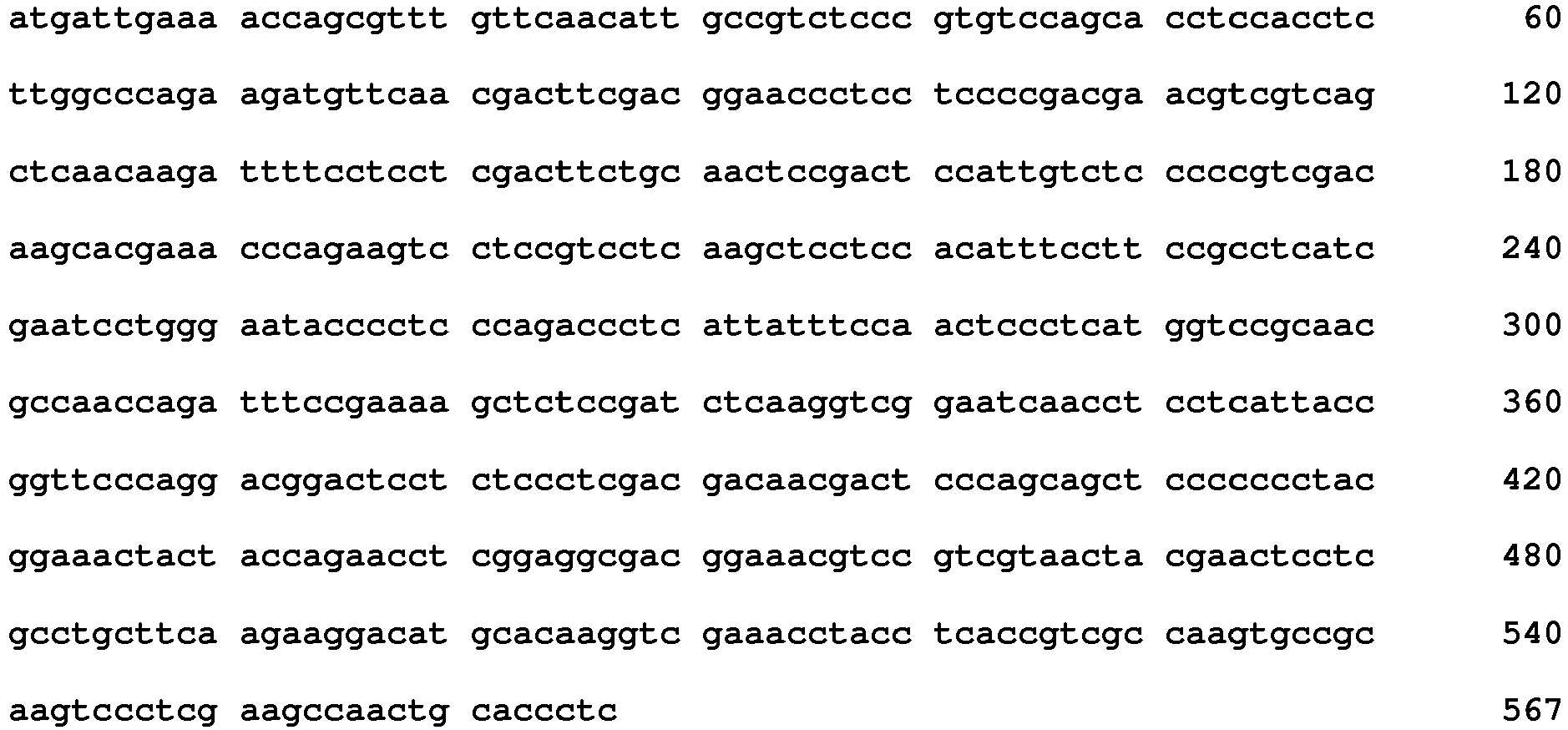
- <210> 2
<211> 33
<212> PRT
<213> Artificial Sequence - <220>
<223> Synthetic Peptide (Phaeodactylum tricornutum Endoplasmic reticulum Leader Sequence) - <400> 2


- <210> 3
<211> 221
<212> PRT
<213> Artificial Sequence - <220>
<223> Synthetic Polypeptide - <400> 3


- <210> 4
<211> 22
<212> PRT
<213> Artificial Sequence - <220>
<223> Synthetic Peptide (Phaeodactylum tricornutum Short Vacuole Leader Sequence) - <400> 4

- <210> 5
<211> 32
<212> PRT
<213> Artificial Sequence - <220>
<223> Synthetic Peptide - <400> 5

- <210> 6
<211> 251
<212> PRT
<213> Artificial Sequence - <220>
<223> Synthetic Polypeptide - <400> 6

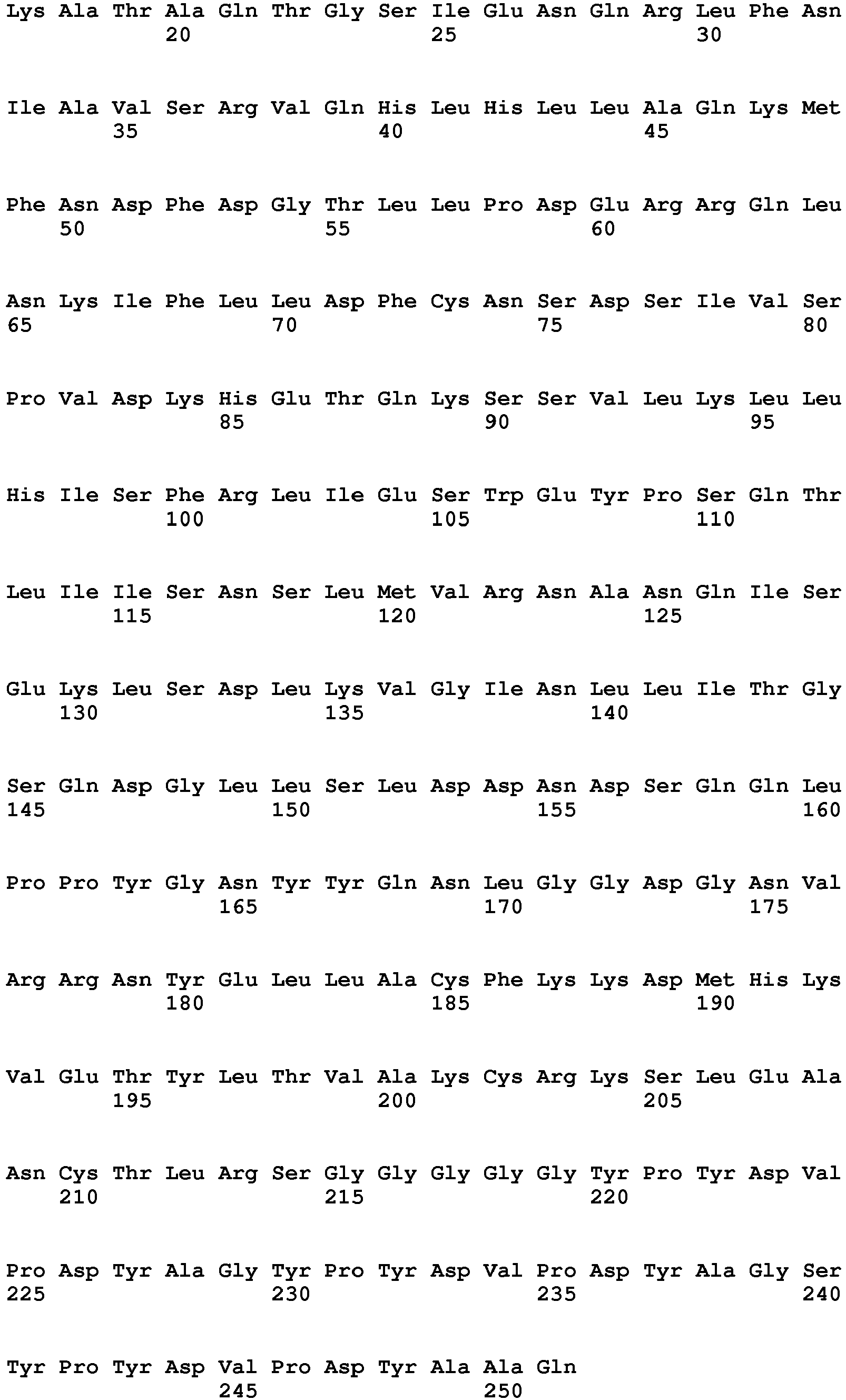
- <210> 7
<211> 12
<212> PRT
<213> Artificial Sequence - <220>
<223> Synthetic Peptide - <400> 7

- <210> 8
<211> 265
<212> PRT
<213> Artificial Sequence - <220>
<223> Synthetic Polypeptide - <400> 8


- <210> 9
<211> 11
<212> PRT
<213> Artificial Sequence - <220>
<223> Synthetic Peptide - <400> 9

- <210> 10
<211> 277
<212> PRT
<213> Artificial Sequence - <220>
<223> Synthetic Polypeptide - <400> 10


- <210> 11
<211> 4095
<212> DNA
<213> Artificial Sequence - <220>
<223> Synthetic Polynucleotide (pPhaT1 algae expression vector) - <400> 11


- <210> 12
<211> 189
<212> PRT
<213> Artificial Sequence - <220>
<223> Synthetic Polypeptide (Mature Salmom Growth Hormone) - <400> 12


- <210> 13
<211> 30
<212> PRT
<213> Artificial Sequence - <220>
<223> Synthetic Peptide (Phaeodactylum tricornutum Full Vacuole Leader Sequence) - <400> 13

- <210> 14
<211> 36
<212> DNA
<213> Artificial Sequence - <220>
<223> Synthetic Polynucleotide - <400> 14
gccgccgtcc tcctccccgt cttgttggct gccccc 36 - <210> 15
<211> 33
<212> DNA
<213> Artificial Sequence - <220>
<223> Synthetic Polynucleotide - <400> 15
tacggacgta agaagcgtcg tcagcgccgt cgt 33 - <210> 16
<211> 99
<212> DNA
<213> Artificial Sequence - <220>
<223> Synthetic Polynucleotide - <400> 16

- <210> 17
<211> 666
<212> DNA
<213> Artificial Sequence - <220>
<223> Synthetic Polynucleotide - <400> 17

- <210> 18
<211> 67
<212> DNA
<213> Artificial Sequence - <220>
<223> Synthetic Polynucleotide - <400> 18

- <210> 19
<211> 756
<212> DNA
<213> Artificial Sequence - <220>
<223> Synthetic Polynucleotide - <400> 19

- <210> 20
<211> 45
<212> PRT
<213> Artificial Sequence - <220>
<223> Synthetic peptide (agouti-related protein fragment) - <400> 20

- <210> 21
<211> 135
<212> DNA
<213> Artificial Sequence - <220>
<223> Synthetic Polynucleotide - <400> 21


- <210> 22
<211> 67
<212> PRT
<213> Artificial Sequence - <220>
<223> Synthetic Peptide - <400> 22

- <210> 23
<211> 201
<212> DNA
<213> Artificial Sequence - <220>
<223> Synthetic Polynucleotide - <400> 23

- <210> 24
<211> 10
<212> PRT
<213> Gallus gallus - <400> 24

- <210> 25
<211> 30
<212> DNA
<213> Gallus gallus - <400> 25
cagcactggt cccacggatg gtaccccgga 30 - <210> 26
<211> 32
<212> PRT
<213> Artificial Sequence - <220>
<223> Synthetic Peptide - <400> 26

- <210> 27
<211> 255
<212> DNA
<213> Artificial Sequence - <220>
<223> Synthetic Polynucleotide - <400> 27

- <210> 28
<211> 239
<212> PRT
<213> Artificial Sequence - <220>
<223> Synthetic Polypeptide - <400> 28


- <210> 29
<211> 720
<212> DNA
<213> Artificial Sequence - <220>
<223> Synthetic Polynucleotide - <400> 29

- <210> 30
<211> 263
<212> PRT
<213> Artificial Sequence - <220>
<223> Synthetic Polypeptide - <400> 30


- <210> 31
<211> 792
<212> DNA
<213> Artificial Sequence - <220>
<223> Synthetic Polynucleotide - <400> 31


- <210> 32
<211> 278
<212> PRT
<213> Artificial Sequence - <220>
<223> Synthetic Polypeptide - <400> 32


- <210> 33
<211> 838
<212> DNA
<213> Artificial Sequence - <220>
<223> Synthetic Polynucleotide - <400> 33


- <210> 34
<211> 276
<212> PRT
<213> Artificial Sequence - <220>
<223> Synthetic Polypeptide - <400> 34


- <210> 35
<211> 831
<212> DNA
<213> Artificial Sequence - <220>
<223> Synthetic Polynucleotide - <400> 35


- <210> 36
<211> 27
<212> DNA
<213> Artificial Sequence - <220>
<223> Synthetic Polynucleotide - <400> 36
ggaattcatg atgttcatga gaattgc 27 - <210> 37
<211> 30
<212> DNA
<213> Artificial Sequence - <220>
<223> Synthetic Polynucleotide - <400> 37
acgctggttt tcaatcacgg tacccatctt 30 - <210> 38
<211> 27
<212> DNA
<213> Artificial Sequence - <220>
<223> Synthetic Polynucleotide - <400> 38
ggaattcatg atgttcatga gaattgc 27 - <210> 39
<211> 30
<212> DNA
<213> Artificial Sequence - <220>
<223> Synthetic Polynucleotide - <400> 39
acgctggttt tcaatcacgg tacccatctt 30 - <210> 40
<211> 30
<212> DNA
<213> Artificial Sequence - <220>
<223> Synthetic Polynucleotide - <400> 40
aagatgggta ccgtgattga aaaccagcgt 30 - <210> 41
<211> 21
<212> DNA
<213> Artificial Sequence - <220>
<223> Synthetic Polynucleotide - <400> 41
gagatctgag ggtgcagttg g 21 - <210> 42
<211> 28
<212> DNA
<213> Artificial Sequence - <220>
<223> Synthetic Polynucleotide - <400> 42
ggaattcatg ggccaagtct ttctcttg 28 - <210> 43
<211> 30
<212> DNA
<213> Artificial Sequence - <220>
<223> Synthetic Polynucleotide - <400> 43
ggatccattg aaaaccagcg tttgttcaac 30 - <210> 44
<211> 42
<212> DNA
<213> Artificial Sequence - <220>
<223> Synthetic Polynucleotide - <400> 44
aagcttttac tgggcggcgt agtccgggac gtcgtagggg ta 42 - <210> 45
<211> 24
<212> DNA
<213> Artificial Sequence - <220>
<223> Synthetic Polynucleotide - <400> 45
atgaattcat gtcgattcgt ctct 24 - <210> 46
<211> 24
<212> DNA
<213> Artificial Sequence - <220>
<223> Synthetic Polynucleotide - <400> 46
atggatccag tttgggcagt tgcc 24 - <210> 47
<211> 98
<212> DNA
<213> Artificial Sequence - <220>
<223> Synthetic Polynucleotide - <400> 47

Claims (15)
- A transgenic eukaryotic microalga comprising an expression cassette comprising at least one transcribable polynucleotide encoding a biologically active exogenous protein, wherein the expressed biologically active exogenous protein is targeted to the cell vacuole of the microalga cell.
- The transgenic microalga of claim 1, wherein the expression cassette further comprises a polynucleotide encoding a vacuole targeting peptide.
- The transgenic microalga of claim 2, wherein the polynucleotide encoding a vacuole targeting peptide comprises the nucleic acid sequence set forth in SEQ ID NO:18, encoding the amino acid sequence set forth in SEQ ID NO:4.
- The transgenic microalga of claim 1,
wherein the expression cassette further comprises a polynucleotide encoding a protein domain that enhances the uptake of the expressed exogenous protein by a xenogeneic cell or tissue; or
wherein said microalga is a marine alga. - The transgenic microalga of claim 4, wherein said microalga is selected from the group consisting of Phaeodactylum tricornutum, Dunaliella spp., Nannochloropsis spp., Nannochloris spp., Tetraselmis spp., Isochrysis galbana, Pavlova spp., Amphiprora hyaline, Chaetoceros muelleri, and Neochloris oleoabundans, preferably wherein said microalga is Phaeodactylum tricornutum.
- The transgenic microalga of claim 1,
wherein the biologically active exogenous protein has a molecular weight of up to 150 kD, or
wherein the biologically active exogenous protein has a therapeutic activity. - The transgenic microalga of claim 6, wherein the biologically active exogenous protein is a hormone.
- The transgenic microalga of claim 7, wherein the hormone is selected from the group consisting of a growth hormone, appetite inducing hormone and spawning hormone.
- The transgenic microalga of claim 8,
wherein the hormone is Salmon growth hormone having the amino acid sequence set forth in SEQ ID NO:12; or
wherein the hormone is spawning hormone having the amino acid sequence set forth in SEQ ID NO:24; or
wherein the hormone is appetite inducing hormone having the amino acid sequence set forth in SEQ ID NO:20. - An edible composition comprising transgenic microalgae according to any one of claims 1-9.
- The edible composition of claim 10, said composition is an animal food composition or is for human consumption.
- The edible composition of claim 11, wherein
said animal food composition is for feeding aquatic animals; or
said animal food composition is for feeding land farm animals. - Use of the transgenic microalga of any one of claims 1-9 for preparing a composition for oral delivery of a protein.
- A transgenic eukaryotic microalga of any one of claims 1-5 for use as a medicament,
wherein the expressed exogenous biologically active protein is a therapeutic protein. - The transgenic eukaryotic microalga for use according to claim 14, wherein the therapeutic protein is for improving growth rate, growth patterns, survival, reproductive health status or any combination thereof of a subject; preferably wherein the subject is selected from an aquatic animal, a land farm animal and a human.
Applications Claiming Priority (3)
| Application Number | Priority Date | Filing Date | Title |
|---|---|---|---|
| US201261692240P | 2012-08-23 | 2012-08-23 | |
| US201361781103P | 2013-03-14 | 2013-03-14 | |
| PCT/IL2013/050712 WO2014030165A1 (en) | 2012-08-23 | 2013-08-21 | Transgenic microalgae and use thereof for oral delivery of proteins |
Publications (3)
| Publication Number | Publication Date |
|---|---|
| EP2887819A1 EP2887819A1 (en) | 2015-07-01 |
| EP2887819A4 EP2887819A4 (en) | 2016-04-06 |
| EP2887819B1 true EP2887819B1 (en) | 2018-07-25 |
Family
ID=50149519
Family Applications (1)
| Application Number | Title | Priority Date | Filing Date |
|---|---|---|---|
| EP13831309.3A Active EP2887819B1 (en) | 2012-08-23 | 2013-08-21 | Transgenic microalgae and use thereof for oral delivery of proteins |
Country Status (9)
| Country | Link |
|---|---|
| US (2) | US9827280B2 (en) |
| EP (1) | EP2887819B1 (en) |
| JP (1) | JP6275143B2 (en) |
| CN (2) | CN104754954B (en) |
| CA (1) | CA2882977C (en) |
| IL (1) | IL237359B (en) |
| IN (1) | IN2015MN00403A (en) |
| TR (1) | TR201814868T4 (en) |
| WO (1) | WO2014030165A1 (en) |
Families Citing this family (14)
| Publication number | Priority date | Publication date | Assignee | Title |
|---|---|---|---|---|
| WO2014030165A1 (en) | 2012-08-23 | 2014-02-27 | Transalgae Israel Ltd. | Transgenic microalgae and use thereof for oral delivery of proteins |
| CA2935635C (en) | 2014-02-12 | 2023-05-09 | Transalgae Israel Ltd. | Algal based edible vaccines |
| US20190373915A1 (en) * | 2014-10-24 | 2019-12-12 | Trustees Of Dartmouth College | Aquaculture Feed Formulation and Aquaculture Product Produced with the Same |
| CL2014003348A1 (en) * | 2014-12-09 | 2016-09-02 | Oceaneos Environmental Solutions Inc | Non-radioactive iron isotopes and method of use to track marine species |
| JP2017012135A (en) * | 2015-07-06 | 2017-01-19 | 国立大学法人高知大学 | Method for producing vector, genetically modified marine diatom and fucoxanthin |
| WO2017009838A1 (en) | 2015-07-14 | 2017-01-19 | Transalgae Israel Ltd. | Transgenic microalgae and use thereof as a feed for delivery of interfering rna molecules |
| GB201616087D0 (en) * | 2016-09-21 | 2016-11-02 | Tomalgae Cvba | Algae comprising therapeutic and/or nutritional agents |
| KR102013788B1 (en) * | 2016-11-04 | 2019-08-23 | 한국과학기술연구원 | A vector for expressing hEGF or PTD-hEGF and microalgae transformed with the same |
| WO2018134968A1 (en) * | 2017-01-20 | 2018-07-26 | 三陸飼料株式会社 | Method for manufacturing feed containing salmon growth hormone, feed containing salmon growth hormone, and liquid containing salmon growth hormone |
| KR102080864B1 (en) * | 2017-10-24 | 2020-02-24 | 주식회사 비엠바이오 | Functional feed composition for pet using microalgae having antiobecity and antidiabetes |
| CN113454444A (en) * | 2018-12-21 | 2021-09-28 | 艾克斯波特西溶液公司 | System and method for predicting growth of a population of organisms |
| JP2020202786A (en) * | 2019-06-17 | 2020-12-24 | 国立研究開発法人国際農林水産業研究センター | Microalgae culture method |
| CN111394381A (en) * | 2020-03-26 | 2020-07-10 | 上海海洋大学 | Methods for enrichment of mOrange and vp28 shuttle vectors to Artemia nauplii |
| AU2023288053A1 (en) * | 2022-06-22 | 2024-12-12 | Provectus Algae Pty Ltd | Promotion of synchronous sexual maturation and spawning in aquatic animals |
Family Cites Families (25)
| Publication number | Priority date | Publication date | Assignee | Title |
|---|---|---|---|---|
| ES2163398T3 (en) * | 1991-03-15 | 2002-02-01 | Hsc Res Dev Ltd Partnership | GENE CONSTRUCTION FOR THE PRODUCTION OF TRANSGENIC FISH. |
| US5643877A (en) * | 1994-12-05 | 1997-07-01 | University Of Maryland Biotechnology Institute | Compounds comprising gonadotropin releasing hormone (GnRH) and methods for controlling reproduction in fish |
| US6027900A (en) | 1996-04-12 | 2000-02-22 | Carnegie Institution Of Washington | Methods and tools for transformation of eukaryotic algae |
| US6720014B1 (en) * | 1997-08-13 | 2004-04-13 | Diversa Corporation | Phytase-containing foodstuffs and methods of making and using them |
| RU2001111881A (en) * | 1998-10-07 | 2003-06-20 | Зингента Партисипейшнс Аг (Ch) | Therapeutically active proteins in plants |
| AU2001269936A1 (en) | 2000-06-20 | 2002-01-02 | Phycotransgenics, Llc | Transgenic algae for delivering antigens to an animal |
| US7081567B2 (en) * | 2000-12-03 | 2006-07-25 | Lexun Xue | Transgenic dunaliella salina as a bioreactor |
| MXPA03008563A (en) | 2001-03-23 | 2005-03-07 | Advanced Bionutrition | Delivery of disease control in aquaculture and agriculture using microbes containing bioactive proteins. |
| US20070148166A1 (en) | 2002-05-13 | 2007-06-28 | Wu Madeline C S | Scfvs in photosynthetic microbes |
| US20080286294A1 (en) | 2004-05-19 | 2008-11-20 | Agence Francaise De Securite Sanitaire Des Aliment | Nodavirus-Vlp Immunization Composition |
| WO2006092449A2 (en) * | 2005-03-02 | 2006-09-08 | Metanomics Gmbh | Process for the production of fine chemicals |
| CN1325652C (en) * | 2005-10-13 | 2007-07-11 | 上海交通大学 | Improvement for exogenous protein accumulation in transgene plant |
| WO2008027235A1 (en) | 2006-08-25 | 2008-03-06 | University Of New Mexico | Methods and compositions for control of disease in aquaculture |
| US20090205075A1 (en) * | 2008-01-30 | 2009-08-13 | Stacy Miles | Use of plastid transit peptides derived from glaucocystophytes |
| CA2722189A1 (en) * | 2008-04-21 | 2009-10-29 | Chromatin, Inc. | Methods and materials for processing a feedstock |
| JP5757870B2 (en) | 2008-08-26 | 2015-08-05 | ビーエーエスエフ プラント サイエンス ゲーエムベーハー | Nucleic acids encoding desaturases and modified vegetable oils |
| US20110014708A1 (en) | 2009-07-17 | 2011-01-20 | National Taiwan University | Nucleic acid for use in algae and use thereof |
| US20110081706A1 (en) | 2009-10-02 | 2011-04-07 | TransAlgae Ltd | Method and system for efficient harvesting of microalgae and cyanobacteria |
| US20120309939A1 (en) | 2009-11-19 | 2012-12-06 | The Scripps Research Institute | Production of Therapeutic Proteins in Photosynthetic Organisms |
| CA2807836A1 (en) * | 2010-09-01 | 2012-03-08 | Pioneer Hi-Bred International, Inc. | Vacuole targeting peptides and methods of use |
| US20130065314A1 (en) * | 2011-08-25 | 2013-03-14 | Phytocentric Biotech Inc. | Algal transformation systems, compositions and methods |
| WO2013052755A1 (en) * | 2011-10-06 | 2013-04-11 | University Of Wyoming | Method for harvesting photosynthetic unicells using genetically induced flotation |
| CN102559735A (en) * | 2011-12-28 | 2012-07-11 | 广东海洋大学 | Method for producing nervonic acid by utilizing transgenic microalgae |
| WO2014030165A1 (en) | 2012-08-23 | 2014-02-27 | Transalgae Israel Ltd. | Transgenic microalgae and use thereof for oral delivery of proteins |
| EP2929030B1 (en) * | 2012-12-04 | 2018-10-31 | ExxonMobil Research and Engineering Company | Tetraselmis promoters and terminators for use in eukaryotic cells |
-
2013
- 2013-08-21 WO PCT/IL2013/050712 patent/WO2014030165A1/en not_active Ceased
- 2013-08-21 CN CN201380055161.4A patent/CN104754954B/en active Active
- 2013-08-21 JP JP2015528007A patent/JP6275143B2/en active Active
- 2013-08-21 CA CA2882977A patent/CA2882977C/en active Active
- 2013-08-21 TR TR2018/14868T patent/TR201814868T4/en unknown
- 2013-08-21 IN IN403MUN2015 patent/IN2015MN00403A/en unknown
- 2013-08-21 EP EP13831309.3A patent/EP2887819B1/en active Active
- 2013-08-21 CN CN201810827536.9A patent/CN108929855A/en active Pending
-
2015
- 2015-02-22 IL IL237359A patent/IL237359B/en active IP Right Grant
- 2015-02-23 US US14/628,891 patent/US9827280B2/en active Active
-
2017
- 2017-10-24 US US15/791,924 patent/US11344590B2/en active Active
Non-Patent Citations (1)
| Title |
|---|
| None * |
Also Published As
| Publication number | Publication date |
|---|---|
| CA2882977C (en) | 2019-05-21 |
| CN104754954A (en) | 2015-07-01 |
| CA2882977A1 (en) | 2014-02-27 |
| IL237359A0 (en) | 2015-04-30 |
| US20180036357A1 (en) | 2018-02-08 |
| JP6275143B2 (en) | 2018-02-07 |
| TR201814868T4 (en) | 2018-10-22 |
| IN2015MN00403A (en) | 2015-09-04 |
| JP2015531596A (en) | 2015-11-05 |
| US9827280B2 (en) | 2017-11-28 |
| CN104754954B (en) | 2018-08-28 |
| US11344590B2 (en) | 2022-05-31 |
| CN108929855A (en) | 2018-12-04 |
| US20150164965A1 (en) | 2015-06-18 |
| EP2887819A1 (en) | 2015-07-01 |
| EP2887819A4 (en) | 2016-04-06 |
| WO2014030165A1 (en) | 2014-02-27 |
| IL237359B (en) | 2019-01-31 |
Similar Documents
| Publication | Publication Date | Title |
|---|---|---|
| US11344590B2 (en) | Transgenic microalgae and use thereof for oral delivery of proteins | |
| Li et al. | Transgenic microalgae as a non-antibiotic bactericide producer to defend against bacterial pathogen infection in the fish digestive tract | |
| KR100443843B1 (en) | Biosynthesis of foreign proteins using transformed microalgae | |
| US20200063152A1 (en) | Algal based edible vaccines | |
| US20110158946A1 (en) | Methods and Compositions for control of disease in aquaculture | |
| US11939576B2 (en) | Transgenic microalgae and use thereof as a feed for delivery of interfering RNA molecules | |
| CN101182360B (en) | A fusion protein with antibacterial function and its application | |
| Wang et al. | Bait microalga harboring antimicrobial peptide for controlling Vibrio infection in Argopecten irradians aquaculture | |
| US20110014708A1 (en) | Nucleic acid for use in algae and use thereof | |
| CN101164431A (en) | Feed additive with antibiotic function and application | |
| CA2986880C (en) | Transgenic microalgae and use thereof as a feed for delivery of interfering rna molecules | |
| RIVER-BORNE et al. | Plate1: A. Strain BP02 after gram staini on PVKA with halo zone of | |
| TW201024414A (en) | Nucleic acid for use in algae and use thereof |
Legal Events
| Date | Code | Title | Description |
|---|---|---|---|
| PUAI | Public reference made under article 153(3) epc to a published international application that has entered the european phase |
Free format text: ORIGINAL CODE: 0009012 |
|
| 17P | Request for examination filed |
Effective date: 20150219 |
|
| AK | Designated contracting states |
Kind code of ref document: A1 Designated state(s): AL AT BE BG CH CY CZ DE DK EE ES FI FR GB GR HR HU IE IS IT LI LT LU LV MC MK MT NL NO PL PT RO RS SE SI SK SM TR |
|
| AX | Request for extension of the european patent |
Extension state: BA ME |
|
| DAX | Request for extension of the european patent (deleted) | ||
| RA4 | Supplementary search report drawn up and despatched (corrected) |
Effective date: 20160309 |
|
| RIC1 | Information provided on ipc code assigned before grant |
Ipc: A61K 48/00 20060101ALI20160303BHEP Ipc: C12N 15/18 20060101ALI20160303BHEP Ipc: C07K 14/60 20060101ALI20160303BHEP Ipc: C12N 15/00 20060101ALI20160303BHEP Ipc: C12N 1/13 20060101AFI20160303BHEP Ipc: A61K 38/22 20060101ALI20160303BHEP |
|
| STAA | Information on the status of an ep patent application or granted ep patent |
Free format text: STATUS: EXAMINATION IS IN PROGRESS |
|
| 17Q | First examination report despatched |
Effective date: 20170207 |
|
| REG | Reference to a national code |
Ref country code: DE Ref legal event code: R079 Ref document number: 602013040941 Country of ref document: DE Free format text: PREVIOUS MAIN CLASS: A23J0003200000 Ipc: A61K0038220000 |
|
| GRAP | Despatch of communication of intention to grant a patent |
Free format text: ORIGINAL CODE: EPIDOSNIGR1 |
|
| RIC1 | Information provided on ipc code assigned before grant |
Ipc: A61K 38/22 20060101AFI20180118BHEP Ipc: A23K 10/16 20160101ALI20180118BHEP Ipc: A23K 50/75 20160101ALI20180118BHEP Ipc: A61K 38/27 20060101ALI20180118BHEP Ipc: A23K 50/80 20160101ALI20180118BHEP Ipc: C07K 14/46 20060101ALI20180118BHEP Ipc: A23K 10/18 20160101ALI20180118BHEP Ipc: C07K 14/61 20060101ALI20180118BHEP |
|
| STAA | Information on the status of an ep patent application or granted ep patent |
Free format text: STATUS: GRANT OF PATENT IS INTENDED |
|
| INTG | Intention to grant announced |
Effective date: 20180222 |
|
| GRAS | Grant fee paid |
Free format text: ORIGINAL CODE: EPIDOSNIGR3 |
|
| GRAA | (expected) grant |
Free format text: ORIGINAL CODE: 0009210 |
|
| STAA | Information on the status of an ep patent application or granted ep patent |
Free format text: STATUS: THE PATENT HAS BEEN GRANTED |
|
| AK | Designated contracting states |
Kind code of ref document: B1 Designated state(s): AL AT BE BG CH CY CZ DE DK EE ES FI FR GB GR HR HU IE IS IT LI LT LU LV MC MK MT NL NO PL PT RO RS SE SI SK SM TR |
|
| REG | Reference to a national code |
Ref country code: GB Ref legal event code: FG4D |
|
| REG | Reference to a national code |
Ref country code: CH Ref legal event code: EP |
|
| REG | Reference to a national code |
Ref country code: AT Ref legal event code: REF Ref document number: 1021045 Country of ref document: AT Kind code of ref document: T Effective date: 20180815 |
|
| REG | Reference to a national code |
Ref country code: IE Ref legal event code: FG4D |
|
| REG | Reference to a national code |
Ref country code: DE Ref legal event code: R096 Ref document number: 602013040941 Country of ref document: DE |
|
| REG | Reference to a national code |
Ref country code: FR Ref legal event code: PLFP Year of fee payment: 6 |
|
| REG | Reference to a national code |
Ref country code: NO Ref legal event code: T2 Effective date: 20180725 |
|
| REG | Reference to a national code |
Ref country code: NL Ref legal event code: MP Effective date: 20180725 |
|
| REG | Reference to a national code |
Ref country code: LT Ref legal event code: MG4D |
|
| PG25 | Lapsed in a contracting state [announced via postgrant information from national office to epo] |
Ref country code: NL Free format text: LAPSE BECAUSE OF FAILURE TO SUBMIT A TRANSLATION OF THE DESCRIPTION OR TO PAY THE FEE WITHIN THE PRESCRIBED TIME-LIMIT Effective date: 20180725 |
|
| REG | Reference to a national code |
Ref country code: AT Ref legal event code: MK05 Ref document number: 1021045 Country of ref document: AT Kind code of ref document: T Effective date: 20180725 |
|
| PG25 | Lapsed in a contracting state [announced via postgrant information from national office to epo] |
Ref country code: BG Free format text: LAPSE BECAUSE OF FAILURE TO SUBMIT A TRANSLATION OF THE DESCRIPTION OR TO PAY THE FEE WITHIN THE PRESCRIBED TIME-LIMIT Effective date: 20181025 Ref country code: SE Free format text: LAPSE BECAUSE OF FAILURE TO SUBMIT A TRANSLATION OF THE DESCRIPTION OR TO PAY THE FEE WITHIN THE PRESCRIBED TIME-LIMIT Effective date: 20180725 Ref country code: IS Free format text: LAPSE BECAUSE OF FAILURE TO SUBMIT A TRANSLATION OF THE DESCRIPTION OR TO PAY THE FEE WITHIN THE PRESCRIBED TIME-LIMIT Effective date: 20181125 Ref country code: AT Free format text: LAPSE BECAUSE OF FAILURE TO SUBMIT A TRANSLATION OF THE DESCRIPTION OR TO PAY THE FEE WITHIN THE PRESCRIBED TIME-LIMIT Effective date: 20180725 Ref country code: RS Free format text: LAPSE BECAUSE OF FAILURE TO SUBMIT A TRANSLATION OF THE DESCRIPTION OR TO PAY THE FEE WITHIN THE PRESCRIBED TIME-LIMIT Effective date: 20180725 Ref country code: FI Free format text: LAPSE BECAUSE OF FAILURE TO SUBMIT A TRANSLATION OF THE DESCRIPTION OR TO PAY THE FEE WITHIN THE PRESCRIBED TIME-LIMIT Effective date: 20180725 Ref country code: PL Free format text: LAPSE BECAUSE OF FAILURE TO SUBMIT A TRANSLATION OF THE DESCRIPTION OR TO PAY THE FEE WITHIN THE PRESCRIBED TIME-LIMIT Effective date: 20180725 Ref country code: LT Free format text: LAPSE BECAUSE OF FAILURE TO SUBMIT A TRANSLATION OF THE DESCRIPTION OR TO PAY THE FEE WITHIN THE PRESCRIBED TIME-LIMIT Effective date: 20180725 |
|
| REG | Reference to a national code |
Ref country code: CH Ref legal event code: PK Free format text: BERICHTIGUNGEN |
|
| RIC2 | Information provided on ipc code assigned after grant |
Ipc: A23K 50/80 20160101ALI20180118BHEP Ipc: A23K 50/75 20160101ALI20180118BHEP Ipc: A61K 38/27 20060101ALI20180118BHEP Ipc: C07K 14/61 20060101ALI20180118BHEP Ipc: A23K 10/16 20160101ALI20180118BHEP Ipc: A61K 38/22 20060101AFI20180118BHEP Ipc: C07K 14/46 20060101ALI20180118BHEP Ipc: A23K 10/18 20160101ALI20180118BHEP |
|
| PG25 | Lapsed in a contracting state [announced via postgrant information from national office to epo] |
Ref country code: LV Free format text: LAPSE BECAUSE OF FAILURE TO SUBMIT A TRANSLATION OF THE DESCRIPTION OR TO PAY THE FEE WITHIN THE PRESCRIBED TIME-LIMIT Effective date: 20180725 Ref country code: AL Free format text: LAPSE BECAUSE OF FAILURE TO SUBMIT A TRANSLATION OF THE DESCRIPTION OR TO PAY THE FEE WITHIN THE PRESCRIBED TIME-LIMIT Effective date: 20180725 Ref country code: HR Free format text: LAPSE BECAUSE OF FAILURE TO SUBMIT A TRANSLATION OF THE DESCRIPTION OR TO PAY THE FEE WITHIN THE PRESCRIBED TIME-LIMIT Effective date: 20180725 |
|
| REG | Reference to a national code |
Ref country code: GR Ref legal event code: EP Ref document number: 20180402795 Country of ref document: GR Effective date: 20190225 |
|
| REG | Reference to a national code |
Ref country code: CH Ref legal event code: PL |
|
| REG | Reference to a national code |
Ref country code: DE Ref legal event code: R097 Ref document number: 602013040941 Country of ref document: DE |
|
| PG25 | Lapsed in a contracting state [announced via postgrant information from national office to epo] |
Ref country code: LU Free format text: LAPSE BECAUSE OF NON-PAYMENT OF DUE FEES Effective date: 20180821 Ref country code: EE Free format text: LAPSE BECAUSE OF FAILURE TO SUBMIT A TRANSLATION OF THE DESCRIPTION OR TO PAY THE FEE WITHIN THE PRESCRIBED TIME-LIMIT Effective date: 20180725 Ref country code: ES Free format text: LAPSE BECAUSE OF FAILURE TO SUBMIT A TRANSLATION OF THE DESCRIPTION OR TO PAY THE FEE WITHIN THE PRESCRIBED TIME-LIMIT Effective date: 20180725 Ref country code: LI Free format text: LAPSE BECAUSE OF NON-PAYMENT OF DUE FEES Effective date: 20180831 Ref country code: CH Free format text: LAPSE BECAUSE OF NON-PAYMENT OF DUE FEES Effective date: 20180831 Ref country code: CZ Free format text: LAPSE BECAUSE OF FAILURE TO SUBMIT A TRANSLATION OF THE DESCRIPTION OR TO PAY THE FEE WITHIN THE PRESCRIBED TIME-LIMIT Effective date: 20180725 Ref country code: MC Free format text: LAPSE BECAUSE OF FAILURE TO SUBMIT A TRANSLATION OF THE DESCRIPTION OR TO PAY THE FEE WITHIN THE PRESCRIBED TIME-LIMIT Effective date: 20180725 Ref country code: RO Free format text: LAPSE BECAUSE OF FAILURE TO SUBMIT A TRANSLATION OF THE DESCRIPTION OR TO PAY THE FEE WITHIN THE PRESCRIBED TIME-LIMIT Effective date: 20180725 Ref country code: IT Free format text: LAPSE BECAUSE OF FAILURE TO SUBMIT A TRANSLATION OF THE DESCRIPTION OR TO PAY THE FEE WITHIN THE PRESCRIBED TIME-LIMIT Effective date: 20180725 |
|
| REG | Reference to a national code |
Ref country code: BE Ref legal event code: MM Effective date: 20180831 |
|
| PG25 | Lapsed in a contracting state [announced via postgrant information from national office to epo] |
Ref country code: SK Free format text: LAPSE BECAUSE OF FAILURE TO SUBMIT A TRANSLATION OF THE DESCRIPTION OR TO PAY THE FEE WITHIN THE PRESCRIBED TIME-LIMIT Effective date: 20180725 Ref country code: DK Free format text: LAPSE BECAUSE OF FAILURE TO SUBMIT A TRANSLATION OF THE DESCRIPTION OR TO PAY THE FEE WITHIN THE PRESCRIBED TIME-LIMIT Effective date: 20180725 Ref country code: SM Free format text: LAPSE BECAUSE OF FAILURE TO SUBMIT A TRANSLATION OF THE DESCRIPTION OR TO PAY THE FEE WITHIN THE PRESCRIBED TIME-LIMIT Effective date: 20180725 |
|
| PLBE | No opposition filed within time limit |
Free format text: ORIGINAL CODE: 0009261 |
|
| STAA | Information on the status of an ep patent application or granted ep patent |
Free format text: STATUS: NO OPPOSITION FILED WITHIN TIME LIMIT |
|
| 26N | No opposition filed |
Effective date: 20190426 |
|
| PG25 | Lapsed in a contracting state [announced via postgrant information from national office to epo] |
Ref country code: SI Free format text: LAPSE BECAUSE OF FAILURE TO SUBMIT A TRANSLATION OF THE DESCRIPTION OR TO PAY THE FEE WITHIN THE PRESCRIBED TIME-LIMIT Effective date: 20180725 Ref country code: BE Free format text: LAPSE BECAUSE OF NON-PAYMENT OF DUE FEES Effective date: 20180831 |
|
| REG | Reference to a national code |
Ref country code: DE Ref legal event code: R082 Ref document number: 602013040941 Country of ref document: DE Representative=s name: STRAUS, ALEXANDER, DIPL.-CHEM.UNIV. DR.PHIL., DE Ref country code: DE Ref legal event code: R082 Ref document number: 602013040941 Country of ref document: DE Representative=s name: 2K PATENT- UND RECHTSANWAELTE PARTNERSCHAFT MB, DE |
|
| PG25 | Lapsed in a contracting state [announced via postgrant information from national office to epo] |
Ref country code: MT Free format text: LAPSE BECAUSE OF NON-PAYMENT OF DUE FEES Effective date: 20180821 |
|
| PG25 | Lapsed in a contracting state [announced via postgrant information from national office to epo] |
Ref country code: PT Free format text: LAPSE BECAUSE OF FAILURE TO SUBMIT A TRANSLATION OF THE DESCRIPTION OR TO PAY THE FEE WITHIN THE PRESCRIBED TIME-LIMIT Effective date: 20180725 Ref country code: HU Free format text: LAPSE BECAUSE OF FAILURE TO SUBMIT A TRANSLATION OF THE DESCRIPTION OR TO PAY THE FEE WITHIN THE PRESCRIBED TIME-LIMIT; INVALID AB INITIO Effective date: 20130821 |
|
| PG25 | Lapsed in a contracting state [announced via postgrant information from national office to epo] |
Ref country code: CY Free format text: LAPSE BECAUSE OF FAILURE TO SUBMIT A TRANSLATION OF THE DESCRIPTION OR TO PAY THE FEE WITHIN THE PRESCRIBED TIME-LIMIT Effective date: 20180725 Ref country code: MK Free format text: LAPSE BECAUSE OF NON-PAYMENT OF DUE FEES Effective date: 20180725 |
|
| PGFP | Annual fee paid to national office [announced via postgrant information from national office to epo] |
Ref country code: GR Payment date: 20200820 Year of fee payment: 8 Ref country code: TR Payment date: 20200814 Year of fee payment: 8 |
|
| PG25 | Lapsed in a contracting state [announced via postgrant information from national office to epo] |
Ref country code: GR Free format text: LAPSE BECAUSE OF NON-PAYMENT OF DUE FEES Effective date: 20220308 |
|
| P01 | Opt-out of the competence of the unified patent court (upc) registered |
Effective date: 20230528 |
|
| REG | Reference to a national code |
Ref country code: DE Ref legal event code: R082 Ref document number: 602013040941 Country of ref document: DE Representative=s name: STRAUS, ALEXANDER, DIPL.-CHEM.UNIV. DR.PHIL., DE |
|
| PGFP | Annual fee paid to national office [announced via postgrant information from national office to epo] |
Ref country code: DE Payment date: 20250820 Year of fee payment: 13 |
|
| PGFP | Annual fee paid to national office [announced via postgrant information from national office to epo] |
Ref country code: NO Payment date: 20250826 Year of fee payment: 13 |
|
| PGFP | Annual fee paid to national office [announced via postgrant information from national office to epo] |
Ref country code: GB Payment date: 20250821 Year of fee payment: 13 |
|
| PGFP | Annual fee paid to national office [announced via postgrant information from national office to epo] |
Ref country code: FR Payment date: 20250829 Year of fee payment: 13 |
|
| PGFP | Annual fee paid to national office [announced via postgrant information from national office to epo] |
Ref country code: IE Payment date: 20250820 Year of fee payment: 13 |