EP2887614B1 - Telekommunikationsnetzwerke - Google Patents
Telekommunikationsnetzwerke Download PDFInfo
- Publication number
- EP2887614B1 EP2887614B1 EP14199306.3A EP14199306A EP2887614B1 EP 2887614 B1 EP2887614 B1 EP 2887614B1 EP 14199306 A EP14199306 A EP 14199306A EP 2887614 B1 EP2887614 B1 EP 2887614B1
- Authority
- EP
- European Patent Office
- Prior art keywords
- savi
- scnc
- applications
- scnd
- network
- Prior art date
- Legal status (The legal status is an assumption and is not a legal conclusion. Google has not performed a legal analysis and makes no representation as to the accuracy of the status listed.)
- Active
Links
Images






Classifications
-
- H—ELECTRICITY
- H04—ELECTRIC COMMUNICATION TECHNIQUE
- H04W—WIRELESS COMMUNICATION NETWORKS
- H04W24/00—Supervisory, monitoring or testing arrangements
- H04W24/02—Arrangements for optimising operational condition
-
- H—ELECTRICITY
- H04—ELECTRIC COMMUNICATION TECHNIQUE
- H04L—TRANSMISSION OF DIGITAL INFORMATION, e.g. TELEGRAPHIC COMMUNICATION
- H04L67/00—Network arrangements or protocols for supporting network services or applications
- H04L67/01—Protocols
- H04L67/10—Protocols in which an application is distributed across nodes in the network
-
- H—ELECTRICITY
- H04—ELECTRIC COMMUNICATION TECHNIQUE
- H04L—TRANSMISSION OF DIGITAL INFORMATION, e.g. TELEGRAPHIC COMMUNICATION
- H04L47/00—Traffic control in data switching networks
- H04L47/10—Flow control; Congestion control
- H04L47/20—Traffic policing
-
- H—ELECTRICITY
- H04—ELECTRIC COMMUNICATION TECHNIQUE
- H04L—TRANSMISSION OF DIGITAL INFORMATION, e.g. TELEGRAPHIC COMMUNICATION
- H04L67/00—Network arrangements or protocols for supporting network services or applications
- H04L67/50—Network services
- H04L67/56—Provisioning of proxy services
-
- H—ELECTRICITY
- H04—ELECTRIC COMMUNICATION TECHNIQUE
- H04W—WIRELESS COMMUNICATION NETWORKS
- H04W72/00—Local resource management
- H04W72/50—Allocation or scheduling criteria for wireless resources
- H04W72/53—Allocation or scheduling criteria for wireless resources based on regulatory allocation policies
-
- H—ELECTRICITY
- H04—ELECTRIC COMMUNICATION TECHNIQUE
- H04W—WIRELESS COMMUNICATION NETWORKS
- H04W8/00—Network data management
- H04W8/02—Processing of mobility data, e.g. registration information at HLR [Home Location Register] or VLR [Visitor Location Register]; Transfer of mobility data, e.g. between HLR, VLR or external networks
- H04W8/04—Registration at HLR or HSS [Home Subscriber Server]
Definitions
- the present invention relates to a mobile telecommunications network including a network core operable to provide core network functions; and a radio access network having radio means for wireless communication with mobile terminals registered with the telecommunications network and control means operable to host a plurality of applications, functions or services for use by users of the mobile terminals; wherein the control means includes a client function and the network core includes a director function; and to a corresponding method.
- the current cellular network architecture has the following disadvantages:-
- Today mobile service delivery is provided through the mobile operator's packet core.
- a packet core may host a series of applications for enhancing the mobile service.
- the Applicant proposed to move potential applications on to "General Purpose Hardware Platform" hardware located at the edge of the radio access network.
- EP2315412 describes the introduction of a novel control means or Platform (known as a Smart Access Vision (SAVi) platform) at the network edge.
- a Smart Access Vision (SAVi) platform To open the radio access part a "General Purpose Hardware Platform” may be implemented at the network edge. This may allow operators to split the functions of an Radio Network Controller (RNC) and/or a (e)NodeB between hardware and software. As a consequence operators have the capability to place applications and content directly at the edge of the network.
- RNC Radio Network Controller
- e eNodeB
- SAVi may enable a mobile operator to deploy (in-line) services in radio access networks nodes such as base stations (e.g. eNodeB) and radio network controllers.
- nodes such as base stations (e.g. eNodeB) and radio network controllers.
- Deploying such services in the radio access network can enhance the subscriber's mobile experience since service delivery avoids the link between the radio access network and the rest of the core network.
- transmitting volumes of data over a potentially narrow-band backhaul link can be reduced. Reducing these transmissions improve the round-trip delay for packet interactions and may increase the amount of bandwidth available for the mobile subscriber.
- a mobile operator may be able to avoid expensive backhaul upgrades to keep pace with the capabilities of communication over the wireless channel.
- Examples of base station hosted services that reduce backhaul traffic are: locally hosted gaming applications with reduced latency and significantly improved response times or caching/CDN which reduce backhaul loading.
- a Law Enforcement Agency may demand a copy of all data transmitted to and received from a mobile subscriber for subscribers of interest. Only core network elements are deemed secure and which implies that no radio access network equipment can be used to provide the packets flows to the LEA.
- the implication for radio access network based services is that mechanisms need to be put in place to "copy" all data altered by services executing in the radio access network to the mobile packet core to enable the lawful intercept function.
- Charging is a function that operates in the mobile packet core and counts the amount of data, time of day and use of additional services. This charging function enables the mobile operator to send a bill to the mobile operator's customer for services rendered. If services operate in the radio access network, the operator may not be able to provide accurate bills. Again, by copy of data from the radio access network to the mobile packet core as is done for the lawful intercept function existing charging infrastructures may operate without modification.
- WO2013164474 discloses a radio access network that includes control means (a platform), wherein the control hosts a plurality of applications and includes verifying means for verifying the applications before allowing installation of the applications.
- EP2315412 discloses a mobile telecommunications network that includes a core and a radio access network having radio means for wireless communication with mobile terminals registered with the network, wherein the radio access network includes control means operable to control the use of network resources by the mobile terminals.
- a multiplicity of applications are hosted on the control means.
- the control means may be provided at an access node site and/or a gateway site in the radio access network.
- An application context contains the protocol used to carry an application It is an object of embodiments of the present invention to enable a SAVi or similar control means in the radio access network to exchange information with the network core.
- the embodiments are generally applicable in a Radio Access Network (RAN), the key target deployments include LTE and iHSPA base stations.
- the embodiments may also operate through UMTS radio network controllers (RNCs), GSM/GPRS base station controllers (BSCs) and other RAN functions.
- RNCs UMTS radio network controllers
- BSCs GSM/GPRS base station controllers
- the present invention defines a mobile telecommunications network according to claim 1 and a method according to claim 6. Further embodiments are set forth in the dependent claims 2-5 and 7-10.
- the client function and the director function may be operable to provide the director function with the information.
- the client function may be operable to provide the director function with the information relating to the applications hosted by the control means when the applications hosted by the control means change.
- the information relating to the applications may be transmitted in a GTP-U communication session.
- the information relating to the applications may be transmitted over an existing control channel between the client function and the director function established for one of the mobile terminals.
- the embodiments to be described enable a SAVi platform or similar control means in the radio access network to exchange information with the network core.
- the information is exchanged via any available GTP-U session and does not need to be related to a specific mobile terminal user's session. Therefore, the communication can be used to exchange node specific information, e.g. details of applications installed on the SAVi Platform.
- the present invention also provides a corresponding method of operating a mobile telecommunications network.
- a control means is on Platform 1 (sometimes referred to as a SAVi platform) that provides services in a hosted SAVi processing environment.
- Platform 1 sometimes referred to as a SAVi platform
- SAVi Core Network integration architecture has been defined and is shown in Figure 1 .
- GPT-U GPRS Tunnelling Protocol User plane
- the arrangement provides message flows and methods to establish a communication and exchange signalling messages between SAVi functions located in the network core and SAVi functions located on the SAVi Platform in the RAN (Radio Access Network).
- Figure 1 shows the system architecture of certain elements of the network.
- the Platform 1 is provided at the network edge and provides (e)NodeB/base station functions to the mobile terminal (user entity, UE) 10 by wireless communication.
- the Platform 1 further includes an application (or service or function) 20 which may generate content for supply to the UE 10.
- an application or service or function 20 which may generate content for supply to the UE 10.
- a plurality of applications are likely to be hosted on the Platform 1.
- the Platform 1 is connected via an S1 interface to the core network, which comprises a gateway 30 (e.g. GGSN/P-GW/SAE-GW).
- the gateway 30 facilitates the provision of core network functions, such as LI by an LEA, and charging, by online charging system 40.
- the gateway 30 receives content from a primary content source via the Internet 50.
- the primary content is delivered from the primary content source via Gi LAN 60. This content is received by traffic management function 70 before delivery to the gateway 30.
- a PCRF (Policy and Charging Rules Function) apparatus 80 is also provided, in communication with the gateway 30.
- the arrangement uses two special functions where one function is located in the SAVi Platform 1 a so-called SAVi CN Client 100 (SCNC 100) - and the second function - a SAVi CN Director 110 (SCND 110) - is part of the GGSN/P-GW/SAE-GW 30 or close by the GGSN/P-GW/SAE-GW 30.
- SCNC 100 so-called SAVi CN Client 100
- SCND 110 SAVi CN Director 110
- the SAVi director 110 communicates with SAVi CN Client 100 (located on the SAVi Platform 1) via a communication API to, e.g., send polices or collect data.
- SAVi Director 110 is preferably located on the GGSN/PGW/SAE-GW 30 or close by to get user information/triggers in real time.
- SAVi Director 110 To support a secure and trusted communication between the SAVi CN Client 100 and the SAVi Director 110 the following functions are preferably supported by the SAVi Director 110:
- This "director” module 110 is hosted in the mobile packet core (CN) and retrieves user identities and communicates those to the SCNC 100.
- the SCND 110 is responsible for managing functions and services in the SCNC 100.
- the SCND 110 is responsible for selecting subscribers that need to be subjected to SAVi local services, the SCND 110 manages user access services and user capabilities through SCNC 100, and SCND 110 informs the appropriate SCNCs 100 how to route traffic in the SAVi RAN environment.
- the SAVi CN Client 100 is located on the SAVi server Platform 1 and may support the following functions:
- This "client” 100 in the SAVi Platform 1 communicates with the core network (CN) and manages subscriber identities, policies and services to be applied on selected subscribers.
- CN core network
- the gateway 30 further includes a SAVi core network supporting function (SCNSF) 120.
- SCNSF 120 is a function located in the mobile packet core (CN) providing additional support to operate SAVi.
- CN mobile packet core
- the SCNSF 120 function may provide supporting functionality for charging, lawful intercept and other mandatory core functions, and/or SCNSF 120 may support functionality to aid in mobility management.
- the SAVi core integration architecture described above functions correctly in the environment where not all gateways are SAVi capable and not all base stations have SAVi capabilities. Further it must be considered that the S-GW and P-GW are not necessarily collocated as is shown (at gateway 30) for simplicity reasons in Figure 1 .
- all uplink and downlink user related packets are routed through SCNC 100 on the SAVi Platform 1 and through SCND 110 in the core (although this is not essential).
- SAVi Platform 1 for the user, e.g.:
- SAVi manages GTP-based traffic originating or terminating in the RAN, and terminating or originating in the mobile packet core.
- mobile packet core nodes are a GPRS gateway support node (GGSN) or PDN gateway (P-GW), designated 30 in Figure 1 .
- An example of a RAN node is a LTE or iHSPA base station, designated 1 in Figure 1 .
- SAVi (here SCNC 100 100) can also be applied in other RAN nodes such as RNCs.
- SCNC 100 is a user-plane function that operates in the RAN and manages core related functions for the user traffic only. In the embodiment all user traffic between mobile node 1 and mobile packet core is routed via the SCNC 100. This is because the RAN nodes themselves do not have sufficient knowledge to identify users.
- the SAVi Platform 1 is shown in more detail in Figures 1 , 4 and 6 .
- the Platform 1 includes (e)NodeB module 200 operable to perform radio functions corresponding to those of a conventional (e)NodeB, (LTE or 3G base station) a SAVi functions module 210 operable to route packets within the Platform 1, the SCNC 100 and a plurality of applications (or service or functions) 20A, 20B.
- the applications 20A, 20B (and 20) are typically user applications that provide services to a user of a mobile device 10.
- the decision if packets will get routed to specific application depends on, for example, the user profile, the service capabilities, or the user status.
- the SCNC 100 is the interface to all applications 20A, 20B hosted on the Platform 1, as any error introduced by an application in constructing the GTP header could cause serious problems, e.g. if the Tunnel End point ID (TEID) gets changed. Therefore the applications use a Transport-Protocol Data Unit T-PDU (user packet) tagged with a bearer ID, e.g. the 4-tuple + U/D (uplink/downlink) flag.
- T-PDU Transport-Protocol Data Unit
- bearer ID e.g. the 4-tuple + U/D (uplink/downlink) flag.
- the SCNC 100 constructs the GTP-U header in this case.
- the SCNC 100 relies on the SAVi Platform 1 environment routing capabilities to route packets between applications 20A/20B and the SCNC 100.
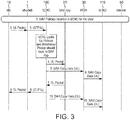
- Figure 2 shows the flow of messages when no processing by an application 20, 20A, 20B is required. The following steps are shown in Figure 22 .
- FIG 3 shows the flow of messages when processing by an application 20, 20A, 20B is required. The following steps are shown in Figure 24.
- FIG. 4 shows uplink traffic on SAVi Platform 1.
- the flow of user traffic is as follows:
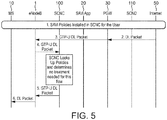
- FIG 5 shows the flow of messages when no processing by an application 20, 20A, 20B is required. The following steps are shown in Figure 23.
- Figure 6 shows downlink traffic on SAVi Platform 1.
- the flow of user traffic is:
- the SCNC 100 maintains a service table comprising a list of subscribers by way of their uplink and downlink GTP tunnel identities (e.g. TEIDs+TLAs, Transport Layer Addresses) and the appropriate actions (policies) that are to be taken on those packets.
- This table is managed by the mobile packet core's SCND 110 pushing policies to the SCNC 100 and an open interface exists in the SCND 110 to populate this table with session routing information.
- the SCNC 100 is capable of applying more than a single application 20A/20B to a given user flow passed on policies. However it is not expected usually to have many applications applied to a given user flow. Even so a user may have in total several active flows, each through one or more applications.
- the SCNC 100 has to get back the data flow from one application 20A and routes it to the next application 20B based on the policies for that GTP-U.
- Downlink service chaining may be based on a predefined service chain.
- the application and the SAVi Platform 1 need to be capable of handling the service chain in a predetermined way (e.g. not according to a changeable policy).
- SAVi system carries its user related control traffic over existing GTP-U sessions to establish end-to-end connectivity between SCNC 100 and SCND 110.
- This user related control traffic is encapsulated in GTP-U sessions such that each of SCNC 100 and SCND 110 recognize this traffic as non-user data traffic.
- the control messages are SAVi specific and have no meaning outside the SAVi realm.
- the user related control channel between SCNC 100 and SCND 110 is termed the "SAVi core network protocol".
- the SCND 110 provides the SCNC 100 with the user identity associated with that GTP-U session via the control channel.
- a SAVi core network protocol (see section 3.4) is responsible for establishing an in-band control channel between SCNC 100 and SCND 110 that enables the SCNC 100 to apply, for example, per-user, per-traffic-type or service-type policies to user-traffic.
- the policies are applied in the platform 1 to route user traffic into appropriate applications/inline-services 20A/20B hosted on the SAVi enabled (e)NodeB platform 1, responsible for providing applications as proposed.
- This section provides details of procedures and messages exchanged between SCNC 100 and SCND 110, and high-level formats of individual messages.
- SAVi Core Network Protocol is responsible for providing following functionalities:
- the present embodiments are not directed to providing all of the above functionalities.
- SAVi In-band Control Channel may be implemented based on one of three options:
- SCNC 100 and SNCD 110 exchange a simple protocol to establish the control channel in-band over a GTP-U session.
- LBO EU Local Breakout
- SCNC 100 Whenever SCNC 100 receives uplink or downlink traffic, it checks whether it has a SCNC 100 to SCND 110 relationship established for the bearer. If the relationship does not exist, the SCNC 100 bridges the traffic back to (e)NodeB, from where it is sent to the GW 30 or the UE 10 in the conventional manner. It does not wait for the relationship to be established. In case of bridging, no SAVi related services are offered.
- GGSN/P-GW 30 informs SCND 110 about the bearer creation. This triggers SCND 110 to immediately initiate a GTP-U Echo Request message with Private Extensions (see more details in section 4.1.3.1) destined to SCNC 100, requesting following information from the SCNC 100:
- An alternative Uplink Discovery version of this mechanism is for the SCNC 100 to initiate the handshake by sending the Echo Request message containing a list of applications etc. and the SCND 110 replying with a GTP-U Echo Response containing the SAVi services that are permitted for the bearer.
- the format of the SCND 110 Discovery Request packet is shown in Figure 7 .
- the Discovery Request message contains the SAVi policy information for the bearer in its Data field.
- SCNC 100 can detect that this is a SAVi Control GTP-U Echo message, it never releases the packet in downlink direction to (e)NodeB 1, and discards it after processing.
- the Echo response is generated by SCNC 100 itself providing the information as requested above, carried over Private Extensions.
- SCNC 100 responds to the request with its SAVi compliance statement, SAVi protocol version, uplink TIED and a list of available applications 20A/20B.
- the SCNC 100 only responds to GTP-U Echo Messages carrying SAVi information. Any other GTP-U Echo messages will be released in downlink direction and (e)NodeB 1 will respond to these messages as part of usual path management procedure.
- SCND 110 implements normal ECHO retransmission strategy before deciding that there are no SAVi services possible for the bearer.
- SCNC 100 to SCND 110 relationship is established, there is only the need to perform GTP-U ECHO (with Discovery messages) when the service catalogue on SAVi Platform 1 or SCND 110 changes or there is a change in set of SAVi applications 20A/20B allowed for the bearer. Normal ECHO mechanisms can continue irrespective of these transactions though.
- Octets Contents 1 Type 255 (Decimal) 2-3 Length 4-5 Extension Identifier 6-m Extension Value
- the format of the "Private Extension” IE is shown above.
- the Extension Identifier is a value defined in the IANA list of SMI Private Enterprise Codes. This list may, e.g., be found at http://www.iana.org/assignments/enterprise-numbers/enterprise-numbers (which supersedes the one in RFC 1700 referred to in 3GPP TS 29.281).
- a new number can be assigned on request to IANA or a number already assigned to the MNO could be used.
- the Extension Value contains the SAVi information described above. Note that Private Extensions can only be carried in GTP-U signalling messages such as Echo Request and Response.
- Uplink Discovery mechanism is initiated by SCNC 100 when a data packet (G-PDU) arrives (either downlink or uplink) and SCNC 100 does not have a SAVi relationship with a SCND 110 for this bearer. While the discovery procedure takes place between SCNC 100 and SCND 110 user packets are bridged - i.e. no SAVi services are applied until SAVi policy is sent from SCND 110. While the relationship does not exist, the SCNC 100 bridges the traffic back to (e)NodeB, from where it is sent to the GW 30 or the UE 10 in the conventional manner. In case of bridging, no SAVi related services are offered. In some cases this may cause SAVi services not be available for the initial packets until the Discovery procedure is completed but this method prevents SAVi services to be applied to bearers which are not authorized to receive them.
- G-PDU data packet
- G-PDU GTP-U data message
- the format of the packet is shown on in Figure 9 .
- the Discovery Mechanism is achieved by use of T_PDUs with IP addresses that could never be found in a normal GPRS bearer.
- the UE 10 address is used as a source IP address to prevent the packet being dropped by the anti-source spoofing feature of the GGSN 30.
- Destination IP address is 0.0.0.0 which is easily detected by a SAVi GGSN/P-GW 30 and will be dropped by a non-SAVi GGSN/P-GW.
- Any suitable UDP port number for source is used and for destination could be Port 3386 (actually assigned to the now obsolete GTP - Version 0).
- the GGSN/P-GW 30 Upon receiving the Discovery Request packet, the GGSN/P-GW 30 routes the packet into SCND 110 based on presence of this unique (0.0.0.0) IP Address. SCND 110 in turn identifies the bearer and looks up its SAVi information. If the bearer is allowed to use SAVi services then SNCD 110 formulates a Response packet and includes appropriate policy in the Data field. If SAVI services are not allowed for the bearer, SCND 110 returns Response with Data field Null.
- FIG. 10 shows the SCNC 100 SAVi Discovery Response format.
- This downlink discovery procedure is initiated by the SCND 110, in order to avoid the problems that arise from an uplink discovery procedure initiated from the SCNC 100.
- an uplink procedure initiated by the SCNC 100 might not satisfy certain of the compatibility requirements (see list in section 4.1.1) since the SCNC 100 is not APN-aware and does not know the identity of the PLMN in which the P-GW 30 is located and therefore its SAVi capabilities.
- the SCND 110 does not maintain SAVi state for each bearer. However, it does perform a stateful 3-way handshake procedure in order to establish a relationship between the SCND 110 and SCNC 100 for each bearer.
- the SCNC 100 does maintain the SAVI state for each bearer.
- the SCNC-SCND relationship is achieved by a 3-way handshake initiated by the SCND 110, hence the term: "downlink discovery". It is triggered by any of the following events:
- the SCND 110 starts the procedure by performing checks that:
- the initiation of the 3-way handshake could be selectively performed only towards a SAVi capable eNodeB 1.
- This procedure would require usage of the ULI (User Location Information) reporting feature on core nodes.
- the ULI Information Element is carried in bearer creation and bearer update messages and is defined in 3GPP TS 29.060, Section 7.7.51.
- the SCND 110 After the initial bearer setup (step 1, Figure 11 ) In the event that the eNodeB 1 is determined to be SAVi-supporting or its state of SAVi support is unknown, the SCND 110 then sends a SAVi Open Request in the downlink tunnel (step 2, Figure 11 ).
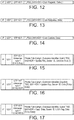
- FIG. 12 shows a SCND 110 SAVi Open Request
- the Data field contains:
- this message is repeated up to a predetermined number of times at predetermined time intervals before the eNB 1 is considered to be non-SAVi enabled)
- the SCNC 100 receives the SAVi Open Request in the downlink tunnel and it sends a SAVi Open Response on the corresponding uplink tunnel (step 3, Figure 11 ). (These are linked in the eNB 1 by the Bearer ID.) The SCNC 100 may reject the request if it is unable to provide SAVi service.
- Figure 13 shows a SCNC 100 Open Response.
- the SCND 110 sends an Open confirm message to the SCNC 100 (step 4, Figure 11 ).
- Figure 14 shows a SCNC 100 Open Confirm Message.
- the SCNC 100 now has a SAVi profile for this bearer and SAVi applications 20A,20B can be run in the eNB 1 (step 5, Figure 11 ).
- a weakness of the Uplink Discovery procedure using G-PDUs is that the SCNC 100 sends G-PDUs that are solely used for SAVi. This can potentially cause LI and charging problems for non-SAVi APNs and in the roamed-in case. Whilst the "Downlink Discovery procedure using G-PDUs" overcomes this problem it creates a new problem in that a SAVi relationship can only be established when a bearer is created or modified. When a UE enters a cell on a SAVi-capable eNodeB with an existing bearer no SAVi relationship is established.
- the procedure described in this section triggers the SCND-initiated, 3-way handshake described in the Downlink Discovery procedure using G-PDUs (section 4.1.5) but rather than being triggered solely by a bearer creation or modification, it is triggered in addition by an Uplink Discovery "probe" from the SCNC 100.
- the "probe" is initiated by the SCNC 100 when the first uplink G-PDU is received from the UE 10 after the bearer has been created in the eNodeB 1.
- this procedure satisfies the requirement of not sending G-PDUs that are solely used for SAVi before it is known that both SCNC 100 and SCND 110 are present in the path. However it does rely on an uplink G-PDU arriving at the SCNC 100 from the UE 10 within a reasonable time after the bearer has been created in the eNodeB 1. It should not require any modification to the S-GW in a standalone configuration.
- This probing procedure uses the header of the first one or more uplink G-PDUs (GTP-U messages carrying user data) to indicate that the eNodeB 10 is SAVi capable. It makes use of the GTP-U Extension Header feature.
- the SCNC 100 - SCND 110 relationship for a bearer can be forcibly deleted whilst a UE 10 is connected to a SAVi-capable eNodeB 1 by either party initiating the Relationship Deletion Procedure. In both cases this results in SAVi processing ceasing for that bearer. This may be immediate or the application(s) 20A/20B may be allowed to terminate gracefully.
- the Close Request and Response messages use the same format as the Update Request and Update Response.
- the Data field in the Close Request indicates how the applications 20A/20B are to be terminated either immediately or allowed to proceed to completion.
- the Close Response confirms that the Close Request has been received and complied with, not that the application terminations are necessarily complete. An unexpected Close Response is ignored.
- the Close Request indicates that an event has occurred in the SAVi eNodeB 1 that requires the relationship to be deleted.
- the applications 20A/20B will no longer be processing traffic for this bearer.
- the Close Response confirms receipt by the SCND 110. An unexpected Close Response is ignored.
- the SCNC 100 When a bearer is deleted by the user or network, or the UE 10 leaves a SAVi-capable eNodeB 1 the SCNC 100 deletes the SAVi Relationship.
- An activity timer may also be used to delete the SAVi relationship in the SCNC 100. It is not necessary for the SCNC 100 to notify the SCND 110 since the SCND 110 is stateless. However such information might be useful for diagnostic purposes so optionally the SCNC 100 may send a Close Request to the SCND 110 if the uplink tunnel is still available.
- This section describes the procedure for SAVi information transfer for a specific bearer between the SCNC 100 and SCND 110 once a relationship has been established for this bearer.
- the information is sent between SCND 110 and SCNC 100 using the same message format as is used for the Discovery messages described in section 4.1.
- This section describes SAVI policy and copied data transfer for the case where Echo messages are used to implement an in-band control channel between SCNC 100 and SCND 110.
- a pair of request and response messages is used and the transaction can by initiated by either the SCNC 100 (as shown below) or the SCND 110 depending on which end has new information to report to the other.
- SCNC 100 sends Update-Request message as in Figure 15 (see also section 5).
- the message contains details of the changed applications, functions or services.
- SCND 110 saves the SAVi policies and sends Update_Response message as in Figure 16 .
- a change in SAVi applications, functions or services 20, 20A, 20B would be triggered by the addition or removal of the SAVi services.
- the SCND 110 initiates the procedure described above.
- the formats of the messages are the same as shown above except the Request carries the Policy Data.
- the Data field in the Response may be empty.
- a SAVi application 20A/20B is generating downlink data locally or there is a requirement for verification purposes to compare the uplink data from the UE 10 with that sent uplink by the application 20A/20B to the GGSN 30 then a copy of this data is transferred from the SCNC 100 to the SCNSF 120 (SAVi Core Network Supporting Function) via the SCND 110.
- the format of the message in this case is shown in Figure 17 .
- the U/D/V flag indicates if the data is a copy of an uplink, downlink or verification packet.
- the SCND 110 receives the data and passes it to the appropriate supporting function. This message may be acknowledged by the SCND 110 using a corresponding Echo Response message although the SCNC 100 need take no action on receipt.
- a TCP type of ACK mechanism whereby not every packet is ack-ed individually could be used to reduce the signalling load if an acknowledgement is required.
- the message could be left unacknowledged and the light-weight SAVi Relay Function in the S-GW (see section 4.1.3) would need to ensure that the missing Echo Response message did not trigger the standard error handling procedure.
- G-PDU GTP Data
- a pair of request and response messages is used and the transaction can be initiated by either the SCNC 100 (as shown in Figures 18 and 19 ) or the SCND 110 depending on which end has new information to report to the other.
- These messages are distinguished from messages carrying user data by the use of the same "special" IP addresses as used by the G-PDU based discovery procedure.
- SCNC 100 sends Update-Request message as in Figure 18 .
- SCND 110 save the SAVi policies and sends Update_Response message, as shown in Figure 19 .
- a change in SAVi services would be triggered by the addition or removal of the SAVi services.
- the SCND 110 initiates the procedure described above.
- the formats of the messages are the same as shown in Figures 18 and 19 except the Request carries the Policy Data.
- the Data field in the Response may be empty.
- a SAVi application 20A/20B is generating downlink data locally or there is a requirement for verification purposes to compare the uplink data from the UE 10 with that sent uplink by the application 20A/20B to the GGSN 30 then a copy of this user data is transferred from the SCNC 100 to the SCNSF 120 (SAVi Core Network Supporting Function) via the SCND 110.
- the format of the message is shown in Figure 20 .
- the U/D/V flag indicates if the data is a copy of an uplink, downlink or verification packet.
- the SCND 110 receives the data and passes it to the appropriate supporting function. This message could be acknowledged by the SCND 110 using the corresponding Response message although the SCNC 100 need take no action on receipt. Alternatively, the message could be left unacknowledged.
- the policy data specifies a set of policies that tell the SAVi client 100 how to handle flows for the particular bearer. Each policy can be specified for the whole flow or using a 5-tuple that uniquely identifies the flow (Source IP Address, Destination IP Address, Transport Protocol, Source Port, Destination Port).
- Policy Data Policy Data This field contains: • Whole flow indicator or 5 tuple • policy info Policy info includes • Applications to be inserted in the data path. • Sequence of the applications to be used Additional parameters used by the apps if required • E.g. Copy of downlink data required • E.g. Service chain (order how packets pass through applications used)
- the policy may be updated midway through a session.
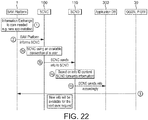
- Figure 21 shows the steps performed when such an update occurs. The following steps are shown in Figure 21 .
- This data is destined for the SAVi Core Network Supporting Function (SCNSF) 120 to enable proper functioning of LI and charging or for verification purposes.
- SCNSF 120 Upon receiving copy data for LI and charging, the SCNSF 120 injects the data in the uplink or downlink direction so that LI and charging can be performed. Injecting the received data into the normal data stream and subjecting them to the same treatment as the regular data is subject to, e.g. as traffic management, is instrumental in making the byte counts accurate in the billing records as well as towards OCS 40 and PCRF 80 as required. Later on this data is discarded by the SCND 110. The mechanism is used to label these packets so the SCND 110 recognises that they must be discarded. Copy data received for verification purposes is sent, together a copy of the normal uplink data, to a verification function.
- the Copy Data is sent using the in-band control channel described in sections 4.3.1.
- SCNC 100 and SCND 110 may maintain some or all of the following information about the subscribers in their databases for each bearer.
- the actual information will depend on the application and privacy requirements.
- Table 2 Subscriber Data IMSI International Mobile Subscriber Identity - The unique subscriber identifier (use is not recommended for security reasons) MSISDN Mobile Subscriber ISDN number - This is the directory number for the subscriber (the use of an Anonymous Customer Reference (ACR) is preferred - see below) IMEI(-SV) International Mobile Equipment Identity - The unique identifier for the mobile phone itself (a shortened form identifying only the device type and software version is preferred for security reasons) UE IP Address This is the IP address assigned by the P-GW to the UE when the bearer is created APN Access Point Name - This uniquely identifies the Access Point in the P-GW to the external PDN for the bearer.
- ACR Anonymous Customer Reference
- Bearer ID This is used to identify the bearer.
- a bearer ID comprises: Uplink TEID + TLA; downlink TEID + TLA (see note)
- SCND 110 a local identifier related to the PDN Context may be used SCNC 100 ID Unique identifier of the SCNC 100 SCND 110 ID Unique identifier of the SCND 110 Policy Information One or more 5-tuple rules to allow traffic steering into applications
- Tunnel Endpoint Identifier in itself does not uniquely identify a tunnel in an eNodeB.
- the Transport Layer Address TLA which is the IP address of the receiving tunnel endpoint is also required.
- TLA Transport Layer Address
- the SAVi Platform has the capability to exchange information with the core network. As an example the exchange of service capabilities should be used.
- the SCND 110 and SCNC 100 manage users, e.g. by the policies or services listed in the user profile, and based on the SAVi services, applications 20, 20A, 20B available on the SAVi Platform 1. Therefore it is important that SCND 110 and SCNC 100 know which services, applications or functions 20, 20A, 20B are located on the different SAVi Platforms.
- the SCNC 100 creates and maintains a list or matrix containing services, applications or functions 20, 20A, 20B hosted by the platform 1.
- the SCND 100 is able to create and maintain a list/matrix containing e.g. available applications 20, 20A, 20B which each SAVi platform 1, with which the SCND 110 has a relationship, could offer to the user. If there is subscriber-specific data for an application, e.g. access rights, this has to be included in the user profile.
- the exchange of information uses the relationship of SCNC 100 and SCND 110. This relationship is available for any user 10 connected to the SAVi Platform 1. This will be similar for the exchange of information from and to the SAVi Platform.
- the SAVi Information Transfer procedure message which is not related to the specific customer has a specific Info ID which allows SCND 110 to handle the message in the correct way.
- a SAVi Information Transfer procedure message is distinguished from other messages (as described in previous sections) that are intended for a particular user 10.
- the Info ID is recognisable by the SCND 110 to identify that the message concerns an update to the applications 20, 20A, 20B hosted by a particular platform 1. This is not information specific to a particular user, but concerns changed capabilities of the platform 1. The message is therefore used by the SCND 110 to update its application list/matrix 300.
- SAVI Platform 1 needs to support proper functioning of SAVI architecture based on Client (SCNC 100) and Director (SCND 110) components as outlined herein.
- SCNC 100 implements the in-band control channel towards SCND 110 and then based on the per subscriber policies it controls routing the packet through the sequence of applications 20A/20B permitted for the user.
- SCNC 100 has to have visibility of all the uplink and downlink user traffic.
- SCNC 100 needs to be able to control how packets are routed through the SAVi applications 20A/20B via the SAVi specific functions 200 on the SAVi Platform 1. Therefore the SAVi functions on the SAVi Platform 1 are responsible for routing.
- the SAVi compliant platform 1 always sends the user related packets to the SCNC 100. This applies to the user data packets in both uplink and downlink directions. Since both uplink and downlink user packets are exchanged between the SCNC 100 and the SAVi Platform 1, either two interfaces are needed (to/from UE 10 and from/to S-GW) or the direction (uplink or downlink) of each user packet needs to be indicated explicitly by a tag.
- the SCNC 100 and the applications 20A/20B need to know the association between the uplink and downlink tunnels that constitute each bearer.
- the 4-tuple (Uplink TEID + TLA; downlink TEID + TLA) uniquely identifies a bearer.
- Either the uplink or downlink pair is already present in the IP and GTP headers. The other pair could be provided in a tag.
- the SAVi Platform 1 could send the 4-tuple over a separate control interface when the bearer is created.
- Tunnel Endpoint Identifier in itself does not uniquely identify a tunnel in an eNodeB.
- TLA Transport Layer Address
- the packets destined to the SCNC 100 are recognized by the special signature that depends on the in-band control mechanism described in this specification. These packets are sent to the SCNC 100. If there is no SCNC 100 present they will be discarded by the UE 10.
Landscapes
- Engineering & Computer Science (AREA)
- Computer Networks & Wireless Communication (AREA)
- Signal Processing (AREA)
- Databases & Information Systems (AREA)
- Mobile Radio Communication Systems (AREA)
Claims (10)
- Mobiltelekommunikationsnetzwerk, das Folgendes beinhaltet:einen Netzwerkkern (30), der betriebsfähig ist, um Kernnetzwerkfunktionen bereitzustellen; undein Funkzugriffsnetzwerk, das Folgendes aufweist:ein Funkmittel zur drahtlosen Kommunikation mit Mobilendgeräten (10), die in dem Telekommunikationsnetzwerk registriert sind, undein Steuerungsmittel (1), das betriebsfähig ist, um eine Vielzahl von Anwendungen (20, 20A, 20B) zur Verwendung durch Benutzer der Mobilendgeräte (10) zu hosten, wobei jede Anwendung jeweilige Fähigkeiten aufweist;wobei das Steuerungsmittel (1) eine Client-Funktion (100) beinhaltet und der Netzwerkkern (30) eine Direktorfunktion beinhaltet, die betriebsfähig ist, um mit der Client-Funktion (100) zu kommunizieren;wobei das Steuerungsmittel (1) betriebsfähig ist, um Informationen mit dem Netzwerkkern (30) auszutauschen, wobei die Informationen die Fähigkeiten der Anwendungen (20, 20A, 20B) umfassen, die durch das Steuerungsmittel (1) gehostet werden; undwobei die Direktorfunktion (110) betriebsfähig ist, um die Client-Funktion (100) mit jeweiligen Richtliniendaten bereitzustellen, die spezifizieren, wie Anfragen bezüglich jeweiliger der Mobilendgeräte (10) durch das Steuerungsmittel (1) gehandhabt werden, wobei die Richtliniendaten von den Fähigkeiten der Anwendungen (20, 20A, 20B) abhängig sind, die durch das Steuerungsmittel (1) gehostet werden.
- Netzwerk nach Anspruch 1, wobei die Client-Funktion (100) und die Direktorfunktion (110) betriebsfähig sind, um die Direktorfunktion (110) mit den Informationen bereitzustellen, die die Fähigkeiten der Anwendungen (20, 20A, 20B) umfassen.
- Netzwerk nach Anspruch 1 oder 2, wobei die Client-Funktion (100) betriebsfähig ist, um die Direktorfunktion (110) mit den Informationen bereitzustellen, die die Fähigkeiten der Anwendungen (20, 20A, 20B) umfassen, die durch das Steuerungsmittel (1) gehostet, wenn sich die Anwendungen (20, 20A, 20B), die durch das Steuerungsmittel (1) gehostet werden, ändern.
- Netzwerk nach Anspruch 1, 2 oder 3, wobei die Informationen, die die Fähigkeiten der Anwendungen (20, 20A, 20B) umfassen, in einer GTP-U-Kommunikationssitzung übertragen werden.
- Netzwerk nach einem der vorhergehenden Ansprüche, wobei die Informationen, die die Fähigkeiten der Anwendungen (20, 20A, 20B) umfassen, über einen existierenden Steuerungskanal zwischen der Client-Funktion (100) und der Direktorfunktion (110), der für eines der Mobilendgeräte (10) eingerichtet ist, übertragen werden.
- Verfahren zum Betreiben eines Mobiltelekommunikationsnetzwerks, das Folgendes beinhaltet:Betreiben eines Netzwerkkerns (30), um Kernnetzwerkfunktionen bereitzustellen; undBetreiben eines Funkzugriffsnetzwerks, um mit Mobilendgeräten (10), die in dem Telekommunikationsnetzwerk registriert sind, unter Verwendung eines Funkmittels drahtlos zu kommunizieren, undHosten einer Vielzahl von Anwendungen (20, 20A, 20B) auf einem Steuerungsmittel (1) zur Verwendung durch Benutzer der Mobilendgeräte (10), wobei jede Anwendung jeweilige Fähigkeiten aufweist;wobei das Steuerungsmittel (1) eine Client-Funktion (100) beinhaltet und der Netzwerkkern (30) eine Direktorfunktion beinhaltet, die mit der Client-Funktion (100) kommuniziert;wobei das Steuerungsmittel (1) Informationen mit dem Netzwerkkern (30) austauscht, wobei die Informationen die Fähigkeiten der Anwendungen (20, 20A, 20B) umfassen, die durch das Steuerungsmittel (1) gehostet werden; undwobei die Direktorfunktion (110) die Client-Funktion (100) mit jeweiligen Richtliniendaten bereitstellt, die spezifizieren, wie Anfragen bezüglich jeweiliger der Mobilendgeräte (10) durch das Steuerungsmittel (1) gehandhabt werden, wobei die Richtliniendaten von den Fähigkeiten der Anwendungen (20, 20A, 20B) abhängig sind, die durch das Steuerungsmittel (1) gehostet werden.
- Verfahren nach Anspruch 6, wobei die Client-Funktion (100) und die Direktorfunktion (110) die Direktorfunktion (110) mit den Informationen bereitzustellen, die die Fähigkeiten der Anwendungen (20, 20A, 20B) umfassen, die durch das Steuerungsmittel gehostet werden.
- Verfahren nach Anspruch 6 oder 7, wobei die Client-Funktion (100) die (110) Direktorfunktion mit den Informationen bereitstellt, die Fähigkeiten der Anwendungen (20, 20A, 20B) umfassen, die durch das Steuerungsmittel (1) gehostet werden, wenn sich die Anwendungen (20, 20A, 20B), die durch das Steuerungsmittel (1) gehostet werden, ändern.
- Verfahren nach Anspruch 6, 7 oder 8, wobei die Informationen, die die Fähigkeiten der Anwendungen (20, 20A, 20B) umfassen, in einer GTP-U-Kommunikationssitzung übertragen werden.
- Verfahren nach einem der Ansprüche 6 bis 9, wobei die Informationen, die die Fähigkeiten der Anwendungen (20, 20A, 20B) umfassen, über einen existierenden Steuerungskanal zwischen der Client-Funktion (100) und der Direktorfunktion (110), der für eines der Mobilendgeräte (10) eingerichtet ist, übertragen werden.
Applications Claiming Priority (1)
| Application Number | Priority Date | Filing Date | Title |
|---|---|---|---|
| US14/137,249 US20150181441A1 (en) | 2013-12-20 | 2013-12-20 | Telecommunications Networks |
Publications (2)
| Publication Number | Publication Date |
|---|---|
| EP2887614A1 EP2887614A1 (de) | 2015-06-24 |
| EP2887614B1 true EP2887614B1 (de) | 2020-10-28 |
Family
ID=52146256
Family Applications (1)
| Application Number | Title | Priority Date | Filing Date |
|---|---|---|---|
| EP14199306.3A Active EP2887614B1 (de) | 2013-12-20 | 2014-12-19 | Telekommunikationsnetzwerke |
Country Status (2)
| Country | Link |
|---|---|
| US (1) | US20150181441A1 (de) |
| EP (1) | EP2887614B1 (de) |
Families Citing this family (7)
| Publication number | Priority date | Publication date | Assignee | Title |
|---|---|---|---|---|
| WO2016036472A1 (en) | 2014-09-02 | 2016-03-10 | Apple Inc. | Reduced-size interfaces for managing alerts |
| WO2016041602A1 (en) * | 2014-09-19 | 2016-03-24 | Nokia Solutions And Networks Oy | Service function chain interworking |
| US20160224973A1 (en) * | 2015-02-01 | 2016-08-04 | Apple Inc. | User interface for payments |
| CN107172111B (zh) * | 2016-03-07 | 2020-05-05 | 大唐移动通信设备有限公司 | 一种数据传输方法、装置及系统 |
| CN110234112B (zh) * | 2018-03-05 | 2020-12-04 | 华为技术有限公司 | 消息处理方法、系统及用户面功能设备 |
| CN108632817A (zh) * | 2018-07-27 | 2018-10-09 | 中国电子科技集团公司第三十研究所 | 一种5g高安全终端内部imsi隐私保护的方法 |
| US12189756B2 (en) | 2021-06-06 | 2025-01-07 | Apple Inc. | User interfaces for managing passwords |
Family Cites Families (13)
| Publication number | Priority date | Publication date | Assignee | Title |
|---|---|---|---|---|
| NO20020667D0 (no) * | 2002-02-11 | 2002-02-11 | Ericsson Telefon Ab L M | Fremgangsmåte for å unngå unödig okkupering av ressurser i pakkesvitsjede mobilnett |
| SE0201143D0 (sv) * | 2002-04-15 | 2002-04-15 | Ericsson Telefon Ab L M | Packet switched Services |
| TWI543644B (zh) * | 2006-12-27 | 2016-07-21 | 無線創新信號信託公司 | 基地台自行配置方法及裝置 |
| CN100586071C (zh) * | 2007-09-30 | 2010-01-27 | 华为技术有限公司 | 获取策略和计费执行功能实体能力的方法及设备 |
| US9253663B2 (en) * | 2009-01-28 | 2016-02-02 | Headwater Partners I Llc | Controlling mobile device communications on a roaming network based on device state |
| GB0916239D0 (en) | 2009-09-16 | 2009-10-28 | Vodafone Plc | Internet breakout in HNB/Femto, UMTS and LTE networks |
| GB201020991D0 (en) * | 2010-12-10 | 2011-01-26 | Vodafone Ip Licensing Ltd | Smart device based download/caching |
| WO2012140135A1 (en) * | 2011-04-12 | 2012-10-18 | Telefonaktiebolaget L M Ericsson (Publ) | Providing information to a core network relating to a cache in an access network |
| EP2719214B1 (de) * | 2011-06-07 | 2015-03-04 | Telecom Italia S.p.A. | Verwaltung des energieverbrauchs in einem funkzugangsnetz |
| CN103718636B (zh) * | 2011-06-17 | 2018-10-09 | 瑞典爱立信有限公司 | 用于随机接入的方法和节点 |
| US9094872B2 (en) * | 2012-01-24 | 2015-07-28 | International Business Machines Corporation | Enhanced resource management for a network system |
| GB201207816D0 (en) * | 2012-05-04 | 2012-06-13 | Vodafone Ip Licensing Ltd | Telecommunication networks |
| US9148623B2 (en) * | 2013-06-11 | 2015-09-29 | Qualcomm Incorporated | Apparatus and methods for modem assisted video telephony |
-
2013
- 2013-12-20 US US14/137,249 patent/US20150181441A1/en not_active Abandoned
-
2014
- 2014-12-19 EP EP14199306.3A patent/EP2887614B1/de active Active
Non-Patent Citations (1)
| Title |
|---|
| None * |
Also Published As
| Publication number | Publication date |
|---|---|
| EP2887614A1 (de) | 2015-06-24 |
| US20150181441A1 (en) | 2015-06-25 |
Similar Documents
| Publication | Publication Date | Title |
|---|---|---|
| EP2887742B1 (de) | Telekommunikationsnetzwerke | |
| EP2887614B1 (de) | Telekommunikationsnetzwerke | |
| EP2900004B1 (de) | Verfahren und Funkkommunikationsnetzwerk mit einer SAVi-Plattform | |
| US9078161B2 (en) | Method and apparatus configured to provide local breakout services with a single APN | |
| US8218535B1 (en) | Method and device for attaching a user equipment to a telecommunication network | |
| KR101763976B1 (ko) | 단일 블록 패킷 액세스 절차에서의 프로토콜 오버헤드의 감소 | |
| US8073446B2 (en) | Radio network controller, wireless access gateway, radio communication system, and communication method for radio communication system | |
| US11910292B2 (en) | Support of user plane transactions over a mobile network | |
| JP5189107B2 (ja) | 移動体通信ネットワークにおいて、パケットベアラコンテクストのユーザセットを一意に識別及び統一するための仕組み | |
| US10263903B2 (en) | Method and apparatus for managing communication flow in an inter-network system | |
| US11233856B2 (en) | Selecting an address of a device | |
| CN111278080B (zh) | 在5g网络中路由移动数据业务的方法和系统 | |
| US11265290B2 (en) | Transport layer signaling security with next generation firewall | |
| CN101406078B (zh) | 用于在移动节点从归属网络漫游到拜访网络时支持互联网数据分组的传送的系统和方法 | |
| US9602958B2 (en) | Communication of information between devices in communication networks | |
| US20130242918A1 (en) | Method for providing a local traffic shortcut in a packet-oriented mobile communication network | |
| JP2019521605A (ja) | S8hrにおけるモビリティについての合法的傍受のためのims関連情報の転送 | |
| CN103229576A (zh) | 一种建立连接的方法及设备 | |
| WO2018206101A1 (en) | Selection criteria for (non-ip) data destinations |
Legal Events
| Date | Code | Title | Description |
|---|---|---|---|
| PUAI | Public reference made under article 153(3) epc to a published international application that has entered the european phase |
Free format text: ORIGINAL CODE: 0009012 |
|
| 17P | Request for examination filed |
Effective date: 20141219 |
|
| AK | Designated contracting states |
Kind code of ref document: A1 Designated state(s): AL AT BE BG CH CY CZ DE DK EE ES FI FR GB GR HR HU IE IS IT LI LT LU LV MC MK MT NL NO PL PT RO RS SE SI SK SM TR |
|
| AX | Request for extension of the european patent |
Extension state: BA ME |
|
| R17P | Request for examination filed (corrected) |
Effective date: 20151215 |
|
| RBV | Designated contracting states (corrected) |
Designated state(s): AL AT BE BG CH CY CZ DE DK EE ES FI FR GB GR HR HU IE IS IT LI LT LU LV MC MK MT NL NO PL PT RO RS SE SI SK SM TR |
|
| STAA | Information on the status of an ep patent application or granted ep patent |
Free format text: STATUS: EXAMINATION IS IN PROGRESS |
|
| 17Q | First examination report despatched |
Effective date: 20180122 |
|
| GRAP | Despatch of communication of intention to grant a patent |
Free format text: ORIGINAL CODE: EPIDOSNIGR1 |
|
| STAA | Information on the status of an ep patent application or granted ep patent |
Free format text: STATUS: GRANT OF PATENT IS INTENDED |
|
| INTG | Intention to grant announced |
Effective date: 20200515 |
|
| GRAS | Grant fee paid |
Free format text: ORIGINAL CODE: EPIDOSNIGR3 |
|
| GRAA | (expected) grant |
Free format text: ORIGINAL CODE: 0009210 |
|
| STAA | Information on the status of an ep patent application or granted ep patent |
Free format text: STATUS: THE PATENT HAS BEEN GRANTED |
|
| AK | Designated contracting states |
Kind code of ref document: B1 Designated state(s): AL AT BE BG CH CY CZ DE DK EE ES FI FR GB GR HR HU IE IS IT LI LT LU LV MC MK MT NL NO PL PT RO RS SE SI SK SM TR |
|
| REG | Reference to a national code |
Ref country code: GB Ref legal event code: FG4D |
|
| REG | Reference to a national code |
Ref country code: CH Ref legal event code: EP |
|
| REG | Reference to a national code |
Ref country code: AT Ref legal event code: REF Ref document number: 1329383 Country of ref document: AT Kind code of ref document: T Effective date: 20201115 |
|
| REG | Reference to a national code |
Ref country code: DE Ref legal event code: R096 Ref document number: 602014071647 Country of ref document: DE |
|
| REG | Reference to a national code |
Ref country code: IE Ref legal event code: FG4D |
|
| REG | Reference to a national code |
Ref country code: AT Ref legal event code: MK05 Ref document number: 1329383 Country of ref document: AT Kind code of ref document: T Effective date: 20201028 |
|
| REG | Reference to a national code |
Ref country code: NL Ref legal event code: MP Effective date: 20201028 |
|
| PG25 | Lapsed in a contracting state [announced via postgrant information from national office to epo] |
Ref country code: FI Free format text: LAPSE BECAUSE OF FAILURE TO SUBMIT A TRANSLATION OF THE DESCRIPTION OR TO PAY THE FEE WITHIN THE PRESCRIBED TIME-LIMIT Effective date: 20201028 Ref country code: RS Free format text: LAPSE BECAUSE OF FAILURE TO SUBMIT A TRANSLATION OF THE DESCRIPTION OR TO PAY THE FEE WITHIN THE PRESCRIBED TIME-LIMIT Effective date: 20201028 Ref country code: PT Free format text: LAPSE BECAUSE OF FAILURE TO SUBMIT A TRANSLATION OF THE DESCRIPTION OR TO PAY THE FEE WITHIN THE PRESCRIBED TIME-LIMIT Effective date: 20210301 Ref country code: NL Free format text: LAPSE BECAUSE OF FAILURE TO SUBMIT A TRANSLATION OF THE DESCRIPTION OR TO PAY THE FEE WITHIN THE PRESCRIBED TIME-LIMIT Effective date: 20201028 Ref country code: NO Free format text: LAPSE BECAUSE OF FAILURE TO SUBMIT A TRANSLATION OF THE DESCRIPTION OR TO PAY THE FEE WITHIN THE PRESCRIBED TIME-LIMIT Effective date: 20210128 Ref country code: GR Free format text: LAPSE BECAUSE OF FAILURE TO SUBMIT A TRANSLATION OF THE DESCRIPTION OR TO PAY THE FEE WITHIN THE PRESCRIBED TIME-LIMIT Effective date: 20210129 |
|
| REG | Reference to a national code |
Ref country code: LT Ref legal event code: MG4D |
|
| PG25 | Lapsed in a contracting state [announced via postgrant information from national office to epo] |
Ref country code: IS Free format text: LAPSE BECAUSE OF FAILURE TO SUBMIT A TRANSLATION OF THE DESCRIPTION OR TO PAY THE FEE WITHIN THE PRESCRIBED TIME-LIMIT Effective date: 20210228 Ref country code: SE Free format text: LAPSE BECAUSE OF FAILURE TO SUBMIT A TRANSLATION OF THE DESCRIPTION OR TO PAY THE FEE WITHIN THE PRESCRIBED TIME-LIMIT Effective date: 20201028 Ref country code: PL Free format text: LAPSE BECAUSE OF FAILURE TO SUBMIT A TRANSLATION OF THE DESCRIPTION OR TO PAY THE FEE WITHIN THE PRESCRIBED TIME-LIMIT Effective date: 20201028 Ref country code: LV Free format text: LAPSE BECAUSE OF FAILURE TO SUBMIT A TRANSLATION OF THE DESCRIPTION OR TO PAY THE FEE WITHIN THE PRESCRIBED TIME-LIMIT Effective date: 20201028 Ref country code: ES Free format text: LAPSE BECAUSE OF FAILURE TO SUBMIT A TRANSLATION OF THE DESCRIPTION OR TO PAY THE FEE WITHIN THE PRESCRIBED TIME-LIMIT Effective date: 20201028 Ref country code: AT Free format text: LAPSE BECAUSE OF FAILURE TO SUBMIT A TRANSLATION OF THE DESCRIPTION OR TO PAY THE FEE WITHIN THE PRESCRIBED TIME-LIMIT Effective date: 20201028 Ref country code: BG Free format text: LAPSE BECAUSE OF FAILURE TO SUBMIT A TRANSLATION OF THE DESCRIPTION OR TO PAY THE FEE WITHIN THE PRESCRIBED TIME-LIMIT Effective date: 20210128 |
|
| PG25 | Lapsed in a contracting state [announced via postgrant information from national office to epo] |
Ref country code: HR Free format text: LAPSE BECAUSE OF FAILURE TO SUBMIT A TRANSLATION OF THE DESCRIPTION OR TO PAY THE FEE WITHIN THE PRESCRIBED TIME-LIMIT Effective date: 20201028 |
|
| REG | Reference to a national code |
Ref country code: DE Ref legal event code: R097 Ref document number: 602014071647 Country of ref document: DE |
|
| PG25 | Lapsed in a contracting state [announced via postgrant information from national office to epo] |
Ref country code: LT Free format text: LAPSE BECAUSE OF FAILURE TO SUBMIT A TRANSLATION OF THE DESCRIPTION OR TO PAY THE FEE WITHIN THE PRESCRIBED TIME-LIMIT Effective date: 20201028 Ref country code: SK Free format text: LAPSE BECAUSE OF FAILURE TO SUBMIT A TRANSLATION OF THE DESCRIPTION OR TO PAY THE FEE WITHIN THE PRESCRIBED TIME-LIMIT Effective date: 20201028 Ref country code: RO Free format text: LAPSE BECAUSE OF FAILURE TO SUBMIT A TRANSLATION OF THE DESCRIPTION OR TO PAY THE FEE WITHIN THE PRESCRIBED TIME-LIMIT Effective date: 20201028 Ref country code: EE Free format text: LAPSE BECAUSE OF FAILURE TO SUBMIT A TRANSLATION OF THE DESCRIPTION OR TO PAY THE FEE WITHIN THE PRESCRIBED TIME-LIMIT Effective date: 20201028 Ref country code: CZ Free format text: LAPSE BECAUSE OF FAILURE TO SUBMIT A TRANSLATION OF THE DESCRIPTION OR TO PAY THE FEE WITHIN THE PRESCRIBED TIME-LIMIT Effective date: 20201028 Ref country code: SM Free format text: LAPSE BECAUSE OF FAILURE TO SUBMIT A TRANSLATION OF THE DESCRIPTION OR TO PAY THE FEE WITHIN THE PRESCRIBED TIME-LIMIT Effective date: 20201028 |
|
| REG | Reference to a national code |
Ref country code: CH Ref legal event code: PL |
|
| PG25 | Lapsed in a contracting state [announced via postgrant information from national office to epo] |
Ref country code: DK Free format text: LAPSE BECAUSE OF FAILURE TO SUBMIT A TRANSLATION OF THE DESCRIPTION OR TO PAY THE FEE WITHIN THE PRESCRIBED TIME-LIMIT Effective date: 20201028 Ref country code: MC Free format text: LAPSE BECAUSE OF FAILURE TO SUBMIT A TRANSLATION OF THE DESCRIPTION OR TO PAY THE FEE WITHIN THE PRESCRIBED TIME-LIMIT Effective date: 20201028 |
|
| PLBE | No opposition filed within time limit |
Free format text: ORIGINAL CODE: 0009261 |
|
| REG | Reference to a national code |
Ref country code: BE Ref legal event code: MM Effective date: 20201231 |
|
| STAA | Information on the status of an ep patent application or granted ep patent |
Free format text: STATUS: NO OPPOSITION FILED WITHIN TIME LIMIT |
|
| 26N | No opposition filed |
Effective date: 20210729 |
|
| PG25 | Lapsed in a contracting state [announced via postgrant information from national office to epo] |
Ref country code: IT Free format text: LAPSE BECAUSE OF FAILURE TO SUBMIT A TRANSLATION OF THE DESCRIPTION OR TO PAY THE FEE WITHIN THE PRESCRIBED TIME-LIMIT Effective date: 20201028 Ref country code: IE Free format text: LAPSE BECAUSE OF NON-PAYMENT OF DUE FEES Effective date: 20201219 Ref country code: AL Free format text: LAPSE BECAUSE OF FAILURE TO SUBMIT A TRANSLATION OF THE DESCRIPTION OR TO PAY THE FEE WITHIN THE PRESCRIBED TIME-LIMIT Effective date: 20201028 Ref country code: LU Free format text: LAPSE BECAUSE OF NON-PAYMENT OF DUE FEES Effective date: 20201219 |
|
| REG | Reference to a national code |
Ref country code: DE Ref legal event code: R079 Ref document number: 602014071647 Country of ref document: DE Free format text: PREVIOUS MAIN CLASS: H04L0029060000 Ipc: H04L0065000000 |
|
| PG25 | Lapsed in a contracting state [announced via postgrant information from national office to epo] |
Ref country code: LI Free format text: LAPSE BECAUSE OF NON-PAYMENT OF DUE FEES Effective date: 20201231 Ref country code: SI Free format text: LAPSE BECAUSE OF FAILURE TO SUBMIT A TRANSLATION OF THE DESCRIPTION OR TO PAY THE FEE WITHIN THE PRESCRIBED TIME-LIMIT Effective date: 20201028 Ref country code: CH Free format text: LAPSE BECAUSE OF NON-PAYMENT OF DUE FEES Effective date: 20201231 |
|
| PG25 | Lapsed in a contracting state [announced via postgrant information from national office to epo] |
Ref country code: IS Free format text: LAPSE BECAUSE OF FAILURE TO SUBMIT A TRANSLATION OF THE DESCRIPTION OR TO PAY THE FEE WITHIN THE PRESCRIBED TIME-LIMIT Effective date: 20210228 Ref country code: TR Free format text: LAPSE BECAUSE OF FAILURE TO SUBMIT A TRANSLATION OF THE DESCRIPTION OR TO PAY THE FEE WITHIN THE PRESCRIBED TIME-LIMIT Effective date: 20201028 Ref country code: MT Free format text: LAPSE BECAUSE OF FAILURE TO SUBMIT A TRANSLATION OF THE DESCRIPTION OR TO PAY THE FEE WITHIN THE PRESCRIBED TIME-LIMIT Effective date: 20201028 Ref country code: CY Free format text: LAPSE BECAUSE OF FAILURE TO SUBMIT A TRANSLATION OF THE DESCRIPTION OR TO PAY THE FEE WITHIN THE PRESCRIBED TIME-LIMIT Effective date: 20201028 |
|
| PG25 | Lapsed in a contracting state [announced via postgrant information from national office to epo] |
Ref country code: MK Free format text: LAPSE BECAUSE OF FAILURE TO SUBMIT A TRANSLATION OF THE DESCRIPTION OR TO PAY THE FEE WITHIN THE PRESCRIBED TIME-LIMIT Effective date: 20201028 |
|
| PG25 | Lapsed in a contracting state [announced via postgrant information from national office to epo] |
Ref country code: BE Free format text: LAPSE BECAUSE OF NON-PAYMENT OF DUE FEES Effective date: 20201231 |
|
| PGFP | Annual fee paid to national office [announced via postgrant information from national office to epo] |
Ref country code: DE Payment date: 20251211 Year of fee payment: 12 |
|
| PGFP | Annual fee paid to national office [announced via postgrant information from national office to epo] |
Ref country code: GB Payment date: 20251219 Year of fee payment: 12 |
|
| PGFP | Annual fee paid to national office [announced via postgrant information from national office to epo] |
Ref country code: FR Payment date: 20251223 Year of fee payment: 12 |