EP2887496A1 - Security control method and device for system with precharging circuit, and system thereof - Google Patents
Security control method and device for system with precharging circuit, and system thereof Download PDFInfo
- Publication number
- EP2887496A1 EP2887496A1 EP13838926.7A EP13838926A EP2887496A1 EP 2887496 A1 EP2887496 A1 EP 2887496A1 EP 13838926 A EP13838926 A EP 13838926A EP 2887496 A1 EP2887496 A1 EP 2887496A1
- Authority
- EP
- European Patent Office
- Prior art keywords
- undervoltage
- precharging circuit
- safety control
- precharging
- equal
- Prior art date
- Legal status (The legal status is an assumption and is not a legal conclusion. Google has not performed a legal analysis and makes no representation as to the accuracy of the status listed.)
- Granted
Links
Images

Classifications
-
- H—ELECTRICITY
- H02—GENERATION; CONVERSION OR DISTRIBUTION OF ELECTRIC POWER
- H02M—APPARATUS FOR CONVERSION BETWEEN AC AND AC, BETWEEN AC AND DC, OR BETWEEN DC AND DC, AND FOR USE WITH MAINS OR SIMILAR POWER SUPPLY SYSTEMS; CONVERSION OF DC OR AC INPUT POWER INTO SURGE OUTPUT POWER; CONTROL OR REGULATION THEREOF
- H02M1/00—Details of apparatus for conversion
- H02M1/32—Means for protecting converters other than automatic disconnection
-
- H—ELECTRICITY
- H02—GENERATION; CONVERSION OR DISTRIBUTION OF ELECTRIC POWER
- H02H—EMERGENCY PROTECTIVE CIRCUIT ARRANGEMENTS
- H02H3/00—Emergency protective circuit arrangements for automatic disconnection directly responsive to an undesired change from normal electric working condition with or without subsequent reconnection ; integrated protection
- H02H3/24—Emergency protective circuit arrangements for automatic disconnection directly responsive to an undesired change from normal electric working condition with or without subsequent reconnection ; integrated protection responsive to undervoltage or no-voltage
- H02H3/247—Emergency protective circuit arrangements for automatic disconnection directly responsive to an undesired change from normal electric working condition with or without subsequent reconnection ; integrated protection responsive to undervoltage or no-voltage having timing means
-
- H—ELECTRICITY
- H02—GENERATION; CONVERSION OR DISTRIBUTION OF ELECTRIC POWER
- H02M—APPARATUS FOR CONVERSION BETWEEN AC AND AC, BETWEEN AC AND DC, OR BETWEEN DC AND DC, AND FOR USE WITH MAINS OR SIMILAR POWER SUPPLY SYSTEMS; CONVERSION OF DC OR AC INPUT POWER INTO SURGE OUTPUT POWER; CONTROL OR REGULATION THEREOF
- H02M1/00—Details of apparatus for conversion
- H02M1/36—Means for starting or stopping converters
Definitions
- the present invention relates to a safety control method and apparatus and a system comprising the apparatus, and more particularly to a safety control method and apparatus of a frequency converter or another control system with a precharging circuit, and a system comprising the apparatus.
- Fig. 1 shows a frequency converter having a precharging circuit.
- a product usually needs to be subject to UL (Underwrites Laboratories Inc) tests in order to meet safety testing requirements.
- UL Underwrites Laboratories Inc
- the UL testing requirements are as follows:
- the precharging resistor After about 15 minutes, due to overheating of the precharging resistor, the precharging resistor always ignites the cotton-like object, but the precharging resistor is not fused.
- Fig. 2 shows a device which is burned and damaged due to overheating of a precharging resistor. As shown in Fig. 2 , the whole device is damaged since the precharging resistor ignites the cotton-like object.
- An object of the present application is to find a new safety control method to ensure a customer's safty.
- a precharging relay having a never closing status can be tested safely.
- the method according to the present application will neither damage a resistor, nor result in cotton burning.
- the object of the present application is to ensure:
- the present application intends to:
- the present application provides a safety control method for a system with a precharging circuit, comprising: issuing an error alarm and stopping operating the system when the number of times of undervoltage occurred in a precharging circuit reaches m times and the duration between the first undervoltage and the m th undervoltage is less than or equal to ⁇ seconds, where m and ⁇ are positive integers.
- the present application also provides a safety control apparatus for a system with a precharging circuit, comprising: a first determining device is configured to determine whether the number of times of undervoltage occurred in a precharging circuit reaches m times; a second determining device is configured to determine whether the duration between the first undervoltage and the m th undervoltage is less than or equal to ⁇ seconds; an alarming device is configured to issue an error alarm and stopping operating the system when the first determining device determines that the number of times of undervoltage occurred in the precharging circuit reaches m times and the second determining device determines the duration between the first undervoltage and the m th undervoltage is less than or equal to ⁇ seconds, where m and ⁇ are positive integers.
- the present application further provides a system with a precharging circuit containing the above mentioned safety control apparatus.
- the present application provides a safety control method and apparatus of a simple precharging circuit, and a system comprising the apparatus.
- Fig. 3 shows installation of a frequency converter having a precharging circuit when conducting a UL test.
- a frequency converter for testing is installed according to the requirement of the UL test, i.e., the frequency converter is wrapped by using a cotton-like object, to test whether the safety can be ensured when the precharging relay is at fault.
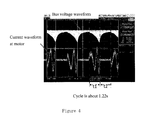
- Fig. 4 shows a waveform in a frequency converter having a precharging circuit when the precharging circuit is at fault.
- a motor M1 runs, while a bus voltage (the voltage between the two ends of C1) decreases sharply. Since the bus voltage decreases to the minimum at the end of t1, the motor can not be driven to run, and thus, at the end of t1, the motor stops. At this time, the frequency converter indicates the precharging circuit is of undervoltage.
- the bus voltage rises to drive the motor to run.
- t1+t2 is approximately equal to 1.22s, for example.
- the safety control method continuously checks the voltage in the circuit, and when the number of times of undervoltage occurred in the precharging circuit reaches a predetermined times and the duration between the first undervoltage and the predetermined time of undervoltage is less than or equal to a predetermined time, it can be determined that the precharging relay can not be closed, and thus an alarm is given out and the system is stopped.
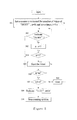
- Fig. 5 shows a flow chart of the steps of a safety control method according to an embodiment of the present invention.
- step 505 the timer t is started, and the period from the beginning of occurring of "NOFF" starts to be recorded. Next, the process proceeds to step 506.
- n is equal to m?
- step 507 it is determined that whether t is less than or equal to ⁇ s? If is less than or equal to ⁇ s, then the process proceeds to step 509; otherwise the process proceeds to step 508.
- step 509 "E-31" error is indicated (the precharging relay has an error). That is, if the period during which undervoltage occurs 40 times is within 225s (about 3 minutes more), then it is determined that it may be a fault of the precharging relay, and the monitor indicates the error. Next, the process proceeds to step 510.
- step 510 the "run" command is stopped.
- the precharging relay when the number of times of undervoltage occurred in the precharging circuit reaches m times and the duration between the first undervoltage and the m th undervoltage is less than or equal to ⁇ seconds, it indicates that the precharging relay can not be closed. At this time, an error alarm will be issued and the system stops running.
- the safety control method of the present application it can be found in time that the precharging relay in the precharging circuit is at fault, and the system is stopped in time, so as to avoid such problems as ignition and system damage due to overheating of a resistor. And the safety of a customer using the system can be ensured.
- m and ⁇ are assigned value 40 and 255, respectively, those skilled in the art should understand that, m and ⁇ are determined based on the charging and discharging periods at the time of testing and the burning time of cotton when the measure is not adopted. So, the values of m and ⁇ are different for different cases and depend on experimental data. For example, usually according to experiments cotton begins to burn after 15 minutes (900 seconds) passed. Therefore, as long as the period during which undervoltage occurs is far less than 900 seconds, the system safety can be ensured. Likewise, it can be known according to Fig. 4 that the charging and discharging period is about 1.22 seconds, so in the method of the present application, it is effective as long as n and ⁇ are properly assigned values so as to meet 1.22 seconds X n ⁇ ⁇ seconds «900 seconds.
- each block in the flow chart and the combinations of the blocks of the flow chart can be implemented through computer program instructions.
- These computer program instructions can also be stored in a computer readable storage, can direct a computer or another programmable data processing device to run in a certain way, and allows the instructions stored in the computer readable storage to generate a manufacture that implement instruction means of functions/acts specified in the blocks of the flow chart.
- the computer program instructions can also be loaded onto the computer or the other programmable data processing device, which results in that a series of operation steps are executed on the computer or the other programmable data processing device to generate a process implemented by the computer, allowing the instructions executed on the computer or the other programmable data processing device to provide steps for implementing specified functions/acts in the blocks of the flow chart.
- Each block can denote a code module, a fragment or a portion, which comprises one or more executable instructions used to implement specified logic functions.
- the functions marked in the blocks may not occur according to the sequence marked in the figure. For example, according to the involved functions, two blocks shown continuously may occur substantially concurrently, or the blocks may be executed in a reverse order sometimes.
- FIG. 5 describes the safety control method according to the embodiment of the present invention by using certain steps as an example, but the specific implementation steps of the safety control method according to the embodiment of the present invention is not limited to the flow chart of Fig. 5 .
- Other flow charts that can implement identical functions are also within the protection scope of the present invention.
- the safety control method is used to update the software of the system and set an frequency converter or another control system.
- a UL test begins, and indicates "E-31".
- the test passes, which indicates that the safety control method can ensure the safety of the system.
Landscapes
- Engineering & Computer Science (AREA)
- Power Engineering (AREA)
- Protection Of Static Devices (AREA)
- Inverter Devices (AREA)
- Alarm Systems (AREA)
- Power Conversion In General (AREA)
- Emergency Protection Circuit Devices (AREA)
Abstract
Description
- The present application claims the priority from Chinese Patent Application No.
201210352313.4 filed on September 20, 2012 - The present invention relates to a safety control method and apparatus and a system comprising the apparatus, and more particularly to a safety control method and apparatus of a frequency converter or another control system with a precharging circuit, and a system comprising the apparatus.
- In a system of a precharging circuit having a large capacitor (such as a bus capacitor), when a precharging relay is at fault to be unable to be closed, there will emerge a problem that a precharging resistor become overheated.
- For example,
Fig. 1 shows a frequency converter having a precharging circuit. - As shown in
Fig. 1 , when precharging relay S1 can not be closed, during the period of charging and discharging of capacitor C1, due to voltage dividing of resistor R1, resistor R1 will become overheated, and capacitor C1 will have undervoltage due voltage dividing of resistor R1. - A product usually needs to be subject to UL (Underwrites Laboratories Inc) tests in order to meet safety testing requirements. For the system of a precharging circuit of a large capacitance involved in the present application, the UL testing requirements are as follows:
- 1) the precharging relay is never closed (i.e., manually opening the precharging relay, and simulating a fault situation) and the motor is under a full load. All load currents will pass the precharging resistor.
- 2) when the precharging resistor becomes overheated, it is checked the cotton-like object around the frequency converter will not be burned so as to ensure the safety of the customer.
- When the motor runs under a rated load and at a rated speed, the precharging relay is opened again. A monitor for monitoring the voltage of a main circuit indicates "NOFF" (i.e., undervoltage in the main circuit). Next, the frequency converter runs again and "NOFF" occurs again.
- After about 15 minutes, due to overheating of the precharging resistor, the precharging resistor always ignites the cotton-like object, but the precharging resistor is not fused.
-
Fig. 2 shows a device which is burned and damaged due to overheating of a precharging resistor. As shown inFig. 2 , the whole device is damaged since the precharging resistor ignites the cotton-like object. - When conducting this kind of test, before the burning appears, the precharging resistor will be damaged (broken circuit), and there is no other protection method.
- This kind of method has the following dangers:
- There also exists the risk of ignition, and the resistor is damaged so that it is not very reliable; and
- When this case appears, the frequency converter will be damaged permanently.
- Additional features and advantages of the present application will be set forth in the description which follows, and in part will be apparent from the description, or may be learned by practice of the invention.
- An object of the present application is to find a new safety control method to ensure a customer's safty. By using the method of the present application, a precharging relay having a never closing status can be tested safely. The method according to the present application will neither damage a resistor, nor result in cotton burning.
- The object of the present application is to ensure:
- avoiding the risk of ignition;
- protecting a frequency converter from being damaged permanently; and
- saving cost.
- The present application intends to:
- avoid dangerous situations; and
- pass UL tests.
- The present application provides a safety control method for a system with a precharging circuit, comprising: issuing an error alarm and stopping operating the system when the number of times of undervoltage occurred in a precharging circuit reaches m times and the duration between the first undervoltage and the mth undervoltage is less than or equal to τ seconds, where m and τ are positive integers.
- The present application also provides a safety control apparatus for a system with a precharging circuit, comprising: a first determining device is configured to determine whether the number of times of undervoltage occurred in a precharging circuit reaches m times; a second determining device is configured to determine whether the duration between the first undervoltage and the mth undervoltage is less than or equal to τ seconds; an alarming device is configured to issue an error alarm and stopping operating the system when the first determining device determines that the number of times of undervoltage occurred in the precharging circuit reaches m times and the second determining device determines the duration between the first undervoltage and the mth undervoltage is less than or equal to τ seconds, where m and τ are positive integers.
- The present application further provides a system with a precharging circuit containing the above mentioned safety control apparatus.
- Compared with the previous method, the present application has the following advantages:
- no danger of combustion and high reliability; and
- cost saving and no need for adding additional hardware.
- The above and other objects, characteristics and advantages of the present invention will become more apparent from the detailed description of the preferred embodiments of the present invention taken in conjunction with drawings, in which identical reference numbers refer to units having identical structures and in which:
-
Fig. 1 shows a frequency converter having a precharging circuit; -
Fig. 2 shows a device which is burned and damaged due to overheating of a precharging resistor; -
Fig. 3 shows installation of a frequency converter having a precharging circuit when conducting a UL test; -
Fig. 4 shows a waveform in a frequency converter having a precharging circuit when the precharging circuit is at fault; and -
Fig. 5 shows a flow chart of the steps of a safety control method according to an embodiment of the present invention. - The embodiments of the present invention will be explained hereinafter. The present invention may, however, be embodied in many different forms and should not be construed as being limited to the embodiments set forth herein. Rather, these embodiments are provided so that this disclosure will be thorough and complete and will fully express the scope of the invention to those skilled in the art.
- Unless otherwise defined, all terms (including technical and scientific terms) used herein have the same meaning as commonly understood by one of ordinary skill in the art to which this invention belongs. It will be further understood that terms, such as those defined in commonly used dictionaries, should be interpreted as having a meaning that is consistent with their meaning in the context of the relevant art and will not be interpreted in an idealized or overly formal sense unless expressly so defined herein.
- The present application provides a safety control method and apparatus of a simple precharging circuit, and a system comprising the apparatus.
-
Fig. 3 shows installation of a frequency converter having a precharging circuit when conducting a UL test. First as shown inFig. 3 , a frequency converter for testing is installed according to the requirement of the UL test, i.e., the frequency converter is wrapped by using a cotton-like object, to test whether the safety can be ensured when the precharging relay is at fault. - Then, the situation that the precharging circuit is at fault when the frequency converter is running is created by using the following steps, so as to test the safety control method according to the present application.
- 1) setting an operation command to the frequency converter;
- 2) adding a full load and running the frequency converter; and
- 3) always manually opening a precharging relay.
- A test cycle will begin:
Run →"NOFF" → run →"NOFF" - ···
-
Fig. 4 shows a waveform in a frequency converter having a precharging circuit when the precharging circuit is at fault. - When precharging relay S1 can not be closed, in a period t1+t2 of charging and discharging of capacitor C1, due to voltage dividing of resistor R1, the resistor R1 will become overheated, and the capacitor C1 undervoltage condition occurs due to voltage dividing of resistor R1.
- As shown in
Fig. 4 , during the operation of the frequency converter, when a precharging relay S1 is at fault to be unable to be closed, during t1, a motor M1 runs, while a bus voltage (the voltage between the two ends of C1) decreases sharply. Since the bus voltage decreases to the minimum at the end of t1, the motor can not be driven to run, and thus, at the end of t1, the motor stops. At this time, the frequency converter indicates the precharging circuit is of undervoltage. During t2, by charging the bus capacitor C1 through the precharging resistor R1, the bus voltage rises to drive the motor to run. As shown inFig. 4 , by taking t1+t2 as an period, a charging and discharging process is repeated, where t1+t2 is approximately equal to 1.22s, for example. - It can be known from the waveform of
Fig. 4 that, when the precharging relay can not be closed, the status of undervoltage of the bus voltage will be repeated in a period of approximately 1.22s. That is, in a very short time, many times of undervoltage status will be detected. According to the above mentioned characteristics, the safety control method according to the present application continuously checks the voltage in the circuit, and when the number of times of undervoltage occurred in the precharging circuit reaches a predetermined times and the duration between the first undervoltage and the predetermined time of undervoltage is less than or equal to a predetermined time, it can be determined that the precharging relay can not be closed, and thus an alarm is given out and the system is stopped. -
Fig. 5 shows a flow chart of the steps of a safety control method according to an embodiment of the present invention. - As shown in
Fig. 5 , atstep 501, a counter is initialized, n=0, and the number of times of "NOFF" (i.e., the number of times of undervoltage occurred in the precharging circuit) is recorded by using the counter; and a timer t is initialized, t=0s, where t is used for recording the period from the occurring of "NOFF" for the first time. - At
step 502, it is determined that whether the monitor indicates "NOFF". - If so, then the process proceeds to step 503. At
step 503, n=n+1. If it is determined that no "NOFF" is indicated, then the process returns to step 502 to continue the determination. - At
step 504, it is determined that whether n=1. If n=1, then the process proceeds to step 505. If n is not equal to 1, then the process advances to step 506. - At
step 505, the timer t is started, and the period from the beginning of occurring of "NOFF" starts to be recorded. Next, the process proceeds to step 506. - At
step 506, it is determined that whether n is equal to m? m is an integer. For example, m=40. But those skilled in the art should understand that m can also be assigned any suitable value according to practical situations. - If n is not equal to m, then the process returns to step 502. If n=m, then the process proceeds to step 507.
- At
step 507, it is determined that whether t is less than or equal to τ s? If is less than or equal to τ s, then the process proceeds to step 509; otherwise the process proceeds to step 508. τ is an integer. For example, τ=225. - At
step 508, the counter n and the timer t are reset, that is, n=0 and t=0, and the process returns to step 501. That is, if the period during which undervoltage occurs 40 times is larger than 225s (about 3 minutes more), then it may be other faults in the frequency converter instead a fault of the precharging relay. For example, when turning on and off the power source for the frequency converter each time, the voltage is detected, and there will occur the case of NOFF. So the other faults may be unmanual or manual power off cases. Therefore, the frequency converter or the system is reset to restore the frequency converter or the system. - At
step 509, "E-31" error is indicated (the precharging relay has an error). That is, if the period during which undervoltage occurs 40 times is within 225s (about 3 minutes more), then it is determined that it may be a fault of the precharging relay, and the monitor indicates the error. Next, the process proceeds to step 510. - At
step 510, the "run" command is stopped. - According to the safety control method of the present application, when the number of times of undervoltage occurred in the precharging circuit reaches m times and the duration between the first undervoltage and the mth undervoltage is less than or equal to τ seconds, it indicates that the precharging relay can not be closed. At this time, an error alarm will be issued and the system stops running.
- And when the number of times of undervoltage occurred in the precharging circuit reaches m times and the duration between the first undervoltage and the mth undervoltage is greater than seconds, it indicates that it is not a fault that the precharging relay can not be closed. At this time, the system is reset so that the system can run again.
- Therefore, according to the safety control method of the present application, it can be found in time that the precharging relay in the precharging circuit is at fault, and the system is stopped in time, so as to avoid such problems as ignition and system damage due to overheating of a resistor. And the safety of a customer using the system can be ensured.
- Although, in the above, m and τ are assigned value 40 and 255, respectively, those skilled in the art should understand that, m and τ are determined based on the charging and discharging periods at the time of testing and the burning time of cotton when the measure is not adopted. So, the values of m and τ are different for different cases and depend on experimental data. For example, usually according to experiments cotton begins to burn after 15 minutes (900 seconds) passed. Therefore, as long as the period during which undervoltage occurs is far less than 900 seconds, the system safety can be ensured. Likewise, it can be known according to
Fig. 4 that the charging and discharging period is about 1.22 seconds, so in the method of the present application, it is effective as long as n and τ are properly assigned values so as to meet 1.22 seconds X n< τ seconds«900 seconds. - It should be understood that each block in the flow chart and the combinations of the blocks of the flow chart can be implemented through computer program instructions. These computer program instructions can also be stored in a computer readable storage, can direct a computer or another programmable data processing device to run in a certain way, and allows the instructions stored in the computer readable storage to generate a manufacture that implement instruction means of functions/acts specified in the blocks of the flow chart.
- The computer program instructions can also be loaded onto the computer or the other programmable data processing device, which results in that a series of operation steps are executed on the computer or the other programmable data processing device to generate a process implemented by the computer, allowing the instructions executed on the computer or the other programmable data processing device to provide steps for implementing specified functions/acts in the blocks of the flow chart. Each block can denote a code module, a fragment or a portion, which comprises one or more executable instructions used to implement specified logic functions. It should also be noted that, in other implementations, the functions marked in the blocks may not occur according to the sequence marked in the figure. For example, according to the involved functions, two blocks shown continuously may occur substantially concurrently, or the blocks may be executed in a reverse order sometimes.
- Although the flow chart in
Fig. 5 describes the safety control method according to the embodiment of the present invention by using certain steps as an example, but the specific implementation steps of the safety control method according to the embodiment of the present invention is not limited to the flow chart ofFig. 5 . Other flow charts that can implement identical functions are also within the protection scope of the present invention. - For the system with the precharging circuit, first, according to UL requirements, the safety control method according to the embodiment of the present invention is used to update the software of the system and set an frequency converter or another control system.
- Secondly, a UL test begins, and indicates "E-31". The test passes, which indicates that the safety control method can ensure the safety of the system.
- Although the present application is described by using a frequency converter with a precharging circuit as an example, those skilled in the art should understand that the present invention can be applied to a frequency converter having a precharging circuit or another control system such as a circuit having a large-capacity DC bus capacitor or a super capacitor like UPS, and inverter, etc.
- The foregoing is illustrative of the present invention and is not to be construed as limiting thereof. Although several embodiments of the present invention have been described, those skilled in the art will readily appreciate that many modifications can be made to the exemplary embodiments without departing from the novel teachings and advantages of the present invention. Accordingly, all such modifications are intended to be included within the scope defined by the claims. It is to be understood that the foregoing is illustrative of the present invention and is not to be construed as limited to the specific embodiments disclosed, and that modifications to the disclosed embodiments, as well as other embodiments, are intended to be included within the scope of the appended claims. The present invention is defined by the claims and their equivalents.
Claims (15)
- A safety control method for a system with a precharging circuit, comprising: issuing an error alarm and stopping operating the system when the number of times of undervoltage occurred in a precharging circuit reaches m times and the duration between the first undervoltage and the mth undervoltage is less than or equal to τ seconds, where m and τ are positive integers.
- The safety control method according to claim 1, further comprising: setting a counter for counting the number of times of undervoltage occurred in the precharging circuit in the system; and setting a timer for recording the duration staring from the first occurrence of undervoltage.
- The safety control method according to claim 2, further comprising: continuously determining whether undervoltage occurs in the precharging circuit; and when undervoltage occurs, counting, by using a counter, the number of times of undervoltage, and beginning clocking, by using a timer, from the first undervoltage.
- The safety control method according to claim 3, further comprising: when the number of times of undervoltage occurred in the precharging circuit reaches m times and the duration between the first undervoltage and the mth undervoltage is larger than τ second, resetting the counter and the timer.
- The safety control method according to claim 4, wherein the m is equal to 40, and the τ is equal to 225.
- A safety control apparatus for a system with a precharging circuit, comprising:a first determining device is configured to determine whether the number of times of undervoltage occurred in a precharging circuit reaches m times;a second determining device is configured to determine whether the duration between the first undervoltage and the mth undervoltage is less than or equal to τ seconds; andan alarming device is configured to issue an error alarm and stopping operating the system when the first determining device determines that the number of times of undervoltage occurred in the precharging circuit reaches m times and the second determining device determines the duration between the first undervoltage and the mth undervoltage is less than or equal to τ seconds,wherein m and τ are positive integers.
- The safety control apparatus according to claim 6, further comprising:a counter is configured to count the number of times of undervoltage occurred in the precharging circuit in the system; anda timer is configured to record the duration staring from the first occurrence of undervoltage.
- The safety control apparatus according to claim 7, further comprising: a continuity determining device is configured to continuously determine whether undervoltage occurs in the precharging circuit; and when undervoltage occurs, count, by using the counter, the number of times of undervoltage, and begin clocking, by using the timer, from the first undervoltage.
- The safety control apparatus according to claim 8, further comprising: a resetting device is configured to, when the first determining device determines that the number of times of undervoltage occurred in the precharging circuit reaches m times and the second determining device determines that the duration between the first undervoltage and the mth undervoltage is larger than τ seconds, reset the counter and the timer.
- The safety control apparatus according to claim 9, wherein the m is equal to 40, and the τ is equal to 225.
- A system with a precharging circuit containing the safety control apparatus according to claim 6.
- The system according to claim 11, wherein the safety control apparatus further comprises:a counter is configured to count the number of times of undervoltage occurred in the precharging circuit in the system; anda timer is configured to record the duration staring from the first occurrence of undervoltage.
- The system according to claim 12, wherein the safety control apparatus further comprises: a continuity determining device is configured to continuously determine whether undervoltage occurs in the precharging circuit; and when undervoltage occurs, counting, by using the counter, the number of times of undervoltage, and beginning clocking, by using the timer, from the first undervoltage.
- The system according to claim 13, wherein the safety control apparatus further comprises: a resetting device is configured to, when the first determining device determines that the number of times of undervoltage occurred in the precharging circuit reaches m times and the second determining device determines that the duration between the first undervoltage and the mth undervoltage is larger than τ seconds, reset the counter and the timer.
- The system according to claim 14, wherein the m is equal to 40, and the τ is equal to 225.
Applications Claiming Priority (2)
| Application Number | Priority Date | Filing Date | Title |
|---|---|---|---|
| CN201210352313.4A CN103683888B (en) | 2012-09-20 | 2012-09-20 | The method of controlling security of the system with pre-charge circuit, equipment and its system |
| PCT/CN2013/083525 WO2014044155A1 (en) | 2012-09-20 | 2013-09-16 | Security control method and device for system with precharging circuit, and system thereof |
Publications (3)
| Publication Number | Publication Date |
|---|---|
| EP2887496A1 true EP2887496A1 (en) | 2015-06-24 |
| EP2887496A4 EP2887496A4 (en) | 2015-10-07 |
| EP2887496B1 EP2887496B1 (en) | 2019-11-06 |
Family
ID=50320474
Family Applications (1)
| Application Number | Title | Priority Date | Filing Date |
|---|---|---|---|
| EP13838926.7A Active EP2887496B1 (en) | 2012-09-20 | 2013-09-16 | Security control method and device for system with precharging circuit, and system thereof |
Country Status (6)
| Country | Link |
|---|---|
| US (1) | US10193327B2 (en) |
| EP (1) | EP2887496B1 (en) |
| JP (1) | JP6060264B2 (en) |
| CN (1) | CN103683888B (en) |
| ES (1) | ES2767152T3 (en) |
| WO (1) | WO2014044155A1 (en) |
Families Citing this family (7)
| Publication number | Priority date | Publication date | Assignee | Title |
|---|---|---|---|---|
| CN104483614B (en) * | 2014-12-22 | 2017-08-25 | 重庆长安汽车股份有限公司 | A kind of pre-charge resistance durability test method and system |
| CN104836294B (en) * | 2015-05-08 | 2018-03-16 | 深圳市英威腾电动汽车驱动技术有限公司 | A kind of charge control method of pre-charge circuit |
| CN109699196B (en) * | 2016-12-26 | 2021-04-20 | 株式会社日立产机系统 | Power conversion device and power conversion device system |
| CN109904849B (en) * | 2017-12-11 | 2020-11-20 | 比亚迪股份有限公司 | Auxiliary power conversion system for train and its control method and train |
| CN108761345A (en) * | 2018-06-07 | 2018-11-06 | 深圳市小石安防科技有限公司 | Smart lock indicating battery electricity method and device |
| CN109687551B (en) * | 2019-01-08 | 2021-07-30 | 温岭阿凡达机电有限公司 | A digitally controlled charger with protection function |
| EP4102707A1 (en) * | 2021-06-11 | 2022-12-14 | Siemens Aktiengesellschaft | Charging current method, charging current device, and electric converter with the charging current device |
Family Cites Families (10)
| Publication number | Priority date | Publication date | Assignee | Title |
|---|---|---|---|---|
| US3590325A (en) * | 1970-03-16 | 1971-06-29 | Westinghouse Electric Corp | Undervoltage detection and energy storage trip current |
| JPH08168250A (en) * | 1994-12-13 | 1996-06-25 | Toshiba Corp | Power converter |
| AT408494B (en) | 1999-04-14 | 2001-12-27 | Siemens Ag Oesterreich | PROTECTIVE CIRCUIT FOR AN ELECTRONIC DEVICE |
| US6909285B2 (en) * | 2002-09-11 | 2005-06-21 | Visteon Global Technologies, Inc. | Method for detecting failure of a relay |
| JP4086807B2 (en) * | 2004-03-31 | 2008-05-14 | 三洋電機株式会社 | Power supply for vehicle |
| JP5127387B2 (en) * | 2007-10-01 | 2013-01-23 | 三洋電機株式会社 | Power supply for vehicle |
| CN101316050A (en) * | 2007-12-26 | 2008-12-03 | 上海市电力公司超高压输变电公司 | A monitoring method and monitoring device for the running state of a DC system in a substation |
| CN101420113A (en) * | 2008-11-26 | 2009-04-29 | 朱鸽 | Three phase electric power protector having counting and timing function |
| TW201225461A (en) | 2010-12-06 | 2012-06-16 | Leadtrend Tech Corp | Protection circuits and methods |
| CN102186284A (en) * | 2011-03-30 | 2011-09-14 | 上海北京大学微电子研究院 | Startup logic and circuits of light-emitting diode (LED) driver |
-
2012
- 2012-09-20 CN CN201210352313.4A patent/CN103683888B/en active Active
-
2013
- 2013-09-16 WO PCT/CN2013/083525 patent/WO2014044155A1/en not_active Ceased
- 2013-09-16 JP JP2015531453A patent/JP6060264B2/en active Active
- 2013-09-16 US US14/429,638 patent/US10193327B2/en active Active
- 2013-09-16 ES ES13838926T patent/ES2767152T3/en active Active
- 2013-09-16 EP EP13838926.7A patent/EP2887496B1/en active Active
Also Published As
| Publication number | Publication date |
|---|---|
| WO2014044155A1 (en) | 2014-03-27 |
| EP2887496B1 (en) | 2019-11-06 |
| ES2767152T3 (en) | 2020-06-16 |
| CN103683888A (en) | 2014-03-26 |
| US10193327B2 (en) | 2019-01-29 |
| JP6060264B2 (en) | 2017-01-11 |
| JP2015534433A (en) | 2015-11-26 |
| EP2887496A4 (en) | 2015-10-07 |
| CN103683888B (en) | 2017-03-29 |
| US20150236499A1 (en) | 2015-08-20 |
Similar Documents
| Publication | Publication Date | Title |
|---|---|---|
| US10193327B2 (en) | Safety control method and device for system with precharging circuit, and system thereof | |
| RU2469342C1 (en) | Method and apparatus for controlling secondary circuit measuring transformer in electric power system | |
| KR102089915B1 (en) | Power conversion device with discharge function | |
| EP3913388A1 (en) | Detection method for insulation testing circuit, and battery management system | |
| CN111791749A (en) | A pre-charge control method and device | |
| CN113866541B (en) | Overvoltage protection test method, device and equipment for DC converter valve power module | |
| KR101539692B1 (en) | System for testing Battery Management Unit using Field Effect Transistor sensing and method thereof | |
| CN104813573B (en) | Apparatus and method for the input protection of power converter | |
| KR101786308B1 (en) | Method for controlling chopper of commercial green car | |
| KR102710358B1 (en) | Method and control device for operating an electric system of a motor vehicle, and the electric system | |
| CN118244096A (en) | Relay service life prediction method and device and electronic equipment | |
| CN117013497A (en) | Converter starting protection method, device computer equipment and storage medium | |
| CN113129991B (en) | Chip safety protection method and circuit for ROMBIST test | |
| CN117977733A (en) | A battery thermal runaway protection method, device, electronic device and storage medium | |
| CN115473200A (en) | Overheat protection method and device for elevator control system, frequency converter and medium | |
| CN109742722B (en) | constant value modification detection method, device, equipment and medium | |
| JPH06311639A (en) | Charge resistance protection circuit | |
| CN116316424B (en) | A multi-level leakage protection circuit, system and leakage self-recovery method | |
| CN114865901B (en) | Control method, device and medium for starting inverter | |
| EP3252486B1 (en) | A safety circuit | |
| CA2041325A1 (en) | Circuit and method for monitoring voltage pulse widths | |
| US20250301014A1 (en) | Systems, methods, and apparatus for cyberattack mitigation and protection for extreme fast charging infrastructure | |
| KR20220145951A (en) | Latent fault self-test apparatus and method for Low-voltage DC-DC Converter | |
| JP2001004687A (en) | Measurement equipment for measuring harmonic characteristics | |
| JPS5813110Y2 (en) | engine |
Legal Events
| Date | Code | Title | Description |
|---|---|---|---|
| PUAI | Public reference made under article 153(3) epc to a published international application that has entered the european phase |
Free format text: ORIGINAL CODE: 0009012 |
|
| 17P | Request for examination filed |
Effective date: 20150320 |
|
| AK | Designated contracting states |
Kind code of ref document: A1 Designated state(s): AL AT BE BG CH CY CZ DE DK EE ES FI FR GB GR HR HU IE IS IT LI LT LU LV MC MK MT NL NO PL PT RO RS SE SI SK SM TR |
|
| AX | Request for extension of the european patent |
Extension state: BA ME |
|
| RA4 | Supplementary search report drawn up and despatched (corrected) |
Effective date: 20150908 |
|
| RIC1 | Information provided on ipc code assigned before grant |
Ipc: H02J 13/00 20060101AFI20150902BHEP |
|
| DAX | Request for extension of the european patent (deleted) | ||
| STAA | Information on the status of an ep patent application or granted ep patent |
Free format text: STATUS: EXAMINATION IS IN PROGRESS |
|
| 17Q | First examination report despatched |
Effective date: 20170808 |
|
| GRAP | Despatch of communication of intention to grant a patent |
Free format text: ORIGINAL CODE: EPIDOSNIGR1 |
|
| STAA | Information on the status of an ep patent application or granted ep patent |
Free format text: STATUS: GRANT OF PATENT IS INTENDED |
|
| INTG | Intention to grant announced |
Effective date: 20190513 |
|
| GRAS | Grant fee paid |
Free format text: ORIGINAL CODE: EPIDOSNIGR3 |
|
| GRAA | (expected) grant |
Free format text: ORIGINAL CODE: 0009210 |
|
| STAA | Information on the status of an ep patent application or granted ep patent |
Free format text: STATUS: THE PATENT HAS BEEN GRANTED |
|
| AK | Designated contracting states |
Kind code of ref document: B1 Designated state(s): AL AT BE BG CH CY CZ DE DK EE ES FI FR GB GR HR HU IE IS IT LI LT LU LV MC MK MT NL NO PL PT RO RS SE SI SK SM TR |
|
| REG | Reference to a national code |
Ref country code: GB Ref legal event code: FG4D |
|
| REG | Reference to a national code |
Ref country code: CH Ref legal event code: EP Ref country code: AT Ref legal event code: REF Ref document number: 1200119 Country of ref document: AT Kind code of ref document: T Effective date: 20191115 |
|
| REG | Reference to a national code |
Ref country code: IE Ref legal event code: FG4D |
|
| REG | Reference to a national code |
Ref country code: DE Ref legal event code: R096 Ref document number: 602013062679 Country of ref document: DE |
|
| REG | Reference to a national code |
Ref country code: NL Ref legal event code: MP Effective date: 20191106 |
|
| REG | Reference to a national code |
Ref country code: LT Ref legal event code: MG4D |
|
| PG25 | Lapsed in a contracting state [announced via postgrant information from national office to epo] |
Ref country code: GR Free format text: LAPSE BECAUSE OF FAILURE TO SUBMIT A TRANSLATION OF THE DESCRIPTION OR TO PAY THE FEE WITHIN THE PRESCRIBED TIME-LIMIT Effective date: 20200207 Ref country code: PT Free format text: LAPSE BECAUSE OF FAILURE TO SUBMIT A TRANSLATION OF THE DESCRIPTION OR TO PAY THE FEE WITHIN THE PRESCRIBED TIME-LIMIT Effective date: 20200306 Ref country code: NO Free format text: LAPSE BECAUSE OF FAILURE TO SUBMIT A TRANSLATION OF THE DESCRIPTION OR TO PAY THE FEE WITHIN THE PRESCRIBED TIME-LIMIT Effective date: 20200206 Ref country code: PL Free format text: LAPSE BECAUSE OF FAILURE TO SUBMIT A TRANSLATION OF THE DESCRIPTION OR TO PAY THE FEE WITHIN THE PRESCRIBED TIME-LIMIT Effective date: 20191106 Ref country code: LT Free format text: LAPSE BECAUSE OF FAILURE TO SUBMIT A TRANSLATION OF THE DESCRIPTION OR TO PAY THE FEE WITHIN THE PRESCRIBED TIME-LIMIT Effective date: 20191106 Ref country code: SE Free format text: LAPSE BECAUSE OF FAILURE TO SUBMIT A TRANSLATION OF THE DESCRIPTION OR TO PAY THE FEE WITHIN THE PRESCRIBED TIME-LIMIT Effective date: 20191106 Ref country code: LV Free format text: LAPSE BECAUSE OF FAILURE TO SUBMIT A TRANSLATION OF THE DESCRIPTION OR TO PAY THE FEE WITHIN THE PRESCRIBED TIME-LIMIT Effective date: 20191106 Ref country code: NL Free format text: LAPSE BECAUSE OF FAILURE TO SUBMIT A TRANSLATION OF THE DESCRIPTION OR TO PAY THE FEE WITHIN THE PRESCRIBED TIME-LIMIT Effective date: 20191106 Ref country code: FI Free format text: LAPSE BECAUSE OF FAILURE TO SUBMIT A TRANSLATION OF THE DESCRIPTION OR TO PAY THE FEE WITHIN THE PRESCRIBED TIME-LIMIT Effective date: 20191106 Ref country code: BG Free format text: LAPSE BECAUSE OF FAILURE TO SUBMIT A TRANSLATION OF THE DESCRIPTION OR TO PAY THE FEE WITHIN THE PRESCRIBED TIME-LIMIT Effective date: 20200206 |
|
| PG25 | Lapsed in a contracting state [announced via postgrant information from national office to epo] |
Ref country code: RS Free format text: LAPSE BECAUSE OF FAILURE TO SUBMIT A TRANSLATION OF THE DESCRIPTION OR TO PAY THE FEE WITHIN THE PRESCRIBED TIME-LIMIT Effective date: 20191106 Ref country code: HR Free format text: LAPSE BECAUSE OF FAILURE TO SUBMIT A TRANSLATION OF THE DESCRIPTION OR TO PAY THE FEE WITHIN THE PRESCRIBED TIME-LIMIT Effective date: 20191106 Ref country code: IS Free format text: LAPSE BECAUSE OF FAILURE TO SUBMIT A TRANSLATION OF THE DESCRIPTION OR TO PAY THE FEE WITHIN THE PRESCRIBED TIME-LIMIT Effective date: 20200306 |
|
| REG | Reference to a national code |
Ref country code: ES Ref legal event code: FG2A Ref document number: 2767152 Country of ref document: ES Kind code of ref document: T3 Effective date: 20200616 |
|
| PG25 | Lapsed in a contracting state [announced via postgrant information from national office to epo] |
Ref country code: AL Free format text: LAPSE BECAUSE OF FAILURE TO SUBMIT A TRANSLATION OF THE DESCRIPTION OR TO PAY THE FEE WITHIN THE PRESCRIBED TIME-LIMIT Effective date: 20191106 |
|
| PG25 | Lapsed in a contracting state [announced via postgrant information from national office to epo] |
Ref country code: EE Free format text: LAPSE BECAUSE OF FAILURE TO SUBMIT A TRANSLATION OF THE DESCRIPTION OR TO PAY THE FEE WITHIN THE PRESCRIBED TIME-LIMIT Effective date: 20191106 Ref country code: DK Free format text: LAPSE BECAUSE OF FAILURE TO SUBMIT A TRANSLATION OF THE DESCRIPTION OR TO PAY THE FEE WITHIN THE PRESCRIBED TIME-LIMIT Effective date: 20191106 Ref country code: RO Free format text: LAPSE BECAUSE OF FAILURE TO SUBMIT A TRANSLATION OF THE DESCRIPTION OR TO PAY THE FEE WITHIN THE PRESCRIBED TIME-LIMIT Effective date: 20191106 Ref country code: CZ Free format text: LAPSE BECAUSE OF FAILURE TO SUBMIT A TRANSLATION OF THE DESCRIPTION OR TO PAY THE FEE WITHIN THE PRESCRIBED TIME-LIMIT Effective date: 20191106 |
|
| REG | Reference to a national code |
Ref country code: DE Ref legal event code: R097 Ref document number: 602013062679 Country of ref document: DE |
|
| REG | Reference to a national code |
Ref country code: AT Ref legal event code: MK05 Ref document number: 1200119 Country of ref document: AT Kind code of ref document: T Effective date: 20191106 |
|
| PG25 | Lapsed in a contracting state [announced via postgrant information from national office to epo] |
Ref country code: SM Free format text: LAPSE BECAUSE OF FAILURE TO SUBMIT A TRANSLATION OF THE DESCRIPTION OR TO PAY THE FEE WITHIN THE PRESCRIBED TIME-LIMIT Effective date: 20191106 Ref country code: SK Free format text: LAPSE BECAUSE OF FAILURE TO SUBMIT A TRANSLATION OF THE DESCRIPTION OR TO PAY THE FEE WITHIN THE PRESCRIBED TIME-LIMIT Effective date: 20191106 |
|
| PLBE | No opposition filed within time limit |
Free format text: ORIGINAL CODE: 0009261 |
|
| STAA | Information on the status of an ep patent application or granted ep patent |
Free format text: STATUS: NO OPPOSITION FILED WITHIN TIME LIMIT |
|
| 26N | No opposition filed |
Effective date: 20200807 |
|
| PG25 | Lapsed in a contracting state [announced via postgrant information from national office to epo] |
Ref country code: SI Free format text: LAPSE BECAUSE OF FAILURE TO SUBMIT A TRANSLATION OF THE DESCRIPTION OR TO PAY THE FEE WITHIN THE PRESCRIBED TIME-LIMIT Effective date: 20191106 Ref country code: AT Free format text: LAPSE BECAUSE OF FAILURE TO SUBMIT A TRANSLATION OF THE DESCRIPTION OR TO PAY THE FEE WITHIN THE PRESCRIBED TIME-LIMIT Effective date: 20191106 |
|
| PG25 | Lapsed in a contracting state [announced via postgrant information from national office to epo] |
Ref country code: MC Free format text: LAPSE BECAUSE OF FAILURE TO SUBMIT A TRANSLATION OF THE DESCRIPTION OR TO PAY THE FEE WITHIN THE PRESCRIBED TIME-LIMIT Effective date: 20191106 |
|
| REG | Reference to a national code |
Ref country code: CH Ref legal event code: PL |
|
| REG | Reference to a national code |
Ref country code: BE Ref legal event code: MM Effective date: 20200930 |
|
| PG25 | Lapsed in a contracting state [announced via postgrant information from national office to epo] |
Ref country code: LU Free format text: LAPSE BECAUSE OF NON-PAYMENT OF DUE FEES Effective date: 20200916 |
|
| PG25 | Lapsed in a contracting state [announced via postgrant information from national office to epo] |
Ref country code: LI Free format text: LAPSE BECAUSE OF NON-PAYMENT OF DUE FEES Effective date: 20200930 Ref country code: IE Free format text: LAPSE BECAUSE OF NON-PAYMENT OF DUE FEES Effective date: 20200916 Ref country code: BE Free format text: LAPSE BECAUSE OF NON-PAYMENT OF DUE FEES Effective date: 20200930 Ref country code: CH Free format text: LAPSE BECAUSE OF NON-PAYMENT OF DUE FEES Effective date: 20200930 |
|
| PG25 | Lapsed in a contracting state [announced via postgrant information from national office to epo] |
Ref country code: TR Free format text: LAPSE BECAUSE OF FAILURE TO SUBMIT A TRANSLATION OF THE DESCRIPTION OR TO PAY THE FEE WITHIN THE PRESCRIBED TIME-LIMIT Effective date: 20191106 Ref country code: MT Free format text: LAPSE BECAUSE OF FAILURE TO SUBMIT A TRANSLATION OF THE DESCRIPTION OR TO PAY THE FEE WITHIN THE PRESCRIBED TIME-LIMIT Effective date: 20191106 Ref country code: CY Free format text: LAPSE BECAUSE OF FAILURE TO SUBMIT A TRANSLATION OF THE DESCRIPTION OR TO PAY THE FEE WITHIN THE PRESCRIBED TIME-LIMIT Effective date: 20191106 |
|
| PG25 | Lapsed in a contracting state [announced via postgrant information from national office to epo] |
Ref country code: MK Free format text: LAPSE BECAUSE OF FAILURE TO SUBMIT A TRANSLATION OF THE DESCRIPTION OR TO PAY THE FEE WITHIN THE PRESCRIBED TIME-LIMIT Effective date: 20191106 |
|
| PGFP | Annual fee paid to national office [announced via postgrant information from national office to epo] |
Ref country code: IT Payment date: 20250922 Year of fee payment: 13 |
|
| PGFP | Annual fee paid to national office [announced via postgrant information from national office to epo] |
Ref country code: GB Payment date: 20250918 Year of fee payment: 13 |
|
| PGFP | Annual fee paid to national office [announced via postgrant information from national office to epo] |
Ref country code: FR Payment date: 20250922 Year of fee payment: 13 |
|
| PGFP | Annual fee paid to national office [announced via postgrant information from national office to epo] |
Ref country code: DE Payment date: 20251126 Year of fee payment: 13 |
|
| PGFP | Annual fee paid to national office [announced via postgrant information from national office to epo] |
Ref country code: ES Payment date: 20251015 Year of fee payment: 13 |