EP2886652A1 - Extraction, preparation, and application of plant micro-ribonucleic acid - Google Patents
Extraction, preparation, and application of plant micro-ribonucleic acid Download PDFInfo
- Publication number
- EP2886652A1 EP2886652A1 EP13829580.3A EP13829580A EP2886652A1 EP 2886652 A1 EP2886652 A1 EP 2886652A1 EP 13829580 A EP13829580 A EP 13829580A EP 2886652 A1 EP2886652 A1 EP 2886652A1
- Authority
- EP
- European Patent Office
- Prior art keywords
- plant
- mir2911
- micrornas
- microrna
- plant functional
- Prior art date
- Legal status (The legal status is an assumption and is not a legal conclusion. Google has not performed a legal analysis and makes no representation as to the accuracy of the status listed.)
- Granted
Links
Images






Classifications
-
- A—HUMAN NECESSITIES
- A23—FOODS OR FOODSTUFFS; TREATMENT THEREOF, NOT COVERED BY OTHER CLASSES
- A23L—FOODS, FOODSTUFFS OR NON-ALCOHOLIC BEVERAGES, NOT OTHERWISE PROVIDED FOR; PREPARATION OR TREATMENT THEREOF
- A23L33/00—Modifying nutritive qualities of foods; Dietetic products; Preparation or treatment thereof
- A23L33/10—Modifying nutritive qualities of foods; Dietetic products; Preparation or treatment thereof using additives
- A23L33/13—Nucleic acids or derivatives thereof
-
- A—HUMAN NECESSITIES
- A61—MEDICAL OR VETERINARY SCIENCE; HYGIENE
- A61K—PREPARATIONS FOR MEDICAL, DENTAL OR TOILETRY PURPOSES
- A61K31/00—Medicinal preparations containing organic active ingredients
- A61K31/70—Carbohydrates; Sugars; Derivatives thereof
- A61K31/7088—Compounds having three or more nucleosides or nucleotides
- A61K31/7105—Natural ribonucleic acids, i.e. containing only riboses attached to adenine, guanine, cytosine or uracil and having 3'-5' phosphodiester links
-
- A—HUMAN NECESSITIES
- A61—MEDICAL OR VETERINARY SCIENCE; HYGIENE
- A61K—PREPARATIONS FOR MEDICAL, DENTAL OR TOILETRY PURPOSES
- A61K31/00—Medicinal preparations containing organic active ingredients
- A61K31/70—Carbohydrates; Sugars; Derivatives thereof
- A61K31/7088—Compounds having three or more nucleosides or nucleotides
- A61K31/713—Double-stranded nucleic acids or oligonucleotides
-
- A—HUMAN NECESSITIES
- A61—MEDICAL OR VETERINARY SCIENCE; HYGIENE
- A61K—PREPARATIONS FOR MEDICAL, DENTAL OR TOILETRY PURPOSES
- A61K36/00—Medicinal preparations of undetermined constitution containing material from algae, lichens, fungi or plants, or derivatives thereof, e.g. traditional herbal medicines
- A61K36/18—Magnoliophyta (angiosperms)
- A61K36/185—Magnoliopsida (dicotyledons)
- A61K36/35—Caprifoliaceae (Honeysuckle family)
-
- A—HUMAN NECESSITIES
- A61—MEDICAL OR VETERINARY SCIENCE; HYGIENE
- A61K—PREPARATIONS FOR MEDICAL, DENTAL OR TOILETRY PURPOSES
- A61K36/00—Medicinal preparations of undetermined constitution containing material from algae, lichens, fungi or plants, or derivatives thereof, e.g. traditional herbal medicines
- A61K36/18—Magnoliophyta (angiosperms)
- A61K36/185—Magnoliopsida (dicotyledons)
- A61K36/35—Caprifoliaceae (Honeysuckle family)
- A61K36/355—Lonicera (honeysuckle)
-
- A—HUMAN NECESSITIES
- A61—MEDICAL OR VETERINARY SCIENCE; HYGIENE
- A61P—SPECIFIC THERAPEUTIC ACTIVITY OF CHEMICAL COMPOUNDS OR MEDICINAL PREPARATIONS
- A61P1/00—Drugs for disorders of the alimentary tract or the digestive system
-
- A—HUMAN NECESSITIES
- A61—MEDICAL OR VETERINARY SCIENCE; HYGIENE
- A61P—SPECIFIC THERAPEUTIC ACTIVITY OF CHEMICAL COMPOUNDS OR MEDICINAL PREPARATIONS
- A61P11/00—Drugs for disorders of the respiratory system
-
- A—HUMAN NECESSITIES
- A61—MEDICAL OR VETERINARY SCIENCE; HYGIENE
- A61P—SPECIFIC THERAPEUTIC ACTIVITY OF CHEMICAL COMPOUNDS OR MEDICINAL PREPARATIONS
- A61P13/00—Drugs for disorders of the urinary system
-
- A—HUMAN NECESSITIES
- A61—MEDICAL OR VETERINARY SCIENCE; HYGIENE
- A61P—SPECIFIC THERAPEUTIC ACTIVITY OF CHEMICAL COMPOUNDS OR MEDICINAL PREPARATIONS
- A61P15/00—Drugs for genital or sexual disorders; Contraceptives
-
- A—HUMAN NECESSITIES
- A61—MEDICAL OR VETERINARY SCIENCE; HYGIENE
- A61P—SPECIFIC THERAPEUTIC ACTIVITY OF CHEMICAL COMPOUNDS OR MEDICINAL PREPARATIONS
- A61P19/00—Drugs for skeletal disorders
-
- A—HUMAN NECESSITIES
- A61—MEDICAL OR VETERINARY SCIENCE; HYGIENE
- A61P—SPECIFIC THERAPEUTIC ACTIVITY OF CHEMICAL COMPOUNDS OR MEDICINAL PREPARATIONS
- A61P25/00—Drugs for disorders of the nervous system
-
- A—HUMAN NECESSITIES
- A61—MEDICAL OR VETERINARY SCIENCE; HYGIENE
- A61P—SPECIFIC THERAPEUTIC ACTIVITY OF CHEMICAL COMPOUNDS OR MEDICINAL PREPARATIONS
- A61P3/00—Drugs for disorders of the metabolism
-
- A—HUMAN NECESSITIES
- A61—MEDICAL OR VETERINARY SCIENCE; HYGIENE
- A61P—SPECIFIC THERAPEUTIC ACTIVITY OF CHEMICAL COMPOUNDS OR MEDICINAL PREPARATIONS
- A61P31/00—Antiinfectives, i.e. antibiotics, antiseptics, chemotherapeutics
-
- A—HUMAN NECESSITIES
- A61—MEDICAL OR VETERINARY SCIENCE; HYGIENE
- A61P—SPECIFIC THERAPEUTIC ACTIVITY OF CHEMICAL COMPOUNDS OR MEDICINAL PREPARATIONS
- A61P31/00—Antiinfectives, i.e. antibiotics, antiseptics, chemotherapeutics
- A61P31/12—Antivirals
-
- A—HUMAN NECESSITIES
- A61—MEDICAL OR VETERINARY SCIENCE; HYGIENE
- A61P—SPECIFIC THERAPEUTIC ACTIVITY OF CHEMICAL COMPOUNDS OR MEDICINAL PREPARATIONS
- A61P31/00—Antiinfectives, i.e. antibiotics, antiseptics, chemotherapeutics
- A61P31/12—Antivirals
- A61P31/14—Antivirals for RNA viruses
- A61P31/16—Antivirals for RNA viruses for influenza or rhinoviruses
-
- A—HUMAN NECESSITIES
- A61—MEDICAL OR VETERINARY SCIENCE; HYGIENE
- A61P—SPECIFIC THERAPEUTIC ACTIVITY OF CHEMICAL COMPOUNDS OR MEDICINAL PREPARATIONS
- A61P35/00—Antineoplastic agents
-
- A—HUMAN NECESSITIES
- A61—MEDICAL OR VETERINARY SCIENCE; HYGIENE
- A61P—SPECIFIC THERAPEUTIC ACTIVITY OF CHEMICAL COMPOUNDS OR MEDICINAL PREPARATIONS
- A61P37/00—Drugs for immunological or allergic disorders
-
- A—HUMAN NECESSITIES
- A61—MEDICAL OR VETERINARY SCIENCE; HYGIENE
- A61P—SPECIFIC THERAPEUTIC ACTIVITY OF CHEMICAL COMPOUNDS OR MEDICINAL PREPARATIONS
- A61P5/00—Drugs for disorders of the endocrine system
-
- A—HUMAN NECESSITIES
- A61—MEDICAL OR VETERINARY SCIENCE; HYGIENE
- A61P—SPECIFIC THERAPEUTIC ACTIVITY OF CHEMICAL COMPOUNDS OR MEDICINAL PREPARATIONS
- A61P7/00—Drugs for disorders of the blood or the extracellular fluid
-
- A—HUMAN NECESSITIES
- A61—MEDICAL OR VETERINARY SCIENCE; HYGIENE
- A61P—SPECIFIC THERAPEUTIC ACTIVITY OF CHEMICAL COMPOUNDS OR MEDICINAL PREPARATIONS
- A61P9/00—Drugs for disorders of the cardiovascular system
-
- C—CHEMISTRY; METALLURGY
- C12—BIOCHEMISTRY; BEER; SPIRITS; WINE; VINEGAR; MICROBIOLOGY; ENZYMOLOGY; MUTATION OR GENETIC ENGINEERING
- C12N—MICROORGANISMS OR ENZYMES; COMPOSITIONS THEREOF; PROPAGATING, PRESERVING, OR MAINTAINING MICROORGANISMS; MUTATION OR GENETIC ENGINEERING; CULTURE MEDIA
- C12N15/00—Mutation or genetic engineering; DNA or RNA concerning genetic engineering, vectors, e.g. plasmids, or their isolation, preparation or purification; Use of hosts therefor
- C12N15/09—Recombinant DNA-technology
- C12N15/11—DNA or RNA fragments; Modified forms thereof; Non-coding nucleic acids having a biological activity
- C12N15/113—Non-coding nucleic acids modulating the expression of genes, e.g. antisense oligonucleotides; Antisense DNA or RNA; Triplex- forming oligonucleotides; Catalytic nucleic acids, e.g. ribozymes; Nucleic acids used in co-suppression or gene silencing
-
- C—CHEMISTRY; METALLURGY
- C12—BIOCHEMISTRY; BEER; SPIRITS; WINE; VINEGAR; MICROBIOLOGY; ENZYMOLOGY; MUTATION OR GENETIC ENGINEERING
- C12N—MICROORGANISMS OR ENZYMES; COMPOSITIONS THEREOF; PROPAGATING, PRESERVING, OR MAINTAINING MICROORGANISMS; MUTATION OR GENETIC ENGINEERING; CULTURE MEDIA
- C12N15/00—Mutation or genetic engineering; DNA or RNA concerning genetic engineering, vectors, e.g. plasmids, or their isolation, preparation or purification; Use of hosts therefor
- C12N15/09—Recombinant DNA-technology
- C12N15/11—DNA or RNA fragments; Modified forms thereof; Non-coding nucleic acids having a biological activity
- C12N15/113—Non-coding nucleic acids modulating the expression of genes, e.g. antisense oligonucleotides; Antisense DNA or RNA; Triplex- forming oligonucleotides; Catalytic nucleic acids, e.g. ribozymes; Nucleic acids used in co-suppression or gene silencing
- C12N15/1131—Non-coding nucleic acids modulating the expression of genes, e.g. antisense oligonucleotides; Antisense DNA or RNA; Triplex- forming oligonucleotides; Catalytic nucleic acids, e.g. ribozymes; Nucleic acids used in co-suppression or gene silencing against viruses
-
- C—CHEMISTRY; METALLURGY
- C12—BIOCHEMISTRY; BEER; SPIRITS; WINE; VINEGAR; MICROBIOLOGY; ENZYMOLOGY; MUTATION OR GENETIC ENGINEERING
- C12N—MICROORGANISMS OR ENZYMES; COMPOSITIONS THEREOF; PROPAGATING, PRESERVING, OR MAINTAINING MICROORGANISMS; MUTATION OR GENETIC ENGINEERING; CULTURE MEDIA
- C12N15/00—Mutation or genetic engineering; DNA or RNA concerning genetic engineering, vectors, e.g. plasmids, or their isolation, preparation or purification; Use of hosts therefor
- C12N15/09—Recombinant DNA-technology
- C12N15/63—Introduction of foreign genetic material using vectors; Vectors; Use of hosts therefor; Regulation of expression
- C12N15/79—Vectors or expression systems specially adapted for eukaryotic hosts
- C12N15/82—Vectors or expression systems specially adapted for eukaryotic hosts for plant cells, e.g. plant artificial chromosomes (PACs)
- C12N15/8216—Methods for controlling, regulating or enhancing expression of transgenes in plant cells
- C12N15/8218—Antisense, co-suppression, viral induced gene silencing [VIGS], post-transcriptional induced gene silencing [PTGS]
-
- C—CHEMISTRY; METALLURGY
- C12—BIOCHEMISTRY; BEER; SPIRITS; WINE; VINEGAR; MICROBIOLOGY; ENZYMOLOGY; MUTATION OR GENETIC ENGINEERING
- C12Q—MEASURING OR TESTING PROCESSES INVOLVING ENZYMES, NUCLEIC ACIDS OR MICROORGANISMS; COMPOSITIONS OR TEST PAPERS THEREFOR; PROCESSES OF PREPARING SUCH COMPOSITIONS; CONDITION-RESPONSIVE CONTROL IN MICROBIOLOGICAL OR ENZYMOLOGICAL PROCESSES
- C12Q1/00—Measuring or testing processes involving enzymes, nucleic acids or microorganisms; Compositions therefor; Processes of preparing such compositions
- C12Q1/68—Measuring or testing processes involving enzymes, nucleic acids or microorganisms; Compositions therefor; Processes of preparing such compositions involving nucleic acids
- C12Q1/6876—Nucleic acid products used in the analysis of nucleic acids, e.g. primers or probes
-
- C—CHEMISTRY; METALLURGY
- C12—BIOCHEMISTRY; BEER; SPIRITS; WINE; VINEGAR; MICROBIOLOGY; ENZYMOLOGY; MUTATION OR GENETIC ENGINEERING
- C12Q—MEASURING OR TESTING PROCESSES INVOLVING ENZYMES, NUCLEIC ACIDS OR MICROORGANISMS; COMPOSITIONS OR TEST PAPERS THEREFOR; PROCESSES OF PREPARING SUCH COMPOSITIONS; CONDITION-RESPONSIVE CONTROL IN MICROBIOLOGICAL OR ENZYMOLOGICAL PROCESSES
- C12Q1/00—Measuring or testing processes involving enzymes, nucleic acids or microorganisms; Compositions therefor; Processes of preparing such compositions
- C12Q1/68—Measuring or testing processes involving enzymes, nucleic acids or microorganisms; Compositions therefor; Processes of preparing such compositions involving nucleic acids
- C12Q1/6876—Nucleic acid products used in the analysis of nucleic acids, e.g. primers or probes
- C12Q1/6888—Nucleic acid products used in the analysis of nucleic acids, e.g. primers or probes for detection or identification of organisms
- C12Q1/6895—Nucleic acid products used in the analysis of nucleic acids, e.g. primers or probes for detection or identification of organisms for plants, fungi or algae
-
- C—CHEMISTRY; METALLURGY
- C12—BIOCHEMISTRY; BEER; SPIRITS; WINE; VINEGAR; MICROBIOLOGY; ENZYMOLOGY; MUTATION OR GENETIC ENGINEERING
- C12N—MICROORGANISMS OR ENZYMES; COMPOSITIONS THEREOF; PROPAGATING, PRESERVING, OR MAINTAINING MICROORGANISMS; MUTATION OR GENETIC ENGINEERING; CULTURE MEDIA
- C12N2310/00—Structure or type of the nucleic acid
- C12N2310/10—Type of nucleic acid
- C12N2310/11—Antisense
- C12N2310/113—Antisense targeting other non-coding nucleic acids, e.g. antagomirs
-
- C—CHEMISTRY; METALLURGY
- C12—BIOCHEMISTRY; BEER; SPIRITS; WINE; VINEGAR; MICROBIOLOGY; ENZYMOLOGY; MUTATION OR GENETIC ENGINEERING
- C12N—MICROORGANISMS OR ENZYMES; COMPOSITIONS THEREOF; PROPAGATING, PRESERVING, OR MAINTAINING MICROORGANISMS; MUTATION OR GENETIC ENGINEERING; CULTURE MEDIA
- C12N2310/00—Structure or type of the nucleic acid
- C12N2310/10—Type of nucleic acid
- C12N2310/14—Type of nucleic acid interfering nucleic acids [NA]
- C12N2310/141—MicroRNAs, miRNAs
-
- C—CHEMISTRY; METALLURGY
- C12—BIOCHEMISTRY; BEER; SPIRITS; WINE; VINEGAR; MICROBIOLOGY; ENZYMOLOGY; MUTATION OR GENETIC ENGINEERING
- C12N—MICROORGANISMS OR ENZYMES; COMPOSITIONS THEREOF; PROPAGATING, PRESERVING, OR MAINTAINING MICROORGANISMS; MUTATION OR GENETIC ENGINEERING; CULTURE MEDIA
- C12N2320/00—Applications; Uses
- C12N2320/30—Special therapeutic applications
-
- C—CHEMISTRY; METALLURGY
- C12—BIOCHEMISTRY; BEER; SPIRITS; WINE; VINEGAR; MICROBIOLOGY; ENZYMOLOGY; MUTATION OR GENETIC ENGINEERING
- C12Q—MEASURING OR TESTING PROCESSES INVOLVING ENZYMES, NUCLEIC ACIDS OR MICROORGANISMS; COMPOSITIONS OR TEST PAPERS THEREFOR; PROCESSES OF PREPARING SUCH COMPOSITIONS; CONDITION-RESPONSIVE CONTROL IN MICROBIOLOGICAL OR ENZYMOLOGICAL PROCESSES
- C12Q2600/00—Oligonucleotides characterized by their use
- C12Q2600/178—Oligonucleotides characterized by their use miRNA, siRNA or ncRNA
Definitions
- the present invention belongs to the field of biology.
- the present invention relates to a method of extracting plant microRNAs and application thereof.
- Micro ribonucleic acids are a class of non-coding, single stranded, small ribonucleic acid molecules with 19-23 nucleotides in length. They exist extensively in the cells of animals and plants and are highly conserved in evolution. MicroRNA inhibits the translation of corresponding proteins through recognizing the 3' end non-translated sequence of target messenger RNA (mRNA) and imcompletely complementing thereto.
- mRNA target messenger RNA
- microRNAs Currently, the research on plant microRNAs focuses on the regulatory effects of microRNAs on plants per se, including the effects on the growth and development, signal transduction, and behaviours under stress of plants.
- the application of research achievements focuses on the improvement of plant species, for example, the regulation of the expression of nutrient elements in edible parts of crops.
- Patent PCT/CN 2010/000677 discloses the regulatory effects of MIR164 derived from Oryza sativa on the root system of plants, and proposes the construction of a nucleic acid fragment comprising the MIR164 sequence, which is transformed into Oryza sativa plants, thus obtaining transgenic Oryza sativa having a root system more powerful than that of general Oryza sativa.
- Patent PCT/IB 2010/055600 discloses that the up-regulation of several microRNAs comprising MIR156 can improve the tolerance of plants to the stress factors in environment, and then improve the biomass, vigor and yield of the plants.
- One of the objects of the present invention is to provide a plant microRNA having the function of regulating non-plant target genes, or a plant extract containing said microRNA and preparation method and use thereof.
- Another object of the present invention is to provide a method of identifying plant functional microRNAs.
- an isolated plant functional microRNA or an extract containing said plant functional microRNA said plant functional microRNA is an endogenous microRNA derived from a certain plant and exists in the water-soluble and/or liposoluble extracts of said plants, moreover, said plant functional microRNA has the function of regulating non-plant target genes.
- said plant functional microRNAs include MIR2911; and the content of MIR2911 in said isolated plant functional microRNAs or the extract containing said plant functional microRNAs is greater than or equal to 70% by the total amount of microRNAs.
- the content of MIR2911 is greater than or equal to 80%; preferably, greater than or equal to 90%; and more preferably is 100%.
- said total amount of microRNAs refers to the sum of the amount of microRNAs of 18-24nt in length.
- said regulation includes inhibition (down-regulation) of the expression of the target gene, and promotion (up-regulation) of the expression of the target gene.
- said non-plant target gene includes bacterial gene, viral gene, chlamydial gene, yeast gene, and animal gene.
- said plant includes medicinal plants, fruit and vegetable plants, and ornamental plants; preferably includes Lonicera japonica , Isatis tinctoria , Isatis indigotica , Baphicacanthus cusia , Populus diversifolia , Vigna unguiculata , cotton, Chinese cabbage or Solarium tuberosum.
- said plant is Lonicera japonica , Isatis tinctoria , Isatis indigotica , Baphicacanthus cusia or Populus diversifolia ; and more preferably, said plant is Lonicera japonica .
- said plant functional microRNAs are microRNA species enriched in the water-soluble and/or liposoluble extracts of said plant (for example, microRNA species having an abundance of top 20, and more preferably top 10).
- said plant functional microRNAs further include one or more selected from the group comprising: MIR156h, MIR166f, MIR396a, MIR166a, MIR168a, MIR1440, MIR2910, MIR2915, MIR2916, MIR818d, MIR159e, MIR159c, MIR156j, MIR1432, MIR166k, MIR167b, MIR396c, MIR156e, MIR169k, MIR167c, MIR160d, MIR399a, MIR156d, MIR160e, MIR169n, MIR166l, MIR159f, MIR166c, MIR159b, MIR166j, MIR167i, MIR169c, MIR164c, MIR167j, MIR167g, MIR160c, MIR399e, MIR399b, MIR529b, MIR164e, MIR166d, MIR166h, MIR164b, MIR156f, MIR164a, MIR169, M
- said plant extract includes the water-soluble and/or liposoluble extract of plants.
- said plant extract includes the extracts of branches, leaves, roots, flowers, fruits, and/or stems of plants.
- a second aspect of the present invention provided is the use of the isolated plant functional microRNAs or an extract containing said plant functional microRNAs as described in the first aspect of the present invention in (a) preparing a composition for regulating non-plant target genes; or (b) preparing a pharmaceutical for treating diseases associated with non-plant target genes.
- said non-plant target gene includes bacterial gene, viral gene, chlamydial gene, yeast gene, and animal gene.
- said non-plant target gene is a gene of a pathogen (including bacteria, viruses, and chlamydia, etc.).
- said diseases associated with non-plant target genes include: tumors (such as liver cancer and lung cancer), acute and chronic infectious diseases (for example, viral diseases such as viral influenza, viral hepatitis, acquired immunodeficiency syndrome, and SARS; bacterial diseases such as tuberculosis and bacterial pneumonia; and acute and chronic infectious diseases caused by pathogenic microorganisms); and other acute and chronic diseases (for example, respiratory system diseases, immune system diseases, blood and hematopoietic system diseases such as circulatory diseases including cardiovascular and cerebrovascular diseases, metabolic diseases related to endocrine system, digestive system diseases, nervous system diseases, urinary system diseases, reproductive system diseases and motor system diseases).
- tumors such as liver cancer and lung cancer
- acute and chronic infectious diseases for example, viral diseases such as viral influenza, viral hepatitis, acquired immunodeficiency syndrome, and SARS; bacterial diseases such as tuberculosis and bacterial pneumonia; and acute and chronic infectious diseases caused by pathogenic microorganisms
- other acute and chronic diseases for example, respiratory system diseases,
- said plant functional microRNAs include MIR2911. More preferably, said pharmaceutical is used for treating viral influenza.
- composition which comprises (a) a carrier acceptable in pharmaceutics or bromatology and (b) the isolated plant functional microRNAs and/or the plant extract containing said plant functional microRNAs as described in the first aspect of the present invention.
- said composition consists of or substantially consists of components (a) and (b).
- the content of component (b) accounts for 0.01%-99 wt% of the total weight of the composition, more preferably 0.1%-90 wt% (calculated as microRNA).
- said composition includes a pharmaceutical composition, a food composition or a health care product composition.
- the method for preparing said composition comprises the step of mixing said plant functional microRNAs or the plant extract containing said functional microRNAs with a carrier acceptable in pharmaceutics or bromatology to form said composition.
- said plant functional microRNAs are derived from the following plants: medicinal plants, fruit and vegetable plants, and ornamental plants, and regulates the non-plant target genes selected from the group comprising bacterial gene, viral gene, chlamydial gene, yeast gene, and animal gene.
- plant functional microRNAs are derived from Lonicera japonica , Isatis tinctoria , Isatis indigotica , Baphicacanthus cusia or Populus diversifolia. More preferably, plant functional microRNAs includes MIR2911.
- a method for in vitro non-therapeutic regulation of the expression of non-plant target genes wherein the non-plant target genes include bacterial gene, viral gene, chlamydial gene, yeast gene, and animal gene, said method comprises the step of culturing a biological material containing said target genes in the presence of the isolated plant functional microRNAs or an extract containing said plant functional microRNAs as described in the first aspect of the present invention to regulate the expression of said non-plant target genes.
- said target gene is a gene of a pathogen (including bacteria, viruses, and chlamydia, etc.).
- said biological material includes viruses, cells and tissues.
- said plant functional microRNAs are derived from the following plants: medicinal plants, fruit and vegetable plants, and ornamental plants.
- plant functional microRNAs are derived from Lonicera japonica , Isatis tinctoria , Isatis indigotica , Baphicacanthus cusia or Populus diversifolia. More preferably, plant functional microRNAs include MIR2911.
- a fifth aspect of the present invention provided is a method of identifying plant functional microRNAs, wherein said plant functional microRNAs have the function of regulating non-plant target genes, said method comprising the steps of:
- said non-plant target gene includes the genes in a gene database.
- said non-plant target gene includes bacterial gene, viral gene, chlamydial gene, yeast gene, and animal gene.
- said non-plant target gene is a gene of a pathogen.
- said plant includes medicinal plants, and fruit and vegetable plants.
- microRNA species having an abundance in the extract of top 20 are picked out in step (3) for alignment and analysis.
- plant microRNA species having a Lm/La ratio greater than or equal to 130% are picked out in step (3) for alignment and analysis, wherein Lm is the abundance (or level) of a certain plant microRNA in the extract, and La is the average abundance (or level) of said plant total microRNAs.
- a plant functional microRNA molecule which is identified by the method as described in the fifth aspect of the present invention.
- said microRNA molecule includes MIR2911.
- a seventh aspect of the present invention provided is a method of preparing a composition which comprises the steps of:
- a microRNA molecule MIR2911 or an extract containing MIR2911 for preparing a pharmaceutical for treating viral influenza.
- said extract (unconcentrated or concentrated) contains 0.01-100 nM (preferably 0.1-20 nM) MIR2911; or
- the content of MIR2911 is greater than or equal to 70%; preferably greater than or equal to 80%; more preferably greater than or equal to 90%; and most preferably is 100% by the total amount of microRNAs.
- a ninth aspect of the present invention provided is a method of preventing or treating diseases, wherein said diseases are diseases associated with non-plant target genes, said method comprises the step of administering the isolated plant functional microRNAs or the extract containing said plant functional microRNAs as described in the first aspect of the present invention or the composition in the third aspect of the present invention to a subject in need thereof to prevent or treat said diseases, wherein said plant functional microRNAs have the function of regulating non-plant target genes.
- said subject includes mammals (such as human).
- said non-plant target gene includes bacterial gene, viral gene, chlamydial gene, yeast gene, and animal gene.
- said non-plant target gene is a gene of a pathogen.
- a method of screening candidate substances of antiviral active ingredients which comprises the steps of:
- microRNAs of high stability are selected from the group comprising:
- said non-plant target gene is a viral gene.
- said miRNA is a species having a ranking of abundance in fresh plants (from high to low) after the fifth and preferably after the tenth.
- a method of preparing a composition which comprises the steps of:
- a method of improving the abundance of MIR2911 which comprises the steps of:
- said extract is a water extract or an alcohol extract.
- said aging treatment is placement at 20°C-50°C for 2 hours to 10 days.
- said method also comprises using the obtained extract having an improved abundance of MIR2911 to prepare pharmaceuticals or placing same at a low temperature (such as 0°C to -4°C or a lower temperature) for storage.
- a low temperature such as 0°C to -4°C or a lower temperature
- said preset value is 60%, 70%, 80%, 90%, 95%, or 99%.
- an isolatable plant endogenous microRNA which stably exists in a plant extract or a plant extract containing said microRNA can be used for regulating the expression of the target gene of said endogenous microRNA in animal body and then used for regulating the physiological and pathological activities of animals. Therefore, the research can be used for guiding the preparation of pharmaceuticals or functional foods and the like.
- the present invention is accomplished by the inventors on this basis.
- microRNA species such as MIR2911 have unusually high stability (far above a general microRNA), which can exist stably for a long term, and thus are particularly suitable for use as an active ingredient and applied in pharmaceuticals or other products.
- osa represents Oryza sativa
- peu represents Populus diversifolia
- the plant functional microRNAs described in the present invention are said plant endogenous microRNAs, which can stably exist in the water-soluble and/or liposoluble extracts of plants.
- said plant functional microRNAs are microRNA species enriched in the water-soluble and/or liposoluble extracts of said plant (for example, microRNA species having an abundance of top 20, and more preferably top 10).
- the microRNAs in the present invention are of various forms, for example, pri-microRNAs, pre-microRNAs and mature microRNAs.
- the examples of said plant functional microRNAs include (but not limited to) one or more microRNAs selected from Table 1, especially selected from the group comprising MIR156h, MIR166f, MIR396a, MIR166a, MIR168a, MIR1440, MIR2910, MIR2911, MIR2915, and MIR2916.
- said plant includes medicinal plants, fruit and vegetable plants, and ornamental plants; preferably includes Lonicera japonica , Isatis tinctoria , Isatis indigotica , Baphicacanthus cusia , Populus diversifolia , Vigna unguiculata , cotton, Chinese cabbage or Solanum tuberosum ; more preferably, said plant is Lonicera japonica , Isatis tinctoria , Isatis indigotica , Baphicacanthus cusia or Populus diversifolia ; and most preferably, said plant is Lonicera japonica.
- the extracts containing said plant functional microRNAs described in the present invention include the water-soluble and/or liposoluble extracts of plants, for example, the extracts of branches, leaves, roots, flowers, fruits, and/or stems of the plants.
- the extraction method of the plant microRNAs described in the present invention mainly employs a solvent extraction method, that is, a solvent is employed to extract microRNAs from plants.
- said solvent includes water, a hydrophilic solvent, or a combination thereof.
- Said combination includes adding an appropriate amount of a hydrophilic solvent to water or adding an appropriate amount of water to a hydrophilic solvent.
- an auxiliary reagent such as a pH regulator (such as an acid or a base) and the like can also be added to the solvent.
- the extraction can be carried out under any appropriate temperature (for example, from normal temperature to the temperature for solvent refluxing); and preferably employed are impregnation method, percolation method, decoction method, refluxing extraction method, continuous extraction method and the like.
- the plants can be pre-treated, for example, the plants are pulverized or subjected to enzyme treatment (such as cellulase, hemicellulase, pectinase, xylanase, neutral protease, papain, glucanase, and complex enzymes) and the like; and also, the extracted mixture can be subjected to a post-treatment, for example, a hydrophilic solvent (such as ethanol and the like) can be added to the extracted mixture after extracting the plants with water, which allows the mixture to precipitate via aging.
- enzyme treatment such as cellulase, hemicellulase, pectinase, xylanase, neutral protease, papain, glucanase, and complex enzymes
- a post-treatment for example, a hydrophilic solvent (such as ethanol and the like) can be added to the extracted mixture after extracting the plants with water, which allows the mixture to precipitate via aging.
- the obtained liquid after extraction can be used directly and can also be treated via filtration, concentration, and drying (such as freeze drying) to yield a solid for subsequent use.
- the extraction method for plant microRNAs described in the present invention is a water extraction method.
- the method comprises the steps of taking an appropriate amount of Lonicera japonica , pulverizing same, placing Lonicera japonica powder in a water bath under a certain temperature (for example, from room temperature to a temperature for refluxing), heating same for several times (such as 1-5 times) with each time incubating for a period of time (such as 0.1-10 hours), and collecting liquid ready for use.
- a certain temperature for example, from room temperature to a temperature for refluxing
- heating same for several times such as 1-5 times
- time incubating for a period of time (such as 0.1-10 hours)
- the method comprises the steps of taking an appropriate amount of Lonicera japonica , pulverizing same, placing Lonicera japonica powder in a water bath under a certain temperature (for example, from room temperature to a temperature for refluxing), heating same for several times (such as 1-5 times) with each time incubating for a period of time (such as 0.1-10 hours), concentrating the extracted liquid to a certain volume, adding an appropriate amount of ethanol to precipitate out a majority of mucilaginous substances, filtrating, and collecting filtrates ready for use.
- a certain temperature for example, from room temperature to a temperature for refluxing
- heating same for several times (such as 1-5 times) with each time incubating for a period of time (such as 0.1-10 hours)
- concentrating the extracted liquid to a certain volume adding an appropriate amount of ethanol to precipitate out a majority of mucilaginous substances, filtrating, and collecting filtrates ready for use.
- the plant extracts are collected after extracting the plants, and the species and contents of the plant microRNAs in the extracts are determined.
- the test method of use can be a conventional method in the art, for example (but not limited to): Solexa sequencing technology, real-time PCR, RT-PCR, microarray chip, hybridization in situ, Northern blotting, isothermal rolling circle amplification, microRNA detection based on conjugated polymer and the like.
- Said method of Solexa sequencing technology preferably comprises the steps of:
- Real-time PCR method preferably comprises the steps of:
- the present invention provides a method of identifying plant functional microRNAs, wherein said plant functional microRNAs have the function of regulating non-plant target genes, said method comprising the steps of:
- said non-plant target gene includes the genes in a gene database.
- said non-plant target gene includes bacterial gene, viral gene, chlamydial gene, yeast gene, and animal gene; or said non-plant target gene is a gene of a pathogen.
- microRNA species having an abundance in the extract of top 20 are picked out in step (3) for alignment and analysis.
- plant microRNA species having a Lm/La ratio greater than or equal to 130% are picked out in step (3) for performing alignment and analysis, wherein Lm is the abundance (or level) of a certain plant microRNA in the extract, and La is the average abundance (or level) of said plant total microRNAs.
- the plant functional microRNA molecules identified by said method include MIR2911.
- the plant functional microRNAs or the plant extract containing said plant functional microRNAs described in the present invention have multiple uses as follows:
- the active ingredients of the composition described in the present invention are said plant functional microRNAs or the plant extract containing said plant functional microRNAs, wherein, said plant functional microRNAs (such as MIR2911 and the like) have the function of regulating non-plant target genes. It can be used for (a) preparing a composition for regulating non-plant target genes; or (b) preparing a pharmaceutical for treating diseases associated with non-plant target genes, wherein said regulating includes inhibition (down-regulation) of the expression of the target gene, and promotion (up-regulation) of the expression of the target gene.
- said non-plant target gene includes bacterial gene, viral gene, chlamydial gene, yeast gene, and animal gene; or said non-plant target gene is a gene of a pathogen (including bacteria, viruses, and chlamydia, etc.).
- said diseases associated with non-plant target genes include: tumors (such as liver cancer and lung cancer), acute and chronic infectious diseases (for example, viral diseases such as viral influenza, viral hepatitis, acquired immunodeficiency syndrome, and SARS; bacterial diseases such as tuberculosis and bacterial pneumonia; and acute and chronic infectious diseases caused by pathogenic microorganisms); and other acute and chronic diseases (for example, respiratory system diseases, immune system diseases, blood and hematopoietic system diseases such as circulatory diseases including cardiovascular and cerebrovascular diseases, metabolic diseases related to endocrine system, digestive system diseases, nervous system diseases, urinary system diseases, reproductive system diseases and motor system diseases).
- tumors such as liver cancer and lung cancer
- acute and chronic infectious diseases for example, viral diseases such as viral influenza, viral hepatitis, acquired immunodeficiency syndrome, and SARS; bacterial diseases such as tuberculosis and bacterial pneumonia; and acute and chronic infectious diseases caused by pathogenic microorganisms
- other acute and chronic diseases for example, respiratory system diseases,
- composition described in the present invention may comprises (a) a carrier acceptable in pharmaceutics or bromatology; and (b) an active ingredient.
- said composition consists of or substantially consists of components (a) and (b).
- the content of component (b) accounts for 0.01-99 wt% of the total weight of the composition, more preferably 0.1-90 wt% (calculated as microRNA).
- the method for preparing said composition comprises the step of mixing said plant functional microRNAs or the plant extract containing said functional microRNAs with a carrier acceptable in pharmaceutics or bromatology to form said composition.
- the pharmaceutical composition of the present invention comprises an active ingredient within the scope of a safe and effective amount and a pharmaceutically acceptable excipient or carrier.
- the "safe and effective amount” herein means that the amount of the active ingredient can obviously relieve pathogenic condition without causing severe side effect.
- a pharmaceutical composition contains 1-2000 mg active ingredient/dose, and preferably contains 10-200 mg active ingredient/dose.
- a pharmaceutical composition contains 0.01-100 micromoles of active ingredient/dose, preferably 0.1-10 micromoles of active ingredient/dose; and more preferably, said "a dose" is an oral solution.
- a carrier acceptable in pharmaceutics means one or more compatible solid or liquid fillers or gel substances which are suitable for human use and moreover must have sufficient purity and low enough toxicity.
- Cosmetic herein means that individual components in the composition can be incorporated with the compounds of the present invention and incorporated with one another without obviously reducing the drug effect of the the compounds.
- the examples of the pharmaceutically acceptable carrier include cellulose and derivatives thereof (such as sodium carboxymethylcellulose, sodium ethyl cellulose, cellulose acetate and the like), gelatin, talc, solid lubricant (such as stearic acid, magnesium stearate), calcium sulfate, a vegetable oil (such as soybean oil, sesame oil, peanut oil, olive oil and the like), polyols (such as propylene glycol, glycerine, mannitol, sorbitol and the like), an emulsifying agent (such as Tween®), a wetting agent (such as sodium lauryl sulfate), a colorant, a flavoring agent, a stabilizing agent, an antioxidant, a preservative, pyrogen-free water and the like.
- cellulose and derivatives thereof such as sodium carboxymethylcellulose, sodium ethyl cellulose, cellulose acetate and the like
- gelatin such as talc
- solid lubricant such as
- the administration mode of the composition of the present invention includes oral, respiratory tract, injection, transdermal, mucosal, or cavity administration.
- the dosage form of the composition of the present invention includes a tablet, a capsule, a powder, a pill, a granule, a syrup, a solution, a suspension liquid, an emulsion, a suspension, a spray, an aerosol, a powder spray, a volatile liquid, an injection solution, a powder for injection, a topical solution, a lotion, a pour agent, a liniment, a cataplasma, a medicinal paste, a rubber paste, an ointment, a plaster, a paste, an eye drop, a nasal drop, an ophthalmic ointment, a mouth wash, a sublingual tablet, or a suppository.
- the present invention provides the use of a microRNA molecule MIR2911 or an extract containing MIR2911 for preparing a pharmaceutical for treating viral influenza.
- said extract (unconcentrated or concentrated) contains 0.01-100 nM (preferably 0.1-20 nM) MIR2911.
- the plant functional microRNAs which exist in plants can be identified through the method described in the present invention, which can directly guide a person skilled in the art to artificially synthesize said microRNAs so as to improve the production of said microRNAs.
- the synthesized plant functional microRNA molecules are mixed with a carrier acceptable in pharmaceutics or bromatology to form a composition.
- the method for artificially synthesizing microRNA can be a method well known to a person skilled in the art.
- the preferable method comprises:
- the biological material including viruses, cells, and tissues
- non-plant target genes such as bacterial gene, viral gene, chlamydial gene, yeast gene, and animal gene
- the biological material is cultured in the presence of the isolated plant functional microRNAs or the extract containing said plant functional microRNAs described in the present invention so as to realize the in vitro regulation of the expression of said non-plant target genes.
- said target gene is a gene of a pathogen (including bacteria, viruses, and chlamydia, etc.).
- said plant functional microRNAs are derived from the following plants: medicinal plants, fruit and vegetable plants, and ornamental plants; preferably, derived from Lonicera japonica , Isatis tinctoria , Isatis indigotica , Baphicacanthus cusia or Populus diversifolia ; and more preferably, said plant functional microRNAs include MIR2911.
- the isolated plant functional microRNAs or the extract containing said plant functional microRNAs described in the present invention or the composition described in the present invention are applied to a subject (such as a mammal or human) in need to realize the prevention or treatment of diseases associated with non-plant target genes, wherein said plant functional microRNAs have the function of regulating non-plant target genes (including bacterial gene, viral gene, chlamydial gene, yeast gene, and animal gene).
- said non-plant target gene is a gene of a pathogen.
- said methods can be used for manufacturing compositions such as functional foods or pharmaceuticals and the like using isolated plant functional microRNAs or a plant extract containing plant functional microRNAs or the screened plants rich in functional microRNAs; 4.2 said methods comprise that plant microRNAs are extracted and plant functional microRNAs are identified, and said plant functional microRNAs are artificially synthesized, and then the artificially synthesized microRNAs are used for manufacturing functional foods or pharmaceuticals.
- Lonicera japonica microRNAs are extracted using water extraction method.
- Appropriate amount (50 grams) of dried Lonicera japonica is taken, followed by heating same in 100°C water bath with the water being 500 ml (the ratio of the mass of Lonicera japonica to the volume of water is 1 : 10) for 0.5 hours, and concentrating the water extract at 60°C under reduced pressure to 1/10 of its original volume.
- the concentrated and unconcentrated Lonicera japonica water extracts are collected for subsequent experiments.
- the plant microRNAs stably existing in the Lonicera japonica water extract prepared via the above-mentioned steps is detected using Solexa sequencing technology, the loading amount for Solexa sequencing is 10 ⁇ g RNA. It is determined that the concentration of total microRNAs in the unconcentrated water extract is approximately 1 nM, and the concentration of total microRNAs in the concentrated water extract is approximately 10 nM.
- the detection results show that there are a variety of plant microRNAs stably existing in Lonicera japonica water extract; these can be detected include 85 types of microRNAs listed in Table 1, with their sequences detailed in Table 1. Among them, MIR156h, MIR166f, MIR396a, MIR166a, MIR168a, MIR1440, MIR2910, MIR2911, MIR2915, and MIR2916 are relatively high in content, and the content of MIR2911 is the highest. The particular results are shown in figure 1 . The copy numbers of the other 75 types of miRNAs in Table 1 are detected in extracts of relatively low copy numbers (all of them is between 2-1000). Table 1.
- Lonicera japonica water extract (the concentrated water extract prepared in example 1) is administered intragastrically to mice, and the expression levels of Lonicera japonica microRNAs in sera, livers, and lungs are detected.
- mice are starved for 12 hours, then the concentrated Lonicera japonica water extract is administered in 10 ml per kg of body weight of mice intragastrically to mice, and the expression levels of Lonicera japonica microRNA MIR2911 in sera, livers, and lungs in mice at 0 h (0 hours), 2 h (2 hours), 4 h (4 hours), 6 h (6 hours) and the like are detected using real-time PCR.
- the primer sequences for detecting MIR2911 by real-time PCR are:
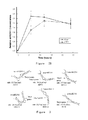
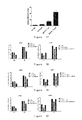
- Figure 2A is the real-time PCR results of the expression amounts of Lonicera japonica microRNAs in mice sera at different time points after intragastrical administration of Lonicera japonica water extract. It can be seen from the results that the content of MIR2911 in mice sera increases significantly after intragastrical administration of Lonicera japonica water extract. The content of MIR2911 in sera reaches the maximum value 1.5 hours after intragastrically administering the Lonicera japonica water extract, and the content of MIR2911 in sera decreases to the original level after 6 hours.
- Figure 2B is the real-time PCR results of the expression amounts of Lonicera japonica microRNAs in liver and lung at different time points after intragastrically administering the Lonicera japonica water extract to mice. It can be seen from the results that the expression levels of MIR2911 in liver and lung increase after intragastrically administering the Lonicera japonica water extract to the mice. The expression level of MIR2911 in liver reaches the maximum value 6 hours after intragastrically administering the Lonicera japonica water extract to mice, and the expression level of MIR2911 in lung reaches the maximum value 12 hours after intragastrically administering the Lonicera japonica water extract.
- Example 3 Lonicera japonica microRNAs can regulate physiological and pathological activities
- Lonicera japonica microRNAs can regulate the physiological and pathological activities in animal body.
- FIG. 3 is the sequence analysis results of the predicted target genes of MIR2911.
- mfe represents the minimal folding free energy of the candidate target gene, the greater the absolute value of mfe, the higher matching rate of the candidate target gene with Peu-MIR2911 sequence.
- ADV gene, HPIV1 gene, H1N1 gene, and H5N1 gene are potential target genes of Lonicera japonica microRNAs.
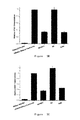
- Figure 4 is the results of the detection of the predicted target genes by luciferase. NC (i.e., equal quantity of RNAs containing the mismatching control sequences of MIR2911) is used as control. The results show that the majority of predicted target genes can bind to mature MIR2911 to form a double-stranded structure. This suggests that MIR2911 can exert the function of regulating the genes such as ADV gene, HPIV gene, H1N1 gene, H5N1 gene and the like through binding thereto.
- NC i.e., equal quantity of RNAs containing the mismatching control sequences of MIR2911
- the specific steps for detecting the viral genes are: digesting and collecting cells, then repeatedly rinsing same with PBS buffer 3 times, extracting total RNA using a protein-denaturing reagent, then identifying the content of viral marker PB1 mRNA therein through real-time PCR method, comparing with the standard curve, and calculating the content of viruses.
- Figure 5A is the content of the viral gene of ADV in MDCK cells detected using real-time PCR technology.
- Figure 5B is the content of the viral gene of H1N1 in MDCK cells detected using real-time PCR technology.
- Figure 5C is the content of viral gene of H5N1 in MDCK cells detected using real-time PCR technology. The results show that MIR2911 has significant inhibiting and blocking effects on ADV5, H1N1 and H5N1.
- Lonicera japonica microRNA can enter animal body through being enclosed by microvesicles of intestinal epithelial Caco-2 cells, and it can be delivered to and enter other cells via the cell microvesicles and exerts influences on the physiological and pathological conditions of other cells, such as inhibiting influenza virus.
- Figure 7 is the expression amount of the influenza virus ADV in the HEK 293T cells treated with cell microvesicles carrying MIR2911.
- Figure 7B is the expression amount of the influenza virus H1N1 in the HEK 293T cells treated with cell microvesicles carrying MIR2911.
- Figure 7A and figure 7B employ the following cells as controls: after infected with influenza viruses, the non-treated HEK 293T cells (blank control) and the HEK 293T cells treated with cell microvesicles not carrying MIR2911 (negative control).
- Lonicera japonica microRNAs can enter animal body through pathways such as oral intake, are enclosed by cell microvesicles and delivered into other cells, and exert functions in cells, such as inhibiting influenza virus. It can be seen therefrom that Lonicera japonica microRNAs can enter animal tissues and organs through pathways such as oral intake and regulate the physiological and pathological states of the animal.
- Example 5 Lonicera japonica microRNAs can inhibit influenza virus significantly in animal body
- mice are allowed to randomly drink unconcentrated Lonicera japonica water extract (prepared in example 1) for 3 days, followed by inoculating ADV or H1N1 virus, continuing to drink unconcentrated Lonicera japonica water extract for 3 days, and detecting the content of viruses in lungs of the mice using real-time PCR.
- the results show that Lonicera japonica decoction has strong inhibiting effects on the proliferation of ADV and H1H1 viruses.
- the primer sequences for detecting the influenza virus ADV by real-time PCR are as follows:
- the primer sequences for detecting the influenza virus H1N1 by real-time PCR are as follows:
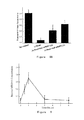
- Figure 8A is the real-time PCR results of influenza virus ADV expressed in the lungs of mice after drinking Lonicera japonica water extract, Lonicera japonica water extract + anti-MIR2911 (oral group), and lung lavage with Lonicera japonica water extract +anti-MIR2911 (lung lavage group).
- Figure 8B is the real-time PCR results of influenza virus H1N1 expressed in the lungs of mice after drinking Lonicera japonica water extract, Lonicera japonica water extract + anti-MIR2911 (oral group), and lung lavage with Lonicera japonica water extract +anti-MIR2911 (lung lavage group).
- Example 6 Lonicera japonica microRNAs enter human body via digestive tract
- dry Lonicera japonica is decocted in water for 30 min to give 1000 ml of water extract, with content of MIR2911 in the water extract being about 0.4 n mol/L.
- 20 healthy volunteers are recruited, each orally takes the prepared water extract 1000 ml, blood of the volunteers are collected at 0 h (0 hour), 1 h (1 hour), 2 h (2 hour), 3 h (3 hour), 4 h (4 hour), 5 h (5 hour), and 6 h (6 hour), and the contents of MIR2911 therein are detected using real-time PCR, the specific steps of the real-time PCR experiment are as described in example 2.
- FIG 9 is the real-time PCR results of MIR2911 in human blood after Lonicera japonica water extract is orally taken. It can be seen from the results that the content of MIR2911 in human blood increases significantly after Lonicera japonica water extract is orally taken. The content of MIR2911 in human blood reaches the maximum value 1.5 hours after Lonicera japonica water extract is orally taken, and decreases to the original level after 3 hours. These results are consistent with the experimental results on mice in example 2 ( Figure 2A ). The results show that Lonicera japonica microRNAs can enter human body via ingestion, be absorbed in human body and enter the circulatory system.
- Example 7 Lonicera japonica microRNAs can significantly inhibit influenza virus in human body
- influenza viruses ADV or H1N1 in human blood are detected using real-time PCR.
- the particular procedures are as described in example 5.
- Lonicera japonica microRNAs are extracted using a water extraction method.
- Appropriate amount (100 grams) of fresh medicinal material of Lonicera japonica is taken, followed by heating same in 100°C water bath with the water being 1000 ml (the ratio of the mass of Lonicera japonica to the volume of water is 1 : 10) for 0.5 hours, and concentrating the water extract at 60°C under reduced pressure to 1/10 of its original volume.
- the water extract is collected for subsequent experiments.
- the plant microRNAs stably existing in the fresh Lonicera japonica and Lonicera japonica water extract prepared via the above-mentioned steps are detected using Solexa sequencing technology, the loading amount for Solexa sequencing is 10 ⁇ g RNA.
- Lonicera japonica microRNAs are extracted using a water extraction method.
- the particular experimental procedures are as described in example 8.1.
- MIR2911 is artificially synthesized according to a conventional method.
- the concentration of MIR2911 in Lonicera japonica water extract or of synthesized MIR2911 is detected using real-time PCR method, with the particular experimental procedures being as described in example 2.
- concentrations of MIR2911 and MIR167 in sera and water are detected using real-time PCR method, with the particular experimental procedures being as described in example 2.
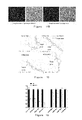
- MIR2911 either synthesized or extracted from Lonicera japonica does not degrade in water and sera at various time points and has a high stability; in contrast, MIR167 degrades fast and its content decreases substantially after only one hour. It can be seen therefrom that MIR2911 is stable in water and sera.
- the content of MIR2911 in sera significantly increases after intragastrically administering 2 nmol synthesized MIR2911 to mice. It is shown as in figure 14A .
- the content of MIR2911 in sera reaches the maximum value 0.5 hours after intragastric administration, and the content of MIR2911 in sera decreases to the original level after 24 hours.
- the fluorescently labeled synthesized MIR2911 are specifically delivered to the lungs of the mice 3 hours after intragastrically administering Lonicera japonica water extract to the mice. As shown in figure 14B , labeled MIR2911 (in red) accumulates in the lungs of the mice rapidly. It is demonstrated that MIR2911, after entering blood, can reach the sites where require it to play a role, that is, it can smoothly reach a target organ and play a role.
- Example 9 MIR2911 can regulate physiological and pathological activities
- MIR2911 targets various influenza viruses and inhibits replication thereof in the cells infected by the viruses.
- Viral genes of H1N1, H3N2, H5N1, and H7N9 are predicted to match with MIR2911 using bioinformatics. The particular results are shown in figure 15.
- Figure 15 is the sequence analysis results of the predicted target genes of MIR2911. The results show that viral genes of H1N1, H3N2, H5N1, and H7N9 are potential target genes of Lonicera japonica microRNAs.
- Verification of target genes using a luciferase detection method The particular operating procedures are as described in example 3.2.
- H1N1, H3N2, H5N1, and H7N9 are potential target genes of Lonicera japonica MIR2911.
- Plant MIR2911 can bind to AGO2 complex in MDCK cells and AGO2 can help deliver MIR2911 into cells.
- the particular operating procedures are as described in example 3.3, except for the difference that MIR2911 is transfected into MDCK cells together with AGO2 complex.
- the transfection times are 12 hours and 24 hours, respectively.
- the results are shown in figure 18 .
- the research discovers that MIR2911 has a significant inhibiting effect on H1N1 viruses over different action times (administration time of 12 hours or 24 hours).
- the particular operating procedures are as described in example 3.3, except for the difference that MIR2911 is transfected into MDCK cells together with AGO2 complex.
- the transfection times are 12 hours and 24 hours, respectively.
- the results are shown in figure 19 .
- the research discovers that MIR2911 has a significant inhibiting effect on H5N1 viruses over different action times (administration time of 12 hours or 24 hours).
- MIR2911 is transfected into MDCK cells together with AGO2 complex.
- the transfection times are 12 hours and 24 hours, respectively.
- Avian influenza virus gene of H7N9 is used to infect MDCK cells.
- the results are shown in figure 20 .
- the research discovers that MIR2911 has a significant inhibiting effect on H7N9 viruses over different action times (administration time of 12 hours or 24 hours).
- mice Before inoculation, the mice are treated with three different subtypes of influenza viruses. 3, 5, and 7 days after virus infection, the changes of body weight are recorded daily. The mice are sacrificed and the quantity of viruses in lungs is measured.
- the research discovers that the body weight of the mice inoculated with H1N1 viruses has no significant change after the mice drinking MIR2911-containing solution or Lonicera japonica decoction; and the body weight of the mice significantly decreases after the mice drinking the solution free of MIR2911. It can be seen therefrom that MIR2911 has a significant inhibiting effect on H1N1 viruses, maintains the body weight balance of mice, and improves the physiological state of mice.
- Figure 21 shows that there is no significant difference between the two control groups (H1N1, H1N1 + NC) 3 days after infection, which demonstrates that the antisense sequence has no viricidal effect; the virus content in lungs in drug administration group (H1N1 + MIR2911) decreases greatly with a significant difference compared with the control group (H1N1 + NC), which demonstrates that the drug has extremely obvious effect of killing viruses in lungs.
- Figure 22 shows that 3 days and 5 days after infection, the virus content in lungs in the experimental group (mice infected by H1N1 and administered with Lonicera japonica decoction + anti-MIR2911, H1N1 + LJ soup + MIR2911) is greatly higher than that of the control group (mice infected by H1N1 and administered with Lonicera japonica decoction, H1N1 + LJ soup), with difference being significant between the two groups.
- the result demonstrates that after the anti-MIR2911 degrades MIR2911 in the Lonicera japonica decoction, the Lonicera japonica decoction loses its antiviral effect, which demonstrates that it is MIR2911 that plays the role.
- the research discovers that the body weight of the mice inoculated with H5N1 viruses has no significant change after the mice drinking MIR2911-containing solution or Lonicera japonica decoction; and the body weight of the mice significantly decreases after the mice drinking the solution free of MIR2911. It can be seen therefrom that MIR2911 has a significant inhibiting effect on H5N1 viruses, maintains the body weight balance of mice, and improves the in vivo physiological state of mice.
- the research discovers that the body weight of the mice inoculated with H7N9 viruses has no significant change after the mice drinking MIR2911-containing solution or Lonicera japonica decoction; and the body weight of the mice significantly decreases in the experimental group in which the mice drink the solution free of MIR2911. It can be seen therefrom that MIR2911 has a significant inhibiting effect on H7N9 viruses, maintains the body weight balance of mice, and improves the in vivo physiological state of mice.
- H7N9 represents viral infection group administered H7N9 directly;
- H7N9 + NC represents H7N9 virus infection with negative control (antisense sequence) administrated
- H7N9 + MIR2911 represents H7N9 virus infection with direct administration of MIR2911).
- Figure 23 shows that there is no significant difference between the two control groups (H7N9, H7N9 + NC) after infection, which demonstrates that the antisense sequence has no viricidal effect; the virus content in lungs in drug administration group (H7N9 + MIR2911) decreases greatly with a significant difference compared with the control group (H7N9 + NC), which demonstrates that the drug has extremely obvious effect of killing viruses in lungs.
- Figure 24 shows that after infection, the virus content in lungs in the experimental group (mice infected by H7N9 and administered with Lonicera japonica decoction + anti-MIR2911, H7N9 + LJ soup + MIR2911) is greatly higher than that of the control group (mice infected by H7N9 and administered with Lonicera japonica decoction, H7N9 + LJ soup), with difference being significant between the two groups.
- the result demonstrates that after the anti-MIR2911 degrades MIR2911 in the Lonicera japonica decoction, the Lonicera japonica decoction loses its antiviral effect, which demonstrates that it is MIR2911 that plays a role.
- Example 11 Content comparison of MIR2911 in fresh Lonicera japonica , dry Lonicera japonica , and mouse feed
- MIR2911 in fresh Lonicera japonica , dry Lonicera japonica, and mouse feed are detected using real-time PCR method, with the particular experimental procedures being as described in example 2.
Landscapes
- Health & Medical Sciences (AREA)
- Life Sciences & Earth Sciences (AREA)
- Chemical & Material Sciences (AREA)
- Engineering & Computer Science (AREA)
- Organic Chemistry (AREA)
- General Health & Medical Sciences (AREA)
- Genetics & Genomics (AREA)
- Bioinformatics & Cheminformatics (AREA)
- Medicinal Chemistry (AREA)
- Molecular Biology (AREA)
- Animal Behavior & Ethology (AREA)
- Pharmacology & Pharmacy (AREA)
- Public Health (AREA)
- Veterinary Medicine (AREA)
- Biotechnology (AREA)
- Zoology (AREA)
- Wood Science & Technology (AREA)
- Biomedical Technology (AREA)
- Biochemistry (AREA)
- General Engineering & Computer Science (AREA)
- Chemical Kinetics & Catalysis (AREA)
- General Chemical & Material Sciences (AREA)
- Nuclear Medicine, Radiotherapy & Molecular Imaging (AREA)
- Microbiology (AREA)
- Natural Medicines & Medicinal Plants (AREA)
- Proteomics, Peptides & Aminoacids (AREA)
- Biophysics (AREA)
- Physics & Mathematics (AREA)
- Epidemiology (AREA)
- Analytical Chemistry (AREA)
- Virology (AREA)
- Mycology (AREA)
- Plant Pathology (AREA)
- Botany (AREA)
- Immunology (AREA)
- Medical Informatics (AREA)
- Alternative & Traditional Medicine (AREA)
- Diabetes (AREA)
- Oncology (AREA)
- Communicable Diseases (AREA)
Abstract
Description
- The present invention belongs to the field of biology. In particular, the present invention relates to a method of extracting plant microRNAs and application thereof.
- Micro ribonucleic acids (microRNA, miRNA or miR) are a class of non-coding, single stranded, small ribonucleic acid molecules with 19-23 nucleotides in length. They exist extensively in the cells of animals and plants and are highly conserved in evolution. MicroRNA inhibits the translation of corresponding proteins through recognizing the 3' end non-translated sequence of target messenger RNA (mRNA) and imcompletely complementing thereto. As a powerful regulatory factor for mRNA, microRNAs are closely related to physiological activities, which relates to life activities such as the individual development, tissue differentiation, apoptosis and energy metabolism of organisms and the like; and meanwhile, microRNAs are also closely related to the occurrence and development of many diseases.
- Currently, the research on plant microRNAs focuses on the regulatory effects of microRNAs on plants per se, including the effects on the growth and development, signal transduction, and behaviours under stress of plants. The application of research achievements focuses on the improvement of plant species, for example, the regulation of the expression of nutrient elements in edible parts of crops.
- Patent
PCT/CN 2010/000677 PCT/IB 2010/055600 - Currently, the existing researches are merely limited to the regulatory effects of plant microRNAs on the physiological activities of plants per se, and the regulatory effects of plant microRNAs on the physiological activities of animals and the extraction of plant microRNAs still need investigation.
- One of the objects of the present invention is to provide a plant microRNA having the function of regulating non-plant target genes, or a plant extract containing said microRNA and preparation method and use thereof.
- Another object of the present invention is to provide a method of identifying plant functional microRNAs.
- In a first aspect of the present invention, provided is an isolated plant functional microRNA or an extract containing said plant functional microRNA, said plant functional microRNA is an endogenous microRNA derived from a certain plant and exists in the water-soluble and/or liposoluble extracts of said plants, moreover, said plant functional microRNA has the function of regulating non-plant target genes.
- In another preferred example, said plant functional microRNAs include MIR2911; and the content of MIR2911 in said isolated plant functional microRNAs or the extract containing said plant functional microRNAs is greater than or equal to 70% by the total amount of microRNAs.
- In another preferred example, the content of MIR2911 is greater than or equal to 80%; preferably, greater than or equal to 90%; and more preferably is 100%.
- In another preferred example, said total amount of microRNAs refers to the sum of the amount of microRNAs of 18-24nt in length.
- In another preferred example, said regulation includes inhibition (down-regulation) of the expression of the target gene, and promotion (up-regulation) of the expression of the target gene.
- In another preferred example, said non-plant target gene includes bacterial gene, viral gene, chlamydial gene, yeast gene, and animal gene.
- In another preferred example, said plant includes medicinal plants, fruit and vegetable plants, and ornamental plants; preferably includes Lonicera japonica, Isatis tinctoria, Isatis indigotica, Baphicacanthus cusia, Populus diversifolia, Vigna unguiculata, cotton, Chinese cabbage or Solarium tuberosum. Preferably, said plant is Lonicera japonica, Isatis tinctoria, Isatis indigotica, Baphicacanthus cusia or Populus diversifolia; and more preferably, said plant is Lonicera japonica.
- In another preferred example, said plant functional microRNAs are microRNA species enriched in the water-soluble and/or liposoluble extracts of said plant (for example, microRNA species having an abundance of
top 20, and more preferably top 10). - In another preferred example, said plant functional microRNAs further include one or more selected from the group comprising: MIR156h, MIR166f, MIR396a, MIR166a, MIR168a, MIR1440, MIR2910, MIR2915, MIR2916, MIR818d, MIR159e, MIR159c, MIR156j, MIR1432, MIR166k, MIR167b, MIR396c, MIR156e, MIR169k, MIR167c, MIR160d, MIR399a, MIR156d, MIR160e, MIR169n, MIR166l, MIR159f, MIR166c, MIR159b, MIR166j, MIR167i, MIR169c, MIR164c, MIR167j, MIR167g, MIR160c, MIR399e, MIR399b, MIR529b, MIR164e, MIR166d, MIR166h, MIR164b, MIR156f, MIR164a, MIR169l, MIR166m, MIR164f, MIR156k, MIR166g, MIR166b, MIR160b, MIR166e, MIR159d, MIR818e, MIR172a, MIR156b, MIR399g, MIR169b, MIR399f, MIR167a, MIR394, MIR156a, MIR166i, MIR167f, MIR319a, MIR156g, MIR166n, MIR399c, MIR160a, MIR159a.1, MIR156c, MIR319b, MIR169o, MIR167h, MIR156i, MIR167d, MIR169a, MIR172d, MIR818b, MIR164d, MIR167e, MIR396b, MIR2914 (Table 1).
- In another preferred example, said plant extract includes the water-soluble and/or liposoluble extract of plants.
- In another preferred example, said plant extract includes the extracts of branches, leaves, roots, flowers, fruits, and/or stems of plants.
- In a second aspect of the present invention, provided is the use of the isolated plant functional microRNAs or an extract containing said plant functional microRNAs as described in the first aspect of the present invention in (a) preparing a composition for regulating non-plant target genes; or (b) preparing a pharmaceutical for treating diseases associated with non-plant target genes.
- In another preferred example, said non-plant target gene includes bacterial gene, viral gene, chlamydial gene, yeast gene, and animal gene.
- In another preferred example, said non-plant target gene is a gene of a pathogen (including bacteria, viruses, and chlamydia, etc.).
- In another preferred example, said diseases associated with non-plant target genes include: tumors (such as liver cancer and lung cancer), acute and chronic infectious diseases (for example, viral diseases such as viral influenza, viral hepatitis, acquired immunodeficiency syndrome, and SARS; bacterial diseases such as tuberculosis and bacterial pneumonia; and acute and chronic infectious diseases caused by pathogenic microorganisms); and other acute and chronic diseases (for example, respiratory system diseases, immune system diseases, blood and hematopoietic system diseases such as circulatory diseases including cardiovascular and cerebrovascular diseases, metabolic diseases related to endocrine system, digestive system diseases, nervous system diseases, urinary system diseases, reproductive system diseases and motor system diseases).
- In another preferred example, said plant functional microRNAs include MIR2911. More preferably, said pharmaceutical is used for treating viral influenza.
- In a third aspect of the present invention, provided is a composition which comprises (a) a carrier acceptable in pharmaceutics or bromatology and (b) the isolated plant functional microRNAs and/or the plant extract containing said plant functional microRNAs as described in the first aspect of the present invention.
- In another preferred example, said composition consists of or substantially consists of components (a) and (b).
- In another preferred example, the content of component (b) accounts for 0.01%-99 wt% of the total weight of the composition, more preferably 0.1%-90 wt% (calculated as microRNA).
- In another preferred example, said composition includes a pharmaceutical composition, a food composition or a health care product composition.
- In another preferred example, the method for preparing said composition comprises the step of mixing said plant functional microRNAs or the plant extract containing said functional microRNAs with a carrier acceptable in pharmaceutics or bromatology to form said composition.
- In another preferred example, said plant functional microRNAs are derived from the following plants: medicinal plants, fruit and vegetable plants, and ornamental plants, and regulates the non-plant target genes selected from the group comprising bacterial gene, viral gene, chlamydial gene, yeast gene, and animal gene.
- In another preferred example, said plant functional microRNAs are derived from Lonicera japonica, Isatis tinctoria, Isatis indigotica, Baphicacanthus cusia or Populus diversifolia. More preferably, plant functional microRNAs includes MIR2911.
- In a fourth aspect of the present invention, provided is a method for in vitro non-therapeutic regulation of the expression of non-plant target genes, wherein the non-plant target genes include bacterial gene, viral gene, chlamydial gene, yeast gene, and animal gene, said method comprises the step of culturing a biological material containing said target genes in the presence of the isolated plant functional microRNAs or an extract containing said plant functional microRNAs as described in the first aspect of the present invention to regulate the expression of said non-plant target genes.
- In another preferred example, said target gene is a gene of a pathogen (including bacteria, viruses, and chlamydia, etc.).
- In another preferred example, said biological material includes viruses, cells and tissues.
- In another preferred example, said plant functional microRNAs are derived from the following plants: medicinal plants, fruit and vegetable plants, and ornamental plants.
- In another preferred example, said plant functional microRNAs are derived from Lonicera japonica, Isatis tinctoria, Isatis indigotica, Baphicacanthus cusia or Populus diversifolia. More preferably, plant functional microRNAs include MIR2911.
- In a fifth aspect of the present invention, provided is a method of identifying plant functional microRNAs, wherein said plant functional microRNAs have the function of regulating non-plant target genes, said method comprising the steps of:
- (1) Providing an extract of a certain plant;
- (2) Determining the species or levels of the plant endogenous microRNAs in said extract; and
- (3) Performing alignment and analysis on the sequences of the determined plant microRNAs and non-plant target genes to identify the plant functional microRNAs having the function of regulating the non-plant target genes.
- In another preferred example, said non-plant target gene includes the genes in a gene database.
- In another preferred example, said non-plant target gene includes bacterial gene, viral gene, chlamydial gene, yeast gene, and animal gene.
- In another preferred example, said non-plant target gene is a gene of a pathogen.
- In another preferred example, said plant includes medicinal plants, and fruit and vegetable plants.
- In another preferred example, microRNA species having an abundance in the extract of top 20 (more preferably top 10) are picked out in step (3) for alignment and analysis.
- In another preferred example, plant microRNA species having a Lm/La ratio greater than or equal to 130% (more preferably greater than or equal to 150%; and still more preferably greater than or equal to 200%) are picked out in step (3) for alignment and analysis, wherein Lm is the abundance (or level) of a certain plant microRNA in the extract, and La is the average abundance (or level) of said plant total microRNAs.
- In a sixth aspect of the present invention, provided is a plant functional microRNA molecule which is identified by the method as described in the fifth aspect of the present invention.
- In another preferred example, said microRNA molecule includes MIR2911.
- In a seventh aspect of the present invention, provided is a method of preparing a composition which comprises the steps of:
- artificially synthesizing the plant functional microRNA molecule as described in the sixth aspect of the present invention; and
- mixing said plant functional microRNA molecule with a carrier acceptable in pharmaceutics or bromatology to form the composition.
- In an eighth aspect of the present invention, provided is the use of a microRNA molecule MIR2911 or an extract containing MIR2911 for preparing a pharmaceutical for treating viral influenza.
- In another preferred example, said extract (unconcentrated or concentrated) contains 0.01-100 nM (preferably 0.1-20 nM) MIR2911; or
- In said extract (unconcentrated or concentrated), the content of MIR2911 is greater than or equal to 70%; preferably greater than or equal to 80%; more preferably greater than or equal to 90%; and most preferably is 100% by the total amount of microRNAs.
- In a ninth aspect of the present invention, provided is a method of preventing or treating diseases, wherein said diseases are diseases associated with non-plant target genes, said method comprises the step of administering the isolated plant functional microRNAs or the extract containing said plant functional microRNAs as described in the first aspect of the present invention or the composition in the third aspect of the present invention to a subject in need thereof to prevent or treat said diseases, wherein said plant functional microRNAs have the function of regulating non-plant target genes.
- In another preferred example, said subject includes mammals (such as human).
- In another preferred example, said non-plant target gene includes bacterial gene, viral gene, chlamydial gene, yeast gene, and animal gene.
- In another preferred example, said non-plant target gene is a gene of a pathogen.
- In a tenth aspect of the present invention, provided is a method of screening candidate substances of antiviral active ingredients, which comprises the steps of:
- (a) Providing isolated plant functional microRNAs or an extract containing said plant functional microRNAs;
- (b) Determining the stability of each microRNA in said plant functional microRNAs to select the microRNA species having high stability;
- (c) Aligning said microRNAs having high stability which are selected in the above step with non-plant target genes to determine whether said microRNAs of high stability match with or bind with the non-plant target genes;
wherein, if the aligning results indicate that said microRNAs of high stability can match with or bind with the non-plant target genes, the microRNA species are selected as the candidate antiviral active ingredients.
In another preferred example, said method also comprises the steps of: - (d) Verifying whether the candidate antiviral active ingredients has an antiviral activity or not in in vitro tests or animal tests.
- In another preferred example, said microRNAs of high stability are selected from the group comprising:
- (i) A microRNA having the stability of top 5, preferably top 3, and more preferably top 1 among said plant functional microRNAs, or the extract containing said plant functional microRNAs;
- (ii) A microRNA whose stability meets the
following equation 
wherein C0 is the concentration when placed for 0 hour;
C12 is the concentration when placed for 12 hours.
More preferably, C0 is other than 0. - In another preferred example, said non-plant target gene is a viral gene.
- In another preferred example, in step (a), said miRNA is a species having a ranking of abundance in fresh plants (from high to low) after the fifth and preferably after the tenth.
- In an eleventh aspect of the present invention, provided is a method of preparing a composition which comprises the steps of:
- artificially synthesizing plant functional microRNA molecules, wherein said plant functional microRNA molecules are candidate antiviral active ingredients screened using the method described in the tenth aspect; and
- mixing said plant functional microRNA molecules with a carrier acceptable in pharmaceutics or bromatology to form the composition.
- In a twelfth aspect of the present invention, provided is a method of improving the abundance of MIR2911 which comprises the steps of:
- (a) Providing an extract containing plant functional microRNAs, wherein said plant functional microRNAs include n microRNA species, wherein n is a positive integer greater than or equal to 2 (preferably greater than or equal to 5 or greater than or equal to 10), and wherein one microRNA is MIR2911;
- (b) Subjecting said extract to aging treatment (such as placement) to obtain an aged extract and determining the abundance of MIR2911 in said aged extract, comparing the abundance with a preset value, and terminating the aging treatment when the abundance of MIR2911 is greater than or equal to the preset value to obtain an extract having an improved abundance of MIR2911.
- In another preferred example, said extract is a water extract or an alcohol extract.
- In another preferred example, said aging treatment is placement at 20°C-50°C for 2 hours to 10 days.
- In another preferred example, said method also comprises using the obtained extract having an improved abundance of MIR2911 to prepare pharmaceuticals or placing same at a low temperature (such as 0°C to -4°C or a lower temperature) for storage.
- In another preferred example, said preset value is 60%, 70%, 80%, 90%, 95%, or 99%.
- In another preferred example, said abundance is calculated as the following equation

wherein S1 is the amount (or concentration) of MIR2911, i = 1 to n, Si is the amount (or concentration) of the ith microRNA, wherein microRNA is RNA of 18-26 nt in length. - It should be understood that all of the various technical features described above and the various technical features specifically described hereinafter (such as examples) can be combined with one another within the scope of the present invention, so as to form new or preferred technical solutions. Due to space limitations, this is no longer tired out one by one.
-
-
Figure 1 shows the Solexa sequencing results of the plant microRNAs in Lonicera japonica water extract. -
Figure 2A is the real-time PCR results of the expression amounts of Lonicera japonica microRNAs in mice sera at different time points after intragastrical administration of Lonicera japonica water extract. The time points for detection are 0 h (0 hour), 2 h (2 hour), 4 h (4 hour), and 6 h (6 hour). -
Figure 2B is the real-time PCR results of the expression amounts of Lonicera japonica microRNAs in mice liver and lung at different time points after intragastrical administration of Lonicera japonica water extract. The time points for detection are 0 h (0 hour), 5 h (5 hour), 10 h (10 hour), 15 h (15 hour), 20 h (20 hour), and 25 h (25 hour). -
Figure 3 shows the sequence analysis results of the predicted target genes of MIR2911. mfe represents the minimal folding free energy of the candidate target gene, the greater the absolute value of mfe, the higher the matching rate of the candidate target gene with Peu-MIR2911 sequence. -
Figure 4 shows the results of the detection of the predicted target genes by luciferase. The predicted genes include ADV gene, HPIV gene, H1N1 gene, and H5N1 gene. -
Figure 5A is the content of viral gene of ADV5 in MDCK cells detected using real-time PCR technology. -
Figure 5B is the content of viral gene of H1N1 in MDCK cells detected using real-time PCR technology. -
Figure 5C is the content of viral gene of H5N1 in MDCK cells detected using real-time PCR technology.
Infigure 5A ,figure 5B, and figure 5C , "uninfected" represents the cells not infested by influenza viruses; "infected and untreated"represents the cells infested by influenza viruses and not treated with any pharmaceutical; "MIR2911" represents the cells infested by influenza viruses and treated with MIR2911; "NC" represents the cells infested by influenza viruses and treated with a nonsense sequence RNA of MIR2911; "Tamiflu" represents the cells infested by influenza viruses and treated with Tamiflu (Oseltamivir, a specific influenza virus neuraminidase inhibitor). -
Figure 6 shows the real-time PCR results of MIR2911 in cell microvesicles carrying MIR2911 secreted by the HEK 293T cells transfected with MIR2911. The cell microvesicles secreted by the HEK 293T cells not transfected with MIR2911 are used as control MV. -
Figure 7A is the expression amount of the influenza virus ADV in the HEK 293T cells treated with cell microvesicles carrying MIR2911. -
Figure 7B is the expression amount of the influenza virus H1N1 in the HEK 293T cells treated with cell microvesicles carrying MIR2911. - In
figure 7A andfigure 7B , after infecting with influenza viruses, the non-treated HEK 293T cells are used as blank control and the HEK 293T cells treated with cell microvesicles not carrying MIR2911 are used as negative control. -
Figure 8A shows the real-time PCR results of influenza virus ADV expressed in the lungs of mice after drinking Lonicera japonica water extract, Lonicera japonica water extract + anti-MIR2911 (oral group), and lung lavage with Lonicera japonica water extract +anti-MIR2911 (lung lavage group). -
Figure 8B shows the real-time PCR results of influenza virus H1N1 expressed in the lungs of mice after drinking Lonicera japonica water extract, Lonicera japonica water extract + anti-MIR2911 (oral group), and lung lavage with Lonicera japonica water extract +anti-MIR2911 (lung lavage group). -
Figure 9 shows the real-time PCR results of MIR2911 in human blood after oral intake of Lonicera japonica water extract.
The time points for detection are 0 h (0 hour), 1 h (1 hour), 2 h (2 hour), 3 h (3 hour), 4 h (4 hour), 5 h (5 hour), and 6 h (6 hour). -
Figure 10 shows the Solexa sequencing results of the plant miRNA in fresh Lonicera japonica. -
Figure 11 shows the Solexa sequencing results of the plant miRNA in Lonicera japonica water extract. -
Figure 12 shows the real-time PCR results of MIR2911 in Lonicera japonica water extract or synthetic MIR2911. -
Figure 13 shows the real-time PCR results of the expression amount of MIR2911 or MIR167 in sera or water. -
Figure 14A shows the real-time PCR results of the expression amount of MIR2911 in mice sera at different time points after intragastrical administration of synthetic MIR2911. The time points for detection are 0 h (0 hour), 0.5 h (0.5 hour), 1 h (1 hour), 3 h (3 hour), 6 h (6 hour), 12 h (12 hour), and 24 h (24 hour). -
Figure 14B shows the distribution of MIR2911 in mice organs after iintragastrical administration of Lonicera japonica water extract. -
Figure 15 shows the sequence analysis results of the predicted target genes of MIR2911. mfe represents the minimal folding free energy of the candidate target gene, the greater the absolute value of mfe, the higher the matching rate of the candidate target gene with Peu-MIR2911 sequence. -
Figure 16 shows the results of the detection of the predicted target genes by luciferase. The predicted genes include H3N2 gene, H71N9 gene, H1N1 gene, and H5N1 gene. -
Figure 17 shows the real-time PCR results of MIR2911 in MDCK cells after introducing the complex of MIR2911 and AGO2 in combination into the MDCK cells. -
Figure 18 shows the virus titer of influenza virus H1N1 in the MDCK cells transfected with the complex of MIR2911 and AGO2. -
Figure 19 shows the virus titer of influenza virus H5N1 in the MDCK cells transfected with the complex of MIR2911 and AGO2. -
Figure 20 shows the virus titer of influenza virus H7N9 in the MDCK cells transfected with the complex of MIR2911 and AGO2. -
Figure 21 shows the changes of virus titer EID50 at different time points in lungs of mice infected with H1N1 viruses after drinking MIR2911 solution. -
Figure 22 shows the changes of virus titer EID50 at different time points in lungs of mice infected with H1N1 viruses after drinking Lonicera japonica decoction + anti-MIR2911. -
Figure 23 shows the changes of virus titer EID50 at different time points in lungs of mice infected with H1N1 viruses after drinking MIR2911 solution. -
Figure 24 shows the changes of virus titer EID50 at different time points in lungs of mice infected with H1N1 viruses after drinking Lonicera japonica decoction + anti-MIR2911. -
Figure 25 shows the real-time PCR results of MIR2911 in fresh Lonicera japonica, dry Lonicera japonica, and mouse feed. - After conducting long-term deep research, the inventors have unexpectedly found that an isolatable plant endogenous microRNA which stably exists in a plant extract or a plant extract containing said microRNA can be used for regulating the expression of the target gene of said endogenous microRNA in animal body and then used for regulating the physiological and pathological activities of animals. Therefore, the research can be used for guiding the preparation of pharmaceuticals or functional foods and the like. The present invention is accomplished by the inventors on this basis.
- The present inventors also found that microRNA species such as MIR2911 have unusually high stability (far above a general microRNA), which can exist stably for a long term, and thus are particularly suitable for use as an active ingredient and applied in pharmaceuticals or other products.
- As used herein, "osa" represents Oryza sativa; and "peu" represents Populus diversifolia.
- The plant functional microRNAs described in the present invention are said plant endogenous microRNAs, which can stably exist in the water-soluble and/or liposoluble extracts of plants. Preferably, said plant functional microRNAs are microRNA species enriched in the water-soluble and/or liposoluble extracts of said plant (for example, microRNA species having an abundance of top 20, and more preferably top 10). In addition, the microRNAs in the present invention are of various forms, for example, pri-microRNAs, pre-microRNAs and mature microRNAs.
- The examples of said plant functional microRNAs include (but not limited to) one or more microRNAs selected from Table 1, especially selected from the group comprising MIR156h, MIR166f, MIR396a, MIR166a, MIR168a, MIR1440, MIR2910, MIR2911, MIR2915, and MIR2916.
- In another preferred example, said plant includes medicinal plants, fruit and vegetable plants, and ornamental plants; preferably includes Lonicera japonica, Isatis tinctoria, Isatis indigotica, Baphicacanthus cusia, Populus diversifolia, Vigna unguiculata, cotton, Chinese cabbage or Solanum tuberosum; more preferably, said plant is Lonicera japonica, Isatis tinctoria, Isatis indigotica, Baphicacanthus cusia or Populus diversifolia; and most preferably, said plant is Lonicera japonica.
- The extracts containing said plant functional microRNAs described in the present invention include the water-soluble and/or liposoluble extracts of plants, for example, the extracts of branches, leaves, roots, flowers, fruits, and/or stems of the plants.
- The extraction method of the plant microRNAs described in the present invention mainly employs a solvent extraction method, that is, a solvent is employed to extract microRNAs from plants. In this case, said solvent includes water, a hydrophilic solvent, or a combination thereof. Said combination includes adding an appropriate amount of a hydrophilic solvent to water or adding an appropriate amount of water to a hydrophilic solvent. It should be understood that an appropriate amount of an auxiliary reagent such as a pH regulator (such as an acid or a base) and the like can also be added to the solvent.
- The extraction can be carried out under any appropriate temperature (for example, from normal temperature to the temperature for solvent refluxing); and preferably employed are impregnation method, percolation method, decoction method, refluxing extraction method, continuous extraction method and the like.
- During the extraction process, the plants can be pre-treated, for example, the plants are pulverized or subjected to enzyme treatment (such as cellulase, hemicellulase, pectinase, xylanase, neutral protease, papain, glucanase, and complex enzymes) and the like; and also, the extracted mixture can be subjected to a post-treatment, for example, a hydrophilic solvent (such as ethanol and the like) can be added to the extracted mixture after extracting the plants with water, which allows the mixture to precipitate via aging.
- The obtained liquid after extraction can be used directly and can also be treated via filtration, concentration, and drying (such as freeze drying) to yield a solid for subsequent use.
- Preferably, the extraction method for plant microRNAs described in the present invention is a water extraction method.
- For instance, the method comprises the steps of taking an appropriate amount of Lonicera japonica, pulverizing same, placing Lonicera japonica powder in a water bath under a certain temperature (for example, from room temperature to a temperature for refluxing), heating same for several times (such as 1-5 times) with each time incubating for a period of time (such as 0.1-10 hours), and collecting liquid ready for use.
- Alternatively, the method comprises the steps of taking an appropriate amount of Lonicera japonica, pulverizing same, placing Lonicera japonica powder in a water bath under a certain temperature (for example, from room temperature to a temperature for refluxing), heating same for several times (such as 1-5 times) with each time incubating for a period of time (such as 0.1-10 hours), concentrating the extracted liquid to a certain volume, adding an appropriate amount of ethanol to precipitate out a majority of mucilaginous substances, filtrating, and collecting filtrates ready for use.
- The plant extracts are collected after extracting the plants, and the species and contents of the plant microRNAs in the extracts are determined. The test method of use can be a conventional method in the art, for example (but not limited to): Solexa sequencing technology, real-time PCR, RT-PCR, microarray chip, hybridization in situ, Northern blotting, isothermal rolling circle amplification, microRNA detection based on conjugated polymer and the like.
- Said method of Solexa sequencing technology preferably comprises the steps of:
- collecting Lonicera japonica tissue or soup samples;
- extracting total RNA from the samples with Trizol reagent;
- performing PAGE electrophoresis and recovering the RNA molecules of 17-27 nt;
- enzyme-linking adaptor primers to the 3' and 5' ends of the small RNA molecules respectively; and
- performing cluster generation directly using purified DNA, and conducting sequencing analysis utilizing Illumina Genome Analyzer.
- Real-time PCR method preferably comprises the steps of:
- extracting the total RNA from samples, and obtaining cDNA samples by RNA reverse transcription reaction;
- designing primers using plant microRNAs;
- adding TaqMan probes or fluorescent dye to perform PCR reaction; and
- determining the changes of the amount of plant microRNAs in the samples.
- The present invention provides a method of identifying plant functional microRNAs, wherein said plant functional microRNAs have the function of regulating non-plant target genes, said method comprising the steps of:
- (1) Providing an extract of a certain plant (including medicinal plants, and fruit and vegetable plants);
- (2) Determining the species or levels of the plant endogenous microRNAs in said extract; and
- (3) Performing alignment and analysis of the sequences of the determined plant microRNAs and non-plant target genes to identify the plant functional microRNAs having the function of regulating the non-plant target genes.
- In another preferred example, said non-plant target gene includes the genes in a gene database. Preferably, said non-plant target gene includes bacterial gene, viral gene, chlamydial gene, yeast gene, and animal gene; or said non-plant target gene is a gene of a pathogen.
- In another preferred example, microRNA species having an abundance in the extract of top 20 (more preferably top 10) are picked out in step (3) for alignment and analysis.
- In another preferred example, plant microRNA species having a Lm/La ratio greater than or equal to 130% (more preferably greater than or equal to 150% and still more preferably greater than or equal to 200%) are picked out in step (3) for performing alignment and analysis, wherein Lm is the abundance (or level) of a certain plant microRNA in the extract, and La is the average abundance (or level) of said plant total microRNAs.
- The plant functional microRNA molecules identified by said method include MIR2911.
- The plant functional microRNAs or the plant extract containing said plant functional microRNAs described in the present invention have multiple uses as follows:
- The active ingredients of the composition described in the present invention are said plant functional microRNAs or the plant extract containing said plant functional microRNAs, wherein, said plant functional microRNAs (such as MIR2911 and the like) have the function of regulating non-plant target genes. It can be used for (a) preparing a composition for regulating non-plant target genes; or (b) preparing a pharmaceutical for treating diseases associated with non-plant target genes, wherein said regulating includes inhibition (down-regulation) of the expression of the target gene, and promotion (up-regulation) of the expression of the target gene.
- In another preferred example, said non-plant target gene includes bacterial gene, viral gene, chlamydial gene, yeast gene, and animal gene; or said non-plant target gene is a gene of a pathogen (including bacteria, viruses, and chlamydia, etc.).
- In another preferred example, said diseases associated with non-plant target genes include: tumors (such as liver cancer and lung cancer), acute and chronic infectious diseases (for example, viral diseases such as viral influenza, viral hepatitis, acquired immunodeficiency syndrome, and SARS; bacterial diseases such as tuberculosis and bacterial pneumonia; and acute and chronic infectious diseases caused by pathogenic microorganisms); and other acute and chronic diseases (for example, respiratory system diseases, immune system diseases, blood and hematopoietic system diseases such as circulatory diseases including cardiovascular and cerebrovascular diseases, metabolic diseases related to endocrine system, digestive system diseases, nervous system diseases, urinary system diseases, reproductive system diseases and motor system diseases).
- The composition described in the present invention (including a pharmaceutical composition, a food composition or a health care product composition) may comprises (a) a carrier acceptable in pharmaceutics or bromatology; and (b) an active ingredient.
- Preferably, said composition consists of or substantially consists of components (a) and (b).
- In another preferred example, the content of component (b) accounts for 0.01-99 wt% of the total weight of the composition, more preferably 0.1-90 wt% (calculated as microRNA).
- The method for preparing said composition comprises the step of mixing said plant functional microRNAs or the plant extract containing said functional microRNAs with a carrier acceptable in pharmaceutics or bromatology to form said composition.
- The composition is further described with a pharmaceutical composition as an example: the pharmaceutical composition of the present invention comprises an active ingredient within the scope of a safe and effective amount and a pharmaceutically acceptable excipient or carrier. The "safe and effective amount" herein means that the amount of the active ingredient can obviously relieve pathogenic condition without causing severe side effect. Generally, a pharmaceutical composition contains 1-2000 mg active ingredient/dose, and preferably contains 10-200 mg active ingredient/dose. Alternatively, a pharmaceutical composition contains 0.01-100 micromoles of active ingredient/dose, preferably 0.1-10 micromoles of active ingredient/dose; and more preferably, said "a dose" is an oral solution.
- "A carrier acceptable in pharmaceutics" means one or more compatible solid or liquid fillers or gel substances which are suitable for human use and moreover must have sufficient purity and low enough toxicity. "Compatibility" herein means that individual components in the composition can be incorporated with the compounds of the present invention and incorporated with one another without obviously reducing the drug effect of the the compounds. The examples of the pharmaceutically acceptable carrier include cellulose and derivatives thereof (such as sodium carboxymethylcellulose, sodium ethyl cellulose, cellulose acetate and the like), gelatin, talc, solid lubricant (such as stearic acid, magnesium stearate), calcium sulfate, a vegetable oil (such as soybean oil, sesame oil, peanut oil, olive oil and the like), polyols (such as propylene glycol, glycerine, mannitol, sorbitol and the like), an emulsifying agent (such as Tween®), a wetting agent (such as sodium lauryl sulfate), a colorant, a flavoring agent, a stabilizing agent, an antioxidant, a preservative, pyrogen-free water and the like.
- The administration mode of the composition of the present invention includes oral, respiratory tract, injection, transdermal, mucosal, or cavity administration.
- The dosage form of the composition of the present invention includes a tablet, a capsule, a powder, a pill, a granule, a syrup, a solution, a suspension liquid, an emulsion, a suspension, a spray, an aerosol, a powder spray, a volatile liquid, an injection solution, a powder for injection, a topical solution, a lotion, a pour agent, a liniment, a cataplasma, a medicinal paste, a rubber paste, an ointment, a plaster, a paste, an eye drop, a nasal drop, an ophthalmic ointment, a mouth wash, a sublingual tablet, or a suppository.
- Preferably, the present invention provides the use of a microRNA molecule MIR2911 or an extract containing MIR2911 for preparing a pharmaceutical for treating viral influenza. Preferably, said extract (unconcentrated or concentrated) contains 0.01-100 nM (preferably 0.1-20 nM) MIR2911.
- The plant functional microRNAs which exist in plants (particularly in plant extracts) can be identified through the method described in the present invention, which can directly guide a person skilled in the art to artificially synthesize said microRNAs so as to improve the production of said microRNAs. The synthesized plant functional microRNA molecules are mixed with a carrier acceptable in pharmaceutics or bromatology to form a composition.
- The method for artificially synthesizing microRNA can be a method well known to a person skilled in the art. For example, for artificially synthesizing MIR2911, the preferable method comprises:
- 1. Method for chemical synthesis of MIR2911, the particular operating steps thereof comprising:
- (1) Preparing monomers of methoxy phosphoramidite diisopropylamine of four deoxynucleosides (deoxyadenosine dA, deoxyguanosine dG, deoxycytidine dC, deoxythymidine dT);
- (2) Initiating the protected deoxynucleosides to connect to a carrier after activation with tetrazole; and
- (3) Extending the nucleotide strands one nucleotide by one nucleotide on the carrier using solid phosphoramidite method to synthesize MIR2911;
- 2. Other synthesis method of MIR2911, the particular operating steps thereof comprising:
- (1) Designing the primers for synthesizing MIR2911:
Two universal primers A, B are synthesized according to the template plasmid sequence of MIR2911, and 4 specific oligonucleotide primer sequences (I, II, III, IV) are designed according to the MIR2911 sequence; - (2) First round of PCR amplification:
PCR amplification is performed using a plasmid containing MIR2911 as template, and A and IV, III amd II, I and B as primer combinations, respectively; PCR reaction conditions are: 95°C, 2 minutes for 1 cycle →95°C, 30 seconds, 55°C, 30 seconds, 72°C, 40 seconds for 24 cycles→72°C, 7 minutes;product 1,product 2, andproduct 3 are obtained, respectively; - (3) Second round of PCR amplification:
With theproduct 1,product 2, andproduct 3 obtained in the first round of PCR amplification as templates, PCR amplification is performed using A and B as primers; PCR reaction conditions are: 95°C, 2 minutes for 1 cycle→95°C, 30 seconds, 55°C, 30 seconds, 72°C, 1minute 30 seconds for 24 cycles→72°C, 7 minutes, and PCR products are recovered via agarose gel to obtain synthesized MIR2911; - (4) Methylating the synthesized MIR2911 to form a stable methylated product MIR2911.
- (1) Designing the primers for synthesizing MIR2911:
- The biological material (including viruses, cells, and tissues) containing non-plant target genes (such as bacterial gene, viral gene, chlamydial gene, yeast gene, and animal gene) is cultured in the presence of the isolated plant functional microRNAs or the extract containing said plant functional microRNAs described in the present invention so as to realize the in vitro regulation of the expression of said non-plant target genes.
- In another preferred example, said target gene is a gene of a pathogen (including bacteria, viruses, and chlamydia, etc.).
- In another preferred example, said plant functional microRNAs are derived from the following plants: medicinal plants, fruit and vegetable plants, and ornamental plants; preferably, derived from Lonicera japonica, Isatis tinctoria, Isatis indigotica, Baphicacanthus cusia or Populus diversifolia; and more preferably, said plant functional microRNAs include MIR2911.
- The isolated plant functional microRNAs or the extract containing said plant functional microRNAs described in the present invention or the composition described in the present invention are applied to a subject (such as a mammal or human) in need to realize the prevention or treatment of diseases associated with non-plant target genes, wherein said plant functional microRNAs have the function of regulating non-plant target genes (including bacterial gene, viral gene, chlamydial gene, yeast gene, and animal gene).
- In another preferred example, said non-plant target gene is a gene of a pathogen.
- Through a series of studies on plant functional microRNAs and their existing forms after entering animal body, delivery pathways, and functions, the inventors have 1. established a set of efficient and stable methods for extracting plant functional microRNAs and provided a plant extract containing plant functional microRNAs; 2. found that plant (such as Lonicera japonica, etc.) functional microRNAs can enter animal body through a variety of pathways (such as food intake or intravenous injection, etc.) and enrich in blood, regulate non-plant target genes, and then participate in the physiological and pathological activities of animal body (such as human); 3. formed a set of methods for identifying plant functional microRNAs, which can be used for guiding the method for selective synthesis of plant functional microRNAs, thus facilitating the faster production of the microRNAs; and also can be used for guiding the screening of medicinal materials rich in plant functional microRNAs, thus facilitating the identification between the good and bad medicinal materials; 4. formed a set of methods for guiding the manufacture of functional foods or pharmaceuticals: 4.1 said methods can be used for manufacturing compositions such as functional foods or pharmaceuticals and the like using isolated plant functional microRNAs or a plant extract containing plant functional microRNAs or the screened plants rich in functional microRNAs; 4.2 said methods comprise that plant microRNAs are extracted and plant functional microRNAs are identified, and said plant functional microRNAs are artificially synthesized, and then the artificially synthesized microRNAs are used for manufacturing functional foods or pharmaceuticals.
- The main advantages of the present invention include:
- 1. Providing an isolated plant functional microRNA and/or an plant extract containing said plant functional microRNA and uses thereof. Said microRNA can regulate the expression of non-plant target genes, and has a variety of uses (for instance, it can be used as the criterion for the active ingredients of Chinese herbal medicines, which facilitates the development and manufacture of functional compositions, etc.).
- 2. Providing a composition using isolated plant functional microRNAs and/or an plant extract containing said plant functional microRNAs as active ingredients. The mechanism of action of said active ingredient is definite and the effect thereof is significant, which is helpful for discovering the scientific mechanisms of traditional Chinese medicine and is simple in manufacture method, low in cost, and suitable for mass production.
- 3. Providing a method for identifying plant functional microRNAs.
- The present invention is further illustrated in connection with particular embodiments as follows. It should be understood that these embodiments are merely illustrative of the invention and are not intended to limit the scope of the present invention. Where the specific conditions for a experimental method are not specified in the following examples, conventional conditions are generally followed, such as the conditions described in Sambrook et al., Molecular Cloning: A Laboratory Manual (New York: Cold Spring Harbor Laboratory Press, 1989), or the conditions recommended by the manufacturer. All percentages and parts are by weight unless otherwise indicated.
- First of all, Lonicera japonica microRNAs are extracted using water extraction method. Appropriate amount (50 grams) of dried Lonicera japonica is taken, followed by heating same in 100°C water bath with the water being 500 ml (the ratio of the mass of Lonicera japonica to the volume of water is 1 : 10) for 0.5 hours, and concentrating the water extract at 60°C under reduced pressure to 1/10 of its original volume. The concentrated and unconcentrated Lonicera japonica water extracts are collected for subsequent experiments.
- Afterwards, the plant microRNAs stably existing in the Lonicera japonica water extract prepared via the above-mentioned steps is detected using Solexa sequencing technology, the loading amount for Solexa sequencing is 10 µg RNA. It is determined that the concentration of total microRNAs in the unconcentrated water extract is approximately 1 nM, and the concentration of total microRNAs in the concentrated water extract is approximately 10 nM.
- The detection results show that there are a variety of plant microRNAs stably existing in Lonicera japonica water extract; these can be detected include 85 types of microRNAs listed in Table 1, with their sequences detailed in Table 1. Among them, MIR156h, MIR166f, MIR396a, MIR166a, MIR168a, MIR1440, MIR2910, MIR2911, MIR2915, and MIR2916 are relatively high in content, and the content of MIR2911 is the highest. The particular results are shown in
figure 1 . The copy numbers of the other 75 types of miRNAs in Table 1 are detected in extracts of relatively low copy numbers (all of them is between 2-1000).Table 1. MicroRNAs which stably exist in Lonicera japonica and are detectable microRNA name Corresponding sequence SEQ ID NO.:1 MIR156h uugacagaagauagagagcac SEQ ID NO.:2 MIR166f ucggaccaggcuucauucccc SEQ ID NO.:3 MIR396a uuccacagcuuucuugaacug SEQ ID NO.:4 MIR166a ucggaccaggcuucauucccc SEQ ID NO.:5 MIR168a ucgcuuggugcaggucgggaa SEQ ID NO.:6 MIR1440 ugcucaaauaccacucuccu SEQ ID NO.:7 MIR2910 uaguugguggagcgauuuguc SEQ ID NO.:8 MIR2911 ggccgggggacgggcuggga SEQ ID NO.:9 MIR2915 cccgucuagcucaguuggua SEQ ID NO.:10 MIR2916 uggggacucgaagacgaucauau SEQ ID NO.:11 MIR818d aaucccuuauauuaugggacgg SEQ ID NO.:12 MIR159e auugguuugaagggagcucca SEQ ID NO.:13 MIR159c auuggauugaagggagcucca SEQ ID NO.:14 MIR156j ugacagaagagagagagcac SEQ ID NO.:15 MIR1432 cucaggagagaugacaccgac SEQ ID NO.:16 MIR166k ucggaccaggcuucauucccc SEQ ID NO.:17 MIR167b ugaagcugccagcaugaucua SEQ ID NO.:18 MIR396c uuccacagcuuucuugaacuu SEQ ID NO.:19 MIR156e ugacagaagagagugagcaca SEQ ID NO.:20 MIR169k uagccaaggaugacuugccug SEQ ID NO.:21 MIR167c uaagcugccagcaugaucuug SEQ ID NO.:22 MIR160d ugccuggcucccuguaugcca SEQ ID NO.:23 MIR399a ugccaaaggagaauugcccug SEQ ID NO.:24 MIR156d ugacagaagagagugagcac SEQ ID NO.:25 MIR160e ugccuggcucccuguaugcca SEQ ID NO.:26 MIR169n ugagccaaggaugacuugccg SEQ ID NO.:27 MIR166l ucggaccaggcuucaaucccu SEQ ID NO.:28 MIR159f uuuggauugaagggagcucug SEQ ID NO.:29 MIR166c ucggaccaggcuucauucccc SEQ ID NO.:30 MIR159b uuuggauugaagggagcucug SEQ ID NO.:31 MIR166j ucggaucaggcuucauuccuc SEQ ID NO.:32 MIR167i ugaagcugccagcaugaucug SEQ ID NO.:33 MIR169c cagccaaggaugacuugccgg SEQ ID NO.:34 MIR164c uggagaagcagggcacgugca SEQ ID NO.:35 MIR167j ugaagcugccagcaugaucug SEQ ID NO.:36 MIR167g ugaagcugccagcaugaucug SEQ ID NO.:37 MIR160c ugccuggcucccuguaugcca SEQ ID NO.:38 MIR399e ugccaaaggagauuugcccgg SEQ ID NO.:39 MIR399b ugccaaaggagauuugcccgg SEQ ID NO.:40 MIR529b agaagagagagaguacagcuu SEQ ID NO.:41 MIR164e uggagaagcaggacacgugag SEQ ID NO.:42 MIR166d ucggaccaggcuucauucccc SEQ ID NO.:43 MIR166h ucggaccaggcuucauucccc SEQ ID NO.:44 MIR164b uggagaagcagggcacgugca SEQ ID NO.:45 MIR156f ugacagaagagagugagcac SEQ ID NO.:46 MIR164a uggagaagcagggcacgugca SEQ ID NO.:47 MIR169l uagccaaggaugacuugccug SEQ ID NO.:48 MIR166m ucggaccaggcuucauucccu SEQ ID NO.:49 MIR164f uggagaagcagggcacgugcu SEQ ID NO.:50 MIR156k ugacagaagagagggagcac SEQ ID NO.:51 MIR166g ucggaccaggcuucauucccc SEQ ID NO.:52 MIR166b ucggaccaggcuucauucccc SEQ ID NO.:53 MIR160b ugccuggcucccuguaugcca SEQ ID NO.:54 MIR166e ucggaccaggcuucauucccc SEQ ID NO.:55 MIR159d cuuggauugaagggagcuccu SEQ ID NO.:56 MIR818e aaucccuuauauuaugggacgg SEQ ID NO.:57 MIR172a agaaucuugaugaugcugcau SEQ ID NO.:58 MIR156b ugacagaagagagugagcac SEQ ID NO.:59 MIR399g ugccaaaggagauuugcccag SEQ ID NO.:60 MIR169b cagccaaggaugacuugccgg SEQ ID NO.:61 MIR399f ugccaaaggagauuugcccag SEQ ID NO.:62 MIR167a ugaagcugccagcaugaucua SEQ ID NO.:63 MIR394 uuggcauucuguccaccucc SEQ ID NO.:64 MIR156a ugacagaagagagugagcac SEQ ID NO.:65 MIR166i ucggaucaggcuucauuccuc SEQ ID NO.:66 MIR167f ugaagcugccagcaugaucug SEQ ID NO.:67 MIR319a agcugccgaaucauccauuca SEQ ID NO.:68 MIR156g ugacagaagagagugagcac SEQ ID NO.:69 MIR166n ucggaccaggcuucauucccc SEQ ID NO.:70 MIR399c ugccaaaggagaauugcccug SEQ ID NO.:71 MIR160a ugccuggcucccuguaugcca SEQ ID NO.:72 MIR159a.1 uuuggauugaagggagcucug SEQ ID NO.:73 MIR156c ugacagaagagagugagcac SEQ ID NO.:74 MIR319b uuggacugaagggugcuccc SEQ ID NO.:75 MIR169o uagccaagaaugacuugccua SEQ ID NO.:76 MIR167h ugaagcugccagcaugaucug SEQ ID NO.:77 MIR156i ugacagaagagagugagcac SEQ ID NO.:78 MIR167d ugaagcugccagcaugaucug SEQ ID NO.:79 MIR169a cagccaaggaugacuugccga SEQ ID NO.:80 MIR172d agaaucuugaugaugcugcau SEQ ID NO.:81 MIR818b aaucccuuauauuaugggacgg SEQ ID NO.:82 MIR164d uggagaagcagggcacgugcu SEQ ID NO.:83 MIR167e ugaagcugccagcaugaucug SEQ ID NO.:84 MIR396b uuccacagcuuucuugaacug SEQ ID NO.:85 MIR2914 uaugguggugacgggugacggag - This example demonstrated that a Lonicera japonica microRNAs can enter animal body via ingestion and exists stably.
- Lonicera japonica water extract (the concentrated water extract prepared in example 1) is administered intragastrically to mice, and the expression levels of Lonicera japonica microRNAs in sera, livers, and lungs are detected.
- The particular steps are: firstly, the mice are starved for 12 hours, then the concentrated Lonicera japonica water extract is administered in 10 ml per kg of body weight of mice intragastrically to mice, and the expression levels of Lonicera japonica microRNA MIR2911 in sera, livers, and lungs in mice at 0 h (0 hours), 2 h (2 hours), 4 h (4 hours), 6 h (6 hours) and the like are detected using real-time PCR.
- The primer sequences for detecting MIR2911 by real-time PCR are:
- forward primer: ACACTCCAGCTGGGGGCCGGGGGACGGG (SEQ ID NO.: 86);
- reverse primer: CTCAACTGGTGTCGTGGAGTCGGCAATTCAGTTGAGTCCCAG CC (SEQ ID NO.:87);
- Probe sequence: TCCCAGCCCGTCCCCCGGCC (SEQ ID NO.: 88).
- The particular results are shown in
figure 2A andfigure 2B . -
Figure 2A is the real-time PCR results of the expression amounts of Lonicera japonica microRNAs in mice sera at different time points after intragastrical administration of Lonicera japonica water extract. It can be seen from the results that the content of MIR2911 in mice sera increases significantly after intragastrical administration of Lonicera japonica water extract. The content of MIR2911 in sera reaches the maximum value 1.5 hours after intragastrically administering the Lonicera japonica water extract, and the content of MIR2911 in sera decreases to the original level after 6 hours. -
Figure 2B is the real-time PCR results of the expression amounts of Lonicera japonica microRNAs in liver and lung at different time points after intragastrically administering the Lonicera japonica water extract to mice. It can be seen from the results that the expression levels of MIR2911 in liver and lung increase after intragastrically administering the Lonicera japonica water extract to the mice. The expression level of MIR2911 in liver reaches themaximum value 6 hours after intragastrically administering the Lonicera japonica water extract to mice, and the expression level of MIR2911 in lung reaches themaximum value 12 hours after intragastrically administering the Lonicera japonica water extract. - The results show that Lonicera japonica microRNAs can enter animal body via ingestion and exist stably.
- This example demonstrates that Lonicera japonica microRNAs can regulate the physiological and pathological activities in animal body.
- Multiple target genes in genomes of infectious respiratory disease viruses are predicted to be matched with MIR2911 sequence using bioinfonnatics. The particular results are shown in
figure 3. Figure 3 is the sequence analysis results of the predicted target genes of MIR2911. mfe represents the minimal folding free energy of the candidate target gene, the greater the absolute value of mfe, the higher matching rate of the candidate target gene with Peu-MIR2911 sequence. The results show that ADV gene, HPIV1 gene, H1N1 gene, and H5N1 gene are potential target genes of Lonicera japonica microRNAs. -
- (1) Constructing a 3'-UTR region such that a specific fragment of the predicted target gene sequence of MIR2911 can be inserted into the luciferase expression plasmid;
- (2) Screening positive clones, sequencing, proliferating the positive clones, and purifying plasmid for use;
- (3) Proliferating the plasmid carrying the predicted target gene, purifying same for use, meanwhile preparing corresponding empty plasmid control, and purifying same for use;
- (4) Culturing related cells, inoculating same to 24-well plates, and allowing growth for 10-24 h;
- (5) Co-transfecting cells with luciferase expression plasmid carrying the predicted target gene and MIR2911;
- (6) Adding luciferase substrate, allowing luciferase to react with the substrate to produce fluorescein, and determining the activity of luciferase through detecting the intensity of fluorescence; and
- (7) Comparing with empty control (NC) to judge whether the predicted target can be inhibited by MIR2911 or not.
- The particular results are shown in
figure 4. Figure 4 is the results of the detection of the predicted target genes by luciferase. NC (i.e., equal quantity of RNAs containing the mismatching control sequences of MIR2911) is used as control. The results show that the majority of predicted target genes can bind to mature MIR2911 to form a double-stranded structure. This suggests that MIR2911 can exert the function of regulating the genes such as ADV gene, HPIV gene, H1N1 gene, H5N1 gene and the like through binding thereto. -
- (1) Culturing MDCK cells in 24-well cell culture plates.
- (2) Transfecting MIR2911 (20 pmol/106 cells) into MDCK cells (MIR2911 group) through a commercial
transfection reagent lipofectamine 2000, meanwhile transfecting the antisense sequence RNA of MIR2911 into MDCK cells in the same dose as control (NC), and setting positive drug control (Tamiflu). - (3) Using H1N1, H5N1 and adenovirus ADV to infect the above mentioned cells according to 0.001 of multiplicity of infection (MOI).
- (4) Detecting the contents of viral genes of ADV, H1N1, and H5N1 in the cells through real-
time PCR 24 hours after viral infection, and judging whether MIR2911 has effects of inhibiting the viral replication or not through comparing with the control group. - The specific steps for detecting the viral genes are: digesting and collecting cells, then repeatedly rinsing same with
PBS buffer 3 times, extracting total RNA using a protein-denaturing reagent, then identifying the content of viral marker PB1 mRNA therein through real-time PCR method, comparing with the standard curve, and calculating the content of viruses. - The particular results are shown in
figure 5A ,figure 5B and figure 5C .Figure 5A is the content of the viral gene of ADV in MDCK cells detected using real-time PCR technology.Figure 5B is the content of the viral gene of H1N1 in MDCK cells detected using real-time PCR technology.Figure 5C is the content of viral gene of H5N1 in MDCK cells detected using real-time PCR technology. The results show that MIR2911 has significant inhibiting and blocking effects on ADV5, H1N1 and H5N1. - This example demonstrates that Lonicera japonica microRNA can enter animal body through being enclosed by microvesicles of intestinal epithelial Caco-2 cells, and it can be delivered to and enter other cells via the cell microvesicles and exerts influences on the physiological and pathological conditions of other cells, such as inhibiting influenza virus.
- 4.1 Introduction of Lonicera japonica microRNAs into intestinal epithelial cells Caco-2, with the specific steps being:
- (1) Inoculating intestinal epithelial cells Caco-2 to 12-well plates or petri dishes of 10 millimeters;
- (2) Transfecting the cells with
liposome 2000 on the next day; - (3) Transfecting Caco-2 cells with MIR2911;
- (4) Culturing the cells for 24 or 48 hours after transfection for real-time PCR analysis.
- 4.2 Separating cell microvesicles released from the intestinal epithelial cells Caco-2 using differential centrifugation:
- (1) Firstly centrifuging the cultured intestinal epithelial cells Caco-2 at 300 g for 5 minutes and collecting supernatant;
- (2) Centrifuging the supernatant at 1200 g for 20 minutes and collecting the resulting supernatant;
- (3) Centrifuging the above resulting supernatant at 10000 g for 30 minutes and collecting the resultant supernatant; and
- (4) Centrifuging the above resultant supernatant at 110000 g for 2 hours, with all of the above operations being carried out at 4°C, and collecting the pellets in a FBS-free medium to obtain the total cell microvesicles.
- 4.3 Detection of the MIR2911 level in the cell microvesicles released from Caco-2 cells,
It is demonstrated that MIR2911 has been enclosed by the cell microvesicles released from Caco-2 cells: RNA is extracted from the microvesicles and the content of MIR2911 therein is determined by absolute quantitative real-time PCR technology. - 4.4 Cell microvesicles carrying MIR2911 are collected and applied to treat the HEK 293T cells, so as to demonstrated that Lonicera japonica microRNA is delivered into other cells via the cell microvesicles.
HEK 293T cells are treated with cell microvesicles carrying MIR2911, followed by detecting the expression level of MIR2911 in HEK 293T cells using real-time PCR experiment. The particular procedures for real-time PCR experiment are as described in example 2.
The particular results are shown infigure 6. Figure 6 is the real-time PCR results of the cell microvesicles secreted by HEK 293T cells after being treated with the cell microvesicles carrying MIR2911 secreted by Caco-2 cells. The cell microvesicles secreted by HEK 293T cells having not been treated with the cell microvesicles carrying MIR2911 secreted by Caco-2 cells are used as control MV. It can be seen from the results that the expression of MIR2911 in HEK 293T cells after being treated with cell microvesicles carrying MIR2911 increases significantly as compared with control.
The results show that Lonicera japonica microRNAs can enter animal body through being enclosed by the cell microvesicles secreted by Caco-2 and can be delivered to other cells. - 4.5 The effects of Lonicera japonica microRNA on the physiological/pathological states of cells after the microRNAs being delivered into other cells by cell microvesicles:
HEK 293T cells infected by influenza virus ADV or H1N1 are treated with cell microvesicles carrying MIR2911 (preparation method thereof being the same as the differential centrifugation method in section 4.2 of this example) . The specific steps are as follows:- (1) Culturing HEK 293T cells in 24-well plates.
- (2) Adding the microvesicles obtained in section 4.4 of this example to a cell culture medium, with dosage of microvesicles being 0.1 pmol MIR2911/106 cells.
- (3) 6 hours after treatment in step (2), infecting adenovirus ADV or H1N1 influenza virus according to MOI = 0.001.
- (4) Detecting the content of
viruses 24 hours after viral infection through real-time PCR. The content of influenza virus ADV or H1N1 in HEK 293T cells is detected using real-time PCR method. The particular procedures are as described in example 3.
- The particular results are shown in
figure 7 .Figure 7A is the expression amount of the influenza virus ADV in the HEK 293T cells treated with cell microvesicles carrying MIR2911.Figure 7B is the expression amount of the influenza virus H1N1 in the HEK 293T cells treated with cell microvesicles carrying MIR2911.Figure 7A andfigure 7B employ the following cells as controls: after infected with influenza viruses, the non-treated HEK 293T cells (blank control) and the HEK 293T cells treated with cell microvesicles not carrying MIR2911 (negative control). - It can be seen from the results that the expressions of influenza virus ADV and H1N1 decrease significantly in HEK 293T cells treated with cell microvesicles carrying MIR2911. The results show that MIR2911 has significant inhibiting effects on influenza virus ADV and H1N1.
- This example demonstrates that Lonicera japonica microRNAs can enter animal body through pathways such as oral intake, are enclosed by cell microvesicles and delivered into other cells, and exert functions in cells, such as inhibiting influenza virus. It can be seen therefrom that Lonicera japonica microRNAs can enter animal tissues and organs through pathways such as oral intake and regulate the physiological and pathological states of the animal.
- This example demonstrates that the effective ingredients which inhibit influenza virus are Lonicera japonica microRNAs rather than other ingredients.
- The mice are allowed to randomly drink unconcentrated Lonicera japonica water extract (prepared in example 1) for 3 days, followed by inoculating ADV or H1N1 virus, continuing to drink unconcentrated Lonicera japonica water extract for 3 days, and detecting the content of viruses in lungs of the mice using real-time PCR. The results show that Lonicera japonica decoction has strong inhibiting effects on the proliferation of ADV and H1H1 viruses.
- In order to verify it is just Lonicera japonica microRNA MIR2911 that exerts the virus-inhibiting effect, the following control groups are employed:
- 1. The mice are allowed to drink Lonicera japonica decoction containing anti-MIR2911 (usage amount thereof is equivalent to that of MIR2911), including drinking Lonicera japonica water extract +anti-MIR2911(oral group) and Lonicera japonica water extract + anti-MIR2911 (lung lavage group); in which anti-MIR2911 is the antisense nucleic acid of MIR2911 and is completely complementary to MIR2911.
Mice are subjected to lung lavage, with the specific steps being:- (1) Narcotizing and fixing the mice and placing on a superclean bench;
- (2) Dehairing on the neck and sterilizing;
- (3) Exposing trachea under a sterile condition, and inserting a tracheal catheter and fixing same; and
- (4) Drawing Lonicera japonica water extract + anti-MIR2911 to perform lung lavage using a disposable syringe and repeatedly aspirating.
- 2. Mice drinking purified water with the same volume as that of Lonicera japonica decoction are used as blank control group. Afterwards, the contents of influenza viruses ADV or H1N1 in the lungs of each group of mice are detected using real-time PCR method.
- The primer sequences for detecting the influenza virus ADV by real-time PCR are as follows:
- Forward primer sequence: 5'-CAAAGACTTCTCATCGGTTGC-3' (SEQ ID NO.:89);
- Reverse primer sequence: 5'-AATGCAACACTCGGTTCACA-3' (SEQ ID NO.: 90);
- Probe sequence: TCAGGC CCC CTCAAAGCCGA (SEQ ID NO.: 91).
- The primer sequences for detecting the influenza virus H1N1 by real-time PCR are as follows:
- Forward primer sequence: 5'-CCCAAAGTGAGGGATCAAGA-3' (SEQ ID NO.: 92);
- Reverse primer sequence: 5'-CCCTTGGGTGTCTGACAAGT-3' (SEQ ID NO.: 93);
- Probe sequence: TCAACAGTGGCGAGTTCCCTAGCA (SEQ ID NO.: 94).
- The particular results are shown in
figure 8A andfigure 8B . -
Figure 8A is the real-time PCR results of influenza virus ADV expressed in the lungs of mice after drinking Lonicera japonica water extract, Lonicera japonica water extract + anti-MIR2911 (oral group), and lung lavage with Lonicera japonica water extract +anti-MIR2911 (lung lavage group). - It can be seen from the results that the expression of ADV in the lungs of mice decreases significantly after drinking Lonicera japonica water extract as compared with the mice fed with the same volume of water as blank control, which indicates that Lonicera japonica microRNAs inhibit the expression of influenza virus ADV. As compared with drinking Lonicera japonica water extract, the expression of ADV in the lungs of mice increases after drinking Lonicera japonica water extract + anti-MIR2911, which demonstrates that anti-MIR2911 destructs the inhibiting effects of MIR2911 on influenza virus ADV. The results show that Lonicera japonica microRNAs have a direct antiviral effect.
-
Figure 8B is the real-time PCR results of influenza virus H1N1 expressed in the lungs of mice after drinking Lonicera japonica water extract, Lonicera japonica water extract + anti-MIR2911 (oral group), and lung lavage with Lonicera japonica water extract +anti-MIR2911 (lung lavage group). - It can be seen from the results that the expression of H1N1 in the lungs of mice decreases significantly after drinking Lonicera japonica water extract as compared with the mice drinking purified water as blank control group, which indicates that Lonicera japonica microRNAs inhibit the expression of influenza virus H1N1. However, the expression of H1N1 in the lungs of mice increases after drinking Lonicera japonica water extract + anti-MIR2911. The results showed that Lonicera japonica microRNAs have a direct antiviral effect, as the anti-MIR2911 destructs MIR2911.
- This example demonstrates that Lonicera japonica microRNAs are absorbed in human body via the digestive tract and enter the circulatory system.
- First of all, dry Lonicera japonica is decocted in water for 30 min to give 1000 ml of water extract, with content of MIR2911 in the water extract being about 0.4 n mol/L. Afterwards, 20 healthy volunteers are recruited, each orally takes the
prepared water extract 1000 ml, blood of the volunteers are collected at 0 h (0 hour), 1 h (1 hour), 2 h (2 hour), 3 h (3 hour), 4 h (4 hour), 5 h (5 hour), and 6 h (6 hour), and the contents of MIR2911 therein are detected using real-time PCR, the specific steps of the real-time PCR experiment are as described in example 2. - The particular results are shown in
figure 9. Figure 9 is the real-time PCR results of MIR2911 in human blood after Lonicera japonica water extract is orally taken. It can be seen from the results that the content of MIR2911 in human blood increases significantly after Lonicera japonica water extract is orally taken. The content of MIR2911 in human blood reaches the maximum value 1.5 hours after Lonicera japonica water extract is orally taken, and decreases to the original level after 3 hours. These results are consistent with the experimental results on mice in example 2 (Figure 2A ). The results show that Lonicera japonica microRNAs can enter human body via ingestion, be absorbed in human body and enter the circulatory system. - This example demonstrates that the effective ingredients which inhibit influenza virus in human body are Lonicera japonica microRNAs rather than other ingredients.
- Firstly, 15 viral cold patients carrying ADV viruses and 15 viral cold patients carrying H1N1 viruses are recruited, the above-mentioned viral cold patients are divided into 6 groups with each
group 5 persons, in which groups 1-3 are viral cold patients carrying ADV viruses, and groups 4-6 are viral cold patients carrying H1N1 viruses: - Group 1: orally taking Lonicera japonica water extract (prepared in example 6) 1000 mL.
- Group 2: orally taking Lonicera
japonica water extract 1000 mL + anti-MIR2911 (usage amount thereof is equivalent to the usage amount of MIR2911); in which anti-MIR2911 is the antisense nucleic acid of MIR2911, which is completely complementary to MIR2911 and can specifically degrade MIR2911. - Group 3: orally taking purified water of the same volume as that of the water extract.
- Group 4: orally taking Lonicera japonica water extract (prepared in example 6) 1000 mL.
- Group 5: orally taking Lonicera
japonica water extract 1000 mL + anti-MIR2911 (usage amount thereof is equivalent to the usage amount of MIR2911); in which anti-MIR2911 is the antisense nucleic acid of MIR2911, which is completely complementary to MIR2911 and can specifically degrade MIR2911. - Group 6: orally taking purified water of the same volume as that of the water extract.
- 6 days after oral administration, the contents of influenza viruses ADV or H1N1 in human blood are detected using real-time PCR. The particular procedures are as described in example 5.
- The results show that:
- 1. With the cold patients orally taking water (
group 3 and group 6) as controls, the expression of ADV or H1N1 in human blood decreases significantly after Lonicera japonica water extract is orally taken, which indicates that Lonicera japonica microRNAs inhibit the expression of influenza virus ADV or H1N1. - 2. With the cold patients orally taking Lonicera japonica water extract (
group 1 and group 4) as controls, the expression of ADV or H1N1 in human blood increases after the cold patients orally taking Lonicera japonica water extract + anti-MIR2911. It can be seen therefrom that anti-MIR2911 destructs the inhibiting effect of MIR2911 on influenza virus ADV or H1N1. The results showed that Lonicera japonica microRNAs have a direct antiviral effect. - 8.1 Types of plant miRNAs existing in fresh Lonicera japonica and Lonicera japonica water extract
- First of all, Lonicera japonica microRNAs are extracted using a water extraction method. Appropriate amount (100 grams) of fresh medicinal material of Lonicera japonica is taken, followed by heating same in 100°C water bath with the water being 1000 ml (the ratio of the mass of Lonicera japonica to the volume of water is 1 : 10) for 0.5 hours, and concentrating the water extract at 60°C under reduced pressure to 1/10 of its original volume. The water extract is collected for subsequent experiments.
- Appropriate amount (1 gram) of fresh Lonicera japonica is taken, followed by grinding same under liquid nitrogen condition and extracting total RNA using Trizol method for subsequent experiments.
- Afterwards, the plant microRNAs stably existing in the fresh Lonicera japonica and Lonicera japonica water extract prepared via the above-mentioned steps are detected using Solexa sequencing technology, the loading amount for Solexa sequencing is 10 µg RNA.
- A variety of plant microRNAs exist stably in fresh Lonicera japonica, in which MIR167a, MIR166f, MIR166b, MIR164a, MIR168a, MIR156h, MIR172a, MIR162b, MIR159d, MIR827b, MIR396b, MIR2911, and MIR2916 have relatively high contents. They are shown in
figure 10 . - A variety of plant microRNAs exist stably in Lonicera japonica water extract, including MIR167a, MIR166f, MIR166b, MIR164a, MIR168a, MIR156h, MIR172a, MIR162b, MIR159d, MIR827b, MIR396b, MIR2911, and MIR2916, in which MIR2911 is the highest in content. They are shown in
figure 11 . - Lonicera japonica microRNAs are extracted using a water extraction method. The particular experimental procedures are as described in example 8.1. MIR2911 is artificially synthesized according to a conventional method.
- The concentration of MIR2911 in Lonicera japonica water extract or of synthesized MIR2911 is detected using real-time PCR method, with the particular experimental procedures being as described in example 2.
- The concentrations of MIR2911 and MIR167 in sera and water are detected using real-time PCR method, with the particular experimental procedures being as described in example 2.
- It can be seen from
figure 12 that as compared with MIR2911 mutant (having one point mutation), either the MIR2911 extracted from Lonicera japonica or the synthesized MIR2911 does not degrade and has high stability. The concentration of the MIR2911 mutant falls quickly after just one hour, which indicates that the degradation speed thereof is relatively high. It can be seen therefrom that the MIR2911 extracted from Lonicera japonica or synthesized MIR2911 has a relatively high stability. This is a basis for them to play a role as a pharmaceutical. - It can be seen from
figure 13 that as compared with MIR167, MIR2911 either synthesized or extracted from Lonicera japonica does not degrade in water and sera at various time points and has a high stability; in contrast, MIR167 degrades fast and its content decreases substantially after only one hour. It can be seen therefrom that MIR2911 is stable in water and sera. - The content of MIR2911 in sera significantly increases after intragastrically administering 2 nmol synthesized MIR2911 to mice. It is shown as in
figure 14A . The content of MIR2911 in sera reaches the maximum value 0.5 hours after intragastric administration, and the content of MIR2911 in sera decreases to the original level after 24 hours. - The results demonstrate that the synthesized MIR2911 can enter animal body and undergo normal metabolic pathway, which conforms to the rule of pharmacokinetics and can be used as a potential therapeutic drug.
- The fluorescently labeled synthesized MIR2911 are specifically delivered to the lungs of the
mice 3 hours after intragastrically administering Lonicera japonica water extract to the mice. As shown infigure 14B , labeled MIR2911 (in red) accumulates in the lungs of the mice rapidly. It is demonstrated that MIR2911, after entering blood, can reach the sites where require it to play a role, that is, it can smoothly reach a target organ and play a role. - This example demonstrates that MIR2911 targets various influenza viruses and inhibits replication thereof in the cells infected by the viruses.
- Viral genes of H1N1, H3N2, H5N1, and H7N9 are predicted to match with MIR2911 using bioinformatics. The particular results are shown in
figure 15. Figure 15 is the sequence analysis results of the predicted target genes of MIR2911. The results show that viral genes of H1N1, H3N2, H5N1, and H7N9 are potential target genes of Lonicera japonica microRNAs. - Verification of target genes using a luciferase detection method. The particular operating procedures are as described in example 3.2.
- The results are shown in
figure 16 . It is verified and analyzed that H1N1, H3N2, H5N1, and H7N9 are potential target genes of Lonicera japonica MIR2911. - Experimental method: the specific steps being as follows:
- (1) Allowing MIR2911 to bind to AGO2 complex;
- (2) Culturing MDCK cells in 24-well cell culture plates.
- (3) Introducing MIR2911 and AGO2 complex into the above-mentioned cells.
- (4) Detecting the expression level of MIR2911 in the cells after 24 hours through real-time PCR.
- Experimental results: the results being as shown in
figure 17 . The research discovers that MIR2911 can bind to AGO2 complex and AGO2 can help deliver MIR2911 into cells. - The particular operating procedures are as described in example 3.3, except for the difference that MIR2911 is transfected into MDCK cells together with AGO2 complex. The transfection times are 12 hours and 24 hours, respectively.
- The results are shown in
figure 18 . The research discovers that MIR2911 has a significant inhibiting effect on H1N1 viruses over different action times (administration time of 12 hours or 24 hours). - The particular operating procedures are as described in example 3.3, except for the difference that MIR2911 is transfected into MDCK cells together with AGO2 complex. The transfection times are 12 hours and 24 hours, respectively.
- The results are shown in
figure 19 . The research discovers that MIR2911 has a significant inhibiting effect on H5N1 viruses over different action times (administration time of 12 hours or 24 hours). - The particular operating procedures are as described in example 3.3, except for the difference that MIR2911 is transfected into MDCK cells together with AGO2 complex. The transfection times are 12 hours and 24 hours, respectively. Avian influenza virus gene of H7N9 is used to infect MDCK cells.
- The results are shown in
figure 20 . The research discovers that MIR2911 has a significant inhibiting effect on H7N9 viruses over different action times (administration time of 12 hours or 24 hours). - Before inoculation, the mice are treated with three different subtypes of influenza viruses. 3, 5, and 7 days after virus infection, the changes of body weight are recorded daily. The mice are sacrificed and the quantity of viruses in lungs is measured.
- The research discovers that the body weight of the mice inoculated with H1N1 viruses has no significant change after the mice drinking MIR2911-containing solution or Lonicera japonica decoction; and the body weight of the mice significantly decreases after the mice drinking the solution free of MIR2911. It can be seen therefrom that MIR2911 has a significant inhibiting effect on H1N1 viruses, maintains the body weight balance of mice, and improves the physiological state of mice.
- The specific operating steps are as follows:
- (1) Allowing viruses to be subjected to 10-fold serial dilution and inoculating mice of 1 week-old respectively;
- (2) Inoculating one group of 6 mice with each dilution and cultivating the mice at 37°C-38°C;
- (3) Sacrificing the
mice - (4) Detecting hemagglutination activity and calculating EID50 of lungs using Reed-Muench method.
- Experimental results are as shown in
figure 21 and figure 22 : - H1N1 represents viral infection group administered H1N1 directly;
- H1N1 + NC represents H1N1 virus infection with negative control (antisense sequence) administrated;
- H1N1 + MIR2911 represents H1N1 virus infection with direct administration of MIR2911).
-
Figure 21 shows that there is no significant difference between the two control groups (H1N1, H1N1 + NC) 3 days after infection, which demonstrates that the antisense sequence has no viricidal effect; the virus content in lungs in drug administration group (H1N1 + MIR2911) decreases greatly with a significant difference compared with the control group (H1N1 + NC), which demonstrates that the drug has extremely obvious effect of killing viruses in lungs. -
Figure 22 shows that 3 days and 5 days after infection, the virus content in lungs in the experimental group (mice infected by H1N1 and administered with Lonicera japonica decoction + anti-MIR2911, H1N1 + LJ soup + MIR2911) is greatly higher than that of the control group (mice infected by H1N1 and administered with Lonicera japonica decoction, H1N1 + LJ soup), with difference being significant between the two groups. The result demonstrates that after the anti-MIR2911 degrades MIR2911 in the Lonicera japonica decoction, the Lonicera japonica decoction loses its antiviral effect, which demonstrates that it is MIR2911 that plays the role. - The research discovers that the body weight of the mice inoculated with H5N1 viruses has no significant change after the mice drinking MIR2911-containing solution or Lonicera japonica decoction; and the body weight of the mice significantly decreases after the mice drinking the solution free of MIR2911. It can be seen therefrom that MIR2911 has a significant inhibiting effect on H5N1 viruses, maintains the body weight balance of mice, and improves the in vivo physiological state of mice.
- The particular operating procedures are as described in example 10.1. The experimental results show that the drug has a killing effect on the viruses in lungs.
- The research discovers that the body weight of the mice inoculated with H7N9 viruses has no significant change after the mice drinking MIR2911-containing solution or Lonicera japonica decoction; and the body weight of the mice significantly decreases in the experimental group in which the mice drink the solution free of MIR2911. It can be seen therefrom that MIR2911 has a significant inhibiting effect on H7N9 viruses, maintains the body weight balance of mice, and improves the in vivo physiological state of mice.
- The particular operating procedures are as described in example 10.1.
- Experimental results are as shown in
figure 23 and figure 24 . - H7N9 represents viral infection group administered H7N9 directly;
- H7N9 + NC represents H7N9 virus infection with negative control (antisense sequence) administrated;
- H7N9 + MIR2911 represents H7N9 virus infection with direct administration of MIR2911).
-
Figure 23 shows that there is no significant difference between the two control groups (H7N9, H7N9 + NC) after infection, which demonstrates that the antisense sequence has no viricidal effect; the virus content in lungs in drug administration group (H7N9 + MIR2911) decreases greatly with a significant difference compared with the control group (H7N9 + NC), which demonstrates that the drug has extremely obvious effect of killing viruses in lungs. -
Figure 24 shows that after infection, the virus content in lungs in the experimental group (mice infected by H7N9 and administered with Lonicera japonica decoction + anti-MIR2911, H7N9 + LJ soup + MIR2911) is greatly higher than that of the control group (mice infected by H7N9 and administered with Lonicera japonica decoction, H7N9 + LJ soup), with difference being significant between the two groups. The result demonstrates that after the anti-MIR2911 degrades MIR2911 in the Lonicera japonica decoction, the Lonicera japonica decoction loses its antiviral effect, which demonstrates that it is MIR2911 that plays a role. - The contents of MIR2911 in fresh Lonicera japonica, dry Lonicera japonica, and mouse feed are detected using real-time PCR method, with the particular experimental procedures being as described in example 2.
- The results are shown in
figure 25 , and it can be seen in above-mentioned experiments that the mouse feed is substantially free of MIR2911 and has no influence on the experimental results. - All documents referred to in the present invention are incorporated by reference as if each reference is cited alone as a reference in the present application. In addition, it should be understood that after reading the teachings of the present invention described above, a skilled person in the art can make various changes or modifications of the invention, and these equivalent forms also fall into the scope as defined by the appended claims of the present application.


Claims (15)
- An isolated plant functional microRNA or an extract containing said plant functional microRNA, wherein said plant functional microRNA is an endogenous microRNA derived from a certain plant and exists in the water-soluble and/or liposoluble extracts of said plant, and said plant functional microRNA has the function of regulating non-plant target genes.
- The isolated plant functional microRNA or the extract containing said plant functional microRNA of claim 1, wherein said plant functional microRNA comprises MIR2911;
and the content of MIR2911 in said isolated plant functional microRNA or the extract containing said plant functional microRNA is greater than or equal to 70% of total amount of microRNAs. - The isolated plant functional microRNA or the extract containing said plant functional microRNA of claim 1, wherein said non-plant target gene comprises bacterial gene, viral gene, chlamydial gene, yeast gene, and animal gene.
- The isolated plant functional microRNA or the extract containing said plant functional microRNA of claim 1, wherein said plant comprises medicinal plants, fruit and vegetable plants, and ornamental plants.
- The isolated plant functional microRNA or the extract containing said plant functional microRNA of claims 1 or 2, wherein said plant extract comprises the water-soluble and/or liposoluble extracts of plants.
- Use of the isolated plant functional microRNA or the extract containing said plant functional microRNA of claims 1 or 2 in (a) preparation of a composition for regulating non-plant target genes; or (b) preparation of a medicament for treating diseases associated with non-plant target genes.
- A composition characterized in comprising(a) a carrier acceptable in pharmaceutic or bromatology, and(b) the isolated plant functional microRNA and/or the plant extract containing said plant functional microRNA of claims 1 or 2.
- A method for in vitro non-therapeutic regulation of the expression of non-plant target genes, wherein the non-plant target genes comprise bacterial gene, viral gene, chlamydial gene, yeast gene, and animal gene, and the method comprises a step of culturing a biological material containing said target gene in the presence of the isolated plant functional microRNA or the extract containing said plant functional microRNA of claims 1 or 2 to regulate the expression of said non-plant target genes.
- A method of identifying plant functional microRNAs, wherein said plant functional microRNAs have a function of regulating non-plant target genes, wherein the method comprises the following steps:(1) providing an extract of a certain plant;(2) determining the species or levels of the plant endogenous microRNAs in said extract; and(3) performing alignment and analysis on the sequences of the determined plant microRNAs and non-plant target genes to identify the plant functional microRNAs having the function of regulating the non-plant target genes.
- Use of a microRNA molecule MIR2911 or an extract containing MIR2911 for preparing a pharmaceutical for treating viral cold.
- The use of claim 10, wherein said extract (unconcentrated or concentrated) contains 0.01-100 nM (preferably 0.1-20 nM) MIR2911; or
in said extract (unconcentrated or concentrated), the content of MIR2911 is greater than or equal to 70%; preferably greater than or equal to 80%; more preferably greater than or equal to 90%; and most preferably is 100% of total amount of microRNAs. - A method of preventing or treating diseases, wherein said diseases are diseases associated with non-plant target genes, and the method being characterized in comprises a step of administering the isolated plant functional microRNA or the extract containing said plant functional microRNA of claims 1 or 2 or the composition of claim 7 to a subject in need thereof to prevent or treat said diseases, wherein said plant functional microRNA has a function of regulating non-plant target genes.
- A method for screening candidate antiviral active ingredients, which comprises the following steps:(a) providing isolated plant functional microRNAs or an extract containing said plant functional microRNAs;(b) determining the stability of each microRNA in said plant functional microRNAs to select the microRNA species having high stability;(c) aligning said microRNAs having high stability which are selected in the above step with non-plant target genes to determine whether said microRNAs having high stability can match or bind with the non-plant target genes or not;wherein if the aligning results indicate that said microRNAs having high stability can match or bind with the non-plant target genes, the microRNA species are selected as the candidate antiviral active ingredients.
- A method for preparing a composition, which comprises the following steps:artificially synthesizing plant functional microRNA molecules, wherein said plant functional microRNA molecules are candidate antiviral active ingredients screened using the method of claim 13; andmixing said plant functional microRNA molecules with a carrier acceptable in pharmaceutics or bromatology to form the composition.
- A method for improving the abundance of MIR2911, which comprises the following steps:(a) providing an extract containing plant functional microRNAs, wherein said plant functional microRNAs comprise n microRNA species, wherein n is a positive integer greater than or equal to 2 (preferably greater than or equal to 5 or greater than or equal to 10), and wherein one microRNA is MIR2911; and(b) subjecting said extract to aging treatment (such as placement) to obtain an aged extract and determining the abundance of MIR2911 in said aged extract, comparing the abundance with a preset value, and terminating the aging treatment when the abundance of MIR2911 is greater than or equal to the preset value, thereby obtaining an extract having improved abundance of MIR2911.
Applications Claiming Priority (2)
| Application Number | Priority Date | Filing Date | Title |
|---|---|---|---|
| CN201210291378.2A CN103589721A (en) | 2012-08-15 | 2012-08-15 | Extraction, preparation and application of plant micro ribonucleic acid |
| PCT/CN2013/081583 WO2014026627A1 (en) | 2012-08-15 | 2013-08-15 | Extraction, preparation, and application of plant micro-ribonucleic acid |
Publications (3)
| Publication Number | Publication Date |
|---|---|
| EP2886652A1 true EP2886652A1 (en) | 2015-06-24 |
| EP2886652A4 EP2886652A4 (en) | 2016-07-20 |
| EP2886652B1 EP2886652B1 (en) | 2020-08-12 |
Family
ID=50080035
Family Applications (1)
| Application Number | Title | Priority Date | Filing Date |
|---|---|---|---|
| EP13829580.3A Active EP2886652B1 (en) | 2012-08-15 | 2013-08-15 | Extraction, preparation, and application of plant micro-ribonucleic acid |
Country Status (6)
| Country | Link |
|---|---|
| US (1) | US9752148B2 (en) |
| EP (1) | EP2886652B1 (en) |
| JP (1) | JP6231099B2 (en) |
| KR (1) | KR101724218B1 (en) |
| CN (2) | CN103589721A (en) |
| WO (1) | WO2014026627A1 (en) |
Cited By (2)
| Publication number | Priority date | Publication date | Assignee | Title |
|---|---|---|---|---|
| US11345919B2 (en) | 2014-04-30 | 2022-05-31 | Fondazione Edmund Mach | Plant sRNA extract or plant miRNA for use as an immunosuppressive agent |
| EP4296356A4 (en) * | 2022-04-21 | 2025-12-24 | Univ Nantong | Microns from Forsythiae Fructus-Astragali Radix Compound of Traditional Chinese Medicine, Methods for its Preparation and its Use |
Families Citing this family (35)
| Publication number | Priority date | Publication date | Assignee | Title |
|---|---|---|---|---|
| WO2013070324A1 (en) | 2011-11-07 | 2013-05-16 | University Of Louisville Research Foundation, Inc. | Edible plant-derived microvesicle compositions for diagnosis and treatment of disease |
| WO2015157652A1 (en) | 2014-04-11 | 2015-10-15 | University Of Louisville Research Foundation, Inc. | Coated edible plant-derived microvesicle compositions and methods for using the same |
| CN104059910B (en) * | 2014-05-16 | 2016-03-30 | 东北林业大学 | A miRNA that Regulates the Expression of Anti-rust Fungus Infection Gene in Populus nigra |
| CN105396143B (en) | 2014-09-01 | 2020-06-26 | 江苏命码生物科技有限公司 | Ebola virus-specific miRNA and methods for inhibiting Ebola virus by miRNA |
| JP2016057301A (en) * | 2014-09-08 | 2016-04-21 | 株式会社住化分析センター | Method for preparing sample for analysis of hazardous substance, kit for preparation, and method for analysis of hazardous substance |
| CN104232682B (en) * | 2014-09-18 | 2017-01-11 | 中国科学院遗传与发育生物学研究所 | Method for cultivating high-yield plant by overexpression of gma-miR156b |
| CN105561337B (en) * | 2014-10-28 | 2020-06-26 | 江苏命码生物科技有限公司 | Placenta-permeable small RNA and application thereof |
| CN104560994A (en) * | 2014-10-30 | 2015-04-29 | 南京大学 | Plant miRNA capable of inhibiting tyrosinase activity and application thereof |
| CN104450711B (en) * | 2014-12-31 | 2017-06-23 | 湖南农业大学 | OsmiR156f genes are increasing paddy rice effective tillering and the application in improving paddy rice single plant yield |
| EP3216869B1 (en) | 2016-03-09 | 2019-09-18 | Colizzi, Vittorio | Nutraceutical plant derived microrna elements for treatment of leukemia |
| CN107619828A (en) * | 2017-09-22 | 2018-01-23 | 南通大学 | Corn salt stress responds miRNA MiR164 and its application |
| US12036262B2 (en) | 2017-11-22 | 2024-07-16 | University Of Louisville Research Foundation, Inc. | Edible plant-derived nanoparticles for regulation of gut microbiota |
| CN107988225B (en) * | 2017-12-08 | 2021-06-04 | 中国农业科学院生物技术研究所 | A maize kernel development-related gene miR169o and its application |
| CN108795971B (en) * | 2018-05-04 | 2021-07-09 | 华南农业大学 | Application of miR159 in Altering Plant Root Morphology |
| KR20210124360A (en) * | 2019-03-04 | 2021-10-14 | 미쓰이 가가쿠 가부시키가이샤 | A method for determining the existence state of an organism having a cell wall, and a method for identifying an organism having a cell wall |
| CN110283815A (en) * | 2019-07-08 | 2019-09-27 | 江苏核泰生态科技有限公司 | A kind of extracting method of miRNAs material liquid |
| CN110564728B (en) * | 2019-09-09 | 2022-05-24 | 中国农业科学院作物科学研究所 | Application of osa-miR529b and precursor gene thereof in improving bacterial blight resistance of rice |
| CN111500579A (en) * | 2020-04-23 | 2020-08-07 | 九圣禾种业股份有限公司 | Cotton miR164a and NAC 100L and application thereof in regulation and control of verticillium wilt resistance of plants |
| CN111518810B (en) * | 2020-05-18 | 2023-06-09 | 四川农业大学 | Application of maize zma-miR164e and its target genes in regulating grain size |
| CN111926009B (en) * | 2020-06-30 | 2023-04-18 | 成都极谷基因科技有限公司 | Method for improving rice grain traits by blocking or weakening rice OsMIR394 gene expression |
| JP7660351B2 (en) * | 2020-09-04 | 2025-04-11 | 三井化学株式会社 | Method for determining the state of existence of organisms having cell walls, and method for identifying organisms having cell walls |
| JP7676121B2 (en) * | 2020-09-04 | 2025-05-14 | 三井化学株式会社 | Method for extracting sRNA and method for determining the state of existence of organisms |
| JP7547123B2 (en) * | 2020-09-04 | 2024-09-09 | 三井化学株式会社 | Method for determining the state of existence of organisms having cell walls, and method for identifying organisms having cell walls |
| JP2022043935A (en) * | 2020-09-04 | 2022-03-16 | 三井化学株式会社 | Methods for determining viable cell number of organisms having cell wall and method for evaluating resistance of organisms having cell wall to test substances |
| CN114958850B (en) * | 2021-06-04 | 2023-12-15 | 南京大学 | Gene component, delivery system containing gene component and application of gene component |
| CN115887519A (en) * | 2021-08-18 | 2023-04-04 | 南京大学 | An extraction process for effectively extracting microRNA active components from honeysuckle |
| CN117431266B (en) * | 2022-07-20 | 2026-07-14 | 华南农业大学 | Osa-miR166e-3piApplication of gene in regulation and control of heading stage of indica rice |
| CN119220537A (en) * | 2023-06-28 | 2024-12-31 | 广西大学 | Application of peanut micro2916 precursor and its encoding gene in regulating aluminum tolerance in peanut |
| CN117180298A (en) * | 2023-09-18 | 2023-12-08 | 南京大学 | Application of miR156a or its preparations in regulating triglyceride metabolism |
| CN118697757B (en) * | 2024-01-03 | 2025-06-13 | 中国科学院生物物理研究所 | Application of miRNA168a |
| CN117919267B (en) * | 2024-01-24 | 2024-12-03 | 石河子大学 | Application of miR2911 in preparation of medicines for resisting porcine reproductive and respiratory syndrome virus |
| CN118634243B (en) * | 2024-05-30 | 2025-10-21 | 中国人民解放军空军军医大学 | Application of MIR2911 in the preparation of drugs against dengue virus DENV |
| CN121087206A (en) * | 2025-08-25 | 2025-12-09 | 江西省超级水稻研究发展中心(江西省农科院海南水稻育种中心) | Application of miR166k and target gene OsEF1A thereof in identification of rice bacterial leaf streak infection |
| CN121227709B (en) * | 2025-12-04 | 2026-03-17 | 安徽农业大学 | MiRNA for regulating and controlling kiwi fruit canker resistance and application thereof |
| CN121653177B (en) * | 2026-02-05 | 2026-06-16 | 江西农业大学 | Application of osa-miR394 in regulating plant resistance to bacterial blight |
Family Cites Families (6)
| Publication number | Priority date | Publication date | Assignee | Title |
|---|---|---|---|---|
| US8481506B2 (en) * | 2006-12-05 | 2013-07-09 | Rosetta Genomics, Ltd. | Nucleic acids involved in viral infection |
| US20090004668A1 (en) * | 2007-06-22 | 2009-01-01 | The Board Of Trustees Of The Leland Stanford Junior University | Pre-miRNA loop-modulated target regulation |
| CN101544987B (en) | 2009-05-13 | 2011-01-12 | 华中农业大学 | Function and application of miR164 gene in control of rice root development and fertility |
| US9562235B2 (en) | 2009-12-06 | 2017-02-07 | A.B. Seeds Ltd. | MicroRNA compositions and methods for enhancing plant resistance to abiotic stress |
| WO2013065046A1 (en) * | 2011-10-31 | 2013-05-10 | Rosetta Green Ltd. | Isolated polynucleotides and polypeptides, transgenic plants comprising same and uses thereof in improving abiotic stress tolerance, nitrogen use efficiency, biomass, vigor or yield of plants |
| CN102697832B (en) | 2012-06-12 | 2013-12-11 | 南京大学 | Applications of honeysuckle flower water extract and let-7a microRNA (Ribonucleic Acid) in preparation of medicament and health-care product for preventing and treating dengue viruses and dengue fever |
-
2012
- 2012-08-15 CN CN201210291378.2A patent/CN103589721A/en active Pending
-
2013
- 2013-08-15 KR KR1020157006402A patent/KR101724218B1/en not_active Expired - Fee Related
- 2013-08-15 CN CN201380042918.6A patent/CN104640987B/en active Active
- 2013-08-15 JP JP2015526868A patent/JP6231099B2/en not_active Expired - Fee Related
- 2013-08-15 US US14/422,117 patent/US9752148B2/en not_active Expired - Fee Related
- 2013-08-15 WO PCT/CN2013/081583 patent/WO2014026627A1/en not_active Ceased
- 2013-08-15 EP EP13829580.3A patent/EP2886652B1/en active Active
Cited By (2)
| Publication number | Priority date | Publication date | Assignee | Title |
|---|---|---|---|---|
| US11345919B2 (en) | 2014-04-30 | 2022-05-31 | Fondazione Edmund Mach | Plant sRNA extract or plant miRNA for use as an immunosuppressive agent |
| EP4296356A4 (en) * | 2022-04-21 | 2025-12-24 | Univ Nantong | Microns from Forsythiae Fructus-Astragali Radix Compound of Traditional Chinese Medicine, Methods for its Preparation and its Use |
Also Published As
| Publication number | Publication date |
|---|---|
| CN103589721A (en) | 2014-02-19 |
| JP6231099B2 (en) | 2017-11-15 |
| KR101724218B1 (en) | 2017-04-06 |
| US20150291962A1 (en) | 2015-10-15 |
| JP2015526080A (en) | 2015-09-10 |
| HK1209157A1 (en) | 2016-03-24 |
| CN104640987B (en) | 2018-04-24 |
| EP2886652A4 (en) | 2016-07-20 |
| KR20150042274A (en) | 2015-04-20 |
| CN104640987A (en) | 2015-05-20 |
| US9752148B2 (en) | 2017-09-05 |
| EP2886652B1 (en) | 2020-08-12 |
| WO2014026627A1 (en) | 2014-02-20 |
Similar Documents
| Publication | Publication Date | Title |
|---|---|---|
| EP2886652B1 (en) | Extraction, preparation, and application of plant micro-ribonucleic acid | |
| KR101835018B1 (en) | Composition for preventing or treating of hepatic fibrosis comprising exosome or exosomal RNAs | |
| JP2023013932A (en) | NOVEL siRNA BASED ON SARS-CoV-2 RNA SEQUENCE, AND USE OF THE SAME | |
| CN110520408B (en) | Application of compound or traditional Chinese medicine extract in preparation of nucleic acid delivery reagent and related product thereof | |
| EP3189856A1 (en) | Method for inhibiting ebola virus via mirna | |
| WO2014026333A1 (en) | Extraction, preparation, and application of plant micro-ribonucleic acid | |
| CN116685333A (en) | A kind of siRNA for treating liver fibrosis and its delivery preparation | |
| CN112807375B (en) | Application of Wangshi Baochi pill in preparation of medicine for preventing and/or treating alcoholic liver injury | |
| CN104781403A (en) | Amphiregulin-specific double-helical oligo-RNA, double-helical oligo-RNA structure comprising double-helical oligo-RNA, and composition for preventing or treating respiratory diseases containing same | |
| CN115998723A (en) | Application of shikimic acid in preparation of medicine for preventing and/or treating white spot syndrome of aquatic animals | |
| JP2024517548A (en) | Microribonucleic acid derived from Forsythia spp. and Astragalus chinensis combined herbal medicine decoction, its preparation method and use | |
| CN120022207A (en) | Composition containing teprenone, skin care product and use thereof | |
| KR20220027341A (en) | Composition for enhancing skin barrier function comprising plant-derived oligonucleotides | |
| CN104894223B (en) | The purposes and its related drugs of people's COPB2 gene | |
| CN110302209B (en) | miR-451a antisense chain inhibitor and application thereof | |
| Takubo et al. | Effects of hop extracts on nasal rubbing and sneezing in BALB/c mice | |
| CN104988151B (en) | Application of the miRNA-9-5p compounds in preparing chronic ache diagnosis marker and medicine | |
| CN110066800B (en) | Application of a kind of compound and composition thereof | |
| EP4119665A1 (en) | Sirna based on rna sequence of sars-cov-2 and use thereof | |
| HK1209157B (en) | Extraction, preparation, and application of plant micro-ribonucleic acid | |
| CN111154755A (en) | A kind of double-stranded oligonucleotide DNA and its application | |
| CN119679655B (en) | Compositions, skin care products and uses containing palmitoyl tripeptide-5 | |
| WO2026058828A1 (en) | Novel double-stranded rna based on rsv l protein rna sequence and use thereof | |
| WO2026083945A1 (en) | Novel double-stranded rna based on rsv n protein rna sequence, and use thereof | |
| WO2026063375A1 (en) | Novel double-stranded rna based on rsv p protein rna sequence and use thereof |
Legal Events
| Date | Code | Title | Description |
|---|---|---|---|
| PUAI | Public reference made under article 153(3) epc to a published international application that has entered the european phase |
Free format text: ORIGINAL CODE: 0009012 |
|
| 17P | Request for examination filed |
Effective date: 20150309 |
|
| AK | Designated contracting states |
Kind code of ref document: A1 Designated state(s): AL AT BE BG CH CY CZ DE DK EE ES FI FR GB GR HR HU IE IS IT LI LT LU LV MC MK MT NL NO PL PT RO RS SE SI SK SM TR |
|
| AX | Request for extension of the european patent |
Extension state: BA ME |
|
| DAX | Request for extension of the european patent (deleted) | ||
| RIC1 | Information provided on ipc code assigned before grant |
Ipc: A61K 31/713 20060101ALI20160219BHEP Ipc: A61K 36/35 20060101ALI20160219BHEP Ipc: C12N 15/113 20100101AFI20160219BHEP Ipc: A61K 31/7105 20060101ALI20160219BHEP Ipc: C12Q 1/68 20060101ALI20160219BHEP Ipc: A61K 36/355 20060101ALI20160219BHEP Ipc: A61P 31/16 20060101ALI20160219BHEP |
|
| RA4 | Supplementary search report drawn up and despatched (corrected) |
Effective date: 20160617 |
|
| RIC1 | Information provided on ipc code assigned before grant |
Ipc: A61K 36/355 20060101ALI20160613BHEP Ipc: A61K 36/35 20060101ALI20160613BHEP Ipc: C12N 15/113 20100101AFI20160613BHEP Ipc: A61K 31/7105 20060101ALI20160613BHEP Ipc: C12Q 1/68 20060101ALI20160613BHEP Ipc: A61P 31/16 20060101ALI20160613BHEP Ipc: A61K 31/713 20060101ALI20160613BHEP |
|
| STAA | Information on the status of an ep patent application or granted ep patent |
Free format text: STATUS: EXAMINATION IS IN PROGRESS |
|
| 17Q | First examination report despatched |
Effective date: 20170630 |
|
| RIC1 | Information provided on ipc code assigned before grant |
Ipc: A61P 31/16 20060101ALI20191011BHEP Ipc: A61K 31/7105 20060101ALI20191011BHEP Ipc: A61K 36/355 20060101ALI20191011BHEP Ipc: C12N 15/113 20100101AFI20191011BHEP Ipc: C12Q 1/68 20180101ALI20191011BHEP Ipc: A61K 36/35 20060101ALI20191011BHEP Ipc: A61K 31/713 20060101ALI20191011BHEP |
|
| GRAP | Despatch of communication of intention to grant a patent |
Free format text: ORIGINAL CODE: EPIDOSNIGR1 |
|
| STAA | Information on the status of an ep patent application or granted ep patent |
Free format text: STATUS: GRANT OF PATENT IS INTENDED |
|
| INTG | Intention to grant announced |
Effective date: 20200228 |
|
| GRAS | Grant fee paid |
Free format text: ORIGINAL CODE: EPIDOSNIGR3 |
|
| GRAA | (expected) grant |
Free format text: ORIGINAL CODE: 0009210 |
|
| STAA | Information on the status of an ep patent application or granted ep patent |
Free format text: STATUS: THE PATENT HAS BEEN GRANTED |
|
| AK | Designated contracting states |
Kind code of ref document: B1 Designated state(s): AL AT BE BG CH CY CZ DE DK EE ES FI FR GB GR HR HU IE IS IT LI LT LU LV MC MK MT NL NO PL PT RO RS SE SI SK SM TR |
|
| REG | Reference to a national code |
Ref country code: CH Ref legal event code: EP |
|
| REG | Reference to a national code |
Ref country code: IE Ref legal event code: FG4D |
|
| REG | Reference to a national code |
Ref country code: DE Ref legal event code: R096 Ref document number: 602013071623 Country of ref document: DE |
|
| REG | Reference to a national code |
Ref country code: AT Ref legal event code: REF Ref document number: 1301585 Country of ref document: AT Kind code of ref document: T Effective date: 20200915 |
|
| REG | Reference to a national code |
Ref country code: LT Ref legal event code: MG4D |
|
| REG | Reference to a national code |
Ref country code: NL Ref legal event code: MP Effective date: 20200812 |
|
| PG25 | Lapsed in a contracting state [announced via postgrant information from national office to epo] |
Ref country code: NO Free format text: LAPSE BECAUSE OF FAILURE TO SUBMIT A TRANSLATION OF THE DESCRIPTION OR TO PAY THE FEE WITHIN THE PRESCRIBED TIME-LIMIT Effective date: 20201112 Ref country code: HR Free format text: LAPSE BECAUSE OF FAILURE TO SUBMIT A TRANSLATION OF THE DESCRIPTION OR TO PAY THE FEE WITHIN THE PRESCRIBED TIME-LIMIT Effective date: 20200812 Ref country code: BG Free format text: LAPSE BECAUSE OF FAILURE TO SUBMIT A TRANSLATION OF THE DESCRIPTION OR TO PAY THE FEE WITHIN THE PRESCRIBED TIME-LIMIT Effective date: 20201112 Ref country code: LT Free format text: LAPSE BECAUSE OF FAILURE TO SUBMIT A TRANSLATION OF THE DESCRIPTION OR TO PAY THE FEE WITHIN THE PRESCRIBED TIME-LIMIT Effective date: 20200812 Ref country code: ES Free format text: LAPSE BECAUSE OF FAILURE TO SUBMIT A TRANSLATION OF THE DESCRIPTION OR TO PAY THE FEE WITHIN THE PRESCRIBED TIME-LIMIT Effective date: 20200812 Ref country code: FI Free format text: LAPSE BECAUSE OF FAILURE TO SUBMIT A TRANSLATION OF THE DESCRIPTION OR TO PAY THE FEE WITHIN THE PRESCRIBED TIME-LIMIT Effective date: 20200812 Ref country code: SE Free format text: LAPSE BECAUSE OF FAILURE TO SUBMIT A TRANSLATION OF THE DESCRIPTION OR TO PAY THE FEE WITHIN THE PRESCRIBED TIME-LIMIT Effective date: 20200812 Ref country code: GR Free format text: LAPSE BECAUSE OF FAILURE TO SUBMIT A TRANSLATION OF THE DESCRIPTION OR TO PAY THE FEE WITHIN THE PRESCRIBED TIME-LIMIT Effective date: 20201113 |
|
| REG | Reference to a national code |
Ref country code: AT Ref legal event code: MK05 Ref document number: 1301585 Country of ref document: AT Kind code of ref document: T Effective date: 20200812 |
|
| PG25 | Lapsed in a contracting state [announced via postgrant information from national office to epo] |
Ref country code: RS Free format text: LAPSE BECAUSE OF FAILURE TO SUBMIT A TRANSLATION OF THE DESCRIPTION OR TO PAY THE FEE WITHIN THE PRESCRIBED TIME-LIMIT Effective date: 20200812 Ref country code: NL Free format text: LAPSE BECAUSE OF FAILURE TO SUBMIT A TRANSLATION OF THE DESCRIPTION OR TO PAY THE FEE WITHIN THE PRESCRIBED TIME-LIMIT Effective date: 20200812 Ref country code: LV Free format text: LAPSE BECAUSE OF FAILURE TO SUBMIT A TRANSLATION OF THE DESCRIPTION OR TO PAY THE FEE WITHIN THE PRESCRIBED TIME-LIMIT Effective date: 20200812 Ref country code: PL Free format text: LAPSE BECAUSE OF FAILURE TO SUBMIT A TRANSLATION OF THE DESCRIPTION OR TO PAY THE FEE WITHIN THE PRESCRIBED TIME-LIMIT Effective date: 20200812 Ref country code: IS Free format text: LAPSE BECAUSE OF FAILURE TO SUBMIT A TRANSLATION OF THE DESCRIPTION OR TO PAY THE FEE WITHIN THE PRESCRIBED TIME-LIMIT Effective date: 20201212 |
|
| REG | Reference to a national code |
Ref country code: CH Ref legal event code: PL |
|
| PG25 | Lapsed in a contracting state [announced via postgrant information from national office to epo] |
Ref country code: RO Free format text: LAPSE BECAUSE OF FAILURE TO SUBMIT A TRANSLATION OF THE DESCRIPTION OR TO PAY THE FEE WITHIN THE PRESCRIBED TIME-LIMIT Effective date: 20200812 Ref country code: SM Free format text: LAPSE BECAUSE OF FAILURE TO SUBMIT A TRANSLATION OF THE DESCRIPTION OR TO PAY THE FEE WITHIN THE PRESCRIBED TIME-LIMIT Effective date: 20200812 Ref country code: LU Free format text: LAPSE BECAUSE OF NON-PAYMENT OF DUE FEES Effective date: 20200815 Ref country code: LI Free format text: LAPSE BECAUSE OF NON-PAYMENT OF DUE FEES Effective date: 20200831 Ref country code: EE Free format text: LAPSE BECAUSE OF FAILURE TO SUBMIT A TRANSLATION OF THE DESCRIPTION OR TO PAY THE FEE WITHIN THE PRESCRIBED TIME-LIMIT Effective date: 20200812 Ref country code: DK Free format text: LAPSE BECAUSE OF FAILURE TO SUBMIT A TRANSLATION OF THE DESCRIPTION OR TO PAY THE FEE WITHIN THE PRESCRIBED TIME-LIMIT Effective date: 20200812 Ref country code: CZ Free format text: LAPSE BECAUSE OF FAILURE TO SUBMIT A TRANSLATION OF THE DESCRIPTION OR TO PAY THE FEE WITHIN THE PRESCRIBED TIME-LIMIT Effective date: 20200812 Ref country code: CH Free format text: LAPSE BECAUSE OF NON-PAYMENT OF DUE FEES Effective date: 20200831 |
|
| REG | Reference to a national code |
Ref country code: DE Ref legal event code: R097 Ref document number: 602013071623 Country of ref document: DE |
|
| REG | Reference to a national code |
Ref country code: BE Ref legal event code: MM Effective date: 20200831 |
|
| PG25 | Lapsed in a contracting state [announced via postgrant information from national office to epo] |
Ref country code: MC Free format text: LAPSE BECAUSE OF FAILURE TO SUBMIT A TRANSLATION OF THE DESCRIPTION OR TO PAY THE FEE WITHIN THE PRESCRIBED TIME-LIMIT Effective date: 20200812 Ref country code: AT Free format text: LAPSE BECAUSE OF FAILURE TO SUBMIT A TRANSLATION OF THE DESCRIPTION OR TO PAY THE FEE WITHIN THE PRESCRIBED TIME-LIMIT Effective date: 20200812 Ref country code: AL Free format text: LAPSE BECAUSE OF FAILURE TO SUBMIT A TRANSLATION OF THE DESCRIPTION OR TO PAY THE FEE WITHIN THE PRESCRIBED TIME-LIMIT Effective date: 20200812 |
|
| PLBE | No opposition filed within time limit |
Free format text: ORIGINAL CODE: 0009261 |
|
| STAA | Information on the status of an ep patent application or granted ep patent |
Free format text: STATUS: NO OPPOSITION FILED WITHIN TIME LIMIT |
|
| PG25 | Lapsed in a contracting state [announced via postgrant information from national office to epo] |
Ref country code: SK Free format text: LAPSE BECAUSE OF FAILURE TO SUBMIT A TRANSLATION OF THE DESCRIPTION OR TO PAY THE FEE WITHIN THE PRESCRIBED TIME-LIMIT Effective date: 20200812 |
|
| 26N | No opposition filed |
Effective date: 20210514 |
|
| PG25 | Lapsed in a contracting state [announced via postgrant information from national office to epo] |
Ref country code: IT Free format text: LAPSE BECAUSE OF FAILURE TO SUBMIT A TRANSLATION OF THE DESCRIPTION OR TO PAY THE FEE WITHIN THE PRESCRIBED TIME-LIMIT Effective date: 20200812 |
|
| PG25 | Lapsed in a contracting state [announced via postgrant information from national office to epo] |
Ref country code: IE Free format text: LAPSE BECAUSE OF NON-PAYMENT OF DUE FEES Effective date: 20200815 Ref country code: SI Free format text: LAPSE BECAUSE OF FAILURE TO SUBMIT A TRANSLATION OF THE DESCRIPTION OR TO PAY THE FEE WITHIN THE PRESCRIBED TIME-LIMIT Effective date: 20200812 Ref country code: BE Free format text: LAPSE BECAUSE OF NON-PAYMENT OF DUE FEES Effective date: 20200831 |
|
| PG25 | Lapsed in a contracting state [announced via postgrant information from national office to epo] |
Ref country code: TR Free format text: LAPSE BECAUSE OF FAILURE TO SUBMIT A TRANSLATION OF THE DESCRIPTION OR TO PAY THE FEE WITHIN THE PRESCRIBED TIME-LIMIT Effective date: 20200812 Ref country code: MT Free format text: LAPSE BECAUSE OF FAILURE TO SUBMIT A TRANSLATION OF THE DESCRIPTION OR TO PAY THE FEE WITHIN THE PRESCRIBED TIME-LIMIT Effective date: 20200812 Ref country code: CY Free format text: LAPSE BECAUSE OF FAILURE TO SUBMIT A TRANSLATION OF THE DESCRIPTION OR TO PAY THE FEE WITHIN THE PRESCRIBED TIME-LIMIT Effective date: 20200812 |
|
| PG25 | Lapsed in a contracting state [announced via postgrant information from national office to epo] |
Ref country code: MK Free format text: LAPSE BECAUSE OF FAILURE TO SUBMIT A TRANSLATION OF THE DESCRIPTION OR TO PAY THE FEE WITHIN THE PRESCRIBED TIME-LIMIT Effective date: 20200812 |
|
| PG25 | Lapsed in a contracting state [announced via postgrant information from national office to epo] |
Ref country code: PT Free format text: LAPSE BECAUSE OF FAILURE TO SUBMIT A TRANSLATION OF THE DESCRIPTION OR TO PAY THE FEE WITHIN THE PRESCRIBED TIME-LIMIT Effective date: 20200812 |
|
| P01 | Opt-out of the competence of the unified patent court (upc) registered |
Effective date: 20230517 |
|
| PGFP | Annual fee paid to national office [announced via postgrant information from national office to epo] |
Ref country code: FR Payment date: 20230824 Year of fee payment: 11 Ref country code: DE Payment date: 20230821 Year of fee payment: 11 |
|
| REG | Reference to a national code |
Ref country code: DE Ref legal event code: R082 Ref document number: 602013071623 Country of ref document: DE Representative=s name: STRAUS, ALEXANDER, DIPL.-CHEM.UNIV. DR.PHIL., DE |
|
| REG | Reference to a national code |
Ref country code: DE Ref legal event code: R119 Ref document number: 602013071623 Country of ref document: DE |
|
| GBPC | Gb: european patent ceased through non-payment of renewal fee |
Effective date: 20240815 |
|
| PG25 | Lapsed in a contracting state [announced via postgrant information from national office to epo] |
Ref country code: DE Free format text: LAPSE BECAUSE OF NON-PAYMENT OF DUE FEES Effective date: 20250301 |
|
| PG25 | Lapsed in a contracting state [announced via postgrant information from national office to epo] |
Ref country code: GB Free format text: LAPSE BECAUSE OF NON-PAYMENT OF DUE FEES Effective date: 20240815 |
|
| PG25 | Lapsed in a contracting state [announced via postgrant information from national office to epo] |
Ref country code: FR Free format text: LAPSE BECAUSE OF NON-PAYMENT OF DUE FEES Effective date: 20240831 |
|
| REG | Reference to a national code |
Ref country code: GB Ref legal event code: S28 Free format text: APPLICATION FILED |
|
| REG | Reference to a national code |
Ref country code: GB Ref legal event code: S28 Free format text: RESTORATION ALLOWED Effective date: 20260608 |
|
| PG25 | Lapsed in a contracting state [announced via postgrant information from national office to epo] |
Ref country code: GB Free format text: LAPSE BECAUSE OF NON-PAYMENT OF DUE FEES Effective date: 20240815 |
|
| PGFP | Annual fee paid to national office [announced via postgrant information from national office to epo] |
Ref country code: GB Payment date: 20260601 Year of fee payment: 14 |
|
| PGRI | Patent reinstated in contracting state [announced from national office to epo] |
Ref country code: GB Effective date: 20260608 |