EP2885701B1 - Predicting software build errors - Google Patents
Predicting software build errors Download PDFInfo
- Publication number
- EP2885701B1 EP2885701B1 EP13753956.5A EP13753956A EP2885701B1 EP 2885701 B1 EP2885701 B1 EP 2885701B1 EP 13753956 A EP13753956 A EP 13753956A EP 2885701 B1 EP2885701 B1 EP 2885701B1
- Authority
- EP
- European Patent Office
- Prior art keywords
- software
- change
- build
- software build
- error
- Prior art date
- Legal status (The legal status is an assumption and is not a legal conclusion. Google has not performed a legal analysis and makes no representation as to the accuracy of the status listed.)
- Not-in-force
Links
Images


Classifications
-
- G—PHYSICS
- G06—COMPUTING OR CALCULATING; COUNTING
- G06F—ELECTRIC DIGITAL DATA PROCESSING
- G06F8/00—Arrangements for software engineering
- G06F8/70—Software maintenance or management
- G06F8/71—Version control; Configuration management
-
- G—PHYSICS
- G06—COMPUTING OR CALCULATING; COUNTING
- G06F—ELECTRIC DIGITAL DATA PROCESSING
- G06F11/00—Error detection; Error correction; Monitoring
- G06F11/008—Reliability or availability analysis
Definitions
- Software development can involve developing software code that is to be translated into machine executable code.
- the translation of software code written by developers into machine executable code can be referred to as a software build.
- errors encountered during the software build can increase the amount of time to develop software. For example, some organizations develop software with teams of developers. In some instances, one team of developers may wait to build a portion of a software application until a second team has built a separate portion of the software application. If the second team of developers encounters a software build error, the first team of developers may be delayed in building a portion of the software application. Therefore, minimizing software build errors can prevent a delay in the software development process.
- the invention provides a method and system for predicting software build errors, along with one or more computer-readable storage media, as claimed hereinafter.
- the invention is defined by the independent claims. Dependent claims disclose preferred embodiments of the invention.
- Some methods include collecting information regarding certain aspects of the software code such as the number of lines of software code changed since the last software build. These methods may attempt to determine the likelihood of a successful software build based on the collected information. However, many of these methods focus on information derived from the software code rather than the process of building software and the actual changes that have been made to the software. Other methods include identifying a set of variables that may identify a software build error. However, many of these methods rely on decision trees that use a fixed set of variables to identify when a software build may fail.
- the techniques described herein can predict a software build error based on any suitable number of probabilities of a software build error.
- the techniques described herein can identify a series of changes since the last software build and calculate a probability that each change may create a software build error.
- a software build can refer to the state of building software, which includes compiling software (also referred to herein as software code) into machine executable files and linking the machine cxccutablc files to form an application.
- a software build error can include an error in the software code that prevents the software code from being compiled into an executable file or prevents the software code from being linked.
- a software build error may prevent the software code from being translated into machine executable code, which may prevent the software code from being incorporated in an application.
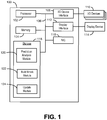
- FIG. 1 provides details regarding one system that may be used to implement the functions shown in the figures.
- the phrase “configured to” encompasses any way that any kind of structural component can be constructed to perform an identified operation.
- the structural component can be configured to perform an operation using software, hardware, firmware and the like, or any combinations thereof.
- logic encompasses any functionality for performing a task. For instance, each operation illustrated in the flowcharts corresponds to logic for performing that operation. An operation can be performed using software, hardware, firmware, ctc., or any combinations thereof.
- ком ⁇ онент can be a process running on a processor, an object, an executable, a program, a function, a library, a subroutine, and/or a computer or a combination of software and hardware.
- a component can be a process running on a processor, an object, an executable, a program, a function, a library, a subroutine, and/or a computer or a combination of software and hardware.
- an application running on a server and the server can be a component.
- One or more components can reside within a process and a component can be localized on one computer and/or distributed between two or more computers.
- the claimed subject matter may be implemented as a method, apparatus, or article of manufacture using standard programming and/or engineering techniques to produce software, firmware, hardware, or any combination thereof to control a computer to implement the disclosed subject matter.
- article of manufacture as used herein is intended to encompass a computer program accessible from any tangible, computer-readable device, or media.
- Computer-readable storage media can include but are not limited to magnetic storage devices (e.g., hard disk, floppy disk, and magnetic strips, among others), optical disks (e.g., compact disk (CD), and digital versatile disk (DVD), among others), smart cards, and flash memory devices (e.g., card, stick, and key drive, among others).
- computer-readable media generally (i.e., not necessarily storage media) may additionally include communication media such as transmission media for wireless signals and the like.
- Fig. 1 is a block diagram of an example of a computing system that predicts software build errors.
- the computing system 100 may be, for example, a mobile phone, laptop computer, desktop computer, or tablet computer, among others.
- the computing system 100 may include a processor 102 that is adapted to execute stored instructions, as well as a memory device 104 that stores instructions that are executable by the processor 102.
- the processor 102 can be a single core processor, a multi-core processor, a computing cluster, or any number of other configurations.
- the memory device 104 can include random access memory (e.g., SRAM, DRAM, zero capacitor RAM, SONOS, eDRAM, EDO RAM, DDR RAM, RRAM, PRAM, etc.), read only memory (e.g., Mask ROM, PROM, EPROM, EEPROM, etc.), flash memory, or any other suitable memory systems.
- random access memory e.g., SRAM, DRAM, zero capacitor RAM, SONOS, eDRAM, EDO RAM, DDR RAM, RRAM, PRAM, etc.
- read only memory e.g., Mask ROM, PROM, EPROM, EEPROM, etc.
- flash memory e.g., a flash memory, or any other suitable memory systems.
- the instructions that arc cxccutcd by the processor 102 may be used to predict software build errors.
- the processor 102 may be connected through a system bus 106 (e.g., PCI, ISA, PCI-Express, HyperTransport®, NuBus, etc.) to an input/output (I/O) device interface 108 adapted to connect the computing system 100 to one or more I/O devices 110.
- the I/O devices 110 may include, for example, a keyboard, a gesture recognition input device, a voice recognition device, and a pointing device, wherein the pointing device may include a touchpad or a touchscreen, among others.
- the I/O devices 110 may be built-in components of the computing system 100, or may be devices that are externally connected to the computing system 100.
- the processor 102 may also be linked through the system bus 106 to a display interface 112 adapted to connect the computing system 100 to a display device 114.
- the display device 114 may include a display screen that is a built-in component of the computing system 100.
- the display device 114 may also include a computer monitor, television, or projector, among others, that is externally connected to the computing system 100.
- a network interface card (NIC) 116 may also be adapted to connect the computing system 100 through the system bus 106 to a network (not depicted).
- the network (not depicted) may be a wide area network (WAN), local area network (LAN), or the Internet, among others.
- the storage 118 can include a hard drive, an optical drive, a USB flash drive, an array of drives, or any combinations thereof.
- the storage 118 may include a prediction analysis module 120, a build break module 122, and an update module 124.
- the prediction analysis module 120 can detect any number of changes to software code and predict the likelihood the software code contains a software build error.
- the prediction analysis module 120 can predict the likelihood of software code containing a software build error by calculating the probability that each change to the software code may cause a software build error.
- the build break module 122 can build the software and detect a software build error. If the build break module 122 detects a software build error, the build break module 122 may also detect the change to the software code that caused a software build error.
- the build break module 122 can send the changes that cause software build errors to the update module 124.
- the update module 124 can store historical information for software code changes and corresponding build errors.
- the update module 124 can provide the historical information to the prediction analysis module 120, which allows the prediction analysis module 120 to calculate accurate predictions of software build errors.
- the block diagram of Fig. 1 is not intended to indicate that the computing system 100 is to include all of the components shown in Fig. 1 . Rather, the computing system 100 can include fewer or additional components not illustrated in Fig. 1 (e.g., additional applications, additional memory devices, additional network interfaces, etc.).
- the computing system 100 may include a reporting module that can report software build information to a user, an application, or another hardware device, among others.
- any of the functionalities of the prediction analysis module 120, build break module 122, or update module 124 may be partially, or entirely, implemented in hardware and/or in the processor 102.
- the functionality may be implemented with an application specific integrated circuit, in logic implemented in the processor 102, or in any other device.
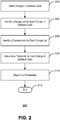
- Fig. 2 is a process flow diagram illustrating an example of a method for predicting software build errors.
- the method 200 can be implemented with a computing system, such as the computing system 100 of Fig. 1 .
- the computing system 100 may also include a prediction analysis module 120 that can predict software build errors based on changes to software code and historical information of previous software code changes and previous software build results.
- the prediction analysis module 120 detects changes in software code.
- the prediction analysis module 120 can detect the changes to the software code by comparing the software code to a previous version of the software code. For example, the prediction analysis module 120 may detect changes in two different versions of software code by identifying differences in the software code. In other embodiments, the prediction analysis module 120 may detect changes in software code by identifying indicators in the software code that correspond with the changes to the software code. For example, the prediction analysis module 120 may detect changes in software code based on comments included in the software code that correspond with changes in the software code.
- the prediction analysis module 120 identifies a change list for each change to the software code.
- the prediction analysis module 120 may include multiple changes in each change list. For example, a developer may change several lines of software code, which the prediction analysis module 120 can include in one change list.
- the prediction analysis module 120 may identify a change list for each developer or each work session. For example, the prediction analysis module 120 may identify the changes made to software code from a particular developer and store the changes in a change list. In other examples, the prediction analysis module 120 may identify each work session that includes changes to the software code and identify a change list for each work day for each developer.
- the prediction analysis module 120 identifies a characteristic for each change list.
- a characteristic of the change list can include any information associated with a change in software code.
- the characteristic may include information derived from the software code.
- a characteristic of the change list may include the number of modified software code files or the number of modified lines of software code, among others.
- the characteristic may also include information derived from factors related to the change in software code.
- a characteristic of the change list may include a determination of the developer that made the change to the software code, the projects affected by the change, a determination of the computing system the developer used to compile the software code, the number or names of individuals that reviewed the change to the software code (also referred to herein as a review determination), the time the change was submitted (also referred to herein as a time determination), complexity metrics related to the change in the software code, and dependencies based on the changed software code , among others.
- the complexity metrics can include the number of characters in a line of software code, the number of nested loops surrounding the line of software code, or any other factors that indicate the complexity of software code.
- characteristics of the change list may include any activity performed by other developers on source code files, or lines of source code files that have been modified or are related to a given change list (referred to herein as an activity determination).
- a characteristic of a change list may also include a representation of the changes made by developers.
- the changes made by developers may include source code fragments that have been introduced, identifiers that have been referenced, or any other descriptions of changes made to source code (referred to herein as a change determination).
- Additional characteristics may also include the state of the source code repository that a developer's computing system was synced to when the software was built on the developer's computing system (also referred to herein as a developer build determination), the tests that were executed on the developer's computing system, and the projects that were included as part of the software build.
- the prediction analysis module 120 can provide more accurate predictions by considering any number of characteristics that correspond with a change list.
- the prediction analysis module 120 calculates a probability for each change in the software code.
- the probability for each change can represent the likelihood the change in the software code may result in a software build error.
- the probability can be calculated using regression, such as logistic regression.
- the prediction analysis module 120 can generate a coefficient for each characteristic related to a change list.
- the prediction analysis module 120 can determine the coefficients based on historical data. For example, historical data may indicate that a particular software developer has a 20 % probability of causing a software build error. In this example, the prediction analysis module may assign a 20 % value as a coefficient to the characteristic related to the software developer.
- Equation 1 PI through PN represent probabilities that a change list may cause a software build error.
- P(Error) represents the likelihood that a software build error may occur based on N changes to the software code.
- the prediction analysis module 120 may aggregate the characteristics of the individual change lists and calculate a combined probability of a software build error for a plurality of change lists. For example, the prediction analysis module 120 may detect the number of change lists in a software build. The prediction analysis module 120 may also detect any suitable number of aggregate values associated with the change lists. For example, three change lists may indicate that 100, 150, and 200 lines of source code have been changed. The number of changed lines of code may be aggregated by summation into a combined number of changed lines of code, or 450 changed lines of code in the previous example.
- the software build may be assigned a higher risk of causing a software build error if previous software builds with more than 400 changed lines of source code resulted in software build errors
- the prediction analysis module 120 may aggregate the characteristics of change lists by detecting the aggregate maximum probability of a software build error, the aggregate minimum probability of a software build error, the aggregate average probability of a software build error, the aggregate median probability of a software build error, the summation of probabilities of a software build error, aggregated percentiles of a software build error, or the standard deviation of a probability of a software build error, among others.
- the prediction analysis module 120 reports the probabilities that each change in software code may cause a software build error.
- the prediction analysis module 120 can report the probabilities for software build errors to users, applications, or other hardware devices, among others. For example, the prediction analysis module 120 may calculate the probability that a change to the software code may result in a software build error is 20 %. In this example, the prediction analysis module 120 may report to a user the 20 % prediction of the likelihood the change may cause a software build error. The process ends at block 212.
- the process flow diagram of Fig. 2 is not intended to indicate that the steps of the method 200 are to be executed in any particular order, or that all of the steps of the method 200 are to be included in every case.
- the changes in software code may be detected incrementally.
- the prediction analysis module 120 may generate a new change list for each change to software code and recalculate the probabilities of a software build error.
- the characteristics may vary as additional changes to software code are detected.
- the prediction analysis module 120 may detect various characteristics, such as complexity metrics, or a change determination, among others, for an integrated development environment. The prediction analysis module 120 may then detect additional characteristics after a developer has committed changes to software code. Further, any number of additional steps may be included within the method 200, depending on the specific application.
- the prediction analysis module 120 may send the change lists to a build break module 122, which can determine if a change to the software code causes a software build error.
- the build break module 122 is discussed below in greater detail in relation to Fig. 4 .
- the prediction analysis module 120 may send the change lists to an update module 124.
- the update module 124 can update historical data corresponding to change lists and software build errors.
- the update module 124 is discussed below in greater detail in relation to Fig. 5 .
- Fig. 3 is a block diagram illustrating an example of a prediction analysis module used to predict software build errors.
- the prediction analysis module 120 can be implemented in a computing system, such as the computing system 100 of Fig. 1 .
- the prediction analysis module 120 can include a feature extraction component 302, a prediction generator 304, a trigger component 308, and a reporting component 306.
- the components of the prediction analysis module 120 can identify and analyze the likelihood of software build errors.
- the prediction analysis module 120 can accept any suitable number of change lists as input. As discussed above, a change list can include any appropriate number of changes to software code. The prediction analysis module 120 can send the change lists to a feature extraction component 302. The feature extraction component 302 can determine any appropriate number of characteristics associated with a change in software code. For example, the feature extraction component 302 may identify characteristics associated with each change list.
- the feature extraction component 302 can identify characteristics such as the number of modified software code files, the number of modified lines of software code, the developer that made the change to the software code, the projects affected by the change, the computing system the developer used to compile the software code, the number of individuals that reviewed the change to the software code, the time the change was submitted, complexity metrics related to the change in the software code, and dependencies based on the changed software code, among others.
- the feature extraction component 302 can send the change list and the corresponding characteristics to a prediction generator 304.
- the prediction generator 304 can calculate probabilities for software build errors based on the characteristics of the change lists. As discussed above in relation to Fig. 2 , the probabilities for software build errors can be calculated using a type of regression or using machine learning models including but not limited to support vector machines, Naive Bayes, or decision trees, among others. In some embodiments, the probabilities for software build errors are calculated based on linear regression or on logistic regression. In other embodiments, the probabilities can be combined to calculate a likelihood of a software build error based on the combined probabilities for each change list causing a software build error. In some embodiments, the prediction generator 304 can send the probabilities of a software build error to a reporting component 306 and a trigger component 308.
- the reporting component 306 can provide feedback to a user, an application, or a hardware device using any suitable number of methods.
- the feedback can include the probability that a change list may cause a software build error.
- the reporting component 306 may provide fccdback through a message sent to the display device, a dialog box generated in IDE, an email notification, or a newsfeed, among others.
- the trigger component 308 can initiate or request additional actions based on the probability of a software build error.
- the trigger component 308 may provide feedback to developers through the reporting component 306.
- the feedback may request additional review of software code that has a high probability of creating a software build error.
- the feedback can identify particular characteristics of a change list and the corresponding probability of creating a software build error.
- the feedback may recommend additional review of a particular change list, to build additional projects before submitting the changes to source code, or to run additional tests prior to submission, among others.
- the trigger component 308 can also request additional check-in or quality logic gates during the build process.
- the trigger component 308 may include a build component 310 that compiles and links software code to form machine executable applications.
- the trigger component 308 may instruct the build component 310 to include additional quality logic gates, which may prevent a software build error.
- the additional quality logic gates may also assist in determining the cause of a software build error.
- the trigger component 308 may also provide instructions to the build component 310 that control a software build. For example, the trigger component 308 may instruct the build component 310 to build software by grouping change lists together that share a low-risk of creating a software build error. The trigger component 308 can identify change lists that have a low-risk of causing a software build error based on probabilities that each change list may cause a software build error. In some embodiments, the trigger component 308 may also instruct the build component 310 to build high-risk change lists prior to building low-risk change lists. The trigger component 308 can also identify change lists that have a high-risk of causing a software build error based on probabilities that indicate a change list is likely to cause a software build error.
- the trigger component 308 may send high-risk change lists to multiple computing systems, which can allow the high-risk change sets to be built in parallel.
- the trigger component 308 may provide faster feedback to a reporting component 306 regarding high-risk change lists when the high-risk change lists are built in parallel.
- the trigger component 308 can also send the change list to an update module 312 if the build component 310 does not return a software build error.
- the update module 122 can store historical data regarding change lists and the success or failure of software builds based on the change lists.
- the trigger component 308 may receive a single change list indicating that a single change list incorporates the changes made to software code.
- the trigger component 308 may send the results of the build to an update module 122 if the build succeeds or fails.
- the update module 122 can then update the historical data to reflect whether the change list caused a software build error.
- the trigger component 308 can send the change list to a build break module 122 when the build component 310 returns a software build error.
- the build break module 122 can identify the change list that caused the software build error and provide feedback to developers.
- the build break module 122 is discussed in greater detail below in relation to Fig. 4 .
- the block diagram of Fig. 3 is not intended to indicate that the prediction analysis module 120 is to include all of the components shown in Fig. 3 . Rather, the prediction analysis module 120 can include fewer or additional components not illustrated in Fig. 3 .
- the prediction analysis module 120 may not include a build component 310. Rather, the functionality of the build component 310 may be implemented by a processor, or any other suitable hardware device.
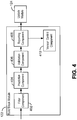
- Fig. 4 is a block diagram illustrating an example of a build break module used to analyze software build errors.
- the build break module 122 can be implemented in a computing system, such as the computing system 100 of Fig. 1 .
- the build break module 122 can include a filter component 402, a prediction component 404, a validation component 406, a reporting component 408, and a version control component 410.
- the components of the build break module 122 can analyze software build errors.
- the build break module 122 can accept any suitable number of changes to software code and build logs produced by a build component.
- the build logs can include information generated during the build process.
- the build logs may include information that indicates certain portions of the software code that did not produce a software build error.
- the filter component 402 can exclude any changes to the software code that are known not to be responsible for the software build error.
- the filter component 402 may identify any changes included in previous builds that did not result in a software build error.
- the filter component 402 may perform dynamic analysis based on historical data stored in an update module 122.
- the filter component 402 can send a set of candidate change lists that may have caused the software build error to the prediction component 404.
- the prediction component 404 can detect the likelihood that a change list caused the software build error. As discussed above in relation to Fig. 2 , the probabilities for software build errors can be calculated using any suitable type of regression, such as logistic or linear regression. In some embodiments, the prediction component 404 can calculate probabilities that each change list caused a software build error.
- the prediction component 404 can send the change lists and the probabilities that each change list caused a software build error to a validation component 406.
- the validation component 406 can recreate the build with each change list.
- the validation component 406 may first select the change lists with the highest probabilities of causing a software build error.
- the validation component can recreate the software build and determine if the change list causes a software build error.
- the validation component 406 may then select the change lists with the lower probabilities of causing a software build error.
- the validation component 406 may use a binary search or delta debugging to determine the change lists that cause a software build error.
- the validation component 406 can determine the change lists that cause software build errors and send the change lists to the reporting component 408.
- the reporting component 408 can send the change lists and the software build errors to a display device, a dialog box generated in IDE, an email notification, or a newsfeed, among others.
- the reporting component 408 can also send the change lists and the software build errors to a version control component 410.
- the version control component 410 can remove any modifications to the software code that results in a software build error.
- the version control component 410 can remove any changes to software code that prevents the software code from being compiled and linked into a machine executable application.
- the reporting component 408 can also send the change lists and the software build errors to the update module 122, which is discussed below in greater detail in relation to Fig. 5 .
- the block diagram of Fig. 4 is not intended to indicate that the build break module 122 is to include all of the components shown in Fig. 4 . Rather, the build break module 122 can include fewer or additional components not illustrated in Fig. 4 .
- the build break module 122 may not include a validation component 406. Rather, the functionality of the validation component 406 may be implemented by a processor, or any other suitable hardware device.
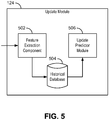
- Fig. 5 is a block diagram illustrating an example of an update module used to update the prediction analysis module.
- the update module 124 can be implemented in a computing system, such as the computing system 100 of Fig. 1 .
- the update module 124 can include a feature extraction component 502, a historical database 504, and an update predictor module 506.
- the update module 124 can detect change lists and build outcomes associated with the change lists. The update module 124 can then use a feature extraction component 502 to extract characteristics related to the change lists.
- the feature extraction component 502 may extract characteristics such as the developer that made the change to the software code, the projects affected by the change, the computing system the developer used to compile the software code, the number of individuals that reviewed the change to the software code, or the time the change was submitted, among others.
- the feature extraction component 502 can send the change lists, build outcomes, and characteristics to a historical database 504.
- the historical database 504 can store change lists and characteristics of change lists in a table along with the build outcome.
- the historical database 504 can send data to the prediction analysis module 120, which allows the prediction analysis module 120 to calculate accurate probabilities of the likelihood a change list may cause a software build error.
- the historical database 504 can also send the change lists, the build outcomes and the characteristics of change lists to an update predictor module 506.
- the update predictor module 506 can train a prediction model based on historical data and send the prediction model to the prediction analysis module 120 when the prediction model has an accuracy above a threshold.
- the block diagram of Fig. 5 is not intended to indicate that the update module 124 is to include all of the components shown in Fig. 5 . Rather, the update module 124 can include fewer or additional components not illustrated in Fig. 5 .
- the update module 124 may not include an update predictor module 506. Rather, the functionality of the update predictor module 506 may be implemented by a processor, or any other suitable hardware device.
- Figure 6 is a block diagram showing a tangible, computer-readable storage media 600 that predicts software build errors.
- the tangible, computer-readable storage media 600 may be accessed by a processor 602 over a computer bus 604. Furthermore, the tangible, computer-readable storage media 600 may include code to direct the processor 602 to perform the steps of the current method.
- the tangible computer-readable storage media 600 can include a prediction analysis module 606, a build break module 608, and an update module 610.
- the prediction analysis module 606 can detect any number of changes to software code and predict the likelihood the software code contains a software build error.
- the build break module 608 can analyze software build errors to determine the likelihood a change to software code has caused a build break.
- the update module 610 can store historical information for software code changes and corresponding software build errors. The update module 610 can provide the historical information to the prediction analysis module 120, which allows the prediction analysis module 120 to calculate accurate predictions regarding software build errors.
Landscapes
- Engineering & Computer Science (AREA)
- Theoretical Computer Science (AREA)
- General Engineering & Computer Science (AREA)
- Quality & Reliability (AREA)
- Physics & Mathematics (AREA)
- General Physics & Mathematics (AREA)
- Software Systems (AREA)
- Computer Security & Cryptography (AREA)
- Debugging And Monitoring (AREA)
- Stored Programmes (AREA)
Applications Claiming Priority (2)
| Application Number | Priority Date | Filing Date | Title |
|---|---|---|---|
| US13/589,180 US9542176B2 (en) | 2012-08-20 | 2012-08-20 | Predicting software build errors |
| PCT/US2013/055226 WO2014031452A1 (en) | 2012-08-20 | 2013-08-16 | Predicting software build errors |
Publications (2)
| Publication Number | Publication Date |
|---|---|
| EP2885701A1 EP2885701A1 (en) | 2015-06-24 |
| EP2885701B1 true EP2885701B1 (en) | 2021-09-22 |
Family
ID=49083770
Family Applications (1)
| Application Number | Title | Priority Date | Filing Date |
|---|---|---|---|
| EP13753956.5A Not-in-force EP2885701B1 (en) | 2012-08-20 | 2013-08-16 | Predicting software build errors |
Country Status (6)
| Country | Link |
|---|---|
| US (1) | US9542176B2 (enExample) |
| EP (1) | EP2885701B1 (enExample) |
| JP (1) | JP6280551B2 (enExample) |
| KR (1) | KR102101050B1 (enExample) |
| CN (1) | CN104583947B (enExample) |
| WO (1) | WO2014031452A1 (enExample) |
Families Citing this family (72)
| Publication number | Priority date | Publication date | Assignee | Title |
|---|---|---|---|---|
| US9195566B2 (en) | 2013-01-14 | 2015-11-24 | International Business Machines Corporation | Defect analysis system for error impact reduction |
| EP2757468A1 (en) * | 2013-01-22 | 2014-07-23 | Siemens Aktiengesellschaft | Apparatus and method for managing a software development and maintenance system |
| US9448792B2 (en) * | 2013-03-14 | 2016-09-20 | Microsoft Technology Licensing, Llc | Automatic risk analysis of software |
| US8984485B2 (en) * | 2013-05-01 | 2015-03-17 | International Business Machines Corporation | Analysis of source code changes |
| JP2014241021A (ja) * | 2013-06-11 | 2014-12-25 | 株式会社日立製作所 | ソフトウェア評価装置および方法 |
| US9519477B2 (en) | 2013-09-16 | 2016-12-13 | International Business Machines Corporation | Automatic pre-detection of potential coding issues and recommendation for resolution actions |
| CN105224343B (zh) * | 2014-05-27 | 2019-09-17 | 阿里巴巴集团控股有限公司 | 一种应用程序的更新提示方法和装置 |
| US10275333B2 (en) * | 2014-06-16 | 2019-04-30 | Toyota Jidosha Kabushiki Kaisha | Risk analysis of codebase using static analysis and performance data |
| US9354860B2 (en) * | 2014-07-15 | 2016-05-31 | Sap Se | Optimizing software change processes using real-time analysis and rule-based hinting |
| US10175975B2 (en) * | 2015-02-18 | 2019-01-08 | Red Hat Israel, Ltd. | Self-mending software builder |
| US10733520B2 (en) * | 2015-05-13 | 2020-08-04 | Microsoft Technology Licensing, Llc | Making a prediction regarding development of a software product |
| US9612821B2 (en) | 2015-07-02 | 2017-04-04 | International Business Machines Corporation | Predicting the success of a continuous software deployment pipeline |
| US10013333B2 (en) * | 2015-08-06 | 2018-07-03 | Paypal, Inc. | Scalable continuous integration and delivery systems and methods |
| US10073683B2 (en) | 2015-09-01 | 2018-09-11 | Oracle International Corporation | System and method for providing software build violation detection and self-healing |
| US10552760B2 (en) | 2015-12-18 | 2020-02-04 | International Business Machines Corporation | Training set creation for classifying features of a system under agile development |
| US9870223B2 (en) * | 2016-01-07 | 2018-01-16 | International Business Machines Corporation | Efficient detection of architecture related issues during the porting process |
| US10838849B2 (en) * | 2016-03-08 | 2020-11-17 | International Business Machines Corporation | Analyzing software test failures using natural language processing and machine learning |
| US10657023B1 (en) * | 2016-06-24 | 2020-05-19 | Intuit, Inc. | Techniques for collecting and reporting build metrics using a shared build mechanism |
| US10191737B2 (en) * | 2016-06-29 | 2019-01-29 | Accenture Global Solutions Limited | Program code comparison and reporting |
| US10296331B2 (en) * | 2016-07-12 | 2019-05-21 | International Business Machines Corporation | Log-based software porting |
| EP3282355A1 (en) * | 2016-08-11 | 2018-02-14 | Empear AB | Method for identifying critical parts in software code |
| US10545847B2 (en) * | 2016-09-15 | 2020-01-28 | International Business Machines Corporation | Grouping and isolating software changes to increase build quality |
| US10379992B2 (en) | 2016-10-25 | 2019-08-13 | International Business Machines Corporation | Adaptive dynamic code analysis |
| US10175978B2 (en) | 2016-11-04 | 2019-01-08 | International Business Machines Corporation | Monitoring code sensitivity to cause software build breaks during software project development |
| US10310968B2 (en) * | 2016-11-04 | 2019-06-04 | International Business Machines Corporation | Developing software project plans based on developer sensitivity ratings detected from monitoring developer error patterns |
| US10970636B1 (en) * | 2017-01-26 | 2021-04-06 | Intuit Inc. | Adaptive system for predicting integration failures in large systems |
| US10175979B1 (en) * | 2017-01-27 | 2019-01-08 | Intuit Inc. | Defect ownership assignment system and predictive analysis for codebases |
| US11288592B2 (en) * | 2017-03-24 | 2022-03-29 | Microsoft Technology Licensing, Llc | Bug categorization and team boundary inference via automated bug detection |
| US10585780B2 (en) | 2017-03-24 | 2020-03-10 | Microsoft Technology Licensing, Llc | Enhancing software development using bug data |
| US10754640B2 (en) * | 2017-03-24 | 2020-08-25 | Microsoft Technology Licensing, Llc | Engineering system robustness using bug data |
| US10482000B2 (en) | 2017-04-24 | 2019-11-19 | Microsoft Technology Licensing, Llc | Machine learned decision guidance for alerts originating from monitoring systems |
| US10691449B2 (en) * | 2017-04-27 | 2020-06-23 | Microsoft Technology Licensing, Llc | Intelligent automatic merging of source control queue items |
| US10684851B2 (en) * | 2017-11-03 | 2020-06-16 | Vmware, Inc. | Predicting software build outcomes |
| US10949329B2 (en) * | 2017-12-26 | 2021-03-16 | Oracle International Corporation | Machine defect prediction based on a signature |
| US11455566B2 (en) | 2018-03-16 | 2022-09-27 | International Business Machines Corporation | Classifying code as introducing a bug or not introducing a bug to train a bug detection algorithm |
| US11810026B2 (en) | 2018-04-19 | 2023-11-07 | Seacoast Banking Corporation of Florida | Predictive data analysis using value-based predictive inputs |
| US10769057B2 (en) | 2018-05-09 | 2020-09-08 | International Business Machines Corporation | Identifying potential errors in code using machine learning |
| CN108833478A (zh) * | 2018-05-17 | 2018-11-16 | 惠州超声音响有限公司 | 一种通过dfu成功率预测模型进行固件升级的方法及系统 |
| US11288065B2 (en) * | 2018-07-02 | 2022-03-29 | International Business Machines Corporation | Devops driven cognitive cost function for software defect prediction |
| US10884893B2 (en) | 2018-08-24 | 2021-01-05 | International Business Machines Corporation | Detecting software build errors using machine learning |
| US10754755B2 (en) | 2018-09-28 | 2020-08-25 | Cotiviti, Inc. | Automatically validating data incorporated into a computer program |
| US11163552B2 (en) * | 2019-04-15 | 2021-11-02 | International Business Machines Corporation | Federated framework for container management |
| US11625315B2 (en) | 2019-05-29 | 2023-04-11 | Microsoft Technology Licensing, Llc | Software regression recovery via automated detection of problem change lists |
| US11157384B2 (en) * | 2019-06-27 | 2021-10-26 | Intel Corporation | Methods, systems, articles of manufacture and apparatus for code review assistance for dynamically typed languages |
| US11599354B2 (en) | 2019-07-18 | 2023-03-07 | Microsoft Technology Licensing, Llc | Detecting misconfiguration and/or bug(s) in large service(s) using correlated change analysis |
| US11119888B2 (en) * | 2019-07-31 | 2021-09-14 | Ss&C Technologies, Inc. | Data verification system |
| US11768701B2 (en) * | 2019-09-17 | 2023-09-26 | Western Digital Technologies, Inc. | Exception analysis for data storage devices |
| CN110851353B (zh) * | 2019-10-22 | 2023-03-31 | 天津大学 | 一种基于Delta Debugging与约束求解的并发程序缺陷定位方法 |
| US11463478B2 (en) | 2019-10-29 | 2022-10-04 | International Business Machines Corporation | Remediation strategy optimization for development, security and operations (DevSecOps) |
| US11379220B2 (en) | 2019-11-25 | 2022-07-05 | International Business Machines Corporation | Vector embedding of relational code sets |
| US20210192321A1 (en) * | 2019-12-18 | 2021-06-24 | X Development Llc | Generation and utilization of code change intents |
| CN111008038B (zh) * | 2019-12-19 | 2022-08-02 | 南京邮电大学 | 一种基于逻辑回归模型的pull request被合并概率的计算方法 |
| US11662997B2 (en) * | 2020-02-20 | 2023-05-30 | Appsurify, Inc. | Systems and methods for software and developer management and evaluation |
| US11556815B1 (en) | 2020-03-19 | 2023-01-17 | Wells Fargo Bank, N.A. | Systems and methods for using machine learning for managing application incidents |
| US11036613B1 (en) | 2020-03-30 | 2021-06-15 | Bank Of America Corporation | Regression analysis for software development and management using machine learning |
| US11144435B1 (en) | 2020-03-30 | 2021-10-12 | Bank Of America Corporation | Test case generation for software development using machine learning |
| US11334351B1 (en) | 2020-04-28 | 2022-05-17 | Allstate Insurance Company | Systems and methods for software quality prediction |
| US11301244B1 (en) * | 2020-11-16 | 2022-04-12 | International Business Machines Corporation | Machine learning based tracking of derivaitive code |
| US12124924B2 (en) * | 2020-11-17 | 2024-10-22 | International Business Machines Corporation | Machine-learning model to predict probability of success of an operator in a PaaS cloud environment |
| US11422795B2 (en) * | 2020-11-23 | 2022-08-23 | Cerner Innovation, Inc. | System and method for predicting the impact of source code modification based on historical source code modifications |
| US11599355B2 (en) * | 2021-06-21 | 2023-03-07 | Microsoft Technology Licensing, Llc | Application module version management |
| US11816476B2 (en) * | 2021-09-23 | 2023-11-14 | Fidelity Information Services, Llc | Systems and methods for risk awareness using machine learning techniques |
| US12367277B2 (en) | 2021-11-01 | 2025-07-22 | Bank Of America Corporation | Systems and methods for automated change review for enhanced network and data security |
| US11645188B1 (en) | 2021-11-16 | 2023-05-09 | International Business Machines Corporation | Pull request risk prediction for bug-introducing changes |
| US20240143787A1 (en) * | 2022-10-28 | 2024-05-02 | Bugcrowd Inc. | Matching software systems with users for identifying system defects |
| US20240193276A1 (en) * | 2022-12-12 | 2024-06-13 | Micro Focus Llc | Comprehensive Software Supply Chain Analysis |
| US12229548B1 (en) | 2023-01-19 | 2025-02-18 | Wells Fargo Bank, N.A. | Assessment of development team factors |
| US12417288B1 (en) | 2023-02-02 | 2025-09-16 | Wells Fargo Bank, N.A. | Software asset health score |
| US12417091B2 (en) | 2023-09-17 | 2025-09-16 | Bank Of America Corporation | Auto healing of runtime exceptions using intelligent build system and generative AI |
| US12061902B1 (en) | 2024-01-26 | 2024-08-13 | U.S. Bank National Association | Auditable authorship attribution with automatically applied authorship tokens |
| WO2025160271A1 (en) | 2024-01-26 | 2025-07-31 | U.S. Bank National Association | Improving content editing software via automatic and auditable authorship attribution |
| US12493775B2 (en) | 2024-01-26 | 2025-12-09 | U.S. Bank National Association | Auditable authorship attribution with event tracking and mock content |
Family Cites Families (22)
| Publication number | Priority date | Publication date | Assignee | Title |
|---|---|---|---|---|
| US6149318A (en) * | 1997-04-15 | 2000-11-21 | Samuel C. Kendall | Link-time and run-time error detection, and program instrumentation |
| JP3842592B2 (ja) * | 2001-07-26 | 2006-11-08 | 株式会社東芝 | 変更危険度測定システム、変更危険度測定方法及び変更危険度測定プログラム |
| US6978443B2 (en) * | 2002-01-07 | 2005-12-20 | Hewlett-Packard Development Company, L.P. | Method and apparatus for organizing warning messages |
| US7437713B2 (en) * | 2002-01-10 | 2008-10-14 | Microsoft Corporation | Automated system that tests software on multiple computers |
| US7216343B2 (en) * | 2002-09-20 | 2007-05-08 | International Business Machines Corporation | Method and apparatus for automatic updating and testing of software |
| US7840944B2 (en) * | 2005-06-30 | 2010-11-23 | Sap Ag | Analytical regression testing on a software build |
| US8126768B2 (en) * | 2005-09-13 | 2012-02-28 | Computer Associates Think, Inc. | Application change request to deployment maturity model |
| JP4914609B2 (ja) * | 2005-12-28 | 2012-04-11 | 富士通株式会社 | ソースコード問題予測プログラム |
| US20080104573A1 (en) | 2006-10-25 | 2008-05-01 | Microsoft Corporation | Software build validation before check-in |
| WO2008055156A2 (en) * | 2006-10-30 | 2008-05-08 | The Trustees Of Columbia University In The City Of New York | Methods, media, and systems for detecting an anomalous sequence of function calls |
| US20080120598A1 (en) | 2006-11-20 | 2008-05-22 | Viewtier Systems, Inc. | Method and apparatus of a build management system |
| US8161458B2 (en) * | 2007-09-27 | 2012-04-17 | Oracle America, Inc. | Method and apparatus to increase efficiency of automatic regression in “two dimensions” |
| US20110022551A1 (en) * | 2008-01-08 | 2011-01-27 | Mark Dixon | Methods and systems for generating software quality index |
| US7506312B1 (en) * | 2008-01-31 | 2009-03-17 | International Business Machines Corporation | Method and system for automatically determining risk areas to retest |
| US8495603B2 (en) * | 2008-08-11 | 2013-07-23 | International Business Machines Corporation | Generating an executable version of an application using a distributed compiler operating on a plurality of compute nodes |
| US8312430B2 (en) | 2008-08-27 | 2012-11-13 | International Business Machines Corporation | Guarding code check-in with test case execution results |
| KR101049718B1 (ko) * | 2008-12-29 | 2011-07-19 | 에스케이 텔레콤주식회사 | 소프트웨어 분리 실행 방법, 장치 및 컴퓨터로 읽을 수 있는 기록매체 |
| US8285662B2 (en) | 2009-01-29 | 2012-10-09 | International Business Machines Corporation | Framework for delta analysis during automated builds |
| US9378015B2 (en) * | 2009-08-11 | 2016-06-28 | Microsoft Technology Licensing, Llc | Predicting defects in code |
| US8495583B2 (en) * | 2009-09-11 | 2013-07-23 | International Business Machines Corporation | System and method to determine defect risks in software solutions |
| US20110321007A1 (en) * | 2010-06-29 | 2011-12-29 | International Business Machines Corporation | Targeting code sections for correcting computer program product defects using records of a defect tracking system |
| US20130311968A1 (en) * | 2011-11-09 | 2013-11-21 | Manoj Sharma | Methods And Apparatus For Providing Predictive Analytics For Software Development |
-
2012
- 2012-08-20 US US13/589,180 patent/US9542176B2/en not_active Expired - Fee Related
-
2013
- 2013-08-16 CN CN201380044308.XA patent/CN104583947B/zh not_active Expired - Fee Related
- 2013-08-16 KR KR1020157005785A patent/KR102101050B1/ko active Active
- 2013-08-16 JP JP2015528542A patent/JP6280551B2/ja not_active Expired - Fee Related
- 2013-08-16 EP EP13753956.5A patent/EP2885701B1/en not_active Not-in-force
- 2013-08-16 WO PCT/US2013/055226 patent/WO2014031452A1/en not_active Ceased
Also Published As
| Publication number | Publication date |
|---|---|
| EP2885701A1 (en) | 2015-06-24 |
| WO2014031452A1 (en) | 2014-02-27 |
| US20140053135A1 (en) | 2014-02-20 |
| JP2015526820A (ja) | 2015-09-10 |
| CN104583947A (zh) | 2015-04-29 |
| KR102101050B1 (ko) | 2020-04-14 |
| CN104583947B (zh) | 2018-11-06 |
| JP6280551B2 (ja) | 2018-02-14 |
| US9542176B2 (en) | 2017-01-10 |
| KR20150046088A (ko) | 2015-04-29 |
Similar Documents
| Publication | Publication Date | Title |
|---|---|---|
| EP2885701B1 (en) | Predicting software build errors | |
| US11281708B2 (en) | Utilizing a machine learning model to predict metrics for an application development process | |
| US9588876B2 (en) | Estimating likelihood of code changes introducing defects | |
| Felix et al. | Integrated approach to software defect prediction | |
| US20210349809A1 (en) | Defect Prediction Operation | |
| Muske et al. | Survey of approaches for handling static analysis alarms | |
| US9703686B2 (en) | Software testing optimizer | |
| US10839314B2 (en) | Automated system for development and deployment of heterogeneous predictive models | |
| WO2019143542A1 (en) | Time-weighted risky code prediction | |
| CN112181951B (zh) | 一种异构数据库数据迁移方法、装置及设备 | |
| Nguyen et al. | Topic-based, time-aware bug assignment | |
| US12073297B2 (en) | System performance optimization | |
| Gujral et al. | Classifying bug severity using dictionary based approach | |
| Jindal et al. | Predicting Software Maintenance effort using neural networks | |
| Yimer et al. | Predicting software maintenance type, change impact, and maintenance time using machine learning algorithms | |
| Jindal et al. | Mining defect reports for predicting software maintenance effort | |
| Juddoo | Investigating Data Repair steps for EHR Big Data | |
| US20250390423A1 (en) | Executable code fault detection | |
| Kaur et al. | Improved Framework for Bug Severity Classification using N-gram Features with Convolution Neural Network | |
| US20250245477A1 (en) | Machine learning-based reverse logistics processing | |
| Jain et al. | Field weighting for automatic bug triaging systems | |
| Şeker | Classifying Release Notes Explanations using BERT: An Initial Step to Automatic Versioning in Distributed Software Development | |
| Sonnekalb et al. | Vulnerability Prediction and Assessment Using Software Product Metrics and Machine Learning: What Does Not Work | |
| Alam | AI-HUB 2.0 PROJECT REPORT: Application Of Large Language | |
| Almhana et al. | Method-Level Bug Localization: A Hybrid Multi-objective Search Approach |
Legal Events
| Date | Code | Title | Description |
|---|---|---|---|
| PUAI | Public reference made under article 153(3) epc to a published international application that has entered the european phase |
Free format text: ORIGINAL CODE: 0009012 |
|
| 17P | Request for examination filed |
Effective date: 20150219 |
|
| AK | Designated contracting states |
Kind code of ref document: A1 Designated state(s): AL AT BE BG CH CY CZ DE DK EE ES FI FR GB GR HR HU IE IS IT LI LT LU LV MC MK MT NL NO PL PT RO RS SE SI SK SM TR |
|
| AX | Request for extension of the european patent |
Extension state: BA ME |
|
| DAX | Request for extension of the european patent (deleted) | ||
| STAA | Information on the status of an ep patent application or granted ep patent |
Free format text: STATUS: EXAMINATION IS IN PROGRESS |
|
| 17Q | First examination report despatched |
Effective date: 20171018 |
|
| REG | Reference to a national code |
Ref country code: DE Ref legal event code: R079 Ref document number: 602013079358 Country of ref document: DE Free format text: PREVIOUS MAIN CLASS: G06F0009440000 Ipc: G06F0008710000 |
|
| GRAP | Despatch of communication of intention to grant a patent |
Free format text: ORIGINAL CODE: EPIDOSNIGR1 |
|
| STAA | Information on the status of an ep patent application or granted ep patent |
Free format text: STATUS: GRANT OF PATENT IS INTENDED |
|
| GRAJ | Information related to disapproval of communication of intention to grant by the applicant or resumption of examination proceedings by the epo deleted |
Free format text: ORIGINAL CODE: EPIDOSDIGR1 |
|
| RIC1 | Information provided on ipc code assigned before grant |
Ipc: G06F 11/00 20060101ALI20210422BHEP Ipc: G06F 8/71 20180101AFI20210422BHEP |
|
| STAA | Information on the status of an ep patent application or granted ep patent |
Free format text: STATUS: EXAMINATION IS IN PROGRESS |
|
| INTG | Intention to grant announced |
Effective date: 20210518 |
|
| INTC | Intention to grant announced (deleted) | ||
| GRAP | Despatch of communication of intention to grant a patent |
Free format text: ORIGINAL CODE: EPIDOSNIGR1 |
|
| STAA | Information on the status of an ep patent application or granted ep patent |
Free format text: STATUS: GRANT OF PATENT IS INTENDED |
|
| INTG | Intention to grant announced |
Effective date: 20210702 |
|
| GRAS | Grant fee paid |
Free format text: ORIGINAL CODE: EPIDOSNIGR3 |
|
| GRAA | (expected) grant |
Free format text: ORIGINAL CODE: 0009210 |
|
| STAA | Information on the status of an ep patent application or granted ep patent |
Free format text: STATUS: THE PATENT HAS BEEN GRANTED |
|
| AK | Designated contracting states |
Kind code of ref document: B1 Designated state(s): AL AT BE BG CH CY CZ DE DK EE ES FI FR GB GR HR HU IE IS IT LI LT LU LV MC MK MT NL NO PL PT RO RS SE SI SK SM TR |
|
| REG | Reference to a national code |
Ref country code: GB Ref legal event code: FG4D |
|
| REG | Reference to a national code |
Ref country code: IE Ref legal event code: FG4D |
|
| REG | Reference to a national code |
Ref country code: DE Ref legal event code: R096 Ref document number: 602013079358 Country of ref document: DE |
|
| REG | Reference to a national code |
Ref country code: CH Ref legal event code: EP Ref country code: AT Ref legal event code: REF Ref document number: 1432850 Country of ref document: AT Kind code of ref document: T Effective date: 20211015 |
|
| RAP4 | Party data changed (patent owner data changed or rights of a patent transferred) |
Owner name: MICROSOFT TECHNOLOGY LICENSING, LLC |
|
| REG | Reference to a national code |
Ref country code: LT Ref legal event code: MG9D |
|
| REG | Reference to a national code |
Ref country code: NL Ref legal event code: MP Effective date: 20210922 |
|
| PG25 | Lapsed in a contracting state [announced via postgrant information from national office to epo] |
Ref country code: BG Free format text: LAPSE BECAUSE OF FAILURE TO SUBMIT A TRANSLATION OF THE DESCRIPTION OR TO PAY THE FEE WITHIN THE PRESCRIBED TIME-LIMIT Effective date: 20211222 Ref country code: LT Free format text: LAPSE BECAUSE OF FAILURE TO SUBMIT A TRANSLATION OF THE DESCRIPTION OR TO PAY THE FEE WITHIN THE PRESCRIBED TIME-LIMIT Effective date: 20210922 Ref country code: FI Free format text: LAPSE BECAUSE OF FAILURE TO SUBMIT A TRANSLATION OF THE DESCRIPTION OR TO PAY THE FEE WITHIN THE PRESCRIBED TIME-LIMIT Effective date: 20210922 Ref country code: NO Free format text: LAPSE BECAUSE OF FAILURE TO SUBMIT A TRANSLATION OF THE DESCRIPTION OR TO PAY THE FEE WITHIN THE PRESCRIBED TIME-LIMIT Effective date: 20211222 Ref country code: RS Free format text: LAPSE BECAUSE OF FAILURE TO SUBMIT A TRANSLATION OF THE DESCRIPTION OR TO PAY THE FEE WITHIN THE PRESCRIBED TIME-LIMIT Effective date: 20210922 Ref country code: SE Free format text: LAPSE BECAUSE OF FAILURE TO SUBMIT A TRANSLATION OF THE DESCRIPTION OR TO PAY THE FEE WITHIN THE PRESCRIBED TIME-LIMIT Effective date: 20210922 Ref country code: HR Free format text: LAPSE BECAUSE OF FAILURE TO SUBMIT A TRANSLATION OF THE DESCRIPTION OR TO PAY THE FEE WITHIN THE PRESCRIBED TIME-LIMIT Effective date: 20210922 |
|
| REG | Reference to a national code |
Ref country code: AT Ref legal event code: MK05 Ref document number: 1432850 Country of ref document: AT Kind code of ref document: T Effective date: 20210922 |
|
| PG25 | Lapsed in a contracting state [announced via postgrant information from national office to epo] |
Ref country code: LV Free format text: LAPSE BECAUSE OF FAILURE TO SUBMIT A TRANSLATION OF THE DESCRIPTION OR TO PAY THE FEE WITHIN THE PRESCRIBED TIME-LIMIT Effective date: 20210922 Ref country code: GR Free format text: LAPSE BECAUSE OF FAILURE TO SUBMIT A TRANSLATION OF THE DESCRIPTION OR TO PAY THE FEE WITHIN THE PRESCRIBED TIME-LIMIT Effective date: 20211223 |
|
| PG25 | Lapsed in a contracting state [announced via postgrant information from national office to epo] |
Ref country code: AT Free format text: LAPSE BECAUSE OF FAILURE TO SUBMIT A TRANSLATION OF THE DESCRIPTION OR TO PAY THE FEE WITHIN THE PRESCRIBED TIME-LIMIT Effective date: 20210922 |
|
| PG25 | Lapsed in a contracting state [announced via postgrant information from national office to epo] |
Ref country code: IS Free format text: LAPSE BECAUSE OF FAILURE TO SUBMIT A TRANSLATION OF THE DESCRIPTION OR TO PAY THE FEE WITHIN THE PRESCRIBED TIME-LIMIT Effective date: 20220122 Ref country code: SK Free format text: LAPSE BECAUSE OF FAILURE TO SUBMIT A TRANSLATION OF THE DESCRIPTION OR TO PAY THE FEE WITHIN THE PRESCRIBED TIME-LIMIT Effective date: 20210922 Ref country code: RO Free format text: LAPSE BECAUSE OF FAILURE TO SUBMIT A TRANSLATION OF THE DESCRIPTION OR TO PAY THE FEE WITHIN THE PRESCRIBED TIME-LIMIT Effective date: 20210922 Ref country code: PT Free format text: LAPSE BECAUSE OF FAILURE TO SUBMIT A TRANSLATION OF THE DESCRIPTION OR TO PAY THE FEE WITHIN THE PRESCRIBED TIME-LIMIT Effective date: 20220124 Ref country code: PL Free format text: LAPSE BECAUSE OF FAILURE TO SUBMIT A TRANSLATION OF THE DESCRIPTION OR TO PAY THE FEE WITHIN THE PRESCRIBED TIME-LIMIT Effective date: 20210922 Ref country code: NL Free format text: LAPSE BECAUSE OF FAILURE TO SUBMIT A TRANSLATION OF THE DESCRIPTION OR TO PAY THE FEE WITHIN THE PRESCRIBED TIME-LIMIT Effective date: 20210922 Ref country code: ES Free format text: LAPSE BECAUSE OF FAILURE TO SUBMIT A TRANSLATION OF THE DESCRIPTION OR TO PAY THE FEE WITHIN THE PRESCRIBED TIME-LIMIT Effective date: 20210922 Ref country code: EE Free format text: LAPSE BECAUSE OF FAILURE TO SUBMIT A TRANSLATION OF THE DESCRIPTION OR TO PAY THE FEE WITHIN THE PRESCRIBED TIME-LIMIT Effective date: 20210922 Ref country code: CZ Free format text: LAPSE BECAUSE OF FAILURE TO SUBMIT A TRANSLATION OF THE DESCRIPTION OR TO PAY THE FEE WITHIN THE PRESCRIBED TIME-LIMIT Effective date: 20210922 Ref country code: AL Free format text: LAPSE BECAUSE OF FAILURE TO SUBMIT A TRANSLATION OF THE DESCRIPTION OR TO PAY THE FEE WITHIN THE PRESCRIBED TIME-LIMIT Effective date: 20210922 |
|
| REG | Reference to a national code |
Ref country code: DE Ref legal event code: R097 Ref document number: 602013079358 Country of ref document: DE |
|
| PG25 | Lapsed in a contracting state [announced via postgrant information from national office to epo] |
Ref country code: DK Free format text: LAPSE BECAUSE OF FAILURE TO SUBMIT A TRANSLATION OF THE DESCRIPTION OR TO PAY THE FEE WITHIN THE PRESCRIBED TIME-LIMIT Effective date: 20210922 |
|
| PLBE | No opposition filed within time limit |
Free format text: ORIGINAL CODE: 0009261 |
|
| STAA | Information on the status of an ep patent application or granted ep patent |
Free format text: STATUS: NO OPPOSITION FILED WITHIN TIME LIMIT |
|
| 26N | No opposition filed |
Effective date: 20220623 |
|
| PG25 | Lapsed in a contracting state [announced via postgrant information from national office to epo] |
Ref country code: SI Free format text: LAPSE BECAUSE OF FAILURE TO SUBMIT A TRANSLATION OF THE DESCRIPTION OR TO PAY THE FEE WITHIN THE PRESCRIBED TIME-LIMIT Effective date: 20210922 |
|
| PG25 | Lapsed in a contracting state [announced via postgrant information from national office to epo] |
Ref country code: IT Free format text: LAPSE BECAUSE OF FAILURE TO SUBMIT A TRANSLATION OF THE DESCRIPTION OR TO PAY THE FEE WITHIN THE PRESCRIBED TIME-LIMIT Effective date: 20210922 |
|
| PG25 | Lapsed in a contracting state [announced via postgrant information from national office to epo] |
Ref country code: MC Free format text: LAPSE BECAUSE OF FAILURE TO SUBMIT A TRANSLATION OF THE DESCRIPTION OR TO PAY THE FEE WITHIN THE PRESCRIBED TIME-LIMIT Effective date: 20210922 |
|
| REG | Reference to a national code |
Ref country code: CH Ref legal event code: PL |
|
| PG25 | Lapsed in a contracting state [announced via postgrant information from national office to epo] |
Ref country code: LU Free format text: LAPSE BECAUSE OF NON-PAYMENT OF DUE FEES Effective date: 20220816 Ref country code: LI Free format text: LAPSE BECAUSE OF NON-PAYMENT OF DUE FEES Effective date: 20220831 Ref country code: CH Free format text: LAPSE BECAUSE OF NON-PAYMENT OF DUE FEES Effective date: 20220831 |
|
| REG | Reference to a national code |
Ref country code: BE Ref legal event code: MM Effective date: 20220831 |
|
| P01 | Opt-out of the competence of the unified patent court (upc) registered |
Effective date: 20230501 |
|
| PG25 | Lapsed in a contracting state [announced via postgrant information from national office to epo] |
Ref country code: IE Free format text: LAPSE BECAUSE OF NON-PAYMENT OF DUE FEES Effective date: 20220816 |
|
| PG25 | Lapsed in a contracting state [announced via postgrant information from national office to epo] |
Ref country code: BE Free format text: LAPSE BECAUSE OF NON-PAYMENT OF DUE FEES Effective date: 20220831 |
|
| PGFP | Annual fee paid to national office [announced via postgrant information from national office to epo] |
Ref country code: GB Payment date: 20230720 Year of fee payment: 11 |
|
| PGFP | Annual fee paid to national office [announced via postgrant information from national office to epo] |
Ref country code: FR Payment date: 20230720 Year of fee payment: 11 Ref country code: DE Payment date: 20230720 Year of fee payment: 11 |
|
| PG25 | Lapsed in a contracting state [announced via postgrant information from national office to epo] |
Ref country code: HU Free format text: LAPSE BECAUSE OF FAILURE TO SUBMIT A TRANSLATION OF THE DESCRIPTION OR TO PAY THE FEE WITHIN THE PRESCRIBED TIME-LIMIT; INVALID AB INITIO Effective date: 20130816 |
|
| PG25 | Lapsed in a contracting state [announced via postgrant information from national office to epo] |
Ref country code: SM Free format text: LAPSE BECAUSE OF FAILURE TO SUBMIT A TRANSLATION OF THE DESCRIPTION OR TO PAY THE FEE WITHIN THE PRESCRIBED TIME-LIMIT Effective date: 20210922 Ref country code: CY Free format text: LAPSE BECAUSE OF FAILURE TO SUBMIT A TRANSLATION OF THE DESCRIPTION OR TO PAY THE FEE WITHIN THE PRESCRIBED TIME-LIMIT Effective date: 20210922 |
|
| PG25 | Lapsed in a contracting state [announced via postgrant information from national office to epo] |
Ref country code: MK Free format text: LAPSE BECAUSE OF FAILURE TO SUBMIT A TRANSLATION OF THE DESCRIPTION OR TO PAY THE FEE WITHIN THE PRESCRIBED TIME-LIMIT Effective date: 20210922 |
|
| PG25 | Lapsed in a contracting state [announced via postgrant information from national office to epo] |
Ref country code: TR Free format text: LAPSE BECAUSE OF FAILURE TO SUBMIT A TRANSLATION OF THE DESCRIPTION OR TO PAY THE FEE WITHIN THE PRESCRIBED TIME-LIMIT Effective date: 20210922 |
|
| PG25 | Lapsed in a contracting state [announced via postgrant information from national office to epo] |
Ref country code: MT Free format text: LAPSE BECAUSE OF FAILURE TO SUBMIT A TRANSLATION OF THE DESCRIPTION OR TO PAY THE FEE WITHIN THE PRESCRIBED TIME-LIMIT Effective date: 20210922 |
|
| REG | Reference to a national code |
Ref country code: DE Ref legal event code: R119 Ref document number: 602013079358 Country of ref document: DE |
|
| GBPC | Gb: european patent ceased through non-payment of renewal fee |
Effective date: 20240816 |
|
| PG25 | Lapsed in a contracting state [announced via postgrant information from national office to epo] |
Ref country code: DE Free format text: LAPSE BECAUSE OF NON-PAYMENT OF DUE FEES Effective date: 20250301 |
|
| PG25 | Lapsed in a contracting state [announced via postgrant information from national office to epo] |
Ref country code: GB Free format text: LAPSE BECAUSE OF NON-PAYMENT OF DUE FEES Effective date: 20240816 |
|
| PG25 | Lapsed in a contracting state [announced via postgrant information from national office to epo] |
Ref country code: FR Free format text: LAPSE BECAUSE OF NON-PAYMENT OF DUE FEES Effective date: 20240831 |