EP2883896A1 - Multifunctional epoxy resin with enhanced flame resistance - Google Patents
Multifunctional epoxy resin with enhanced flame resistance Download PDFInfo
- Publication number
- EP2883896A1 EP2883896A1 EP14197580.5A EP14197580A EP2883896A1 EP 2883896 A1 EP2883896 A1 EP 2883896A1 EP 14197580 A EP14197580 A EP 14197580A EP 2883896 A1 EP2883896 A1 EP 2883896A1
- Authority
- EP
- European Patent Office
- Prior art keywords
- epoxy resin
- epoxy
- poss
- resin according
- phenyl
- Prior art date
- Legal status (The legal status is an assumption and is not a legal conclusion. Google has not performed a legal analysis and makes no representation as to the accuracy of the status listed.)
- Granted
Links
Images
Classifications
-
- C—CHEMISTRY; METALLURGY
- C08—ORGANIC MACROMOLECULAR COMPOUNDS; THEIR PREPARATION OR CHEMICAL WORKING-UP; COMPOSITIONS BASED THEREON
- C08G—MACROMOLECULAR COMPOUNDS OBTAINED OTHERWISE THAN BY REACTIONS ONLY INVOLVING UNSATURATED CARBON-TO-CARBON BONDS
- C08G59/00—Polycondensates containing more than one epoxy group per molecule; Macromolecules obtained by polymerising compounds containing more than one epoxy group per molecule using curing agents or catalysts which react with the epoxy groups
- C08G59/18—Macromolecules obtained by polymerising compounds containing more than one epoxy group per molecule using curing agents or catalysts which react with the epoxy groups ; e.g. general methods of curing
- C08G59/40—Macromolecules obtained by polymerising compounds containing more than one epoxy group per molecule using curing agents or catalysts which react with the epoxy groups ; e.g. general methods of curing characterised by the curing agents used
- C08G59/4007—Curing agents not provided for by the groups C08G59/42 - C08G59/66
- C08G59/4071—Curing agents not provided for by the groups C08G59/42 - C08G59/66 phosphorus containing compounds
-
- C—CHEMISTRY; METALLURGY
- C08—ORGANIC MACROMOLECULAR COMPOUNDS; THEIR PREPARATION OR CHEMICAL WORKING-UP; COMPOSITIONS BASED THEREON
- C08G—MACROMOLECULAR COMPOUNDS OBTAINED OTHERWISE THAN BY REACTIONS ONLY INVOLVING UNSATURATED CARBON-TO-CARBON BONDS
- C08G59/00—Polycondensates containing more than one epoxy group per molecule; Macromolecules obtained by polymerising compounds containing more than one epoxy group per molecule using curing agents or catalysts which react with the epoxy groups
- C08G59/18—Macromolecules obtained by polymerising compounds containing more than one epoxy group per molecule using curing agents or catalysts which react with the epoxy groups ; e.g. general methods of curing
- C08G59/40—Macromolecules obtained by polymerising compounds containing more than one epoxy group per molecule using curing agents or catalysts which react with the epoxy groups ; e.g. general methods of curing characterised by the curing agents used
- C08G59/50—Amines
- C08G59/5033—Amines aromatic
-
- C—CHEMISTRY; METALLURGY
- C08—ORGANIC MACROMOLECULAR COMPOUNDS; THEIR PREPARATION OR CHEMICAL WORKING-UP; COMPOSITIONS BASED THEREON
- C08L—COMPOSITIONS OF MACROMOLECULAR COMPOUNDS
- C08L63/00—Compositions of epoxy resins; Compositions of derivatives of epoxy resins
Definitions
- Structural materials can be designed to have integrated electrical, electromagnetic, flame resistance, and possibly other functionalities that work in synergy to provide advantages that reach beyond that of the sum of the individual capabilities. Materials of this kind have tremendous potential to impact future structural performance by reducing size, weight, cost, power consumption and complexity while improving efficiency, safety and versatility. The development of multifunctional materials or "smart materials" is currently a challenge involving an increasing number of material scientists.
- Multifunctional materials are necessarily composite materials, and the strong growth in the use of composites has been greatly influenced by multifunctional design requirements.
- the traditional approach to the development of structures is to address the load-carrying function and other functional requirements separately, resulting in a suboptimal load-bearing structure with add-on attachments which perform the non-structural functions with the penalty of added weight.
- the object of the present invention is thus to overcome such limitations of the prior art.
- Such object is attained by an epoxy resin having a limiting oxygen index (LOI) measured according to standard ASTM 2863, which is at least 28% if the resin incorporates at least a silsesquioxane compound (POSS), or at least 36%, if the resin is obtainable by curing an epoxy precursor formulation with an hardening agent which is an aromatic organo-phosphorous compound.
- LOI limiting oxygen index
- the resins of the invention are able to increase flame resistance and their use in several industrial processes allows to produce a new generation of composites able to perform multiple functions and, in addition, also the single functions.
- the resins of the invention can be developed with the following aims:
- the epoxy resin is obtainable by curing an epoxy precursor formulation with an hardening agent which is an organophosphine oxide of general formula R 3 PO, wherein at least two R moieties are amino-phenyl and one R moiety is alkyl, phenyl or amino-phenyl, wherein each phenyl ring may have independently one or more electrophile substituents.
- an hardening agent which is an organophosphine oxide of general formula R 3 PO, wherein at least two R moieties are amino-phenyl and one R moiety is alkyl, phenyl or amino-phenyl, wherein each phenyl ring may have independently one or more electrophile substituents.
- the ratio by weight between said epoxy precursor formulation and said hardening agent is in the range 40% to 100%, and more preferably 60% to 100%.
- the hardening agent may preferably be Bis(3-aminophenyl)phenyl phosphine oxide (BAPPO), Bis(3-aminophenyl)methyl phosphine oxide (BAMPO), Tri(3-aminophenyl)phenyl phosphine oxide (TAPPO) or a mixture thereof.
- BAPPO Bis(3-aminophenyl)phenyl phosphine oxide
- BAMPO Bis(3-aminophenyl)methyl phosphine oxide
- TAPPO Tri(3-aminophenyl)phenyl phosphine oxide
- hardening agents are (alkyl-bis-amino-aryl)phosphine oxide or tri-amino-arylphosphine oxide, having one or more than one electron withdrawing agents as substituents on the aryl groups, as indicated in the following compounds 1 to 6 of Table I. It is also possible using such hardening agents in combination with hardening agents which are not organophosphine compounds, such as the conventional 4,4'-diaminodiphenyl sulfone (DDS) or any other.
- DDS 4,4'-diaminodiphenyl sulfone
- Bis(3-aminophenyl) phenyl phosphine oxide (3) is well-known and may e.g. be synthesized via a two-step route. Firstly, the bis(3-nitrophenyl) phenyl phosphine oxide (2) is obtained as an intermediate by reacting compound (1) with nitric acid/sulfuric acid. Then BAPPO is obtained by reduction of the intermediate (2) by means of hydrazine monohydrate.
- a possible synthesis route may be represented as follows:
- Bis(3-aminophenyl) methyl phosphine oxide (4) is well-known and may e.g. be synthesized through a process involving the following synthesis route:
- epoxy precursor formulation Any formulation known in the art may be used as epoxy precursor formulation: e.g. such formulation may contain tetrafunctional epoxy precursors and flexibilizer and/or reactive diluents.
- At least a silsesquioxane compound (POSS) is incorporated within the epoxy resin, preferably in an amount in the range 0.5 to 5 wt.% referred to the total weight.
- said silsesquioxane compound is selected in the group consisting of DodecaPhenyl POSS (DPHPOSS), Epoxycyclohexyl POSS (ECPOSS) and Glycidyl POSS (GPOSS) whose formulae and characteristics are reported in Table II which follows.
- DPHPOSS DodecaPhenyl POSS
- ECPOSS Epoxycyclohexyl POSS
- GPOSS Glycidyl POSS
- a resin of the invention further incorporates conductive nanofillers, such as carbon nanotubes, e.g. functionalized and unfunctionalized SWCNTs, DWCNTs, MWCNTs, untreated and heat treated carbon nanofibers, carbon black, functionalized and unfunctionalized exfoliated graphite and graphene layers, whereby the insulating properties of the epoxy resin are changed and the latter becomes multifunctional.
- conductive nanofillers such as carbon nanotubes, e.g. functionalized and unfunctionalized SWCNTs, DWCNTs, MWCNTs, untreated and heat treated carbon nanofibers, carbon black, functionalized and unfunctionalized exfoliated graphite and graphene layers, whereby the insulating properties of the epoxy resin are changed and the latter becomes multifunctional.
- the present invention embraces also the above-mentioned epoxy resins further containing conductive nanofillers embedded inside the respective matrix, which resins are in particular suitable for application in the aeronautic field.
- the epoxy matrix T20B was prepared by mixing an epoxy precursor, tetraglycidyl methylene dianiline (TGMDA) (Epoxy equivalent weight 117-133 g/eq), with an epoxy reactive monomer 1-4 Butanediol diglycidyl ether (BDE) at a concentration of 80%:20% (by wt.), respectively.
- TGMDA tetraglycidyl methylene dianiline
- BDE Butanediol diglycidyl ether
- the hardening agent used for the curing were Bampo and Bappo according to the invention, and DDS as reference. These hardening agents were added at a stoichiometric concentration with respect to all the epoxy rings (TGMDA and BDE).
- TGMDA and BDE were obtained from Sigma-Aldrich, while Bampo and Bappo were synthesized following the above-disclosed synthesis routes.
- Multiwall carbon nanotubes were obtained from Nanocyl S.A as 3100 Grade and 7000 Grade.
- the specific surface area of both multi-wall carbon nanotubes determined with the BET method is around 250-300 m 2 /g, the carbon purity is >95% with a metal oxide impurity ⁇ 5% as it results by thermogravimetric analysis (TGA).
- TGA thermogravimetric analysis
- Epoxy precursor blends or formulations and Bampo were mixed by magnetic stirring at 70°C.
- the degassing of the mixture was effected at 45°C.
- Epoxy precursor blends or formulations and Bappo were mixed by magnetic stirring at 95°C.
- the degassing of the mixture was effected at 55°C.
- MWCNTs were added and incorporated into the mixture by ultrasonication for 20 minutes (using Hielscher model UP200S-24KHz high power ultrasonic probe).
- the formulations were cured by a two-stage curing cycle: a first isothermal stage was carried out at the lower temperature of 125°C for 1 hour and a second isothermal stage was carried out at higher temperatures up to 200°C for 3 hours.
- Fire resistance of the solidified epoxy samples was characterized by limiting oxygen index measurement (LOI) and mass loss calorimetry.
- Thermogravimetric analysis was carried out with a Mettler TGA/SDTA 851 thermobalance. Resin samples were heated from 25°C to 900°C at a 10°C/min heating rate under air and nitrogen flow. The weight loss was recorded as a function of temperature.
- the resins of the invention have LOI values markedly improved in respect of the value 27 of the reference sample, which is representative of the highest value hitherto recorded for conventional epoxy resins. Furthermore, the resins of the samples according to the invention exhibit an important intumescence when compared with the resin of the control sample.
- the epoxy matrix T20B was prepared by mixing an epoxy precursor, tetraglycidyl methylene dianiline (TGMDA) (Epoxy equivalent weight 117-133 g/eq), with an epoxy reactive monomer 1-4 Butanediol diglycidyl ether (BDE) at a concentration of 80%:20% (by wt.), respectively.
- TGMDA tetraglycidyl methylene dianiline
- BDE Butanediol diglycidyl ether
- GPOSS and ECPOSS functionalized with a different number of oxirane rings, and DPHPOSS functionalized with phenyl groups were dispersed in the epoxy matrix.
- the respective composites were prepared with 5 wt.% of POSS, which was dispersed in the epoxy matrix by ultrasonication and/or magnetic stirring.
- the curing agent used for the curing was 4,4'-diaminodiphenyl sulfone (DDS). This hardener agent was added at a stoichiometric concentration with respect to all the epoxy rings (TGMDA, BDE and POSS - in the case of POSS with epoxy rings).
- TGMDA, BDE and DDS were obtained from Sigma-Aldrich, while POSS compounds from Hybrid Plastics Company.
- Epoxy matrices blended with POSS and DDS were mixed at 120°C and all the samples were cured by a two-stage curing cycle: a first isothermal stage was carried out at the lower temperature of 125°C for 1 hour and the second isothermal stage at higher temperatures up to 200°C for 3 hours.
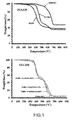
- Figure 1 illustrates the thermogravimetric curves for POSS(on the left side), epoxy TB20D and POSS/epoxy mixture (POSS/EPM) (on the right side).
- Thermogravimetric analysis shows that all the POSS/EPM samples are thermostable up to 400 °C.
- the epoxy matrix loses 4-5% in weight in the range 220-380 °C, and the use of DPHPOSS and ECPOSS stabilizes the resin up to 380-400 °C also with respect to this small decrease in the weight.
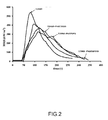
- Figure 2 illustrates the Heat Release Rate (HRR) versus time curves for the different tested samples, whereby an indication of the fire behaviour of POSS/EPM is provided.
- This example compares the fire behavior of epoxy resins with or without POSS and with or without carbon nanotubes (CNTs).
- Table V reports the PHRR data which were measured following the same procedure disclosed in Example 1. TABLE V Sample Without CNT3100 With CNT3100 (1wt%) TB20D 540 629 TB20D+ 5%DPHPOSS 362 348 TB20D+ 5%GPOSS 327 464
- PHRR of the samples with CNTs are significantly decreased in presence of DPHPOSS or GPOSS with respect to the sample nano-filled with CNTs, but without POSS compounds.
- a value of PHRR of 348 is measured when DPHPOSS is used, with respect to 540 for the unfilled sample
- a value of 464 is measured when GPOSS is used, with respect to 540 for the unfilled sample.
- This example provides the data of electrical conductivity of various samples, proving that nanofilled samples of the invention have multifunctional properties, i.e. both of fire resistance and electrical conductivity.
- Table VI contains DC conductivities data of nanofilled epoxy resin samples.
- TABLE VI Sample Conductivity values (S/m) T20BD 8.00E-13 T20B+BAMPO+0.5%CNT3100 1.68E-1 T20B+BAPPO(n.s)+0.5%CNT3100 1.10E-1 T20BD+5%GPOSS+0.5%CNT3100 3.54E-3 T20BD+5%GPOSS+0.5%PR25XTPS2500 1.35E-1 T20BD + 5% GPOSS+ 1.8%HEG 1.33 wherein HEG means "exfoliated graphene" and PR25XTPS2500 means Vapor-grown Carbon nanofibers produced at Applied Sciences Inc. and treated at 2500 °C to provide the best combination of mechanical and electrical properties.
- Table VII indicates the maximum of temperature of the main mechanical transition Tm associated to the glass transition temperature of the epoxy samples. TABLE VII Sample DMA - Tg ( °C ) TB20+BAMPO 218 TB20+BAPPO 227 TB20D+ 0.5% CNT 258 TB20D+ 5 % DPHPOSS +0.5 % CNT 258 TB20D+ 5 % GPOSS+ 0.5 % CNT 261 TB20D+ 5 % GPOSS+ 1 % CNT 261 TB20D+ 1 % CNT 263 TB20D+ 5 % DPHPOSS+ 1 % CNT 264 TB20D+ BAMPO+ 0.5 % CNT 222
Landscapes
- Chemical & Material Sciences (AREA)
- Health & Medical Sciences (AREA)
- Chemical Kinetics & Catalysis (AREA)
- Medicinal Chemistry (AREA)
- Polymers & Plastics (AREA)
- Organic Chemistry (AREA)
- Epoxy Resins (AREA)
- Compositions Of Macromolecular Compounds (AREA)
Abstract
Description
- Structural materials can be designed to have integrated electrical, electromagnetic, flame resistance, and possibly other functionalities that work in synergy to provide advantages that reach beyond that of the sum of the individual capabilities. Materials of this kind have tremendous potential to impact future structural performance by reducing size, weight, cost, power consumption and complexity while improving efficiency, safety and versatility. The development of multifunctional materials or "smart materials" is currently a challenge involving an increasing number of material scientists.
- The increased interest in multifunctional materials and structures is driven by the need for the development of new materials and structures that simultaneously perform multiple structural functions, combined non-structural and structural functions, or both. Multifunctional materials are necessarily composite materials, and the strong growth in the use of composites has been greatly influenced by multifunctional design requirements. Until now, the traditional approach to the development of structures is to address the load-carrying function and other functional requirements separately, resulting in a suboptimal load-bearing structure with add-on attachments which perform the non-structural functions with the penalty of added weight. Recently, however, there has been increased interest in the development of load-bearing materials and structures which have integral non-load-bearing functions, guided by recent discoveries about nanofillers and nanotechnology that can help to project materials working as multifunctional systems.
- In the last decades the use of composite in the primary structures in the aeronautics is rapidly increased. The most representative example is the Boing 787 Dreamliner built with more than 50% of composites. The fuselage and wings of the new Boeing 787 are constructed of composite. The composite consists of multiple, alternately directed layers of epoxy-impregnated continuous graphite fibers (Carbon fiber reinforced composites-CFRCs). Unfortunately, the epoxy resin between the carbon fiber layers can burn under accidental aircraft fire conditions; for this reason FAA certification for Boeing 787 required to demonstrate that the level of fire safety in the B-787 was equivalent to a conventional transport (aluminum) aircraft. This regulation has been extended to any other structural aeronautic materials. It is evident that no new material can be developed in this field without considering its behavior in the flame condition. Successful strategies to reduce the flammability of structural materials are extremely important in the field of aeronautic and aerospace applications.
- On the other hand, some modem aircrafts are made of advanced composites which are significantly less conductive than aluminum. Then, the composites are reinforced with conductive metal fibres or metal screens in order to dissipate lightning currents. But many of these solutions add additional weight and reduces composite advantage.
- In sum, the aeronautic composites hitherto developed suffer of limitations, as far as the properties of flame resistance and electrical conductivity are concerned.
- The object of the present invention is thus to overcome such limitations of the prior art.
- Such object is attained by an epoxy resin having a limiting oxygen index (LOI) measured according to standard ASTM 2863, which is at least 28% if the resin incorporates at least a silsesquioxane compound (POSS), or at least 36%, if the resin is obtainable by curing an epoxy precursor formulation with an hardening agent which is an aromatic organo-phosphorous compound.
- The resins of the invention are able to increase flame resistance and their use in several industrial processes allows to produce a new generation of composites able to perform multiple functions and, in addition, also the single functions. In particular, the resins of the invention can be developed with the following aims:
- 1) to apply a resin resistant to the flame and thermal degradation in aeronautics, aerospace, automotive, nautical and infrastructural applications; other applications in aircraft manufacture are in the production of cabin walls, overhead bins, galleys and lavatories, among other interior parts.
- 2) to apply a resin resistant to the flame and thermal degradation able to simultaneously overcome some of the drawbacks related to the insulating properties of the resin used to manufacture carbon fiber reinforced composites (CFRC). Such material is applicable in aeronautics, aerospace, automotive, nautical and infrastructural applications.
- Preferred embodiments of the present invention are disclosed in the following dependent claims 2 to 13, respectively.
- According to a first embodiment of the present invention, the epoxy resin is obtainable by curing an epoxy precursor formulation with an hardening agent which is an organophosphine oxide of general formula R3PO, wherein at least two R moieties are amino-phenyl and one R moiety is alkyl, phenyl or amino-phenyl, wherein each phenyl ring may have independently one or more electrophile substituents.
- Preferably, according to the invention, the ratio by weight between said epoxy precursor formulation and said hardening agent is in the
range 40% to 100%, and more preferably 60% to 100%. - The hardening agent may preferably be Bis(3-aminophenyl)phenyl phosphine oxide (BAPPO), Bis(3-aminophenyl)methyl phosphine oxide (BAMPO), Tri(3-aminophenyl)phenyl phosphine oxide (TAPPO) or a mixture thereof.
- Further advantageous hardening agents are (alkyl-bis-amino-aryl)phosphine oxide or tri-amino-arylphosphine oxide, having one or more than one electron withdrawing agents as substituents on the aryl groups, as indicated in the following compounds 1 to 6 of Table I.


- Bis(3-aminophenyl) phenyl phosphine oxide (3) is well-known and may e.g. be synthesized via a two-step route. Firstly, the bis(3-nitrophenyl) phenyl phosphine oxide (2) is obtained as an intermediate by reacting compound (1) with nitric acid/sulfuric acid. Then BAPPO is obtained by reduction of the intermediate (2) by means of hydrazine monohydrate. In sum, a possible synthesis route may be represented as follows:

- Bis(3-aminophenyl) methyl phosphine oxide (4) is well-known and may e.g. be synthesized through a process involving the following synthesis route:

- Electrophilic aromatic substitution on BAMPO, BAPPO and TAPPO by electron withdrawing groups on aryl amine rings produces the organo-
phosphine oxides 4, 5 and 6 of Table 1 (where X=NO2, Cl, Br, CN, RCO). - Any formulation known in the art may be used as epoxy precursor formulation: e.g. such formulation may contain tetrafunctional epoxy precursors and flexibilizer and/or reactive diluents.
- According to a further embodiment of the present invention, at least a silsesquioxane compound (POSS) is incorporated within the epoxy resin, preferably in an amount in the range 0.5 to 5 wt.% referred to the total weight.
- Advantageously, said silsesquioxane compound (POSS) is selected in the group consisting of DodecaPhenyl POSS (DPHPOSS), Epoxycyclohexyl POSS (ECPOSS) and Glycidyl POSS (GPOSS) whose formulae and characteristics are reported in Table II which follows. As it is apparent therefrom, GPOSS and ECPOSS are functionalized with oxirane rings, and DPHPOSS is functionalized with phenyl groups.
TABLE II POSS compounds investigated Acronym Configuration Characteristic DPH POSS 
Dodecaphenyl silsesquioxanes Empirical Formula (Hill Notation) C72H60O18Si12 Molec.Weight 1550.26 FW EC POSS 
Epoxycyclohexyl silsesquioxane Empirical Formula (Hill Notation) (C8H13O)n (SiO1.5)n n=8,10,12 Molec. Weight 1418.20 (for n=8) GPOSS 
Glycidyl silsesquioxanes Empirical Formula (Hill Notation) (C6H11O2)n(SiO1.5) n=8,10,12 Molec.Weight 1337.88 (for n=8) - Advantageously, a resin of the invention further incorporates conductive nanofillers, such as carbon nanotubes, e.g. functionalized and unfunctionalized SWCNTs, DWCNTs, MWCNTs, untreated and heat treated carbon nanofibers, carbon black, functionalized and unfunctionalized exfoliated graphite and graphene layers, whereby the insulating properties of the epoxy resin are changed and the latter becomes multifunctional.
- Examples of preparation processes of epoxy resins according to the invention and comparative, respectively, are now provided by way of illustrative, non-limiting example.
- Such examples demonstrate that the use of an organophosphine oxide as hardening agent or the incorporation of a POSS compound allows to obtain epoxy resins with flame retardants properties, which are improved in respect of the conventional resins.
- The present invention embraces also the above-mentioned epoxy resins further containing conductive nanofillers embedded inside the respective matrix, which resins are in particular suitable for application in the aeronautic field.
- The epoxy matrix T20B was prepared by mixing an epoxy precursor, tetraglycidyl methylene dianiline (TGMDA) (Epoxy equivalent weight 117-133 g/eq), with an epoxy reactive monomer 1-4 Butanediol diglycidyl ether (BDE) at a concentration of 80%:20% (by wt.), respectively.
- The hardening agent used for the curing were Bampo and Bappo according to the invention, and DDS as reference. These hardening agents were added at a stoichiometric concentration with respect to all the epoxy rings (TGMDA and BDE).
- TGMDA and BDE were obtained from Sigma-Aldrich, while Bampo and Bappo were synthesized following the above-disclosed synthesis routes.
- Multiwall carbon nanotubes (MWCNTs) were obtained from Nanocyl S.A as 3100 Grade and 7000 Grade. The specific surface area of both multi-wall carbon nanotubes determined with the BET method is around 250-300 m2/g, the carbon purity is >95% with a metal oxide impurity <5% as it results by thermogravimetric analysis (TGA). TEM investigation has shown for the CNTs a diameter around 20 nm.
- Epoxy precursor blends or formulations and Bampo were mixed by magnetic stirring at 70°C. The degassing of the mixture was effected at 45°C.
- Epoxy precursor blends or formulations and Bappo were mixed by magnetic stirring at 95°C. The degassing of the mixture was effected at 55°C.
- When present, MWCNTs were added and incorporated into the mixture by ultrasonication for 20 minutes (using Hielscher model UP200S-24KHz high power ultrasonic probe).
- The formulations were cured by a two-stage curing cycle: a first isothermal stage was carried out at the lower temperature of 125°C for 1 hour and a second isothermal stage was carried out at higher temperatures up to 200°C for 3 hours.
- Fire resistance of the solidified epoxy samples was characterized by limiting oxygen index measurement (LOI) and mass loss calorimetry.
- Experimental conditions for LOI tests: barrels of 80x10x3 mm3 are fixed in a vertical position and their top is inflamed with a burner. LOI, namely the minimum concentration of oxygen in a nitrogen/oxygen mixture required to just support the sample combustion, was measured following standard ASTM 2863.
- Experimental conditions for mass loss calorimeter: plates of 100x100x3 mm3 are exposed to a radiant cone (50kW/m2) using a forced ignition. The heat of combustion released was measured using a thermopile according to standard ISO 13927, in order to obtain peak of heat release rate (PHRR) data.
- Thermogravimetric analysis (TGA) was carried out with a Mettler TGA/SDTA 851 thermobalance. Resin samples were heated from 25°C to 900°C at a 10°C/min heating rate under air and nitrogen flow. The weight loss was recorded as a function of temperature.
- The following table III, wherein the first, fourth and fifth line refer to reference samples using DDS as hardening agent, and the second, third and sixth line refer to samples according to the invention, reports the experimental data which were obtained.
TABLE III Sample LOI (%O2) PHRR (kW/m2) T20BD (control) 27 540 T20B/Bampo (inv.) 40 447 T20B/Bappo (inv.) 36 379 T20BD+0.5wt% CNT(3100) 28 603 T20BD+1wt%CNT(3100) 28 629 T20B+Bampo+0.5wt%CNT3100(inv.) 38 561 - As it is immediately apparent from the data of the first three samples, the resins of the invention have LOI values markedly improved in respect of the value 27 of the reference sample, which is representative of the highest value hitherto recorded for conventional epoxy resins. Furthermore, the resins of the samples according to the invention exhibit an important intumescence when compared with the resin of the control sample.
- The last three samples (lines 4-6) refer to resins with conductive nanofillers embedded inside the respective matrix and the sample according to the present invention (line 6) shows an improvement in the PHRR - namely a decrease of this value - with respect to nanofilled samples hardened with DDS (lines 4 and 5). It has to be noticed that a low concentration of MWCNTs (0.5wt%) is advisable to reach the electrical percolation threshold.
- The epoxy matrix T20B was prepared by mixing an epoxy precursor, tetraglycidyl methylene dianiline (TGMDA) (Epoxy equivalent weight 117-133 g/eq), with an epoxy reactive monomer 1-4 Butanediol diglycidyl ether (BDE) at a concentration of 80%:20% (by wt.), respectively.
- GPOSS and ECPOSS functionalized with a different number of oxirane rings, and DPHPOSS functionalized with phenyl groups were dispersed in the epoxy matrix. The respective composites were prepared with 5 wt.% of POSS, which was dispersed in the epoxy matrix by ultrasonication and/or magnetic stirring.
- The curing agent used for the curing was 4,4'-diaminodiphenyl sulfone (DDS). This hardener agent was added at a stoichiometric concentration with respect to all the epoxy rings (TGMDA, BDE and POSS - in the case of POSS with epoxy rings).
- TGMDA, BDE and DDS were obtained from Sigma-Aldrich, while POSS compounds from Hybrid Plastics Company.
- Epoxy matrices blended with POSS and DDS were mixed at 120°C and all the samples were cured by a two-stage curing cycle: a first isothermal stage was carried out at the lower temperature of 125°C for 1 hour and the second isothermal stage at higher temperatures up to 200°C for 3 hours.
- The obtained samples were subjected to thermogravimetric analysis and to the measurement of their values of LOI and PHRR according to the same procedures disclosed in Example 1.
-
Figure 1 illustrates the thermogravimetric curves for POSS(on the left side), epoxy TB20D and POSS/epoxy mixture (POSS/EPM) (on the right side). - The thermal degradation process of pure POSS compounds is different for the various samples: DPHPOSS appears to be the most thermostable of the various POSS tested, while these considerable differences are not reflected in the POSS/EPM samples.
- Thermogravimetric analysis shows that all the POSS/EPM samples are thermostable up to 400 °C. The epoxy matrix loses 4-5% in weight in the range 220-380 °C, and the use of DPHPOSS and ECPOSS stabilizes the resin up to 380-400 °C also with respect to this small decrease in the weight.
-
Figure 2 illustrates the Heat Release Rate (HRR) versus time curves for the different tested samples, whereby an indication of the fire behaviour of POSS/EPM is provided. - The fire behavior of TB20D is clearly modified in presence of POSS. In addition to the significant decrease of the peak of heat release rate, the time of ignition is slightly increased for DPHPOSS and ECPOSS. Table IV shows the limiting oxygen index(LOI)and the values of the peak of heat release rate(PHRR) for the tested samples. It appears that the presence of POSS compounds undoubtedly acts as flame retardant for TB20D epoxy system, as shown by the increase of LOI values and the decrease of the PHRR values. GPOSS leads to the best increase of LOI (22% with respect to TB20D value). The best behaviour is also confirmed by the larger decrease in the PHRR value; in fact, a decrease from 540 kW/m2 to 327 kW/m2 was observed in the PHRR of the TB20D+5%GPOSS sample for which the smallest value is observed. These results are to be related to the fully epoxidized structure of GPOSS which allows a better dispersion of the POSS particles due to complete dissolution within TB20D matrix and chemical linkages with the epoxy system. It is interesting to point out that DPHPOSS which exhibits the most thermostable structure also leads to a significant increase of LOI and decrease of PHRR. However, DPHPOSS particles do not play any reactive role towards TB20D epoxy system and somewhat surprisingly show a very good behavior in the formulation of the invention.
TABLE IV Sample LOI (%O2) PHRR (kW/m2) T20BD 27 540 TB20D+5%DPHPOSS 30 362 TB20D+5%ECPOSS 28 411 TB20D+5%GPOSS 33 327 - In sum, the incorporation of 5 wt.% POSS compounds into an epoxy matrix resulted in a LOI value higher than the value of 27 corresponding to the pure epoxy mixture. The trend observed with LOI tests was confirmed by mass loss calorimetric measurements: a decrease was observed in the peak of heat release rate (PHRR) for all the samples.
- This example compares the fire behavior of epoxy resins with or without POSS and with or without carbon nanotubes (CNTs).
- The preparation procedure is the same as in Example 2 with the further addition of CNTs, when required.
- Table V reports the PHRR data which were measured following the same procedure disclosed in Example 1.
TABLE V Sample Without CNT3100 With CNT3100 (1wt%) TB20D 540 629 TB20D+ 5%DPHPOSS362 348 TB20D+ 5%GPOSS327 464 - PHRR of the samples with CNTs are significantly decreased in presence of DPHPOSS or GPOSS with respect to the sample nano-filled with CNTs, but without POSS compounds. In fact, a value of PHRR of 348 is measured when DPHPOSS is used, with respect to 540 for the unfilled sample, and a value of 464 is measured when GPOSS is used, with respect to 540 for the unfilled sample.
- This example provides the data of electrical conductivity of various samples, proving that nanofilled samples of the invention have multifunctional properties, i.e. both of fire resistance and electrical conductivity.
- In particular, Table VI contains DC conductivities data of nanofilled epoxy resin samples.
TABLE VI Sample Conductivity values (S/m) T20BD 8.00E-13 T20B+BAMPO+0.5%CNT3100 1.68E-1 T20B+BAPPO(n.s)+0.5%CNT3100 1.10E-1 T20BD+5%GPOSS+0.5%CNT3100 3.54E-3 T20BD+5%GPOSS+0.5%PR25XTPS2500 1.35E-1 T20BD + 5% GPOSS+ 1.8%HEG 1.33 - DMA analysis was performed on TA instruments DMA2980 under the following conditions:
- Dual cantilever mode to avoid sample sliding,
- Temperature scan from 25°C to 320°C at 3°C/min,
- amplitude: 18µm,
- Frequency: 1Hz,
- Preload force: 0.01N,
- Specimen dimensions: 50mmx10mmx3mm
- Table VII indicates the maximum of temperature of the main mechanical transition Tm associated to the glass transition temperature of the epoxy samples.
TABLE VII Sample DMA-Tg (°C) TB20+BAMPO 218 TB20+BAPPO 227 TB20D+ 0.5% CNT 258 TB20D+ 5 % DPHPOSS +0.5 % CNT258 TB20D+ 5 % GPOSS+ 0.5 % CNT261 TB20D+ 5 % GPOSS+ 1 % CNT261 TB20D+ 1 % CNT 263 TB20D+ 5 % DPHPOSS+ 1 % CNT264 TB20D+ BAMPO+ 0.5 % CNT 222 - The samples with the BAPPO and BAMPO hardeners lead to a decrease of the epoxy network glass transition values, but such decrease does not hinder the use of the respective resins as structural materials.
- It shall be apparent that, applying the principles of the invention, the implementation details and the embodiment will be able to be widely varied relative to what has been described by way of example only, without thereby departing from the claimed scope.
Claims (13)
- Epoxy resin having a limiting oxygen index (LOI) measured according to standard ASTM 2863, which is at least 28%, if the resin comprises at least a silsesquioxane compound (POSS), or at least 36%, if the resin is obtainable by curing an epoxy precursor formulation with an hardening agent which is an aromatic organo-phosphorous compound.
- Epoxy resin according to claim 1, which is obtainable by curing an epoxy precursor formulation with an hardening agent which is an organophosphine oxide of general formula R3PO, wherein at least two R moieties are amino-phenyl and one R moiety is alkyl, phenyl or amino-phenyl, wherein each phenyl ring may have independently one or more electrophile substituents, said resin having glass transition temperature between 218 °C and 264 °C and storage modulus between 6000 MPa and 2000 MPa in the temperature range between -90 °C and 160 °C.
- Epoxy resin according to claim 2, wherein the ratio by weight between said epoxy precursor formulation and said hardening agent is in the range 40% to 100%, and preferably 60% to 100%.
- Epoxy resin according to claim 2 or 3, wherein said hardening agent is selected in the group consisting of Bis(3-aminophenyl)phenylphosphine oxide (BAPPO), Bis(3-aminophenyl)methylphosphine oxide (BAMPO), Tri(3-aminophenyl)phenyl phosphine oxide (TAPPO) and mixtures thereof.
- Epoxy resin according to claim 4, wherein said hardening agent is BAPPO or BAMPO and the resin has peak of heat release rate (PHRR) lower than 447 kW/m2.
- Epoxy resin according to any one of claims 2 to 5, wherein said epoxy precursor formulation contains tetrafunctional epoxy precursors and flexibilizer and/or reactive diluents.
- Epoxy resin according to claim 1, which incorporates at least a silsesquioxane compound (POSS).
- Epoxy resin according to claim 7, wherein said silsesquioxane compound (POSS) is selected in the group consisting of DodecaPhenyl POSS (DPHPOSS), Epoxycyclohexyl POSS (ECPOSS) and Glycidyl POSS (GPOSS), said GPOSS and ECPOSS being functionalized with oxirane rings, and said DPHPOSS being functionalized with phenyl groups.
- Epoxy resin according to claim 7 or 8, wherein said at least a silsesquioxane compound (POSS) is present in an amount in the range 0.5 to 5 wt.% referred to the total weight.
- Epoxy resin according to any one of claims 6 to 9, having peak of heat release rate (PHRR) lower than 447 kW/m2, glass transition temperature between 218 °C and 264 °C and storage modulus between 6000 MPa and 2000 MPa in the temperature range between - 90 °C and 160 °C.
- Multifunctional epoxy resin according to any one of the previous claims, wherein said epoxy resin further incorporates conductive nanofillers, such as carbon nanotubes, e.g. functionalized and unfunctionalized SWCNTs, DWCNTs, MWCNTs, untreated and heat-treated carbon nanofibers, carbon black, functionalized and unfunctionalized exfoliated graphite and graphene layers, whereby the insulating properties of the epoxy resin are changed.
- Multifunctional epoxy resin according to claim 11, having glass transition temperature between 222 °C and 264 °C and storage modulus between 6000 MPa and 2000 MPa in the temperature range between -90 °C and 160 °C.
- Multifunctional epoxy resin according to claim 11 or 12, having peak of heat release rate (PHRR) lower than 561 kW/m2 and simultaneously LOI higher than 36%.
Applications Claiming Priority (1)
| Application Number | Priority Date | Filing Date | Title |
|---|---|---|---|
| IT001021A ITTO20131021A1 (en) | 2013-12-13 | 2013-12-13 | MULTIFUNCTIONAL EPOXY RESIN WITH INCREASED FLAME RESISTANCE |
Publications (2)
| Publication Number | Publication Date |
|---|---|
| EP2883896A1 true EP2883896A1 (en) | 2015-06-17 |
| EP2883896B1 EP2883896B1 (en) | 2023-03-08 |
Family
ID=50116087
Family Applications (1)
| Application Number | Title | Priority Date | Filing Date |
|---|---|---|---|
| EP14197580.5A Active EP2883896B1 (en) | 2013-12-13 | 2014-12-12 | Multifunctional epoxy resin with enhanced flame resistance |
Country Status (3)
| Country | Link |
|---|---|
| EP (1) | EP2883896B1 (en) |
| ES (1) | ES2942507T3 (en) |
| IT (1) | ITTO20131021A1 (en) |
Cited By (8)
| Publication number | Priority date | Publication date | Assignee | Title |
|---|---|---|---|---|
| CN107698740A (en) * | 2017-11-02 | 2018-02-16 | 合众(佛山)化工有限公司 | A kind of low form epoxy hardener and its epoxide terrace paint based on POSS |
| CN109593321A (en) * | 2018-11-23 | 2019-04-09 | 新沂市汇力精细化工有限公司 | A kind of flame retardant type nanometer composite epoxy resin composition and preparation method thereof |
| WO2019082595A1 (en) * | 2017-10-24 | 2019-05-02 | 東レ株式会社 | Epoxy resin composition, prepreg, and fiber-reinforced composite material |
| CN109749361A (en) * | 2017-11-01 | 2019-05-14 | 财团法人工业技术研究院 | Encapsulating material and film |
| CN110655652A (en) * | 2019-09-02 | 2020-01-07 | 厦门大学 | A kind of metal hybrid POSS flame retardant, preparation method and application |
| WO2022175303A1 (en) * | 2021-02-22 | 2022-08-25 | Siemens Aktiengesellschaft | Insulation system for electrically rotating machines and method for the production thereof |
| CN115404043A (en) * | 2022-09-29 | 2022-11-29 | 安田信邦(厦门)电子科技有限公司 | High-toughness high-thermal-stability flame-retardant electronic packaging adhesive and preparation method thereof |
| RU2825848C1 (en) * | 2021-02-22 | 2024-09-02 | Сименс Акциенгезелльшафт | Insulation system for electric rotating machines and method of its formation |
Citations (1)
| Publication number | Priority date | Publication date | Assignee | Title |
|---|---|---|---|---|
| US20100087616A1 (en) * | 2008-10-08 | 2010-04-08 | Cheng-Chien Yang | Epoxy resin containing side-chain-tethered caged POSS and preparation method thereof as well as epoxy resin material containing POSS-epoxy and preparation method thereof |
Family Cites Families (2)
| Publication number | Priority date | Publication date | Assignee | Title |
|---|---|---|---|---|
| DD262030A1 (en) * | 1987-07-13 | 1988-11-16 | Univ Schiller Jena | PROCESS FOR PREPARING EPOXY NETWORK POLYMERS WITH IMPROVED FLAME INEVENABILITY |
| US4973631A (en) * | 1989-10-06 | 1990-11-27 | Virginia Tech Intellectual Properties Inc. | Novel phosphorus containing epoxy networks |
-
2013
- 2013-12-13 IT IT001021A patent/ITTO20131021A1/en unknown
-
2014
- 2014-12-12 EP EP14197580.5A patent/EP2883896B1/en active Active
- 2014-12-12 ES ES14197580T patent/ES2942507T3/en active Active
Patent Citations (1)
| Publication number | Priority date | Publication date | Assignee | Title |
|---|---|---|---|---|
| US20100087616A1 (en) * | 2008-10-08 | 2010-04-08 | Cheng-Chien Yang | Epoxy resin containing side-chain-tethered caged POSS and preparation method thereof as well as epoxy resin material containing POSS-epoxy and preparation method thereof |
Non-Patent Citations (2)
| Title |
|---|
| INDRA K VARMA ET AL: "Curing of Epoxy Resin with Phosphorylated Diamine", JOURNAL OF MACROMOLECULAR SCIENCE : PART A - CHEMISTRY, MARCEL DEKKER, NEW YORK, NY, US, vol. 23, no. 1, 1 January 1986 (1986-01-01), pages 19 - 36, XP008174390, ISSN: 0022-233X, [retrieved on 20061205], DOI: 10.1080/00222338608063373 * |
| SHREE MEENAKSHI K ET AL: "Development and characterization of new phosphorus based flame retardant tetraglycidyl epoxy nanocomposites for aerospace application", BULLETIN OF MATERIALS SCIENCE, SPRINGER INDIA, NEW DELHI, vol. 35, no. 2, 28 April 2012 (2012-04-28), pages 129 - 136, XP035056654, ISSN: 0973-7669, DOI: 10.1007/S12034-012-0271-0 * |
Cited By (15)
| Publication number | Priority date | Publication date | Assignee | Title |
|---|---|---|---|---|
| CN111164124A (en) * | 2017-10-24 | 2020-05-15 | 东丽株式会社 | Epoxy resin composition, prepreg, and fiber-reinforced composite material |
| US11441027B2 (en) | 2017-10-24 | 2022-09-13 | Toray Industries, Inc. | Epoxy resin composition, prepreg, and fiber-reinforced composite material |
| WO2019082595A1 (en) * | 2017-10-24 | 2019-05-02 | 東レ株式会社 | Epoxy resin composition, prepreg, and fiber-reinforced composite material |
| JPWO2019082595A1 (en) * | 2017-10-24 | 2020-09-17 | 東レ株式会社 | Epoxy resin compositions, prepregs and fiber reinforced composites |
| US10717806B2 (en) * | 2017-11-01 | 2020-07-21 | Industrial Technology Research Institute | Packaging material and film |
| CN109749361A (en) * | 2017-11-01 | 2019-05-14 | 财团法人工业技术研究院 | Encapsulating material and film |
| CN109749361B (en) * | 2017-11-01 | 2021-06-29 | 财团法人工业技术研究院 | Packaging Materials and Films |
| CN107698740A (en) * | 2017-11-02 | 2018-02-16 | 合众(佛山)化工有限公司 | A kind of low form epoxy hardener and its epoxide terrace paint based on POSS |
| CN109593321A (en) * | 2018-11-23 | 2019-04-09 | 新沂市汇力精细化工有限公司 | A kind of flame retardant type nanometer composite epoxy resin composition and preparation method thereof |
| CN110655652A (en) * | 2019-09-02 | 2020-01-07 | 厦门大学 | A kind of metal hybrid POSS flame retardant, preparation method and application |
| WO2022175303A1 (en) * | 2021-02-22 | 2022-08-25 | Siemens Aktiengesellschaft | Insulation system for electrically rotating machines and method for the production thereof |
| RU2825848C1 (en) * | 2021-02-22 | 2024-09-02 | Сименс Акциенгезелльшафт | Insulation system for electric rotating machines and method of its formation |
| US20240318032A1 (en) * | 2021-02-22 | 2024-09-26 | Siemens Aktiengesellschaft | Insulation System for Electrically Rotating MachinesAnd Method for the Production Thereof |
| CN115404043A (en) * | 2022-09-29 | 2022-11-29 | 安田信邦(厦门)电子科技有限公司 | High-toughness high-thermal-stability flame-retardant electronic packaging adhesive and preparation method thereof |
| CN115404043B (en) * | 2022-09-29 | 2024-01-12 | 安田信邦(厦门)电子科技有限公司 | High-toughness high-thermal-stability flame-retardant electronic packaging adhesive and preparation method thereof |
Also Published As
| Publication number | Publication date |
|---|---|
| ES2942507T3 (en) | 2023-06-01 |
| EP2883896B1 (en) | 2023-03-08 |
| ITTO20131021A1 (en) | 2015-06-14 |
Similar Documents
| Publication | Publication Date | Title |
|---|---|---|
| EP2883896B1 (en) | Multifunctional epoxy resin with enhanced flame resistance | |
| Raimondo et al. | Multifunctional graphene/POSS epoxy resin tailored for aircraft lightning strike protection | |
| Shi et al. | Epoxy resin composites reinforced and fire-retarded by surficially-treated carbon fibers via a tunable and facile process | |
| KR101942368B1 (en) | Composite materials comprising conductive nano-fillers | |
| Wang et al. | The effect of graphene presence in flame retarded epoxy resin matrix on the mechanical and flammability properties of glass fiber-reinforced composites | |
| CN102317361B (en) | Nanocalcite composites | |
| Yu et al. | Interfacial engineering to construct P-loaded hollow nanohybrids for flame-retardant and high-performance epoxy resins | |
| Zhang et al. | Preparation of large-size reduced graphene oxide-wrapped ammonium polyphosphate and its enhancement of the mechanical and flame retardant properties of thermoplastic polyurethane | |
| Yan et al. | Synergistic flame-retardant effect of epoxy resin combined with phenethyl-bridged DOPO derivative and graphene nanosheets | |
| JP6617983B2 (en) | Ceramicized silicone resin composition, and prepreg and laminate using the same | |
| Yu et al. | Charing polymer wrapped carbon nanotubes for simultaneously improving the flame retardancy and mechanical properties of epoxy resin | |
| Zhou et al. | Simultaneously improving flame retardancy and dynamic mechanical properties of epoxy resin nanocomposites through synergistic effect of zirconium phenylphosphate and POSS | |
| Shen et al. | Preparation and characterization of ethylene–vinyl acetate copolymer (EVA)–magnesium hydroxide (MH)–hexaphenoxycyclotriphosphazene (HPCTP) composite flame-retardant materials | |
| Yan et al. | Effect of multiwalled carbon nanotubes and phenethyl-bridged DOPO derivative on flame retardancy of epoxy resin | |
| Chen et al. | Fire protection properties of wood in waterborne epoxy coatings containing functionalized graphene oxide | |
| Zhang et al. | Preparation and mechanism of toughening and flame retardance of epoxy resin using novel silsesquioxane molecules | |
| Lin et al. | Growing metal–organic framework nanoparticles on short carbon fibers to improve flame retardancy, smoke suppression and mechanical properties of the flame retardant epoxy composites | |
| Kausar | Formation and properties of poly (vinyl butyral-co-vinyl alcohol-co-vinyl acetate)/polystyrene composites reinforced with graphene oxide-nanodiamond | |
| Meenakshi et al. | Development and characterization of new phosphorus based flame retardant tetraglycidyl epoxy nanocomposites for aerospace application | |
| Zhao et al. | High fire-safety epoxy thermosets with a macromolecular phosphorus-nitrogen containing flame retardant at a low loading | |
| Xiao et al. | A phosphaphenanthrene-grafted cyclosiloxane in combination with diatomite for flame retardant epoxy resins with excellent comprehensive properties | |
| KR102477271B1 (en) | Thermosetting resin composition with high toughness and flame retardant | |
| Meng et al. | Synthesis of bio-based phosphorus-nitrogen hybrid cellulose nanocrystal flame retardant for improving of fire safety of epoxy resin | |
| Hao et al. | Enhanced resistance to hypersonic aerodynamic heating of ablative-resistant coating via the ceramic precursor modified expandable graphite | |
| Hussain et al. | Fabrication of phosphorus-clay polymer nanocomposites for fire performance. |
Legal Events
| Date | Code | Title | Description |
|---|---|---|---|
| PUAI | Public reference made under article 153(3) epc to a published international application that has entered the european phase |
Free format text: ORIGINAL CODE: 0009012 |
|
| 17P | Request for examination filed |
Effective date: 20141212 |
|
| AK | Designated contracting states |
Kind code of ref document: A1 Designated state(s): AL AT BE BG CH CY CZ DE DK EE ES FI FR GB GR HR HU IE IS IT LI LT LU LV MC MK MT NL NO PL PT RO RS SE SI SK SM TR |
|
| AX | Request for extension of the european patent |
Extension state: BA ME |
|
| RIN1 | Information on inventor provided before grant (corrected) |
Inventor name: IANNUZZO, GENEROSO Inventor name: GUADAGNO, LIBERATA Inventor name: DUBOIS, PHILIPPE Inventor name: RAIMONDO, MARIALUIGIA Inventor name: LONGO, PASQUALE Inventor name: BONNAUD, LEILA Inventor name: MURARIU, OLTEA Inventor name: RUSSO, SALVATORE |
|
| R17P | Request for examination filed (corrected) |
Effective date: 20151215 |
|
| RBV | Designated contracting states (corrected) |
Designated state(s): AL AT BE BG CH CY CZ DE DK EE ES FI FR GB GR HR HU IE IS IT LI LT LU LV MC MK MT NL NO PL PT RO RS SE SI SK SM TR |
|
| STAA | Information on the status of an ep patent application or granted ep patent |
Free format text: STATUS: EXAMINATION IS IN PROGRESS |
|
| 17Q | First examination report despatched |
Effective date: 20190306 |
|
| GRAP | Despatch of communication of intention to grant a patent |
Free format text: ORIGINAL CODE: EPIDOSNIGR1 |
|
| STAA | Information on the status of an ep patent application or granted ep patent |
Free format text: STATUS: GRANT OF PATENT IS INTENDED |
|
| INTG | Intention to grant announced |
Effective date: 20220912 |
|
| GRAS | Grant fee paid |
Free format text: ORIGINAL CODE: EPIDOSNIGR3 |
|
| GRAA | (expected) grant |
Free format text: ORIGINAL CODE: 0009210 |
|
| STAA | Information on the status of an ep patent application or granted ep patent |
Free format text: STATUS: THE PATENT HAS BEEN GRANTED |
|
| RIN1 | Information on inventor provided before grant (corrected) |
Inventor name: IANNUZZO, GENEROSO Inventor name: RUSSO, SALVATORE Inventor name: DUBOIS, PHILIPPE Inventor name: MURARIU, OLTEA Inventor name: BONNAUD, LEILA Inventor name: LONGO, PASQUALE Inventor name: RAIMONDO, MARIALUIGIA Inventor name: GUADAGNO, LIBERATA |
|
| AK | Designated contracting states |
Kind code of ref document: B1 Designated state(s): AL AT BE BG CH CY CZ DE DK EE ES FI FR GB GR HR HU IE IS IT LI LT LU LV MC MK MT NL NO PL PT RO RS SE SI SK SM TR |
|
| RAP1 | Party data changed (applicant data changed or rights of an application transferred) |
Owner name: LEONARDO S.P.A. |
|
| REG | Reference to a national code |
Ref country code: GB Ref legal event code: FG4D |
|
| REG | Reference to a national code |
Ref country code: CH Ref legal event code: EP Ref country code: AT Ref legal event code: REF Ref document number: 1552555 Country of ref document: AT Kind code of ref document: T Effective date: 20230315 |
|
| REG | Reference to a national code |
Ref country code: DE Ref legal event code: R096 Ref document number: 602014086398 Country of ref document: DE |
|
| REG | Reference to a national code |
Ref country code: IE Ref legal event code: FG4D |
|
| REG | Reference to a national code |
Ref country code: ES Ref legal event code: FG2A Ref document number: 2942507 Country of ref document: ES Kind code of ref document: T3 Effective date: 20230601 |
|
| REG | Reference to a national code |
Ref country code: LT Ref legal event code: MG9D |
|
| REG | Reference to a national code |
Ref country code: NL Ref legal event code: MP Effective date: 20230308 |
|
| PG25 | Lapsed in a contracting state [announced via postgrant information from national office to epo] |
Ref country code: RS Free format text: LAPSE BECAUSE OF FAILURE TO SUBMIT A TRANSLATION OF THE DESCRIPTION OR TO PAY THE FEE WITHIN THE PRESCRIBED TIME-LIMIT Effective date: 20230308 Ref country code: NO Free format text: LAPSE BECAUSE OF FAILURE TO SUBMIT A TRANSLATION OF THE DESCRIPTION OR TO PAY THE FEE WITHIN THE PRESCRIBED TIME-LIMIT Effective date: 20230608 Ref country code: LV Free format text: LAPSE BECAUSE OF FAILURE TO SUBMIT A TRANSLATION OF THE DESCRIPTION OR TO PAY THE FEE WITHIN THE PRESCRIBED TIME-LIMIT Effective date: 20230308 Ref country code: LT Free format text: LAPSE BECAUSE OF FAILURE TO SUBMIT A TRANSLATION OF THE DESCRIPTION OR TO PAY THE FEE WITHIN THE PRESCRIBED TIME-LIMIT Effective date: 20230308 Ref country code: HR Free format text: LAPSE BECAUSE OF FAILURE TO SUBMIT A TRANSLATION OF THE DESCRIPTION OR TO PAY THE FEE WITHIN THE PRESCRIBED TIME-LIMIT Effective date: 20230308 |
|
| REG | Reference to a national code |
Ref country code: AT Ref legal event code: MK05 Ref document number: 1552555 Country of ref document: AT Kind code of ref document: T Effective date: 20230308 |
|
| REG | Reference to a national code |
Ref country code: DE Ref legal event code: R082 Ref document number: 602014086398 Country of ref document: DE Representative=s name: ALPSPITZ IP ALLGAYER UND PARTNER PATENTANWAELT, DE |
|
| PG25 | Lapsed in a contracting state [announced via postgrant information from national office to epo] |
Ref country code: SE Free format text: LAPSE BECAUSE OF FAILURE TO SUBMIT A TRANSLATION OF THE DESCRIPTION OR TO PAY THE FEE WITHIN THE PRESCRIBED TIME-LIMIT Effective date: 20230308 Ref country code: NL Free format text: LAPSE BECAUSE OF FAILURE TO SUBMIT A TRANSLATION OF THE DESCRIPTION OR TO PAY THE FEE WITHIN THE PRESCRIBED TIME-LIMIT Effective date: 20230308 Ref country code: GR Free format text: LAPSE BECAUSE OF FAILURE TO SUBMIT A TRANSLATION OF THE DESCRIPTION OR TO PAY THE FEE WITHIN THE PRESCRIBED TIME-LIMIT Effective date: 20230609 Ref country code: FI Free format text: LAPSE BECAUSE OF FAILURE TO SUBMIT A TRANSLATION OF THE DESCRIPTION OR TO PAY THE FEE WITHIN THE PRESCRIBED TIME-LIMIT Effective date: 20230308 |
|
| PG25 | Lapsed in a contracting state [announced via postgrant information from national office to epo] |
Ref country code: SM Free format text: LAPSE BECAUSE OF FAILURE TO SUBMIT A TRANSLATION OF THE DESCRIPTION OR TO PAY THE FEE WITHIN THE PRESCRIBED TIME-LIMIT Effective date: 20230308 Ref country code: RO Free format text: LAPSE BECAUSE OF FAILURE TO SUBMIT A TRANSLATION OF THE DESCRIPTION OR TO PAY THE FEE WITHIN THE PRESCRIBED TIME-LIMIT Effective date: 20230308 Ref country code: PT Free format text: LAPSE BECAUSE OF FAILURE TO SUBMIT A TRANSLATION OF THE DESCRIPTION OR TO PAY THE FEE WITHIN THE PRESCRIBED TIME-LIMIT Effective date: 20230710 Ref country code: EE Free format text: LAPSE BECAUSE OF FAILURE TO SUBMIT A TRANSLATION OF THE DESCRIPTION OR TO PAY THE FEE WITHIN THE PRESCRIBED TIME-LIMIT Effective date: 20230308 Ref country code: CZ Free format text: LAPSE BECAUSE OF FAILURE TO SUBMIT A TRANSLATION OF THE DESCRIPTION OR TO PAY THE FEE WITHIN THE PRESCRIBED TIME-LIMIT Effective date: 20230308 Ref country code: AT Free format text: LAPSE BECAUSE OF FAILURE TO SUBMIT A TRANSLATION OF THE DESCRIPTION OR TO PAY THE FEE WITHIN THE PRESCRIBED TIME-LIMIT Effective date: 20230308 |
|
| PG25 | Lapsed in a contracting state [announced via postgrant information from national office to epo] |
Ref country code: SK Free format text: LAPSE BECAUSE OF FAILURE TO SUBMIT A TRANSLATION OF THE DESCRIPTION OR TO PAY THE FEE WITHIN THE PRESCRIBED TIME-LIMIT Effective date: 20230308 Ref country code: PL Free format text: LAPSE BECAUSE OF FAILURE TO SUBMIT A TRANSLATION OF THE DESCRIPTION OR TO PAY THE FEE WITHIN THE PRESCRIBED TIME-LIMIT Effective date: 20230308 Ref country code: IS Free format text: LAPSE BECAUSE OF FAILURE TO SUBMIT A TRANSLATION OF THE DESCRIPTION OR TO PAY THE FEE WITHIN THE PRESCRIBED TIME-LIMIT Effective date: 20230708 |
|
| REG | Reference to a national code |
Ref country code: DE Ref legal event code: R097 Ref document number: 602014086398 Country of ref document: DE |
|
| PLBE | No opposition filed within time limit |
Free format text: ORIGINAL CODE: 0009261 |
|
| STAA | Information on the status of an ep patent application or granted ep patent |
Free format text: STATUS: NO OPPOSITION FILED WITHIN TIME LIMIT |
|
| PG25 | Lapsed in a contracting state [announced via postgrant information from national office to epo] |
Ref country code: SI Free format text: LAPSE BECAUSE OF FAILURE TO SUBMIT A TRANSLATION OF THE DESCRIPTION OR TO PAY THE FEE WITHIN THE PRESCRIBED TIME-LIMIT Effective date: 20230308 Ref country code: DK Free format text: LAPSE BECAUSE OF FAILURE TO SUBMIT A TRANSLATION OF THE DESCRIPTION OR TO PAY THE FEE WITHIN THE PRESCRIBED TIME-LIMIT Effective date: 20230308 |
|
| 26N | No opposition filed |
Effective date: 20231211 |
|
| PG25 | Lapsed in a contracting state [announced via postgrant information from national office to epo] |
Ref country code: IT Free format text: LAPSE BECAUSE OF FAILURE TO SUBMIT A TRANSLATION OF THE DESCRIPTION OR TO PAY THE FEE WITHIN THE PRESCRIBED TIME-LIMIT Effective date: 20230308 |
|
| REG | Reference to a national code |
Ref country code: DE Ref legal event code: R119 Ref document number: 602014086398 Country of ref document: DE |
|
| REG | Reference to a national code |
Ref country code: CH Ref legal event code: PL |
|
| PG25 | Lapsed in a contracting state [announced via postgrant information from national office to epo] |
Ref country code: LU Free format text: LAPSE BECAUSE OF NON-PAYMENT OF DUE FEES Effective date: 20231212 |
|
| PG25 | Lapsed in a contracting state [announced via postgrant information from national office to epo] |
Ref country code: MC Free format text: LAPSE BECAUSE OF FAILURE TO SUBMIT A TRANSLATION OF THE DESCRIPTION OR TO PAY THE FEE WITHIN THE PRESCRIBED TIME-LIMIT Effective date: 20230308 |
|
| GBPC | Gb: european patent ceased through non-payment of renewal fee |
Effective date: 20231212 |
|
| REG | Reference to a national code |
Ref country code: BE Ref legal event code: MM Effective date: 20231231 |
|
| PG25 | Lapsed in a contracting state [announced via postgrant information from national office to epo] |
Ref country code: MC Free format text: LAPSE BECAUSE OF FAILURE TO SUBMIT A TRANSLATION OF THE DESCRIPTION OR TO PAY THE FEE WITHIN THE PRESCRIBED TIME-LIMIT Effective date: 20230308 Ref country code: LU Free format text: LAPSE BECAUSE OF NON-PAYMENT OF DUE FEES Effective date: 20231212 |
|
| REG | Reference to a national code |
Ref country code: IE Ref legal event code: MM4A |
|
| PG25 | Lapsed in a contracting state [announced via postgrant information from national office to epo] |
Ref country code: DE Free format text: LAPSE BECAUSE OF NON-PAYMENT OF DUE FEES Effective date: 20240702 Ref country code: IE Free format text: LAPSE BECAUSE OF NON-PAYMENT OF DUE FEES Effective date: 20231212 |
|
| PG25 | Lapsed in a contracting state [announced via postgrant information from national office to epo] |
Ref country code: GB Free format text: LAPSE BECAUSE OF NON-PAYMENT OF DUE FEES Effective date: 20231212 |
|
| PG25 | Lapsed in a contracting state [announced via postgrant information from national office to epo] |
Ref country code: BE Free format text: LAPSE BECAUSE OF NON-PAYMENT OF DUE FEES Effective date: 20231231 |
|
| PG25 | Lapsed in a contracting state [announced via postgrant information from national office to epo] |
Ref country code: FR Free format text: LAPSE BECAUSE OF NON-PAYMENT OF DUE FEES Effective date: 20231231 |
|
| PG25 | Lapsed in a contracting state [announced via postgrant information from national office to epo] |
Ref country code: CH Free format text: LAPSE BECAUSE OF NON-PAYMENT OF DUE FEES Effective date: 20231231 |
|
| PG25 | Lapsed in a contracting state [announced via postgrant information from national office to epo] |
Ref country code: IE Free format text: LAPSE BECAUSE OF NON-PAYMENT OF DUE FEES Effective date: 20231212 Ref country code: GB Free format text: LAPSE BECAUSE OF NON-PAYMENT OF DUE FEES Effective date: 20231212 Ref country code: FR Free format text: LAPSE BECAUSE OF NON-PAYMENT OF DUE FEES Effective date: 20231231 Ref country code: DE Free format text: LAPSE BECAUSE OF NON-PAYMENT OF DUE FEES Effective date: 20240702 Ref country code: CH Free format text: LAPSE BECAUSE OF NON-PAYMENT OF DUE FEES Effective date: 20231231 Ref country code: BE Free format text: LAPSE BECAUSE OF NON-PAYMENT OF DUE FEES Effective date: 20231231 |
|
| PG25 | Lapsed in a contracting state [announced via postgrant information from national office to epo] |
Ref country code: BG Free format text: LAPSE BECAUSE OF FAILURE TO SUBMIT A TRANSLATION OF THE DESCRIPTION OR TO PAY THE FEE WITHIN THE PRESCRIBED TIME-LIMIT Effective date: 20230308 |
|
| PG25 | Lapsed in a contracting state [announced via postgrant information from national office to epo] |
Ref country code: BG Free format text: LAPSE BECAUSE OF FAILURE TO SUBMIT A TRANSLATION OF THE DESCRIPTION OR TO PAY THE FEE WITHIN THE PRESCRIBED TIME-LIMIT Effective date: 20230308 |
|
| REG | Reference to a national code |
Ref country code: ES Ref legal event code: FD2A Effective date: 20250131 |
|
| PG25 | Lapsed in a contracting state [announced via postgrant information from national office to epo] |
Ref country code: ES Free format text: LAPSE BECAUSE OF NON-PAYMENT OF DUE FEES Effective date: 20231213 |
|
| PG25 | Lapsed in a contracting state [announced via postgrant information from national office to epo] |
Ref country code: CY Free format text: LAPSE BECAUSE OF FAILURE TO SUBMIT A TRANSLATION OF THE DESCRIPTION OR TO PAY THE FEE WITHIN THE PRESCRIBED TIME-LIMIT; INVALID AB INITIO Effective date: 20141212 |
|
| PG25 | Lapsed in a contracting state [announced via postgrant information from national office to epo] |
Ref country code: HU Free format text: LAPSE BECAUSE OF FAILURE TO SUBMIT A TRANSLATION OF THE DESCRIPTION OR TO PAY THE FEE WITHIN THE PRESCRIBED TIME-LIMIT; INVALID AB INITIO Effective date: 20141212 |
|
| PG25 | Lapsed in a contracting state [announced via postgrant information from national office to epo] |
Ref country code: TR Free format text: LAPSE BECAUSE OF FAILURE TO SUBMIT A TRANSLATION OF THE DESCRIPTION OR TO PAY THE FEE WITHIN THE PRESCRIBED TIME-LIMIT Effective date: 20230308 |