EP2880945B1 - Signalisierung für epdcch-ressourcenzuordnung bei der unterstützung von comp - Google Patents
Signalisierung für epdcch-ressourcenzuordnung bei der unterstützung von comp Download PDFInfo
- Publication number
- EP2880945B1 EP2880945B1 EP13826009.6A EP13826009A EP2880945B1 EP 2880945 B1 EP2880945 B1 EP 2880945B1 EP 13826009 A EP13826009 A EP 13826009A EP 2880945 B1 EP2880945 B1 EP 2880945B1
- Authority
- EP
- European Patent Office
- Prior art keywords
- control channel
- downlink control
- physical downlink
- epdcch
- association
- Prior art date
- Legal status (The legal status is an assumption and is not a legal conclusion. Google has not performed a legal analysis and makes no representation as to the accuracy of the status listed.)
- Active
Links
Images




Classifications
-
- H—ELECTRICITY
- H04—ELECTRIC COMMUNICATION TECHNIQUE
- H04L—TRANSMISSION OF DIGITAL INFORMATION, e.g. TELEGRAPHIC COMMUNICATION
- H04L5/00—Arrangements affording multiple use of the transmission path
- H04L5/003—Arrangements for allocating sub-channels of the transmission path
- H04L5/0032—Distributed allocation, i.e. involving a plurality of allocating devices, each making partial allocation
- H04L5/0035—Resource allocation in a cooperative multipoint environment
-
- H—ELECTRICITY
- H04—ELECTRIC COMMUNICATION TECHNIQUE
- H04B—TRANSMISSION
- H04B7/00—Radio transmission systems, i.e. using radiation field
- H04B7/02—Diversity systems; Multi-antenna system, i.e. transmission or reception using multiple antennas
- H04B7/022—Site diversity; Macro-diversity
- H04B7/024—Co-operative use of antennas of several sites, e.g. in co-ordinated multipoint or co-operative multiple-input multiple-output [MIMO] systems
-
- H—ELECTRICITY
- H04—ELECTRIC COMMUNICATION TECHNIQUE
- H04L—TRANSMISSION OF DIGITAL INFORMATION, e.g. TELEGRAPHIC COMMUNICATION
- H04L5/00—Arrangements affording multiple use of the transmission path
- H04L5/003—Arrangements for allocating sub-channels of the transmission path
- H04L5/0048—Allocation of pilot signals, i.e. of signals known to the receiver
- H04L5/005—Allocation of pilot signals, i.e. of signals known to the receiver of common pilots, i.e. pilots destined for multiple users or terminals
-
- H—ELECTRICITY
- H04—ELECTRIC COMMUNICATION TECHNIQUE
- H04L—TRANSMISSION OF DIGITAL INFORMATION, e.g. TELEGRAPHIC COMMUNICATION
- H04L5/00—Arrangements affording multiple use of the transmission path
- H04L5/003—Arrangements for allocating sub-channels of the transmission path
- H04L5/0053—Allocation of signalling, i.e. of overhead other than pilot signals
-
- H—ELECTRICITY
- H04—ELECTRIC COMMUNICATION TECHNIQUE
- H04L—TRANSMISSION OF DIGITAL INFORMATION, e.g. TELEGRAPHIC COMMUNICATION
- H04L5/00—Arrangements affording multiple use of the transmission path
- H04L5/0091—Signalling for the administration of the divided path, e.g. signalling of configuration information
- H04L5/0094—Indication of how sub-channels of the path are allocated
-
- H—ELECTRICITY
- H04—ELECTRIC COMMUNICATION TECHNIQUE
- H04W—WIRELESS COMMUNICATION NETWORKS
- H04W72/00—Local resource management
- H04W72/04—Wireless resource allocation
-
- H—ELECTRICITY
- H04—ELECTRIC COMMUNICATION TECHNIQUE
- H04L—TRANSMISSION OF DIGITAL INFORMATION, e.g. TELEGRAPHIC COMMUNICATION
- H04L5/00—Arrangements affording multiple use of the transmission path
- H04L5/0001—Arrangements for dividing the transmission path
- H04L5/0014—Three-dimensional division
- H04L5/0023—Time-frequency-space
-
- H—ELECTRICITY
- H04—ELECTRIC COMMUNICATION TECHNIQUE
- H04L—TRANSMISSION OF DIGITAL INFORMATION, e.g. TELEGRAPHIC COMMUNICATION
- H04L5/00—Arrangements affording multiple use of the transmission path
- H04L5/003—Arrangements for allocating sub-channels of the transmission path
- H04L5/0037—Inter-user or inter-terminal allocation
- H04L5/0041—Frequency-non-contiguous
-
- H—ELECTRICITY
- H04—ELECTRIC COMMUNICATION TECHNIQUE
- H04L—TRANSMISSION OF DIGITAL INFORMATION, e.g. TELEGRAPHIC COMMUNICATION
- H04L5/00—Arrangements affording multiple use of the transmission path
- H04L5/003—Arrangements for allocating sub-channels of the transmission path
- H04L5/0044—Allocation of payload; Allocation of data channels, e.g. PDSCH or PUSCH
-
- H—ELECTRICITY
- H04—ELECTRIC COMMUNICATION TECHNIQUE
- H04L—TRANSMISSION OF DIGITAL INFORMATION, e.g. TELEGRAPHIC COMMUNICATION
- H04L5/00—Arrangements affording multiple use of the transmission path
- H04L5/003—Arrangements for allocating sub-channels of the transmission path
- H04L5/0053—Allocation of signalling, i.e. of overhead other than pilot signals
- H04L5/0057—Physical resource allocation for CQI
-
- H—ELECTRICITY
- H04—ELECTRIC COMMUNICATION TECHNIQUE
- H04L—TRANSMISSION OF DIGITAL INFORMATION, e.g. TELEGRAPHIC COMMUNICATION
- H04L5/00—Arrangements affording multiple use of the transmission path
- H04L5/003—Arrangements for allocating sub-channels of the transmission path
- H04L5/0058—Allocation criteria
- H04L5/006—Quality of the received signal, e.g. BER, SNR, water filling
Definitions
- Communication systems may benefit from signaling for resource mapping.
- third generation partnership project (3GPP) long term evolution advanced (LTE-Advanced) may benefit from signaling for enhanced downlink control channel (ePDCCH) resource mapping in support of coordinated multipoint (CoMP) transmission.
- ePDCCH enhanced downlink control channel
- CoMP coordinated multipoint
- an enhanced downlink (DL) control channel Among considerations with respect to an enhanced downlink (DL) control channel are consideration regarding the enhanced physical downlink control channel (ePDCCH) coding chain rate-matching is used around the common reference signal (CRS), PDCCH region and PBCH/PSS/SSS as follows. For example, it may be that a resource element (RE) that collides with any other signal is not used for ePDCCH.
- CRS common reference signal
- PDCCH region PDCCH region
- PBCH/PSS/SSS PBCH/PSS/SSS
- coding chain rate-matching may be used around a CRS, a new antenna port on new carrier type (NCT), a region up to the physical downlink shared channel (PDSCH) starting position, and/or a physical broadcast channel (PBCH) and primary synchronization signal/ secondary synchronization signal (PSS/SSS) if ePDCCH transmission in these physical resource block (PRB) pairs is supported.
- CRS CRS
- NCT new antenna port on new carrier type
- PDSCH physical downlink shared channel
- PBCH physical broadcast channel
- PSS/SSS primary synchronization signal/ secondary synchronization signal
- the positions of these signals listed above may be known to the UE when the ePDCCH is transmitted from a single transmission point (TP). However, in some scenarios, similar to the data channel PDSCH, the ePDCCH may also benefit from cooperative multiple point transmission (CoMP).
- the CoMP support for the PDSCH typically operates in a transparent manner to the UE.
- Control signaling support for the CoMP operation and ongoing ePDCCH design may need to be compatible. Moreover, to have a future proof ePDCCH design, the design may need to take into account the potential CoMP support for the ePDCCH.
- the ePDCCH employs any CoMP scheme, such as joint transmission (JT) or dynamic point selection (DPS) in scenarios where the cooperating transmission points (TP) have a different cell ID, the user equipment (UE) may need to know the position of the CRS and PDCCH region for each ePDCCH blind decoding candidate.
- JT joint transmission
- DPS dynamic point selection
- One approach solving the problem for the PDSCH case is to provide to the UE the positions of other signals such as CRS for the PDSCH resource mapping with CoMP operation.
- the downlink control information (DCI) carried by the PDCCH or ePDCCH would be used to provide the CRS positions to the UE.
- DCI downlink control information
- the ePDCCH with CoMP operation since the DCI is only accessible to the UE after it correctly decodes the ePDCCH.
- the CRS position information to decode the ePDCCH.
- NOKIA ET AL Multiplexing of ePDCCH for different users", 3GPP DRFAT; R1-121288; SOPHIA-ANTIPOLIS CEDEX; FRANCE, vol RAN WG1, no. Jeju, Korea; 20 March 2012 discusses how ePDCCH for multiple users is multiplexed within the ePDCCH region, i.e. the PRB pairs available for ePDCCH operation.
- NOKIA ET AL "CCE and REG definitions for ePDCCH", 3GPP DRAFT; Rl-122423; 3GPP MOBILE COMPETENCE CENTRE; SOPHIA-ANTIPOLIS CEDEX; FRANCE, vol. RAN WG1, no. Prague, Czech; 12 May 2012 discusses use cases for ePDCCH and analyses possible definitions for the control channel element (CCE) and resource element group (REG) for the enhanced physical downlink control channel.
- CCE control channel element
- REG resource element group
- Certain embodiments provide methods and devices for search space design to support cooperative multipoint (CoMP) operation for an enhanced physical downlink control channel (ePDCCH). Moreover, certain embodiments address how a user equipment (UE) may be informed about the common reference signal (CRS) positions and physical downlink control channel (PDCCH) region of different transmission points (TPs).
- CoMP cooperative multipoint
- the CRS positions and PDCCH region of each transmission point (TP) in the CoMP set may be signaled to the UE before any CoMP scheme is applied.
- the UE may only monitor the physical control format indicator channel (PCFICH) of its anchor serving TP.
- PCFICH physical control format indicator channel
- the PDCCH regions of other TPs than the anchor serving TP in the CoMP set may be semi-statically configured to the UE.
- Such dedicated configuration/reconfiguration message may be signaled to the UE via radio resource control (RRC) signaling scheduled by PDCCH or fallback ePDCCH without CoMP operation.
- RRC radio resource control
- an ePDCCH search space is designed, in which each CoMP-ePDCCH candidate includes the information that defines the set of the transmit points to be used for CoMP-ePDCCH transmission. For instance, if there are two TPs in the CoMP cluster, an information element of two bits may indicate which TPs are associated with a particular CoMP-ePDCCH candidate.
- UE correctly receives the ePDCCH search space configuration by dedicated RRC signaling which includes all the possible ePDCCH candidates (both CoMP- and non-CoMP candidates), it may have knowledge about the TP set of each CoMP-ePDCCH candidate. According to the above information element about the TP set for the CoMP-ePDCCH candidate, the UE may know which CRS positions and PDCCH region are to be mapped around for this CoMP-ePDCCH candidate.
- each CoMP-ePDCCH candidate may have a fixed set of TPs, and such method may be very suitable to the localized ePDCCH, which spans consecutive physical resource block (PRB) pairs.
- a distributed ePDCCH may also be used in third generation partnership project (3GPP) to achieve frequency/interference diversity.
- 3GPP third generation partnership project
- a frequency selective DPS might be beneficial to the distributed ePDCCH in the support of CoMP. This implies that for a distributed CoMP-ePDCCH spanning over multiple separate PRB pairs, the parts of the ePDCCH transmission in different PRB pairs could be transmitted from different TPs.
- the eNBs in the CoMP cluster may jointly partition the PRBs, and may allocate them to their respective ePDCCH resources. Such partition/control resource allocation may be performed according to certain system performance criteria, which may take into account the control load requirement(s) for each TP, the blocking probability target of control channels for each TP, and so on.
- the resulting partitions may be fully orthogonal to each other to realize inter-cell interference coordination (ICIC) for the ePDCCHs associated with different TPs.
- the partitions may also partially overlap to reduce the control overhead.
- the overlapped part may be used for the JT-based CoMP scheme, if configured.
- the frequency selective DPS may provide diversity transmission across the transmission points.
- Multiple channel state information reference signals may be configured to a UE to report the channel state information of multiple TPs.
- the eNBs in a CoMP cluster may select which TP in a subband to be used to transmit the respective part of a distributed CoMP-ePDCCH, for example, the one which has the best CQI in the subband,
- a CoMP-ePDCCH scheduler may be shared by the eNBs in the CoMP cluster. This scheduler may have access to the UEs' CSI reports about different TPs and the UEs' ePDCCH search spaces.
- the CoMP-ePDCCH scheduler may determine which PRB/TPs are to be used for a CoMP-ePDCCH candidate. Given the decision made by the CoMP-ePDCCH scheduler, each TP may transmit the respective parts of a distributed CoMP-ePDCCH.
- the eNode B may inform the UE about the association between the PRB resources and the TP.
- Such information may be signaled to the UE by some dedicated high layer signaling.
- the UE may know the PRB resources and associated TP of each ePDCCH candidate. Once the UE learns which TPs are associated with each part of the ePDCCH, the UE may figure out which CRS positions and PDCCH region should be mapped around for each part of the CoMP-ePDCCH.
- the demodulation reference signal (DMRS) sequence initialization may be signaled to the UE as a part of the search space configuration.
- the DMRS configuration may also be applied per ePDCCH candidate and/or per PRB pair.
- the UE specific ePDCCH search space can include both localized and distributed ePDCCHs.
- the different localized ePDCCHs may be associated with different TPs.
- some distributed ePDCCHs may contain PRB resources associated with different TPs.
- the UE ePDCCH search space may be configured to include three types of ePDCCH candidates to support CoMP, including JT.
- a first type of candidate may be those transmitted from Macro node only.
- a second type of candidate may be those transmitted from Pico node only.
- a third type of candidate may be those transmitted from both Macro and Pico node.
- Another possibility is that only the first two types of candidates are configured to support DPS only.
- the eNB may select any type of ePDCCH within these three types to support dynamic CoMP operation. If the UE knows the physical resources and associated TPs of each ePDCCH candidate, then the UE may also know which CRS positions and PDCCH region should be mapped around.
- a search space based on this method may be configured as follows.
- the number of ePDCCHs associated with TP1 is x, while y denotes the number of ePDCCHs associated with TP2, and z stands for the sum of x and y.
- the eNB may configure the above z ePDCCHs in total to the UE's search space (SS) via high layer signaling.
- SS search space
- the number z determines the total number of blind decoding attempts to be performed by the UE, so it is important to remain the value of z to a reasonable level to save the UE complexity.
- the SS may be reconfigured according to the variation of the large-scale channel property.
- the values of x and y may be different for different UE's SS, and the physical resource overlapping among these UEs' SS is controlled by the eNB.
- this method may realize the control load balancing between different TPs.
- the blocking probability may be improved by a smart SS configuration with tunable parameters x and y.
- One embodiment for distributed ePDCCHs may be that in the Macro-Pico scenario, the eNB partitions the ePDCCH physical resources into two subsets, one is associated with the Macro cell, and the other is associated with the Pico cell. When these two subsets have overlapped elements, the intersection of these two subsets can contain those resources that will be used by both the Macro and the Pico simultaneously, for example to support JT. In such a way, frequency domain ICIC may be supported for the ePDCCH transmission between the Macro and Pico cells.
- the eNB may configure the UE ePDCCH search space to include some ePDCCH candidates that utilize the physical resources from both subsets to support frequency selective DPS.
- part of one ePDCCH may be transmitted from the Macro node, and other part of this ePDCCH may be transmitted from the Pico node. Since the association between the physical resources and TPs is signaled to the UE, so UE has the knowledge about the CRS positions and PDCCH region to be mapped around.
- Figure 1 illustrates ePDCCH transmission with frequency selective DPS in a Macro-Pico scenario, according to certain embodiments.
- the Macro ePDCCH resources may include a first PRB q and second PRBs of indexes m and n.
- the Pico ePDCCH resources may include first PRB q and third PRBs of indexes m + 1 and n + 1.
- the frequency domain ICIC may be achieved for the Macro and Pico ePDCCHs.
- the JT based CoMP scheme may be applied if the ePDCCH is transmitted by using first PRB q.
- the second ePDCCH may be transmitted over PRB m and n + 1 .
- the frequency selective DPS may be employed for this ePDCCH.
- the channel frequency response (CFR) over the PRB m from the Macro node to the UE may be better than that from the Pico node, on the contrary, the CFR over the PRB n from the Pico node to the UE may be better than that from the Macro node.
- the distributed CoMP-ePDCCH may be transmitted over PRBs ( a, b ) where a in ⁇ m, m + 1 ⁇ , and b in ⁇ n, n + 1 ⁇ .
- the conventional DPS could use different TPs in different subframes, but only one selected TP may be used in a certain subframe.
- the possible distributed CoMP-ePDCCHs based on conventional DPS are ( m, n) from Macro node and ( m + 1 , n + 1 ) from Pico node.
- the conventional DPS may select one out of two possible candidates which would experience a better SNR.
- the possible distributed CoMP-ePDCCHs based on frequency selective DPS are ( m, n ), ( m + 1, n ), ( m, n + 1 ) and ( m + 1, n + 1 ) .
- the frequency selective DPS may select one out of four possible candidates, which could be based on which candidate is expected to experience the best signal to noise ratio (SNR).
- the frequency selective DPS may transmit, in parts, the ePDCCH in Figure 1 from both Macro TP and Pico TP. Because of frequency domain packet scheduling gain, the frequency selective DPS may outperform the conventional DPS in which a single TP is used for the whole frequency band. As shown in Figure 2 , the channel power of the frequency selective DPS may be superior to conventional DPS.
- Figure 2 illustrates a cumulative distribution function (CDF) of average channel power for frequency selective DPS and conventional DPS, with four ePDCCH PRBs for both Macro and Pico nodes.
- CDF cumulative distribution function
- the line for the conventional DPS is the line to the left of the line for frequency selective DPS.
- the CDF of the frequency selective DPS is less than the CDF of conventional DPS.
- the CDF of the SNR gains based on the frequency selective DPS over the conventional DPS is shown in Figure 3 .
- the leftmost line represents two ePDCCH PRBs
- the center line represents four ePDCCH PRBs
- the rightmost line represents eight ePDCCH PRBs.
- the SNR gains shown in Figures 2 and 3 may be due to the additional degree of freedom introduced from the additional transmit diversity by the different TPs for each ePDCCH PRB.
- Certain embodiments may enable any coordinated multipoint (CoMP) scheme, dynamic point selection (DPS) or joint transmission (JT), to be supported for enhanced physical downlink control channel (ePDCCH). Certain embodiments, moreover, may control load balancing between different transmission points (TPs). Additionally, in certain embodiments blocking probability of ePDCCHs may be improved.
- CoMP coordinated multipoint
- DPS dynamic point selection
- JT joint transmission
- ePDCCH enhanced physical downlink control channel
- TPs transmission points
- blocking probability of ePDCCHs may be improved.
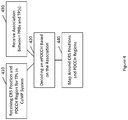
- Figure 4 illustrates a method according to certain embodiments.
- the method may be performed by, for example, a user equipment.
- a method may include, at 410, receiving a common reference signal position and a physical downlink control channel region for each of a plurality of transmission points in a cooperative multipoint system.
- the method may include, at 430, receiving an association between physical resource block resources and at least one of the plurality of transmission points. The association may be related to a search space of an enhanced physical downlink control channel.
- the method may also include, at 420, decoding an ePDCCH based on the association.
- the method may additionally include at, 440, mapping around a plurality of common reference signal positions and physical downlink control channel regions based on the association, when decoding the ePDCCH.
- Figure 5 illustrates another method according to certain embodiments.
- the method may be performed by an access point, such as an eNodeB or a base station.
- the method includes, at 510, determining a common reference signal position and a physical downlink control channel region for each of a plurality of transmission points in a cooperative multipoint system.
- the method also includes, at 520, transmitting the common reference signal positions and the physical downlink control channel regions to a user equipment.
- the method also includes, at 530, determining an association between physical resource block resources and at least one of the plurality of transmission points.
- the method also includes, at 535, transmitting, by the associated at least one of the plurality of transmission points, an ePDCCH on the physical resource block resources to the user equipment.
- the method may additionally include, at 540, transmitting the association to the user equipment.
- the association may be related to a search space of an enhanced physical downlink control channel.
- the method may also include, at 550, partitioning physical resource blocks with at least one access point, wherein the determining the common reference signal positions and the physical downlink control channel regions is based on the partitioning. Moreover, the method may include, at 560, allocating physical resource blocks to enhanced physical downlink control channel resources, wherein the determining the common reference signal positions and the physical downlink control channel regions is based on the allocating.
- the method may further include, at 570, partially overlapping partitions of the physical resource blocks.
- the method may additionally include, at 580, using the partially overlapped partitions for a joint transmission based cooperative multipoint scheme.
- Figure 6 illustrates a system according to certain embodiments of the invention.
- a system may comprise several devices, such as, for example, access point 610 and UE 620.
- the system may comprise more than one UE 620 and more than one access point 610, although only one of each is shown for the purposes of illustration.
- the system may also involve only at least two UEs 620 or only at least two access points 610.
- Each of these devices may comprise at least one processor, respectively indicated as 614 and 624.
- At least one memory may be provided in each device, and indicated as 615 and 625, respectively.
- the memory may comprise computer program instructions or computer code contained therein.
- One or more transceiver 616 and 626 may be provided, and each device may also comprise an antenna, respectively illustrated as 617 and 627.
- antennas 617 and 627 may illustrate any form of communication hardware, without being limited to merely an antenna.
- Transceivers 616 and 626 may each, independently, be a transmitter, a receiver, or both a transmitter and a receiver, or a unit or device that may be configured both for transmission and reception.
- Processors 614 and 624 may be embodied by any computational or data processing device, such as a central processing unit (CPU), application specific integrated circuit (ASIC), or comparable device.
- the processors may be implemented as a single controller, or a plurality of controllers or processors.
- Memories 615 and 625 may independently be any suitable storage device, such as a non-transitory computer-readable medium.
- a hard disk drive (HDD), random access memory (RAM), flash memory, or other suitable memory may be used.
- the memories may be combined on a single integrated circuit as the processor, or may be separate therefrom.
- the computer program instructions may be stored in the memory and which may be processed by the processors can be any suitable form of computer program code, for example, a compiled or interpreted computer program written in any suitable programming language.
- the memory and the computer program instructions may be configured, with the processor for the particular device, to cause a hardware apparatus such as access point 610 and UE 620, to perform any of the processes described above (see, for example, Figures 1-5 ). Therefore, in certain embodiments, a non-transitory computer-readable medium may be encoded with computer instructions that, when executed in hardware, may perform a process such as one of the processes described herein. Alternatively, certain embodiments of the invention may be performed entirely in hardware.
- Figure 6 illustrates a system including an access point 610 and a UE 620
- embodiments of the invention may be applicable to other configurations, and configurations involving additional elements, as illustrated and discussed herein.
- multiple user equipment devices and multiple access points may be present, or other nodes providing similar functionality, such as relays which may receive data from an access point and forward the data to a UE and may implement both functionality of the UE and functionality of the access point.
Landscapes
- Engineering & Computer Science (AREA)
- Signal Processing (AREA)
- Computer Networks & Wireless Communication (AREA)
- Mobile Radio Communication Systems (AREA)
Claims (12)
- Verfahren, das von einer Teilnehmereinrichtung durchgeführt wird, wobei das Verfahren Folgendes umfasst:Empfangen (410) einer gemeinsamen Referenzsignalposition und einer physischen Downlinksteuerkanalregion für jeden einer Vielzahl von Übertragungspunkten für ein kooperatives Mehrpunktsystem;Empfangen (430) von Informationen über eine Verknüpfung zwischen physischen Ressourcenblockressourcen und mindestens einem der Vielzahl von Übertragungspunkten des kooperativen Mehrpunktsystems; undDecodieren (420) eines erweiterten physischen Downlinksteuerkanals auf Basis der Informationen über die Verknüpfung.
- Verfahren nach Anspruch 1, wobei die Informationen über die Verknüpfung einen Suchraum des erweiterten physischen Downlinksteuerkanals betreffen.
- Verfahren, das von einem Zugangspunkt durchgeführt wird, wobei das Verfahren Folgendes umfasst:Bestimmen (510, 530) i) einer gemeinsamen Referenzsignalposition und einer physischen Downlinksteuerkanalregion für jeden einer Vielzahl von Übertragungspunkten für ein kooperatives Mehrpunktsystem, und ii) einer Verknüpfung zwischen physischen Ressourcenblockressourcen und mindestens einem der Vielzahl von Übertragungspunkten im kooperativen Mehrpunktsystem; undÜbertragen (520, 540) i) von Informationen über die gemeinsamen Referenzsignalpositionen und die physischen Downlinksteuerkanalregionen, und ii) Informationen über die Verknüpfung mit einer Teilnehmereinrichtung.
- Verfahren nach Anspruch 3, das ferner Folgendes umfasst:
Übertragen (535) eines erweiterten physischen Downlinksteuerkanals durch den verknüpften mindestens einen der Vielzahl von Übertragungspunkten auf den physischen Ressourcenblockressourcen. - Vorrichtung, die zum Betrieb in einer Teilnehmereinrichtung konfiguriert ist, wobei die Vorrichtung Folgendes umfasst:ein Mittel zum Empfangen (410) einer gemeinsamen Referenzsignalposition und einer physischen Downlinksteuerkanalregion für jeden einer Vielzahl von Übertragungspunkten für ein kooperatives Mehrpunktsystem;ein Mittel zum Empfangen (430) von Informationen über eine Verknüpfung zwischen physischen Ressourcenblockressourcen und mindestens einem der Vielzahl von Übertragungspunkten des kooperativen Mehrpunktsystems; undein Mittel zum Decodieren (420) eines erweiterten physischen Downlinksteuerkanals auf Basis der Informationen über die Verknüpfung.
- Vorrichtung nach Anspruch 5, wobei die Informationen über die Verknüpfung einen Suchraum des erweiterten physischen Downlinksteuerkanals betreffen.
- Vorrichtung nach Anspruch 5, die ferner Folgendes umfasst
ein Mittel zur Ressourcenzuordnung, derart, dass die Zuordnung auf Basis der Verknüpfung um eine Vielzahl von gemeinsamen Referenzsignalpositionen und physischen Downlinksteuerkanalregionen zuordnet (440). - Vorrichtung, die zum Betrieb in einem Zugangspunkt konfiguriert ist, wobei die Vorrichtung Folgendes umfasst:ein Mittel zum Bestimmen (510, 530) i) einer gemeinsamen Referenzsignalposition und einer physischen Downlinksteuerkanalregion für jeden einer Vielzahl von Übertragungspunkten für ein kooperatives Mehrpunktsystem, und ii) einer Verknüpfung zwischen physischen Ressourcenblockressourcen und mindestens einem der Vielzahl von Übertragungspunkten im kooperativen Mehrpunktsystem; undein Mittel zum Übertragen (520, 540) i) von Informationen über die gemeinsamen Referenzsignalpositionen und die physischen Downlinksteuerkanalregionen, und ii) Informationen über die Verknüpfung mit einer Teilnehmereinrichtung.
- Vorrichtung nach Anspruch 8, die ferner Folgendes umfasst
ein Mittel zum Übertragen (535) eines erweiterten physischen Downlinksteuerkanals durch den verknüpften mindestens einen der Vielzahl von Übertragungspunkten auf den physischen Ressourcenblockressourcen. - Vorrichtung nach Anspruch 8, die ferner Folgendes umfasst
ein Mittel zum Partitionieren (550) von physischen Ressourcenblöcken und Verknüpfen der resultierenden Partitionen mit mindestens einem weiteren Zugangspunkt, und
ein Mittel zum Bestimmen (510) der gemeinsamen Referenzsignalpositionen und der physischen Downlinksteuerkanalregionen auf Basis des Partitionierens. - Vorrichtung nach Anspruch 8, die ferner Folgendes umfasst
ein Mittel zum Zuteilen (560) von physischen Ressourcenblöcken zu erweiterten physischen Downlinksteuerkanalressourcen; und
ein Mittel zum Bestimmen (510) der gemeinsamen Referenzsignalpositionen und der physischen Downlinksteuerkanalregionen auf Basis des Zuteilens. - Vorrichtung nach Anspruch 10, die ferner Folgendes umfasst
ein Mittel zum teilweisen Überlappen (570) von Partitionen der physischen Ressourcenblöcke; und
ein Mittel zum Verwenden (580) der teilweise überlappten Partitionen für ein verbundenes übertragungsbasiertes kooperatives Mehrpunktschema.
Applications Claiming Priority (2)
| Application Number | Priority Date | Filing Date | Title |
|---|---|---|---|
| US13/566,111 US9325466B2 (en) | 2012-08-03 | 2012-08-03 | Signaling for ePDCCH resource mapping in the support of CoMP |
| PCT/FI2013/050610 WO2014020229A1 (en) | 2012-08-03 | 2013-06-05 | Signaling for epdcch resource mapping in the support of comp |
Publications (3)
| Publication Number | Publication Date |
|---|---|
| EP2880945A1 EP2880945A1 (de) | 2015-06-10 |
| EP2880945A4 EP2880945A4 (de) | 2016-04-06 |
| EP2880945B1 true EP2880945B1 (de) | 2021-05-05 |
Family
ID=50025404
Family Applications (1)
| Application Number | Title | Priority Date | Filing Date |
|---|---|---|---|
| EP13826009.6A Active EP2880945B1 (de) | 2012-08-03 | 2013-06-05 | Signalisierung für epdcch-ressourcenzuordnung bei der unterstützung von comp |
Country Status (9)
| Country | Link |
|---|---|
| US (1) | US9325466B2 (de) |
| EP (1) | EP2880945B1 (de) |
| KR (1) | KR101647613B1 (de) |
| CN (1) | CN104472003B (de) |
| AR (1) | AR091952A1 (de) |
| BR (1) | BR112014032826B1 (de) |
| DK (1) | DK2880945T3 (de) |
| TW (1) | TWI542178B (de) |
| WO (1) | WO2014020229A1 (de) |
Families Citing this family (10)
| Publication number | Priority date | Publication date | Assignee | Title |
|---|---|---|---|---|
| US9635644B2 (en) | 2012-08-10 | 2017-04-25 | Qualcomm Incorporated | Downlink coverage enhancements |
| EP2901786B1 (de) * | 2012-09-28 | 2018-06-13 | Telefonaktiebolaget LM Ericsson (publ) | Verfahren und netzwerkknote in einem drahtlosen netzwerk zur übertragung eines epdcch |
| WO2014069895A1 (ko) * | 2012-10-31 | 2014-05-08 | 엘지전자 주식회사 | 무선 통신 시스템에서 제어정보 수신 방법 및 장치 |
| US10361831B2 (en) * | 2013-04-16 | 2019-07-23 | Telefonaktiebolaget Lm Ericsson (Publ) | Wireless device and method for selecting uplink transmission parameters |
| CN104703212B (zh) * | 2013-12-06 | 2019-07-23 | 索尼公司 | 无线通信系统中的装置、无线通信系统和方法 |
| WO2015176279A1 (zh) * | 2014-05-22 | 2015-11-26 | 华为技术有限公司 | 一种无线传输路径的选择方法及装置 |
| EP2987622B1 (de) * | 2014-08-20 | 2018-02-21 | Krones AG | Formfüllmaschine und Verfahren zum Ausformen und Füllen von Behältern |
| CN108811116B (zh) | 2017-05-05 | 2021-03-05 | 华为技术有限公司 | 传输控制信道的方法、网络设备、网络控制器和终端设备 |
| US11051263B2 (en) | 2017-06-15 | 2021-06-29 | Qualcomm Incorporated | Synchronization channel and system acquisition for internet of things communications in a shared spectrum |
| WO2021151237A1 (en) * | 2020-01-31 | 2021-08-05 | Qualcomm Incorporated | Pdcch monitoring for single-dci to multi-cell scheduling |
Family Cites Families (9)
| Publication number | Priority date | Publication date | Assignee | Title |
|---|---|---|---|---|
| CN103179075B (zh) * | 2008-11-20 | 2017-06-27 | 华为技术有限公司 | 协作多点传输中确定资源映射的方法、网络设备及系统 |
| US9124409B2 (en) * | 2009-07-30 | 2015-09-01 | Qualcomm Incorporated | Determining control region parameters for multiple transmission points |
| US8804586B2 (en) | 2010-01-11 | 2014-08-12 | Blackberry Limited | Control channel interference management and extended PDCCH for heterogeneous network |
| CN103299556B (zh) * | 2011-01-07 | 2017-05-17 | 交互数字专利控股公司 | 用于协作多点传输中下行链路共享信道接收的方法、系统和设备 |
| DK2919545T3 (en) * | 2011-02-11 | 2016-12-05 | Interdigital Patent Holdings Inc | Device and method for an improved control channel (E-PDCCH). |
| US8630253B2 (en) * | 2011-05-02 | 2014-01-14 | Futurewei Technologies, Inc. | System and method for mapping data symbols |
| US20130039291A1 (en) | 2011-08-12 | 2013-02-14 | Research In Motion Limited | Design on Enhanced Control Channel for Wireless System |
| GB2496198B (en) * | 2011-11-07 | 2014-03-19 | Broadcom Corp | Apparatus, methods and computer programs for coordinated multipoint transmission |
| US8982693B2 (en) * | 2012-05-14 | 2015-03-17 | Google Technology Holdings LLC | Radio link monitoring in a wireless communication device |
-
2012
- 2012-08-03 US US13/566,111 patent/US9325466B2/en active Active
-
2013
- 2013-06-05 BR BR112014032826-9A patent/BR112014032826B1/pt active IP Right Grant
- 2013-06-05 CN CN201380036526.9A patent/CN104472003B/zh active Active
- 2013-06-05 EP EP13826009.6A patent/EP2880945B1/de active Active
- 2013-06-05 WO PCT/FI2013/050610 patent/WO2014020229A1/en not_active Ceased
- 2013-06-05 DK DK13826009.6T patent/DK2880945T3/da active
- 2013-06-05 KR KR1020157005493A patent/KR101647613B1/ko active Active
- 2013-06-26 TW TW102122715A patent/TWI542178B/zh active
- 2013-08-01 AR ARP130102728A patent/AR091952A1/es active IP Right Grant
Non-Patent Citations (1)
| Title |
|---|
| ETRI: "Downlink control signaling for downlink CoMP", 3GPP DRAFT; R1-113555 COMP DL CONTROL_REVISED, 3RD GENERATION PARTNERSHIP PROJECT (3GPP), MOBILE COMPETENCE CENTRE ; 650, ROUTE DES LUCIOLES ; F-06921 SOPHIA-ANTIPOLIS CEDEX ; FRANCE, vol. RAN WG1, no. Zhuhai; 20111010, 14 October 2011 (2011-10-14), XP050538676 * |
Also Published As
| Publication number | Publication date |
|---|---|
| KR20150038562A (ko) | 2015-04-08 |
| US9325466B2 (en) | 2016-04-26 |
| AR091952A1 (es) | 2015-03-11 |
| US20140036789A1 (en) | 2014-02-06 |
| DK2880945T3 (da) | 2021-05-31 |
| CN104472003B (zh) | 2018-09-11 |
| KR101647613B1 (ko) | 2016-08-10 |
| CN104472003A (zh) | 2015-03-25 |
| EP2880945A4 (de) | 2016-04-06 |
| TW201408014A (zh) | 2014-02-16 |
| BR112014032826A2 (pt) | 2017-06-27 |
| EP2880945A1 (de) | 2015-06-10 |
| BR112014032826B1 (pt) | 2022-10-11 |
| WO2014020229A1 (en) | 2014-02-06 |
| TWI542178B (zh) | 2016-07-11 |
Similar Documents
| Publication | Publication Date | Title |
|---|---|---|
| US11924852B2 (en) | Resource configuration for EPDCCH | |
| EP2880945B1 (de) | Signalisierung für epdcch-ressourcenzuordnung bei der unterstützung von comp | |
| US12149923B2 (en) | Transmission of control information using more than one beam pair link | |
| EP2689624B1 (de) | Verfahren zur suchraumkonfiguration für verbesserte physikalische abwärtssteuerungskanäle | |
| US10178679B2 (en) | Signaling designs for network assisted interference cancellation and suppression | |
| US10104651B2 (en) | Physical downlink control channel design for narrow band internet of things | |
| CN107888366B (zh) | 映射数据符号的系统和方法 | |
| KR20150110461A (ko) | Enodeb간 comp를 지원하는 방법들 | |
| US20150003405A1 (en) | Enhanced Broadcast Channel for Primary System Information acquisition in OFDM/OFDMA Systems | |
| TWI647965B (zh) | 窄帶實體下行鏈路控制通道的解碼方法及設備 | |
| OA19663A (en) | Transmission of control information using more than one beam pair link. |
Legal Events
| Date | Code | Title | Description |
|---|---|---|---|
| PUAI | Public reference made under article 153(3) epc to a published international application that has entered the european phase |
Free format text: ORIGINAL CODE: 0009012 |
|
| 17P | Request for examination filed |
Effective date: 20150227 |
|
| AK | Designated contracting states |
Kind code of ref document: A1 Designated state(s): AL AT BE BG CH CY CZ DE DK EE ES FI FR GB GR HR HU IE IS IT LI LT LU LV MC MK MT NL NO PL PT RO RS SE SI SK SM TR |
|
| AX | Request for extension of the european patent |
Extension state: BA ME |
|
| RAP1 | Party data changed (applicant data changed or rights of an application transferred) |
Owner name: NOKIA TECHNOLOGIES OY |
|
| DAX | Request for extension of the european patent (deleted) | ||
| RA4 | Supplementary search report drawn up and despatched (corrected) |
Effective date: 20160304 |
|
| RIC1 | Information provided on ipc code assigned before grant |
Ipc: H04L 5/00 20060101ALI20160229BHEP Ipc: H04W 16/02 20090101ALI20160229BHEP Ipc: H04W 28/26 20090101ALI20160229BHEP Ipc: H04B 7/02 20060101ALI20160229BHEP Ipc: H04W 72/04 20090101AFI20160229BHEP |
|
| RAP1 | Party data changed (applicant data changed or rights of an application transferred) |
Owner name: NOKIA TECHNOLOGIES OY |
|
| STAA | Information on the status of an ep patent application or granted ep patent |
Free format text: STATUS: EXAMINATION IS IN PROGRESS |
|
| 17Q | First examination report despatched |
Effective date: 20200107 |
|
| GRAP | Despatch of communication of intention to grant a patent |
Free format text: ORIGINAL CODE: EPIDOSNIGR1 |
|
| STAA | Information on the status of an ep patent application or granted ep patent |
Free format text: STATUS: GRANT OF PATENT IS INTENDED |
|
| RIC1 | Information provided on ipc code assigned before grant |
Ipc: H04L 5/00 20060101ALI20200529BHEP Ipc: H04W 16/02 20090101ALI20200529BHEP Ipc: H04W 28/26 20090101ALI20200529BHEP Ipc: H04W 72/04 20090101AFI20200529BHEP Ipc: H04B 7/024 20170101ALI20200529BHEP Ipc: H04B 7/02 20180101ALI20200529BHEP |
|
| INTG | Intention to grant announced |
Effective date: 20200626 |
|
| GRAJ | Information related to disapproval of communication of intention to grant by the applicant or resumption of examination proceedings by the epo deleted |
Free format text: ORIGINAL CODE: EPIDOSDIGR1 |
|
| STAA | Information on the status of an ep patent application or granted ep patent |
Free format text: STATUS: EXAMINATION IS IN PROGRESS |
|
| INTC | Intention to grant announced (deleted) | ||
| GRAS | Grant fee paid |
Free format text: ORIGINAL CODE: EPIDOSNIGR3 |
|
| STAA | Information on the status of an ep patent application or granted ep patent |
Free format text: STATUS: GRANT OF PATENT IS INTENDED |
|
| GRAP | Despatch of communication of intention to grant a patent |
Free format text: ORIGINAL CODE: EPIDOSNIGR1 |
|
| INTG | Intention to grant announced |
Effective date: 20201127 |
|
| GRAA | (expected) grant |
Free format text: ORIGINAL CODE: 0009210 |
|
| STAA | Information on the status of an ep patent application or granted ep patent |
Free format text: STATUS: THE PATENT HAS BEEN GRANTED |
|
| AK | Designated contracting states |
Kind code of ref document: B1 Designated state(s): AL AT BE BG CH CY CZ DE DK EE ES FI FR GB GR HR HU IE IS IT LI LT LU LV MC MK MT NL NO PL PT RO RS SE SI SK SM TR |
|
| REG | Reference to a national code |
Ref country code: GB Ref legal event code: FG4D |
|
| REG | Reference to a national code |
Ref country code: CH Ref legal event code: EP |
|
| REG | Reference to a national code |
Ref country code: AT Ref legal event code: REF Ref document number: 1391448 Country of ref document: AT Kind code of ref document: T Effective date: 20210515 |
|
| REG | Reference to a national code |
Ref country code: IE Ref legal event code: FG4D |
|
| REG | Reference to a national code |
Ref country code: DE Ref legal event code: R096 Ref document number: 602013077363 Country of ref document: DE |
|
| REG | Reference to a national code |
Ref country code: DK Ref legal event code: T3 Effective date: 20210526 |
|
| REG | Reference to a national code |
Ref country code: NL Ref legal event code: FP |
|
| REG | Reference to a national code |
Ref country code: LT Ref legal event code: MG9D |
|
| REG | Reference to a national code |
Ref country code: AT Ref legal event code: MK05 Ref document number: 1391448 Country of ref document: AT Kind code of ref document: T Effective date: 20210505 |
|
| PG25 | Lapsed in a contracting state [announced via postgrant information from national office to epo] |
Ref country code: HR Free format text: LAPSE BECAUSE OF FAILURE TO SUBMIT A TRANSLATION OF THE DESCRIPTION OR TO PAY THE FEE WITHIN THE PRESCRIBED TIME-LIMIT Effective date: 20210505 Ref country code: LT Free format text: LAPSE BECAUSE OF FAILURE TO SUBMIT A TRANSLATION OF THE DESCRIPTION OR TO PAY THE FEE WITHIN THE PRESCRIBED TIME-LIMIT Effective date: 20210505 Ref country code: FI Free format text: LAPSE BECAUSE OF FAILURE TO SUBMIT A TRANSLATION OF THE DESCRIPTION OR TO PAY THE FEE WITHIN THE PRESCRIBED TIME-LIMIT Effective date: 20210505 Ref country code: AT Free format text: LAPSE BECAUSE OF FAILURE TO SUBMIT A TRANSLATION OF THE DESCRIPTION OR TO PAY THE FEE WITHIN THE PRESCRIBED TIME-LIMIT Effective date: 20210505 Ref country code: BG Free format text: LAPSE BECAUSE OF FAILURE TO SUBMIT A TRANSLATION OF THE DESCRIPTION OR TO PAY THE FEE WITHIN THE PRESCRIBED TIME-LIMIT Effective date: 20210805 |
|
| PG25 | Lapsed in a contracting state [announced via postgrant information from national office to epo] |
Ref country code: ES Free format text: LAPSE BECAUSE OF FAILURE TO SUBMIT A TRANSLATION OF THE DESCRIPTION OR TO PAY THE FEE WITHIN THE PRESCRIBED TIME-LIMIT Effective date: 20210505 Ref country code: NO Free format text: LAPSE BECAUSE OF FAILURE TO SUBMIT A TRANSLATION OF THE DESCRIPTION OR TO PAY THE FEE WITHIN THE PRESCRIBED TIME-LIMIT Effective date: 20210805 Ref country code: PT Free format text: LAPSE BECAUSE OF FAILURE TO SUBMIT A TRANSLATION OF THE DESCRIPTION OR TO PAY THE FEE WITHIN THE PRESCRIBED TIME-LIMIT Effective date: 20210906 Ref country code: PL Free format text: LAPSE BECAUSE OF FAILURE TO SUBMIT A TRANSLATION OF THE DESCRIPTION OR TO PAY THE FEE WITHIN THE PRESCRIBED TIME-LIMIT Effective date: 20210505 Ref country code: SE Free format text: LAPSE BECAUSE OF FAILURE TO SUBMIT A TRANSLATION OF THE DESCRIPTION OR TO PAY THE FEE WITHIN THE PRESCRIBED TIME-LIMIT Effective date: 20210505 Ref country code: RS Free format text: LAPSE BECAUSE OF FAILURE TO SUBMIT A TRANSLATION OF THE DESCRIPTION OR TO PAY THE FEE WITHIN THE PRESCRIBED TIME-LIMIT Effective date: 20210505 Ref country code: IS Free format text: LAPSE BECAUSE OF FAILURE TO SUBMIT A TRANSLATION OF THE DESCRIPTION OR TO PAY THE FEE WITHIN THE PRESCRIBED TIME-LIMIT Effective date: 20210905 Ref country code: GR Free format text: LAPSE BECAUSE OF FAILURE TO SUBMIT A TRANSLATION OF THE DESCRIPTION OR TO PAY THE FEE WITHIN THE PRESCRIBED TIME-LIMIT Effective date: 20210806 Ref country code: LV Free format text: LAPSE BECAUSE OF FAILURE TO SUBMIT A TRANSLATION OF THE DESCRIPTION OR TO PAY THE FEE WITHIN THE PRESCRIBED TIME-LIMIT Effective date: 20210505 |
|
| PG25 | Lapsed in a contracting state [announced via postgrant information from national office to epo] |
Ref country code: EE Free format text: LAPSE BECAUSE OF FAILURE TO SUBMIT A TRANSLATION OF THE DESCRIPTION OR TO PAY THE FEE WITHIN THE PRESCRIBED TIME-LIMIT Effective date: 20210505 Ref country code: CZ Free format text: LAPSE BECAUSE OF FAILURE TO SUBMIT A TRANSLATION OF THE DESCRIPTION OR TO PAY THE FEE WITHIN THE PRESCRIBED TIME-LIMIT Effective date: 20210505 Ref country code: SK Free format text: LAPSE BECAUSE OF FAILURE TO SUBMIT A TRANSLATION OF THE DESCRIPTION OR TO PAY THE FEE WITHIN THE PRESCRIBED TIME-LIMIT Effective date: 20210505 Ref country code: SM Free format text: LAPSE BECAUSE OF FAILURE TO SUBMIT A TRANSLATION OF THE DESCRIPTION OR TO PAY THE FEE WITHIN THE PRESCRIBED TIME-LIMIT Effective date: 20210505 Ref country code: RO Free format text: LAPSE BECAUSE OF FAILURE TO SUBMIT A TRANSLATION OF THE DESCRIPTION OR TO PAY THE FEE WITHIN THE PRESCRIBED TIME-LIMIT Effective date: 20210505 |
|
| REG | Reference to a national code |
Ref country code: CH Ref legal event code: PL |
|
| REG | Reference to a national code |
Ref country code: DE Ref legal event code: R097 Ref document number: 602013077363 Country of ref document: DE |
|
| REG | Reference to a national code |
Ref country code: BE Ref legal event code: MM Effective date: 20210630 |
|
| PLBE | No opposition filed within time limit |
Free format text: ORIGINAL CODE: 0009261 |
|
| STAA | Information on the status of an ep patent application or granted ep patent |
Free format text: STATUS: NO OPPOSITION FILED WITHIN TIME LIMIT |
|
| PG25 | Lapsed in a contracting state [announced via postgrant information from national office to epo] |
Ref country code: MC Free format text: LAPSE BECAUSE OF FAILURE TO SUBMIT A TRANSLATION OF THE DESCRIPTION OR TO PAY THE FEE WITHIN THE PRESCRIBED TIME-LIMIT Effective date: 20210505 Ref country code: LU Free format text: LAPSE BECAUSE OF NON-PAYMENT OF DUE FEES Effective date: 20210605 |
|
| 26N | No opposition filed |
Effective date: 20220208 |
|
| PG25 | Lapsed in a contracting state [announced via postgrant information from national office to epo] |
Ref country code: LI Free format text: LAPSE BECAUSE OF NON-PAYMENT OF DUE FEES Effective date: 20210630 Ref country code: IE Free format text: LAPSE BECAUSE OF NON-PAYMENT OF DUE FEES Effective date: 20210605 Ref country code: CH Free format text: LAPSE BECAUSE OF NON-PAYMENT OF DUE FEES Effective date: 20210630 |
|
| PG25 | Lapsed in a contracting state [announced via postgrant information from national office to epo] |
Ref country code: IS Free format text: LAPSE BECAUSE OF FAILURE TO SUBMIT A TRANSLATION OF THE DESCRIPTION OR TO PAY THE FEE WITHIN THE PRESCRIBED TIME-LIMIT Effective date: 20210905 Ref country code: AL Free format text: LAPSE BECAUSE OF FAILURE TO SUBMIT A TRANSLATION OF THE DESCRIPTION OR TO PAY THE FEE WITHIN THE PRESCRIBED TIME-LIMIT Effective date: 20210505 |
|
| PG25 | Lapsed in a contracting state [announced via postgrant information from national office to epo] |
Ref country code: IT Free format text: LAPSE BECAUSE OF FAILURE TO SUBMIT A TRANSLATION OF THE DESCRIPTION OR TO PAY THE FEE WITHIN THE PRESCRIBED TIME-LIMIT Effective date: 20210505 Ref country code: BE Free format text: LAPSE BECAUSE OF NON-PAYMENT OF DUE FEES Effective date: 20210630 |
|
| PG25 | Lapsed in a contracting state [announced via postgrant information from national office to epo] |
Ref country code: HU Free format text: LAPSE BECAUSE OF FAILURE TO SUBMIT A TRANSLATION OF THE DESCRIPTION OR TO PAY THE FEE WITHIN THE PRESCRIBED TIME-LIMIT; INVALID AB INITIO Effective date: 20130605 |
|
| PG25 | Lapsed in a contracting state [announced via postgrant information from national office to epo] |
Ref country code: CY Free format text: LAPSE BECAUSE OF FAILURE TO SUBMIT A TRANSLATION OF THE DESCRIPTION OR TO PAY THE FEE WITHIN THE PRESCRIBED TIME-LIMIT Effective date: 20210505 |
|
| P01 | Opt-out of the competence of the unified patent court (upc) registered |
Effective date: 20230527 |
|
| PG25 | Lapsed in a contracting state [announced via postgrant information from national office to epo] |
Ref country code: MK Free format text: LAPSE BECAUSE OF FAILURE TO SUBMIT A TRANSLATION OF THE DESCRIPTION OR TO PAY THE FEE WITHIN THE PRESCRIBED TIME-LIMIT Effective date: 20210505 |
|
| PG25 | Lapsed in a contracting state [announced via postgrant information from national office to epo] |
Ref country code: TR Free format text: LAPSE BECAUSE OF FAILURE TO SUBMIT A TRANSLATION OF THE DESCRIPTION OR TO PAY THE FEE WITHIN THE PRESCRIBED TIME-LIMIT Effective date: 20210505 |
|
| PG25 | Lapsed in a contracting state [announced via postgrant information from national office to epo] |
Ref country code: MT Free format text: LAPSE BECAUSE OF FAILURE TO SUBMIT A TRANSLATION OF THE DESCRIPTION OR TO PAY THE FEE WITHIN THE PRESCRIBED TIME-LIMIT Effective date: 20210505 |
|
| PGFP | Annual fee paid to national office [announced via postgrant information from national office to epo] |
Ref country code: NL Payment date: 20250516 Year of fee payment: 13 |
|
| PGFP | Annual fee paid to national office [announced via postgrant information from national office to epo] |
Ref country code: DE Payment date: 20250429 Year of fee payment: 13 |
|
| PGFP | Annual fee paid to national office [announced via postgrant information from national office to epo] |
Ref country code: GB Payment date: 20250501 Year of fee payment: 13 Ref country code: DK Payment date: 20250618 Year of fee payment: 13 |
|
| PGFP | Annual fee paid to national office [announced via postgrant information from national office to epo] |
Ref country code: FR Payment date: 20250508 Year of fee payment: 13 |