EP2880868B1 - Vorrichtung und verfahren zur bereitstellung eines n-bildschirmdienstes in einem rundfunksystem - Google Patents
Vorrichtung und verfahren zur bereitstellung eines n-bildschirmdienstes in einem rundfunksystem Download PDFInfo
- Publication number
- EP2880868B1 EP2880868B1 EP13826512.9A EP13826512A EP2880868B1 EP 2880868 B1 EP2880868 B1 EP 2880868B1 EP 13826512 A EP13826512 A EP 13826512A EP 2880868 B1 EP2880868 B1 EP 2880868B1
- Authority
- EP
- European Patent Office
- Prior art keywords
- screen device
- broadcast service
- sub
- screen
- service application
- Prior art date
- Legal status (The legal status is an assumption and is not a legal conclusion. Google has not performed a legal analysis and makes no representation as to the accuracy of the status listed.)
- Active
Links
Images



Classifications
-
- H—ELECTRICITY
- H04—ELECTRIC COMMUNICATION TECHNIQUE
- H04N—PICTORIAL COMMUNICATION, e.g. TELEVISION
- H04N21/00—Selective content distribution, e.g. interactive television or video on demand [VOD]
- H04N21/40—Client devices specifically adapted for the reception of or interaction with content, e.g. set-top-box [STB]; Operations thereof
- H04N21/43—Processing of content or additional data, e.g. demultiplexing additional data from a digital video stream; Elementary client operations, e.g. monitoring of home network or synchronising decoder's clock; Client middleware
- H04N21/436—Interfacing a local distribution network, e.g. communicating with another STB or one or more peripheral devices inside the home
- H04N21/43615—Interfacing a Home Network, e.g. for connecting the client to a plurality of peripherals
-
- H—ELECTRICITY
- H04—ELECTRIC COMMUNICATION TECHNIQUE
- H04N—PICTORIAL COMMUNICATION, e.g. TELEVISION
- H04N21/00—Selective content distribution, e.g. interactive television or video on demand [VOD]
- H04N21/40—Client devices specifically adapted for the reception of or interaction with content, e.g. set-top-box [STB]; Operations thereof
- H04N21/43—Processing of content or additional data, e.g. demultiplexing additional data from a digital video stream; Elementary client operations, e.g. monitoring of home network or synchronising decoder's clock; Client middleware
- H04N21/44—Processing of video elementary streams, e.g. splicing a video clip retrieved from local storage with an incoming video stream or rendering scenes according to encoded video stream scene graphs
- H04N21/4402—Processing of video elementary streams, e.g. splicing a video clip retrieved from local storage with an incoming video stream or rendering scenes according to encoded video stream scene graphs involving reformatting operations of video signals for household redistribution, storage or real-time display
-
- H—ELECTRICITY
- H04—ELECTRIC COMMUNICATION TECHNIQUE
- H04N—PICTORIAL COMMUNICATION, e.g. TELEVISION
- H04N21/00—Selective content distribution, e.g. interactive television or video on demand [VOD]
- H04N21/40—Client devices specifically adapted for the reception of or interaction with content, e.g. set-top-box [STB]; Operations thereof
- H04N21/41—Structure of client; Structure of client peripherals
- H04N21/4104—Peripherals receiving signals from specially adapted client devices
- H04N21/4126—The peripheral being portable, e.g. PDAs or mobile phones
-
- H—ELECTRICITY
- H04—ELECTRIC COMMUNICATION TECHNIQUE
- H04N—PICTORIAL COMMUNICATION, e.g. TELEVISION
- H04N21/00—Selective content distribution, e.g. interactive television or video on demand [VOD]
- H04N21/80—Generation or processing of content or additional data by content creator independently of the distribution process; Content per se
- H04N21/81—Monomedia components thereof
- H04N21/8166—Monomedia components thereof involving executable data, e.g. software
- H04N21/8186—Monomedia components thereof involving executable data, e.g. software specially adapted to be executed by a peripheral of the client device, e.g. by a reprogrammable remote control
Definitions
- the present disclosure relates to an apparatus and method for providing an N-screen service in a broadcast system. More particularly, the present disclosure relates to an apparatus and method for providing an N-screen service by considering broadcast service applications which are run on a plurality of screens in a broadcast system.
- HbbTV Hybrid Broadcast Broadband TeleVision
- IP Internet Protocol
- TV smart TeleVision
- a mobile telephone has evolved to provide useful functions to a user through applications which provide various functions since the mobile telephone has evolved into a smart phone, so a usage of a portable terminal is generalized.
- portable devices such as a tablet and a laptop Personal Computer (PC) with the mobile telephone like the smart phone, and use the portable devices with a TV.
- PC Personal Computer
- the N-screen service is a service in which at least two electronic devices may share contents or use the contents by interacting with one another, and use contents which has been used in only one electronic device by interacting with one another.
- EP 2343881 A2 discloses a digital broadcast receiver.
- the method of processing an application in a digital broadcast receiver connected with an Interactive network includes receiving, from a broadcast network, broadcast audio/video (/VV) content and application Information table (AIT) data, wherein the AIT data Includes a linkage descriptor, parsing the linkage descriptor, wherein the linkage descriptor comprises a field Identifying a type of at least one secondary device able to process the application, displaying an Indicator Informing that the application Is able to be accessed by using at least one secondary device, searching at least one secondary device connected to the digital broadcast receiver, receiving a request signal for the application, and transmitting the application or an IP address of the application to the secondary device.
- AIT Application Information table
- DVD Digital Video Broadcasting
- ETSI European Telecommunications Standards Institute
- FRANCE no. VI.1.1, 1 January 2010 (2010-01-01 ) relates to a standardized DVB broadcast system.
- CHANGWOO YOON ET AL "Classification of N-Screen Services and its standardization", 14th International Conference On Advanced Communication Technology (ICACT), 2012, IEEE, 19 February 2012 (2012-02-19), pages 597-602, XP032153178, ISBN: 978-1-4673-0150-3 specifies several scenarios for a plurality of N-screen devices. It as well discloses the running of applications on a main N-screen device or/and a sub N-screen device dependent on the capabilities of the devices but although on the position of users with regard to said devices.
- an aspect of the present disclosure is to provide an apparatus and method for providing an N-screen service in a broadcast system.
- Another aspect of the present disclosure is to propose an apparatus and method for providing an N-screen service by considering priorities of broadcast service applications which are run on a plurality of screens in a broadcast system.
- Another aspect of the present disclosure is to propose an apparatus and method for providing an N-screen service by considering relationships of broadcast service applications which are run on a plurality of screens in a broadcast system.
- Another aspect of the present disclosure is to propose an apparatus and method for providing an N-screen service by considering positions of a plurality of screens in a broadcast system.
- the present disclosure enables to provide an N-screen service in a broadcast system.
- the present disclosure enables to provide an N-screen service by considering priorities of broadcast service applications which are run on a plurality of screens in a broadcast system.
- the present disclosure enables to provide an N-screen service by considering relationships of broadcast service applications which are run on a plurality of screens in a broadcast system.
- the present disclosure enables to provide an N-screen service by considering positions of a plurality of screens in a broadcast system.
- the present disclosure enables to provide various User experiences (UXs) to a user by providing various broadcast service applications using an N-screen service.
- UXs User experiences
- first a first component
- second a second component
- first component a first component
- second component a second component
- An aspect of the present disclosure is to propose an apparatus and method for providing an N-screen service in a broadcast system.
- Another aspect of the present disclosure is to propose an apparatus and method for providing an N-screen service by considering priorities of broadcast service applications which are run on a plurality of screens in a broadcast system.
- Another aspect of the present disclosure is to propose an apparatus and method for providing an N-screen service by considering relationships of broadcast service applications which are run on a plurality of screens in a broadcast system.
- Another aspect of the present disclosure is to propose an apparatus and method for providing an N-screen service by considering positions of a plurality of screens in a broadcast system.
- the broadcast system is a Hybrid Broadcast Broadband TeleVision (HbbTV) system.
- An apparatus and method proposed in the present disclosure may be applied to other broadcast systems and communication systems, to which an N-screen service may be applied, such as a Moving Picture Experts Group (MPEG) Media Transport (MMT) system, an Evolved Packet System (EPS), a Long-Term Evolution (LTE) mobile communication system, a Long-Term Evolution-Advanced (LTE-A) mobile communication system, and an Institute of Electrical and Electronics Engineers (IEEE) 802.16m communication system.
- MPEG Moving Picture Experts Group
- MMT Moving Picture Experts Group
- EPS Evolved Packet System
- LTE Long-Term Evolution
- LTE-A Long-Term Evolution-Advanced
- IEEE Institute of Electrical and Electronics Engineers 802.16m communication system.
- an N-screen device may be one of a portable terminal, a mobile terminal, a communication terminal, a portable communication terminal, a portable mobile terminal, etc.
- an N-screen device may be one of a smart phone, a cellular phone, a game console, a Television (TV), a display, a vehicle head unit, a notebook computer, a laptop computer, a tablet computer, a Personal Media Player (PMP), a Personal Digital Assistant (PDA), etc.
- TV Television
- PMP Personal Media Player
- PDA Personal Digital Assistant
- the N-screen device may be implemented with a pocket-size portable communication terminal having a wireless communication function.
- the N-screen device may be a flexible device or a flexible display device.
- FIG. 1 schematically illustrates a structure of an HbbTV system according to an embodiment of the present disclosure.
- the HbbTV system includes a broadcast service provider 110, a main N-screen device 120, and a sub N-screen device 130.
- a broadcast service provider 110 the main N-screen device 120
- a sub N-screen device 130 the sub N-screen device 130.
- one main N-screen device is connected to one sub N-screen device.
- the number of sub N-screen devices which are connected to one main N-screen device is not limited.
- the broadcast service provider 110 provides a broadcast service, and provides an Application Information Table (AIT) and meta data in order for each of the main N-screen device 120 and the sub N-screen device 130 to run an application related to the broadcast service, i.e., a broadcast service application.
- the broadcast service provider 110 may be a broadcasting station.
- the broadcast service provider 110 provides broadcast service contents to be used in the broadcast service application through at least one of a broadcast channel and a broadband channel.
- the main N-screen device 120 receives the AIT and the meta data from the broadcast service provider 110.
- the main N-screen device 120 transmits a broadcast service application run request message which requests to run a broadcast service application using the AIT to the broadcast service provider 110, and receives broadcast service application data through at least one of the broadcast channel and the broadband channel from the broadcast service provider 110 corresponding to the broadcast service application run request message.
- the main N-screen device 120 runs the broadcast service application using the broadcast service application data received from the broadcast service provider 110.
- the main N-screen device 120 may communicate with the broadcast service provider 110 through at least one of the broadcast channel and the broadband channel while the main N-screen device 120 runs.
- the main N-screen device 120 may be a TV.
- a size of a display included in the main N-screen device 120 is greater than a size of a display included in the sub N-screen device 130.
- a relationship between the size of the display included in the main N-screen device 120 and the size of the display included in the sub N-screen device 130 is only for explanation.
- the sub N-screen device 130 may be a hybrid terminal which may receive the broadcast channel and the broadband channel which are provided by the broadcast service provider 110, or a general terminal which may only be connected to a general internet network.
- the broadcast service provider 110 transmits the AIT to the main N-screen device 120, and a format of the AIT is expressed in Table 1.
- application_type As required, e.g., Flash or HyperText Markup Language (HTML) organisation_id As defined by the application provider application_id As defined by the application provider application_control_code Not used screen_type Main/Sub_Alternative/Sub application_descriptor() application_profile_length 0 (no application profile provided) service_bound_flag Set as required visibility Not used application_priority Set as required transport_protocol_label
- At least one trans port_protocol_descriptor() protocol_id 0x0001(Object Carousel) selector_bytes Carry the minimum application version simple_application_location_descriptor() initial_path_bytes Parameters for the application
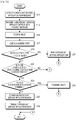
- FIGS. 2a to 2b schematically illustrate a processor for providing an N-screen service in a main N-screen device in an HbbTV system according to an embodiment of the present disclosure.
- the main N-screen device detects a broadcast service application run request at operation 211.
- the broadcast service application run request may be detected from an input unit in the main N-screen device, or in a case that a broadcast service application run request message is received from a sub N-screen device.
- the main N-screen device transmits a broadcast service application provision request message to a broadcast service provider corresponding to the broadcast service application run request at operation 213.
- the main N-screen device receives an AIT from the broadcast service provider corresponding to the broadcast service application provision request message at operation 215.
- the main N-screen device checks a screen_type of the received AIT at operation 217.
- the main N-screen device determines whether the screen_type indicates "Main” at operation 219. If the screen_type indicates "Main", the main N-screen device runs the broadcast service application at operation 221.
- the main N-screen device determines whether there is a sub N-screen device which is connected to the main N-screen device at operation 223. If the broadcast service application run request is detected in a case that the broadcast service application run request message is received from the sub N-screen device, operation 223 may be omitted. The reason is why the sub N-screen device is connected to the main N-screen device. If there is no sub N-screen device which is connected to the main N-screen device, the main N-screen device determines whether the screen_type indicates "Sub" at operation 225.
- the main N-screen device discards the AIT since the main N-screen device may not run the broadcast service application at operation 227. This is why the main N-screen device may not run the broadcast service application.
- the main N-screen device determines whether the screen type indicates "Sub_Alternative” at operation 229. If the screen_type does not indicate "Sub_Alternative", the main N-screen device terminates the process for providing the N-screen service.
- the main N-screen device runs the broadcast service application at operation 231.
- the main N-screen device determines whether the sub N-screen device is a hybrid terminal at operation 233. If the sub N-screen device is the hybrid terminal, the main N-screen device transmits the received AIT to the sub N-screen device thereby the sub N-screen device may run the broadcast service application at operation 235. That is, if the sub N-screen device is the hybrid terminal, the sub N-screen device may download the broadcast service application through at least one of a broadcast channel and a broadband channel even though the main N-screen device does not transmit the broadcast service application to the sub N-screen device after downloading the broadcast service application.
- the main N-screen device downloads broadcast service application data corresponding to the received AIT through at least one of the broadcast channel and the broadband channel at operation 237.
- the main N-screen device transmits the downloaded broadcast service application data to the sub N-screen device thereby the sub N-screen device may run the broadcast service application at operation 239.
- the main N-screen device does not determine whether a screen_type of a related broadcast service application indicates "Sub” or "Sub_Alternative". This is why all broadcast service applications related to the screen_types except for "Main" are run in the sub N-screen device.
- the main N-screen device receives the AIT from the broadcast service provider after transmitting the broadcast service provision request message.
- the broadcast service provider may automatically transmit the AIT to the main N-screen device.
- FIG. 3 schematically illustrates a processor for providing an N-screen service in a sub N-screen device as a hybrid terminal in an HbbTV system according to an embodiment of the present disclosure.
- the sub N-screen device detects a broadcast service application run request at operation 311.
- the sub N-screen device transmits a broadcast service application run request message to a main N-screen device at operation 313.
- the sub N-screen device receives an AIT from the main N-screen device in response to the broadcast service application run request message at operation 315.
- the sub N-screen device runs a broadcast service application by downloading broadcast service application data from a broadcast service provider through at least one of a broadcast channel and a broadband channel at operation 317.
- FIG. 4 schematically illustrates a processor for providing an N-screen service in a sub N-screen device which is not a hybrid terminal in an HbbTV system according to an embodiment of the present disclosure.
- the sub N-screen device detects a broadcast service application run request at operation 411.
- the sub N-screen device transmits a broadcast service application run request message to a main N-screen device at operation 413.
- the sub N-screen device runs a broadcast service application by downloading broadcast service application data from the main N-screen device at operation 415.
- broadcast service applications may be continuously run according to a situation even though any of the broadcast service applications is not run. That is, a case where the payment association application is continuously run on the sub N-screen device even though the shopping application is not run on the main N-screen device may occur.
- FIG. 5 schematically illustrates a relationship among broadcast service applications in an HbbTV system according to an embodiment of the present disclosure.
- a broadcast service Application A indicates a broadcast service application which is run on a main N-screen device 500
- a broadcast service Application B indicates a broadcast service application which is run on a sub N-screen device 510.
- a broadcast service application ID of 'application bound' included in an AIT of the broadcast service application indicates a broadcast service application ID of the broadcast service application B
- the broadcast service application A and the broadcast service application B are run with a relationship at operation 511.
- the broadcast service application B is automatically “killed” at operation 515.
- the sub N-screen device 510 notifies the main N-screen device 500 that the broadcast service application B is "killed".
- a broadcast service application A is run on a main N-screen device, and a broadcast service application B is run on a sub N-screen device.
- a type of an N-screen device on which each of the broadcast service application A and the broadcast service application B is run is not limited. That is, each of the broadcast service application A and the broadcast service application B has only to be run in an individual N-screen device.
- FIG. 6 schematically illustrates an internal structure of a main N-screen device in an HbbTV system according to an embodiment of the present disclosure.
- a main N-screen device 600 may be connected with an external electronic device (not illustrated in FIG. 6 ) using at least one of a communication module, a connector, and an earphone connecting jack.
- the electronic device may include one of various devices which are removable from the main N-screen device 600 and are connectible with the main N-screen device 600 in a wired manner, such as, for example, an earphone, an external speaker, a Universal Serial Bus (USB) memory, a charging device, a cradle/dock, a Digital Multimedia Broadcasting (DMB) antenna, a mobile payment-related device, a health management device (a blood pressure monitor or the like), a game console, a vehicle navigation device, and so forth.
- USB Universal Serial Bus
- DMB Digital Multimedia Broadcasting
- the external electronic device may be one of a wirelessly connectible Bluetooth communication device, a Near Field Communication (NFC) device, a WiFi Direct communication device, a wireless Access Point (AP), etc.
- the main N-screen device 600 may be connected with another N-screen device or electronic device such as, for example, one of a cellular phone, a smart phone, a tablet Personal Computer (PC), a desktop PC, and a server, in a wired or wireless manner.
- the main N-screen device 600 includes a camera processor 611, an image processor 613, a display 615, an HbbTV processor 617, a controller 619, a Radio Frequency (RF) processor 621, a data processor 623, a memory 625, an audio processor 627, and a key input unit 629.
- the main N-screen device 600 may be an HbbTV, so the main N-screen device 600 includes the HbbTV processor 617, and the HbbTV processor 617 may be a broadcast processor which may process a general broadcast signal.
- the RF processor 621 is responsible for radio communication of the main N-screen device 600.
- the RF processor 621 includes a RF transmitter for frequency up-converting transmission signals and amplifying the up-converted signals, and a RF receiver for low-noise-amplifying received signals and frequency down-converting the amplified signals.
- the data processor 623 includes a transmitter for encoding and modulating the transmission signals, and a receiver for demodulating and decoding the received signals.
- the data processor 623 may include a modulator/de-modulator (MODEM) and a coder/decoder (CODEC).
- the CODEC includes a data CODEC for processing packet data, and an audio CODEC for processing audio signals such as voice.
- the audio processor 627 plays received audio signals output from the audio CODEC in the data processor 623 using a speaker, and transfers transmission audio signals picked up by a microphone to the audio CODEC in the data processor 623.
- the key input unit 629 includes numeric/character keys for inputting numeric and character information and function keys for setting various functions.
- a memory 625 may include a program memory and a data memory.
- the program memory may store programs for controlling the general operation of the main N-screen device 600.
- the memory 625 may store a control program for providing an N-screen service.
- the data memory may temporarily store the data generated during execution of these programs.
- the memory 625 may be implemented as an arbitrary data storing device such as a Read Only Memory (ROM), a Random Access Memory (RAM), and a memory card (for example, a Secure Digital (SD) card, and a memory stick).
- the memory 625 may include a non-volatile memory, a volatile memory, a Hard Disk Drive (HDD), or a Solid State Drive (SSD).
- HDD Hard Disk Drive
- SSD Solid State Drive
- the memory 625 may also store applications of various functions such as navigation, video communication, games, an alarm application based on time, images for providing a Graphic User Interface (GUI) related to the applications, user information, documents, databases or data related to a method for processing touch inputs, background images (for example, a menu screen, a standby screen, and so forth), operation programs necessary for driving the main N-screen device 600, and images captured by the camera processor 611.
- applications of various functions such as navigation, video communication, games, an alarm application based on time, images for providing a Graphic User Interface (GUI) related to the applications, user information, documents, databases or data related to a method for processing touch inputs, background images (for example, a menu screen, a standby screen, and so forth), operation programs necessary for driving the main N-screen device 600, and images captured by the camera processor 611.
- GUI Graphic User Interface
- the memory 625 is a media which is read though a machine, e.g., a computer.
- machine-readable medium includes a medium for providing data to the machine to allow the machine to execute a particular function.
- the memory 625 may include non-volatile media and volatile media. Such a medium is of a tangible type so that commands delivered to the medium can be detected by a physical tool which reads the commands with the machine.
- the machine-readable medium may include, but is not limited to, at least one of a floppy disk, a flexible disk, a hard disk, a magnetic tape, a Compact Disc Read-Only Memory (CD-ROM), an optical disk, a punch card, a paper tape, a RAM, a Programmable Read-Only Memory (PROM), an Erasable PROM (EPROM), and a flash-EPROM.
- a floppy disk a flexible disk, a hard disk, a magnetic tape, a Compact Disc Read-Only Memory (CD-ROM), an optical disk, a punch card, a paper tape, a RAM, a Programmable Read-Only Memory (PROM), an Erasable PROM (EPROM), and a flash-EPROM.
- the controller 619 controls the overall operation of the main N-screen device 600.
- the controller 619 performs a broadcast service application corresponding to a screen type included in an AIT of the broadcast service application, or performs an operation related to running the broadcast service application with a sub N-screen device according to an embodiment of the present disclosure.
- the operation related to running the broadcast service application and running the broadcast service application with the sub N-screen device is performed in the manner described before with reference to FIGS. 2a to 5 , so a detailed description thereof will be omitted herein.
- a camera processor 611 includes a camera sensor for capturing images and converting the captured optical image signal into an electrical signal, and a signal processor for converting the analog image signal captured by the camera sensor into digital data.
- the camera sensor may be a Charge-Coupled Device (CCD) or Complementary Metal-Oxide-Semiconductor (CMOS) sensor, and the signal processor may be implemented with a Digital Signal Processor (DSP).
- DSP Digital Signal Processor
- the camera sensor and the signal processor may be implemented either in an integrated way, or in a separated way.
- the image processor 613 performs Image Signal Processing (ISP) for displaying the image signals output from the camera processor 611 on the display 615.
- the ISP may include gamma correction, interpolation, spatial variations, image effects, image scaling, Automatic White Balance (AWB), Automatic Exposure (AE), and Automatic Focus (AF).
- the image processor 613 processes the image signals output from the camera processor 611 on a frame-by-frame basis, and outputs the frame image data according to the characteristics and size of the display 615.
- the image processor 613 includes a video codec, which compresses the frame image data displayed on the display 615 by a preset coding scheme, and decompresses the compressed frame image data into the original frame image data.
- the video codec may include a Joint Photographic Experts Group (JPEG) codec, a Moving Picture Experts Group 4 (MPEG4) codec, and a Wavelet codec.
- JPEG Joint Photographic Experts Group
- MPEG4 Moving Picture Experts Group 4
- Wavelet codec a Wavelet codec.
- the image processor 613 is assumed to have an On-Screen Display (OSD) function, and may output OSD data according to the size of the displayed screen, under control of the controller 619.
- OSD On-Screen Display
- the display 615 displays, on its screen, image signals output from the image processor 613 and user data output from the controller 619.
- the display 615 may include a Liquid Crystal Display (LCD).
- the display 615 may include an LCD controller, a memory capable of storing image data, and an LCD panel.
- the LCD may serve as an input unit.
- the same keys as those on the key input unit 629 may be displayed on the display 615.
- the display 615 outputs an analog signal, which corresponds to at least one input to a user graphic interface, to the controller 619.
- the display 615 receives at least one user input through a user's body (for example, a finger including a thumb) or the key input unit 629 (for example, a stylus pen or an electronic pen).
- a user's body for example, a finger including a thumb
- the key input unit 629 for example, a stylus pen or an electronic pen.
- the display 615 receives continuous motion on one touch (for example, a drag).
- the display 615 outputs an analog signal corresponding to the continuous motion to the controller 619.
- a touch may also include a non-contact touch (for example, when the user input means is positioned within a distance of, for example, 1 cm) in which the user input means may be detected without a direct contact with the display 615.
- the touch may also include a direct contact between the display 615 and a finger or the key input unit 629. A distance or interval from the display 615 within which the user input means may be detected may be changed according to the capability or structure of the main N-screen device 600.
- the display 615 may be configured to output different values for values (for example, an analog voltage value or current value) detected in the direct touch event and the hovering event.
- the display 615 may be implemented as, for example, a resistive type, a capacitive type, an infrared type, an acoustic wave type, or a combination thereof.
- the display 615 may include at least two touch panels capable of sensing a touch, an approach of a finger, or the key input unit 629 to receive inputs generated by the finger or the key input unit 629.
- the at least two touch panels provide different output values to the controller 619.
- the controller 619 differently recognizes the values input from the at least two touch screen panels to identify whether the input from the display 615 is the input generated by the finger or by the key input unit 629.
- the controller 619 converts the analog signal received from the display 615 into a digital signal and controls the display 615 using the digital signal. For example, the controller 619 may control a shortcut icon (not illustrated in FIG. 6 ) displayed on the display 615 to be selected or executed in response to a direct touch event or a hovering event.
- the controller 619 by detecting a value (for example, an electric-current value) output through the display 615, recognizes a hovering interval or distance as well as a user input position and converts the recognized distance into a digital signal (for example, a Z coordinate).
- the controller 619 may also, by detecting the value output through the display 615, detect a pressure applied by the user input means to the display 615, and convert the detected pressure into a digital signal.
- the display 615 displays the broadcast service application according to an embodiment of the present disclosure.
- the HbbTV processor 617 receives an AIT from a broadcast service provider of an HbbTV system, and receives broadcast service application data through at least one of a broadcast channel and a broadband channel.
- FIG. 6 While the camera processor 611, the image processor 613, the display 615, the HbbTV processor 617, the controller 619, the RF processor 621, the data processor 623, the memory 625, the audio processor 627, and the key input unit 629 are shown in FIG. 6 as separate units, it is to be understood that this is for merely convenience of description. In other words, two or more of the camera processor 611, the image processor 613, the display 615, the HbbTV processor 617, the controller 619, the RF processor 621, the data processor 623, the memory 625, the audio processor 627, and the key input unit 629 may be incorporated into a single unit.
- FIG. 7 schematically illustrates an internal structure of a sub N-screen device in an HbbTV system according to an embodiment of the present disclosure.
- a sub N-screen device 700 may be connected with an external electronic device (not illustrated in FIG. 7 ) using at least one of a communication module, a connector, and an earphone connecting jack.
- the electronic device may include one of various devices which are removable from the sub N-screen device 700 and are connectible with the sub N-screen device 700 in a wired manner, such as, for example, an earphone, an external speaker, a USB memory, a charging device, a cradle/dock, a DMB antenna, a mobile payment-related device, a health management device (a blood pressure monitor or the like), a game console, a vehicle navigation device, and so forth.
- the external electronic device may be one of a wirelessly connectible Bluetooth communication device, a NFC device, a WiFi Direct communication device, a wireless AP, etc.
- the sub N-screen device 700 may be connected with another N-screen device or electronic device such as, for example, one of a cellular phone, a smart phone, a tablet PC, a desktop PC, and a server, in a wired or wireless manner.
- the sub N-screen device 700 includes a camera processor 711, an image processor 713, a display 715, an HbbTV processor 717, a controller 719, a RF processor 721, a data processor 723, a memory 725, an audio processor 727, and a key input unit 729.
- the sub N-screen device 700 may be a hybrid terminal. If the sub N-screen device 700 is a general terminal not the hybrid terminal, the sub N-screen device 700 does not include the HbbTV processor 717. If the sub N-screen device 700 is not the hybrid terminal, the HbbTV processor 717 may be a broadcast processor which may process a general broadcast signal.
- the RF processor 721 is responsible for radio communication of the sub N-screen device 700.
- the RF processor 721 includes a RF transmitter for frequency up-converting transmission signals and amplifying the up-converted signals, and a RF receiver for low-noise-amplifying received signals and frequency down-converting the amplified signals.
- the data processor 723 includes a transmitter for encoding and modulating the transmission signals, and a receiver for demodulating and decoding the received signals. In other words, the data processor 723 may include a MODEM and a CODEC.
- the CODEC includes a data CODEC for processing packet data, and an audio CODEC for processing audio signals such as voice.
- the audio processor 727 plays received audio signals output from the audio CODEC in the data processor 723 using a speaker, and transfers transmission audio signals picked up by a microphone to the audio CODEC in the data processor 723.
- the key input unit 729 includes numeric/character keys for inputting numeric and character information and function keys for setting various functions.
- a memory 725 may include a program memory and a data memory.
- the program memory may store programs for controlling the general operation of the sub N-screen device 700.
- the memory 725 may store a control program for providing an N-screen service.
- the data memory may temporarily store the data generated during execution of these programs.
- the memory 725 may be implemented as an arbitrary data storing device such as a ROM, a RAM, and a memory card (for example, a SD card, and a memory stick).
- the memory 725 may include a non-volatile memory, a volatile memory, an HDD, or an SSD.
- the memory 725 may also store applications of various functions such as navigation, video communication, games, an alarm application based on time, images for providing a GUI related to the applications, user information, documents, databases or data related to a method for processing touch inputs, background images (for example, a menu screen, a standby screen, and so forth), operation programs necessary for driving the sub N-screen device 700, and images captured by the camera processor 711.
- applications of various functions such as navigation, video communication, games, an alarm application based on time, images for providing a GUI related to the applications, user information, documents, databases or data related to a method for processing touch inputs, background images (for example, a menu screen, a standby screen, and so forth), operation programs necessary for driving the sub N-screen device 700, and images captured by the camera processor 711.
- the memory 725 is a media which is read though a machine, e.g., a computer.
- machine-readable medium includes a medium for providing data to the machine to allow the machine to execute a particular function.
- the memory 725 may include non-volatile media and volatile media. Such a medium is of a tangible type so that commands delivered to the medium can be detected by a physical tool which reads the commands with the machine.
- the machine-readable medium may include, but is not limited to, at least one of a floppy disk, a flexible disk, a hard disk, a magnetic tape, a CD-ROM, an optical disk, a punch card, a paper tape, a RAM, a PROM, an EPROM, and a flash-EPROM.
- the controller 719 controls the overall operation of the sub N-screen device 700.
- the controller 719 performs a broadcast service application corresponding to a screen type included in an AIT of the broadcast service application, or performs an operation related to running the broadcast service application with a main N-screen device according to an embodiment of the present disclosure.
- the operation related to running the broadcast service application and running the broadcast service application with the main N-screen device is performed in the manner described before with reference to FIGS. 2a to 5 , so a detailed description thereof will be omitted herein.
- a camera processor 711 includes a camera sensor for capturing images and converting the captured optical image signal into an electrical signal, and a signal processor for converting the analog image signal captured by the camera sensor into digital data.
- the camera sensor may be a CCD or CMOS sensor, and the signal processor may be implemented with a DSP.
- the camera sensor and the signal processor may be implemented either in an integrated way, or in a separated way.
- the image processor 713 performs ISP for displaying the image signals output from the camera processor 711 on the display 715.
- the ISP may include gamma correction, interpolation, spatial variations, image effects, image scaling, AWB, AE, and AF.
- the image processor 713 processes the image signals output from the camera processor 711 on a frame-by-frame basis, and outputs the frame image data according to the characteristics and size of the display 715.
- the image processor 713 includes a video codec, which compresses the frame image data displayed on the display 715 by a preset coding scheme, and decompresses the compressed frame image data into the original frame image data.
- the video codec may include a JPEG codec, an (MPEG4 codec, and a Wavelet codec.
- the image processor 713 is assumed to have an OSD function, and may output OSD data according to the size of the displayed screen, under control of the controller 719.
- the display 715 displays, on its screen, image signals output from the image processor 713 and user data output from the controller 719.
- the display 715 may include an LCD.
- the display 715 may include an LCD controller, a memory capable of storing image data, and an LCD panel.
- the LCD may serve as an input unit.
- the same keys as those on the key input unit 729 may be displayed on the display 715.
- the display 715 outputs an analog signal, which corresponds to at least one input to a user graphic interface, to the controller 719.
- the display 715 receives at least one user input through a user's body (for example, a finger including a thumb) or the key input unit 729 (for example, a stylus pen or an electronic pen).
- a user's body for example, a finger including a thumb
- the key input unit 729 for example, a stylus pen or an electronic pen.
- the display 715 receives continuous motion on one touch (for example, a drag).
- the display 715 outputs an analog signal corresponding to the continuous motion to the controller 719.
- a touch may also include a non-contact touch (for example, when the user input means is positioned within a distance of, for example, 1 cm) in which the user input means may be detected without a direct contact with the display 715.
- the touch may also include a direct contact between the display 715 and a finger or the key input unit 729. A distance or interval from the display 715 within which the user input means may be detected may be changed according to the capability or structure of the sub N-screen device 700.
- the display 715 may be configured to output different values for values (for example, an analog voltage value or current value) detected in the direct touch event and the hovering event.
- the display 715 may be implemented as, for example, a resistive type, a capacitive type, an infrared type, an acoustic wave type, or a combination thereof.
- the display 715 may include at least two touch panels capable of sensing a touch, an approach of a finger, or the key input unit 729 to receive inputs generated by the finger or the key input unit 729.
- the at least two touch panels provide different output values to the controller 719.
- the controller 719 differently recognizes the values input from the at least two touch screen panels to identify whether the input from the display 715 is the input generated by the finger or by the key input unit 729.
- the controller 719 converts the analog signal received from the display 715 into a digital signal and controls the display 715 using the digital signal. For example, the controller 719 may control a shortcut icon (not illustrated in FIG. 7 ) displayed on the display 715 to be selected or executed in response to a direct touch event or a hovering event.
- the controller 719 by detecting a value (for example, an electric-current value) output through the display 715, recognizes a hovering interval or distance as well as a user input position and converts the recognized distance into a digital signal (for example, a Z coordinate).
- the controller 719 may also, by detecting the value output through the display 715, detect a pressure applied by the user input means to the display 715, and convert the detected pressure into a digital signal.
- the display 715 displays the broadcast service application according to an embodiment of the present disclosure.
- the HbbTV processor 717 receives an AIT from a main N-screen device, and receives broadcast service application data from a broadcast service provider through at least one of a broadcast channel and a broadband channel.
- FIG. 7 While the camera processor 711, the image processor 713, the display 715, the HbbTV processor 717, the controller 719, the RF processor 721, the data processor 723, the memory 725, the audio processor 727, and the key input unit 729 are shown in FIG. 7 as separate units, it is to be understood that this is for merely convenience of description. In other words, two or more of the camera processor 711, the image processor 713, the display 715, the HbbTV processor 717, the controller 719, the RF processor 721, the data processor 723, the memory 725, the audio processor 727, and the key input unit 729 may be incorporated into a single unit.
Landscapes
- Engineering & Computer Science (AREA)
- Multimedia (AREA)
- Signal Processing (AREA)
- General Engineering & Computer Science (AREA)
- Software Systems (AREA)
- Two-Way Televisions, Distribution Of Moving Picture Or The Like (AREA)
Claims (7)
- Verfahren zum Liefern eines N-Screen-Dienstes durch eine Haupt-N-Screen-Vorrichtung in einem Sendesystem, wobei das Verfahren Folgendes umfasst:Empfangen (215) einer Anwendungsinformationstabelle, AIT, einschließlich eines screen_type, der einen N-Screen-Vorrichtungstyp angibt, in dem eine Sendedienstanwendung von einem Sendedienstanbieter ausgeführt werden soll, wobei der N-Screen-Vorrichtungstyp ein "Main" ("Haupt"), der angibt, dass die Sendedienstanwendung auf der Haupt-N-Screen-Vorrichtung ausgeführt wird, "Sub_Alternative" ("Nebenalternative"), der angibt, dass die Sendedienstanwendung vorzugsweise auf einer Neben-N-Screen-Vorrichtung ausgeführt wird und dass die Sendedienstanwendung auf dem Haupt-N-Screen-Dienst ausgeführt wird, wenn keine Neben-N-Screen-Vorrichtung vorhanden ist, oder "Sub" ("Neben") ist, der angibt, dass die Sendedienstanwendung nicht ausgeführt wird, wenn keine Neben-N-Screen-Vorrichtung vorhanden ist;Bestimmen des screen_type in der AIT;wenn der bestimmte screen_type der "Main" ("Haupt") ist, Ausführen (221) der Sendedienstanwendung;wenn der bestimmte screen_type nicht der "Main" ("Haupt") ist, Bestimmen (223), ob die Haupt-N-Screen-Vorrichtung mit der Neben-N-Screen-Vorrichtung verbunden ist;wenn die Haupt-N-Screen-Vorrichtung nicht mit der Neben-N-Screen-Vorrichtung verbunden ist, Bestimmen (225), ob der bestimmte screen_type der "Sub" ("Neben") ist;wenn der bestimmte screen_type der "Sub" ("Neben") ist, Verwerfen (227) der AIT;wenn der bestimmte screen_type nicht der "Sub" ("Neben") ist, Bestimmen (229), ob der bestimmte screen_type der "Sub_Alternative" ("Nebenalternative") ist;wenn der bestimmte screen_type der "Sub_Alternative" ("Nebenalternative") ist, Ausführen (231) der Sendedienstanwendung in der Haupt-N-Screen-Vorrichtung;wenn der bestimmte screen_type nicht der "Sub_Alternative" ("Nebenalternative") ist, Beenden des N-Screen-Dienstes;wenn die Haupt-N-Screen-Vorrichtung mit der Neben-N-Screen-Vorrichtung verbunden ist, Bestimmen (233), ob die Neben-N-Screen-Vorrichtung ein Hybridendgerät ist;wenn die Neben-N-Screen-Vorrichtung das Hybridendgerät ist, Übertragen (235) der AIT an die Neben-N-Screen-Vorrichtung;wenn die Neben-N-Screen-Vorrichtung nicht das Hybridendgerät ist, Empfangen (237) von Sendedienstanwendungsdaten entsprechend der Sendedienstanwendung von dem Sendedienstanbieter; undÜbertragen (239) der Sendedienstanwendungsdaten an die Neben-N-Screen-Vorrichtung.
- Verfahren nach Anspruch 1, das ferner Folgendes umfasst:wenn die Haupt-N-Screen-Vorrichtung mit der Neben-N-Screen-Vorrichtung verbunden ist, Empfangen einer AIT einschließlich einer Anwendungsgrenze, die eine Sendedienstanwendungskennung, ID, angibt, wobei die Sendedienstanwendungs-ID die Sendedienstanwendung angibt, die von der Neben-N-Screen-Vorrichtung ausgeführt werden soll und die mit einer anderen Sendedienstanwendung interagiert; undAusführen der anderen Sendedienstanwendung basierend auf der Anwendungsgrenze.
- Verfahren nach Anspruch 2, wobei ein Status der Sendedienstanwendung und ein Status der anderen Sendedienstanwendung unter Verwendung der Anwendungsgrenze zusammengeführt werden.
- Verfahren zum Liefern eines N-Screen-Dienstes durch eine Neben-N-Screen-Vorrichtung in einem Sendesystem, wobei das Verfahren Folgendes umfasst:wenn die Neben-N-Screen-Vorrichtung ein Hybridendgerät ist, Empfangen (235) einer Anwendungsinformationstabelle, AIT, einschließlich eines screen_type, der einen N-Screen-Vorrichtungstyp angibt, in dem eine Sendedienstanwendung von einer Haupt-N-Screen-Vorrichtung ausgeführt werden soll, wobei der N-Screen-Vorrichtungstyp ein "Main" ("Haupt"), der angibt, dass die Sendedienstanwendung auf der Haupt-N-Screen-Vorrichtung ausgeführt wird, "Sub_Alternative" ("Nebenalternative"), der angibt, dass die Sendedienstanwendung vorzugsweise auf der Neben-N-Screen-Vorrichtung ausgeführt wird und dass die Sendedienstanwendung auf dem Haupt-N-Screen-Dienst ausgeführt wird, wenn keine Neben-N-Screen-Vorrichtung vorhanden ist, oder "Sub" ("Neben") ist, der angibt, dass die Sendedienstanwendung nicht ausgeführt wird, wenn keine Neben-N-Screen-Vorrichtung vorhanden ist;Bestimmen, ob der screen_type den "Sub_Alternative" ("Nebenalternative") oder "Sub" ("Neben") angibt;wenn der screen_type den "Sub_Alternative" ("Nebenalternative") oder "Sub" ("Neben") angibt, Empfangen von Sendedienstanwendungsdaten von einem Sendedienstanbieter basierend auf der AIT;Ausführen der Sendedienstanwendung in der Neben-N-Screen-Vorrichtung basierend auf den Sendedienstanwendungsdaten von dem Sendedienstanbieter;wenn die Neben-N-Screen-Vorrichtung nicht das Hybridendgerät ist, Empfangen (239) von Sendedienstanwendungsdaten von der Haupt-N-Screen-Vorrichtung; undAusführen der Sendedienstanwendung in der Neben-N-Screen-Vorrichtung basierend auf den Sendedienstanwendungsdaten von der Haupt-N-Screen-Vorrichtung;wobei die Neben-N-Screen-Vorrichtung mit der Haupt-N-Screen-Vorrichtung verbunden ist.
- Verfahren nach Anspruch 4, wobei das Empfangen der Sendedienstanwendungsdaten von dem Sendedienstanbieter Folgendes umfasst:
Empfangen der Sendedienstanwendungsdaten von dem Sendedienstanbieter über einen Sendekanal oder einen Breitbandkanal. - Haupt-N-Screen-Vorrichtung, die zum Durchführen des Verfahrens nach einem der Ansprüche 1 bis 3 angepasst ist.
- Neben-N-Screen-Vorrichtung, die zum Durchführen des Verfahrens nach Anspruch 4 angepasst ist.
Applications Claiming Priority (2)
| Application Number | Priority Date | Filing Date | Title |
|---|---|---|---|
| KR1020120083750A KR101952724B1 (ko) | 2012-07-31 | 2012-07-31 | 방송 시스템에서 엔-스크린 서비스 제공 장치 및 방법 |
| PCT/KR2013/006873 WO2014021627A1 (en) | 2012-07-31 | 2013-07-31 | Apparatus and method for providing n-screen service in broadcast system |
Publications (3)
| Publication Number | Publication Date |
|---|---|
| EP2880868A1 EP2880868A1 (de) | 2015-06-10 |
| EP2880868A4 EP2880868A4 (de) | 2016-01-27 |
| EP2880868B1 true EP2880868B1 (de) | 2020-07-29 |
Family
ID=50026876
Family Applications (1)
| Application Number | Title | Priority Date | Filing Date |
|---|---|---|---|
| EP13826512.9A Active EP2880868B1 (de) | 2012-07-31 | 2013-07-31 | Vorrichtung und verfahren zur bereitstellung eines n-bildschirmdienstes in einem rundfunksystem |
Country Status (6)
| Country | Link |
|---|---|
| US (1) | US9854298B2 (de) |
| EP (1) | EP2880868B1 (de) |
| JP (1) | JP6265990B2 (de) |
| KR (1) | KR101952724B1 (de) |
| CN (1) | CN104509123B (de) |
| WO (1) | WO2014021627A1 (de) |
Families Citing this family (11)
| Publication number | Priority date | Publication date | Assignee | Title |
|---|---|---|---|---|
| JP5857636B2 (ja) * | 2011-11-02 | 2016-02-10 | ソニー株式会社 | 情報処理装置、情報処理方法及びプログラム |
| KR102069547B1 (ko) * | 2013-04-19 | 2020-01-28 | 삼성전자주식회사 | 방송 통신 시스템에서 부가 정보를 송수신하는 방법 및 장치 |
| JP6418162B2 (ja) * | 2013-09-30 | 2018-11-07 | ソニー株式会社 | 受信装置および受信方法 |
| JP6432525B2 (ja) * | 2014-01-07 | 2018-12-05 | ソニー株式会社 | 情報処理装置および情報処理方法 |
| EP2963892A1 (de) * | 2014-06-30 | 2016-01-06 | Thomson Licensing | Verfahren und Vorrichtung zum Senden und Empfangen von Mediendaten |
| US10469919B2 (en) | 2015-04-07 | 2019-11-05 | Lg Electronics Inc. | Broadcast signal transmission apparatus, broadcast signal reception apparatus, broadcast signal transmission method, and broadcast signal reception method |
| KR101656613B1 (ko) | 2015-04-09 | 2016-09-12 | 주식회사 엘지유플러스 | N-스크린 서비스 제공서버 및 그 서비스 제공방법 |
| CN104869457B (zh) * | 2015-05-21 | 2019-04-26 | 京东方科技集团股份有限公司 | 显示器、显示装置、播放器、播放装置及播放显示系统 |
| CN108322805B (zh) * | 2018-02-05 | 2020-07-17 | 青岛海信传媒网络技术有限公司 | 一种hbbtv显示的处理方法及装置 |
| CN108733539B (zh) * | 2018-05-24 | 2021-08-10 | 郑州云海信息技术有限公司 | 一种停止osd服务的方法、装置、系统及可读存储介质 |
| CN116263634A (zh) * | 2021-12-14 | 2023-06-16 | 北京小米移动软件有限公司 | 终端设备控制方法、终端设备、存储介质和程序产品 |
Family Cites Families (21)
| Publication number | Priority date | Publication date | Assignee | Title |
|---|---|---|---|---|
| KR100565788B1 (ko) | 2003-09-17 | 2006-03-29 | 삼성전자주식회사 | 셋톱박스 및 셋톱박스에 의한 방송신호 제어방법 |
| US8087058B2 (en) | 2004-01-19 | 2011-12-27 | Comcast Cable Holdings, Llc | HDTV subscriber verification |
| US20050251823A1 (en) | 2004-05-05 | 2005-11-10 | Nokia Corporation | Coordinated cross media service |
| CN100581226C (zh) * | 2005-08-05 | 2010-01-13 | 三星电子株式会社 | 用于提供多屏幕的设备以及动态配置多屏幕的方法 |
| JP2008085515A (ja) * | 2006-09-27 | 2008-04-10 | Hitachi Ltd | コンテンツ受信端末システム及びコンテンツ受信端末装置 |
| KR101367102B1 (ko) * | 2007-04-09 | 2014-02-25 | 삼성전자주식회사 | 방송 서비스 정보를 처리하는 방법 및 이를 이용한하이브리드 tv |
| JP5150158B2 (ja) * | 2007-07-31 | 2013-02-20 | 株式会社東芝 | テレビジョン受像機、テレビジョン表示方法 |
| US8095646B2 (en) | 2007-08-16 | 2012-01-10 | Sony Computer Entertainment Inc. | Content ancillary to sensory work playback |
| US8520979B2 (en) | 2008-08-19 | 2013-08-27 | Digimarc Corporation | Methods and systems for content processing |
| KR101140635B1 (ko) | 2008-11-20 | 2012-05-03 | 에스케이플래닛 주식회사 | 무선단말 및 프록시서버를 이용한 컨텐츠의 url 정보제공을 위한 전송시스템 및 그 방법 |
| CN102265608B (zh) | 2008-12-24 | 2014-08-27 | 三菱电机株式会社 | 数字广播接收机 |
| JP2012517188A (ja) | 2009-02-05 | 2012-07-26 | ディジマーク コーポレイション | テレビベースの広告と携帯電話向けtvウィジェットの配信 |
| KR101657565B1 (ko) * | 2010-04-21 | 2016-09-19 | 엘지전자 주식회사 | 증강 원격제어장치 및 그 동작 방법 |
| EP2343881B1 (de) | 2010-01-07 | 2019-11-20 | LG Electronics Inc. | Verfahren zur Verarbeitung einer Anwendung in einem digitalen Rundfunkempfänger verbunden mit einem interaktiven Netz, und digitalen Rundfunkempfänger |
| KR101278721B1 (ko) | 2010-01-08 | 2013-06-25 | 에스케이플래닛 주식회사 | 단말장치를 이용한 재생 제어 시스템 및 재생 제어 방법 |
| US8789131B2 (en) * | 2010-05-14 | 2014-07-22 | Lg Electronics Inc. | Electronic device and method of sharing contents thereof with other devices |
| KR101294971B1 (ko) | 2010-10-07 | 2013-08-09 | 주식회사 엘지유플러스 | 배우 관련 멀티미디어 정보 제공 장치, 방법, 및 기록 매체 |
| US8904378B2 (en) | 2010-10-08 | 2014-12-02 | Samsung Electronics Co., Ltd. | Method and apparatus for performing service related to a predetermined device to another device based on widget migration |
| US8681272B2 (en) | 2010-10-22 | 2014-03-25 | Mitsubishi Electric Corporation | Digital broadcast receiver |
| KR20110086680A (ko) * | 2011-07-13 | 2011-07-29 | 디지엠정보기술(주) | 센서를 지원하는 복수 개의 스마트폰을 이용한 엔-스크린 기반 다중사용자 컨트롤러의 구현방법 |
| US8781828B2 (en) * | 2012-04-26 | 2014-07-15 | Lg Electronics Inc. | Electronic device and method of controlling the same |
-
2012
- 2012-07-31 KR KR1020120083750A patent/KR101952724B1/ko not_active Expired - Fee Related
-
2013
- 2013-07-30 US US13/954,290 patent/US9854298B2/en not_active Expired - Fee Related
- 2013-07-31 JP JP2015525352A patent/JP6265990B2/ja not_active Expired - Fee Related
- 2013-07-31 EP EP13826512.9A patent/EP2880868B1/de active Active
- 2013-07-31 CN CN201380041040.4A patent/CN104509123B/zh not_active Expired - Fee Related
- 2013-07-31 WO PCT/KR2013/006873 patent/WO2014021627A1/en not_active Ceased
Non-Patent Citations (1)
| Title |
|---|
| None * |
Also Published As
| Publication number | Publication date |
|---|---|
| KR20140016693A (ko) | 2014-02-10 |
| KR101952724B1 (ko) | 2019-02-28 |
| CN104509123B (zh) | 2019-02-19 |
| US9854298B2 (en) | 2017-12-26 |
| US20140040963A1 (en) | 2014-02-06 |
| JP6265990B2 (ja) | 2018-01-24 |
| WO2014021627A1 (en) | 2014-02-06 |
| JP2015531200A (ja) | 2015-10-29 |
| CN104509123A (zh) | 2015-04-08 |
| EP2880868A4 (de) | 2016-01-27 |
| EP2880868A1 (de) | 2015-06-10 |
Similar Documents
| Publication | Publication Date | Title |
|---|---|---|
| US9854298B2 (en) | Apparatus and method for providing N-screen service in broadcast system | |
| US20260099239A1 (en) | Terminal and method for setting menu environments in the terminal | |
| US9565146B2 (en) | Apparatus and method for controlling messenger in terminal | |
| US11711589B2 (en) | Method and apparatus for peripheral context management | |
| US9189269B2 (en) | Apparatus and method for performing multi-tasking in portable terminal | |
| KR102526495B1 (ko) | Tv 및 전자 디바이스들을 위한 텔레비전 수신기 애플리케이션 | |
| US10785283B2 (en) | Apparatus and method for transmitting and receiving files in a wireless communication system supporting cloud storage service | |
| CN103391473B (zh) | 一种提供及获取音视频的方法和装置 | |
| US20140269478A1 (en) | System, apparatus, and method for connecting short distance communication | |
| CN107770457A (zh) | 一种视频制作方法及移动终端 | |
| EP2987334B1 (de) | Verfahren und vorrichtung zum senden und empfangen von zusatzinformationen in einem rundfunkkommunikationssystem | |
| EP2720181A2 (de) | Endgerät und Verfahren zur Bereitstellung eines elektronischen Briefpapierdownloaddienstes | |
| CN109889303B (zh) | 视频播放模式切换方法、装置和计算机可读存储介质 | |
| KR101763426B1 (ko) | 외부기기 제어장치 및 방법 | |
| CN107870752B (zh) | 终端窗口上墙方法、终端、电视墙及系统 | |
| US10827418B2 (en) | Apparatus and method for transmitting device to device discovery message in communication system supporting device to device scheme | |
| EP2747069A1 (de) | Vorrichtung und Verfahren zur Bildschirmsteuerung während des Ladens von Daten in einem Endgerät | |
| US20150002429A1 (en) | Host apparatus, display apparatus, method of controlling host apparatus, and method of controlling display apparatus | |
| EP2750362A2 (de) | Vorrichtung und Verfahren zur Übertragung von Daten in einem Endgerät | |
| EP2565833A1 (de) | Vorrichtung und Verfahren zur Verwaltung der Datenübertragung/des Datenempfangs in einem mobilen Endgerät |
Legal Events
| Date | Code | Title | Description |
|---|---|---|---|
| PUAI | Public reference made under article 153(3) epc to a published international application that has entered the european phase |
Free format text: ORIGINAL CODE: 0009012 |
|
| 17P | Request for examination filed |
Effective date: 20150203 |
|
| AK | Designated contracting states |
Kind code of ref document: A1 Designated state(s): AL AT BE BG CH CY CZ DE DK EE ES FI FR GB GR HR HU IE IS IT LI LT LU LV MC MK MT NL NO PL PT RO RS SE SI SK SM TR |
|
| AX | Request for extension of the european patent |
Extension state: BA ME |
|
| DAX | Request for extension of the european patent (deleted) | ||
| RA4 | Supplementary search report drawn up and despatched (corrected) |
Effective date: 20160104 |
|
| RIC1 | Information provided on ipc code assigned before grant |
Ipc: H04N 21/436 20110101ALI20151218BHEP Ipc: H04N 21/41 20110101ALI20151218BHEP Ipc: H04N 21/4402 20110101AFI20151218BHEP Ipc: H04N 21/81 20110101ALI20151218BHEP |
|
| STAA | Information on the status of an ep patent application or granted ep patent |
Free format text: STATUS: REQUEST FOR EXAMINATION WAS MADE |
|
| R17P | Request for examination filed (corrected) |
Effective date: 20150203 |
|
| STAA | Information on the status of an ep patent application or granted ep patent |
Free format text: STATUS: EXAMINATION IS IN PROGRESS |
|
| 17Q | First examination report despatched |
Effective date: 20181116 |
|
| GRAP | Despatch of communication of intention to grant a patent |
Free format text: ORIGINAL CODE: EPIDOSNIGR1 |
|
| STAA | Information on the status of an ep patent application or granted ep patent |
Free format text: STATUS: GRANT OF PATENT IS INTENDED |
|
| INTG | Intention to grant announced |
Effective date: 20200218 |
|
| RIN1 | Information on inventor provided before grant (corrected) |
Inventor name: RYU, YOUNG-SUN Inventor name: KEUM, JI-EUN Inventor name: SONG, JAE-YEON |
|
| GRAS | Grant fee paid |
Free format text: ORIGINAL CODE: EPIDOSNIGR3 |
|
| GRAA | (expected) grant |
Free format text: ORIGINAL CODE: 0009210 |
|
| STAA | Information on the status of an ep patent application or granted ep patent |
Free format text: STATUS: THE PATENT HAS BEEN GRANTED |
|
| AK | Designated contracting states |
Kind code of ref document: B1 Designated state(s): AL AT BE BG CH CY CZ DE DK EE ES FI FR GB GR HR HU IE IS IT LI LT LU LV MC MK MT NL NO PL PT RO RS SE SI SK SM TR |
|
| REG | Reference to a national code |
Ref country code: CH Ref legal event code: EP |
|
| REG | Reference to a national code |
Ref country code: AT Ref legal event code: REF Ref document number: 1297235 Country of ref document: AT Kind code of ref document: T Effective date: 20200815 |
|
| REG | Reference to a national code |
Ref country code: IE Ref legal event code: FG4D |
|
| REG | Reference to a national code |
Ref country code: DE Ref legal event code: R096 Ref document number: 602013071190 Country of ref document: DE |
|
| PGFP | Annual fee paid to national office [announced via postgrant information from national office to epo] |
Ref country code: DE Payment date: 20200806 Year of fee payment: 8 |
|
| REG | Reference to a national code |
Ref country code: LT Ref legal event code: MG4D |
|
| REG | Reference to a national code |
Ref country code: NL Ref legal event code: MP Effective date: 20200729 |
|
| REG | Reference to a national code |
Ref country code: AT Ref legal event code: MK05 Ref document number: 1297235 Country of ref document: AT Kind code of ref document: T Effective date: 20200729 |
|
| PG25 | Lapsed in a contracting state [announced via postgrant information from national office to epo] |
Ref country code: BG Free format text: LAPSE BECAUSE OF FAILURE TO SUBMIT A TRANSLATION OF THE DESCRIPTION OR TO PAY THE FEE WITHIN THE PRESCRIBED TIME-LIMIT Effective date: 20201029 Ref country code: LT Free format text: LAPSE BECAUSE OF FAILURE TO SUBMIT A TRANSLATION OF THE DESCRIPTION OR TO PAY THE FEE WITHIN THE PRESCRIBED TIME-LIMIT Effective date: 20200729 Ref country code: ES Free format text: LAPSE BECAUSE OF FAILURE TO SUBMIT A TRANSLATION OF THE DESCRIPTION OR TO PAY THE FEE WITHIN THE PRESCRIBED TIME-LIMIT Effective date: 20200729 Ref country code: GR Free format text: LAPSE BECAUSE OF FAILURE TO SUBMIT A TRANSLATION OF THE DESCRIPTION OR TO PAY THE FEE WITHIN THE PRESCRIBED TIME-LIMIT Effective date: 20201030 Ref country code: HR Free format text: LAPSE BECAUSE OF FAILURE TO SUBMIT A TRANSLATION OF THE DESCRIPTION OR TO PAY THE FEE WITHIN THE PRESCRIBED TIME-LIMIT Effective date: 20200729 Ref country code: PT Free format text: LAPSE BECAUSE OF FAILURE TO SUBMIT A TRANSLATION OF THE DESCRIPTION OR TO PAY THE FEE WITHIN THE PRESCRIBED TIME-LIMIT Effective date: 20201130 Ref country code: AT Free format text: LAPSE BECAUSE OF FAILURE TO SUBMIT A TRANSLATION OF THE DESCRIPTION OR TO PAY THE FEE WITHIN THE PRESCRIBED TIME-LIMIT Effective date: 20200729 Ref country code: SE Free format text: LAPSE BECAUSE OF FAILURE TO SUBMIT A TRANSLATION OF THE DESCRIPTION OR TO PAY THE FEE WITHIN THE PRESCRIBED TIME-LIMIT Effective date: 20200729 Ref country code: NO Free format text: LAPSE BECAUSE OF FAILURE TO SUBMIT A TRANSLATION OF THE DESCRIPTION OR TO PAY THE FEE WITHIN THE PRESCRIBED TIME-LIMIT Effective date: 20201029 Ref country code: FI Free format text: LAPSE BECAUSE OF FAILURE TO SUBMIT A TRANSLATION OF THE DESCRIPTION OR TO PAY THE FEE WITHIN THE PRESCRIBED TIME-LIMIT Effective date: 20200729 |
|
| PG25 | Lapsed in a contracting state [announced via postgrant information from national office to epo] |
Ref country code: RS Free format text: LAPSE BECAUSE OF FAILURE TO SUBMIT A TRANSLATION OF THE DESCRIPTION OR TO PAY THE FEE WITHIN THE PRESCRIBED TIME-LIMIT Effective date: 20200729 Ref country code: LV Free format text: LAPSE BECAUSE OF FAILURE TO SUBMIT A TRANSLATION OF THE DESCRIPTION OR TO PAY THE FEE WITHIN THE PRESCRIBED TIME-LIMIT Effective date: 20200729 Ref country code: PL Free format text: LAPSE BECAUSE OF FAILURE TO SUBMIT A TRANSLATION OF THE DESCRIPTION OR TO PAY THE FEE WITHIN THE PRESCRIBED TIME-LIMIT Effective date: 20200729 Ref country code: IS Free format text: LAPSE BECAUSE OF FAILURE TO SUBMIT A TRANSLATION OF THE DESCRIPTION OR TO PAY THE FEE WITHIN THE PRESCRIBED TIME-LIMIT Effective date: 20201129 |
|
| REG | Reference to a national code |
Ref country code: CH Ref legal event code: PL |
|
| PG25 | Lapsed in a contracting state [announced via postgrant information from national office to epo] |
Ref country code: NL Free format text: LAPSE BECAUSE OF FAILURE TO SUBMIT A TRANSLATION OF THE DESCRIPTION OR TO PAY THE FEE WITHIN THE PRESCRIBED TIME-LIMIT Effective date: 20200729 |
|
| REG | Reference to a national code |
Ref country code: BE Ref legal event code: MM Effective date: 20200731 |
|
| PG25 | Lapsed in a contracting state [announced via postgrant information from national office to epo] |
Ref country code: EE Free format text: LAPSE BECAUSE OF FAILURE TO SUBMIT A TRANSLATION OF THE DESCRIPTION OR TO PAY THE FEE WITHIN THE PRESCRIBED TIME-LIMIT Effective date: 20200729 Ref country code: DK Free format text: LAPSE BECAUSE OF FAILURE TO SUBMIT A TRANSLATION OF THE DESCRIPTION OR TO PAY THE FEE WITHIN THE PRESCRIBED TIME-LIMIT Effective date: 20200729 Ref country code: CZ Free format text: LAPSE BECAUSE OF FAILURE TO SUBMIT A TRANSLATION OF THE DESCRIPTION OR TO PAY THE FEE WITHIN THE PRESCRIBED TIME-LIMIT Effective date: 20200729 Ref country code: CH Free format text: LAPSE BECAUSE OF NON-PAYMENT OF DUE FEES Effective date: 20200731 Ref country code: IT Free format text: LAPSE BECAUSE OF FAILURE TO SUBMIT A TRANSLATION OF THE DESCRIPTION OR TO PAY THE FEE WITHIN THE PRESCRIBED TIME-LIMIT Effective date: 20200729 Ref country code: LI Free format text: LAPSE BECAUSE OF NON-PAYMENT OF DUE FEES Effective date: 20200731 Ref country code: MC Free format text: LAPSE BECAUSE OF FAILURE TO SUBMIT A TRANSLATION OF THE DESCRIPTION OR TO PAY THE FEE WITHIN THE PRESCRIBED TIME-LIMIT Effective date: 20200729 Ref country code: LU Free format text: LAPSE BECAUSE OF NON-PAYMENT OF DUE FEES Effective date: 20200731 Ref country code: SM Free format text: LAPSE BECAUSE OF FAILURE TO SUBMIT A TRANSLATION OF THE DESCRIPTION OR TO PAY THE FEE WITHIN THE PRESCRIBED TIME-LIMIT Effective date: 20200729 Ref country code: RO Free format text: LAPSE BECAUSE OF FAILURE TO SUBMIT A TRANSLATION OF THE DESCRIPTION OR TO PAY THE FEE WITHIN THE PRESCRIBED TIME-LIMIT Effective date: 20200729 |
|
| REG | Reference to a national code |
Ref country code: DE Ref legal event code: R097 Ref document number: 602013071190 Country of ref document: DE |
|
| PG25 | Lapsed in a contracting state [announced via postgrant information from national office to epo] |
Ref country code: BE Free format text: LAPSE BECAUSE OF NON-PAYMENT OF DUE FEES Effective date: 20200731 Ref country code: AL Free format text: LAPSE BECAUSE OF FAILURE TO SUBMIT A TRANSLATION OF THE DESCRIPTION OR TO PAY THE FEE WITHIN THE PRESCRIBED TIME-LIMIT Effective date: 20200729 |
|
| PLBE | No opposition filed within time limit |
Free format text: ORIGINAL CODE: 0009261 |
|
| STAA | Information on the status of an ep patent application or granted ep patent |
Free format text: STATUS: NO OPPOSITION FILED WITHIN TIME LIMIT |
|
| GBPC | Gb: european patent ceased through non-payment of renewal fee |
Effective date: 20201029 |
|
| PG25 | Lapsed in a contracting state [announced via postgrant information from national office to epo] |
Ref country code: SK Free format text: LAPSE BECAUSE OF FAILURE TO SUBMIT A TRANSLATION OF THE DESCRIPTION OR TO PAY THE FEE WITHIN THE PRESCRIBED TIME-LIMIT Effective date: 20200729 |
|
| 26N | No opposition filed |
Effective date: 20210430 |
|
| PG25 | Lapsed in a contracting state [announced via postgrant information from national office to epo] |
Ref country code: FR Free format text: LAPSE BECAUSE OF NON-PAYMENT OF DUE FEES Effective date: 20200929 |
|
| PG25 | Lapsed in a contracting state [announced via postgrant information from national office to epo] |
Ref country code: SI Free format text: LAPSE BECAUSE OF FAILURE TO SUBMIT A TRANSLATION OF THE DESCRIPTION OR TO PAY THE FEE WITHIN THE PRESCRIBED TIME-LIMIT Effective date: 20200729 Ref country code: IE Free format text: LAPSE BECAUSE OF NON-PAYMENT OF DUE FEES Effective date: 20200731 Ref country code: GB Free format text: LAPSE BECAUSE OF NON-PAYMENT OF DUE FEES Effective date: 20201029 |
|
| REG | Reference to a national code |
Ref country code: DE Ref legal event code: R119 Ref document number: 602013071190 Country of ref document: DE |
|
| PG25 | Lapsed in a contracting state [announced via postgrant information from national office to epo] |
Ref country code: DE Free format text: LAPSE BECAUSE OF NON-PAYMENT OF DUE FEES Effective date: 20220201 |
|
| PG25 | Lapsed in a contracting state [announced via postgrant information from national office to epo] |
Ref country code: TR Free format text: LAPSE BECAUSE OF FAILURE TO SUBMIT A TRANSLATION OF THE DESCRIPTION OR TO PAY THE FEE WITHIN THE PRESCRIBED TIME-LIMIT Effective date: 20200729 Ref country code: MT Free format text: LAPSE BECAUSE OF FAILURE TO SUBMIT A TRANSLATION OF THE DESCRIPTION OR TO PAY THE FEE WITHIN THE PRESCRIBED TIME-LIMIT Effective date: 20200729 Ref country code: CY Free format text: LAPSE BECAUSE OF FAILURE TO SUBMIT A TRANSLATION OF THE DESCRIPTION OR TO PAY THE FEE WITHIN THE PRESCRIBED TIME-LIMIT Effective date: 20200729 |
|
| PG25 | Lapsed in a contracting state [announced via postgrant information from national office to epo] |
Ref country code: MK Free format text: LAPSE BECAUSE OF FAILURE TO SUBMIT A TRANSLATION OF THE DESCRIPTION OR TO PAY THE FEE WITHIN THE PRESCRIBED TIME-LIMIT Effective date: 20200729 |